



The NCERT Class 11 Home Science Chapter 2 NCERT Book PDF gives students the official 2026-27 chapter on Understanding the Self. The chapter explains self, self-concept, self-esteem, identity, childhood development and the influences that shape adolescent identity.
- Download the 23-page official NCERT chapter PDF for offline reading.
- Revise self-concept, self-esteem, personal identity and social identity in NCERT language.
- Use the PDF before moving to notes, handwritten revision or school assignment answers.
Student Feedback: In a Collegedunia survey of 12,180 Class 11 Home Science students, 72% said Chapter 2 became easier after they separated self-concept, self-esteem and identity into three short definitions.
This NCERT Book PDF follows the 2026-27 reprint and should be used as the source text before attempting notes, school worksheets or short-answer practice.
|
Table of Contents |
Understanding the Self Class 11 NCERT Book PDF Highlights
Understanding the Self is the first chapter of the adolescent-development unit in Class 11 Home Science. It asks students to look at the question "Who am I?" through personal qualities, social roles, family experiences, school life and peer relationships.
| NCERT area | Main idea | How to revise it |
|---|---|---|
| Self | The sense of who a person is | Write one personal and one social example |
| Self-concept | Beliefs and ideas about oneself | Connect it with abilities, looks, roles and values |
| Self-esteem | The value and respect a person gives oneself | Link it with confidence and acceptance |
| Identity | Personal and social sense of belonging | Use examples from family, friends and community |
The safest short answer in this chapter defines the term first and then gives a real adolescent-life example.
Self, Self-concept and Self-esteem in Understanding the Self
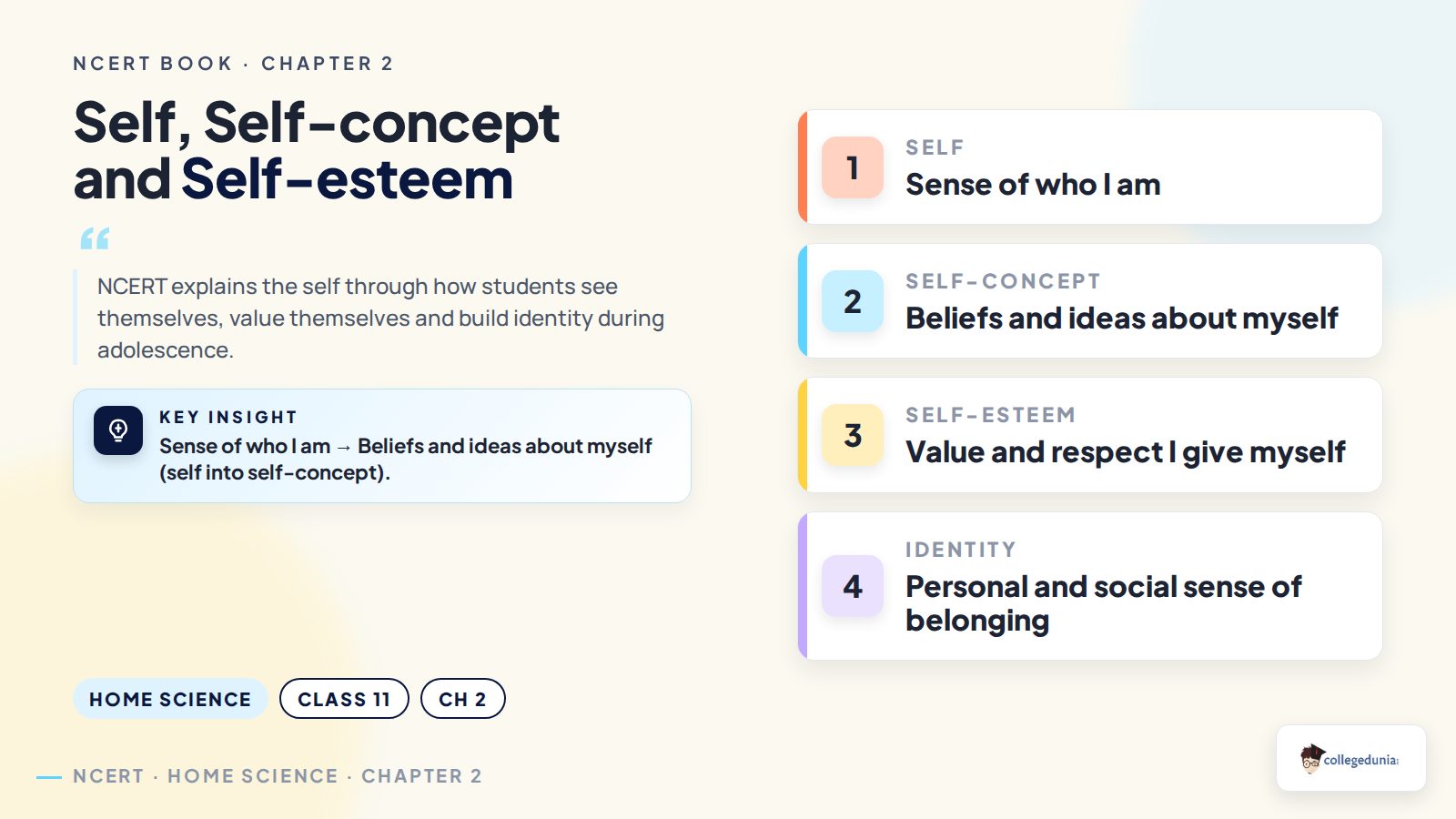
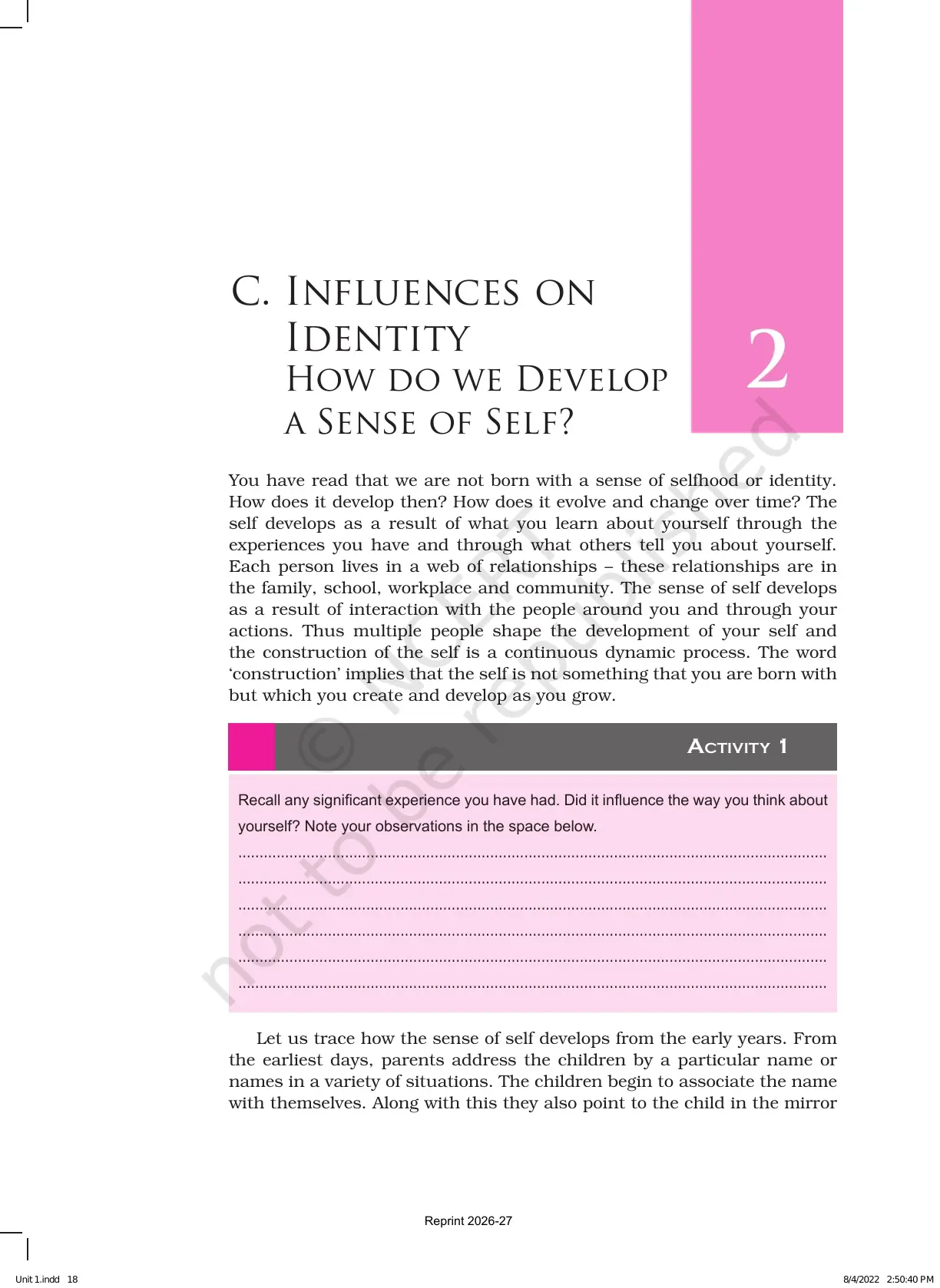
NCERT treats these terms as connected but not identical. Self is the broad sense of who a student is. Self-concept is the set of beliefs a student holds about abilities, appearance, emotions and roles. Self-esteem is the value placed on that self-image.
- Self-concept: "I am good at drawing" or "I am shy in new groups."
- Self-esteem: how positively or negatively students feel about those beliefs.
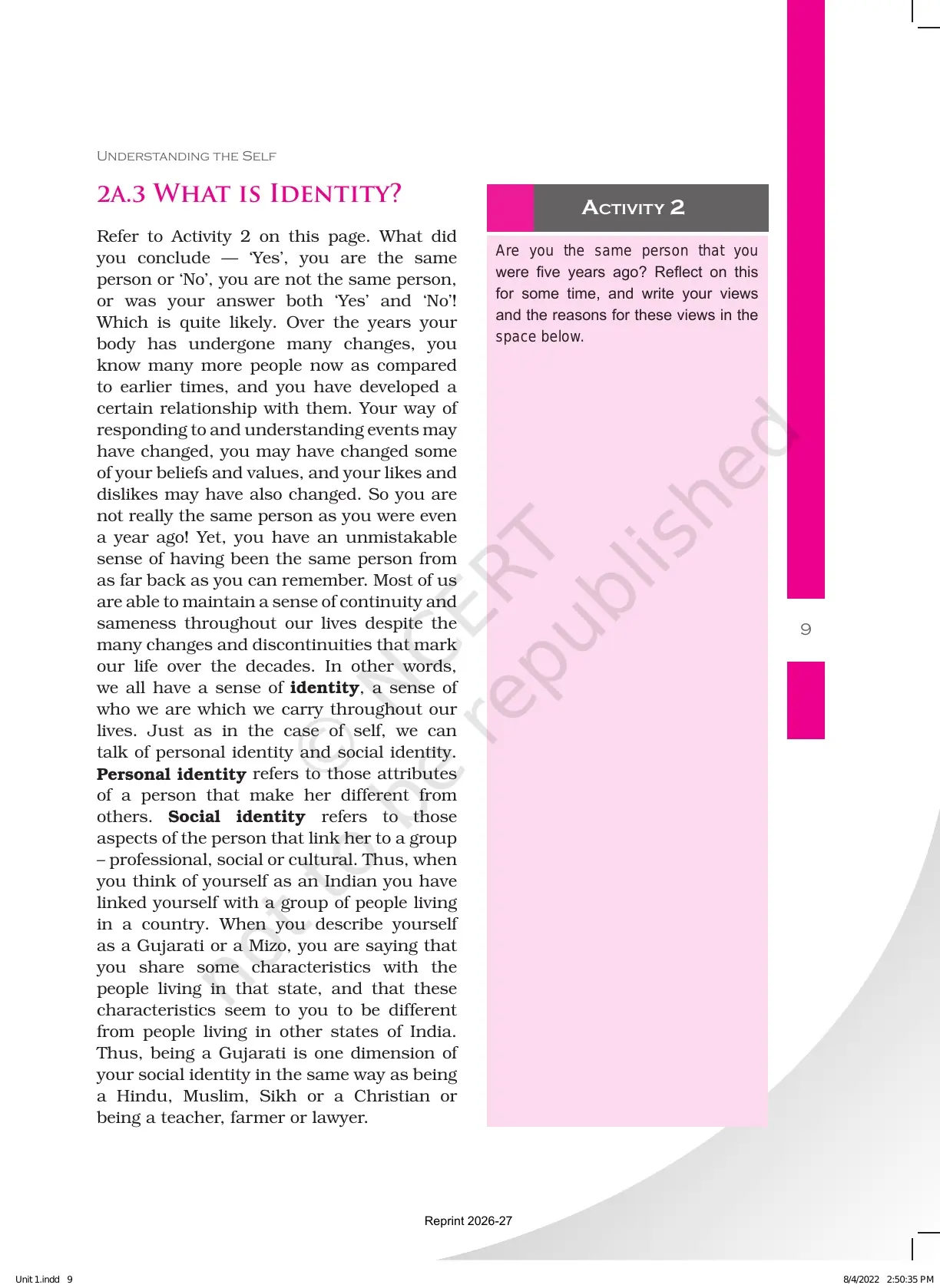
- Identity: the personal and social answer to "where do I belong?"
Understanding the Self Video for Class 11 Home Science
Source: Achieve it on YouTube
Development of Self Across Childhood and Adolescence
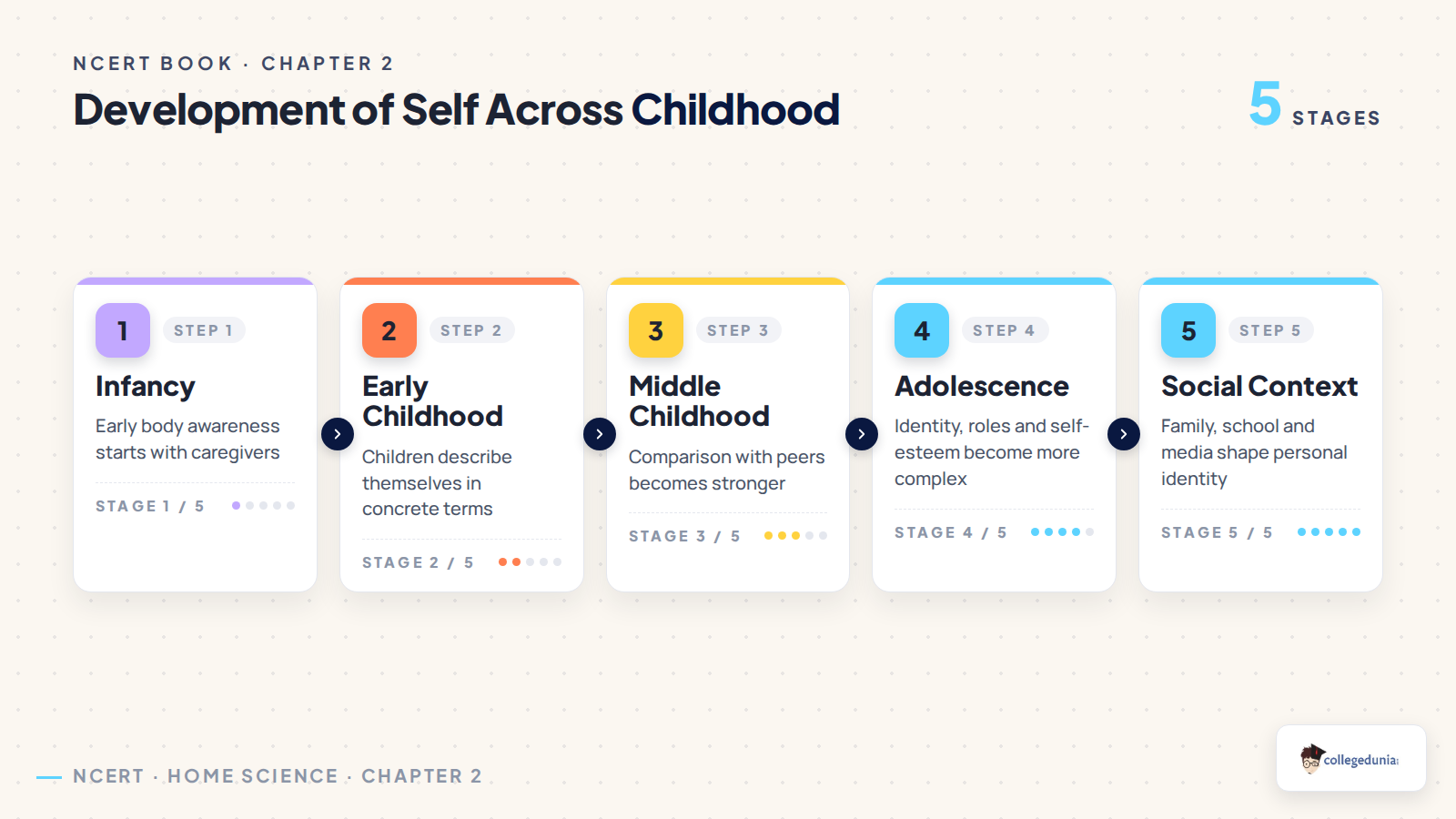
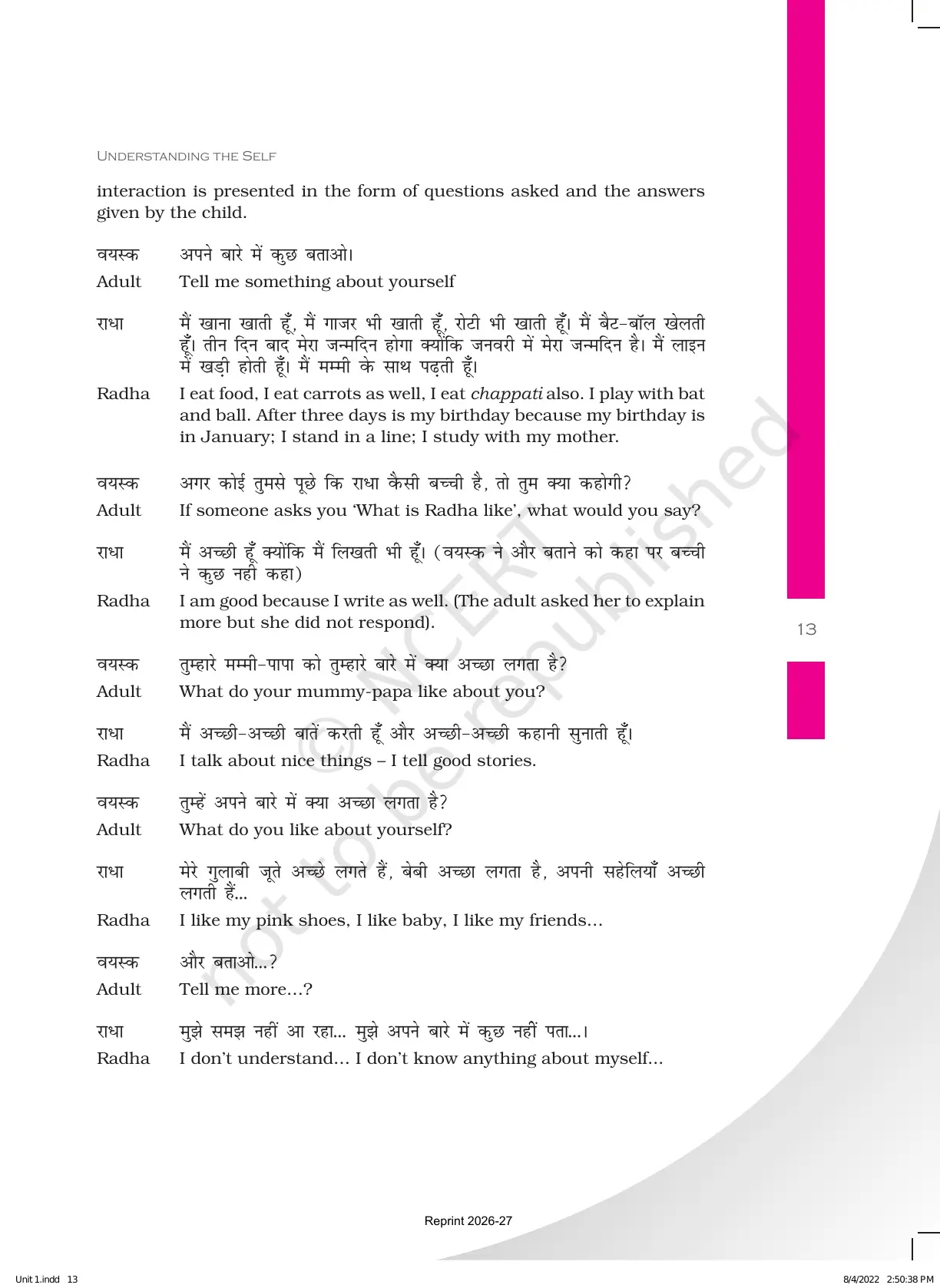
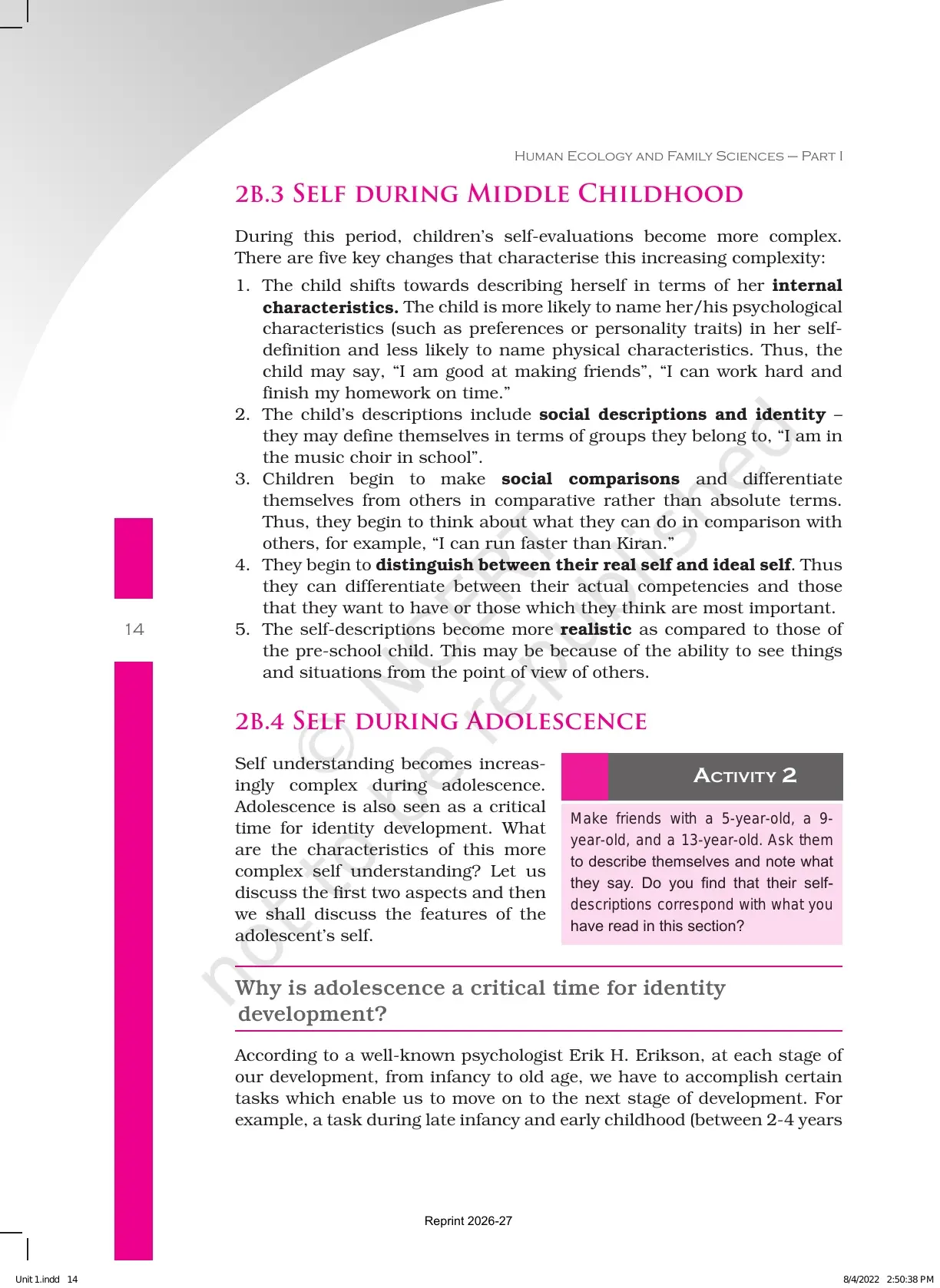
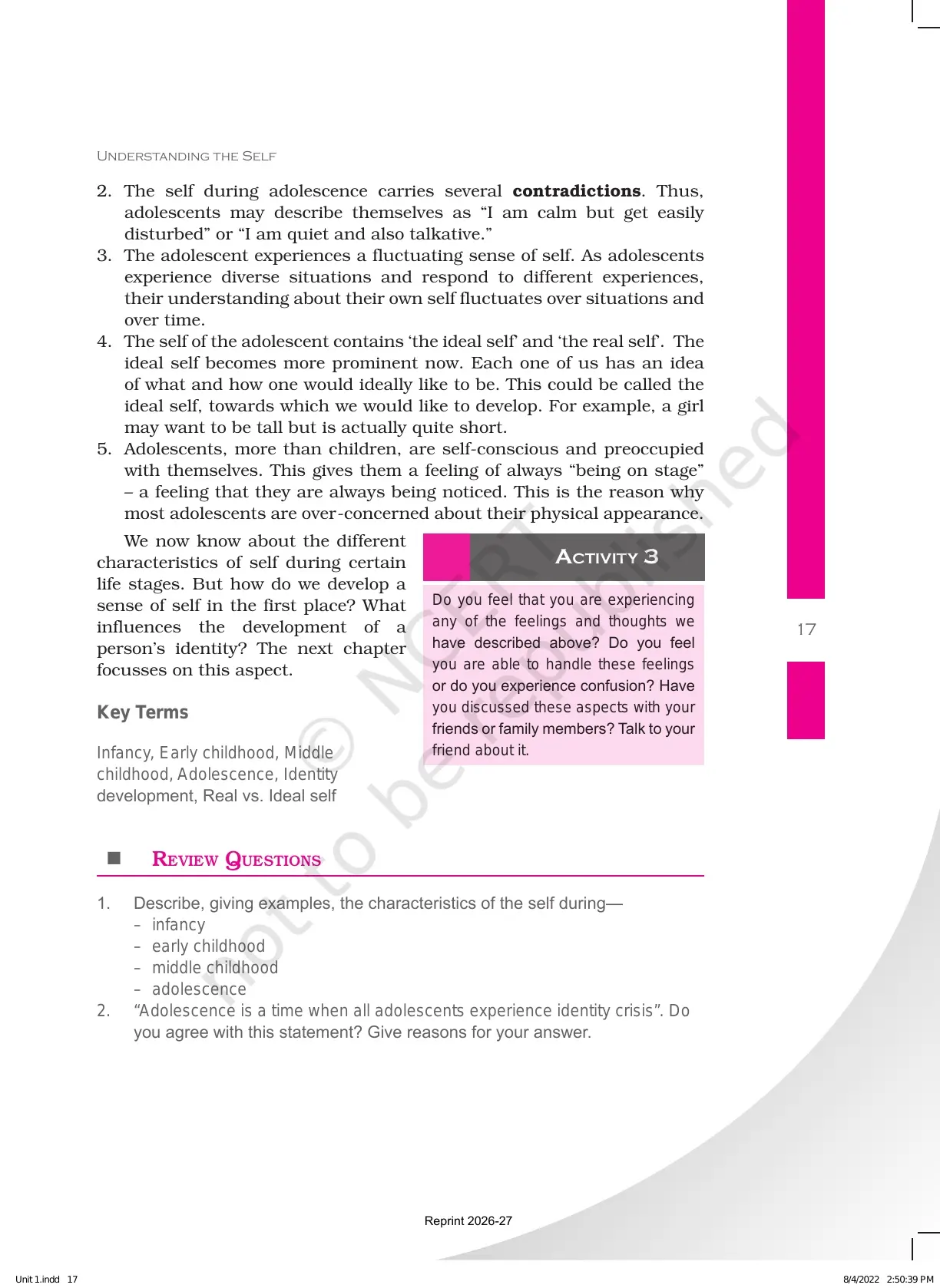
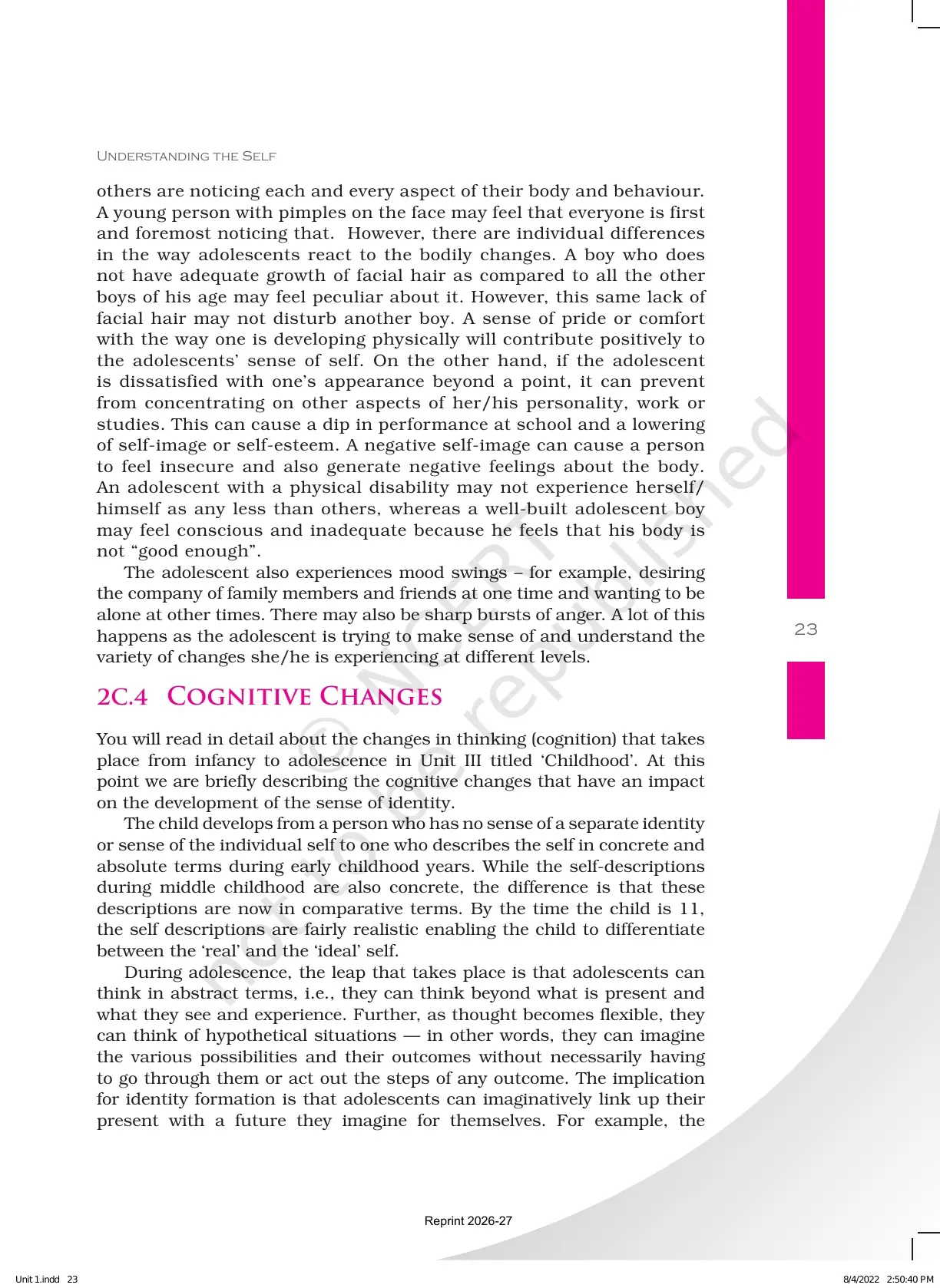
The chapter explains that the self develops gradually. Infants first respond through body awareness and caregiver contact. Early childhood brings concrete descriptions. Middle childhood adds comparison with peers. Adolescence makes identity more complex because students begin thinking about roles, values, friendships, body image and future goals.
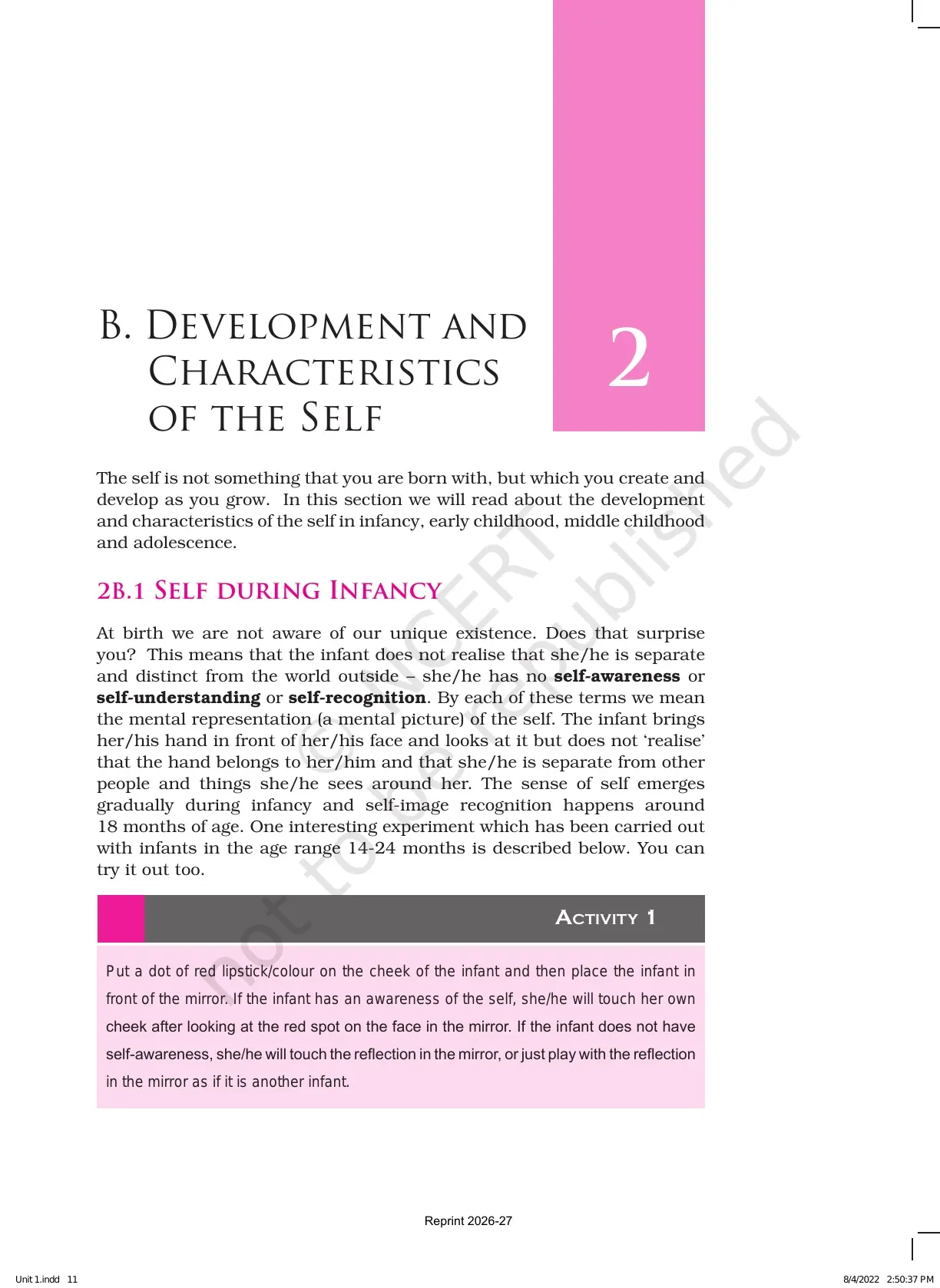
- Infancy: awareness begins through body, voice, touch and familiar caregivers.
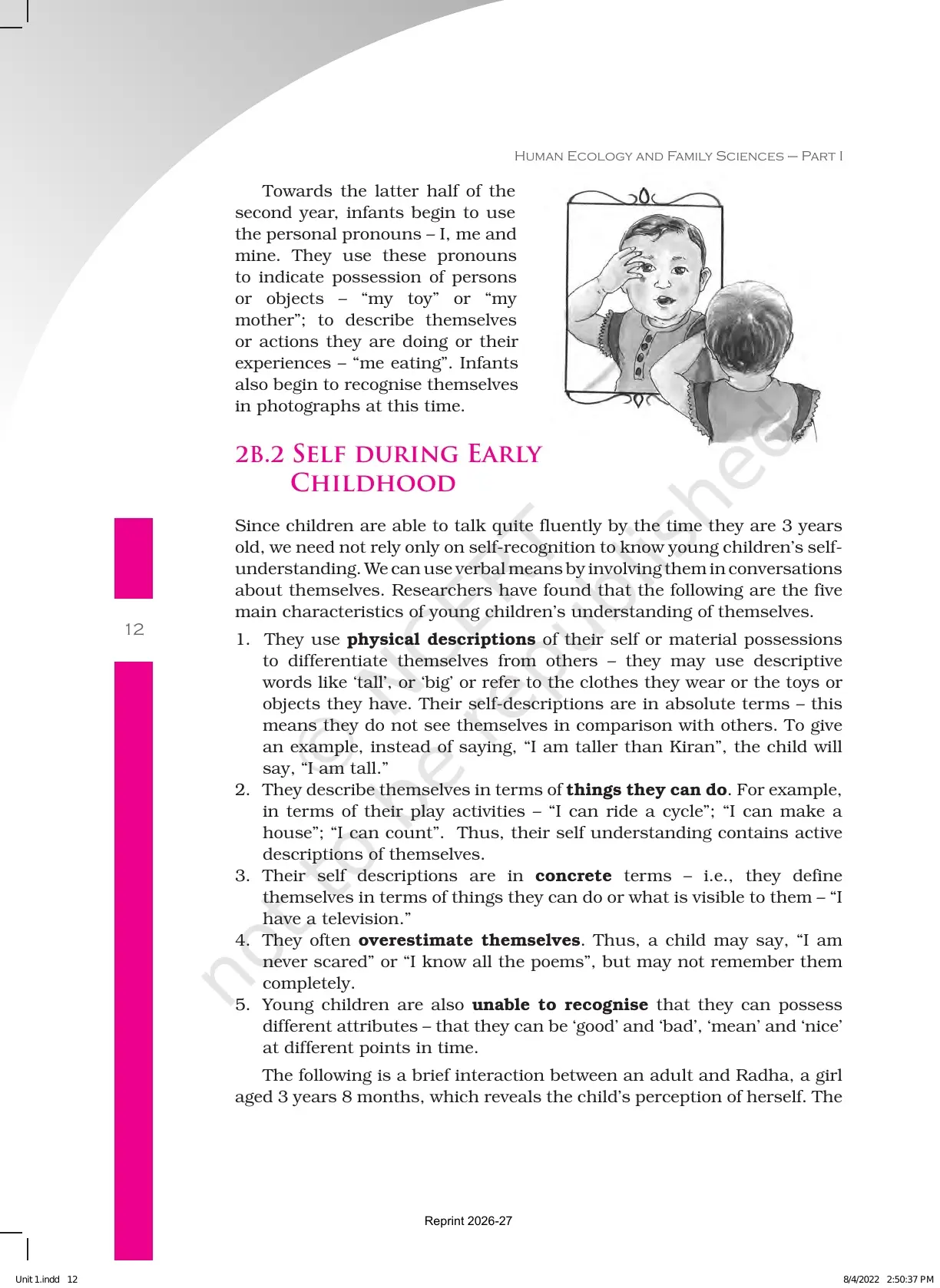
- Childhood: children describe themselves through visible traits and activities.
- Adolescence: identity becomes more abstract, emotional and socially aware.
Influences on Identity in Understanding the Self
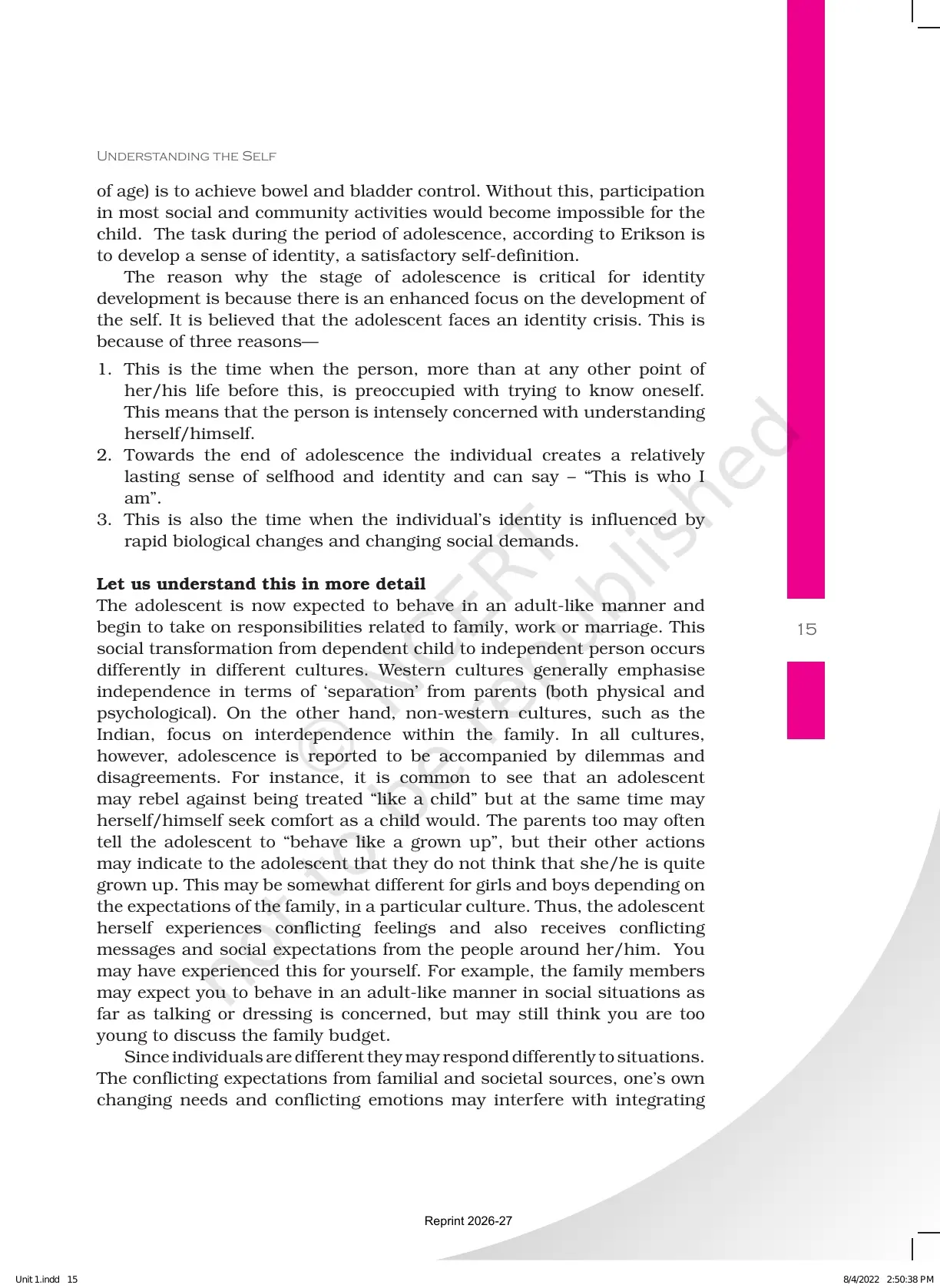
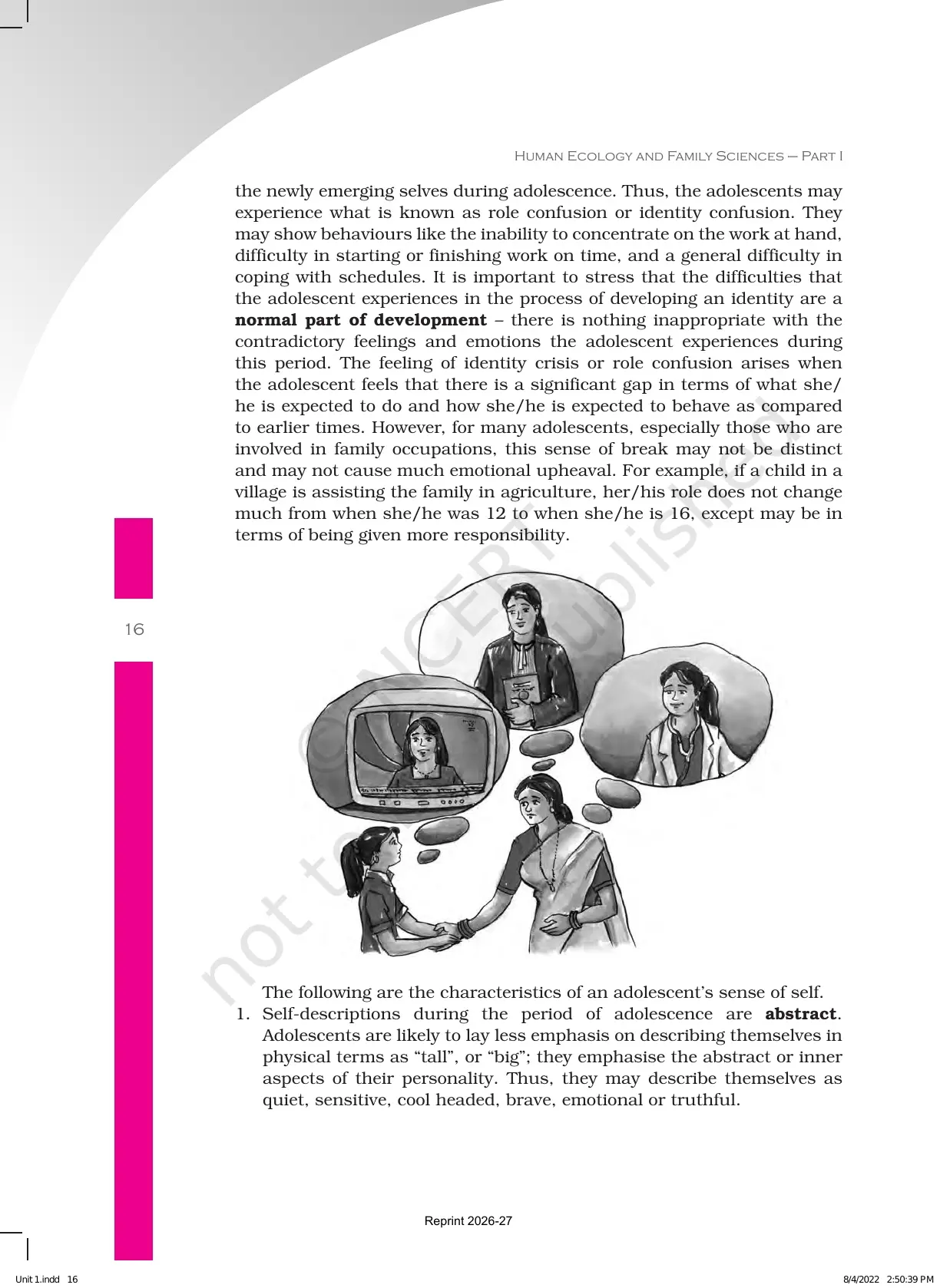
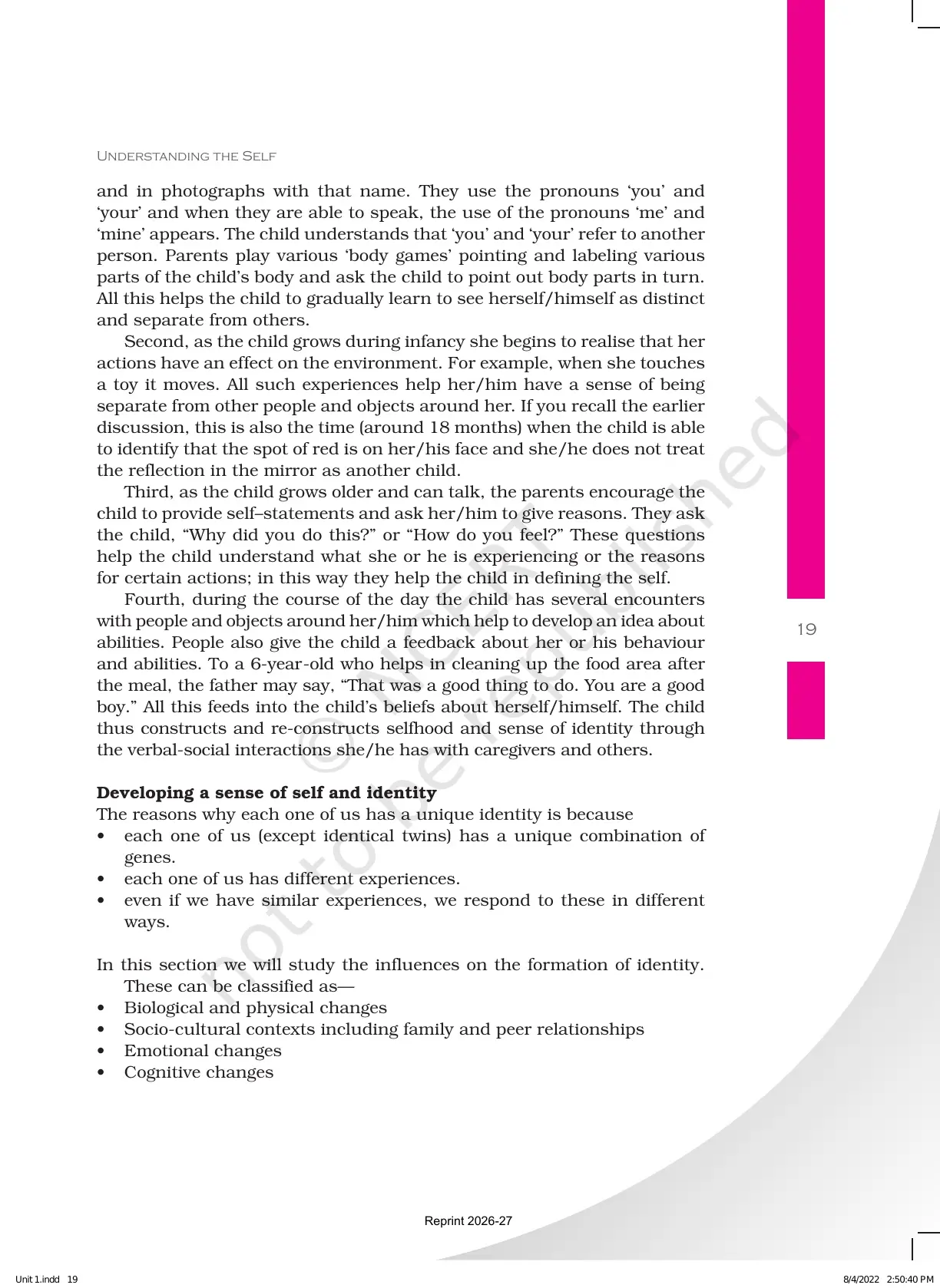
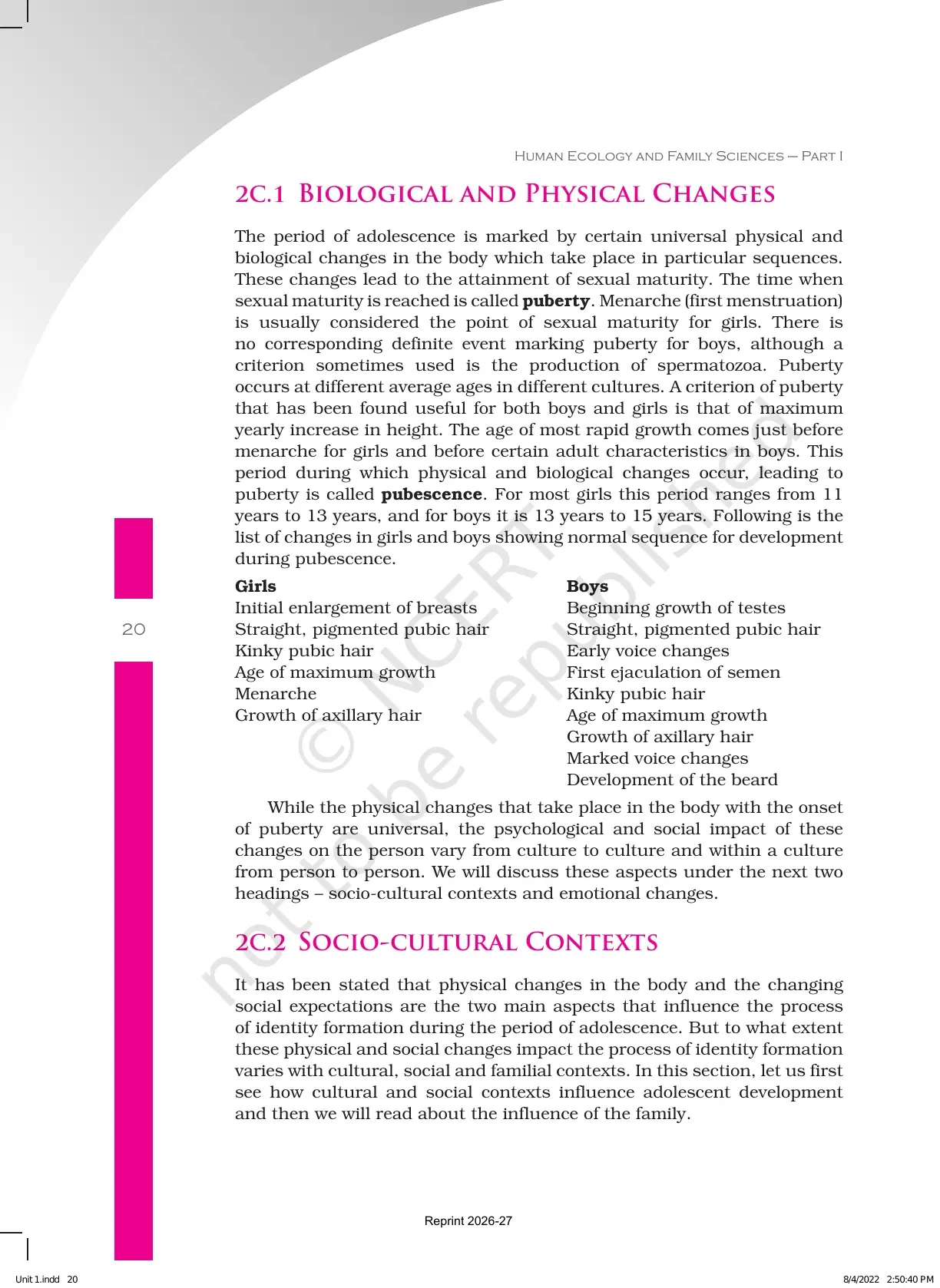
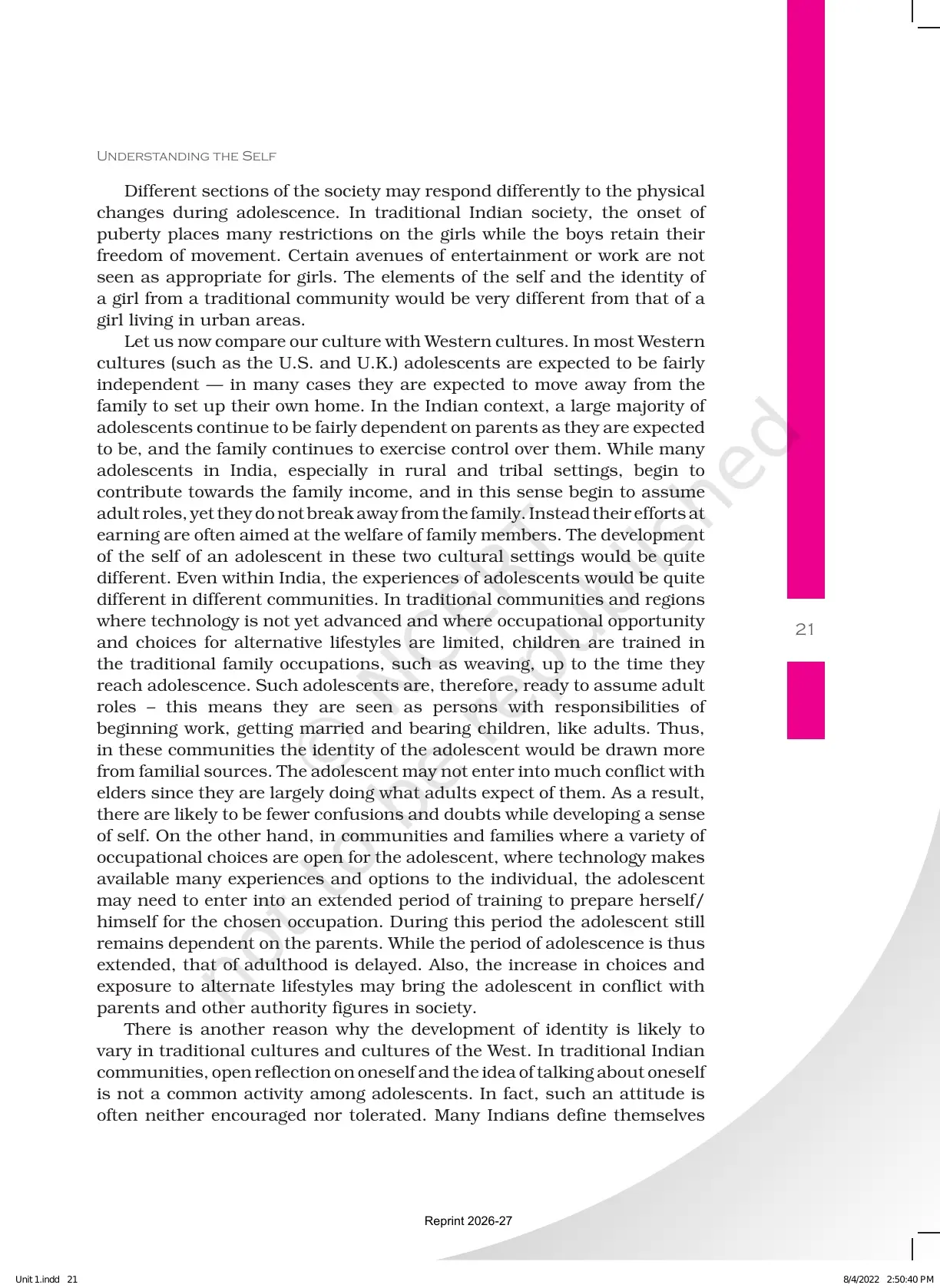
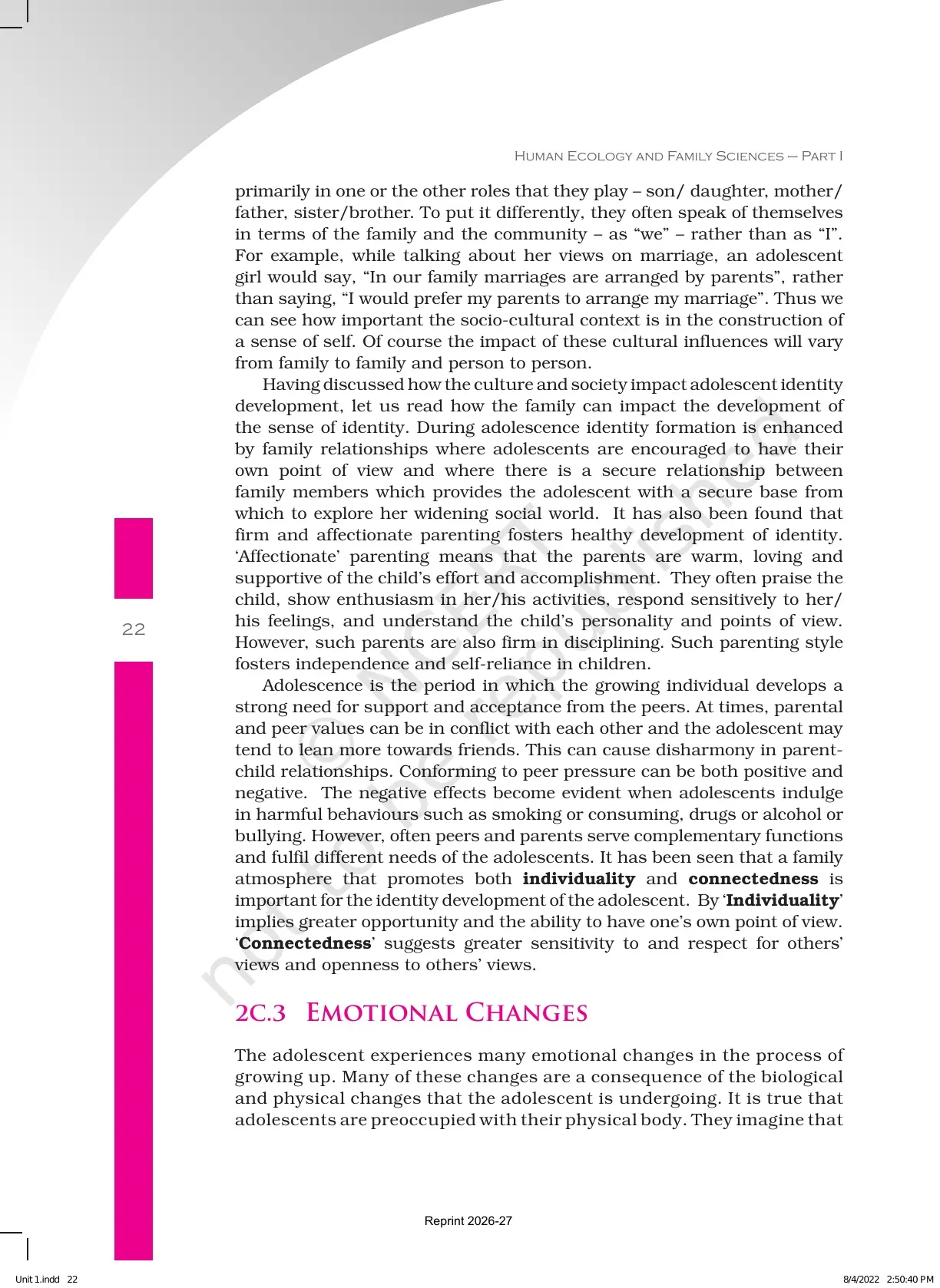
Identity does not form in isolation. NCERT asks students to notice biological changes, physical appearance, family expectations, peer groups, school experiences, media images and culture. These influences can support confidence, but they can also create confusion when students compare themselves too much.
| Influence | What it shapes | Example for answers |
|---|---|---|
| Family | Values, habits and emotional security | Supportive feedback can improve self-esteem |
| Peers | Belonging and social identity | Friend groups affect dress, language and confidence |
| School | Achievement and ability beliefs | Success in activities changes self-concept |
| Media | Body image and lifestyle ideas | Unreal images can create comparison pressure |
How to Use the Home Science Chapter 2 Book PDF
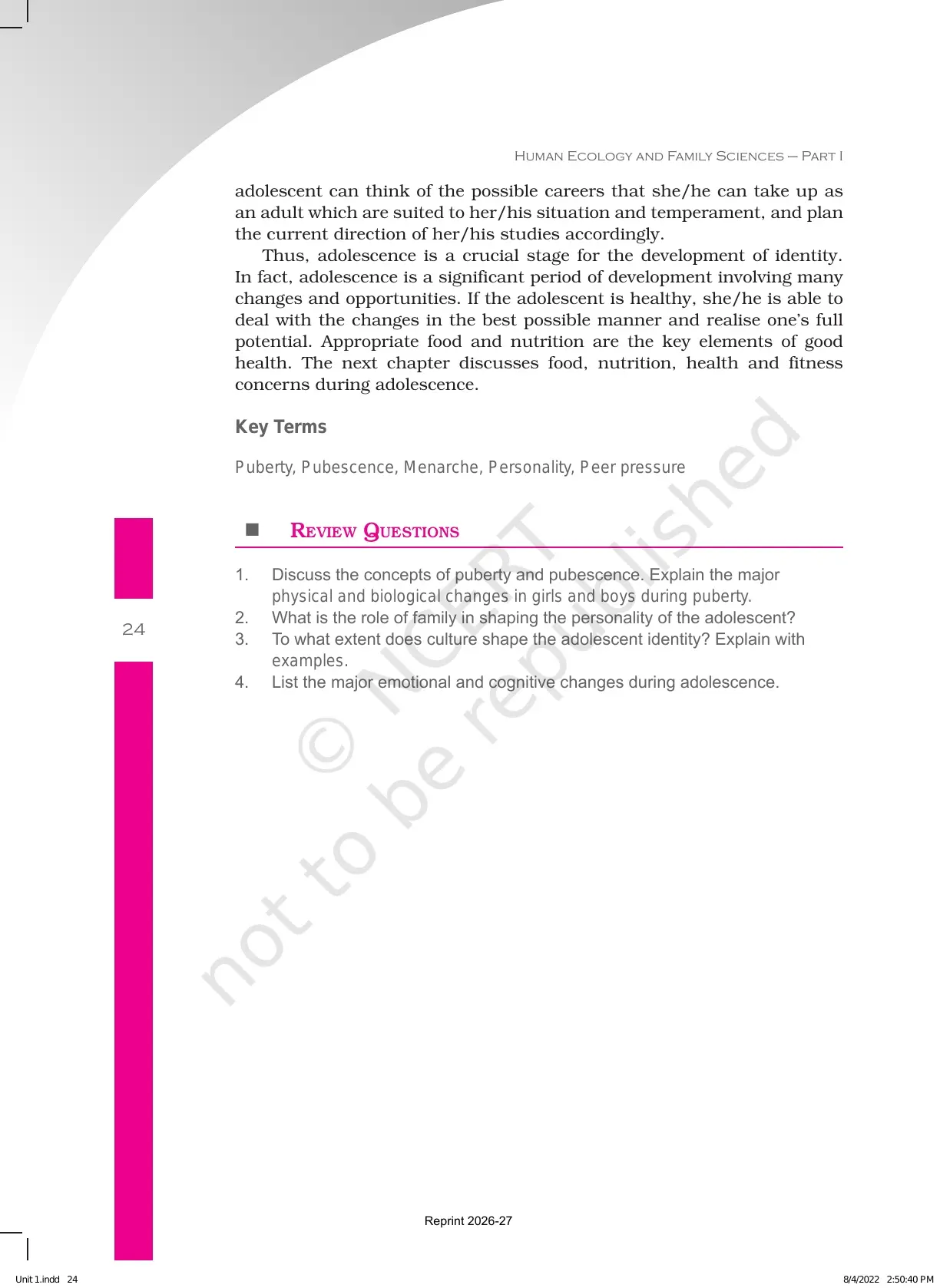
Use the official PDF in three short rounds. First, read the definitions and mark them in the chapter. Second, make a two-column list for personal identity and social identity. Third, revise the stages of self-development with one example from infancy, childhood and adolescence.
- Keep one flashcard each for self, self-concept, self-esteem and identity.
- Underline examples linked with family, peers, school and media.
- Practise answers that start with the term and end with a student-life example.
The chapter is easier when students revise it as a flow from self-awareness to identity formation.
Related Class 11 Home Science Chapter 2 Resources
Use these related resources when you want Understanding the Self in another format. The table stays above the FAQ so students can move from the official book PDF to revision material without losing the chapter context.
| Resource | Best use | Link |
|---|---|---|
| NCERT Book PDF | Read the official 2026-27 source chapter | Open this book PDF |
| Handwritten Notes | Revise definitions and identity influences quickly | Open handwritten notes |
| Class 11 Home Science Chapter 1 Book PDF | Read the subject introduction before this chapter | Open Chapter 1 book PDF |
More NCERT Book PDFs for Home Science Chapters
The table below keeps NCERT Book PDF resources together, so students can continue official textbook reading chapter by chapter.
| Chapter | NCERT chapter title | Book PDF |
|---|---|---|
| Class 11 Chapter 2 | Understanding the Self | Current book PDF |
| Class 11 Chapter 1 | Introduction: Evolution of the Discipline and its Relevance to Quality of Life | Open book PDF |
| Class 12 Chapter 1 | Work, Livelihood and Career | Open book PDF |
| Class 12 Chapter 2 | Nutrition, Health and Wellbeing | Open book PDF |
| Class 12 Chapter 3 | Childhood and Adolescence | Open book PDF |
| Class 12 Chapter 4 | Adulthood and Ageing | Open book PDF |
Understanding the Self Class 11 Home Science NCERT Book FAQs
Ques. What is included in the Class 11 Home Science Chapter 2 NCERT Book PDF?
Ans. The PDF includes the official NCERT chapter on self, self-concept, self-esteem, personal identity, social identity, self-development and influences on identity.
Ques. How many pages are there in this Understanding the Self PDF?
Ans. The official Class 11 Home Science Chapter 2 PDF used here has 23 pages in the local NCERT chapter file.
Ques. Why is Understanding the Self important in Home Science?
Ans. It helps students understand adolescence, identity formation, self-esteem and the social influences that affect confidence and behaviour.
Ques. Should students read the NCERT PDF before notes?
Ans. Yes. Read the NCERT PDF first for exact textbook terms, then use notes or handwritten revision for faster recall before tests.



Comments