



The NCERT Class 11 Sociology Chapter 2 Terms, Concepts and Their Use in Sociology PDF brings together the official textbook pages on social groups, status, role, social control and stratification for the 2026-27 session.
- Core focus: how sociology uses precise terms for familiar social life.
- Best use: read the PDF once, then make a one-page glossary.
- Exam value: short answers often ask for differences between similar concepts.
Student Feedback: In a Collegedunia check of 7,400 Class 11 humanities students, 69% said this chapter became easier after they revised the terms as pairs, such as status and role or primary and secondary group.
What the Terms, Concepts and Their Use in Sociology NCERT PDF Covers
Chapter 2 begins from a simple problem. We use words like family, role, status and group in daily life, but sociology needs those words to be clearer and more exact. NCERT explains that familiar social life can become difficult to study if students rely only on common sense.
The chapter then shows how concepts work like tools. They help students identify patterns in society, compare different situations and ask sharper questions. Social group, quasi group, social structure, status, role, social control and stratification are the main terms to revise from this PDF.
Do not memorise the chapter as isolated definitions. The better method is to learn each term with one example, one contrast and one exam-ready sentence.
Why Sociology Needs Terms
NCERT explains that sociology studies things students already see around them. That is why the subject needs careful terms even more. A student may live in a family, belong to a caste group or follow school rules, but that experience alone does not become sociological knowledge.
| Term | Meaning in the chapter | Quick example |
|---|---|---|
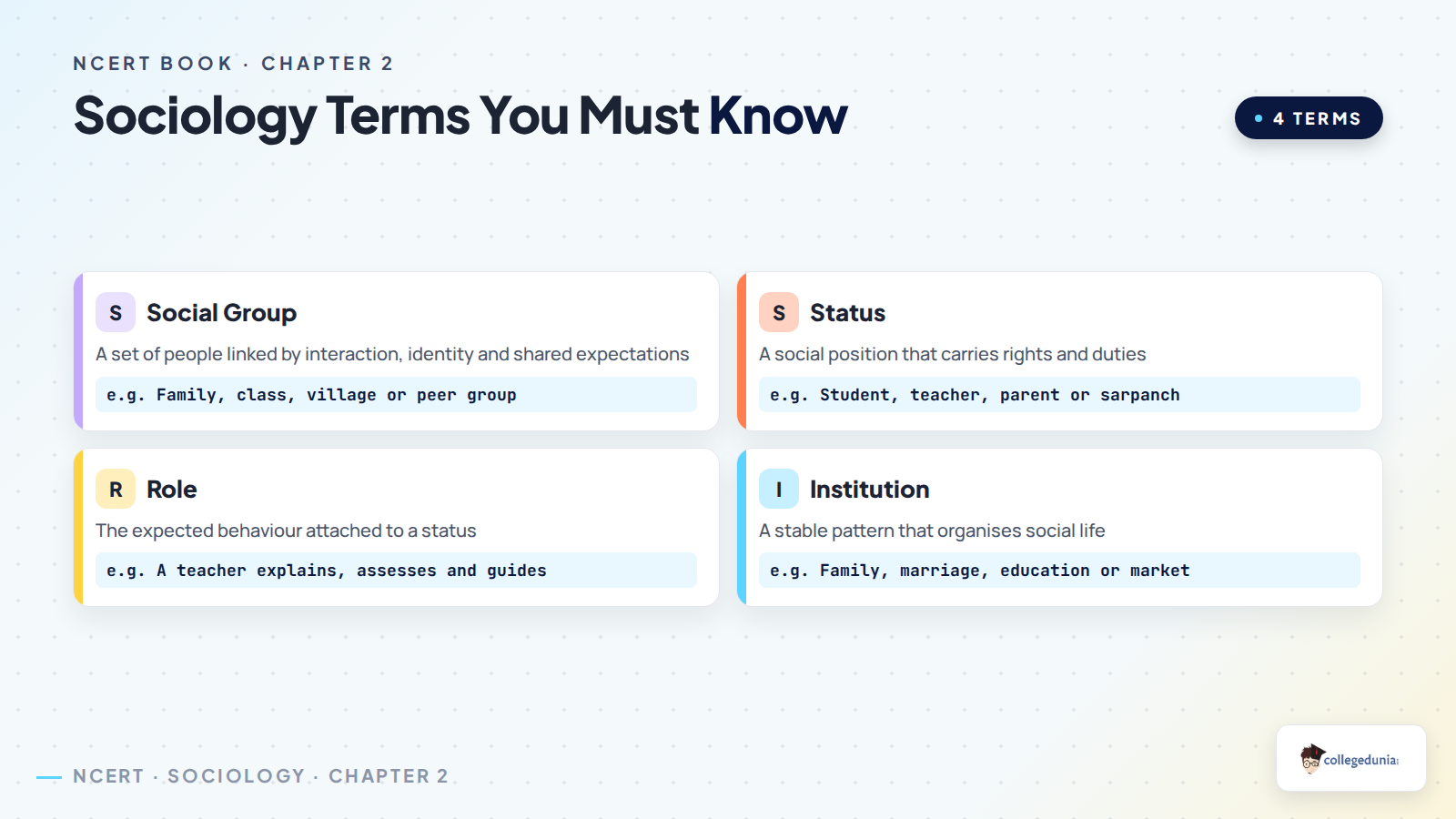
| Social group | People who interact, share norms and feel a sense of belonging | Family, class, village or association |
| Quasi group | An aggregate without clear organisation or strong group feeling | Passengers at a bus stop |
| Status | A social position carrying rights and duties | Student, teacher, parent |
| Role | Expected behaviour linked with a status | A teacher explains lessons and checks work |
Social Groups in Sociology Chapter 2
Source: Magnet Brains on YouTube
Social Groups and Quasi Groups
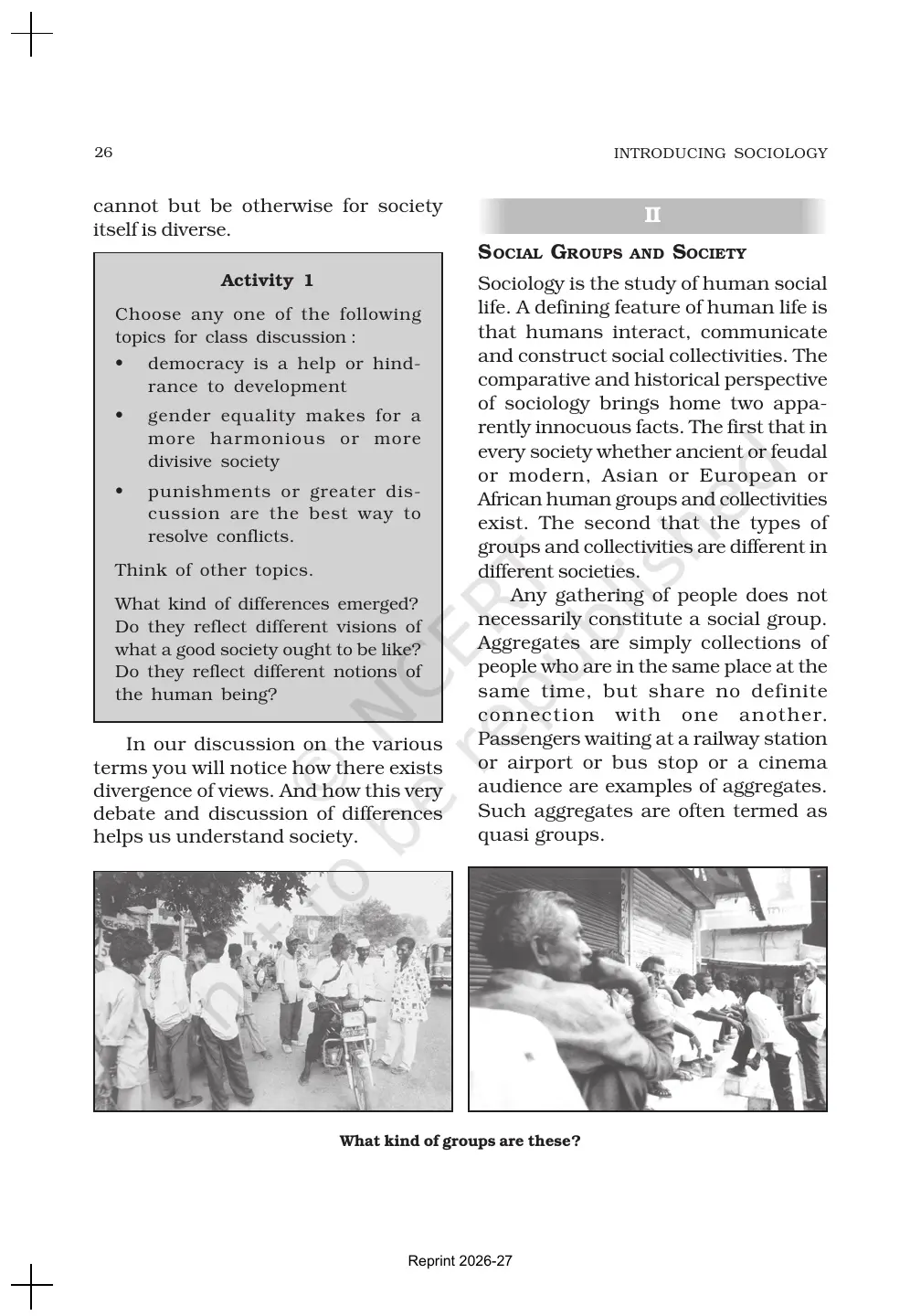
The chapter says that any collection of people is not automatically a social group. A crowd at a railway station, an airport queue or cinema viewers may stand in the same place, but its members do not necessarily share a lasting bond.
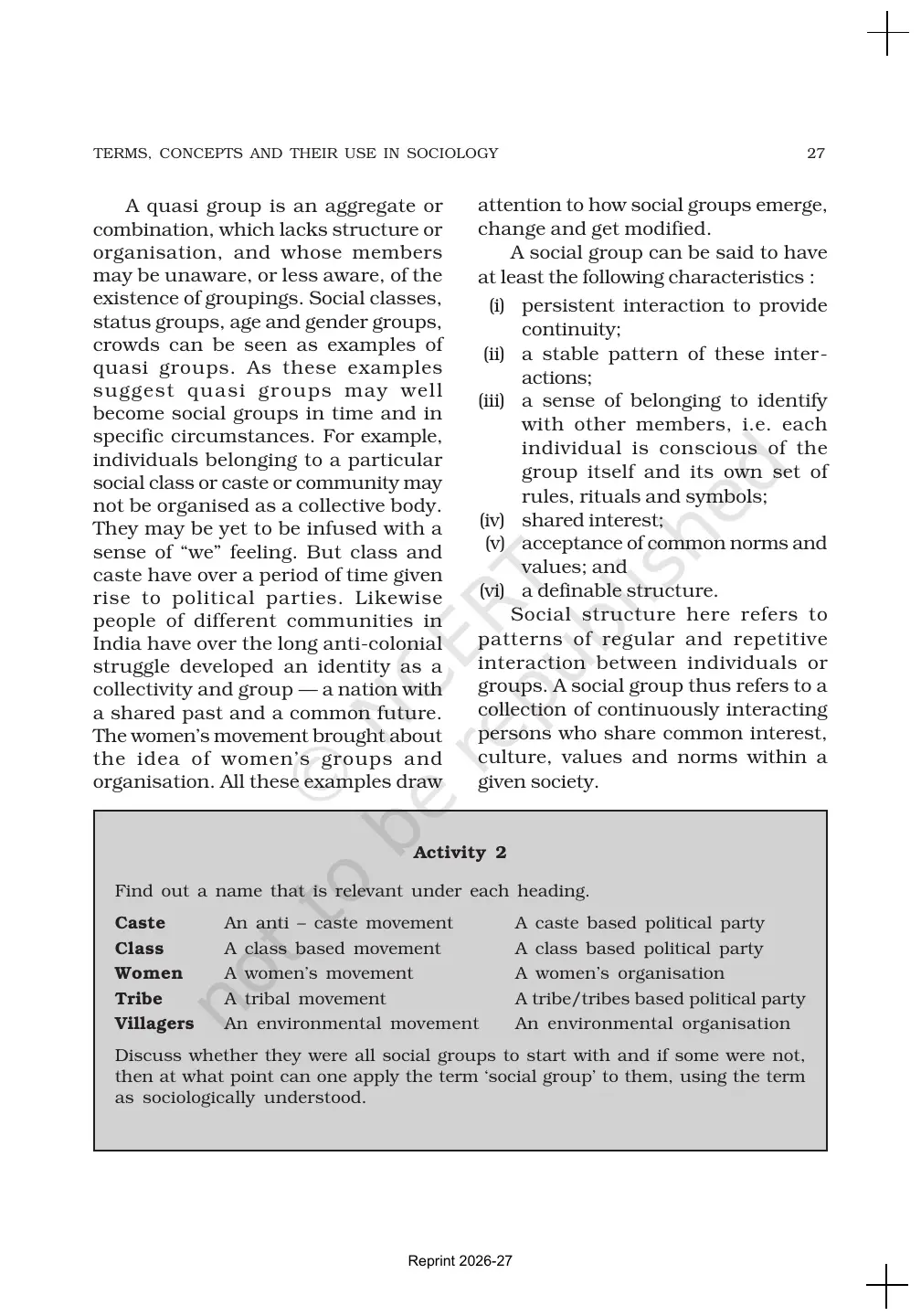
A social group has persistent interaction, stable patterns, shared interest, common norms and a definable structure. A quasi group may later become a social group if members develop organisation and a sense of "we". NCERT uses caste, class, community, women's movements and political parties to show this change.
A strong answer should compare both terms, then add one example from Indian society. For instance, people from the same class may not always act together, but a class-based movement can turn that wider category into an organised group.
Primary and Secondary Groups
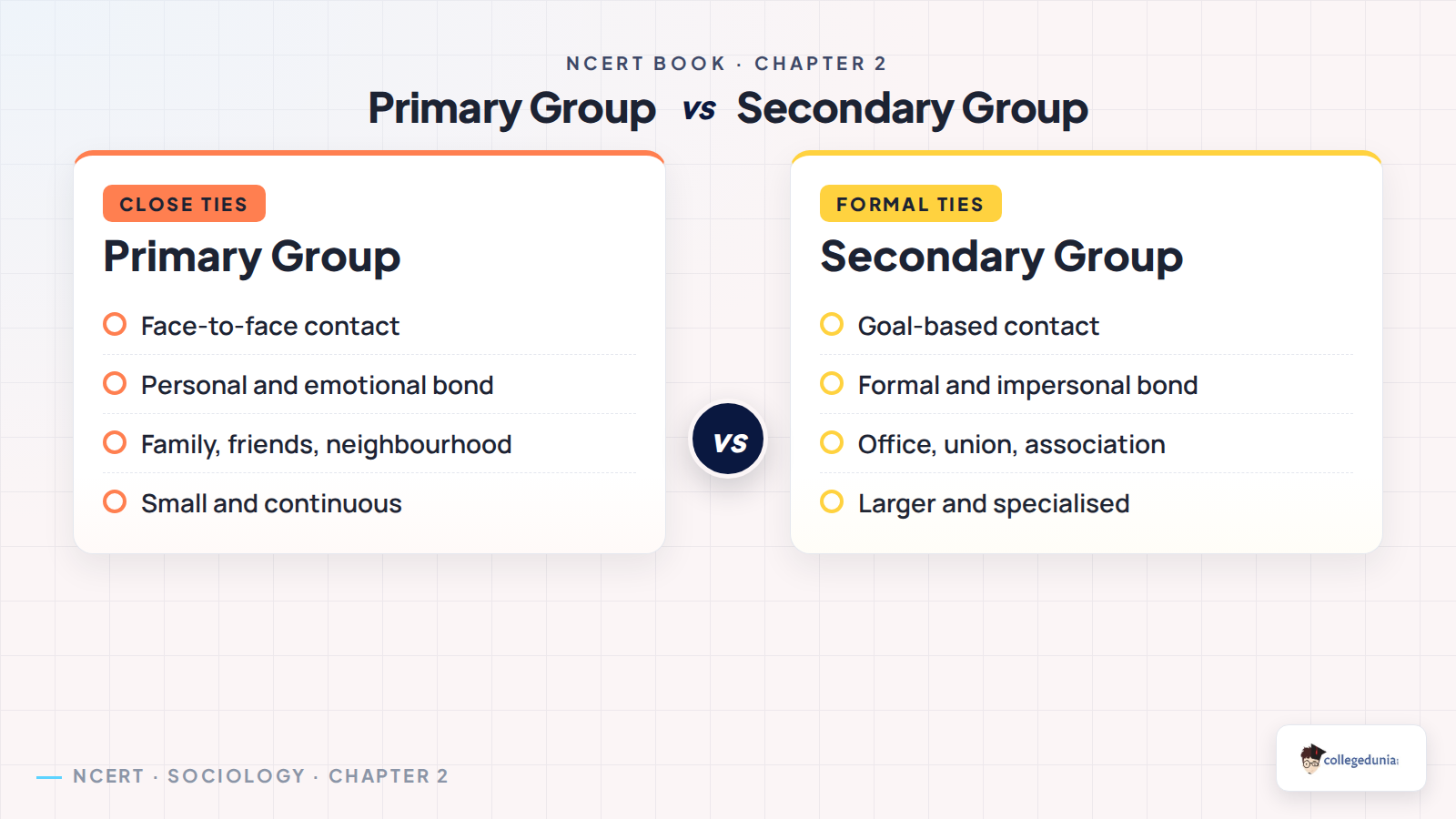
NCERT also introduces types of groups. Primary groups are usually small, close and personal. Family, friends and neighbourhood groups are common examples. Secondary groups are larger, more formal and often built around a specific purpose.
- Primary groups involve face-to-face contact and emotional closeness.
- Secondary groups involve formal roles, written rules and goal-based interaction.
- Real life can mix both forms, so students should avoid treating the contrast as absolute.
Use examples carefully. A school class can feel personal in daily life, but the school as an institution also works through formal rules, timetables and roles.
Status, Role and Social Control
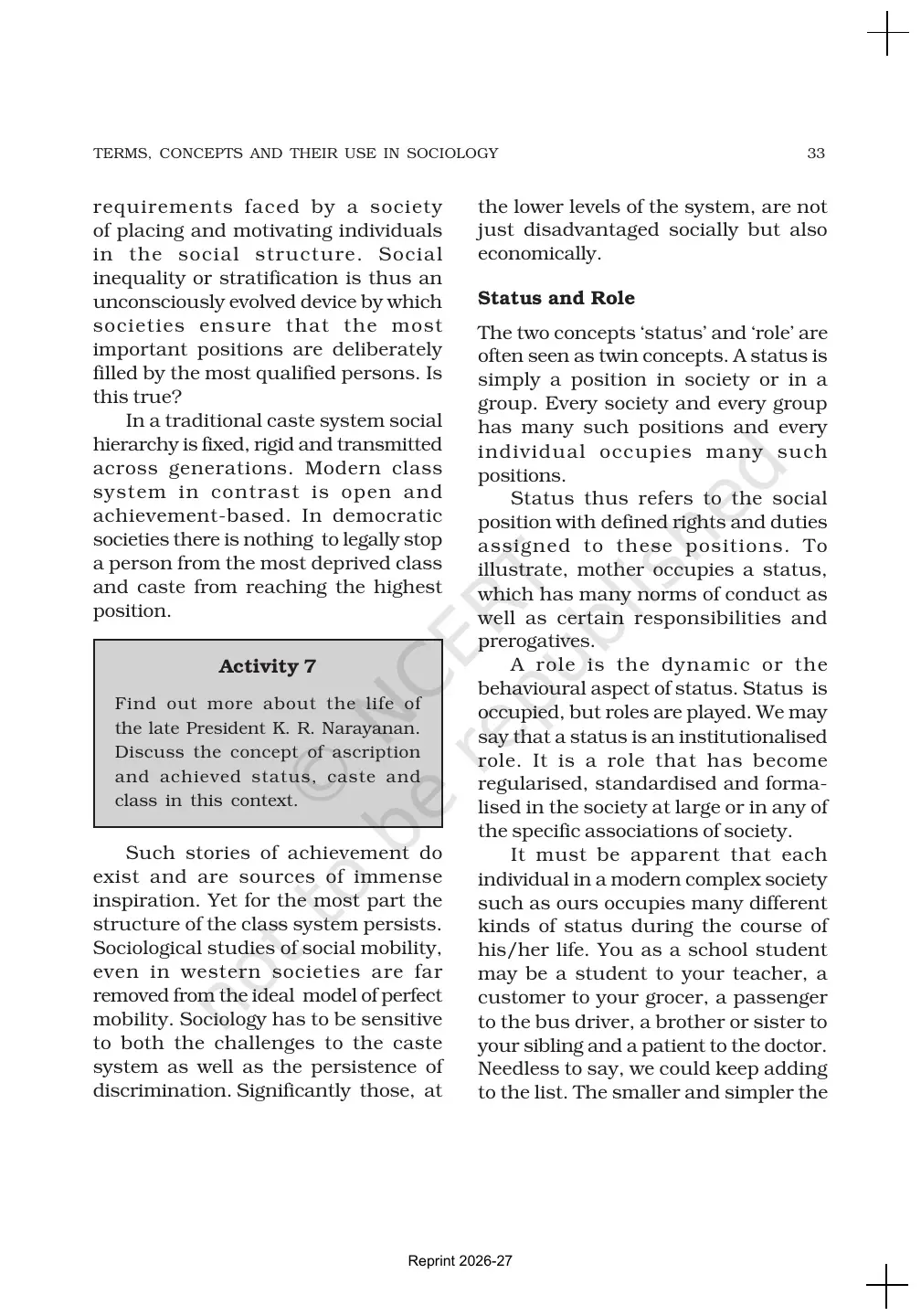
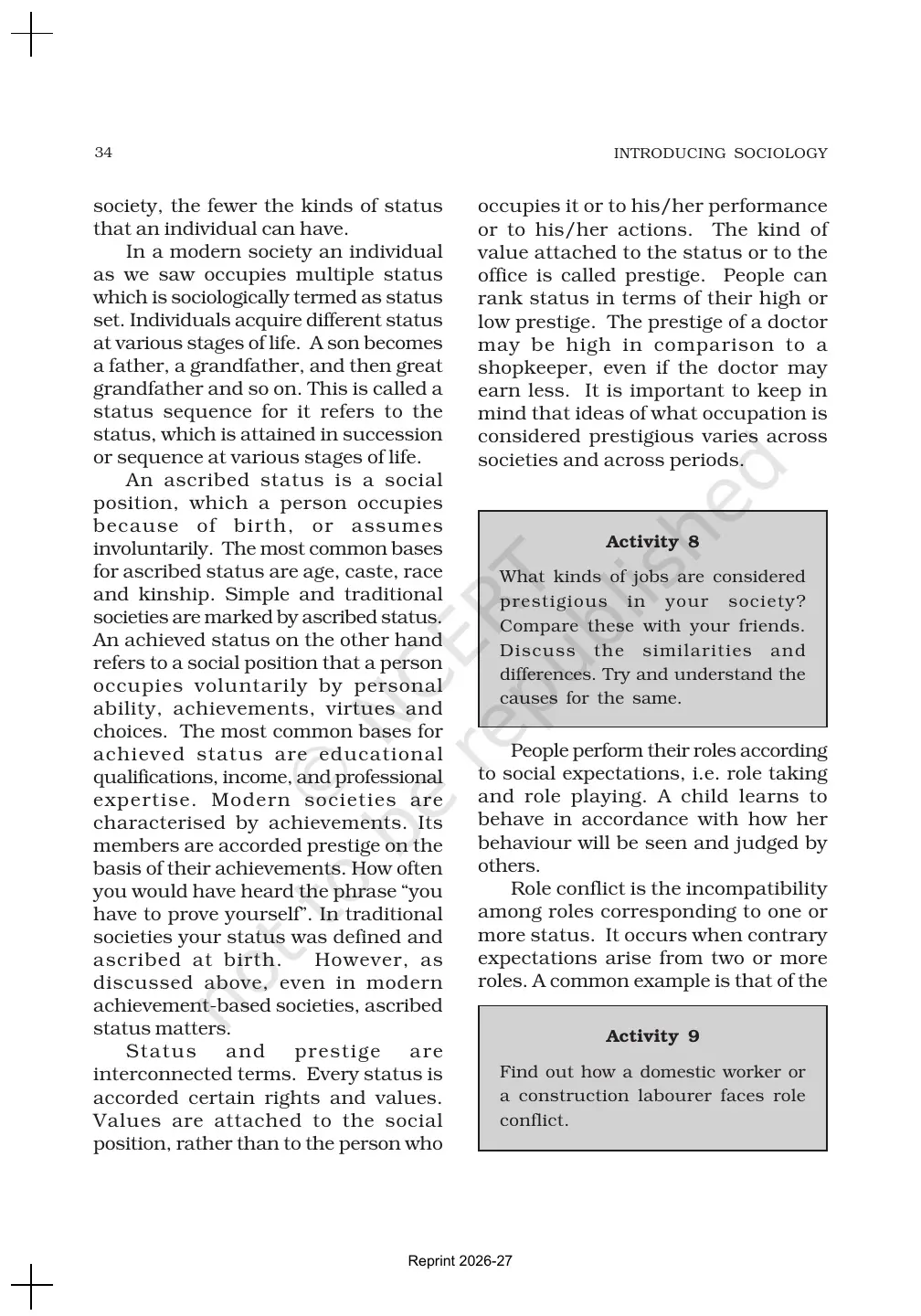
Status and role help students connect the individual with society. Status tells us the position a person occupies. Role tells us the behaviour expected from that position. A person may hold many statuses at the same time, such as daughter, student, friend and team captain.
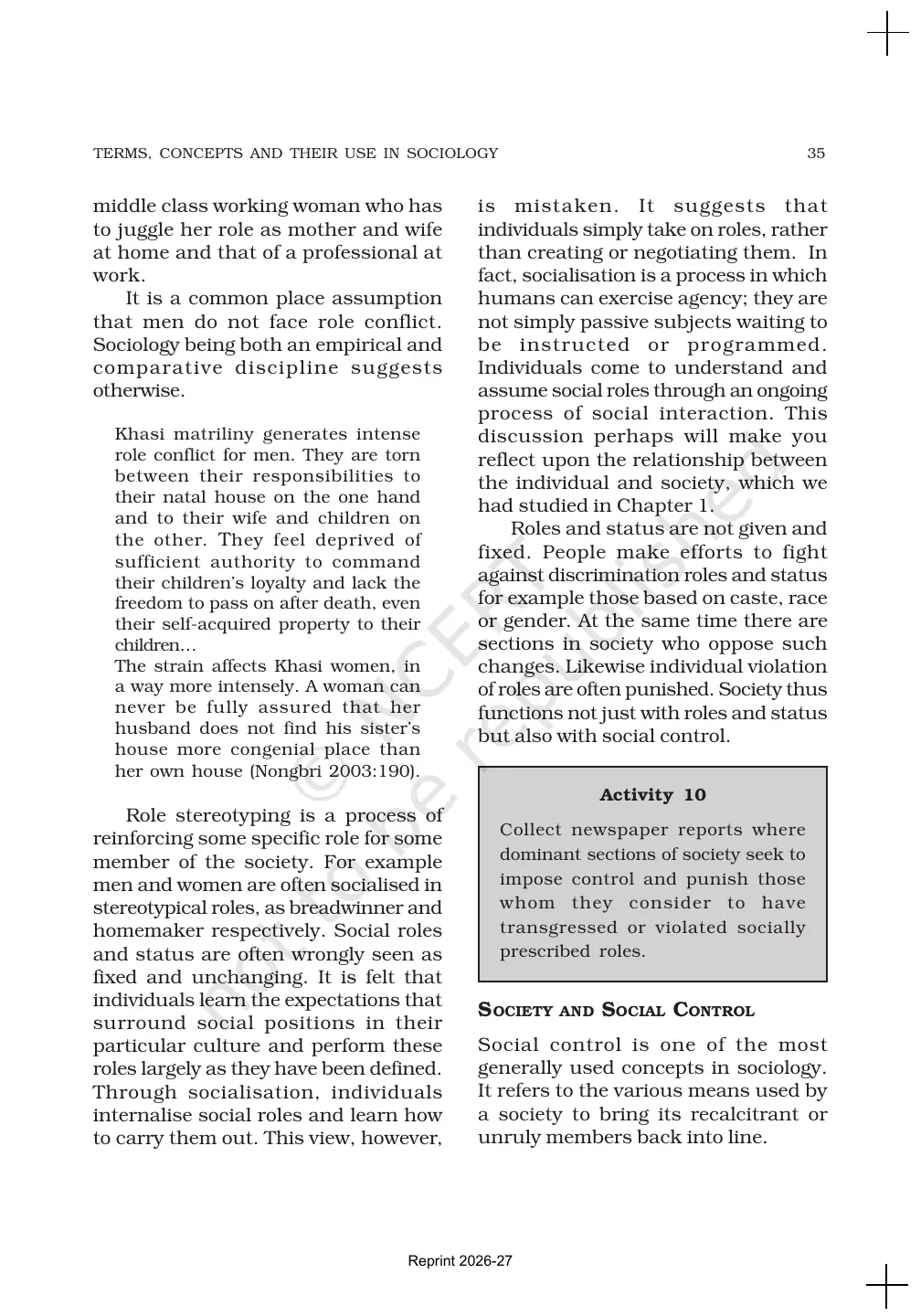
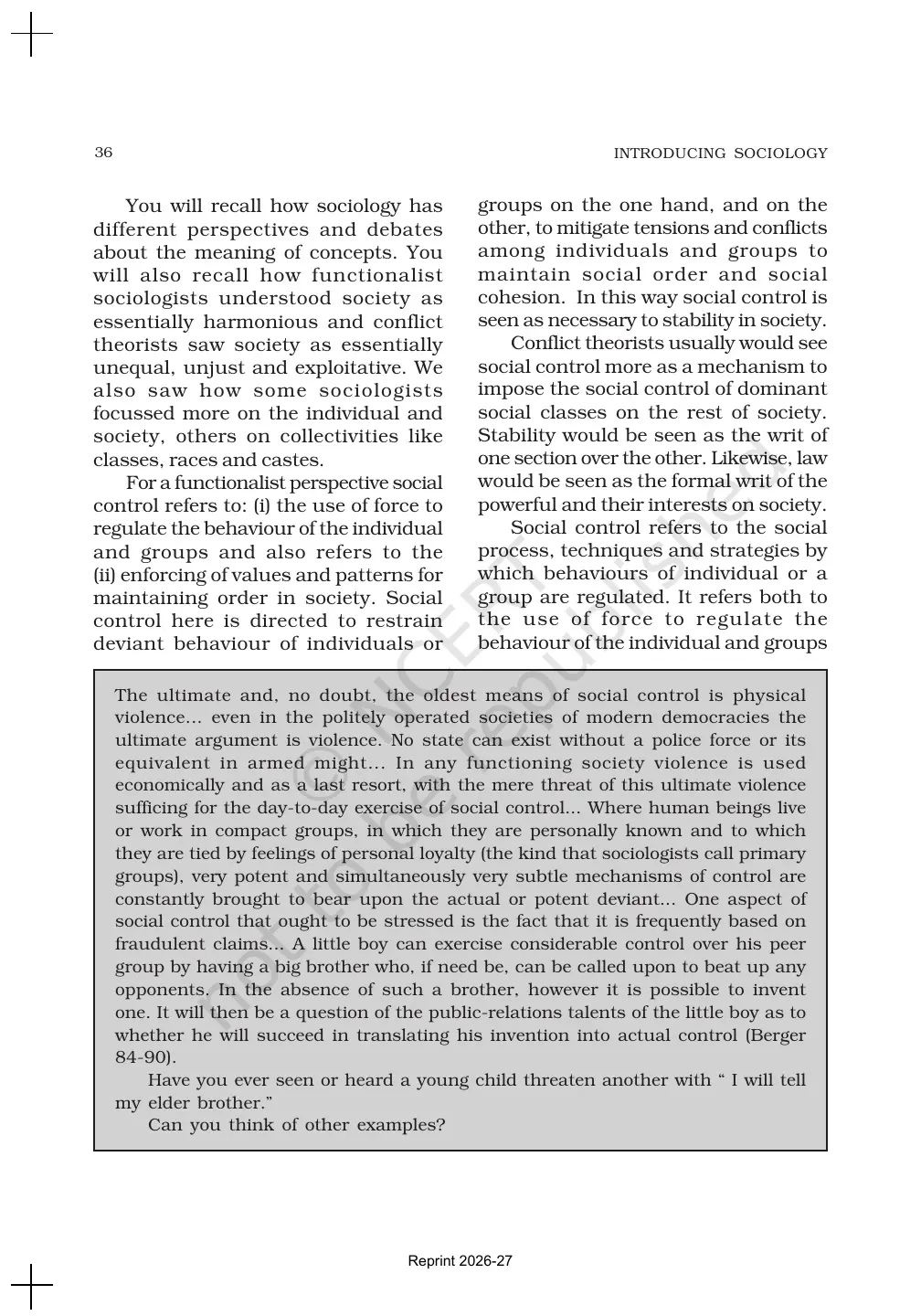
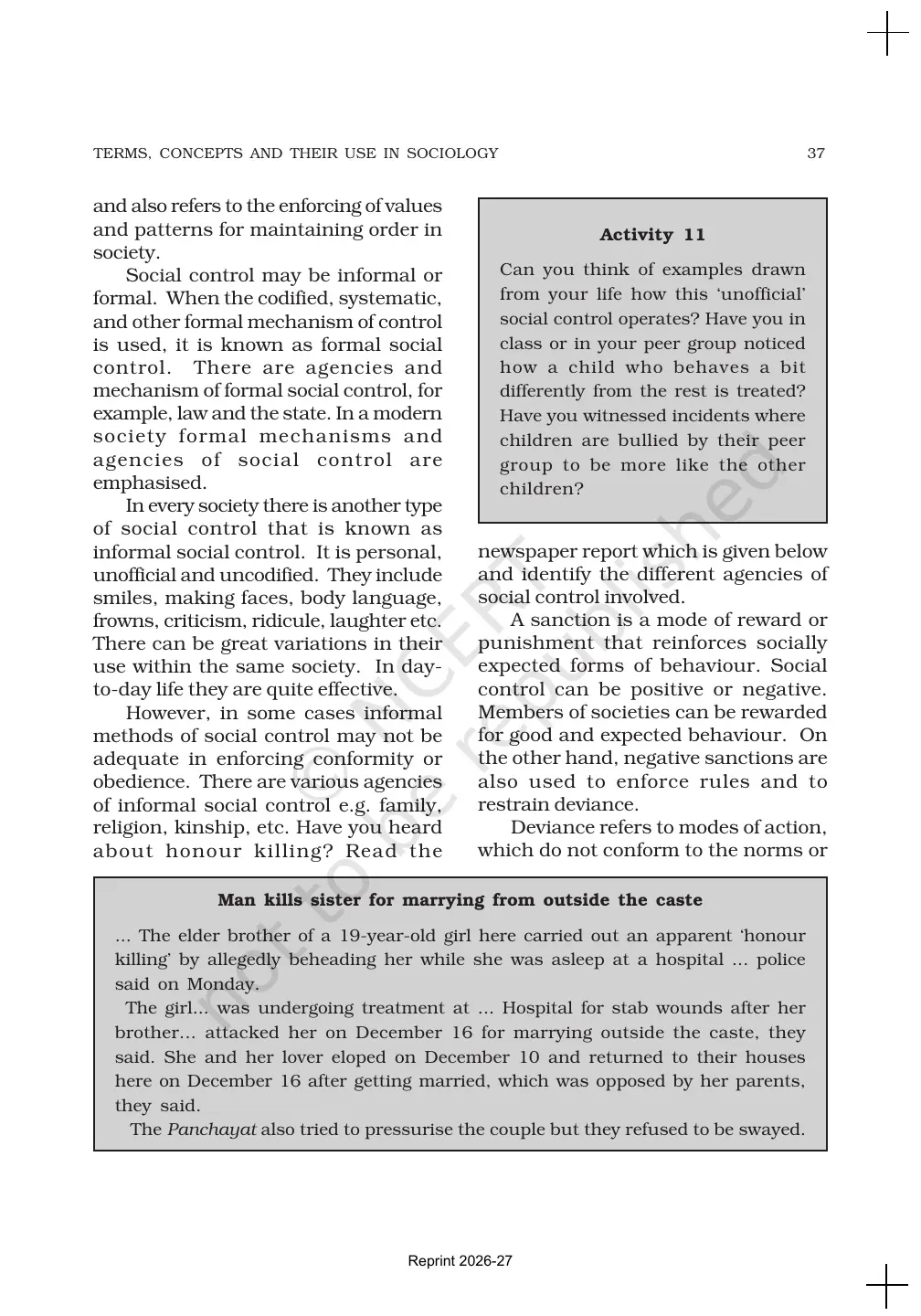
Social control explains how society encourages people to follow accepted norms. It can be formal, such as law and school rules, or informal, such as praise, criticism, advice and family expectations. The chapter uses these ideas to show that individual behaviour is shaped by larger social arrangements.
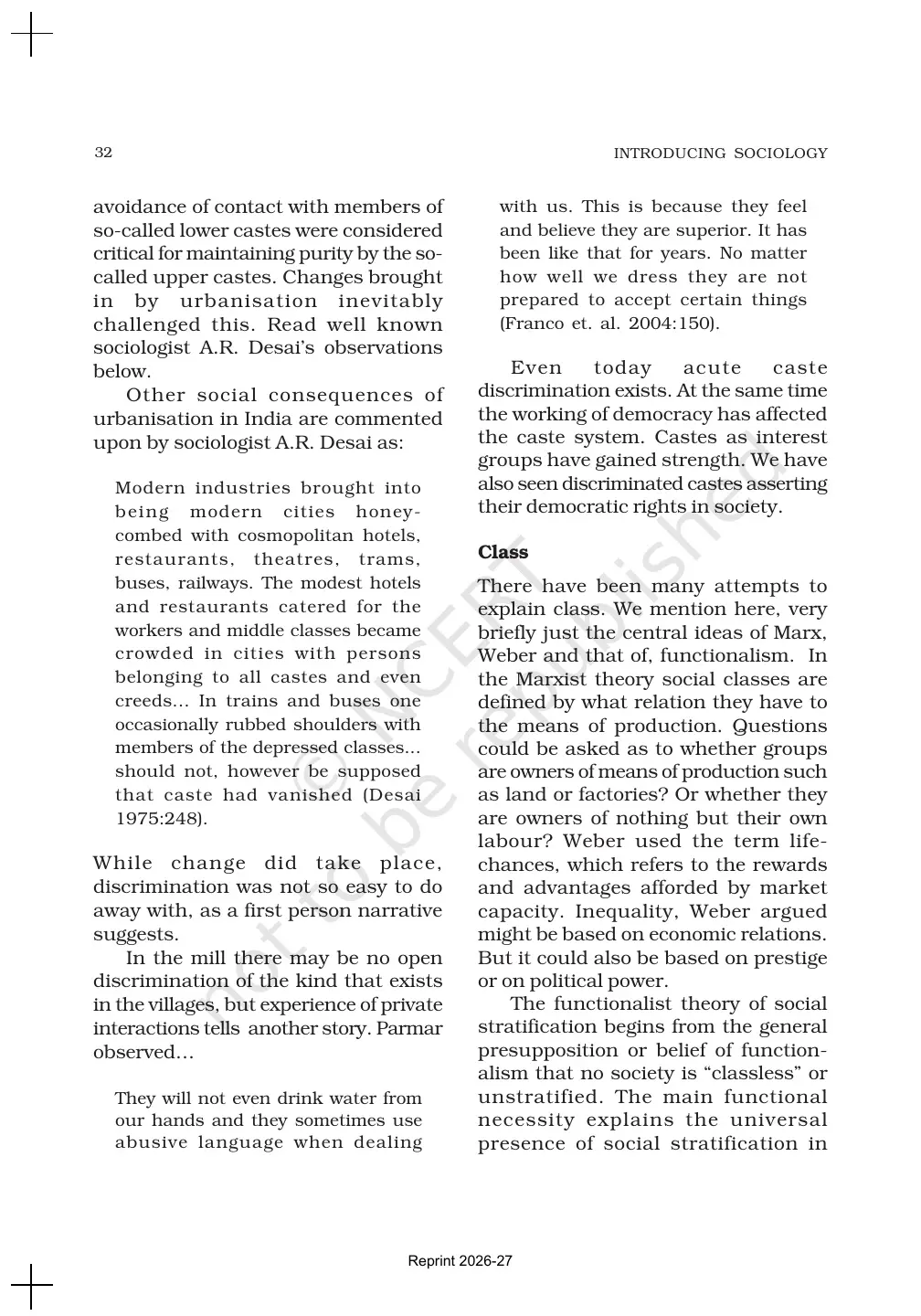
Stratification then takes the discussion to structured inequality. Class, caste, gender and status groups place people differently in society. For 2026-27 revision, connect stratification with examples rather than writing only a dictionary definition.
How to Use the Chapter 2 Book PDF for Revision
Use the official PDF in three passes. First, read the chapter once without stopping at every term. Second, make a two-column table of term and example. Third, practise short answers that ask for a difference, such as social group versus quasi group or primary group versus secondary group.
- Mark the definitions: social group, status, role, social control and stratification.
- Add examples: use family, school, village, office, movement and political party.
- Write contrasts: prepare one line each for primary and secondary groups.
- Revise activities: NCERT activities help students apply terms to real situations.
The chapter is vocabulary-heavy, but it is not only a glossary. Its aim is to show how sociology turns everyday experience into systematic study.
Terms, Concepts and Their Use in Sociology Class 11 Related Resources
| Resource | Best use |
|---|---|
| Terms, Concepts and Their Use in Sociology Handwritten Notes | Use for quick term revision after reading the book PDF. |
| Terms, Concepts and Their Use in Sociology Notes | Use for a shorter explanation of all important concepts. |
| Terms, Concepts and Their Use in Sociology NCERT Solutions | Use for textbook question answers and activity-based practice. |
All Class 11 Sociology NCERT Book Chapters
| Chapter | NCERT Book PDF |
|---|---|
| 1 | Sociology and Society |
| 2 | Terms, Concepts and Their Use in Sociology |
| 3 | Understanding Social Institutions |
| 4 | Culture and Socialisation |
| 5 | Doing Sociology Research Methods |
| 6 | Social Structure, Stratification and Social Processes in Society |
| 7 | Social Change and Social Order in Rural and Urban Society |
| 8 | Environment and Society |
| 9 | Introducing Western Sociologists |
| 10 | Indian Sociologists |
Terms, Concepts and Their Use in Sociology Class 11 NCERT Book FAQs
Ques. What is included in the Class 11 Sociology Chapter 2 NCERT PDF?
Ans. It includes the official Terms, Concepts and Their Use in Sociology chapter, covering social groups, quasi groups, status, role, social control, community and stratification.
Ques. Why does sociology need special terms?
Ans. Sociology studies familiar social life, so it needs precise terms to separate systematic study from everyday common sense and natural explanations.
Ques. What is the difference between a social group and a quasi group?
Ans. A social group has regular interaction, common norms and a sense of belonging. A quasi group is an aggregate that may not yet have structure or organisation.
Ques. How should students revise this chapter for 2026-27 exams?
Ans. Students should prepare a glossary, add one example for every term and practise short comparisons such as primary group versus secondary group.



Comments