




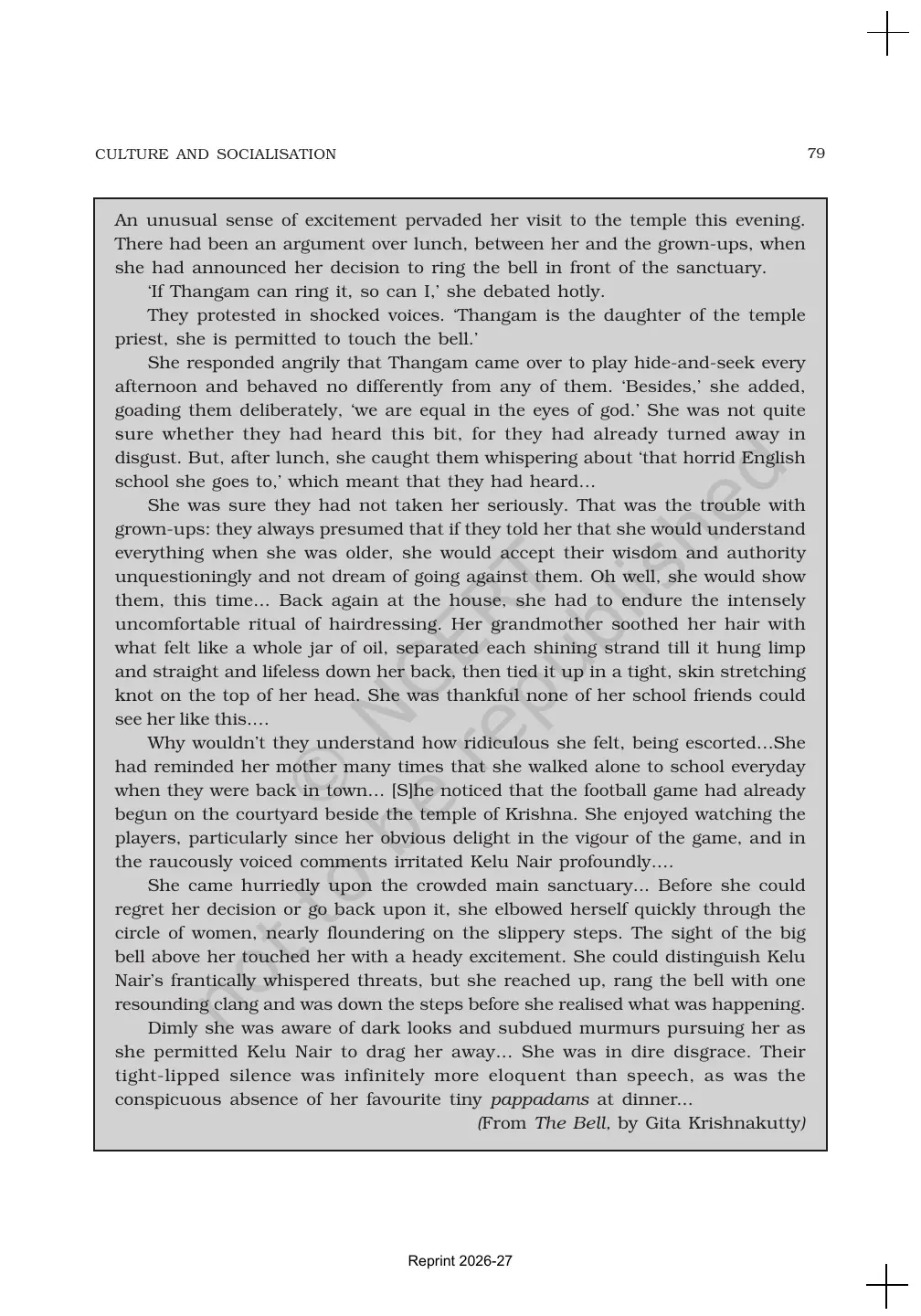
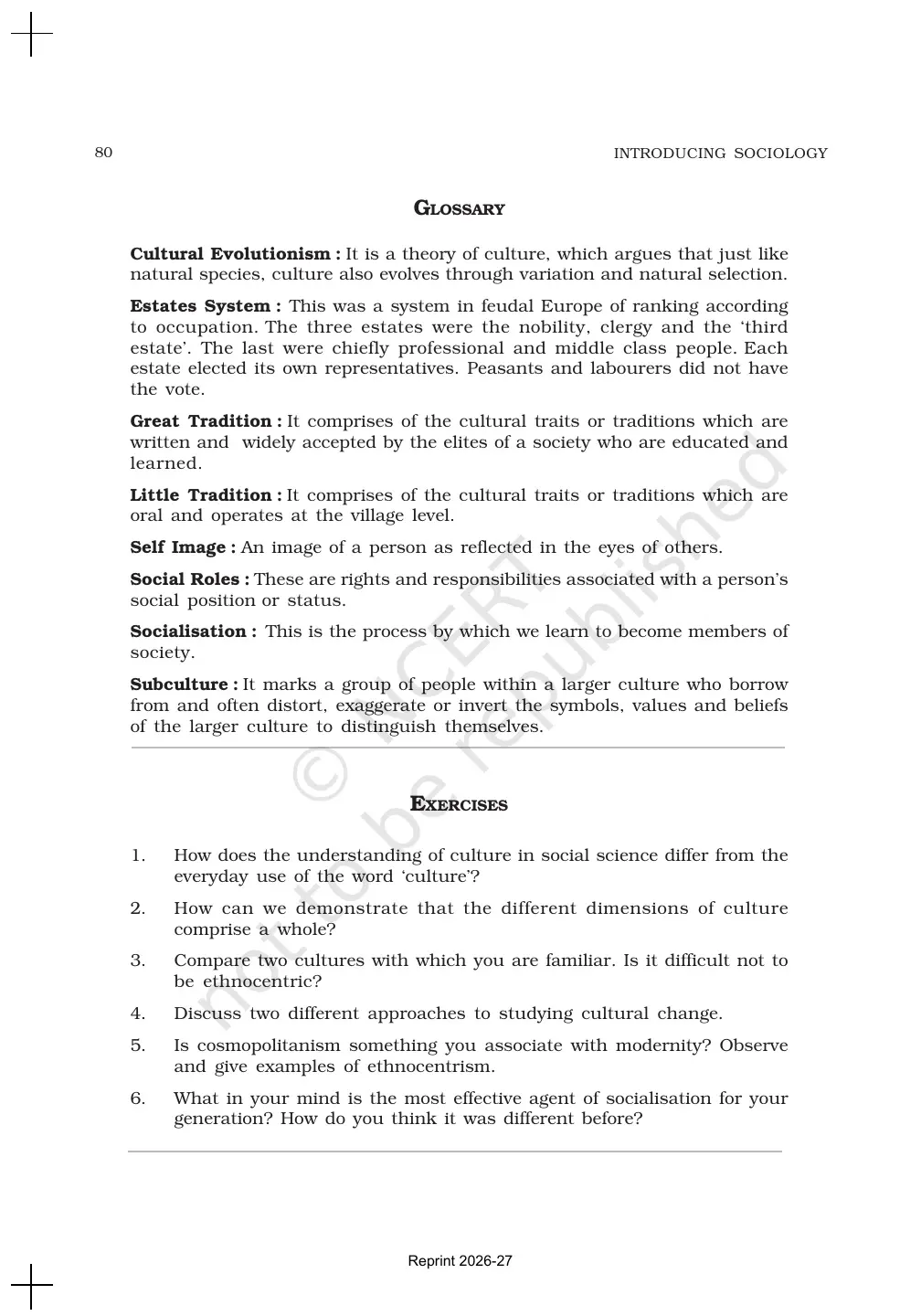
The NCERT Class 11 Sociology Chapter 4 Culture and Socialisation PDF explains how culture shapes everyday life and how students learn social roles. The chapter follows the 2026-27 NCERT textbook and is useful for revising culture, identity, socialisation and cultural change.
- Core focus: culture, socialisation, identity, subculture and cultural change.
- Best use: read the PDF with one example for every key term.
- Exam value: short answers often ask for culture's dimensions and agencies of socialisation.
Student Feedback: In a Collegedunia check of 10,840 Class 11 humanities students, 74% said this chapter became easier after they linked culture with family, school, peer groups and media.
What the Culture and Socialisation NCERT PDF Covers
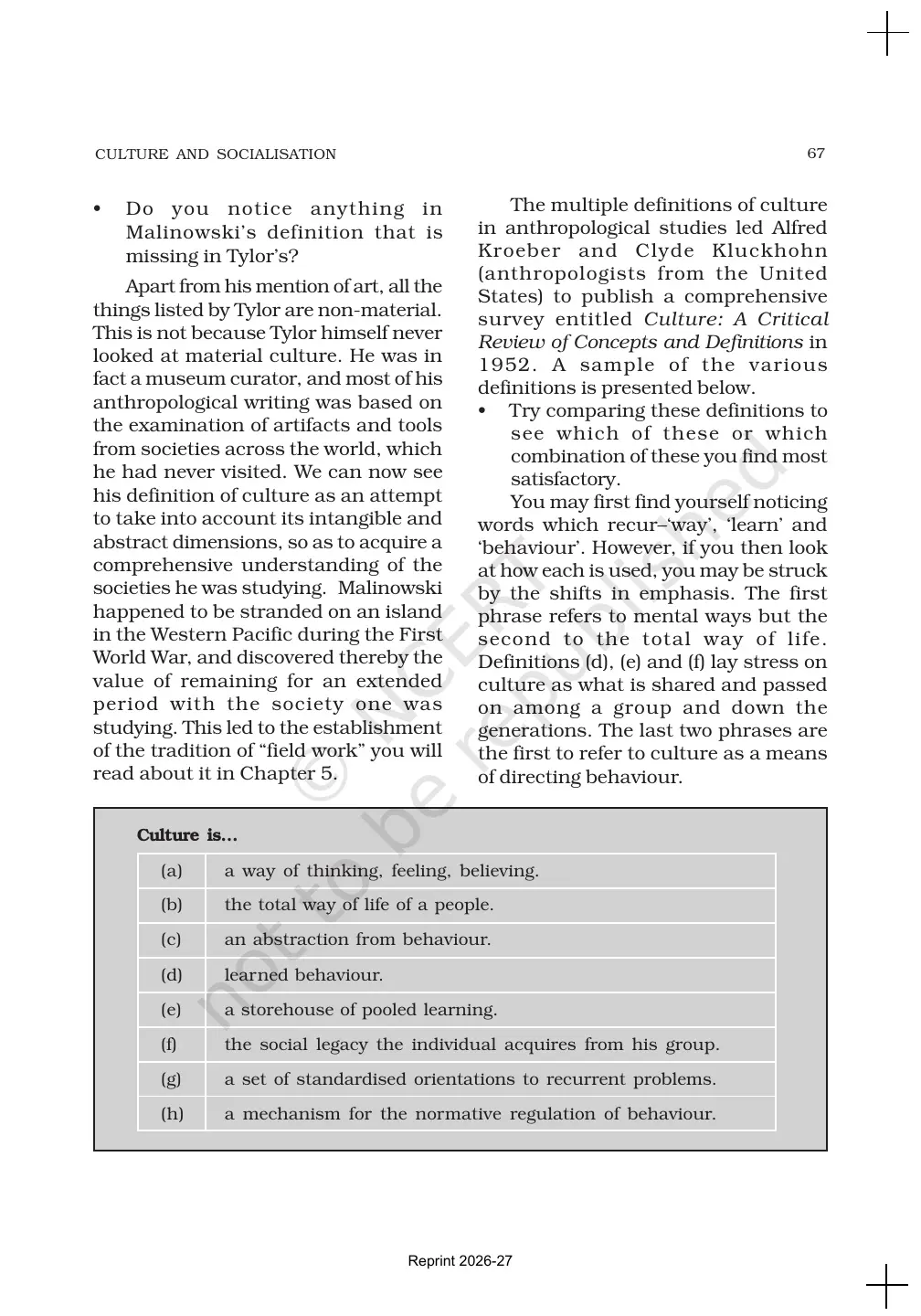
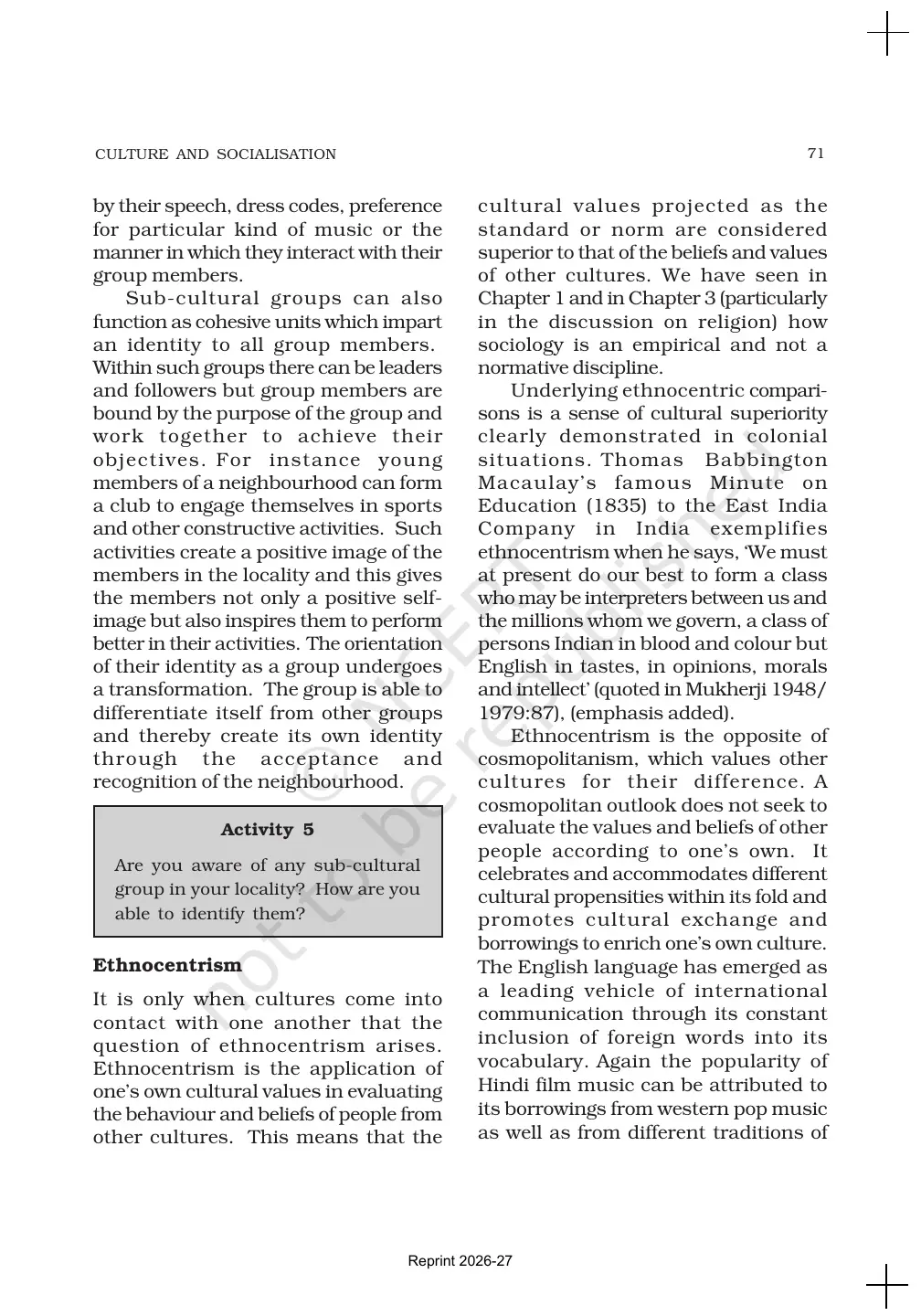
NCERT starts by making culture more precise. In daily speech, culture often means art, music or food. In sociology, culture means the shared ideas, rules, values and objects through which people live together.
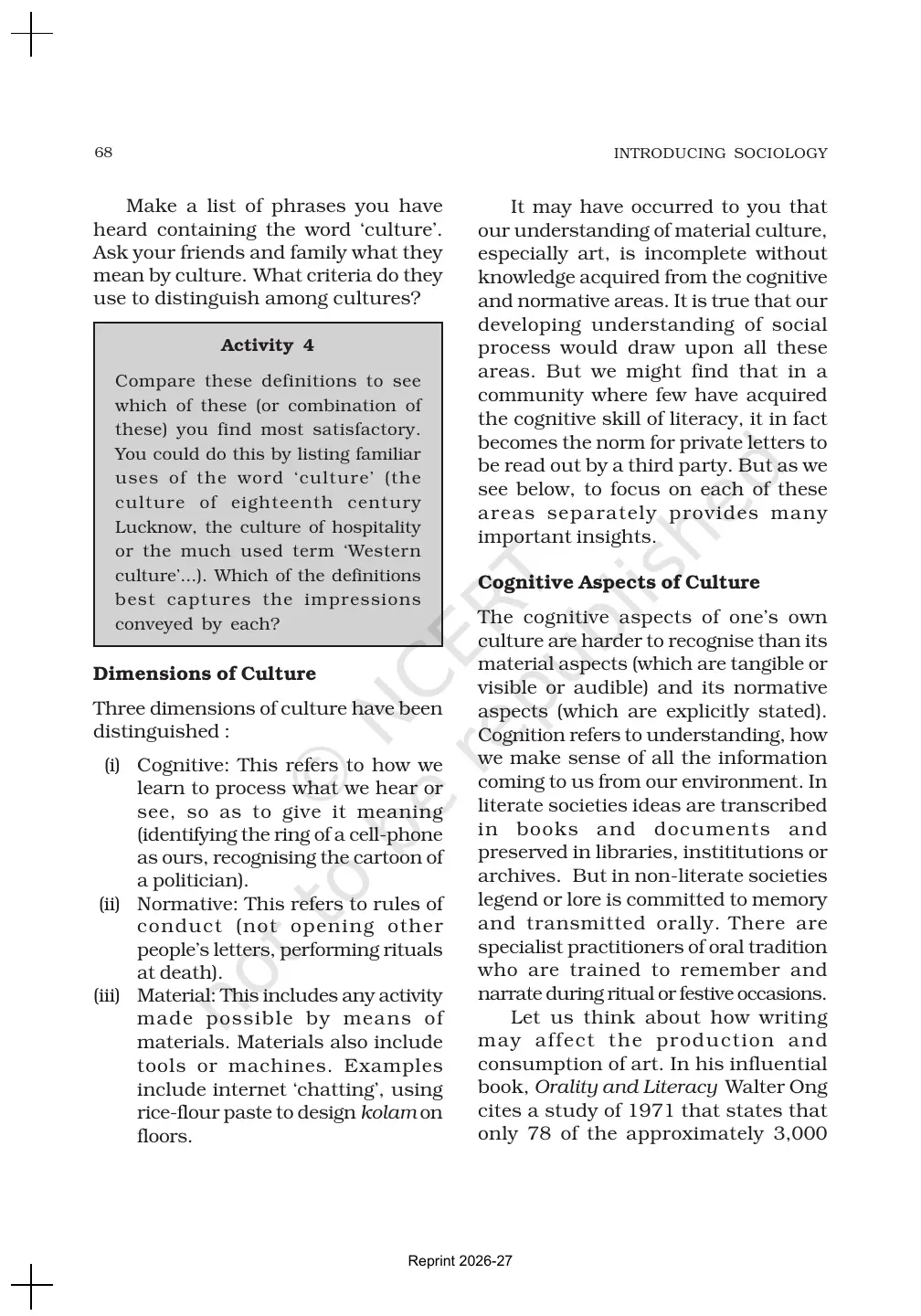
The PDF explains culture through three linked parts: cognitive, normative and material culture. Students should treat these as a single framework, not three separate definitions.
- Cognitive culture: ideas, symbols, language and knowledge.
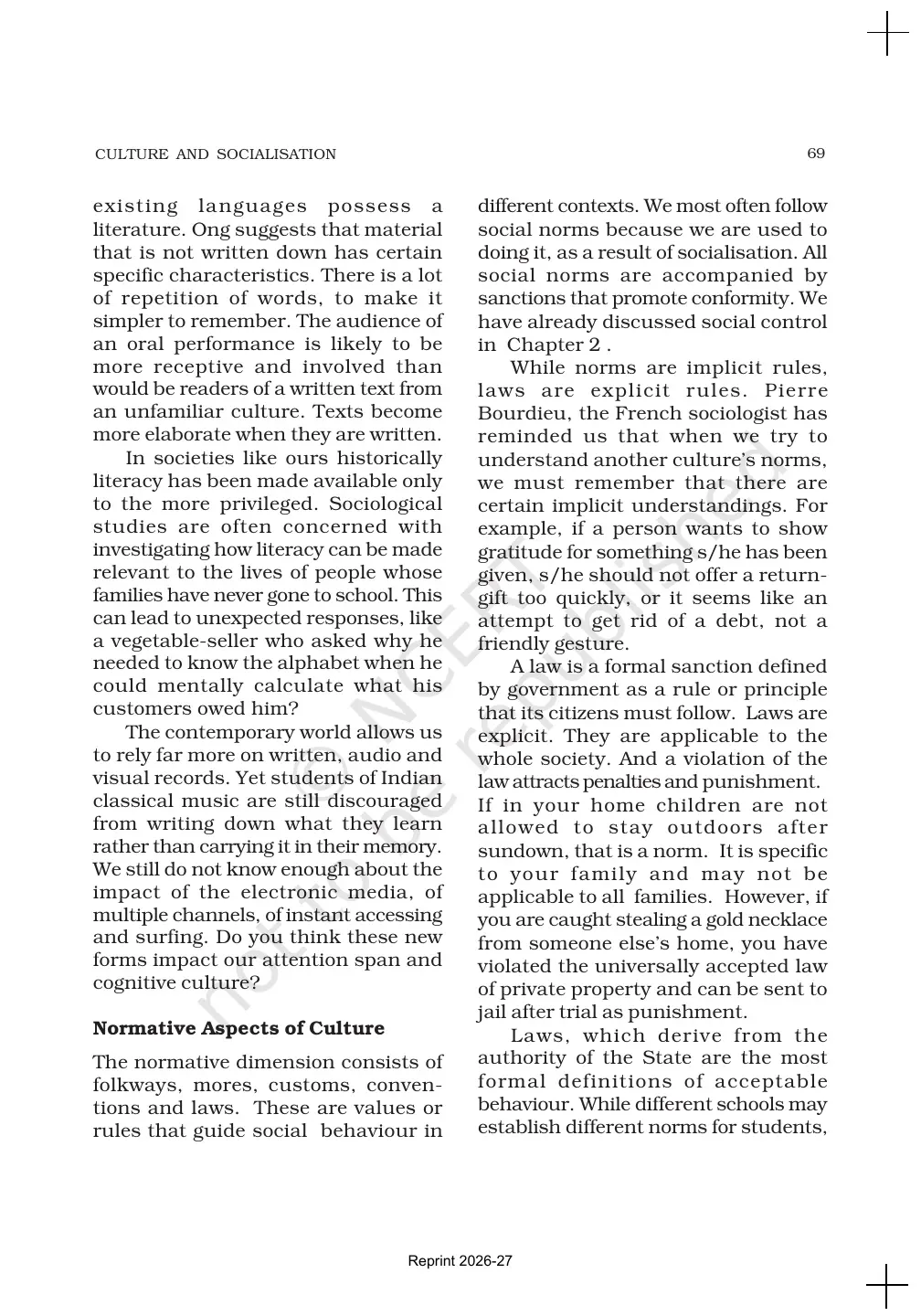
- Normative culture: values, customs, norms and expected conduct.
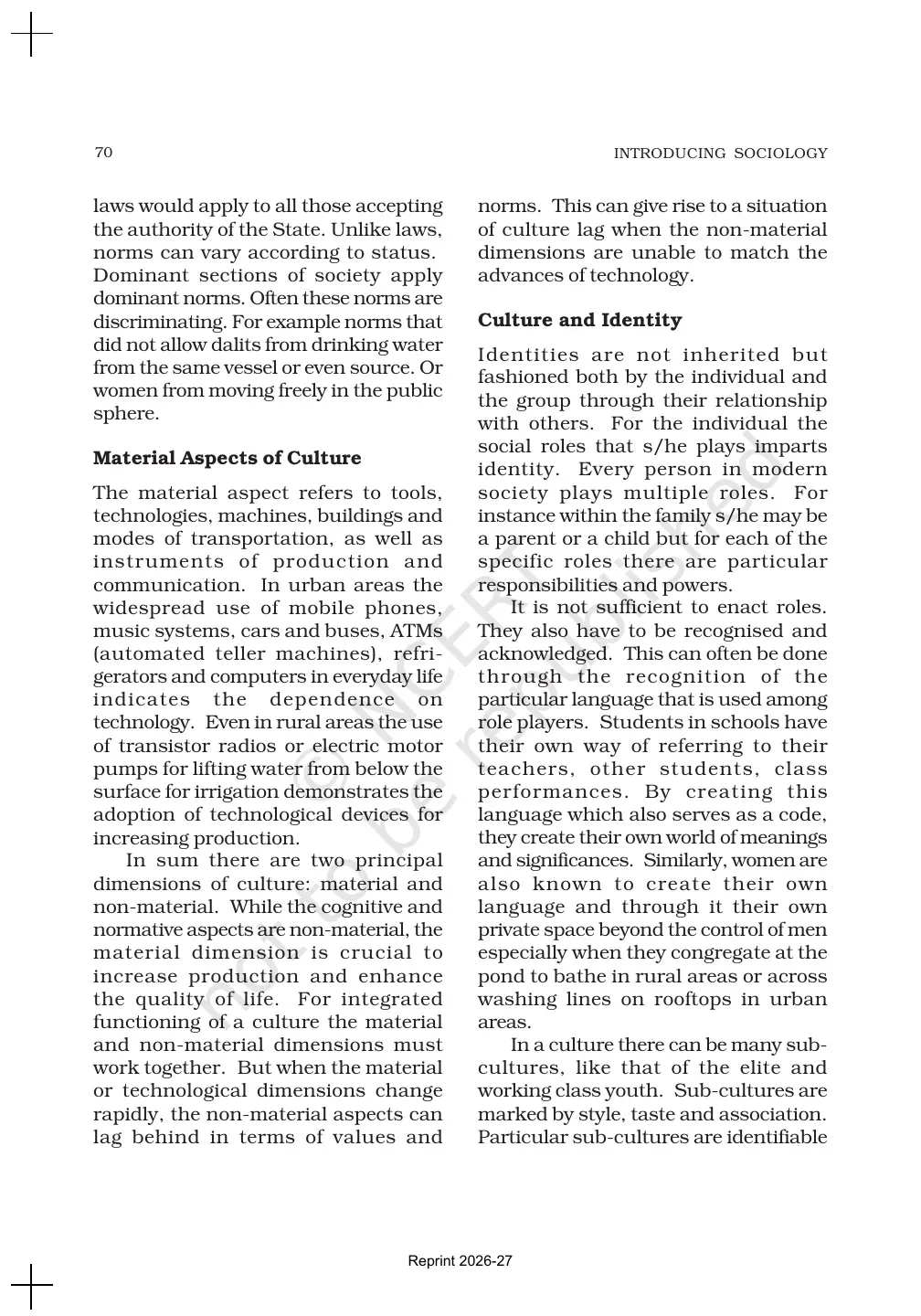
- Material culture: tools, clothes, books, buildings and technology.
Dimensions of Culture in Class 11 Sociology
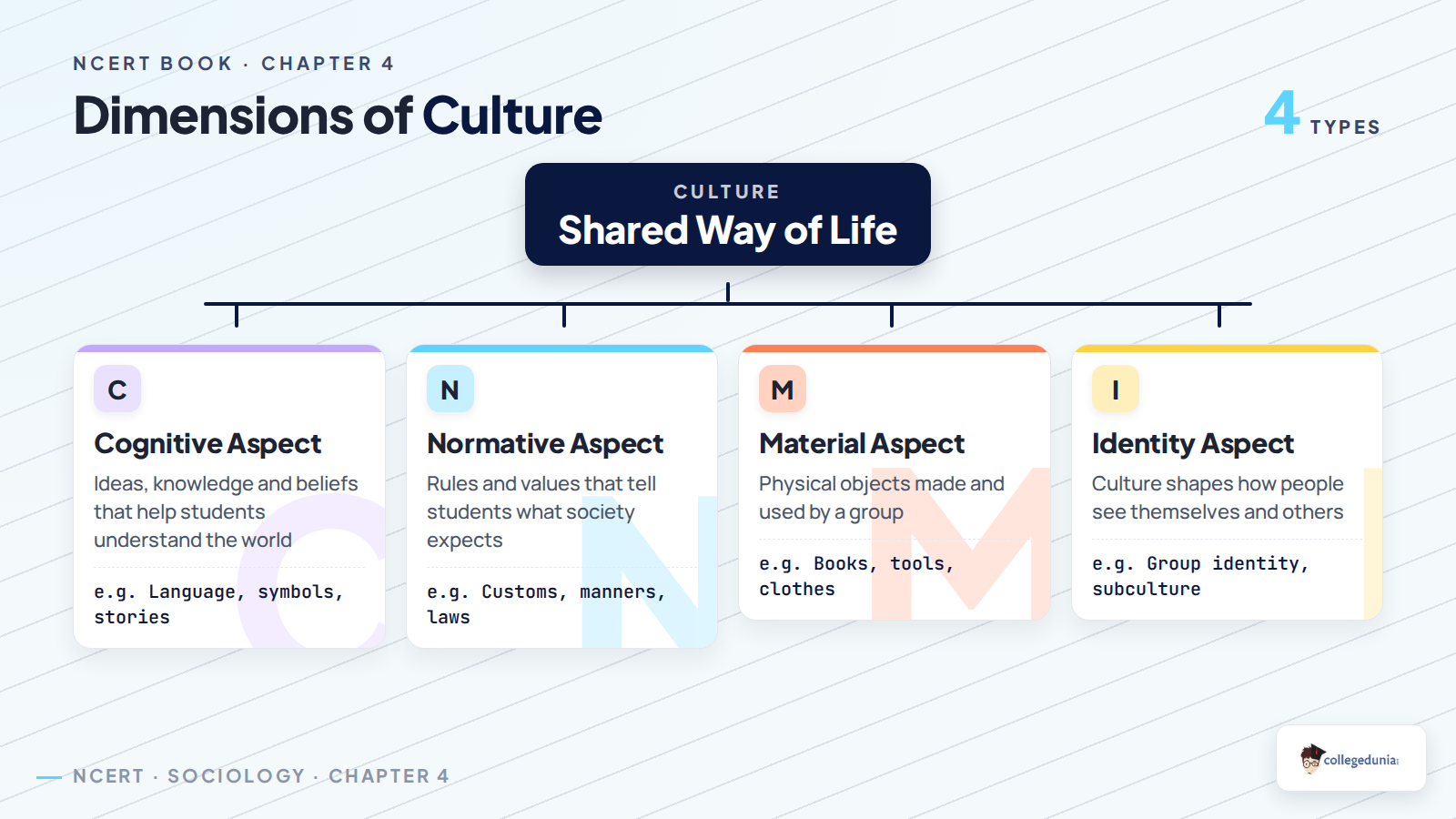
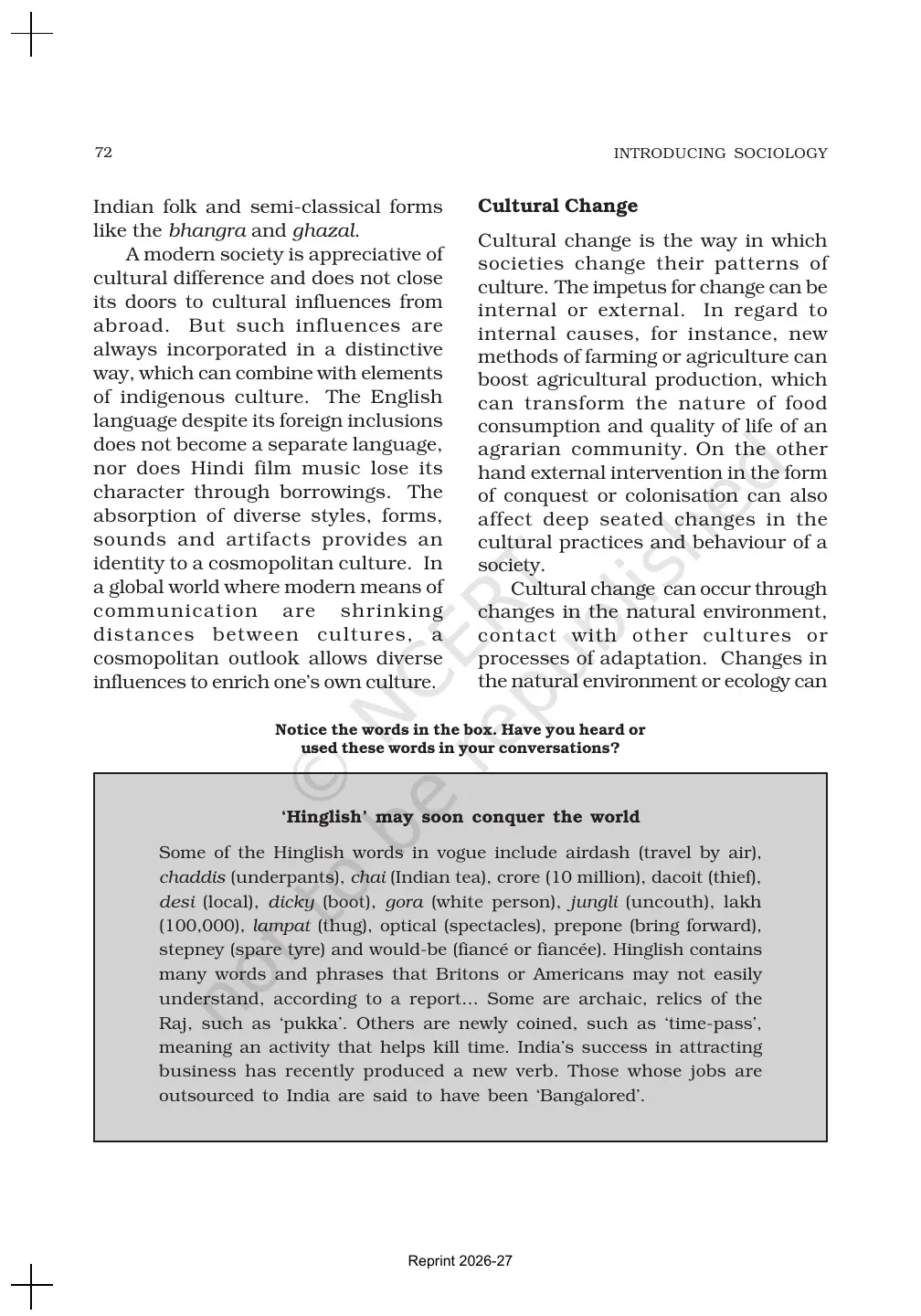
The Culture and Socialisation chapter shows that culture is learned. It is not passed through biology. Students can see this in greeting styles, food habits, dress rules, festival practices and language use.
| Dimension | What it means | Simple example |
|---|---|---|
| Cognitive | Shared ideas and ways of knowing | Language, symbols and stories |
| Normative | Rules about right and wrong conduct | Customs, manners and laws |
| Material | Physical objects made and used by people | Books, tools and clothes |
| Identity | How people understand themselves and others | Subculture, ethnicity and group belonging |
Culture and Socialisation Explained for Class 11
Source: Magnet Brains on YouTube
Socialisation Process in Culture and Socialisation
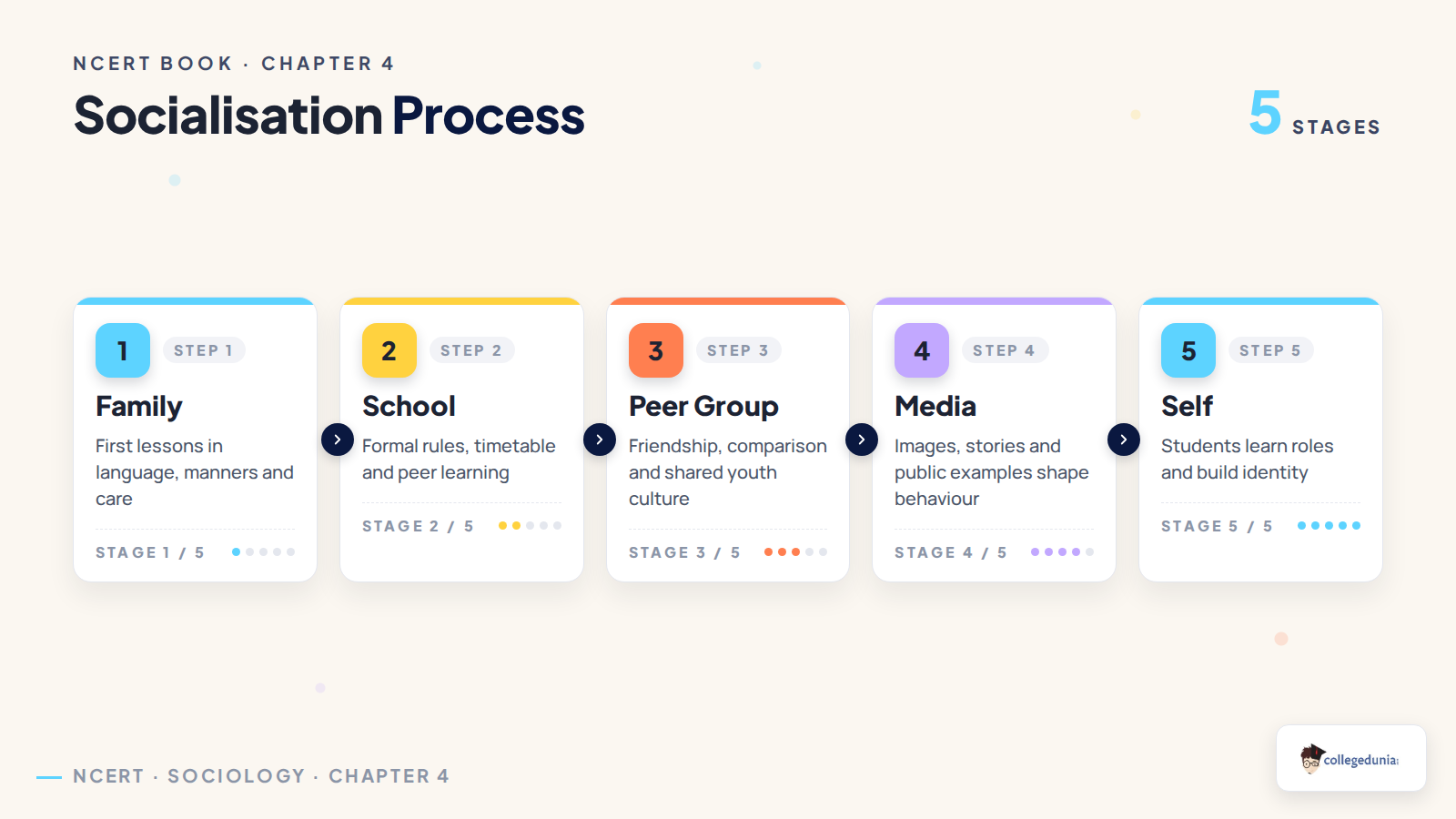
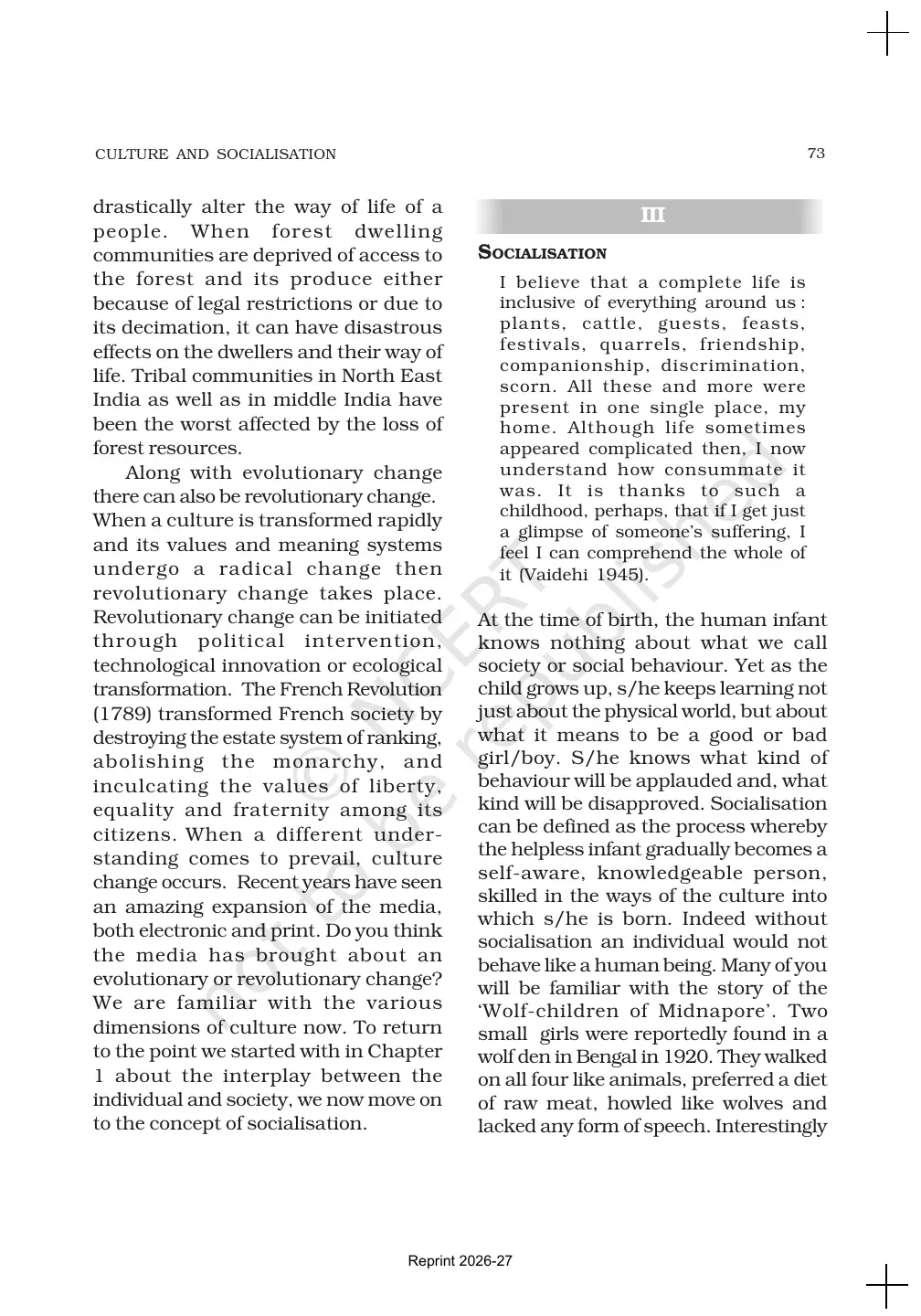
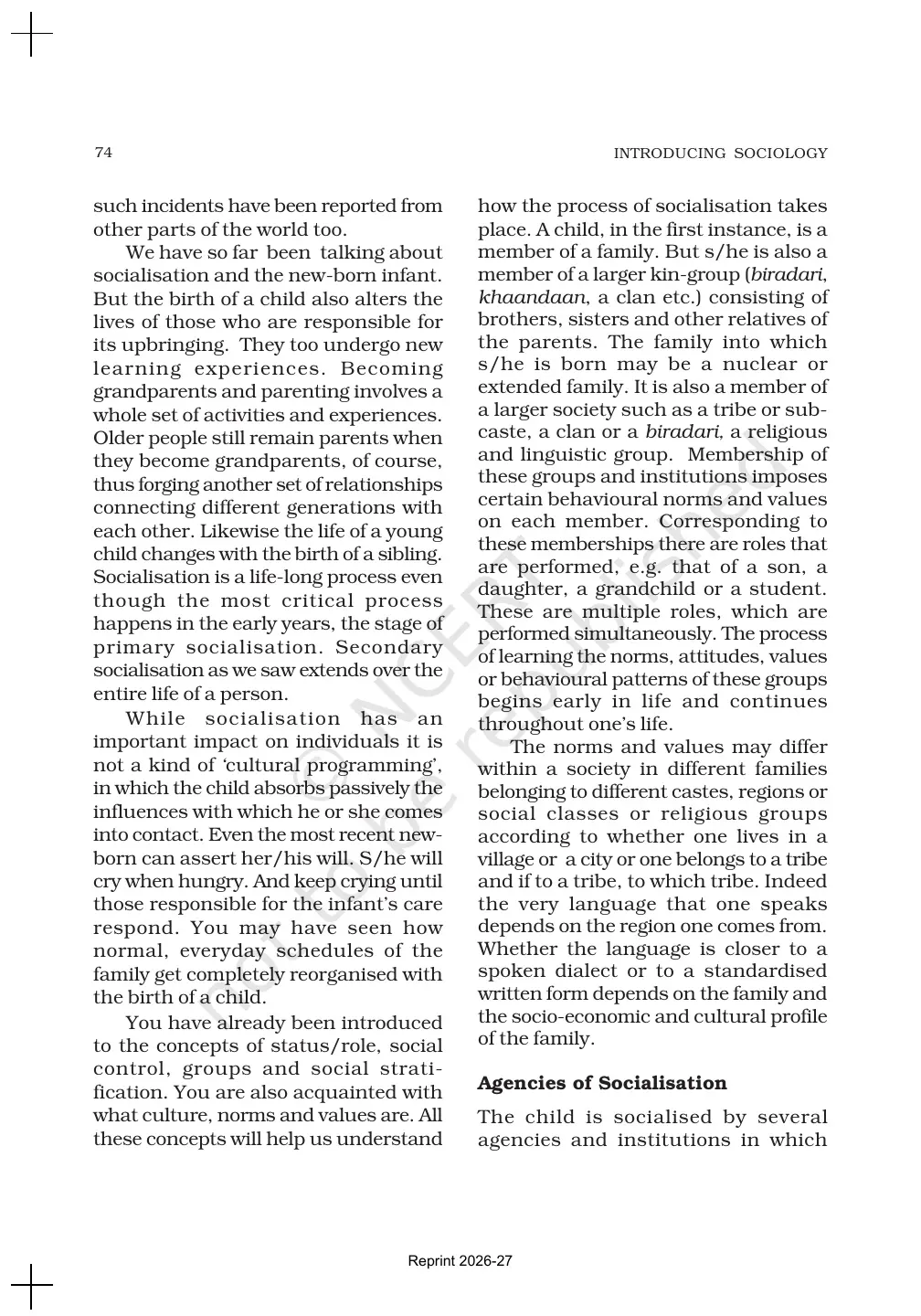
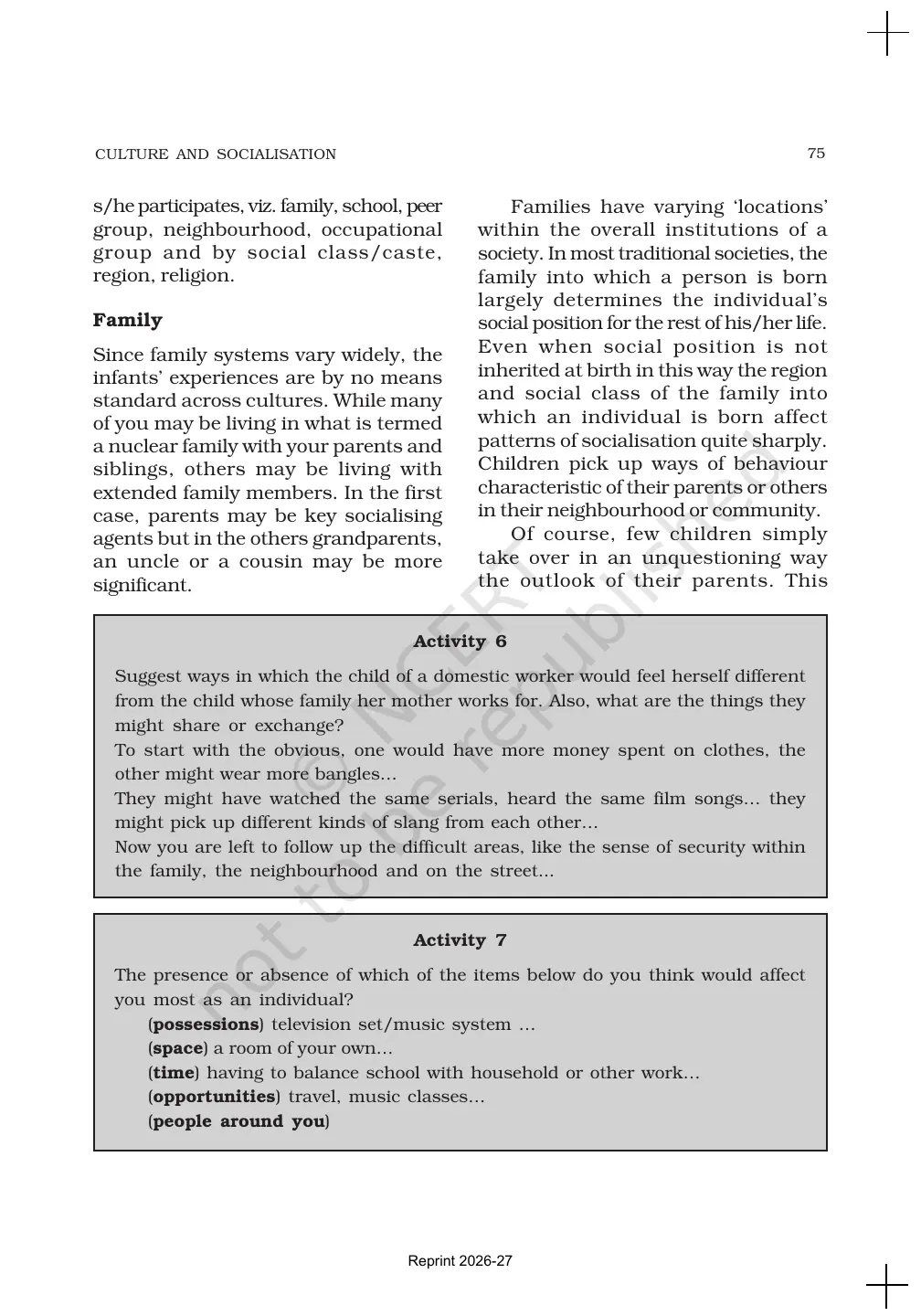
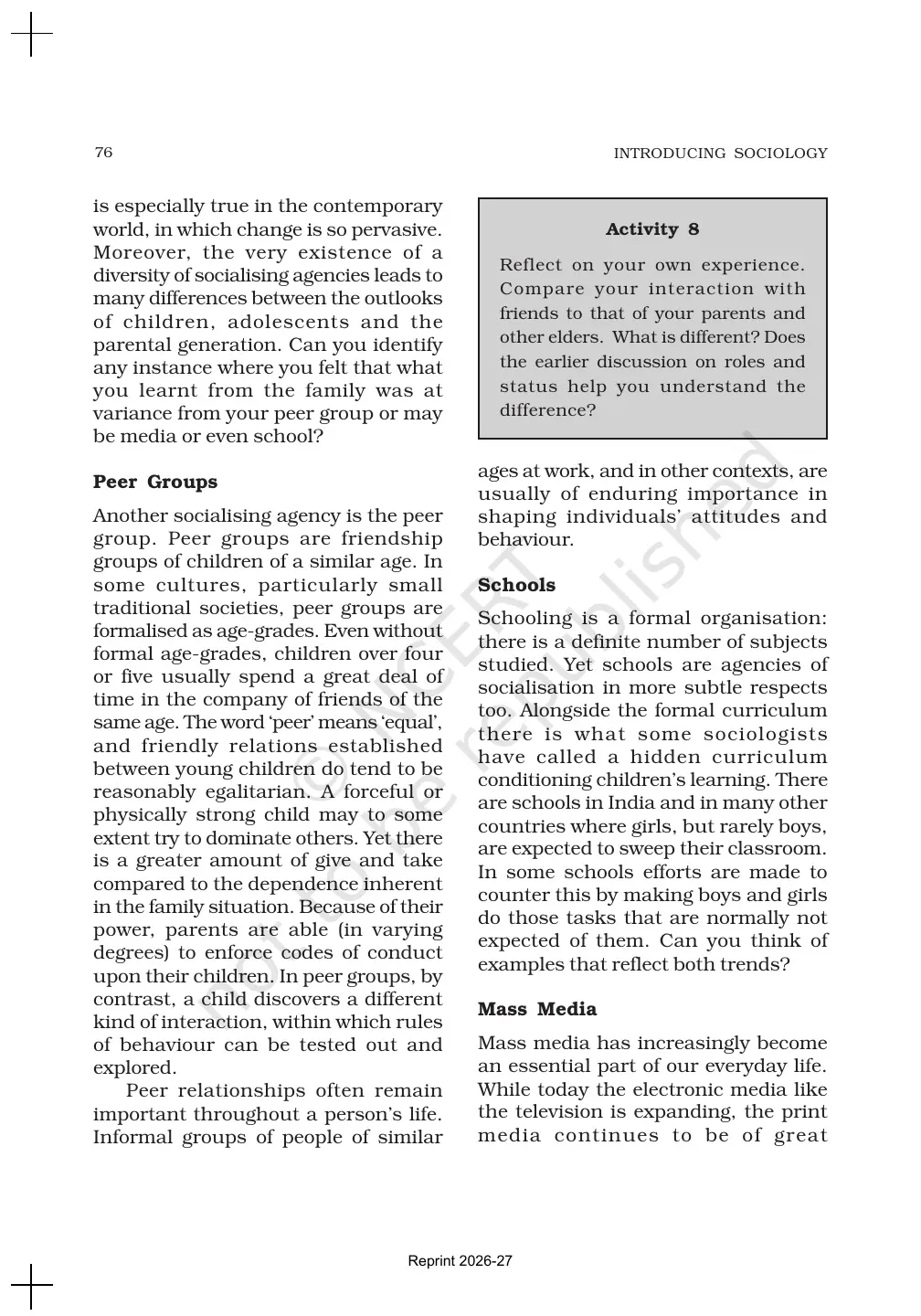
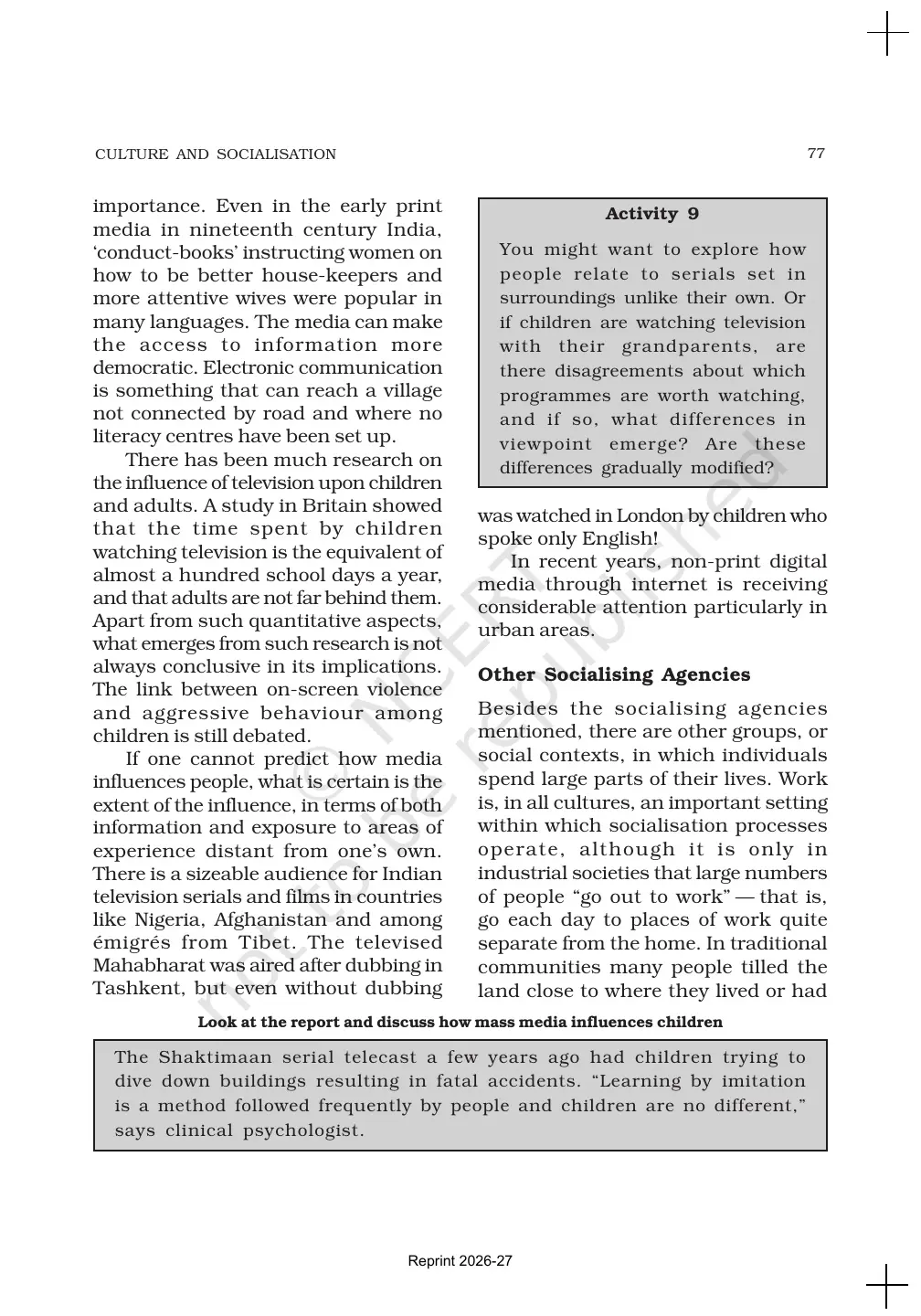
Socialisation is the process through which a person learns society's culture. The chapter explains that this learning starts in childhood and continues through life. Family, school, peer groups and mass media all shape behaviour.
- Family: first lessons in language, care and manners.
- School: timetable, discipline, formal rules and group work.
- Peer group: friendship, comparison and shared youth culture.
- Media: images, stories and public examples of conduct.
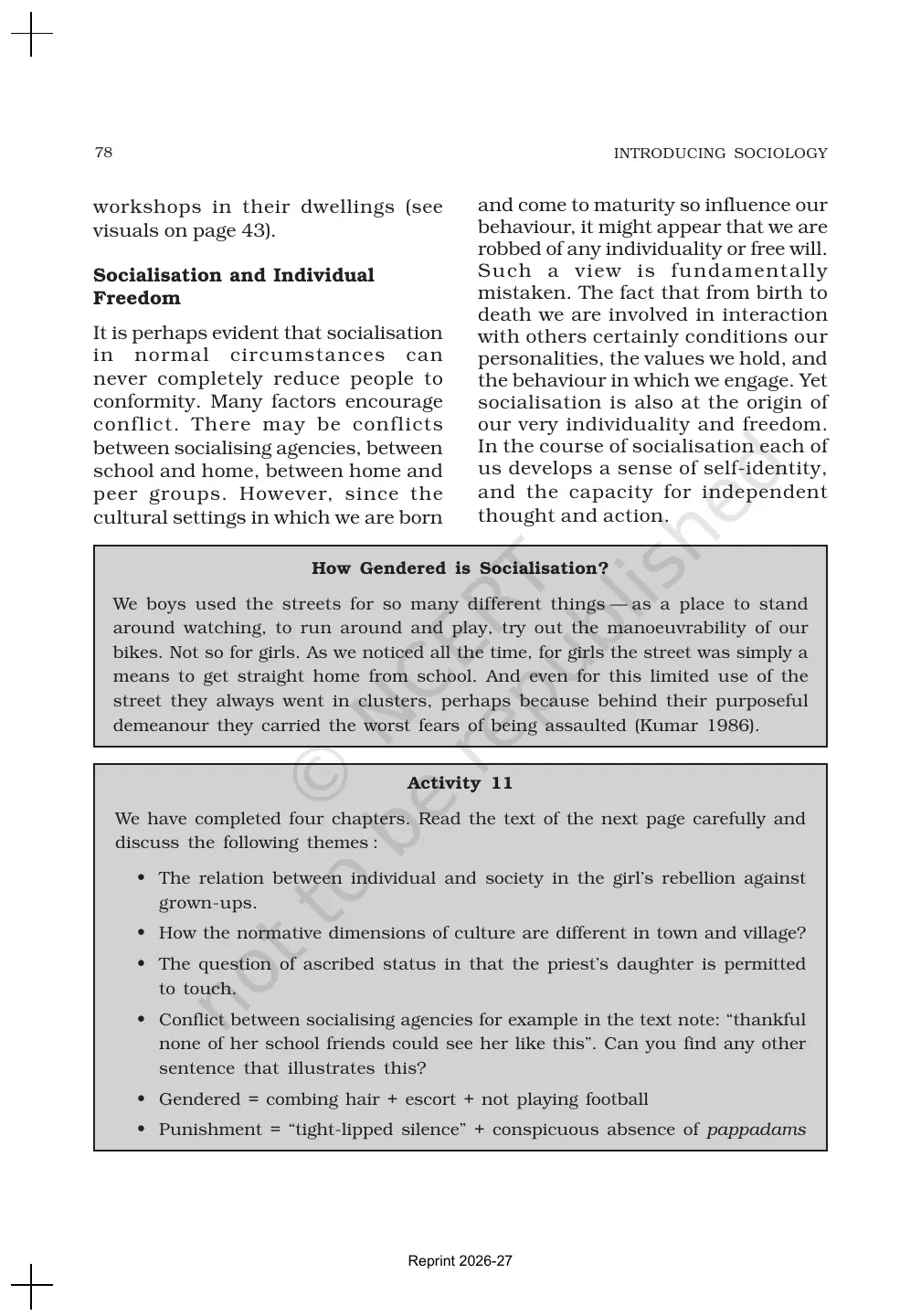
Socialisation does not remove choice completely. It gives students roles and values, but people can also question rules and change them.
Culture, Identity and Subculture in the NCERT Chapter
The PDF links culture with identity. Identity means how people know who they are and how others place them in society. A student may belong to a family, region, language group, religion, class and peer group at the same time.
NCERT also explains subculture. A subculture is a smaller pattern of culture inside a larger society. It may have its own style, music, slang or values. Subculture helps students see that society is not one flat culture.
How to Use the Chapter 4 Book PDF for Revision
Use the official PDF in three short rounds. First, read culture and its dimensions. Second, mark every agency of socialisation. Third, write one example from your own society for each concept.
- For definitions: write culture, socialisation, identity and subculture in one line each.
- For examples: connect family, school, peers and media with daily life.
- For long answers: explain a concept, add an example, then add the sociological point.
- For quick recap: revise cognitive, normative and material culture as one table.
Culture and Socialisation Class 11 Related Resources
| Resource | Best use |
|---|---|
| Culture and Socialisation Handwritten Notes | Use for quick revision after reading the book PDF. |
| Culture and Socialisation Notes | Use for shorter explanations of the chapter concepts once the notes page is live. |
| Culture and Socialisation NCERT Solutions | Use for textbook answers and activity-based practice once the solutions page is live. |
All Class 11 Sociology NCERT Book Chapters
| Chapter | NCERT Book PDF |
|---|---|
| 1 | Sociology and Society |
| 2 | Terms, Concepts and Their Use in Sociology |
| 3 | Understanding Social Institutions |
| 4 | Culture and Socialisation |
| 5 | Doing Sociology Research Methods |
| 6 | Social Structure, Stratification and Social Processes in Society |
| 7 | Social Change and Social Order in Rural and Urban Society |
| 8 | Environment and Society |
| 9 | Introducing Western Sociologists |
| 10 | Indian Sociologists |
Culture and Socialisation Class 11 NCERT Book FAQs
Ques. What is included in the Class 11 Sociology Chapter 4 NCERT PDF?
Ans. It includes the official Culture and Socialisation chapter, covering culture, identity, cultural change, socialisation and its main agencies.
Ques. What are the three dimensions of culture in this chapter?
Ans. The three dimensions are cognitive culture, normative culture and material culture. Together, they explain ideas, rules and objects in society.
Ques. What is socialisation in Class 11 Sociology?
Ans. Socialisation is the process through which students learn language, values, rules and roles from family, school, peers, media and other groups.
Ques. How should students revise Culture and Socialisation for 2026-27 exams?
Ans. Students should make a table of culture's dimensions, list each agency of socialisation and prepare one daily-life example for every key term.



Comments