




The NCERT Class 11 Sociology Chapter 7 Social Change and Social Order in Rural and Urban Society PDF gives students the official textbook chapter for the 2026-27 session. Use it to revise social change, social order, authority, power, rural society, urban society and contestation from the NCERT source.
- Core focus: change, order, power, authority, law, village, town and city.
- Best use: read the PDF with one rural and one urban example for each concept.
- Exam value: short and long answers often test social order in rural and urban settings.
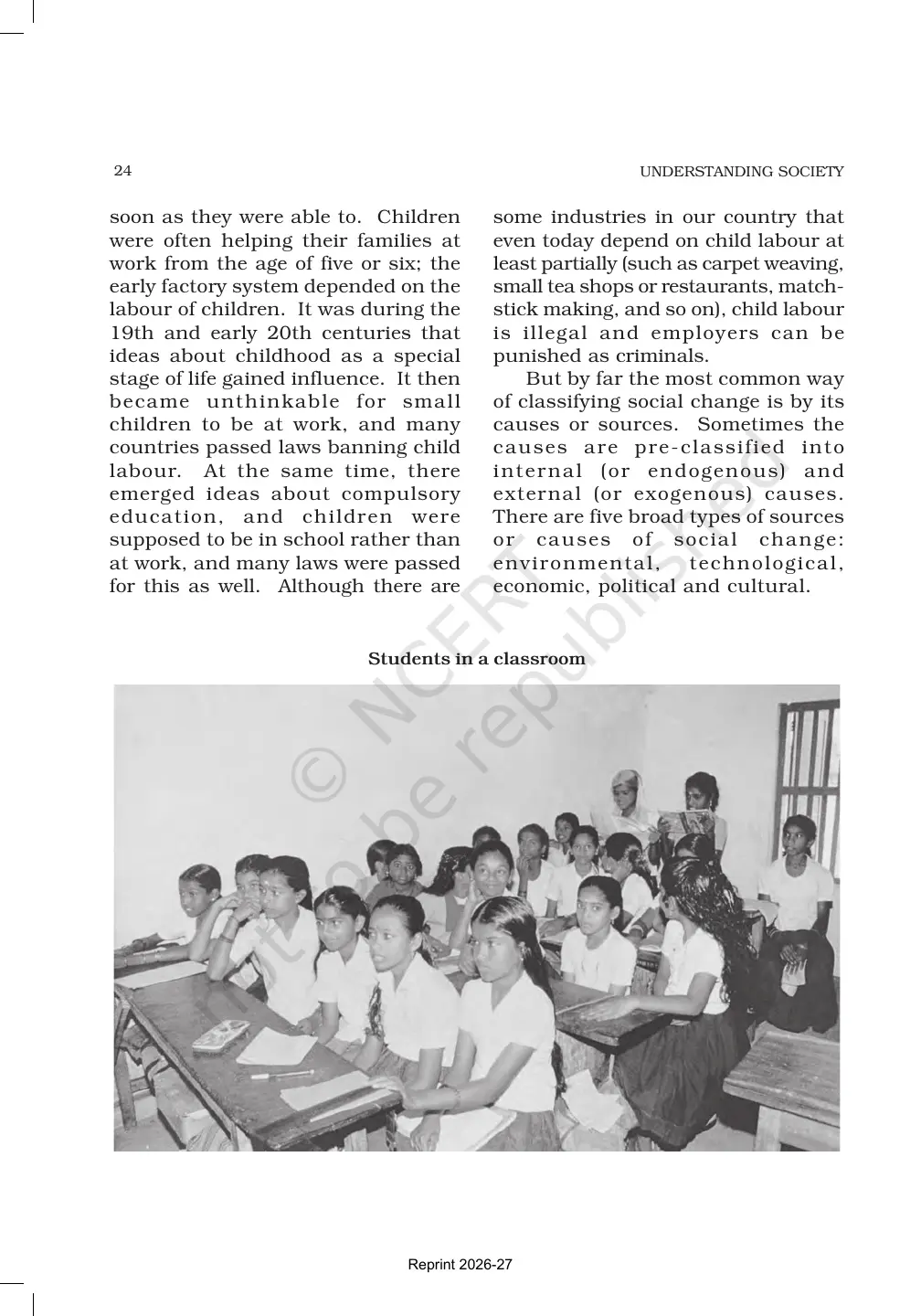
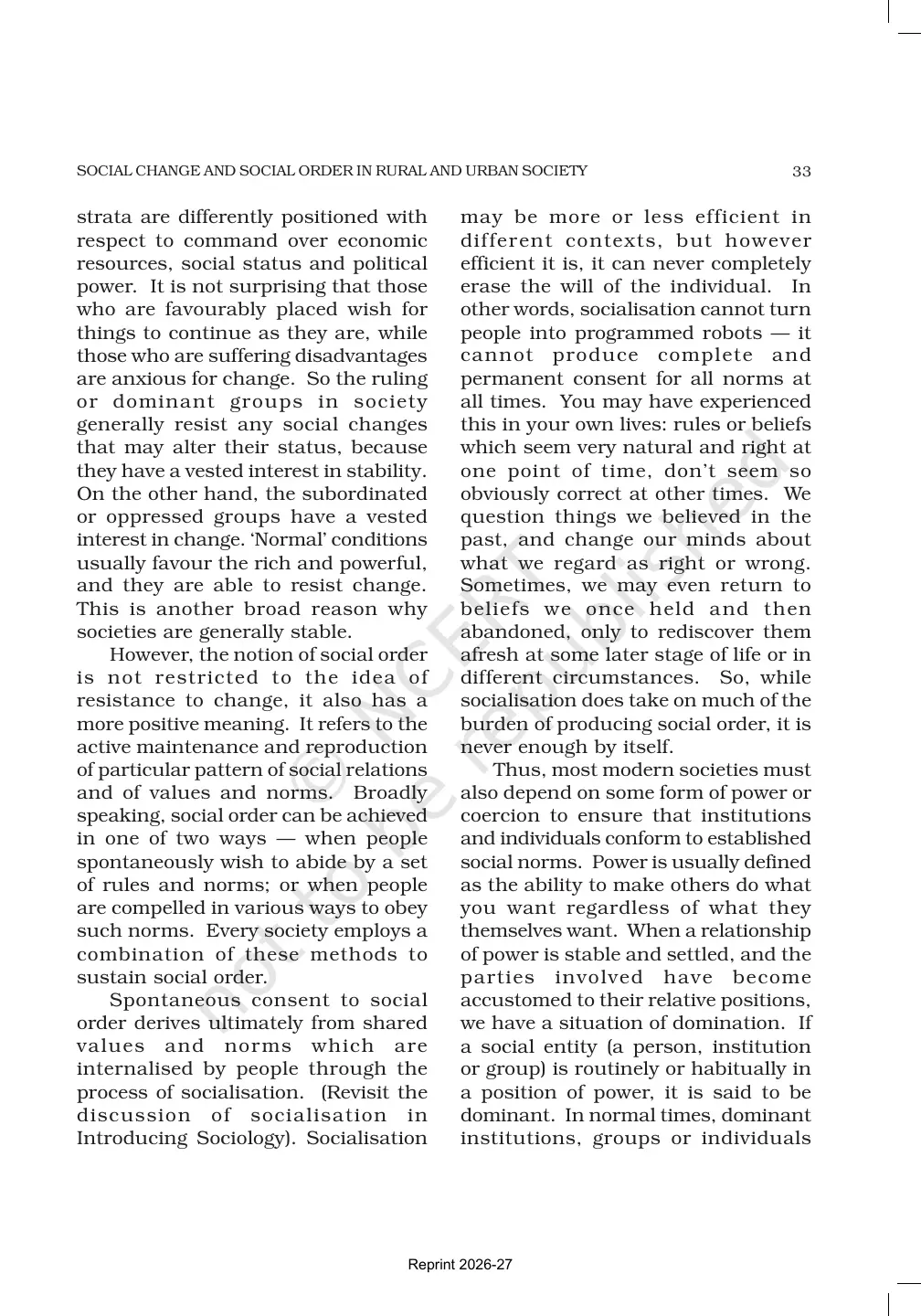
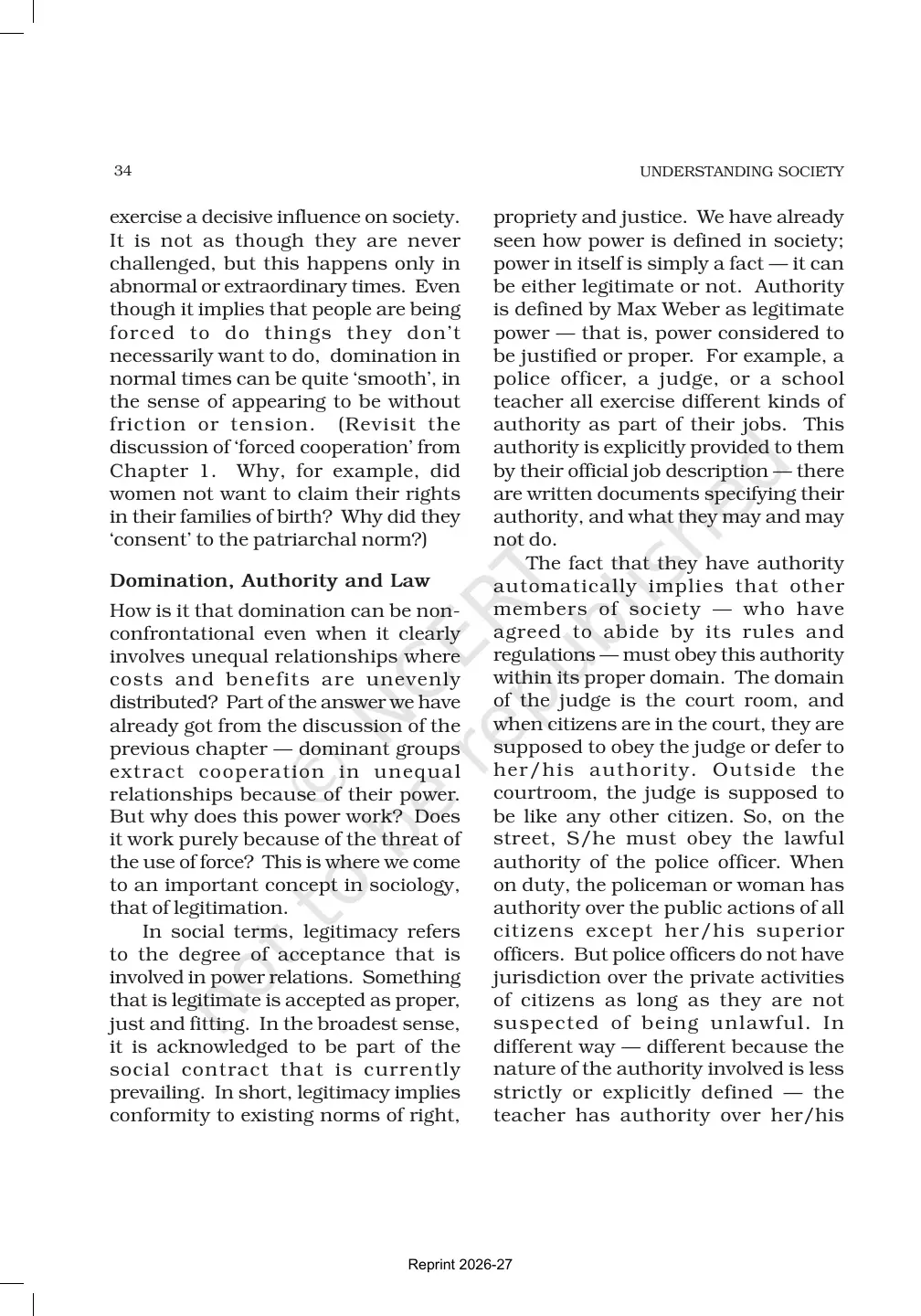
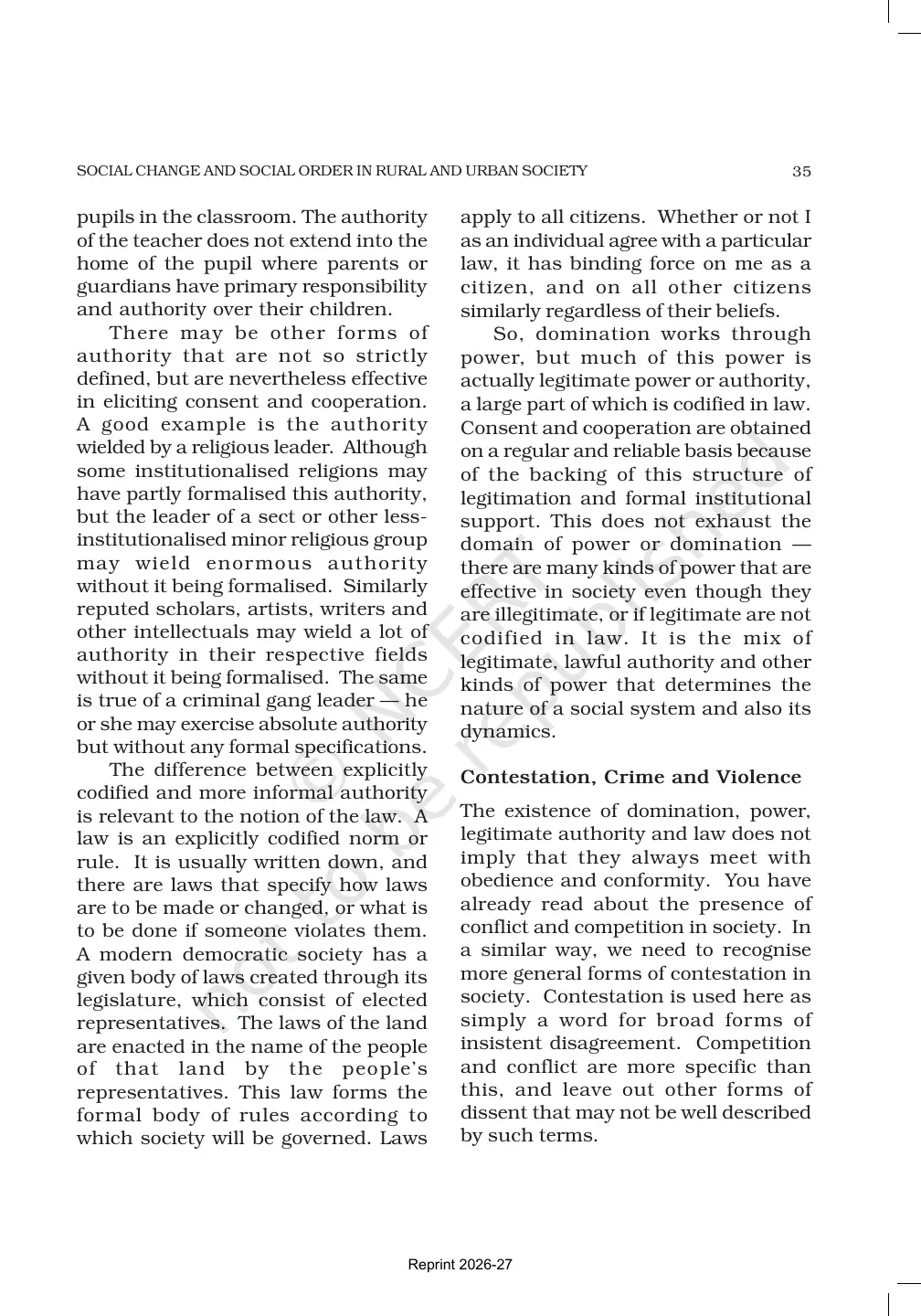
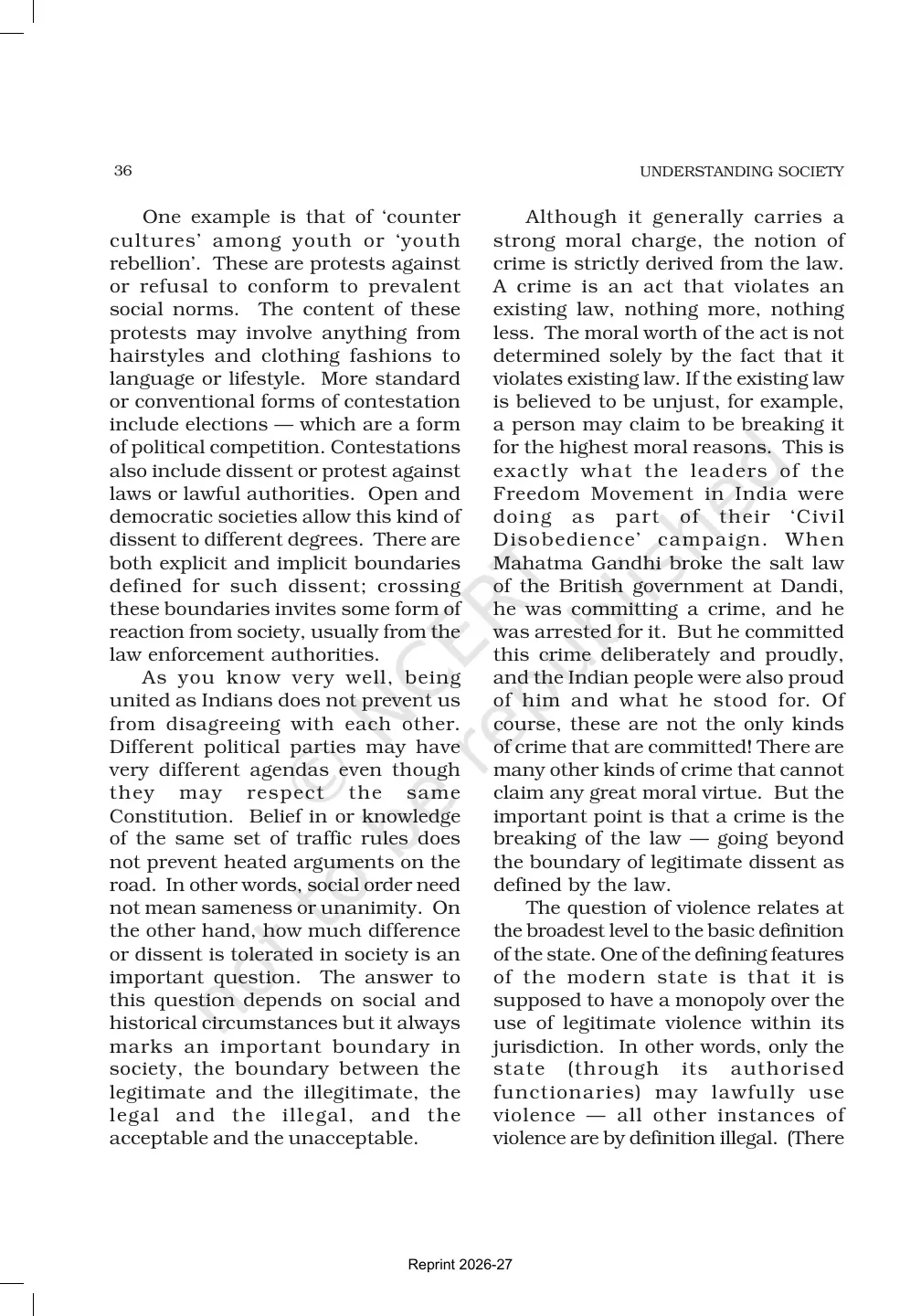
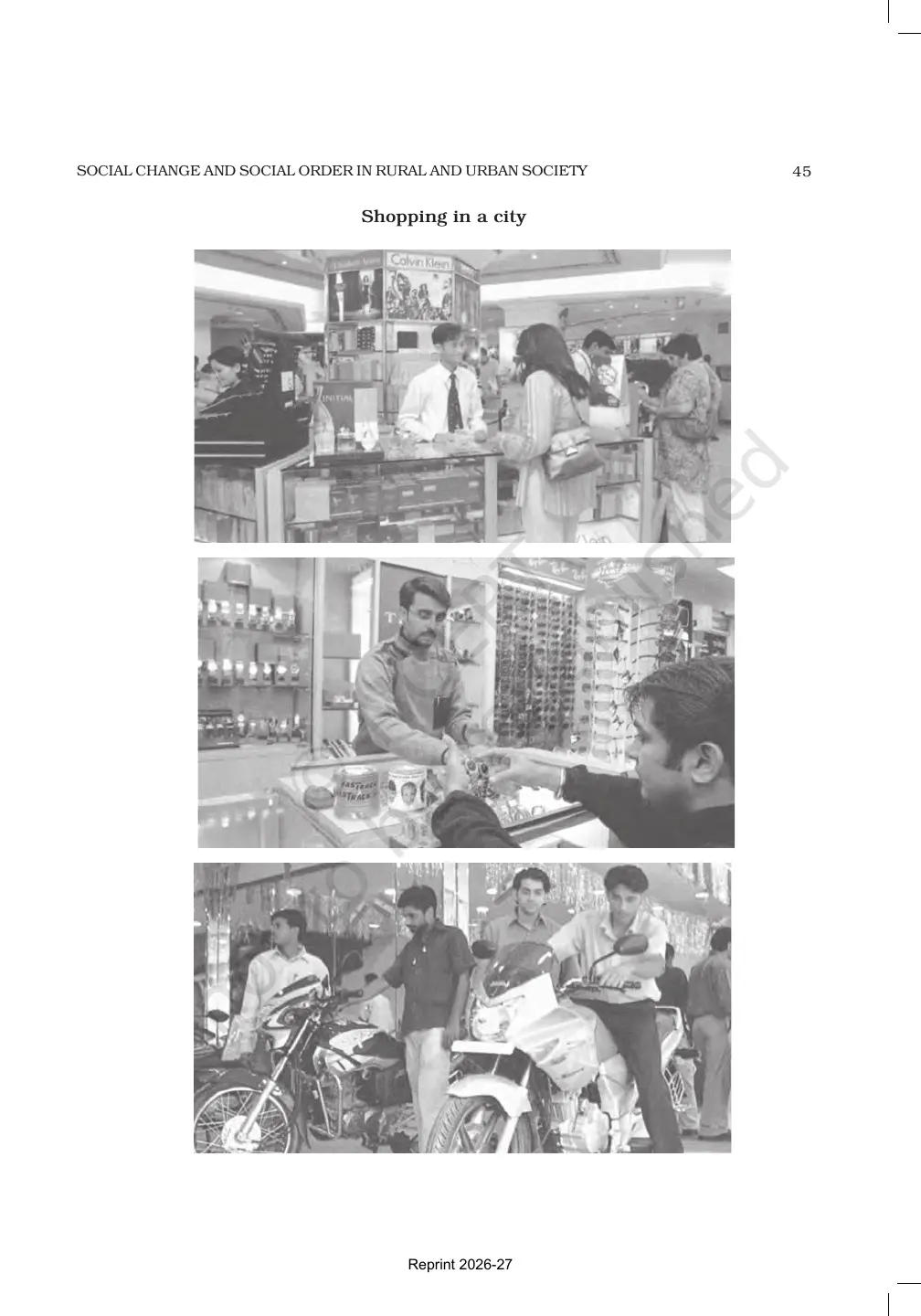
The official NCERT Class 11 Sociology Chapter 7 PDF helps students connect social change with authority, law, rural order and urban life.
Student Feedback: In a Collegedunia check of 10,260 Class 11 humanities students, most students said this chapter became easier after they separated social change from social order in a two-column table.
What the Social Change and Social Order NCERT PDF Covers
NCERT explains social change as a shift in social relationships, institutions, values and ways of living. Change may come through technology, economy, politics, culture or environment. It may be slow, sudden, planned or contested.
The chapter also explains social order. Social order means the patterned and stable arrangement through which society runs. It depends on rules, law, authority, power and shared expectations. Sociology studies both order and change together because one often affects the other.
- Social change: a shift in social structure, values, relations or institutions.
- Social order: stability created through rules, authority, power and law.
- Contestation: disagreement or struggle over power, resources or rules.
Social Change and Social Order in Class 11 Sociology
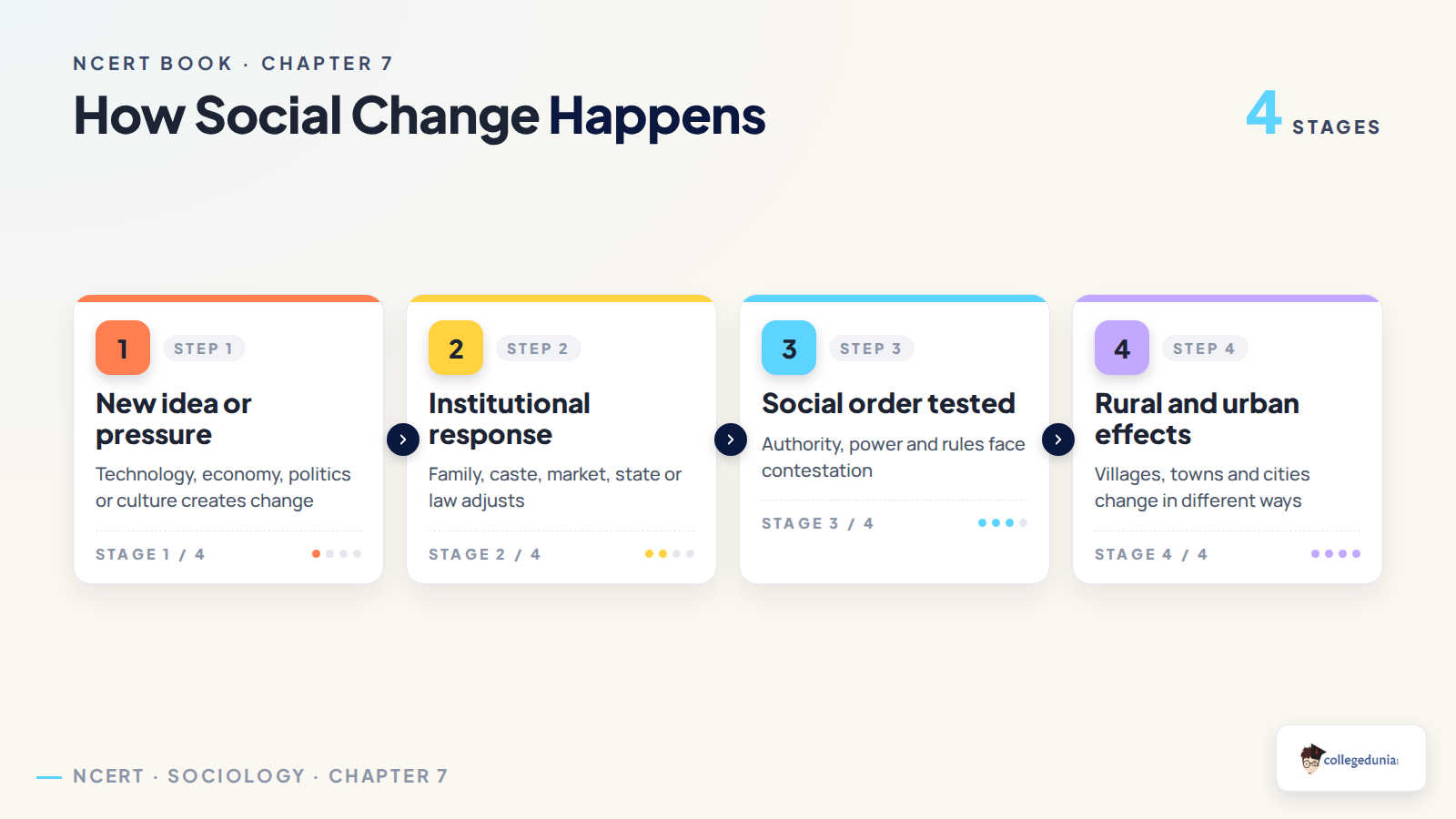
Students often read social change and social order as opposite ideas. NCERT treats them as linked ideas. A society needs some order to function, but that order is never fixed forever. New groups, new laws, new technology and new conflicts can reshape it.
Social change asks what is shifting, while social order asks how stability is maintained. A strong answer explains both sides with examples from rural and urban life.
| Term | Meaning | NCERT example angle |
|---|---|---|
| Social change | Shift in institutions, relationships or values | Land reforms, migration, new occupations and changing family patterns. |
| Social order | Stable arrangement of rules and relations | Authority, law, power and everyday norms maintain order. |
| Power | Ability to influence or control others | Power may work through wealth, land, office, caste or law. |
| Authority | Power seen as legitimate | People obey authority because it is accepted as rightful. |
Rural and Urban Society in the NCERT Chapter
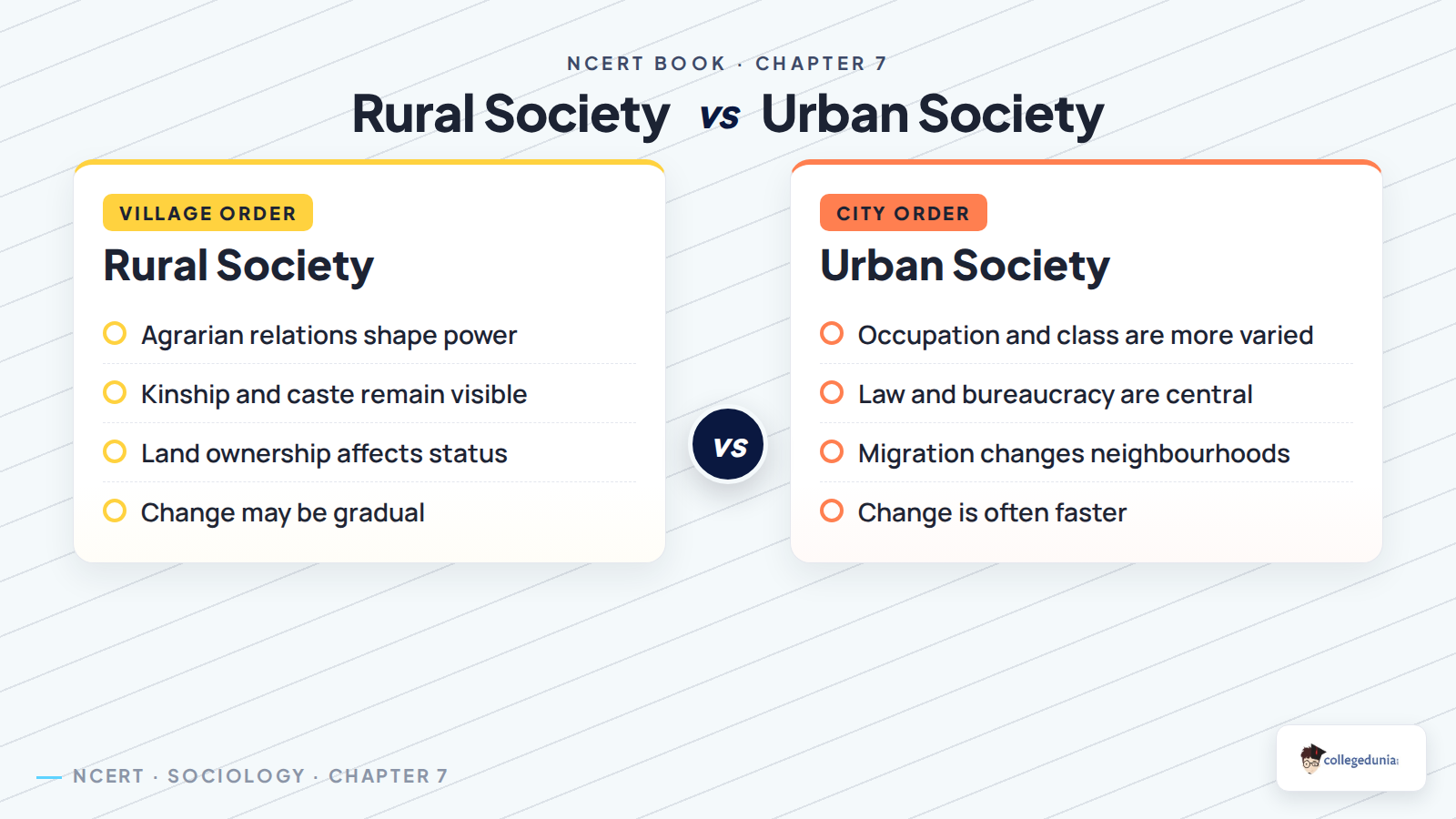
NCERT asks students to compare rural and urban society without treating either as simple. Rural society is often shaped by land, kinship, caste and agriculture. Urban society is shaped by migration, market work, bureaucracy, class and neighbourhood life.
Rural and urban orders change in different ways. A village may change through land ownership, new crops, roads, schools or panchayats. A city may change through migration, jobs, housing, transport and law. Both settings show order and conflict at the same time.
- Rural setting: land, caste, family and agriculture remain important.
- Urban setting: class, occupation, migration and bureaucracy become more visible.
- Common link: both rural and urban society face change, conflict and adjustment.
Social Change and Social Order Video Recap
Source: Magnet Brains on YouTube
Power, Authority and Law in Social Order
Social order does not continue only because people agree. NCERT shows that power, authority and law also help maintain it. A rule may be followed because people believe in it, because law supports it or because a powerful group enforces it.
Authority is power that people consider legitimate. For example, people may accept a village elder, elected representative, teacher, police officer or court because the role is seen as valid. But authority can also be questioned when people feel rules are unfair.
- Domination: stable power over others in a social relationship.
- Authority: domination accepted as legitimate by people.
- Law: formal rules backed by the state.
- Contestation: questioning or resisting a rule, decision or authority.
How to Use the Chapter 7 Book PDF for Revision
Use the official PDF in three rounds. First, underline definitions of social change, social order, power and authority. Second, make a rural-urban comparison table. Third, add one current example to each concept before writing answers.
- For definitions: write social change, social order, domination and authority in one line each.
- For examples: connect rural change with land, caste, panchayat or agriculture.
- For urban answers: use migration, work, housing, traffic, law and neighbourhood examples.
- For long answers: explain the concept, compare rural and urban cases and show contestation.
Social Change and Social Order Class 11 Related Resources
| Resource | Best use |
|---|---|
| Social Change and Social Order NCERT Solutions | Use for textbook questions and answer writing practice. |
| Social Change and Social Order Notes | Use for shorter explanations once the notes page is live. |
| Social Change and Social Order Handwritten Notes | Use for one-shot revision once the handwritten notes page is live. |
All Class 11 Sociology NCERT Book Chapters
| Chapter | NCERT Book PDF |
|---|---|
| 1 | Sociology and Society |
| 2 | Terms, Concepts and Their Use in Sociology |
| 3 | Understanding Social Institutions |
| 4 | Culture and Socialisation |
| 5 | Doing Sociology: Research Methods |
| 6 | Social Structure, Stratification and Social Processes in Society |
| 7 | Social Change and Social Order in Rural and Urban Society |
| 8 | Environment and Society |
| 9 | Introducing Western Sociologists |
| 10 | Indian Sociologists |
Social Change and Social Order Class 11 NCERT Book FAQs
Ques. What is included in the Class 11 Sociology Chapter 7 NCERT PDF?
Ans. It includes the official chapter on social change, social order, power, authority, law, rural society and urban society.
Ques. What is social change in Class 11 Sociology?
Ans. Social change means a shift in social relationships, institutions, values, norms or ways of living.
Ques. What is social order?
Ans. Social order means the stable pattern of rules, relations and expectations through which society works.
Ques. Why does NCERT compare rural and urban society in this chapter?
Ans. The comparison helps students see how change, power, authority and law work differently in villages, towns and cities.
Ques. How should students revise this chapter for 2026-27 exams?
Ans. Students should make a rural-urban table, memorise key definitions and practise examples of power, authority and contestation.



Comments