



The ncert class 12 accountancy book pdf chapter 5 Accounting for Share Capital carries an 8-mark journal-entry question on issue of shares plus 1 to 2 marks of theory in almost every CBSE board session. This page hosts the Reprint 2026-27 NCERT chapter, aligned to CBSE 2026-27 and the Companies Act 2013.
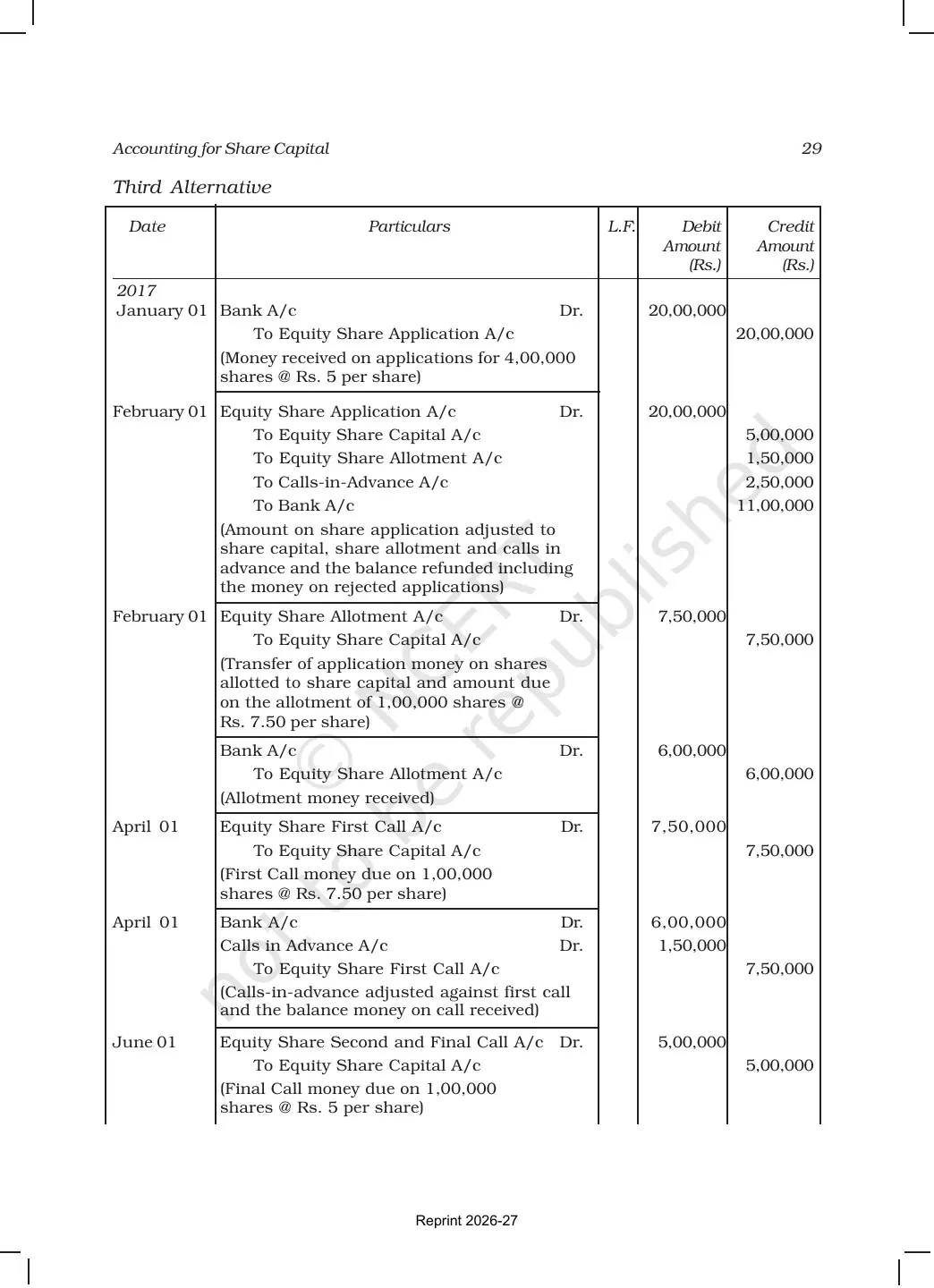
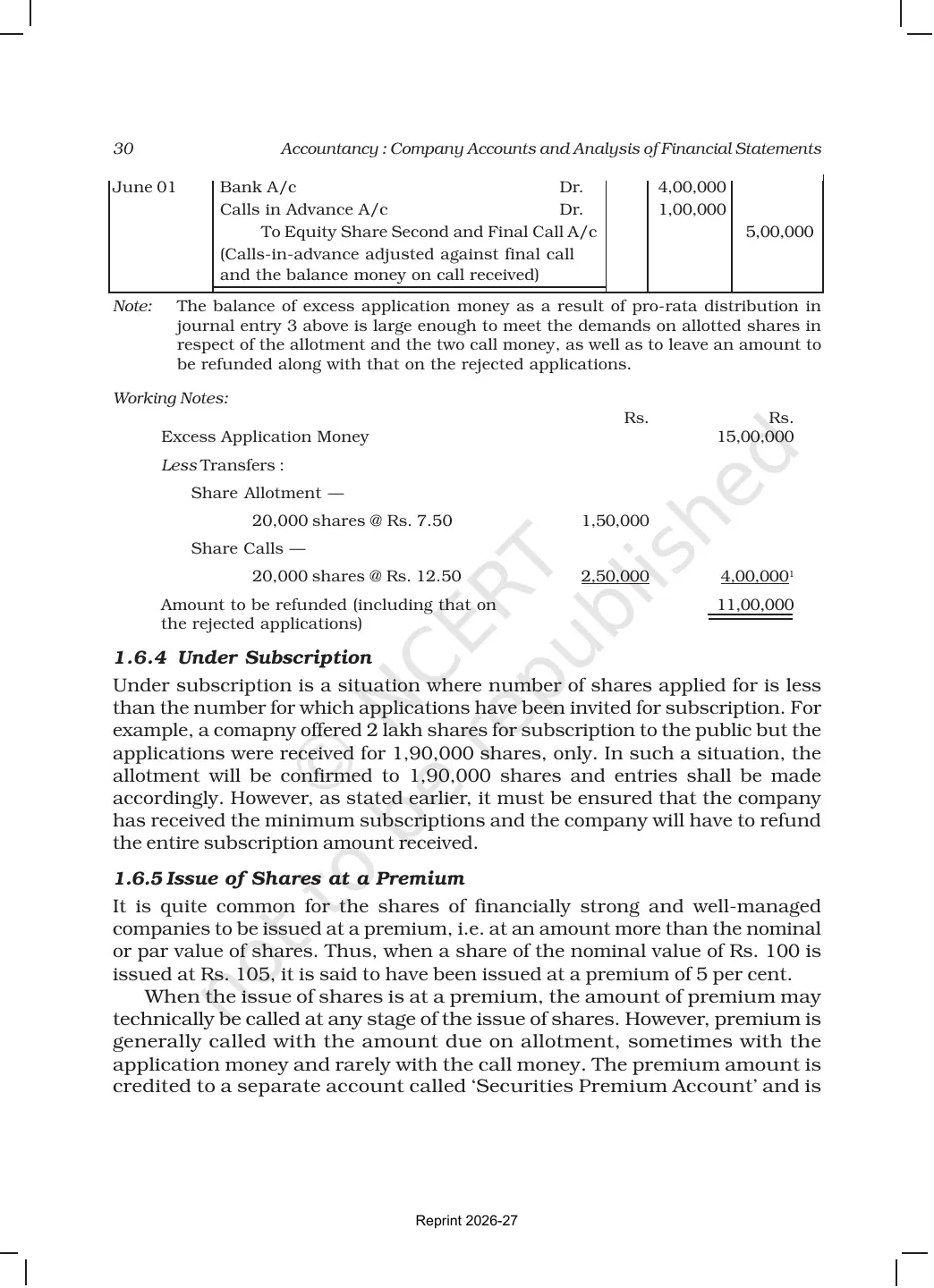
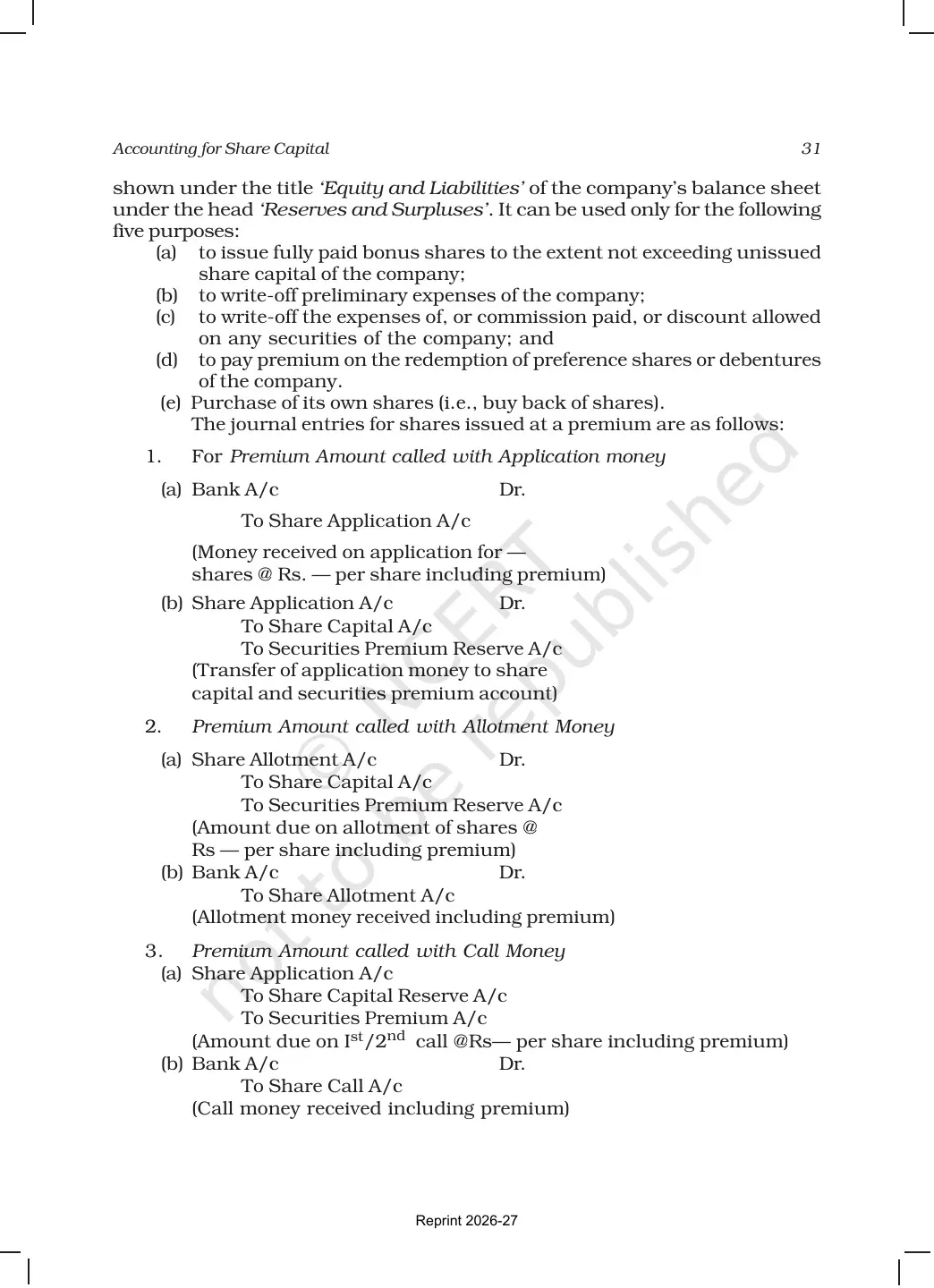
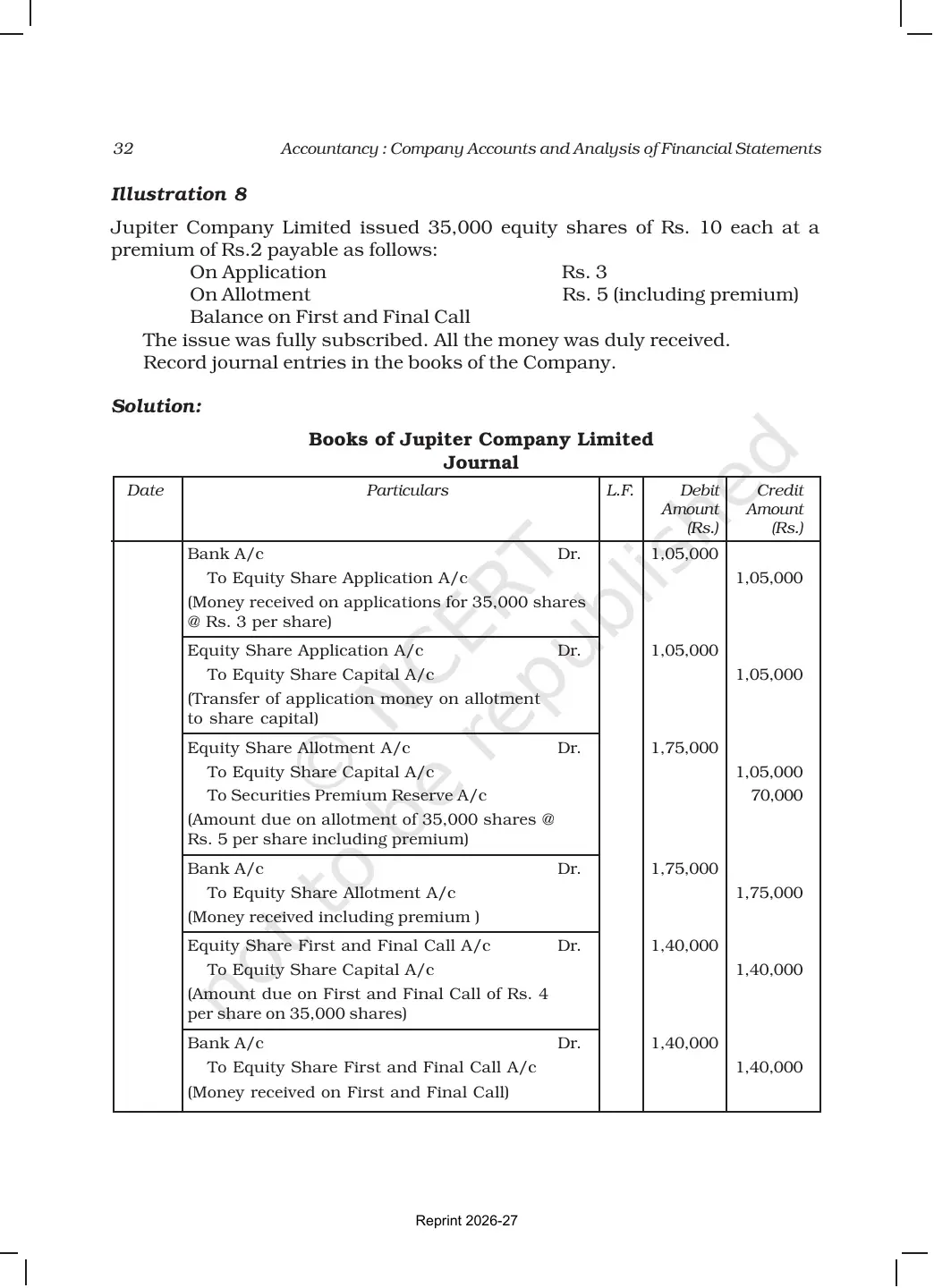
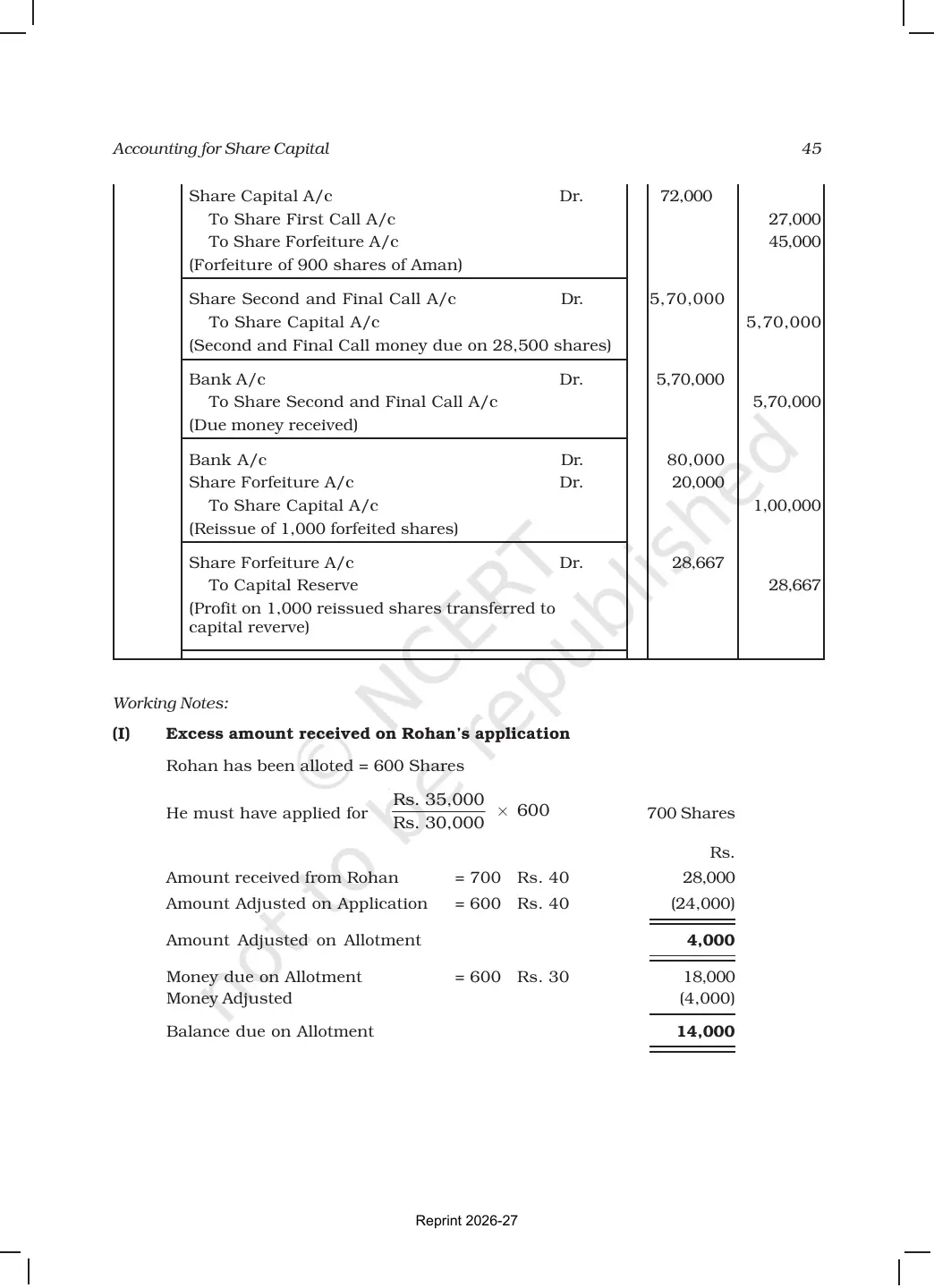
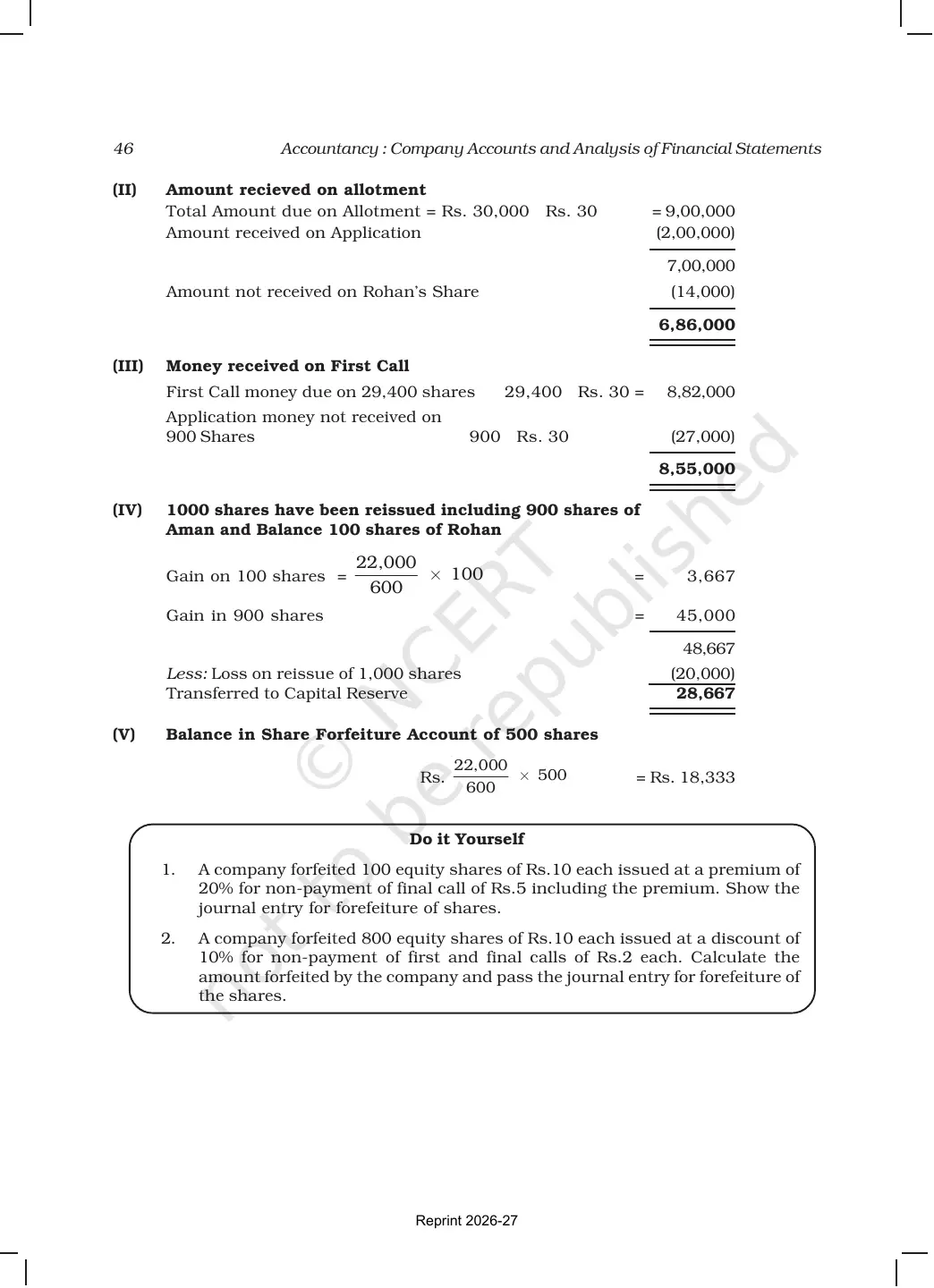
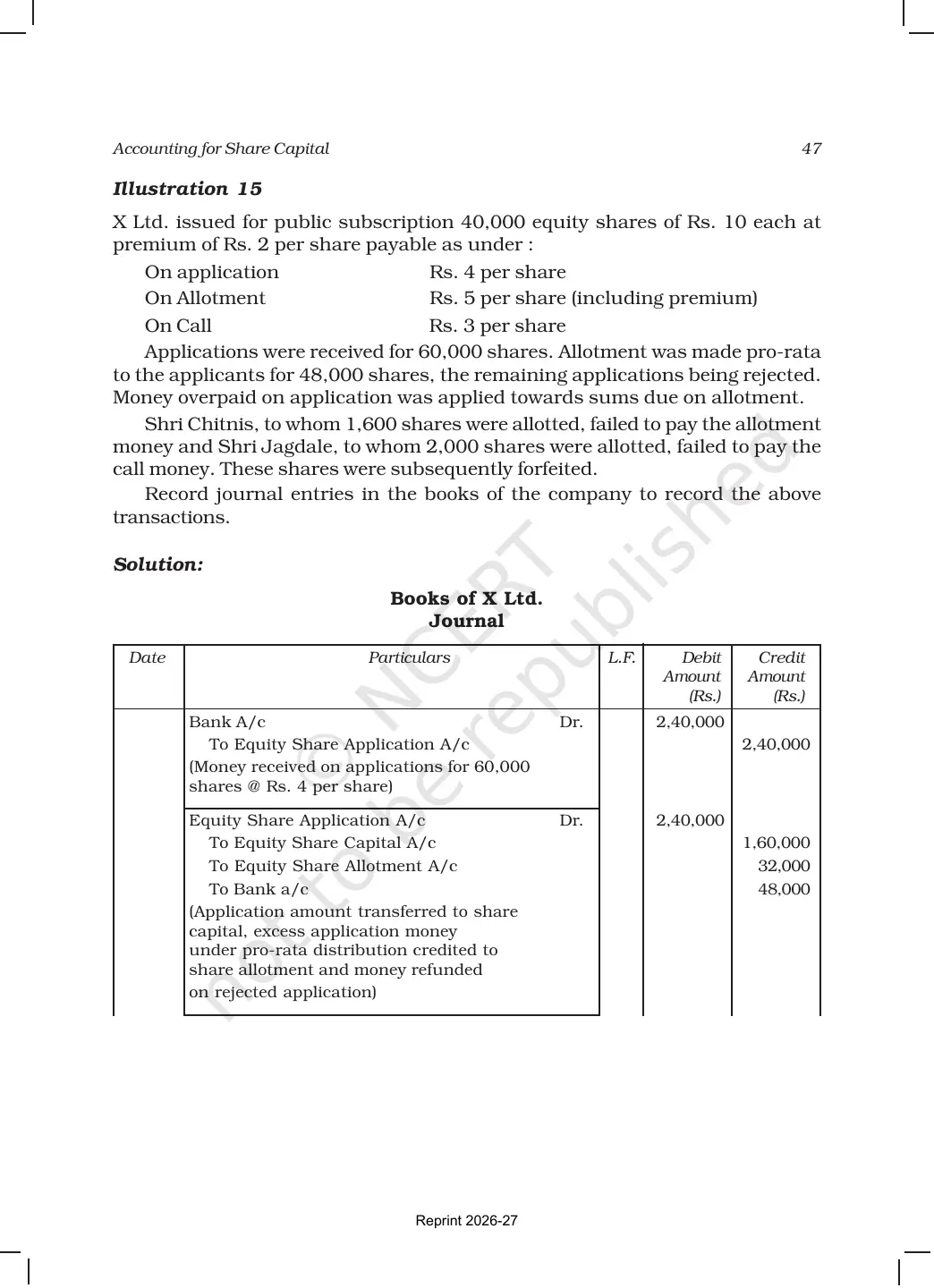
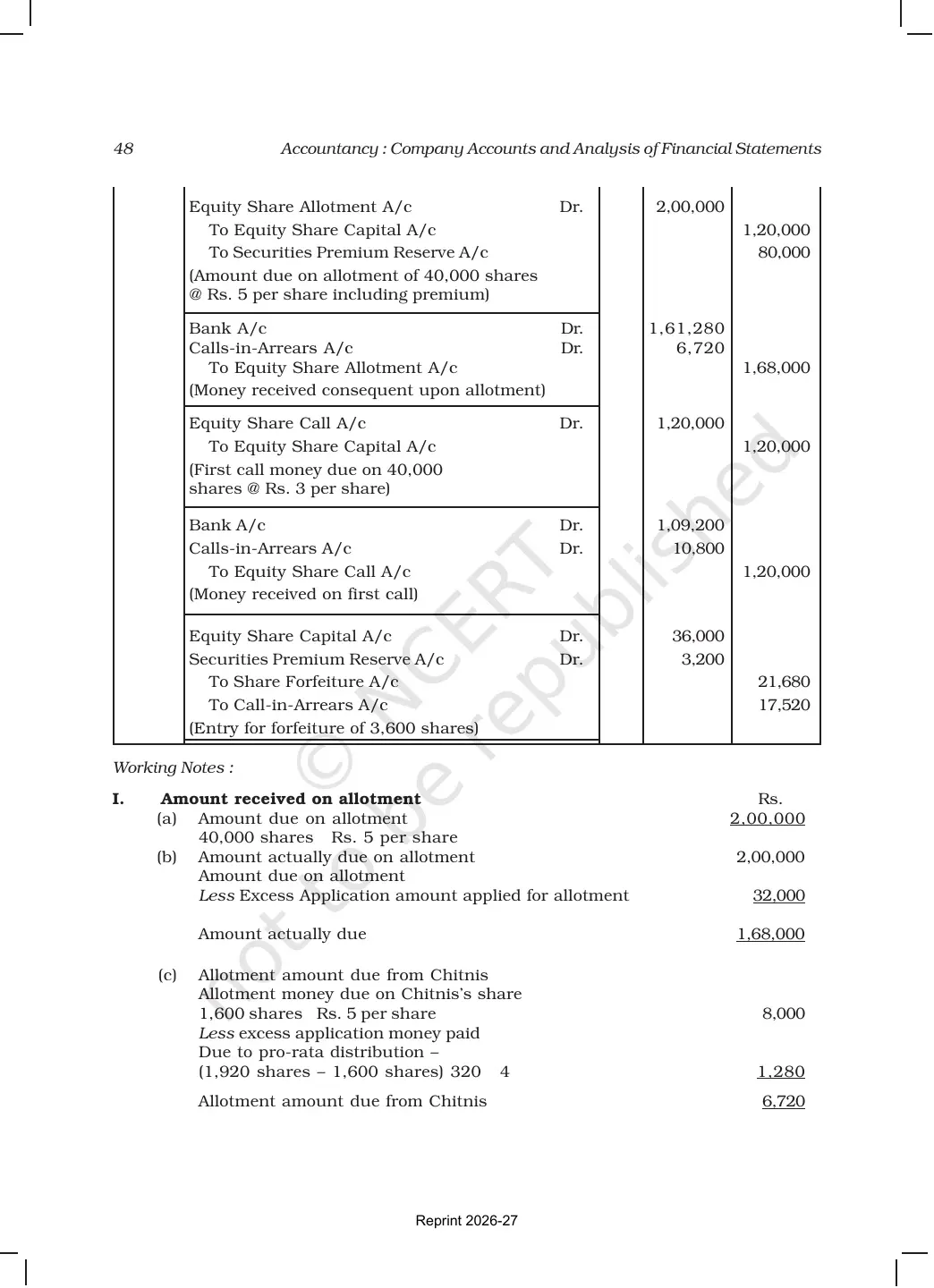
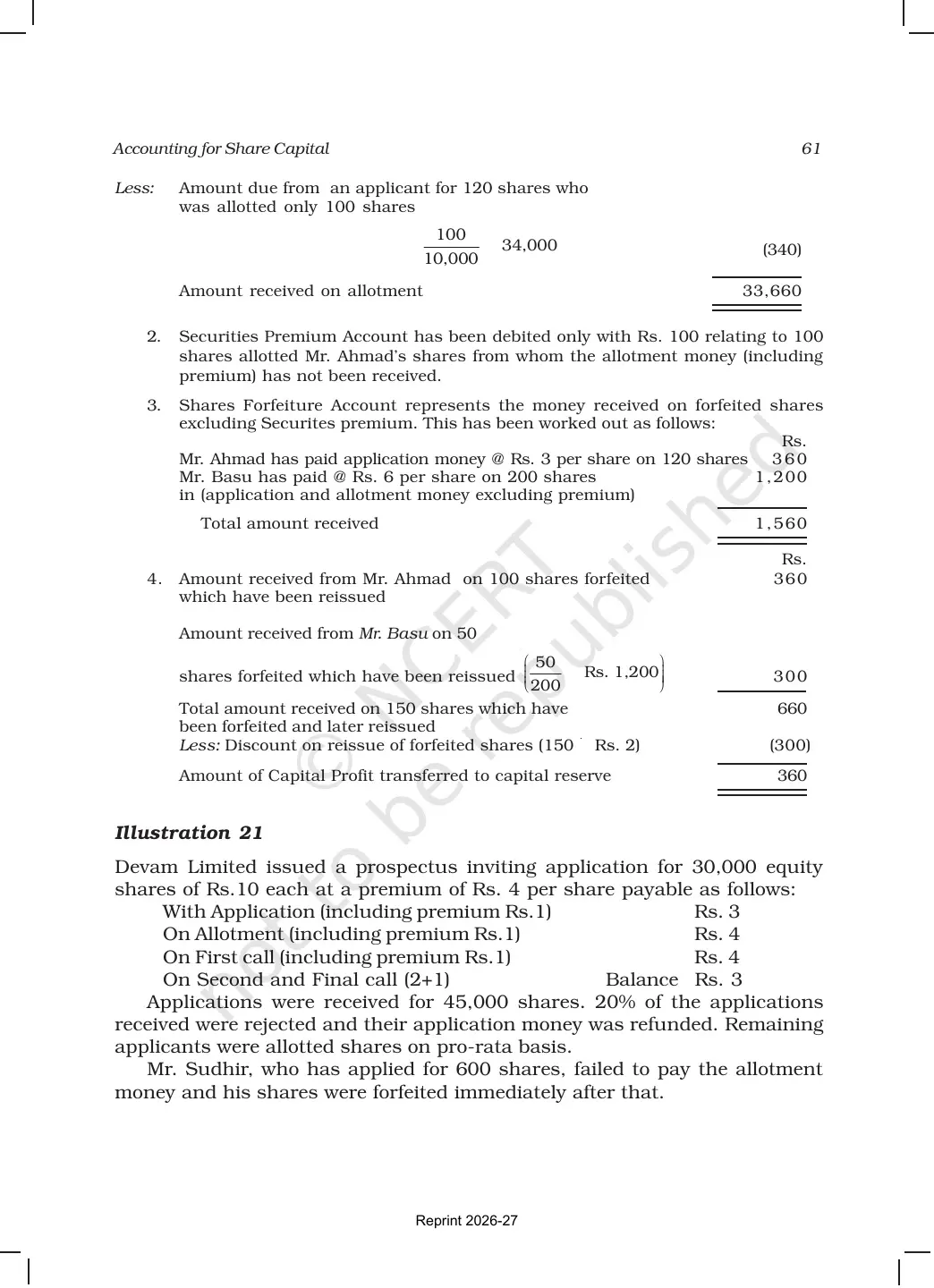
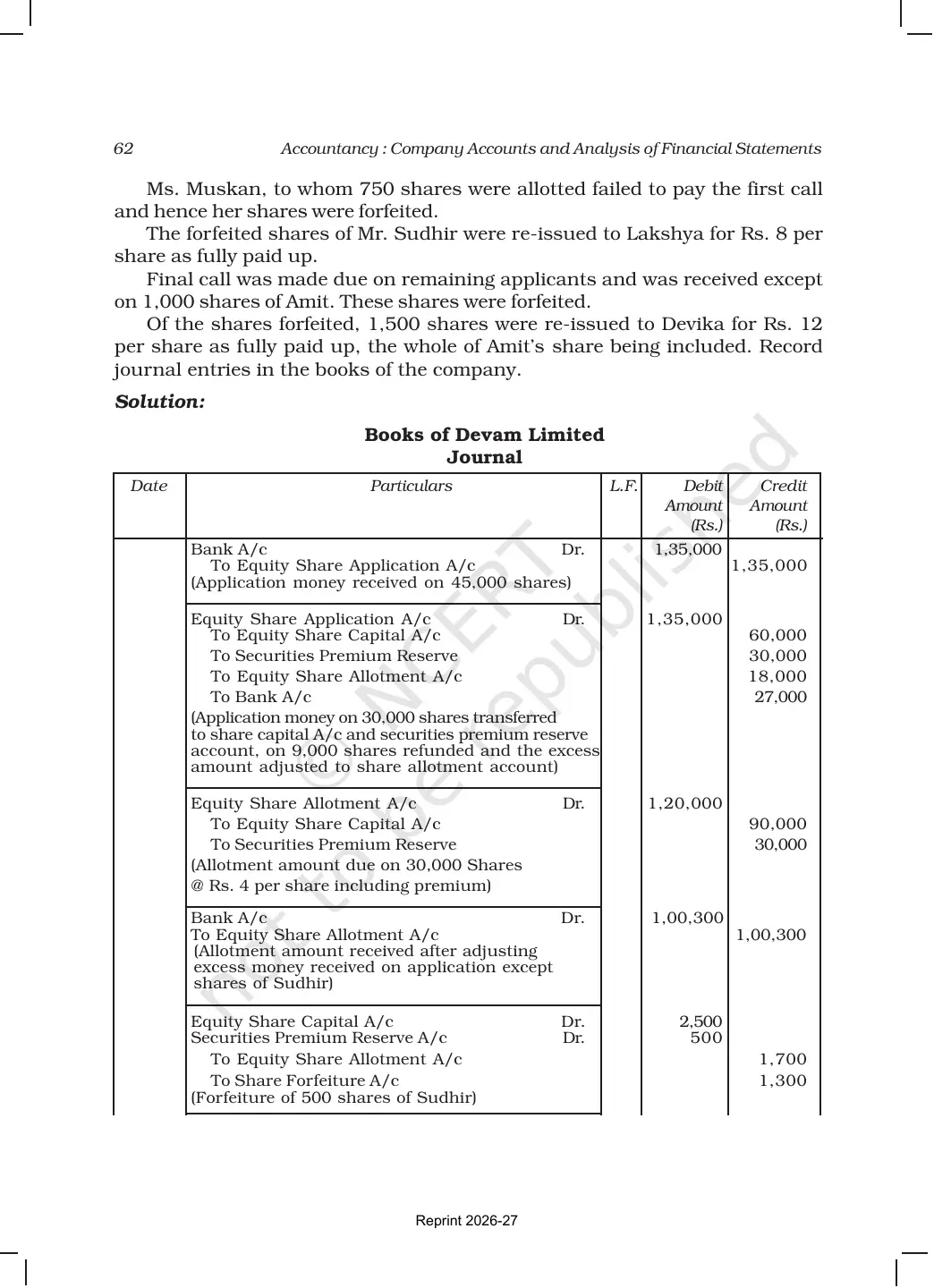
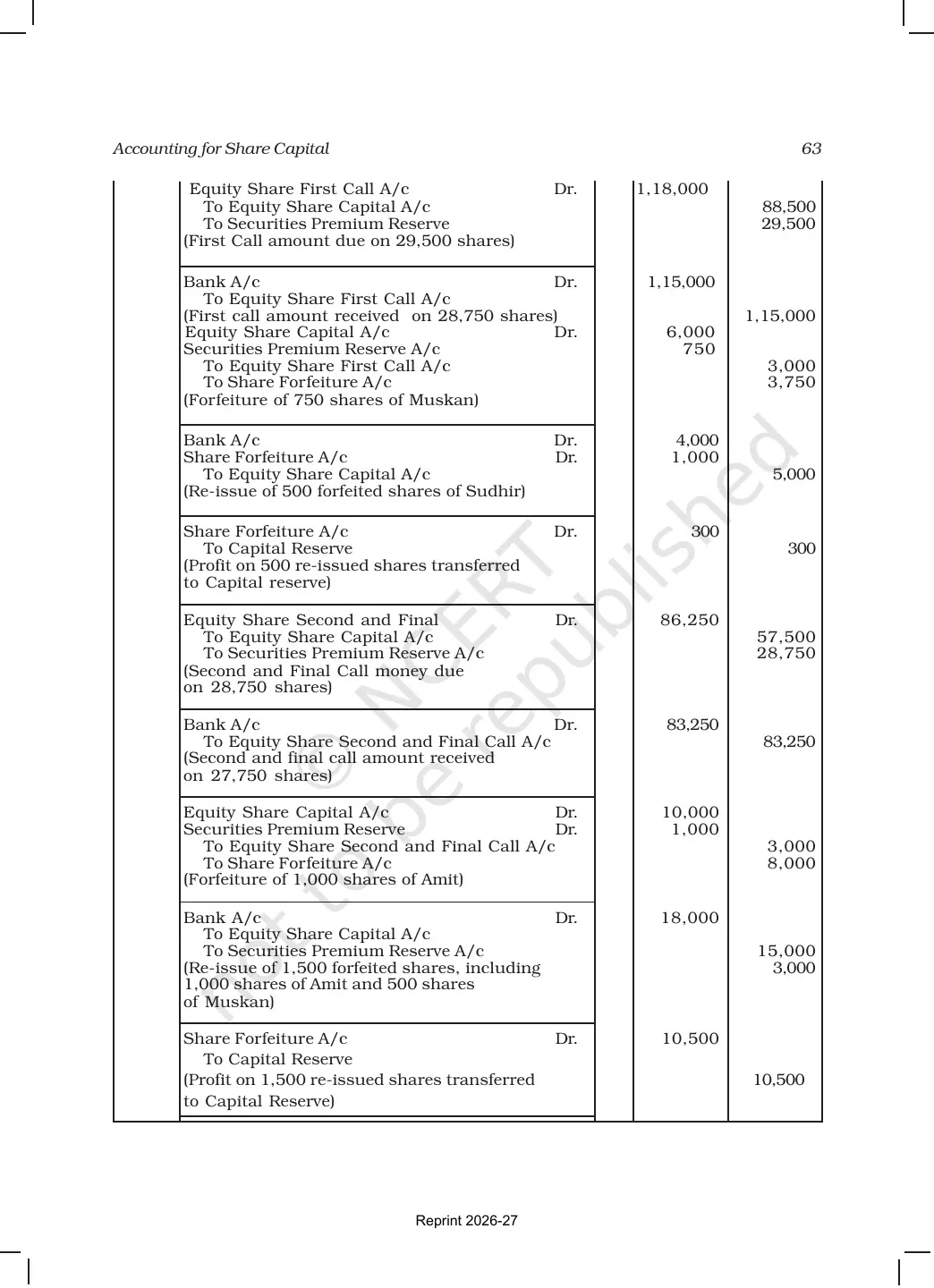
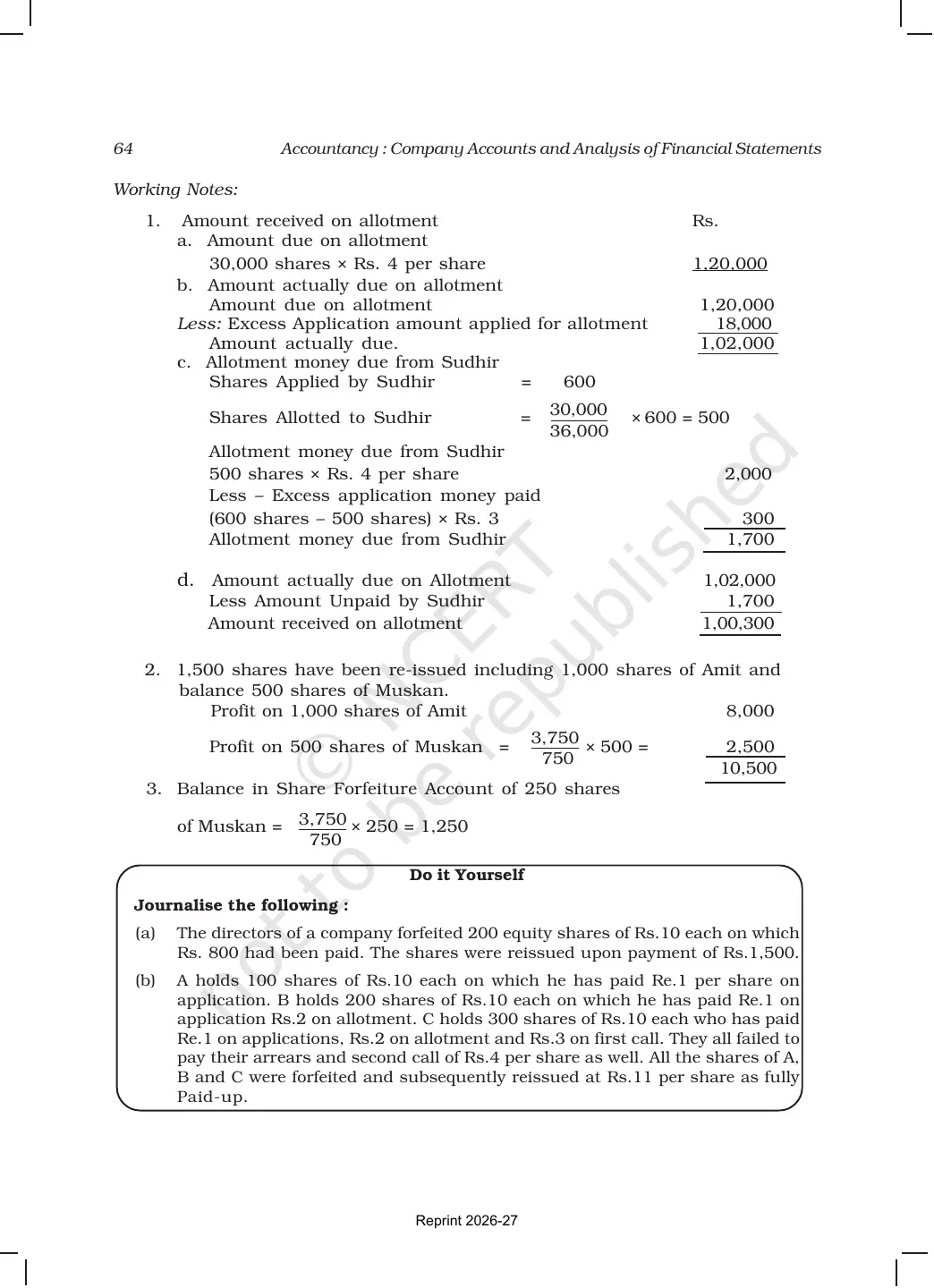
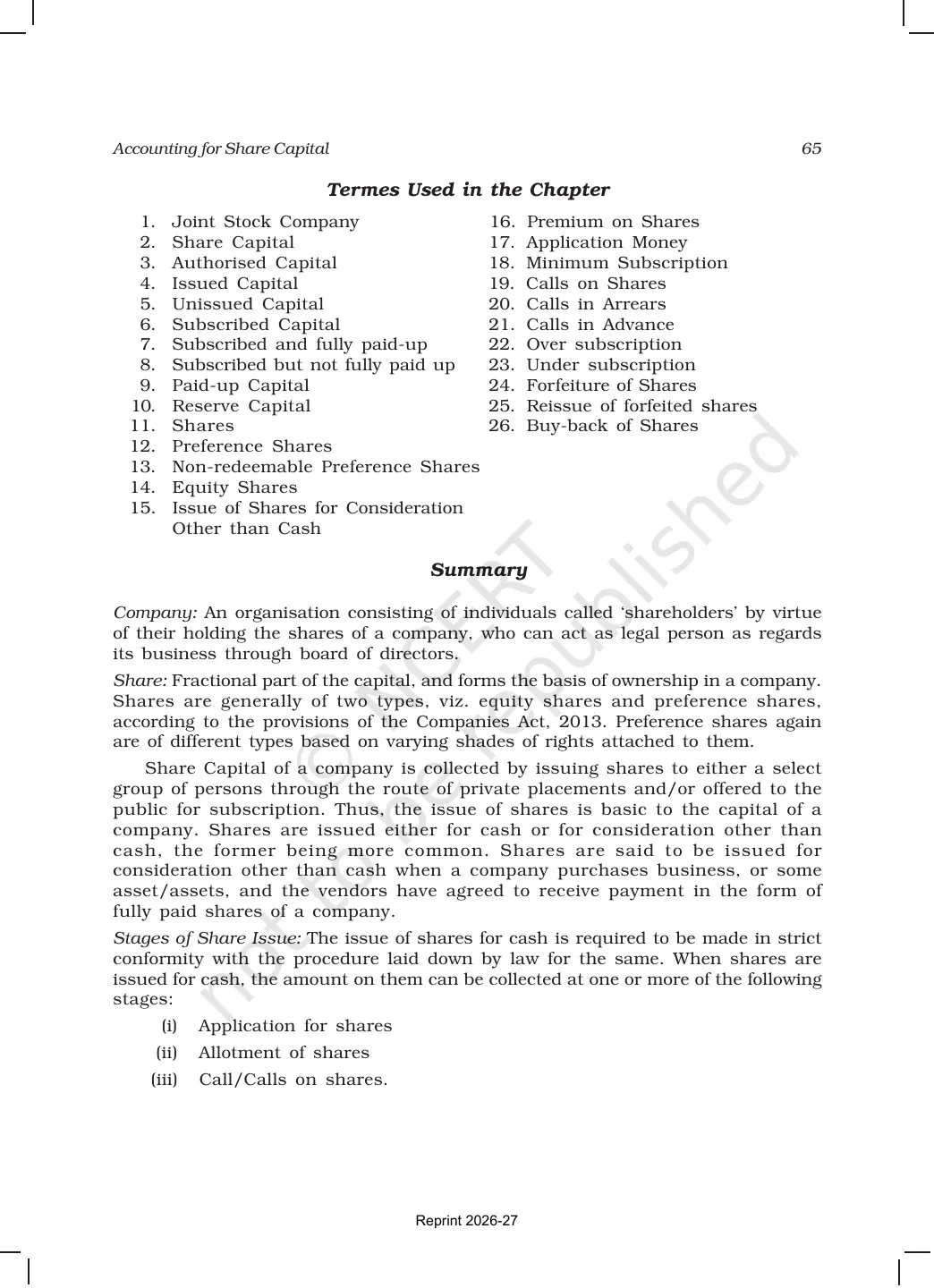
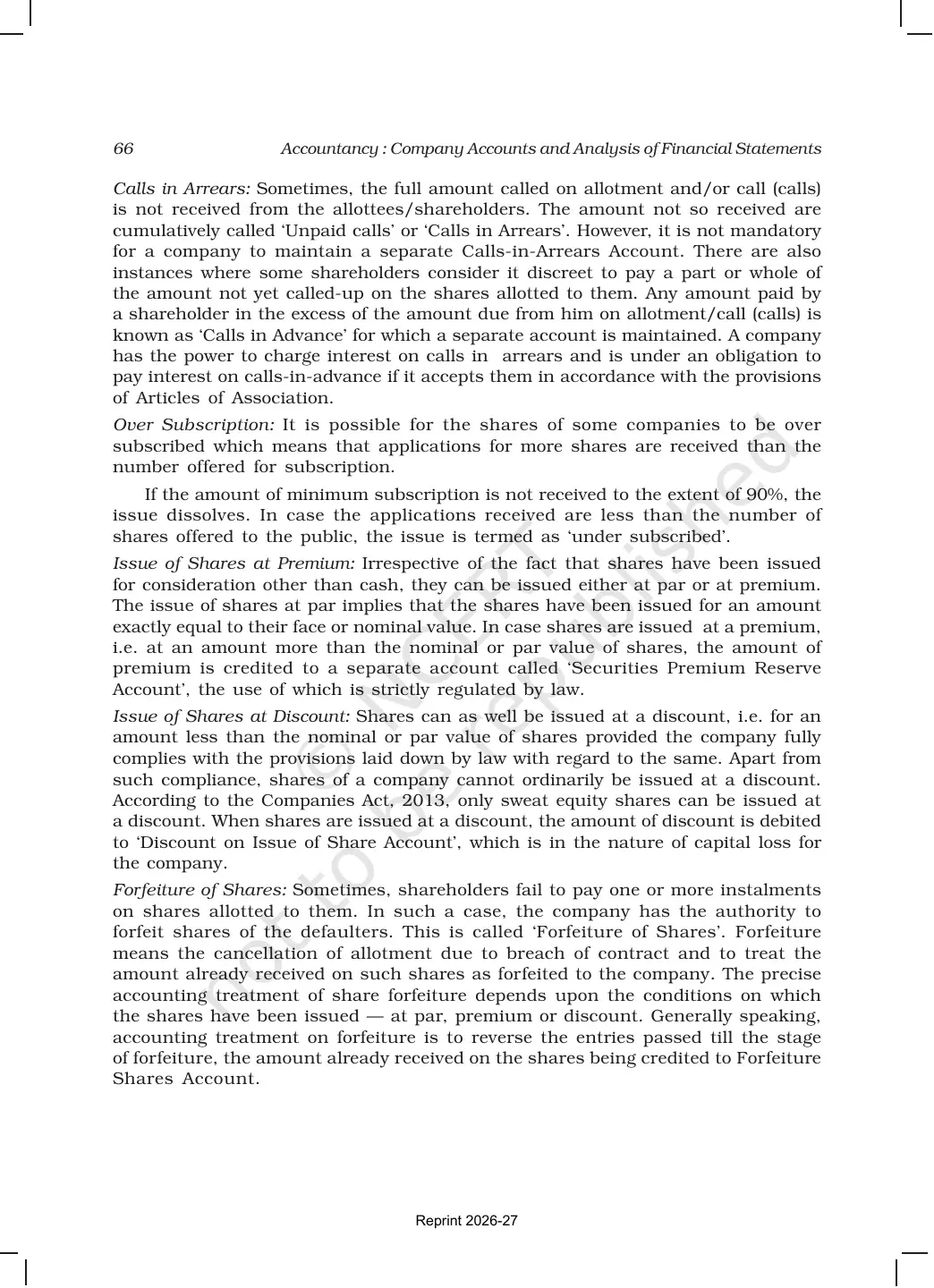
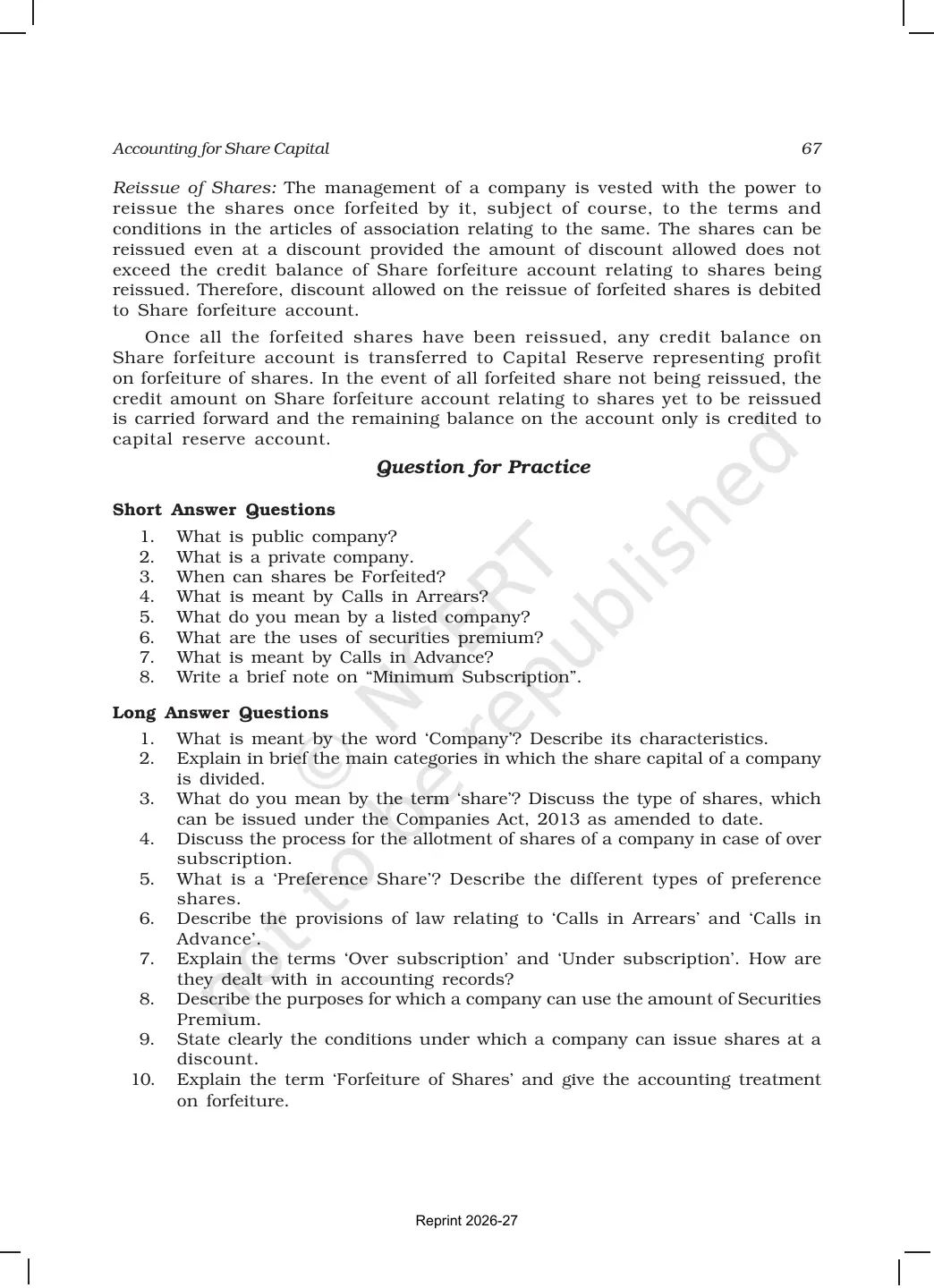
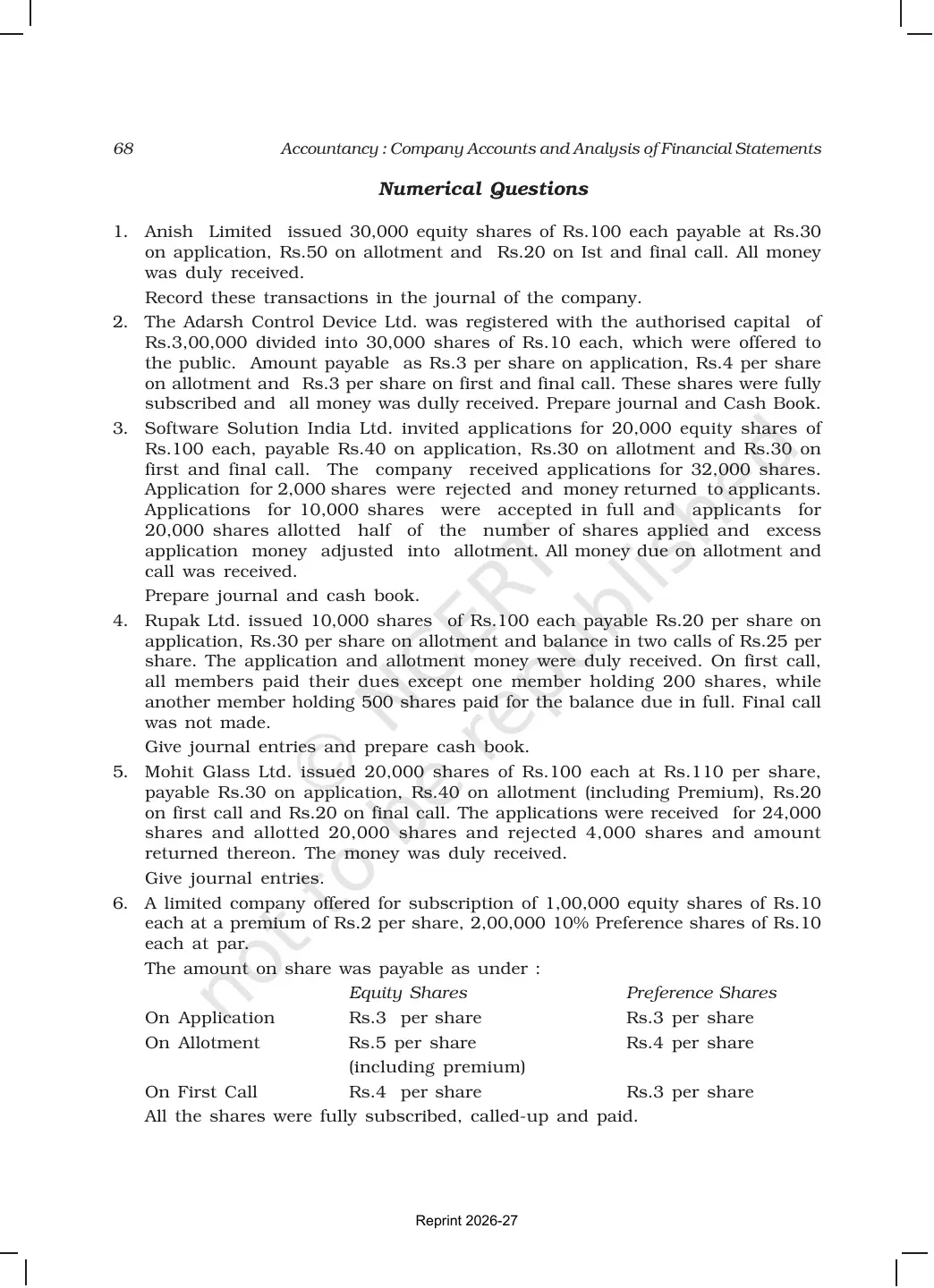
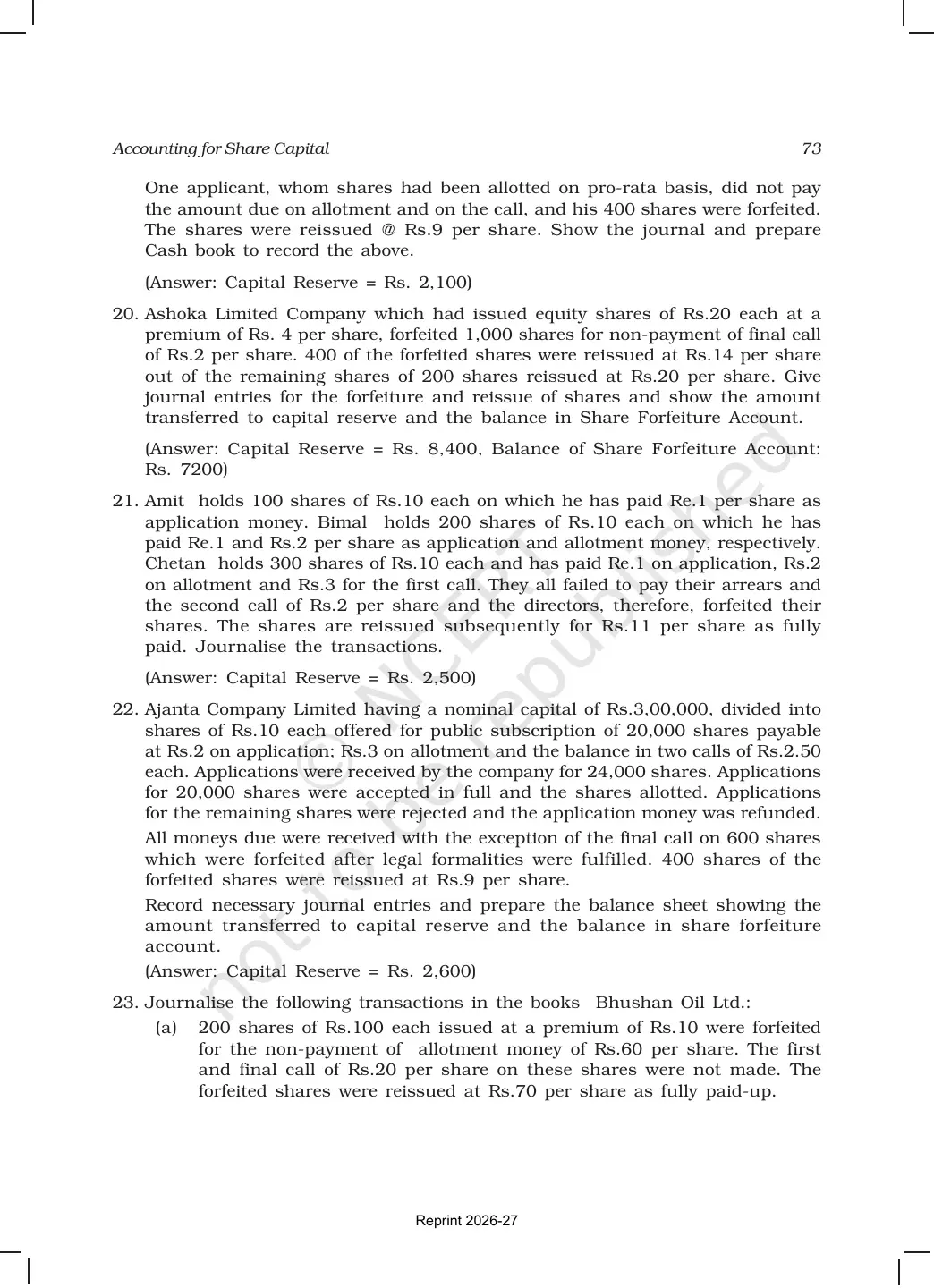
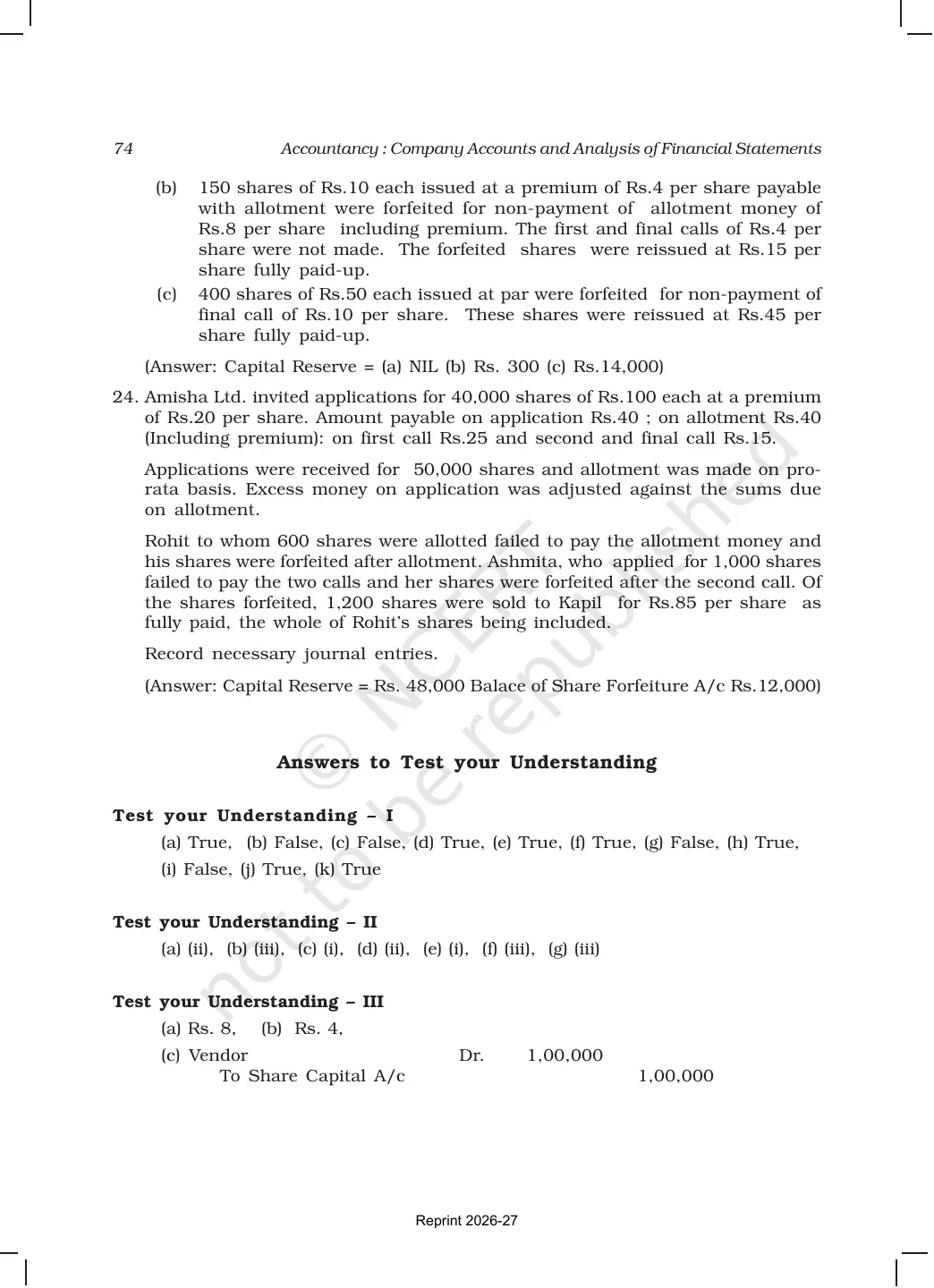
- CBSE Weightage (Part B): 8 to 10 marks (1 numerical of 8 marks + 1 short answer of 3 to 4 marks)
- NCERT Chapter Length: 88 to 92 pages (Part 2, opening chapter)
This PDF is the official source the Collegedunia NCERT Solutions, Notes and Handwritten Notes for Part 2 Chapter 1 quote from. Download it once, then layer the practice resources on top.
Also Check:
- Accounting for Share Capital Class 12 NCERT Solutions PDF
- Accounting for Share Capital Class 12 Accountancy Notes
- Accounting for Share Capital Class 12 Handwritten Notes
- CBSE Class 12 Accountancy Syllabus 2026-27
Why ncert class 12 accountancy book pdf chapter 5 Accounting for Share Capital Sets the Tone of Company Accounts
Part 2 Chapter 1 opens the Company Accounts unit. Later chapters (6 to 10) assume you know share capital structure, journal entries for issue, calls in arrears, and forfeiture-reissue. Weak mastery here costs 4-6 marks on the balance sheet question in Chapter 3.
The 8-mark numerical tests issue of shares at premium, pro-rata allotment, and forfeiture almost every year. Sections 52 and 53 of the Companies Act 2013 (Securities Premium uses, discount prohibition) appear as 1 to 3-mark theory questions.
Accounting for Share Capital Video Chapter Walkthrough
Source: Next Toppers - 12th Commerce on YouTube
How Will Collegedunia's ncert class 12 accountancy book pdf chapter 5 Accounting for Share Capital Help You?
The official NCERT is the only source the CBSE board quotes from. The 2026-27 edition removes issue-at-discount (Section 53 prohibition) and updates all Companies Act references to 2013.
- Reprint 2026-27, the edition CBSE 2026-27 question setters use
- 25+ Illustrations solved in NCERT Journal, Cash Book and Ledger format
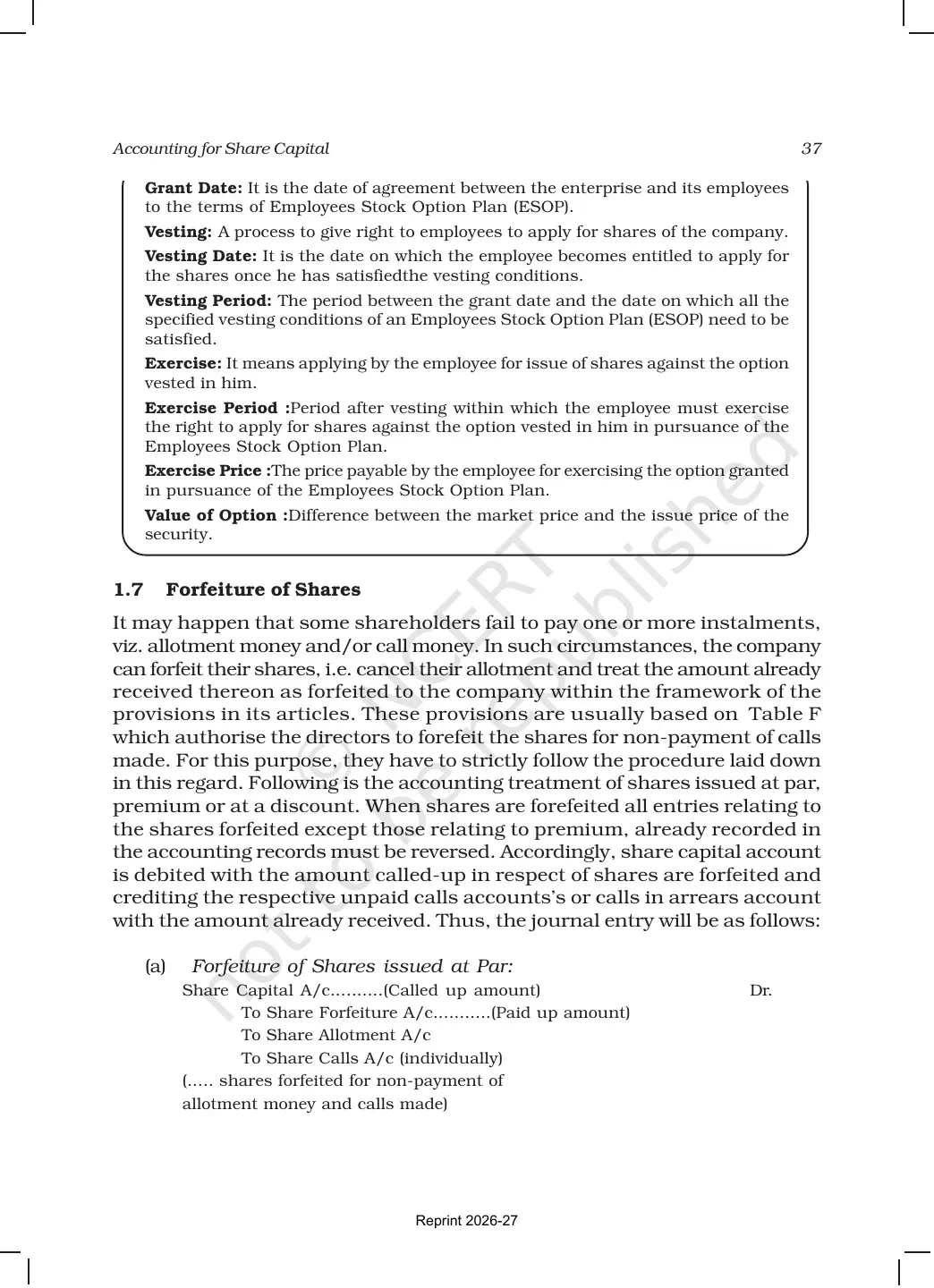
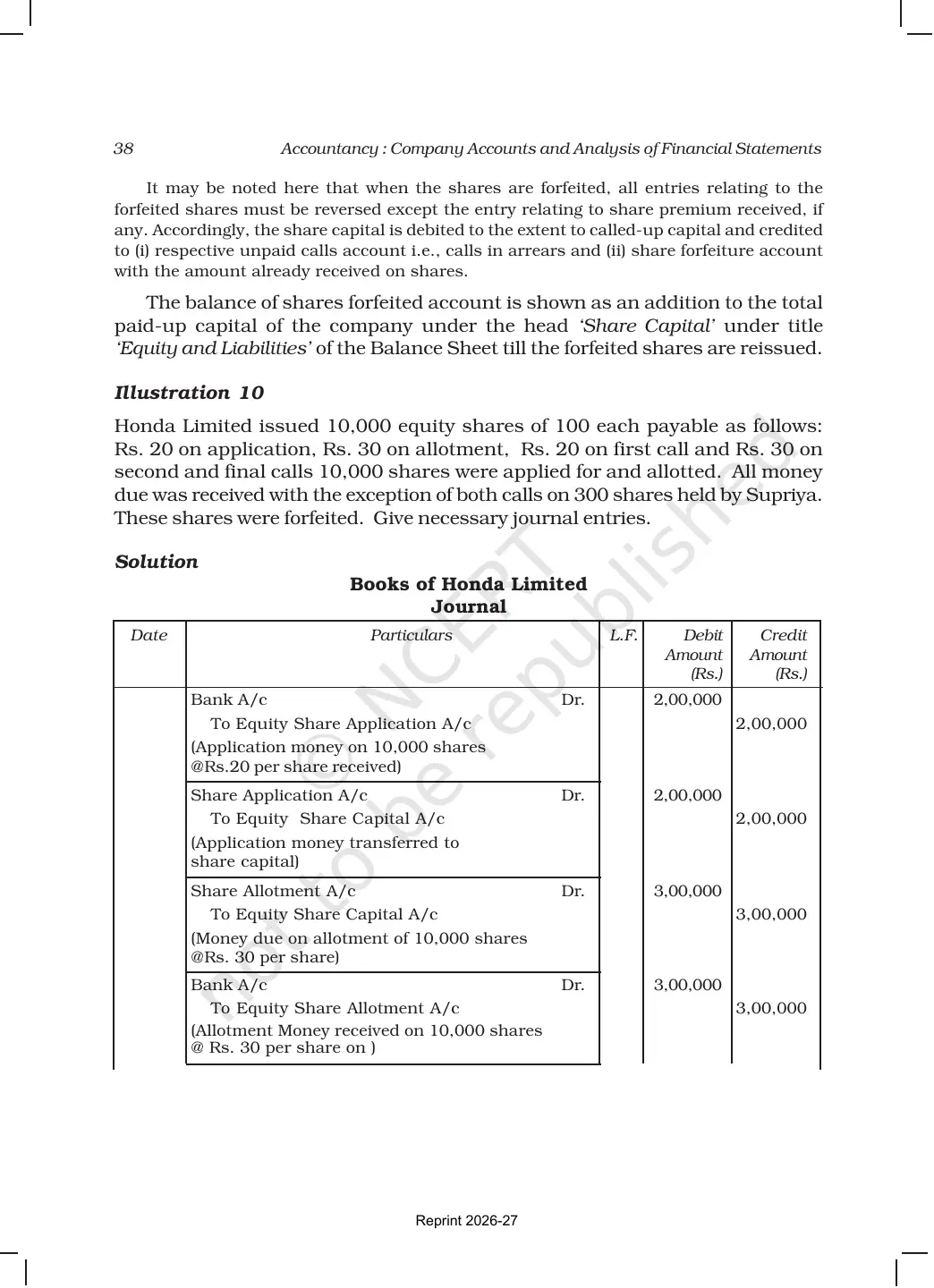
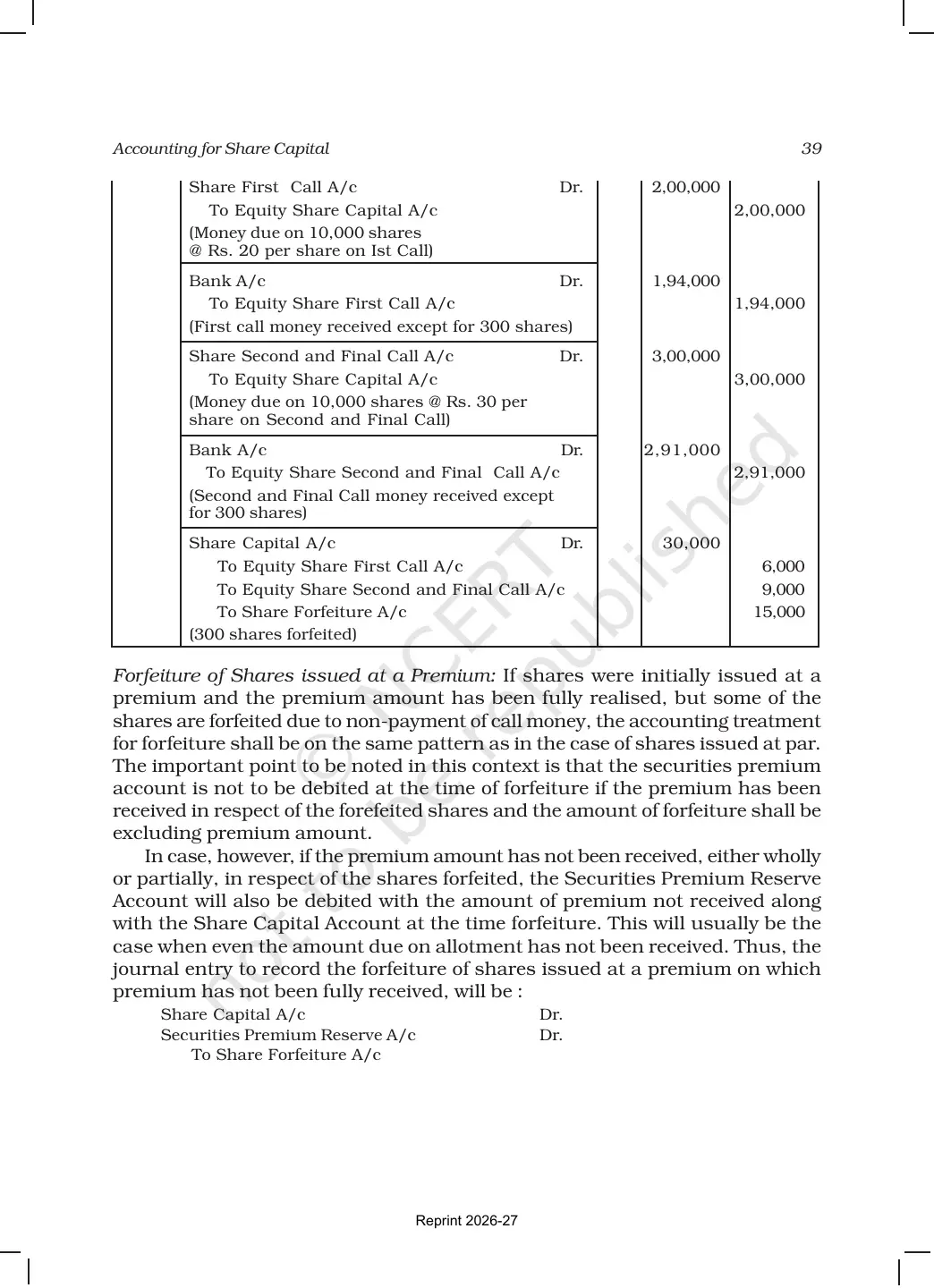
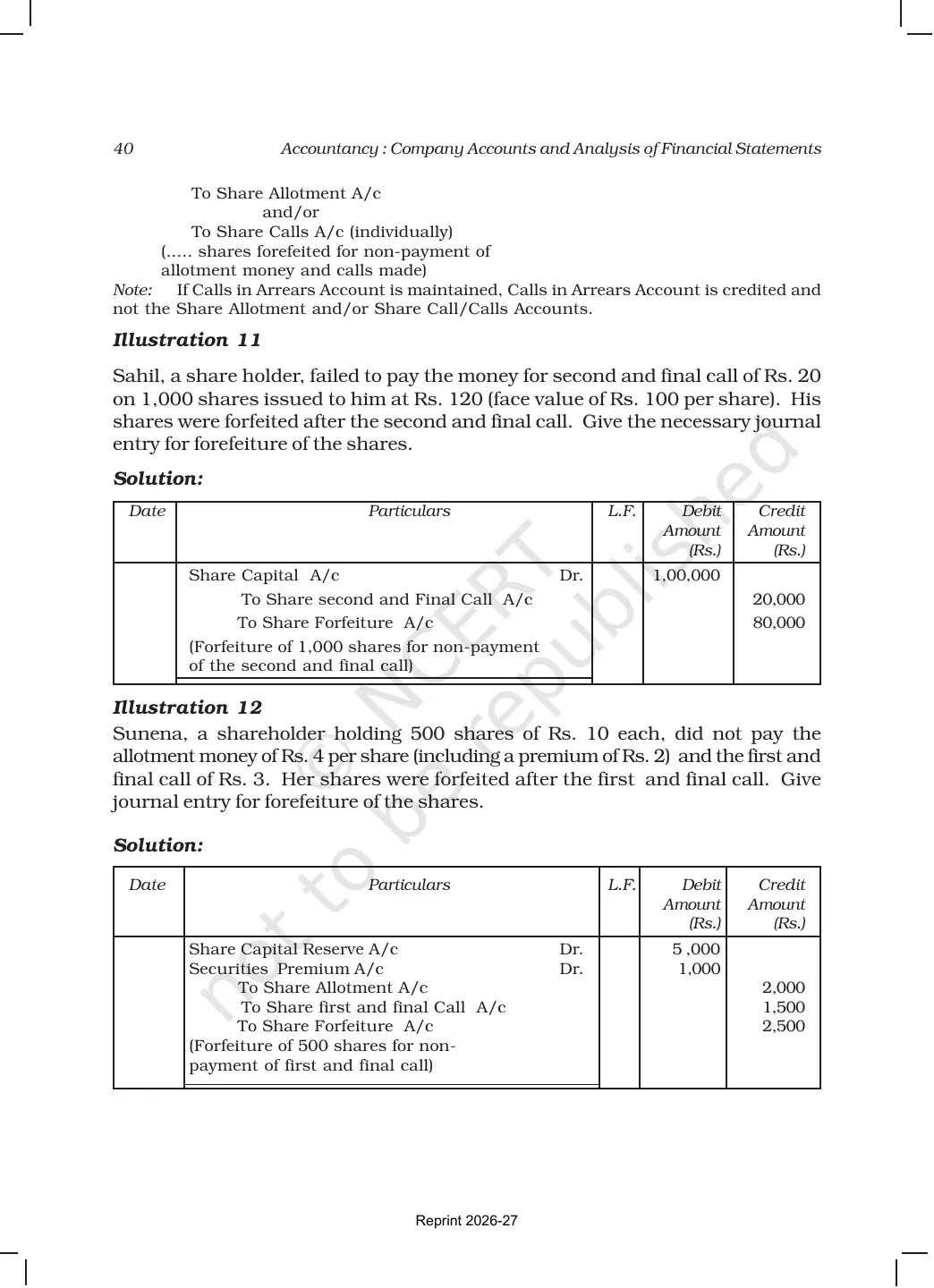
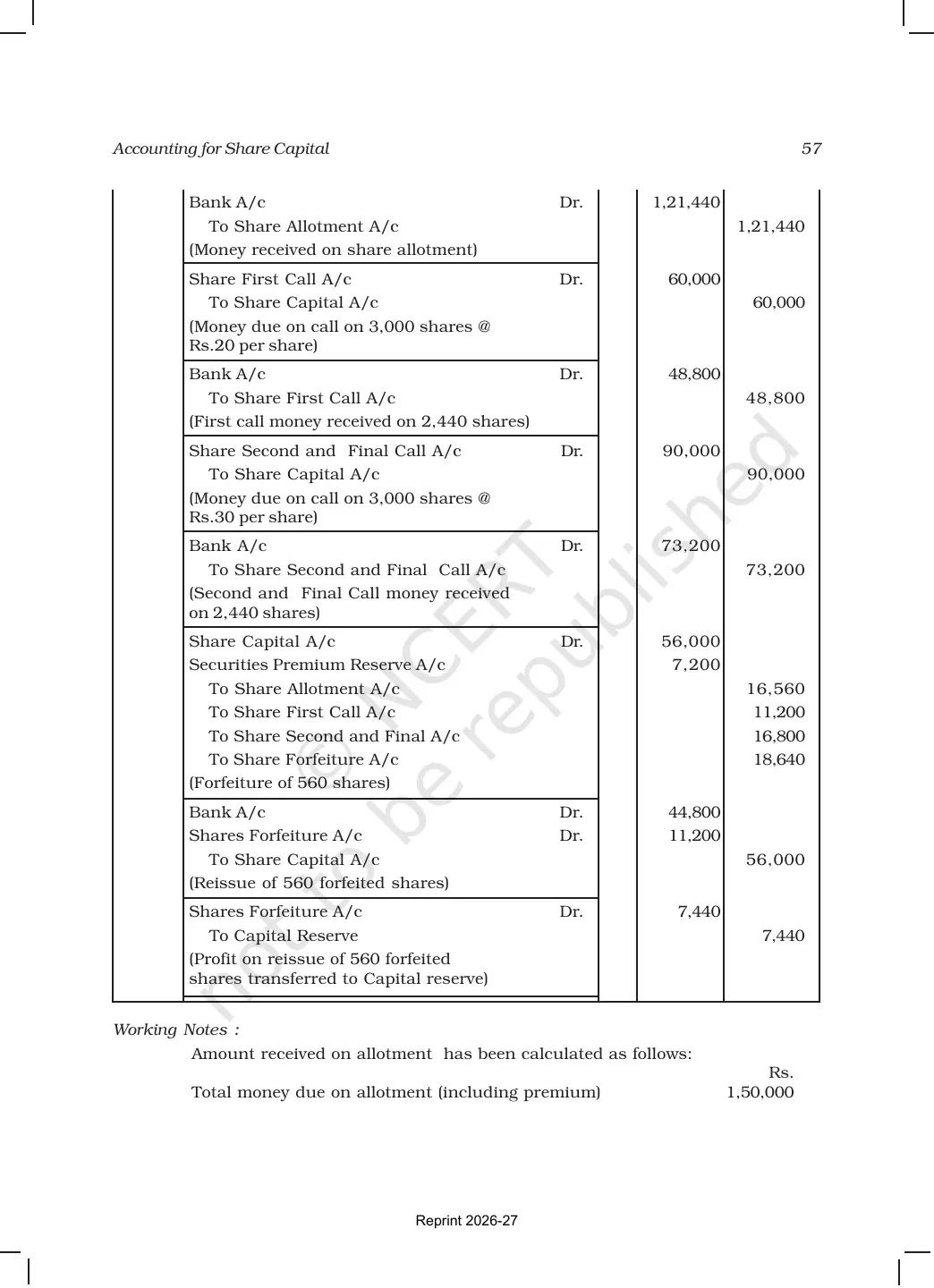
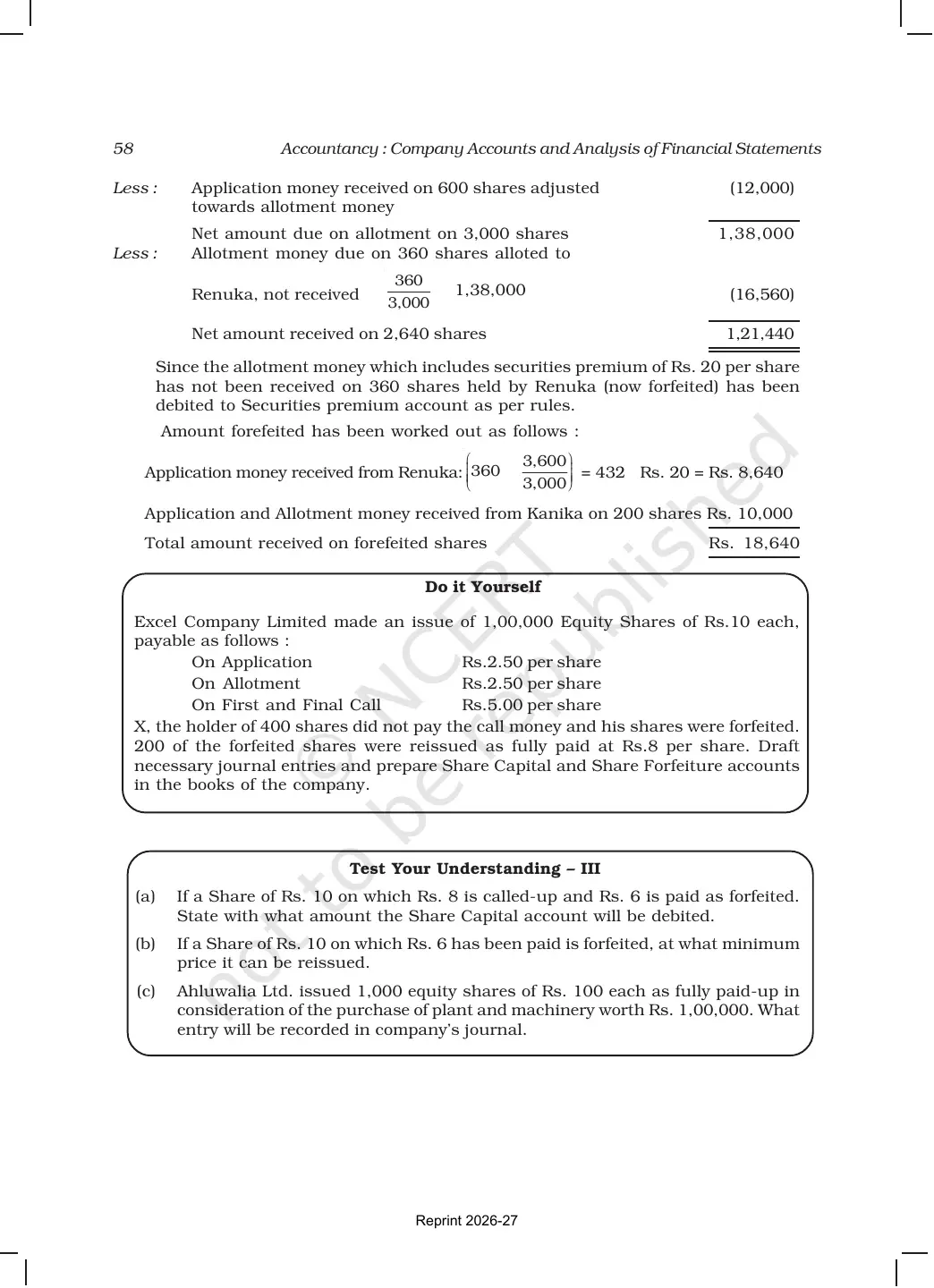
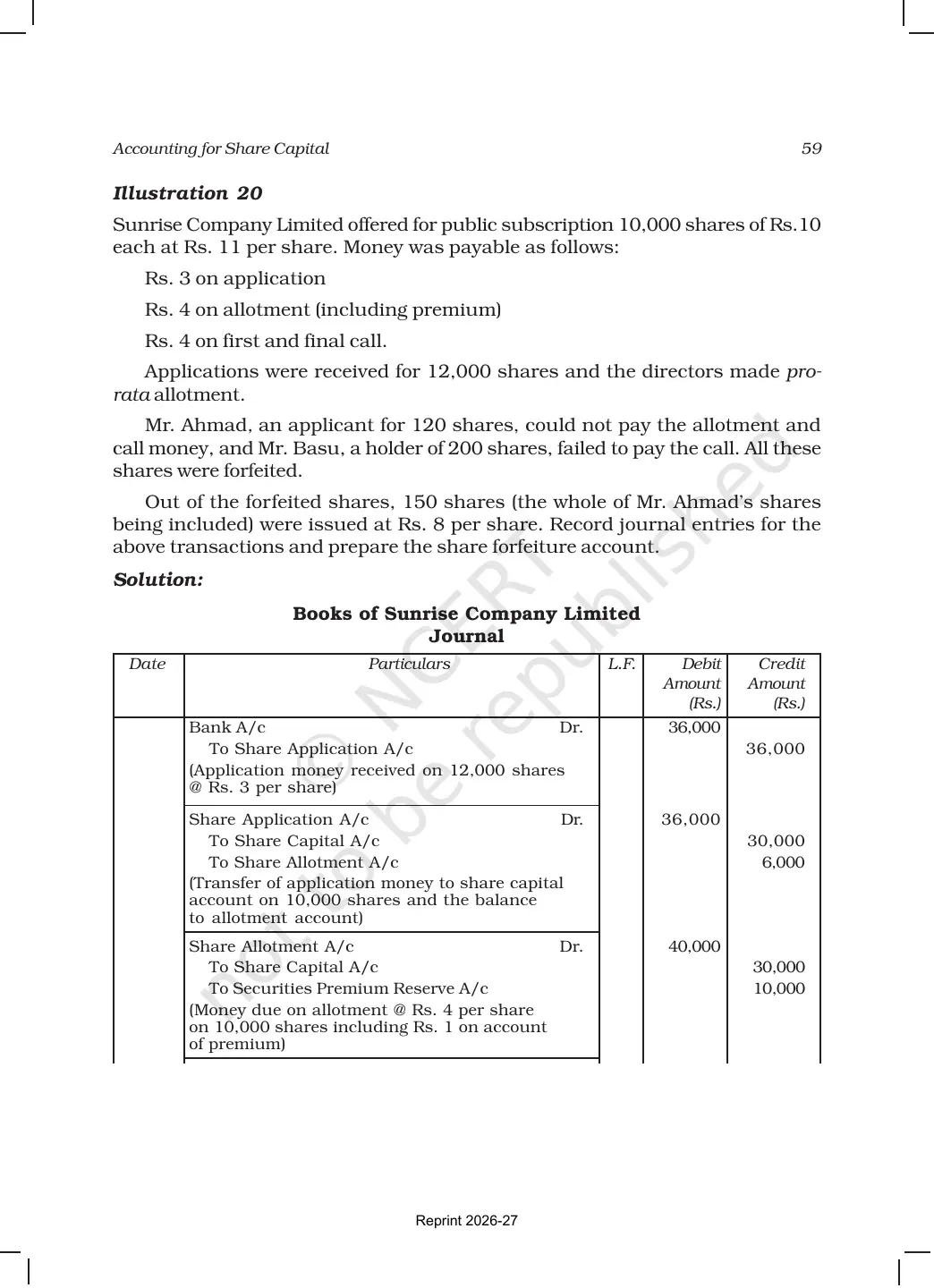
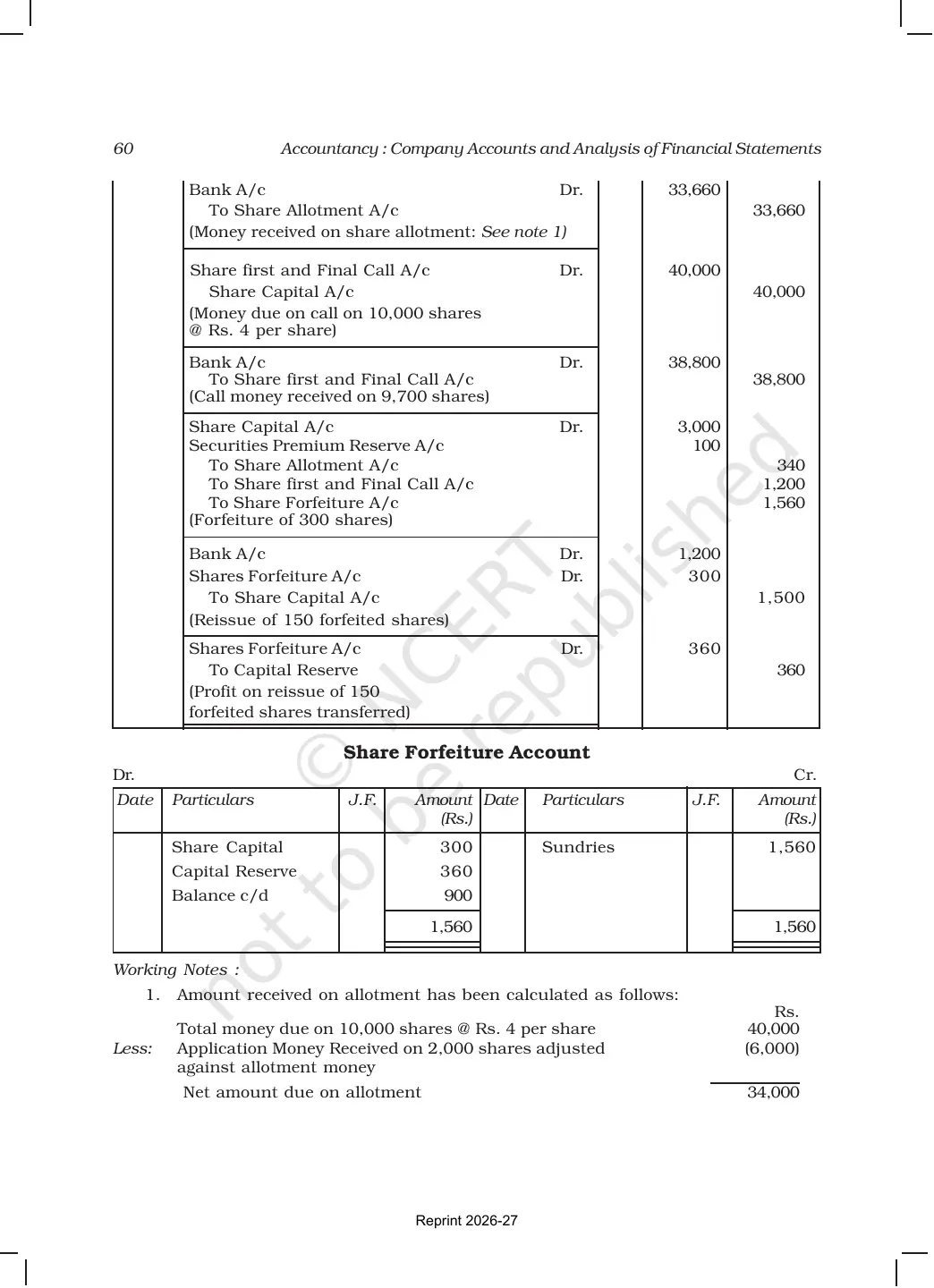
- Section 5.5 (Forfeiture, Re-issue) with 6 worked Illustrations
- Glossary of all 1-mark Assertion-Reason terms
Download as a direct PDF or browse the flipbook to jump to any Illustration without downloading all 90 pages.
Class 12 Accountancy Part 2 Chapter 1 PYQ Trends in CBSE Board Exams
The 8-mark numerical on issue of shares, pro-rata allotment, and forfeiture has appeared in 5 of the last 6 board sessions, making it the most-tested numerical in Class 12 Accountancy.
| Year | Marks from Part 2 Chapter 1 | Question Pattern |
|---|---|---|
| 2025 | 11 | 8M: Pro-rata allotment, forfeiture, re-issue + 3M: Securities Premium uses (Section 52) |
| 2024 | 9 | 8M: Issue at premium + over-subscription + 1M: Minimum subscription threshold |
| 2023 | 10 | 8M: Forfeiture + re-issue at discount + journal entries + 1M Assertion-Reason on share capital classes |
| 2022 (Term 2) | 8 | 6M: Issue for consideration other than cash + 1M MCQ + 1M MCQ |
| 2021 (Term 1) | 6 | 6 MCQs covering Authorised, Issued, Subscribed Capital and Calls in Arrears |
| 2020 | 8 | 8M: Pro-rata allotment + adjustment of excess against calls in advance |
Full year-wise PYQ map: Accounting for Share Capital NCERT Solutions PDF
What the ncert class 12 accountancy book pdf chapter 5 Accounting for Share Capital Contains
The chapter has five numbered sections plus Glossary, Summary, and practice questions. Each feeds into the journal-entry sequence the board paper tests.
| Section | Topic | Why It Matters in CBSE 2026-27 |
|---|---|---|
| 5.1 | Features of a Company | 1-mark theory: separate legal entity, perpetual succession, limited liability |
| 5.2 | Kinds of Companies | Public vs Private, One Person Company (Section 2(62) Companies Act 2013) |
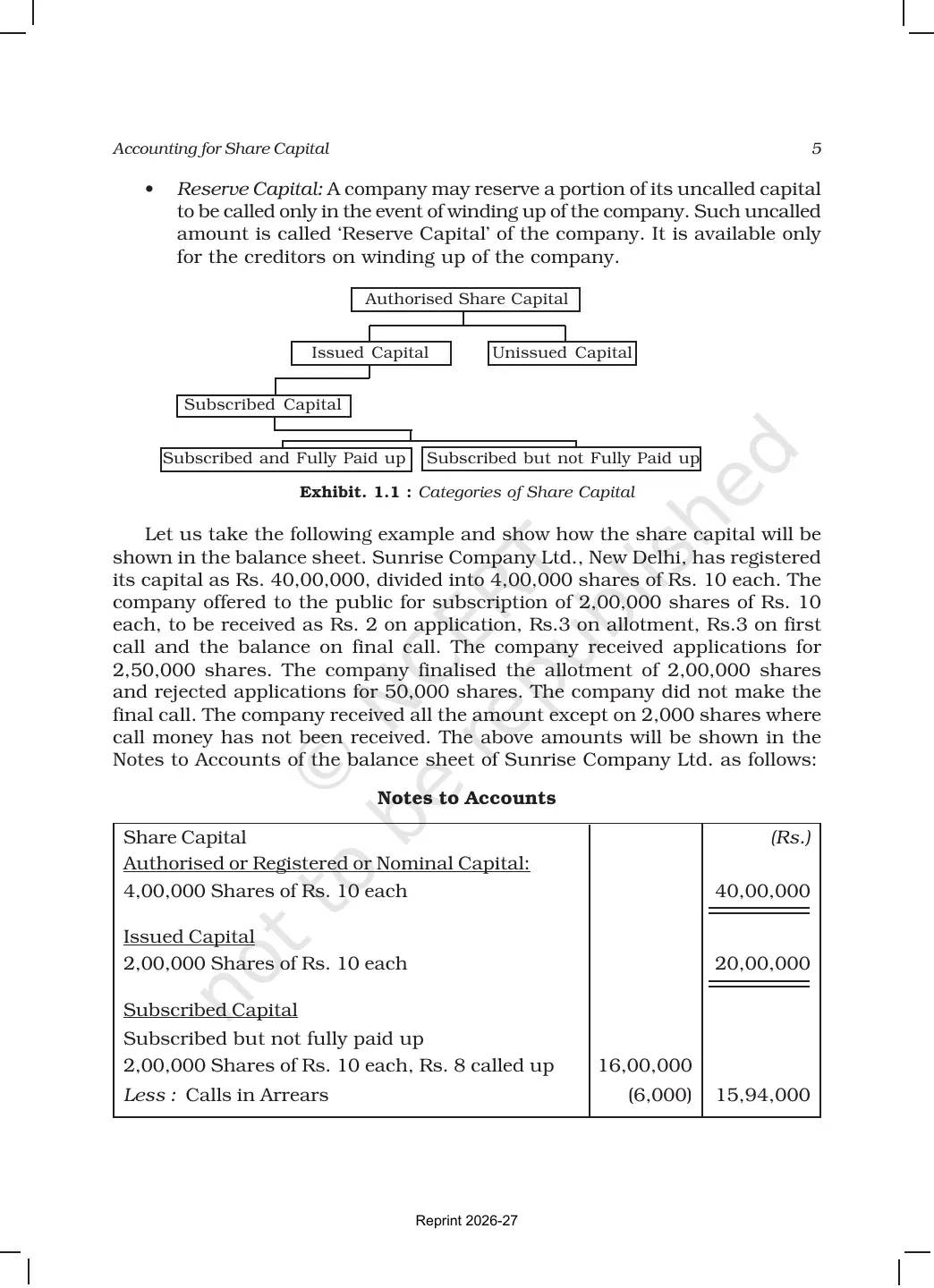
| 5.3 | Share Capital of a Company | Authorised, Issued, Subscribed, Called-up, Paid-up, Reserve Capital, Uncalled Capital |
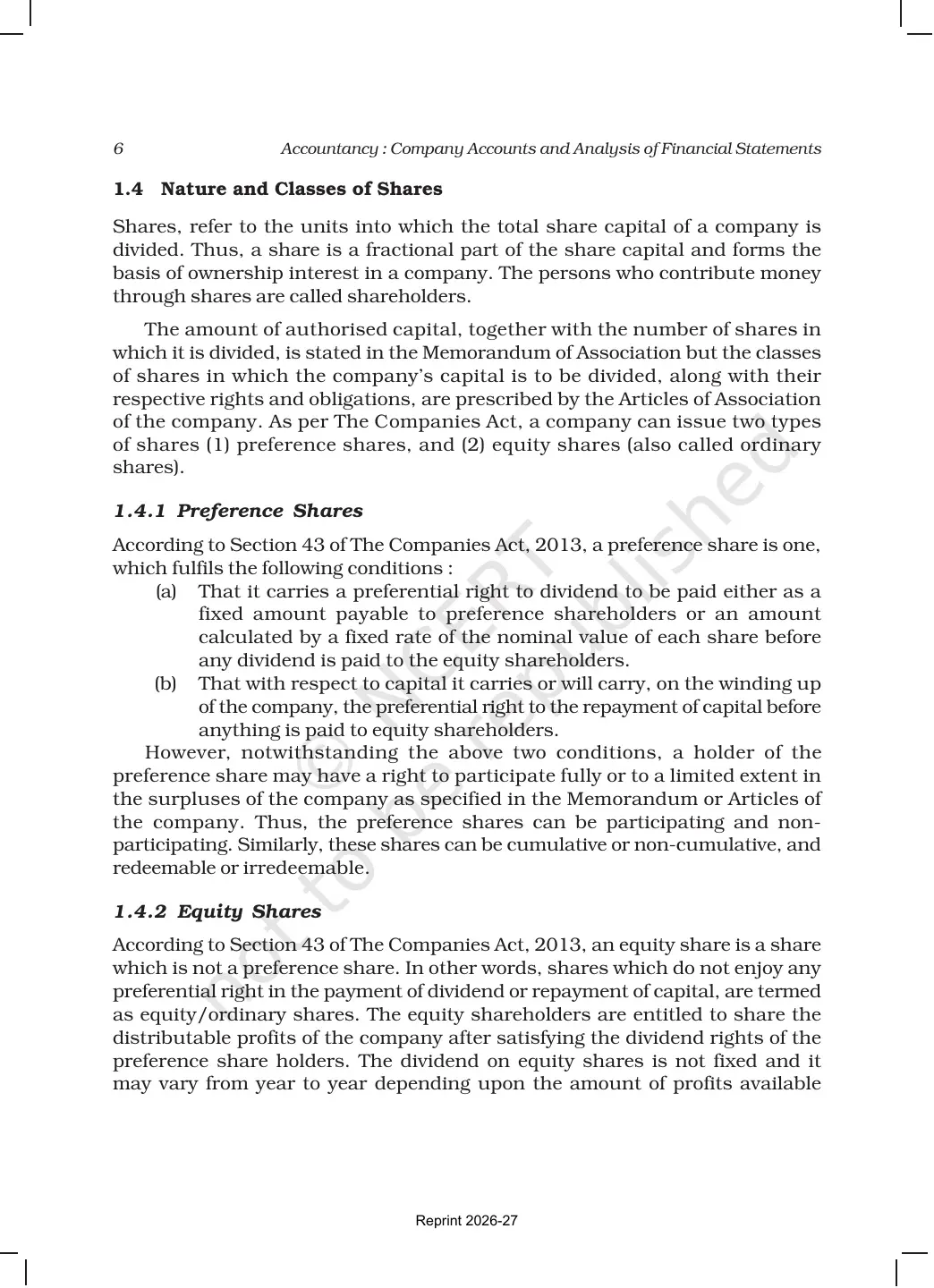
| 5.4 | Nature and Classes of Shares | Equity vs Preference; Section 43 Companies Act 2013 |
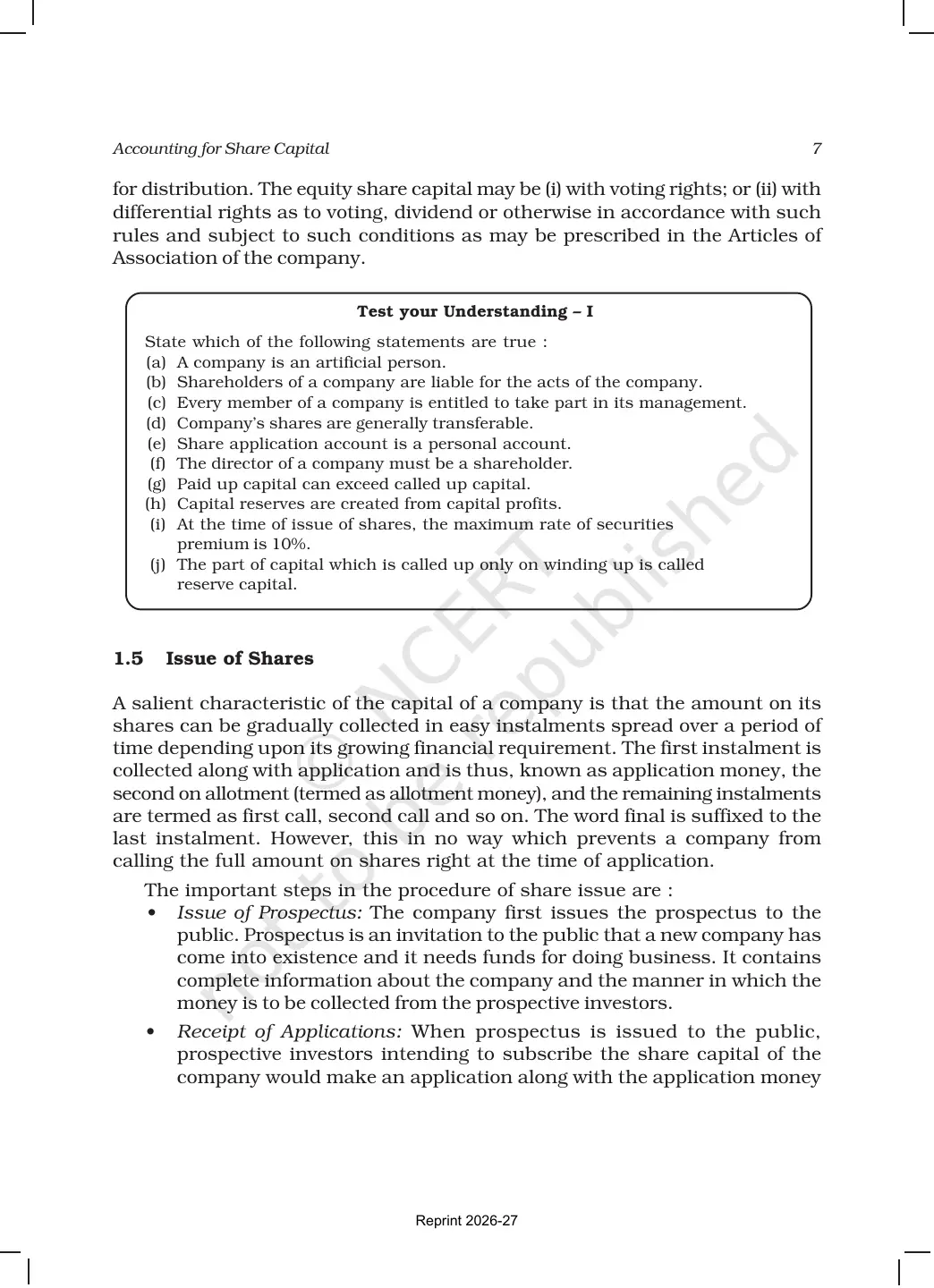
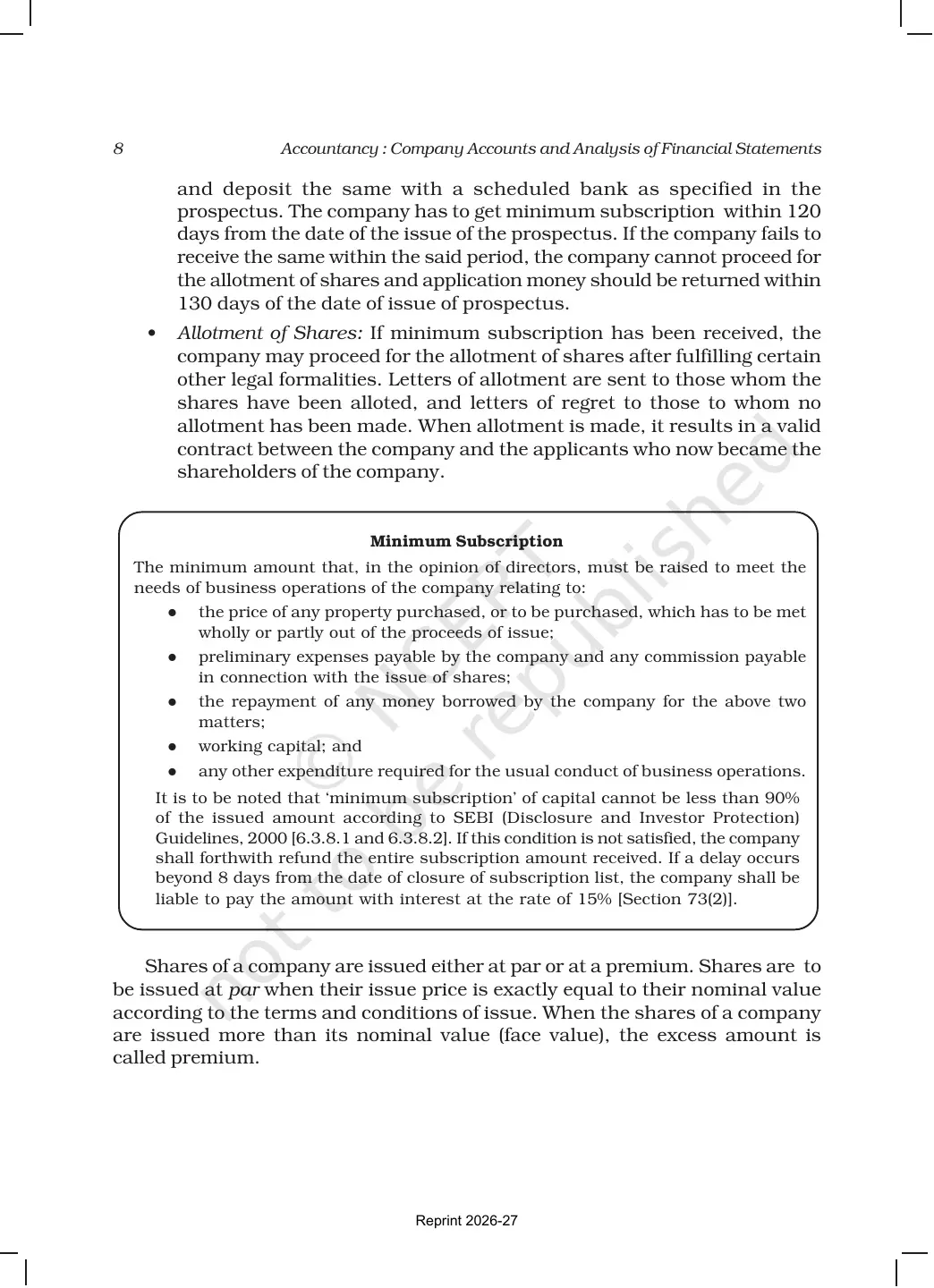
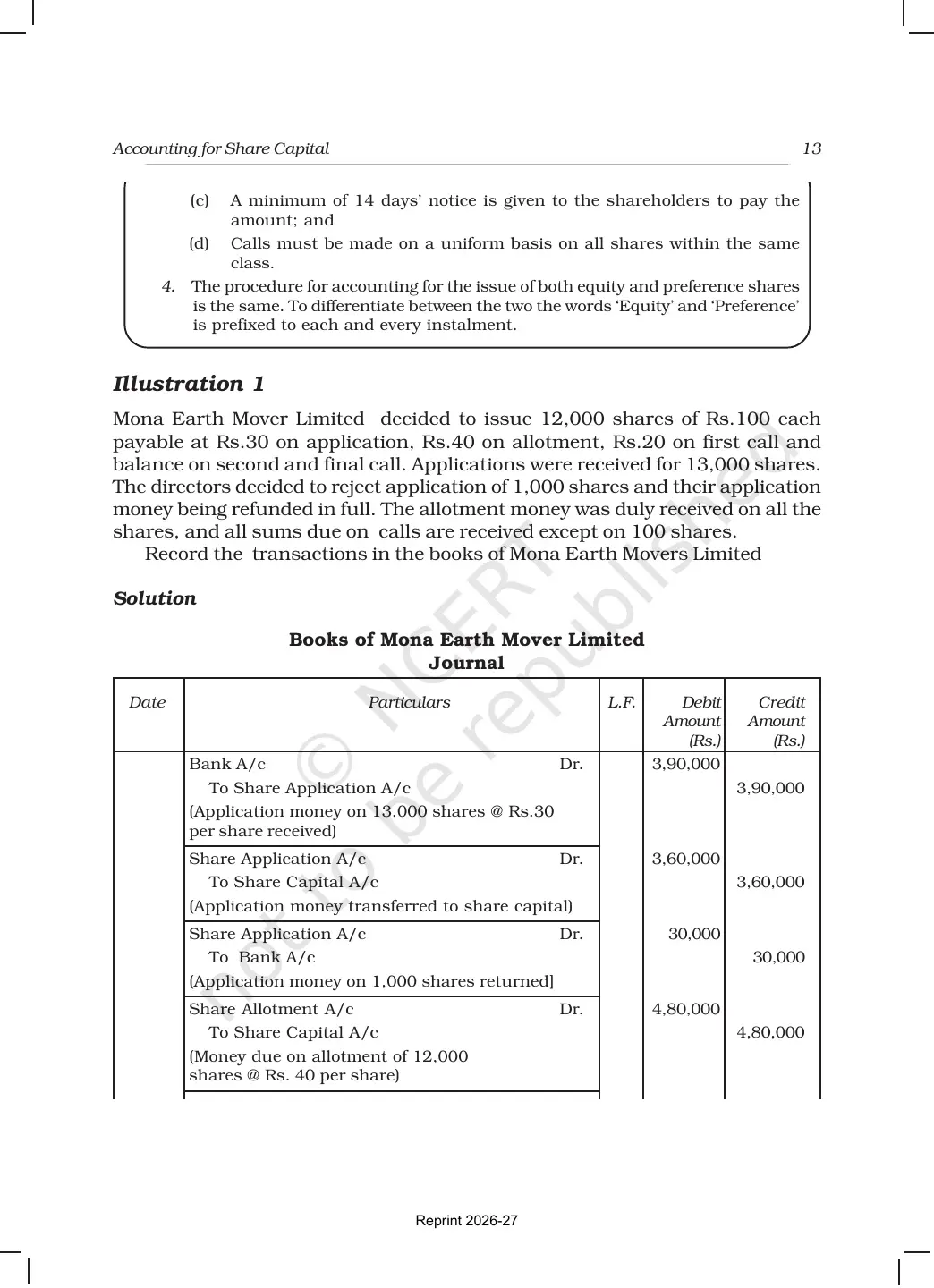
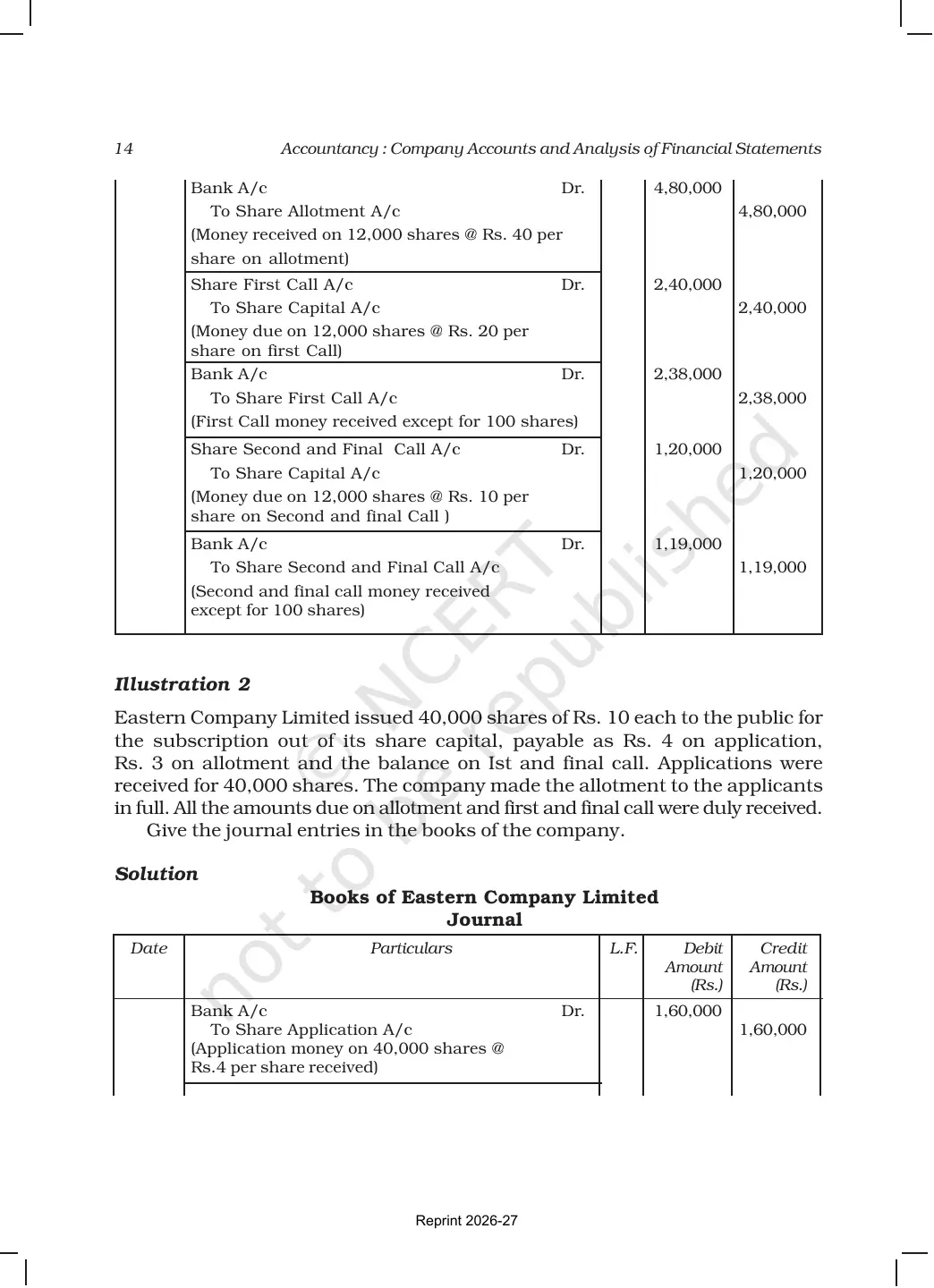
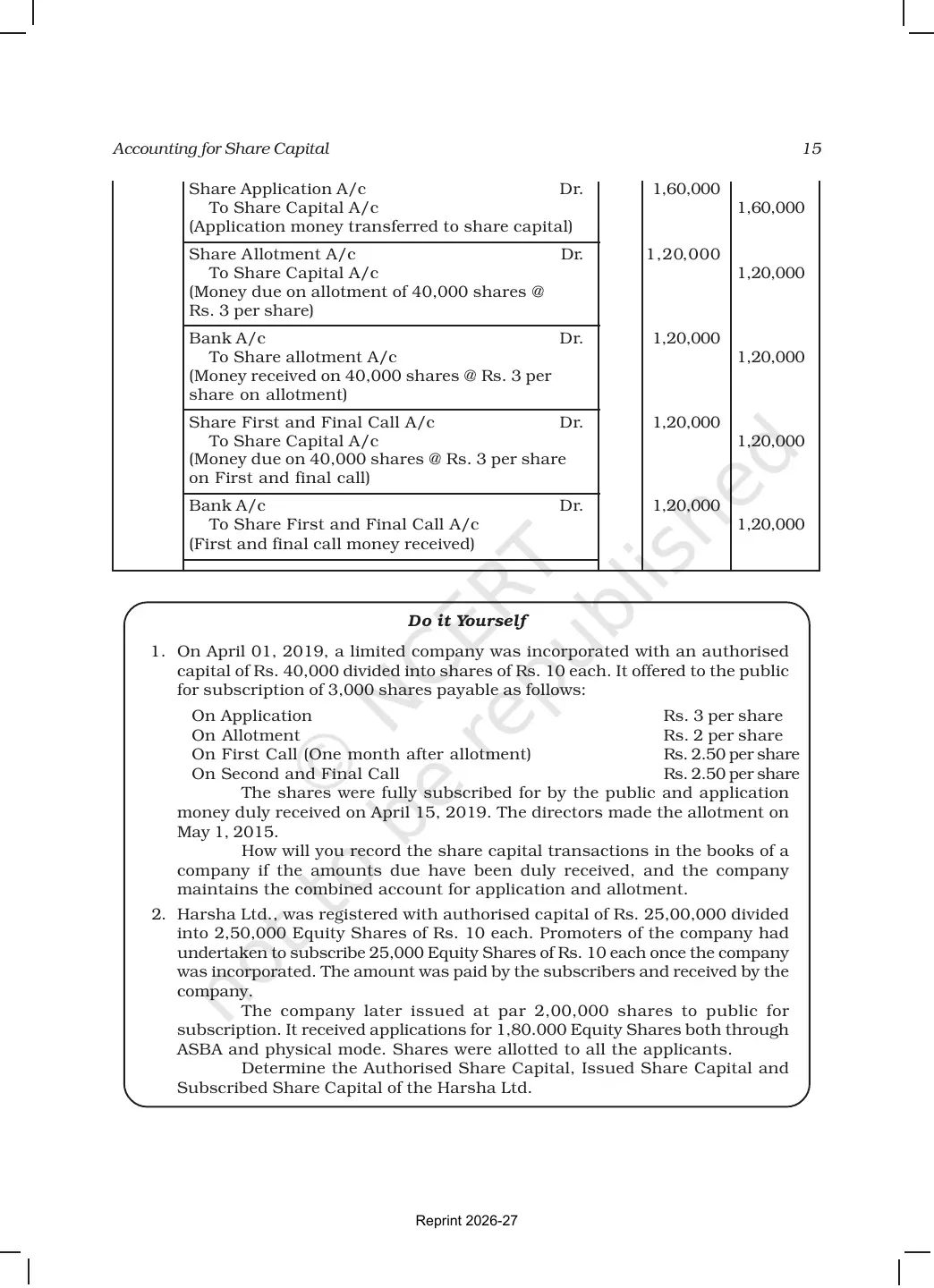
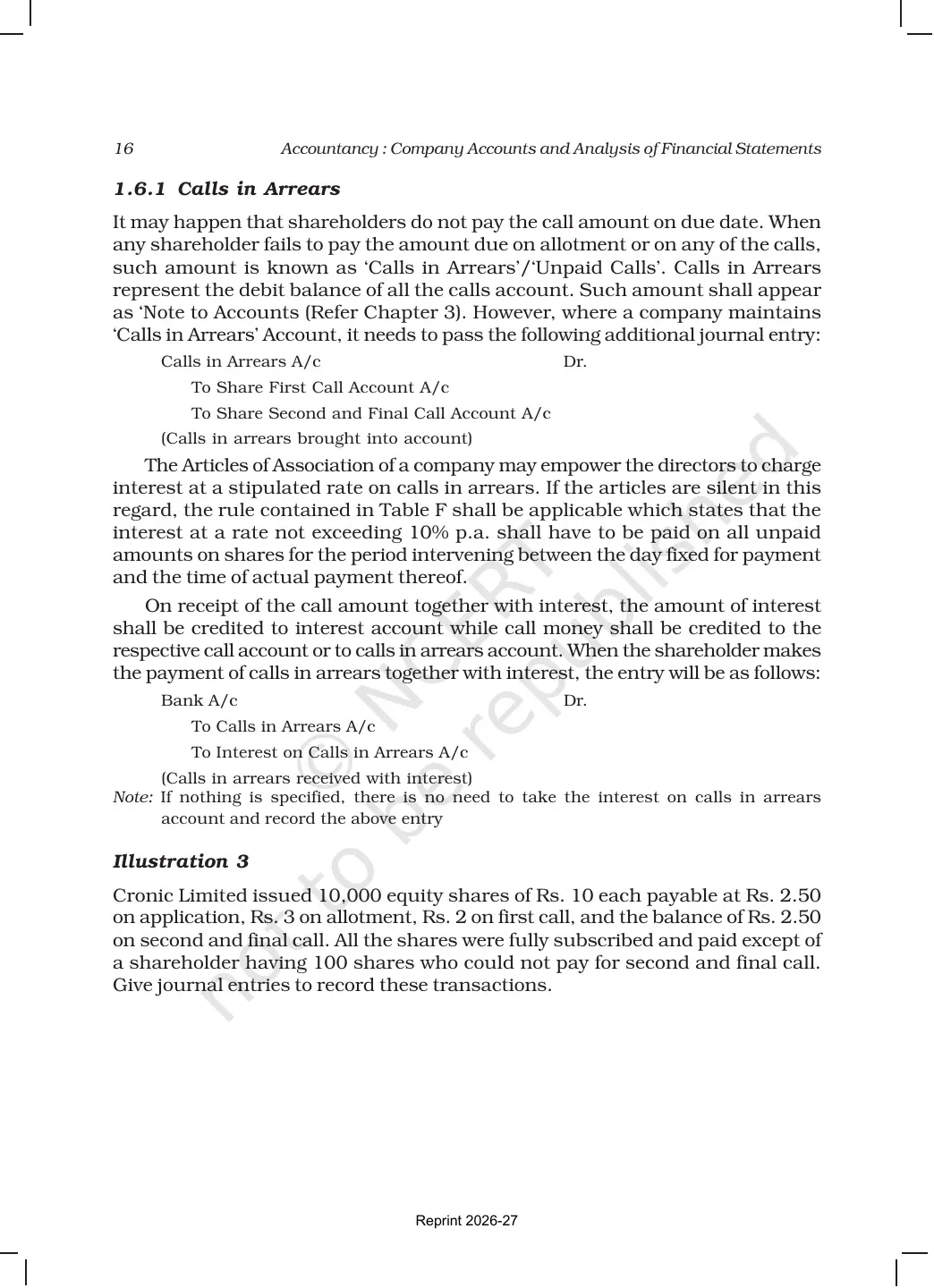
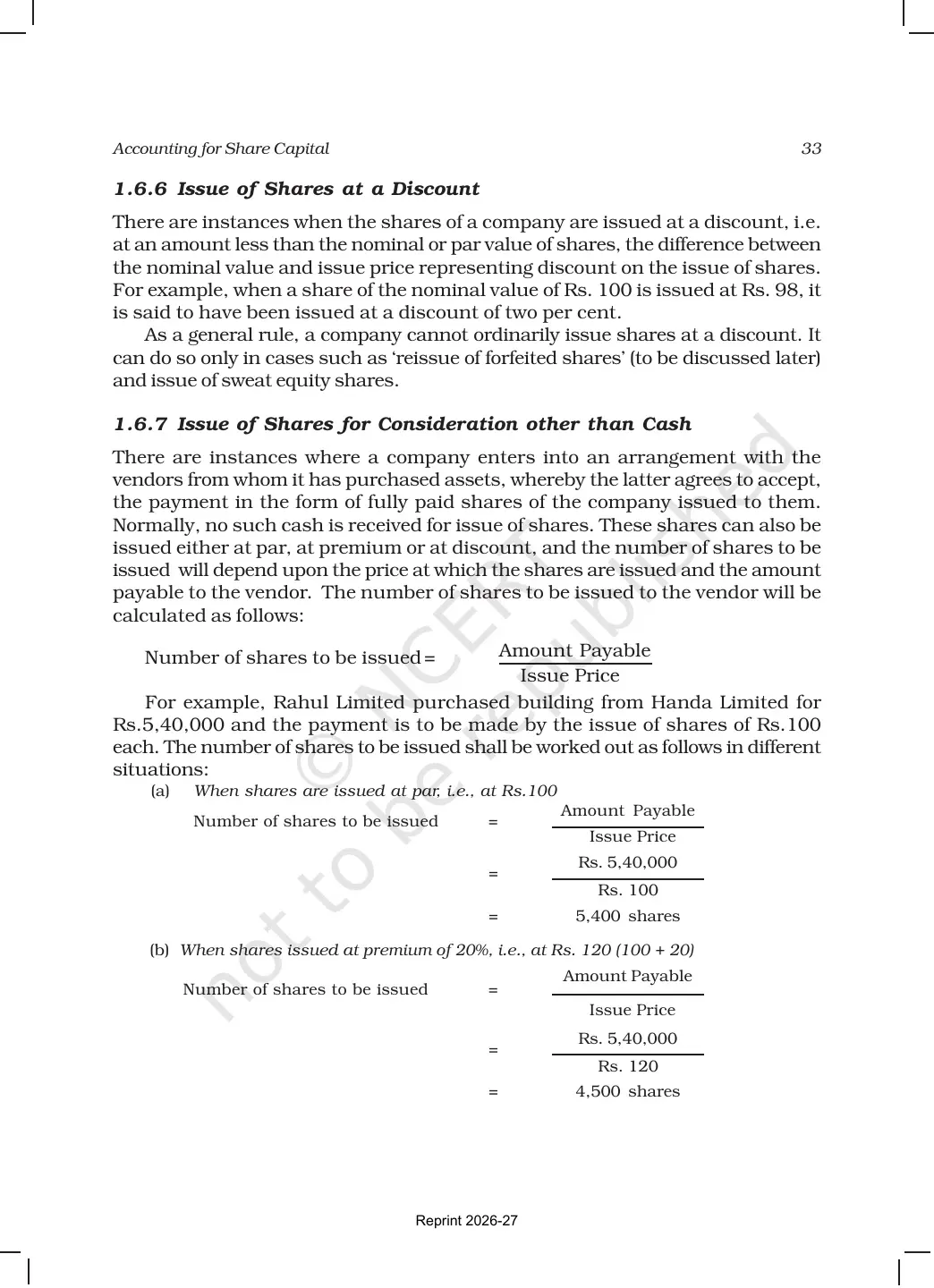
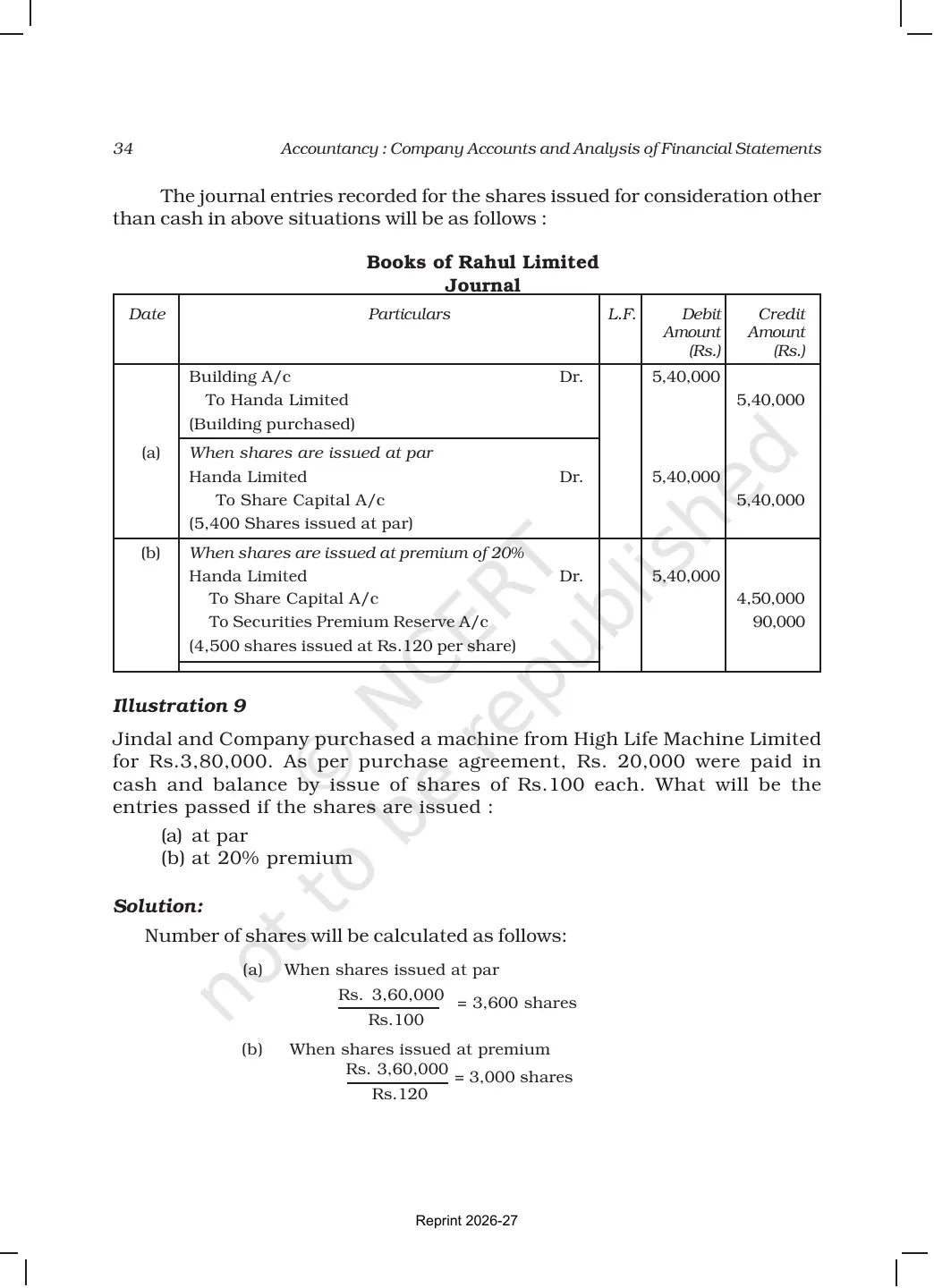
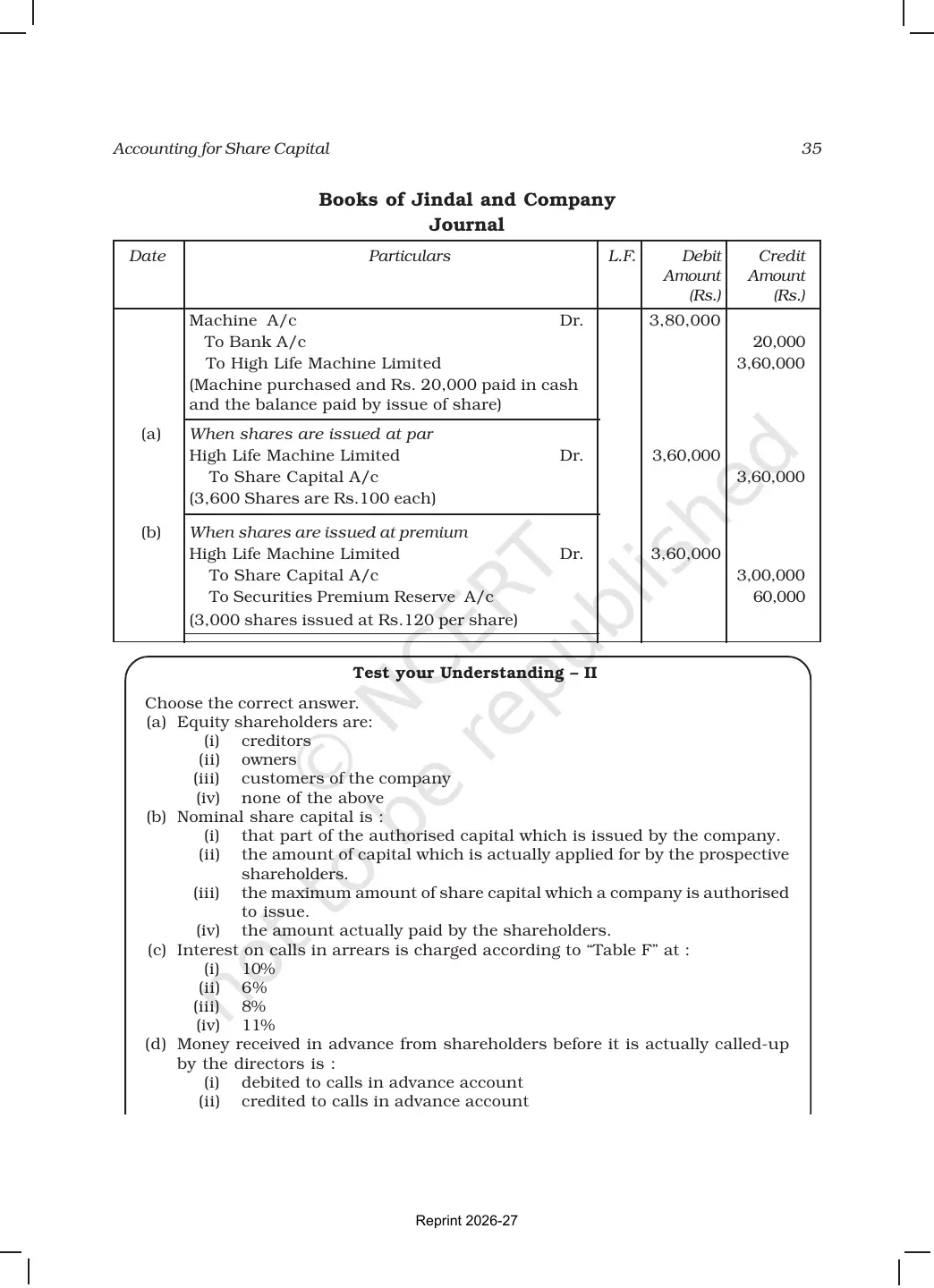
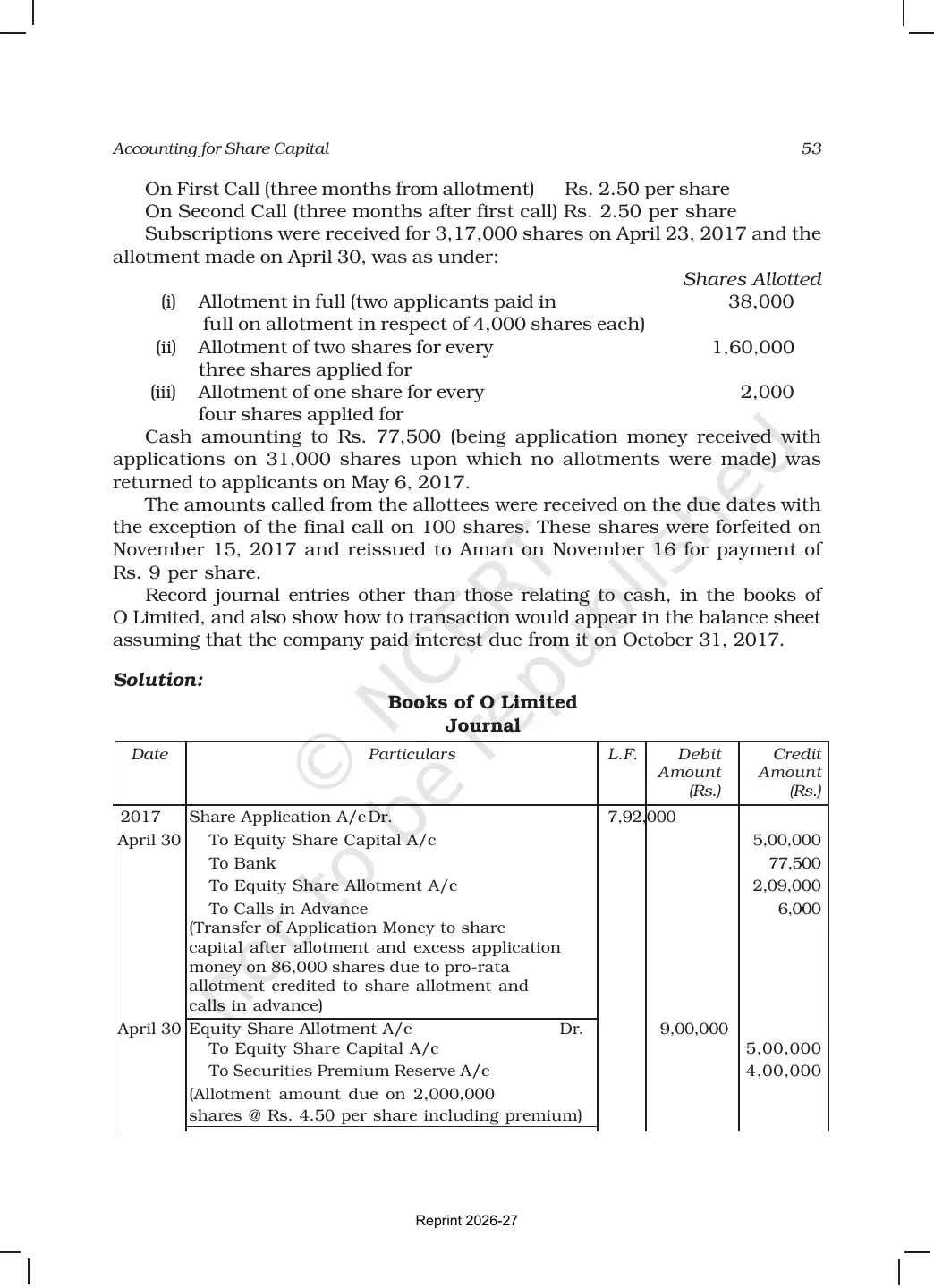
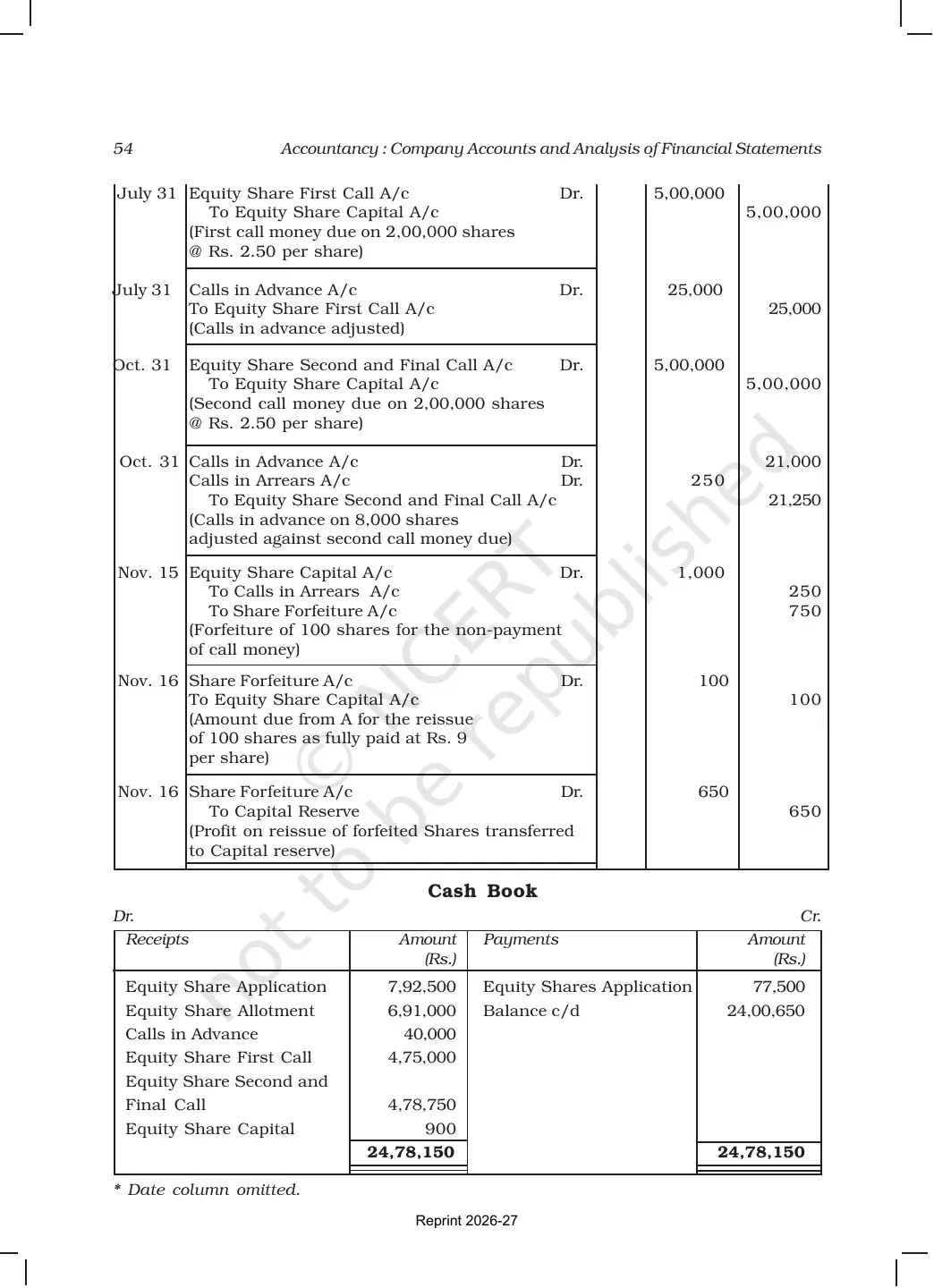
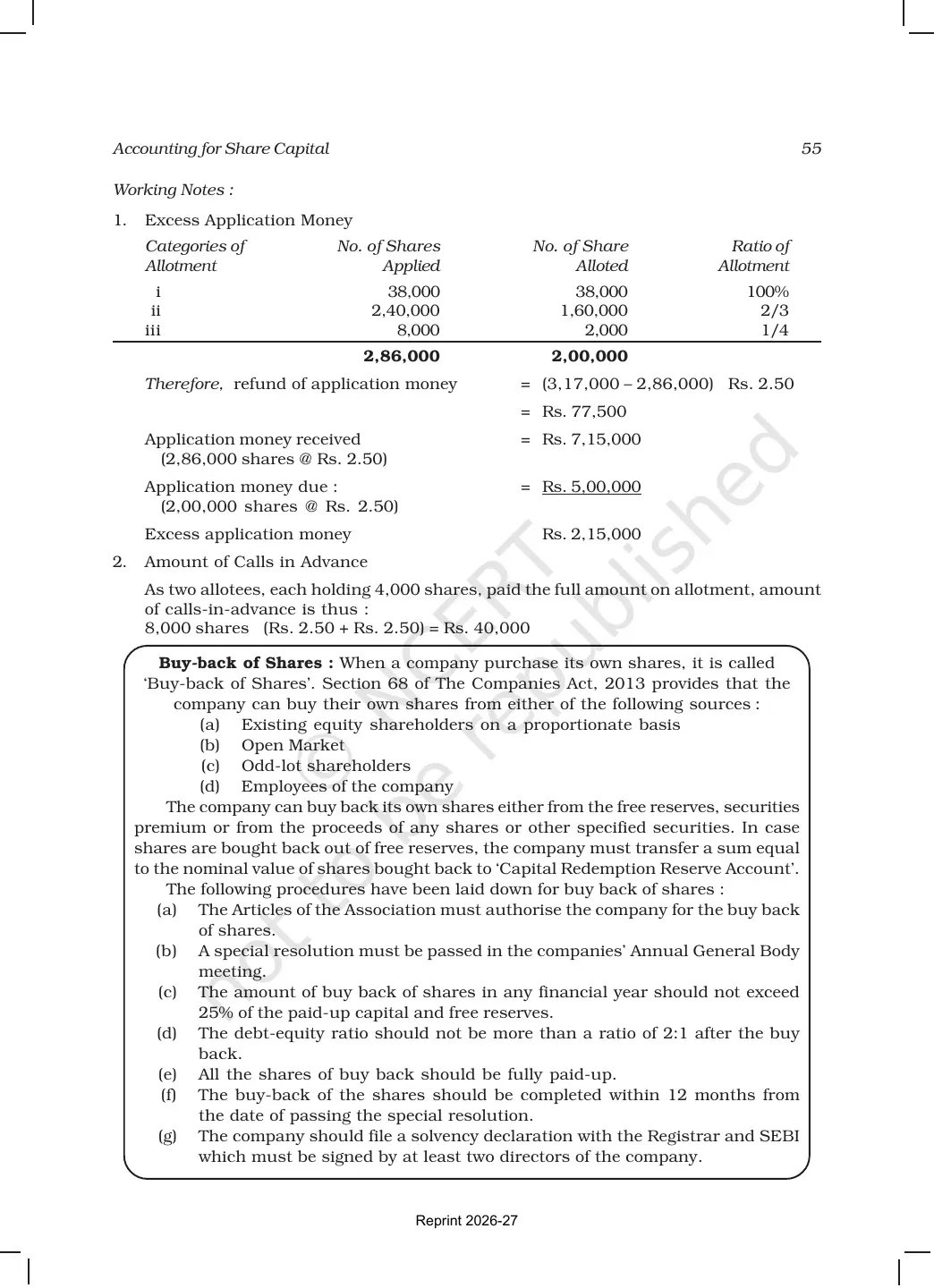
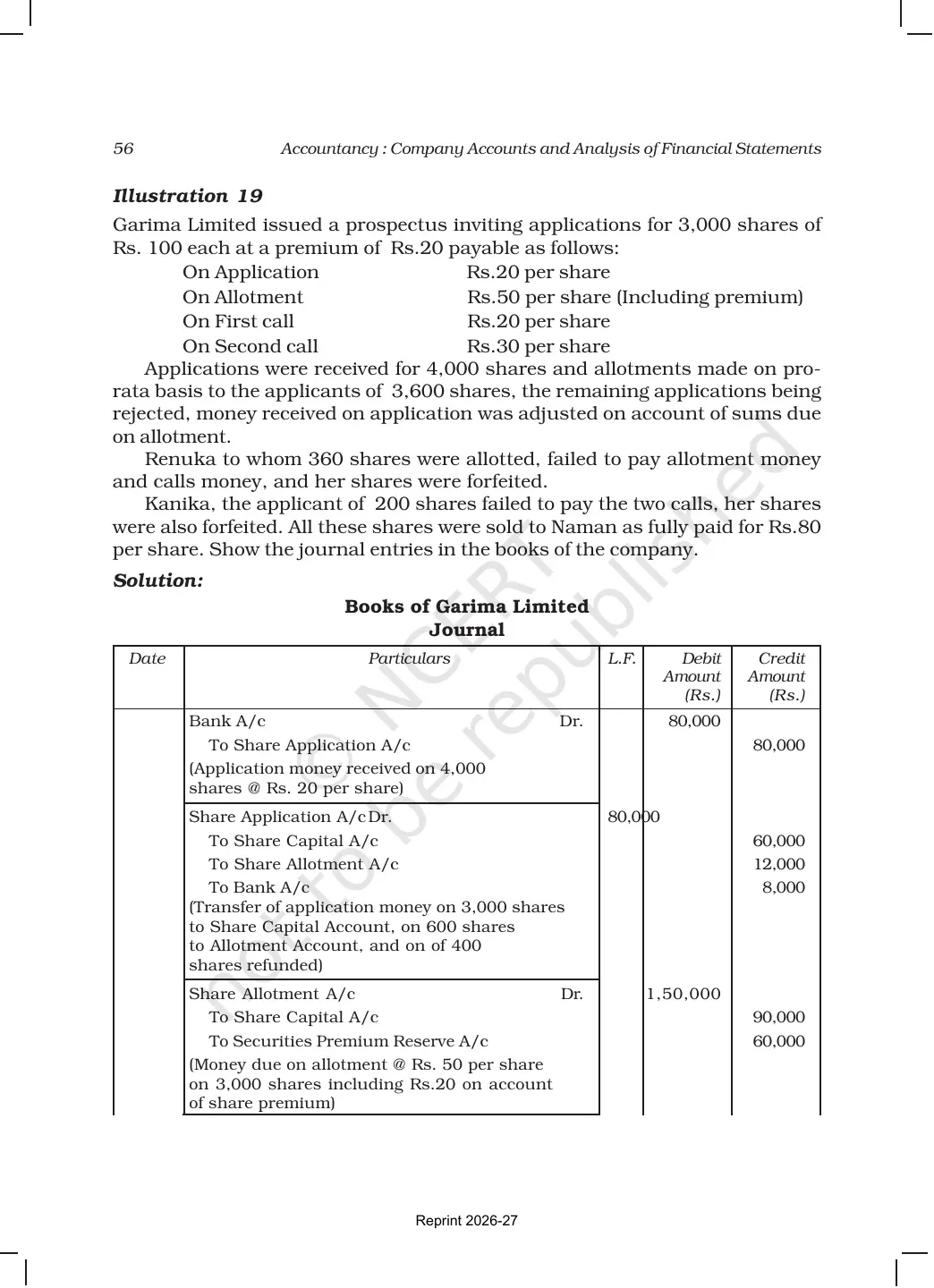
| 5.5 | Issue of Shares (Premium, Par, Consideration other than Cash, Pro-rata, Calls in Arrears / Advance, Over-subscription, Forfeiture, Re-issue) | The 8-mark numerical comes from here, every single year |
| Glossary + Summary | Key terms + Section references | Direct source for Assertion-Reason and 1-mark MCQs |
| Questions for Practice | 12 SA + 18 LA + 40 Numerical | Mirrors CBSE board paper difficulty |
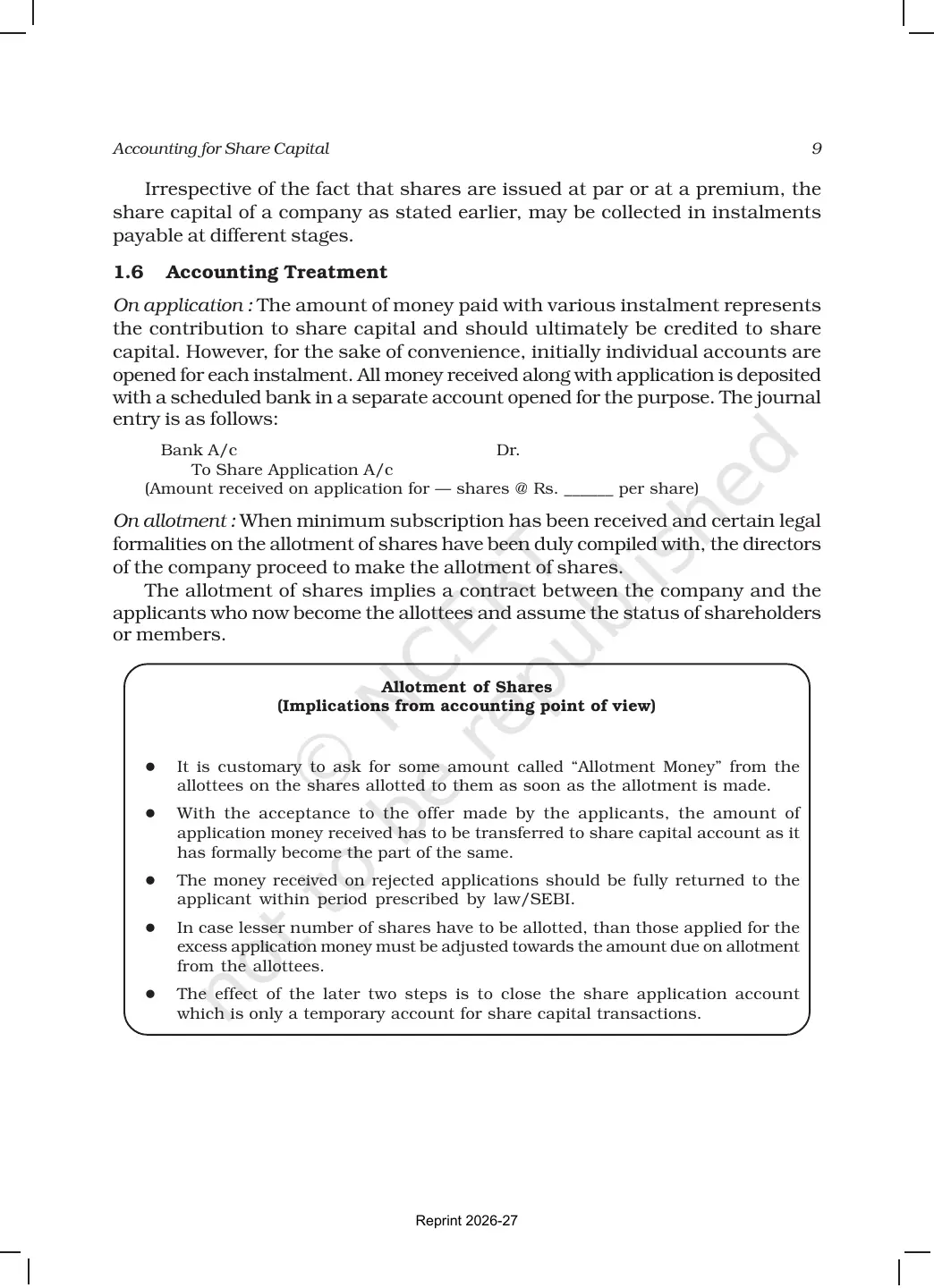
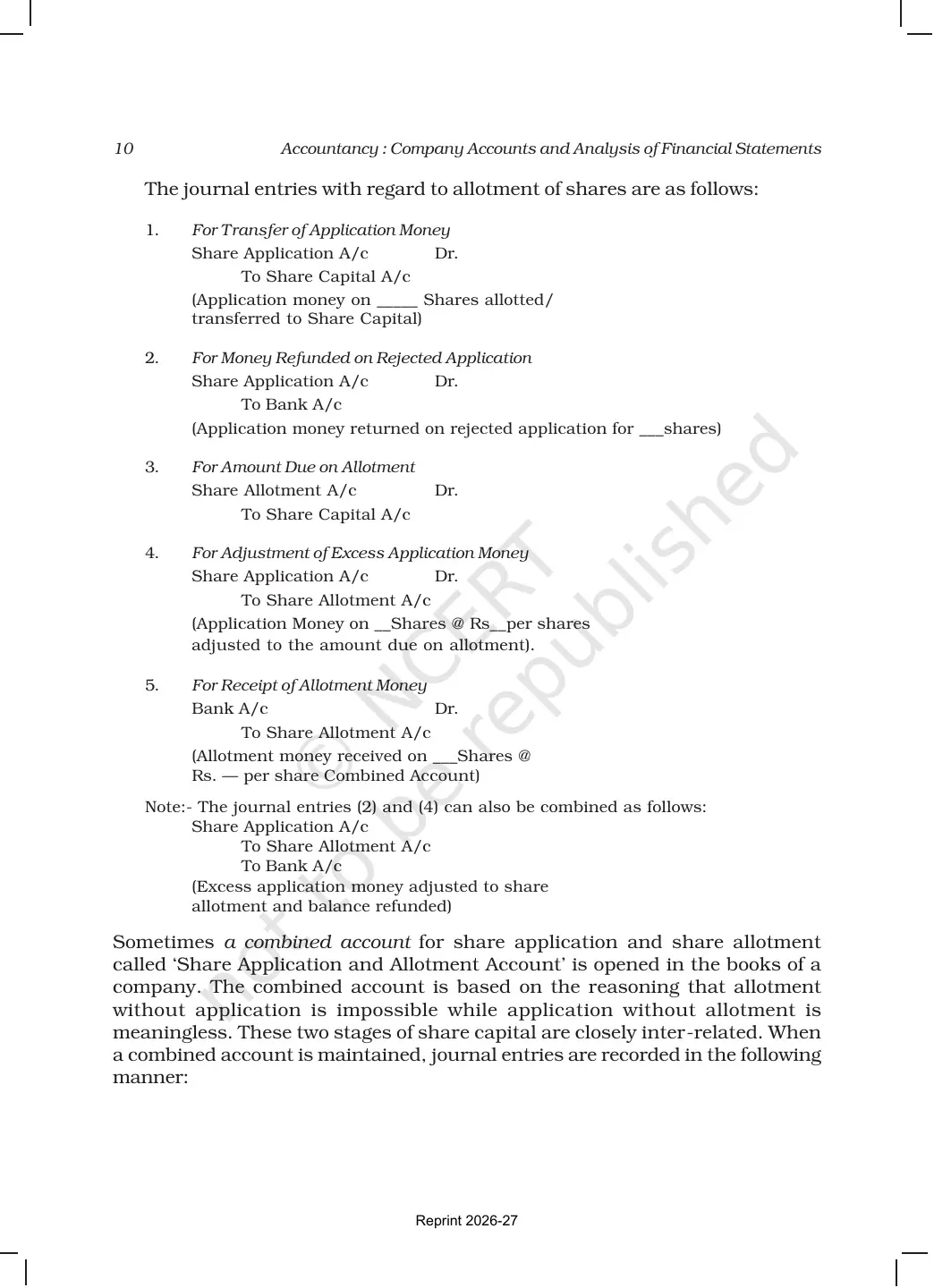
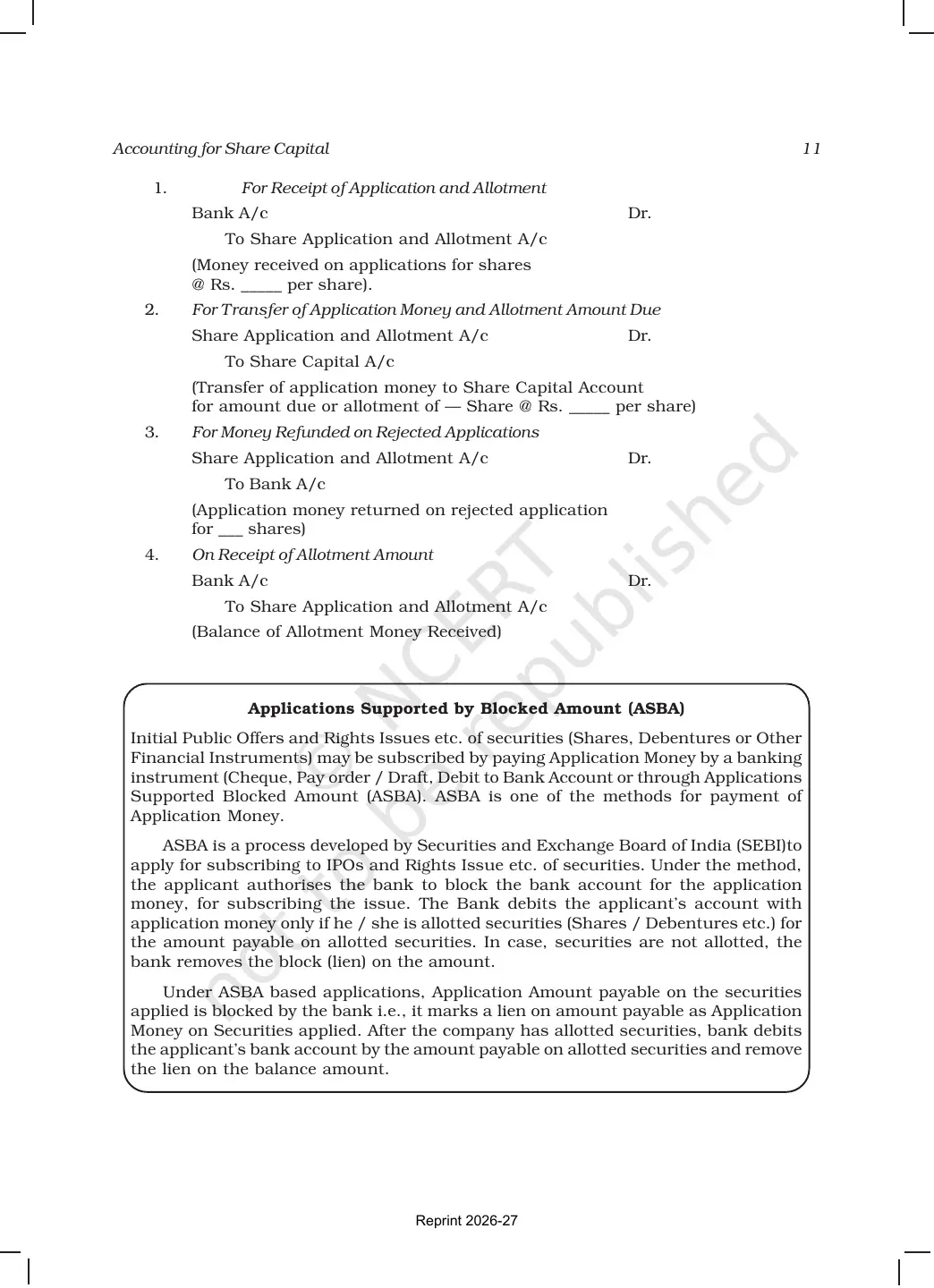
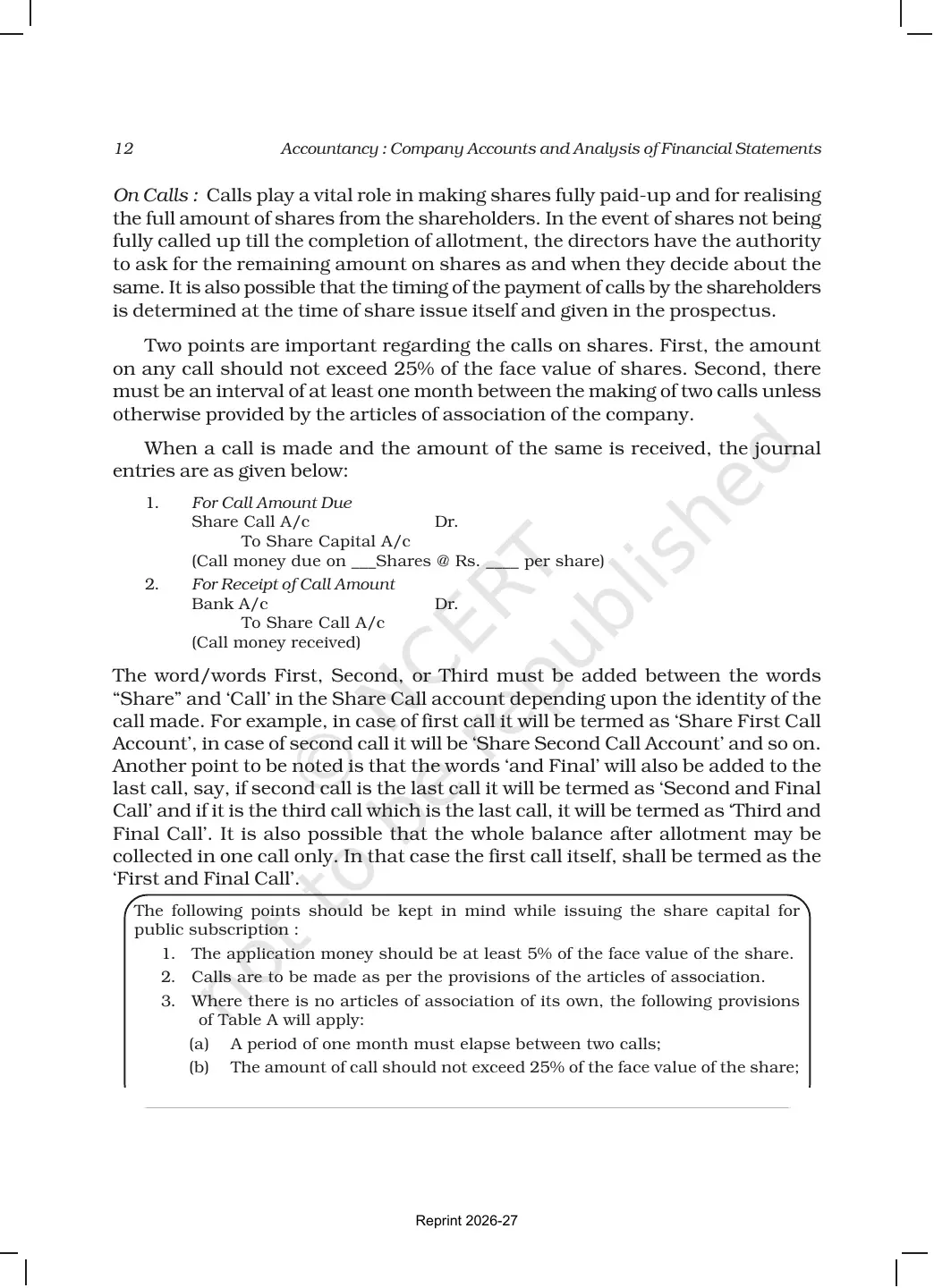
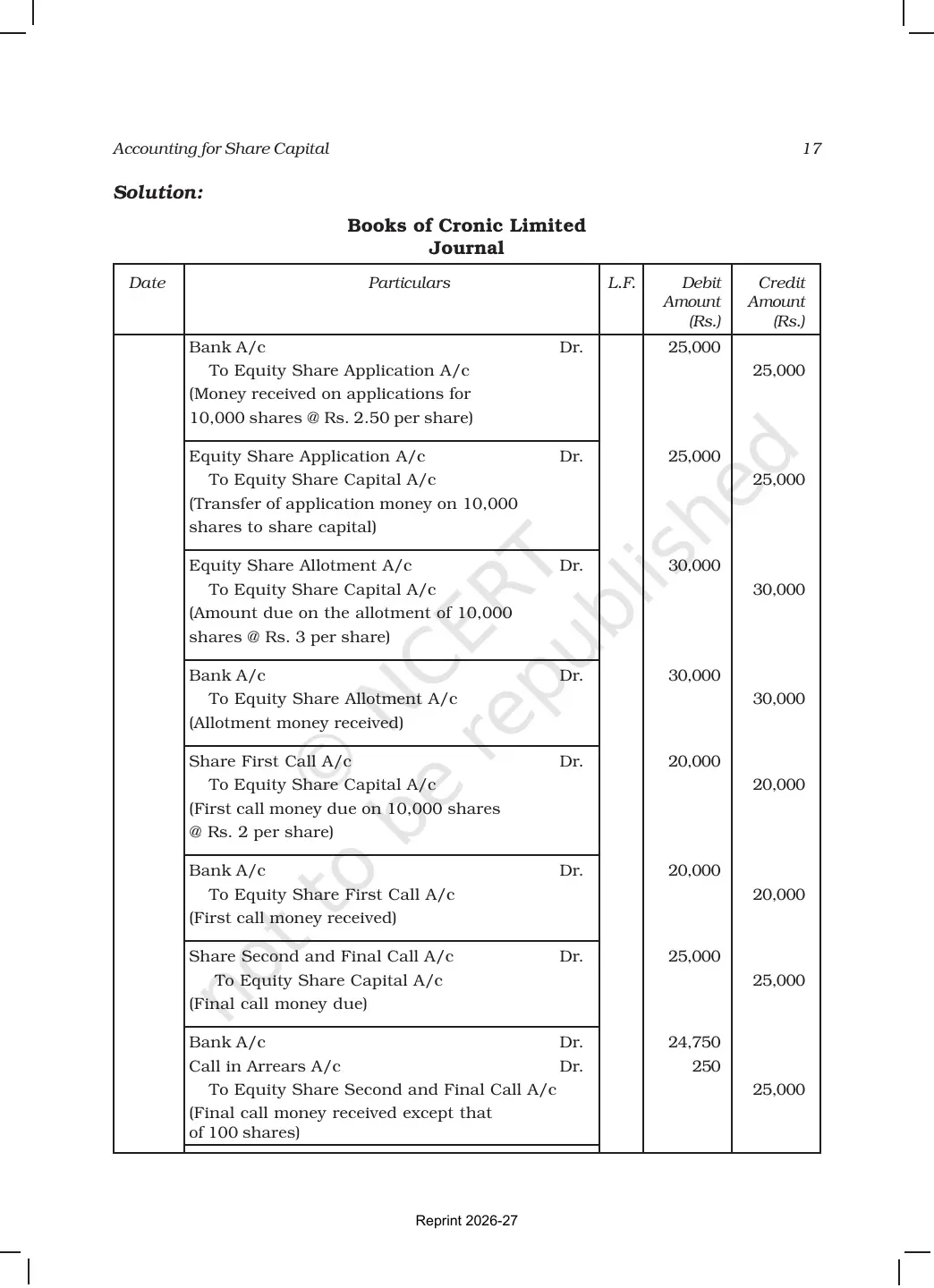
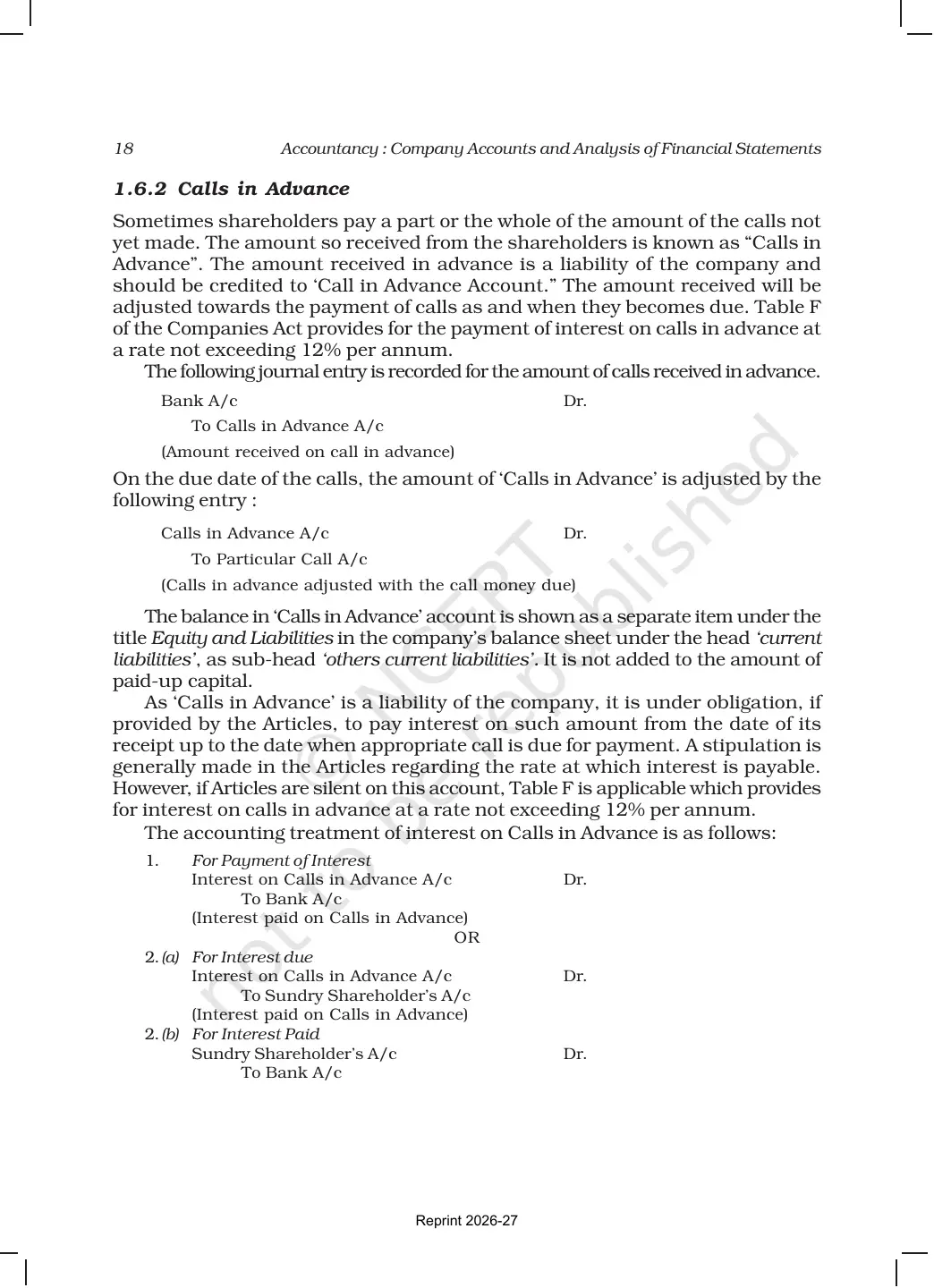
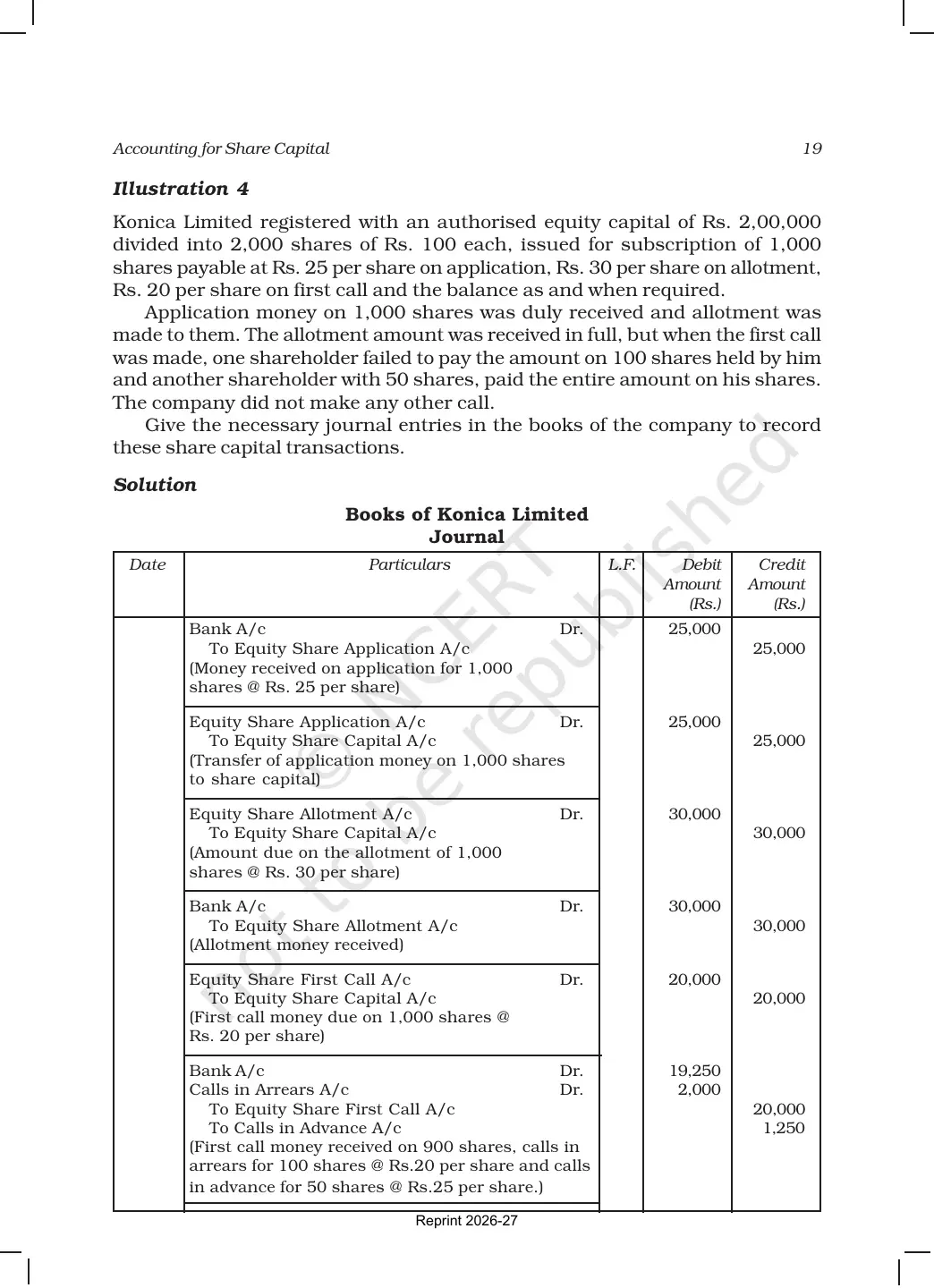
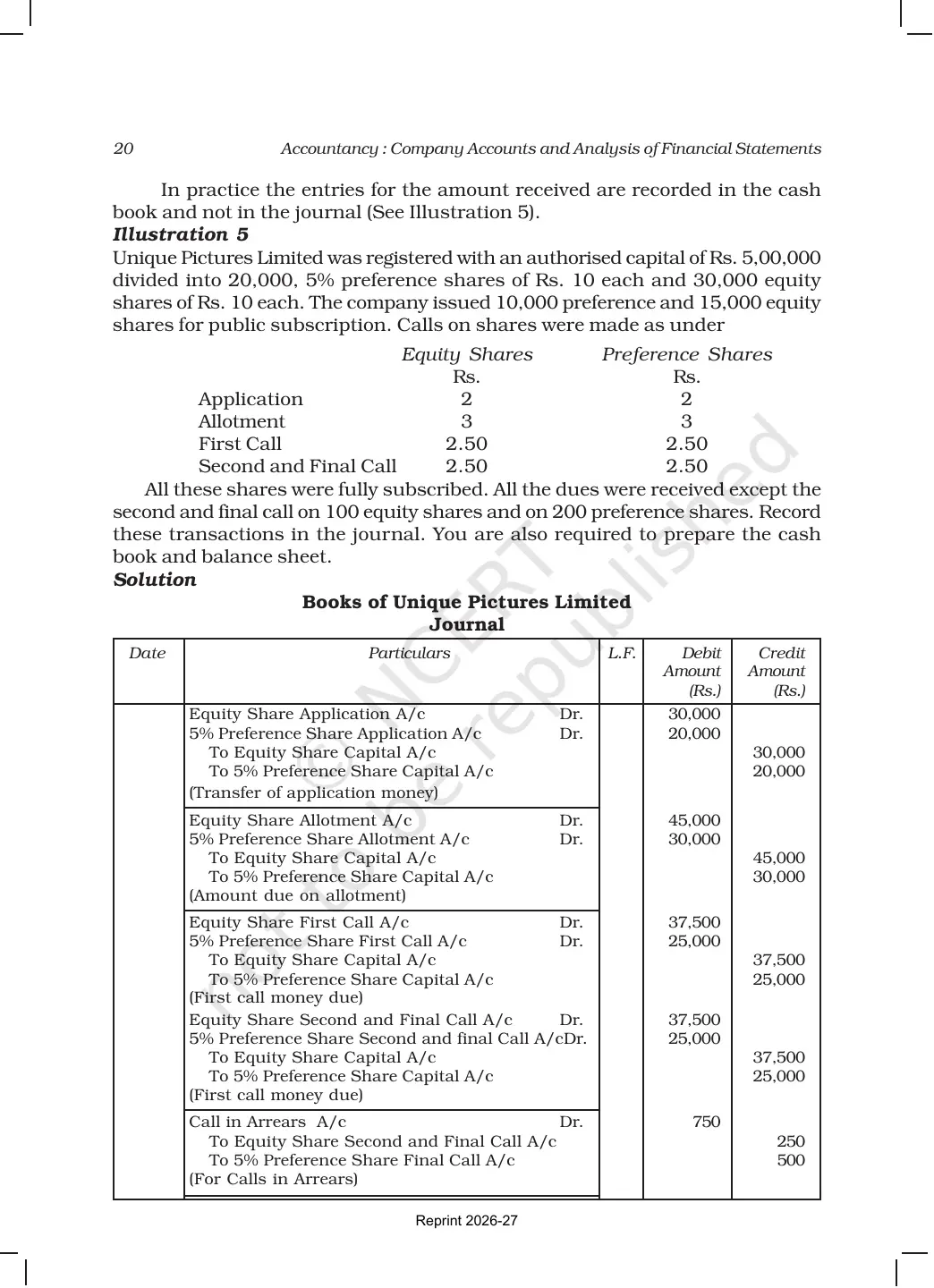
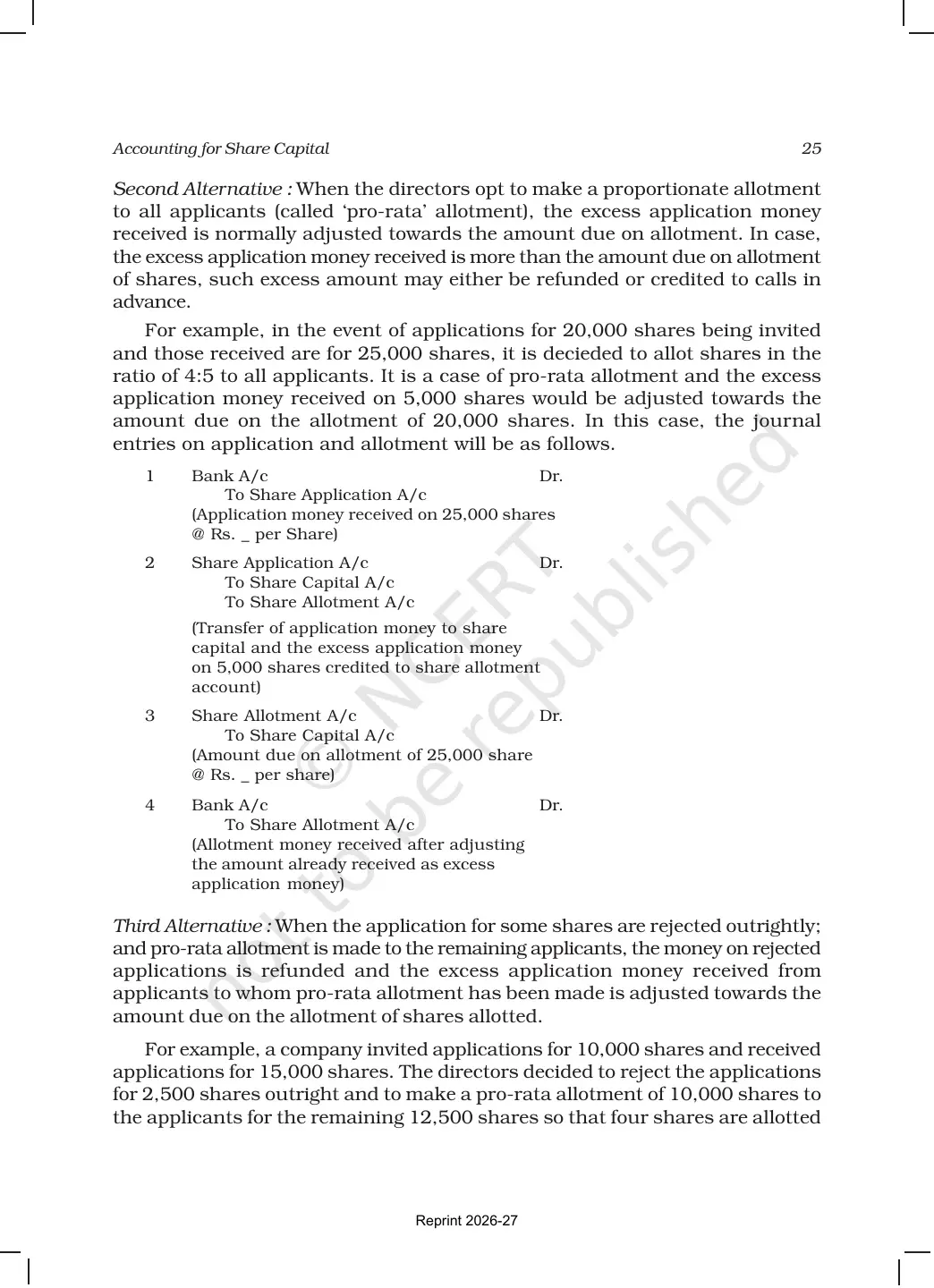
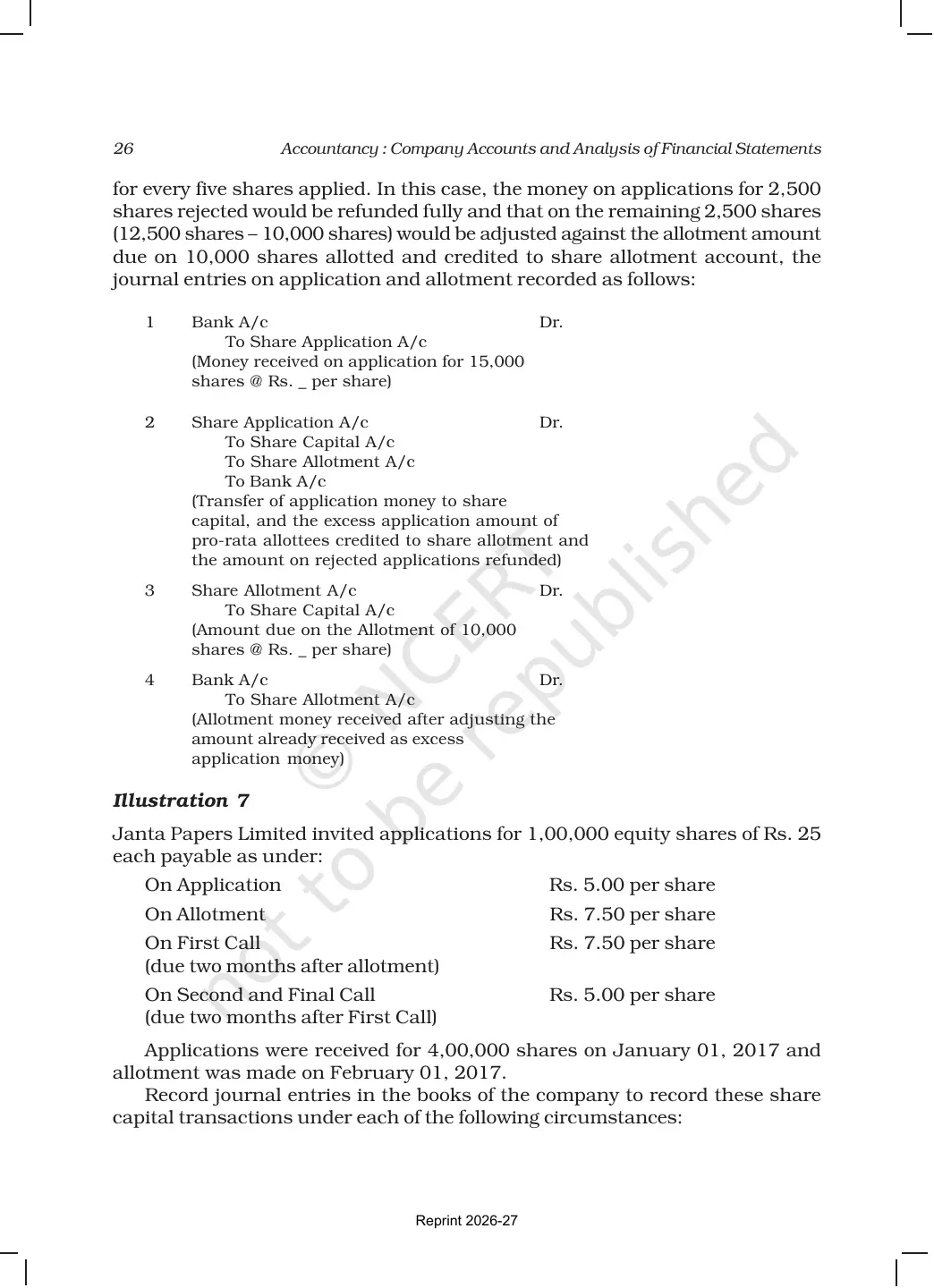
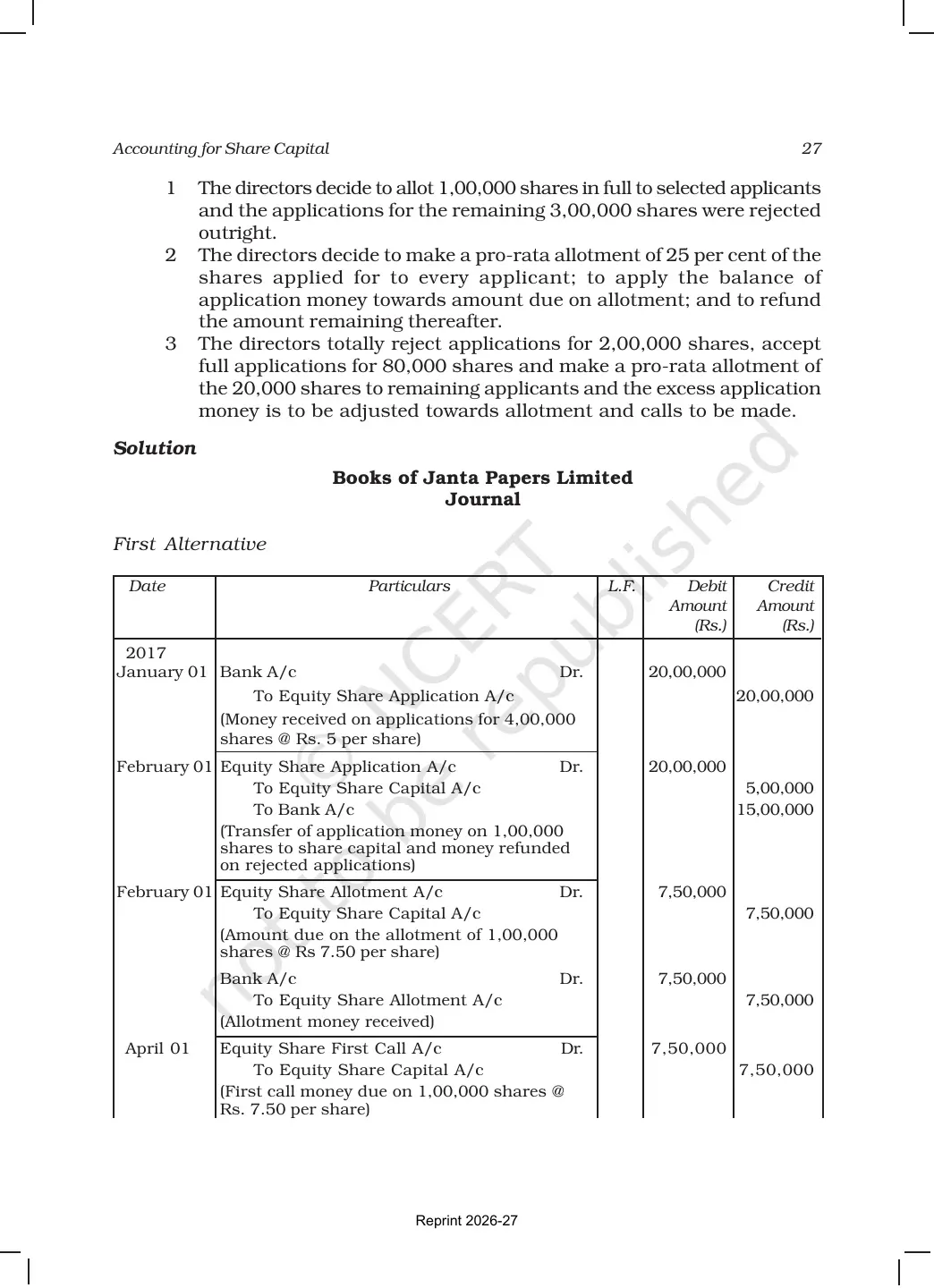
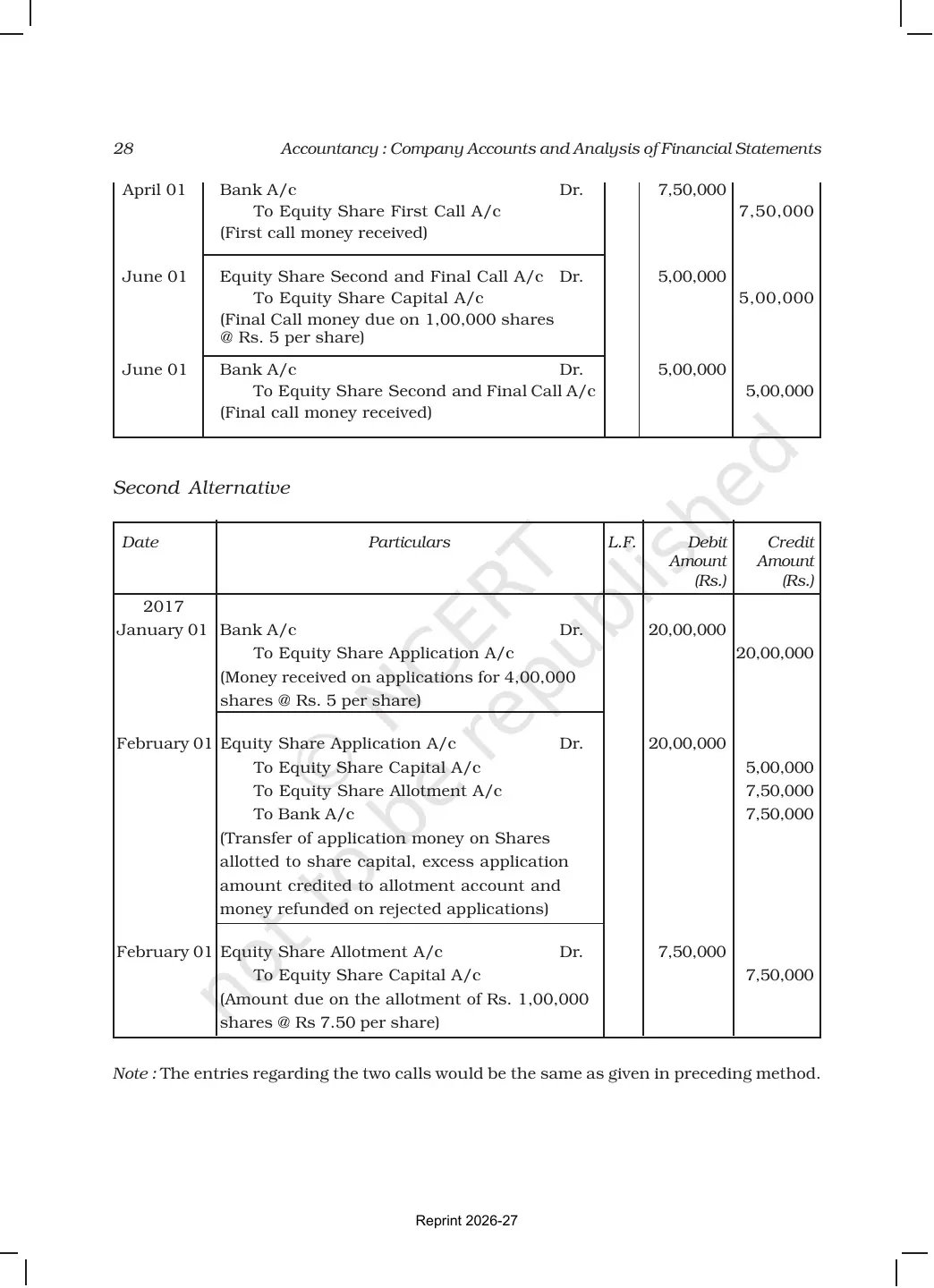
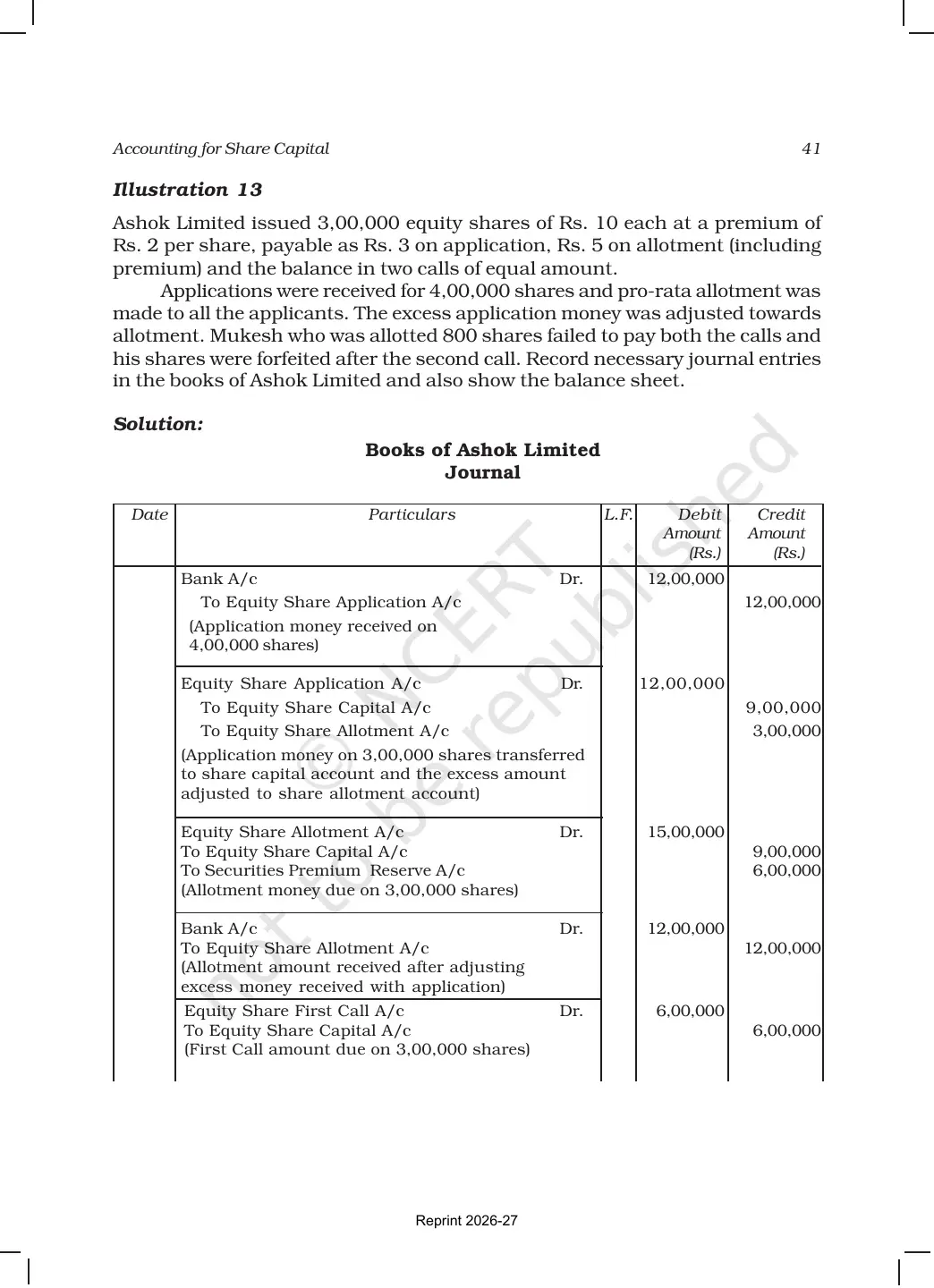
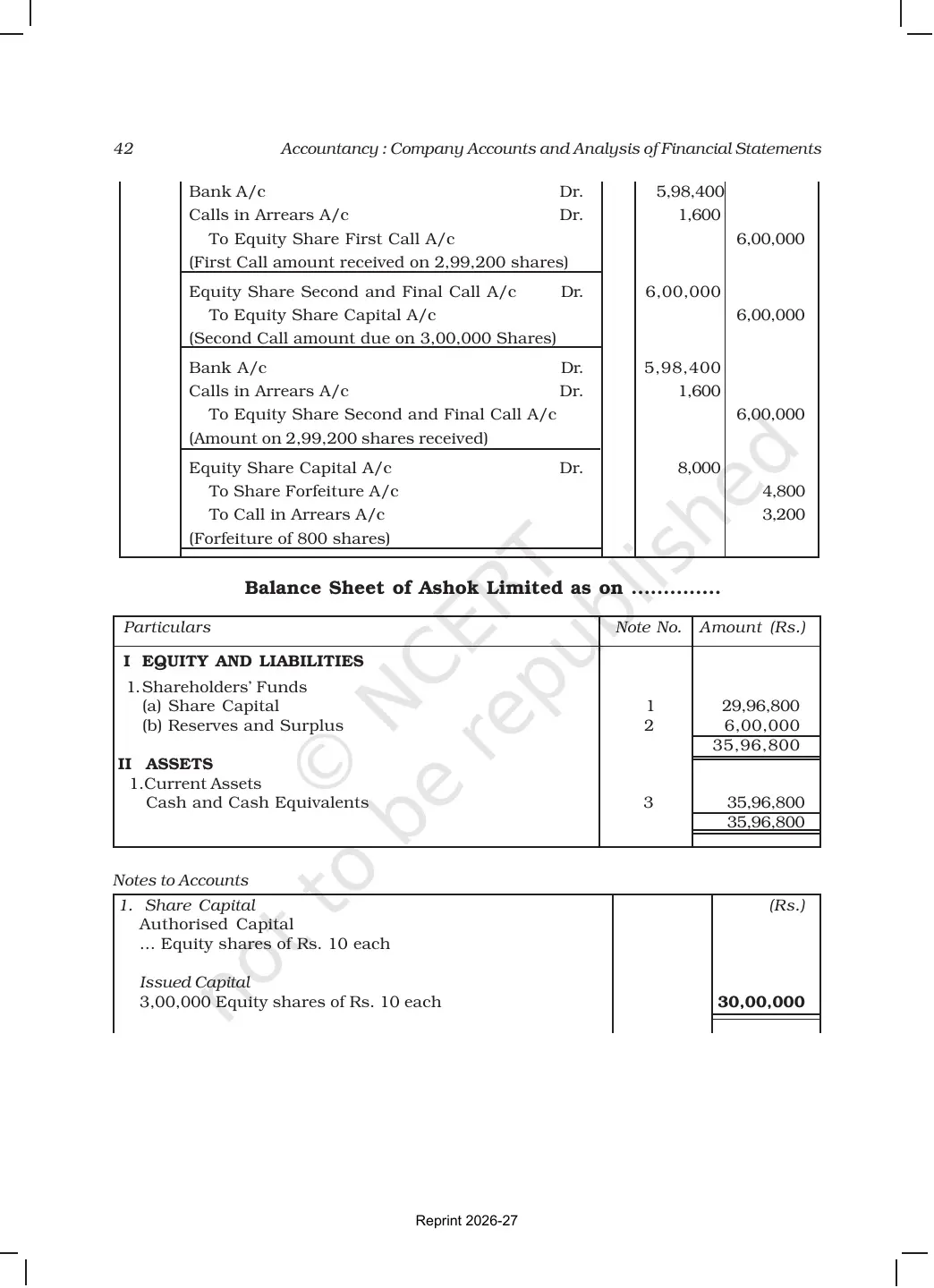
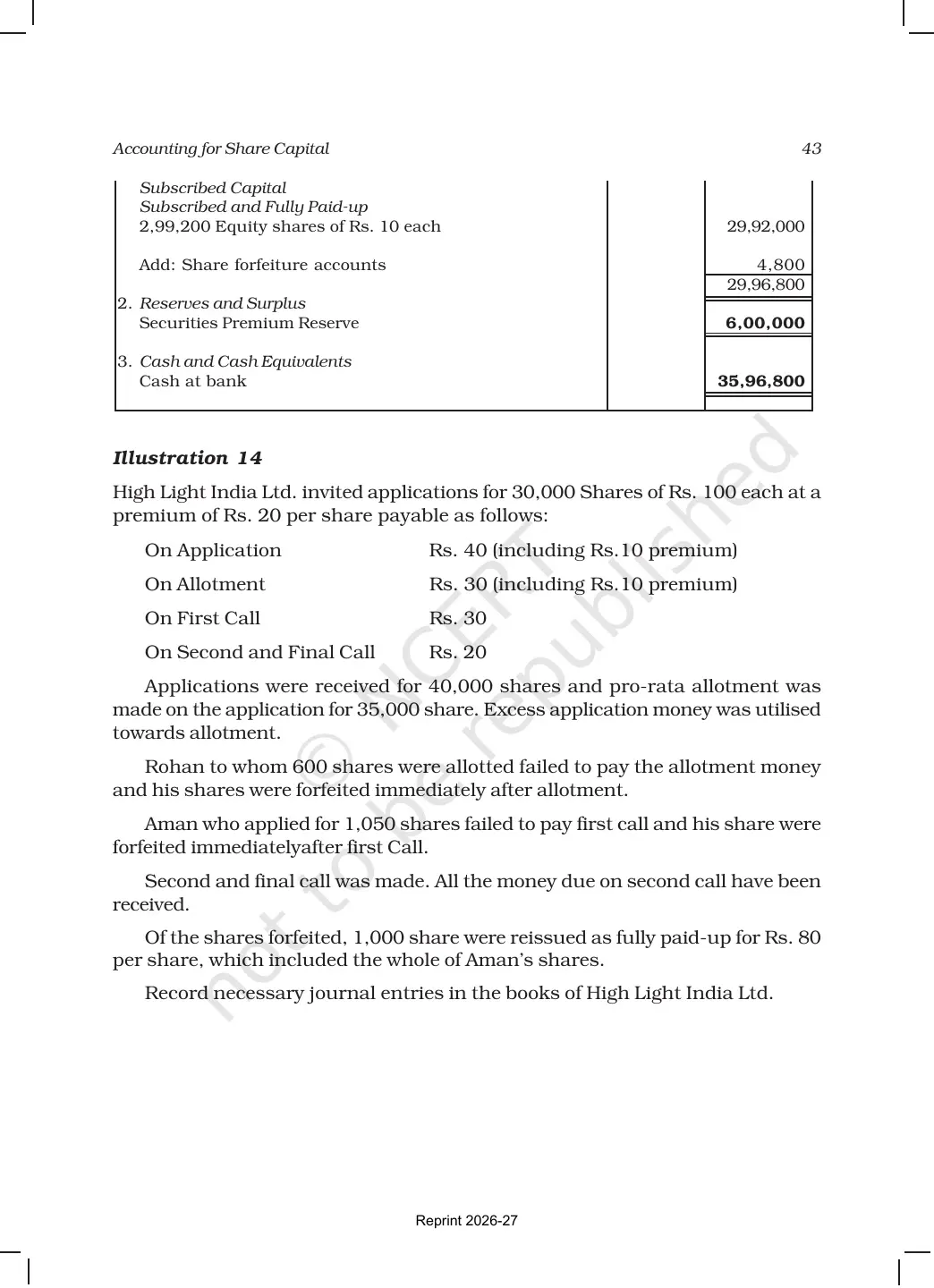
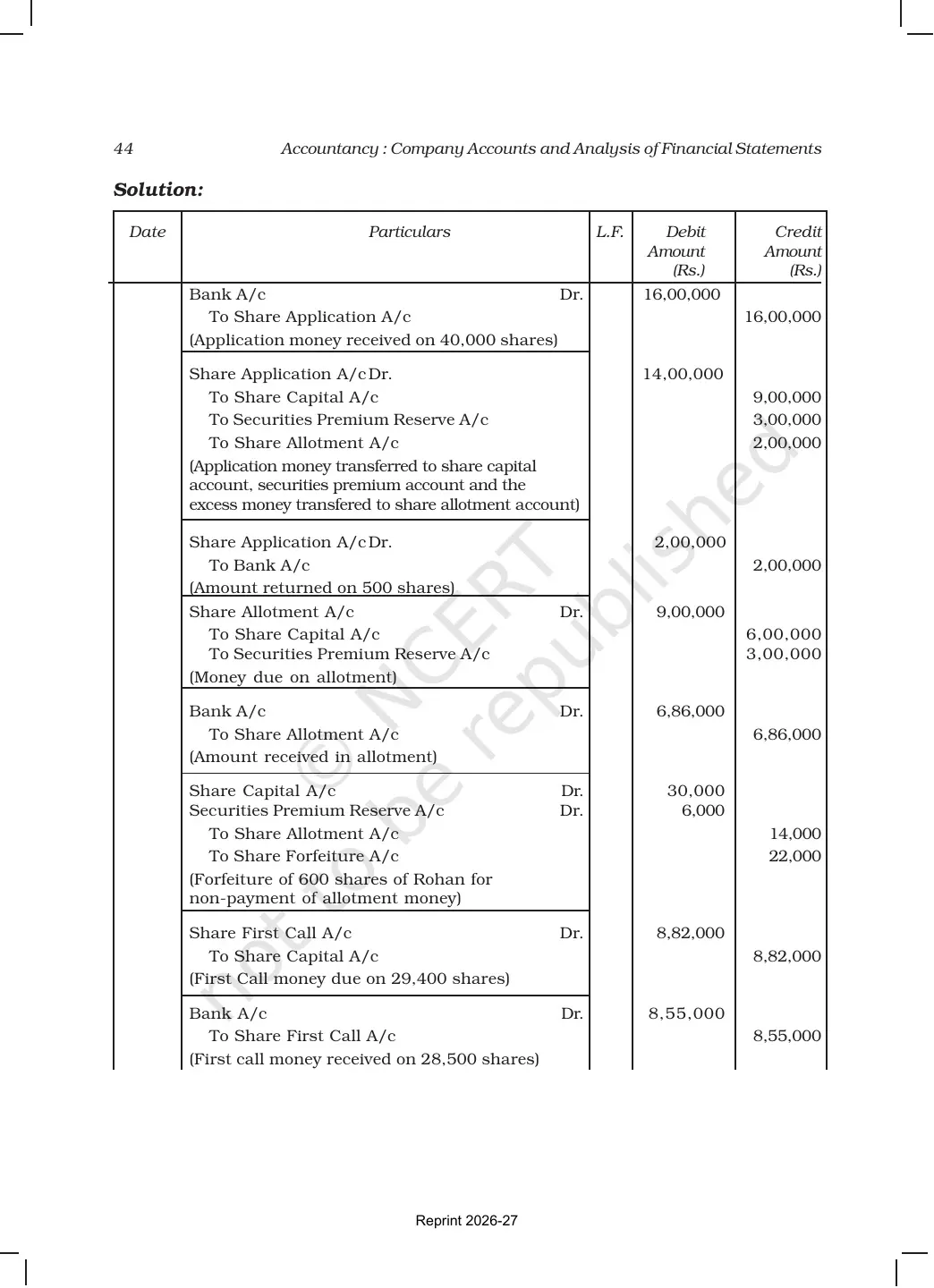
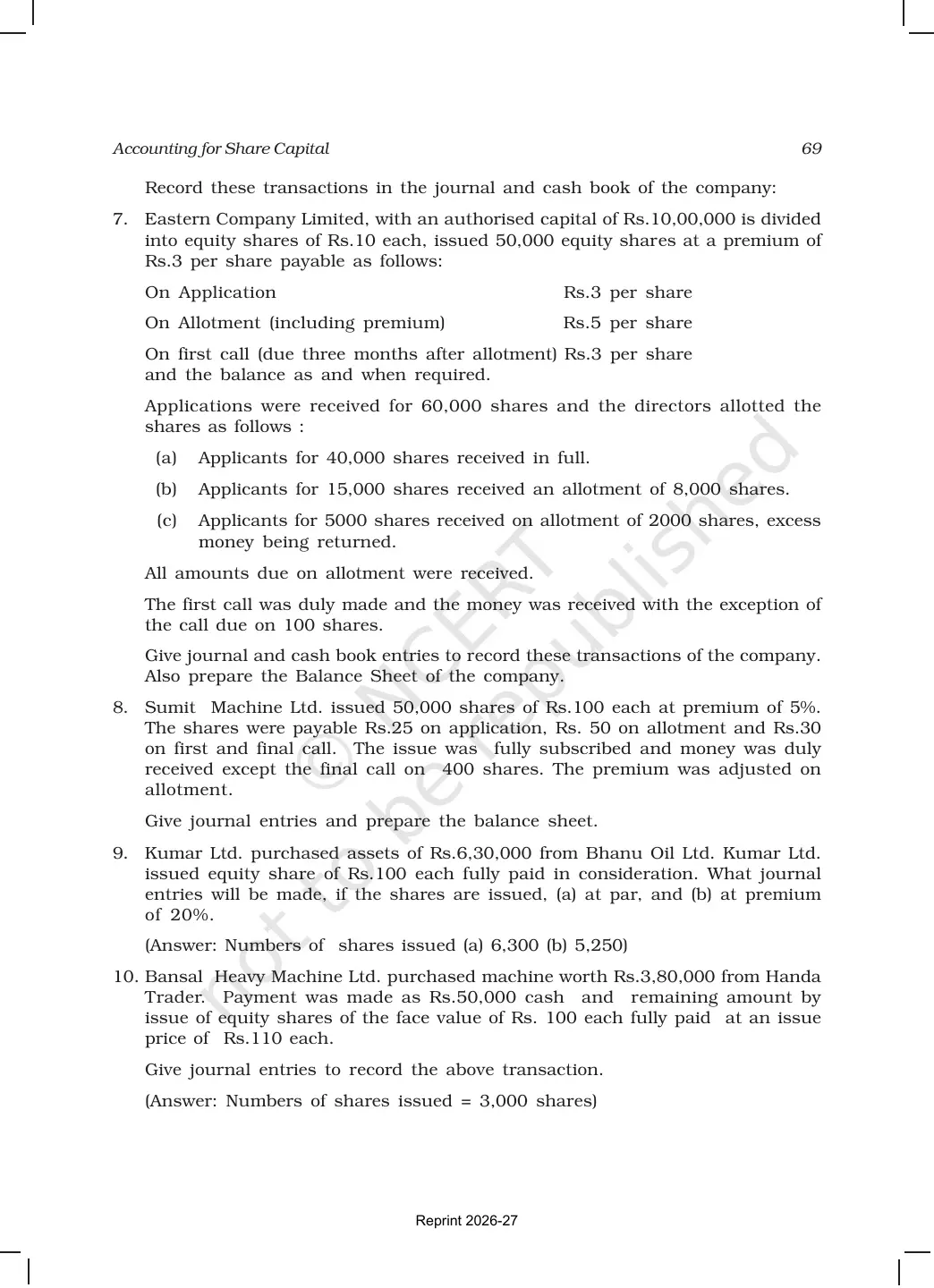
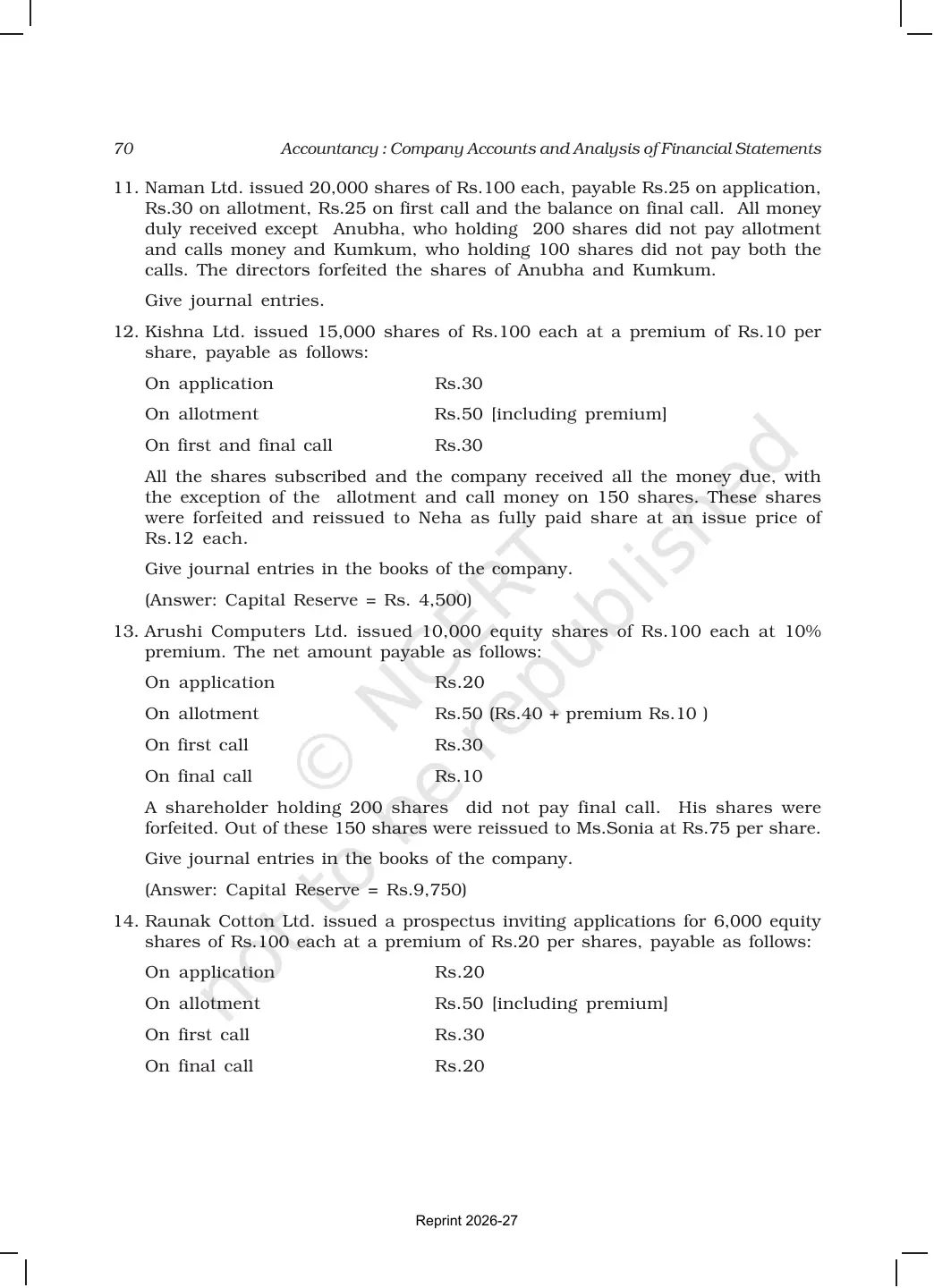
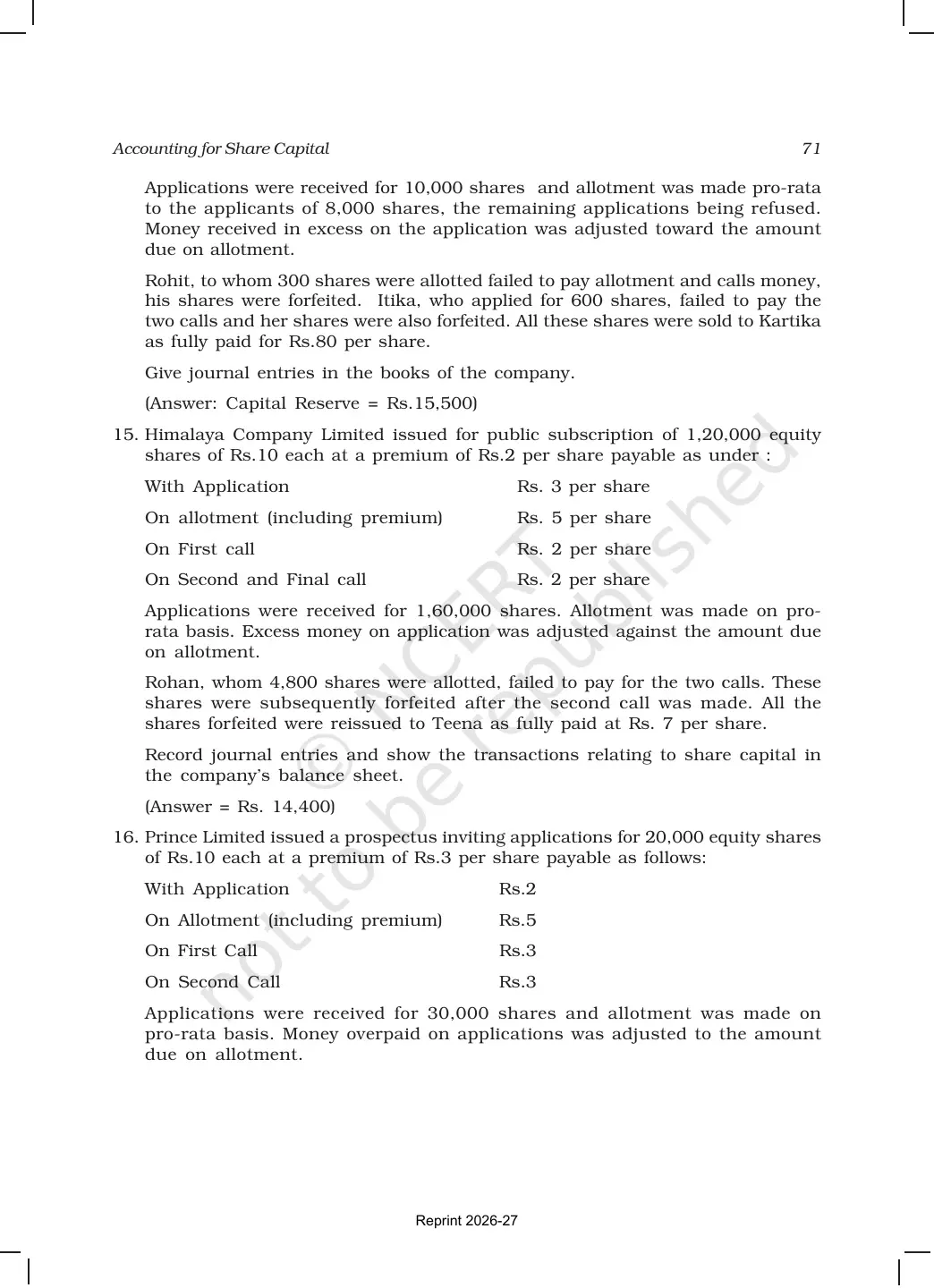
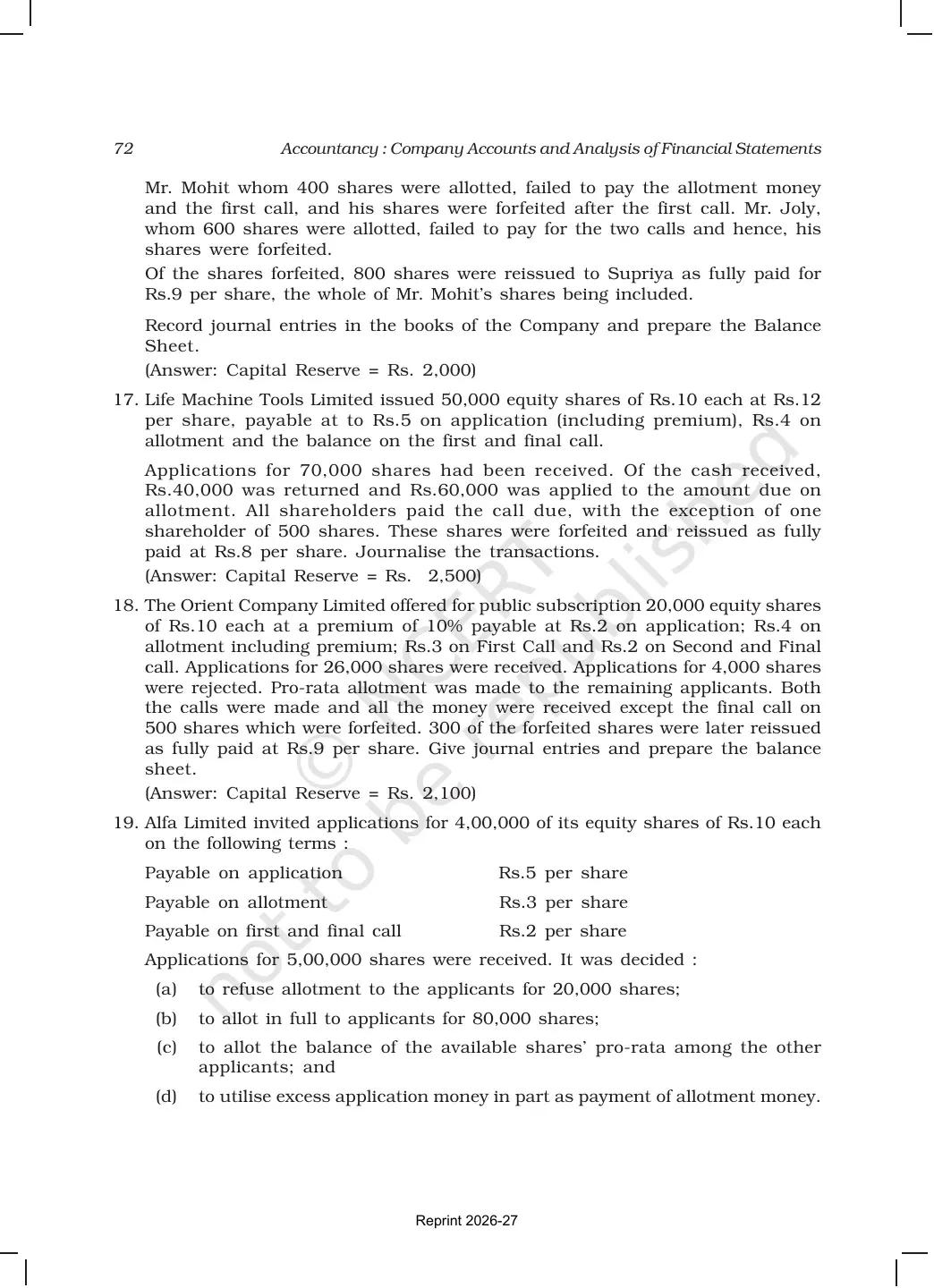
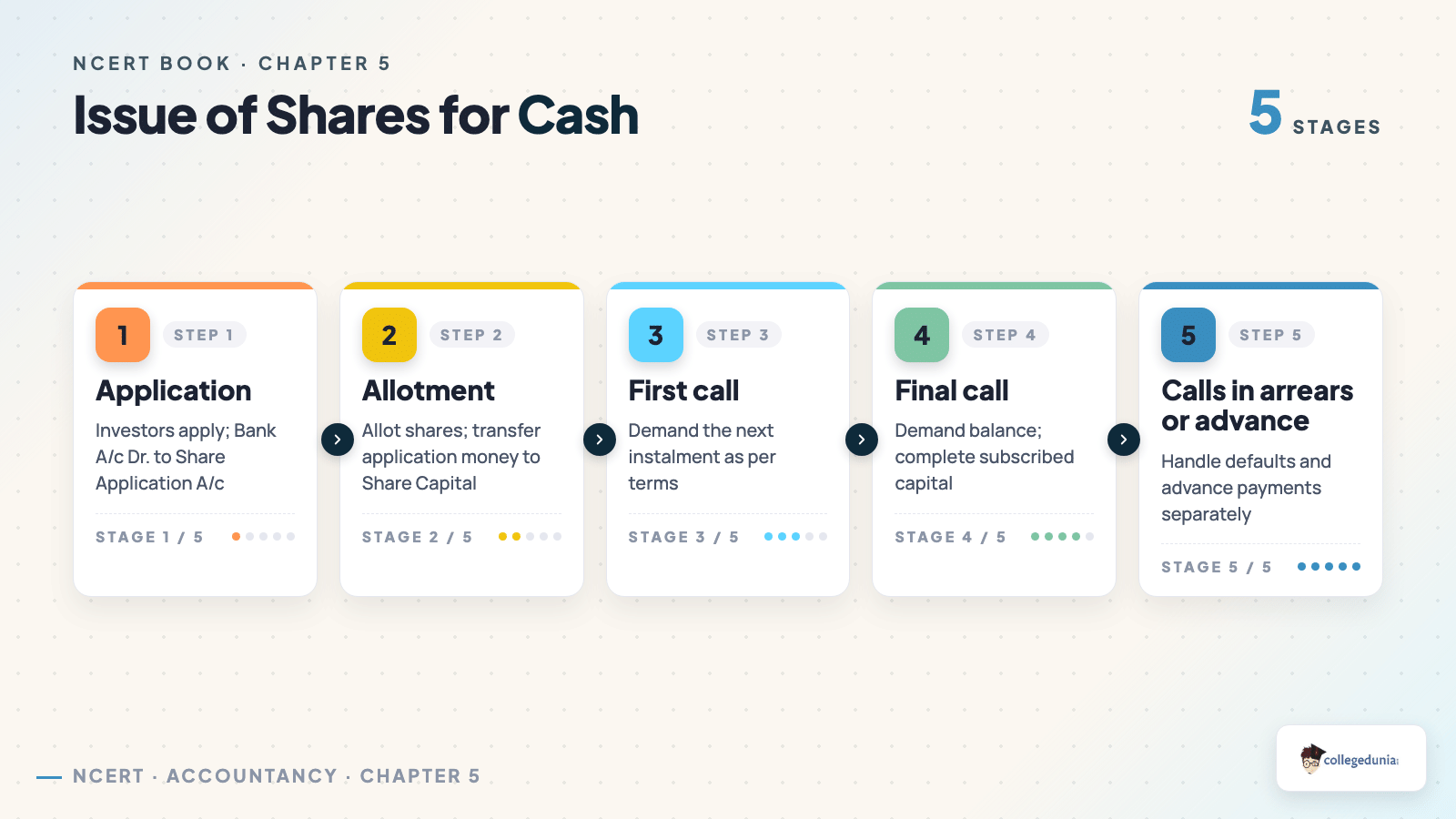
Study Section 5.5 Illustrations in order; each adds one new complication from issue, premium, over-subscription, pro-rata, calls in arrears, forfeiture, and re-issue.
Key Concepts and Formulas Inside Part 2 Chapter 1 Accounting for Share Capital
Key calculations the marking scheme rewards: pro-rata allotment ratio, excess application money adjustment, forfeiture credit, capital reserve on re-issue, and max discount limits.
- Pro-rata Ratio = Shares Applied : Shares Allotted on the over-subscribed portion only.
- Excess Application Money = (Applied minus Allotted) x Application rate, adjusted first against Allotment due.
- Forfeiture credit to Share Capital A/c = Forfeited shares x Called-up value per share.
- Capital Reserve on Re-issue = Forfeited amount on re-issued shares minus discount allowed on re-issue.
- Max Discount on Re-issue = Amount originally forfeited on those shares.
Full formula recall: Accounting for Share Capital Notes
2026-27 Edition Notes for the Class 12 Accountancy Part 2 Chapter 1 NCERT Book PDF
Two key changes in the 2026-27 Reprint:
- Issue at Discount removed (Section 53 prohibition); print skips to issue for consideration other than cash.
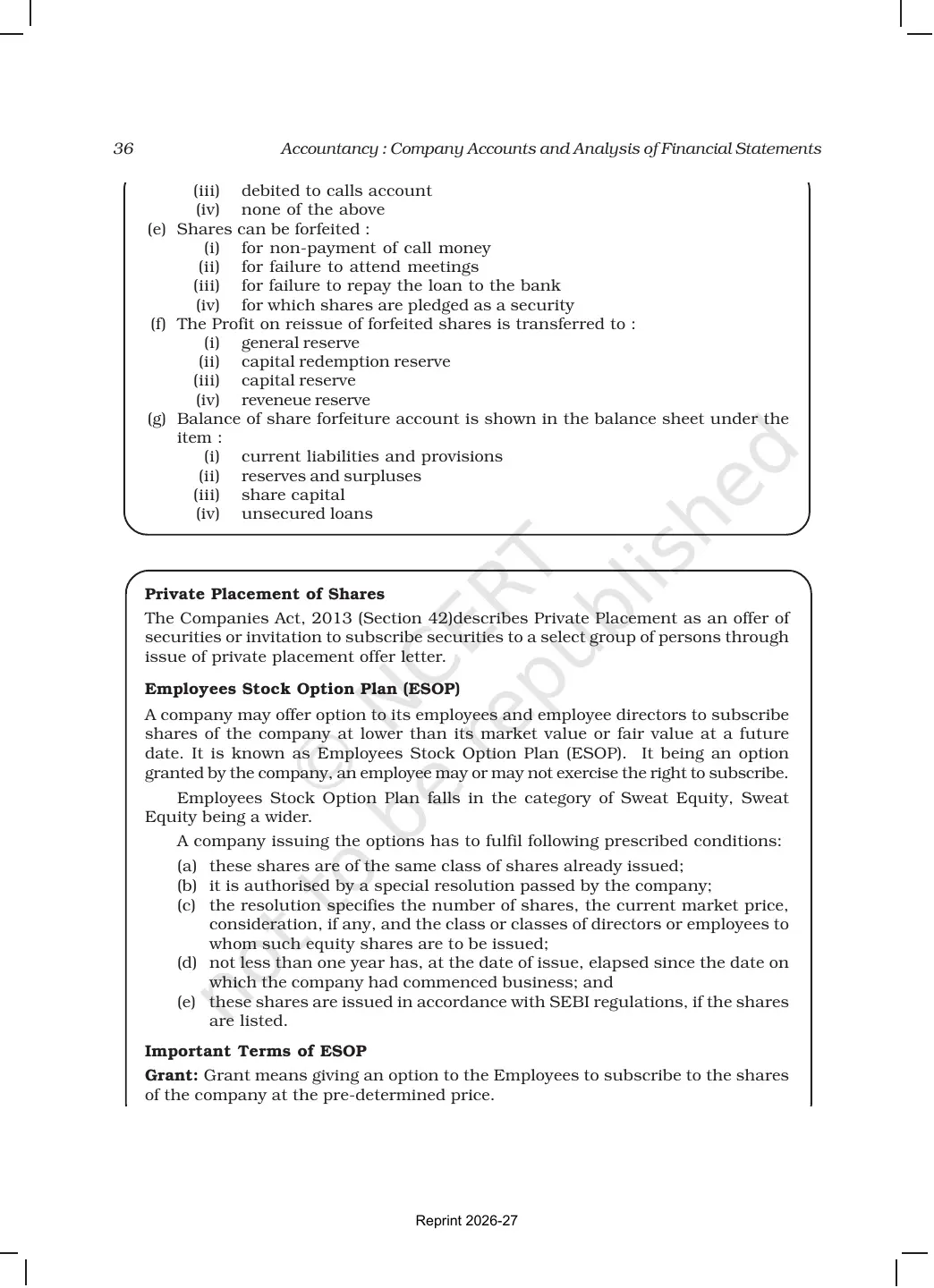
- Glossary adds Sweat Equity, ESOP, Private Placement, Rights Issue - all tested in 1-mark Assertion-Reason.
Three-Day Study Plan for Part 2 Chapter 1 Accounting for Share Capital
Cover the 90-page chapter at board-exam depth in 3 days:
| Day | NCERT Sections | Output |
|---|---|---|
| Day 1 (3 hrs) | 5.1 to 5.4 + first 6 Illustrations of 5.5 | One-page summary of share capital classes; 1-mark MCQ drill |
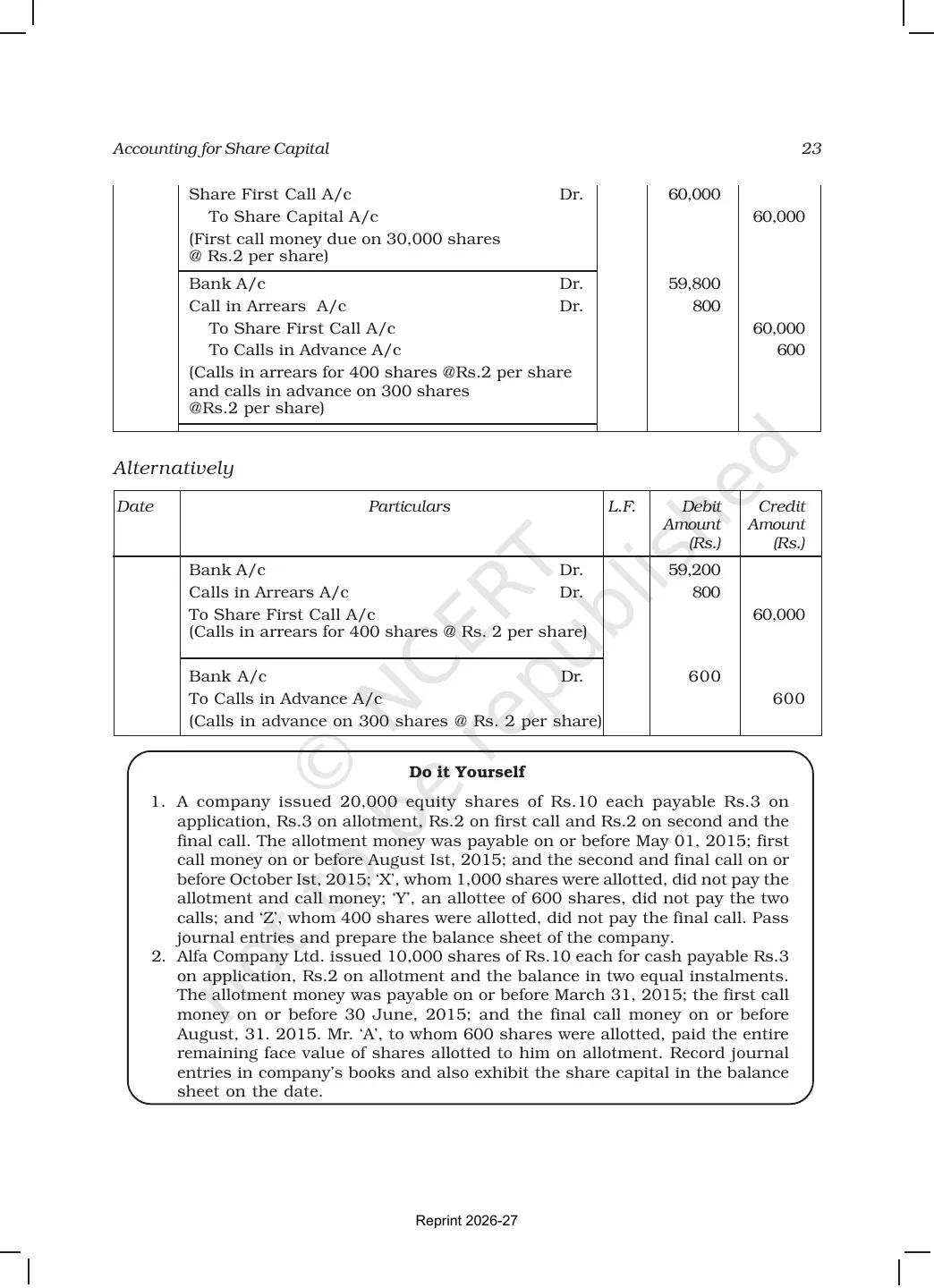
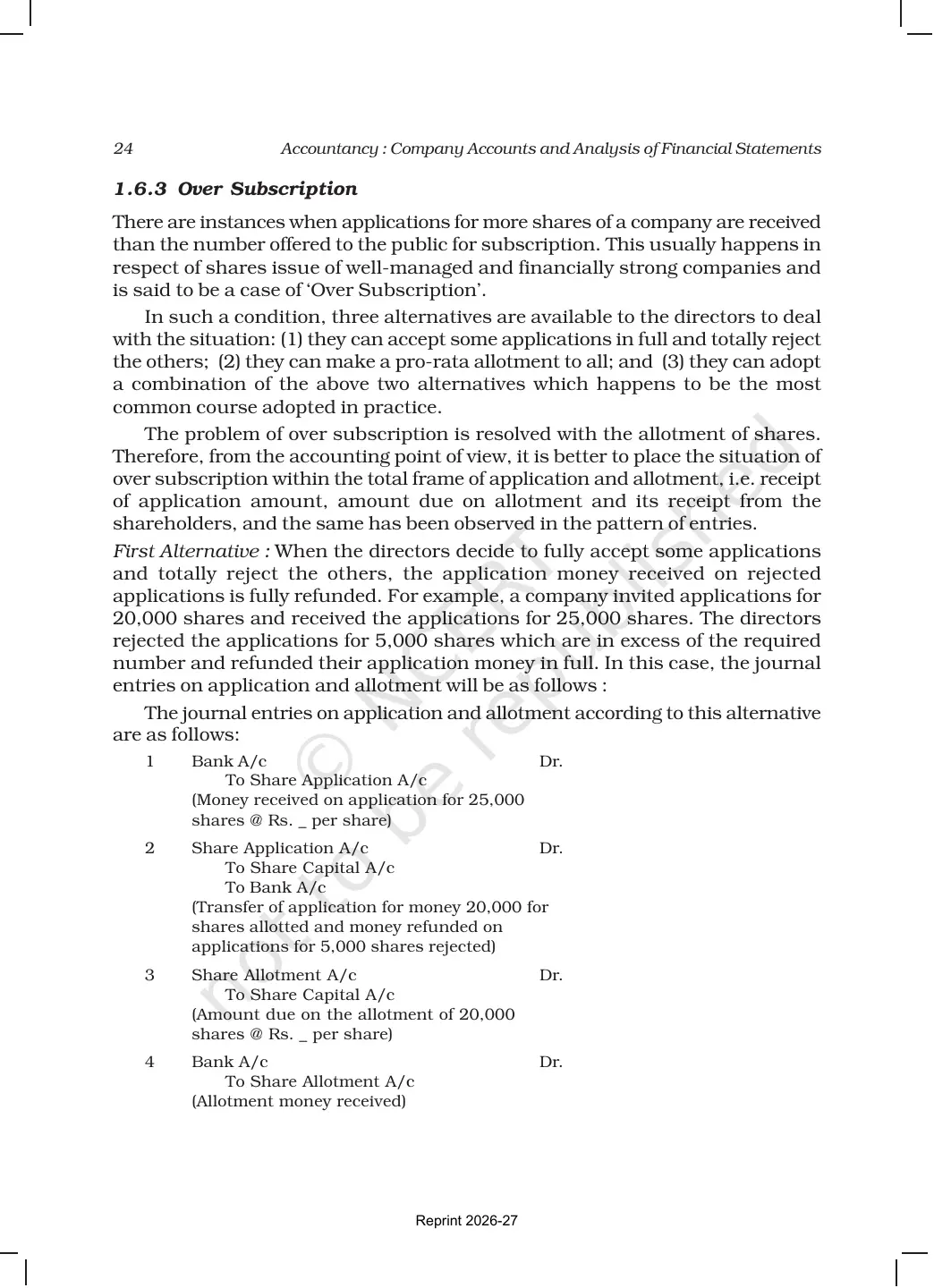
| Day 2 (3 hrs) | Illustrations 7 to 15 (premium, over-subscription, pro-rata, calls in arrears / advance) | 3 journal-entry problems in Cash Book format |
| Day 3 (3 hrs) | Illustrations 16 to 25 (forfeiture, re-issue) + 8 Numerical Questions | Capital Reserve calculation for 5 forfeiture-reissue cases |
Class 12 Accountancy Chapter Weightage Snapshot
Part 2 Chapter 1 ties with Chapter 2 for highest weightage in the 10-chapter Class 12 Accountancy book: 8 to 10 marks on the board paper.
| Chapter | Title | CBSE Marks |
|---|---|---|
| 1 | Accounting for Partnership: Basic Concepts | 6 to 8 |
| 2 | Reconstitution: Admission of a Partner | 8 to 10 |
| 3 | Reconstitution: Retirement / Death of a Partner | 8 to 10 |
| 4 | Dissolution of Partnership Firm | 6 to 8 |
| 5 | Accounting for Share Capital | 8 to 10 |
| 6 | Issue and Redemption of Debentures | 6 to 8 |
| 7 | Financial Statements of a Company | 6 |
| 8 | Analysis of Financial Statements | 4 to 6 |
| 9 | Accounting Ratios | 6 to 8 |
| 10 | Cash Flow Statement | 6 |
Other Resources for Class 12 Accountancy Part 2 Chapter 1
- Accounting for Share Capital NCERT Book PDF
- Class 12 Accountancy Part 2 Chapter 1 NCERT Solutions PDF
- Class 12 Accountancy Part 2 Chapter 1 Revision Notes
- Class 12 Accountancy Part 2 Chapter 1 Handwritten Notes PDF
- CBSE Class 12 Accountancy Syllabus 2026-27
NCERT Book PDF for Class 12 Accountancy: All Chapters
| Chapter | Title |
|---|---|
| Chapter 1 | Accounting for Partnership: Basic Concepts NCERT Book PDF |
| Chapter 2 | Reconstitution: Admission of a Partner NCERT Book PDF |
| Chapter 3 | Reconstitution: Retirement / Death of a Partner NCERT Book PDF |
| Chapter 4 | Dissolution of Partnership Firm NCERT Book PDF |
| Part 2 Chapter 2 | Issue and Redemption of Debentures NCERT Book PDF |
| Part 2 Chapter 3 | Financial Statements of a Company NCERT Book PDF |
| Part 2 Chapter 4 | Analysis of Financial Statements NCERT Book PDF |
| Part 2 Chapter 5 | Accounting Ratios NCERT Book PDF |
| Part 2 Chapter 6 | Cash Flow St atement NCERT Book PDF |
Student Feedback
In a Collegedunia poll of 1,240 Class 12 Commerce students, 76% rated Accounting for Share Capital among the tougher parts of the Accountancy syllabus. After using these chapter resources, 4 in 5 said they felt ready for the board questions from this chapter.
FAQs on Class 12 Accountancy Part 2 Chapter 1 Accounting for Share Capital NCERT Book PDF
Ques. Is the NCERT Class 12 Accountancy Part 2 Chapter 1 PDF on this page the latest 2026-27 edition?
Ans. Yes. The PDF hosted here is the Reprint 2026-27 of NCERT Accountancy Part 2, downloaded directly from the official NCERT publication. It is aligned to the CBSE 2026-27 Accountancy syllabus and the Companies Act 2013 references match the current statute. Older editions still in private circulation print the discontinued Issue of Shares at a Discount section, which is not valid for the 2026 board paper.
Ques. How many marks does Accounting for Share Capital carry in the CBSE Class 12 board exam?
Ans. Part 2 Chapter 1 typically carries 8 to 10 marks in the 80-mark Class 12 Accountancy board paper. The structure is almost always one 8-mark numerical question on issue of shares (pro-rata allotment, premium, forfeiture or re-issue) plus 1 to 2 marks of theory or Assertion-Reason on share capital classes or Securities Premium.
Ques. What is the difference between Authorised, Issued, Subscribed and Paid-up Capital?
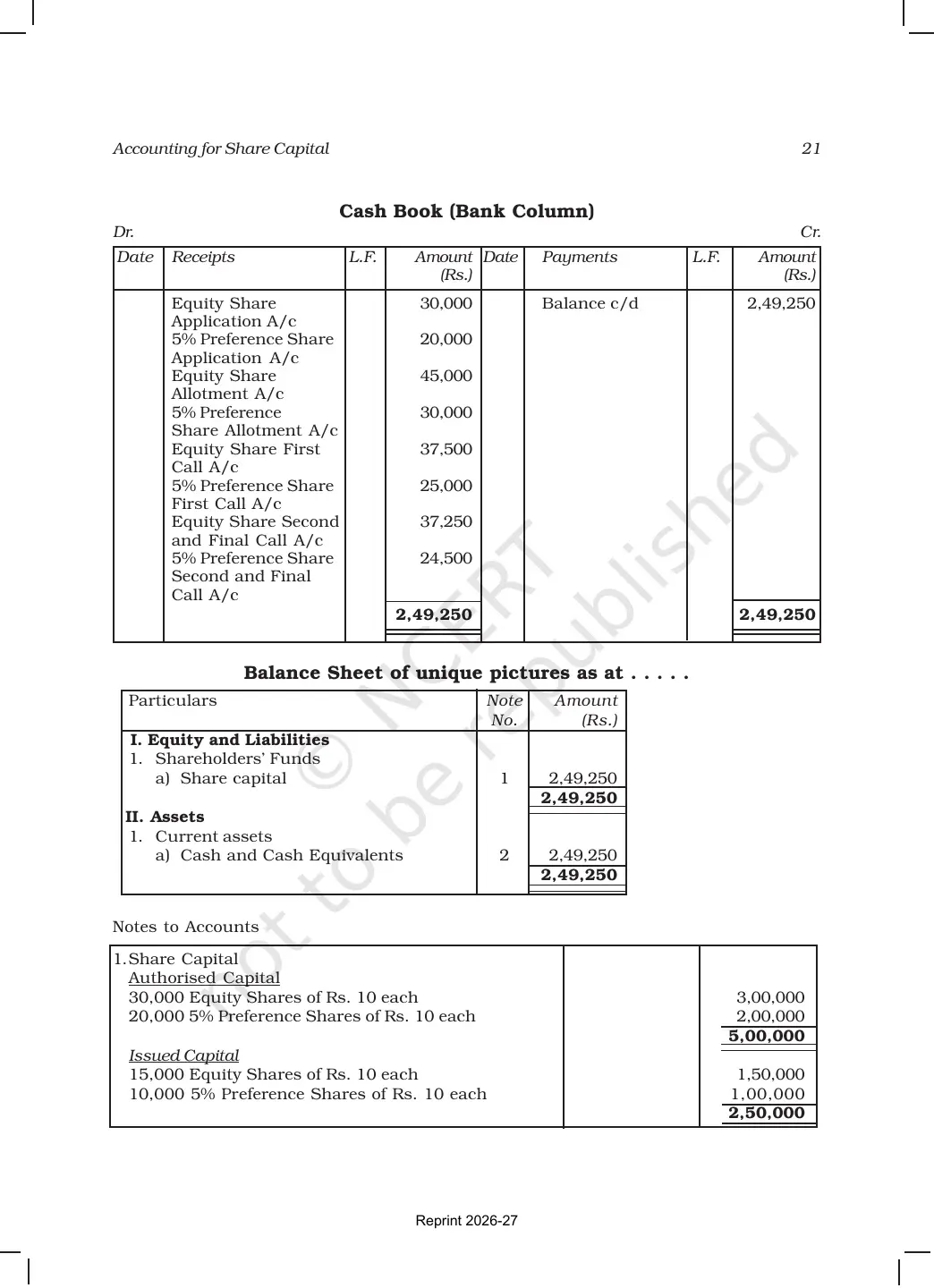
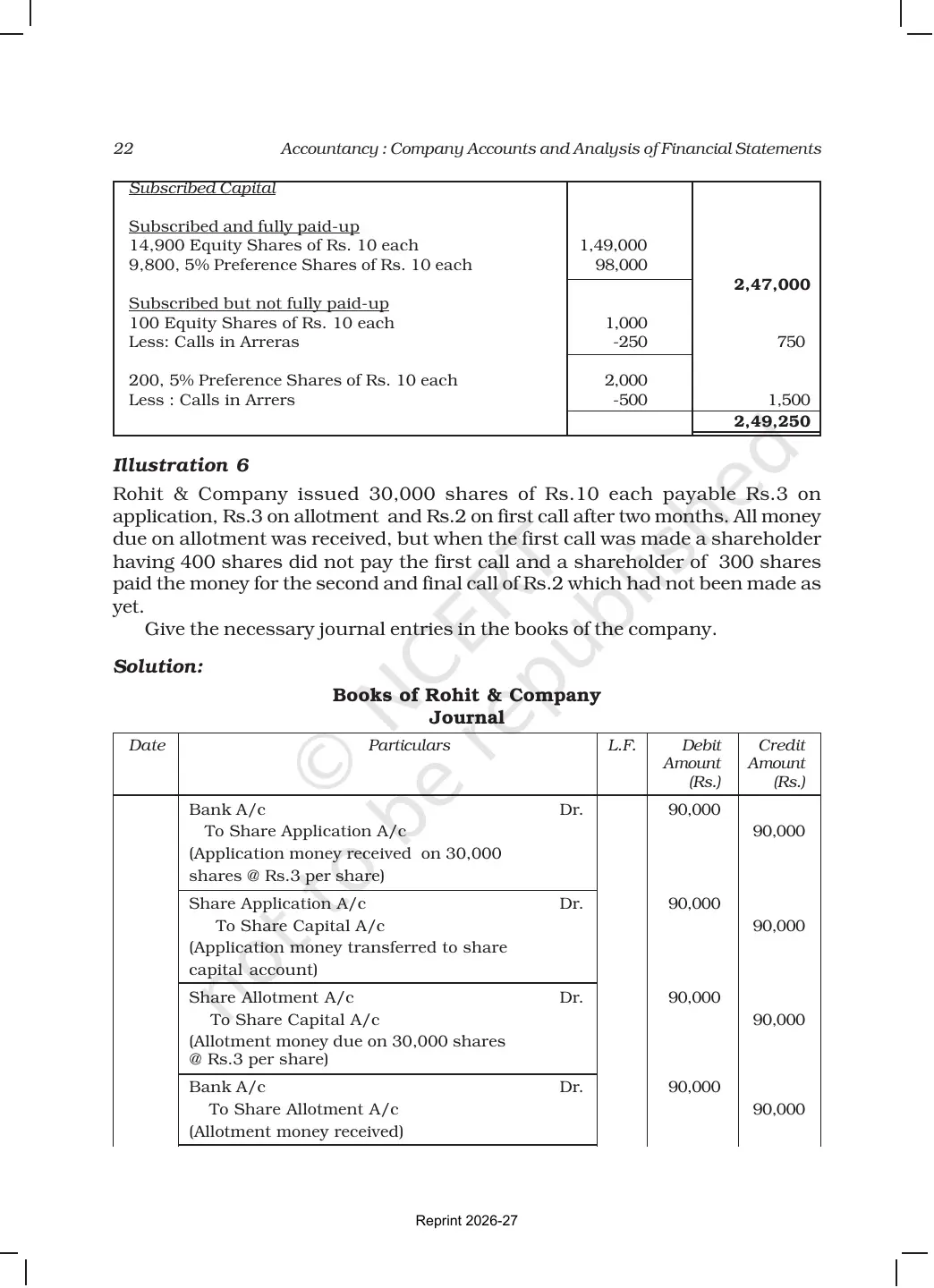
Ans. Authorised Capital is the maximum capital a company can raise per its Memorandum of Association. Issued Capital is the portion the company offers to the public. Subscribed Capital is the part the public actually applies for. Called-up Capital is the portion the company has demanded from shareholders so far, and Paid-up Capital is the part shareholders have actually paid. Part 2 Chapter 1 Section 5.3 of the NCERT PDF gives the full schedule with a numerical Illustration.
Ques. Has Issue of Shares at Discount been removed from the NCERT Class 12 Accountancy Part 2 Chapter 1?
Ans. Yes. Section 53 of the Companies Act 2013 prohibits the issue of shares at a discount, so the NCERT removed that sub-section from Part 2 Chapter 1 starting with the rationalised edition. The Reprint 2026-27 print on this page reflects this removal. The only related concept retained is re-issue of forfeited shares at a discount, which is permitted because the original loss has already been absorbed via the Share Capital A/c.
Ques. How are forfeited shares accounted for when they are re-issued?
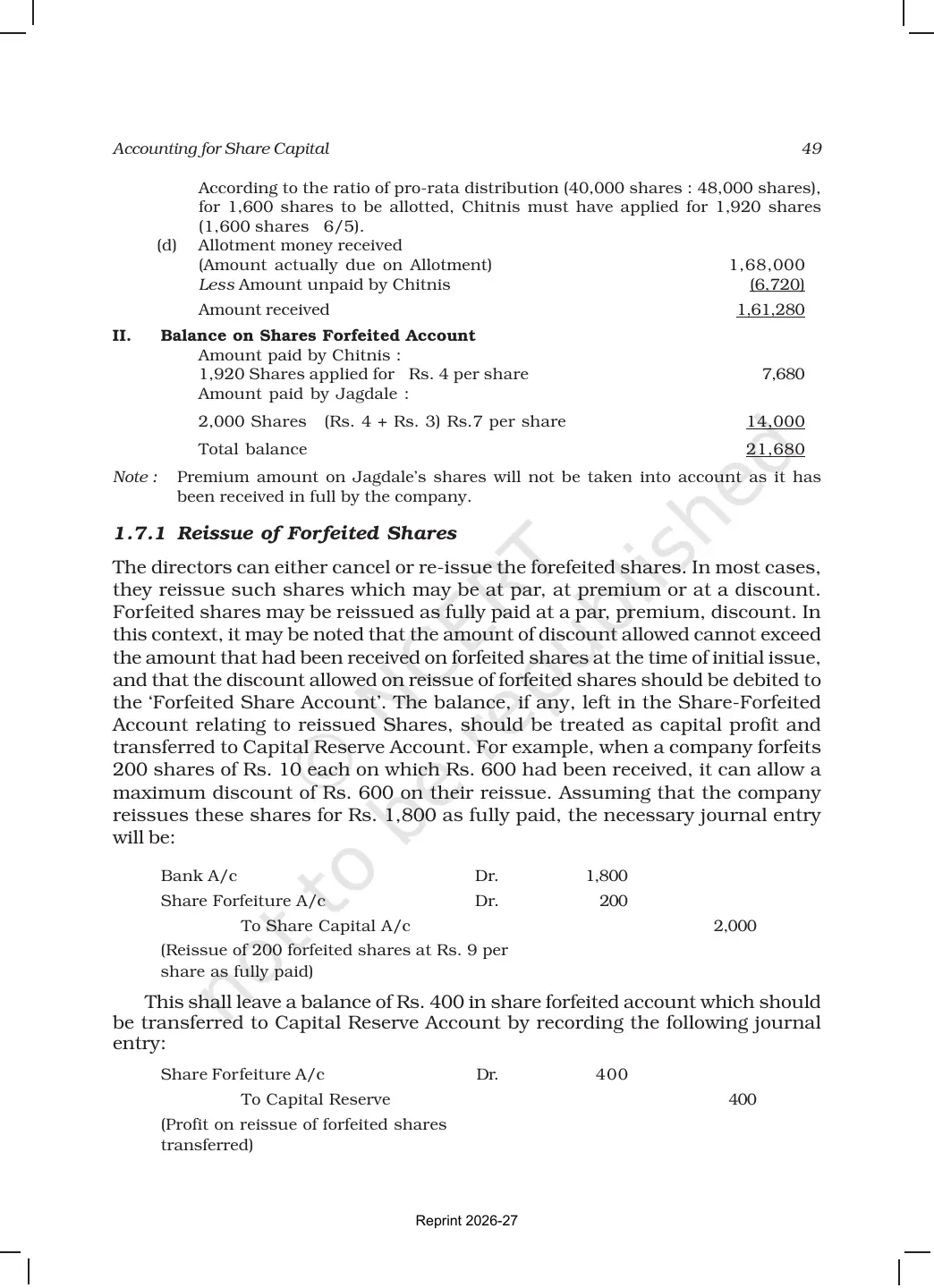
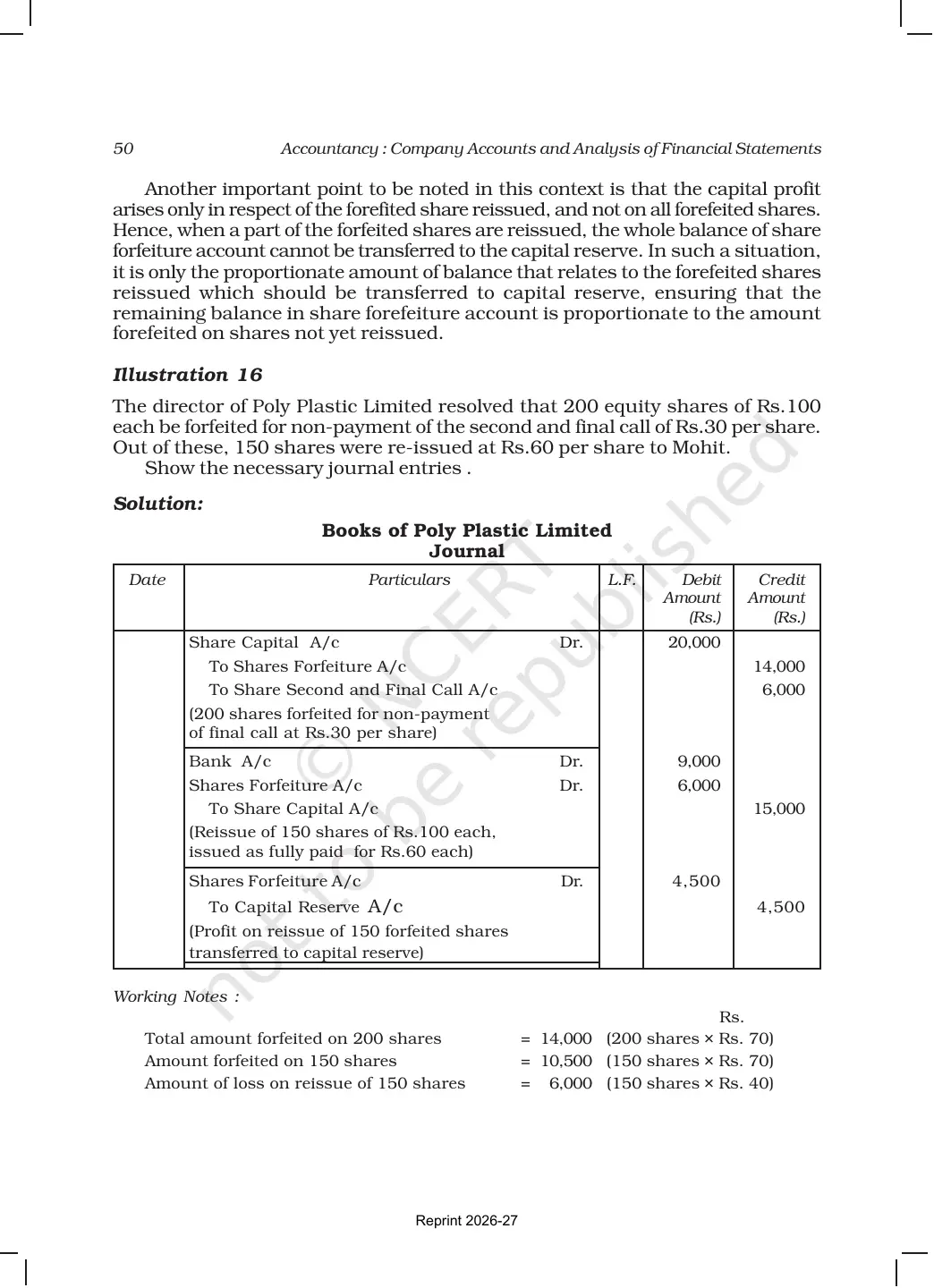
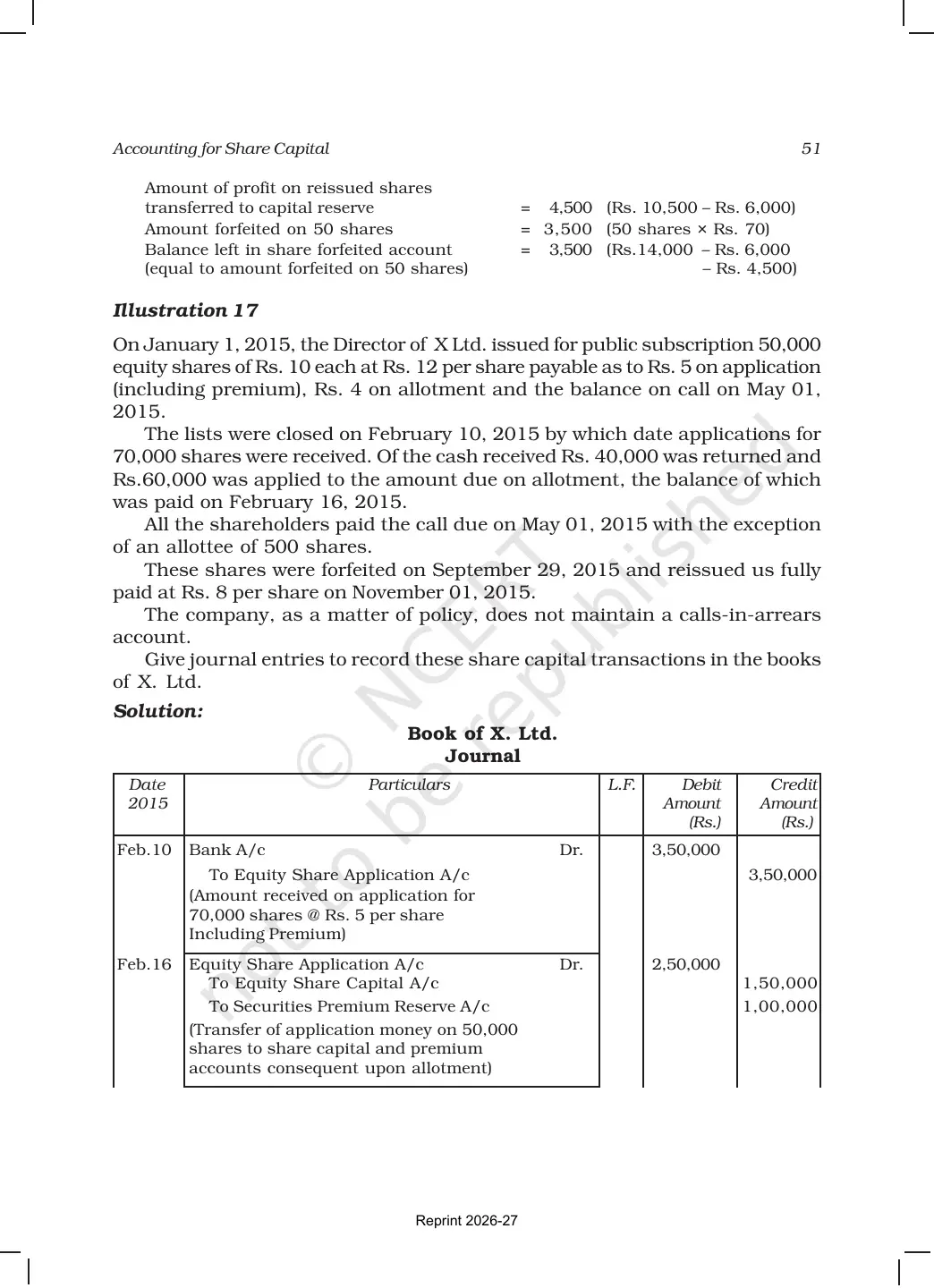
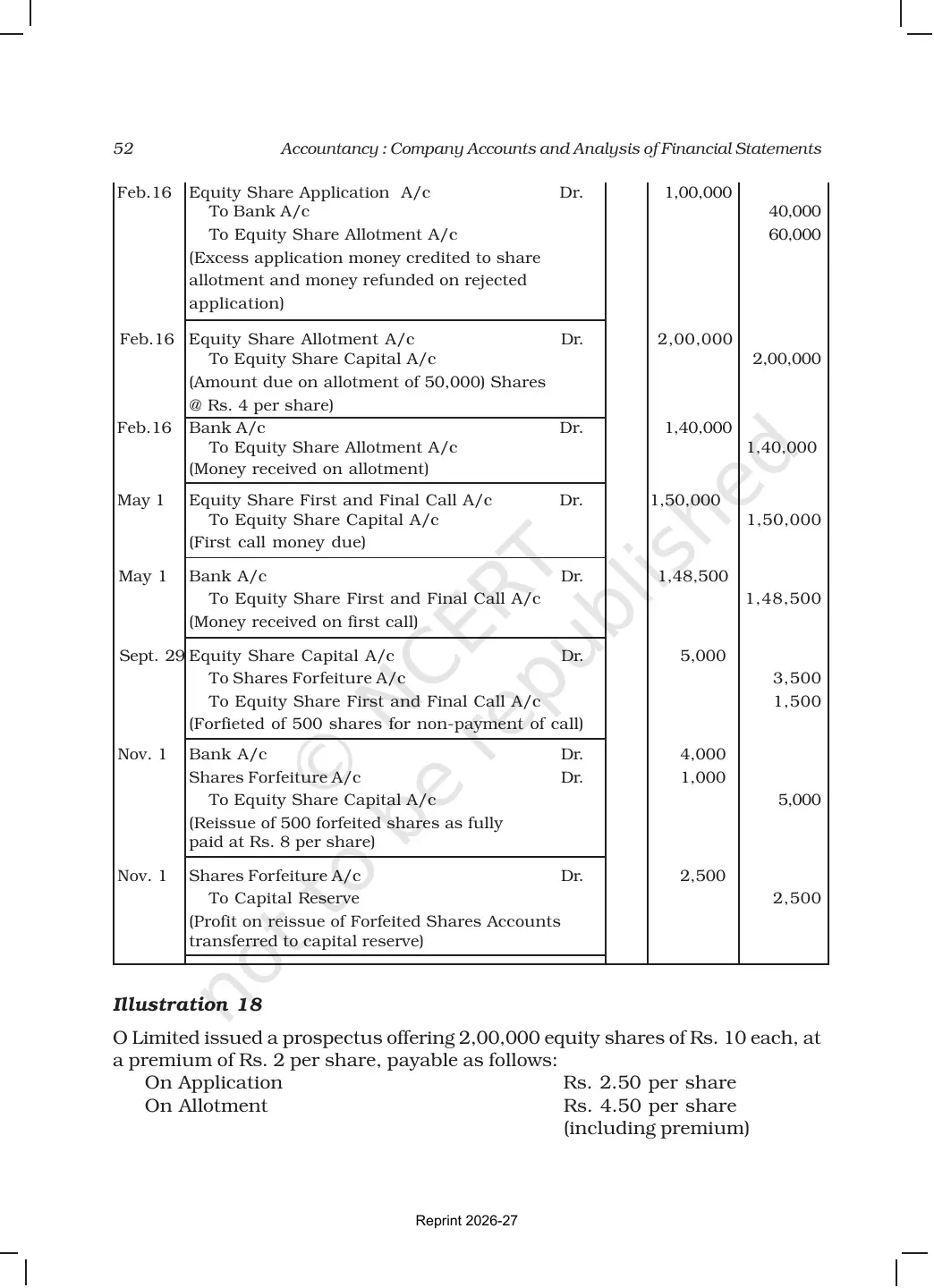
Ans. When forfeited shares are re-issued, the discount allowed on re-issue is debited to the Share Forfeiture A/c. The remaining balance in the Share Forfeiture A/c, after writing off the discount, is transferred to Capital Reserve. The board paper tests this calculation almost every year. The detailed worked solution is in Illustrations 22 to 25 of Section 5.5 of the NCERT PDF.



Comments