



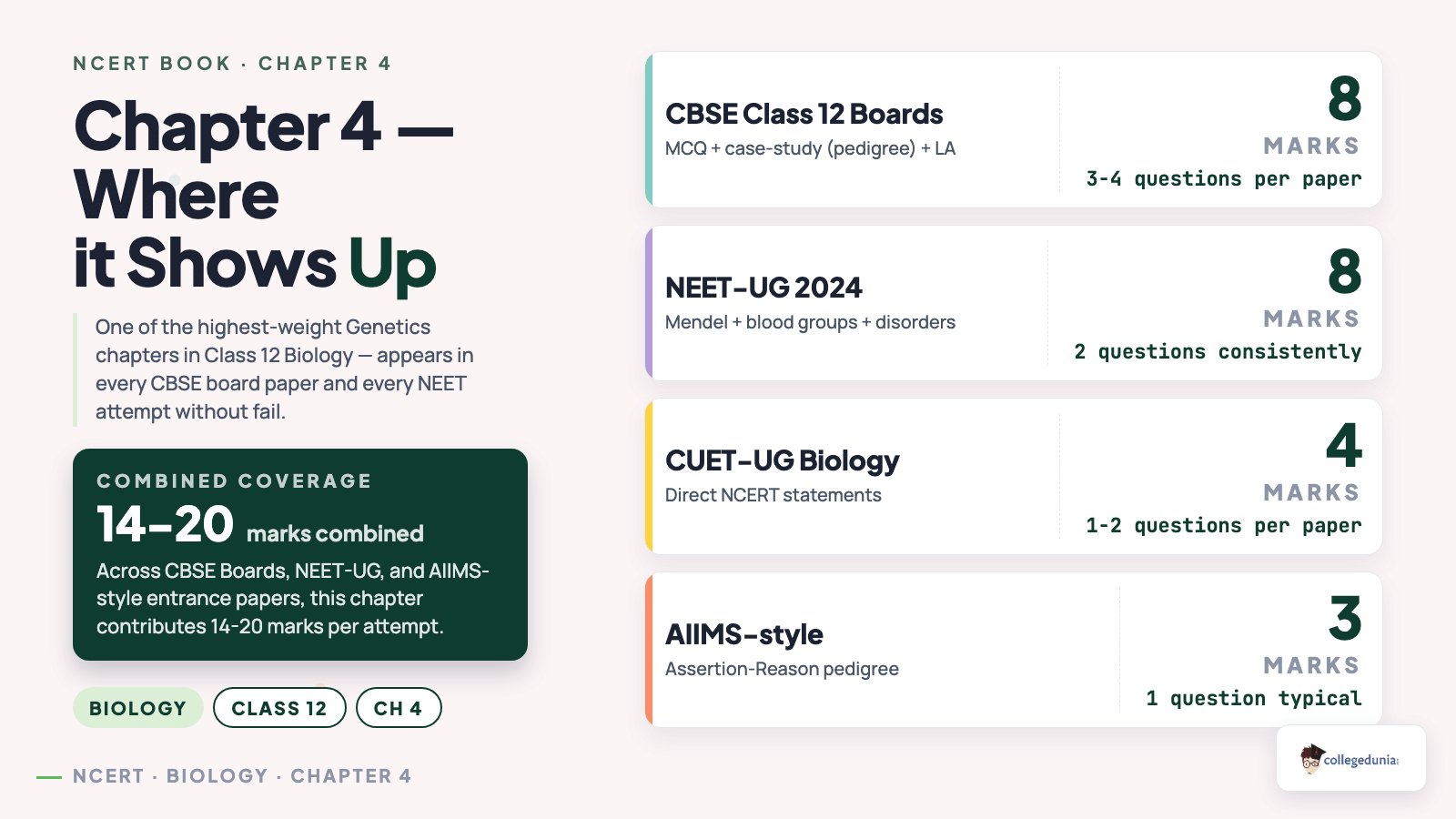
Principles of Inheritance and Variation is a top-scoring chapter for NEET and CBSE Class 12 Biology. NEET 2025 carried four direct questions from its nine sections. This page hosts the official 2026-27 NCERT PDF, a section index, PYQ trend table, and exam weightage data.
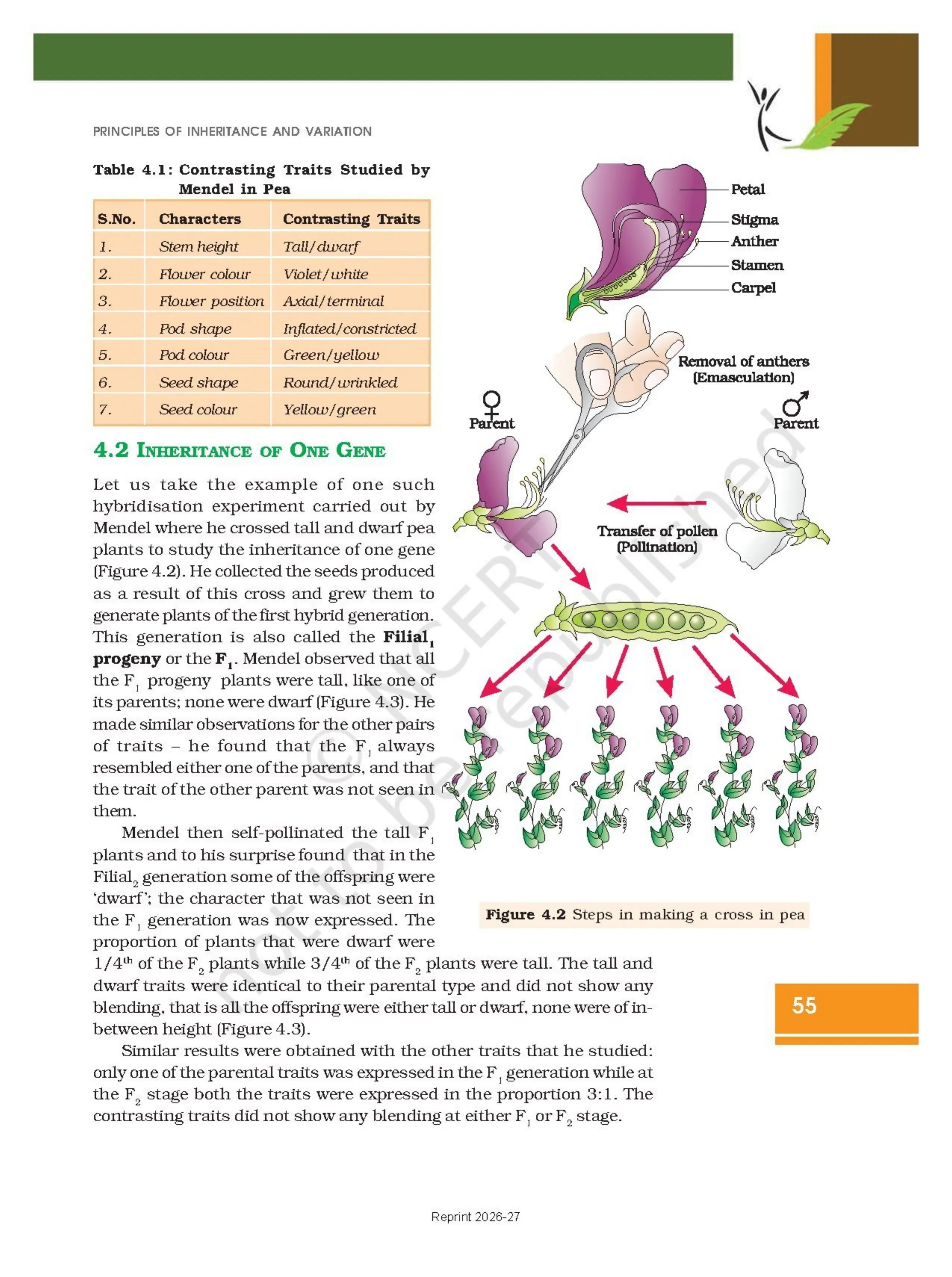
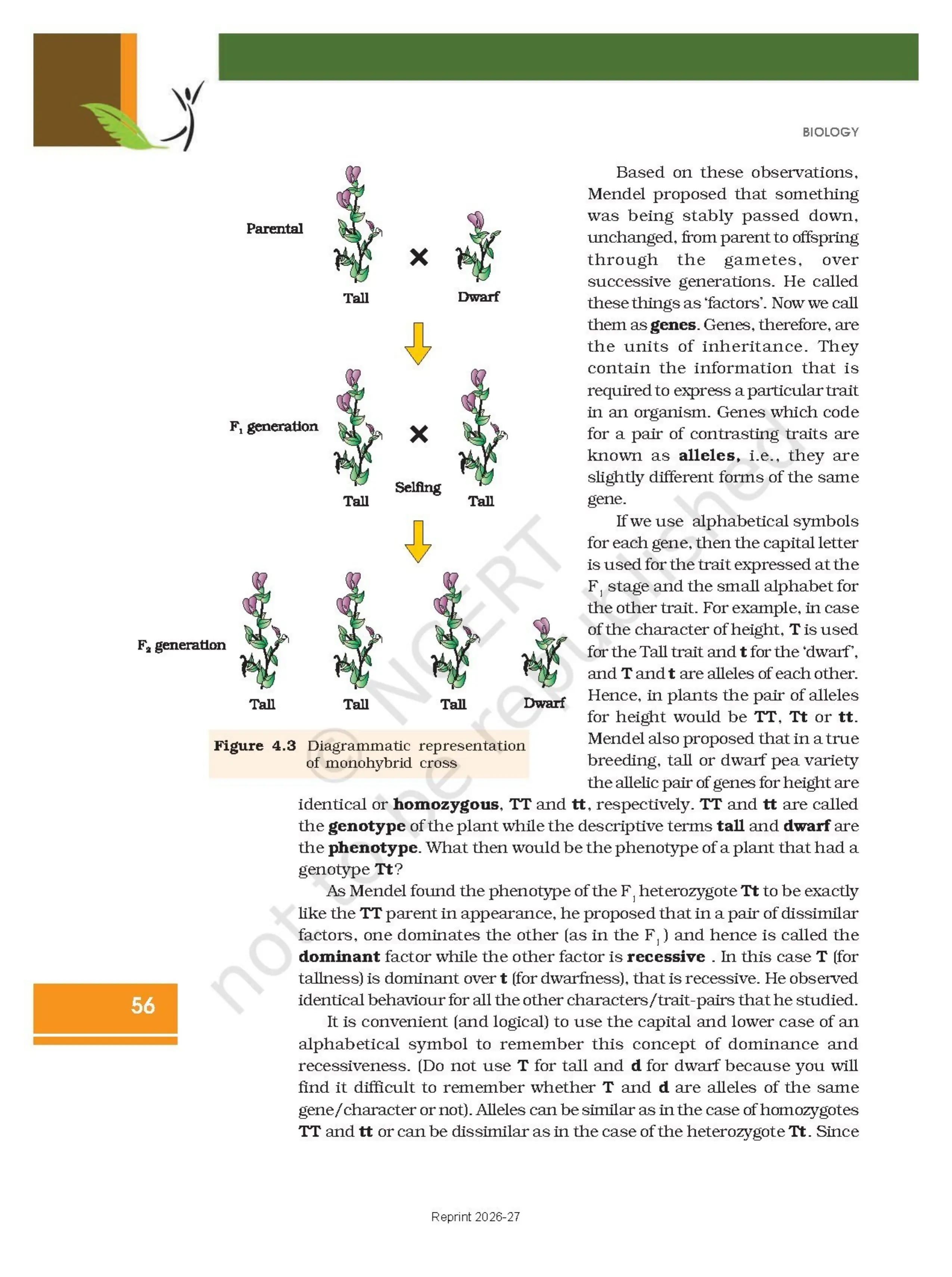
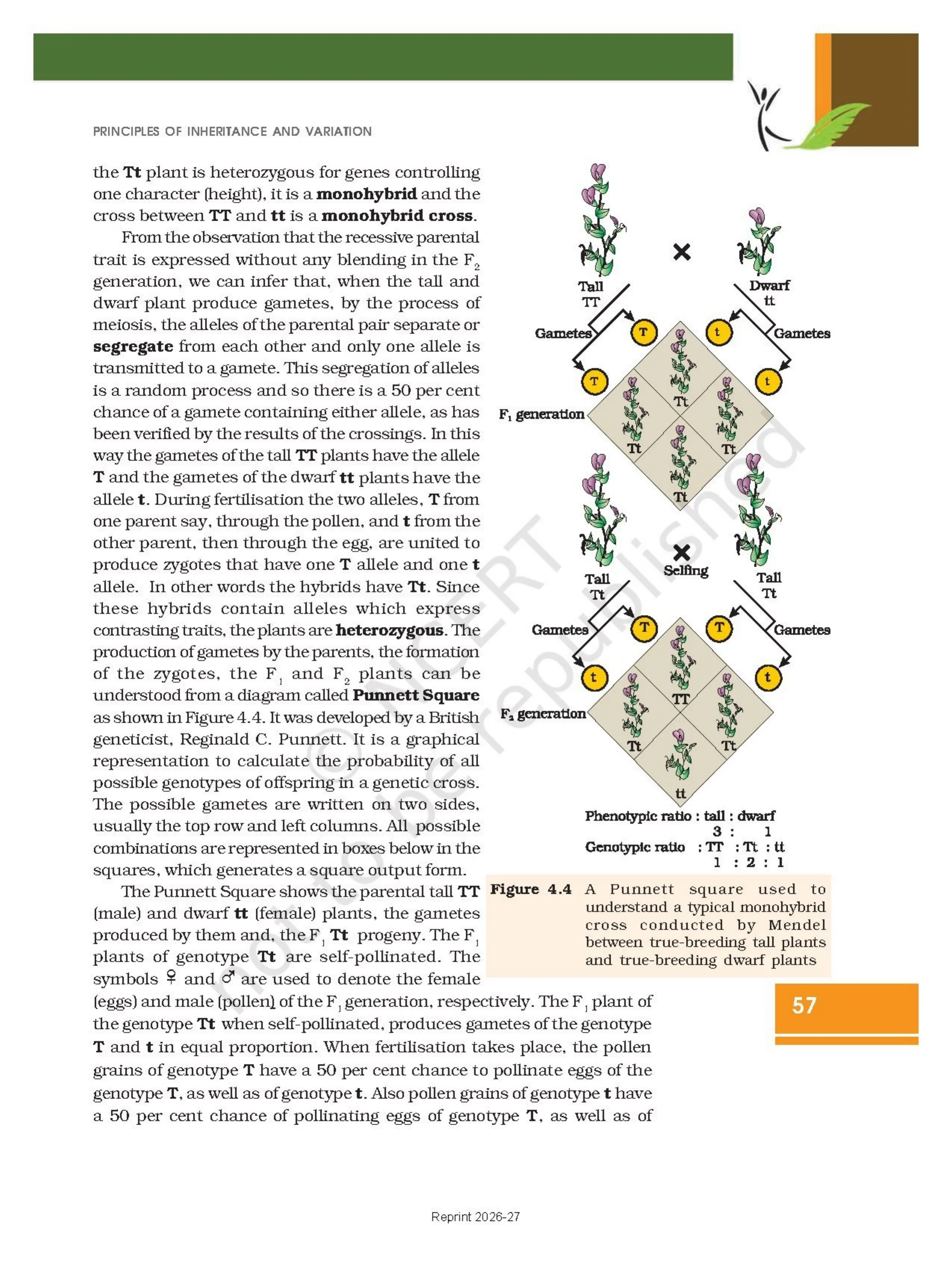
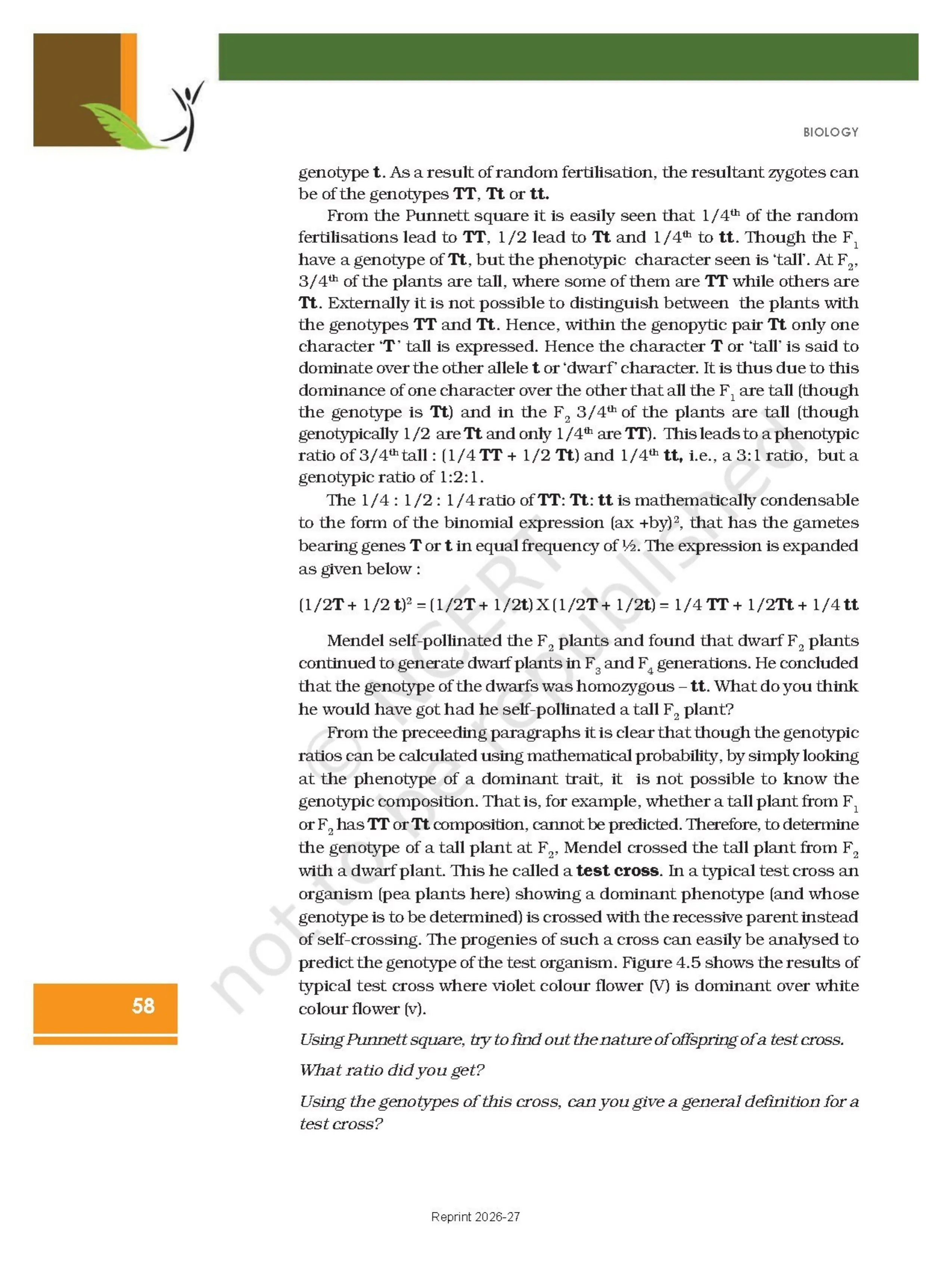
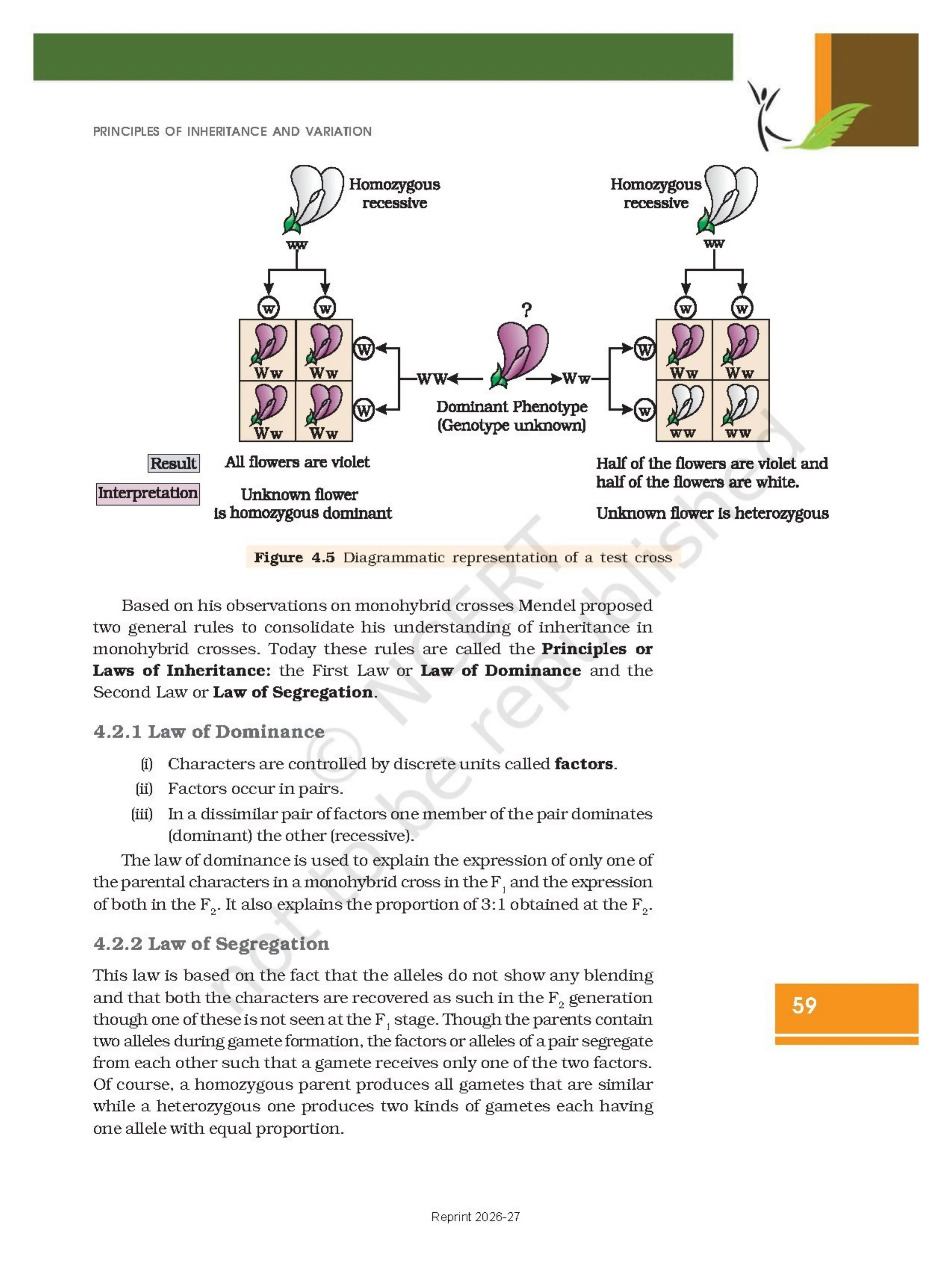
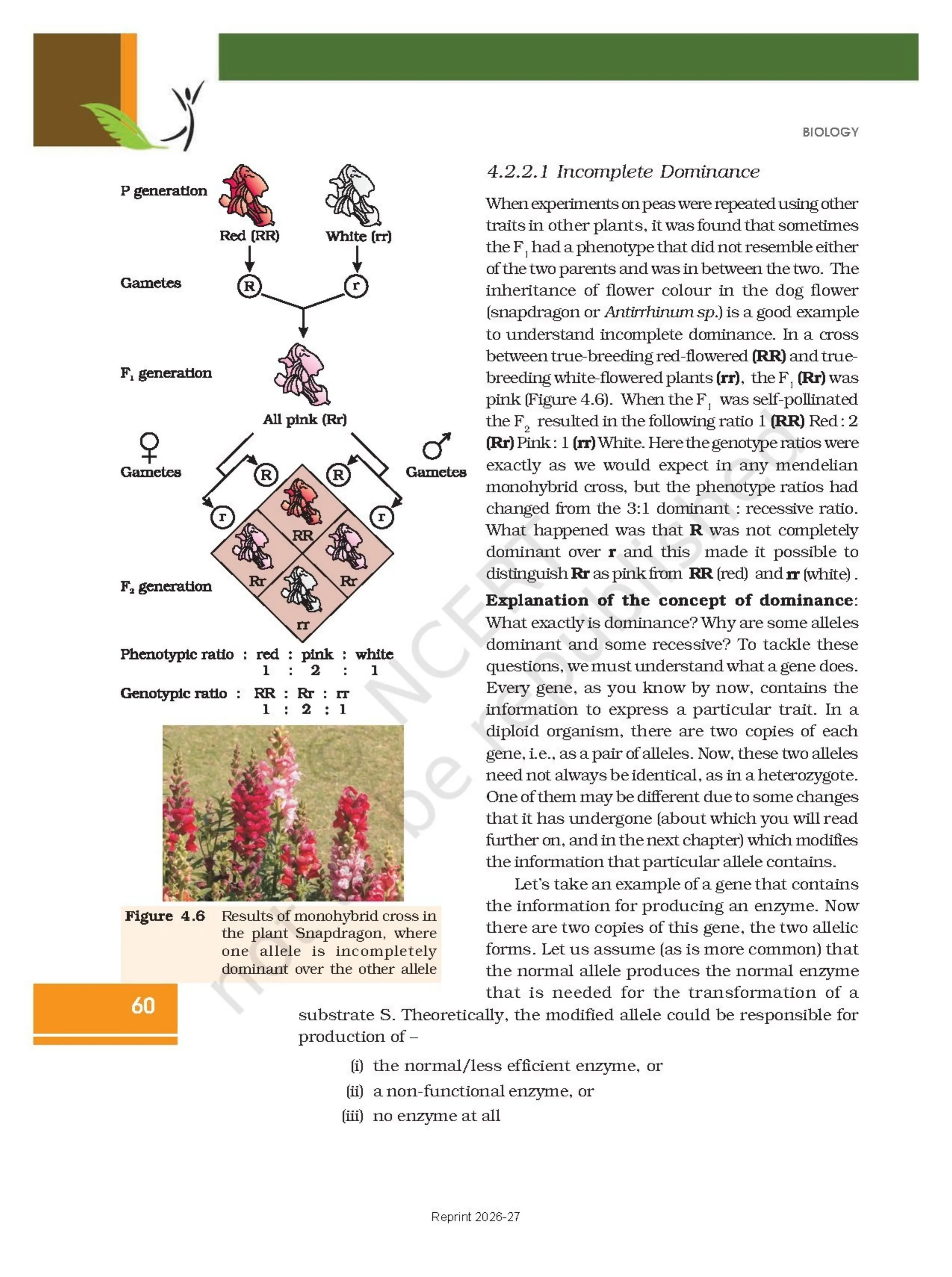
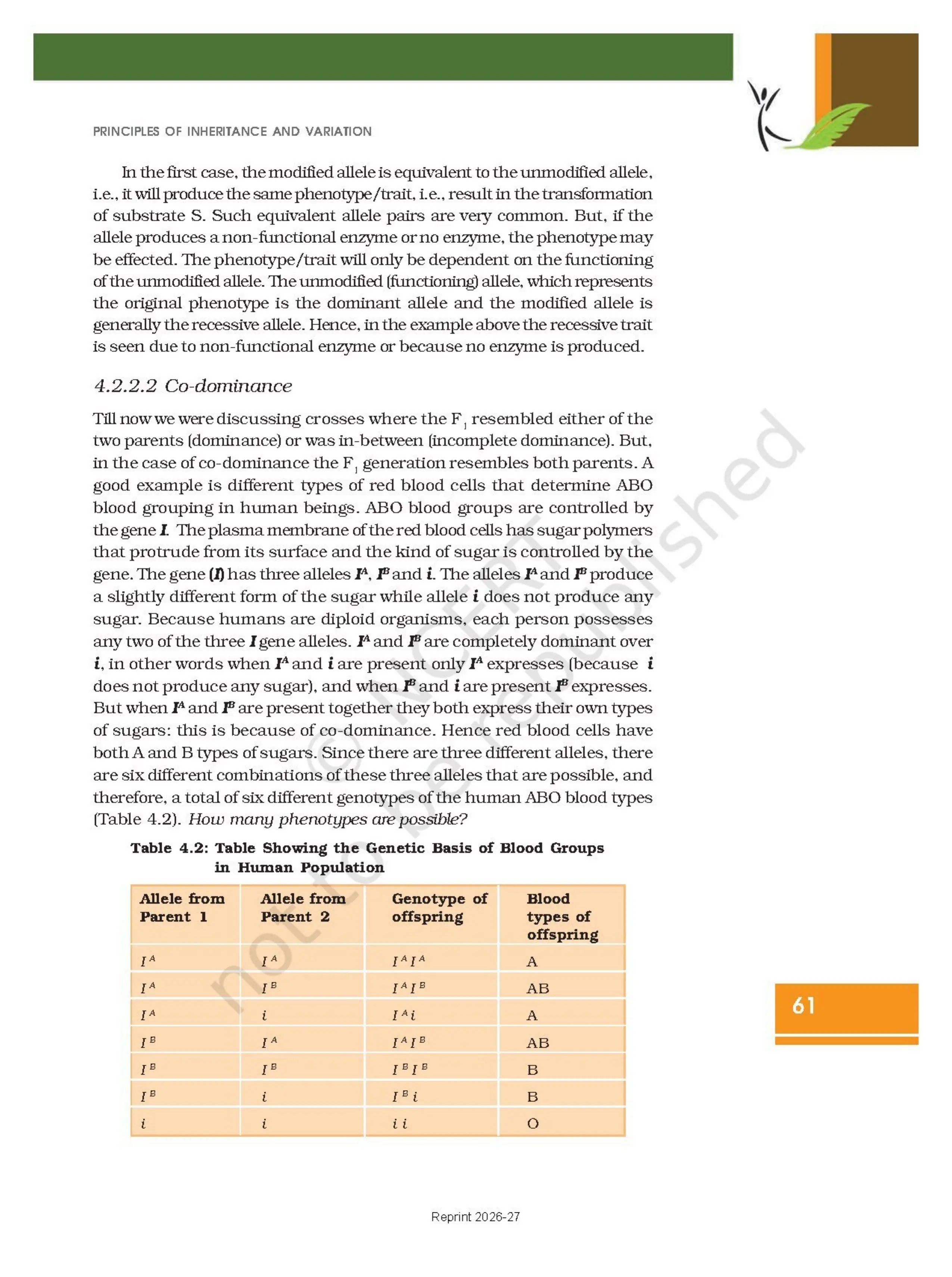
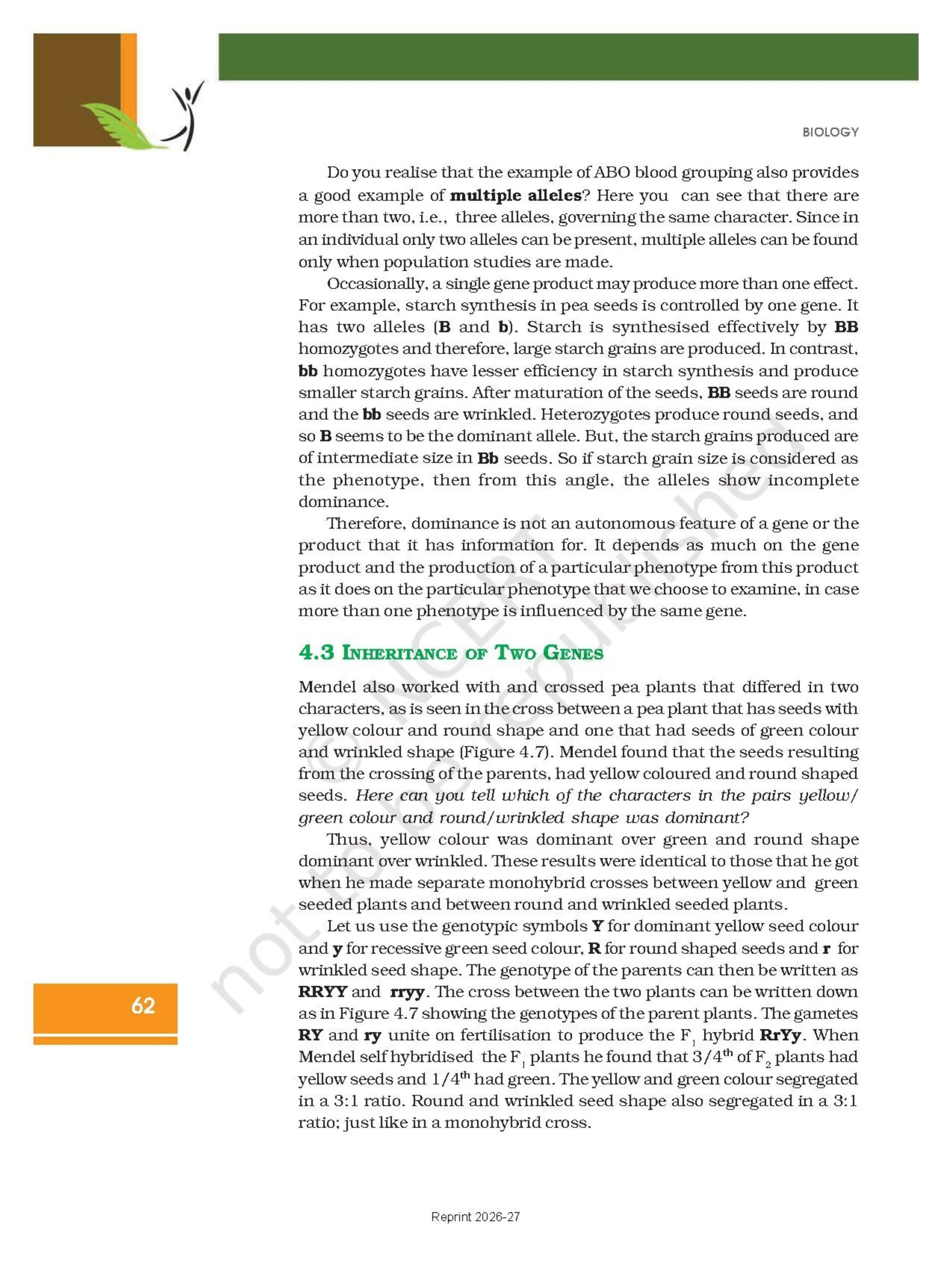
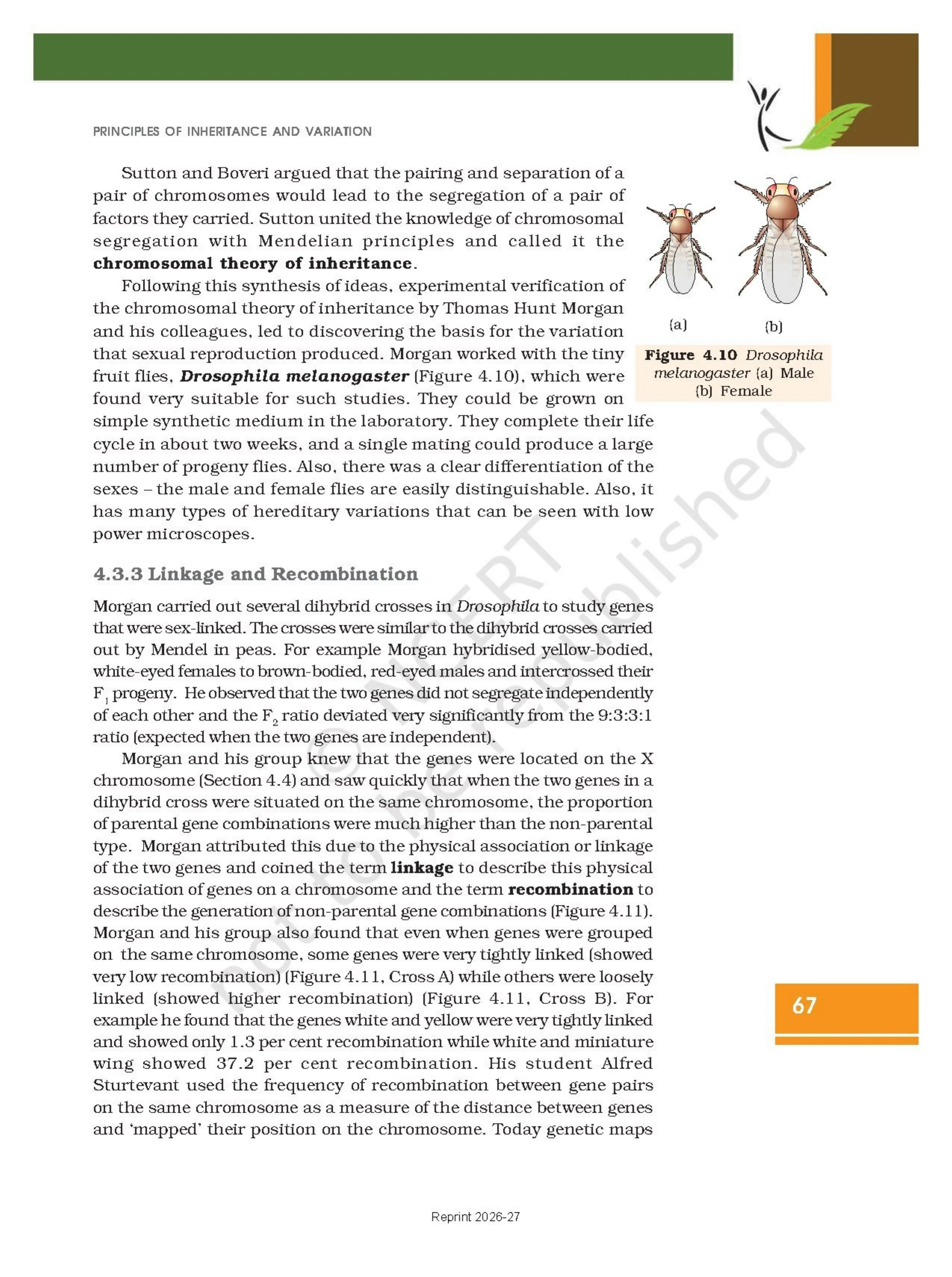
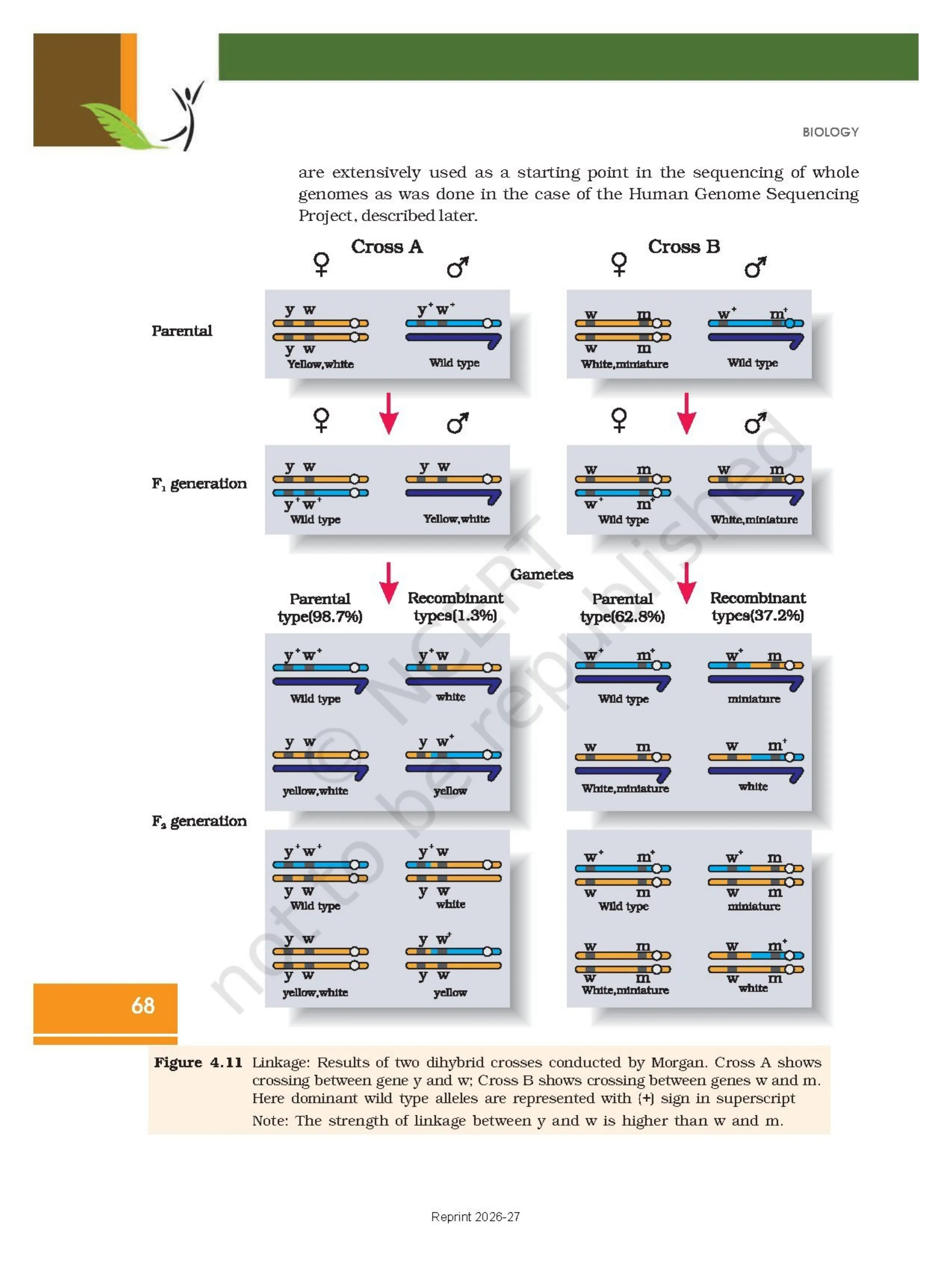
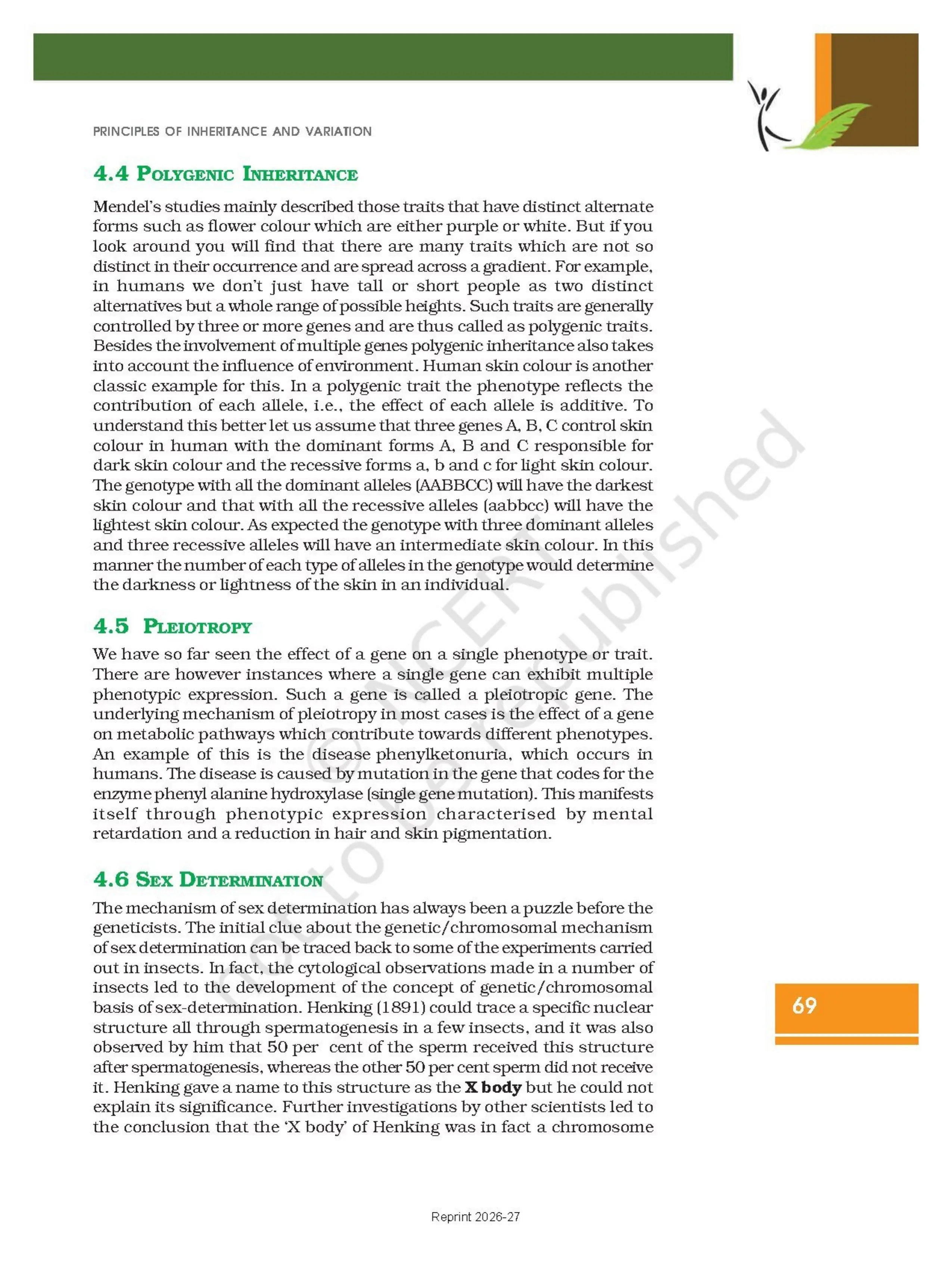
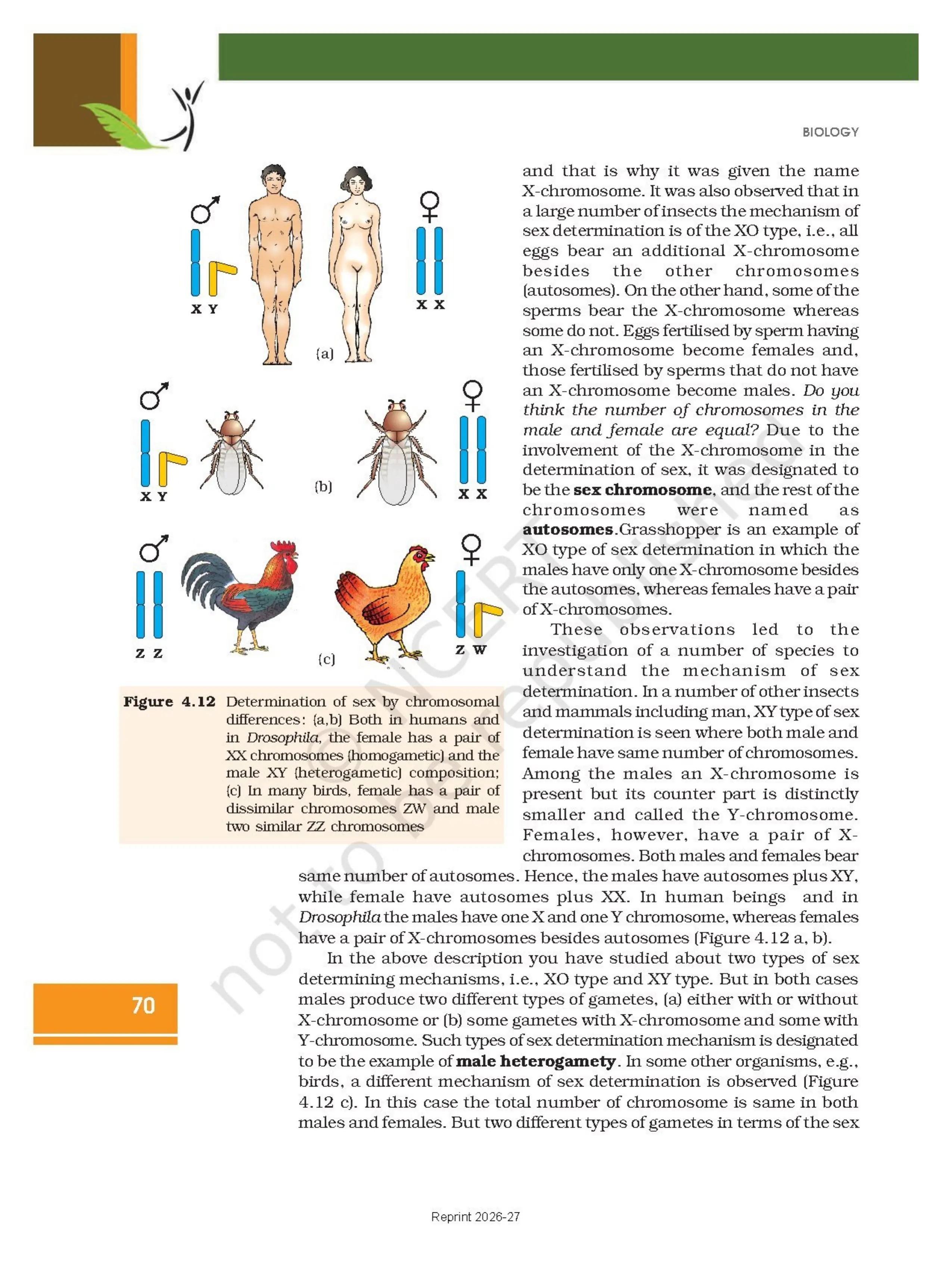
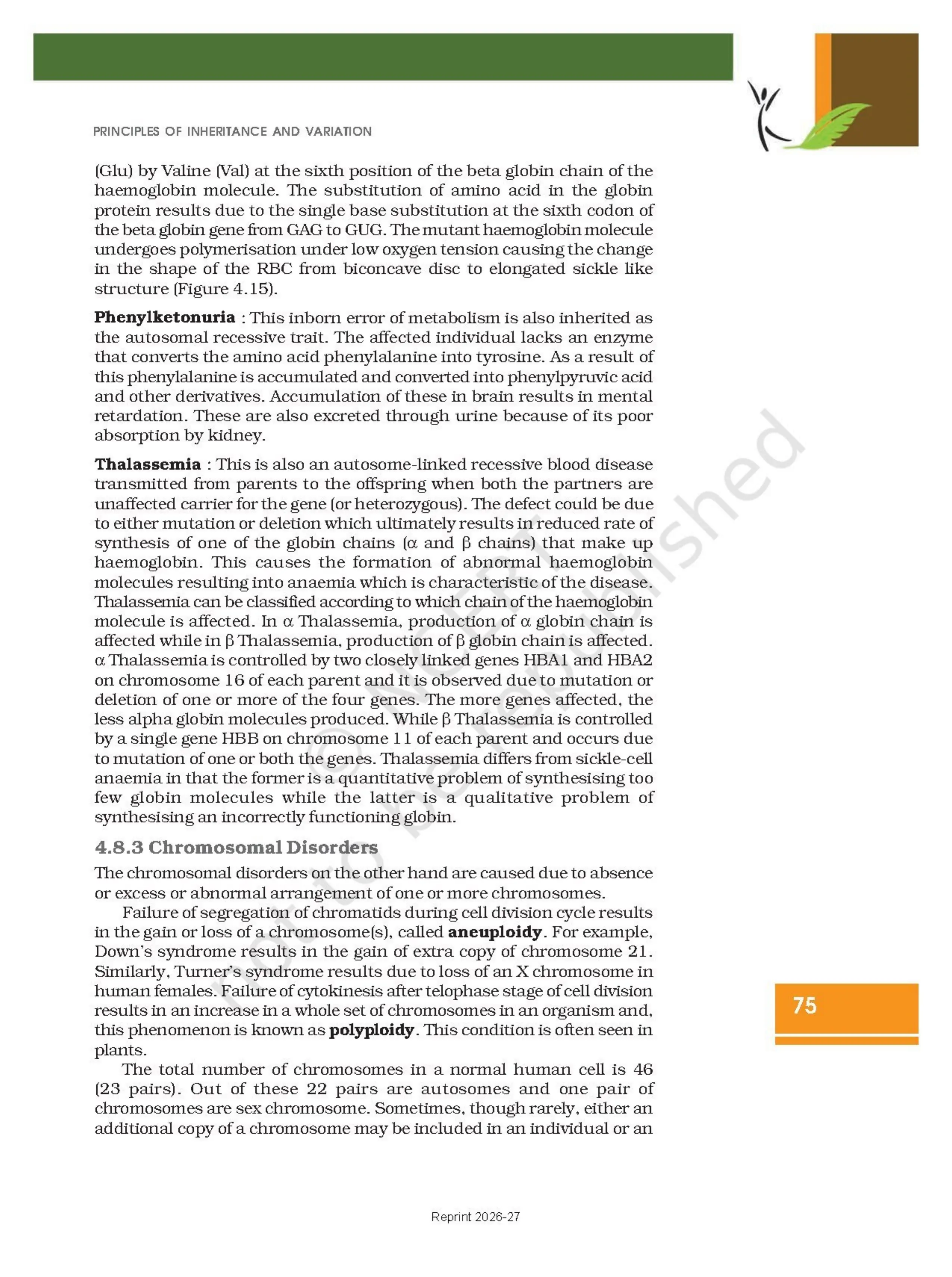
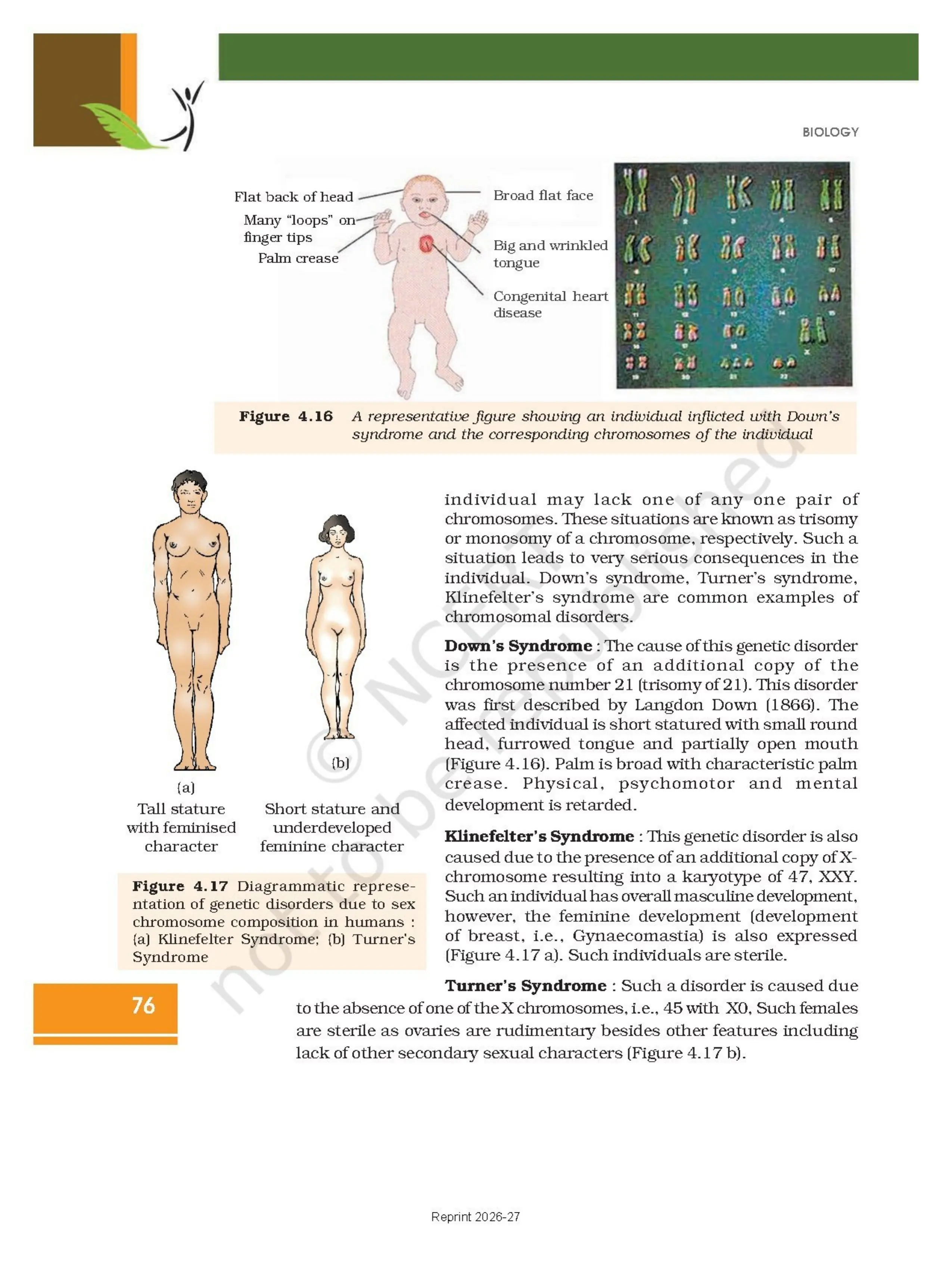
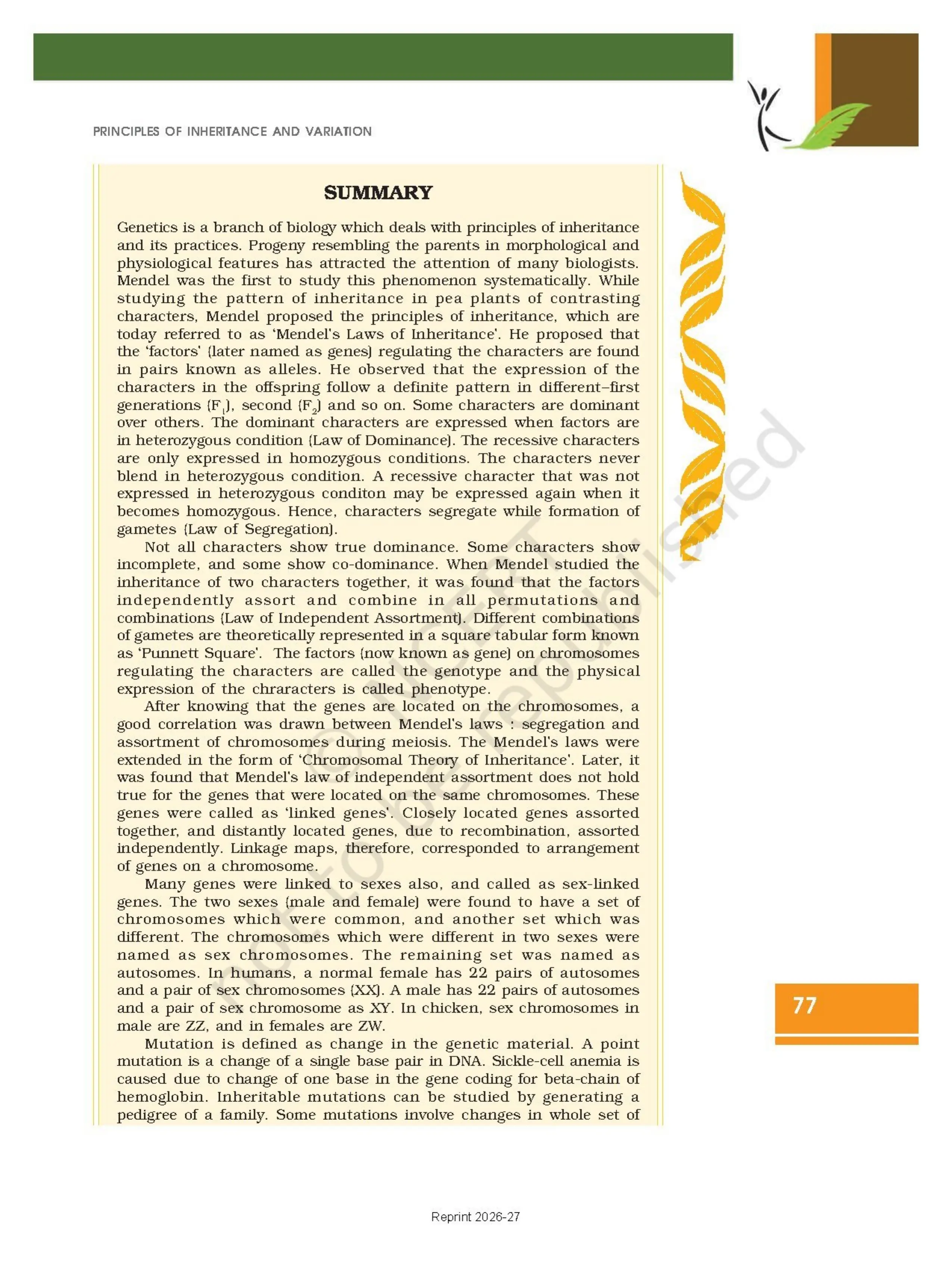
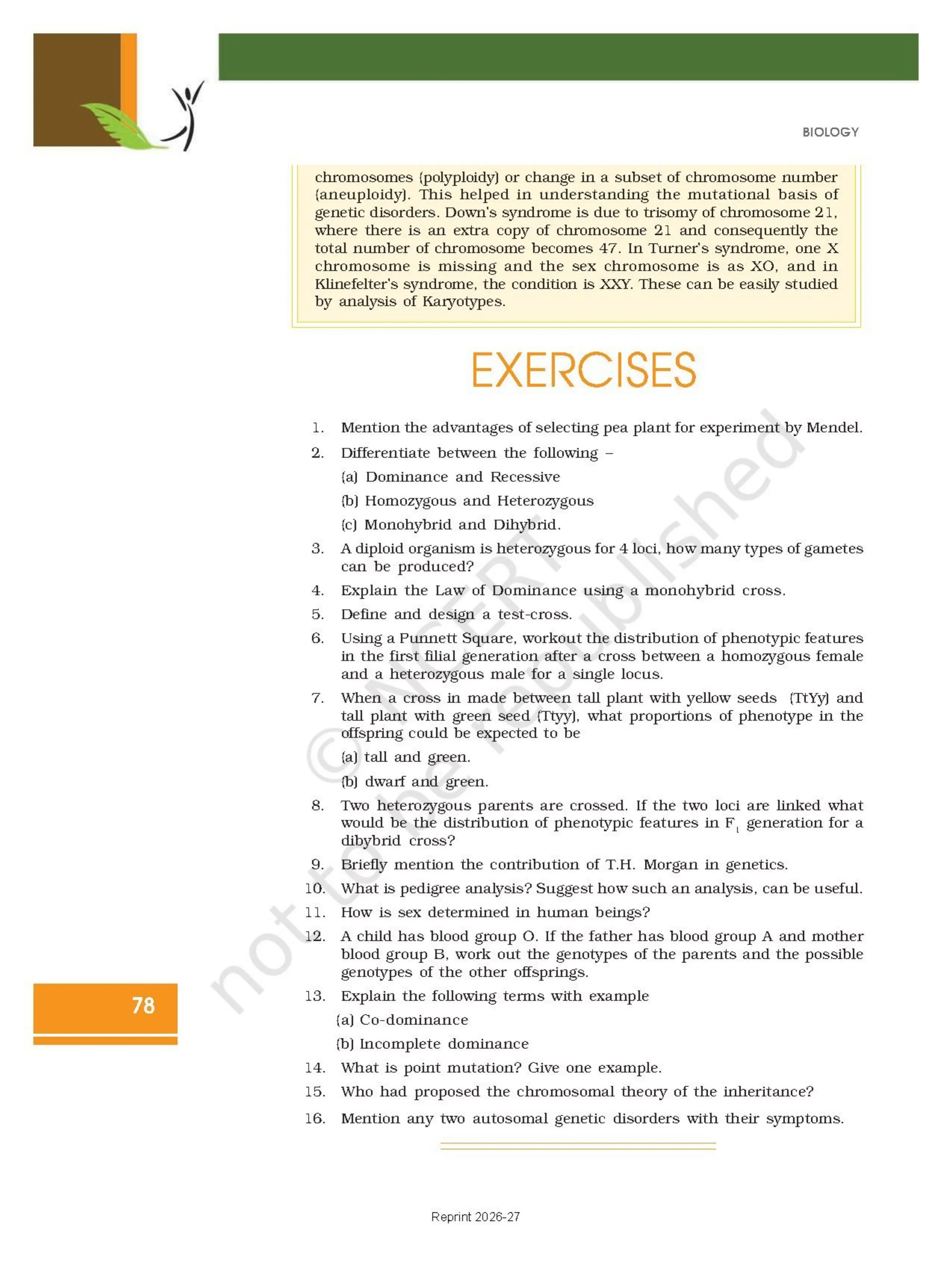
- CBSE Weightage: 6 to 8 marks (2-mark short-answer plus 5-mark long-answer on dihybrid cross, sex-linked inheritance, or pedigree analysis)
- NEET Weightage: 3 to 5 questions per year (one of the highest-yielding chapters across the last five NEET papers)
- AIIMS / CUET-PG Biology: 1 to 2 questions per paper on Mendel's laws, blood-group genetics, and chromosomal disorders
Why Principles of Inheritance and Variation Matters for NEET and CBSE Class 12 Biology
Chapter 4 is the gateway to classical genetics, running from Mendel's pea experiments to human chromosomal disorders. Almost every NEET Genetics question in the last five years traces back to one of its nine sections.
- CBSE: The long-answer slot is consistently a Mendelian dihybrid cross or pedigree analysis from this chapter.
- NEET: Pleiotropy, codominance, ABO multiple alleles, and sex-linked inheritance form the bulk of questions. Punnett squares and test crosses appear almost every year.
- CUET and state boards: Sections 4.1 and 4.8 are reused with minimal variation year on year.
How Collegedunia's NCERT Book PDF Helps You with Principles of Inheritance and Variation
The Collegedunia page reproduces the official Chapter 4 file and adds navigation the bare PDF lacks.
- 2026-27 NCERT alignment: Matches the Reprint 2026-27 with all nine sections retained.
- Section page index: Jump directly to Sex Determination or Pedigree Analysis.
- Cross-linked solutions: Each exercise links to its worked-out solution on Class 12 Biology Chapter 4 NCERT Solutions.
Principles of Inheritance and Variation Top 5 Concepts and Facts for Quick Recall
These five concepts cover roughly 70% of NEET and CBSE marks from this chapter over the last five years.
| # | Concept | Why it matters |
|---|---|---|
| 1 | Mendel's Laws (Dominance, Segregation, Independent Assortment) | Source of 3:1 and 9:3:3:1 ratios. Tested in every CBSE long-answer slot. |
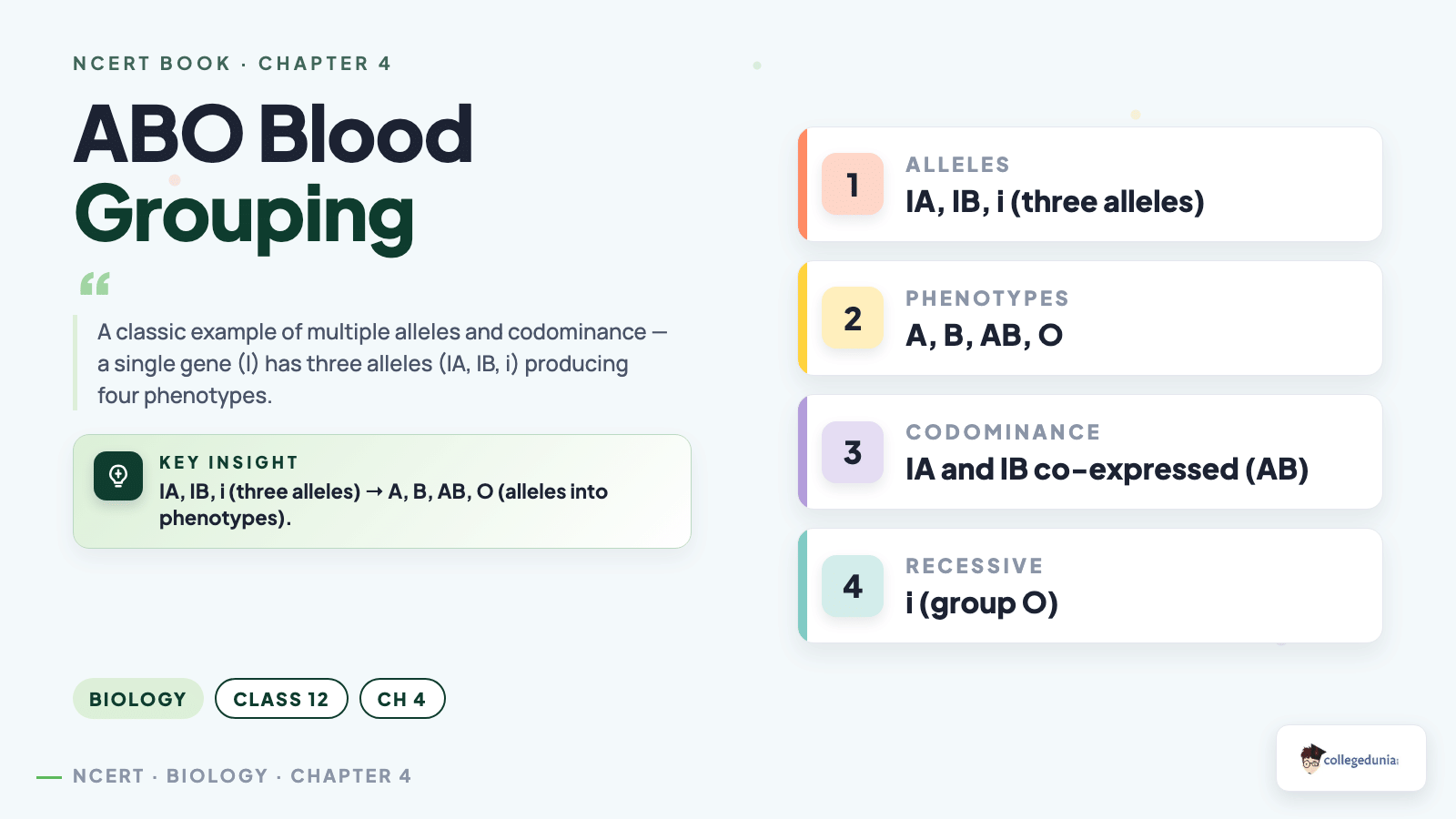
| 2 | Incomplete Dominance and Codominance | Snapdragon (1:2:1) and ABO blood groups. NEET tests genotype to phenotype mapping yearly. |
| 3 | Sex Determination (XX-XO, XX-XY, ZZ-ZW) | Five-mark CBSE question and frequent NEET MCQ. |
| 4 | Sex-linked Inheritance (Haemophilia, Colour Blindness) | Queen Victoria's royal pedigree is the standard CBSE problem. |
| 5 | Chromosomal Disorders (Down, Klinefelter, Turner) | Karyotype counts (47, 47-XXY, 45-XO) are pure-recall NEET items. |
Full concept master list: Class 12 Biology Chapter 4 Notes.
Principles of Inheritance and Variation NCERT: Section-by-Section Breakdown with Page Numbers
The chapter runs from page 56 to 75 across nine sections plus a summary and 13 exercises. Sections 4.4 and 4.5 drive most NEET marks; Section 4.8 is a CBSE short-answer favourite.
| Section | Title | Pages | What it covers |
|---|---|---|---|
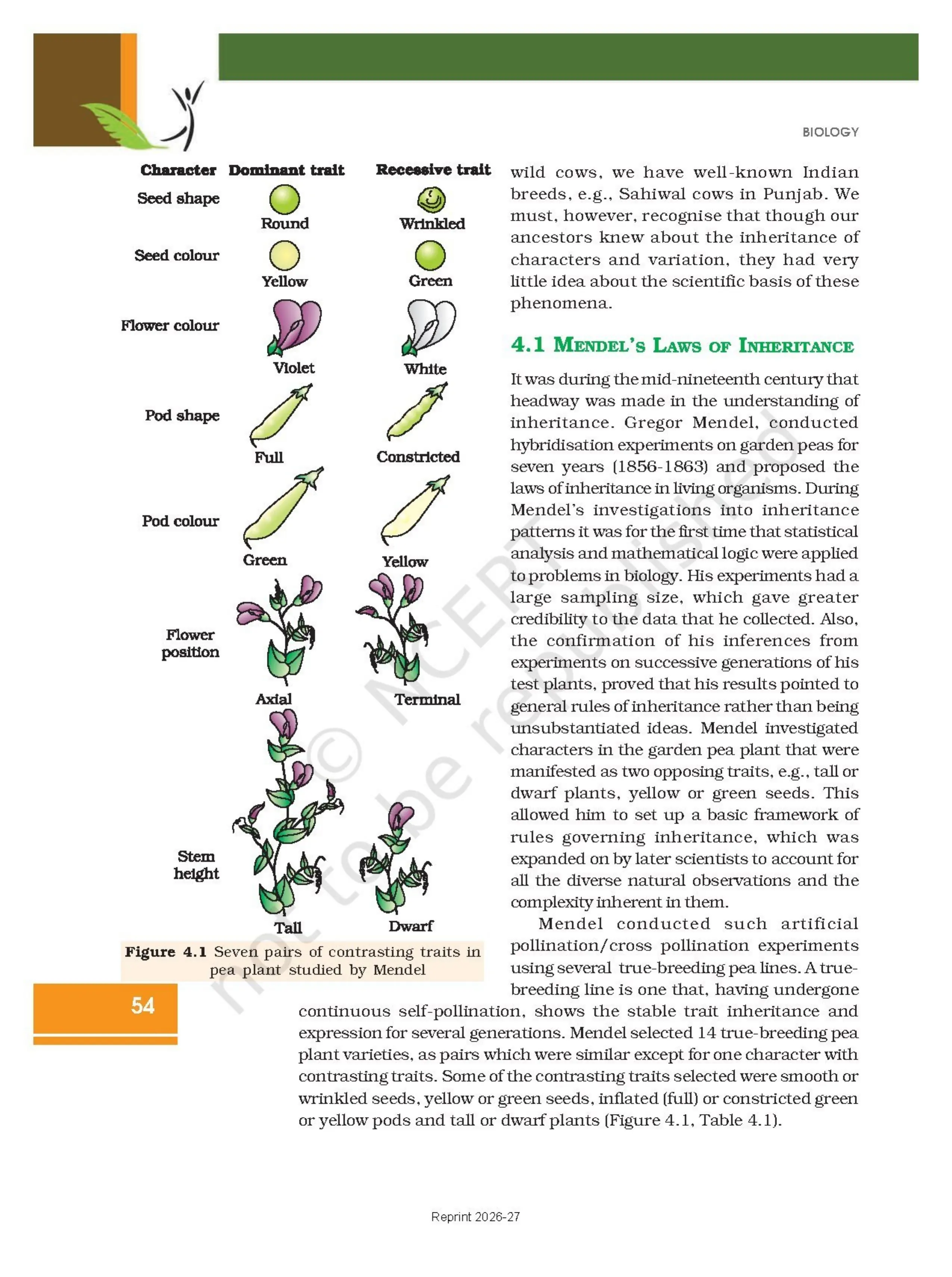
| 4.1 | Mendel's Laws of Inheritance | 56-58 | Pea plant choice, seven traits, monohybrid cross, dominance, segregation |
| 4.2 | Inheritance of One Gene | 58-61 | Punnett square, F1/F2 ratios, test cross, back cross |
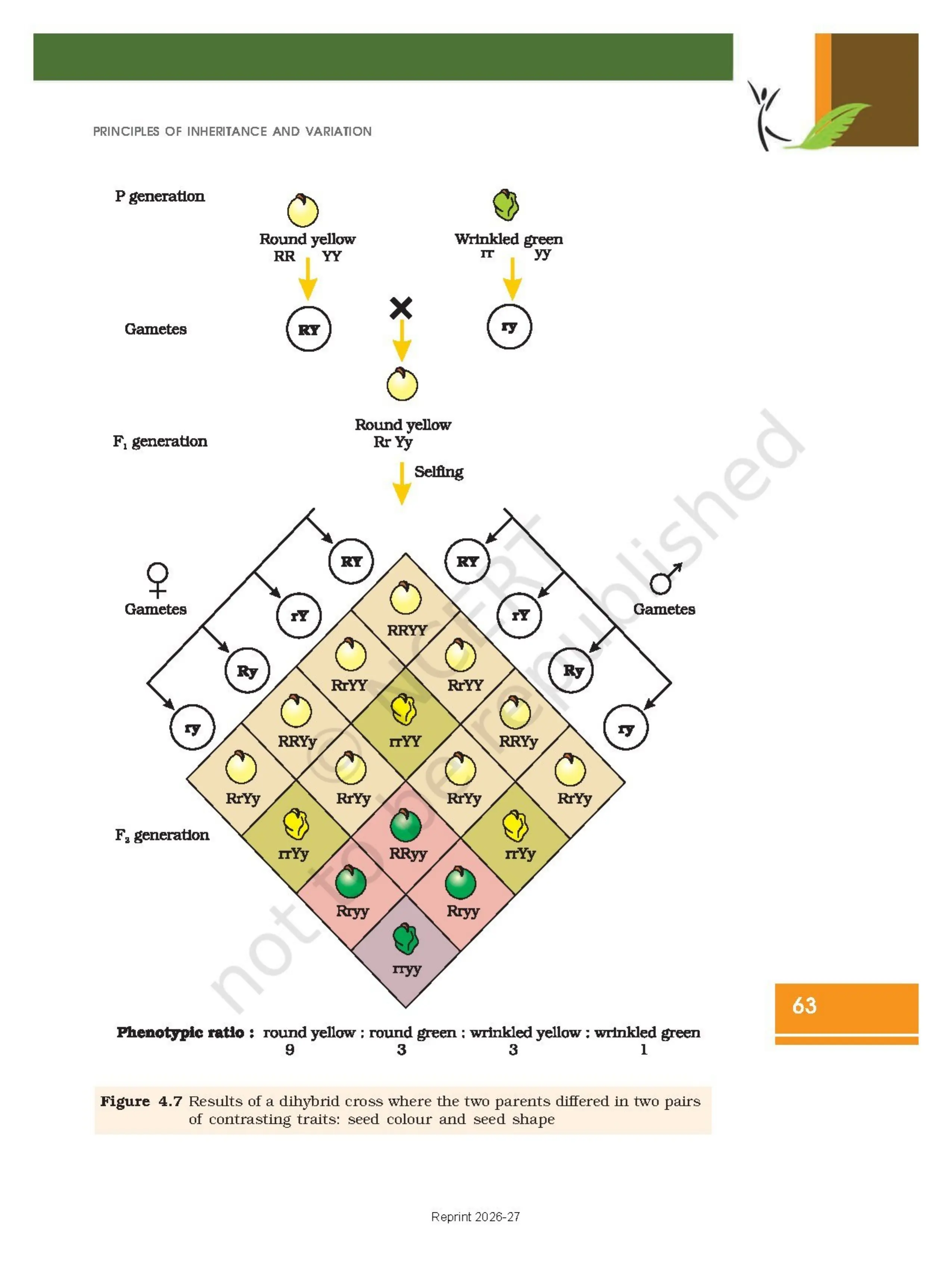
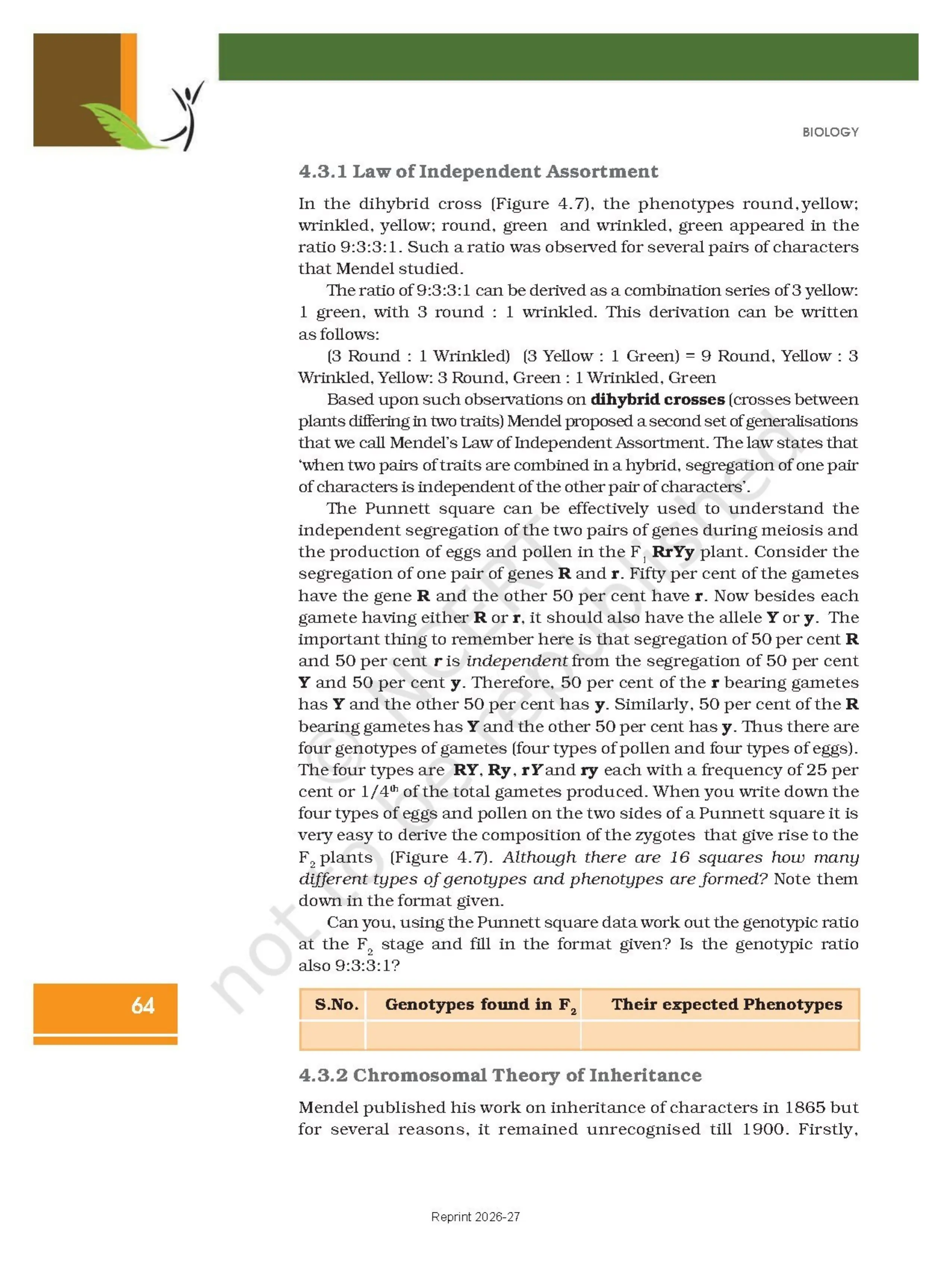
| 4.3 | Inheritance of Two Genes | 61-63 | Dihybrid cross, 9:3:3:1 ratio, independent assortment |
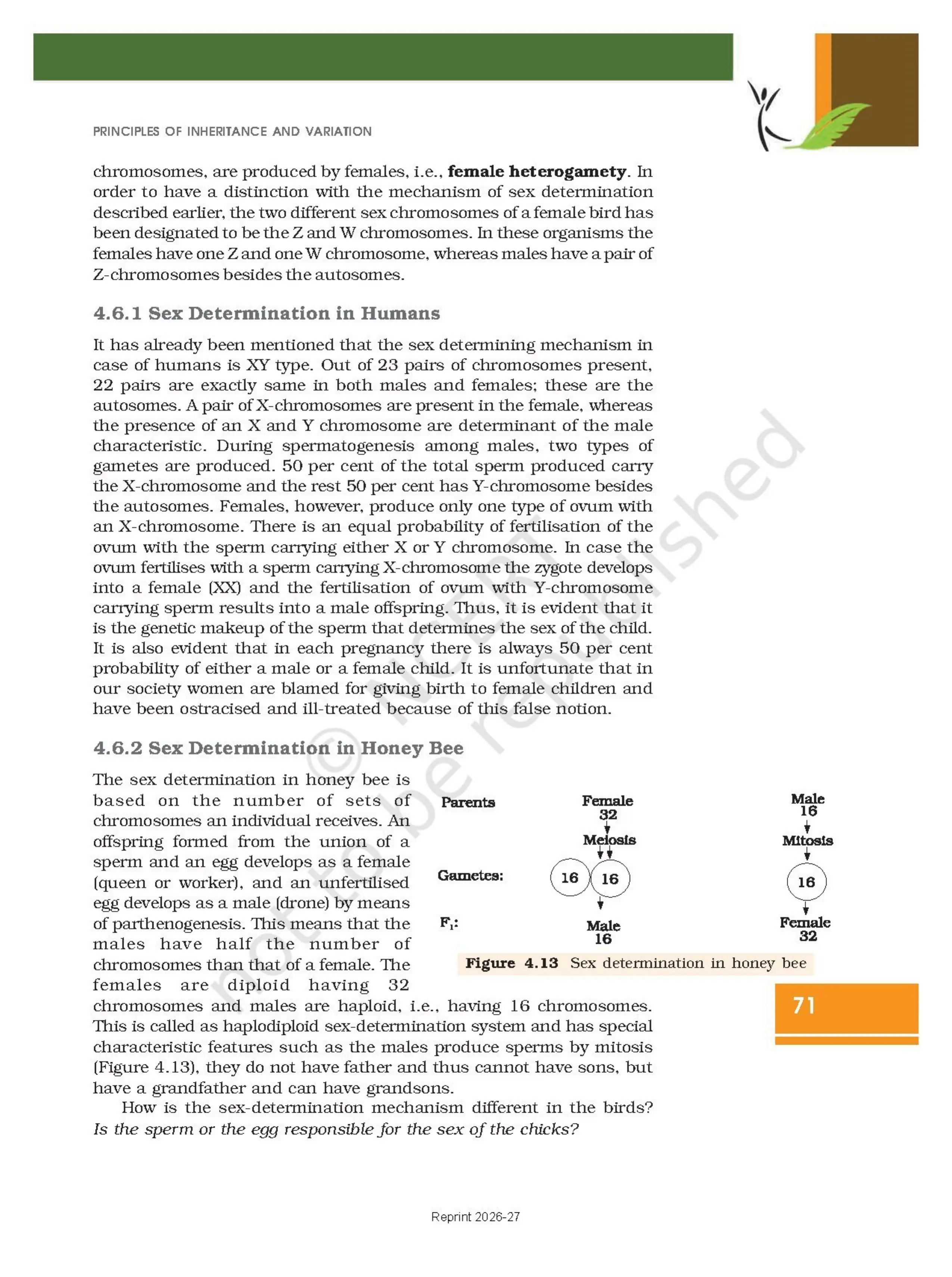
| 4.4 | Sex Determination | 63-65 | XX-XO, XX-XY, ZZ-ZW systems, Henking's discovery |
| 4.5 | Mutation | 65-66 | Point and frameshift mutation, chromosomal aberrations, mutagens |
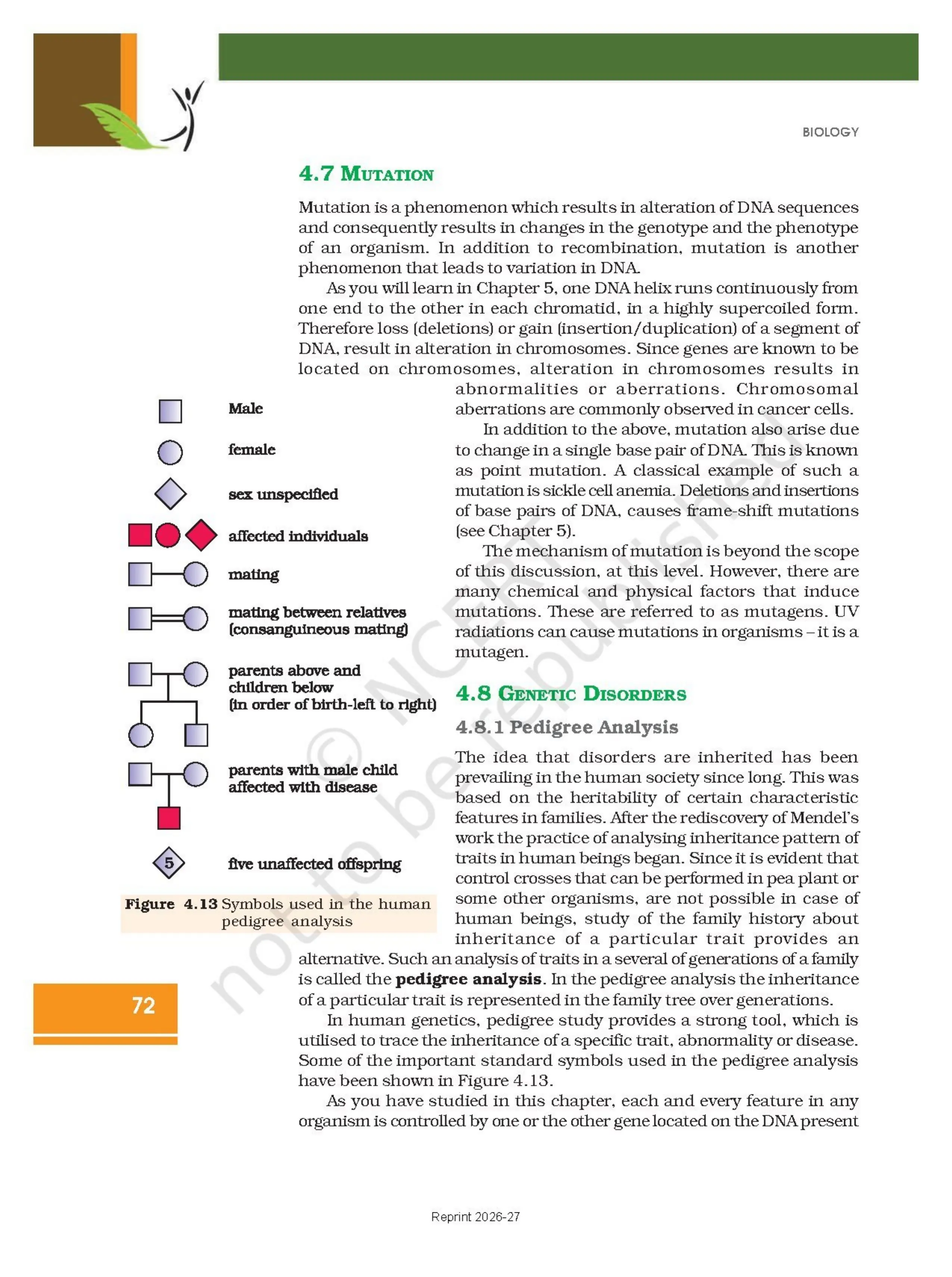
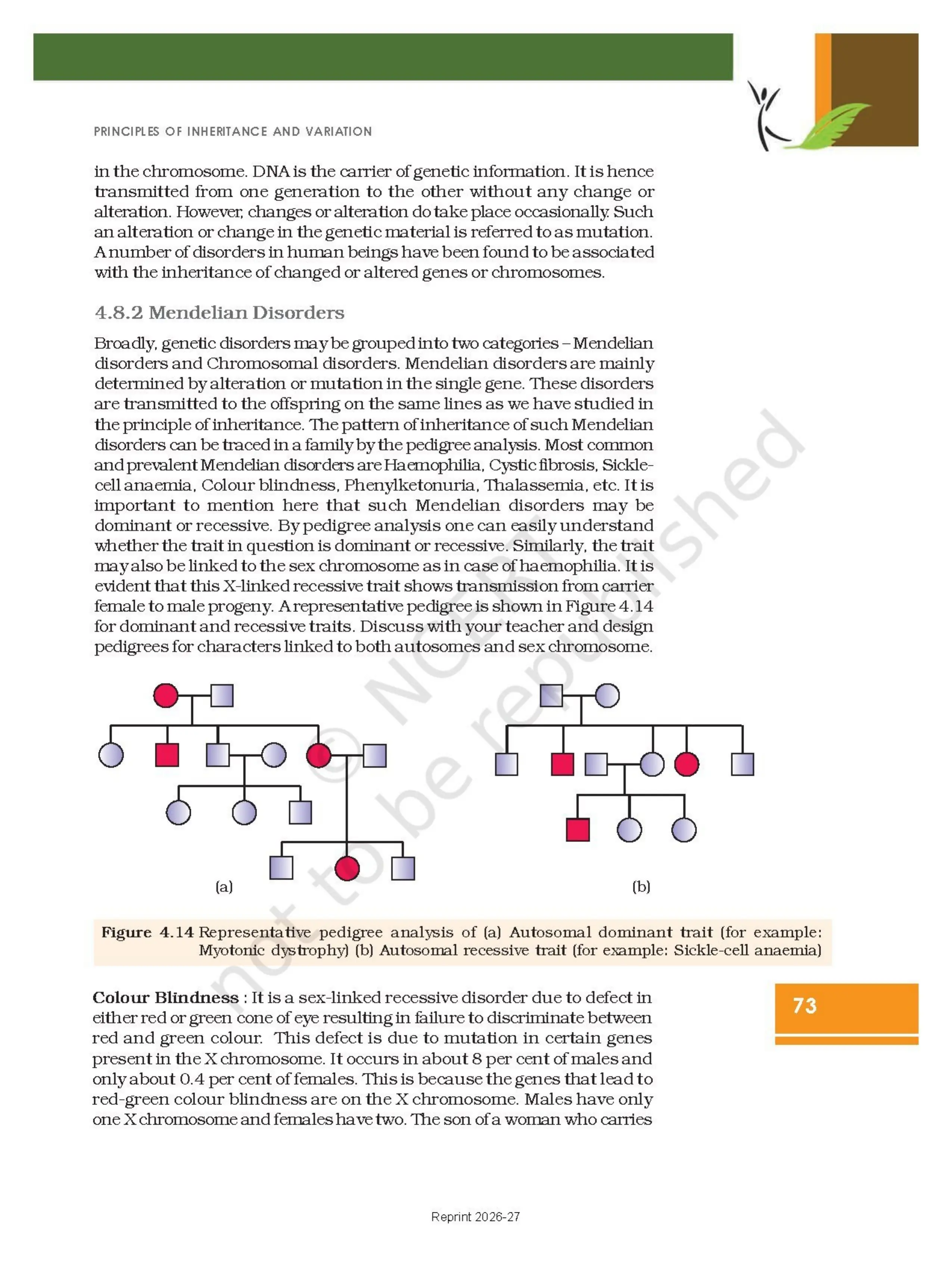
| 4.6 | Genetic Disorders - Pedigree Analysis | 66-67 | Pedigree symbols, autosomal dominant vs recessive patterns |
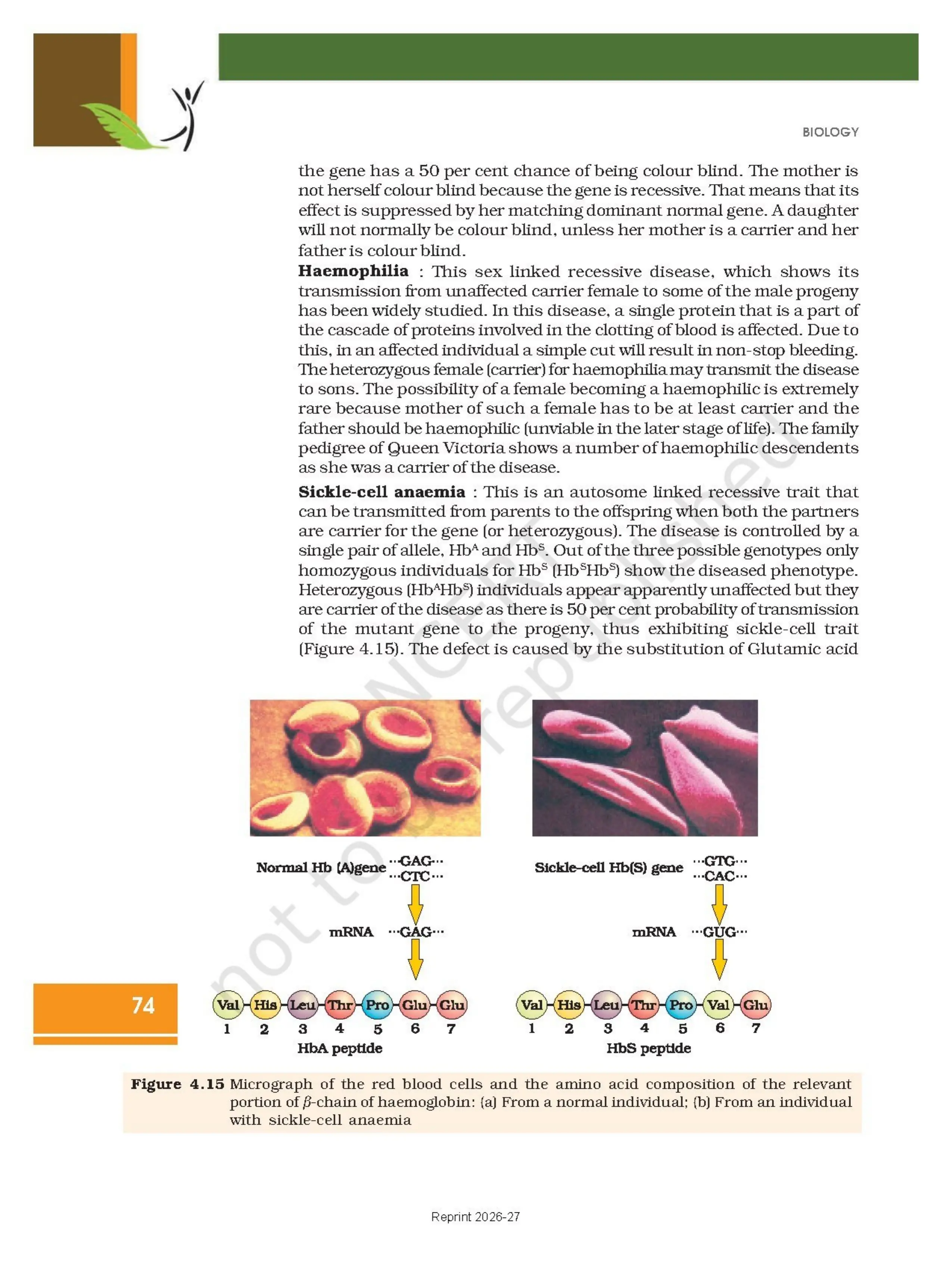
| 4.7 | Mendelian Disorders | 67-69 | Haemophilia, colour blindness, sickle-cell, phenylketonuria, thalassaemia |
| 4.8 | Chromosomal Disorders | 69-70 | Aneuploidy, polyploidy, Down, Klinefelter, Turner |
| - | Summary, Exercises | 71-75 | Summary plus 13 end-of-chapter exercises |
What Stayed in Principles of Inheritance and Variation for 2026-27 NCERT
The 2026-27 reprint kept all nine sections intact, so past question banks from 2018 onwards stay directly applicable.
- Kept: Mendel's laws, dihybrid cross, test cross, sex determination, Mendelian disorders, three flagship chromosomal disorders.
- Refined: Pedigree symbol legend updated; karyotype images redrawn.
Principle of Inheritance and Variation PYQ Trend in CBSE and NEET (2025 to 2021)
| Year | CBSE Class 12 Biology | NEET |
|---|---|---|
| 2025 | 1 short (Codominance), 1 long (Dihybrid cross with ratio) | 4 MCQs (Mendel, ABO blood group, Haemophilia, Down) |
| 2024 | 1 short (Pedigree symbols), 1 long (Sex determination) | 3 MCQs (Test cross, Klinefelter, Sickle-cell) |
| 2023 | 1 long (Sickle-cell anaemia inheritance) | 4 MCQs (Mendel laws, Punnett, Colour blindness, Turner) |
| 2022 | 1 short (Multiple alleles), 1 long (Pedigree analysis) | 3 MCQs (Incomplete dominance, Haemophilia, Karyotype) |
| 2021 | 1 long (Mendel monohybrid) | 3 MCQs (Test cross, ABO, Aneuploidy) |
Sections 4.2, 4.4, 4.7, and 4.8 account for over 80% of marks from this chapter. Full PYQ map: Class 12 Biology Chapter 4 NCERT Solutions.
Principle of Inheritance and Variation Weightage Compared Across Class 12 Biology Chapters
CBSE marks across the 13 Class 12 Biology chapters place Chapter 4 in the top quartile, just behind Molecular Basis of Inheritance.
| Chapter | Title | CBSE Marks | NEET Qs |
|---|---|---|---|
| 1 | Sexual Reproduction in Flowering Plants | 5 | 3 |
| 2 | Human Reproduction | 6 | 3 |
| 3 | Reproductive Health | 4 | 2 |
| 4 | Principles of Inheritance and Variation | 7 | 4 |
| 5 | Molecular Basis of Inheritance | 8 | 5 |
| 6 | Evolution | 5 | 3 |
| 7 | Human Health and Disease | 7 | 4 |
| 8 | Microbes in Human Welfare | 3 | 2 |
| 9 | Biotechnology Principles and Processes | 5 | 3 |
| 10 | Biotechnology and its Applications | 4 | 2 |
| 11 | Organisms and Populations | 4 | 3 |
| 12 | Ecosystem | 5 | 3 |
| 13 | Biodiversity and Conservation | 4 | 2 |
Chapter 4 deserves the same revision hours as Chapter 7, just behind Chapter 5.
Principles of Inheritance and Variation Video Lecture for Class 12 Biology
Source: Competition Wallah on YouTube
How to Study the Principles of Inheritance and Variation NCERT PDF Effectively
A three-pass plan works better than a linear read because the cross examples build on one another.
- Pass 1 (Day 1, 90 min): Sections 4.1 to 4.3. Solve every Punnett square on paper. Do Exercises 1, 2, 3, 7.
- Pass 2 (Day 2, 75 min): Sections 4.4 to 4.7. Draw the haemophilia pedigree from memory. Do Exercises 4, 5, 8, 10.
- Pass 3 (Day 3, 45 min): Section 4.8. Revise karyotype numbers. Do Exercises 11, 12, 13.
Author, Edition and Publisher Information for the Inheritance and Variation NCERT PDF
The NCERT Biology textbook for Class 12 is prepared by an NCERT-appointed expert committee and is not attributed to a single author.
| Field | Value |
|---|---|
| Textbook | Biology - Textbook for Class XII |
| Chapter | 4 - Principles of Inheritance and Variation |
| Edition | Reprint 2026-27 |
| Publisher | NCERT |
| ISBN | 81-7450-629-5 |
| Internal Code | lebo104 |
| Pages | 56 to 75 (20 pages) |
| Language | English (Hindi and Urdu on ncert.nic.in) |
Exam Survey Results from Class 12 Students on Principles of Inheritance and Variation
Student Feedback
In a recent survey of 15,800 Class 12 Biology students before the 2026 boards, 78% rated dihybrid-cross Punnett-square problems as the hardest sub-topic in this chapter.
- 78% of students marked dihybrid-cross Punnett-square problems as the hardest sub-topic.
- 65% lost 1-2 marks on the incomplete dominance vs codominance distinction even when the rest of their answer was correct.
- 4 out of 5 students skipped the pedigree-analysis chart with sex-linked inheritance in their answer sheet.
- Average study time: 7.1 hours for the first read, 3.0 hours for a revision pass before boards.
Source: 2025-26 Class 12 Biology student survey. Sample of 15,800 students from CBSE-affiliated schools across 18 states.
Other Resources for Principles of Inheritance and Variation Class 12 Biology
All Chapter 4 study materials available on Collegedunia.
| Resource Type | Link |
|---|---|
| NCERT Book PDF | Principles of Inheritance and Variation NCERT Book |
| NCERT Solutions | Principles of Inheritance and Variation NCERT Solutions |
| Notes | Principles of Inheritance and Variation Notes |
| Formula Sheet | Principles of Inheritance and Variation Formula Sheet |
| Exemplar Solutions | Principles of Inheritance and Variation Exemplar Solutions |
| Handwritten Notes | Principles of Inheritance and Variation Handwritten Notes |
| Exemplar Book PDF | Principles of Inheritance and Variation Exemplar Book PDF |
NCERT Book PDF for Class 12 Biology: All Chapters
Jump to any other chapter's official NCERT Book PDF for Class 12 Biology.
| Chapter | Title |
|---|---|
| Chapter 1 | Sexual Reproduction in Flowering Plants NCERT Book PDF |
| Chapter 2 | Human Reproduction NCERT Book PDF |
| Chapter 3 | Reproductive Health NCERT Book PDF |
| Chapter 4 | Principles of Inheritance and Variation NCERT Book PDF |
| Chapter 5 | Molecular Basis of Inheritance NCERT Book PDF |
| Chapter 6 | Evolution NCERT Book PDF |
| Chapter 7 | Human Health and Disease NCERT Book PDF |
| Chapter 8 | Microbes in Human Welfare NCERT Book PDF |
| Chapter 9 | Biotechnology Principles and Processes NCERT Book PDF |
| Chapter 10 | Biotechnology and its Applications NCERT Book PDF |
| Chapter 11 | Organisms and Populations NCERT Book PDF |
| Chapter 12 | Ecosystem NCERT Book PDF |
| Chapter 13 | Biodiversity and Conservation NCERT Book PDF |
Principles of Inheritance and Variation Class 12 Biology NCERT Book PDF: FAQs
Q. Where can I download the Principles of Inheritance and Variation Class 12 Biology NCERT PDF for free?
You can download the full official Chapter 4 NCERT PDF from the embed at the top of this page. The file is the 2026-27 reprint sourced from NCERT (internal code lebo104) and is identical in pagination to the printed textbook.
Q. How many pages is Chapter 4 Principles of Inheritance and Variation in the Class 12 NCERT Biology textbook?
The chapter is 20 pages long, running from page 56 to page 75 in the 2026-27 NCERT reprint. It has 9 numbered sections plus a summary and 13 end-of-chapter exercises.
Q. Has Principles of Inheritance and Variation been rationalised in the 2026-27 NCERT edition?
No section was dropped in the 2026-27 reprint. All nine sections (4.1 through 4.8 plus the summary) are retained, with minor refinements to pedigree symbols and karyotype images. Question banks from earlier editions remain valid.
Q. What is the CBSE Class 12 weightage of Principles of Inheritance and Variation?
The chapter carries 6 to 8 marks in the CBSE Class 12 Biology paper, typically as one 2-mark short-answer plus one 5-mark long-answer. Dihybrid cross, sex-linked inheritance, and pedigree analysis are the recurring long-answer themes.
Q. How important is Principles of Inheritance and Variation for NEET 2027?
It is one of the highest-yielding Class 12 Biology chapters for NEET, contributing 3 to 5 questions per paper. The Genetics and Evolution unit, anchored by this chapter and Chapter 5, accounts for roughly 18 to 22 NEET marks.
Q. What are the most important topics to revise from Chapter 4 of Class 12 Biology?
Prioritise Mendel's laws and the dihybrid cross (Sections 4.1 to 4.3), sex determination (4.4), Mendelian disorders including haemophilia and sickle-cell anaemia (4.7), and chromosomal disorders Down, Klinefelter, and Turner (4.8). Together they cover over 80% of the marks from this chapter.
Q. Who is the author of the Class 12 Biology NCERT textbook?
The textbook is authored by an expert committee constituted by NCERT. It is not attributed to a single author; chapter contributors are listed in the textbook's preface.



Comments