




The NCERT Book PDF for Class 12 Biotechnology Chapter 1 An Overview of Recombinant DNA Technology brings together every discovery, enzyme and application that opens Unit I of the 2026-27 textbook.
- Chapter: Chapter 1, An Overview of Recombinant DNA Technology
- Book: Biotechnology, the Class 12 NCERT textbook for 2026-27, opens Unit I: Recombinant DNA Technology
- File: 8 pages, the complete official chapter with no pages removed
You can page through the Herbert Boyer profile, the 1973 Cohen-Boyer experiment and the full landmark-discovery timeline in the viewer above before downloading the file.
This is the official NCERT chapter file for the 2026-27 session, hosted by Collegedunia with no pages removed.
How the An Overview of Recombinant DNA Technology Chapter Is Laid Out
Chapter 1 opens Unit I of the Biotechnology textbook and runs just eight pages, but it packs in a scientist profile, a full page of history and a two-page timeline box. Section 1.1 is the only numbered section in the chapter. Everything else, from the Herbert Boyer profile to the closing exercises, sits around that one section.
| Part of the chapter | What it covers |
|---|---|
| Opening page | Unit I divider listing all four chapters under Recombinant DNA Technology |
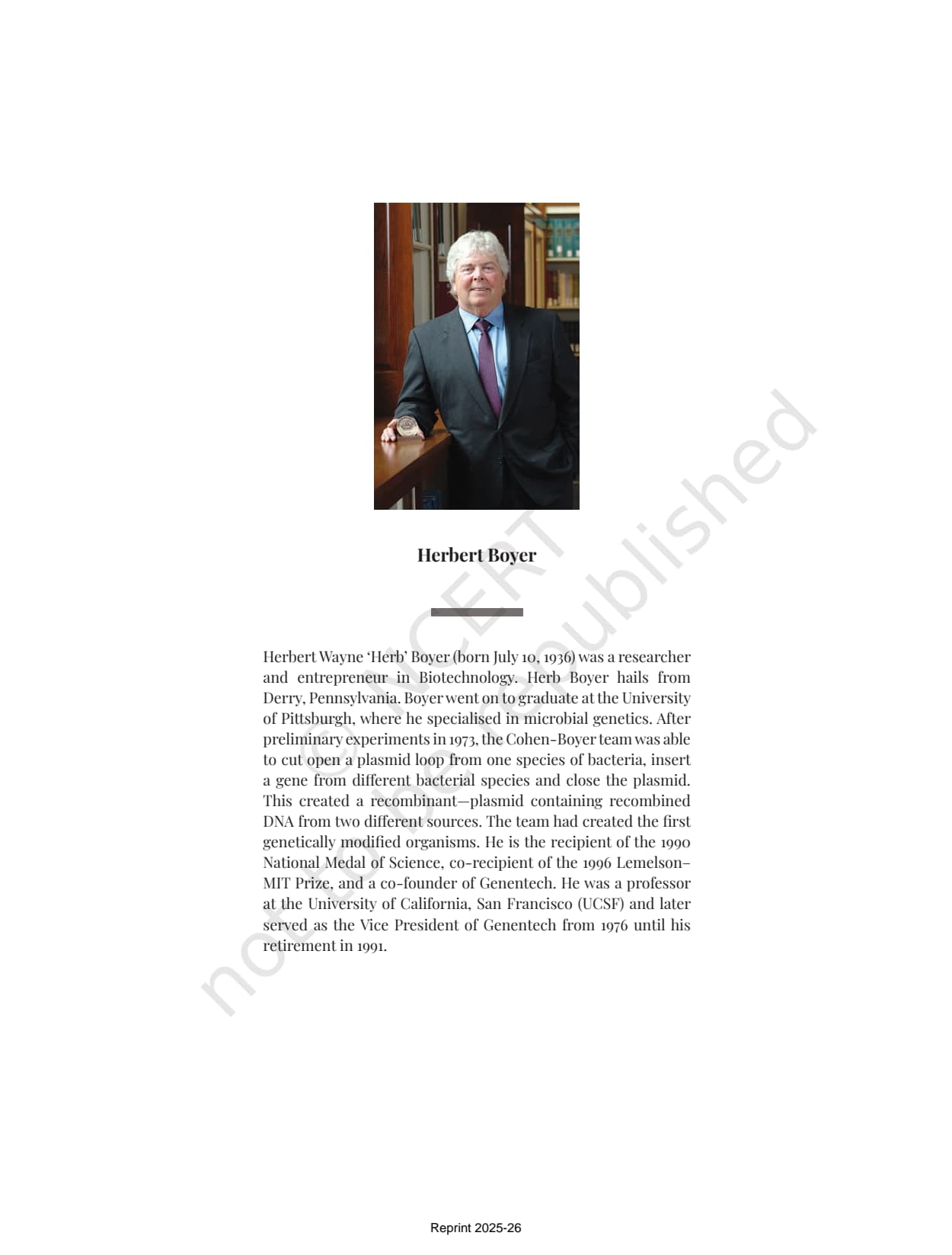
| Herbert Boyer profile | a boxed biography of the scientist who cut open and rejoined the first plasmid |
| 1.1 An Overview of Recombinant DNA Technology | how a century of DNA research led to rDNA technology, and the Cohen-Boyer experiment |
| Applications paragraph | insulin, growth hormone, interferon and genetically modified crops |
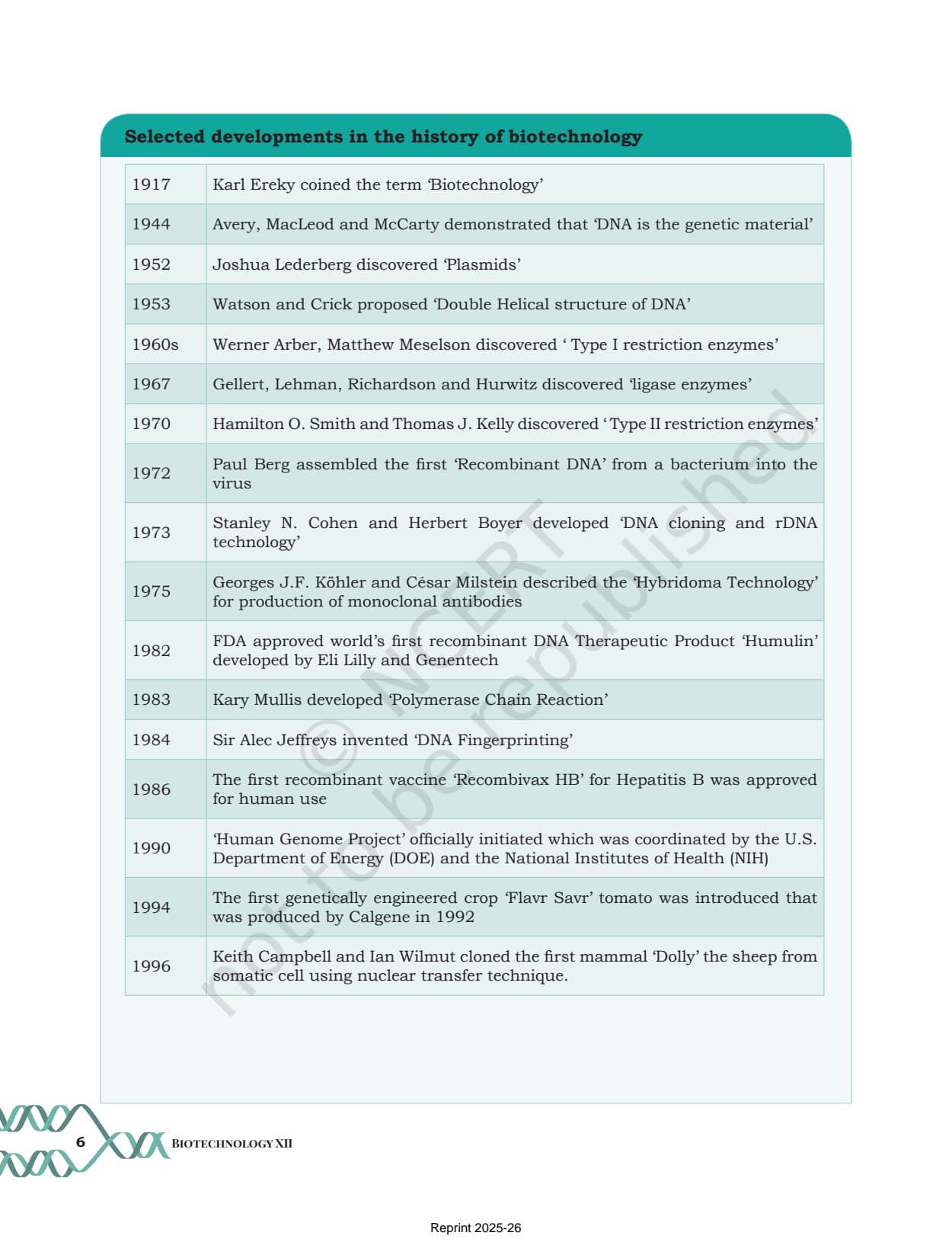
| Box 1 | a two-page timeline of landmark discoveries in biotechnology, 1917 to 2023 |
| Summary | a two-point recap of what rDNA technology means and its fundamental theme |
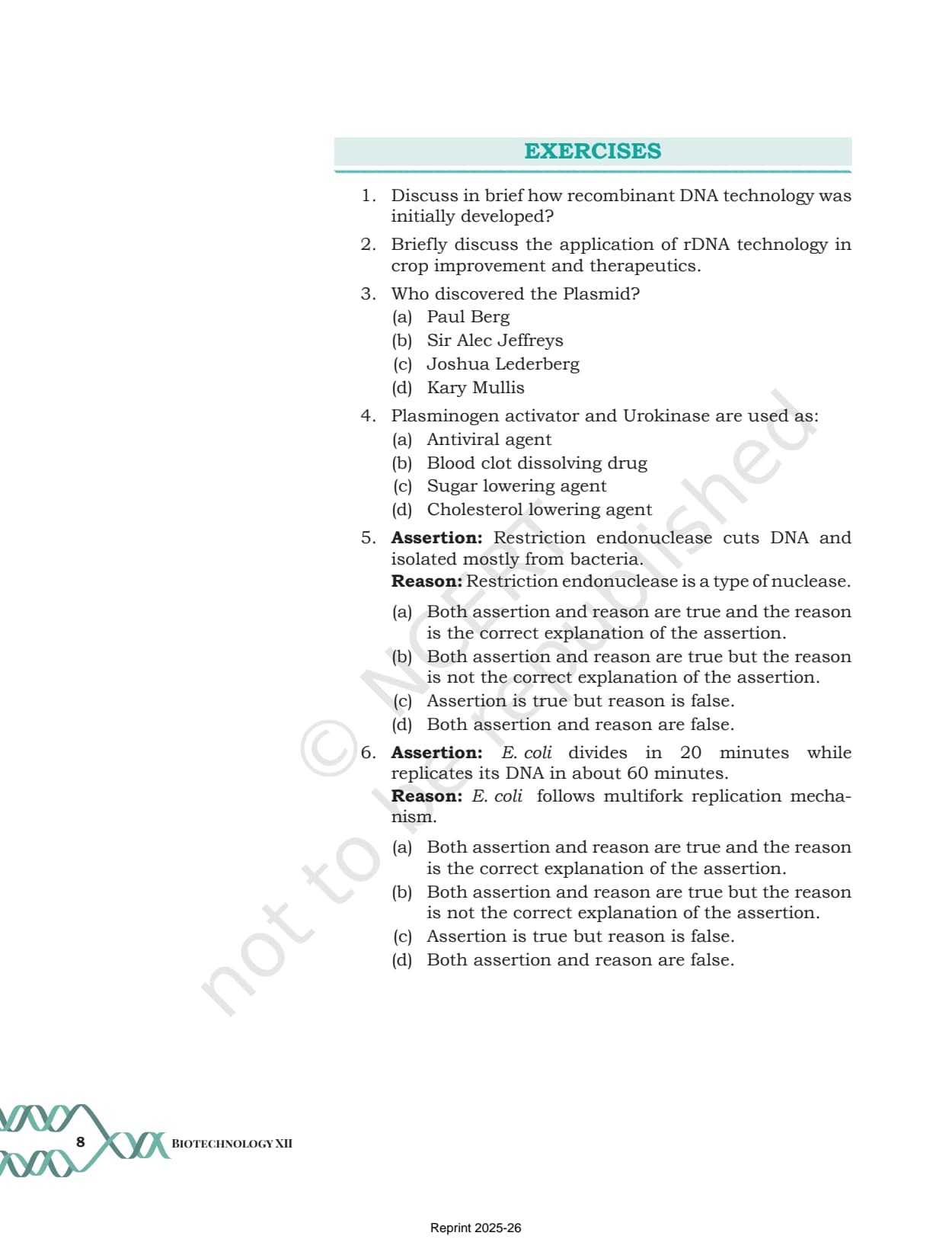
| Exercises | 6 questions, including two assertion-reason items |
Recombinant DNA Technology Explained for Class 12 Boards
Source: Magnet Brains on YouTube
What the Chapter 1 PDF Contains
The PDF holds the whole chapter exactly as NCERT printed it. Nothing is trimmed from either end, so the Unit I divider page and the final exercise question both stay in place.
- The Herbert Boyer biography box on page 2
- Section 1.1, covering the history of rDNA technology and the Cohen-Boyer experiment of 1973
- The applications paragraph on insulin, growth hormone and genetically modified crops
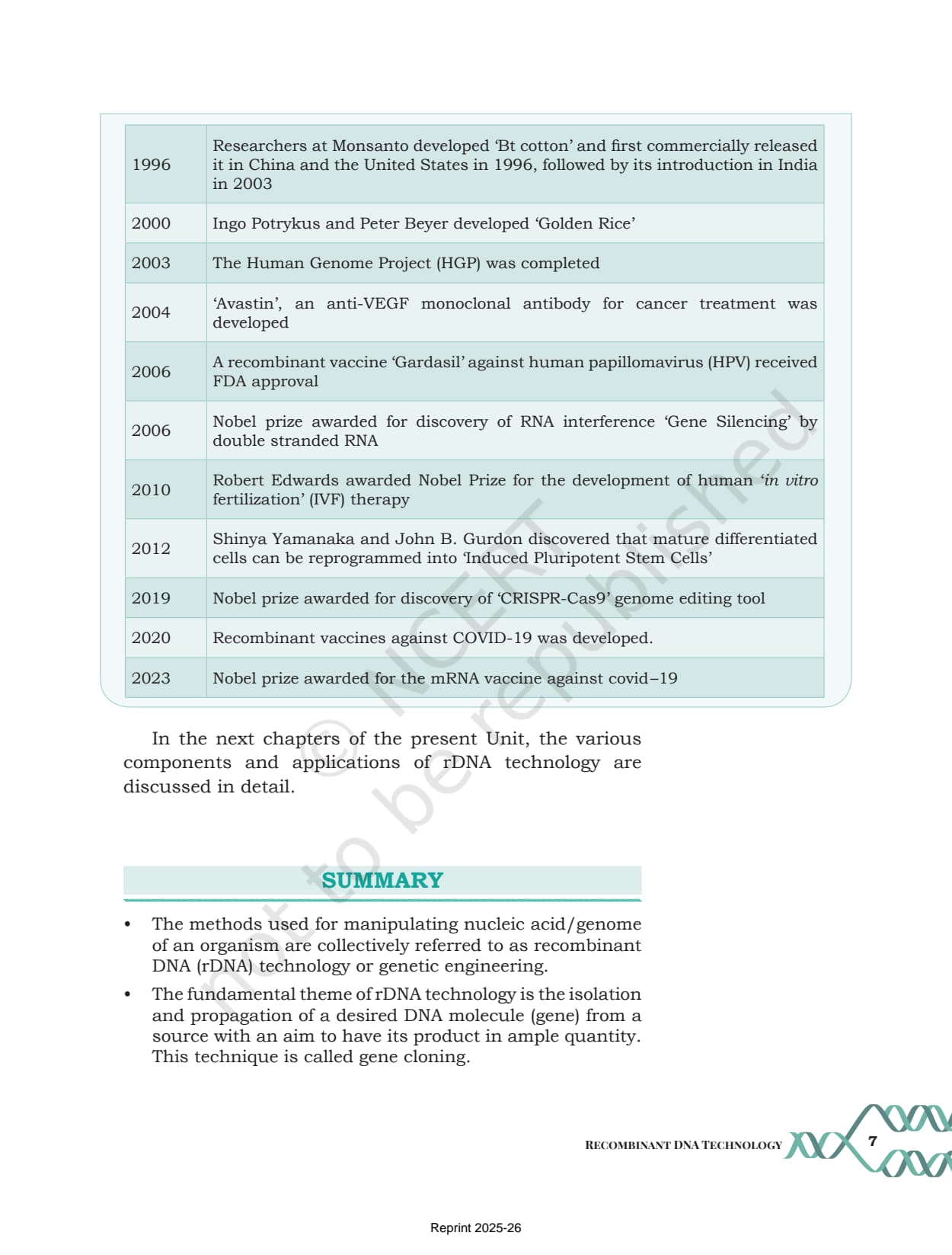
- Box 1, a timeline of 25 landmark discoveries in biotechnology from 1917 to 2023
- The Summary and all 6 exercise questions, including two assertion-reason items
What Recombinant DNA Technology Means and How It Began
The chapter defines recombinant DNA (rDNA) technology as the collective name for methods used to directly manipulate the nucleic acid or genome of an organism, also called genetic engineering. It grew out of a century of progress in biochemistry, genetics, cytology, microbiology and molecular biology, once scientists learned to isolate, purify and eventually sequence DNA.
Two breakthroughs made the technology possible. The first was proving that DNA carries genetic information and passes it on to the next generation. The second was working out the double helical structure of DNA, followed by a detailed understanding of replication, transcription and translation. Scientists then built methods to isolate and purify DNA from many different organisms.
Around the same time, scientists noticed that bacteria can pick up foreign DNA fragments from their surroundings and fold them into their own genome. That observation led to a direct question: could a gene from one organism be moved into another organism to get its product? Stanley Cohen knew how to introduce plasmid DNA into Escherichia coli (E. coli) and clone it there. Herbert Boyer knew how to cut double-stranded DNA into single-stranded ends with identical termini, using restriction enzymes. In 1973, the two scientists combined their techniques.
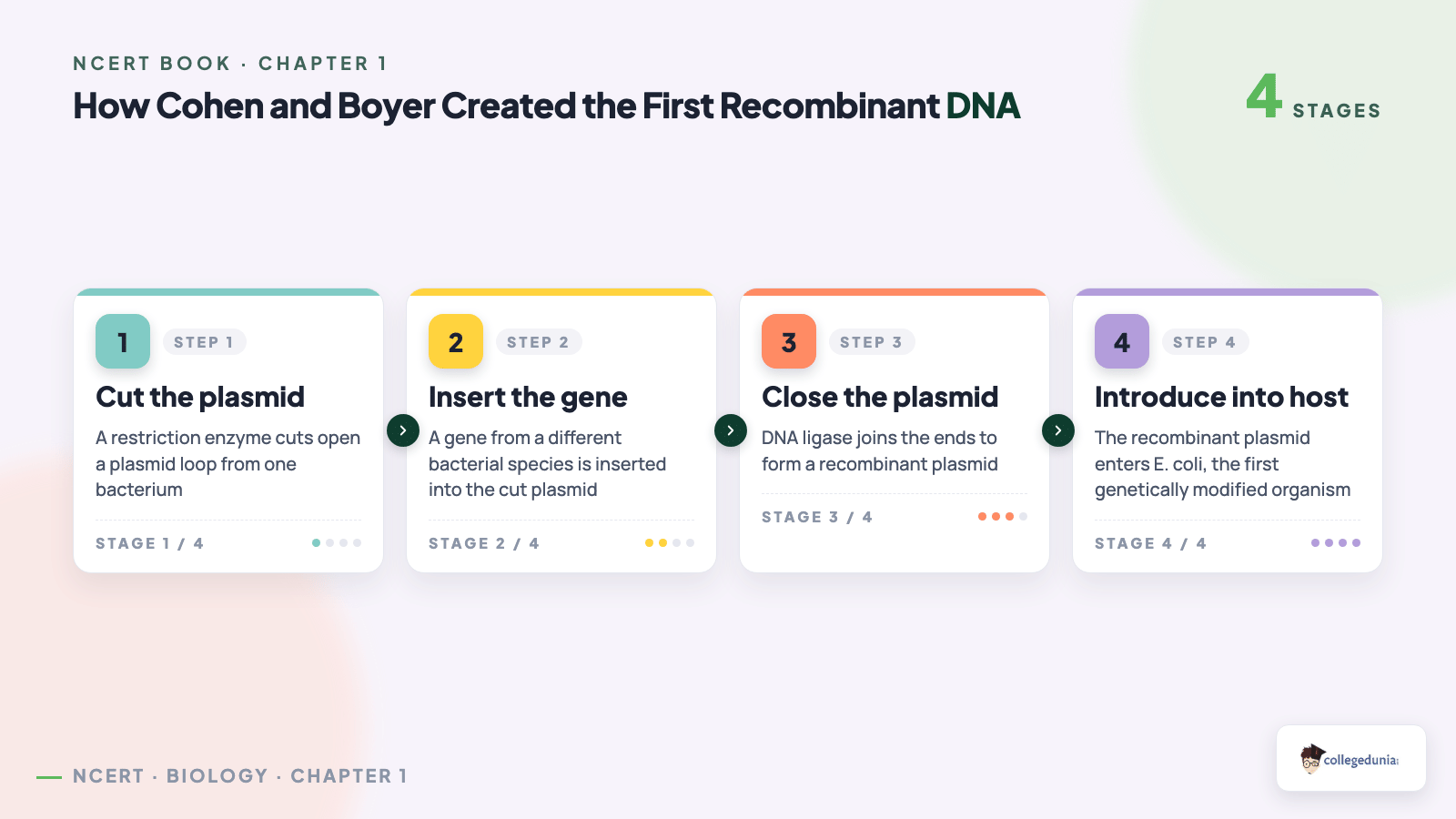
Their team cut open a plasmid loop from one species of bacteria, inserted a gene from a different bacterial species and closed the plasmid again. The result was a recombinant, a plasmid carrying DNA recombined from two different sources, and the world's first genetically modified organism.
The chapter's own Summary boils the whole idea down to one line: the fundamental theme of rDNA technology is the isolation and propagation of a desired gene from its source, with the aim of getting its product in ample quantity. NCERT gives this idea a name of its own, gene cloning, and flags it as the theme that the next two chapters build on in full detail.
Restriction Enzymes, DNA Ligase and the Tools Behind rDNA Technology
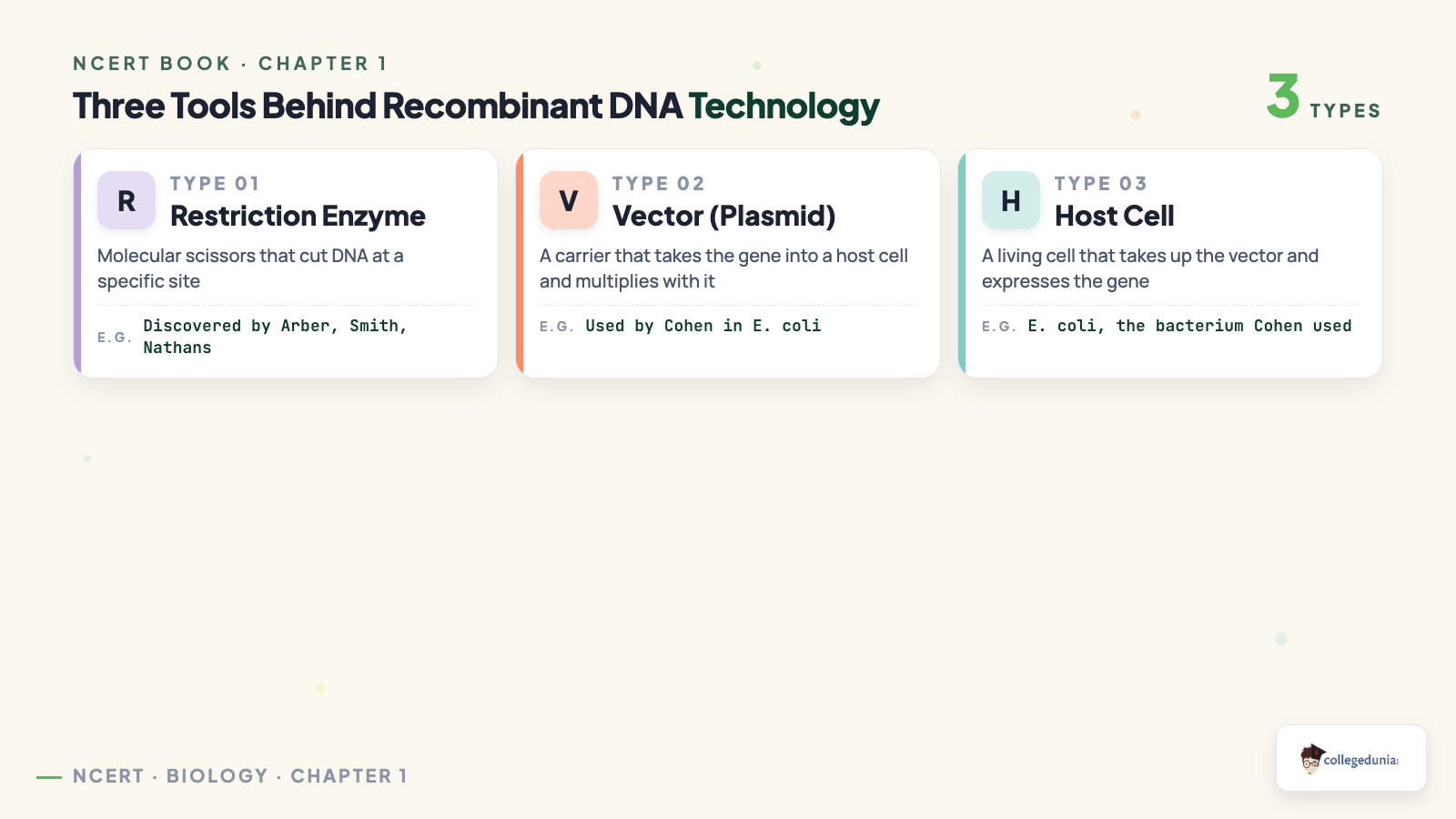
Two enzyme families made the Cohen-Boyer experiment possible. Restriction enzymes act as molecular scissors that cut DNA at specific sites. The chapter credits their discovery to Werner Arber, Hamilton Smith and Daniel Nathans during the late 1960s and early 1970s. DNA ligase, discovered by Gellert, Lehman, Richardson and Hurwitz in 1967, joins two DNA fragments back together after cutting.
A working rDNA system needs three things: an enzyme that can cut the source DNA, a carrier that can enter and multiply inside a living cell, and a host cell willing to take up that carrier. The chapter names the plasmid as this carrier, or vector, and E. coli as the host bacterium Cohen already knew how to work with. The next chapters of the same Unit go on to cover the host-vector system and gene cloning in far more detail; this chapter only introduces the three pieces.
The Herbert Boyer profile on page 2 notes that after early experiments in 1973, the Cohen-Boyer team produced the first recombinant plasmid and, with it, the first genetically modified organism. Boyer grew up in Derry, Pennsylvania and studied microbial genetics at the University of Pittsburgh before working on the plasmid experiments that made him famous.
The same profile lists what came after the discovery. Boyer co-founded Genentech and served as its Vice President from 1976 until his retirement in 1991. He later received the 1990 National Medal of Science and was a co-recipient of the 1996 Lemelson-MIT Prize, two of the highest honours a working scientist can receive in the United States.
Applications of rDNA Technology in Medicine and Agriculture
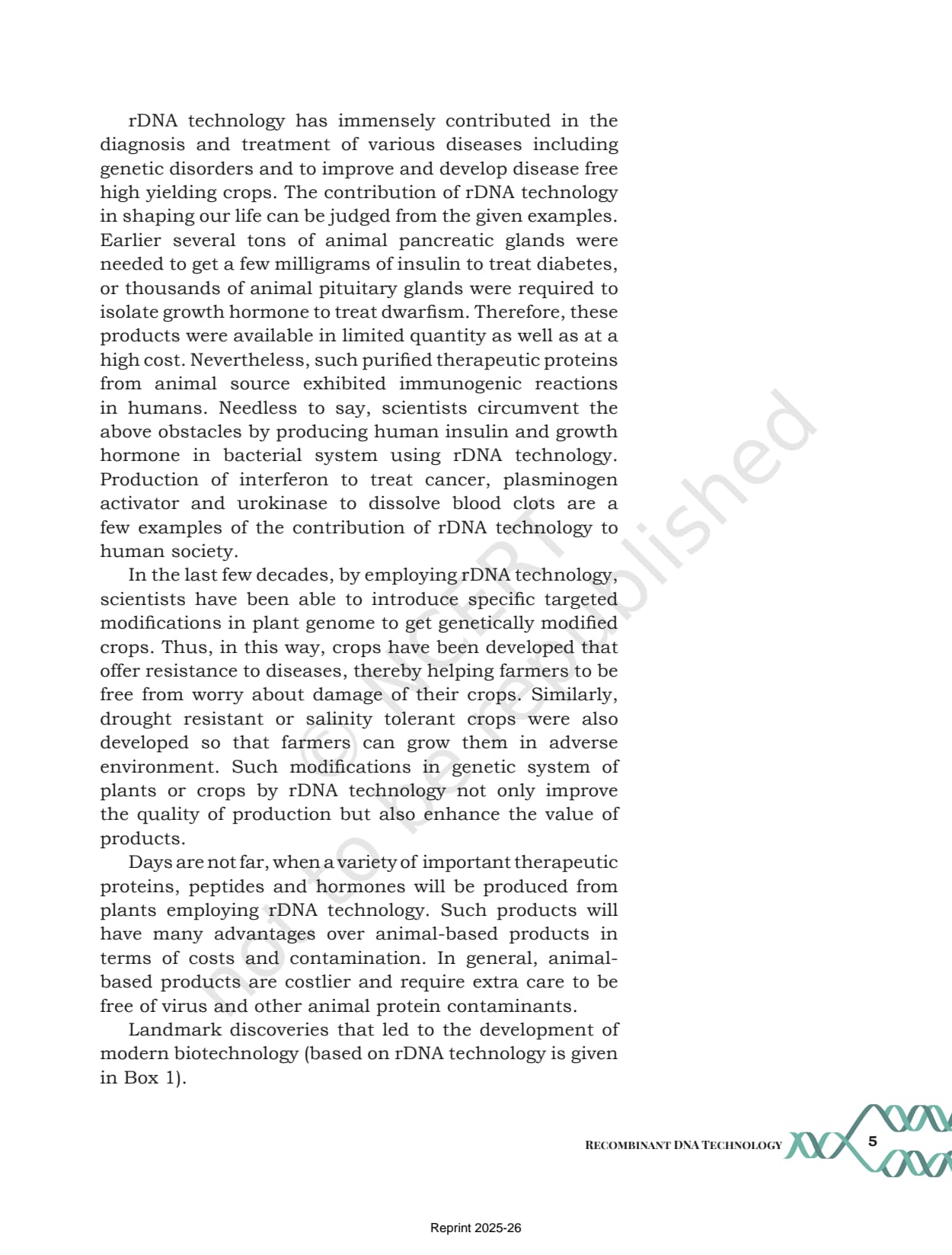
Before rDNA technology, animal glands were the main source of several therapeutic proteins. The chapter uses this contrast to explain why the technology mattered so much once bacteria could be made to manufacture human proteins directly.
- Human insulin and growth hormone: once extracted from tons of animal pancreatic or pituitary glands, now produced in bacteria at lower cost and without the immunogenic reactions animal-derived versions caused
- Interferon: a protein used to treat cancer
- Plasminogen activator and urokinase: proteins that dissolve blood clots
- Disease-resistant crops: genome modifications that protect crops from disease, sparing farmers the worry of crop damage
- Drought and salinity-tolerant crops: engineered to keep growing in adverse conditions
The chapter also looks ahead. It expects future crops to produce therapeutic proteins, peptides and hormones directly in plants, which would cost less and carry a lower contamination risk than proteins drawn from animals. It draws a direct line from these applications back to the discoveries listed in Box 1, including the first recombinant vaccine for Hepatitis B and the hybridoma technique used to manufacture monoclonal antibodies.
Landmark Discoveries That Built Modern Biotechnology
Box 1 lines up 25 landmark discoveries in the history of biotechnology, from the year the word itself was coined to the 2023 Nobel Prize for mRNA vaccine research. A selection of the entries most relevant to this chapter is below.
| Year | Development |
|---|---|
| 1917 | Karl Ereky coined the term Biotechnology |
| 1953 | Watson and Crick proposed the double helical structure of DNA |
| 1967 | Gellert, Lehman, Richardson and Hurwitz discovered ligase enzymes |
| 1970 | Hamilton O. Smith and Thomas J. Kelly discovered Type II restriction enzymes |
| 1972 | Paul Berg assembled the first recombinant DNA from a bacterium into a virus |
| 1973 | Stanley N. Cohen and Herbert Boyer developed DNA cloning and rDNA technology |
| 1982 | FDA approved the first recombinant DNA therapeutic product, Humulin |
| 1990 | The Human Genome Project was officially initiated |
| 1994 | The first genetically engineered crop, the Flavr Savr tomato, was introduced |
| 2003 | The Human Genome Project was completed |
| 2019 | Nobel Prize awarded for the CRISPR-Cas9 genome-editing tool |
The timeline ends with a one-line reminder from NCERT itself: the next chapters of the Unit go on to cover the various components and applications of rDNA technology in detail, building on the overview given here.
What Collegedunia Adds to This Chapter 1 PDF
Collegedunia hosts the official file exactly as printed, plus a way to move around the wider Biotechnology syllabus from the same page. Reading the chapter alongside the timeline in Box 1 helps place Chapter 1 in context before Chapters 2 and 3 take the host-vector system and gene cloning apart step by step.
- Official file: the exact NCERT chapter PDF, no pages removed
- Read in the browser: page through all 8 pages before downloading
- Chapter list: jump to any other Unit I chapter from one table
Also Check: related Biotechnology resources for this chapter and the wider syllabus.
| Resource | Link |
|---|---|
| Chapter notes | An Overview of Recombinant DNA Technology Class 12 Notes (coming soon) |
| Chapter solutions | An Overview of Recombinant DNA Technology Class 12 NCERT Solutions (coming soon) |
| Handwritten notes | An Overview of Recombinant DNA Technology Class 12 Handwritten Notes (coming soon) |
| Background reading | An Introduction to Biotechnology Class 11 Handwritten Notes |
| Related tools chapter | Biotechnology Principles and Processes Class 12 Biology NCERT Book PDF |
Class 12 Biotechnology NCERT Book PDF: All Chapters
The Class 12 Biotechnology NCERT textbook has 13 chapters in total, and chapters 1 to 4 make up Unit I: Recombinant DNA Technology.
| Chapter | Download |
|---|---|
| Chapter 1 | An Overview of Recombinant DNA Technology NCERT Book PDF |
| Chapter 2 | Host-Vector System NCERT Book PDF (coming soon) |
| Chapter 3 | Gene Cloning NCERT Book PDF (coming soon) |
| Chapter 4 | Applications of Recombinant DNA Technology NCERT Book PDF (coming soon) |
| Chapter 5 | Genome Technology and Engineering NCERT Book PDF (coming soon) |
| Chapter 6 | Microbial Culture NCERT Book PDF (coming soon) |
| Chapter 7 | Plant Tissue Culture NCERT Book PDF (coming soon) |
| Chapter 8 | Animal Cell Culture NCERT Book PDF (coming soon) |
| Chapter 9 | Stem Cell Culture and Organ Culture NCERT Book PDF (coming soon) |
| Chapter 10 | Bioprocessing and Biomanufacturing NCERT Book PDF (coming soon) |
| Chapter 11 | Bioremediation NCERT Book PDF (coming soon) |
| Chapter 12 | Recent Innovations in Biotechnology NCERT Book PDF (coming soon) |
| Chapter 13 | Entrepreneurship NCERT Book PDF (coming soon) |
An Overview of Recombinant DNA Technology NCERT Book PDF FAQs
Common Student Questions on the An Overview of Recombinant DNA Technology Chapter File
Ques. Where can I download the Class 12 Biotechnology Chapter 1 NCERT Book PDF?
Ans. The official 8-page chapter file is on this page, free to download.
Ques. How many pages is An Overview of Recombinant DNA Technology?
Ans. 8 pages in the 2026-27 book, and this PDF is the complete chapter, from the Unit I divider page to the last exercise question.
Ques. What is recombinant DNA technology?
Ans. The chapter defines it as the collective methods used to directly manipulate the nucleic acid or genome of an organism, also called genetic engineering.
Ques. Who developed recombinant DNA technology?
Ans. Stanley Cohen and Herbert Boyer combined their techniques in 1973. Cohen knew how to introduce and clone plasmid DNA in E. coli, and Boyer knew how to cut DNA with restriction enzymes.
Ques. What is the difference between a restriction enzyme and DNA ligase?
Ans. A restriction enzyme cuts DNA at a specific site, acting like molecular scissors. DNA ligase does the opposite job: it joins two DNA fragments back together.
Ques. What products has rDNA technology given us?
Ans. The chapter names human insulin, growth hormone, interferon for cancer treatment, and the clot-dissolving proteins plasminogen activator and urokinase, along with disease-resistant and drought-tolerant crops.
Ques. How many exercise questions does Chapter 1 have?
Ans. 6 questions, including two assertion-reason items on restriction enzymes and E. coli replication.
Ques. Is this the official NCERT file?
Ans. Yes. It is the NCERT chapter PDF for 2026-27 hosted as published, with no pages removed or added.



Comments