



The NCERT Class 12 Informatics Practices Chapter 1 Querying and SQL Functions Book PDF gives the official source chapter for SQL functions, grouping, sorting and joins. Use this 2026-27 PDF before notes or solutions so every command and example stays close to NCERT.
- PDF size: 26 official NCERT pages for offline reading and revision.
- Core focus: single-row functions, aggregate functions, GROUP BY, HAVING and joins.
- Best use: read the examples first, then practise each query on a sample table.
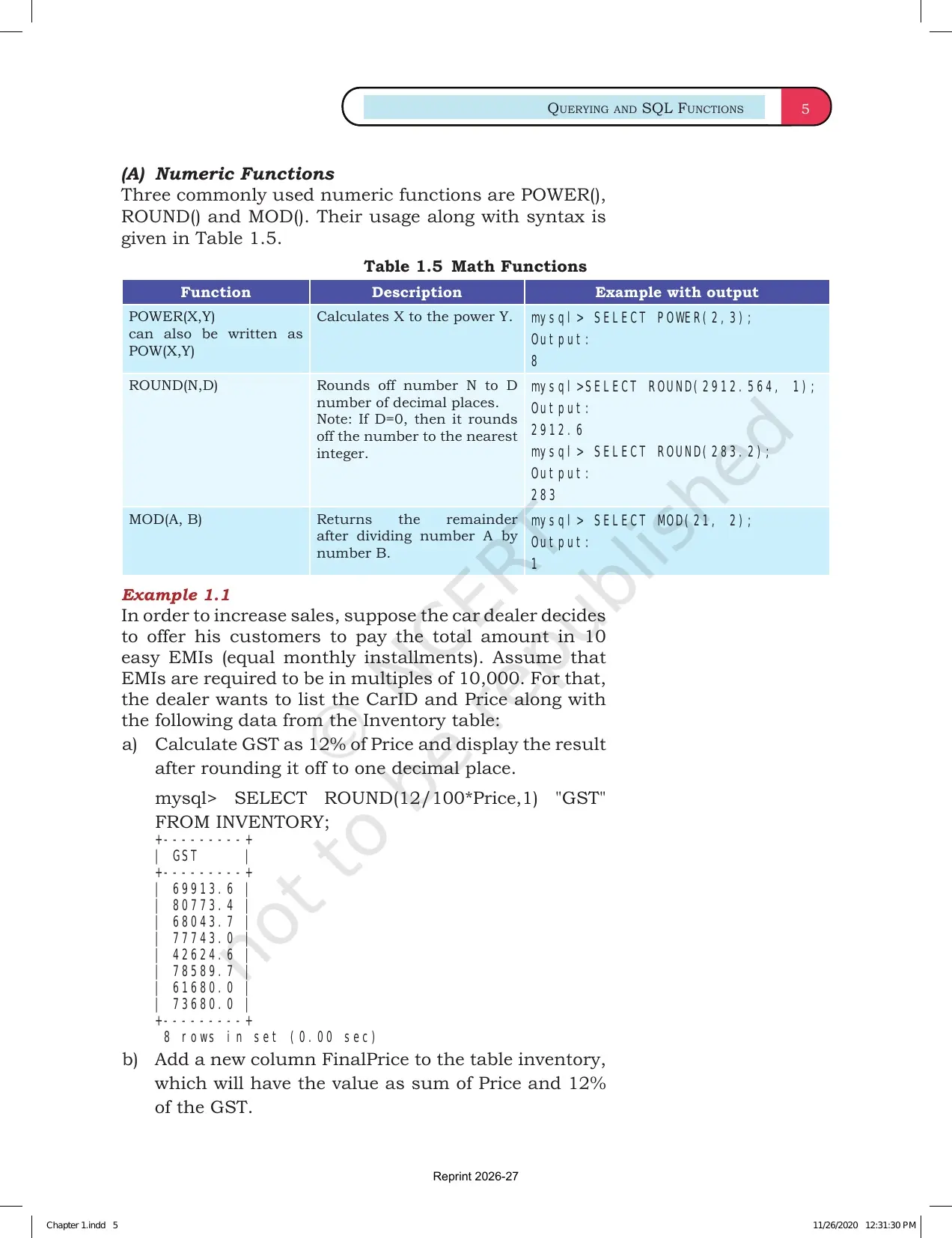
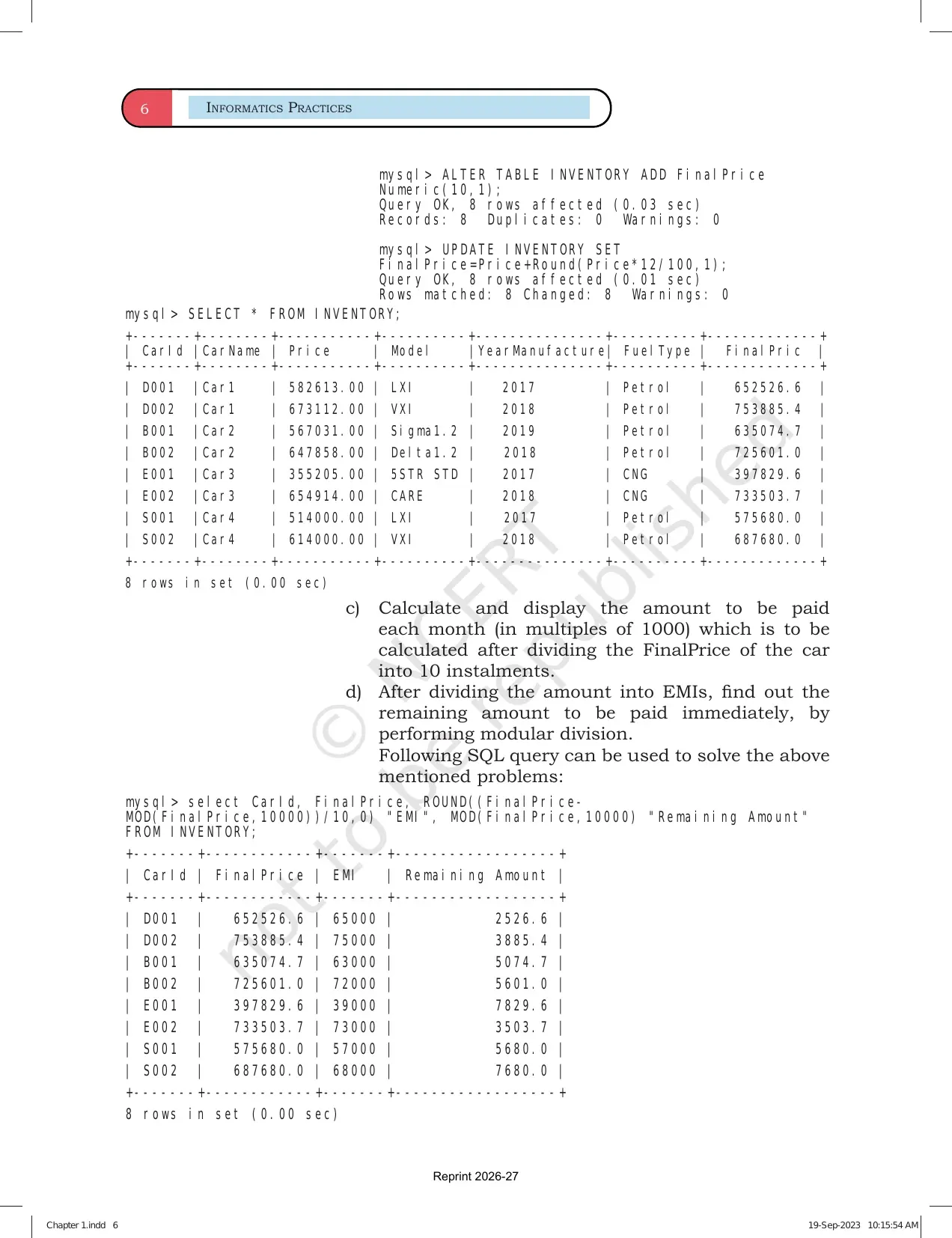
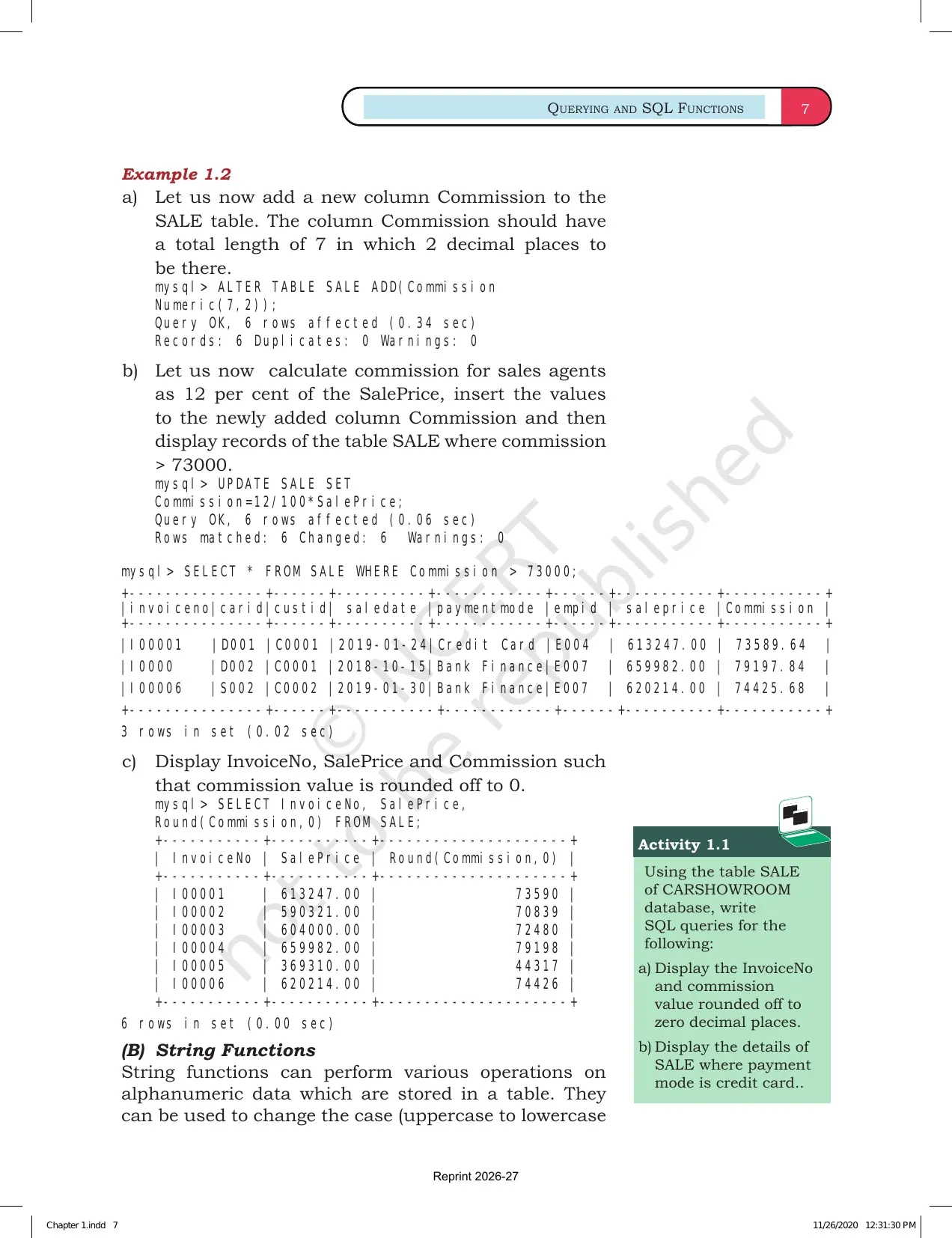
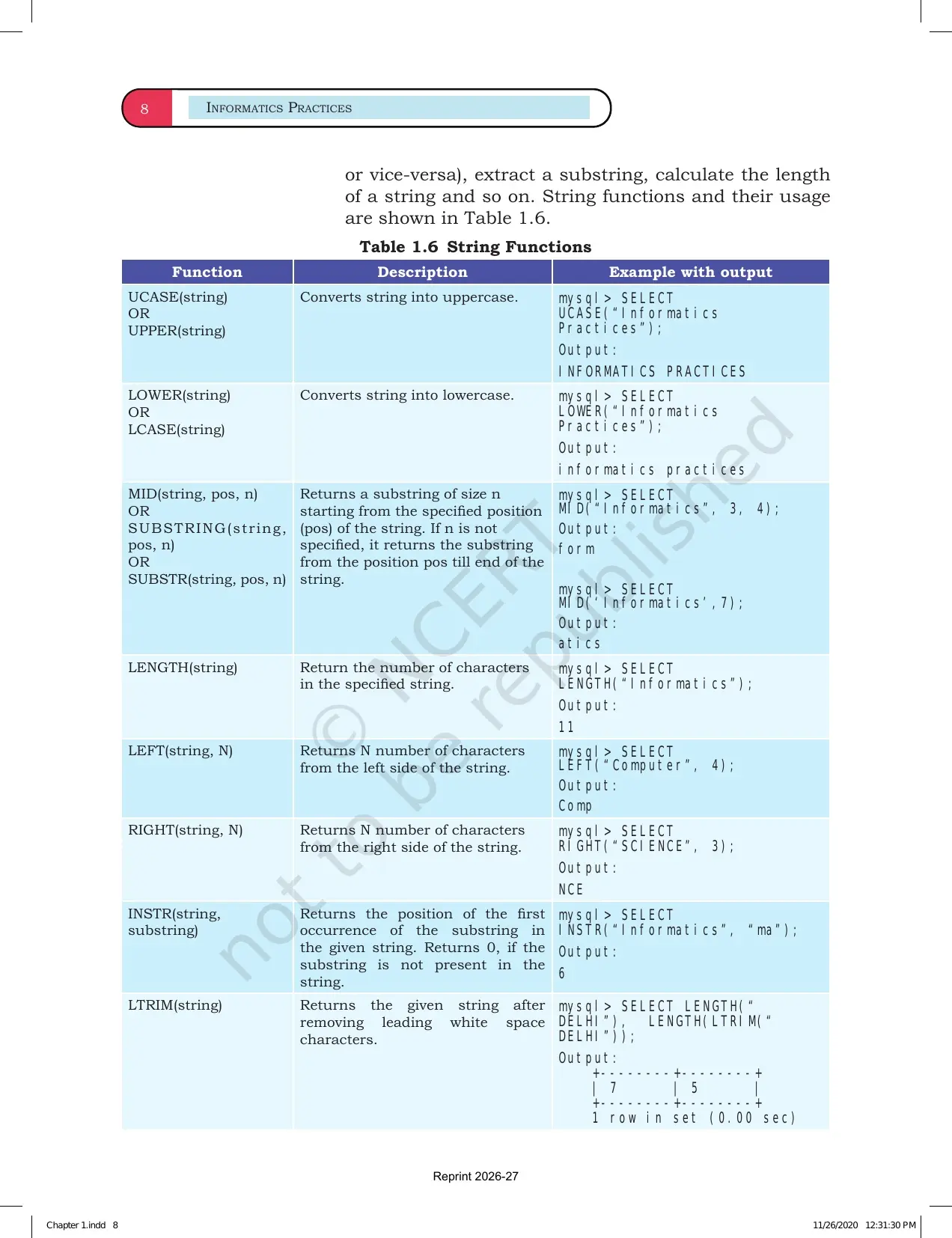
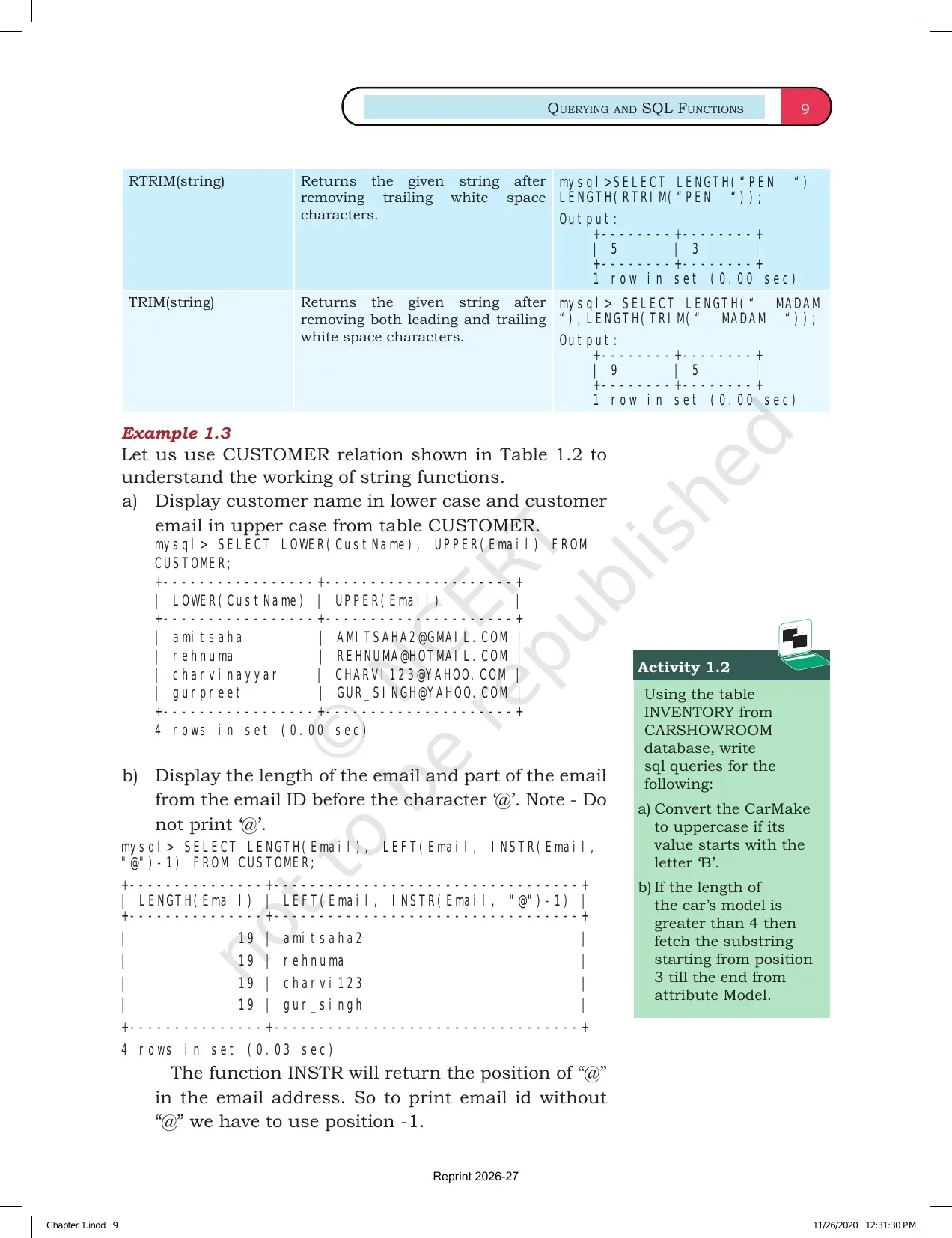
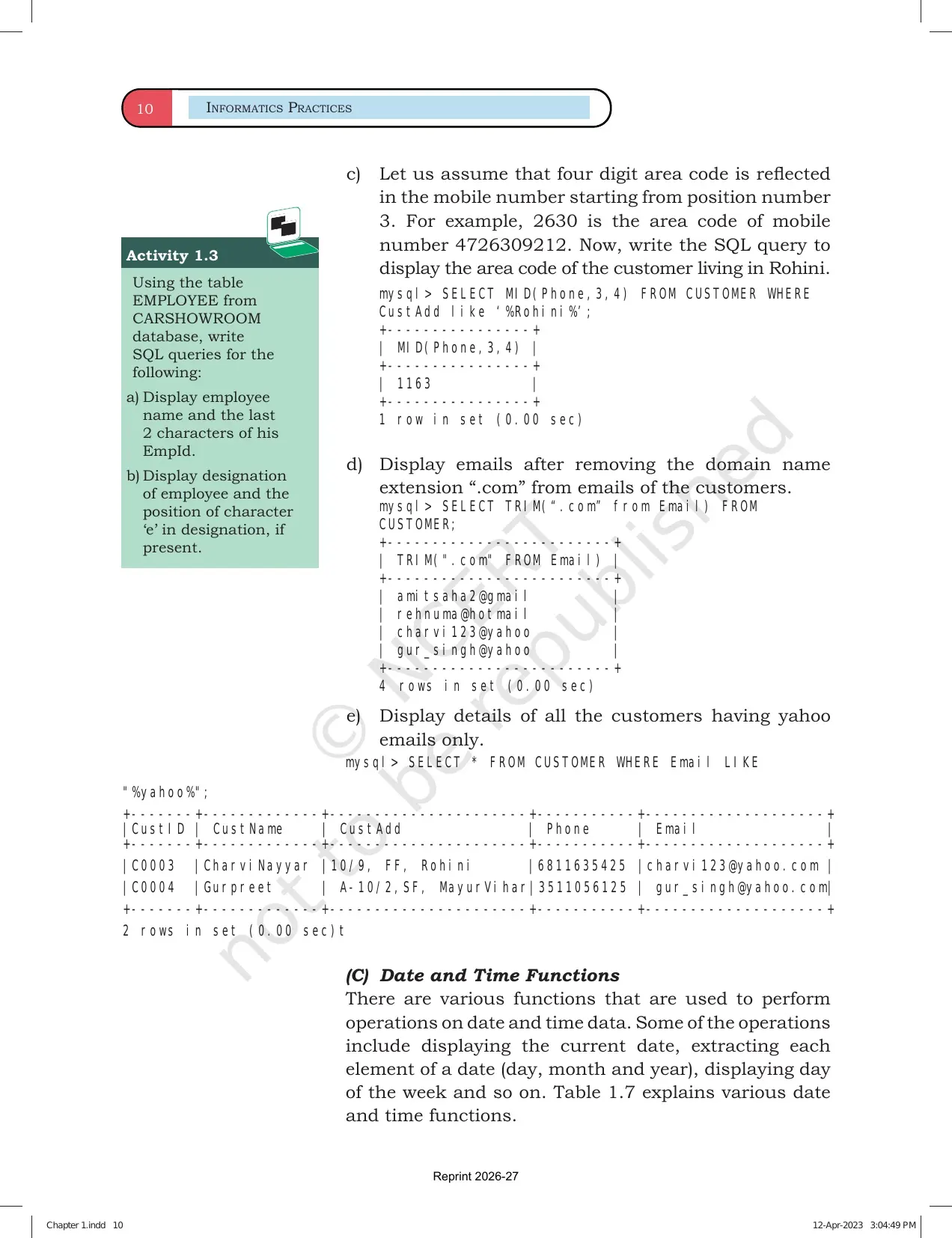
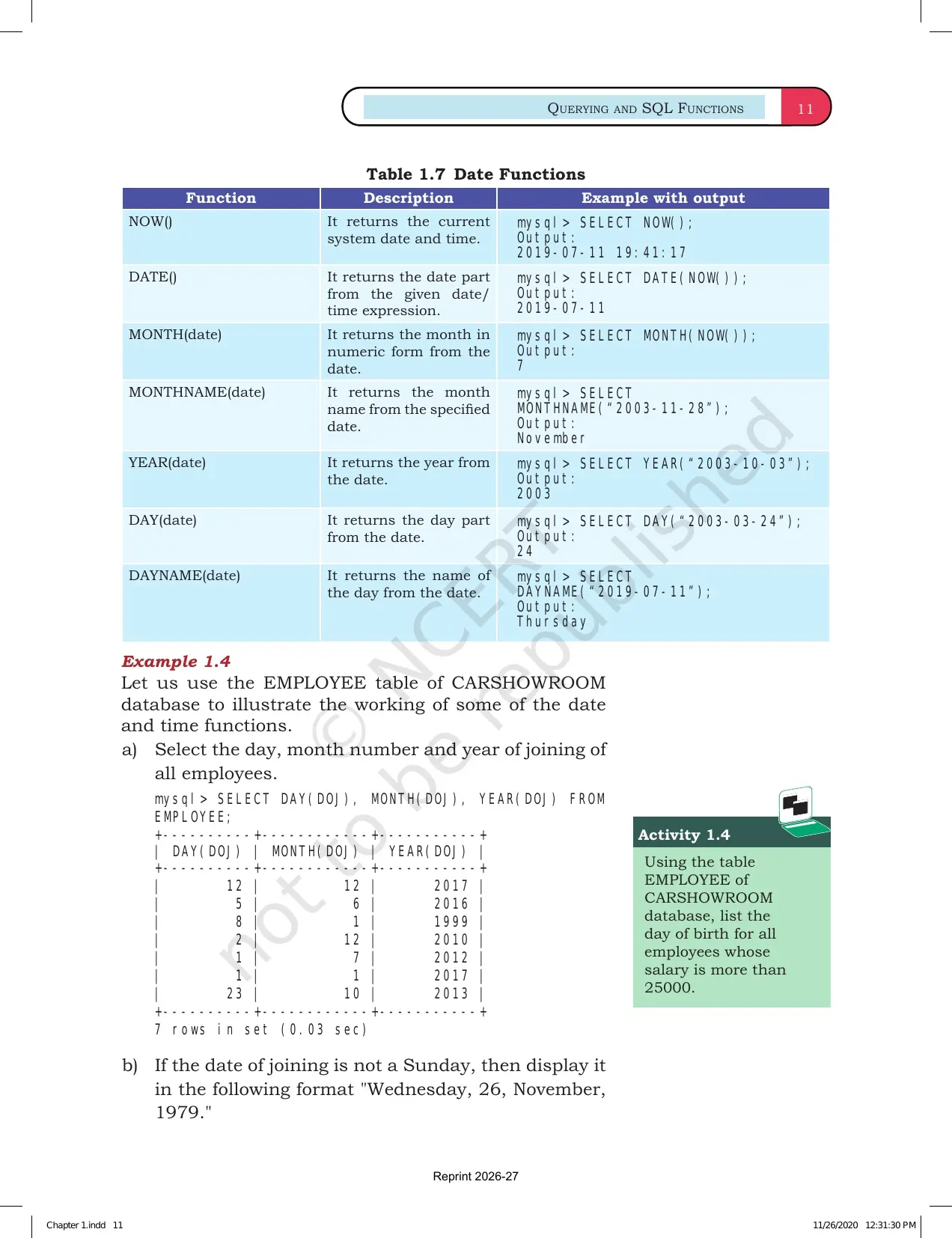
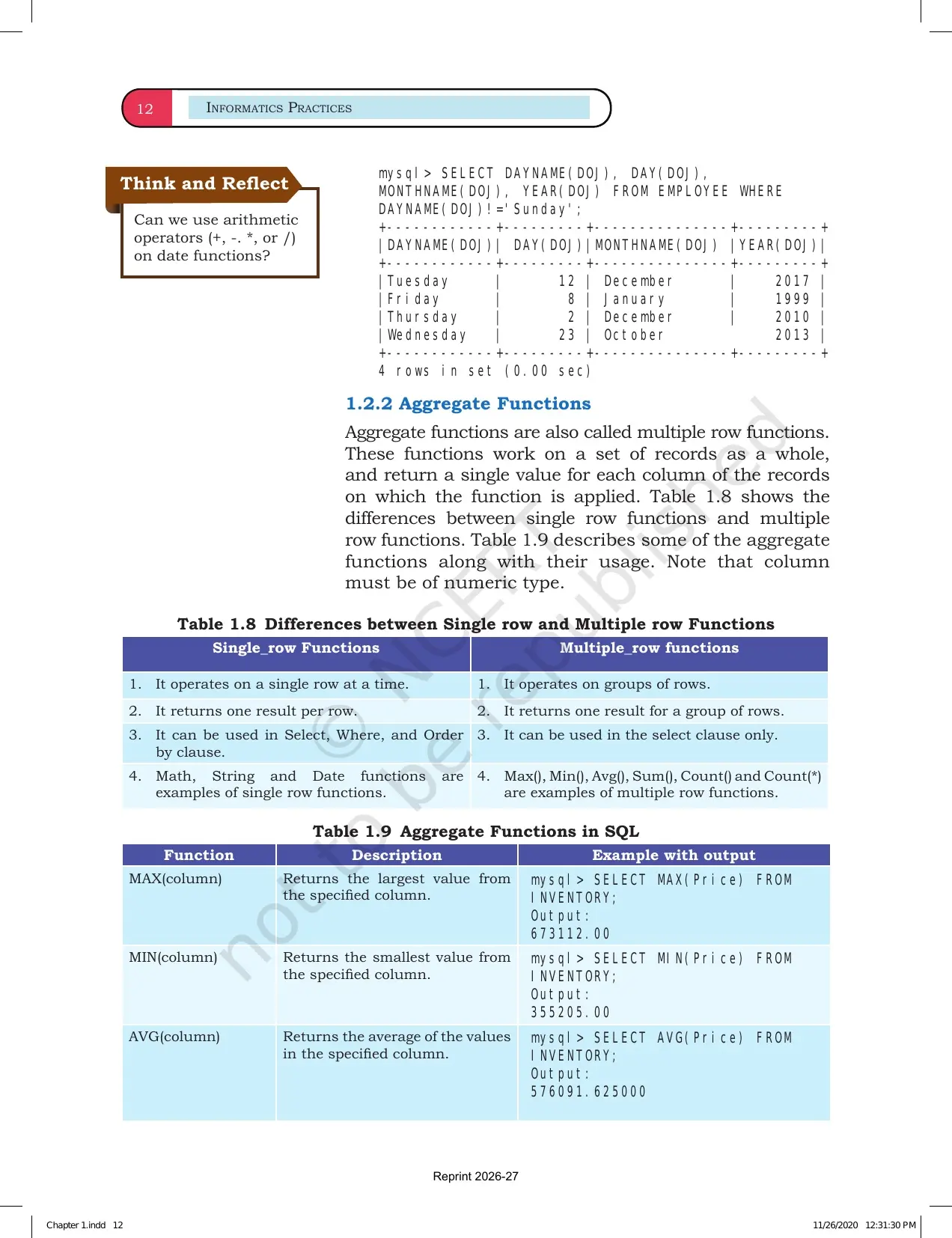
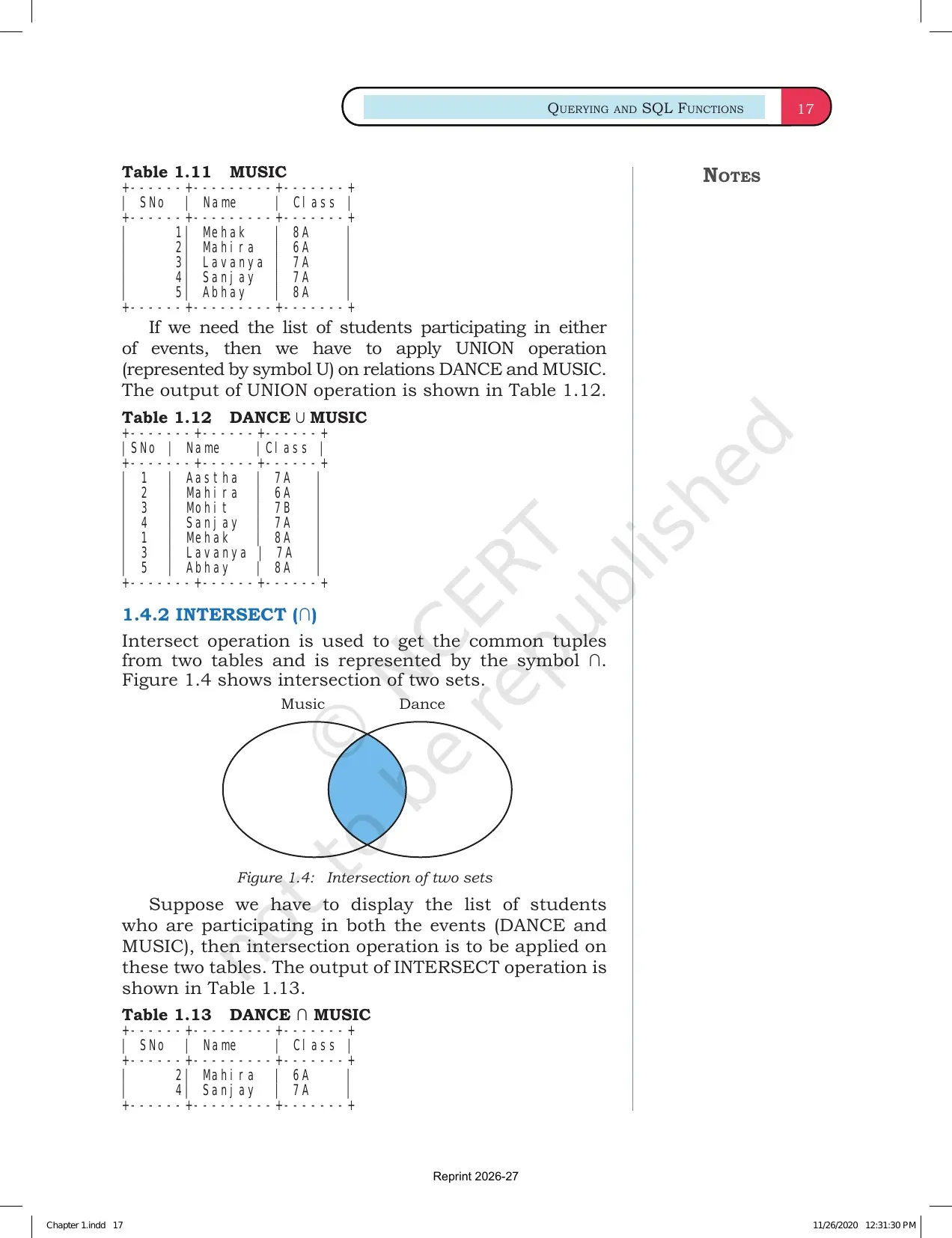
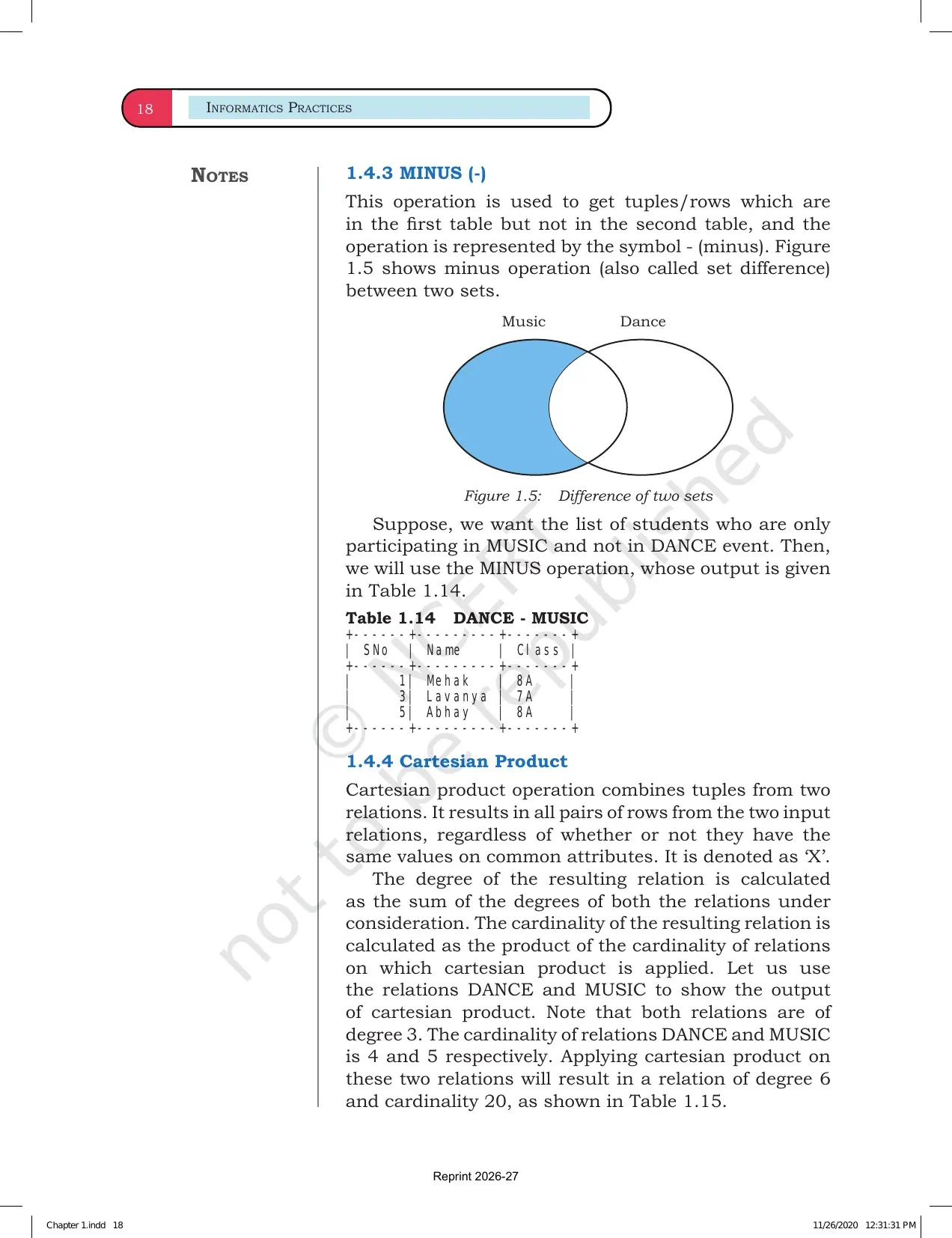
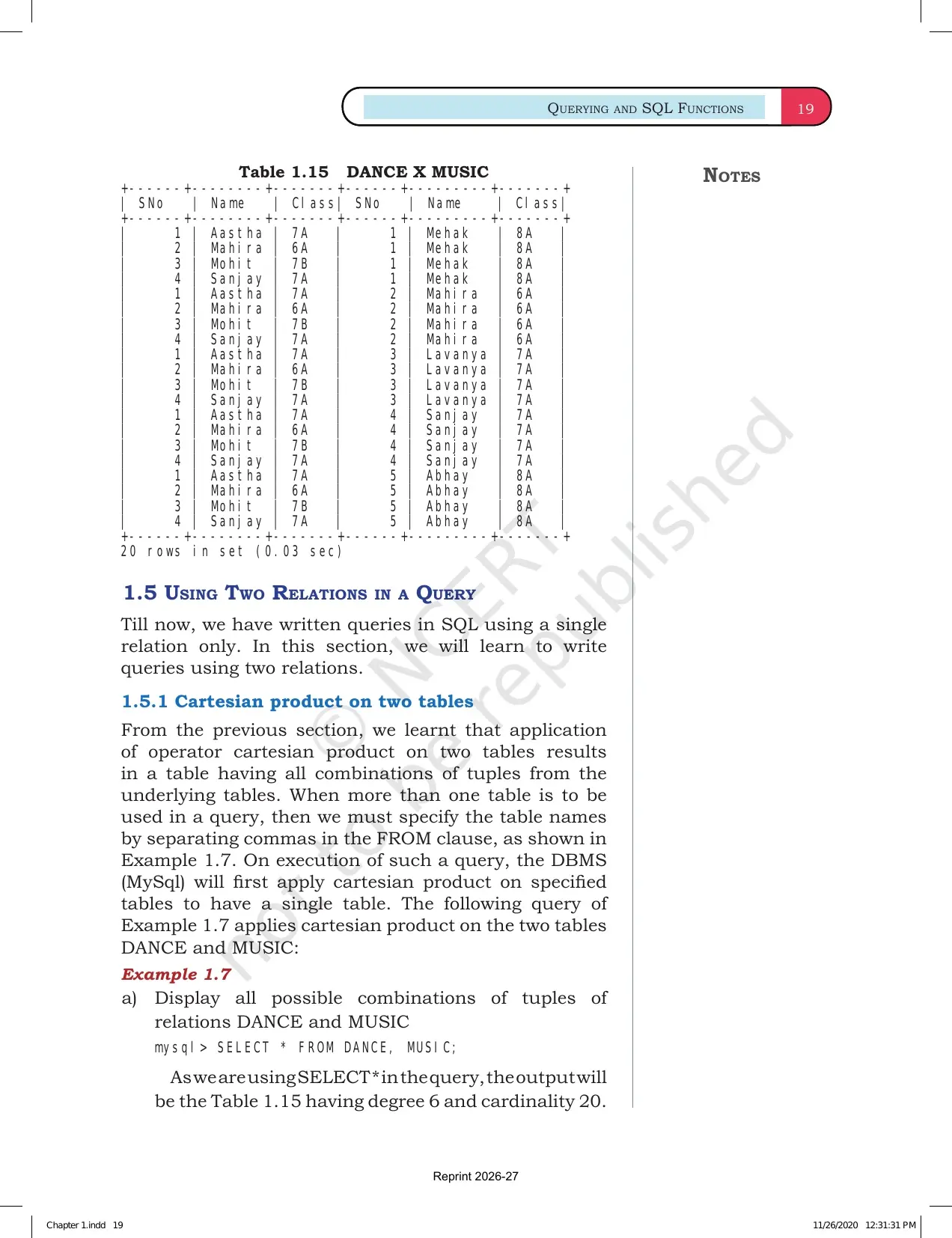
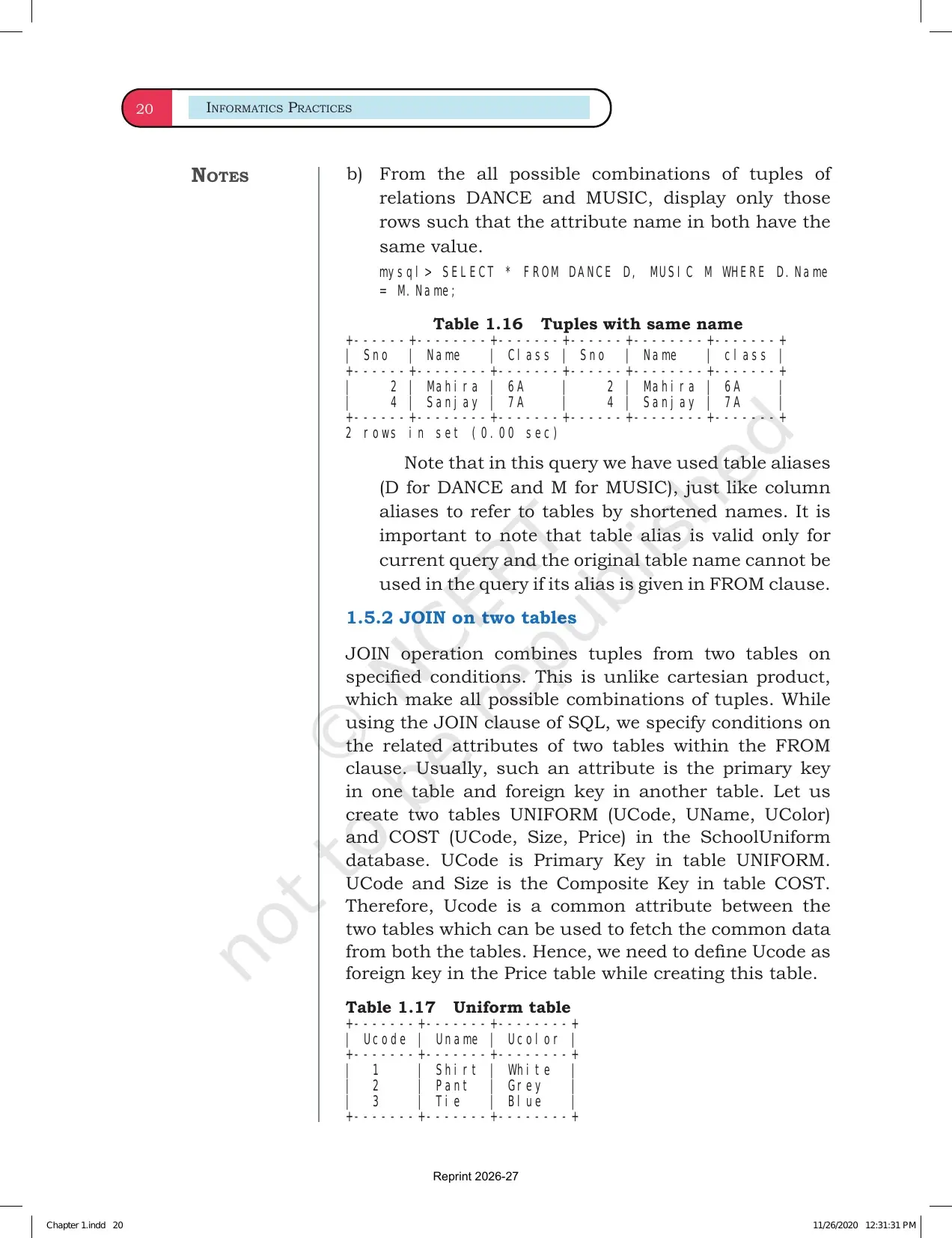
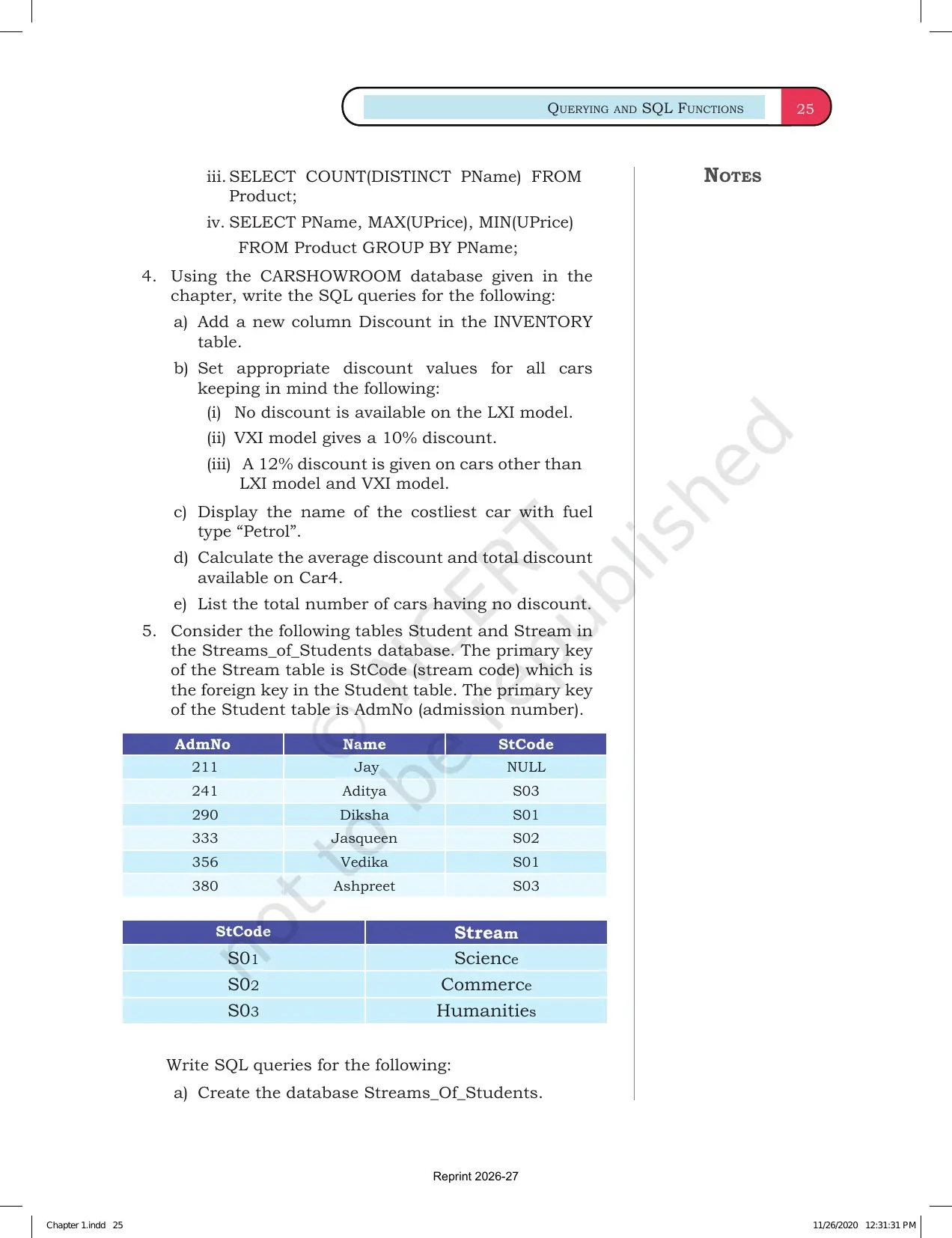
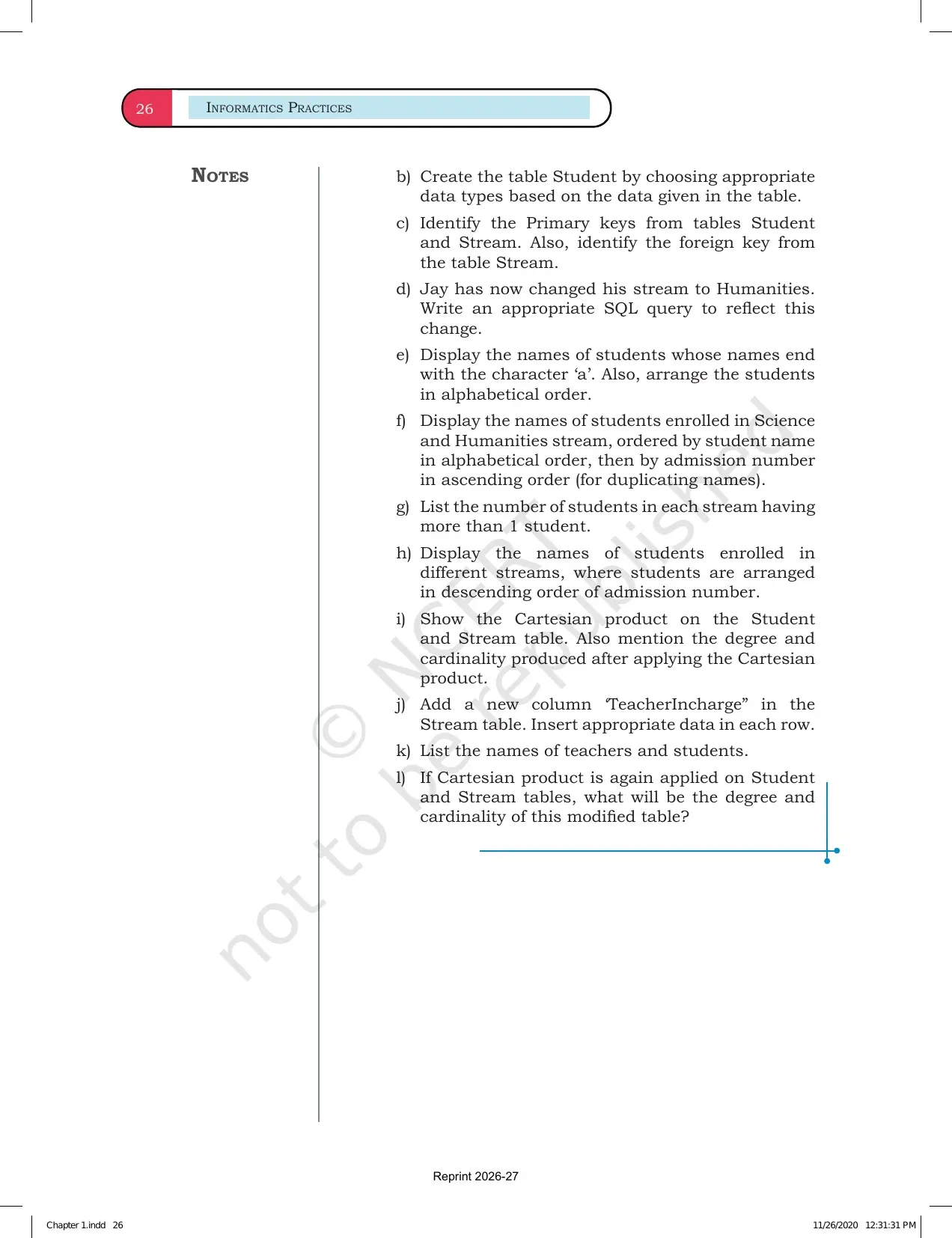
This Collegedunia page follows the 2026-27 NCERT Informatics Practices textbook and keeps the official chapter PDF, SQL command cues and related study links in one place.
Student Feedback: In a Collegedunia poll of 10,640 Class 12 Informatics Practices students from the 2026-27 board cycle, most students said Chapter 1 became easier after they wrote the SQL query order beside every example.
Querying and SQL Functions Chapter 1 NCERT Book PDF Highlights
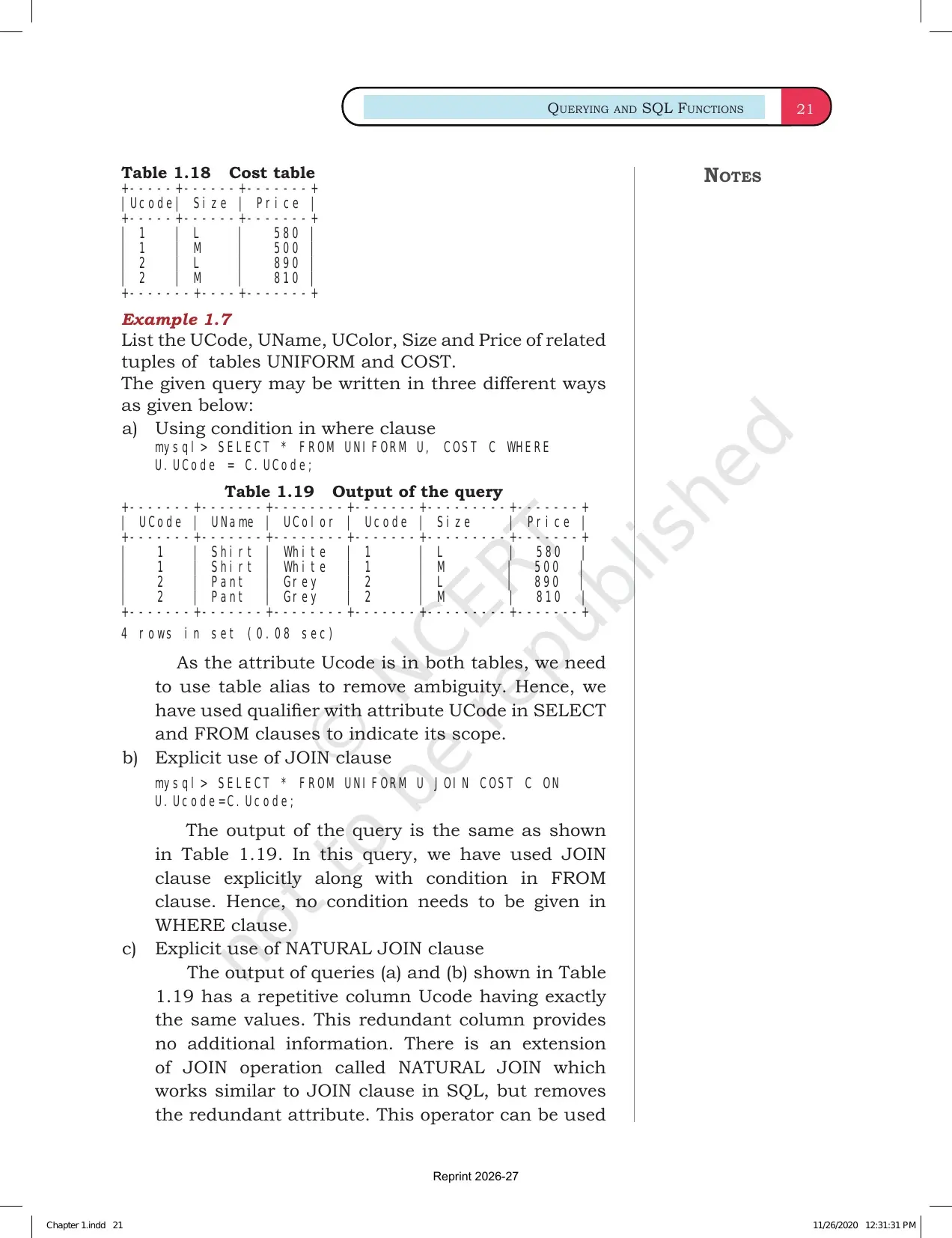
The chapter extends the SQL base students learned in Class 11. It shows how a database query can sort rows, filter groups, summarise values and combine records from two relations. The sample CARSHOWROOM database is used across the chapter.
| Chapter area | What NCERT asks students to learn | Revision cue |
|---|---|---|
| Single-row functions | String, numeric and date functions applied row by row | One input row gives one output value |
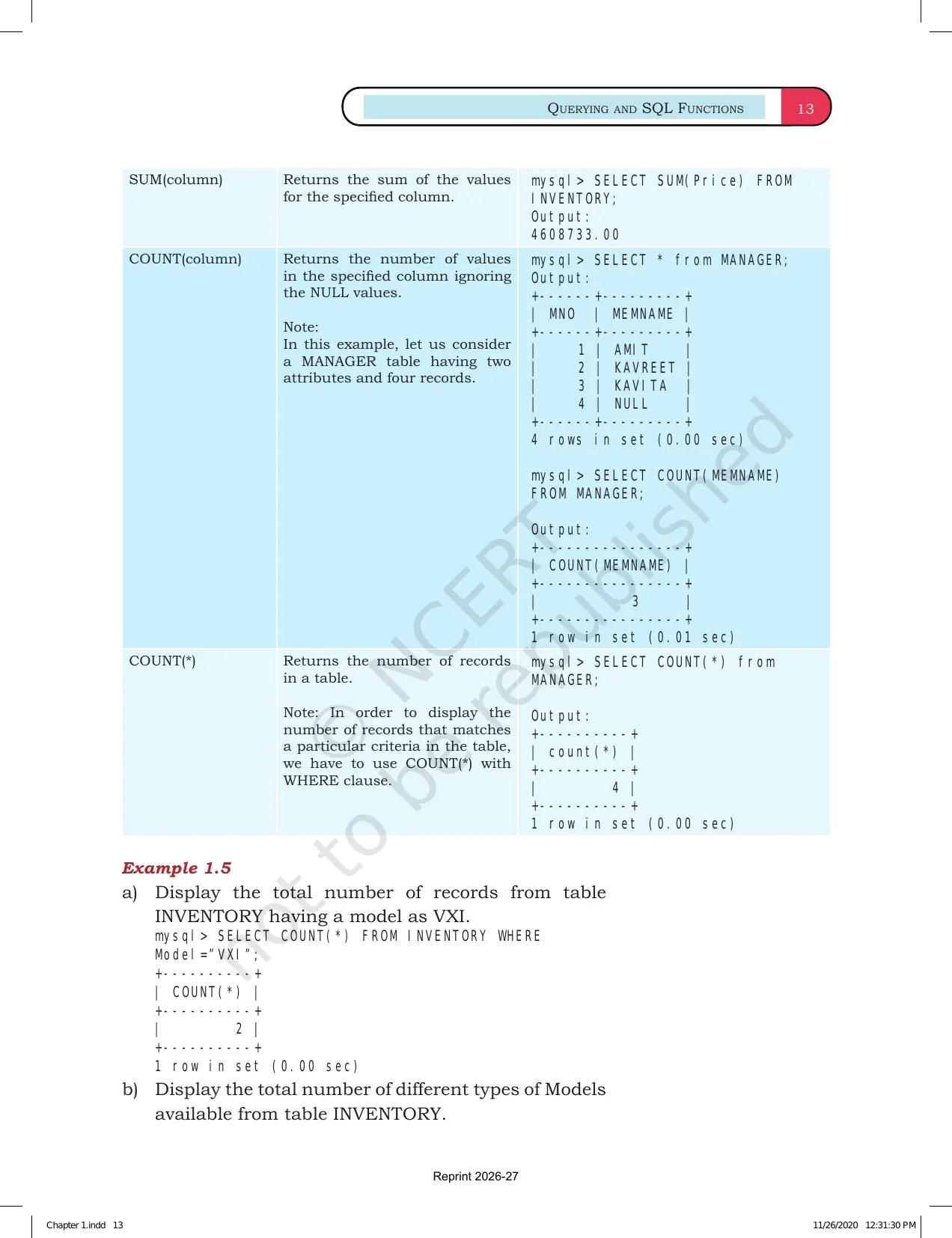
| Aggregate functions | COUNT, SUM, AVG, MIN and MAX for grouped data | Many rows give one summary value |
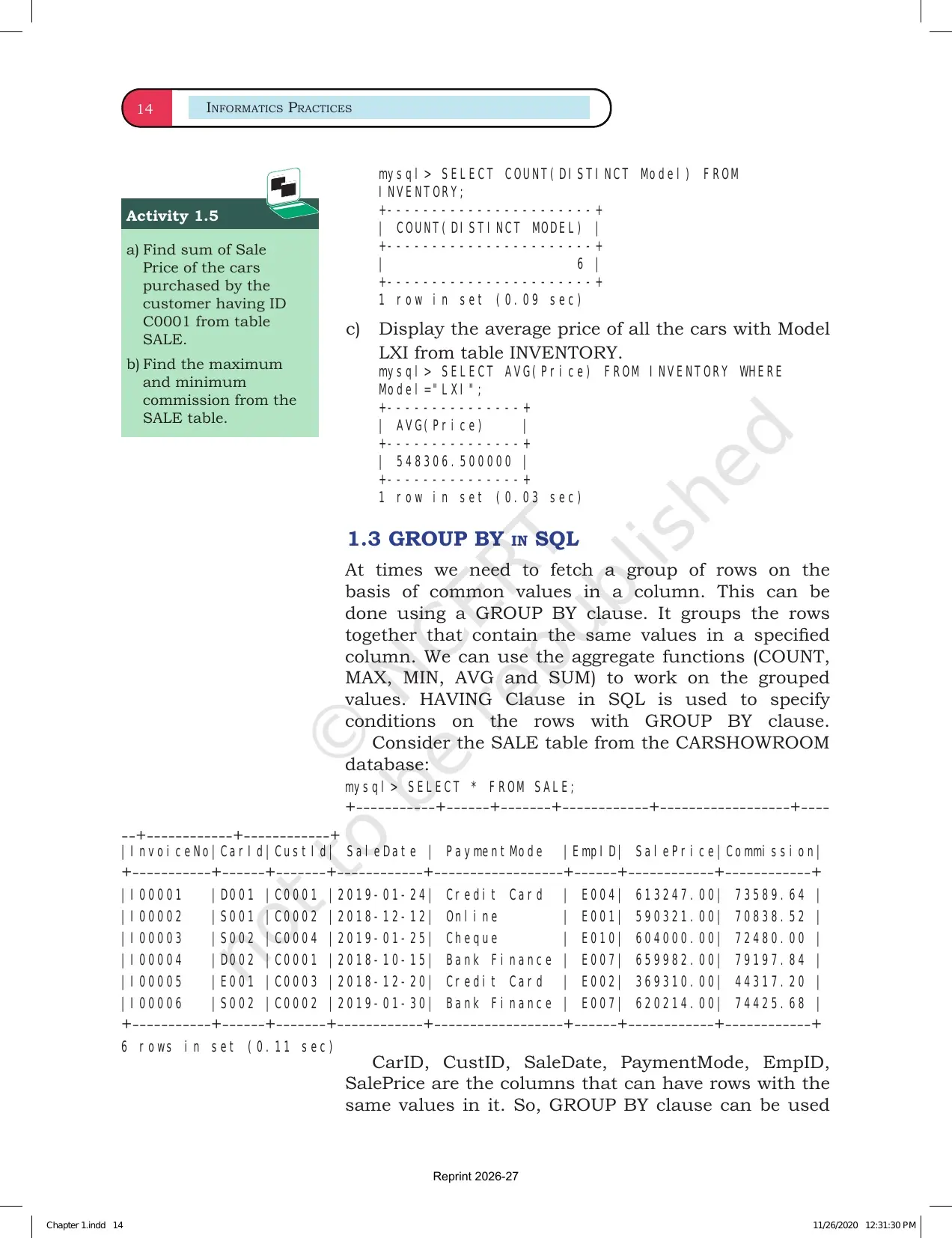
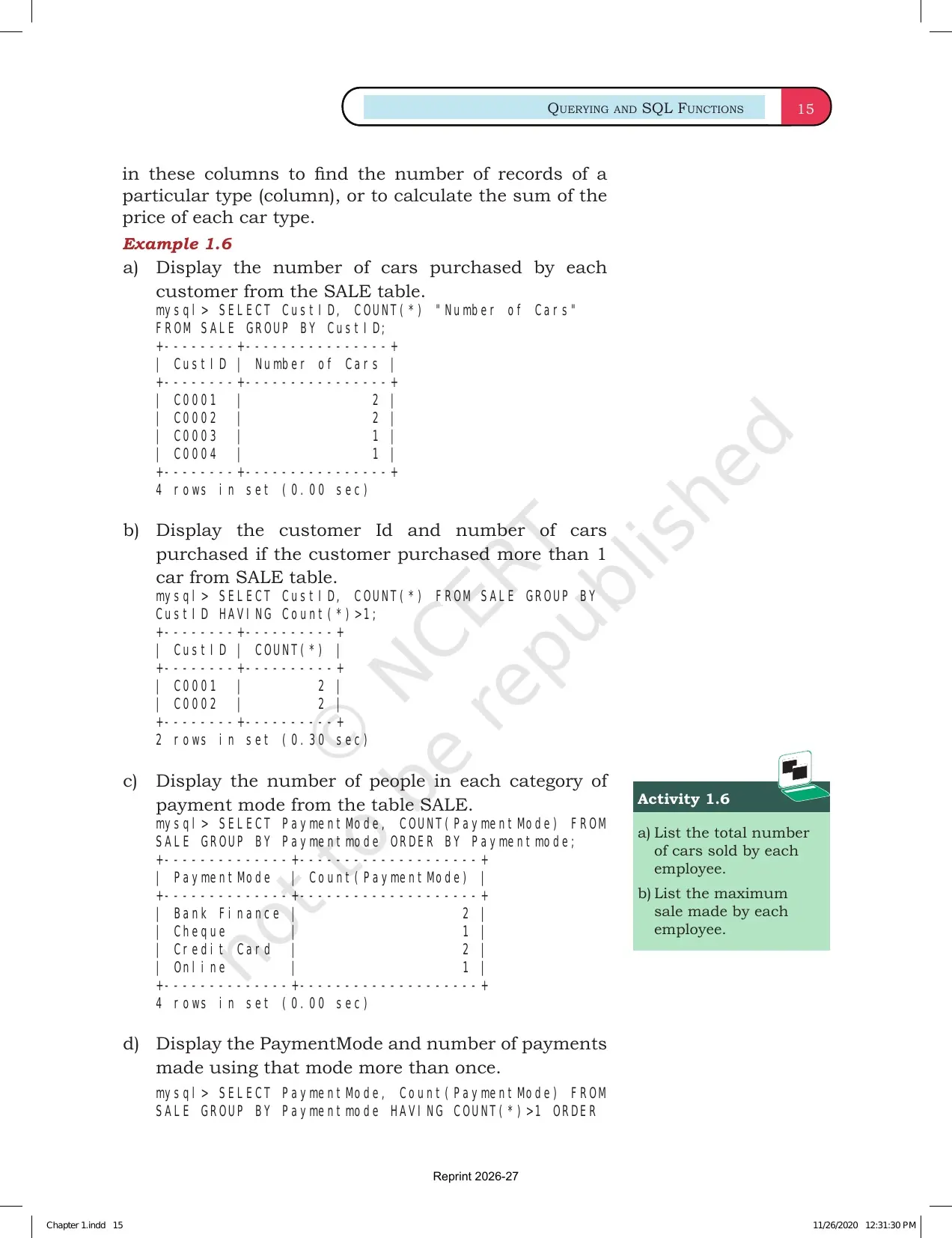
| GROUP BY and HAVING | Group records first, then filter groups by a condition | WHERE filters rows, HAVING filters groups |
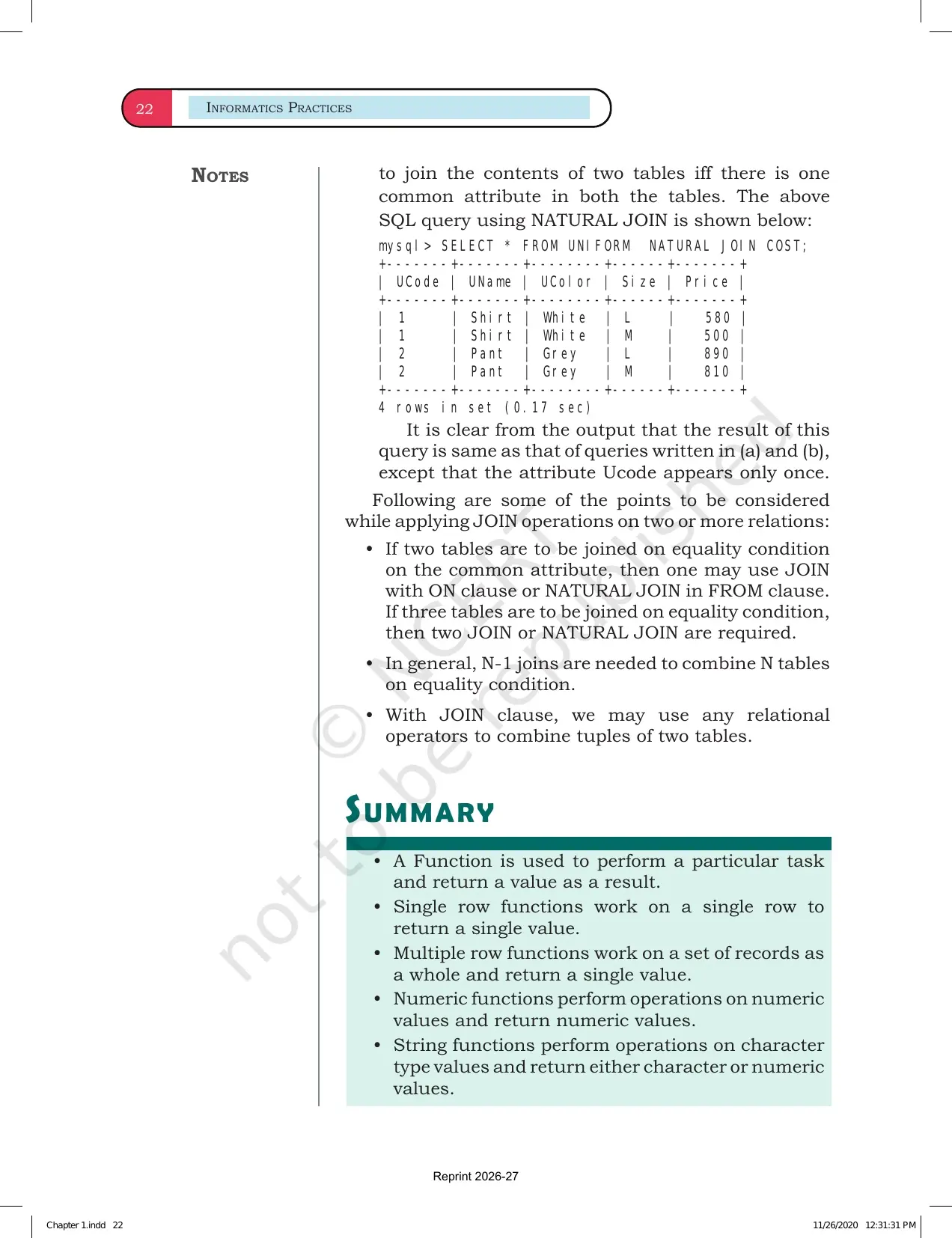
| Relations and joins | Use common columns to read data from two tables | Match related records before selecting fields |
WHERE and HAVING are not the same command. WHERE works before grouping. HAVING works after groups are made.
SQL Query Order in Querying and SQL Functions
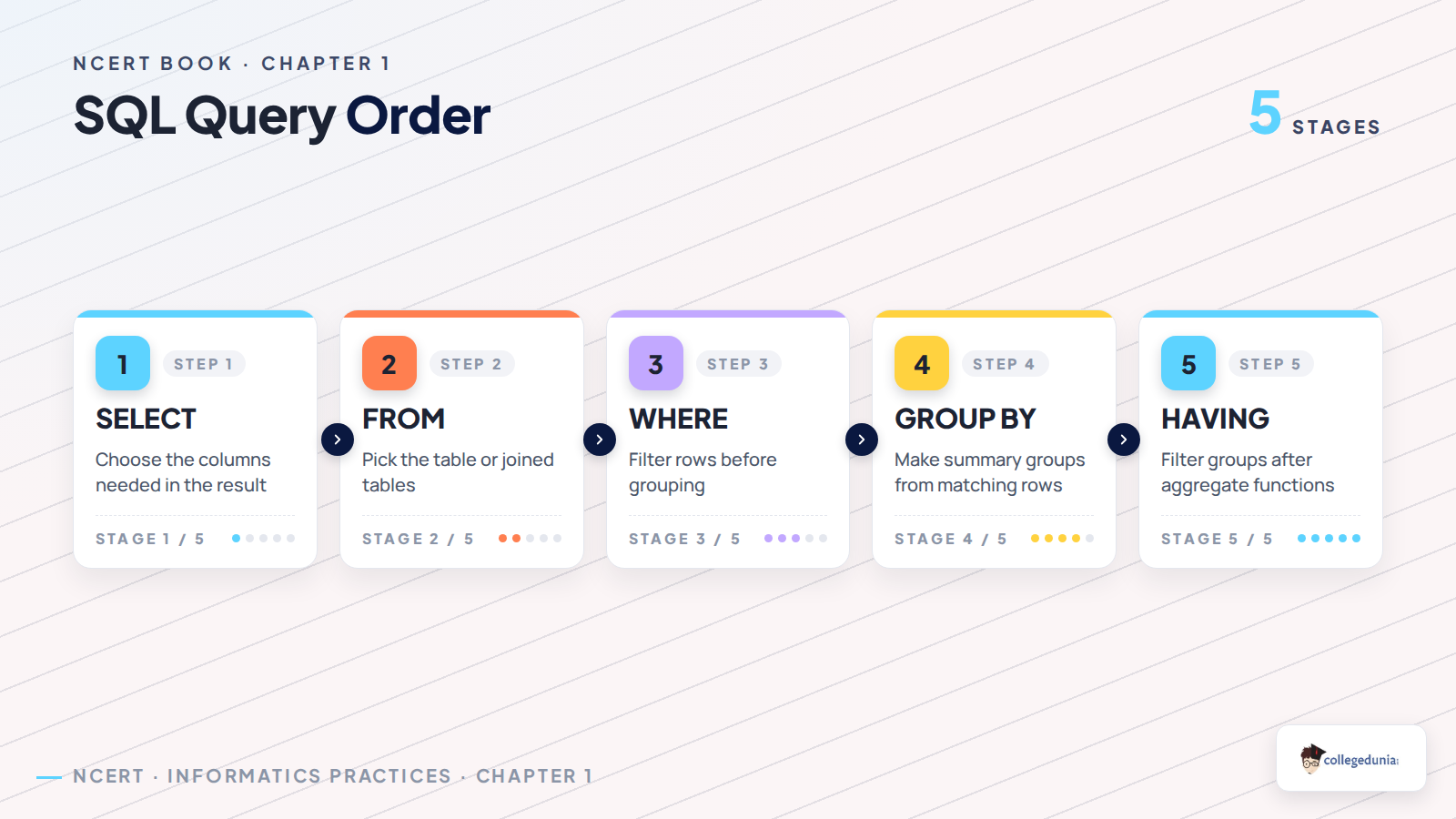
A SQL query becomes easier when students read it in a fixed order. First choose the table, then filter rows, then create groups, then filter those groups and finally display the columns. This order helps prevent common syntax mistakes.
- SELECT: choose the columns or function results to display.
- FROM: name the table or tables used in the query.
- WHERE: keep only the rows that match the condition.
- GROUP BY: collect matching rows into groups.
- HAVING: keep only the groups that match the group condition.
Most mistakes happen when students put HAVING before GROUP BY. Write the query skeleton first, then fill conditions.
Querying and SQL Functions Quick Revision
Source: Magnet Brains on YouTube
Single Row Functions and Aggregate Functions in Class 12 IP
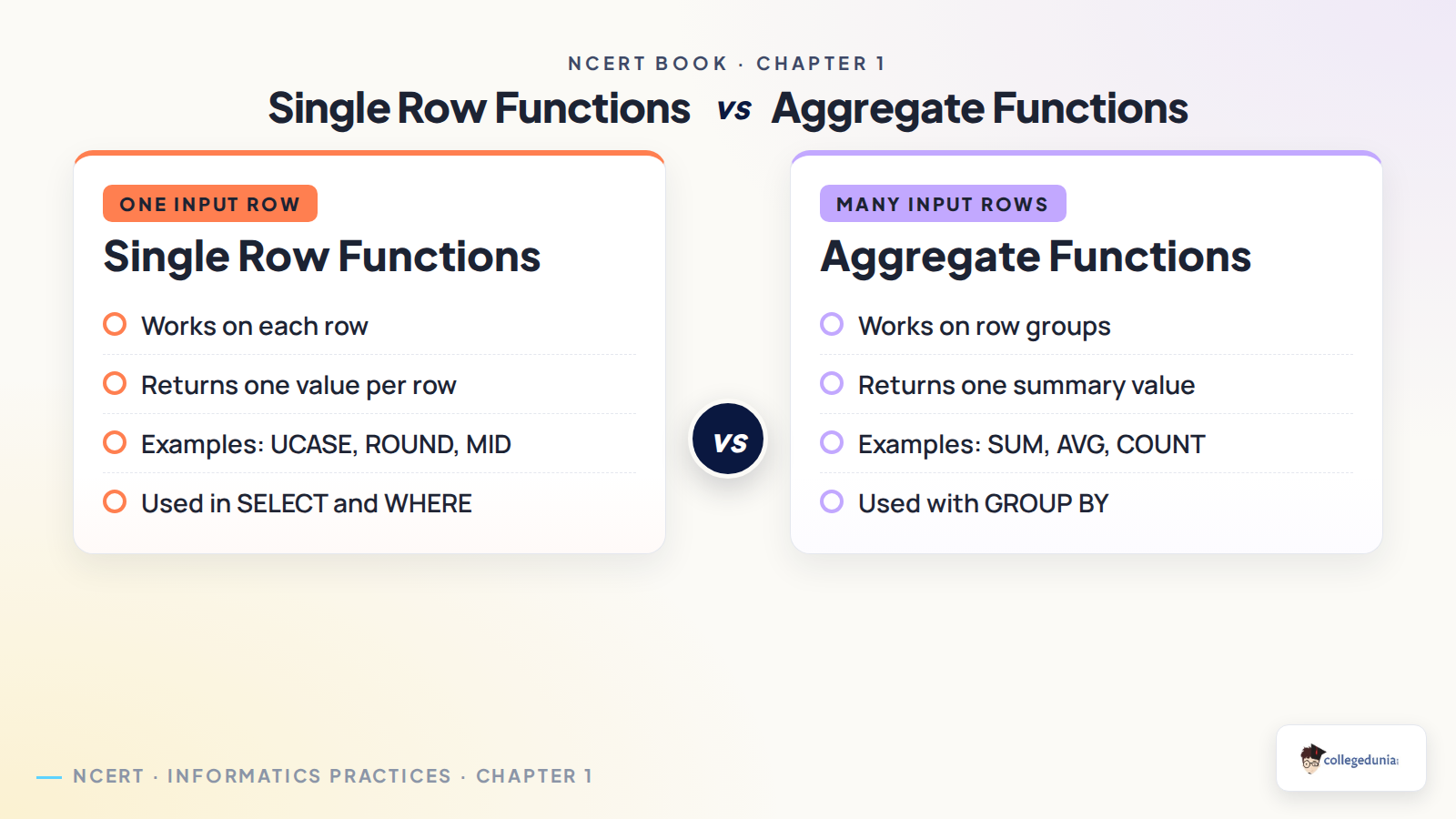
Single-row functions act on one row at a time. Aggregate functions act on a set of rows and return a summary. This difference is the key to deciding whether a query needs GROUP BY.
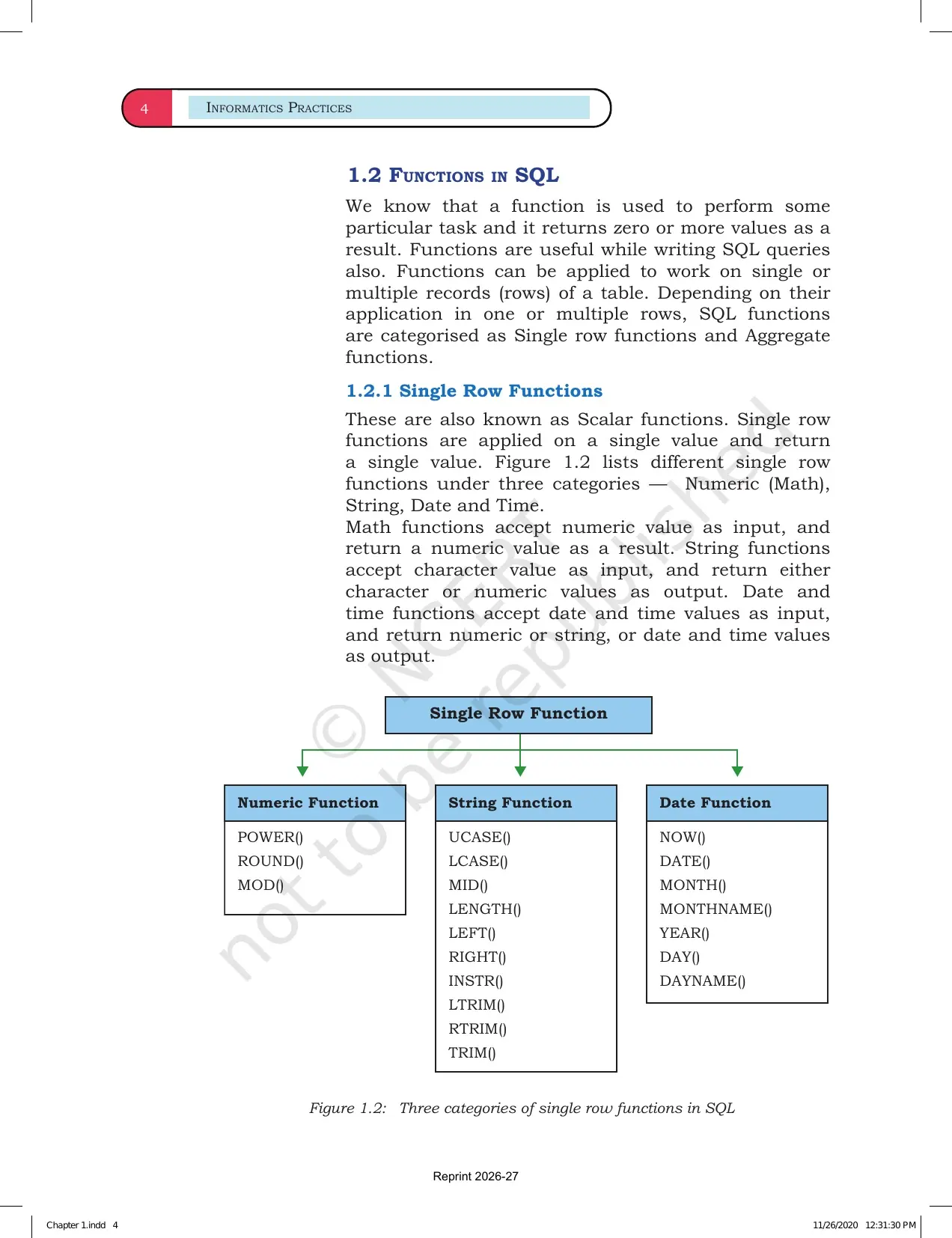
- Single-row example: UCASE(name) changes each name to uppercase.
- Numeric example: ROUND(price, 2) rounds each price to two decimal places.
- Aggregate example: AVG(salary) gives one average value for a group.
- Grouping example: GROUP BY department makes one summary row for each department.
Aggregate functions usually pair with GROUP BY when the result needs category-wise totals.
How to Use the Querying and SQL Functions NCERT Book PDF
Use the official PDF in three short rounds. First, read the chapter examples without skipping the output tables. Second, copy five queries into MySQL and change one condition each time. Third, solve the exercise questions with the PDF open.
- Mark the syntax of ROUND, MID, COUNT, SUM, GROUP BY and HAVING.
- Write one query each for sorting, grouping and joining two tables.
- Check every output column name before writing the final answer.
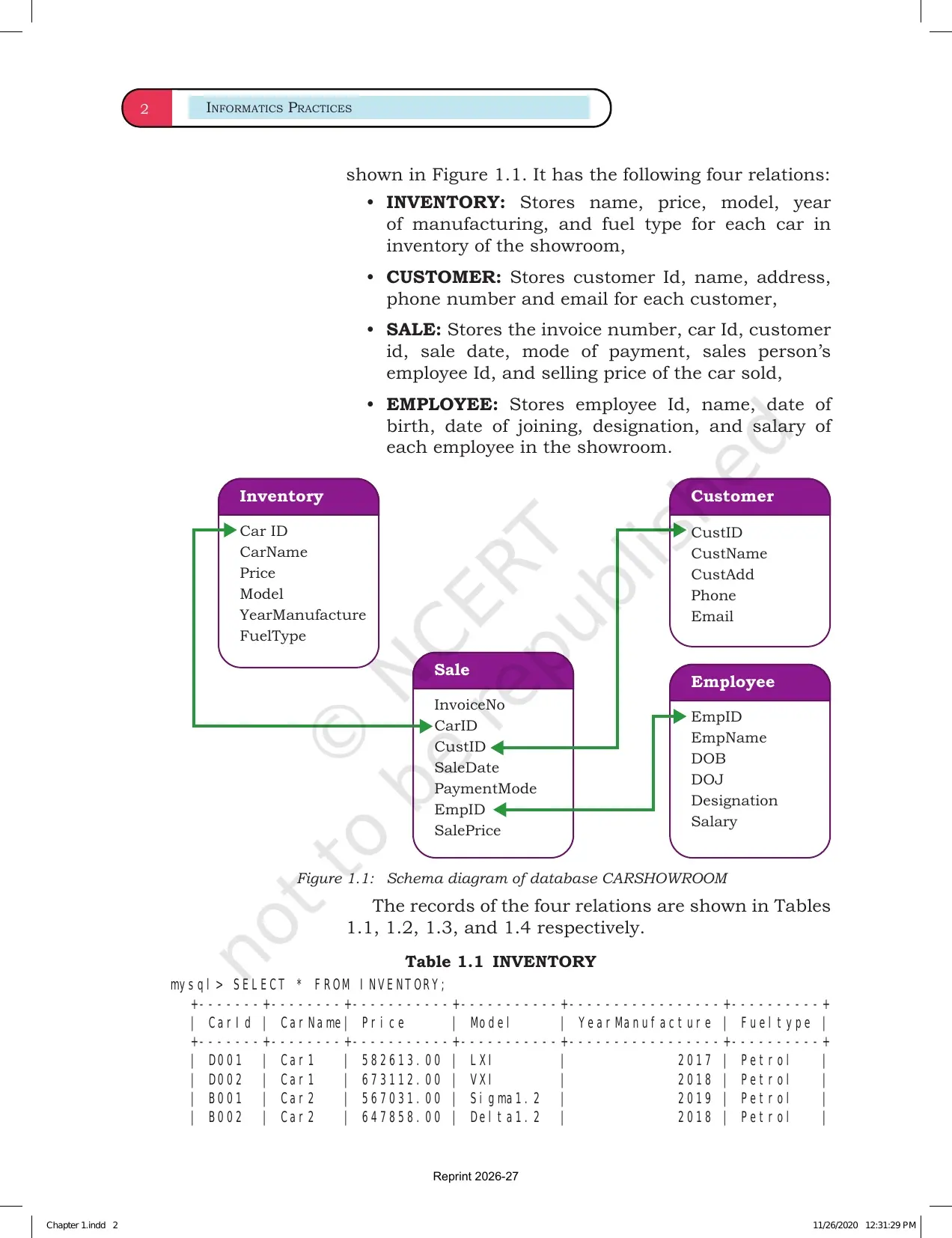
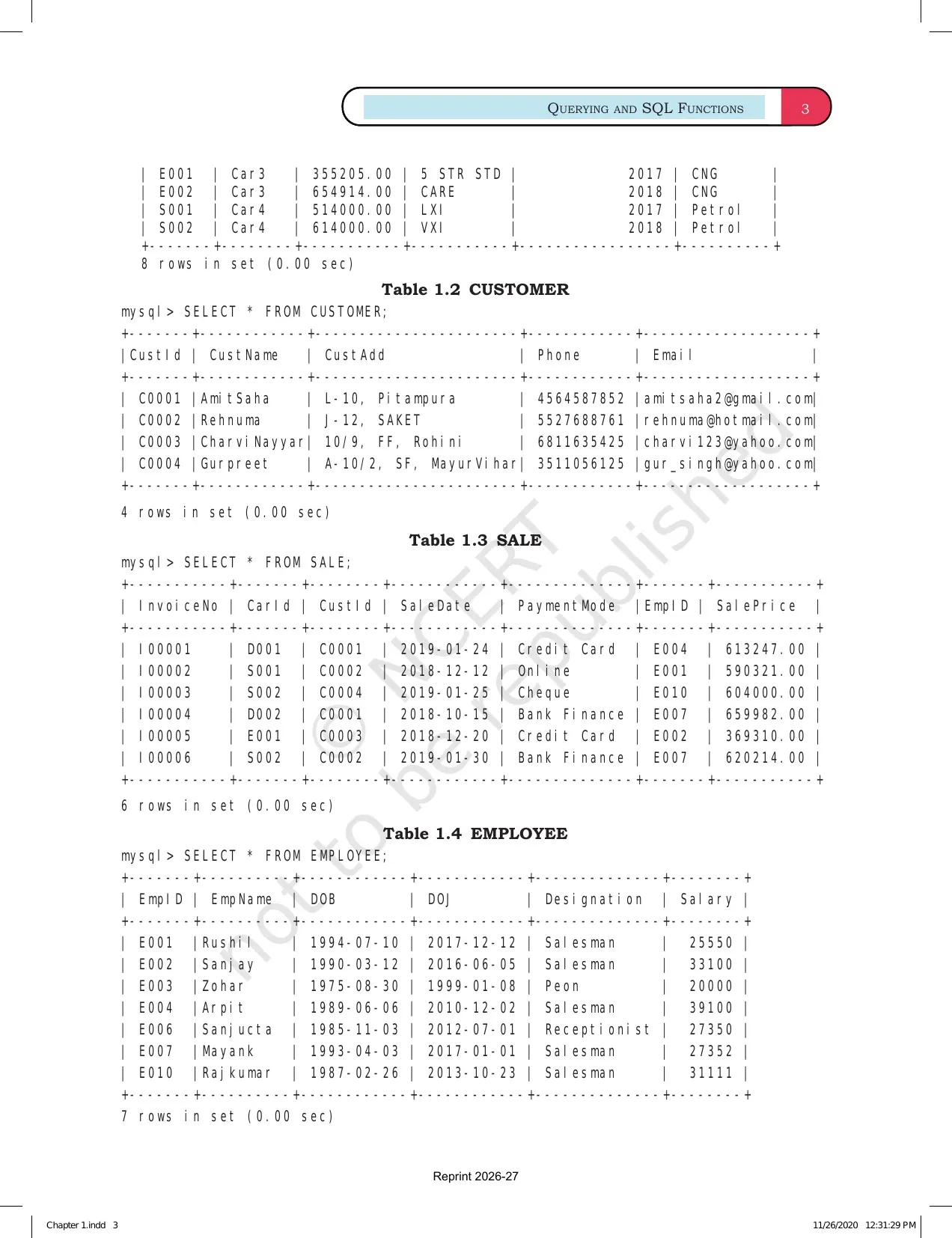
Study habit: Keep the CARSHOWROOM schema nearby while practising because many chapter queries use those same tables.
Querying and SQL Functions Class 12 Related Resources
Use these resources when you want the same chapter in another format. The book PDF is the source text, while solutions and revision resources help with answer writing and practice.
| Resource | Best use | Link |
|---|---|---|
| NCERT Book PDF | Read the official 2026-27 source chapter | Open book PDF |
| NCERT Solutions | Practise textbook questions and SQL outputs | Open solutions |
| Notes | Revise functions, clauses and joins in a shorter format | Open notes |
All Class 12 Informatics Practices NCERT Book PDFs
The table below keeps the NCERT Book PDF resource together, so students can move chapter by chapter through the Class 12 Informatics Practices textbook.
| Chapter | NCERT chapter title | Book PDF |
|---|---|---|
| Chapter 1 | Querying and SQL Functions | Current book PDF |
| Chapter 2 | Data Handling using Pandas - Series | Open book PDF |
| Chapter 3 | Data Handling using Pandas - DataFrame | Open book PDF |
| Chapter 4 | Plotting Data using Matplotlib | Open book PDF |
| Chapter 5 | Introduction to Computer Networks | Open book PDF |
| Chapter 6 | Societal Impacts | Open book PDF |
Querying and SQL Functions Class 12 NCERT Book FAQs
Ques. What is covered in Querying and SQL Functions?
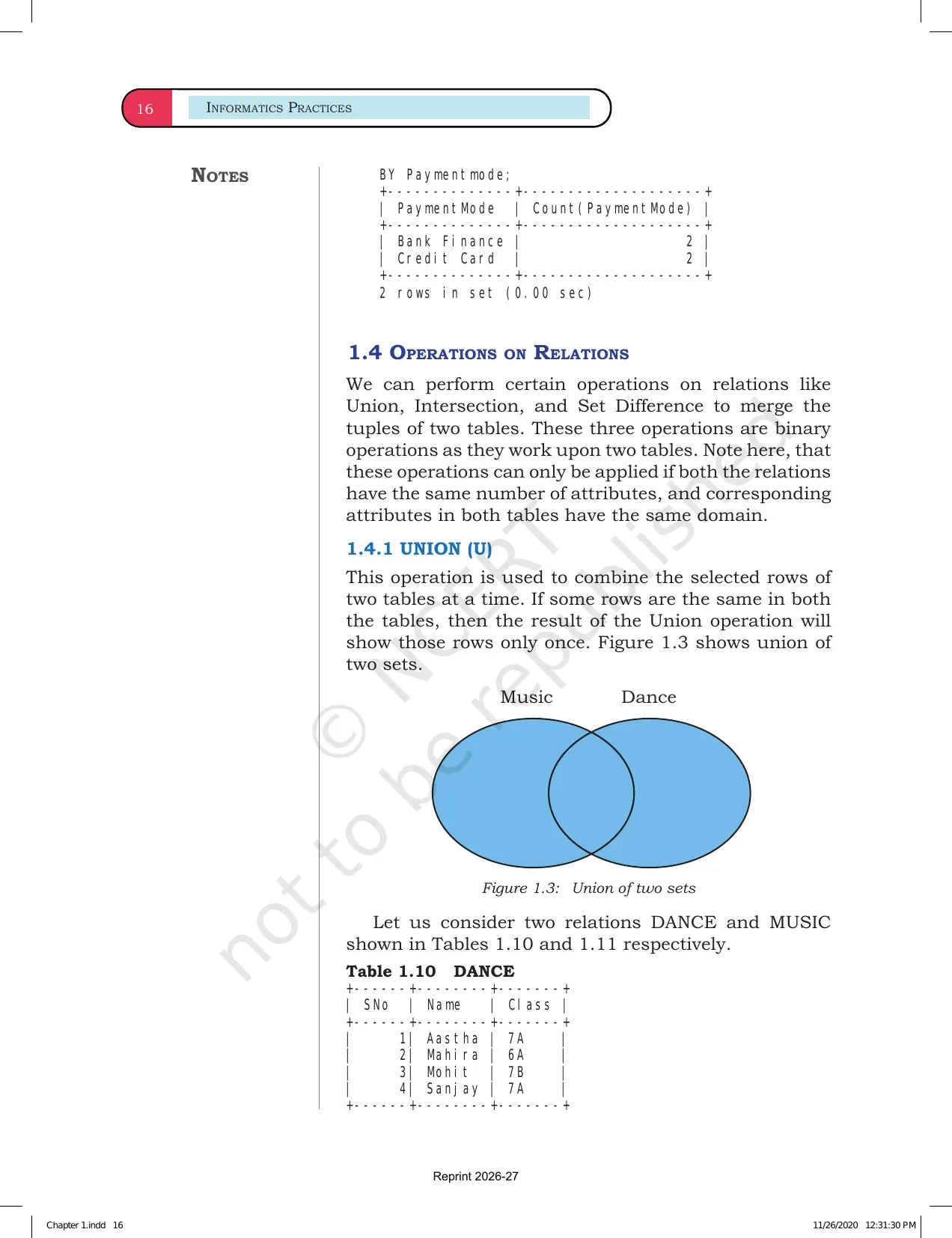
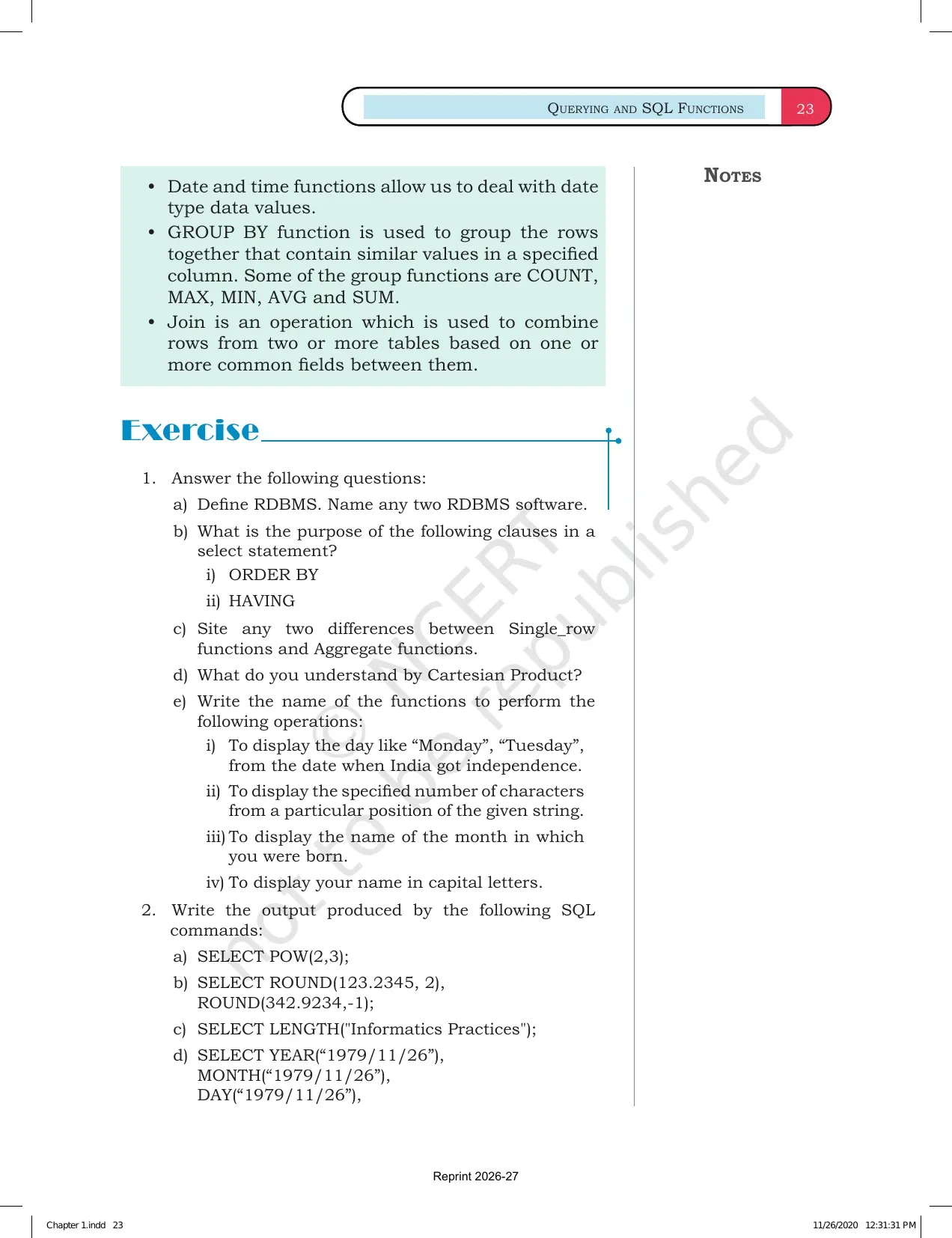
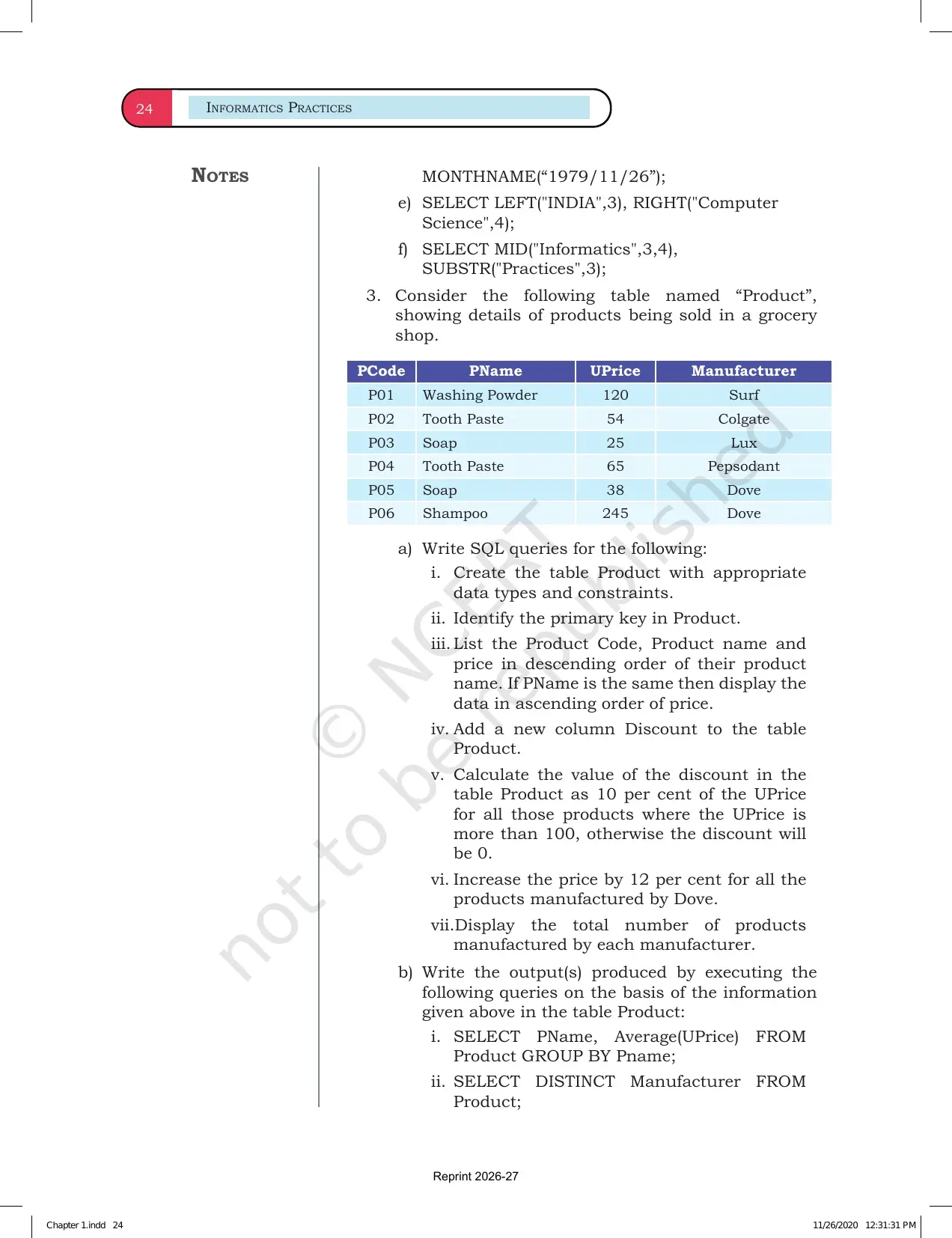
Ans. It covers SQL functions, sorting, grouping, aggregate functions, HAVING, operations on relations and queries that use two related tables.
Ques. Why should students read the NCERT Book PDF before notes?
Ans. The PDF gives the official NCERT syntax, examples and table data. Notes become easier after the source commands are clear.
Ques. What is the difference between WHERE and HAVING?
Ans. WHERE filters rows before grouping. HAVING filters groups after GROUP BY has created grouped results.
Ques. Which SQL functions are important in this chapter?
Ans. Students should revise string, numeric and date functions along with aggregate functions such as COUNT, SUM, AVG, MIN and MAX.
Ques. How many pages are in the official Chapter 1 PDF?
Ans. The official NCERT chapter PDF on this page has 26 pages, including chapter text, examples, tables and exercise questions.



Comments