




The NCERT Class 6 Mathematics Chapter 9 Symmetry Book PDF gives students the official Ganita Prakash chapter for the 2026-27 session. The chapter explains reflection symmetry, rotational symmetry, symmetry lines in shapes, and everyday patterns where both sides match neatly.
- PDF length: 40 official NCERT pages from the 2026-27 textbook.
- Main focus: line symmetry, mirror halves, rotational turns, and balanced designs.
- Best use: read one activity, fold or trace the figure, then count the symmetry lines.
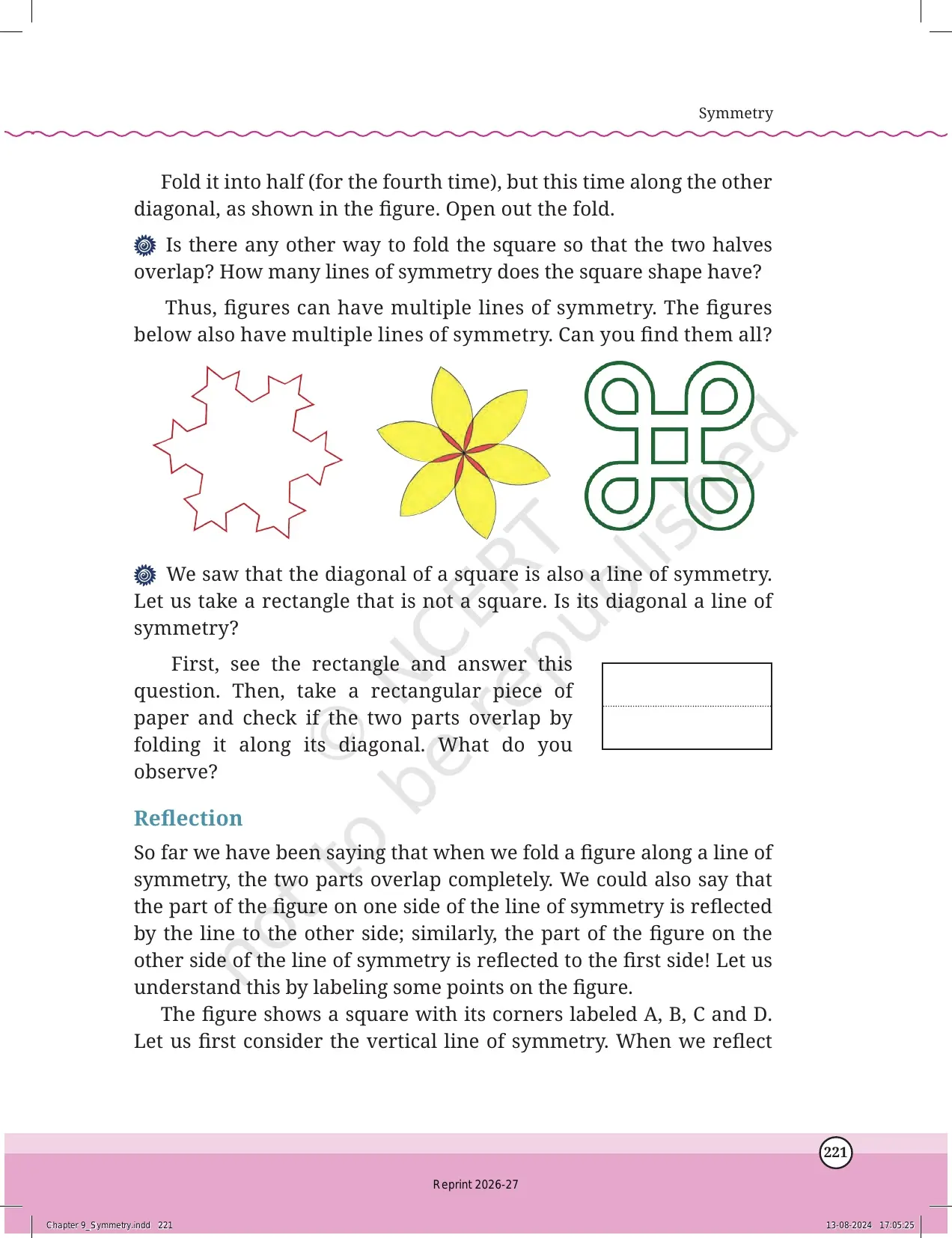
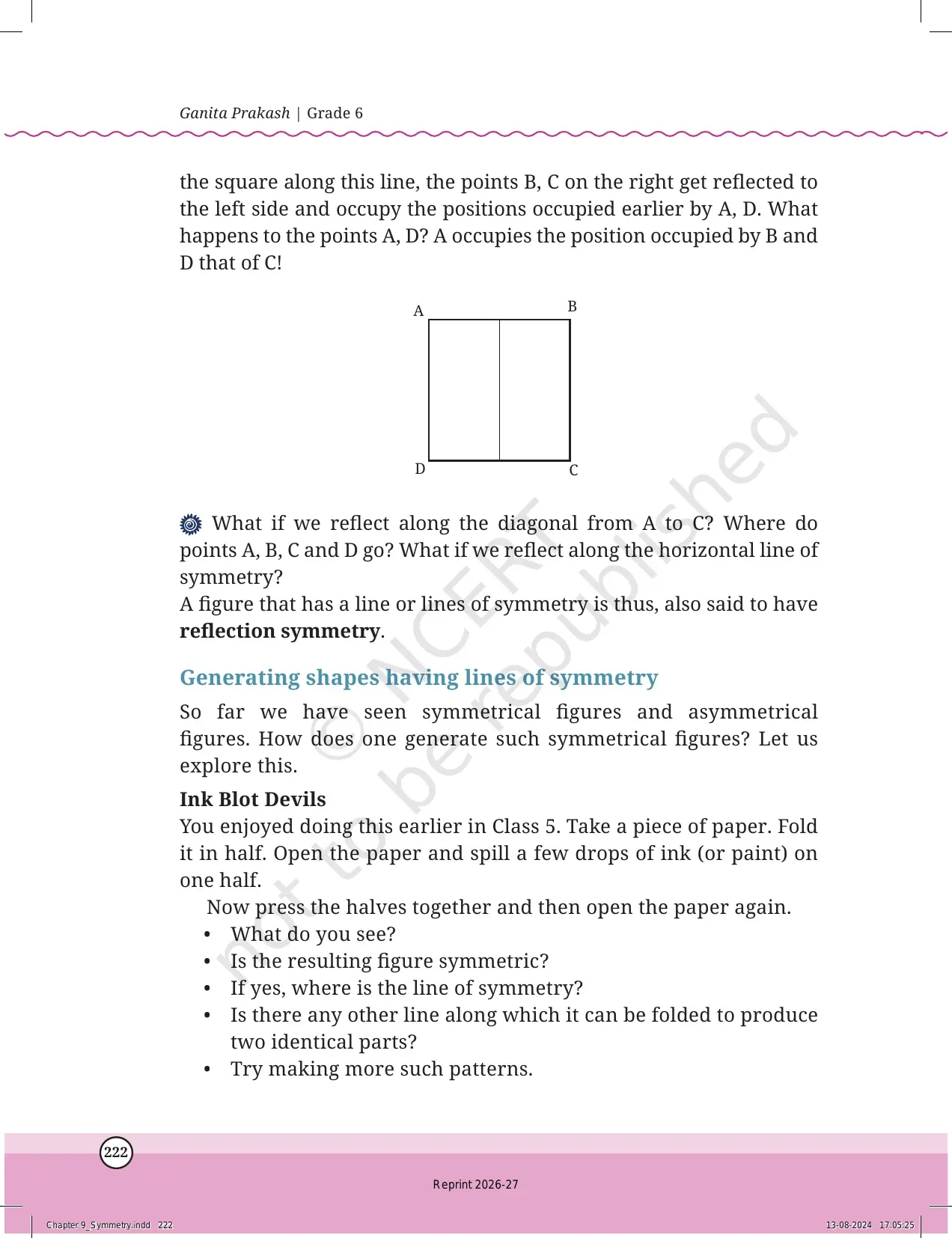
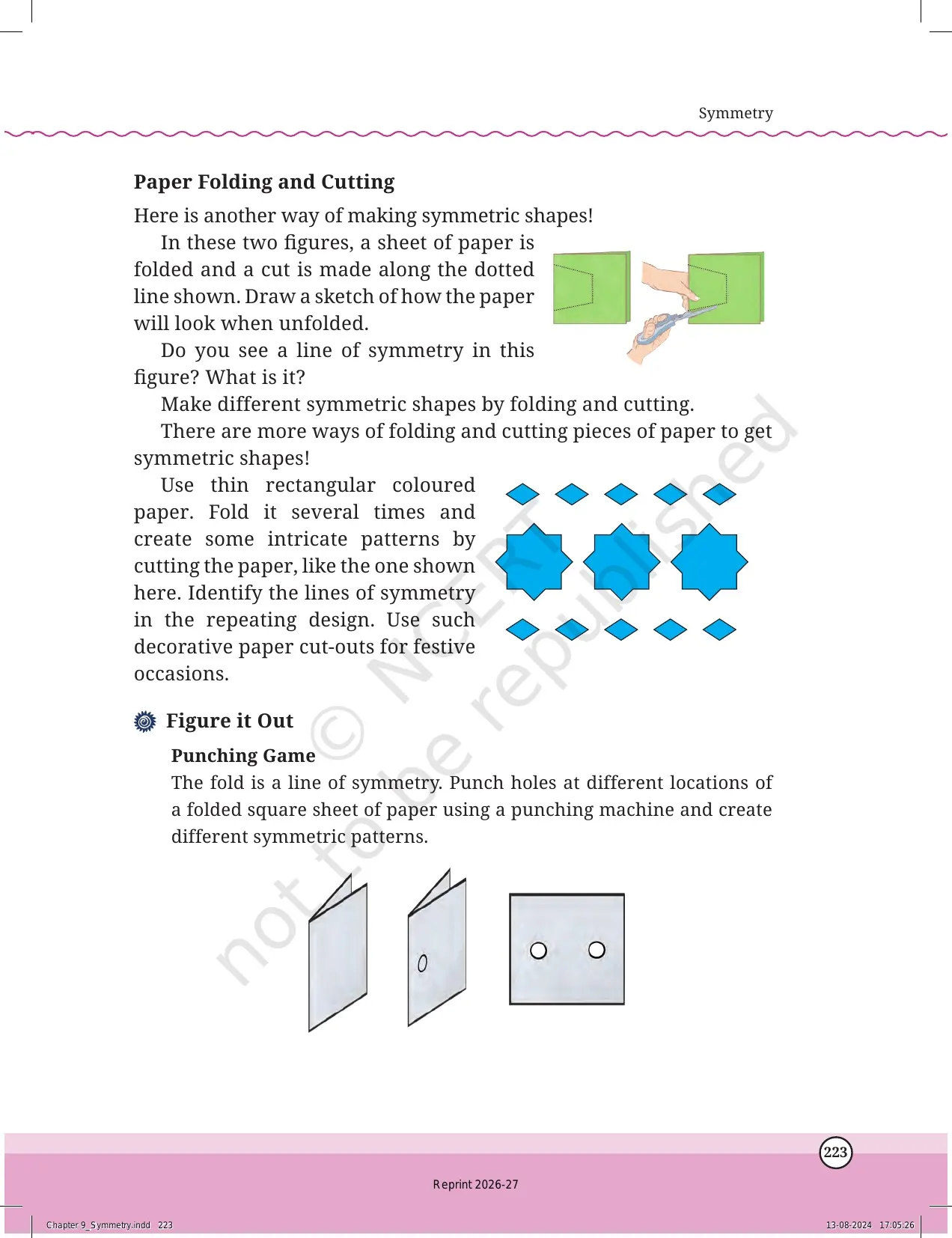
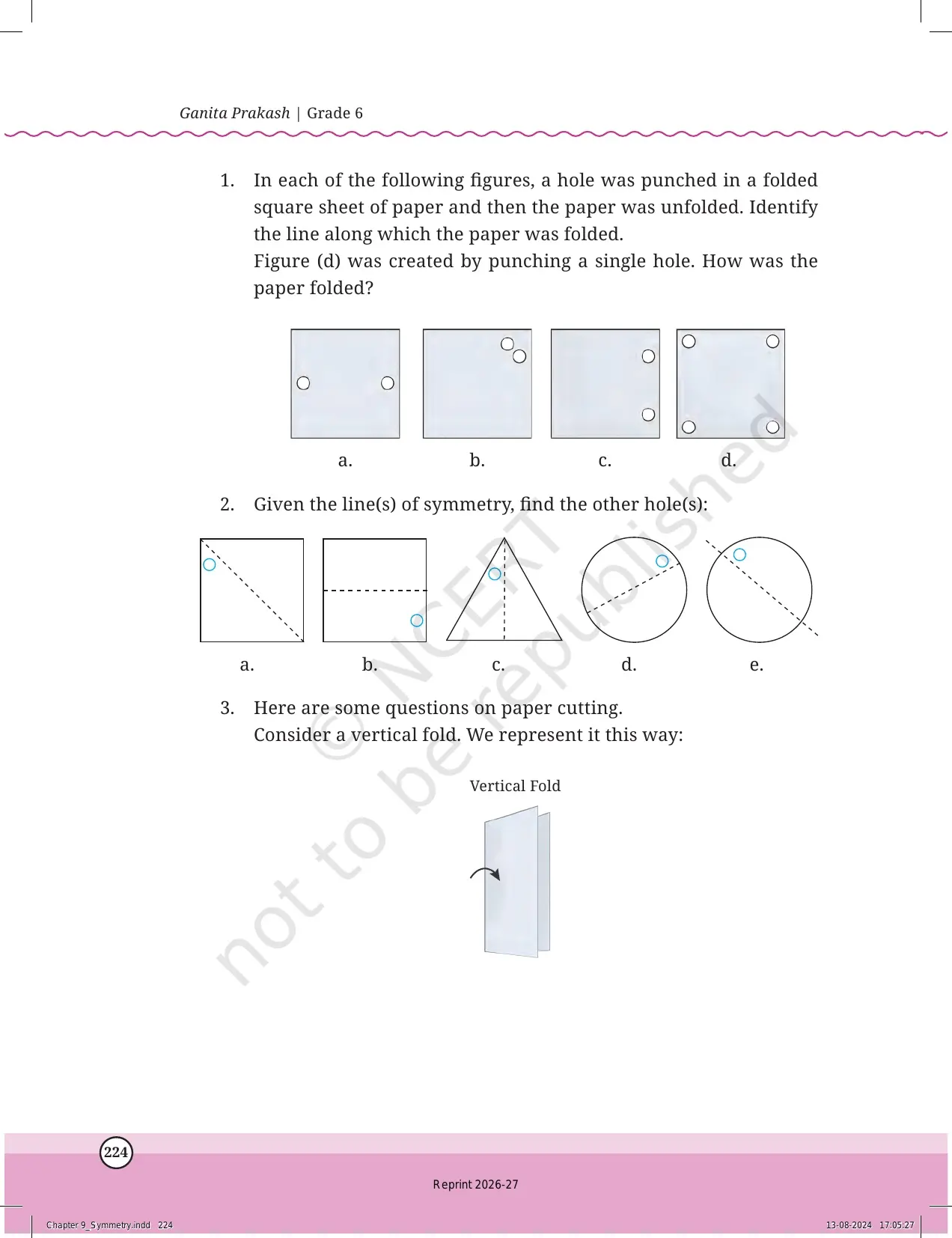
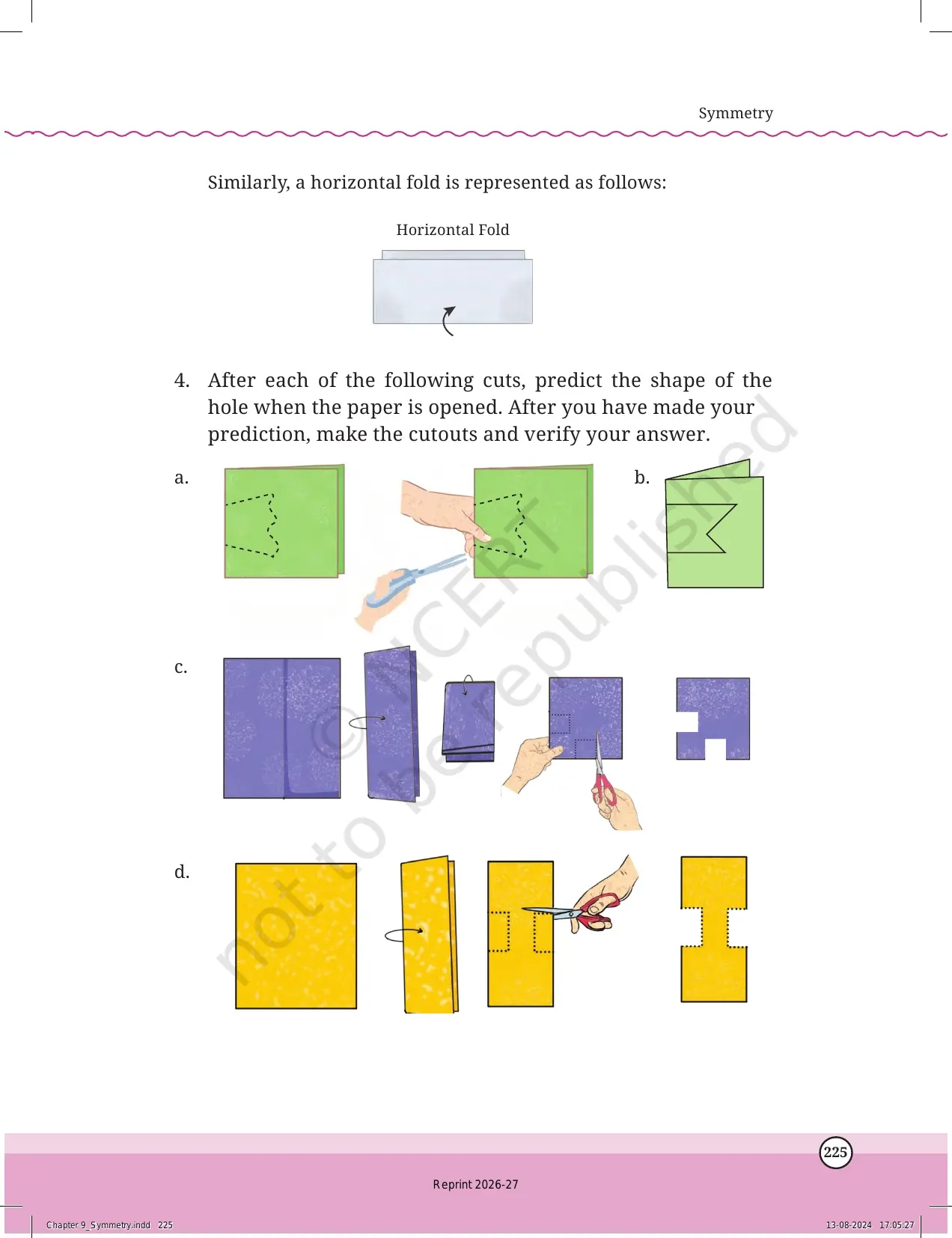
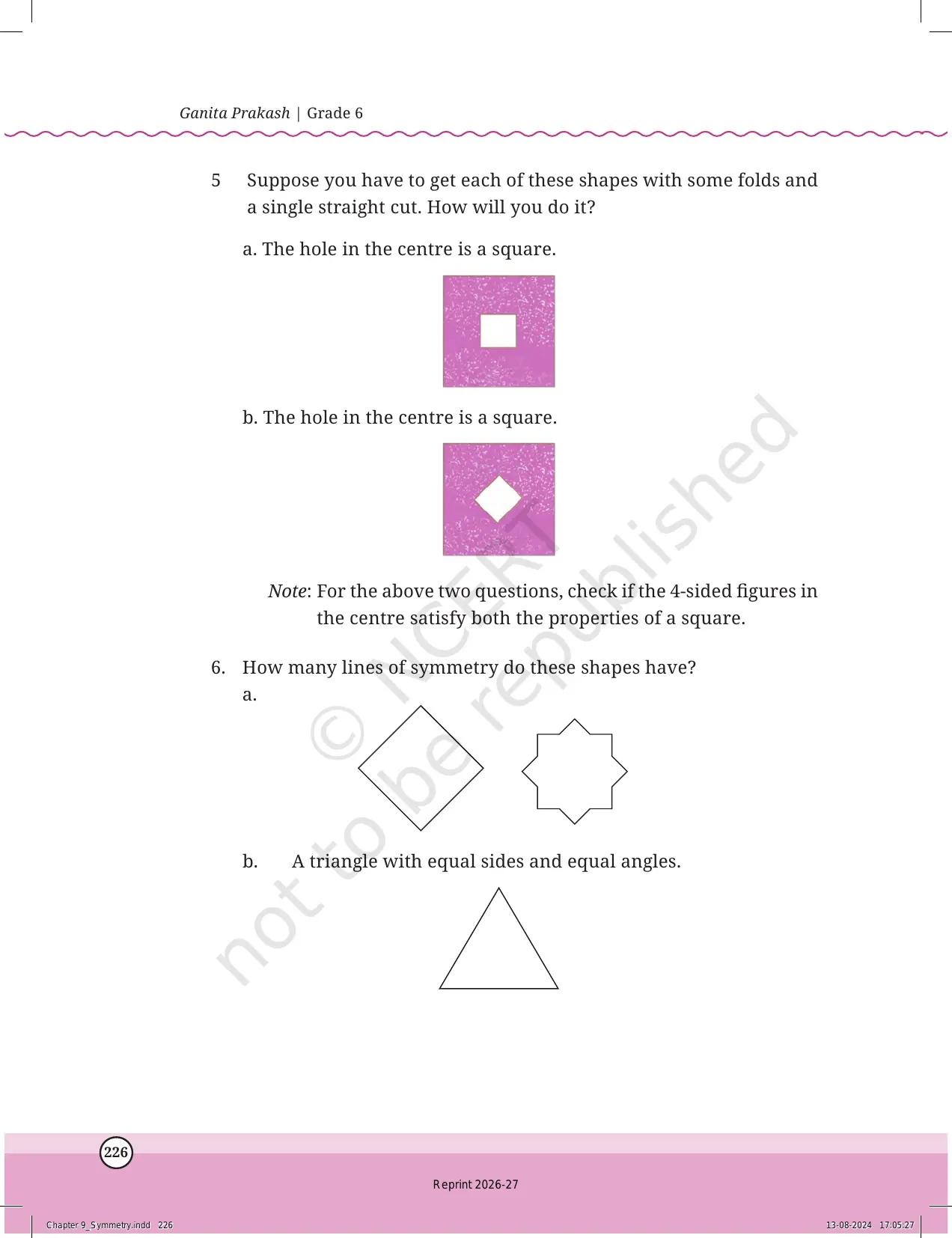
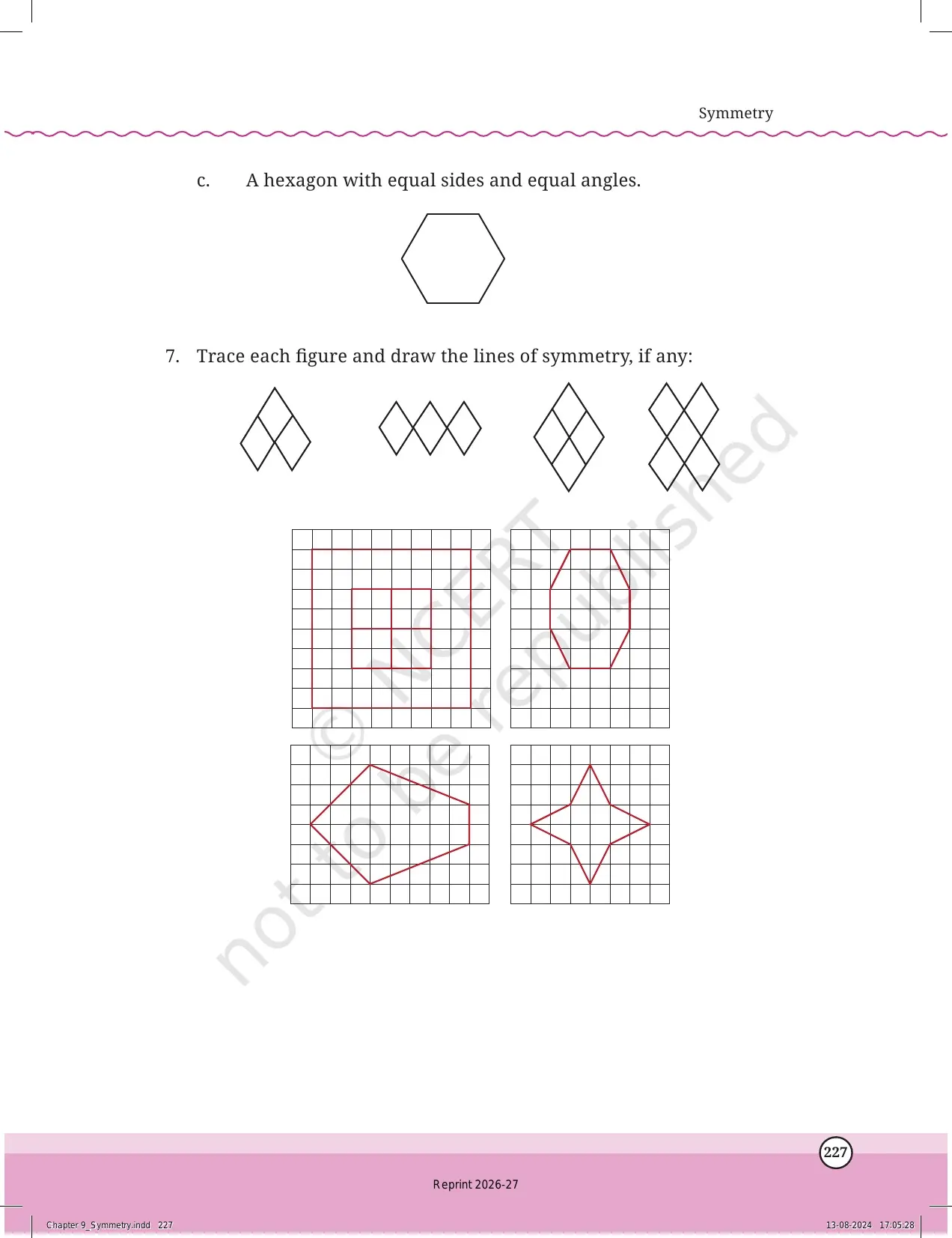
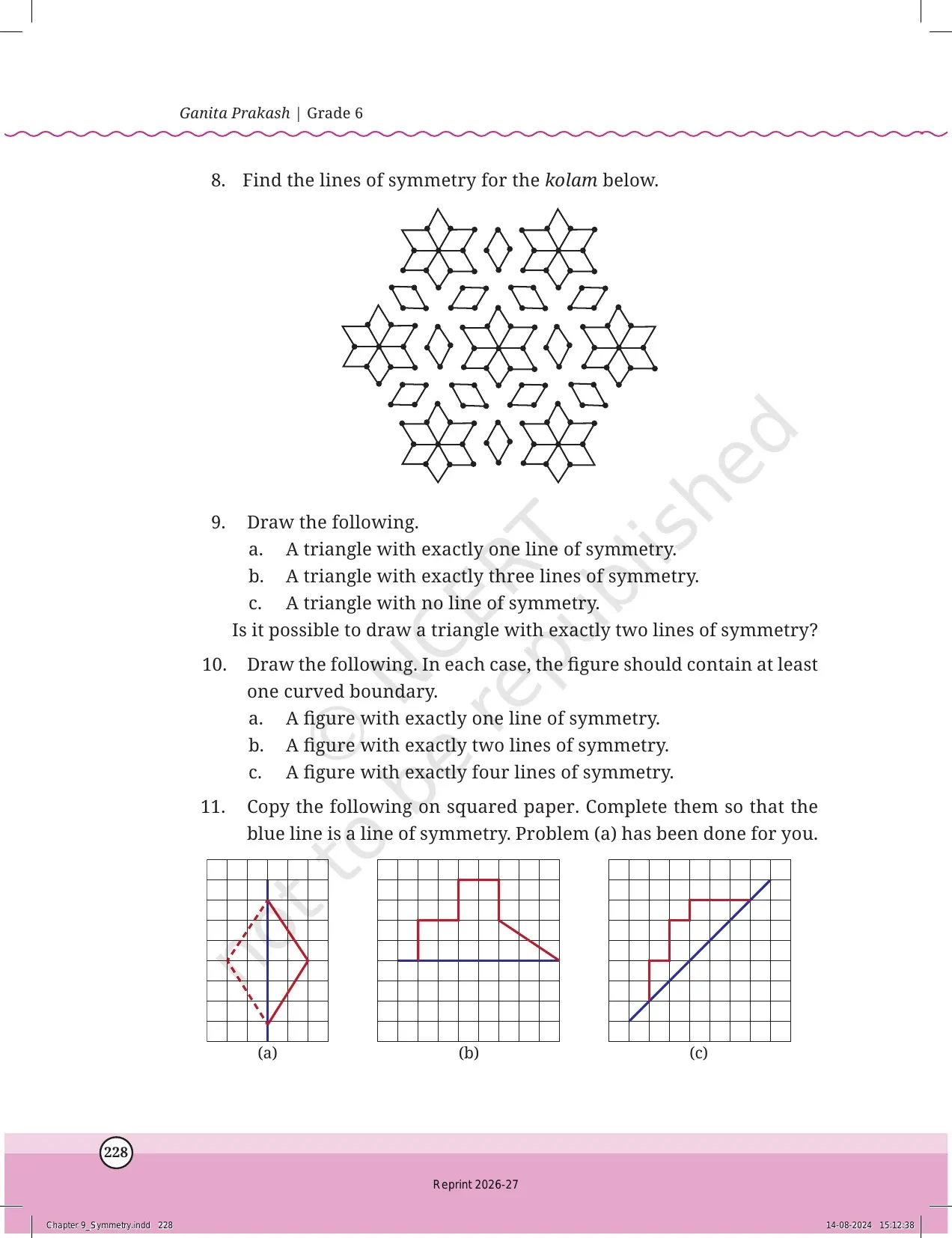
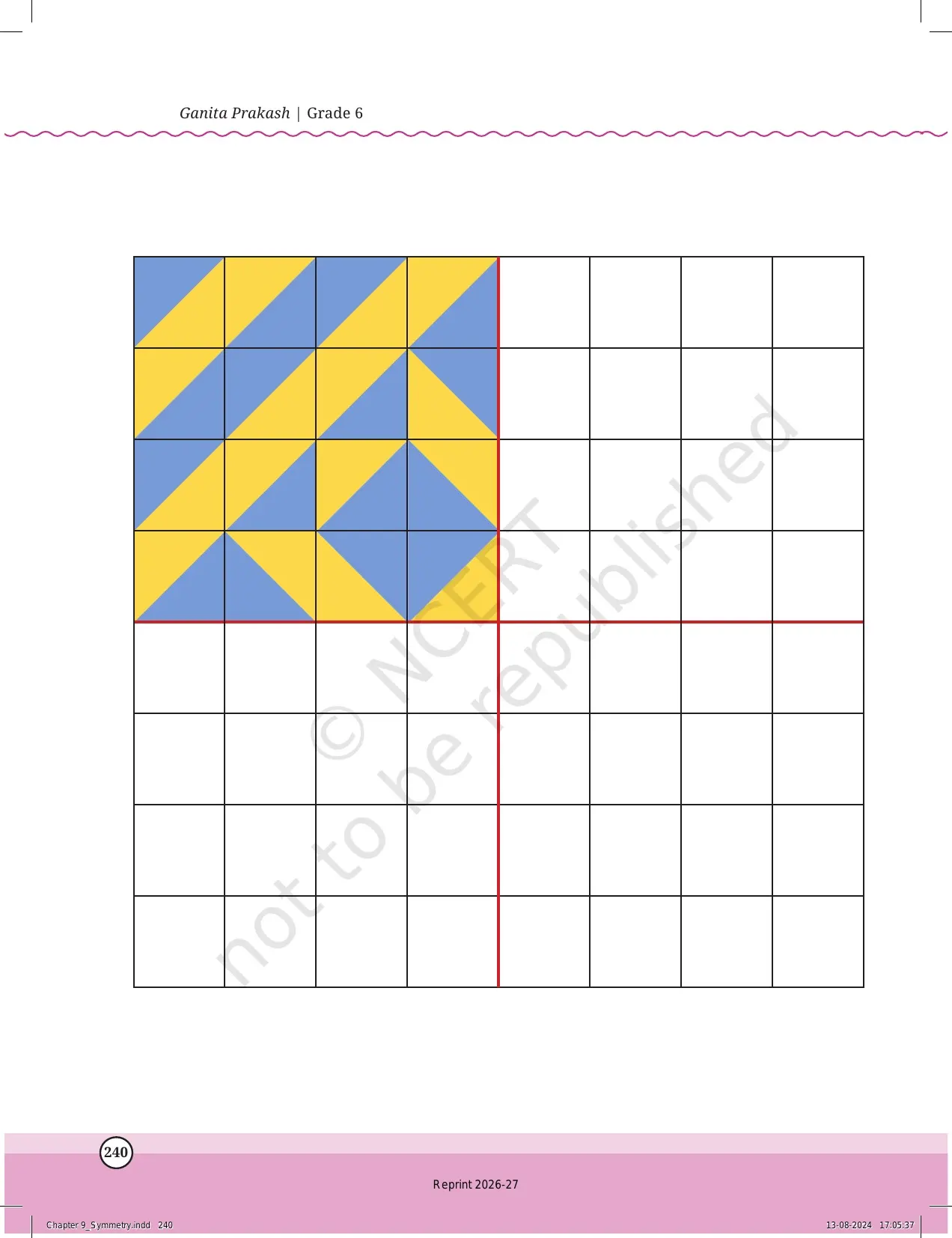
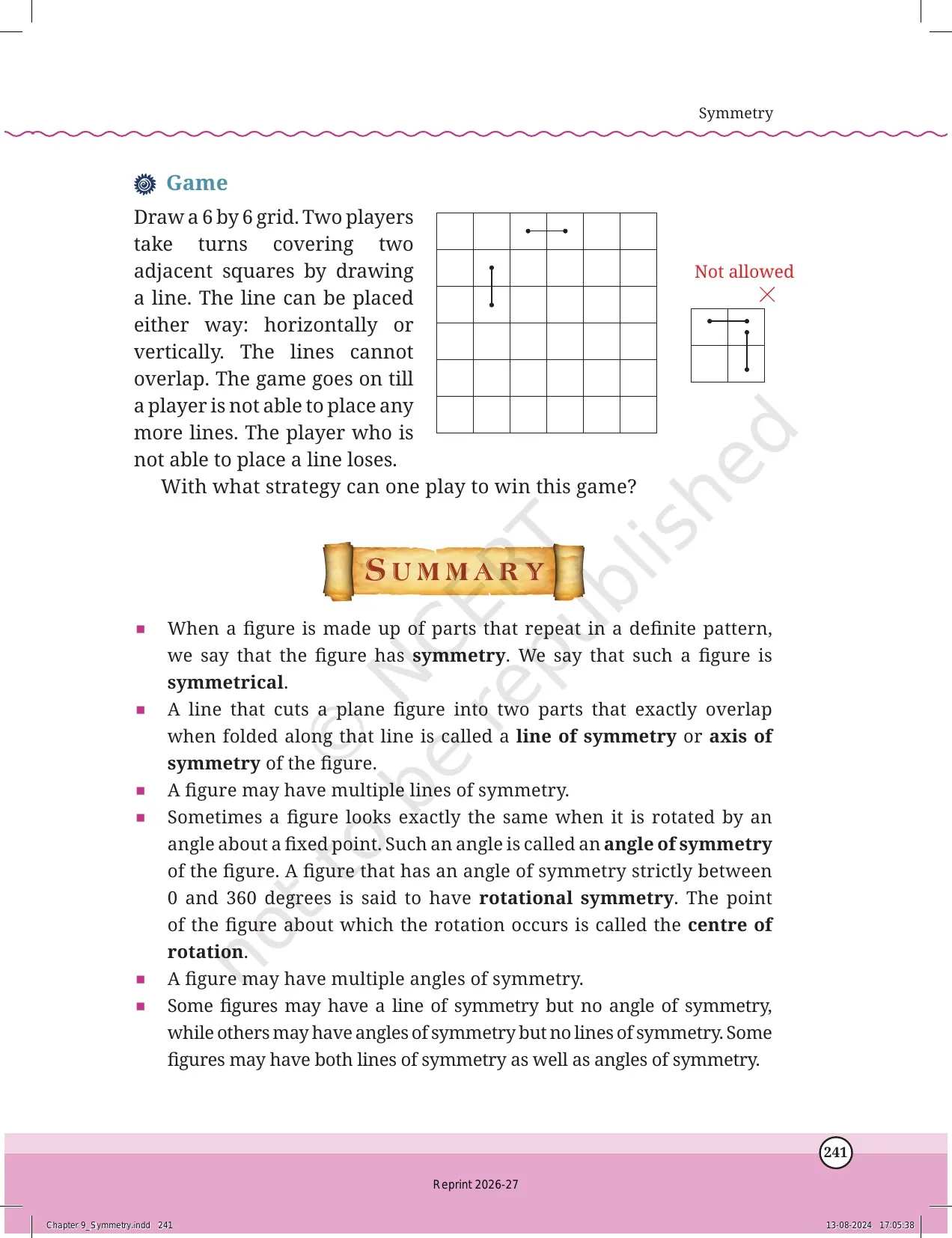
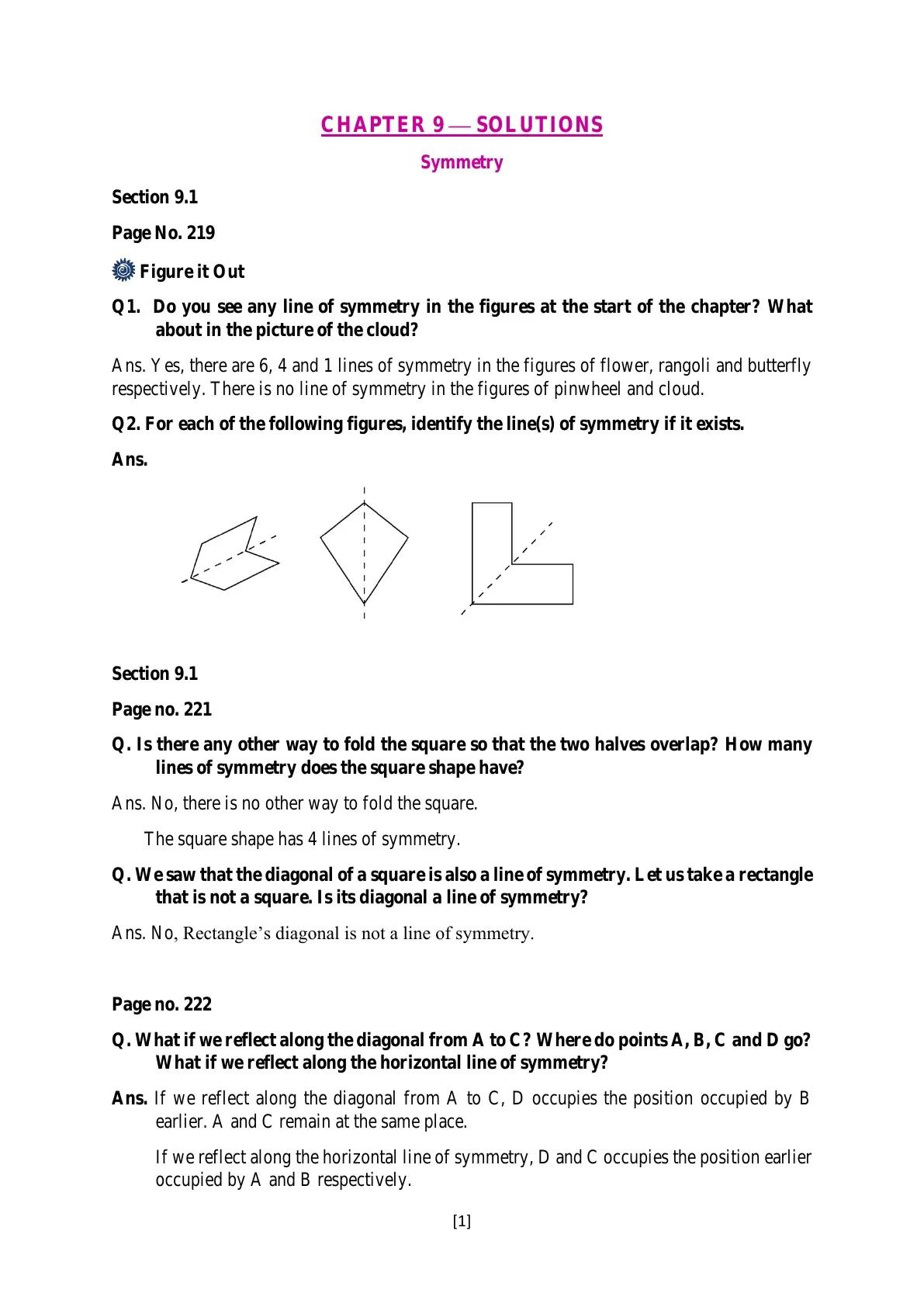
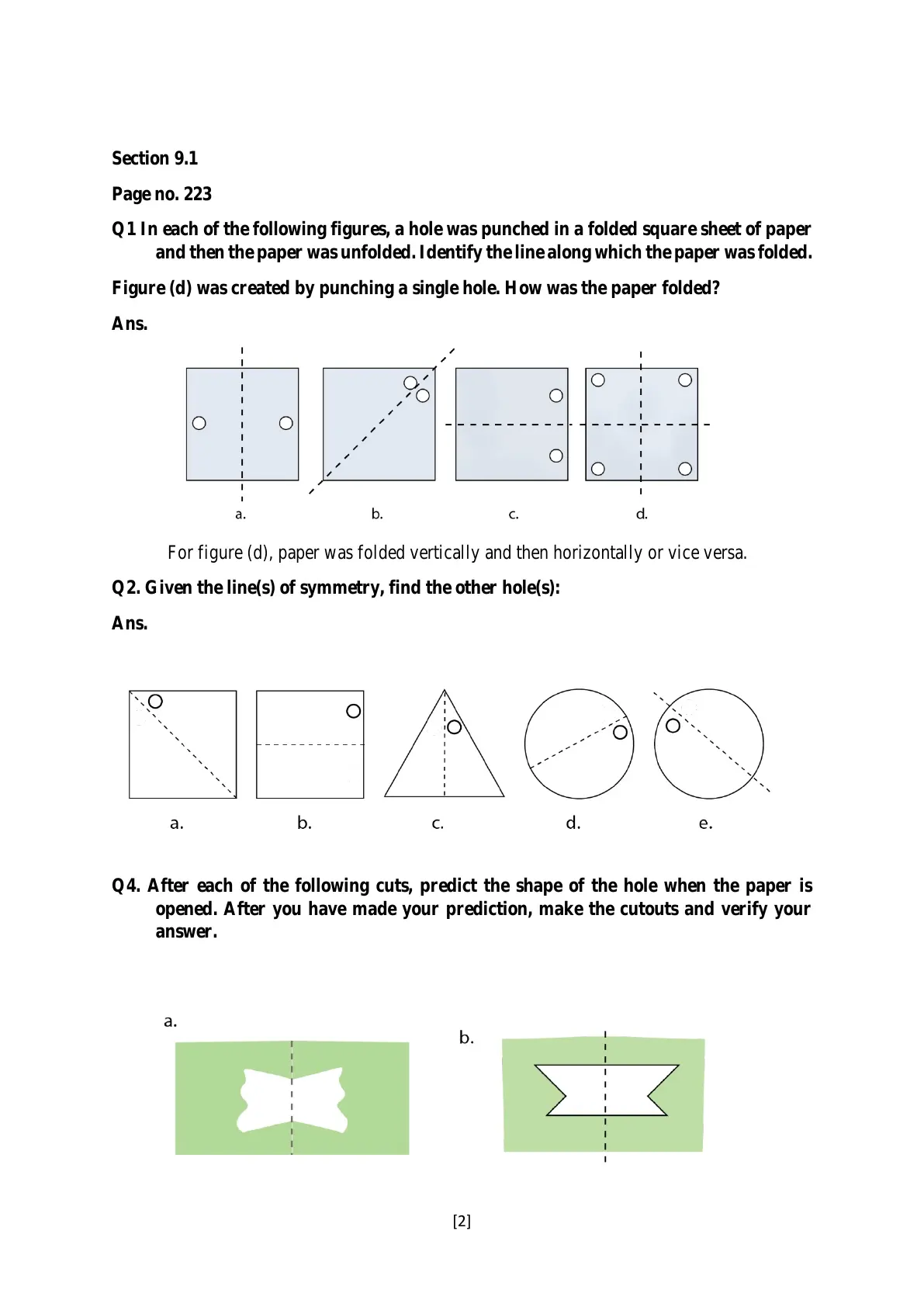
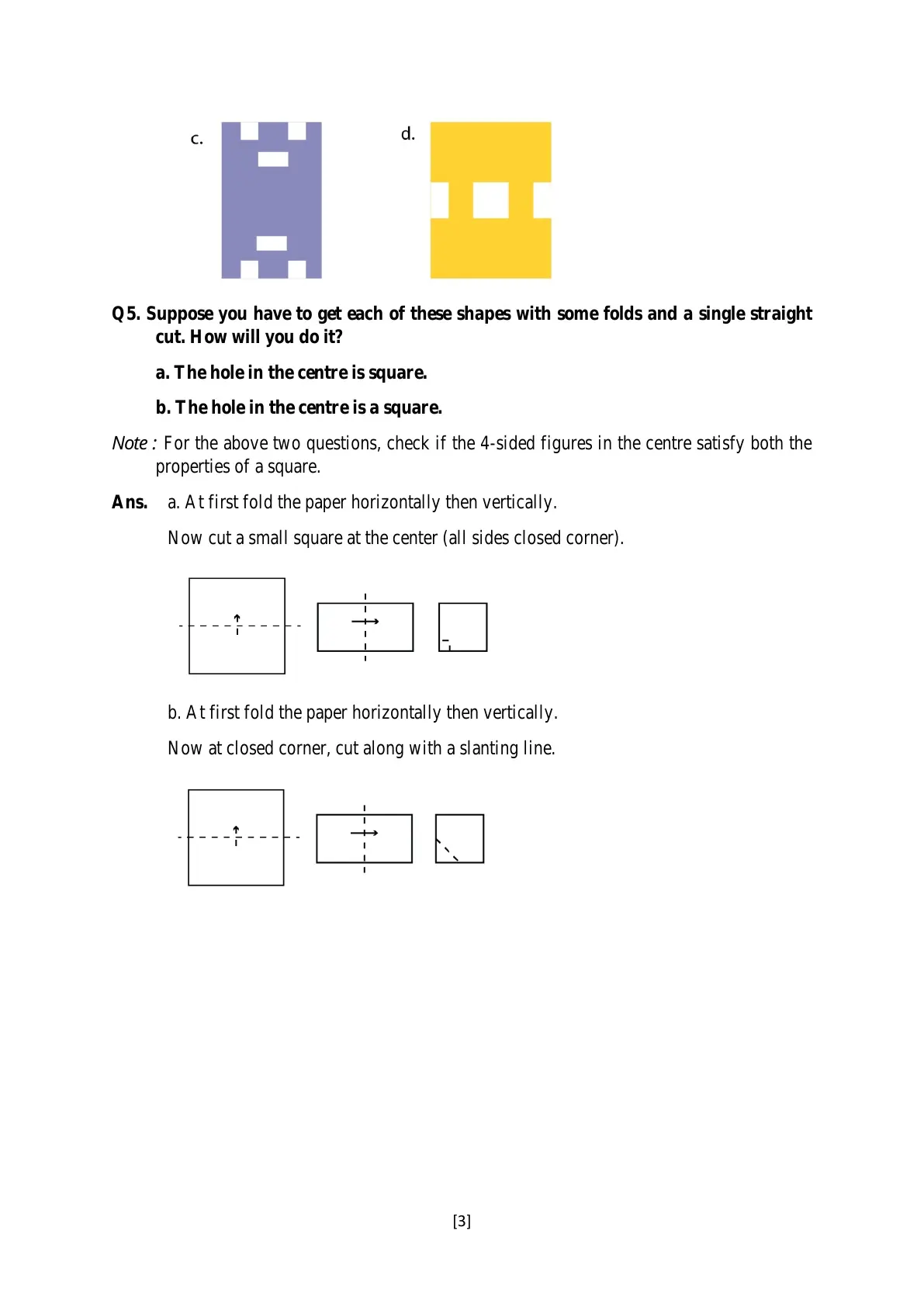
Student Feedback: In a Collegedunia study poll of 11,980 Class 6 students, most students said symmetry became easier when they folded paper shapes before drawing mirror halves. Students also found rangoli and tile patterns useful for spotting repeated turns.
Source: 2026-27 Class 6 Mathematics student poll across CBSE schools.
This page hosts the official NCERT Ganita Prakash Chapter 9 PDF, so students can read the same Symmetry chapter used in the 2026-27 classroom.
Symmetry Chapter PDF for Class 6 Students
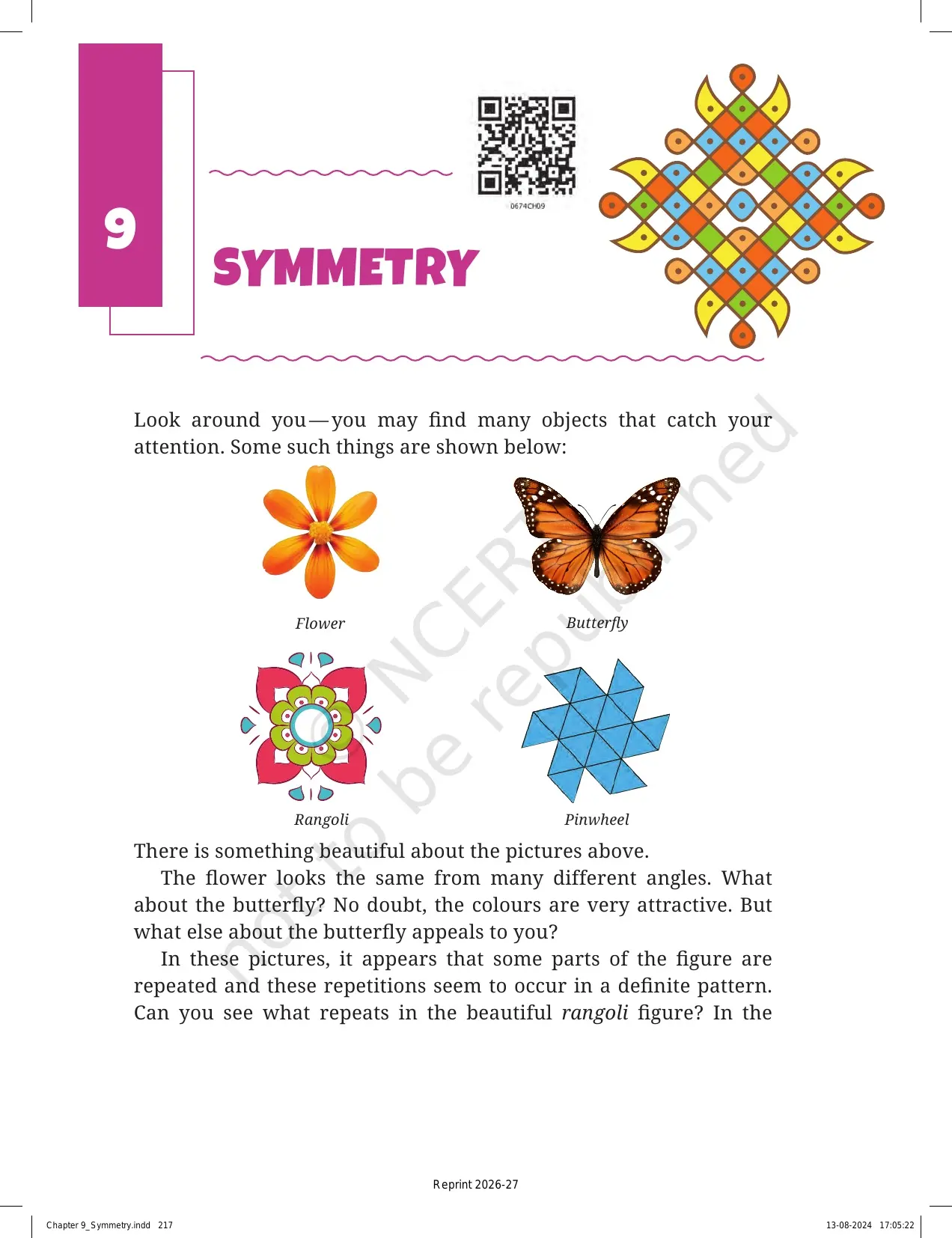
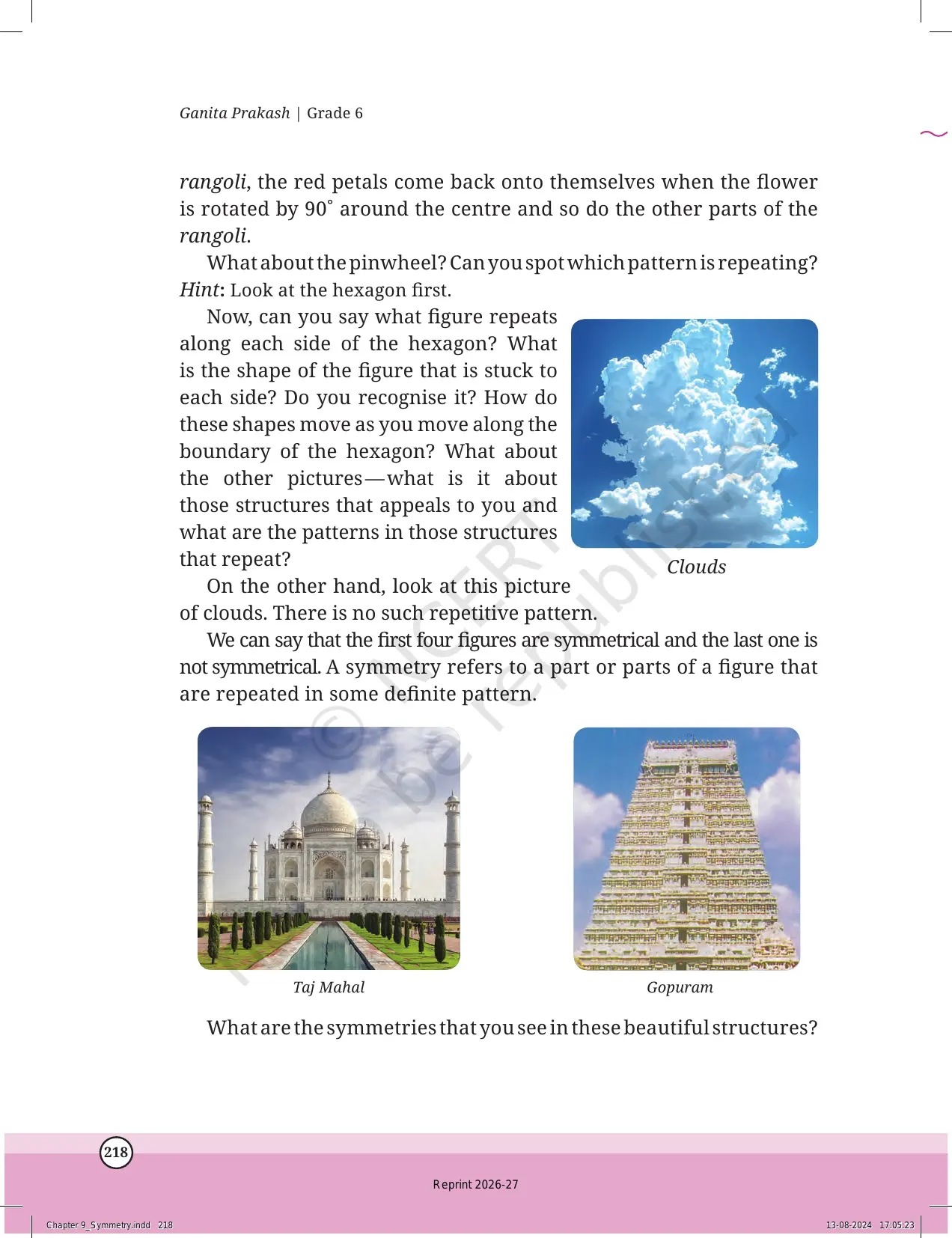
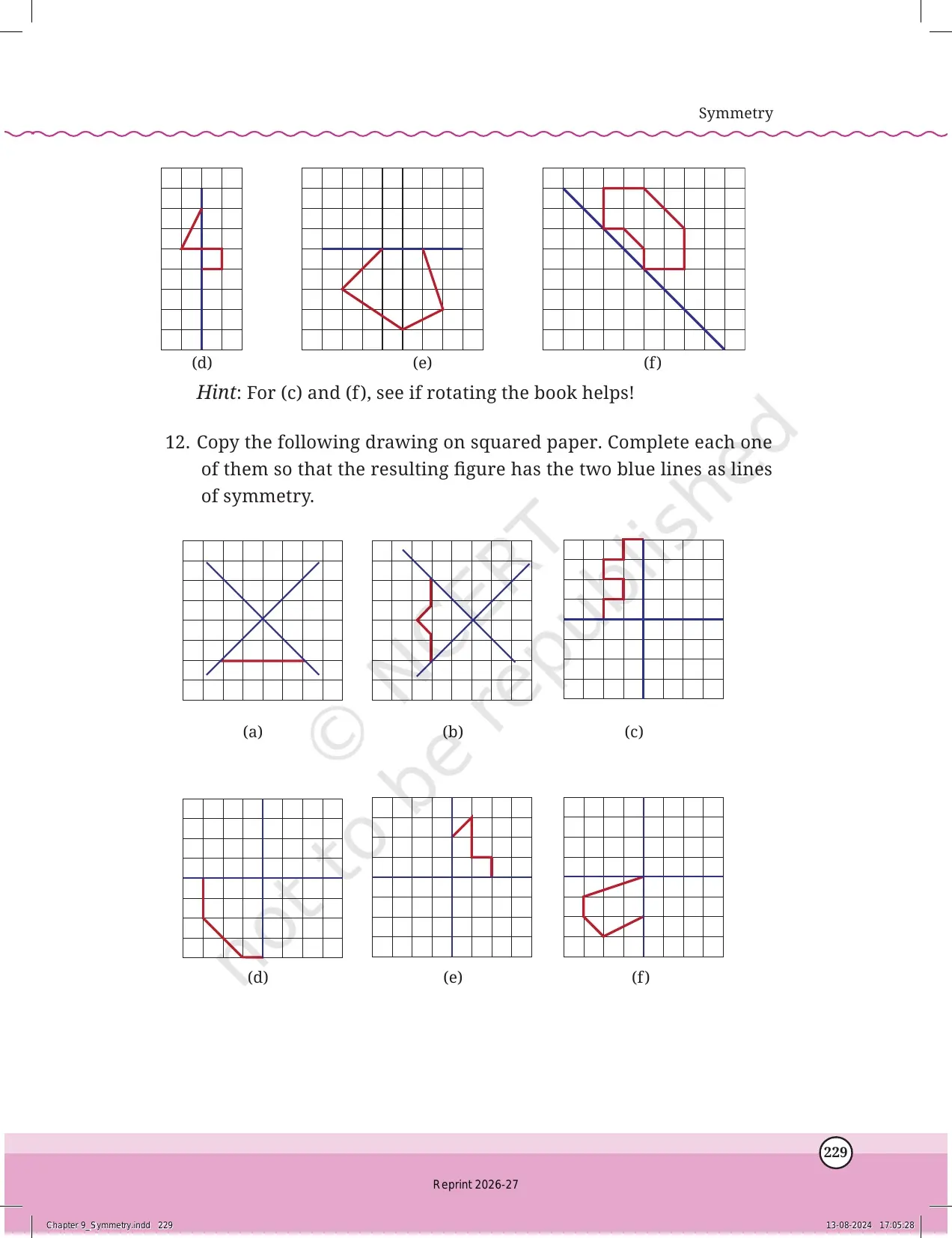
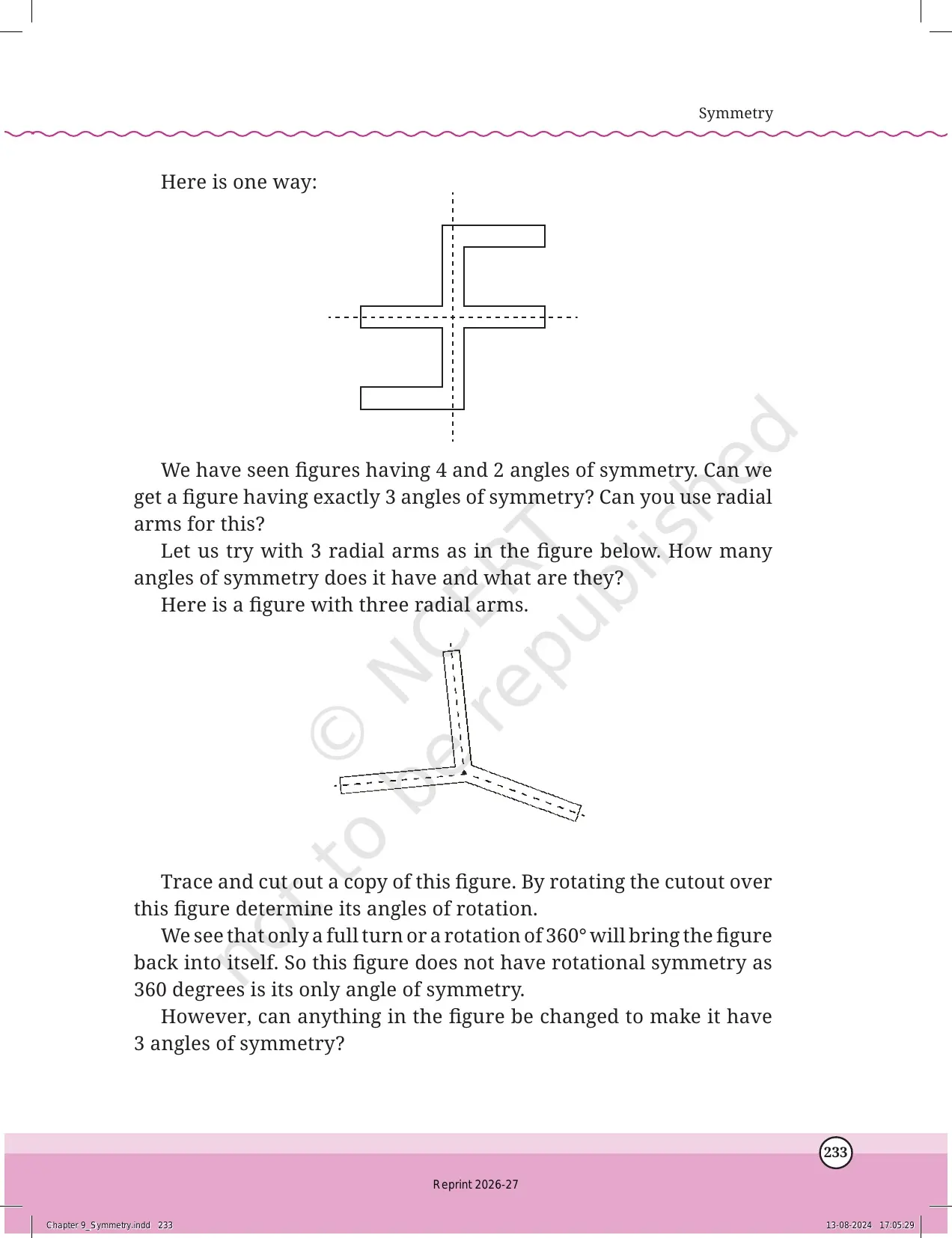
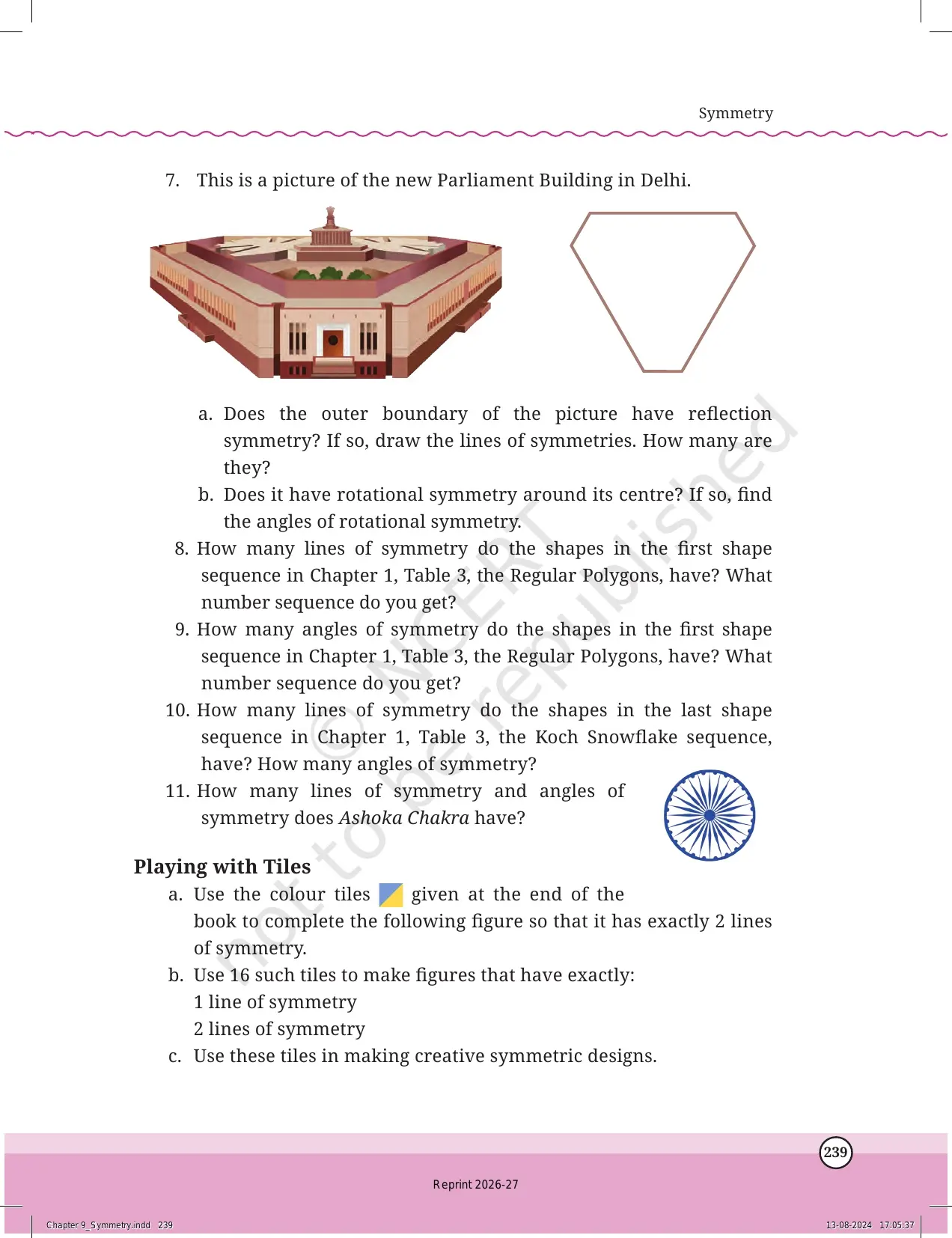
The PDF begins with balanced designs and familiar objects. Students observe whether a shape can be divided into two matching parts, then test the idea through paper folding, drawing, and tracing.
- A symmetry line works like a fold line for matching halves.
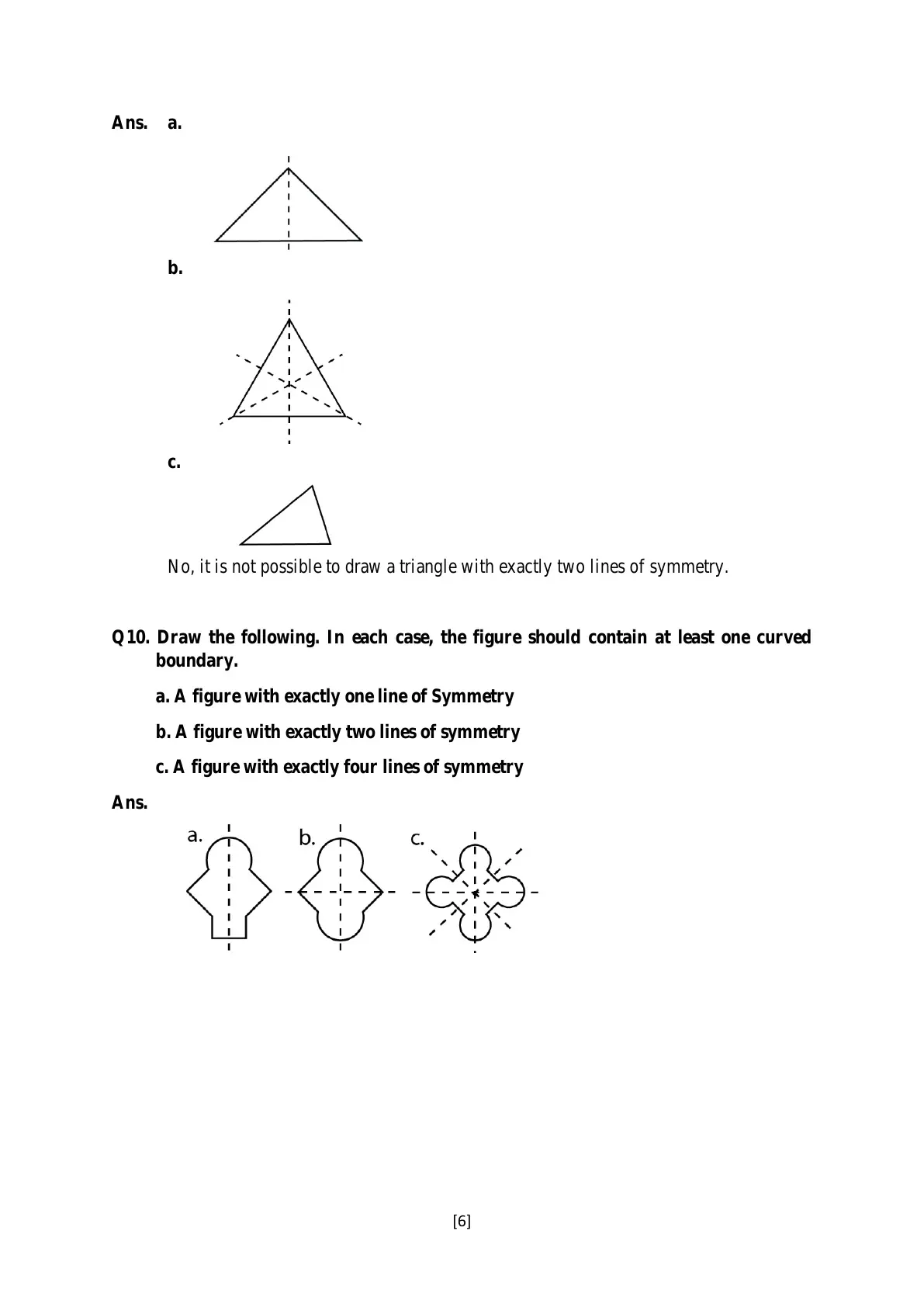
- Some figures have one line of symmetry, while some have many.
- Guessing is not enough. Students should test each possible fold.
Symmetry Class 6 Video Recap
Source: Magnet Brains on YouTube
Line Symmetry in Class 6 Mathematics Chapter 9
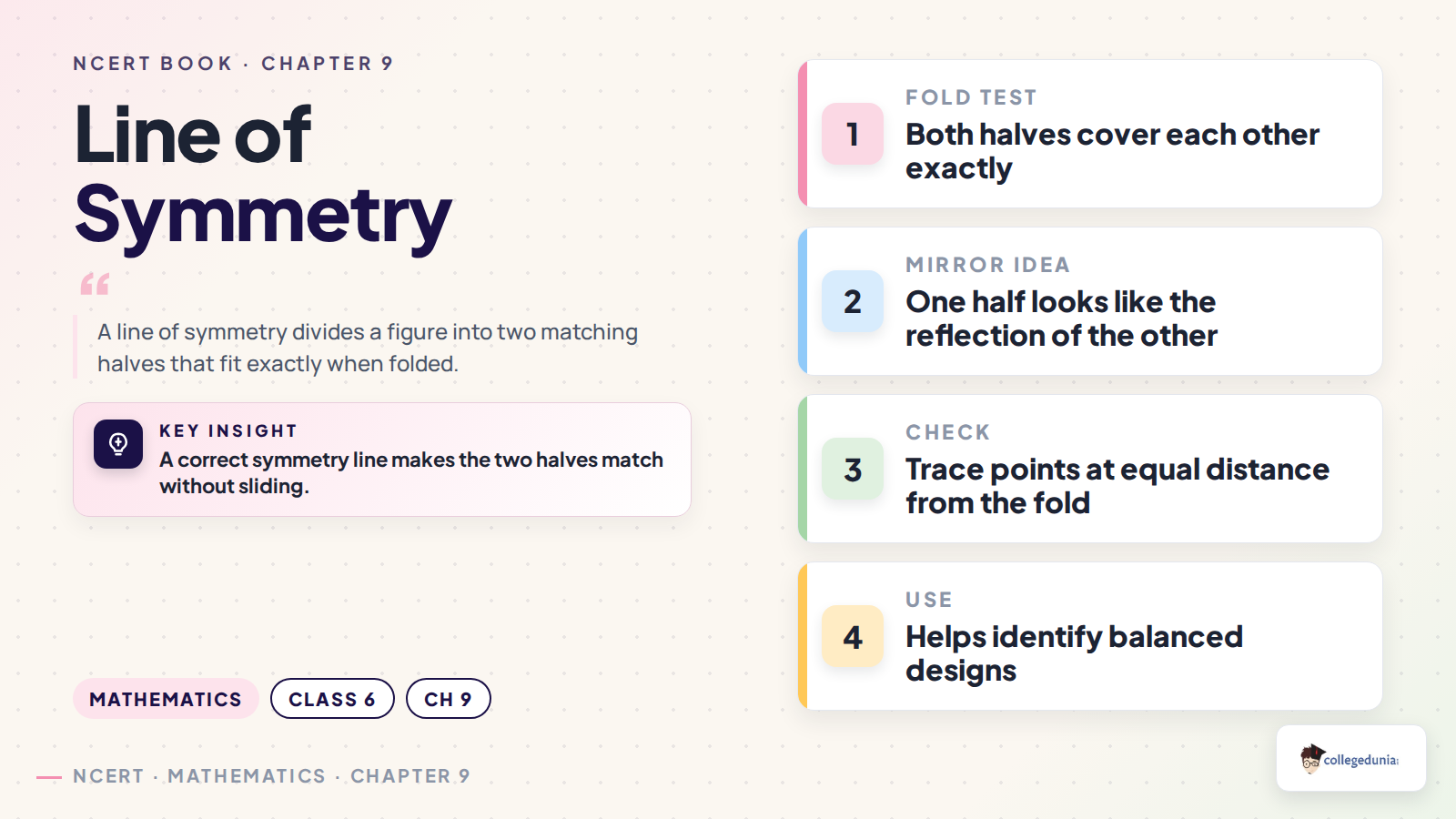
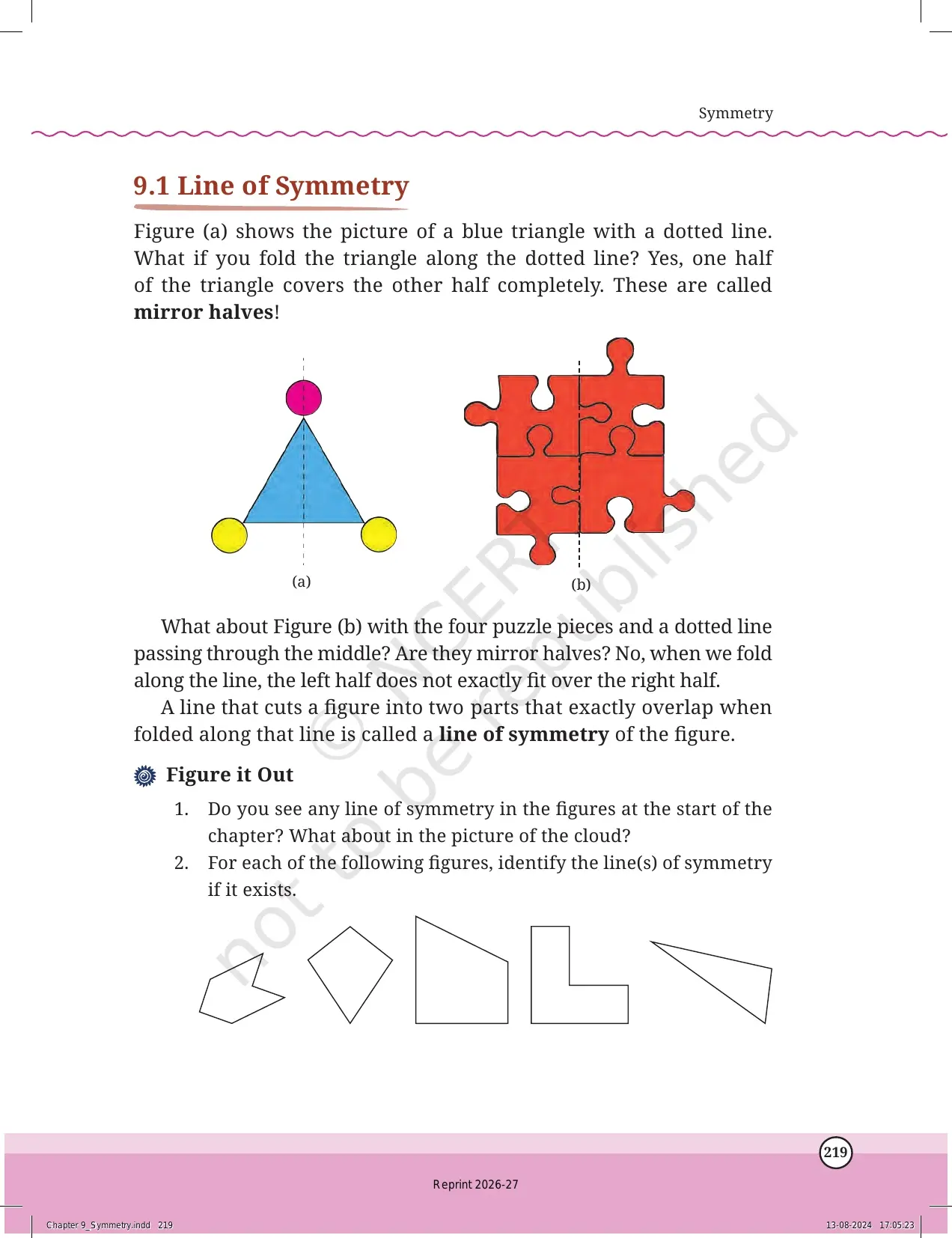
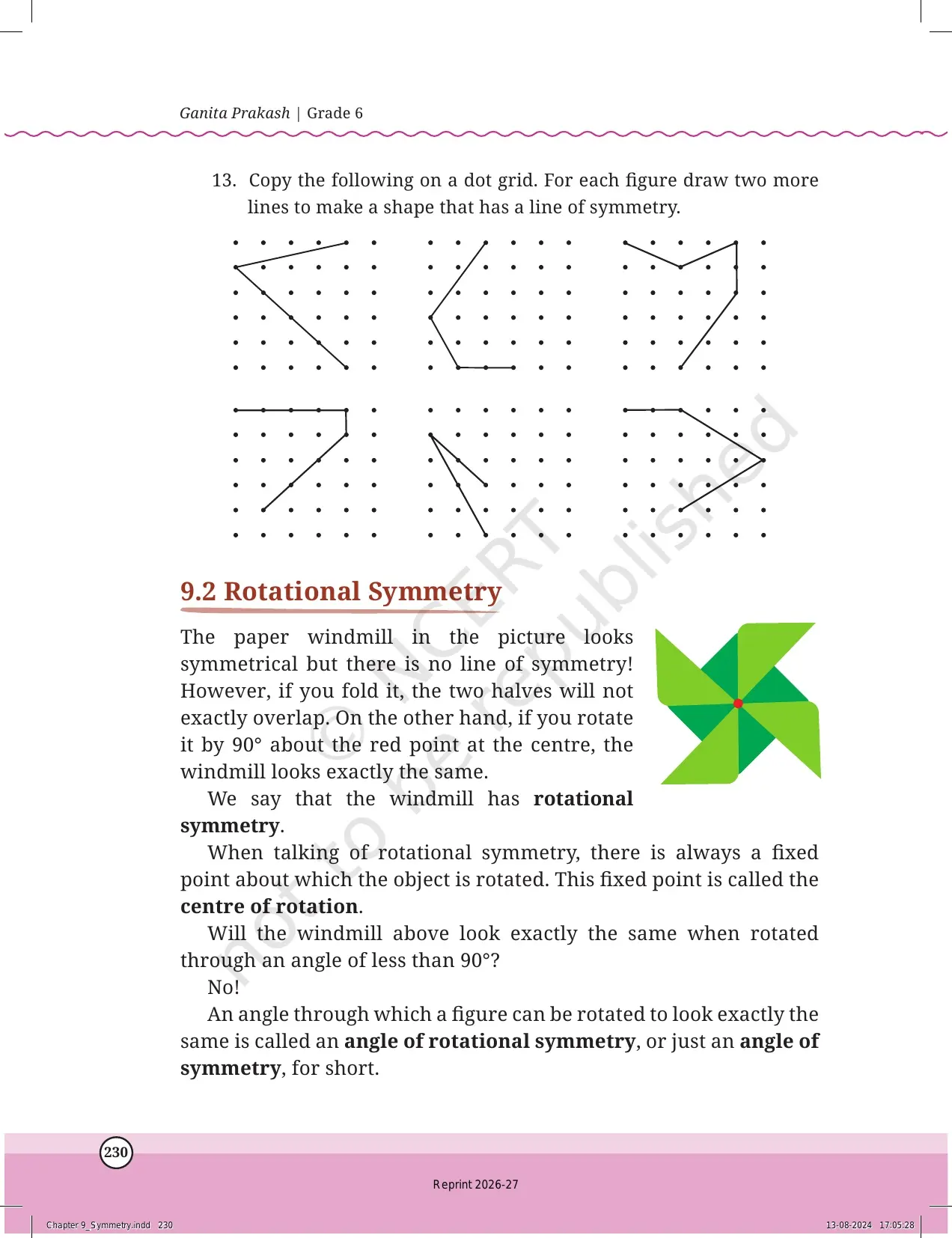
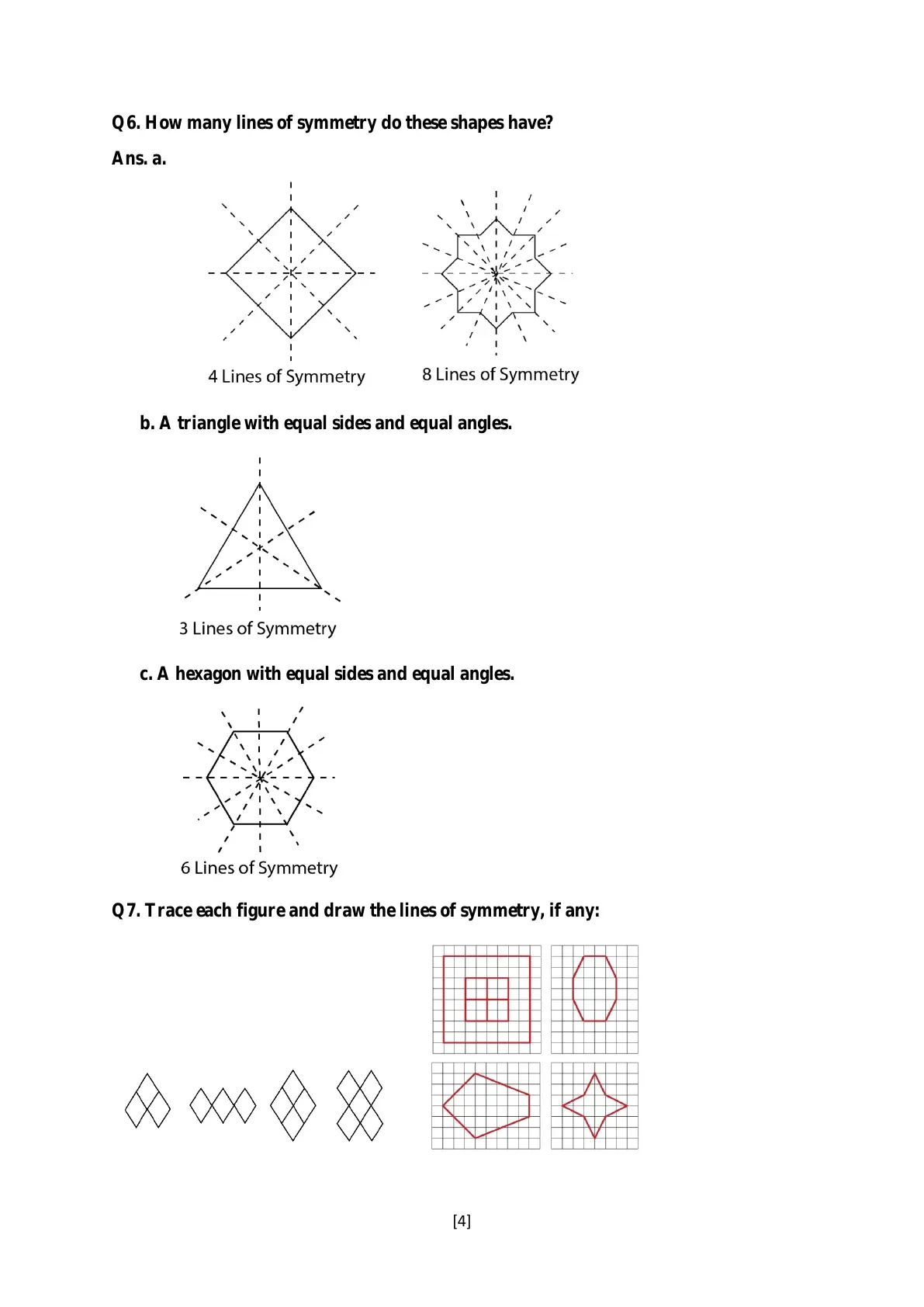
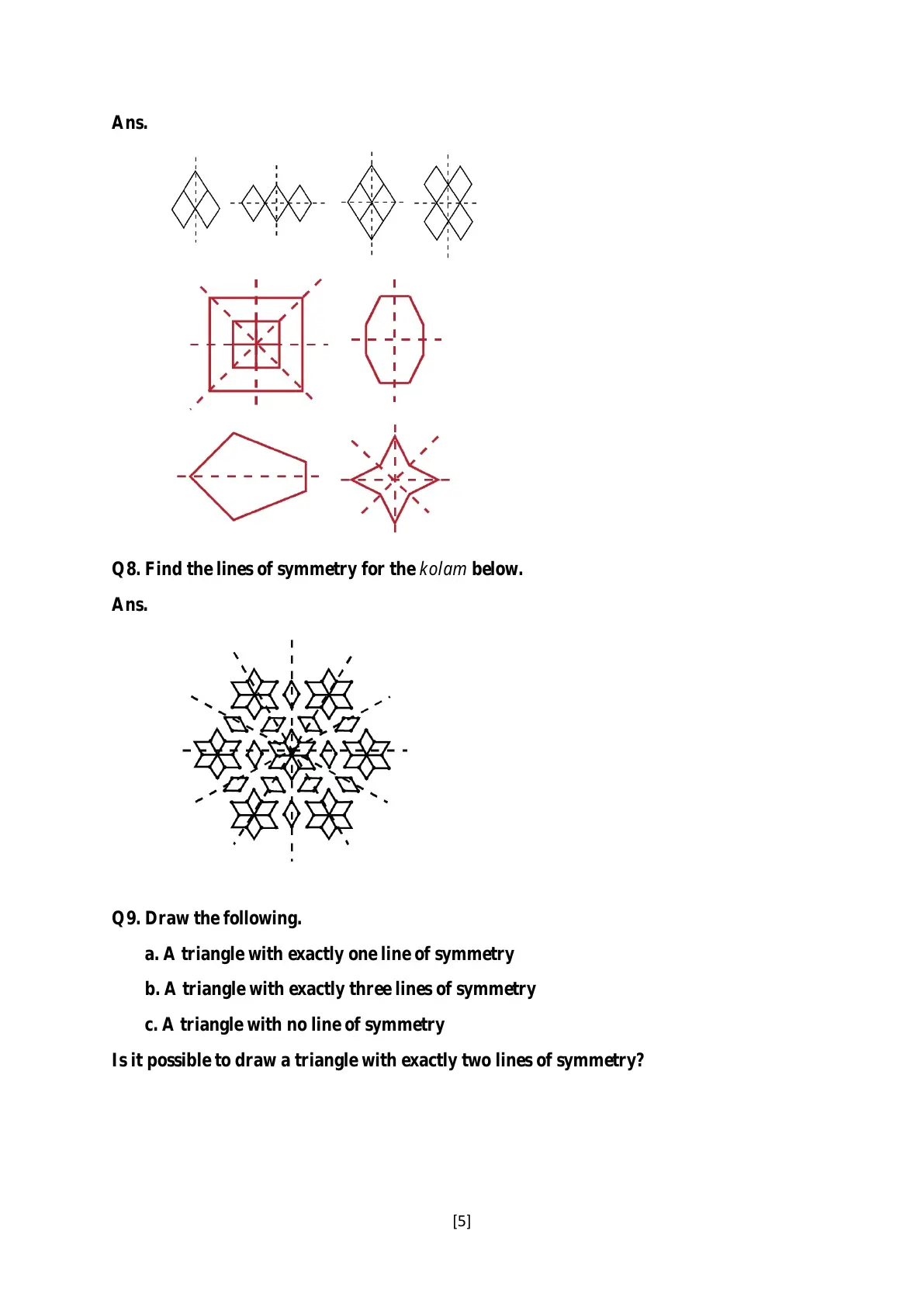
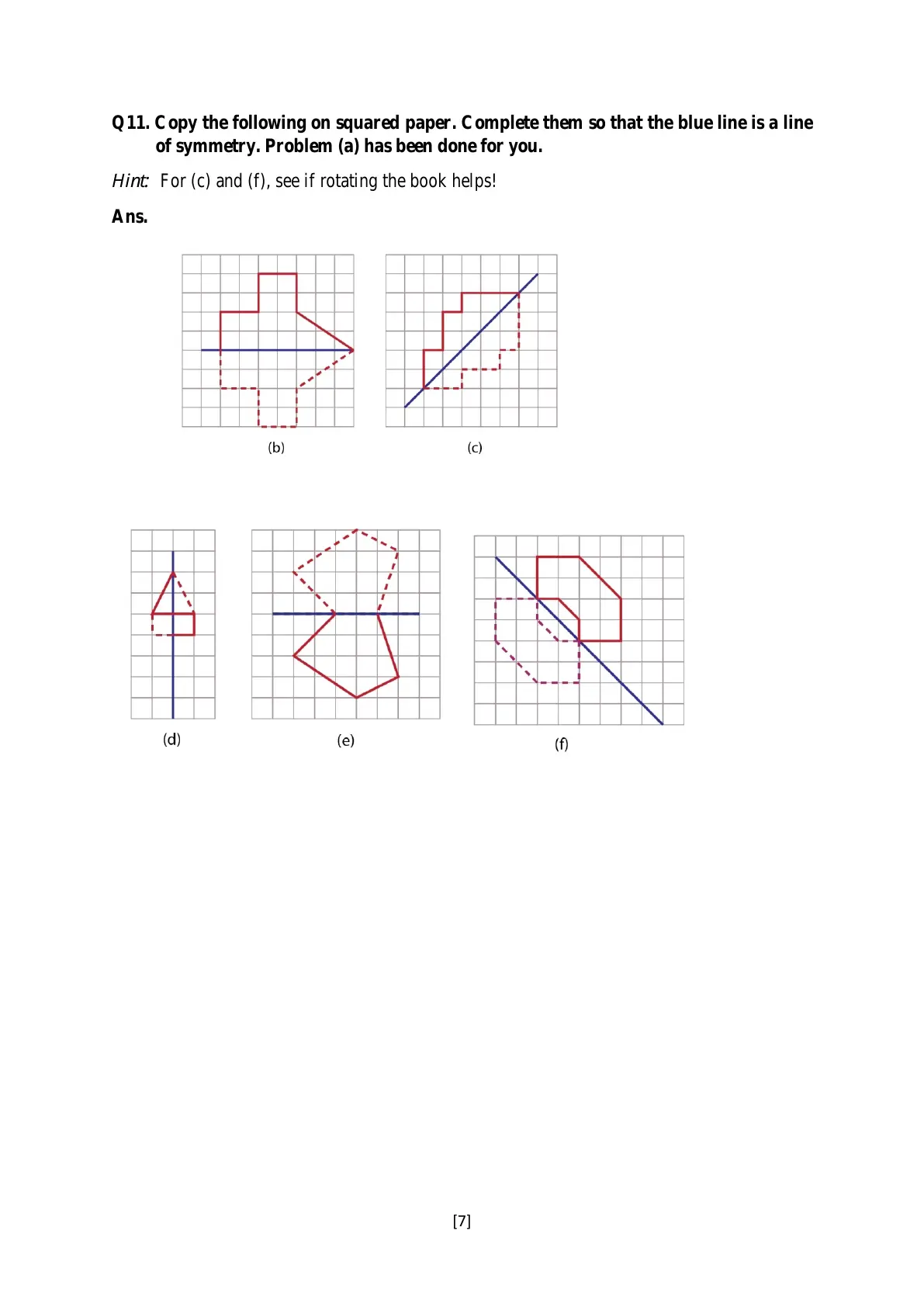
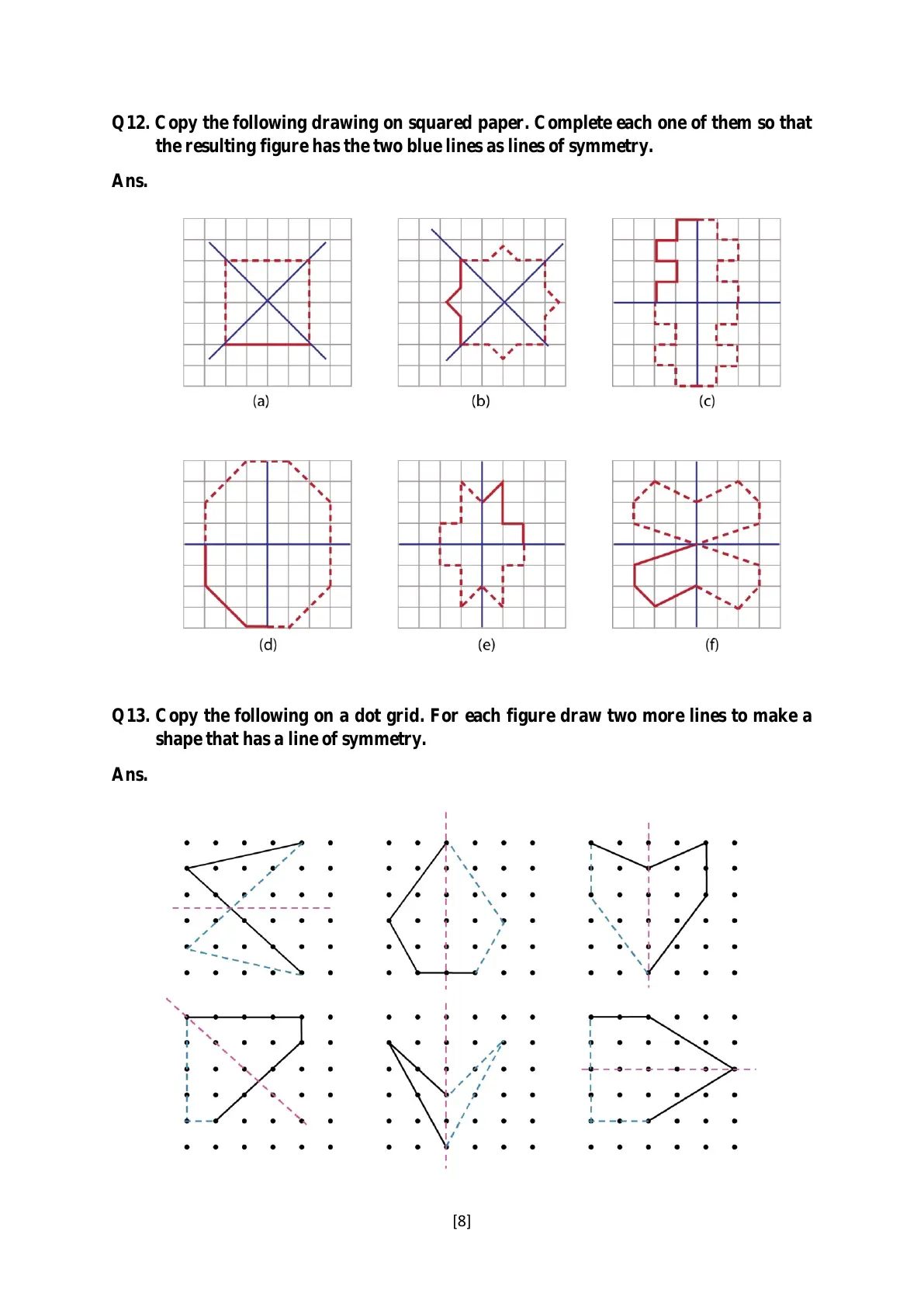
A line of symmetry divides a figure into two parts that match exactly. In the PDF, students use folding and visual checking to decide whether a line is correct.
| Idea | Meaning in Chapter 9 | Student Check |
|---|---|---|
| Symmetry line | The fold line that creates two matching halves. | Do both halves cover each other? |
| Mirror halves | Two sides that look like reflections of each other. | Are matching points equally far from the line? |
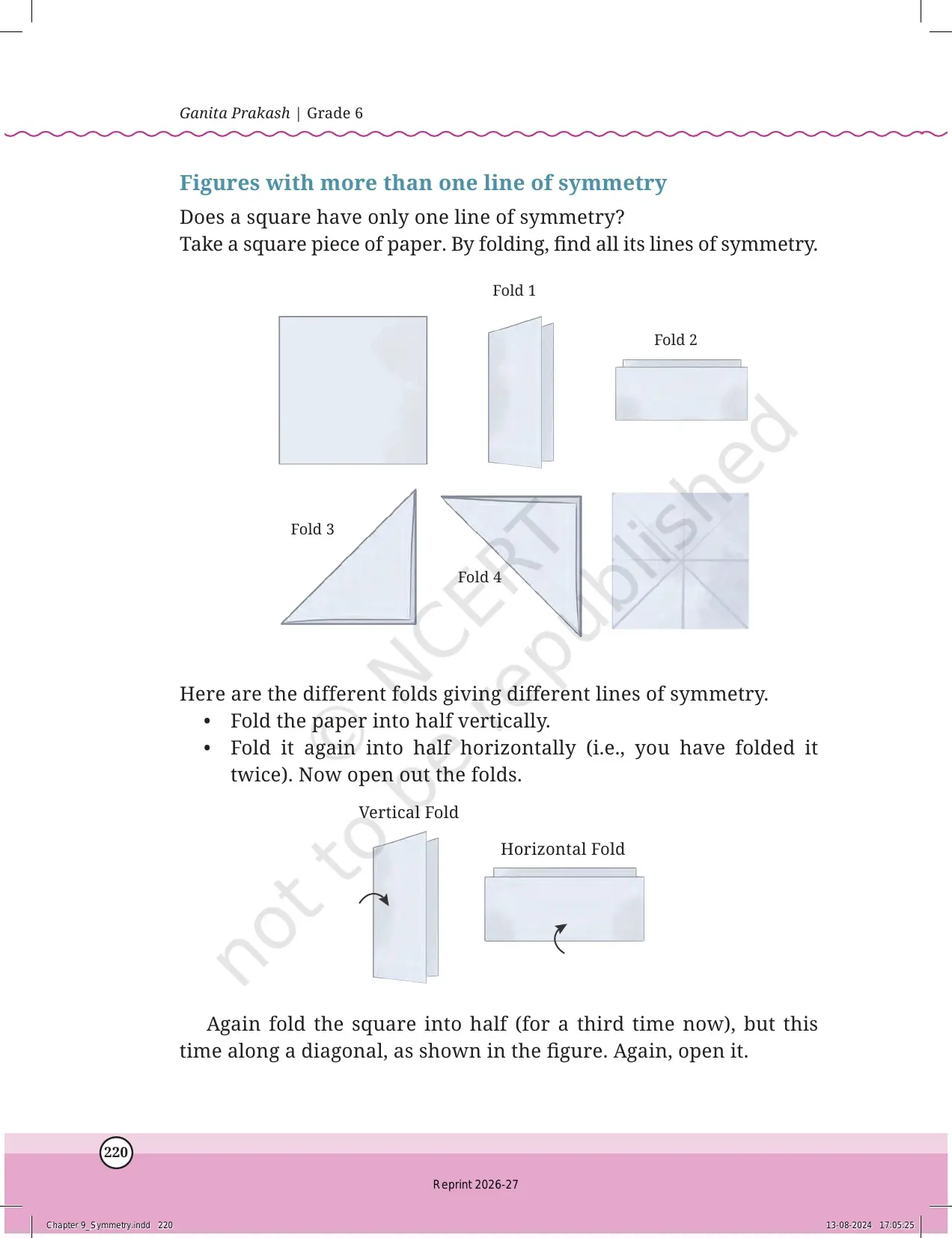
| Multiple lines | Some shapes can be folded correctly in more than one way. | Can another fold also match? |
How to Test Symmetry in the PDF
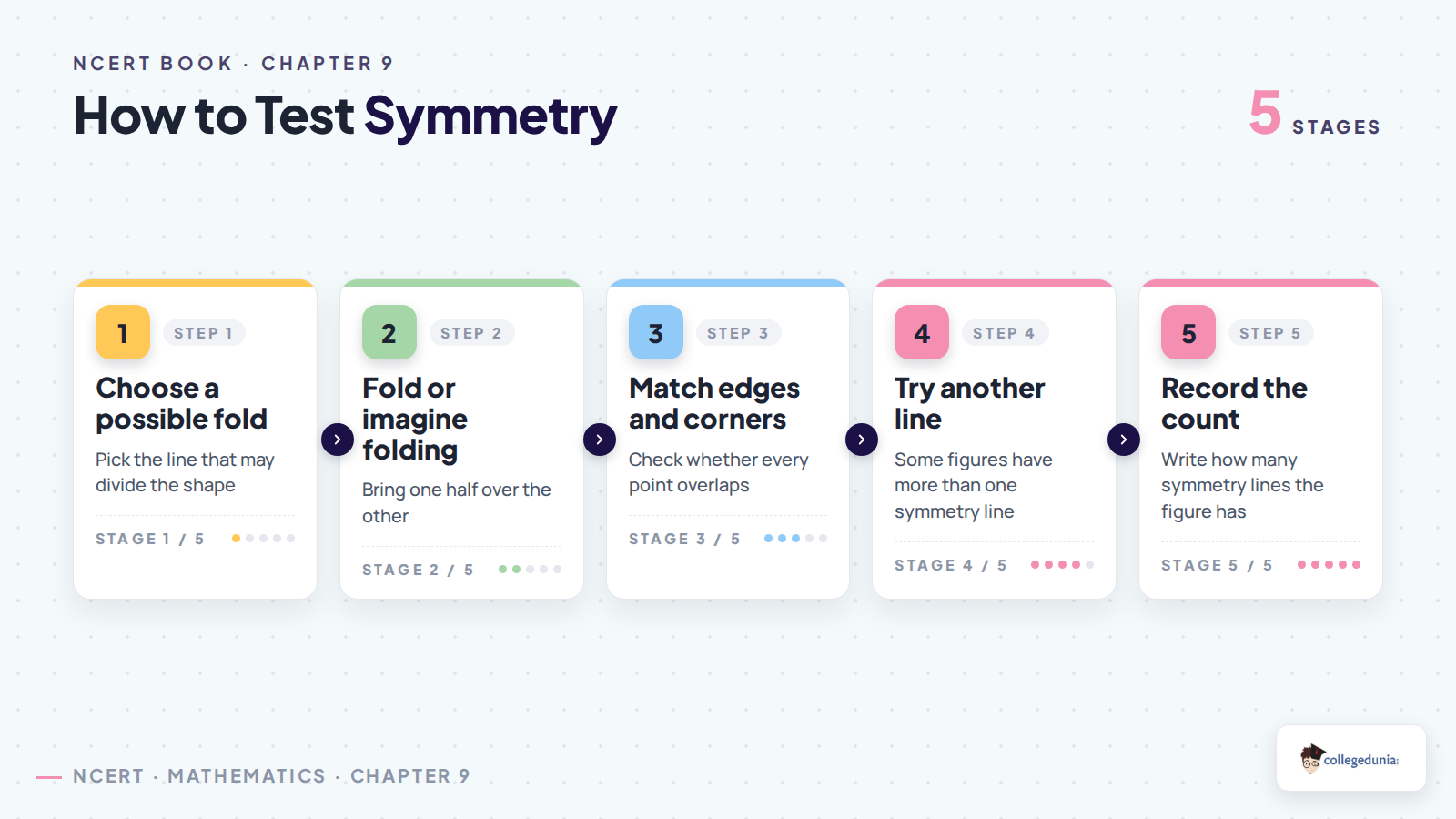
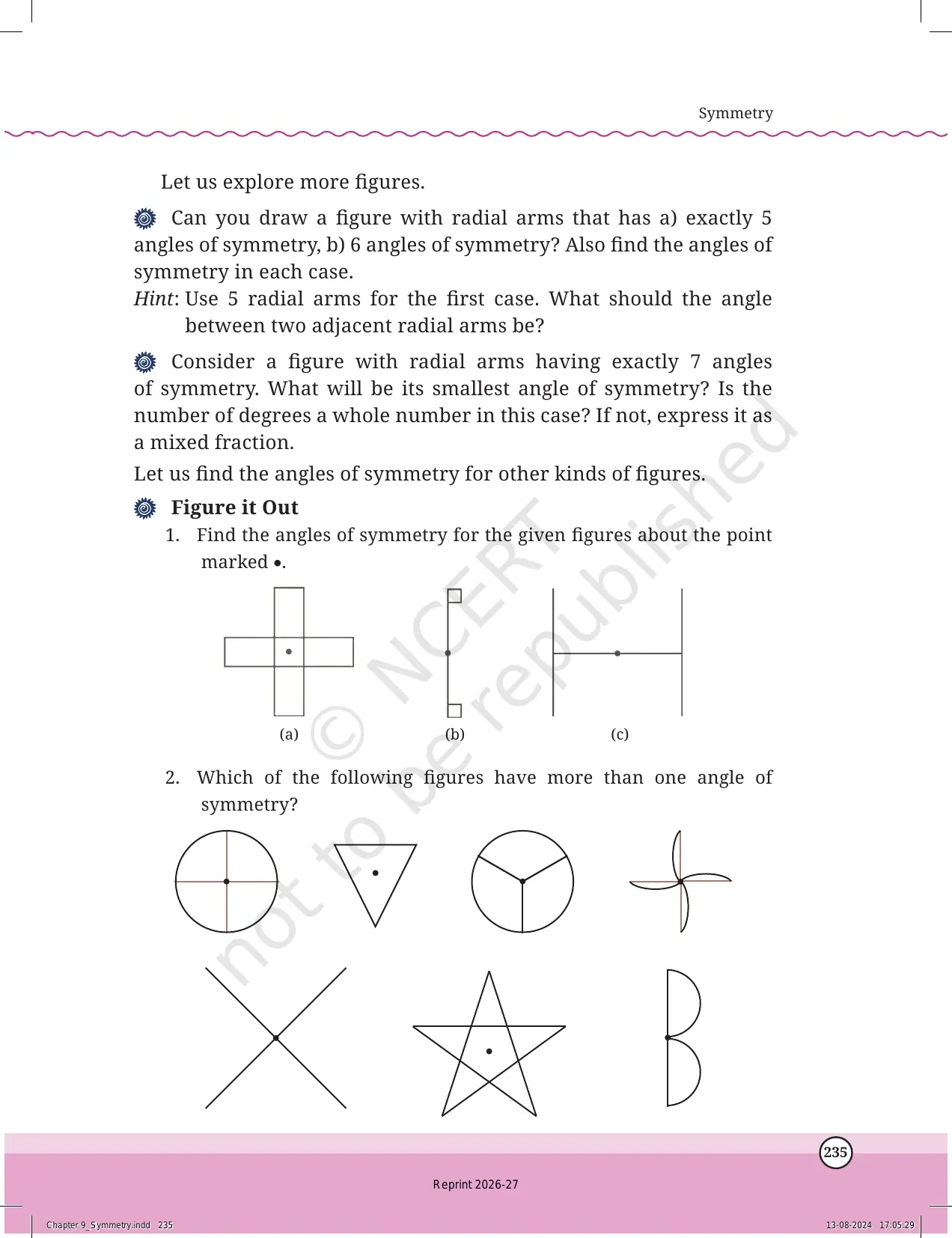
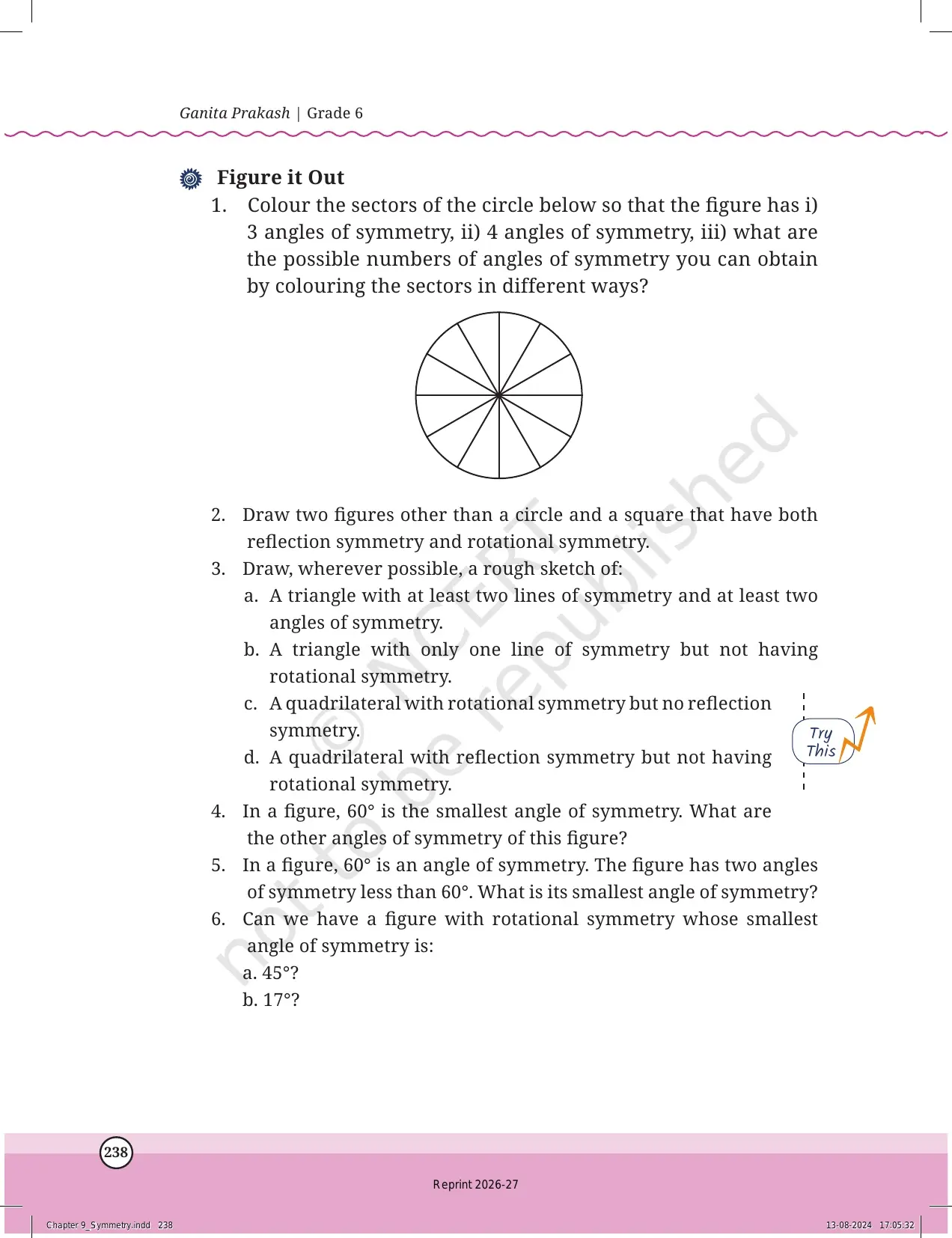
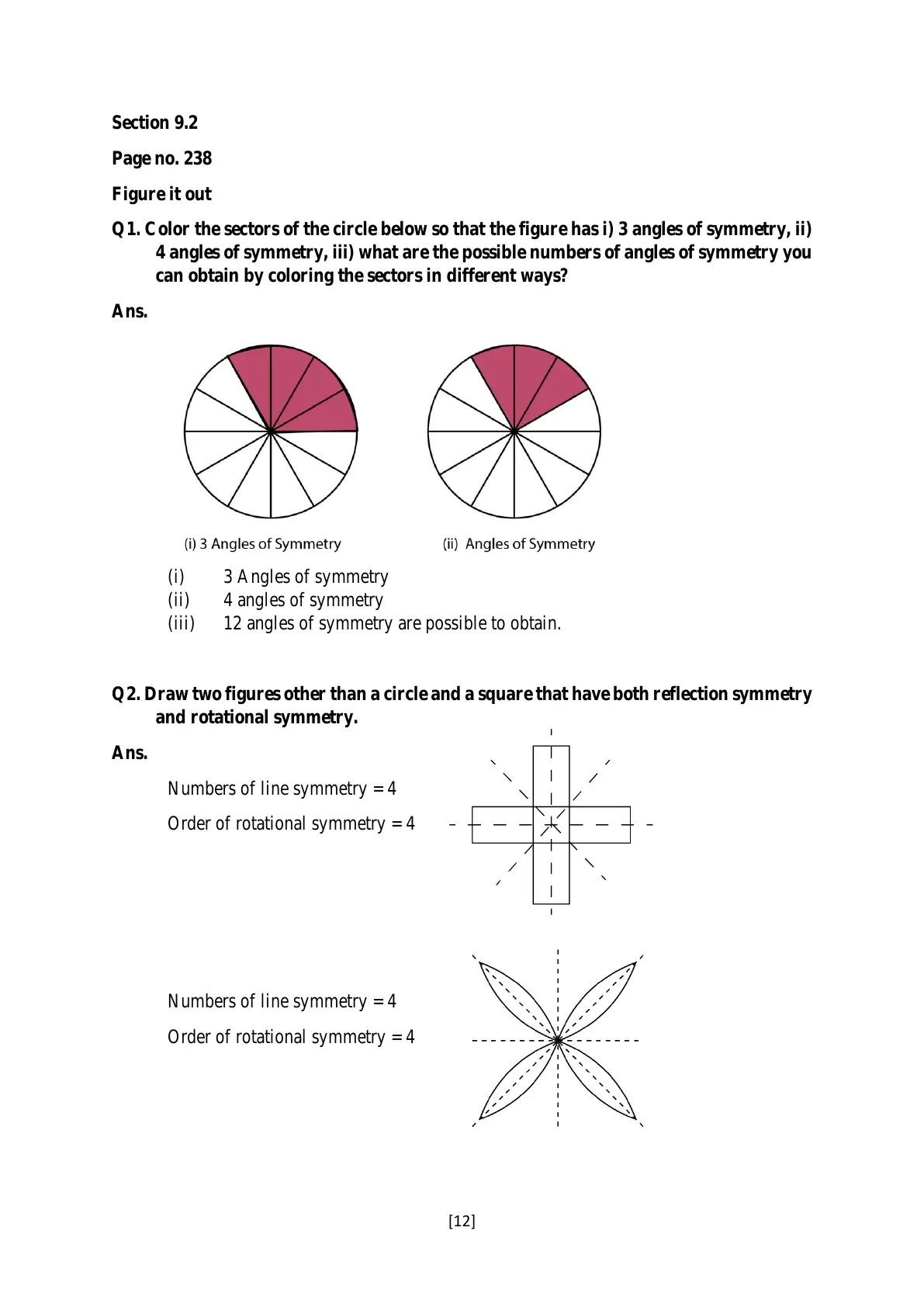
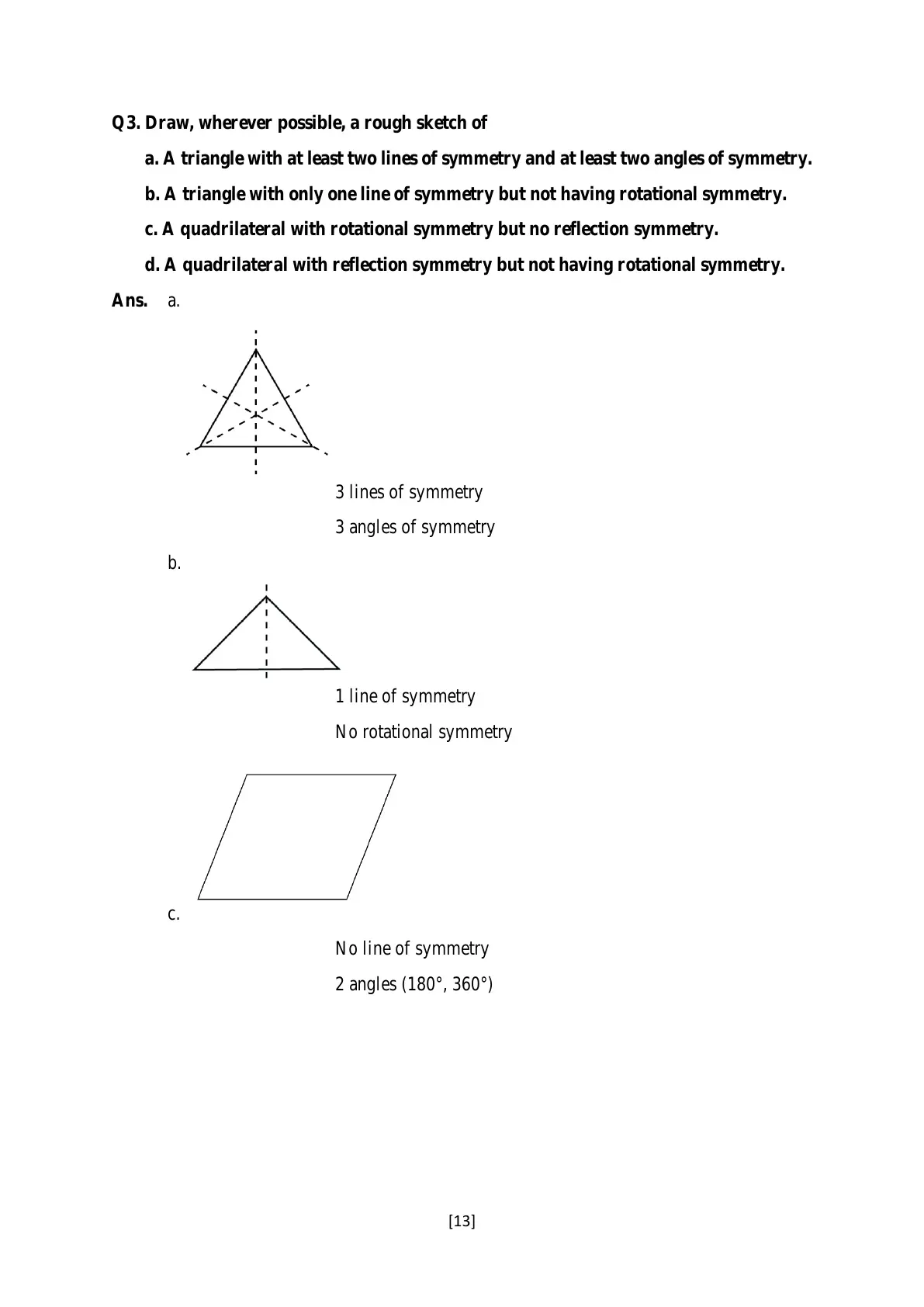
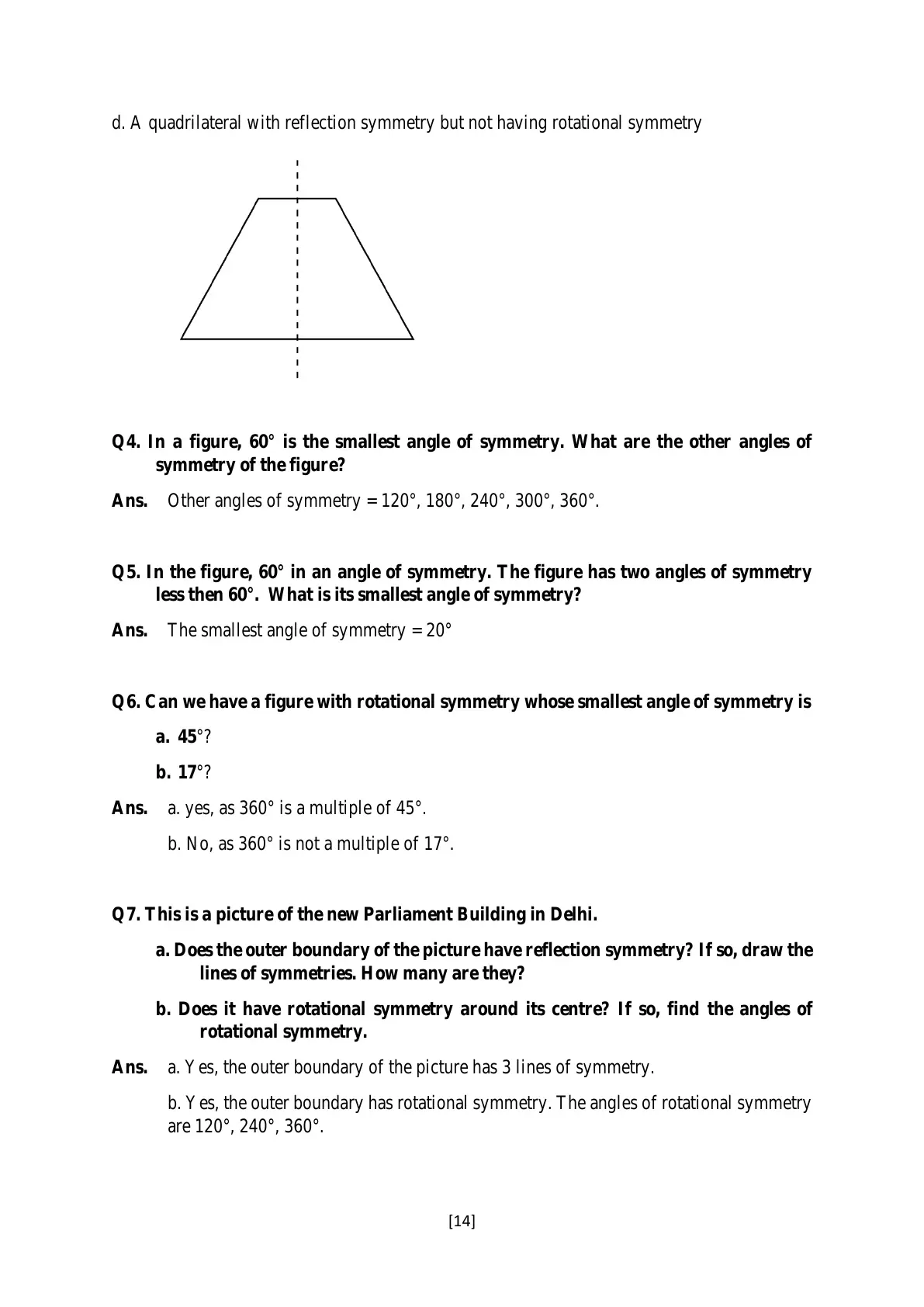
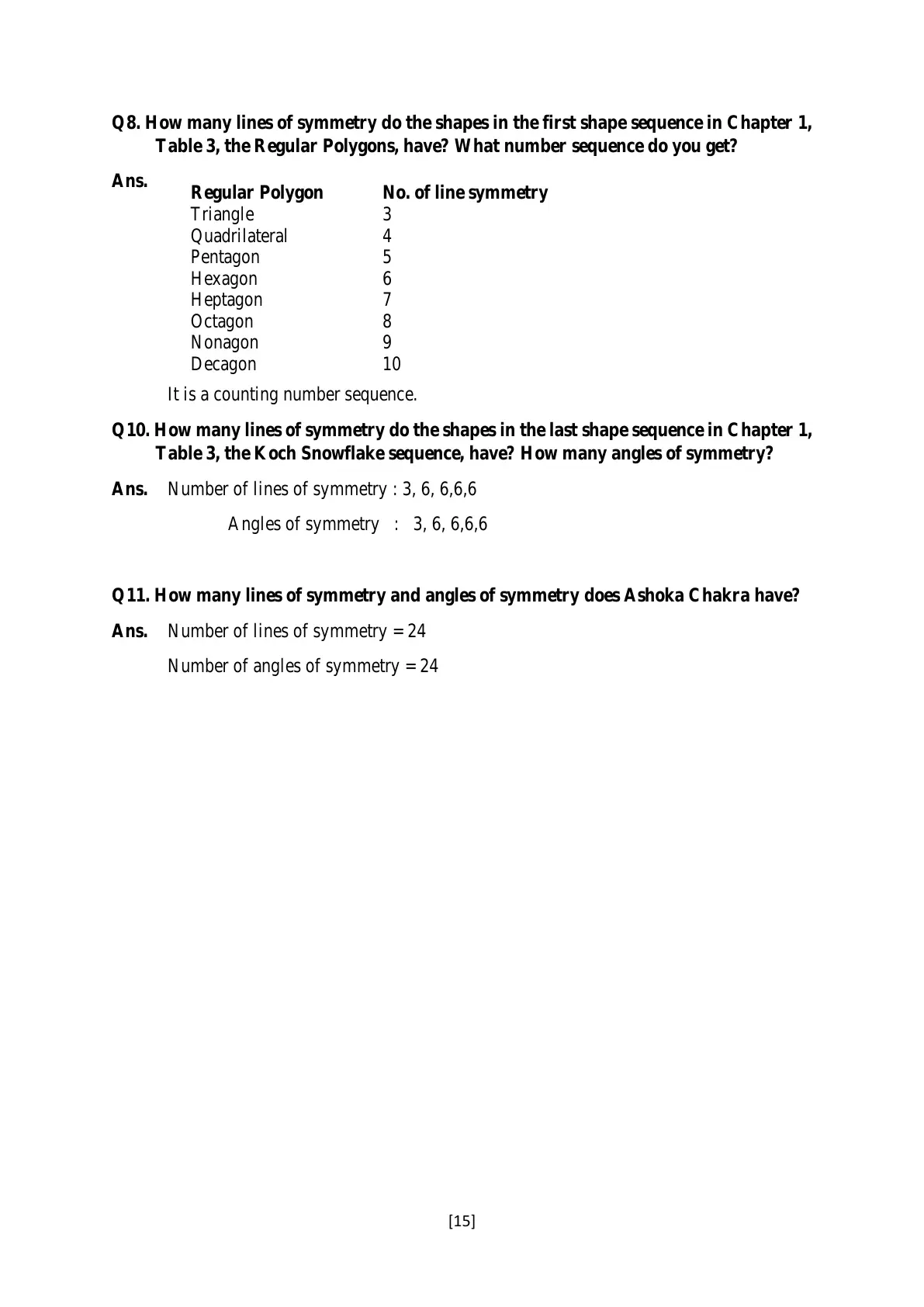
The chapter asks students to check symmetry actively. A learner should choose a possible line, fold or imagine the fold, match the edges, and then count the valid lines.
- Start with a simple vertical, horizontal, or diagonal line.
- Use tracing paper when the figure is hard to fold.
- Compare corners, edges, and distances from the fold line.
- A figure may have zero, one, two, or many symmetry lines.
Rotational Symmetry in Class 6 Symmetry
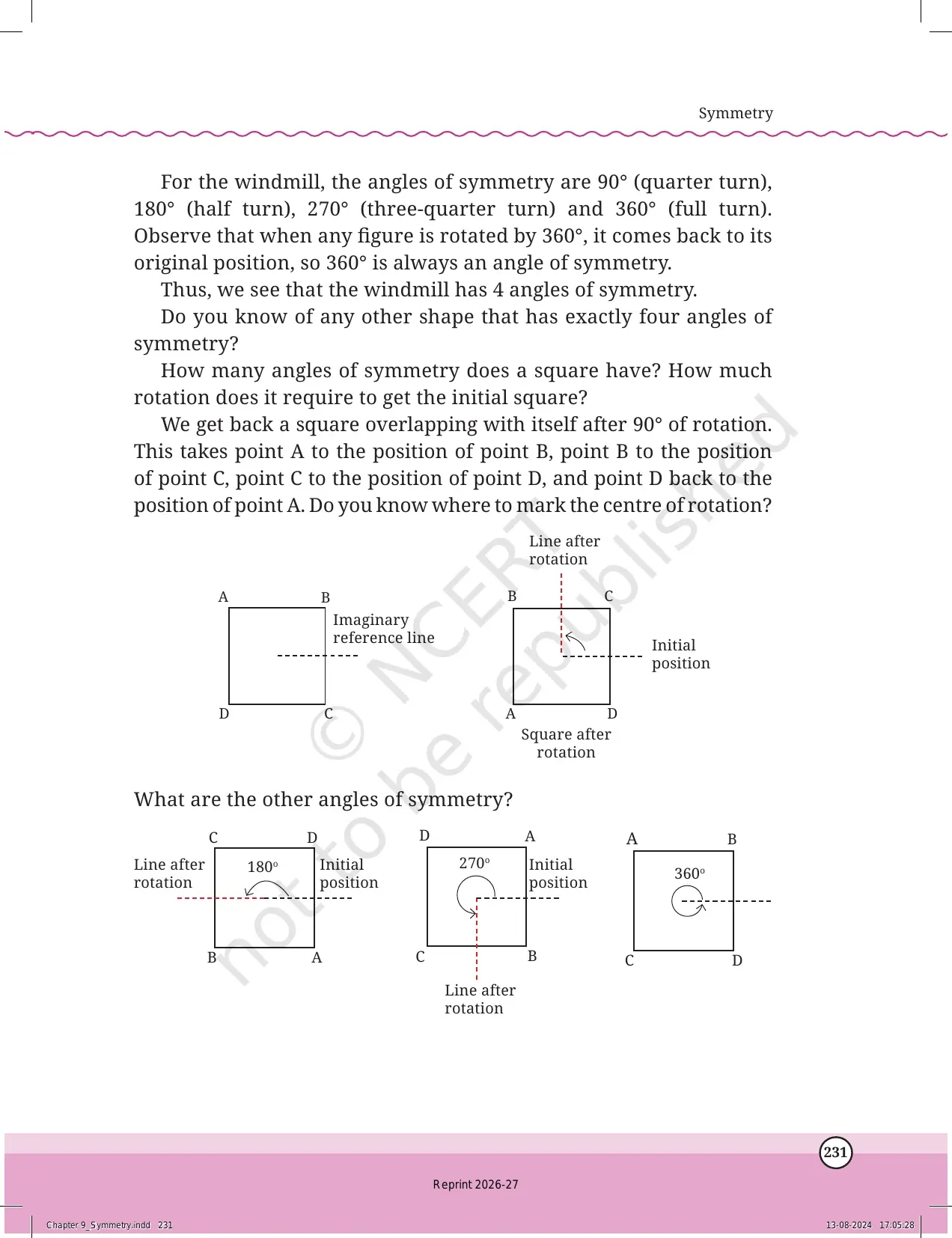
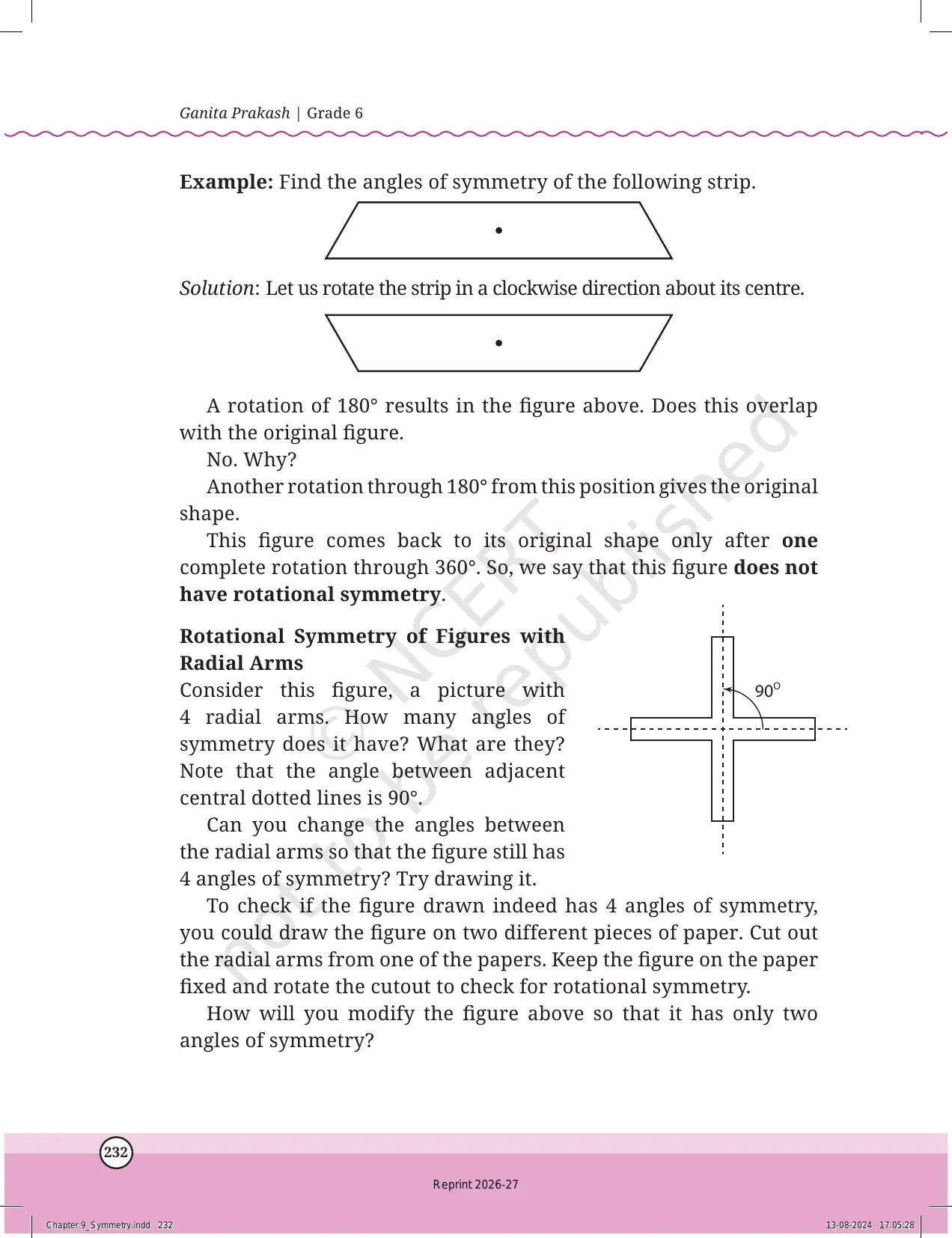
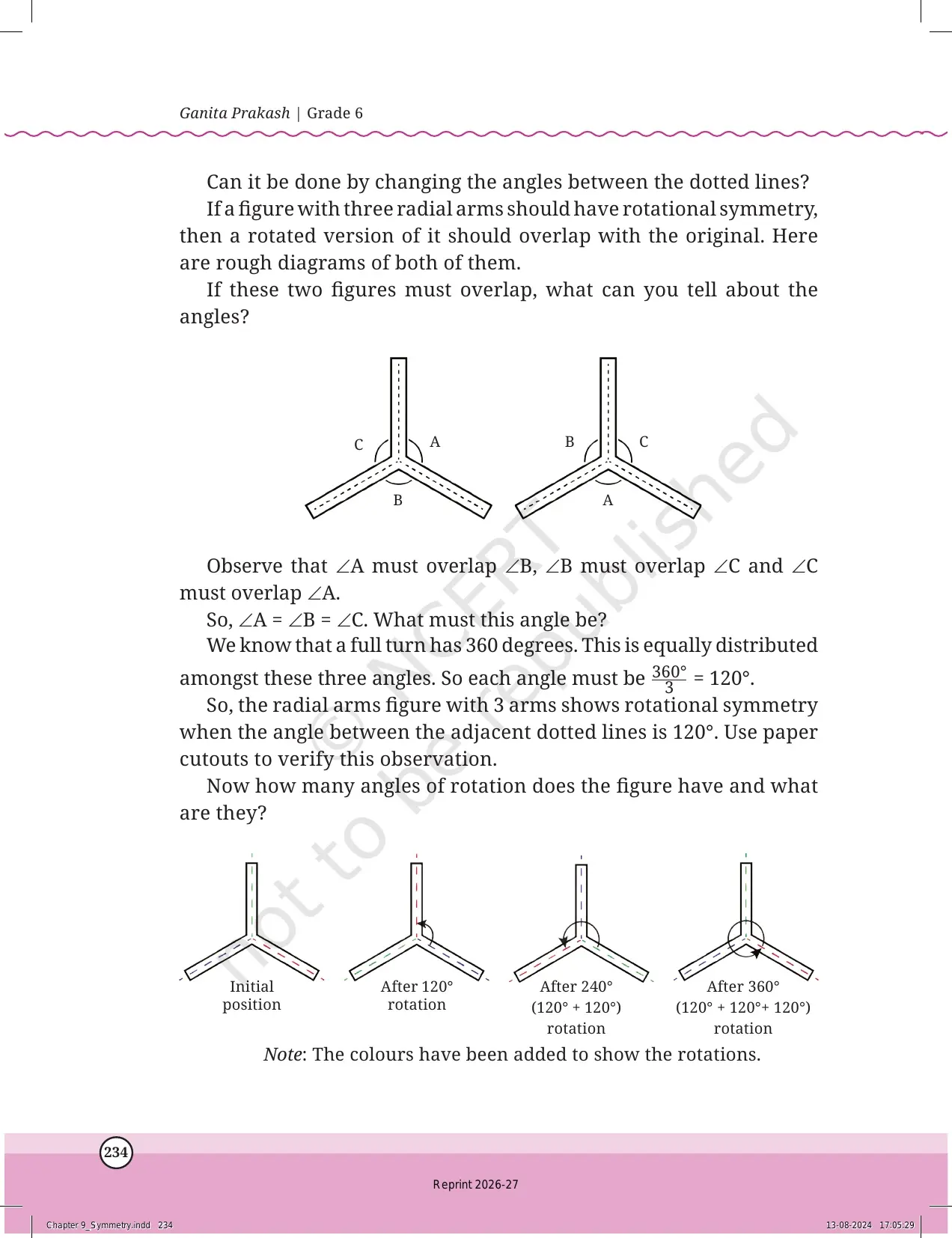
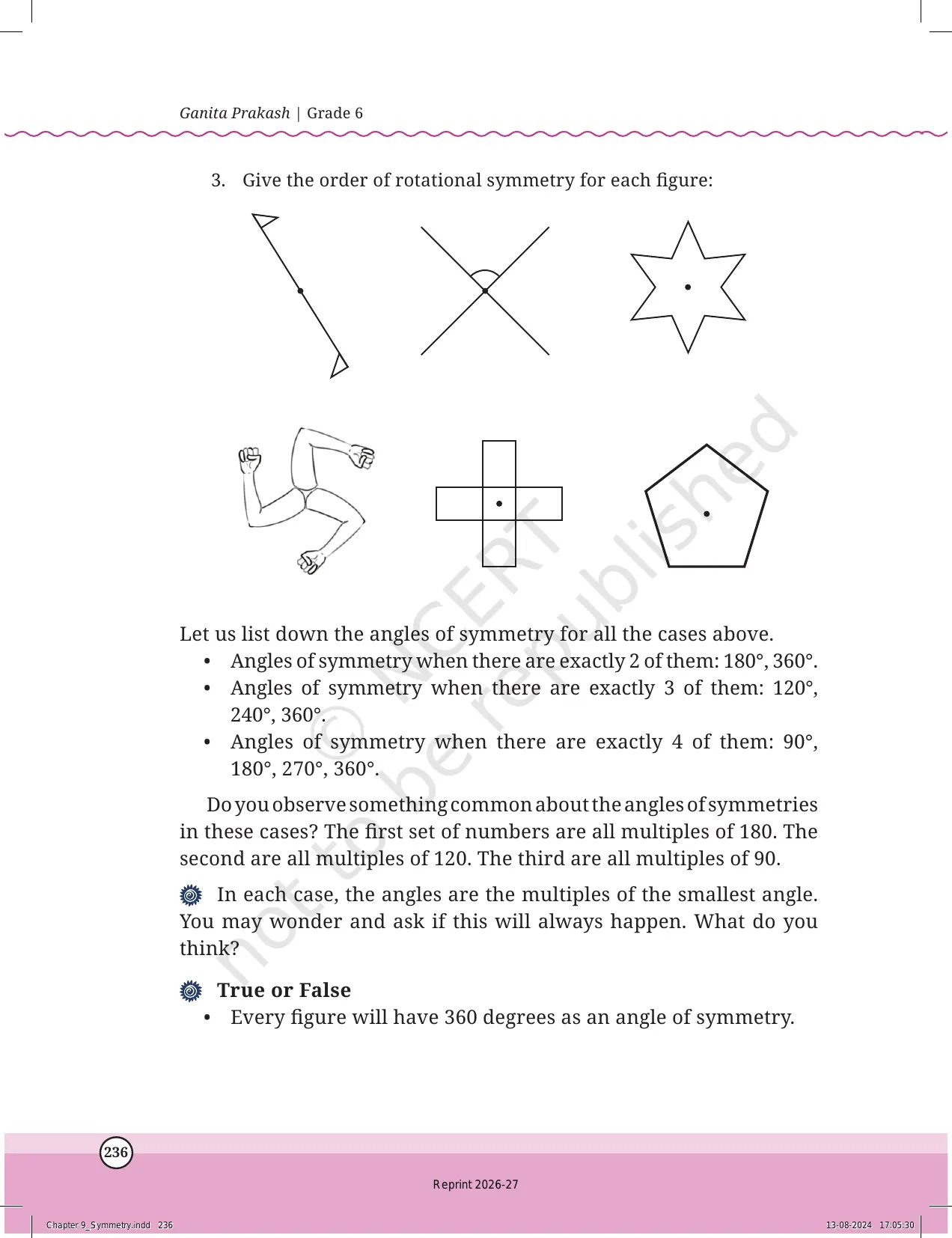
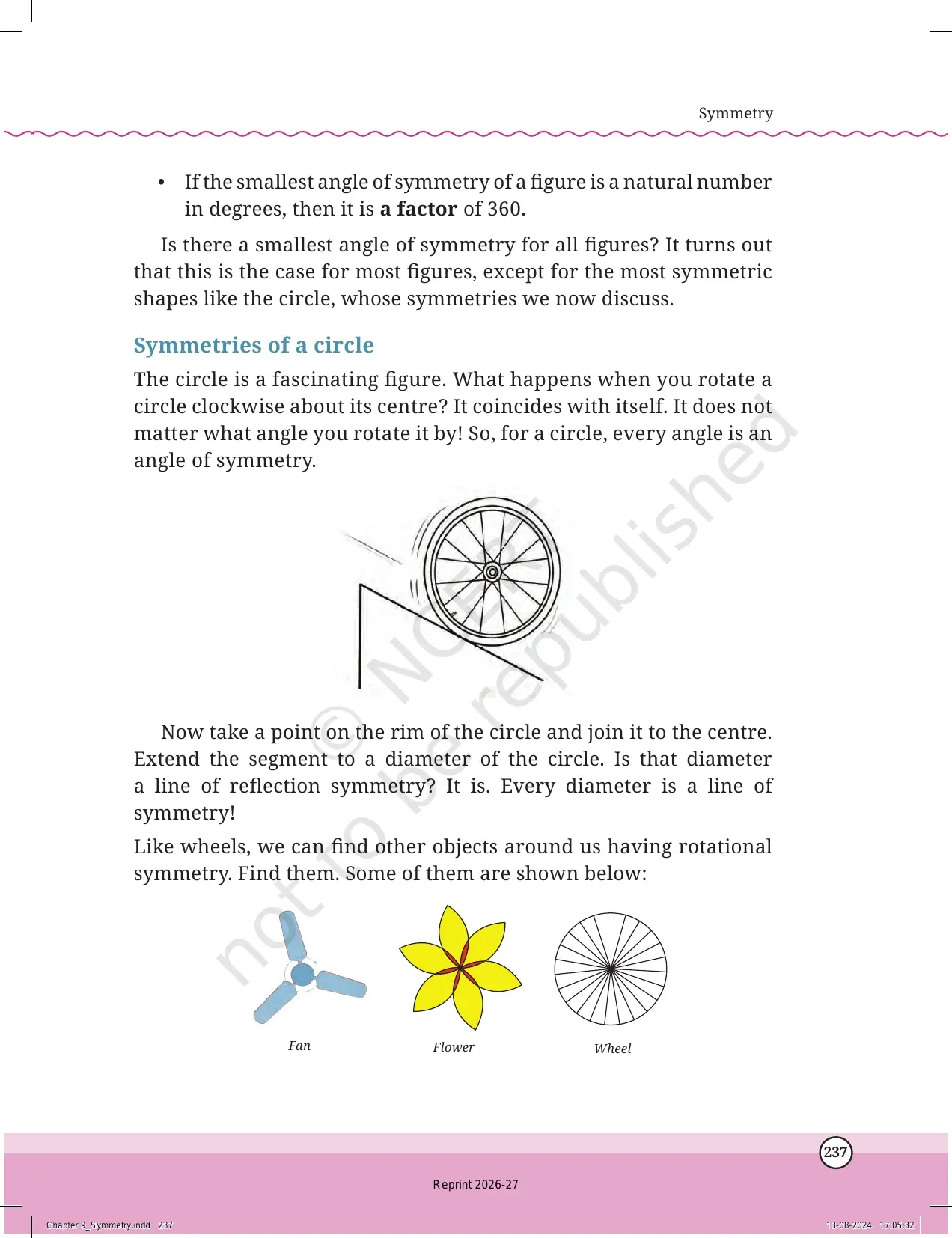
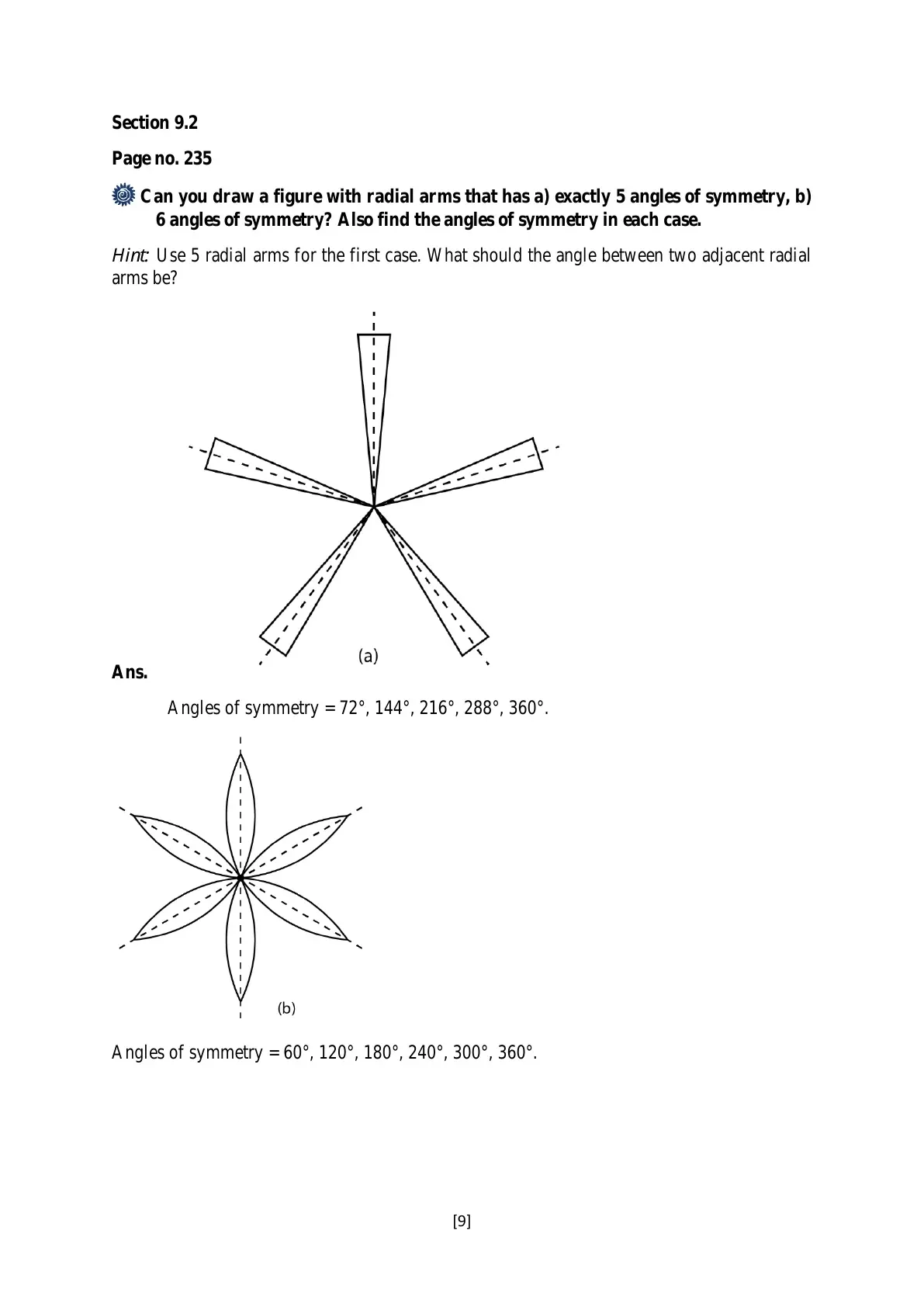
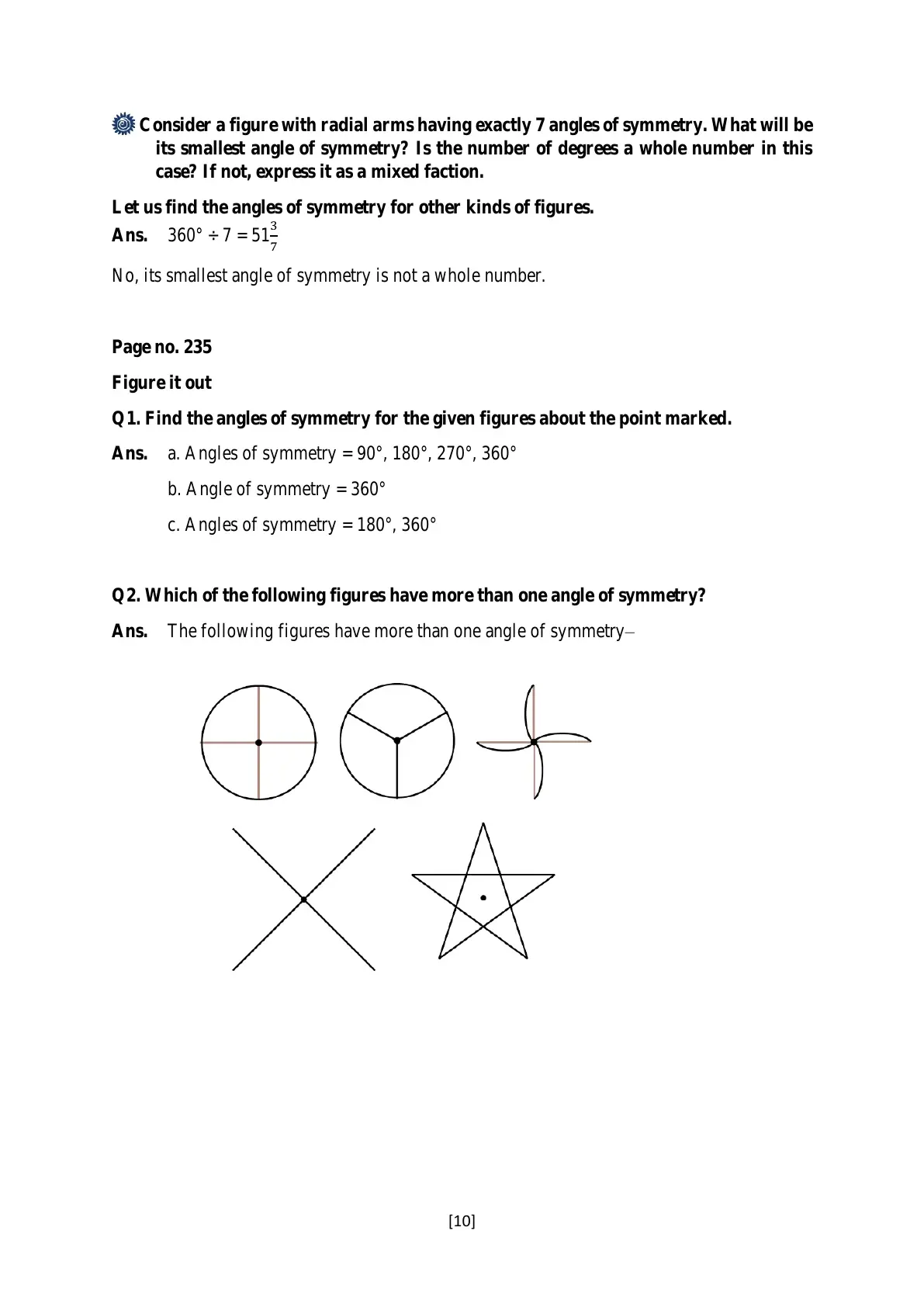
The later part of the PDF introduces rotation. Students turn a figure around a fixed point and check whether it looks the same before one complete turn is finished.
| Feature | What to Observe | Example Check |
|---|---|---|
| Turn | The figure is rotated around a centre point. | Does it match after a quarter or half turn? |
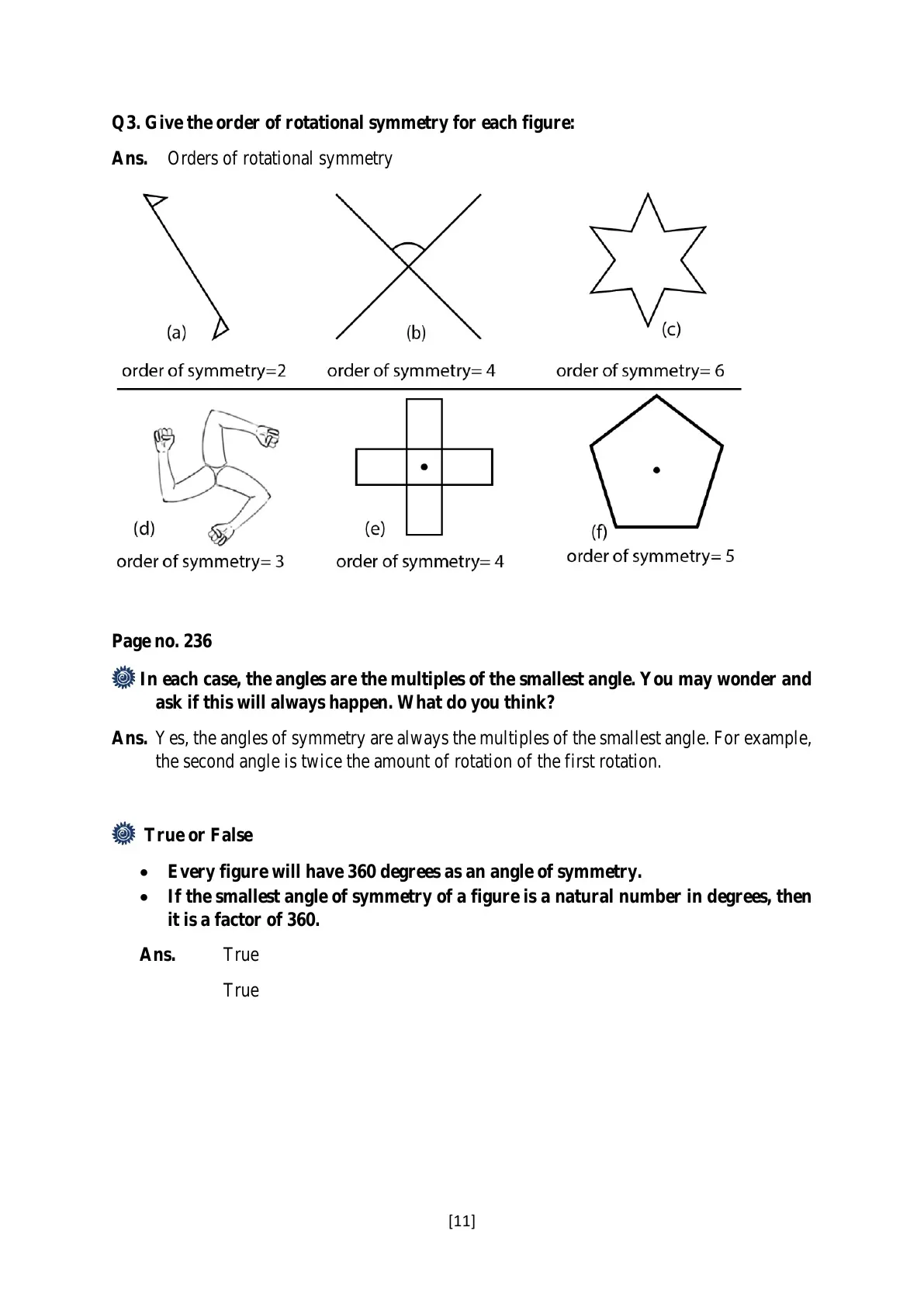
| Order | The number of times a figure matches in one full turn. | A square matches four times. |
| Design use | Patterns in rangoli, tiles, flowers, and wheels often repeat by turns. | Can the same part repeat evenly? |
How to Use the Class 6 Mathematics Chapter 9 PDF
Keep paper, a pencil, tracing sheet, and ruler beside the PDF. Symmetry practice becomes clearer when students draw the figure once, fold or trace it, and then write the number of symmetry lines.
- Read the activity first and mark the possible fold line lightly.
- Check one line at a time instead of marking many at once.
- For rotational symmetry, turn the shape slowly and count each match.
- Use the linked NCERT Solutions after trying the Figure it Out tasks once.
Symmetry Class 6 Chapter Links
Use these linked resources with the official PDF. They help students move from reading the chapter to solving and revising it.
| Resource | Use It For |
|---|---|
| Symmetry Class 6 NCERT Solutions | Step-by-step answers after reading the chapter. |
| Symmetry Class 6 Handwritten Notes | Quick revision of symmetry lines, reflections, and turns. |
NCERT Class 6 Mathematics Book Chapter PDFs
The Ganita Prakash textbook has 10 chapters. Students can move from Symmetry to other chapter PDFs as each page goes live.
| Chapter | NCERT Book PDF |
|---|---|
| Chapter 1 | Patterns in Mathematics Class 6 NCERT Book PDF |
| Chapter 2 | Lines and Angles Class 6 NCERT Book PDF |
| Chapter 3 | Number Play Class 6 NCERT Book PDF |
| Chapter 5 | Prime Time Class 6 NCERT Book PDF |
| Chapter 6 | Perimeter and Area Class 6 NCERT Book PDF |
| Chapter 7 | Fractions Class 6 NCERT Book PDF |
| Chapter 8 | Playing with Constructions Class 6 NCERT Book PDF |
| Chapter 9 | Symmetry Class 6 NCERT Book PDF |
| Chapter 10 | The Other Side of Zero Class 6 NCERT Book PDF |
Symmetry Class 6 NCERT Book PDF FAQs
Ques. Is the Class 6 Mathematics Chapter 9 Symmetry PDF official?
Ans. Yes. This page hosts the official NCERT Ganita Prakash Chapter 9 PDF for the 2026-27 session.
Ques. How many pages are in the Symmetry Class 6 PDF?
Ans. The chapter PDF has 40 pages. It covers line symmetry, mirror halves, rotational symmetry, and symmetry in patterns.
Ques. What is the main idea of Symmetry?
Ans. The chapter teaches students to identify matching halves, test fold lines, and understand when a design stays the same after a turn.
Ques. Does Chapter 9 explain rotational symmetry?
Ans. Yes. Students learn how a figure can match itself after a turn around a fixed point.
Ques. Where can I get answers for the Symmetry questions?
Ans. Use the linked NCERT Solutions page after trying the PDF tasks once. It gives step-by-step answers for the chapter activities.



Comments