




Climates of India is chapter 3 of Exploring Society: India and Beyond Part 1. This class 7 social science book pdf chapter 3 Climates of India is the official NCERT file your school follows in 2026-27. Download it to read, revise and work the exercises straight from the source.
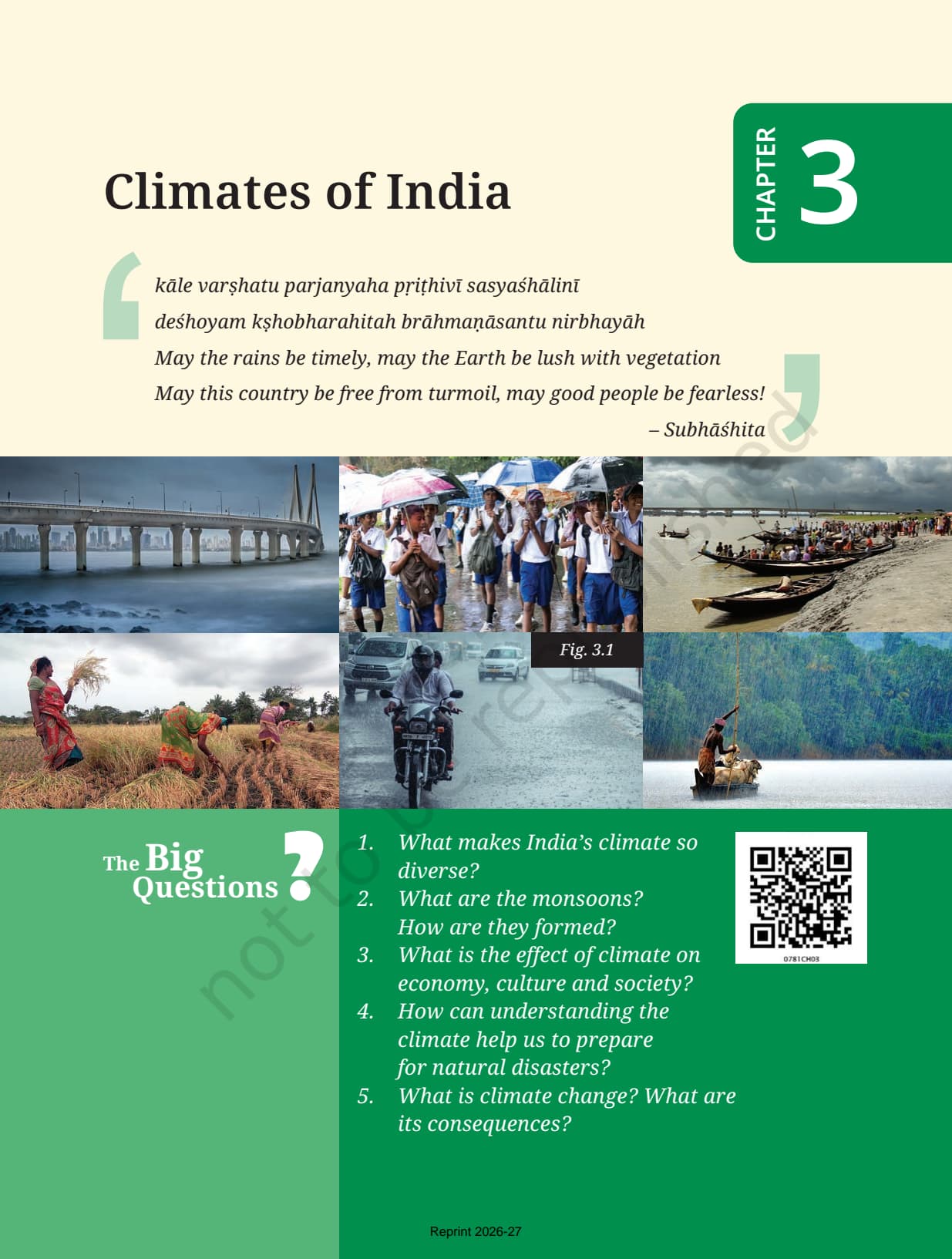
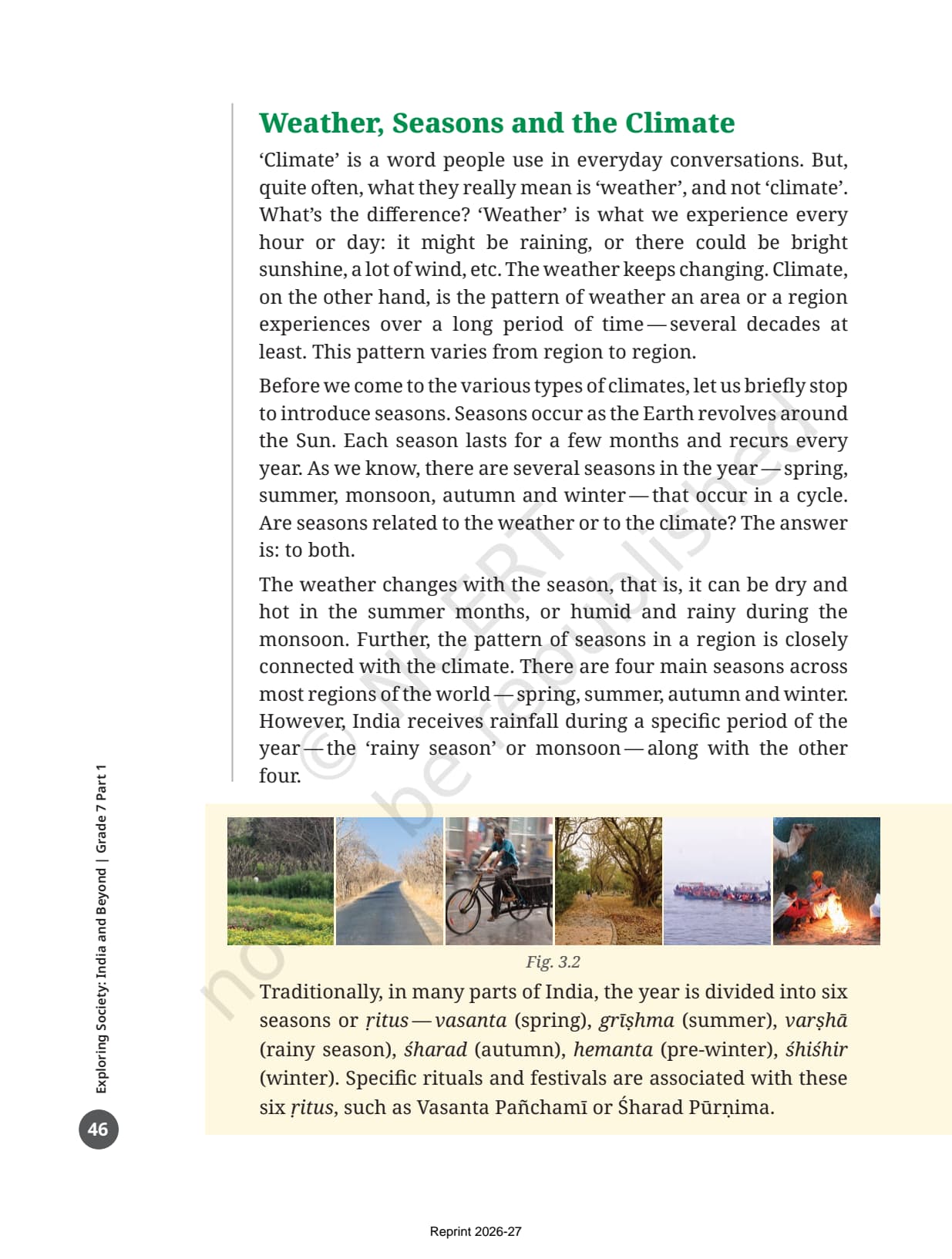
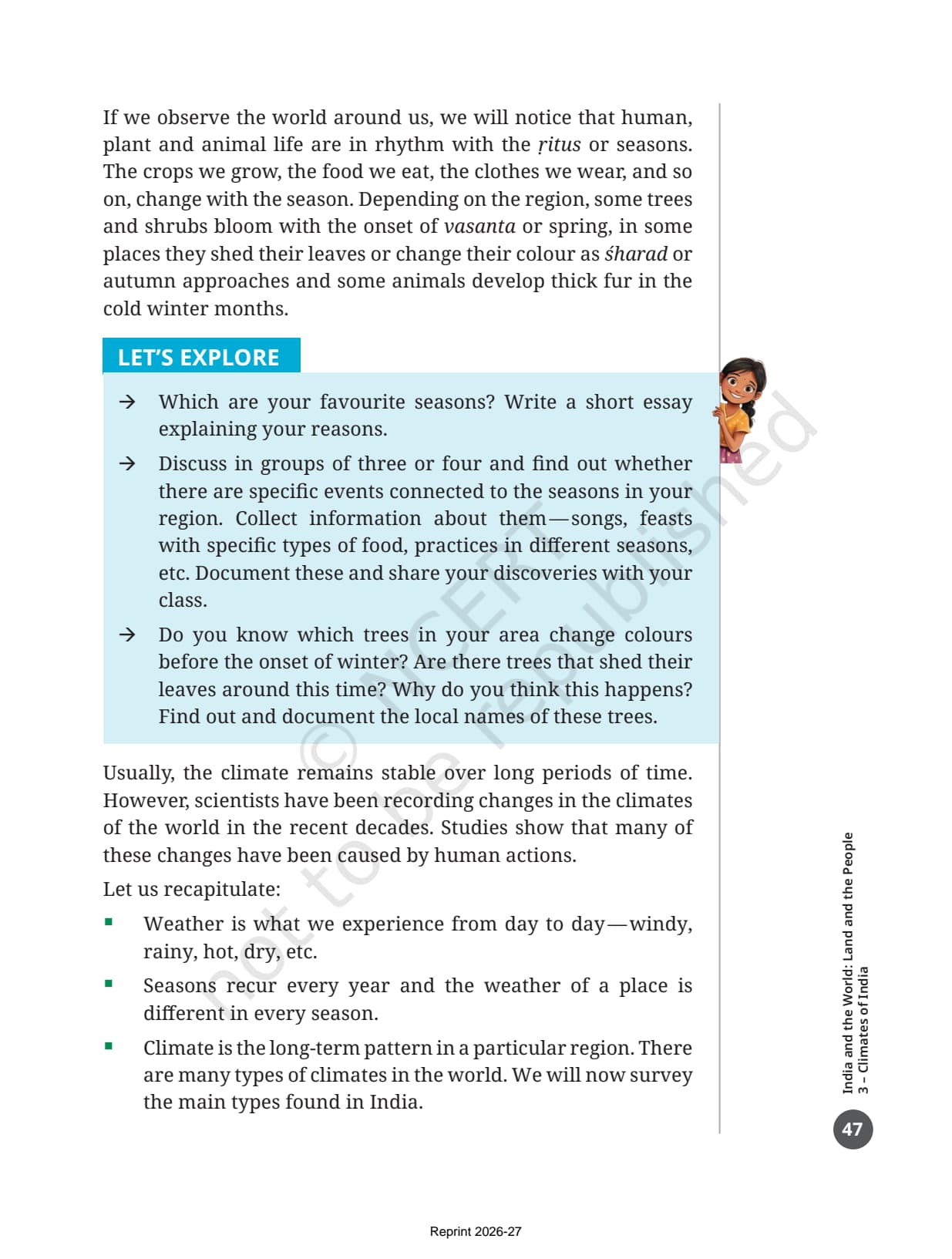
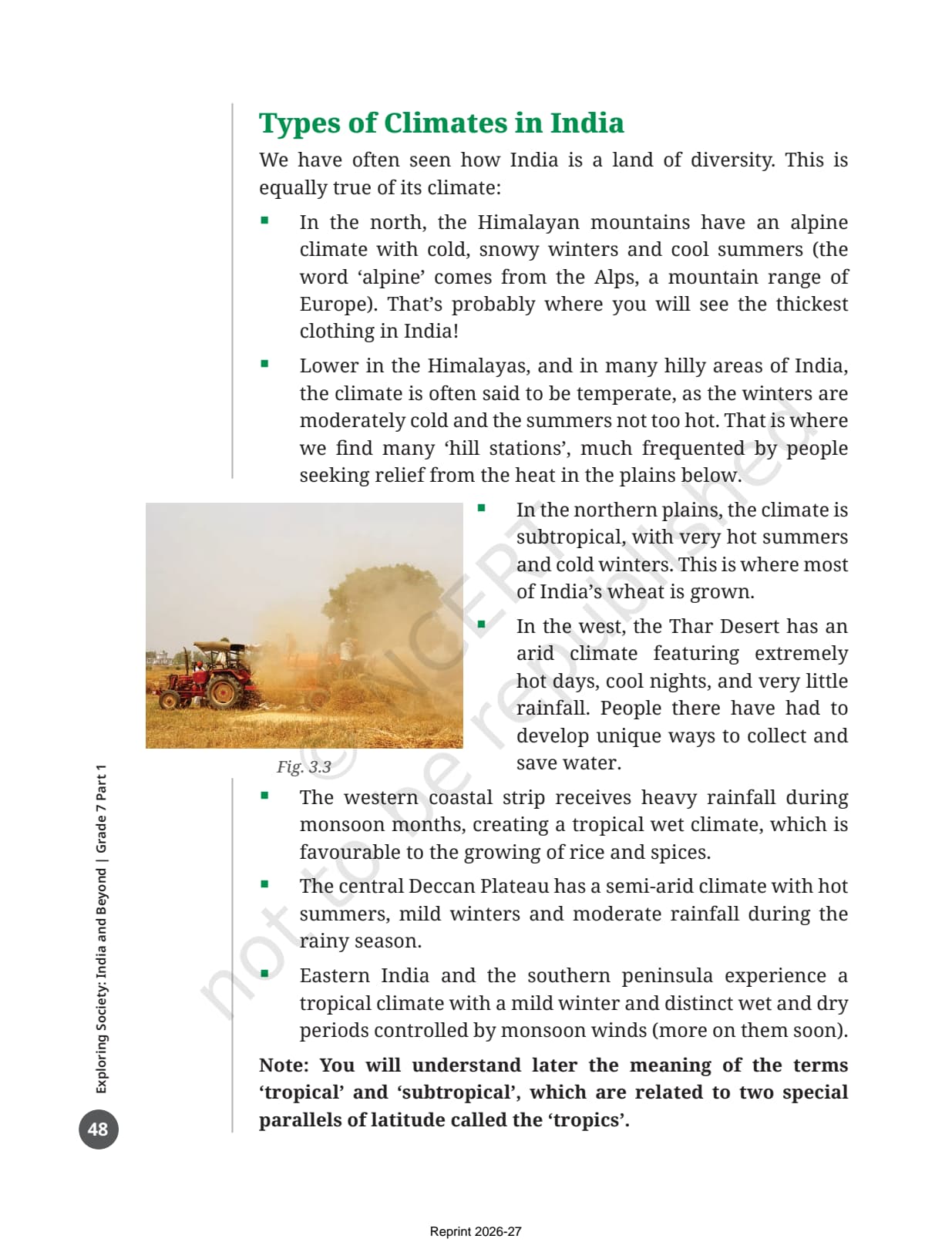

- Chapter: Chapter 3, Climates of India
- Book: Exploring Society: India and Beyond Part 1 is the first Class 7 Social Science book for 2026-27, with 12 chapters.
- File: 22 pages, the complete official chapter
The complete 22-page class 7 social science book pdf for Climates of India sits in the reader below, exactly as NCERT published it.
This is the official NCERT chapter file for the 2026-27 session, hosted by Collegedunia with no pages removed.
What Is Inside the Climates of India NCERT Book PDF
The PDF holds the whole chapter as NCERT printed it, with the text, the figures and the exercises all in place.
- The complete text of Climates of India
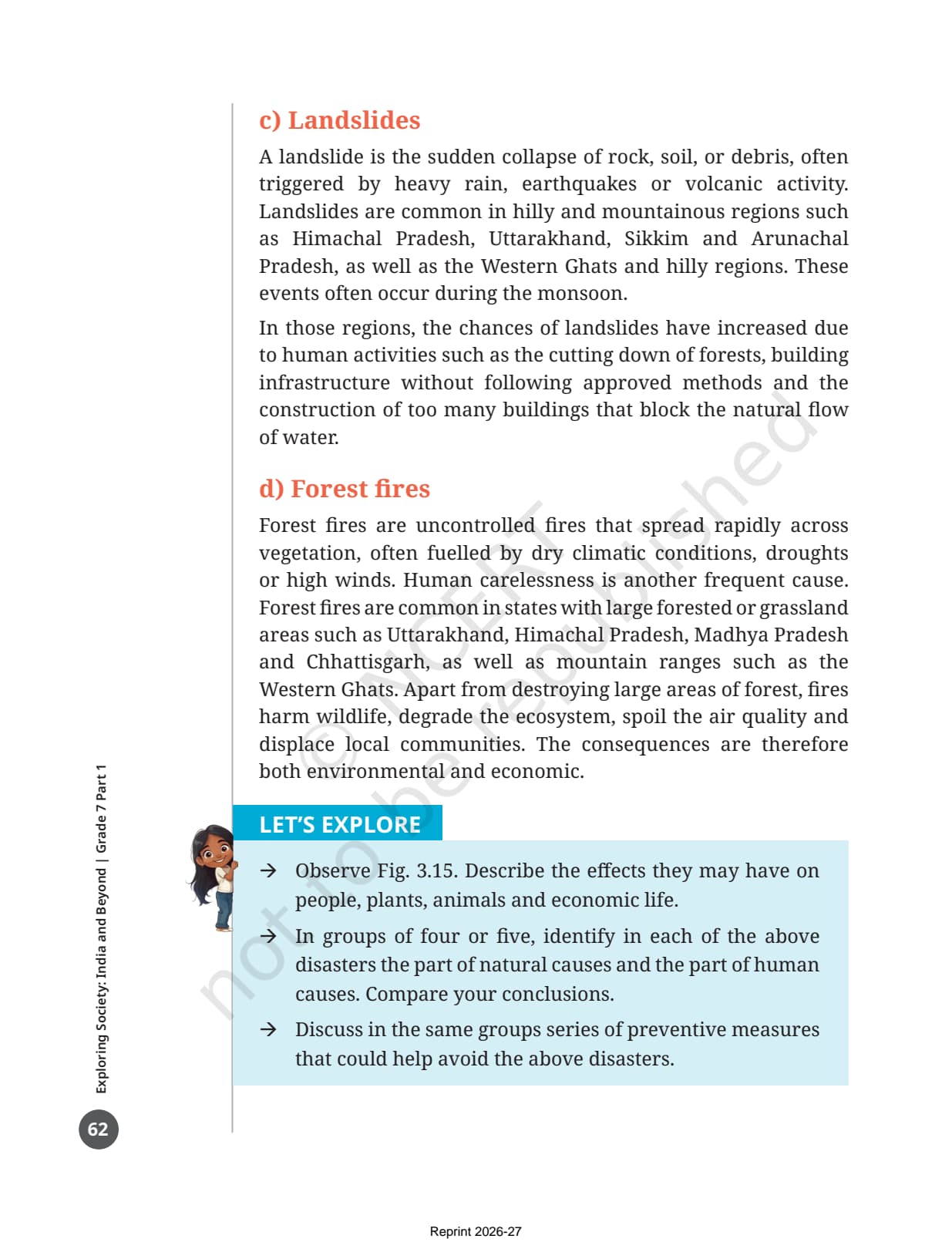
- India’s diverse climate is shaped by its geography, including mountains, deserts, and plat
- Weather is short-term, seasons recur on a yearly basis, and climate reflects long-term pat
- Factors such as latitude, altitude, proximity to the sea, wind and topography determine th
- Climate is connected with cultural traditions, festivals, agriculture and economic activit
- Understanding the climate helps prepare for natural disasters like floods and cyclones.
- The end-of-chapter exercises
Climates of India Section-by-Section Overview
The chapter closes with a Before we move on summary. Those points are reproduced below so you know what the PDF concludes.
| What the chapter establishes | Detail |
|---|---|
| Point 1 | India’s diverse climate is shaped by its geography, including mountains, deserts, and plateaus. |
| Point 2 | Weather is short-term, seasons recur on a yearly basis, and climate reflects long-term patterns over decades. |
| Point 3 | Factors such as latitude, altitude, proximity to the sea, wind and topography determine the climate. |
| Point 4 | Climate is connected with cultural traditions, festivals, agriculture and economic activity. |
| Point 5 | Understanding the climate helps prepare for natural disasters like floods and cyclones. |
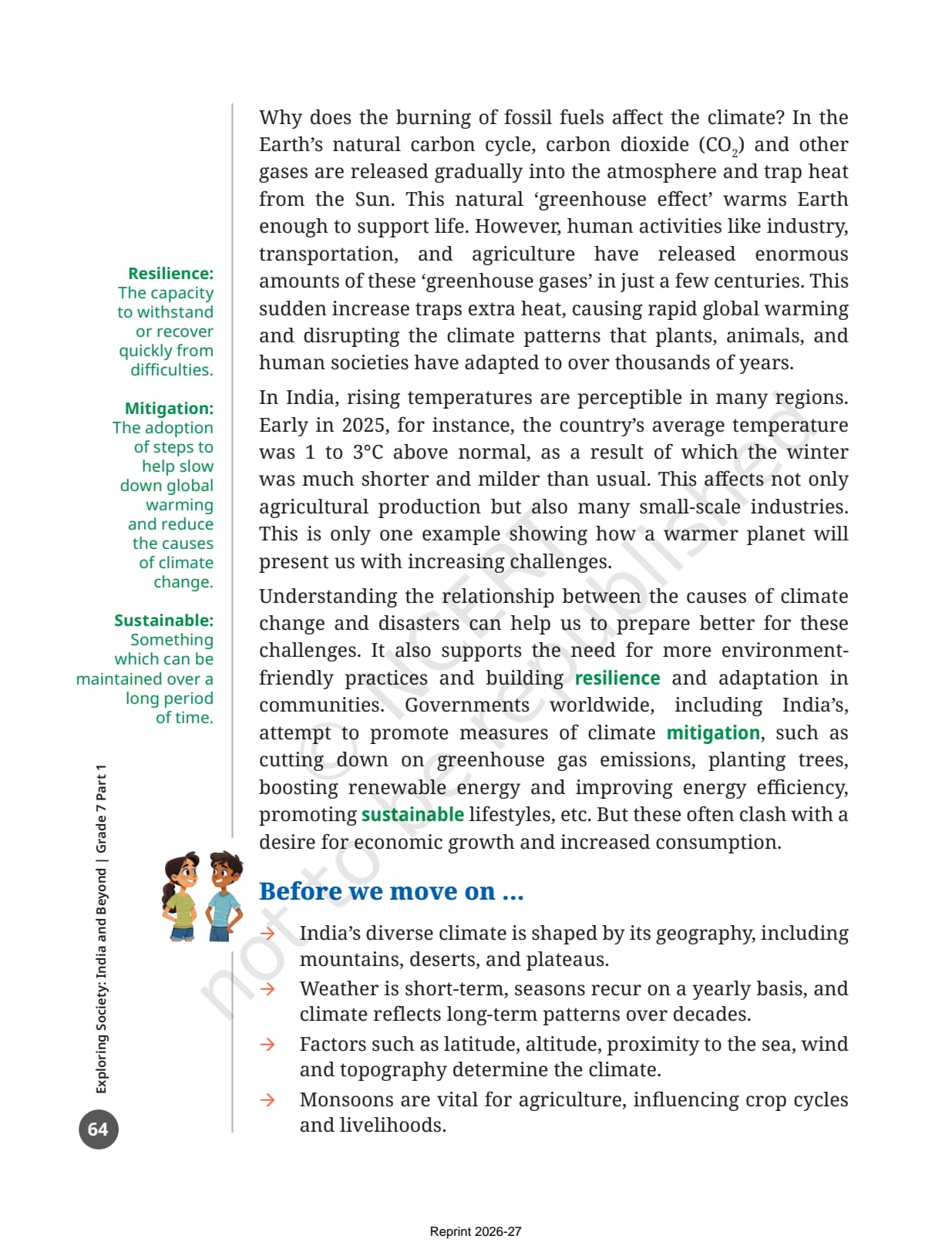
| Point 6 | Climate change leads to extremes of weather or temperature and can have severe consequences on the natural and human worlds. |
Exercises and Practice in Climates of India
The exercises reward reading the summary first. Before we move on gives you the chapter's own answer to its Big Questions.
| Part of the chapter | What it asks you to do |
|---|---|
| The Big Questions | the two or three questions the chapter sets out to answer |
| Let's explore | in-chapter tasks using maps, sources and discussion |
| Don't miss out | short boxes with an extra fact or connection |
| Before we move on | the chapter summary in bullet form |
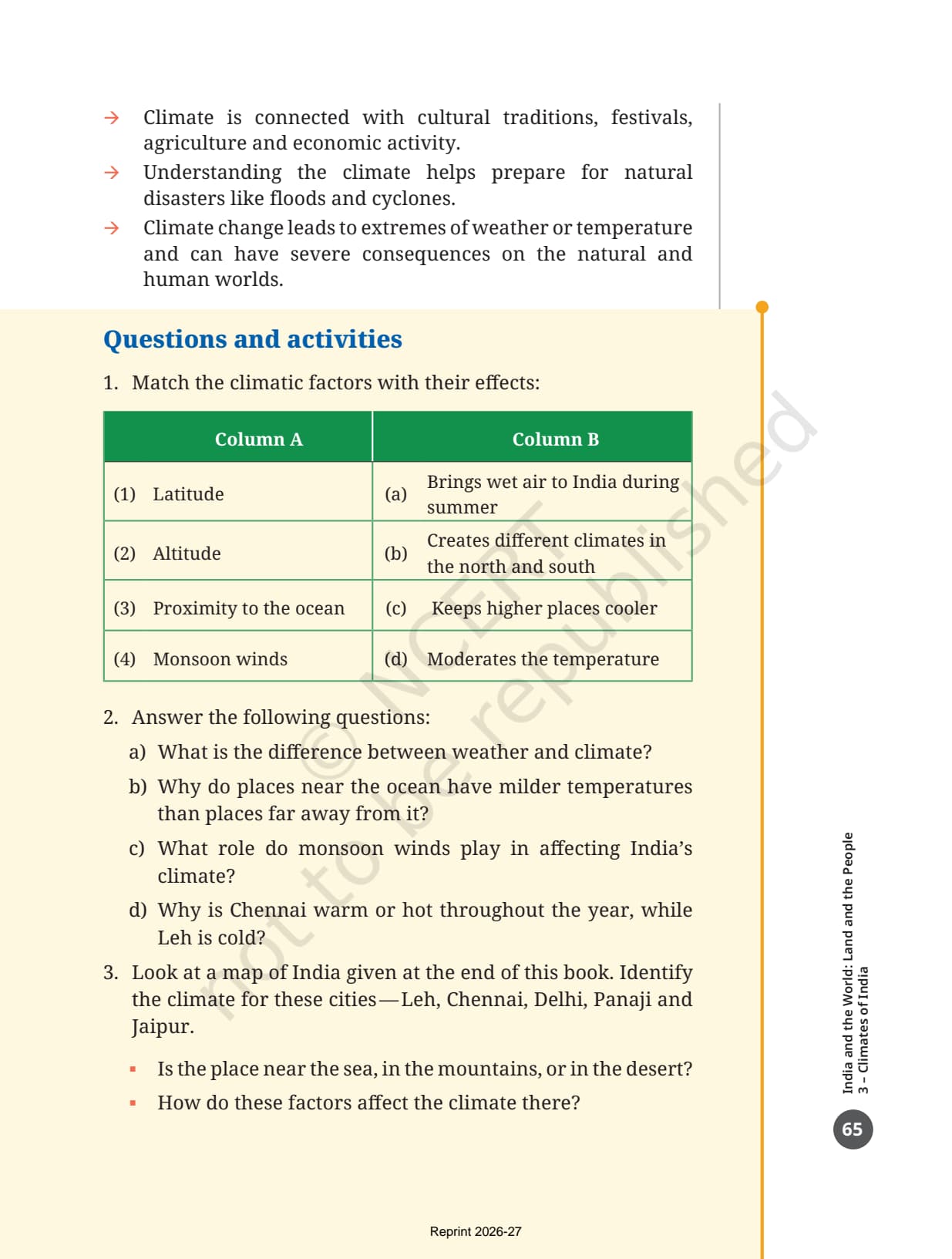
| Questions and activities | the end-of-chapter exercise set |
What Changed in the 2026-27 Class 7 Social Science Book
Exploring Society merges history, geography, civics and economics into one integrated book instead of four separate ones.
- One integrated book replaces the old four-subject split
- Part 1 has 12 chapters, Part 2 has 8, numbered separately
- Themes run across the book: land and people, tapestry of the past, governance, economic life
- Each chapter opens with The Big Questions and closes with Before we move on
How to Read the Climates of India Chapter
A 22-page chapter is best taken in parts rather than in one sitting. Keep the class 7 social science book pdf open beside you as you work.
- Read The Big Questions before anything else
- Work through the Let's explore tasks as you meet them
- Read Before we move on and check it against your notes
- Then answer the Questions and activities
How Collegedunia Helps You With the Climates of India NCERT Book
Collegedunia hosts the class 7 social science book pdf for Climates of India unchanged and adds the reading support around it.
- Official file: the exact NCERT chapter PDF, nothing removed
- Read in the browser: page through it before you download
- Chapter list: jump to any other chapter from one table
- Study material: notes and handwritten notes for the same chapter
More Class 7 Social Science Study Material for Climates of India
Read the chapter from the book first, then use the notes to revise.
- Class 7 Social Science Handwritten Notes
- Class 7 Social Science Revision Notes
- Class 7 Social Science NCERT Solutions
Class 7 Social Science NCERT Book PDF: All Chapters
Exploring Society: India and Beyond Part 1 has 12 chapters. Every chapter of the class 7 social science book pdf is linked below.
| Chapter | Download |
|---|---|
| Chapter 1 | Geographical Diversity of India NCERT Book PDF |
| Chapter 2 | Understanding the Weather NCERT Book PDF |
| Chapter 3 | Climates of India NCERT Book PDF |
| Chapter 4 | New Beginnings: Cities and States NCERT Book PDF |
| Chapter 5 | The Rise of Empires NCERT Book PDF |
| Chapter 6 | The Age of Reorganisation NCERT Book PDF |
| Chapter 7 | The Gupta Era: An Age of Tireless Creativity NCERT Book PDF |
| Chapter 8 | How the Land Becomes Sacred NCERT Book PDF |
| Chapter 9 | From the Rulers to the Ruled: Types of Governments NCERT Book PDF |
| Chapter 10 | The Constitution of India - An Introduction NCERT Book PDF |
| Chapter 11 | From Barter to Money NCERT Book PDF |
| Chapter 12 | Understanding Markets NCERT Book PDF |
Climates of India Class 7 Social Science NCERT Book PDF FAQs
Ques. Where can I download the Class 7 Social Science Climates of India NCERT Book PDF?
Ans. The official 22-page chapter file from Exploring Society: India and Beyond Part 1 is on this page, free to download.
Ques. How many pages is the Climates of India chapter?
Ans. 22 pages in the 2026-27 Exploring Society: India and Beyond Part 1 edition, and this PDF is the complete chapter.
Ques. Is Exploring Society: India and Beyond Part 1 the current Class 7 Social Science book?
Ans. Yes. Exploring Society: India and Beyond Part 1 is the first Class 7 Social Science book for 2026-27, with 12 chapters. It is the edition followed in the 2026-27 session.
Ques. Is this the official NCERT file?
Ans. Yes. It is the NCERT chapter PDF hosted as published, with no pages removed or added.
Ques. What does Climates of India cover?
Ans. It covers india’s diverse climate is shaped by its geography, including mountains, deserts, and plat, weather is short-term, seasons recur on a yearly basis, and climate reflects long-term pat, factors such as latitude, altitude, proximity to the sea, wind and topography determine th, among other things. The section overview on this page lists the chapter's parts in order.



Comments