




Class 7 Social Science Part 1 Chapter 3 Climates of India explains why one country has so many climates. These class 7 social science handwritten notes chapter 3 Climates of India follow the 2026-27 NCERT and cover the controlling factors, the monsoon and climate change.
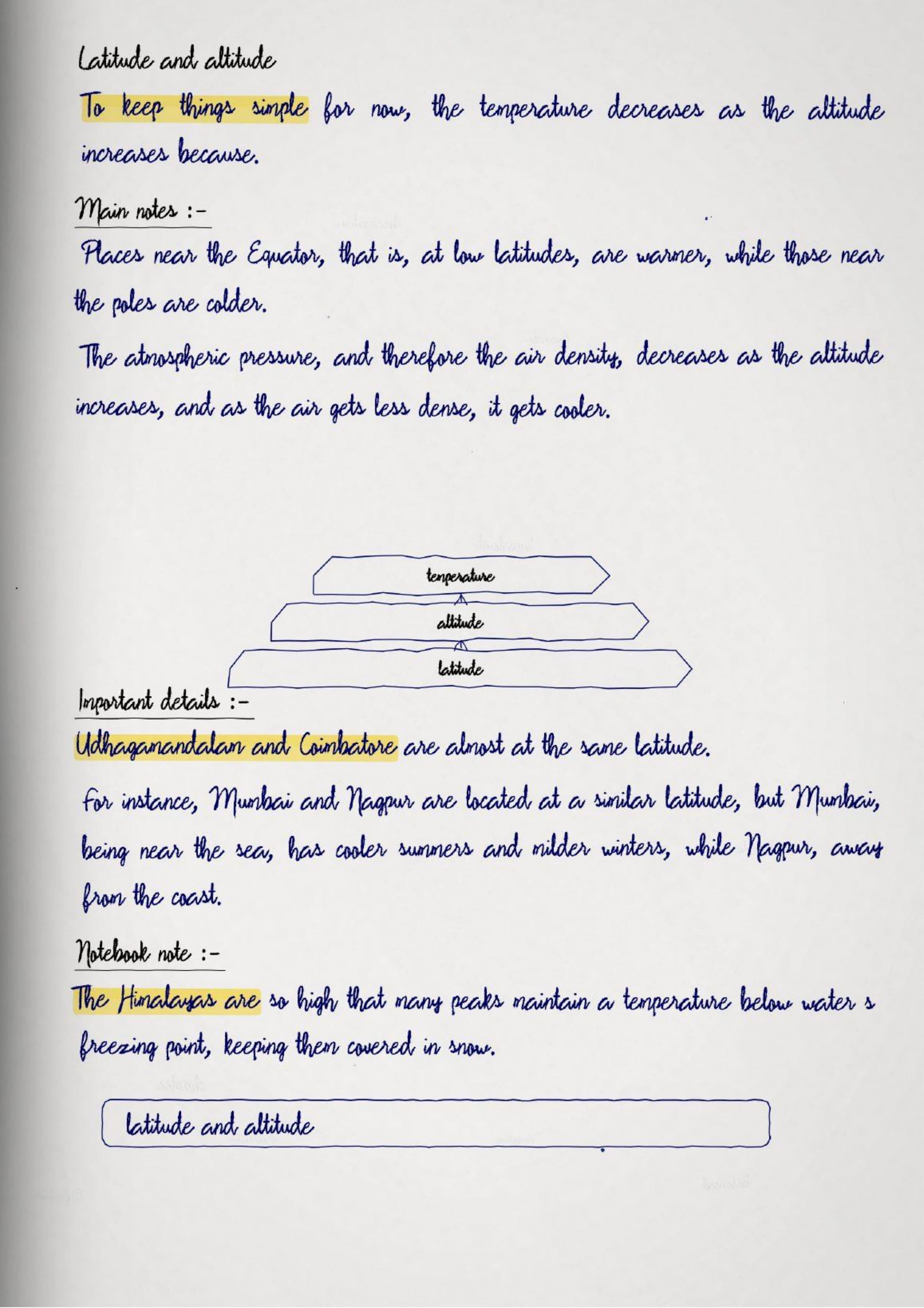
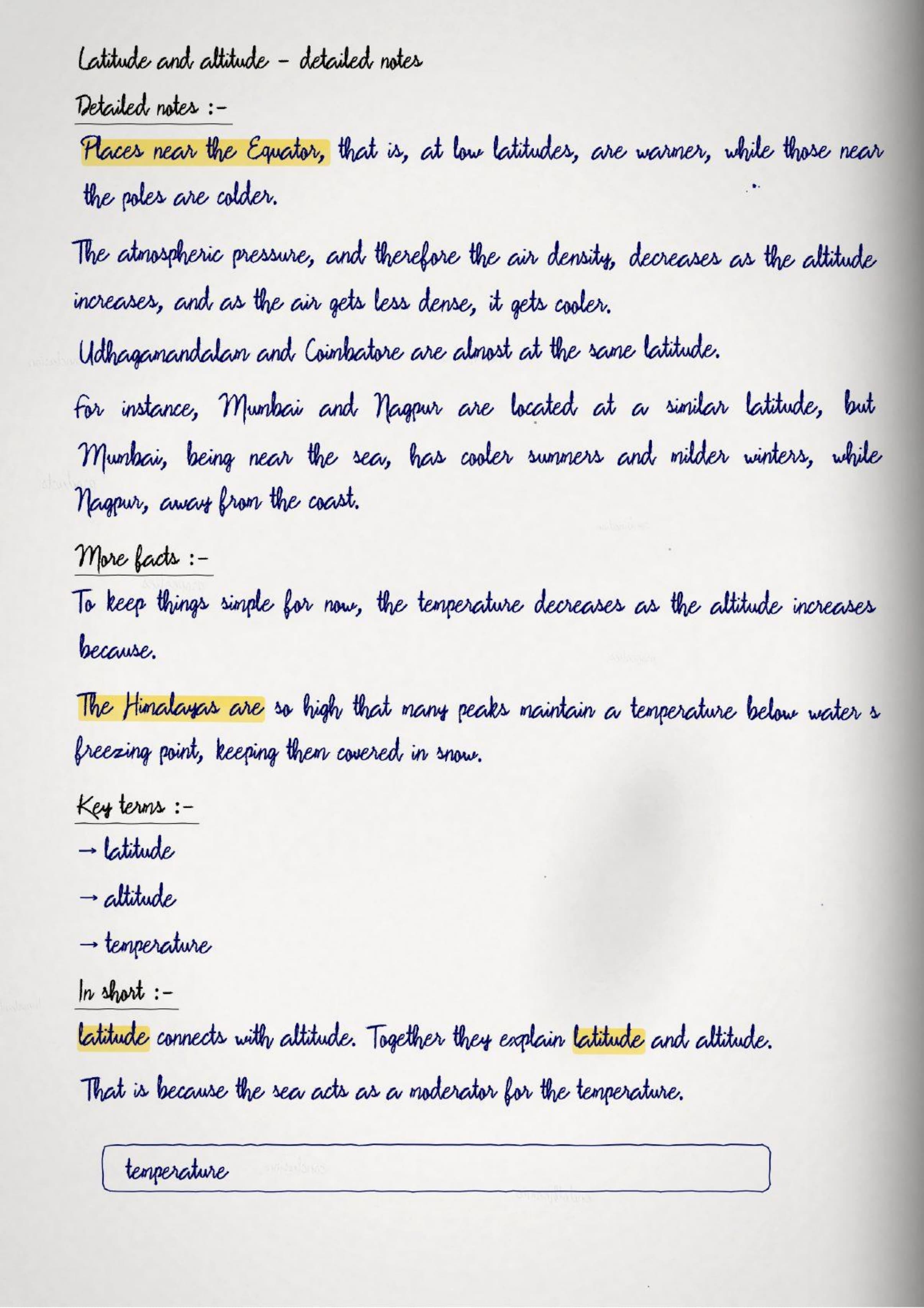
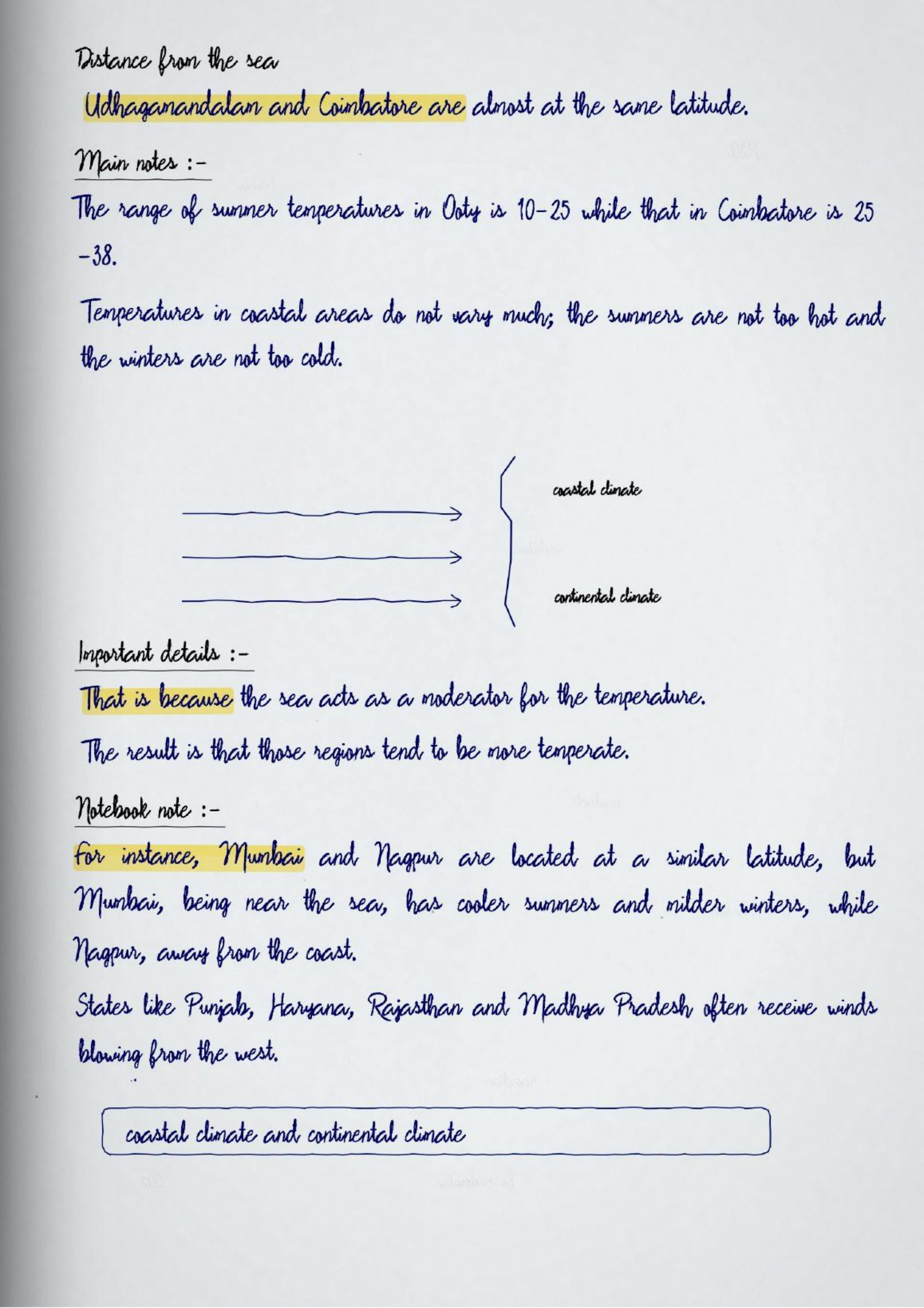
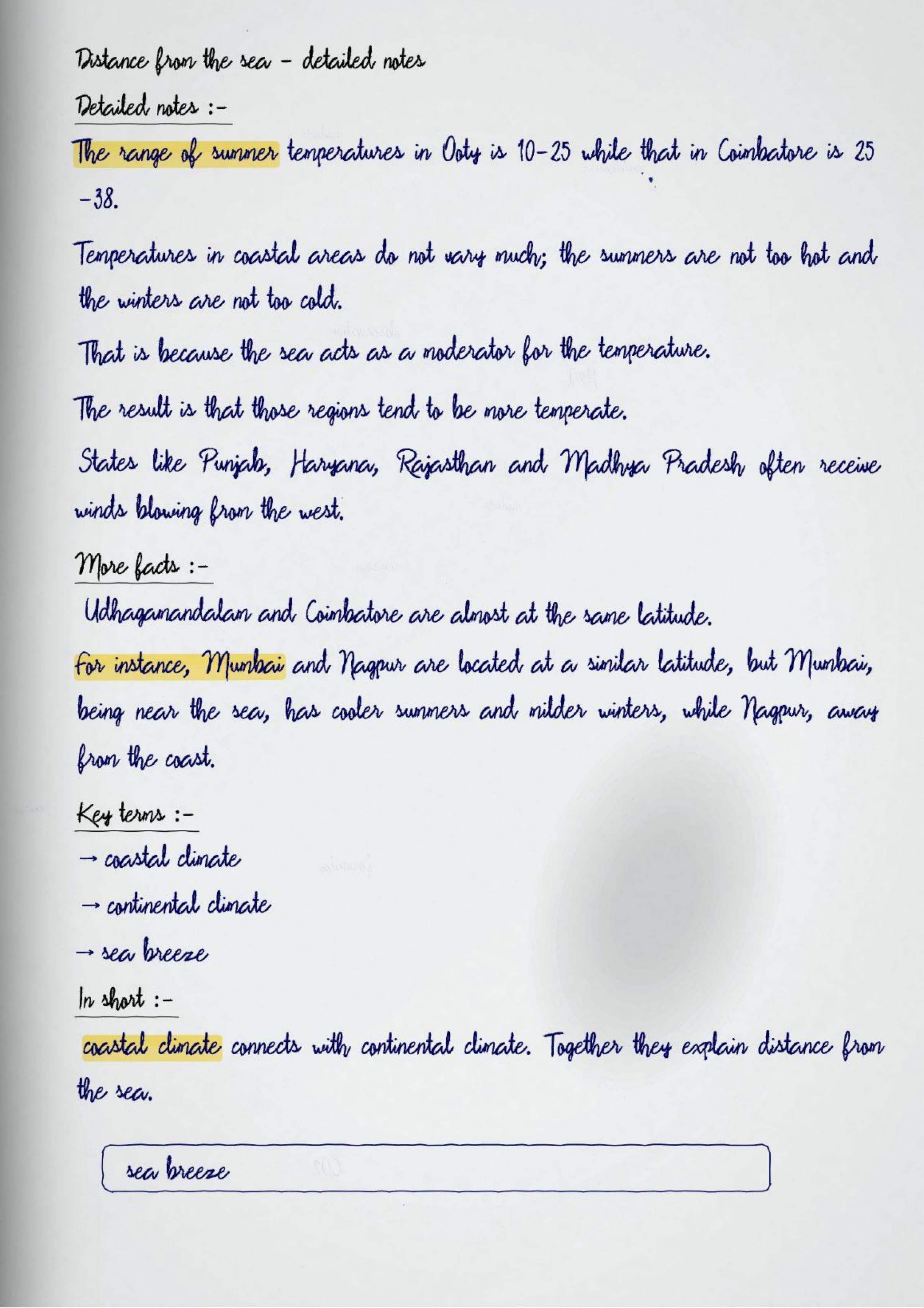
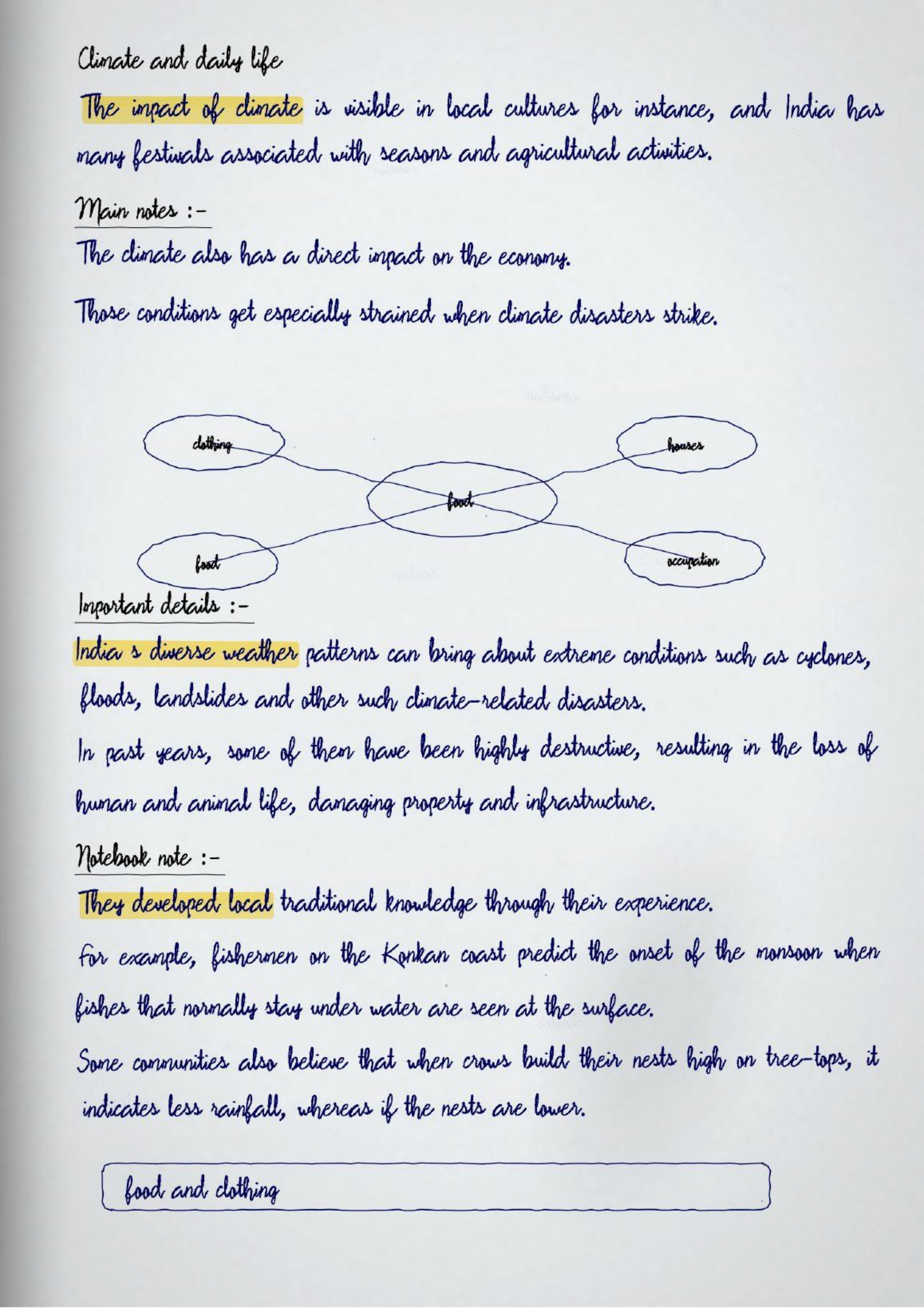
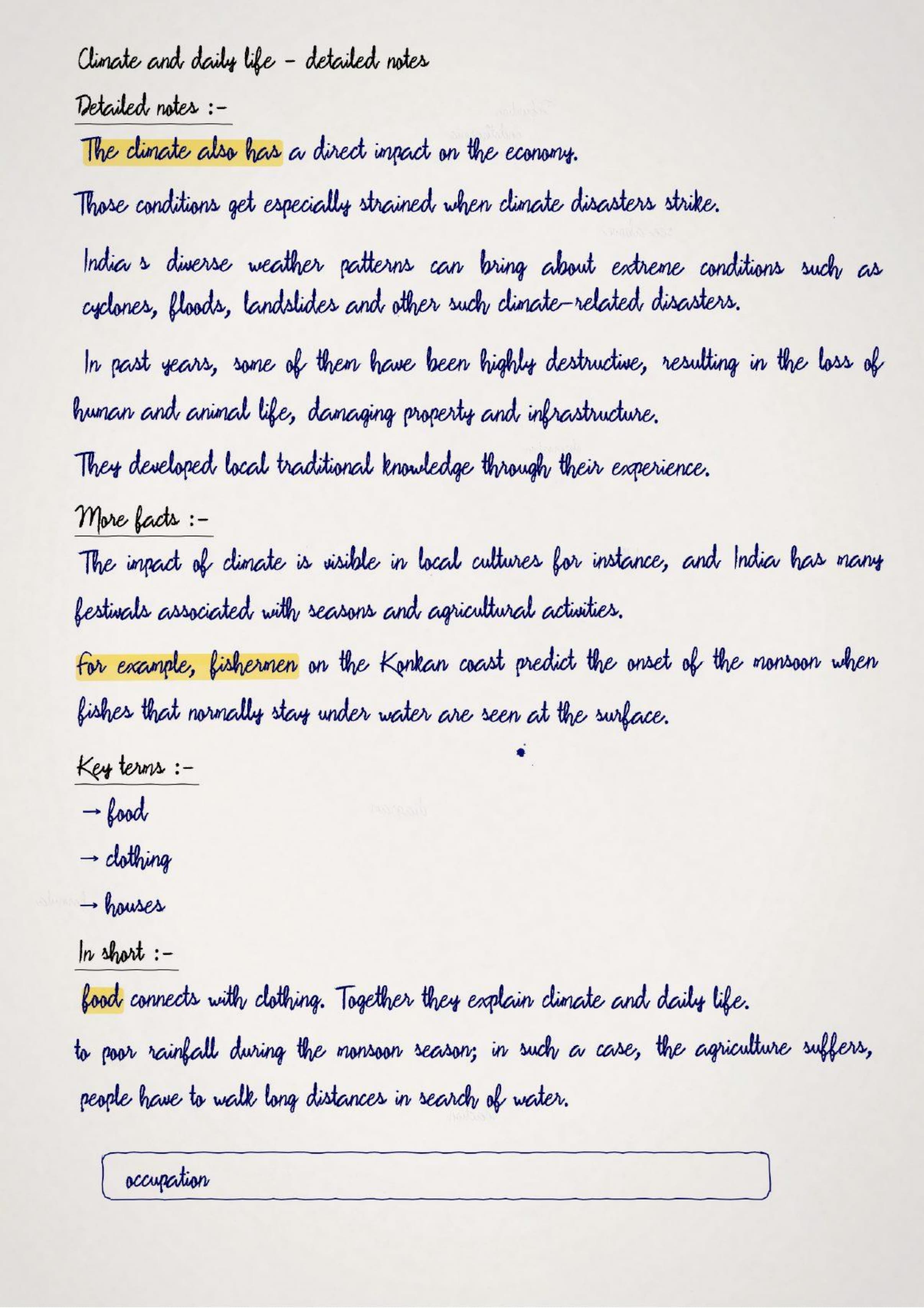
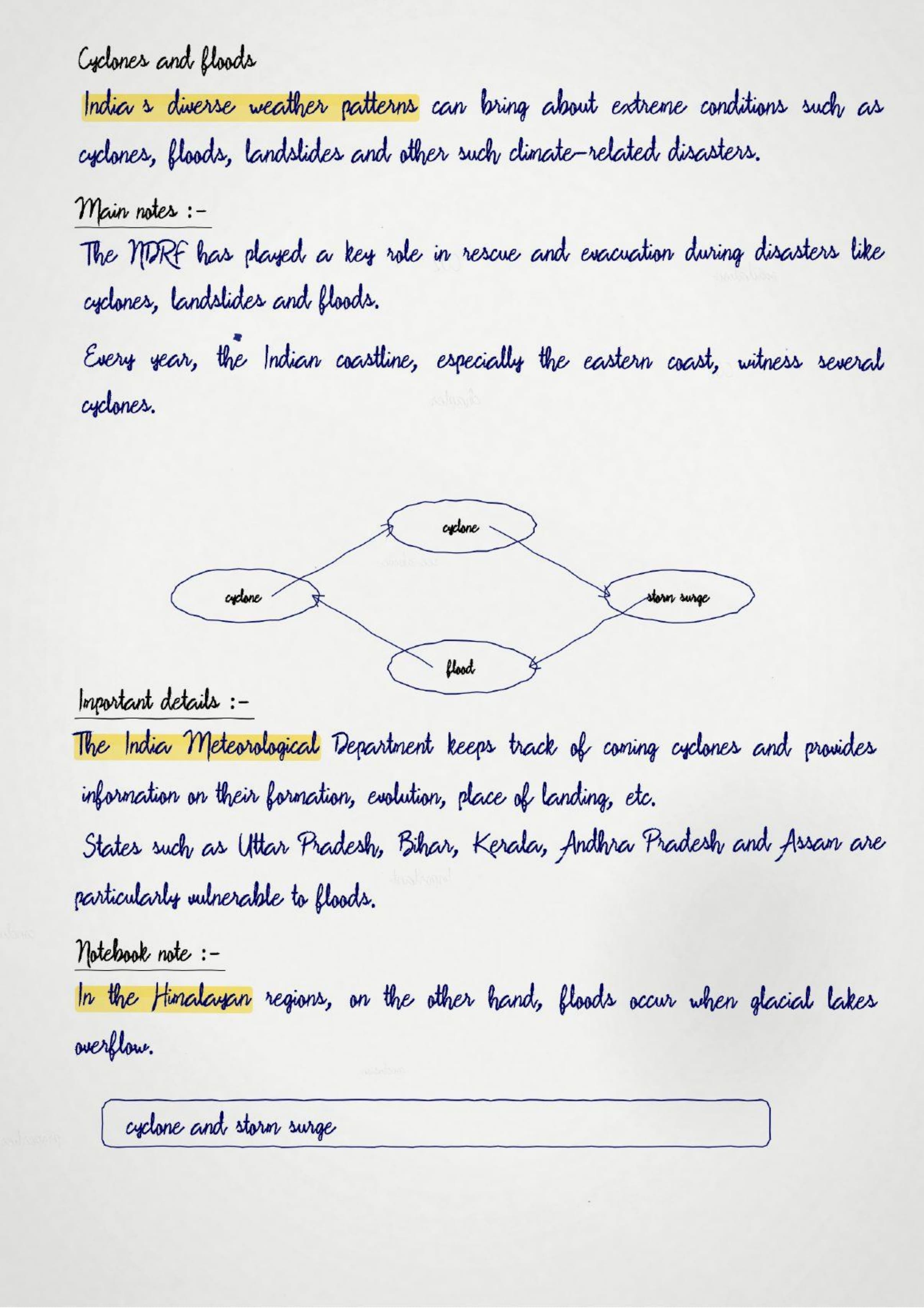
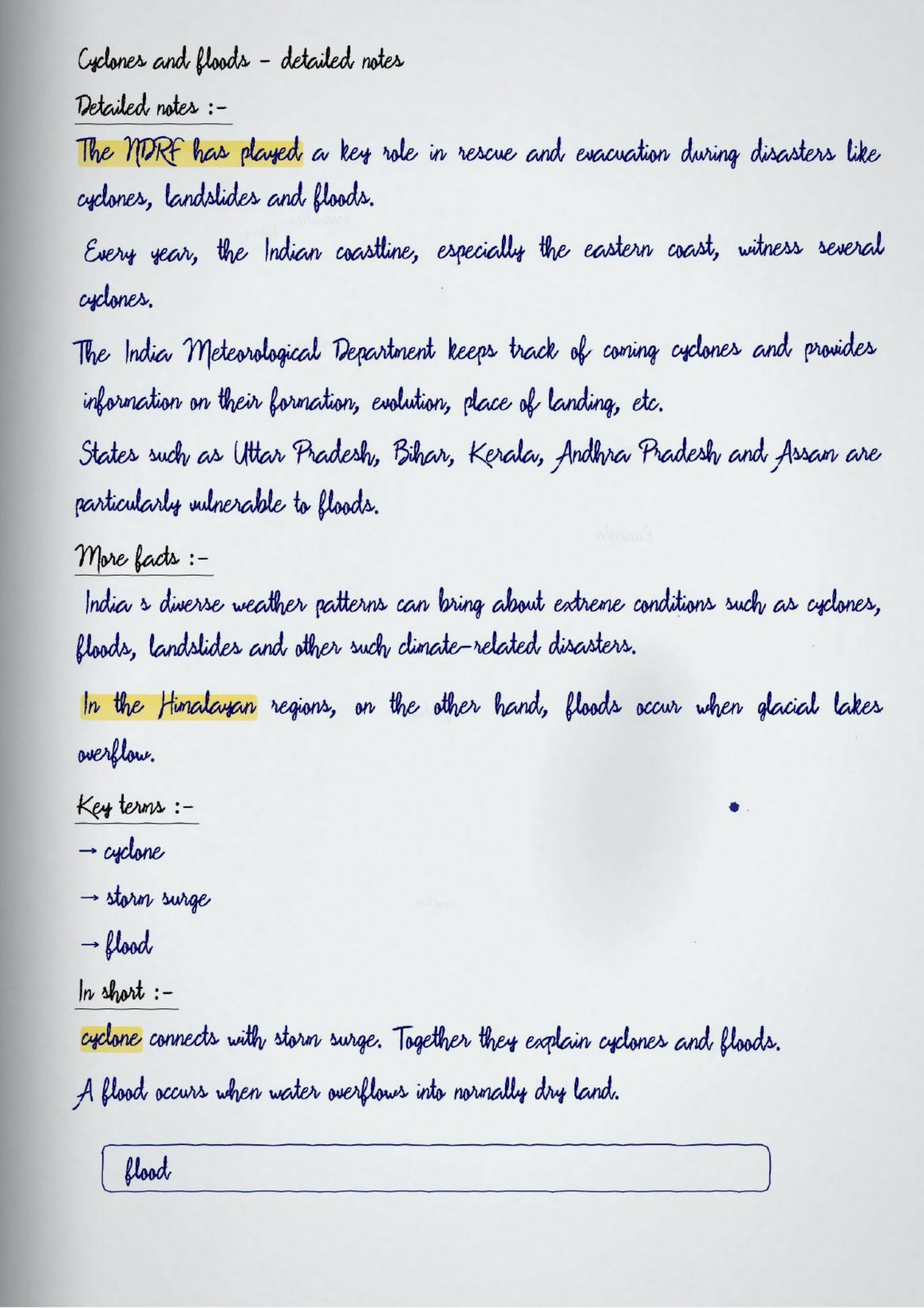
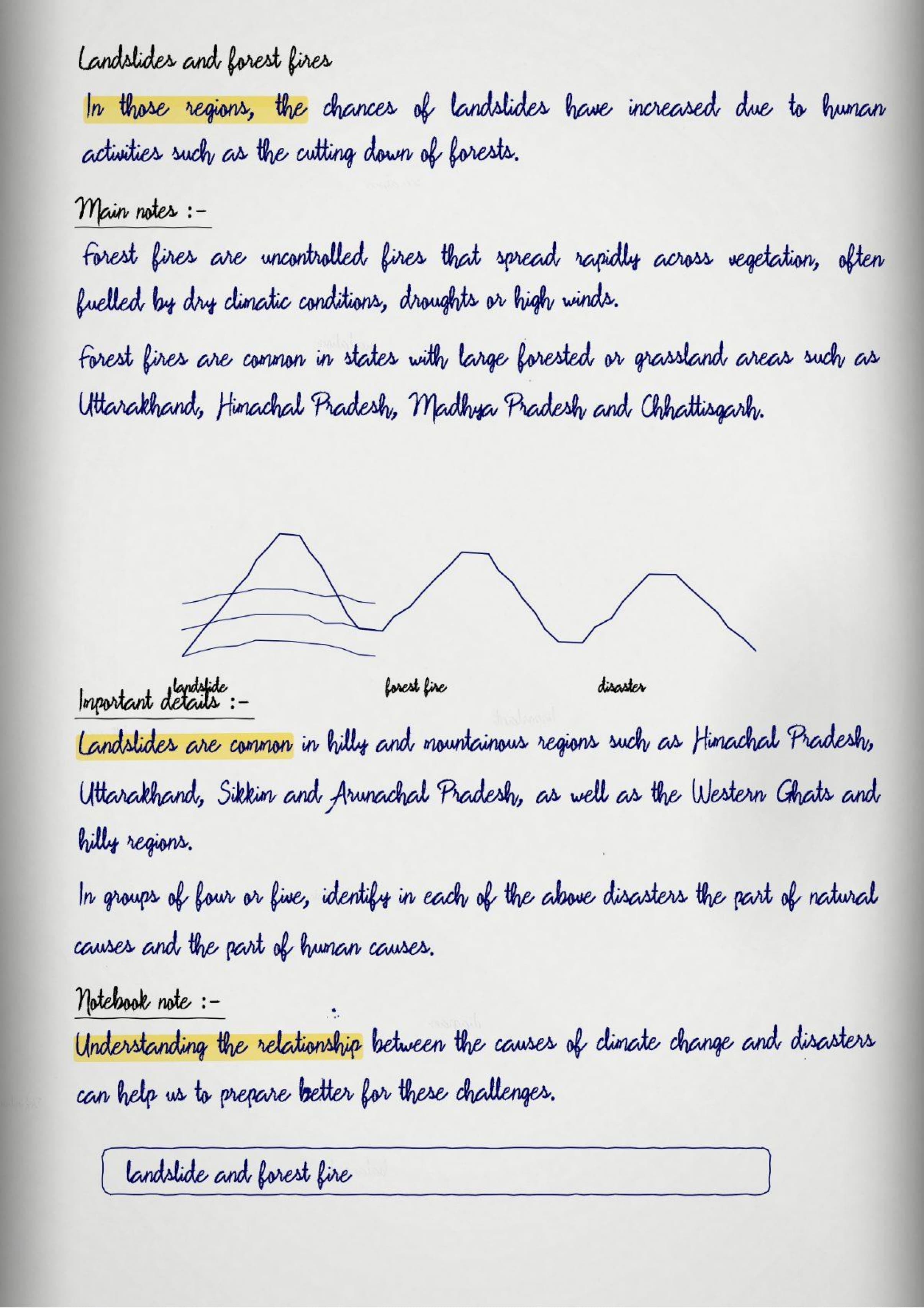
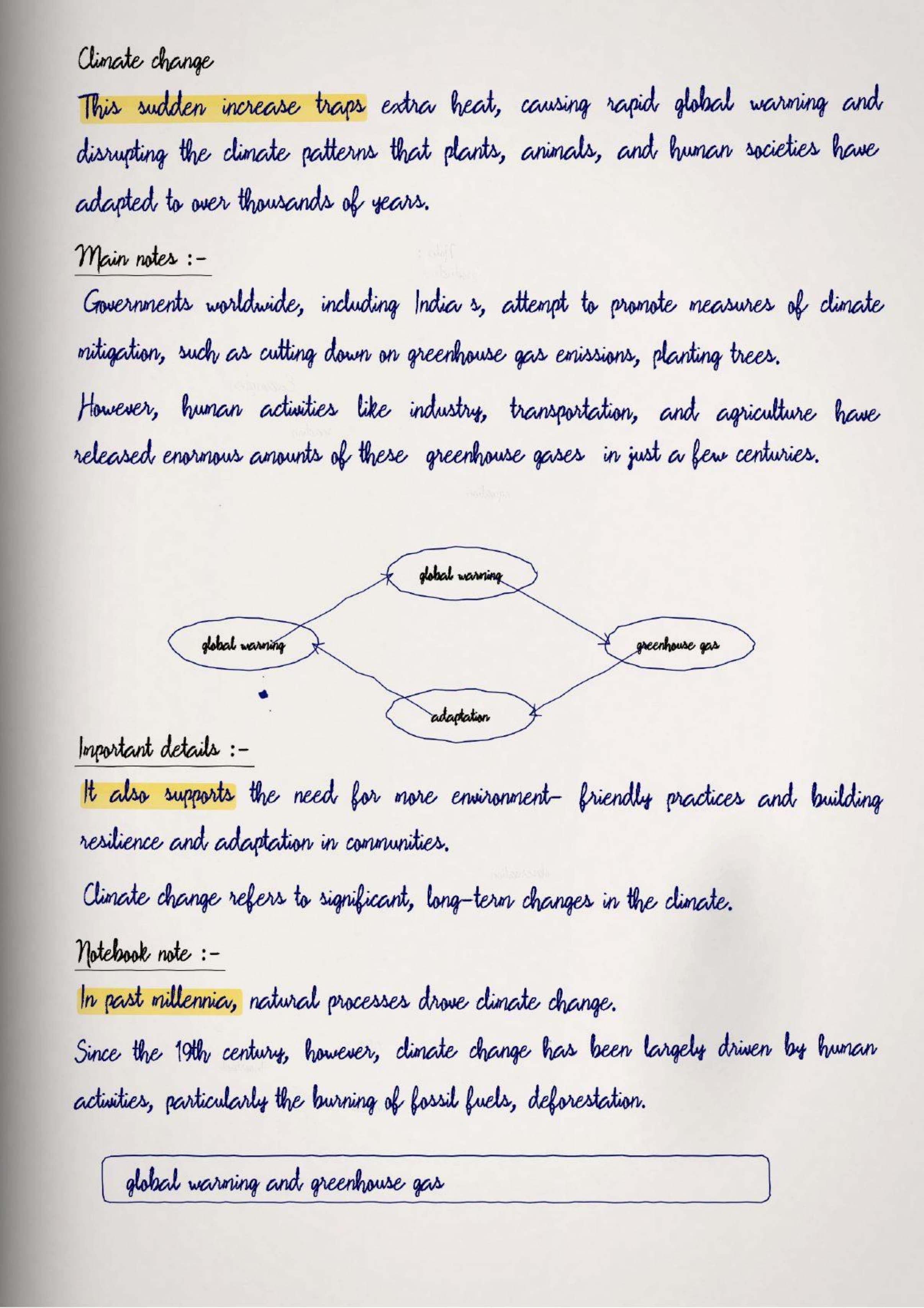
- Five factors boxed: latitude, altitude, distance from the sea, winds and topography
- What the notes cover: weather versus climate, the five controlling factors, the monsoon, and preparing for disasters
- Best for: the why-is-the-climate-different question, a standard long answer
Open the PDF below for the complete class 7 social science handwritten notes covering Climates of India from the first page to the last.
These handwritten notes are written by Social Science teachers, mapped to the 2026-27 NCERT Exploring Society book, and checked against Class 7 school question papers.
Where Students Lose Marks in Climates of India
The monsoon shapes farming, festivals and the economy, which makes this the most connected chapter in the geography section.
- The five factors are a guaranteed long answer
- The monsoon and its importance to agriculture is a three-mark question
- Weather versus climate is a common one-mark distinction
- The farming chapter in Part 2 builds directly on the monsoon
Why Students Pick Collegedunia's Climates of India Handwritten Notes
Collegedunia has these class 7 social science handwritten notes written by teachers who set Class 7 papers. The five factors are drawn as five small panels, each with an Indian example beside it.
- Five-factor panel: each factor drawn with an example from India
- Monsoon map: the arrival and retreat of the monsoon marked with dates
- Comparison box: weather, season and climate set side by side
- Colour-coded sub-headings: sub-topics in red so each factor is quick to find
Test Yourself on Climates of India
Five questions on climate. Tap each to check the answer.
Which of these is a factor controlling climate?
(a) latitude (b) population (c) language (d) currency
Answer: (a) latitude
As altitude increases, temperature generally
(a) increases (b) decreases (c) stays the same (d) doubles
Answer: (b) decreases
Climate describes weather patterns over
(a) one day (b) one week (c) one season (d) many decades
Answer: (d) many decades
The monsoon is most important for
(a) mining (b) agriculture (c) shipping only (d) mountaineering
Answer: (b) agriculture
Places near the sea usually have
(a) extreme temperatures (b) moderate temperatures (c) no rainfall (d) very cold winters
Answer: (b) moderate temperatures
Topics Written Out in the Climates of India Notes
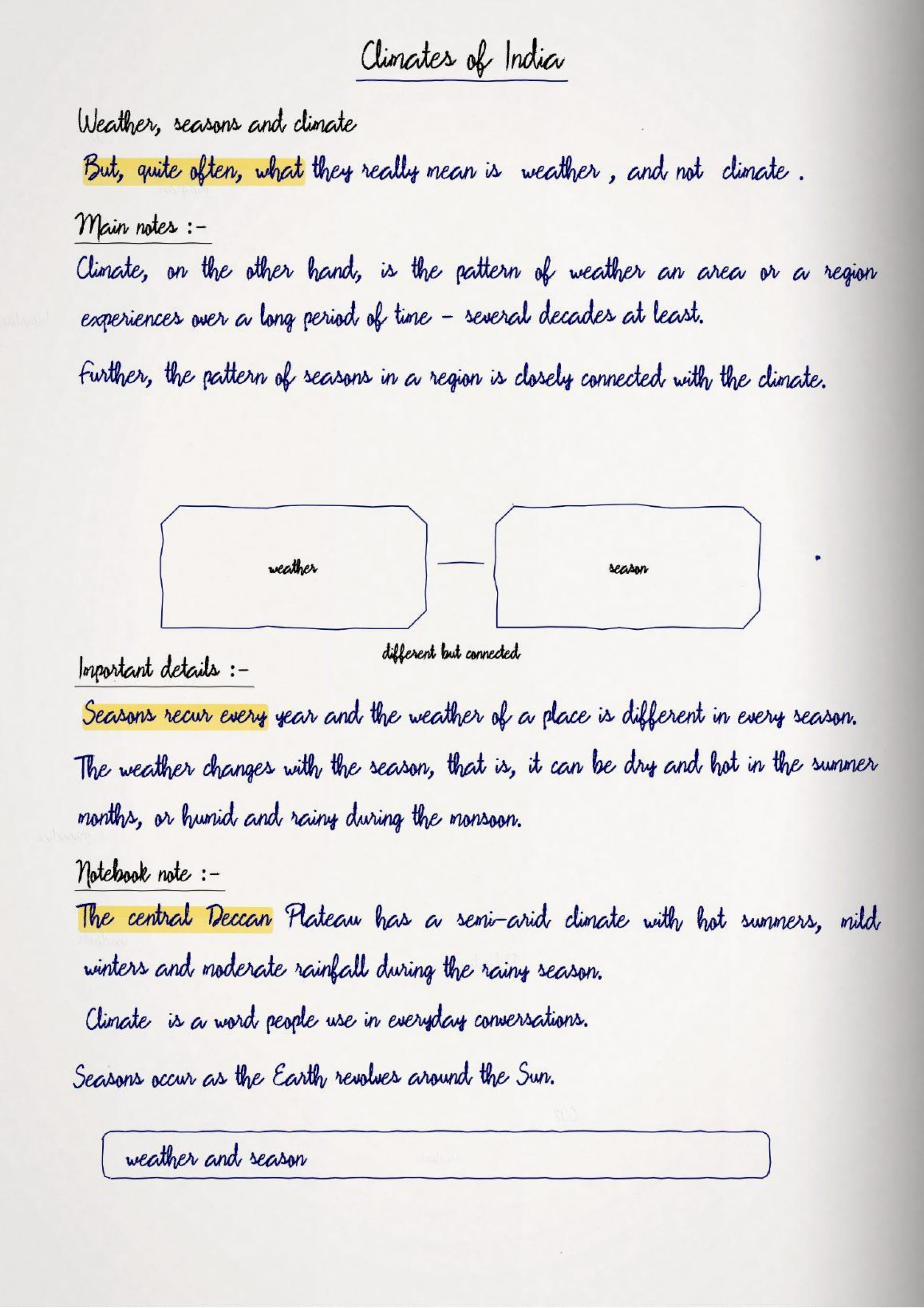
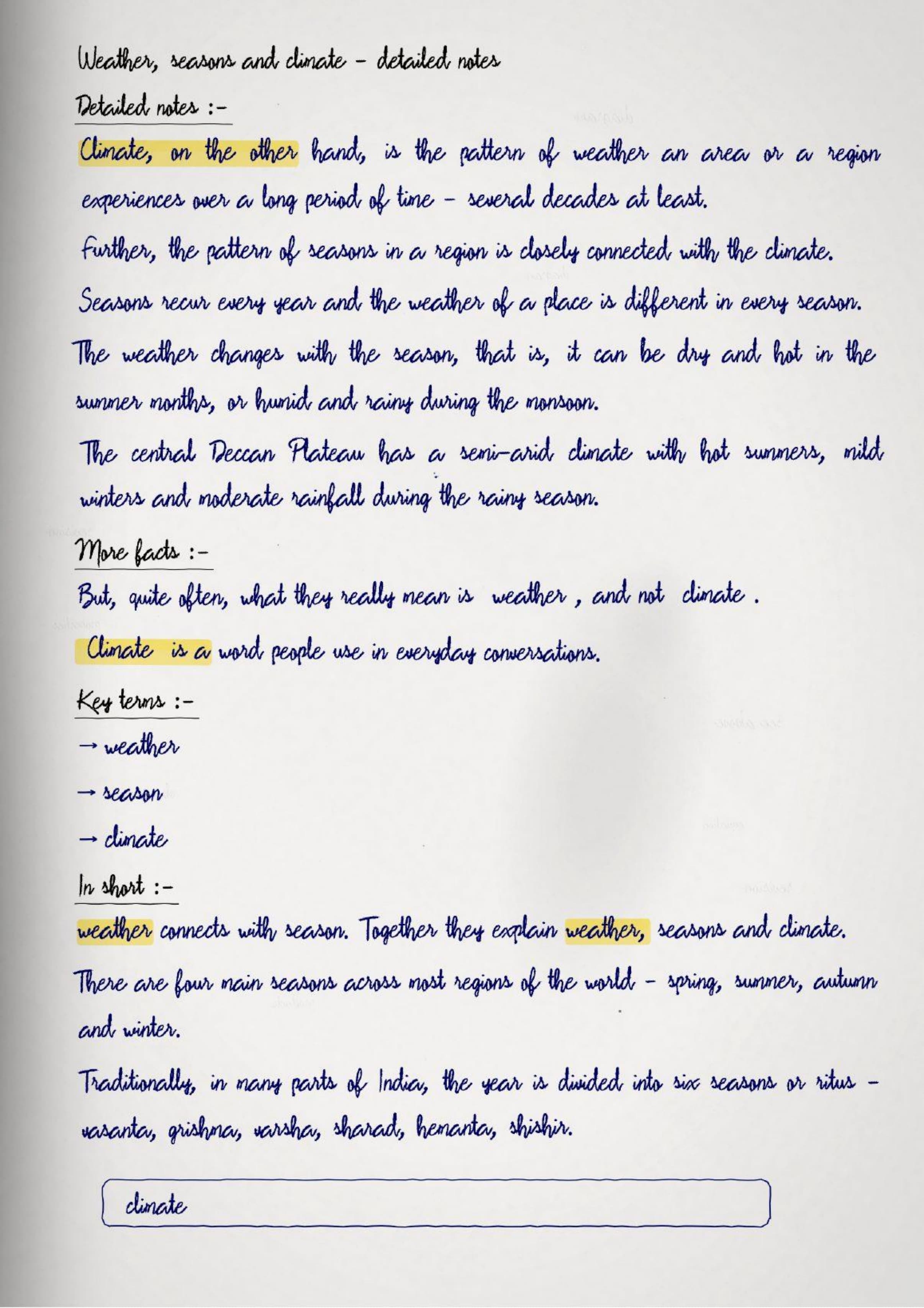
The chapter separates three ideas that students often mix: weather is short-term, seasons repeat each year, and climate is the pattern over decades.
- Weather, seasons and climate compared
- Latitude and its effect on climate
- Altitude and mountain climates
- Distance from the sea
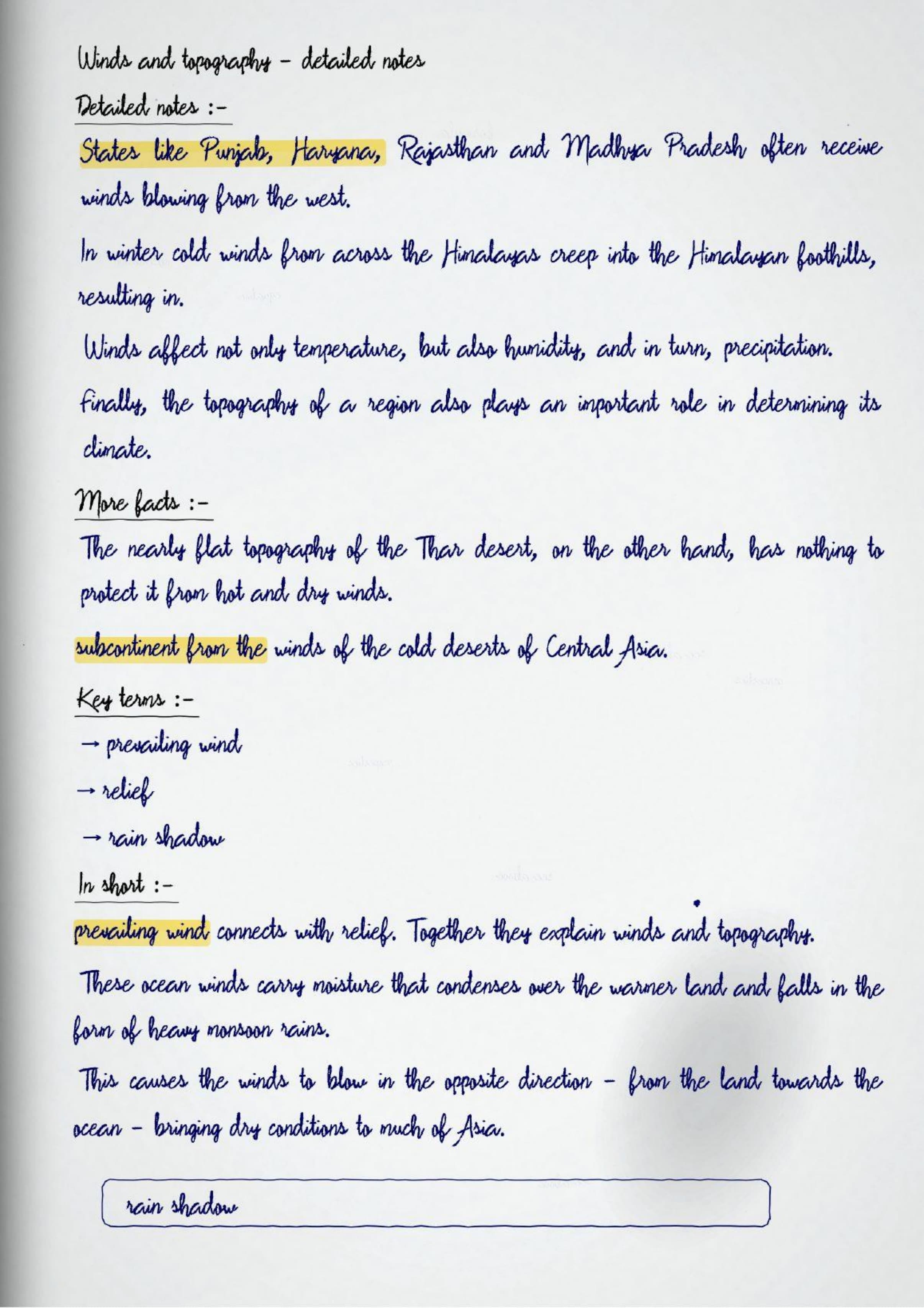
- Winds and their influence
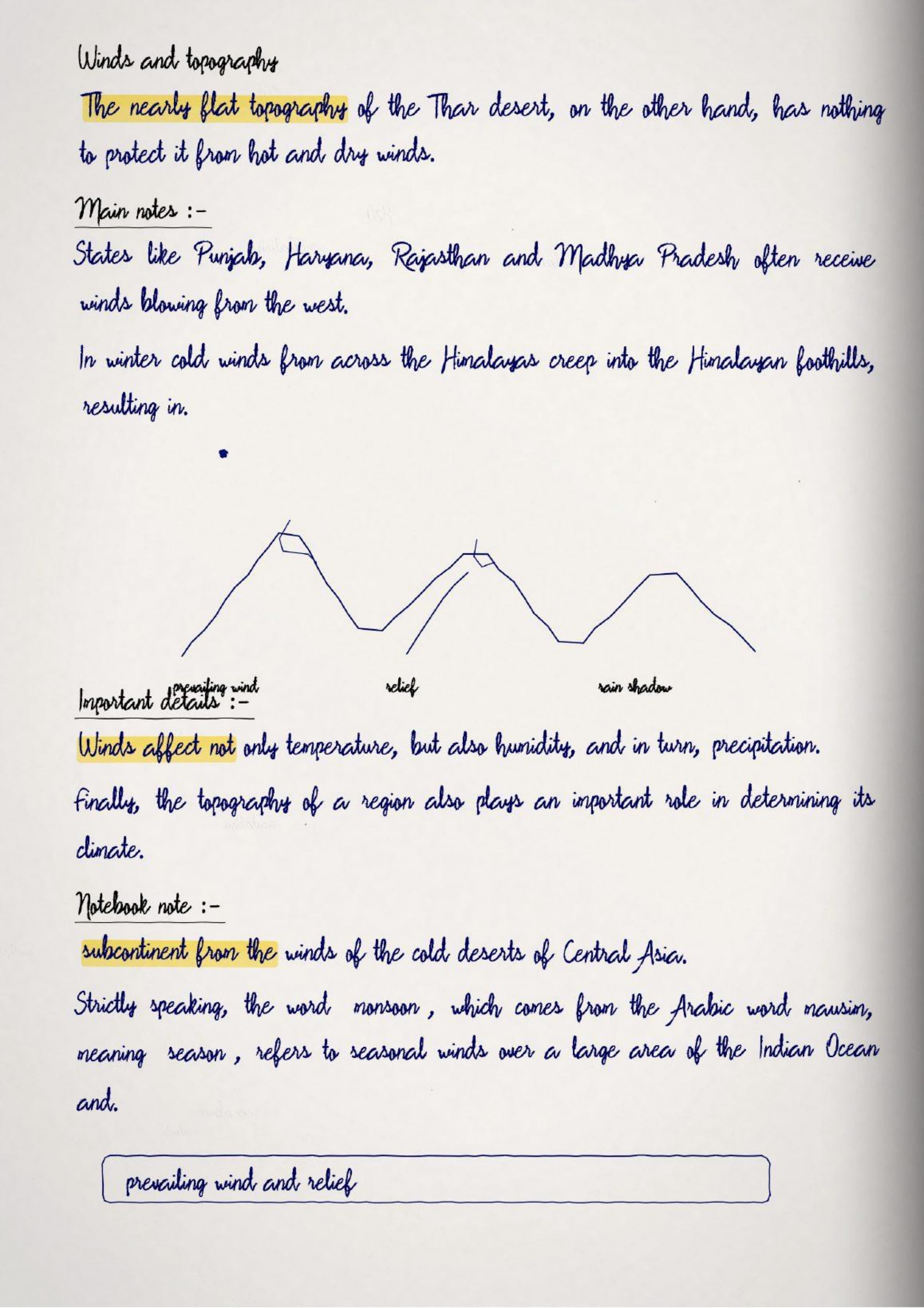
- Topography and rain shadow
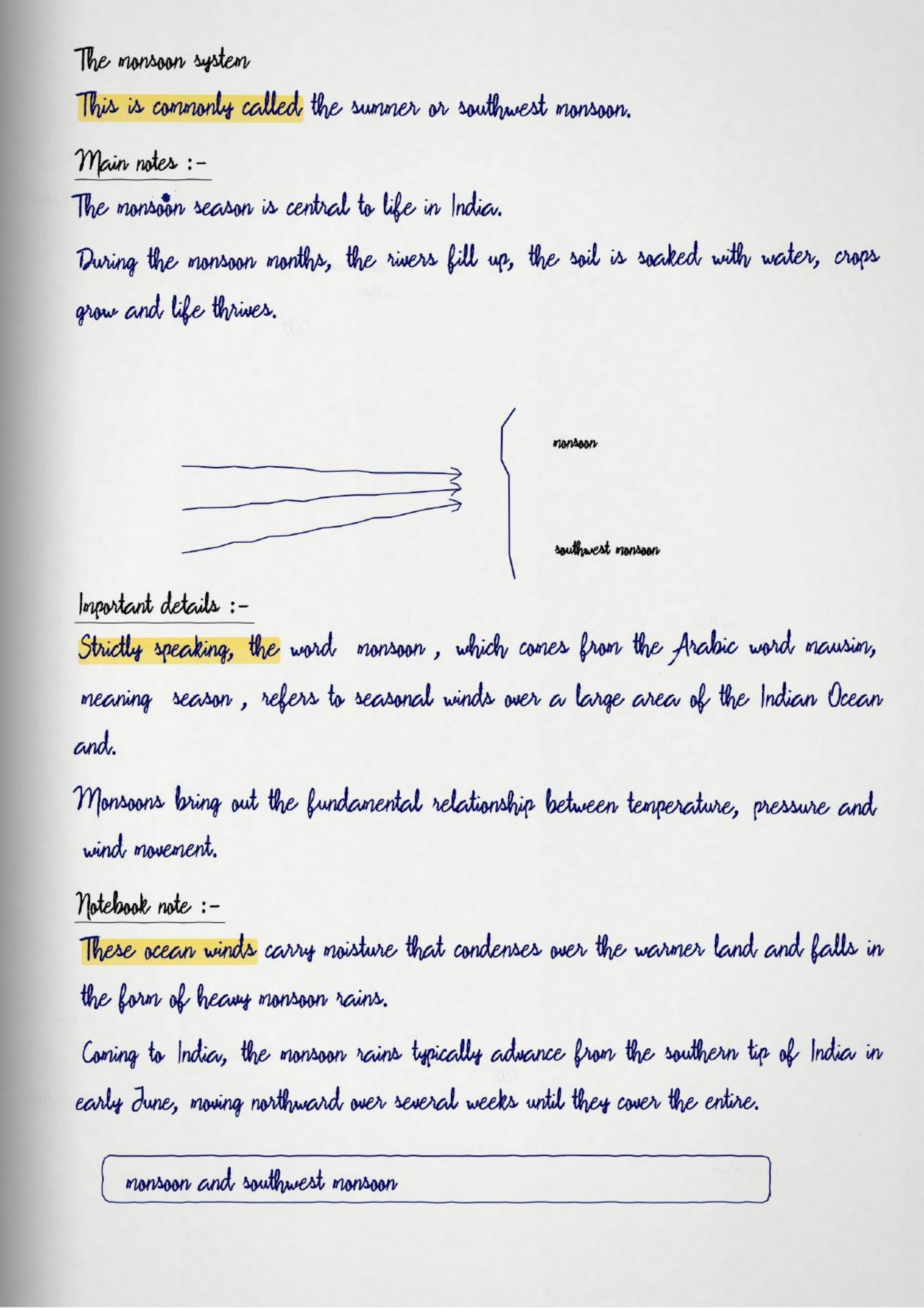
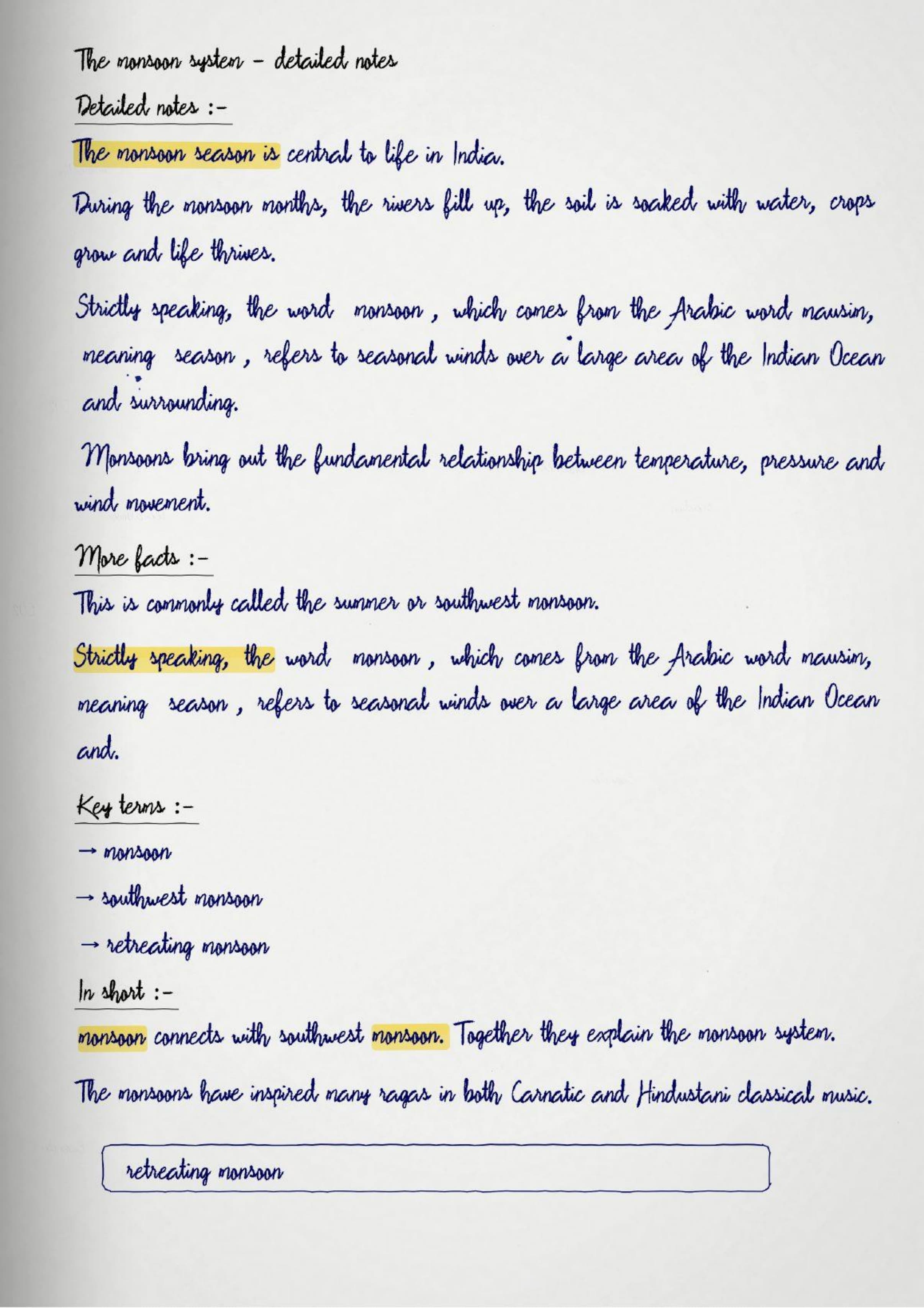
- The monsoon and why it matters
- Climate, festivals and agriculture
- Climate change, mitigation and resilience
Climates of India Sub-topic Priority List for CBSE Class 7 Social Science
The five factors and the monsoon carry the marks. Climate change is a shorter answer.
| Sub-topic | Weightage | How often asked |
|---|---|---|
| The five factors controlling climate | High | asked often |
| The monsoon and agriculture | High | asked often |
| Weather, seasons and climate compared | High | asked often |
| Climate and cultural traditions | Medium | asked sometimes |
| Climate change and mitigation | Medium | asked sometimes |
| Preparing for floods and cyclones | Low | asked rarely |
Climates of India in the Last Hour Before the Exam
The card to read in the last few minutes.
- Climate is the long-term pattern; weather is today; seasons repeat yearly
- Five factors: latitude, altitude, distance from the sea, winds, topography
- Higher altitude means cooler temperature
- The monsoon drives Indian agriculture
- Mitigation slows climate change; resilience is recovering from it
Hand-drawn Sketches Inside the Climates of India Notes
Climate patterns are easier to hold as maps than as paragraphs.
| Figure drawn by hand | What it shows |
|---|---|
| Five-factor panel | latitude, altitude, sea, winds and topography with examples |
| Monsoon arrival map | the branches of the monsoon with dates marked |
| Altitude and temperature graph | temperature falling as height rises |
| Rain shadow sketch | a mountain with the wet and dry sides marked |
| Comparison box | weather, season and climate side by side |
Words and Ideas the Climates of India Notes Box Off
Precision matters here, because several of these terms sound alike.
| Term / Idea | What it means |
|---|---|
| Climate | the long-term pattern of weather at a place, over decades |
| Season | a part of the year with its own typical weather, repeating annually |
| Latitude | the distance of a place north or south of the equator |
| Altitude | the height of a place above sea level |
| Topography | the shape and features of the land surface |
| Monsoon | the seasonal wind that brings India most of its rain |
| Mitigation | steps taken to slow global warming and reduce climate change |
| Resilience | the ability to withstand difficulty or recover quickly from it |
Best Way to Read the Climates of India Handwritten Notes
A short plan works better than one long sitting with the class 7 social science handwritten notes. Attach one Indian example to each factor. That is how the long answer is marked.
- List the five factors with one Indian example each
- Explain the difference between weather, season and climate
- Draw the monsoon map with arrival dates
- Before the test, revise the five-factor panel and the comparison box
Where to Go After the Climates of India Notes
Read the notes with the solved questions and the Exploring Society chapter itself.
- Class 7 Social Science NCERT Solutions
- Class 7 Social Science Revision Notes
- Class 7 Exploring Society Book PDF
Chapter-wise Class 7 Social Science Handwritten Notes
Exploring Society Part 1 has twelve chapters and Part 2 has eight. Use the table to open the class 7 social science handwritten notes for any other chapter.
Climates of India Class 7 Social Science Handwritten Notes FAQs
Ques. Where can I download the Climates of India Class 7 Handwritten Notes PDF?
Ans. The PDF is available free on this page in both the normal and the HD version.
Ques. What factors determine the climate of a place?
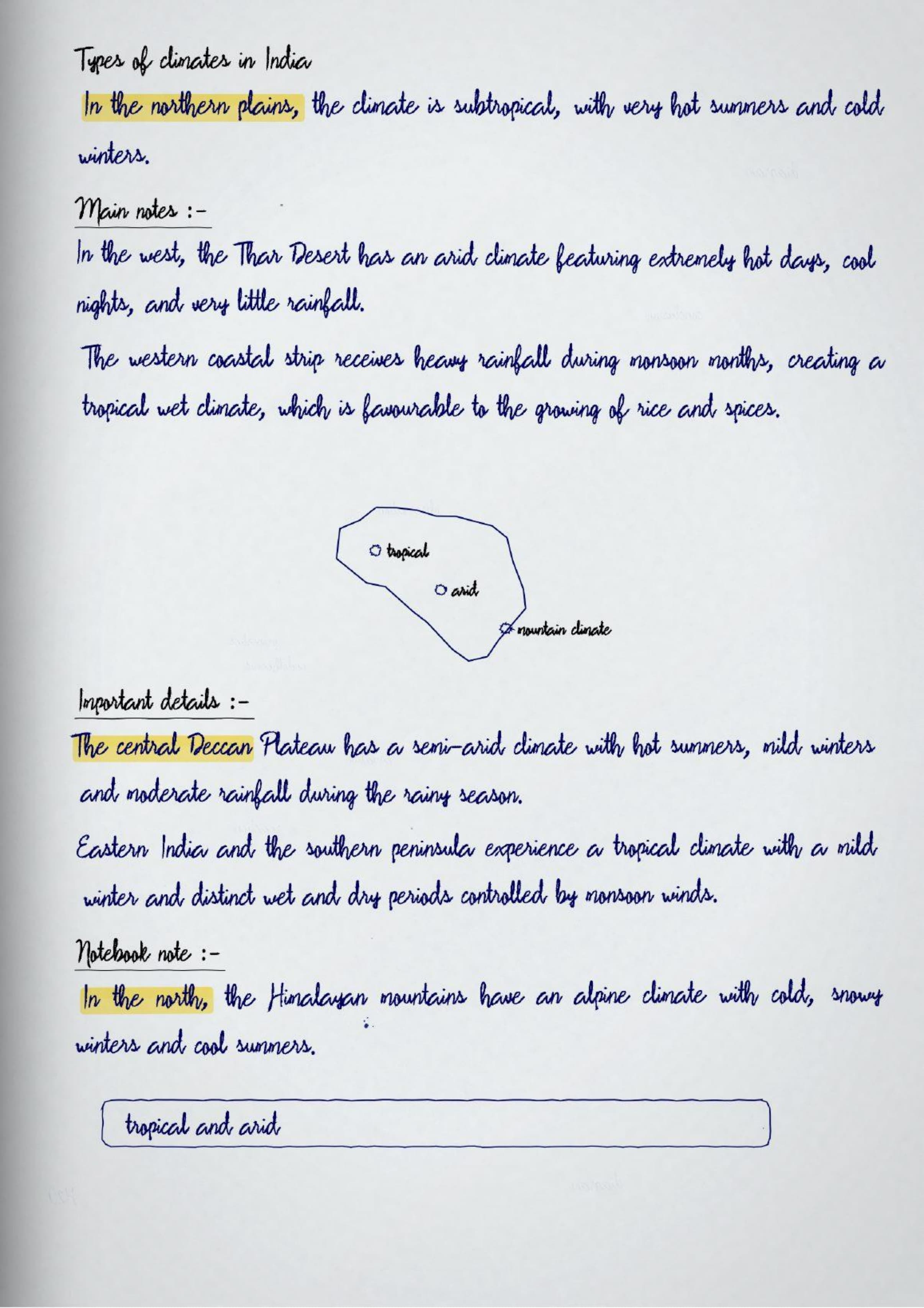
Ans. Latitude, altitude, distance from the sea, the winds that reach it, and the topography of the land around it.
Ques. How many pages is the Part 1 Chapter 3 handwritten notes PDF?
Ans. It runs 20 pages, with the five-factor panel, the monsoon map and a quiz.
Ques. Why is the monsoon important for India?
Ans. It brings most of the country's rainfall. Crop cycles, farming livelihoods and much of the rural economy depend on when the monsoon arrives and how much rain it brings.
Ques. What is the difference between weather, season and climate?
Ans. Weather is the state of the atmosphere right now. A season is a part of the year with typical weather that repeats annually. Climate is the long-term pattern measured over decades.



Comments