




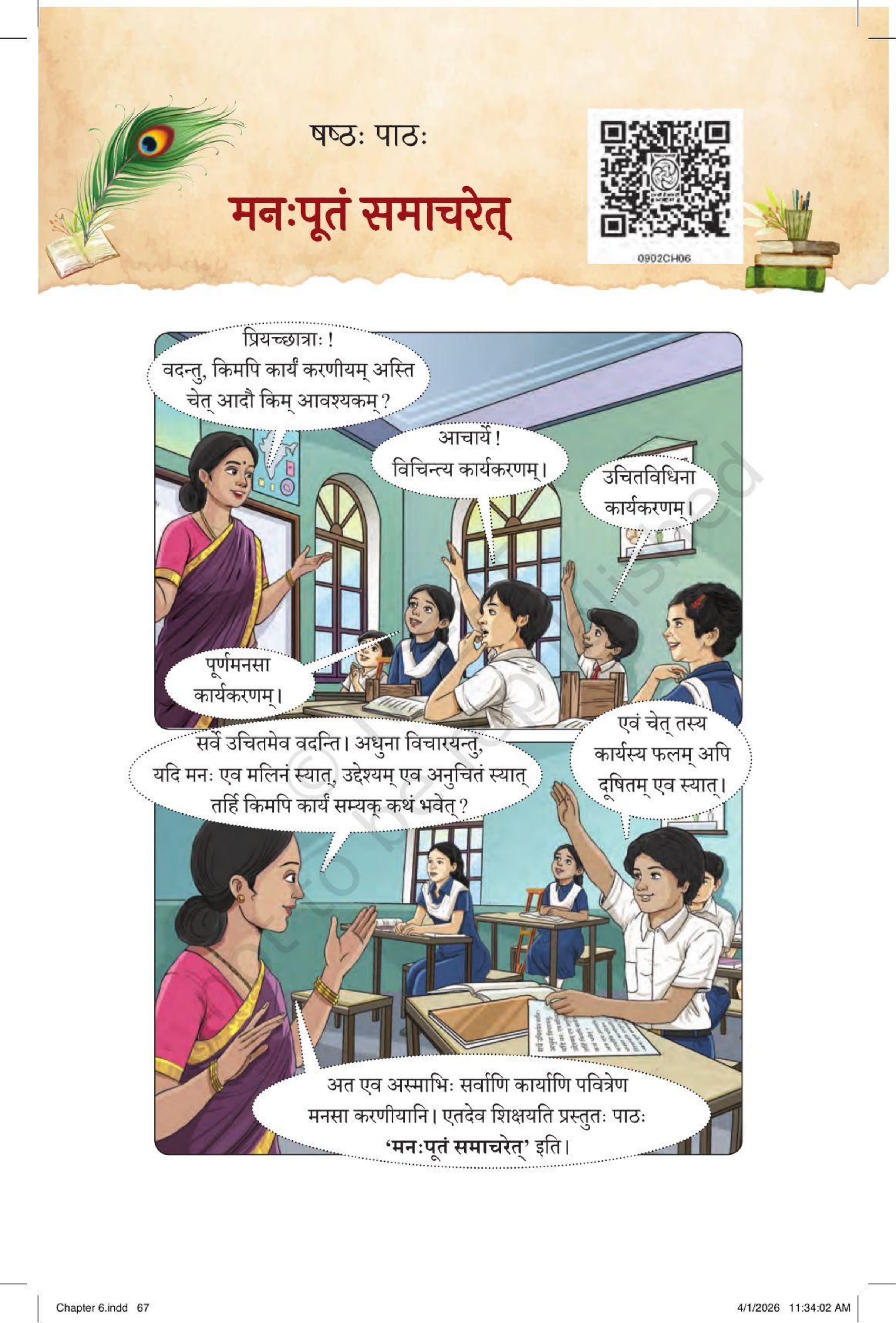
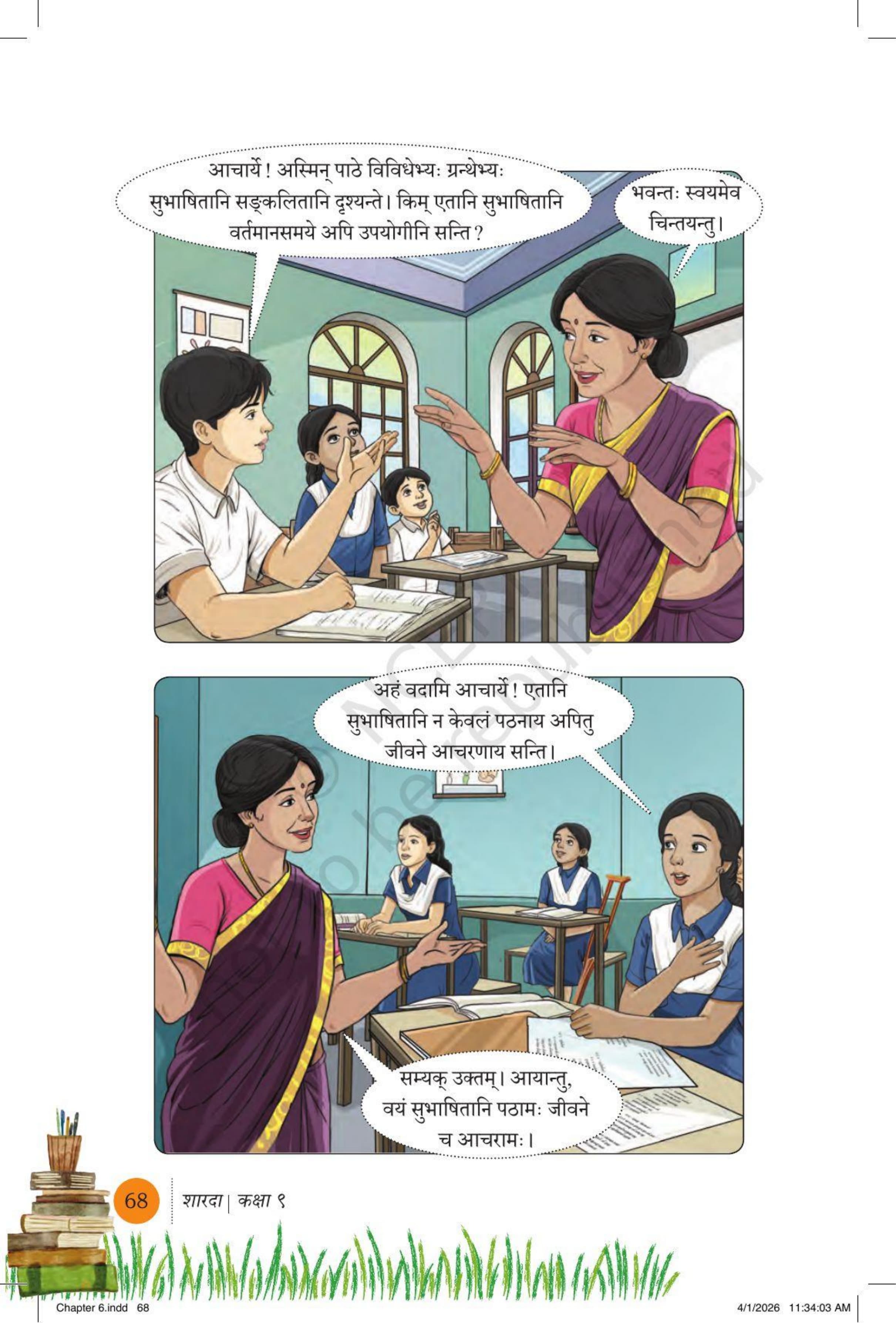
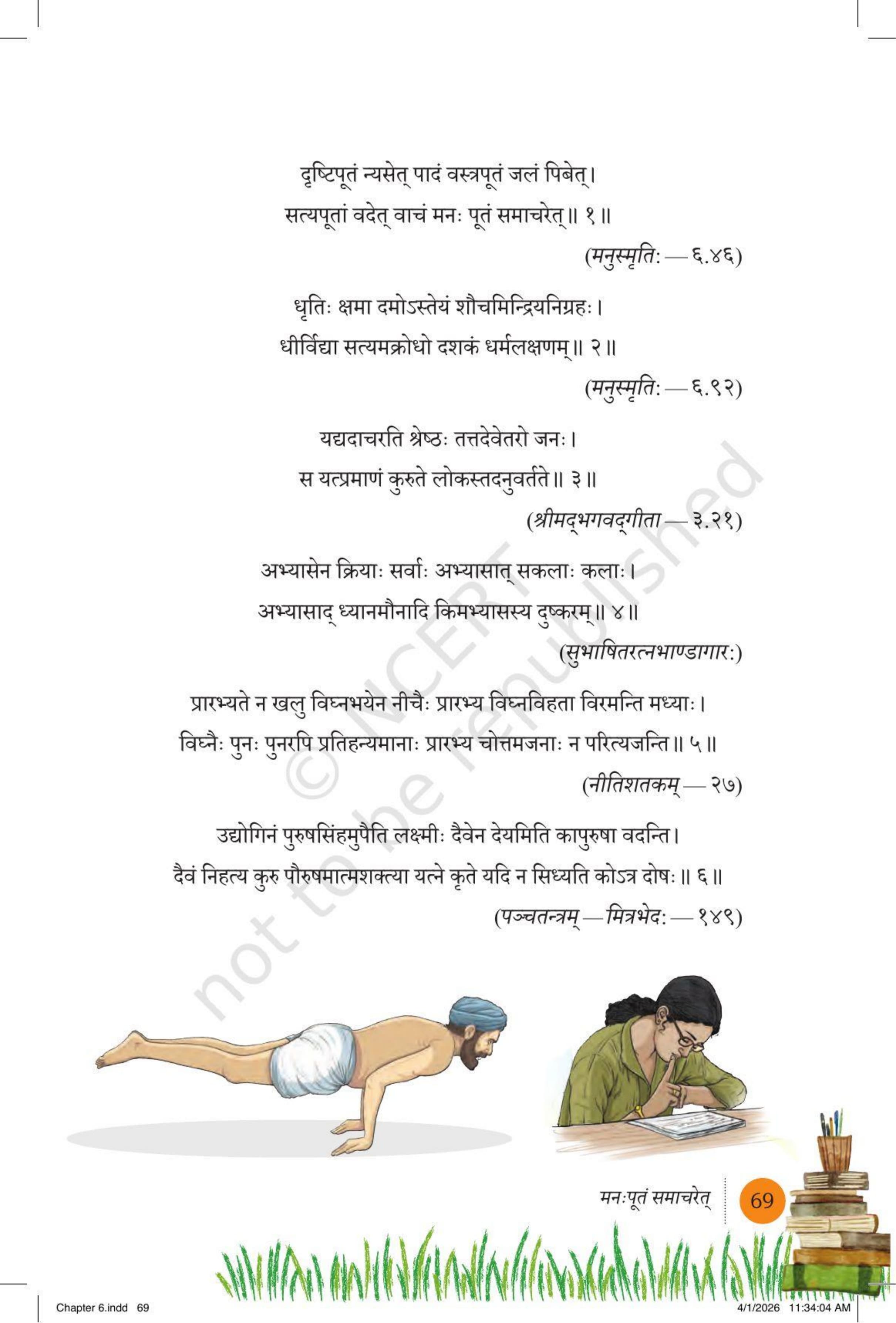
मनःपूतं समाचरेत् is the Sharada lesson on conscience. This class 9 sanskrit book pdf chapter 6 Manahputam Samacharet is the official NCERT text for the 2026-27 session. It speaks directly to the student and asks what should come first before any action is taken.
- Lesson: षष्ठः पाठः, Manahputam Samacharet
- Theme: act only in a way your own mind approves
- Best for: the imperative mood and direct-address forms
Everything described on this page is in the class 9 sanskrit book pdf for Manahputam Samacharet, linked below.
This is the official NCERT Sharada chapter file for the 2026-27 session, hosted by Collegedunia exactly as NCERT published it, with no pages removed.
What You Get in the Manahputam Samacharet NCERT Book PDF
The passage opens by calling out to the reader, प्रियच्छात्राः, and then asks what should come first when you have something to do.
- The direct address प्रियच्छात्राः to the reader
- The question of what must come first before any action
- The idea of acting on a clear conscience
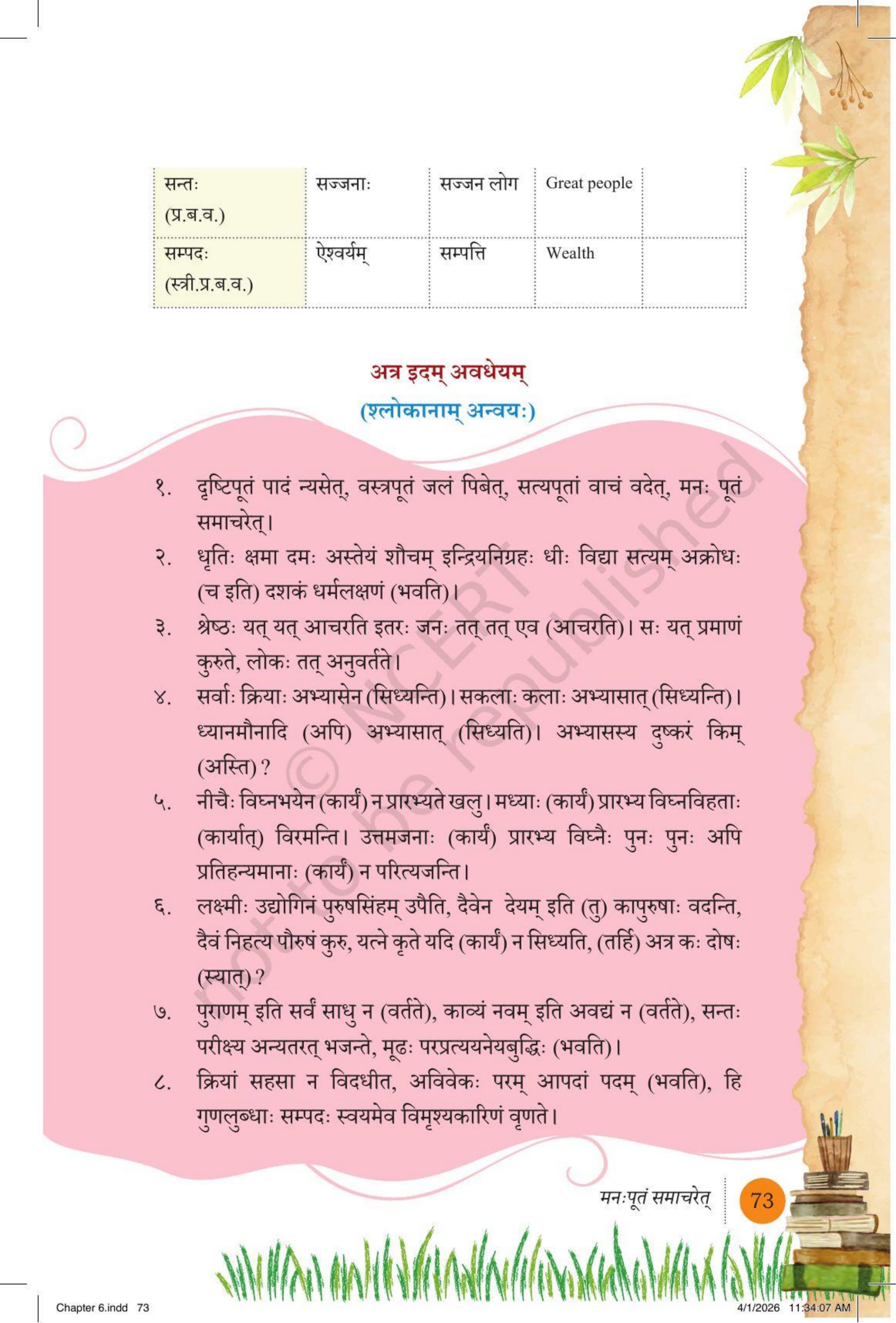
- Imperative forms such as वदन्तु and समाचरेत्
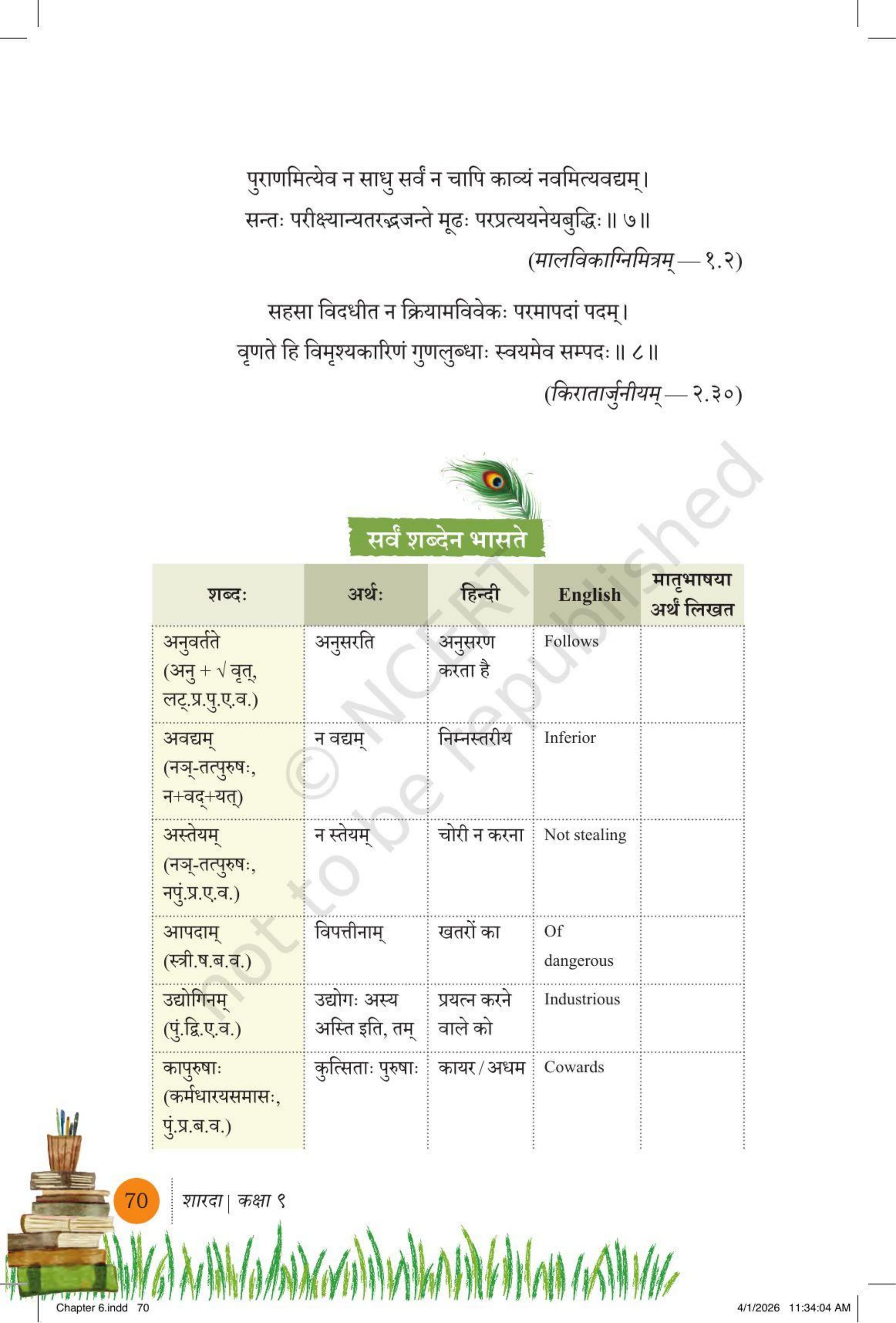
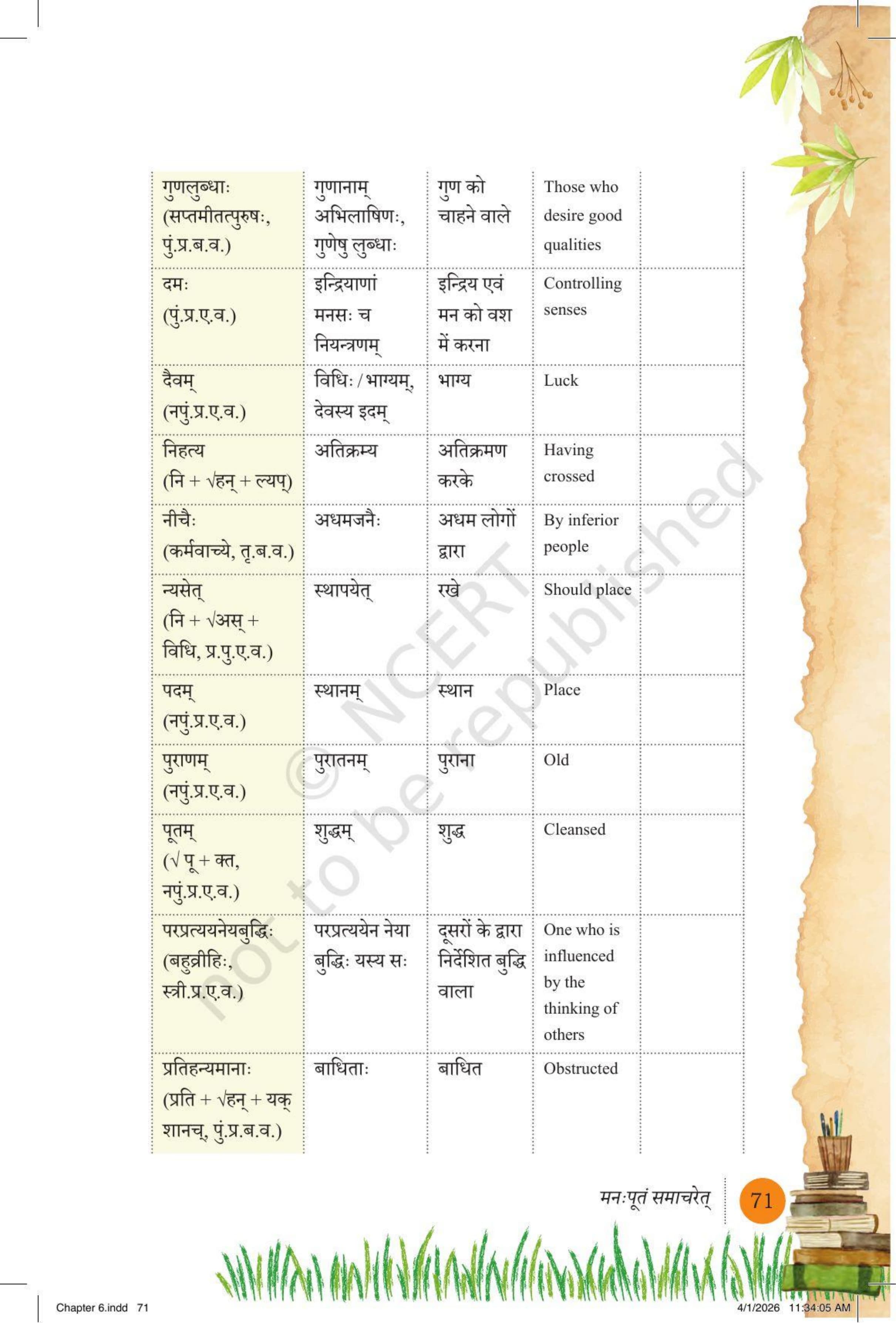
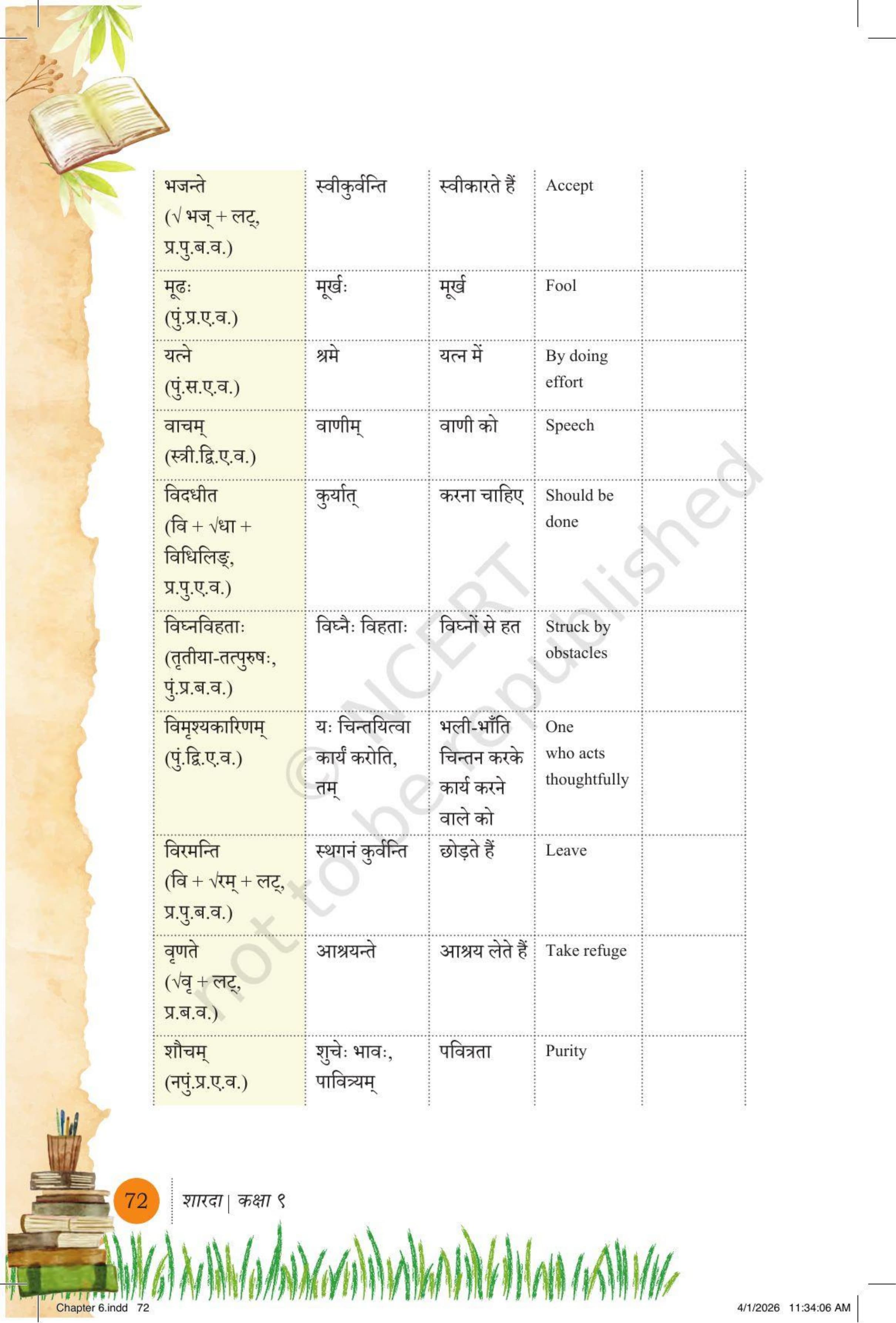
- Word meanings printed with the passage
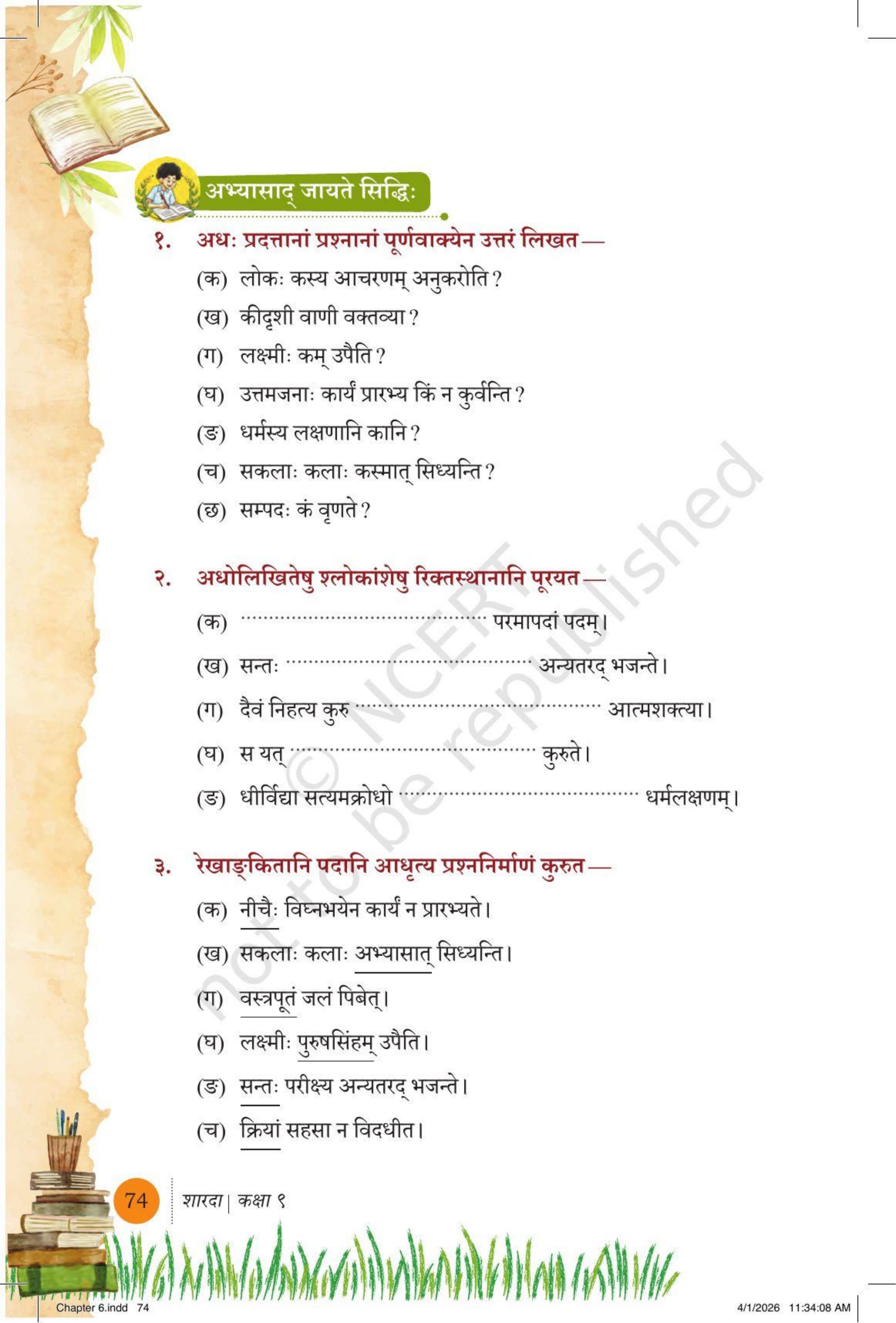
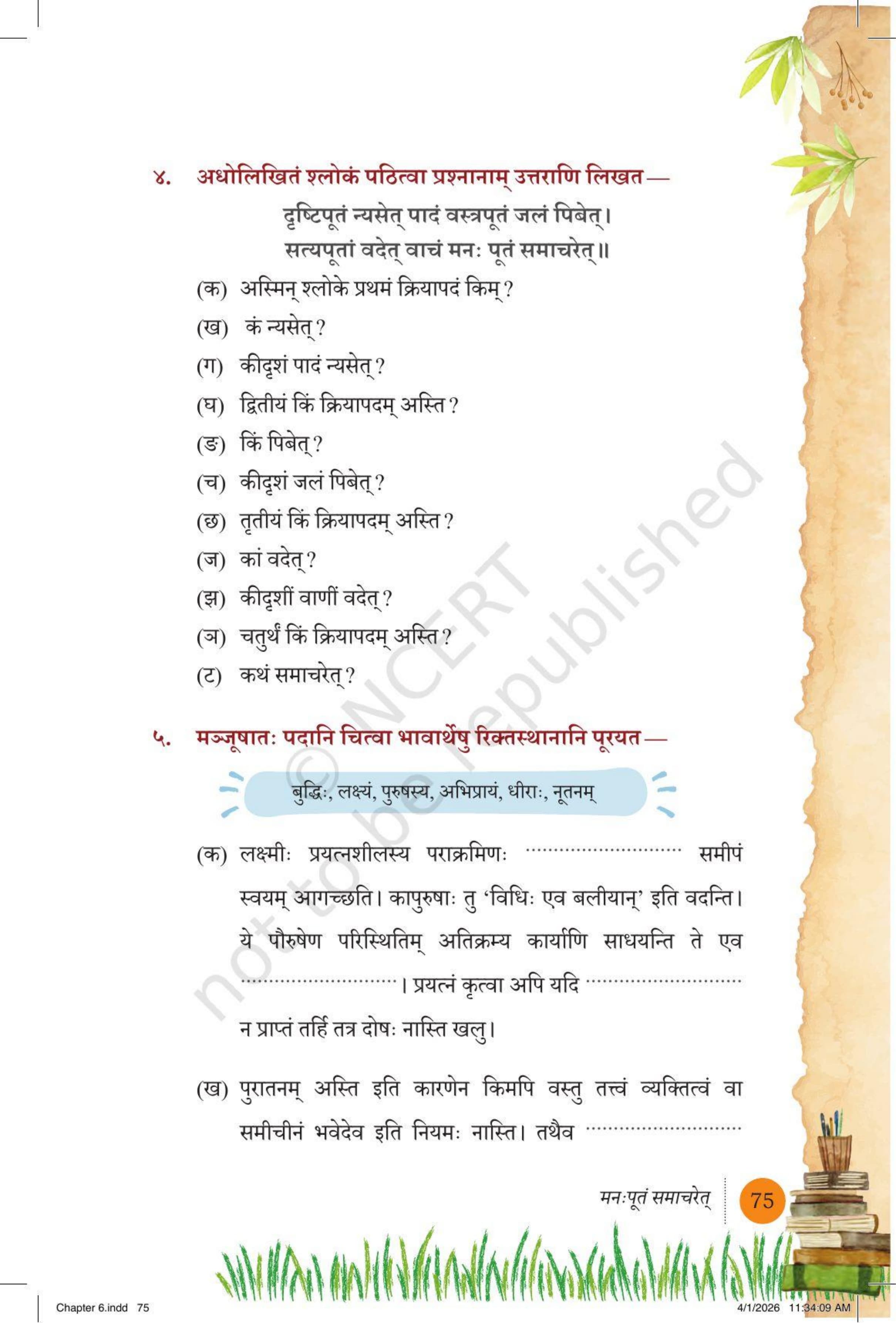
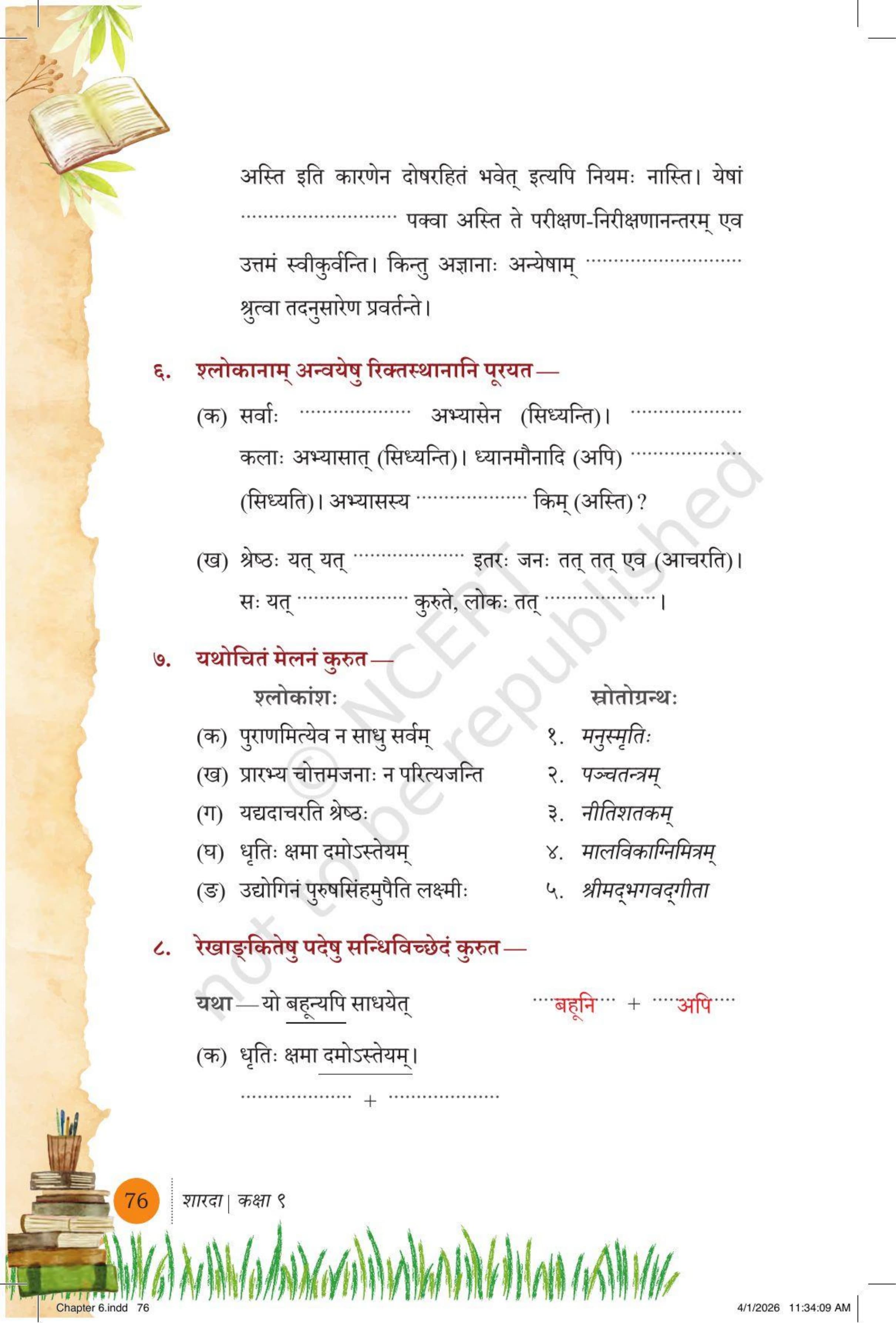
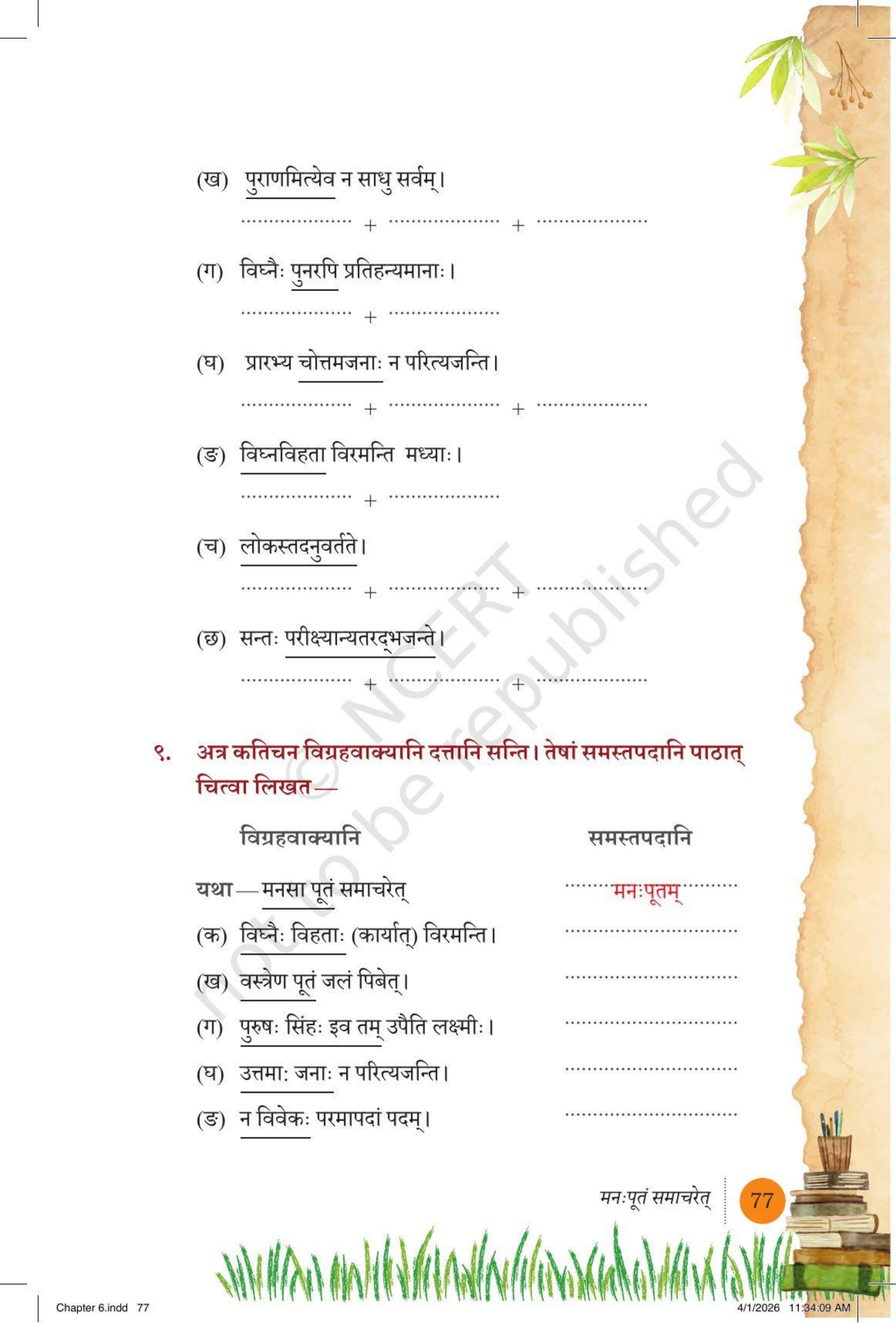
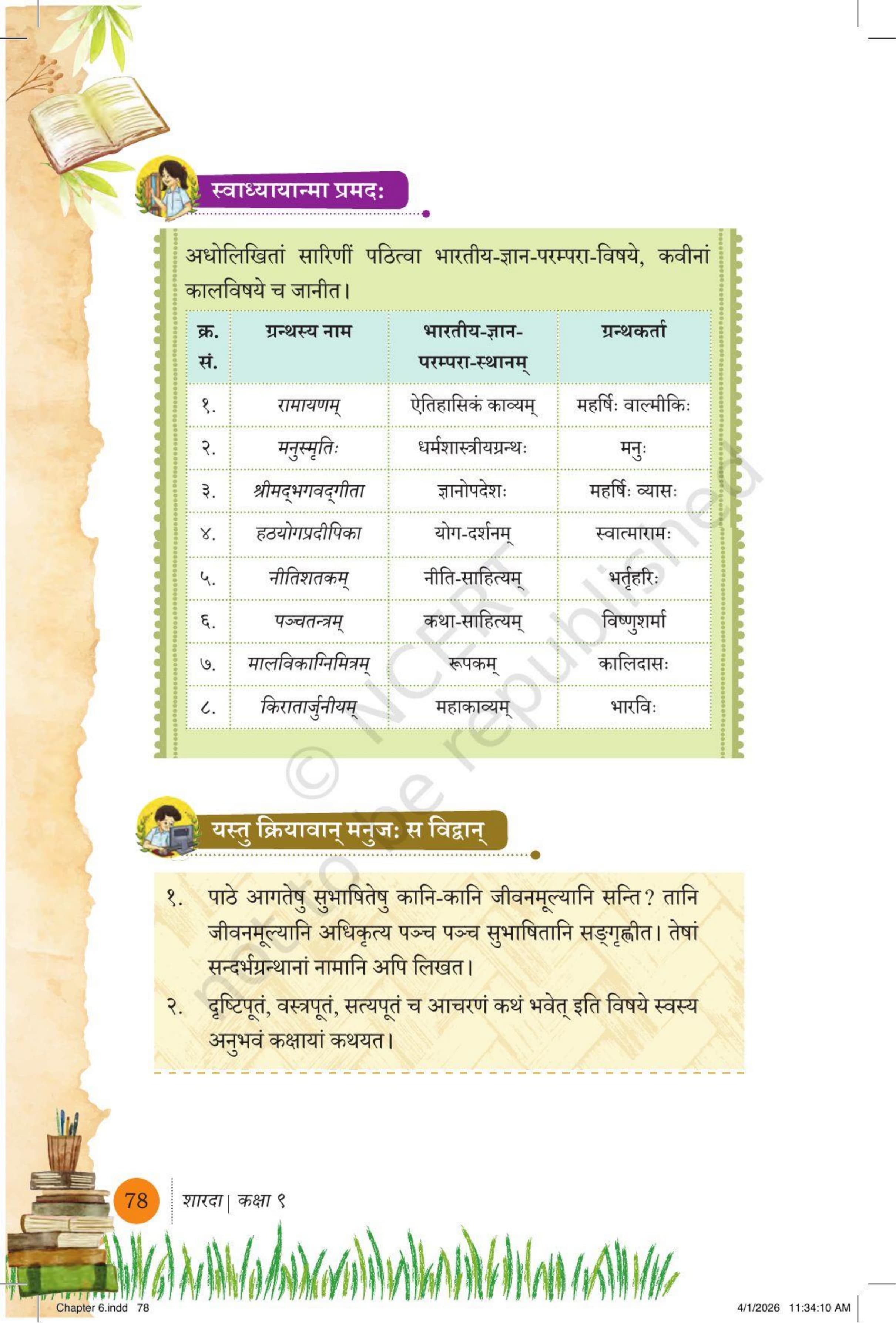
- The numbered अभ्यास set
The Practice Apparatus in Manahputam Samacharet
Grammar questions here focus on verb mood. Know why समाचरेत् is not a simple present tense.
| Exercise | What it asks you to do |
|---|---|
| एकपदेन उत्तरं लिखत | answer in a single word, taken straight from the passage |
| पूर्णवाक्येन उत्तराणि लिखत | answer in a complete Sanskrit sentence |
| रिक्तस्थानानि पूरयन्तु | fill the blanks using the correct form of the word |
| शब्दार्थमेलनम् | match Sanskrit words with their meanings |
| भाषिककार्यम् | grammar work on the forms the passage uses |
The Structure of Manahputam Samacharet in the Textbook
A short lesson built as a conversation with the reader, then the exercises.
| Part of the chapter | What it covers |
|---|---|
| Heading | षष्ठः पाठः and the title सूक्ति |
| Address | प्रियच्छात्राः, the direct call to students |
| The question | what should come first before acting |
| The answer | act in the way your own mind approves |
| अभ्यास | the numbered exercise set |
| Grammar work | imperative and optative forms |
Getting the Most Out of Manahputam Samacharet
Read it as if the book is speaking to you, because it is. Work through the class 9 sanskrit book pdf with a pencil in hand.
- Read the passage aloud, keeping the address in mind
- List every imperative and optative form
- Explain the title in one sentence
- Do the भाषिककार्यम् grammar exercise
How the New Sharada Book Differs From the Old One
Sharada is new for 2026-27, and several lessons speak straight to the student rather than narrating at a distance.
- Lessons address the reader directly in Sanskrit
- Verb moods are taught through that address
- Ethical themes are put as questions, not instructions
- Short lessons alternate with longer narrative ones
How Collegedunia Hosts the Manahputam Samacharet Chapter
Collegedunia hosts the official NCERT file unchanged and adds the reading support around it. That is how Collegedunia handles every class 9 sanskrit book pdf on the site.
- Official file: the exact NCERT lesson PDF, with no pages dropped
- Read in the browser: page through the lesson before you download it
- Lesson list: jump to any other Sharada पाठ from one table
- Study material: solved exercises and revision notes for the same lesson
More Class 9 Sanskrit Study Material for Manahputam Samacharet
Read the lesson from the book first, then use the solved exercises and the notes to revise.
NCERT Book PDF for Class 9 Sanskrit: All Chapters
Each row below opens the class 9 sanskrit book pdf for that chapter. The Sharada book has eleven पाठ, followed by five परिशिष्ट for reference. The table links the official PDF for each lesson.
Manahputam Samacharet Class 9 Sanskrit NCERT Book PDF FAQs
Ques. Where can I download the Class 9 Sanskrit Chapter 6 NCERT Book PDF?
Ans. The official 12-page lesson from the Sharada textbook is available free on this page.
Ques. What does मनःपूतं समाचरेत् mean?
Ans. Act in the way your own mind approves, that is, act according to your conscience. The lesson develops that idea by asking what should come first before any action.
Ques. How is this lesson written?
Ans. As a direct address to the reader. It opens with प्रियच्छात्राः, meaning dear students, and puts its point as a question rather than an instruction.
Ques. Which grammar does the lesson cover?
Ans. Mainly verb moods: imperative forms such as वदन्तु and optative forms such as समाचरेत्, which follow naturally from the second-person address.
Ques. How many pages is the Chapter 6 PDF?
Ans. 12 pages, including the passage, word meanings and the numbered exercise set.



Comments