




Class 12 Economics Introduction to Macroeconomics PYQ, free to download as a 53-page PDF. The unit this chapter sits in carries about 10 of the 80 marks in the board paper, and the set holds 65 solved questions from the 2006 to 2026 papers on the circular flow of income, final and intermediate goods, capital and consumer goods, stock and flow variables, externalities, public goods, depreciation and gross and net investment, and takes roughly four hours to work through, so do the MCQs in one sitting and the written answers in a second.
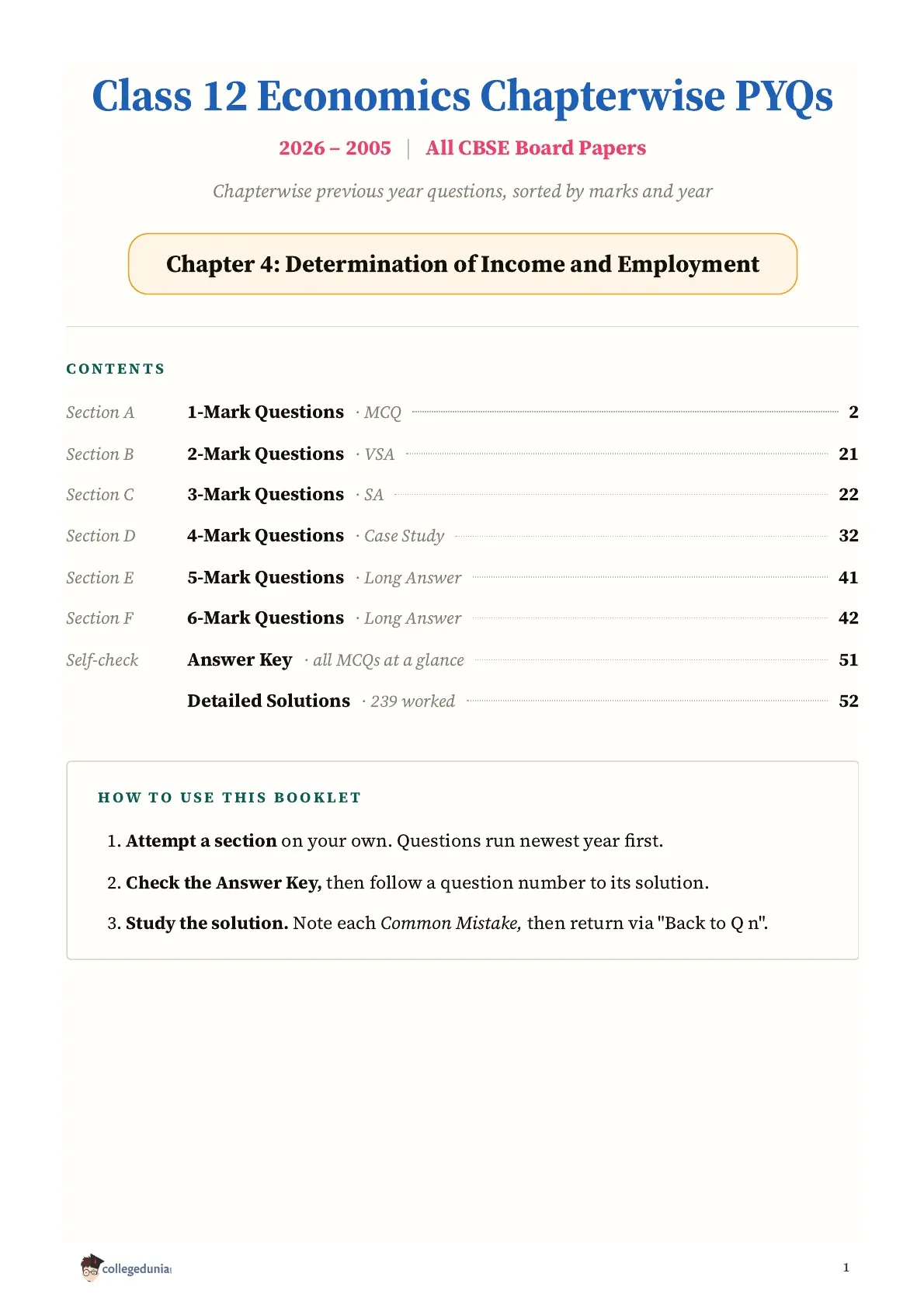
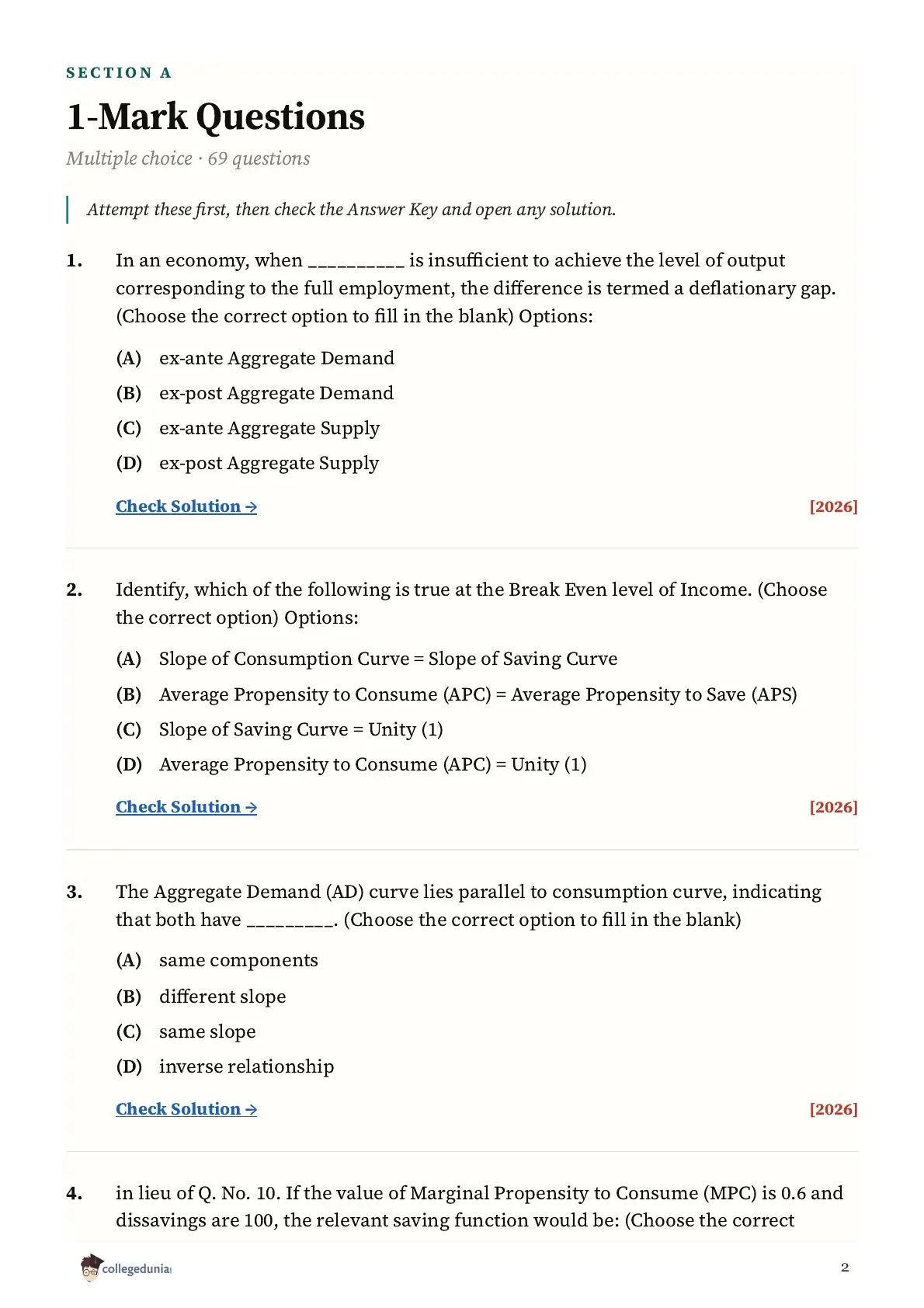
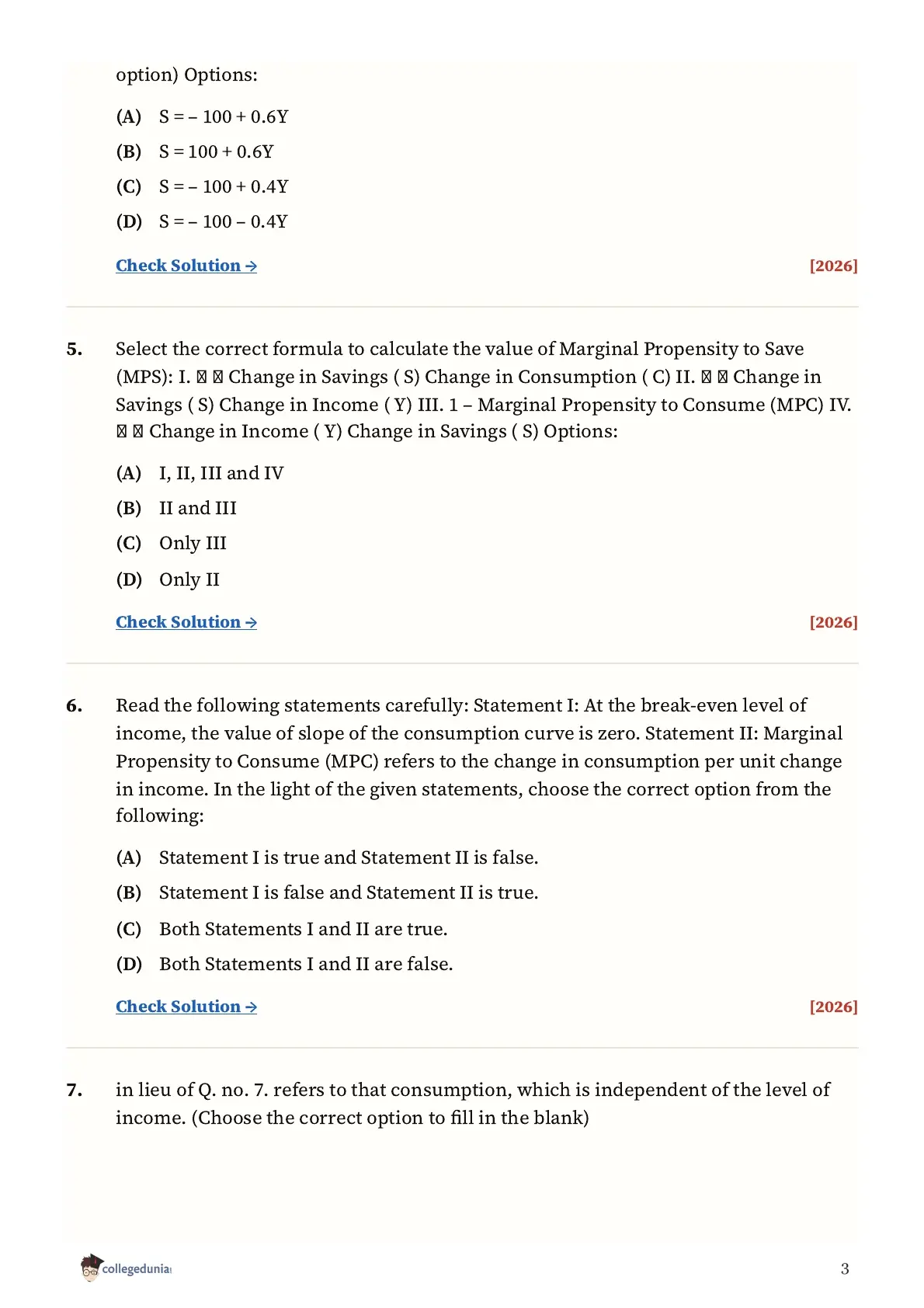
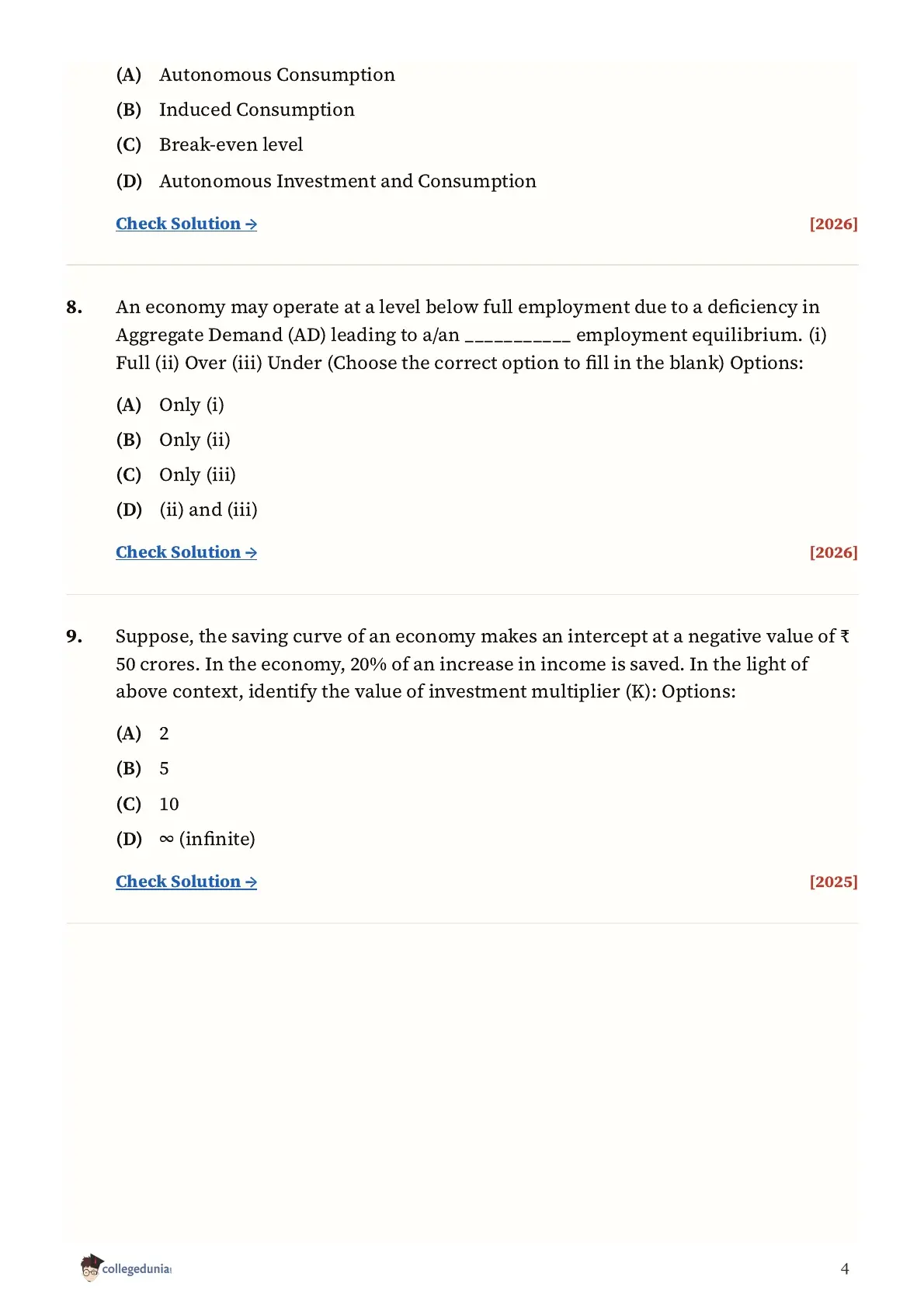
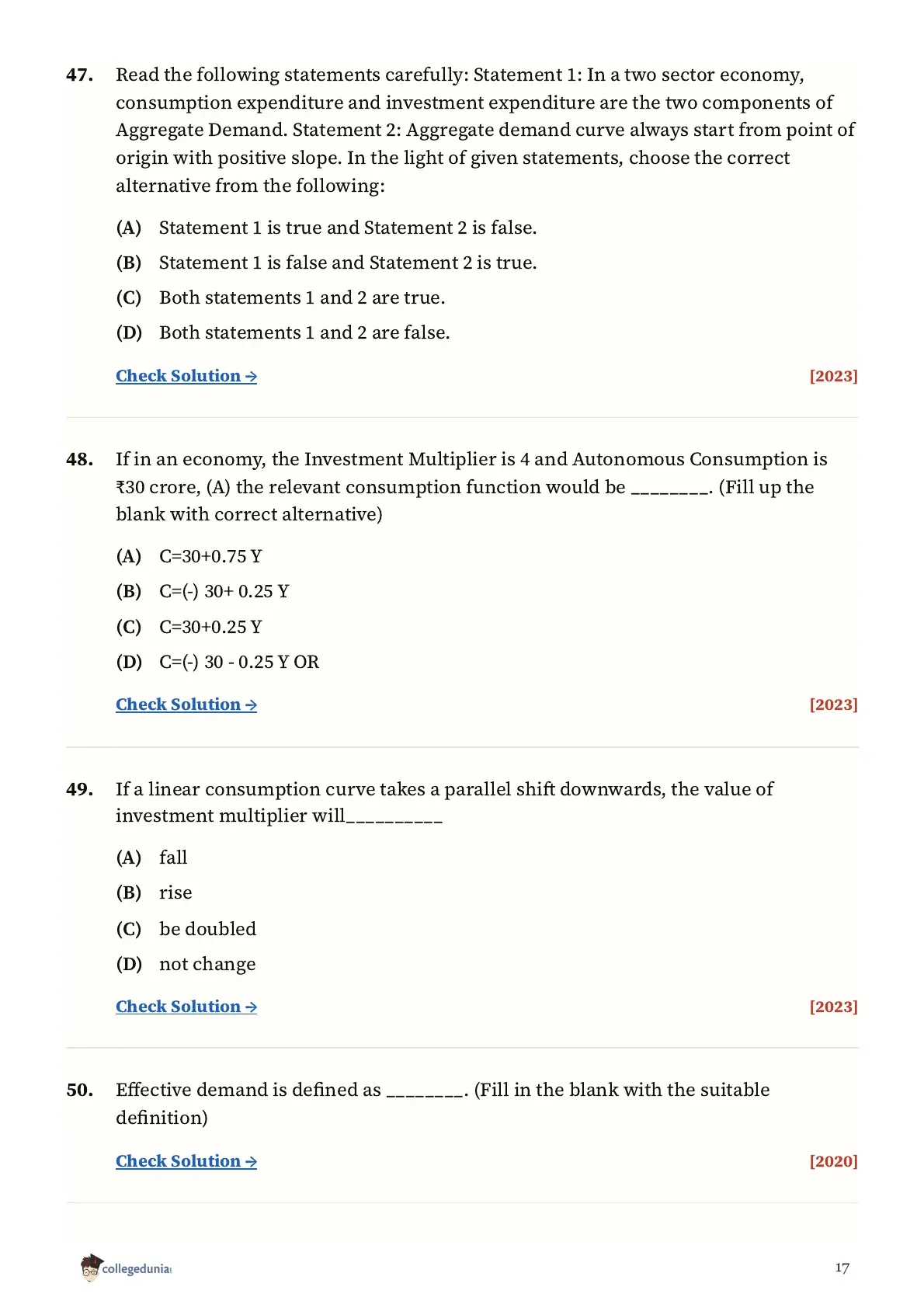
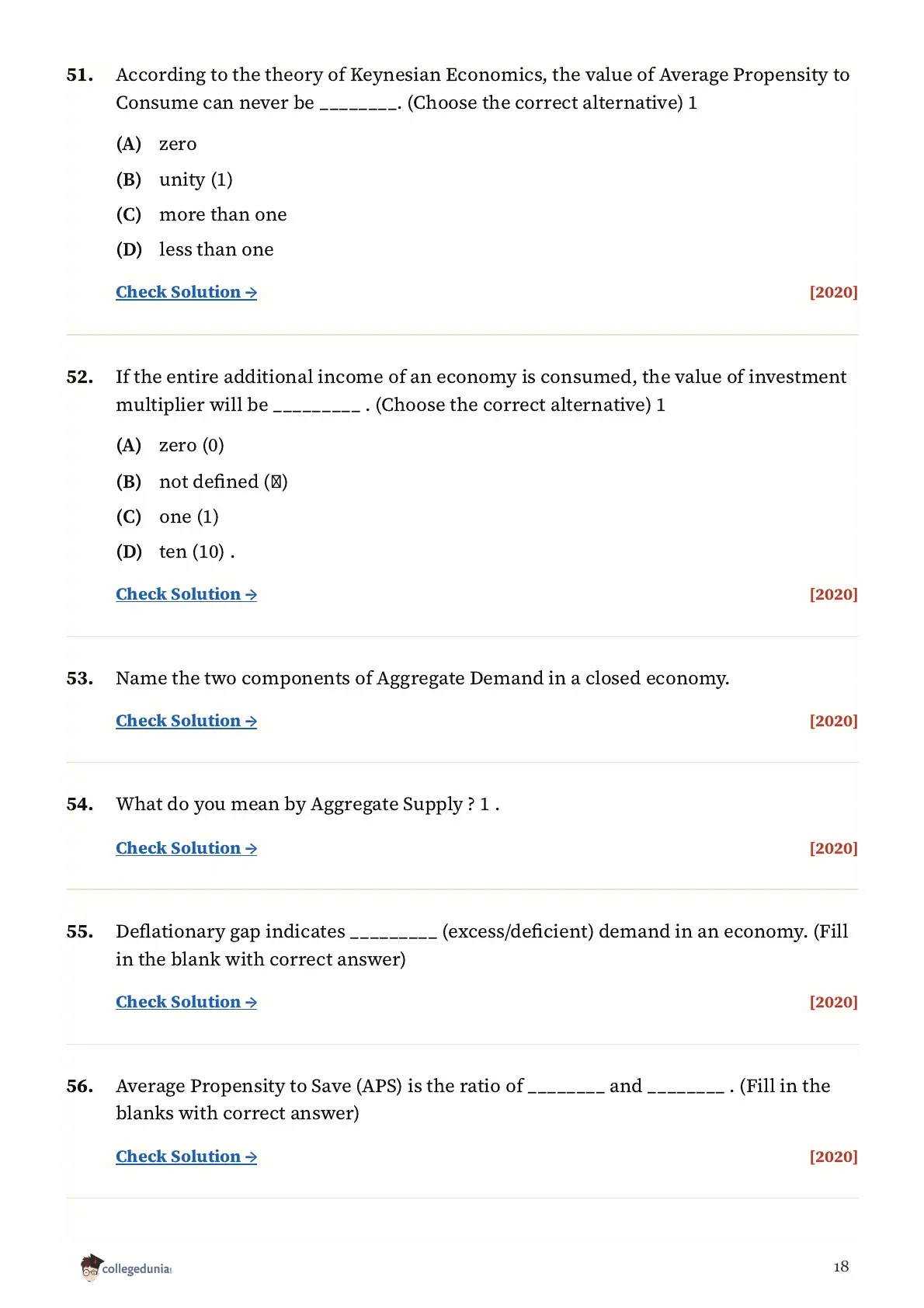
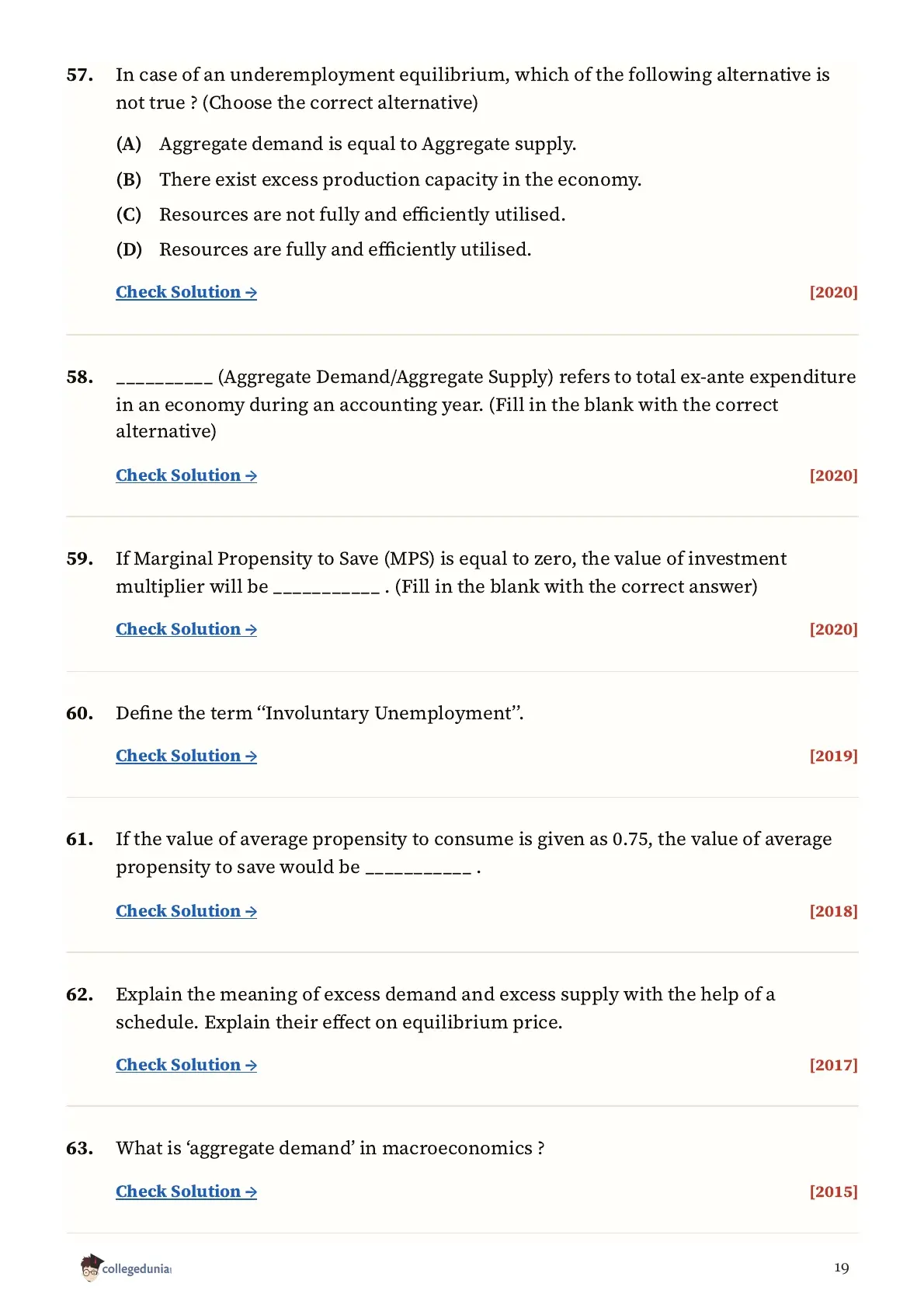
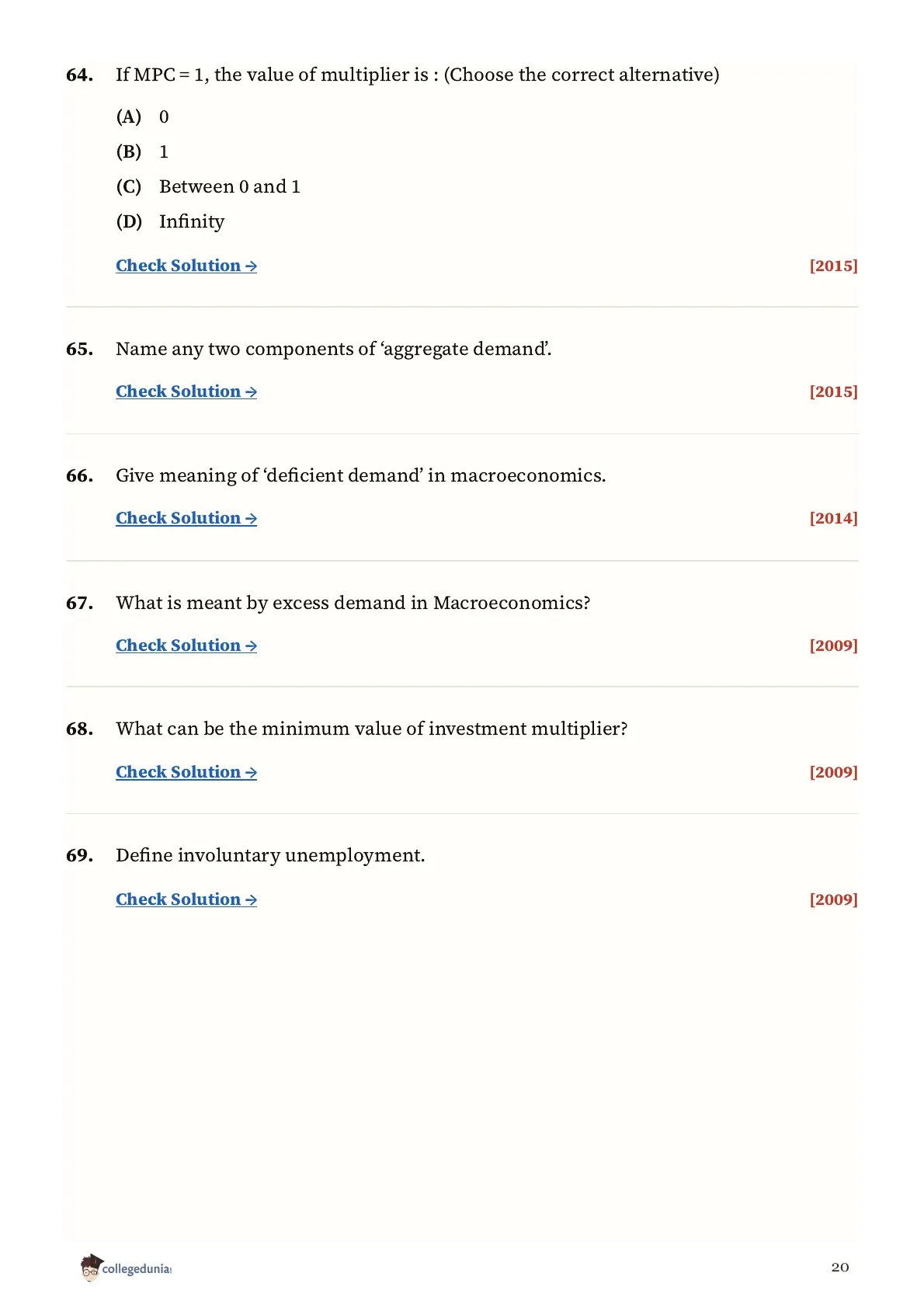
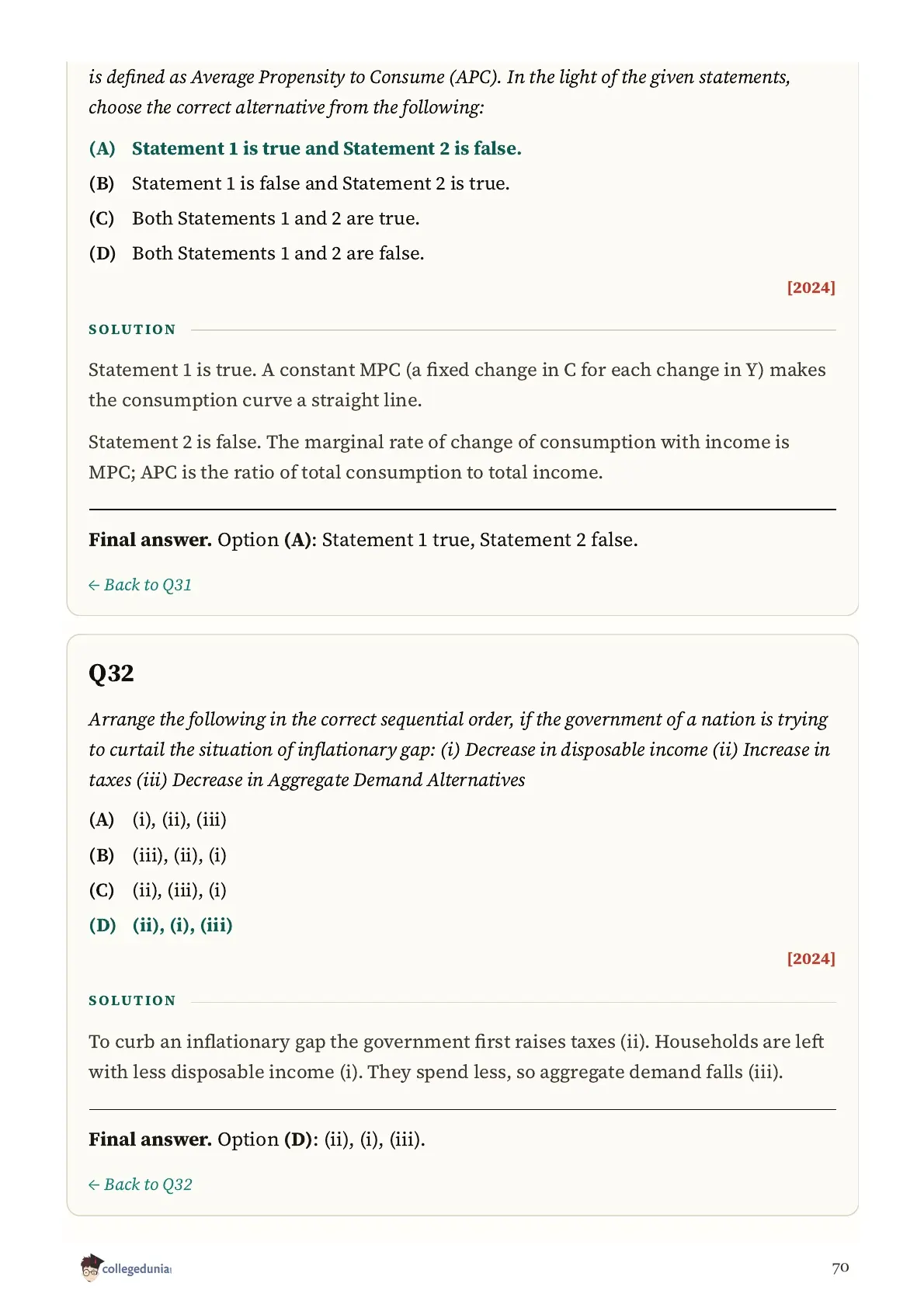
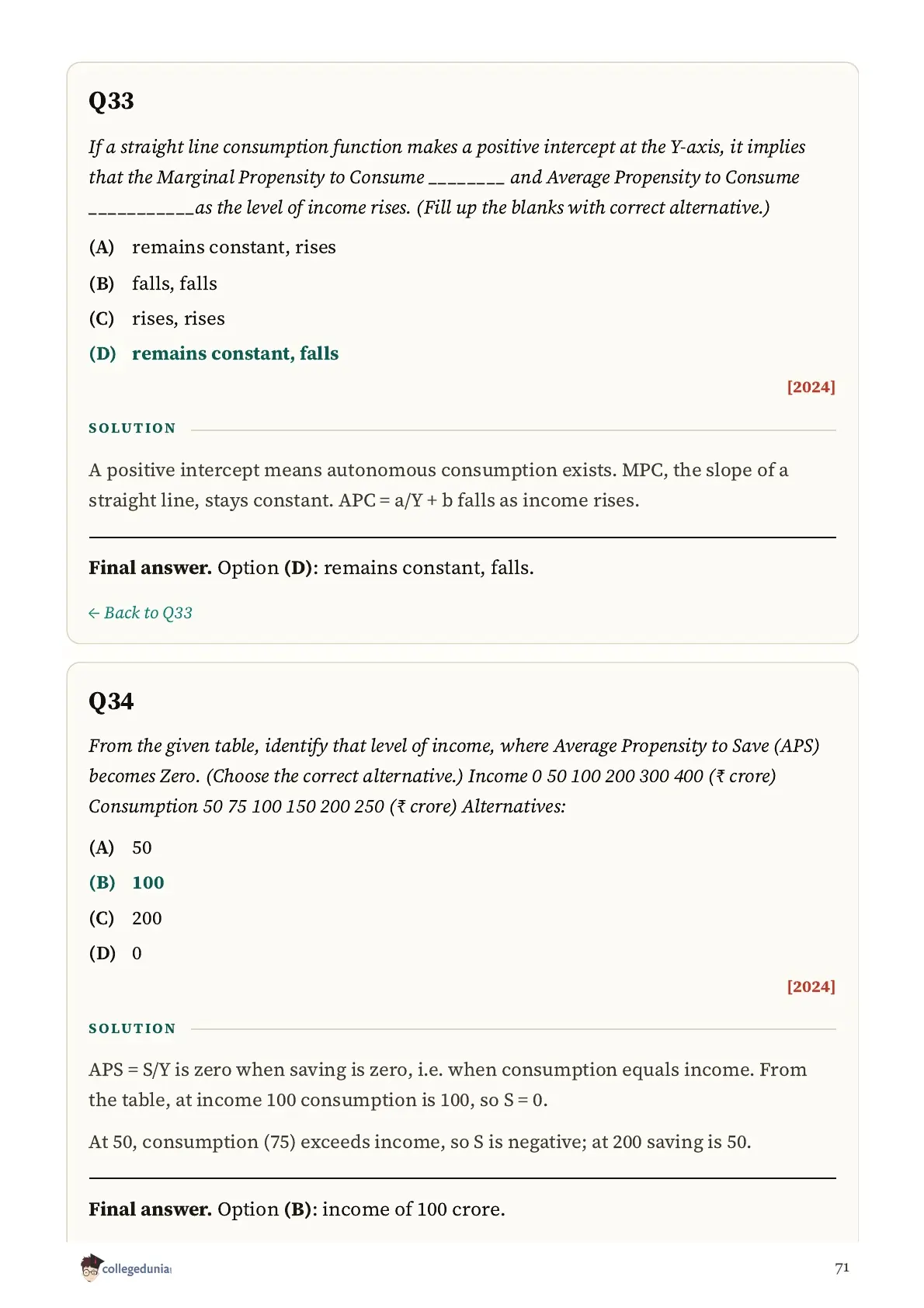
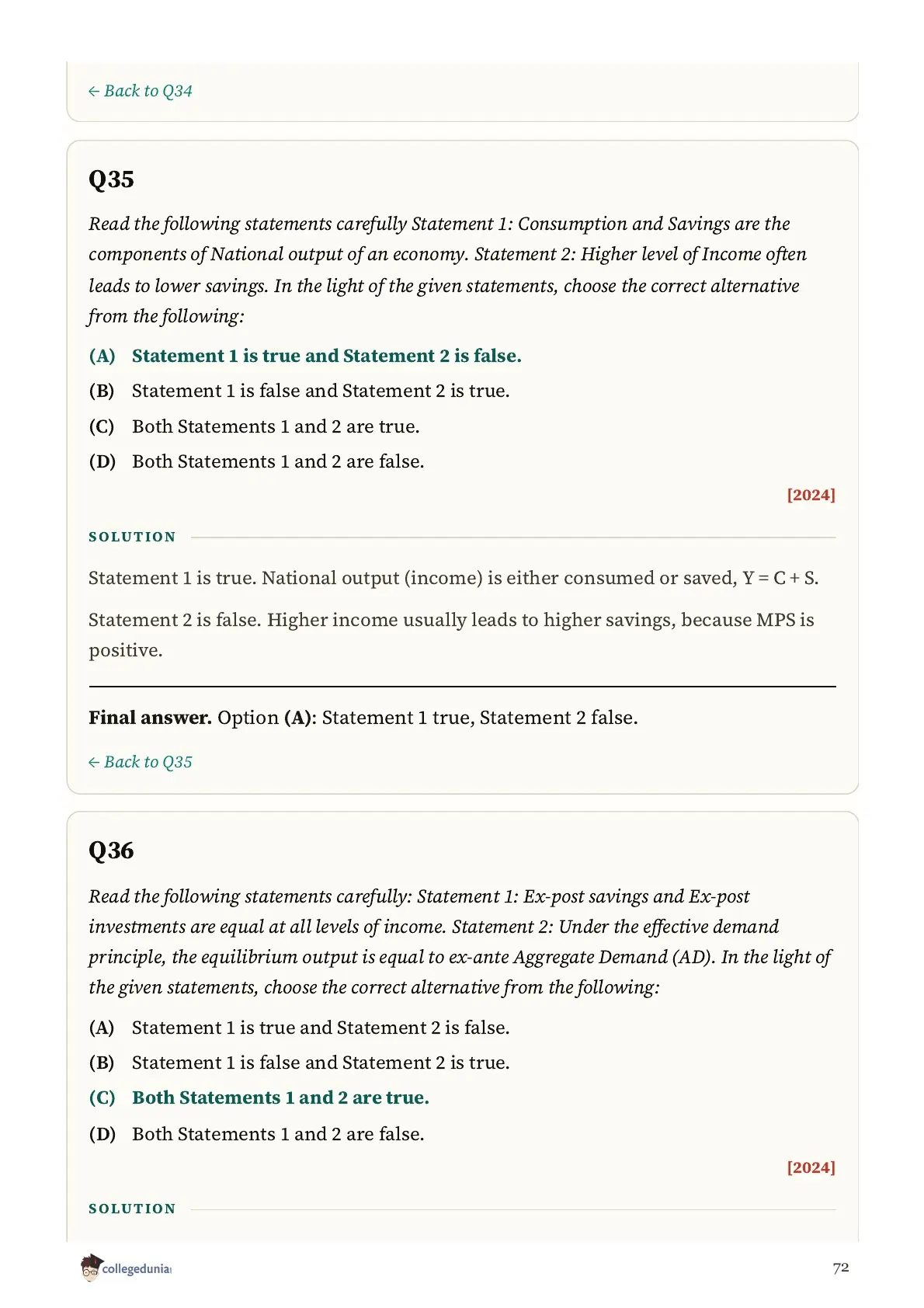
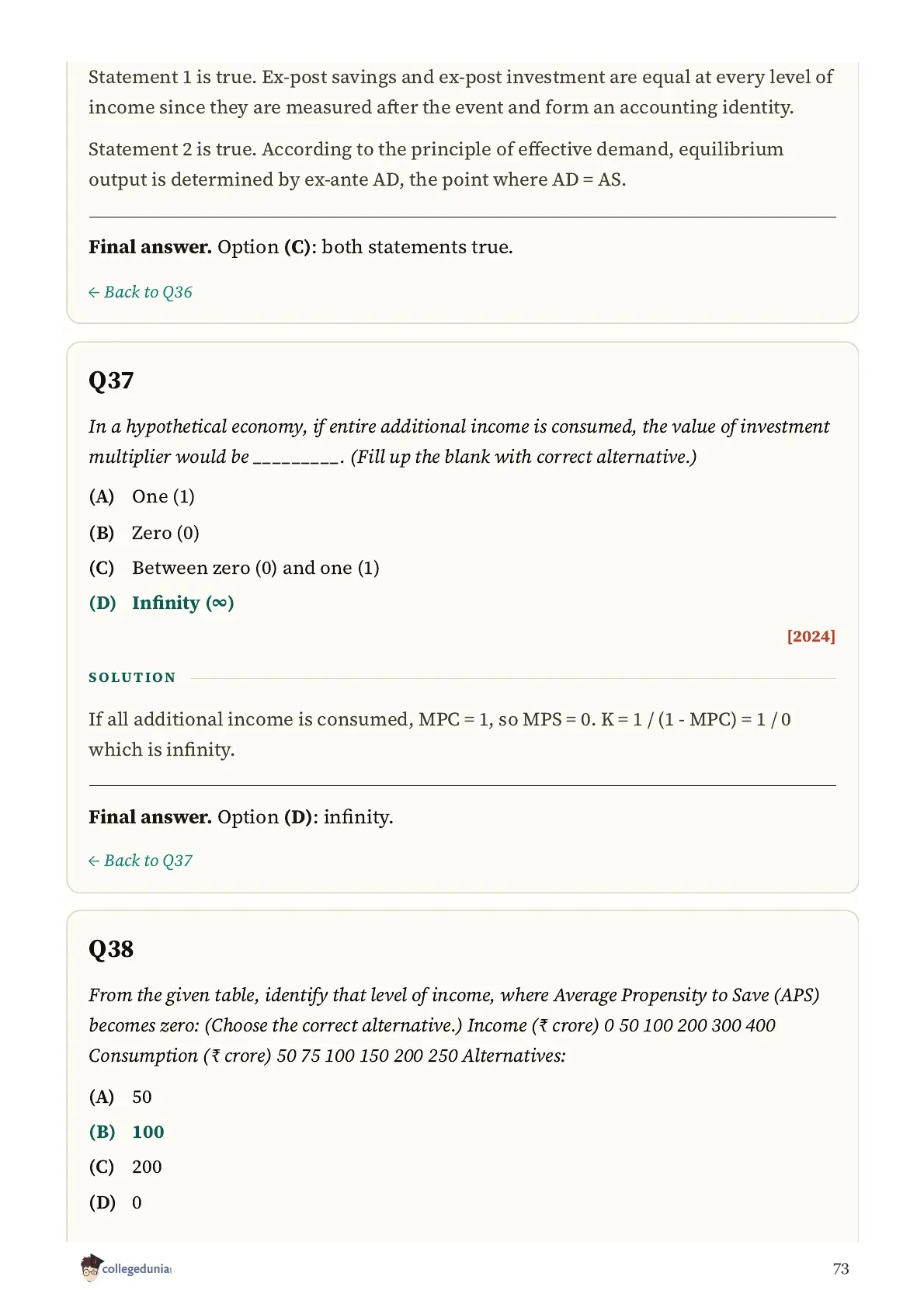
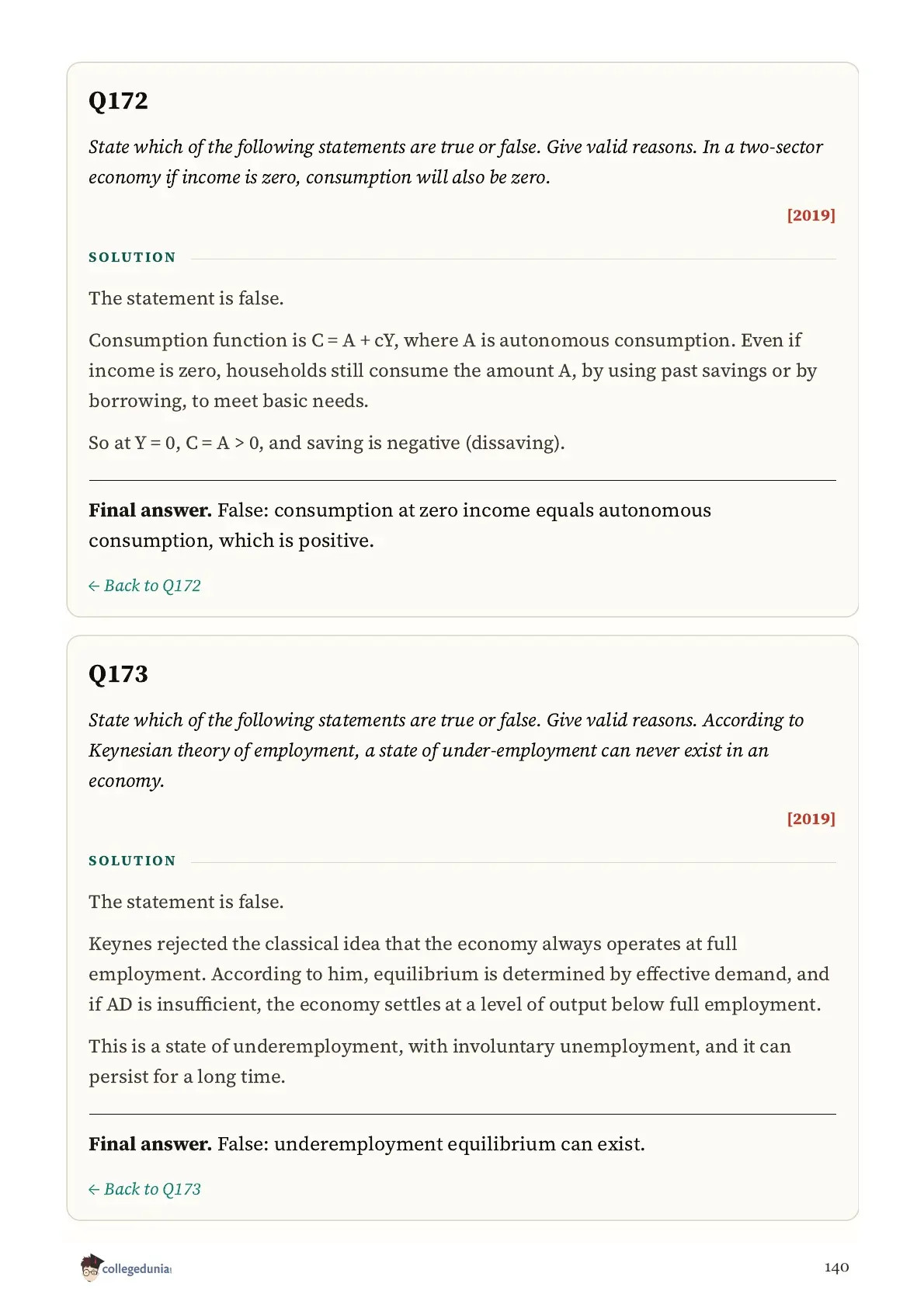
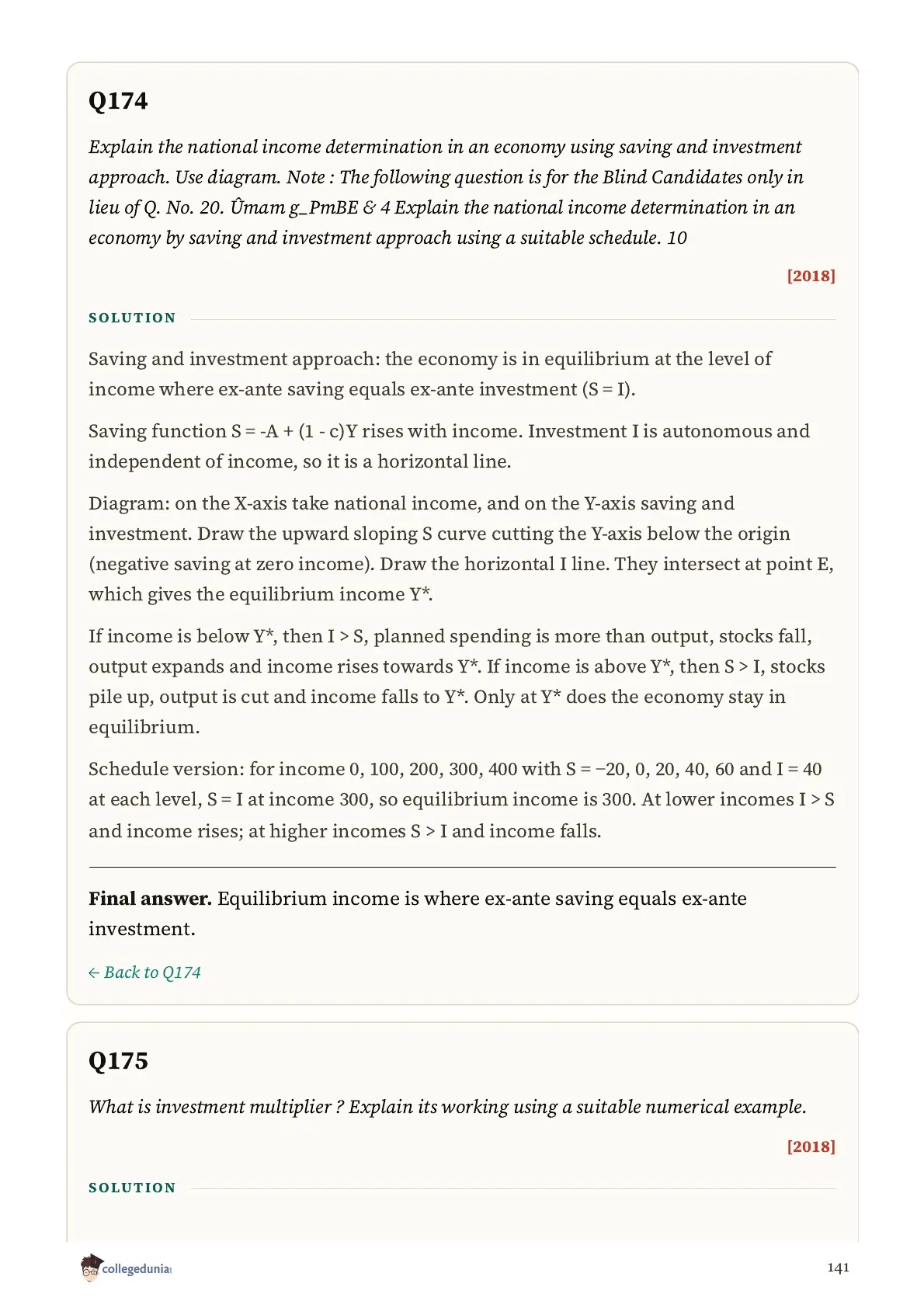
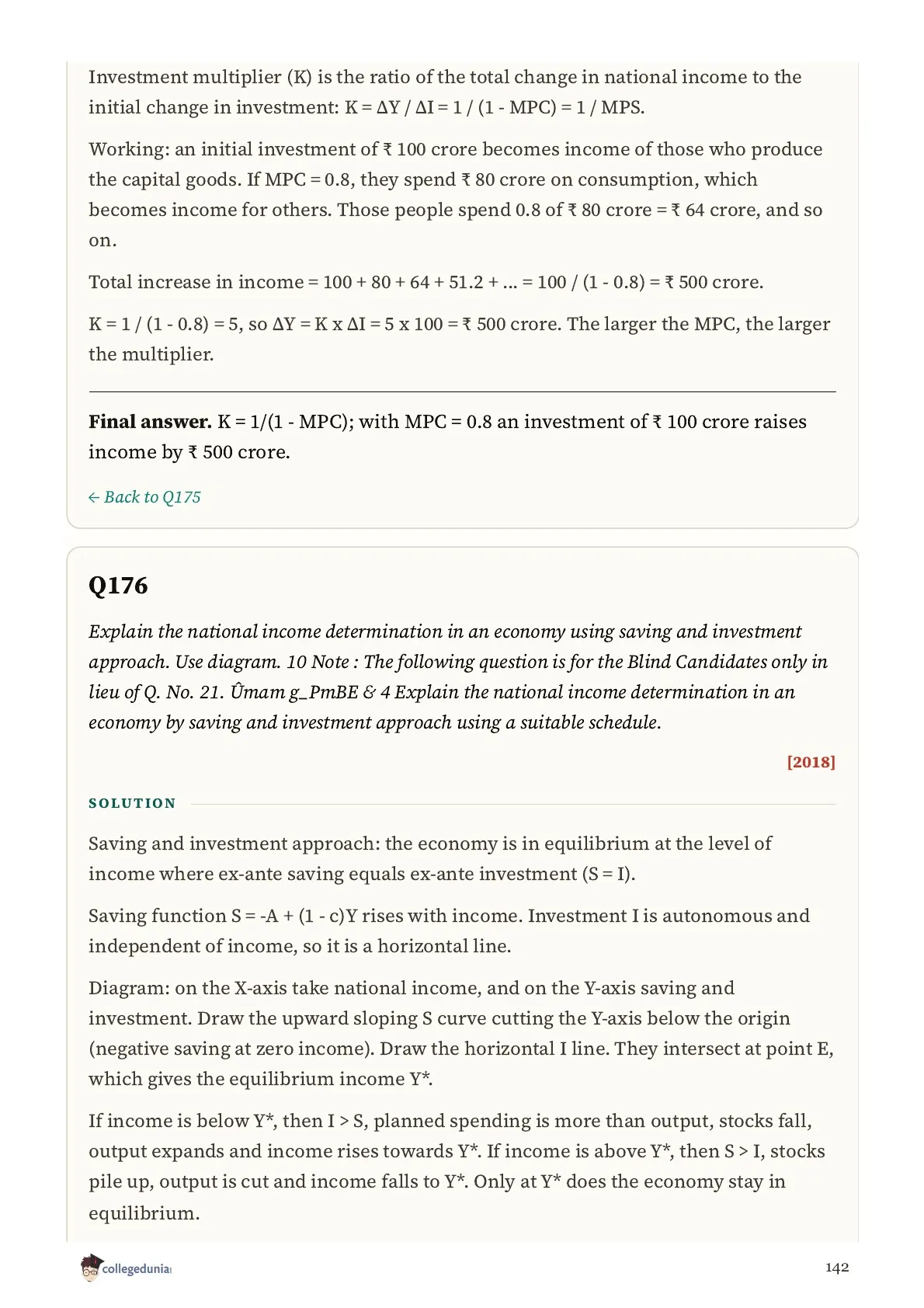
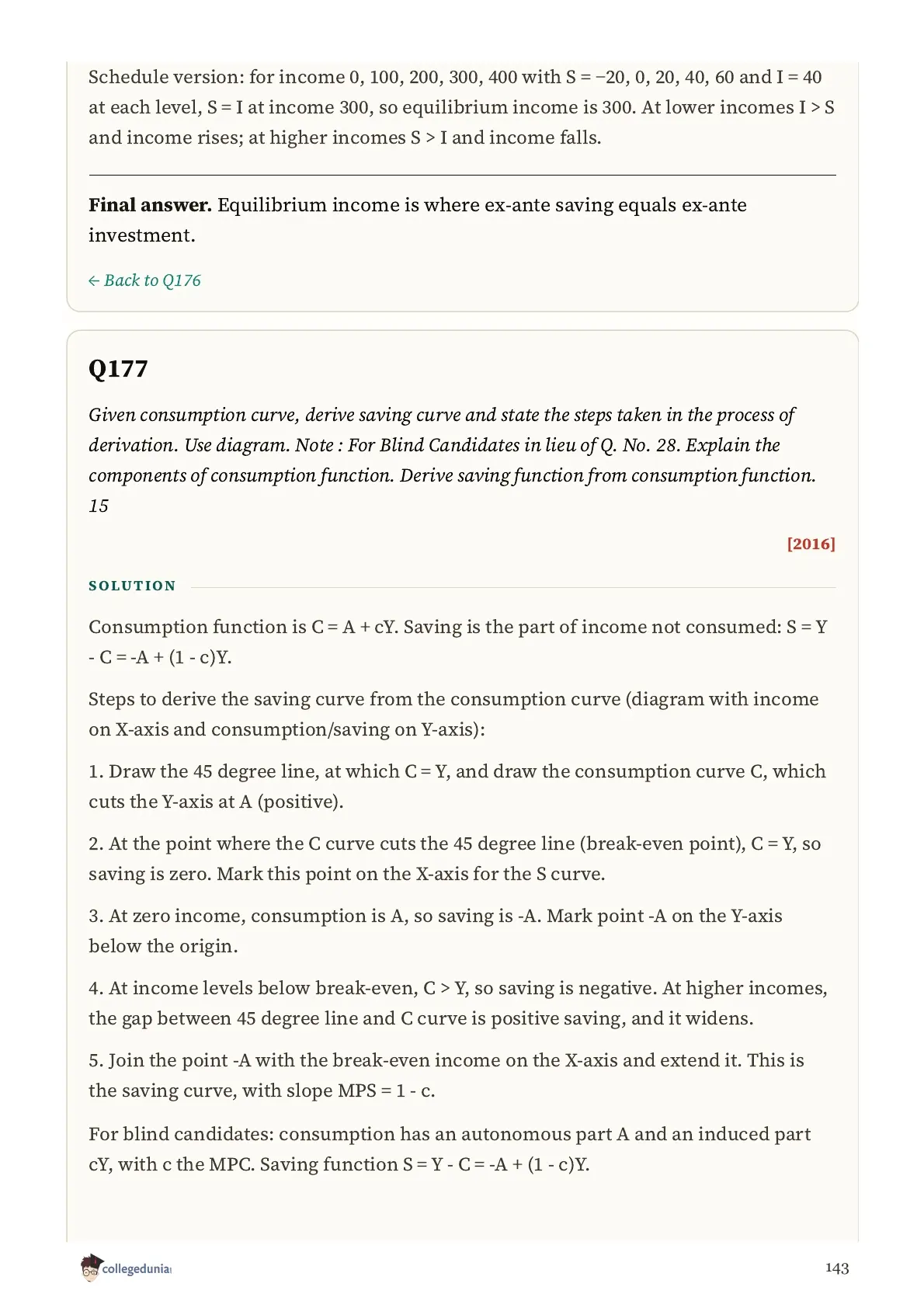
Class 12 Economics Determination of Income and Employment PYQ, free to download as a 177-page PDF. The chapter carries about 12 of the 80 marks in the board paper, and the set holds 239 solved questions from the 2005 to 2026 papers on the consumption function, APC and MPC, the saving function, APS and MPS, the investment multiplier, equilibrium income, ex-ante and ex-post saving and investment, deficient and excess demand, deflationary and inflationary gaps and involuntary unemployment, and takes roughly 16 hours to work through, so split it over four days, one mark band a day, and move on to Government Budget and the Economy once the six-mark answers are done.
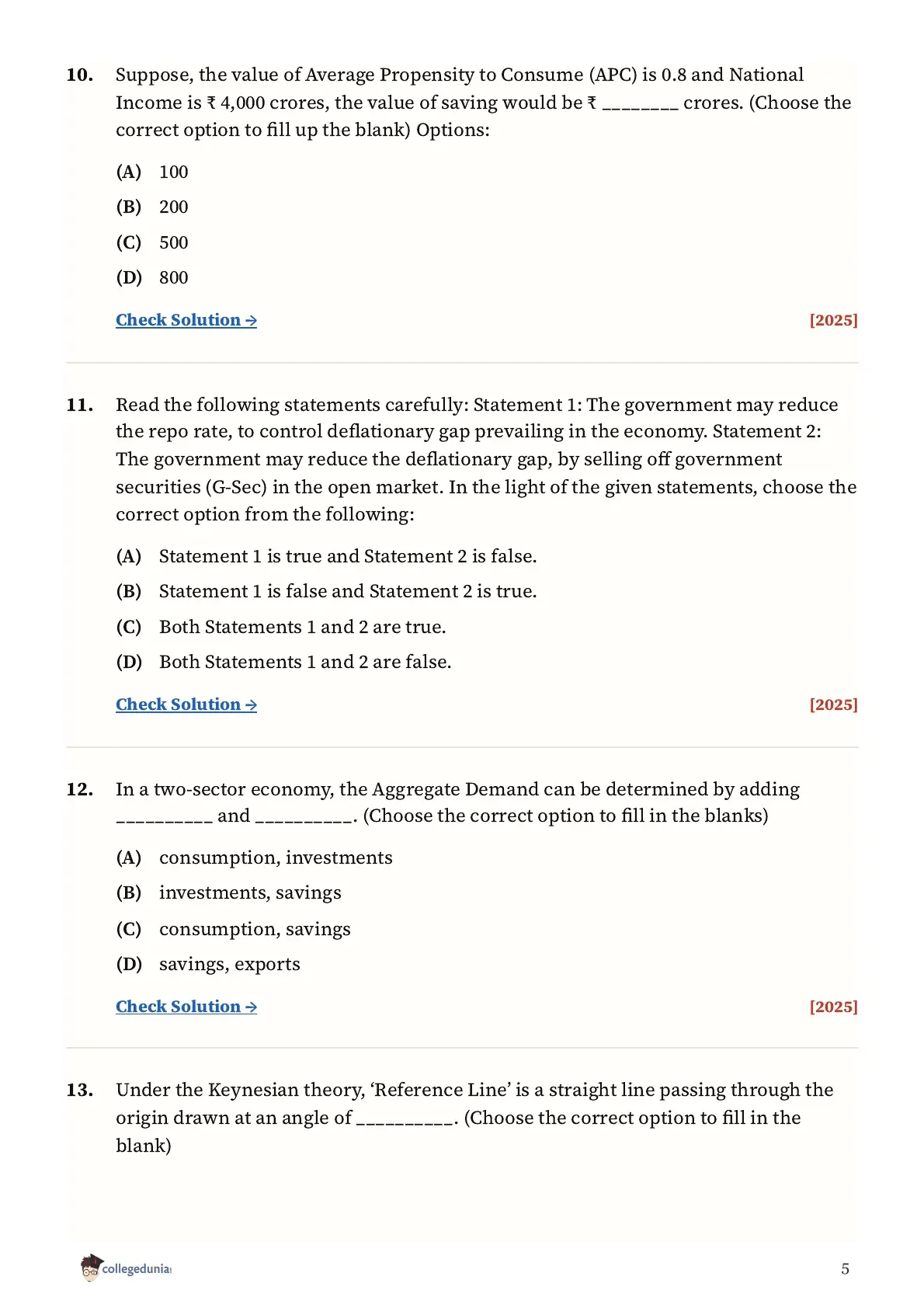
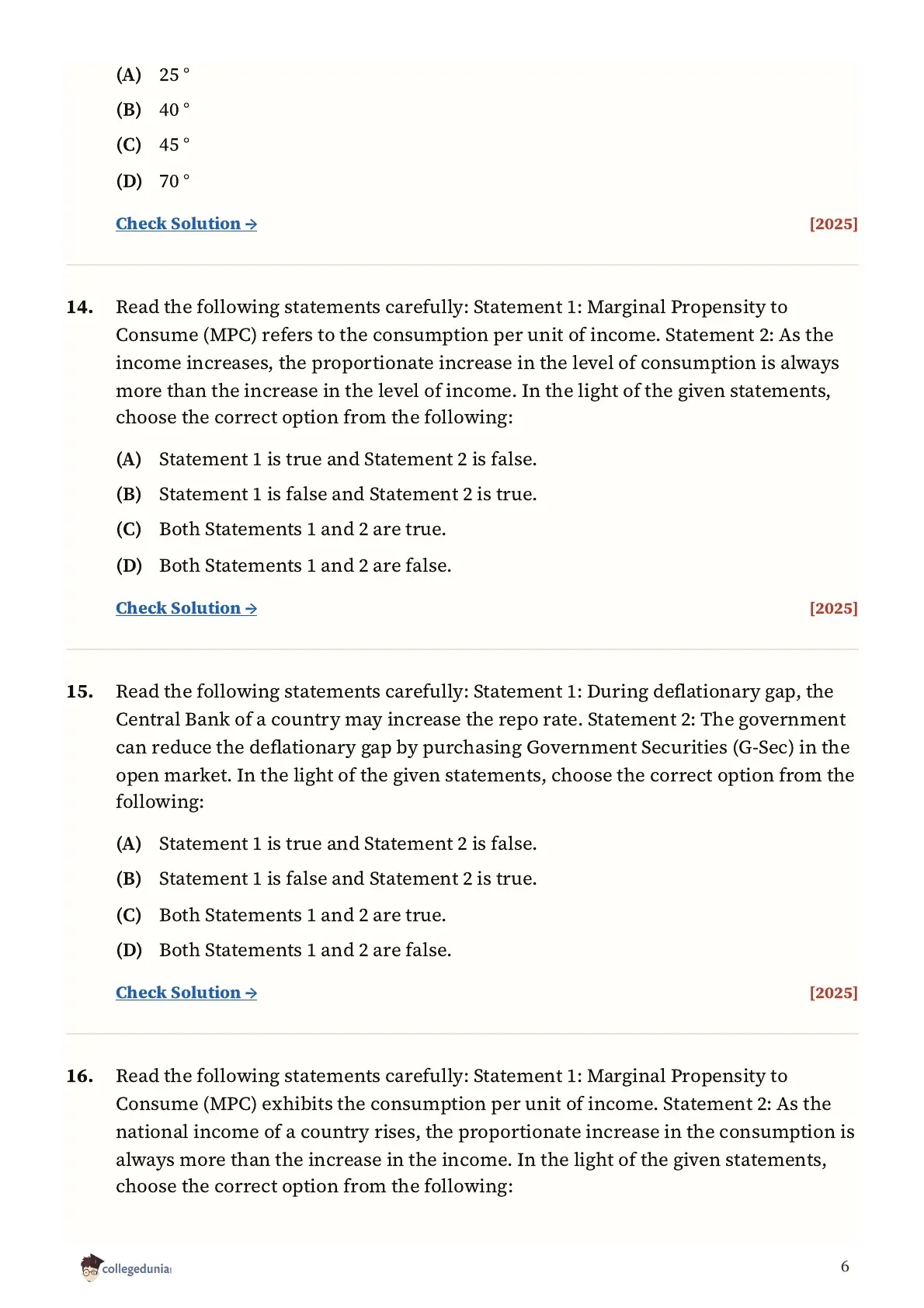
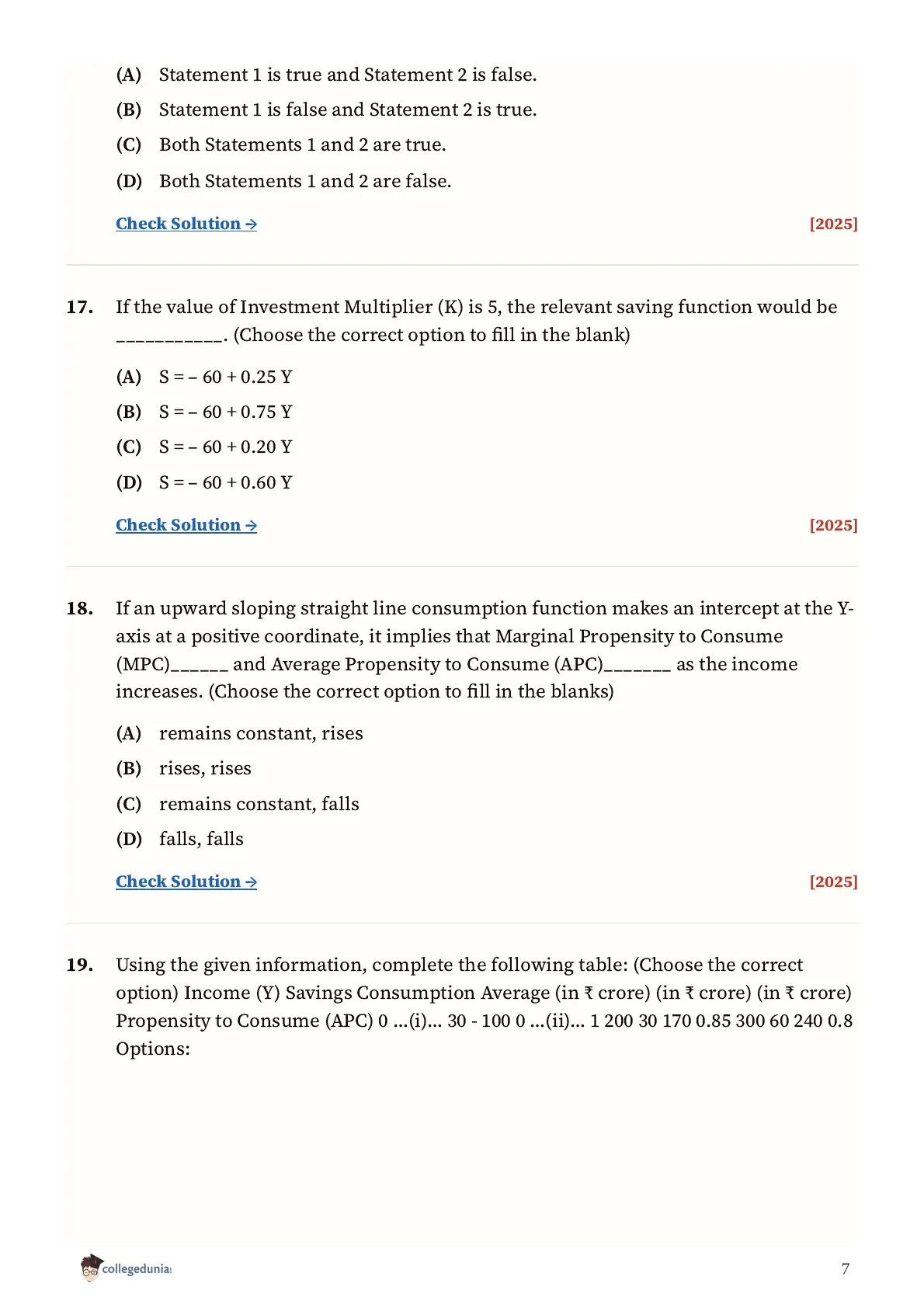
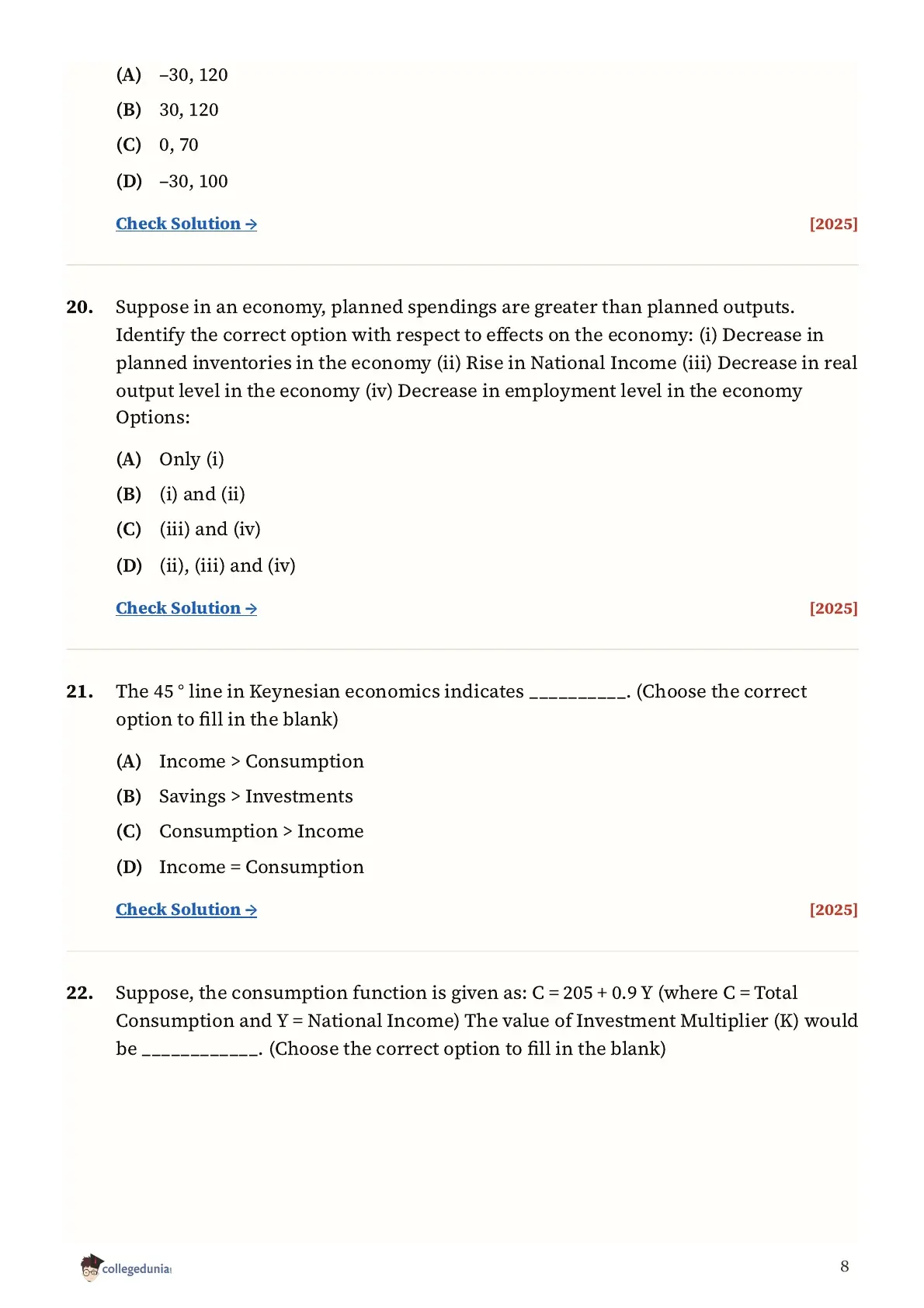
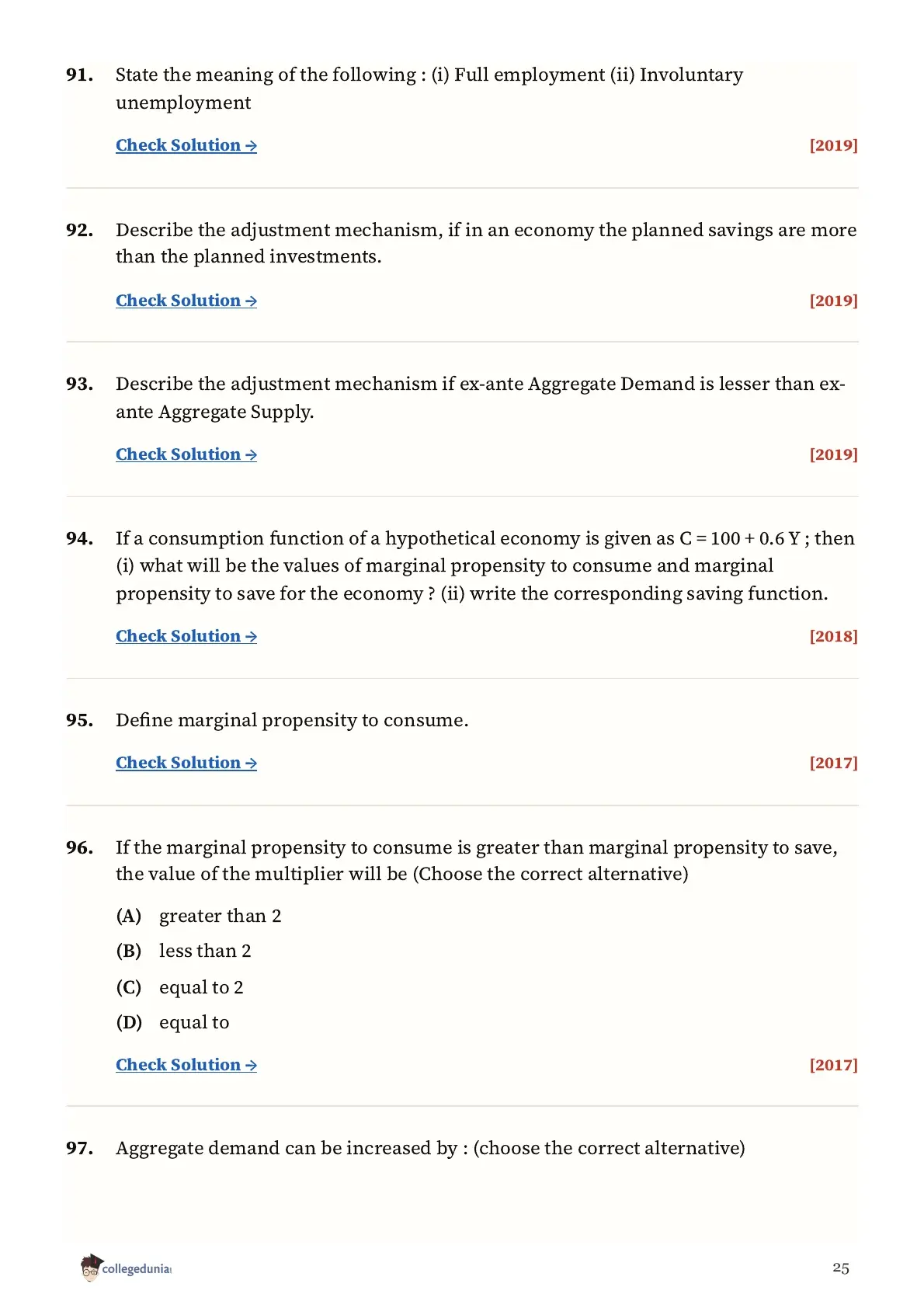
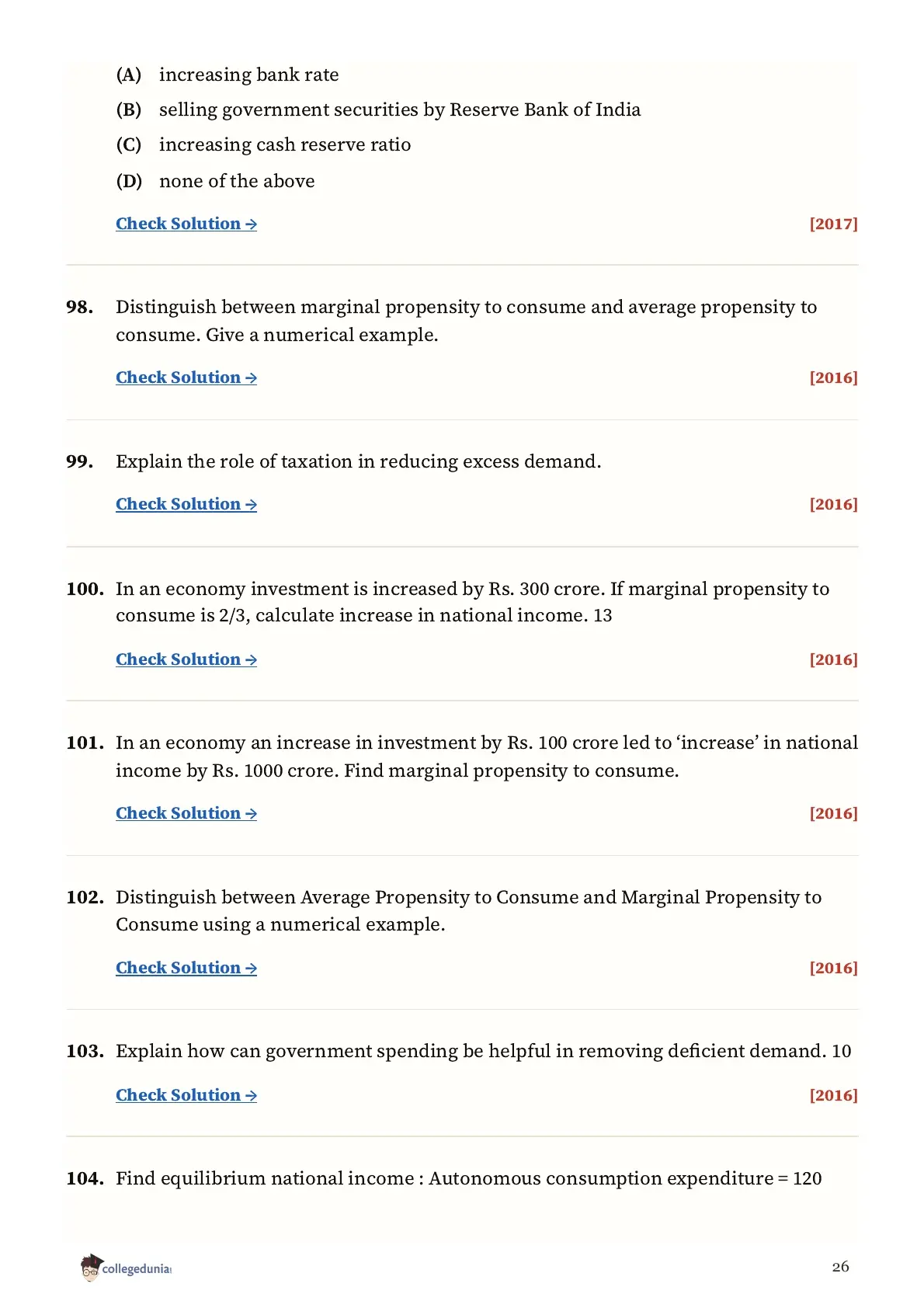
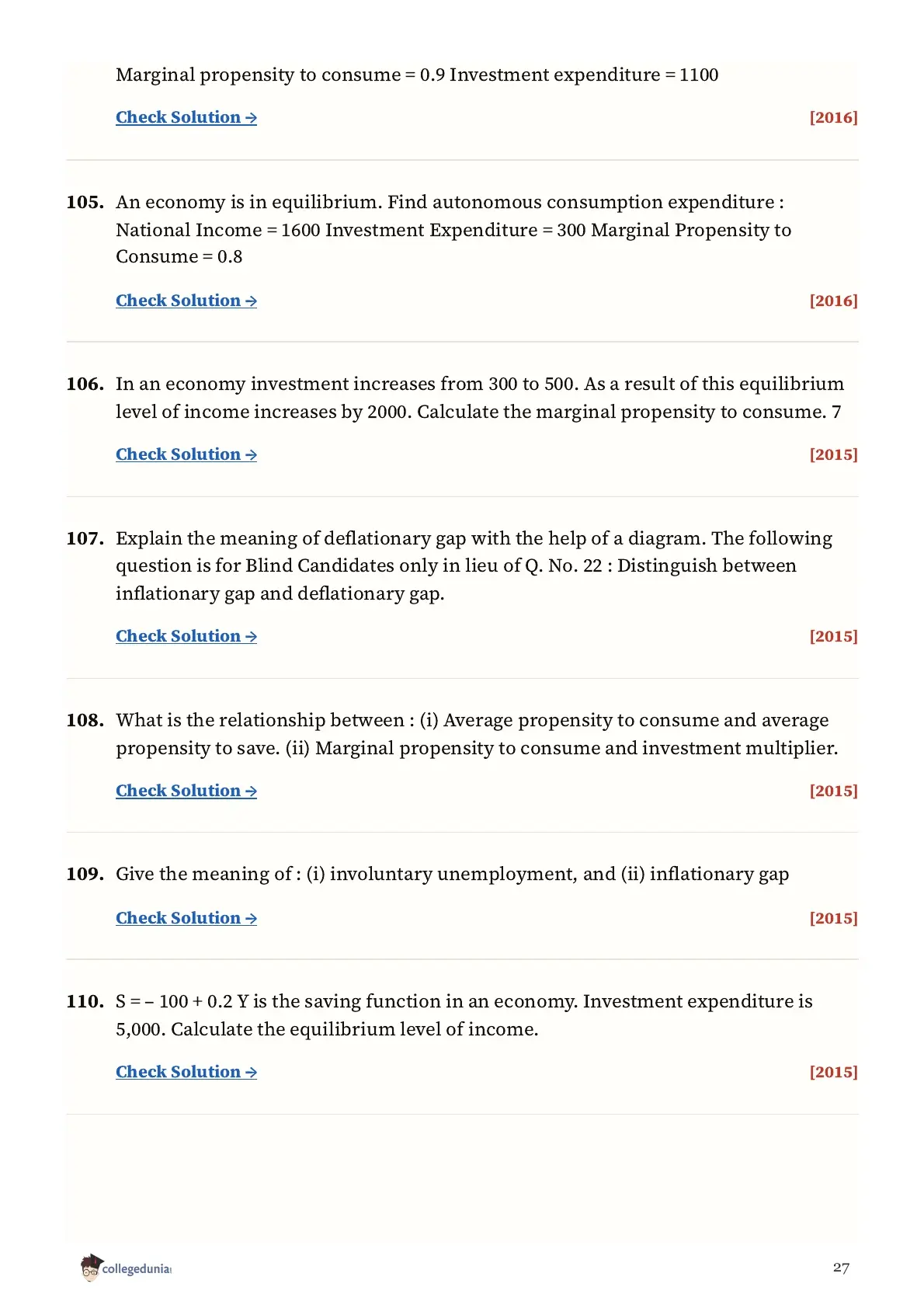
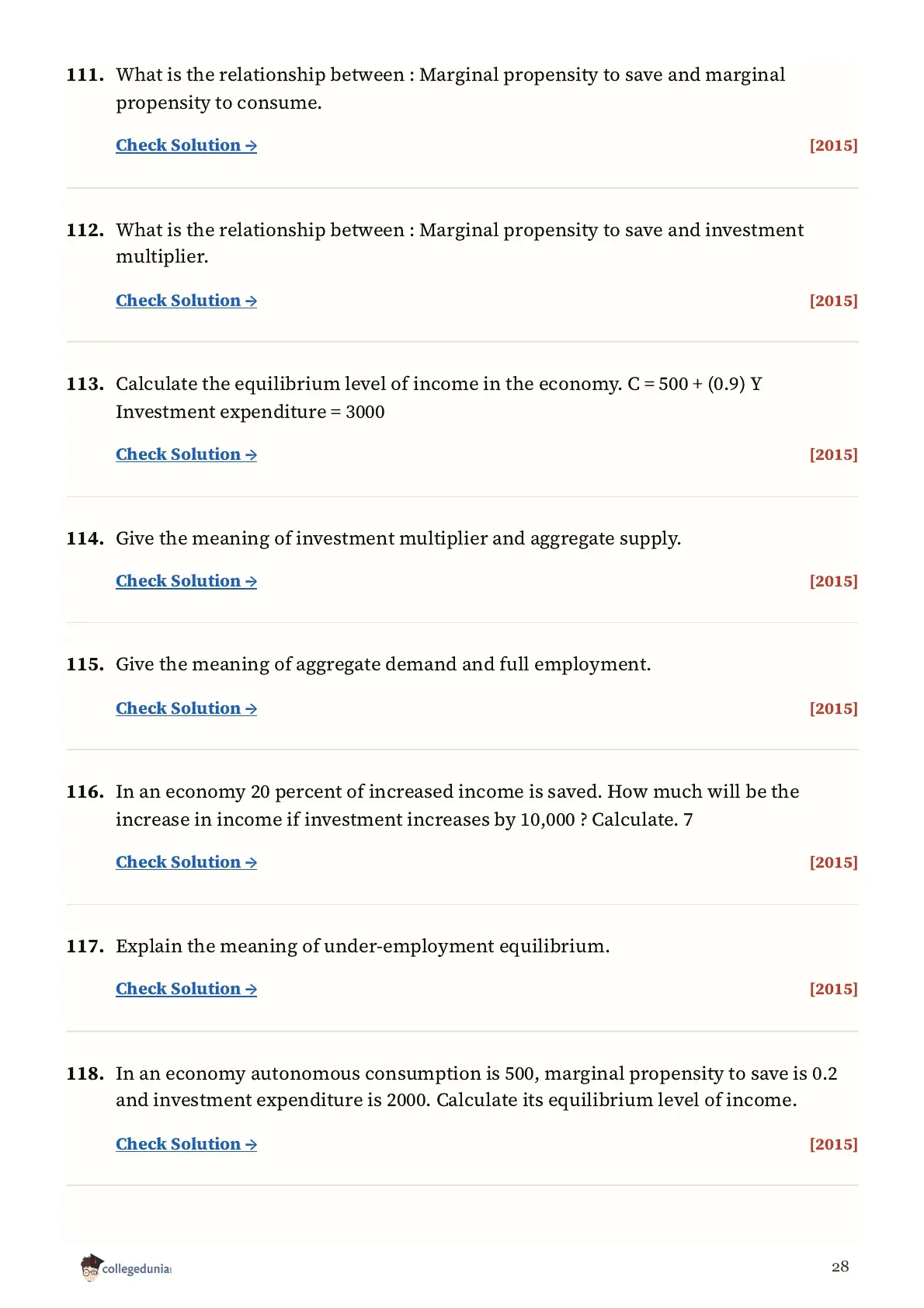

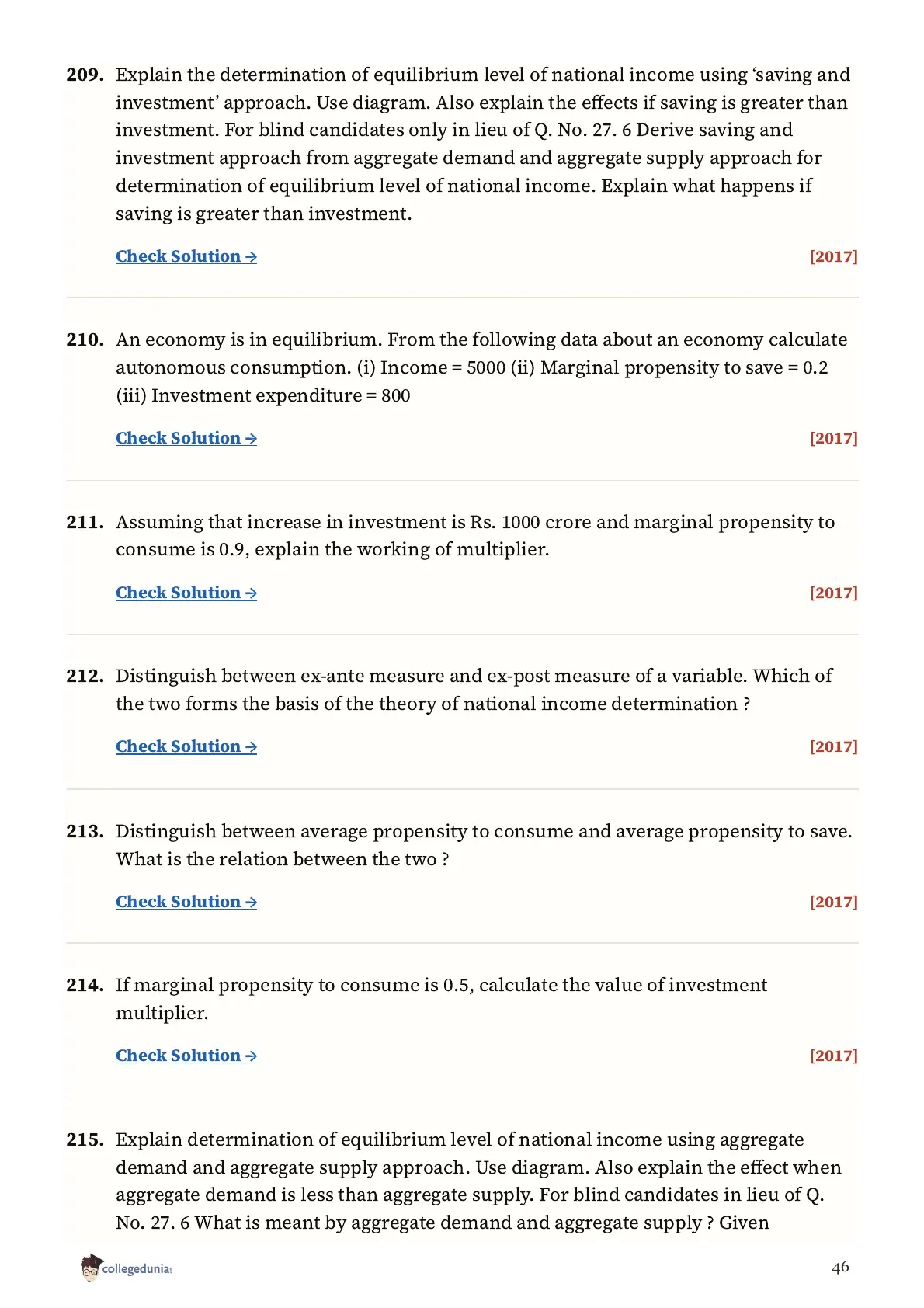
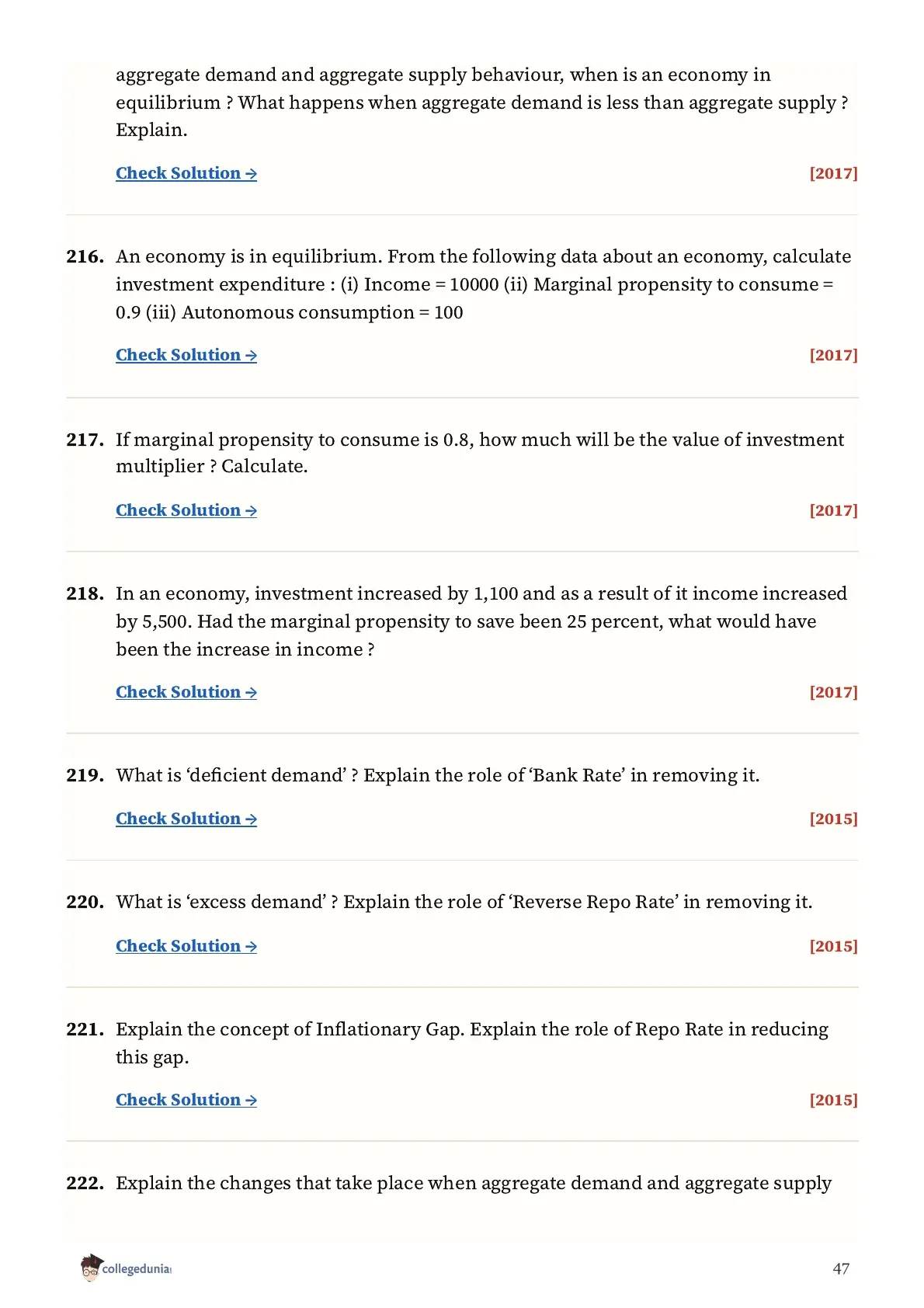
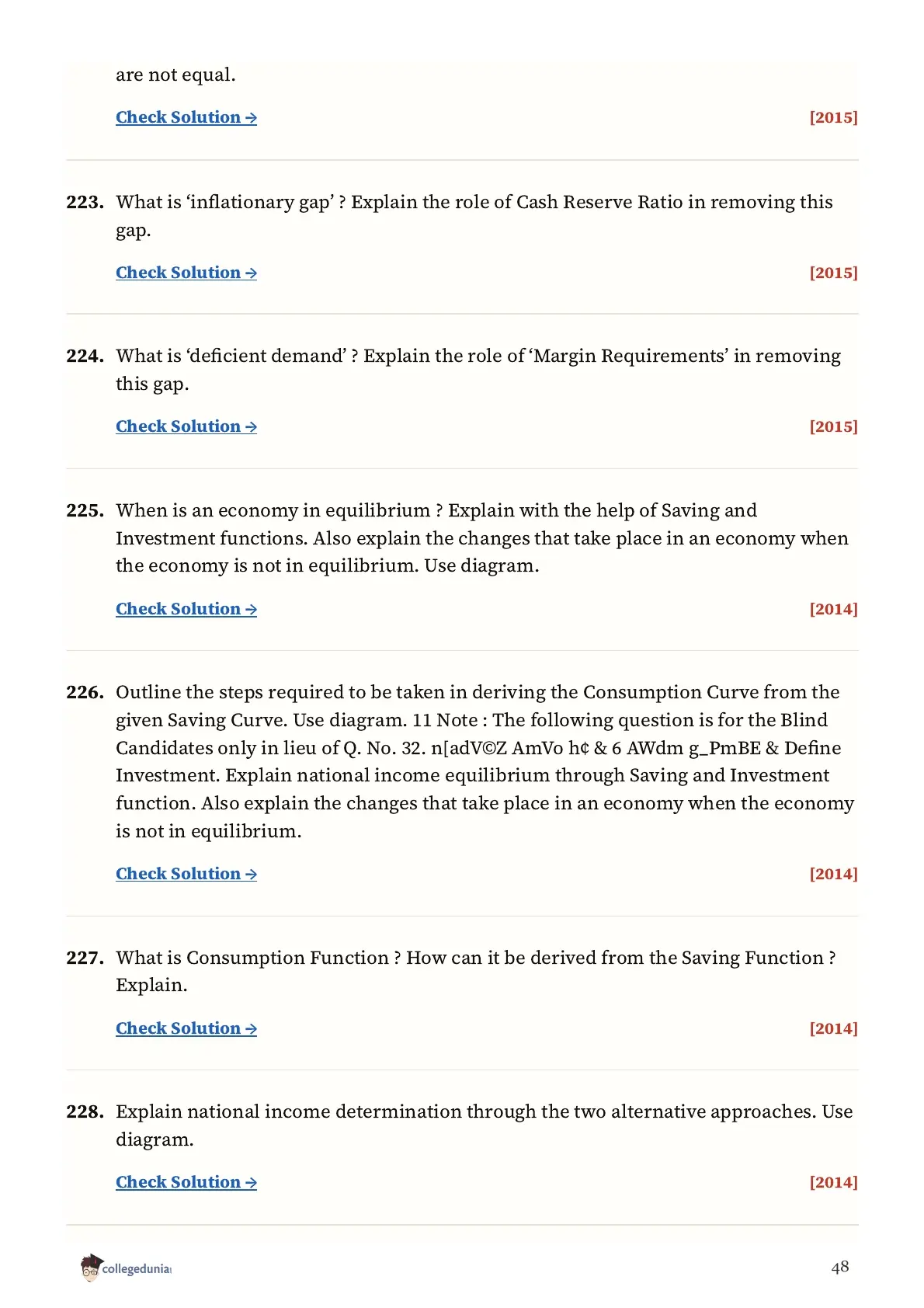
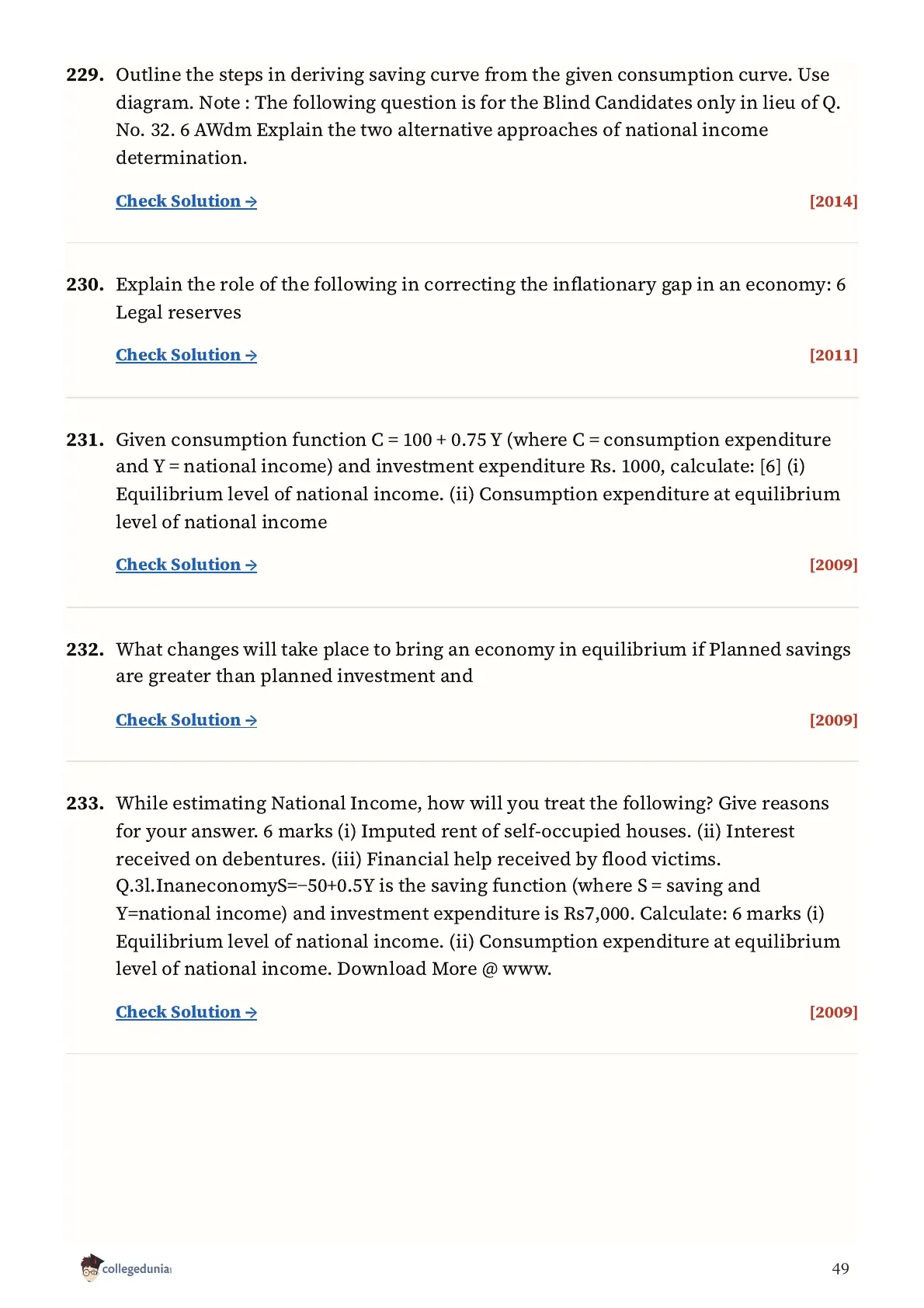
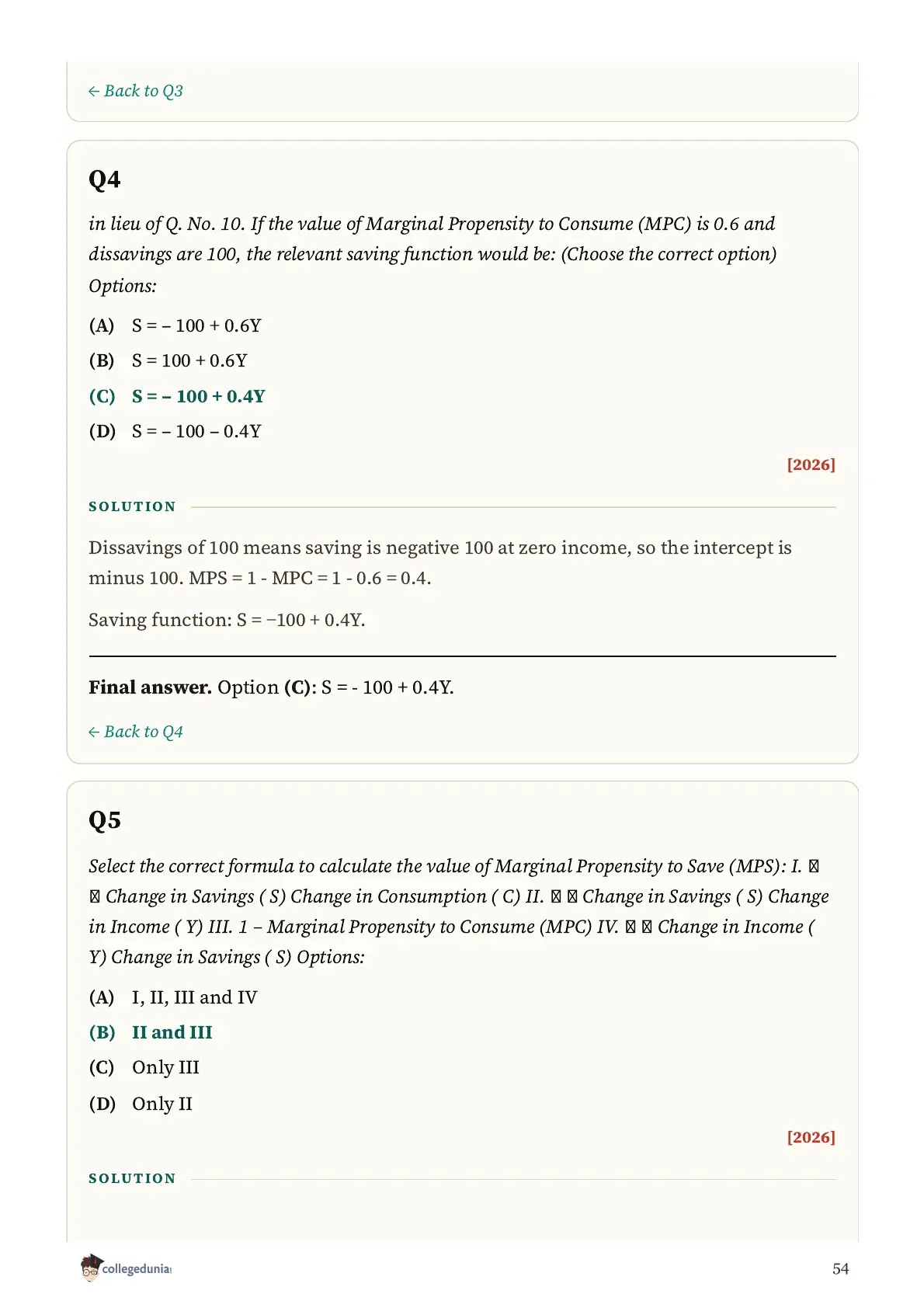
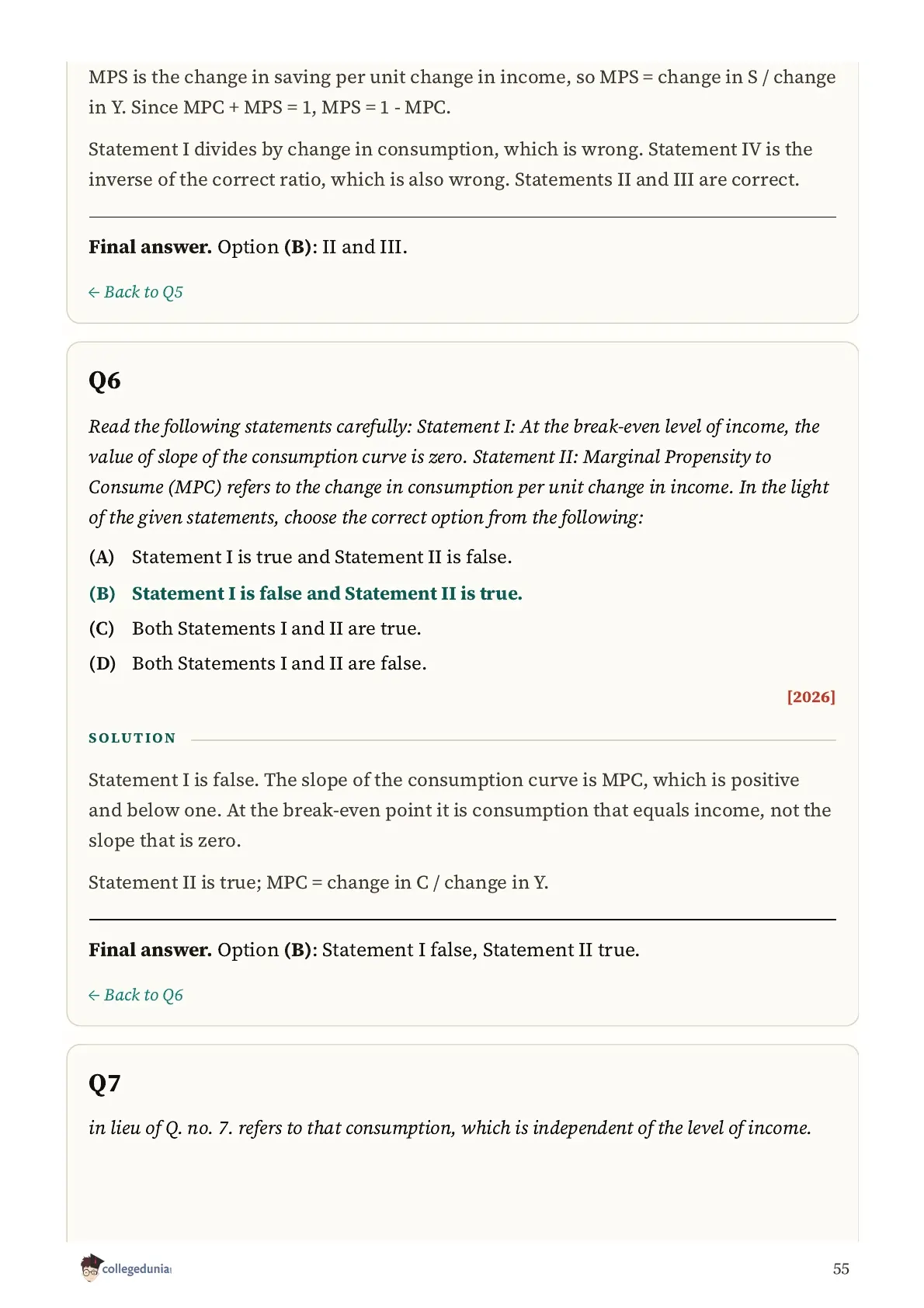
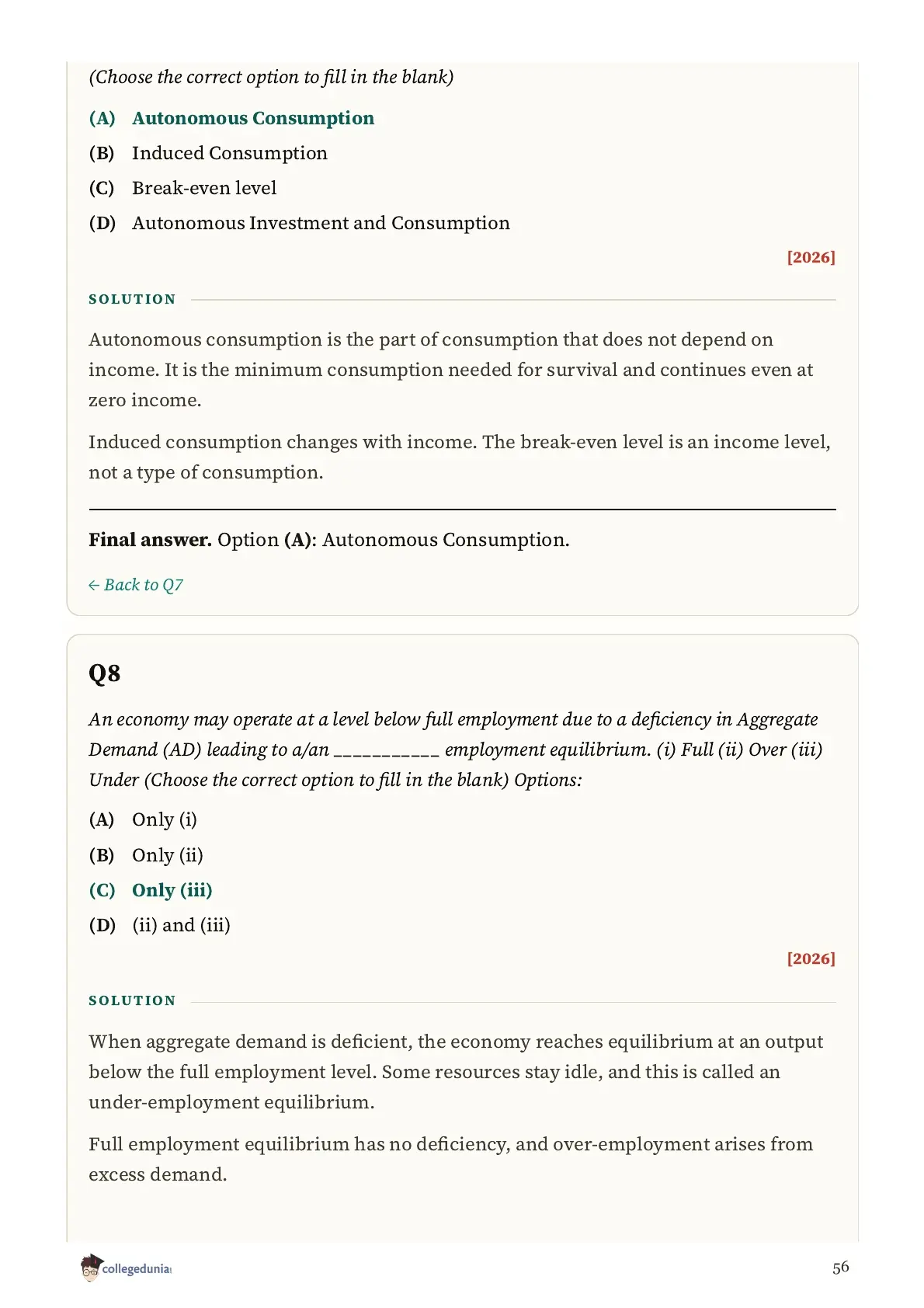
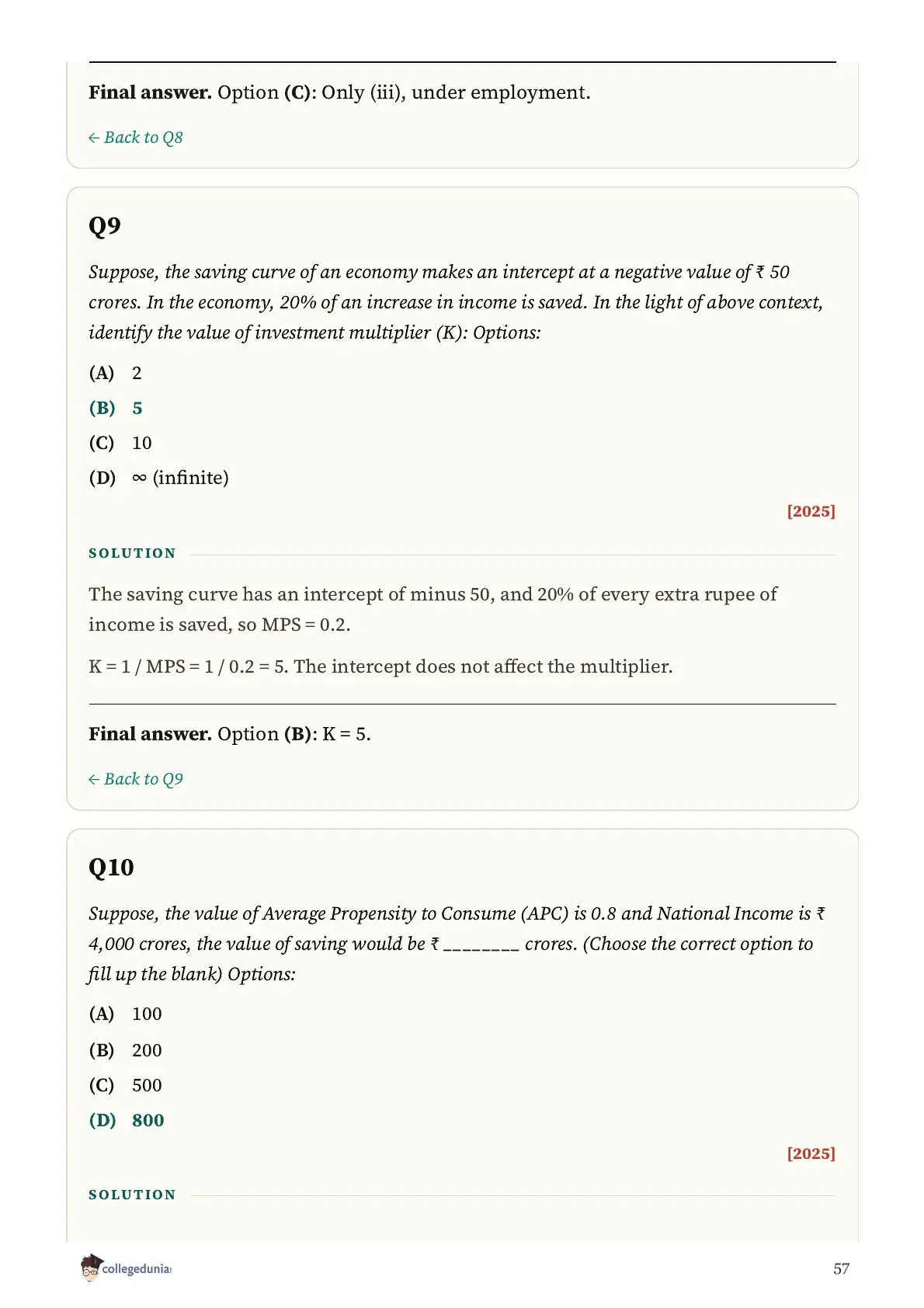
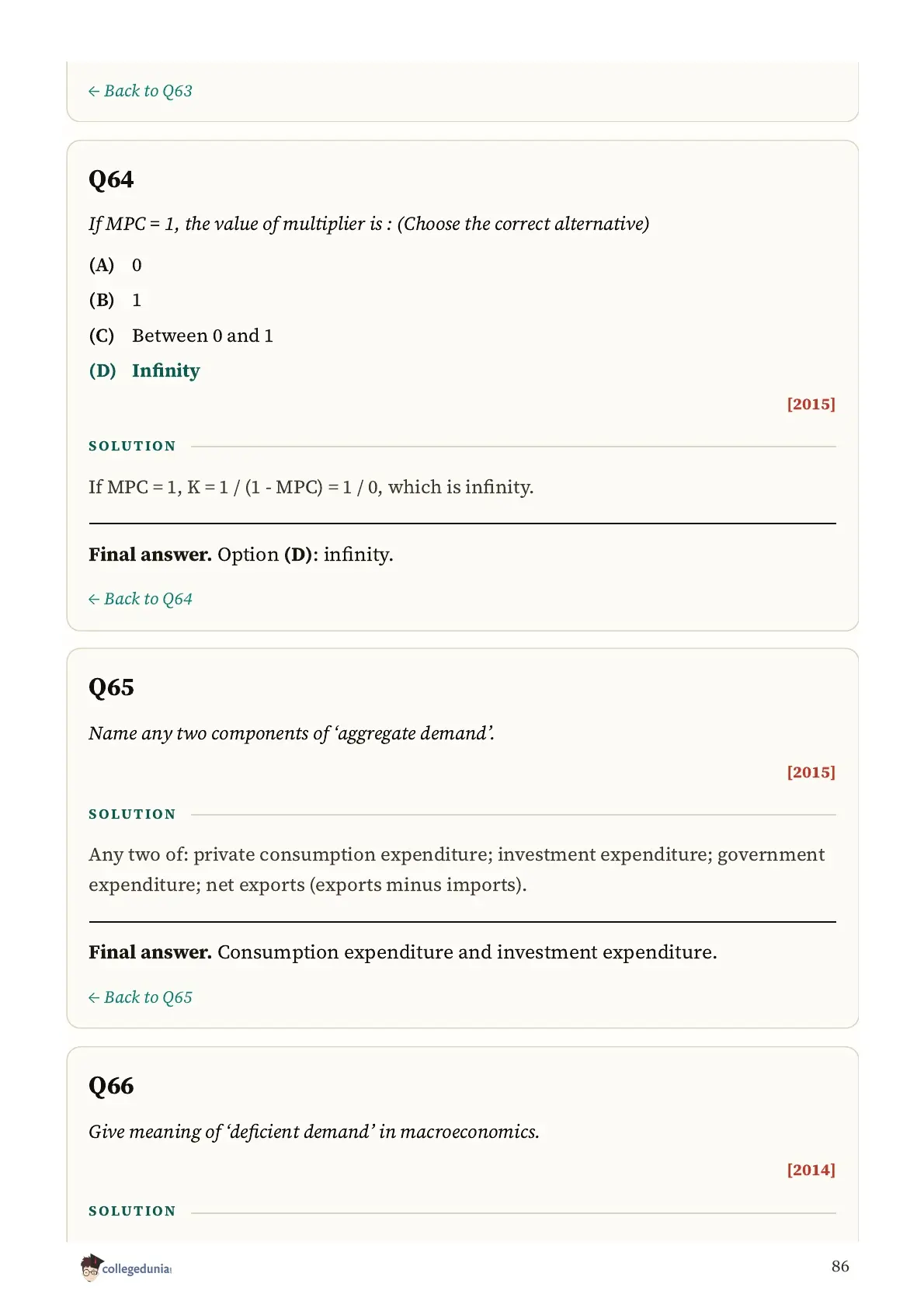
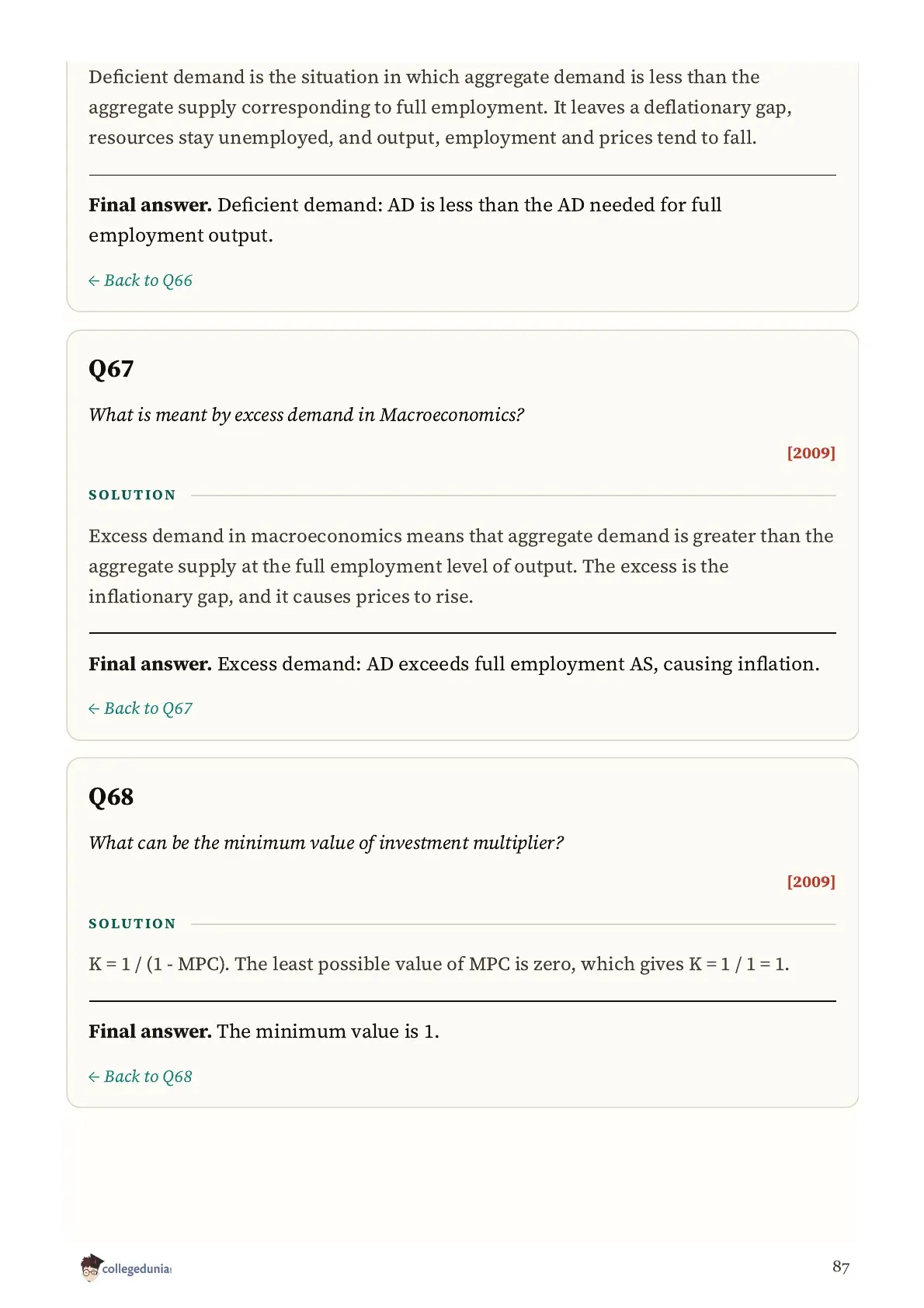
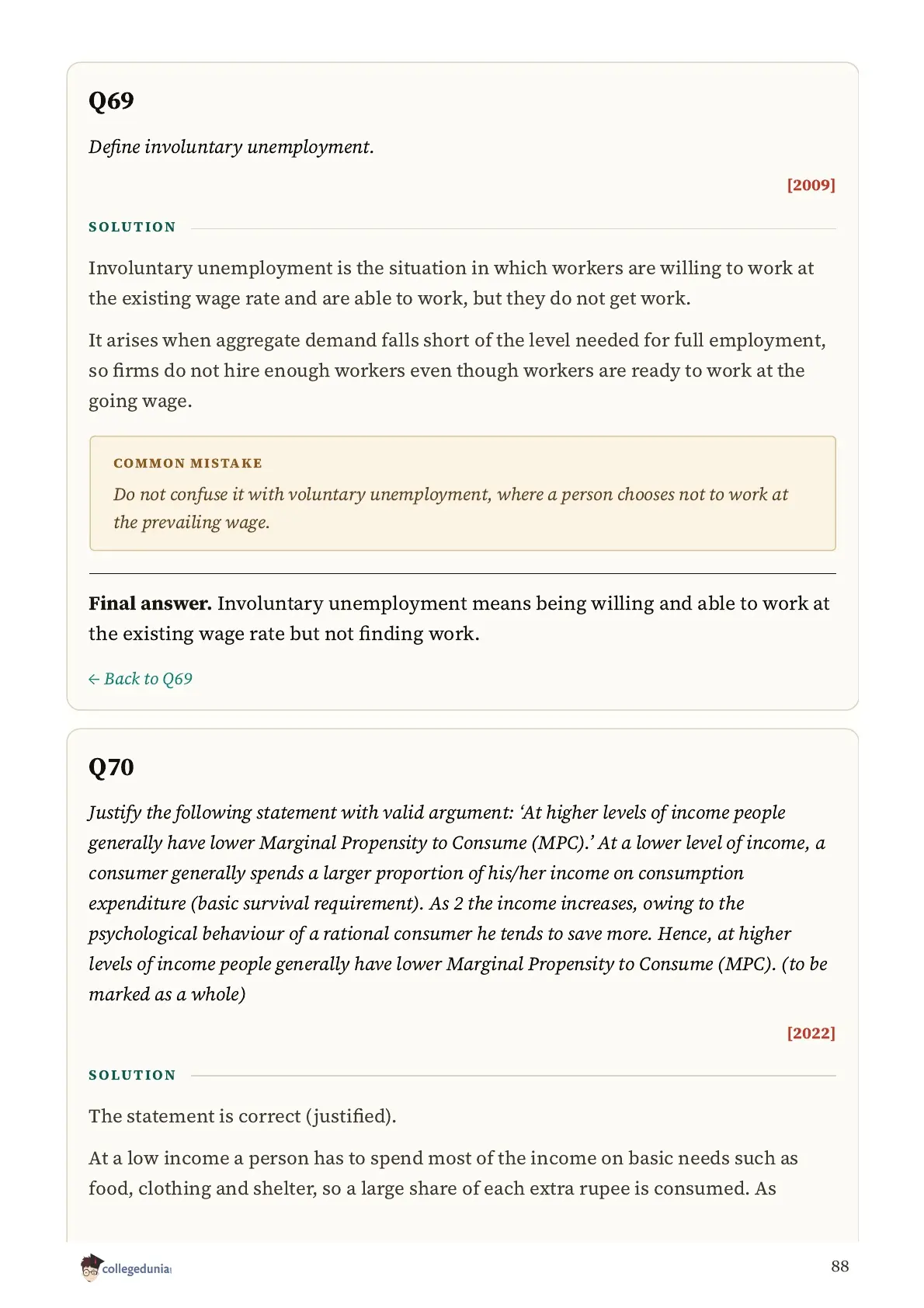
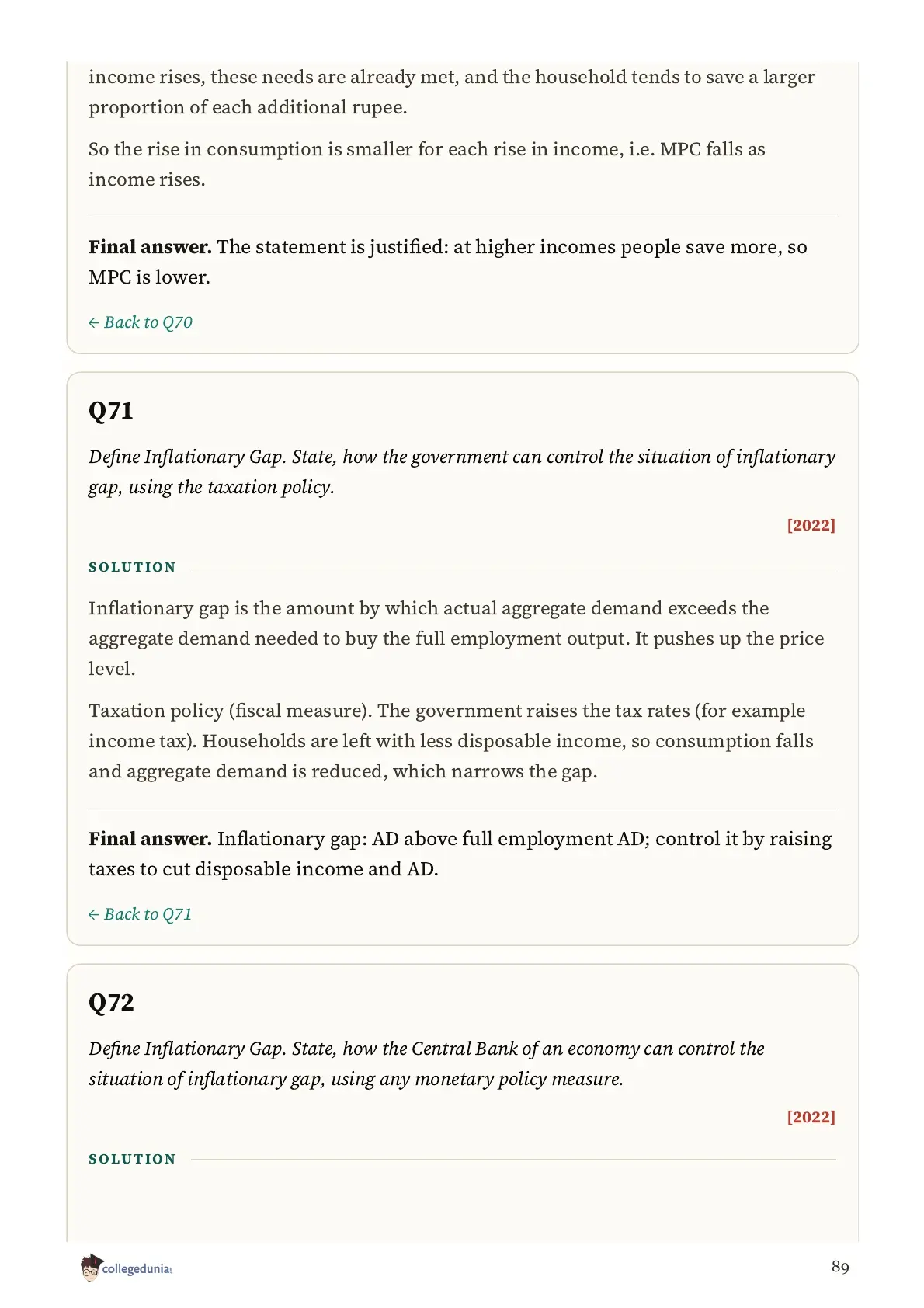


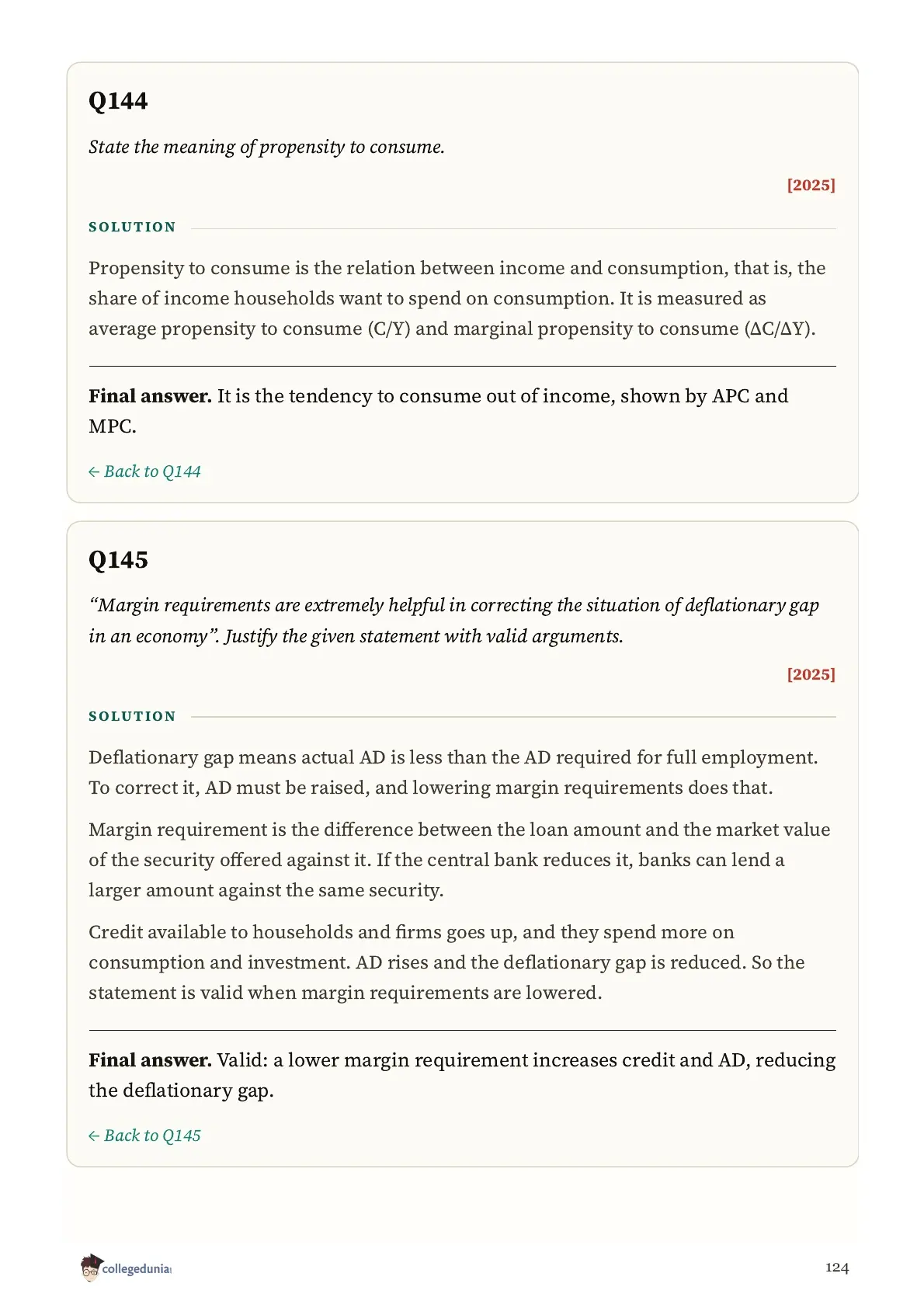
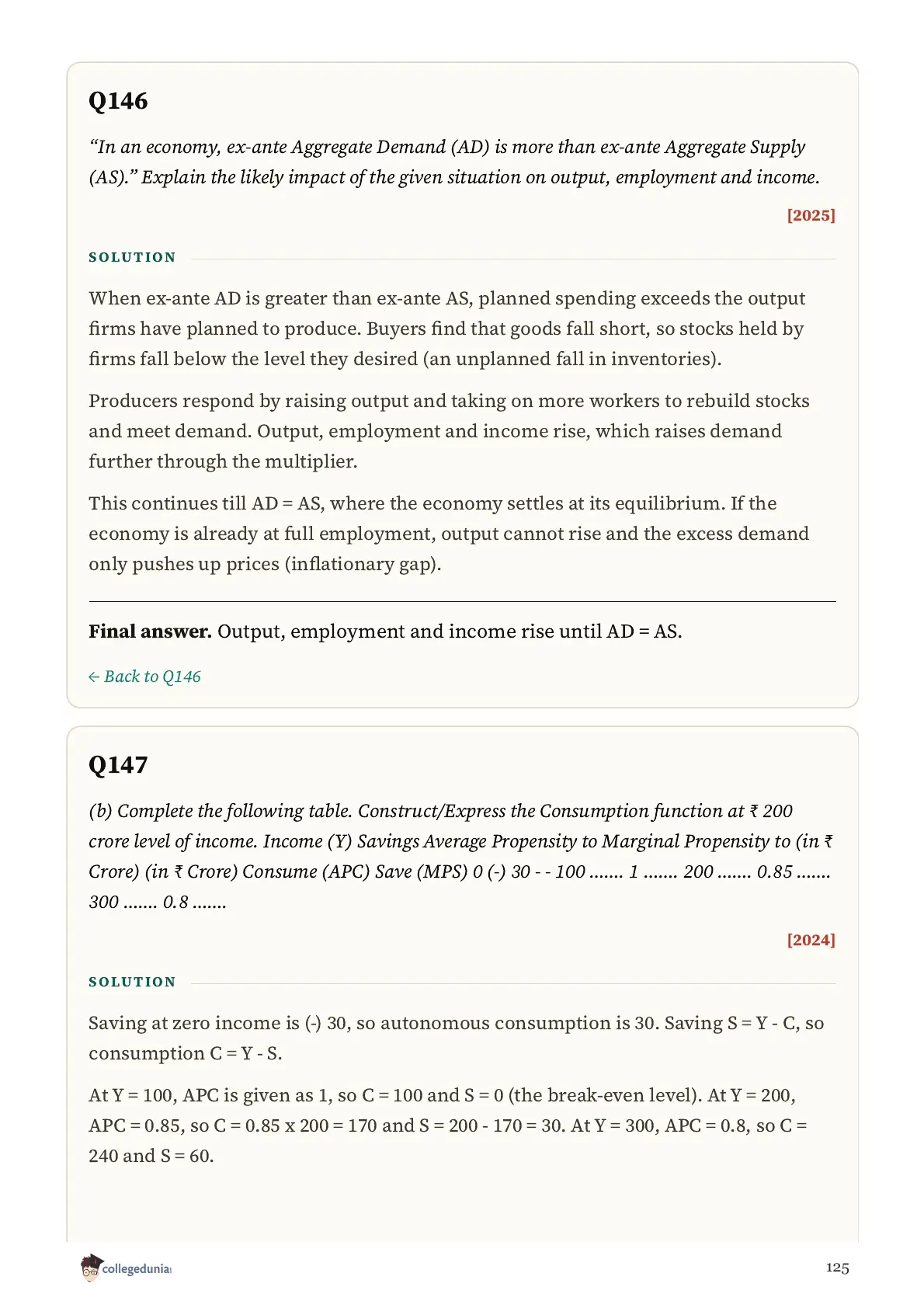
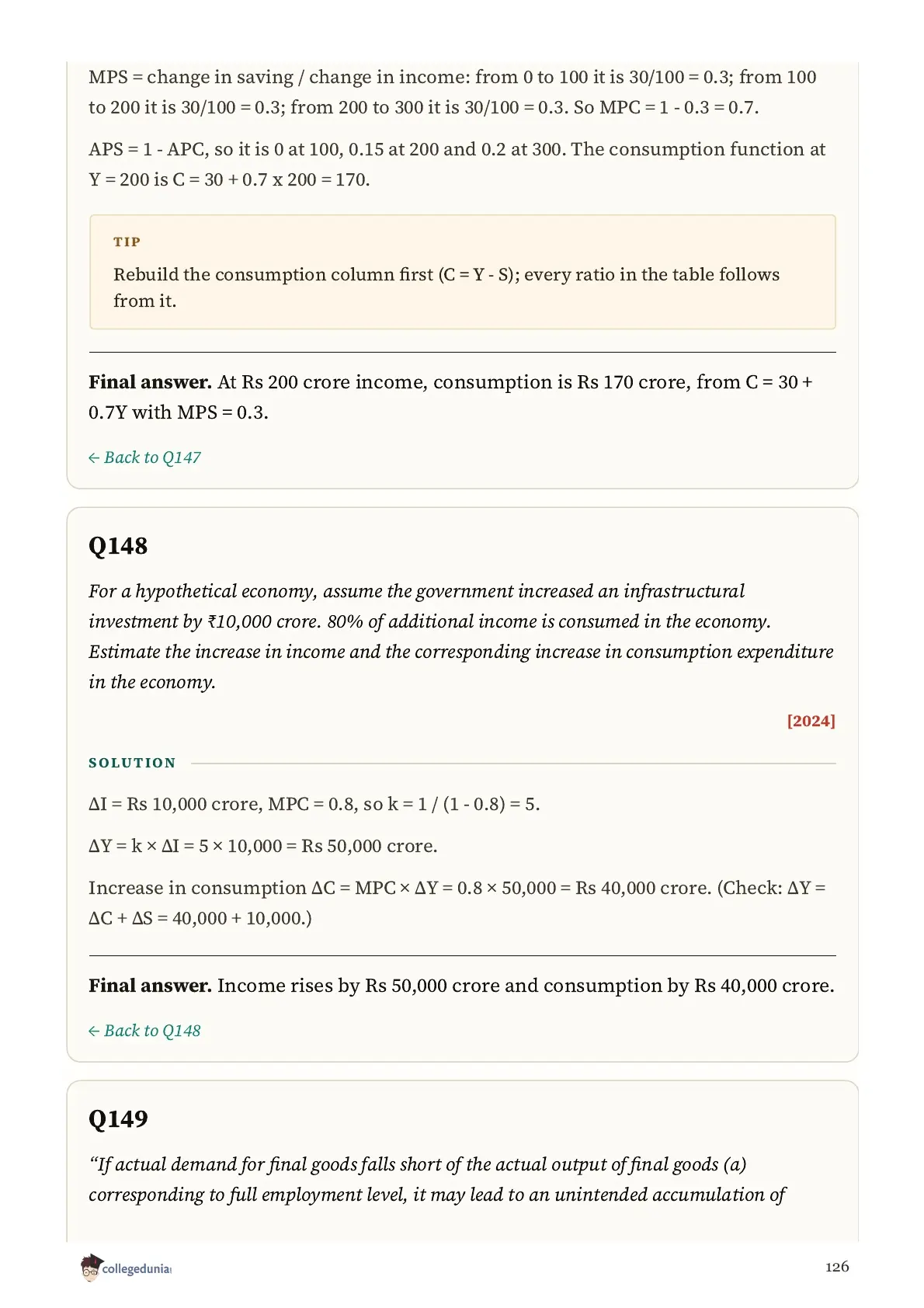
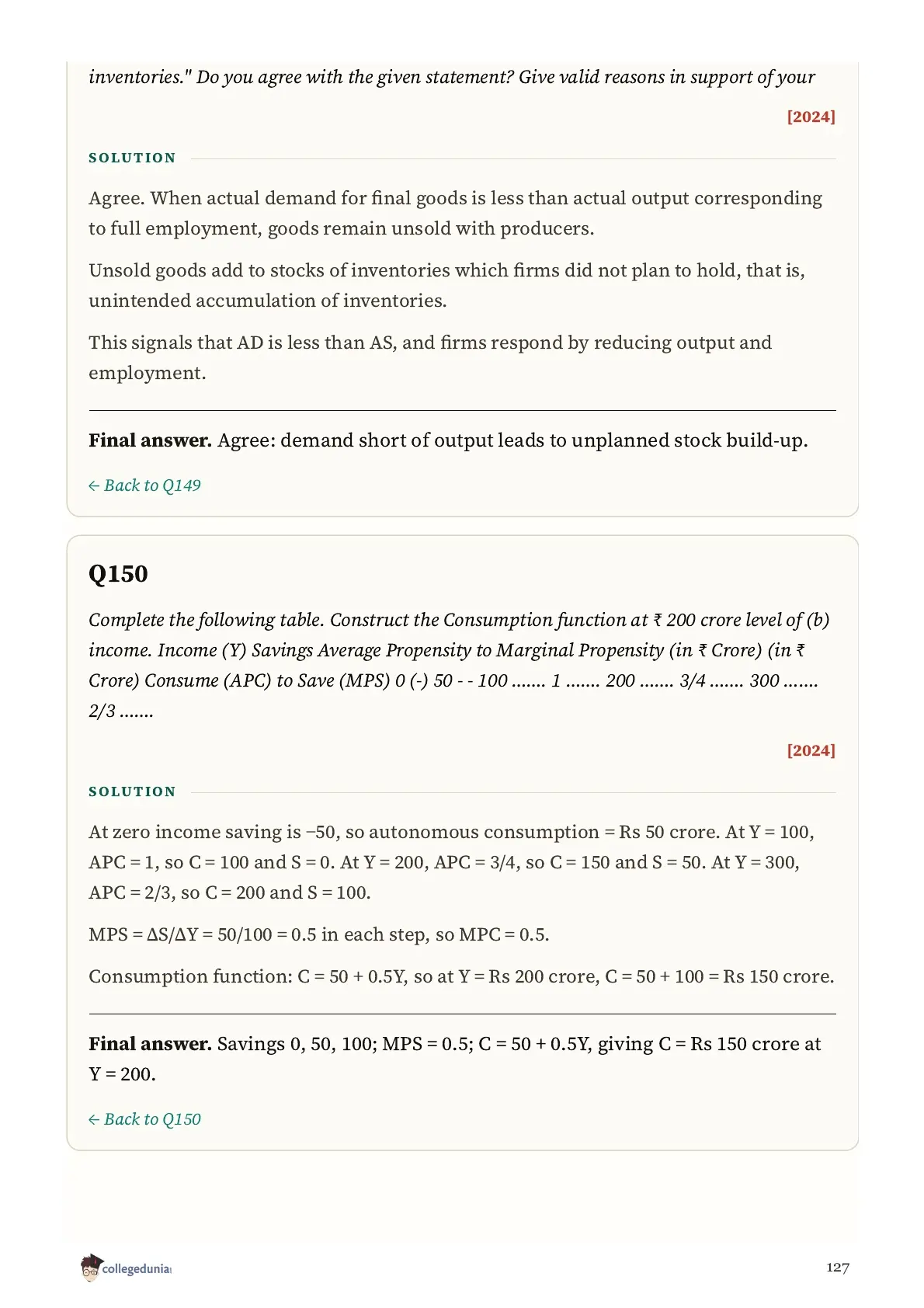
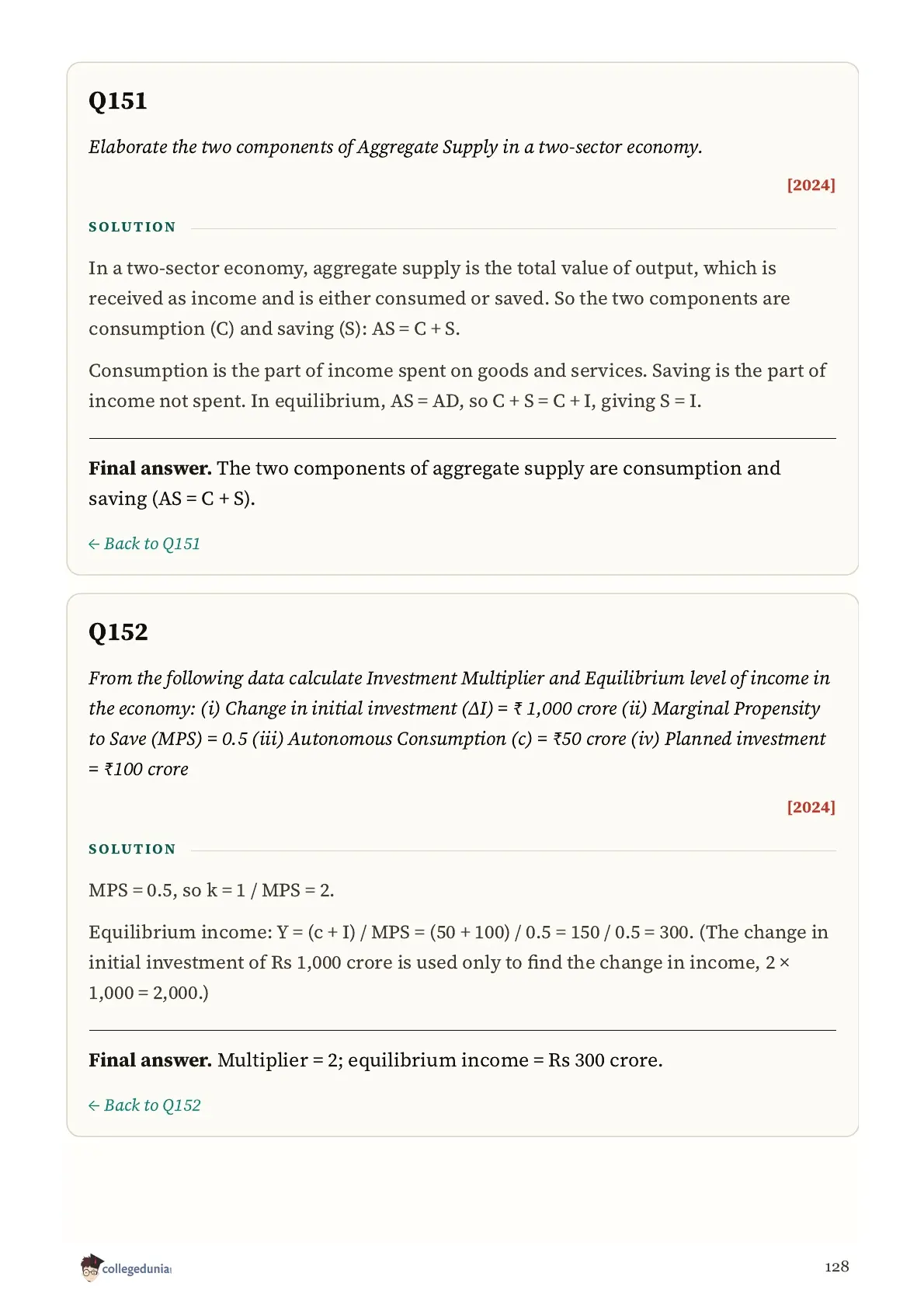
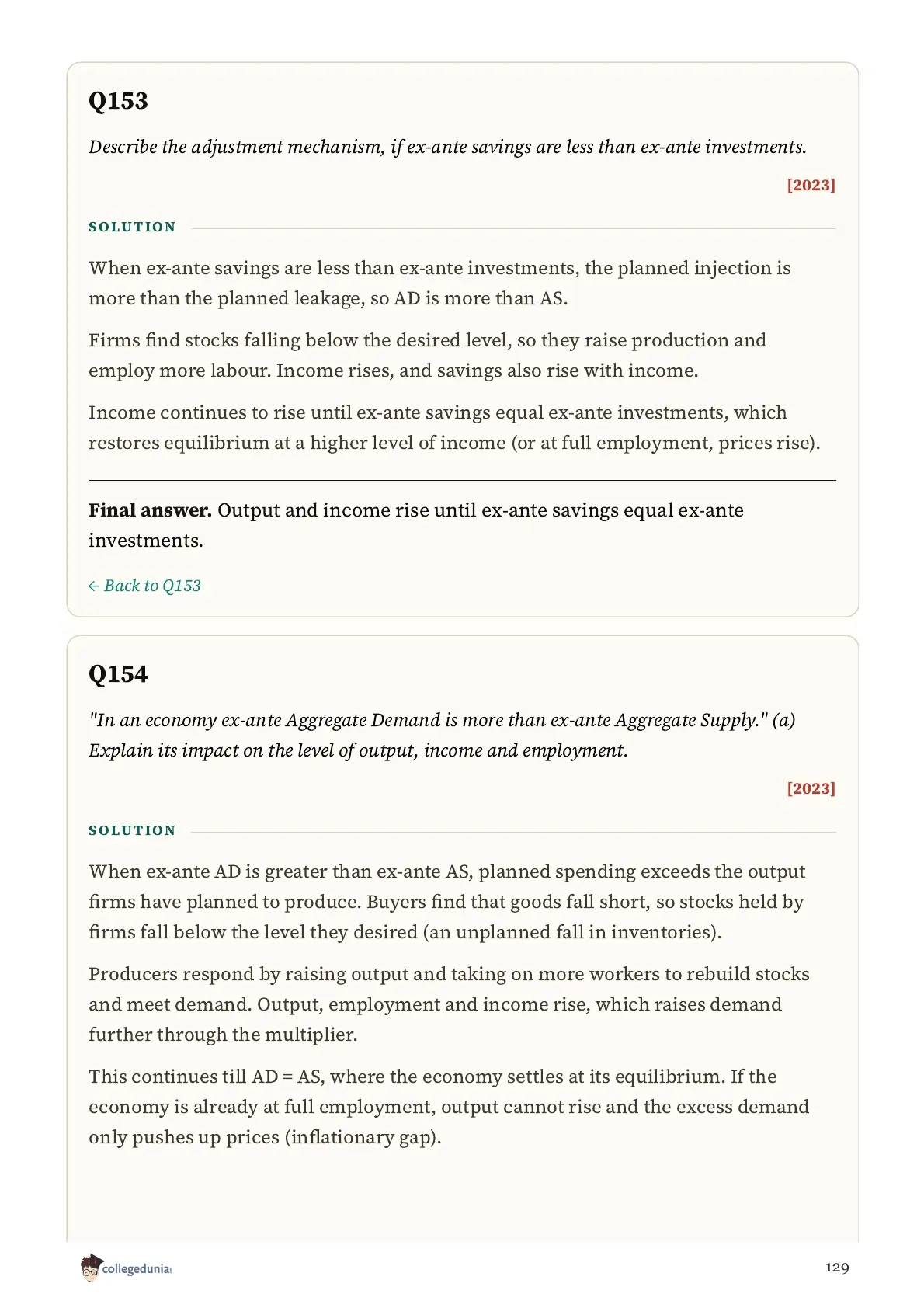
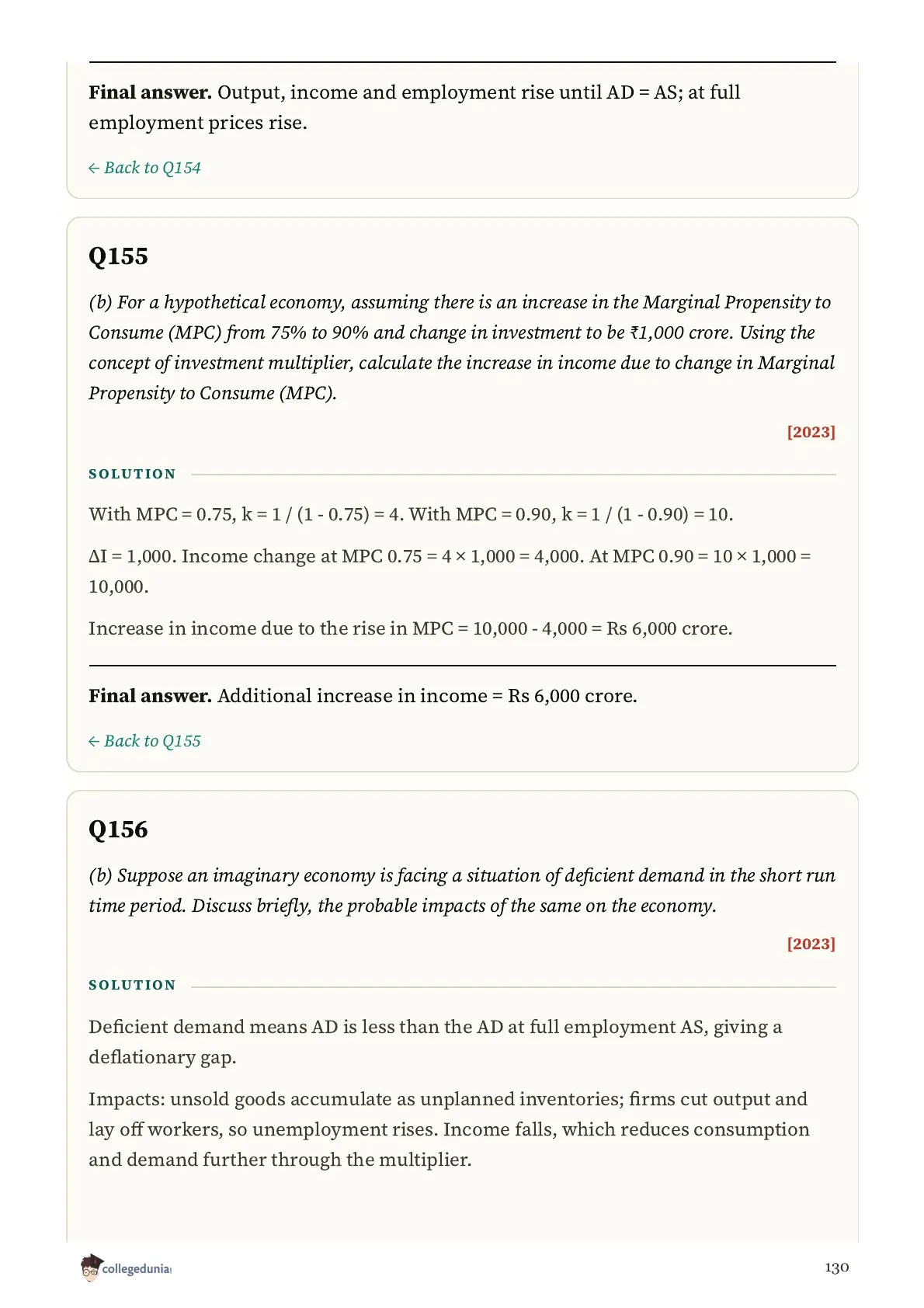
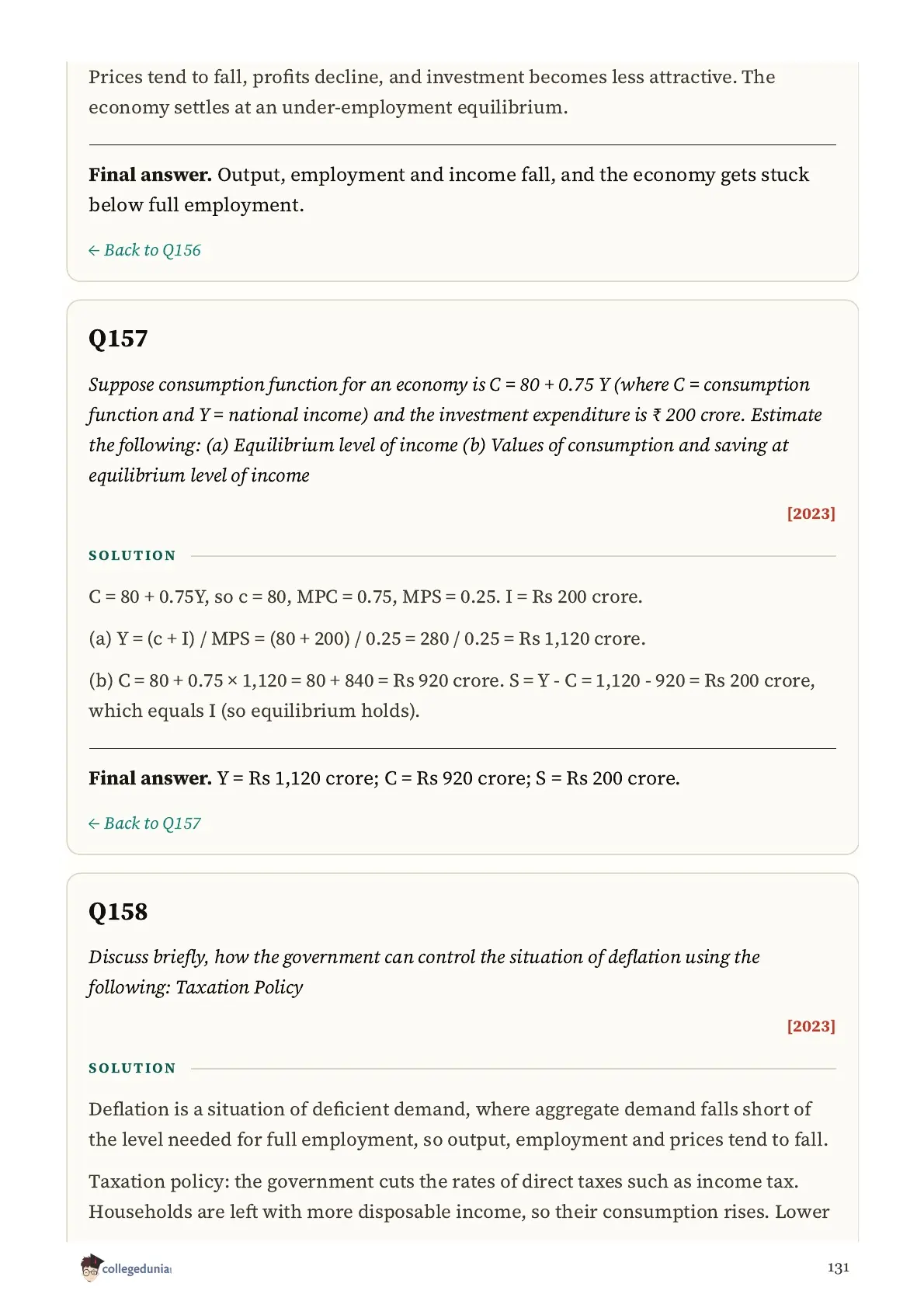
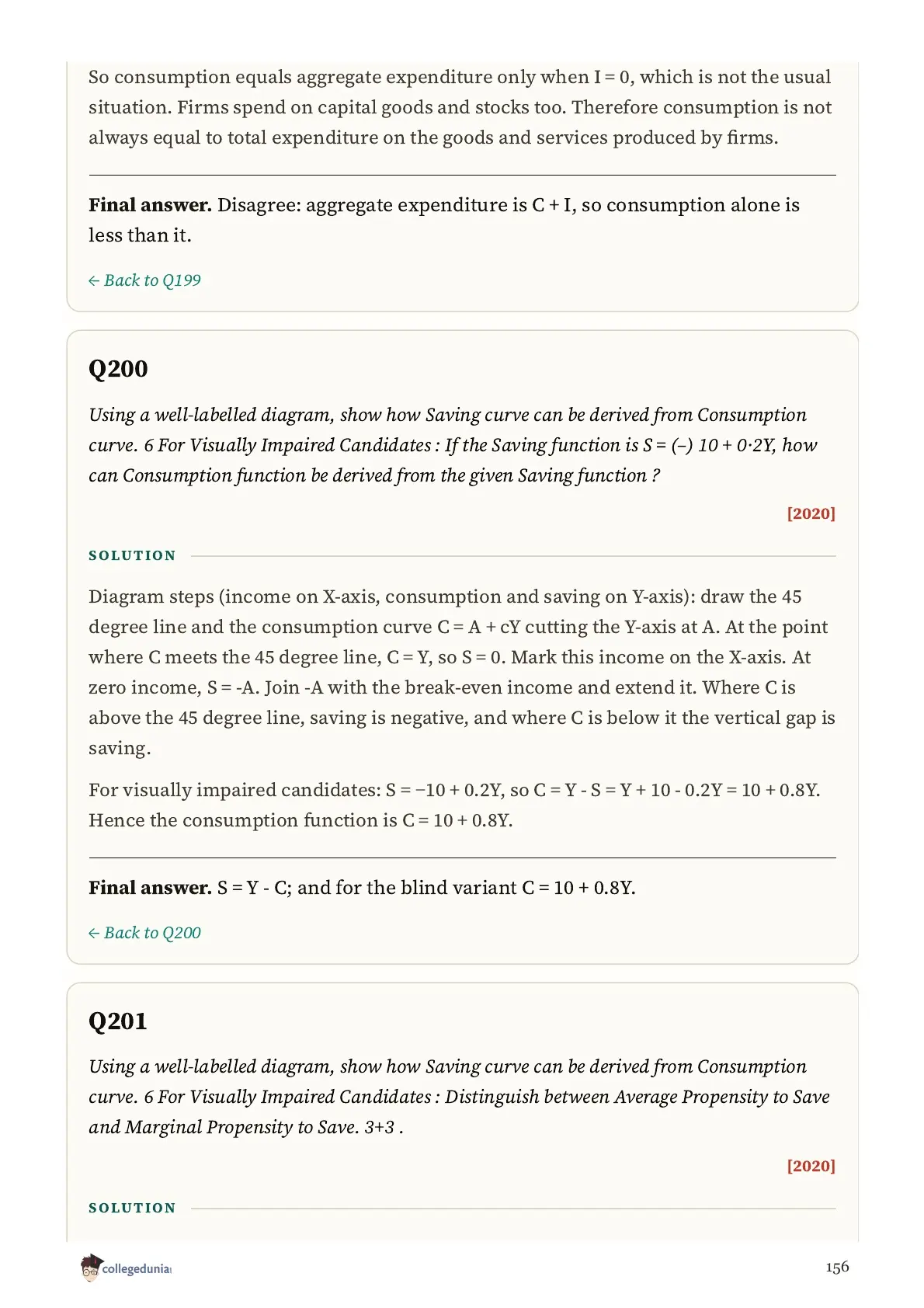
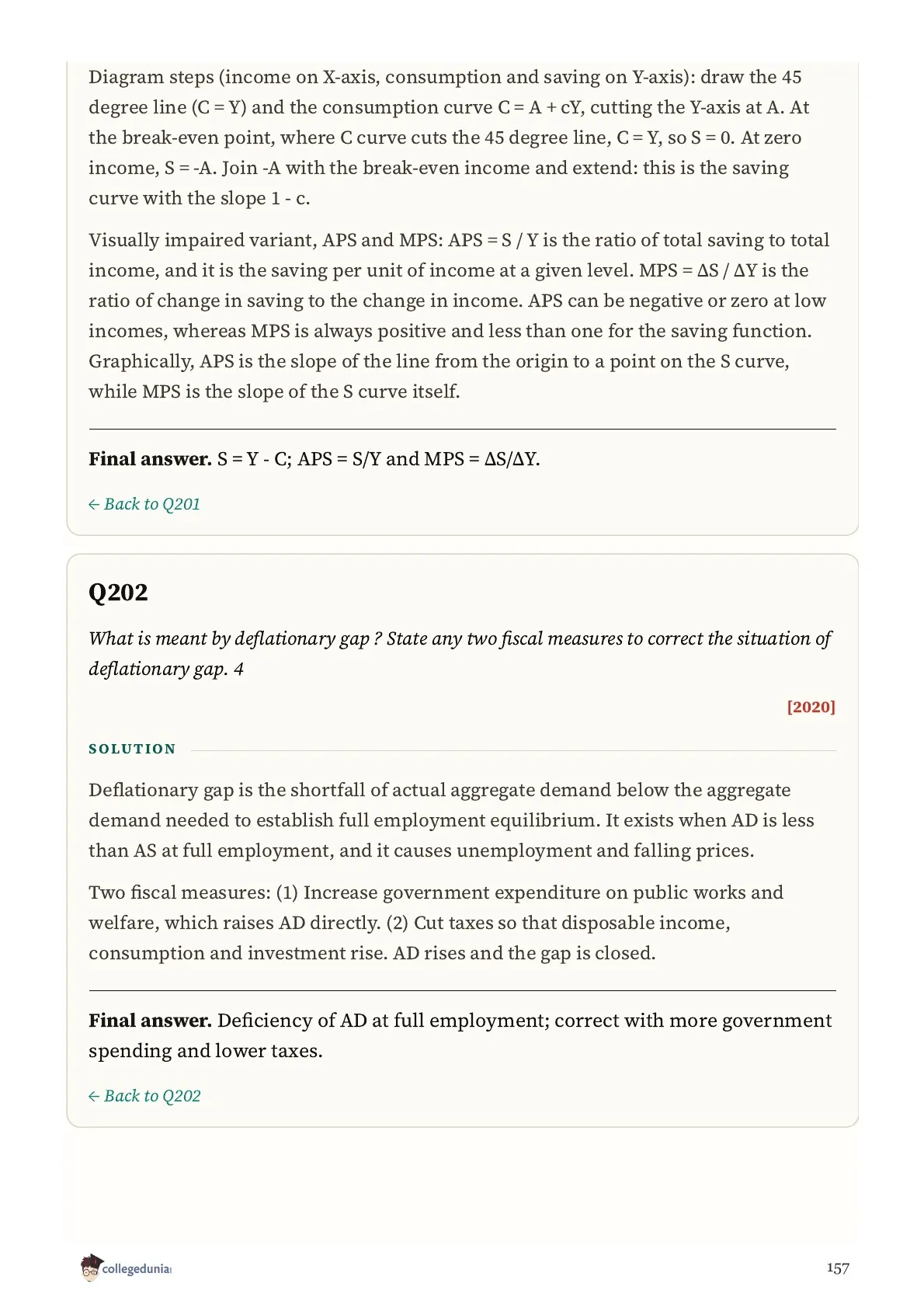
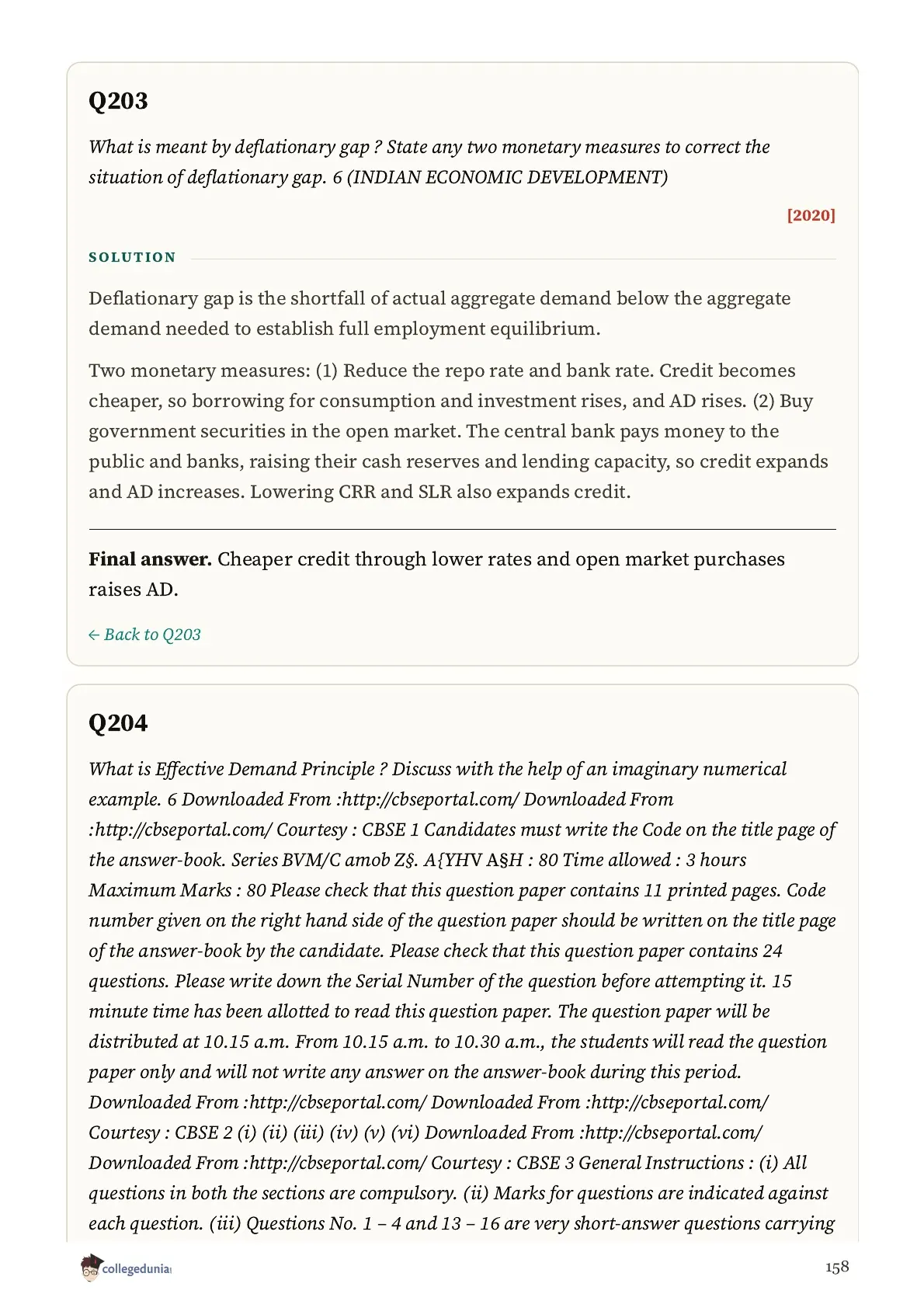
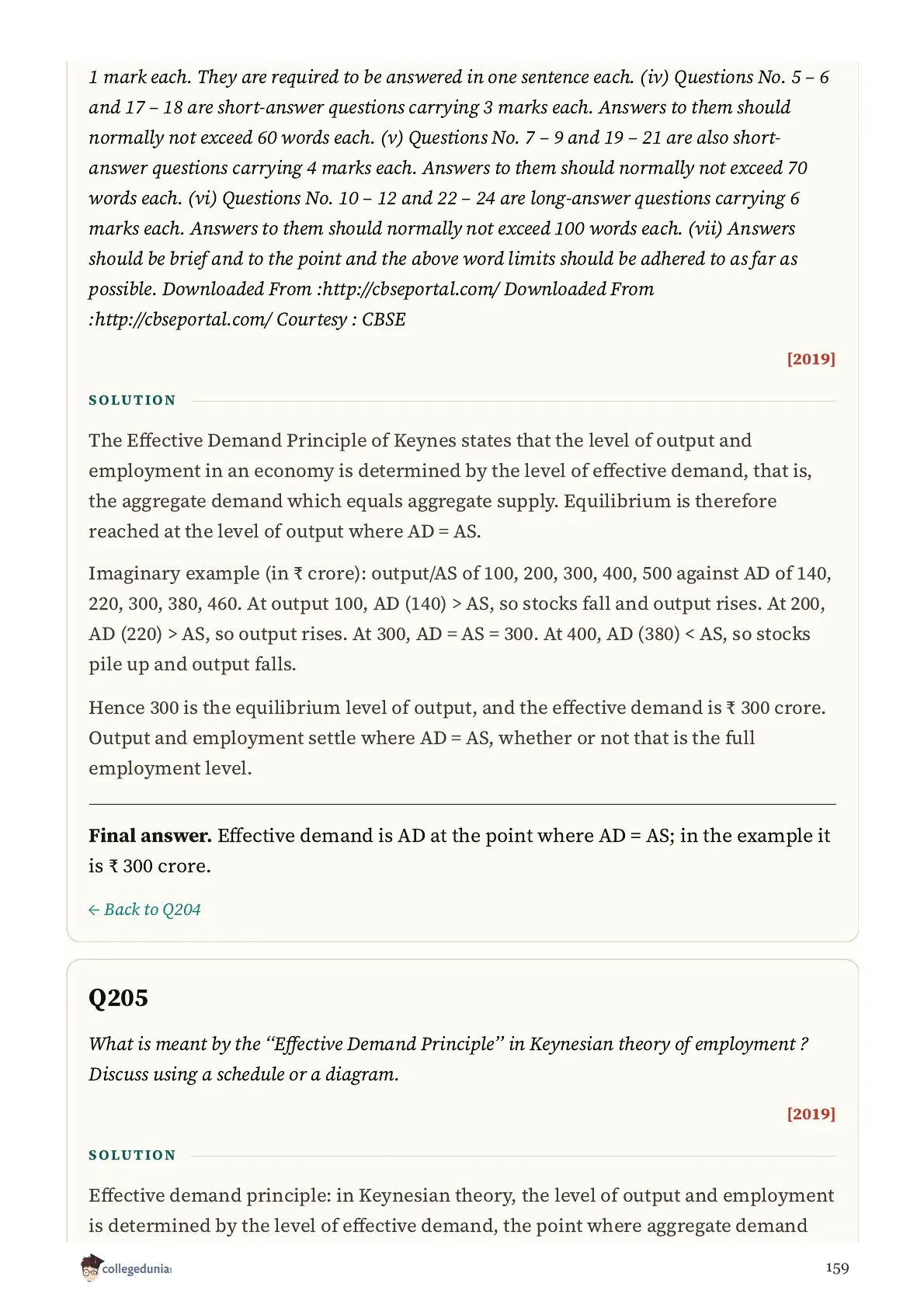

Determination of Income and Employment Weightage in the Class 12 Board Paper
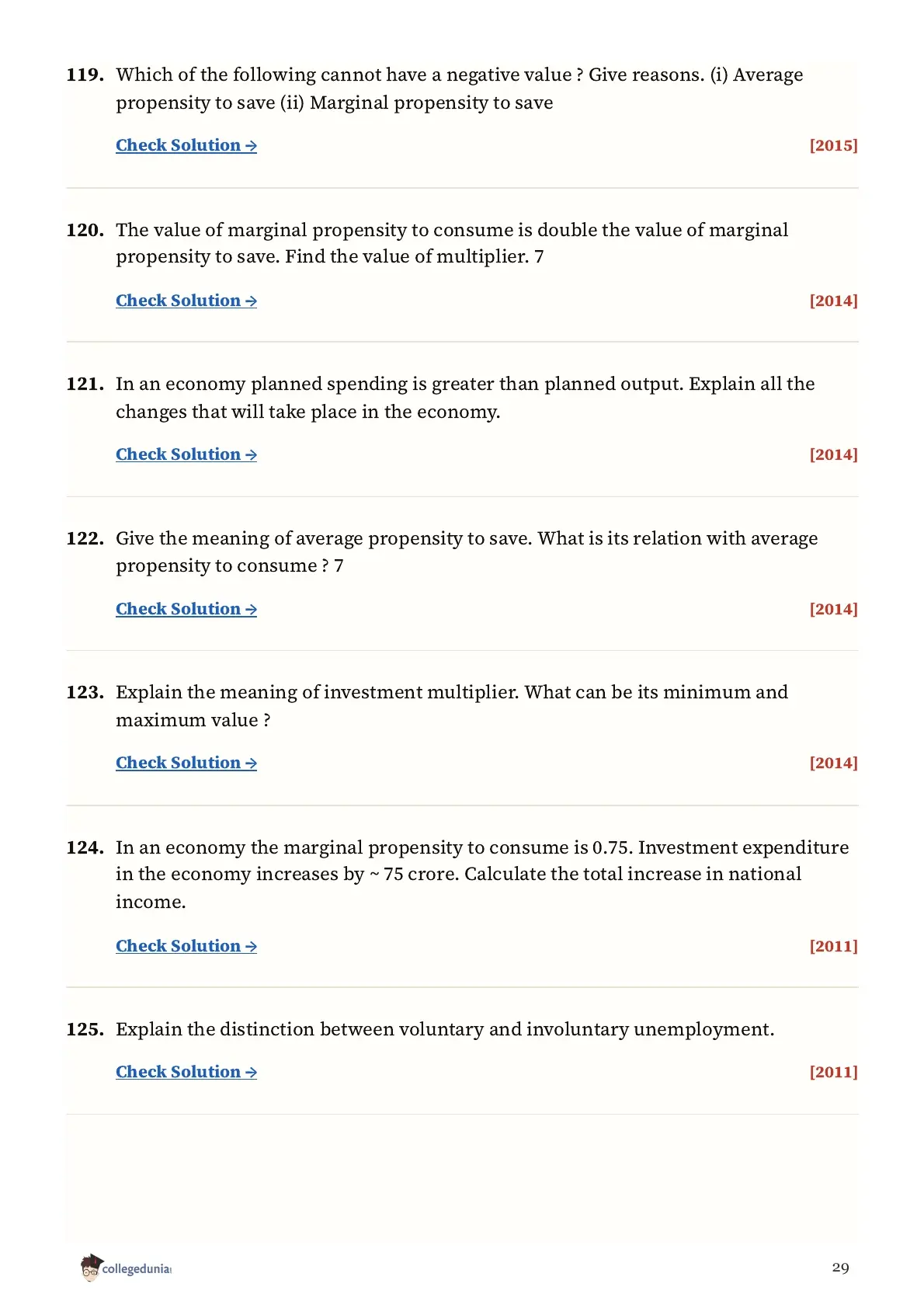
As per Economics Determination of Income and Employment weightage from past years, students can expect about 12 marks out of the 80-mark board paper from this unit, the largest of the five macroeconomics units. The figure comes from prep-site tables of the CBSE curriculum (Vedantu and Physics Wallah) and is unofficial, so check the curriculum on cbseacademic.nic.in for the official unit marks.
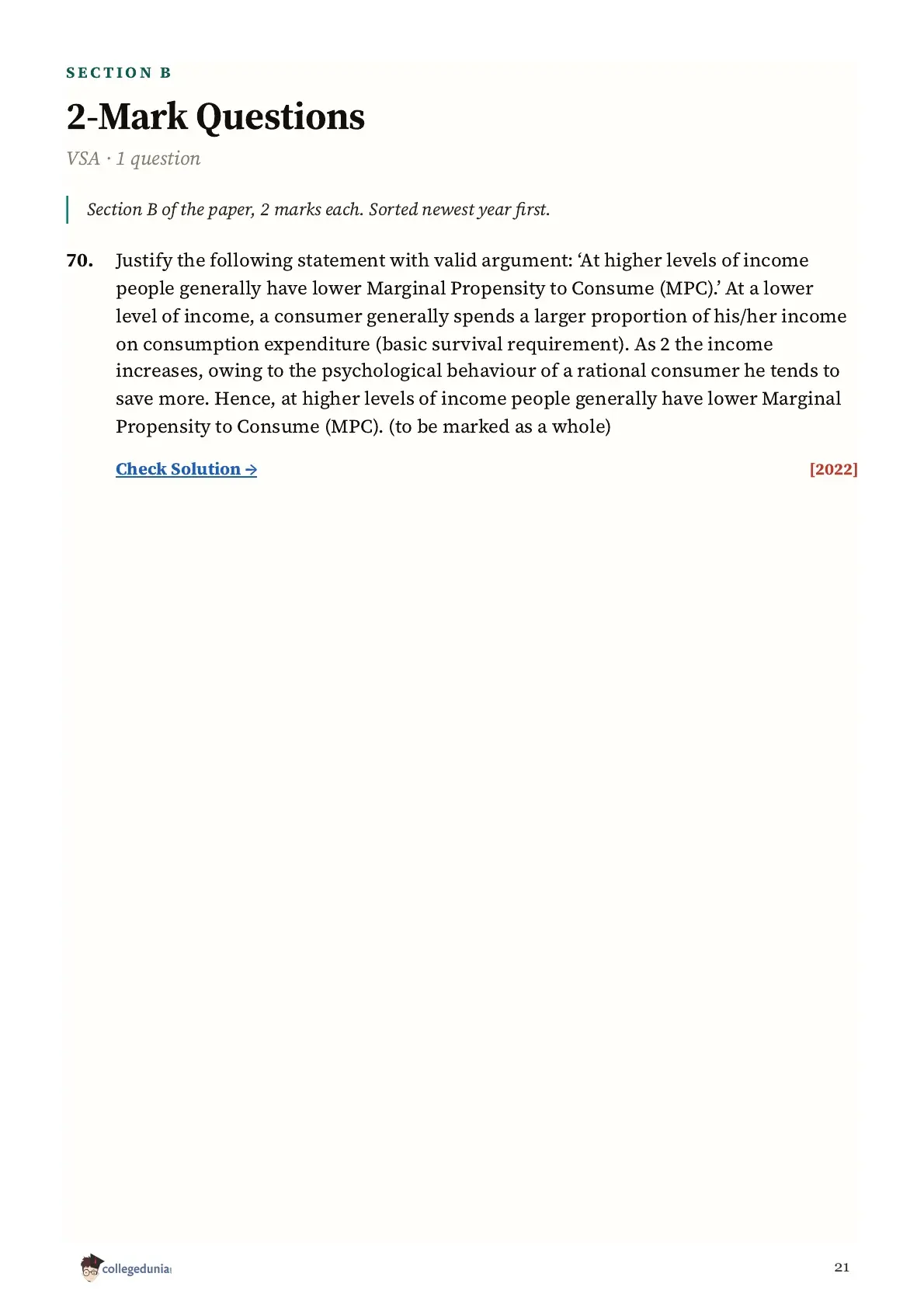
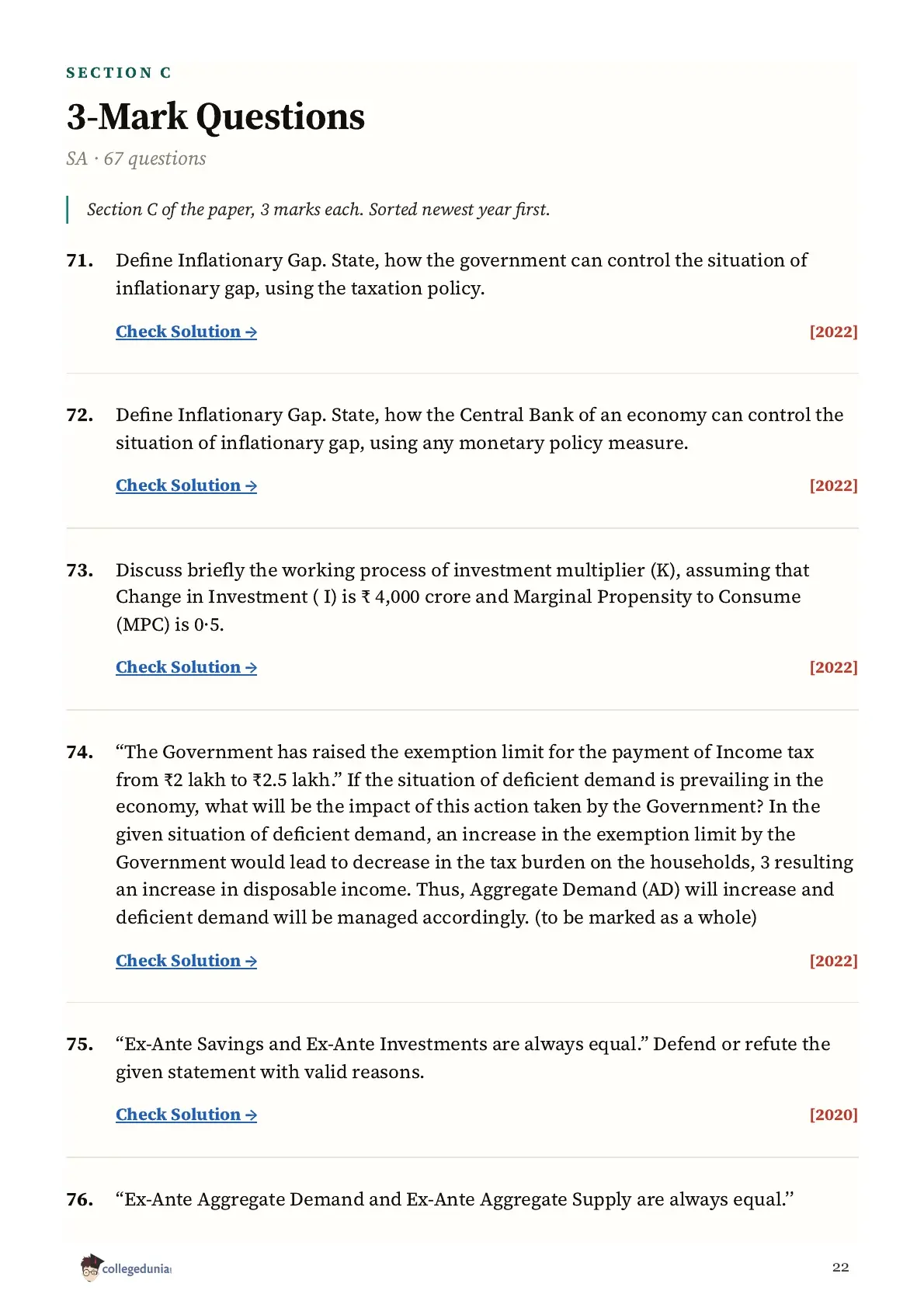
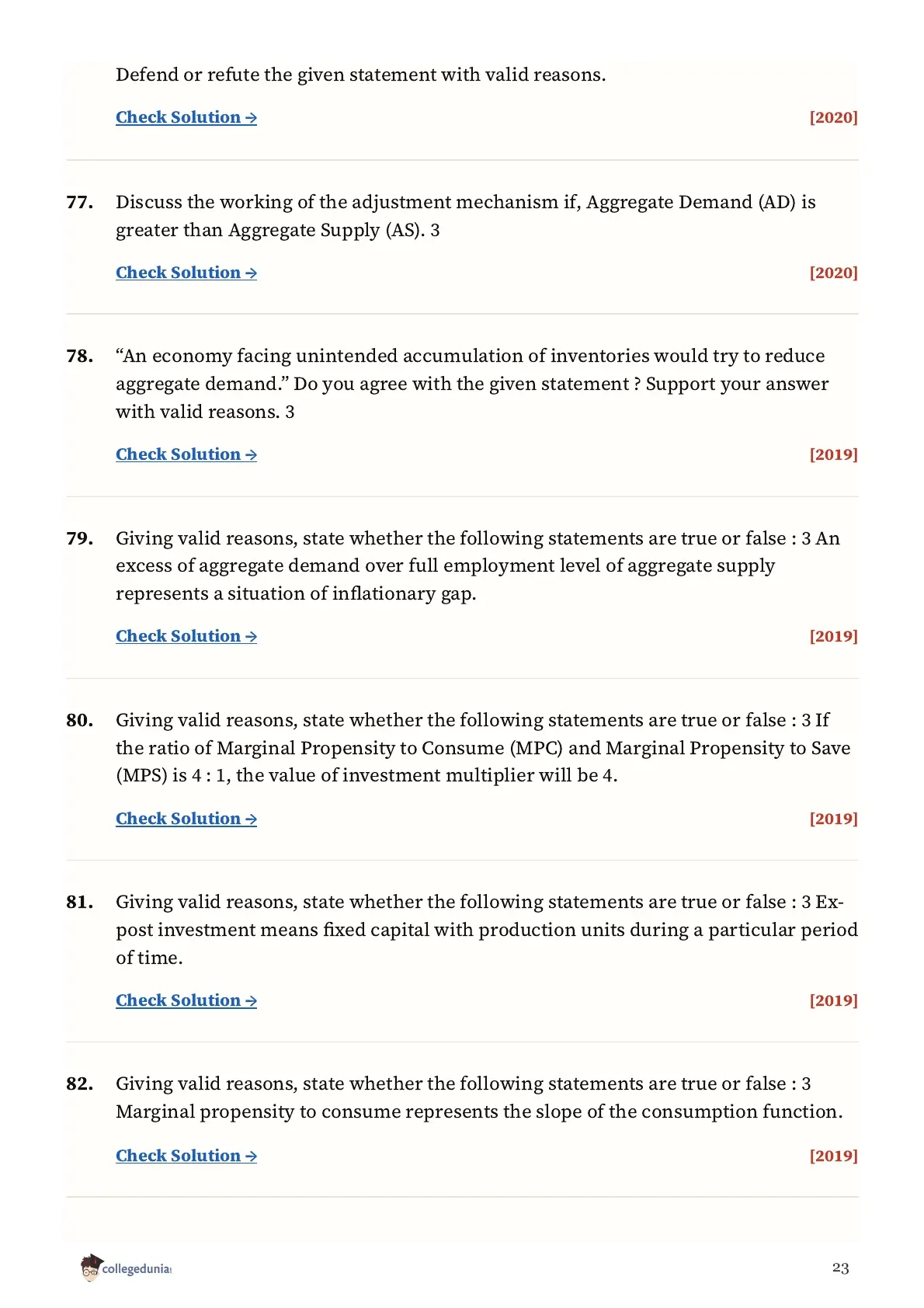
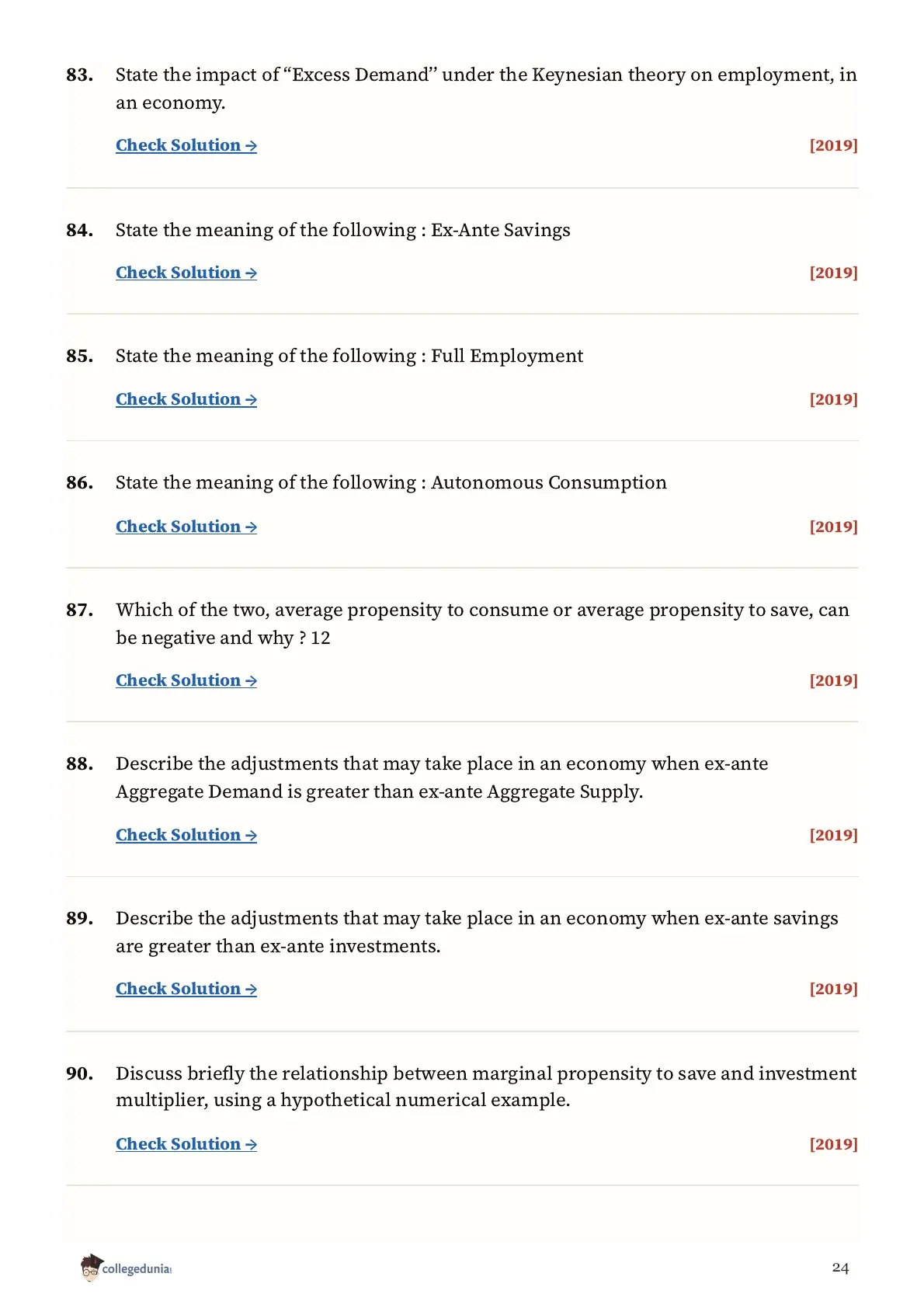
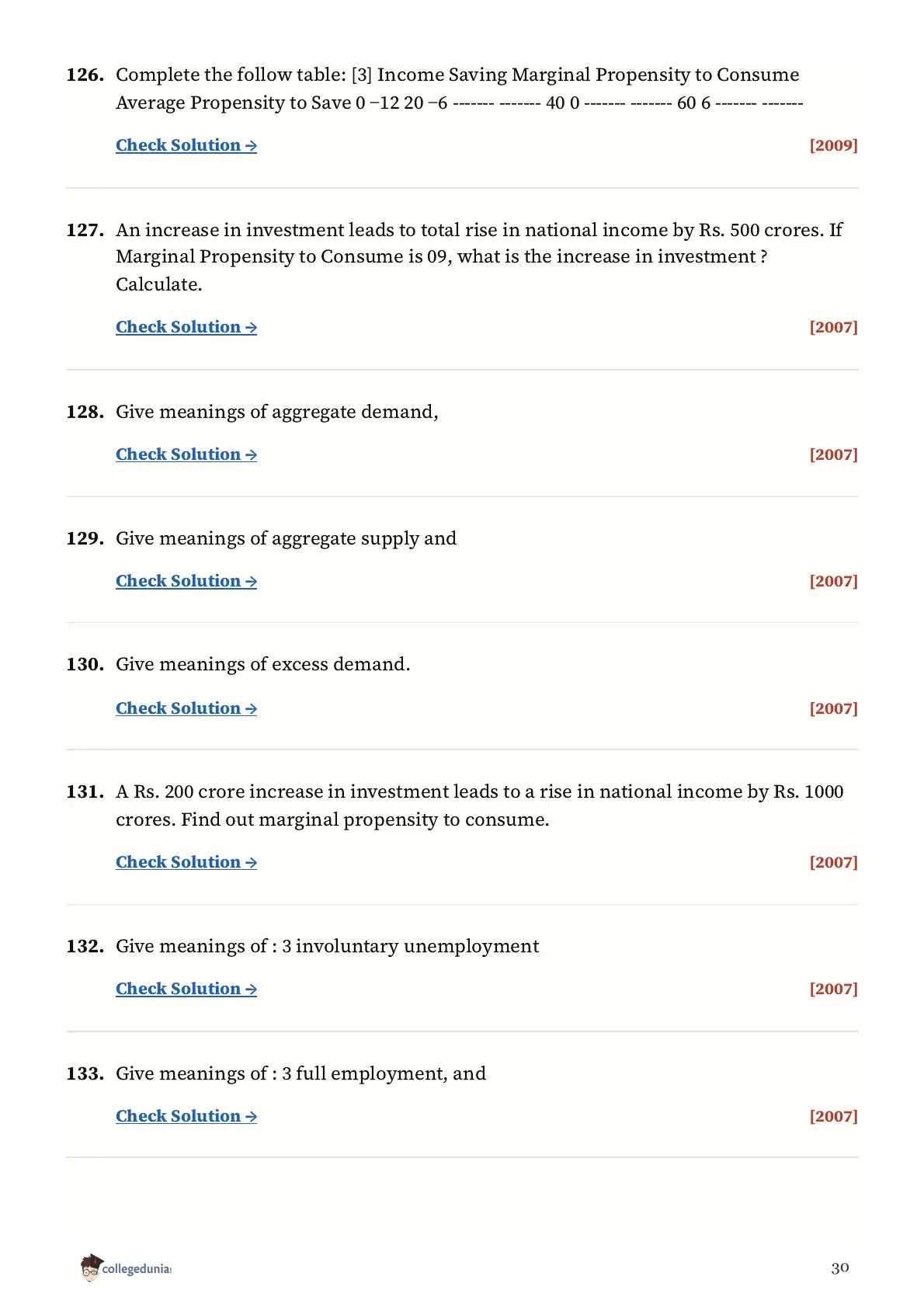
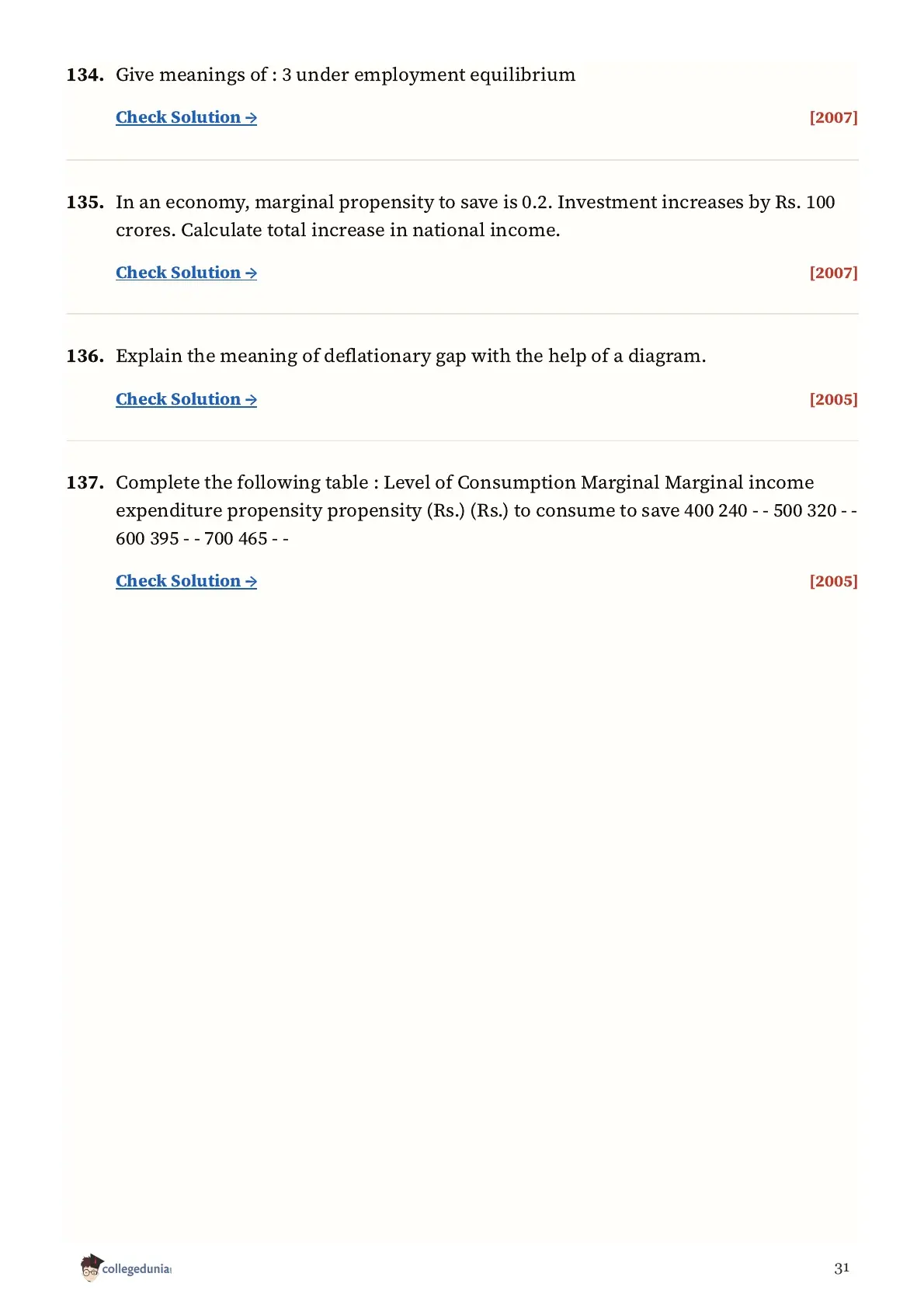
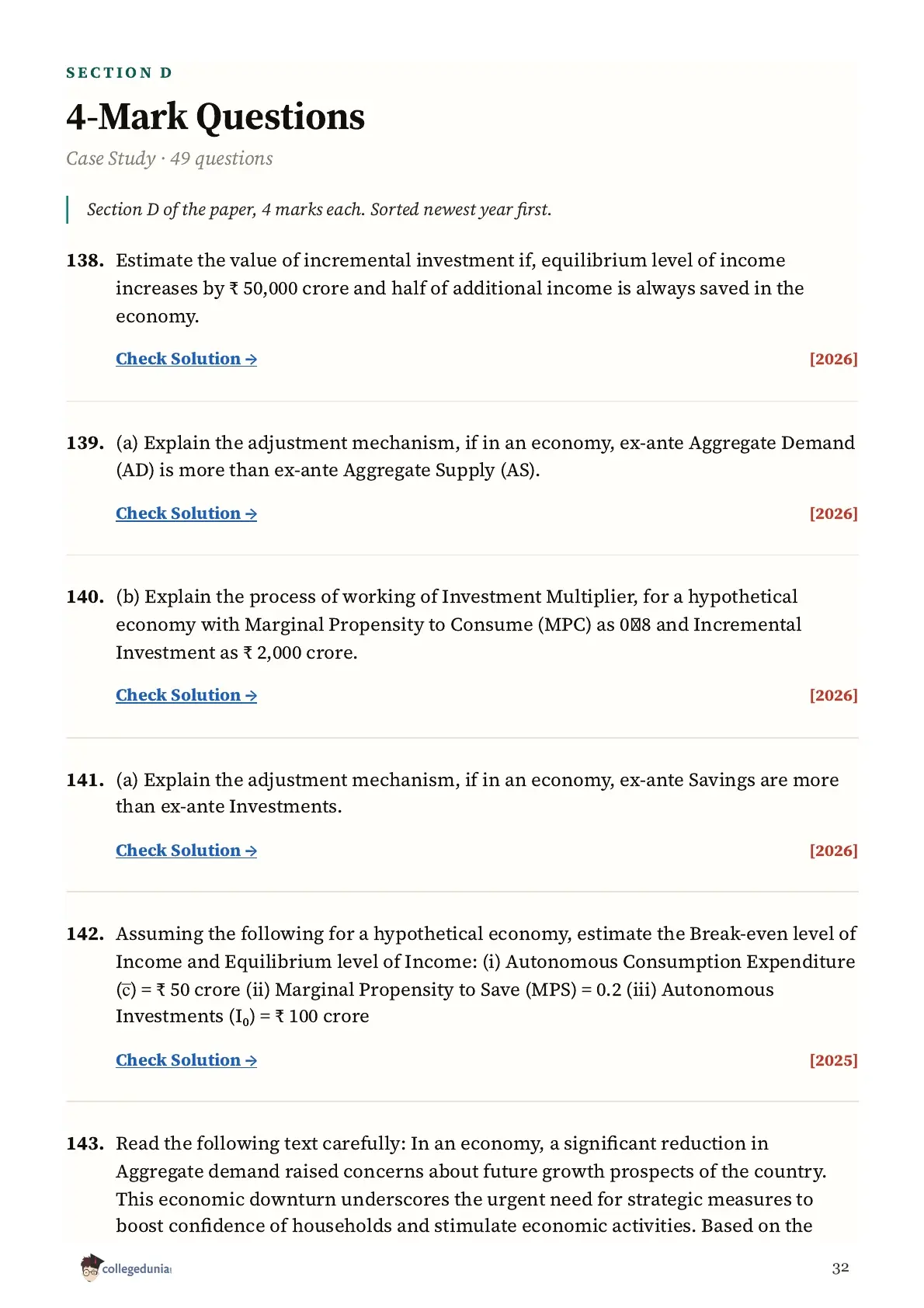
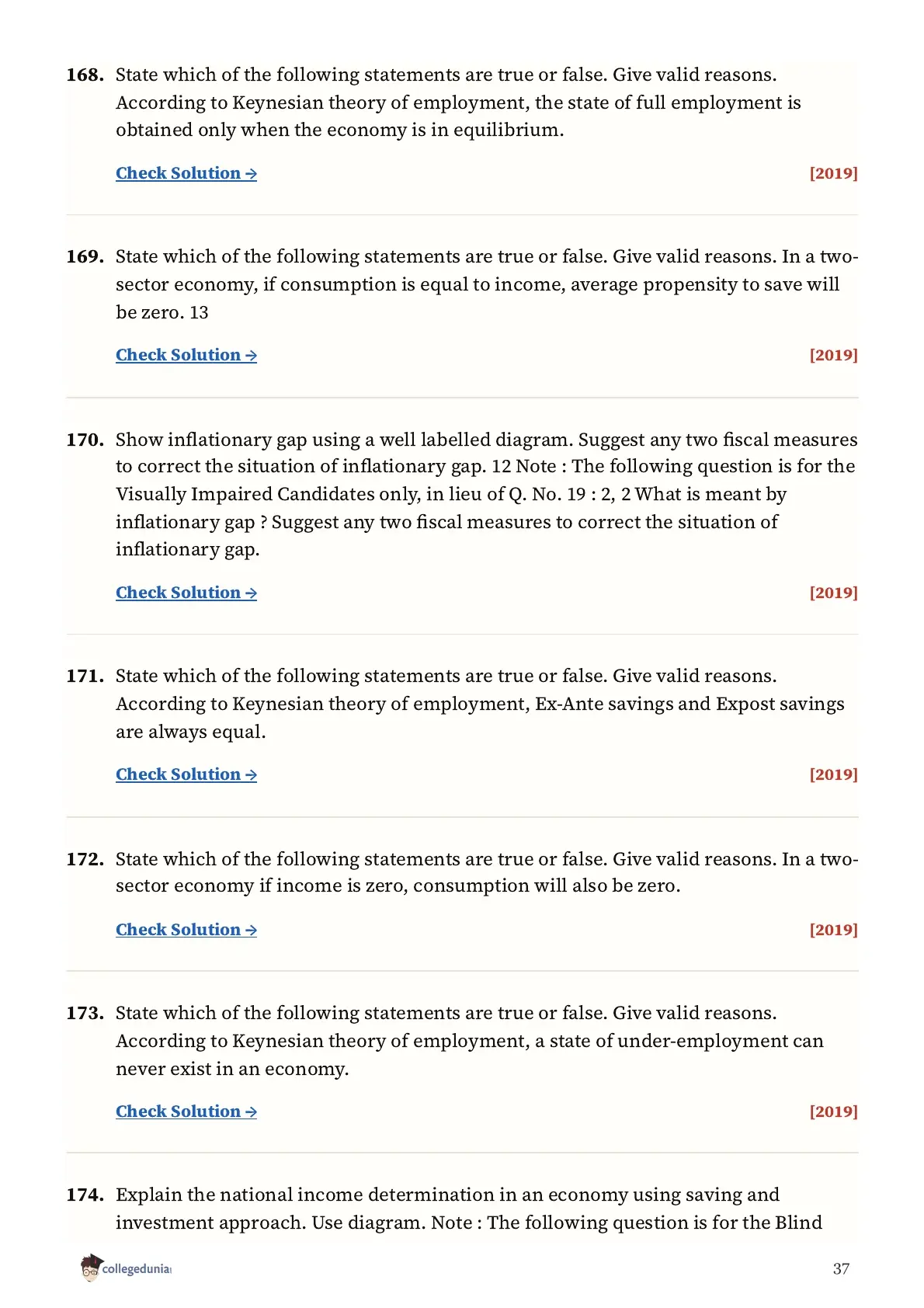
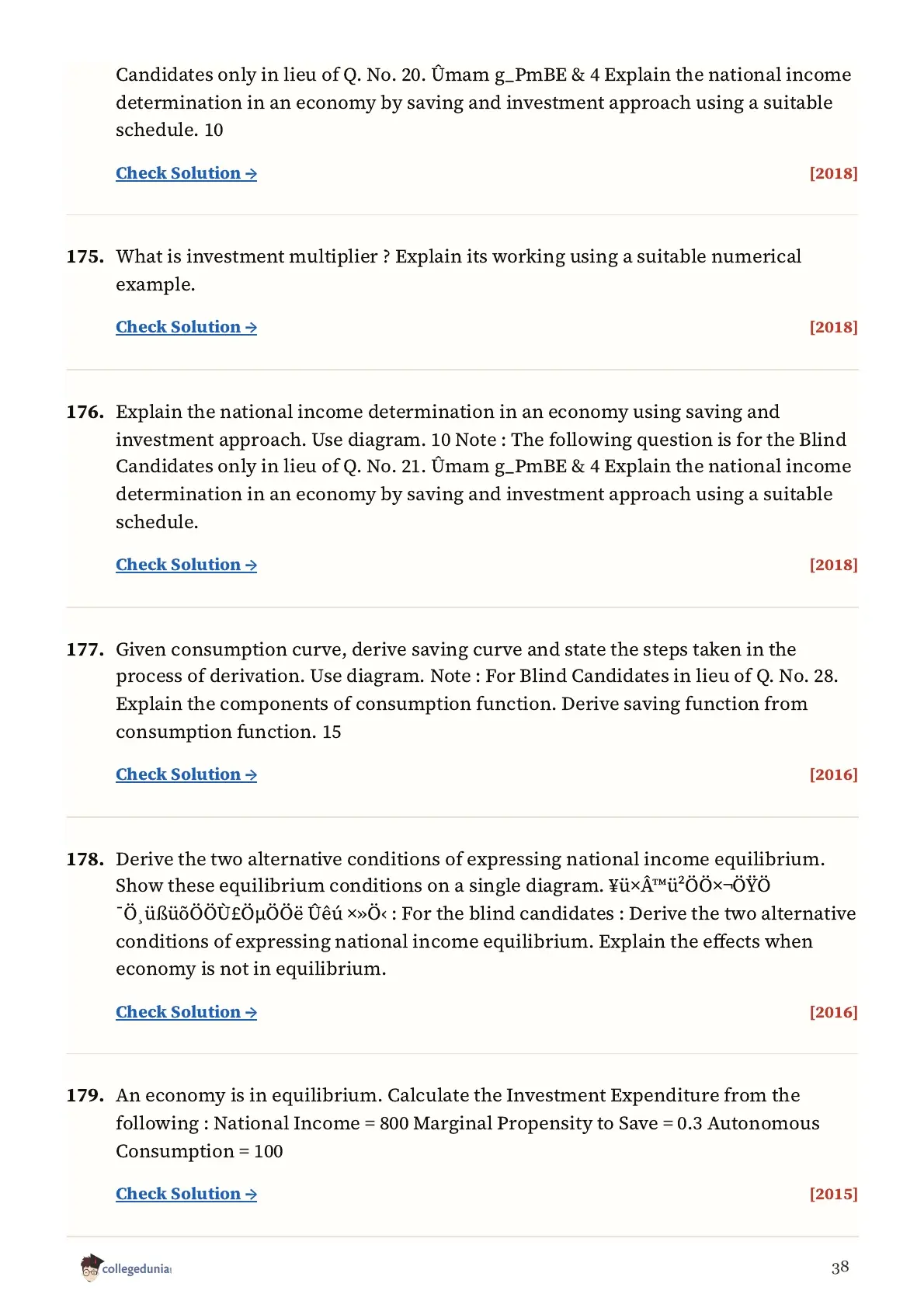
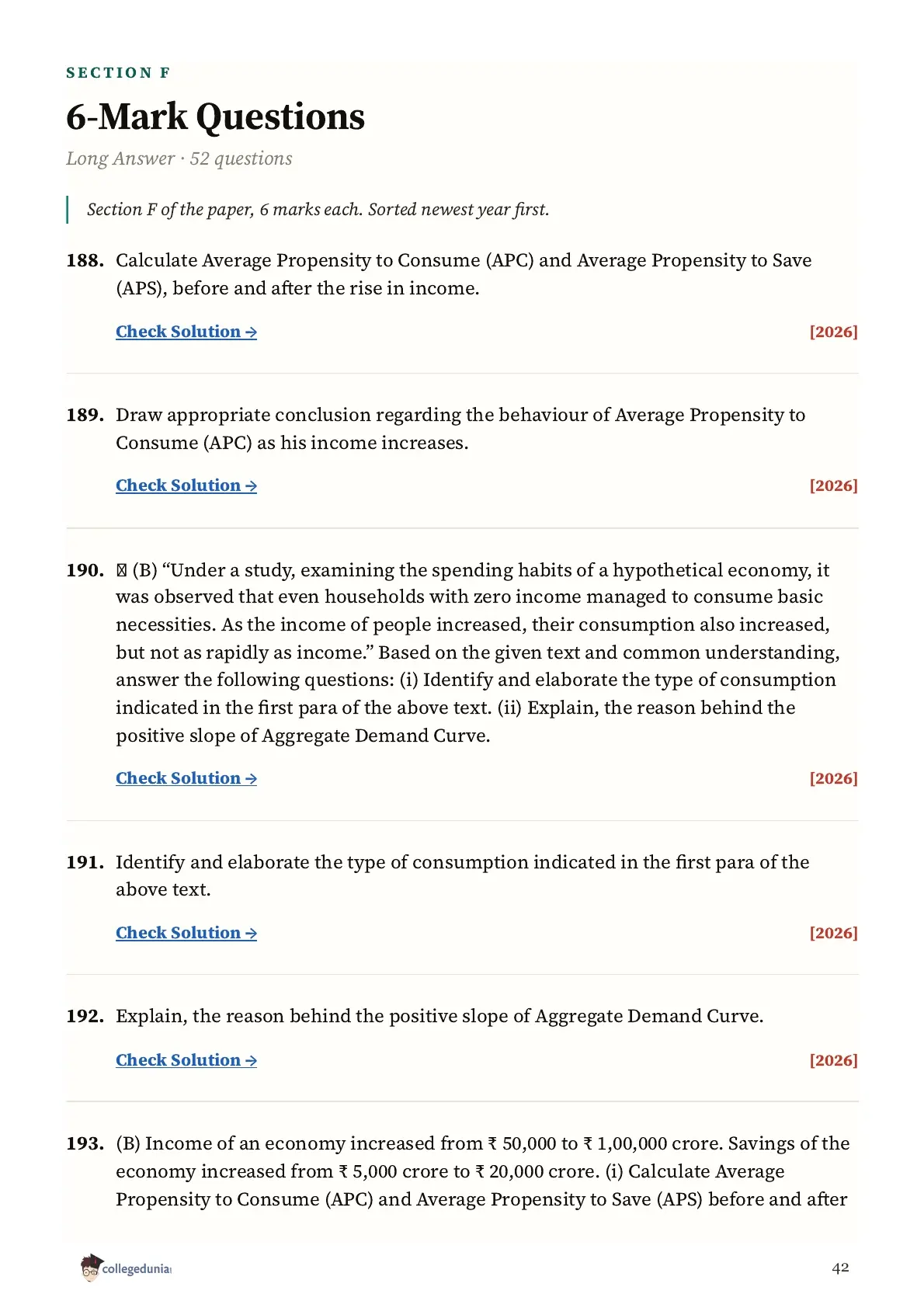
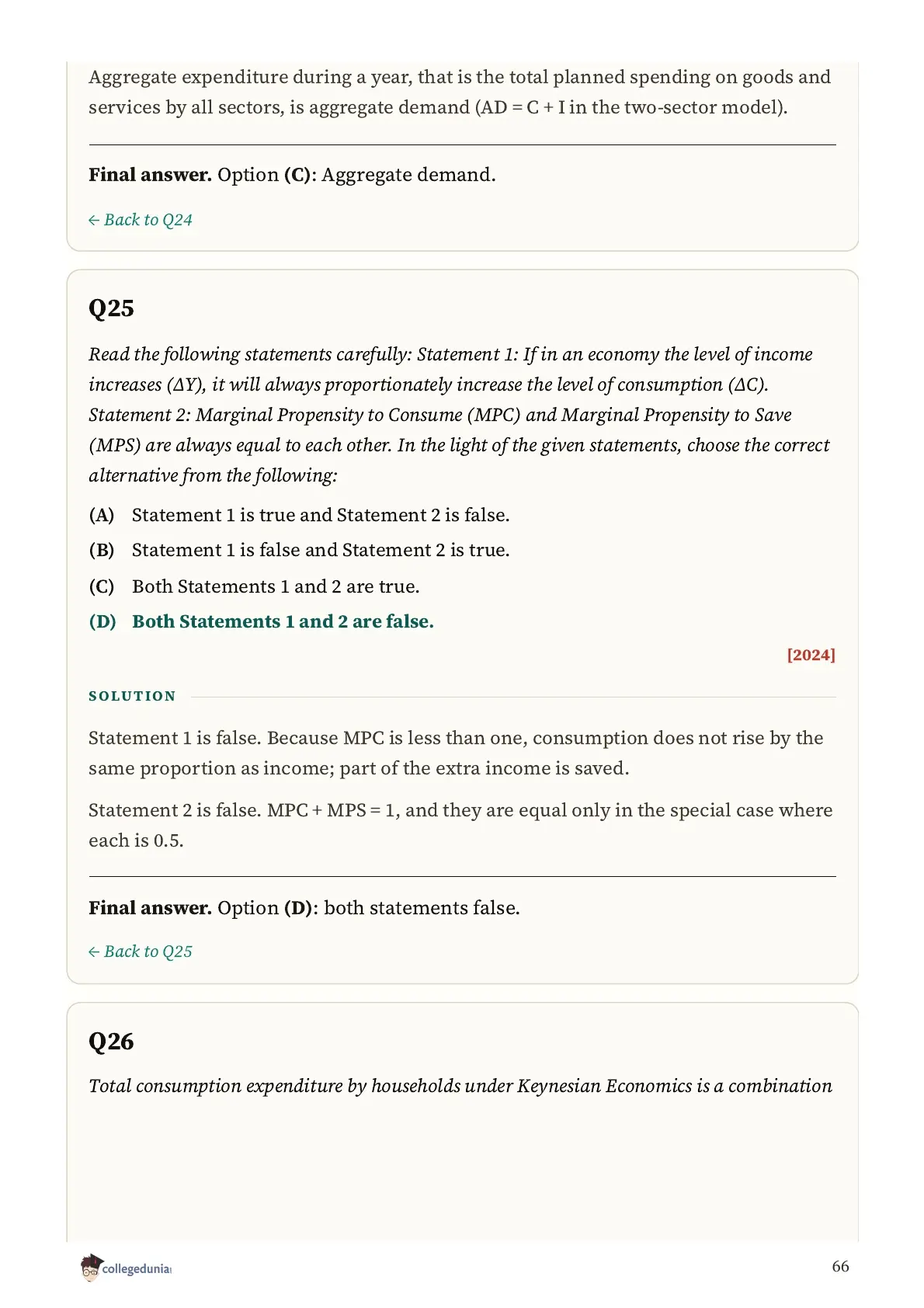
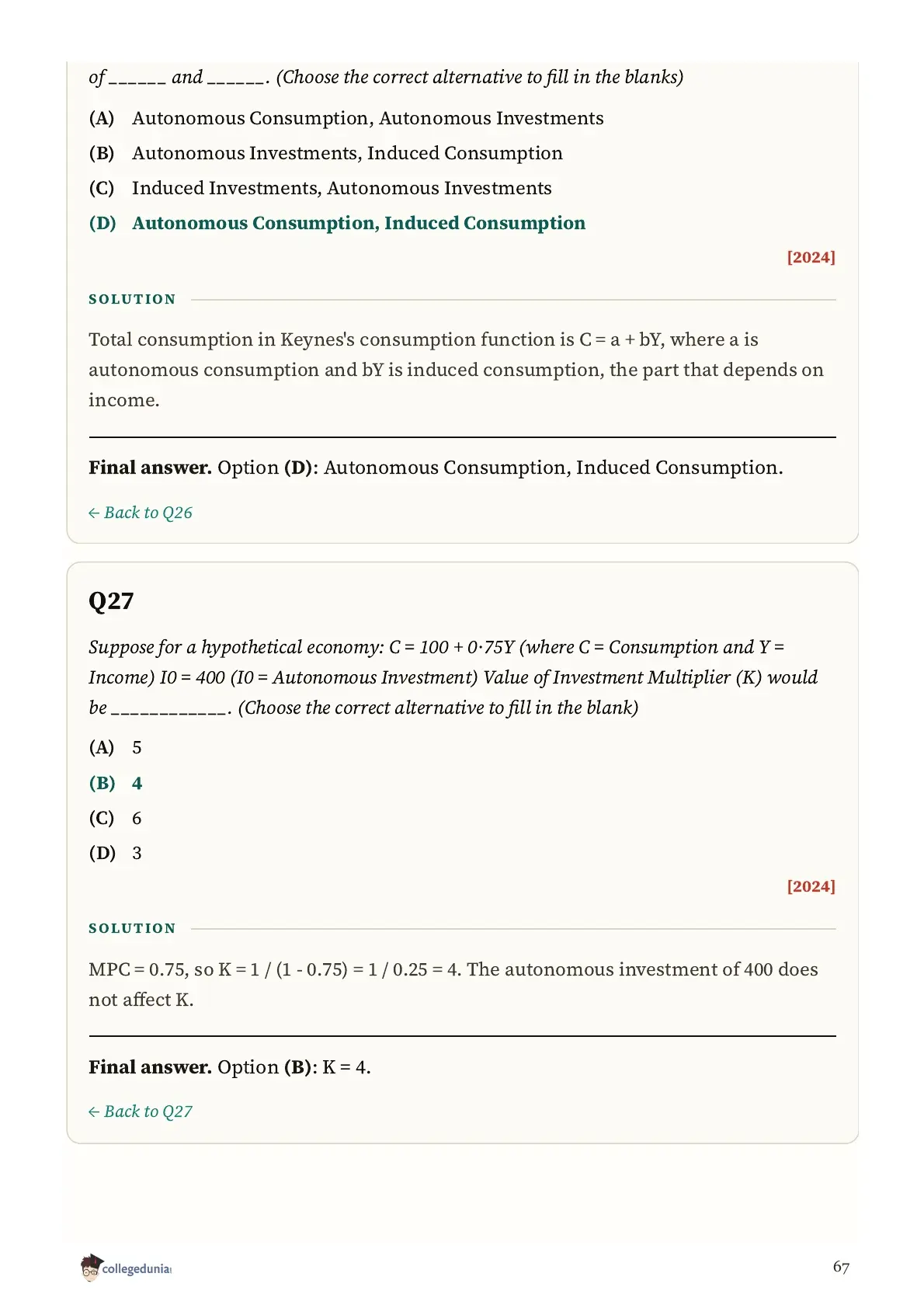
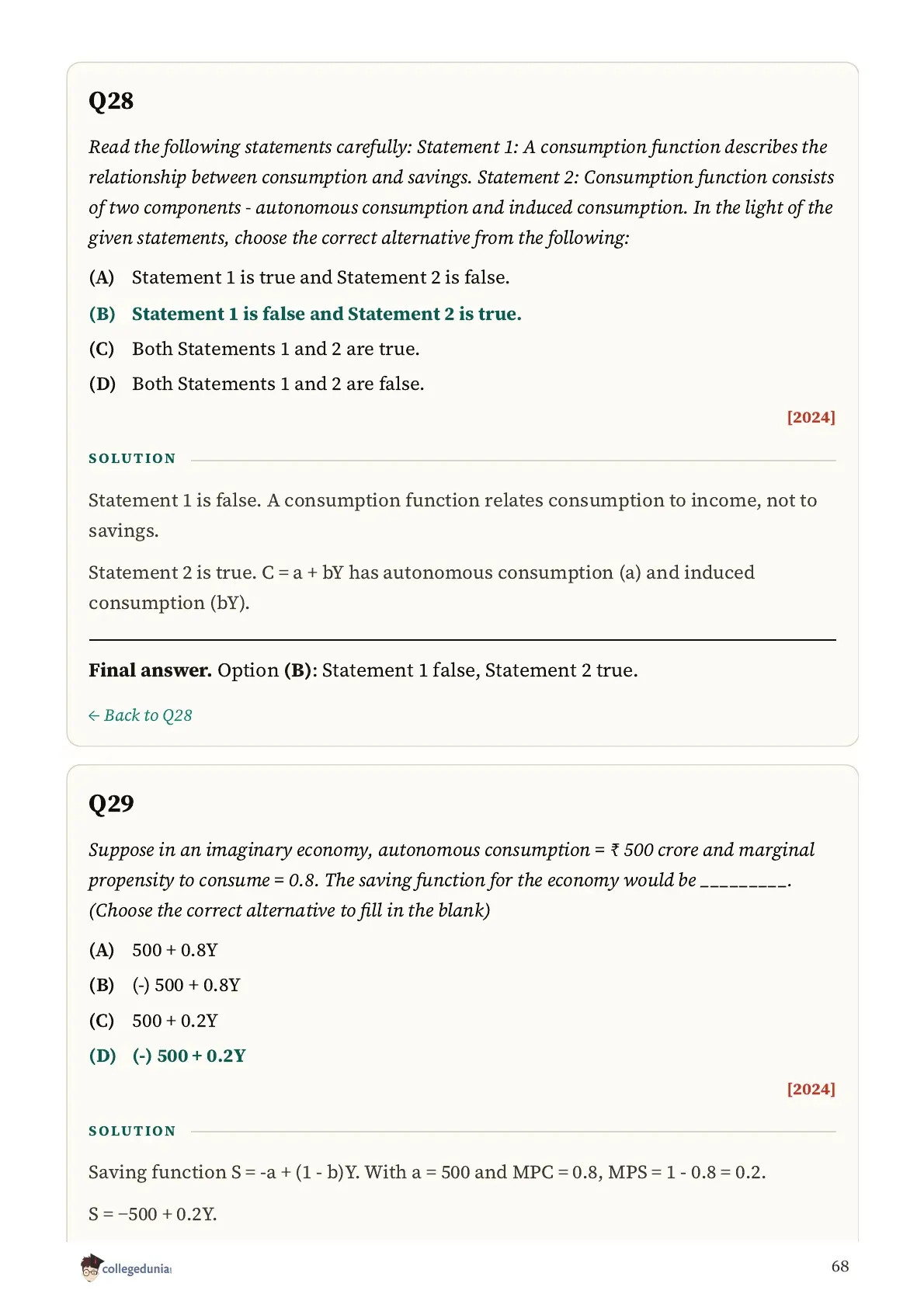
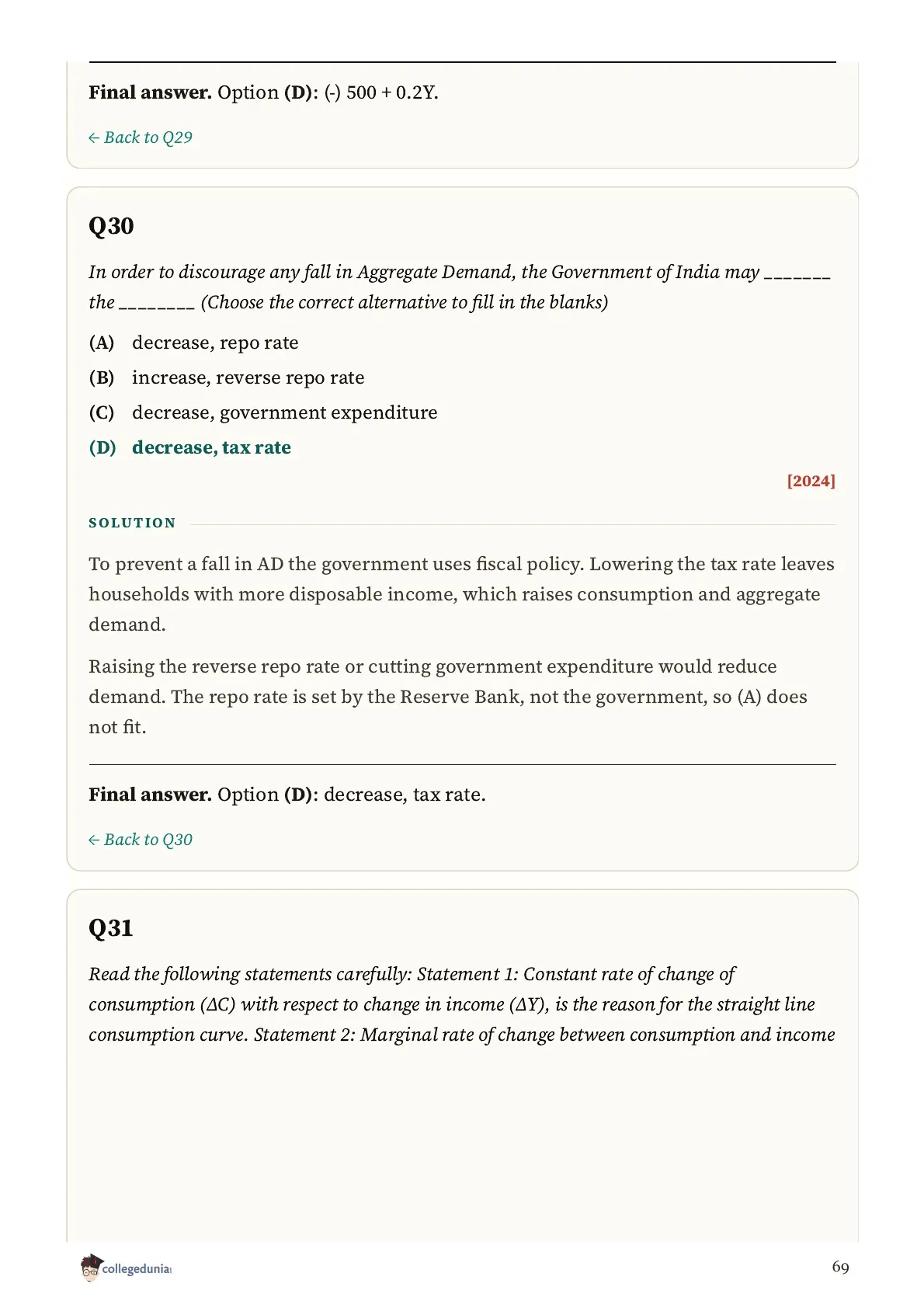
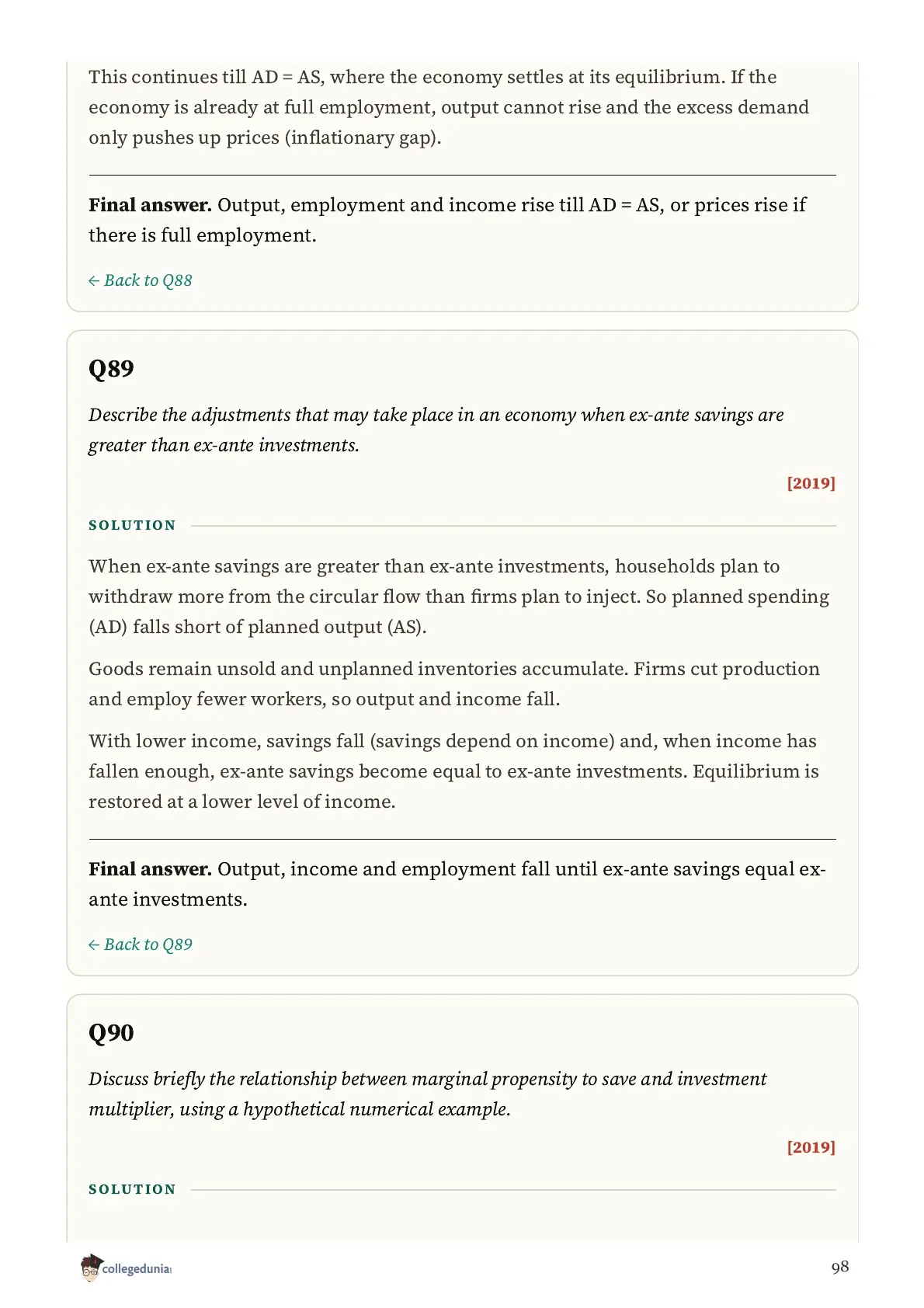
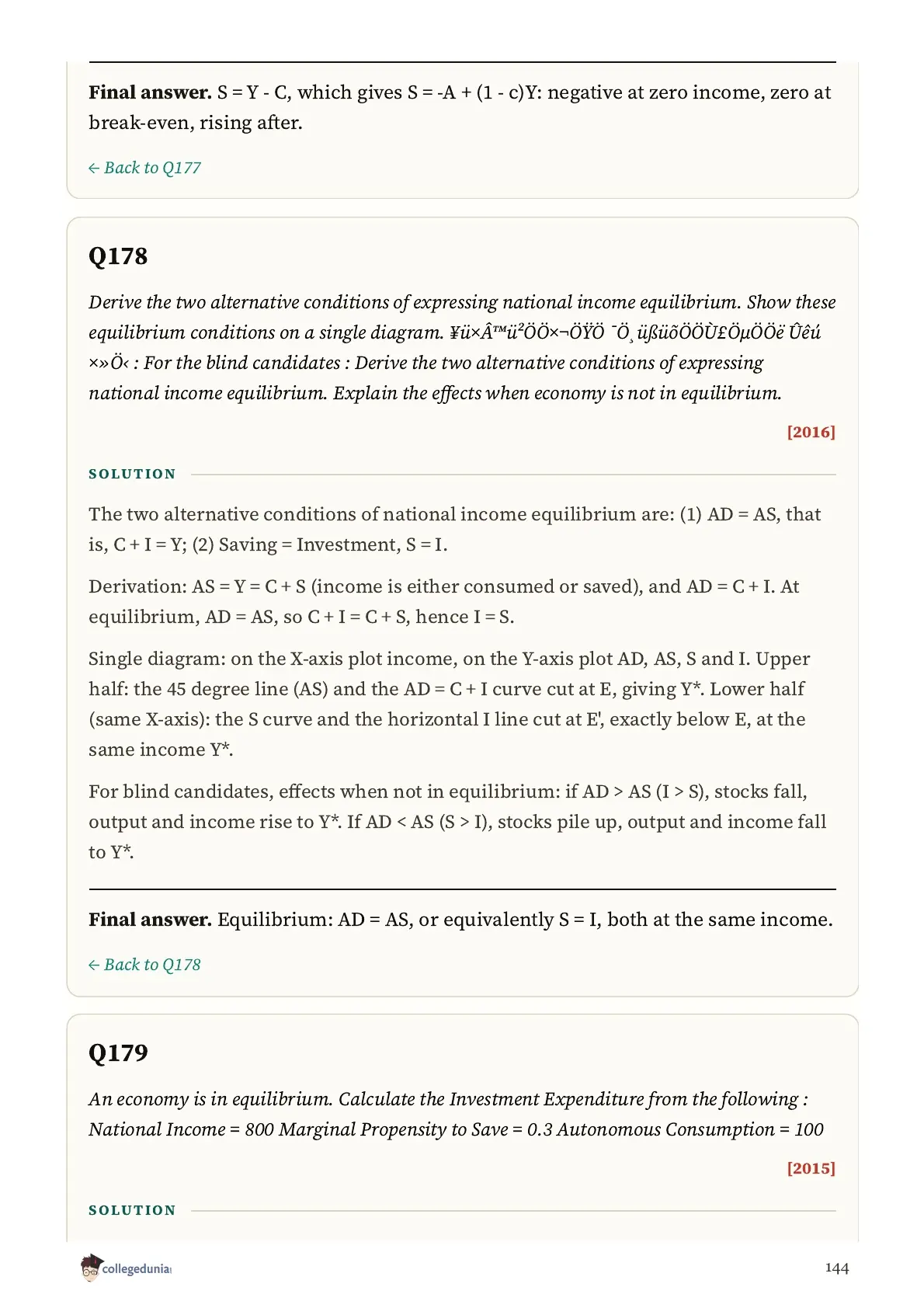
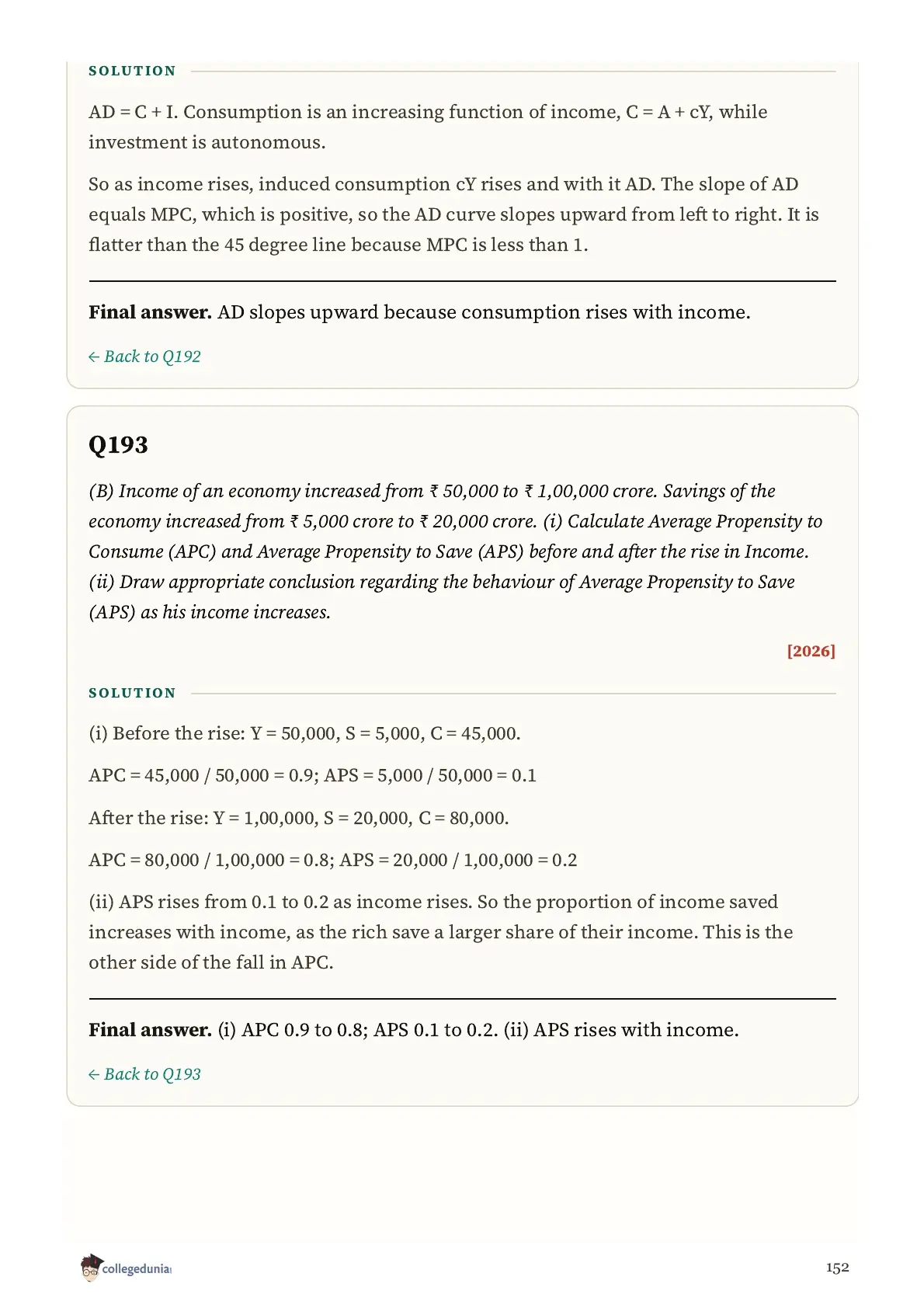
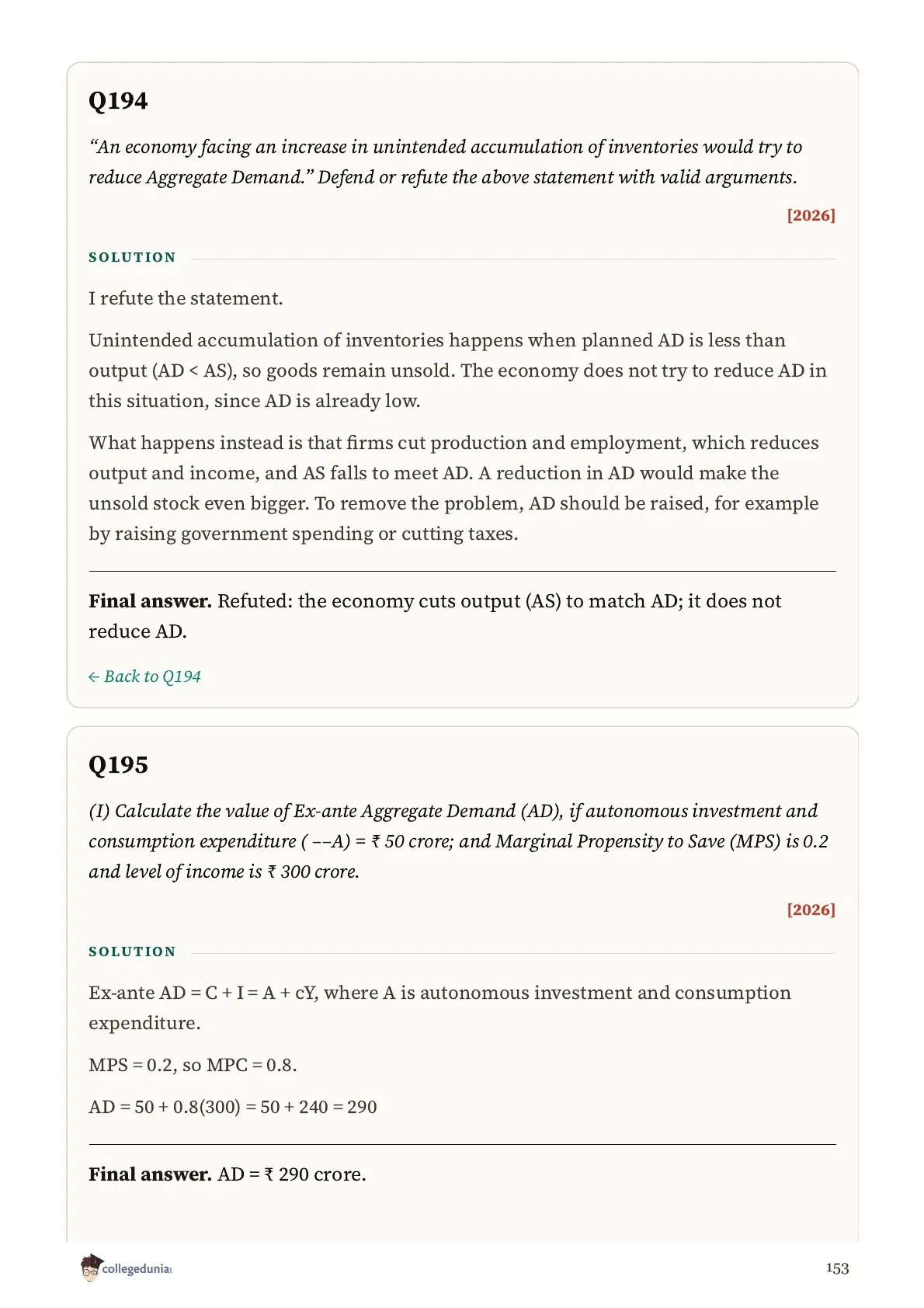
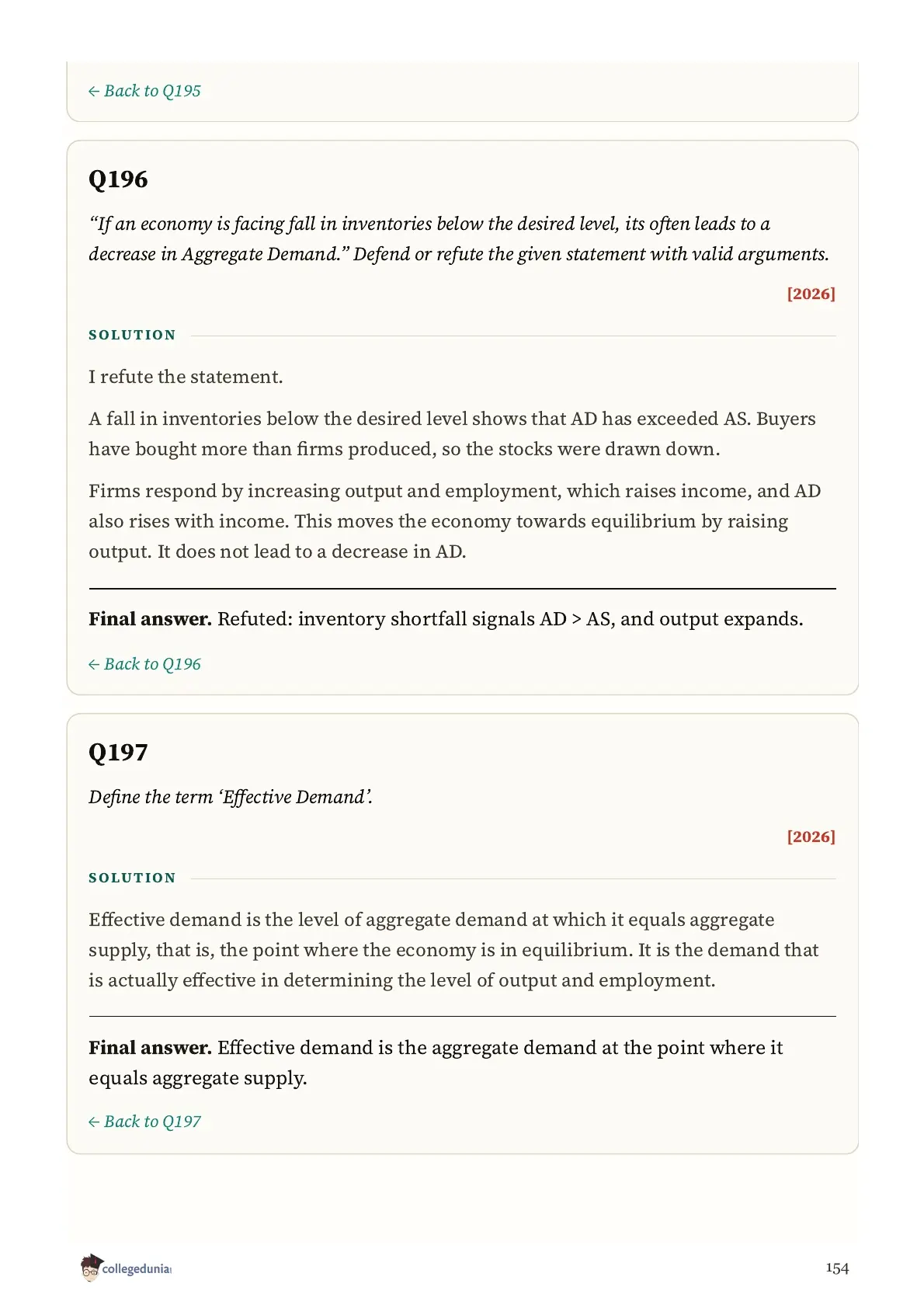
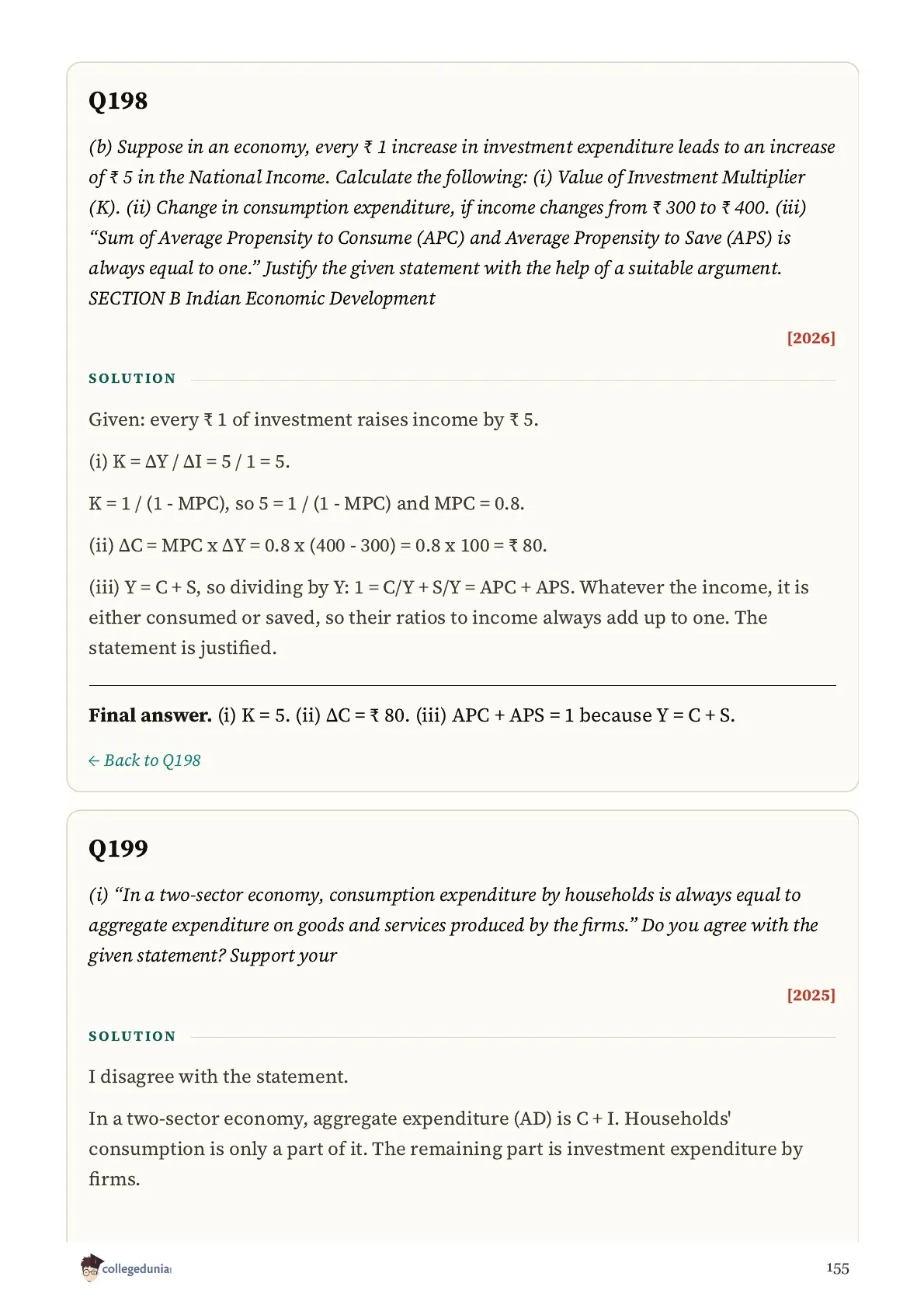
The 239 questions in this set fall in six mark bands. The 69 one-mark questions and the 67 three-mark questions are the two largest groups. The rest are 52 questions of 6 marks, 49 of 4 marks, and one each of 2 and 5 marks, so 184 of the 239 need a written answer and 55 are MCQs.
| Marks Each | Question Type | Questions in the Set |
|---|---|---|
| 1 mark | MCQ and one-line answers | 69 (55 of them MCQs) |
| 2 marks | Very Short Answer (VSA) | 1 |
| 3 marks | Short Answer (SA) | 67 |
| 4 marks | Short Answer or Case Study | 49 |
| 5 marks | Short Answer | 1 |
| 6 marks | Long Answer | 52 |
Determination of Income and Employment Questions by Topic
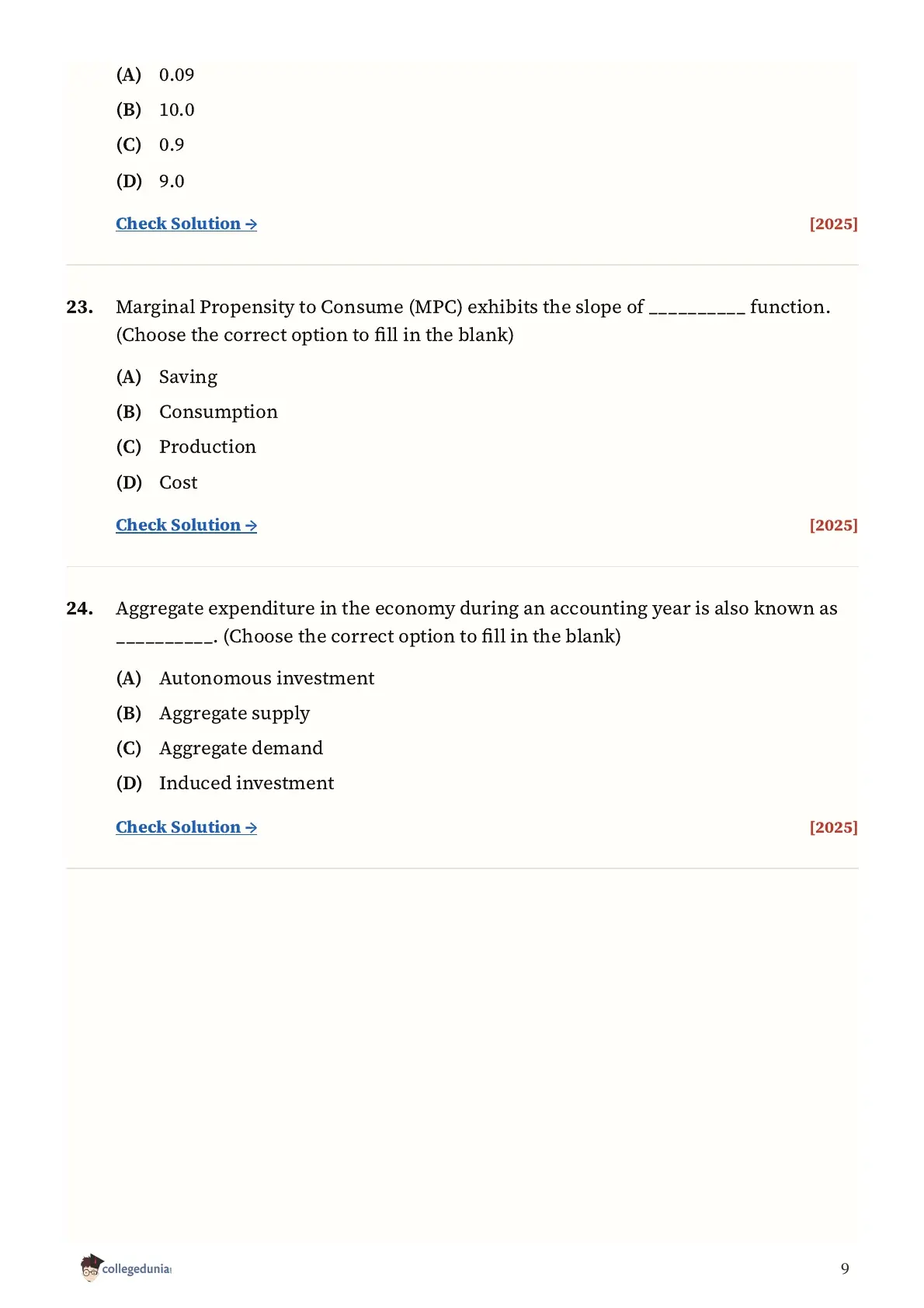
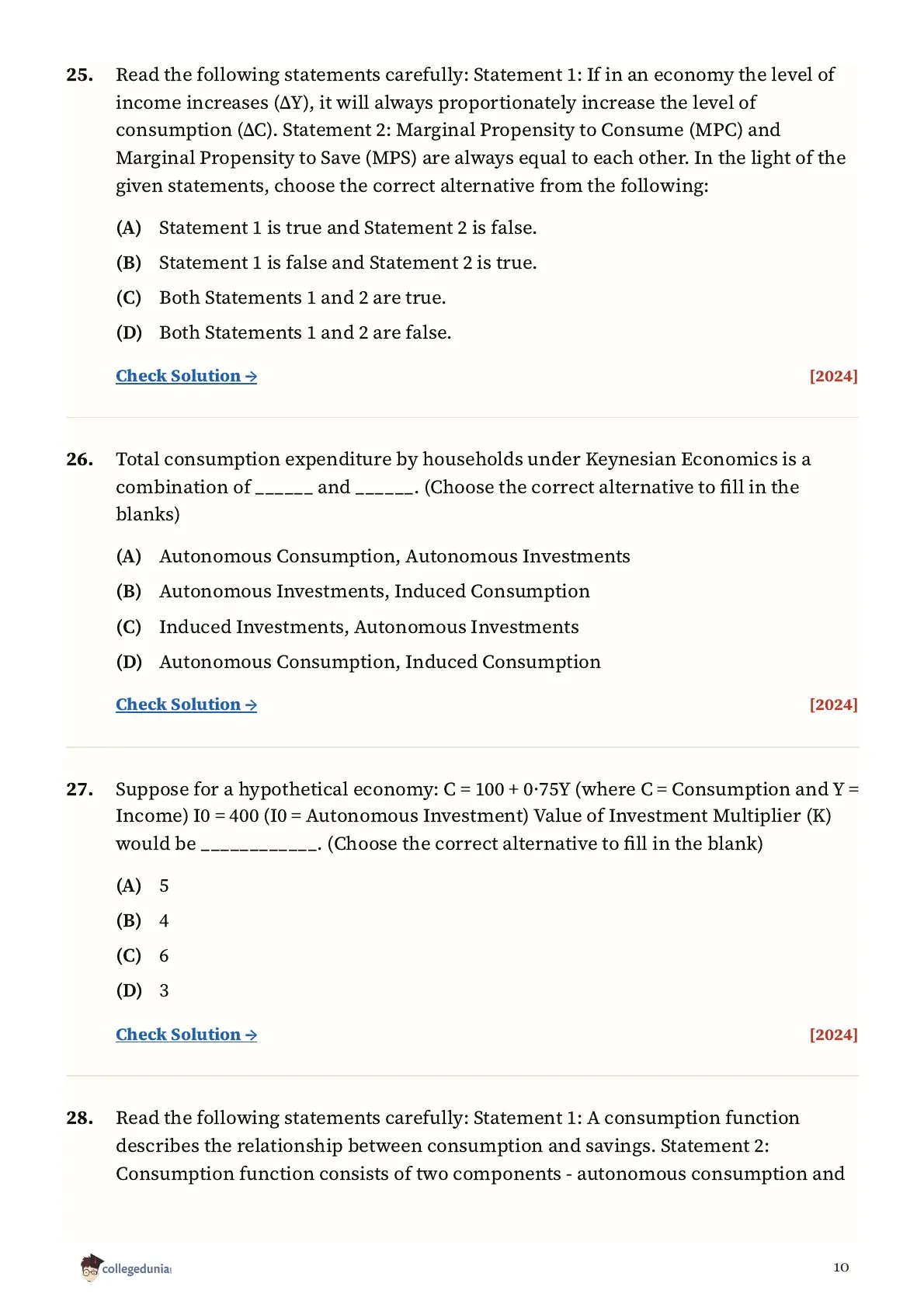
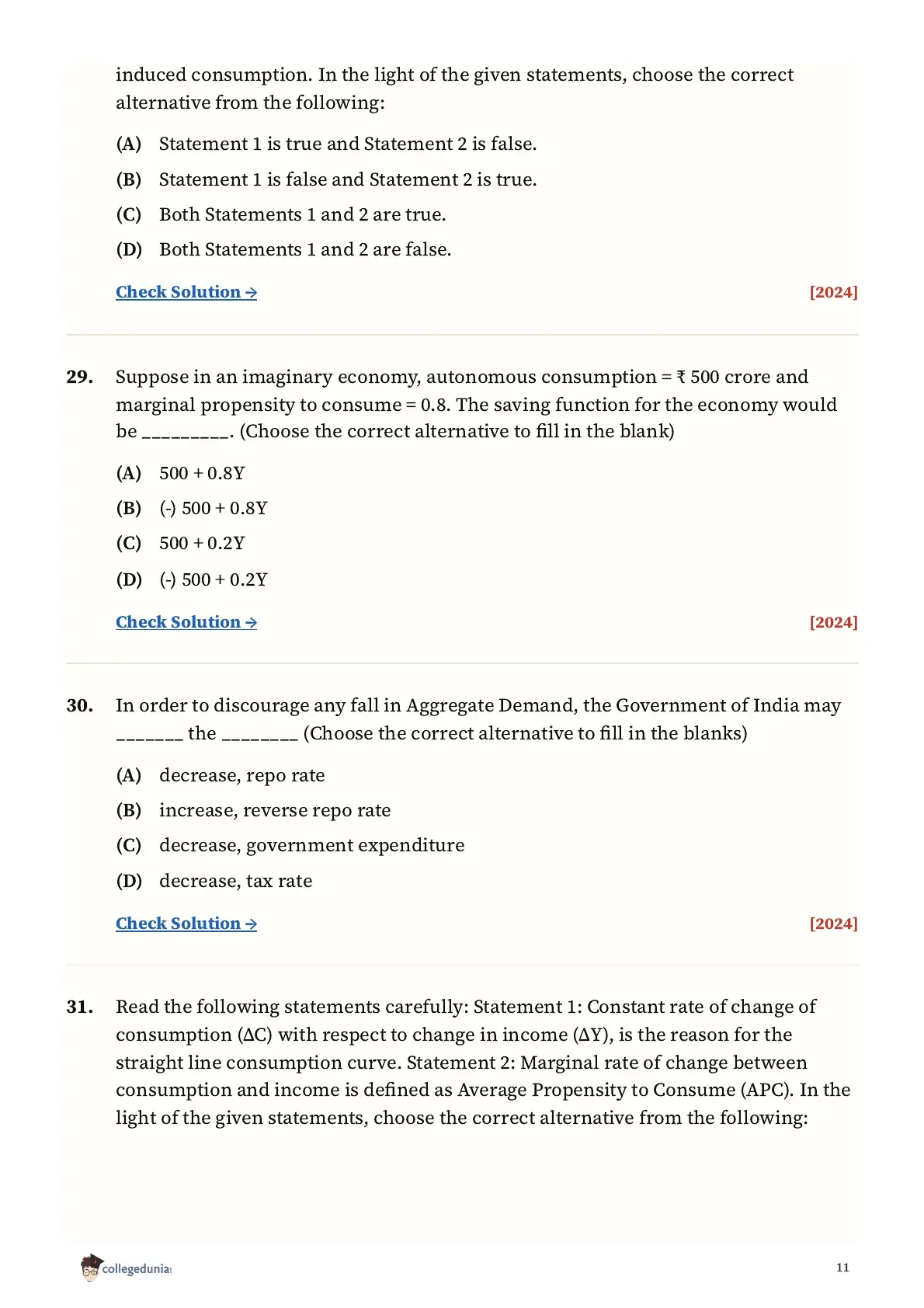
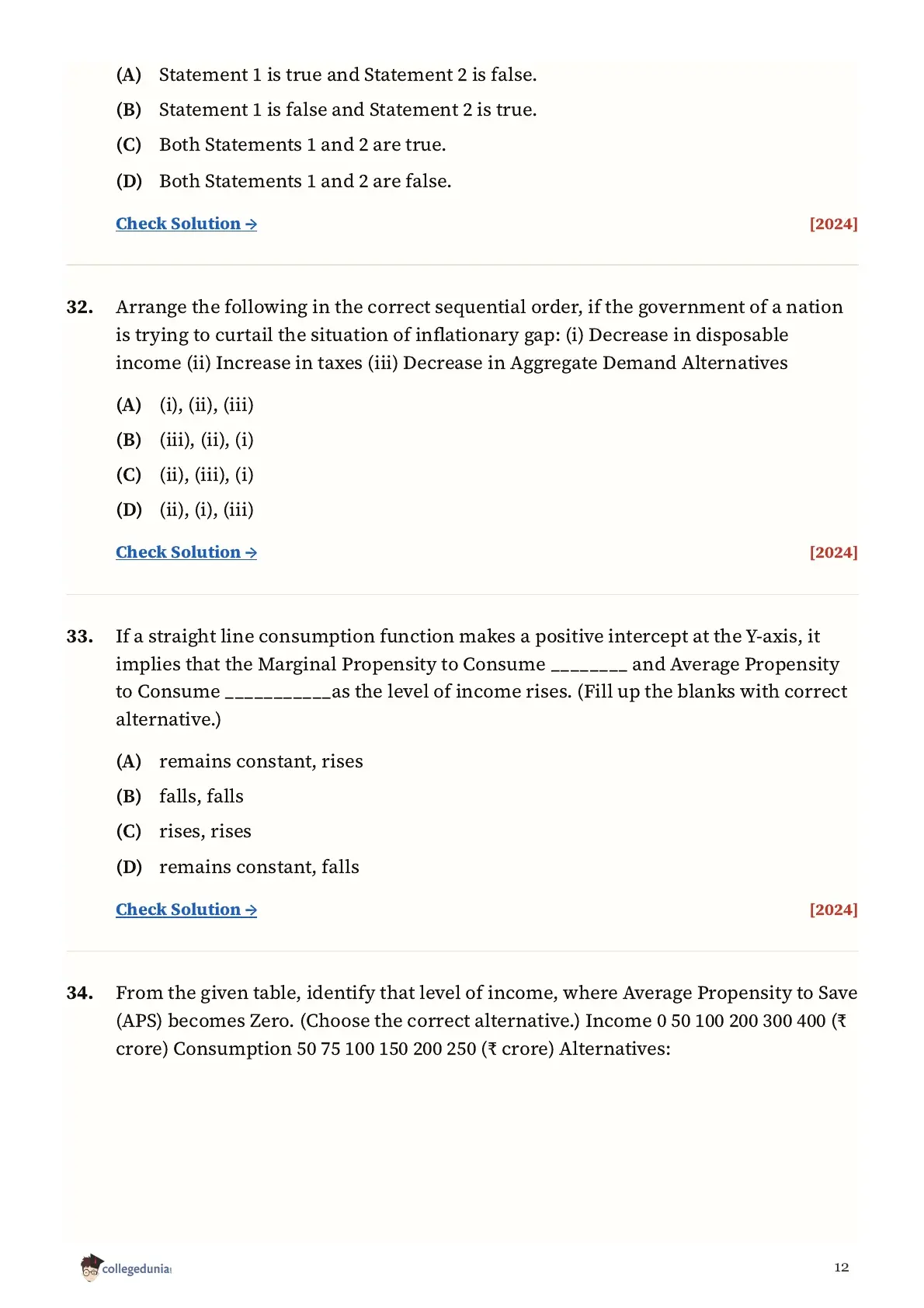
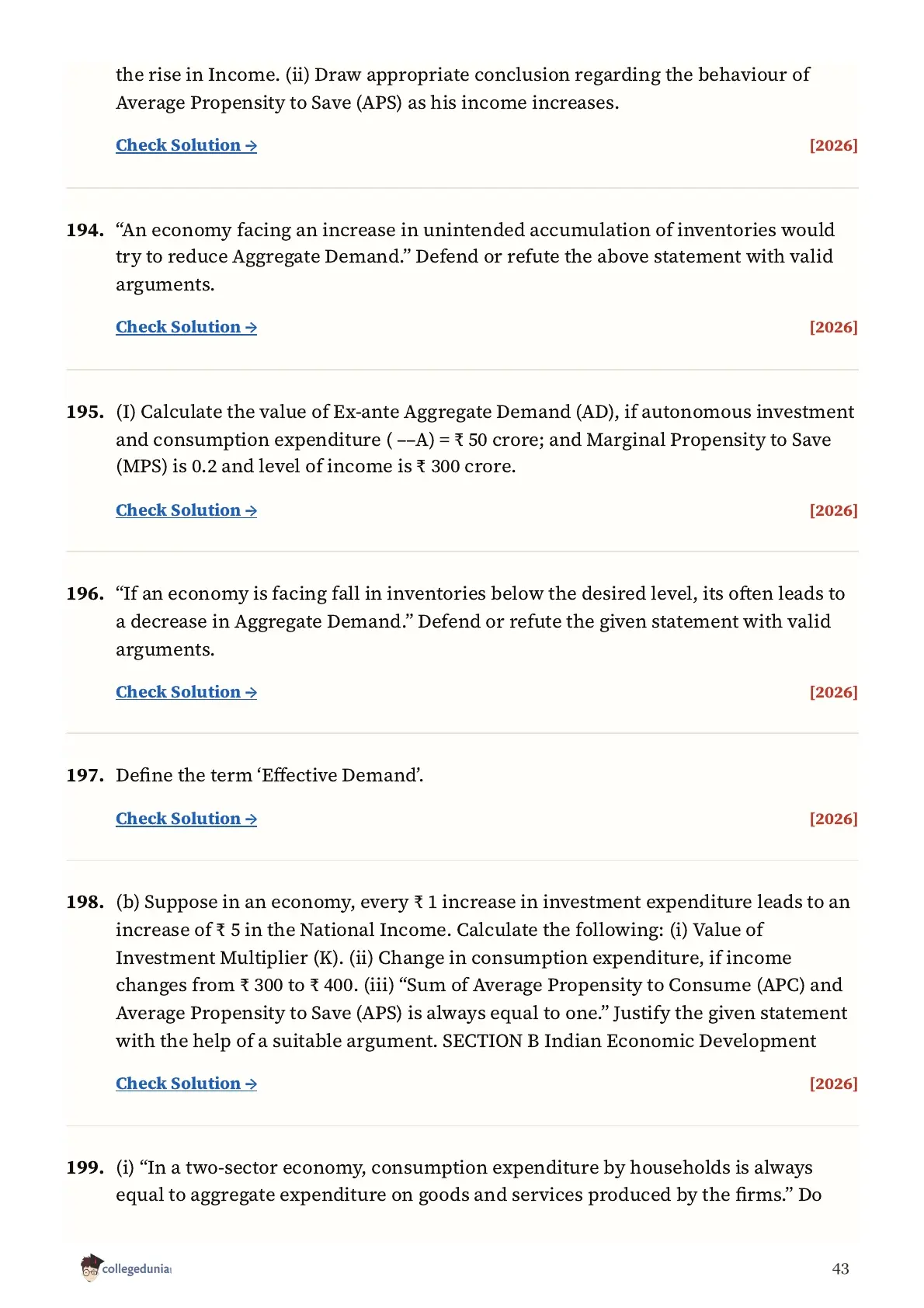
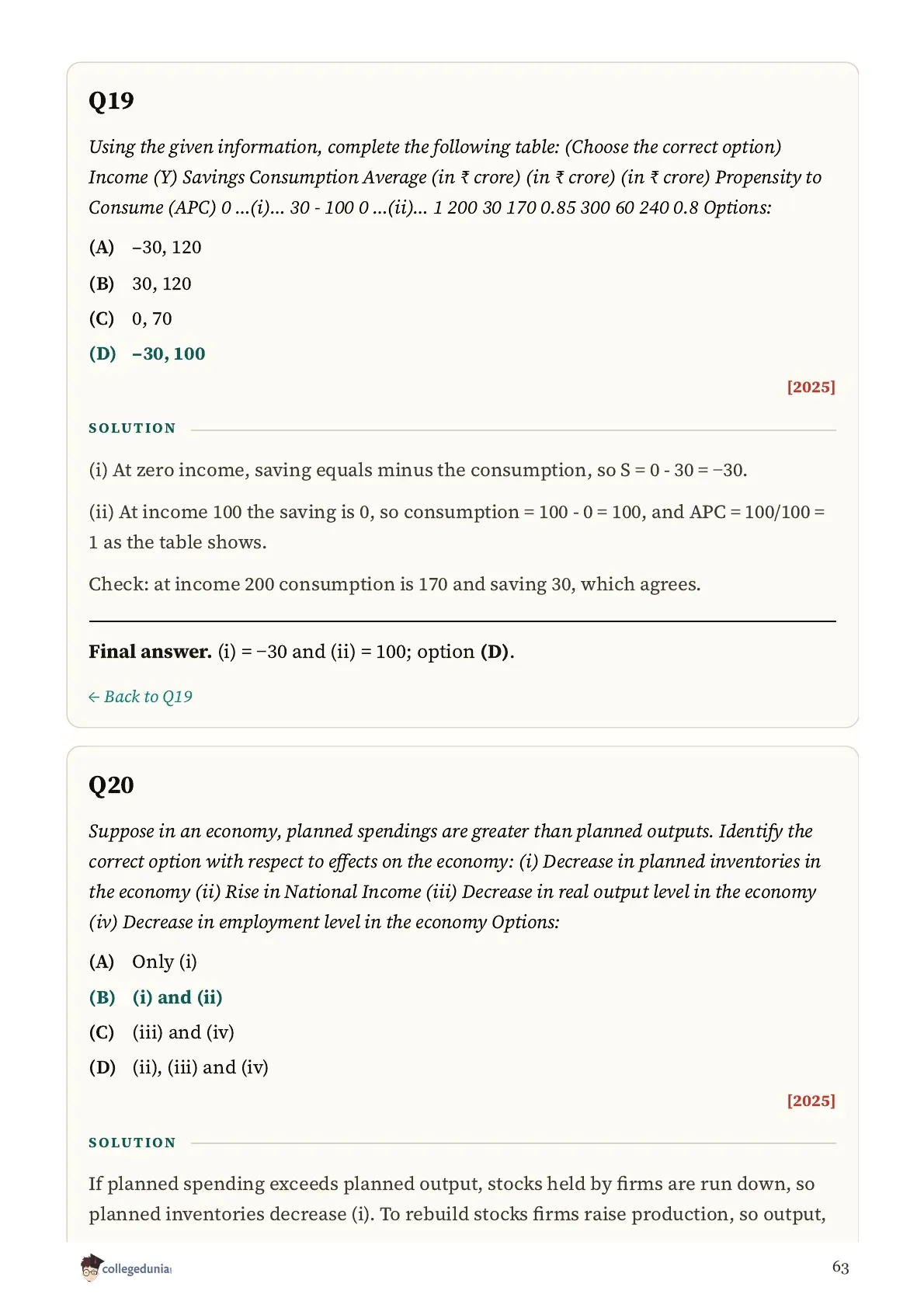
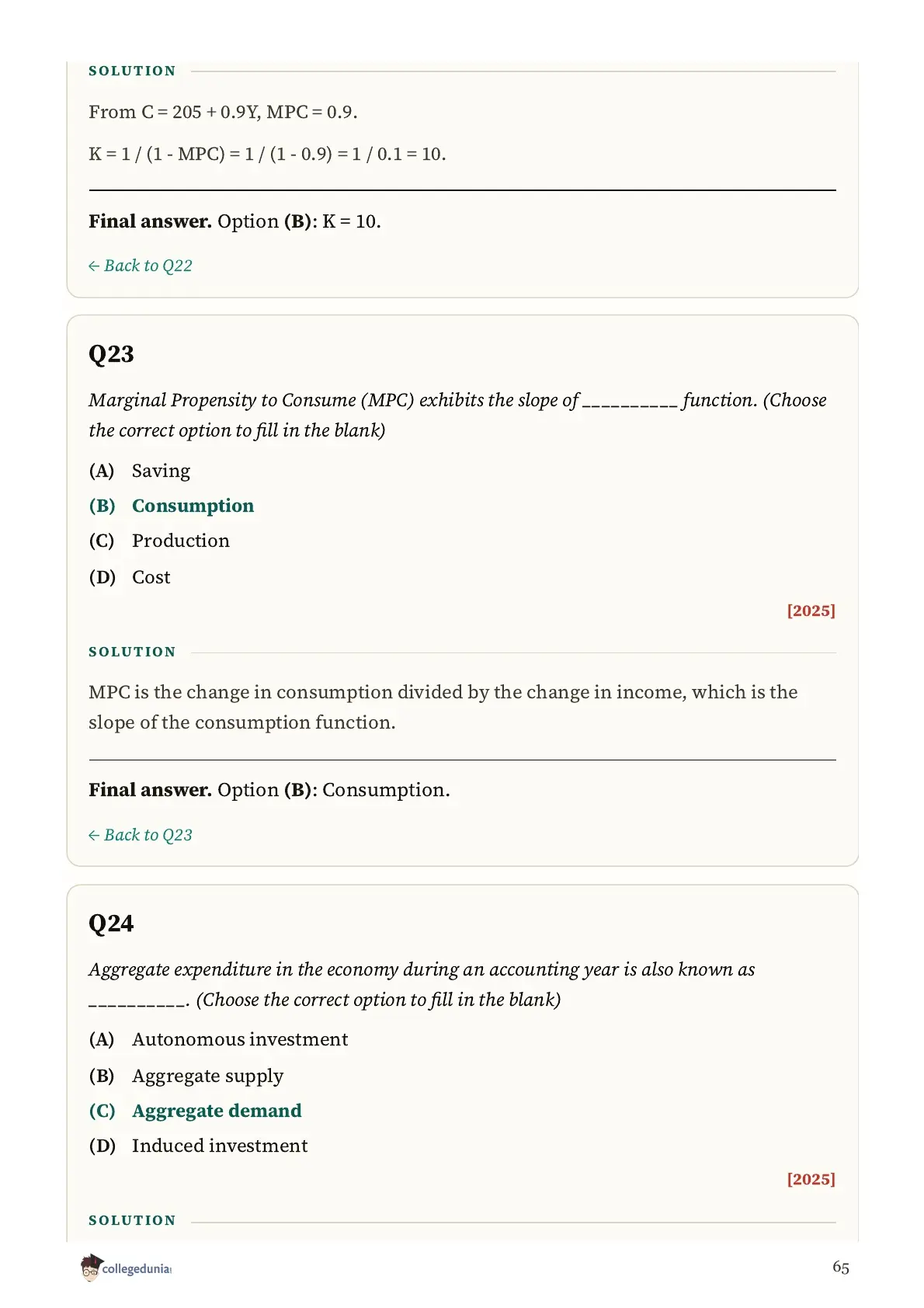
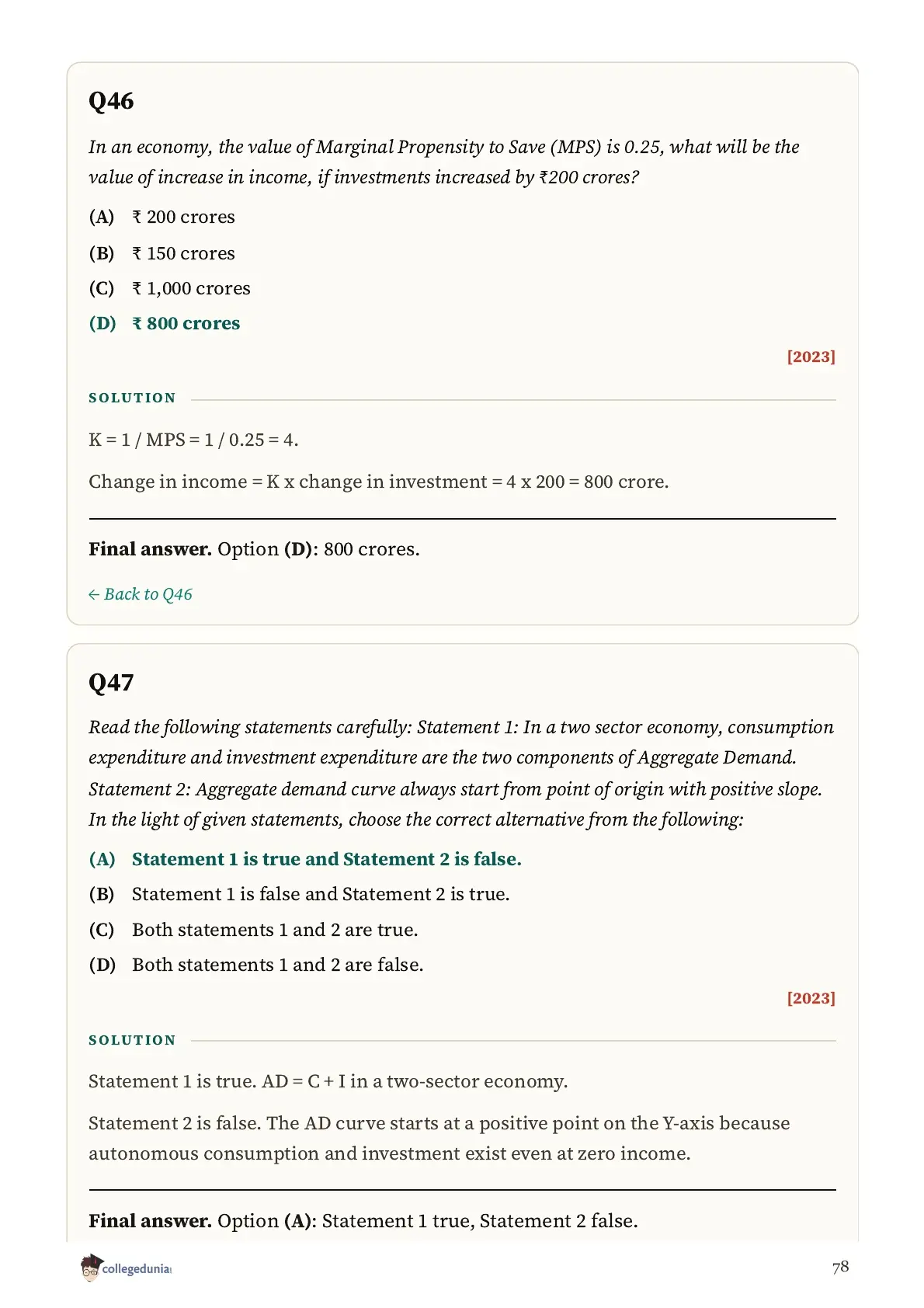
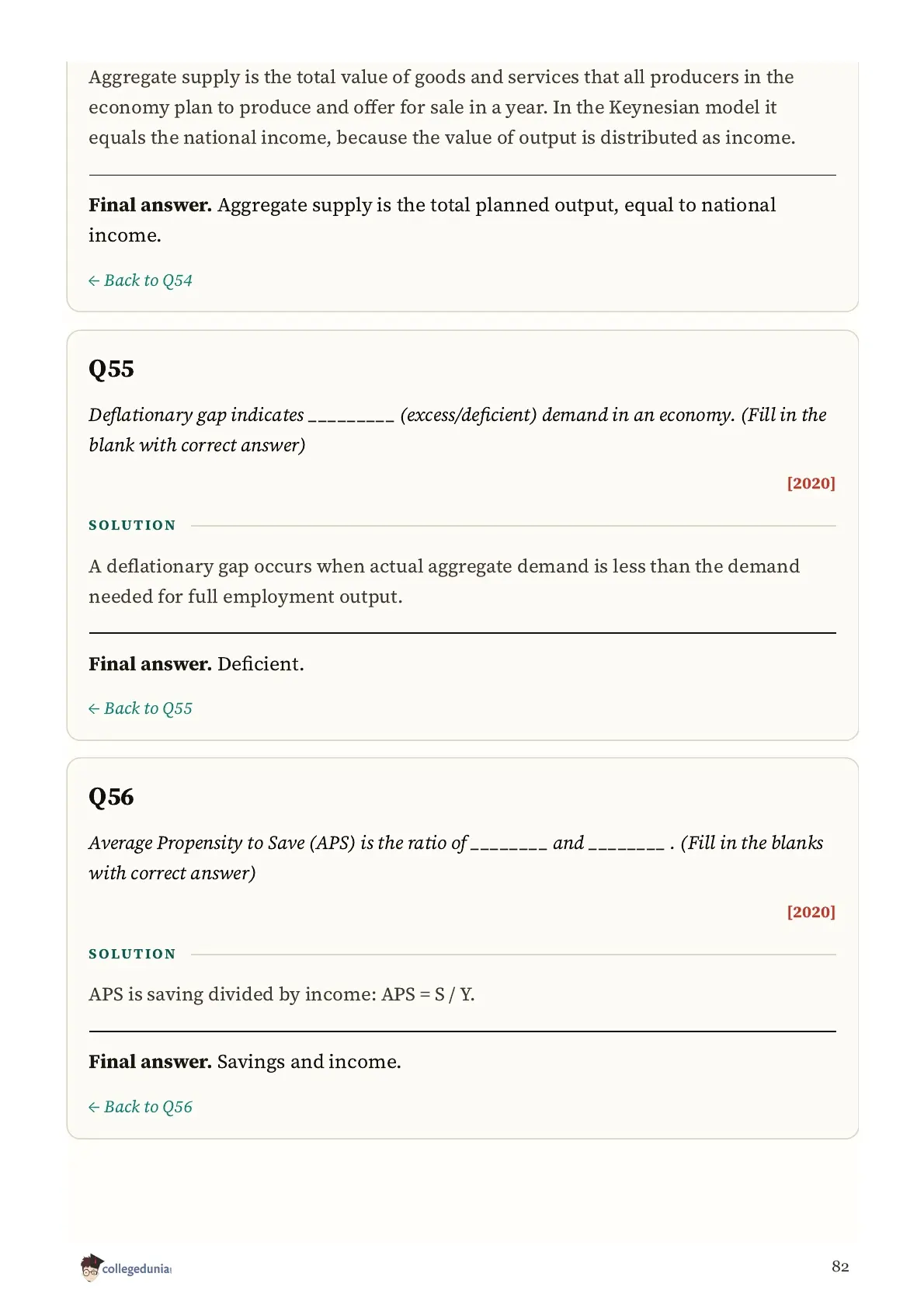
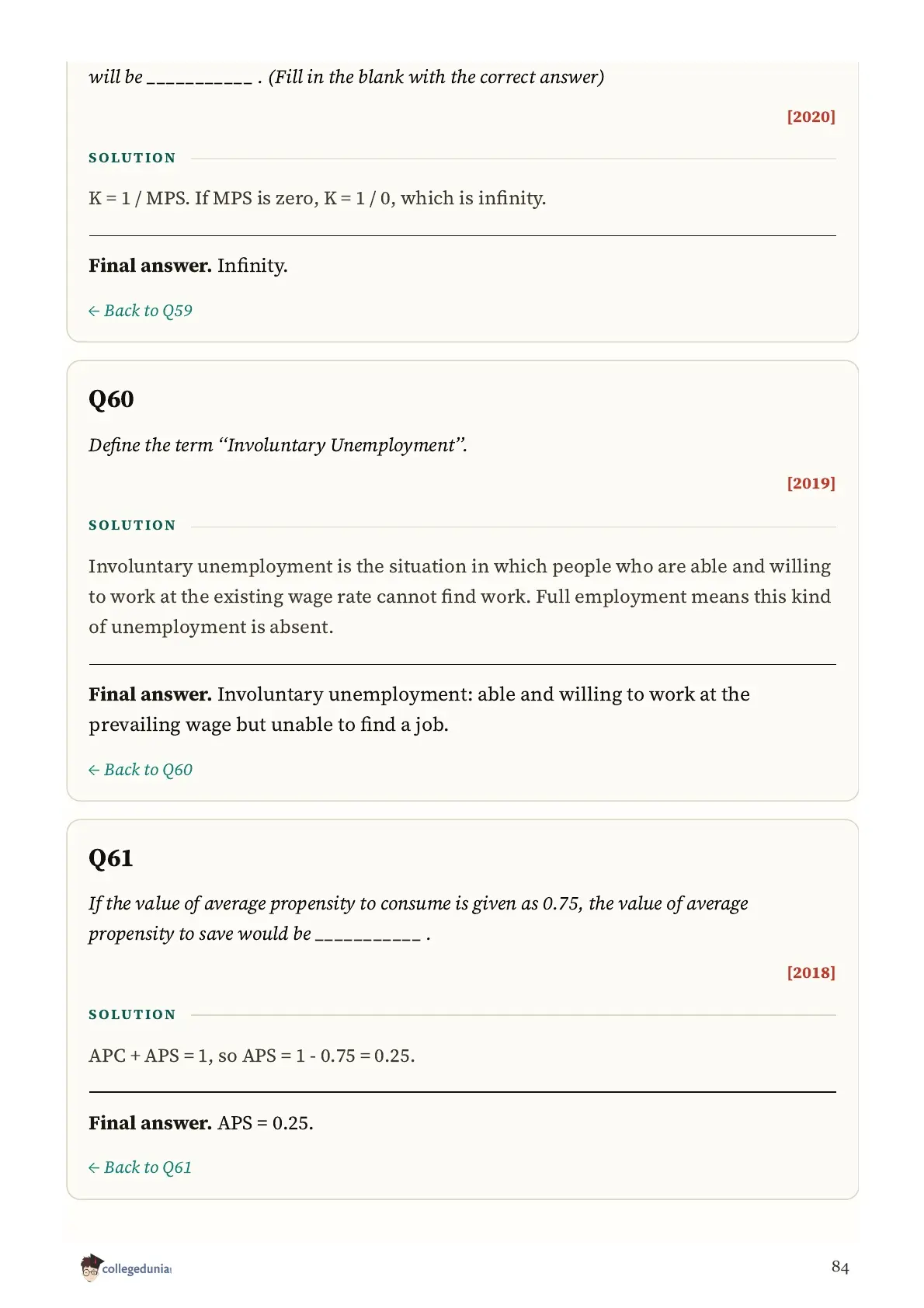
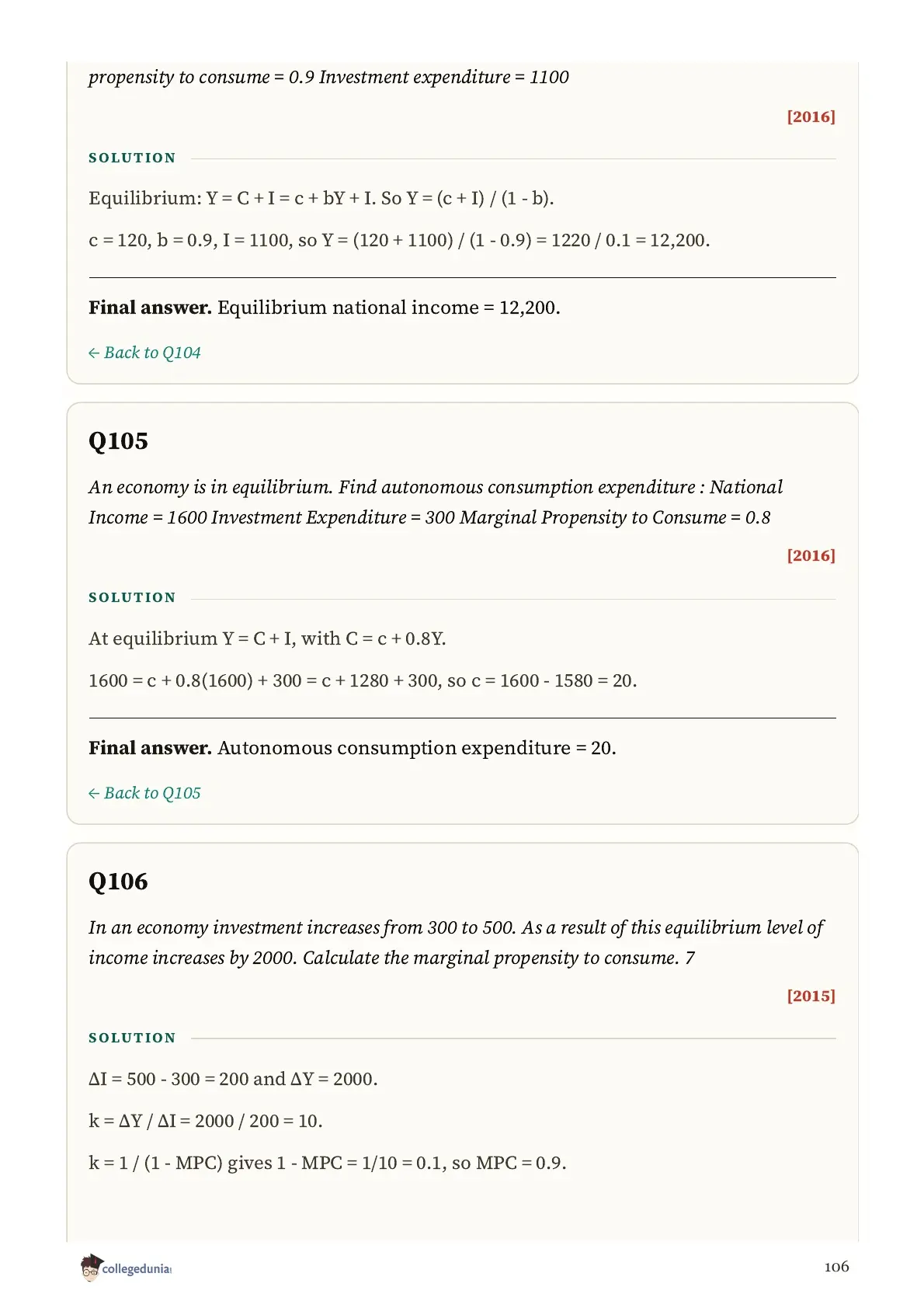
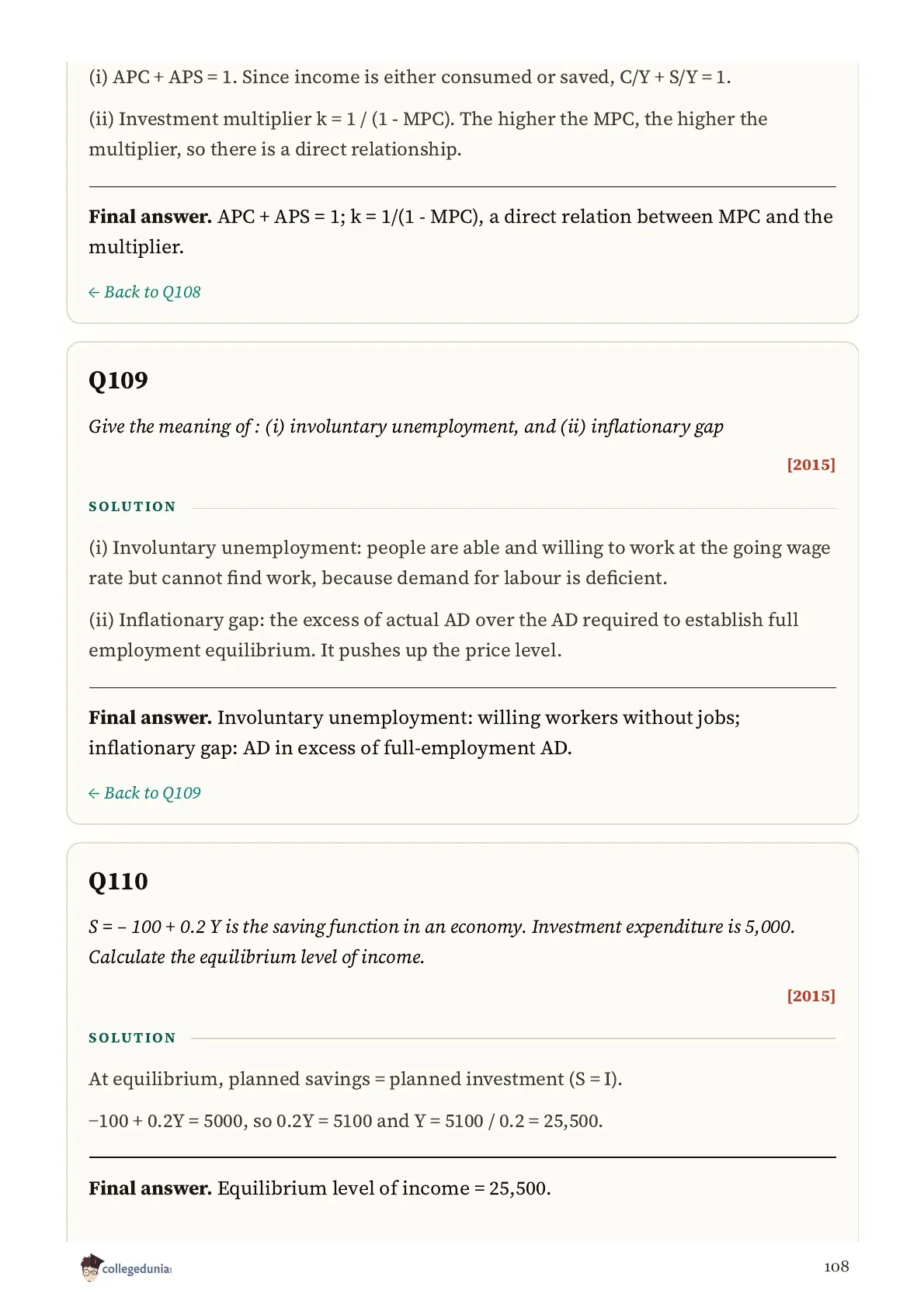
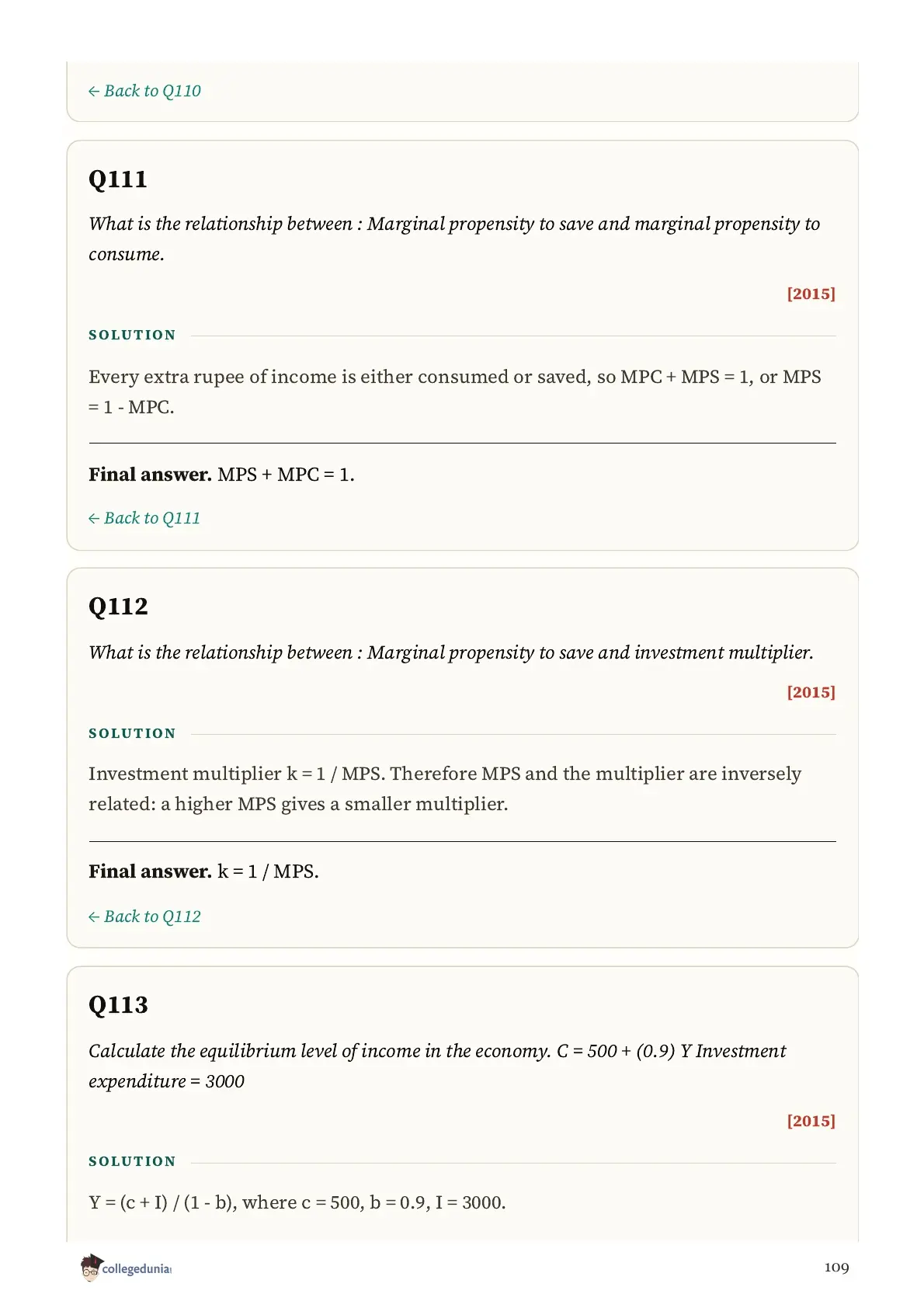
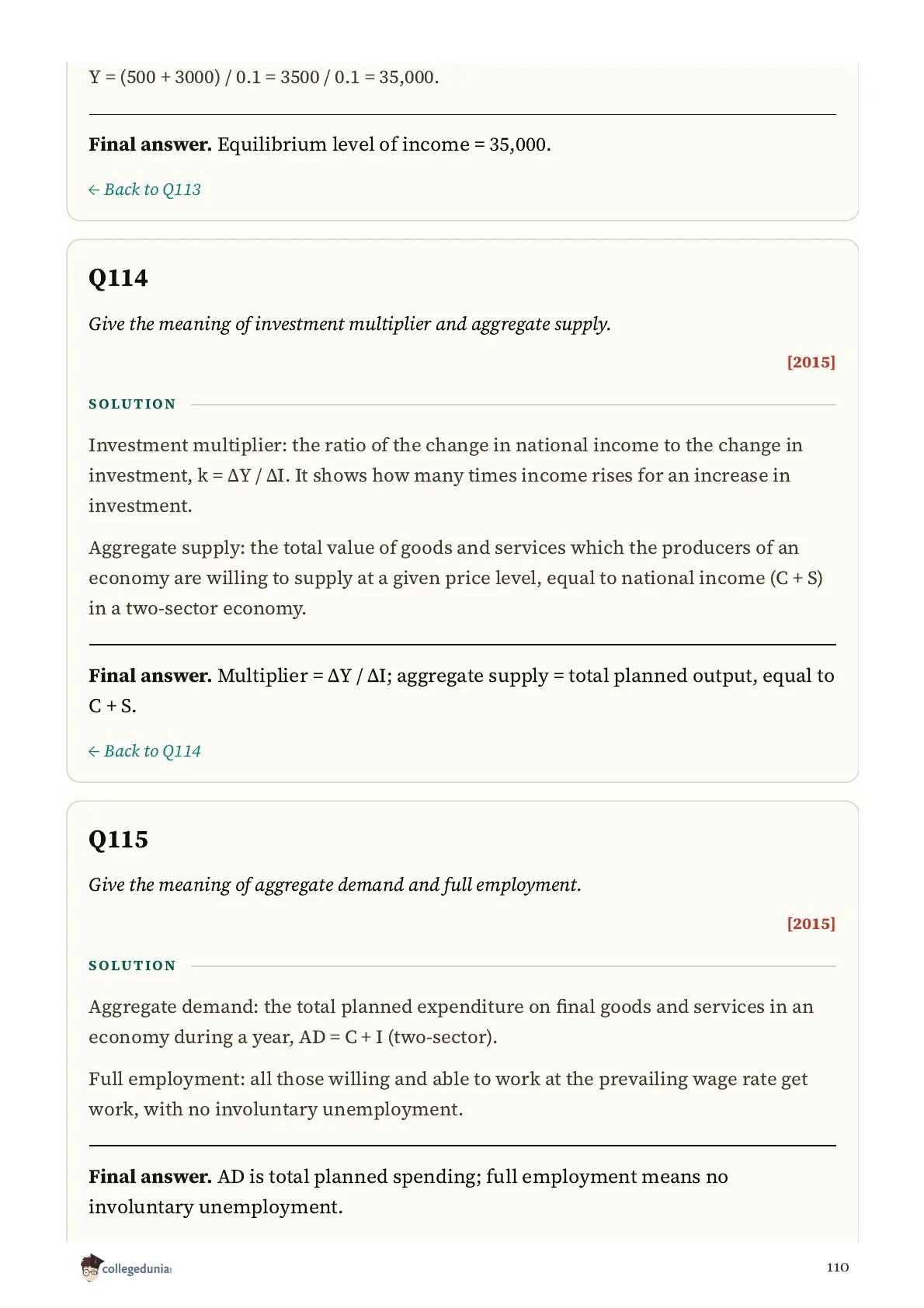
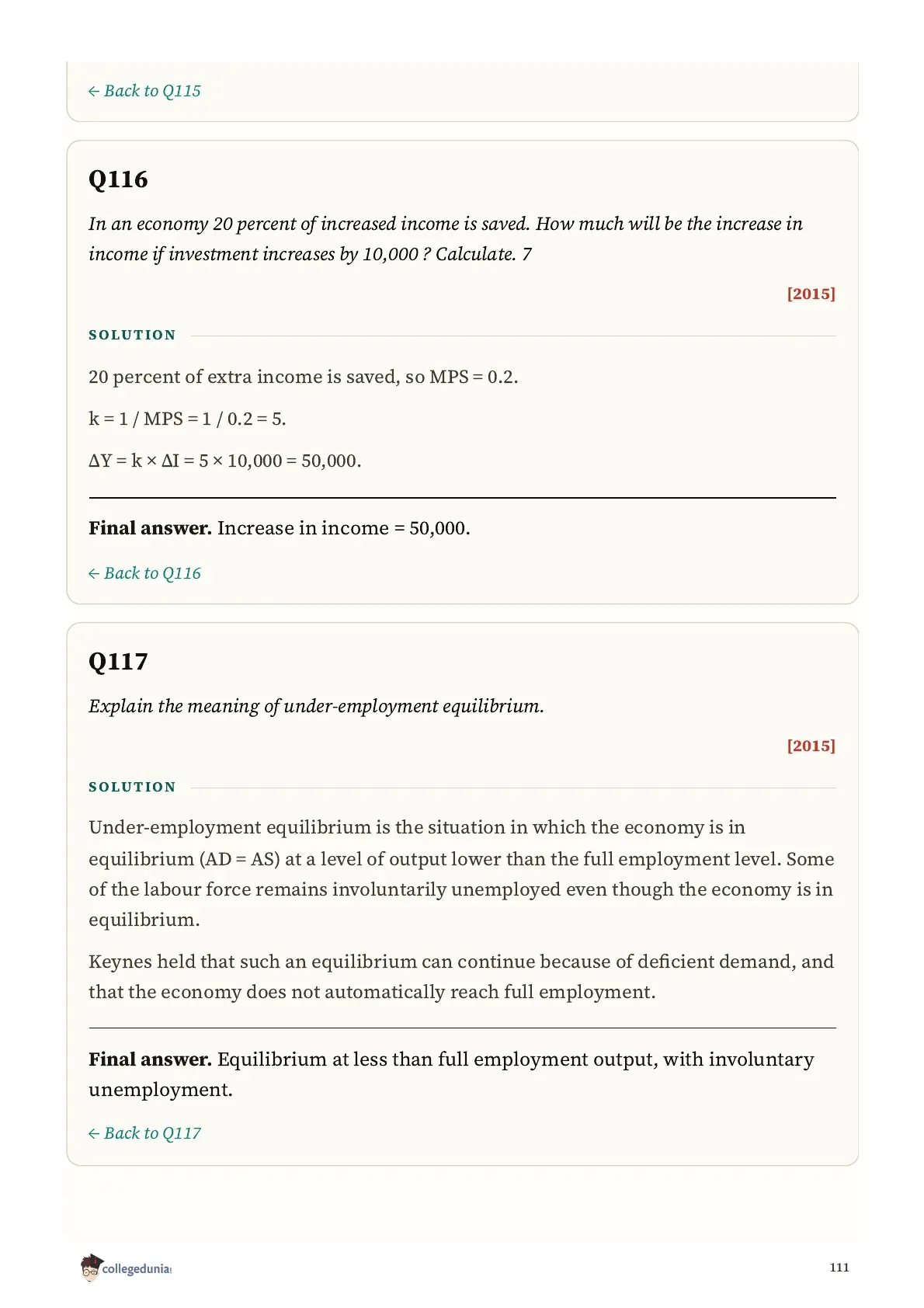
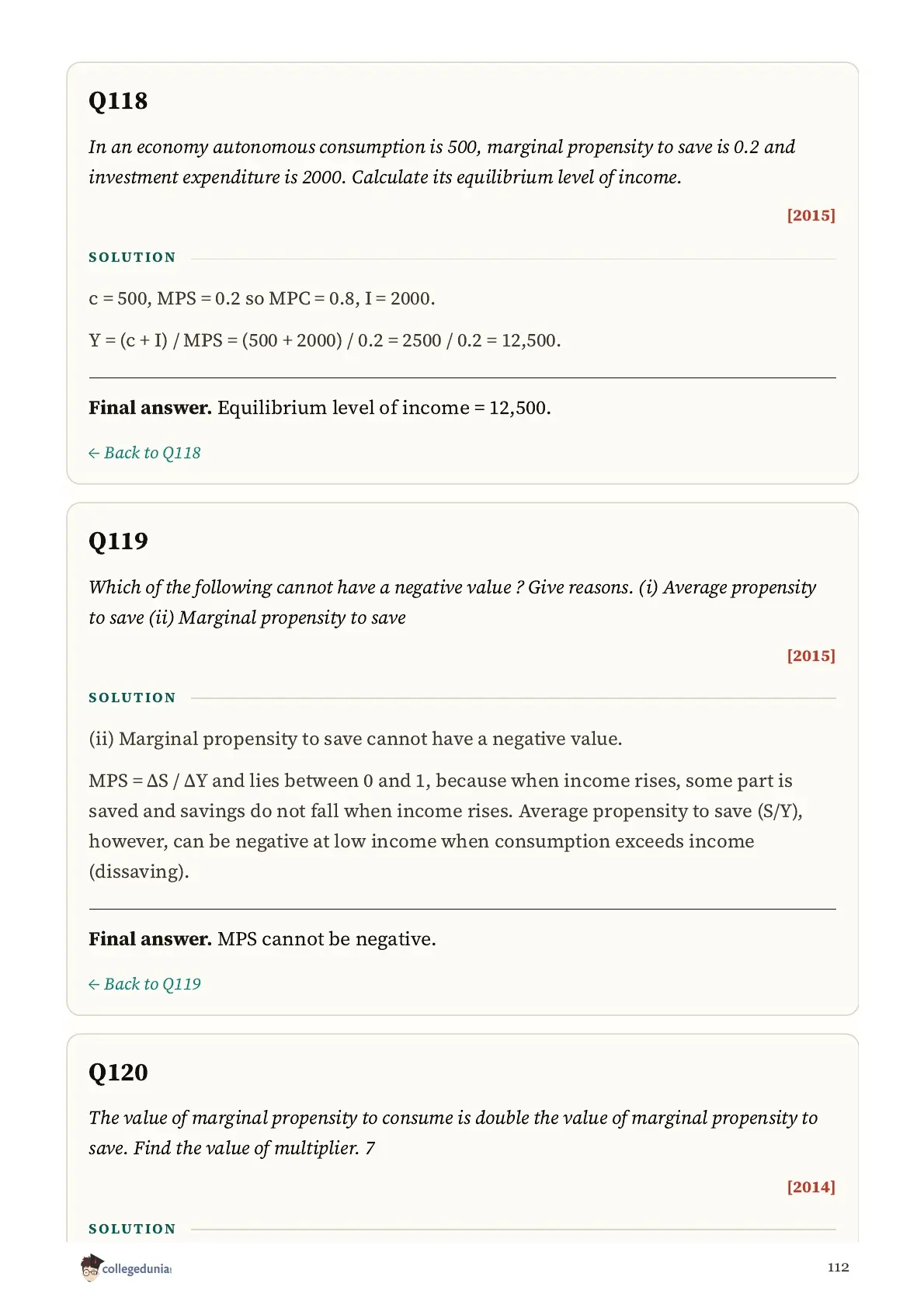
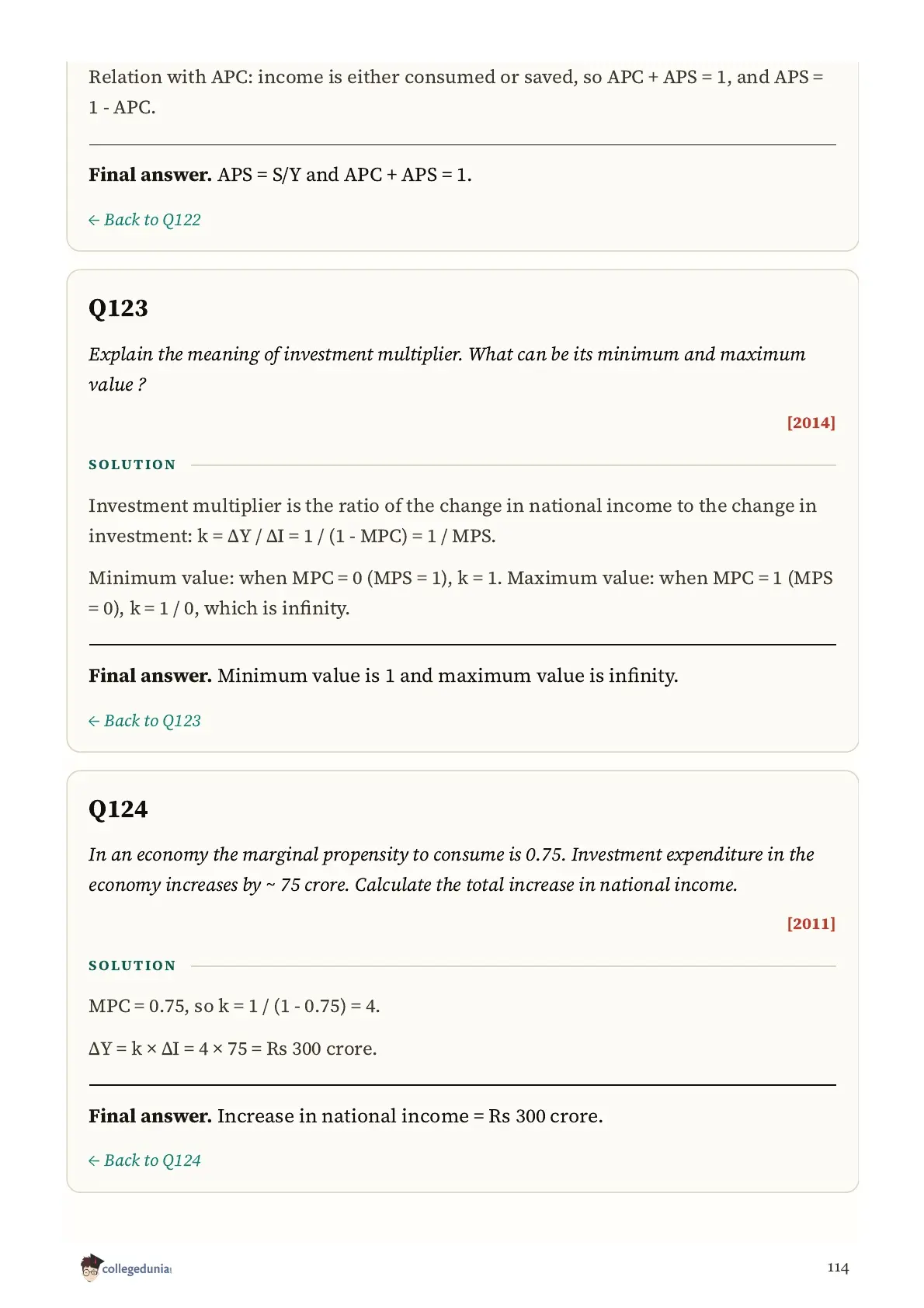
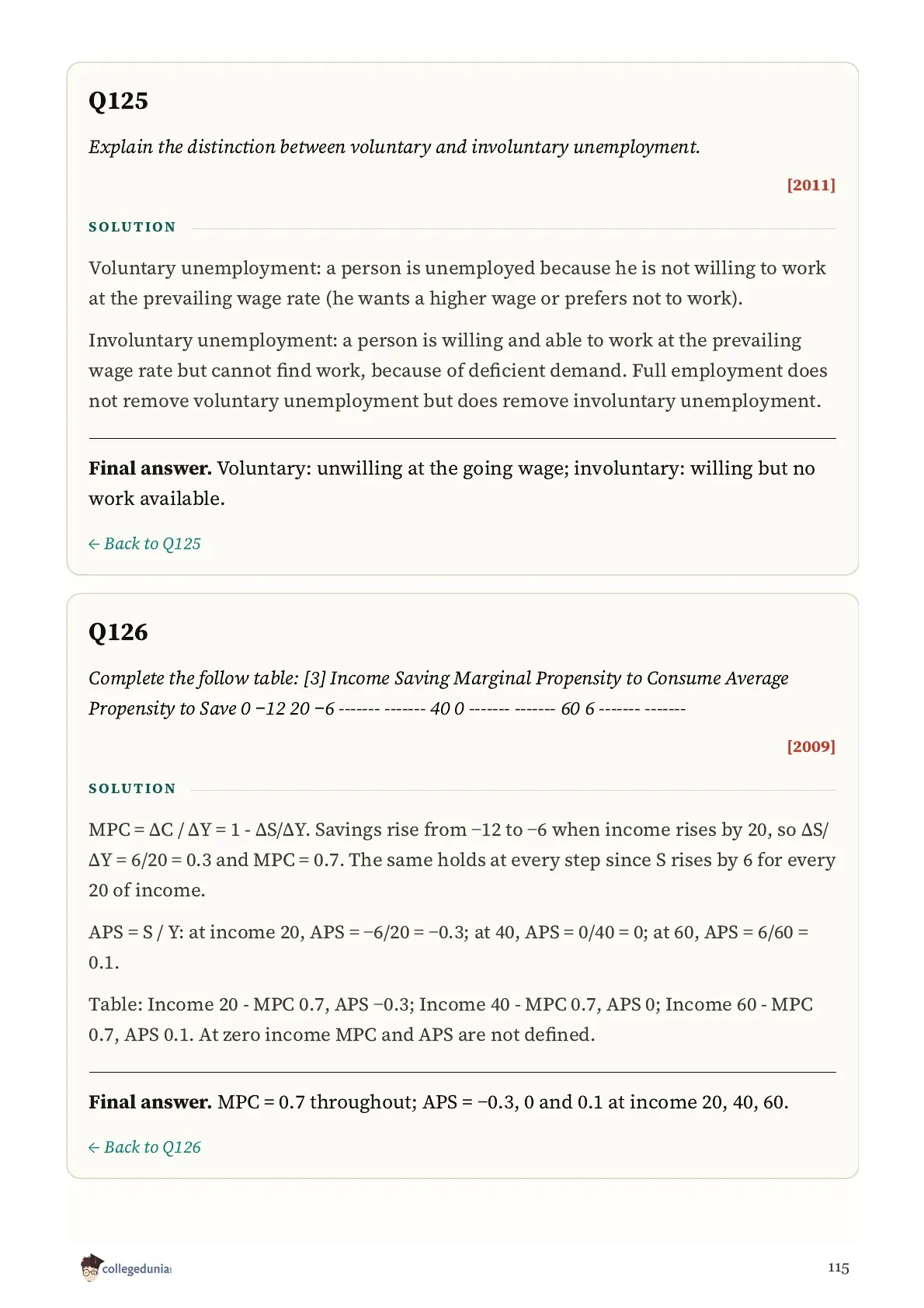
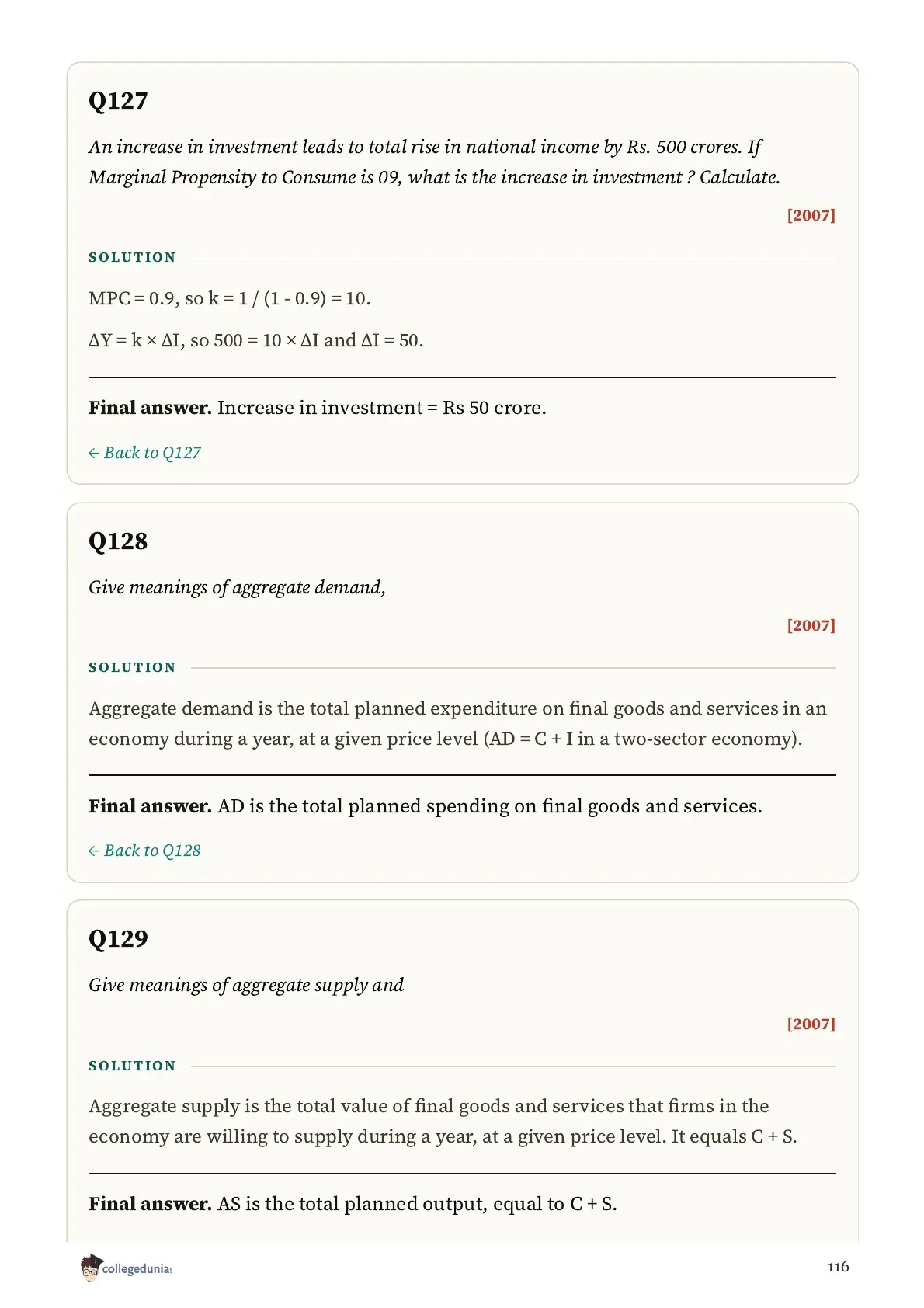
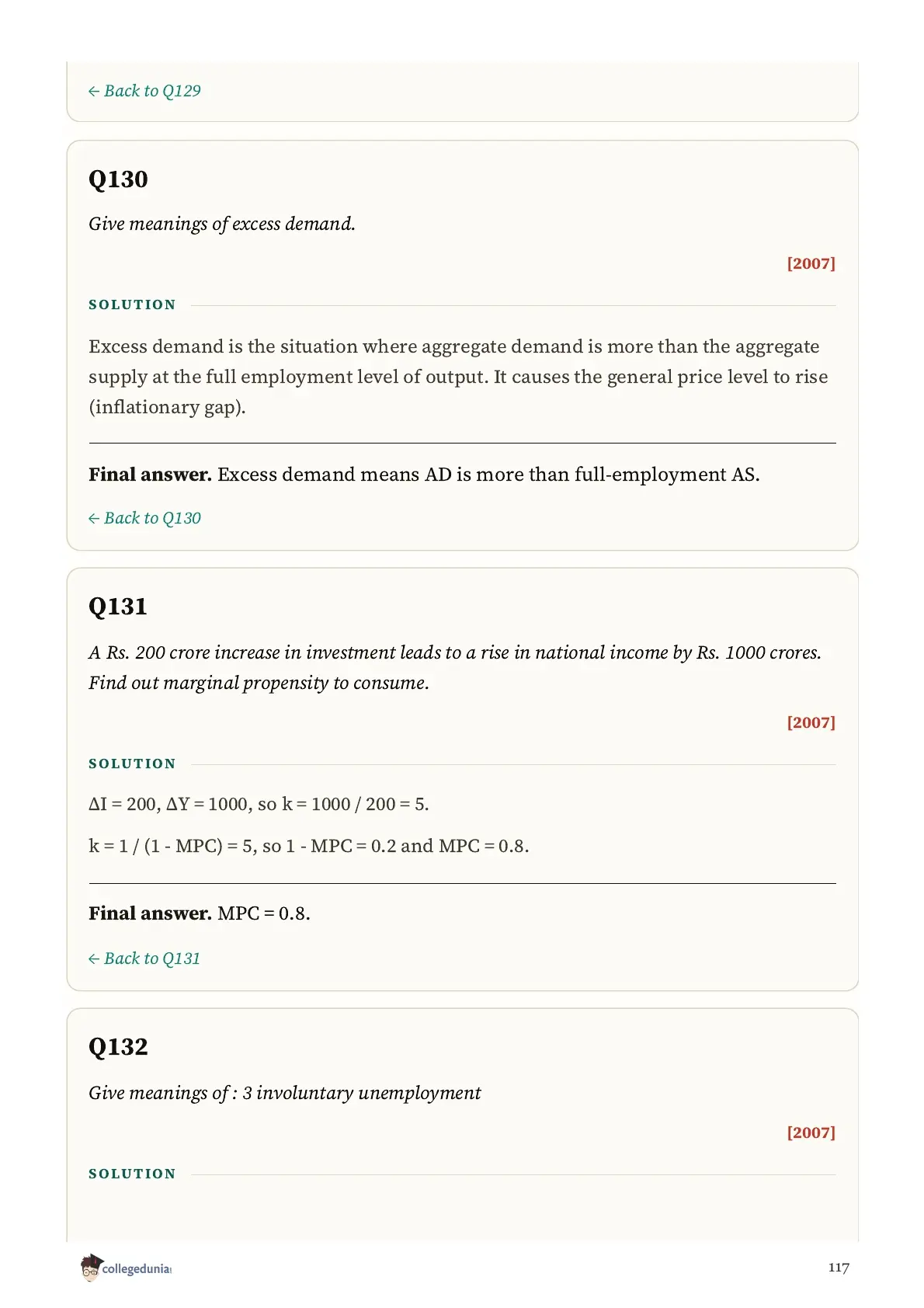
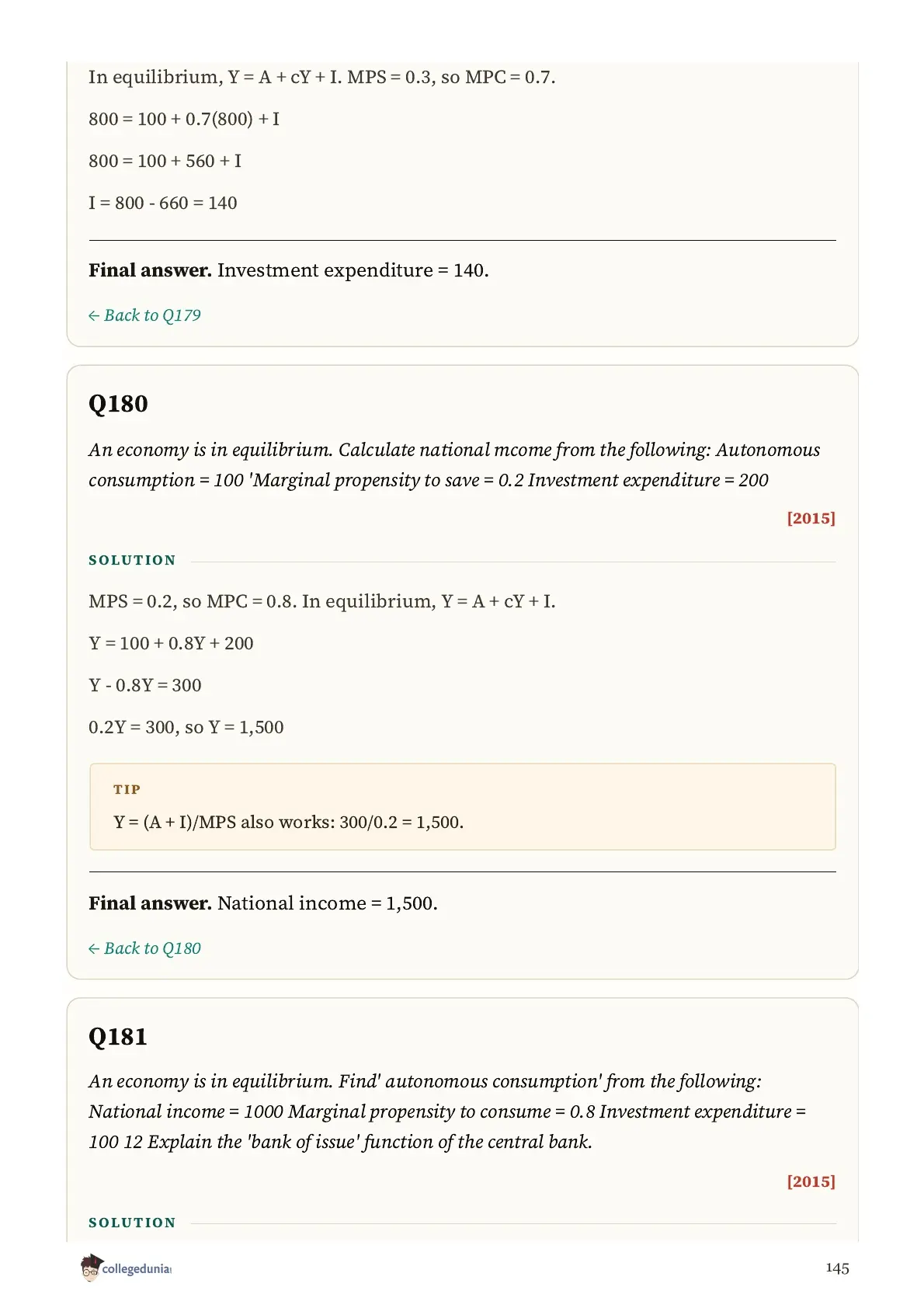
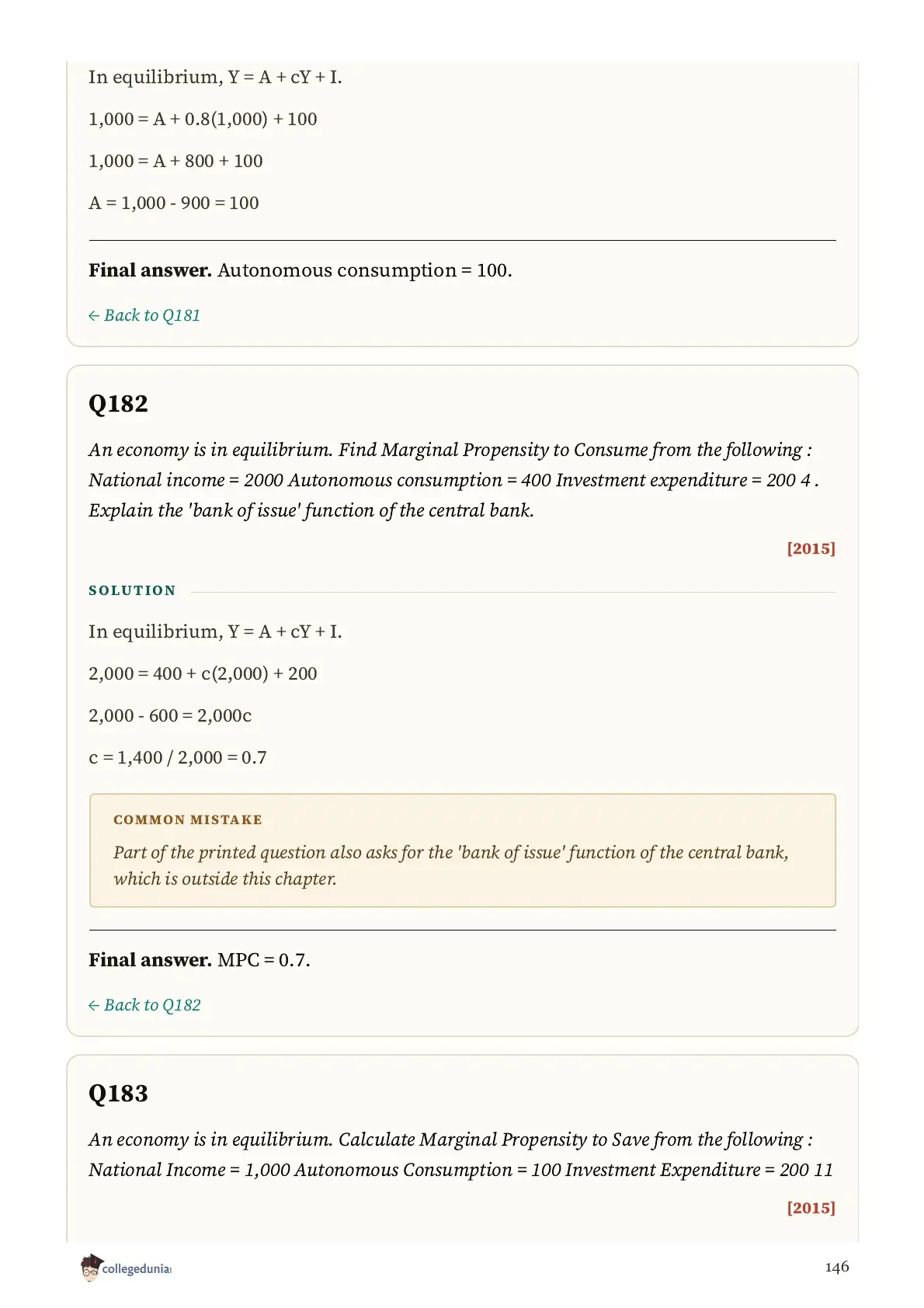
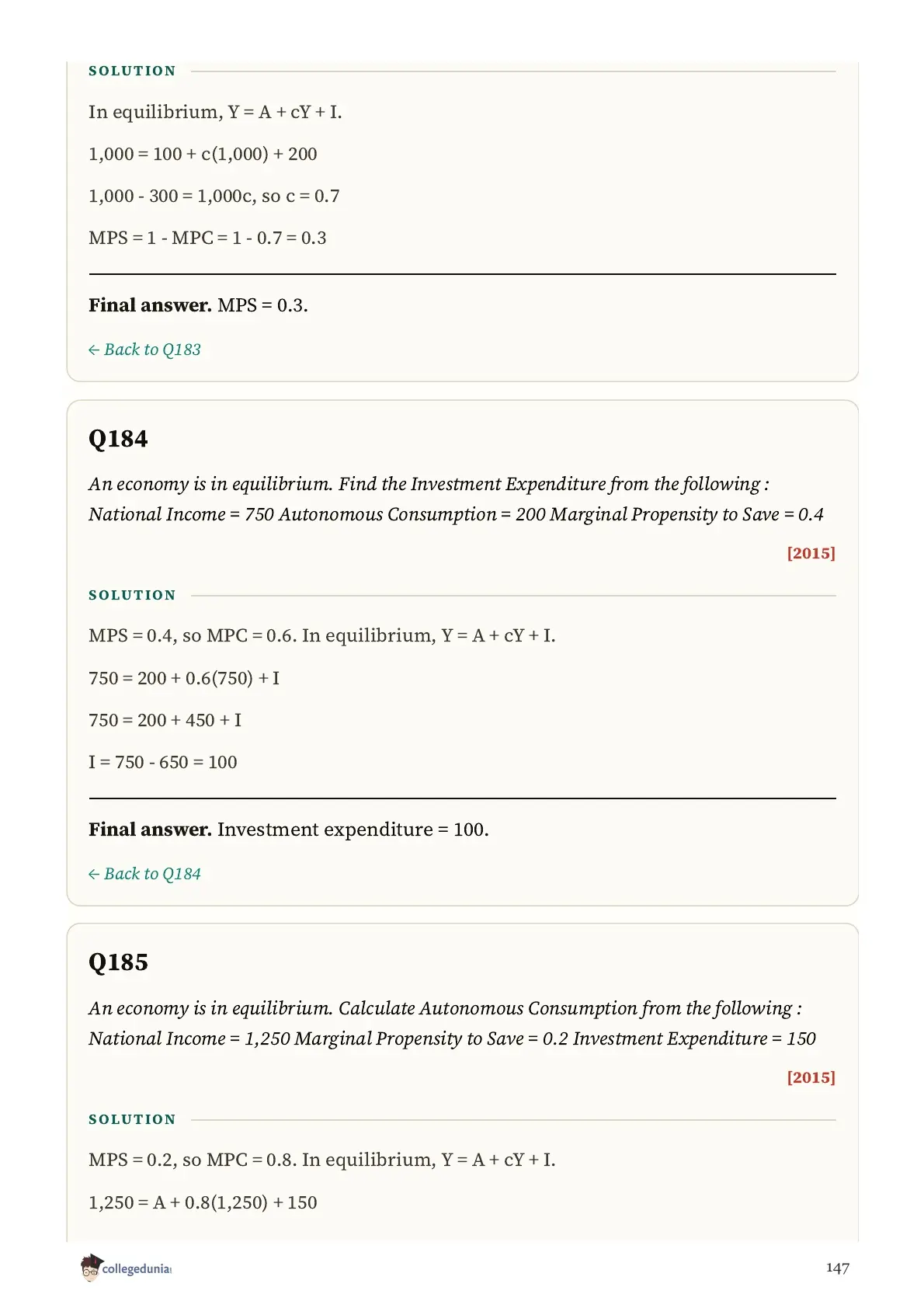
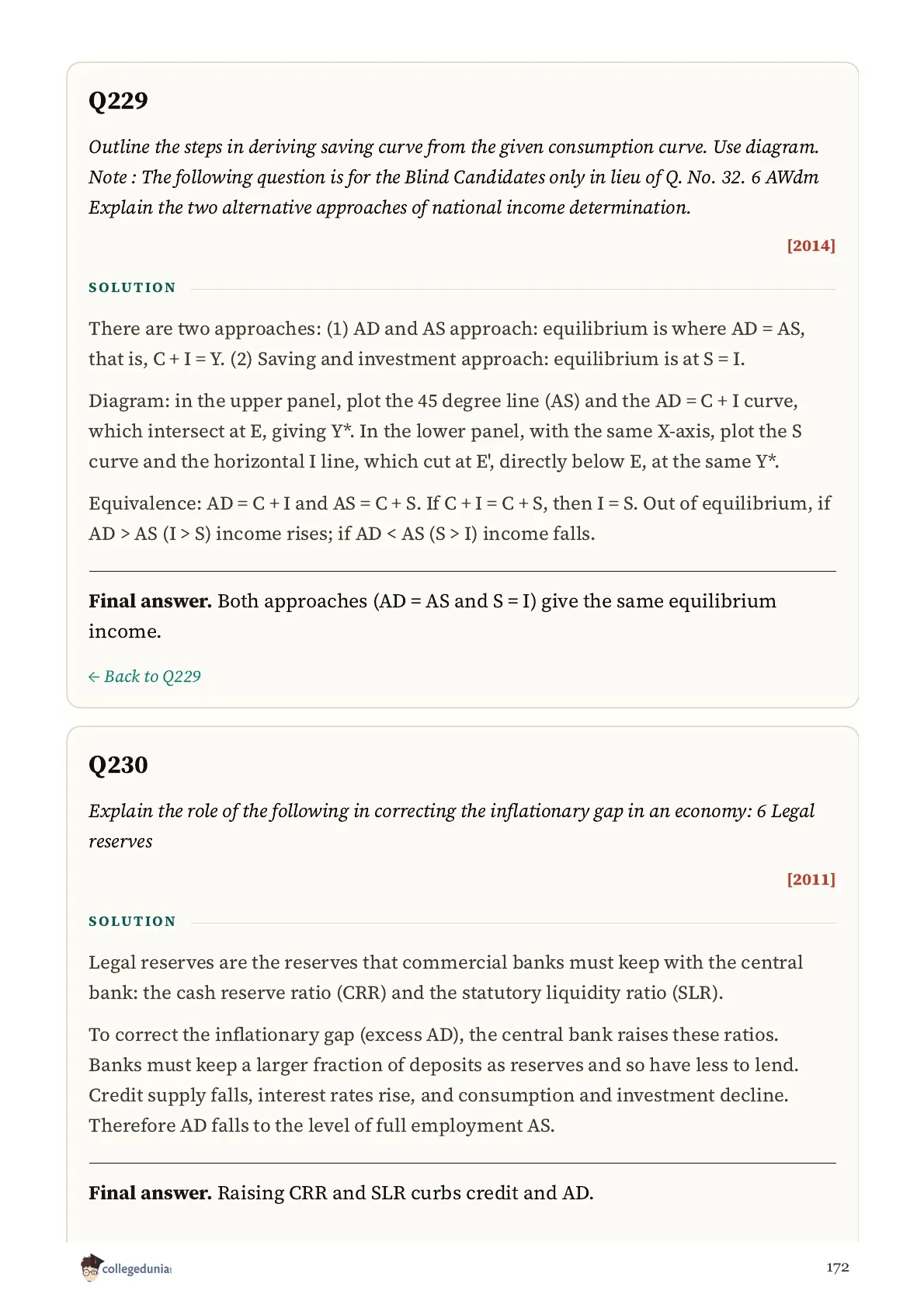
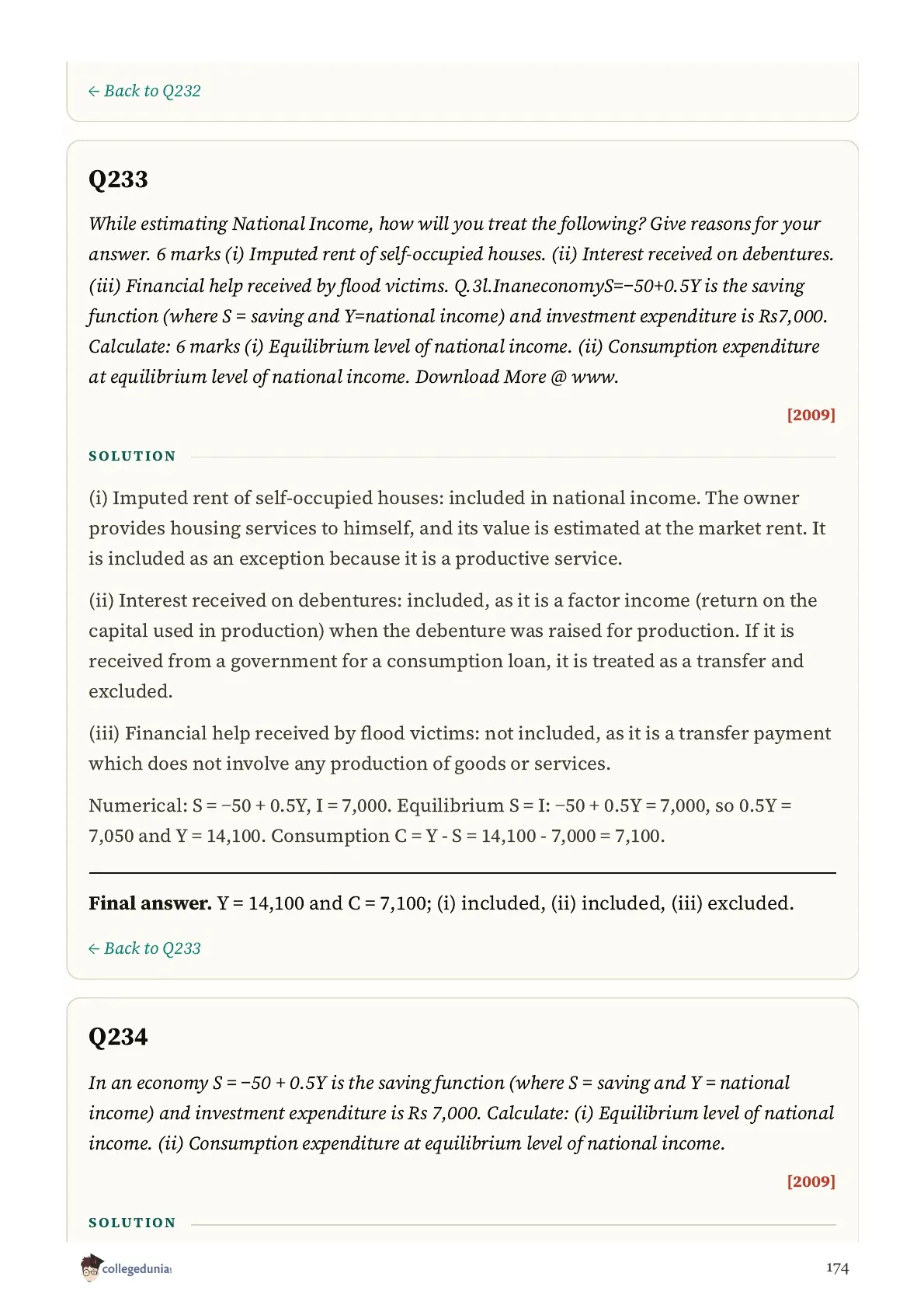
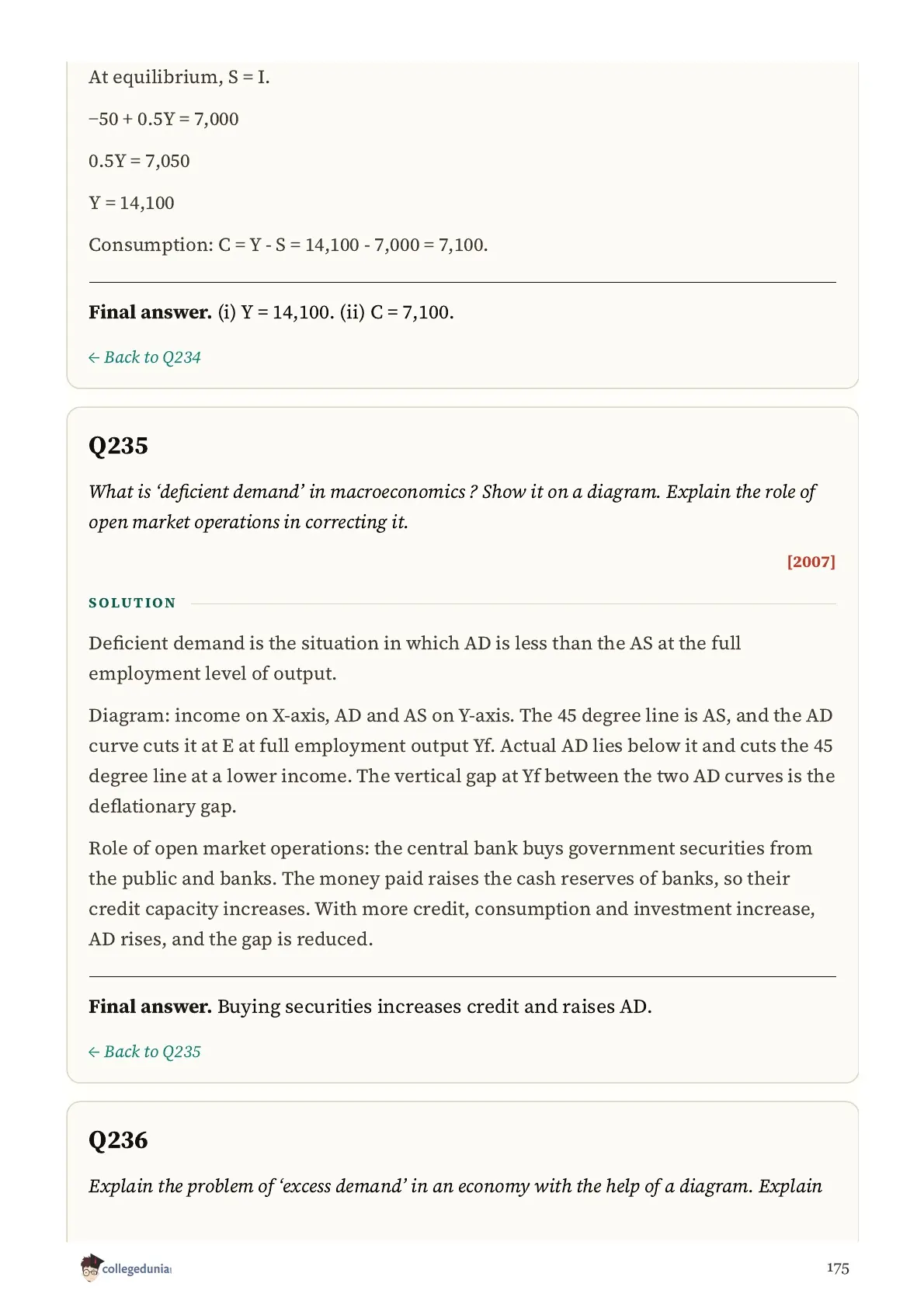
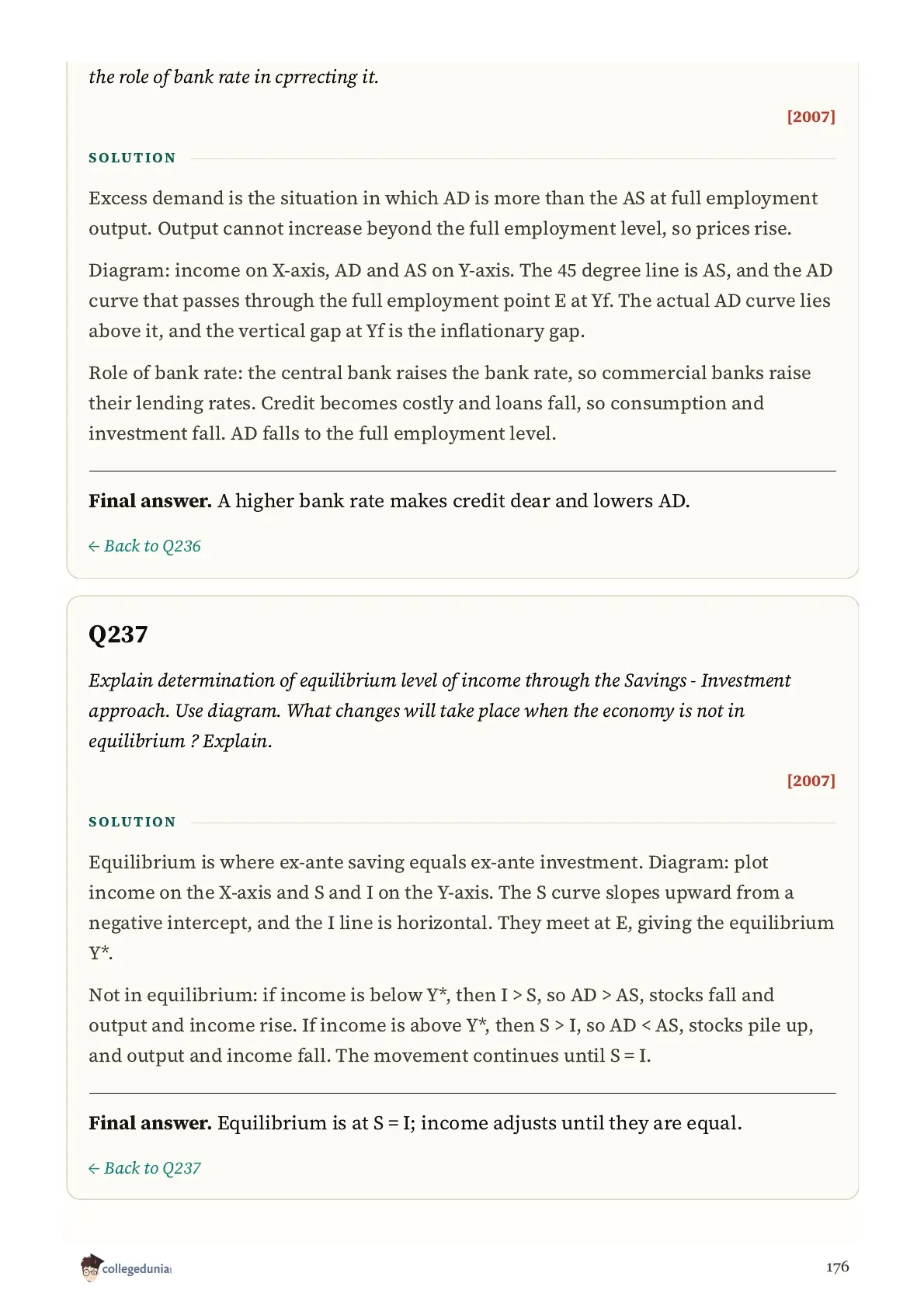
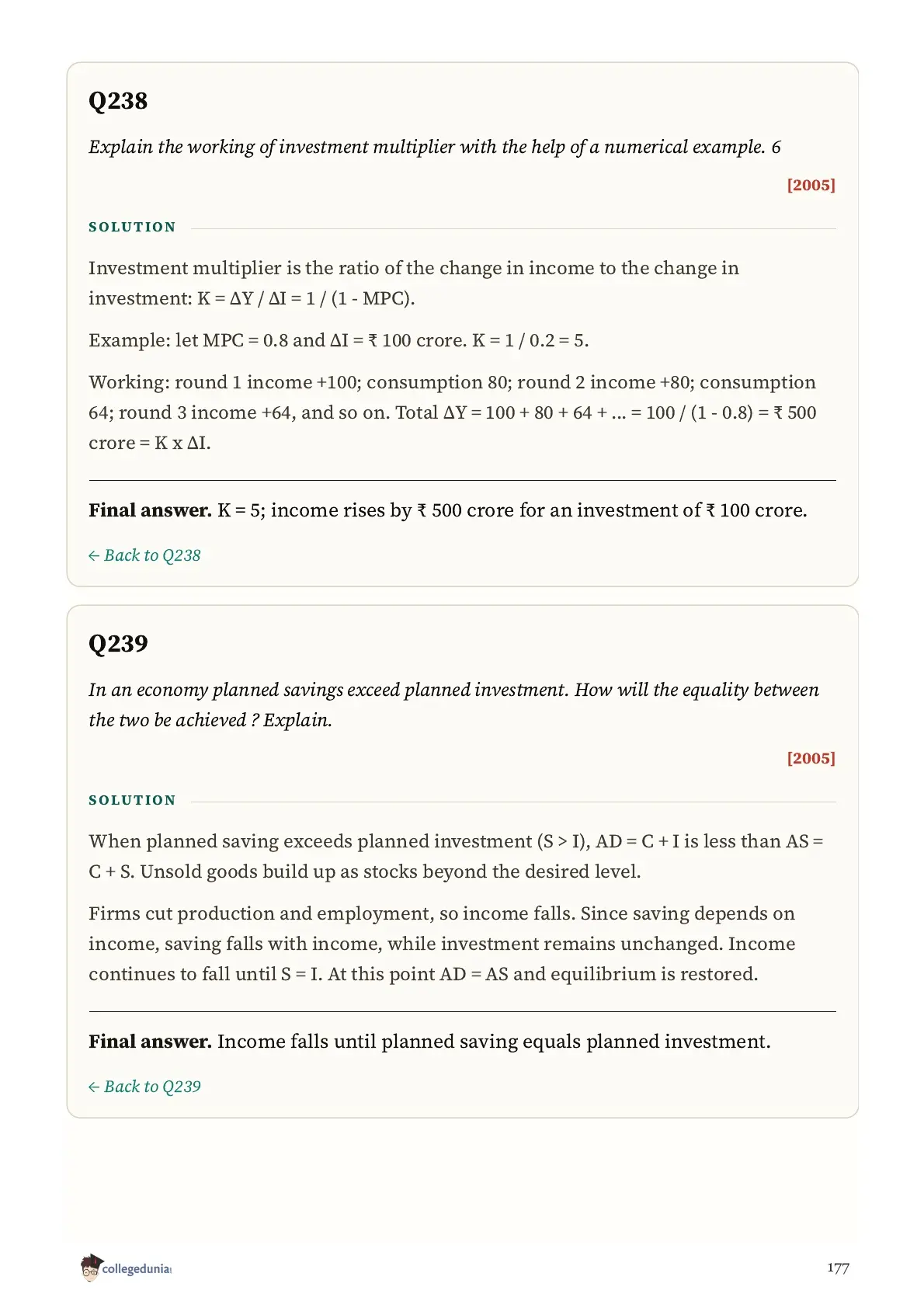
The consumption function with APC and MPC is the most repeated topic, with 83 questions, followed by equilibrium income and aggregate demand and supply with 79. 58 questions are on the saving function, APS and MPS, and 31 are on the investment multiplier. Many of these are the same question in different numbers: given MPC or MPS and a rise in investment, find the rise in income.
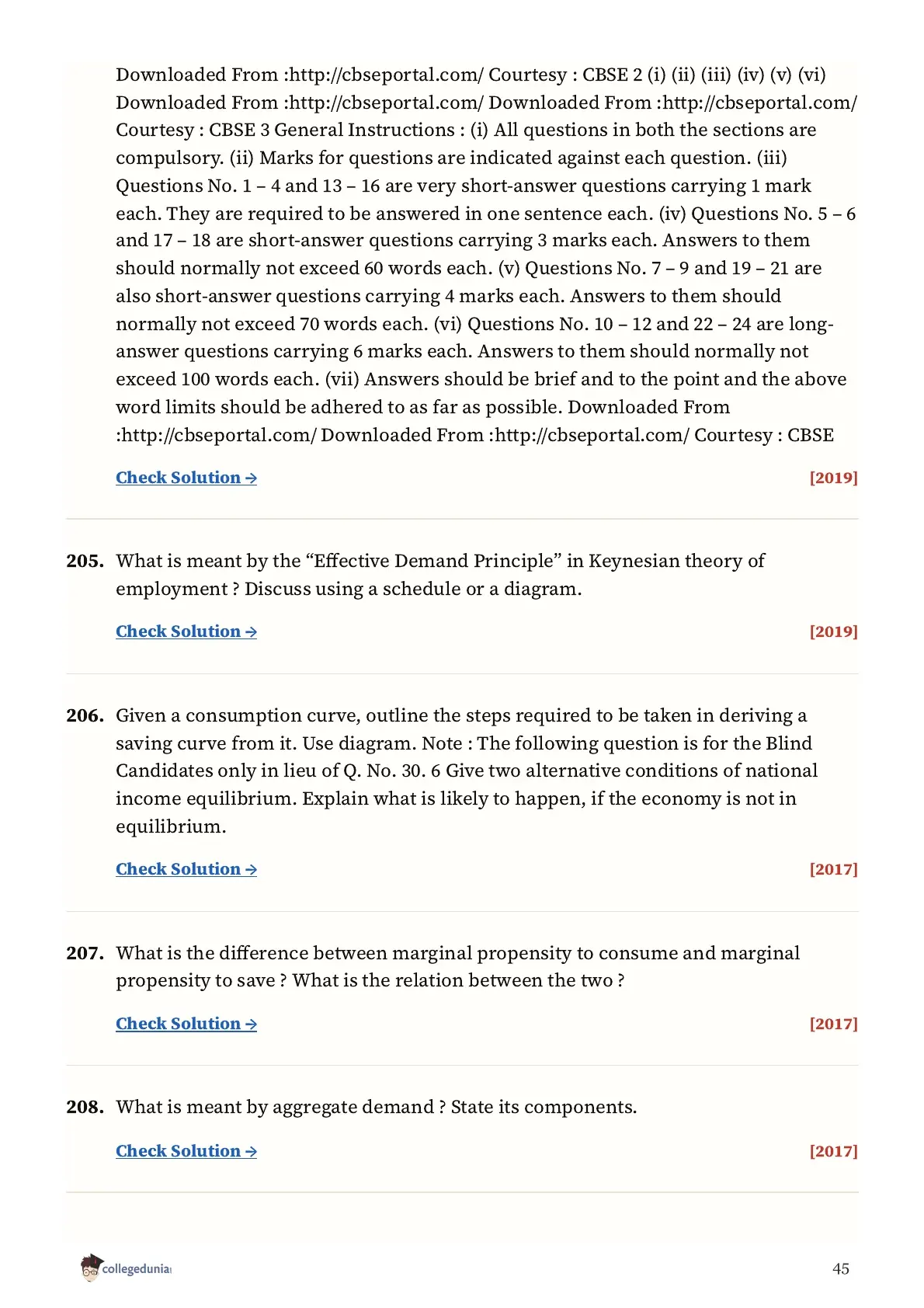
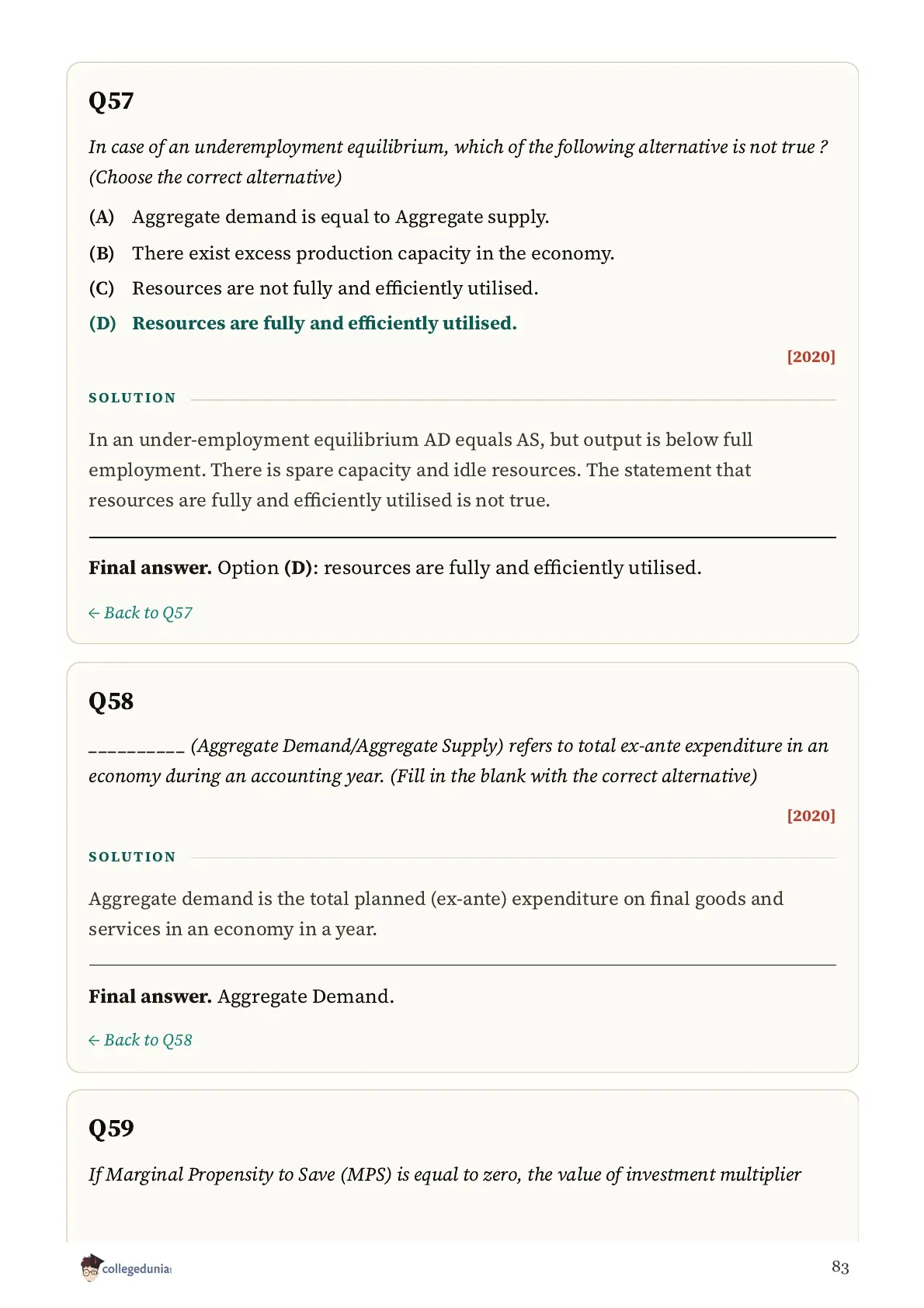
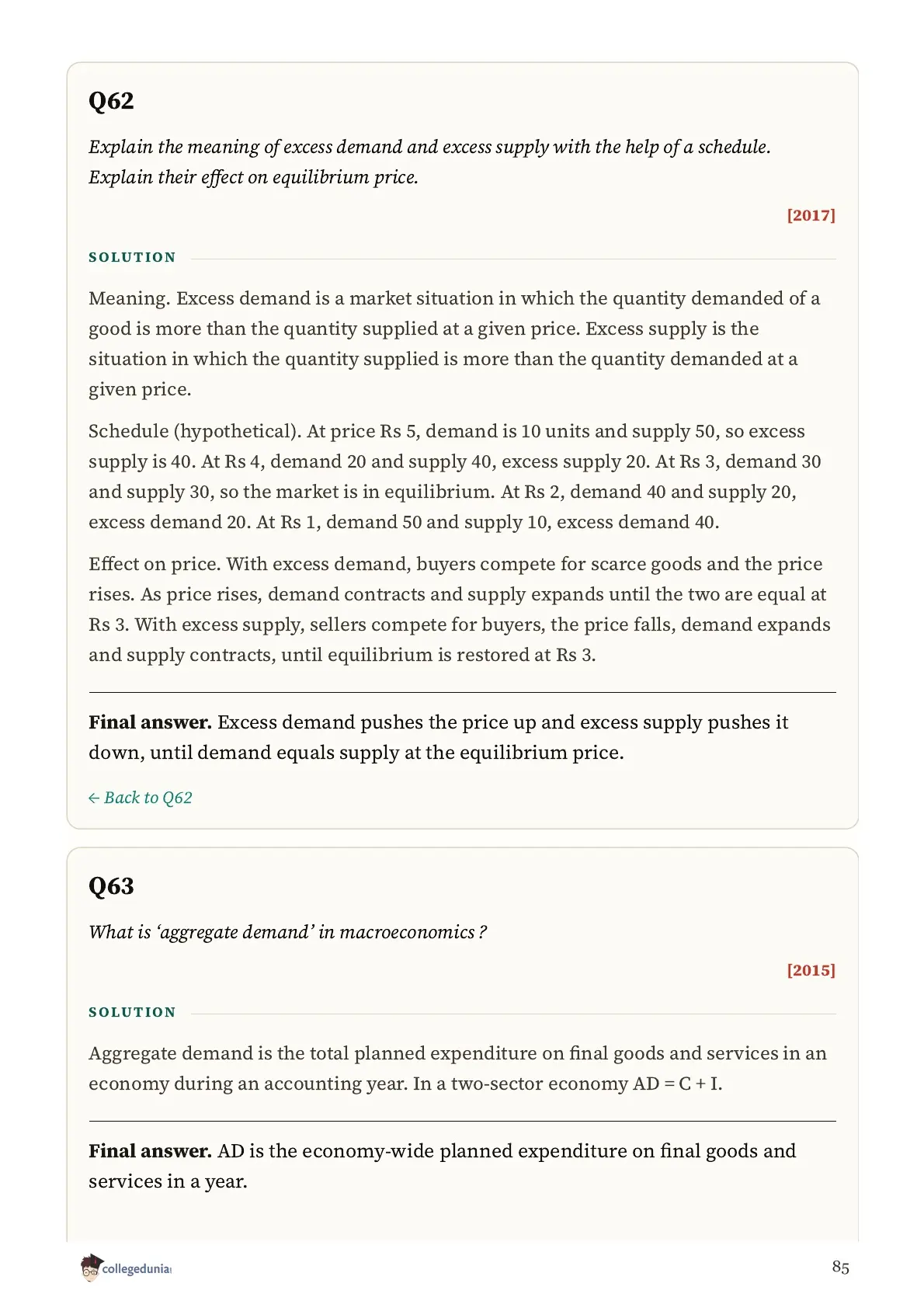
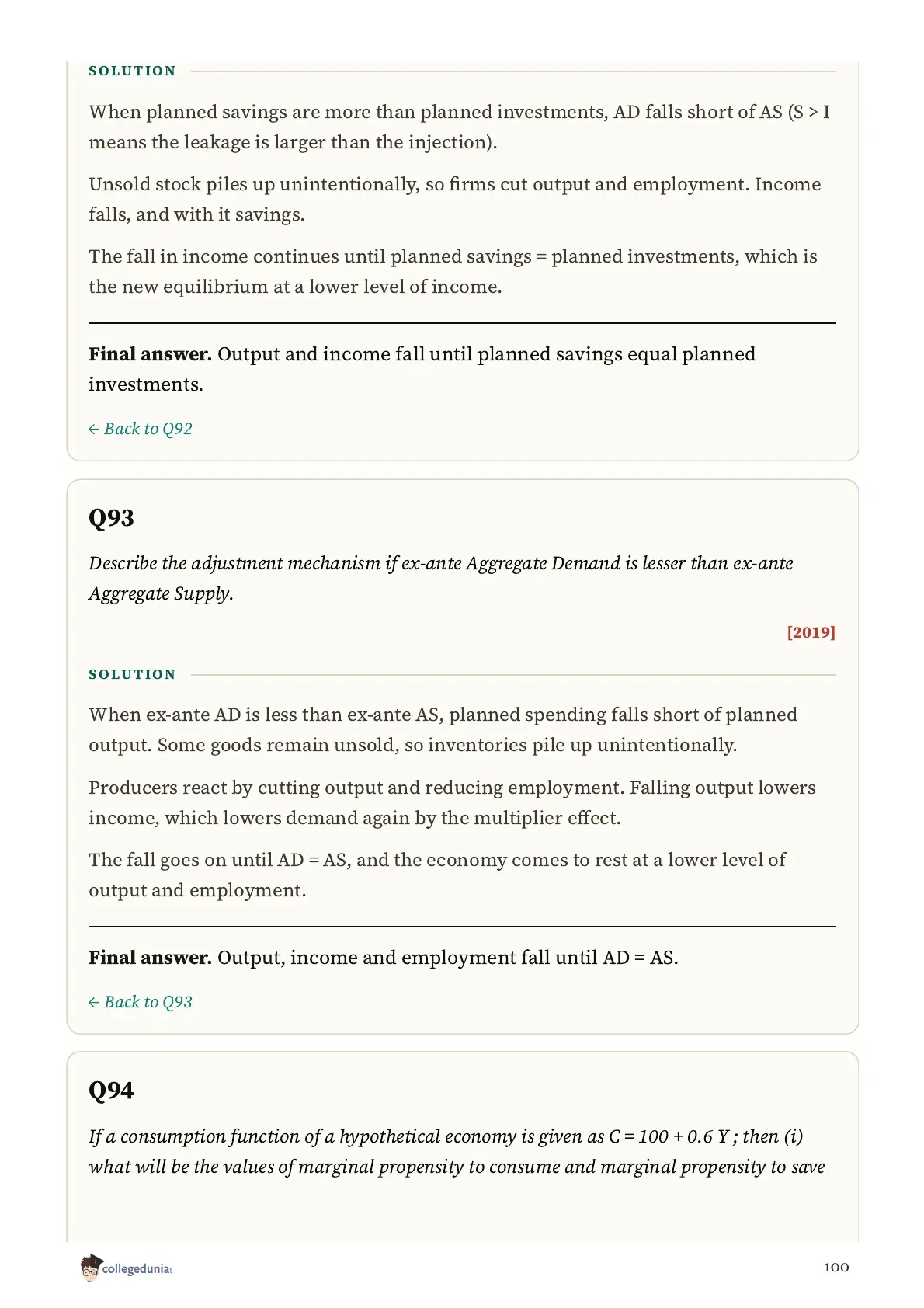
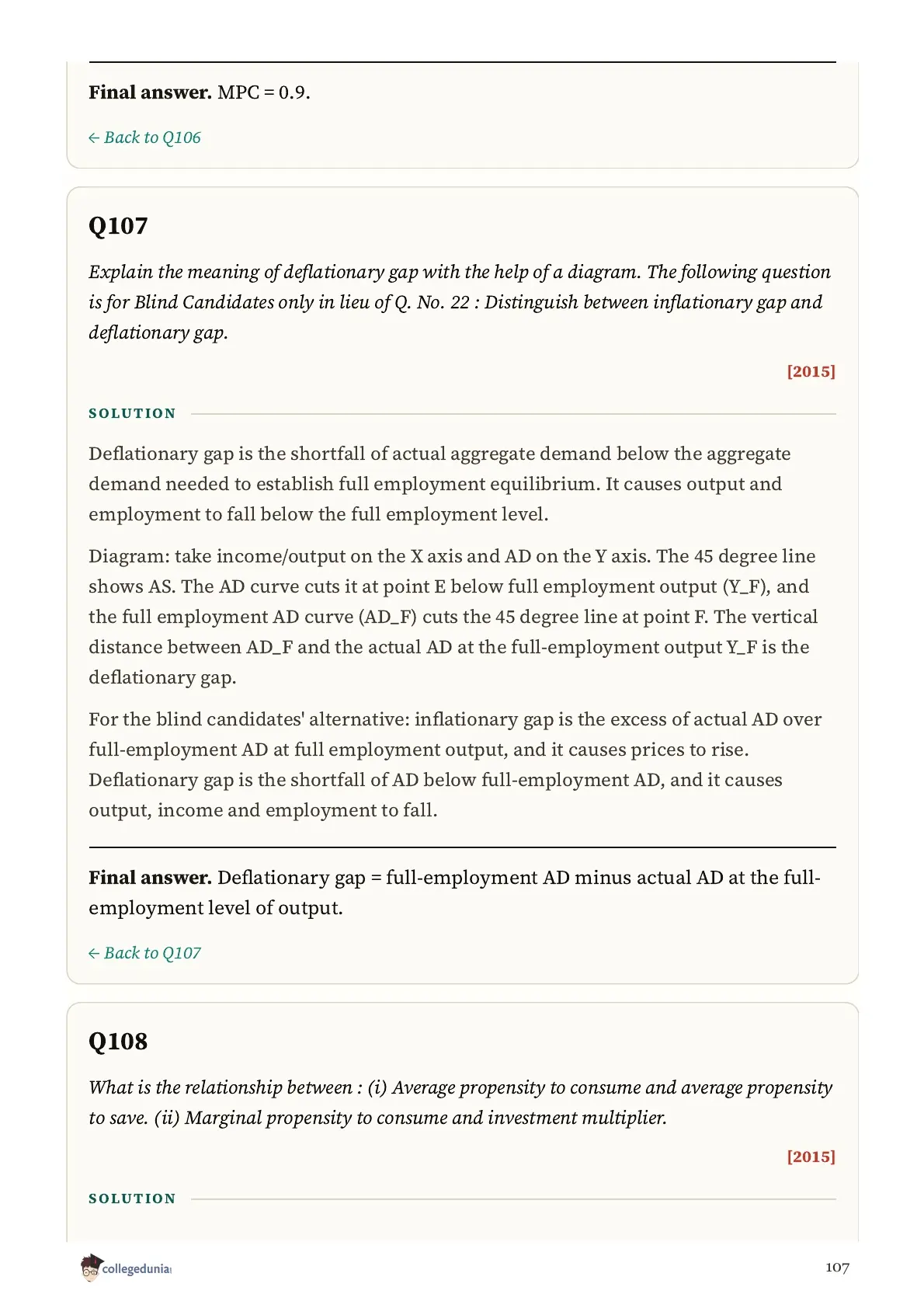
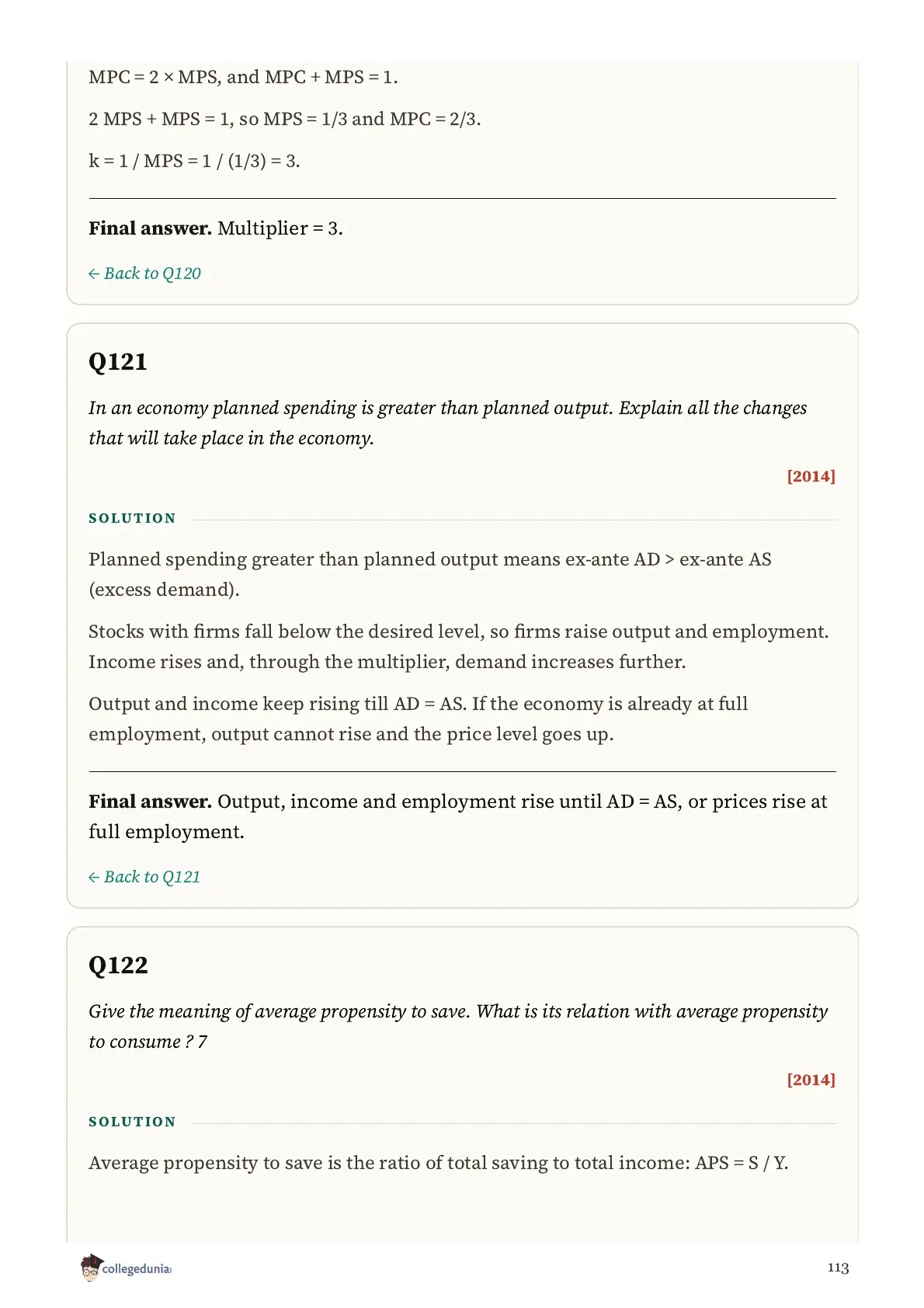
21 questions use ex-ante and ex-post saving and investment, 19 are on the deflationary and inflationary gaps, and 15 on deficient and excess demand. 15 mention fiscal or monetary measures, usually as the two steps to close a gap. 14 are on involuntary unemployment and full employment, 7 on effective demand and 3 on the break-even point. The counts come from keyword matches, so a question on two topics is counted under both.
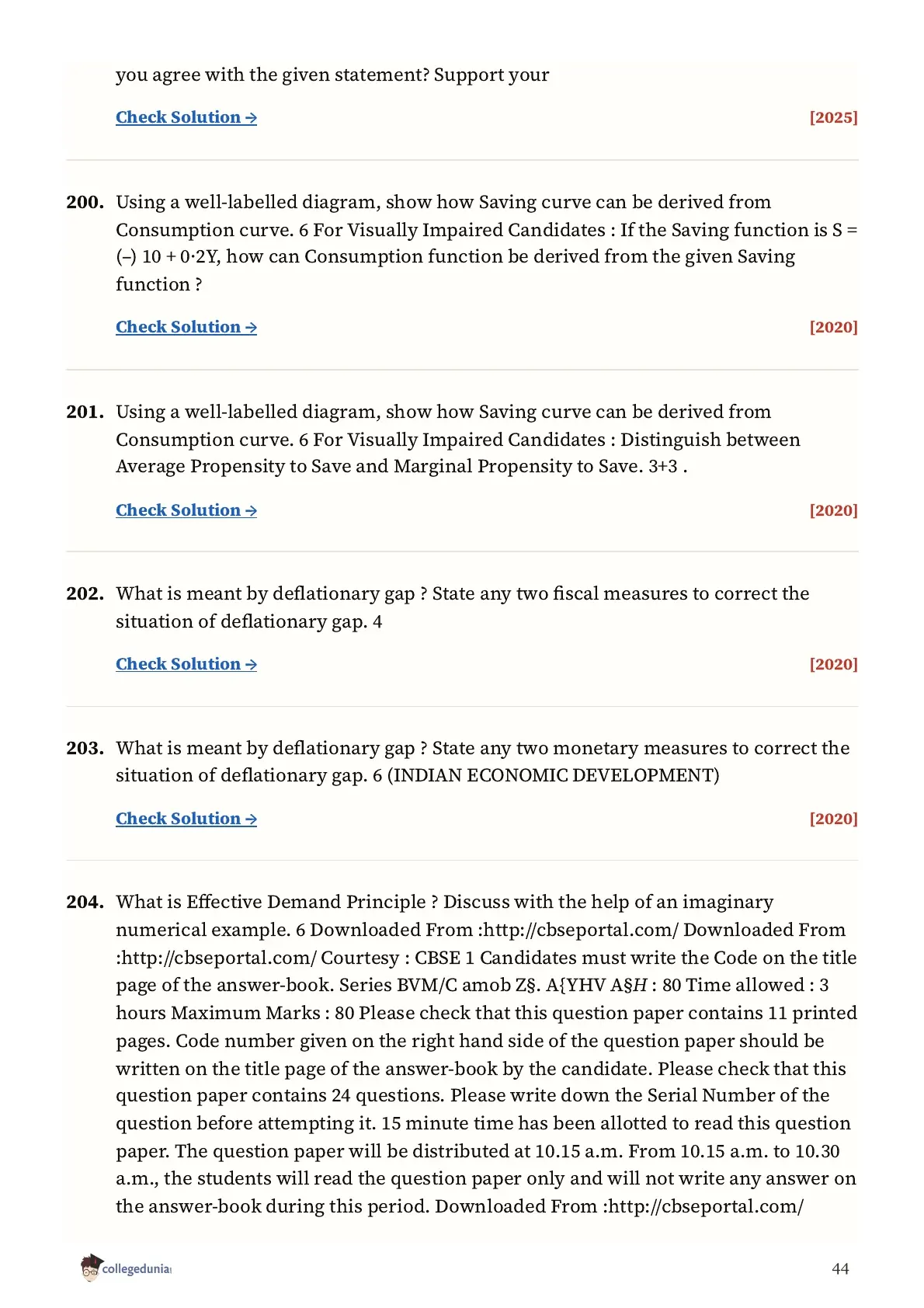
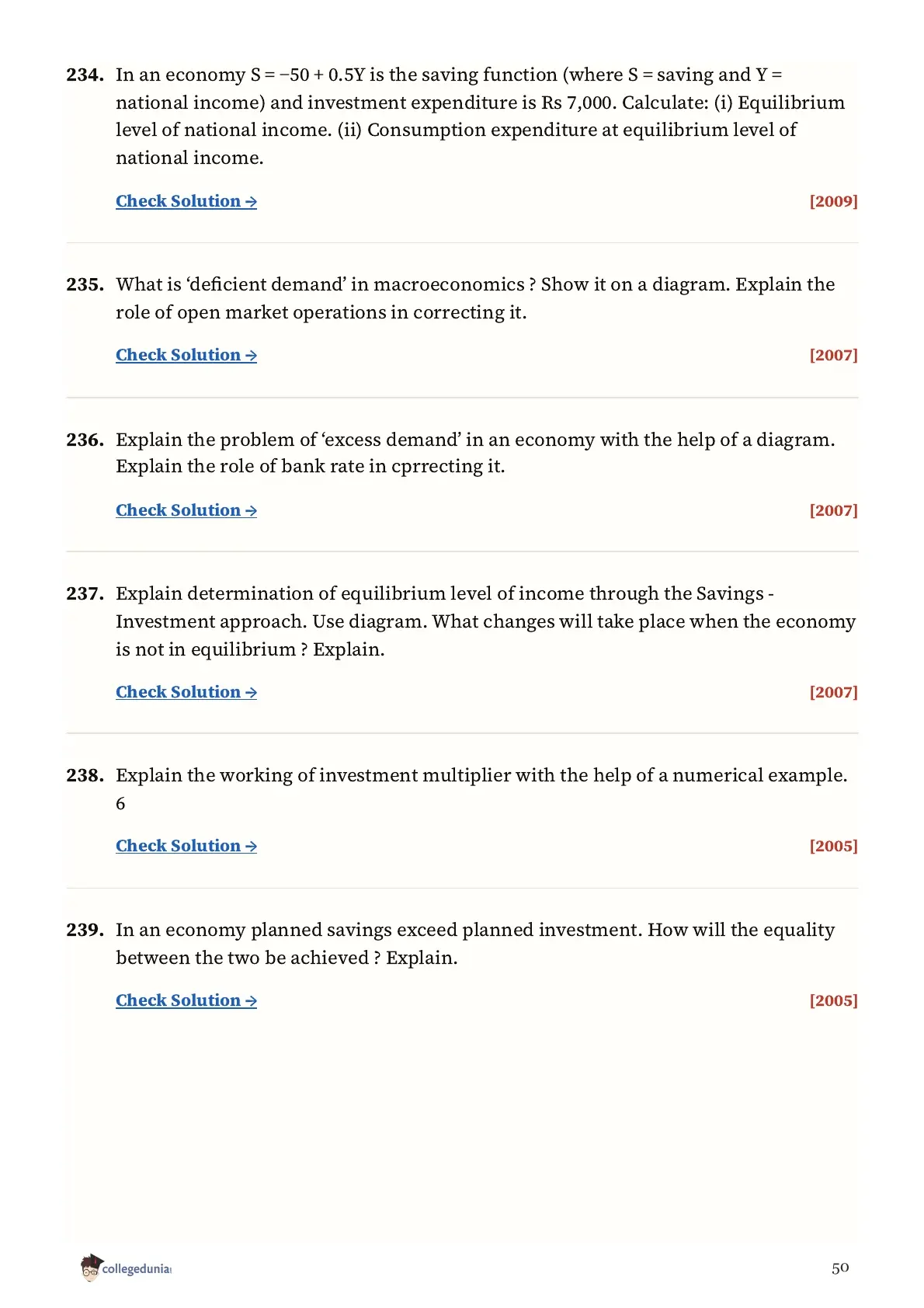
More than 35 questions ask for a numerical answer, 21 ask for a diagram, 4 use the "defend or refute" form, 9 ask for true or false with reasons and 13 are two-statement or assertion-reason items. The numerical questions are mostly of three kinds: find equilibrium income, find autonomous consumption or investment when the economy is in equilibrium, or find MPC or the multiplier from a change in income.
Determination of Income and Employment Video Lesson
Source: Next Toppers - 12th Commerce on YouTube
How to Approach the Determination of Income and Employment Set
At one minute per MCQ and five minutes per written answer, the 55 MCQs and 184 written answers come to about 16 hours, so do not try it in one go. Day one: the 69 one-mark questions. Day two: the 3-mark questions. Day three: the 4-mark and 5-mark questions. Day four: the 52 six-mark questions, which carry the diagrams and the longest calculations.
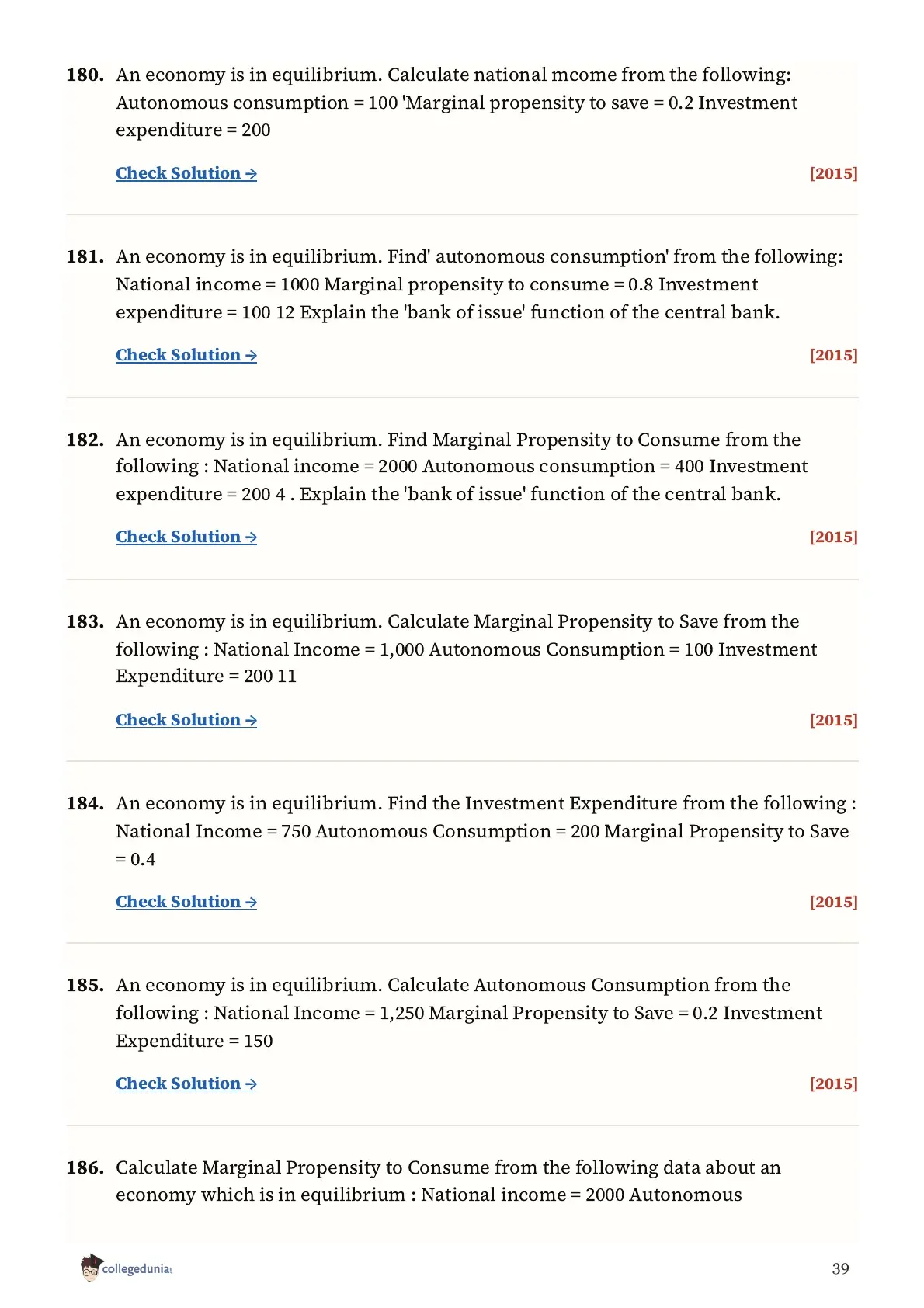
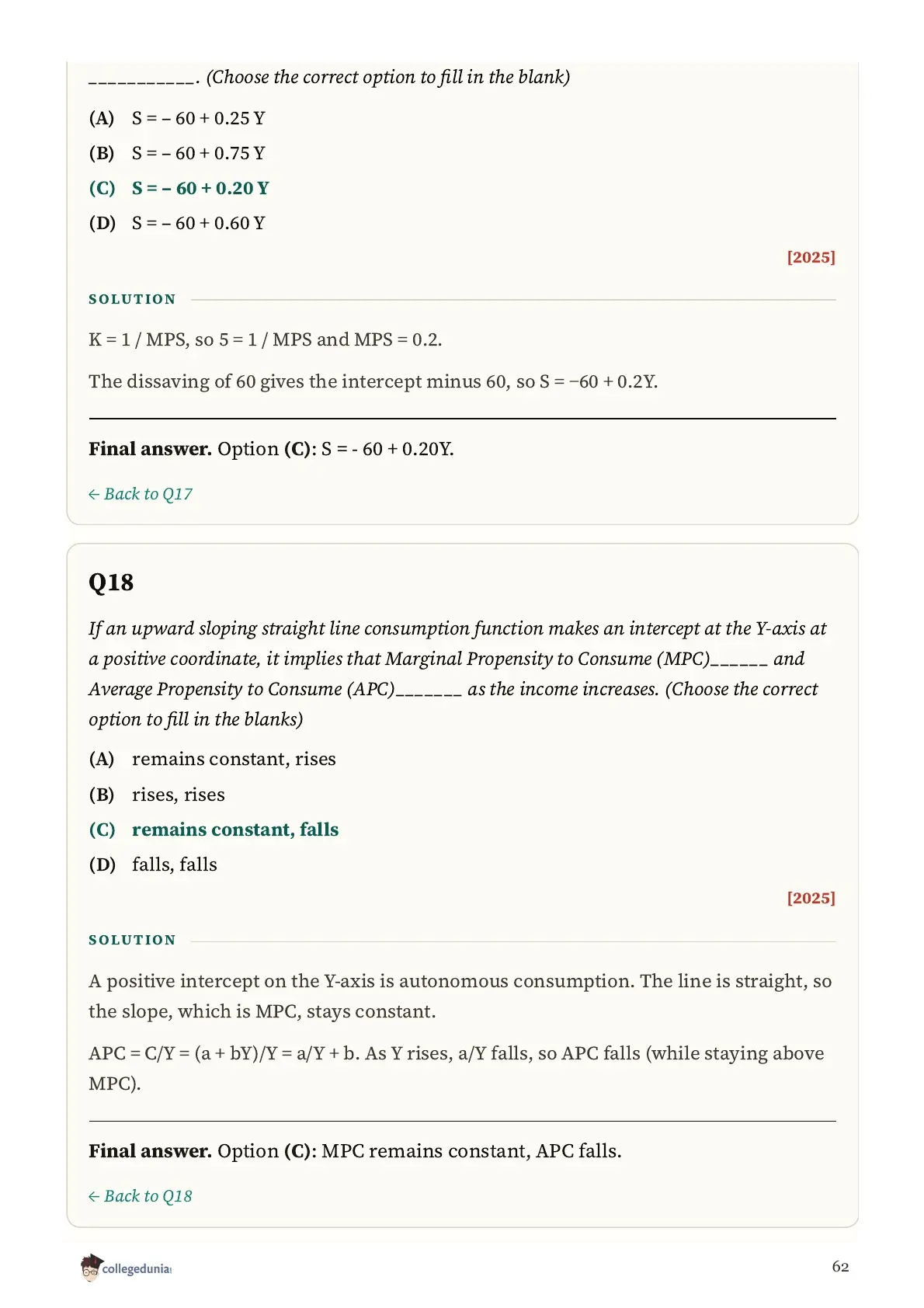
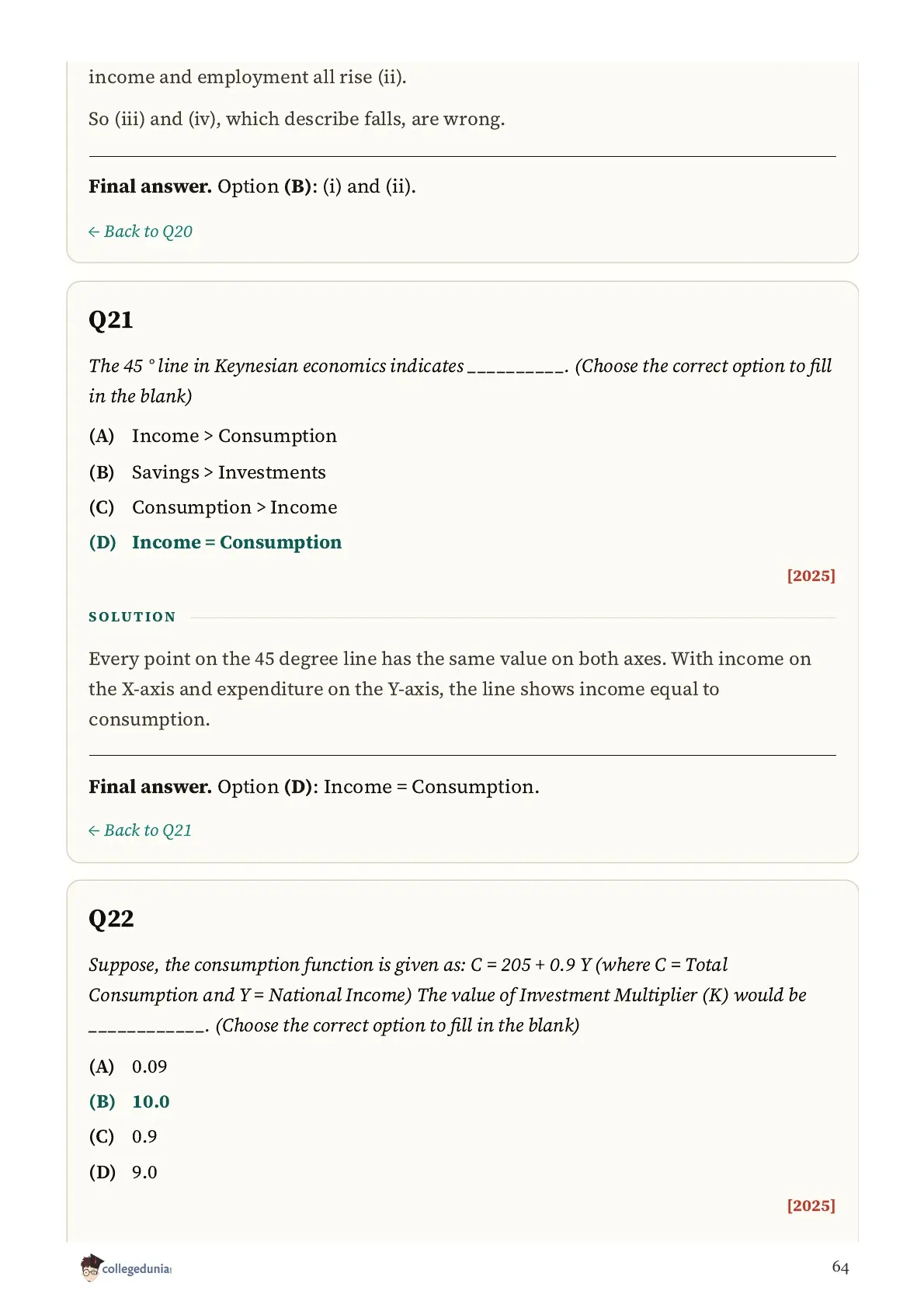
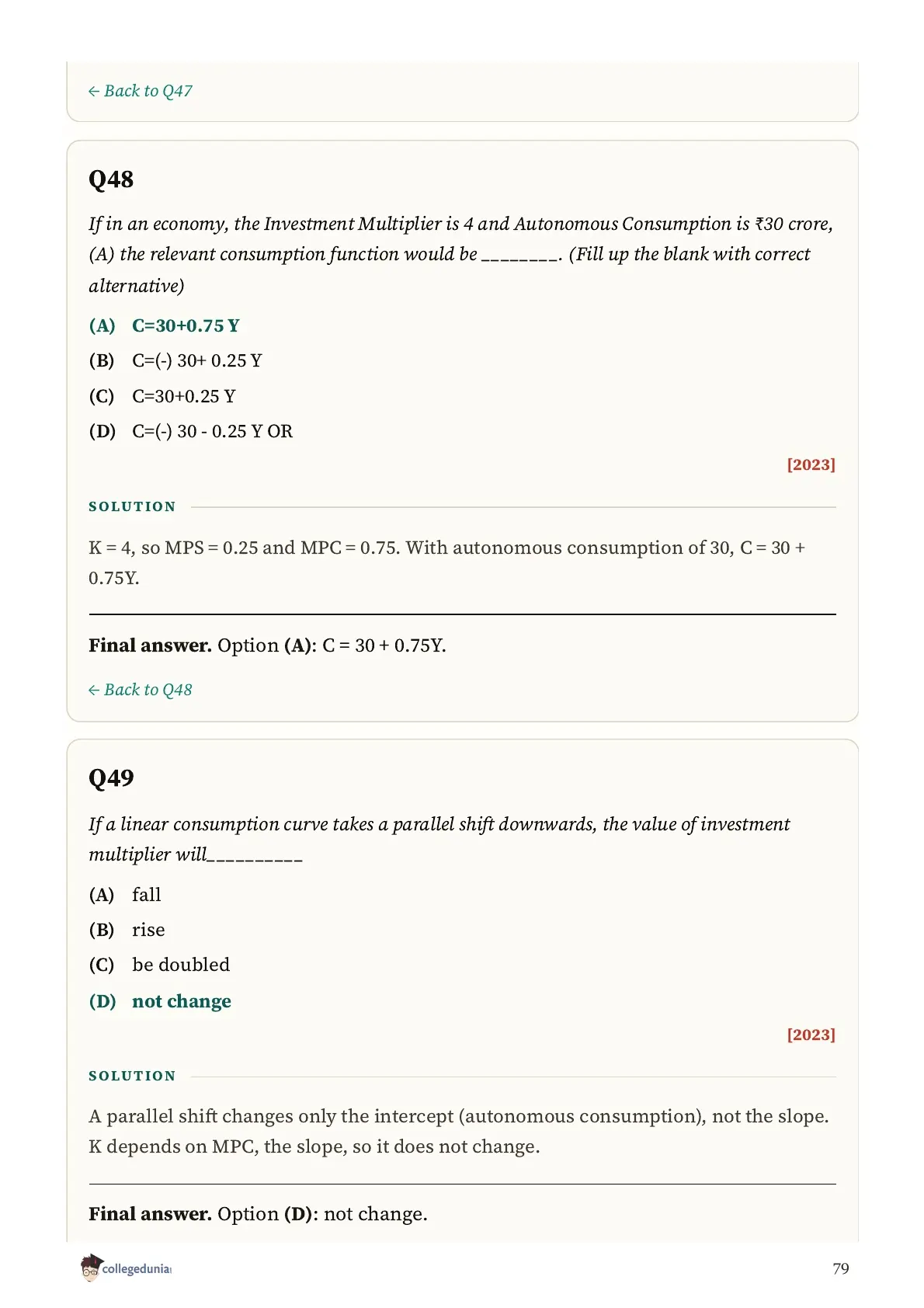
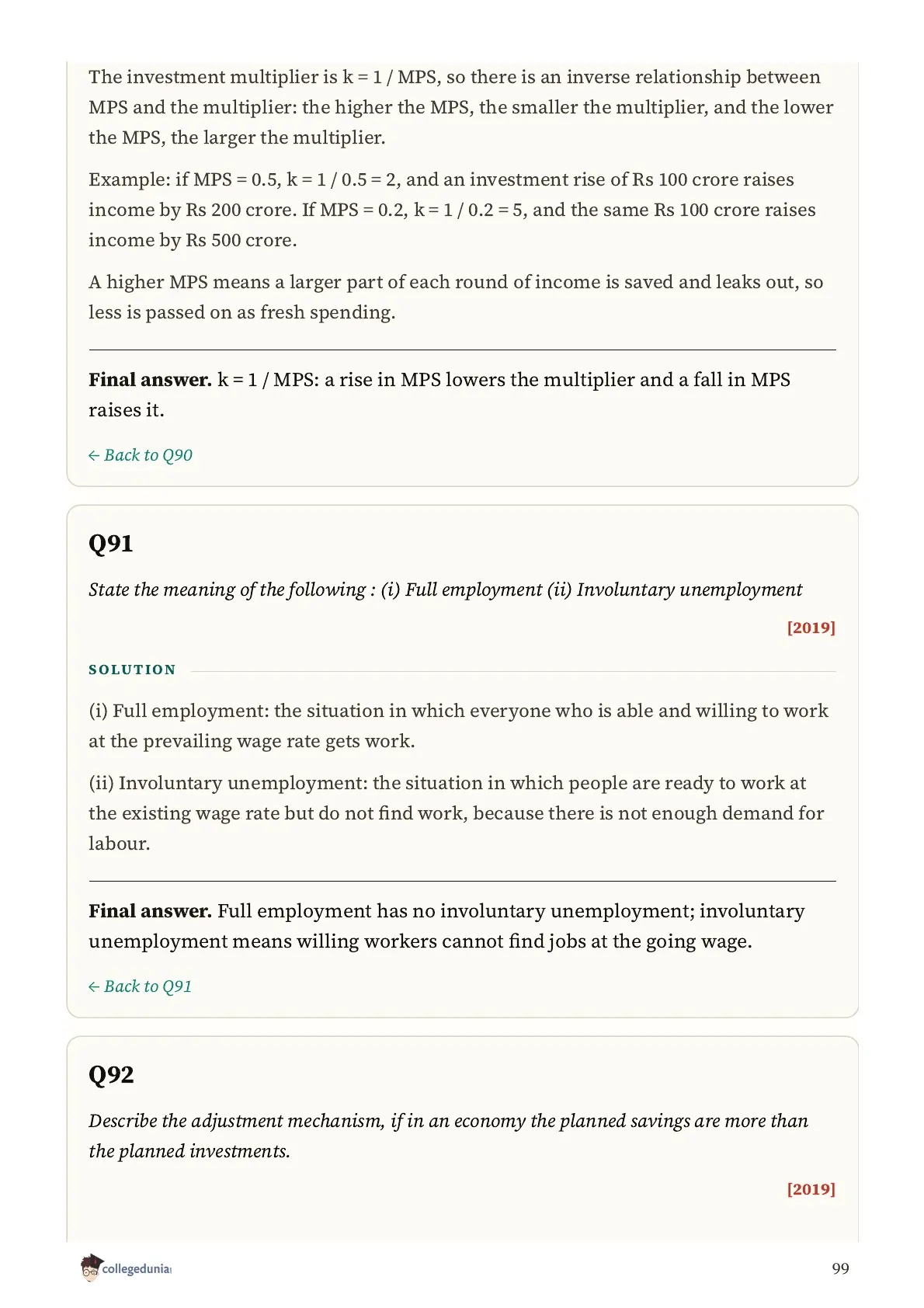
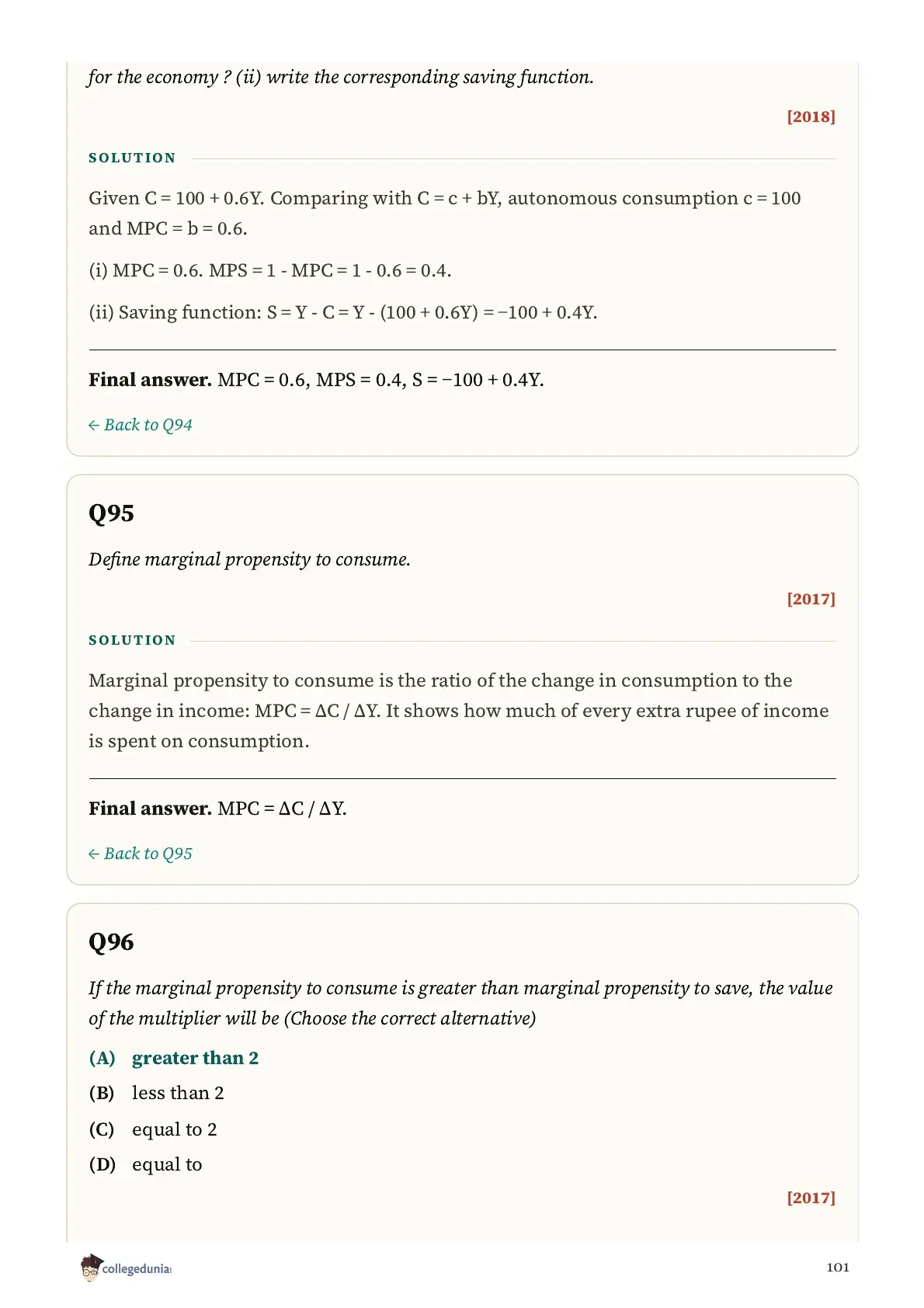
Start the numerical questions with the equilibrium condition. When the economy is in equilibrium, income equals autonomous consumption plus MPC times income plus investment, and only one of these is unknown. For a multiplier question, find MPC or MPS first and then take 1/(1 - MPC). For the gap questions, draw the AD and 45-degree lines, mark full-employment output, and label the gap before writing the two measures.
Common Mistakes in Determination of Income and Employment Questions
- Writing the multiplier as 1/MPS when the question gives MPC, without converting first.
- Treating APC as constant. It falls as income rises, while MPC stays fixed in a straight-line consumption function.
- Saying saving equals investment in the ex-ante sense. They are equal ex-post, and equal ex-ante only in equilibrium.
- Drawing the saving curve from the consumption curve with the intercept on the wrong side: saving is negative at zero income, equal to minus autonomous consumption.
- Measuring the deflationary gap as the shortfall in output and not in aggregate demand.
- Offering a fiscal measure for an inflationary gap that raises spending, such as a tax cut.
- Calling all unemployment involuntary, when frictional and seasonal unemployment can exist at full employment.
Using the Answer Key and Solutions
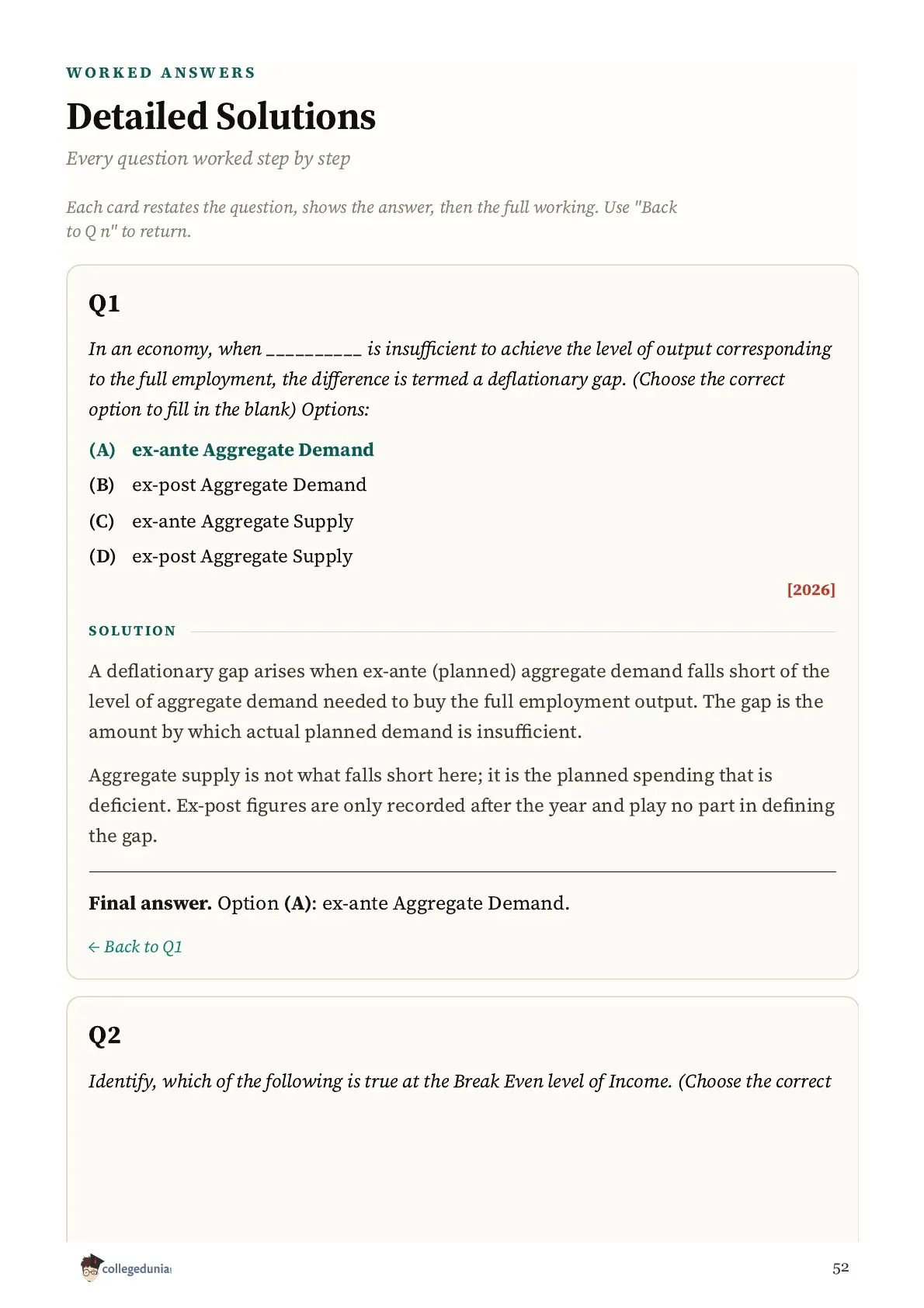
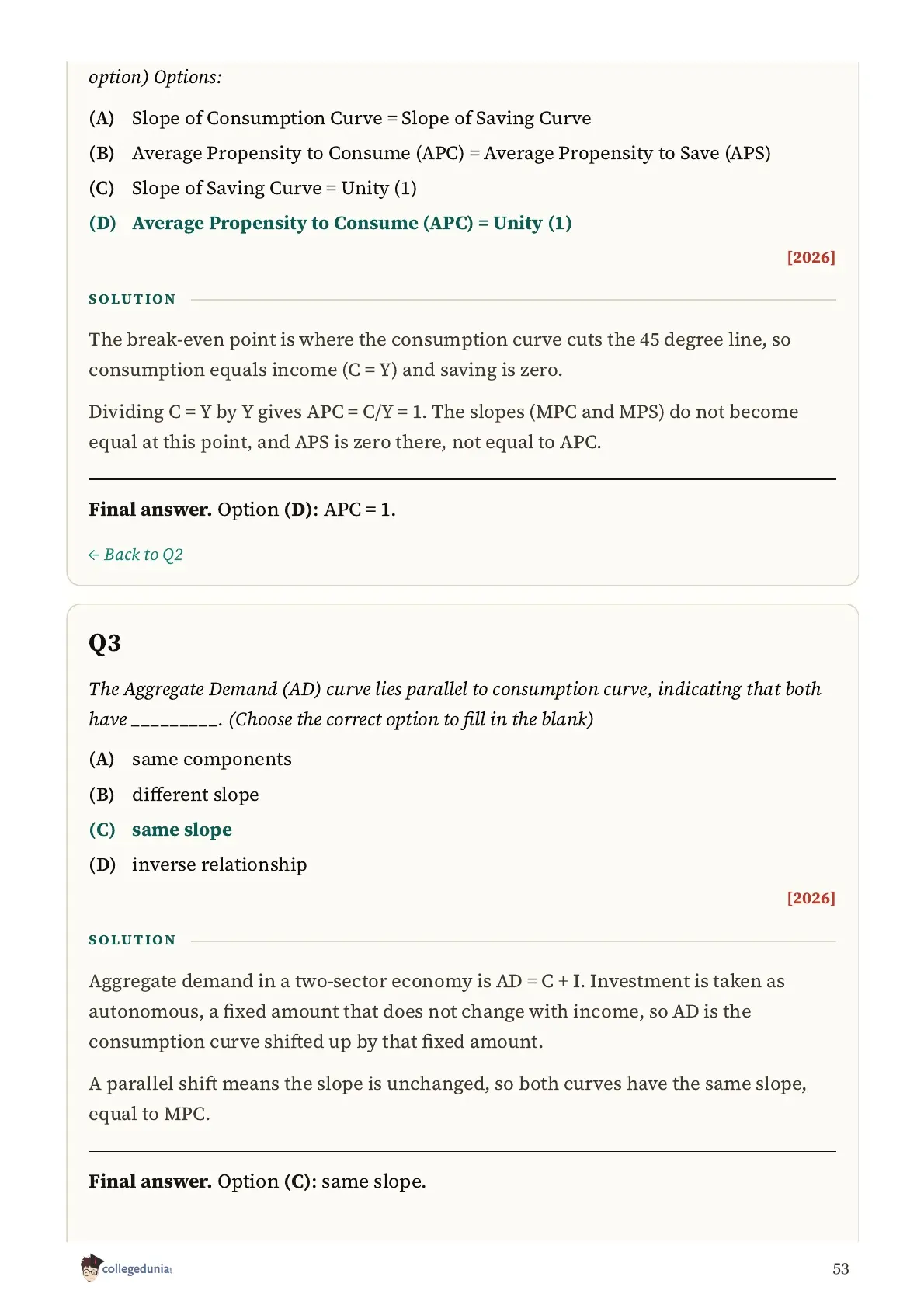
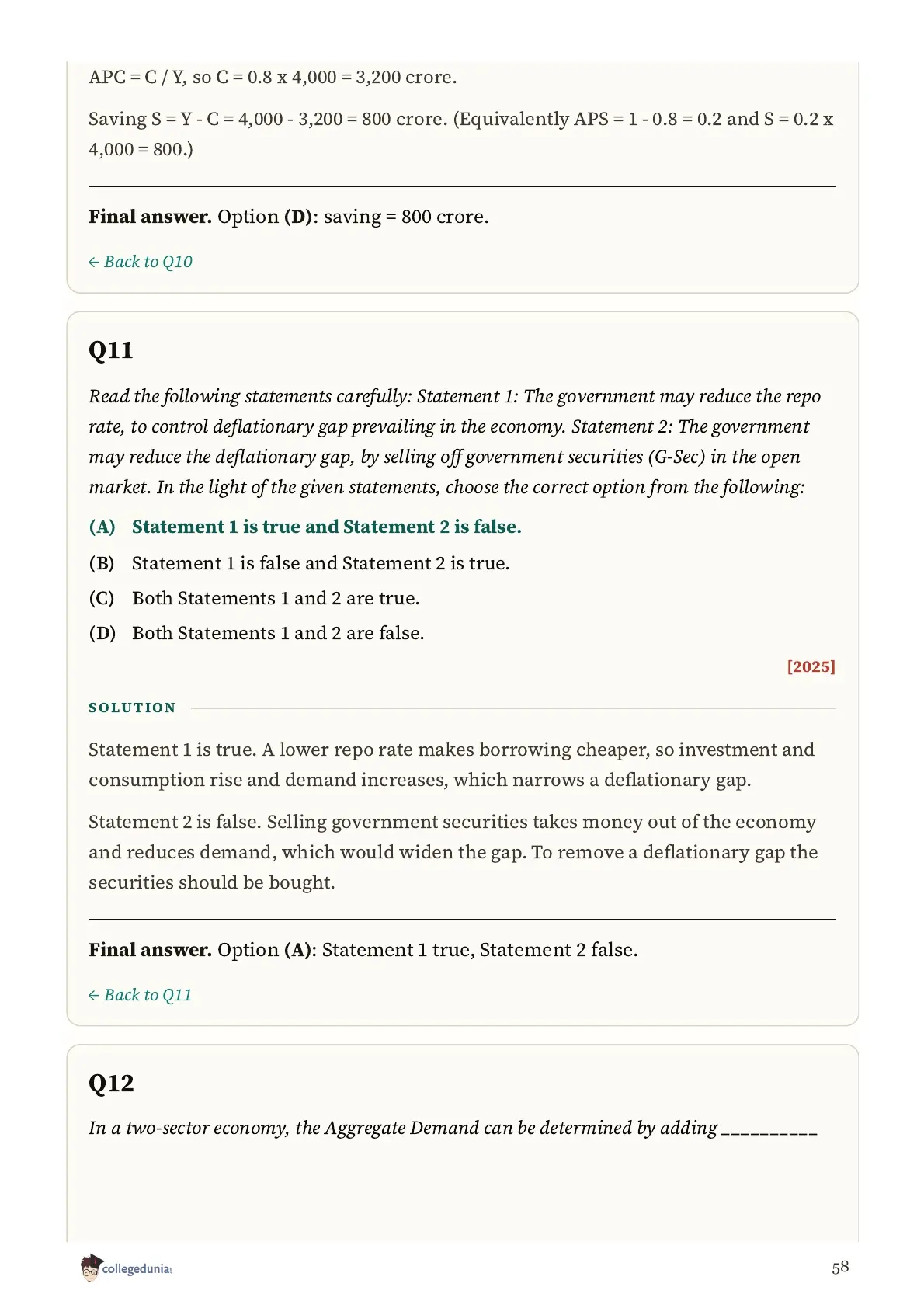
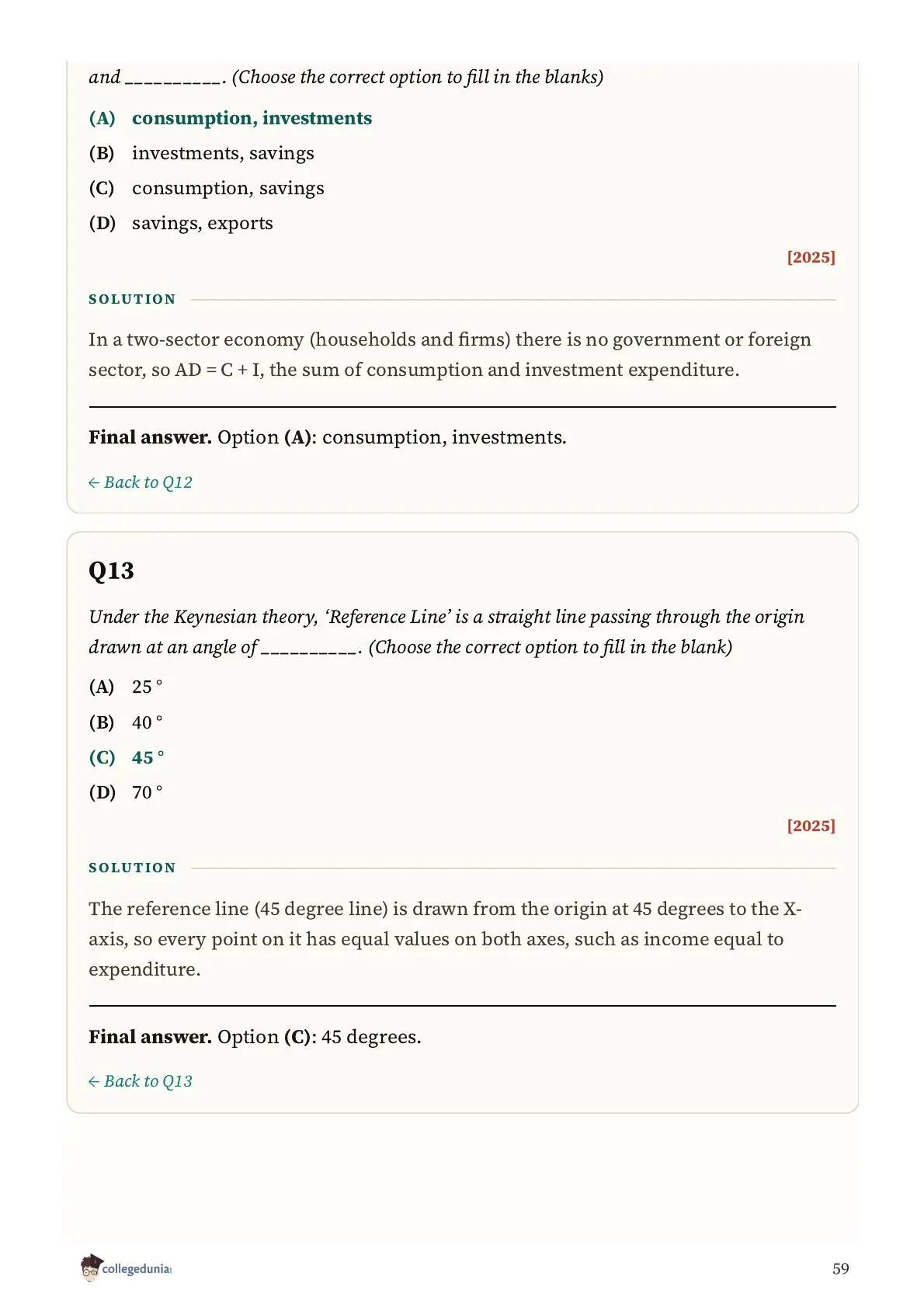
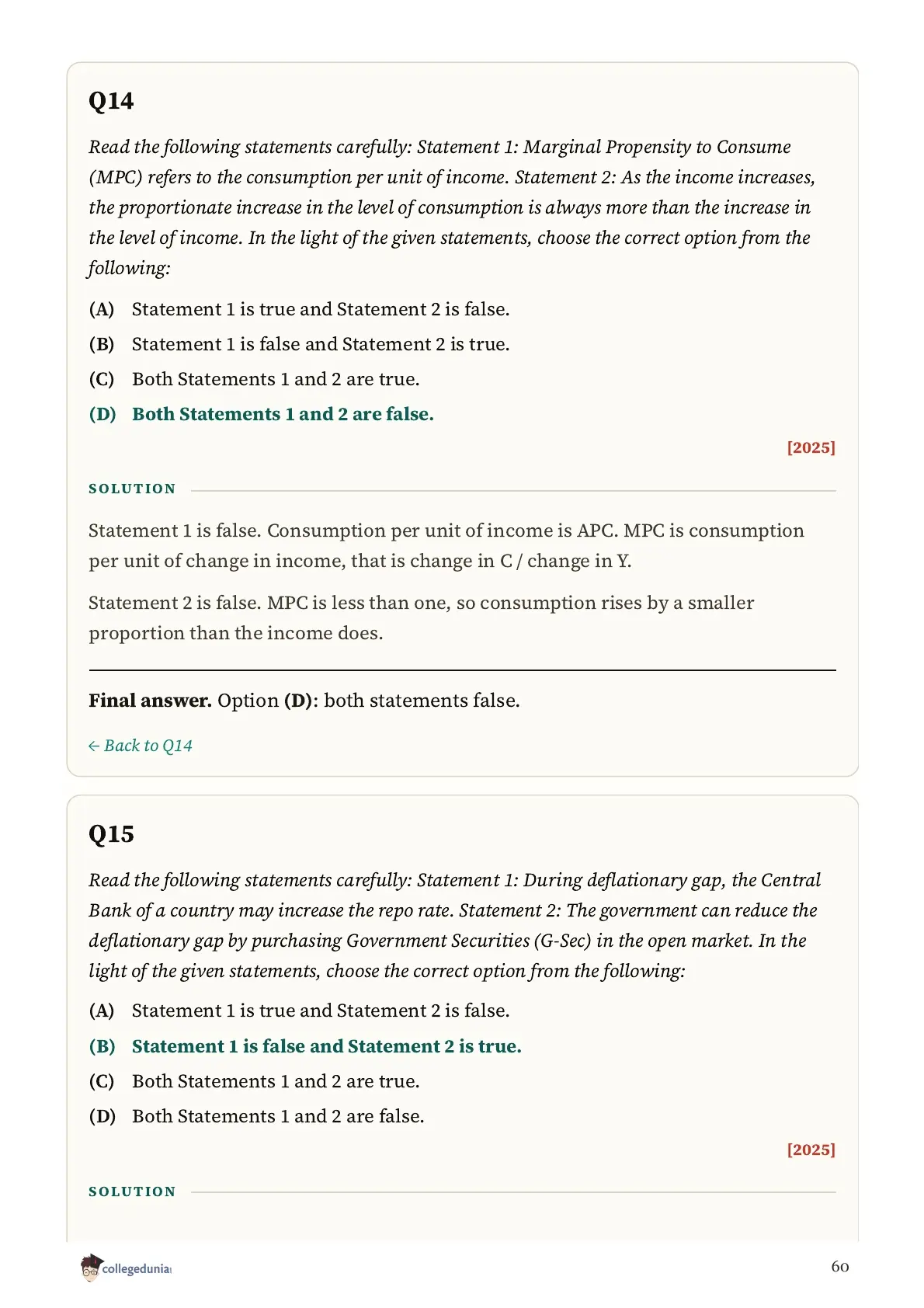
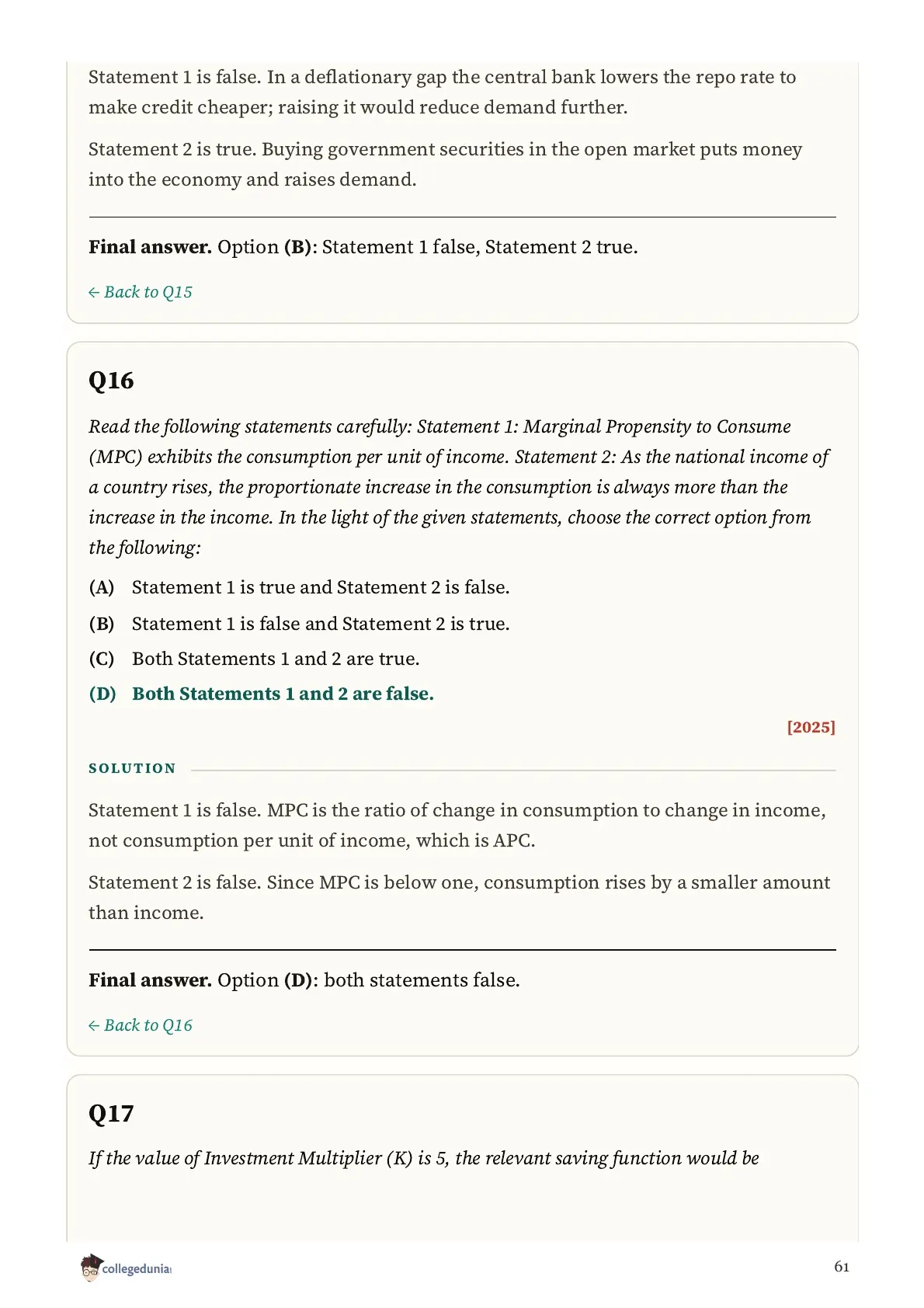
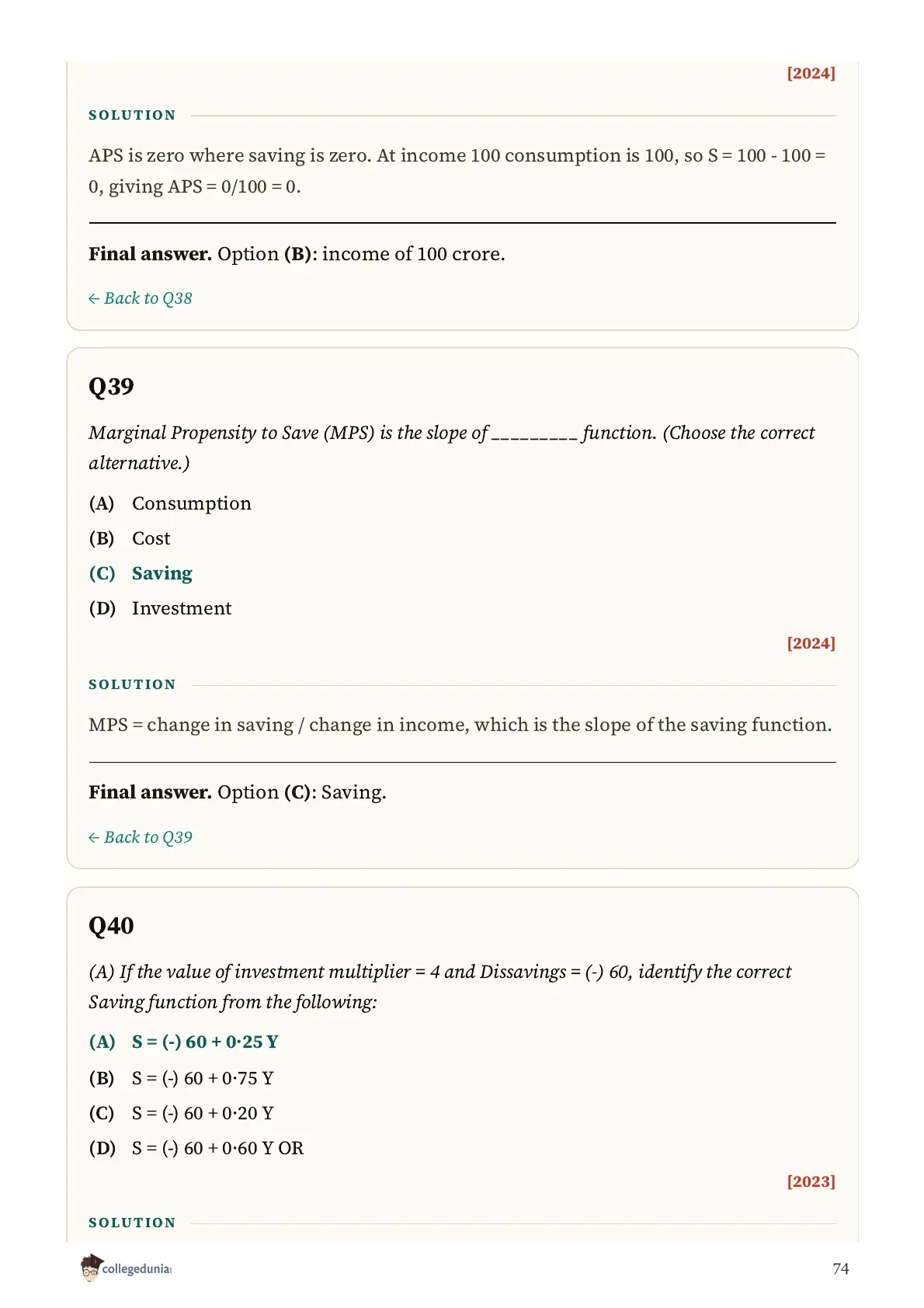
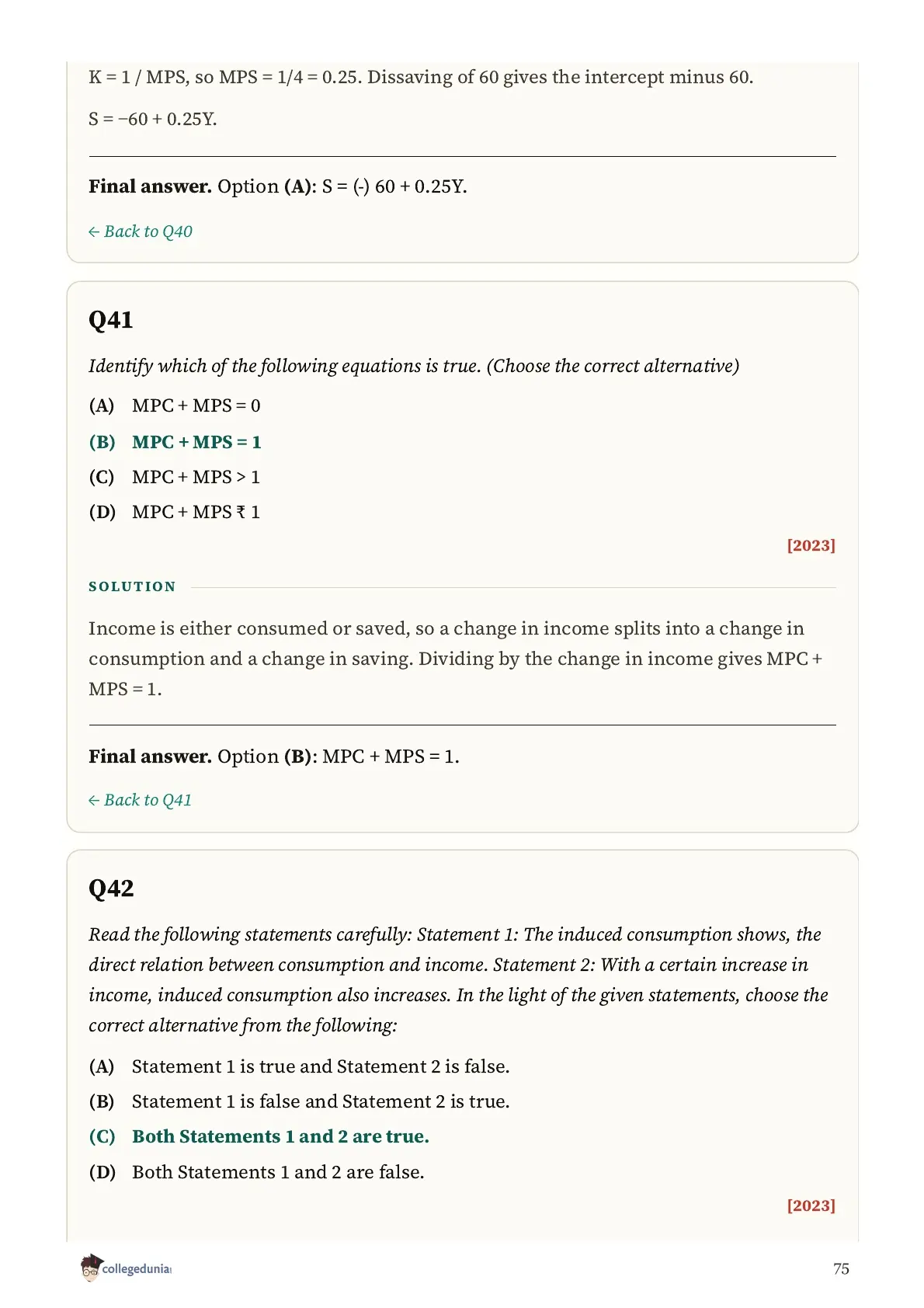
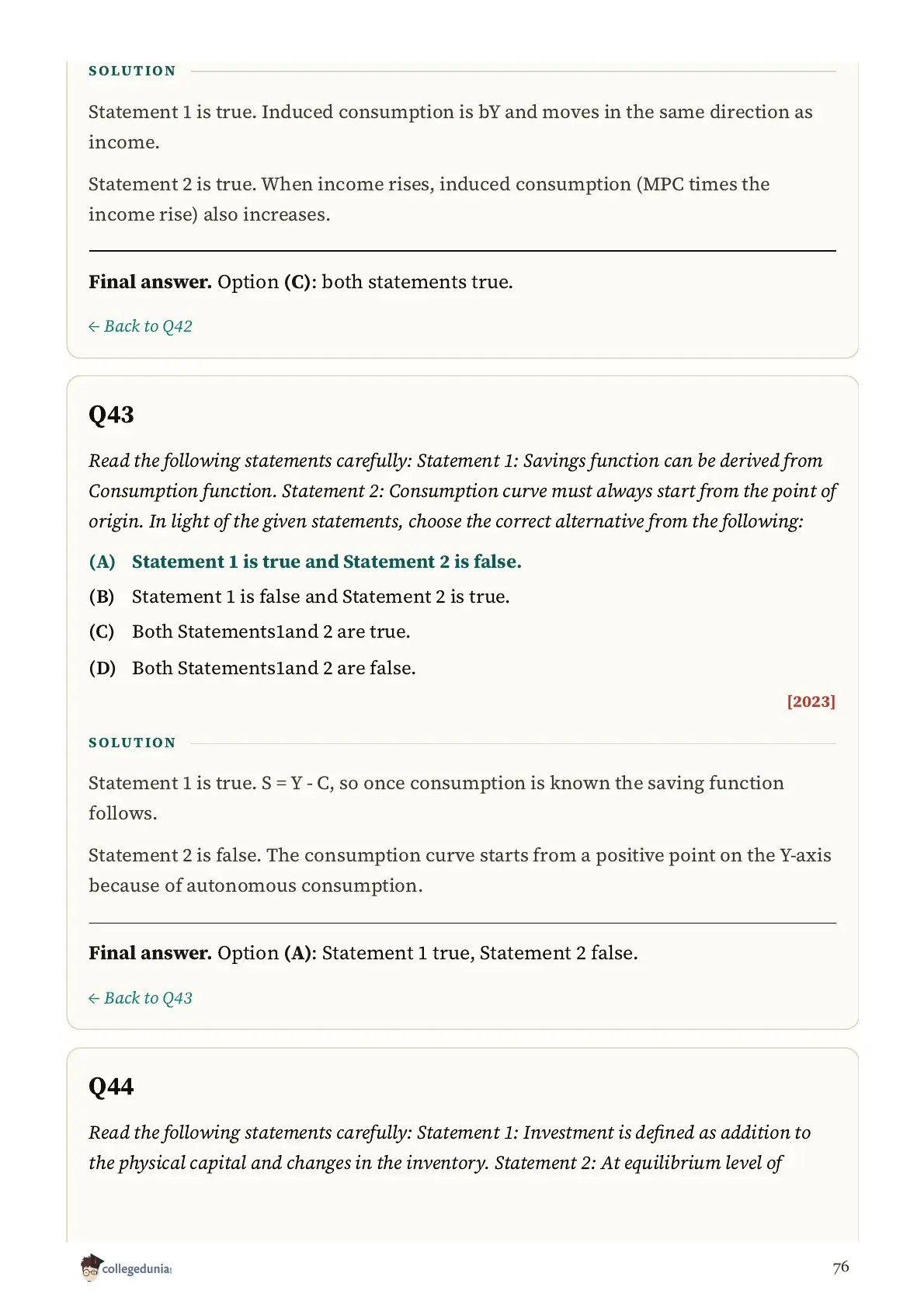
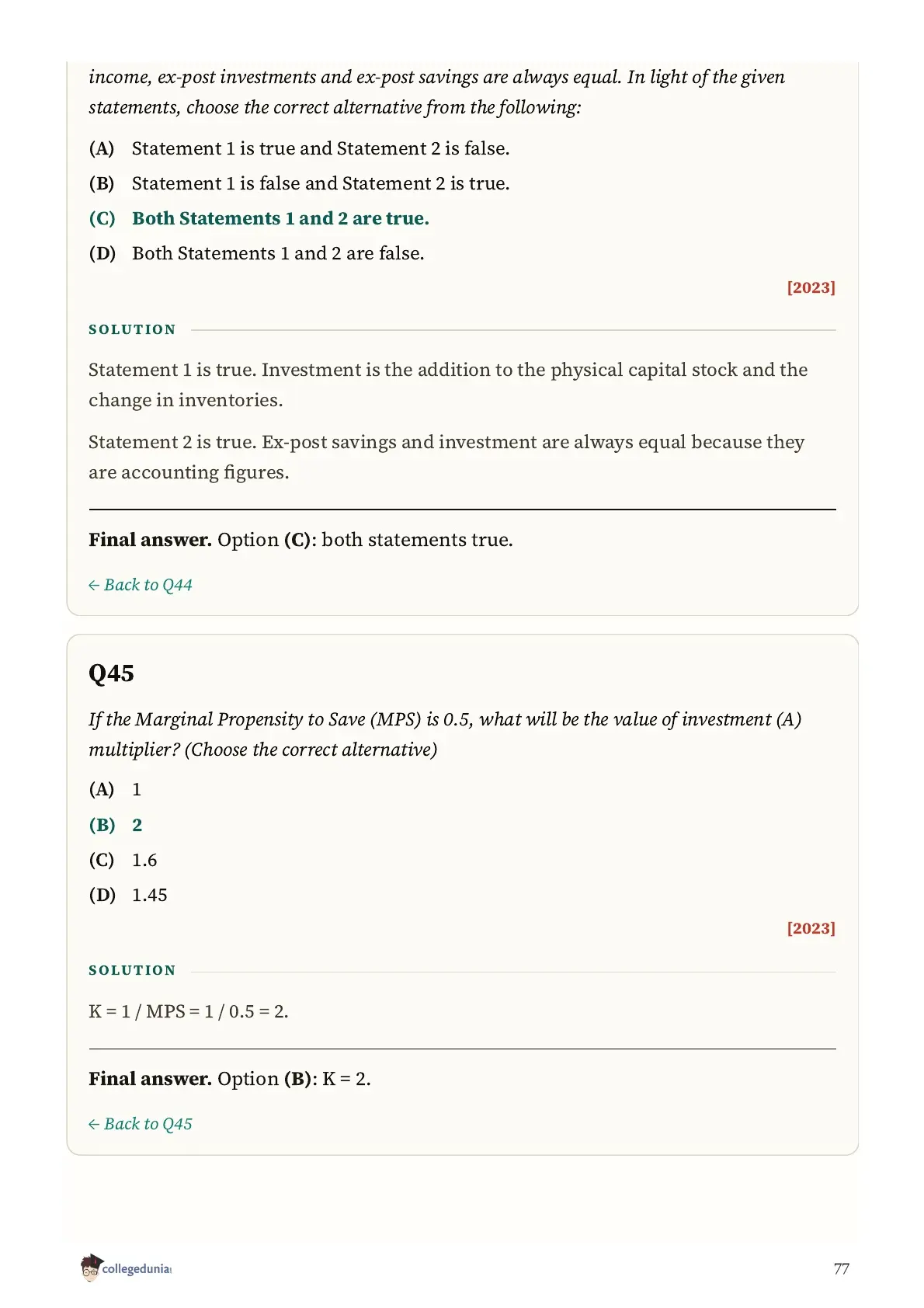
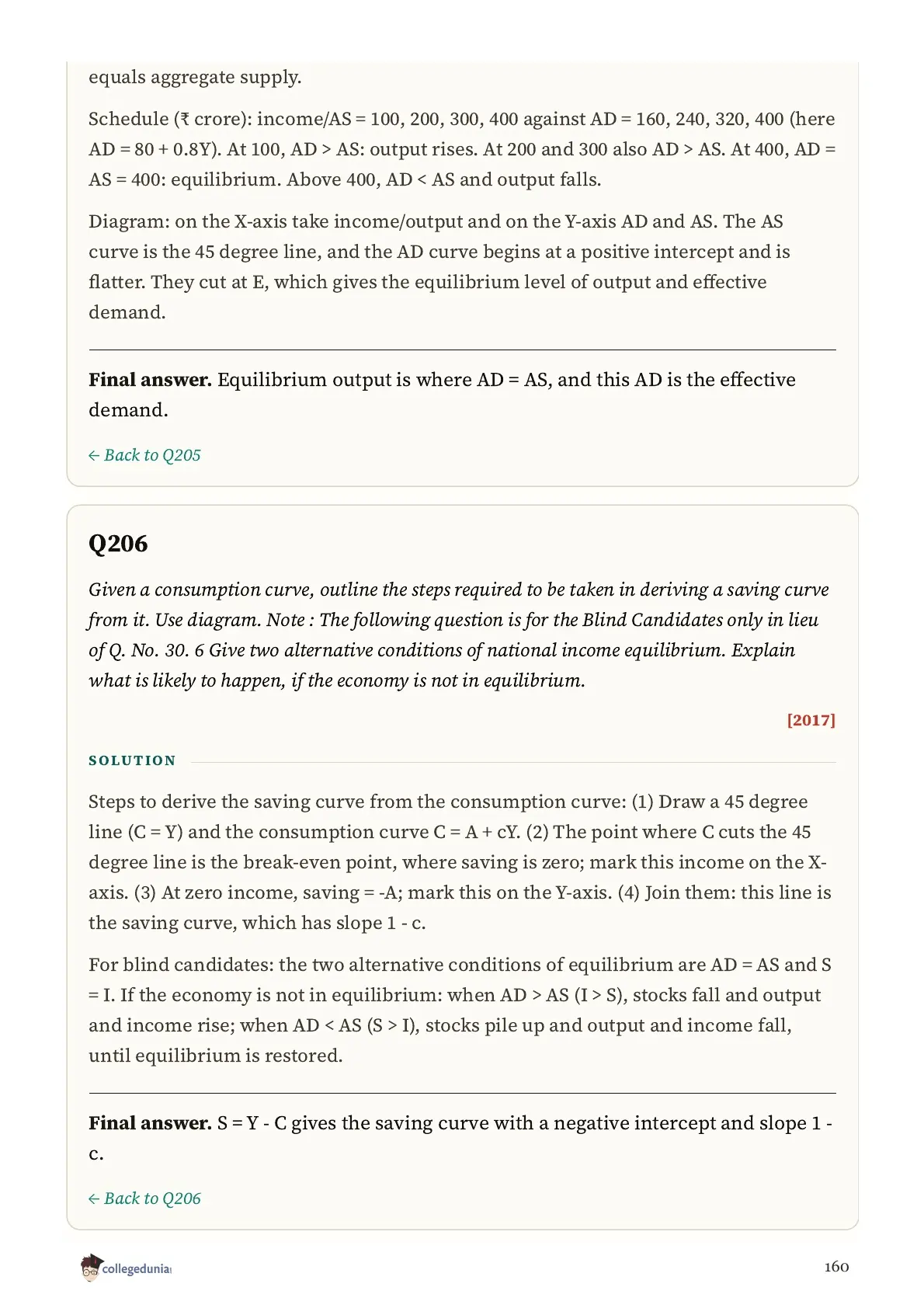
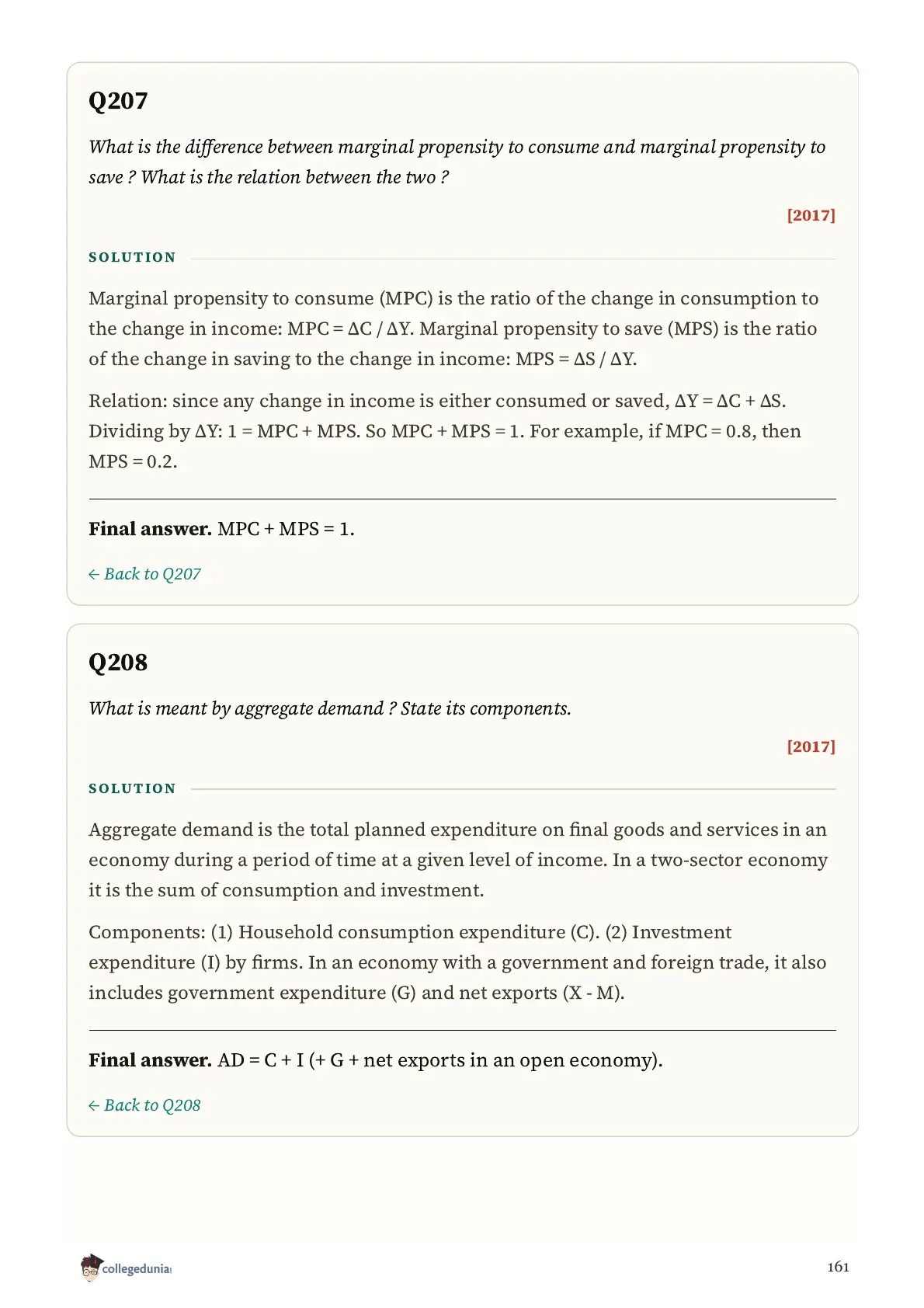
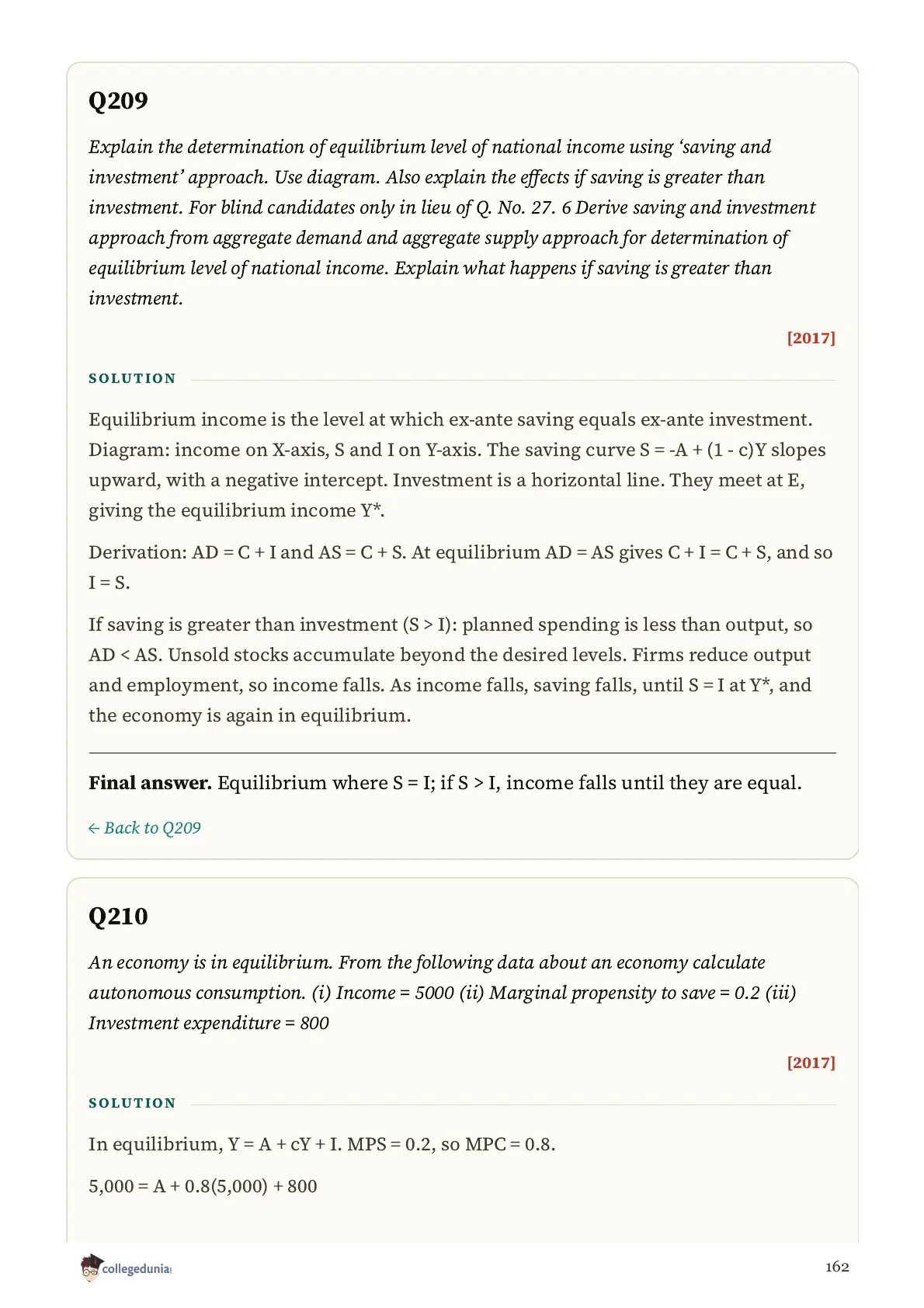
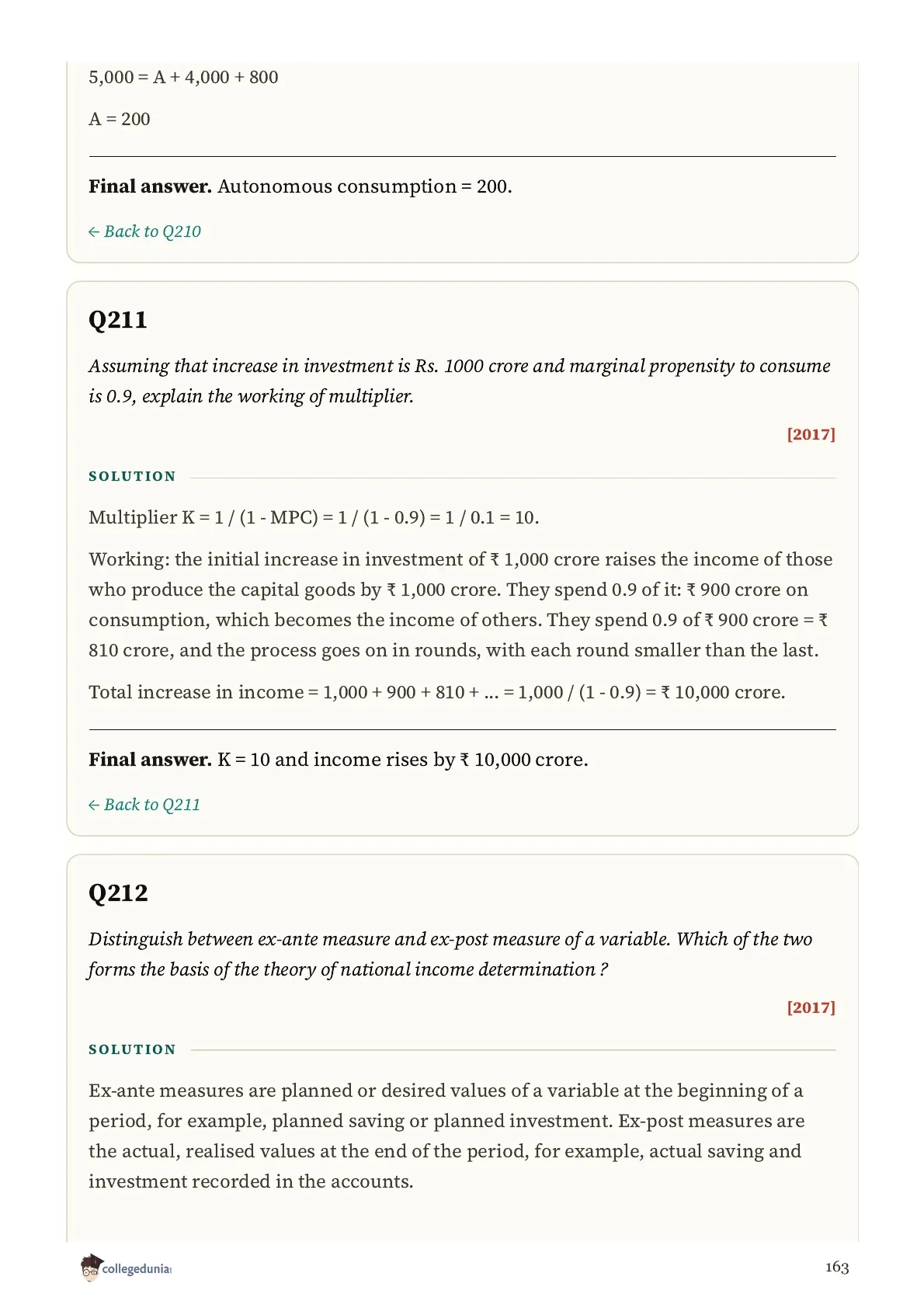
The PDF is 177 pages and free to download. Each section is sorted newest year first, the Answer Key lists every MCQ at a glance, and each question links to its worked solution and back. Attempt a section first, check the key, then read the solution and note the common mistake given with it. The solutions are written by Collegedunia's Economics experts and are not official CBSE marking schemes.
Class 12 Economics PYQs by Chapter
| Chapter | PYQ Page |
|---|---|
| Macro Chapter 1 | Macro Chapter 1: Introduction to Macroeconomics Class 12 PYQ |
| Macro Chapter 2 | Macro Chapter 2: National Income Accounting Class 12 PYQ |
| Macro Chapter 3 | Macro Chapter 3: Money and Banking Class 12 PYQ |
| Macro Chapter 4 | Macro Chapter 4: Determination of Income and Employment Class 12 PYQ |
| Macro Chapter 5 | Macro Chapter 5: Government Budget and the Economy Class 12 PYQ |
| Macro Chapter 6 | Macro Chapter 6: Open Economy Macroeconomics Class 12 PYQ |
| Micro Chapter 1 | Micro Chapter 1: Introduction to Microeconomics Class 12 PYQ |
| Micro Chapter 2 | Micro Chapter 2: Theory of Consumer Behaviour Class 12 PYQ |
| Micro Chapter 3 | Micro Chapter 3: Production and Costs Class 12 PYQ |
| Micro Chapter 4 | Micro Chapter 4: The Theory of the Firm under Perfect Competition Class 12 PYQ |
| Micro Chapter 5 | Micro Chapter 5: Market Equilibrium Class 12 PYQ |
Determination of Income and Employment Class 12 Economics PYQ FAQs
Ques. How many questions are in the Determination of Income and Employment Class 12 PYQ PDF?
Ans. The PDF has 239 questions from CBSE board papers between 2005 and 2026: 69 one-mark, 1 two-mark, 67 three-mark, 49 four-mark, 1 five-mark and 52 six-mark questions. 55 of them are MCQs.
Ques. Does this PYQ PDF include solutions, or only the questions?
Ans. Yes. All 239 questions have a worked solution in the PDF, and the MCQs also have an Answer Key.
Ques. Are the solutions official?
Ans. No. They are written by Collegedunia's Economics experts and are not an official CBSE marking scheme.
Ques. How many marks does Determination of Income and Employment carry in the Class 12 board paper?
Ans. Prep-site unit tables for the CBSE curriculum, such as the Vedantu and Physics Wallah marking-scheme pages, list about 12 of the 80 theory marks for this unit. The figure is unofficial, so check the CBSE curriculum on cbseacademic.nic.in for the official unit marks.
Ques. What is the difference between APC and MPC?
Ans. APC is consumption divided by income at a given level of income, while MPC is the change in consumption divided by the change in income. 83 questions in this set are on the consumption function, APC and MPC.
Ques. How is the investment multiplier calculated?
Ans. The investment multiplier is 1/(1 - MPC), which is the same as 1/MPS. 31 questions in this set use the multiplier, and most give MPC or MPS and ask for the rise in income.
Ques. What is the difference between a deflationary gap and an inflationary gap?
Ans. A deflationary gap is the shortfall of aggregate demand below the level needed for full employment, and an inflationary gap is the excess of aggregate demand over that level. 19 questions in this set are on the two gaps, usually with a diagram and two corrective measures.
Ques. What is the difference between ex-ante and ex-post?
Ans. Ex-ante values are planned or desired, and ex-post values are actually realised. Saving and investment are equal ex-post but not necessarily ex-ante, and 21 questions in this set use these terms.
Ques. Are there defend or refute and numerical questions in this chapter?
Ans. Yes. 4 questions use the defend or refute form, 9 ask for true or false with reasons, and more than 35 ask for a numerical answer such as finding equilibrium income, MPC or the multiplier.



Comments