




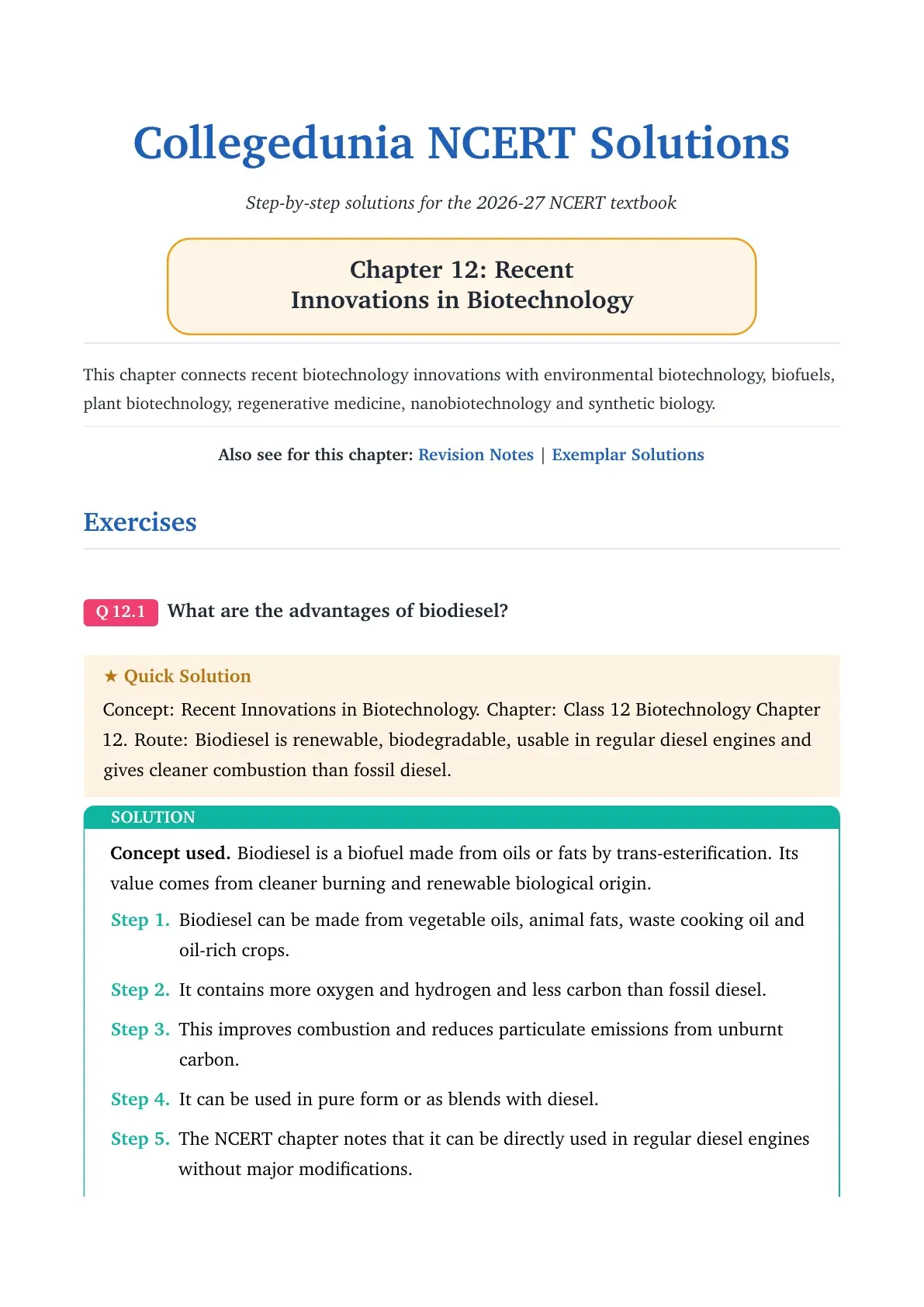
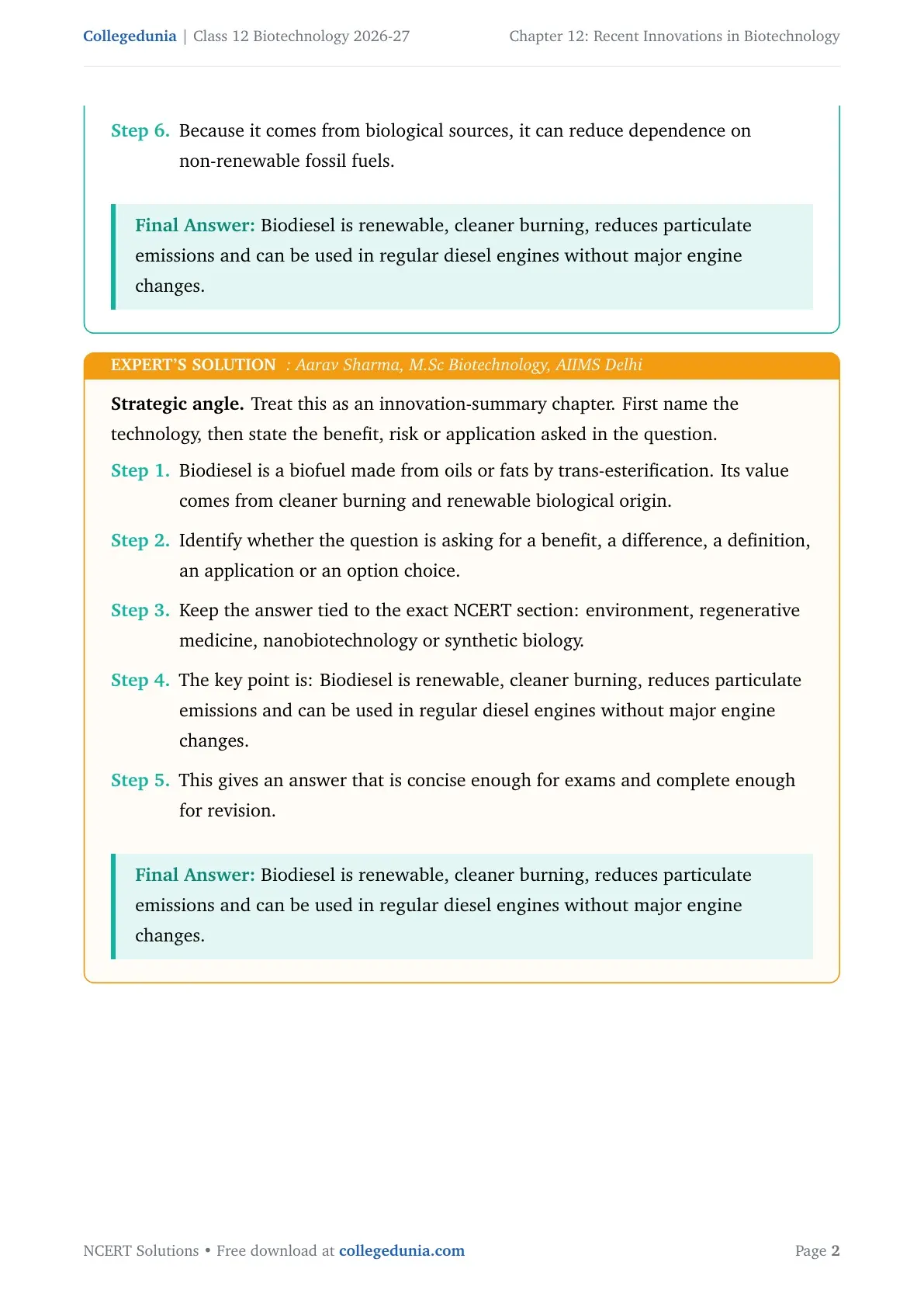
The NCERT Solutions for Class 12 Biotechnology Chapter 12 Recent Innovations in Biotechnology cover all 15 exercise questions from the latest 2026-27 NCERT textbook. The answers explain biodiesel, biodegradation, bioremediation, organoids, nanomaterials, quantum dots, carbon nanotubes and assertion-reason questions in direct exam language.
- Question count: 15 solved NCERT exercise questions with MCQ and assertion-reason answers.
- Best for: board revision, quick biotechnology recap and one-shot MCQ practice.
- PDF includes: stepwise solutions, expert explanations and boxed final answers.
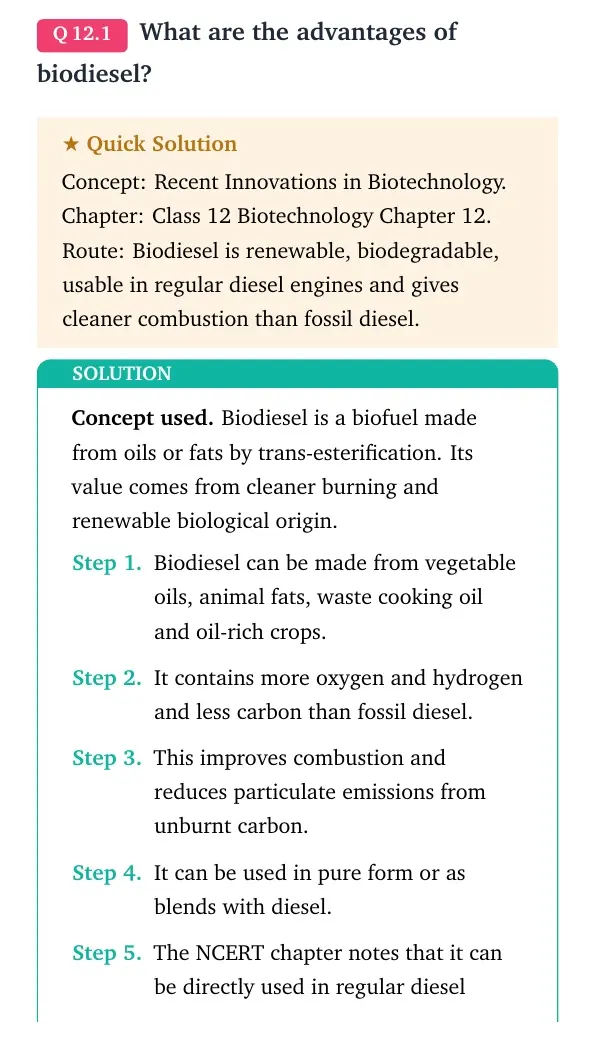
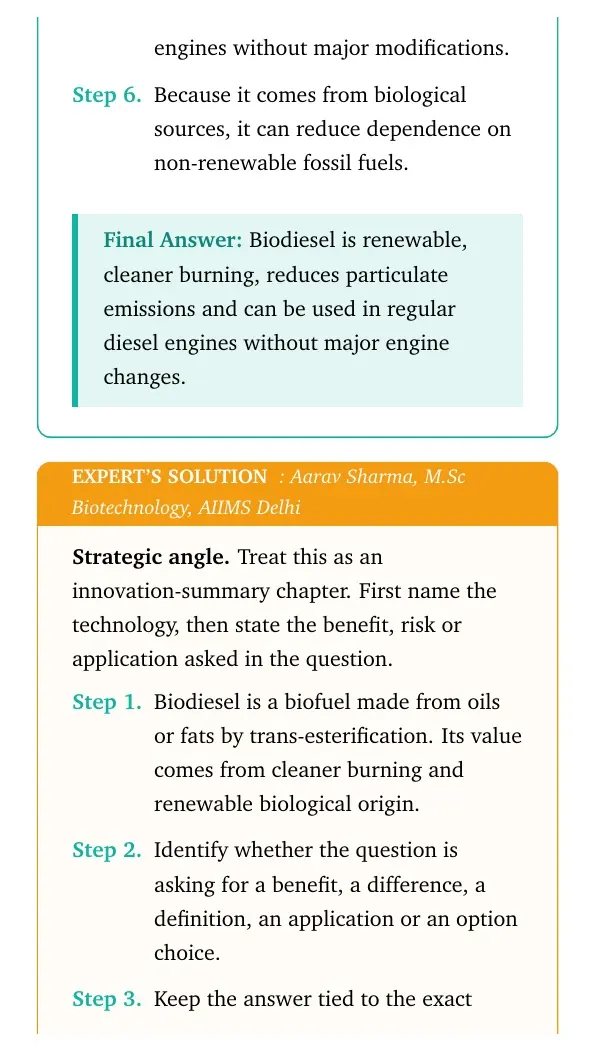
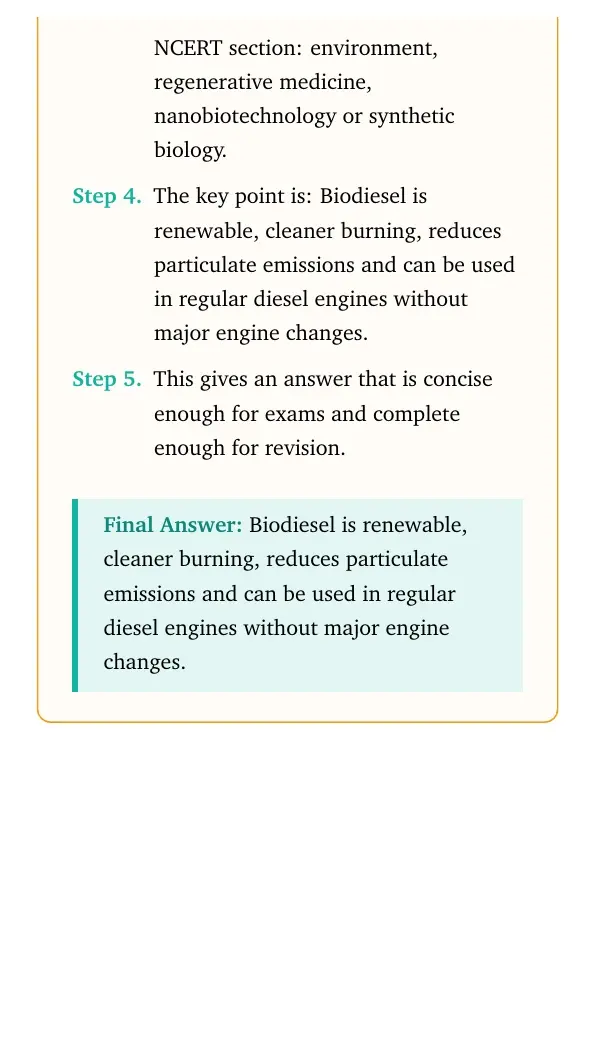
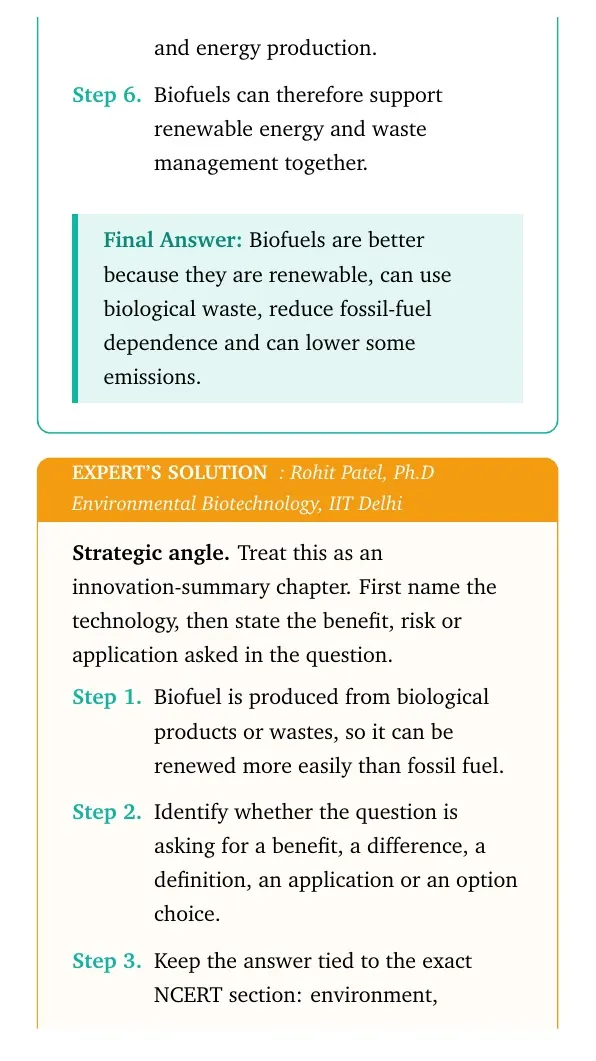
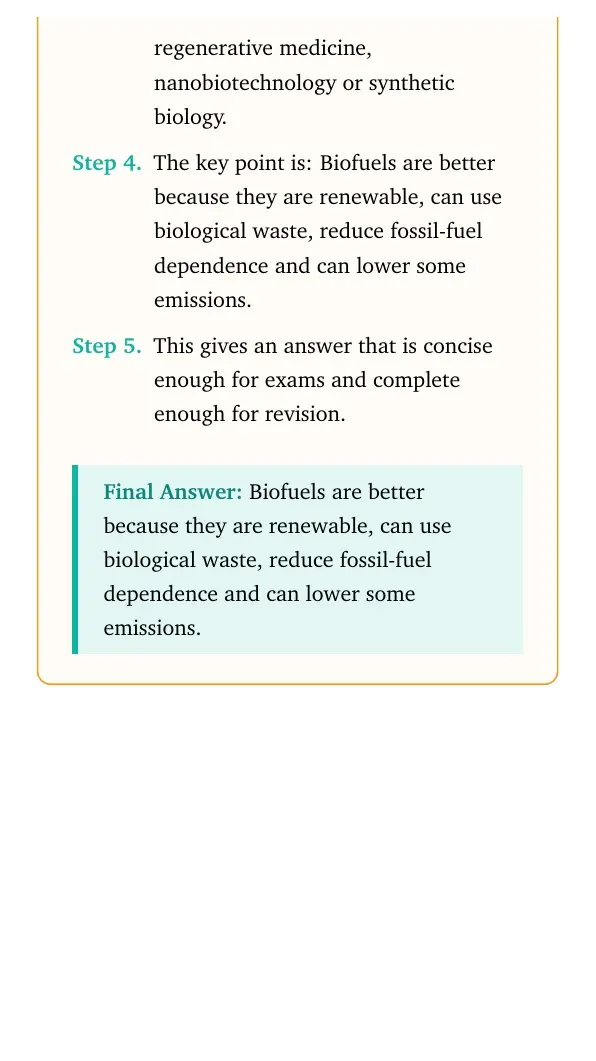
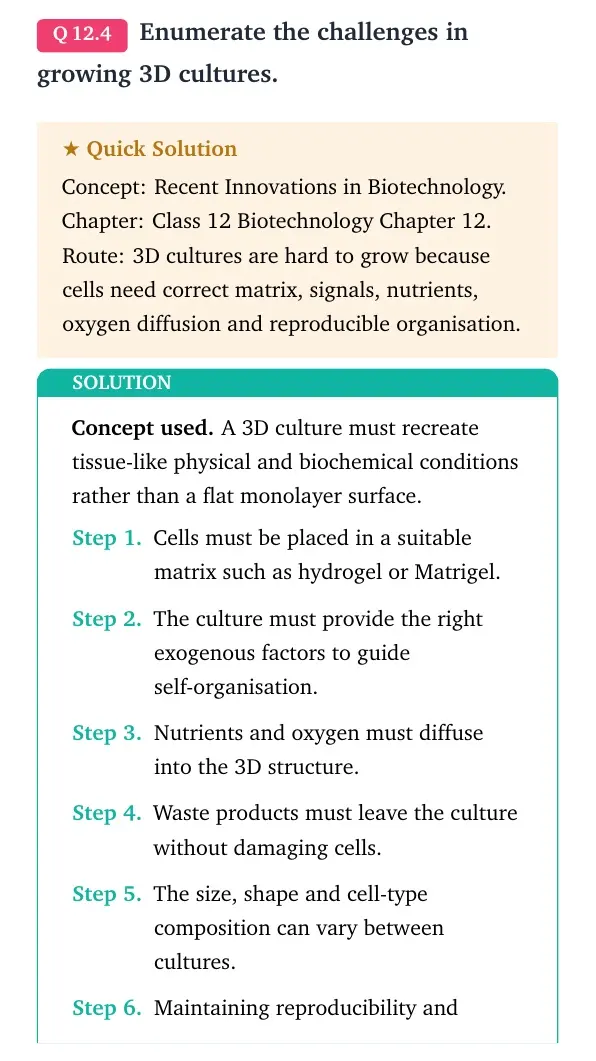
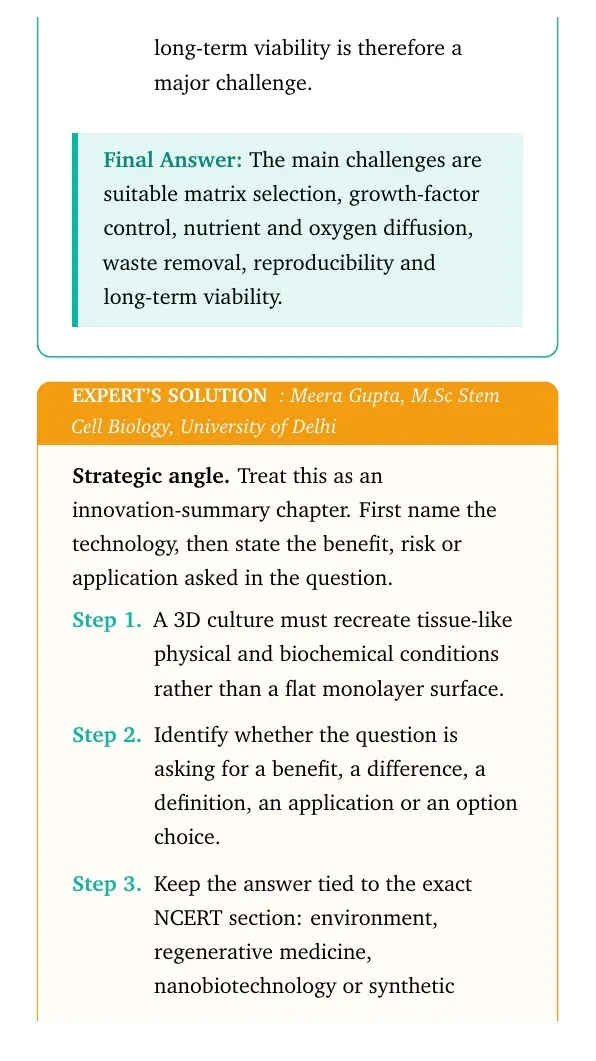
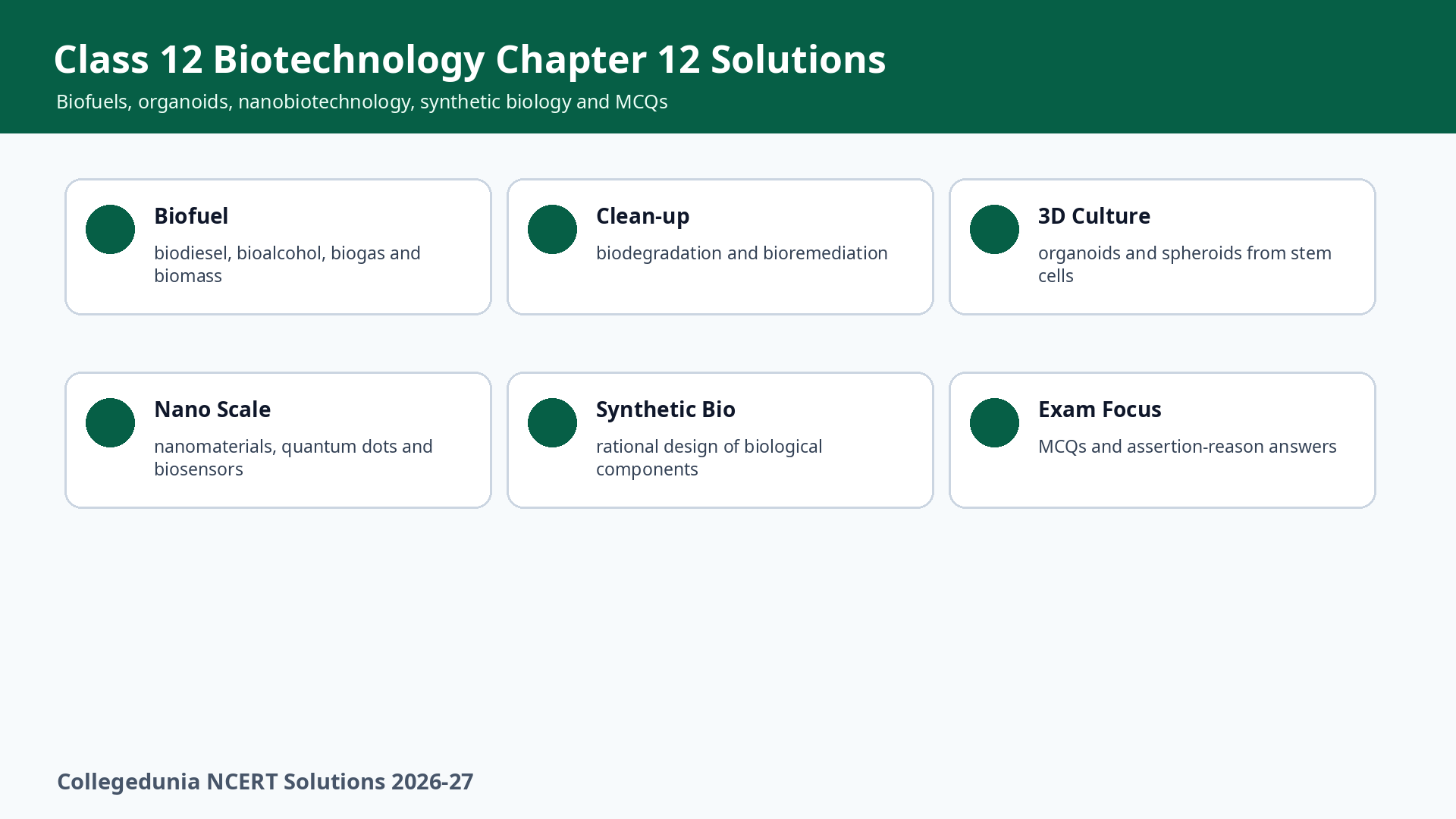
Student Feedback: Students usually score better in this chapter after grouping it into environmental biotechnology, regenerative medicine and nanobiotechnology.
Class 12 Biotechnology Chapter 12 Recent Innovations in Biotechnology Solutions PDF
Class 12 Biotechnology Chapter 12 Recent Innovations in Biotechnology NCERT Solutions help students revise how biotechnology is used in clean energy, waste treatment, stem-cell models, nanomedicine and synthetic biology. The chapter is broad, so the easiest method is to connect each innovation with its purpose.
Exam cue: biofuel questions need advantages and examples, while nanobiotechnology questions need size, property and application.
How to Use These Recent Innovations NCERT Solutions
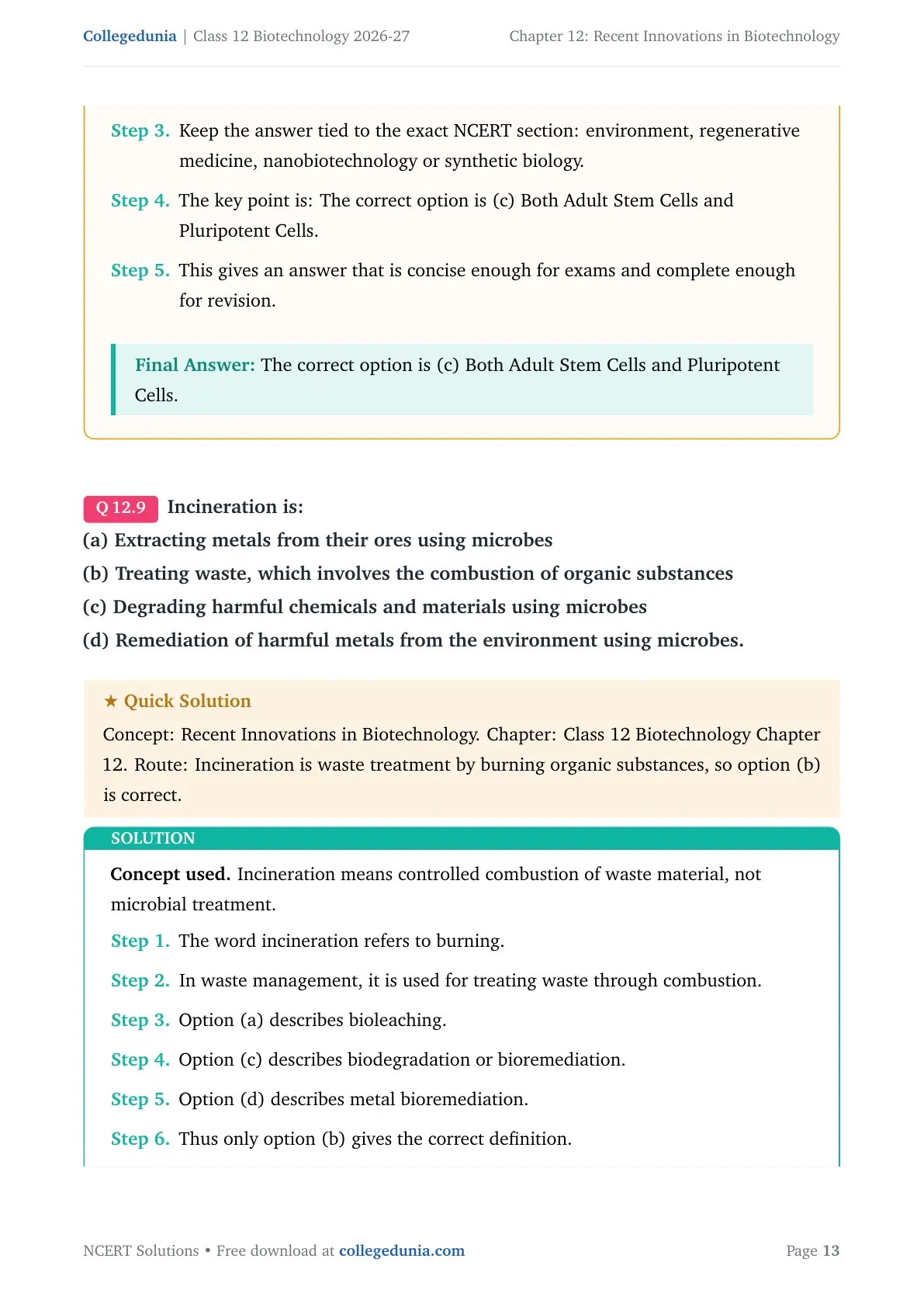
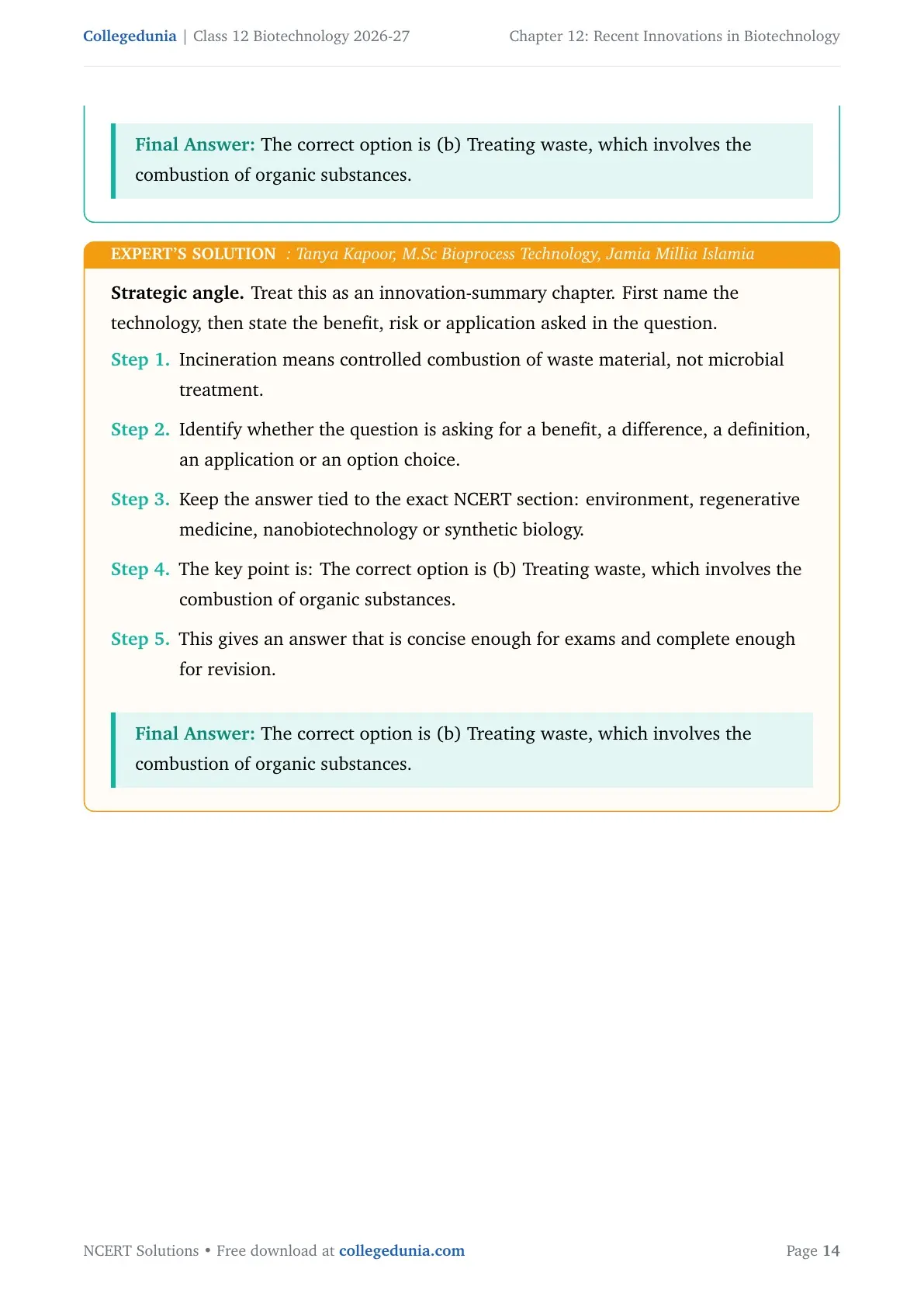
Start with environmental biotechnology because the first three exercise answers come from biodiesel, biofuel and biodegradation. Then revise regenerative medicine, organoids, spheroids and nanomaterials. Finish by practising the MCQs and assertion-reason answers.
- Use the boxed answer for quick board-style recall.
- Use the expert answer when the question asks for explanation or differences.
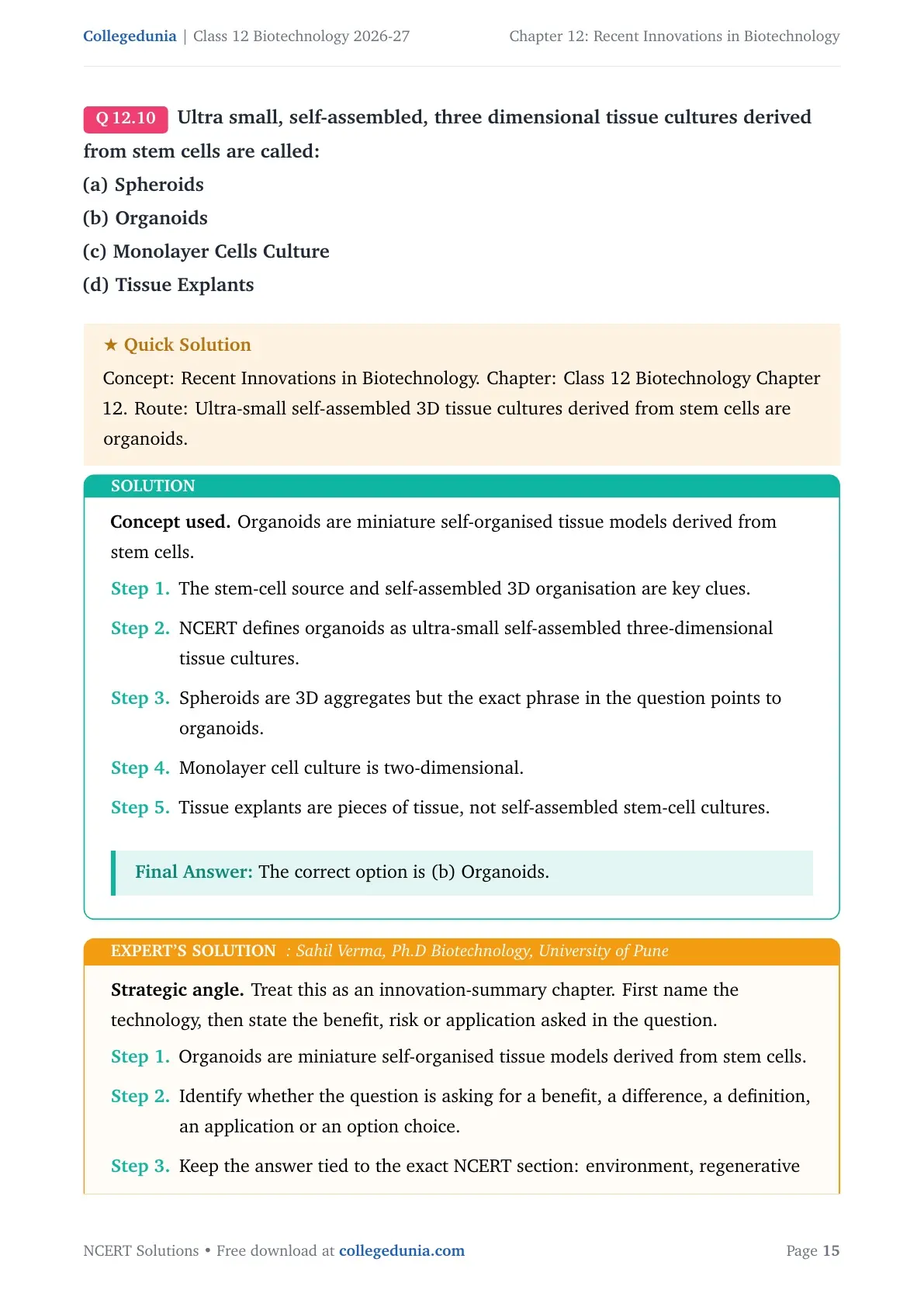
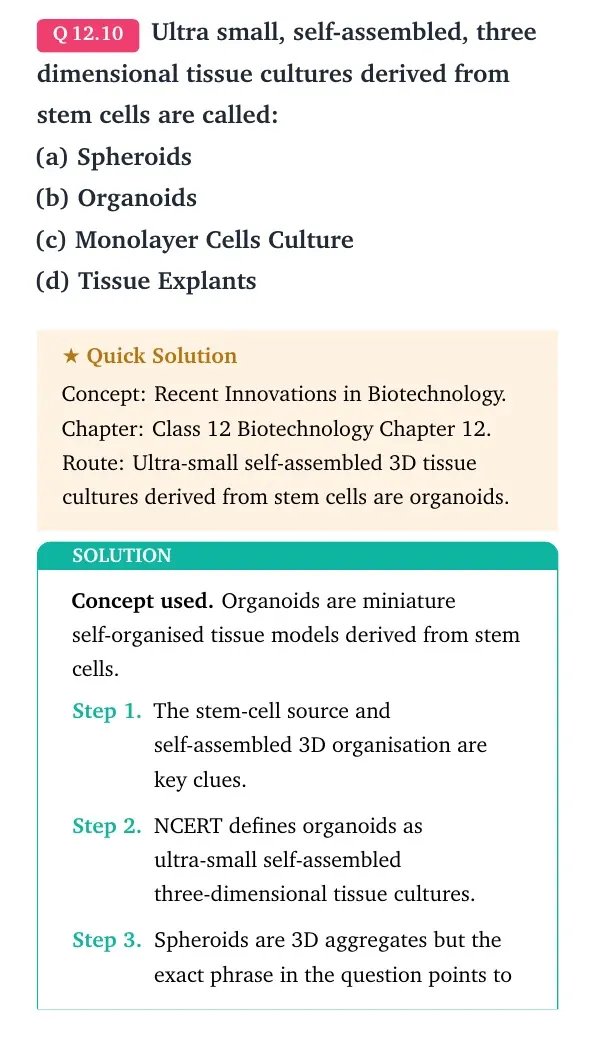
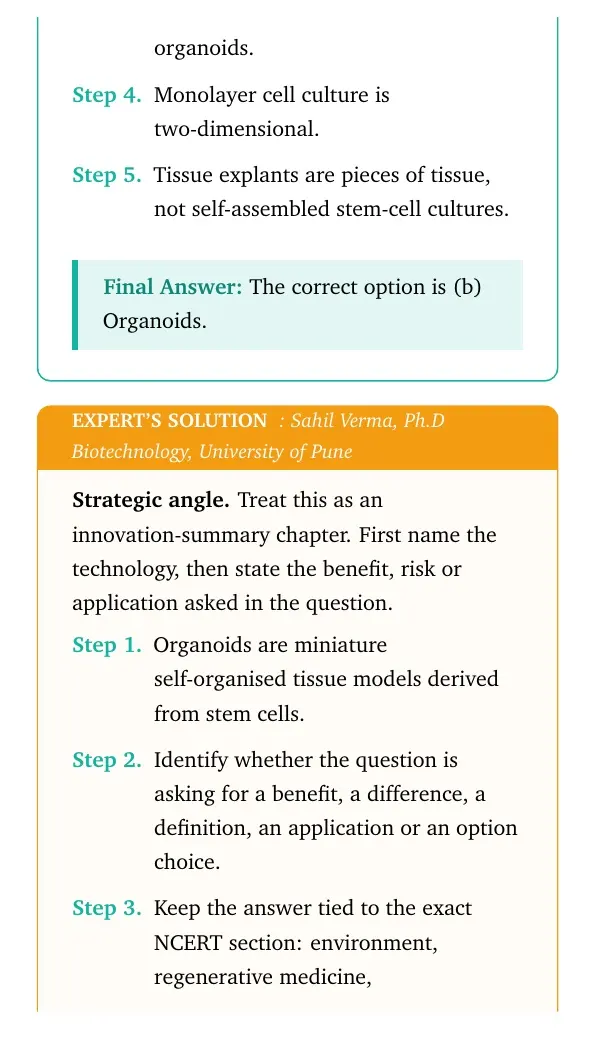
- Remember that organoids are the exact answer for ultra-small self-assembled 3D tissue cultures.
Environmental Biotechnology Revision Map
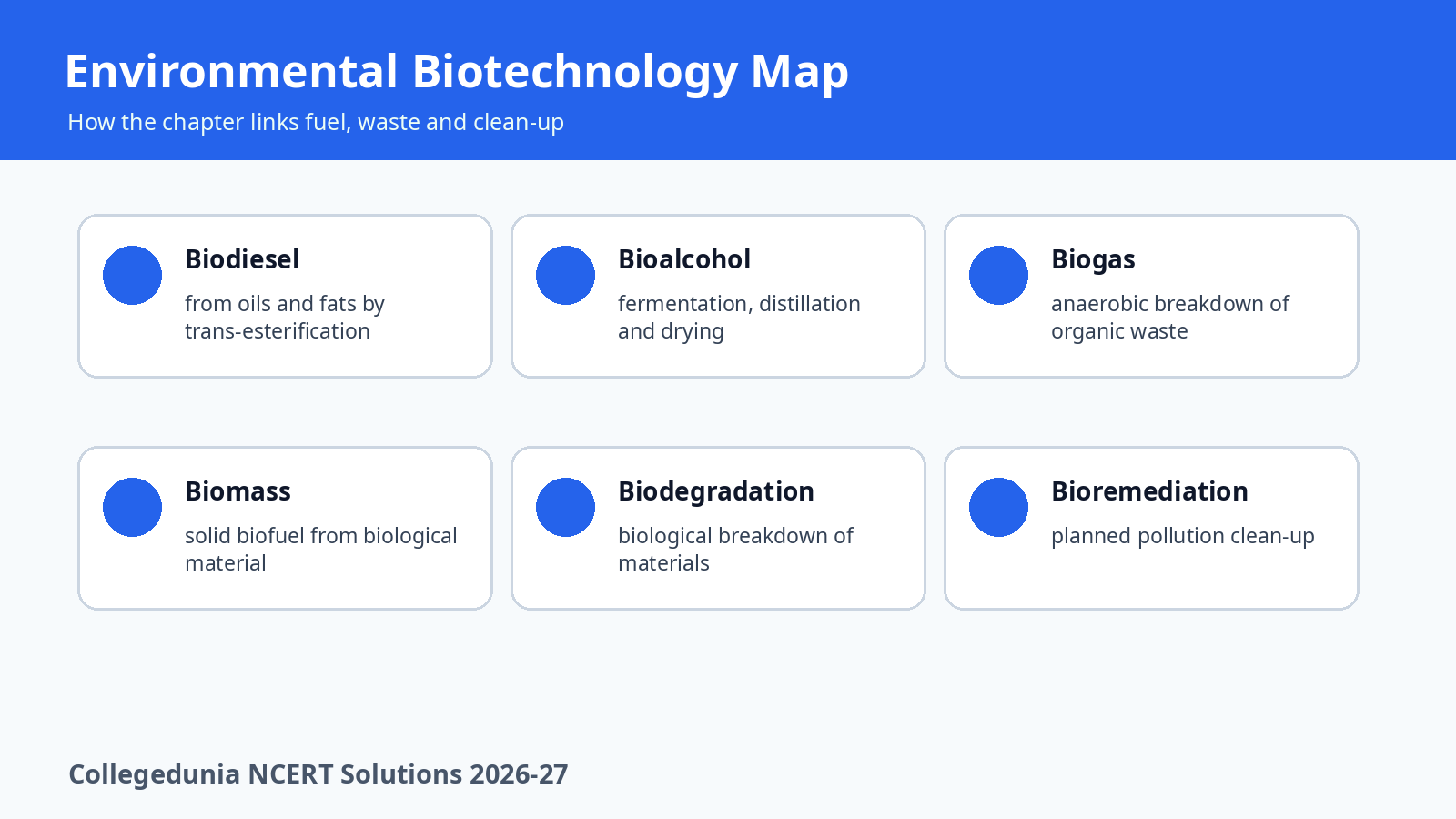
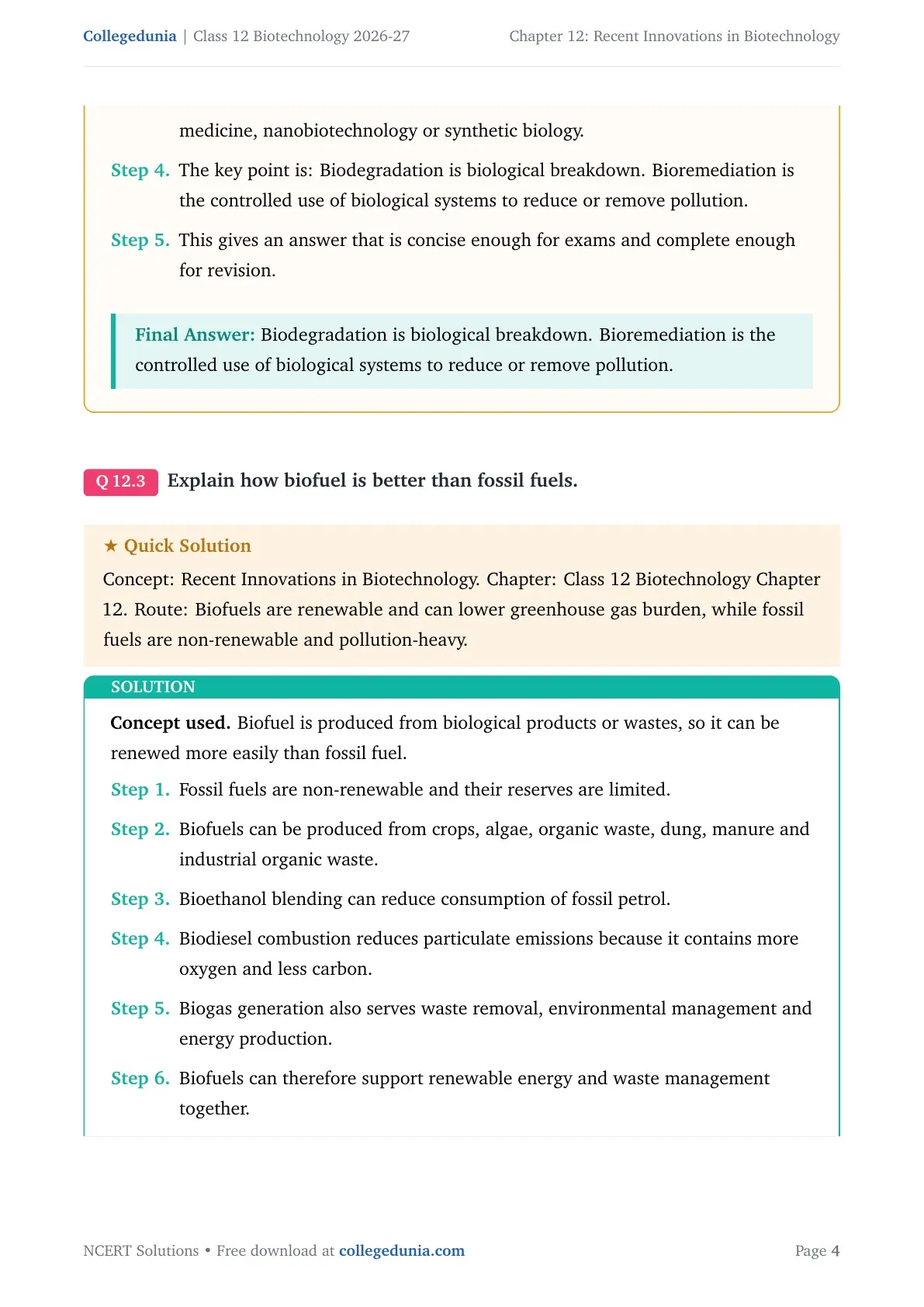
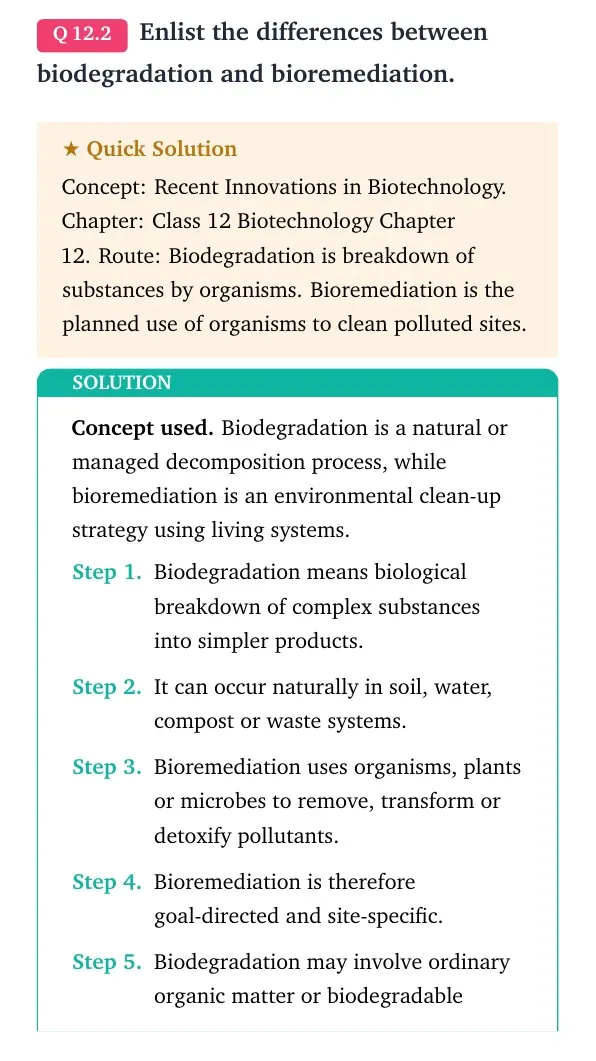
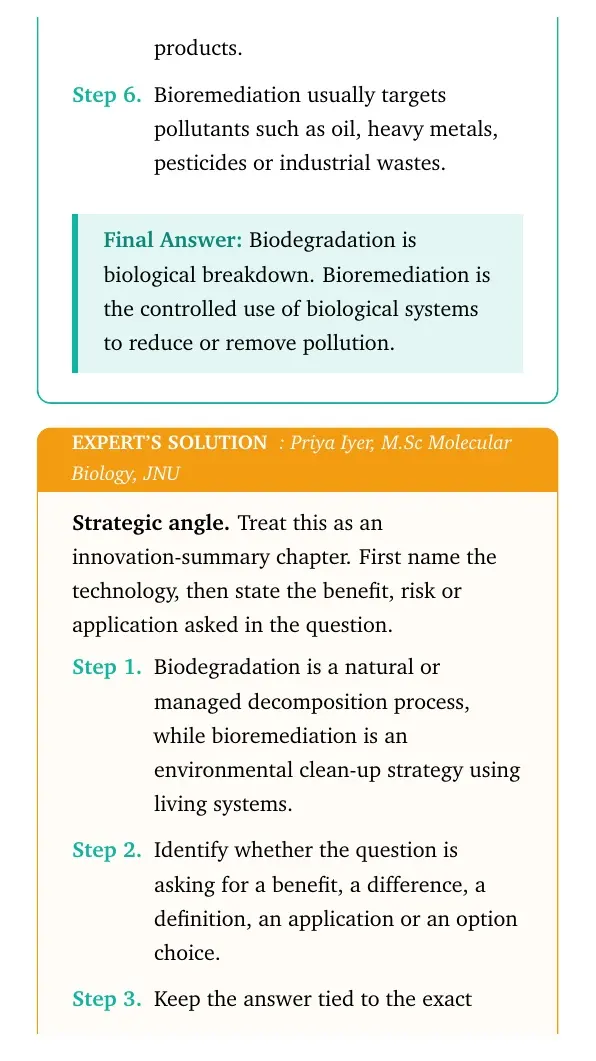
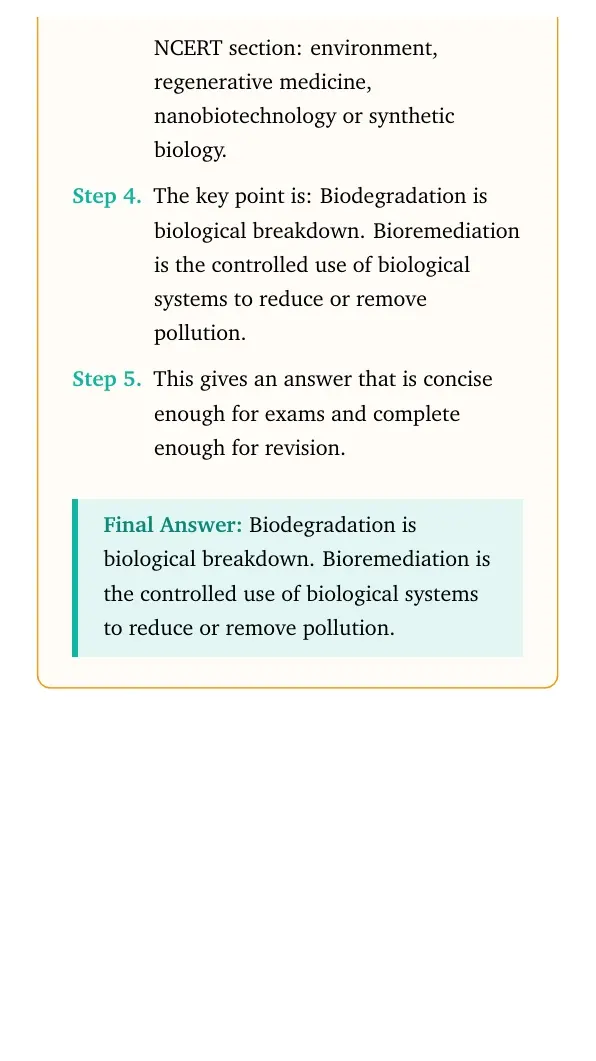
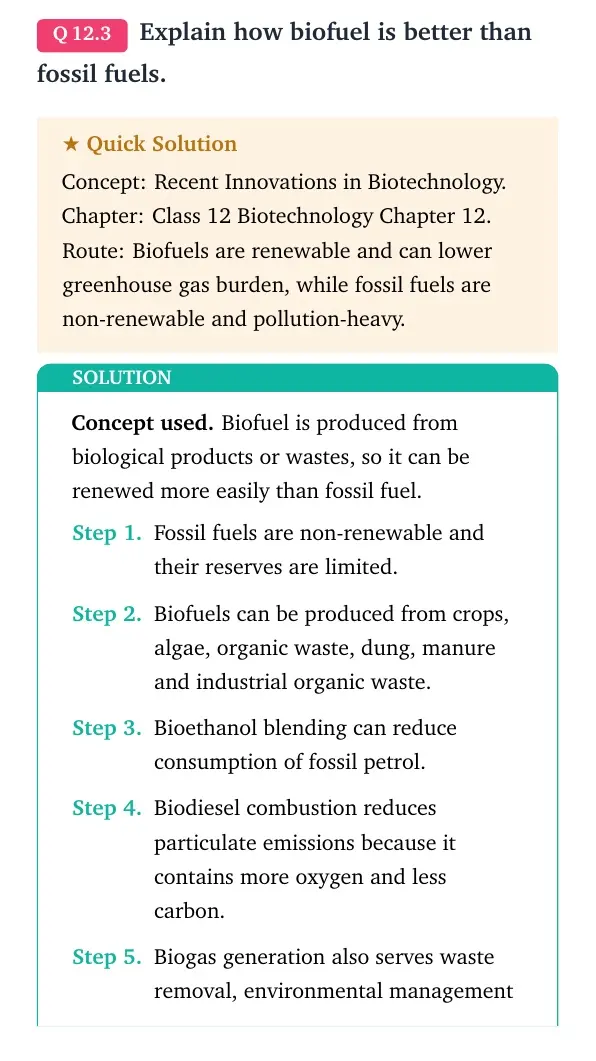
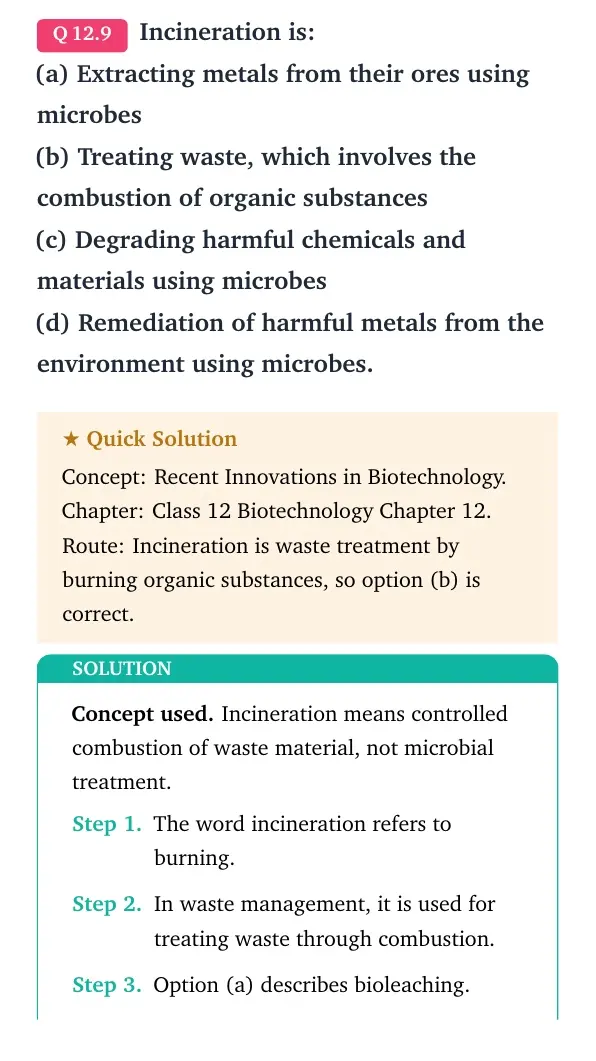
Environmental biotechnology uses biological systems to prevent, reduce or manage pollution. Biofuels reduce dependence on fossil fuels, while biodegradation and bioremediation help manage waste and contaminants.
| Term | Meaning | Chapter Use |
|---|---|---|
| Biodiesel | Biofuel made from oils and fats | Cleaner combustion and reduced particulate emissions |
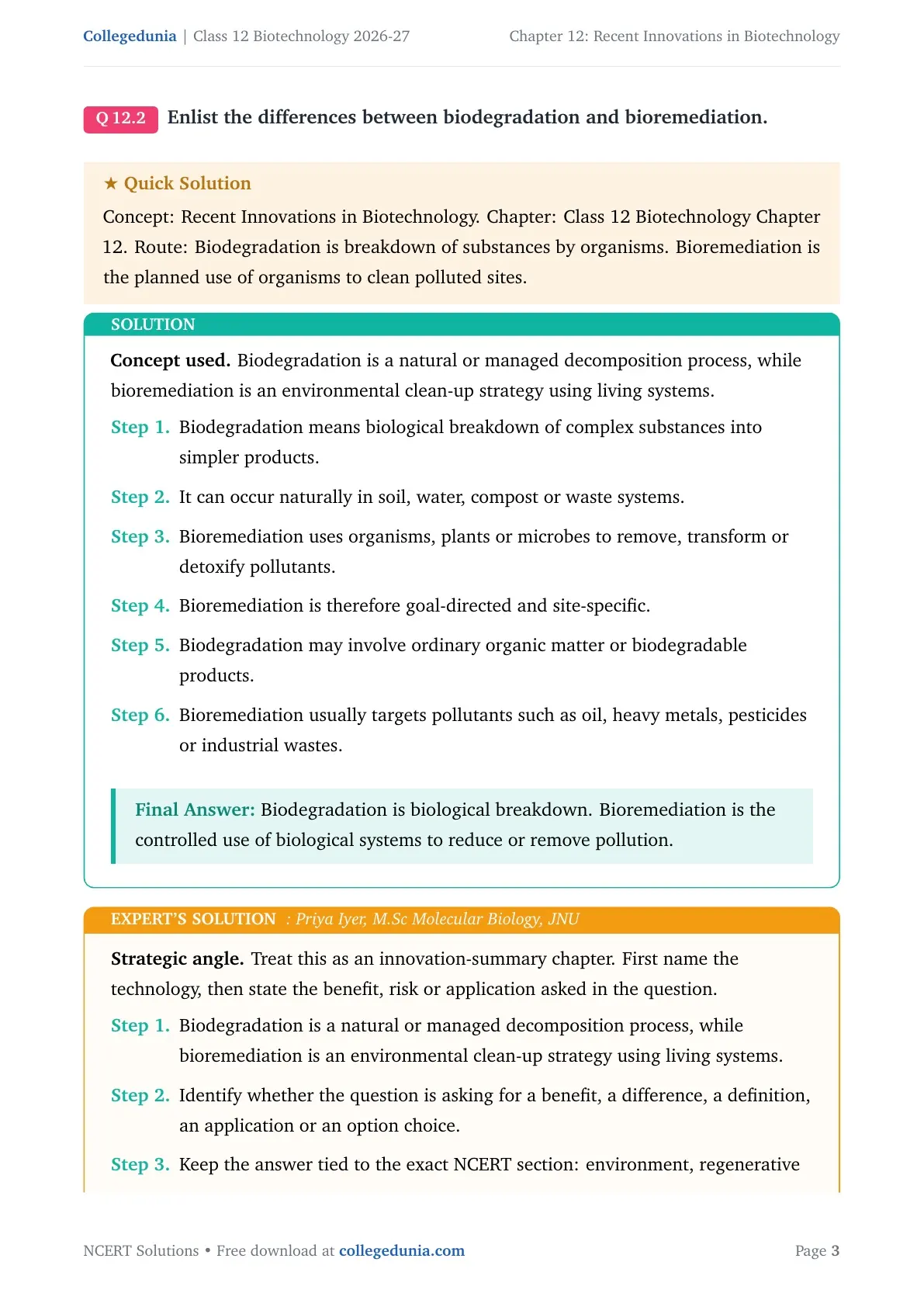
| Biodegradation | Biological breakdown of materials | Waste recycling and product breakdown |
| Bioremediation | Planned biological clean-up | Pollution reduction using plants or microbes |
Organoids, Nanobiotechnology and Synthetic Biology
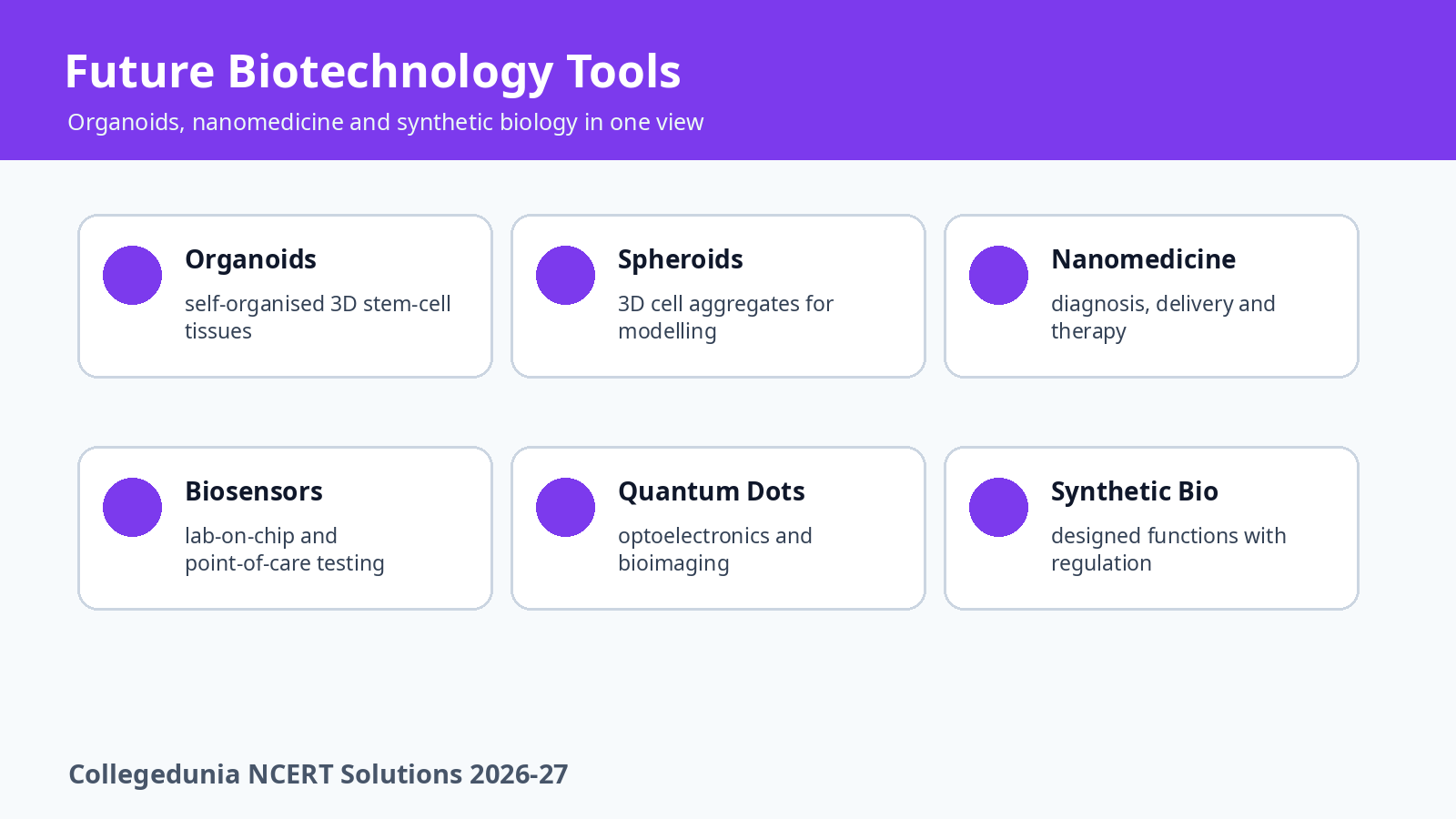
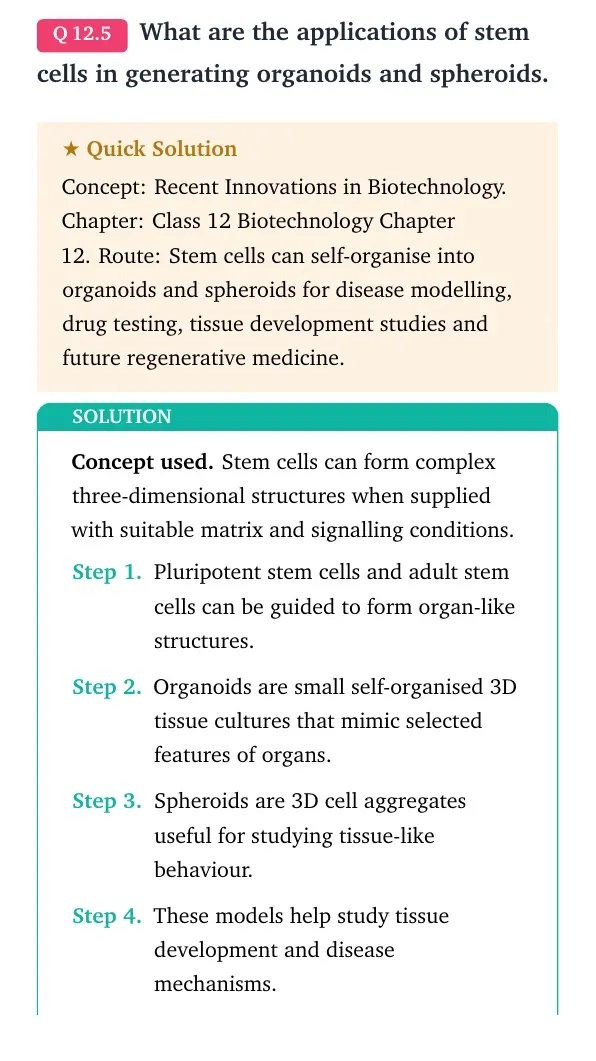
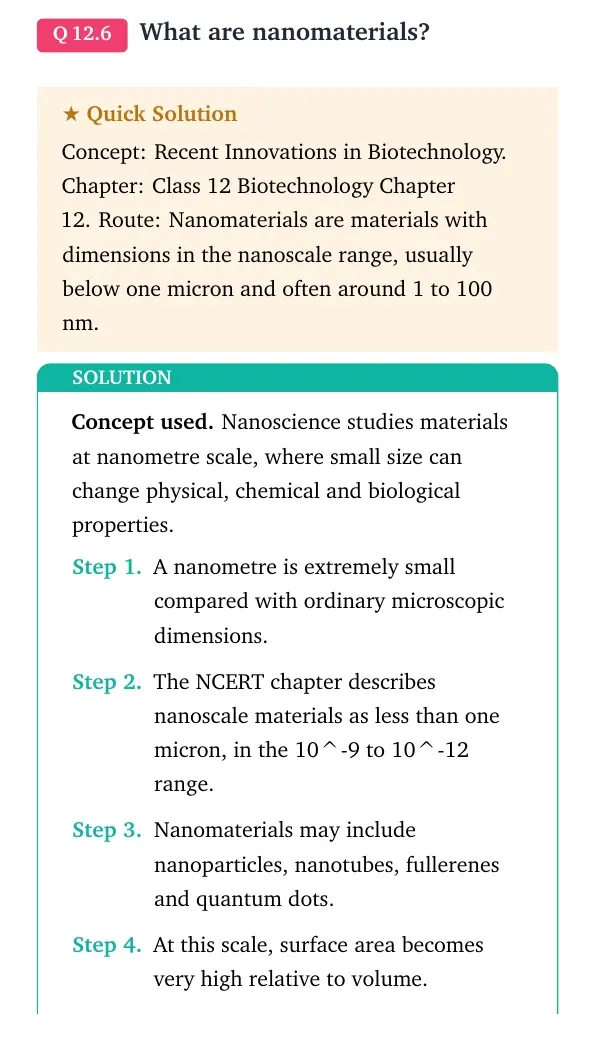
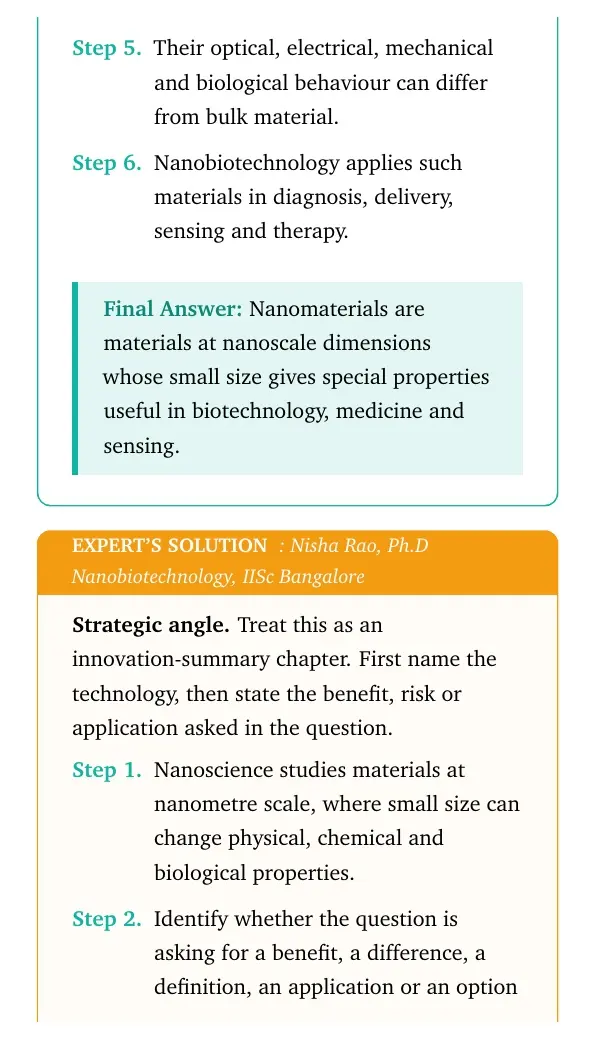
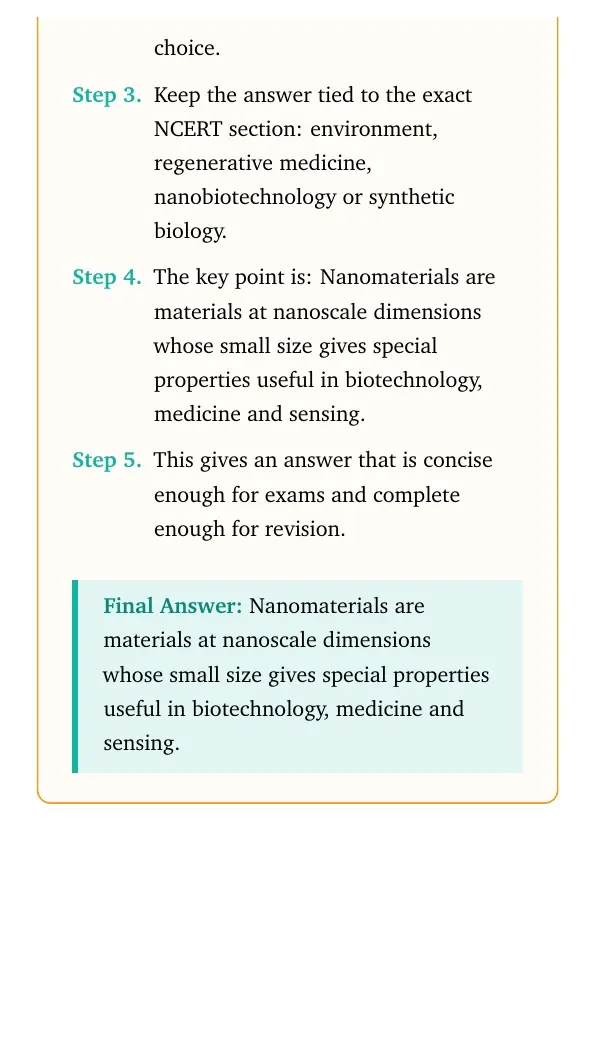
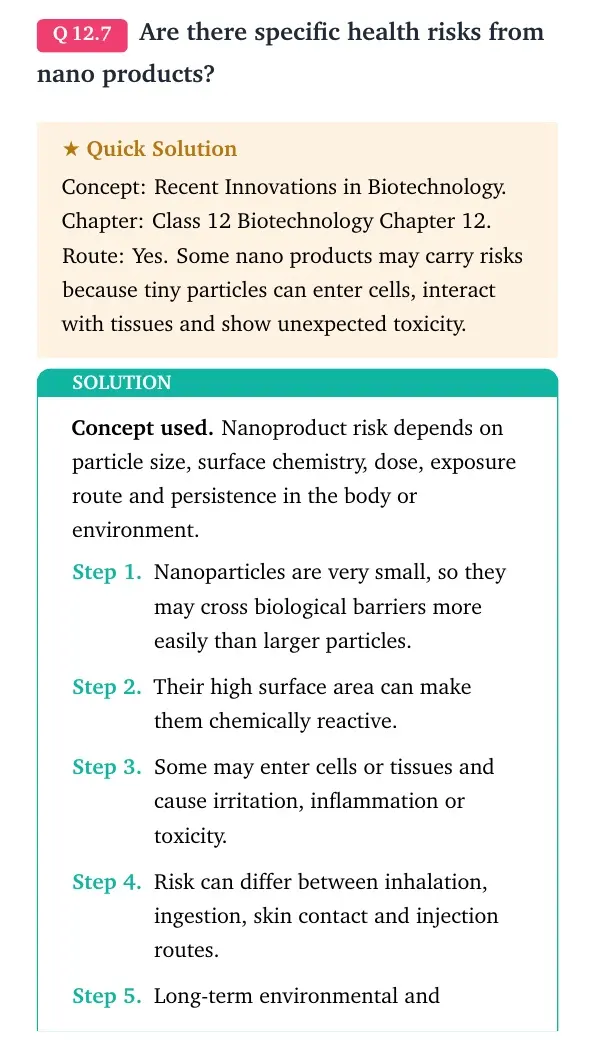
Regenerative medicine uses stem-cell systems such as organoids and spheroids to model tissues. Nanobiotechnology applies nanoscale materials in diagnosis, drug delivery, biosensors and therapy. Synthetic biology designs biological parts for chosen functions and needs ethical regulation.
Recent Innovations in Biotechnology Video Revision
Source: YouTube biotechnology revision channel
Check All Recent Innovations Exercise Answers
The solved question cards below let students open the main solution and expert solution separately.
Related Class 12 Biotechnology Resources
| Resource | Use it for |
|---|---|
| Recent Innovations in Biotechnology NCERT Book PDF | Read the official chapter before solving. |
| Recent Innovations in Biotechnology Notes | Revise biofuels, organoids and nanotechnology quickly. |
| Recent Innovations in Biotechnology Handwritten Notes | Use for one-shot exam recap. |
All Class 12 Biotechnology NCERT Solutions
| Chapter | NCERT Solutions |
|---|---|
| Chapter 10 Bioprocessing and Biomanufacturing | Open Chapter 10 Solutions |
| Chapter 11 Bioremediation | Open Chapter 11 Solutions |
| Chapter 12 Recent Innovations in Biotechnology | Open Chapter 12 Solutions |
Recent Innovations in Biotechnology NCERT Solutions FAQs
Ques. What is covered in Class 12 Biotechnology Chapter 12 Recent Innovations in Biotechnology NCERT Solutions?
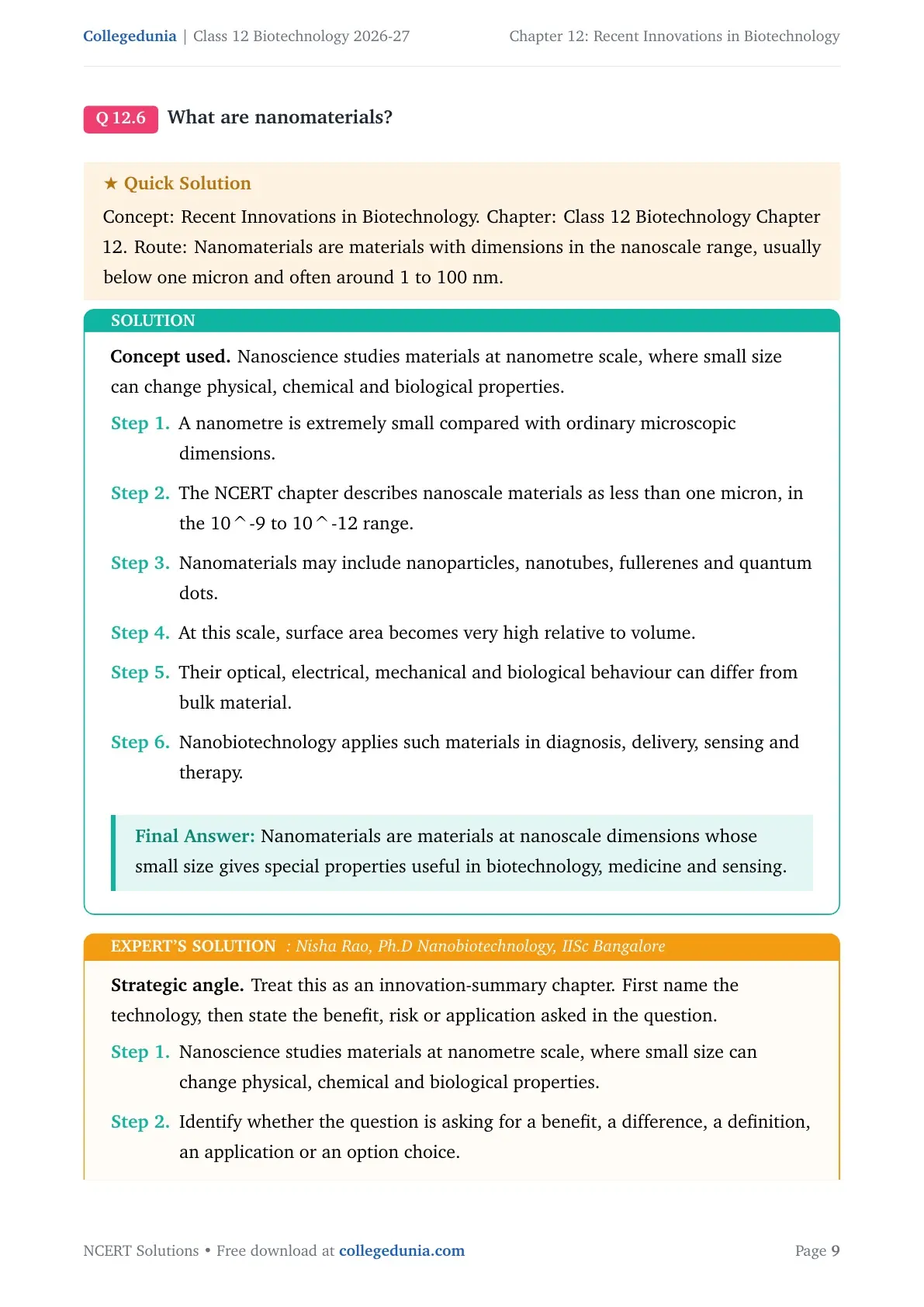
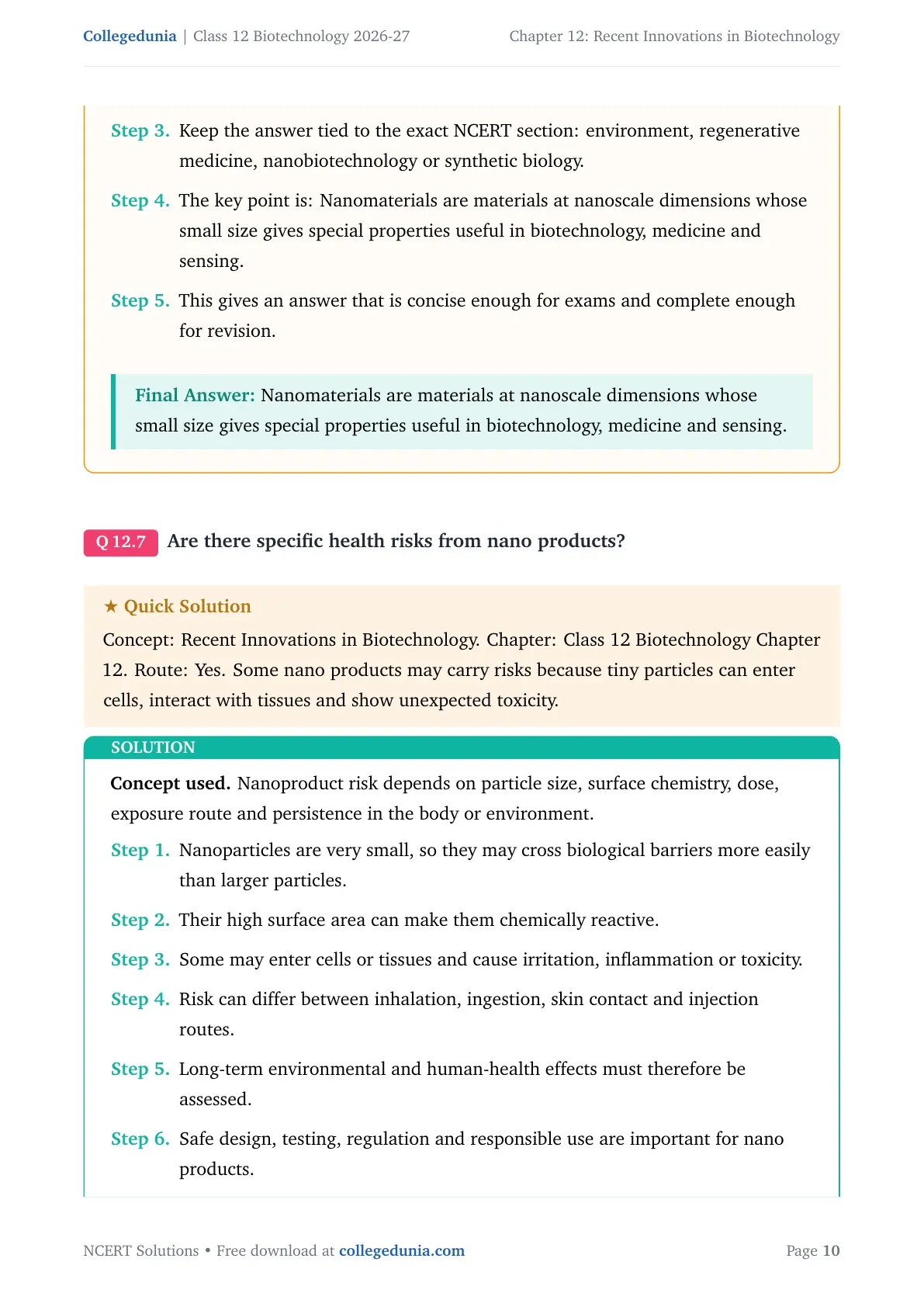
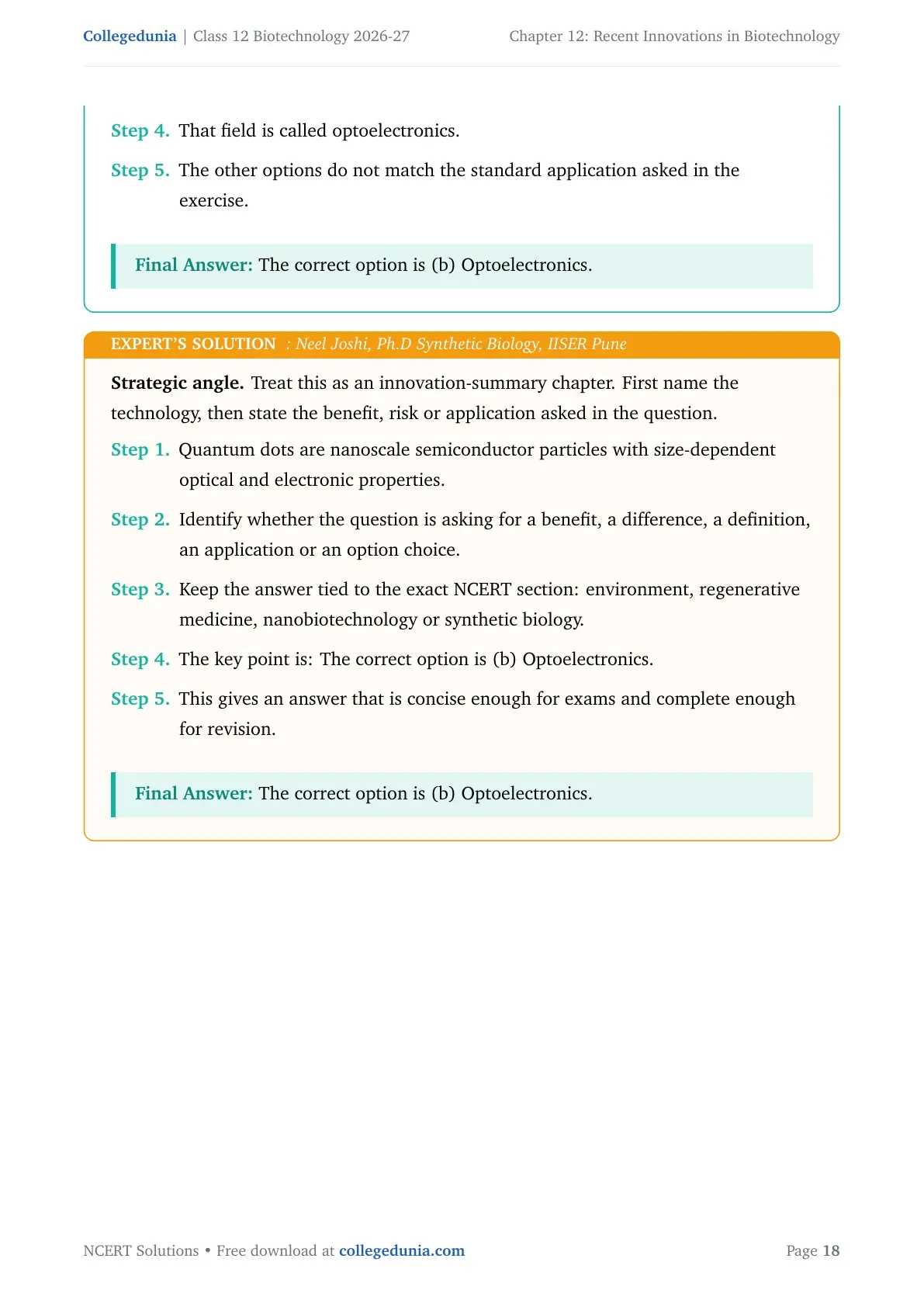
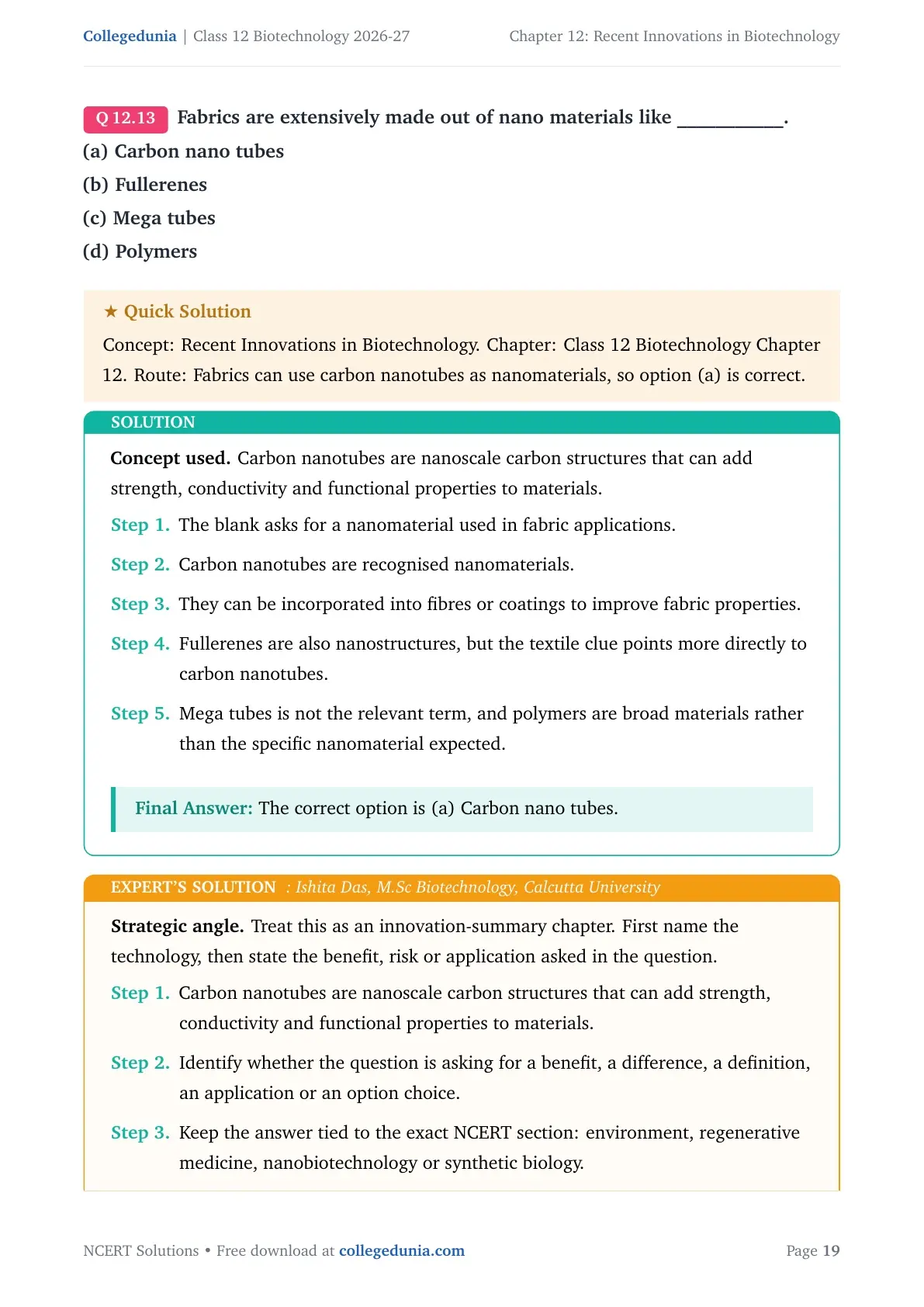
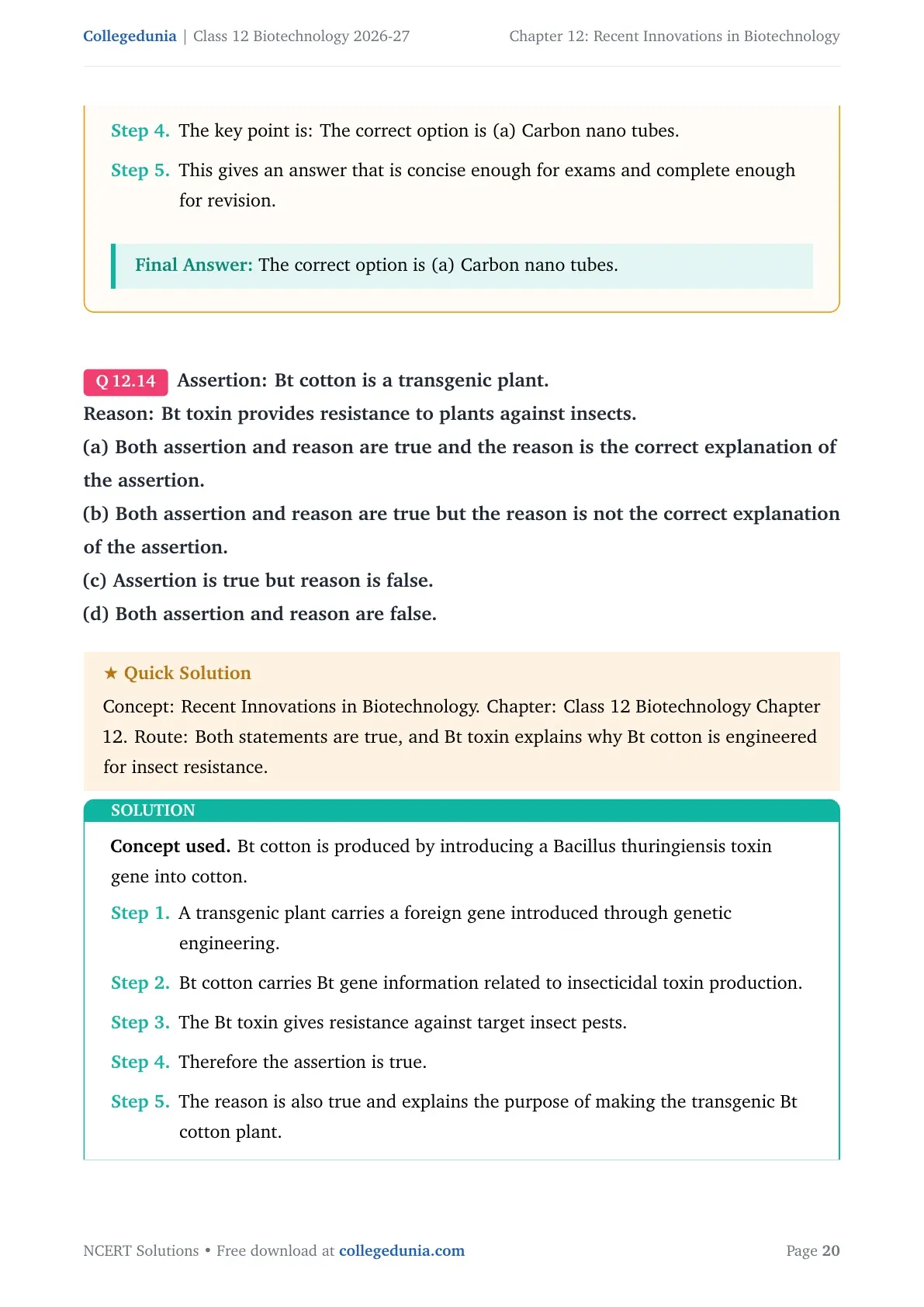
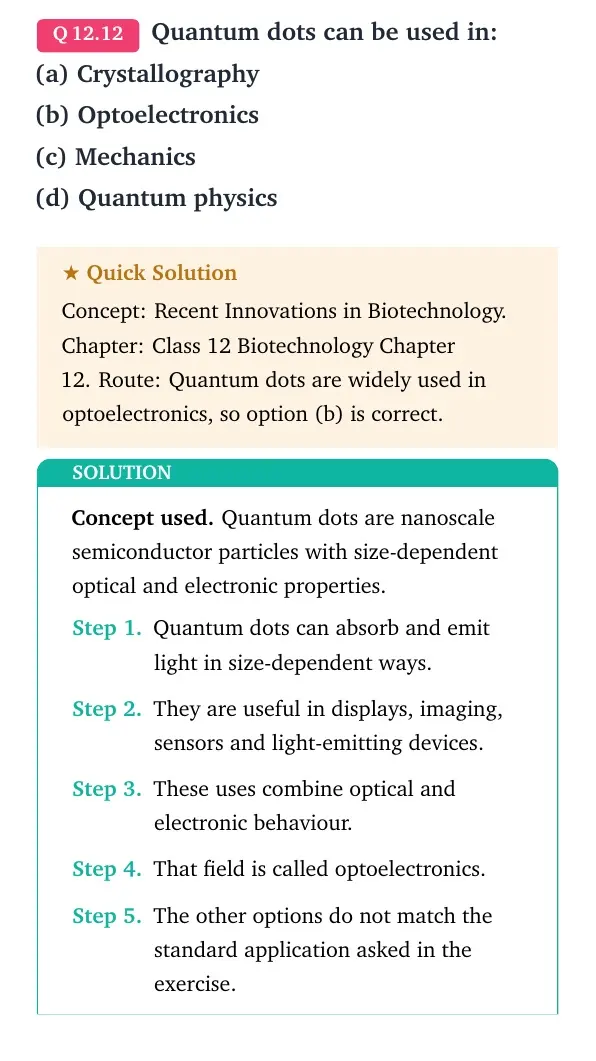
Ans. The solutions cover biodiesel, biofuel, biodegradation, organoids, spheroids, nanomaterials, quantum dots, carbon nanotubes and assertion-reason answers.
Ques. What is the difference between biodegradation and bioremediation?
Ans. Biodegradation is biological breakdown, while bioremediation is planned use of living systems to clean pollutants.
Ques. What are organoids?
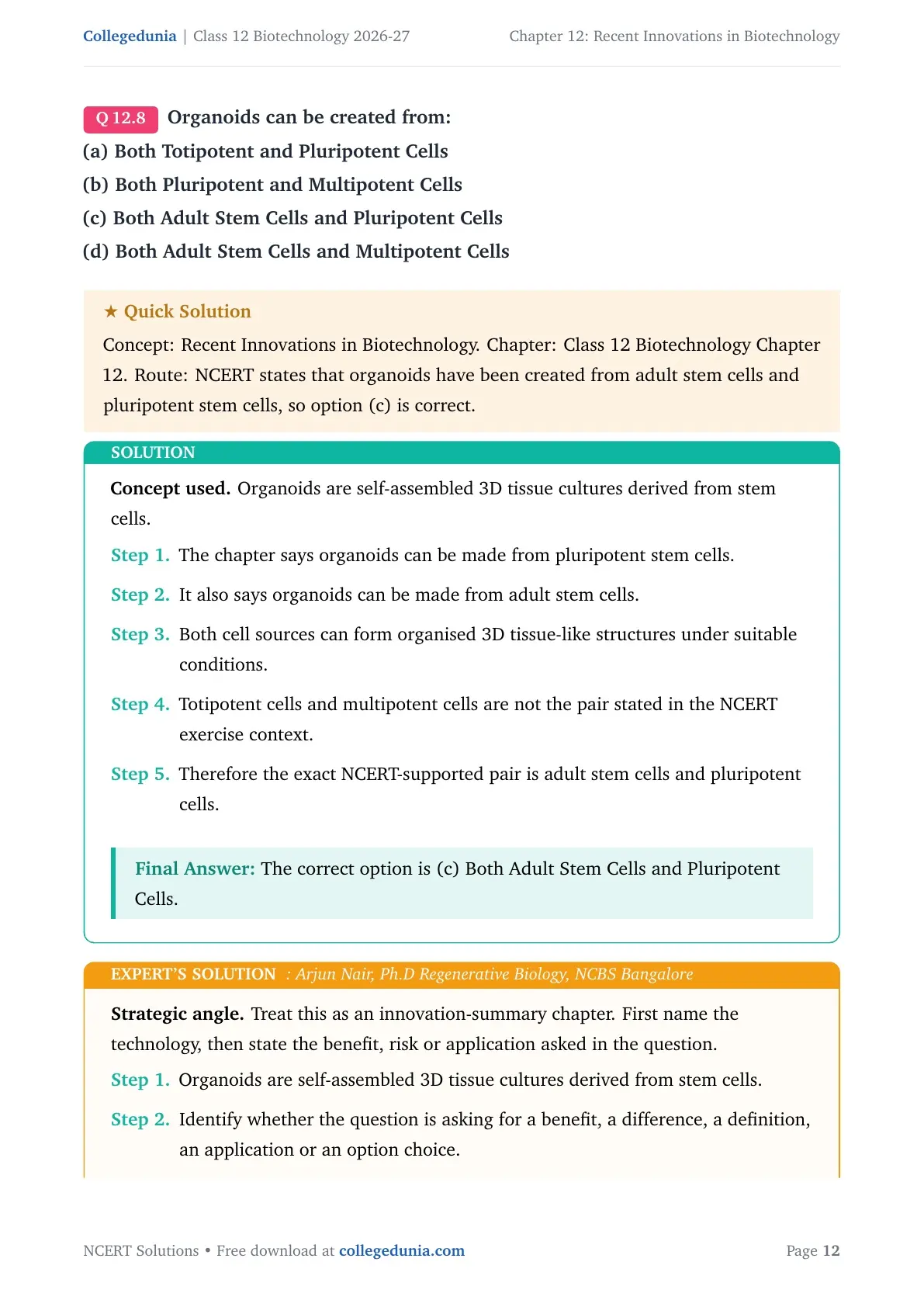
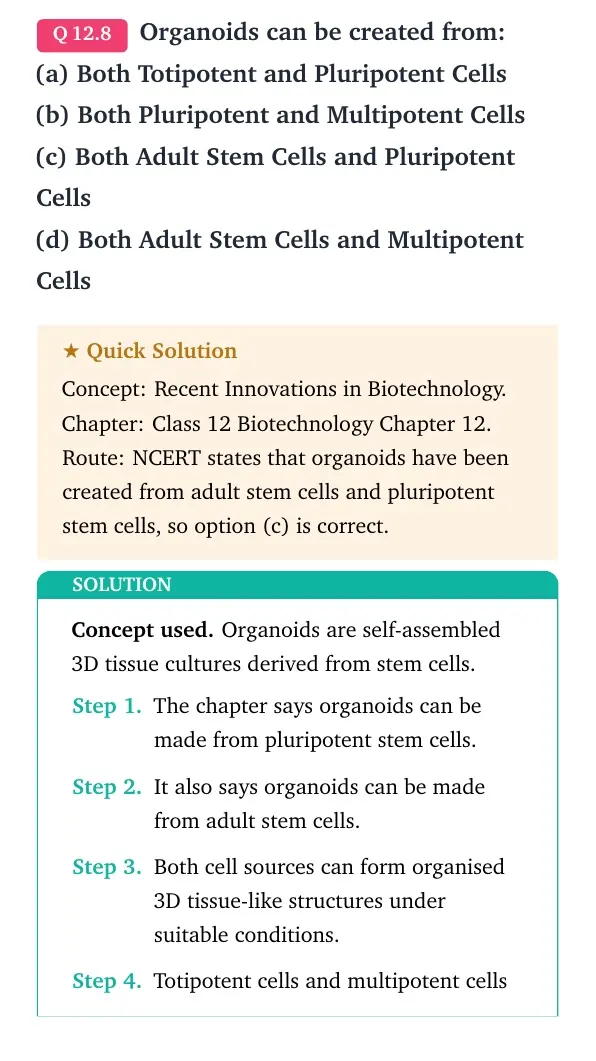
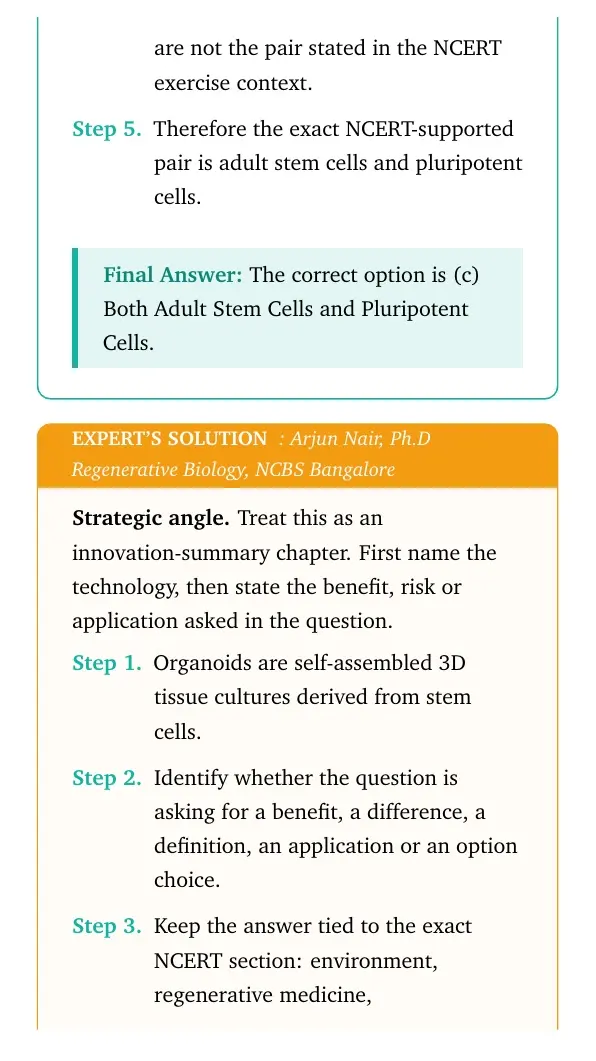
Ans. Organoids are ultra-small, self-assembled three-dimensional tissue cultures derived from stem cells.
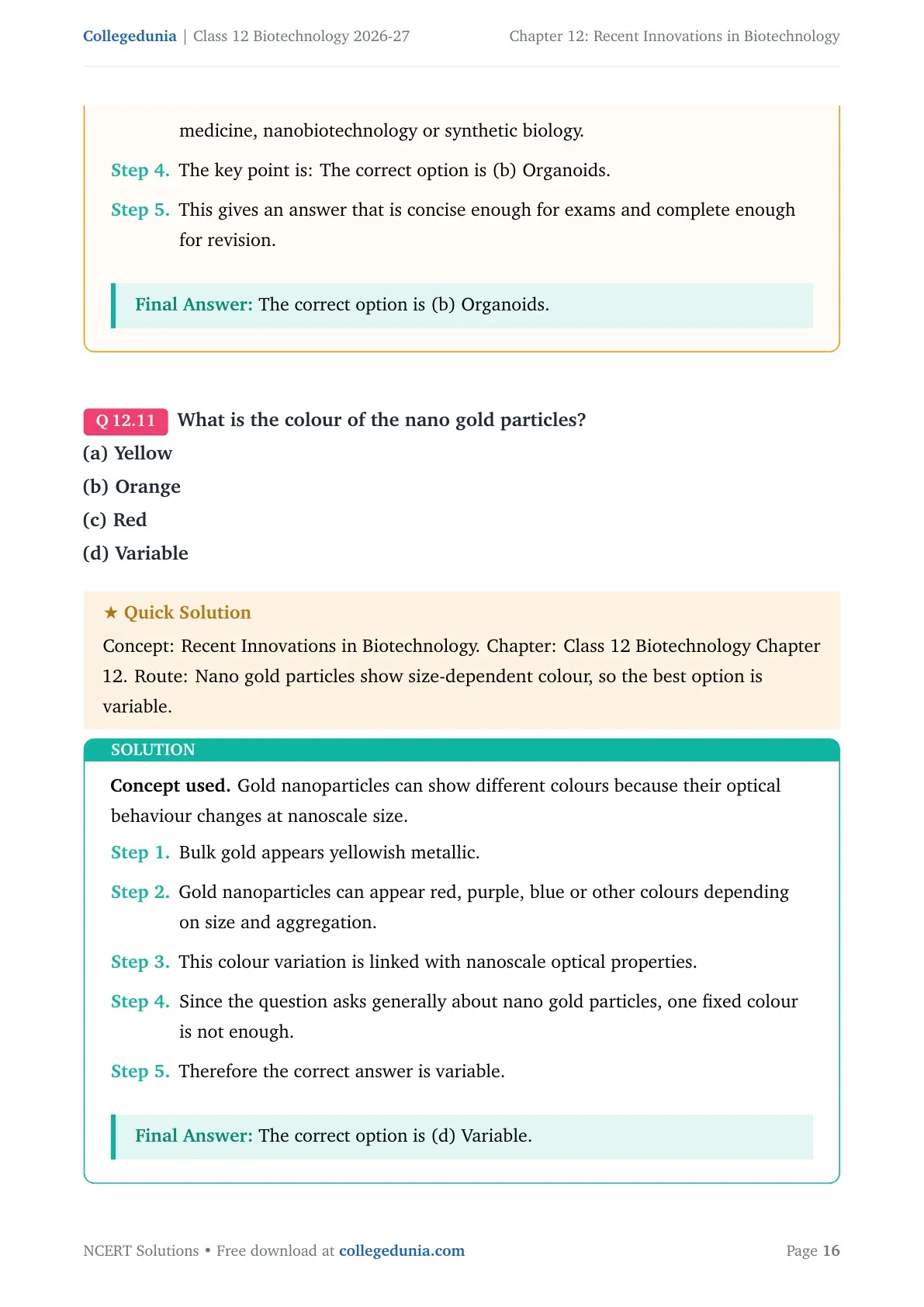
Ques. What is the correct answer for nano gold particle colour?
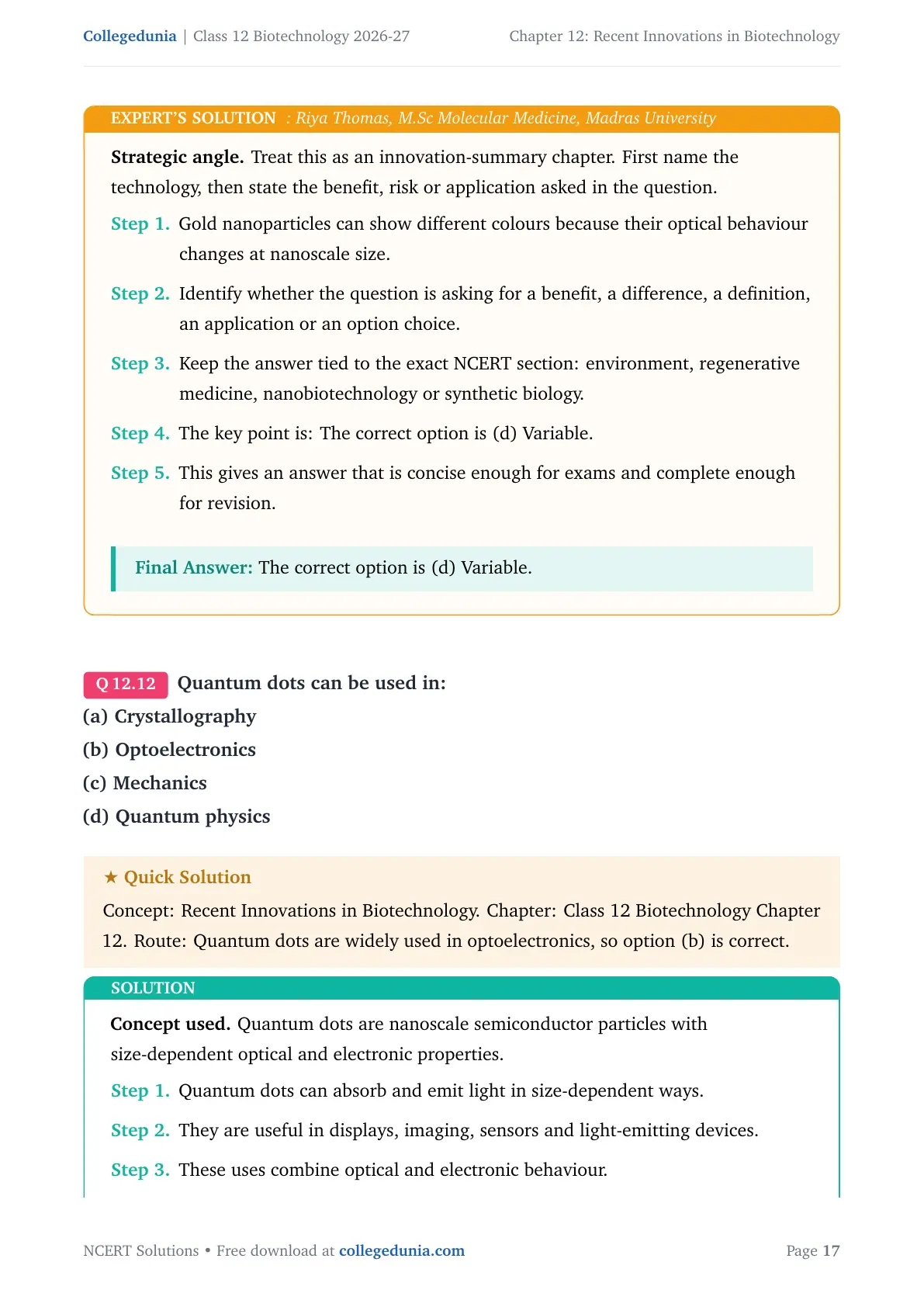
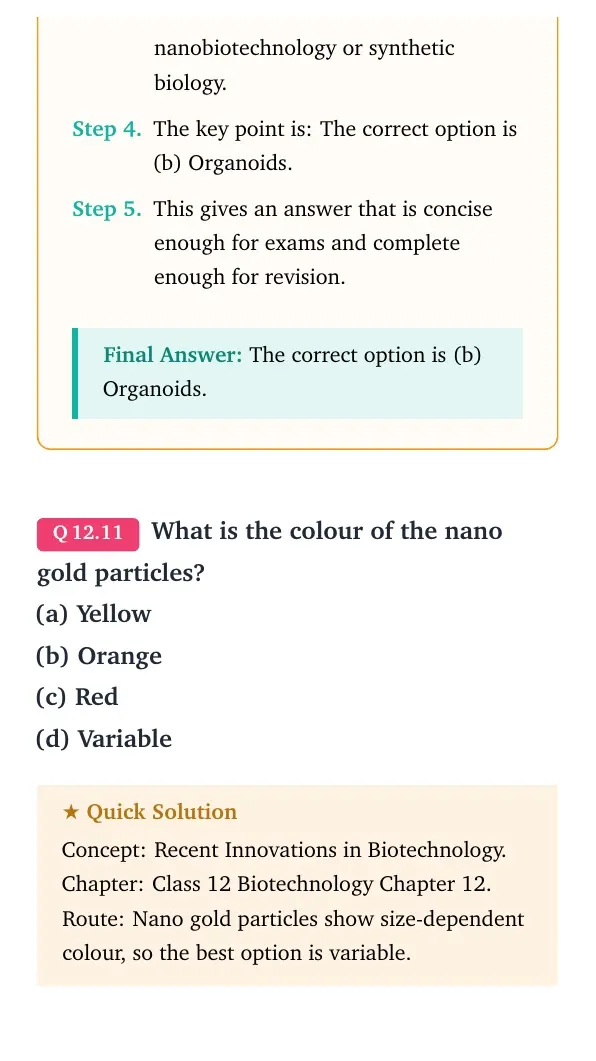
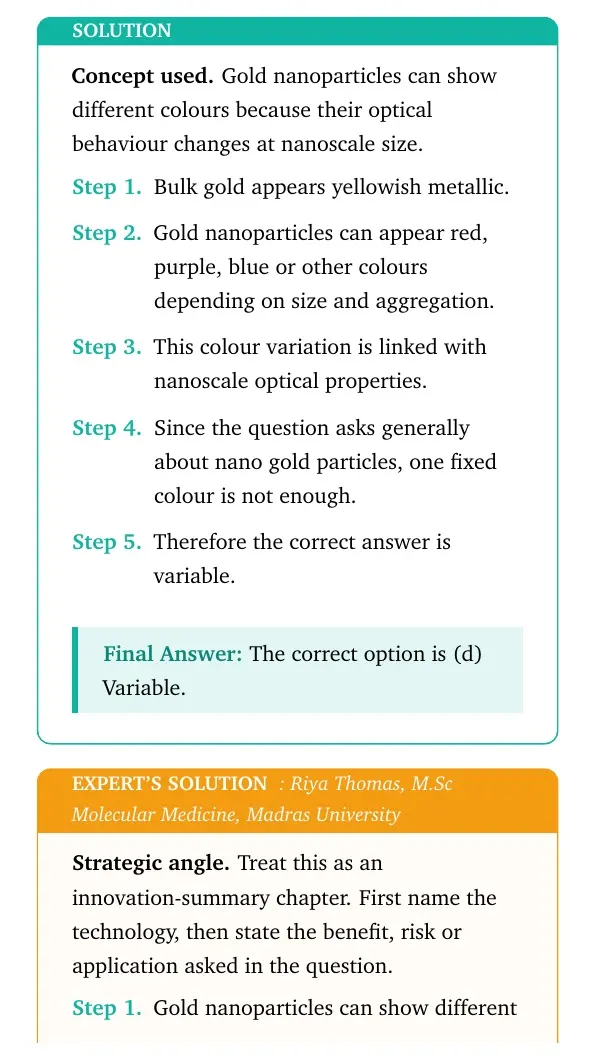
Ans. The correct answer is variable because gold nanoparticles show size-dependent optical properties.



Comments