



The NCERT Solutions for Class 6 Social Science Chapter 7 India's Cultural Roots answer every textbook question for the 2026-27 session. The answers explain the Vedas, Upanishads, Buddhism, Jainism, and folk and tribal traditions in clear language.
- Main focus: compare major schools of thought and their shared values.
- Key terms: karma, atman, brahman, ahimsa, anekantavada and aparigraha.
- Answer skill: support each point with a teaching, story or chapter example.
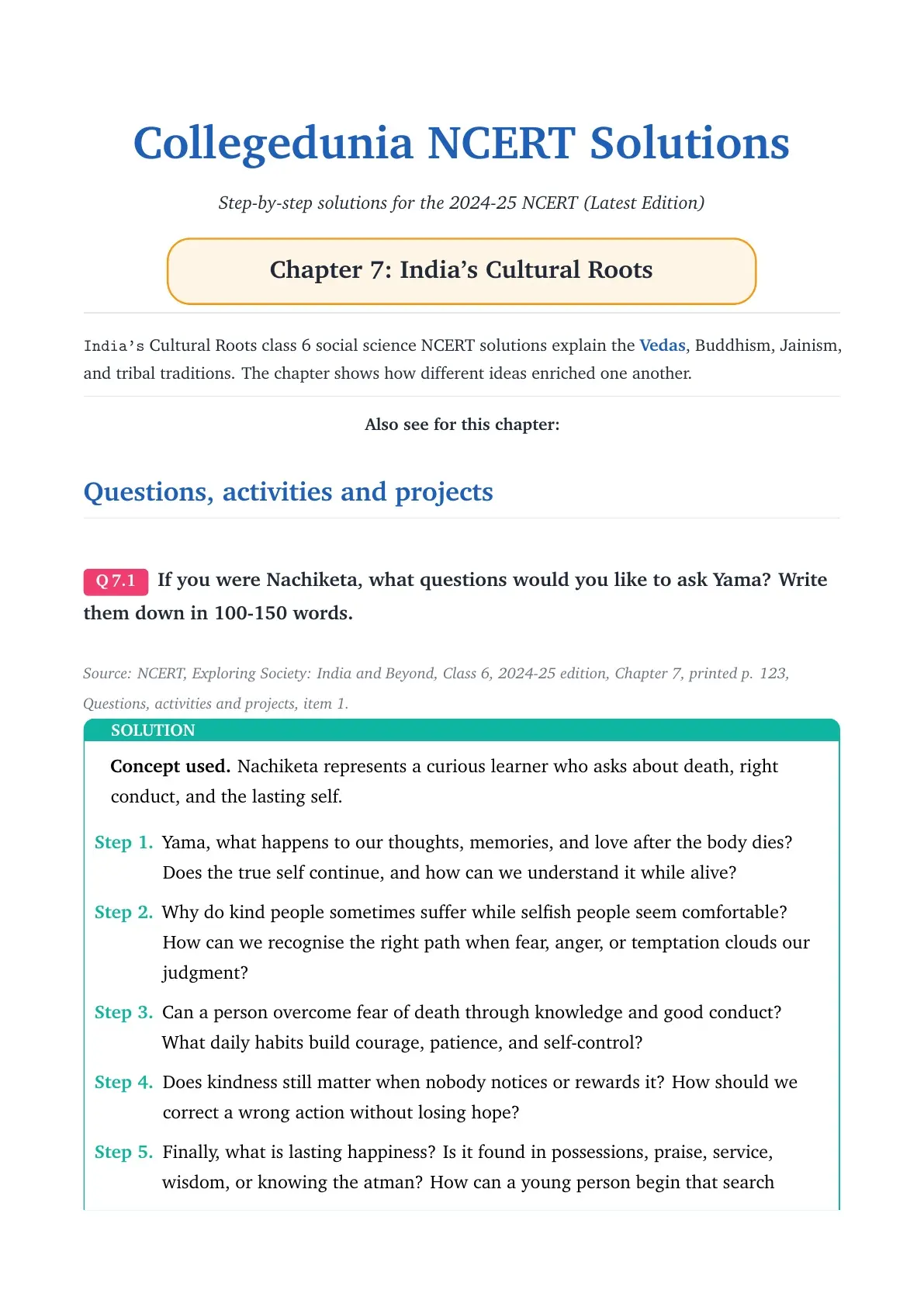
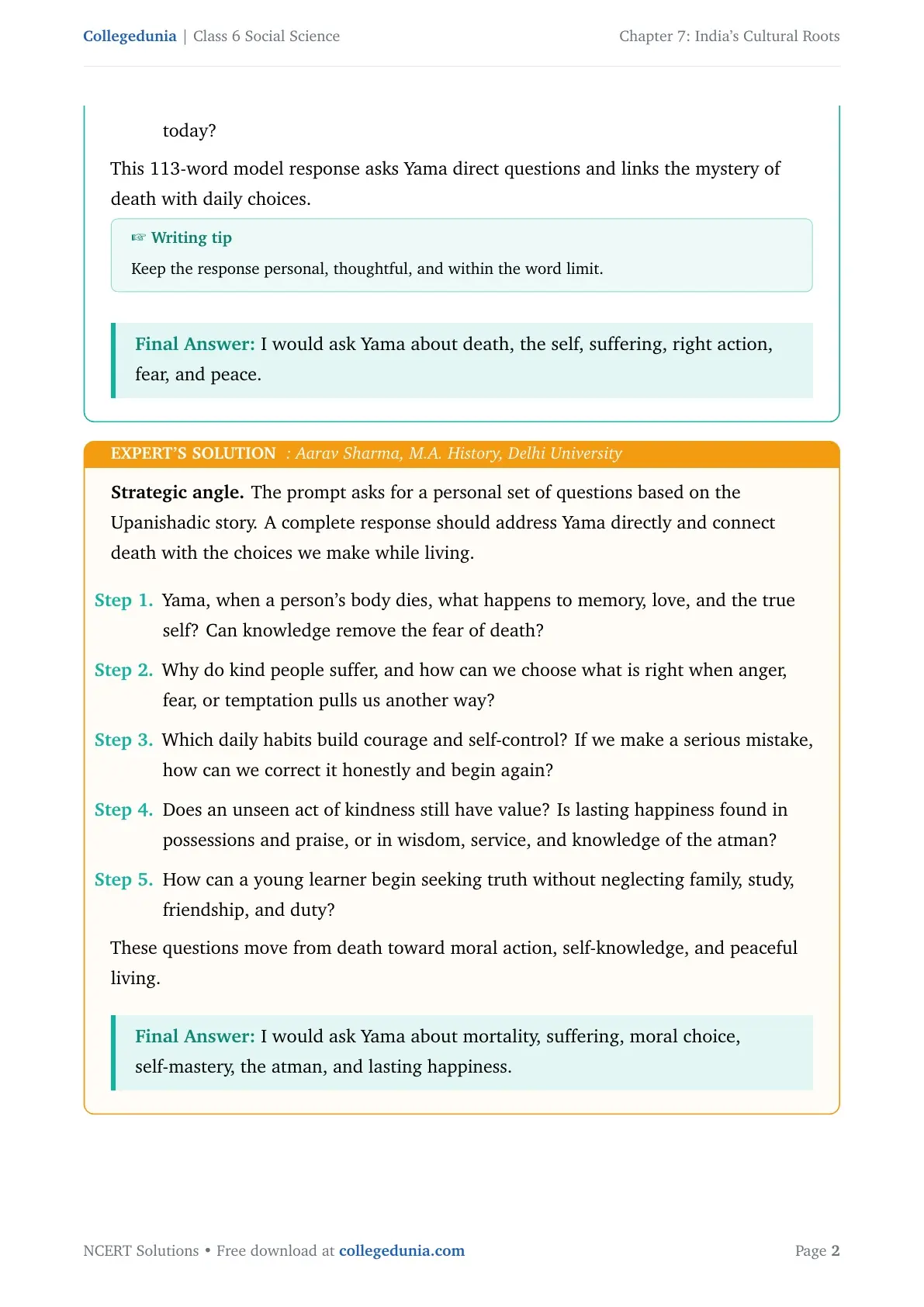
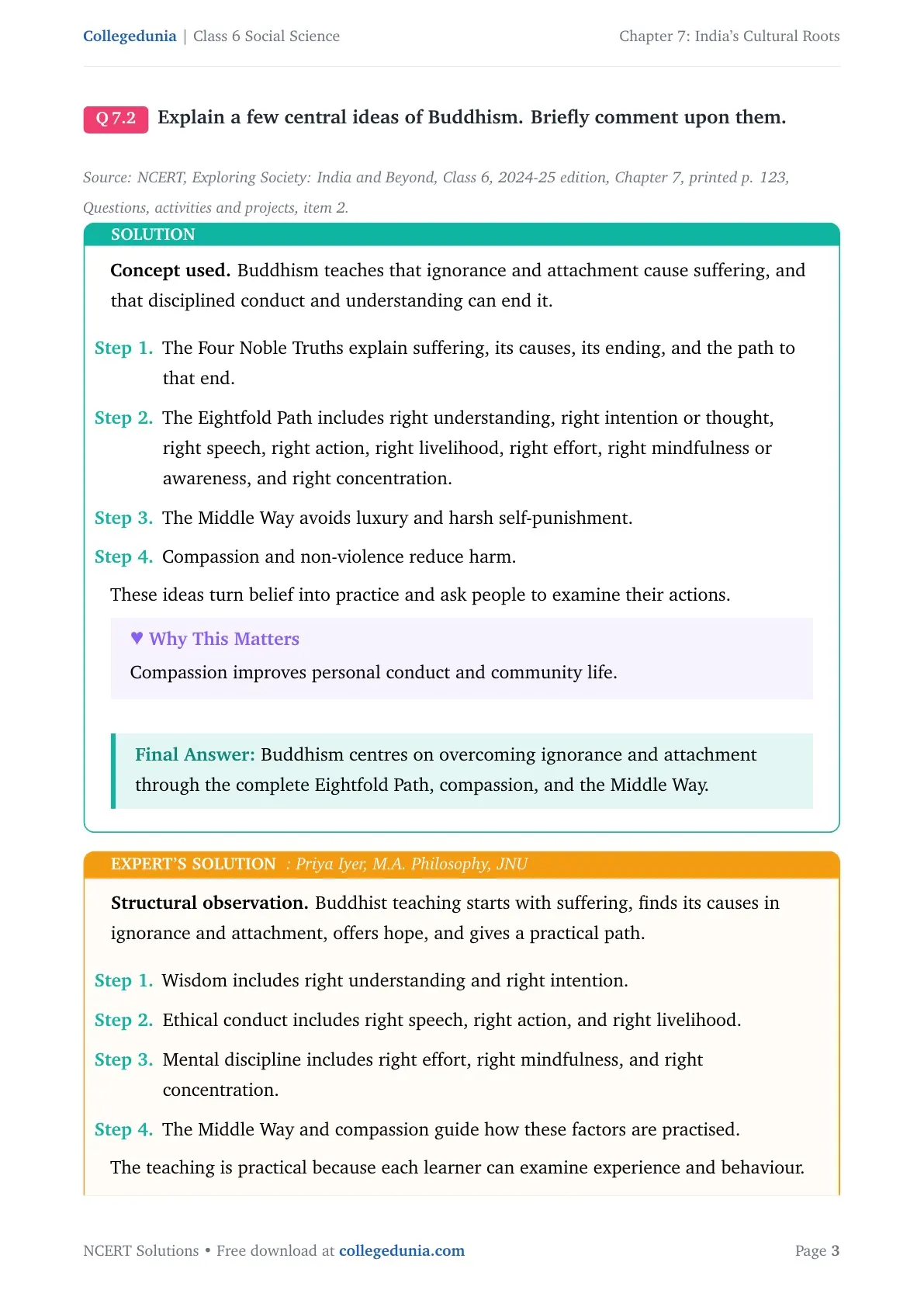
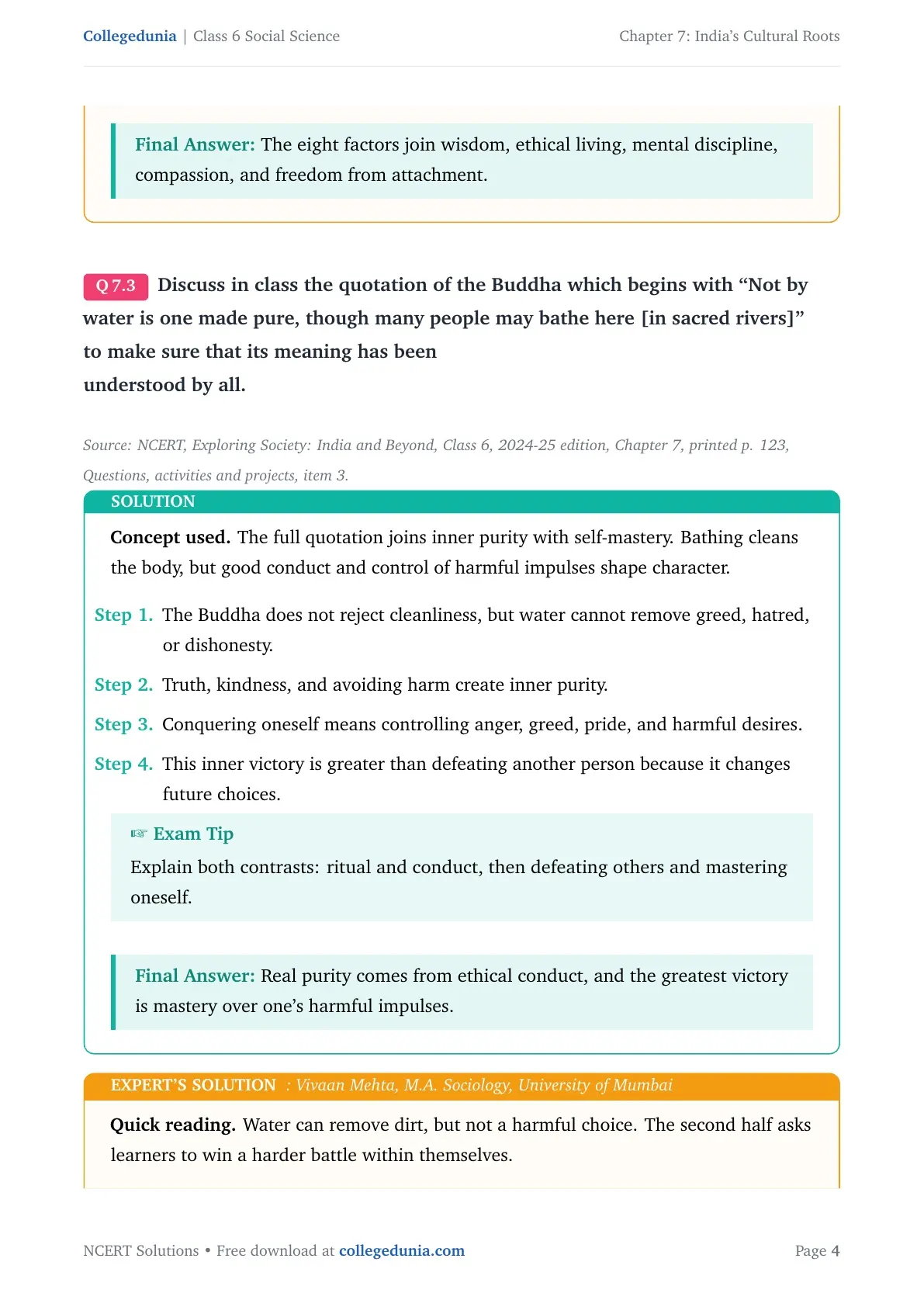
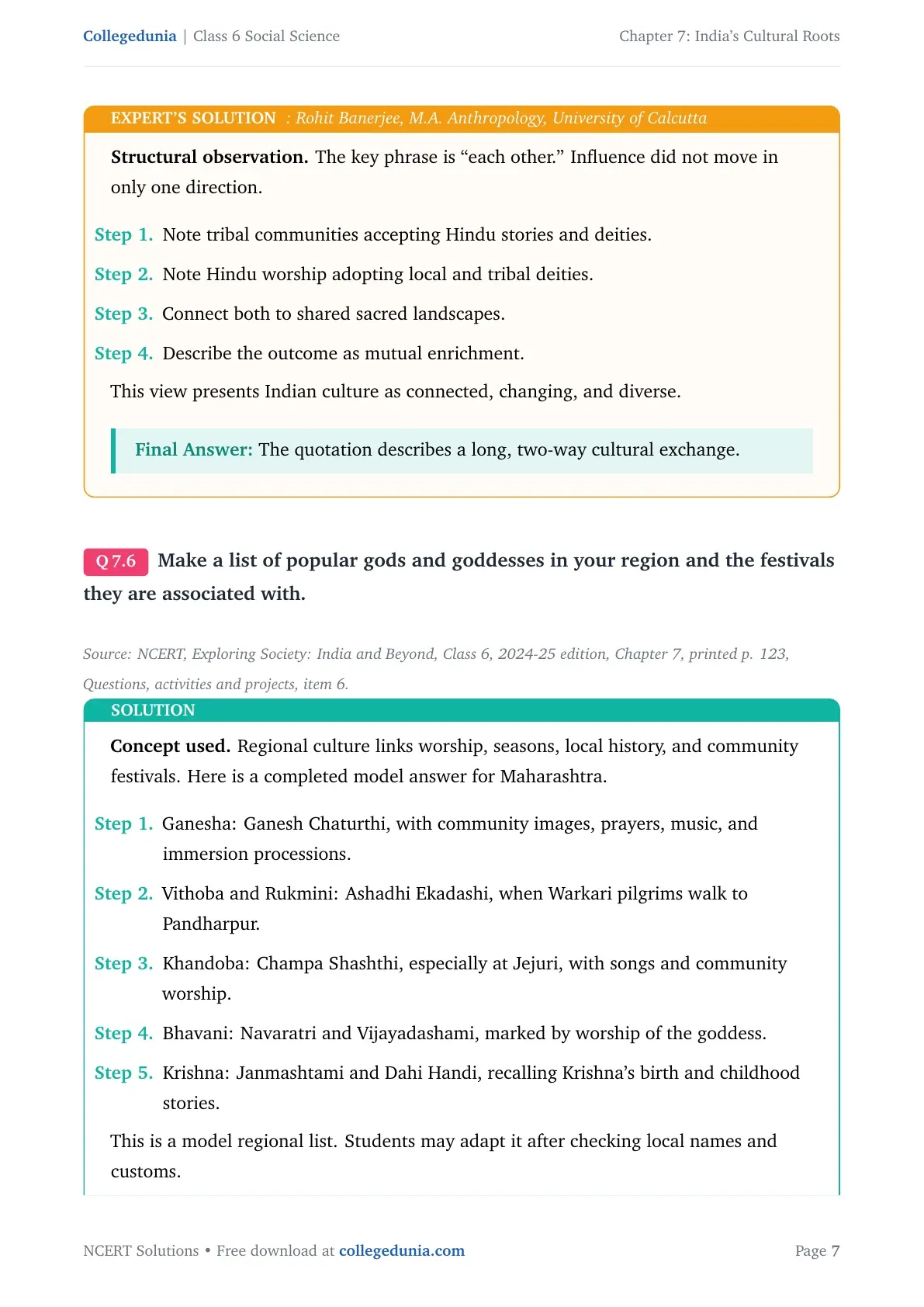
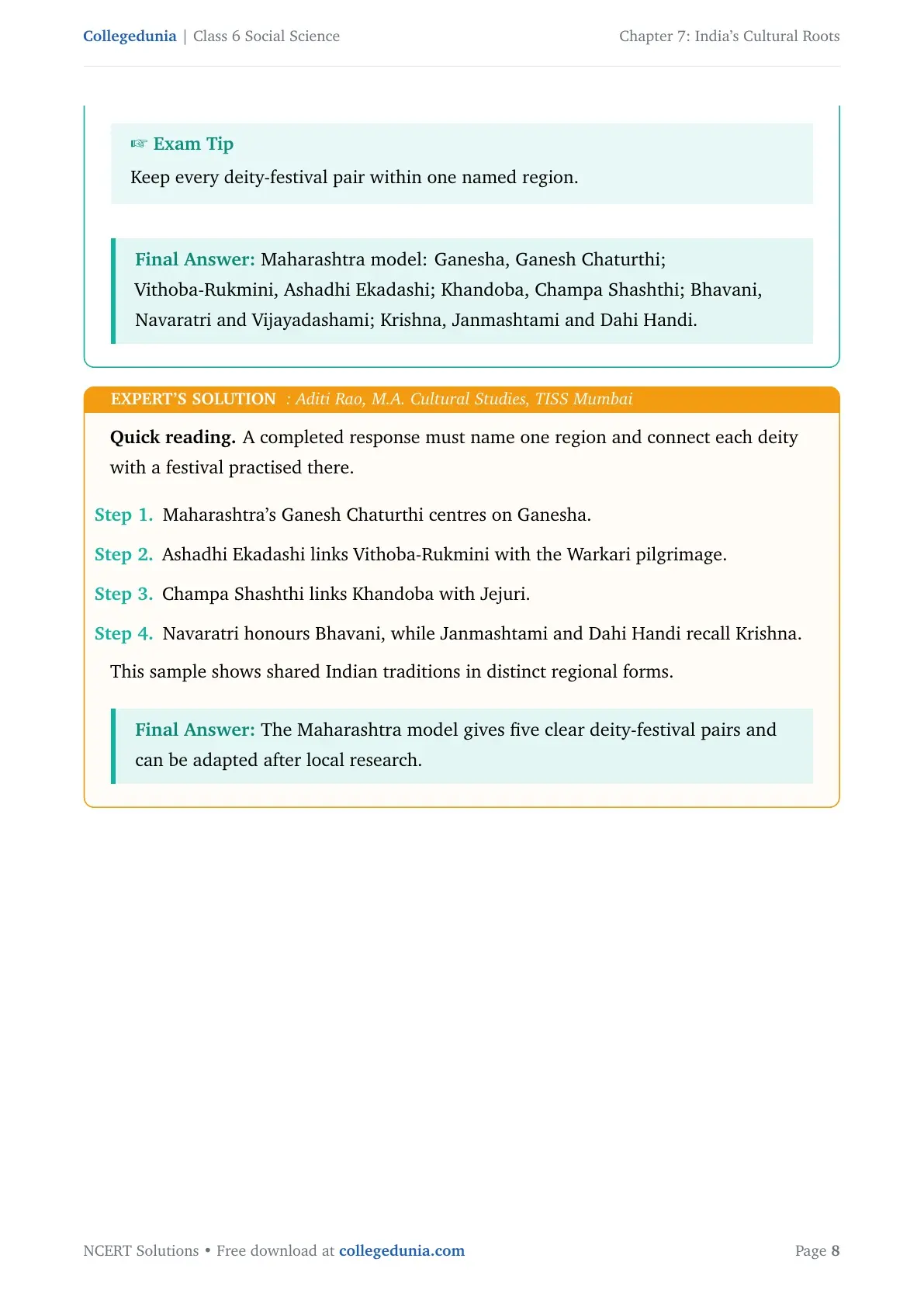
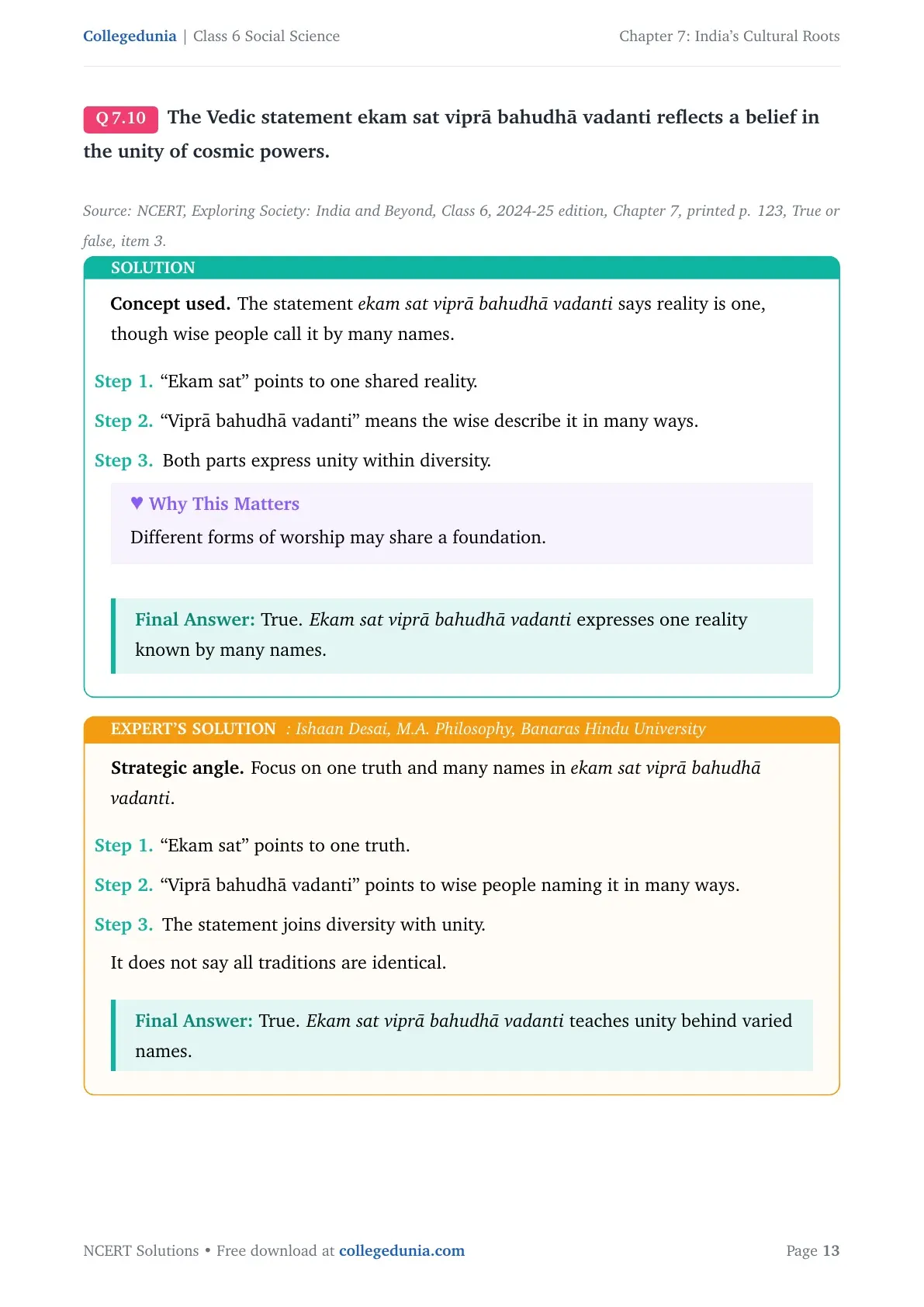
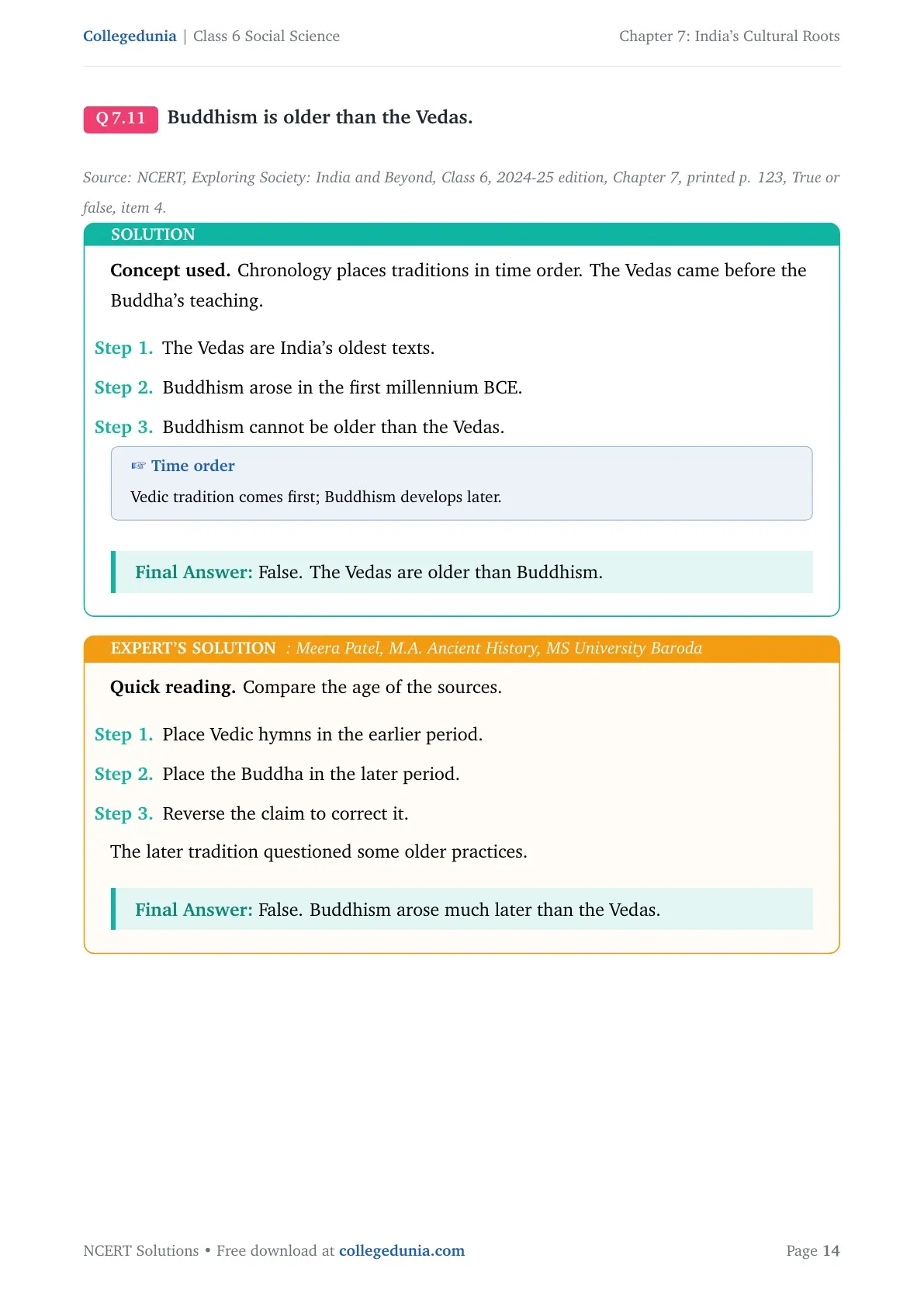
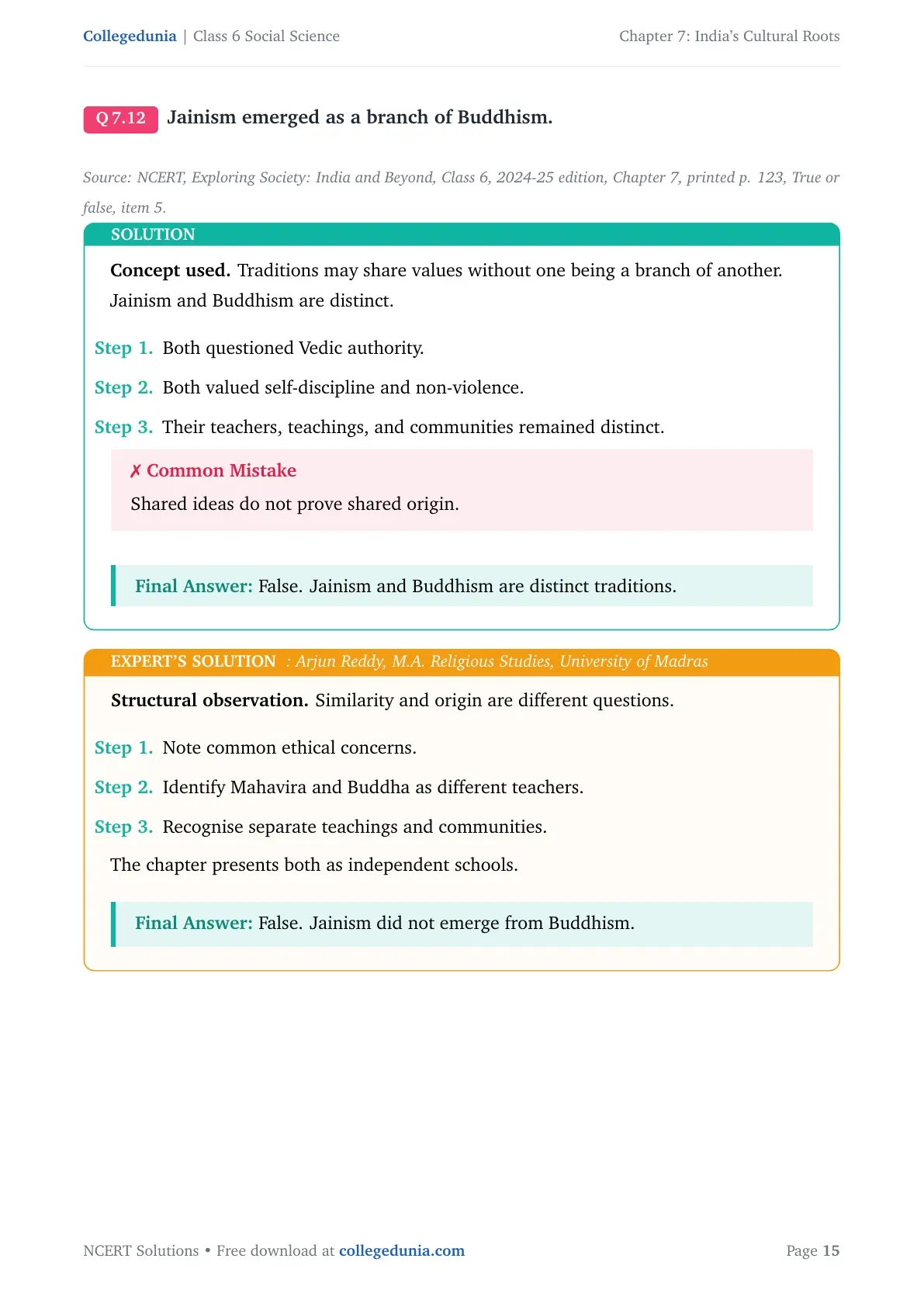
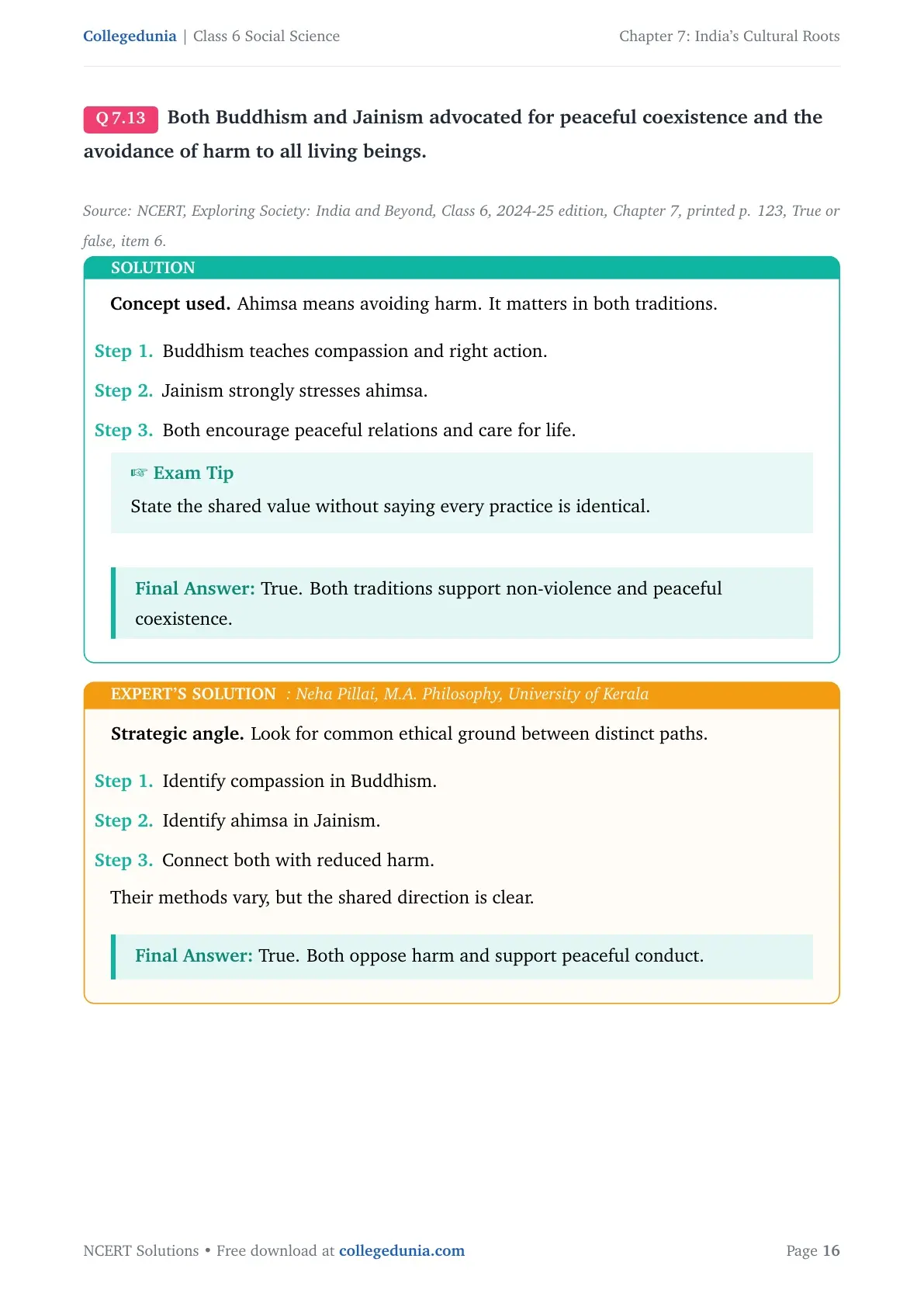
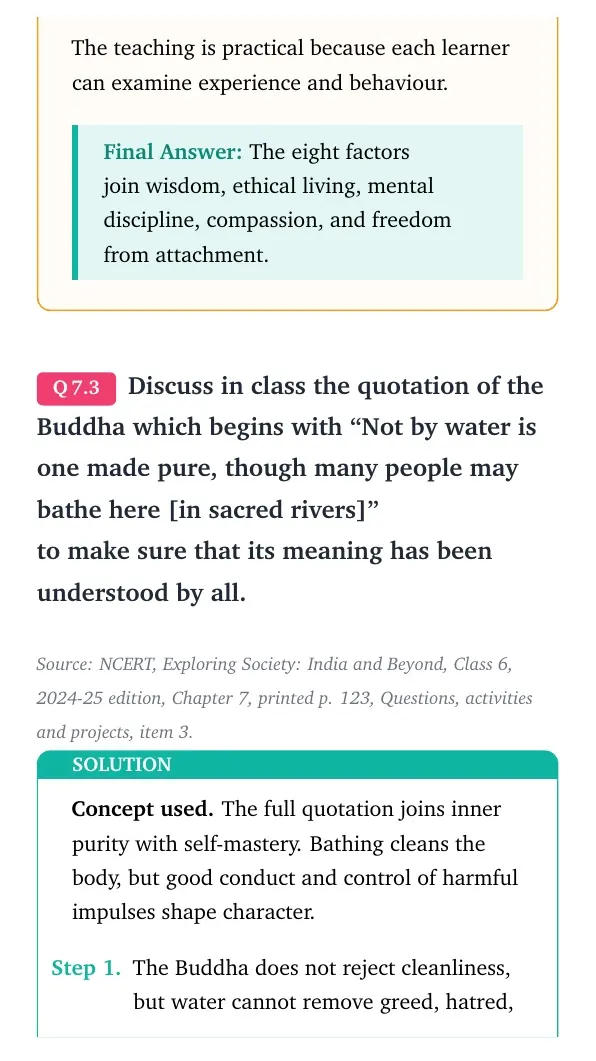
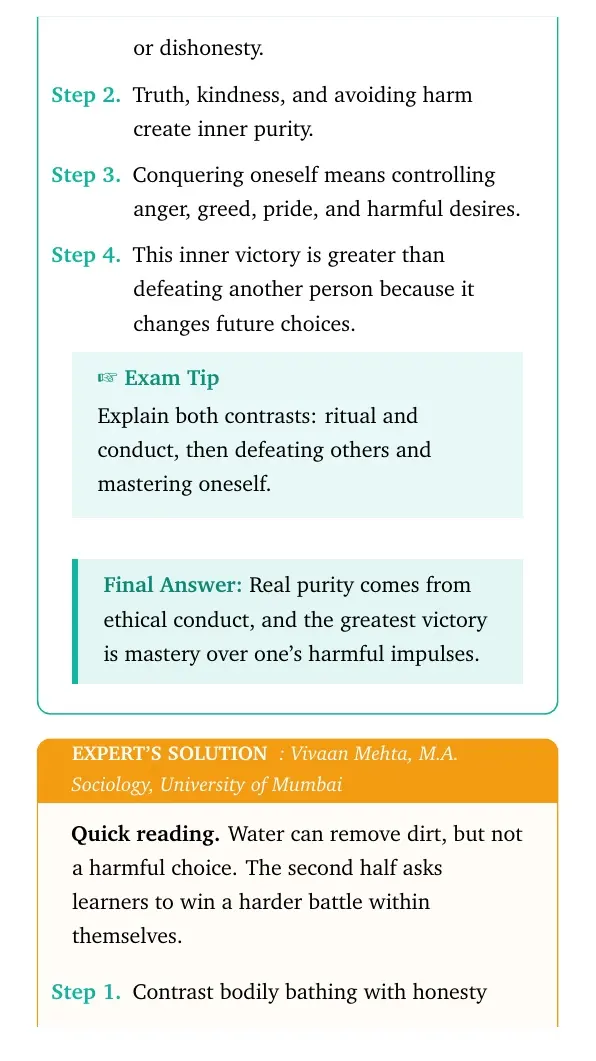
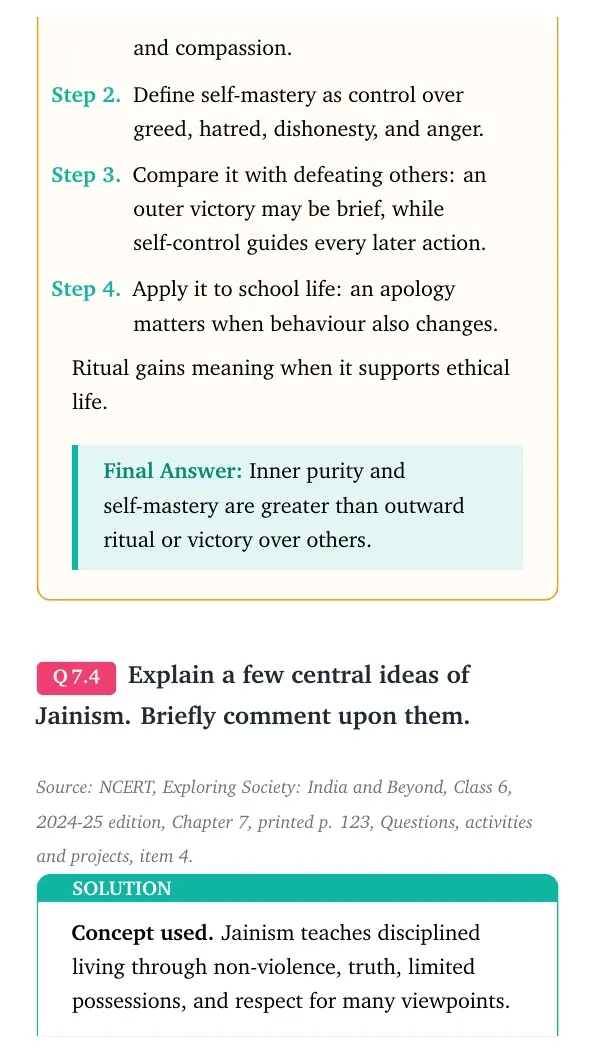
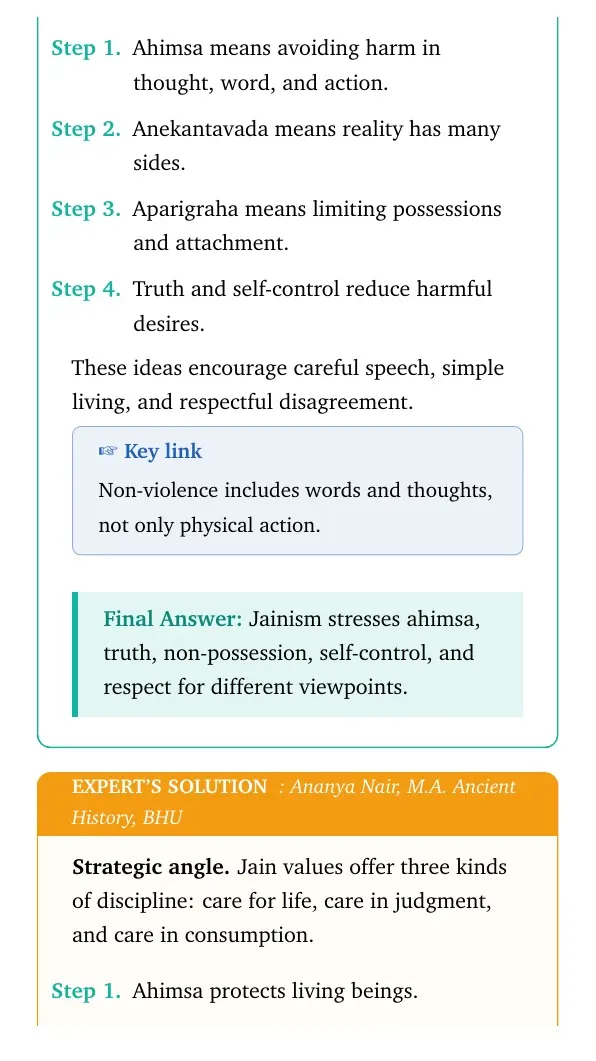
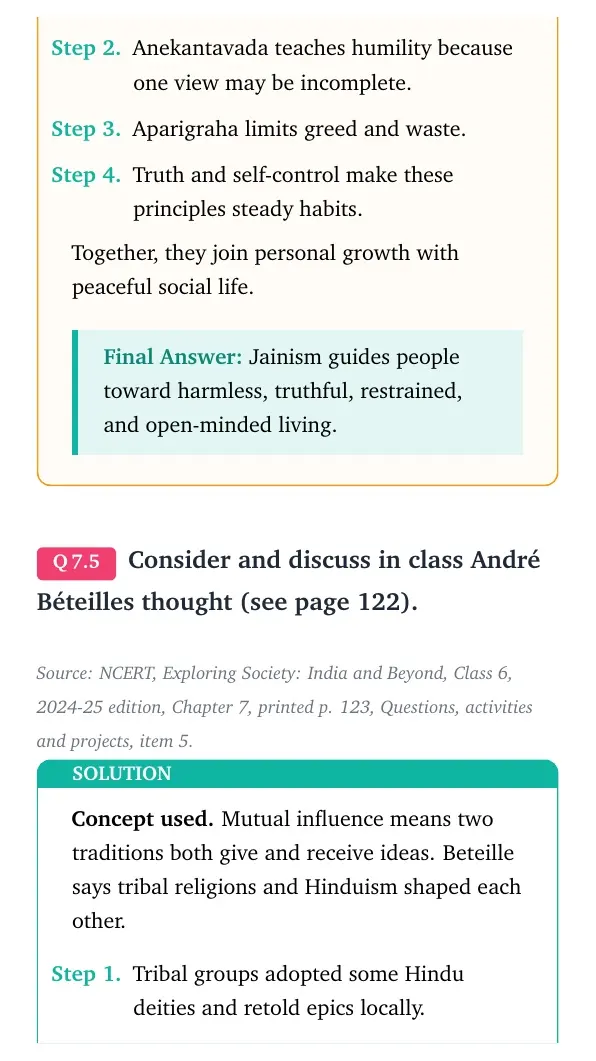
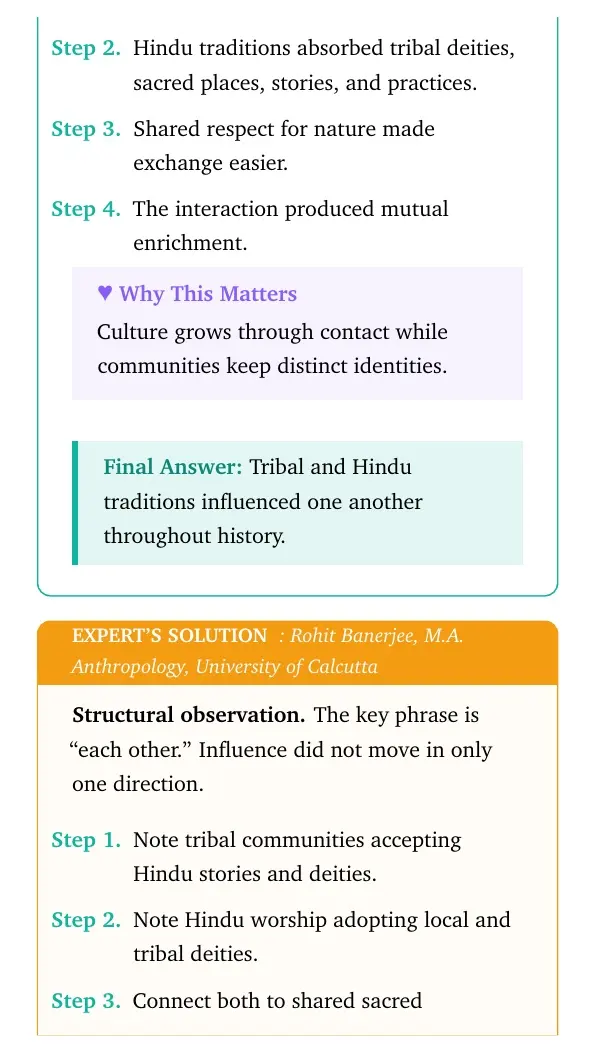
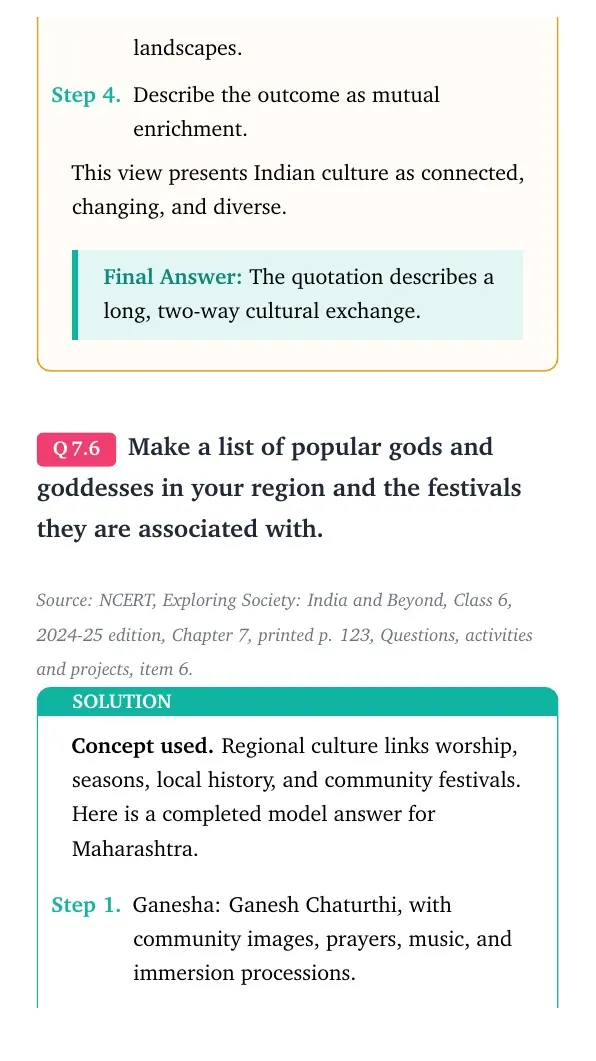
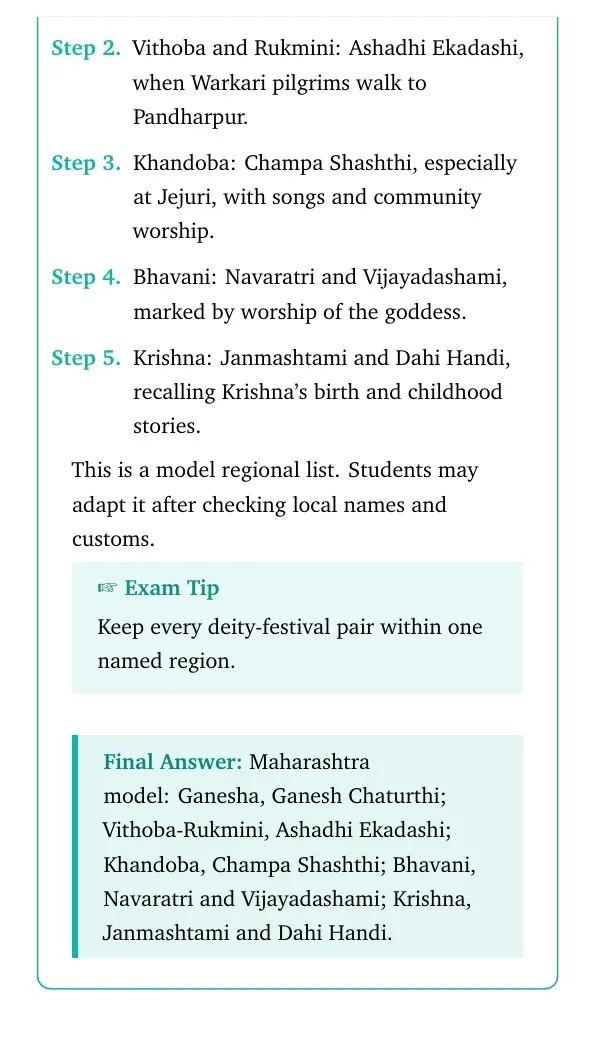
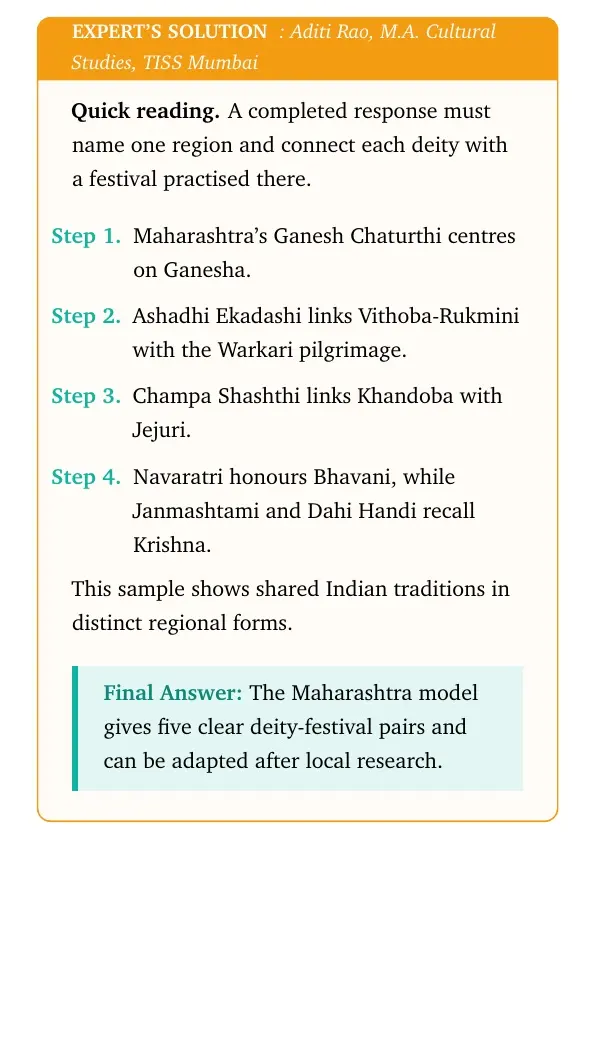
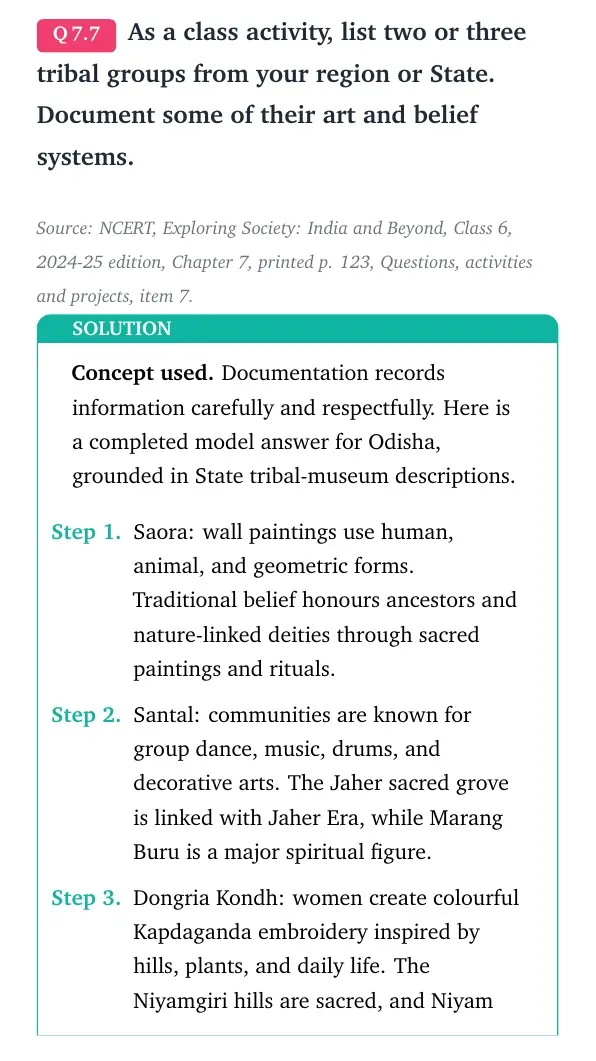
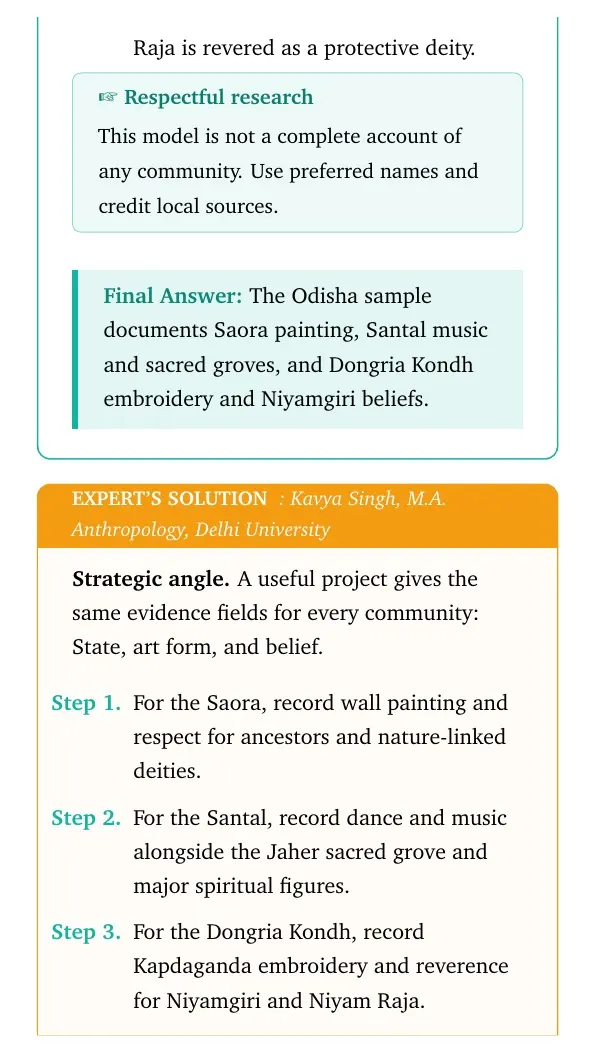
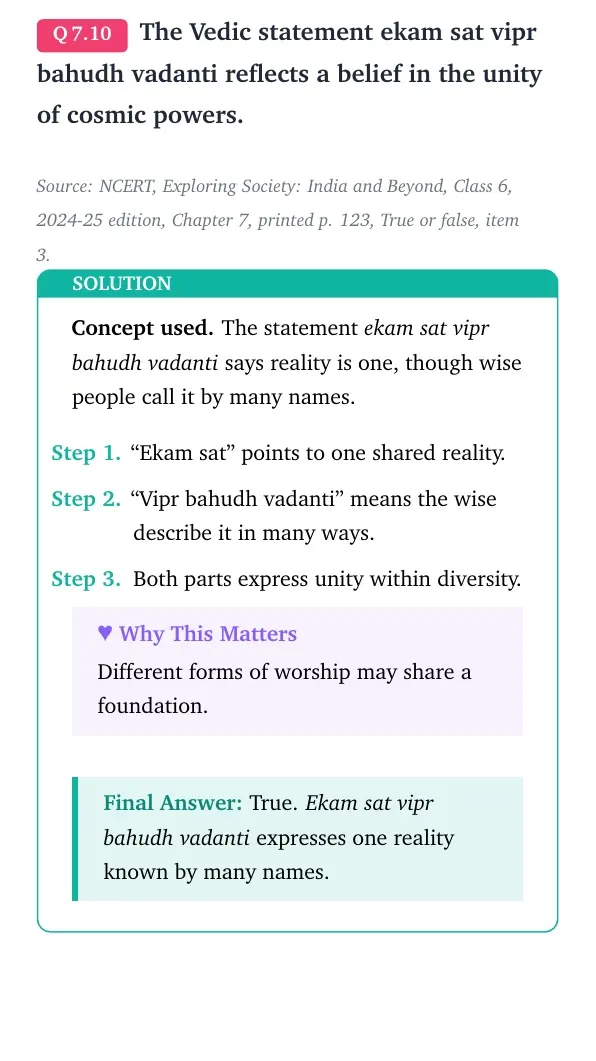
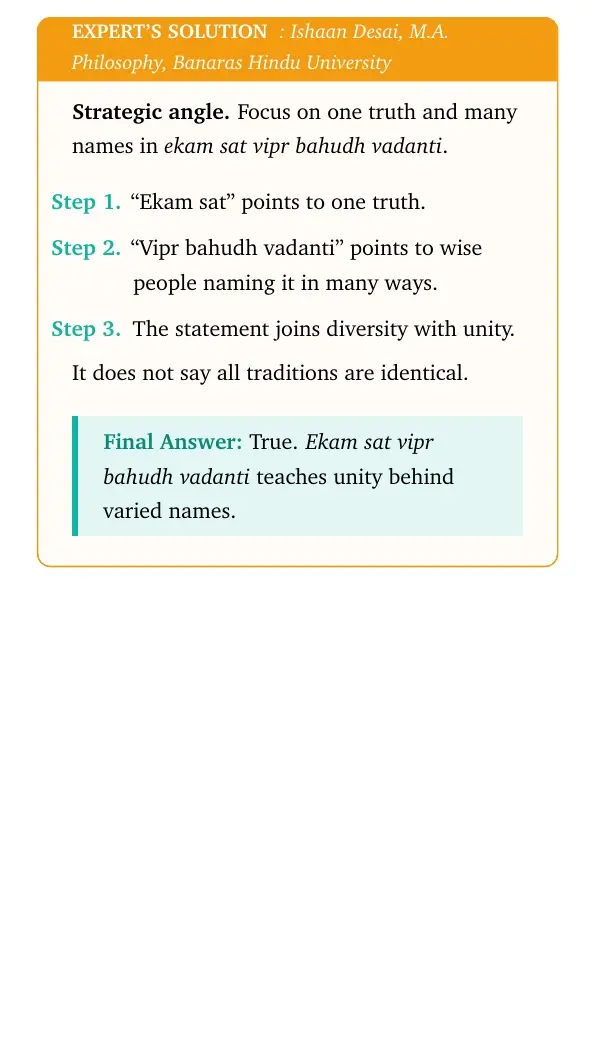
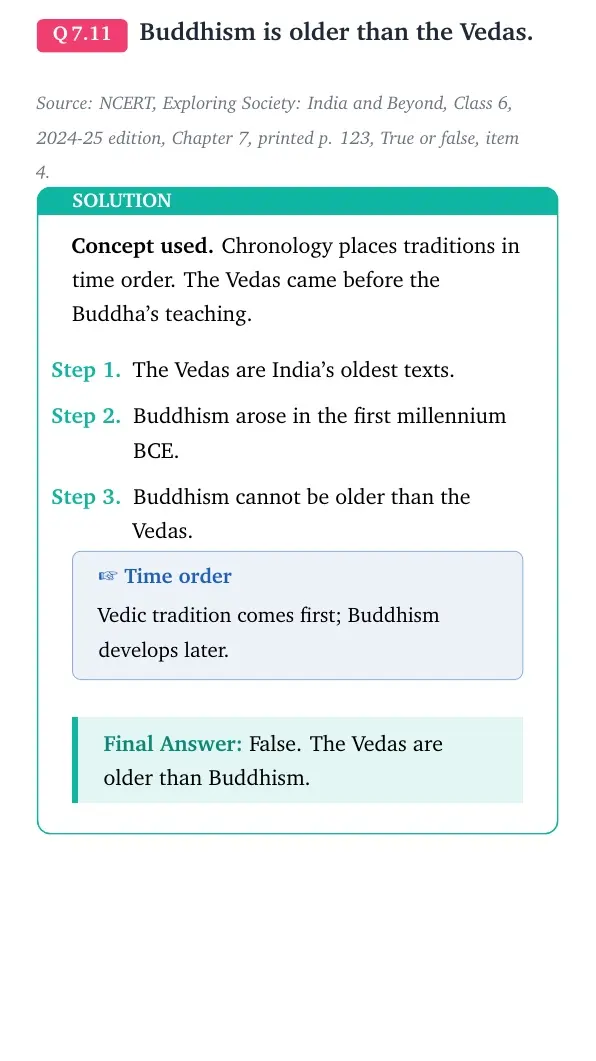
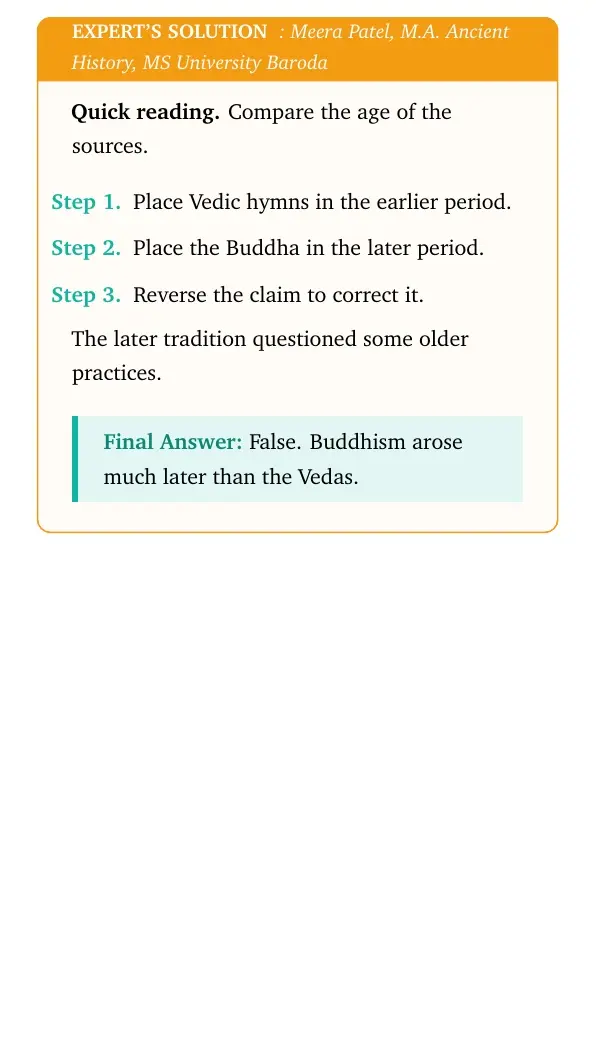
Each solution follows the 2026-27 NCERT chapter and uses age-appropriate language for Class 6 students.
Student Feedback
In a Collegedunia study poll of 10,640 students before the 2026 school exams, most students found a comparison table helpful for revising the chapter.
India's Cultural Roots Concepts Used in the Solutions
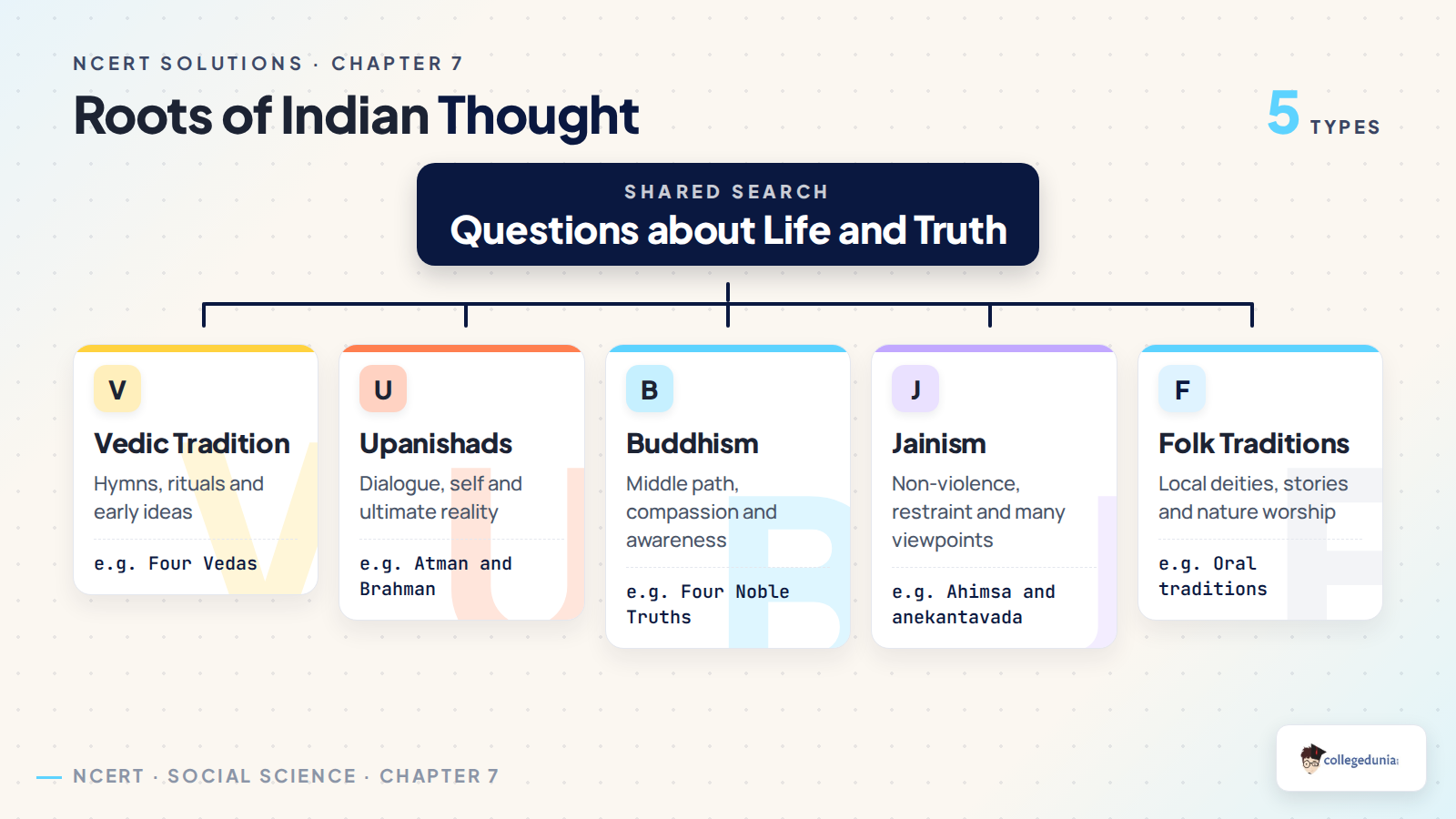
Indian culture has many branches but shared roots. The chapter traces ideas from Vedic culture to later schools of thought. It also shows how local traditions enriched wider Indian culture.
| Term | Simple meaning | Why it matters |
|---|---|---|
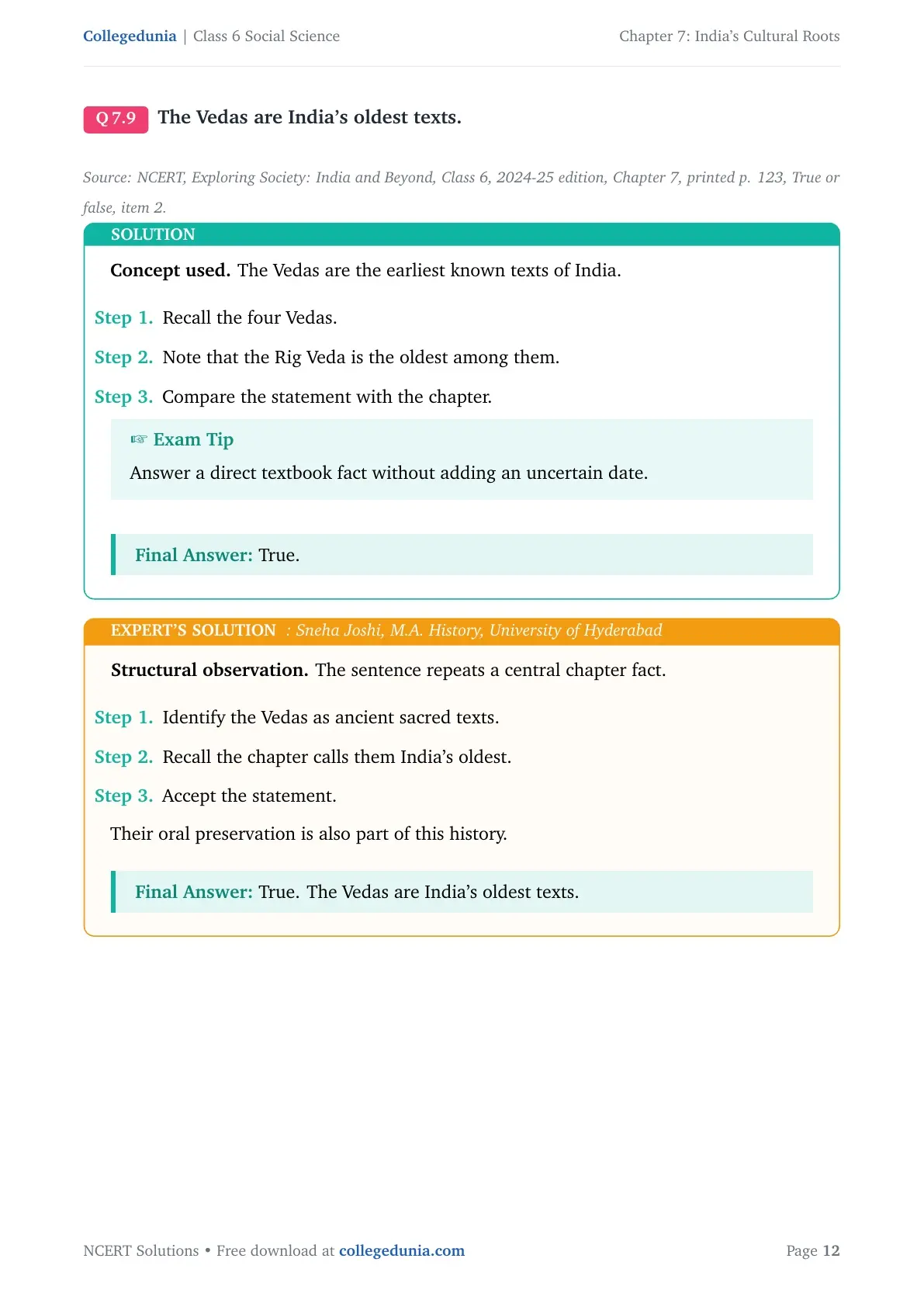
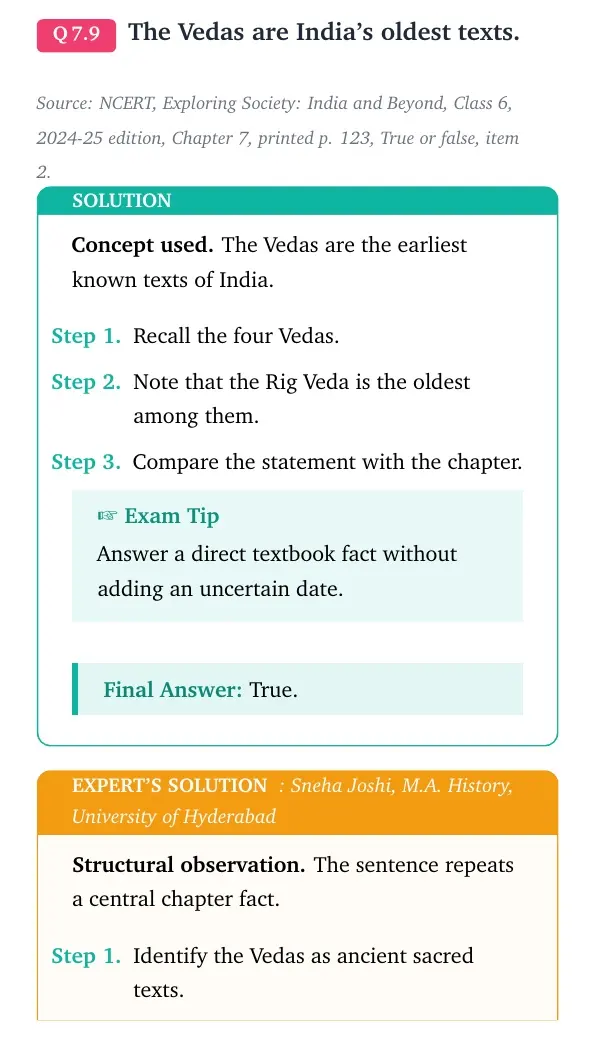
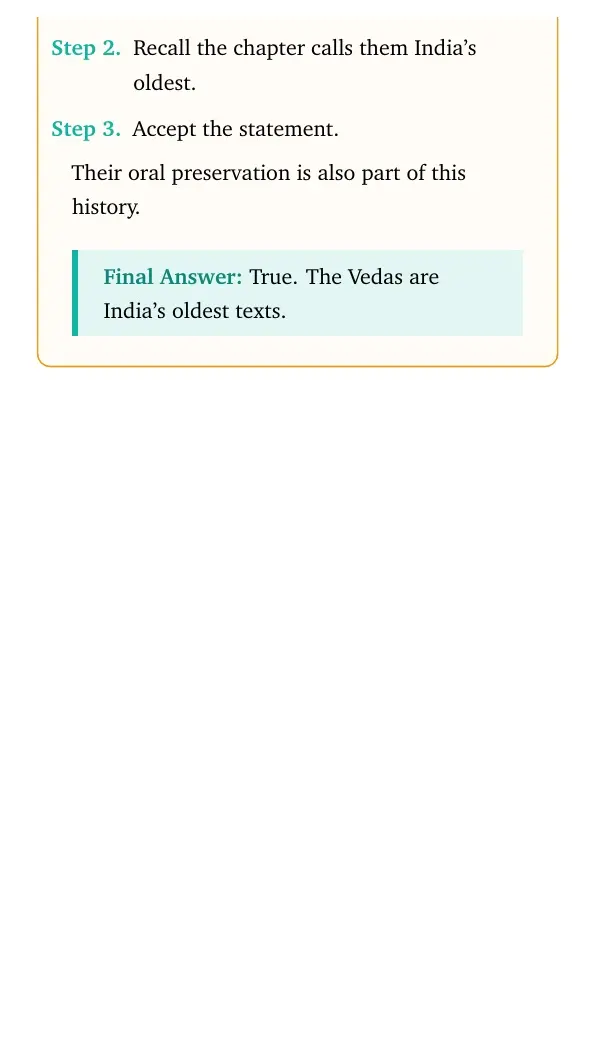
| Veda | Knowledge | The four Vedas are among India's oldest texts. |
| Ritam | Truth and order | It links human conduct with order in the cosmos. |
| Karma | Actions and their results | Actions have effects on life and conduct. |
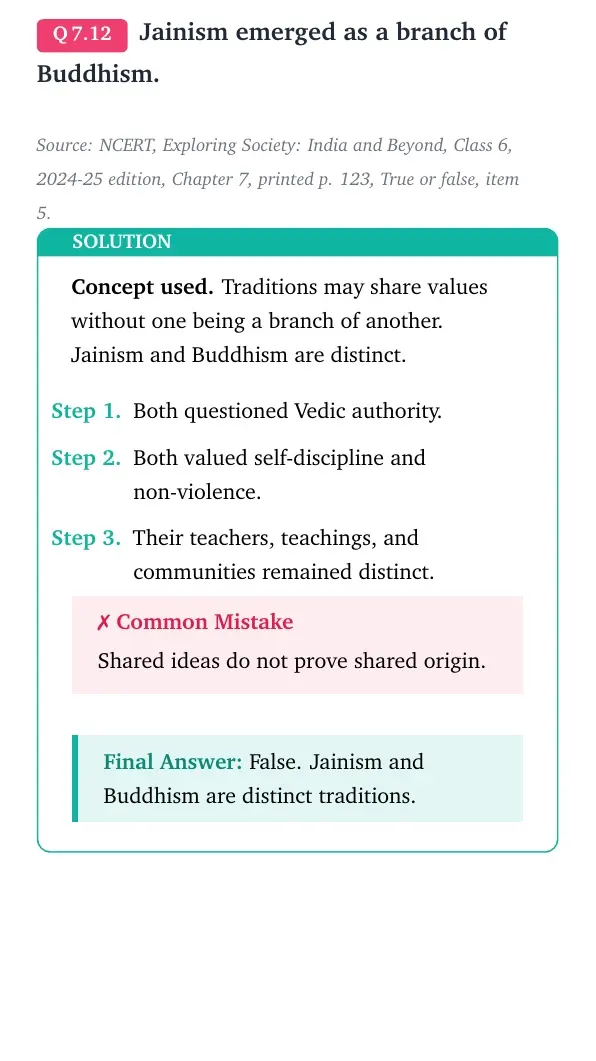
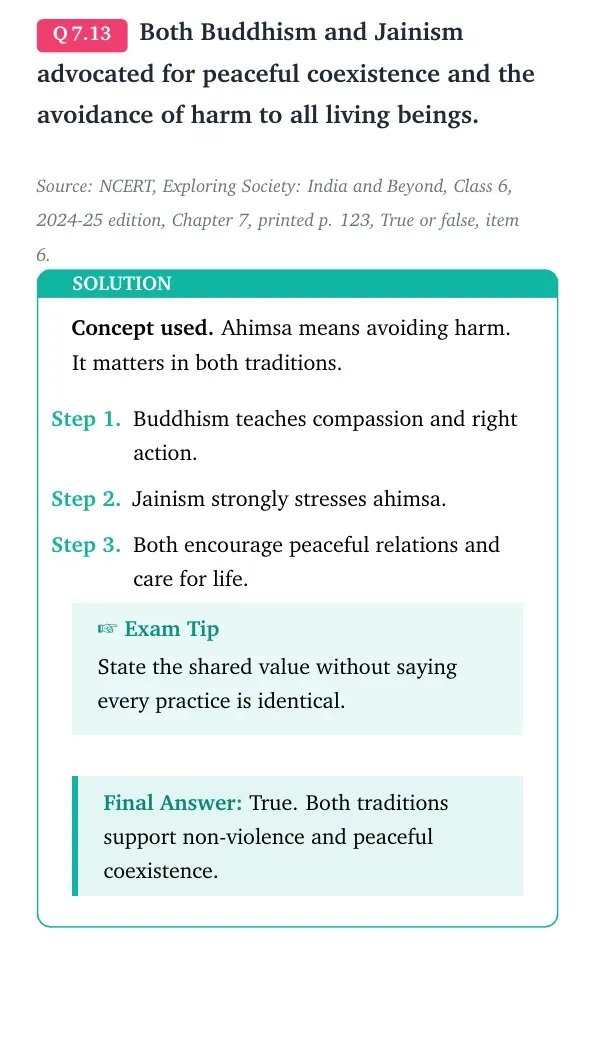
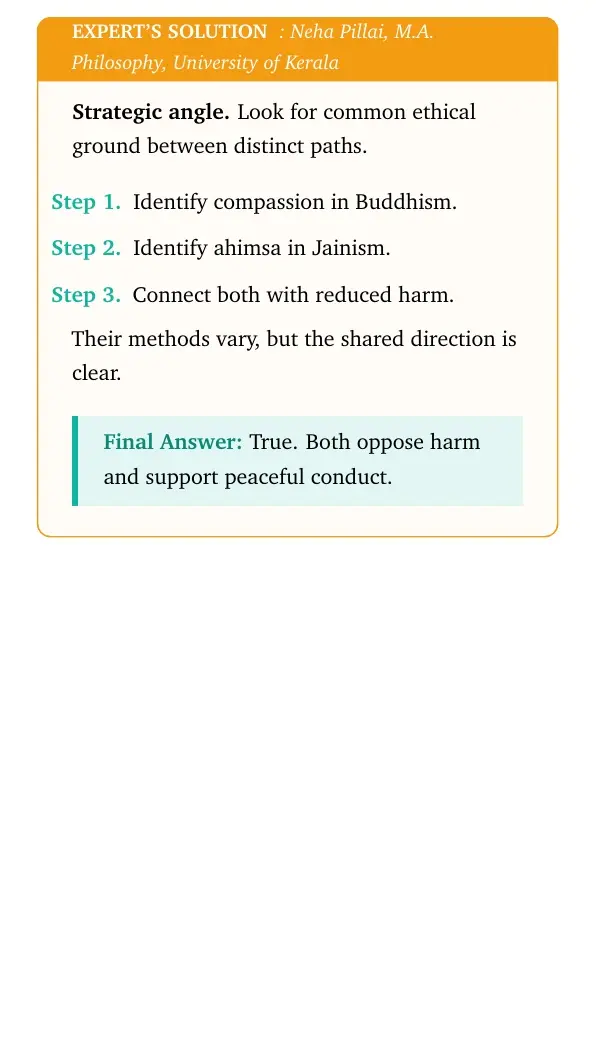
| Ahimsa | Non-hurting | Buddhism and Jainism teach care for living beings. |
The best answers explain an idea first and then add a matching example from the chapter.
India's Cultural Roots NCERT Solutions Video
Source: Magnet Brains on YouTube
The Vedas and Upanishads in India's Cultural Roots
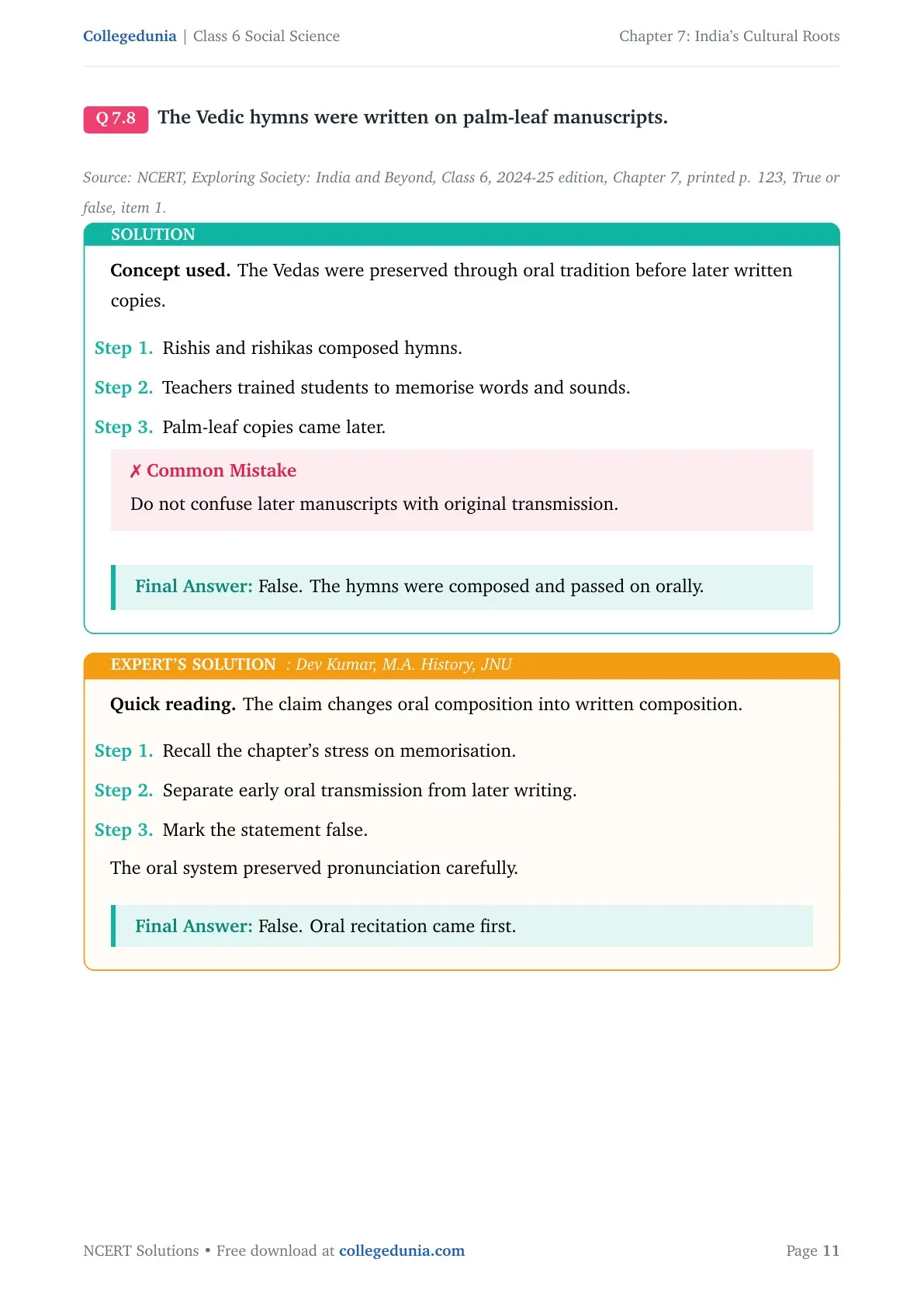
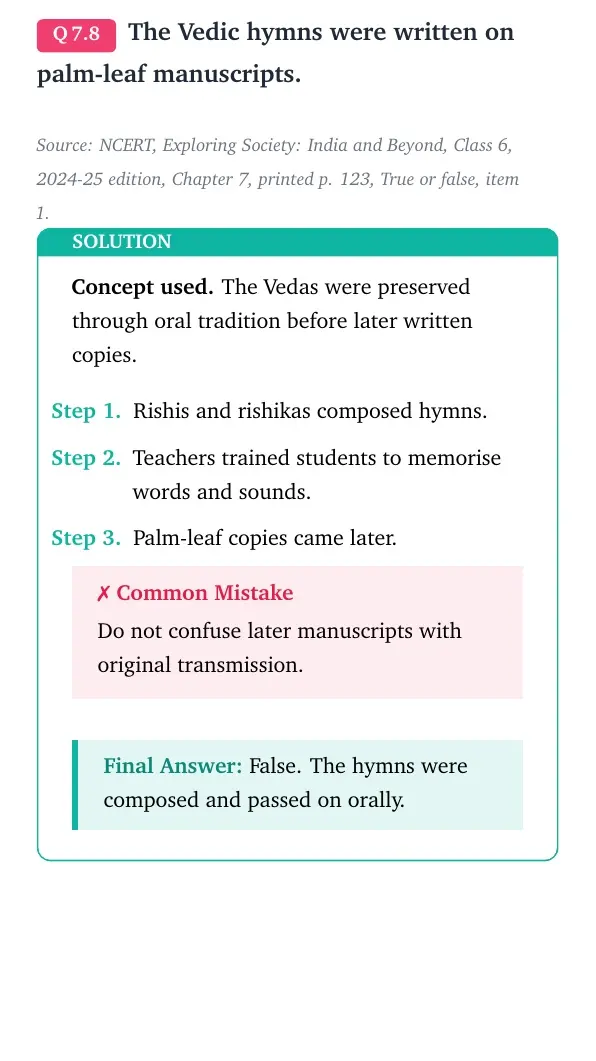
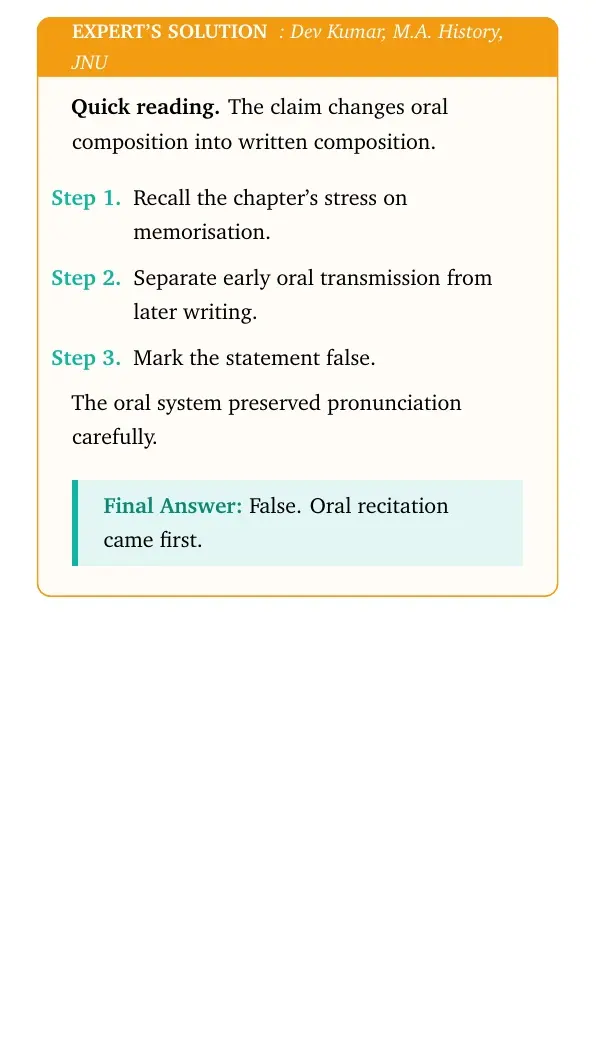
The four Vedas are the Rig Veda, Yajur Veda, Sama Veda and Atharva Veda. Their hymns were passed on orally with great care. UNESCO recognised Vedic chanting as part of humanity's oral heritage in 2008.
- Rishis and rishikas composed hymns in an early form of Sanskrit.
- The hymns speak of truth, order, unity and agreement.
- Upanishads discuss rebirth, karma, atman and brahman.
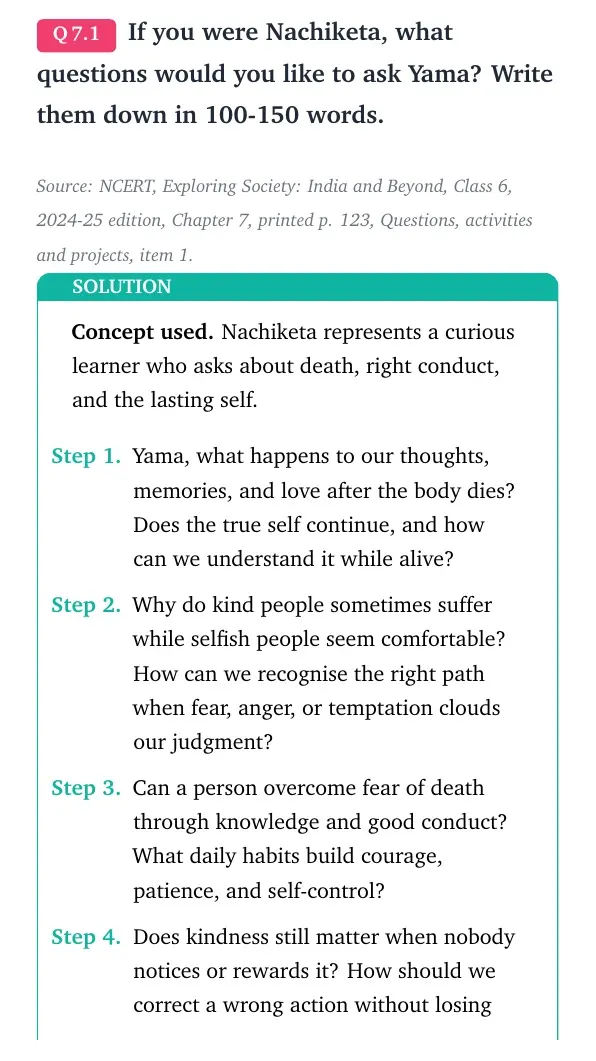
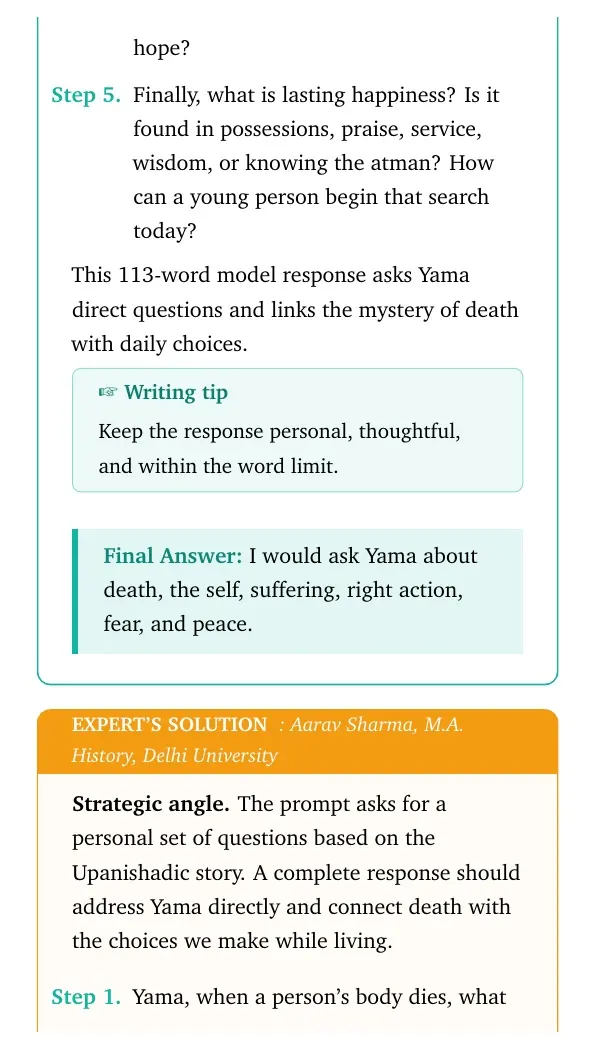
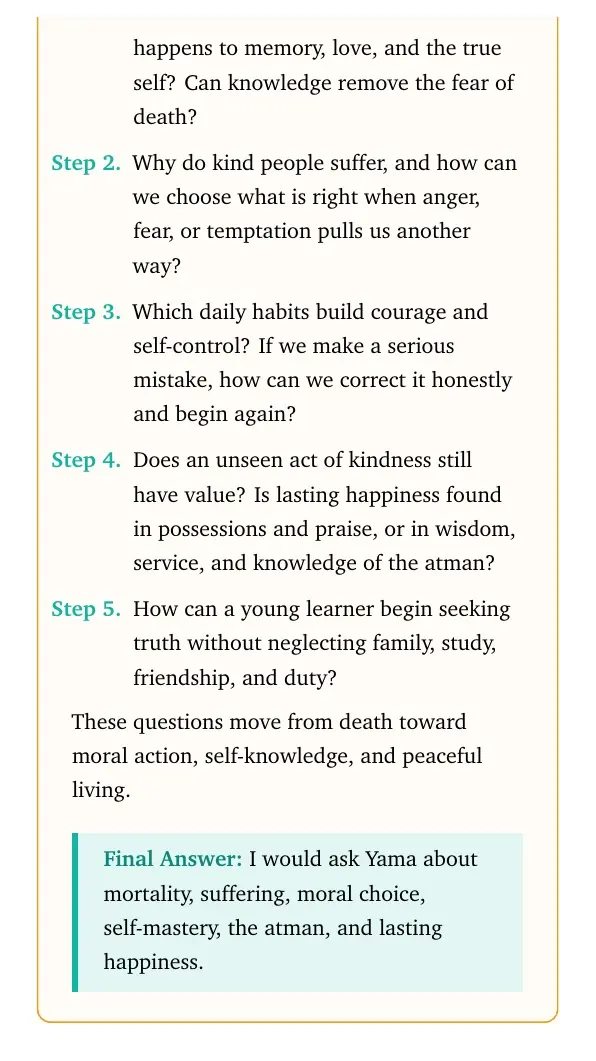
- Stories of Shvetaketu, Nachiketa and Gargi value questions and learning.
The Upanishadic view connects the self, nature and the universe through one divine essence.
Buddhism and Jainism Compared for Class 6 Social Science
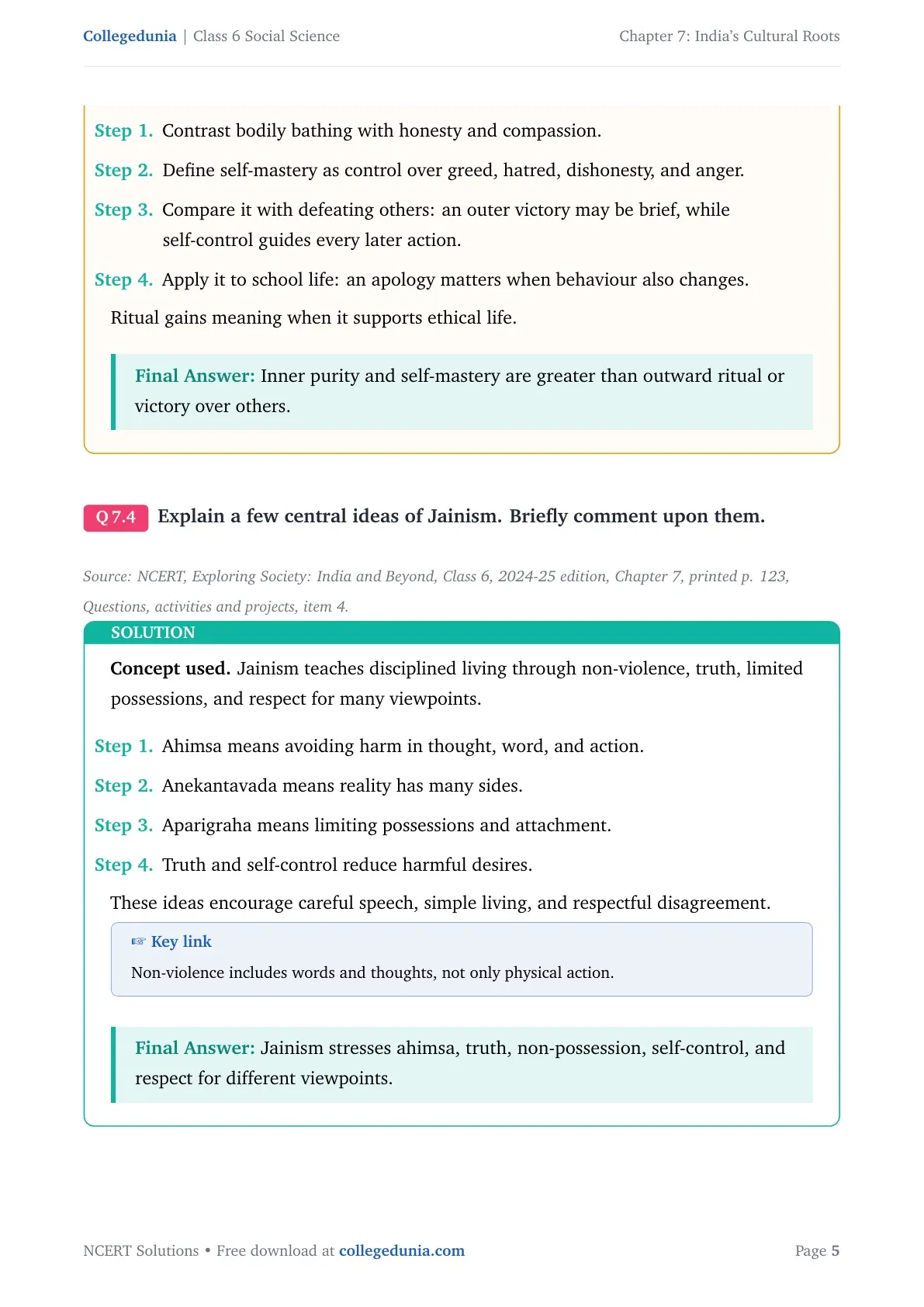
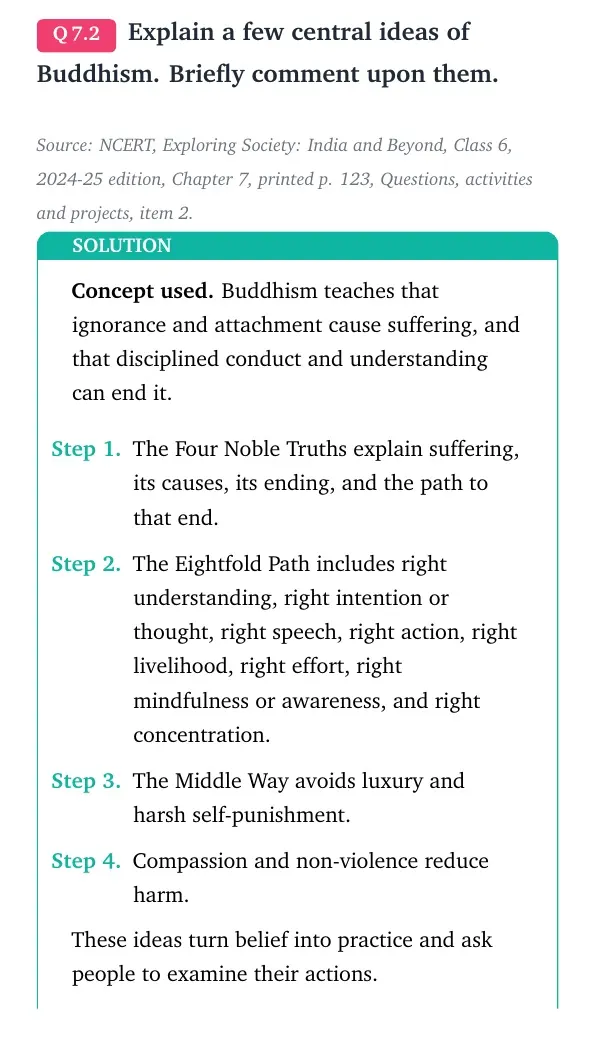
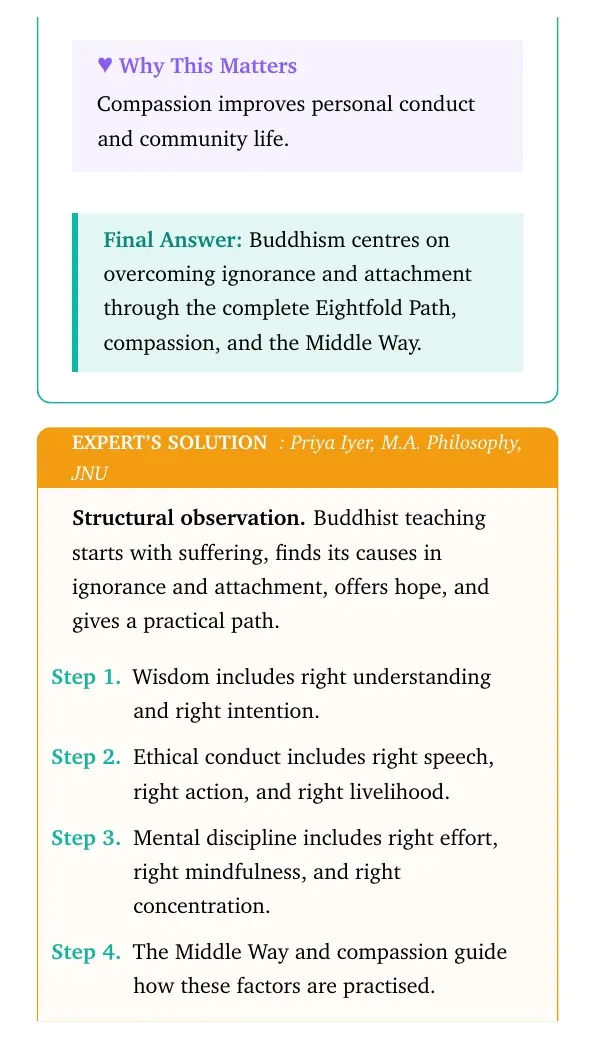
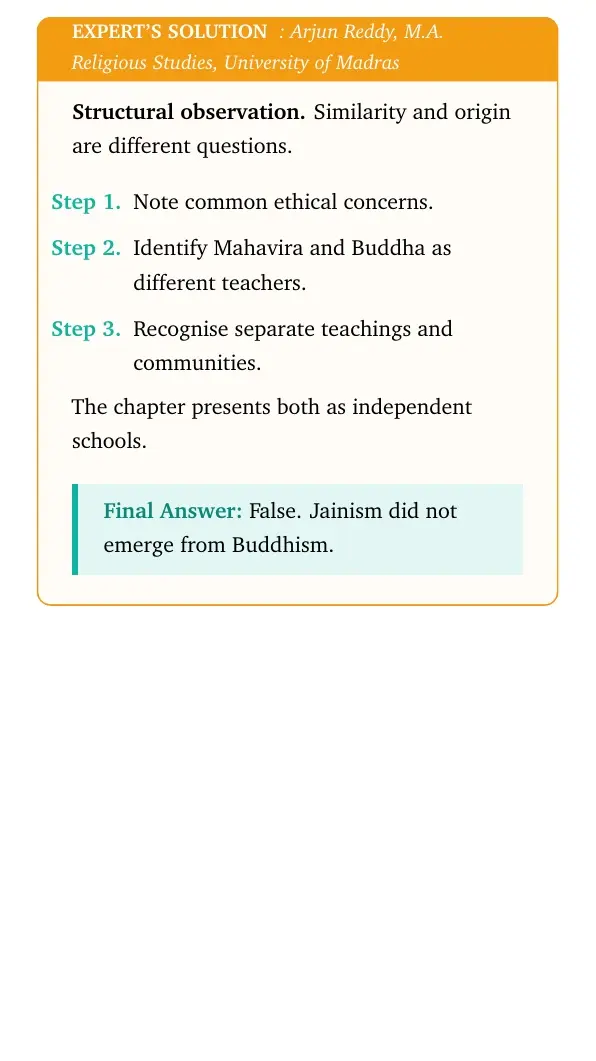
Buddhism and Jainism grew widely during the first millennium BCE. Both questioned attachment and stressed disciplined conduct. Their founders left royal homes to seek spiritual knowledge.
| Point | Buddhism | Jainism |
|---|---|---|
| Teacher | Siddhartha Gautama, the Buddha | Vardhamana, known as Mahavira |
| Main concern | Ending suffering caused by ignorance and attachment | Conquering ignorance and attachment |
| Shared value | Ahimsa and inner discipline | Ahimsa and strict care for life |
| Other ideas | Sangha and self-control | Anekantavada and aparigraha |
Anekantavada teaches that truth has many aspects, while aparigraha advises limiting possessions.
Folk and Tribal Traditions in Indian Culture
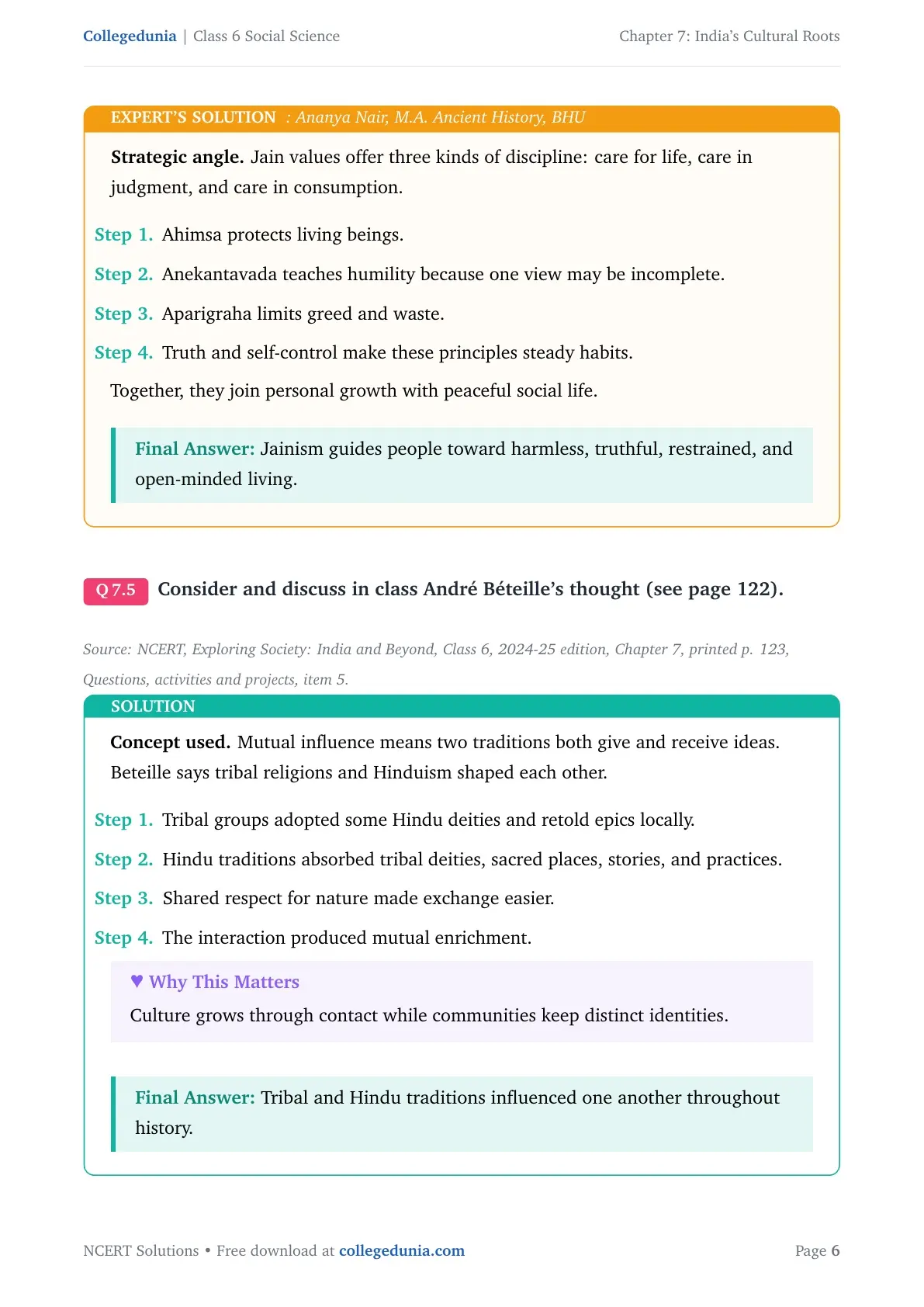
Folk and tribal communities did not remain separate from other traditions. Their beliefs, stories, deities, festivals and art interacted with wider Indian culture for centuries.
- Local stories carried moral lessons in easy forms.
- Nature, ancestors and sacred places shaped community practices.
- Oral traditions kept memory alive across generations.
- Ideas moved in both directions between tribal and non-tribal communities.
Use the phrase "mutual interaction" instead of describing folk traditions as isolated.
How to Write Strong India's Cultural Roots Answers
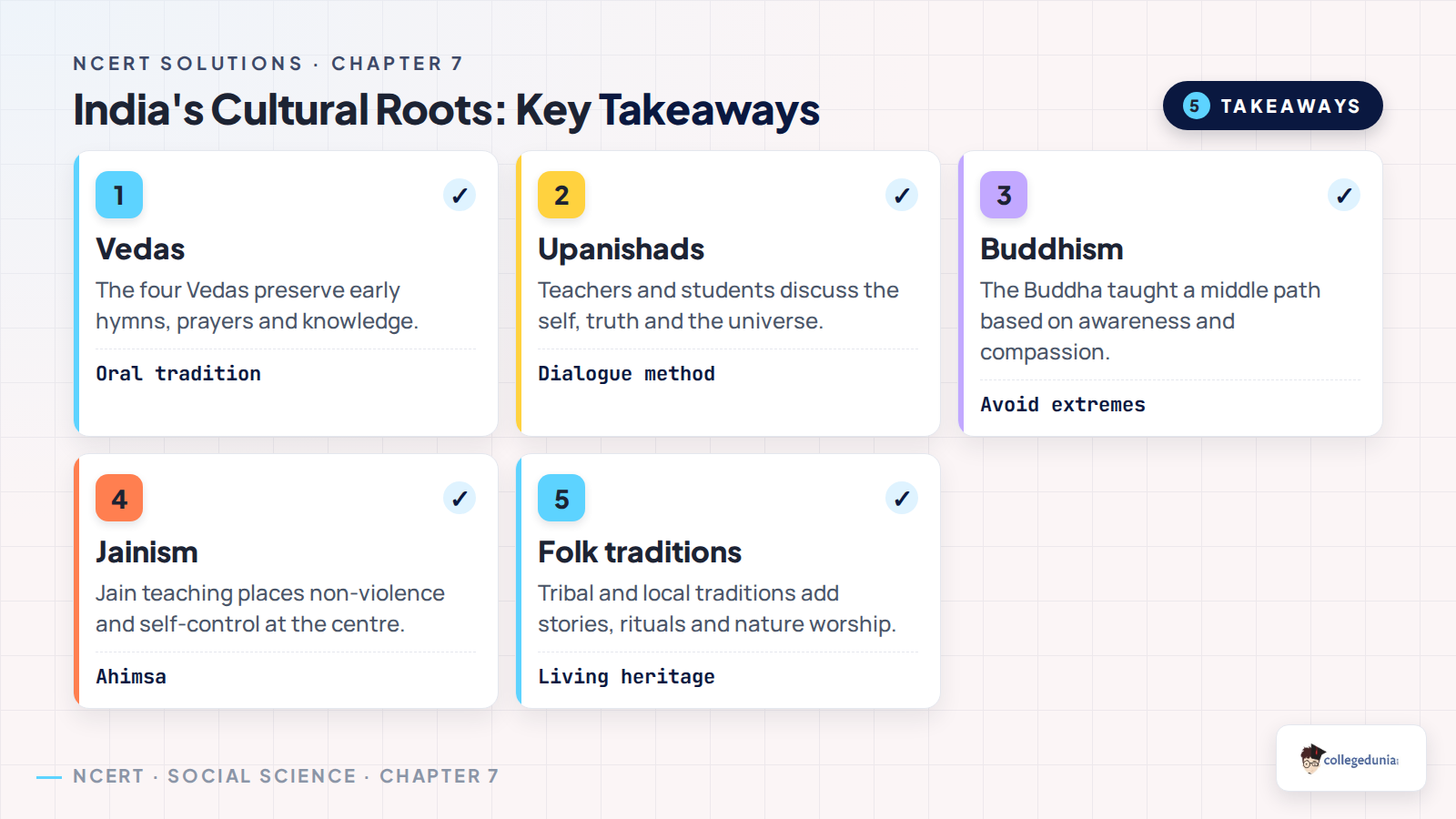
Start with a direct statement. Define the main term in simple words. Add one example and explain how it supports your point.
- Read whether the question asks you to explain, compare or comment.
- Name the school of thought or tradition clearly.
- Use one exact teaching, value or story as evidence.
- Keep Buddhism, Jainism and Vedic thought distinct.
- End with the value or cultural effect shown by the example.
Common Mistakes in India's Cultural Roots Answers
- Do not call Buddhism older than the Vedas.
- Do not present Jainism as a branch of Buddhism.
- Do not define ahimsa only as avoiding physical violence.
- Do not confuse brahman, the divine essence, with the god Brahma.
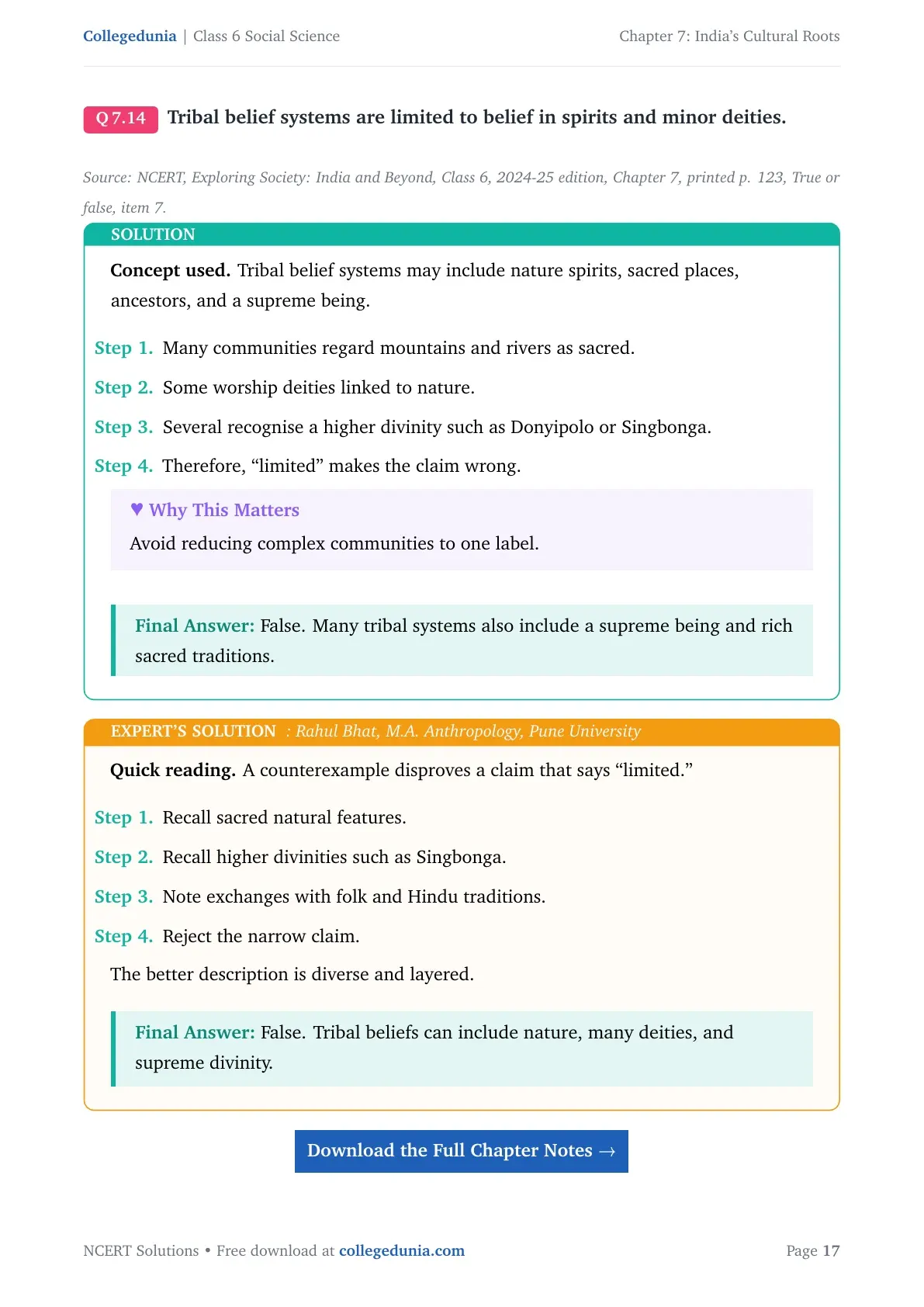
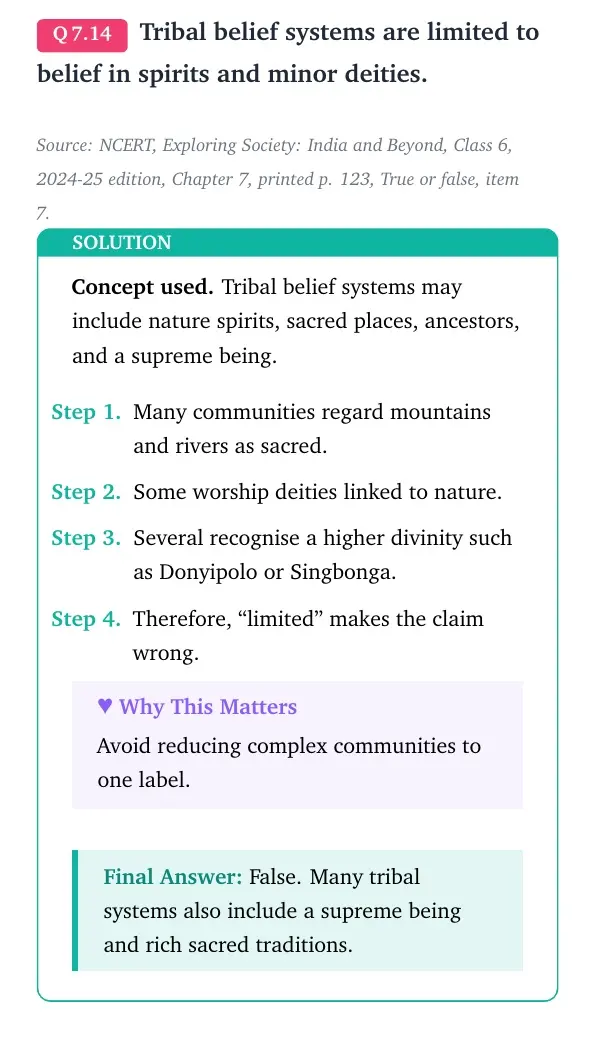
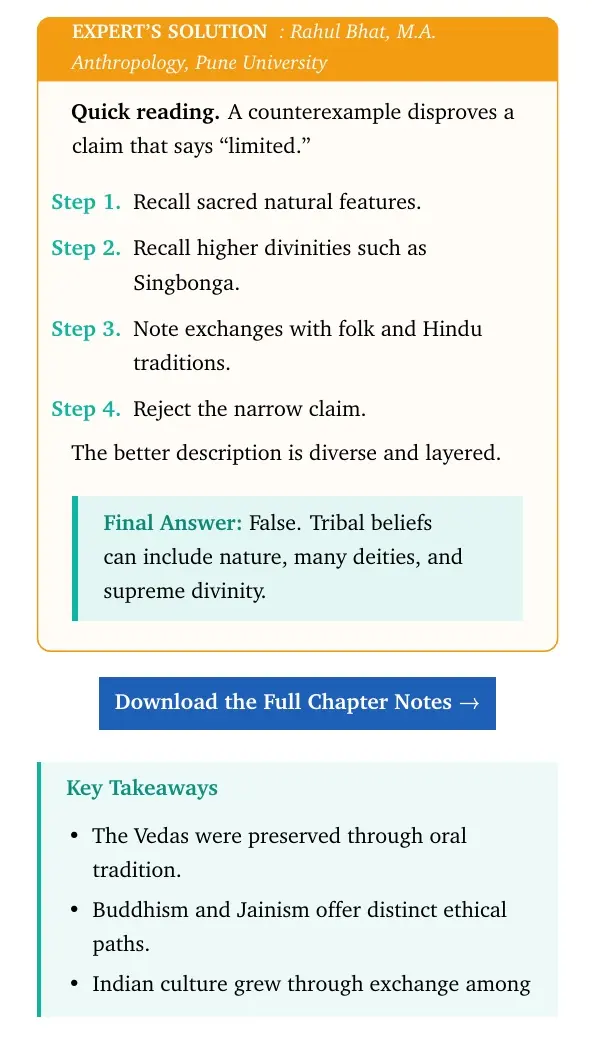
- Do not describe tribal beliefs as only spirits and minor deities.
Related Class 6 India's Cultural Roots Resources
Use the textbook for full stories and pictures. Use the solutions when you need direct, well-supported answers.
| Resource | Best use |
|---|---|
| India's Cultural Roots NCERT Book PDF | Read the full chapter, stories and activities |
| India's Cultural Roots Class 6 Notes | Revise key terms and teachings |
| India's Cultural Roots Handwritten Notes | Complete a quick final recap |
All Class 6 Social Science NCERT Solutions
Continue with chapter-wise solutions to revise history, culture and society in textbook order.
| Chapter | NCERT Solutions |
|---|---|
| 4 | Timeline and Sources of History |
| 5 | India, That Is Bharat |
| 6 | The Beginnings of Indian Civilisation |
| 7 | India's Cultural Roots |
| 8 | Unity in Diversity, or 'Many in the One' |
All India's Cultural Roots Questions with Step-by-Step Solutions
Open the question-wise page for textbook answers, expert explanations and revision tabs.
View all India's Cultural Roots questions with step-by-step solutions
India's Cultural Roots Social Science NCERT Solutions FAQs
Ques. What are the four Vedas?
Ans. They are the Rig Veda, Yajur Veda, Sama Veda and Atharva Veda. Their hymns were preserved through oral recitation.
Ques. What central ideas do the Upanishads discuss?
Ans. They discuss rebirth, karma, atman and brahman. They also teach that life, nature and the universe are connected.
Ques. What was the Buddha's main teaching about suffering?
Ans. The Buddha taught that ignorance and attachment cause suffering. He stressed inner discipline, truth, dharma and ahimsa.
Ques. What are three important Jain teachings?
Ans. The chapter explains ahimsa, anekantavada and aparigraha as central Jain teachings.
Ques. How did folk and tribal traditions shape Indian culture?
Ans. Their stories, art, deities, festivals and nature-based practices interacted with wider traditions and enriched Indian culture.
Ques. Where can I find India's Cultural Roots NCERT Solutions?
Ans. The solved textbook questions and downloadable PDF are available on this page for the 2026-27 session.



Comments