



The NCERT solutions for Class 7 Science Chapter 10 Life Processes in Plants explain how plants make, move, and use food. The answers follow the 2026-27 Curiosity textbook and cover photosynthesis, stomata, transport, respiration, and plant growth in clear steps.
- Core idea: Plants need food, water, gases, and transport to stay alive.
- Answer focus: Link each plant part with its exact job.
- Diagram focus: Label roots, xylem, phloem, leaves, and stomata carefully.
Chapter10LifeProcessesinPlantsSolutions.pdf?page=1&dpi=150)
Chapter10LifeProcessesinPlantsSolutions.pdf?page=2&dpi=150)
Chapter10LifeProcessesinPlantsSolutions.pdf?page=3&dpi=150)
Chapter10LifeProcessesinPlantsSolutions.pdf?page=4&dpi=150)
Chapter10LifeProcessesinPlantsSolutions.pdf?page=5&dpi=150)
Chapter10LifeProcessesinPlantsSolutions.pdf?page=6&dpi=150)
Chapter10LifeProcessesinPlantsSolutions.pdf?page=7&dpi=150)
Chapter10LifeProcessesinPlantsSolutions.pdf?page=8&dpi=150)
Chapter10LifeProcessesinPlantsSolutions.pdf?page=9&dpi=150)
Chapter10LifeProcessesinPlantsSolutions.pdf?page=10&dpi=150)
Chapter10LifeProcessesinPlantsSolutions.pdf?page=11&dpi=150)
Chapter10LifeProcessesinPlantsSolutions.pdf?page=12&dpi=150)
Chapter10LifeProcessesinPlantsSolutions.pdf?page=13&dpi=150)
Chapter10LifeProcessesinPlantsSolutions.pdf?page=14&dpi=150)
Chapter10LifeProcessesinPlantsSolutions.pdf?page=15&dpi=150)
Chapter10LifeProcessesinPlantsSolutions_flat_MobileCard.pdf?page=1&dpi=150)
Chapter10LifeProcessesinPlantsSolutions_flat_MobileCard.pdf?page=2&dpi=150)
Chapter10LifeProcessesinPlantsSolutions_flat_MobileCard.pdf?page=3&dpi=150)
Chapter10LifeProcessesinPlantsSolutions_flat_MobileCard.pdf?page=4&dpi=150)
Chapter10LifeProcessesinPlantsSolutions_flat_MobileCard.pdf?page=5&dpi=150)
Chapter10LifeProcessesinPlantsSolutions_flat_MobileCard.pdf?page=6&dpi=150)
Chapter10LifeProcessesinPlantsSolutions_flat_MobileCard.pdf?page=7&dpi=150)
Chapter10LifeProcessesinPlantsSolutions_flat_MobileCard.pdf?page=8&dpi=150)
Chapter10LifeProcessesinPlantsSolutions_flat_MobileCard.pdf?page=9&dpi=150)
Chapter10LifeProcessesinPlantsSolutions_flat_MobileCard.pdf?page=10&dpi=150)
Chapter10LifeProcessesinPlantsSolutions_flat_MobileCard.pdf?page=11&dpi=150)
Chapter10LifeProcessesinPlantsSolutions_flat_MobileCard.pdf?page=12&dpi=150)
Chapter10LifeProcessesinPlantsSolutions_flat_MobileCard.pdf?page=13&dpi=150)
Chapter10LifeProcessesinPlantsSolutions_flat_MobileCard.pdf?page=14&dpi=150)
Chapter10LifeProcessesinPlantsSolutions_flat_MobileCard.pdf?page=15&dpi=150)
Chapter10LifeProcessesinPlantsSolutions_flat_MobileCard.pdf?page=16&dpi=150)
Chapter10LifeProcessesinPlantsSolutions_flat_MobileCard.pdf?page=17&dpi=150)
Chapter10LifeProcessesinPlantsSolutions_flat_MobileCard.pdf?page=18&dpi=150)
Chapter10LifeProcessesinPlantsSolutions_flat_MobileCard.pdf?page=19&dpi=150)
Chapter10LifeProcessesinPlantsSolutions_flat_MobileCard.pdf?page=20&dpi=150)
Chapter10LifeProcessesinPlantsSolutions_flat_MobileCard.pdf?page=21&dpi=150)
Chapter10LifeProcessesinPlantsSolutions_flat_MobileCard.pdf?page=22&dpi=150)
Chapter10LifeProcessesinPlantsSolutions_flat_MobileCard.pdf?page=23&dpi=150)
Chapter10LifeProcessesinPlantsSolutions_flat_MobileCard.pdf?page=24&dpi=150)
Chapter10LifeProcessesinPlantsSolutions_flat_MobileCard.pdf?page=25&dpi=150)
Chapter10LifeProcessesinPlantsSolutions_flat_MobileCard.pdf?page=26&dpi=150)
Chapter10LifeProcessesinPlantsSolutions_flat_MobileCard.pdf?page=27&dpi=150)
Each Collegedunia answer follows the 2026-27 NCERT Curiosity chapter and uses clear language for Class 7 students.
|
Table of Contents |
Life Processes in Plants Explained for Class 7 Students
A life process is an activity that keeps an organism alive. Plants perform nutrition, transport, respiration, growth, and waste removal. Their roots, stems, and leaves work together.
- Nutrition: Leaves make food by photosynthesis.
- Transport: Xylem and phloem move materials through the plant.
- Respiration: Cells release energy from food.
- Growth: New cells form at growing regions.
Plants perform life processes all day, even when photosynthesis stops at night.
Life Processes in Plants Quick Video Recap
Source: Magnet Brains on YouTube
Photosynthesis and Gas Exchange in Green Leaves
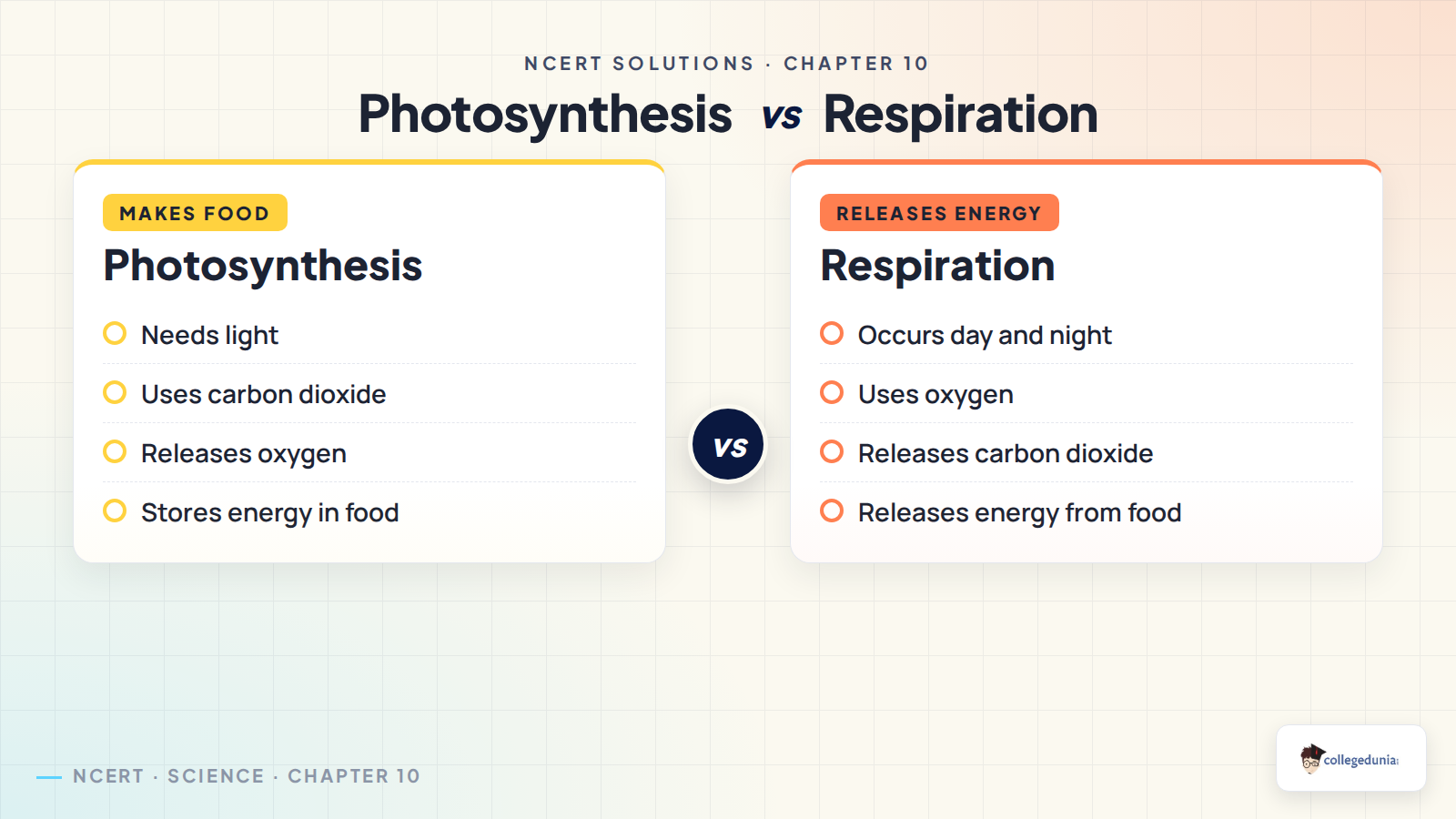
Green leaves use sunlight, carbon dioxide, and water to make food. Chlorophyll traps light energy. Oxygen forms during this process and moves out through stomata.
| Need or product | How the plant handles it |
|---|---|
| Water | Roots absorb it from soil. |
| Carbon dioxide | It enters leaves through stomata. |
| Sunlight | Chlorophyll traps its energy. |
| Food | Leaves make glucose and may store it as starch. |
| Oxygen | It usually leaves through stomata. |
Photosynthesis stores light energy in food. Respiration later releases usable energy from that food.
Water and Food Transport Through Xylem and Phloem
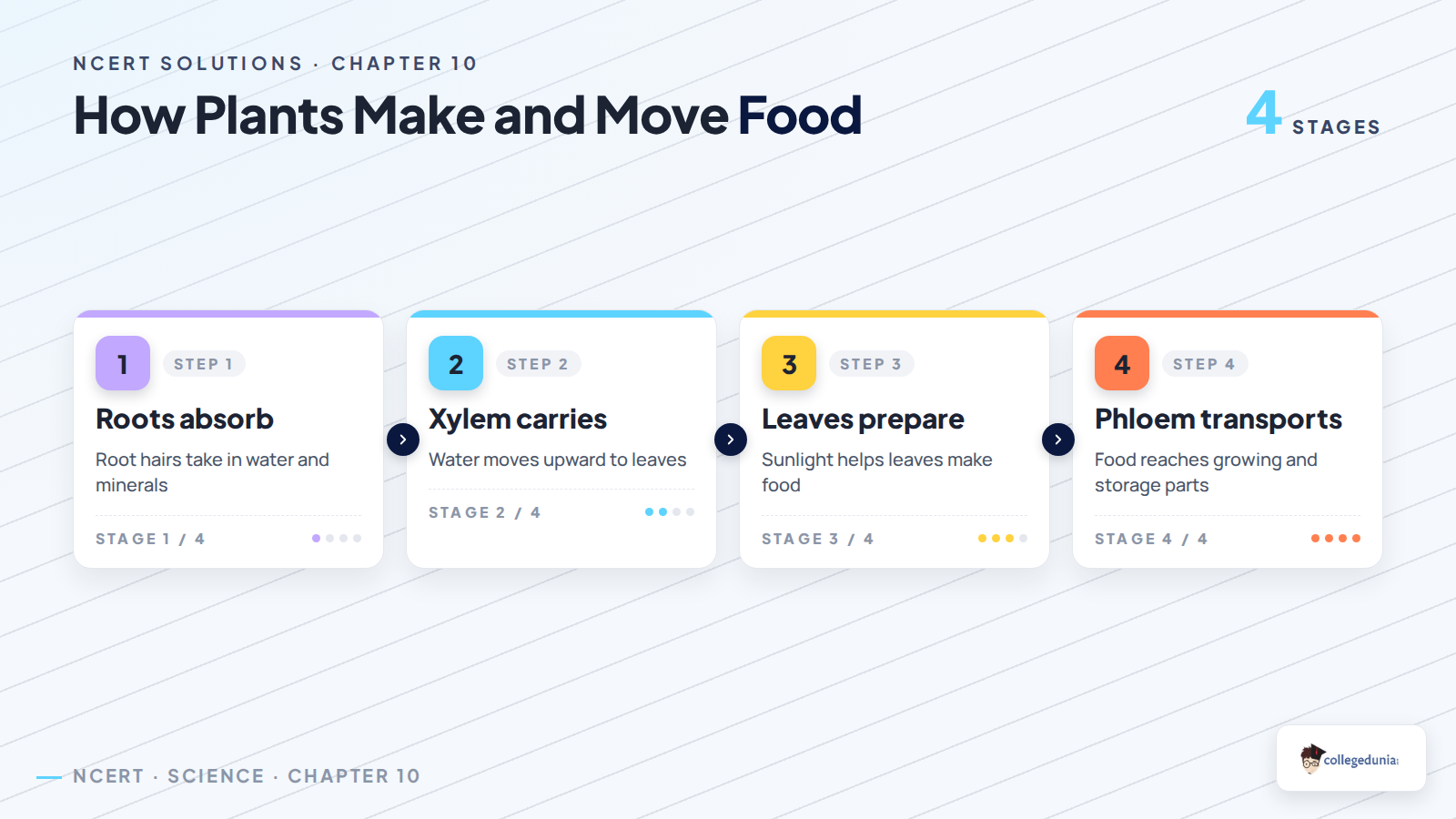
Root hairs absorb water and minerals from soil. Xylem carries them mainly upward. Phloem carries prepared food from leaves to growing and storage parts.
- Root hairs: Increase the area available for absorption.
- Xylem: Moves water and dissolved minerals.
- Phloem: Moves food to different plant parts.
- Transpiration: Water vapour leaves through stomata.
Xylem and phloem do different jobs. Do not write that both tissues carry the same material.
Respiration and Growth in Plants
Plant cells respire to release energy for growth, repair, and transport. Respiration happens during day and night. It is not the same as photosynthesis.
| Process | Main result | When it occurs |
|---|---|---|
| Photosynthesis | Makes food and releases oxygen | When light is available |
| Respiration | Releases energy from food | Day and night |
| Growth | Adds new cells and increases size | Throughout suitable growing periods |
Plants respire continuously because every living cell needs energy.
Common Mistakes in Life Processes in Plants Answers
Good answers name the process and explain its purpose. A labelled diagram should support the written answer instead of replacing it.
- Do not say plants get food directly from soil.
- Do not confuse photosynthesis with respiration.
- Do not swap the functions of xylem and phloem.
- Do not state that respiration occurs only at night.
- Do not leave arrows or labels unclear in transport diagrams.
How to Use the Life Processes in Plants Solutions
Try each textbook question before opening the answer. Then compare the scientific terms, cause, and result in your response.
- Draw a leaf and mark stomata, gas movement, and sunlight.
- Make a two-column xylem and phloem comparison.
- Write photosynthesis and respiration as separate process chains.
- Practise one labelled plant transport diagram from memory.
A correct process chain makes long answers easier to remember.
Life Processes in Plants Student Feedback
What 10,760 students told us about plant transport
In a Collegedunia poll conducted before the 2026 school examinations, students found transport diagrams most useful for revision.
Source: 2026-27 Class 7 Science student poll. Sample of 10,760 students.
Other Class 7 Life Processes in Plants Resources
Use these chapter resources for reading and quick revision. Each link keeps the same Class 7 Science Curiosity context.
| Resource | How it helps |
|---|---|
| Life Processes in Plants Class 7 Notes | Revise terms, processes, and diagrams. |
| Life Processes in Plants Class 7 NCERT Book PDF | Read the official activities and explanations. |
| Life Processes in Plants Class 7 Handwritten Notes | Use a short visual recap before a test. |
NCERT Solutions for Class 7 Science Curiosity: All Chapters
Continue with the same answer format across the Curiosity textbook. These nearby chapters connect plant functions with other living systems.
| Chapter | NCERT Solutions |
|---|---|
| Chapter 8 | Measurement of Time and Motion Solutions |
| Chapter 9 | Life Processes in Animals Solutions |
| Chapter 10 | Life Processes in Plants Solutions |
| Chapter 11 | Light, Shadows and Reflections Solutions |
All NCERT Solutions for Life Processes in Plants with Step-by-Step Answers
The question cards collect the textbook questions in one place. Try each question before comparing the direct and detailed answers.
Need every textbook question in one place?
Life Processes in Plants Science NCERT Solutions FAQs
Ques. What are life processes in plants?
Ans. Life processes include nutrition, transport, respiration, growth, and waste removal. These activities keep a plant alive.
Ques. What is photosynthesis?
Ans. Photosynthesis is the process by which green plants use light, water, and carbon dioxide to make food.
Ques. What is the role of stomata?
Ans. Stomata are tiny leaf pores. They allow gas exchange and release water vapour during transpiration.
Ques. How do plants transport water?
Ans. Roots absorb water from soil. Xylem tissue carries it upward through roots and stems to the leaves.
Ques. What does phloem transport?
Ans. Phloem transports prepared food from leaves to growing, working, and storage parts of the plant.
Ques. Do plants respire only at night?
Ans. No. Plant cells respire during day and night because they need energy continuously.
Ques. Are these solutions based on the 2026-27 Curiosity textbook?
Ans. Yes. The answers follow the Class 7 Science Curiosity chapter for the 2026-27 session.



Comments