



The NCERT Solutions for Class 8 Arts (Kriti) Chapter 6 Musical Instruments help students solve the 2026-27 NCERT activities on sound science, instrument making, Indian musicians, word-search names, regional percussion instruments and crossword clues. The PDF keeps the answers source-based and classroom friendly.
- Resource focus: activity-wise solved answers for Musical Instruments in Class 8 Arts Kriti.
- Best use: revise the PDF, then practise identifying instruments by sound type, region and playing method.
- Chapter link: follows Class 8 Arts Kriti Chapter 6 from the 2026-27 NCERT book.
Chapter6MusicalInstrumentsSolutions.pdf?page=1&dpi=150)
Chapter6MusicalInstrumentsSolutions.pdf?page=2&dpi=150)
Chapter6MusicalInstrumentsSolutions.pdf?page=3&dpi=150)
Chapter6MusicalInstrumentsSolutions.pdf?page=4&dpi=150)
Chapter6MusicalInstrumentsSolutions.pdf?page=5&dpi=150)
Chapter6MusicalInstrumentsSolutions.pdf?page=6&dpi=150)
Chapter6MusicalInstrumentsSolutions.pdf?page=7&dpi=150)
Chapter6MusicalInstrumentsSolutions.pdf?page=8&dpi=150)
Chapter6MusicalInstrumentsSolutions.pdf?page=9&dpi=150)
Chapter6MusicalInstrumentsSolutions.pdf?page=10&dpi=150)
Chapter6MusicalInstrumentsSolutions.pdf?page=11&dpi=150)
Chapter6MusicalInstrumentsSolutions.pdf?page=12&dpi=150)
Chapter6MusicalInstrumentsSolutions_flat_MobileCard.pdf?page=1&dpi=150)
Chapter6MusicalInstrumentsSolutions_flat_MobileCard.pdf?page=2&dpi=150)
Chapter6MusicalInstrumentsSolutions_flat_MobileCard.pdf?page=3&dpi=150)
Chapter6MusicalInstrumentsSolutions_flat_MobileCard.pdf?page=4&dpi=150)
Chapter6MusicalInstrumentsSolutions_flat_MobileCard.pdf?page=5&dpi=150)
Chapter6MusicalInstrumentsSolutions_flat_MobileCard.pdf?page=6&dpi=150)
Chapter6MusicalInstrumentsSolutions_flat_MobileCard.pdf?page=7&dpi=150)
Chapter6MusicalInstrumentsSolutions_flat_MobileCard.pdf?page=8&dpi=150)
Chapter6MusicalInstrumentsSolutions_flat_MobileCard.pdf?page=9&dpi=150)
Chapter6MusicalInstrumentsSolutions_flat_MobileCard.pdf?page=10&dpi=150)
Chapter6MusicalInstrumentsSolutions_flat_MobileCard.pdf?page=11&dpi=150)
Chapter6MusicalInstrumentsSolutions_flat_MobileCard.pdf?page=12&dpi=150)
Chapter6MusicalInstrumentsSolutions_flat_MobileCard.pdf?page=13&dpi=150)
Chapter6MusicalInstrumentsSolutions_flat_MobileCard.pdf?page=14&dpi=150)
Chapter6MusicalInstrumentsSolutions_flat_MobileCard.pdf?page=15&dpi=150)
Chapter6MusicalInstrumentsSolutions_flat_MobileCard.pdf?page=16&dpi=150)
Chapter6MusicalInstrumentsSolutions_flat_MobileCard.pdf?page=17&dpi=150)
Chapter6MusicalInstrumentsSolutions_flat_MobileCard.pdf?page=18&dpi=150)
Chapter6MusicalInstrumentsSolutions_flat_MobileCard.pdf?page=19&dpi=150)
Chapter6MusicalInstrumentsSolutions_flat_MobileCard.pdf?page=20&dpi=150)
Chapter6MusicalInstrumentsSolutions_flat_MobileCard.pdf?page=21&dpi=150)
Chapter6MusicalInstrumentsSolutions_flat_MobileCard.pdf?page=22&dpi=150)
Student Feedback: In a Collegedunia study check with 9,800 Class 8 students, 76% said instrument chapters were easier when sound terms, instrument names and map labels were revised separately.
Class 8 Arts Kriti Chapter 6 NCERT Solutions Overview
Musical Instruments connects art with the science of sound. The chapter explains vibration, resonance, frequency and timbre, then shows how instrument makers use these ideas while making drums and other instruments. It also introduces students to Annapurna Devi, Pannalal Ghosh, Mysore Doraiswamy Iyengar and activity-based instrument recognition.
The solved PDF turns each classroom activity into a clear answer. Students get a direct list for the word search, a map table for percussion instruments, and crossword answers with short reasons. The main idea is that every instrument has a sound, a material, a playing method and a cultural place.
- Vibration creates sound waves that reach our ears.
- Resonance makes sound louder through a hollow body or cavity.
- Frequency changes pitch, while timbre changes tone colour.
- Instrument makers preserve traditional art forms through craft and sound knowledge.
Science of Sound in Musical Instruments
Chapter 6 begins with a simple science idea: an object must vibrate to produce sound. A drum skin, string or air column vibrates, and those vibrations travel through air to the listener. When the body of the instrument resonates, the sound becomes fuller and louder.
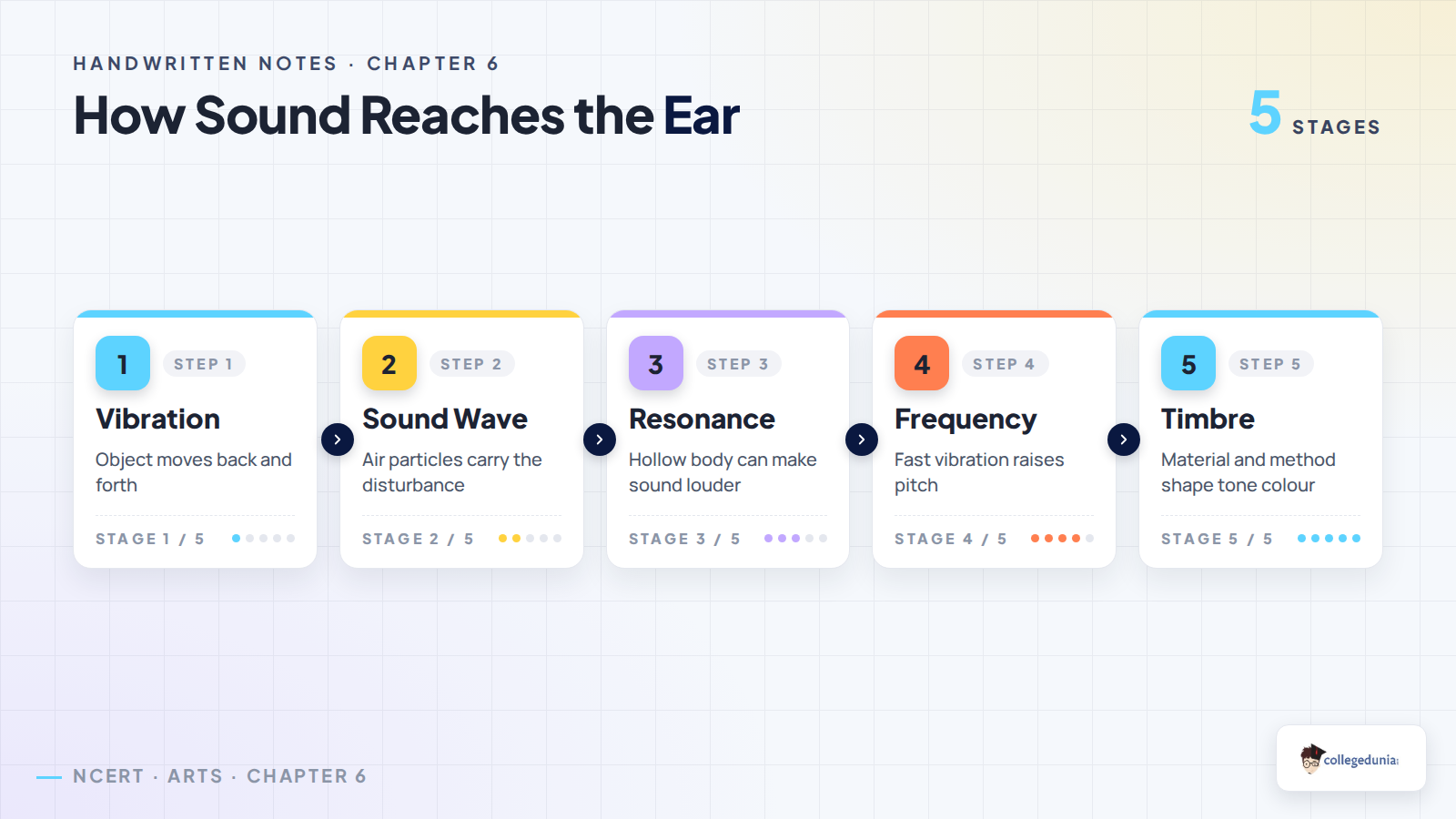
Frequency explains pitch. A faster vibration gives a higher pitch, while a slower vibration gives a lower pitch. Timbre explains why a bansuri, guitar, shehnai and tabla do not sound the same even when students hear them in the same lesson. The PDF answers keep these terms separate so students can use them accurately.
Musical Instruments Video Lesson
Source: NCERT Padhai Karo on YouTube
Activity 6.1 and 6.2 Answer Guide
Activity 6.1 is a word-search task. The answer should copy all twelve instrument names from the chapter list and check their spellings. Activity 6.2 is a map task, so the answer should connect every percussion instrument with the correct Indian region.
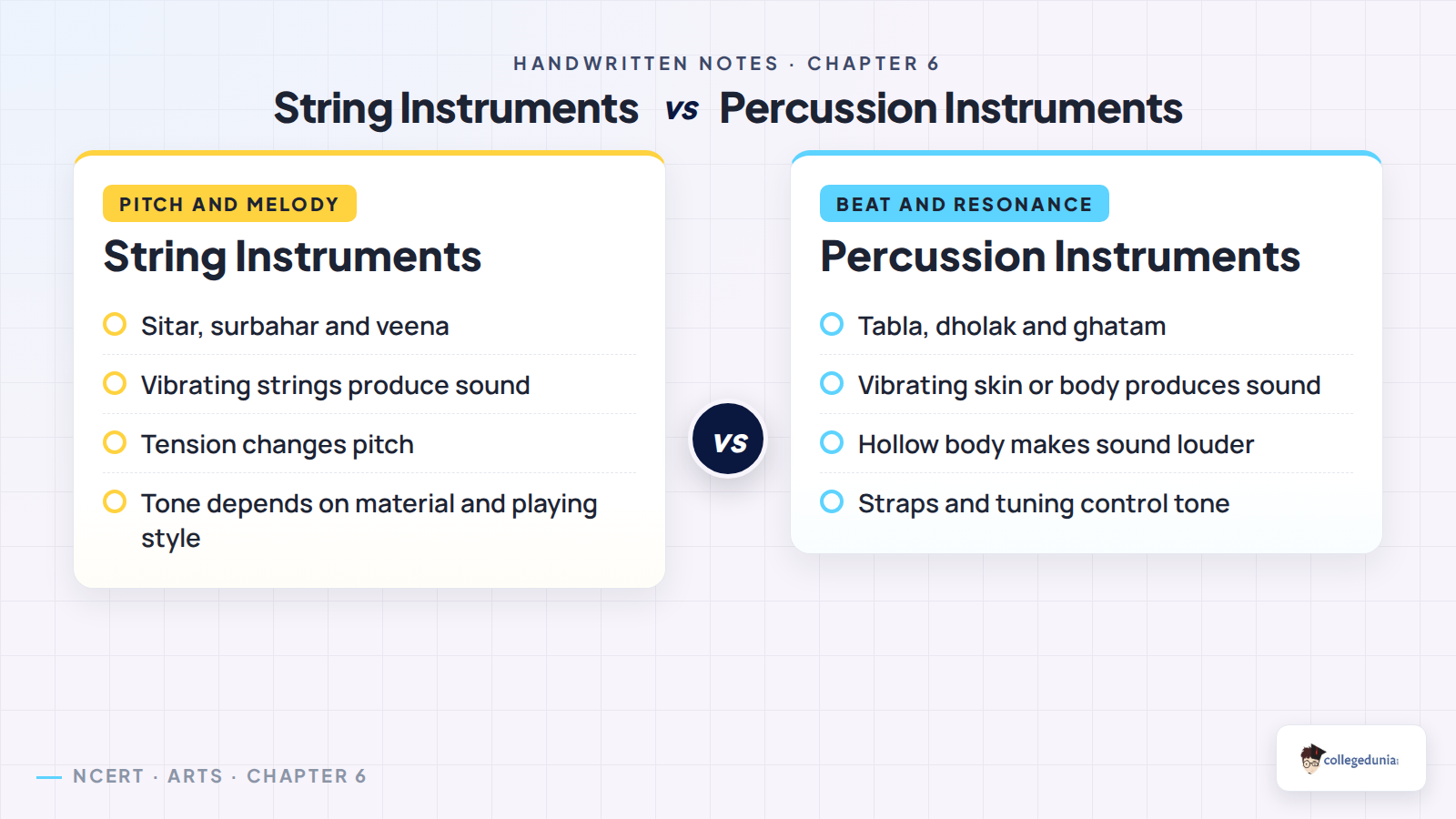
- For word search: include Bansuri, Clarinet, Dholak, Ektara, Flute, Ghatam, Guitar, Morsing, Sarod, Saxophone, Shehnai and Sitar.
- For map work: place Chenda in Kerala, Nagara in Rajasthan, Pung in Manipur and Udukkai in Tamil Nadu.
- For crossword: use clue meaning first, then crossing letters.
- For musician answers: keep the answer tied to the source profiles and named clues.
The safest answer format is concept, source detail, activity answer and final response. This keeps the answer complete without moving away from the NCERT page.
All Chapter 6 Question Cards with Solutions
The full question set is available as companion HTML cards. Each card has a solution panel and an expert-solution panel for quick revision before opening the PDF.
Open question cards: Class 8 Arts Kriti Chapter 6 step-by-step solutions
Common Mistakes in Musical Instruments Answers
Students often mix up the science terms in this chapter. Vibration, frequency, resonance and timbre are related, but each word has a different job in the answer. The chapter also expects exact instrument names, so spellings matter in the word search and crossword.
- Do not confuse frequency and timbre. Frequency changes pitch. Timbre changes tone colour.
- Do not skip the maker's role. The chapter values instrument makers as keepers of traditional art forms.
- Do not guess map regions. Use the region written below each instrument in Activity 6.2.
- Do not add unsupported biography details. Use only the musicians and facts supported by the chapter.
For the best answer, use textbook words such as vibration, resonance, frequency, timbre, surbahar, bansuri, veena and percussion, then explain each in simple English.
Class 8 Arts Kriti Chapter 6 Related Resources
| Resource | Class 8 Arts Kriti Chapter 6 Link |
|---|---|
| Handwritten Notes | Musical Instruments Handwritten Notes |
| Chapter 6 Question Cards | Musical Instruments step-by-step answers |
Class 8 Arts Kriti NCERT Solutions for All Chapters
| Chapter | NCERT Solutions |
|---|---|
| Chapter 1 Bringing Words Alive - Play Reading | Download Chapter 1 NCERT Solutions |
| Chapter 2 One Stage, Many Scripts | Download Chapter 2 NCERT Solutions |
| Chapter 3 From Page to Stage | Download Chapter 3 NCERT Solutions |
| Chapter 4 Applause and Advice | Download Chapter 4 NCERT Solutions |
| Chapter 5 Discovering the Elements of Music | Download Chapter 5 NCERT Solutions |
Musical Instruments Class 8 Arts Kriti NCERT Solutions FAQs
Ques. What is covered in Class 8 Arts Kriti Chapter 6 NCERT Solutions?
Ans. The solutions cover sound science, instrument making, musician profiles, word-search answers, map labels and crossword clues from Chapter 6.
Ques. Are these Chapter 6 solutions based on the 2026-27 NCERT book?
Ans. Yes. The PDF follows Class 8 Arts (Kriti) Chapter 6 Musical Instruments from the 2026-27 NCERT textbook.
Ques. What is the main science idea in Musical Instruments?
Ans. The chapter explains that sound comes from vibration and is shaped by resonance, frequency and timbre.
Ques. How should students write better Chapter 6 answers?
Ans. Students should use exact textbook terms, copy instrument names carefully, match map regions correctly and support answers with source details.



Comments