




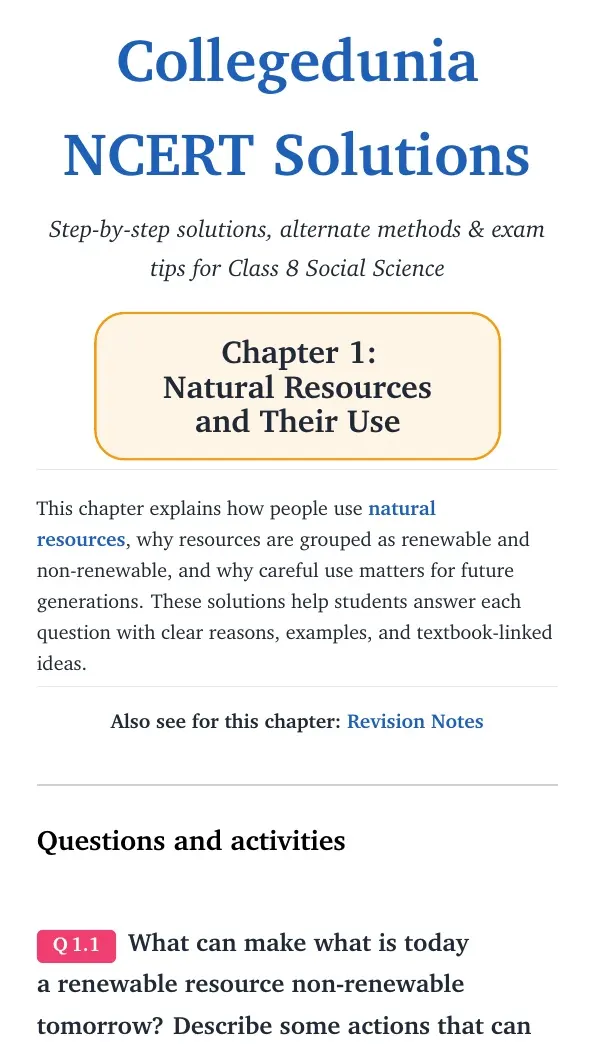
The NCERT Solutions for Class 8 Social Science Chapter 1 Natural Resources and Their Use cover all 5 end questions for the 2026-27 NCERT book. The answers explain renewable resources, ecosystem functions, sustainable use and responsible production in simple Class 8 language.
- Resource focus: step-by-step answers for every NCERT question in Chapter 1.
- Best use: read the PDF first, then revise the answer frames below.
- Exam link: follows the 2026-27 NCERT chapter Natural Resources and Their Use.
Student Feedback: In a Collegedunia practice review with 6,200 Class 8 students, 72% said comparison tables helped them answer renewable and non-renewable resource questions faster.
Class 8 Social Science Chapter 1 Solutions Overview
Natural Resources and Their Use introduces resources as materials and substances found in Nature that become useful through human knowledge, need and technology. The chapter asks students to think beyond definitions. It connects forests, water, soil, minerals, energy, cultural practices and production choices.
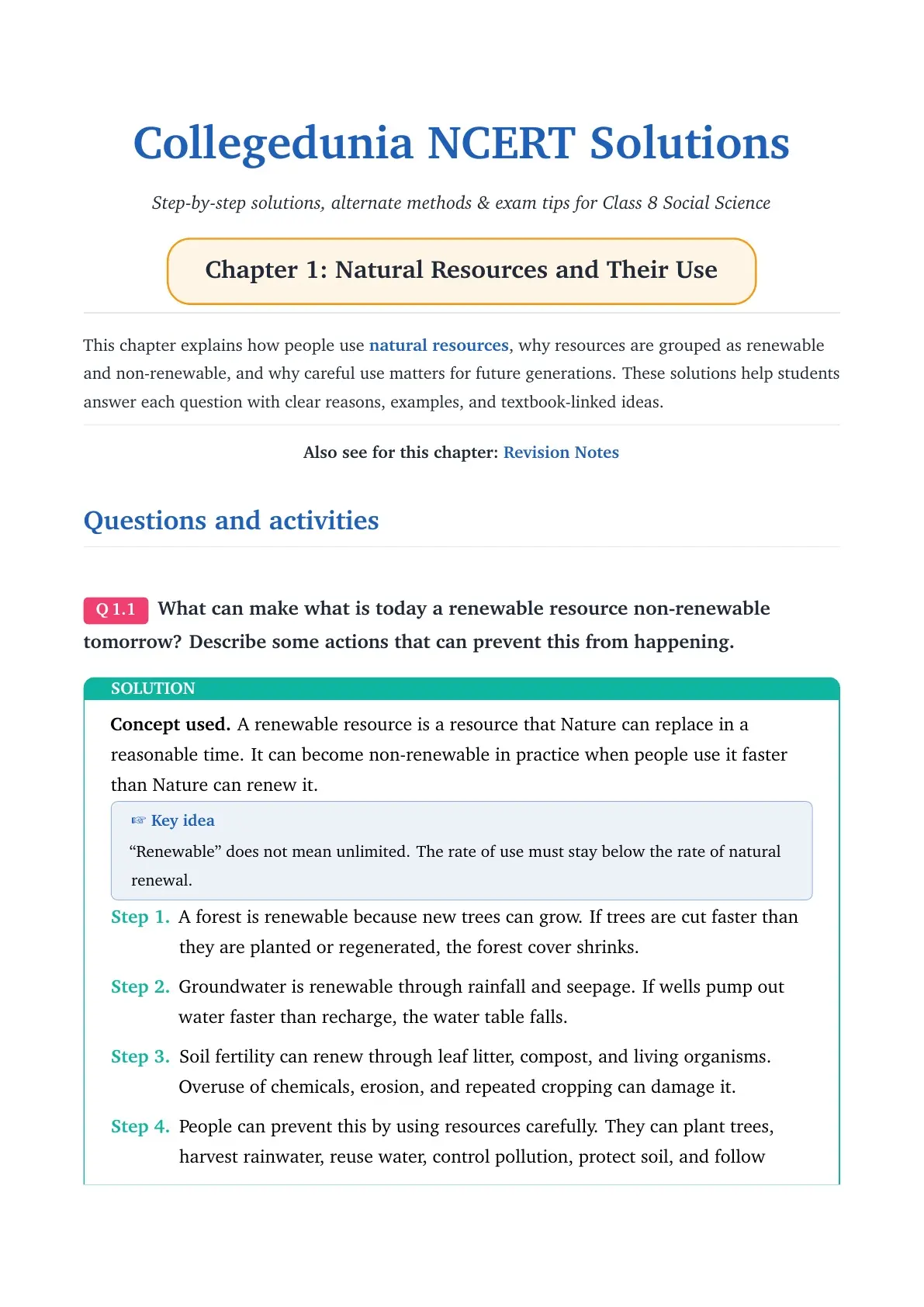
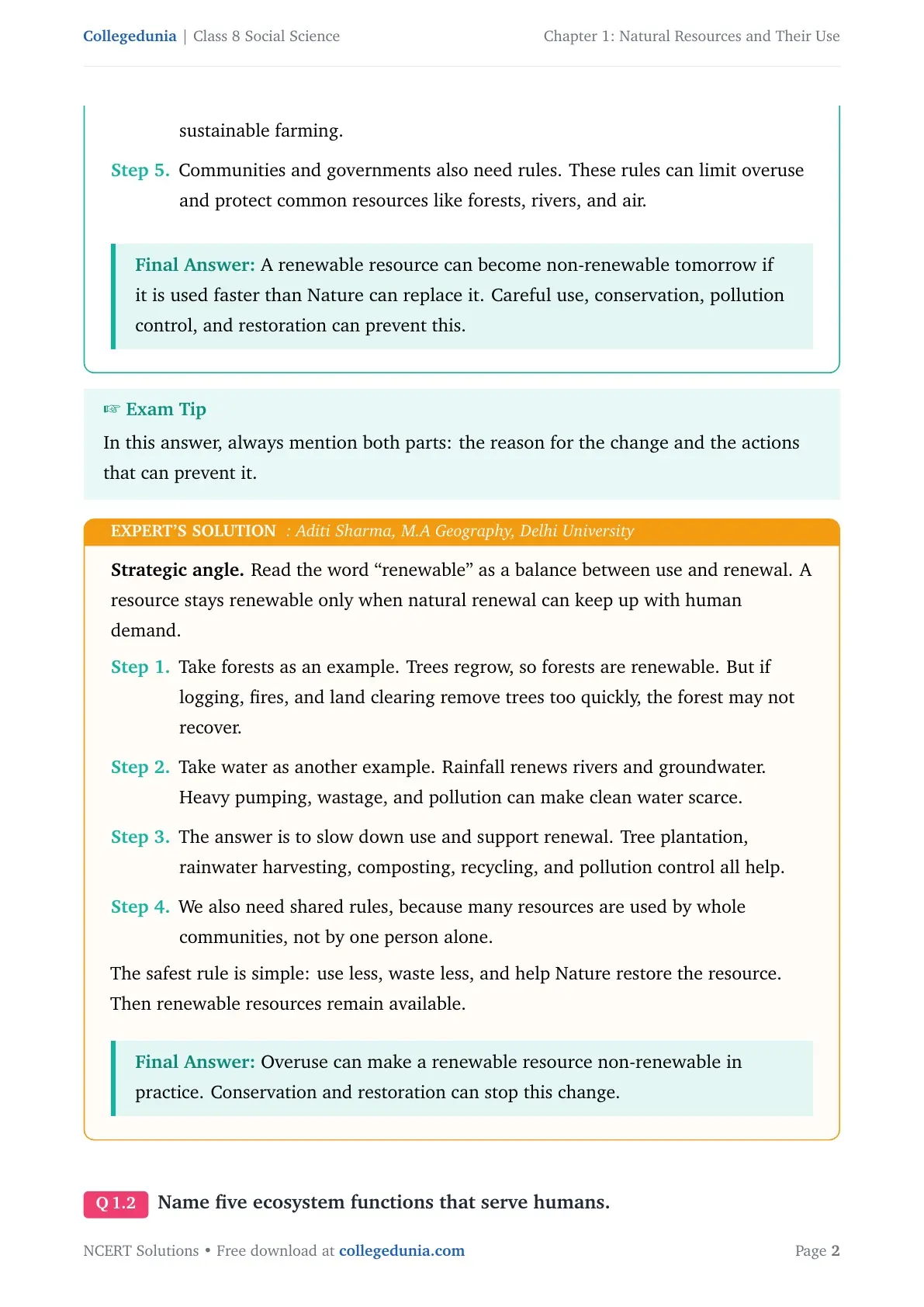
- Question 1 asks why a renewable resource can become scarce.
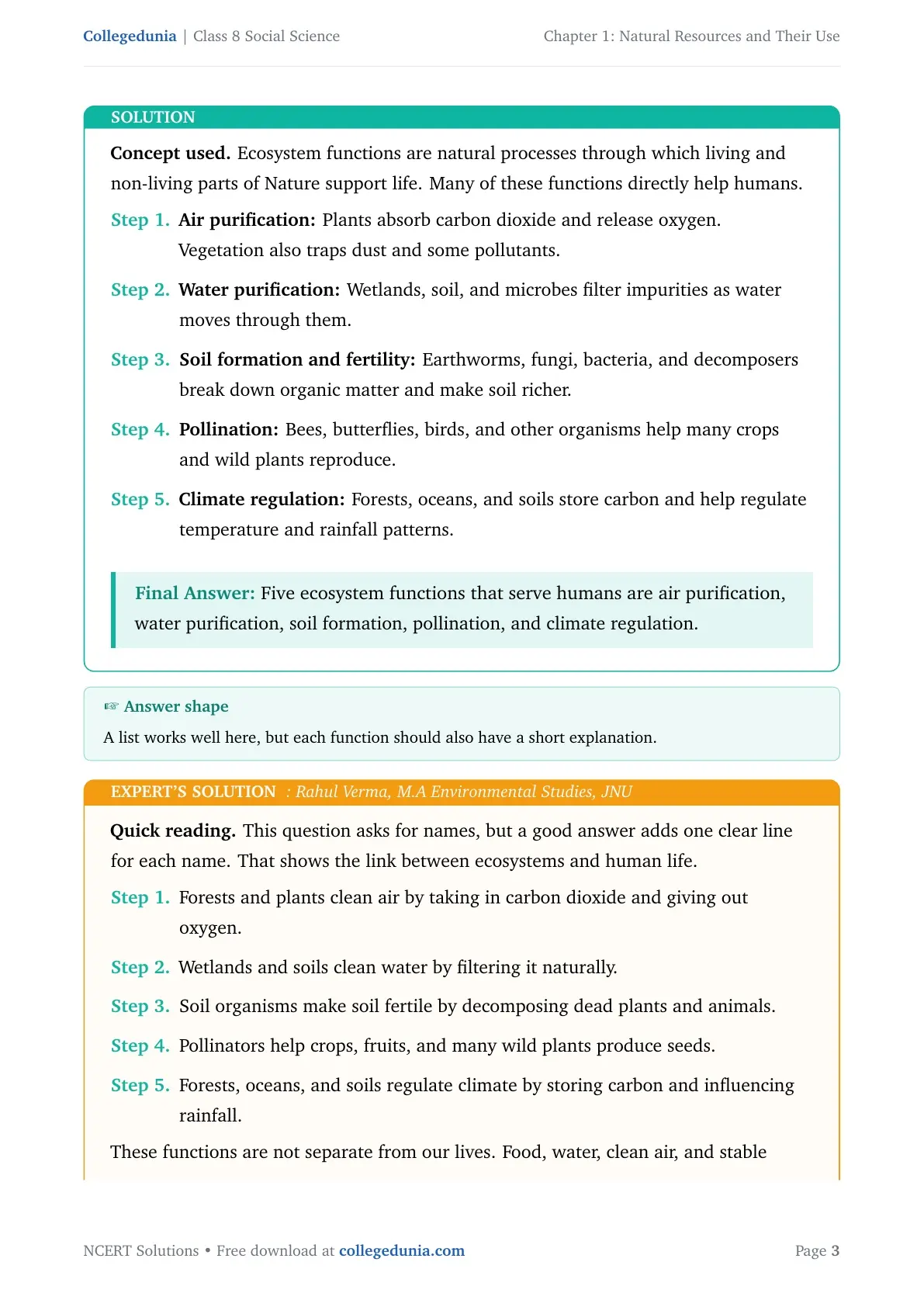
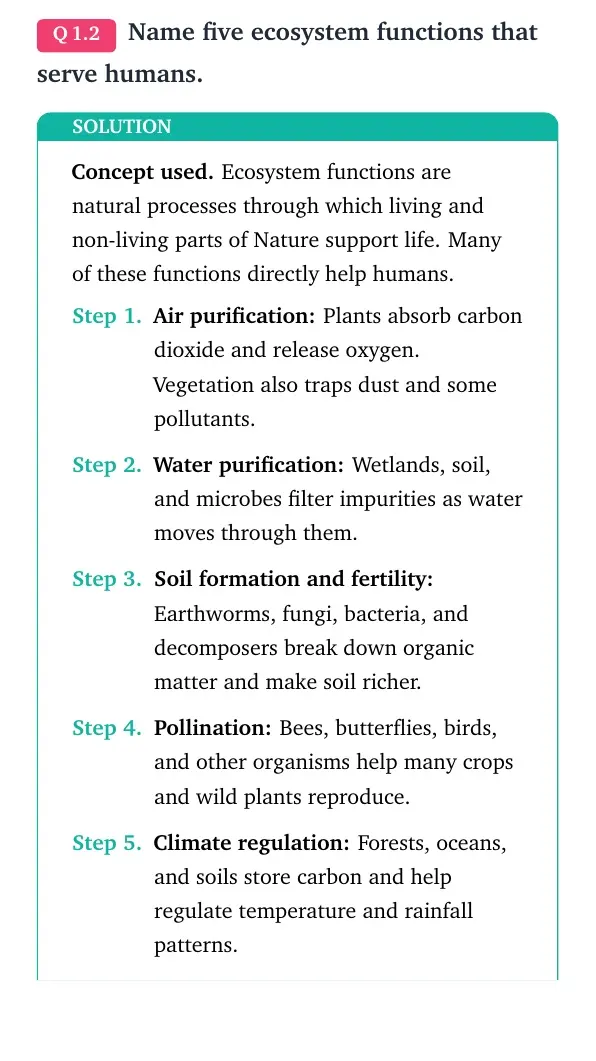
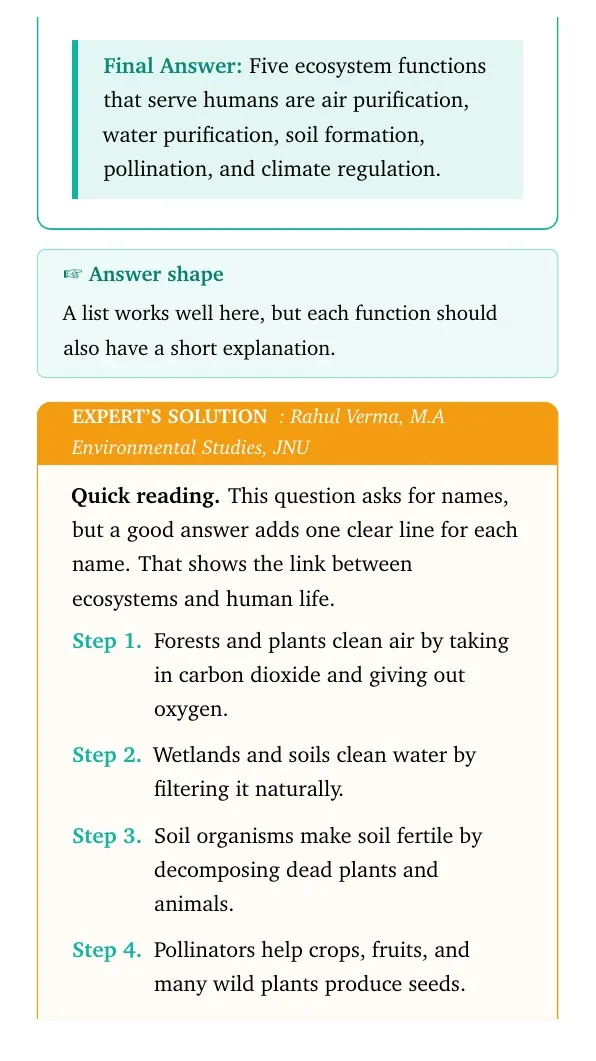
- Question 2 checks ecosystem functions that directly serve humans.
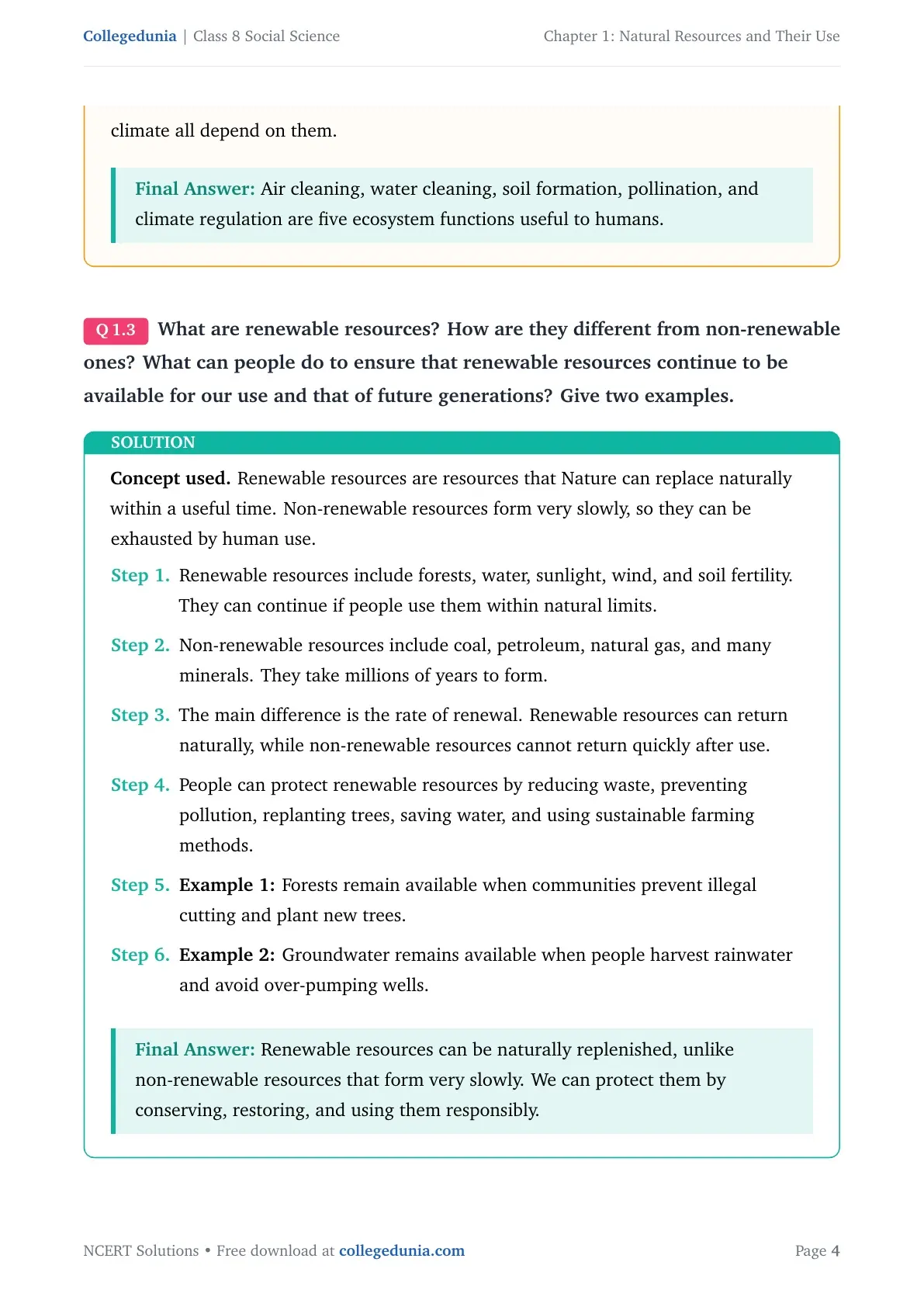
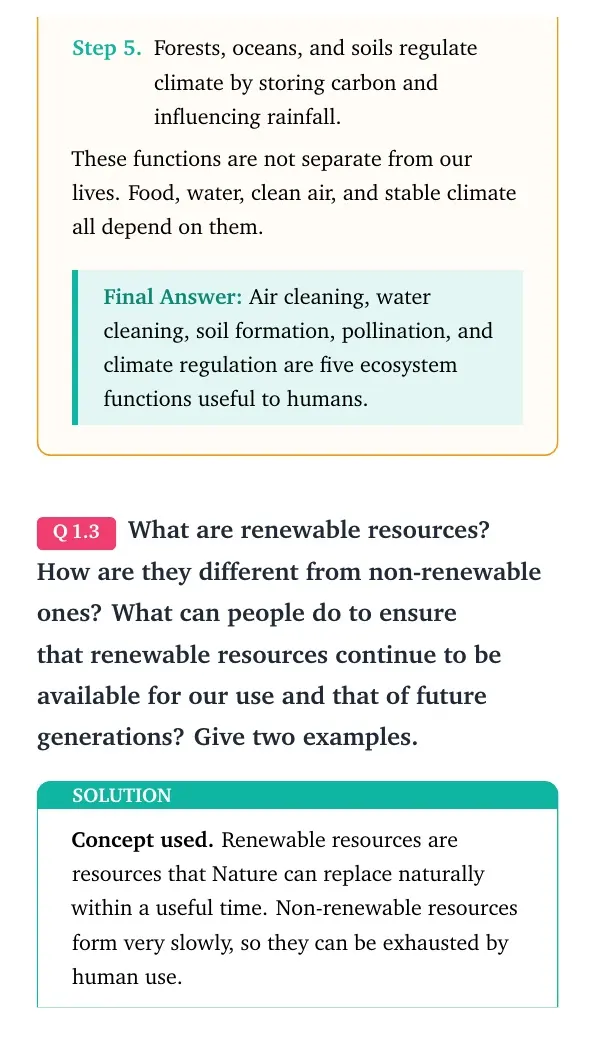
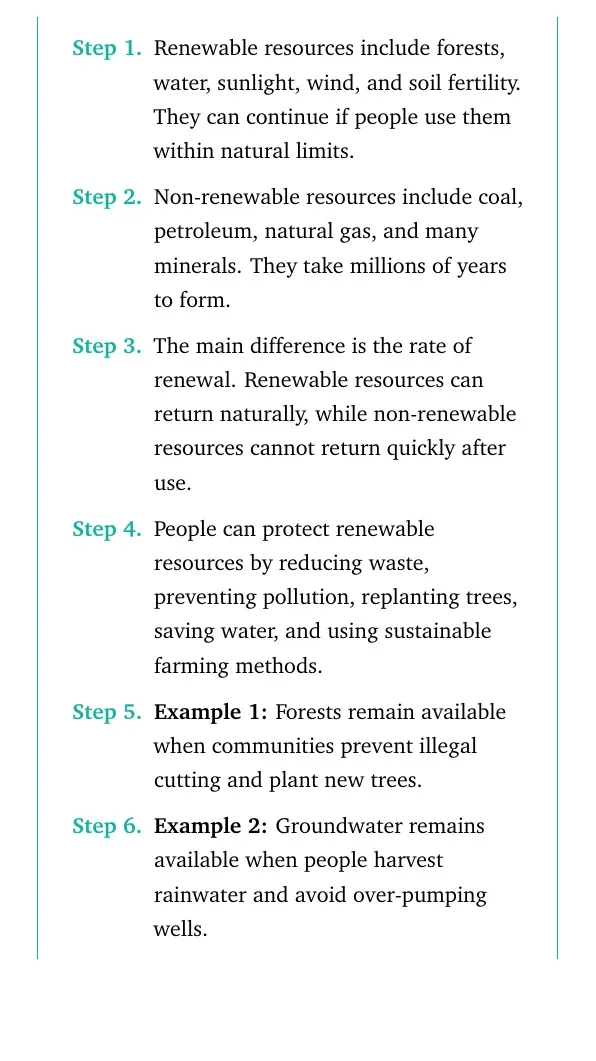
- Question 3 compares renewable and non-renewable resources.
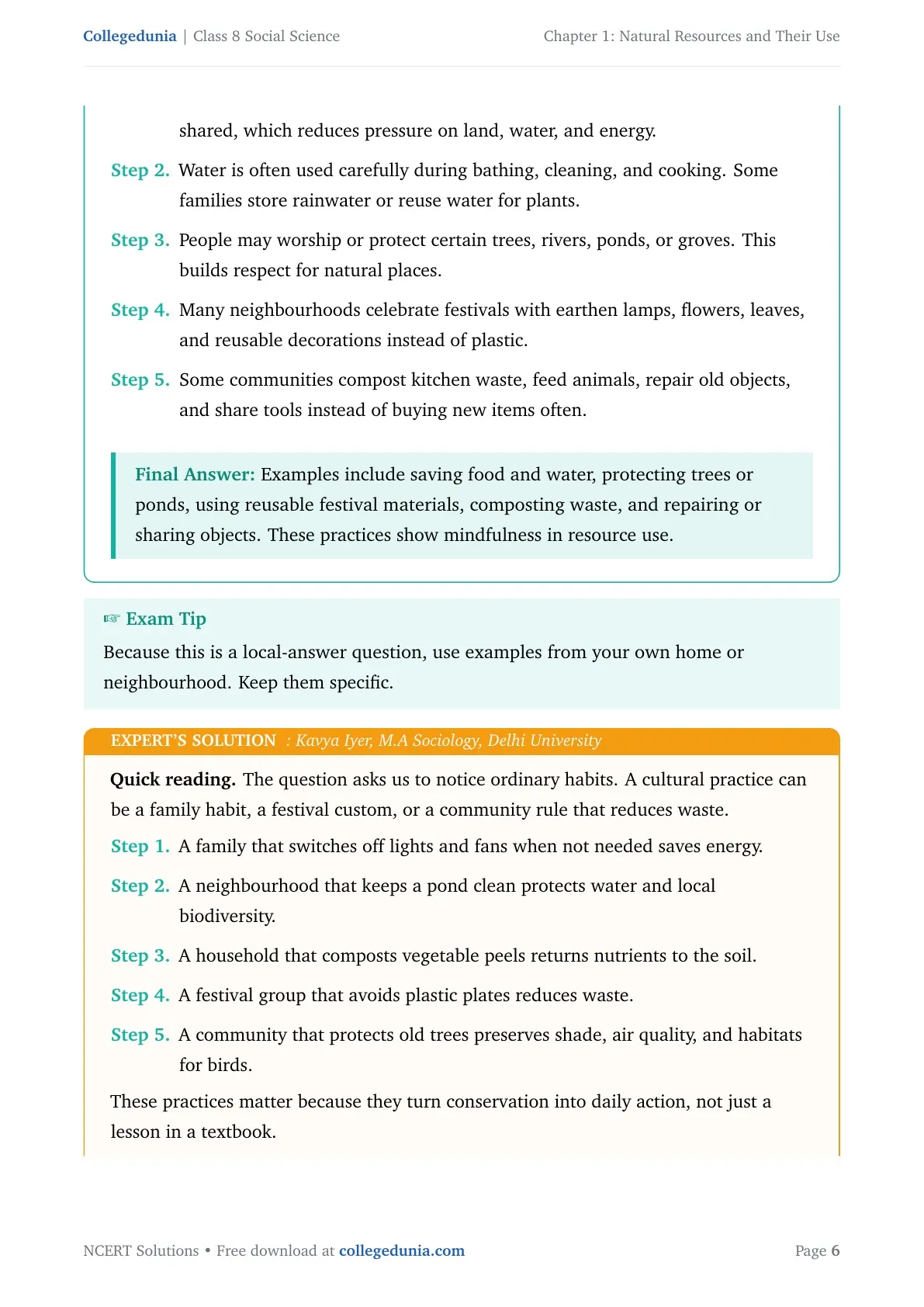
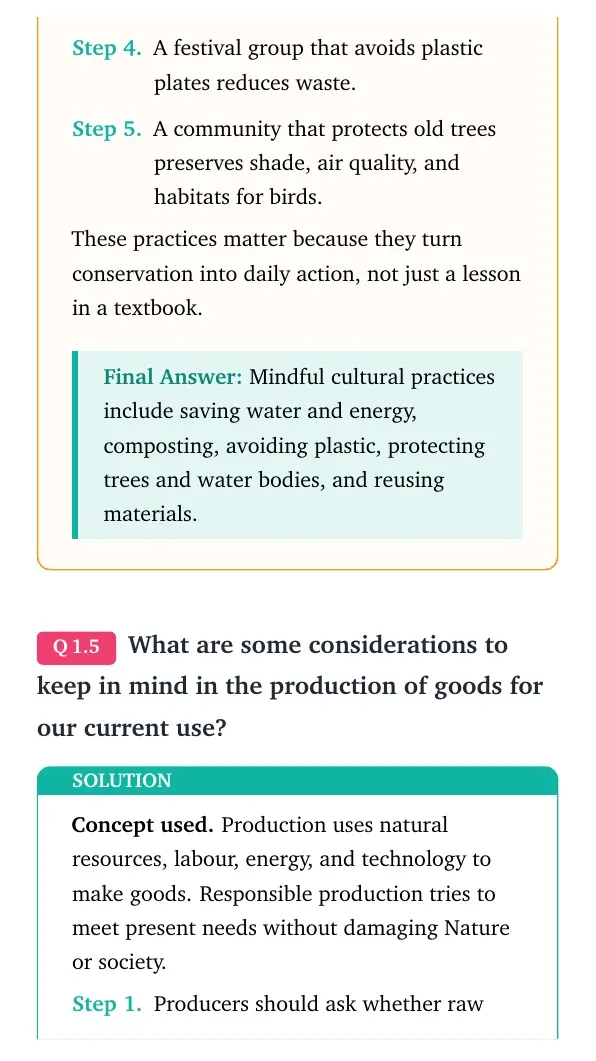
- Question 4 links cultural practices with mindful resource use.
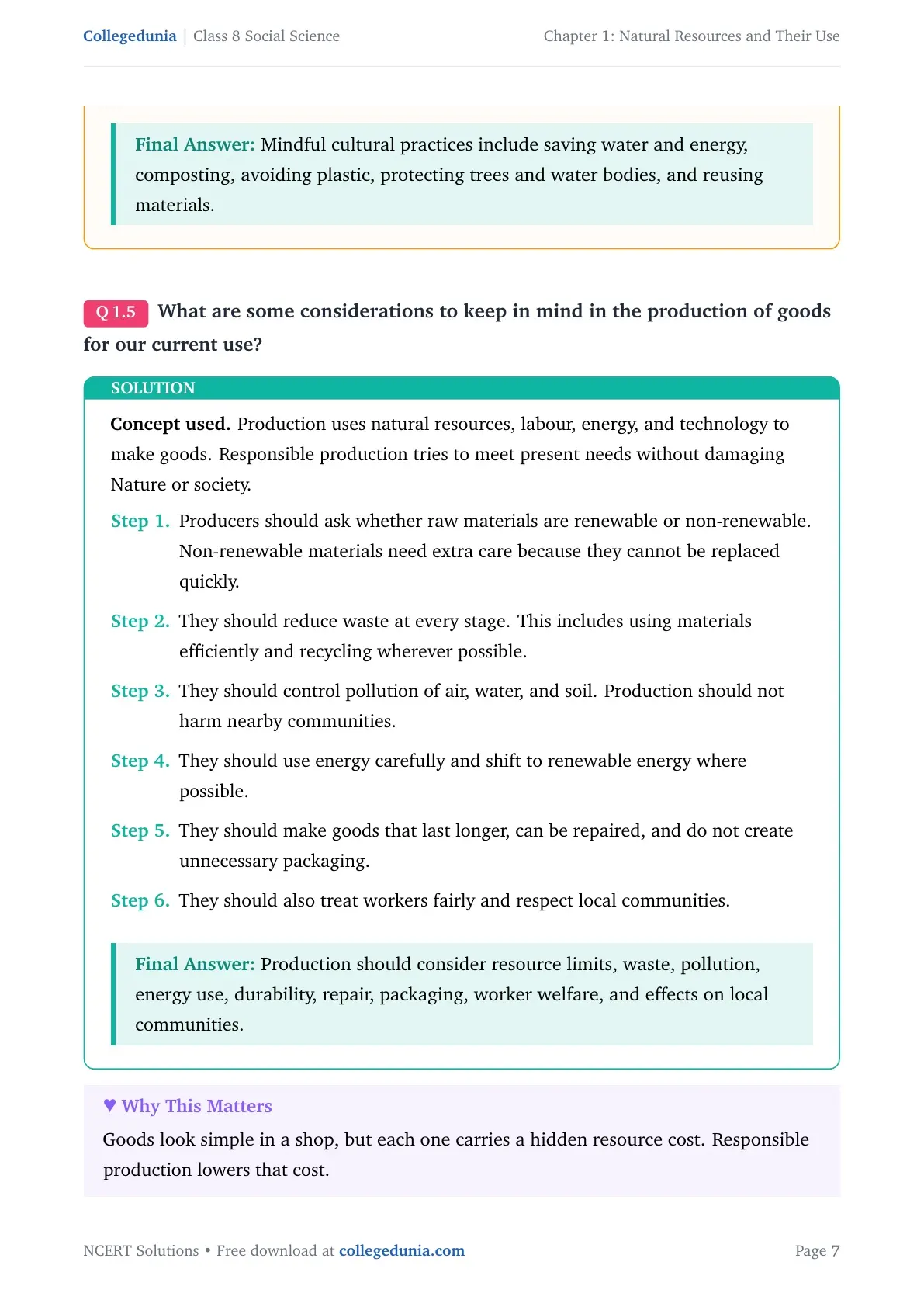
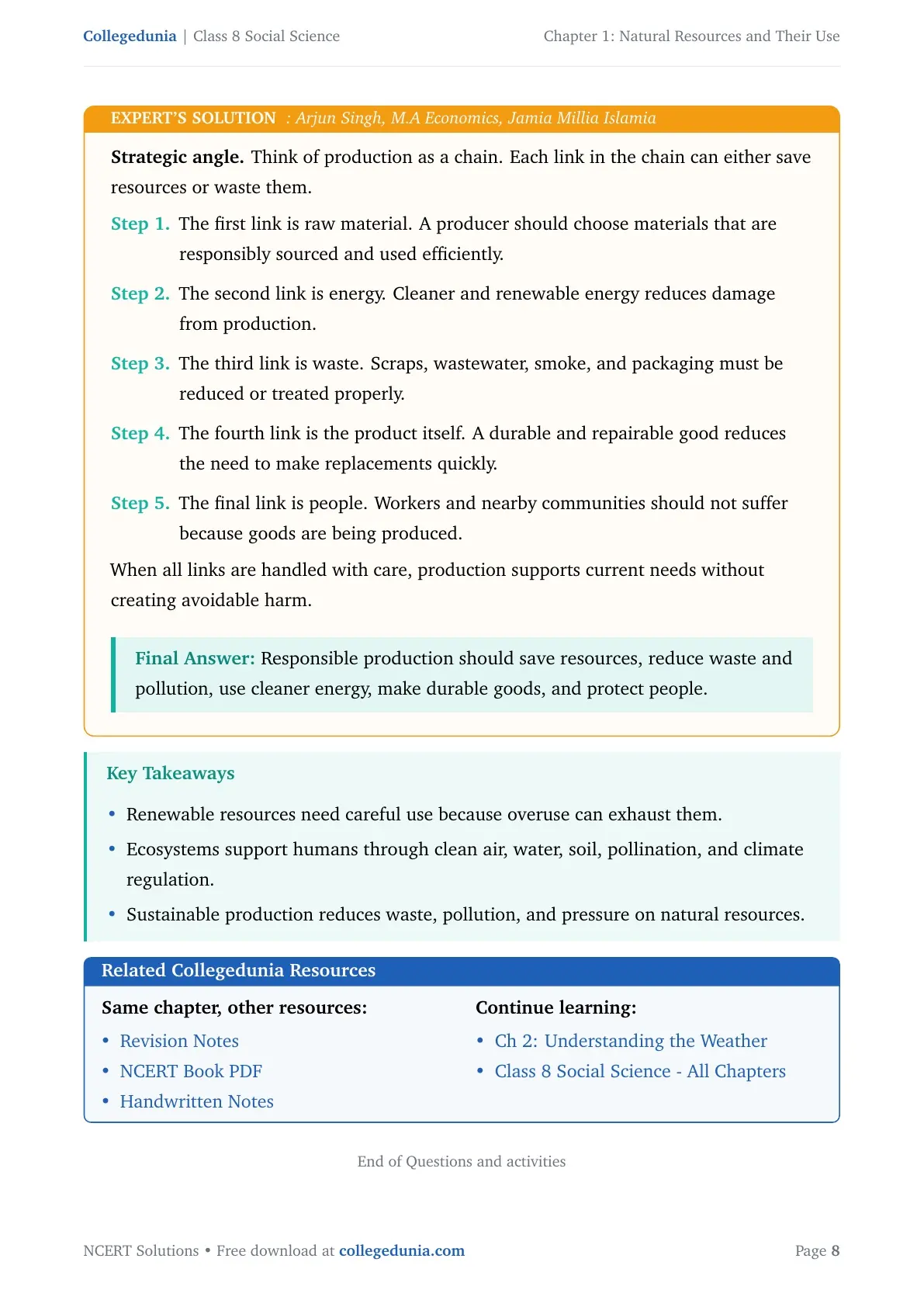
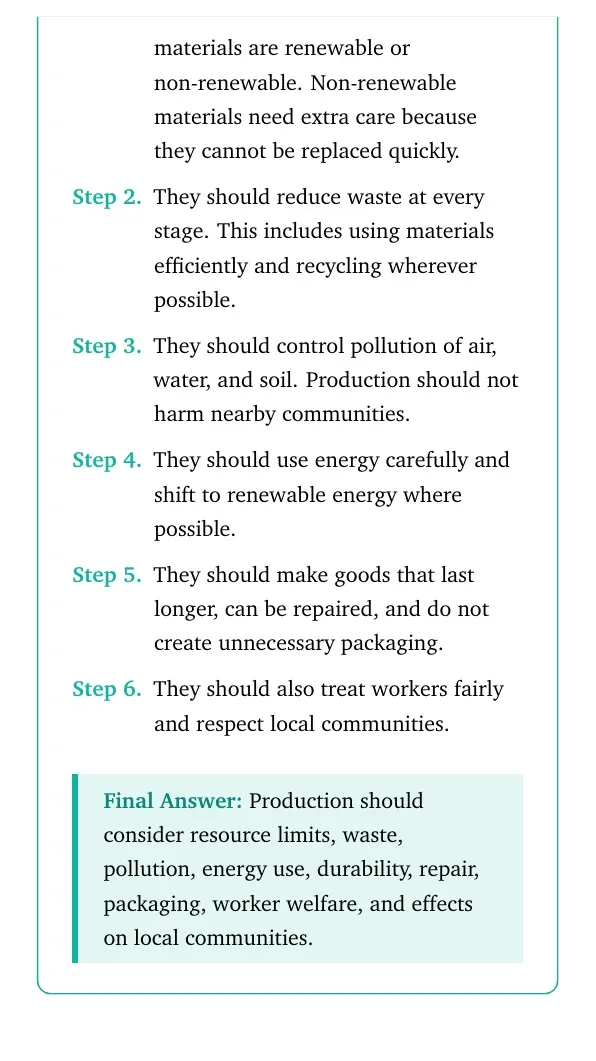
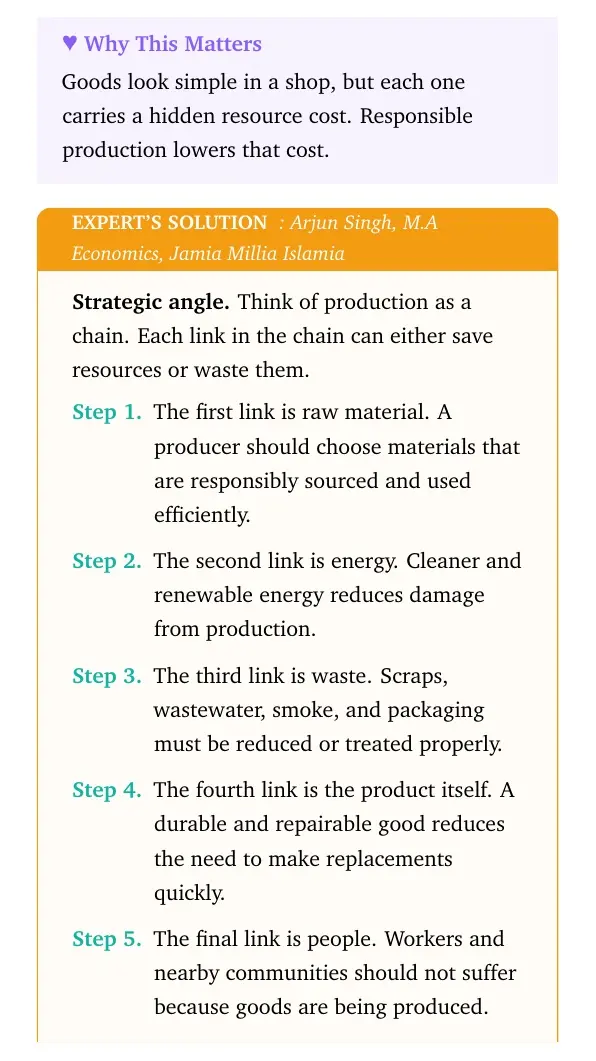
- Question 5 asks how goods should be produced responsibly.
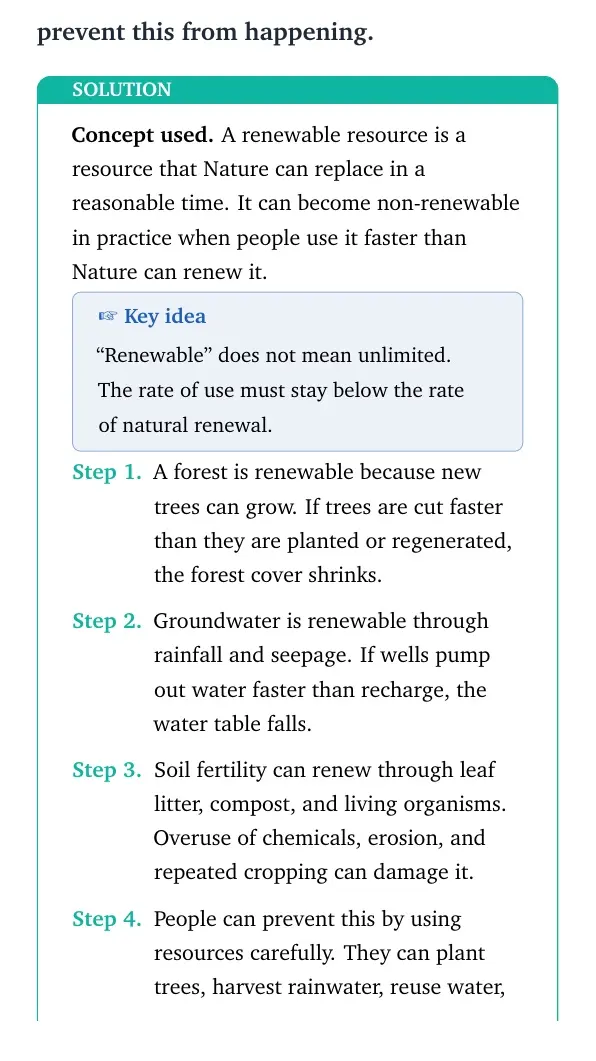
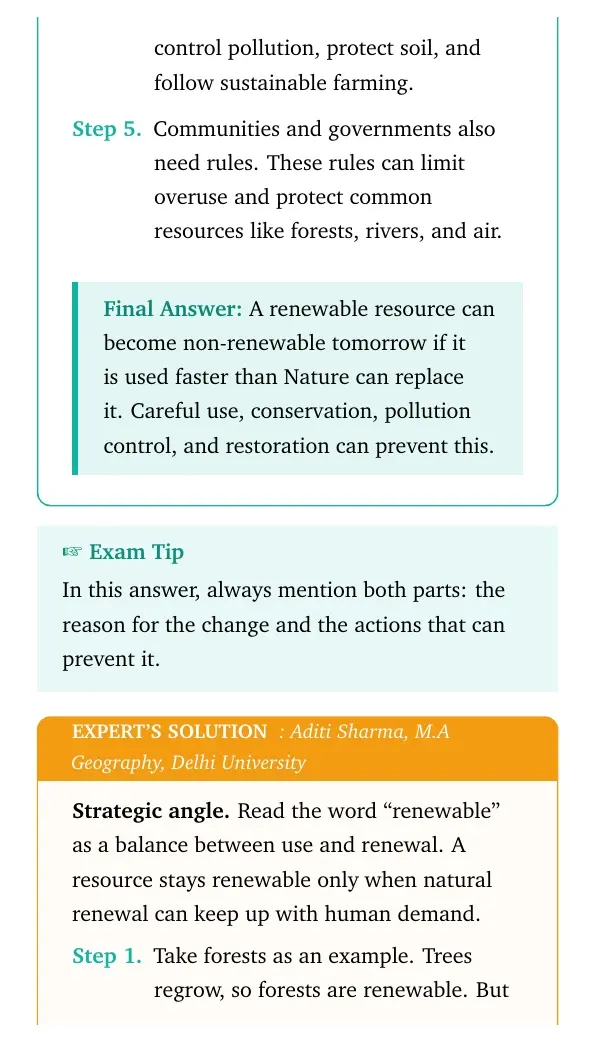
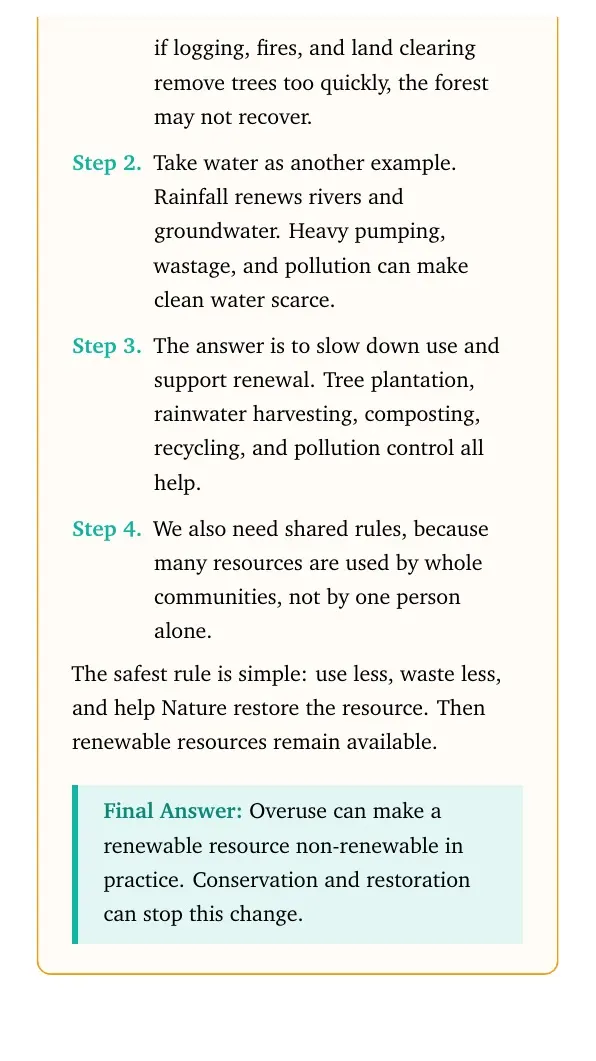
The strongest answers use one clear example with every definition. For instance, groundwater is renewable, but over-pumping can make it unavailable for a long time.
Natural Resources and Their Use Video Explanation
Source: Magnet Brains on YouTube
Renewable vs Non-renewable Resources
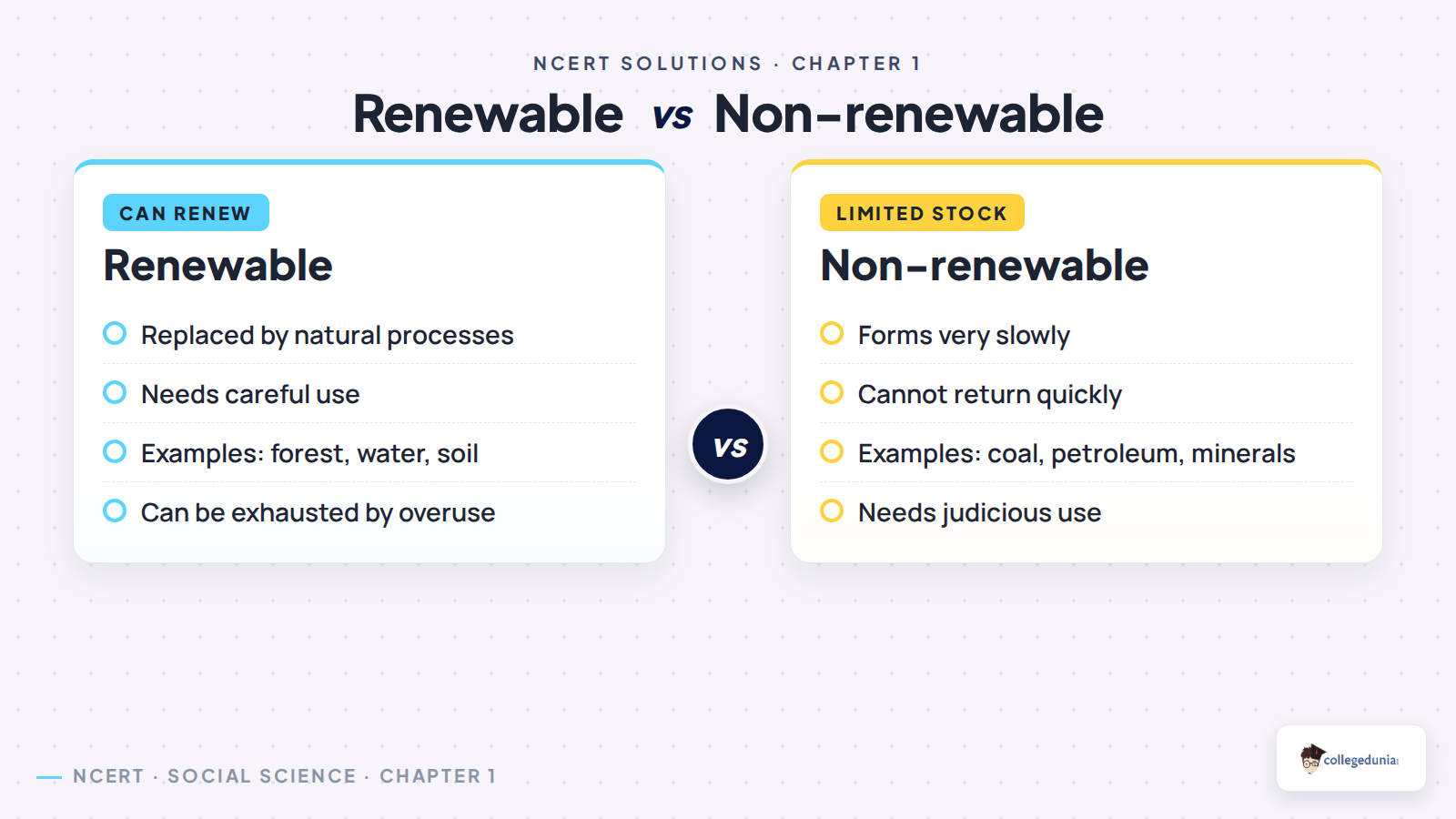
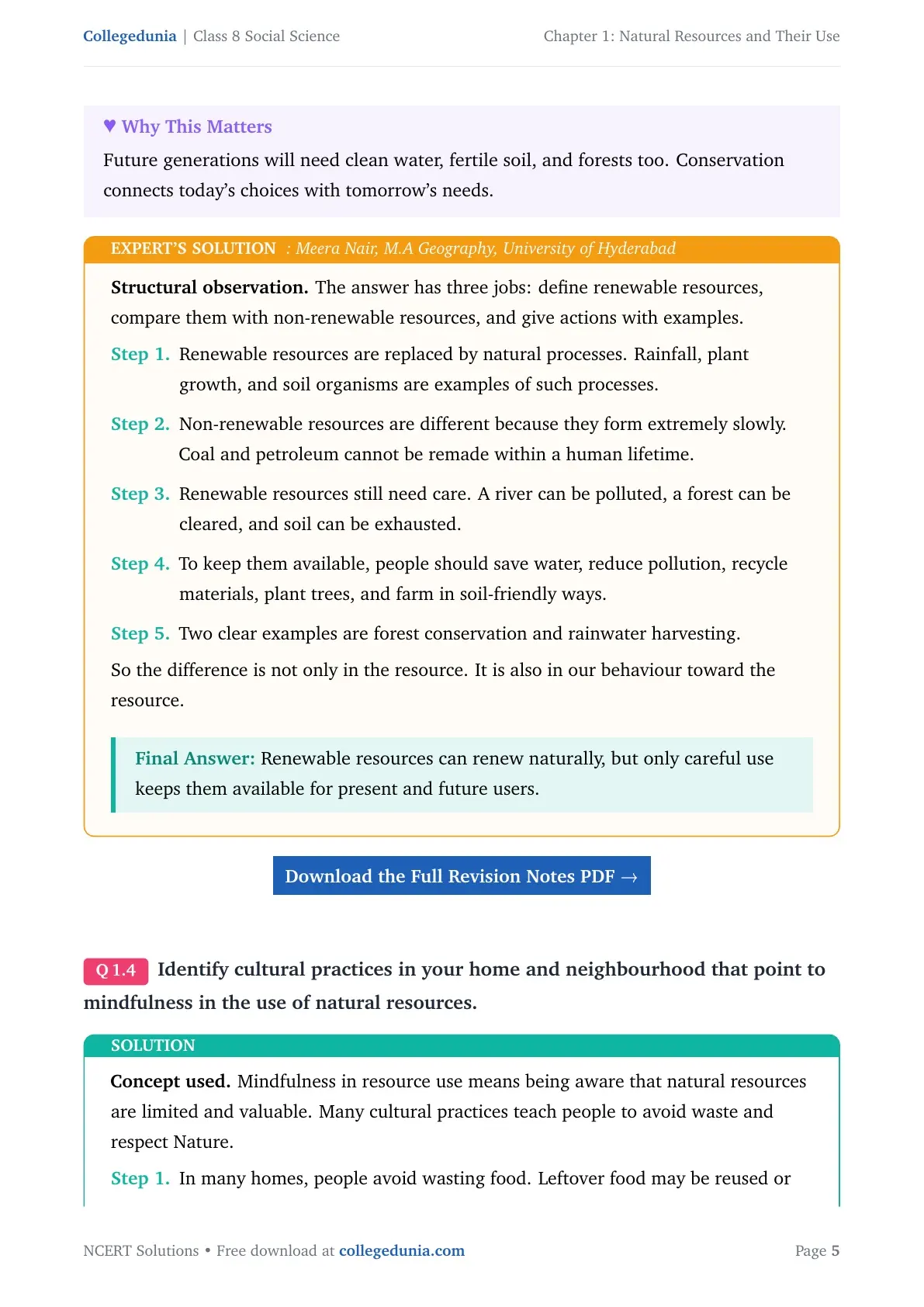
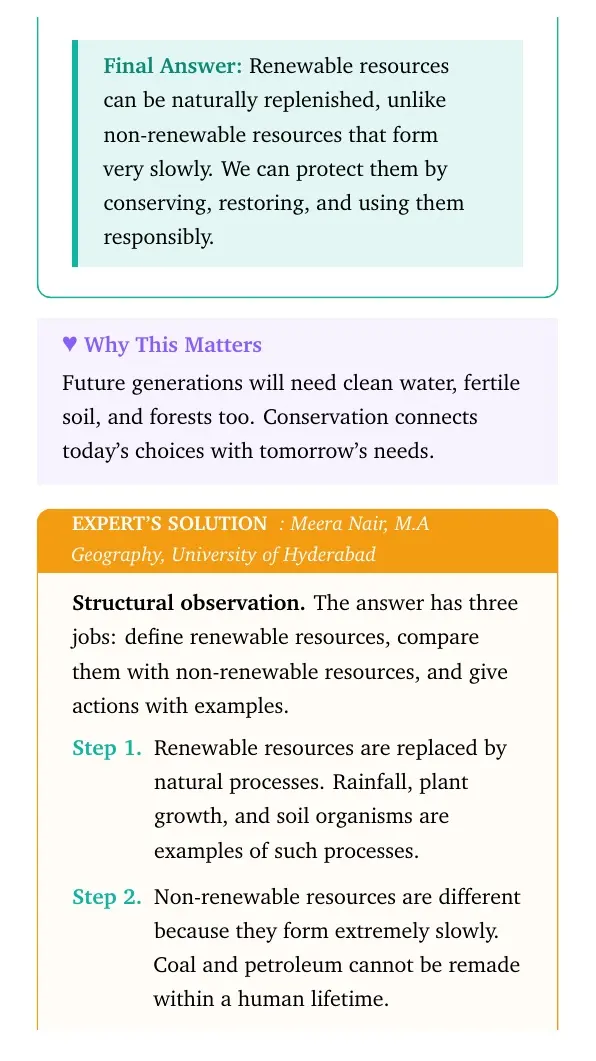
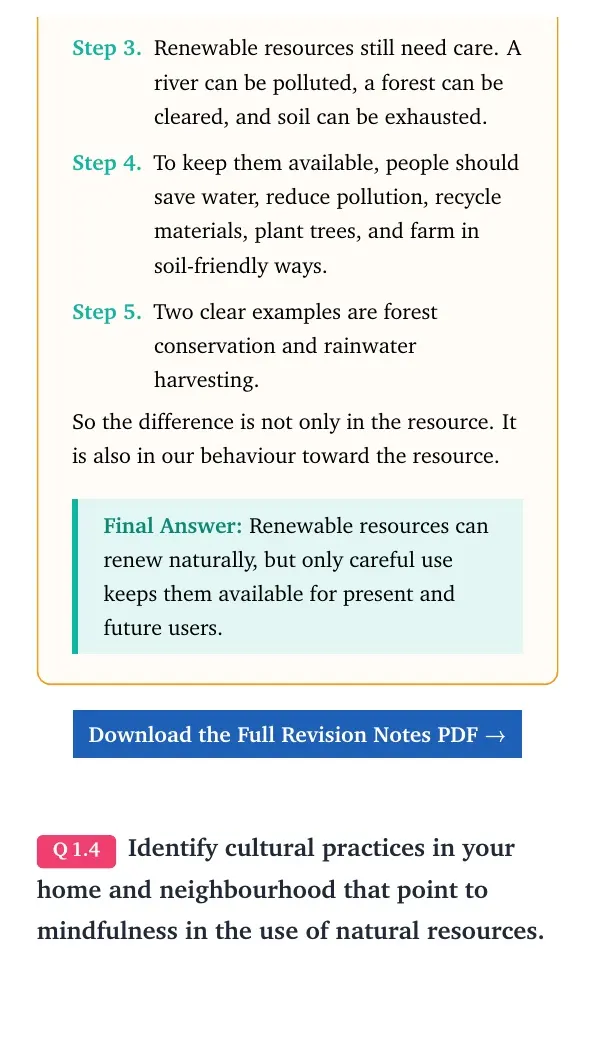
Renewable resources can be replaced by natural processes, but they still need careful use. Forests, water and soil can recover only when people give Nature enough time and support. Non-renewable resources such as coal, petroleum and many minerals form very slowly, so they must be used judiciously.
| Resource type | Meaning | Example | Student answer cue |
|---|---|---|---|
| Renewable | Can renew naturally within a useful time | Forest, water, soil fertility | Use carefully and restore |
| Non-renewable | Forms very slowly and can be exhausted | Coal, petroleum, minerals | Use less and shift to alternatives |
How to Write Strong Chapter 1 Answers
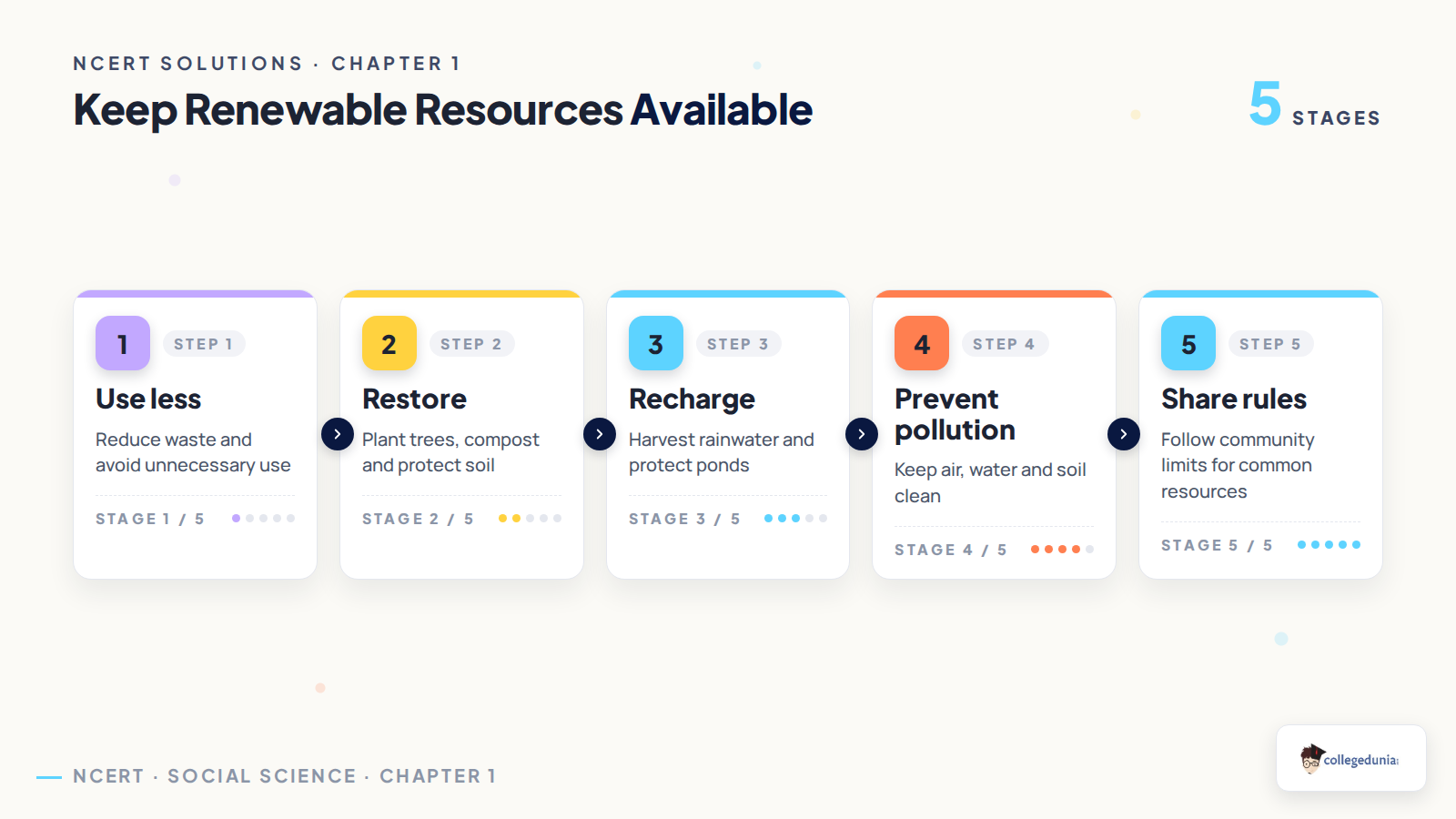
A strong Chapter 1 answer has three parts: a short definition, a textbook-linked example and an action point. This format works for renewable resources, ecosystem functions, cultural practices and responsible production.
- Define: say what the term means in one sentence.
- Explain: add why the idea matters for humans or Nature.
- Example: use forests, groundwater, composting, solar energy or organic farming.
- Action: mention saving, restoring, recycling, recharging or reducing waste.
For long answers, do not stop at names. Add one effect or one prevention step.
Class 8 Social Science Chapter 1 Questions and Answers
The full PDF above gives detailed solutions with expert explanations. Students who want to read only the question cards can open the companion question page below.
Practice question cards: open the interactive answer set for Chapter 1.
Important Topics in Natural Resources and Their Use
This chapter is concept-based. Students should revise definitions and then connect them with current examples. The best answers show that resource use is not only about availability. It is also about access, fairness, technology and responsibility.
- Natural resources: materials from Nature that are valuable to humans.
- Ecosystem functions: air cleaning, water filtering, soil formation and pollination.
- Sustainable use: using resources without exhausting them for future generations.
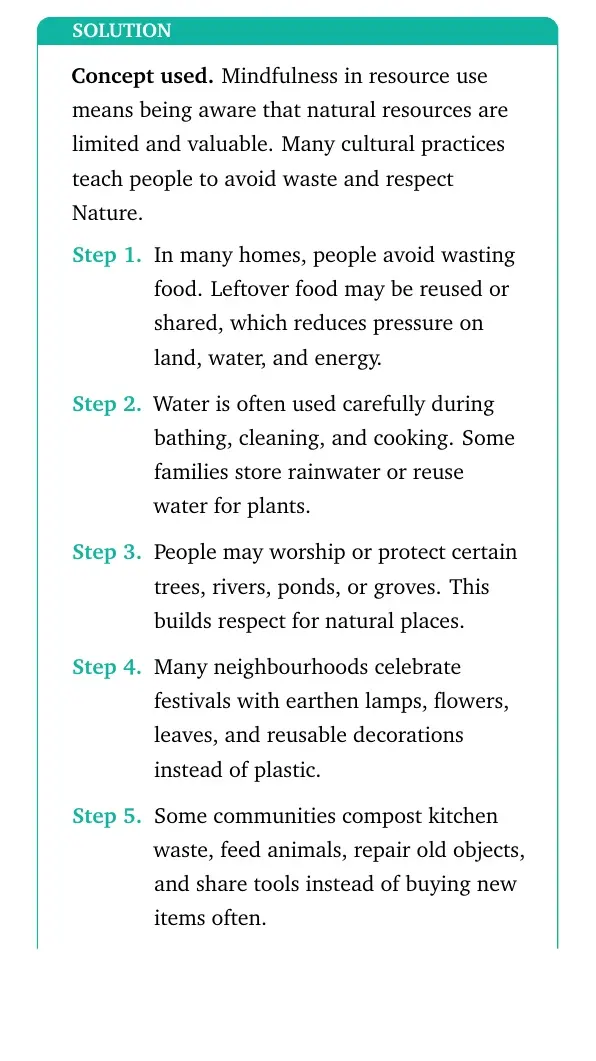
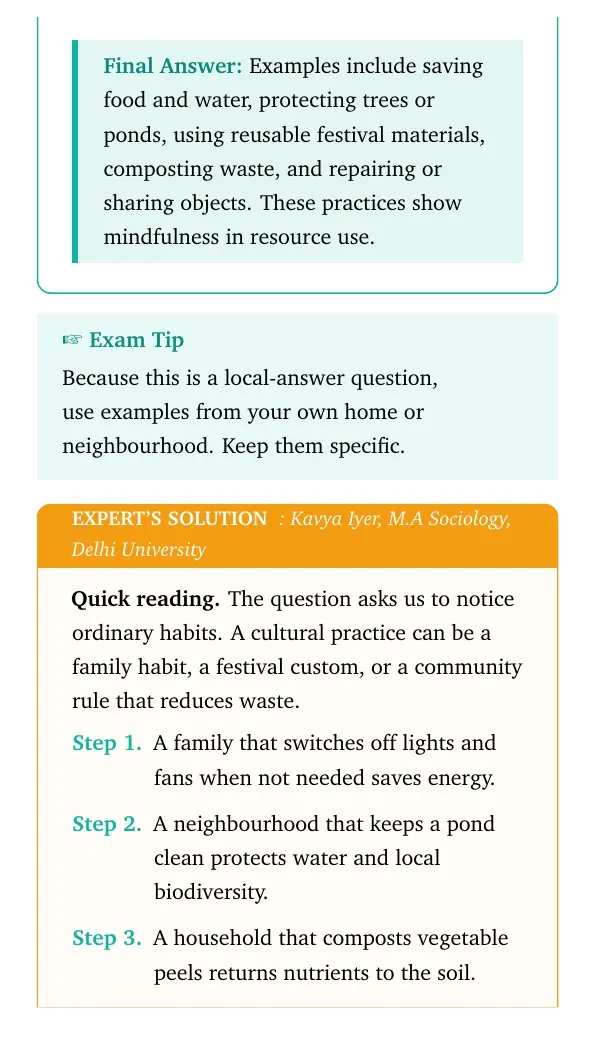
- Cultural practices: habits that save water, food, soil, trees and energy.
- Responsible production: making goods with less waste and pollution.
More Class 8 Social Science Chapter 1 Resources
Use these related resources when you want Chapter 1 in another format. The table stays above the FAQ so students can move from the solutions PDF to the book chapter and revision pages quickly.
| Resource | Best use | Link |
|---|---|---|
| NCERT Solutions | Read solved answers for all Chapter 1 questions | Open solutions |
| NCERT Notes | Revise the chapter ideas before writing answers | Open notes |
| NCERT Book PDF | Read the official 2026-27 source chapter | Open book PDF |
| Handwritten Notes | Revise quick points in notebook style | Open handwritten notes |
Class 8 Social Science Solutions for Other Chapters
The table below keeps Class 8 Social Science solutions together so students can move chapter by chapter through the same resource type.
| Chapter | NCERT chapter title | Solutions |
|---|---|---|
| Chapter 1 | Natural Resources and Their Use | Current solutions |
| Chapter 2 | Reshaping India's Political Map | Open Chapter 2 solutions |
| Chapter 3 | The Rise of the Marathas | Open Chapter 3 solutions |
| Chapter 4 | The Colonial Era in India | Open Chapter 4 solutions |
Natural Resources and Their Use Class 8 Solutions FAQs
Ques. What is covered in NCERT Solutions for Class 8 Social Science Chapter 1?
Ans. The solutions cover all 5 questions from Natural Resources and Their Use, including renewable resources, ecosystem functions, cultural practices and responsible production.
Ques. Why can a renewable resource become non-renewable in practice?
Ans. A renewable resource can become unavailable if people use it faster than Nature can replace it. Forest loss and groundwater overuse are clear examples.
Ques. What are five ecosystem functions useful to humans?
Ans. Five useful ecosystem functions are air purification, water purification, soil formation, pollination and climate regulation.
Ques. How should students write answers from this chapter?
Ans. Students should begin with a definition, add one textbook-linked example and end with an action point such as conservation, restoration or pollution control.



Comments