



Content Curator
Amino Acids are biomolecules that are the building components of proteins. Long chains of amino acids form proteins. These are part of chemical and biological functions in the human body which makes them essential for humans. Essential amino acids are acids that cannot be produced or synthesized by the human body. Non-essential amino acids are acids that can be produced or synthesized by the human body.
Read Also: Structure of Glucose and Fructose
| Table of Content |
Key Terms: Amino acids, Essential Amino acids, Non-essential Amino Acids, Synthesize
What are Amino Acids?
[Click Here for Sample Questions]
Amino Acids are the building components of proteins. Amino acids combine together & form Proteins. Long chains of amino acids form proteins. Construction of proteins can be attributed to twenty amino acids. These are such organic compounds which are essential for development and growth of living beings. They are part of many chemical and biological functions in the human body. Amino acids include carboxyl group and amino groups. Around 300 amino acids can be found in nature.
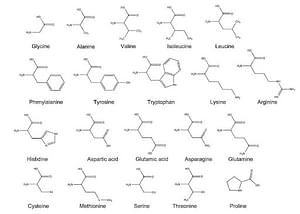
Check Important Notes for Enzymes
What are Essential Amino Acids?
[Click Here for Sample Questions]
Amino acids that cannot be produced or synthesized by the human body are called Essential Amino Acids. These kinds of amino acids don't occur naturally in our body. These are consumed via diet. The nine essential amino acids which are essential for the human body are- lysine, valine, Threonine, histidine, isoleucine, phenylalanine, methionine, leucine, and tryptophan. Essential amino acids have many functions. They aid growth hormone. Histidine synthesizes red blood cells and white blood cells.

Read More: Hormones
What are Non-essential Amino Acids
[Click Here for Sample Questions]
Amino acids that can be produced or synthesized by the human body are called Non-essential Amino Acids. It is not essential to consume them via diet. Human body has eleven non-essential amino acids. These are alanine, arginine, serine, cysteine, glycone, proline, glutamine, glutamic acid, asparagines, and aspartic acid. Aspartic acid increases metabolism. Alanine removes toxins from the human body. Proline aids regeneration of skin.

Check Also: Nucleic Acids
Difference between Essential and Non-essential Amino Acids
[Click Here for Sample Questions]
The differences between Essential and Non-essential Amino Acids are tabulated below-
| Subject | Essential Amino Acids | Non-essential Amino Acids |
|---|---|---|
| Definition | Essential amino acids are acids that cannot be produced or synthesized by the human body. | Non-essential amino acids are acids that can be produced or synthesized by the human body. |
| Presence in body | There are nine essential amino acids in the human body. | There are eleven non-essential amino acids in the human body. |
| Amino Acids | Phenylalanine, lysine, valine, methionine, Threonine, histidine, isoleucine, tryptophan, and leucine, | Glutamic acid, glycone, alanine, arginine, serine, cysteine, proline, glutamine, aspartic acid, and asparagines |
| Role | Aids neurotransmitter formation, formation of antibodies, strengthens immune system | Removes toxins from the body, aids brain function, synthesizes blood cells |
| Sources | Meat, eggs, chicken, soy etc. | Produced within the body |
| Chances of Deficiencies | Chances of deficiency is high as they are acquired through diet | Chances of deficiency are rare as they can be produced in the body |
Check More: Vitamins
Things to Remember
[Click Here for Sample Questions]
- Amino Acids combine to form proteins. They are the building components of proteins. They are organic in nature.
- Amino acids include carboxyl group and amino groups.
- Essential amino acids: Amino acids that cannot be produced or synthesized by the human body are called essential amino acids.
- Some examples of essential amino acids are threonine, tryptophan, histidine, isoleucine, etc.
- Some examples of non-essential amino acids are serine, cysteine, glutamine, aspartic acid, etc.
- Non-essential amino acids: Amino acids that can be produced or synthesized by the human body are called non-essential amino acids.
- There are twenty amino acids in the body. Nine amino acids are essential amino acids and twenty amino acids are non-essential amino acids.
Read Further: Maltose
Sample Questions
Ques. What health problems can be caused by deficiency of amino acids?
Ans. There are high chances of deficiencies relating to essential amino acids. Non-essential amino acids are produced in the body and therefore deficiencies relating to them are rare. Deficiency of amino acids can lead to different health problems such as insomnia, depression, headache, edema, diarrhea, fatigue, anemia, weakness, loss of appetite, hypoglycemia, irritation, and other hair and skin problems.
Ques. What are functions of Non-essential Amino Acids?
Ans. There are various Non-essential amino acids & each of these have important functions in our body:
- Glutamic is essential for synthesis of RNA and DNA.
- Alanine removes toxins from the human body.
- Proline aids regeneration of skin.
- Body stamina is improved by asparagines.
- Arginine plays an essential role in detoxification of kidneys.
- Thyroid hormones are produced with help from tyrosine.
- Aspartic acid increases metabolism.
Ques. Mention some functions of Essential Amino Acids.
Ans. Important functions of essential amino acids are:
- It promotes muscle growth.
- Isoleucine aids formation of haemoglobin. It also transfers oxygen from lungs to other parts of the body.
- Leucine aids growth hormone.
- Methionine helps maintain healthy skin.
- Histidine synthesizes red blood cells and white blood cells.
- Lysine aids formation of various hormones and antibodies.
Ques. What are some sources of Essential and Non-essential Amino Acids?
Ans. Human body can only synthesize non-essential amino acids. Essential amino acids are consumed through diet. It can be done by eating protein rich fruits. Some sources of amino acids are beans, broccoli, cabbage, chia seeds, carrots, peas, oats, pomegranates, papaya, oranges, pineapple, apples, grapes, bananas, melons, berries, figs, lentils, onions, whole grain, green vegetables, nuts, pumpkin, cucumber, dry fruits, soy beans, beetroot, peanut legumes, eggs, meat, chicken, seafood, etc.
Ques. What are the types of protein structures?
Ans. The four types of protein structures are:
- Primary Structure- Amino acids follow a specific sequence.
- Secondary Structure- When hydrogen atoms bond with each other in a polypeptide chain.
- Tertiary Structure- A three-dimensional structure that can also turn into quaternary structure.
- Quaternary Structure- Proteins arrange themselves to form multiple sub-units.
Ques. Write a note on biomolecules.
Ans. Biomolecules are also known as biological molecules. They are organic molecules that are part of metabolic processes in living beings. They can be small molecules like primary and secondary metabolites or large molecules like lipids, proteins etc. The four types of macromolecules are lipids, carbohydrates, nucleic acids, and proteins. They are also called polyanions. Each biomolecule has a unique function.

Ques. What are the functions of Proteins?
Ans. The four functions of proteins:
- Enzymes- Enzymes aid regeneration and creation of DNA and all other chemical reactions in the cell.
- Hormones- Proteins aid creation of hormones like insulin. It is also vital for formation of digestive enzymes.
- Antibody- It helps the body fight foreign bacteria.
- Energy- Proteins are a source of energy. Human body converts protein into energy to aid body movements.
Ques. What are the general properties of Amino Acids?
Ans. Amino Acids are biomolecules that are the building components of proteins. Several general properties of amino acids are:
- Amino acids have a high boiling point.
- Amino acids can taste sweet, bitter, or can be tasteless.
- Most of them are soluble in water.
- They have a high melting point.
- Amino acids are insoluble in organic solvents, though there are a few exceptions.
- They are white crystalline.
Biology Related Links:



Comments