



Content Curator
Species are defined as a group of organisms made up of similar individuals capable of reproducing or exchanging genes with each other. The topic Species comes under the heading Taxonomic categories. A study of a group of individual organisms with fundamental similarities as a species is defined as Taxonomic.
| Table of Content |
Everyone must be able to differentiate between a species from other closely related species on the basis of distinct morphological differences. Let’s have a look at Mangifera indica, Solanum Tuberosum (potato), and Panthera leo (lion). Indica, leo, tuberosum, these three names of species represent specific epithets, while the first words Mangifera, Solanum and Panthera are genera and represent another higher level of taxonomy or category. Different organisms can be represented by each genus that can have one or more epithets but with morphological similarities. Panthera can be considered as an example as it has another specific epithet called tigers, and Solanum includes species such as nigrum and melongena. The species in which the Humans belong to is sapiens, it is the genus Homo is which it is grouped together.
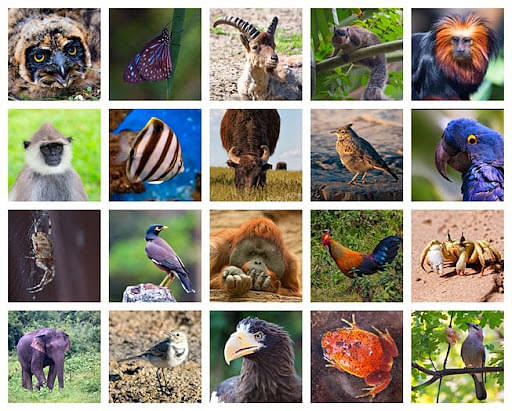
Species Definition
A group of organisms sharing a genetic heritage, able to interbreed and create fertile offspring are better called Species. Different species are divided into categories from each other on the basis of different reproductive barriers. These barriers can be geographic, such as a mountain range that separates two populations or genetic barriers that do not allow reproduction between the two populations. Scientists have changed their definition of species several times throughout history. The species is one of the more specific classifications that scientists use to describe animals. Scientists use a binomial nomenclature system to describe animals without the confusion of common names.
In biology, the species is the most basic unit of classification, as well as a taxonomic rank. The next taxonomic rank in the biological classification hierarchy is a genus. On earth, there are currently 8.7 million species living today, however, this number is only a fraction of all organisms that have ever lived. The definition of a species in biology indicates that it is a group of organisms that share a common genetic heritage. Additionally, they are proficient at interbreeding and producing fertile offspring in the process. However, species are separated from each other by several barriers. These barriers can be genetic or geographic.
Also Read:
Types of Species
-
Biological Species Concept
The concept of biological species defines a species as members of populations that actually or potentially reproduce in nature, and not on the basis of similarity in appearance. While the aspect is useful for identifying species, it does not define the species. The concept of biological species defines a species taxon as a group of organisms that can reproduce successfully and produce fertile offspring. The integrity of a species is maintained by crossbreeding within a species. Not just that, it is also restored by reproductive barriers between organisms of different species.
-
Nominalistic Species Concept
This concept deals with the idea of individuals. Proponents of this theory believed that in nature there are only individuals and not types of species. According to them, the concept of species is created by man and has no real existence in nature. Moreover, they considered it to be a mental concept. This concept was popular in the 18th century and still has some followers in the botanical world.
-
Typological Species Concept
According to the Typological Species concept, there are different diversities on earth, but in limited variations. In addition, they have no connection between them. These universals in this concept are known as species. However, it is not relevant to consider variations in this topic.
-
Evolutionary Species Concept
Wiley stated in 1981 that the evolutionary species "is a unique lineage of ancestor populations descended from organisms which retain their identity from other similar lineages in space and time and which has its own evolutionary trends and its own historical destiny. ". Moreover, to include species not considered under the concept of biological species, this process was formed.
-
Ecological Species Concept
This concept examines the ecological competition in an ecosystem. In simpler terms, two similar categories of species have the same requirements; Therefore, your requirements are likely to overlap. In such a situation, they compete with each other for a certain resource.
-
Phylogenetic Species Concept
This concept classifies species into a certain group according to their ancestors, confirms that each individual within a species bears some resemblance to their ancestry, but this concept has a flaw, it is not easy to reconstruct an evolutionary path, even if it is so, it's not always satisfactory.
Example of Species
Polar Bear and Grizzlies
Often the only barrier to breeding is geographic or based on the physical location of the animals. If this changes, the animals can interbreed and merge into a single species. This is currently seen in the wild in polar bears and grizzly bears. With climate change, polar bears are being pushed further south and must start exploiting different food sources. Climate change is also allowing grizzly bears to venture further north, encountering polar bears along the way. Previously separated populations now have a chance to reproduce and sometimes succeed. Hybrids have been observed in the wild, but it is not yet clear whether they will be successful. can be removed, it is likely that two related species may interbreed. Unrelated species rarely have the chance to reproduce because they have become too different from each other. For example, a bat and a turtle have completely different genetic makeup.

Dogs and Wolves
Other animals, such as dogs and wolves, are technically still the same species. Since these are made up of the similar count of chromosomes and can reproduce technically, the domestic dog is a long way from its wild counterpart. Dogs haven't just evolved into more. cuddly and soft, but tailored to human social signals. Wolves operate in a very different social structure. Hence, the two are very unlikely to reproduce in the real world. However, since they can produce fertile offspring, scientists consider them to be the same. Dogs and wolves are good examples of species radiation or gradual change in a widespread population. Think of a Chihuahua. If this would have been classified by Linnaeus, he certainly would never have placed dogs in the same category as a wolf.

Points to Remember
- Species, in biology, a classification that includes related organisms that share common characteristics and are able to reproduce.
- Biology and other fields of study use this concept of biological species widely.
- However, there are over 20 other different species concepts.
- In taxonomy, the designation of species has its origin. The International Commission on Zoological Nomenclature recognizes the species as the fundamental unit of classification.
- Each species is given a standard two-part name of genus and species. The genus is the generic name which includes closely related species.
- Organisms are grouped into species in part on the basis of their morphological or external similarities, but most important in classifying sexually reproducing organisms is the ability of organisms to cross successfully.
Also Read:
Sample Questions
QUES. What three qualities define species?
ANS. Species traits are defined as the qualities of all organisms in a species, such as body mass, length, or height. The key information about the species responses to the changing environmental conditions can be assessed by the variation in species traits over time.
QUES. What are examples of species?
ANS. The species of Humans (Homo sapiens), black bears (Ursus americains), jack pines (Pinus banksiana), moose (Alces alces), are some of the basic examples of what the different kinds of species are.
QUES. How do we define species?
ANS. A biological species is a group of organisms that can reproduce with each other in nature and produce fertile offspring. Species are defined as a group of organisms made up of similar individuals capable of reproducing or exchanging genes with each other. The scientific system of classification of organisms into categories based on their biological characteristics is called taxonomy.
QUES. How many species are there in the world?
ANS. About 8.7 million species of living organisms have been identified to date. However, this number does not take into account all the organisms that have disappeared.
QUES. What is the definition of species in Biology?
ANS. Species, in biology, a classification that includes related organisms that share common characteristics and are able to reproduce. Biology and other fields of study use this concept of biological species widely.



Comments