



Content Writer-SME
Rabi and kharif crops are the two important crops that are sown and harvested in different cropping seasons in India. All crops do not grow together or during the same season. The cropping seasons in India are determined by two main factors: monsoon patterns and climatic conditions. The main difference between Rabi crops and Kharif crops arises at the planting and harvesting time of a particular crop.
Rabi crops require cooler temperatures and moderate moisture, while Kharif crops need warm, wet conditions and high rainfall. These crop cycles guarantee effective use of natural resources and agricultural planning since they are consistent with the temperature and rainfall patterns of India.
In this article we will discuss in detail the differences between Rabi and Kharif crops along with their sowing and harvesting seasons.
Difference Between Rabi and Kharif Crops
[Click Here for Sample Questions]
The major differences between the Rabi and Kharif crops are as follows:
| Basis of Comparison | Rabi Crops | Kharif Crops |
|---|---|---|
| Definition | Rabi crops are known as winter crops as they are usually grown during the winter season. | Kharif crops are also known as monsoon crops or autumn crops. |
| Sowing Season | The Rabi crops are sown during October and November. | The Kharif crops are sown with the early monsoon rains or during early May. |
| Factors Affecting Cropping Seasons | These crops are not dependent on the rainfall, they are usually grown in dry areas, also rain during the winter season damages the Rabi Crops. | The Kharif crops are dependent on the amount of rainfall that the particular region receives. |
| Irrigation | Irrigation is needed to a certain limit, as they are grown in the dry regions. | Not much irrigation is needed as they are already grown in the high rainfall regions. |
| Harvesting Season | The harvesting season for the Rabi Crops lies between April and May. | The harvesting season for the Kharif crops lies between October and November. |
| Climatic Conditions | Needs a warm climate to germinate the seeds and a cold climate to grow. | Hot weather and a large amount of water are good supporting factors for the cultivation of the Kharif crops. |
| Examples | Examples: Wheat, oats, barley, pulses, linseed, and so on. | Examples: Cotton, rice, maize, bajra, and so on. |
What are Rabi Crops?
[Click Here for Sample Questions]
Rabi crops are the agricultural crops that are sown in winter and harvested in the spring season in India, Pakistan, and Bangladesh. The word "rabi" comes from the Arabic word meaning "spring". The north and north-western parts of India such as Punjab, Haryana, Himachal Pradesh, and Jammu Kashmir are mainly known for growing rabi crops.
- Sowing Season: Every, year, these crops are sown around mid-November after the monsoon.
- Harvesting Season: Rabi crops are harvested between the month of April and May.
- Rabi crops are grown either with the help of rainwater or using irrigation.
Examples of Rabi Crops
Following are some of the examples of major rabi crops that are grown in India:
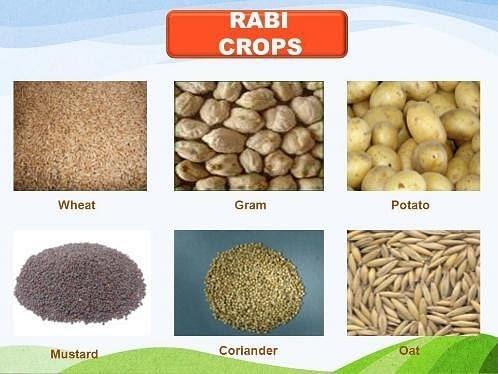
Wheat
Wheat is the main cereal crop in India and a staple food. India is also the second-largest wheat producer in the world after China. India receives a significant amount of its agricultural revenue from wheat. Uttar Pradesh is the largest producer of wheat in India, with 33949.68 tons.
Mustard
Mustard is a major rabi crop grown in India. It is sown in October-November and harvested in March-April during the rabi season. Mustard is widely grown in Punjab, Himachal Pradesh, Rajasthan, Madhya Pradesh, Maharashtra, and Haryana.
What are Kharif Crops?
[Click Here for Sample Questions]
The sowing and harvesting period for Kharif crops varies in different parts of India. It largely depends on the arrival and duration of the monsoon. Indian farmers’ livelihood is majorly dependent on the production of sufficient amount of kharif crops during the cropping season. Kharif crops are also known as "monsoon crops" as their growth and yield are closely tied to the monsoon season.
- Sowing Season: Kharif crops are sown at the start of the monsoon season between June and July.
- Harvesting Season: These crops are harvested in the autumn, from September to October.
- Kharif crops require warm and wet conditions, with high rainfall, to grow well.
- They are heavily dependent on the monsoon rains.
Examples of Kharif Crops
Some examples of Kharif crops are Rice, Maize, Sorghum, Bajra, Cotton, and so on.
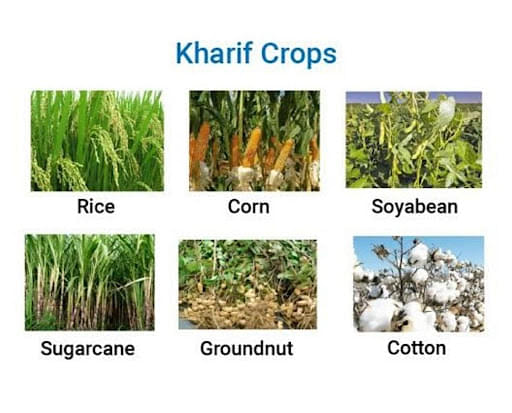
Rice
Rice is a major Kharif crop grown in India. It is the most important food crop in India, and India accounts for 20% of global rice production. Rice is sown in the Kharif season.
- Rice grows in locations with heavy rainfall and requires a minimum rainfall of 100 cm and an average temperature of 25°C.
- It is traditionally cultivated in flooded rice paddy areas.
- West Bengal is India's largest rice producer, followed by Uttar Pradesh and Punjab.
Maize
Maize is a major cereal crop grown in India. It is referred to as the "Queen of cereals" worldwide. A minimum of 50 to 75 cm of rainfall and temperatures between 21° and 27°C are needed for maize cultivation. Karnataka is India's largest maize-producing state. Maize has a high yield potential and is used for food, feed, and industrial purposes. It is the third largest cereal crop in India after rice and wheat.
| About Zaid Crops Zaid crops are third variety of crops that are planted in the short summer season between the Kharif and Rabi seasons, which lasts from March to June. They are classified as "gap-fillers" between the main Kharif and Rabi crop cycles. Zaid crops are grown largely in India's northern and northwestern states, including Gujarat, Haryana, Punjab, and Uttar Pradesh. Examples of zaid crops include watermelon, cucumber, muskmelon, and pumpkin. |
Things to Remember
- The Kharif crops are sown during May or the onset of the monsoon season and harvested during October and November.
- The Rabi Crops are sown during the winter season and harvested during April and May.
- The Kharif crops are also known as the monsoon/autumn crops however the Rabi Crops are also known as the winter season.
- The Kharif crops are dependent on the rainfall whereas the Rabi Crops do not depend on the rainfall.
- The Rabi Crops need to get irrigated frequently whereas the Kharif crops do not need irrigation as they are already sown during the monsoon season.
- Some examples of Rabi Crops are linseed, pulses, wheat, mustard, etc.
- Some examples of Kharif crops are cotton, rice, maize, bajra, and so on.
Sample Questions
Ques: What are the Kharif crops? Give examples. (3 Marks)
Ans: The Kharif crops are also known by the name of monsoon or autumn crops. They are usually sown during the onset of the monsoon season or the monsoon rains and harvested during the month of October and November.
Some examples of the Kharif crops are cotton, rice, maize, bajra, corn, sugarcane, groundnut, and so on.
Ques: What are the Rabi Crops? Give examples. (3 Marks)
Ans: The Rabi Crops are also known by the name of winter crops. They are usually sown during October and November and harvested during the spring months that is April and May.
Some examples are wheat, gram, potato, oat, coriander, Pulses, barley, mustard, and so on.
Ques: State the difference between the Rabi Crops and the Kharif crops. (3 Marks)
Ans: The difference between the Rabi and the Kharif crops is as follows:
- The Kharif crops are also known by the name of monsoon or the autumn crops whereas the Rabi Crops are also known by the name of winter crops.
- The Kharif crops are sown during the onset of the monsoon rains whereas the Rabi Crops are sown during October and November.
- The Kharif crops are harvested during October and November whereas the Rabi Crops are harvested during April and May.
- The Kharif crops highly depend on the amount of rainfall a particular region gets whereas the Rabi Crops do not depend on the rainfall at all.
- The Rabi Crops need some irrigation whereas the Kharif crops do not need irrigation.
Ques: State the different types of crops other than the Rabi Crops and the Kharif crops. (3 Marks)
Ans: The different types of crops are as follows:
- Kharif crops,
- Rabi Crops,
- Zaid crops,
- Food crops, and
- Cash crops.
Ques: What are the essential factors for the cultivation of the Kharif and the Rabi Crops? (3 Marks)
Ans: The necessary/essential factors for the Kharif crops are hot weather and a good amount of rainfall in the particular region. Whereas, the necessary/essential factors for the Rabi Crops are warm climate to germinate and cold climate to grow properly.
Ques: What are the other names of the Kharif and the rabi crops, and why? (3 Marks)
Ans: The Kharif crops are also known as the monsoon crops as they are sown during the monsoon season. The Rabi Crops are also known as the winter crops as they are sown during the winter season. They are prevalent due to the season they are sown in.
Ques: Name a few places where Kharif and Rabi Crops are grown. (4 Marks)
Ans: The Kharif crops are grown in the following states:
- Uttar Pradesh – maize
- Bihar – maize
- Madhya Pradesh – millets
- Rajasthan - pulses
- Tamil Nadu,
- West Bengal, and so on.
The Rabi crops are grown in the following states:
- Odisha - pulses
- Karnataka – pulses
- Uttar Pradesh – rapeseed
- Rajasthan – mustard



Comments