



Content Curator
Threshing is one of the major agricultural processes. Agricultural processes not only involves growing crops and harvesting it, but after harvesting various other processes are carried out to collect grain from freshly harvested crop like threshing, winnowing and many more.
Threshing is a process carried out post-harvest of the crop, in which the part of the grain is separated from the rest of the plant mechanically. Earlier, threshing was done traditionally as opposed to machines. Manual Threshing is known to be an old technique which includes three methods:
- Trampling
- Threshing Rack
- Flail
Read Also: Weathering
Key Terms: Winnowing, Harvesting, Manual Harvesting, Crop Production, Crop, Threshers, Agriculture
What is Harvesting?
[Click Here for Sample Questions]
Harvesting is the method of gathering a ripe crop from the fields. Maturing of the crop depends on its sowing period and the type of crop. A crop takes 3 - 4 months to mature. In the harvesting process, crops are pulled out or cut close to the ground.
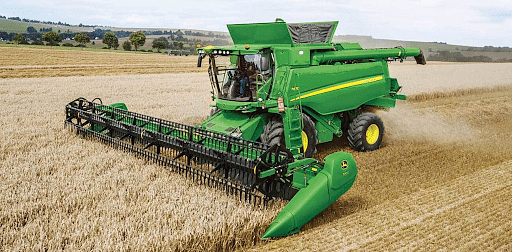
Harvesting Meaning
- In our country, Harvesting is usually done manually by using traditional tools like sickles, but nowadays machines called as “harvesters” are also used for carrying out harvesting process.
- Now, after cutting the crop, the crop goes through 2 more processes first, separating the grain from the stalk and secondly, removing trash from greens which is termed as threshing process.
Read More:
What is Threshing?
[Click Here for Sample Questions]
The grain of the harvested crops when separated from the chaff is the process called threshing.
- The threshing process is carried out after the harvesting but before the winnowing.
- In the threshing process, bran is still attached to the grain which is removed after it goes through winnowing process.
- It is done either traditionally or by using machines.
- Earlier the process used to take a lot of time as it was done manually, however, in some parts of India manual threshing is still carried out.

Threshing
- Threshing, nowadays, is carried out by machines called threshers. It was invented way back in 1786 by Scottish engineer Andrew Michael.
- There are also other methods for separating substances like sieving, winnowing, magnetic separation and handpicking.
Read Also: Rain Water Harvesting: Process, Advantages & Disadvantages
Manual Threshing
[Click Here for Sample Questions]
Manual threshing is an old method and is still practised in some parts of our country.
- It is done by beating the stalk of the crop against the hard surface.
- Or often, donkeys, horses or bulls trod out the grains from the stalks.
- After this is done, the stalks are collected and thrown away while the grains were subjected to winnowing to remove debris or stones if present.
- In the winnowing process, an air current blew away the light-weighted waste particle from the heavy-weighted grain particle, thus clean grain is obtained after winnowing.
But now, machine tools for threshing have started being used:
Threshing Using Modern Machines
In the year 1786, a Scottish engineer Andrew Michael invented the first threshing machine. The threshing machine, popularly known as a thresher, is farm equipment that threshes grains in order to remove the seed from the stalks and husk them.
The threshing machine or thresher had a saw-like tool raking away the waste straw and pushing the remaining waste along with the grains further through a strainer into a set of rollers which further separate the grain from the waste.
Previously, threshing was carried out on an isolated piece of land referred to as threshing floors. In small-scale farming the threshing floor used to be a stone or a wooden plank on which the straw was beaten to separate the grains but in some cases, threshing floors used to be flattened circular or paved surfaces.
The outdoor or paved threshing floors were used by whole village by assuming it as common property. But now all these are carried out by modern technological tools.
Also read:
Things to Remember
- Harvesting is the cutting of the mature or ripe crop.
- Harvesting can be done either manually by using sickle or by modern machines such as harvester.
- The separation of grains from the chaff is known as threshing. Threshing is done after harvesting but before winnowing.
- Threshing is nowadays done by using threshers.
- Thresher was invented in 70s by a Scottish engineer Andrew Michael.
Read also: Separation of Substances
Sample Questions
Ques. What do you understand about harvesting? (2 marks)
Ans. After the crop gets matured the next process carried out by the farmer is the harvesting of the matured crop. Harvesting involves cutting off the mature crop either by pulling it out or by cutting it close to the ground. It is done either by traditional tools like a sickle or by modern advanced technology like harvesters.
Ques. How is harvesting done? (1 mark)
Ans. Harvesting is done either by using traditional tools like a sickle or by using a modern machine called as harvester.
Ques. What is threshing? (2 marks)
Ans. Grain need to be separated from the harvested crop and the process through which grains are separated from the chaff is known as threshing. This is carried out either manually or with the help of machines called as threshers. The threshers were boon to the agricultural revolution and were invented by Scottish engineer named Andrew Michael in 1786.
Ques. What is manual threshing? (1 mark)
Ans. Manual threshing involves beating the stalk of the crop against the hard surface which is called as threshing floors made of either stones or wooden planks.
Ques. How is threshing done using modern tool? (2 marks)
Ans. Threshing is now done using modern technological machine called threshers. Thresher had a saw-tooth-like tool for raking away the waste straw and pushing the remaining waste along with the grains further through a strainer into a set of rollers which further separate the grain from the waste. Now combined machine for carrying out both harvesting and threshing is also available.
Ques. Differentiate between winnowing and threshing? (4 marks)
Ans. Difference between Winnowing and Threshing has been mentioned below:
| Threshing | Winnowing |
|---|---|
| Process of beating out grains from the stalk. | Process of separating the grain from the chaff. |
| Done by beating the stalk of crop against the hard surface. | It is done with the help of wind. |
| Done either manually or by using machine called threshers | Carried out manually or by winnowing machines |
| It is done after harvesting but before winnowing. | It is done immediately after threshing is completed |
Ques. Explain winnowing with an example. (3 marks)
Ans. Winnowing in agriculture is the method used post-harvesting, in which, heavier components of the mixture of grains are separated from the lighter substances. Winnowing is used for separating grains from husk after the process of threshing is completed.
It is done with the help of air currents i.e., when the winds blow. Due to this, farmers had to wait for an hour for the wind to blow. Hence, a simple winnowing machine was developed to reduce the dependency of farmers on the wind to blow.
The winnowing machine consists of a fan which can be rotated by pedalling and the velocity of the wind produced can be controlled by the speed of pedalling.
Example of winnowing: Blowing on rice grains to extract chaff.
Ques. Explain the process of threshing. (3 marks)
Ans. A Scottish engineer Andrew Michael invented the first threshing machine in 1786. The threshing machine, popularly known as a thresher, is farm equipment that threshes grains in order to remove the seed from the stalks and husk them.
The process of threshing is as follows:
- The threshing machine or thresher has tools that help rake away the waste straw.
- And pushing the remaining waste along with the grains further through a strainer into a set of rollers which further separate the grain from the waste.
Ques. Write a short note on the Preparation of soil. (4 marks)
Ans. (a) The agricultural field has to be prepared before sowing; hence the preparation of the soil is the first process.
(b) In this method, the soil is first loosened so as to allow roots to penetrate deep into it.
(c) The loosening of soil is a crucial step as it helps in the growth of several useful microbes and earthworms as it enriches the soil with humus and several other nutrients required for plant growth.
(d) This process of loosening the soil is termed tilling or ploughing the soil. This process helps the plant to utilize the nutrients for its growth. Once this process is completed, some manure, and fertilizers are further added to enhance the productivity of soil and thus completed the process of preparation of soil and thereby the field is ready for sowing.
Check-Out:



Comments