



Content Curator
Fats are an essential component that needs to be included in our diets. They are made up of molecules called triglycerides which are linked together. Our bodies produce most of the fats needed for the basic physiological functions. But those which cannot be produced by the body and which needs to be incorporated through diet are called Essential Fats. Diets rich in fat have been related to heart disease and cancer, the two main causes of death in the world, and high-fat diets may worsen other chronic health conditions.
Also Read: Test for Fats
| Table of Content |
Key Takeaways: Fats, Cholesterol, Trans Fat, HDL, Saturated, Unsaturated Fats
What are Fats?
[Click Here for Sample Questions]
Fat is among the three nutrients that our bodies require; the other two are protein and carbohydrates. However, based on its name, it may appear that we should avoid eating it, but this is not the case. It is critical for the health and nourishment of our bodies.
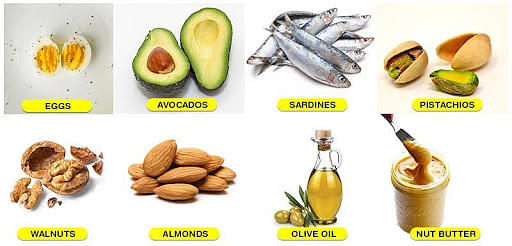
It aids the body's use of specific vitamins in order to maintain skin health. It is also known as lipids or fatty acids. Lipids are a kind of biomolecule that is water insoluble but common organic solvents.
Read More:
Types of Fats
[Click Here for Sample Questions]
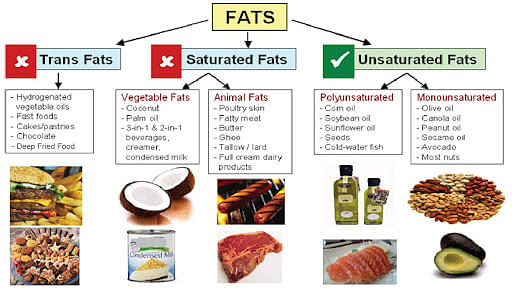
The three main types of fats are as follows.
- Saturated Fat
- Unsaturated Fat
- Trans Fat
Saturated Fat
Saturated fats in the diet can cause cardiovascular disease. Saturated fat also raises cholesterol levels in the blood. This sort of fat must be consumed in moderation. It is present in animal fats including cow flesh, pig, and palm oil. Coconut, potato, potato chips, cake, and pizza are some of the other foods that contain this fat.
Unsaturated Fat
Unsaturated fat is really good for our health. It maintains the health of our hearts while also assisting in the removal of harmful cholesterol from our bodies. There are two sorts of it.
Omega-3 fats are found in fish and are polyunsaturated fats. Butcher and soybean oils include omega-6 fats.
Monounsaturated Fats - Olive and canola oil contain monounsaturated fats. This fat can also be found in cashews and almonds.
Read More:
Trans Fat
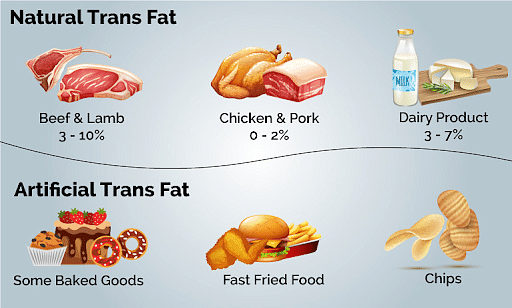
Trans Fats are unsaturated lipids that have been converted into saturated fats. Eating them raises the number of negative cholesterol in our bodies while decreasing the cost of good cholesterol, perhaps leading to heart disease. To be healthy, we must consume as little trans-fat as possible on a regular basis.
Importance of Fats
[Click Here for Sample Questions]
A healthy, well-balanced diet must include a little quantity of fat. Essential fatty acids, that the body cannot produce on its own, are found in fat. Fat aids in the absorption of vitamins A, D, and E by the body. Since these vitamins are fat-soluble, they can only be absorbed when combined with lipids.

Read More:
What is Cholesterol?
[Click Here for Sample Questions]
Cholesterol is produced by the body for the development of cells and the membrane that surrounds them. It is a waxy, liver-produced substance found in cheese, eggs, and butter. Cholesterol is indeed not fat in itself. This chemical is transported through the bloodstream via a lipoprotein molecular complex. Cholesterol is not the most important vitamin to obtain from food. However, because they are an important component of the cell membranes and usually occur in all of our cells, the human body produces all of the cholesterol it requires.

Excess cholesterol is unhealthy for your heart and raises your risk of cardiovascular disease. Cholesterol has various activities, including assisting in the creation of sex hormone and the generation of bile salts, which aid in the digestion of food. C??H?? is the molecular formula of Cholesterol.
Read More:
Types of Cholesterol
[Click Here for Sample Questions]
- High-Density Lipoprotein or HDL
- Low-Density Lipoprotein or LDL
Low-Density Lipoprotein
LDL can build up on the insides of your arteries, narrowing them. The fatty deposits harden into plaque, which coats your arteries and can block them. Atherosclerosis is the name for this build-up. Saturated and trans fats are the fats that are associated with high LDL cholesterol levels and should be avoided in your diet. When saturated fats are at room temperature, they are solid or waxy. Saturated fats are typically found in animal products such as meat, milk, cheese, and butter.

High-Density Lipoprotein
HDL (high-density lipoprotein) is known as "good cholesterol". Blood containing other kinds of cholesterol, such as LDL cholesterol, is transported away from the heart by this type of cholesterol transport. HDL is an extended-range truck while LDL is a dump truck. Other forms of cholesterol are picked up and transported from the body by HDL in the liver. Increased HDL levels may reduce the risk of heart disease.
Read More:
Things to Remember
[Click Here for Sample Questions]
- High cholesterol is caused by lack of physical activities, obesity, etc.
- Saturated fat, which is found in significant amounts in cheese, butter, red meat, and other foods, causes bad cholesterol.
- Food sources high in saturated fats are suggested to be consumed in small amounts.
Read More:
Sample Questions
Ques. Cholesterol: Is It a Fatty Acid? (2 marks)
Ans. Cholesterol is an unsaturated alcohol that belongs to the steroid family and is found in the cell membranes among all animal cells. Triglycerides are the primary lipid component of animal dietary fats containing Glycerol fatty acid esters.
Ques. What effect do fats have on cholesterol? (2 marks)
Ans. Dietary fat, especially saturated and trans fats, may raise total and LDL cholesterol levels in the blood. Substituting polyunsaturated and monounsaturated fats for certain saturated fats will help reduce blood cholesterol levels. HDL cholesterol levels that are higher can lower the risk of cardiovascular disease.
Ques. What type of cholesterol is harmful? (2 marks)
Ans. Cholesterol binds to proteins known as Lipoproteins as it passes through the bloodstream. Lipoproteins, which transport cholesterol throughout the body, are divided into two categories: LDL (low-density lipoprotein), also known as "bad" cholesterol, accounts for the majority of the cholesterol in your body.
Ques. Which form of fat is cholesterol? (2 marks)
Ans. Saturated fats increase the levels of high-density lipoprotein (HDL or "good") and low-density lipoprotein (LDL or "bad") cholesterol, raising the risk of cardiovascular disease. Trans fat is a kind of fat that may be found in Trans fat is a kind of fat that may be found in In limited concentrations, this kind of fat can be found in various foods.
Ques. Define cholesterol ? Explain two types of cholesterol. (2 marks)
Ans. Cholesterol is a sterol present in both animals and people. C27H45 is its molecular formula. While esterified with a fatty acid, it exists in both free and coupled form. It is a precursor to the majority of steroid hormones.
Cholesterol can be found in two different forms:
(i) LDL cholesterol (Low Density Lipoprotein) It might be microscopic, dense particles or huge, buoyant ones. LDL, often known as bad cholesterol, is hazardous because it can infiltrate artery walls and cause blood to stay together or clot.
(ii) HDL (high-density lipoprotein) (High Density Lipoprotein) It's also referred to as "healthy cholesterol." It is thick and transports LDL from the bloodstream to the liver, lowering the risk of cardiovascular disease.
Ques. Which fats are healthier: saturated or unsaturated? (2 marks)
Ans. Unsaturated fats are regarded to be the "healthier" fats, and they must be included in a balanced diet for the body to function properly. When these fats replace saturated fats in the diet, they help to lower the risk of elevated blood cholesterol levels as well as provide a variety of other health advantages.
Ques. What is trans fat? (2 marks)
Ans. Trans fats are unsaturated lipids that have been converted into saturated fats. Eating them raises the number of negative cholesterol in our bodies while decreasing the cost of good cholesterol, perhaps leading to heart disease.
Ques. What is the role of fats in the human body? (2 marks)
Ans. A healthy, well-balanced diet must include a little quantity of fat. Essential fatty acids, that the body cannot produce on its own, are found in fat. Fat aids in the absorption of vitamins A, D, and E by the body. Since these vitamins are fat-soluble, they can only be absorbed when combined with lipids.
Ques. What is the good type of cholesterol? (2 marks)
Ans. The "good" cholesterol, HDL (high-density lipoprotein), absorbs cholesterol and transports it back to the liver. It is then flushed from the body by the liver. High HDL cholesterol levels can reduce your risk of heart cardiovascular disease and strokes.
Read More:



Comments