



Education Journalist | Study Abroad Lead
Food is necessary for the existence of all organisms on this planet. Food is needed since it nourishes our body organs and allows them to function properly. Food is consumed by all living things on the planet. Food also gives us energy to perform our internal bodily activities. As food gives us energy, we should always choose nutritious foods over junk food. Food variety refers to the various types of foods that we consume in order to offer different nutrients to our bodies. Food variety can vary depending on a location's geographical and climatic characteristics. To live a healthy and long life, we must always choose the right amount and quality of food variety in our diet. In this article, we will look at the variety of food, nutrients, and a balanced diet.
Read More: Food Chains and Webs
| Table of Content |
Food
Food is a nutrient that all living organisms consume to maintain growth and perform important activities as they provide us with energy. Food is required for living things to survive. It nourishes trillions of cells in our bodies, allowing them to function properly, speeding up biological processes and assisting in growth. While it is important to eat food, it is just as crucial to eat a healthy, well-balanced diet.
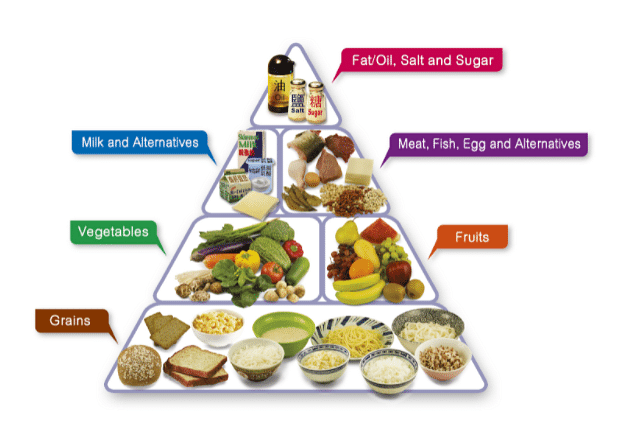
Food Pyramid
In our food pyramid, plants are the primary producers. Plants provide sustenance to all species, whether directly or indirectly. Herbivorous animals that eat plants from their local ecosystem are a popular food source for other animals and humans. Some animals, on the other hand, get their food by hunting other animals (carnivorous and omnivorous animals), while others, known as decomposers, rely on decomposing plant and animal debris (bacteria, fungi).
Nutrients
Nutrients are macromolecules that the body needs to stay healthy and to grow. Carbohydrates, lipids, proteins, vitamins, minerals, and other essential elements are required by human bodies. These nutrients are broken down by several chemical processes in our bodies to produce energy, aid cell division, and growth, among other things. All of these nutrients are present in the food we eat, but a balanced diet is one in which all of the nutrients are present in sufficient amounts as required by our body. Excess fats and carbs in the body produce a variety of problems and have an impact on numerous body sections. As a result, before consuming a food, it is necessary to check its nutritional content.
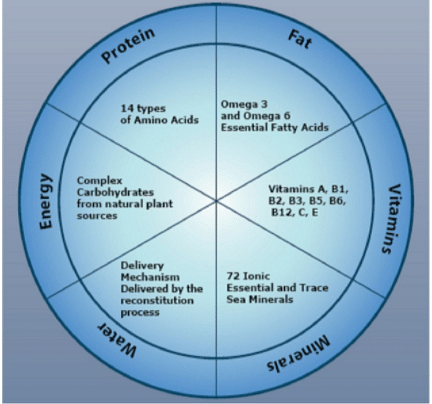
Essential Nutrients
Read More: Nutrients
Components: Nutrients of Food
Carbohydrates, protein, fat, fibre, vitamins, minerals, and water are the basic food components.
- Carbohydrates: A primary source of energy for our bodies are carbohydrates. Its sources are rice, bread, potatoes, maize, bananas, mangoes, and other foods.
- Fats: Fat is a great source of energy as well. Fat aids in the absorption of fat-soluble vitamins A, E, D, and K by the body. Walnuts, salmon, vegetable oils, butter, beef, and other healthful fat sources are examples.
- Protein- Protein is a necessary component in the development of muscle mass. Pulses, milk, grams, eggs, meat, poultry, and other protein-rich foods are examples.
- Vitamins- Vitamins aid in the development of our bodies and ensure that they work properly. Green leafy vegetables, nuts, eggs, oily fish, meat, dairy products, plant-based oil, soya beans, and other foods are good providers of vitamins.
- Minerals- Minerals are necessary for the creation of bones and teeth, as well as blood. Iron, calcium, phosphorus, potassium, iodine, chloride, and other minerals are essential for human bodies. Mineral-rich foods include meat, grains, seafood, fruits and vegetables, nuts, and so on.
- Fibre- Fibre is necessary for a healthy digestive tract. It aids in reducing the likelihood of constipation. Whole grain goods, fruits, vegetables, beans, peas, legumes, nuts, and other fiber-rich foods are examples.
- Water- Water makes over 60% of the adult human body. It is a necessary component for our bodies to work properly. It aids in the transfer of digested food to our body cells as well as the elimination of waste from our bodies.

Major Nutrients of Food
What is Food Variety?
Food variety refers to the wide range of foods available, including vegetables, fruits, cereals, meat, fish, and dairy products. It provides nourishment from many dietary groups in the necessary amounts. Eating a wide variety of foods allows us to obtain all of the nutrients we require for a balanced diet. Food variety also ensures that we do not get overly reliant on a single nutrient that can only be obtained by eating a specific type of food.

Food Variety
Various Types of Food
For good health and well-being, there are five major types of food that must be included in our regular diet.
- Vegetables- Vegetables are high in minerals, vitamins, fibre, and other nutrients. Spinach, for example, is high in iron. Plants provide vegetables that can be harvested directly.
- Fruits- Fruits also include a variety of vitamins, minerals, and nutrients. Roughage is also provided by some fruits, which can be obtained directly from plants.
- Dairy Products- Calcium and other macronutrients are abundant in dairy products.
- Legumes & Cereals- Fiber is abundant in cereals and legumes.
- Poultry- Poultry items, such as eggs, chicken, meat, and fish, are high in protein. Proteins are vital for the correct growth and maintenance of the body because they are the building blocks of life.
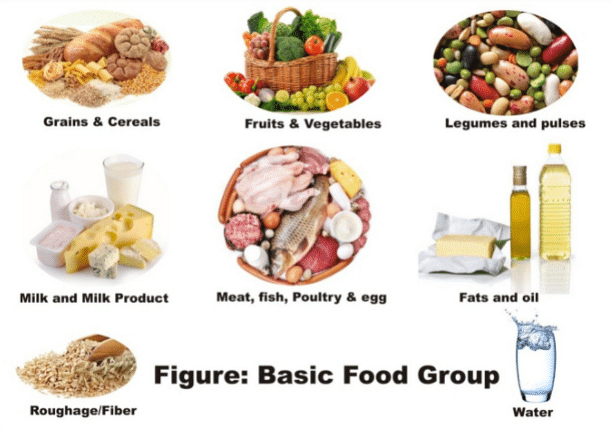
Basic Food Group
Read Difference between: Food Chain & Food Web
Importance of Food Variety
A variety in our food and diet ensures that we are eating nutritious and healthy foods while trying new things to maintain a balanced diet to avoid boredom too. It also ensures that our bodies receive all of the nutrients they require to function properly. Even within a single food group, such as fruits and vegetables, the diversity of nutrients available varies. Spinach, for example, is high in folate, but oranges are high in Vitamin C. Variety also ensures that we are not overly reliant on a single nutrient that can only be obtained by consuming a specific sort of food.
Hence we can here briefly summarize the importance of food variety:
- As we obtain different nutrients from different food kinds, variety in diet provides us with all of the nutrients we need for a healthy body.
- Food variety provides us with a wide range of food options to pick from when it comes to our diet. It assists us in choosing the right type of meals for our body.
- We never get bored eating the same thing since there is so much variation in food.
Factors that affect Food Variety
The following are some of the primary elements that influence the region's food variety:
- Biological- We normally eat when we are hungry and wait two hours between meals to fulfil our hunger. Our neurological system regulates the balance of hunger, appetite, stimulation, and food intake. Food palatability is influenced by its flavour, so if a food's palatability is great, it will be consumed for pleasure rather than as a nutrient source. As a result, the higher the food's palatability, the more it is consumed.
- Economical- Food variety is also determined by the cost of the food and an individual's ability to pay for it. Low-income people may have an imbalanced diet with less nutrient-dense foods. Another factor that influences dietary variety is availability. It is sometimes discovered that certain food varieties are not available in a given place.
- Physical- Food variety has been proven to be influenced by education and meal knowledge, as an educated individual understands the importance of dietary behaviour and nutrient content of the food. People will go for convenience foods such as pre-cooked meals and pre-packaged fruits due to a lack of time or while living alone.
- Social- The diverse social classes have an impact on food habits and variety. In comparison to the low-class group, the higher social class group may have a healthier diet. Food preparation and choice are also influenced by cultural factors.
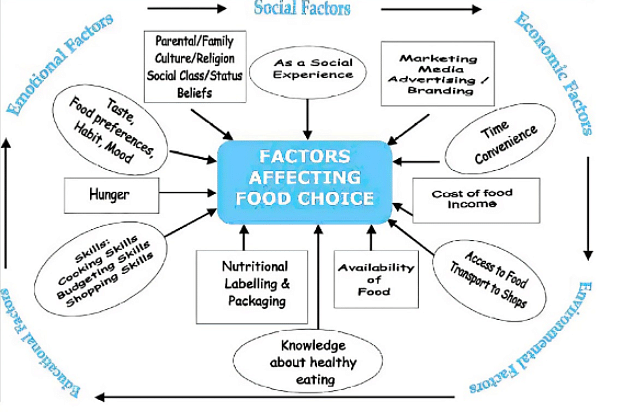
Factors affecting Food Choice
Food Consumption
In a single day, we consume a wide variety of meals. Meals are larger, more diverse, and more filling in proportion. We eat three types of meals on a daily basis. Breakfast, lunch, and dinner are the three meals, with snacks available in between.
- Bread, omelette, milk, poha, upma, vermicelli, and other items make up the majority of our breakfast. We should eat a hearty breakfast to keep our appetites in check during the day and give us more energy to complete our tasks.
- We must include robust items such as cereals, pulses, vegetables, curd, salad, and so on at noon.
- Our bodies will be healthier and fitter if we eat a light dinner. Vegetable soups, tofu, beans, steak, chicken, fish, and so on are all options.

Balanced Diet
Balanced Diet
A balanced diet is one that provides all of the essential nutrients, as well as water and roughage, in the amounts required by the body. A balanced diet varies depending on a person's age and medical condition. A kid, for example, needs more protein than an adult.
Read More: Grazing Food Chain
Things to Remember
- Food variety refers to the various kinds of food that are accessible for consumption and beneficial for our bodies.
- Different forms of food include different nutrients such as carbohydrates, proteins, fats, fibre, vitamins and minerals that are necessary for a healthy body.
- Food comes in a wide range of variety, based on the climate and resources available in a given place.
- Individual food preferences are influenced by social, biological, physical, and economic factors.
- Fruits, vegetables, grains, pulses, legumes, dairy, and poultry are five primary types of food that must be included in our normal diet.
- A balanced diet is the one that provides all of the essential nutrients, as well as water and roughage, in the amounts required by the body and varies from person to person.
Read More:
Sample Questions
Ques. What factors influence the variety of food? (2 marks)
Ans. Food comes in a wide variety, depending on the environment and resources available in a particular location. Social, biological, physical, and economic aspects all influence people's dietary preferences.
Ques. What is the reason behind the wide variety of foods available? (3 marks)
Ans. Food variety refers to eating a wide range of foods from various food groups, and there is a wide selection of food products available for people living in various locations. People eat a wide variety of foods, which varies according to their habits, lifestyles, tastes, and availability.
Ques. Why is it vital to consume a wide variety of foods? (3 marks)
Ans. Eating a variety of foods supplies the body with a variety of nutrients:
- It promotes excellent health, and can help minimise disease risk.
- We never get bored eating the same thing since there is so much variation in food.
- It also ensures that our bodies receive all of the nutrients they require to function properly.
Ques. Which food item qualifies as a complete meal? (1 mark)
Ans. Milk is considered a complete food because of its high protein, fat, carbohydrate, vitamin, and mineral content, all of which are necessary for good health.
Also Read:
Ques. What are the different types of nutrients? (3 marks)
Ans. Nutrients are dietary molecules that are required for the growth and survival of organisms.
- Carbohydrates, lipids, proteins, minerals, vitamins, and other nutrients are all important components of our diet.
- These macro and micronutrients are necessary for our bodies to carry out chemical processes, which aids digestion and growth.
Ques. Why is it important to have a well-balanced diet? (3 marks)
Ans. A well-balanced diet provides the body with all-round sustenance.
- It contains minerals, vitamins, and fibres that are essential for the body's growth and upkeep.
- These nutrients are required for a variety of chemical activities in our bodies.
- As a result, a well-balanced diet is essential for optimum bodily growth and function.
Ques. When it comes to minerals and vitamins, what's the difference? (3 marks)
Ans. Vitamins are organic in nature and can be disintegrated by air, acid, or heat. Minerals are inorganic and keep to their chemical structure. As a result, minerals found in water and soil can easily enter the body through the food we eat from both plant and animal sources, whereas vitamins contained in food can be inactivated owing to storage, cooking, and even light exposure to air, as they are weaker molecules.



Comments