



Education Journalist | Study Abroad Lead
Galaxies are the system that is formed of the remnants of the stars, dust, interstellar gas, and substance which are all bound gravitationally. The word galaxy is derived from the Greek word ‘galaxies’ which literally translates to the word ‘milky’ which is a reference to our very own Milky Way Galaxy. Various types of galaxies of different sizes exist in our universe that ranges from dwarf galaxies which has just a few hundred million stars to giant galaxies having approximately one hundred trillion stars. Each of these stars orbits the center of mass of the galaxy. If we look at the clear night sky when it is extremely dark, far away from the city lights, we can see the band of our very own Milky Way Galaxy adorning the sky. In this article, we will understand more about the galaxies of our universe, their various types, their formation, and read about our very own milky way galaxy.
Read More: Fundamental and Derived Units of Measurement
| Table of Content |
Read More: What is Gamma Radiation or Gamma Rays
What is a galaxy?
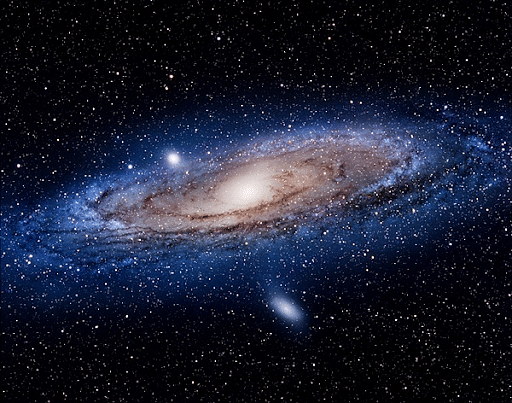
Galaxy refers to the sprawling space system that comprises stellar remnants, dust, interstellar gases, and even dark matter, all bound together by the force of gravity. Our universe is vast in size and is composed of multiple galaxies. Each galaxy is formed of millions of stars held together by a gravitational force. A huge amount of radiation, heat, radio waves, and x-rays are emitted from the center of the galaxy. Our universe altogether comprises approximately seventy thousand million stars and there are billions of galaxies in the universe.
Galaxy
When the Hubble Space Telescope observed a small part of space continuously for a duration of 12 days, it was able to identify more than 10,000 galaxies in the universe. Most of the galaxies have a diameter between 3,000 to 300,000 light-years i.e. approximately between 1,000 to 100,000 parsecs. In between the galaxies, the space is filled with an intergalactic medium, a tenuous gas with a mean density of one atom per kiloliter. A few of the identified galaxies have well-distinguished names. Some of them are Andromeda Galaxy, the Whirlpool Galaxy, the Magellanic Clouds, and the Sombrero Galaxy.
We along with our Earth, sun, moon, and solar system reside in a part of the Milky Way Galaxy. The Milky Way includes huge clouds, gases, and dust particles that lie all across the galaxy and interstellar space. There is a supermassive black hole at the center of our galaxy, known as Sagittarius A.
Also Read:
Milky Way Galaxy
The Milky Way Galaxy or the Akash Ganga is our home galaxy. It is a hazy band of stars in the night sky that can not be differentiated by our naked eye. It has a spiral appearance. It has a length of 1,00,000 light-years and its width extends up to 10,000 light-years. Milky Way is formed of billions of stars, one amongst them is the sun. The band of the galaxy can be seen in dark areas through Atacama Large Millimeter/sub-millimeter Arra (ALMA) antenna. The galaxy has four spiral arms that emerge from its center. We exist in one of the spiral arms of the galaxy that is formed of giant gas clouds and star clusters.

The Milky Way Galaxy
The Milky Way galaxy has a barred spiral shape. It is made up of 10% luminous matter and over 90% of dark matter. A large amount of dark matter of the galaxy has an invisible halo which is responsible for the Milky Way spin. The nearest galaxy to our Milky Way Galaxy is the Andromeda galaxy which is at a distance of 2.5 million light-years.
Read More:
Properties of Galaxies
Galaxies have strong magnetic fields that drive the inflow of mass towards the center of these galaxies. These modify the spiral arm formation and effects the gas rotation in the outer galaxy region.
- Galaxies are a combined system of gas, dust, dark matter, and stars ranging from a million to about a trillion which are all held together by gravitational forces.
- Almost all the large galaxies are predicted to have a supermassive black hole at their centers just like the Milky Way.
- Mostly, galaxies are grouped into clusters, some of which are then combined together to form even larger clusters that are spread over millions of light-years.
- The different shapes and variations of galaxies are the result of the different activities which contributed and the conditions in which they were formed.
- Some of the galaxies have an active star formation process going on which others are termed as quiescent which means they ceased the formation of new stars a long time ago.
- When two galaxies collide, they pass through each other and form a merged galaxy that has a distorted shape.
Read More:
Types of Galaxies
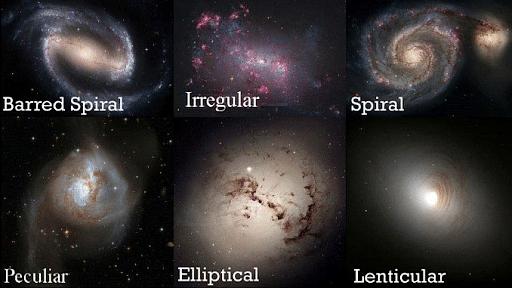
There are various types of galaxies that differ from each other on the basis of their composition, shape, size, and color. They are mainly classified as:
Elliptical Galaxies
The galaxies that consist of very little gas and appear like a flattened ball made up of old stars are known as elliptical galaxies. The old stars in these galaxies have a very low mass. Usually, they occur in the Virgo superclusters. In comparison to the spiral galaxies, the starlight emitted by elliptical galaxies is very dim.
- These galaxies are smooth and have no dust lanes or spiral arms.
- They have little or non-existent star formation.
- They contain X-ray gas which is also hot.
Read More:
Spiral Galaxies
Spiral Galaxies have a flattened shape. They are named such for their spiral appearances. The old stars in the galaxy form a bulge at the center of the galaxy which is surrounded by a disc composed of the young stars that are arranged in a spiral form. These are the most common types of galaxies in the universe. Over 77 percent of the galaxies discovered up till now are spiral-shaped galaxies. One example of a spiral galaxy is the Andromeda Galaxy.
Types of Galaxies
As per the Hubble classification scheme, the spiral galaxies are regarded as type S. This is being followed by a smaller case letter, a, b, or either c. This letter indicates the size of the central bulge and the degree of tightness of the spiral arms of the galaxy. For instance, a galaxy of Sa type is a tightly wound galaxy that possesses a relatively large region of core and has poorly defined arms while at the opposite end, the Sc galaxy is an open galaxy with a smaller core region, having well-defined arms.
- Spiral galaxies are the ones that resemble giant pinwheels in appearance.
- The arms or the spirals of this pinwheel are formed of lots of dust, gas, and stars.
- The younger stars present in the galaxy burns and are much hotter than the older stars. Hence, they are among the the brightest galaxies.
Read More: Measurement of Time
Barred Spiral Galaxies
Many galaxies have a bar-like structure and are therefore known as barred spiral galaxies. Over two-thirds of the galaxies are barred spiral galaxies. Our Milky Way is an example of a barred spiral galaxy.
Irregular Galaxies
Irregular Galaxies, as the name suggests, have no shape in particular and have a chaotic appearance. They are smaller in size. Over a quarter of the known galaxies have an irregular appearance.
- Dwarf Galaxies
Dwarf Galaxies are of smaller size in comparison to the other galactic formations in the universe which are about one hundredth the size of the Milky Way, which contains just a few billion stars. Most of the galaxies in the universe are referred to as dwarf galaxies. In a recent discovery, a new type of galaxy known as the ultra-compact dwarf galaxies are discovered which are just a hundred parsecs across.

Dwarf Galaxy
Some of the other types of galaxies that exist in the universe are:
- Active Galaxies
- Blazars
- Quasar
- Seyfert galaxy
- Liners
- Starburst Galaxies
- Interacting Galaxies
Read More:
Star Formation in Galaxies
The formation of stars in galaxies takes place in the following way:
- In the case of an elliptical galaxy, there’s a brief burst of intense nature where the stars are formed when the galaxy is younger.
- In the case of a spiral galaxy, the formation of stars occurs in a leisurely manner for a duration of up to millions of years.

Process of the formation of stars in the universe
Collision of Galaxies
Though the distance between any two or more galaxies is very large, they are relatively close to each other as compared to the distance between two stars. Galaxies often interact with each other when they are close and often collide too. When any two galaxies collide, their stars do not crash into each other as they pass through. This is due to the huge distances between the stars. However, when galaxies collide, their gravitational interactions create new waves which lead to the formation of new stars. This can even lead to the formation of supernovas and even result in black holes.
As a result of the collision, the shapes of the galaxies get distorted. For instance, when two spiral galaxies collide, they can result in the formation of an elliptical galaxy. Many a time, galaxies come in each other’s proximity and collide with one another. Our Milky Way Galaxy will also someday collide with our nearest galactic neighbor, i.e. the Andromeda Galaxy. Our Sun will be most probably flung into a new region of the galaxy.

Collision of Two Galaxies
But there’s nothing to worry about as this collision will not take place for another five billion years or so! But even if the collision takes place tomorrow, there is a high chance that we won’t even notice the change. This is because galaxies are very vast in size and they spread out at the ends. Even when they collide with each other, the solar systems and the planets of one galaxy don’t collide with the celestial bodies of another galaxy as they don’t come close enough to result in a collision.
Read More: Newton's Universal Law of Gravitation and Gravitational Force
Things to Remember
- Galaxies are the system that is formed of the remnants of the stars, dust, interstellar gas, and substance which are all bounded gravitationally.
- Each galaxy is formed of millions of stars held together by a gravitational force
- The Milky Way Galaxy or the Akash Ganga is our home galaxy and is a hazy band of stars in the night sky that can not be differentiated by our naked eye.
- Galaxies have strong magnetic fields that drive the inflow of mass towards the center of these galaxies.
- The galaxies that consist of very little gas and appear like a flattened ball made up of old stars are known as elliptical galaxies.
- The old stars in the spiral galaxy form a bulge at the center of the galaxy which is surrounded by a disc composed of the young stars that are arranged in a spiral form.
- Many galaxies have a bar-like structure and are therefore known as barred spiral galaxies.
- Irregular Galaxies, as the name suggests, have no shape in particular
Also Read:
Sample Questions
Ques. What exists in between the galaxies? (3 marks)
Ans. The space in between the galaxies is known as intergalactic space, in the same way, that the space between the stars is known as interstellar space. This space is not empty though it highly resembles an absolute vacuum. The vast voids of space in between the galaxies that stretch up to many light-years actually comprise more matter of dust and debris than the galaxies themselves.
Ques. Do galaxies ever die? How does this happen? (3 marks)
Ans. Yes, galaxies can die over time in the same manner as a star. Stars and galaxies both are formed by the condensation of gas by gravity. When stars blow, they kick the gas and release it towards the outside. Gravity pulls the gas back in and starts the formation of new stars. As the old stars live the period of their lives and reach towards their end, the galaxies die too in the same manner.
Ques. Name the galaxy that is closest to us. (1 mark)
Ans. Canis Major Dwarf Galaxy is the closest known galaxy to our Milky Way Galaxy which is at a distance of approximately 236,000,000,000,00 light-years.
Ques. Describe the movement of galaxies through space. (3 marks)
Ans. Galaxies rotate through the space with respect to their center. The region of the galaxy near the center rotates more slowly and the region near the edge of any galaxy rotates at a fast speed. Due to the motion of the universe also (the universe is expanding with time since after the Big Bang), the galaxies move further and further away from each other. A group of galaxies, known as a cluster is also in a rotation motion with respect to the center of mass of the cluster of galaxies.
Ques. Explain a few types of galaxies. (5 marks)
Ans. A galaxy is known as a huge accumulation of dust, gas, and a billion stars which are all held together by the forces of gravity. They are all made up of the same things, however, they differ from each other in their shapes and sizes. The various types of galaxies as per their shapes are classified in the following way:
- Spiral Galaxies
Spiral galaxies are the ones that resemble giant pinwheels in appearance. The arms or the spirals of this pinwheel are formed of lots of dust, gas, and stars. The younger stars present in the galaxy burns and are much hotter than the older stars. This is the reason that spiral galaxies are often the brightest galaxies of the universe.
- Elliptical Galaxies
Elliptical Galaxies appear like an ellipse as the name suggests which can be understood as a stretched-out circle. These galaxies are mostly formed from the oldest stars and hence they are not as bright as the spiral galaxies. They are comprised of very little dust and gas. These are the most common types of galaxies in the universe.
- Irregular Galaxies
These galaxies, as the name suggests, are irregular and don’t have a common appearance. They are the smallest of galaxies and are made up of a lot of young stars.
- Quasars
Quasars refer to the compact areas that are present in the center of a galaxy that releases or emits huge amounts of energy.
Read More: Advanced Sunrise and Delayed Sunset
Ques. What are satellite galaxies? (5 marks)
Ans. Just like all the planets of our solar system orbit the sun, there are lesser massive galaxies, that are comprised of an impressive star collection that orbit their center, along with orbiting our galaxy, the Milky Way too. It can be understood by imagining our galaxy as a sun and the galaxies orbiting around it like planets. These galaxies that orbit around the Milky Way are famously referred to as the “satellite galaxies” by astronomers.
The Milky Way has numerous satellite galaxies, the biggest out of all is the Large Magellanic Cloud. This is over 1,63,000 light-years away from us and its size is about 1/100th the size of our Milky Way Galaxy.
Ques. Name the largest known galaxy of our universe. (2 marks)
Ans. Till now over a hundred billion galaxies have been identified in our universe. Out of them, the largest known galaxy is IC 1101. This galaxy is about 50 times the size of the Milky Way and is about two thousand times more massive.
Ques. List down some properties of our Milky Way Galaxy. (5 marks)
Ans. Milky Way is our home galaxy. Our Solar system resides around 27,000 light-years away from the Galactic center of this galaxy, in the inner part of one of its spiral arms filled with dust particles and gas. This spiral arm is known as the Orion Arm.
- 90% of the matter of the Milky Way Galaxy consists of dark matter. This provides the galaxy with a mysterious halo. Only 10% of this galaxy is formed from luminous matter which refers to the matter that can be seen and identified by the naked eye or telescopes.
- The Milky Way has about 200 billion stars. However, the most number of stars that we can see from a point on the globe is just approximately 2500. This number varies according to many factors.
- Like most of the galaxies, the Milky Way also has a supermassive black hole (SMBH) towards its center that is famously known as Sagittarius A.
- The Milky Way is a part of the Virgo supercluster. The closest neighbor to our galaxy is the Small and Large Magellanic Clouds and the Andromeda Galaxy which is the closest spiral galaxy.
- The galaxy is warped in shape as a result of the galactic tug-of-war between the Large and Small Magellanic Clouds, the two neighbors of the galaxy.
Ques. How do the stars in a galaxy move about their orbit? Do they follow Kepler's laws of planetary motion? (5 marks)
Ans. Kepler's Laws were mainly derived for the planets of our solar system that orbits around the sun. The laws holds true for any situation wherein there is a discrete object having a mass that is greater than the mass of any other objects that orbit around it. However, in the case of galaxies, we don't have all the mass concentrated in the center part, it is instead spread out amongst all the constituents of the galaxy which lie across over hundreds or thousands of light-years. Even the black hole that is present in the center of our galaxy is not massive enough to impact the orbits of the stars of the Milky Way unless the orbits are in near proximity to its center.
The stars of the galaxies don't necessarily have a perfect elliptical path. Often there is a slow change in the position of the object, precession, as a result of which the object is not able to repeat its orbit around the center of the mass.
Also Read:



Comments