


.jpg?h=35&w=35&mode=stretch)

Source: Wikipedia
Key Highlights
|
The Ganga, is the most important river in India, spiritually, culturally, and economically. It is the lifeline for millions of people. Ganga river is revered as the goddess Ganga and is regarded as the holiest river in Hinduism. Originating in Uttarakhand, the western Himalayas, the Holy Ganges empties into the Bay of Bengal after flowing through India and Bangladesh. Hindus revere the Ganga as a purifying river that can atone for sins and promote enlightenment. Hindu traditions include bathing in the Ganga, which is thought to have healing effects.
Key facts about the Ganga River
- The Ganga is India's longest river, flowing 2,525 kilometers from the Himalayas of Uttarakhand to the Bay of Bengal. Its source is the Gangotri Glacier, which stands at an elevation of around 7,010 meters.
- The Ganga is considered Hinduism's most sacred river. Hindus believe that bathing in the Ganges cleanses and purifies the soul. Every year, millions of pilgrims travel the Ganges to perform religious ceremonies, particularly in the holy cities of Haridwar and Varanasi.
- The Ganga River basin is one of the most fertile and heavily populated regions in the entire world. The river supplies water for irrigation, drinking, and transportation. It also supports a rich diversity of flora and animals, including several endangered species like the Ganges River dolphin and the Gharial crocodile.
- The Ganga is personified as the goddess Ganga, symbolizing spiritual knowledge and purification derived from the Vedas. She is considered the mother of humanity.
Origin of the Ganga River
The Ganga River originates from the Gangotri glacier in the western Himalayas in the Indian state of Uttarakhand. It rises as the Bhagirathi River from the Gangotri glacier. The confluence of the Alaknanda and Bhagirathi rivers at Devprayag marks the beginning of the Ganga River. The Ganga River system includes various tributaries such as the Yamuna, Damodar, Sapta Kosi, Ram Ganga, Gomati, Ghaghara, and Son. The Ganga River is a vital waterway that sustains millions of people in the region and holds immense spiritual significance in Hinduism as a sacred river and goddess.
The Ganga River System
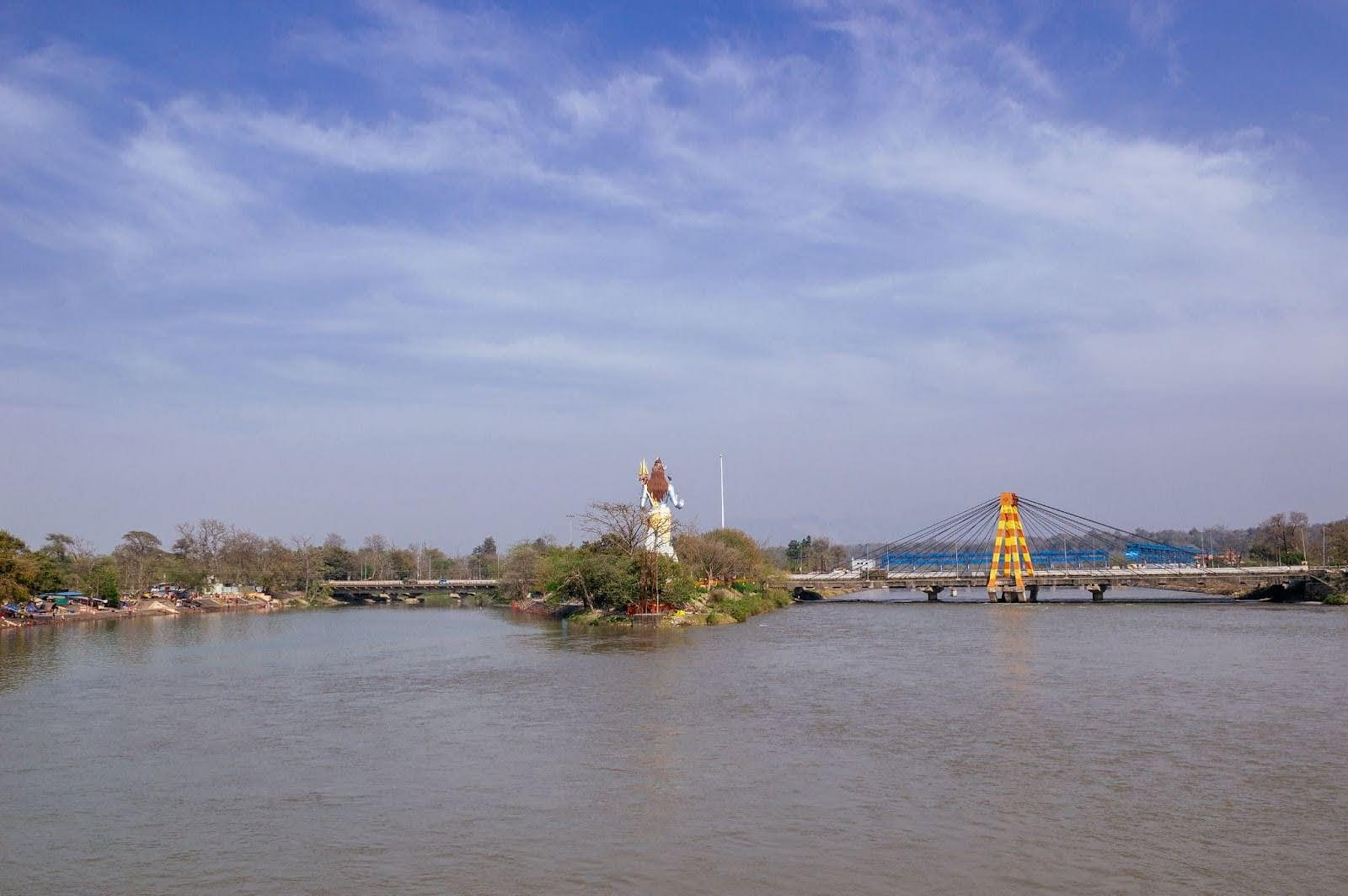
Haridwar
Source: Wikipedia
The Ganga River System is a complex network of rivers and tributaries that form the Ganges River, one of the most significant rivers in India. It originates in the Himalayas and drains a vast area encompassing parts of India, Nepal, China, Bhutan, and Bangladesh, before emptying into the Bay of Bengal.
| Place | Confluence |
|---|---|
| Devprayag | Bhagirathi + Alaknanda |
| Rudraprayag | Mandakini + Alaknanda |
| Karnaprayag | Pindar + Alaknanda |
| Vishnuprayag | Dhauliganga + Alaknanda |
The Ganga River is India's most important river, both culturally and geographically. It originates from the Gangotri Glacier near Gaumukh in Uttarakhand, where it is called the Bhagirathi. It cuts through the Central and Lesser Himalayas and meets the Alaknanda at Devprayag, after which it is known as the Ganga. The Alaknanda itself originates from the Satopanth Glacier and includes tributaries like the Dhauli and Vishnu Ganga, meeting at Vishnu Prayag, and others like the Pindar at Karna Prayag and the Mandakini at Rudra Prayag. The Ganga enters the plains at Haridwar and flows southeast and east, splitting into the Bhagirathi and Hugli distributaries. It spans 2,525 km, passing through Uttarakhand, Uttar Pradesh, Bihar, and West Bengal, and its basin covers about 860,000 sq. km in India. The Ganga river system is the largest in India, with both perennial rivers from the Himalayas and non-perennial rivers from the Peninsula.
Tributaries of Ganga River
Many tributaries of the Ganga River come from the Indian Peninsula and the Himalayas. These are a few of the principal tributaries:
| Left Bank Tributaries | |
|---|---|
| Ramganga | It Originates in the Kumaon Himalayas; and flows through Uttarakhand and Uttar Pradesh. |
| Gomati | Originates near Pilibhit; flows through Uttar Pradesh and joins the Ganga near Kaithi. |
| Ghaghra (or Karnali) | It originates in Tibet, China; flows through Nepal, and joins the Ganga near Chhapra. |
| Mahananda | Originates in Himalayan hills; flows through Bihar and joins the Ganga near Katihar. |
| Kosi | Originates in Tibet, China; known for frequent flooding; joins the Ganga near Kursela. |
| Right Bank Tributaries | |
|---|---|
| Yamuna | It originates from the Yamunotri Glacier; and flows through several states, including Delhi and Uttar Pradesh. |
| Son | Originates near Amarkantak; and flows through Madhya Pradesh and Bihar before joining the Ganga. |
| Punpun | Originates in the Chota Nagpur Plateau; flows through Bihar and joins the Ganga near Patna. |
| Damodar | Its source is in the Palamau hills of Chota Nagpur, Jharkhand. It then flows south-easterly through several districts of Jharkhand and West Bengal before joining the Hooghly River |
Namami Gange Programme
In June 2014, the Indian government initiated the Namami Gange Programme to tackle the Ganga River's pollution issues and regeneration requirements. The program has a budget outlay of Rs. 20,000 Crore.
Key Highlights of the Namami Gange Programme
- Implementation is divided into Entry-Level Activities, Medium-Term Activities, and Long-Term Activities for immediate, medium, and long-term impact.
- Creation of sewerage treatment capacity through various projects in states like Uttarakhand, Uttar Pradesh, Bihar, Jharkhand, and West Bengal.
- River-front development projects for the construction, modernization, and renovation of ghats and crematoria.
- River surface cleaning initiatives to collect floating solid waste from the surface of the river.
- Biodiversity conservation projects focus on restoring viable populations of aquatic species and enhancing ecosystem services.
- Afforestation efforts to enhance the productivity of the river basin through forestry interventions.
- Public awareness campaigns and industrial effluent monitoring to ensure compliance with pollution control norms.
- Ganga Gram initiative to improve sanitation in villages along the Ganga River.
Frequently Asked Questions (FAQ)
Ques. In which place is the Ganga River born?
Ans. The Ganga River originates from the Gangotri glacier in the western Himalayas in the Indian state of Uttarakhand. It rises as the Bhagirathi River from the Gangotri glacier. The confluence of the Alaknanda and Bhagirathi rivers at Devprayag marks the beginning of the Ganga River.
Ques. Why is Ganga called the Holy River?
Ans. The Ganga is considered Hinduism's most sacred river. Hindus believe that bathing in the Ganges cleanses and purifies the soul. Every year, millions of pilgrims travel the Ganges to perform religious ceremonies, particularly in the holy cities of Haridwar and Varanasi.
Ques. Which city is the Ganga River in?
Ans. The Holy Ganges passes through many states and cities like; Varanasi, Haridwar, Patna, Kolkata, and Prayagraj are situated on the banks of it.
Ques. Which is the largest city on the banks of the Ganga River?
Ans. Kanpur in Uttar Pradesh is the largest city directly on the banks of the Ganga River. Formerly anglicized as Cawnpore, it is a large industrial city.
Ques. Which city is between two rivers in India?
Ans. The holy city of Allahabad, now Prayagraj, is situated where the Yamuna and Ganges rivers meet to form the holy Sangam.
Ques. Which is the largest tributary of the Ganga?
Ans. The biggest tributary of the Ganga River is the Yamuna River. It comes from the Yamunotri glacier at Uttarakhand's Bandarpoonch hill. The Sin, Hindon, Betwa Ken, and Chambal rivers are the principal tributaries that join the river.
Ques. What happens every 12 years at the Ganges River?
Ans. The religious gathering of Kumbh Mela happens every 12 years at the Ganges River, Tens of millions of men, women, and kids congregate at Allahabad on the Ganges and Yamuna River floodplain.
Ques. What is the other name of the Ganga River?
Ans. The River Ganga is also known as the Bhagirathi River. River Ganga rises as the Bhagirathi River from the Gangotri glacier.
Ques. Where does the Ganga River start and End?
Ans. The River Ganga originates as Bhagirathi from the Gangotri glaciers in the Himalayas at an elevation of about 7010m in Uttarkashi district of Uttarakhand and flows for a total length of about 2525 km and empties into the Bay of Bengal.
Ques. Which is the longest river in India?
Ans. River Ganga is the longest river in India. It originates from the Gangotri glacier in the western Himalayas in the Indian state of Uttarakhand. It spans 2,525 km, passing through Uttarakhand, Uttar Pradesh, Bihar, and West Bengal, and its basin covers about 860,000 sq. km in India.



Comments