



Content Curator
Various studies show the presence of approximately 9,000- 12,000 species in the green algae group. Chlorophyta is aquatic (freshwater and marine), which is a chlorophyll-bearing organism that is capable of photosynthesizing. They play a vital role in maintaining the ecosystem by fixation of at least half of the total carbon dioxide on earth through photosynthesis. Algae are microscopic and macroscopic, which is mostly unicellular as similar to plants. The size of microscopic algae ranges from 0.2 to 2 mm and macroscopic ones can be as large as 60 mts in size. They mostly occur in freshwater and are attached to moist habitats such as wood, soils, stones, and stagnant water. Few of them are also seen with fungi and animals.
Read Also: Origin of Algae
| Table of Content |
Keywords: Chlorophyta, chlorophyll, aquatic, unicellular, cellulose, algae bloom, cyanobacteria, and eutrophication.
Definition of Green Algae
[Click Here for Sample Questions]
Green algae are a group of algae belonging to Chlorophyta that are an association of microorganisms in the kingdom of Protista. Due to the dominance of the chlorophyll pigment a and b localised in their chloroplasts, they are usually grass green.
Chlorophyta have three classes
- Chlorophyceae- The first-class containing the greatest number of organisms. Chlorella and Volvox belong here.
- Charophyceae- This class of organisms have been seen since prehistoric times. Example- Spirogyra.
- Ulvophyceae- The third class are marine organisms. Examples include species of calcium-rich green algae called Halimeda and Ulva.

Check Important Notes for Lichens
Cellular structure
[Click Here for Sample Questions]
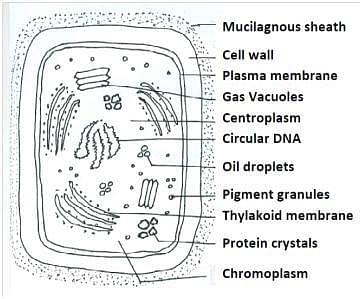
- Chloroplasts have chlorophyll a and b pigments which convert sunlight to chemical energy. Accessory pigments include beta carotenes and xanthophyll.
- The cell wall is composed of cellulose and pectose (outer layer) where energy is stored in the form of starch.
- Green algae have mitochondria.
- Flagella (used to move the cell) may/ may not be present.
- Reproduction - sexually/asexually by cell division, sporulation and fragmentation.
- Feeding- The microscopic organisms feed on free-floating microscopic species of green algae.
Check Also: Amoeba
Examples of green algae
[Click Here for Sample Questions]
Marimo
Algae have unusual growth with a velvety appearance, green and puffy round balls. Mostly seen in Japan and North Europe but are on the verge of extinction.
- Scientific name- Aegagropila linnaei
- Family- Pithophoraceae
- Class- Ulvophyceae
- Phylum- Chlorophyta
- Order- Cladophorales
Sea Lettuce
Mostly found along the coasts. Having a high nutritional value and a rich source of proteins, vitamins and fibres, they are eaten by aquatic animals like manatees and sea slugs. Also consumed by humans as a salad.
- Scientific name - Ulva Lactuca
- Family- Ulvaceae
- Class- Ulvophyceae
- Phylum- Chlorophyta
- Order- Ulvales
- Rank- Species
Ulva Intestinalis
Also known as gutweed, sea lettuce and grass kelp. They are tubular members of the genus Ulva.
- Scientific name - Ulva intestinalis
- Family- Ulvaceae
- Phylum- Chlorophyta
- Order- Ulvales
- Rank- Species
- Higher classification- Sea lettuce
Also Read:
Haematococcus Pluvialis
Chlorophyta freshwater species belonging to the Haematococcaceae family. Well known for its high antioxidant astaxanthin content. Application in cosmetics and aquaculture.
- Scientific name- Haematococcus Pluvialis
- Family- Haematococcaceae
- Phylum- Chlorophyta
- Order-Chlamydomonadales
- Rank- Species
- Higher classification- Haematococcaceae
Dead Man's Finger/ Sodium Fragile
Codium fragile, a seaweed genus named so as it has a similar appearance to dead man's finger, green sea finger, forked felt- algae, felty fingers, stag seaweed, sponge seaweed, green fleece and Oyster thief.
- Scientific name- Codium fragile
- Class- Ulvophyceae
- Phylum- Chlorophyta
- Order- Bryopsidales
- Rank- Species
- Higher classification- Codium
Chlorella
Single-celled or unicellular, green, triangular having a diameter of 2 to 10 um. They do not possess flagella.
- Scientific name- Chlorella
- Class- Trebouxiophyceae
- Phylum- Chlorophyta
- Order- Chlorellales
- Rank- Genus
- Higher classification- Chlorellaceae
Water Silk
Consisting of a spiral arrangement of chloroplast, they belong to the genus spirogyra. There are 400 species of spirogyra found living in freshwater habitats across the world. The slimy green mass found on the surface of the water is spirogyra.
- Scientific name- Spirogyra
- Class- Zygnematophyceae
- Order- Zygnematales
- Rank- Genus
- Kingdom- Plantae
- Division- Charophyta

Read More: Economic Importance
Green Algae Bloom
[Click Here for Sample Questions]
Green algae bloom refers to a rapid increase in the algal population by the rapid growth of unicellular microscopic algae. Few of them are toxic (as they lower the oxygen level in natural water sources thus killing life forms) while most aren't.
Algal blooms occur mostly due to nitrogen and phosphorus from fertilizers that cause excessive growth of algae (eutrophication). An example is a kelp forest.
Economic importance of algae
[Click Here for Sample Questions]
- Food- Green growth has a high quantity of sugar, fat, protein and nutrients A, B, C and E.
- Fodder- Algae are used as grain for a high variety of farm animals, especially seaweed in countries like Sweden, Norway, Taiwan and Australia.
- Binder- Algae help in putting the soil together and prevent erosion.
Also Check:
Things to Remember
[Click Here for Sample Questions]
- Green algae/ Chlorophyta are capable of photosynthesizing.
- They contain a and b chlorophyll pigment, hence their green colour.
- Found mostly in aquatic localities.
- Sea lettuce has high nutritional value and is consumed by both humans and animals.
- Algae bloom has a negative and positive impact on the ecosystem.
- A few examples of green algae include seaweeds, which are the largest and most complex marine algae, while the others include lake algal blooms and pond scum.
Read Further: Parasitism
Sample Questions
Ques. What is the difference between plants and algae? (5 Marks)
Ans. Here is a chart showing the difference between plants and algae.
| Plants | Algae |
|---|---|
| Plants are multicellular. | Can be unicellular, territorial or multicellular. |
| They are rooted on the ground and are immobile. | They migrate with the flow of water. Some of them are mobile. |
| Mostly found on land. Seen also in water, such as marine eelgrass and freshwater lilies. | Can be found on snow or land, even in marine animals or rocks. |
| Plants have stems, leaves, fruits and cones. The roots provide nutrition. | Algae lack such parts and each cell gets its nutrients from the water. |
Ques. What is eutrophication? (3 Marks)
Ans. The oversupply of nutrients from fertilizers that leads to algal growth and oxygen depletion is known as eutrophication. Algal blooms damage animals and the environment and are referred to as harmful algal blooms (HAB).
Ques. How do algae reproduce? (1 Marks)
Ans. Algae replicate by vegetative reproduction by fragmentation or by spore formation.
Ques. What are blue-green algae? Give two examples. (4 Marks)
Ans. Blue-green algae, also known as cyanobacteria, are a type of single-cell or colony of photosynthetic bacteria. Naturally found in marine and freshwater systems, they grow at a varying temperature of 10-35 degrees Celsius with optimum oxygen supply and high-intensity light and nutrients. Common examples are Oscillatoria and Spirulina.
Ques. Write a brief description of sea lettuce. (4 Marks)
Ans. A group of edible algae comprising of the genus Ulva are found along the coasts of the world. They grow to a height of 16 inches and are seen in sheltered areas. They are light green to dark green in appearance and are a high source of protein, soluble dietary fibre, vitamins and minerals, especially iron. Contamination with toxic heavy metals is dangerous for human consumption.
Ques. What is the basis of the classification of algae? (4 Marks)
Ans. The presence or absence of pigments is the main basis of the classification of algae.
- Chlorophyceae- The presence of chlorophyll a and b impart a green colour. They are also called 'blue-green algae. '
- Phaeophyceae- Presence of chlorophyll a and c and fucoxanthin impart brown colour. Also called "brown algae."
- Rhodophyceae- Presence of chlorophyll a and d and phycoerythrin that imparts red colour. Rhodophyceae is also called "red algae. "
Ques. Describe Codium fragile (2 Marks)
Ans. Codium fragile, commonly known as green sea finger or dead man finger belong to the family Codiaceae. They grow up to 40 cm. It originates in the Pacific Ocean near Japan and is an invasive species on the coasts of the Northern Atlantic Ocean.
Ques. Describe in detail the characteristics of algae? (5 Marks)
Ans. Following are the characteristics of algae
The general characteristics of algae are common to plants as well as animals. Algae can photosynthesize like plants, and they possess specialized structures and cell-organelles, like centrioles and flagella, found only in animals. Below are some of the general characteristics of algae.
- Algae are photosynthetic organisms.
- They can be either unicellular or multicellular.
- Algae lack a well-defined body, so, major structures are absent.
- Algaes are found where there is moisture.
- Reproduction in algae occurs in both asexual and sexual forms. Asexual reproduction occurs by spore formation.
- Algae are free-living, although some can form a symbiotic relationship with other organisms.
Biology Related Links:



Comments