



Content Curator
Ozonolysis is the organic reaction that results in the division of unsaturated hydrocarbons like alkenes, alkynes, or azo compounds due to ozone. Unsaturated hydrocarbons like alkenes and alkynes form organic compounds while the azo compounds form nitrosamines. Major steps in the mechanism of ozonolysis are oxidation of alkenes using ozone, formation of ozonide, and then conversion to end products of reaction derivatives using the corresponding workup conditions.
| Table of Content |
Key Terms: Ozonolysis, Ozone, Alkenes, Alkynes, Elastomers, Oxidation, Reduction, Ozone Cracking
Ozonolysis: An Introduction
[Click Here for Sample Questions]
Ozonolysis is referred to as the organic reaction in which unsaturated hydrocarbons like alkenes, alkynes, or azo compounds are split or cleaved with the help of ozone. This method of division is a type of cycloaddition reaction that destroys or splits the pi-bond present in it.

Ozonolysis
The video below explains this:
Ozonolysis Detailed Video Explanation:
Ozonolysis of Alkenes
[Click Here for Sample Questions]
Alkenes are unsaturated hydrocarbons containing at least one carbon-carbon double bond having a sigma and pi-bond between them. During ozonolysis, these pi-bonds of the carbon-carbon double bonds are cleaved by the ozone and get replaced by a carbonyl group. So, an alkene may form alcohols, aldehydes, ketones, or carboxylic acids upon ozonolysis, that is oxidation with ozone.
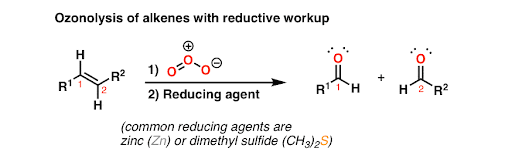
Ozonolysis of Alkenes
Ozonolysis can be worked and carried out on general alkenes such as ethene or pentene as well as cyclic alkenes such as cyclohexene. Ozonolysis of alkenes results in complete fragmentation.
The ozonolysis of alkenes includes the oxidation of alkenes using ozone, the reactive allotrope of oxygen, formation of intermediate compound ozonide, and finally the conversion to required carbonyl derivatives using the corresponding workup conditions.
Ozonolysis of Alkenes: Mechanism
[Click Here for Sample Questions]
The mechanism of ozonolysis of alkenes involves three main steps as follows:
Oxidation of Alkenes:
This oxidation or addition of alkene by ozone and the breaking of pi-bond in alkene leads to the formation of an intermediate structure called molozonide.
Formation of Ozonide:
The molozonide formed is unstable in nature and due to this, it continues reacting. Further reactions cause the intermediate to break apart resulting in the formation of a carbonyl molecule and carbonyl oxide molecule which further rearranges to form ozonide, a stable intermediate.
Formation of carbonyl compounds using workup conditions:
In the reductive workup conditions, the reagents used to treat the ozonide are mild reducing agents like zinc dust. Zinc dust is composed of zinc vapour and dimethyl sulphide. The reaction of ozonide with zinc dust results in the formation of two carbonyl compounds.
Reduction workup conditions are used in reducing ozonide to form aldehydes and ketones.In the case of oxidative workup conditions, the reagent used to treat the ozonide are oxidants such as hydrogen peroxide or potassium permanganate with hot acid. This type of workup condition is used to form carboxylic acids.

Carbonyl Reactivity
Ozonolysis of Alkynes
[Click Here for Sample Questions]
Alkynes are unsaturated hydrocarbons containing at least one carbon-carbon triple bond having a sigma and two pi-bonds between them. During ozonolysis, these pi-bonds of the carbon-carbon triple bonds are cleaved by the ozone and get replaced by a diketone group. So, an alkyne forms diketones and acid anhydrides upon ozonolysis, that is oxidation with ozone.
The acid anhydride formed may give rise to two carboxylic acids in the presence of water due to hydrolysis. Ozonolysis of alkynes always results in incomplete fragmentation, unlike alkanes.
No reducing agents are required to treat the ozonolysis of alkynes. It includes the oxidation of alkynes using ozone, the reactive allotrope of oxygen, formation of intermediate compound ozonide, and finally the conversion to required diketones or acid anhydrides using simple aqueous workup conditions.

Ozonolysis of Alkynes
Ozonolysis of Alkynes: Mechanism
[Click Here for Sample Questions]
Mechanism of ozonolysis of alkynes involves three main steps as follows:
Oxidation of Alkenes:
This oxidation or addition of alkyne by ozone and the breaking of pi-bonds in alkyne leads to the formation of an intermediate structure called molozonide.
Formation of Ozonide:
The molozonide formed is unstable in nature and due to this, it continues reacting. Further reactions cause the intermediate to break apart resulting in the breaking of carbon-carbon double bond in molozonide which further rearranges to form ozonide, a stable intermediate.
Formation of diketones and acid anhydrides using aqueous workup conditions:
In the case of aqueous workup conditions, zinc in the presence of water or zinc vapour is used to treat ozonide which further results in the formation of diketone or acid anhydrides. The acid anhydrides in the presence of water may undergo hydrolysis to form two carboxylic acids.
Ozone Cracking
[Click Here for Sample Questions]
Ozone cracking is the common term used to refer to the ozonolysis of elastomers. This ozonolysis of elastomers results in the formation of cracks in the elastomers due to the attack of ozone present in the atmosphere on them.
Elastomers are natural or synthetic polymers exhibiting elastic properties such as natural rubber, nitrile rubber, styrene-butadiene, ethylene-propylene rubber, polybutadiene. The ozonolysis or attack of ozone on these elastomers form cracks on them and may cause serious damages. Some examples of ozone cracking are the cracking of rubbers, tires, seals, fuel pipes, etc.

Cracked Tire Caused by Ozone Cracking
Ozone cracking causes serious damages such as fires and fuel leaking when ozone cracking happens on fuel pipes where it starts growing inwards from the exterior outer surface. Use of antiozonants before vulcanization of elastomers will prevent or delay ozone cracking and the damages caused to an extent. The cracking of tires due to ozonolysis is prevented nowadays using suitable antiozonants and hence preventing the serious expansion and blowouts that are caused by it.
Applications of Ozonolysis
[Click Here for Sample Questions]
The following are some of the different applications of ozonolysis:
- The ozonolysis reaction is highly useful in detecting the position of carbon-carbon double bonds in alkenes and carbon-carbon triple bonds in alkynes.
- It is used as a method for water purification and helps in the bleaching and disinfection of wastewater.
- It helps in the synthesis of organic compounds such as alcohols, aldehydes, carboxylic acids, and ketones.
Things to Remember
- Ozonolysis is the organic redox reaction in which the unsaturated hydrocarbons like alkenes, alkynes, or azo compounds are split or cleaved with the help of ozone.
- Ozonolysis of alkenes results in the formation of alcohols, aldehydes, ketones, or carboxylic acids. Its mechanisms include the oxidation of alkenes using ozone, formation of intermediate compound ozonide, and finally the conversion of required carbonyl derivatives using the corresponding workup conditions.
- Ozonolysis of alkynes include oxidation of alkynes using ozone, formation of intermediate compound ozonide.
- Ozonolysis of elastomers results in the forming of cracks in elastomers due to the attack of ozone present in the atmosphere on them and is known as ozone cracking.
- Use of antiozonants before vulcanization of elastomers will prevent or delay ozone cracking and the damages caused.
- Ozonolysis helps in determining the position of bonds (double bonds or triple bonds) in unsaturated compounds and the synthesis of organic compounds.
- Ozonolysis is also used in the treatment and purification of water.
Sample Questions
Ques. What is ozonolysis? (2 Marks)
Ans. Ozonolysis is the organic reaction that results in the cleavage of unsaturated hydrocarbons like alkenes, alkynes, or azo compounds using ozone. This method of division is a type of cycloaddition reaction that destroys or splits the pi-bond present in it. The final result of any ozonolysis depends on two factors, namely, the multiple bond type being oxidized during ozonolysis and the workup conditions.
Ques. What is ozone cracking? (2 Marks)
Ans. The ozonolysis or attack of ozone on elastomers such as natural rubber, nitrile rubber, styrene-butadiene, ethylene-propylene rubber, polybutadiene form cracks on them and may cause serious damages. Some examples of ozone cracking are the cracking of rubbers, tires, seals, fuel pipes, etc. The use of antiozonants before vulcanization of elastomers will prevent or delay ozone cracking and the damages.
Ques. What are the applications of ozonolysis? (3 Marks)
Ans. Some of the various applications of ozonolysis are as follows:
- The ozonolysis reaction is highly useful in detecting the position of carbon-carbon double bonds in alkenes and carbon-carbon triple bonds in alkynes.
- It is used as a method for water purification and helps in the bleaching and disinfection of wastewater.
- It helps in the synthesis of organic compounds such as alcohols, aldehydes, carboxylic acids, and ketones.
Ques. Explain the ozonolysis of alkynes. (3 Marks)
Ans. Its mechanisms include the oxidation of alkynes using ozone, formation of intermediate compound ozonide, and finally the conversion to required dicarbonyl derivatives using simple aqueous workup conditions. So, an alkyne forms diketones and acid anhydrides upon ozonolysis, that is oxidation with ozone.
No reagents are used and the aqueous workup condition used has zinc in the presence of water that is used to treat ozonide resulting in the formation of diketone or acid anhydrides. The acid anhydride formed may give rise to two carboxylic acids in the presence of water due to hydrolysis.
Ques. Explain the ozonolysis of propene. (3 Marks)
Ans. Propene is an alkene with three carbon atoms and a single double bond. On oxidation or addition of ozone molecule to propene results in the formation of an unstable intermediate, molozonide which on further addition and rearrangement, forms a stable intermediate called the ozonide.
The cleavage of the obtained ozonide is done using zinc dust (zinc in the presence of water) to the resultant smaller molecules under reduction workup conditions. The end products of ozonolysis of propene are two simpler aldehydes, ethanal and methanal.
Ques. Explain the mechanism for ozonolysis of alkenes. (4 Marks)
Ans. The mechanism of ozonolysis of alkenes involves three main steps as follows:
- Oxidation of Alkenes:
This oxidation of alkene by ozone and the breaking of pi-bond in alkene leads to the formation of an intermediate structure called molozonide.
- Formation of Ozonide:
The molozonide formed is unstable in nature and due to this, it continues reacting. Further reactions cause the intermediate to break apart resulting in the formation of a carbonyl molecule and carbonyl oxide molecule which further rearranges to form ozonide, a stable intermediate.
- Formation of carbonyl compounds using workup conditions:
In the reductive workup conditions, the reagents used to treat the ozonide are mild reducing agents like zinc dust. Zinc dust is composed of zinc vapour and dimethyl sulphide. The reaction of ozonide with zinc dust results in the formation of two carbonyl compounds. Reduction workup conditions are used in reducing ozonide to form aldehydes and ketones.
Ques. Differentiate between ozonolysis of alkenes and alkynes. (5 Marks)
Ans. The differences between ozonolysis of alkenes and alkynes are as follows:
| Ozonolysis of Alkenes | Ozonolysis of Alkynes |
|---|---|
| During ozonolysis, the single pi-bond present in the carbon-carbon double bonds is cleaved by the ozone and gets replaced by a carbonyl group. | During ozonolysis, the two pi-bonds of the carbon-carbon triple bonds are cleaved by the ozone and get replaced by a diketone group. |
| Complete fragmentation. | Incomplete fragmentation |
| Reduction workup is commonly done. Oxidation workup is also done | Only a simple aqueous workup is done. |
| The steps involved during its mechanism are oxidation of alkenes using ozone, formation of intermediate compound ozonide, and finally the conversion of required carbonyl derivatives using the corresponding workup conditions. | The steps involved during its mechanism are the oxidation of alkynes using ozone, formation of intermediate compound ozonide, and finally the conversion to required diketones or acid anhydrides using simple aqueous workup conditions. |
| The end products obtained are alcohols, aldehydes, ketones, or carboxylic acids. | The end products obtained are diketones or acid anhydrides. Carboxylic acids are only formed when acid anhydrides are hydrolyzed. |
| Used as a method for detecting the position of double bonds in alkenes. | Used as a method for detecting the position of triple bonds in alkynes. |



Comments