



Education Journalist | Study Abroad Lead
Sodium Bromide, symbolized as NaBr, is an inorganic salt which is quite useful in chemistry. Its appearance does resemble the common salt (sodium chloride), as it's white-coloured and a crystalline solid too. Sodium Bromide is highly volatile which makes it extremely unstable in nature. It's quite useful because salt has numerous applications in chemistry and in drug companies. It is quite useful, however, it can cause health problems too, like skin rashes and neurological problems. Now let's dive a little deeper and discuss the physical and chemical properties of sodium bromide alongside its uses and the dangers.
| Table of Content |
Keyterms: Salt, Inorganic salt, Sodium Chloride, Crystalline solid, Crystal, Sulphur Dioxide, Crystalline powder, Halides, Chlorides, Iodides
What is Sodium Bromide?
Sodium bromide is a white crystalline powder, which is salty in taste and slightly bitter in its dry form. The chemical formula of sodium bromide is NaBr. It is just a white crystal with a sulphur dioxide odour.
Sodium Bromide
As it has a solubility factor in its properties it isn't found in rocks or any naturally occurring minerals. It is extracted while drawing water from the ocean and it is found with chemical compounds like halides, chlorides and iodides. They are removed from the compound to complete the extraction process. The anticonvulsant effects of bromide salts can be found in other salts made from seawater, and it's the most common salt of hydrobromic acid.
Read more: Sulphuric Acid
Structure of NaBr
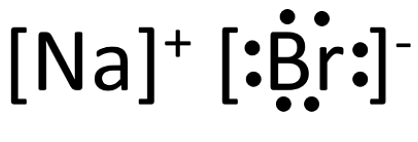
As sodium is a highly reactive metal, it is a positively charged radical that is extremely unstable. It's even preserved in kerosene oil to protect it from its reactivity. As a result, this element forms an ionic bond with the negatively charged bromide radical to produce the sodium bromide molecule. This ionic connection is generally stable. Sodium bromide is the chemical name for NaBr compound formed. Because the positive and negative radicals form a polarity where electrons are shared on the more electronegative radical, the bromide in sodium bromide, the structure of sodium bromide is linear and polar.

Structure of Sodium Bromide
Physical Properties of Sodium Bromide
The physical properties of Sodium Bromide are:
- The salt has no odour.
- It appears in a white crystalline solid structure.
- Its covalently-bonded unit is 2.
- The heat capacity of the salt is 298.15 K, J/mol·K.
- The salt is readily soluble in water.

Physical appearance of sodium bromide
Chemical Properties of Sodium Bromide
The chemical properties of sodium bromide (NaBr) are:
- The reaction of Sodium bromide and sulphuric acid:
NaBr + H2SO4 → NaHSO4 + HBr
The sulphuric acid targets the more electronegative portion of the sodium bromide ion in this case, and the hydrogen atom settles in. As a result, one hydrogen atom from sulphuric acid attaches to the sodium ion, lowering the sodium ion's oxidation state. We can plainly assume that a redox reaction is taking place, which is one of sodium bromide's chemical features, which is often used in its applications.
- The reaction of Sodium bromide and silver nitrate solution
AgNO3 + NaBr → AgBr + NaNO3
The silver radical in a solution becomes sufficiently reactive that it displaces the sodium ion and returns to its original location. Because sodium is a reactive metal ion, it forms a connection with the nitrate radical to form the sodium nitrate molecule. As the oxidation number of sodium changes, once again a redox process occurs.
Read more: Sulphur Dioxide
Uses of Sodium Bromide
There are various applications of sodium bromide such as:
- Like other bromides, it's used as a sedative.
- Sodium bromide is mostly consumed in the oil and gas drilling industry.
- Because bromine is liberated, it has germicidal characteristics.
- It's used in medicinal preparations as an antibacterial, detergent, and reagent.
Health Issues Caused By Sodium Bromide
- Bromide poisoning can produce skin rashes, and excessive blood levels of bromides can induce major neurologic and psychological problems.
- Patients on low-salt diets are at a high risk of poisoning.
- Ingestion of sodium bromide is somewhat hazardous and can harm the gastrointestinal and nervous systems.
Things to Remember
- Sodium bromide is a white crystalline powder, which is salty in taste and slightly bitter in its dry form.
- As sodium is a highly reactive metal, it is a positively charged radical that is extremely unstable.
- It forms an ionic bond with the negatively charged bromide radical to produce the sodium bromide molecule.
- This ionic connection is generally stable.
- The salt has no odour and is readily soluble in water.
- Ingestion of sodium bromide is somewhat hazardous and can harm the gastrointestinal and nervous systems.
Sample Questions
Ques. Is sodium bromide ionic or covalently bound? (2 marks)
Ans. The chemical sodium bromide is ionically bound. As bromine is highly electronegative, the electromagnetic force between the Na and the Br atoms is strong enough to transfer an electron from the sodium atom to the bromine atom. As a result, bromine is negatively charged while sodium is positively charged.
Ques. Is sodium bromide a liquid, a gas, or a solid? (2 marks)
Ans. Sodium bromide is a solid that is white in colour. This dissolves into mud very rapidly. When the salt is heated to a certain temperature in the air, it releases bromine gas. This also reacts with chlorine to make liquid bromine.
Ques. Sodium bromide is what type of salt? (2 marks)
Ans. Sodium bromide is a white, crystal-like substance. It's a mixture of sodium and bromide (a charged bromine atom). Its look is remarkably similar to that of ordinary table salt.
Ques. What are the uses of sodium bromide? (5 marks)
Ans. Sodium bromide is used:
- It is used as a sedative.
- Sodium bromide is mostly consumed in the oil and gas drilling industry.
- It also has germicidal characteristics.
- Sodium Bromide is used in medicinal preparations as an antibacterial, detergent, and reagent.
Ques. What are the uses of NaBr for pets? (2 marks)
Ans. It's interesting to note that, in addition to humans, sodium bromide is widely used for pets such as dogs and cats. Veterinary doctors use sodium bromide to treat pets on a regular basis.
Read more: Ionic Radius
Ques. What happens when sodium bromide is heated? (2 marks)
Ans. When sodium bromide is heated to decomposition, the bonds break and bromine is set free in the form of bromide gas whereas sodium reacts with oxygen to form sodium oxide gas, to include both of the gases are hazardous to the environment.
Ques. What is NaBr's oxidation state? (2 marks)
Ans. Na will share 1 electron and have an oxidation state of 1 because it is in column 1 of the periodic table. Br will share 7 electrons and have an oxidation state of 7 because it is in column 7 of the periodic table.
Read more: Periodic Classification of Elements
Ques. When the reaction of chlorine and sodium bromide occurs, the solution's colour turns brown. Explain. (3 marks)
Ans. When chlorine (as a gas or dissolved in water) is added to sodium bromide solution, the chlorine takes the place of the bromine. As chlorine is more reactive than bromine, bromine is displaced by chlorine from sodium bromide. The solution turns brown. This brown colour is the displaced bromine. The chlorine forms sodium chloride.
Ques. Which test identifies NaBr? (2 marks)
Ans. To verify the presence of NaBr, add conc. sulfuric acid (H2SO4) to aqueous sodium bromide (NaBr) then heat the solution. A brown colour vapour will be produced, which is bromine gas as it is displaced and turned free.



Comments