



Content Curator
Fuel is any substance that can be transformed into usable work after undergoing chemical or nuclear changes to produce energy. A good fuel is one that is easily accessible. It is inexpensive and burns at a moderate rate in the air. It generates a significant quantity of heat and doesn't leave any undesirable substances behind. Fuel plays an integral role in a common man’s life in the form of a substance that is burned to provide nuclear energy, heat or power. Coal, wood, oil, or gas are some examples of fuel and Methanol, Gasoline, Diesel, Propane, Natural gas, Hydrogen are some types of fuel. Let’s discuss the topic in depth along with some important questions.
Read More: Properties of Matter
| Table of Contents |
Keyterms: Fuel, Coal, Methanol, Gasoline, Diesel, Propane, Natural gas, Hydrogen, Wood, LPG, Kerosene, Petrol, Diesel, Natural gas, Biogas
What is a Fuel?
Fuels are substances that are burned to provide heat energy. For example, wood, coal, LPG, kerosene, petrol, diesel, natural gas, and biogas, etc. Fuels can be generally classified into Renewable Sources of Energy and Non-Renewable Sources of Energy.
Renewable Sources of Energy
Renewable sources of energy are those that can be recovered from various biogeochemical cycles that occur in nature after they have been utilized. Running water energy is an example of a renewable source of energy because it can be renewed through the rain. Solar energy is another example. We should endeavor to make the most of renewable energy resources for long-term development.
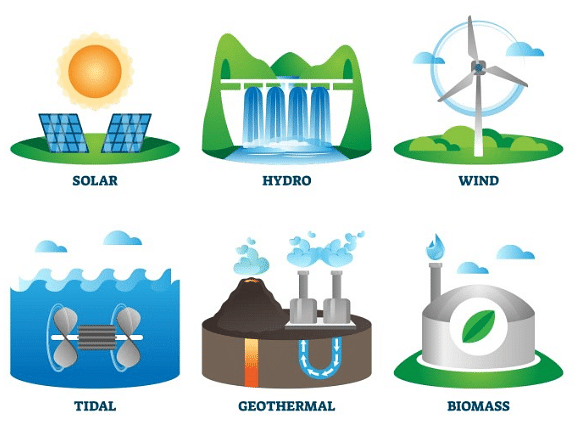
Renewable Sources of Energy
Non-Renewable Sources of Energy
Non-renewable energy resources are sources of energy that, once exhausted, cannot be renewed by any biogeochemical cycle. Fossil fuels, for example, require millions of years to form and cannot be regenerated for our use, hence they are classified as non-renewable energy resources. Nonrenewable resources must be handled with caution, and all available potential energy sources must be considered before they are used.

Non-Renewable Sources of Energy
Properties of Ideal Fuel
Some properties of Ideal Fuel are:
- An ideal fuel is one that is easily accessible
- A good fuel is one that is inexpensive.
- An ideal fuel burns easily and at a moderate rate in the air.
- It generates a lot of energy.
- It should not leave behind any potentially dangerous compounds.
- It should have no negative impact on the environment.
Types of Fuels
Fuels can be generally classified into two factors:
- On the basis of their fuels state:
- Solid Fuels
- Liquid Fuels
- Gaseous Fuels
- On the basis of their occurrence:
- Natural Fuels
- Artificial Fuels
Solid Fuels
Solid Fuels are fuels that exist in their solid state at room temperature. They were the first type of fuel known to man, consisting primarily of wood used to make fire. Coal was another of man's most impactful fuels since it paved the path for the industrial revolution by powering everything from furnaces to steam engines.

Solid Fuels
Example:
- Wood
- Coal
- Biomass
- Petroleum
- Nuclear fuel
- Coke
- Cow dung cake
- Paraffin wax
- Uranium
Advantages:
- Easier to transport and store.
- Cost of manufacturing is low.
- Temperature of the ignition is moderate.
Disadvantage:
- A significant amount of energy is squandered.
- Handling is expensive, and managing it is difficult.
- The amount of ash in the mixture is high, and it burns with clinker production.
Liquid Fuel
Liquid fuels are fuels that exist solely in a liquid condition throughout their primary stage.

Liquid fuel
Example:
| Petroleum | Gasoline, Diesel, Kerosene |
| Coal | Coal tar |
| Biomass | Biodiesel obtained from Jatropha tree |
Advantages:
- Increased calorific value per unit mass.
- Burn without ash, clinkers, or other debris.
- It's a lot easier to keep the flames under control.
- Pipes make transportation easier, and they may be stored forever without losing quality.
- Energy loss is smaller in comparison.
- Combustion space in the furnace is reduced.
Disadvantages:
- Liquid fuel is substantially more expensive than solid fuel.
- Storage methods are more expensive.
- There is a higher risk of fire.
- For more efficient combustion, special burning apparatus is required.
Gaseous Fuels
Gaseous Fuels are fuels that exist only in a gaseous state throughout their primary stage. The majority of gaseous fuels are made up of hydrocarbons, carbon monoxide, hydrogen, or a combination of the three.
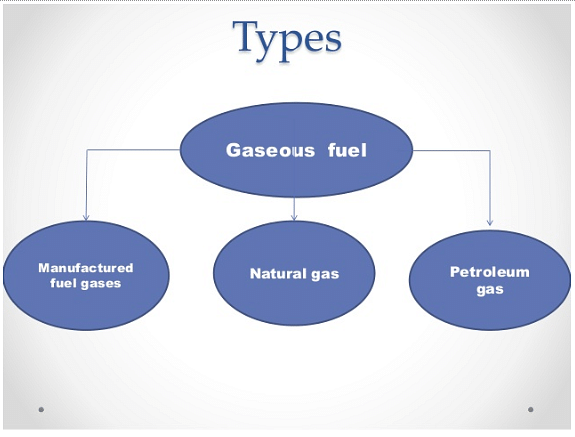
Gaseous Fuels
Example:
- Water Gas
- Producer Gas
- Coal Gas
- Natural gas
- Liquified petroleum gas (LPG)
- Compressed natural gas (CNG)
- Biogas or Gobar Gas
Advantages:
- Transportation via pipes is simple.
- It is really simple to start a fire.
- They have a higher heat content.
- After use, clean thoroughly.
- No specific burner technology is required.
Disadvantages:
- Large storage tanks are necessary.
- Because they are highly combustible, the risk of a fire is exceedingly great, and extra safety precautions must be taken.
The fuels are labeled primary and secondary fuels based the sources from where they are obtained.
What are Fossil Fuels?
Fossil fuels are the decomposed remains of plants and animals that have been exposed to decades of pressure and heat beneath the earth's crust. Hydrocarbons are the most common component of fossil fuels. They are both practical and useful. They provide the necessary calorific value to meet our requirements. They are a non-renewable source of energy, despite the fact that they are plentiful right now. Fossil fuel combustion accounts for a significant portion of global pollution.

Fossil Fuels
Types of Fossil Fuels
There are three types of fossil fuels.
- Coal
- Oil
- Natural Gas
Nuclear Fuel
Nuclear fuel is any material that is used to produce nuclear energy. In terms of physics, any material can be made to emit nuclear energy. However, we choose materials that do not require extreme limits to release nuclear energy, based on their practicality and feasibility.
Heavy fissile materials capable of nuclear fission are found in most nuclear fuels. When these fuels are attacked by neutrons, they are capable of emitting neutrons as they disintegrate. This enables a self-sustaining chain reaction in a nuclear reactor to release energy at a controlled rate or at a very quick uncontrolled rate in a nuclear weapon.
Uranium-235 (235U) and Plutonium-239 (239Pu) are the most common examples of nuclear fuel.
Read More: Periodic Classification of Elements
Things to Remember
- An ideal fuel is one that is inexpensive, readily available, flammable, and easy to transport. It has a high-calorie content. It does not emit any harmful gases or residues into the atmosphere.
- The efficiency and cost of various fuels vary.
- Fuel efficiency is measured in terms of calorific value, which is measured in kilojoules per kilogram.
- Carbon particles in the air that have not been burned are harmful pollutants that cause respiratory issues.
- Carbon monoxide gas is produced when a fuel is not completely burned.
- Global warming has been related to an increase in the concentration of carbon dioxide in the atmosphere.
Sample Questions
Ques: What types of fuels are utilized to power automobiles? (1 mark)
(a) Wood
(b) Coal
(c) Diesel
(d) Charcoal
Ans. (c) Diesel
Ques: Give some examples of renewable energy sources. (1 mark)
Ans. Water, wind, and sun are the three options.
Ques: Give some fossil fuel examples. (1 mark)
Ans. Coal, petroleum, and natural gas are the three options.
Ques: List the elements that can be found in coal. (1 mark)
Ans. Carbon, oxygen, and Sulphur are the three elements.
Ques: What do you understand about fossil fuels? (3 marks)
Ans. Decomposed remains of plants and animals that have been exposed to decades of pressure and heat beneath the earth's crust are known as fossil fuels. Hydrocarbons are the most common component of fossil fuels. They are both practical and useful. They provide the necessary calorific value to meet our requirements. They are a non-renewable source of energy, despite the fact that they are plentiful right now. Fossil fuel combustion accounts for a significant portion of global pollution.
Ques: What are some advantages of Solid fuel? (3 marks)
Ans: The Fuels that exist in their solid state at room temperature are known as solid fuels. These were the oldest forms of fuels.Some advantages of solid fuels are that they are easier to transport and store. The cost of manufacturing these fuels is low and the temperature of the ignition is always moderate.
Ques: What is primary fuel? (2 marks)
Ans: Fuels found in nature and can be extracted, captured, cleaned, or graded without any sort of energy conversion or transformation process are known as the primary fuels. Primary fuels such as coal should be distinguished from primary energy flows like wind and solar power.
Ques: What is a secondary fuel? (2 marks)
Ans: Fuels derived from some primary fuel or fuels obtained through any chemical or physical processes are called secondary fuels. Secondary fuels are not found from a natural resource. For example Gasoline is a secondary fuel which is obtained from oil through the distillation process.
Ques: Why is burning fossil fuels considered bad? (2 marks)
Ans: Mankind has been using fossil fuels since ages but it is severely damaging our environment. Fossil fuels cause local pollution where they are produced and used, and their ongoing use is causing lasting harm to the climate of our entire planet.
Read More:



Comments