

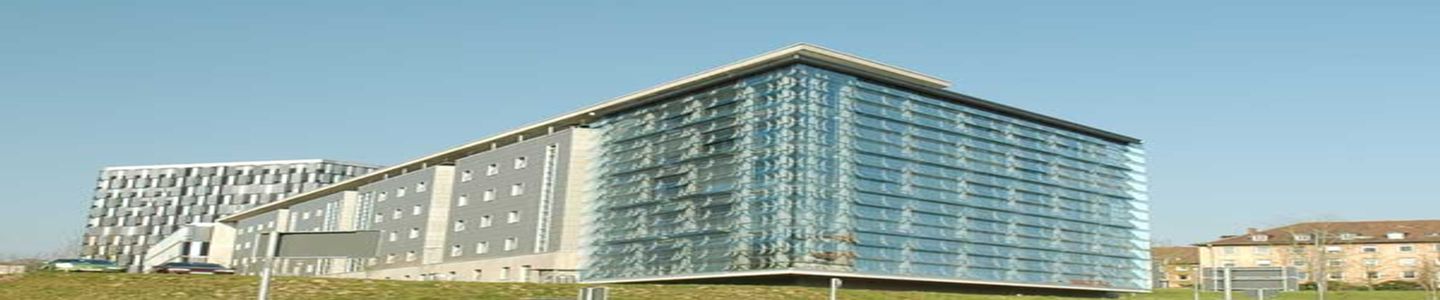

Saarland University of Applied Sciences Programs: Tuition fees, Ranking, Scholarships, Application Deadlines & Entry Requirements


Saarland University of Applied Sciences fees for Indian students are among the most affordable in Europe: €0 tuition for both Bachelor and Master programmes, with only a mandatory €364 (₹33,670) semester contribution. Popular English-taught choices are Mechanical Engineering B.Eng., International Business B.A., and International Management M.A.
Your realistic entry is the Summer Semester 2027 intake (April 2027 start); the Winter Semester 2027 intake (October 2027) follows. The Winter 2026 extended deadline of 30 September 2026 is technically open, but the combined visa, uni-assist, and APS certificate timeline makes it unworkable for a fresh applicant starting from India.
- Tuition, Bachelor (all programmes): €0
- Tuition, Master (all programmes): €0
- Semester contribution: €364 (₹33,670), includes semester ticket for public transport
- uni-assist application fee, first programme: €75 (₹6,938)
- uni-assist application fee, each additional programme: €30 (₹2,775)
A full 2-year Master at Saarland University of Applied Sciences costs Indian students roughly ₹21 Lakhs all-in (living included); a 3-year Bachelor lands near ₹32 Lakhs. Exchange rate: 1 EUR = ₹92.50, sourced from xe.com on 28 July 2026.
Summer 2027 Intake: Planning Cycle for Indian Students
Intake: Summer 2027 (April start) is the realistic entry: restricted-programme deadline is 15 January 2027; extended open-programme deadline is 31 March 2027. Winter 2026 is technically open until 30 September 2026 but not workable given the APS certificate (4-6 weeks) plus uni-assist processing (4-6 weeks) plus visa (6-12 weeks).
Fee update: The Summer 2027 semester is billed at the 2026/27 rate. The last published contribution is €364 (₹33,670) for 2025/26; expect a €5-10 adjustment for the new academic year, not a material change to the total budget.
When to pay: Semester contribution is due at enrolment, once the visa is stamped and you register in Saarbrücken. Full instalments, payment methods, and step-by-step guide are covered in the Semester Fee Deposit and Payment Options section.
Scholarships: DAAD Study Scholarships for the 2027/28 academic year open October 2026 and close around 30 November 2026. KC Mahindra and Narotam Sekhsaria open in December 2026 for the following academic year. Deutschlandstipendium at htw saar opens each summer for the following winter semester.
Compare application timelines and document checklists in our Saarland University of Applied Sciences Overview guide.
Table of Contents
- Saarland University of Applied Sciences Tuition Fees and Semester Contribution
- Saarland University of Applied Sciences Fee Trend by Year
- Saarland University of Applied Sciences Cost of Living in Saarbrücken for Indian Students
- Total Cost of Studying at Saarland University of Applied Sciences
- Saarland University of Applied Sciences Scholarships for Indian Students
- Saarland University of Applied Sciences Semester Fee Deposit and Payment Options
- Hidden Costs of Studying at Saarland University of Applied Sciences
- Saarland University of Applied Sciences Fee Saving Strategies for Indian Students
- Is Saarland University of Applied Sciences Worth the Cost for Indian Students
- Saarland University of Applied Sciences Fees FAQs
Saarland University of Applied Sciences Tuition Fees and Semester Contribution
Tuition at Saarland University of Applied Sciences is €0 for every Bachelor and Master programme, including all international students. What you pay each semester is the mandatory €364 (₹33,670) semester contribution, which bundles the student union fee, administrative costs, and a semester ticket valid on public transport across the Saarland region.
Bachelor Fees at Saarland University of Applied Sciences: Winter 2026 and Summer 2027 Intakes
Bachelor programmes at htw saar charge no tuition; the only recurring cost is the semester contribution paid twice per year.
| Programme | Annual Tuition (EUR) | Annual Semester Contribution (EUR) | Annual Cost (INR) |
|---|---|---|---|
| Mechanical Engineering B.Eng. (English-taught) | €0 | €728 | ₹67,340 |
| International Business B.A. (English-taught) | €0 | €728 | ₹67,340 |
| Computer Science B.Sc. | €0 | €728 | ₹67,340 |
| Electrical Engineering B.Eng. | €0 | €728 | ₹67,340 |
| Civil Engineering B.Eng. | €0 | €728 | ₹67,340 |
Source: Saarland University of Applied Sciences, Semester Fee page and Bachelor application page.
Master Fees at Saarland University of Applied Sciences: Summer 2027 and Winter 2027 Intakes
Master programmes follow the same €0 tuition model. International Management M.A. is the most popular English-taught pick among Indian students; it does require German B1 alongside English C1.
| Programme | Annual Tuition (EUR) | Annual Semester Contribution (EUR) | Annual Cost (INR) |
|---|---|---|---|
| International Management M.A. (English + German B1) | €0 | €728 | ₹67,340 |
| Mechatronics and Systems Engineering M.Eng. | €0 | €728 | ₹67,340 |
| Electrical Engineering M.Eng. | €0 | €728 | ₹67,340 |
| Business Administration M.A. | €0 | €728 | ₹67,340 |
| Computer Science M.Sc. | €0 | €728 | ₹67,340 |
Source: Saarland University of Applied Sciences, Master application page.
Indian applicants also carry uni-assist processing fees, which are separate from anything the university itself charges. The first programme submitted through uni-assist costs €75 (₹6,938); each additional programme in the same application cycle costs €30 (₹2,775).
Note: A €0 tuition line does not mean a zero-cost degree. The blocked account requirement of €11,904 (₹11.01 Lakhs) is what the German embassy will actually check on your student visa file, and that is the number that decides whether you can enter the country for the Summer 2027 intake.
Saarland University of Applied Sciences Fee Trend by Year
Tuition has been held at €0 for over a decade at htw saar. The semester contribution is the only figure that moves, and it has climbed roughly €3-8 per semester per year as the student union and transport ticket costs are adjusted.
| Academic Year | Tuition (EUR) | Semester Contribution (EUR) | Annual Total (INR) | YoY Change |
|---|---|---|---|---|
| 2022/23 | €0 | €342 | ₹63,270 | Baseline |
| 2023/24 | €0 | €349 | ₹64,565 | +2.0% |
| 2024/25 | €0 | €356 | ₹65,860 | +2.0% |
| 2025/26 | €0 | €364 | ₹67,340 | +2.2% |
| 2026/27 (projected) | €0 | ~€372 | ~₹68,820 | +2.2% |
Source: Saarland University of Applied Sciences, Semester Fee page. 2026/27 figure is projected from the 3-year trailing trend and will be published by the university in late 2026.
Key Insight: The tuition line at Saarland University of Applied Sciences will not change for the Summer 2027 intake or the Winter 2027 intake, because Saarland state law keeps all public universities free. Your real inflation exposure is the blocked account requirement, which was raised from €11,208 to €11,904 in September 2024, roughly ₹65,000 extra to park before you fly.
Saarland University of Applied Sciences Cost of Living in Saarbrücken for Indian Students
Saarbrücken is one of the cheaper German university cities, materially below Munich, Frankfurt, or Hamburg. A realistic monthly budget for an Indian student sits between €800 and €950 (₹74,000 to ₹87,900), and the €991 monthly figure derived from the blocked account (€11,904 divided by 12) is a workable planning number.
| Expense | Monthly (EUR) | Monthly (INR) | Annual (INR) | Notes for Indian Students |
|---|---|---|---|---|
| Rent (student hall / WG shared flat) | €300-450 | ₹27,750-41,625 | ₹3.33-4.99 Lakhs | Studentenwerk hall is cheapest; apply months in advance |
| Food (self-cooked + Mensa) | €180-220 | ₹16,650-20,350 | ₹1.99-2.44 Lakhs | Mensa lunch is €3-5; Indian groceries at Asia Markt |
| Public health insurance | €120-135 | ₹11,100-12,488 | ₹1.33-1.50 Lakhs | Mandatory for enrolment; TK, AOK, or Barmer |
| Utilities (electricity, internet) | €60-90 | ₹5,550-8,325 | ₹66,600-99,900 | Usually bundled into WG shared rent |
| Mobile, personal, leisure | €100-150 | ₹9,250-13,875 | ₹1.11-1.67 Lakhs | Prepaid SIM €10, gym €25, occasional trips |
| Total | €760-1,045 | ₹70,300-96,663 | ₹8.44-11.60 Lakhs | Semester ticket already in €364 contribution |
Sources: Numbeo Saarbrücken cost of living, cross-checked with the htw saar incoming students page and the German Federal Foreign Office blocked-account minimum.
Note: The semester contribution already covers a Saarland-wide public transport ticket, which normally costs €40-60 per month elsewhere in Germany. That single embedded benefit is worth €500 (₹46,250) per year and quietly makes the €364 contribution the best-value fee line at any German public university.
Rent behaves as the swing factor. A room in a Studentenwerk hall drops the monthly total to €760, while a private one-bedroom in the city centre pushes it past €1,050. The €991 figure the German embassy uses as the visa benchmark sits neatly in the middle of that band, so a Studentenwerk placement leaves you actual savings each month rather than a paper break-even.
Currency Tip: The €11,904 blocked account must be transferred in EUR before your visa interview. Use a specialised remitter like Fintiba, Expatrio, or ICICI Bank’s Money2World, not a plain SWIFT wire, this saves 1.5-3% on the transfer (roughly ₹16,500 to ₹33,000 on the full amount).
Total Cost of Studying at Saarland University of Applied Sciences
Because tuition is €0, the total cost of a degree at Saarland University of Applied Sciences is almost entirely a living-cost and one-time-setup number. A 2-year Master lands around ₹21 Lakhs and a 3-year Bachelor lands around ₹32 Lakhs.
| Scenario | Tuition | Semester Contribution (Year 1) | Living (Year 1) | One-time Setup (Year 1) | Year 1 Total (INR) |
|---|---|---|---|---|---|
| Bachelor, English-taught (budget) | €0 | €728 (₹67,340) | €9,120 (₹8.44 Lakhs) | €1,200 (₹1.11 Lakhs) | ₹10.22 Lakhs |
| Bachelor, English-taught (comfort) | €0 | €728 (₹67,340) | €11,400 (₹10.55 Lakhs) | €1,200 (₹1.11 Lakhs) | ₹12.33 Lakhs |
| Master, International Management (budget) | €0 | €728 (₹67,340) | €9,120 (₹8.44 Lakhs) | €1,200 (₹1.11 Lakhs) | ₹10.22 Lakhs |
| Master, International Management (comfort) | €0 | €728 (₹67,340) | €11,400 (₹10.55 Lakhs) | €1,200 (₹1.11 Lakhs) | ₹12.33 Lakhs |
One-time setup covers visa fee, APS certificate, uni-assist processing, flight, initial deposits. Living is on a 12-month basis; students who go home for summer holidays can trim ₹1-1.5 Lakhs off Year 1.
Full-programme totals stack the recurring cost across each subsequent year, with the one-time setup only in Year 1. A 2-year Master runs ₹19-22 Lakhs total; a 3-year Bachelor runs ₹28-33 Lakhs total. If you take a ₹15 Lakh education loan to fund the balance beyond family contribution, the EMI on a 10-year, 10.5% loan is roughly ₹20,100 per month, well inside a fresher’s German post-study salary of €3,500-4,500 per month.
Key Insight: The controllable saving at htw saar is not the fee, it is the housing choice. Locking a Studentenwerk hall room for the Summer 2027 intake before end-February 2027 saves you ₹1.5-2 Lakhs per year versus a private studio, the single largest lever your budget has. Apply the moment your admission letter lands.
Saarland University of Applied Sciences Scholarships for Indian Students
Saarland University of Applied Sciences does not run large in-house merit scholarships; because tuition is €0, the funding conversation moves to living-cost stipends from DAAD, the Deutschlandstipendium at htw saar, and Indian foundations. Together these can cover €300 to €934 per month, materially offsetting the €991 living-cost benchmark.
Saarland University of Applied Sciences Institutional Scholarships
| Scholarship | Amount | Eligibility | Selection |
|---|---|---|---|
| Deutschlandstipendium at htw saar | €300/month (₹27,750) for 2 semesters | Enrolled students, merit and social criteria | Application via university, opens each summer for winter |
| STIBET I (DAAD via htw saar) | €300-500/month (₹27,750-46,250), short-term | Enrolled international students in financial need | Internal application after enrolment |
| Graduation Support (DAAD-STIBET) | One-time €500-1,500 (₹46,250-1.39 Lakhs) | Final-year international students | Nominated by faculty |
Source: DAAD-STIBET programme lines cascade to htw saar’s international office; the Deutschlandstipendium is federally co-funded at all participating German universities including htw saar.
External Scholarships Open to Indian Students Attending htw saar
These four are the mainstream Indian-applicable options for a German degree; DAAD is the flagship, and the three Indian foundations are structured as interest-free loans or gift-loans that require repayment after employment.
| Scholarship | Amount | Eligibility | Cycle 2027 Deadline |
|---|---|---|---|
| DAAD Study Scholarships for Graduates | €934/month (₹86,395) plus insurance and travel | Master applicants with strong academic record | ~30 November 2026 |
| KC Mahindra Scholarship for Postgraduate Studies Abroad | Up to ₹10 Lakhs, interest-free | Indian PG applicants with admit | March 2027 |
| Narotam Sekhsaria Foundation Scholarship | Up to ₹20 Lakhs, interest-free | PG applicants, entrance test + interview | January 2027 |
| Aga Khan Foundation ISP | 50% grant, 50% loan, up to ₹20 Lakhs | PG applicants with need + merit | March 2027 |
| J.N. Tata Endowment Loan Scholarship | Gift loan up to ₹10 Lakhs | Indian graduates going abroad | March-April 2027 |
Sources: DAAD India country page, KC Mahindra Education Trust, Narotam Sekhsaria Foundation, Aga Khan Foundation, J.N. Tata Endowment.
Tip for Indian Students: For the Summer 2027 or Winter 2027 intake, the DAAD Study Scholarship is your single highest-value target because it independently covers €934 per month, roughly the full Saarbrücken living cost. Submit the DAAD application by 30 November 2026 in parallel with your uni-assist application, do not wait for the admit letter.
Saarland University of Applied Sciences Semester Fee Deposit and Payment Options
There is no admission deposit at Saarland University of Applied Sciences because tuition is €0. What you pay to activate enrolment is the €364 (₹33,670) semester contribution, which is billed each semester and must be settled before the enrolment deadline printed on your admission letter.
Methods of Payment for Saarland University of Applied Sciences Semester Fee
- SEPA bank transfer from a German account: the default once you land, open at Sparkasse, Deutsche Bank, or an online bank like N26 or Wise
- International SWIFT transfer: allowed before you arrive; use IBAN and BIC from the admission letter
- Forex-optimised remitters: Fintiba, Expatrio, Wise, or ICICI Money2World, saves 1.5-3% versus a plain SWIFT wire
- Education loan disbursement: Indian lenders wire directly to htw saar’s account against the admission letter
Steps to Pay the Semester Fee at Saarland University of Applied Sciences for International Students
- Accept the admission offer via the SIM portal, sim.htwsaar.de/bewerbung
- Download the enrolment invoice showing the €364 semester contribution, IBAN, and matriculation reference
- Transfer the exact amount using your SWIFT wire, forex remitter, or education-loan disbursement
- Send the payment proof to htw saar’s registration office within the enrolment window
- Receive your matriculation number and student card once the payment clears, typically 5-10 working days
- Keep every payment receipt in a single folder for future visa extensions and residence-permit renewals
For the Summer 2027 intake, expect enrolment to open in February 2027 with a payment window running through early April 2027. The semester contribution repeats each subsequent semester on the same mechanism; there is no separate application deposit and no full-payment discount because the amount is already flat.
Source: Saarland University of Applied Sciences, Semester Fee for Incoming Students.
Tip for Indian Students: International SWIFT transfers from India to Germany take 3-5 working days and eat a €25-40 charge on top of forex spread. For the Summer 2027 intake, initiate the €364 transfer at least 10 working days before the enrolment deadline on your letter, so a delayed reconciliation does not push your matriculation past the class-start date.
Hidden Costs of Studying at Saarland University of Applied Sciences
The invisible line items on a German-university budget outweigh the tuition itself. Budget for these before you assume a €0-tuition degree is a zero-cost degree.
- Blocked account (Sperrkonto): €11,904 (₹11.01 Lakhs) parked for the visa. This is not a fee; it is refunded to you monthly as €992 living allowance, but you must fund it upfront
- APS certificate (Academic Evaluation Centre): approximately ₹18,000, mandatory for Indian applicants, takes 3-4 weeks
- uni-assist processing: €75 (₹6,938) first programme + €30 (₹2,775) per additional programme, non-refundable if rejected
- German National Visa fee: €75 (₹6,938) at the VFS Global centre in India
- Health insurance registration: €120-135/month (₹11,100-12,488), mandatory before enrolment, cannot be waived
- Accommodation deposit: 2-3 months’ rent, roughly €700-1,200 (₹64,750-1.11 Lakhs), refundable at move-out
- City registration (Anmeldung) and residence permit: €100-110 (₹9,250-10,175) in the first weeks after arrival
- German language courses: if your degree needs German B1, add €500-1,500 (₹46,250-1.39 Lakhs) for a semester of Goethe-Institut-equivalent classes
Budget approximately ₹13-14 Lakhs for first-year hidden costs, of which the blocked account is by far the largest single line at ₹11 Lakhs. All other items together sum to ₹2-3 Lakhs.
Note: The one line families most often forget is the Deutsche Rentenversicherung pension contribution, deducted automatically once you start a mini-job or Werkstudent role. It runs roughly 9.3% of gross pay and, unlike Indian PF, cannot be waived while you are enrolled. Factor this into any part-time-income assumption.
Saarland University of Applied Sciences Fee Saving Strategies for Indian Students
The most urgent lever for the Summer 2027 intake is locking a Studentenwerk hall room before end-February 2027, which alone saves ₹1.5-2 Lakhs a year versus private housing. Everything else stacks on top of that base decision.
- Studentenwerk housing: apply on Studentenwerk Saarland the moment your admit lands; halls run €280-380 versus €500-700 for private studios
- Werkstudent job (up to 20 hours/week during semester): German law permits international students to earn €520-1,000/month (₹48,100-92,500) which offsets your monthly living cost outright
- Public health insurance over private: TK, AOK, or Barmer at €120/month (₹11,100) versus €200+ for private, and cannot be switched back once you leave public cover
- Section 80E tax deduction on education loan interest: claimable in India for up to 8 years on the full interest paid, useful even on a small ₹15 Lakh loan
- Post-study Job Seeker Visa (18 months): Germany grants an 18-month residence permit after graduation to look for work related to your degree, one of the longest post-study windows in Europe
- Mensa lunches: €3-5 subsidised meals versus €10-12 at restaurants; over an academic year this saves €800-1,000 (₹74,000-92,500)
Tip for Indian Students: For the Summer 2027 intake, the single highest-value saving lever is combining a Werkstudent role (₹48,100-92,500/month) with a Studentenwerk hall room. Together these can cut your annual out-of-pocket living cost from ₹10 Lakhs to under ₹4 Lakhs, meaning most of your blocked-account balance rolls forward as savings rather than being spent.
Is Saarland University of Applied Sciences Worth the Cost for Indian Students
For an Indian student weighing a full 2-year Master at ₹19-22 Lakhs total against a comparable UK or US Master at ₹40-70 Lakhs, Saarland University of Applied Sciences is one of the strongest value propositions in Europe, particularly in Mechanical Engineering, Mechatronics, and Business Administration where the Saarland industrial corridor (Bosch, ZF Friedrichshafen, Ford, Michelin) is the immediate employer pool.
The return side is anchored by Germany’s 18-month post-study Job Seeker Visa, granted automatically after graduation, which is materially longer than the UK’s 2-year Graduate Route in practical job-search terms because Germany also permits the visa to convert directly to an EU Blue Card once you sign an offer at or above €48,300/year (2026 threshold). A fresher salary for a Mechanical or IT M.Eng./M.Sc. graduate in the Saarland region sits at €45,000-55,000 (₹41.6-50.9 Lakhs) per year, above the Blue Card threshold from day one.
Set against a ₹15 Lakh education loan repayable over 10 years at 10.5% (EMI roughly ₹20,100/month), a starting net salary of €2,800-3,200/month (₹2.59-2.96 Lakhs after German tax and social contributions) leaves the EMI at 7-8% of take-home. The loan is retired inside 4-5 years of German employment even without accelerated repayment.
Key Insight: The Summer 2027 intake at Saarland University of Applied Sciences produces a total programme cost roughly ₹20 Lakhs for a Master. Against a realistic first-year German salary of ₹42-51 Lakhs after the 18-month Job Seeker Visa converts, the payback horizon is under 18 months of gross earnings, which is the sharpest tuition-versus-earnings ratio available at any English-taught European engineering or business Master.
Saarland University of Applied Sciences remains one of the highest-leverage decisions an Indian Master or Bachelor applicant can make: a €0 tuition line, a €364 semester contribution, and a total 2-year Master budget of around ₹20 Lakhs even after living and setup. Target the Summer 2027 intake with your uni-assist submission by 15 January 2027 for restricted programmes, stack the DAAD Study Scholarship application by 30 November 2026, and lock a Studentenwerk hall room the day your admit letter lands.
Saarland University of Applied Sciences Fees FAQs
Ques. What is the total cost of studying at Saarland University of Applied Sciences for Indian students?
Ans. A 2-year Master costs roughly ₹19-22 Lakhs total and a 3-year Bachelor roughly ₹28-33 Lakhs total, almost entirely living costs and one-time setup because tuition is €0 and the semester contribution is only €364 (₹33,670) per semester.
Ques. Does Saarland University of Applied Sciences charge tuition fees for international students?
Ans. No. Saarland state law keeps all public universities tuition-free for every student, Indian and international included. You pay only the €364 (₹33,670) semester contribution, which funds the student union, administrative services, and a semester ticket for public transport.
Ques. What is the semester contribution at Saarland University of Applied Sciences and what does it cover?
Ans. The semester contribution is €364 (₹33,670) for the 2025/26 academic year, expected to rise to about €372 for 2026/27. It covers the AStA student union fee, administrative costs, and a semester ticket valid on public transport throughout the Saarland region, which alone is worth around €500 per year.
Ques. What are the uni-assist application fees for Indian students applying to Saarland University of Applied Sciences?
Ans. uni-assist charges €75 (₹6,938) for the first programme in an application cycle and €30 (₹2,775) for each additional programme within the same cycle. These fees are non-refundable regardless of the admission outcome.
Ques. How much money do I need in a blocked account for a German student visa targeting Saarland University of Applied Sciences?
Ans. The current minimum is €11,904 (₹11.01 Lakhs) for one year, released to you as €992 per month once you arrive. Open the account through Fintiba, Expatrio, or an ICICI-partner service well before the visa interview.
Ques. What is the cost of living in Saarbrücken for Indian students at Saarland University of Applied Sciences?
Ans. Budget €800-950 per month (₹74,000-87,900): rent €300-450, food €180-220, health insurance €120-135, utilities €60-90, and personal spending €100-150. A Studentenwerk hall room can pull the total to the lower end of this band.
Ques. What scholarships are available at Saarland University of Applied Sciences for Indian students?
Ans. The main options are the DAAD Study Scholarship (€934/month), Deutschlandstipendium (€300/month) at htw saar, STIBET stipends from the DAAD-funded international office, and Indian foundations like KC Mahindra (up to ₹10 Lakhs), Narotam Sekhsaria (up to ₹20 Lakhs), Aga Khan Foundation, and J.N. Tata Endowment.
Ques. Can I work part-time to cover my expenses at Saarland University of Applied Sciences?
Ans. Yes. Indian students on a German student visa can work 20 hours per week during semester and full-time during vacations. A Werkstudent role typically pays €520-1,000/month (₹48,100-92,500), which fully offsets a Studentenwerk-based living budget.
Ques. Do I need to pay for health insurance separately at Saarland University of Applied Sciences?
Ans. Yes, health insurance is mandatory and separate from the semester contribution. Public insurance with TK, AOK, or Barmer costs €120-135 per month (₹11,100-12,488). You must show proof of insurance before you can enrol at htw saar.
Ques. When are semester fee payments due at Saarland University of Applied Sciences?
Ans. The €364 semester contribution falls due at the enrolment window printed on your admission letter, typically February-early April for the Summer intake and August-early October for the Winter intake. Payment must clear before you receive your matriculation number, so initiate the wire at least 10 working days ahead of the deadline.
Top Subjects:
STEM Course
Course Finder - Search from 50K+ courses
Popular Streams:
Saarland University of Applied Sciences Reviews
1 Reviews Found
Likes
- Campus: A beautiful place which is very calm and peaceful for students to learn, Friends: A diverse set of students from all over the world
- Professors: World class professors who are excellent in teaching their subject matter
- City: Lots of activities for people to do like partying, hiking, Connectivity to Uni
Dislikes
- Difficulty of courses: Few of the courses didn't have prerequisites written and felt difficult to catch-up in the beginning as few courses were already taught in the bachelor's degree.
- Gym: Uni gym is really small and not very well maintained
- Cafeteria food: Not always up to the standards
Course Curriculum
- The courses were more theoretically oriented than practical. There are two types of courses: core and advanced. Credits for core is 9, advanced: 6, seminar: 7.
- Core is demanding as it takes 4 hours per week in the classroom and 2 more hours for tutorial. Advanced courses take 2 hours. Assignments for advanced are tougher than core.
- Students can take however many courses they want, as few also work part-time jobs.
- I like how they teach the concepts and not just ask students to mug up.
- Around 50 students on average, but they are free to drop any course midway if they find the course not interesting enough.
Fees
- Since our university is a public university, there's only semester fees, which are around 300-400€, which include the Deutschland ticket required to use as a ticket for bus and regional trains. Accommodation has to be taken care of by the student, so rent has to be paid by the student. Depending on the location and the city, rent varies from 350 to 500€.
- My monthly expense is around 800-900€.

SUBSCRIBE TO OUR NEWS LETTER



Comments