





Dublin City University admissions serve Indian applicants through two intakes each year, Autumn (September) and Spring (January), with entry pegged to a Class XII 65 to 80% base for undergraduate and a Second Class Honours Bachelor’s degree with IELTS 6.5 for postgraduate courses.
- Next deadline: 30 September 2026 for the Spring 2027 intake, Autumn 2027 opens October 2026.
- Tuition (base): PG €9,800 to €25,000 (₹10.71 to ₹27.32 Lakhs). Application fee €50 (₹5,464).
- Eligibility: UG Class XII 65-80%, PG 2:1 Bachelor’s, IELTS 6.5, 6.0 per skill.
- Acceptance rate: No official figure. Competitive programmes admit around 30-40% by entry patterns.
Indian applicants at Dublin City University concentrate on MSc in Computing, MSc in Data Analytics, and the MSc in Digital Marketing, drawn by DCU’s AMBA-accredited Business School and Ireland’s 2-year post-study work option for master’s graduates.
Table of Contents
- Dublin City University Application Deadlines
- DCU Eligibility for Indian Students
- Dublin City University PG Programs and English Scores
- DCU Undergraduate Programs
- Dublin City University MBA Admissions
- DCU PhD Applications
- Dublin City University Application Process
- DCU Documents Required
- Dublin City University Acceptance Rate
- Ireland Student Visa for DCU Applicants
- DCU Application Tips and Checklist
- Dublin City University Admissions FAQs
Dublin City University Application Deadlines
DCU runs a rolling application window per intake instead of numbered rounds. The Autumn cycle covers every master’s and undergraduate programme, while the January cycle opens only for a shorter list of postgraduate courses. Deadlines below reflect the DCU international admissions page for non-EU applicants.
Dublin City University’s primary intake for Indian students is Autumn 2027 (September). This is where every master’s and bachelor’s programme opens, and where most Indian offers are made.
| Intake | Level | App Opens | Deadline | App Fee | Portal |
|---|---|---|---|---|---|
| Primary intake Autumn 2027 (September) | UG | October 2026 | 1 July 2027 | €50 (₹5,464) | DCU Student Application Portal |
| Primary intake Autumn 2027 (September) | PG taught | October 2026 | 1 July 2027 | €50 (₹5,464) | DCU Student Application Portal |
| Spring 2027 (January) | Selected PG only | Open | 30 September 2026 (Closing Soon) | €50 (₹5,464) | DCU Student Application Portal |
Some competitive master’s courses, including MSc Computing and MSc Data Analytics, may close earlier once class capacity is reached. Apply at least 3 months before your target deadline to hold your seat and leave time for visa processing.
Planning note: The January window closes 30 September 2026. Indian applicants who miss it should skip ahead to the Autumn 2027 primary intake rather than delay a full year.
Dublin City University Eligibility for Indian Students
DCU sets separate academic thresholds for undergraduate and postgraduate applicants, and layers an English proficiency requirement on top. Business School and School of Communications applicants face slightly higher English floors in writing and speaking. India-specific waivers apply at the undergraduate level.
- UG general entry: Class XII (CBSE, CISCE, or state board) at 65 to 80% aggregate.
- UG STEM entry: Class XII with Mathematics and Science at 70%+ for engineering and computing.
- PG taught entry: Second Class Honours (2:1) Bachelor’s degree, which maps to a first class Indian Bachelor’s at 60%+ or CGPA 6.5+.
- PG Business/Communications: Higher English floor in writing and speaking (see table below).
- Assessment: Non-EU applications are reviewed case by case on the strength of documents submitted.
Dublin City University English Language Test Minimums
The floors below come from DCU’s institution-wide English requirements. Business School and School of Communications postgraduate programmes add per-skill minimums on top.
| Test | Overall Minimum | Per Skill Rule | Business/Communications PG |
|---|---|---|---|
| IELTS | 6.5 | Not less than 6.0 in any component | 6.5 in writing and speaking |
| TOEFL iBT | 92 | Reading 21, Listening 21, Speaking 21, Writing 21 | 21 in every section |
| PTE Academic | 63 | 59 minimum in every component | 63 in speaking and writing |
| Duolingo English Test | 120 | 110 in every subscore | Same as institution-wide |
Dublin City University IELTS Waiver for Indian Students
DCU accepts 80% in Class XII English from CBSE or CISCE as evidence of English proficiency at undergraduate level. Indian applicants who cross that mark can apply without submitting IELTS, TOEFL, PTE, or Duolingo scores. The waiver applies to UG only. Postgraduate applicants still need a valid English test unless their prior degree was fully taught in English at an approved institution.
Insider note: The 80% Class XII English waiver often gets missed in the rush to book IELTS. Indian UG applicants with a Class XII English score at or above 80 percent can save the test fee and the two-week wait for results.
Dublin City University PG Programs and English Scores
DCU’s Faculty of Engineering and Computing, Business School, and Faculty of Humanities host the master’s programmes most Indian applicants target. Base tuition ranges from €9,800 to €25,000 (₹10.71 to ₹27.32 Lakhs) per year depending on the school and programme. For cost of attendance and per-course fee detail, see the detailed programme list for master’s applicants.
| Programme | Duration | Minimum Eligibility | English Req. Min. |
|---|---|---|---|
| MSc in Computing (specialisation) | 1 year | Bachelor’s 60%+ in Computer Science or related | IELTS 6.5, 6.0 per skill |
| MSc in Data Analytics | 1 year | Bachelor’s 60%+ in a quantitative discipline | IELTS 6.5, 6.0 per skill |
| MSc in Artificial Intelligence | 1 year | Bachelor’s 60%+ in Computing, Maths, or Engineering | IELTS 6.5, 6.0 per skill |
| MSc in Cybersecurity | 1 year | Bachelor’s 60%+ in CS, IT, or Engineering | IELTS 6.5, 6.0 per skill |
| MEng in Electronic and Computer Engineering | 1 year | Bachelor’s 60%+ in Electronic or Computer Engineering | IELTS 6.5, 6.0 per skill |
| MSc in Finance | 1 year | Bachelor’s 60%+ in Finance, Economics, or Business | IELTS 6.5, 6.5 writing and speaking |
| MSc in Digital Marketing | 1 year | Bachelor’s 60%+ in Business, Marketing, or related | IELTS 6.5, 6.5 writing and speaking |
| MSc in Management | 1 year | Bachelor’s 60%+ in a non-Business discipline | IELTS 6.5, 6.5 writing and speaking |
| MSc in International Accounting and Business | 1 year | Bachelor’s 60%+ in Accounting or Finance | IELTS 6.5, 6.5 writing and speaking |
| MSc in Business Analytics | 1 year | Bachelor’s 60%+ with quantitative modules | IELTS 6.5, 6.5 writing and speaking |
Business School programmes carry the higher English writing and speaking floor because the coursework is written and presentation heavy. Engineering and Computing programmes hold to the standard 6.5 overall with 6.0 per skill.
Note: Program-specific entry requirements, fees, and intake availability may differ from the institution-wide minimums shown above. Always confirm on the official Dublin City University page for your chosen program before applying.
Dublin City University Undergraduate Programs
Indian undergraduate applicants come to DCU mainly for its Faculty of Engineering and Computing and its DCU Business School. Base UG tuition sits between €15,000 and €16,400 (₹16.39 to ₹17.92 Lakhs) per year. Class XII English at 80% waives the IELTS requirement at this level.
| Programme | Duration | Minimum Eligibility | English Req. Min. |
|---|---|---|---|
| BSc in Computer Applications | 4 years | Class XII 70%+ with Mathematics | IELTS 6.5, 6.0 per skill (waived if Class XII English 80%) |
| BSc in Data Science | 4 years | Class XII 70%+ with Mathematics | IELTS 6.5, 6.0 per skill (waived if Class XII English 80%) |
| BEng in Electronic and Computer Engineering | 4 years | Class XII 70%+ with Mathematics and Physics | IELTS 6.5, 6.0 per skill (waived if Class XII English 80%) |
| BComm (International) with a Language | 4 years | Class XII 65%+ with Mathematics | IELTS 6.5, 6.5 writing and speaking |
| BA in Global Business (USA/France/Germany/Spain) | 4 years | Class XII 65%+ | IELTS 6.5, 6.5 writing and speaking |
UG programmes at DCU carry a 4-year structure that typically includes a paid work placement in the third year (called INTRA at DCU, short for Integrated Training). The placement counts toward the degree and gives Indian applicants a strong CV signal for the 2-year post-study work permit.
Dublin City University MBA Admissions
DCU Business School runs only an Executive MBA. There is no full-time, on-campus MBA cohort. The Executive MBA is AMBA-accredited, 2 years part-time, and delivered in a blended format with Thursday afternoon and evening lectures at the Glasnevin campus.
Dublin City University Executive MBA Eligibility
Applicants need a 2.2 Honours Bachelor’s degree (roughly 55%+ at Indian universities) plus three years of management-level experience. A no-degree pathway exists through Recognition of Prior Learning for candidates carrying at least seven years of managerial experience.
- Academic: 2.2 Honours degree in any discipline, or seven years of managerial experience via RPL.
- Experience: Minimum three years at a management or team-lead level.
- Entrance test: GMAT and GRE are not required for admission.
- Interview: Shortlisted candidates are called for an admissions interview with the programme director.
- Tuition: €27,100 (₹29.61 Lakhs) total for the 2-year programme, 2026/27 rates.
Dublin City University MBA Route for Indian Applicants
Because the Executive MBA meets on Thursdays in Ireland and is part-time, it does not typically qualify Indian applicants for a full-time Irish study visa. Indian applicants seeking a management degree at DCU on a student visa should look at the MSc in Management, MSc in Finance, or MSc in International Accounting and Business, which run full-time and support the 2-year post-study work permit.
Reality check: Executive MBA applicants must already hold work authorisation in Ireland or the EU to attend the Thursday sessions in person. Indian applicants abroad usually apply through the MSc route instead.
Note: Programme-specific entry requirements, fees, and intake availability may differ from the summary above. Always confirm on the official Dublin City University Business School page for your chosen route before applying.
Dublin City University PhD Applications
DCU runs structured PhD calls per school, most with a fully funded package covering fees plus stipend. Each faculty publishes its own call window, and Indian applicants apply directly to the supervising school or faculty rather than through the general application portal.
Dublin City University PhD Funding and Stipend
Funded PhD scholarships at DCU carry a tax-free stipend of €25,000 (₹27.32 Lakhs) per year plus a full tuition fee waiver, including non-EU fees, for up to four years. The 2026-27 calls from the Faculty of Humanities and Social Sciences and the Business School follow this structure.
Dublin City University PhD Application Steps
- Step 1: Identify a supervisor at DCU whose research aligns with your thesis proposal.
- Step 2: Draft a 3 to 5 page research proposal.
- Step 3: Submit application, transcripts, CV, and two academic references to the target school.
- Step 4: Attend a shortlist interview, typically online for overseas candidates.
Cycle deadlines vary by school. The School of Law and Government’s funded call closed 8 July 2026. The next round for 2027-28 entry typically opens in early 2027. Indian applicants targeting September 2027 PhD start dates should watch DCU school pages from January 2027 onward.
Planning note: A strong PhD proposal aligned to a named supervisor is more decisive than raw grades. Reach out to two or three potential supervisors 4 to 6 months before the call deadline.
Note: PhD scholarship terms and school-specific call dates change per cycle. Always confirm on the official Dublin City University graduate studies page for your target school before applying.
Dublin City University Application Process
Indian applicants apply through DCU’s own Student Application Portal for both UG and taught PG programmes. The system handles account creation, document uploads, fee payment, and decision tracking in one place. There is no Common App or central Ireland platform for DCU international applications.
- Create an account on the DCU Student Application Portal at dcuie2.elluciancrmrecruit.com/Apply.
- Select your target programme and intake (Autumn 2027 or January 2027).
- Upload transcripts, English test scores, SOP, CV, and references as unlocked PDFs.
- Pay the application fee of €50 (₹5,464) at submission on the DCU Student Application Portal.
- Monitor your portal dashboard and email for the admission decision.
- Accept or decline your offer within two weeks of receipt.
- Pay the €500 (₹54,635) tuition deposit to confirm your seat.
Dublin City University Admission Decision Timeline
DCU aims to return an admission decision within 4 weeks of receiving a complete application, though Business School decisions on competitive intakes may take 5 to 6 weeks in peak season. Offers may be unconditional, conditional on final transcripts, or conditional on submitting an English test score. Applicants can request a one-year deferral to the next intake by writing to internationalapplications@dcu.ie once an offer is accepted.
Dublin City University Documents Required
All documents must be uploaded to the portal as unlocked, non-password-protected PDFs. Certified English translations must accompany any document not originally in English. Documents cannot be submitted by email once the application is filed.
- Passport bio page (colour scan, at least six months’ validity beyond intended stay).
- Class X, XII, and Bachelor’s transcripts and certificates, including semester-wise marksheets.
- Statement of Purpose of roughly 500 to 800 words tailored to the DCU programme.
- Two academic or professional references on official letterhead.
- Updated CV or resume covering education, work, and extracurriculars.
- English test scorecard (IELTS, TOEFL, PTE, or Duolingo) unless the Class XII English waiver applies at UG level.
- Work experience letters from all employers if applying to the Executive MBA or a management-focused MSc.
- Research proposal and supervisor correspondence for PhD applicants only.
- Passport-sized photograph in JPEG or PNG.
Financial proof and visa paperwork are separate from admission. Those documents come into play after DCU issues the offer and you begin the Irish student visa application at the embassy.
Dublin City University Acceptance Rate
DCU does not publish an official institutional acceptance rate for Indian or non-EU applicants. Third-party estimates place it at around 30 to 40%, based on entry-requirement patterns and reported yield at competitive master’s intakes such as MSc Computing and MSc Data Analytics. Programmes with clear STEM prerequisites tend to sit at the tighter end of that band.
Dublin City University Selectivity Patterns
Applications that clearly cross the published academic threshold, submit a well-tailored SOP, and hit the English floor are generally offered admission on merit. The competitive filter is capacity, not selectivity. DCU’s ranking band and its research quality position anchor the demand at Business School and Computing.
How Indian Applicants Compare at Dublin City University
Indian applicants form one of DCU’s larger non-EU cohorts, with the MSc Computing and MSc Data Analytics batches carrying a visible Indian presence. Class XII scores above 75% and a first class Bachelor’s degree (60%+) typically clear the academic bar. Weak files fail on English scores or on generic SOPs that do not name a DCU faculty or lab.
Insider note: An SOP that quotes a specific DCU lab, module code, or faculty member’s research signals fit to the admissions reviewer and lifts a borderline application into the offer pile.
Ireland Student Visa for Dublin City University Applicants
Indian nationals holding a DCU offer letter apply for the Ireland Long Stay Study Visa (D visa) through the AVATS online portal, with document submission at the VFS Global centre in Delhi, Mumbai, Chennai, Kolkata, or Bengaluru. The visa process runs parallel to accepting the DCU offer and paying the tuition deposit.
Applicants submit a Letter of Acceptance from DCU, evidence of full tuition payment or the €500 deposit, and financial proof of at least €10,000 (₹10.93 Lakhs) held in the applicant’s name to cover first-year living costs. Fresh applicants may also need to show medical insurance, a clear police clearance certificate, and a signed statement covering the course intent and post-study plans.
After arrival in Ireland, students register with the Garda National Immigration Bureau within 90 days to receive the Irish Residence Permit card. Master’s graduates qualify for the 2-year Third Level Graduate Programme post-study work permit, which allows unrestricted work while searching for a graduate role.
2026 update: Ireland’s Immigration Service Delivery moved visa processing timelines to 4 to 8 weeks for D-visa study applicants from India. File within two weeks of paying the DCU deposit to keep your September start on track.
Dublin City University Application Tips and Checklist
The following tips and steps are drawn from Indian-applicant patterns at DCU over recent Autumn intakes. Peer student reviews from the current DCU cohort echo most of the sequencing points below.
- Apply 3 months early: Competitive MSc programmes (Computing, Data Analytics) close on capacity before the 1 July deadline.
- Book IELTS in November 2026: Score reports take up to 13 days, and the Autumn 2027 file needs a live scorecard.
- Request transcripts 8 weeks out: Indian universities take 4 to 6 weeks to issue attested semester-wise marksheets.
- Draft SOP to a named DCU faculty or lab: Generic SOPs are the top rejection cause for borderline files.
- Confirm the 80% Class XII English waiver: UG applicants with 80%+ can skip IELTS at DCU.
- Pay the €50 (₹5,464) application fee at submission: The portal does not queue applications with unpaid fees.
- Accept offer within 2 weeks: DCU withdraws the offer if the acceptance clicks past its window.
- Pay the €500 (₹54,635) deposit before starting visa filing: The visa requires evidence of paid deposit or full tuition.
- File the D-visa 8 to 10 weeks before intake: Peak processing on the Delhi visa route sits at the higher end.
Dublin City University admissions run on the 1 July non-EU deadline for the primary Autumn intake, and a narrower January window for selected postgraduate courses. Class XII English at 80% waives IELTS at UG level, and the flat €50 (₹5,464) application fee applies at every level. Plan documents 8 weeks ahead of your target deadline.
Dublin City University Admissions: Frequently Asked Questions
Ques. What is the DCU application deadline for Indian students?
Ans. For the primary Autumn 2027 intake, the non-EU deadline is 1 July 2027, with applications opening in October 2026. The Spring 2027 (January) intake closes on 30 September 2026 for selected postgraduate programmes.
Ques. How much is the DCU application fee?
Ans. The DCU application fee is €50 (₹5,464), paid at submission on the DCU Student Application Portal. The fee is non-refundable and applies uniformly across UG and PG taught programmes.
Ques. What is the minimum IELTS score for DCU?
Ans. DCU requires IELTS 6.5 overall with no band below 6.0. Business School and School of Communications postgraduate programmes additionally require 6.5 in writing and speaking.
Ques. Does DCU waive IELTS for Indian applicants?
Ans. Yes at UG level. Indian applicants who score 80% or higher in Class XII English from CBSE or CISCE meet the DCU English requirement without IELTS, TOEFL, PTE, or Duolingo. Postgraduate applicants generally still need an English test unless their prior degree was fully English-taught at an approved institution.
Ques. When does the DCU September 2027 intake open?
Ans. Applications for DCU’s September 2027 intake open in October 2026. The window then remains open on a rolling basis until 1 July 2027, unless a specific programme closes earlier once capacity is reached.
Ques. Does DCU have a January intake for Indian applicants?
Ans. Yes, DCU runs a smaller January intake for selected postgraduate programmes. The non-EU deadline for January 2027 entry is 30 September 2026. Not every master’s course opens for January, so confirm availability on the specific programme page.
Ques. How long does DCU take to make an admission decision?
Ans. DCU targets a decision within 4 weeks of receiving a complete application. Business School applications during peak Autumn processing can take 5 to 6 weeks. Applicants track status on their portal dashboard.
Ques. Does DCU require GMAT for its Executive MBA?
Ans. No. GMAT and GRE are not required for the DCU Executive MBA. The programme relies on a 2.2 Honours degree plus three years of management experience, or seven years of managerial experience through Recognition of Prior Learning.
Ques. What tuition deposit does DCU require after an offer?
Ans. A €500 (₹54,635) tuition deposit is required to confirm acceptance of a DCU offer. The deposit is credited toward the first-year fee balance and serves as evidence of paid tuition on the Ireland student visa application.
Ques. Can I apply to a full-time MBA at DCU?
Ans. DCU Business School offers only the Executive MBA, delivered part-time over 2 years with Thursday sessions in Dublin. Indian applicants seeking a full-time management degree on a student visa typically apply to DCU’s MSc in Management, MSc in Finance, or MSc in International Accounting and Business.
Ques. Which DCU master’s programmes are popular with Indian students?
Ans. Indian applicants concentrate on MSc in Computing, MSc in Data Analytics, MSc in Finance, MSc in Digital Marketing, and MEng in Electronic and Computer Engineering. All five carry 1-year durations and qualify for Ireland’s 2-year post-study work permit.
Ques. Do I need a research proposal to apply to a taught master’s at DCU?
Ans. No. A research proposal is required only for research degrees (PhD and MPhil). Taught master’s applications need a Statement of Purpose of around 500 to 800 words, aligned to the target programme.
College Student Profiles

Dublin City University Program Fees & Deadlines
| Program | Important Dates | Fees | Application Fees | Eligibility | Financial Aid |
|---|---|---|---|---|---|
MS Computing 1 year | Application Deadline for September 2027 Intake (6th Apr 2027) | USD 28,000 /Yr EUR 25,000 /Yr | 50 | Grade: 65%, TOEFL: 4.5, IELTS: 6.5, PTE: 63, Duolingo: 120 | - |
Application Deadline for January 2027 Intake (5th Dec 2026) | USD 28,000 /Yr EUR 25,000 /Yr | 50 | Grade: 55%, TOEFL: 4.5, IELTS: 6.5, PTE: 63, Duolingo: 120 | - | |
| USD 25,760 /Yr EUR 23,000 /Yr | 50 | Grade: 55%, TOEFL: 4.5, IELTS: 6.5, PTE: 63, Duolingo: 120 | - | ||
MS Finance 1 year | Application Deadline for January 2027 Intake (5th Dec 2026) | USD 25,760 /Yr EUR 23,000 /Yr | 50 | Grade: 65%, TOEFL: 4.5, IELTS: 6.5, PTE: 63, Duolingo: 120 | |
MS Digital Marketing 1 year | USD 25,760 /Yr EUR 23,000 /Yr | 50 | Grade: 55%, TOEFL: 4.5, IELTS: 6.5, PTE: 63, Duolingo: 120 | - | |
Application Deadline for January 2027 Intake (5th Dec 2026) | USD 28,000 /Yr EUR 25,000 /Yr | 50 | Grade: 55%, TOEFL: 4.5, IELTS: 6.5, PTE: 63, Duolingo: 120 | - | |
BA Multimedia 3 years | USD 19,376 /Yr EUR 17,300 /Yr | 50 | Grade: 80%, TOEFL: 4.5, IELTS: 6.5, PTE: 63, Duolingo: 120 | - | |
BS Computing for Business 4 years | USD 20,048 /Yr EUR 17,900 /Yr | 50 | Grade: 80%, TOEFL: 4.5, IELTS: 6.5, PTE: 63, Duolingo: 120 | - | |
| USD 19,040 /Yr EUR 17,000 /Yr | 50 | Grade: 80%, TOEFL: 4.5, IELTS: 6.5, PTE: 63, Duolingo: 120 | - | ||
MS Management (Business) 1 year | USD 25,760 /Yr EUR 23,000 /Yr | 50 | Grade: 55%, TOEFL: 4.5, IELTS: 6.5, PTE: 63, Duolingo: 120 |
Do you think the Dates are wrong ? Report Here
Course Finder - Search from 50K+ courses
Popular Streams:
Reviews
Most Popular Tags
19 Reviews Found
Likes
- Campus is large and well equiped
- Everything else is wonderful about DCU.
- Trending and high level data tools for certifications available on campus.
Dislikes
- Not the college but the housing crisis is quite troublesome in Ireland
- Some campuses are bit far from City centre


Likes
- Education and training facilities
- Modern buildings
- Well-equipped teaching facilities
Dislikes
- Less diversity in specific courses
- Appointments should be considered to meet the professor or faculties
- Different professors have different ways of teaching
Scholarship
- Yes, I received a scholarship from Dublin City University itself, based on my grades, profile, and previous experience.
- The amount received in the scholarship was 2000 euros, and it was directly deducted from my fees to make easy payment of the fee later.
- Yes, some of them have received the scholarship; it was just 2000 euros for everyone.
- I am not aware of the average scholarship.
Likes
- Professors understanding of the concepts.
- Study material provided by the professors.
- Good mixture of industry based projects and research oriented projects.
Dislikes
- Number of student intake was too large.
- Not every professor was very good at teaching.
- Course content was a bit too generic.
Scholarship
- There was no scholarship available for my course but there were scholarships for other courses available. Some of my batchmates had received scholarships for their courses, which I guess were somewhere around 2000-2500 euros for course fees of around 15000 euros. I think they had opted for business-related Master's courses. I don't know how many people on average receive scholarships.
Likes
- Teaching Pedagogy - Industry relevant teaching, teaching is done using interactive slides
- Infrastructure - Lovely Campus, equipped with all the latest infrastructure. Dolby Speakers, Interactive Screens and charging ports present
- Strong Alumni Network - Alumni working in almost every big company and spread across Ireland and Europe
Dislikes
- Slight Redundancy - Some courses seem redundant to a degree
- Language Barrier - Communication becomes slightly difficult due to differences in nationality
- Timings - On some days, multiple exams and classes can build certain pressure
Scholarship
- I unfortunately did not receive a scholarship for this course. However, there is a scholarship of EUR 2000 present for academic excellence. Students scoring above an 8.0 GPA in their undergraduate studies are eligible for this scholarship.
- Quite a few of my friends have received the scholarship; many of them had a GPA above 8.0 and that is the necessary criteria

Likes
- Research based studies , Time to research
- Short period of semester (Quick sems)
- Extra time to think on Research projects
Dislikes
- No placement support given in University
- No Accommodation support given by University
- Syllabus is something of free video's available on Youtube :)
Likes
- College location - Excellent connectivity with 24 hour buses
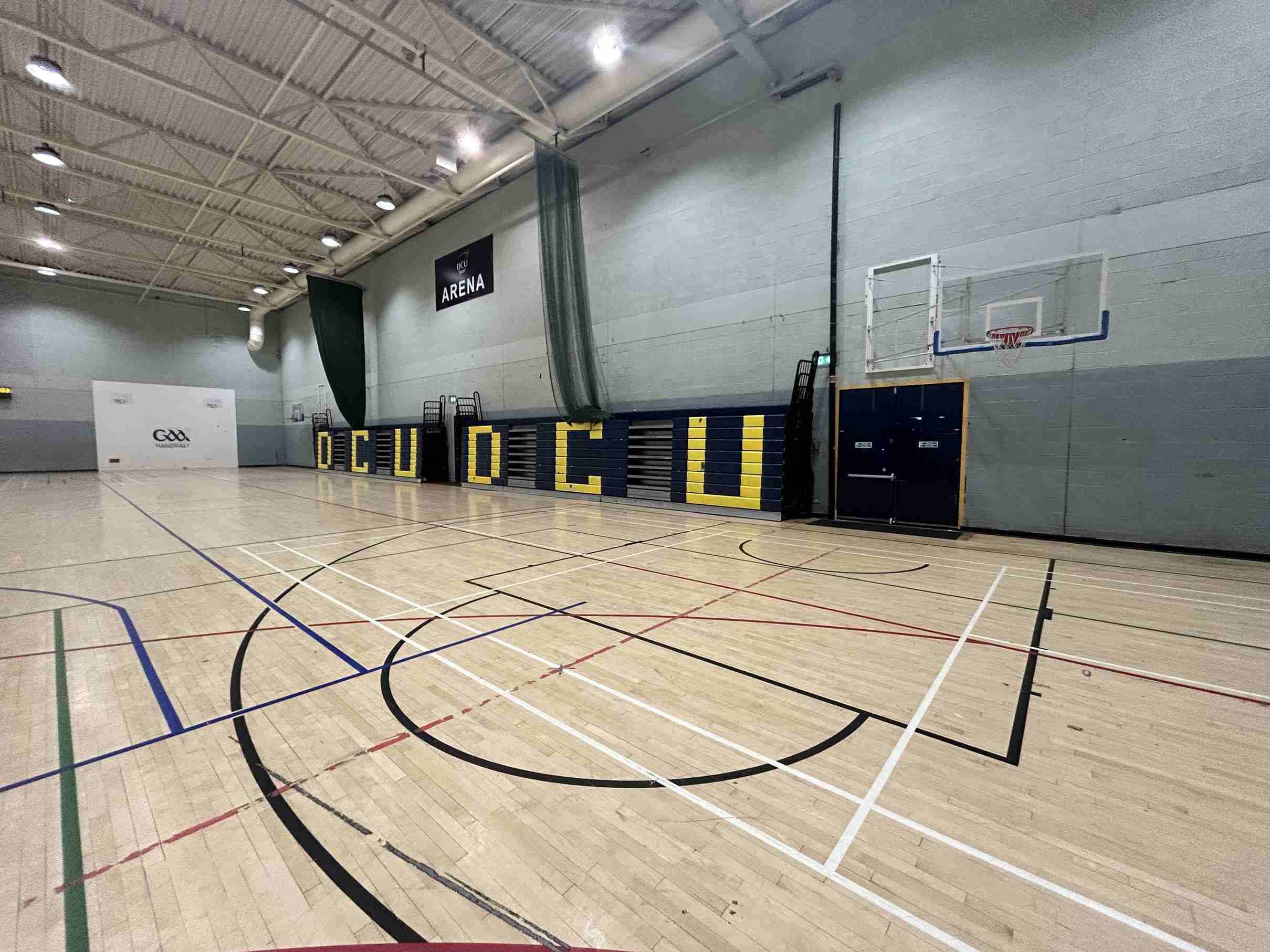
- Campus - There is a super store on and a pub on campus where students can sit to chill
- Professors - They actually take interest in their students' work and treat as their own to make sure reports and research work is top-notch
Dislikes
- Course could've been more hectic, it wasn't intense enough for me
- Some advanced topics were not covered during coursework, as someone who has experience I wanted to learn about advanced material
- College assignments could've been more detailed and of higher complexity
Scholarship
- No, I didn't get any scholarship.
- But I know people who got scholarships of 2000 Euros, mostly on the basis of merit or work experience. I knew 4 people who got scholarships. I'm not sure about financial aid but I know you can apply for financial aid so I'm pretty sure if someone requires it, the college would be more than happy to help. Our batch strength was 180; it must be at least 10% who got scholarships.
- But you can also apply for other scholarships. I know there is a scholarship scheme for international students; it is an Ireland-wide scheme where all your expenses are paid, including rent and other bills. But this is open for all international students so it is really competitive and only a few get it.
%20-%20Ayan%20Sabharwal%20(1).jpg)
Likes
- Strong Curriculum relevant to the industry expectations
- Highly skilled, resourceful, helpful and polite professors
- Excellent Location wrt to ease of commute
Dislikes
- The on campus facilities like Gym, Swimming pools could've been free or at least provided at a discounted rates
- An internship option should've been introduced in the last semester instead of the dissertation to help new grads to gain relevant experience
- More number of paid RA and TA opportunities must open up
Scholarship
- Yes, I received a €2000 Early Applicant Scholarship for my course. It was awarded to students who applied early in the admission cycle. The actual fees for the course was 17000 EUR and I got a scholarship of 2000 EUR.
- Hence my tuition fees was 15000 EUR. Most students that year were eligible, and around 500 people received the scholarship. It was a great opportunity for early applicants.
Likes
- I chose DCU due to its curriculum and research that professors were doing. Also I liked the academic structure of DCU
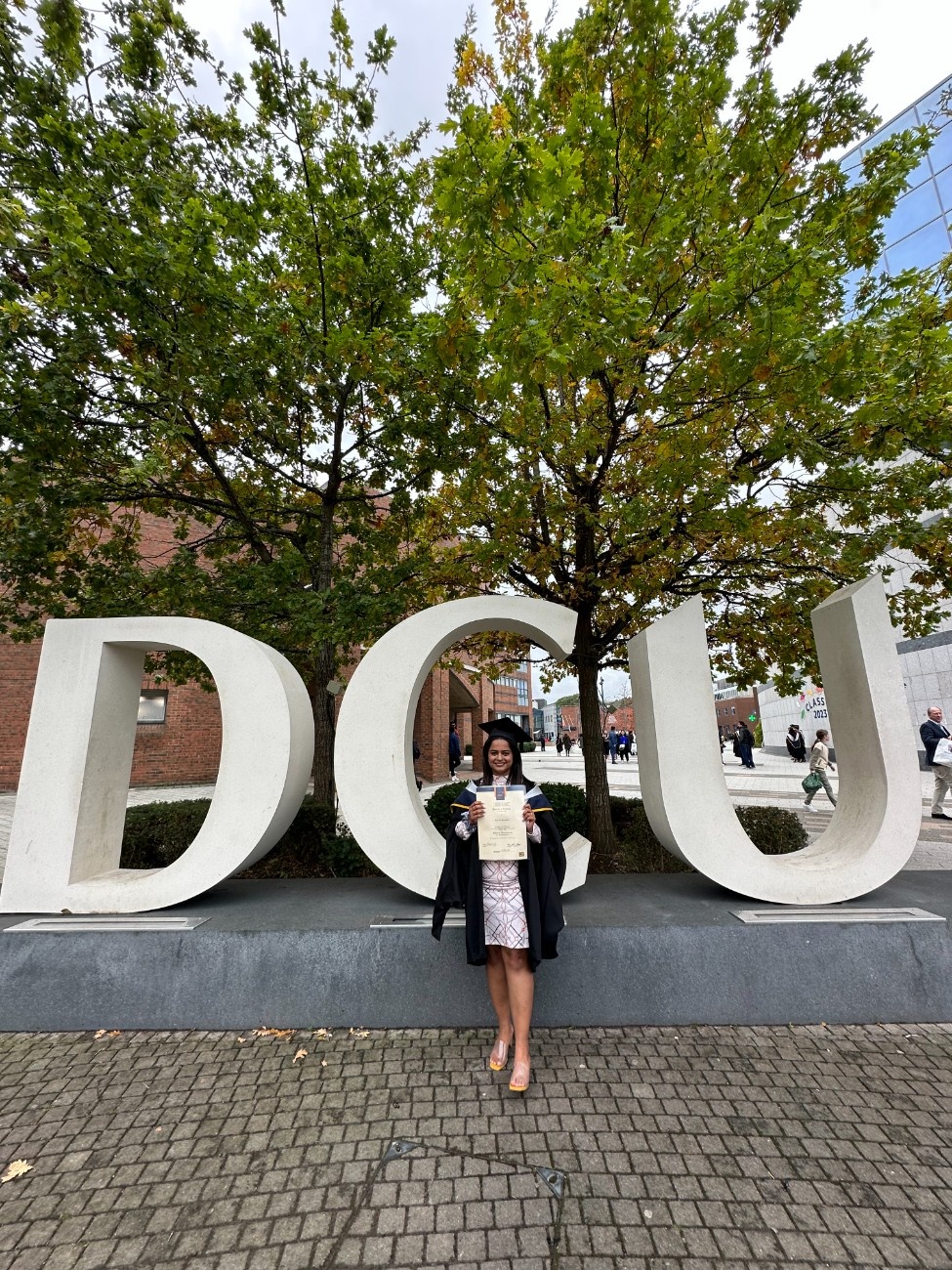
- DCU Campus is really good with a really beautiful library for studying, Also the people in DCU are really helpful and supportive which generally doesn't happen anywhere else
Dislikes
- Nothing for now to dislike about the university since each and every thing is well organised and everything is kept in mind when it comes to academics or anything else.
Overview
Overall experience is very good, Good faculty, Good University, Helping people
Scholarship
Yes, I got DCU scholarship of 2000Euros
Likes
- The main purpose for choosing this university was the course they where offering and the course structure. The subjects I wanted to study in my masters where available so I decided to go with this university as they have one of the best alumni network in Ireland and the best job opportunity university in the world.
- The course structure and the faculty and the campus location and the campus facilities which make you visit the campus multiple times if you don't have lectures also then also you can visit the different campus and have a quality time.,
Dislikes
- There are not such dislike only the main would be that if the masters would have been of 1.5 years or 2 years it would have been great. As 1 years of masters is little hectic and it gives you less time for modules and as the masters project requires a lot of time so it becomes hectic some time to complete all the 8 modules along with the masters project .
Overview
The experience is very much nice as I enjoyed my time in the university with the academics as well as the other activities and chilling in the campus and different function by the university . The playground areas movie nights which will make you feel like a home in the university itself.
Scholarship
NA
Likes
- One of the best in Ireland. Comes in the top 5 universities Considered the best for business School.
- Extra curricular activities Diversity and Inclusivity Big campus and sports facilities Student support services Location and student accommodation Faculty is diverse with good academic experience. They are friendly and very cooperative and supportive.
Dislikes
- Learning materials for all the course modules can be updated as per the modern standards. The materials are still based on conventional studies which might be a drawback especially when pursuing a degree like Masters. Faculty should be hired on the basis of experience but also on their communication skills. Few of the faculty members, coming from different countries sometimes lack in their communication skills.
Overview
Overall experience is good. If you have the will and enthusiasm to participate in different activities along with your studies, then it can be a very good learning experience.

interested in this College ?
Follow & Share this college to get information about admission.



Comments