





Columbia University admissions require Class XII 90%+ for undergraduates and a strong Bachelor’s for postgraduate applicants. The private Ivy League school in Manhattan reviews applications holistically, with Fall as the primary intake for nearly all programmes.
- Nearest deadline: Fall 2027 Early Decision closes 1 November 2026 for undergraduate applicants.
- Base tuition: USD 72,800 (around INR 68.80 Lakhs) annually; application fee USD 85 (INR 8,033).
- Eligibility: UG needs Class XII 90%+; PG requires Bachelor’s 3.5 GPA (around 80%) with TOEFL 100+.
- Acceptance rate: around 3.9% for undergraduates, among the toughest in the USA.
Popular programmes for Indian students include the SEAS MS in Computer Science, the Columbia Business School MBA, and the SIPA MPA. Applicants find Columbia University’s holistic review demanding but rewarding, with need-blind aid making costs manageable for admitted internationals.
Table of Contents
- Columbia University Application Deadlines
- Columbia University Eligibility for Indian Students
- Columbia PG Programs and English Scores
- Columbia University Undergraduate Programs
- Columbia Business School MBA Admissions
- Columbia University PhD Admissions
- Columbia University Application Process
- Columbia Admission Decisions and Offers
- Columbia Documents Required for Indians
- Columbia University Acceptance Rate
- USA F-1 Student Visa Process
- Tips and Checklist for Columbia University
- Columbia University Admissions FAQs
Columbia University Application Deadlines for Indian Students
Columbia University runs a Fall-heavy cycle across its schools, with limited Spring entry only for the School of Social Work International Programme, select SPS certificates, and some GSAS readmissions. Undergraduate applications go through the Common Application or Coalition Application, while graduate schools use their own portals. Deadlines below are drawn from the Columbia University official admissions bulletin and school-level pages.
Columbia University’s primary intake for Indian students is Fall (August entry) — the vast majority of programmes open here.
| Intake | Level | App Opens | Deadline | App Fee | Portal |
|---|---|---|---|---|---|
| Fall 2027 | UG (Early Decision) | 1 August 2026 | 1 November 2026 | USD 85 (INR 8,033) | Common App |
| Fall 2027 (Primary intake) | UG (Regular Decision) | 1 August 2026 | 1 January 2027 | USD 85 (INR 8,033) | Common App / Coalition |
| Fall 2027 | UG (Transfer) | September 2026 | 1 March 2027 | USD 85 (INR 8,033) | Common App |
| Fall 2027 | PG - GSAS MA / PhD | September 2026 | 15 December 2026 (varies) | USD 110 (INR 10,395) | GSAS Portal |
| Fall 2027 | PG - SEAS MS | September 2026 | 15 February 2027 | USD 150 (INR 14,175) | SEAS Portal |
| Fall 2027 | PG - SIPA MPA / MIA | 1 November 2026 | 5 February 2027 | USD 85 (INR 8,033) | SIPA Portal |
| August 2027 | MBA - Merit Fellowship Round | May 2026 | 4 January 2027 | USD 250 (INR 23,625) | CBS Portal |
| January 2027 | MBA - J-Term | May 2026 | 5 October 2026 | USD 250 (INR 23,625) | CBS Portal |
Planning note: Fall 2027 Early Decision applicants receive binding admission with a mid-December notification, so plan financial documents by early October 2026.
Columbia University Eligibility for Indian Students
Columbia University applies distinct academic and English-language thresholds by level. Indian applicants typically clear these with Class XII from CBSE, ICSE, or a state board with English as the medium, plus a strong bachelor’s from a UGC-recognised university. English proficiency proof is required unless a waiver applies.
- UG general entry: Class XII with 90%+ aggregate, strong Grade 11-12 subject rigour.
- UG SEAS engineering: Class XII 90%+ with Physics, Chemistry, and Mathematics.
- PG general entry: Bachelor’s with 3.5 GPA equivalent (around 80%) from a recognised university.
- PG quantitative programmes: Prior coursework in Calculus, Linear Algebra, or Statistics.
- PhD entry: Master’s or exceptional Bachelor’s with research output and strong GPA.
English-test minimums vary by school but centre on TOEFL iBT 100 and IELTS 7.0. Programmes at Teachers College and Journalism require a higher band.
| Test | Minimum Score | Notes |
|---|---|---|
| TOEFL iBT | 100 | Teachers College and Journalism accept 105+ |
| IELTS Academic | 7.0 | 7.5 for Journalism and Teachers College |
| PTE Academic | 68 | Accepted at most graduate schools |
| Duolingo English Test | 125 | Accepted by most Columbia schools |
Columbia University English Proficiency Waivers
Columbia University may waive the English-test requirement if the applicant completed their bachelor’s degree in a country where English is the primary language of instruction, or at an institution where English is the sole medium of instruction and the language of daily life. Many Indian universities teach in English but are located in a non-English-speaking country, so the waiver is not automatic. Applicants can request a medium of instruction (MOI) waiver by submitting an official MOI letter from their university; approval sits with each school’s admissions committee.
Columbia University Postgraduate Programs and English Requirements
Columbia University’s postgraduate offering spans the Graduate School of Arts and Sciences (GSAS), the Fu Foundation School of Engineering and Applied Science (SEAS), the School of International and Public Affairs (SIPA), the School of Social Work, and Teachers College. Base graduate tuition ranges from USD 76,212 (around INR 72.02 Lakhs) at GSAS to USD 97,928 (around INR 92.54 Lakhs) for Statistics and Mathematics of Finance annually. See the course-wise fees breakdown for the full range.
| Programme | Duration | Minimum Eligibility | English Req. Min. |
|---|---|---|---|
| MS Computer Science (SEAS) | 1.5 - 2 years | Bachelor’s in CS or related, 3.3 GPA | TOEFL 99 iBT |
| MS Data Science (SEAS) | 1.5 - 2 years | Bachelor’s in STEM with quant coursework | TOEFL 99 iBT |
| MS Financial Engineering (SEAS) | 1 year | Bachelor’s with strong Math foundation | TOEFL 99 iBT |
| MA Statistics (GSAS) | 2 years | Bachelor’s in Math/Stats, 3.5 GPA | TOEFL 100 iBT |
| MA Economics (GSAS) | 1 year | Bachelor’s in Economics with Math prep | TOEFL 100 iBT |
| MA Biotechnology (GSAS) | 2 years | Bachelor’s in Bio/Chem, 3.0 GPA | TOEFL 100 iBT |
| MA Mathematics of Finance | 1 year | Bachelor’s in Math or related | TOEFL 100 iBT |
| MPA / MIA (SIPA) | 2 years | Bachelor’s 3.0+, work exp preferred | TOEFL 100 iBT |
| MSSW (Social Work) | 2 years | Bachelor’s 3.0+ in any discipline | TOEFL 100 iBT |
| MS Actuarial Science (SPS) | 1.5 - 2 years | Bachelor’s with Calculus / Probability | TOEFL 100 iBT |
Insider note: Indian applicants to Columbia SEAS programmes benefit from strong CS and engineering backgrounds; committees look for depth in one area rather than breadth across many.
Note: Program-specific entry requirements, fees, and intake availability may differ from the institution-wide minimums shown above. Always confirm on the official Columbia University page for your chosen program before applying.
Columbia University Undergraduate Programs
Columbia University’s undergraduate route runs through two schools: Columbia College (arts and sciences) and the Fu Foundation School of Engineering and Applied Science (SEAS). Both require the Core Curriculum, and both admit via the same Common Application. Annual base tuition is USD 72,800 (around INR 68.80 Lakhs), with total cost of attendance around USD 99,044 (around INR 93.59 Lakhs) once mandatory fees and living costs are included.
| Programme | Duration | Minimum Eligibility | English Req. Min. |
|---|---|---|---|
| BA - Columbia College | 4 years | Class XII with 90%+ aggregate | TOEFL 100 iBT |
| BS - SEAS Engineering | 4 years | Class XII 90%+ with Physics, Chemistry, Math | TOEFL 100 iBT |
| Dual BA (Sciences Po Paris) | 4 years | Class XII 90%+ plus supplemental essays | TOEFL 100 iBT |
| Combined Plan (SEAS 3-2) | 3+2 years | Prior 3 years at affiliated college, 3.3 GPA | TOEFL 100 iBT |
Columbia University practises need-blind admission for US and international applicants and meets 100% of demonstrated financial need. The average international aid package is around USD 79,000 (around INR 74.66 Lakhs) per year. See the funding options for Indian students for aid mechanics.
Columbia University MBA Admissions (Columbia Business School)
Columbia Business School (CBS) offers a two-year full-time MBA with two entry points: August (traditional) and January (J-Term for those who do not need a summer internship). Base tuition is USD 93,908 (around INR 88.74 Lakhs) annually, with total first-year cost of attendance around USD 143,030 (INR 135.16 Lakhs). Both entries admit through the same portal on the CBS admissions page.
Columbia Business School MBA Rounds and Experience Floor
Columbia Business School reviews applications on a rolling basis within published rounds, with earlier rounds carrying stronger fellowship consideration.
- Full-time MBA experience: Class of 2027 averaged around 5 years of full-time work experience.
- J-Term MBA: Suited to sponsored applicants or those not seeking a summer internship, similar experience floor.
- Executive MBA (EMBA): Minimum 7 years of professional experience with managerial responsibility.
- GMAT / GRE: Both accepted, median GMAT around 729; no minimum but competitive applicants score 710+.
Columbia MBA Interview Format for Indian Applicants
The CBS interview is invitation-only after shortlisting and runs 45-60 minutes with an alumnus or an admissions officer, either in-person in Mumbai, New Delhi, Bengaluru, or virtually. The focus is behavioural, covering career trajectory, cluster fit, and post-MBA plans. Invites go out on a rolling basis within each round, and decisions typically follow within 6 to 8 weeks of the interview.
Insider note: CBS values the "Why Columbia, Why Now" question deeply; Indian applicants often lose points by producing a generic answer that could apply to any top US MBA.
Columbia University PhD Admissions
Columbia University PhD admissions are highly selective and centralised within GSAS for arts and sciences, with parallel processes at SEAS, SIPA, and other professional schools. All doctoral admits at GSAS receive a fully funded package for a fixed number of years, which typically covers tuition, comprehensive health insurance, and a living stipend.
Columbia University PhD Funding for Indian Students
GSAS-admitted PhD students at Columbia University receive a multi-year package that typically includes full tuition remission, subsidised health insurance, and a stipend for the standard duration of the programme. Precise stipend amounts vary by department and academic year; confirm the current figure on the department’s official funding page before applying.
Columbia PhD Application Steps and Deadlines
PhD applications are submitted through GSAS with department-specific supplementary materials.
- Deadlines: Most departments close between 1 December 2026 and 15 January 2027 for Fall 2027 entry.
- Materials: Statement of Academic Purpose, personal statement, transcripts, 3 recommendations, writing sample where applicable.
- Test scores: GRE varies by department; some require, others recommend, several no longer accept.
- Interviews: Programmes in the sciences often conduct virtual interviews for shortlisted candidates in January-February.
Explore the ranking band across Columbia’s research-heavy departments before finalising your target lab or advisor.
Columbia University Application Process
The Columbia University application journey differs slightly for undergraduate and graduate applicants but shares a common shape: platform sign-up, supplementary essays, English test, transcripts, recommendations, and fee. The process below follows Columbia’s official admissions guidance.
- Create your account: Undergraduate applicants sign up on the Common Application, which opened 1 August 2026 for the Fall 2027 cycle. Graduate applicants use their school’s portal (GSAS, SEAS, SIPA, CBS).
- Pay the application fee: Pay the application fee of USD 85 (around INR 8,033) for undergraduate, USD 110 (INR 10,395) for GSAS, or USD 250 (INR 23,625) for CBS MBA on the same portal.
- Complete the Columbia-specific supplement: Undergraduate applicants answer Columbia-specific short-answer prompts and list books read for pleasure.
- Send test scores: TOEFL, IELTS, or Duolingo scores sent directly from the testing body. SAT / ACT is optional for undergraduate; GRE / GMAT varies by graduate school.
- Send transcripts: Uploaded scans at submission; official transcripts required only after admission.
- Recommendations: 2 teacher recommendations plus 1 counsellor for UG; 3 academic or professional for PG.
- Submit and track: Watch the applicant portal for interview invites, additional documents, and decisions.
Columbia University Admission Decisions and Offer Response
Columbia University releases decisions on published dates by school. Indian applicants planning F-1 visa processing should note that offers arrive with a fixed acceptance deadline and an enrollment deposit.
- UG Early Decision: Notifications around mid-December 2026; admits are binding, response due within roughly 2 weeks.
- UG Regular Decision: Notifications by late March / early April 2027; response deadline is 1 May 2027 (National Reply Date).
- Graduate schools: Rolling notifications between February and April 2027 for Fall 2027 entry.
- SIPA enrollment deposit: USD 2,000 (around INR 1.89 Lakhs) is required to secure a graduate seat.
- Deferrals: Undergraduate deferral is granted for one year on a case-by-case basis with a written request.
Planning note: Indian admits should begin visa document collection as soon as they receive the Form I-20; F-1 visa slots at US consulates fill quickly for the Fall intake.
Columbia University Documents Required for Indian Students
Columbia University asks Indian applicants for a standard document set uploaded at the point of application, with official versions required after admission. Missing or inconsistent documents are the most common cause of a stalled application.
- Passport bio page: Clear scan, valid for at least 6 months past programme start.
- Academic transcripts: All secondary or university transcripts, with English translation where applicable.
- Degree certificates: Class XII marksheet for UG; Bachelor’s degree certificate for PG applicants.
- Statement of Purpose (SOP): Programme-specific personal or academic statement, typically 500 to 1,500 words.
- Letters of Recommendation: Uploaded by recommenders directly through the portal.
- CV or resume: One to two pages, listing academic, work, and leadership experience.
- English-test score report: Sent directly from ETS, IELTS, or Duolingo to the school.
- Financial documents: Bank statements or affidavit of support once admitted, before Form I-20 issuance.
- Passport-size photograph: Digital colour photo per Columbia’s specifications.
- Writing sample or portfolio: For humanities, journalism, architecture, or arts applicants.
Columbia University Acceptance Rate
Columbia University’s overall undergraduate acceptance rate is around 3.9%, one of the lowest in the USA and the Ivy League. The rate reflects Columbia’s holistic review, which weighs the Core Curriculum fit, essays, extracurricular impact, and academic depth alongside scores. Graduate-school selectivity varies widely across the university.
Columbia University UG Acceptance Rate for Indian Students
Applicants from India face additional competition within an international pool. Successful Indian admits typically show Class XII scores above 95%, national-level academic olympiads or research, and evidence of impact in one or two extracurriculars rather than a long thin list. Columbia’s need-blind policy for internationals means aid does not affect the admissions decision.
Columbia University Graduate Acceptance Rate Patterns
Graduate acceptance rates differ sharply by school. Columbia Business School’s full-time MBA admits around 15% of applicants. SEAS master’s programmes admit a wider band, typically 20% to 30%, with variation by specialisation. GSAS PhD admits are usually under 10% due to funded seat caps. Columbia University does not publish a single institutional graduate acceptance figure.
Insider note: A 3.9% UG rate looks daunting, but Indian applicants who prepare authentic Columbia-specific essays and pick recommenders who know them well often perform better than the headline number suggests.
USA F-1 Student Visa Process for Columbia University Students
Indian admits to Columbia University need an F-1 student visa issued by the US embassy or consulate in India before travel. Once Columbia issues the Form I-20 after fee and financial-proof review, applicants pay the SEVIS I-901 fee of USD 350 (around INR 33,075) and the DS-160 MRV fee of USD 185 (around INR 17,483), then book a biometrics and visa interview slot at a US consulate in Mumbai, Delhi, Chennai, Kolkata, or Hyderabad. Consulate officers focus on funding, ties to India, and academic intent. Processing typically takes 6 to 12 weeks in peak season, so Indian admits should schedule interviews immediately after receiving the I-20. Columbia also charges a one-time I-20 first-semester fee of USD 118 (around INR 11,151). See the US student visa guide for the step-by-step consular process.
2026 update: The F-1 post-study OPT window is 12 months for non-STEM graduates and up to 36 months total for STEM graduates (24-month extension), a key factor for Indian STEM applicants when picking a Columbia programme.
Tips and Application Checklist for Columbia University Admissions
The following tips and steps are drawn from Indian-applicant patterns at Columbia University and reflect what successful admits typically get right on timing and positioning.
- Start 12 months out: Register for TOEFL / IELTS by October 2026 for Fall 2027 UG entry.
- Draft Common App essay by August: Columbia short-answers need at least 3 iterations to sharpen.
- Choose recommenders early: Ask two Grade 11-12 teachers by September 2026 for RD, earlier for ED.
- Financial documents by December: Prepare 6-month bank statements and affidavit-of-support drafts.
- Apply Early Decision only if Columbia is your top choice: ED is binding and blocks other US private schools.
- Show depth over breadth: One olympiad medal or a two-year research project beats ten thin clubs.
- Book F-1 visa slot immediately on I-20 receipt: Slots in Mumbai and Delhi fill first in Fall.
- Track deadlines school-by-school for PG: GSAS, SEAS, SIPA, and CBS run independent cycles.
- Retake tests strategically: A TOEFL below 100 or IELTS below 7.0 flags for most Columbia schools.
Columbia’s holistic review rewards Indian applicants who lead with a distinct academic identity and a clear reason for choosing New York City over other Ivy locations.
Columbia University Admissions: Frequently Asked Questions
Ques. What is the minimum Class XII percentage for Columbia University undergraduate admission?
Ans. Columbia University expects Class XII aggregates of 90% and above from Indian applicants, though successful admits typically score 95% or higher along with strong essays and extracurricular depth.
Ques. Does Columbia University require SAT or ACT for Indian undergraduate applicants?
Ans. Columbia University is test-optional for undergraduate admission through the current cycle, so Indian applicants may choose whether to submit SAT or ACT scores based on their strengths.
Ques. When does the Common Application open for Columbia Fall 2027 entry?
Ans. The Common Application for Fall 2027 opened on 1 August 2026. Columbia University’s Early Decision deadline is 1 November 2026 and Regular Decision is 1 January 2027.
Ques. What is the minimum IELTS score for Columbia University graduate programmes?
Ans. Most Columbia University graduate schools require IELTS 7.0 or TOEFL 100. Journalism and Teachers College look for IELTS 7.5 or TOEFL 105, while some SEAS programmes accept TOEFL 99.
Ques. Does Columbia University offer scholarships to Indian students?
Ans. Columbia University meets 100% of demonstrated financial need for admitted undergraduates including internationals. The average international aid package is around USD 79,000 (INR 74.66 Lakhs) per year. Graduate aid is programme-specific.
Ques. What is the Columbia University acceptance rate for Indian applicants?
Ans. Columbia’s overall undergraduate acceptance rate is around 3.9%. Indian applicants sit in a competitive international pool, so most admits show Class XII 95%+ with distinctive extracurricular impact and sharp Columbia-specific essays.
Ques. Can Columbia University waive the English proficiency requirement for Indian bachelor’s graduates?
Ans. Columbia may waive the English test if the applicant completed their bachelor’s at an institution where English is the sole language of instruction. Indian applicants can request a medium-of-instruction waiver by submitting an official MOI letter from their university.
Ques. What is the application fee for Columbia University programmes?
Ans. The undergraduate application fee is USD 85 (around INR 8,033). GSAS graduate applications cost USD 110 (INR 10,395), SEAS master’s around USD 150 (INR 14,175), and the Columbia Business School MBA is USD 250 (INR 23,625).
Ques. How long does F-1 visa processing take for Columbia University admits?
Ans. F-1 visa processing at Indian consulates typically takes 6 to 12 weeks in peak season. Columbia admits should book a slot in Mumbai, Delhi, Chennai, Kolkata, or Hyderabad immediately after the Form I-20 arrives.
Ques. Does Columbia Business School accept the GRE for MBA admission?
Ans. Yes, Columbia Business School accepts both GMAT and GRE for MBA admission. The median GMAT for the incoming class was around 729, and competitive applicants typically score 710 or higher.
Ques. What is the total cost of attending Columbia University for one year?
Ans. The Columbia College undergraduate total cost of attendance is around USD 99,044 (INR 93.59 Lakhs) for a 9-month year, including tuition, mandatory fees, housing, and living expenses. Columbia Business School MBA first-year total sits around USD 143,030 (INR 135.16 Lakhs).
Ques. Which intake is best for Indian students applying to Columbia University?
Ans. Fall (August) is the primary intake at Columbia University, with nearly all programmes admitting Indian students at this point. Spring entry is limited to the School of Social Work International Programme, SPS certificates, and some GSAS readmissions.
College Student Profiles

Columbia University Program Fees & Deadlines
| Program | Important Dates | Fees | Application Fees | Eligibility | Financial Aid |
|---|---|---|---|---|---|
MS Computer Science 2 years | USD 64,800 /Yr | 85 | GPA: 3.5, IELTS: 7.5, TOEFL: 5.5, Duolingo: 135 | ||
MS Data Science 2 years | USD 64,800 /Yr | 85 | GPA: 3.5, IELTS: 7.5, TOEFL: 5.5, Duolingo: 135 | ||
MS Business Analytics 1 year | USD 97,200 /Yr | 85 | GPA: 3.5, IELTS: 7.5, TOEFL: 5.5, Duolingo: 135 | ||
MS Financial Engineering 1 year | USD 97,200 /Yr | 85 | GPA: 3.5, IELTS: 7.5, TOEFL: 5.5, Duolingo: 135 | ||
MArch 3 years | USD 70,380 /Yr | 75 | GPA 3.5, TOEFL-5.5, IELTS-7.5 | ||
MS Financial Economics 2 years | USD 75,256 /Yr | 100 | GPA: 3.9, IELTS: 7.5, TOEFL: 5.5, PTE: 68, GRE: 330 | ||
MPH 2 years | USD 50,372 /Yr | 135 | GPA 3.5, TOEFL-5.5, IELTS-7.5 Duolingo-135 | ||
MS Applied Analytics 1 year | USD 85,560 /Yr | 150 | GPA: 3.0, IELTS: 7.0, TOEFL: 5.5, Duolingo: 135 | ||
MA Economics 2 years | USD 90,730 /Yr | 120 | GPA: 3.5, IELTS: 7.5, TOEFL: 5.5, Duolingo: 135 | ||
| USD 97,200 /Yr | 85 | GPA: 3.5, IELTS: 7.5, TOEFL: 5.5, Duolingo: 135 |
Do you think the Dates are wrong ? Report Here


Course Finder - Search from 50K+ courses
Popular Streams:
Reviews
Most Popular Tags
23 Reviews Found
Likes
- The University has great curriculum, curated and taught by some of the best professors in the field
- The university has 18 colleges underneath it (Engineering, Law, Business) etc.. which provided an environment which is very culturally rich and dense
Dislikes
- They can host top leaders like Jensen Huang, Jamie Dimon etc for sessions with students just like how Stanford, Harvard does
Likes
- Columbia University opens a lot of doors, if you focus on networking with the alumni you will have a lot of benefits. There are plenty of mixers that happen throughout the semester and it is a good place to start.
- There is a lot of flexibility in the courses you can pick within the program, this will help in navigating what your interests are.
- If you are interested. in working in finance or consulting, being in New York city adds a ton of benefits with potential employers
Dislikes
- The assistantship do not sponsor tuition, which is usually different from most public universities in the country
- Since it is only a 16 month long degree, the course work will feel very heavy. You will have to be mentally prepared to grind to maximize the experience
- On-campus housing is very limited and very hard to get, it is also expensive
Scholarship
- There are a few scholarships available for international students. None of them are course-specific; I would not rely on them, as they are very competitive and mostly partial.
- I would recommend getting in touch with the finance department for assistance, as they keep these records up to date and guide on the application process. All scholarships that I am aware of are merit based.
Likes
- The professors were outstanding — highly knowledgeable, approachable, and deeply invested in their students’ growth, offering excellent research opportunities.
- The courses were very well structured, featuring in-depth projects that directly connected to real-world applications and professional life.
- Campus life was vibrant, with a variety of activities and seasonal events that made it easy to meet new people and build connections. We also had numerous employer info sessions that helped us stay updated on industry trends and opportunities.
Dislikes
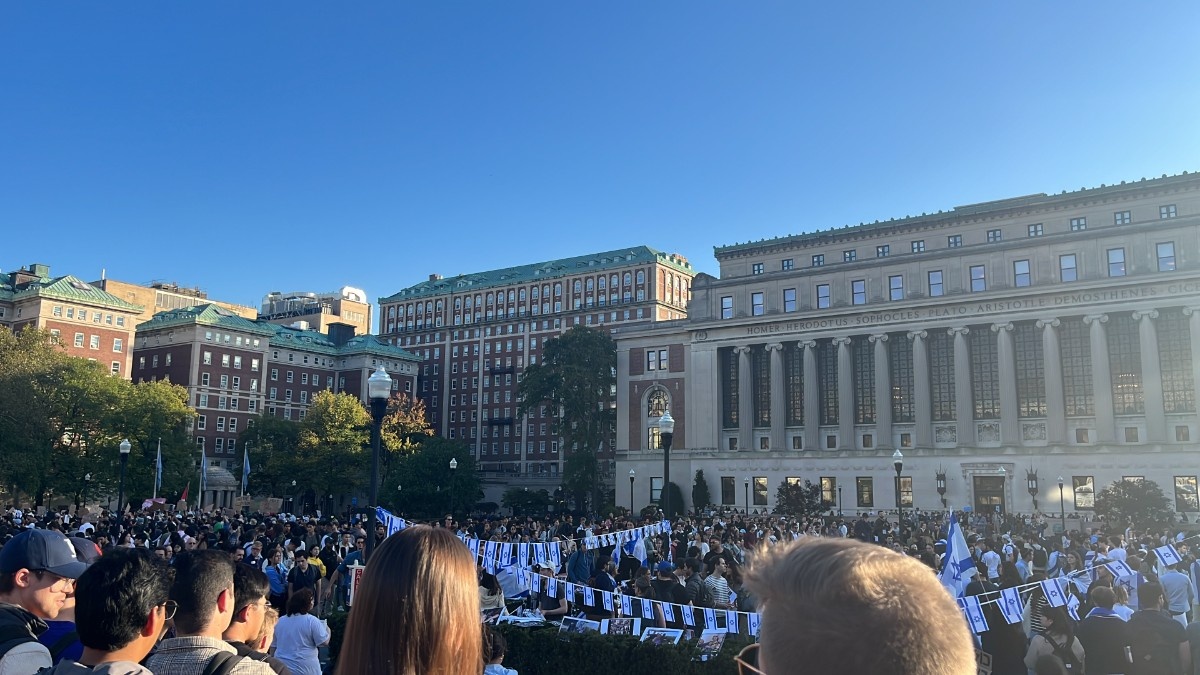
- During my time on campus, there was a lot of unrest related to the Israel - Palenstine conflict with a lot of student protests and backlask from the College body, This led to a lot of patrolling bu police on campus as well as a lot of changes in the college body representatives. This was very overwhelming to me as it became diffciult to be on campus due to this and people would protest in libraries and then they would close them down and have additonal checks on campus. This led to a noticeble difference in my time there.
- The length of the program was 1.5 years, I felt that it could have been longer, I felt lost the first 6-8 months and by the time I started grooving and understadning thigns beetter my time at Columbia came to an end.
- The campus placement cell has not been particularly supportive. While the University organizes many networking sessions, the placement officers themselves have not provided the level of guidance or help I had hoped for.
Scholarship
- I did not receive any scholarship during my time. I did not apply for any scholarships or do any research during my process; I was occupied with visa requirements and moving prospects, hence I was unable to do so.
- I think that if students do start the process early and look into the application requiremnts they have to write an essay to justify their need for the scholarship however they are few and even fewer people get scholarships.

Likes
- Good amount of electives and courses offered.
- Very learned and experienced Professors.
- Lot of cultural and social activities to engage students.
Dislikes
- The coursework becomes hectic with 4 subjects per semester.
- The tuition fee and cost of living in New York are a bit more expensive than any other college.
- Very competitive group of students.
Scholarship
-
No, Columbia does not provide any scholarships nor have I heard any of my batchmates get it.
Likes
- Courses - suited my expectations
- Research opportunities - easy to interact with professors and research groups
- Student life - plenty of opportunities, New York is a great place
Dislikes
- It is a very flexible program, so it feels like there is a lack of direction at times.
- There were definitely some issues with the variety in courses experienced in the Spring semester.
- There are a few disruptions due to the ongoing situation.
Likes
- Campus, Location, Professors, Connections.
- I love how everyone here is very smart and great to network with.
- The diverse experience I think is the best part.
Dislikes
- The protests that are happening, are a pain.
- I don't like the fees of course its too much and very less scholarship options.
- Better transport service go campus, right now its pretty bad.


Likes
- Location in NYC and proximity to some of the greatest landmarks and places in the world.
- Professors both tenured and adjunct professors, all of who are distinguished and have excellent track records of academic publication and actual practice.
- Institutional networks with top policy and finance organizations.
Dislikes
- Recent handling of student protests and overall administration response to student issues.
- Extremely expensive due to its location.
- Some of the infrastructure in the School of International Affairs is quite dated compared to the business school

Likes
- Academic rigor and diversity of courses, like joining clubs and organizations (e.g.,debate team, literary magazines
- I like the fact that there's world-class faculty and research opportunities in my school
- Exploring the nearby American Museum of natural history
Dislikes
- What I disliked is the high tuition fees and living costs in school
- There is limited availability of housing, especially for upperclassmen
- Distance from family and friends (for out of state/international students)
Overview
The admission process is based on the application submission first, students submit their application through the common app or coalition app, typically by the January 1st deadline for regular decision. I prepared for the admission, maintaining a high GPA, especially in challenging courses like AP or IB and taking the SAT or ACT. Consultants are Crimson Education.
Scholarship
Yes, I received one from the university itself based on merit for $8000. There was a special application for the scholarship where I had to write an essay on why I think I deserve it .
Likes
- I accepted it for the reputation, career opportunities, location and courses.
- It has a great reputation and is located in New York City, with close access to large corporations and an extensive network. The courses offered at the Business School is really informative and interactive. The people are really helpful.
Dislikes
- Columbia is smaller than the other ivy league institutions in the US. The classes at the engineering school are heavily quantitative, and I found it less useful compared to the more business school classes, due to my focus on pursuing a consulting career.
Overview
Overall, Columbia University was a fantastic experience. Its located in a vibrant city, with opportunities to stick to a campus life, and still enjoy everything NYC has to offer. The students are helpful and collaborative. The professors are incredibly well experienced with several accolades. All in all, had a great learning experience.
interested in this College ?
Follow & Share this college to get information about admission.



Comments