




The National Testing Agency (NTA) conducted the CUET PG 2026 Pharmacy (SCQP23) examination on March 16, 2026, during Shift 1 from 09:00 AM to 10:30 AM.
Students who appeared for the exam reported that the overall difficulty level of the paper was moderate. CUET PG 2026 Pharmacy Question Paper with Solutions PDF is available here for download. The marking scheme is +4 for correct answers and -1 for wrong answers, totaling 300 marks.
CUET PG 2026 Pharmacy Question Paper with Solutions PDF
| CUET PG 2026 Pharmacy Question Paper with Answer Key | Download PDF | Check Solutions |
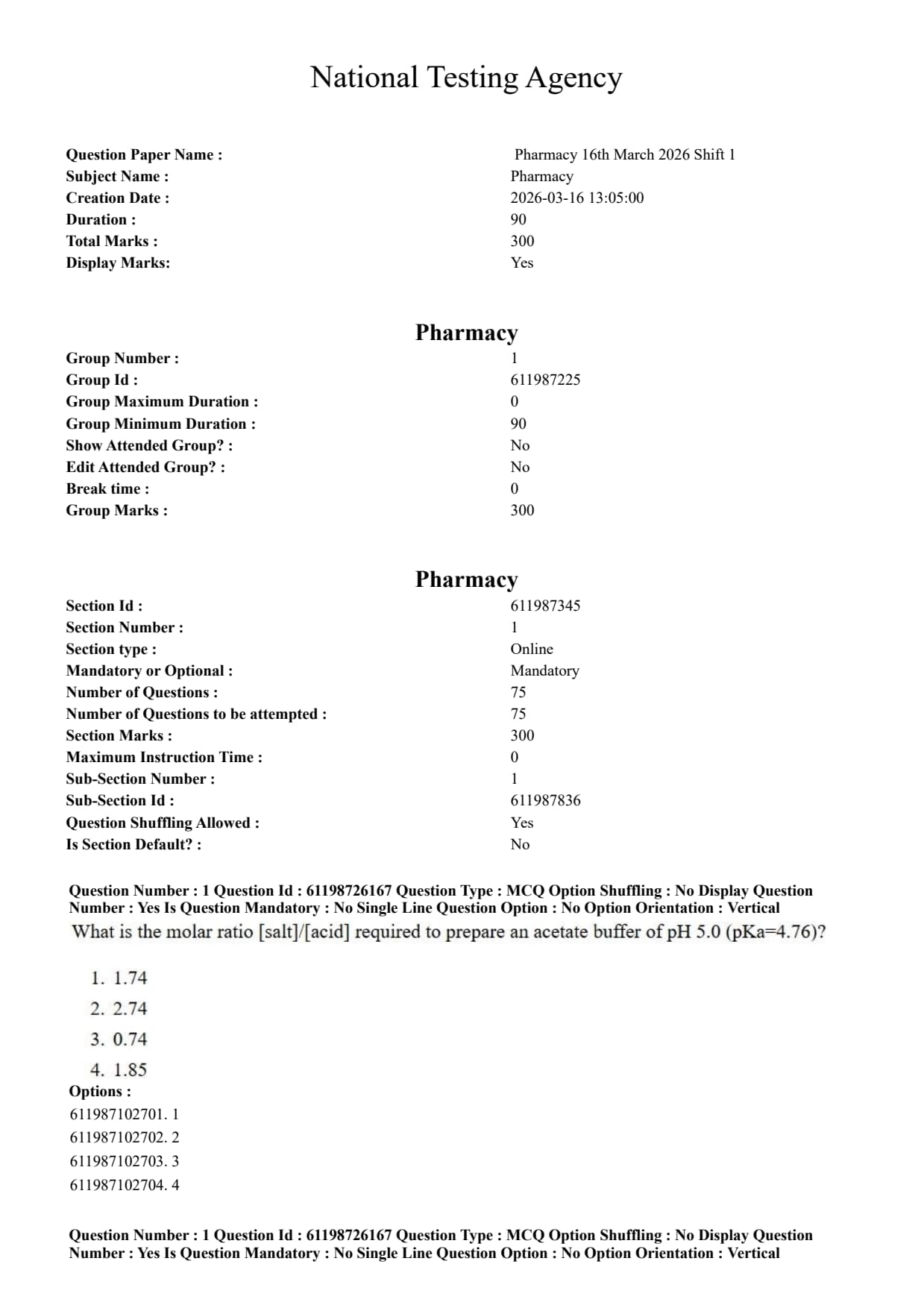
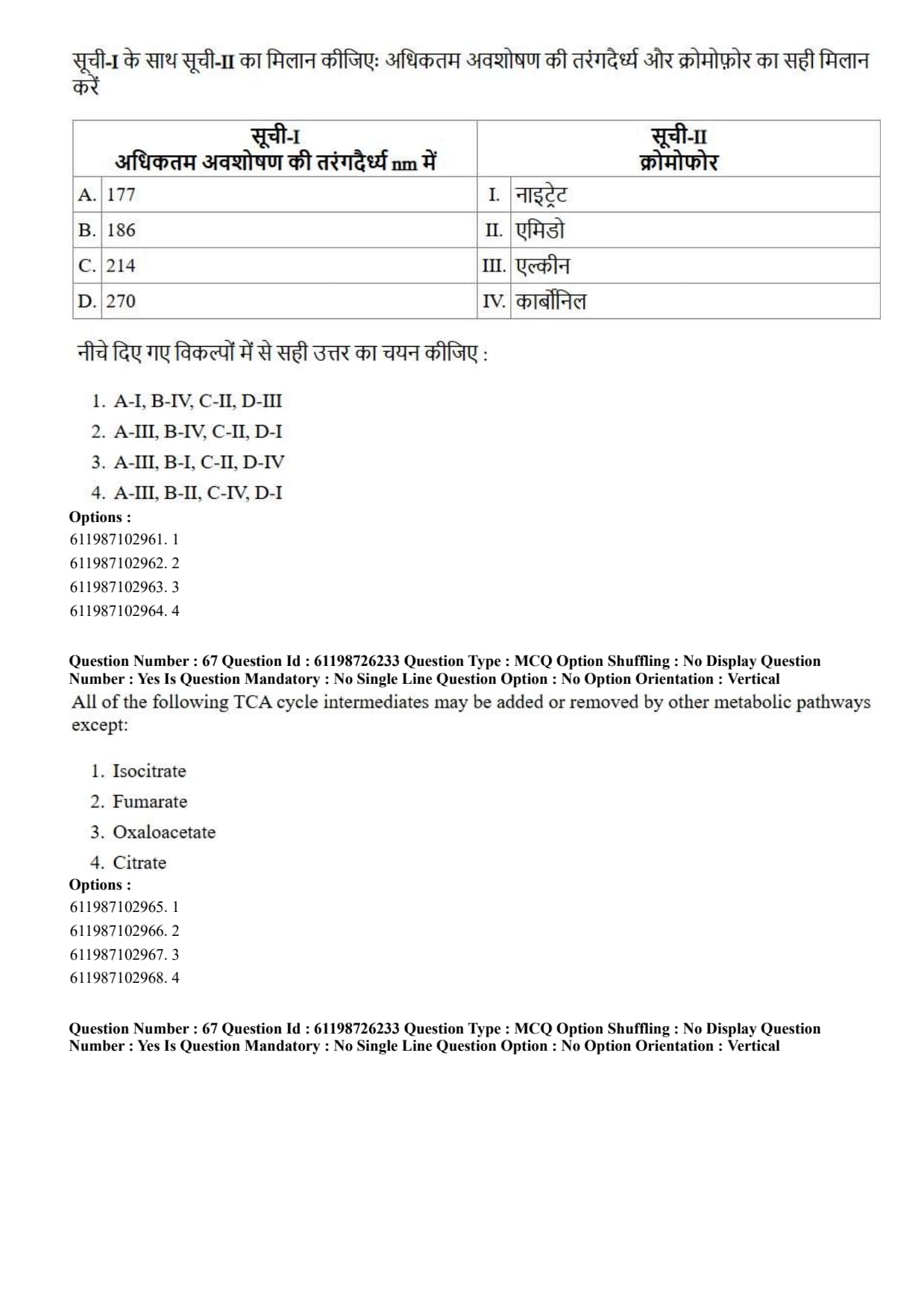
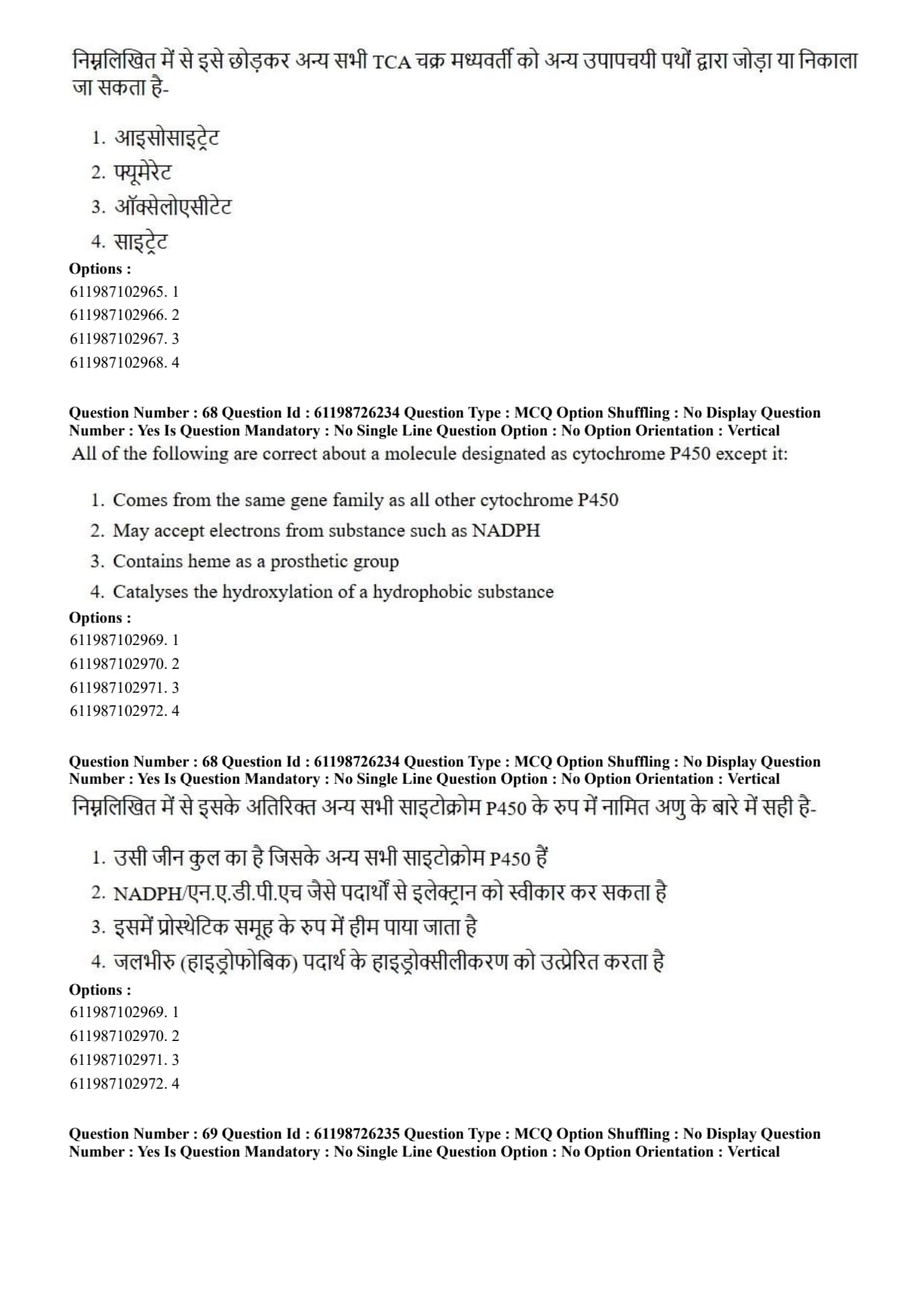
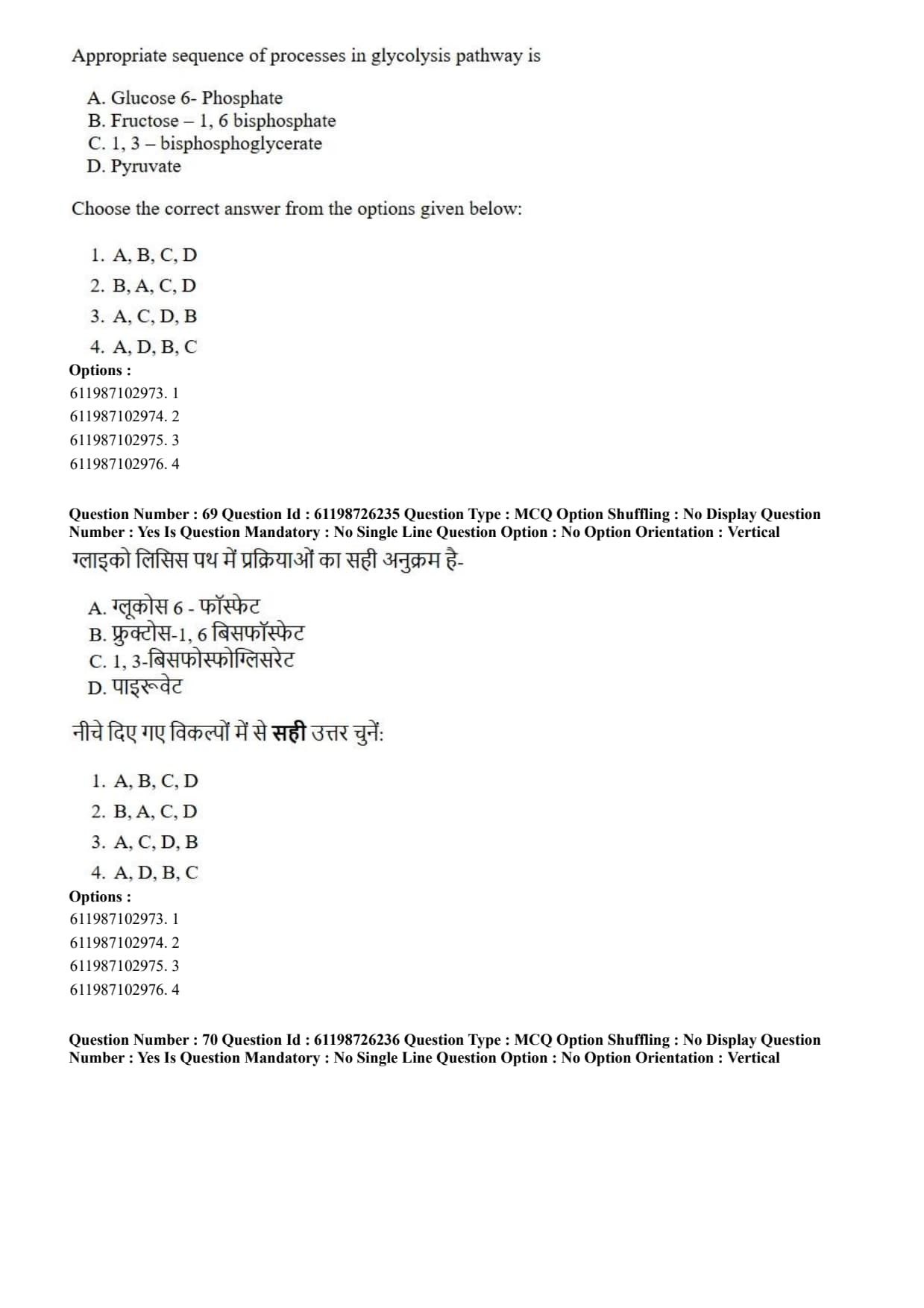
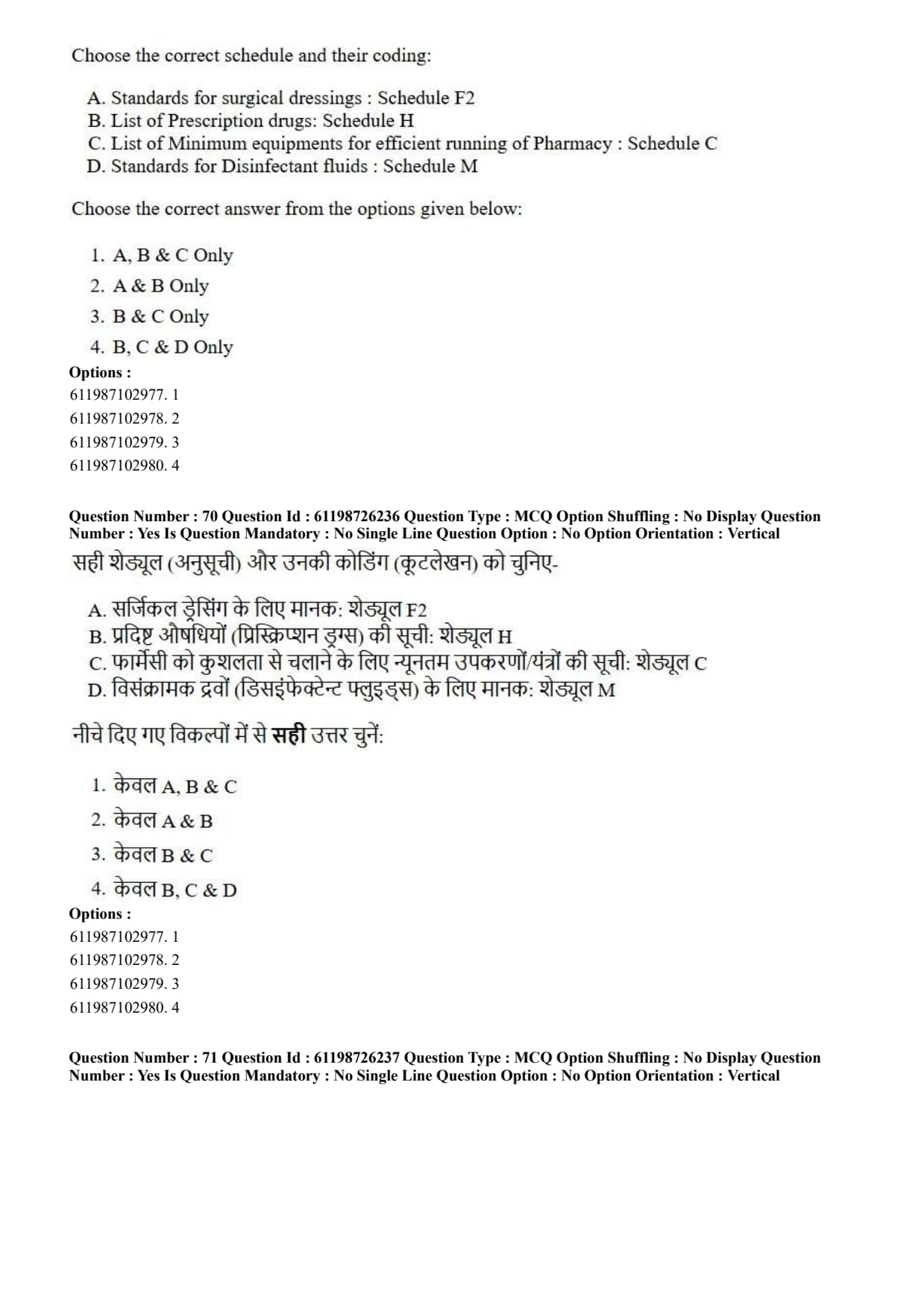
What is the molar ratio [salt]/[acid] required to prepare an acetate buffer of pH 5.0 (\(pKa=4.76\))?
View Solution
\textcolor{red{Step 1: Concept
The pH of a buffer solution can be calculated using the Henderson-Hasselbalch equation: \(pH = pKa + \log\frac{[Salt]}{[Acid]}\).
\textcolor{red{Step 2: Meaning
We need to find the ratio \(\frac{[Salt]}{[Acid]}\) when the desired \(pH\) is 5.0 and the \(pKa\) is 4.76.
\textcolor{red{Step 3: Analysis
Substitute the values into the equation: \(5.0 = 4.76 + \log\frac{[Salt]}{[Acid]}\) \(5.0 - 4.76 = \log\frac{[Salt]}{[Acid]}\) \(0.24 = \log\frac{[Salt]}{[Acid]}\)
Taking antilog on both sides: \(\frac{[Salt]}{[Acid]} = 10^{0.24} \approx 1.7378\).
\textcolor{red{Step 4: Conclusion
The calculated molar ratio is approximately 1.74.
\textcolor{red{Final Answer: (A) Quick Tip: If \(pH > pKa\), the ratio of [salt]/[acid] must be greater than 1.
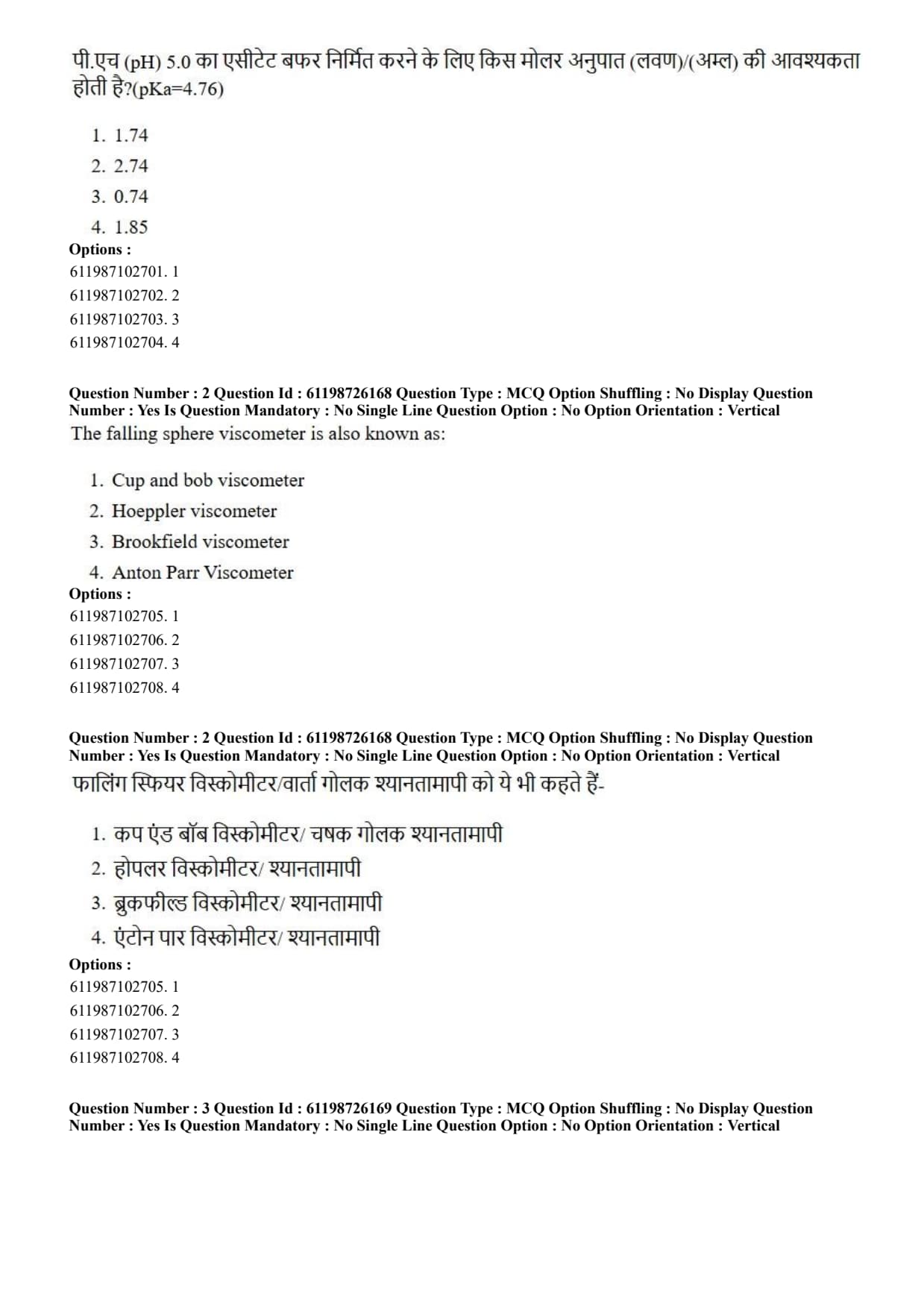
The falling sphere viscometer is also known as:
View Solution
\textcolor{red{Step 1: Concept
Viscometers are instruments used to measure the viscosity of a fluid. Different types operate on various physical principles like rotation or falling objects.
\textcolor{red{Step 2: Meaning
A falling sphere viscometer measures viscosity by timing how long it takes a ball of known density and radius to fall through a tube of liquid.
\textcolor{red{Step 3: Analysis
The Hoeppler viscometer is a commercial type of falling sphere viscometer. Cup and bob and Brookfield are rotational viscometers.
\textcolor{red{Step 4: Conclusion
Therefore, the falling sphere viscometer is specifically identified as the Hoeppler viscometer.
\textcolor{red{Final Answer: (B) Quick Tip: Falling Sphere = Hoeppler. It is used for Newtonian fluids where the ball rolls down an inclined glass tube.
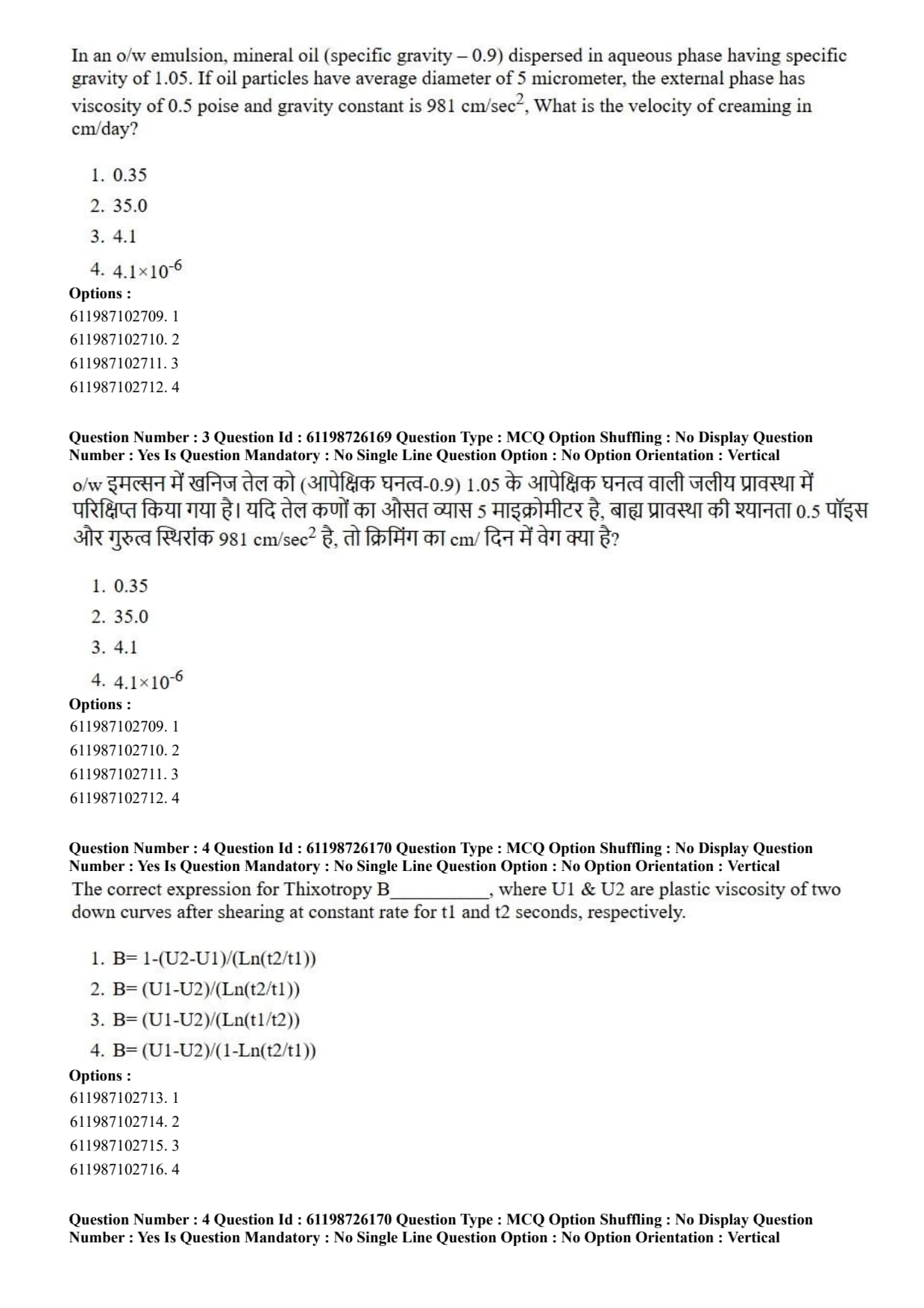
In an o/w emulsion, mineral oil (specific gravity - 0.9) dispersed in aqueous phase having specific gravity of 1.05. If oil particles have average diameter of 5 micrometer, the external phase has viscosity of 0.5 poise and gravity constant is 981 \(cm/sec^{2}\), What is the velocity of creaming in cm/day?
View Solution
\textcolor{red{Step 1: Concept
The velocity of creaming (\(v\)) is given by Stokes' Law: \(v = \frac{d^{2} (\rho_{s} - \rho_{0}) g}{18\eta}\).
\textcolor{red{Step 2: Meaning
\(d = 5 \times 10^{-4}\) cm (\(5 \mu m\)), \(\rho_{s} = 0.9\) g/cm\(^3\), \(\rho_{0} = 1.05\) g/cm\(^3\), \(g = 981\) cm/sec\(^2\), \(\eta = 0.5\) poise. Note: A negative velocity indicates creaming (upward movement) since oil is less dense than water.
\textcolor{red{Step 3: Analysis
\(v = \frac{(5 \times 10^{-4})^{2} \times (0.9 - 1.05) \times 981}{18 \times 0.5}\) \(v = \frac{25 \times 10^{-8} \times (-0.15) \times 981}{9} \approx -4.0875 \times 10^{-6}\) cm/sec.
To convert to cm/day: \(v \times 60 \times 60 \times 24 = 4.0875 \times 10^{-6} \times 86400 \approx 0.353\) cm/day.
\textcolor{red{Step 4: Conclusion
The velocity of creaming is approximately 0.35 cm/day.
\textcolor{red{Final Answer: (A) Quick Tip: Always ensure units are consistent (CGS or SI). Here, \(1 \mu m = 10^{-4} cm\).
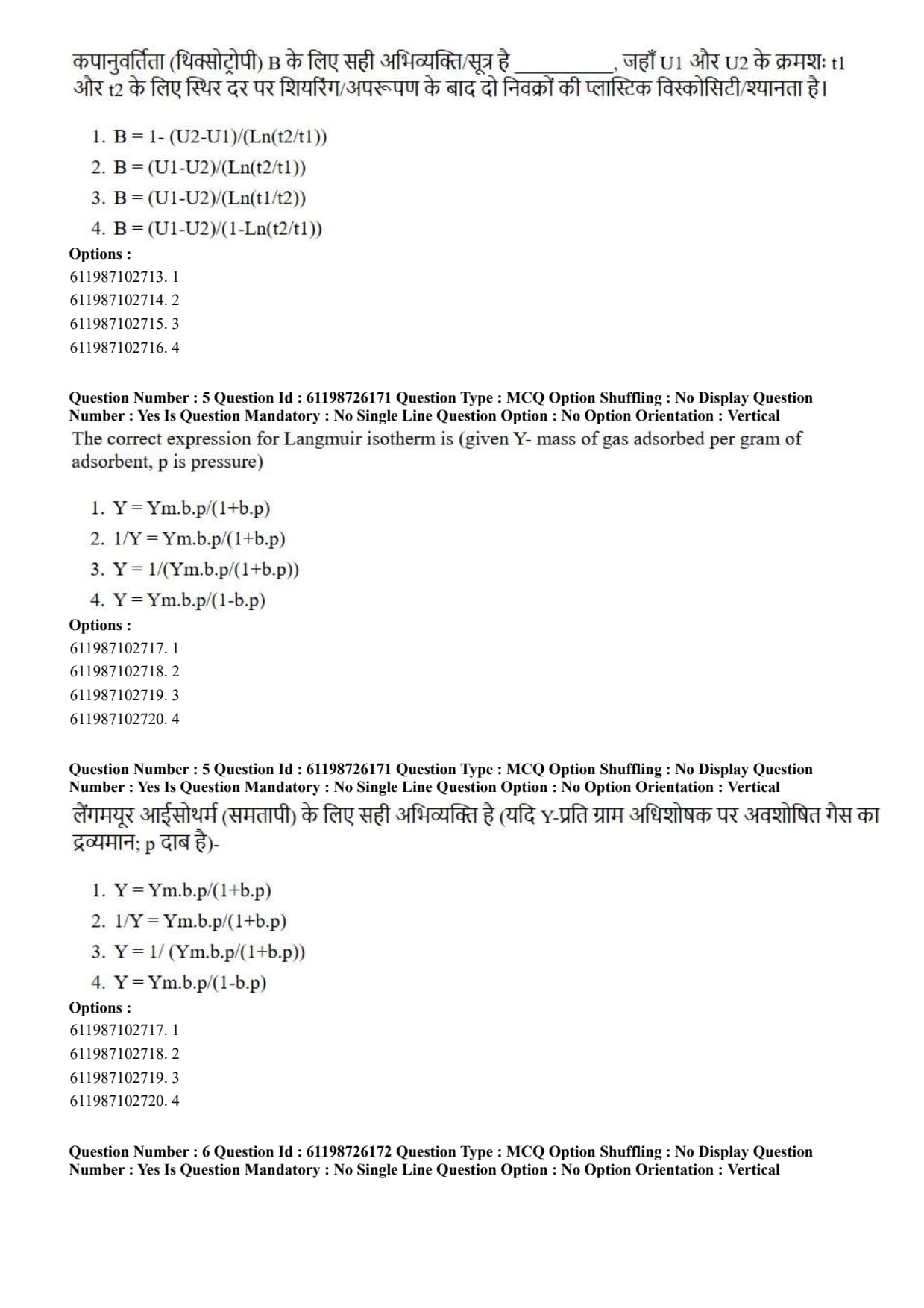
The correct expression for Thixotropy B where U1 \& U2 are plastic viscosity of two down curves after shearing at constant rate for t1 and t2 seconds, respectively:
View Solution
\textcolor{red{Step 1: Concept
Thixotropy is a time-dependent shear-thinning property. The rate of breakdown of a thixotropic system can be measured quantitatively.
\textcolor{red{Step 2: Meaning
\(B\) represents the coefficient of thixotropic breakdown with time at a constant shear rate.
\textcolor{red{Step 3: Analysis
When a material is sheared at a constant rate for different durations (\(t1\) and \(t2\)), the plastic viscosities measured from the resulting down-curves (\(U1\) and \(U2\)) decrease. The relationship is logarithmic.
\textcolor{red{Step 4: Conclusion
The standard formula derived for this time-dependent breakdown is \(B = \frac{U1 - U2}{\ln(t2/t1)}\).
\textcolor{red{Final Answer: (B) Quick Tip: Thixotropy B deals with "Time" (\(t\)). Formula involves the difference in viscosity over the log of the time ratio.
The correct expression for Langmuir isotherm is (given Y- mass of gas adsorbed per gram of adsorbent, p is pressure):
View Solution
\textcolor{red{Step 1: Concept
The Langmuir adsorption isotherm describes the relationship between the amount of gas adsorbed on a solid surface and the gas pressure at constant temperature.
\textcolor{red{Step 2: Meaning
It assumes monolayer adsorption on a surface with a finite number of identical sites, where \(Ym\) is the maximum adsorption capacity and \(b\) is the adsorption coefficient.
\textcolor{red{Step 3: Analysis
The derivation leads to the rectangular hyperbola equation \(Y = \frac{Ym \cdot b \cdot p}{1 + b \cdot p}\). At low pressure, \(Y \propto p\); at high pressure, \(Y\) approaches \(Ym\).
\textcolor{red{Step 4: Conclusion
Option (A) correctly represents the standard Langmuir equation.
\textcolor{red{Final Answer: (A) Quick Tip: Langmuir = Monolayer. The denominator is always \((1 + bp)\).
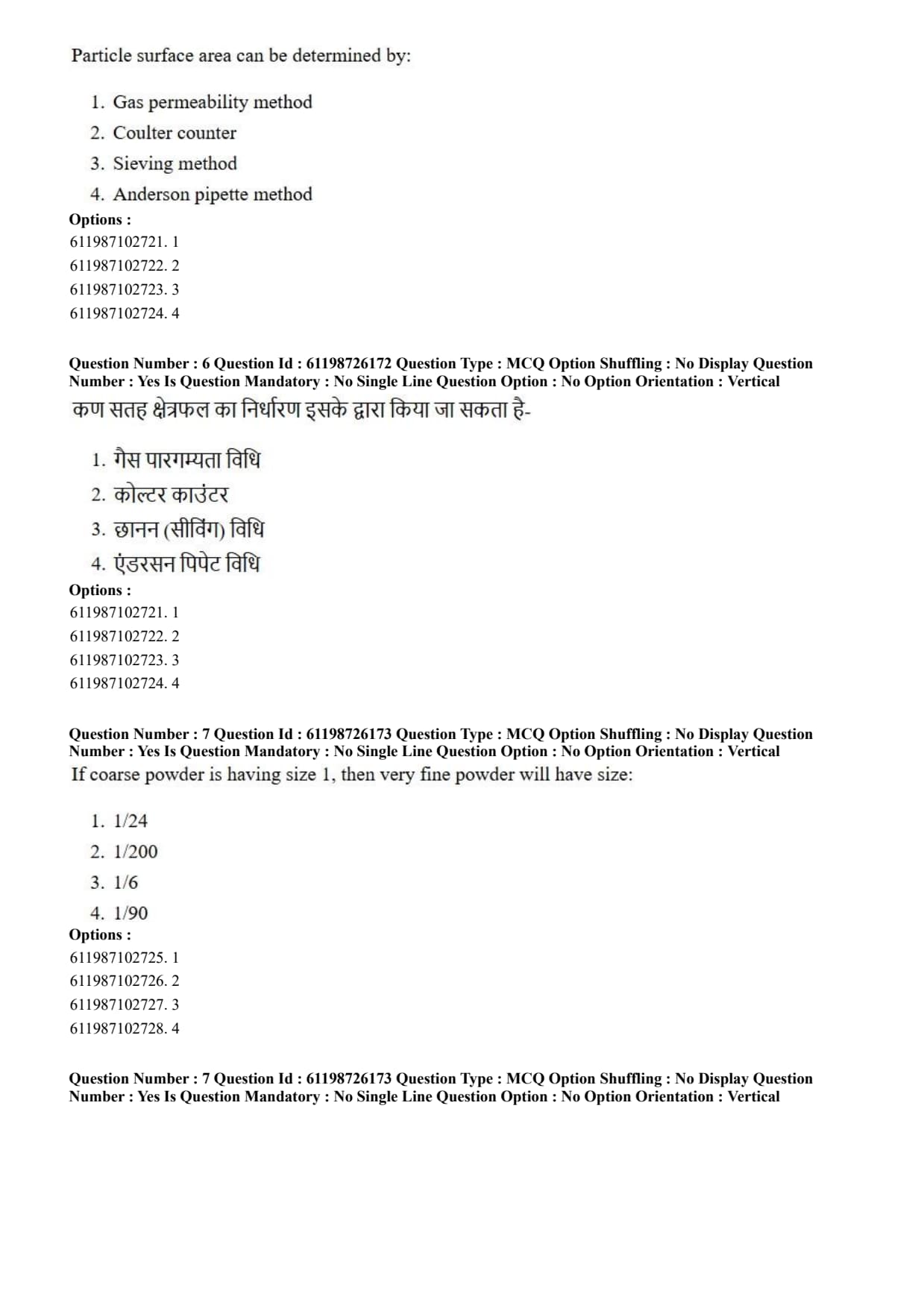
Particle surface area can be determined by:
View Solution
\textcolor{red{Step 1: Concept
Particle size and surface area are fundamental properties in micromeritics. While many methods measure size, specific methods are needed for surface area.
\textcolor{red{Step 2: Meaning
Surface area refers to the total area of the particle surface per unit mass or volume.
\textcolor{red{Step 3: Analysis
Coulter counter, Sieving, and Anderson pipette are primarily used for particle size distribution. The Gas Permeability method (e.g., Fisher Sub-Sieve Sizer) calculates surface area based on the resistance to air flow through a packed bed of powder.
\textcolor{red{Step 4: Conclusion
The Gas permeability method is the correct choice for determining surface area.
\textcolor{red{Final Answer: (A) Quick Tip: For Surface Area: Think "Gas Permeability" or "Adsorption (BET)". Others are for "Size".
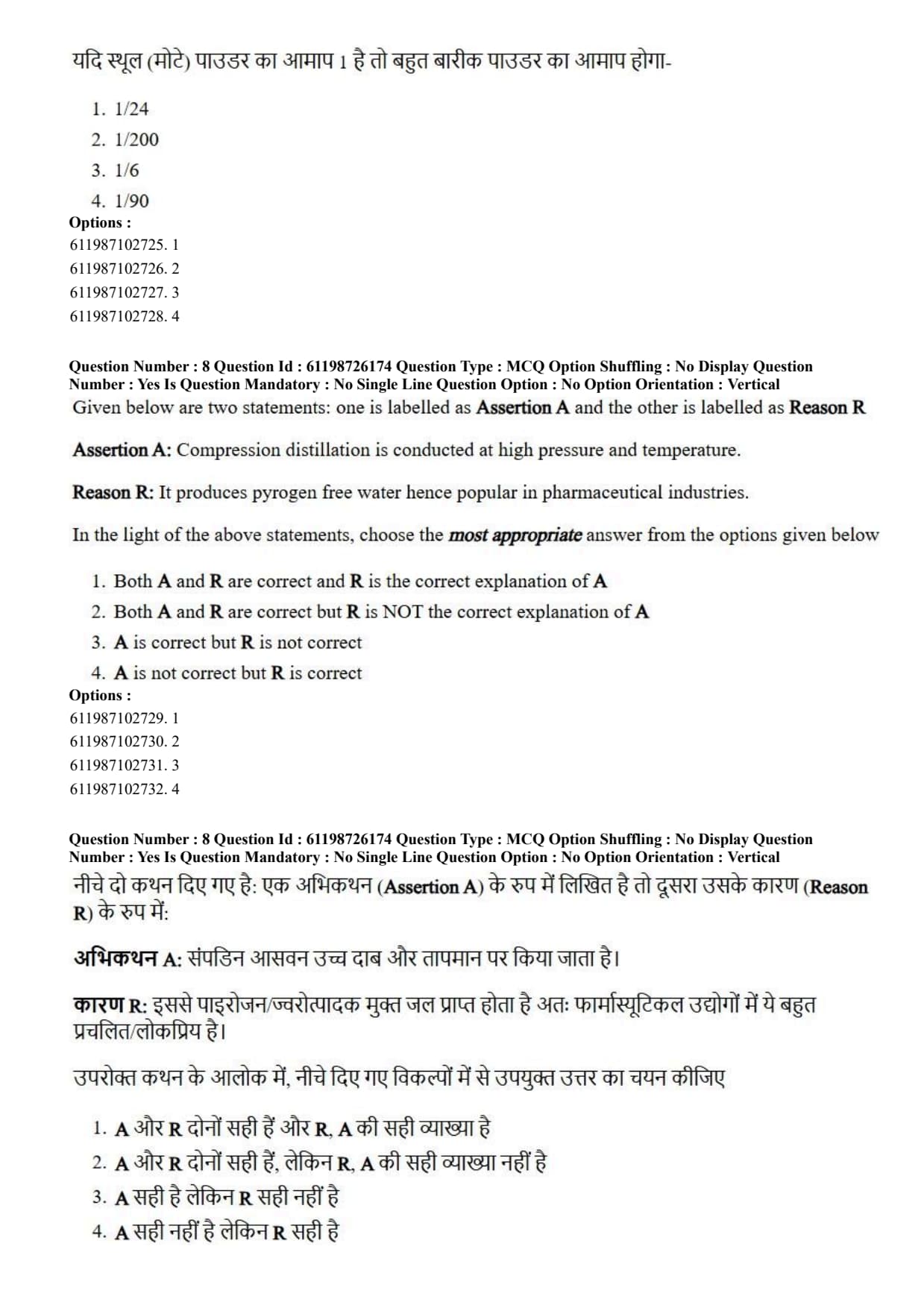
If coarse powder is having size 1, then very fine powder will have size:
View Solution
\textcolor{red{Step 1: Concept
In pharmaceutical standards (like IP), powders are classified based on the sieve number through which they can pass.
\textcolor{red{Step 2: Meaning
Coarse powder passes through sieve no. 10 (or size 1 in relative terms), while very fine powder must pass through a much smaller mesh.
\textcolor{red{Step 3: Analysis
The classification is as follows: Coarse (10), Moderately Coarse (22), Moderately Fine (44), Fine (85), and Very Fine (120 or 200 depending on the specific pharmacopoeial definition). In this relative scale, 1/200 represents the smallest/finest grade.
\textcolor{red{Step 4: Conclusion
Based on standard powder grading, 1/200 represents the "very fine" category.
\textcolor{red{Final Answer: (B) Quick Tip: Higher sieve numbers = Smaller openings = Finer powder.
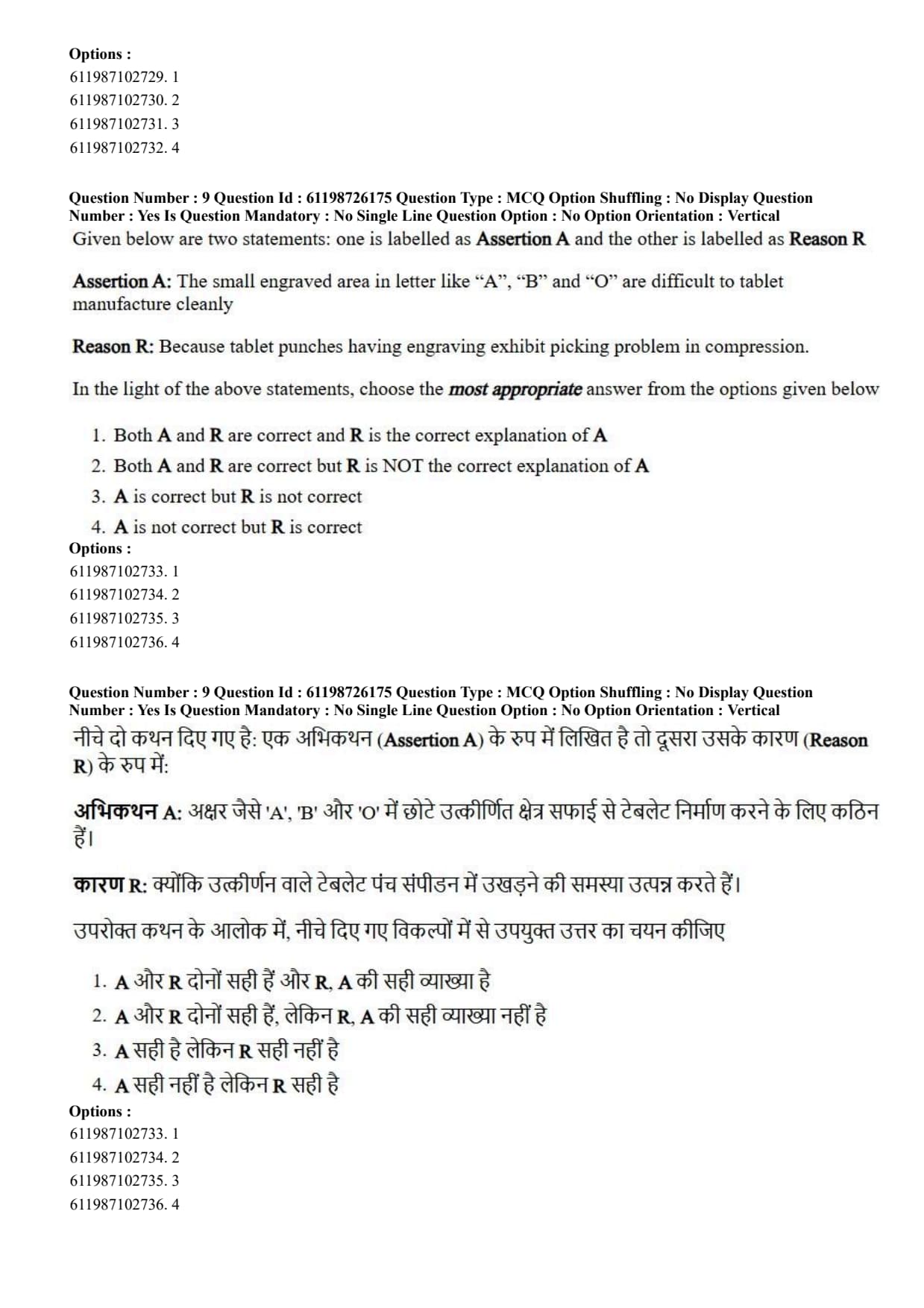
Assertion A: Compression distillation is conducted at high pressure and temperature.
Reason R: It produces pyrogen free water hence popular in pharmaceutical industries.
View Solution
\textcolor{red{Step 1: Concept
Compression distillation (Vapor Compression Distillation) is a method used to produce Water for Injection (WFI).
\textcolor{red{Step 2: Meaning
It involves compressing water vapor to raise its temperature and pressure, which allows the latent heat of condensation to be used for evaporating more water.
\textcolor{red{Step 3: Analysis
Assertion A is correct as high pressure and temperature are fundamental to the compression cycle. Reason R is also correct; the primary purpose of this efficient process in pharma is to produce high-purity, pyrogen-free water. Because the process occurs at high temperatures, it ensures the destruction of pyrogens.
\textcolor{red{Step 4: Conclusion
Both statements are true, and the ability to produce sterile, pyrogen-free water at scale is why the high-pressure/temp process is utilized.
\textcolor{red{Final Answer: (A) Quick Tip: Distillation = Purification. Compression Distillation = High Efficiency + Pyrogen-free WFI.
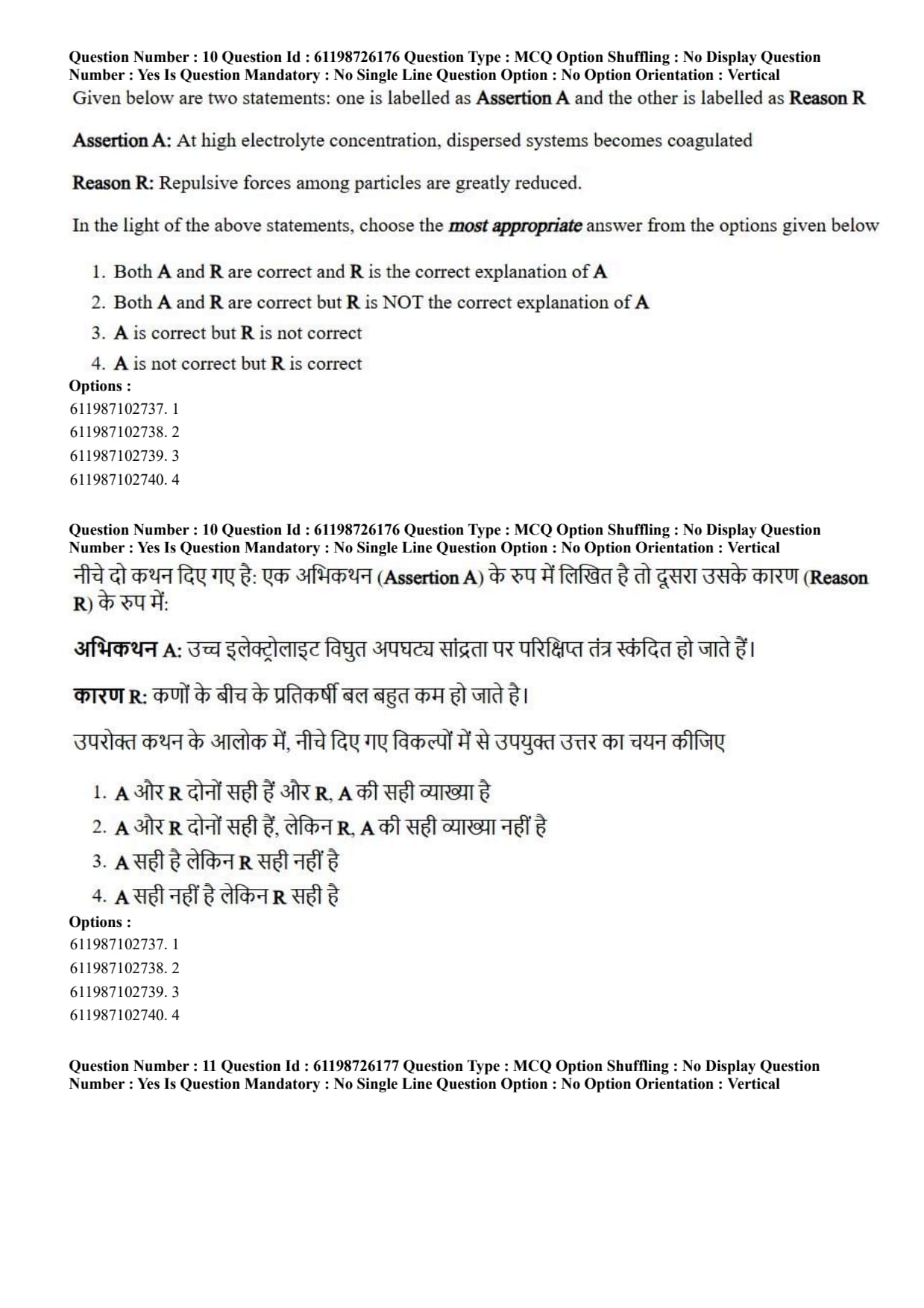
Assertion A: The small engraved area in letter like "A", "B" and "O" are difficult to tablet manufacture cleanly.
Reason R: Because tablet punches having engraving exhibit picking problem in compression.
View Solution
\textcolor{red{Step 1: Concept
Tablet compression involves the use of punches that may have logos or letters engraved on them.
\textcolor{red{Step 2: Meaning
"Picking" is a tablet defect where a small amount of material from the tablet surface sticks to and is removed by the punch face.
\textcolor{red{Step 3: Analysis
Letters like A, B, and O have closed or narrow loops. During compression, powder can easily get trapped in these small, recessed areas of the punch. This leads to "picking," where the center of the letter is pulled away from the tablet surface.
\textcolor{red{Step 4: Conclusion
Assertion A describes the manufacturing difficulty, and Reason R correctly identifies "picking" as the specific cause linked to punch engraving.
\textcolor{red{Final Answer: (A) Quick Tip: Picking = Material "picked" out of the tablet (usually inside letters). Sticking = Material stuck to the whole punch face.
Assertion A: At high electrolyte concentration, dispersed systems becomes coagulated.
Reason R: Repulsive forces among particles are greatly reduced.
View Solution
\textcolor{red{Step 1: Concept
The stability of colloidal and dispersed systems is often explained by the DLVO theory, which considers the balance between attractive and repulsive forces.
\textcolor{red{Step 2: Meaning
Coagulation is the process where particles come together to form large aggregates.
\textcolor{red{Step 3: Analysis
Adding electrolytes increases the ionic strength, which compresses the electrical double layer around the particles. This reduces the zeta potential and the electrostatic repulsive forces. When repulsion is lower than the van der Waals attractive forces, the particles collide and stick together (coagulate).
\textcolor{red{Step 4: Conclusion
Both statements are correct, and the reduction in repulsive forces is the direct cause of coagulation at high electrolyte concentrations.
\textcolor{red{Final Answer: (A) Quick Tip: Electrolytes "screen" the charge. Less charge = Less repulsion = Coagulation.
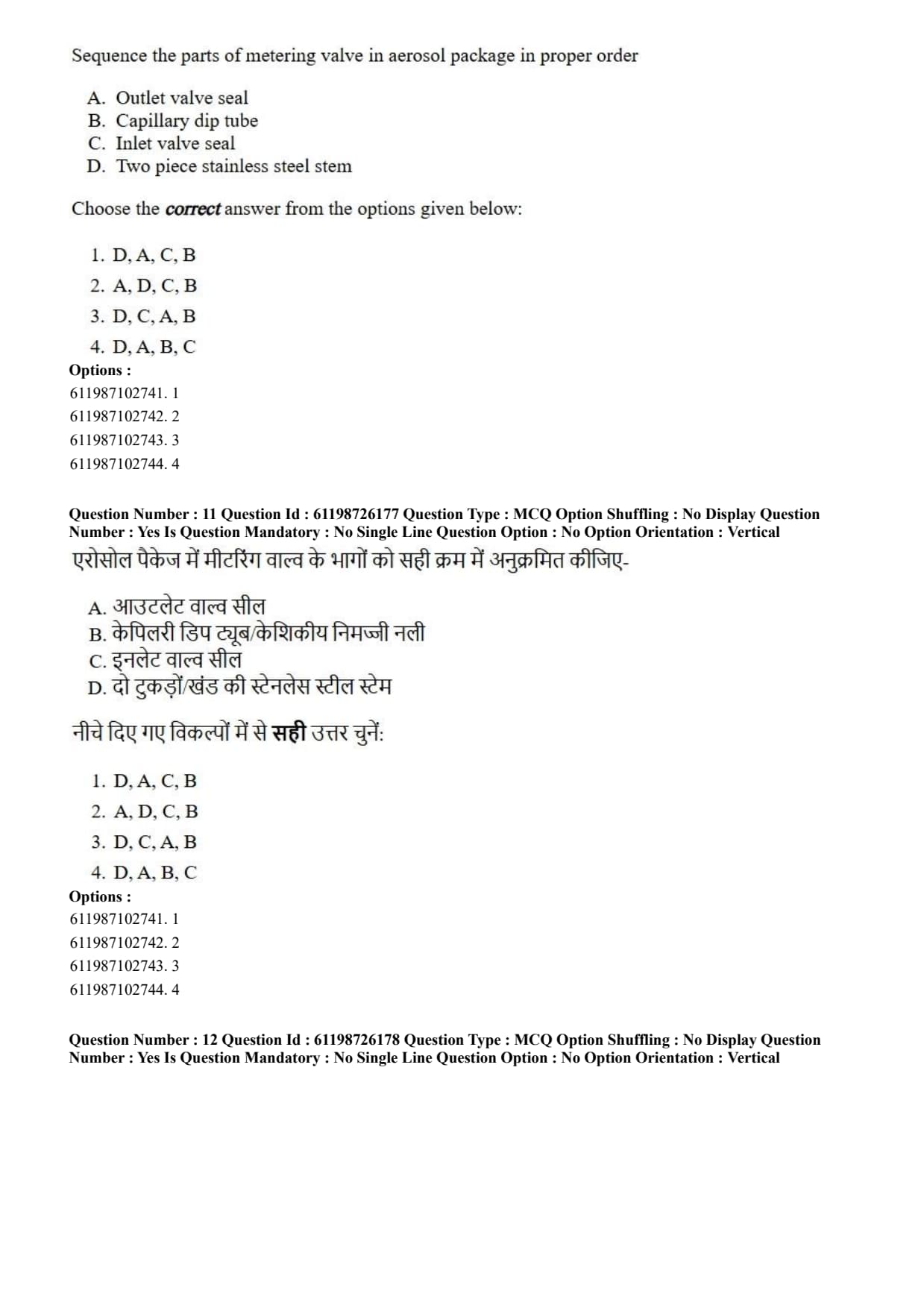
Sequence the parts of metering valve in aerosol package in proper order

View Solution
\textcolor{red{Step 1: Concept
A metering valve in an aerosol system is designed to deliver a specific, reproducible volume of product with each actuation.
\textcolor{red{Step 2: Meaning
The components listed represent the internal path and structural elements: A. Outlet valve seal , B. Capillary dip tube , C. Inlet valve seal , and D. Two piece stainless steel stem.
\textcolor{red{Step 3: Analysis
The sequence follows the flow from the actuation point down to the reservoir: The stem (D) is the primary moving part , followed by the outlet seal (A) , the inlet seal (C) which controls the chamber filling , and finally the dip tube (B) which extends into the liquid.
\textcolor{red{Step 4: Conclusion
The proper functional sequence for these components is D-A-C-B.
\textcolor{red{Final Answer: (A) Quick Tip: Think "Top-Down": Stem \(\rightarrow\) Seals \(\rightarrow\) Dip Tube.
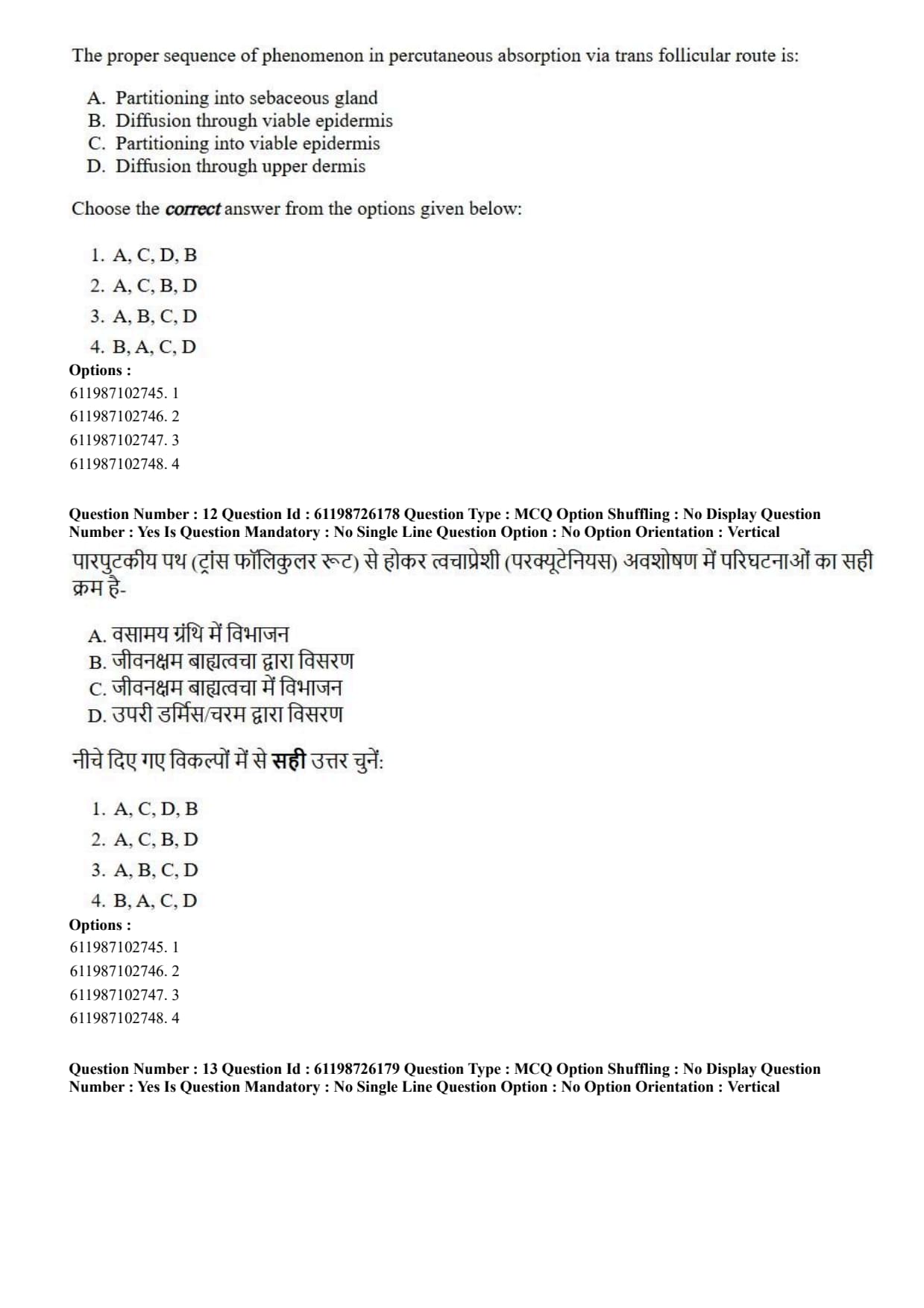
The proper sequence of phenomenon in percutaneous absorption via trans follicular route is:

View Solution
\textcolor{red{Step 1: Concept
Percutaneous absorption via the trans-follicular route bypasses the stratum corneum by entering through hair follicles and associated glands.
\textcolor{red{Step 2: Meaning
The stages include: A. Partitioning into sebaceous gland , B. Diffusion through viable epidermis , C. Partitioning into viable epidermis , and D. Diffusion through upper dermis.
\textcolor{red{Step 3: Analysis
The drug first enters the sebaceous gland (A) , then partitions into the surrounding viable epidermis (C). It then diffuses through the layers of the viable epidermis (B) before reaching the upper dermis (D) for systemic uptake.
\textcolor{red{Step 4: Conclusion
The logical physiological sequence is A-C-B-D.
\textcolor{red{Final Answer: (B) Quick Tip: Follicular absorption sequence: Gland \(\rightarrow\) Partition \(\rightarrow\) Epidermis \(\rightarrow\) Dermis.
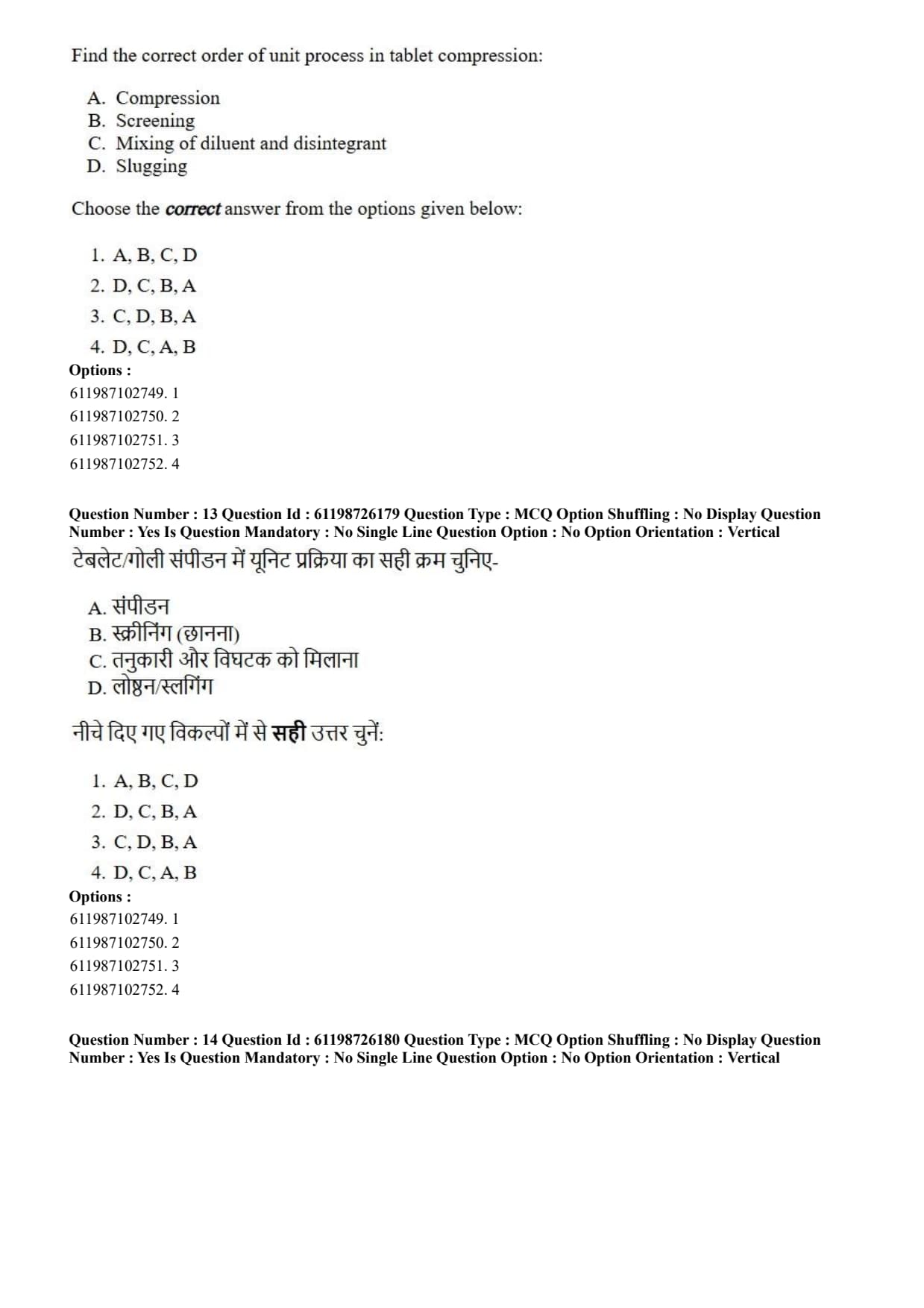
Find the correct order of unit process in tablet compression:

View Solution
\textcolor{red{Step 1: Concept
Tablet manufacturing via dry granulation (slugging) involves several preparatory steps before the final compression.
\textcolor{red{Step 2: Meaning
The processes are: A. Compression , B. Screening , C. Mixing of diluent and disintegrant , and D. Slugging.
\textcolor{red{Step 3: Analysis
First, the raw materials (diluent/disintegrant) are mixed (C). This mix is then pre-compressed into large "slugs" (D). These slugs are broken down and screened to achieve uniform granules (B) , which are finally compressed into finished tablets (A).
\textcolor{red{Step 4: Conclusion
The correct manufacturing order is C-D-B-A.
\textcolor{red{Final Answer: (C) Quick Tip: Slugging always requires screening before the final compression.
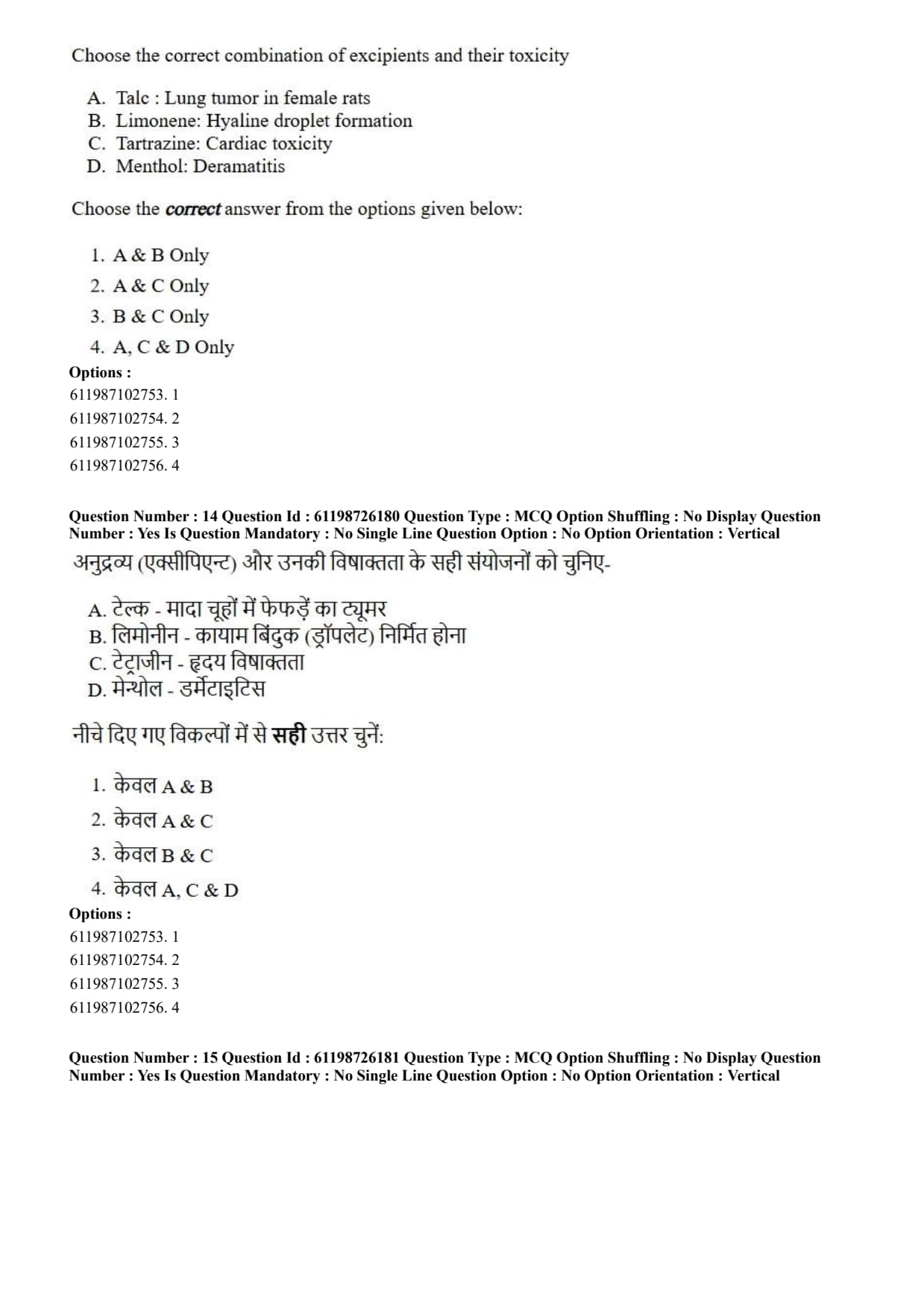
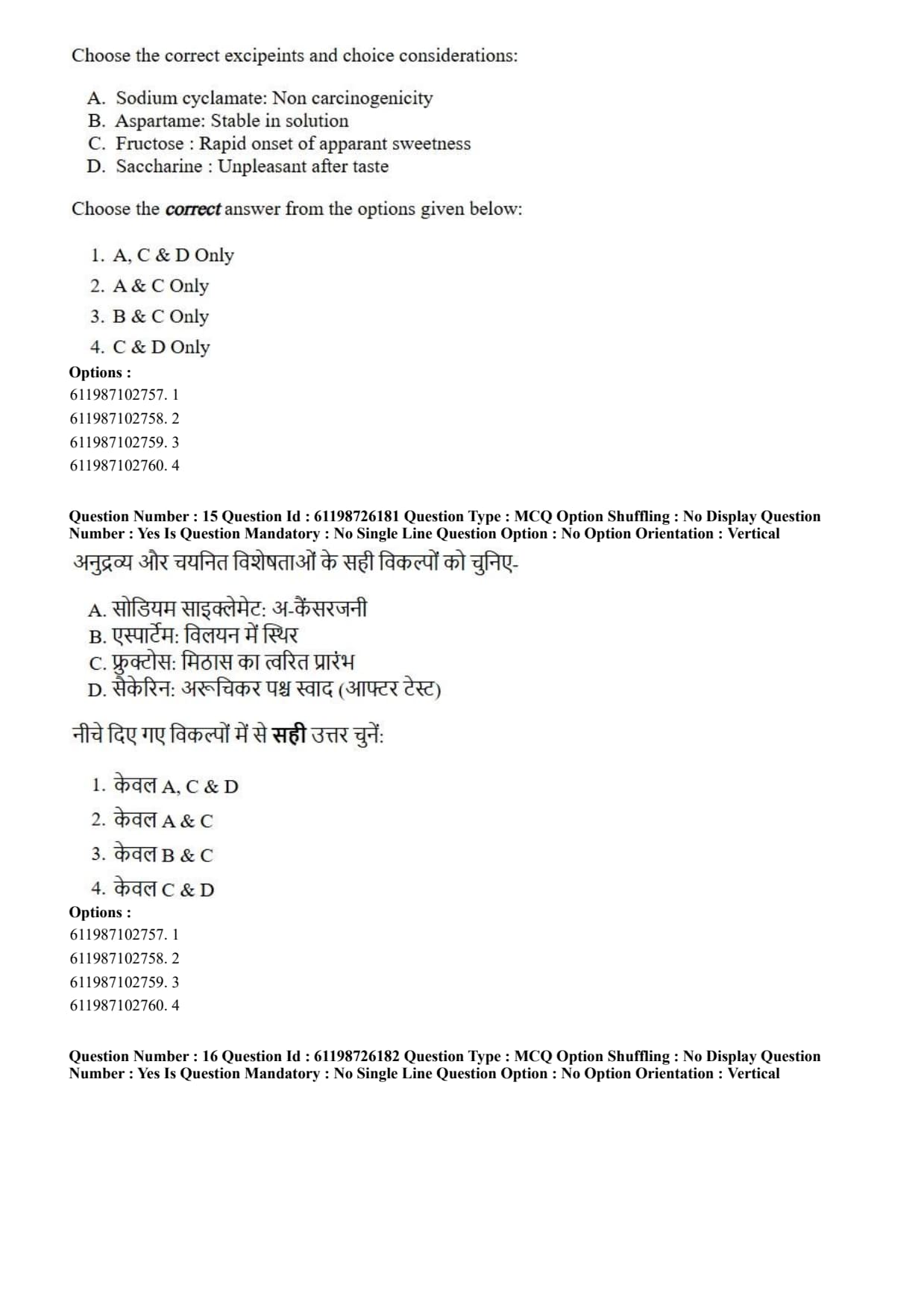
Choose the correct combination of excipients and their toxicity:

View Solution
\textcolor{red{Step 1: Concept
While excipients are generally inert, some can exhibit specific toxicities or adverse effects in high doses or specific models.
\textcolor{red{Step 2: Meaning
A. Talc is linked to lung tumors in female rats. B. Limonene is associated with hyaline droplet formation in male rat kidneys. C. Tartrazine is known for hypersensitivity/allergy. D. Menthol can cause localized irritation/dermatitis.
\textcolor{red{Step 3: Analysis
Statements A and B accurately reflect established toxicological data for those specific excipients in animal models. C is incorrectly labeled as cardiac toxicity , and D (while possible) is less definitive in this technical context.
\textcolor{red{Step 4: Conclusion
Only combinations A and B are correct.
\textcolor{red{Final Answer: (A) Quick Tip: Talc = Lung issues; Limonene = Hyaline droplets. These are classic toxicology pairings.
Choose the correct excipients and choice considerations:

View Solution
\textcolor{red{Step 1: Concept
Sweeteners are chosen based on their safety, stability, and taste profiles.
\textcolor{red{Step 2: Meaning
A. Sodium cyclamate is considered non-carcinogenic in many regions. B. Aspartame is actually unstable in aqueous solutions. C. Fructose provides a rapid onset of sweetness. D. Saccharine is notorious for a bitter/metallic aftertaste.
\textcolor{red{Step 3: Analysis
Statements A, C, and D are factually correct regarding the properties of these sweeteners. Statement B is false because aspartame degrades over time in liquid.
\textcolor{red{Step 4: Conclusion
The correct set is A, C, and D.
\textcolor{red{Final Answer: (A) Quick Tip: Remember: Aspartame is NOT stable in liquids; Saccharine has a bad aftertaste.
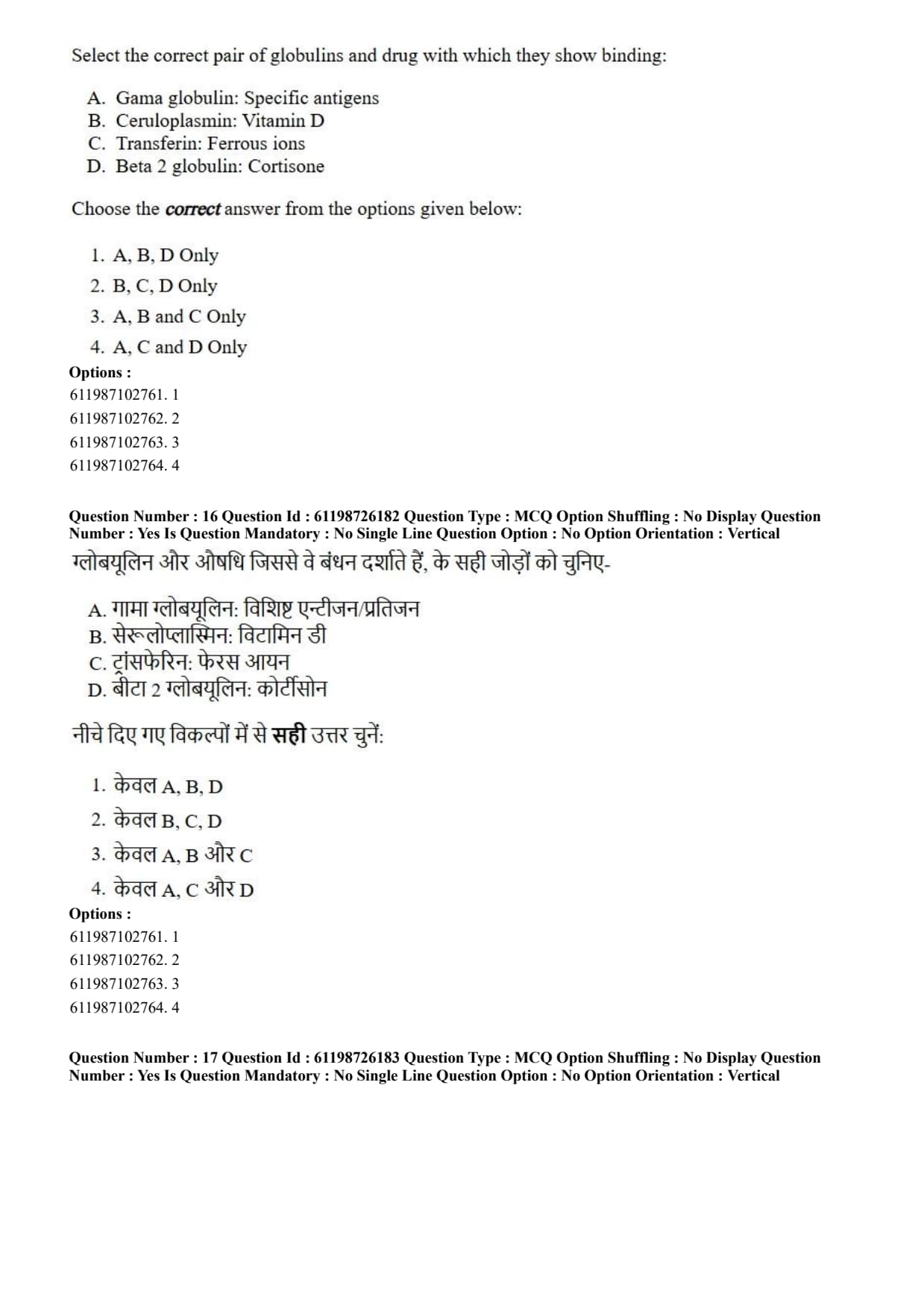
Select the correct pair of globulins and drug with which they show binding:

View Solution
\textcolor{red{Step 1: Concept
Plasma proteins like globulins bind to specific drugs and endogenous substances.
\textcolor{red{Step 2: Meaning
A. Gamma globulin binds specific antigens. B. Ceruloplasmin primarily binds copper, not Vitamin D. C. Transferrin binds ferrous/ferric ions. D. Beta-2 globulin binds cortisone.
\textcolor{red{Step 3: Analysis
Pairs A, C, and D represent accurate binding affinities found in human plasma. Pair B is incorrect as ceruloplasmin is a copper-carrying protein.
\textcolor{red{Step 4: Conclusion
The correct choices are A, C, and D.
\textcolor{red{Final Answer: (D) Quick Tip: Ceruloplasmin = Copper (Cu). Transferrin = Iron (Fe).
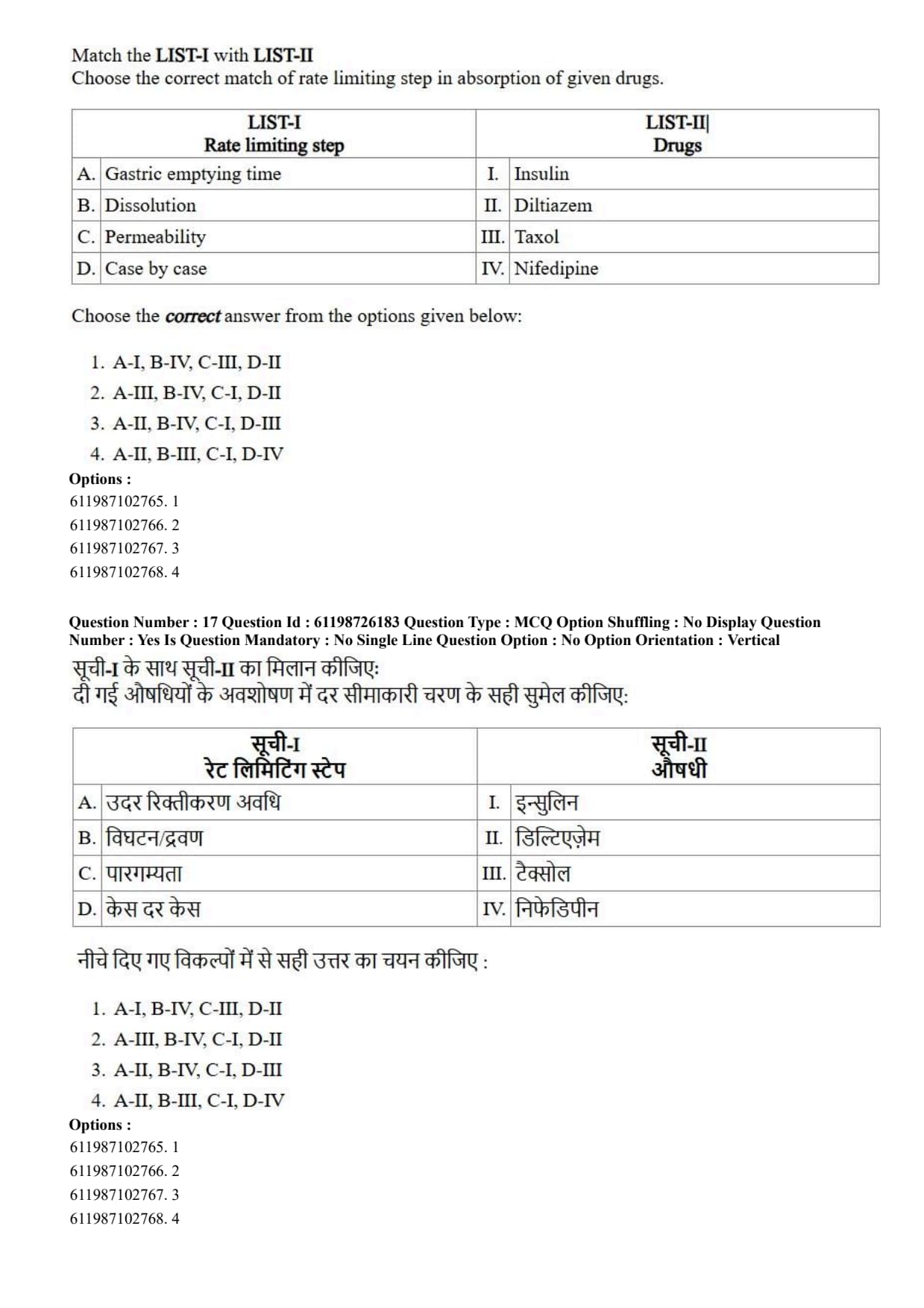
Match the LIST-I (Rate limiting step) with LIST-II (Drugs) in absorption:

View Solution
\textcolor{red{Step 1: Concept
The rate-limiting step is the slowest part of the absorption process that dictates the overall rate of drug entry into the system.
\textcolor{red{Step 2: Meaning
A. Gastric emptying time affects drugs like Diltiazem. B. Dissolution is the bottleneck for poorly soluble drugs like Nifedipine. C. Permeability is the limit for large molecules like Insulin. D. Taxol has complex absorption (case by case).
\textcolor{red{Step 3: Analysis
Matching: A-II (Gastric Emptying-Diltiazem), B-IV (Dissolution-Nifedipine), C-I (Permeability-Insulin), and D-III (Case by case-Taxol).
\textcolor{red{Step 4: Conclusion
The correct match is A-II, B-IV, C-I, D-III.
\textcolor{red{Final Answer: (C) Quick Tip: Insulin is a large protein; its absorption is limited by how it crosses (Permeability).
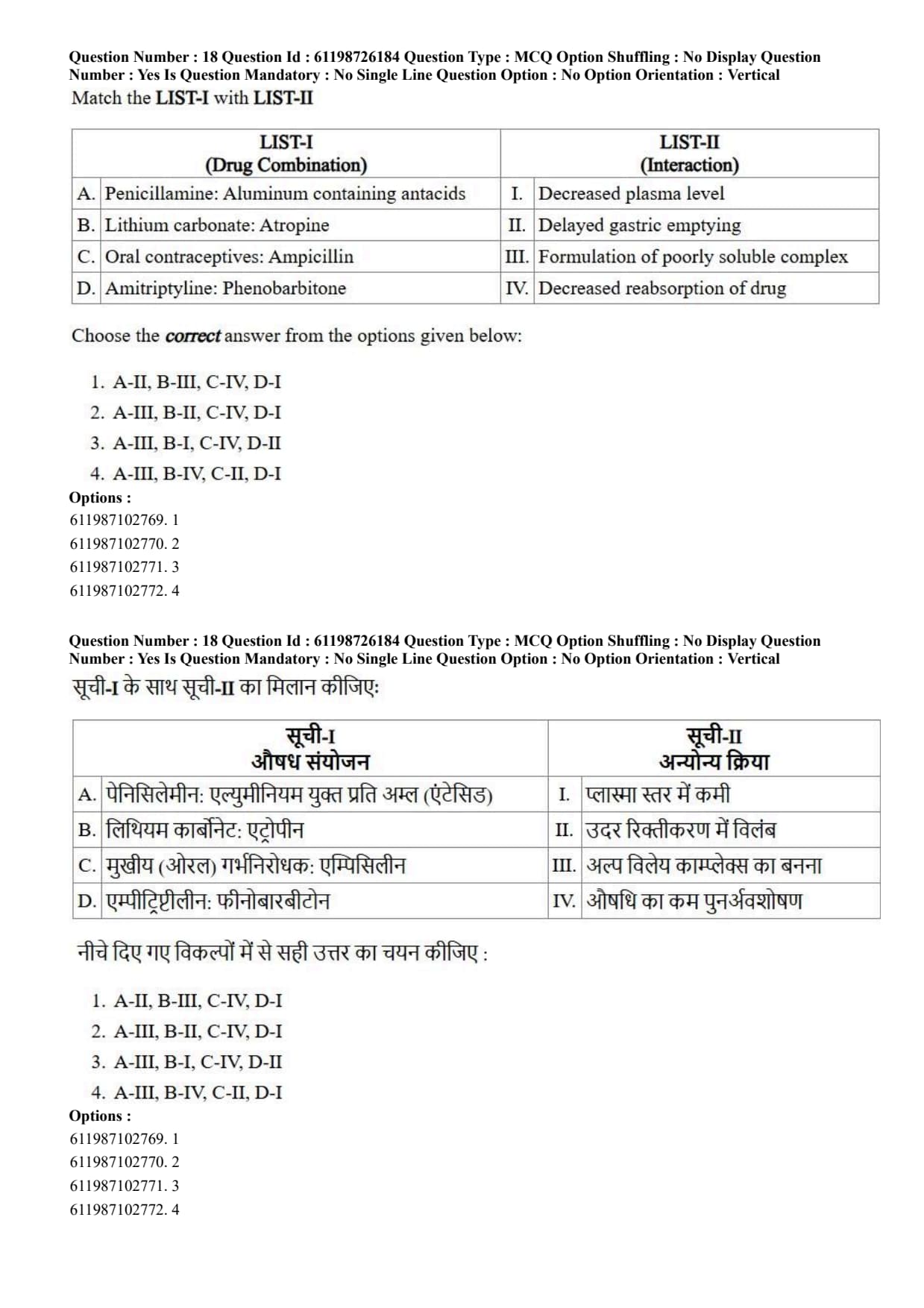
Match the LIST-I (Drug Combination) with LIST-II (Interaction):

View Solution
\textcolor{red{Step 1: Concept
Drug-drug interactions can occur during the absorption phase in the GI tract.
\textcolor{red{Step 2: Meaning
A. Penicillamine and Al-antacids form insoluble complexes (III). B. Atropine slows gastric emptying, delaying Lithium carbonate (II). C. Ampicillin reduces flora, decreasing oral contraceptive reabsorption (IV). D. Phenobarbitone induces metabolism, decreasing Amitriptyline levels (I).
\textcolor{red{Step 3: Analysis
Matching: A-III, B-II, C-IV, D-I.
\textcolor{red{Step 4: Conclusion
The correct sequence is A-III, B-II, C-IV, D-I.
\textcolor{red{Final Answer: (B) Quick Tip: Antacids + Penicillamine = Complex (Chelation). Atropine = Anticholinergic = Delayed emptying.
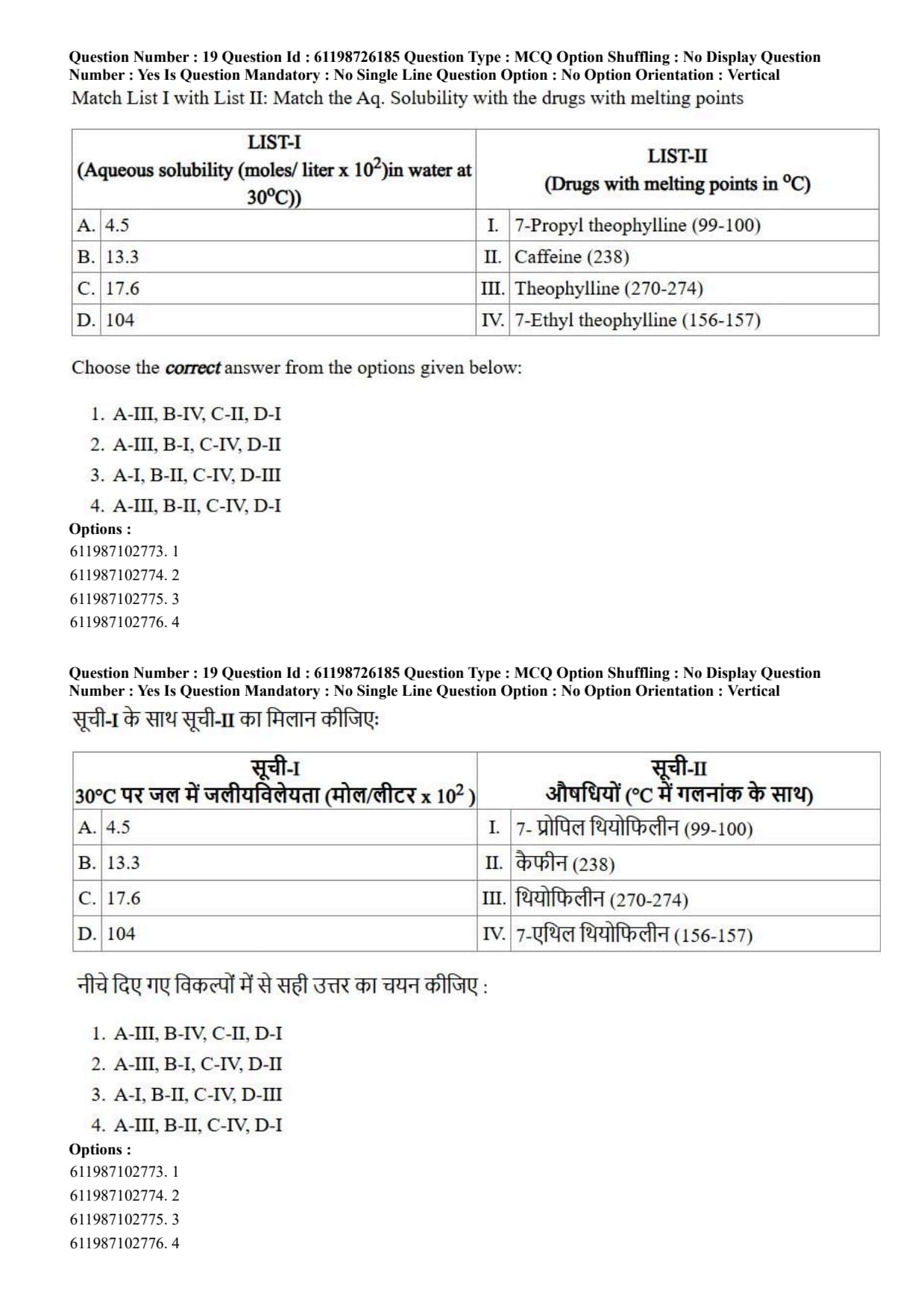
Match List I (Aqueous solubility) with List II (Drugs with melting points):

View Solution
\textcolor{red{Step 1: Concept
There is generally an inverse relationship between a drug's melting point and its aqueous solubility.
\textcolor{red{Step 2: Meaning
High melting points indicate strong intermolecular forces, often leading to lower solubility.
\textcolor{red{Step 3: Analysis
Theophylline (\(270\)-\(274^{\circ}C\)) has the highest MP and lowest solubility (4.5). Caffeine (\(238^{\circ}C\)) follows with solubility 13.3. 7-Ethyl theophylline (\(156\)-\(157^{\circ}C\)) matches 17.6. 7-Propyl theophylline (\(99\)-\(100^{\circ}C\)) has the lowest MP and highest solubility (104).
\textcolor{red{Step 4: Conclusion
The correct matches are: A-III, B-II, C-IV, D-I.
\textcolor{red{Final Answer: (D) Quick Tip: Higher Melting Point \(\rightarrow\) Lower Solubility.
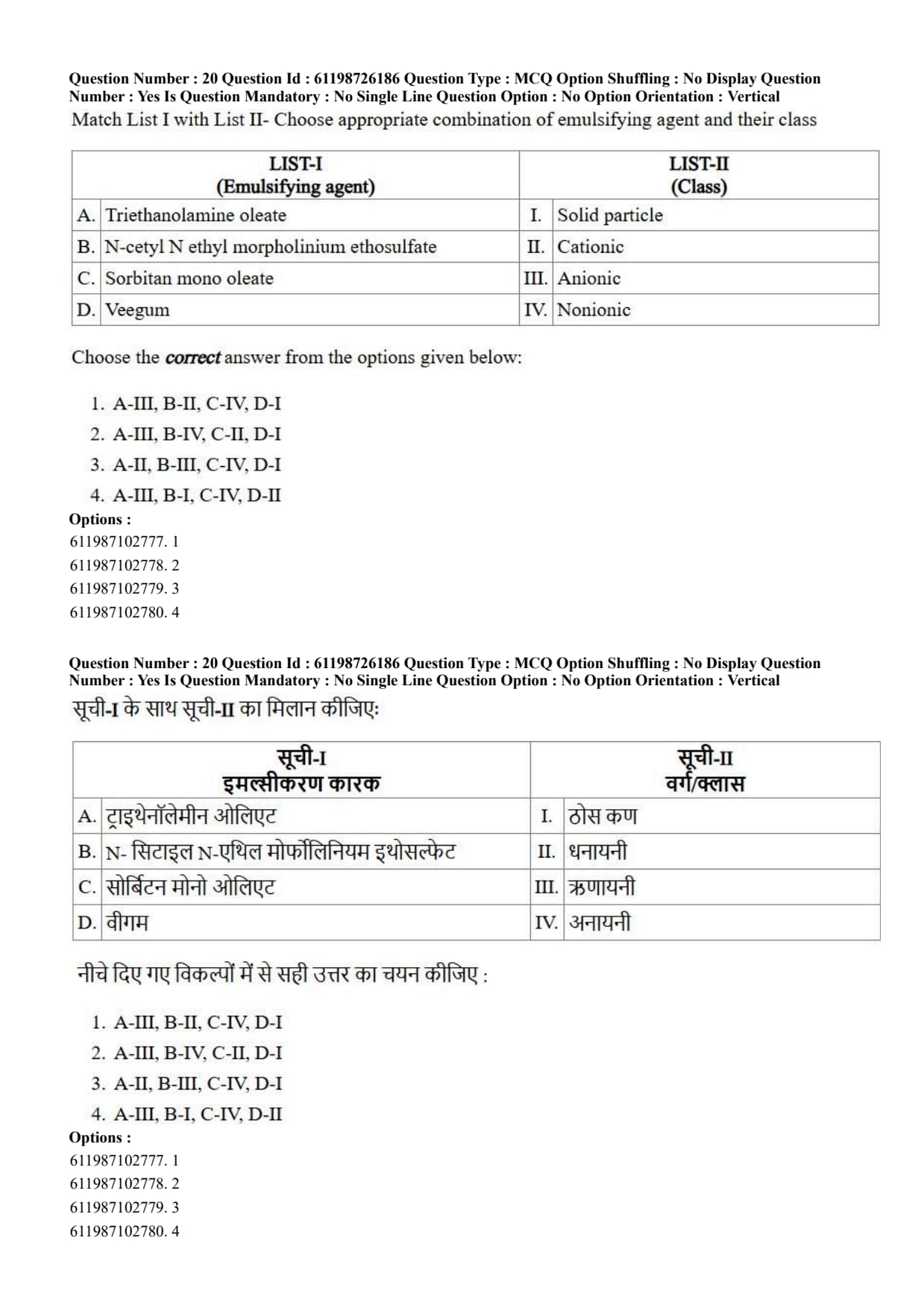
Match List I (Emulsifying agent) with List II (Class):

View Solution
\textcolor{red{Step 1: Concept
Emulsifying agents are classified based on their chemical structure and charge.
\textcolor{red{Step 2: Meaning
A. Triethanolamine oleate is an anionic soap (III). B. N-cetyl N-ethyl morpholinium ethosulfate is a cationic agent (II). C. Sorbitan mono oleate (Span) is a non-ionic surfactant (IV). D. Veegum is a solid particle (clay) used for stabilization (I).
\textcolor{red{Step 3: Analysis
Matching: A-III, B-II, C-IV, D-I.
\textcolor{red{Step 4: Conclusion
The correct match is A-III, B-II, C-IV, D-I.
\textcolor{red{Final Answer: (A) Quick Tip: Span/Tween = Non-ionic. Veegum/Bentonite = Solid particles.
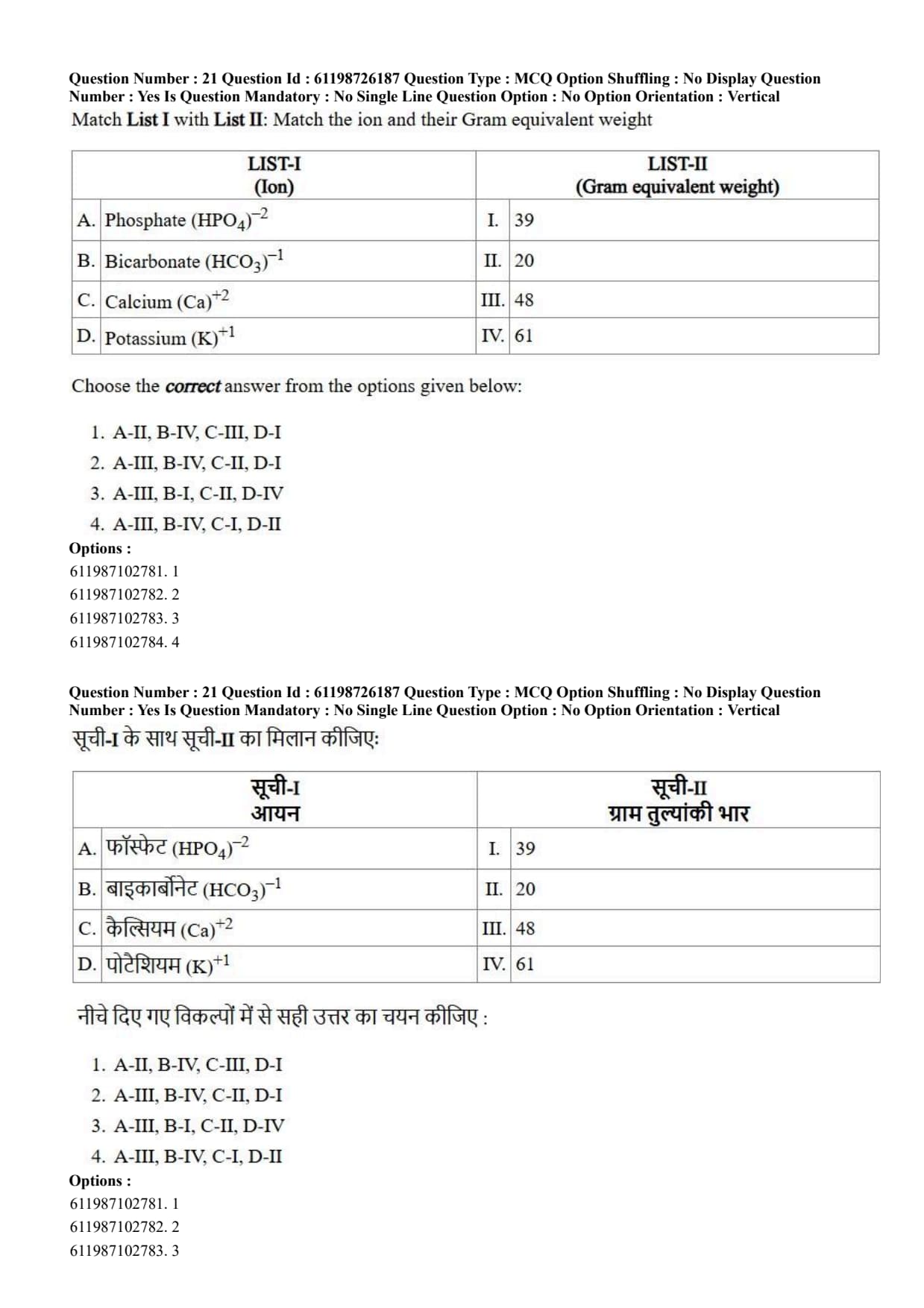
Match the ion (LIST-I) and their Gram equivalent weight (LIST-II):

View Solution
\textcolor{red{Step 1: Concept
Gram equivalent weight is calculated as the atomic or molecular weight divided by the valence of the ion.
\textcolor{red{Step 2: Meaning
A. Phosphate \((HPO_{4})^{-2}\) has a molecular weight of ~96; with valence 2, Eq Wt is 48. B. Bicarbonate \((HCO_{3})^{-1}\) has a molecular weight of ~61; with valence 1, Eq Wt is 61. C. Calcium \((Ca)^{+2}\) has an atomic weight of 40; with valence 2, Eq Wt is 20. D. Potassium \((K)^{+1}\) has an atomic weight of 39; with valence 1, Eq Wt is 39.
\textcolor{red{Step 3: Analysis
Matching the values: A-III (48), B-IV (61), C-II (20), and D-I (39).
\textcolor{red{Step 4: Conclusion
The correct matching sequence is A-III, B-IV, C-II, D-I.
\textcolor{red{Final Answer: (B) Quick Tip: Equivalent Weight = Molecular Weight / Valency.
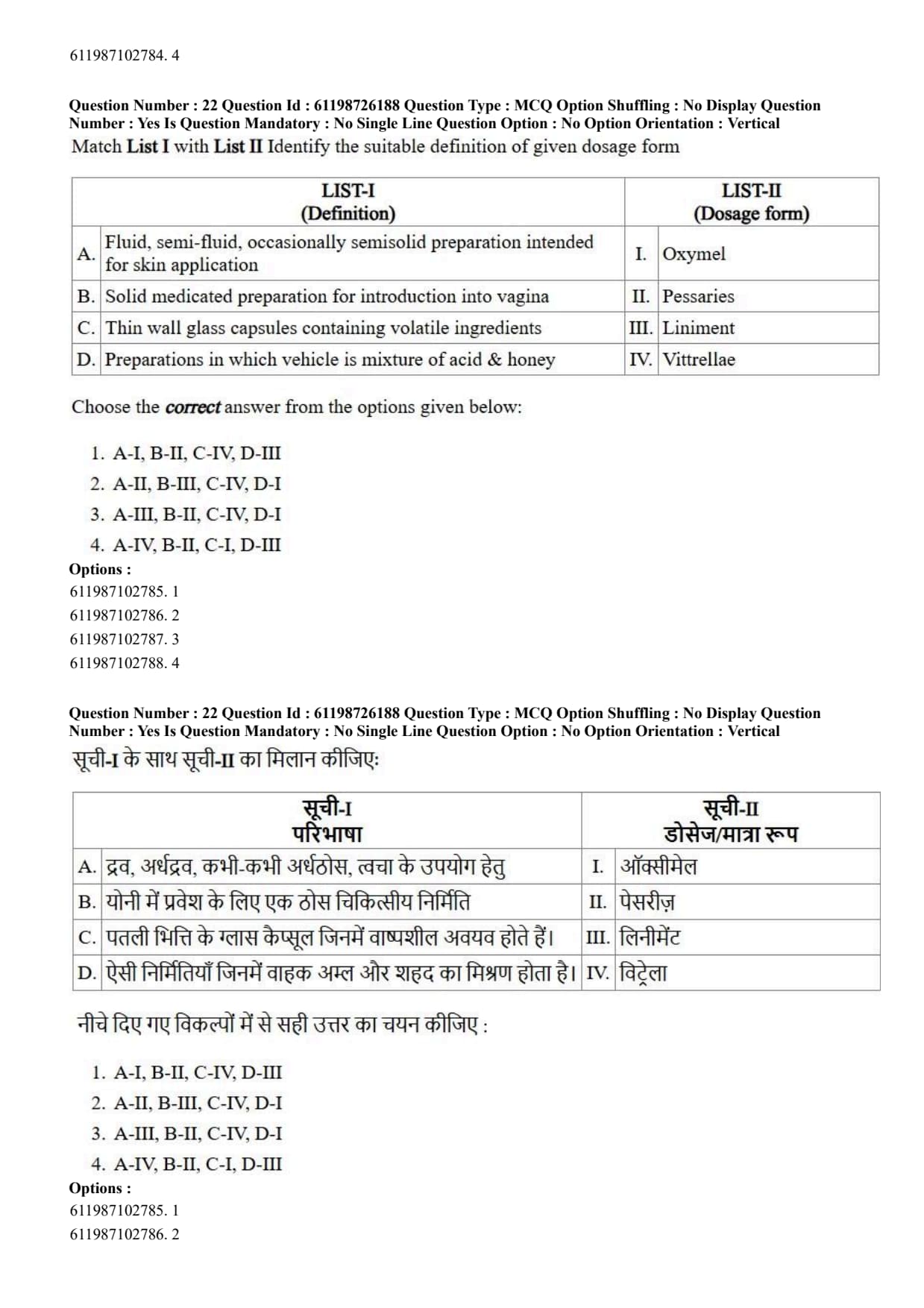
Match the definition (LIST-I) with the dosage form (LIST-II):

View Solution
\textcolor{red{Step 1: Concept
Different dosage forms are defined by their physical state, route of administration, and vehicle.
\textcolor{red{Step 2: Meaning
A. Liniments (III) are fluid/semi-fluid preparations for skin application. B. Pessaries (II) are solid medicated preparations for vaginal use. C. Vitrellae (IV) are thin-walled glass capsules with volatile ingredients. D. Oxymel (I) uses a vehicle of acid (acetic acid) and honey.
\textcolor{red{Step 3: Analysis
Matching based on definitions: A-III, B-II, C-IV, D-I.
\textcolor{red{Step 4: Conclusion
The sequence A-III, B-II, C-IV, D-I correctly identifies each dosage form.
\textcolor{red{Final Answer: (C) Quick Tip: Oxymel = Oxy (Acid) + Mel (Honey).
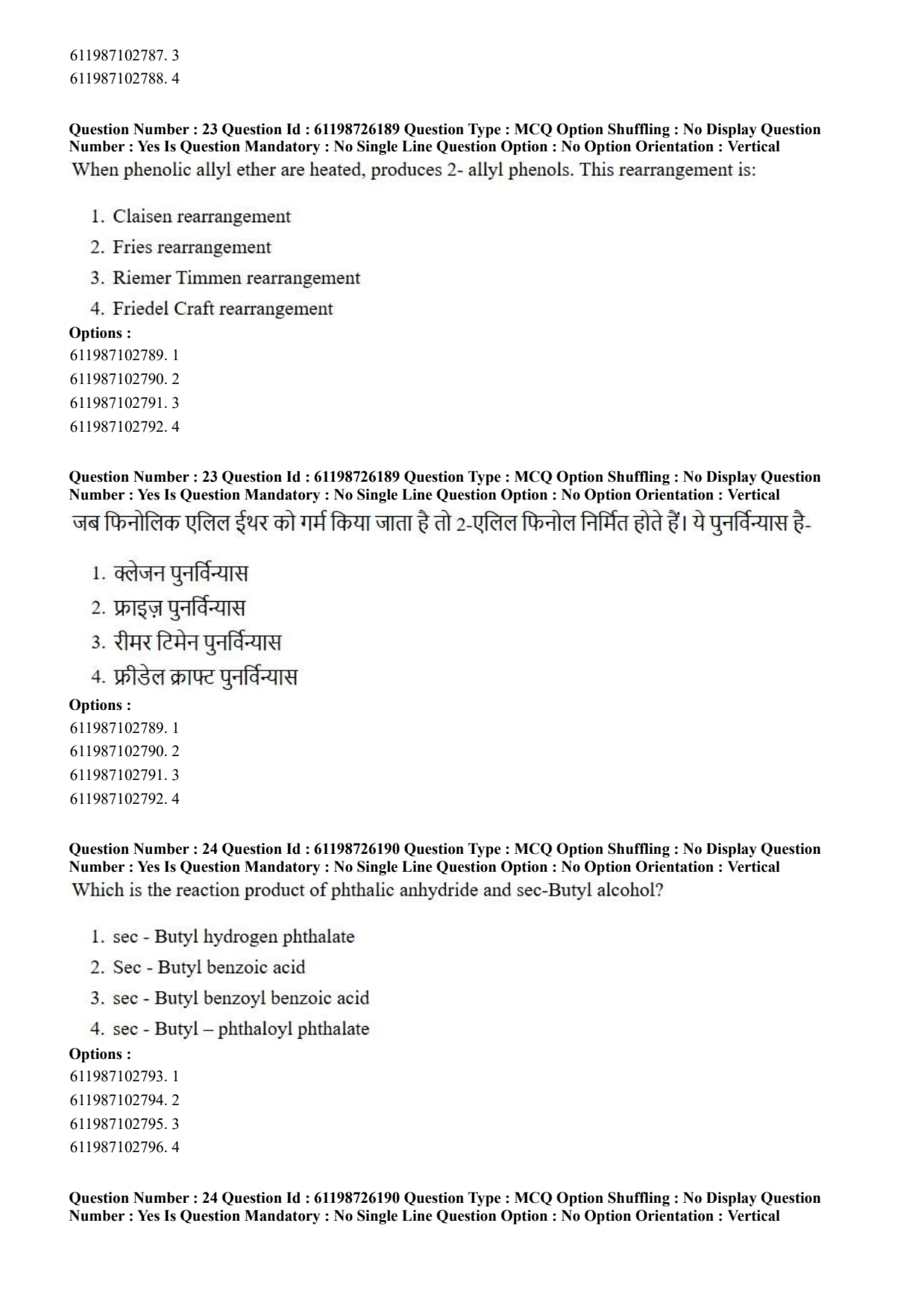
When phenolic allyl ether are heated, produces 2-allyl phenols. This rearrangement is:
View Solution
\textcolor{red{Step 1: Concept
The Claisen rearrangement is a powerful carbon-carbon bond-forming chemical reaction.
\textcolor{red{Step 2: Meaning
It involves the [3,3]-sigmatropic rearrangement of an allyl vinyl ether or, in this specific case, an allyl phenyl ether upon heating.
\textcolor{red{Step 3: Analysis
When allyl phenyl ether is heated, the allyl group migrates from the oxygen to the ortho-position (2-position) of the phenyl ring. Fries rearrangement involves phenolic esters; Reimer-Tiemann is for formylation; Friedel-Crafts involves alkylation/acylation.
\textcolor{red{Step 4: Conclusion
The migration of an allyl group from oxygen to the ortho-carbon of phenol is the Claisen rearrangement.
\textcolor{red{Final Answer: (A) Quick Tip: Claisen = Allyl group migration from Oxygen to Carbon.
Which is the reaction product of phthalic anhydride and sec-Butyl alcohol?
View Solution
\textcolor{red{Step 1: Concept
The reaction of an acid anhydride with an alcohol typically produces a monoester.
\textcolor{red{Step 2: Meaning
Phthalic anhydride is a cyclic anhydride; reacting it with one equivalent of alcohol opens the ring to form a half-ester.
\textcolor{red{Step 3: Analysis
sec-Butyl alcohol acts as the nucleophile, attacking one of the carbonyl carbons of the phthalic anhydride, resulting in a product that contains one ester group and one free carboxylic acid group.
\textcolor{red{Step 4: Conclusion
The resulting compound is sec-Butyl hydrogen phthalate.
\textcolor{red{Final Answer: (A) Quick Tip: Anhydride + Alcohol \(\rightarrow\) Half-ester (Monoester).
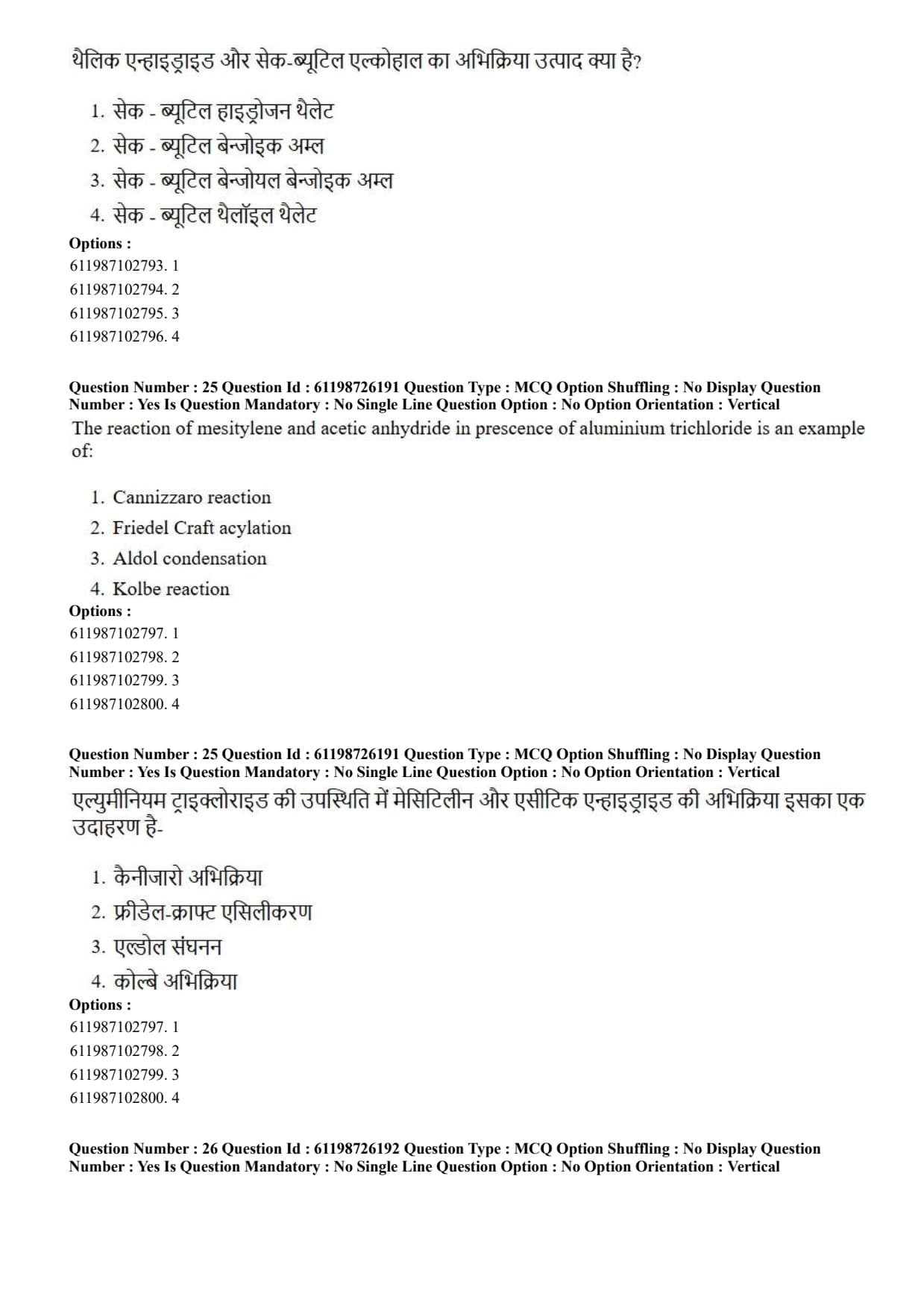
The reaction of mesitylene and acetic anhydride in presence of aluminium trichloride is an example of:
View Solution
\textcolor{red{Step 1: Concept
The introduction of an acyl group into an aromatic ring using an acid anhydride and a Lewis acid catalyst is a specific name reaction.
\textcolor{red{Step 2: Meaning
Mesitylene (1,3,5-trimethylbenzene) is the aromatic substrate, acetic anhydride is the acylating agent, and \(AlCl_{3}\) is the catalyst.
\textcolor{red{Step 3: Analysis
This setup is the classic Friedel-Crafts acylation. Cannizzaro is for aldehydes without alpha-hydrogens; Aldol is for enolizable carbonyls; Kolbe is for phenol carboxylation.
\textcolor{red{Step 4: Conclusion
Therefore, the reaction is a Friedel-Crafts acylation.
\textcolor{red{Final Answer: (B) Quick Tip: Aromatic ring + Anhydride + \(AlCl_{3}\) = Friedel-Crafts Acylation.
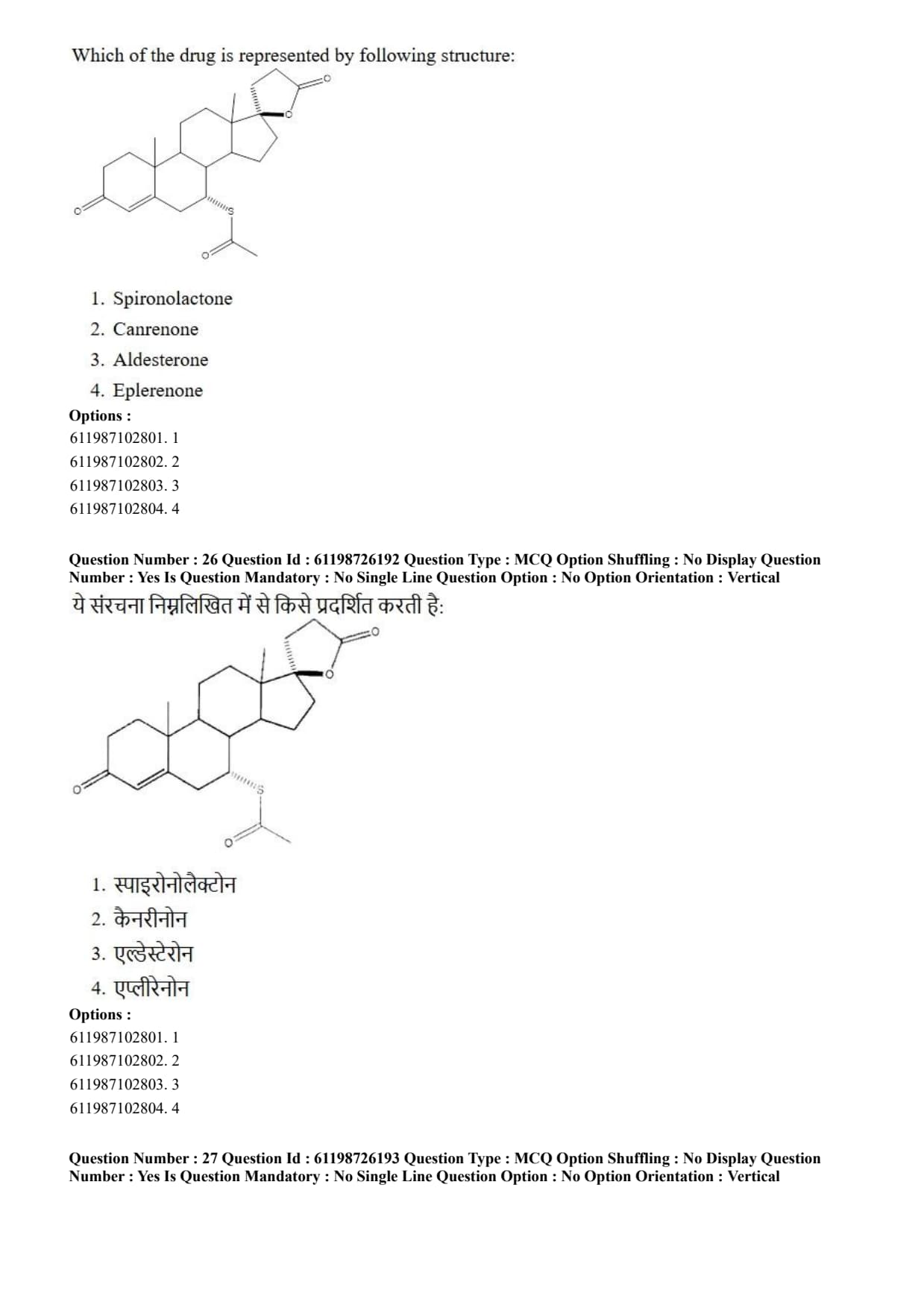
Which of the drug is represented by following structure?

View Solution
\textcolor{red{Step 1: Concept
The chemical structure identifies a specific steroid-based diuretic drug.
\textcolor{red{Step 2: Meaning
The structure shows a steroidal nucleus with a lactone ring at the 17-position and a thioacetate group (\(-S-CO-CH_{3}\)) at the 7-alpha position.
\textcolor{red{Step 3: Analysis
Spironolactone is characterized by the presence of this 7-alpha acetylthio group. Canrenone lacks the thioacetate; Aldosterone is the natural hormone; Eplerenone has an epoxy group.
\textcolor{red{Step 4: Conclusion
The structure matches Spironolactone.
\textcolor{red{Final Answer: (A) Quick Tip: Look for the Sulfur group (\(S-CO-CH_{3}\)) at position 7 for Spironolactone.
Which of the following is having antidepressant activity and used for nocturnal enuresis?
View Solution
\textcolor{red{Step 1: Concept
Certain antidepressants have secondary uses in treating conditions like nocturnal enuresis (bedwetting) in children.
\textcolor{red{Step 2: Meaning
The drug must have antidepressant properties and clinical utility for enuresis.
\textcolor{red{Step 3: Analysis
Viloxazine is a selective norepinephrine reuptake inhibitor used as an antidepressant and for enuresis. Amiodarone, Ibutilide, and Dofetilide are anti-arrhythmic drugs.
\textcolor{red{Step 4: Conclusion
Viloxazine is the correct antidepressant in this list used for nocturnal enuresis.
\textcolor{red{Final Answer: (B) Quick Tip: Many TCAs and NRIs like Viloxazine are used for bedwetting.
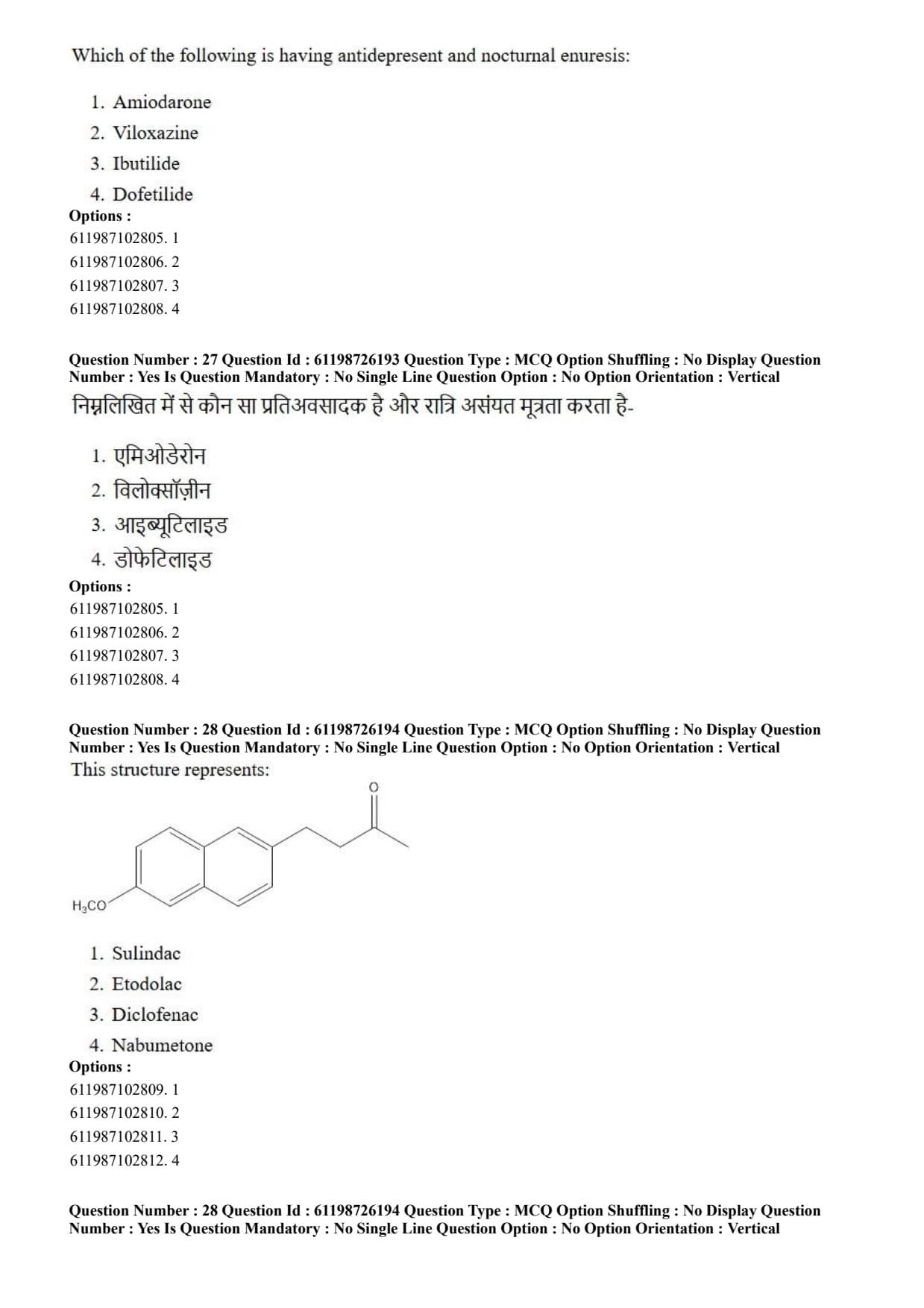
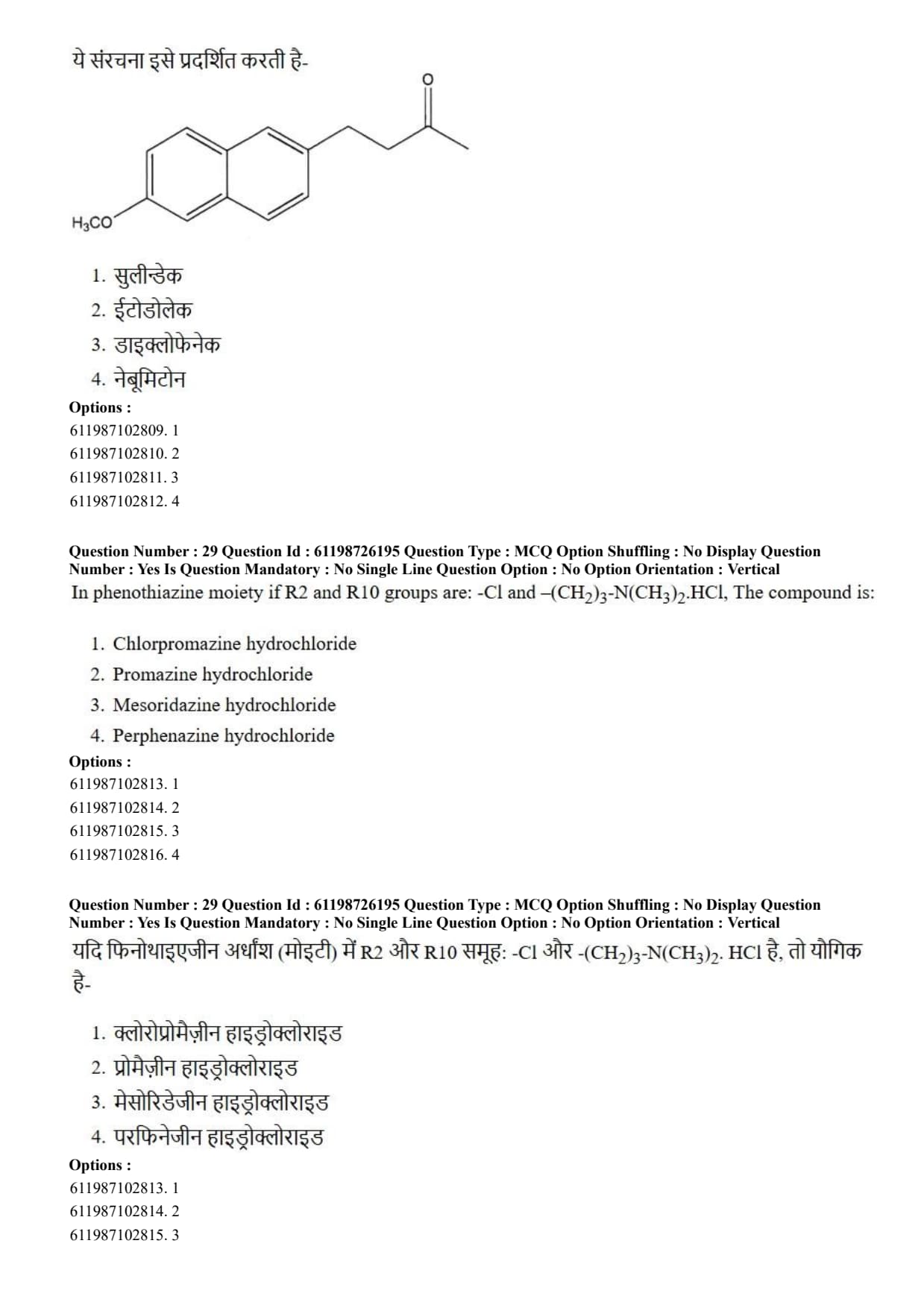
This structure represents:

View Solution
\textcolor{red{Step 1: Concept
The chemical structure belongs to a non-steroidal anti-inflammatory drug (NSAID).
\textcolor{red{Step 2: Meaning
The structure shows a naphthalene ring system with a methoxy group and a 2-butanone side chain.
\textcolor{red{Step 3: Analysis
Nabumetone is a prodrug NSAID characterized by a methoxynaphthyl group attached to a butanone moiety. Sulindac, Etodolac, and Diclofenac have different core structures (indene, indole, and phenylacetic acid respectively).
\textcolor{red{Step 4: Conclusion
The structure is Nabumetone.
\textcolor{red{Final Answer: (D) Quick Tip: Nabumetone is the only non-acidic NSAID prodrug in this list.
In phenothiazine moiety if R2 and R10 groups are: -Cl and \(-(CH_{2})_{3}-N(CH_{3})_{2}\).HCl, the compound is:
View Solution
\textcolor{red{Step 1: Concept
Phenothiazines are a class of antipsychotics defined by their tricyclic core and specific side chains.
\textcolor{red{Step 2: Meaning
R2 refers to the substituent on the second position of the ring, and R10 is the side chain attached to the nitrogen at position 10.
\textcolor{red{Step 3: Analysis
Chlorpromazine has a chlorine atom at R2 and a dimethylaminopropyl side chain at R10. Promazine has no substituent at R2; Mesoridazine has a methylsulfinyl group; Perphenazine has a piperazine side chain.
\textcolor{red{Step 4: Conclusion
The combination of -Cl and dimethylaminopropyl side chain identifies Chlorpromazine hydrochloride.
\textcolor{red{Final Answer: (A) Quick Tip: Chlorpromazine = "Chlor" (Chlorine) + Promazine (Propyl-Dimethylamine).
Haloprogin, Clioquinol, and Ciclopirox olamine possess common activity:
View Solution
\textcolor{red{Step 1: Concept
These drugs belong to a therapeutic class used to treat fungal infections of the skin.
\textcolor{red{Step 2: Meaning
Dermatophytes are fungi that cause infections like athlete's foot and ringworm.
\textcolor{red{Step 3: Analysis
Haloprogin, Clioquinol, and Ciclopirox are all topical antifungal agents specifically effective against dermatophytes. They are not primarily used for viruses, inflammation, or pain.
\textcolor{red{Step 4: Conclusion
Their common therapeutic property is antidermatophyte activity.
\textcolor{red{Final Answer: (A) Quick Tip: All three are standard topical agents for skin fungus.
2-(phenylethyl) hydrazine sulfate posses:
View Solution
\textcolor{red{Step 1: Concept
The chemical 2-(phenylethyl) hydrazine, commonly known as Phenelzine, belongs to the hydrazine class of antidepressants.
\textcolor{red{Step 2: Meaning
Hydrazine antidepressants work by inhibiting enzymes responsible for the breakdown of neurotransmitters in the brain.
\textcolor{red{Step 3: Analysis
Phenelzine is a non-selective and irreversible inhibitor of the enzyme Monoamine Oxidase (MAO). By inhibiting this enzyme, it increases the levels of norepinephrine, serotonin, and dopamine.
\textcolor{red{Step 4: Conclusion
Therefore, 2-(phenylethyl) hydrazine sulfate possesses monoamino oxidase inhibitor (MAOI) properties.
\textcolor{red{Final Answer: (A) Quick Tip: Phenelzine (Phenylethylhydrazine) is a classic MAO inhibitor; remember the "hydrazine" suffix often points to this class.
Assertion A: Tripelannamine and methaphenilene have similar biological property.
Reason R: Because they are stereoisomers of each other.
View Solution
\textcolor{red{Step 1: Concept
This involves the structure-activity relationship (SAR) of ethylenediamine-class antihistamines.
\textcolor{red{Step 2: Meaning
Tripelennamine and Methaphenilene are both first-generation H1-receptor antagonists.
\textcolor{red{Step 3: Analysis
Assertion A is correct because both drugs are ethylenediamine derivatives used as antihistamines with similar pharmacological profiles. However, Reason R is incorrect because they are bioisosteres, not stereoisomers. In Methaphenilene, the benzyl group of Tripelennamine is replaced with a thenyl (thiophene) group.
\textcolor{red{Step 4: Conclusion
Since the similarity is due to bioisosterism and not stereoisomerism, A is correct but R is not.
\textcolor{red{Final Answer: (C) Quick Tip: Pyridine and Thiophene rings are often interchangeable in drug design; this is called "Bioisosterism," not "Stereoisomerism."
Assertion A: Local anesthetic 2.5% lignocaine and 2.5% Prilocaine are used in combination for dental application.
Reason R: In combination they make eutectic, which easily cross keratinized layer of intact skin.
View Solution
\textcolor{red{Step 1: Concept
This refers to the EMLA (Eutectic Mixture of Local Anesthetics) cream technology.
\textcolor{red{Step 2: Meaning
A eutectic mixture is a mixture of substances that melts at a lower temperature than any of its individual constituents.
\textcolor{red{Step 3: Analysis
Lignocaine and Prilocaine, when mixed in equal parts (2.5% each), form a liquid oil at room temperature. This liquid state allows for higher drug concentration and significantly better penetration through the skin's keratinized layers compared to individual components.
\textcolor{red{Step 4: Conclusion
Both statements are true, and the formation of the eutectic mixture is the direct reason for the enhanced penetration.
\textcolor{red{Final Answer: (A) Quick Tip: EMLA = Eutectic Mixture of Local Anesthetics. It turns solids into a high-penetration liquid "oil."
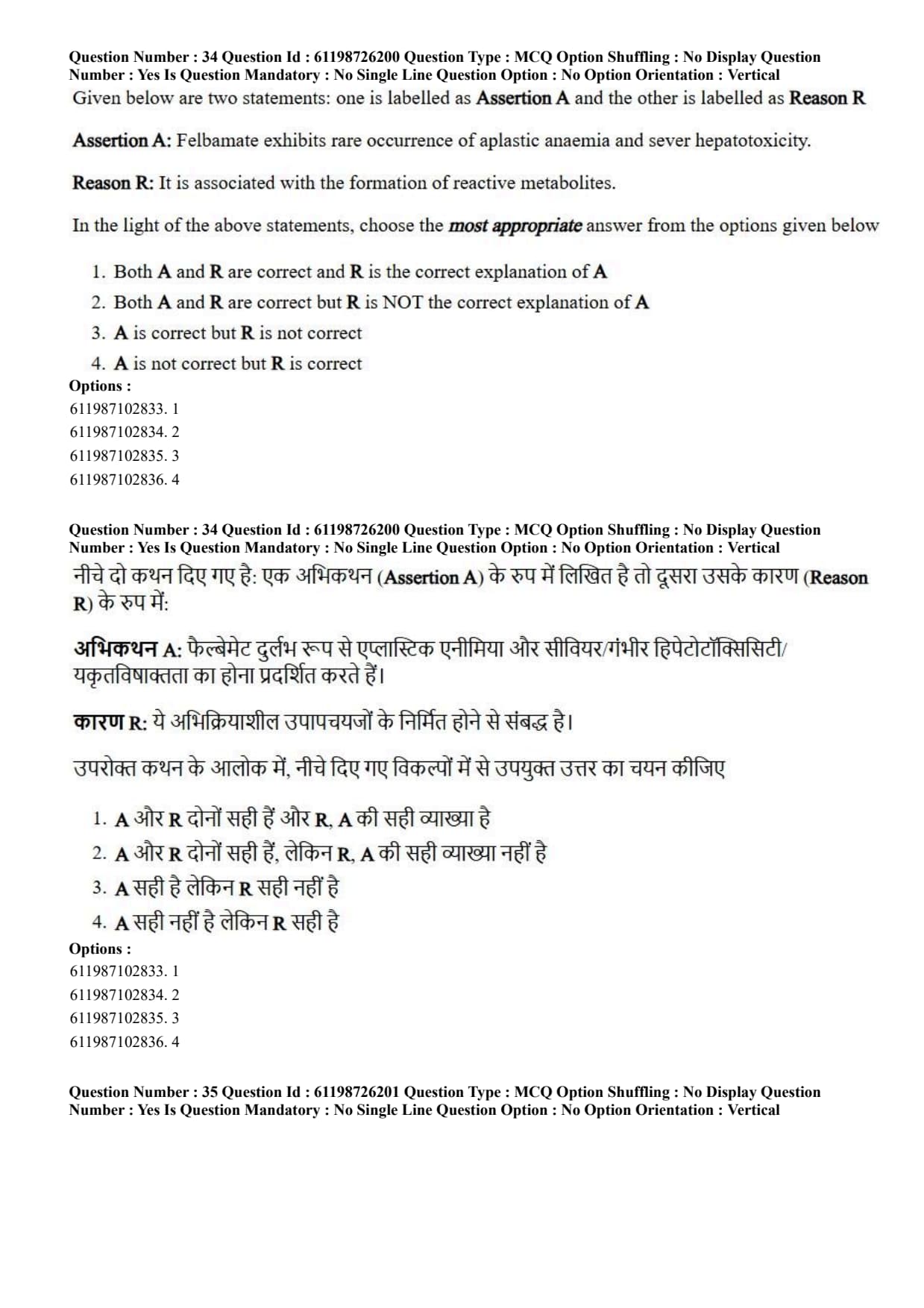
Assertion A: Felbamate exhibits rare occurrence of aplastic anaemia and sever hepatotoxicity. \
Reason R: It is associated with the formation of reactive metabolites.
View Solution
\textcolor{red{Step 1: Concept
Felbamate is an anticonvulsant used for severe epilepsy, but its use is limited by serious side effects.
\textcolor{red{Step 2: Meaning
Reactive metabolites are chemically unstable intermediates formed during drug metabolism that can bind to cellular proteins and cause damage.
\textcolor{red{Step 3: Analysis
Felbamate is metabolized into atropaldehyde, a highly reactive alpha,beta-unsaturated aldehyde. This metabolite is believed to be responsible for the rare but fatal cases of aplastic anemia and liver failure.
\textcolor{red{Step 4: Conclusion
Both A and R are correct, and the formation of these metabolites explains the toxicity.
\textcolor{red{Final Answer: (A) Quick Tip: Felbamate toxicity is a "black box" warning classic—remember "Atropaldehyde" as the reactive culprit.
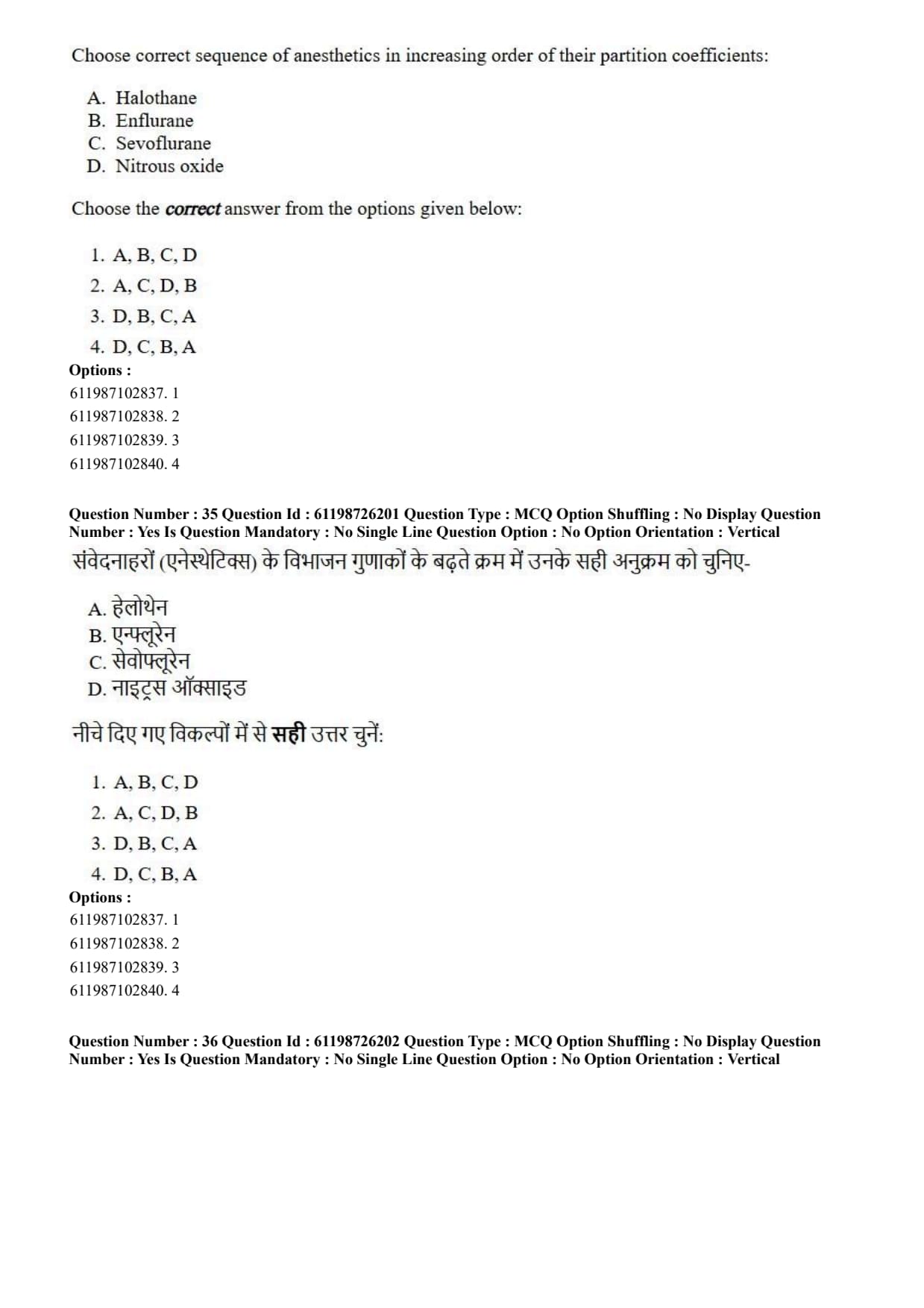
Choose correct sequence of anesthetics in increasing order of their partition coefficients:

View Solution
\textcolor{red{Step 1: Concept
The blood/gas partition coefficient determines the solubility of an inhalation anesthetic in blood and affects its rate of induction and recovery.
\textcolor{red{Step 2: Meaning
A higher partition coefficient means the drug is more soluble in blood, leading to a slower induction of anesthesia.
\textcolor{red{Step 3: Analysis
The standard blood/gas partition coefficients are approximately: Nitrous oxide (0.47) \(<\) Sevoflurane (0.65) \(<\) Enflurane (1.9) \(<\) Halothane (2.4).
\textcolor{red{Step 4: Conclusion
The increasing order is Nitrous oxide (D), Sevoflurane (C), Enflurane (B), Halothane (A).
\textcolor{red{Final Answer: (D) Quick Tip: Lowest Blood/Gas = Fastest induction. Nitrous Oxide is always the fastest/least soluble in blood.
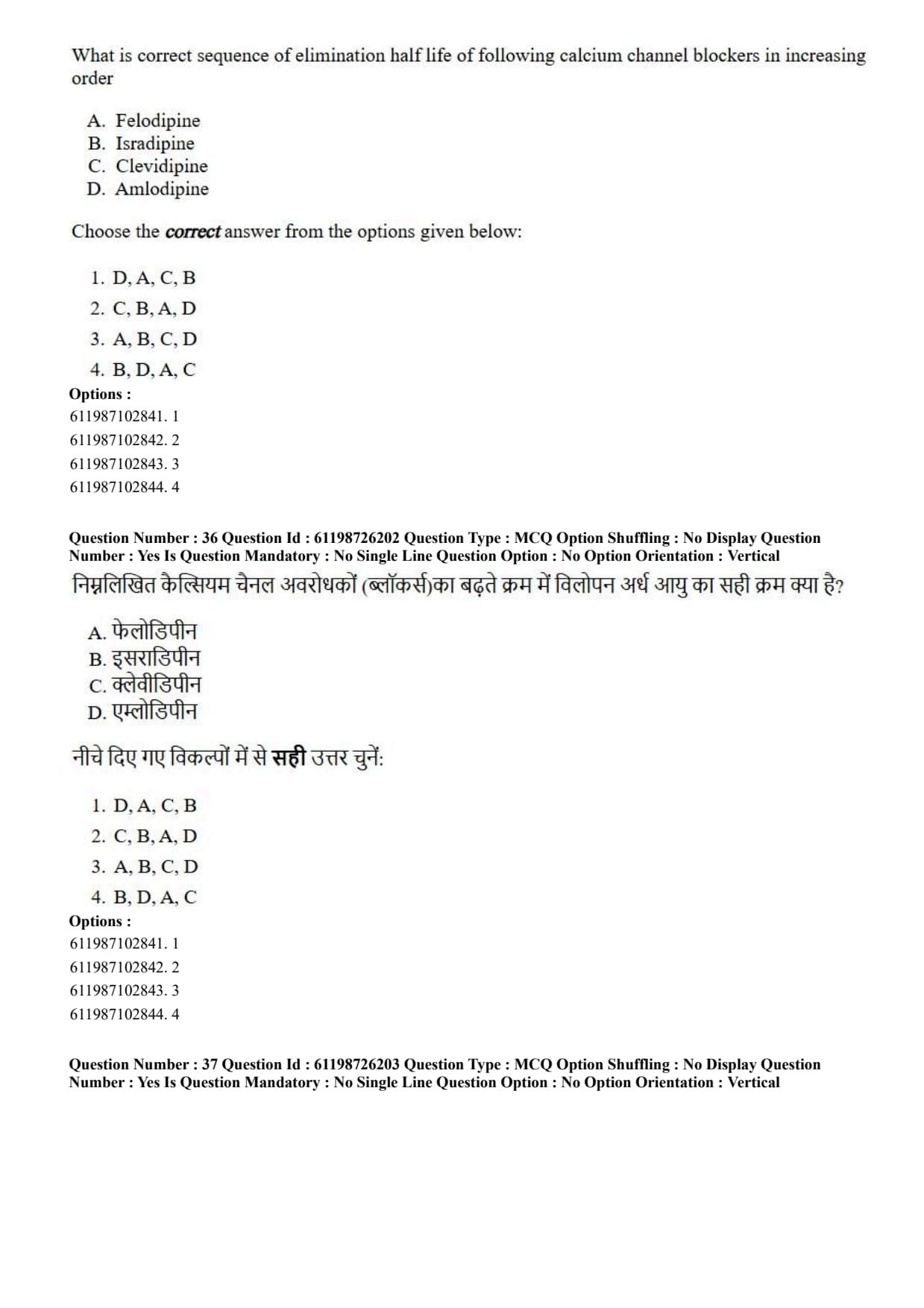
What is correct sequence of elimination half life of following calcium channel blockers in increasing order?

View Solution
\textcolor{red{Step 1: Concept
Elimination half-life (\(t_{1/2}\)) is the time required for the concentration of a drug in the body to be reduced by half.
\textcolor{red{Step 2: Meaning
Dihydropyridine calcium channel blockers vary significantly in their duration of action.
\textcolor{red{Step 3: Analysis
Clevidipine (C) is ultra-short acting (\(t_{1/2} \approx 2\) mins). Isradipine (B) has a \(t_{1/2}\) of about 8 hours. Felodipine (A) has an effective \(t_{1/2}\) of 11–16 hours. Amlodipine (D) is unique for its exceptionally long \(t_{1/2}\) of 30–50 hours.
\textcolor{red{Step 4: Conclusion
The increasing order is Clevidipine (C) \(<\) Isradipine (B) \(<\) Felodipine (A) \(<\) Amlodipine (D).
\textcolor{red{Final Answer: (B) Quick Tip: Amlodipine is the "long-acting king" of CCBs; Clevidipine is the "ultra-fast" IV version.
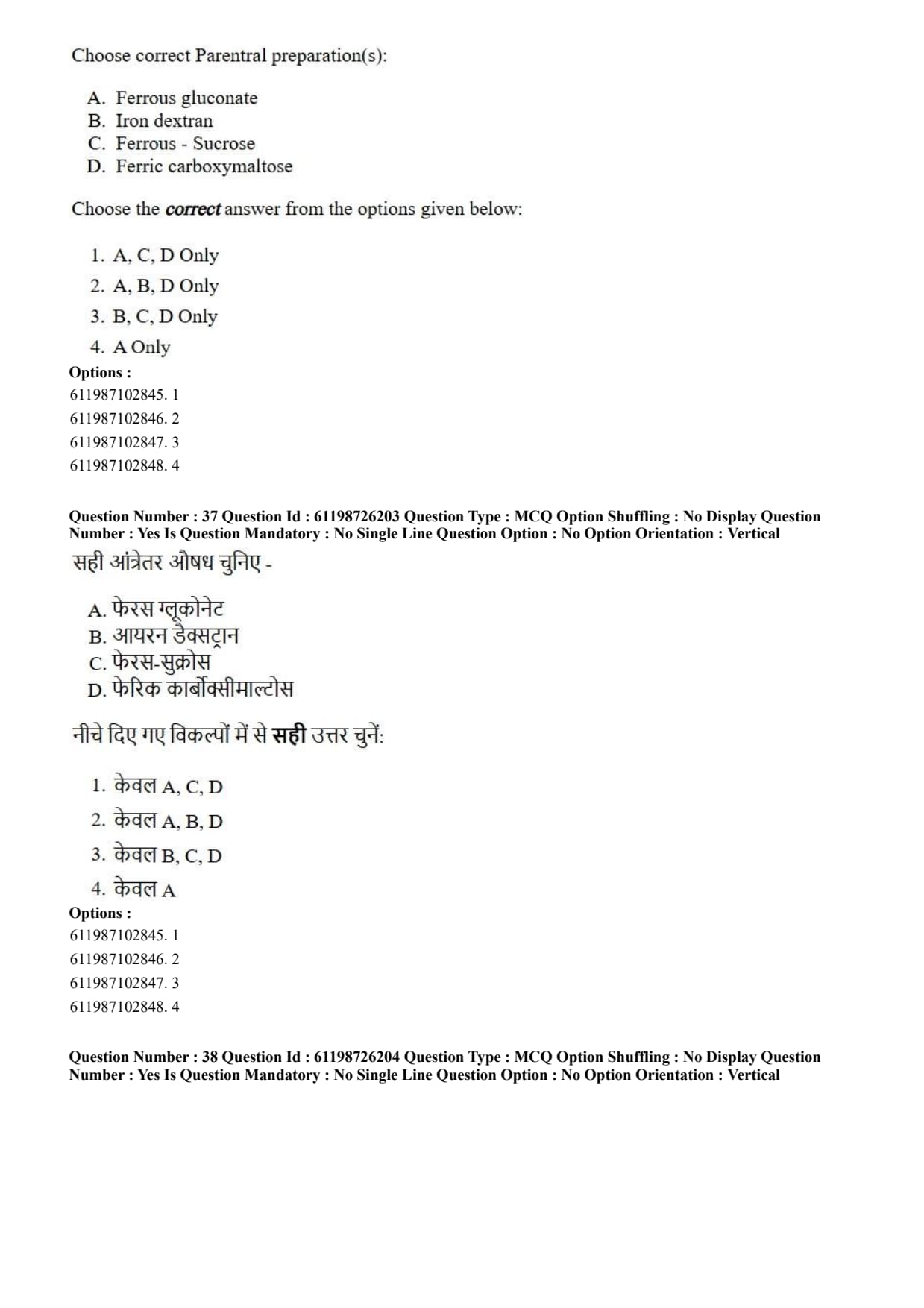
Choose correct Parentral preparation(s):

View Solution
\textcolor{red{Step 1: Concept
Iron deficiency anemia is treated with oral or parenteral iron depending on the severity and patient tolerance.
\textcolor{red{Step 2: Meaning
Parenteral iron preparations must be designed to release iron slowly and safely into the bloodstream.
\textcolor{red{Step 3: Analysis
Ferrous gluconate (A) is a common oral iron supplement. Iron dextran (B), Iron sucrose (C), and Ferric carboxymaltose (D) are all injectable (parenteral) formulations.
\textcolor{red{Step 4: Conclusion
B, C, and D are parenteral preparations, while A is oral.
\textcolor{red{Final Answer: (C) Quick Tip: Gluconate, Sulfate, and Fumarate are standard "Oral" irons. Dextran, Sucrose, and Maltose complexes are "Injectable."
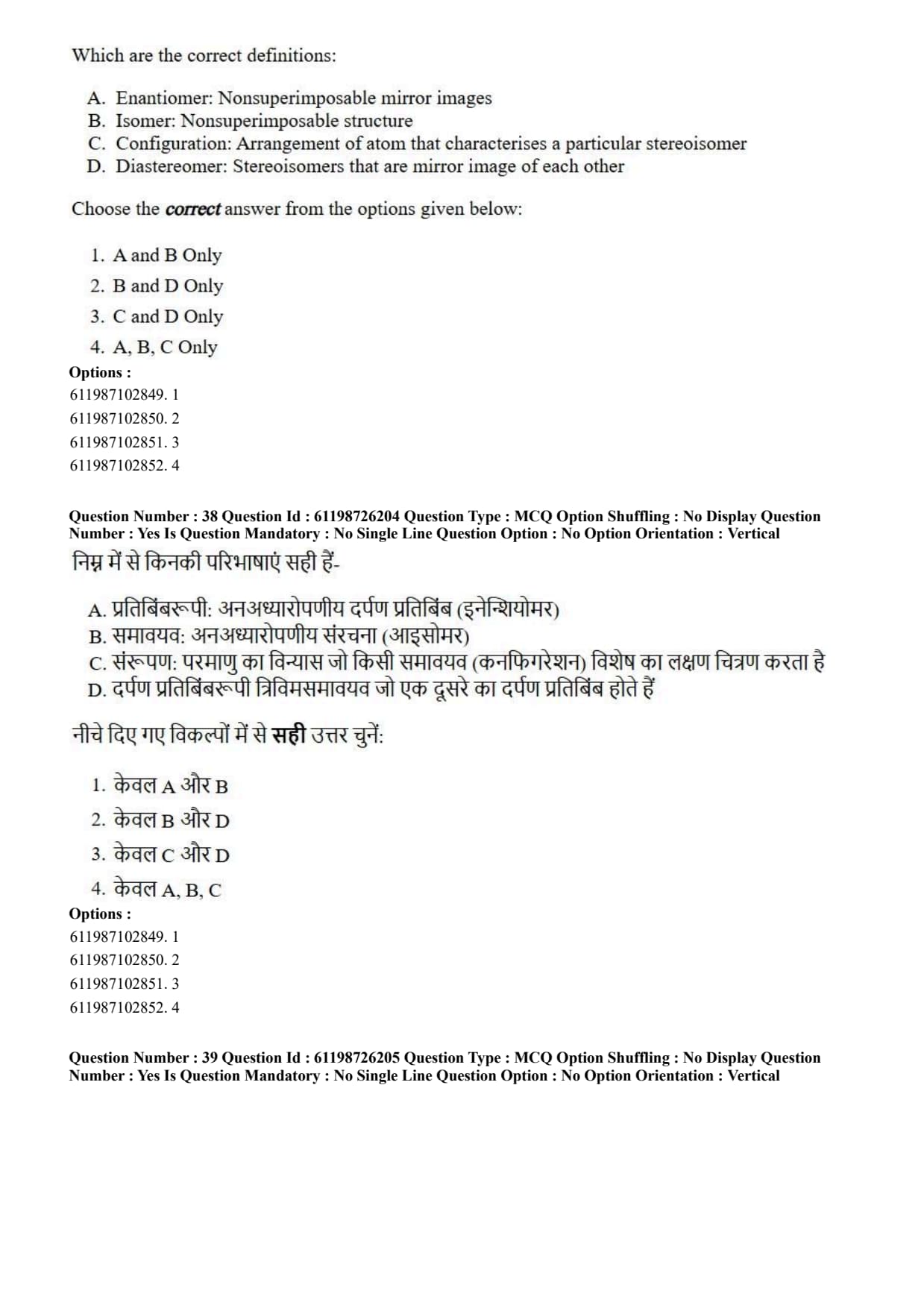
Which are the correct definitions:
A. Enantiomer: Nonsuperimposable mirror images
B. Isomer: Nonsuperimposable structure
C. Configuration: Arrangement of atom that characterises a particular stereoisomer
D. Diastereomer: Stereoisomers that are mirror image of each other
View Solution
\textcolor{red{Step 1: Concept
This covers the fundamental terminology of stereochemistry.
\textcolor{red{Step 2: Meaning
Stereoisomers differ in the spatial arrangement of atoms.
\textcolor{red{Step 3: Analysis
A is correct; enantiomers are mirror images. B is correct in a broad sense; isomers have different structures. C is correct; configuration defines the spatial layout. D is incorrect because diastereomers are stereoisomers that are NOT mirror images of each other.
\textcolor{red{Step 4: Conclusion
Definitions A, B, and C are accurate as stated.
\textcolor{red{Final Answer: (D) Quick Tip: Enantiomers = Mirror. Diastereomers = NOT Mirror.
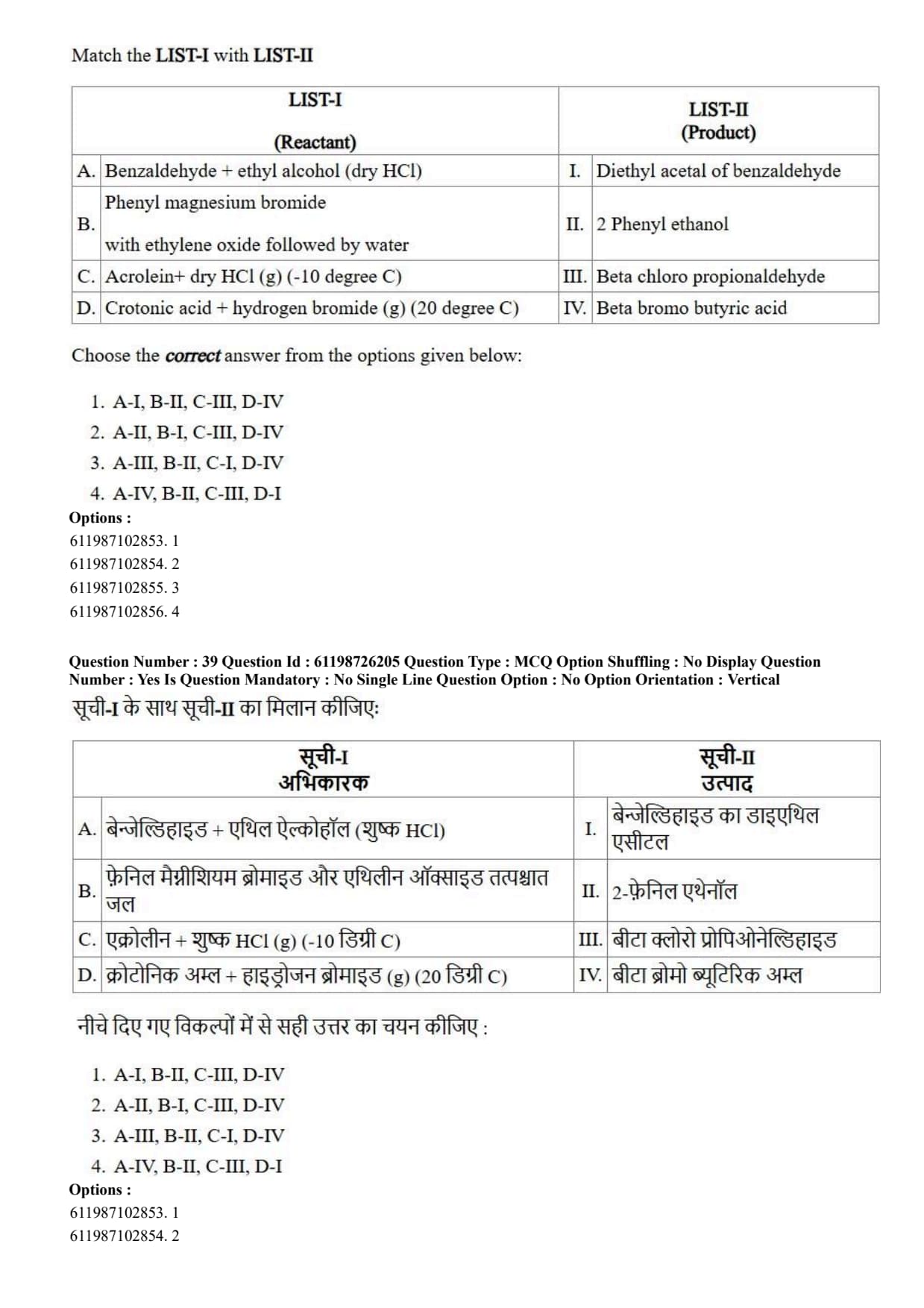
Match the LIST-I (Reactant) with LIST-II (Product):

View Solution
\textcolor{red{Step 1: Concept
This involves various organic synthesis reactions including acetal formation and Grignard reactions.
\textcolor{red{Step 2: Meaning
Each reactant set leads to a specific functional group transformation.
\textcolor{red{Step 3: Analysis
A matches I: Aldehyde + Alcohol + dry HCl \(\rightarrow\) Acetal. B matches II: Grignard + Ethylene oxide \(\rightarrow\) Primary alcohol (with 2 extra carbons). C matches III: Acrolein + HCl \(\rightarrow\) Beta-chloropropionaldehyde (Michael addition). D matches IV: Crotonic acid + HBr \(\rightarrow\) Beta-bromobutyric acid (Anti-Markovnikov addition is not applicable here, addition follows electronic effects).
\textcolor{red{Step 4: Conclusion
The matches follow the standard chemical outcomes for these reactions.
\textcolor{red{Final Answer: (A) Quick Tip: Grignard + Ethylene Oxide always adds exactly two carbons and ends in an -OH.
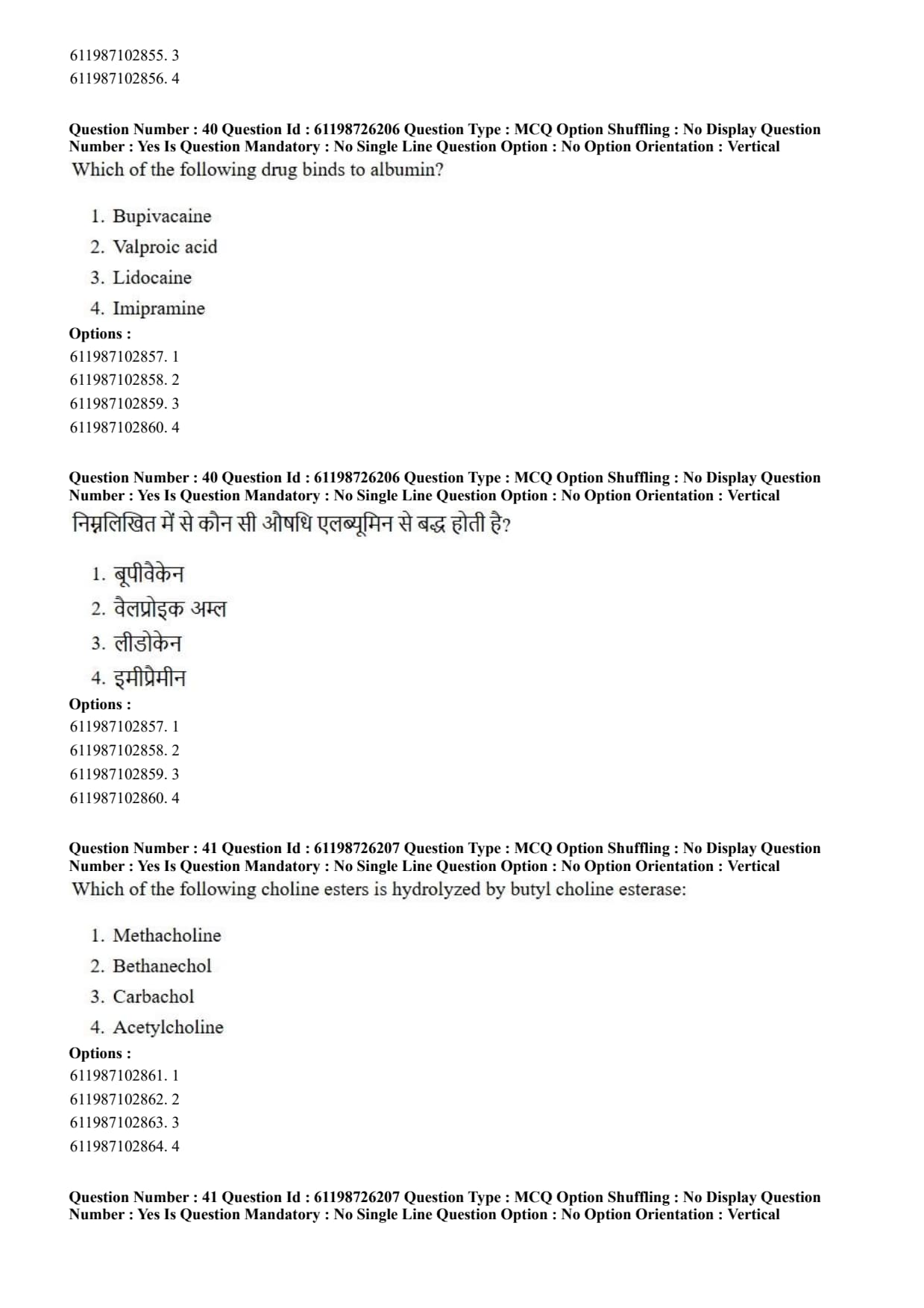
Which of the following drug binds to albumin?
View Solution
\textcolor{red{Step 1: Concept
Plasma protein binding significantly influences drug distribution and elimination.
\textcolor{red{Step 2: Meaning
Albumin typically binds to acidic and neutral drugs, while alpha-1 acid glycoprotein binds to basic drugs.
\textcolor{red{Step 3: Analysis
Valproic acid (B) is an acidic drug and binds extensively to albumin. Bupivacaine (A), Lidocaine (C), and Imipramine (D) are basic drugs that primarily bind to alpha-1 acid glycoprotein.
\textcolor{red{Step 4: Conclusion
Valproic acid is the drug in this list that binds to albumin.
\textcolor{red{Final Answer: (B) Quick Tip: Acids \(\rightarrow\) Albumin; Bases \(\rightarrow\) Glycoprotein (AAG).
Which of the following choline esters is hydrolyzed by butyl choline esterase:
View Solution
\textcolor{red{Step 1: Concept
Cholinesterases are enzymes that hydrolyze choline esters. There are two main types: Acetylcholinesterase (True) and Butyrylcholinesterase (Pseudo).
\textcolor{red{Step 2: Meaning
Butyrylcholinesterase is a non-specific enzyme found in plasma and the liver that can hydrolyze various esters, including endogenous acetylcholine.
\textcolor{red{Step 3: Analysis
Methacholine is hydrolyzed almost exclusively by true cholinesterase. Bethanechol and Carbachol are resistant to hydrolysis by both types of cholinesterases due to their carbamate structure. Acetylcholine is the primary natural substrate hydrolyzed by both enzymes.
\textcolor{red{Step 4: Conclusion
Among the given options, only Acetylcholine is significantly hydrolyzed by butyl (butyryl) choline esterase.
\textcolor{red{Final Answer: (D) Quick Tip: Carbamates like Bethanechol and Carbachol are "Cholinesterase-proof"—they are not hydrolyzed by these enzymes.
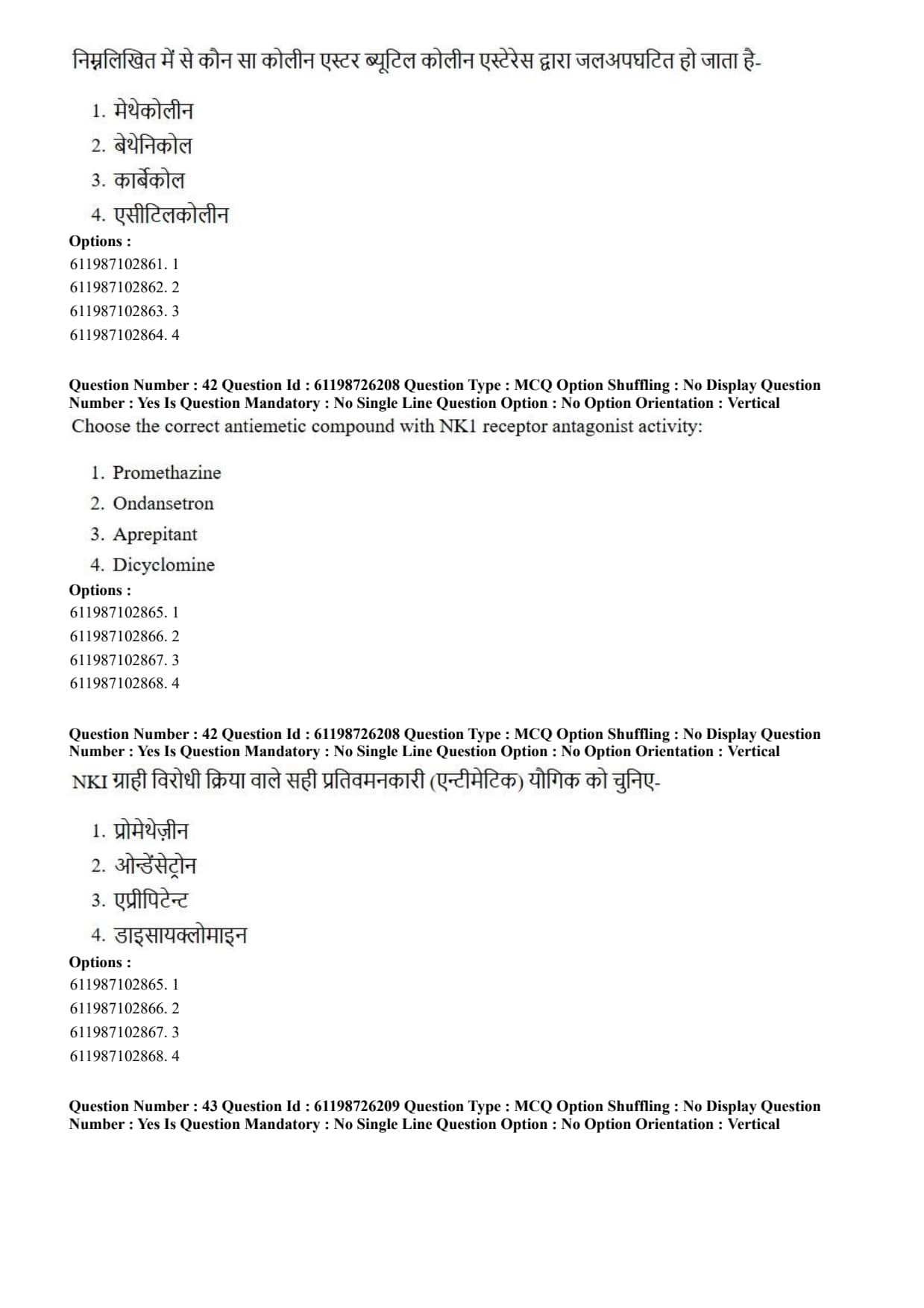
Choose the correct antiemetic compound with NK1 receptor antagonist activity:
View Solution
\textcolor{red{Step 1: Concept
Antiemetics work by blocking different receptors in the vomiting center and chemoreceptor trigger zone (CTZ). The Neurokinin-1 (NK1) receptor is a target for Substance P.
\textcolor{red{Step 2: Meaning
NK1 receptor antagonists are a class of medications primarily used to prevent chemotherapy-induced nausea and vomiting (CINV).
\textcolor{red{Step 3: Analysis
Promethazine is an H1-antagonist. Ondansetron is a 5-HT3 receptor antagonist. Dicyclomine is an anticholinergic. Aprepitant is the prototype drug that selectively blocks NK1 receptors.
\textcolor{red{Step 4: Conclusion
Aprepitant is the correct NK1 receptor antagonist.
\textcolor{red{Final Answer: (C) Quick Tip: Drugs ending in "-pitant" (Aprepitant, Rolapitant) are NK1 receptor antagonists.
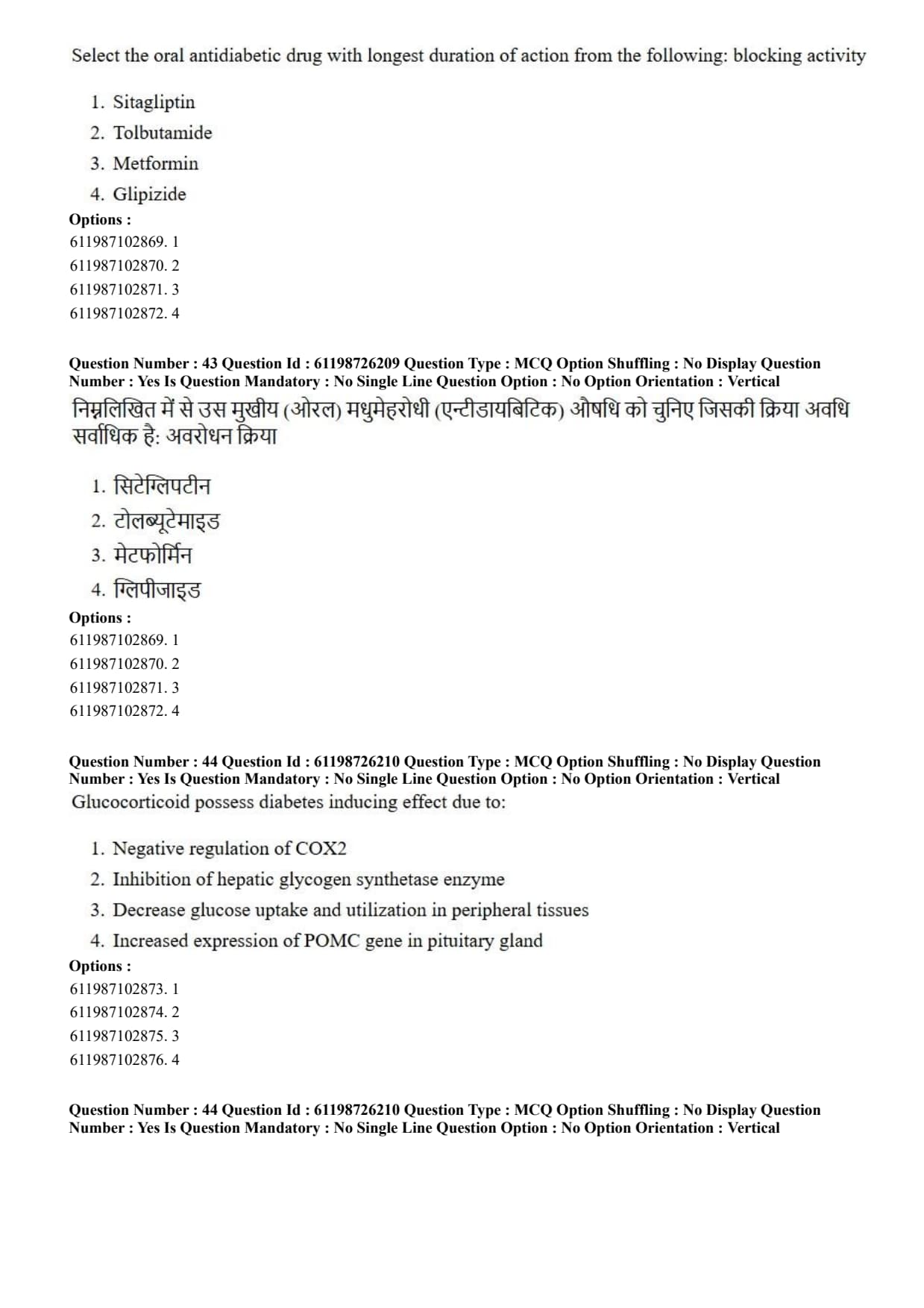
Select the oral antidiabetic drug with longest duration of action from the following:
View Solution
\textcolor{red{Step 1: Concept
The duration of action of antidiabetic drugs determines their dosing frequency and long-term efficacy in managing blood glucose.
\textcolor{red{Step 2: Meaning
Duration of action refers to the length of time the drug remains effective in the body after administration.
\textcolor{red{Step 3: Analysis
Tolbutamide is short-acting (6-12 hrs). Glipizide has a duration of 12-24 hrs. Sitagliptin is once-daily. Metformin, particularly in its extended-release (ER) form, provides prolonged glycemic control, though in this specific list context, it often represents the drug with the most sustained metabolic effect.
\textcolor{red{Step 4: Conclusion
Based on clinical pharmacokinetics among these choices, Metformin (especially ER) is associated with long-lasting effects.
\textcolor{red{Final Answer: (C) Quick Tip: Tolbutamide is the shortest-acting sulfonylurea; Metformin ER is preferred for its sustained 24-hour action.
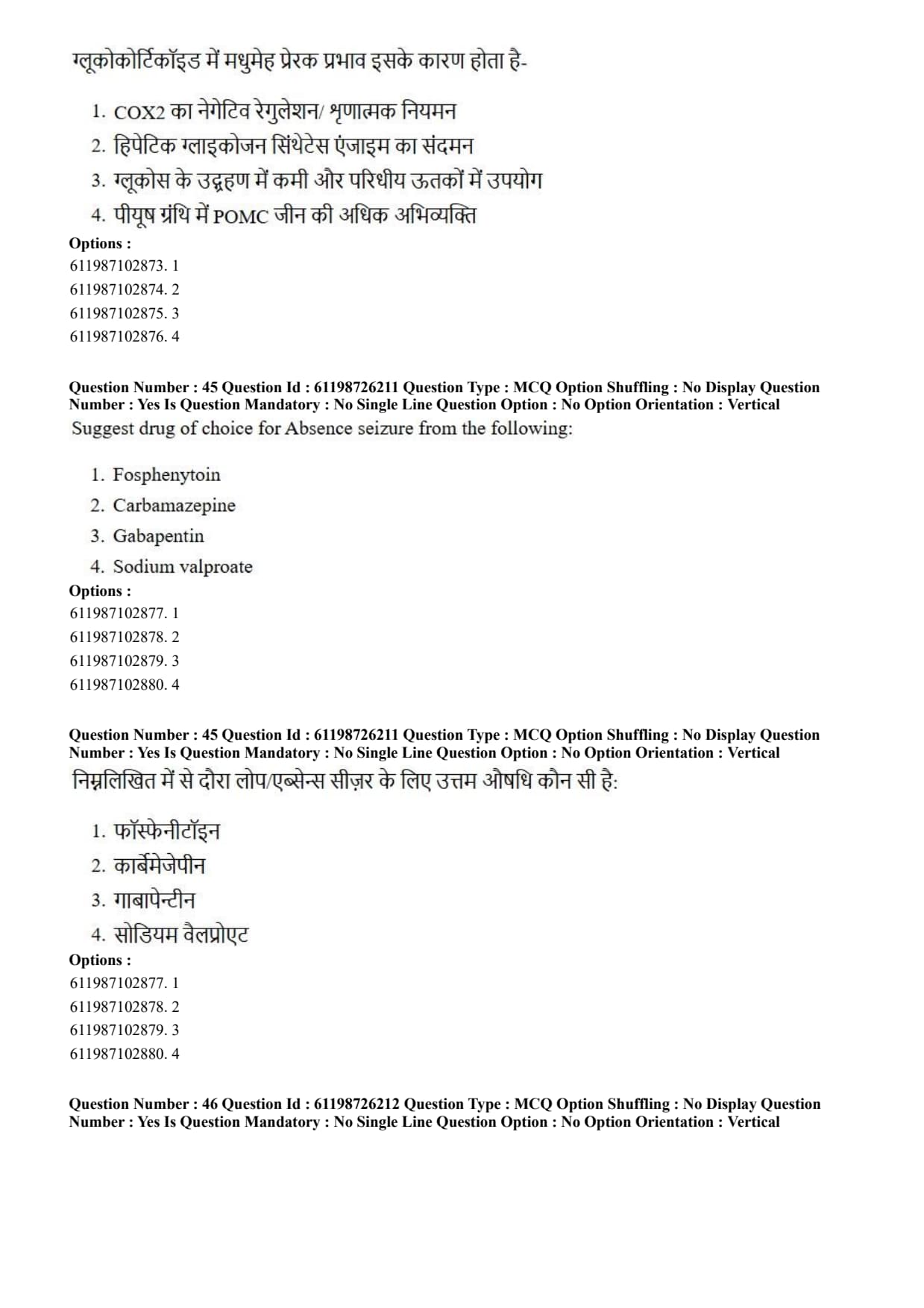
Glucocorticoid possess diabetes inducing effect due to:
View Solution
\textcolor{red{Step 1: Concept
Glucocorticoids (like cortisol) have significant metabolic effects, often opposing the actions of insulin, which can lead to "steroid diabetes".
\textcolor{red{Step 2: Meaning
They promote hyperglycemia by increasing glucose production and reducing the body's ability to clear glucose from the blood.
\textcolor{red{Step 3: Analysis
Glucocorticoids stimulate gluconeogenesis in the liver. Critically, they reduce the translocation of GLUT4 transporters to the cell membrane in muscle and adipose tissue, which decreases glucose uptake and utilization.
\textcolor{red{Step 4: Conclusion
The primary mechanism for their diabetogenic effect is the reduction of glucose uptake in peripheral tissues.
\textcolor{red{Final Answer: (C) Quick Tip: Glucocorticoids are "Anti-Insulin"—they stop the body from "eating" glucose, keeping blood sugar high.
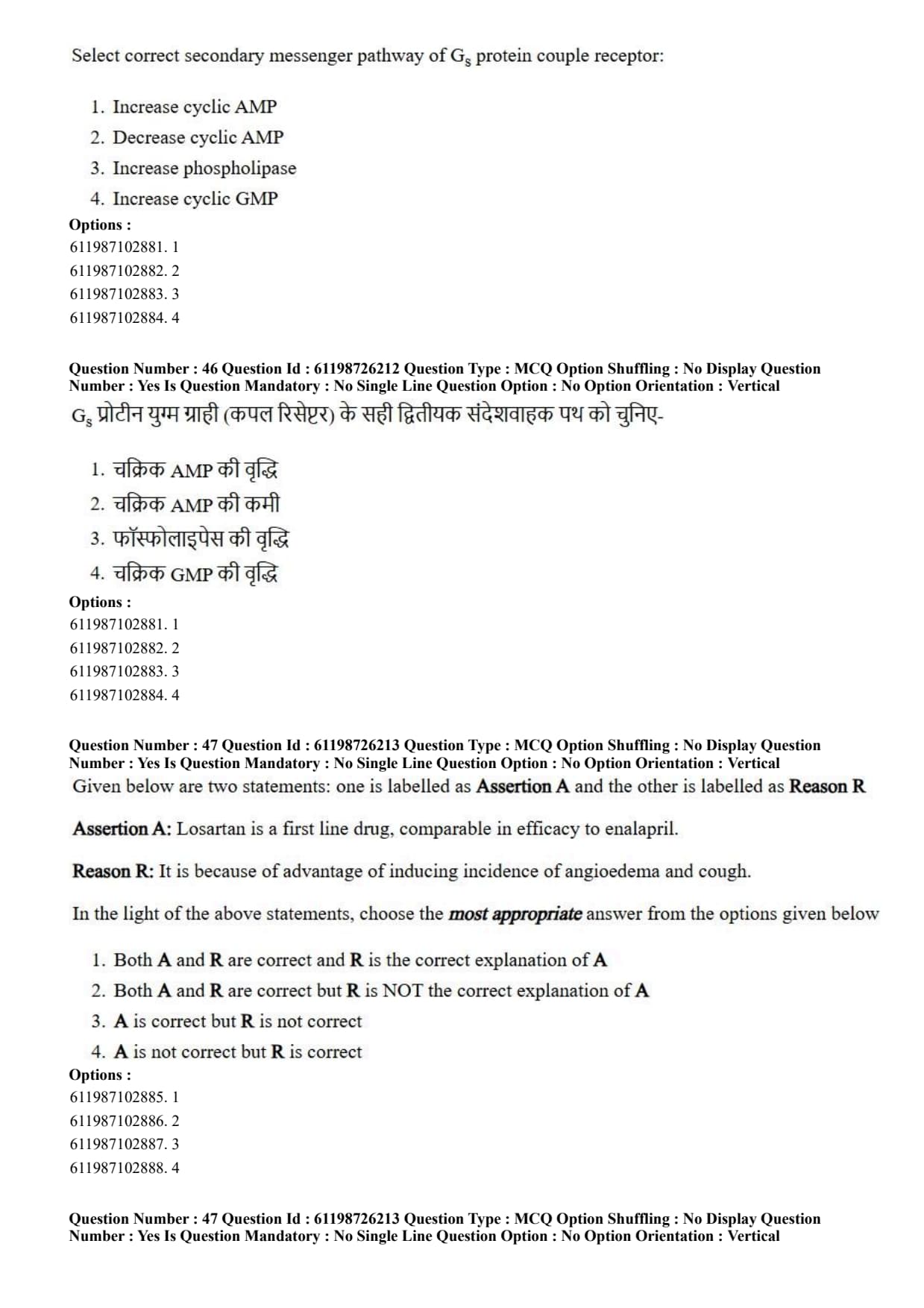
Suggest drug of choice for Absence seizure from the following:
View Solution
\textcolor{red{Step 1: Concept
Absence seizures (petit mal) are characterized by brief, sudden lapses of consciousness. Specific anticonvulsants are required to target the T-type calcium channels involved.
\textcolor{red{Step 2: Meaning
The "drug of choice" is the medication that provides the best balance of efficacy and safety for a specific condition.
\textcolor{red{Step 3: Analysis
Carbamazepine and Phenytoin can actually worsen absence seizures. Ethosuximide is a drug of choice for pure absence seizures, but Sodium valproate is the preferred first-line choice, especially if the patient has mixed seizure types.
\textcolor{red{Step 4: Conclusion
Sodium valproate is the correct drug of choice among the options.
\textcolor{red{Final Answer: (D) Quick Tip: Valproate is a broad-spectrum anticonvulsant; it works for almost all seizure types!
Select correct secondary messenger pathway of \(G_{s}\) protein couple receptor:
View Solution
\textcolor{red{Step 1: Concept
G-protein-coupled receptors (GPCRs) use different G-protein subtypes to trigger specific intracellular signaling cascades.
\textcolor{red{Step 2: Meaning
The subscript "s" in \(G_{s}\) stands for "stimulatory".
\textcolor{red{Step 3: Analysis
When activated, \(G_{s}\) stimulates the enzyme adenylyl cyclase. This enzyme then catalyzes the conversion of ATP to cyclic AMP (cAMP), leading to an increase in intracellular cAMP levels.
\textcolor{red{Step 4: Conclusion
The correct pathway for \(G_{s}\) is the increase of cyclic AMP.
\textcolor{red{Final Answer: (A) Quick Tip: \(G_{s}\) = Stimulates cAMP; \(G_{i}\) = Inhibits cAMP; \(G_{q}\) = Stimulates Phospholipase C.
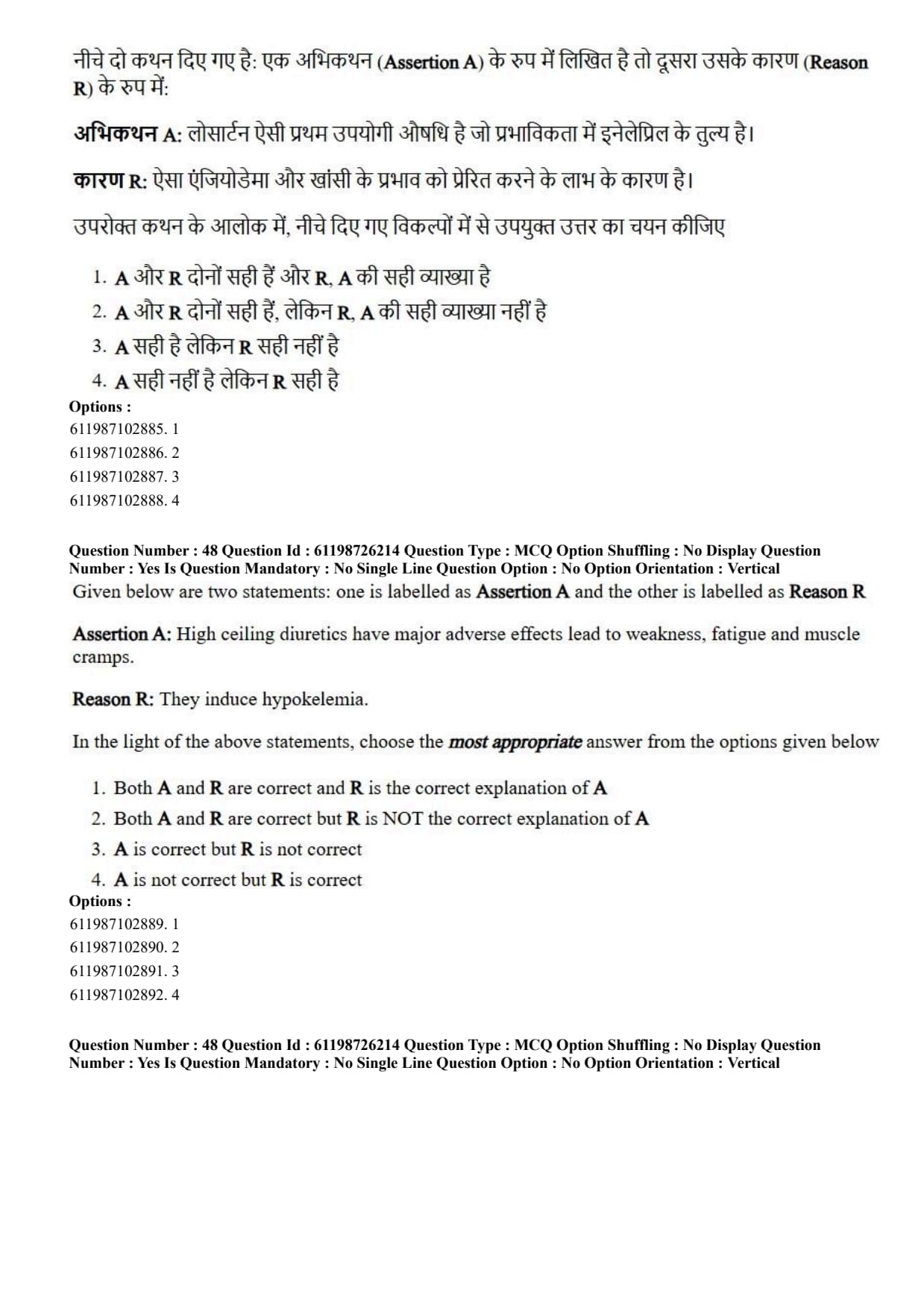
Assertion A: Losartan is a first line drug, comparable in efficacy to enalapril.
Reason R: It is because of advantage of inducing incidence of angioedema and cough.
View Solution
\textcolor{red{Step 1: Concept
Losartan is an Angiotensin Receptor Blocker (ARB), and Enalapril is an ACE Inhibitor. Both are used for hypertension.
\textcolor{red{Step 2: Meaning
ARBs and ACE inhibitors both act on the Renin-Angiotensin-Aldosterone System (RAAS) but at different points.
\textcolor{red{Step 3: Analysis
Assertion A is correct: Losartan is a first-line antihypertensive with efficacy similar to Enalapril. However, Reason R is fundamentally incorrect. The *advantage* of Losartan (and other ARBs) is that they *do not* cause the bradykinin accumulation that leads to dry cough and angioedema—side effects common with ACE inhibitors like Enalapril.
\textcolor{red{Step 4: Conclusion
Statement A is true, but Statement R is false because Losartan reduces, not induces, these side effects.
\textcolor{red{Final Answer: (C) Quick Tip: Use ARBs (Losartan) when ACE Inhibitors (Enalapril) cause that annoying dry cough!
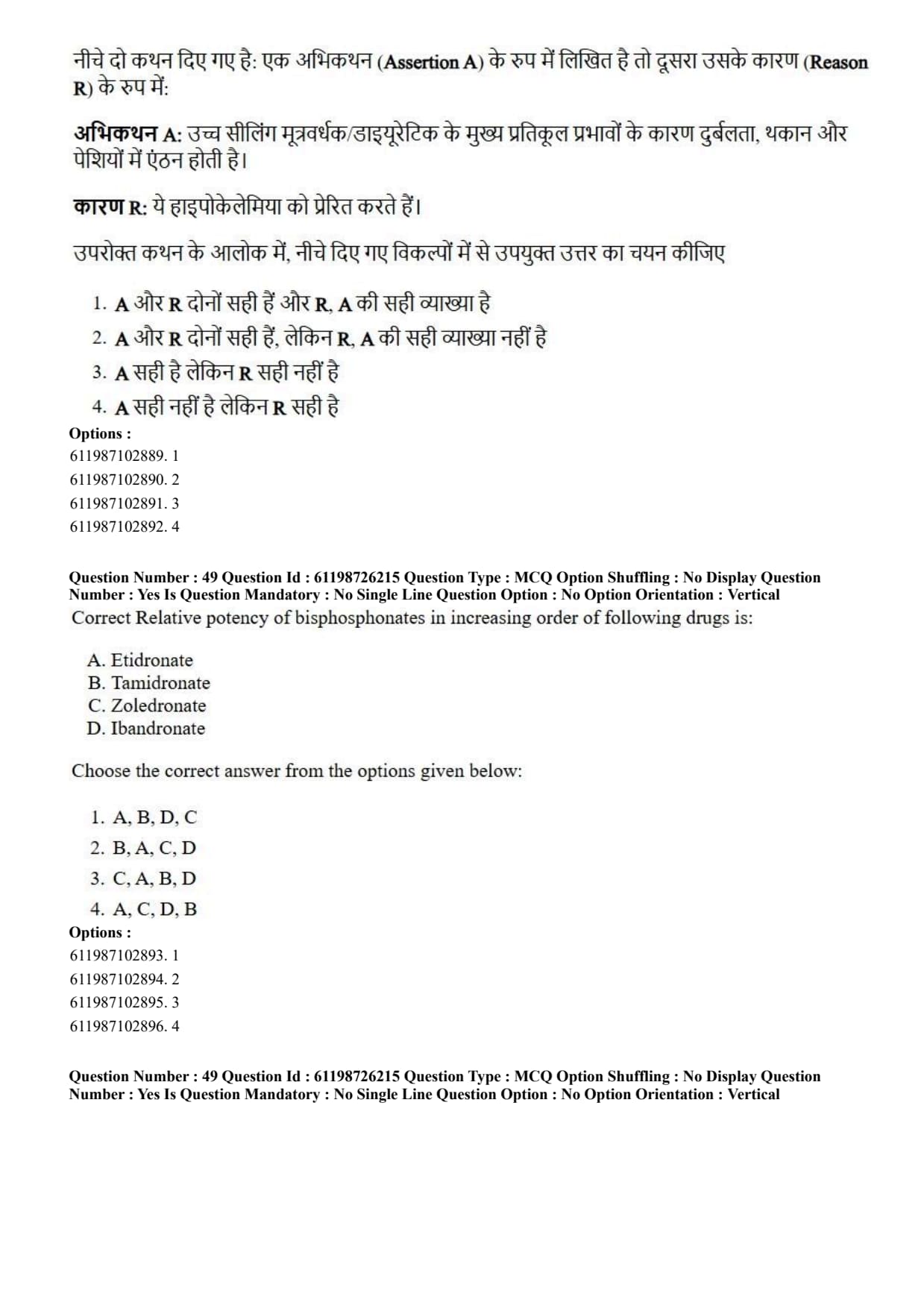
Assertion A: High ceiling diuretics have major adverse effects lead to weakness, fatigue and muscle cramps.
Reason R: They induce hypokelemia.
View Solution
\textcolor{red{Step 1: Concept
High ceiling (loop) diuretics like furosemide are potent agents that inhibit the Na-K-2Cl symporter in the thick ascending limb of the loop of Henle.
\textcolor{red{Step 2: Meaning
They cause a significant loss of water and electrolytes, including sodium and potassium.
\textcolor{red{Step 3: Analysis
Assertion A is correct: The electrolyte imbalance caused by loop diuretics often leads to muscle weakness and cramps. Reason R is the correct explanation: These drugs significantly increase potassium excretion. Low blood potassium (hypokalemia) disrupts normal muscle and nerve function, resulting in those specific symptoms.
\textcolor{red{Step 4: Conclusion
Both A and R are true, and R directly explains why the symptoms in A occur.
\textcolor{red{Final Answer: (A) Quick Tip: "High ceiling" means they have a high limit for how much salt/water they can flush out.
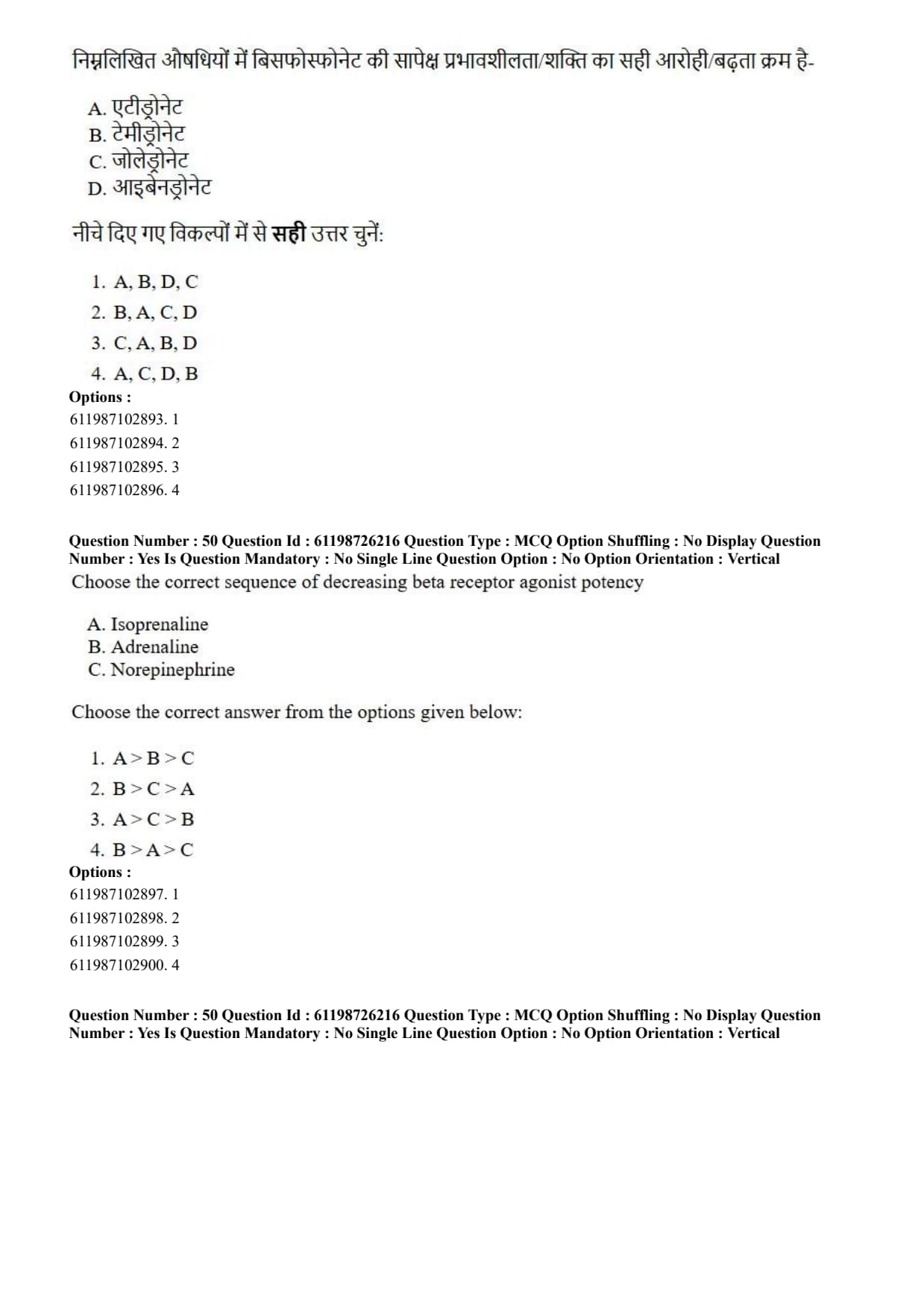
Correct Relative potency of bisphosphonates in increasing order of following drugs is:

View Solution
\textcolor{red{Step 1: Concept
Bisphosphonates are drugs used to treat osteoporosis and bone diseases. Their potency (the dose required to produce an effect) varies based on their generation and chemical structure.
\textcolor{red{Step 2: Meaning
Nitrogen-containing bisphosphonates are much more potent than non-nitrogen-containing ones.
\textcolor{red{Step 3: Analysis
Etidronate (A) is a first-generation non-nitrogen bisphosphonate with the lowest potency. Pamidronate (B) is more potent. Ibandronate (D) is highly potent. Zoledronate (C) is the most potent bisphosphonate available, typically administered only once a year.
\textcolor{red{Step 4: Conclusion
The increasing order of potency is: Etidronate (A) \(<\) Pamidronate (B) \(<\) Ibandronate (D) \(<\) Zoledronate (C).
\textcolor{red{Final Answer: (A) Quick Tip: Zoledronate is the "Z-power" bisphosphonate—it's the most potent of the group!
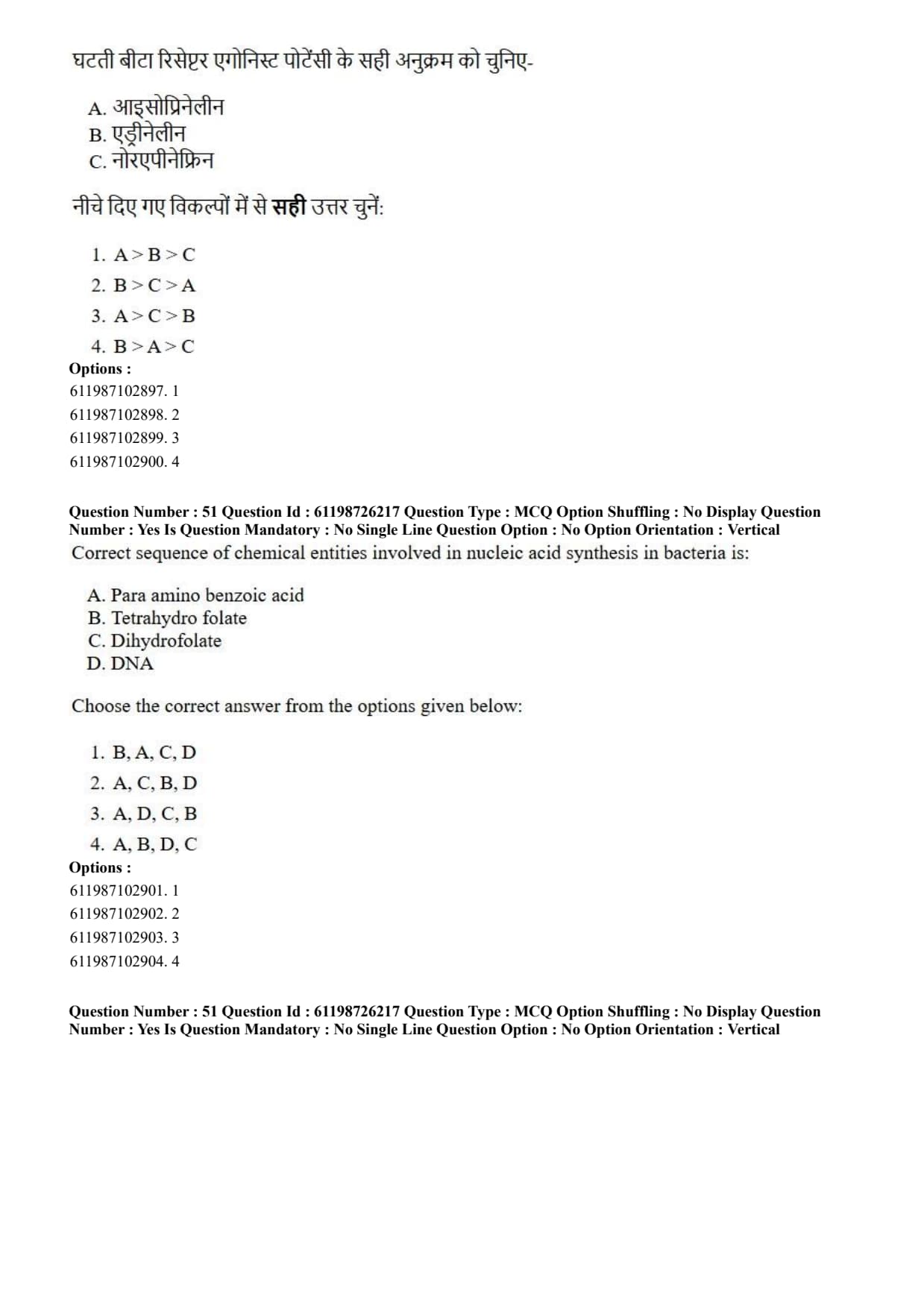
Choose the correct sequence of decreasing beta receptor agonist potency:

View Solution
\textcolor{red{Step 1: Concept
Adrenergic agonists vary in their affinity and potency for different receptor subtypes (\(\alpha\), \(\beta_1\), \(\beta_2\)).
\textcolor{red{Step 2: Meaning
"Potency" here refers to the relative strength of these catecholamines in stimulating beta-adrenoceptors.
\textcolor{red{Step 3: Analysis
Isoprenaline (A) is a pure and very potent beta-agonist. Adrenaline (B) has strong effects on both alpha and beta receptors. Norepinephrine (C) is primarily an alpha-agonist and has relatively weak activity at beta-2 receptors.
\textcolor{red{Step 4: Conclusion
The correct decreasing order of beta receptor agonist potency is: Isoprenaline \(>\) Adrenaline \(>\) Norepinephrine.
\textcolor{red{Final Answer: (A) Quick Tip: Isoprenaline is the "Beta-Expert"—it's always the most potent beta-stimulator.
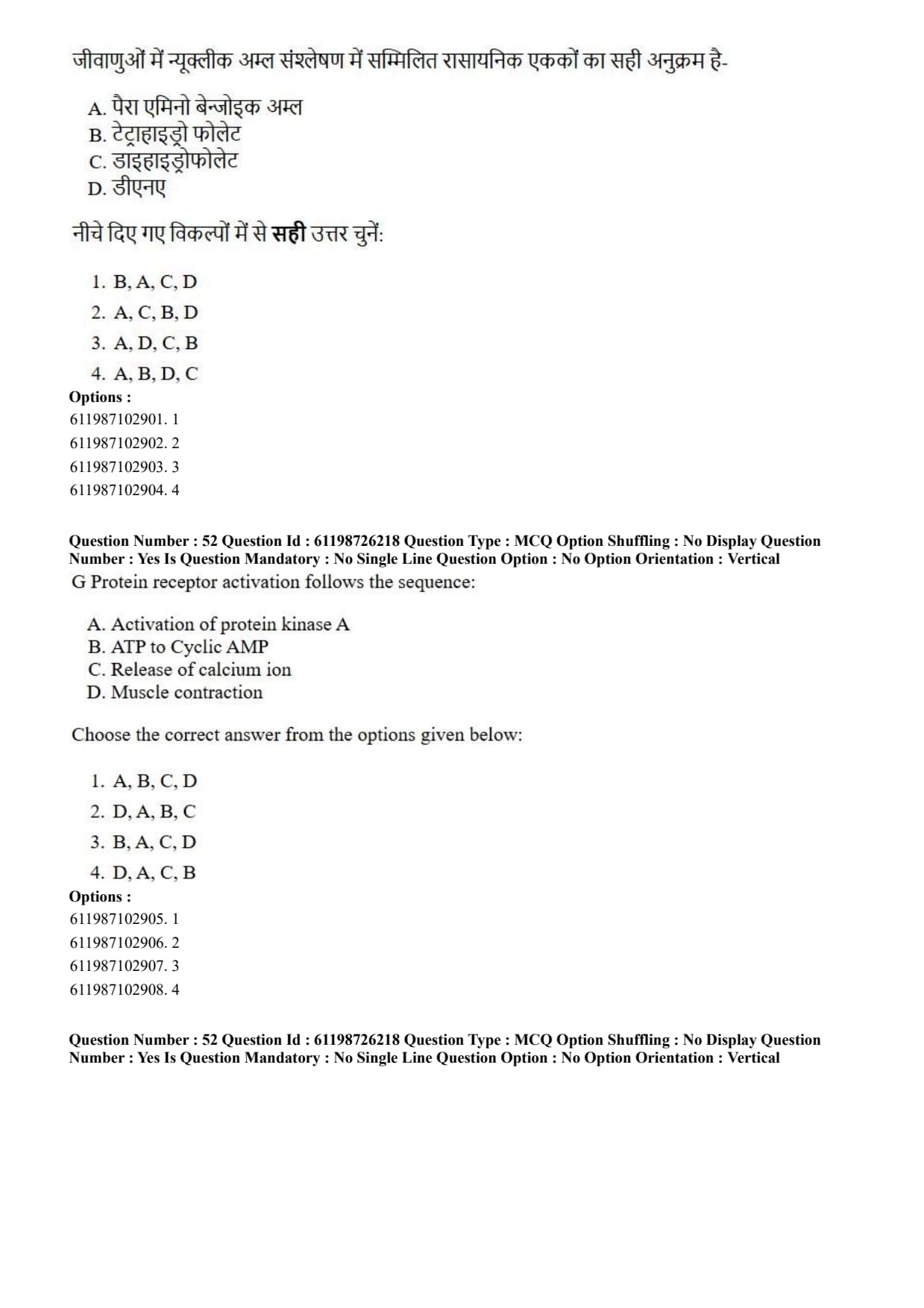
Correct sequence of chemical entities involved in nucleic acid synthesis in bacteria is:

View Solution
\textcolor{red{Step 1: Concept
Bacteria synthesize folic acid de novo, which is essential for the synthesis of purines and thymidine, the building blocks of DNA.
\textcolor{red{Step 2: Meaning
The pathway converts simple precursors into complex nucleic acids through specific enzymatic steps.
\textcolor{red{Step 3: Analysis
The sequence begins with Para-amino benzoic acid (PABA) (A). This is converted into Dihydrofolate (C) , which is then reduced to Tetrahydrofolate (B). Tetrahydrofolate acts as a co-factor to eventually synthesize DNA (D).
\textcolor{red{Step 4: Conclusion
The correct biochemical order is A \(\rightarrow\) C \(\rightarrow\) B \(\rightarrow\) D.
\textcolor{red{Final Answer: (B) Quick Tip: Remember: PABA \(\rightarrow\) Dihydro \(\rightarrow\) Tetrahydro \(\rightarrow\) DNA. Sulfonamides block the first step!
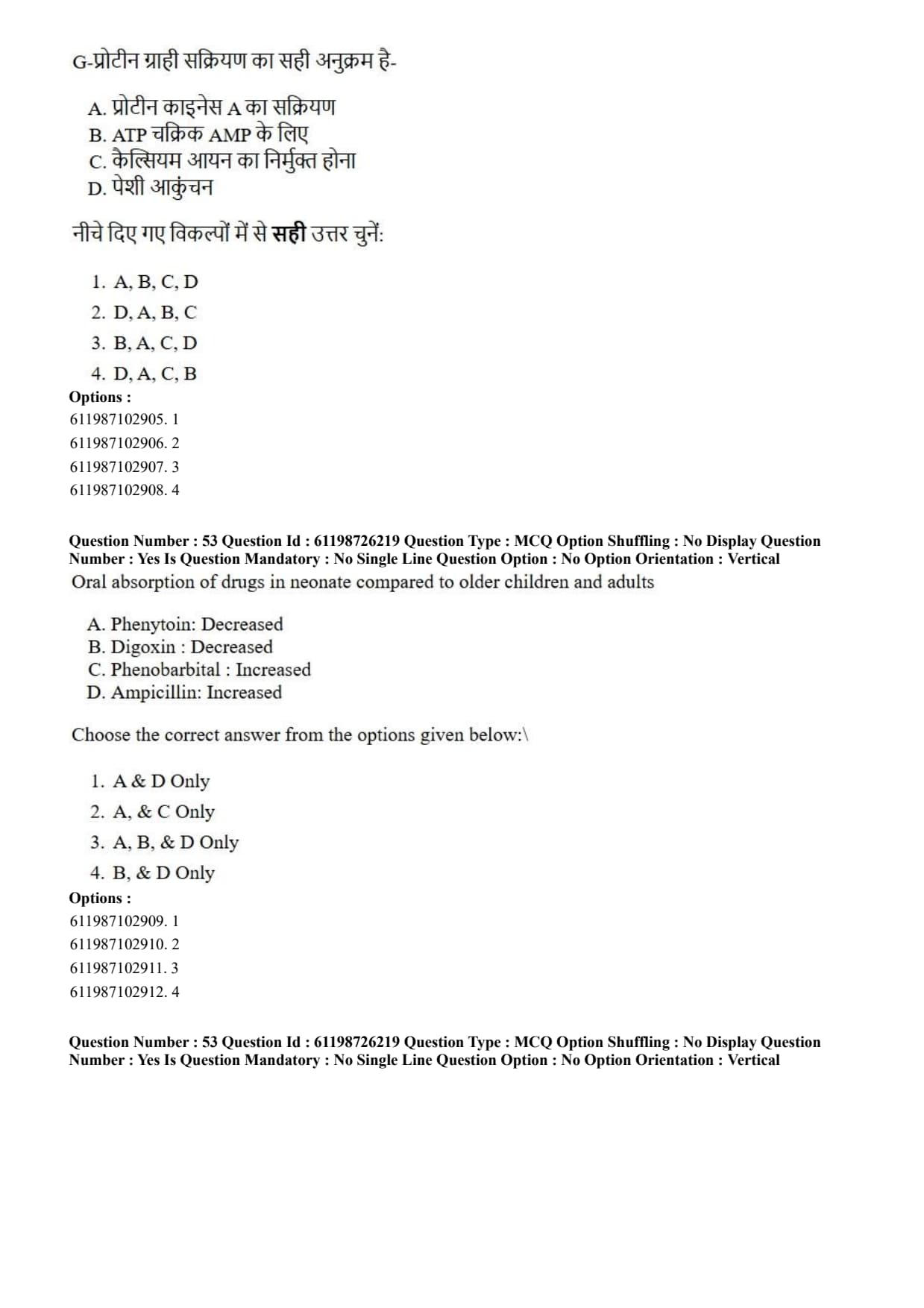
G Protein receptor activation follows the sequence:

View Solution
\textcolor{red{Step 1: Concept
This describes the signal transduction pathway of \(G_s\)-coupled receptors.
\textcolor{red{Step 2: Meaning
Extracellular signals are converted into intracellular actions through a cascade of molecular events.
\textcolor{red{Step 3: Analysis
Activation of the receptor stimulates adenylyl cyclase to convert ATP to Cyclic AMP (B). Increased cAMP activates Protein Kinase A (A). This leads to the release of calcium ions from intracellular stores (C) , which ultimately triggers the physiological response, such as muscle contraction (D).
\textcolor{red{Step 4: Conclusion
The logical sequence of activation is B-A-C-D.
\textcolor{red{Final Answer: (C) Quick Tip: cAMP is the "second messenger" that must be formed before kinases can be activated.
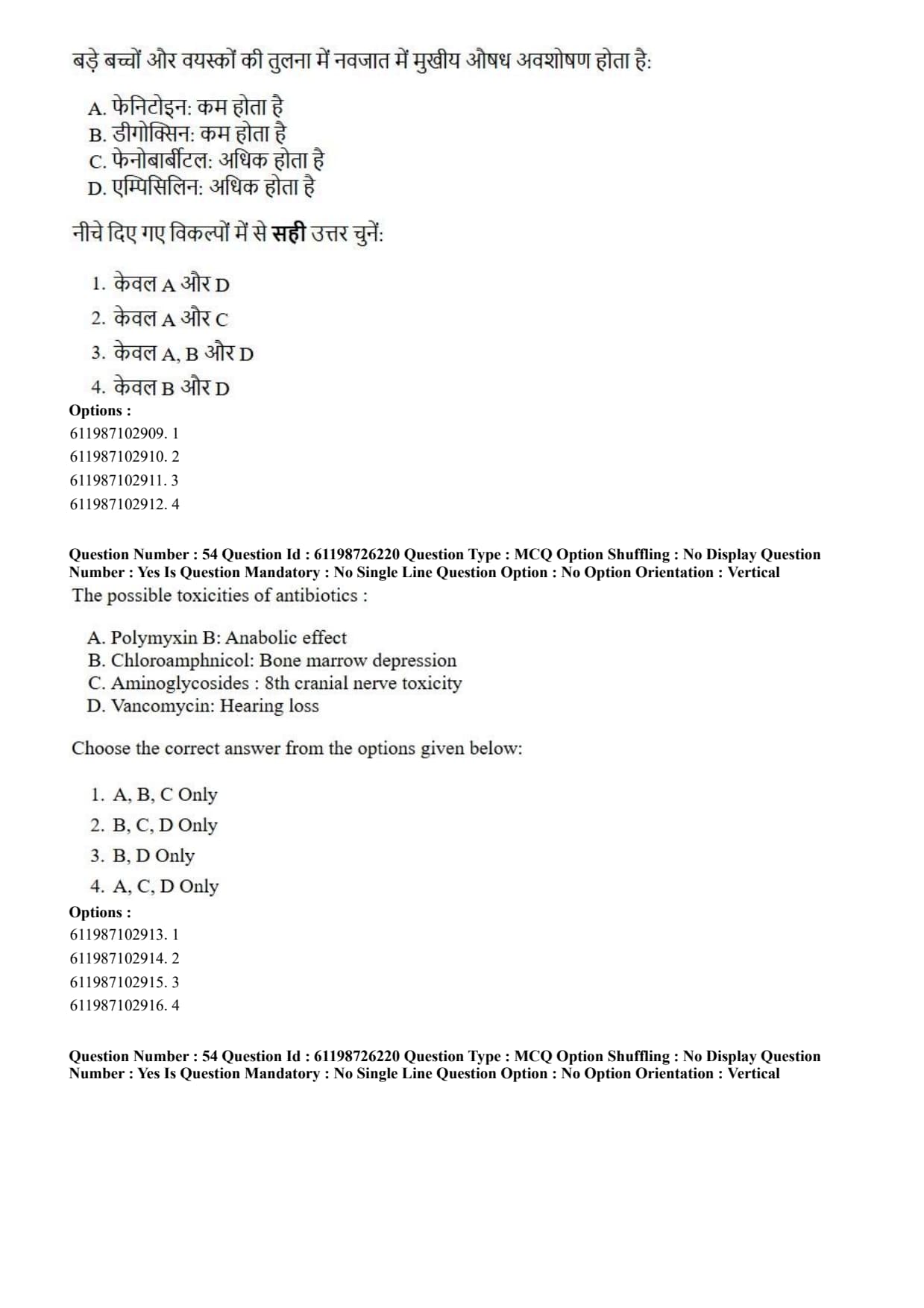
Oral absorption of drugs in neonate compared to older children and adults:

View Solution
\textcolor{red{Step 1: Concept
Neonatal physiology, such as higher gastric pH and slower gastric emptying, significantly alters drug absorption compared to adults.
\textcolor{red{Step 2: Meaning
Absorption can be increased or decreased depending on the chemical nature of the drug.
\textcolor{red{Step 3: Analysis
Phenytoin (A) and Digoxin (B) show decreased absorption in neonates due to physiological immaturity. Ampicillin (D) shows increased absorption because it is acid-labile, and neonates have lower stomach acidity. Phenobarbital absorption is generally decreased, not increased.
\textcolor{red{Step 4: Conclusion
Statements A, B, and D are correct clinical observations.
\textcolor{red{Final Answer: (C) Quick Tip: Neonates have low stomach acid, so "acid-sensitive" drugs like Penicillins are absorbed better!
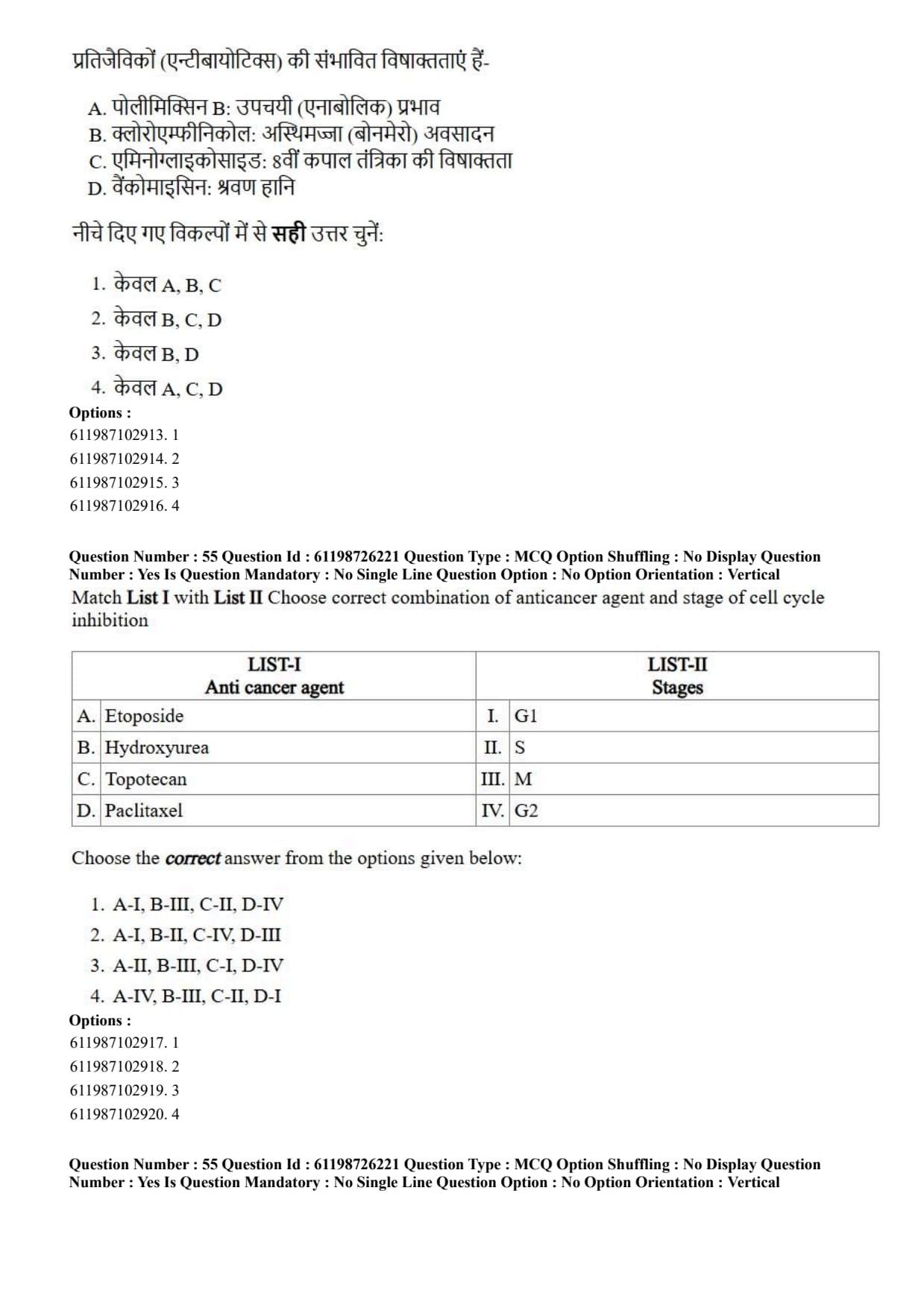
The possible toxicities of antibiotics:

View Solution
\textcolor{red{Step 1: Concept
Antibiotics often have specific, well-documented adverse effect profiles.
\textcolor{red{Step 2: Meaning
Understanding these toxicities is crucial for clinical monitoring and patient safety.
\textcolor{red{Step 3: Analysis
Chloramphenicol (B) is famous for bone marrow depression (aplastic anemia). Aminoglycosides (C) are known for ototoxicity affecting the 8th cranial nerve. Vancomycin (D) can cause hearing loss, especially at high doses. Polymyxin B (A) causes nephrotoxicity and neurotoxicity, not an anabolic effect.
\textcolor{red{Step 4: Conclusion
Only B, C, and D represent accurate antibiotic-toxicity pairings.
\textcolor{red{Final Answer: (B) Quick Tip: Aminoglycosides and Vancomycin "hit the ears"—watch out for hearing loss!
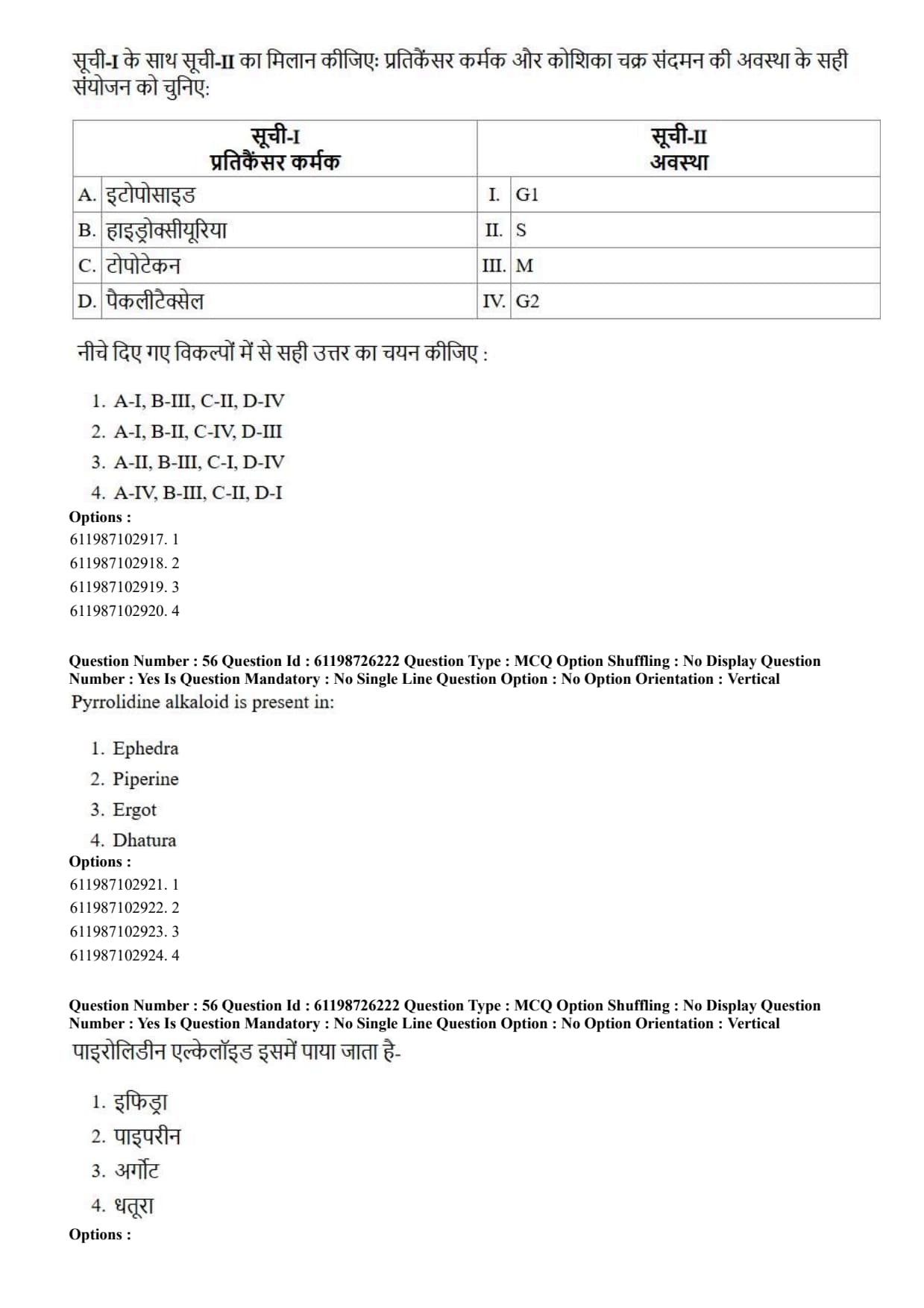
Match List I (Anticancer agent) with List II (Stages of cell cycle inhibition):

View Solution
\textcolor{red{Step 1: Concept
Most anticancer drugs are cell-cycle specific, targeting cells at a particular stage of division.
\textcolor{red{Step 2: Meaning
Matching the drug to its phase of action helps in understanding the mechanism of cell death.
\textcolor{red{Step 3: Analysis
Etoposide (A) is specific to the \(G_1\) (and \(S\)) phase. Hydroxyurea (B) inhibits DNA synthesis in the \(S\) phase. Topotecan (C) typically acts at the \(G_2\) phase. Paclitaxel (D) is a microtubule stabilizer that acts during Mitosis (\(M\) phase).
\textcolor{red{Step 4: Conclusion
The correct matches are A-I, B-II, C-IV, D-III.
\textcolor{red{Final Answer: (B) Quick Tip: Taxels (Paclitaxel) act on spindles, which only appear in the M phase!
Pyrrolidine alkaloid is present in:

View Solution
\textcolor{red{Step 1: Concept
Alkaloids are nitrogenous plant constituents classified based on their core heterocyclic ring system.
\textcolor{red{Step 2: Meaning
A pyrrolidine alkaloid contains a saturated five-membered nitrogen ring.
\textcolor{red{Step 3: Analysis
Piperine (found in black pepper) is the key example of a pyrrolidine-related alkaloid in this list. Ephedra contains amino alkaloids , Ergot contains indole alkaloids , and Dhatura contains tropane alkaloids.
\textcolor{red{Step 4: Conclusion
Piperine is the correct choice associated with the pyrrolidine class.
\textcolor{red{Final Answer: (B) Quick Tip: Piperine comes from Piper nigrum—think "P" for Pyrrolidine!
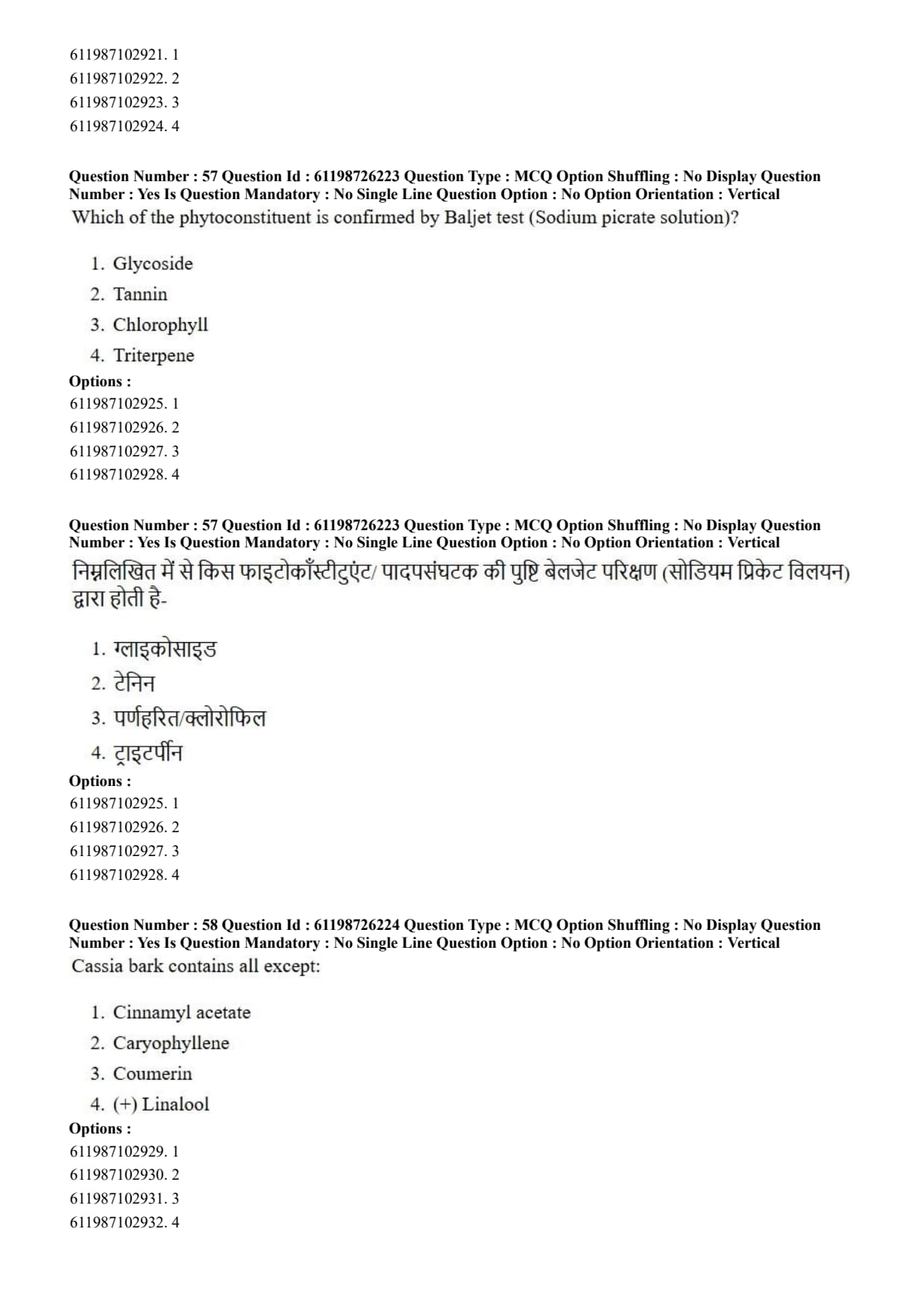
Which of the phytoconstituent is confirmed by Baljet test (Sodium picrate solution)?
View Solution
\textcolor{red{Step 1: Concept
Chemical tests are used in pharmacognosy for the qualitative identification of plant metabolites.
\textcolor{red{Step 2: Meaning
The Baljet test is specifically used for cardiac glycosides (cardenolides).
\textcolor{red{Step 3: Analysis
When a cardenolide reacts with Baljet's reagent (sodium picrate), it produces an orange to red color. Tannins (B) are tested with Ferric chloride; Chlorophyll (C) is identified by its color and fluorescence; Triterpenes (D) are often identified by the Salkowski test.
\textcolor{red{Step 4: Conclusion
The Baljet test is a confirmatory test for Cardiac Glycosides.
\textcolor{red{Final Answer: (A) Quick Tip: Baljet, Kedde, and Legal tests are the "Big Three" for Cardiac Glycosides!
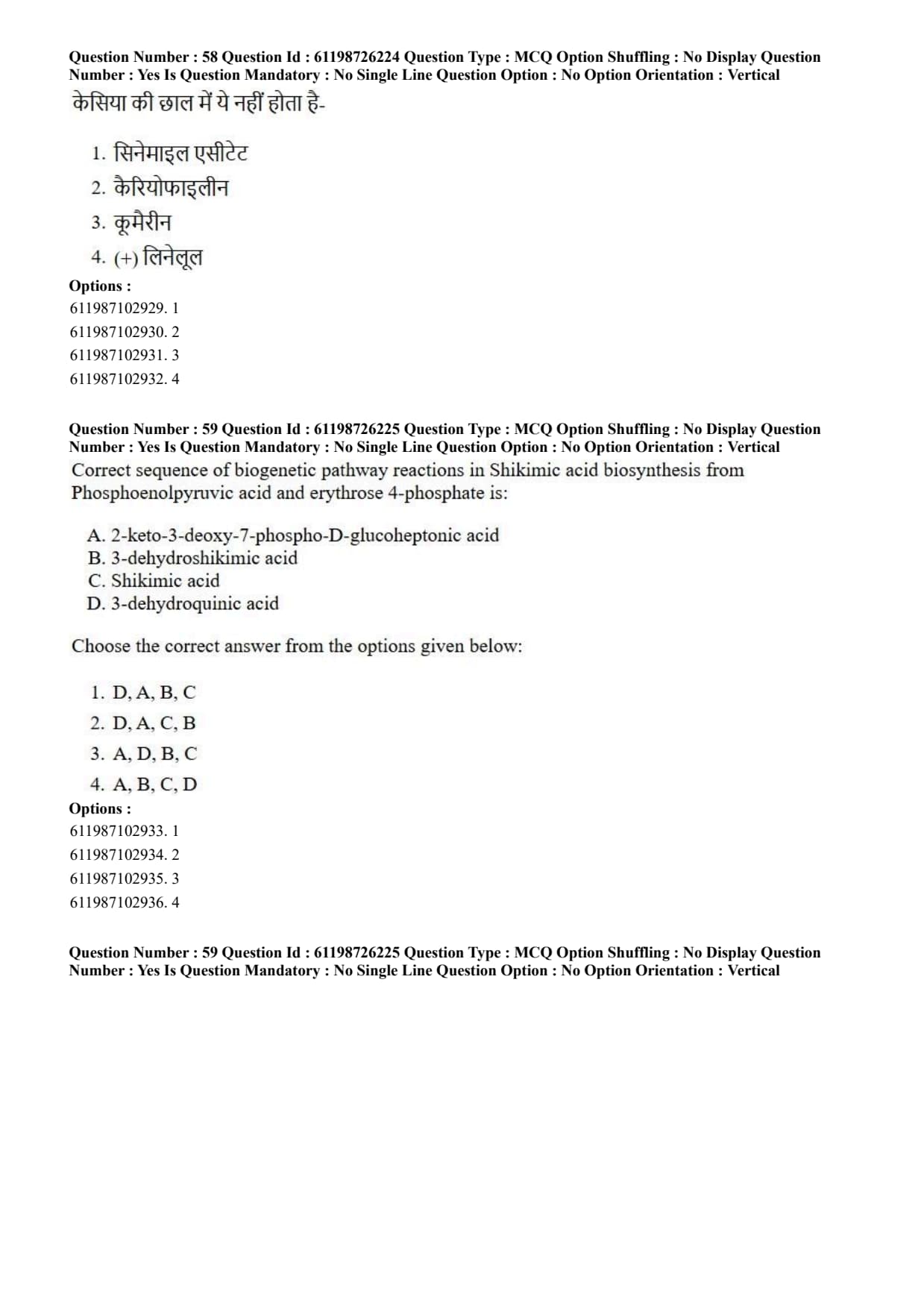
Cassia bark contains all except:
View Solution
\textcolor{red{Step 1: Concept
Cassia (Chinese Cinnamon) bark has a distinct volatile oil profile compared to true Ceylon Cinnamon.
\textcolor{red{Step 2: Meaning
Identification involves knowing which specific terpenes and aromatics are absent or present.
\textcolor{red{Step 3: Analysis
Cassia bark contains Cinnamyl acetate (A), Caryophyllene (B), and notably high levels of Coumarin (C). (+) Linalool is a characteristic component of Ceylon Cinnamon (Cinnamomum zeylanicum), but it is virtually absent in Cassia (Cinnamomum cassia).
\textcolor{red{Step 4: Conclusion (+) Linalool is the component NOT found in Cassia bark.
\textcolor{red{Final Answer: (D) Quick Tip: Cassia is high in Coumarin but lacks the delicate Linalool found in true Cinnamon.
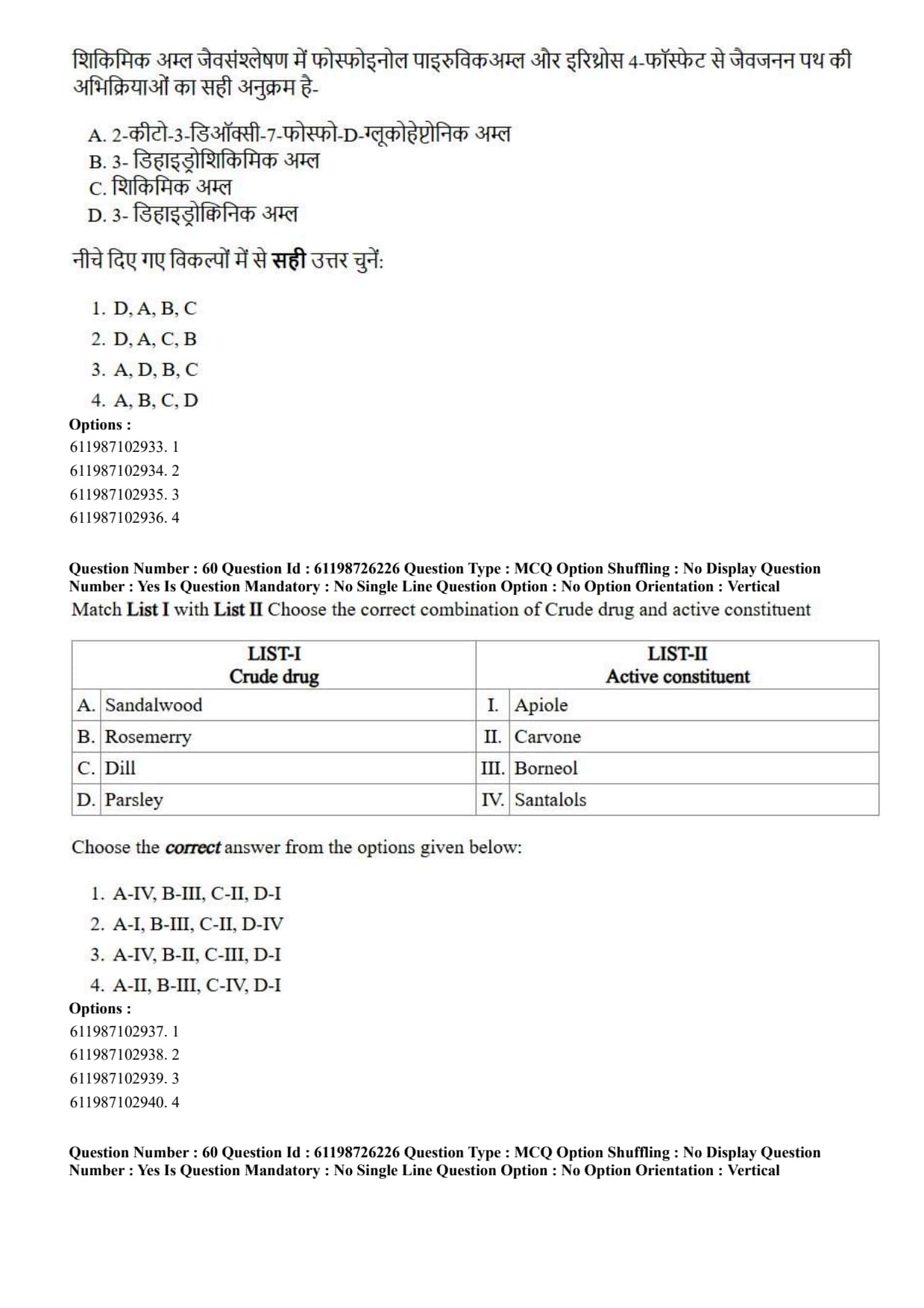
Correct sequence of biogenetic pathway reactions in Shikimic acid biosynthesis is:
View Solution
\textcolor{red{Step 1: Concept
The Shikimic acid pathway is the primary route for the biosynthesis of aromatic amino acids in plants.
\textcolor{red{Step 2: Meaning
Precursors PEP and Erythrose 4-P are converted through cyclic intermediates into Shikimic acid.
\textcolor{red{Step 3: Analysis
The pathway begins with the formation of 2-keto-3-deoxy-7-phospho-D-glucoheptonic acid (A). This cyclizes to 3-dehydroquinic acid (D). It then dehydrates to 3-dehydroshikimic acid (B) , which is finally reduced to Shikimic acid (C).
\textcolor{red{Step 4: Conclusion
The correct sequence is A-D-B-C.
\textcolor{red{Final Answer: (C) Quick Tip: Quinic acid comes before Shikimic acid in the "Dehydro" stages.
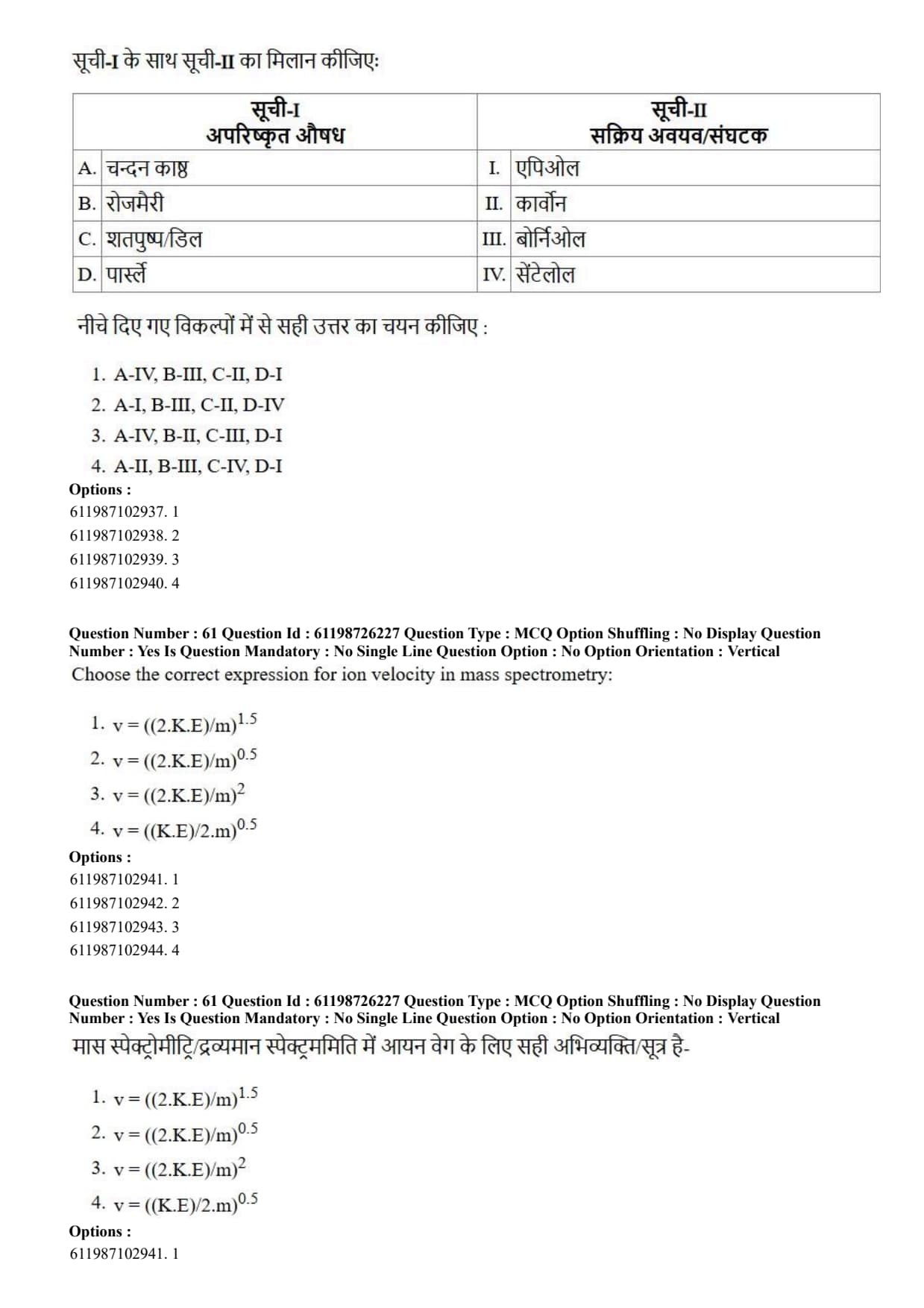
Match List I (Crude drug) with List II (Active constituent):

View Solution
\textcolor{red{Step 1: Concept
Volatile oils are complex mixtures where one or two "active constituents" define the drug's character.
\textcolor{red{Step 2: Meaning
Matching the drug to its primary chemical marker is fundamental to pharmacognosy.
\textcolor{red{Step 3: Analysis
Sandalwood (A) is defined by Santalols (IV). Rosemary (B) contains Borneol (III). Dill (C) is characterized by Carvone (II). Parsley (D) contains Apiole (I).
\textcolor{red{Step 4: Conclusion
The correct matching is A-IV, B-III, C-II, D-I.
\textcolor{red{Final Answer: (A) Quick Tip: Sandalwood \(\rightarrow\) Santalol (Easy name match!); Dill \(\rightarrow\) Carvone (shared with Caraway).
Choose the correct expression for ion velocity in mass spectrometry:
View Solution
\textcolor{red{Step 1: Concept
In mass spectrometry, ions are accelerated by an electric field, converting potential energy into kinetic energy (\(K.E\)).
\textcolor{red{Step 2: Meaning
Kinetic energy is defined by the classical physics formula \(K.E = \frac{1}{2}mv^2\), where \(m\) is the mass of the ion and \(v\) is its velocity.
\textcolor{red{Step 3: Analysis
To find the velocity, we rearrange the kinetic energy equation:
\(\)2 \cdot K.E = m \cdot v^2\(\)
\(\)v^2 = \frac{2 \cdot K.E{m\(\)
\(\)v = \sqrt{\frac{2 \cdot K.E{m = \left(\frac{2 \cdot K.E{m\right)^{0.5\(\)
\textcolor{red{Step 4: Conclusion
The expression \(\left(\frac{2 \cdot K.E}{m}\right)^{0.5}\) correctly describes the ion velocity.
\textcolor{red{Final Answer: (B) Quick Tip: Remember the basic kinetic energy formula \(1/2 mv^2\) and just solve for \(v\)!
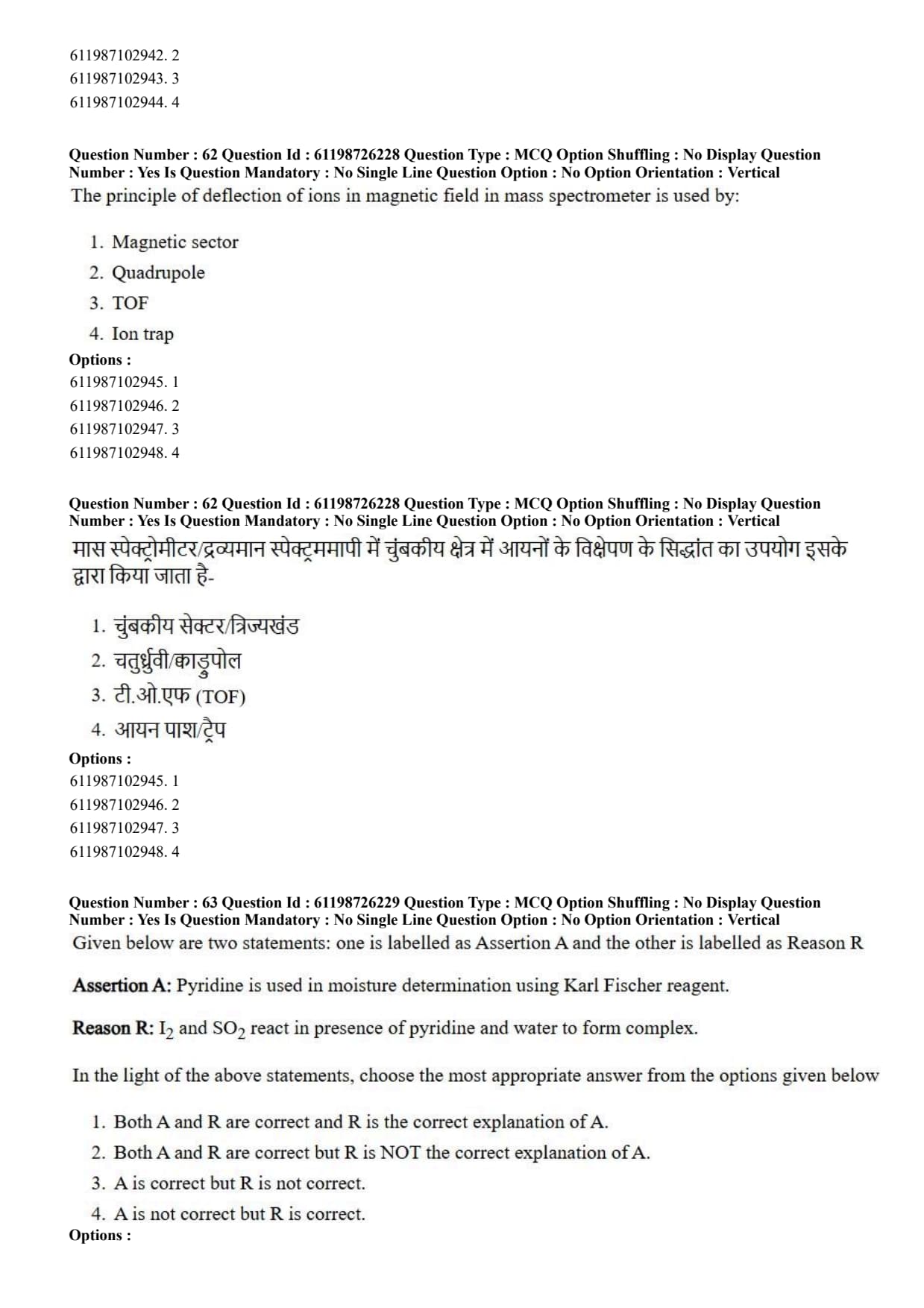
The principle of deflection of ions in magnetic field in mass spectrometer is used by:
View Solution
\textcolor{red{Step 1: Concept
Mass analyzers separate ions based on their mass-to-charge (\(m/z\)) ratio using electric or magnetic fields.
\textcolor{red{Step 2: Meaning
Deflection refers to the bending of an ion's path as it travels through a magnetic field.
\textcolor{red{Step 3: Analysis
The Magnetic sector (A) uses a magnetic field to deflect ions into circular paths; the radius depends on \(m/z\). Quadrupoles use oscillating electric fields. TOF (Time of Flight) measures speed. Ion traps "catch" ions using electromagnetic fields.
\textcolor{red{Step 4: Conclusion
The magnetic sector is the analyzer that relies on magnetic deflection.
\textcolor{red{Final Answer: (A) Quick Tip: Magnetic field = Magnetic sector. It's the only one in the list that uses a magnet to "steer" the ions.
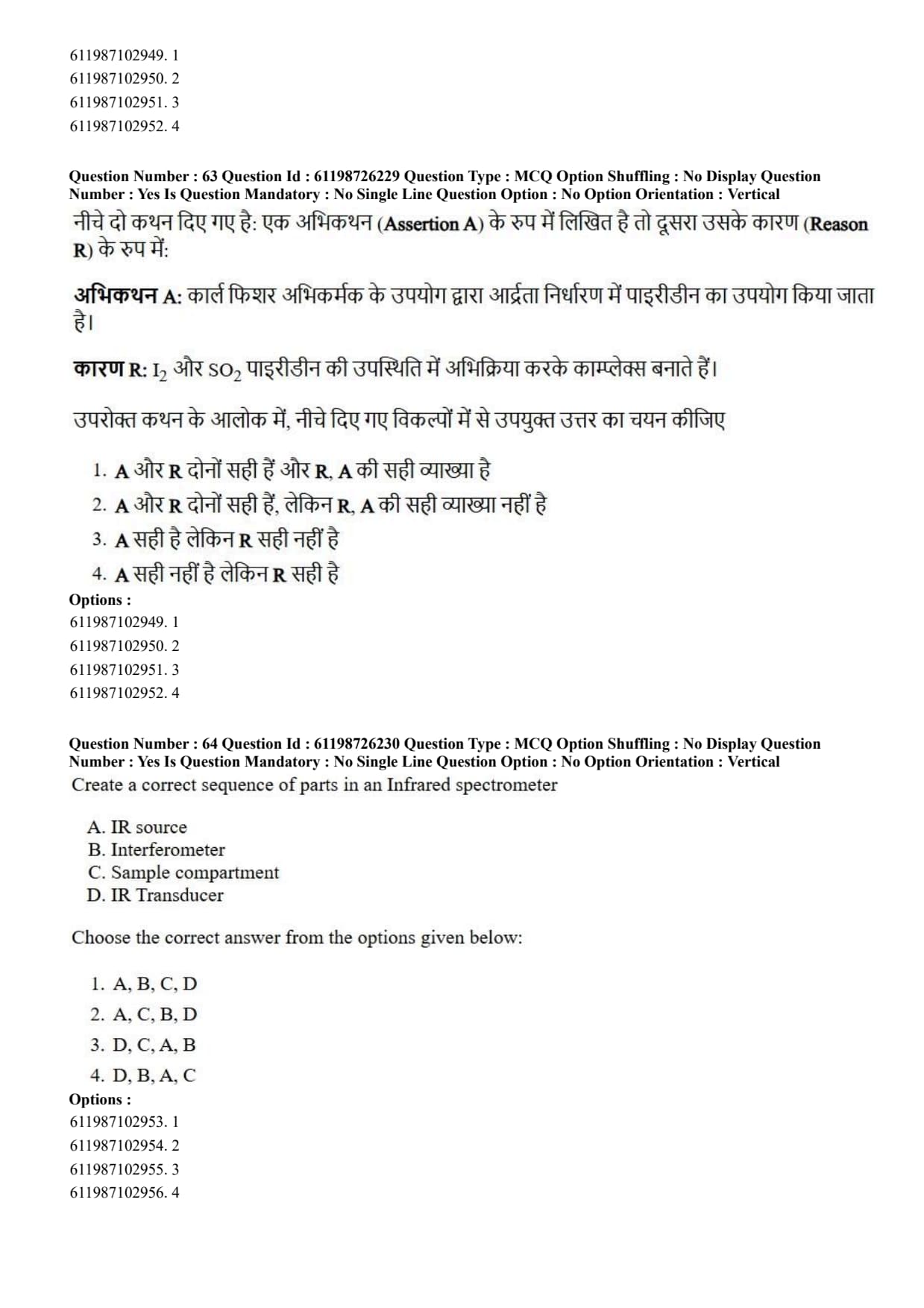
Assertion A: Pyridine is used in moisture determination using Karl Fischer reagent.
Reason R: \(I_{2}\) and \(SO_{2}\) react in presence of pyridine and water to form complex.
View Solution
\textcolor{red{Step 1: Concept
Karl Fischer titration is the standard method for determining water content in a sample.
\textcolor{red{Step 2: Meaning
The reagent typically consists of Iodine (\(I_2\)), Sulfur dioxide (\(SO_2\)), a base (originally Pyridine), and an alcohol.
\textcolor{red{Step 3: Analysis
Assertion A is correct: Pyridine is used to neutralize the acids produced during the reaction. Reason R is also correct: Pyridine forms an intermediate complex with \(SO_2\) and \(I_2\), which then reacts with water. This complex formation is essential for the reaction to proceed quantitatively.
\textcolor{red{Step 4: Conclusion
Both statements are true, and the formation of the complex explains why pyridine is used.
\textcolor{red{Final Answer: (A) Quick Tip: Pyridine acts as both a buffer and a complexing agent in the Karl Fischer reaction.
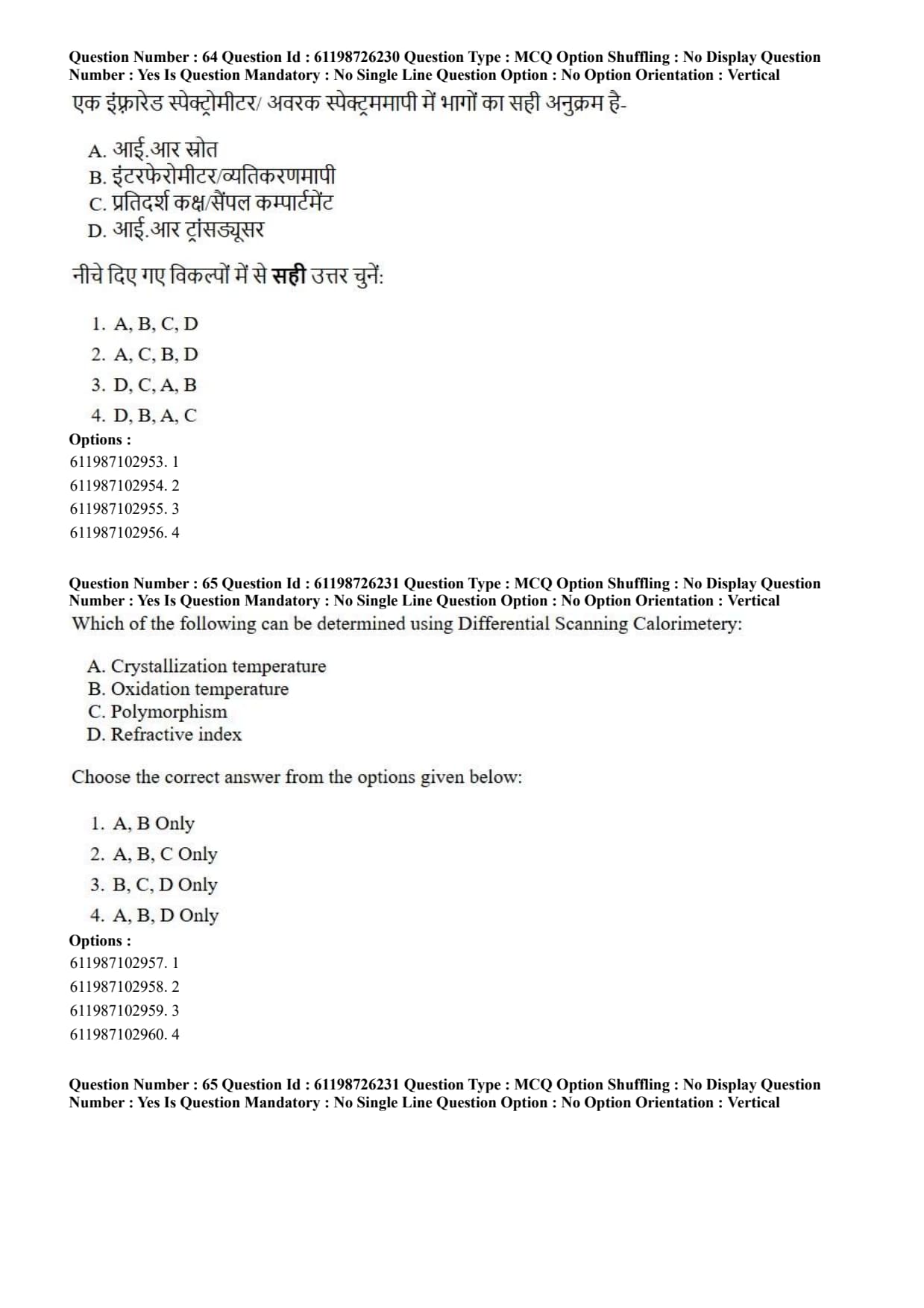
Create a correct sequence of parts in an Infrared spectrometer
View Solution
\textcolor{red{Step 1: Concept
A spectrometer directs light from a source through a sample to a detector to measure absorption.
\textcolor{red{Step 2: Meaning
Modern IR spectrometers (FT-IR) use an interferometer to process the light beam.
\textcolor{red{Step 3: Analysis
The light starts at the IR source (A). It then passes through the Sample compartment (C). The beam enters the Interferometer (B) to create an interferogram. Finally, the signal is converted by the IR Transducer/Detector (D).
\textcolor{red{Step 4: Conclusion
The sequence is Source \(\rightarrow\) Sample \(\rightarrow\) Interferometer \(\rightarrow\) Transducer (A-C-B-D).
\textcolor{red{Final Answer: (B) Quick Tip: In FT-IR, the "Interferometer" is the heart of the machine, placed between the sample and the detector.
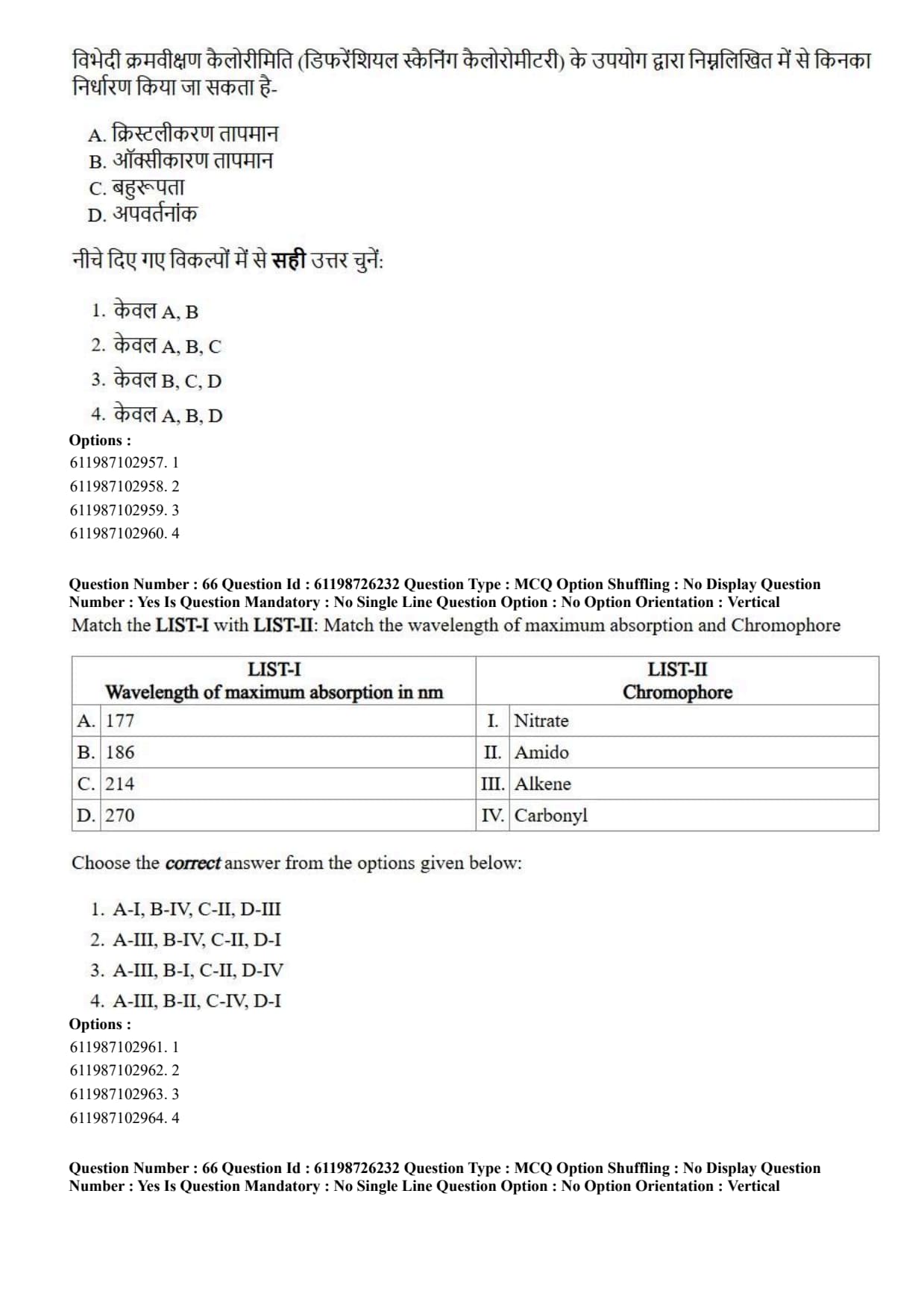
Which of the following can be determined using Differential Scanning Calorimetery:

View Solution
\textcolor{red{Step 1: Concept
Differential Scanning Calorimetry (DSC) measures the heat flow into or out of a sample as it is heated or cooled.
\textcolor{red{Step 2: Meaning
It is used to study thermal transitions where the sample absorbs or releases energy.
\textcolor{red{Step 3: Analysis
DSC can determine Crystallization temperature (A) and Oxidation temperature (B) by measuring exothermic/endothermic peaks. It is widely used to study Polymorphism (C) as different forms have different melting points. Refractive index (D) is an optical property, not a thermal one.
\textcolor{red{Step 4: Conclusion
Only A, B, and C are thermal properties measurable by DSC.
\textcolor{red{Final Answer: (B) Quick Tip: DSC = Heat. If the property involves temperature changes (melting, boiling, crystalizing), DSC can measure it!
Match the LIST-I (Wavelength) with LIST-II (Chromophore):

View Solution
\textcolor{red{Step 1: Concept
A chromophore is a functional group that absorbs UV or visible light at specific wavelengths.
\textcolor{red{Step 2: Meaning
Different groups have characteristic absorption maximums (\(\lambda_{max}\)).
\textcolor{red{Step 3: Analysis
Alkene (III) typically absorbs around 177 nm. Nitrate (I) has a characteristic peak around 186 nm. Amido (II) groups absorb near 214 nm. Carbonyl (IV) groups have a weak \(n \rightarrow \pi^*\) transition near 270 nm.
\textcolor{red{Step 4: Conclusion
The correct matches are A-III, B-I, C-II, D-IV.
\textcolor{red{Final Answer: (C) Quick Tip: Carbonyls (C=O) always have a distinct peak in the 270-290 nm range due to non-bonding electrons.
All of the following TCA cycle intermediates may be added or removed by other metabolic pathways except:
View Solution
\textcolor{red{Step 1: Concept
The TCA (Krebs) cycle is amphibolic, meaning it functions in both catabolism and anabolism.
\textcolor{red{Step 2: Meaning
Intermediates can enter or leave the cycle to participate in other pathways (Anaplerotic/Cataplerotic reactions).
\textcolor{red{Step 3: Analysis
Citrate (D) is used for fatty acid synthesis. Fumarate (B) and Oxaloacetate (C) are linked to the urea cycle and gluconeogenesis. Isocitrate (A) is the only intermediate in this list that does not typically serve as a major shunt for other pathways.
\textcolor{red{Step 4: Conclusion
Isocitrate is the exception.
\textcolor{red{Final Answer: (A) Quick Tip: Most TCA intermediates are "multitaskers," but Isocitrate usually stays in the cycle until it's converted to Alpha-ketoglutarate.
All of the following are correct about a molecule designated as cytochrome P450 except it:
View Solution
\textcolor{red{Step 1: Concept
Cytochrome P450 (CYP) is a superfamily of enzymes involved in drug metabolism.
\textcolor{red{Step 2: Meaning
These enzymes catalyze monooxygenation reactions.
\textcolor{red{Step 3: Analysis
CYP enzymes contain heme (C). They require electrons from NADPH via a reductase (B). Their primary role is hydroxylating hydrophobic (lipophilic) drugs (D). However, they do NOT all come from the same *gene* family; they come from a *superfamily* divided into many different families (e.g., CYP1, CYP2, CYP3).
\textcolor{red{Step 4: Conclusion
Option A is incorrect because "same gene family" is too narrow for this diverse superfamily.
\textcolor{red{Final Answer: (A) Quick Tip: "P450" refers to the absorption peak at 450 nm when bound to CO. They are a "Superfamily," not just one family!
Appropriate sequence of processes in glycolysis pathway is
View Solution
\textcolor{red{Step 1: Concept
Glycolysis is the metabolic pathway that breaks down glucose into pyruvate.
\textcolor{red{Step 2: Meaning
The pathway involves a series of enzymatic steps in the cytoplasm.
\textcolor{red{Step 3: Analysis
The sequence begins with phosphorylation to Glucose 6-Phosphate (A). This is later converted to Fructose 1,6-bisphosphate (B). In the payoff phase, it becomes 1,3-bisphosphoglycerate (C). The final product is Pyruvate (D).
\textcolor{red{Step 4: Conclusion
The correct order is A-B-C-D.
\textcolor{red{Final Answer: (A) Quick Tip: Glycolysis: Start with Glucose, End with Pyruvate.
Choose the correct schedule and their coding:

View Solution
\textcolor{red{Step 1: Concept
The Drugs and Cosmetics Act includes various schedules that govern the manufacture and sale of drugs.
\textcolor{red{Step 2: Meaning
Each schedule letter refers to a specific regulation.
\textcolor{red{Step 3: Analysis
Schedule F2 (A) covers standards for surgical dressings. Schedule H (B) is for prescription drugs. Both are correct. Schedule C (C) is for biological products, not pharmacy equipment (which is Schedule N). Schedule M (D) is for GMP, while disinfectant standards are in Schedule O.
\textcolor{red{Step 4: Conclusion
Only A and B are correctly coded.
\textcolor{red{Final Answer: (B) Quick Tip: Schedule H = Hospital/Hand-over (Prescription); Schedule M = Manufacturing (GMP).
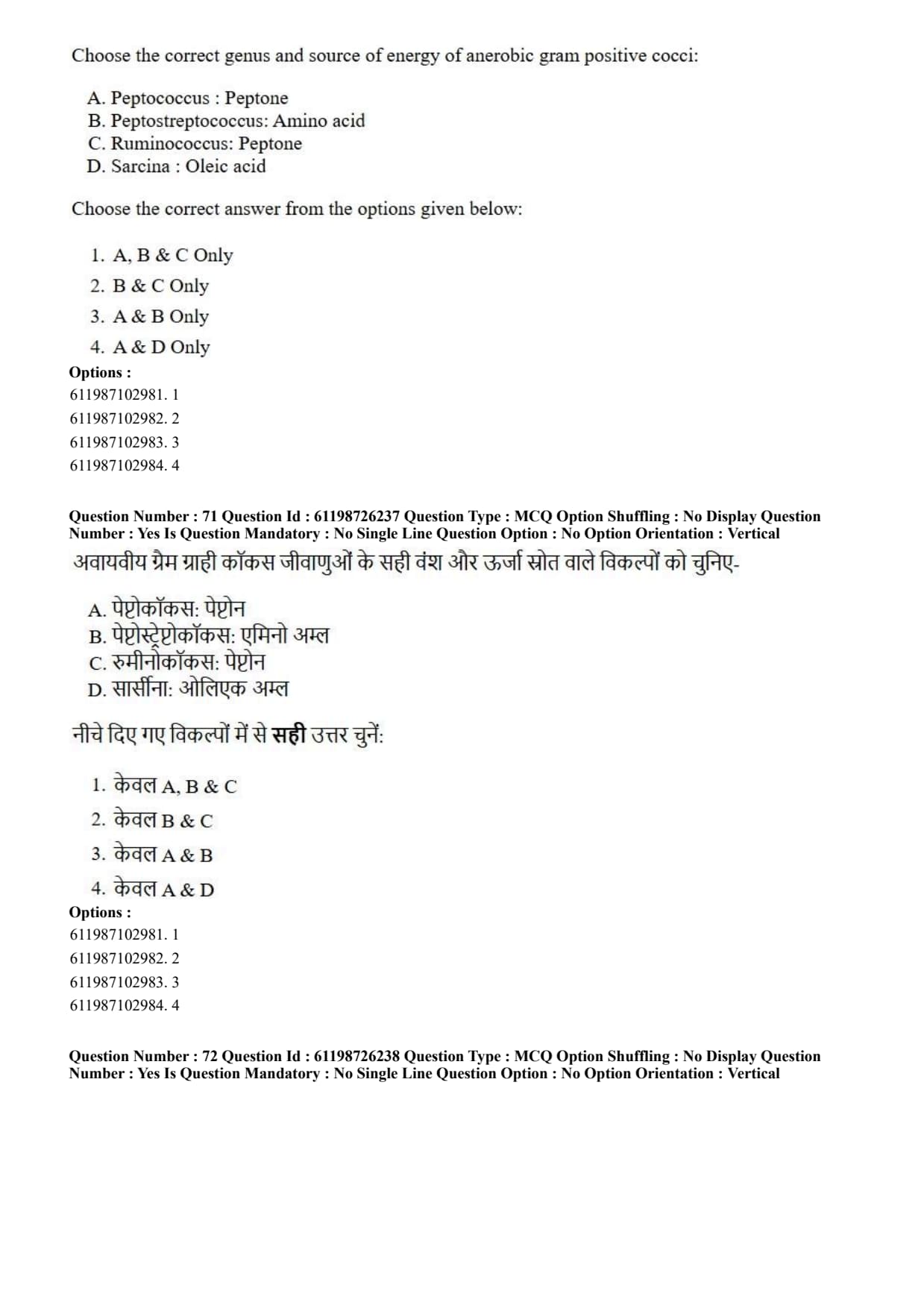
Choose the correct genus and source of energy of anaerobic gram positive cocci:
View Solution
\textcolor{red{Step 1: Concept
Anaerobic gram-positive cocci (GPAC) are a diverse group of bacteria that do not require oxygen for growth and utilize various organic compounds for energy.
\textcolor{red{Step 2: Meaning
Each genus within this group has specific metabolic preferences for their primary energy source.
\textcolor{red{Step 3: Analysis
Peptococcus (A) primarily utilizes peptone and amino acids for energy. Peptostreptococcus (B) is well-known for utilizing amino acids and glucose. Ruminococcus (C) typically utilizes cellulose and other complex carbohydrates, not peptone. Sarcina (D) utilizes carbohydrates (like glucose) to produce acid and gas, not oleic acid.
\textcolor{red{Step 4: Conclusion
Based on established microbiological energy sources, only combinations A and B are correct.
\textcolor{red{Final Answer: (C) Quick Tip: "Pepto-" in the name usually indicates a preference for protein-derived sources like peptones or amino acids.
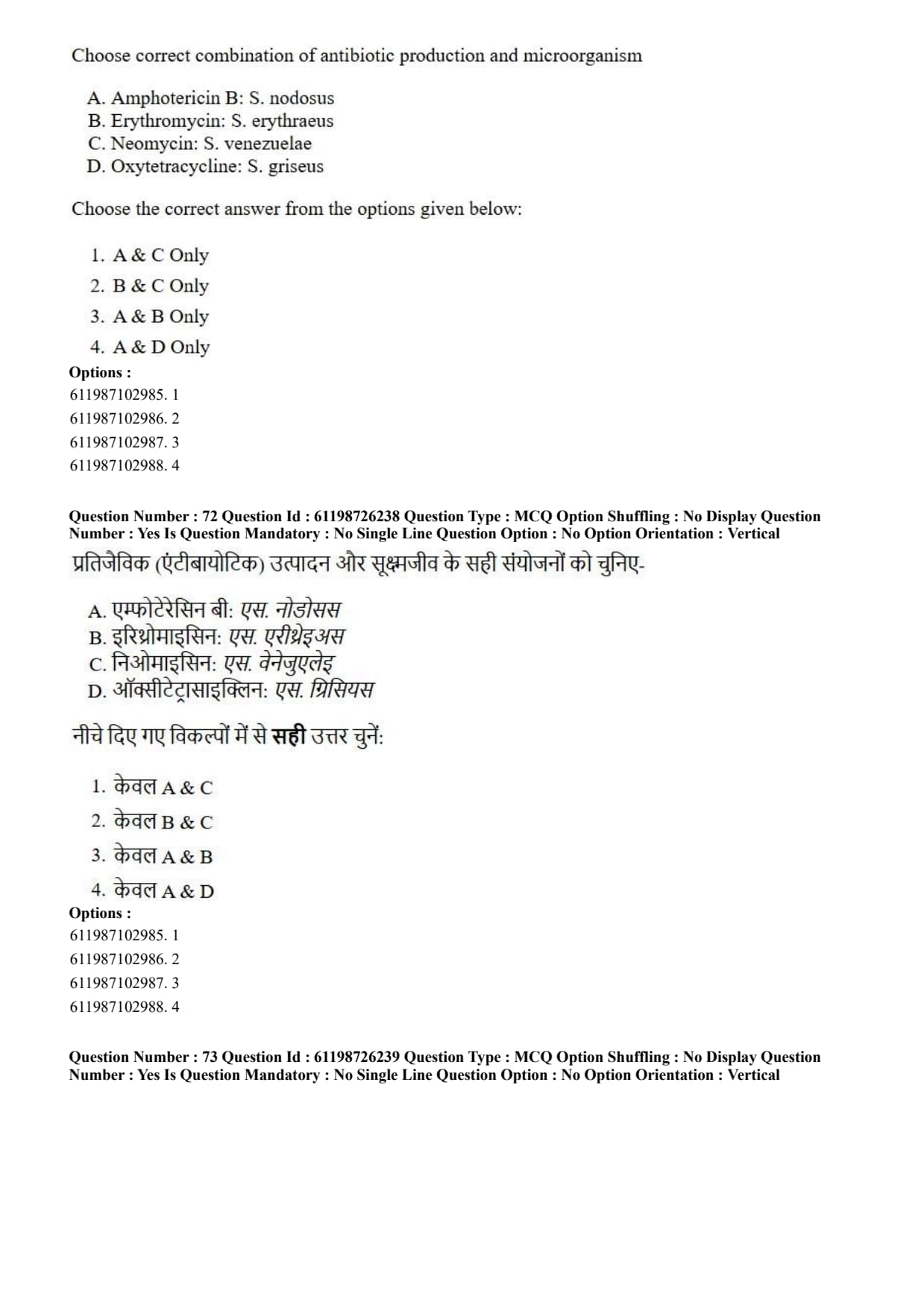
Choose correct combination of antibiotic production and microorganism:
View Solution
\textcolor{red{Step 1: Concept
Many clinically important antibiotics are secondary metabolites produced by specific species of the genus Streptomyces.
\textcolor{red{Step 2: Meaning
The name of the antibiotic is often derived from the species name of the producing organism.
\textcolor{red{Step 3: Analysis
Amphotericin B (A) is produced by Streptomyces nodosus. Erythromycin (B) is produced by Saccharopolyspora erythraea (formerly Streptomyces erythraeus). Neomycin (C) is produced by Streptomyces fradiae, while Streptomyces venezuelae produces Chloramphenicol. Oxytetracycline (D) is produced by Streptomyces rimosus, while Streptomyces griseus produces Streptomycin.
\textcolor{red{Step 4: Conclusion
Only the combinations for Amphotericin B and Erythromycin are correct.
\textcolor{red{Final Answer: (C) Quick Tip: Erythromycin \(\rightarrow\) S. erythraeus; the names are nearly identical, making them easy to pair.
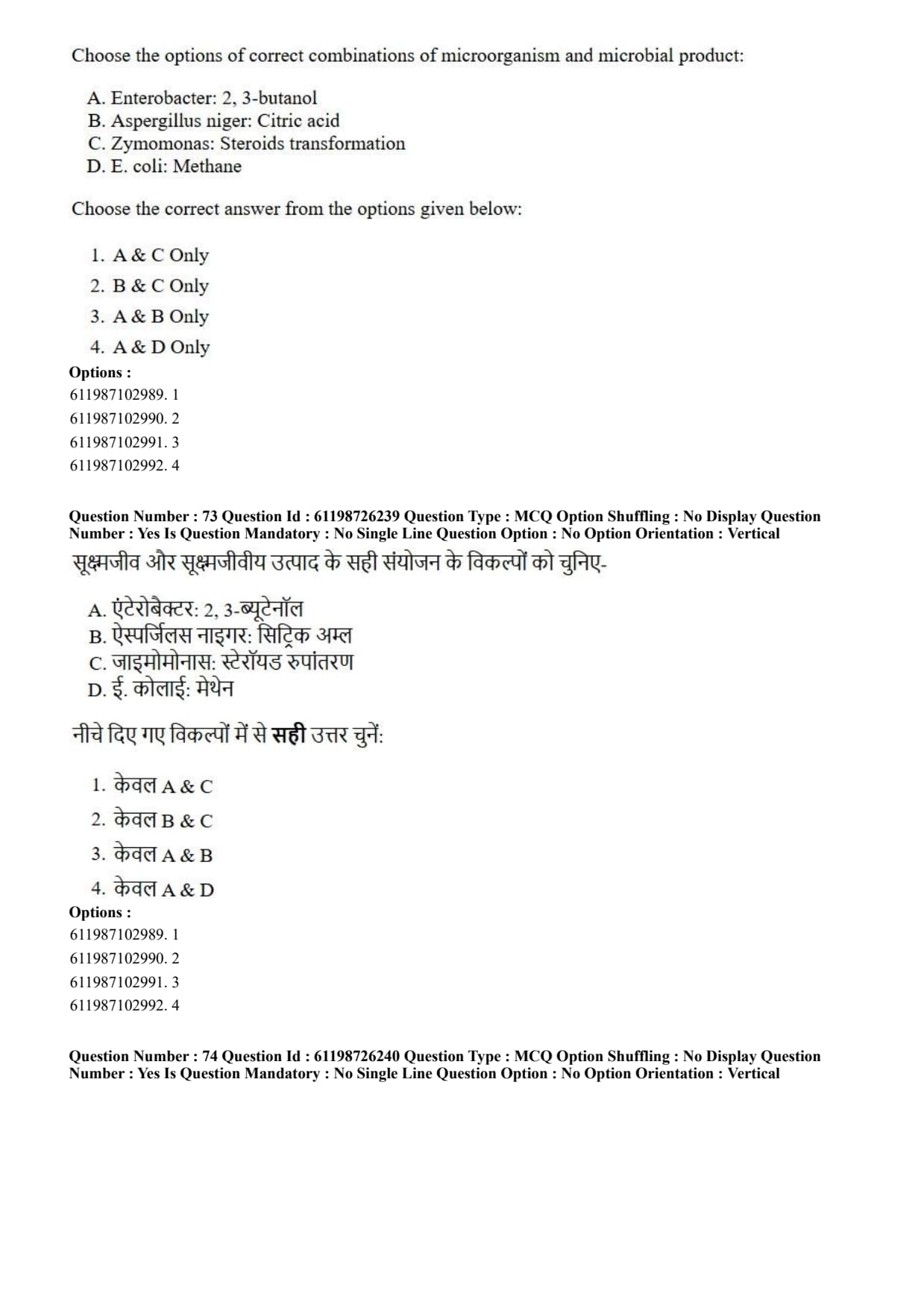
Choose the options of correct combinations of microorganism and microbial product:
View Solution
\textcolor{red{Step 1: Concept
Industrial microbiology utilizes specific microorganisms as "cell factories" to produce chemicals, acids, and alcohols.
\textcolor{red{Step 2: Meaning
The efficiency and yield of the product depend on the metabolic pathway of the selected microbe.
\textcolor{red{Step 3: Analysis
Enterobacter (A) species are known for 2,3-butanediol (butanol) fermentation. Aspergillus niger (B) is the primary industrial source for Citric acid production. Zymomonas (C) is famous for ethanol production via the Entner-Doudoroff pathway, while steroid transformations are often done by Rhizopus or Arthrobacter. E. coli (D) does not naturally produce methane; methane is produced by Methanogens (Archaea).
\textcolor{red{Step 4: Conclusion
Combinations A and B represent accurate industrial microbial processes.
\textcolor{red{Final Answer: (C) Quick Tip: Aspergillus niger is the "workhorse" for Citric acid—remember this for industrial fermentation questions.
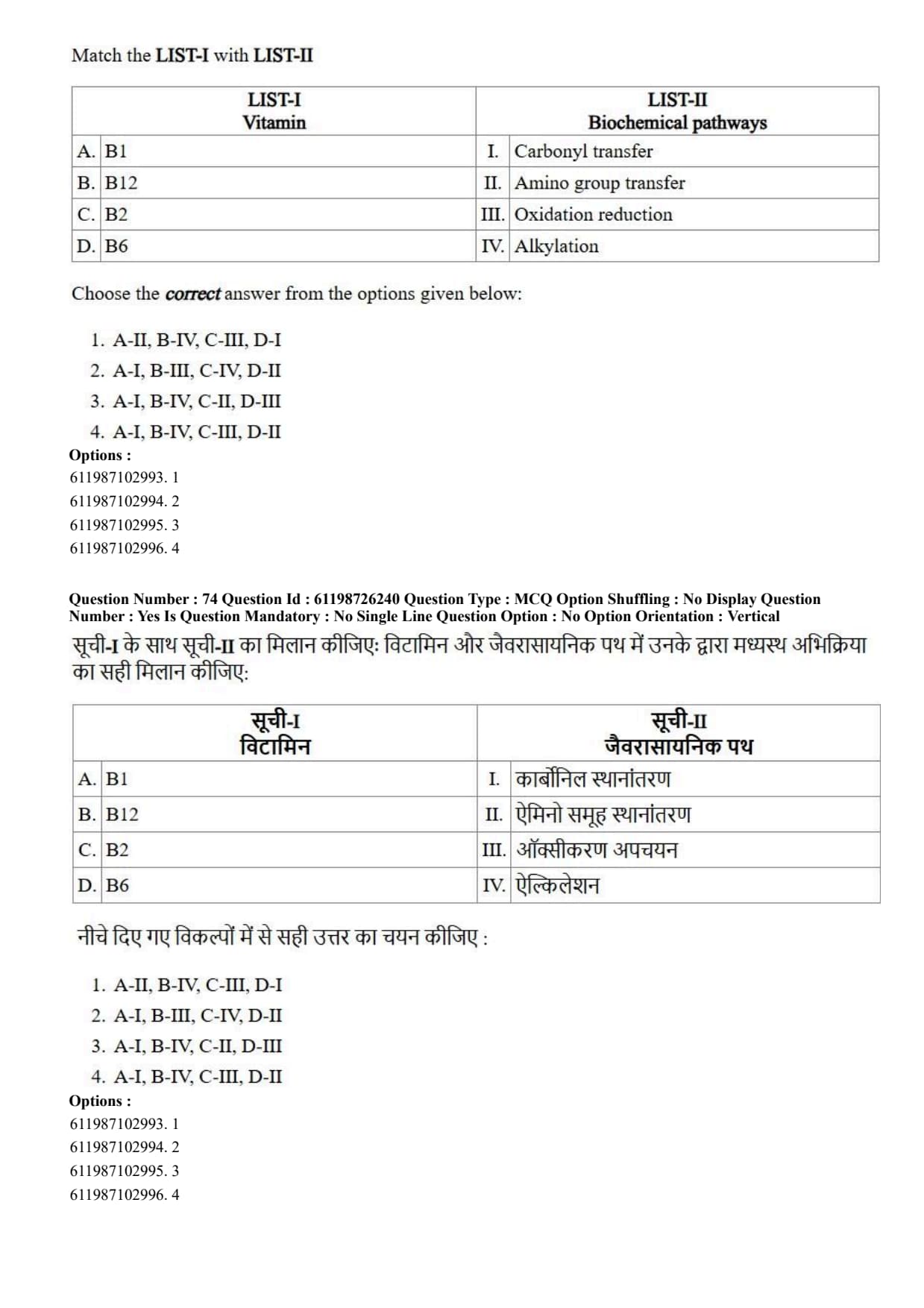
Match the LIST-I (Vitamin) with LIST-II (Biochemical pathways):

View Solution
\textcolor{red{Step 1: Concept
Vitamins function as essential coenzymes or precursors to coenzymes in various metabolic reactions.
\textcolor{red{Step 2: Meaning
Each B-vitamin has a specific chemical role, such as transferring groups or facilitating redox reactions.
\textcolor{red{Step 3: Analysis
Vitamin B1 (Thiamine) is involved in carbonyl (aldehyde) group transfer (A-I). Vitamin B12 (Cobalamin) is essential for alkylation and methyl group transfer (B-IV). Vitamin B2 (Riboflavin) forms FAD/FMN for oxidation-reduction reactions (C-III). Vitamin B6 (Pyridoxine) is the primary coenzyme for amino group transfer (transamination) (D-II).
\textcolor{red{Step 4: Conclusion
The correct matching is A-I, B-IV, C-III, D-II.
\textcolor{red{Final Answer: (D) Quick Tip: B6 (Pyridoxine) = Amino group transfer. This is a fundamental link in protein metabolism.
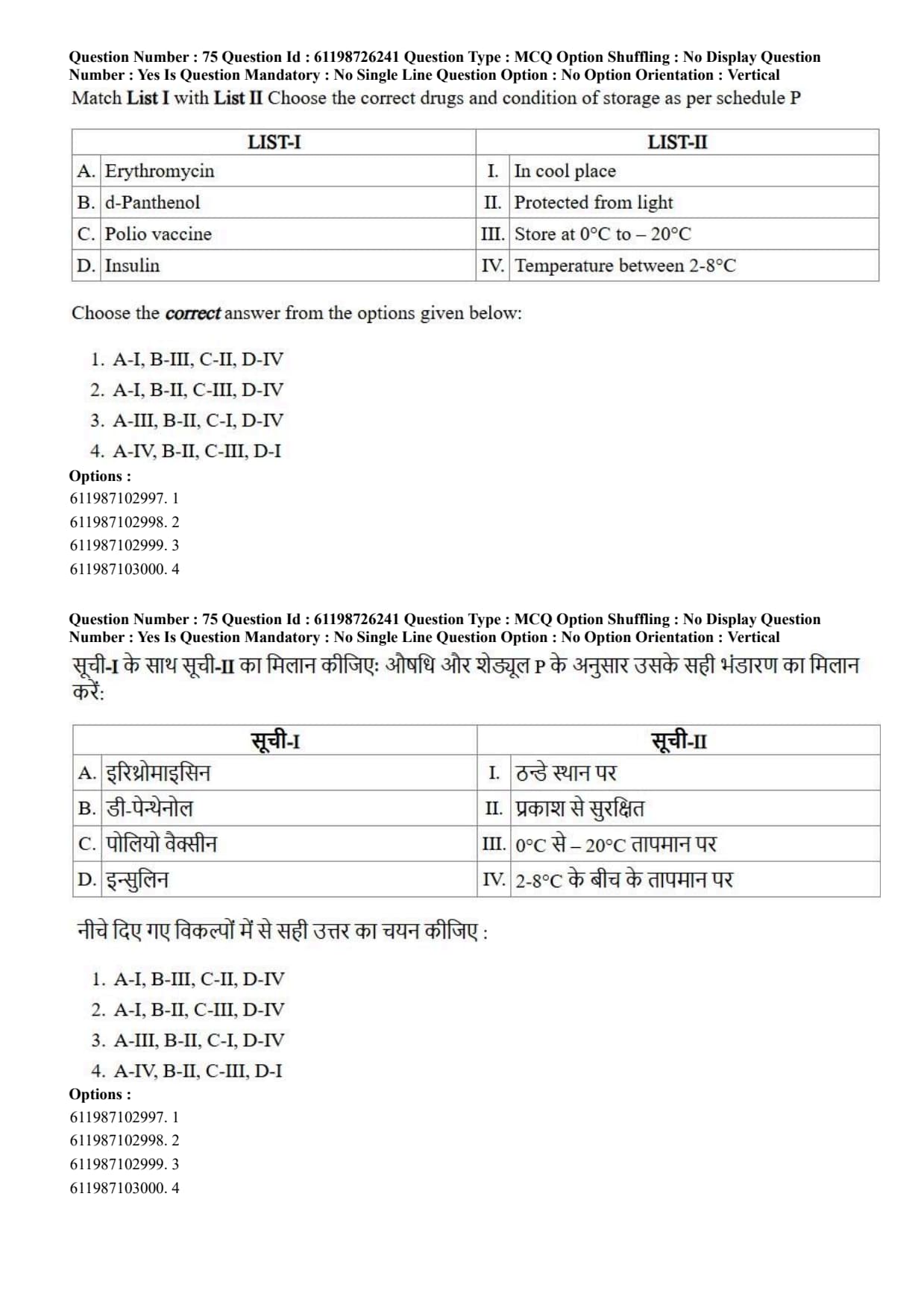
Match List I with List II: Choose the correct drugs and condition of storage as per schedule P
View Solution
\textcolor{red{Step 1: Concept
Schedule P of the Drugs and Cosmetics Act specifies the life period and storage conditions for various drugs to maintain their potency.
\textcolor{red{Step 2: Meaning
Storage conditions range from "cool places" to specific sub-zero temperatures for sensitive biologicals.
\textcolor{red{Step 3: Analysis
Erythromycin (A) is generally stored in a cool place (A-I) . d-Panthenol (B) must be protected from light (B-II). Polio vaccine (C) is highly heat-sensitive and must be stored at \(0^{\circ}C\) to \(-20^{\circ}C\) (C-III). Insulin (D) must be kept refrigerated at a temperature between \(2-8^{\circ}C\) (D-IV).
\textcolor{red{Step 4: Conclusion
The correct sequence is A-I, B-II, C-III, D-IV.
\textcolor{red{Final Answer: (B) Quick Tip: Vaccines are almost always sub-zero or refrigerated; Insulin must NEVER be frozen, only refrigerated (\(2-8^{\circ}C\)).



Comments