



Outcomes of Democracy is the chapter where the CBSE paper stops asking what democracy is and starts asking how well it works. This Class 10 Civics Chapter 5 PYQ compilation carries 10 real board questions worth 29 marks, all taken from the 2026 CBSE Class 10 Social Science papers. The questions are sorted by marks and tagged with the set code they came from.
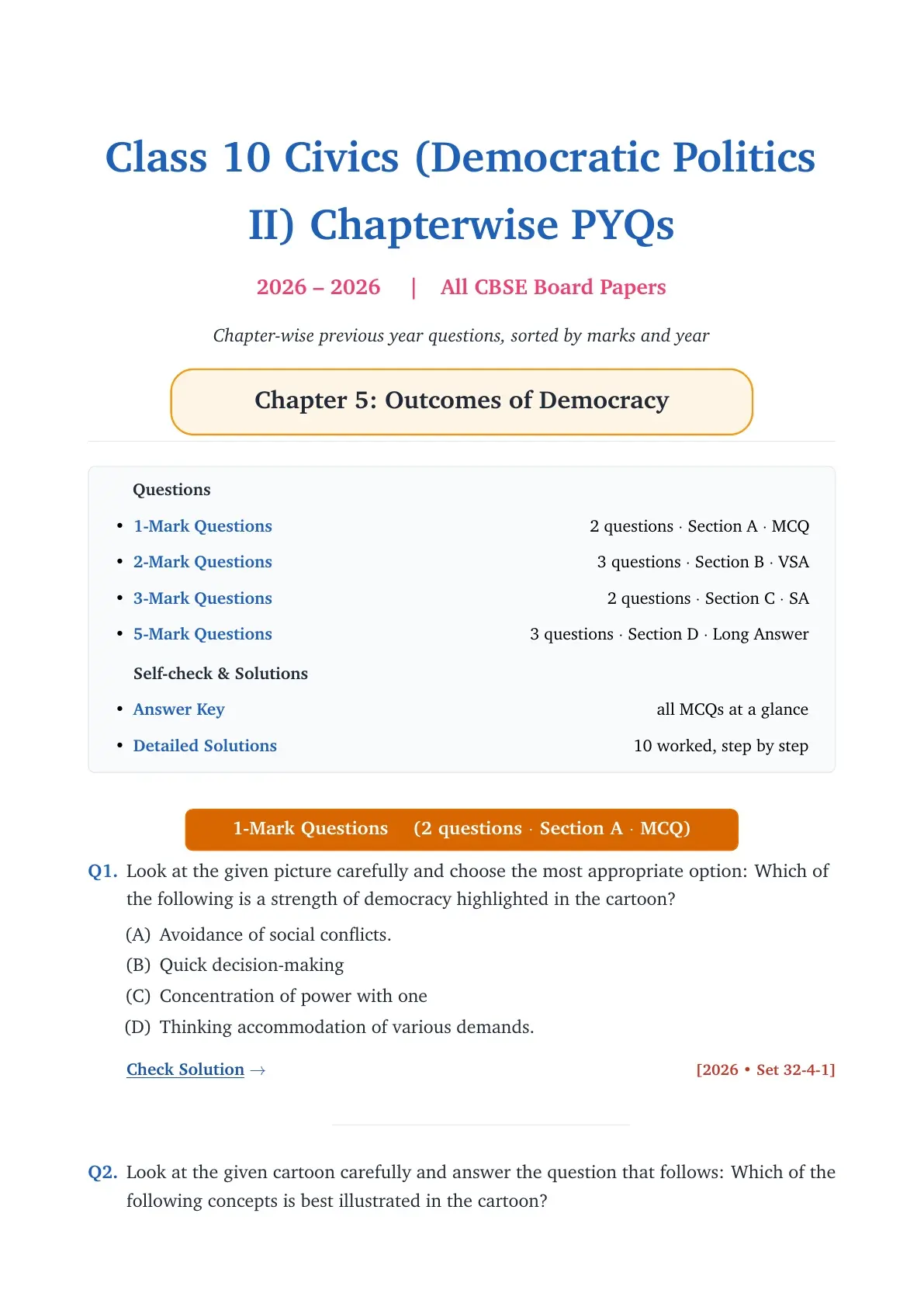
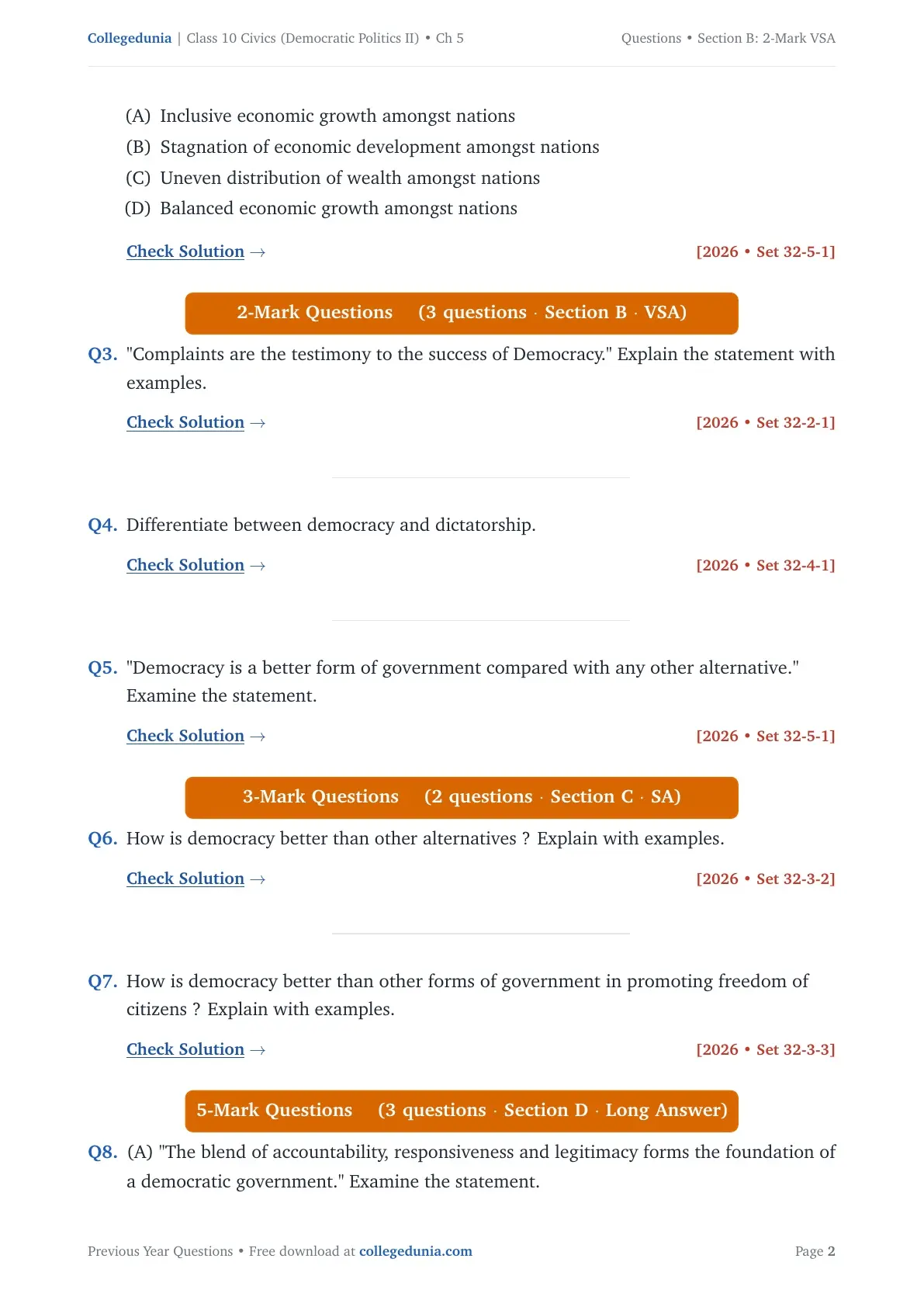
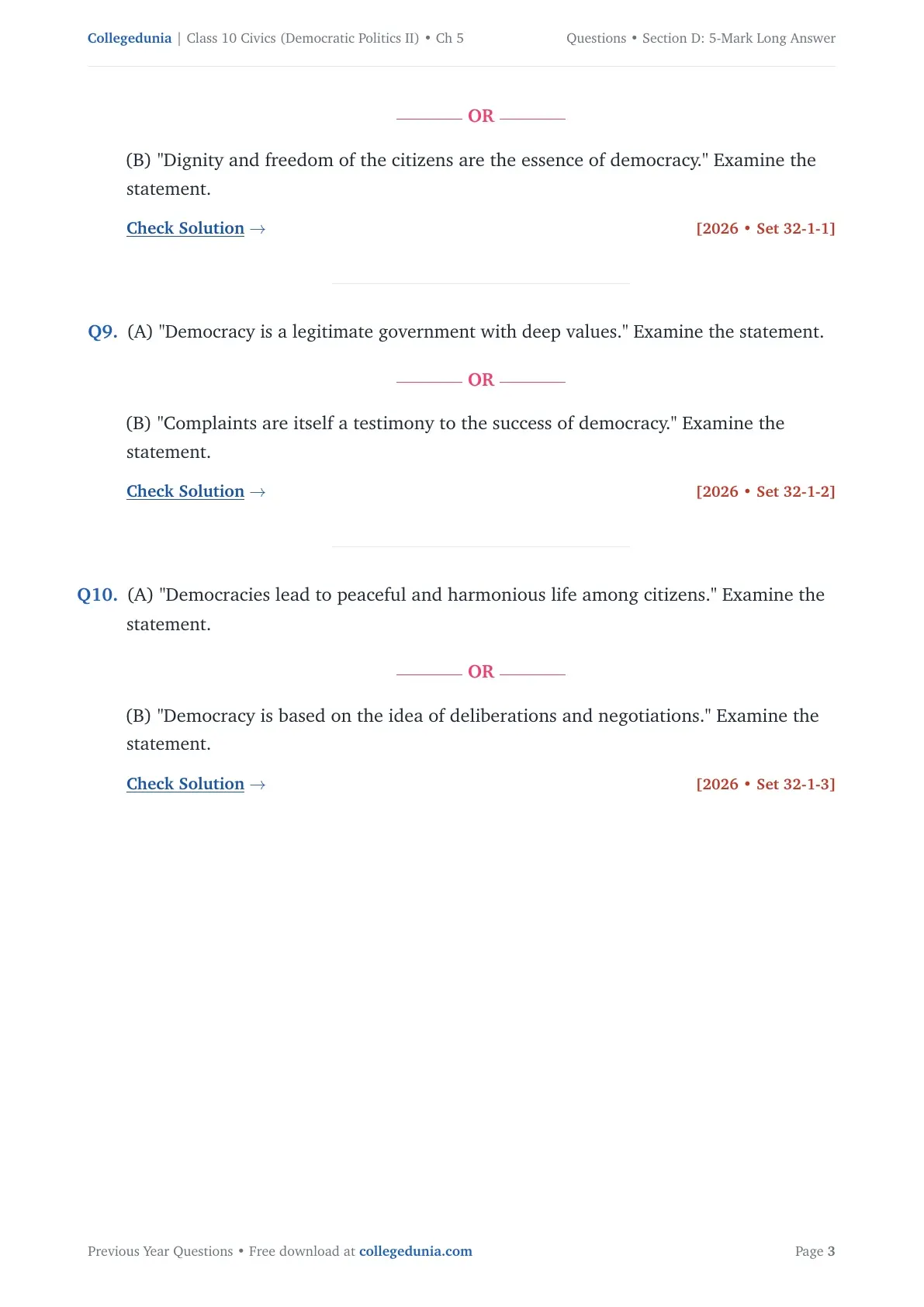

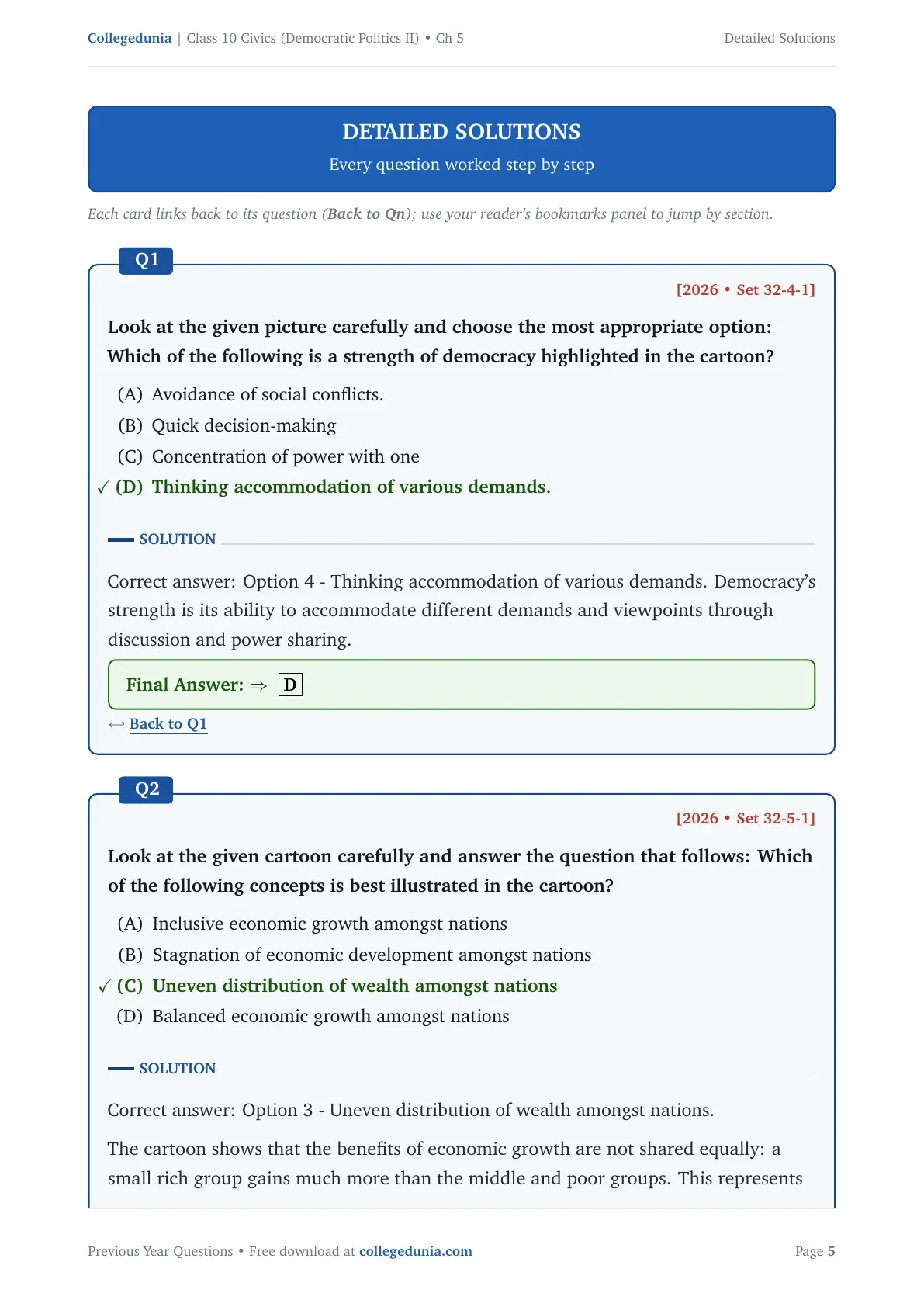
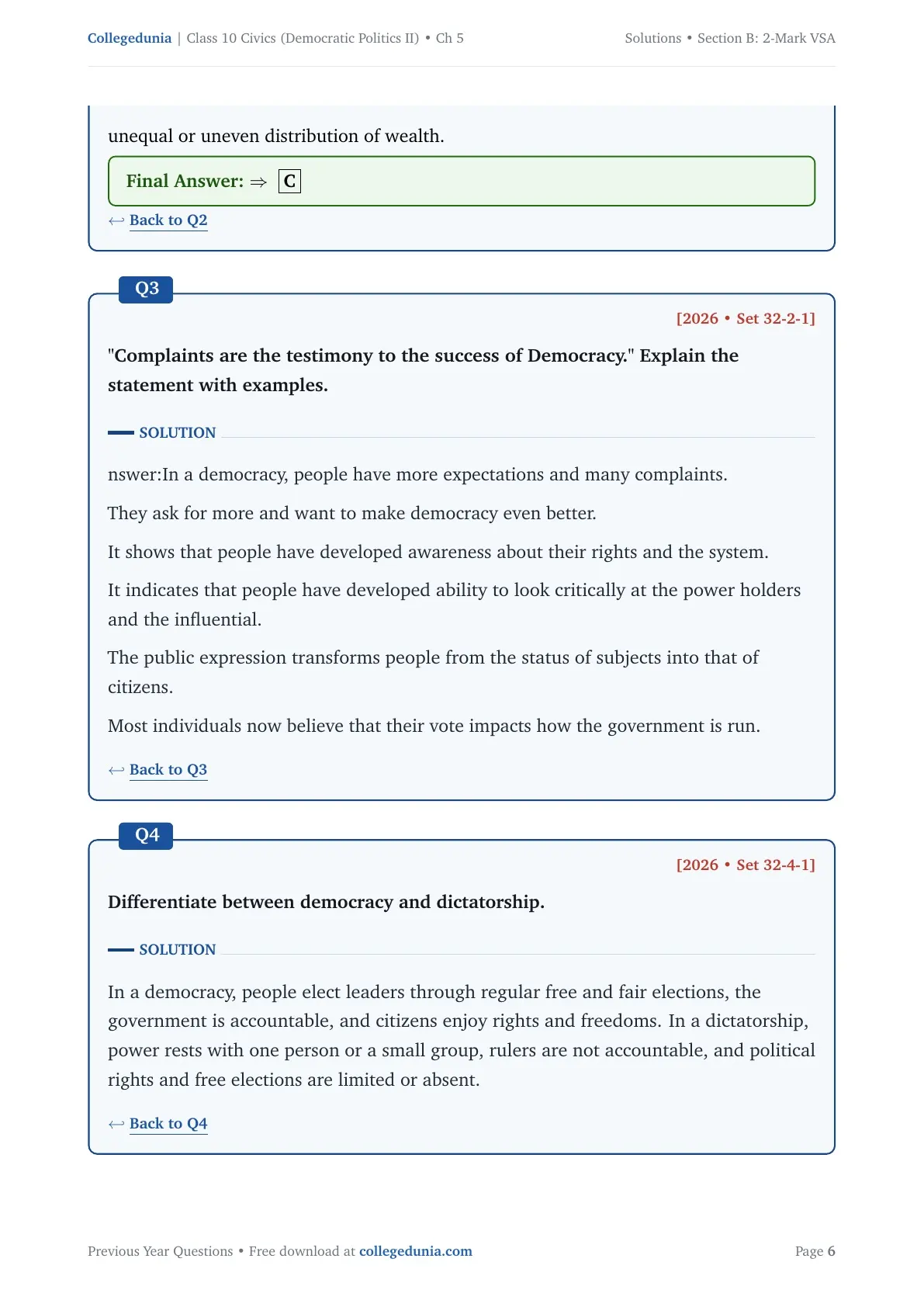
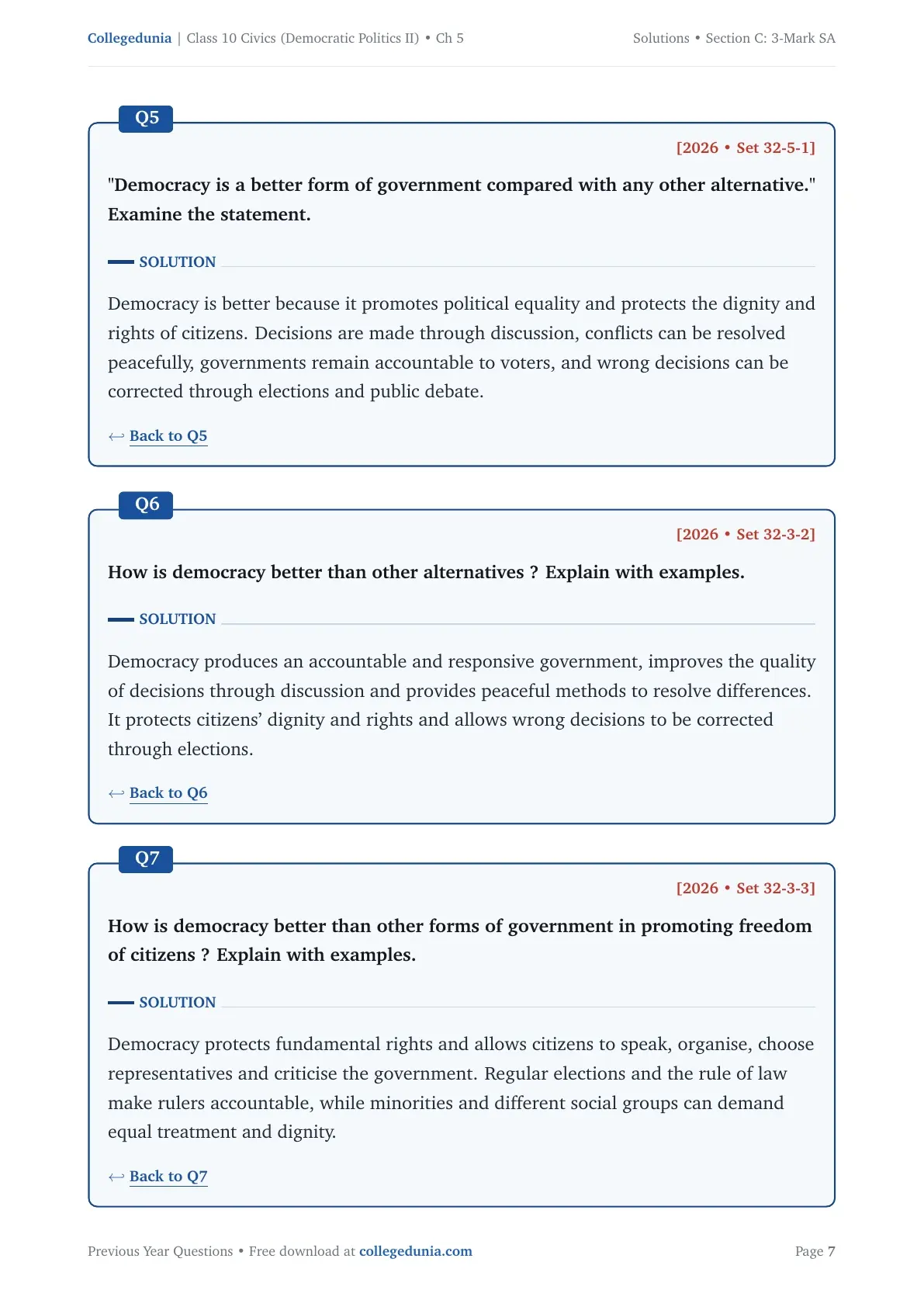
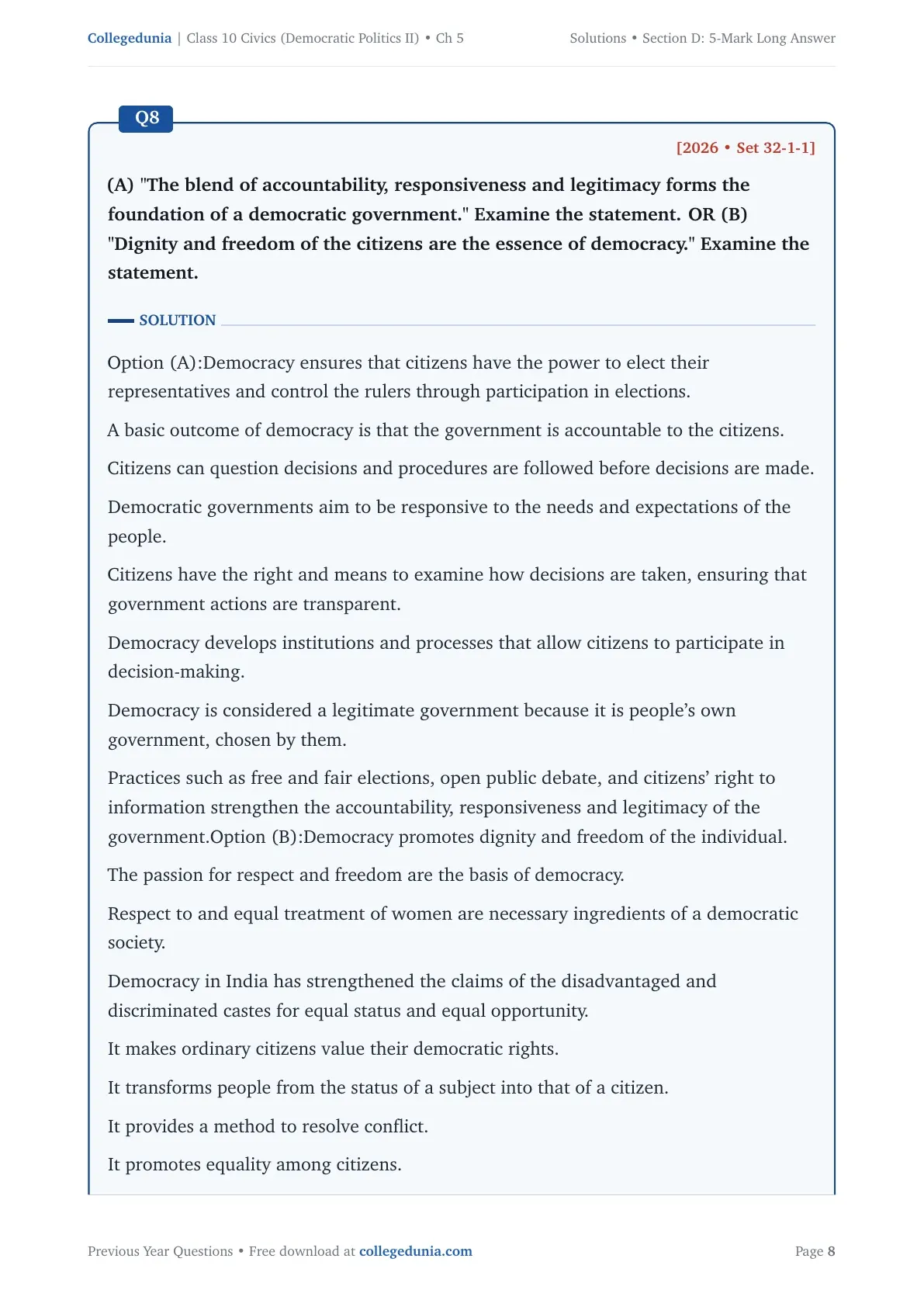
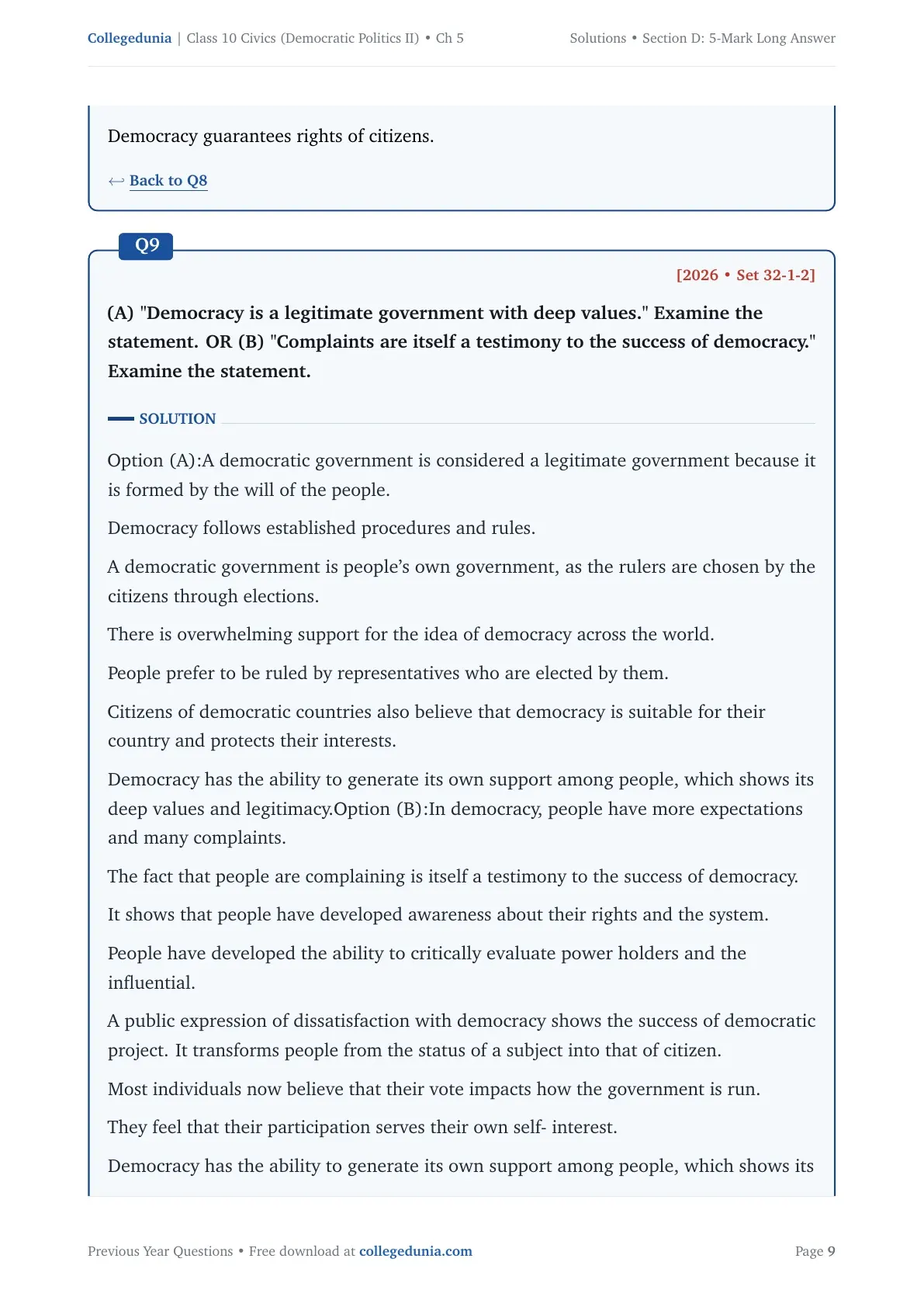
- 10 questions worth 29 marks, pulled from 8 CBSE set codes of the 2026 board paper.
- Every question carries its [Year • Set] tag, so you always know which paper printed it.
- Free 11-page PDF with a full worked solution for every question, according to the 2026-27 CBSE Class 10 Social Science syllabus.
Every question in this Class 10 Civics Outcomes of Democracy previous year questions PDF is copied from an official CBSE board paper, kept in the wording CBSE printed, and checked against the NCERT Democratic Politics II textbook.
What the Outcomes of Democracy Previous Year Questions Cover
Chapter 5 of Democratic Politics II asks a single question in many forms: what does democracy actually produce? The NCERT chapter answers it under six heads, and the 2026 board questions in this set stay inside those six heads.
- How to assess democracy, and why expectations from democracy keep rising.
- Accountable, responsive and legitimate government, the three tests the chapter uses.
- Economic growth and development under democratic and non-democratic regimes.
- Inequality and poverty, and the gap between political equality and economic equality.
- Accommodation of social diversity, and how democracies handle competing demands.
- Dignity and freedom of citizens, which the chapter calls the strongest ground for democracy.
This is a small, focused set. It is the Chapter 5 questions from the 2026 cycle, not a complete history of every board question ever set on the chapter.
Marks-wise Split of the 10 Outcomes of Democracy Board Questions
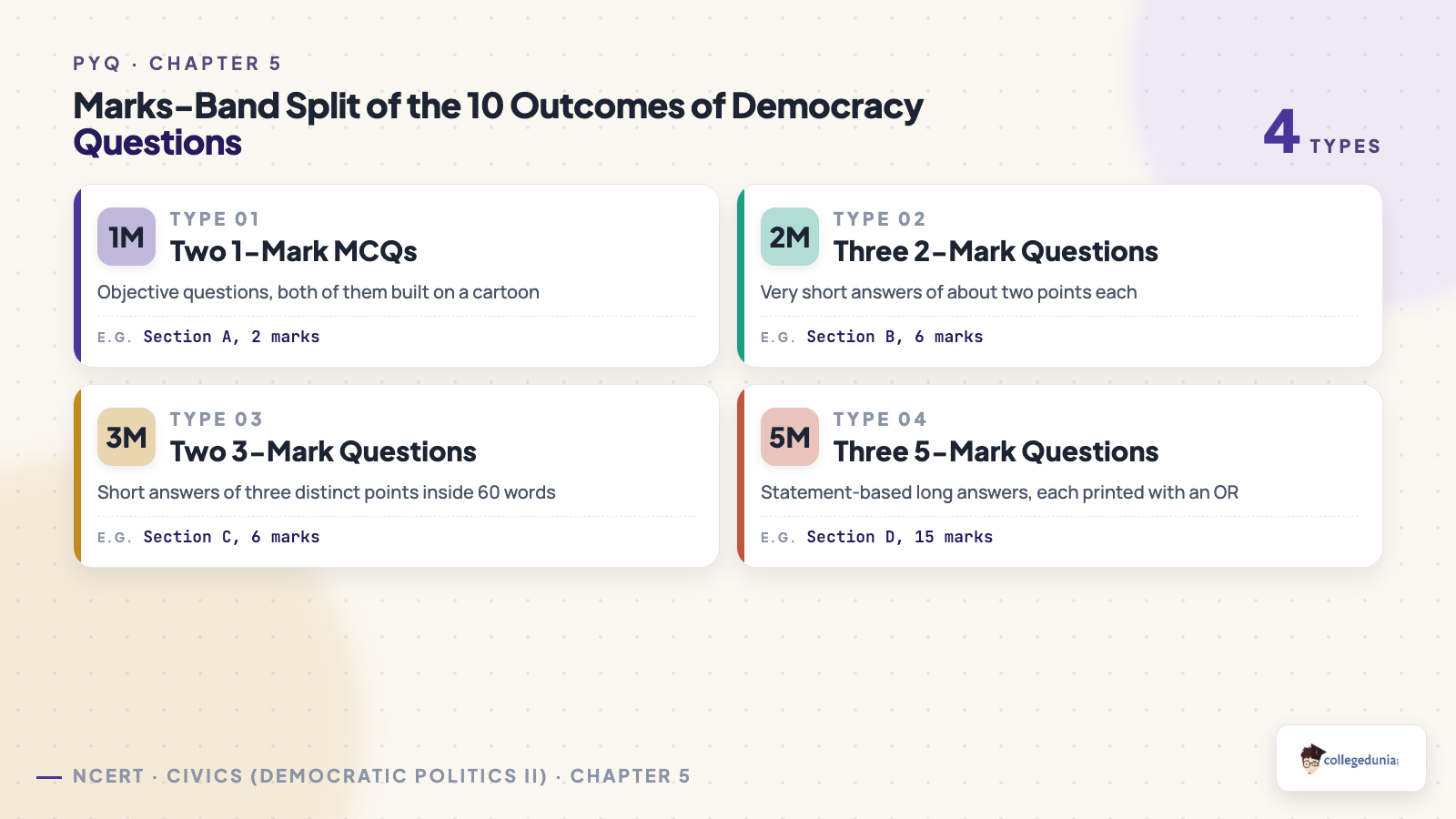
The table below shows how the 10 questions sit across the four CBSE marks bands. Use it to decide how much of your revision time each band deserves.
| Marks | Questions | Total Marks | CBSE Section | Type |
|---|---|---|---|---|
| 1 mark | 2 | 2 | Section A | MCQ, both built on a cartoon |
| 2 marks | 3 | 6 | Section B | Very Short Answer |
| 3 marks | 2 | 6 | Section C | Short Answer |
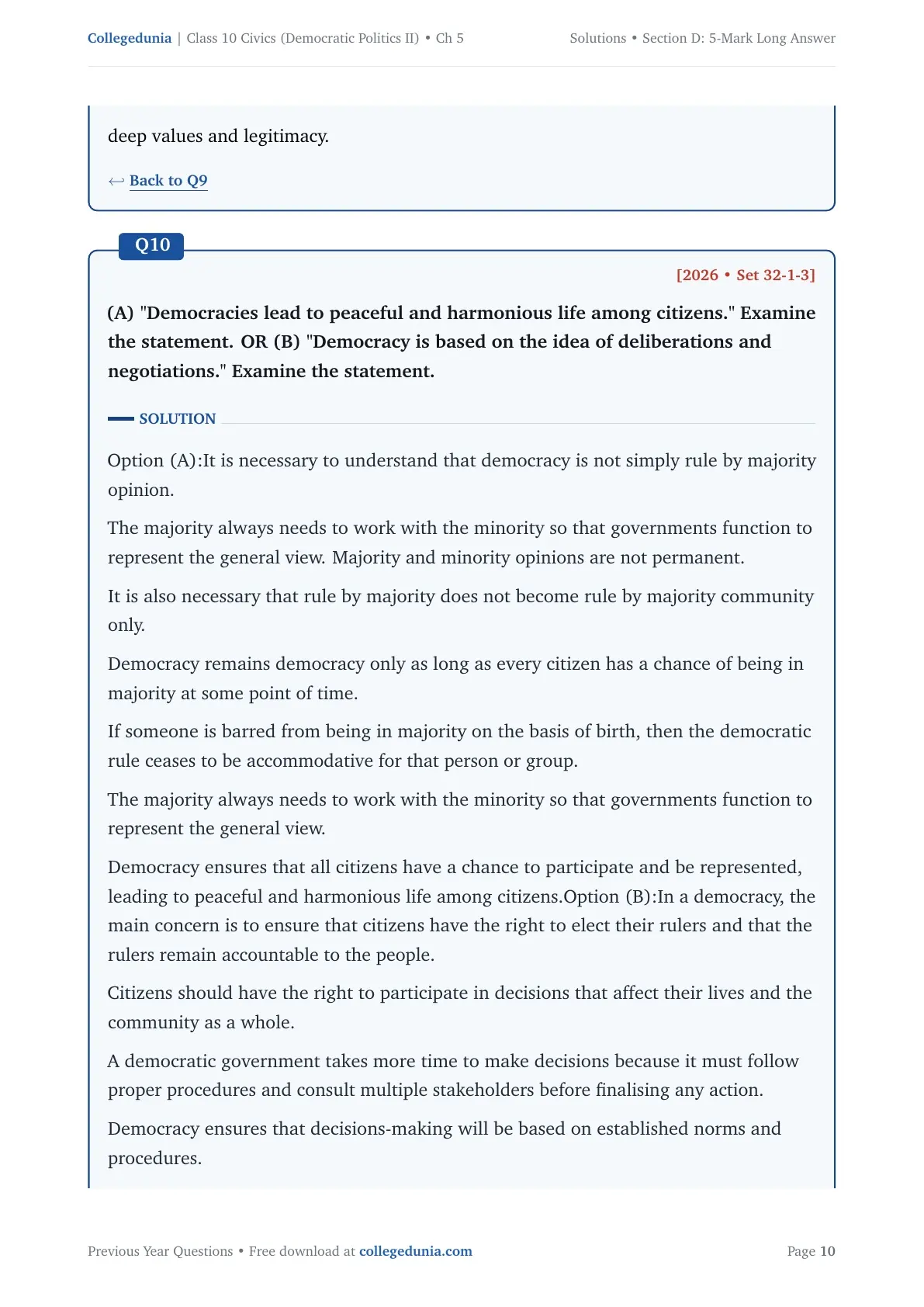
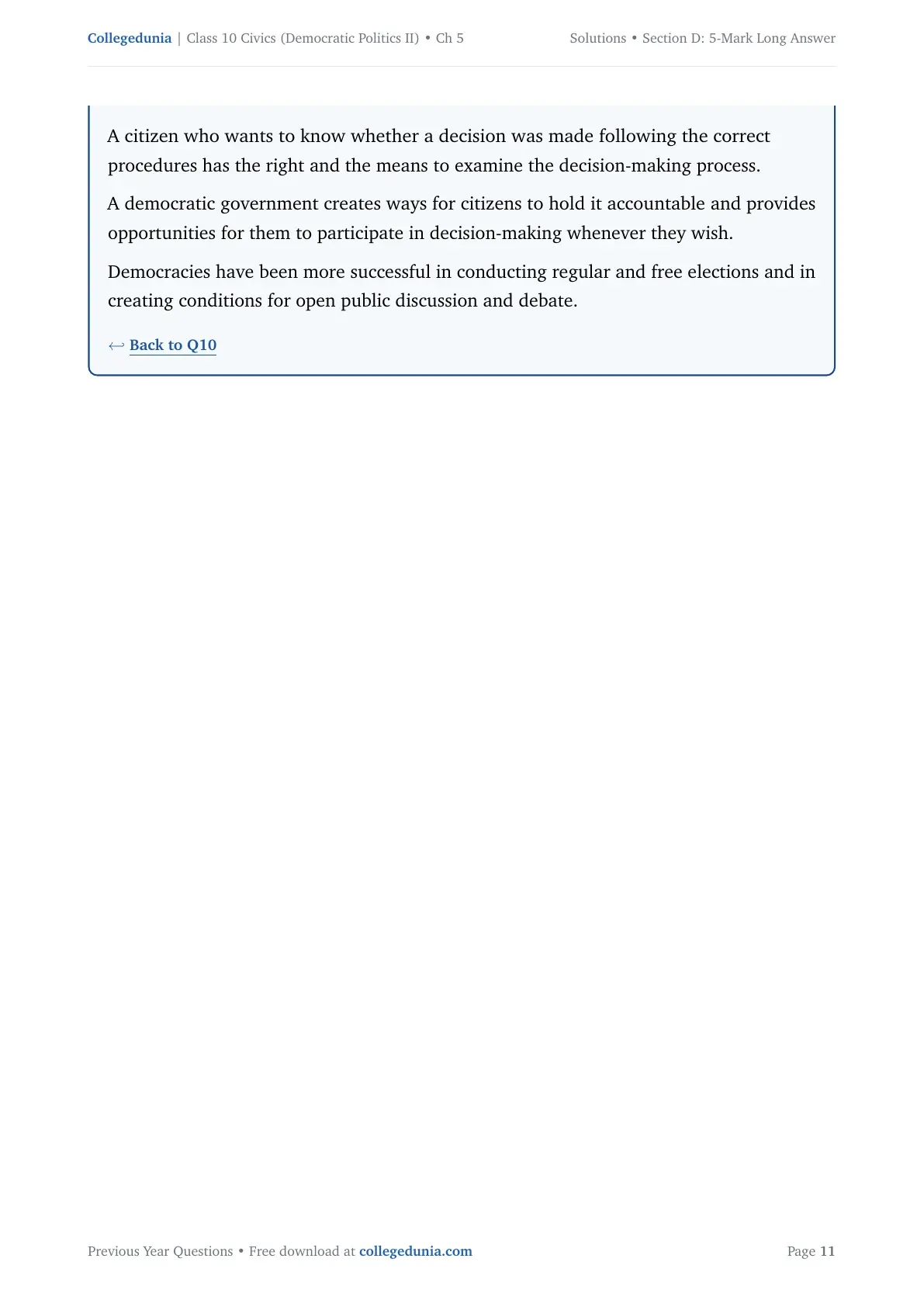
| 5 marks | 3 | 15 | Section D | Long Answer, every one with an OR |
| Total | 10 | 29 | All four sections | All solved in full |
Just over half the marks in this set sit in the 5-mark band. All three long answers are statement-based, which means the command word is Examine the statement rather than Describe or List.
Which Outcomes of Democracy Topics the 2026 Papers Tested
Count both branches of each OR in Section D and the 10 questions open into 13 separate prompts. The table groups those prompts by topic.
| Topic | Prompts | Marks Band |
|---|---|---|
| Democracy compared with dictatorship and other alternatives | 3 | 2 and 3 marks |
| Accountable, responsive and legitimate government | 2 | 5 marks |
| Dignity and freedom of citizens | 2 | 3 and 5 marks |
| Complaints as a testimony to the success of democracy | 2 | 2 and 5 marks |
| Accommodation of social diversity and peaceful life | 2 | 1 and 5 marks |
| Deliberation and negotiation | 1 | 5 marks |
| Economic outcomes and uneven distribution of wealth | 1 | 1 mark |
Two of the seven topics were asked twice in the same cycle. Complaints as a testimony appeared once as a 2-mark question and again as a 5-mark long answer, in different sets.
The Statement-Based Questions CBSE Set in Section D
All three 5-mark questions follow the same shape. A quoted line from the chapter, then the instruction to examine it. These are the six statements printed across sets 32-1-1, 32-1-2 and 32-1-3.
- "The blend of accountability, responsiveness and legitimacy forms the foundation of a democratic government."
- "Dignity and freedom of the citizens are the essence of democracy."
- "Democracy is a legitimate government with deep values."
- "Complaints are itself a testimony to the success of democracy."
- "Democracies lead to peaceful and harmonious life among citizens."
- "Democracy is based on the idea of deliberations and negotiations."
Learn to open a statement answer by restating the statement in your own words. That single line is usually worth the first mark, and it forces you to pick the right five points.
Marks-Band Attempt Strategy for the Outcomes of Democracy Questions
The PDF is ordered marks-ascending, so you can practise in the order the CBSE paper presents the questions. Each band rewards a different length of answer.
- 1-mark MCQ: both are cartoon questions. Read the caption and the drawing before the options, then match the drawing to a chapter term.
- 2-mark Very Short Answer: two points, about 40 words, no introduction. The examiner awards marks per point.
- 3-mark Short Answer: three distinct points inside 60 words, each one a different outcome of democracy.
- 5-mark Long Answer: five points inside 120 words. Read both OR branches before you commit, and allocate 10 to 12 minutes.
Common Mistakes Students Make in Outcomes of Democracy Answers
- Treating accountability, responsiveness and legitimacy as one idea. They are three separate tests, and the 5-mark question asks you to keep them apart.
- Claiming democracies always produce faster economic growth. The NCERT chapter says the record on growth is mixed, and the marking scheme follows the textbook.
- Answering the complaints question as a criticism of democracy. The point is the opposite: complaints show that citizens believe the system will respond.
- Writing about political equality when the question asks about economic inequality. The chapter keeps these two apart on purpose.
- Answering both branches of an OR question. Only one is marked, and the time spent on the second is gone.
Student Feedback on the Outcomes of Democracy Chapter
- 68% of students rated the accountable, responsive and legitimate government question as the hardest 5-mark answer in the Civics unit.
- 3 out of 4 students said the cartoon-based MCQ was the question they were least prepared for.
- Students who wrote out all six Section D statements before the exam reported finishing the long answer in under 10 minutes.
Source: 2026-27 Class 10 Social Science student poll. Sample of 11,540 students from CBSE schools across 14 states.
How to Use the 11-Page Outcomes of Democracy PYQ PDF
Ten questions is one sitting, not one week. The 11 pages hold the question set first and a Detailed Solutions section after it, in which every question is restated, answered step by step and linked back to the question. This three-pass plan works well for a set this size.
- Pass 1: attempt the 2 one-mark MCQs and the 3 two-mark questions cold, without opening the solutions.
- Pass 2: write the 2 three-mark answers to the word limit, then check each point against the worked solution.
- Pass 3: take the 3 five-mark questions one at a time. Write one branch fully, then outline the OR branch in five bullet points, and read the solution for both.
Writing your own answer first and then reading the worked solution is what builds the 5-mark answer. Read the file straight through instead, and it serves as a revision resource for the chapter.
Outcomes of Democracy Class 10 Resources Beyond the PYQ PDF
Also Check: the same chapter is covered on Collegedunia in four other formats. Use the notes to build the answer, then come back to these board questions to test it.
| Resource | Chapter 5 Link |
|---|---|
| NCERT Solutions | Outcomes of Democracy Class 10 NCERT Solutions |
| Revision Notes | Outcomes of Democracy Class 10 Notes |
| Handwritten Notes | Outcomes of Democracy Class 10 Handwritten Notes |
| NCERT Book PDF | Outcomes of Democracy Class 10 NCERT Book PDF |
All Class 10 Civics Chapter PYQ PDFs
Democratic Politics II has five chapters. Chapterwise question sets for the rest are being built the same way, from the official CBSE papers.
| Chapter | Topic | Previous Year Questions |
|---|---|---|
| Chapter 1 | Power Sharing | Power Sharing Class 10 PYQ PDF (coming soon) |
| Chapter 2 | Federalism | Federalism Class 10 PYQ PDF (coming soon) |
| Chapter 3 | Gender, Religion and Caste | Gender, Religion and Caste Class 10 PYQ PDF (coming soon) |
| Chapter 4 | Political Parties | Political Parties Class 10 PYQ PDF (coming soon) |
| Chapter 5 | Outcomes of Democracy | This page |
Outcomes of Democracy Class 10 PYQ FAQs
Common Questions About the Class 10 Civics Chapter 5 Question Set
Ques. How many previous year questions are in the Class 10 Civics Chapter 5 Outcomes of Democracy PYQ PDF?
Ans. The PDF has 10 questions worth 29 marks, drawn from 8 CBSE set codes of the 2026 Class 10 Social Science board paper. This is a small, single-cycle set, not a complete archive of every question ever asked on the chapter.
Ques. Does the Outcomes of Democracy PYQ PDF include the answers?
Ans. Yes. The questions are printed in the exact wording CBSE used, with the year and set code under each one, and a Detailed Solutions section follows. Every solution restates its question, works the answer step by step and links back to the question, so you can write your own answer first and then check it.
Ques. Which CBSE papers were used to build this Outcomes of Democracy question set?
Ans. Eight set codes from the 2026 cycle: 32-1-1, 32-1-2, 32-1-3, 32-2-1, 32-3-2, 32-3-3, 32-4-1 and 32-5-1. Each question carries its set tag, so you can filter by set and practise one paper at a time.
Ques. Are these Class 10 Civics previous year questions valid for the 2026-27 syllabus?
Ans. Yes. Outcomes of Democracy stays in the 2026-27 CBSE Class 10 Social Science syllabus as the fifth chapter of Democratic Politics II, and the statement-based long answer pattern in Section D has not changed.
Ques. How many marks is Outcomes of Democracy worth in the CBSE Class 10 exam?
Ans. Civics carries 20 marks of the 80-mark Social Science theory paper, split across five chapters. In the 2026 sets used here, this chapter supplied one question per set, from a 1-mark MCQ up to a 5-mark long answer.
Ques. What are the outcomes of democracy in Class 10 Civics?
Ans. The NCERT chapter lists them under six heads: a responsive and legitimate government, economic growth and development, reduction of inequality and poverty, accommodation of social diversity, and dignity and freedom of citizens, plus a method for assessing democracy itself.
Ques. How is a legitimate government defined in the chapter?
Ans. A legitimate government is one that citizens accept as their own because they chose it and it follows set procedures. The chapter keeps legitimacy separate from efficiency, so a slow democratic decision can still be legitimate.



Comments