




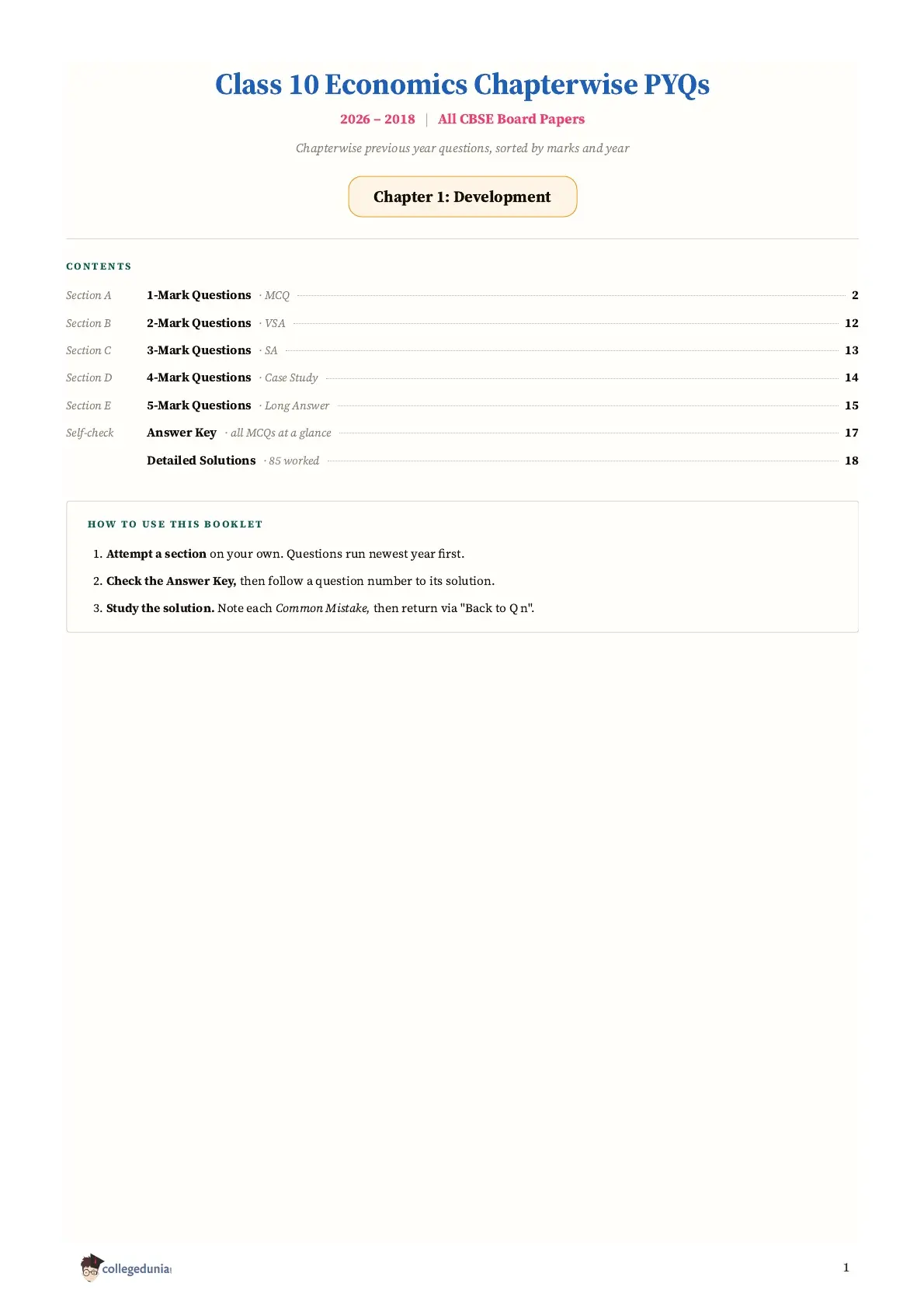
Class 10 Economics Development PYQ, free to download as a 46-page PDF with 85 solved board questions from the 2018 to 2026 papers. Development is Chapter 1 of the NCERT Class 10 Economics book, Understanding Economic Development, and the opening chapter of the 20-mark Economics section of the Social Science paper.
The questions keep returning to the Human Development Index and Report (14 questions), average income (10), sustainability of development (14), different developmental goals for different people (13), literacy rate (12) and the World Bank (8).
On this page you get:
- 85 questions with a worked solution each: 52 MCQs, 18 short answers of 1 to 3 marks and 15 long answers or source-based questions
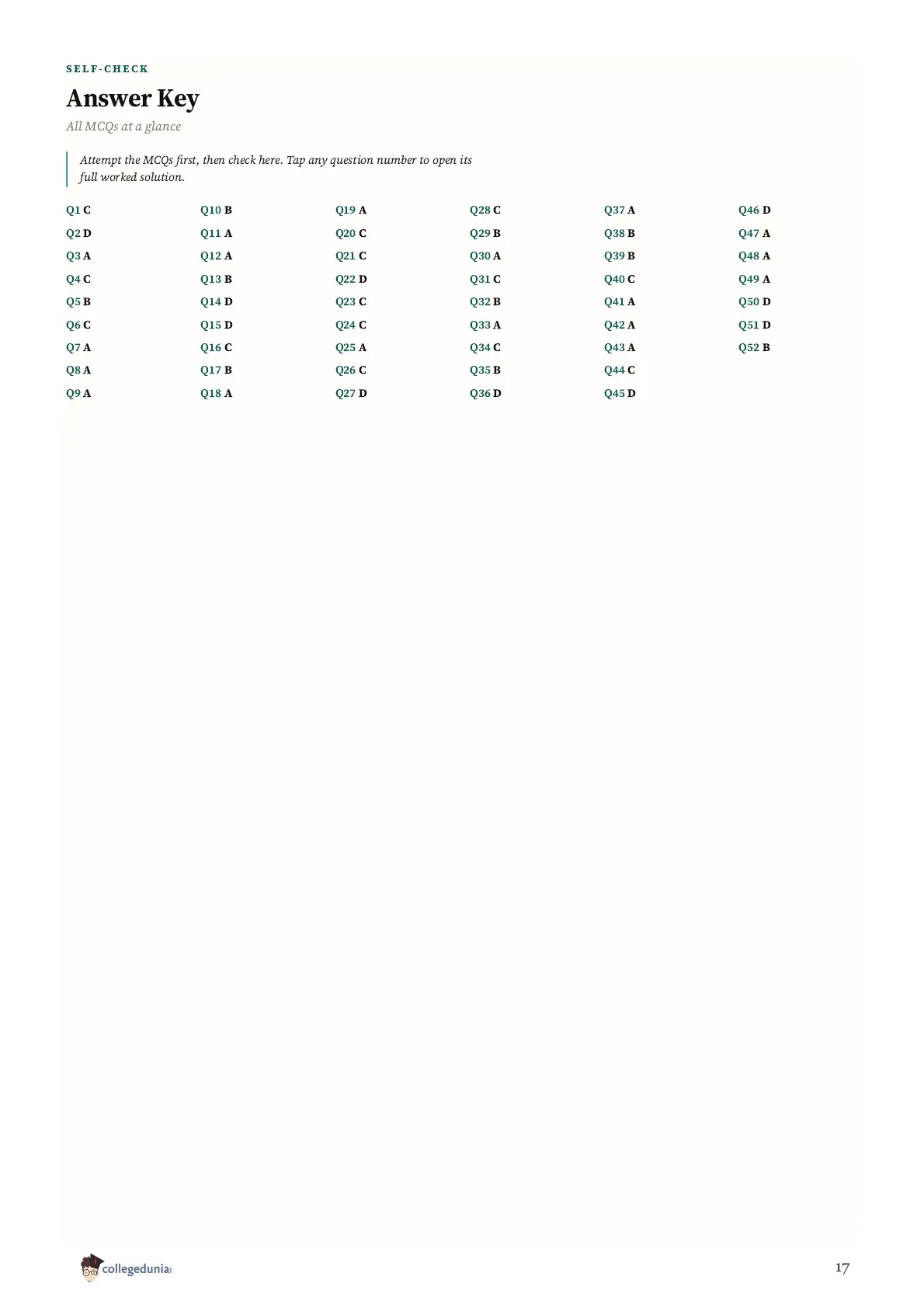
- An Answer Key that lists all 52 MCQs at a glance
- Question counts by topic, so you know whether to start with HDI, average income or sustainability
- A marks-wise table of questions (1, 2, 3, 4 and 5 mark)
- The common mistakes students make, such as dividing a family's total income by the wrong number of members, and a short FAQ
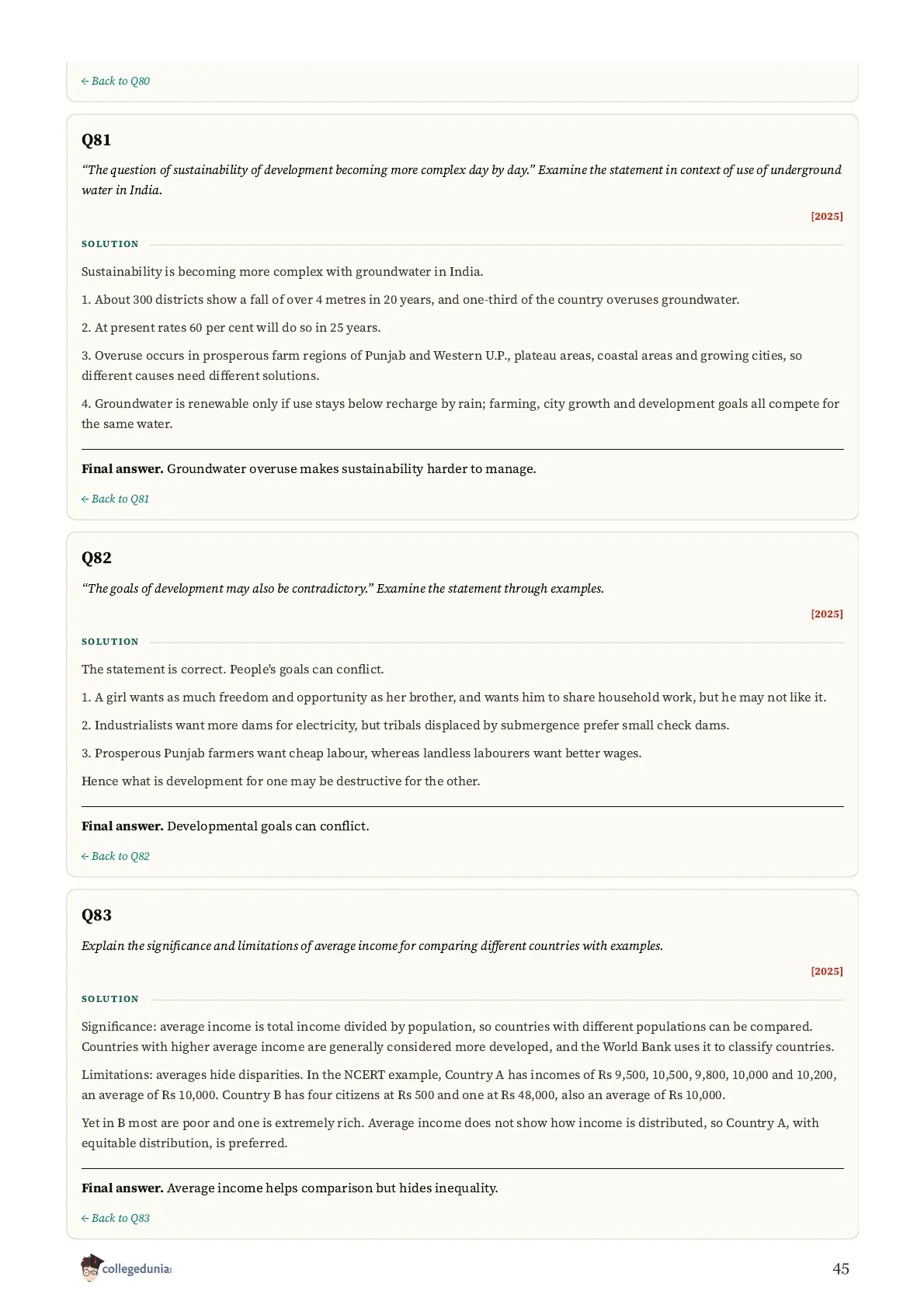
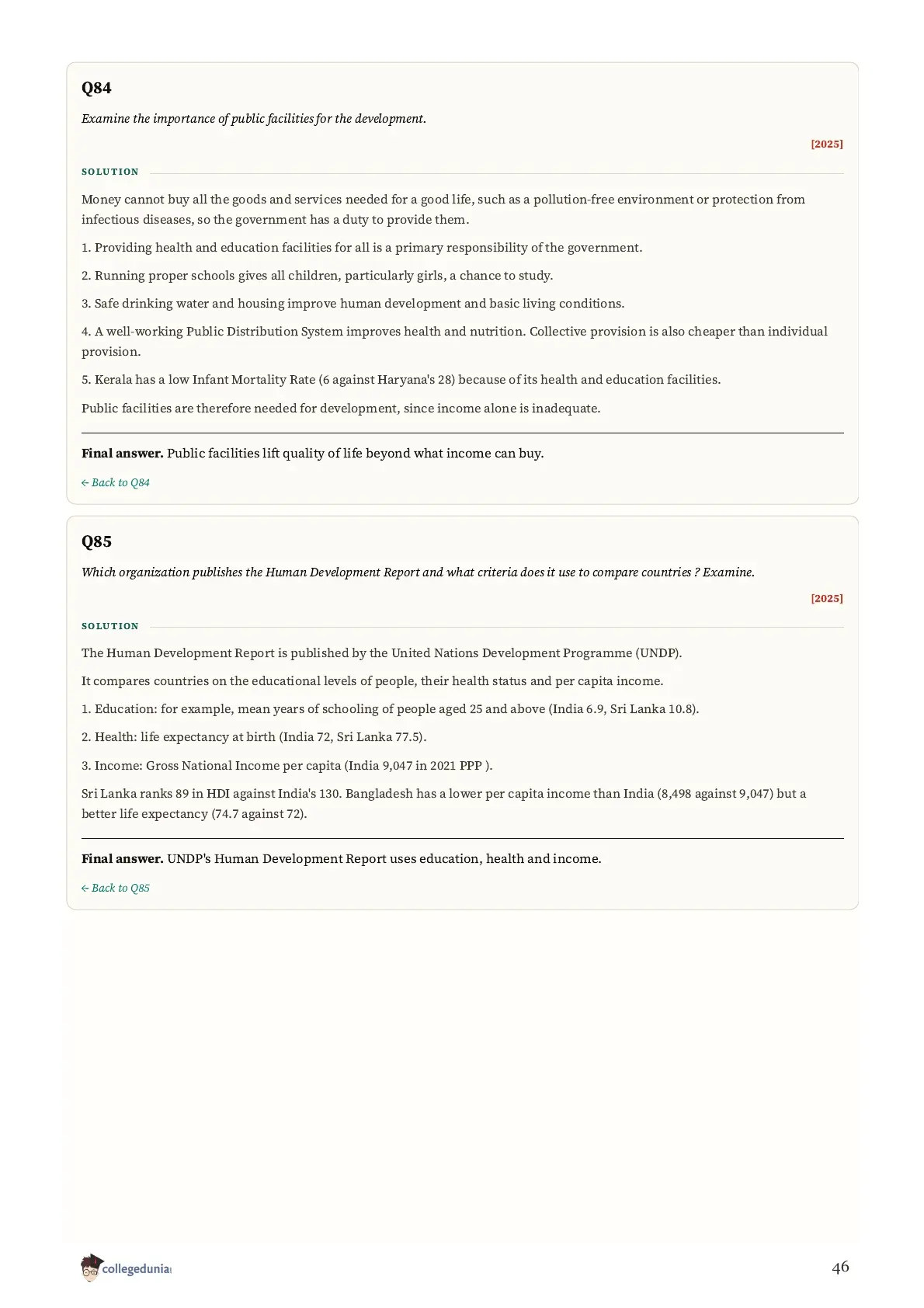
Development Weightage in the Class 10 Social Science Paper
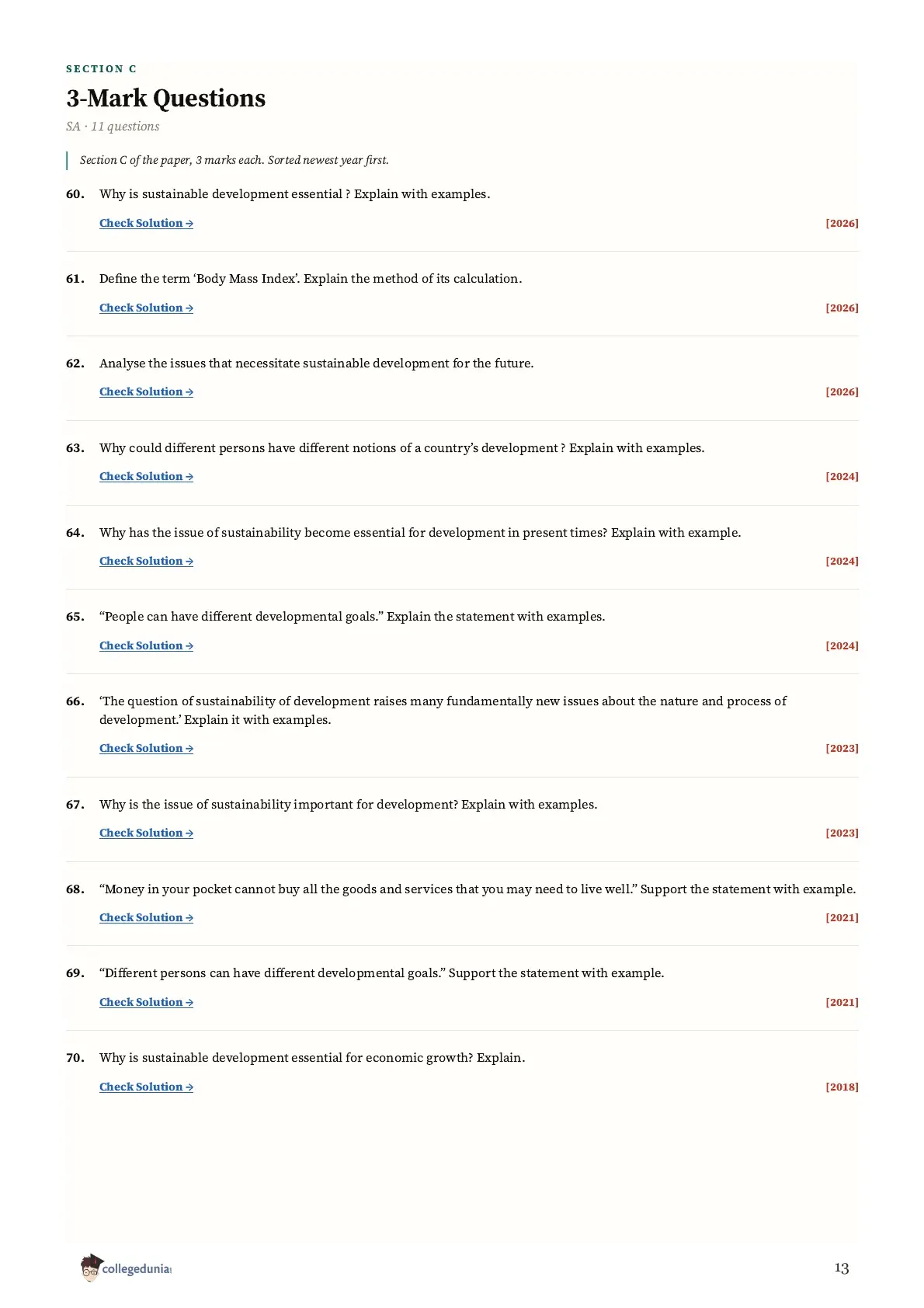
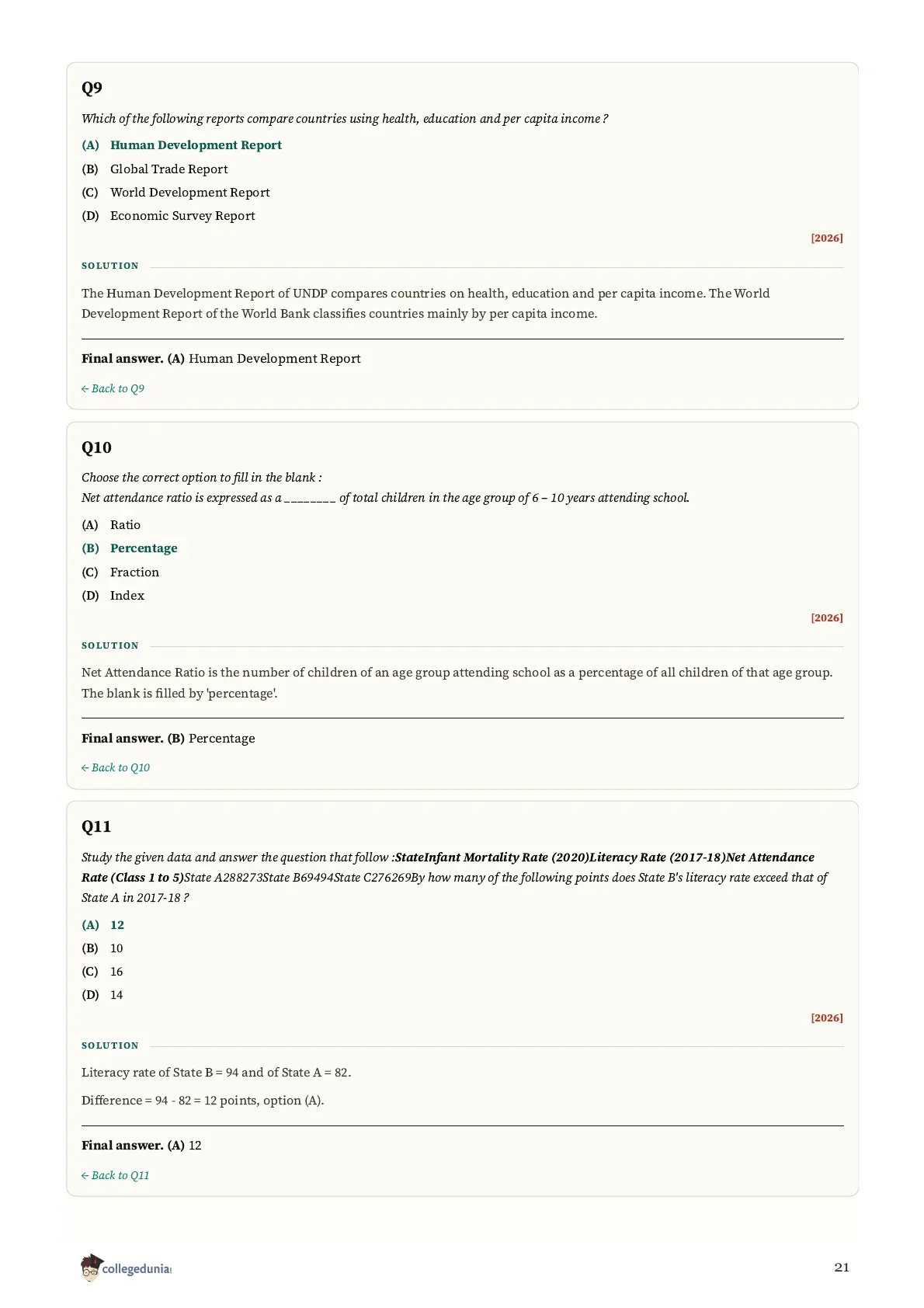
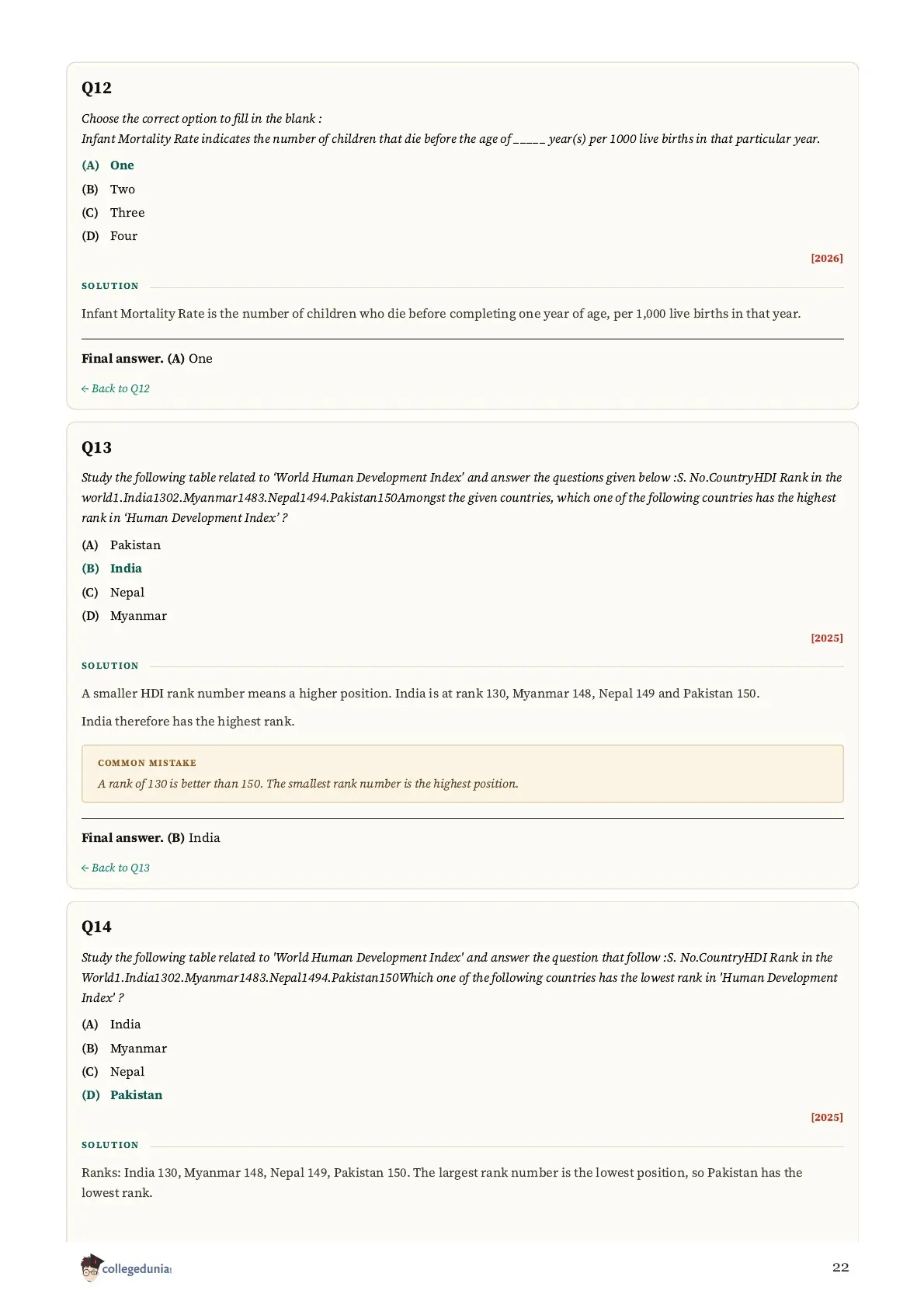
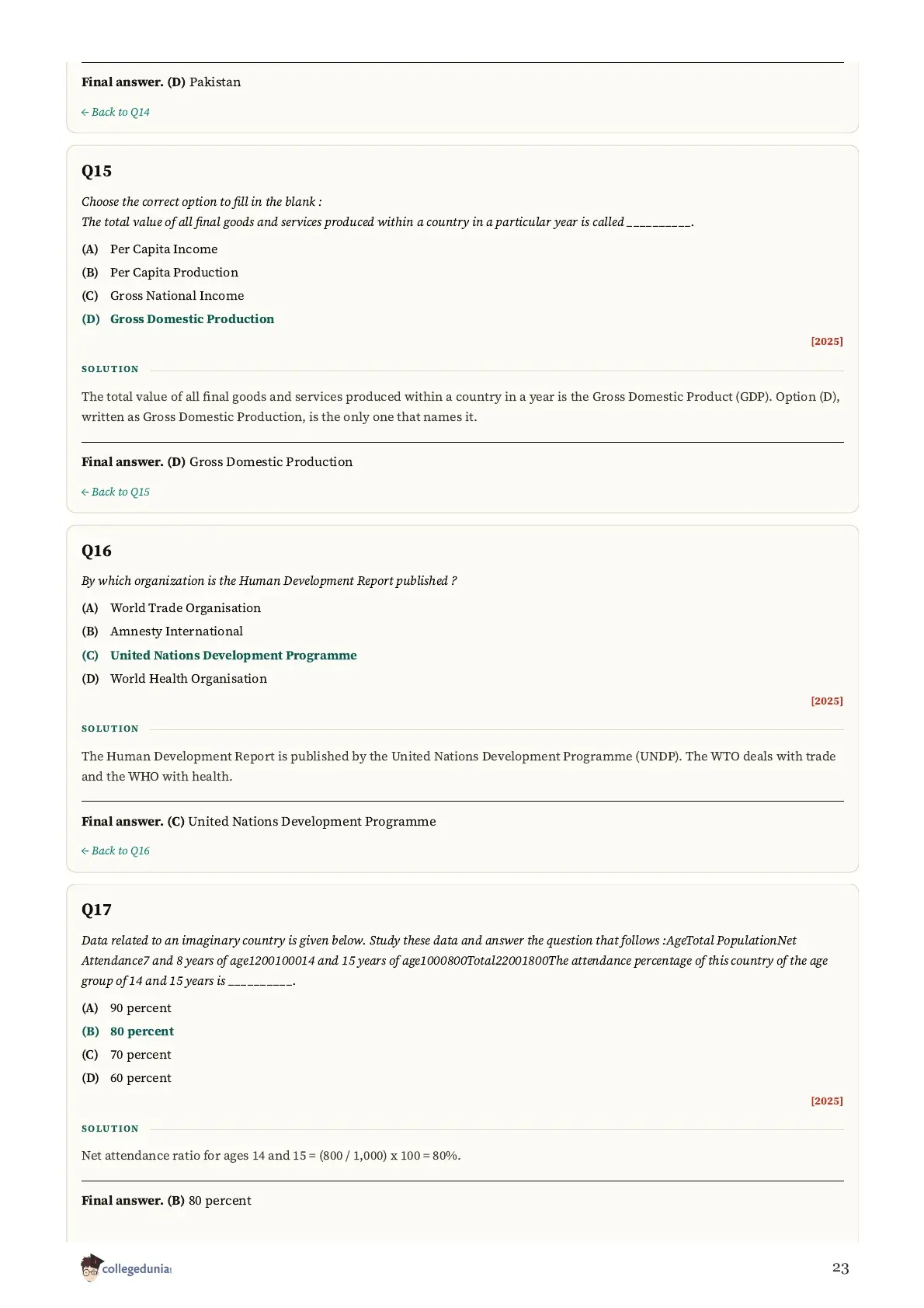
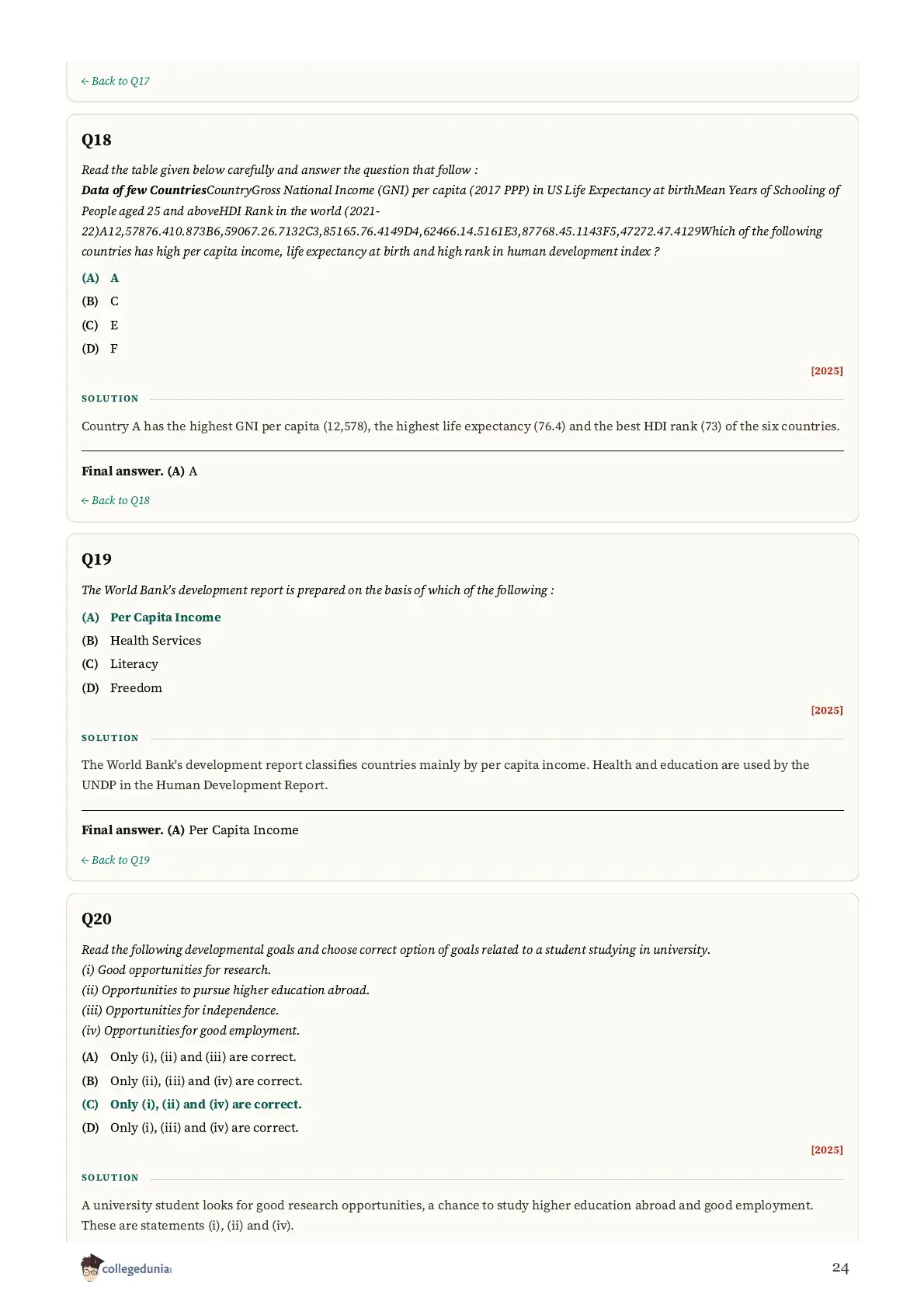
The Social Science paper is 80 marks, and as printed in the 2026 papers its Economics part is a 20-mark section. CBSE does not publish marks per chapter, so no figure can be given for Development alone. In this set the 1-mark question is the commonest form, with 54 of the 85 questions, and 14 questions at 5 marks come from 2025 alone.
The table shows how many questions the set holds at each mark value.
| Marks per Question | Questions in the Set |
|---|---|
| 1 mark | 54 |
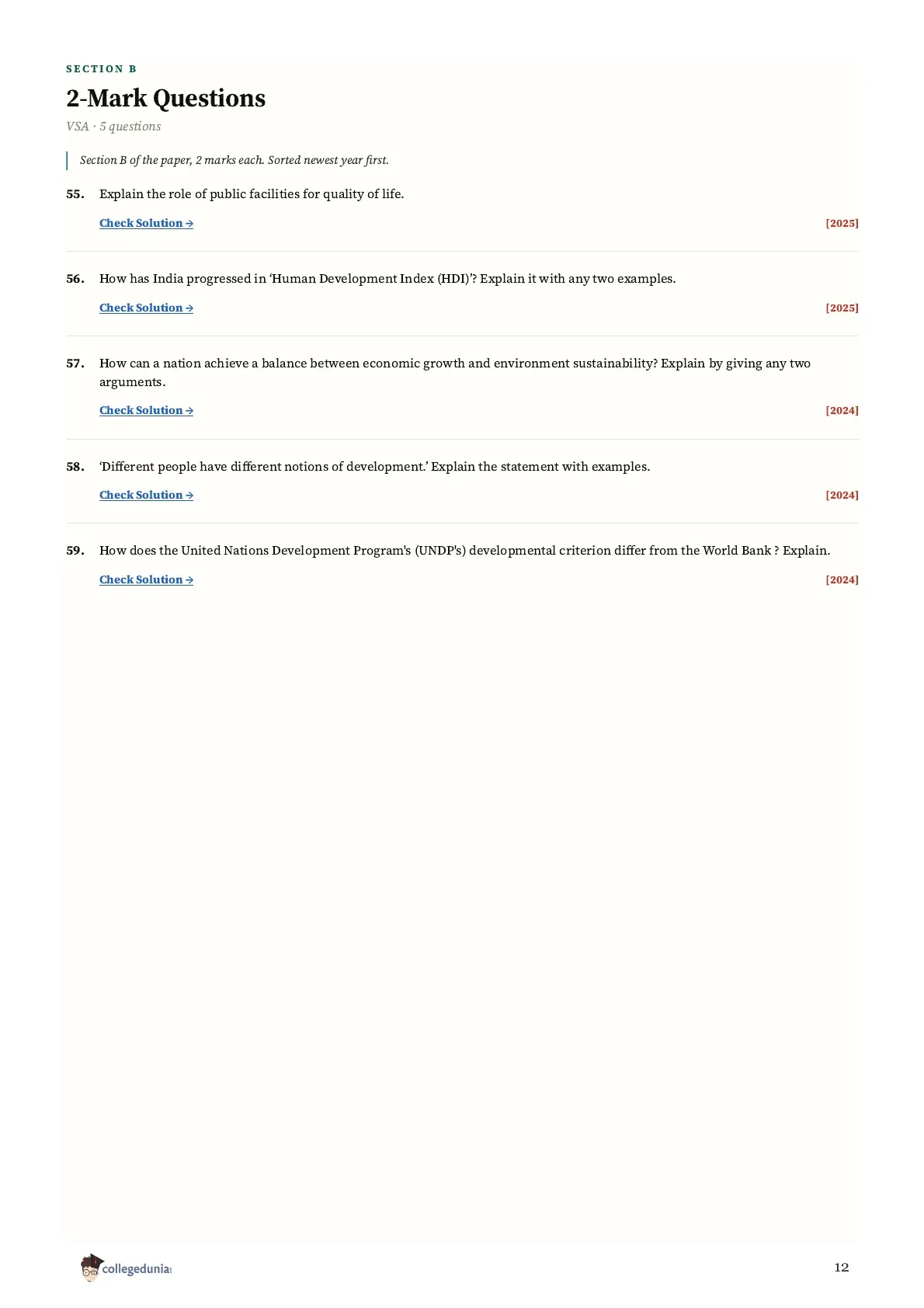
| 2 marks | 5 |
| 3 marks | 11 |
| 4 marks (case study) | 1 |
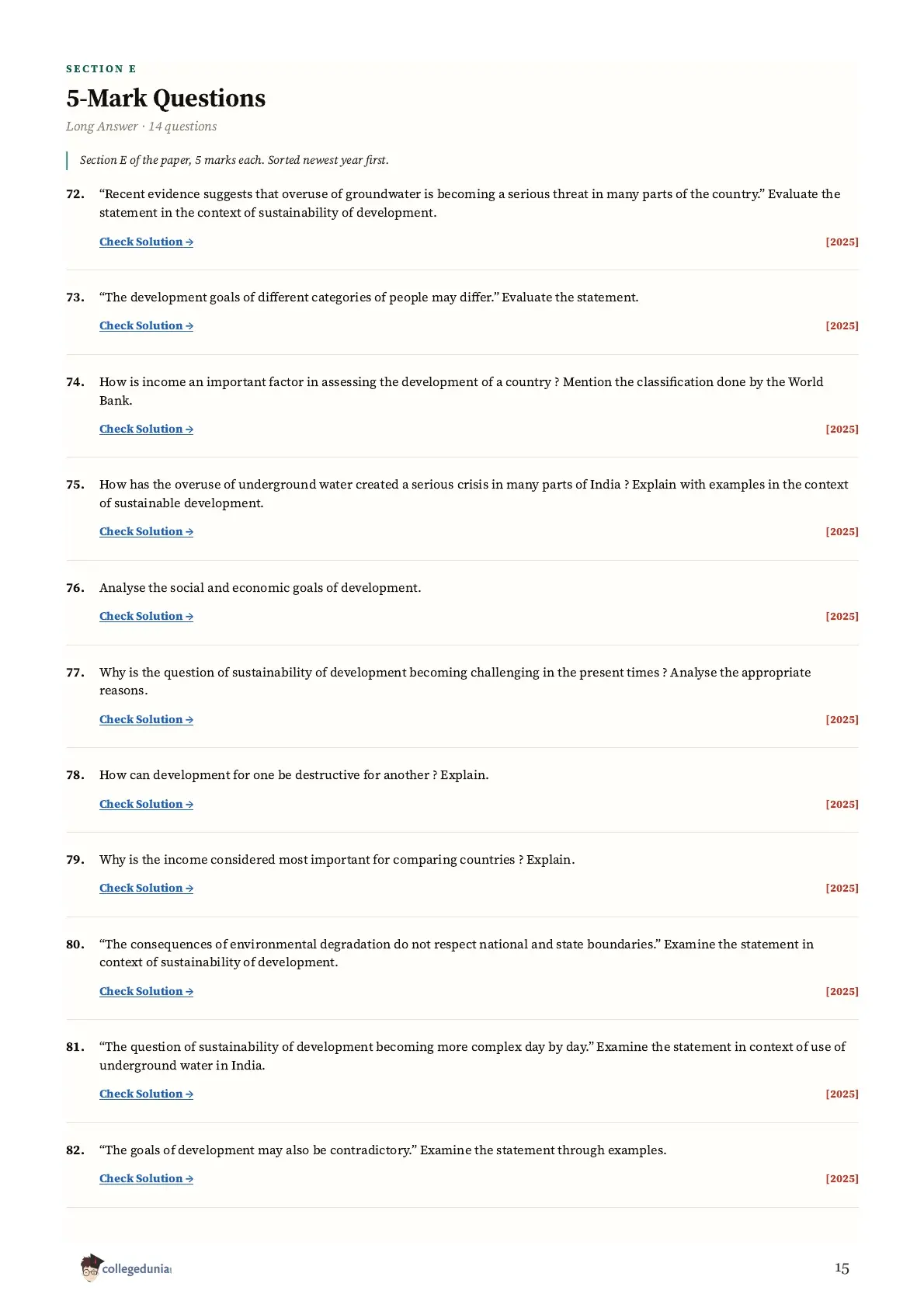
| 5 marks | 14 |
Development Questions by Topic
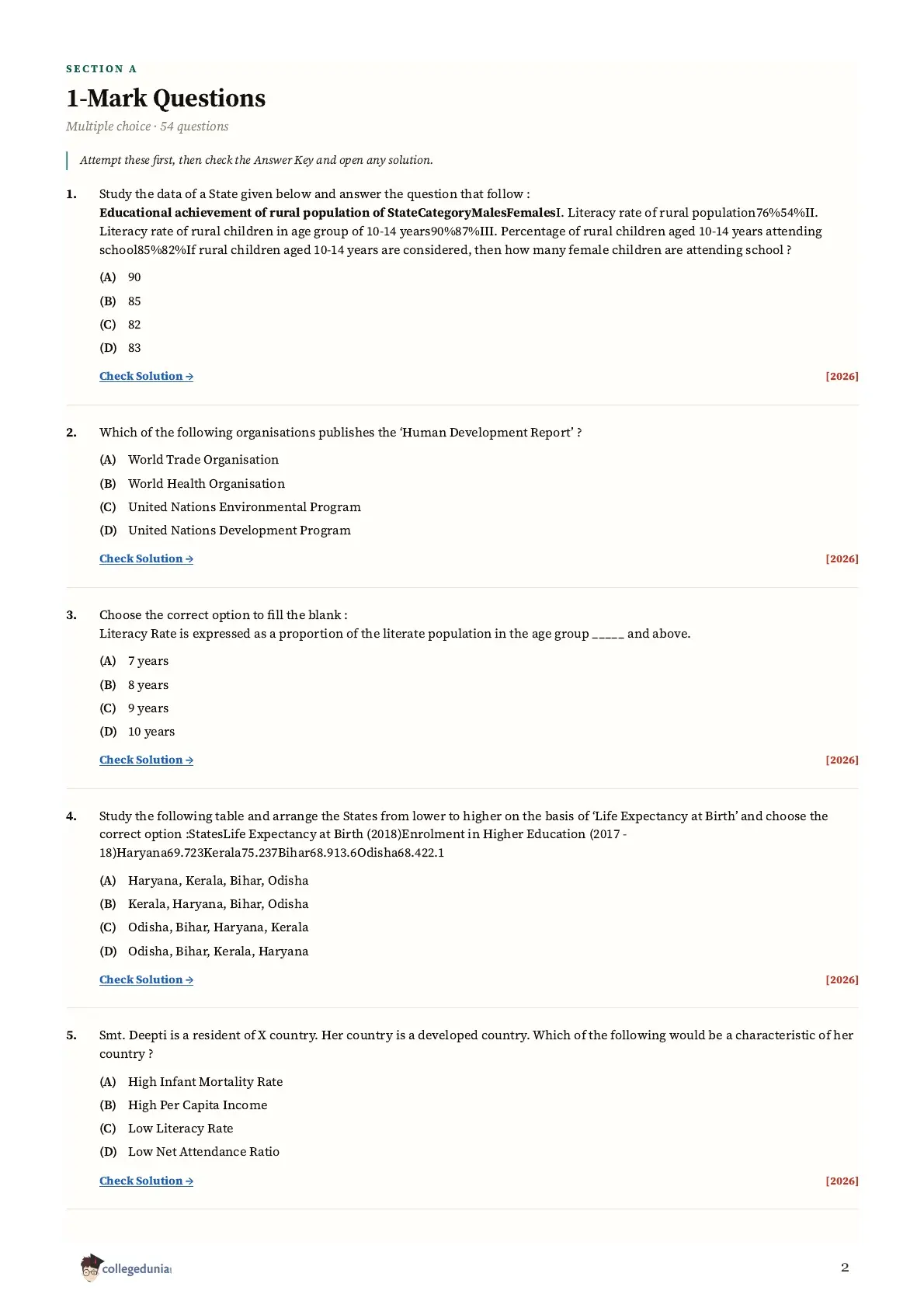
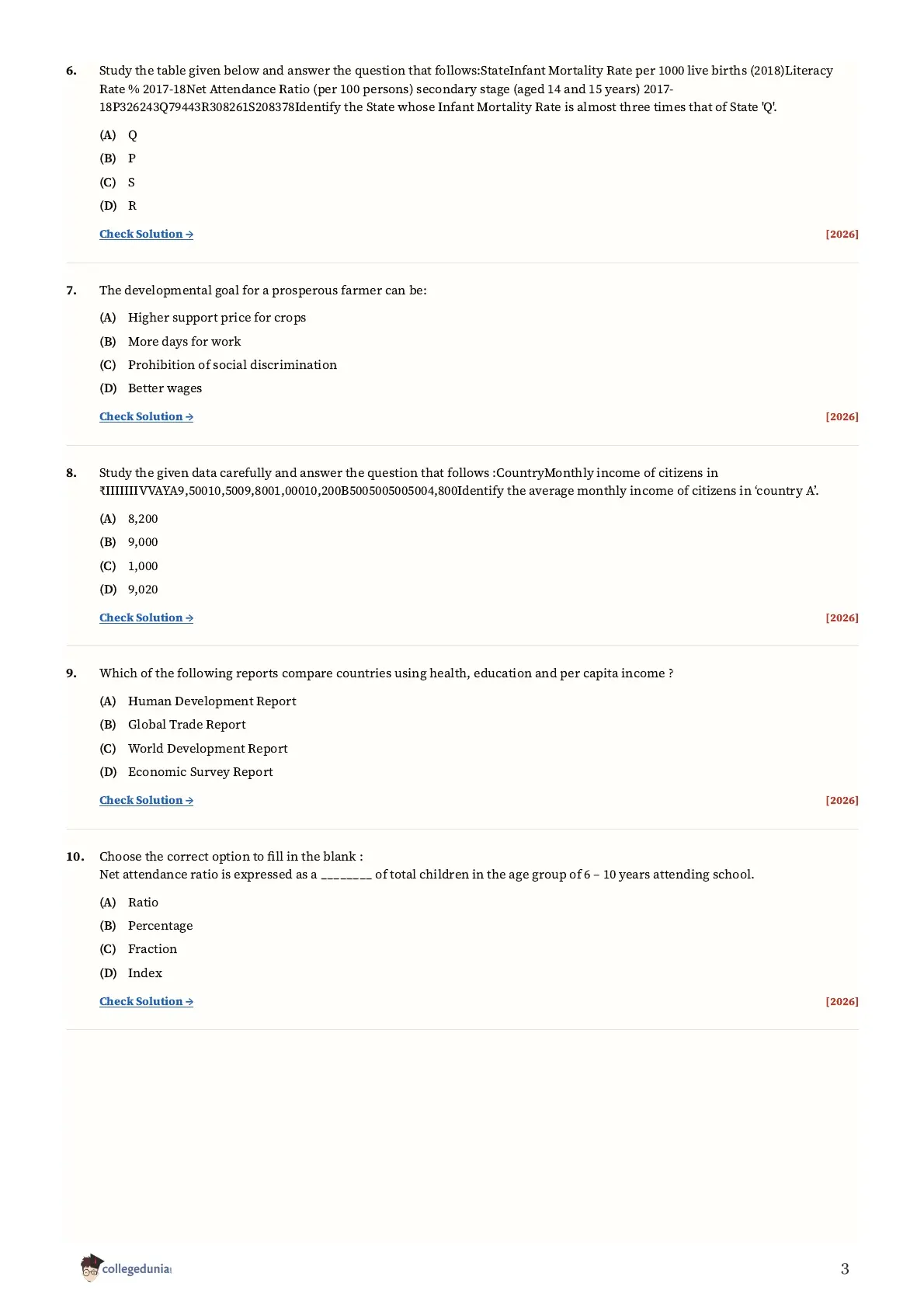
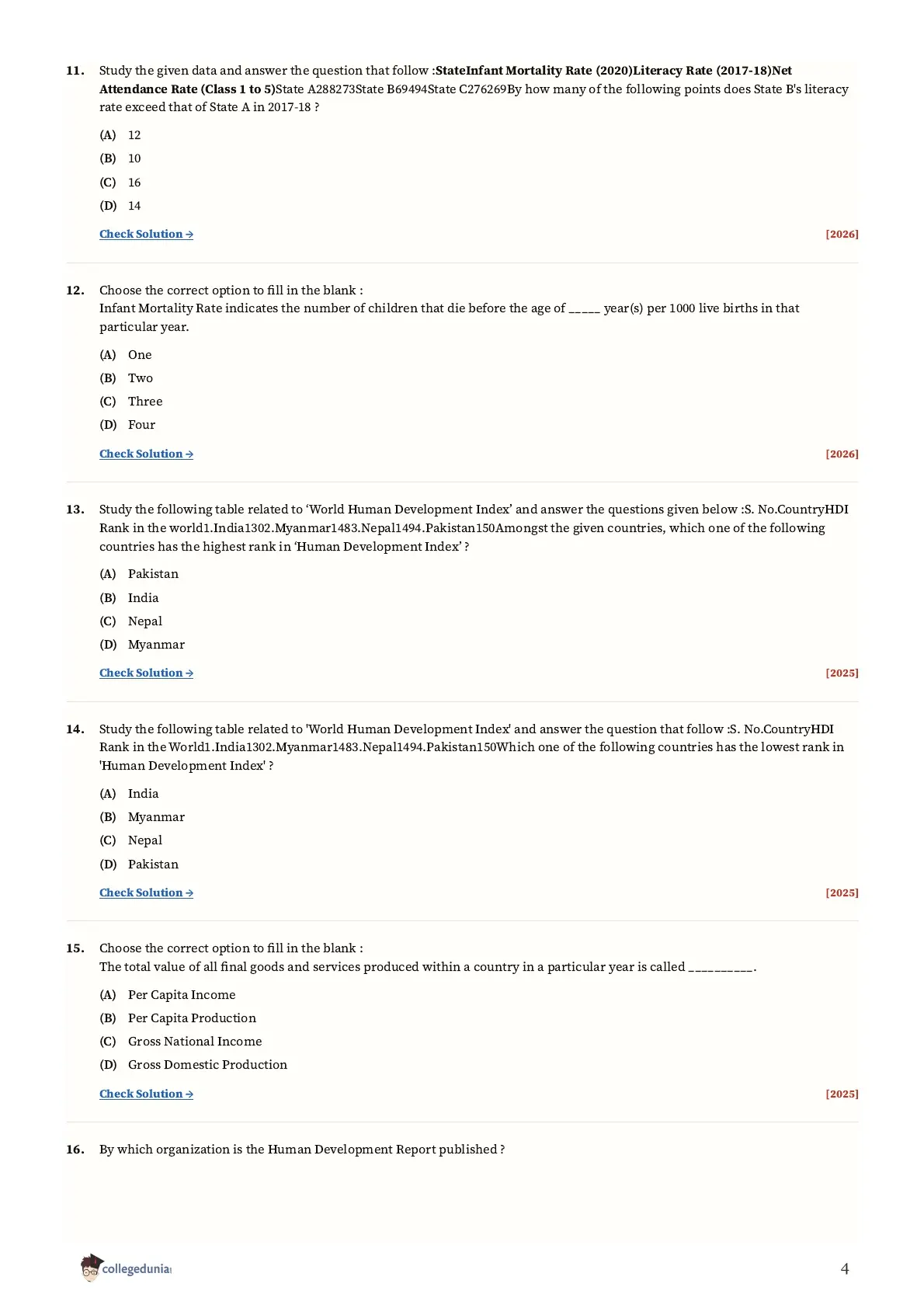
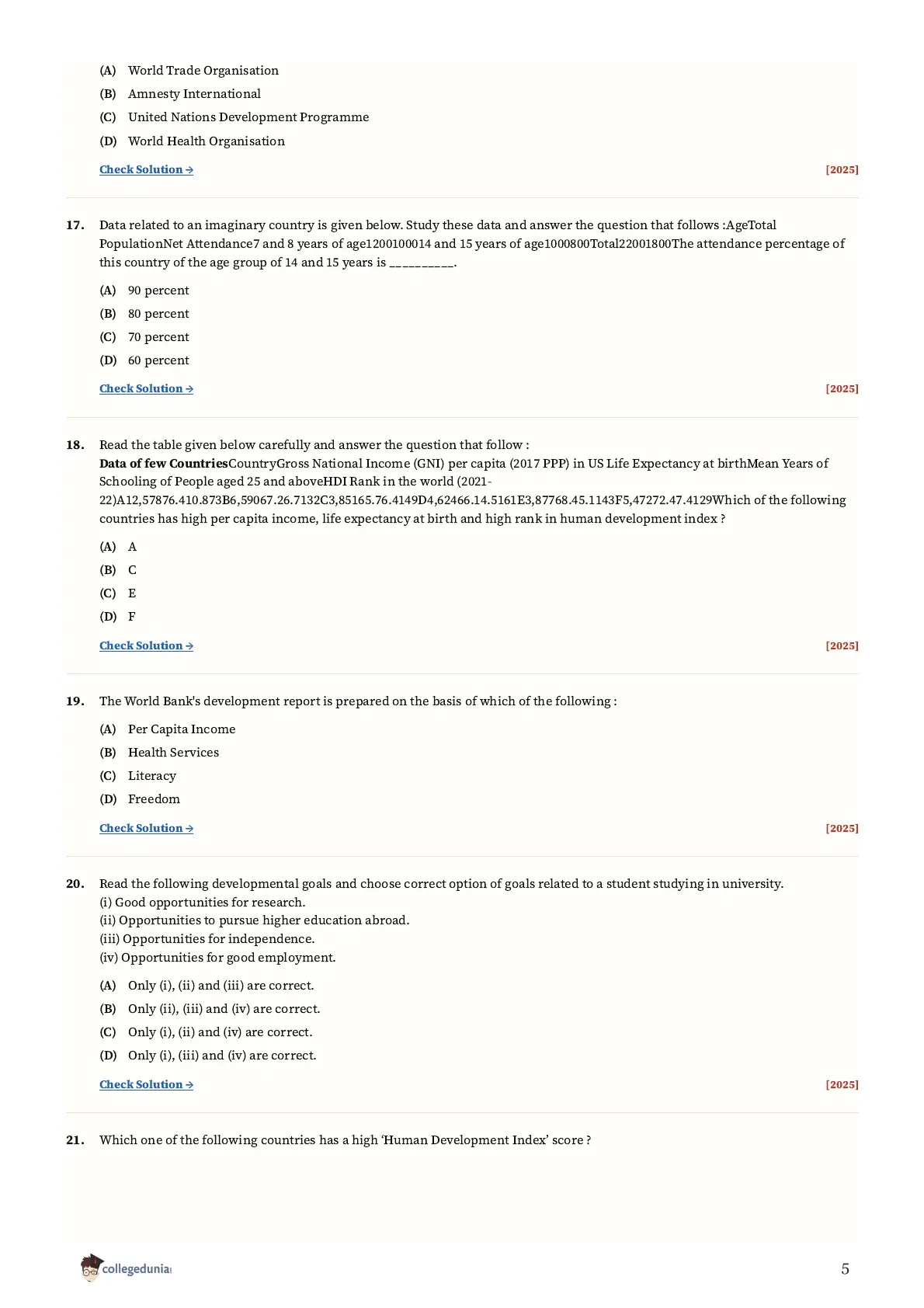
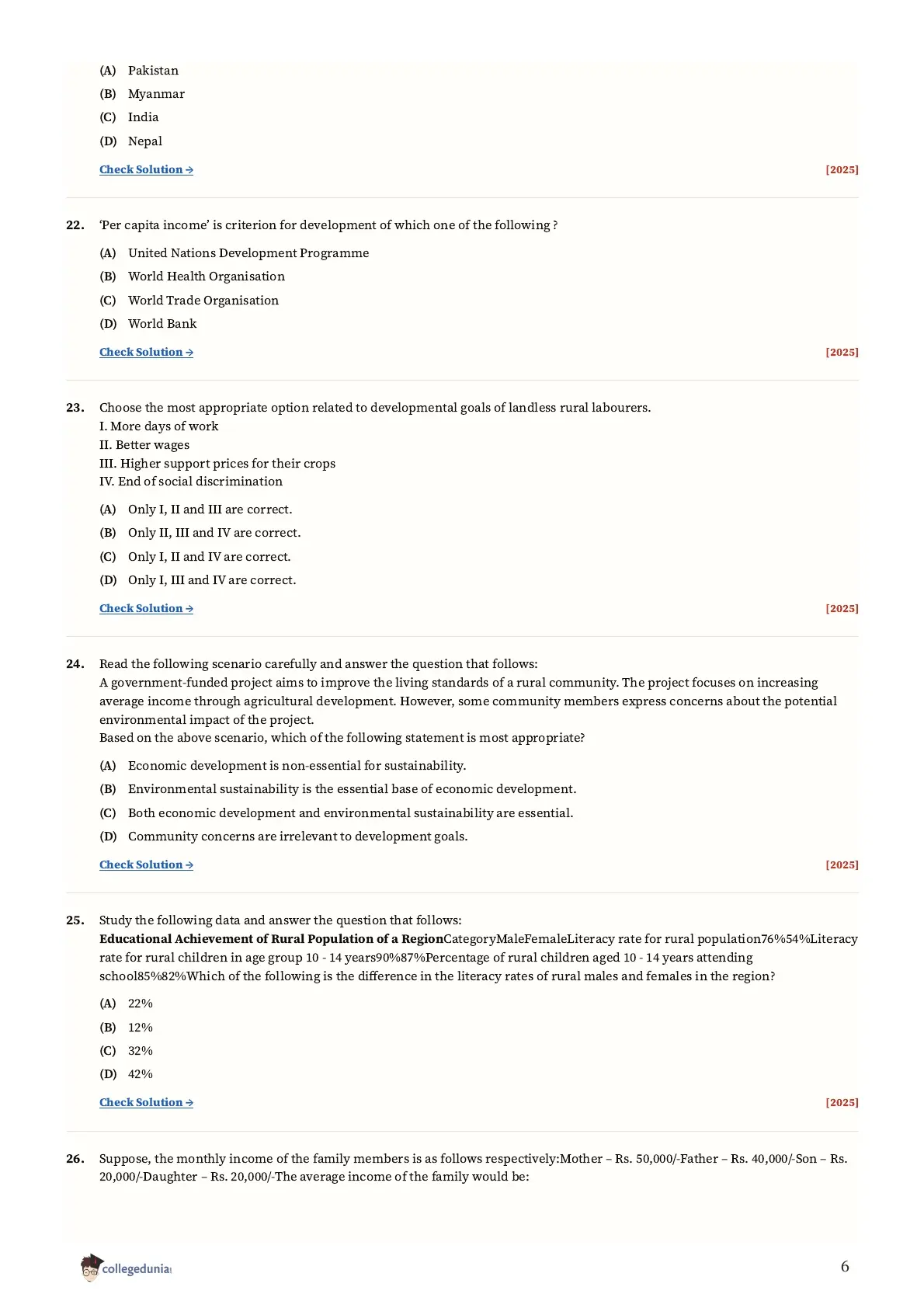
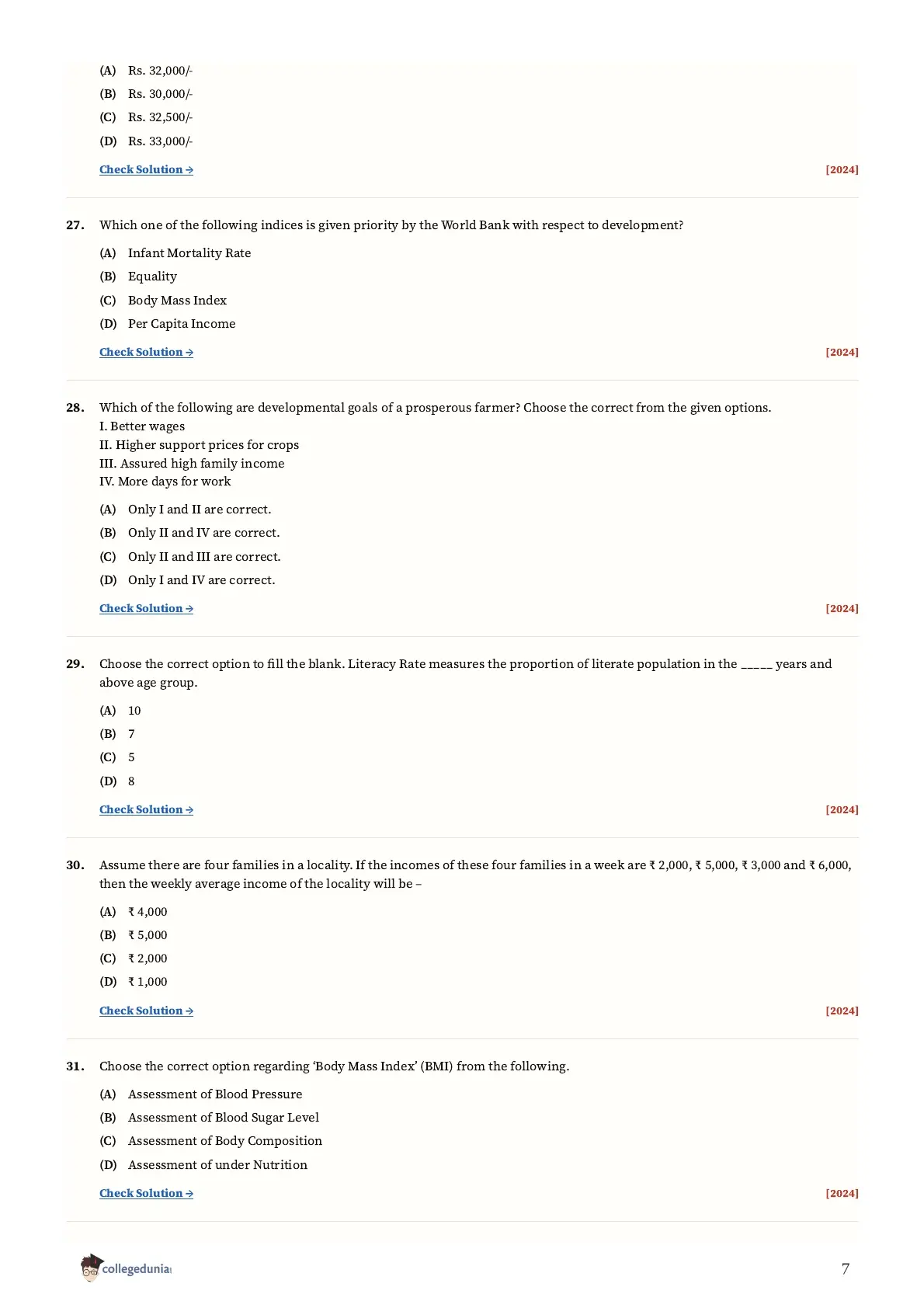
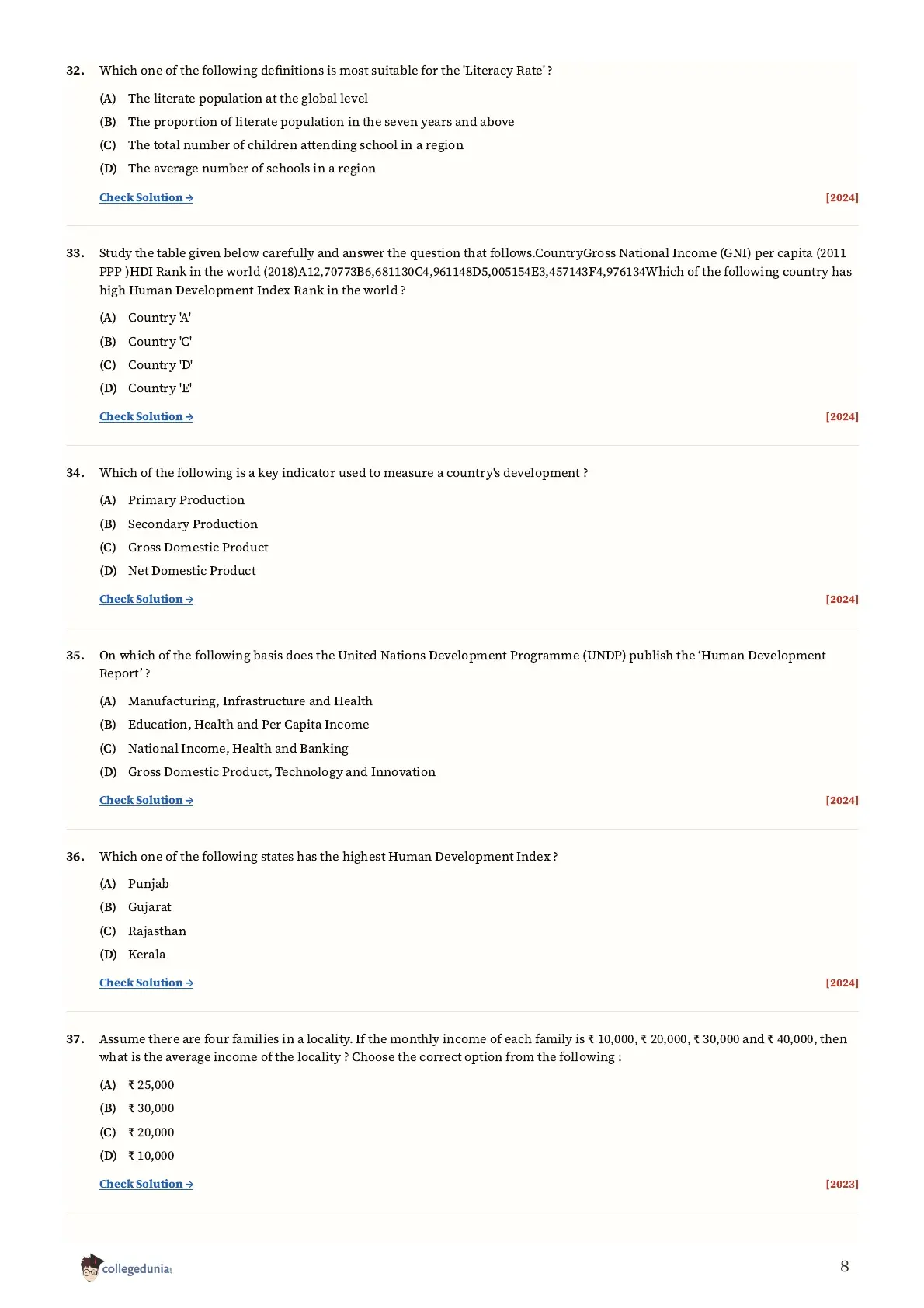
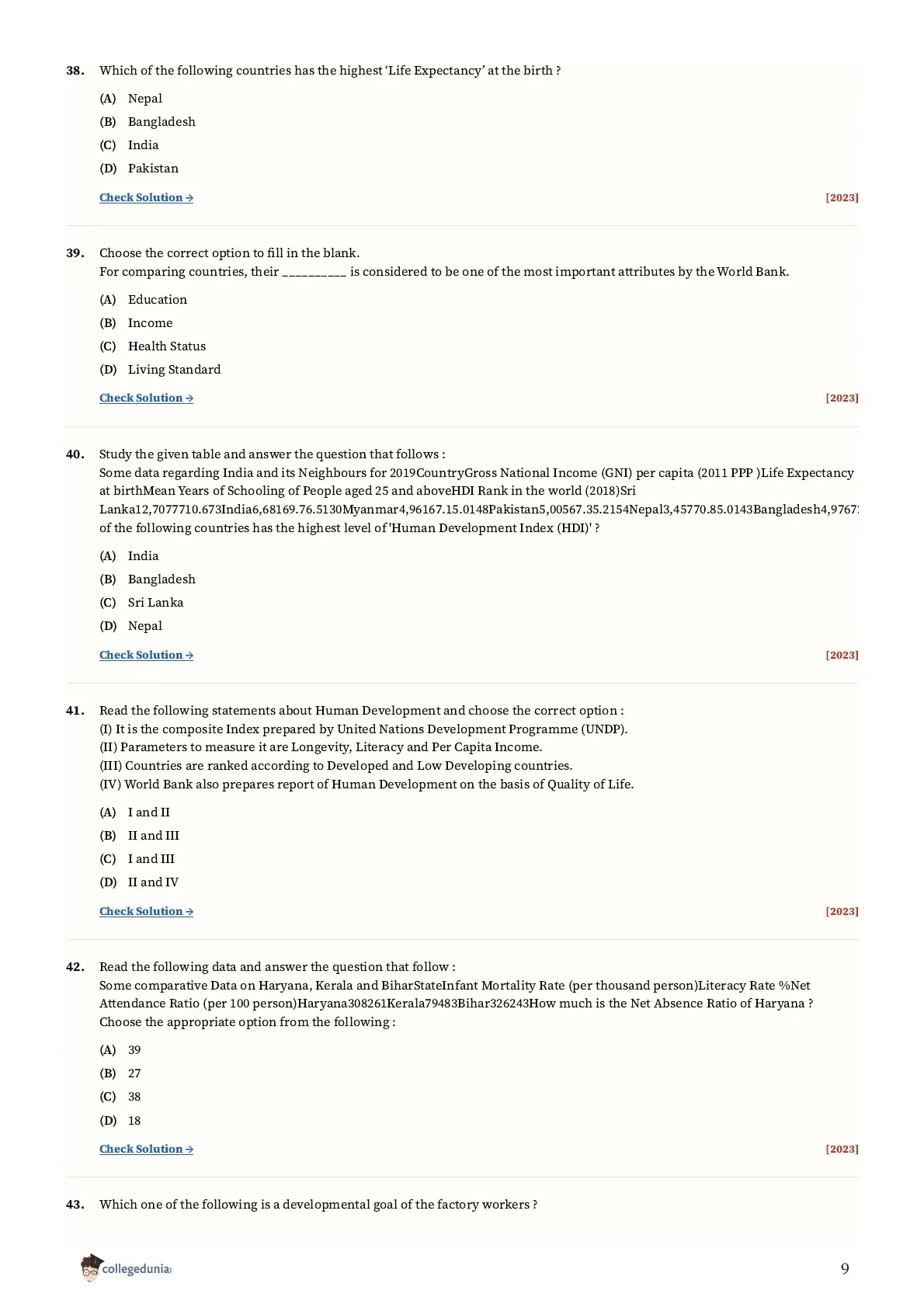
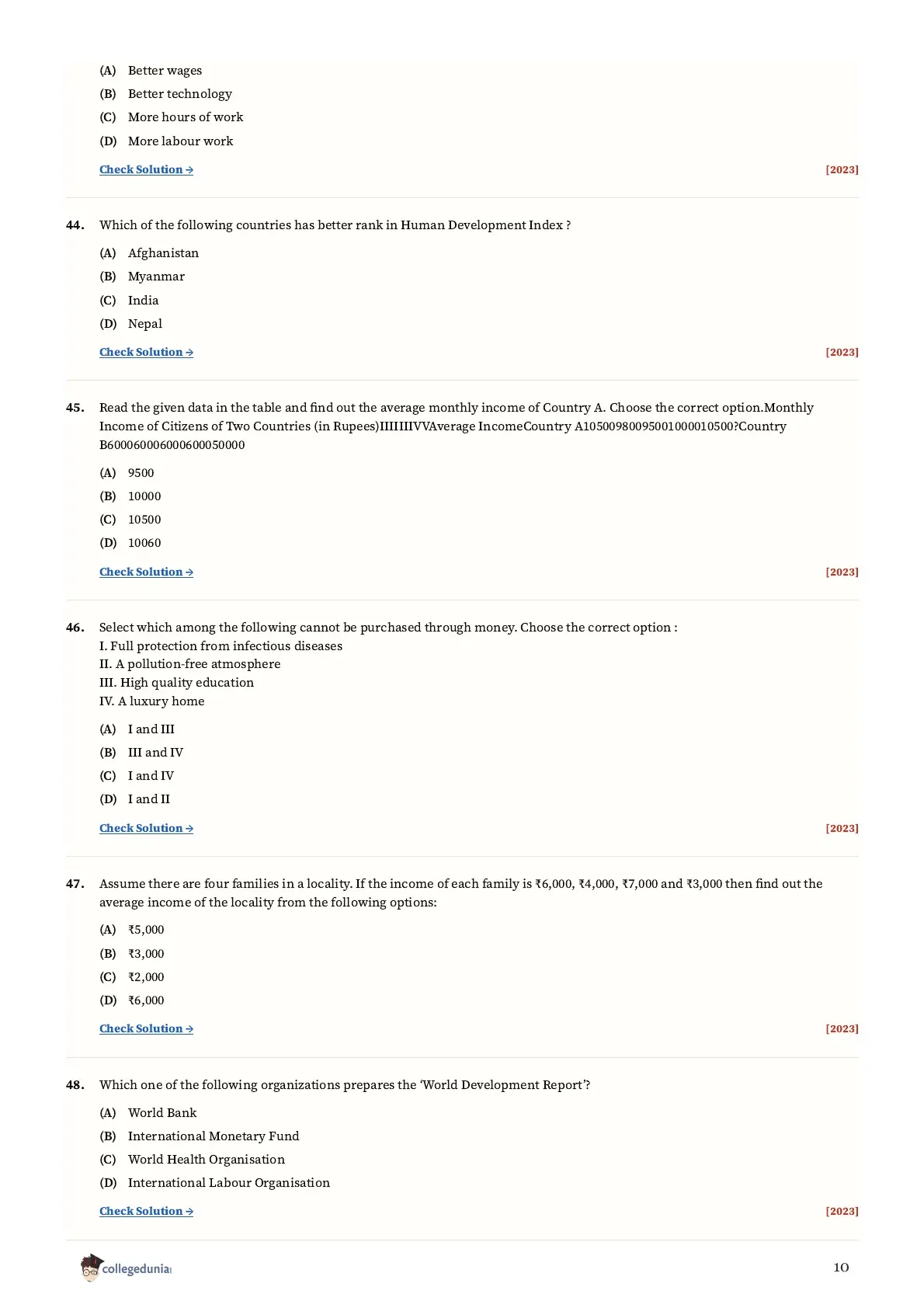
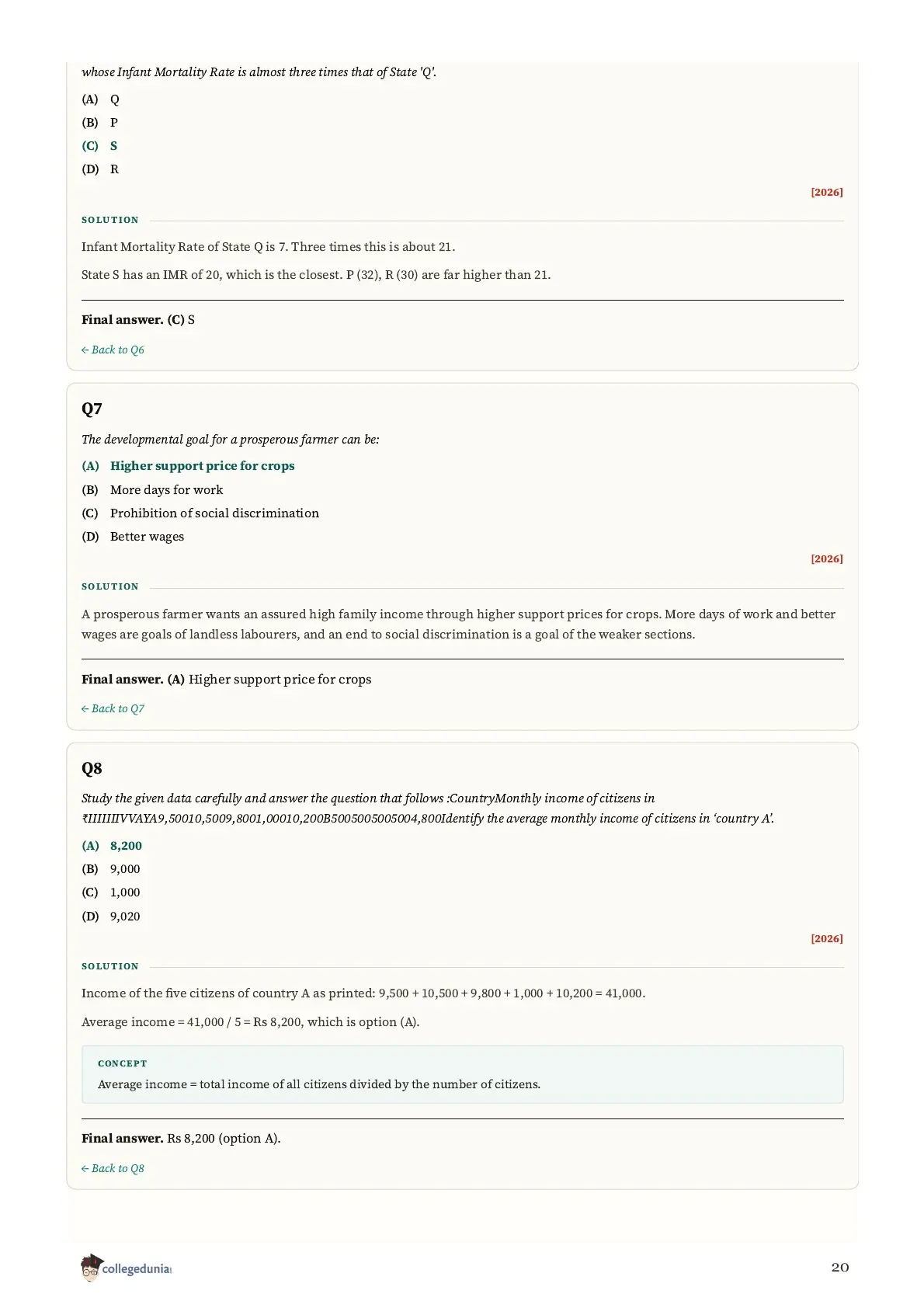
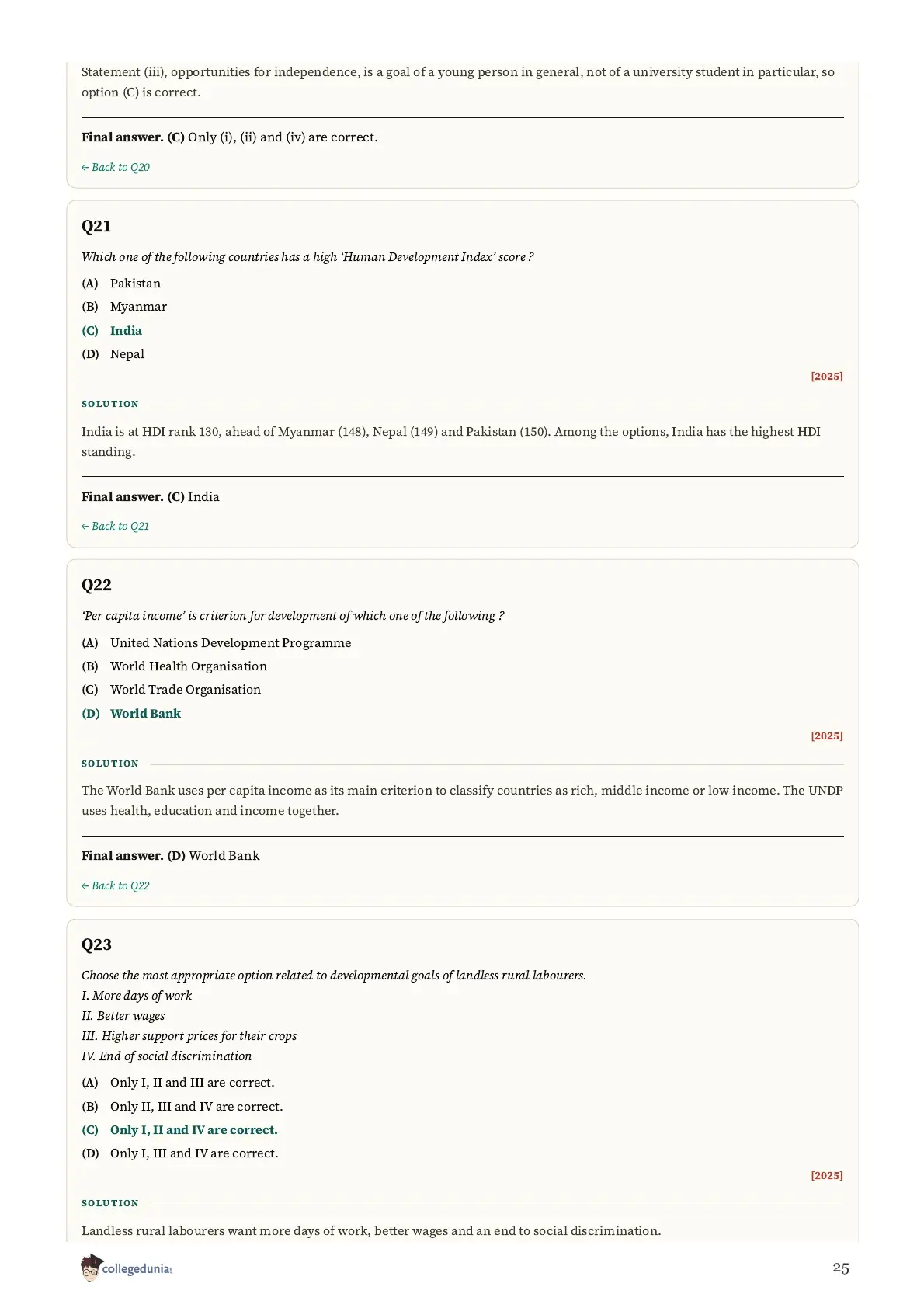
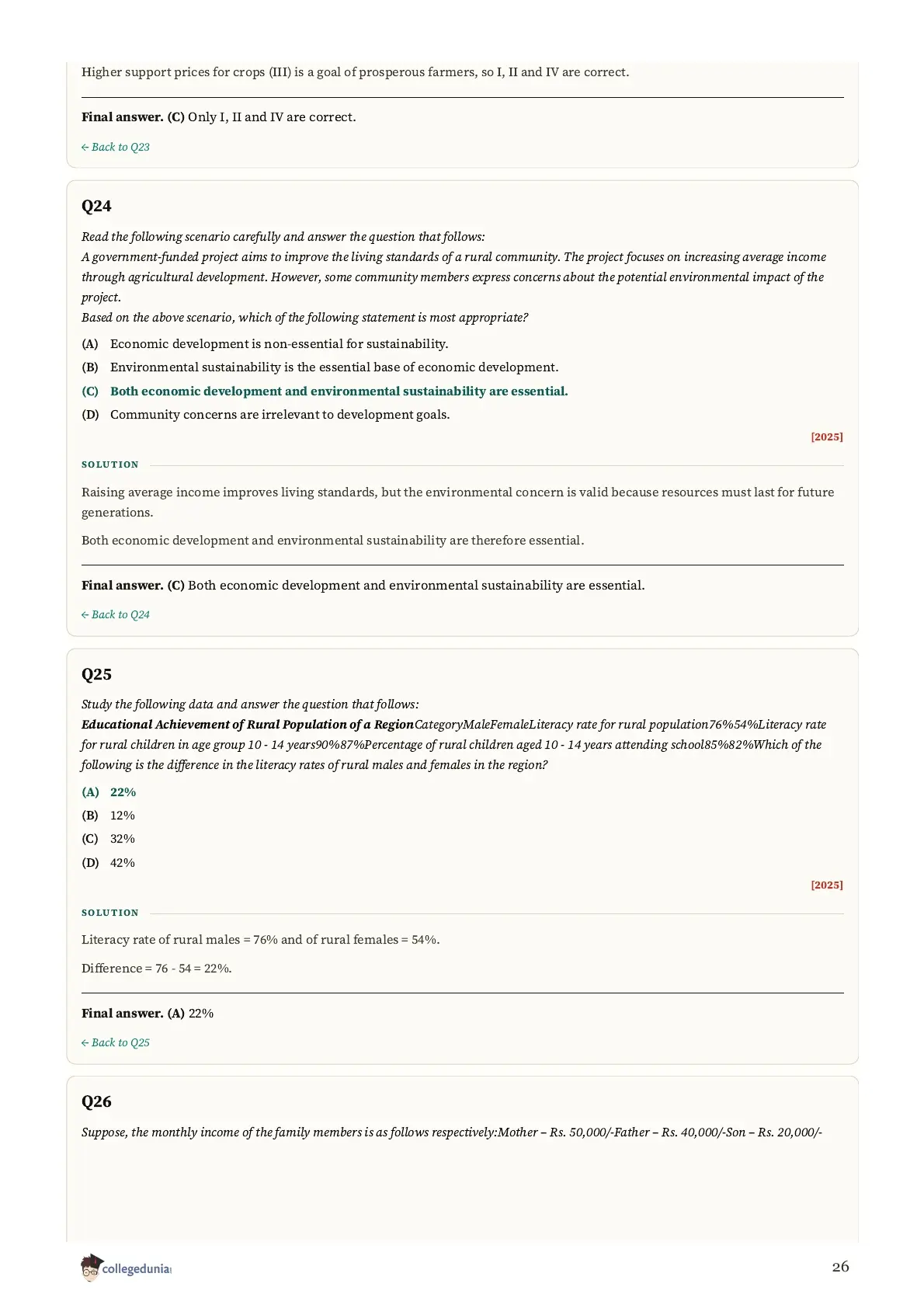
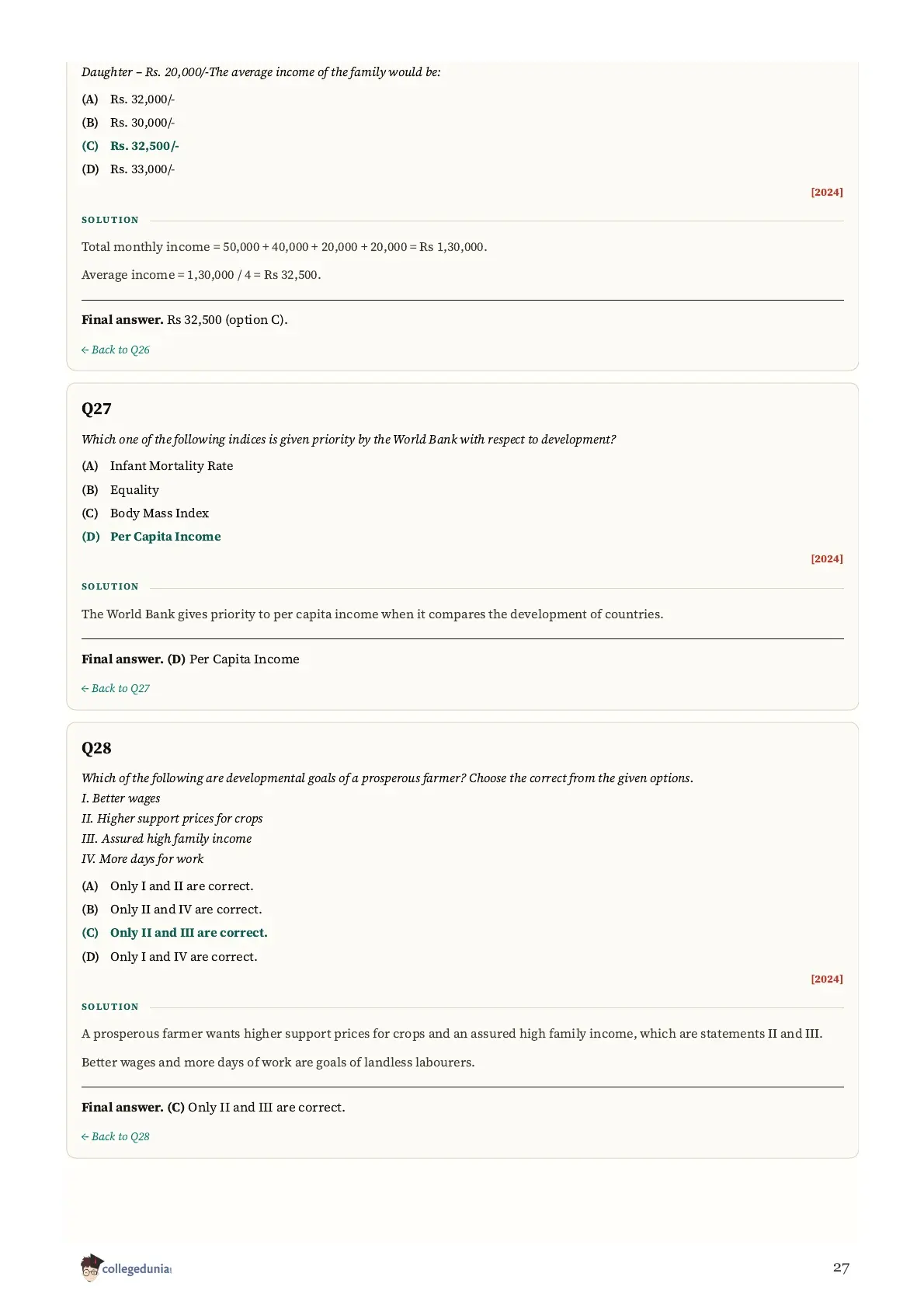
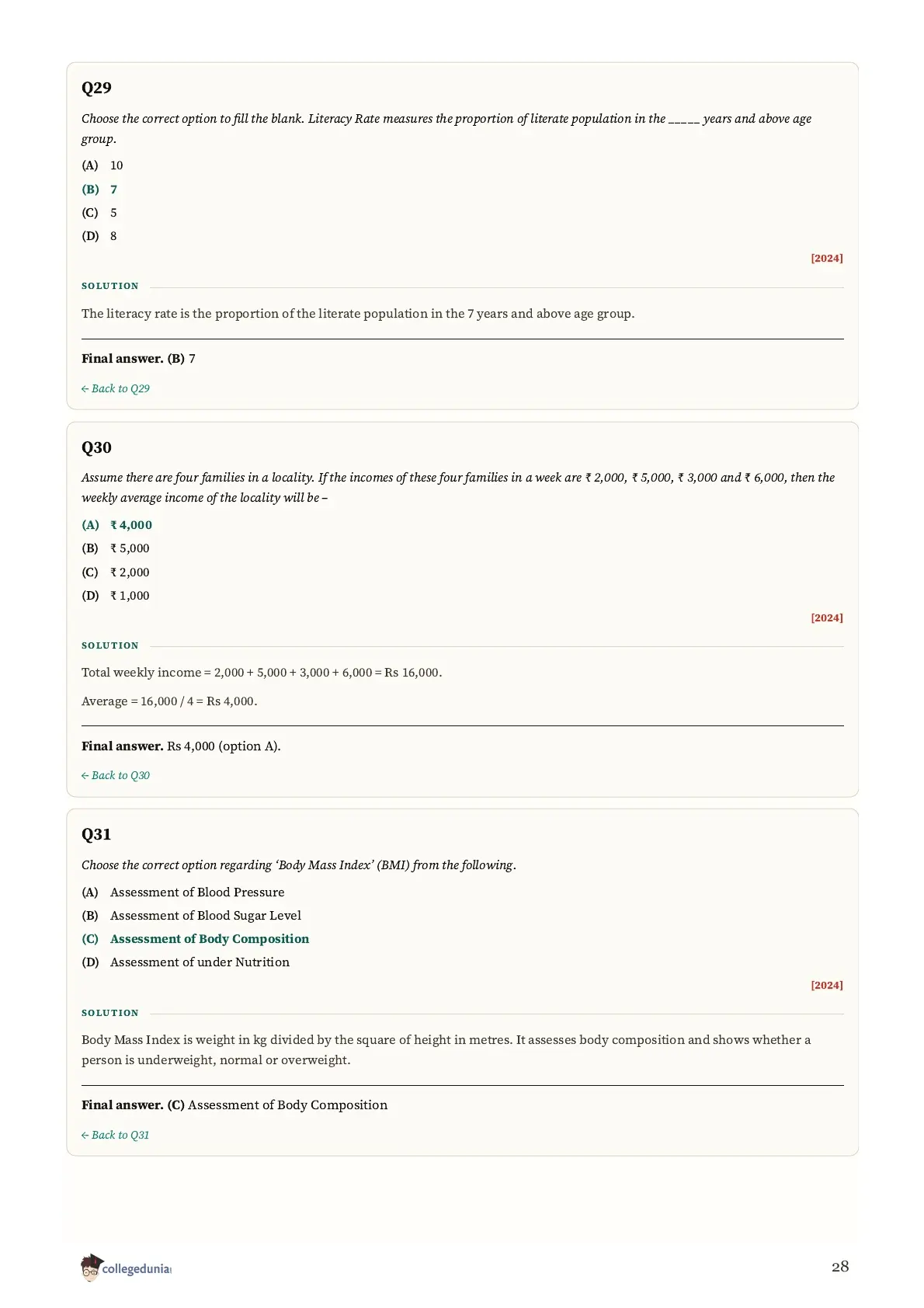
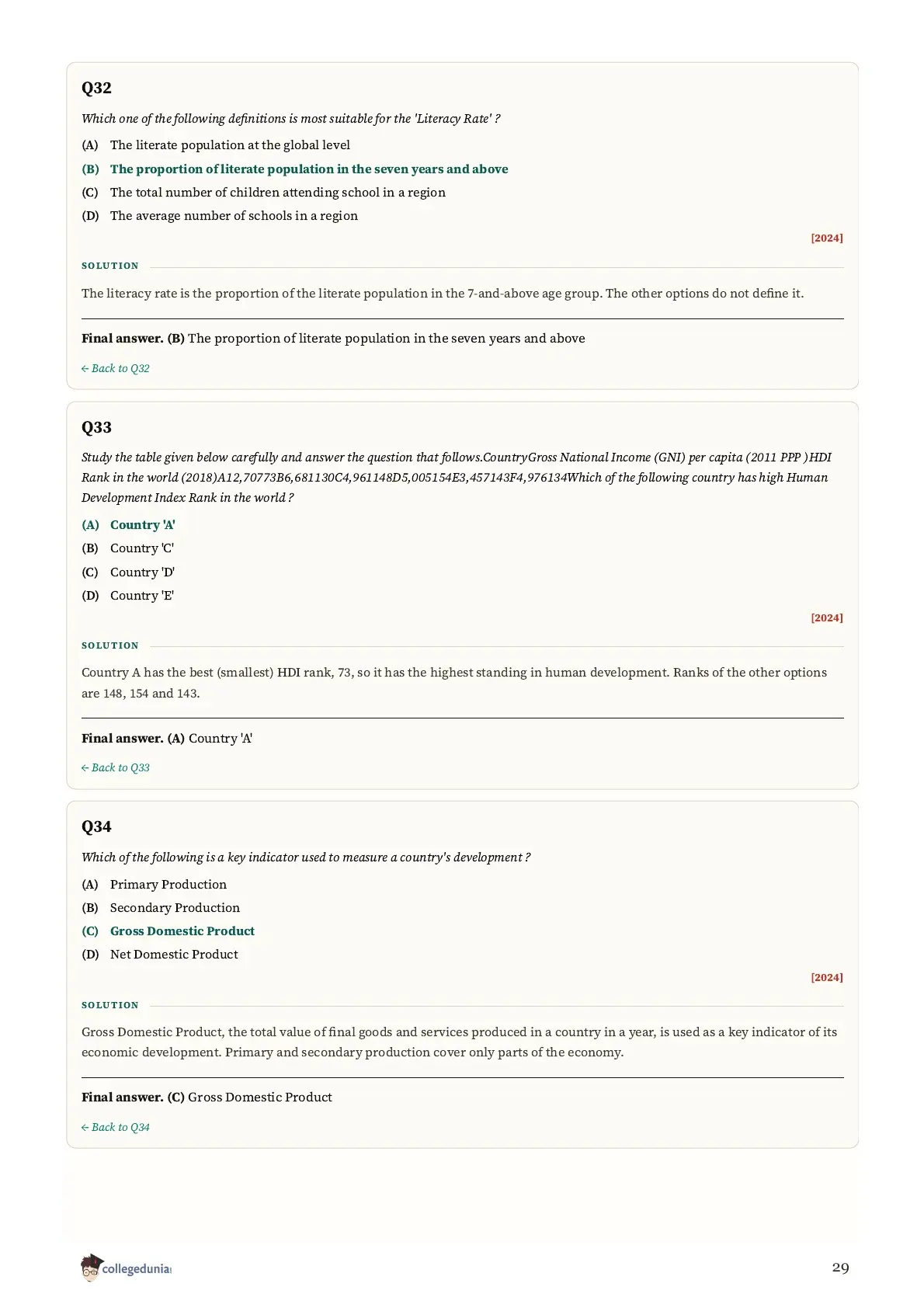
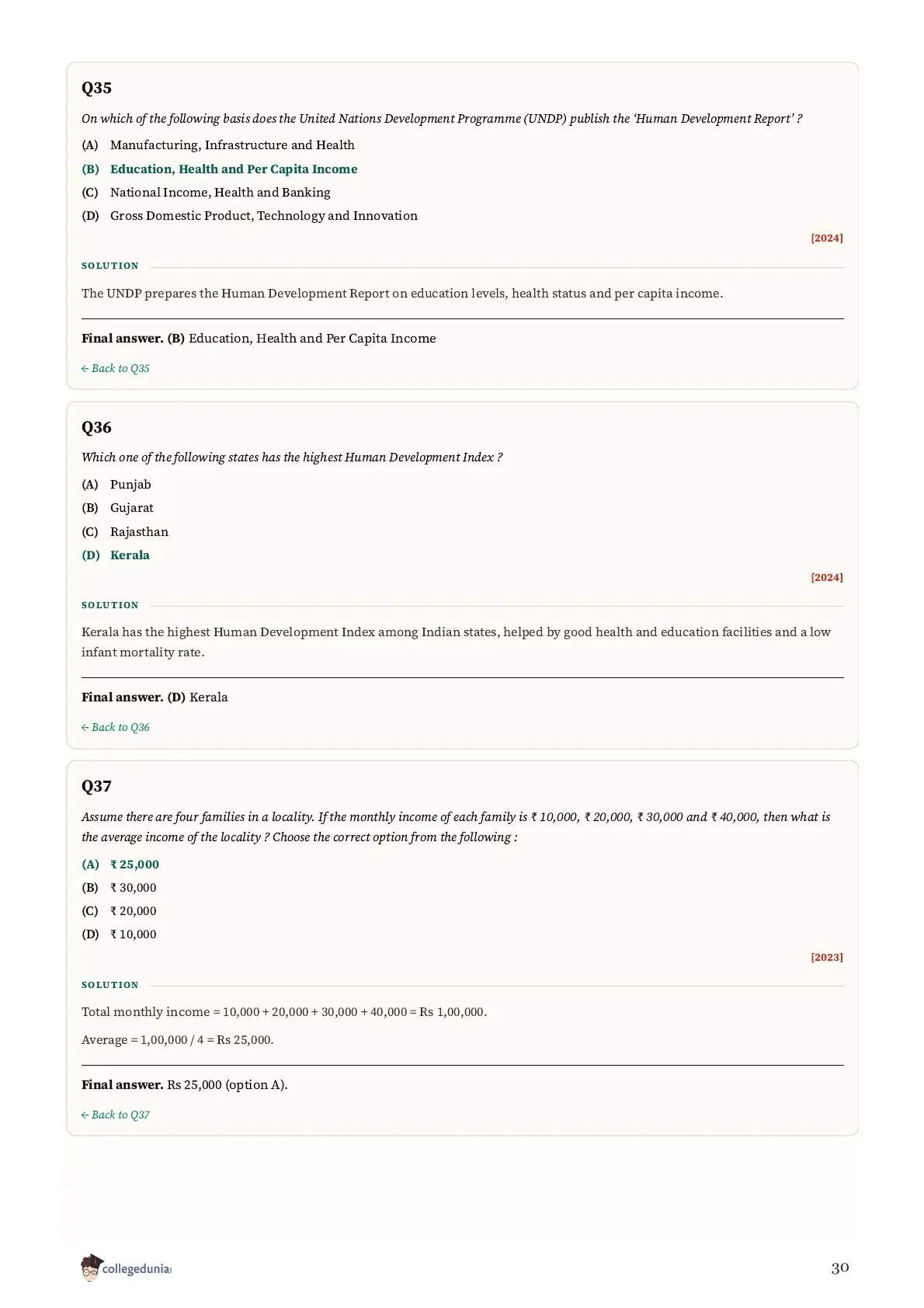
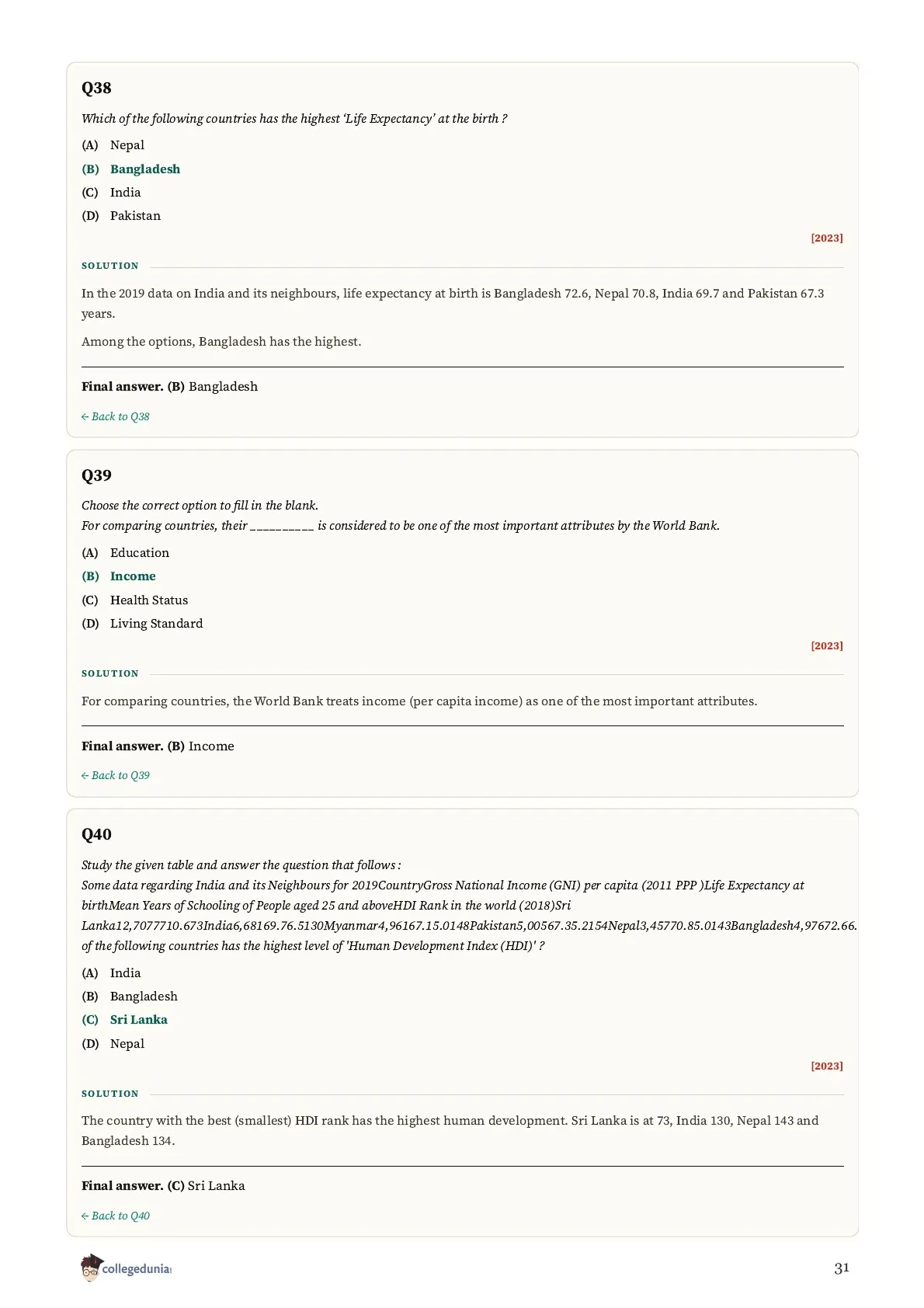
The Human Development Index and Report appear in 14 questions, usually a one-liner such as which organisation publishes the Human Development Report (the UNDP) or which of four countries has the best HDI rank. The World Bank is named in 8, mostly for its use of per capita income to compare countries. Average income comes up in 10 questions: a locality of four families with weekly incomes of 2,000, 5,000, 3,000 and 6,000 rupees (2024), or a family of four earning 50,000, 40,000, 20,000 and 20,000 rupees a month (also 2024).
Developmental goals are the base of the chapter. 13 questions ask what a prosperous farmer, a landless labourer, a factory worker or a girl from a rich family wants from development, and the 2 to 3 mark versions ask you to show that different people hold different goals. Literacy rate appears in 12, infant mortality rate in 6, life expectancy in 4 and Body Mass Index in 3. Sustainability of development is in 14 questions, from 3-mark explanations in 2023, 2024 and 2026 to the groundwater case study in 2024, which is the only 4-mark question. Keyword matches overlap, so a question on HDI that also names the World Bank is counted under both.
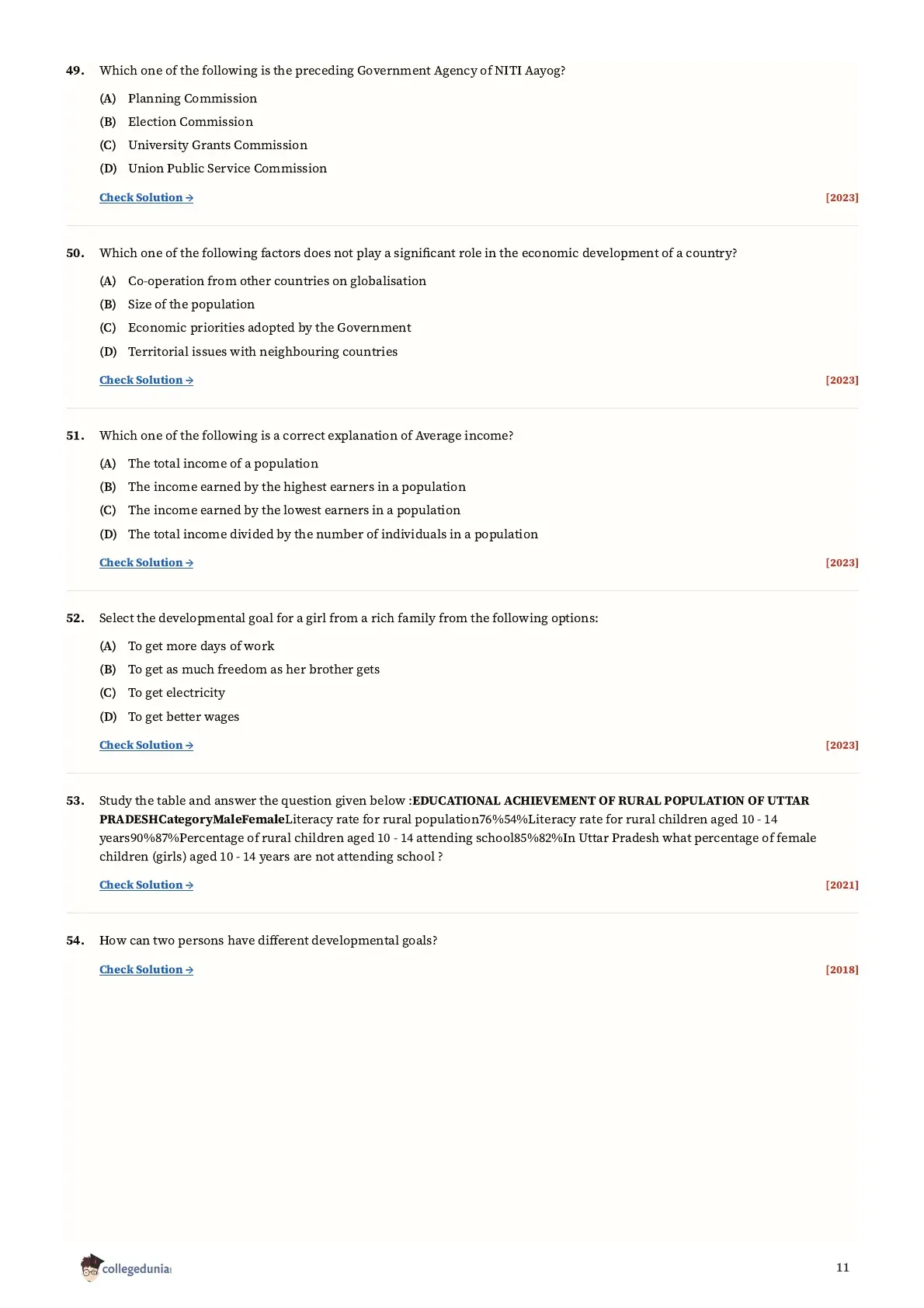
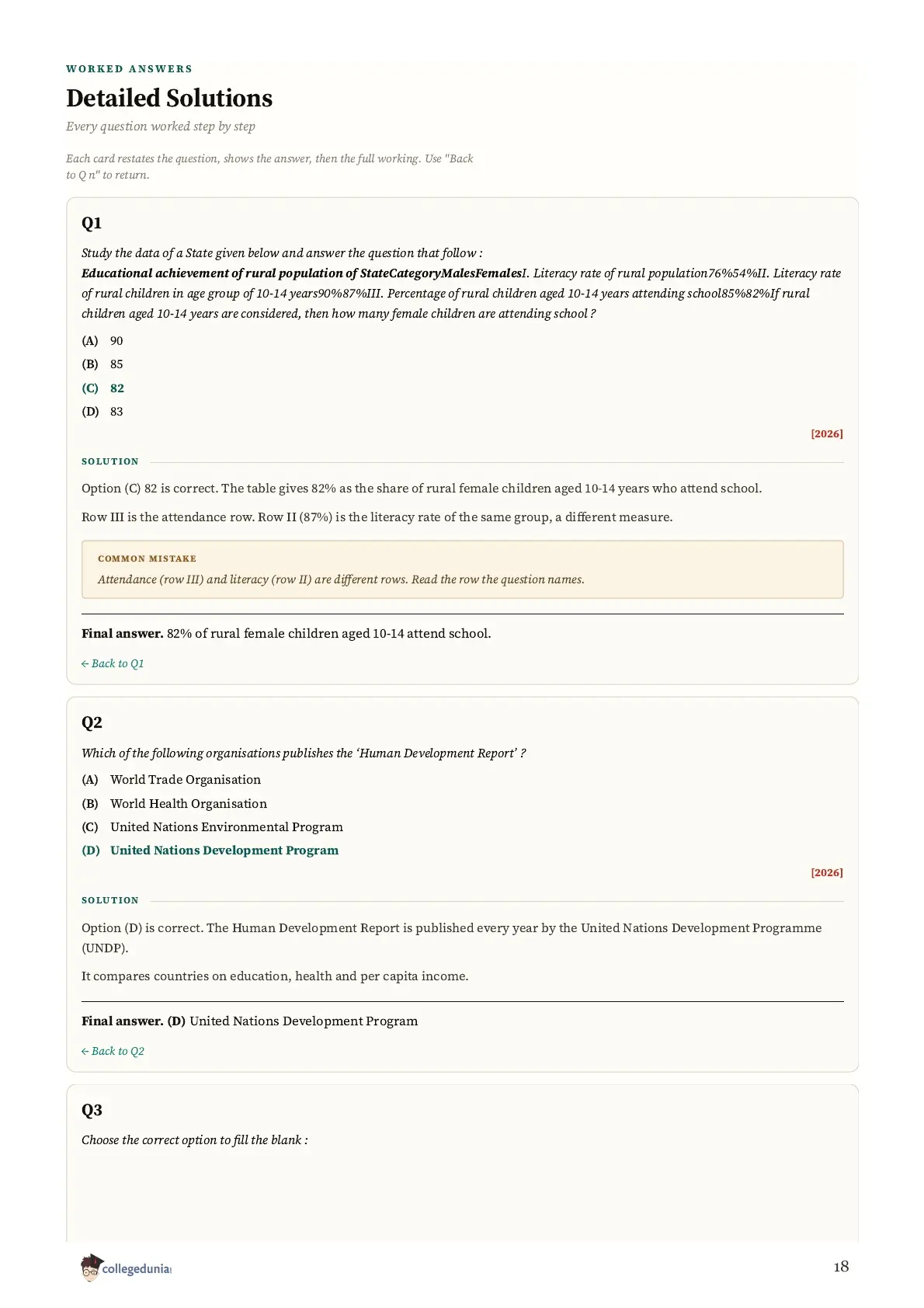
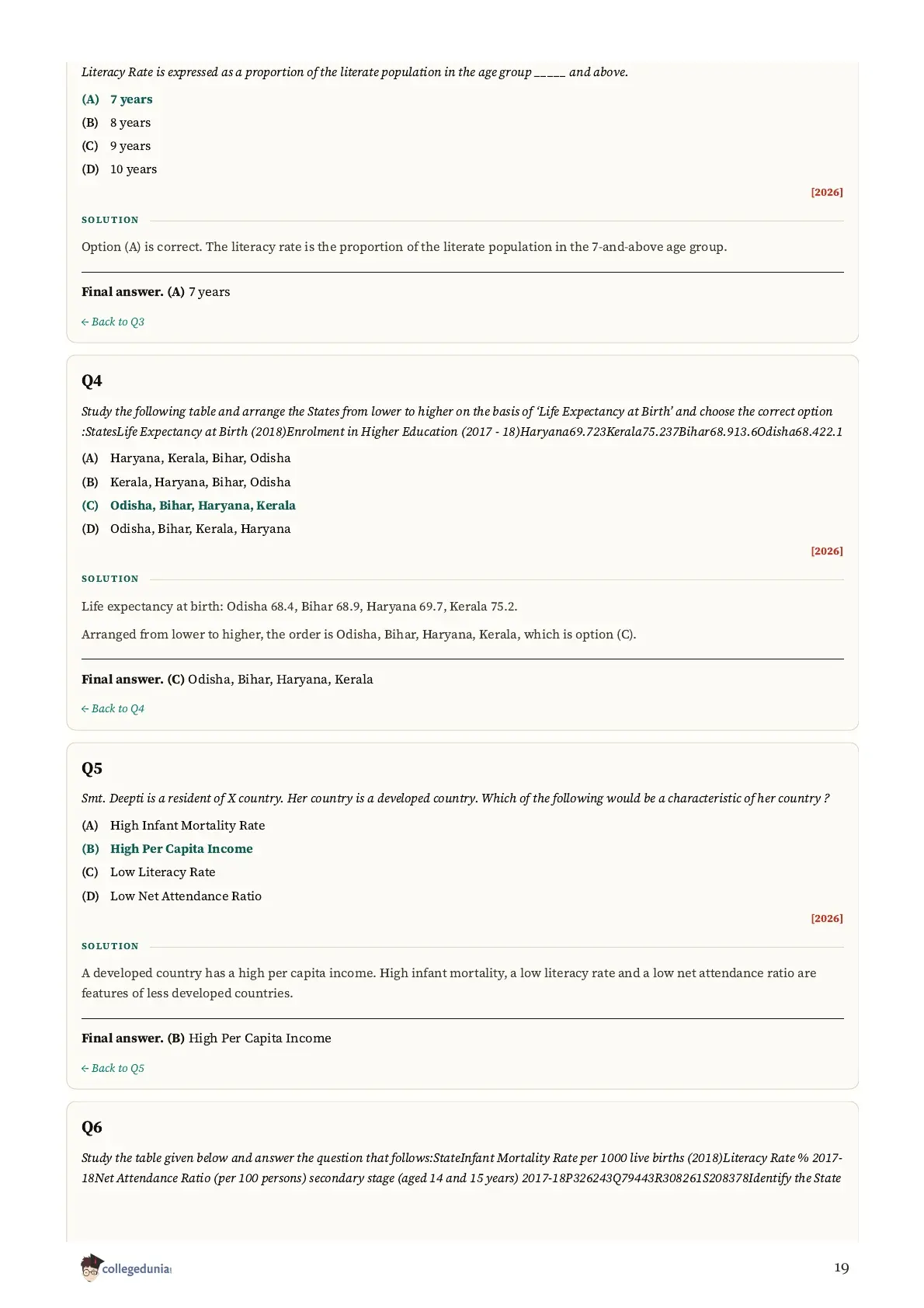
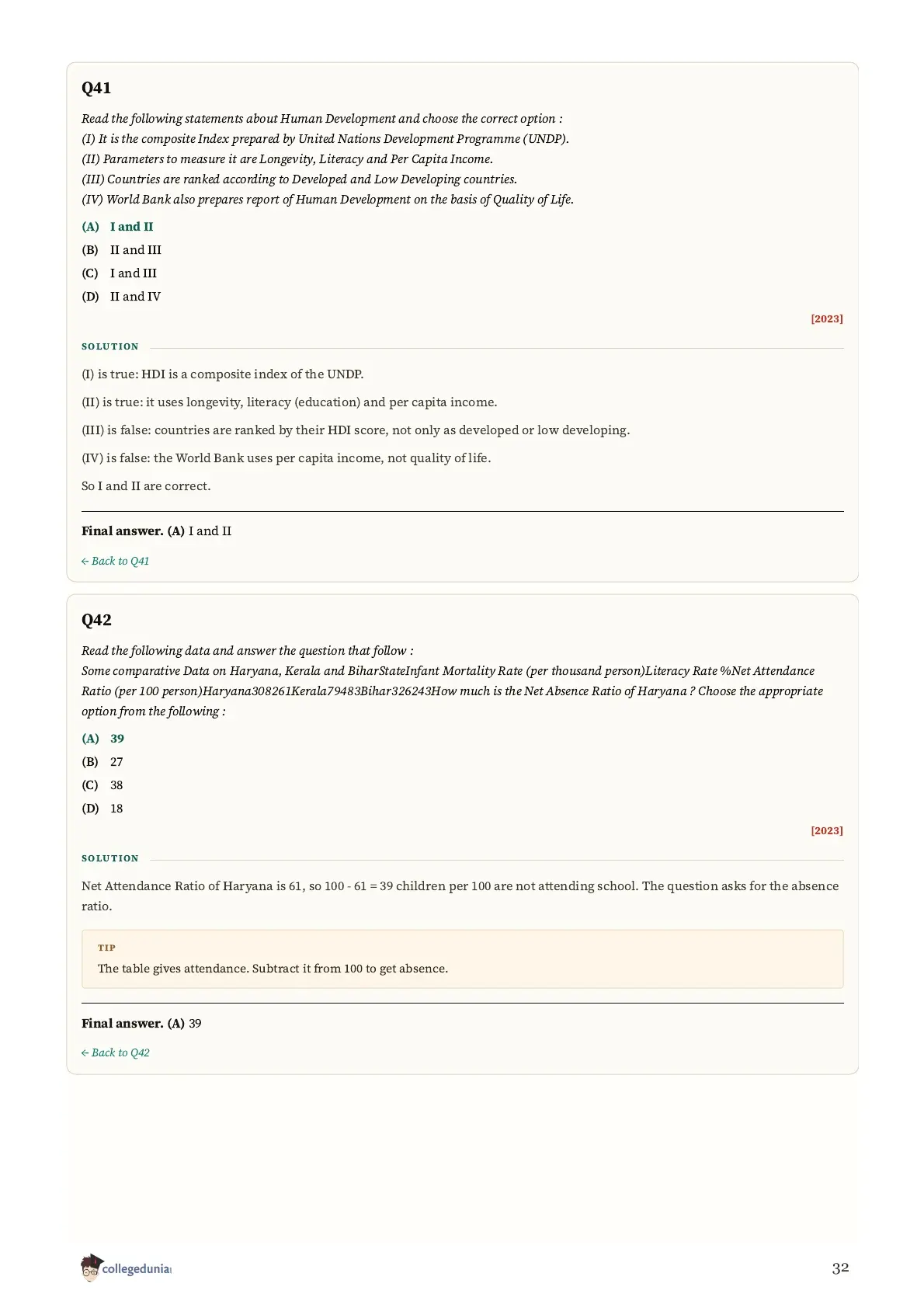
Data handling is the other pattern. 14 of the 54 one-mark questions give a small table of state or country figures, on literacy, infant mortality, net attendance or HDI rank, and ask you to read one number or rank the entries.
Source: Physics Wallah Foundation
How to Approach the Set
Start with the 52 MCQs, which test one fact each: who publishes which report, the age group for literacy rate, which state tops the HDI. Then work through the 5 two-mark and 11 three-mark questions, where a definition and two examples earn full marks. The 2025 papers hold 14 five-mark questions, so write those out in full with a point for each reason. Learn the contrast between the UNDP view of development (education, health and income) and the World Bank view (per capita income) until you can state it in two lines. 2025 and 2026 together hold 44 of the 85 questions, so read those papers closely.
Common Mistakes in Development Questions
- Dividing a family's total income by the wrong number. With incomes of 50,000, 40,000, 20,000 and 20,000 rupees the average is 130,000 divided by 4, which is 32,500 rupees.
- Mixing up the two report publishers: the UNDP publishes the Human Development Report and the World Bank prepares the World Development Report.
- Reading a table row for the wrong state. Check the column heading for the year before you pick Kerala, Haryana or Bihar.
- Writing that income alone measures development, when the UNDP also counts education and health.
- Giving only definitions in a sustainability answer and leaving out an example such as groundwater overuse in Punjab and western U.P.
- Treating the literacy rate as a share of the whole population. It is the share of people aged 7 years and above who can read and write.
Using the Answer Key and Solutions
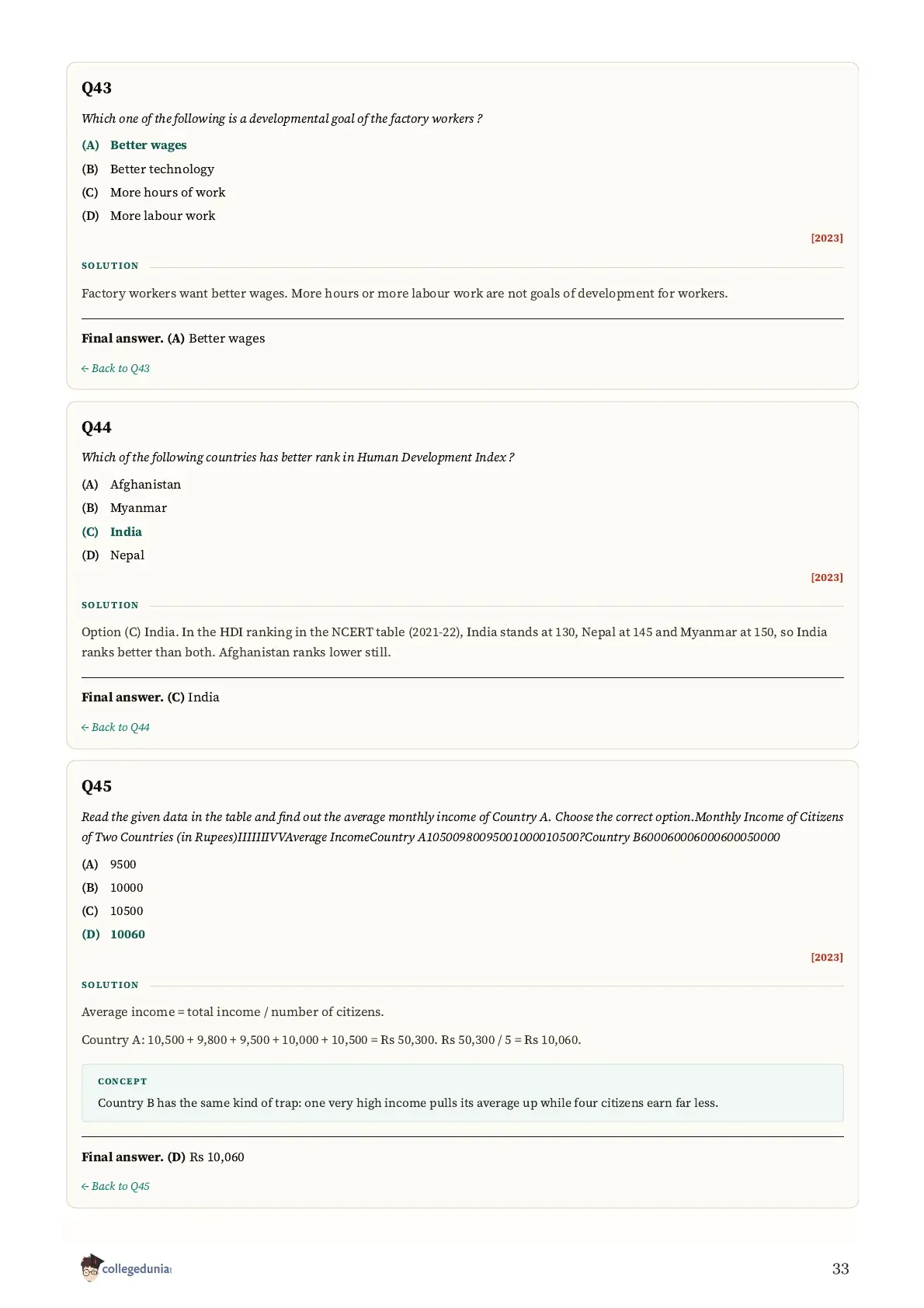
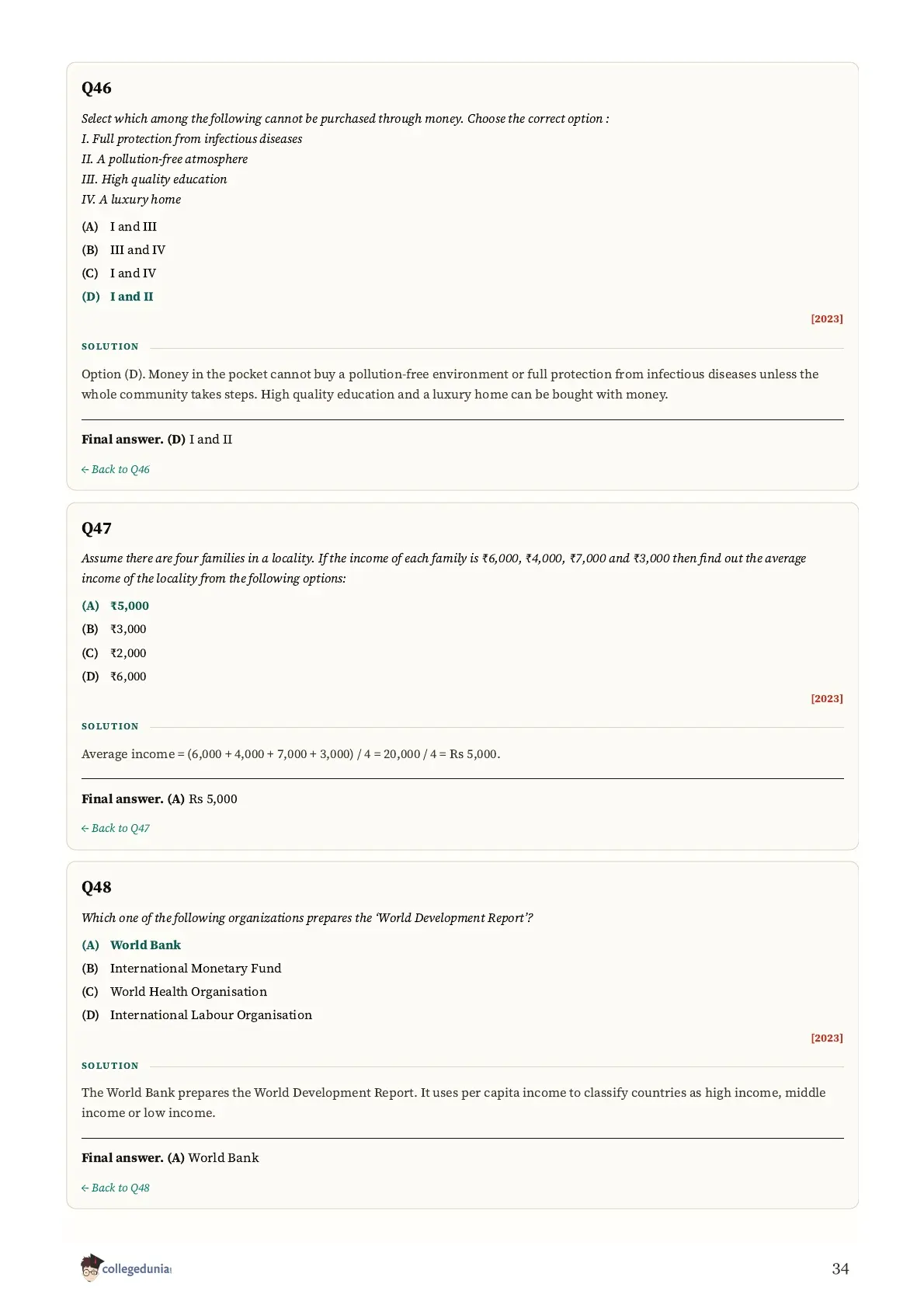
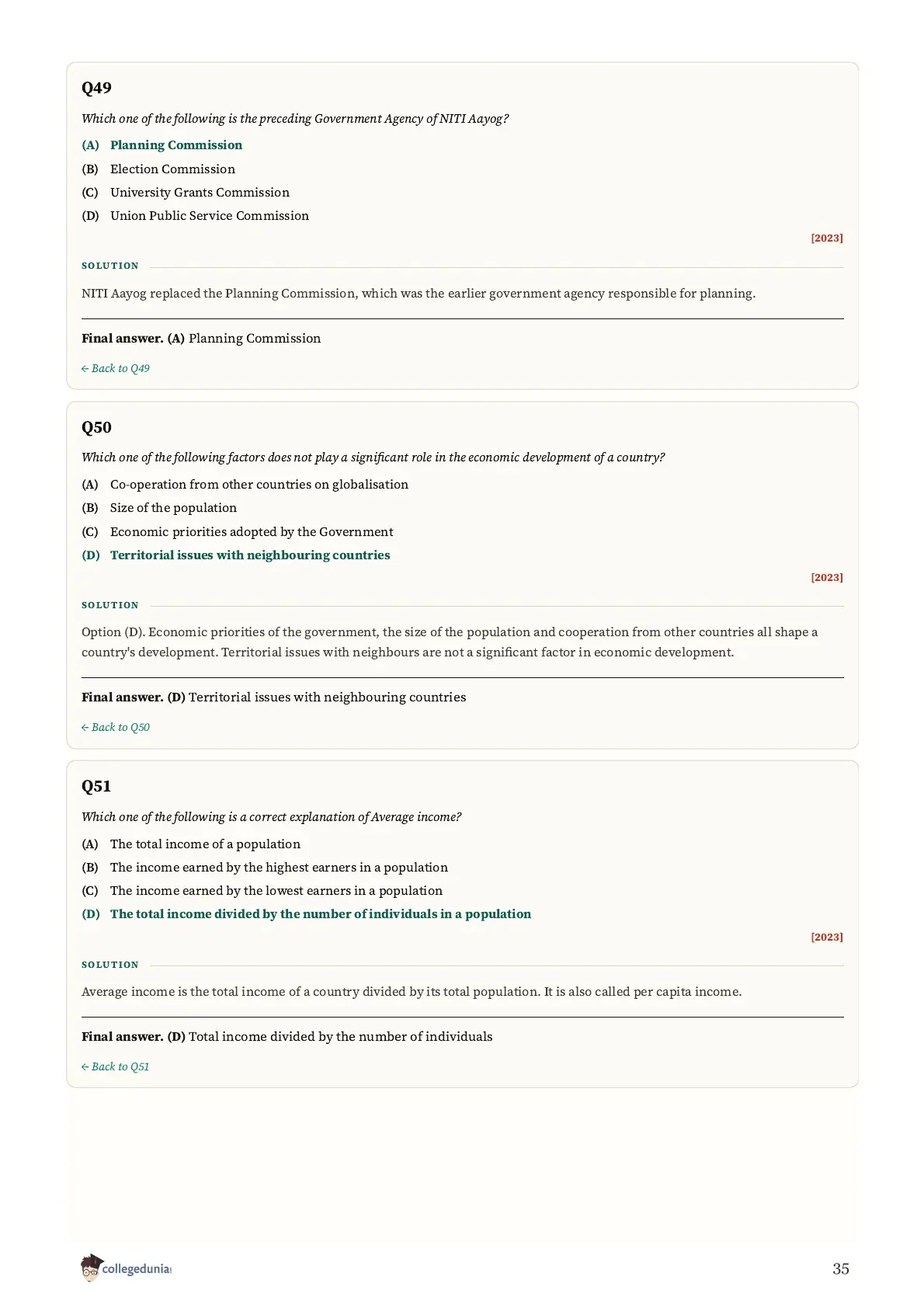
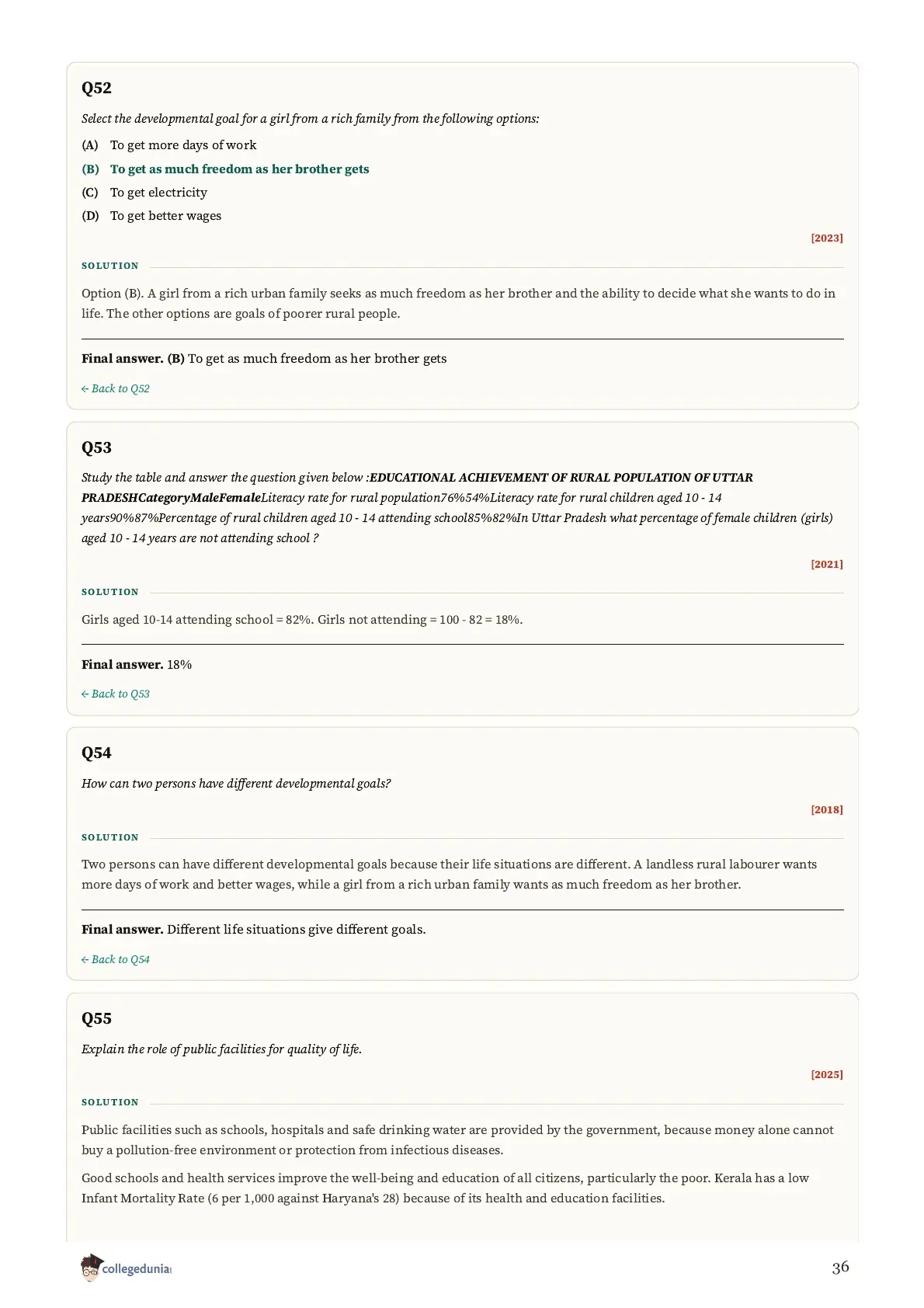
The PDF is 46 pages and free to download. Each section is sorted newest year first, the Answer Key lists the 52 MCQs at a glance, and each question links to its worked solution and back. Attempt a question yourself first, check the key, then read the solution. The solutions are written by Collegedunia's Social Science experts and are not official CBSE marking schemes.
Class 10 Economics PYQs by Chapter
| Unit | PYQ Page |
|---|---|
| Understanding Economic Development | Development Class 10 Economics PYQ |
| Understanding Economic Development | Sectors of the Indian Economy Class 10 Economics PYQ |
| Understanding Economic Development | Money and Credit Class 10 Economics PYQ |
| Understanding Economic Development | Globalisation and the Indian Economy Class 10 Economics PYQ |
Development Class 10 Economics PYQ FAQs
Ques. How many questions are in the Development Class 10 Economics PYQ PDF?
Ans. The PDF has 85 questions from the 2018, 2021 and 2023 to 2026 board papers: 54 at 1 mark, 5 at 2 marks, 11 at 3 marks, 1 case study at 4 marks and 14 at 5 marks.
Ques. Does this PYQ PDF include solutions, or only the questions?
Ans. All 85 questions have a worked solution in the PDF. The 52 MCQs are also listed in the Answer Key before the solutions.
Ques. Are the solutions official?
Ans. No. They are written by Collegedunia's Social Science experts and checked against the NCERT chapter and, for the 2022 to 2026 main papers, against CBSE's published marking schemes. Compartment, 2018 and 2021 answers are checked against the NCERT text. They are not an official CBSE marking scheme, so the board's wording of an answer may differ.
Ques. How many marks does Development carry in the Class 10 Economics paper?
Ans. CBSE does not publish marks per chapter. The Social Science paper is 80 marks and, as printed in the 2026 papers, its Economics part is a 20-mark section. Development is Chapter 1 of that part, so no separate figure is given for it.
Ques. What kind of questions are asked from Development?
Ans. Most are MCQs on the Human Development Index and Report, average income, literacy rate, infant mortality rate and the developmental goals of different people. The longer questions ask you to explain sustainability of development with examples, and 14 five-mark questions in the 2025 papers examine statements on groundwater, public facilities and income.
Ques. Which years does the set cover?
Ans. The questions come from 6 board years between 2018 and 2026: 2018 (2 questions), 2021 (3), 2023 (18), 2024 (18), 2025 (29) and 2026 (15). 2022 has no question in this set.
Ques. Do the questions use tables and data?
Ans. Yes. 14 of the 54 one-mark questions are built on a small table, such as literacy rates, HDI ranks or monthly incomes of a few families, and you read the answer from it.
Ques. Is Consumer Rights asked in the Class 10 board paper?
Ans. The chapter is in the NCERT book, but none of the Economics questions in the 2021 to 2026 papers used for this series is on it, so there is no separate page.



Comments