




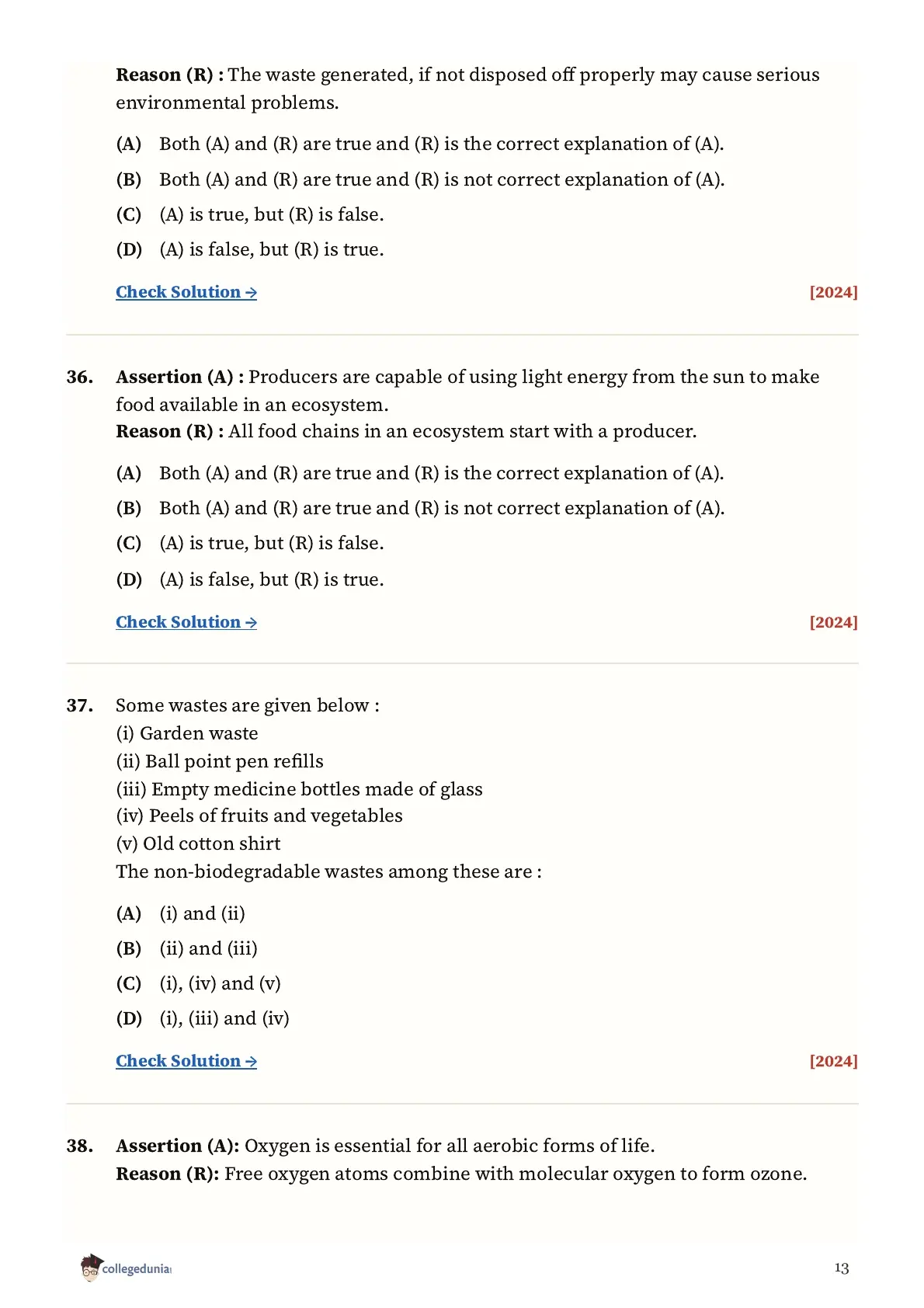
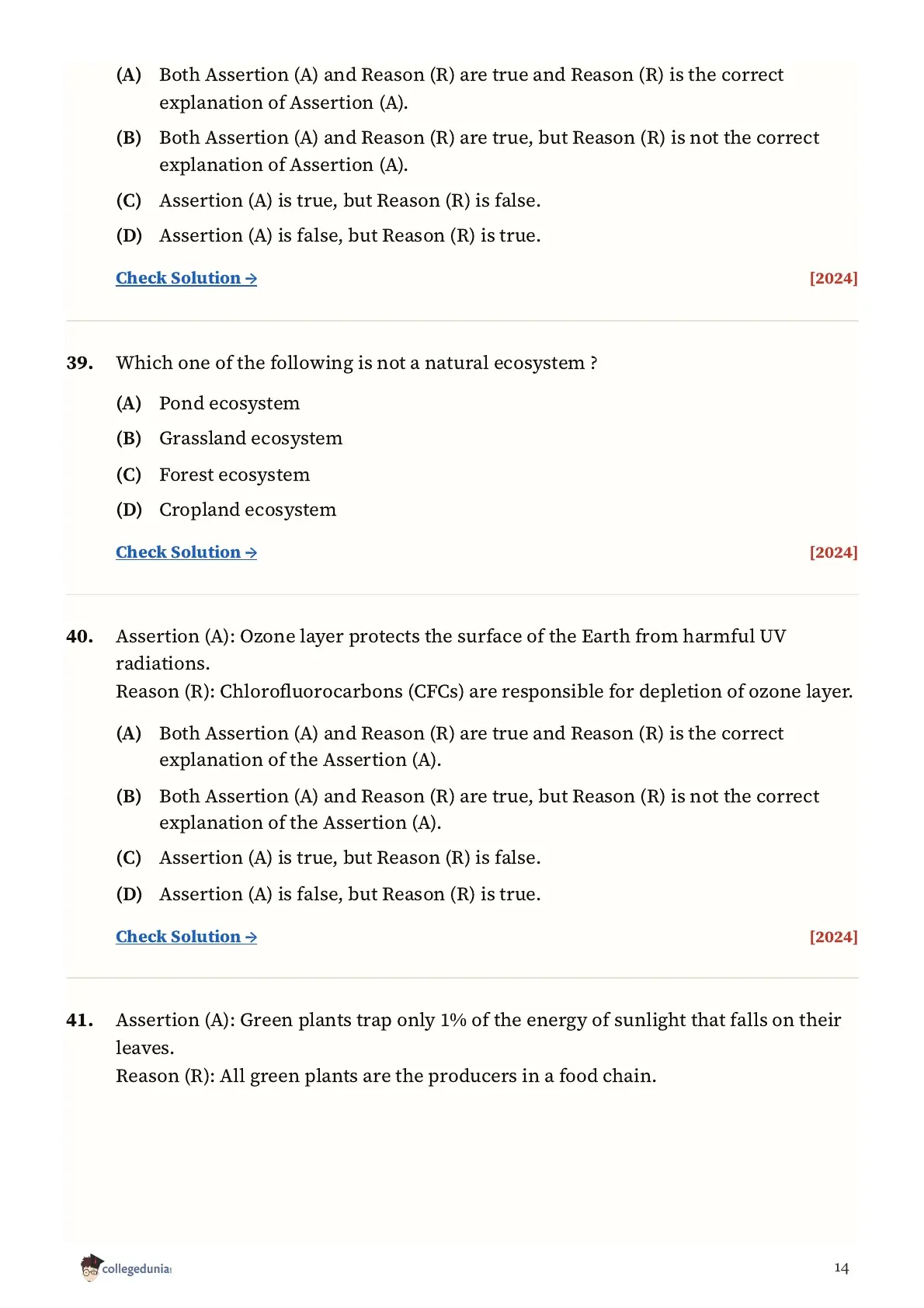
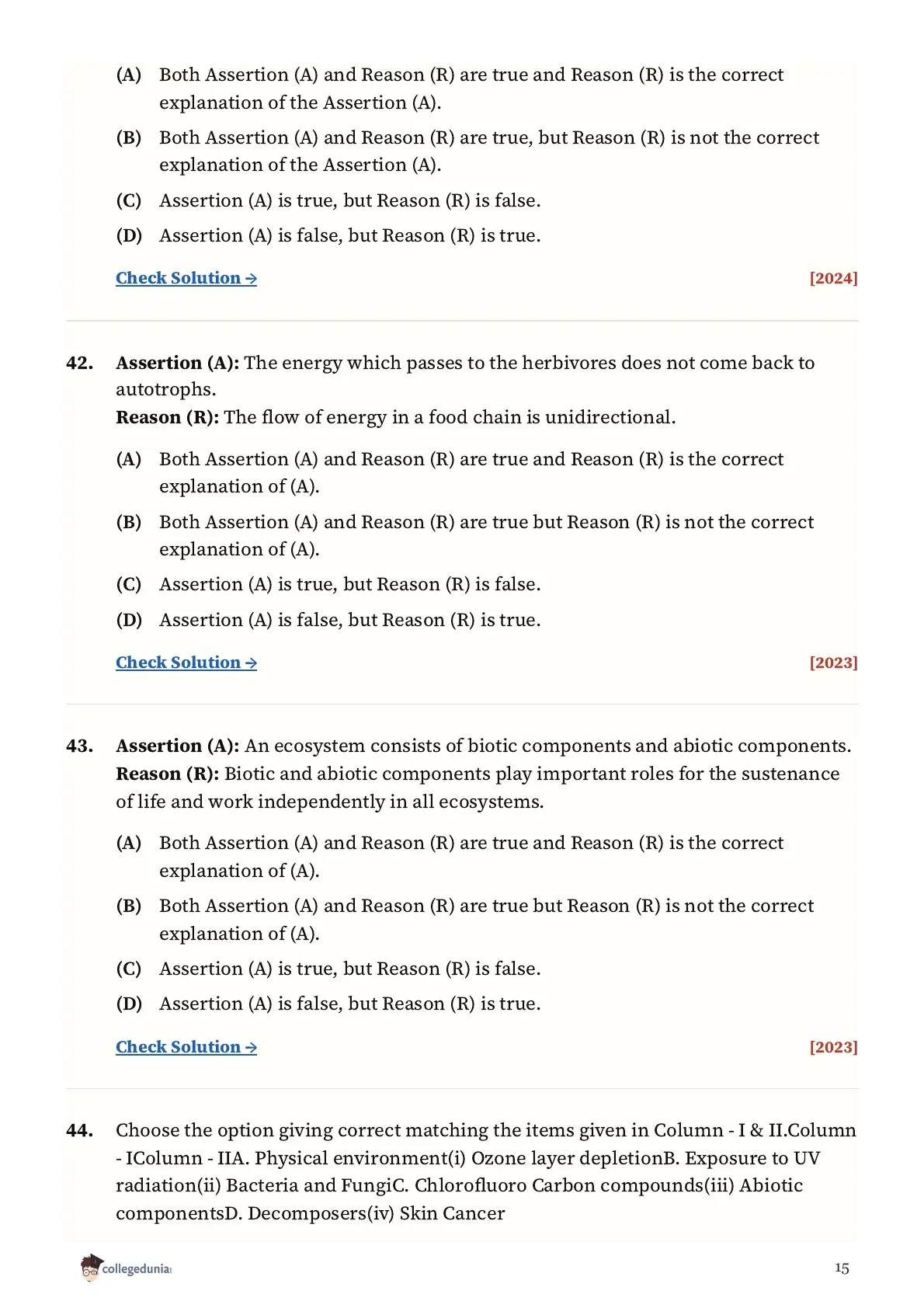
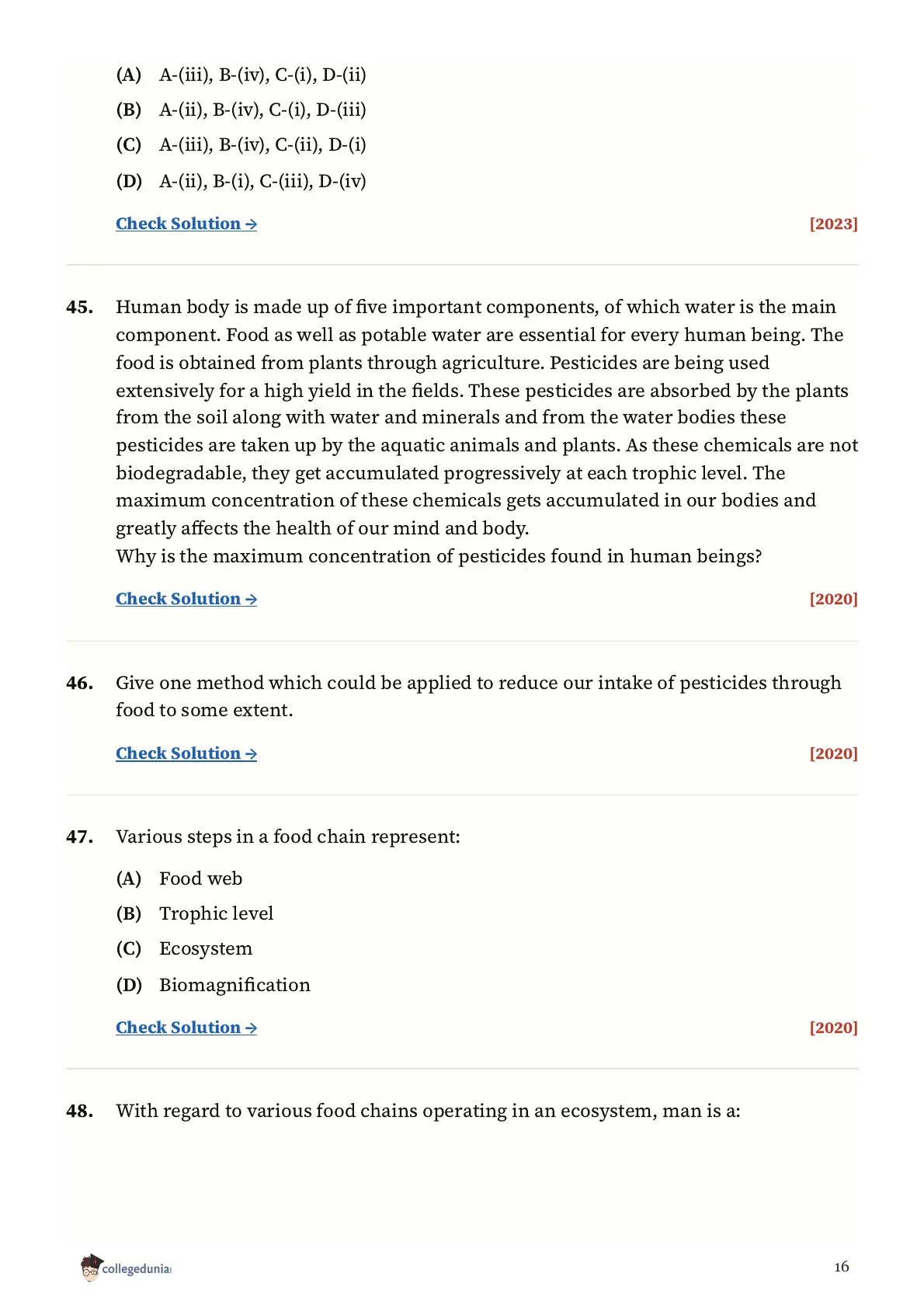
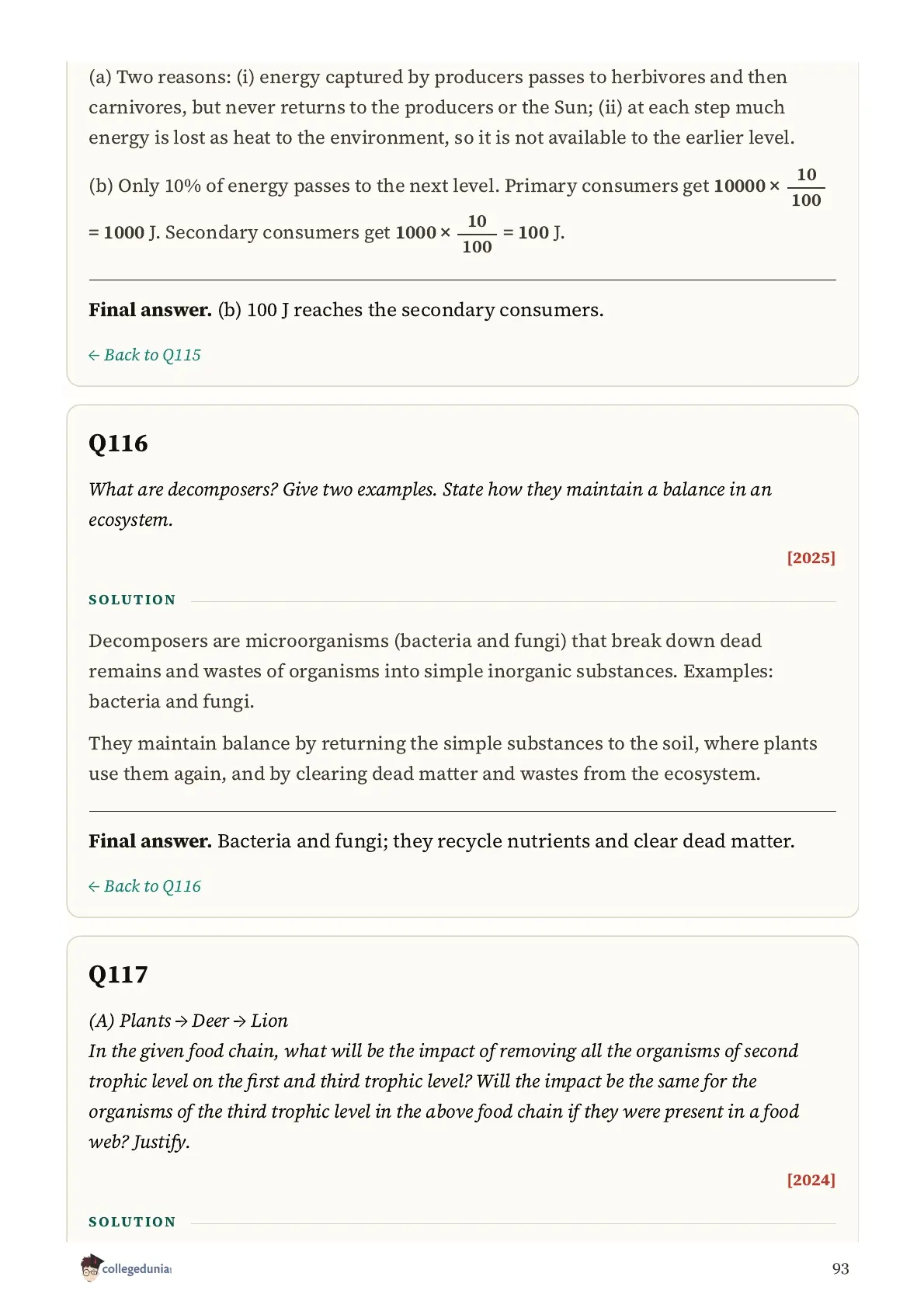
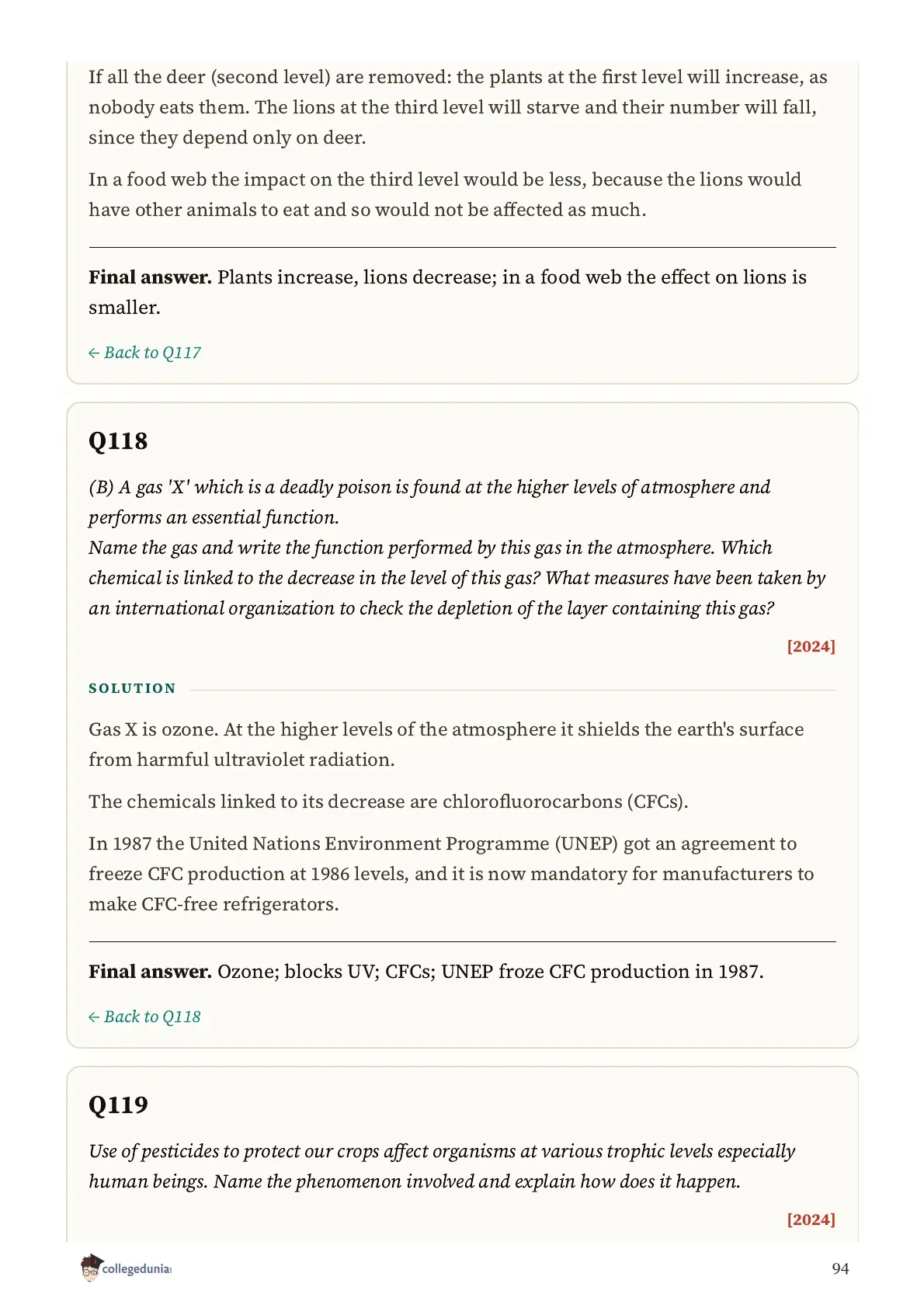
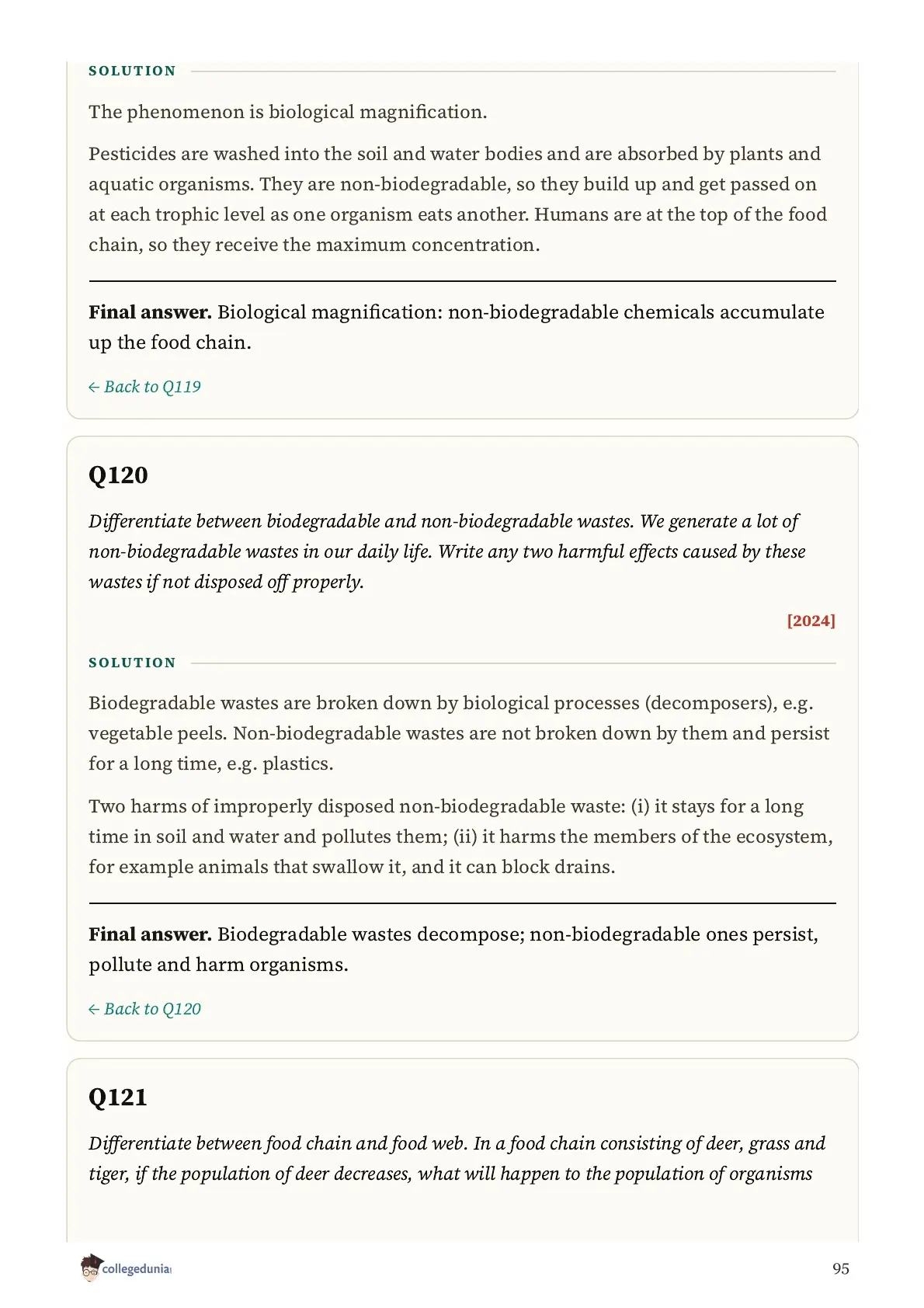
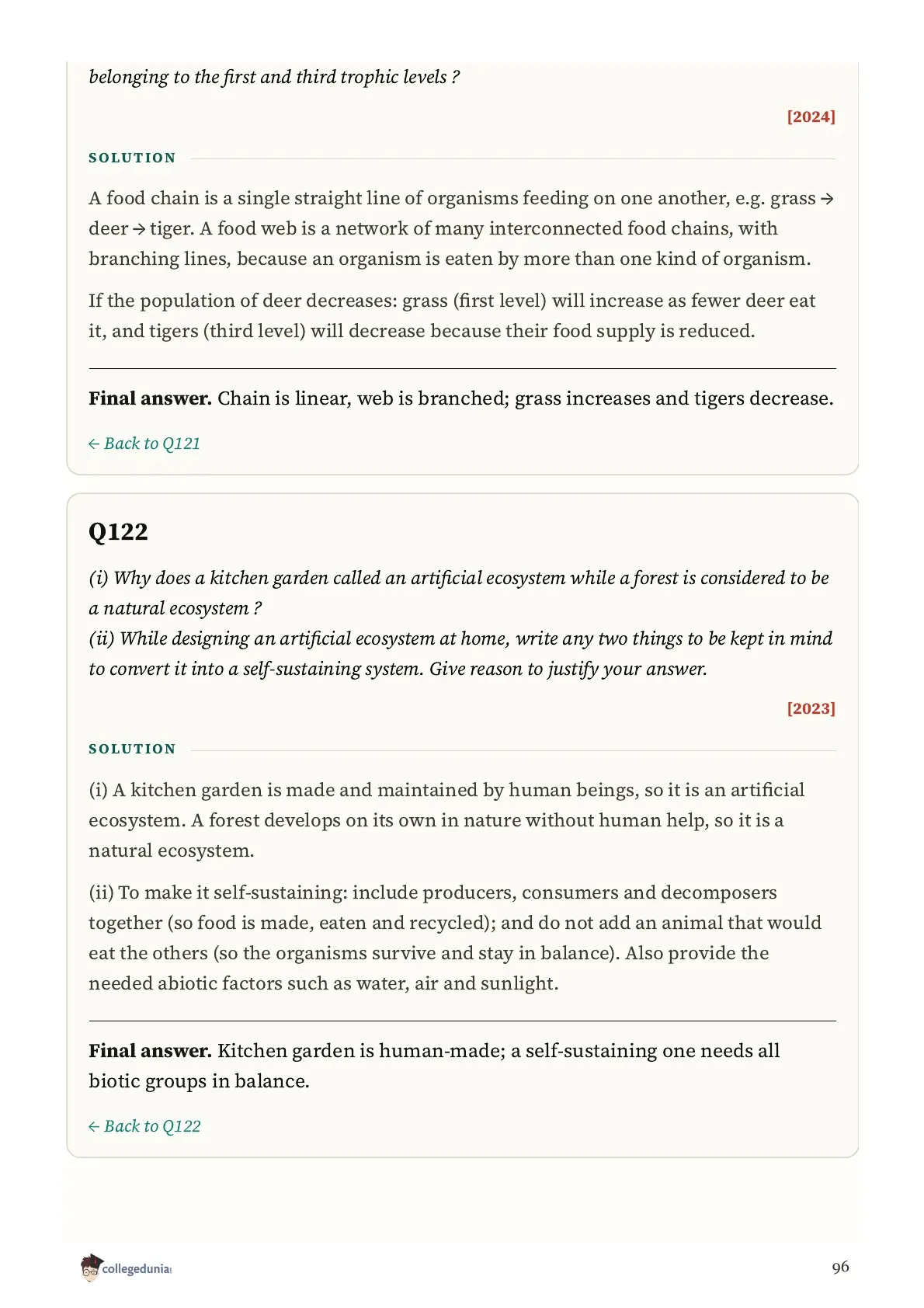
Class 10 Science Our Environment PYQ, free to download as a 119-page PDF with 163 solved board questions from the 2008 to 2026 papers. Our Environment is Chapter 13 of the NCERT Class 10 Science book and the only chapter in Unit V, Natural Resources, which prep sites report at 5 of the 80 theory marks.
The questions keep returning to food chains and food webs (49 questions), ozone and CFCs (30), trophic levels (34), biodegradable and non-biodegradable waste (16), biomagnification (13) and the 10% energy law (9 calculations).
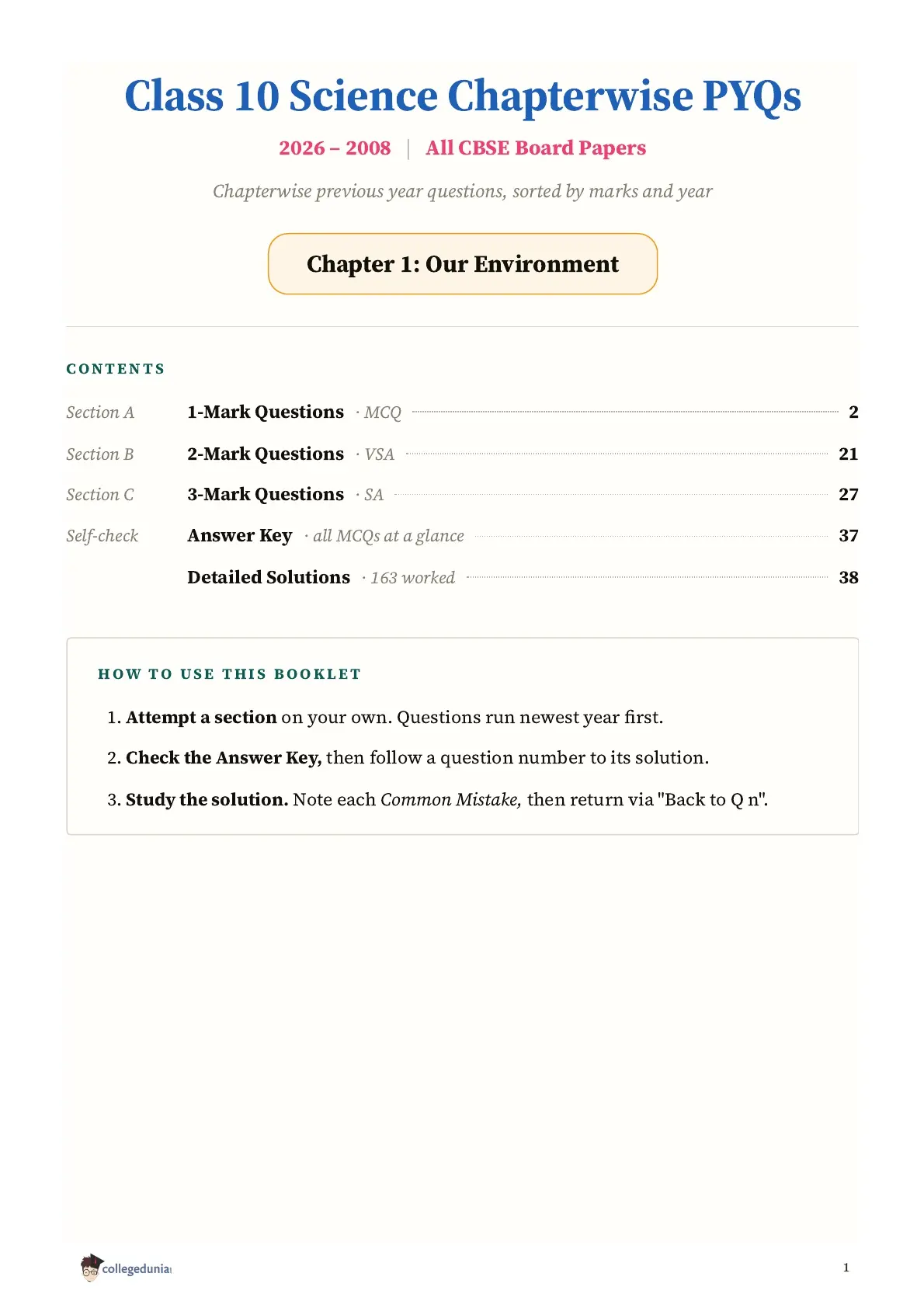
On this page you get:
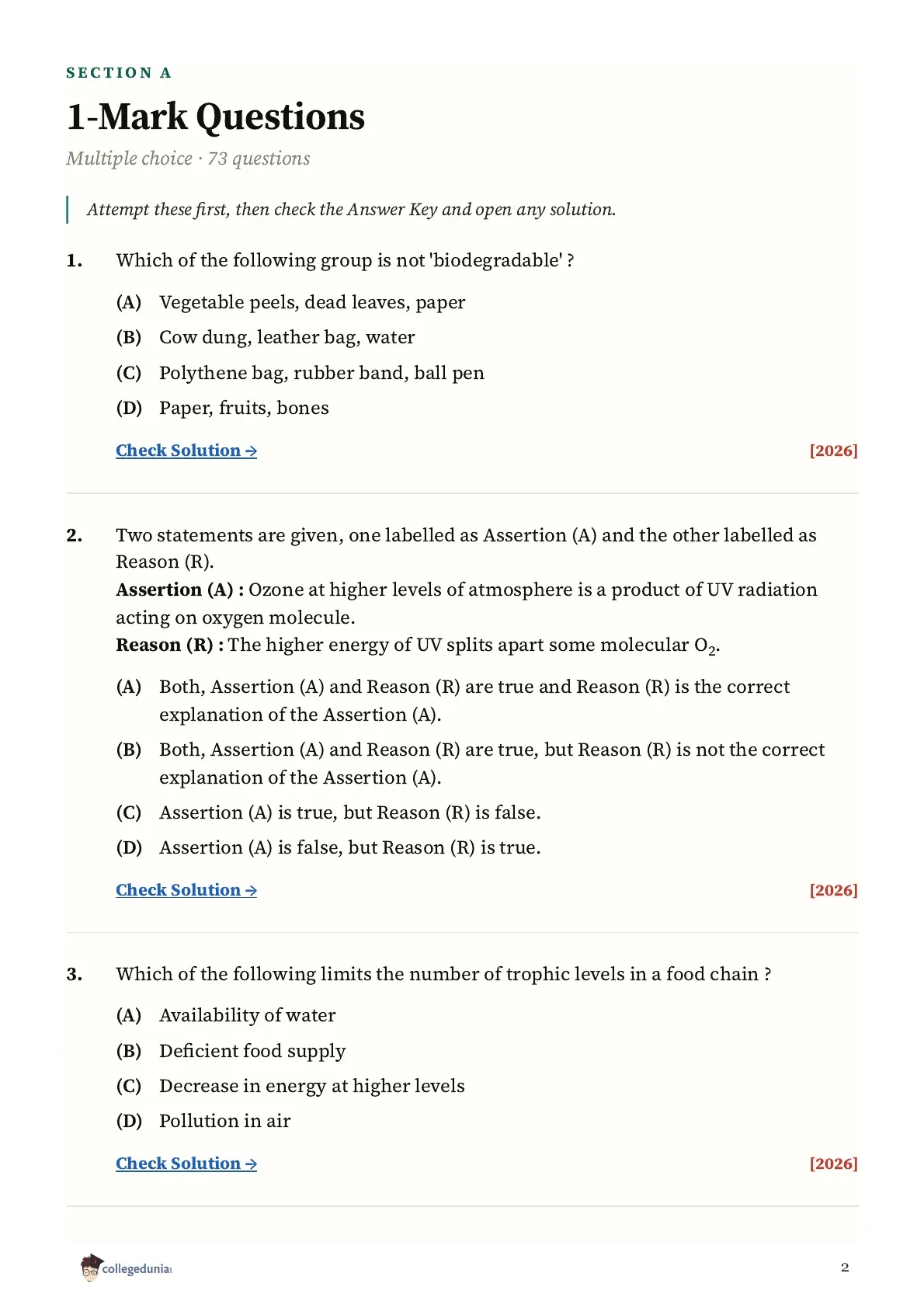
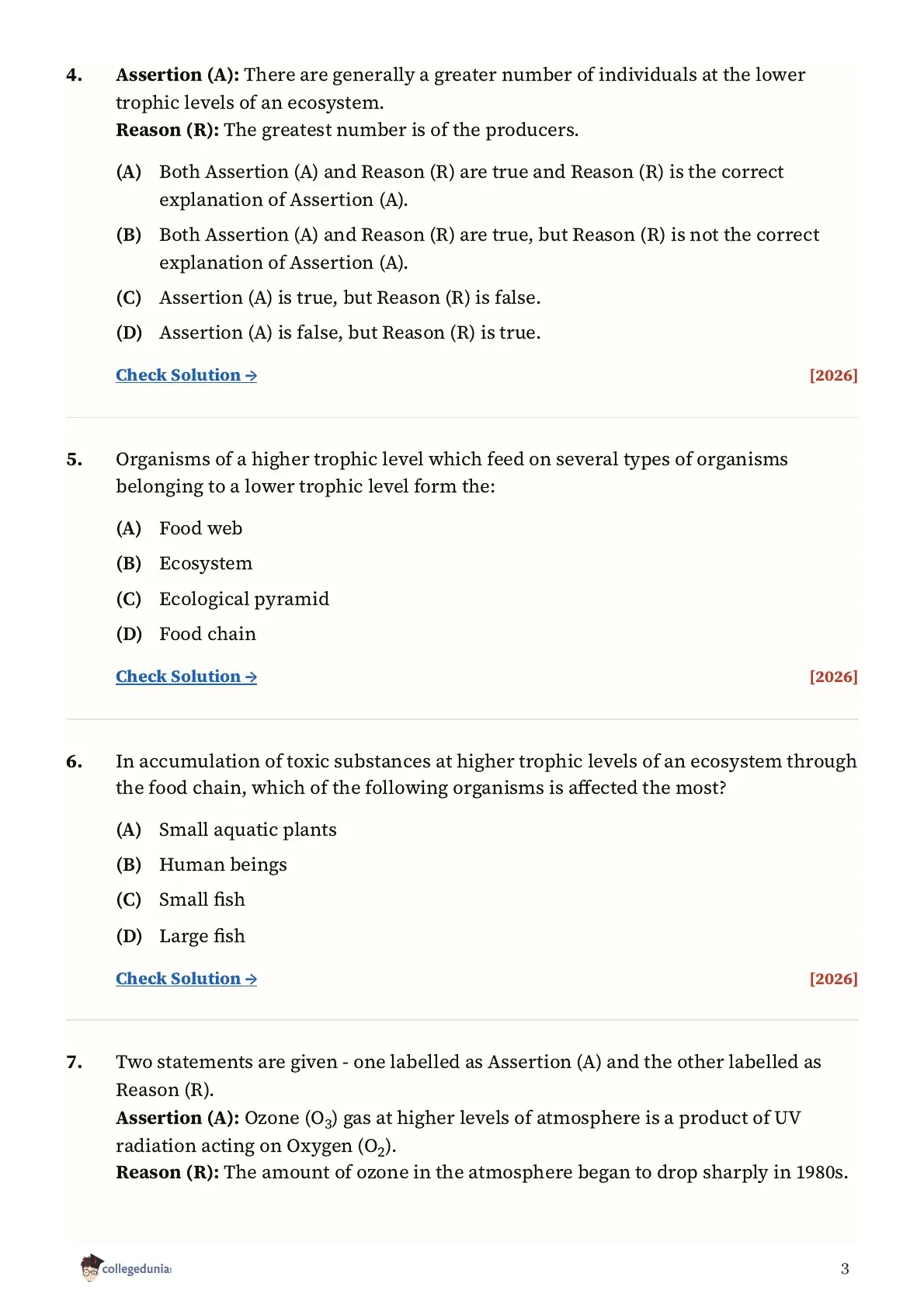
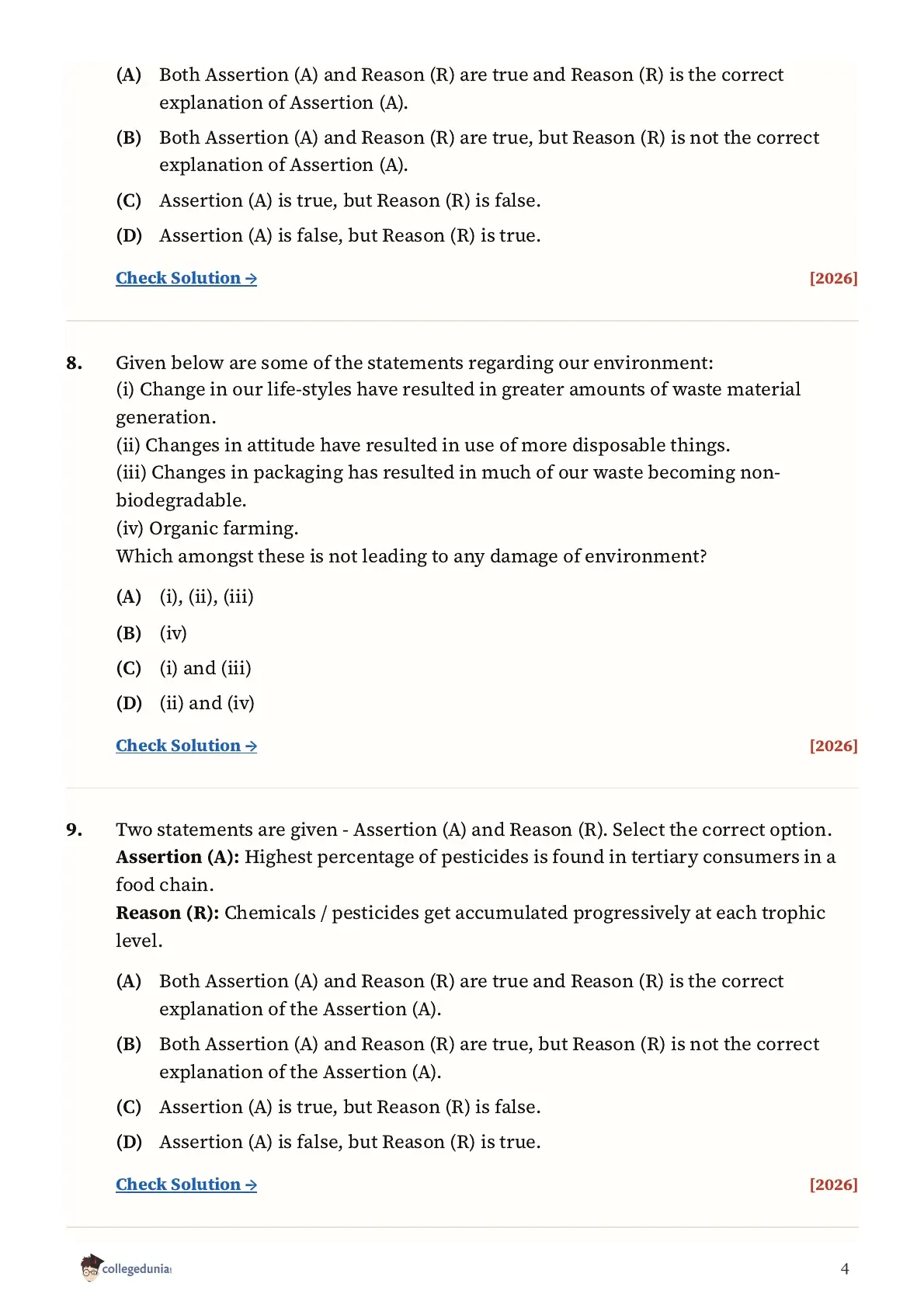
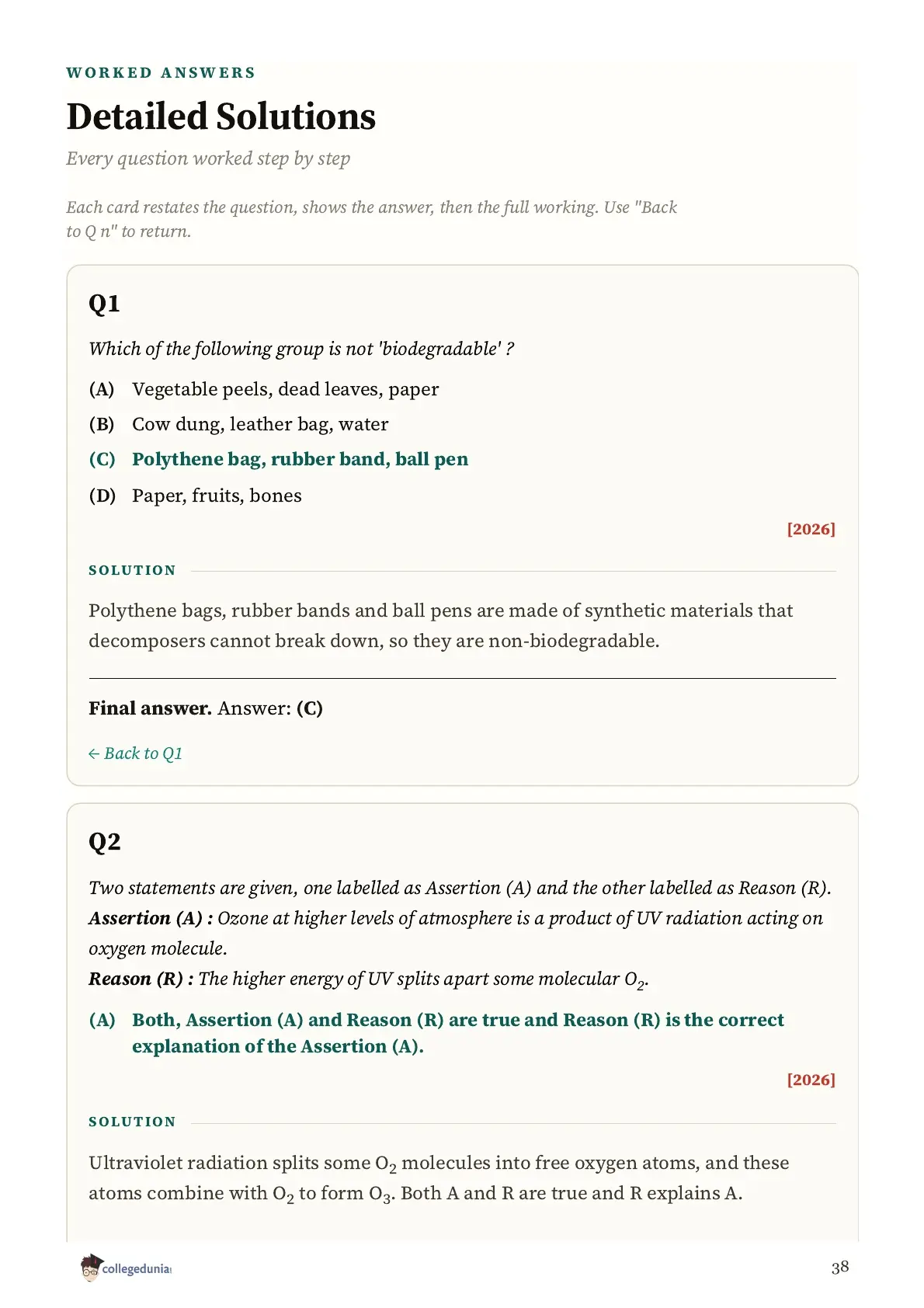
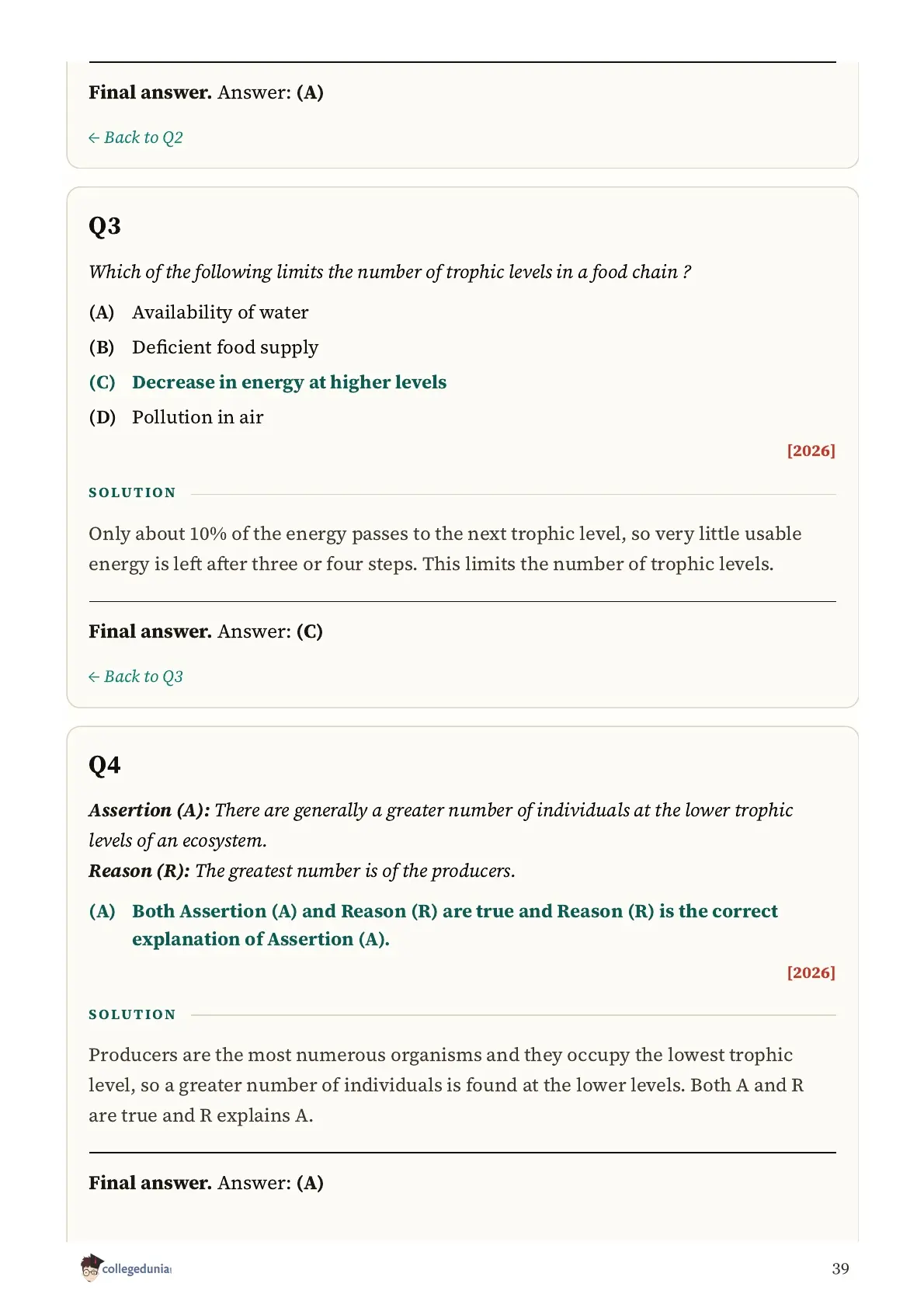
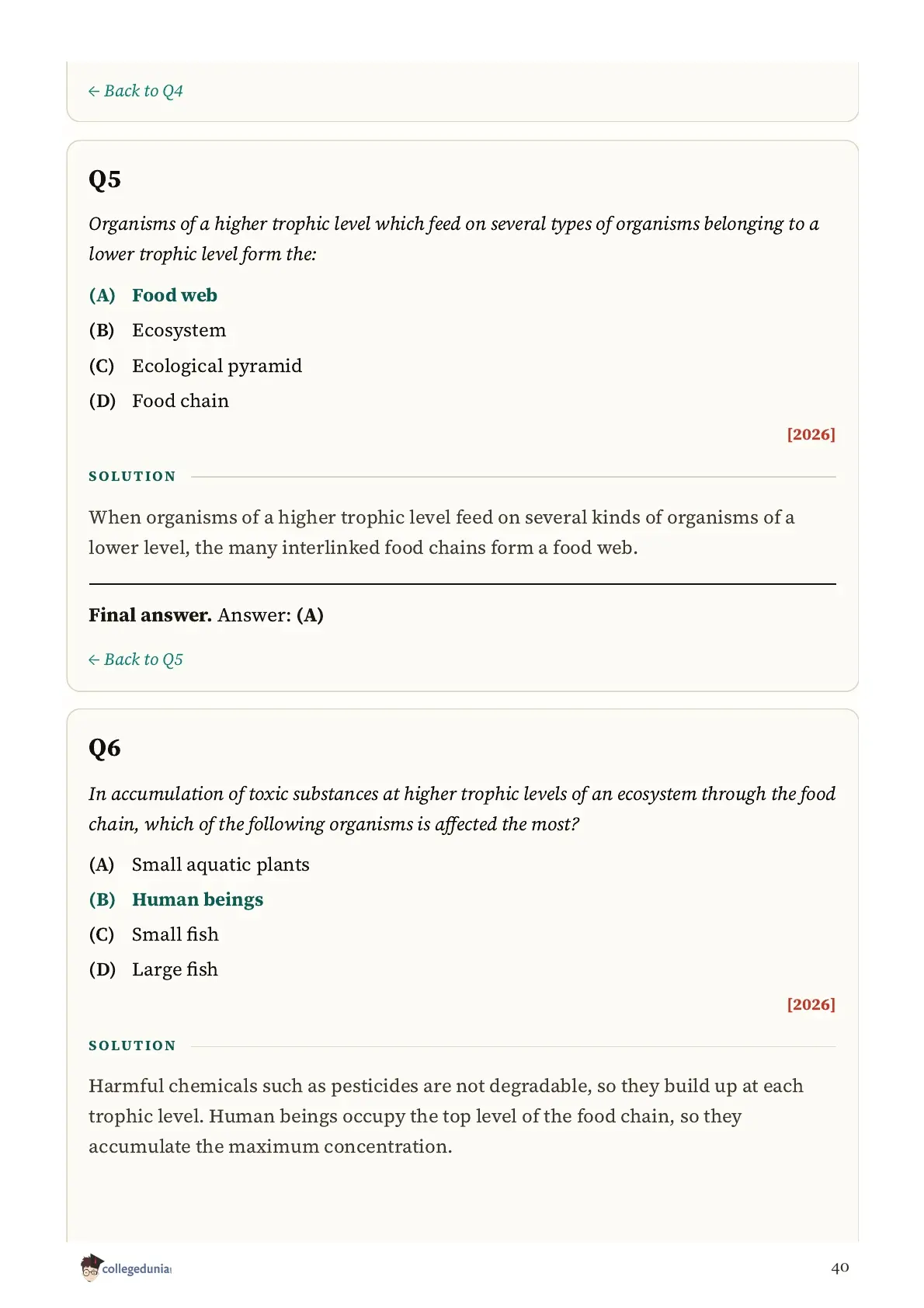
- 163 questions with a worked solution each: 49 MCQs and assertion-reason items, 62 very short and two-mark answers and 52 three-mark answers
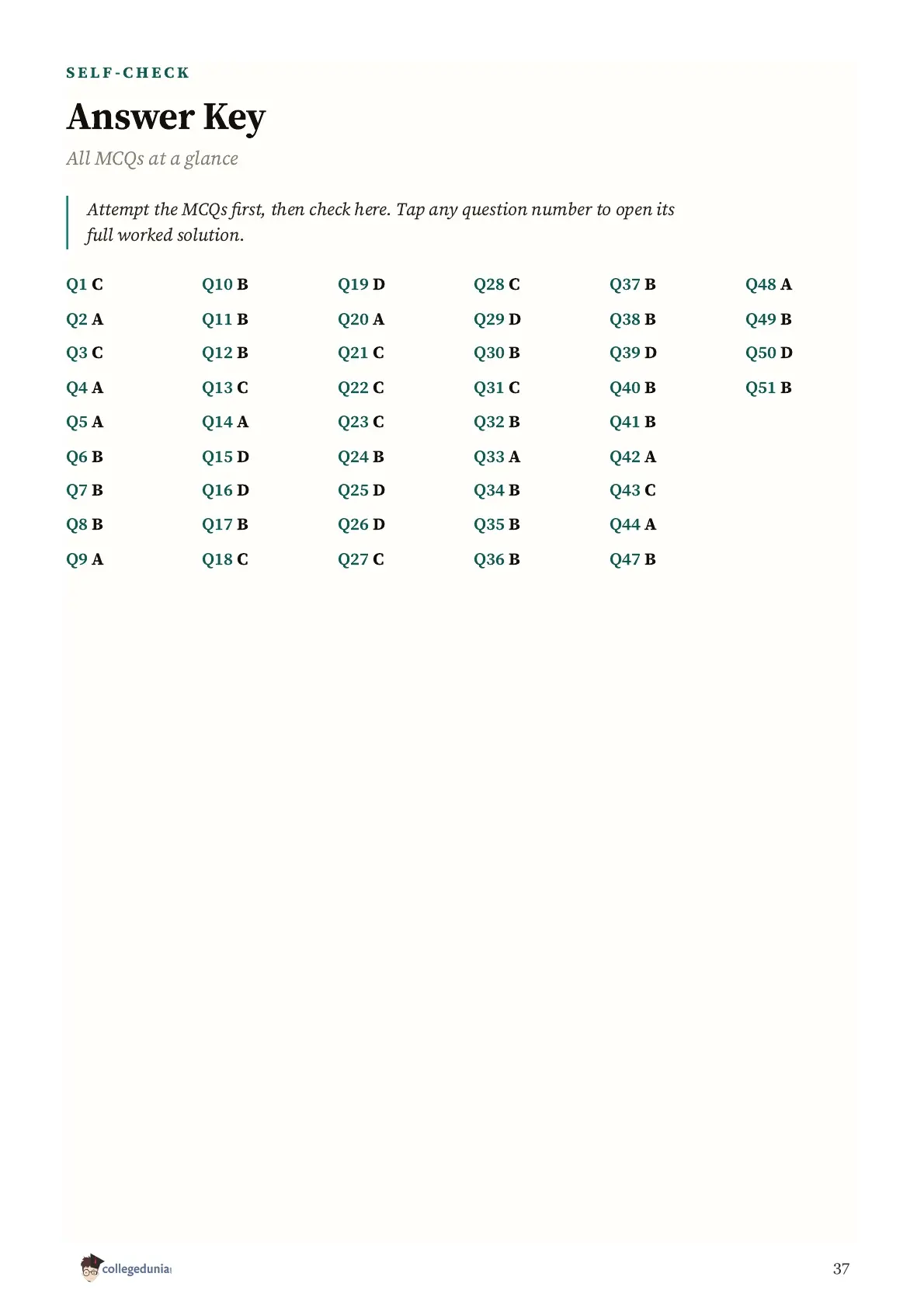
- An Answer Key that lists all 49 MCQs at a glance
- Question counts by topic, so you know whether to start with food chains, ozone or waste
- A marks-wise table of questions (1, 2 and 3 mark)
- The common mistakes students make, such as multiplying the wrong way in an energy question, and a short FAQ
Our Environment Weightage in the Class 10 Science Paper
CBSE does not print a mark figure for Our Environment alone. In the Class 10 Science (086) syllabus, Unit V, Natural Resources, holds this one chapter and is reported at 5 of the 80 theory marks, the smallest unit in the paper. Prep sites give that figure and one lists 4, and we could not confirm it on a CBSE document, so treat it as unofficial and check cbseacademic.nic.in. Within the set, 2025 and 2026 alone contribute 26 and 23 questions, and 2023 adds 21. The table shows how many questions the set holds at each mark value.
| Marks per Question | Questions in the Set |
|---|---|
| 1 mark | 73 |
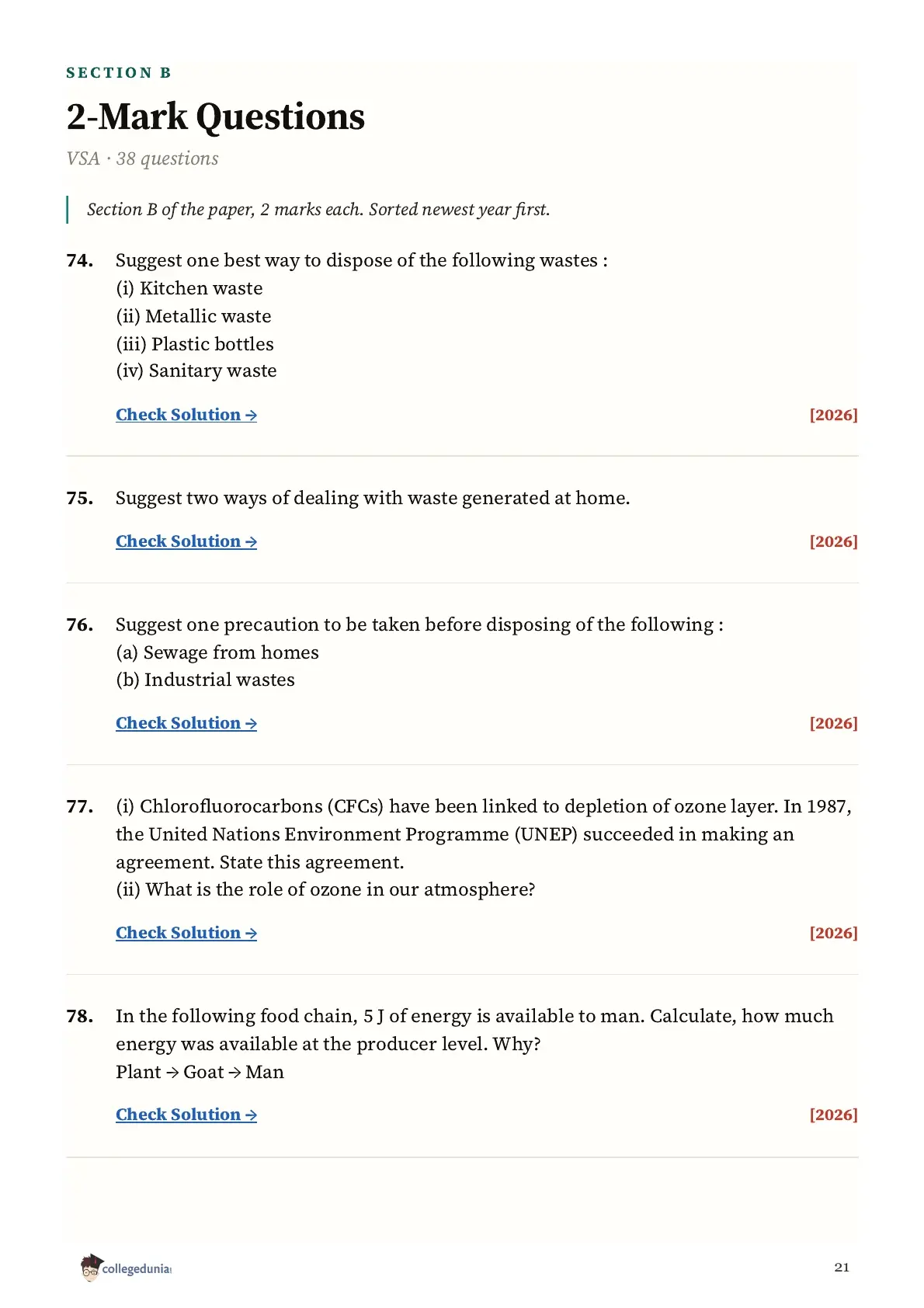
| 2 marks | 38 |
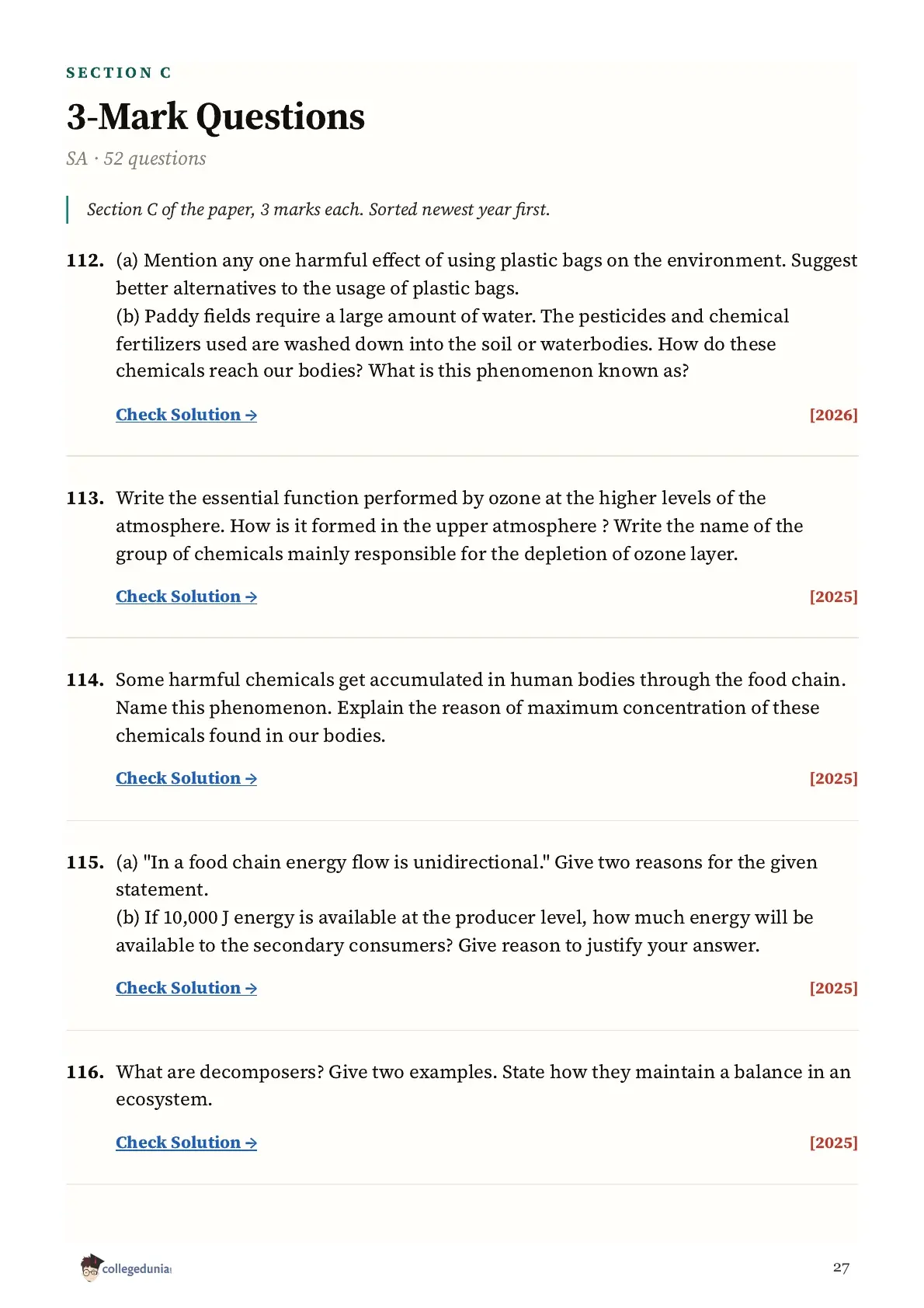
| 3 marks | 52 |
Our Environment Questions by Topic
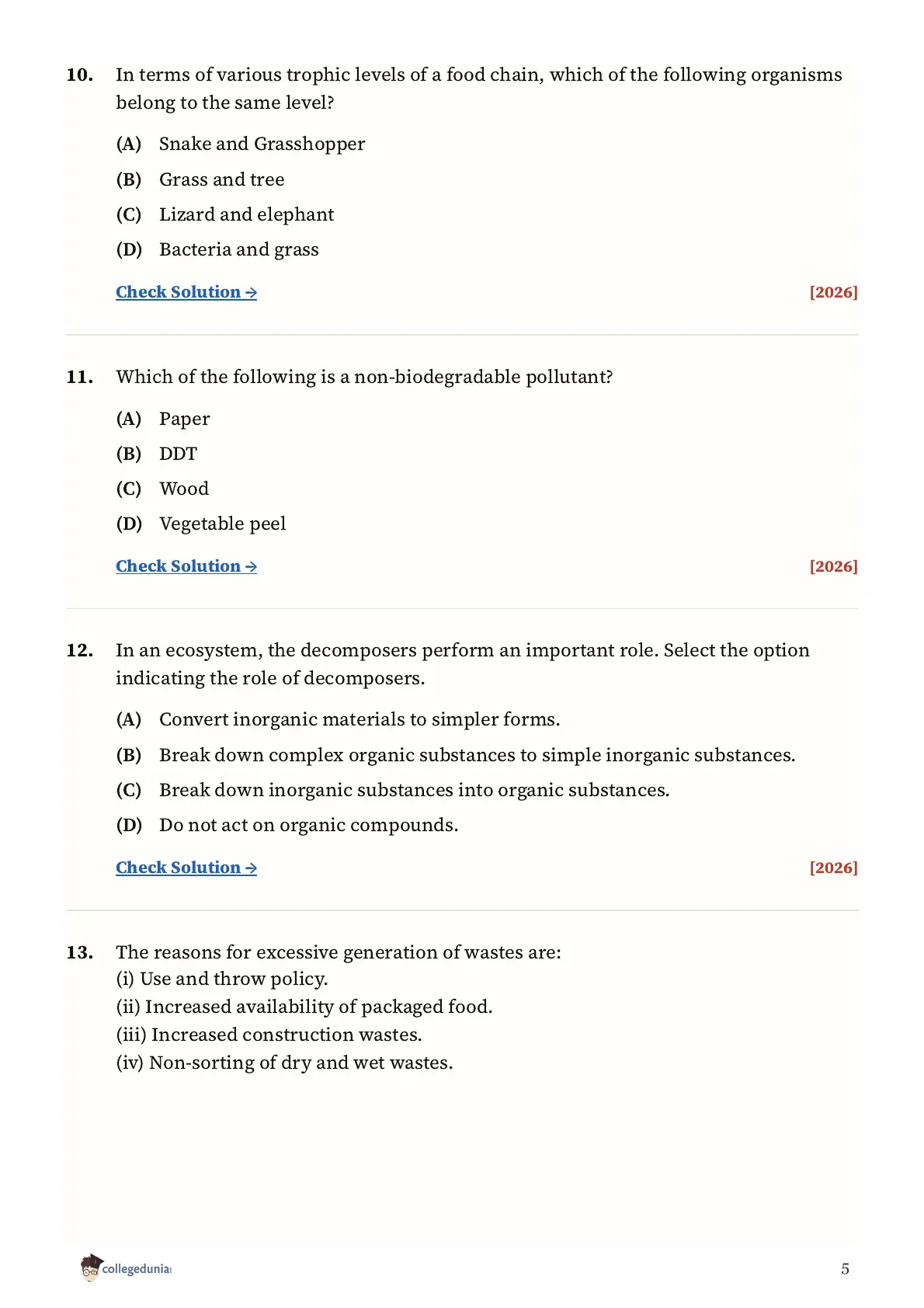
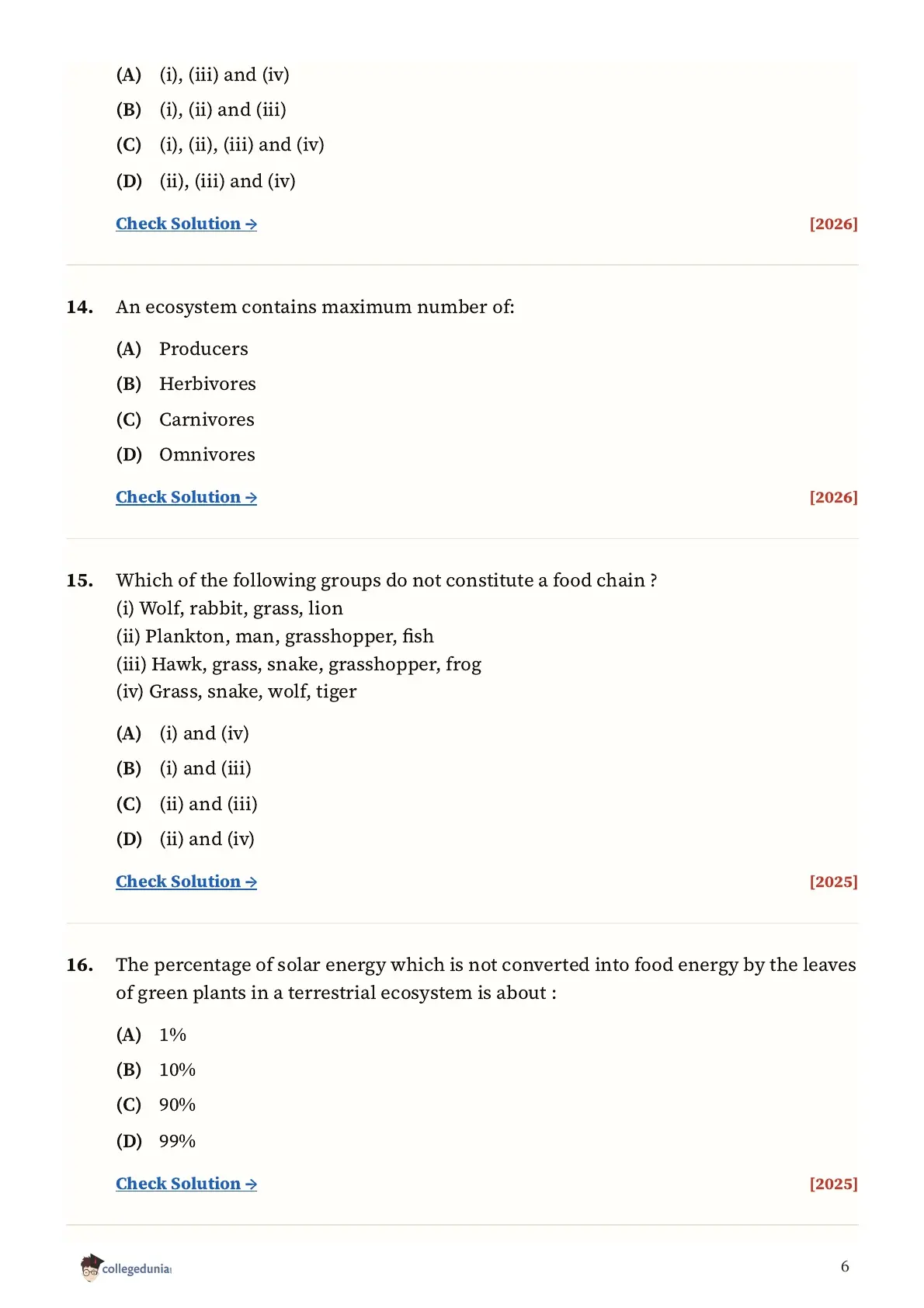
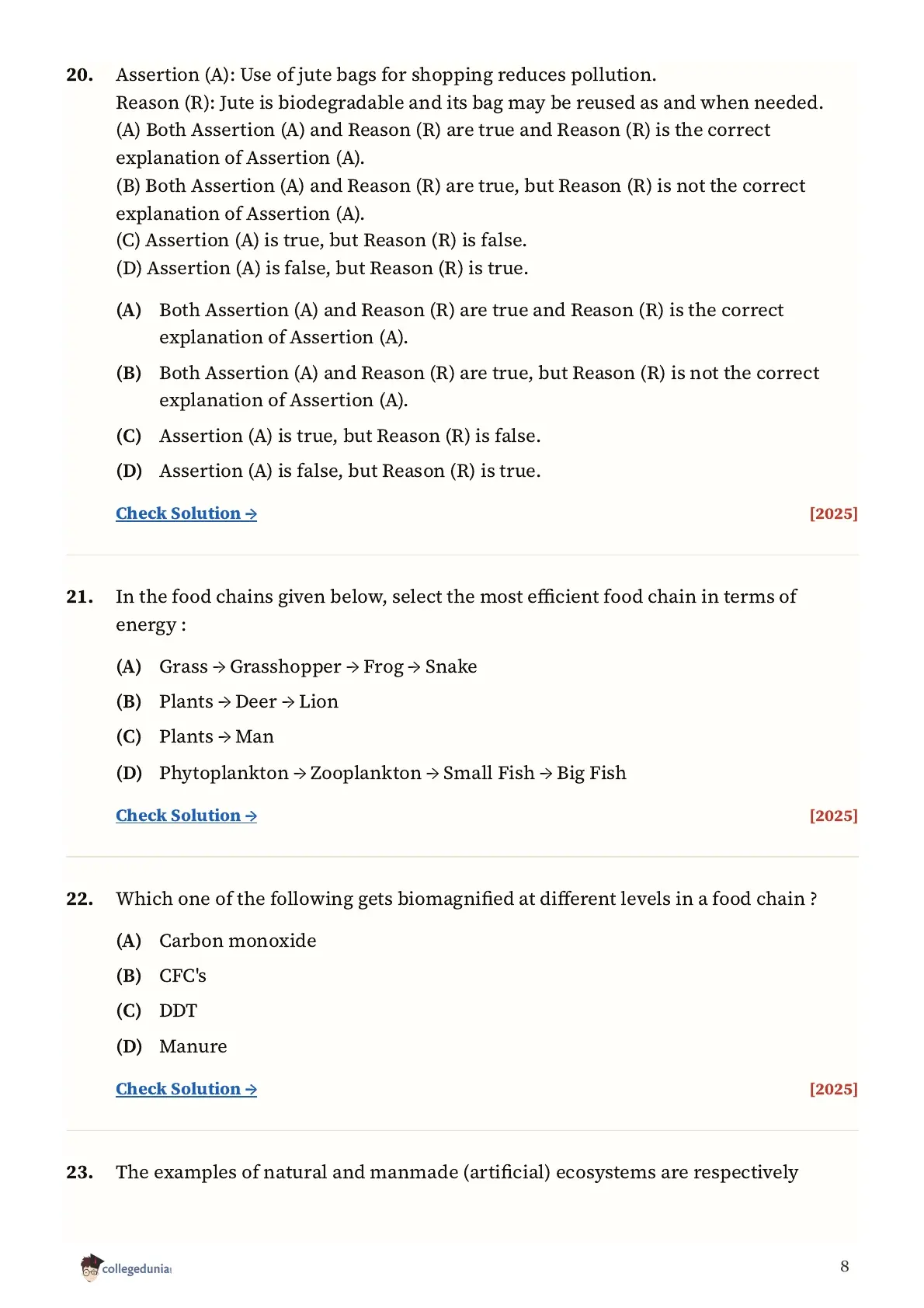
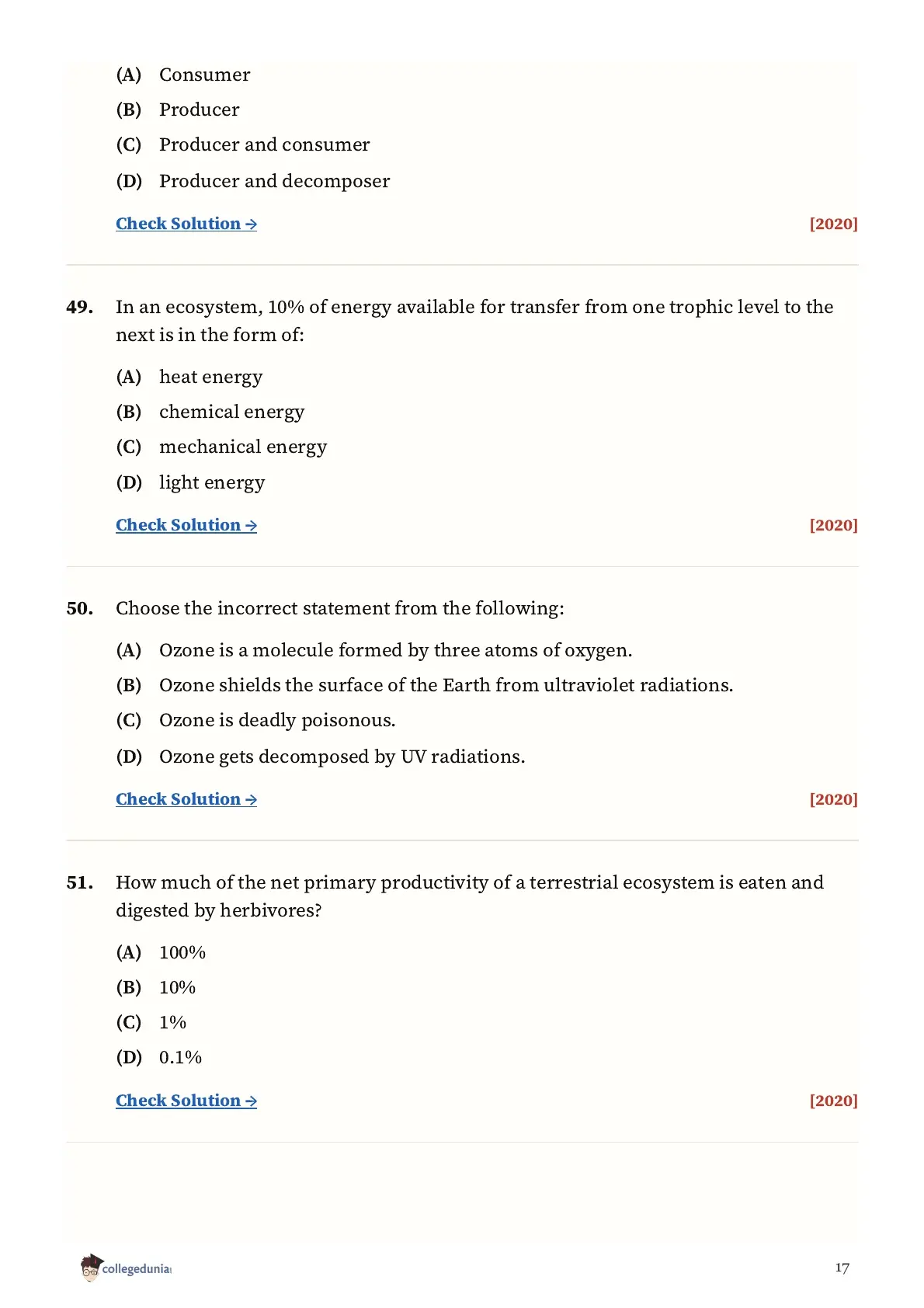
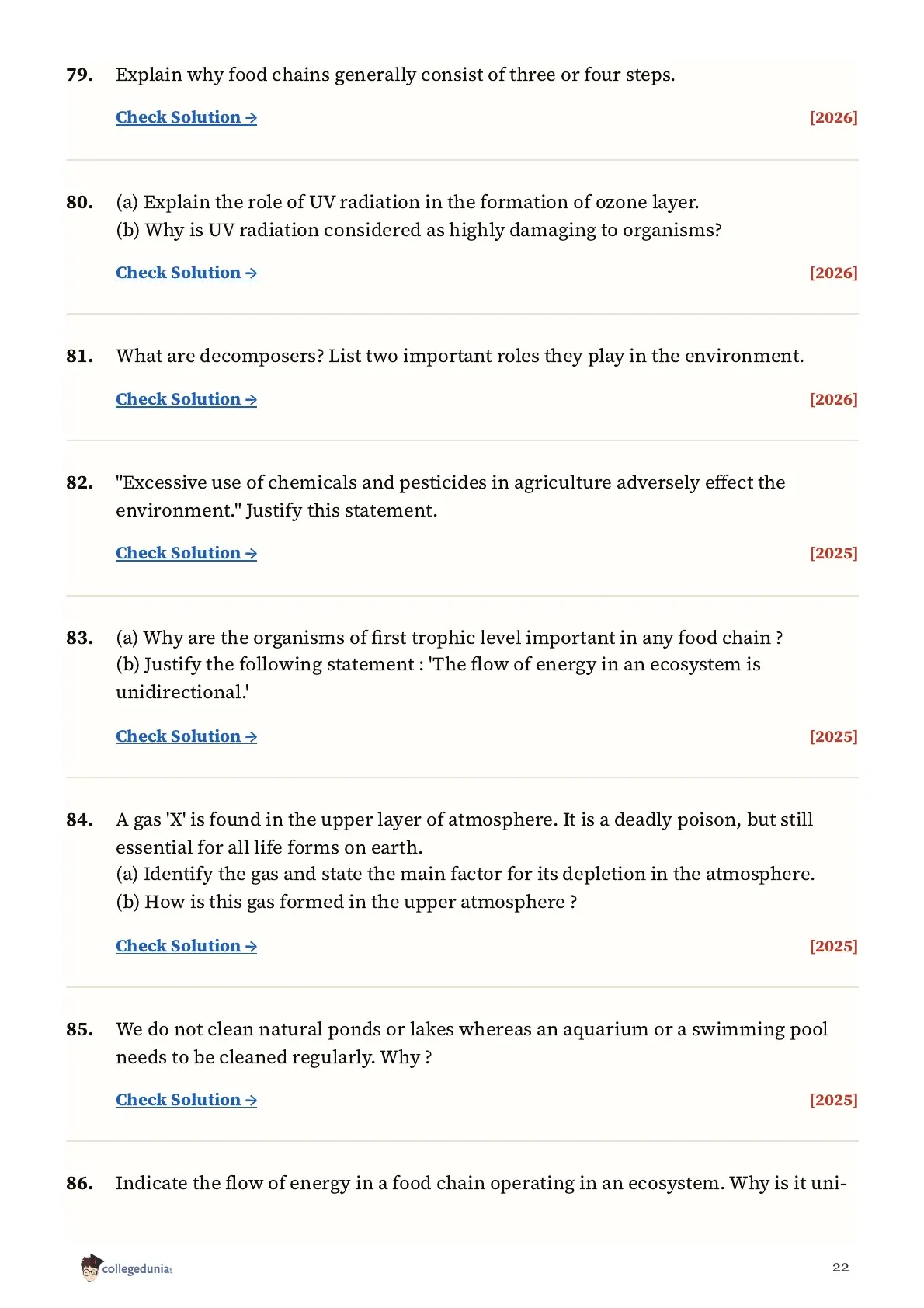
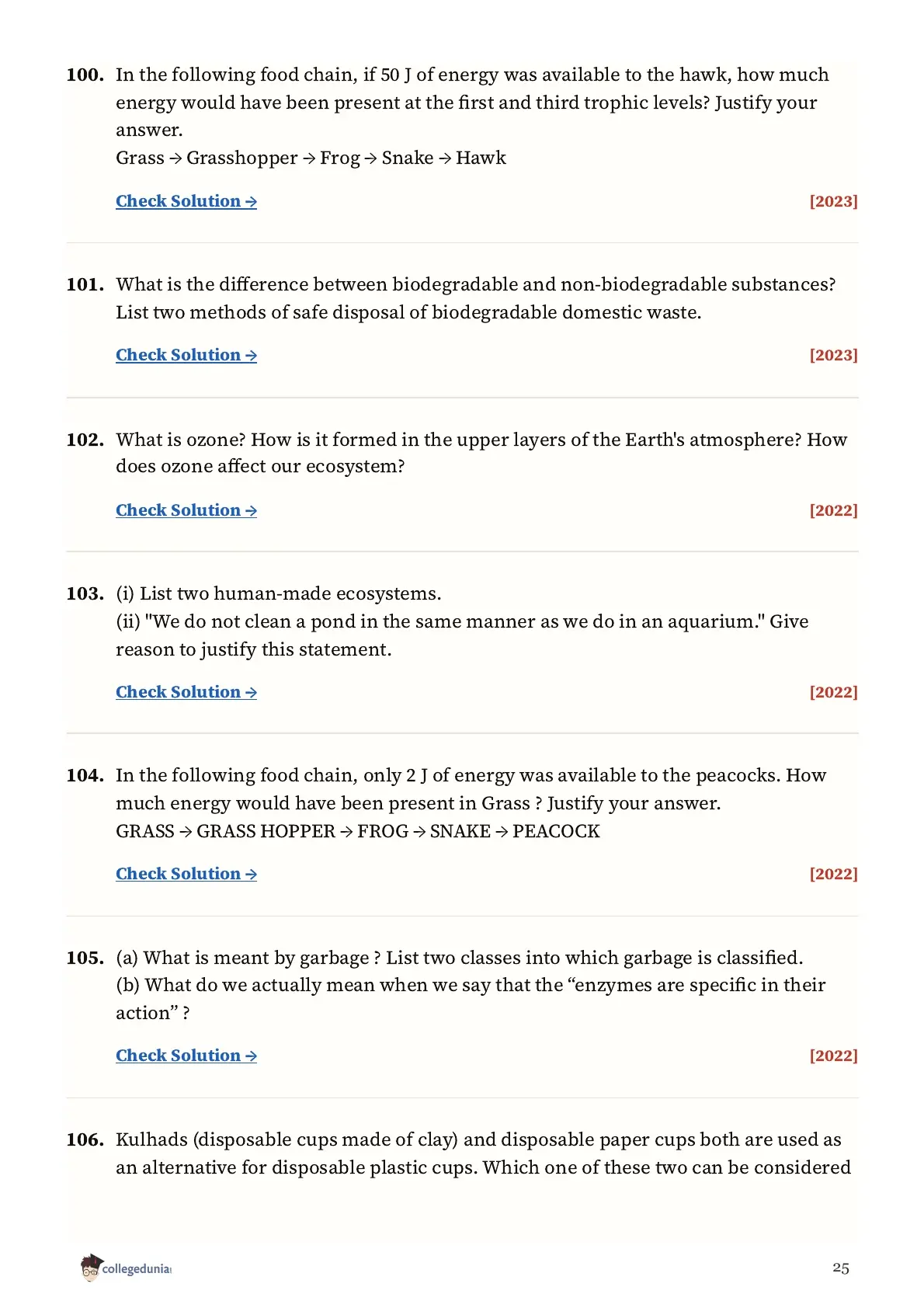
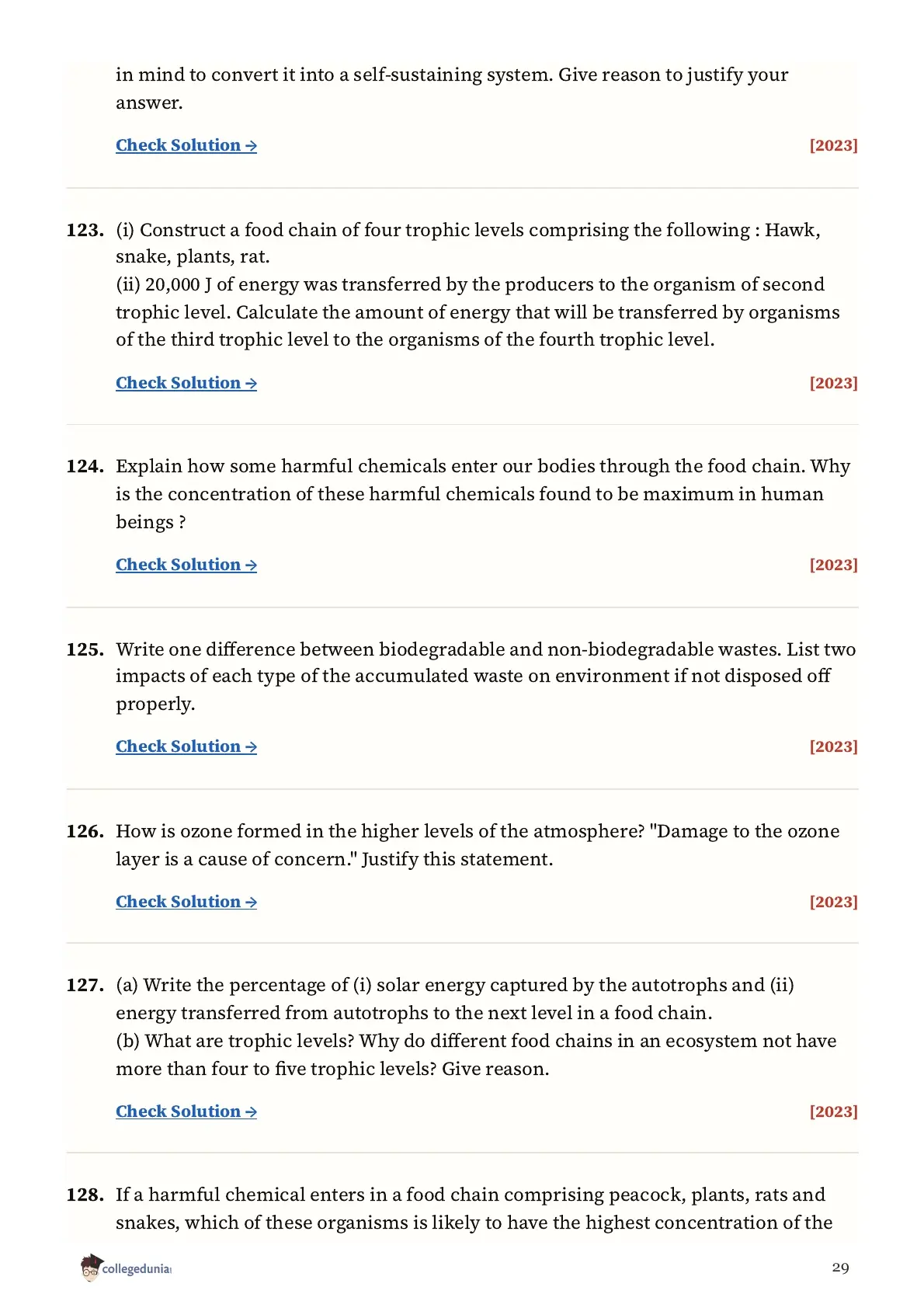
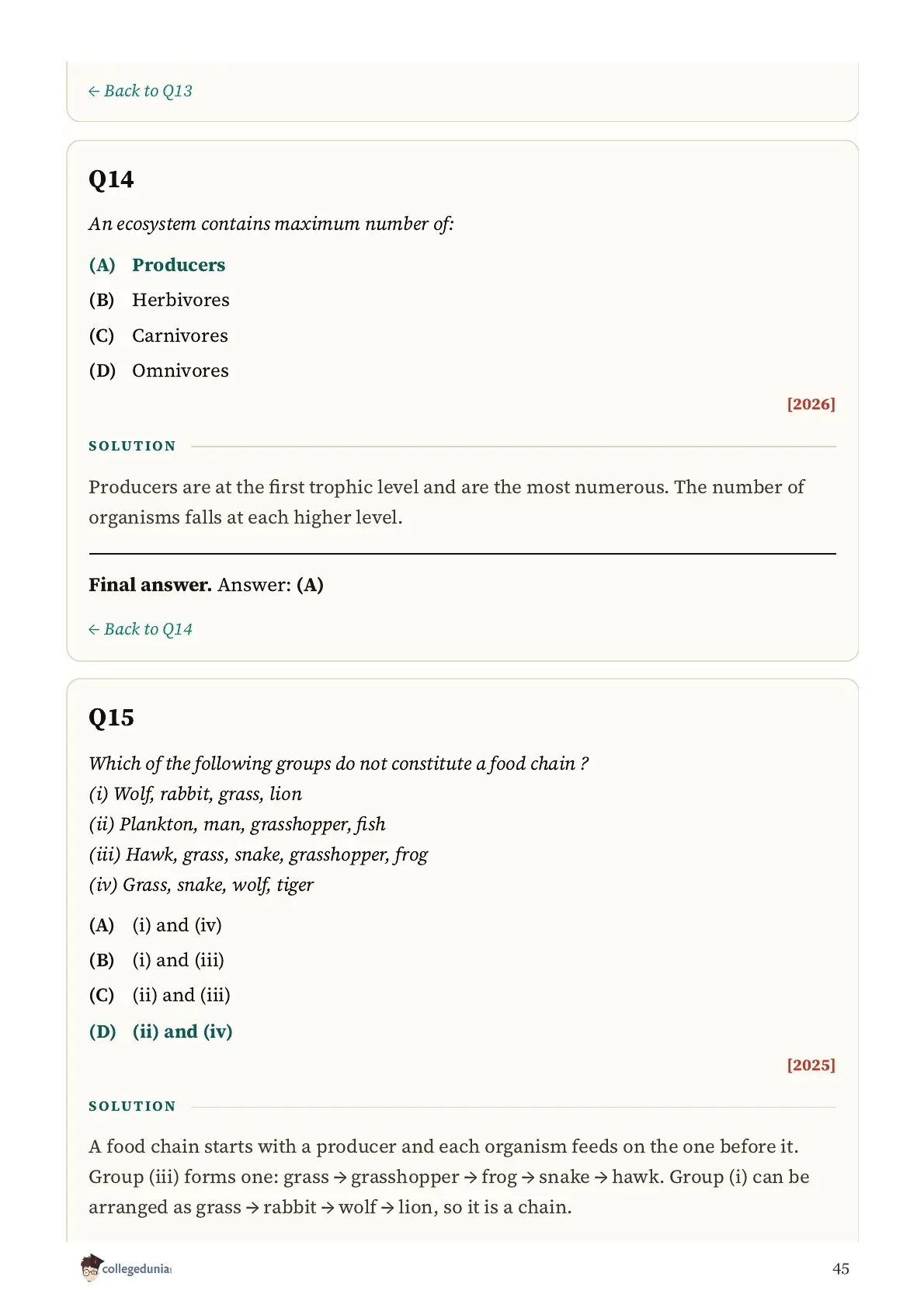
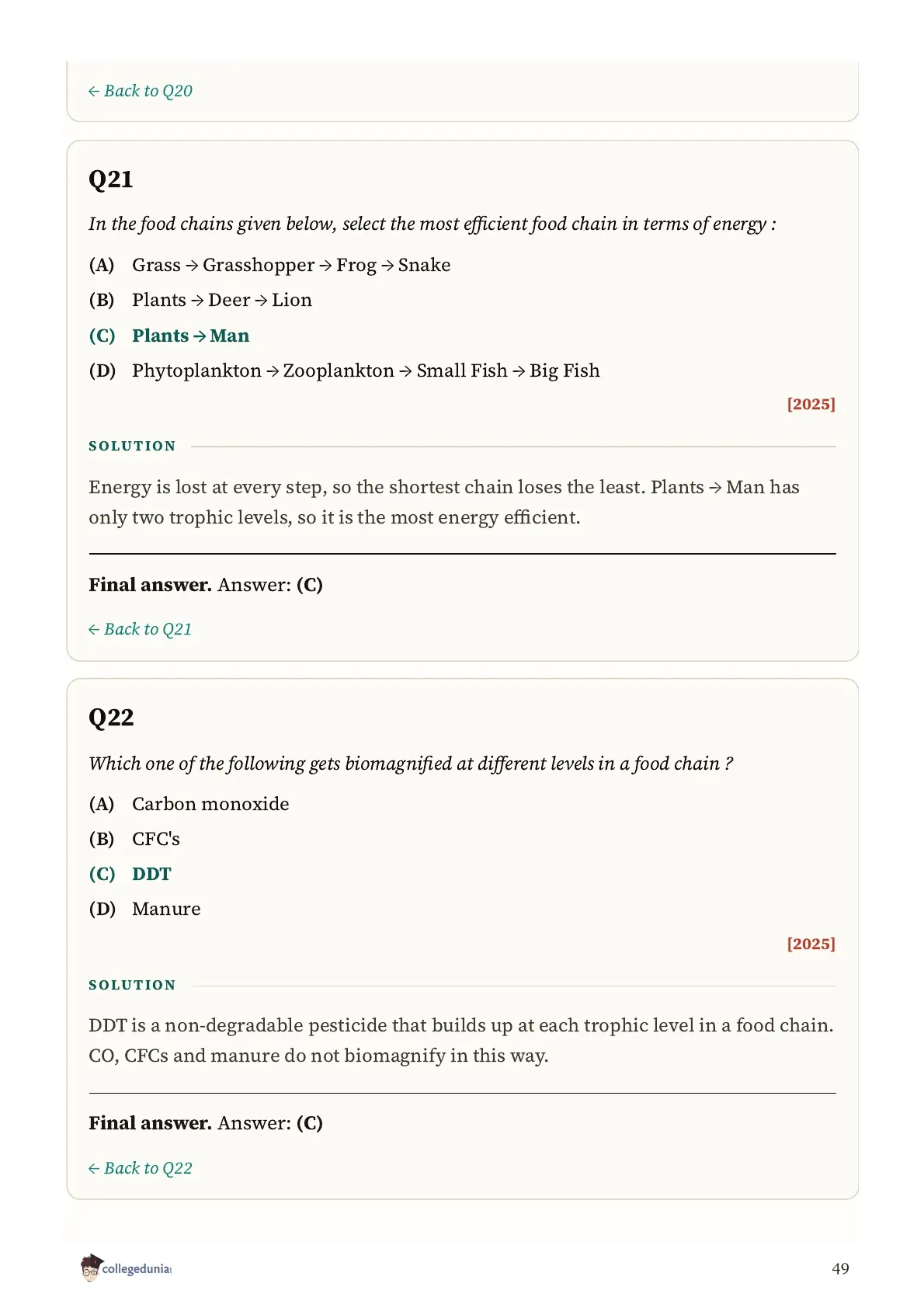
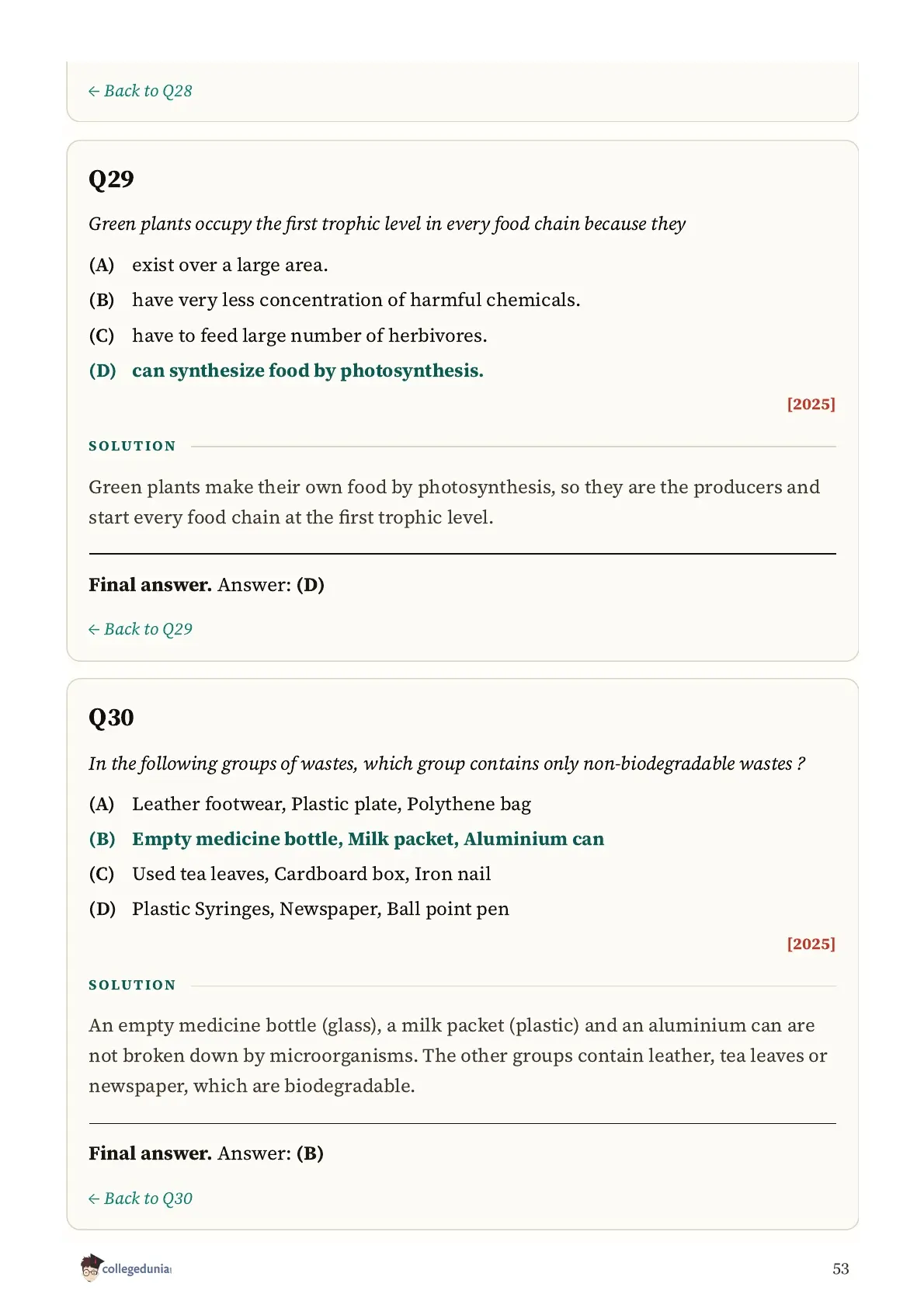
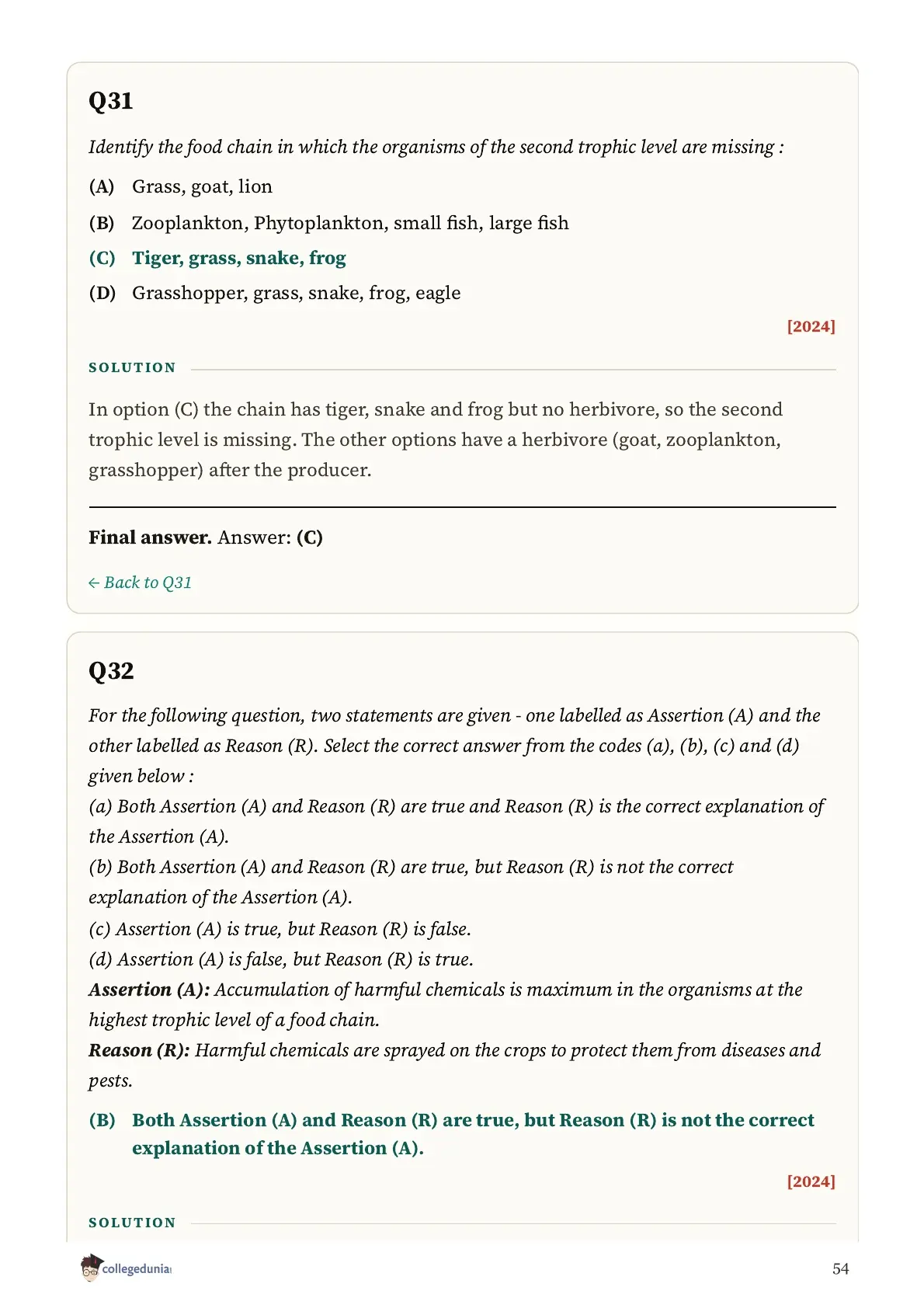
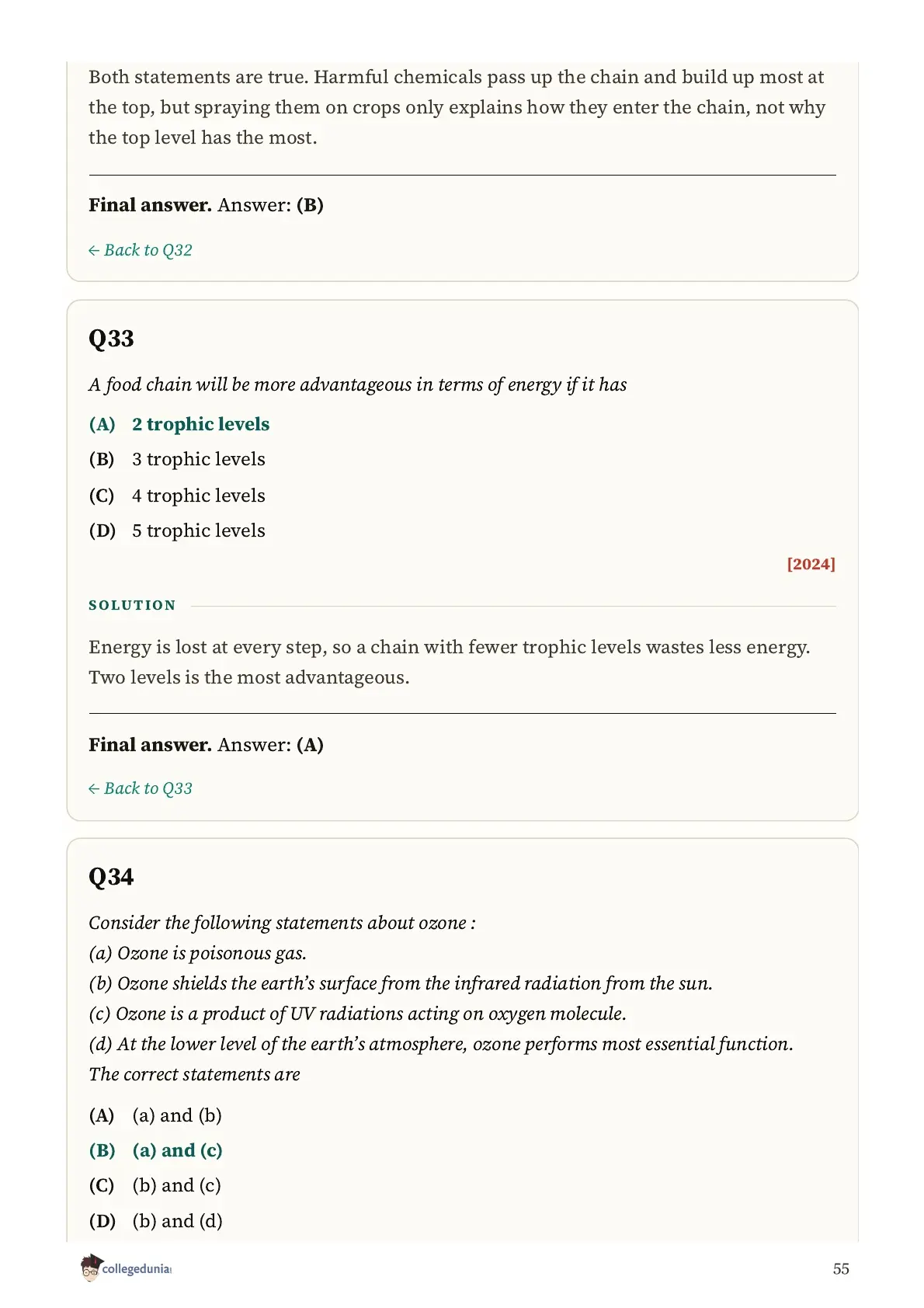
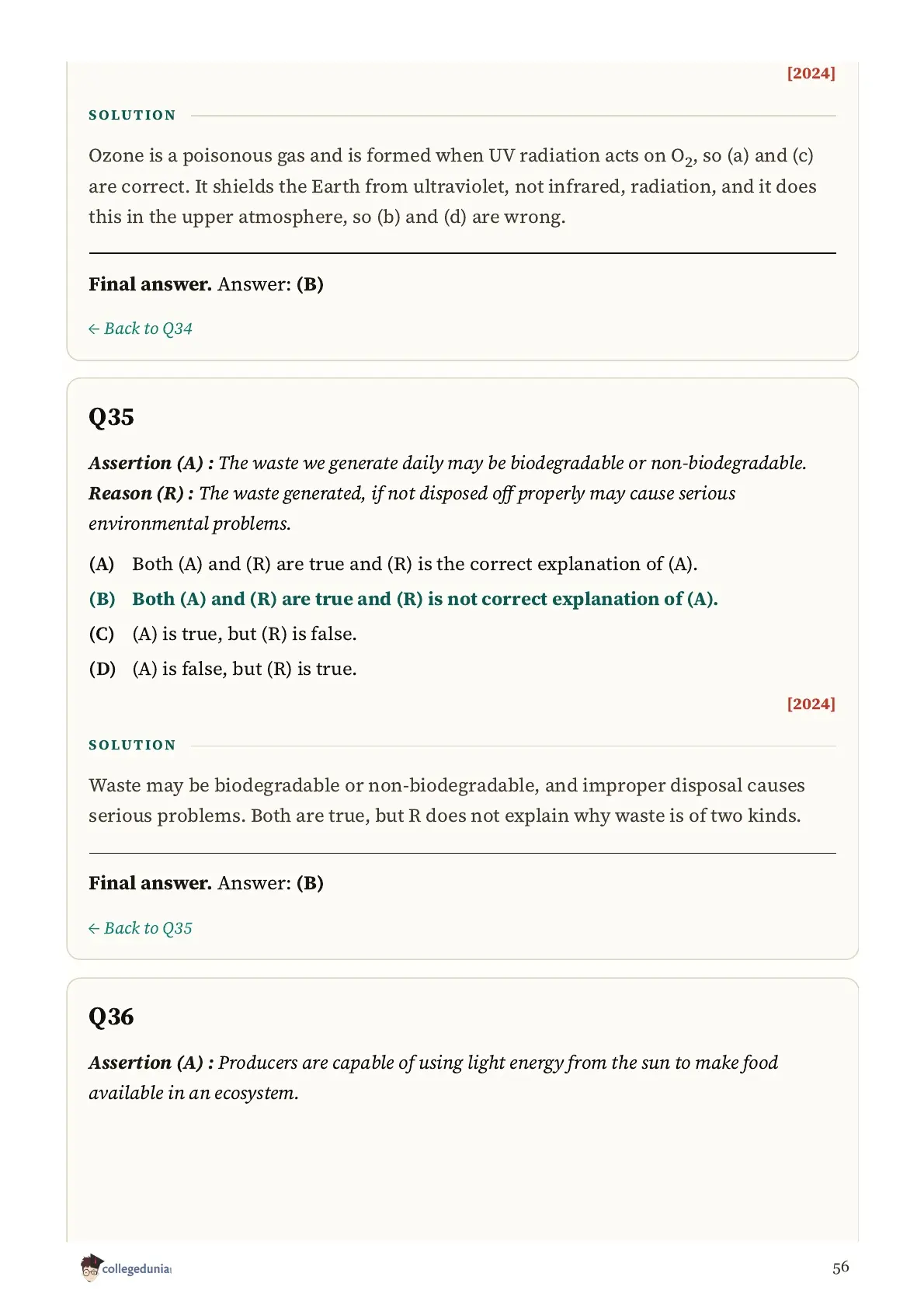
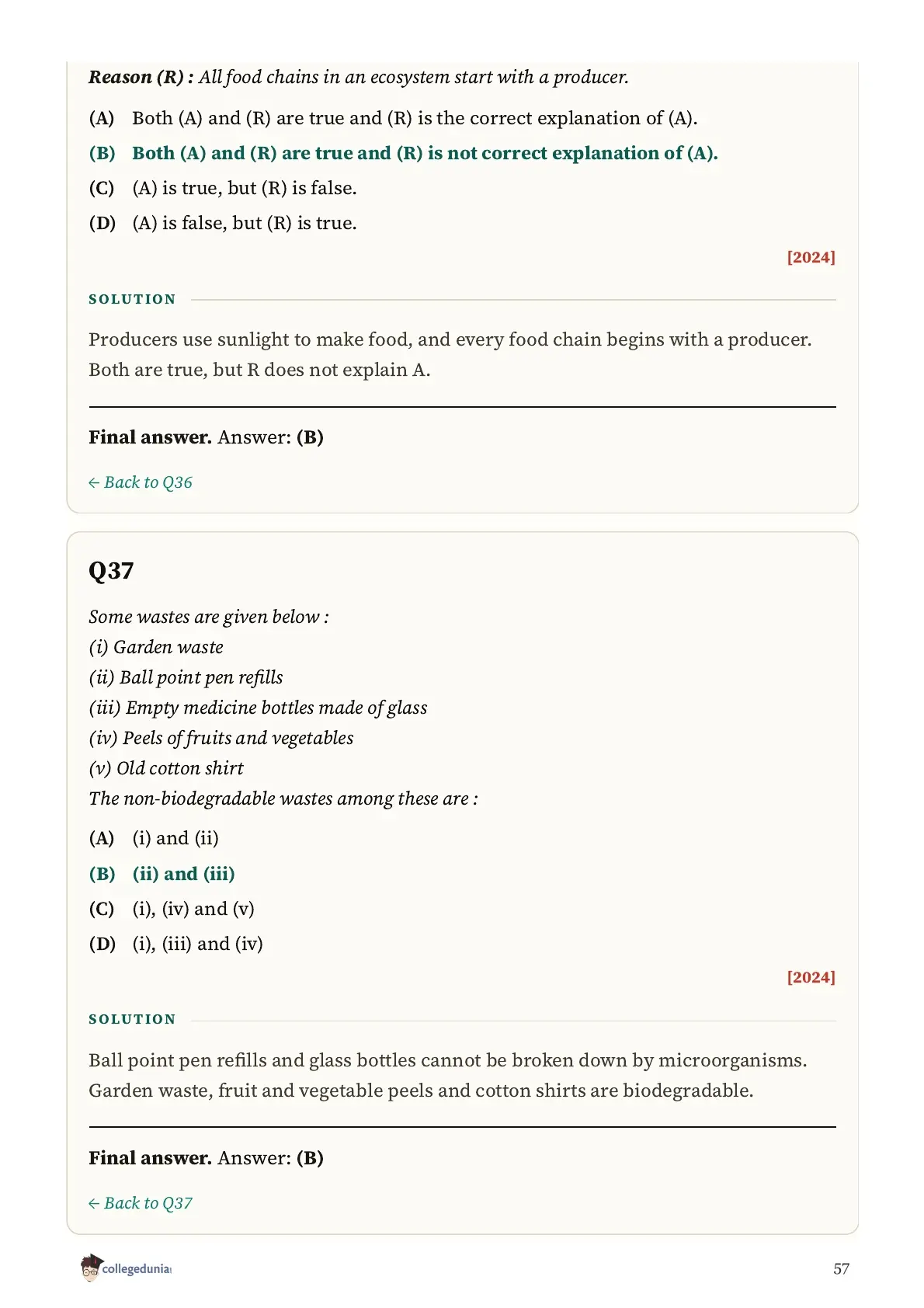
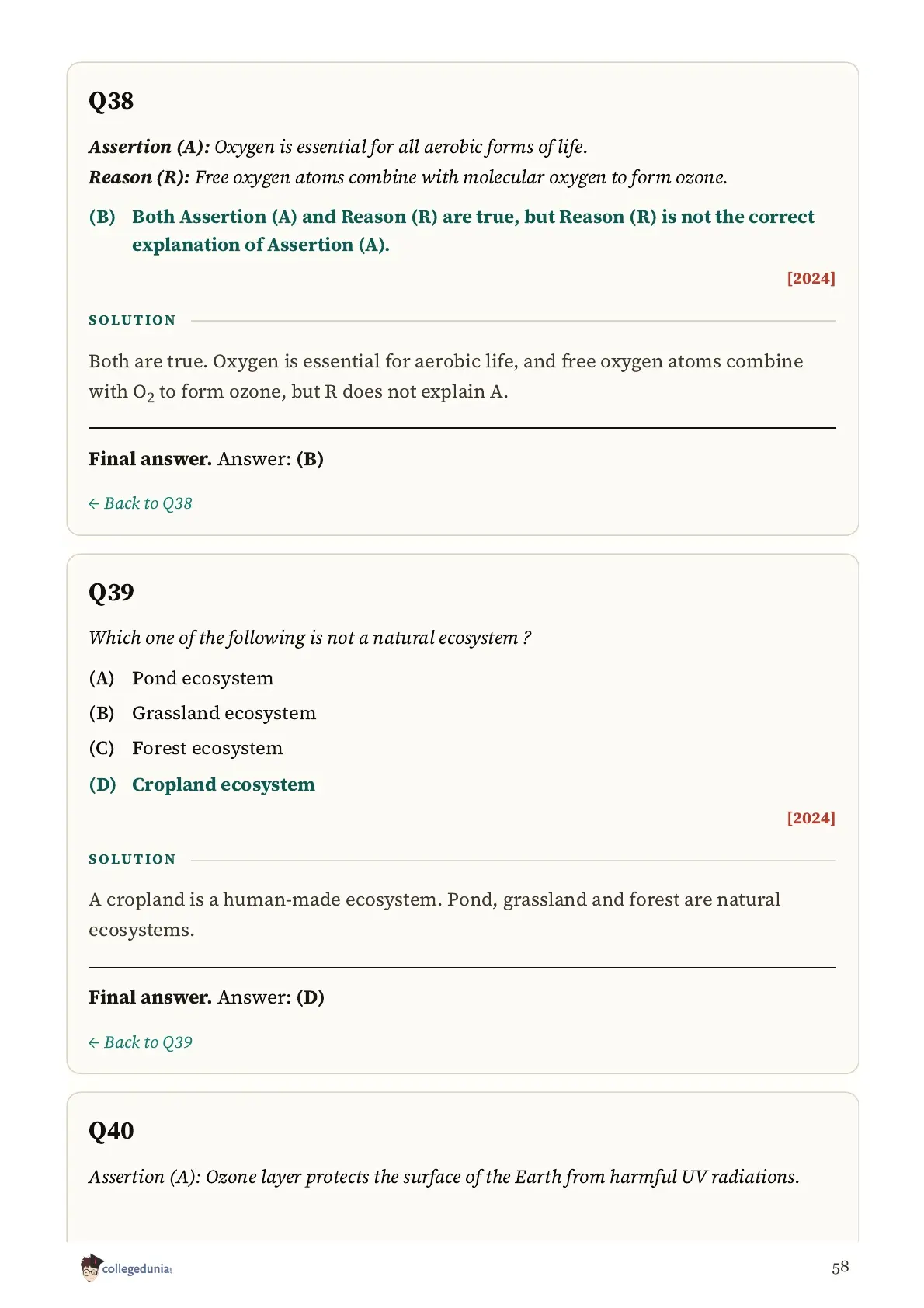
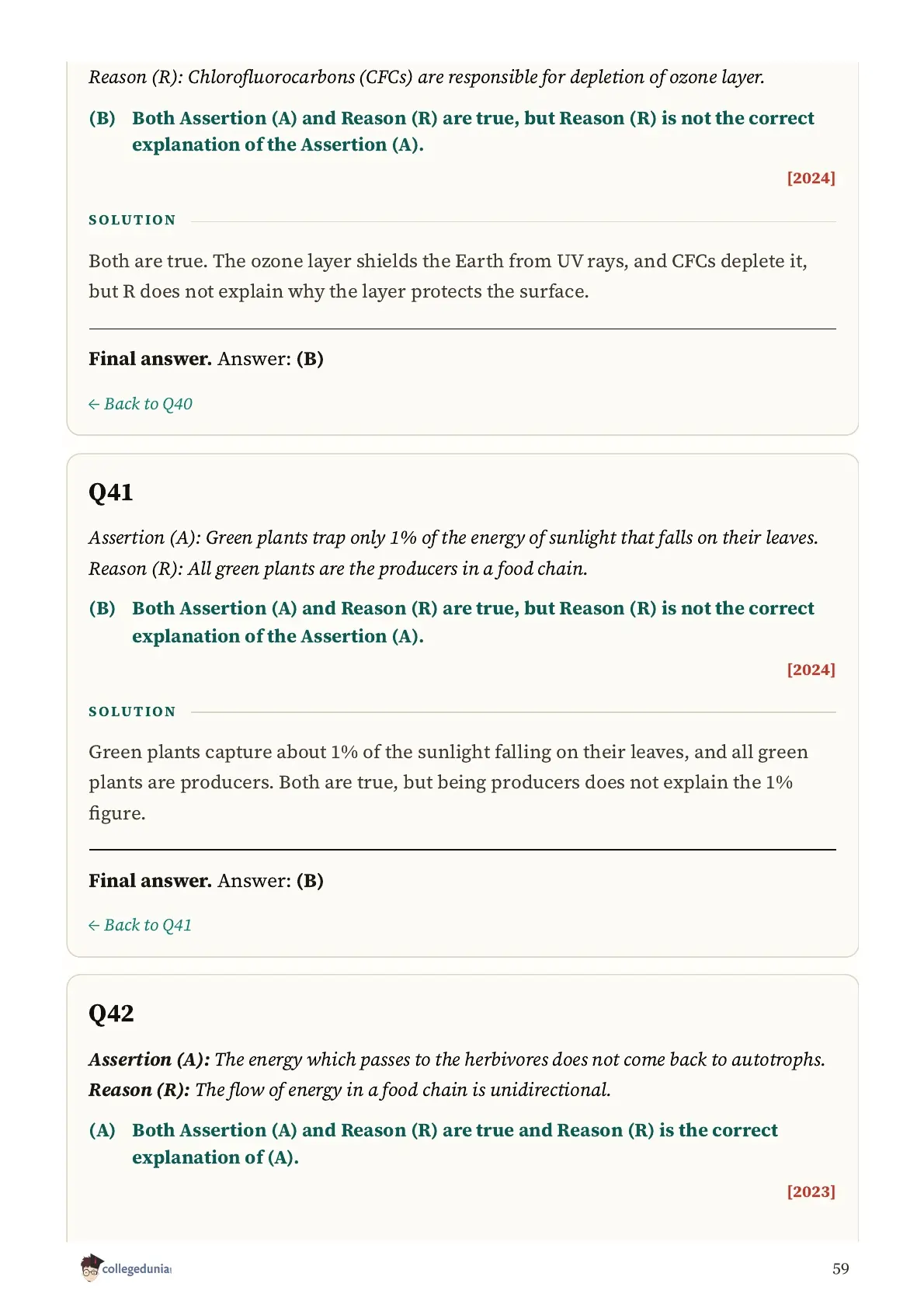
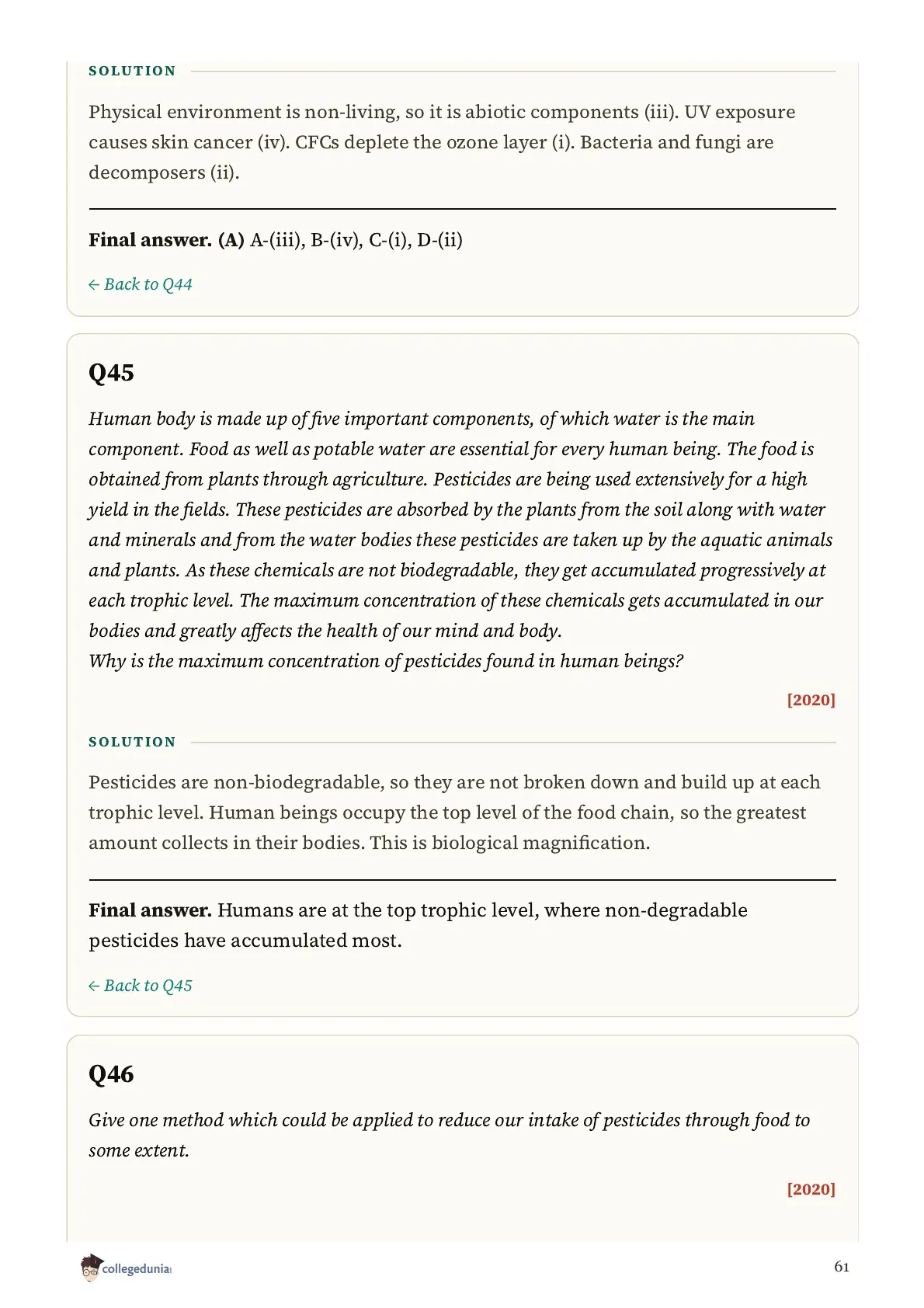
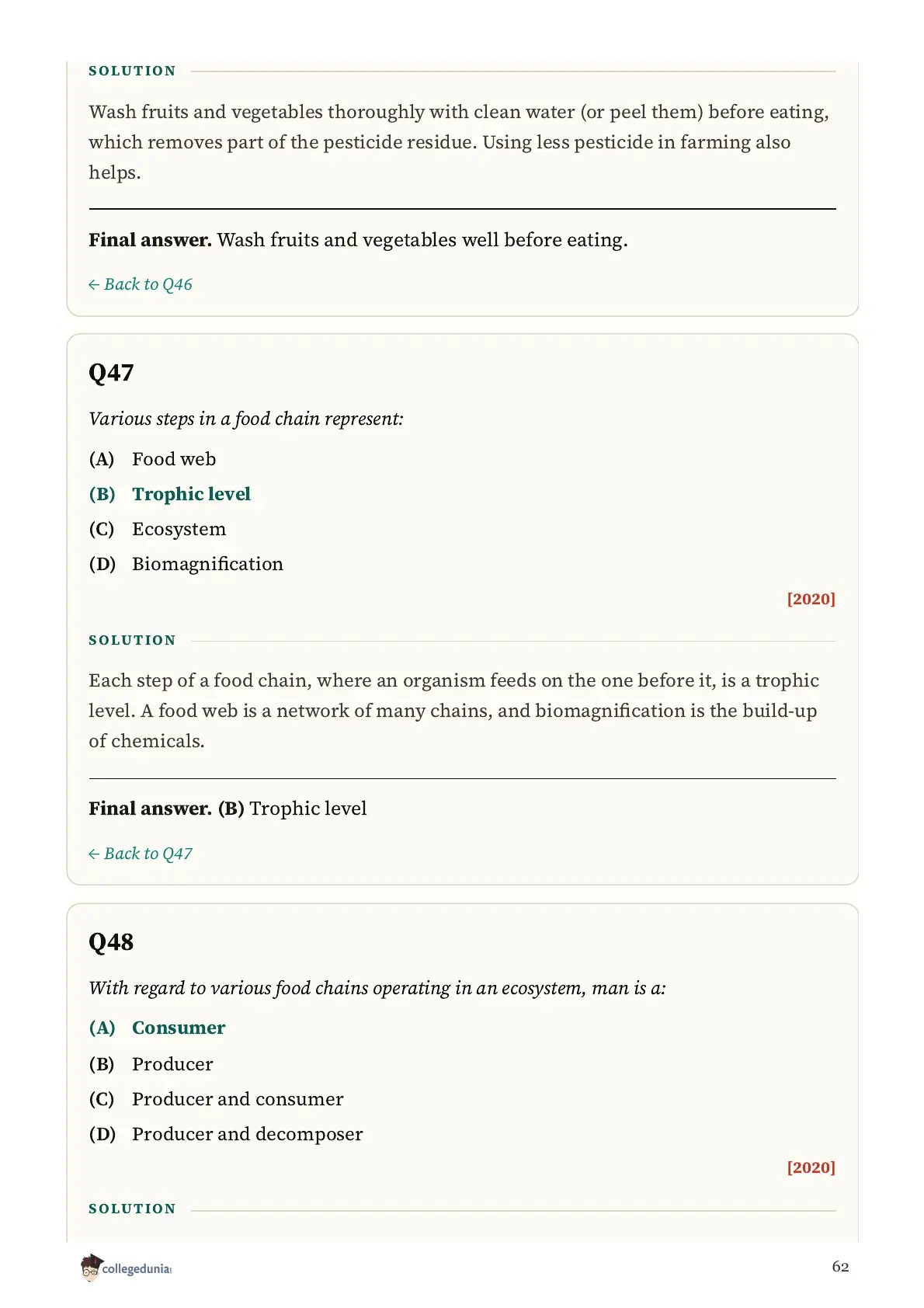
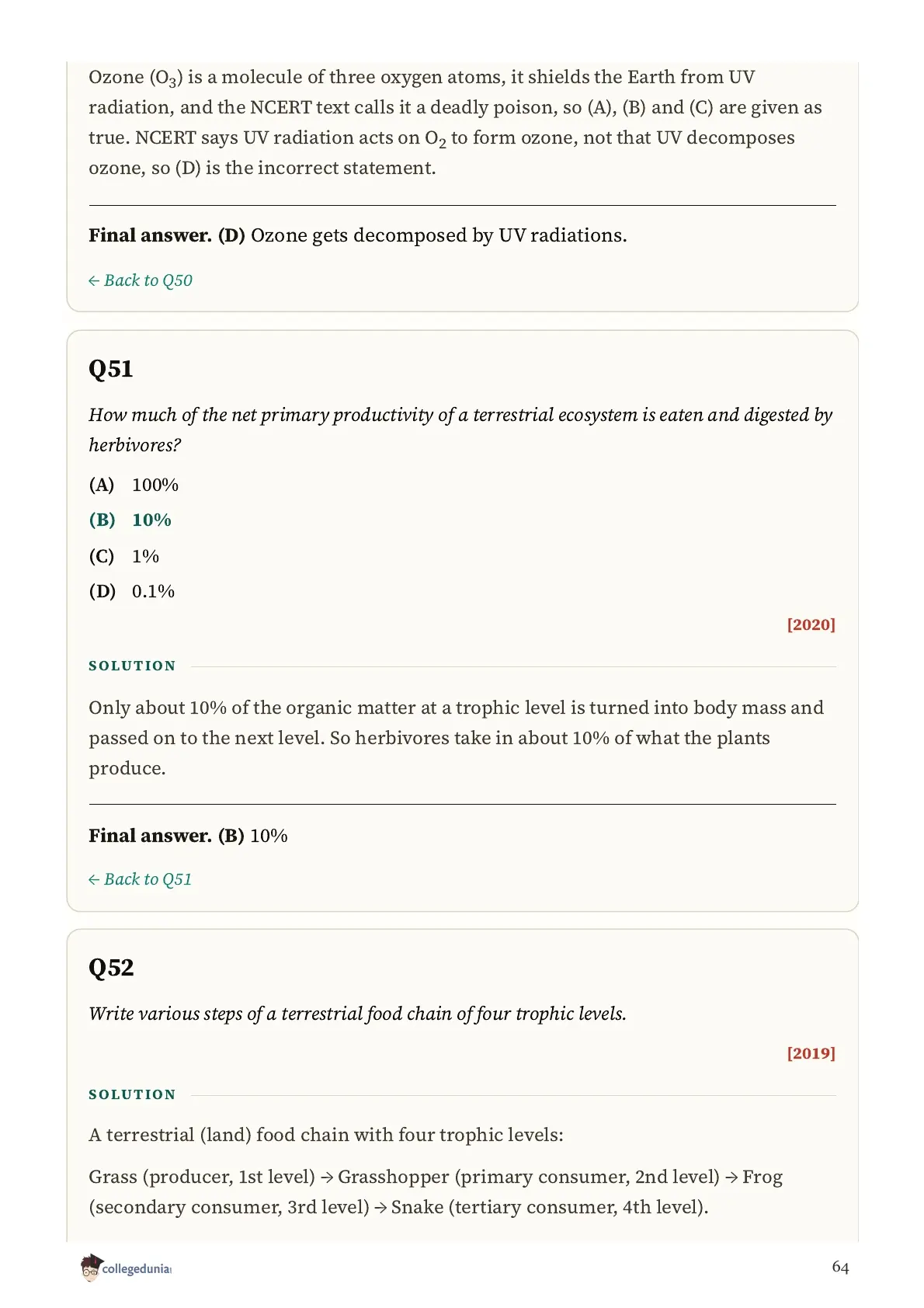
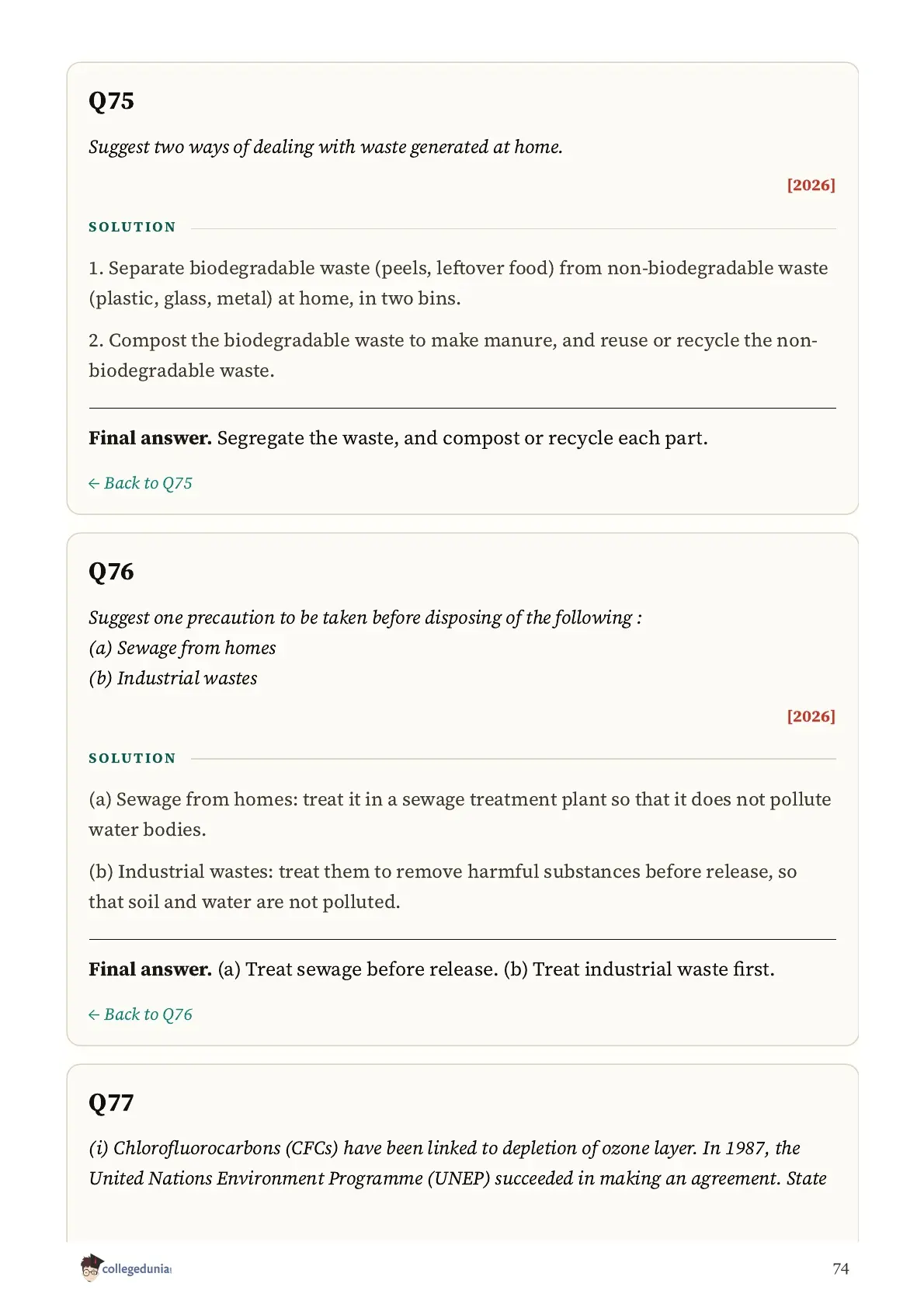
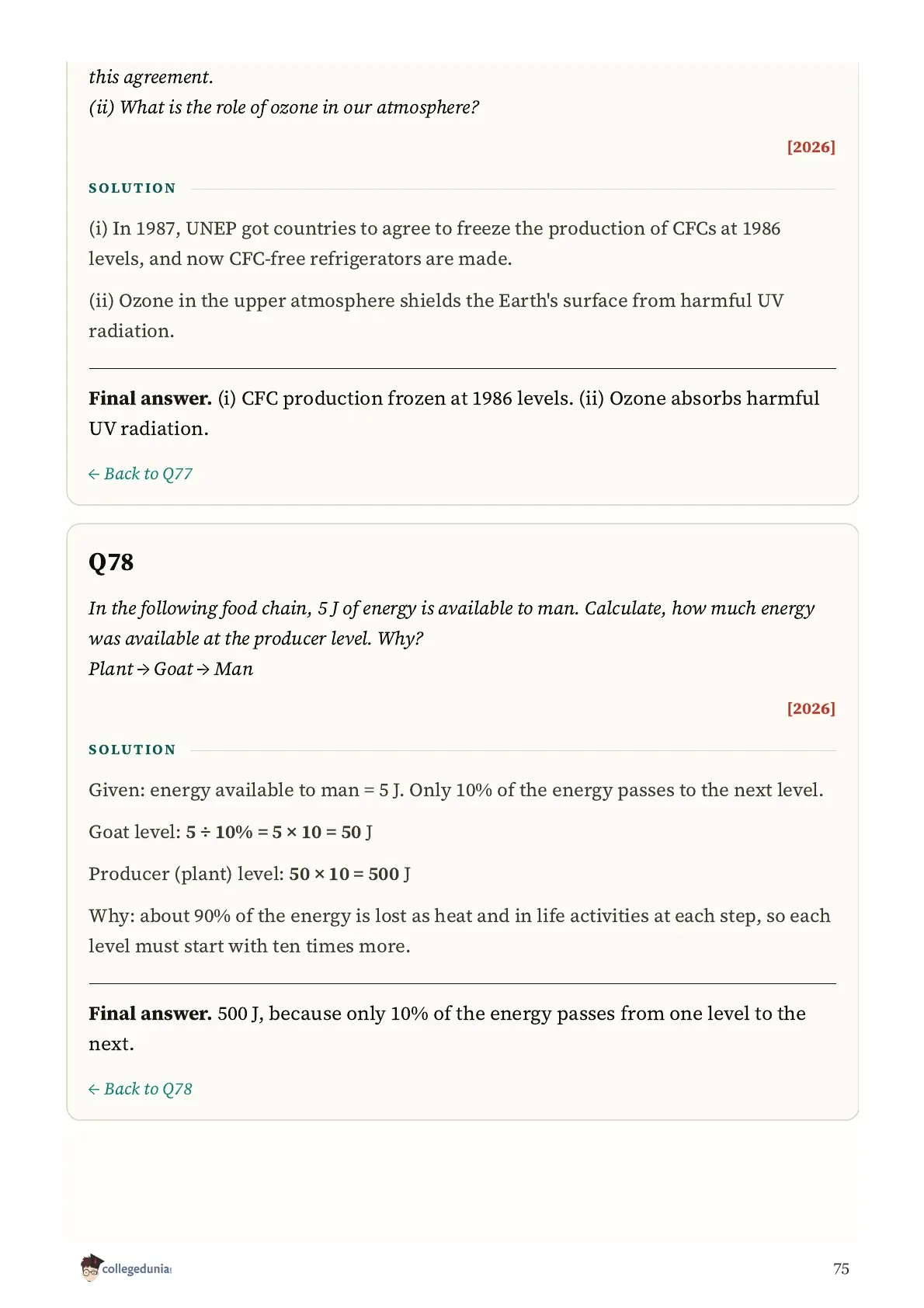
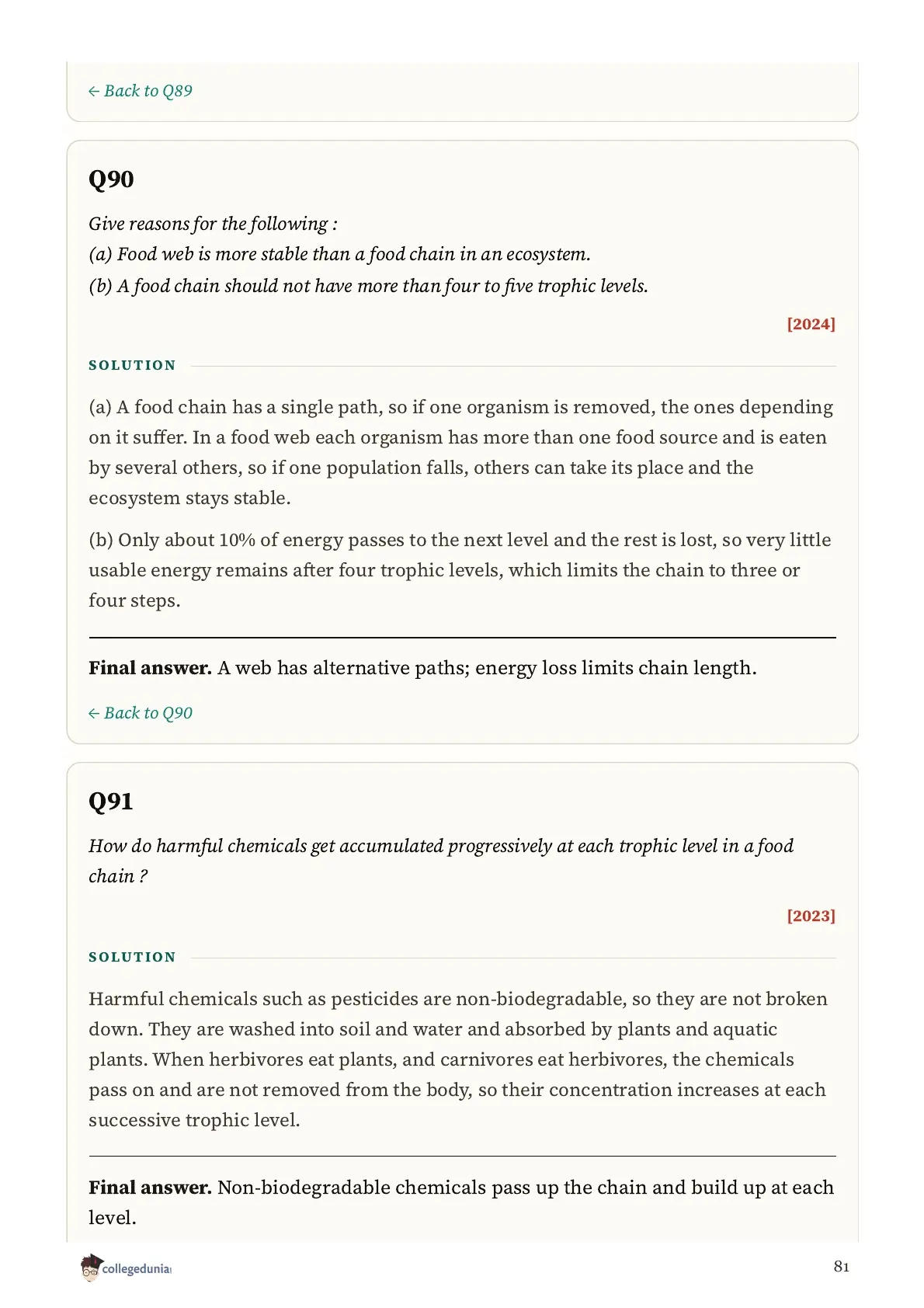
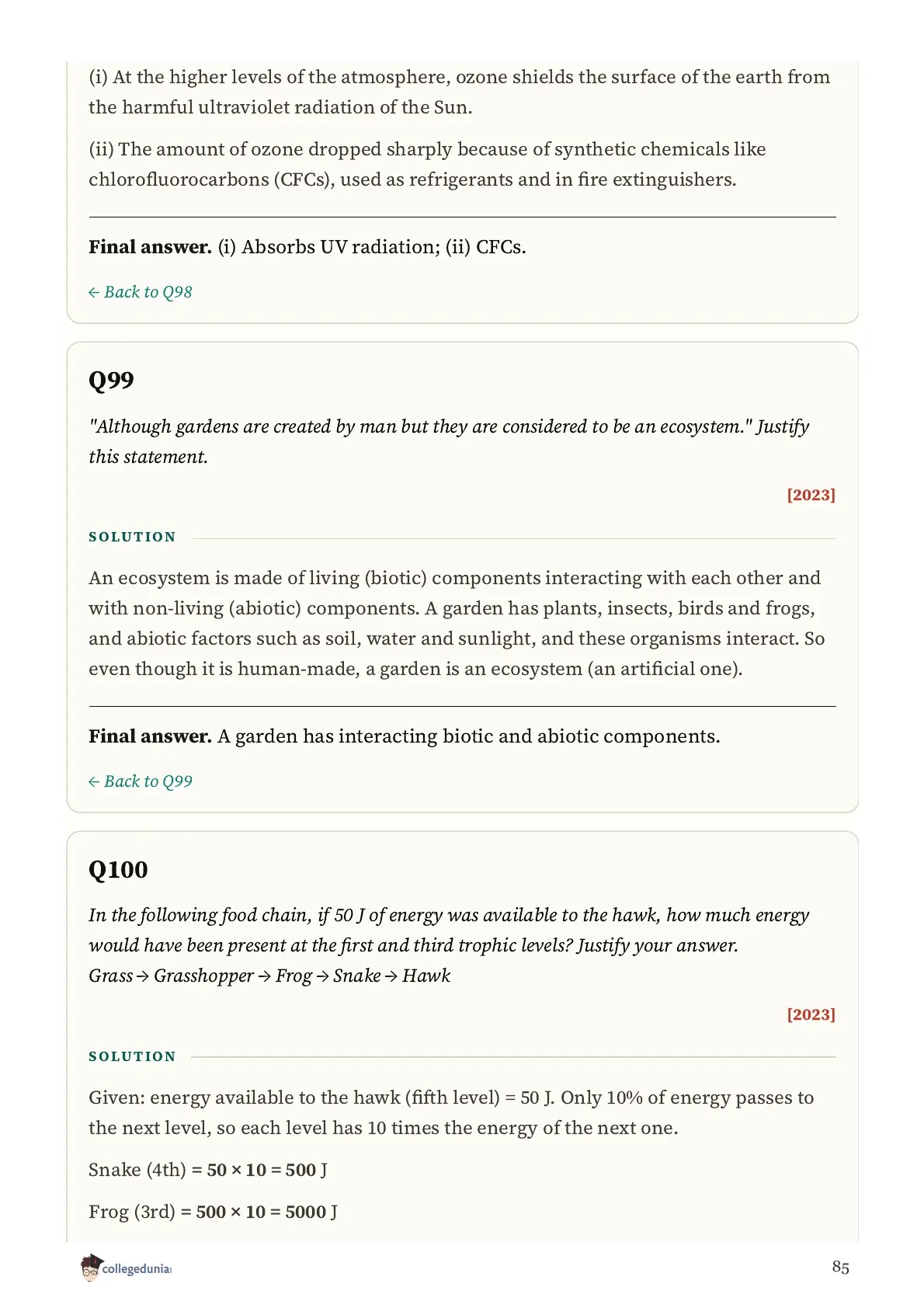
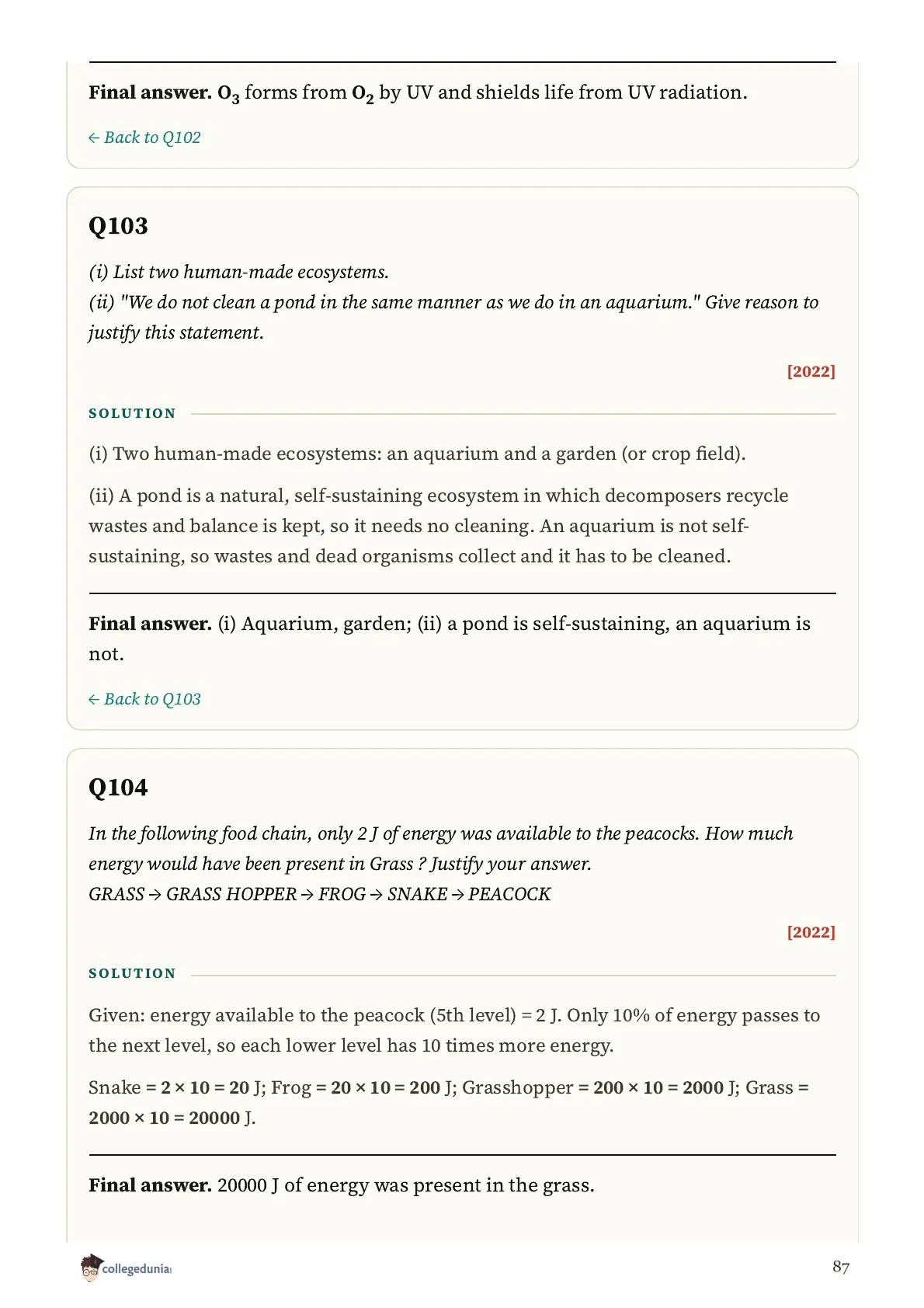
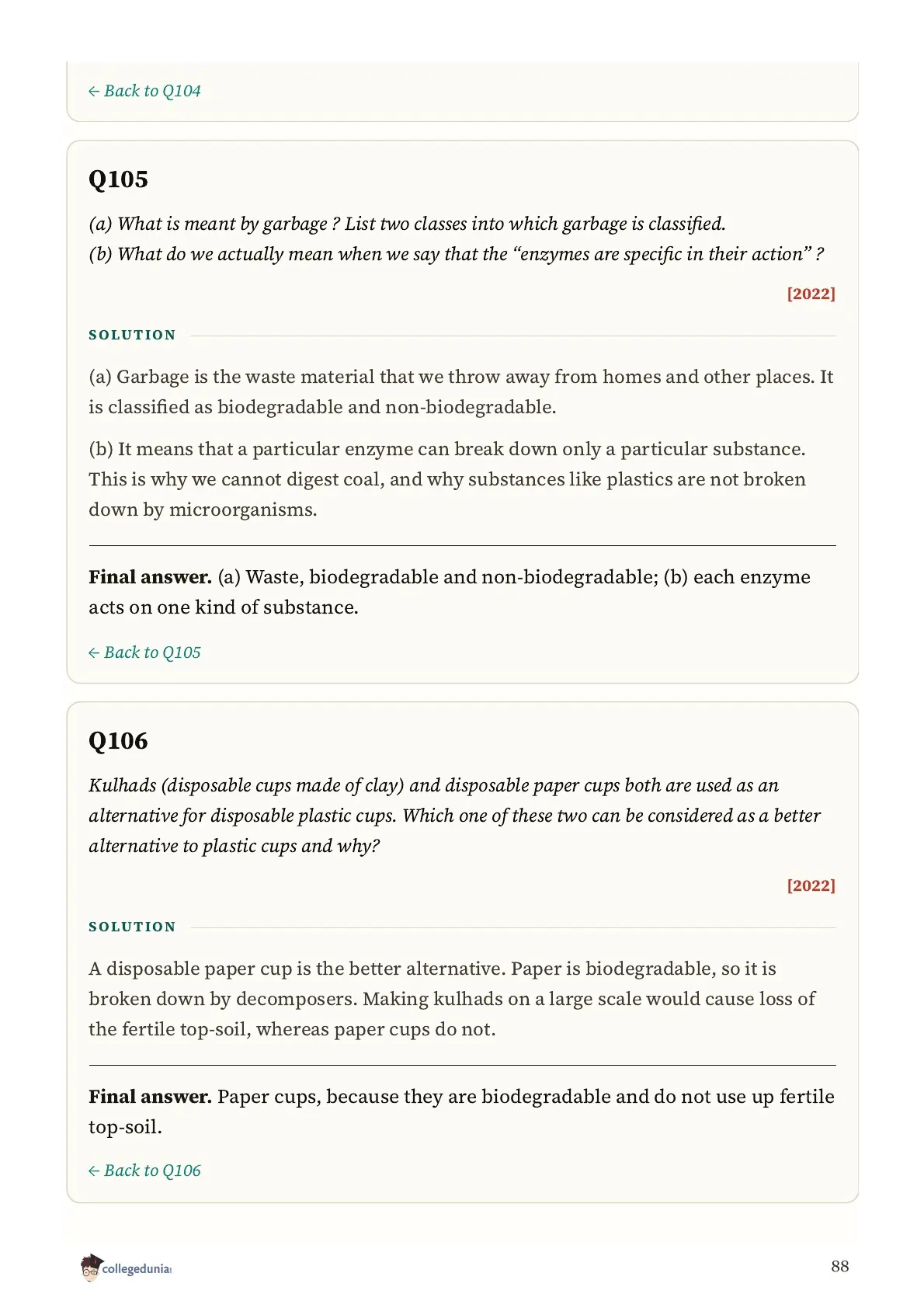
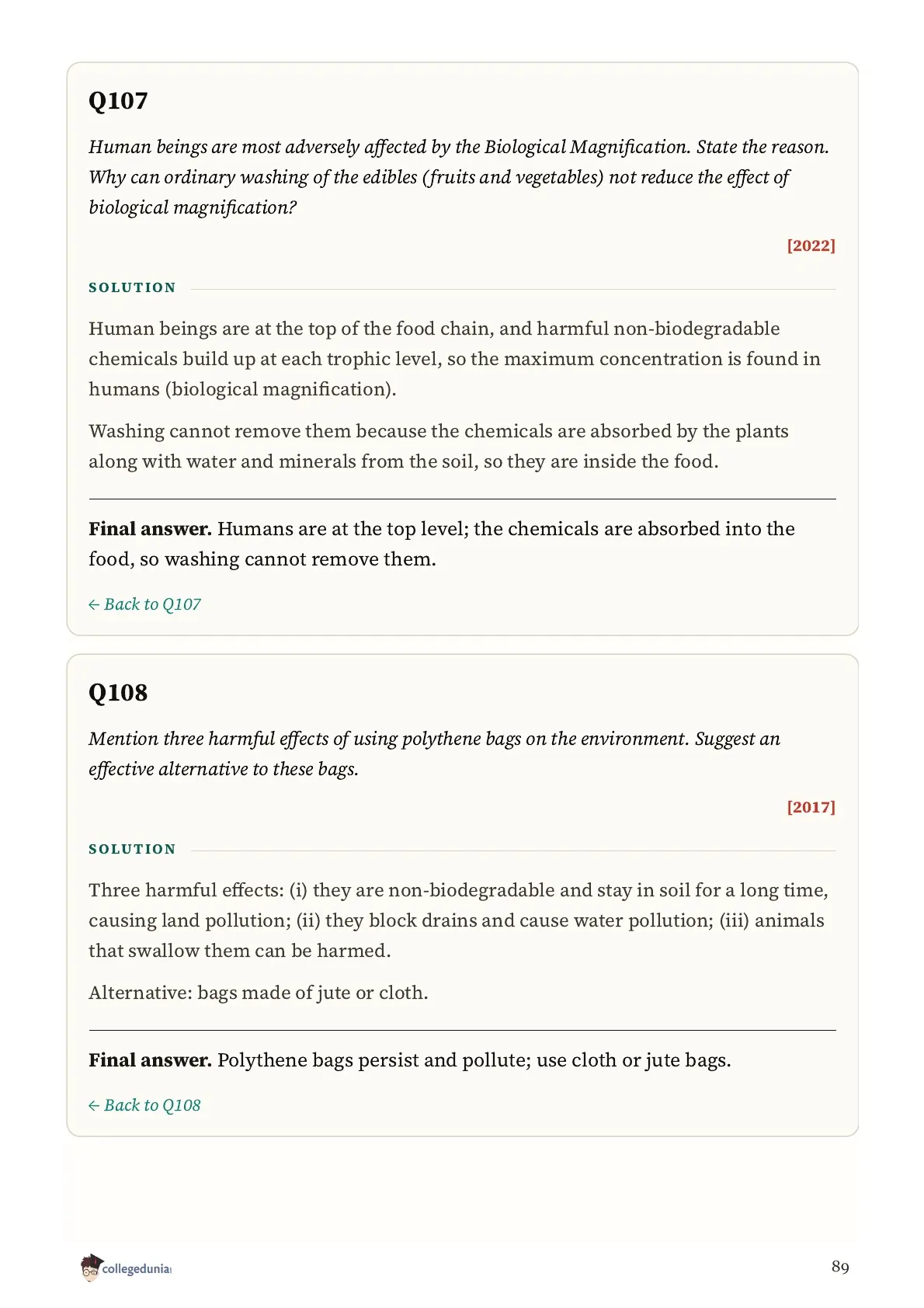
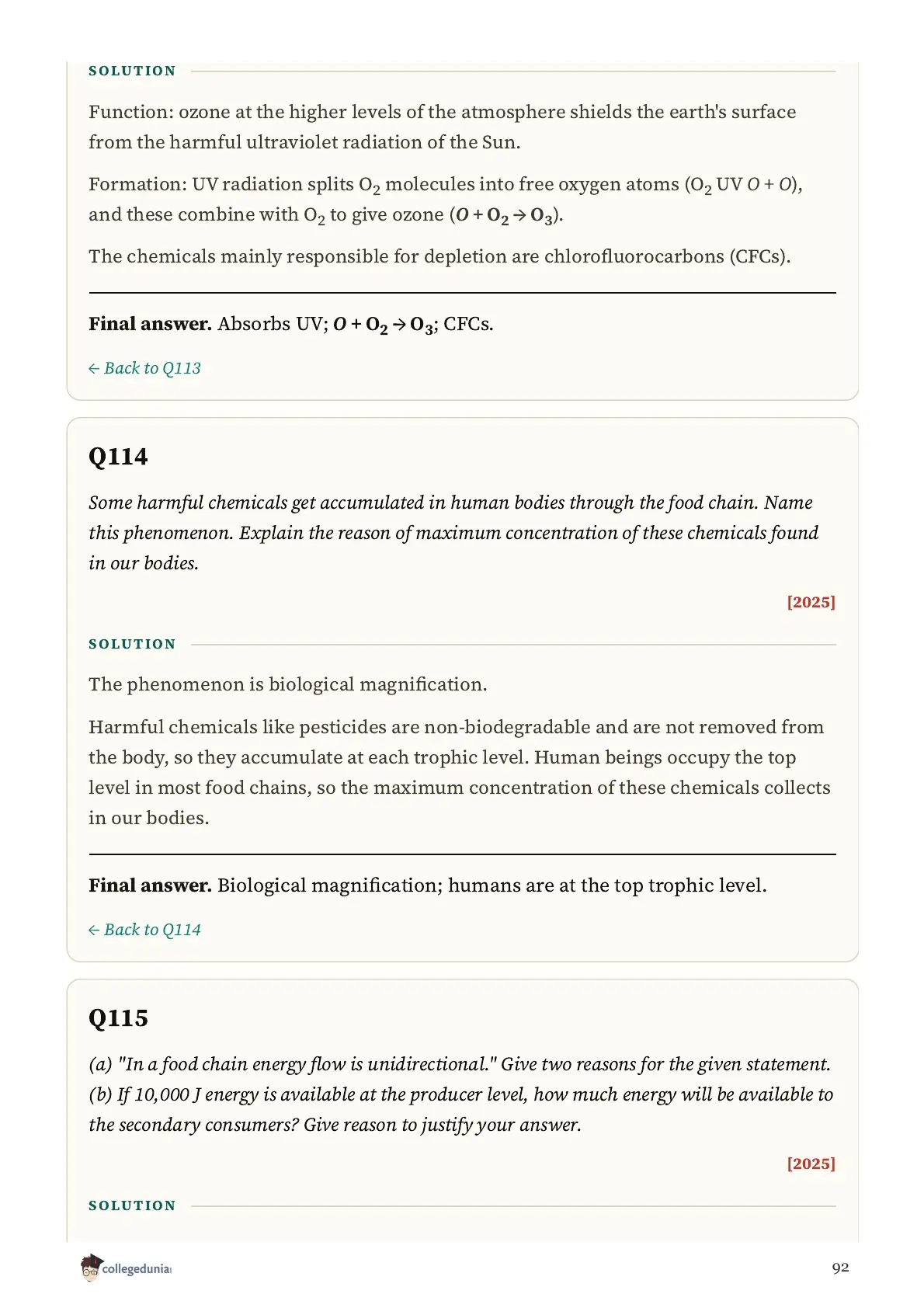
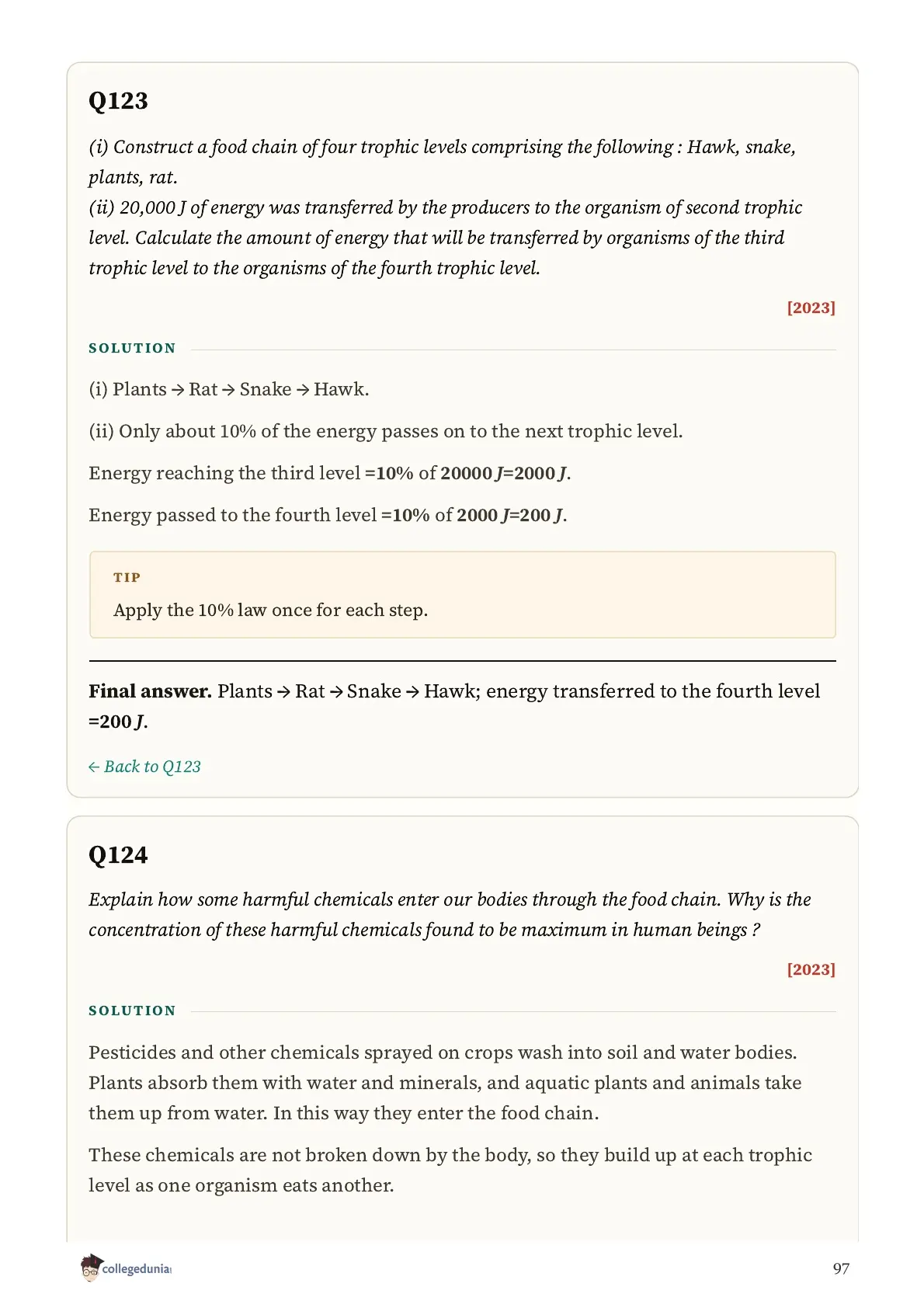
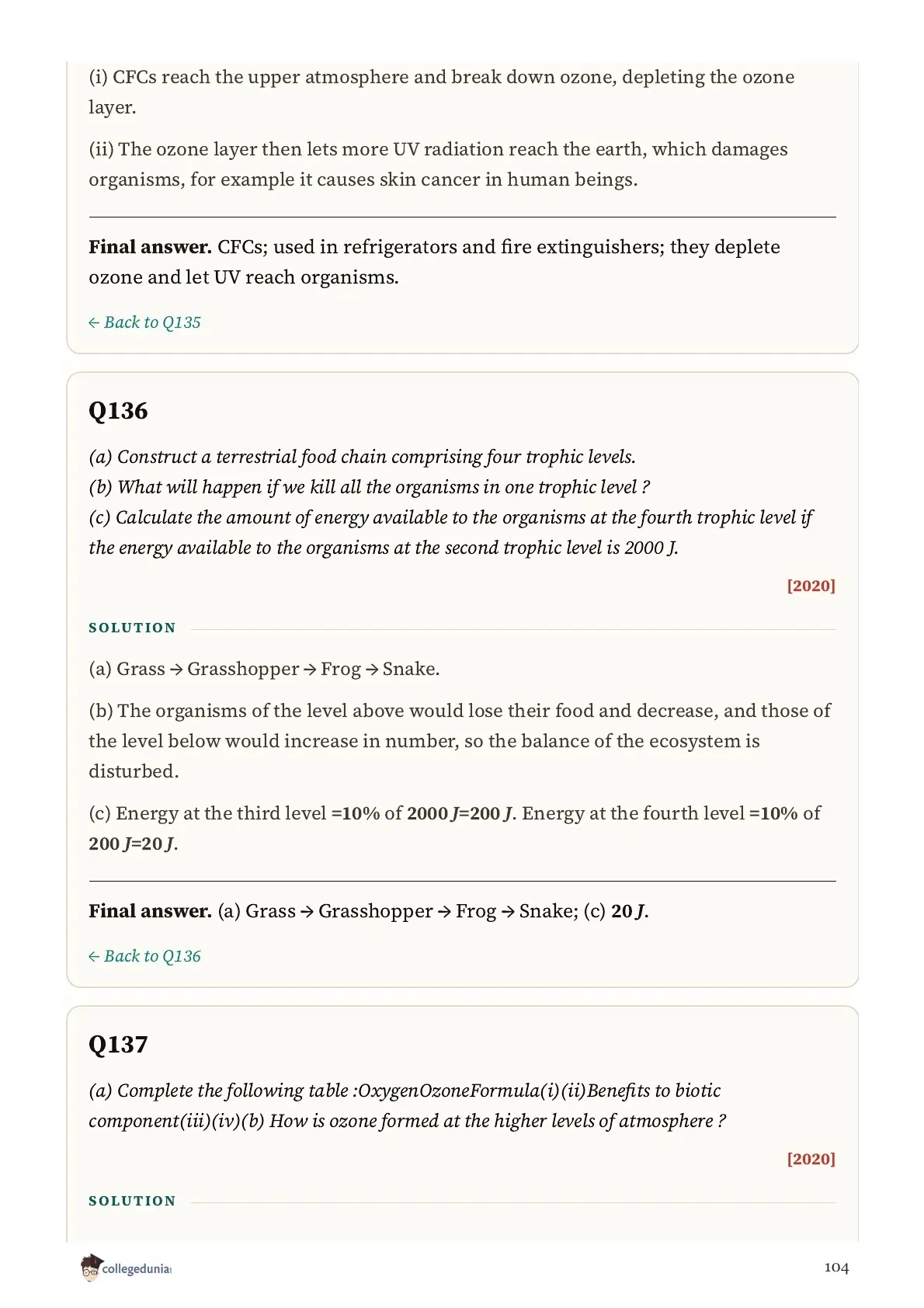
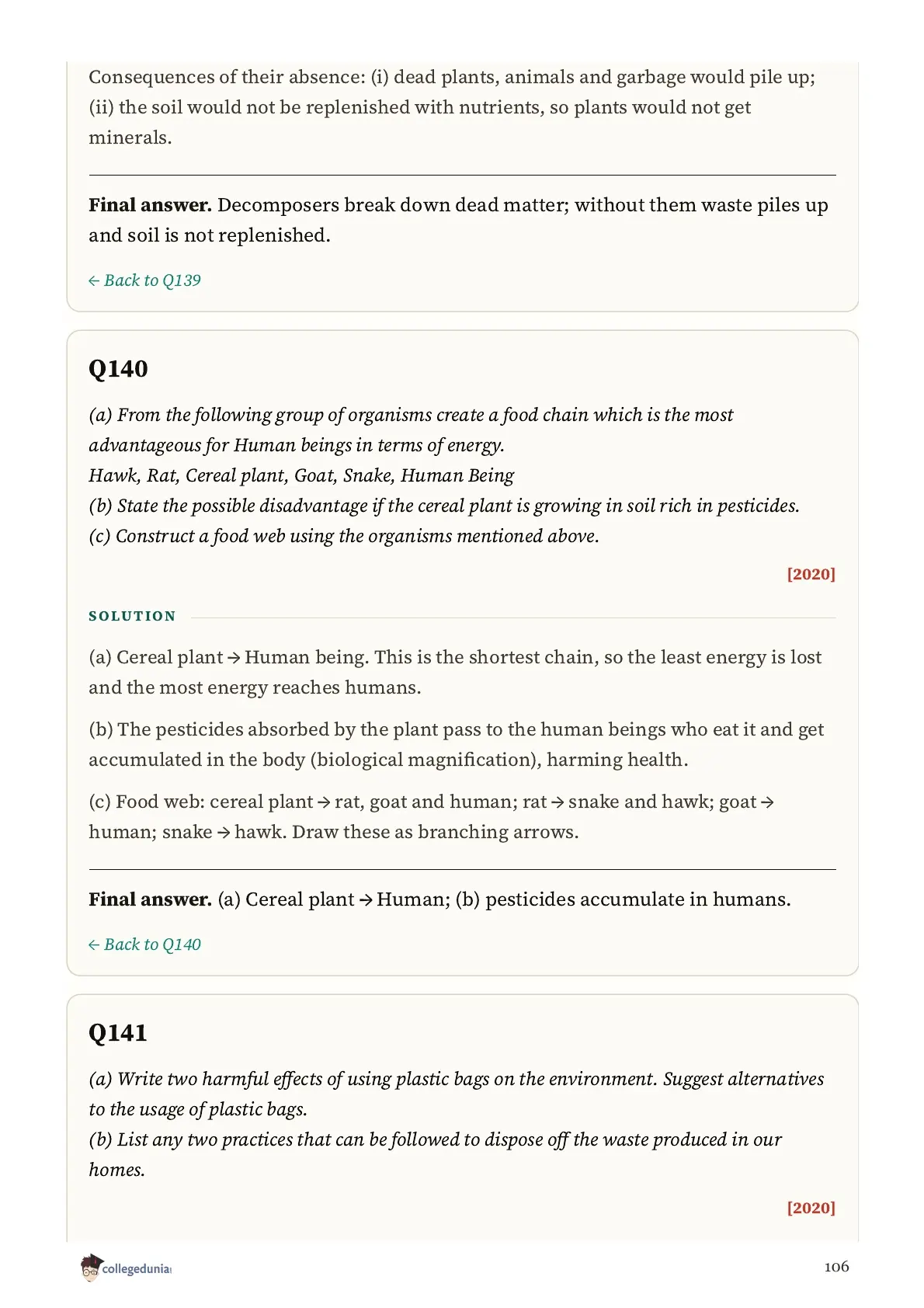
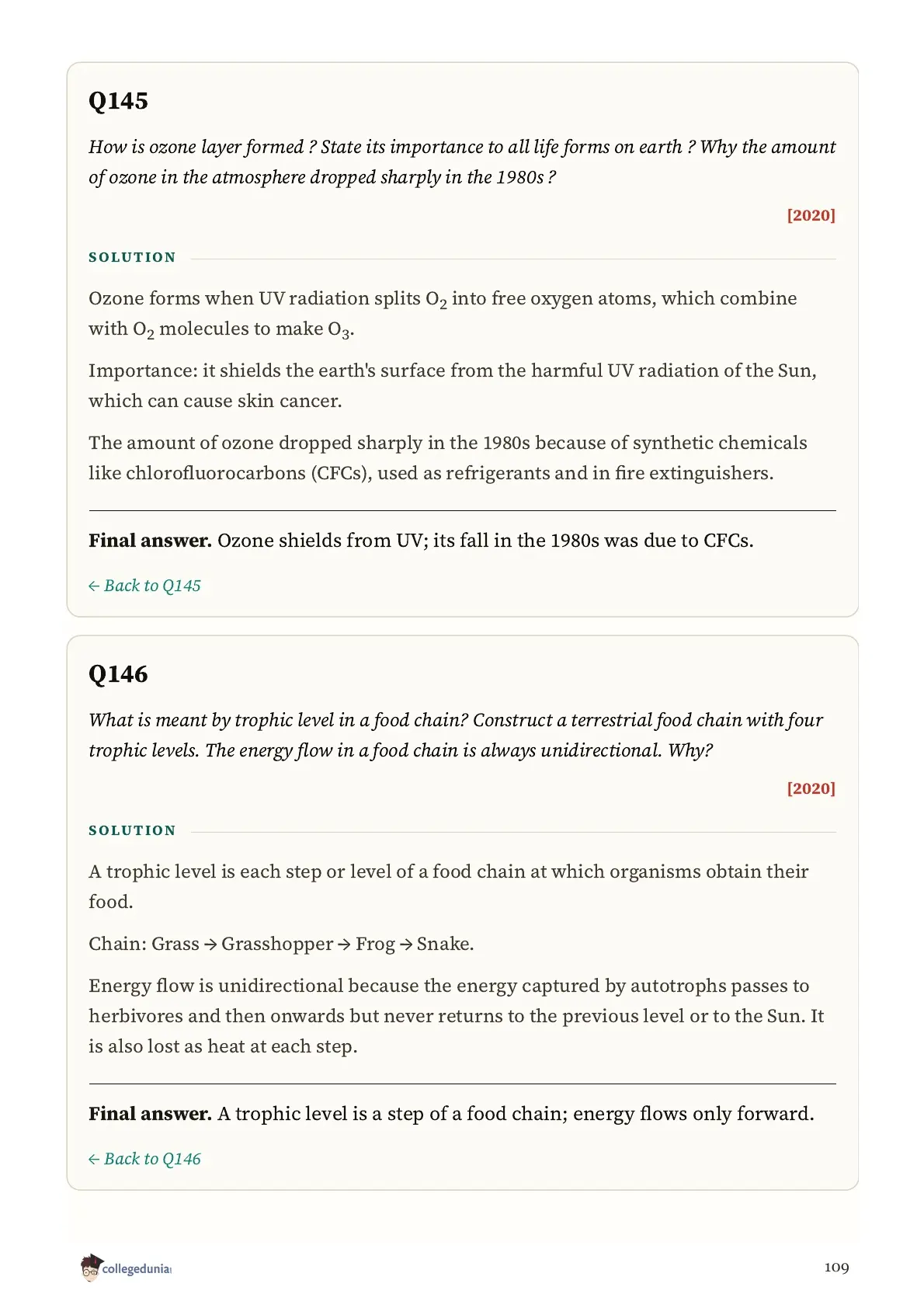
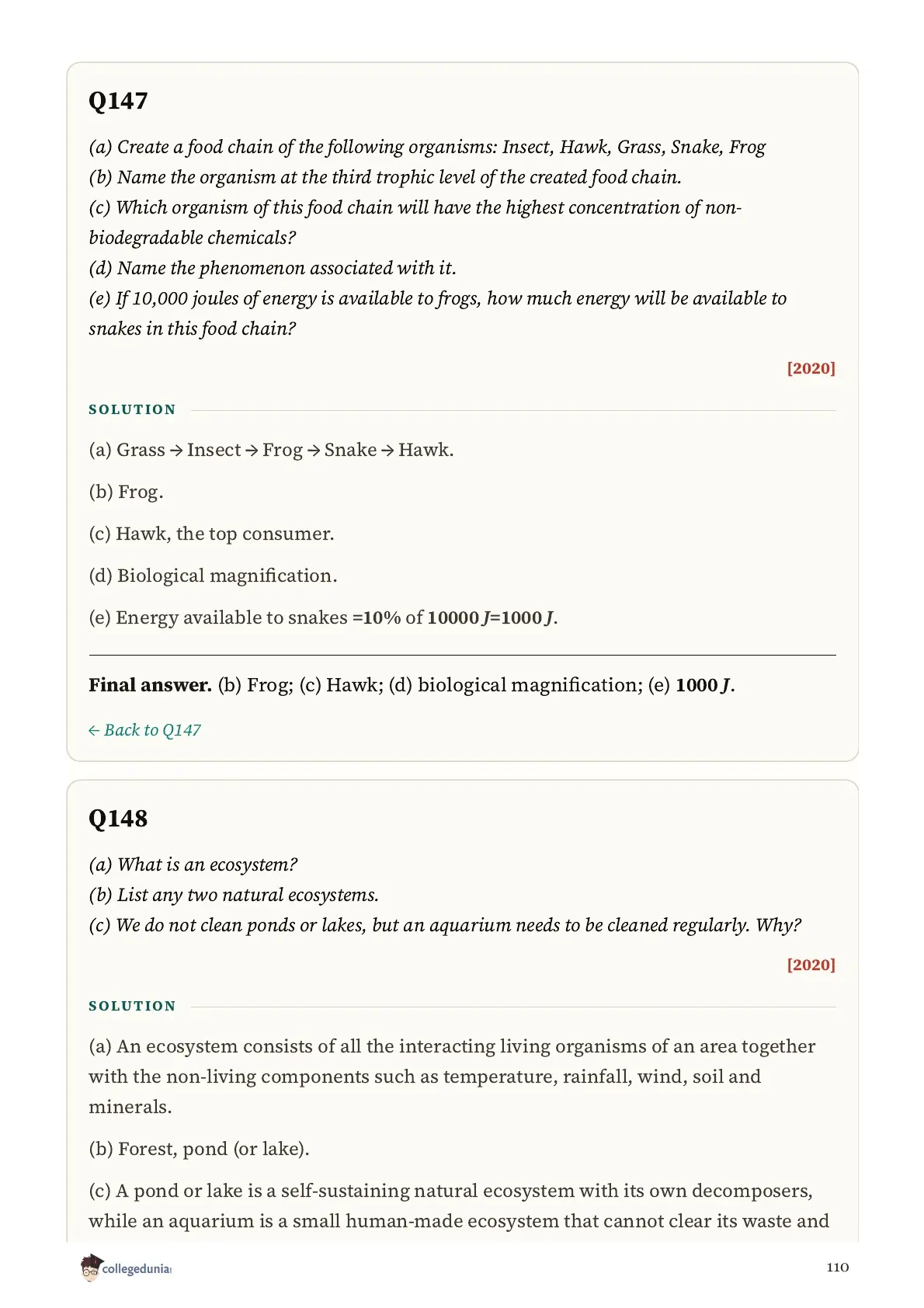
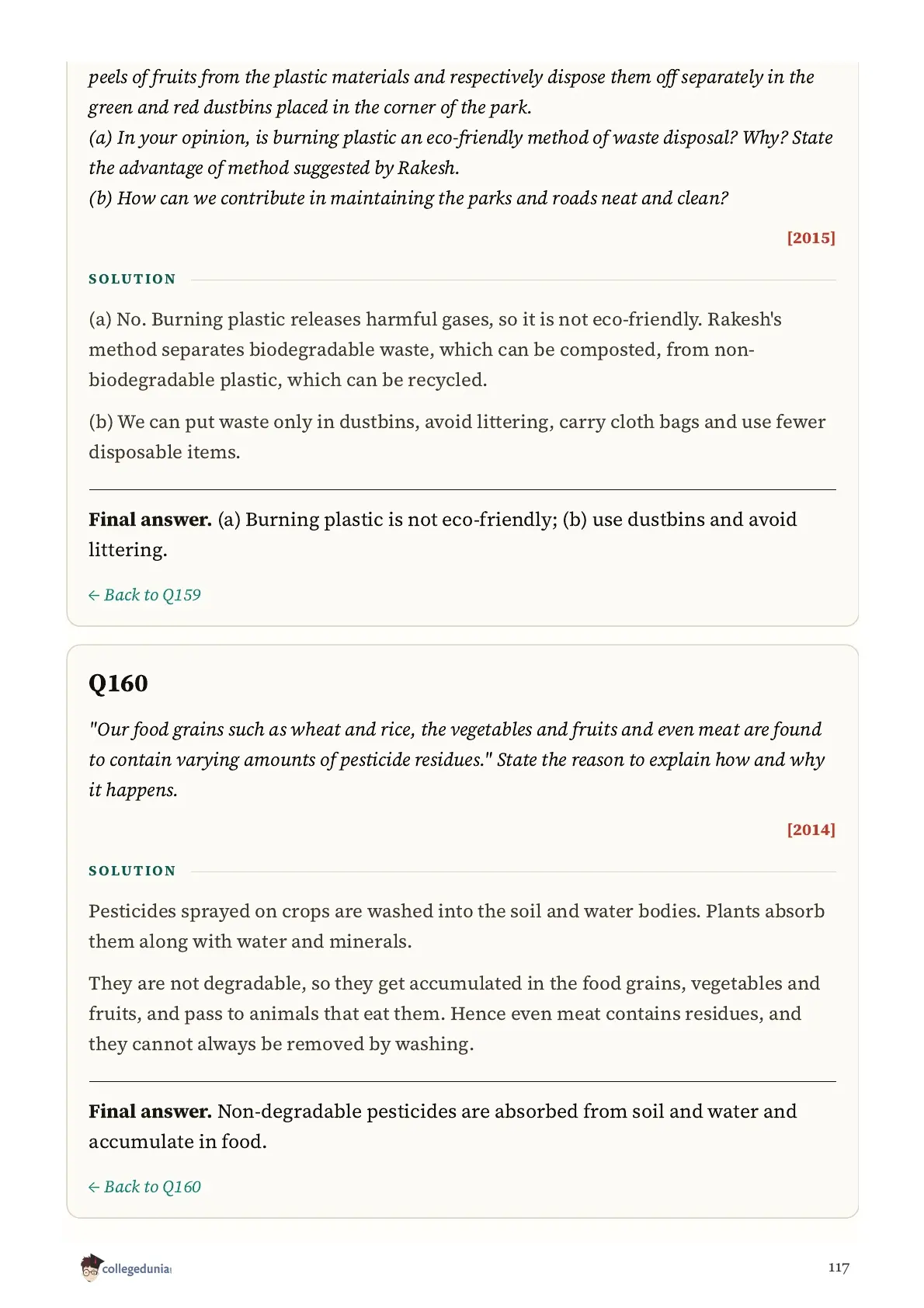
Food chains are the backbone of the chapter. 49 questions mention a food chain or food web and 34 mention trophic levels, from picking the group that does not form a chain (2025) to building a four-level terrestrial chain from hawk, snake, plants and rat (2023). 9 are numericals on the 10% law, such as 10,000 J at the producer or 2 J reaching the peacocks in the Grass, Grasshopper, Frog, Snake, Peacock chain (2022). Another 6 ask why energy flow is unidirectional.
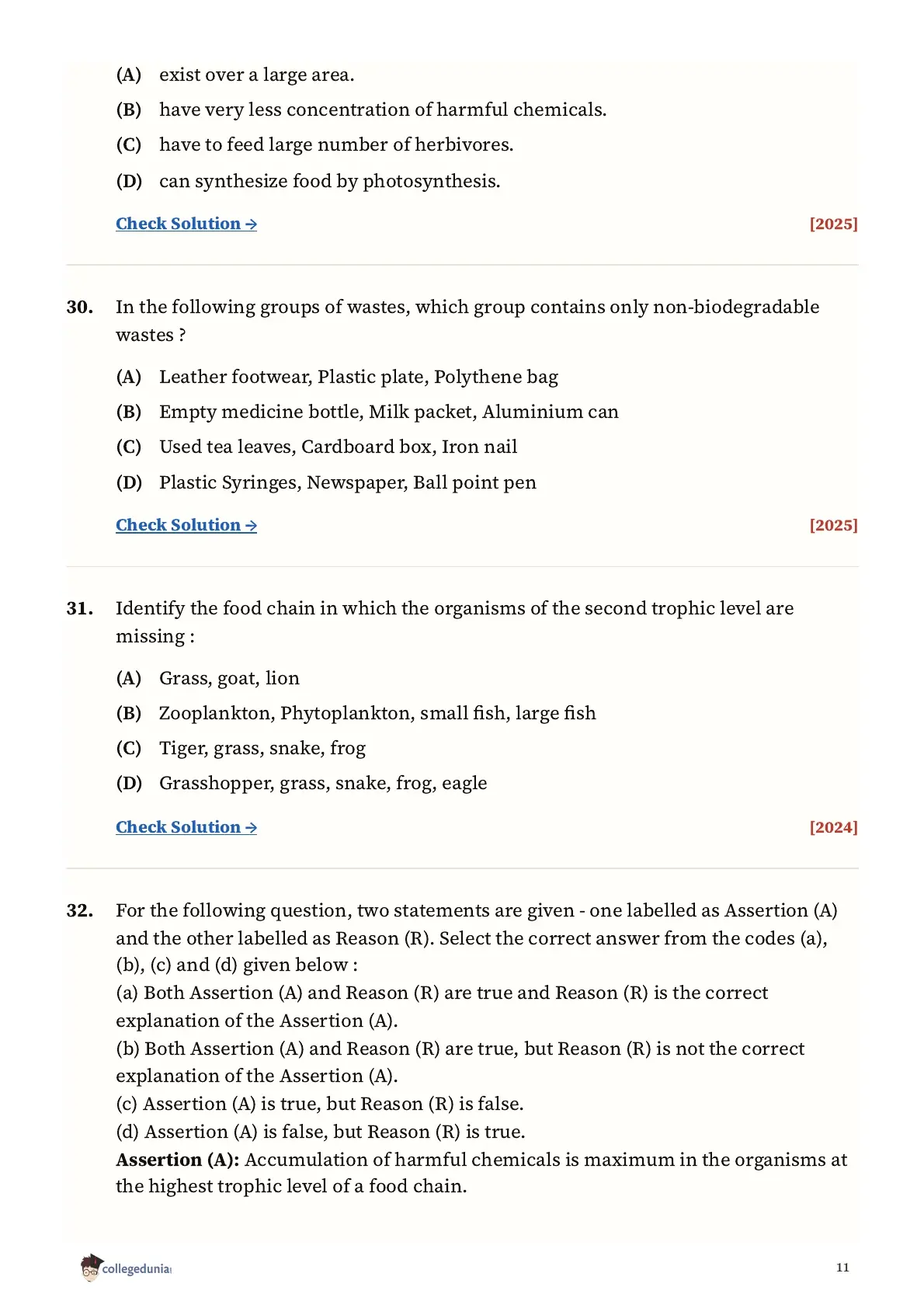
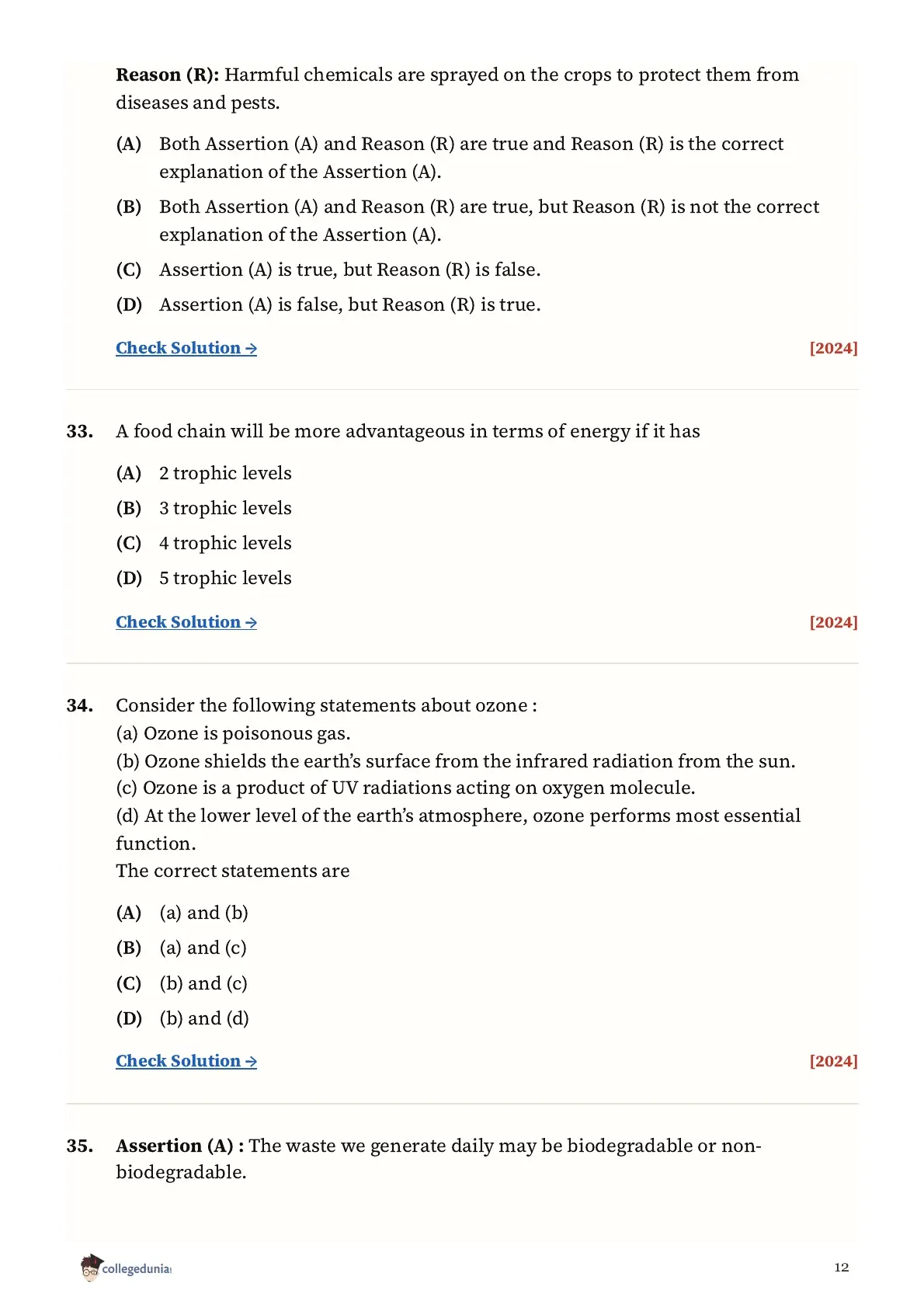
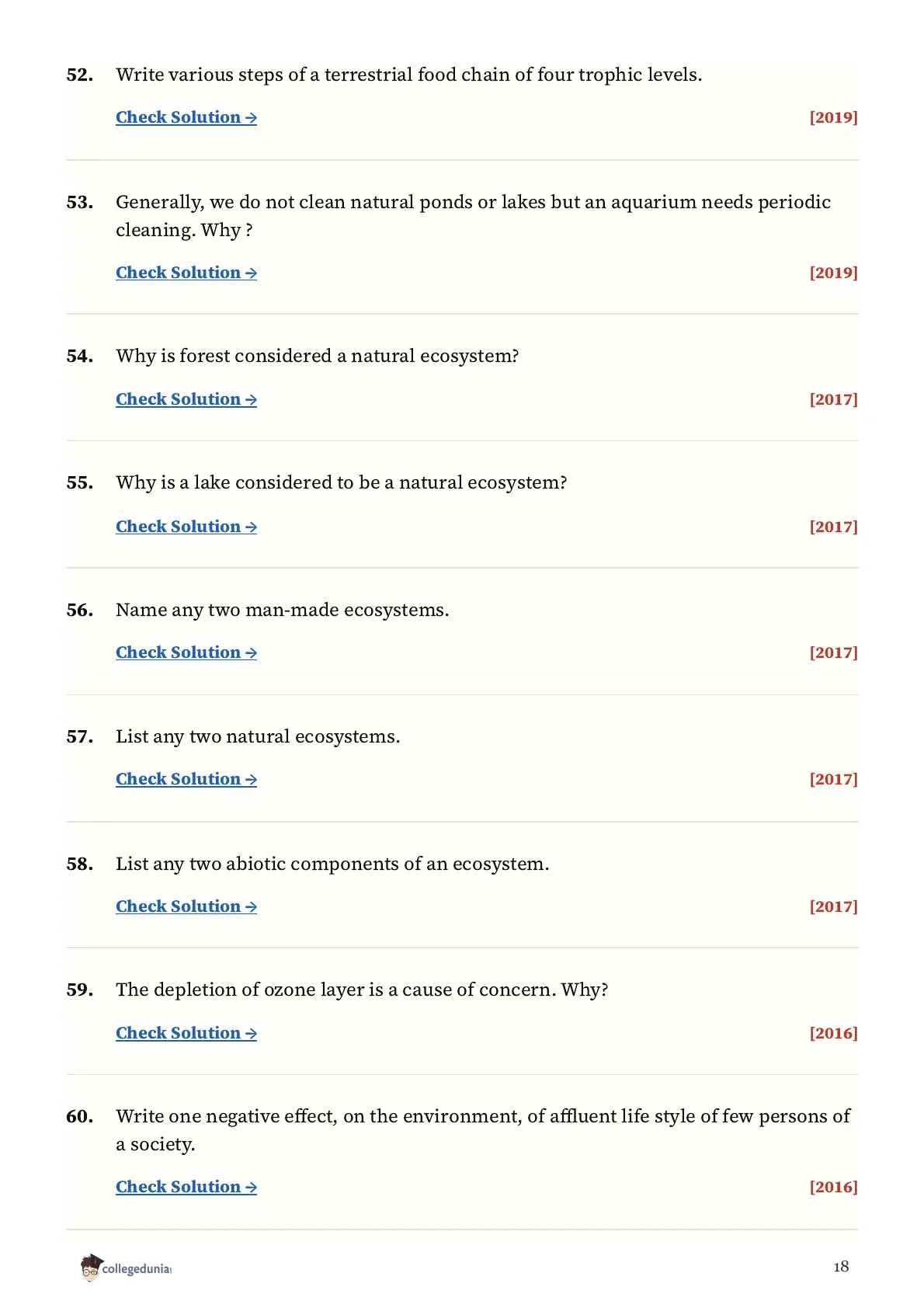
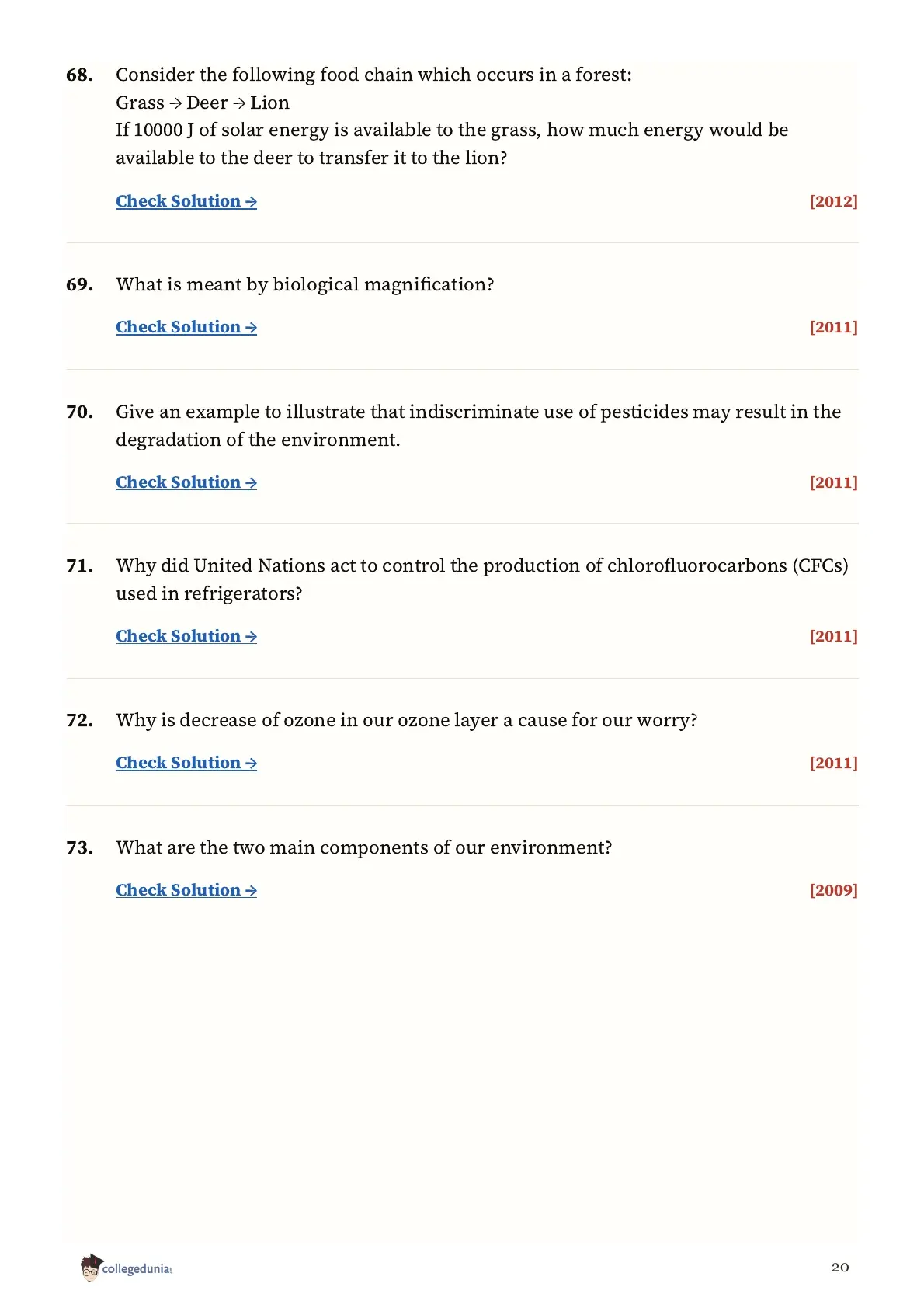
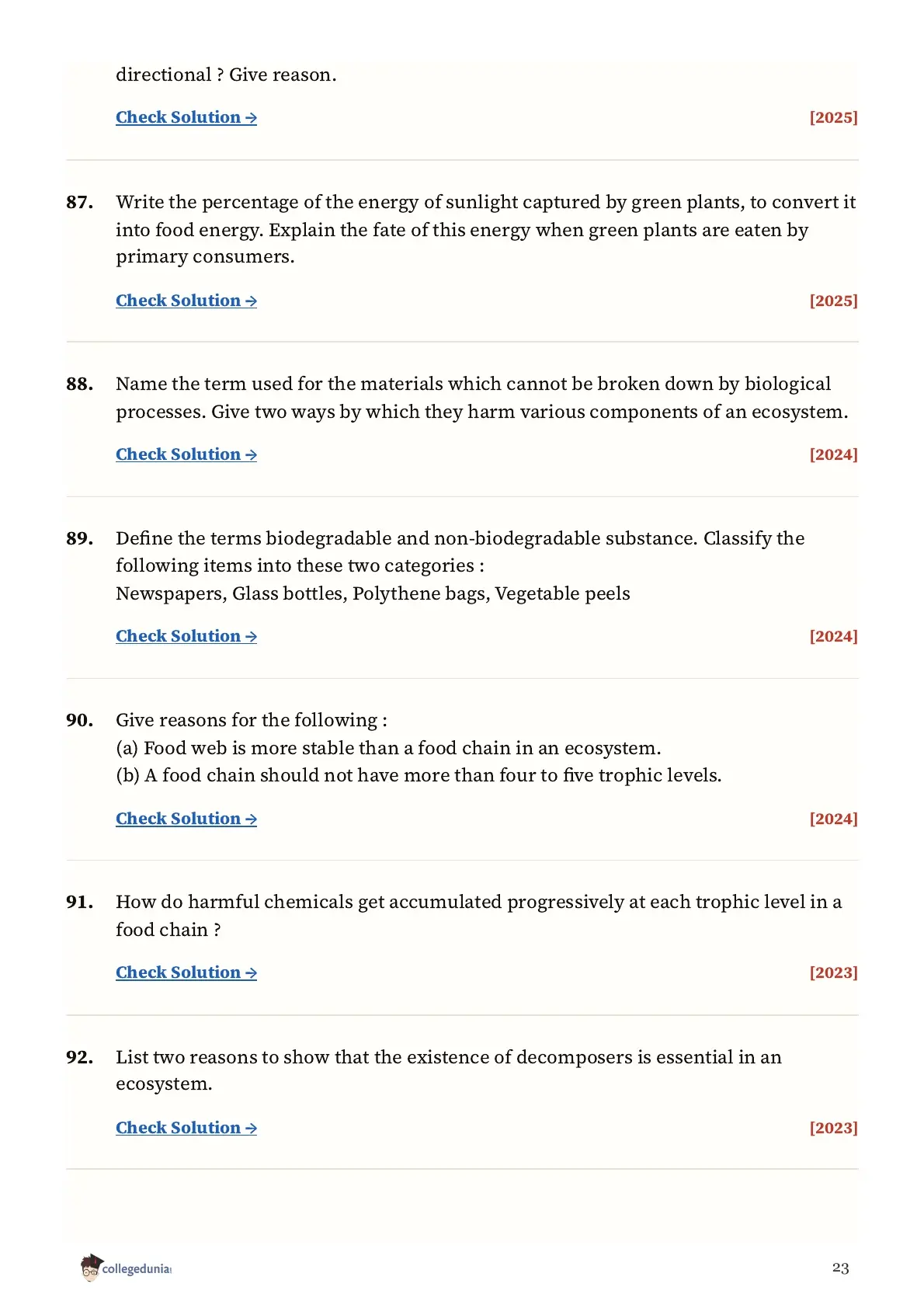
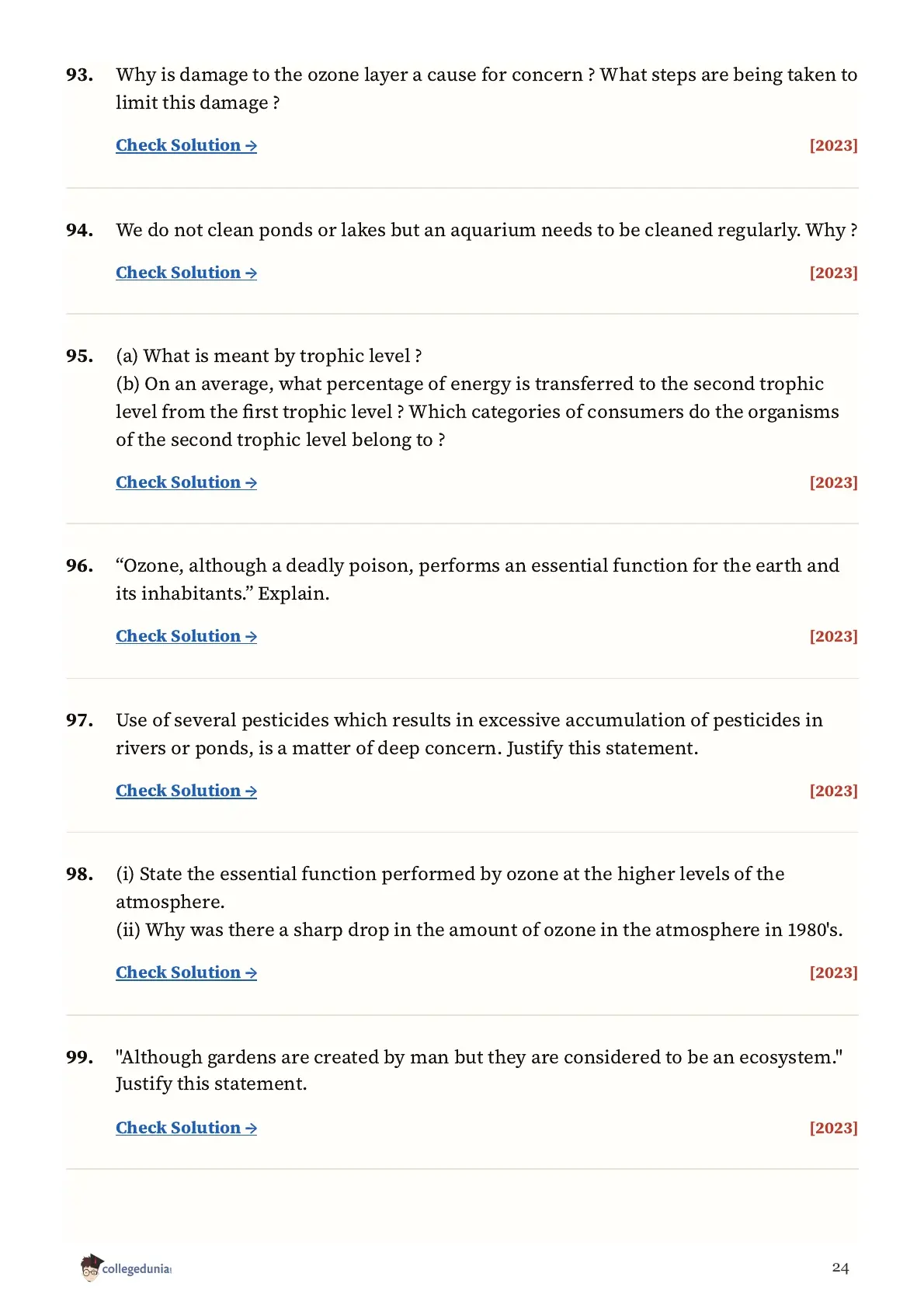
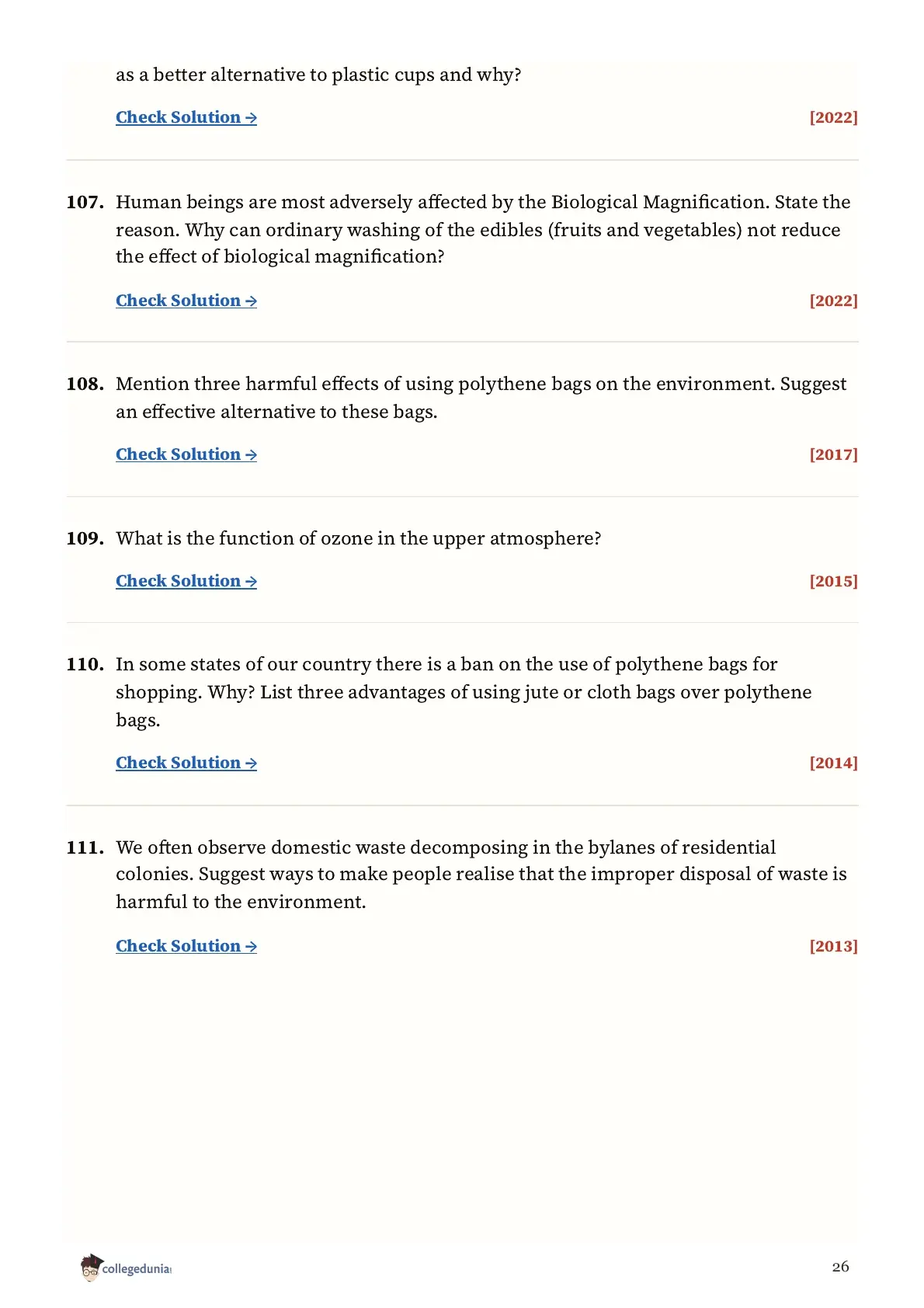
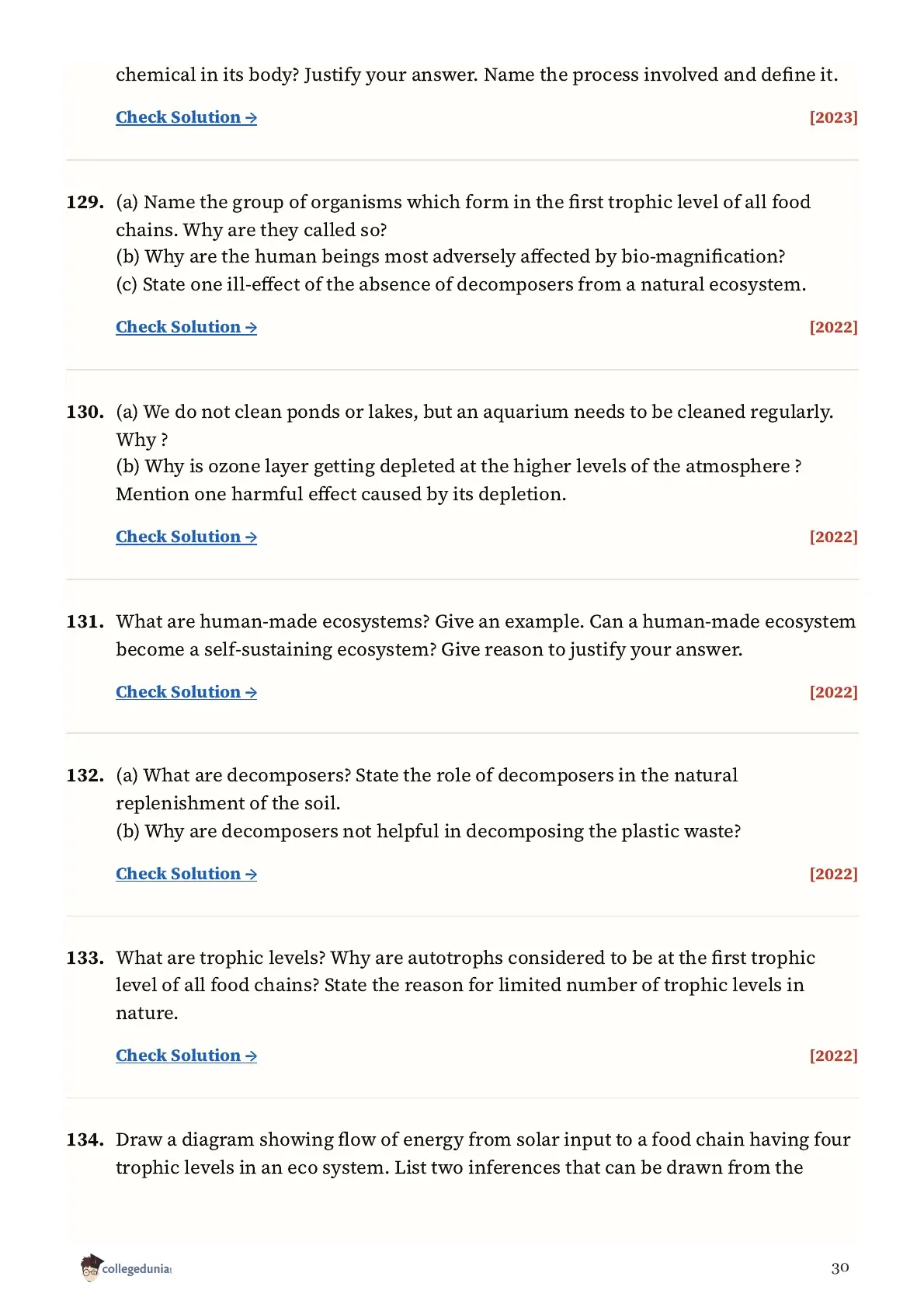
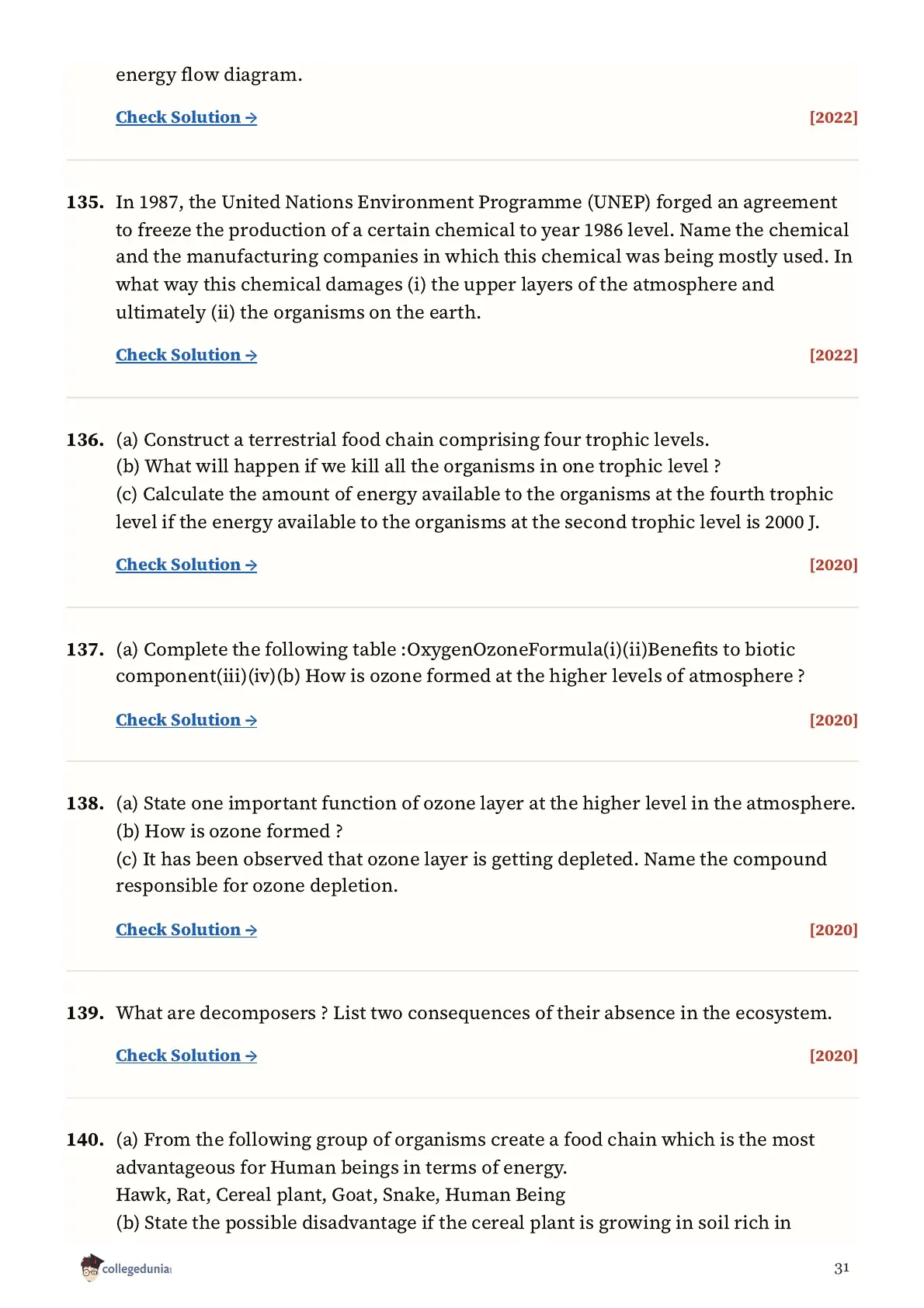
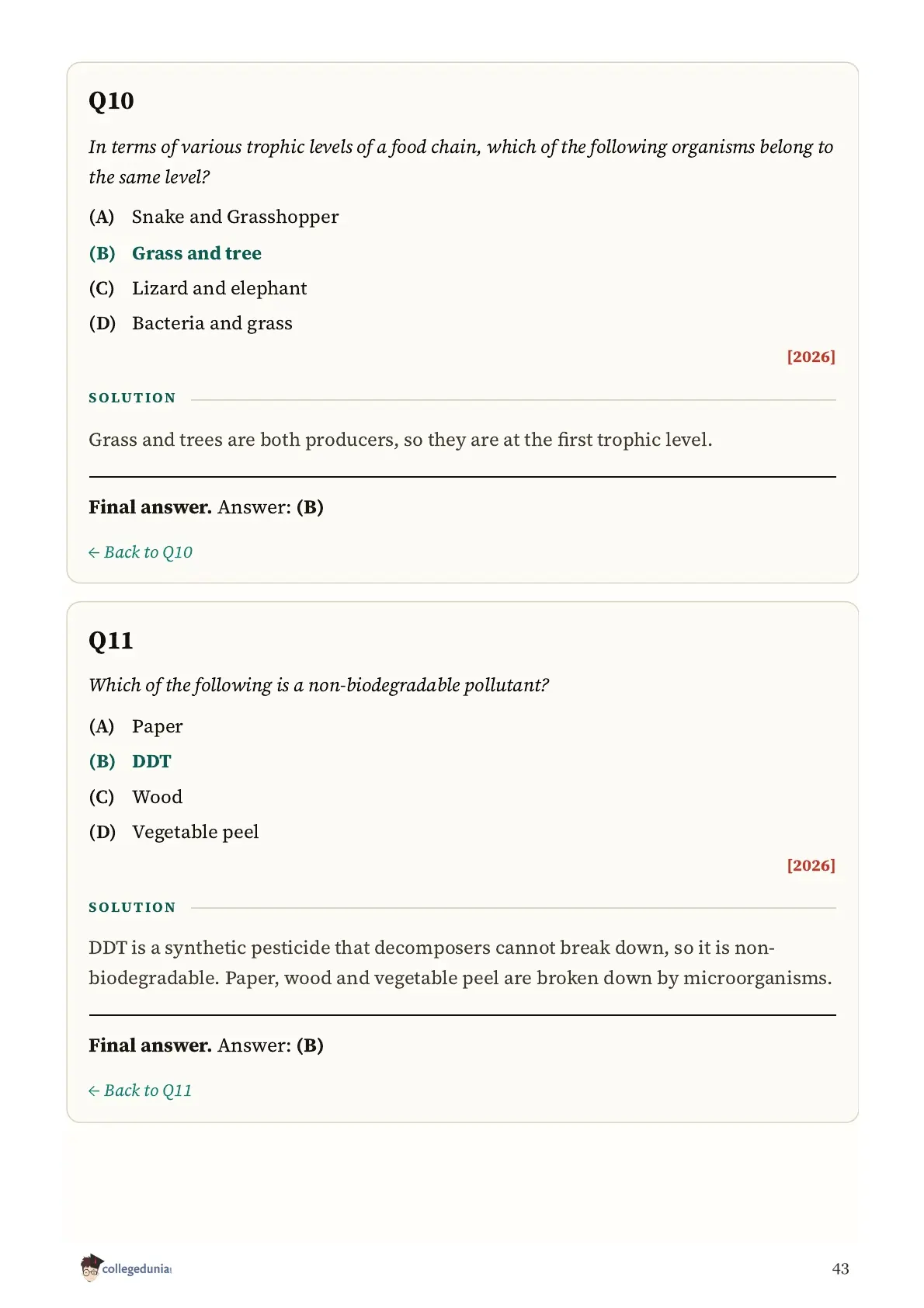
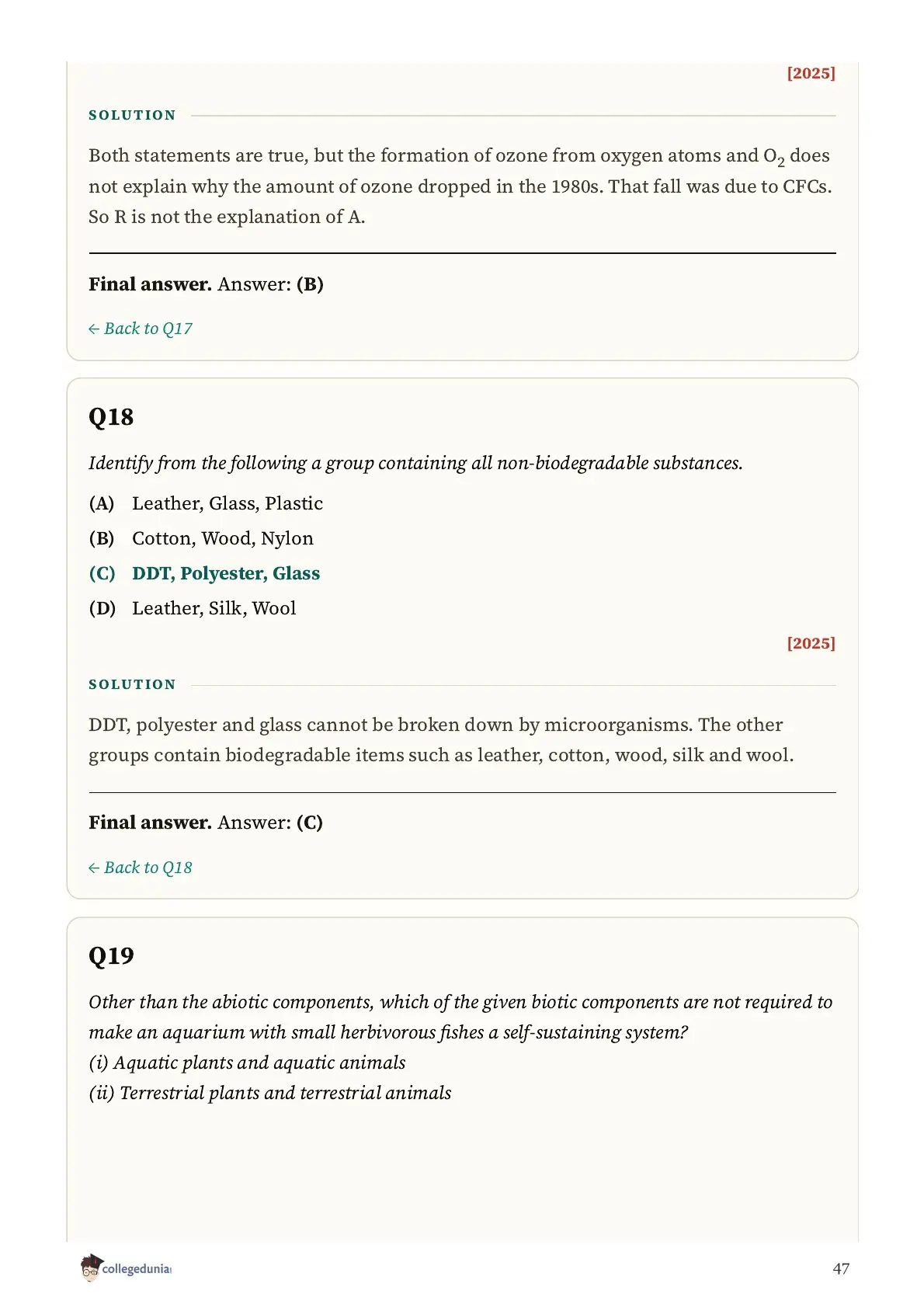
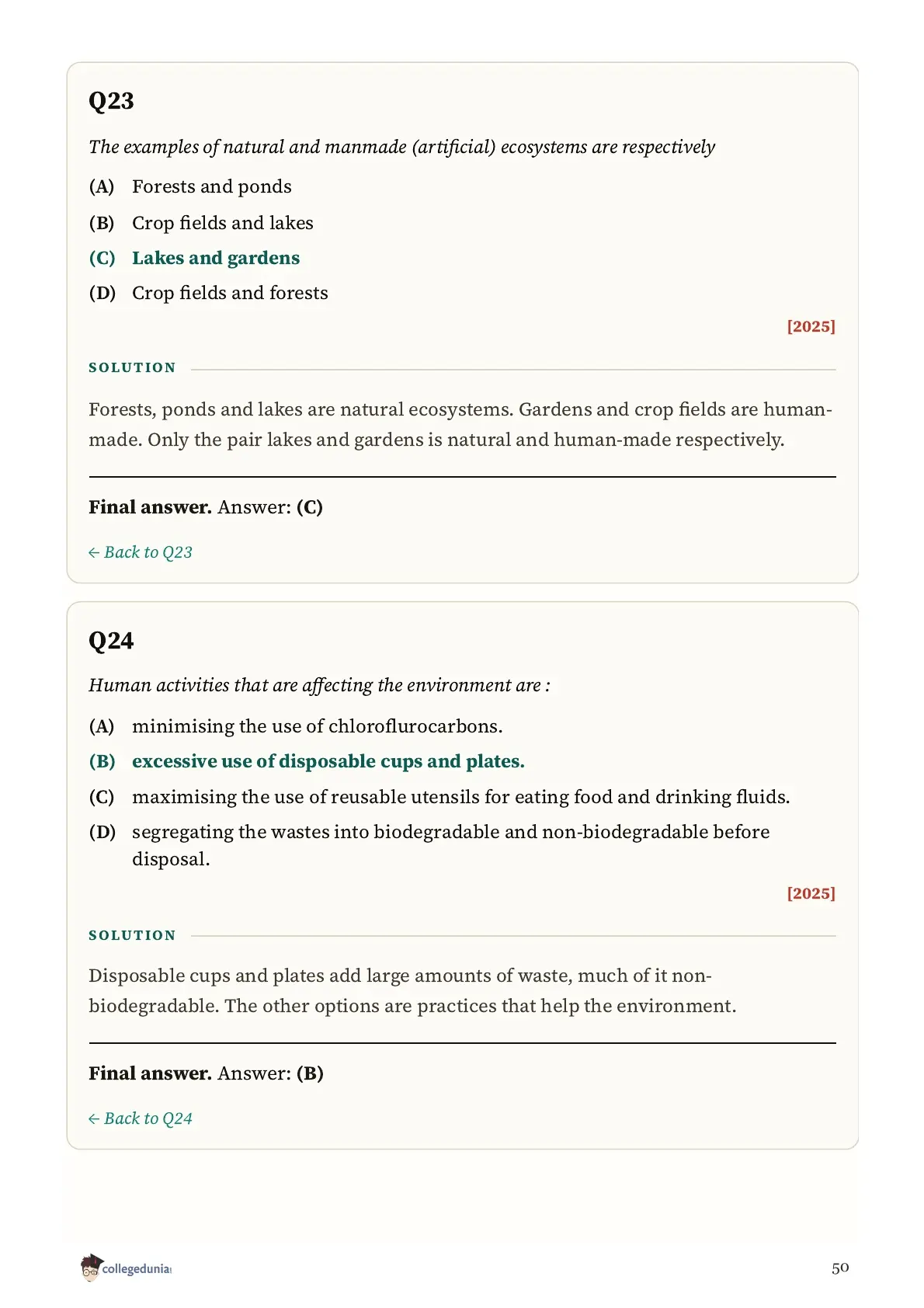
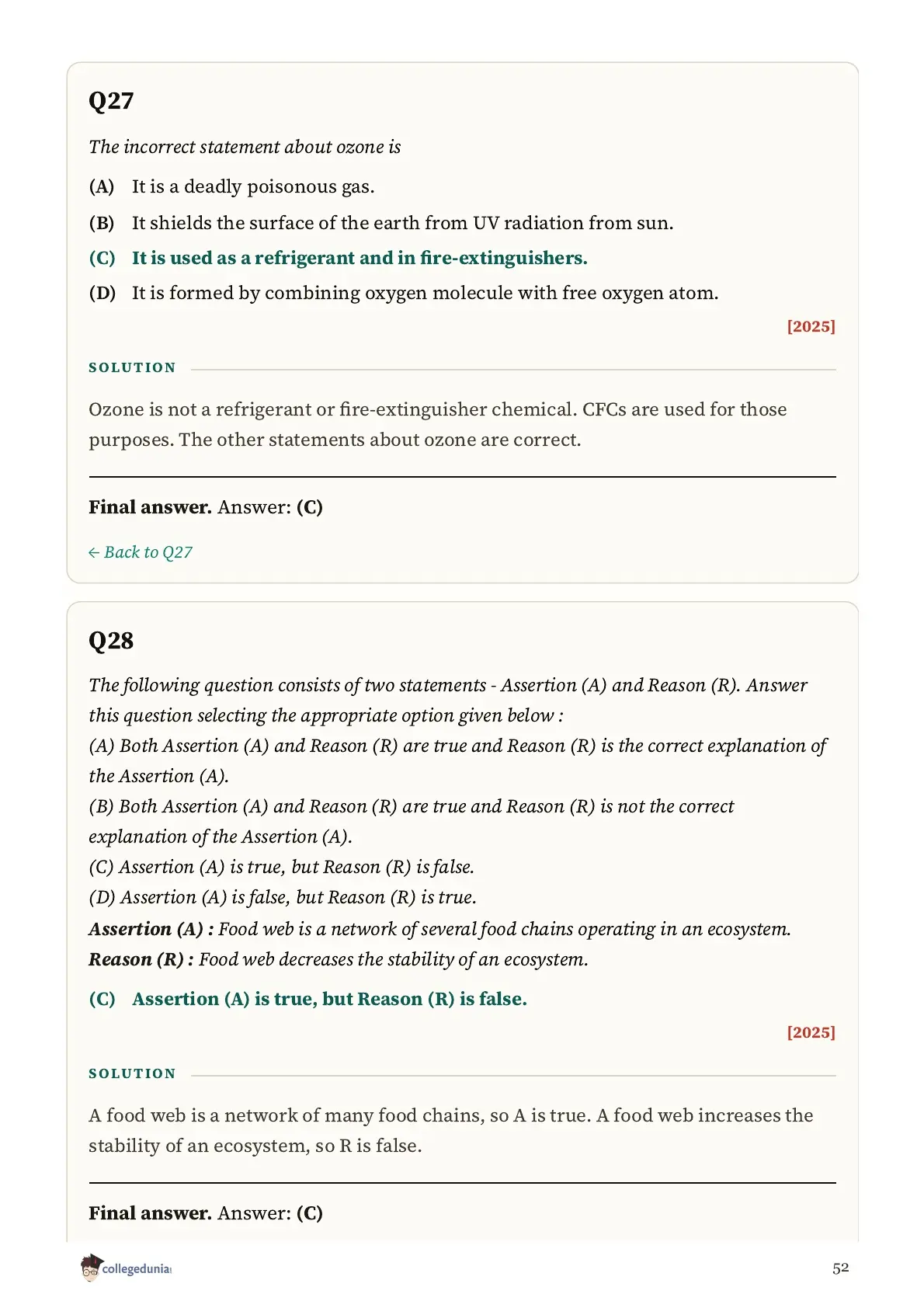
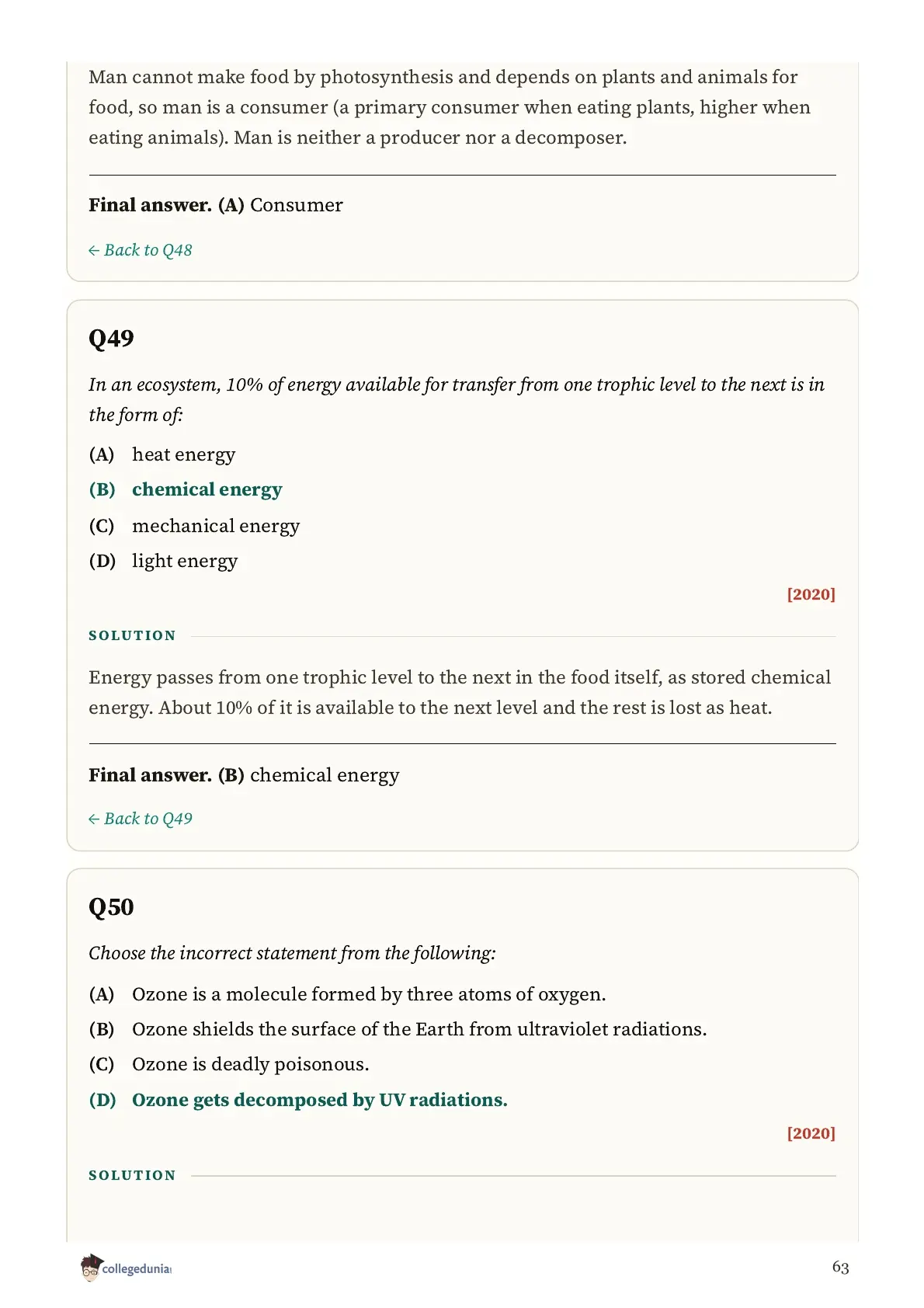
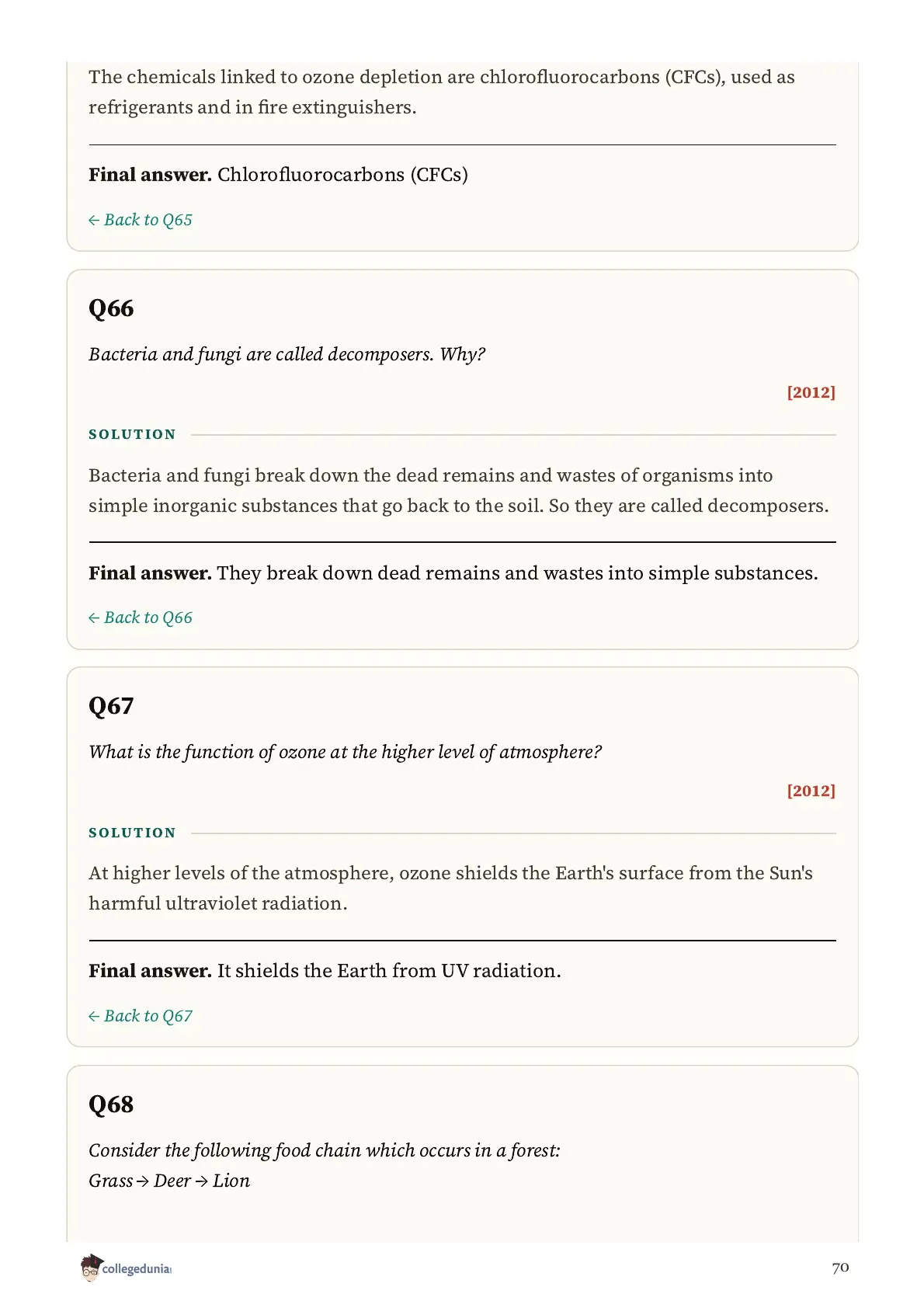
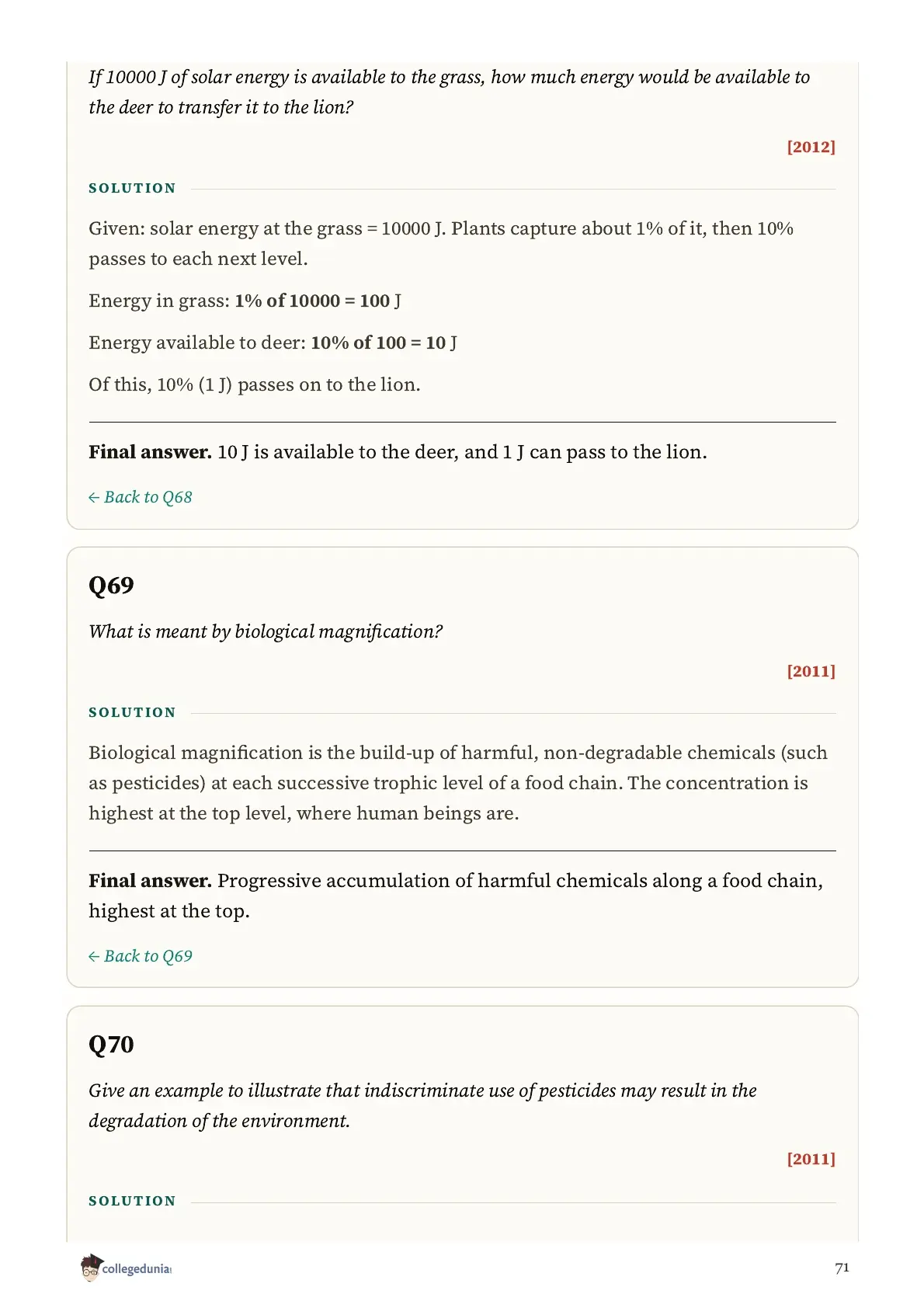
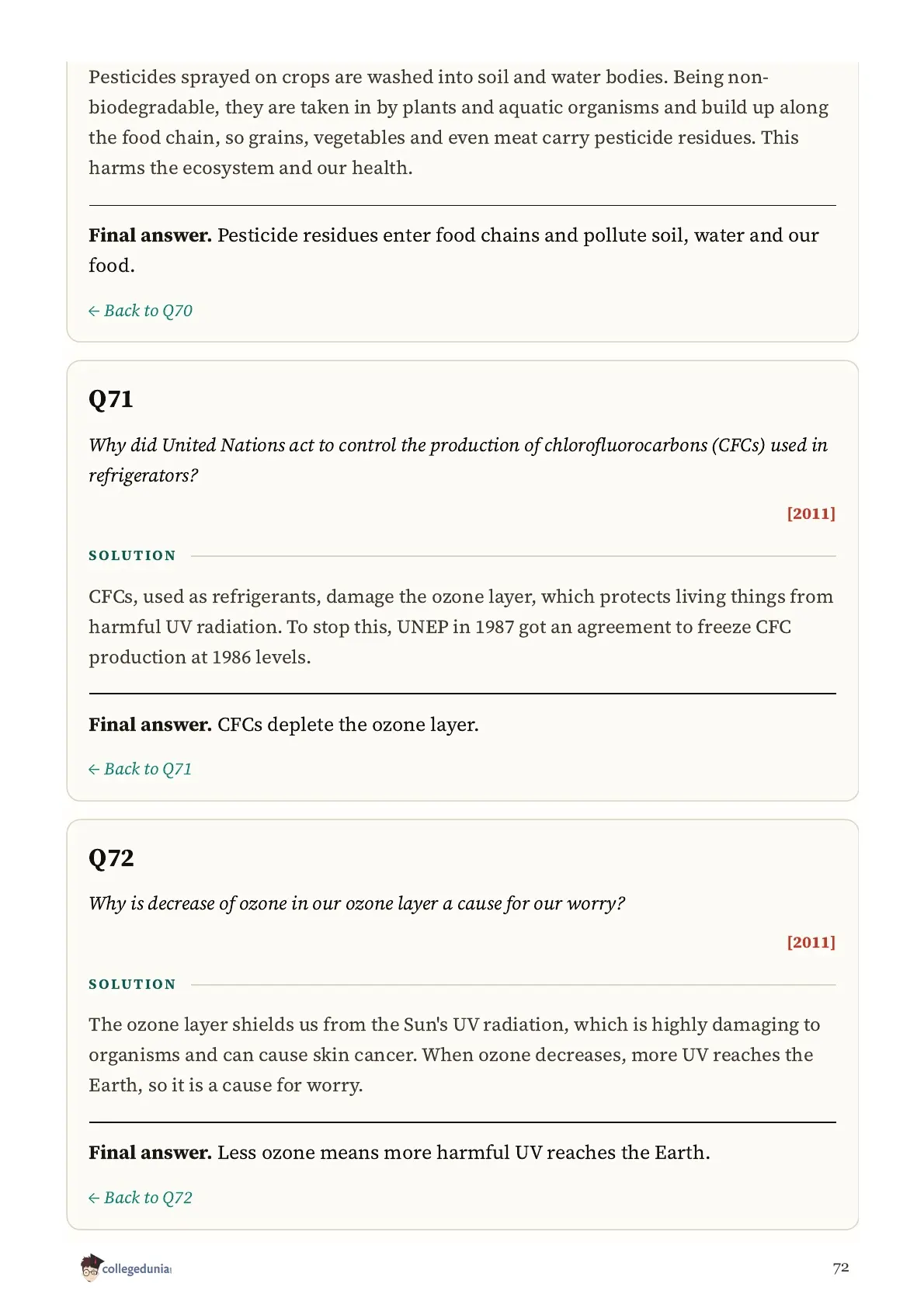
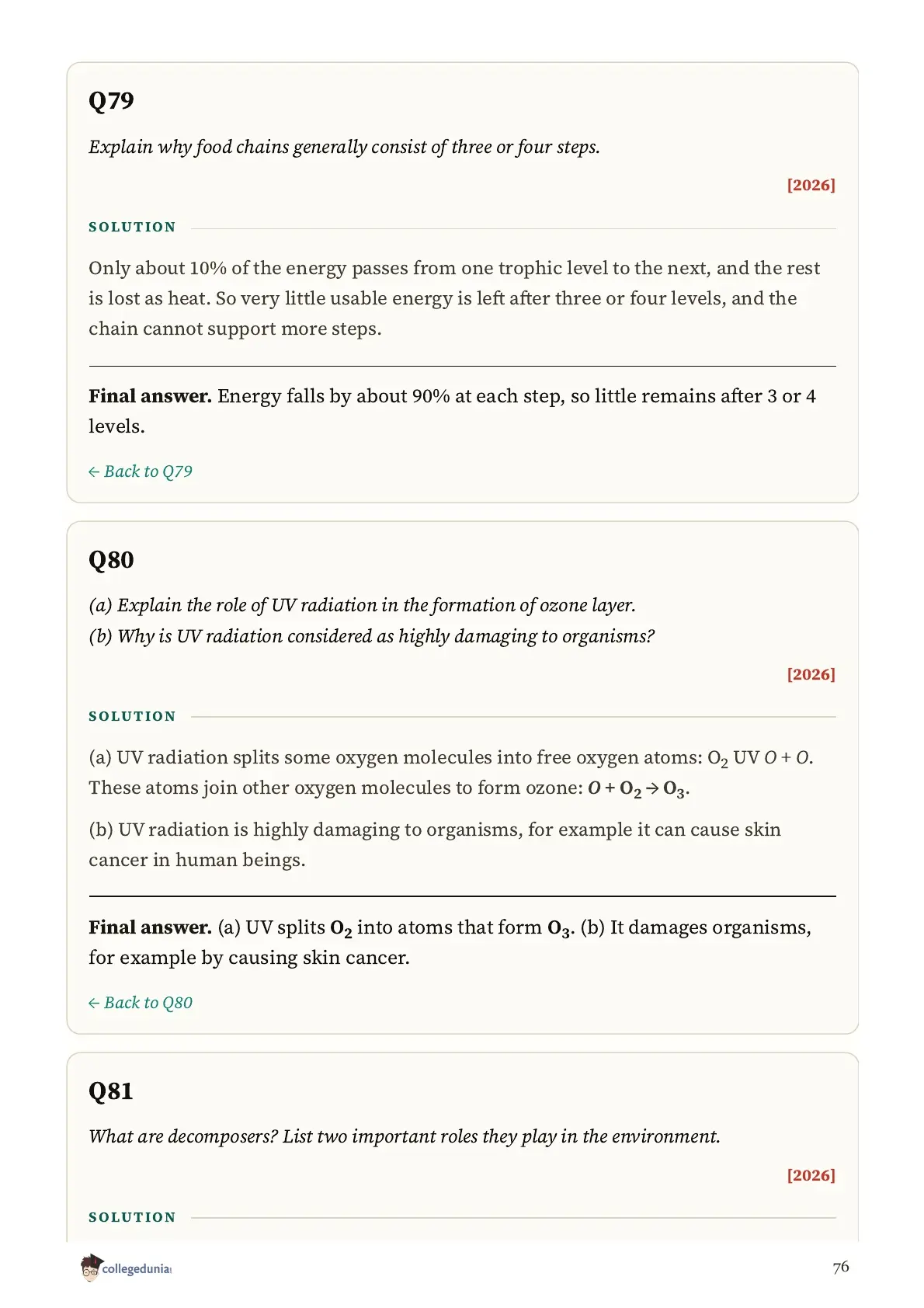
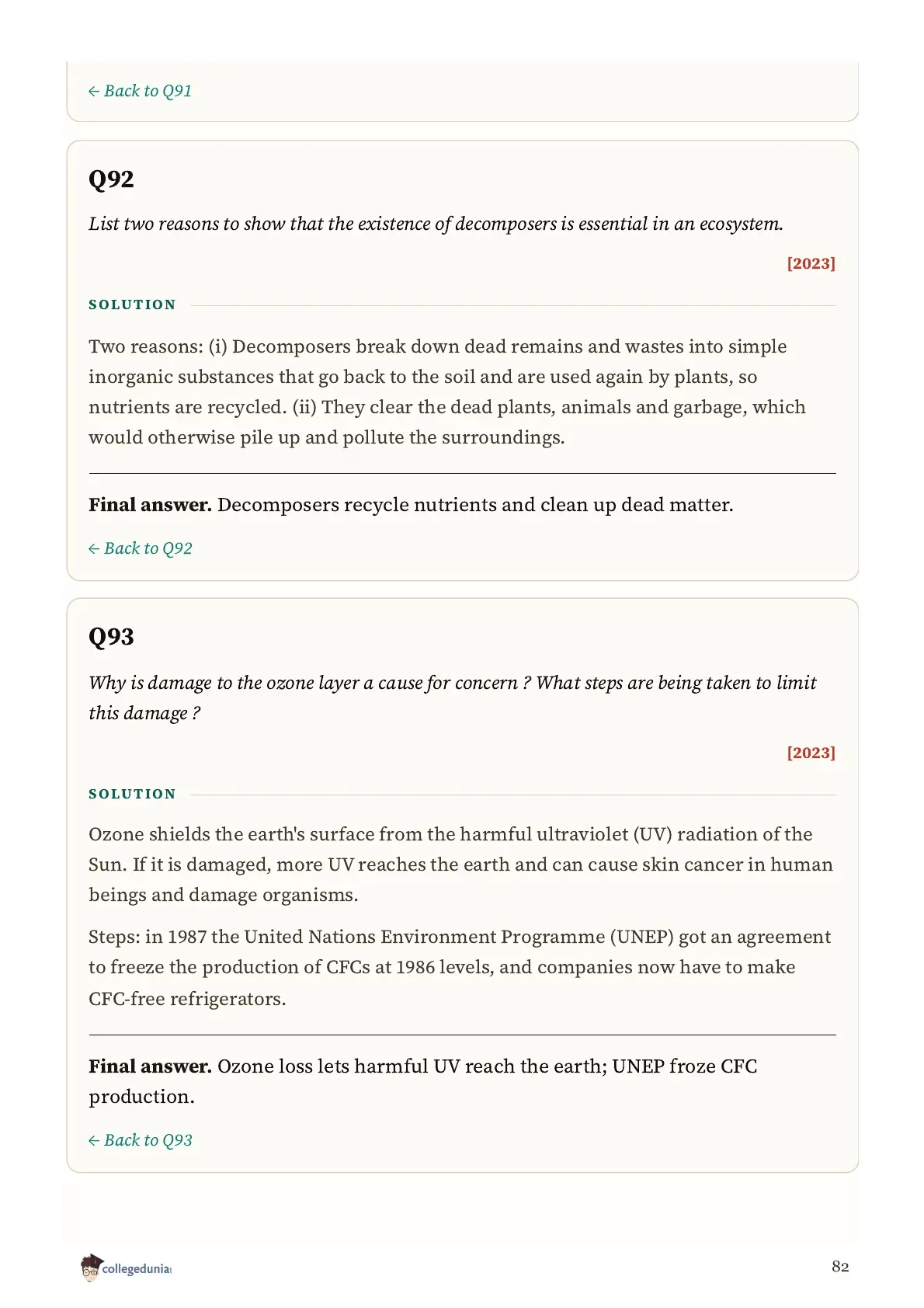
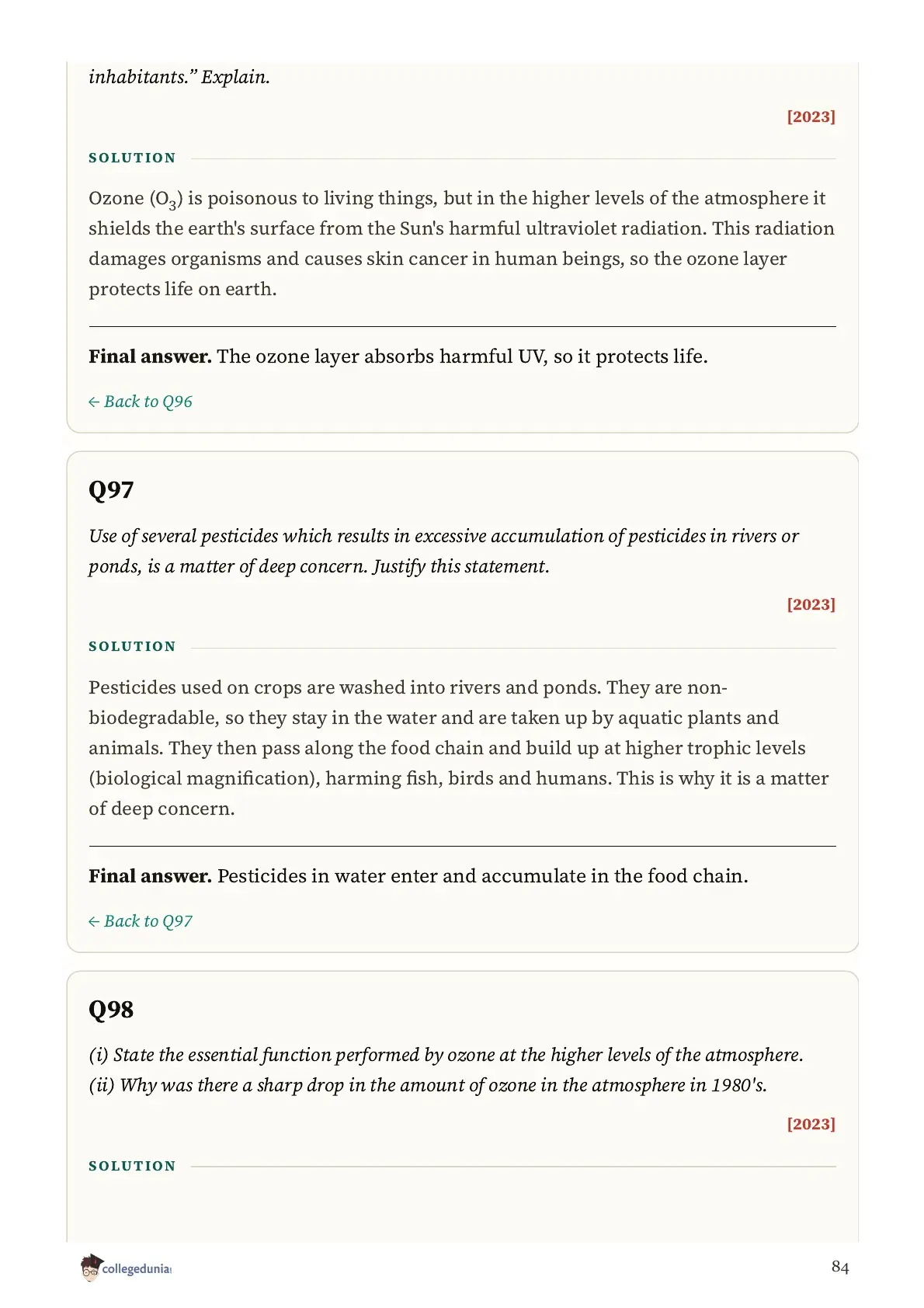
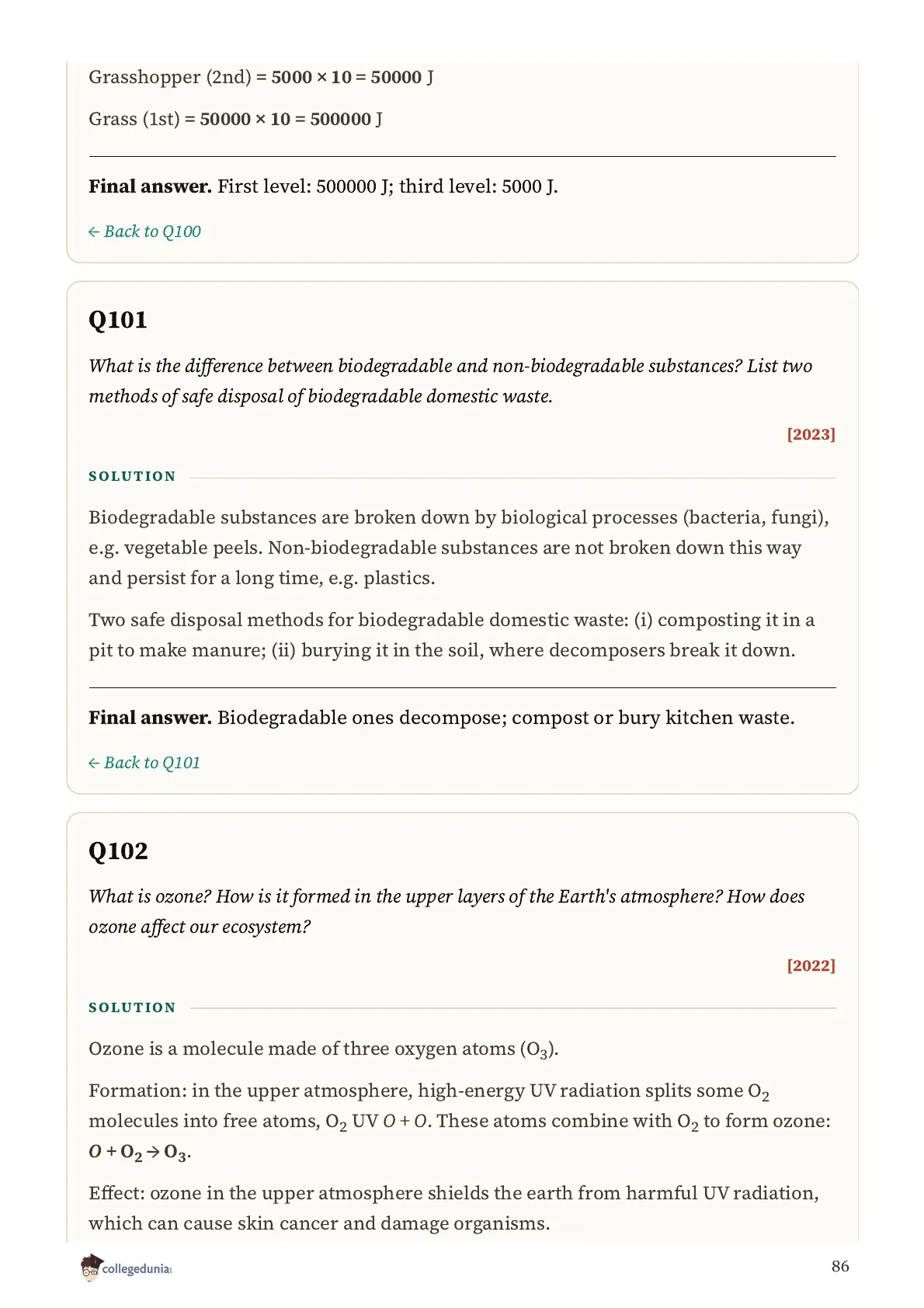
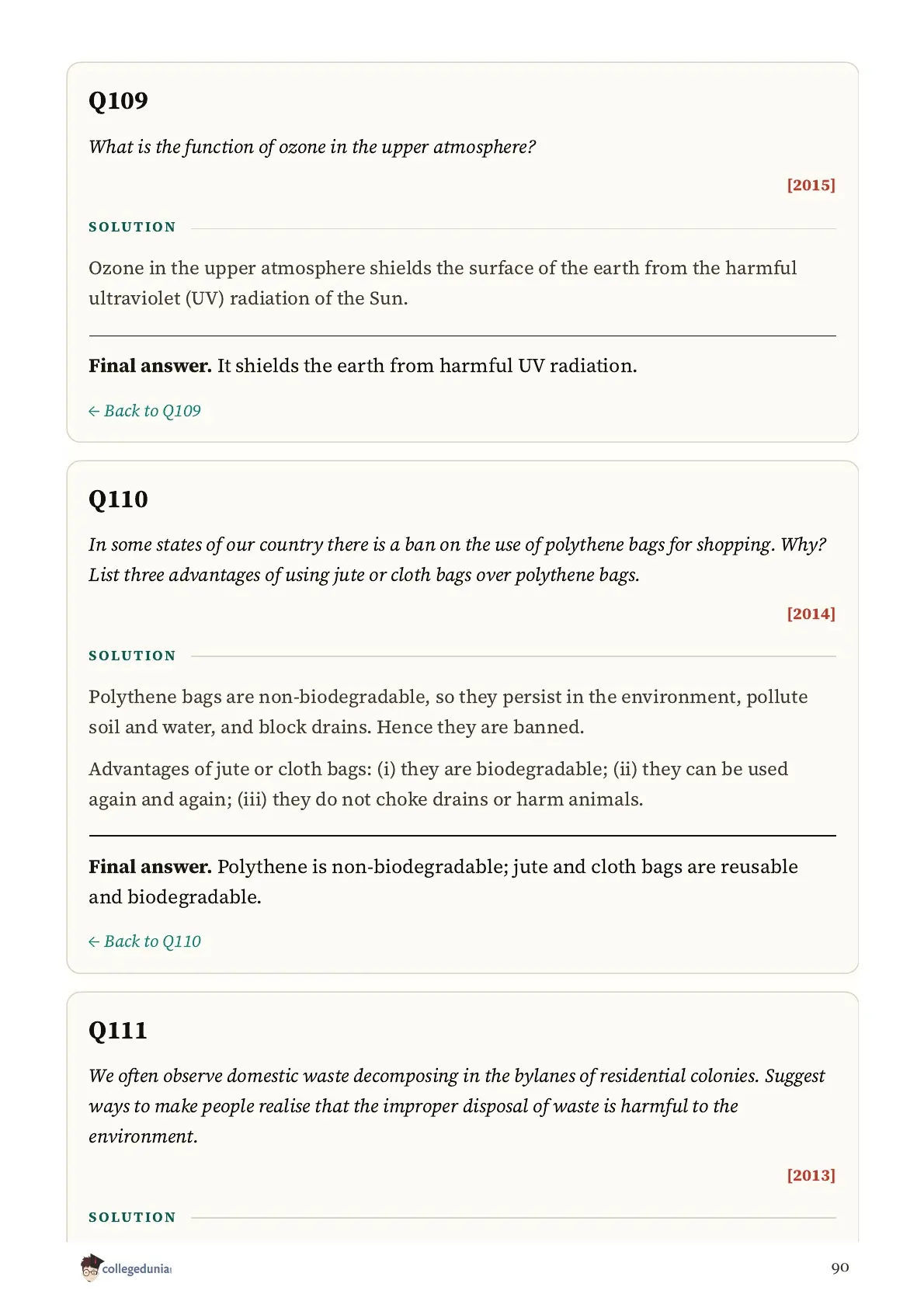
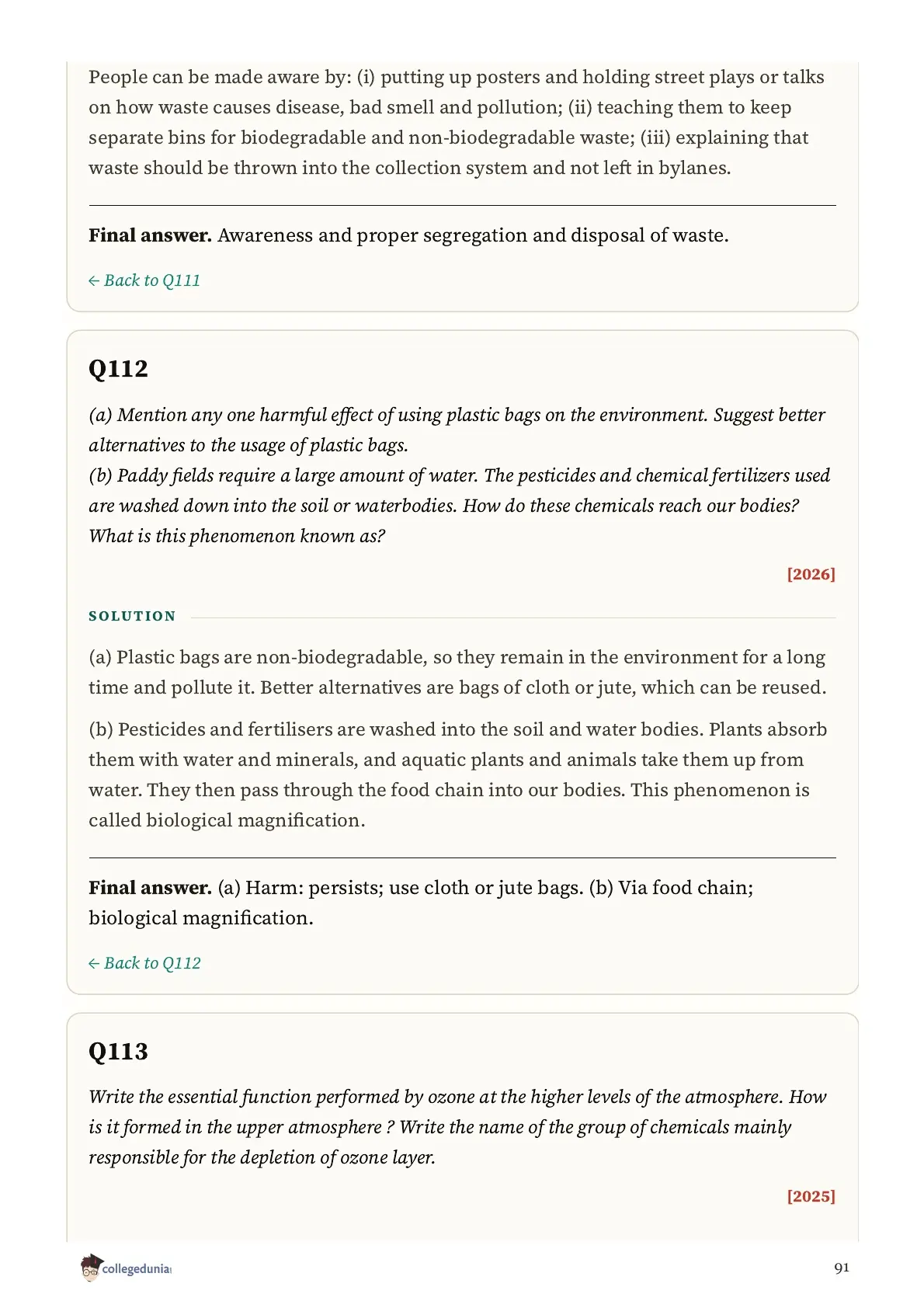
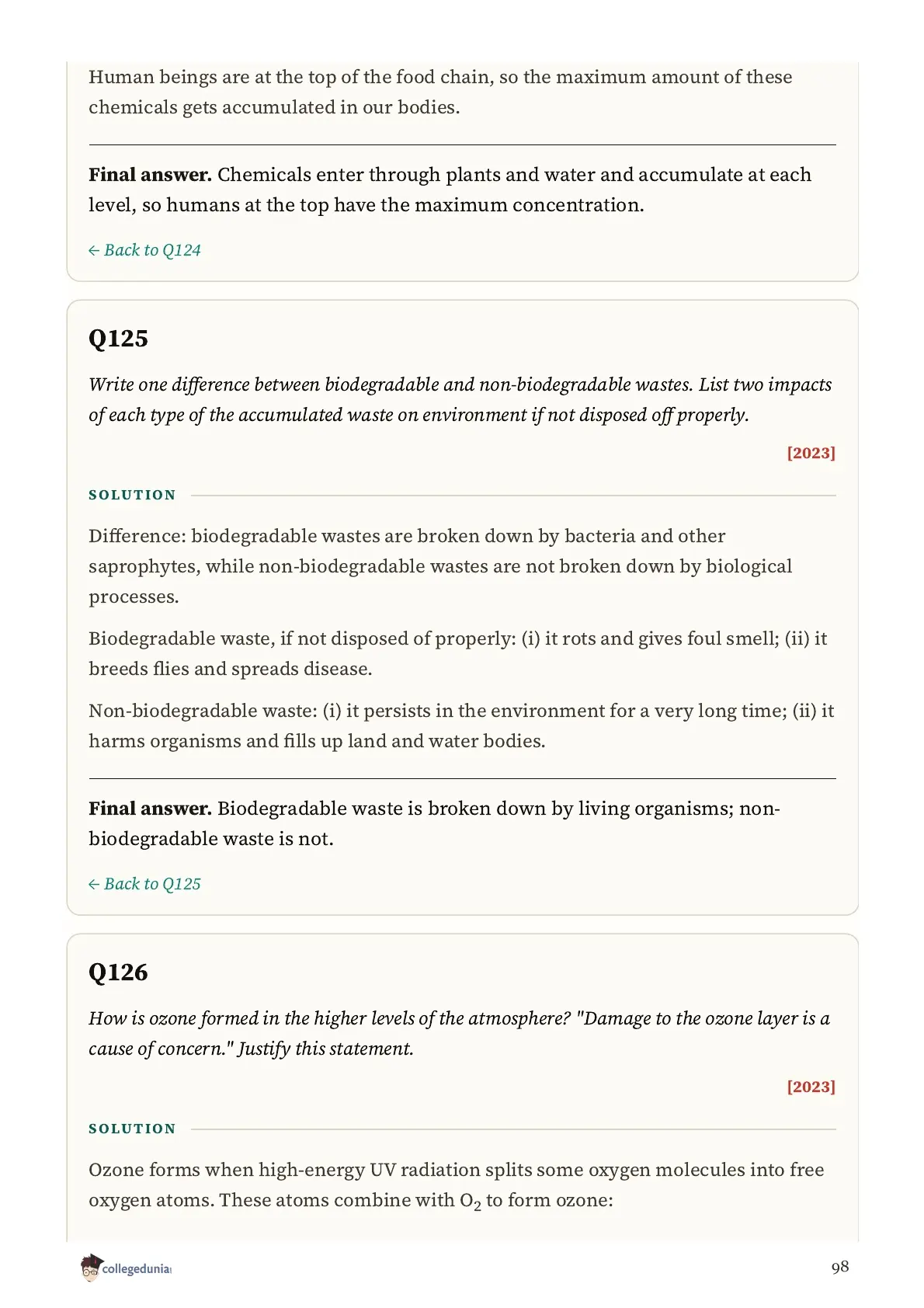
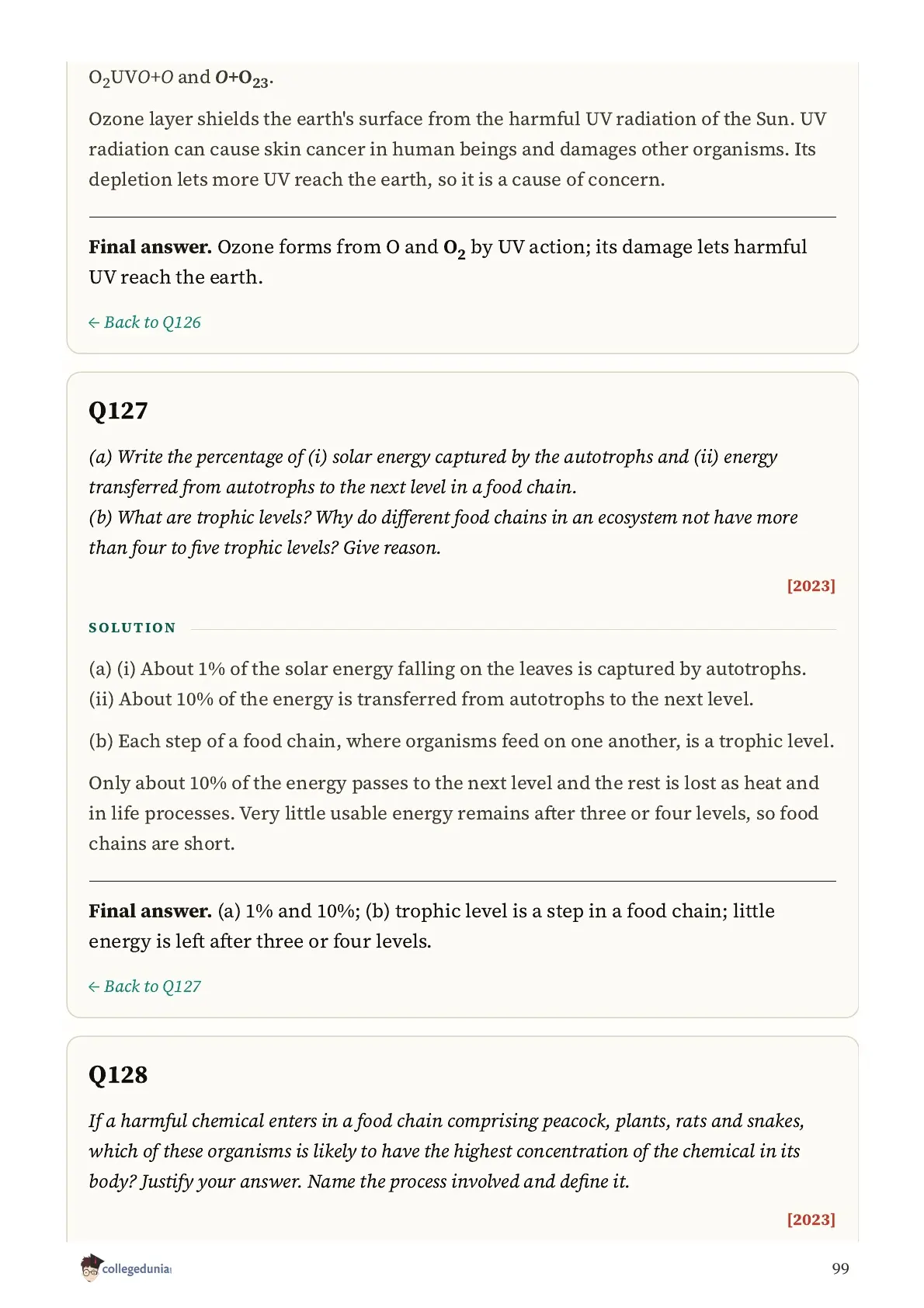
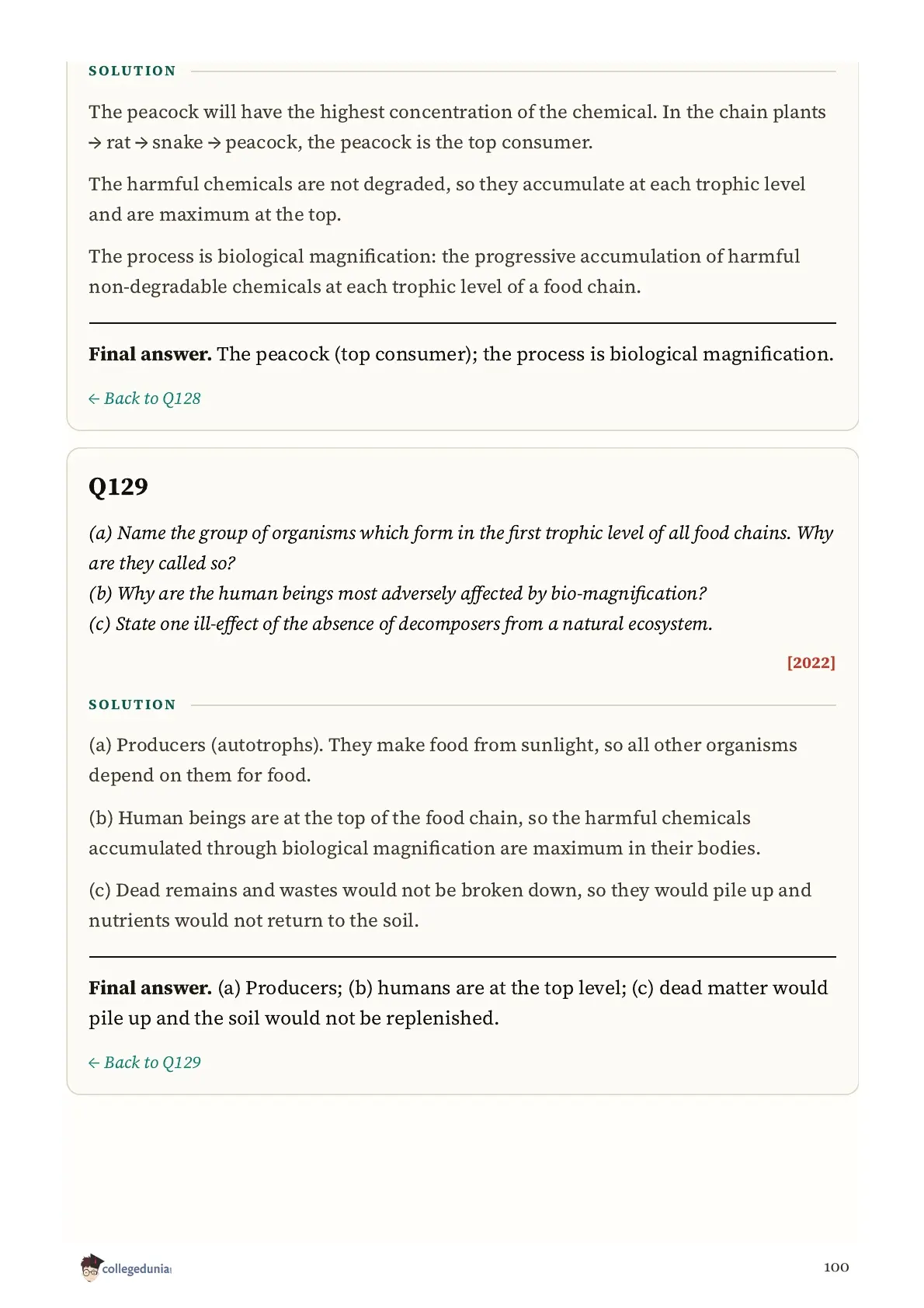
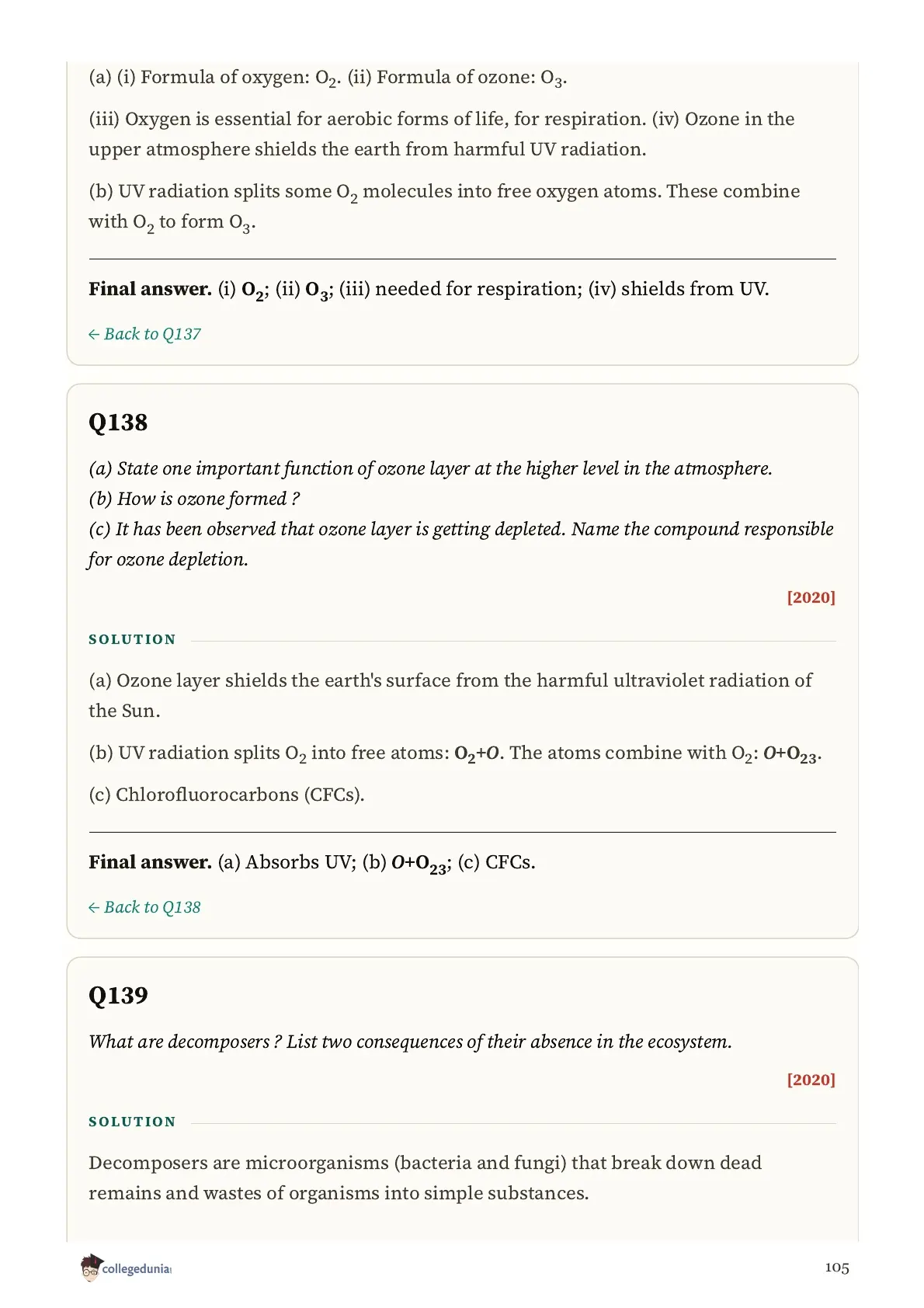
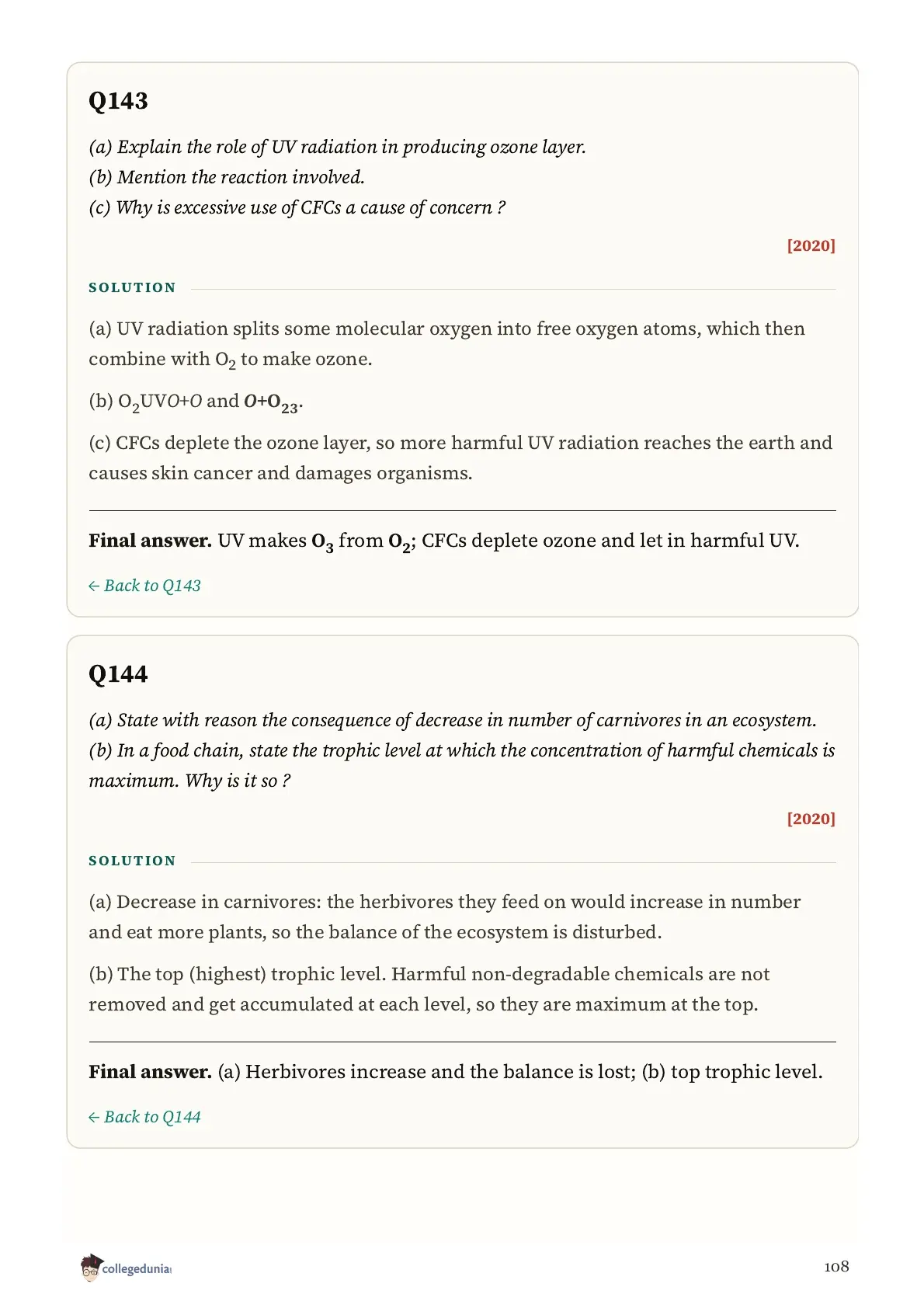
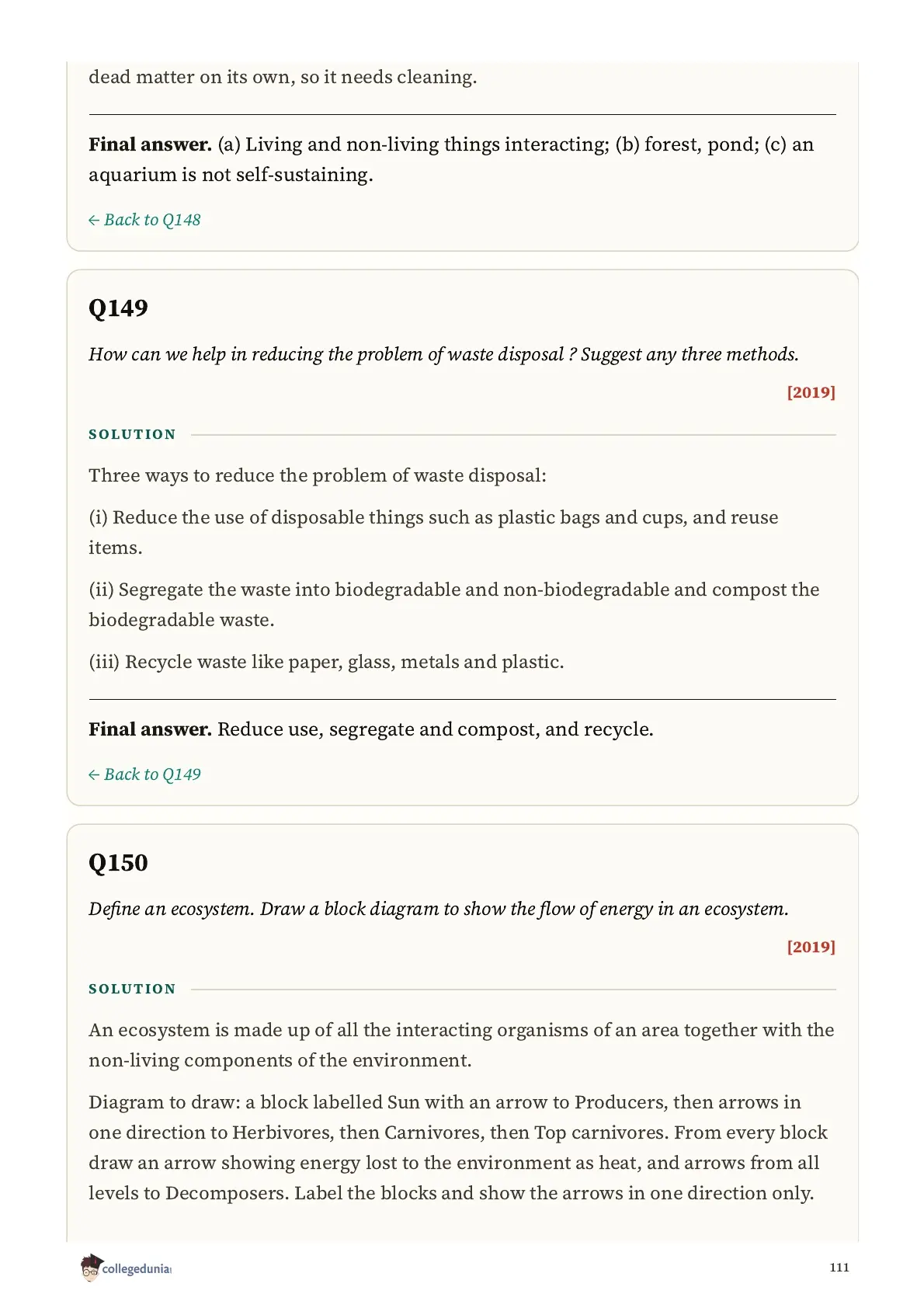
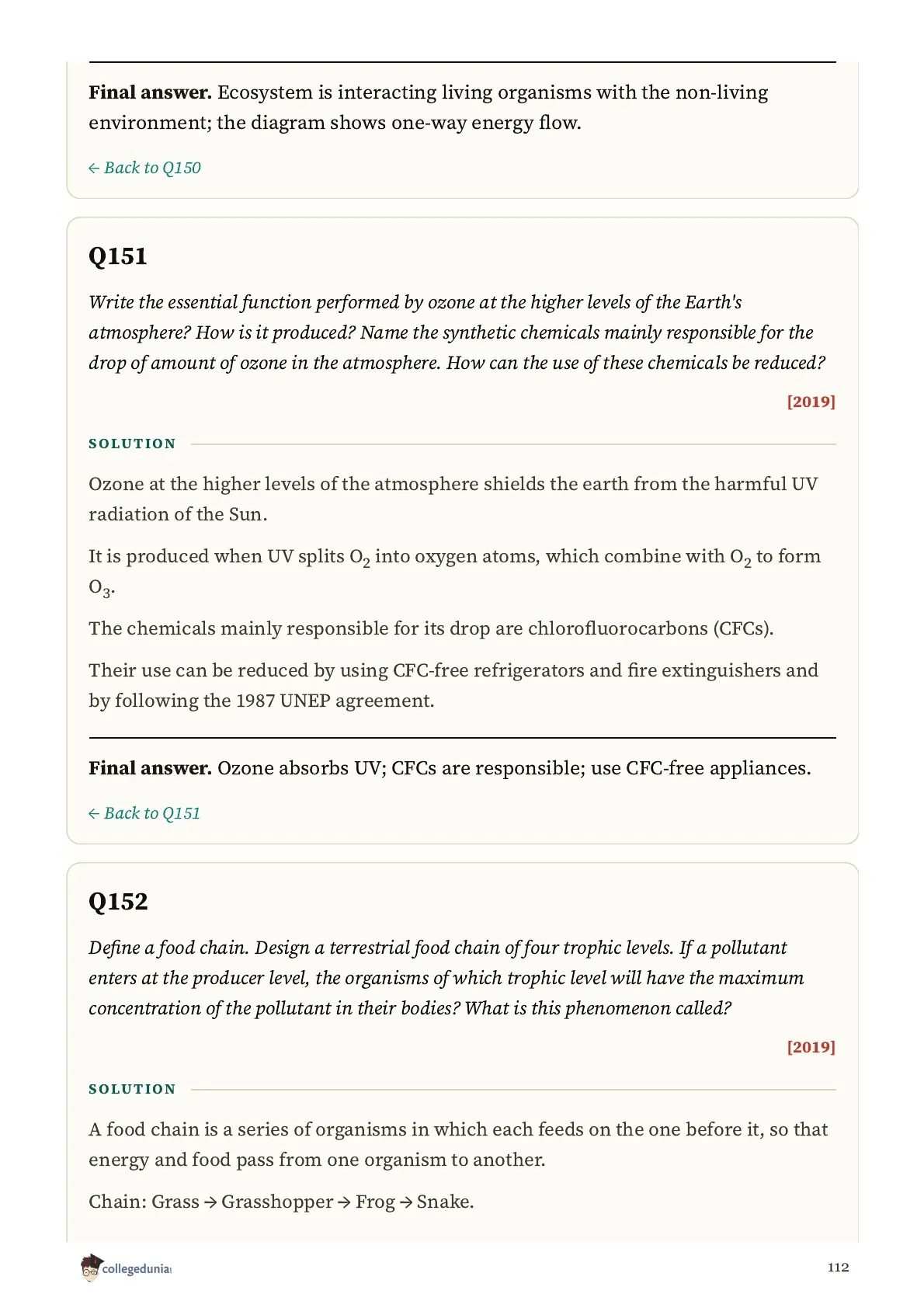
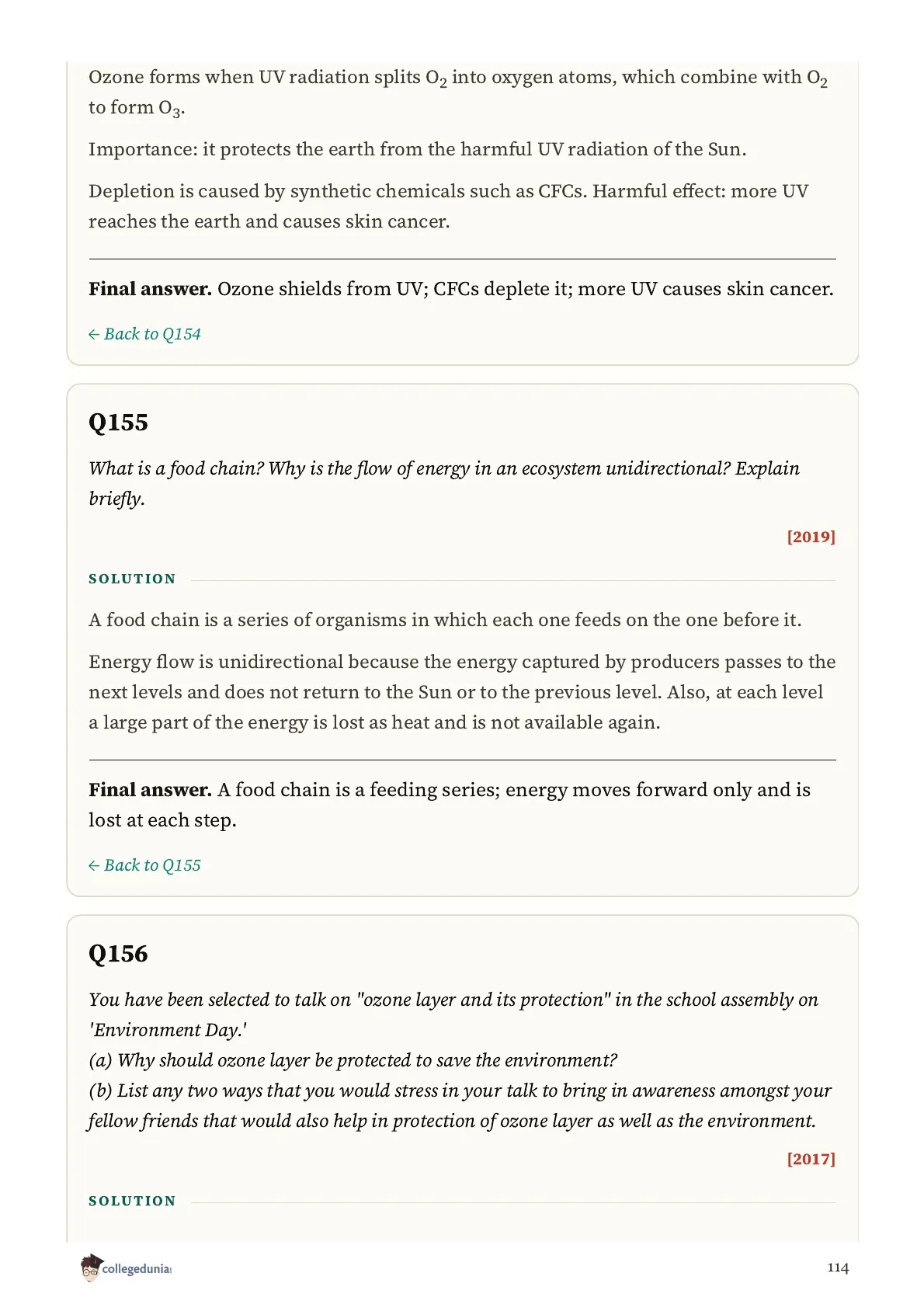
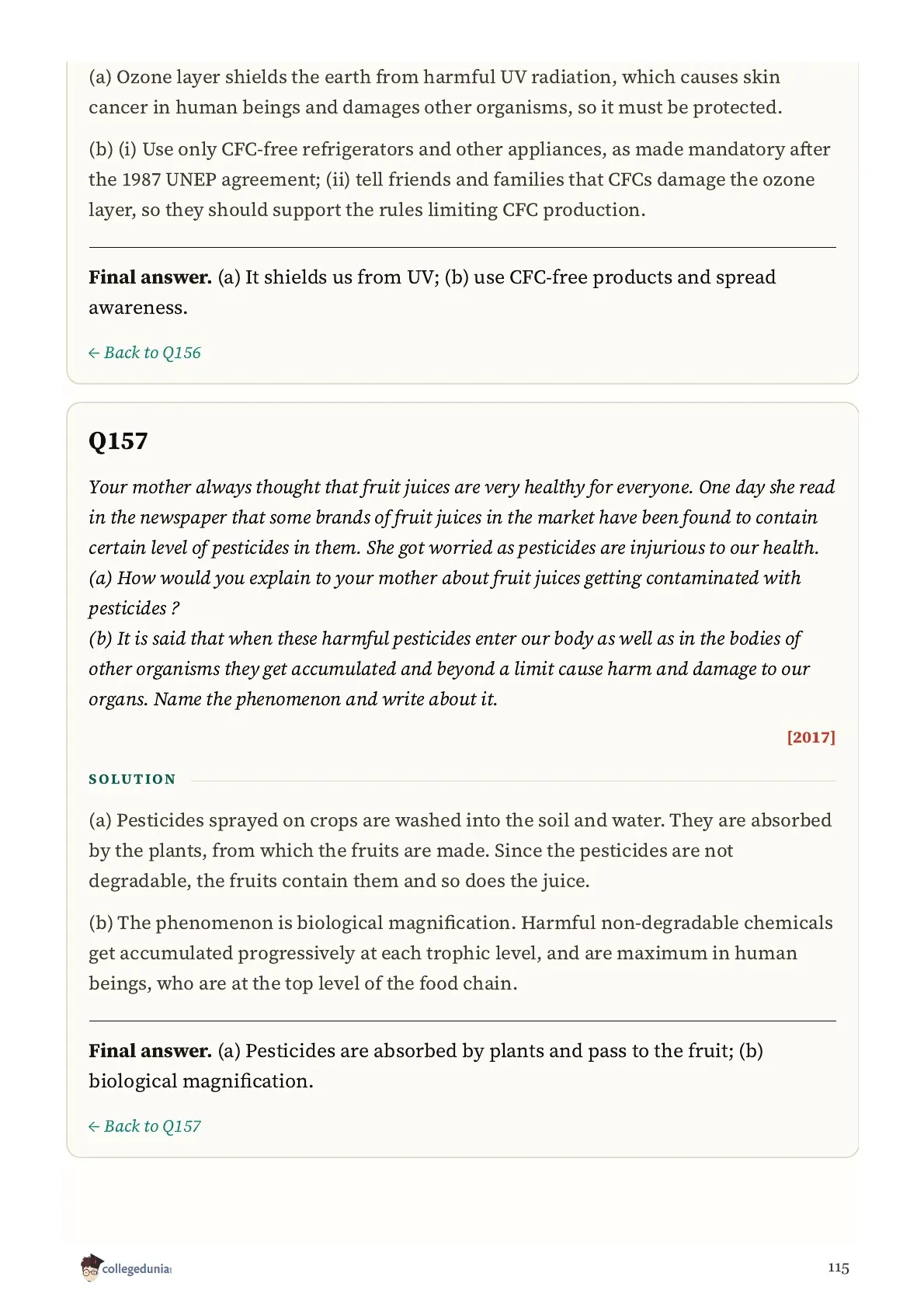
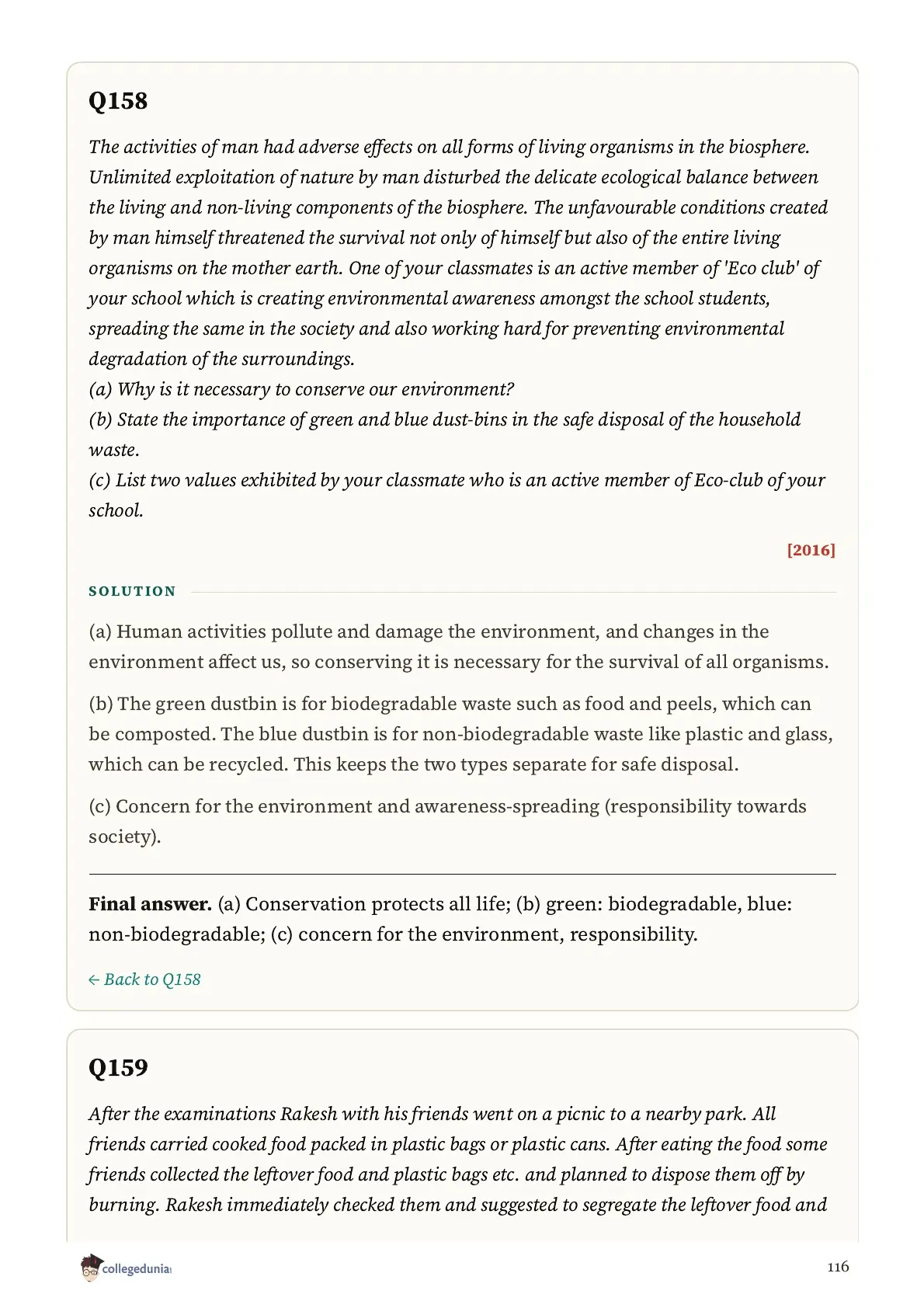
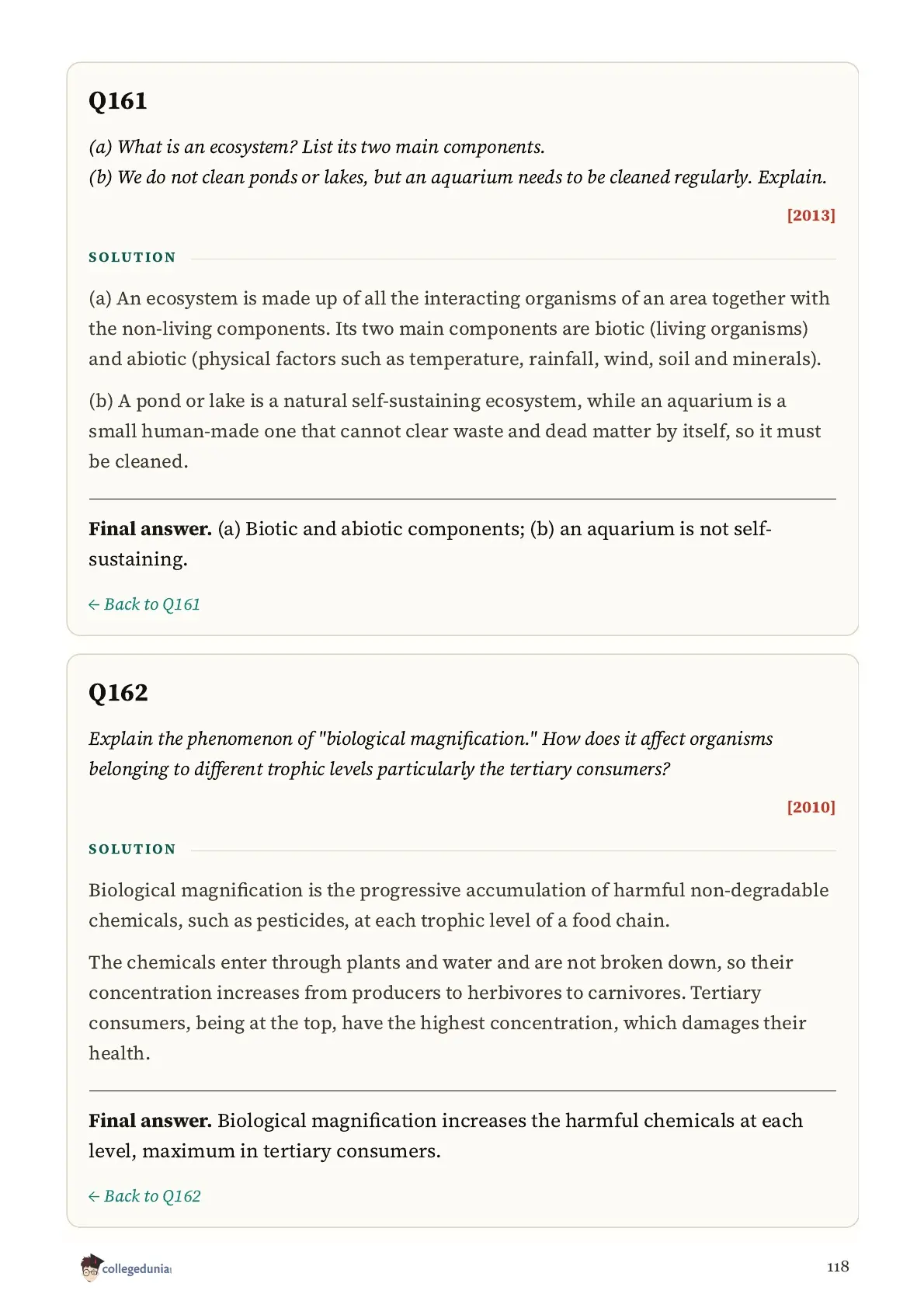
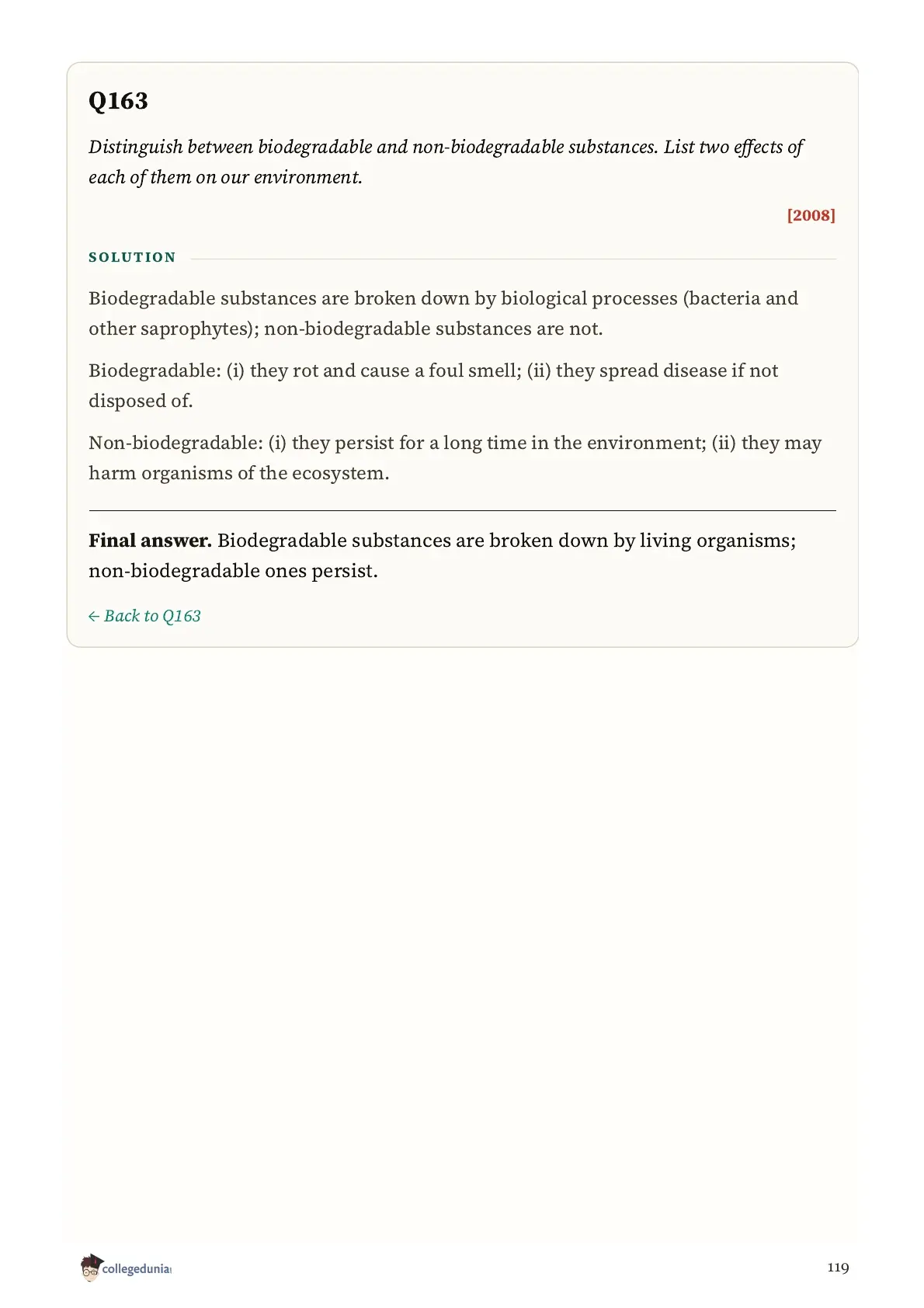
Ozone is the second large block, with 30 questions on its formation from O2 under UV, its role as a shield, CFCs and the drop in the 1980s. Only 3 mention the 1987 UNEP agreement. Waste comes next: 16 questions on biodegradable and non-biodegradable items, 10 touching plastic, polythene or jute bags. Biomagnification and pesticides account for 13 and 11 questions, and the answer is almost always that human beings sit at the top of the chain.
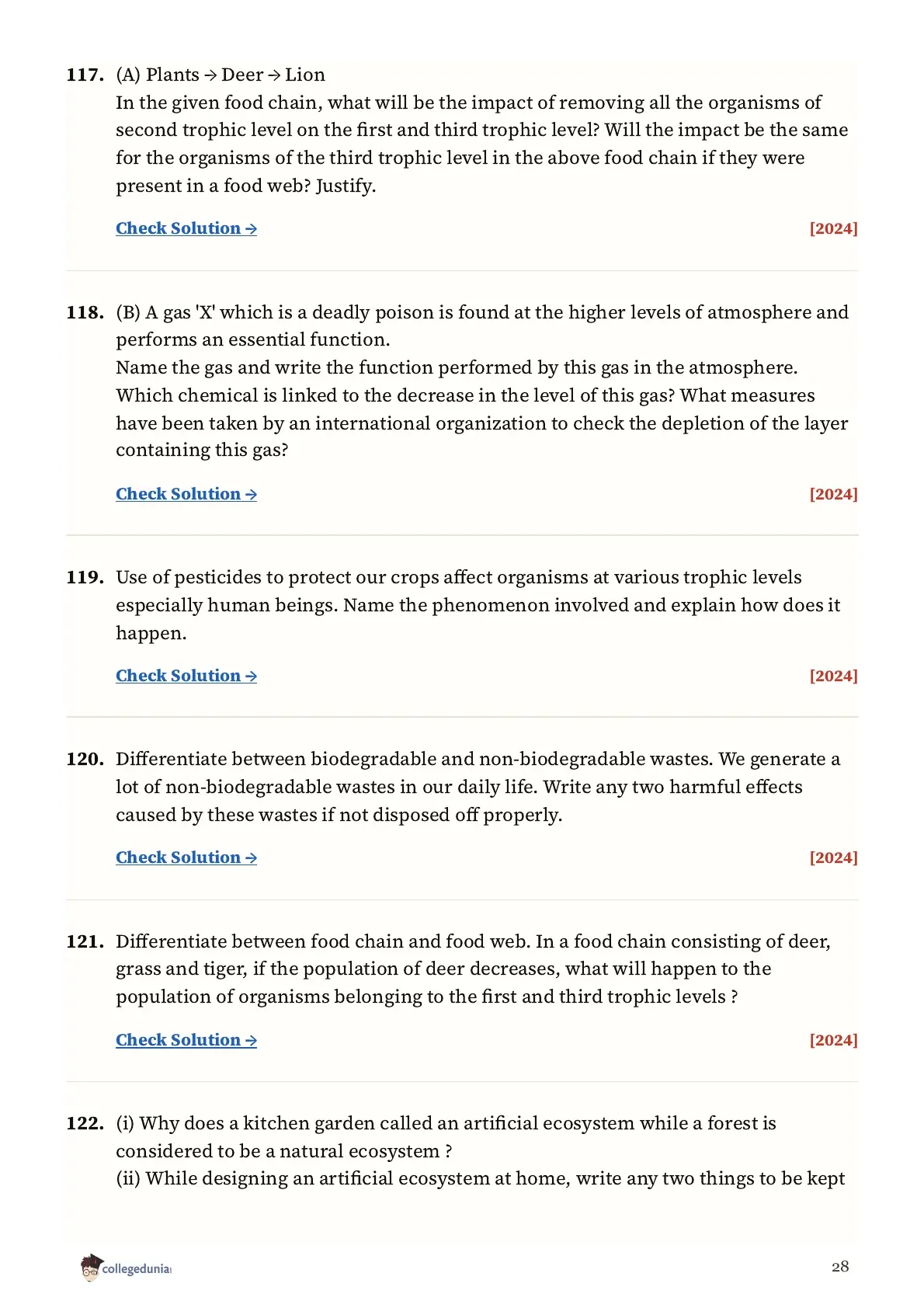
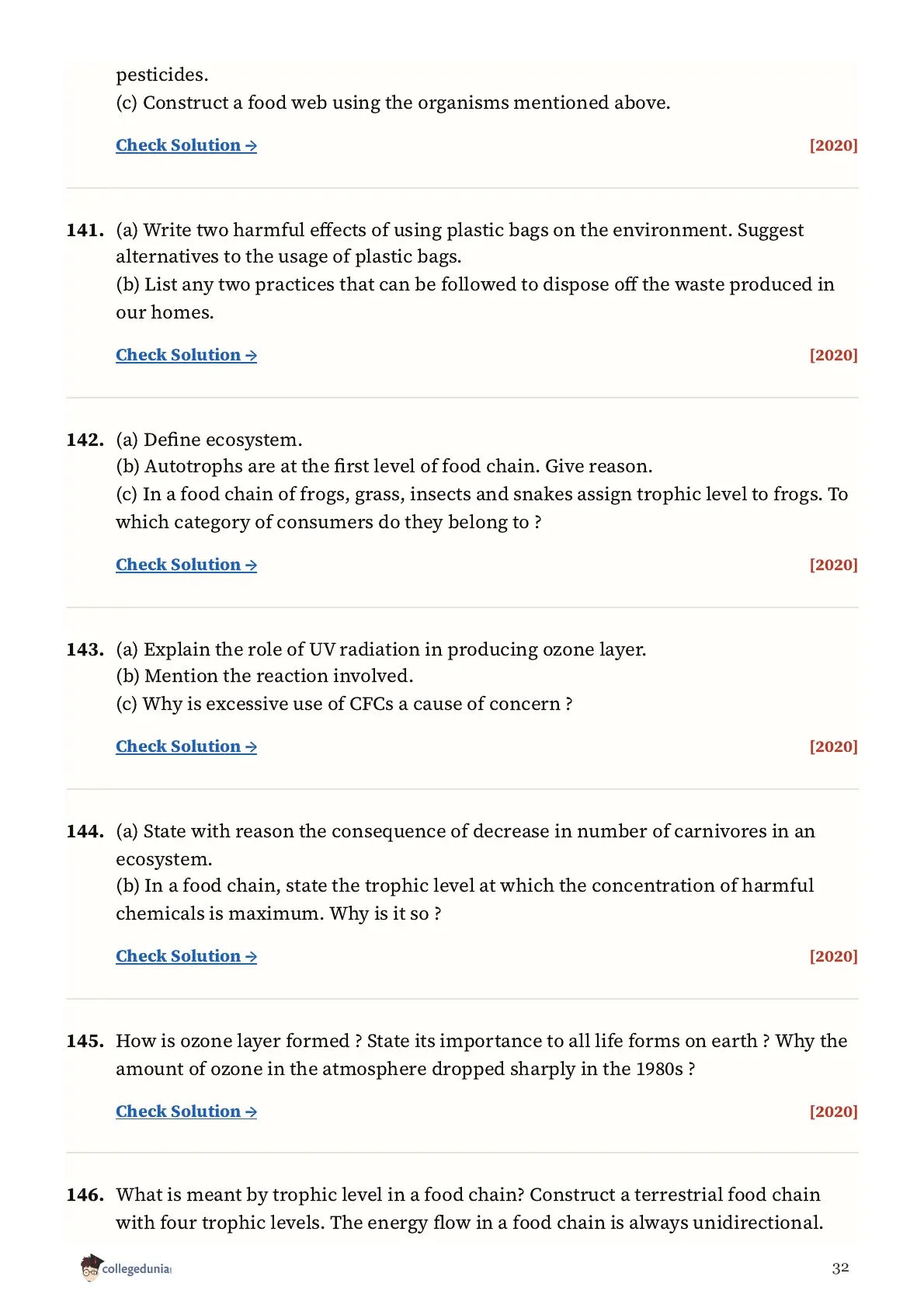
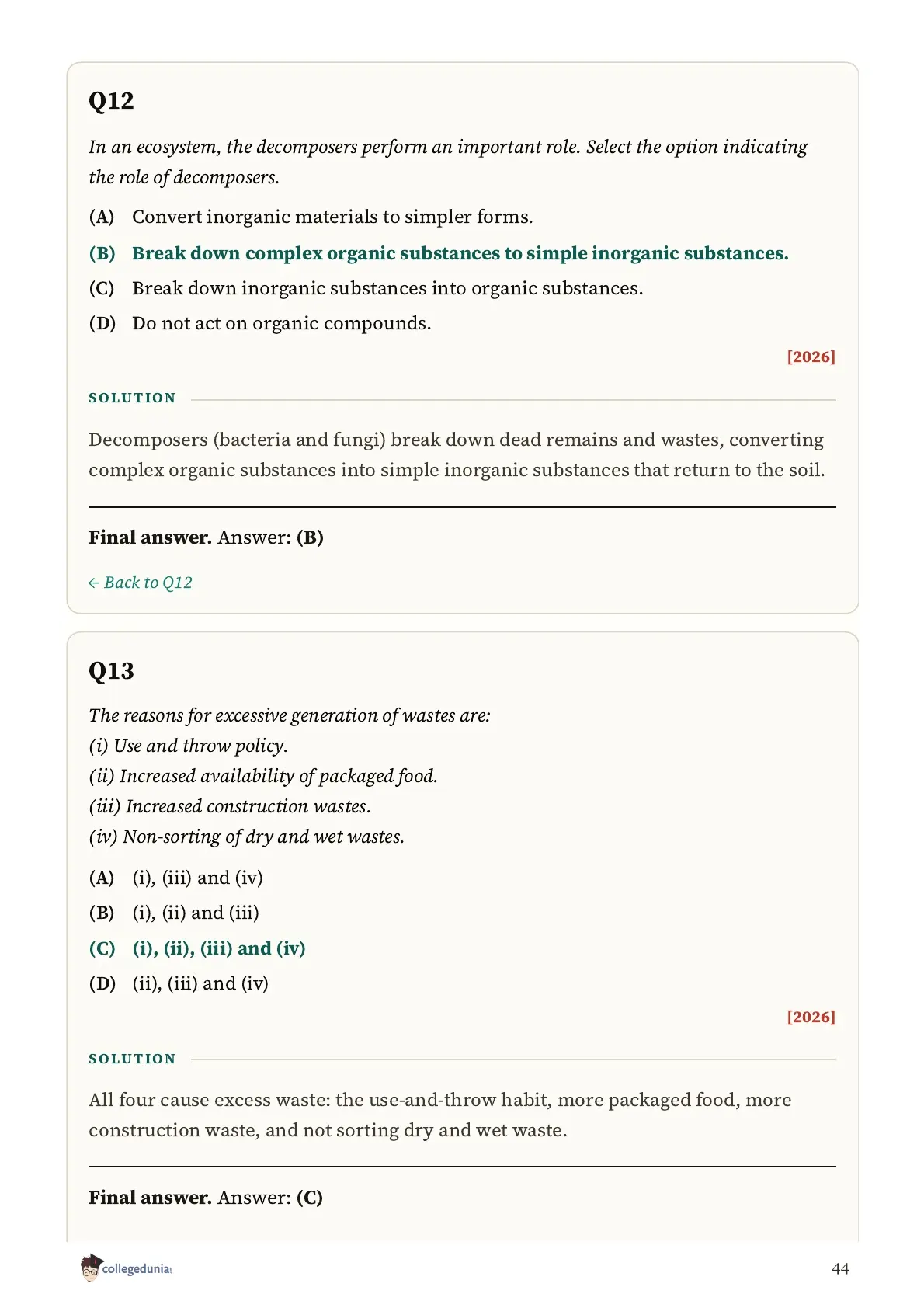
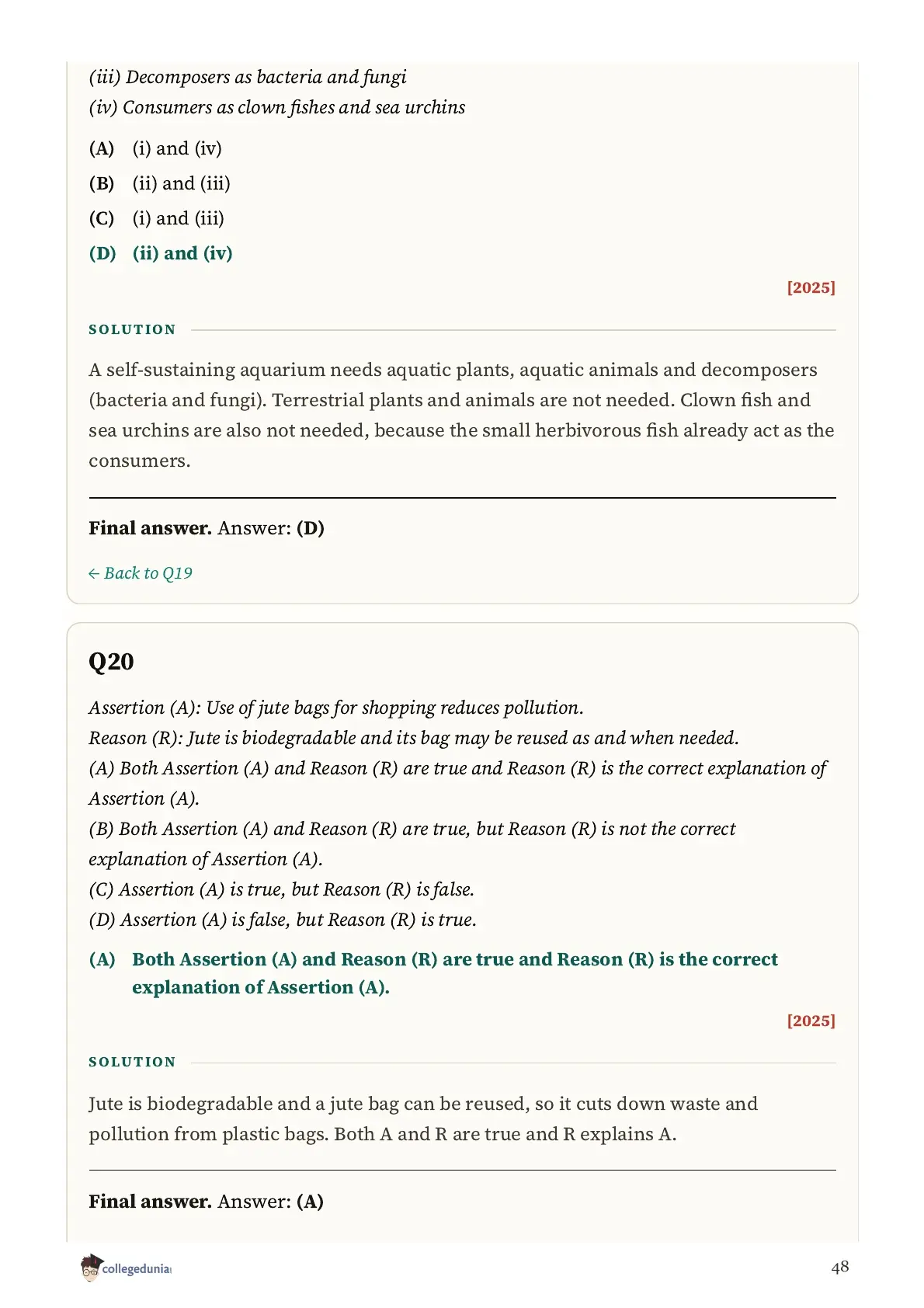
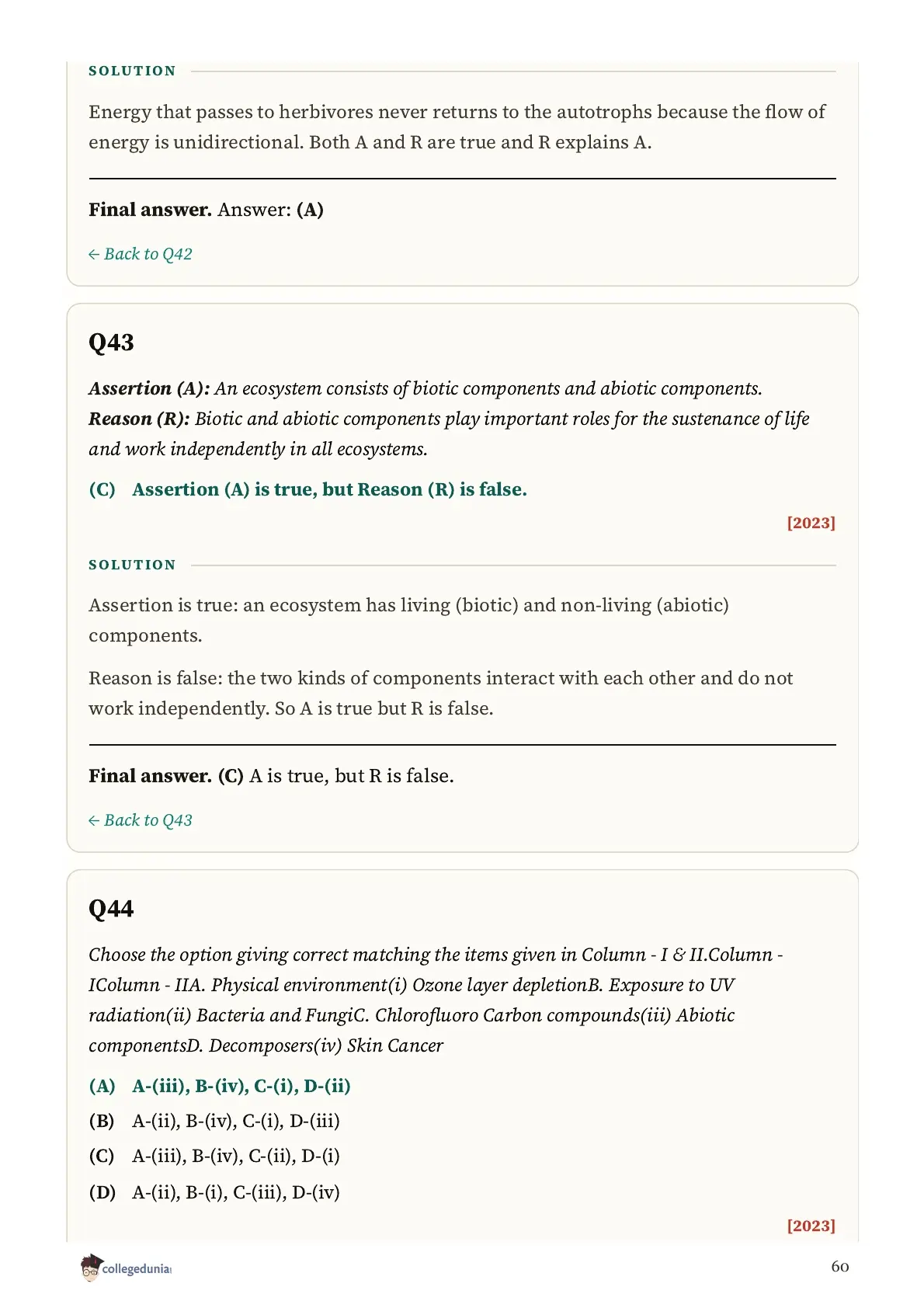
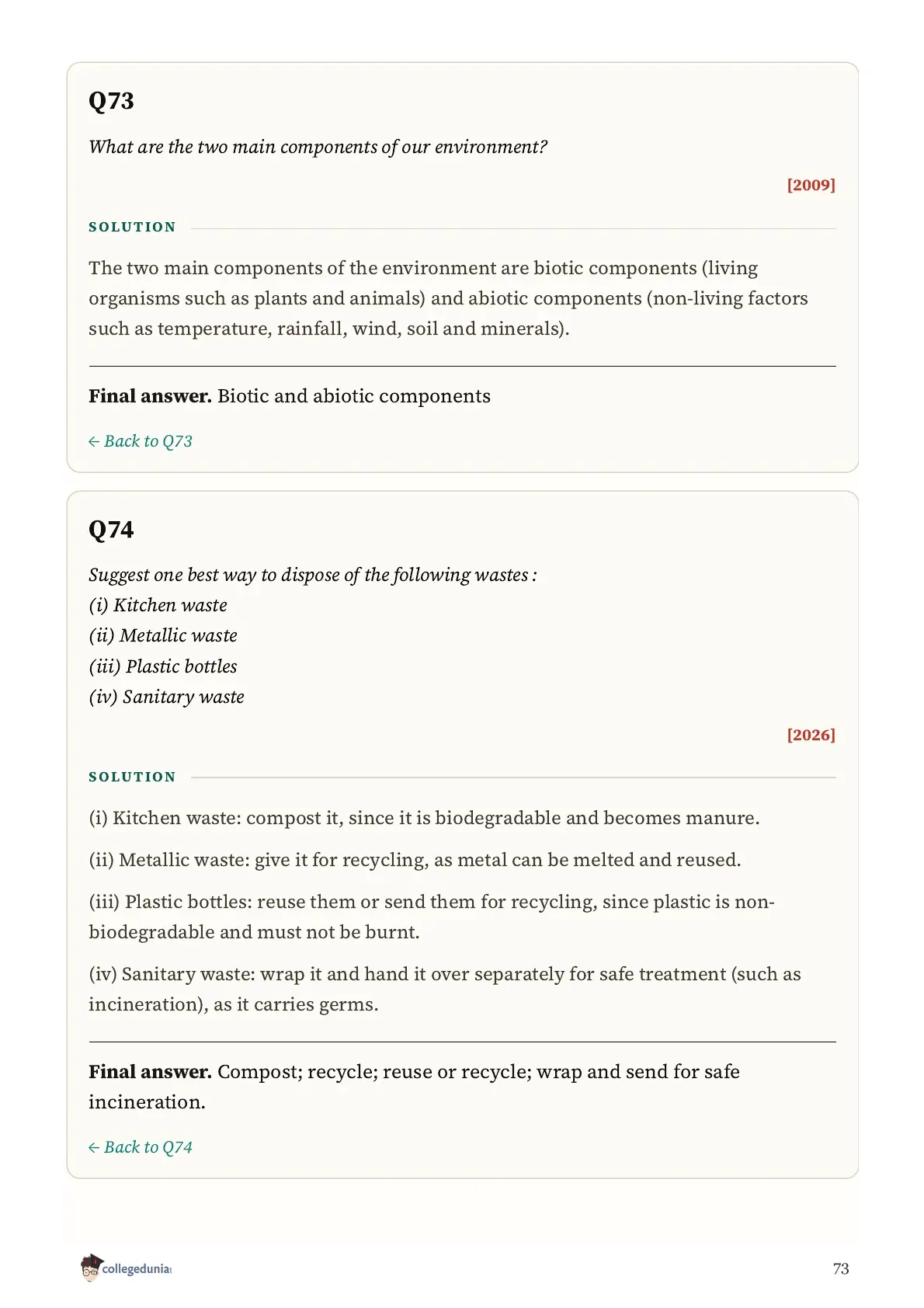
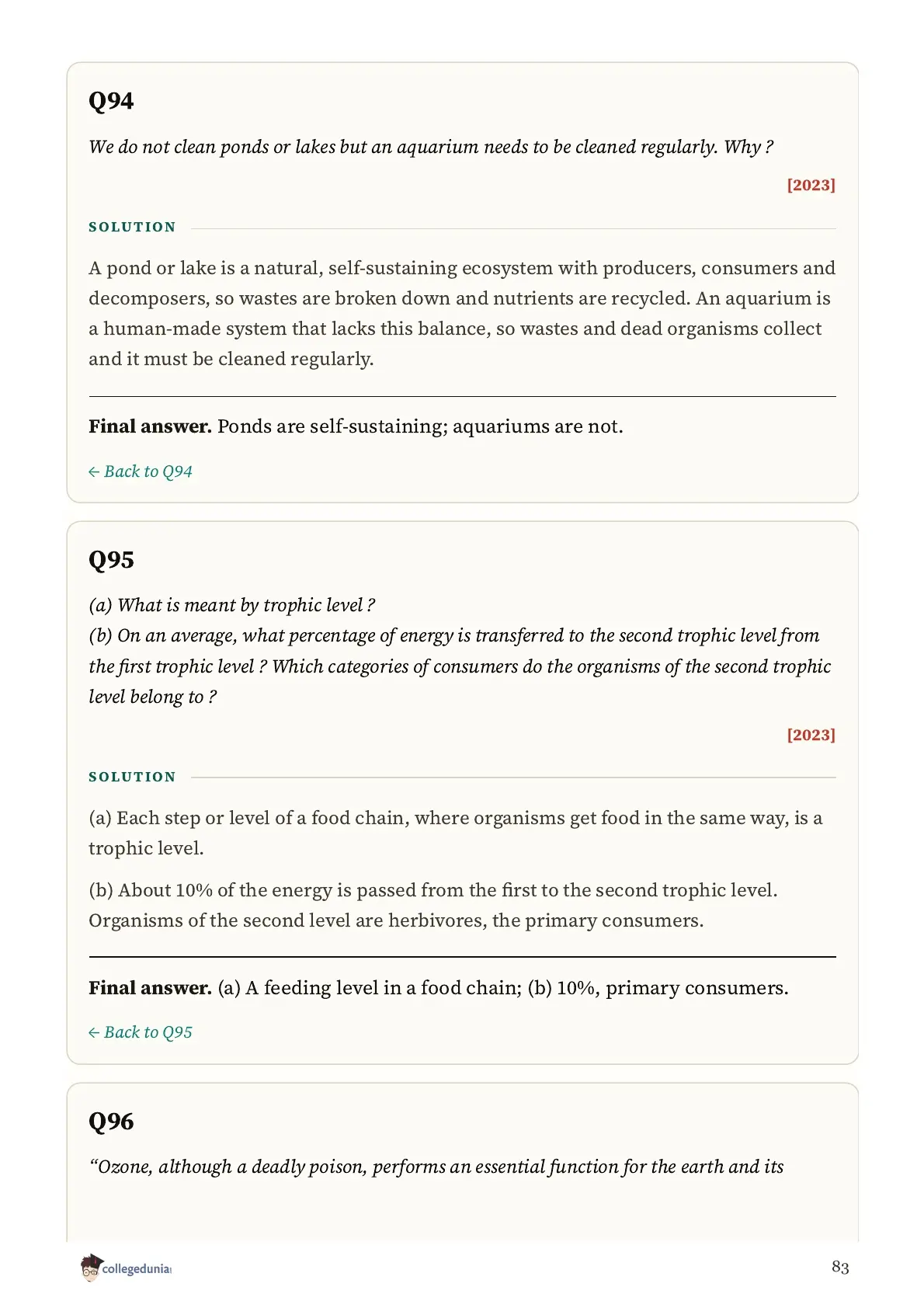
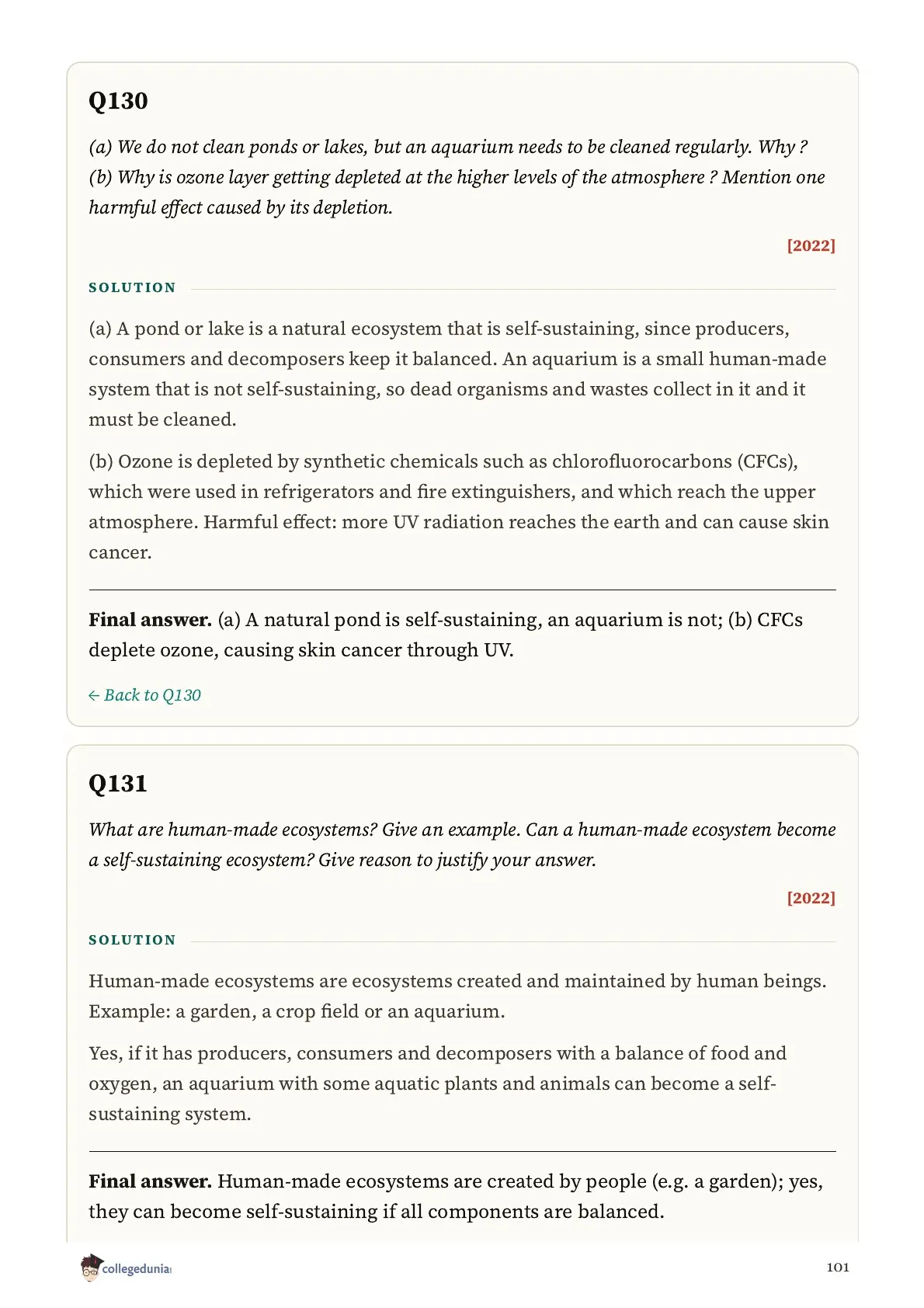
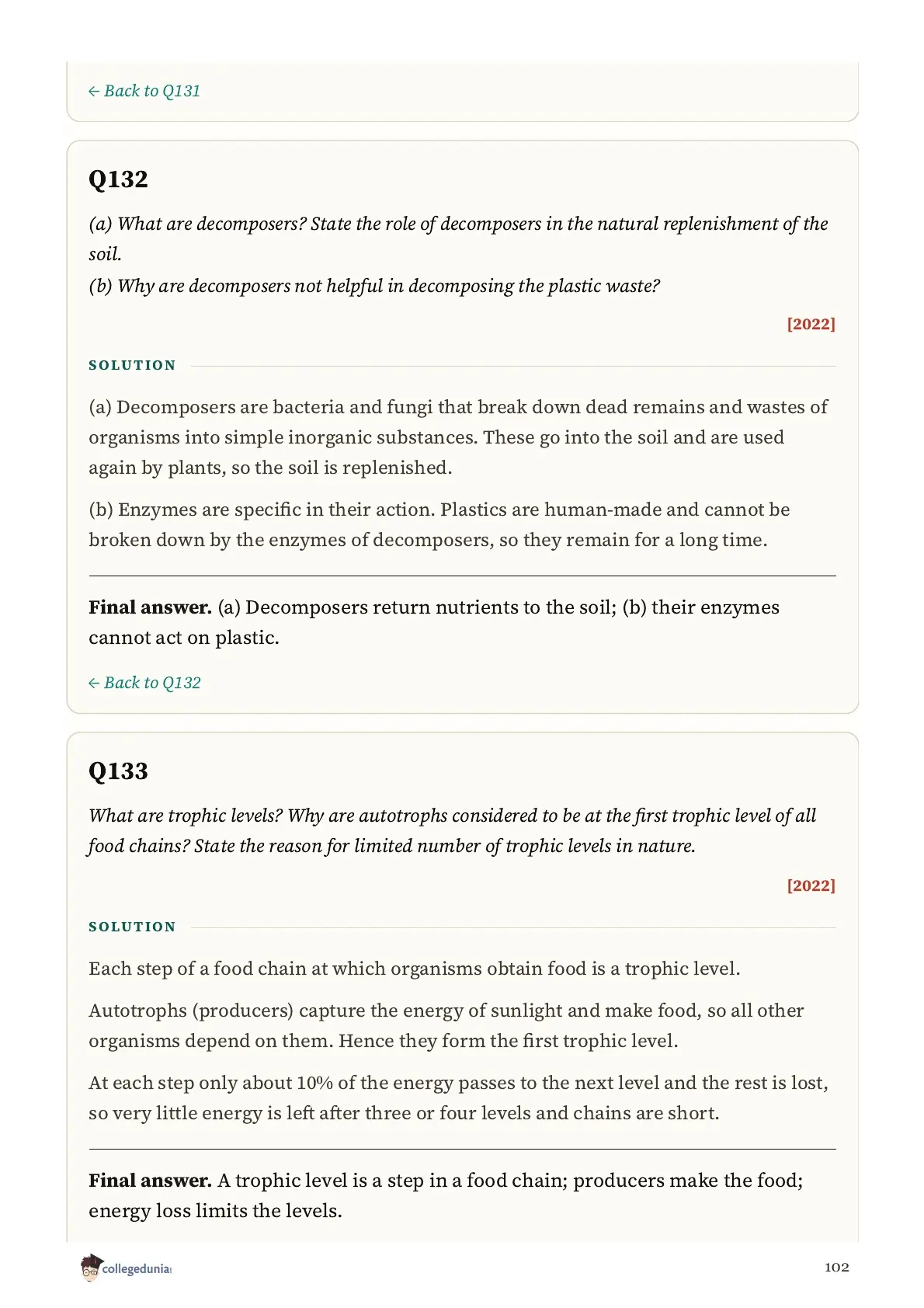
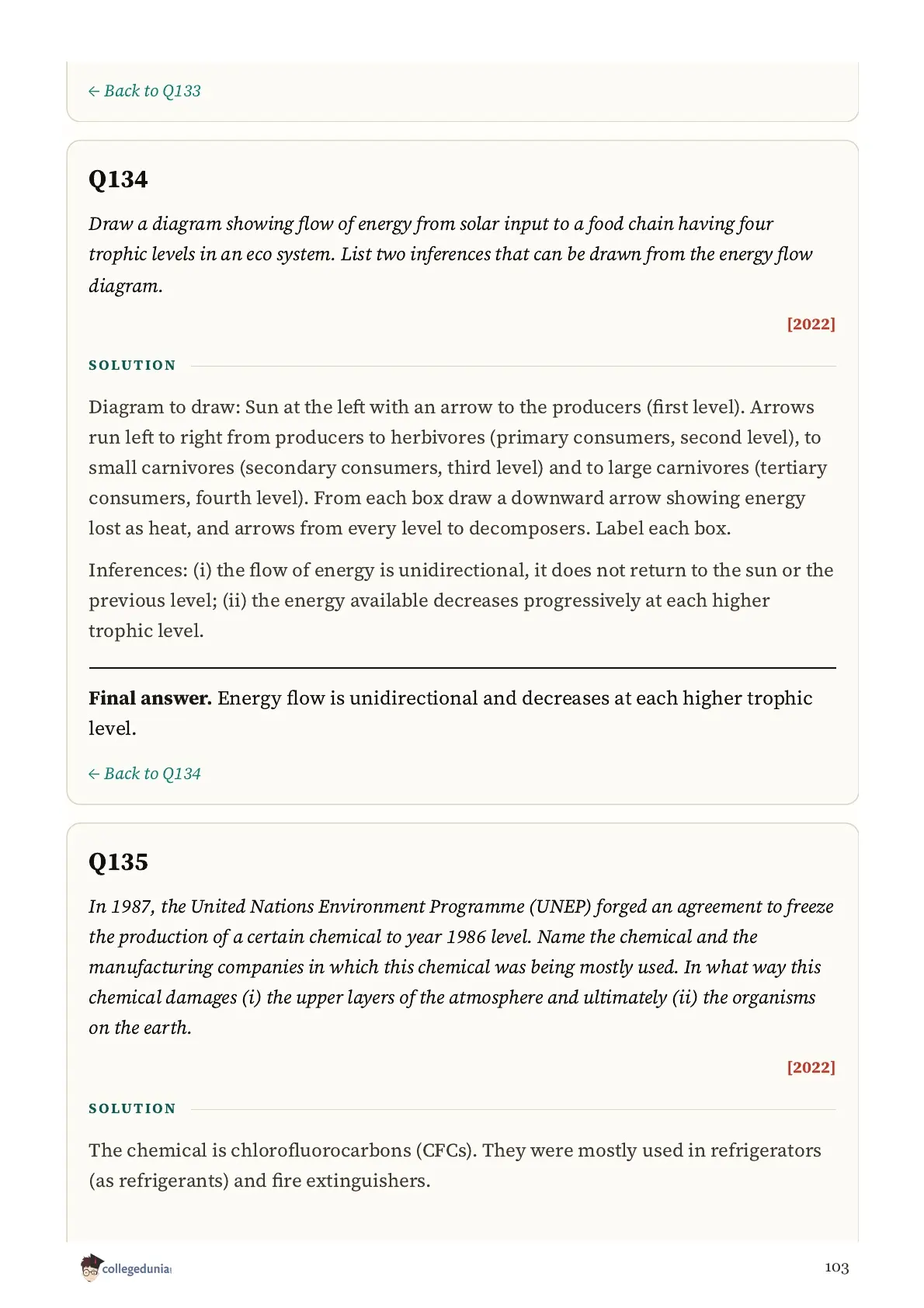
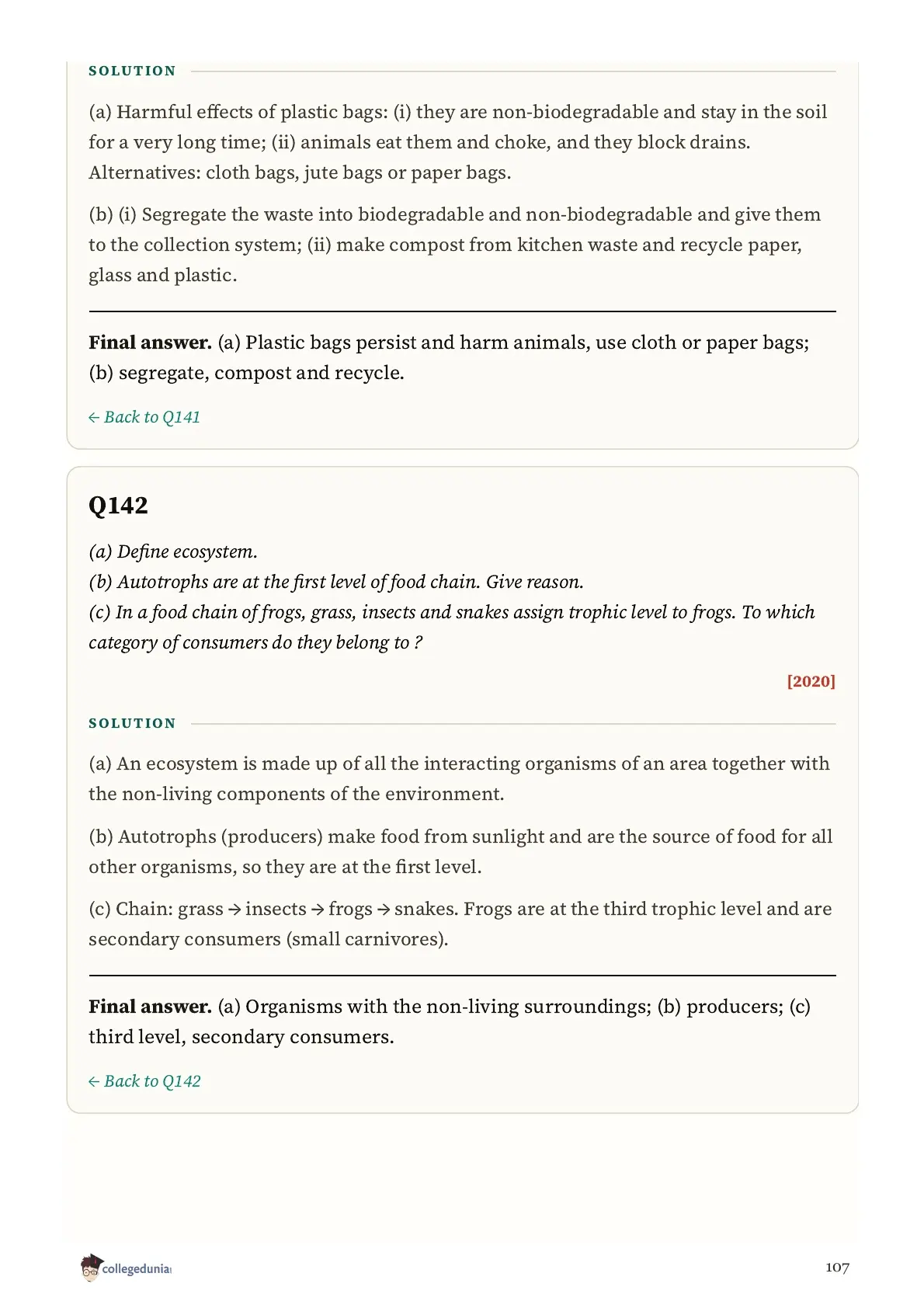
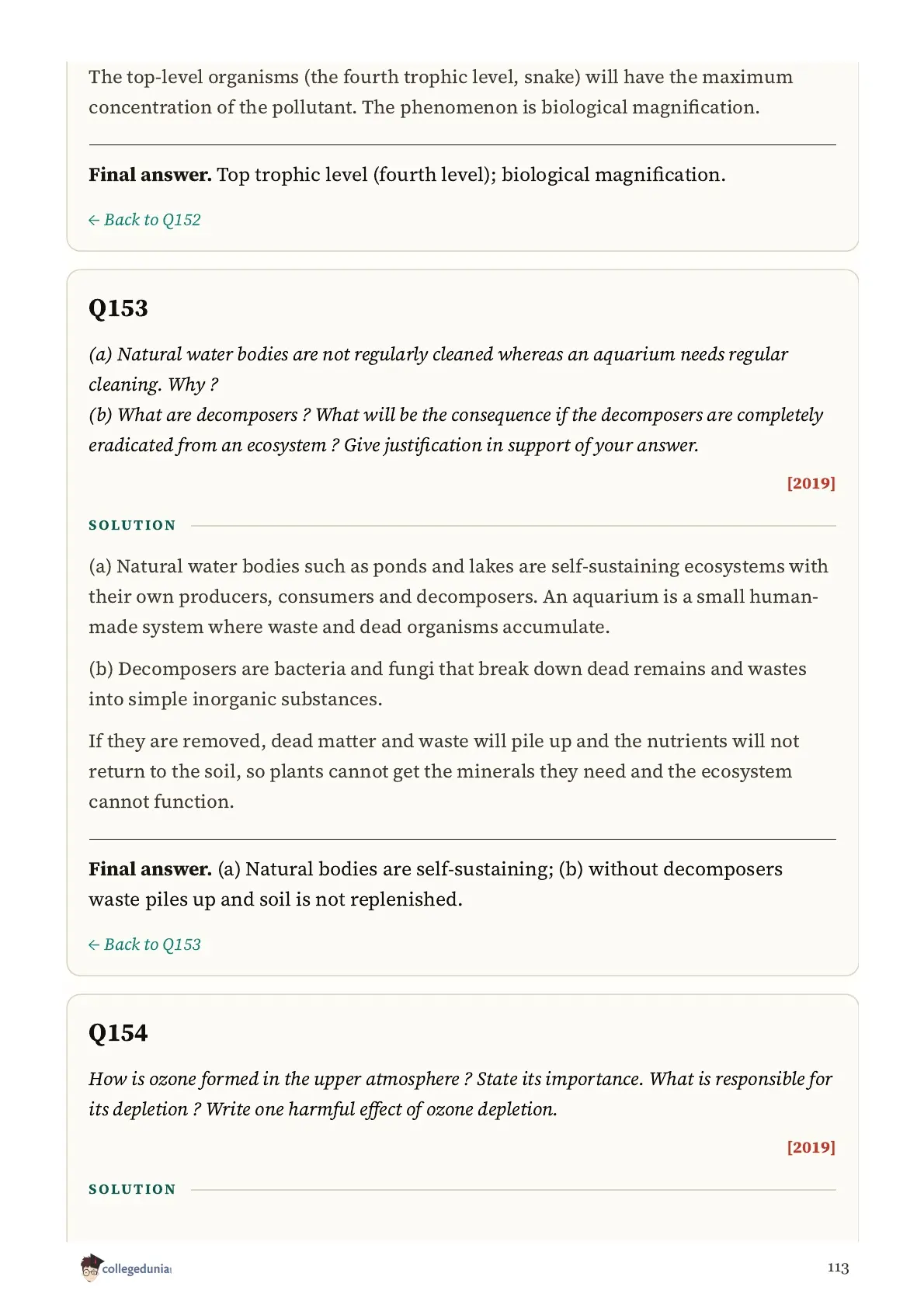
9 questions ask why a pond is not cleaned while an aquarium is, and 11 ask about decomposers. 16 MCQs are assertion-reason items. The set also holds a 2020 case study on pesticides, a 2023 matching item and a few diagram questions on energy flow (2019, 2022). A question that names two topics is counted under both.
Source: NEXTOPPER
How to Approach the Set
Begin with the 49 MCQs and the 24 one-mark answers, which are mostly definitions: biological magnification, the function of ozone, two natural ecosystems. Then take the 2-mark questions, where a clear reason earns the marks, as in the pond and aquarium question. Leave the 3-mark questions for last, because they combine two or three parts such as a food chain, a reason and a calculation.
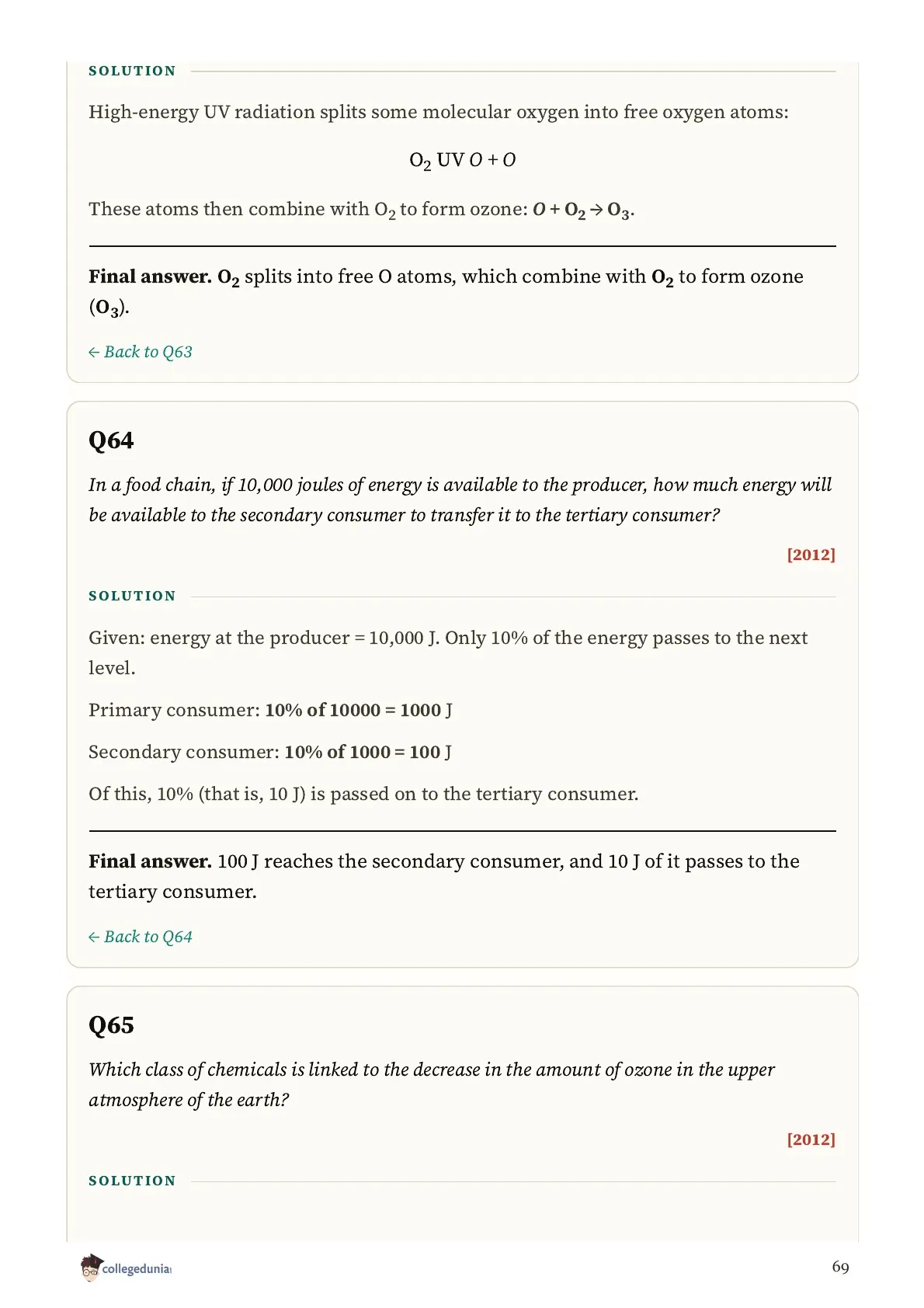
For every energy question, write the chain first, number the levels and only then apply 10%. Do the 2020 and 2023 chains twice, once going up and once going down. Practise the ozone answer as three linked lines: UV splits O2, free atoms join O2 to give O3, and CFCs destroy it.
Common Mistakes in Our Environment Questions
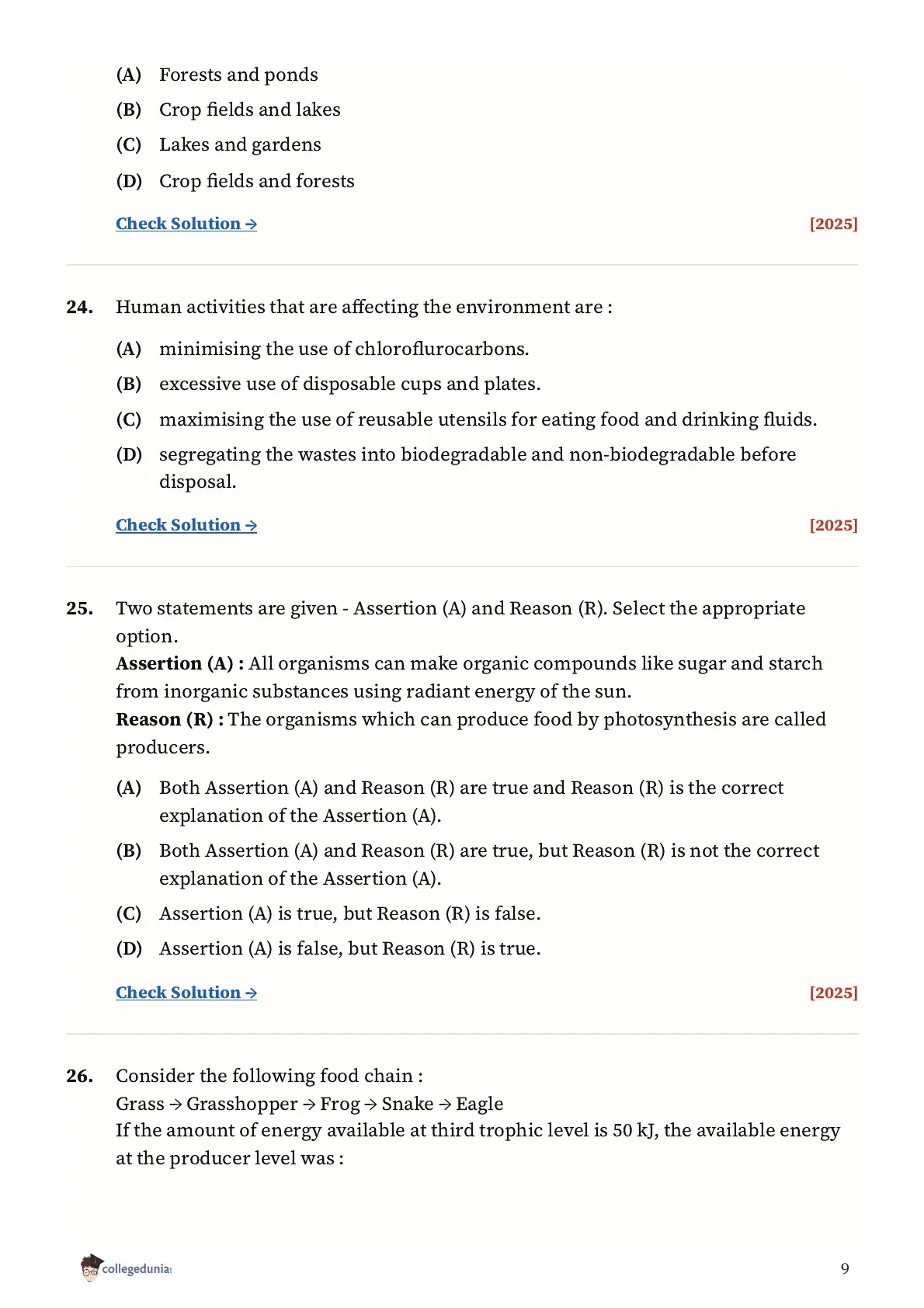
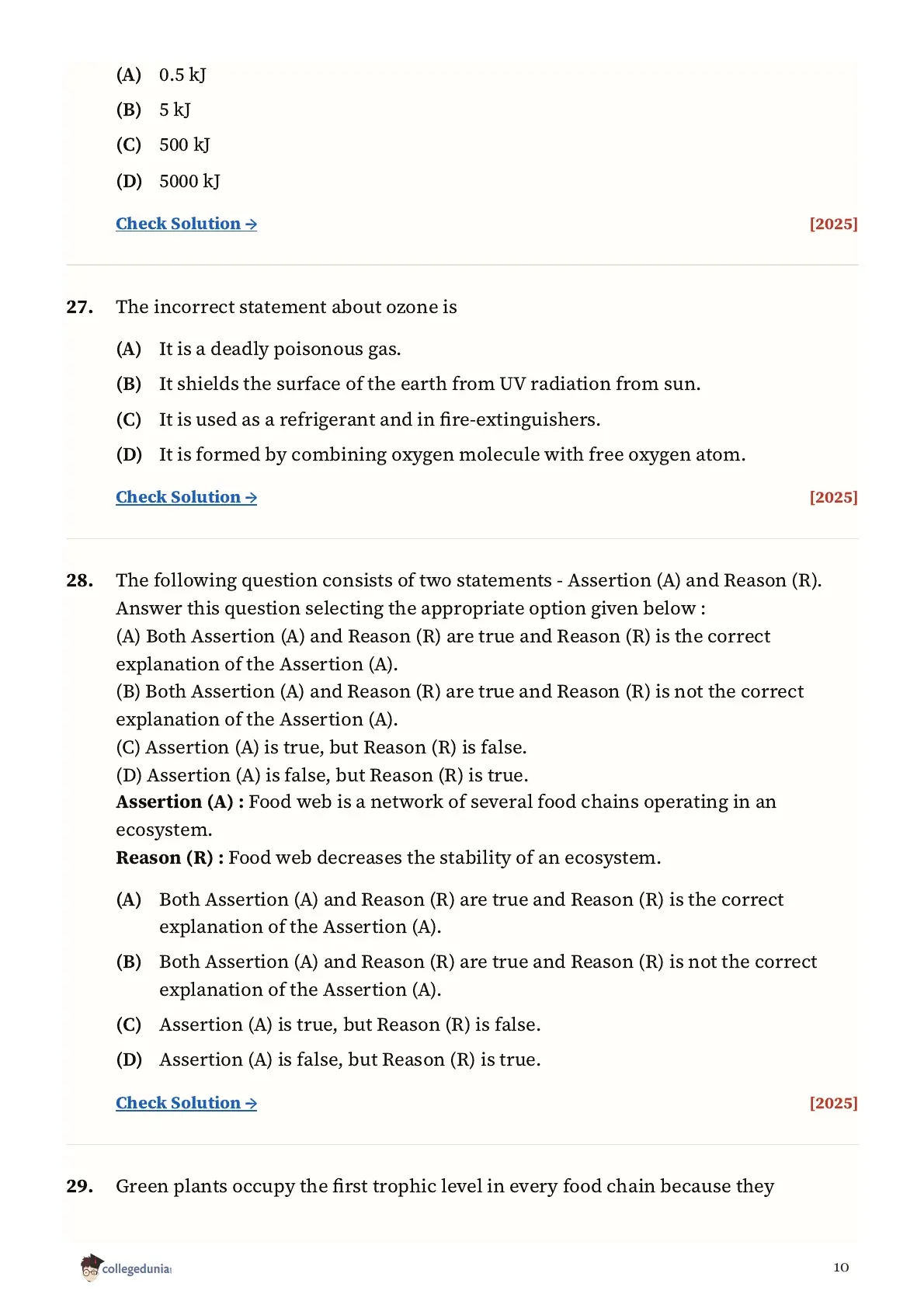
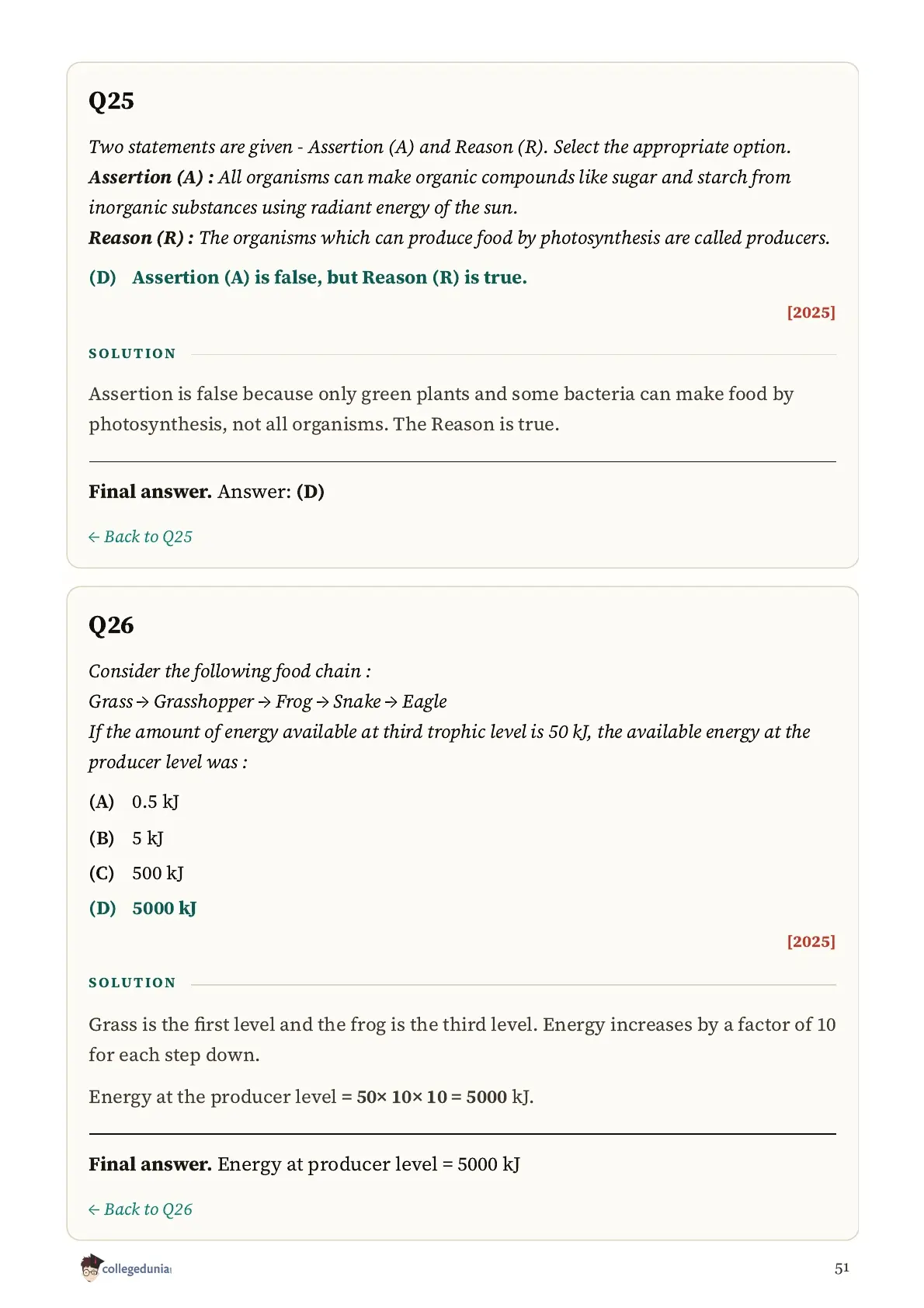
- Dividing by 10 when the question gives energy at a higher level. With 50 kJ at the third level, the producer level holds 5000 kJ, not 0.5 kJ.
- Counting the hawk as the fourth level in the Grass, Grasshopper, Frog, Snake, Hawk chain. It is the fifth, so 50 J there means 500000 J in the grass.
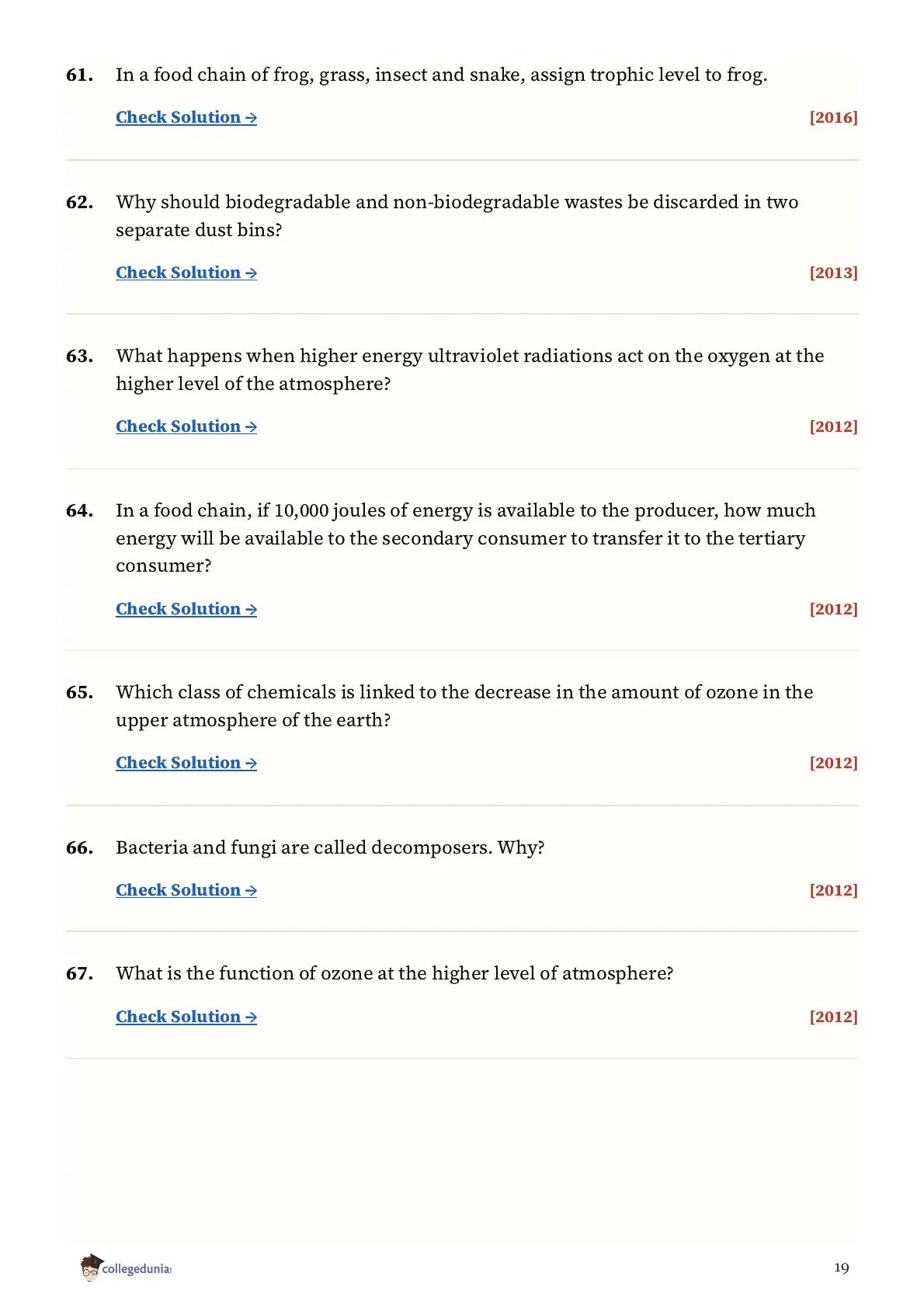
- Stopping at 100 J in the 2012 question. The 10,000 J chain gives 100 J to the secondary consumer and the question also asks how much of it passes on, which is 10 J.
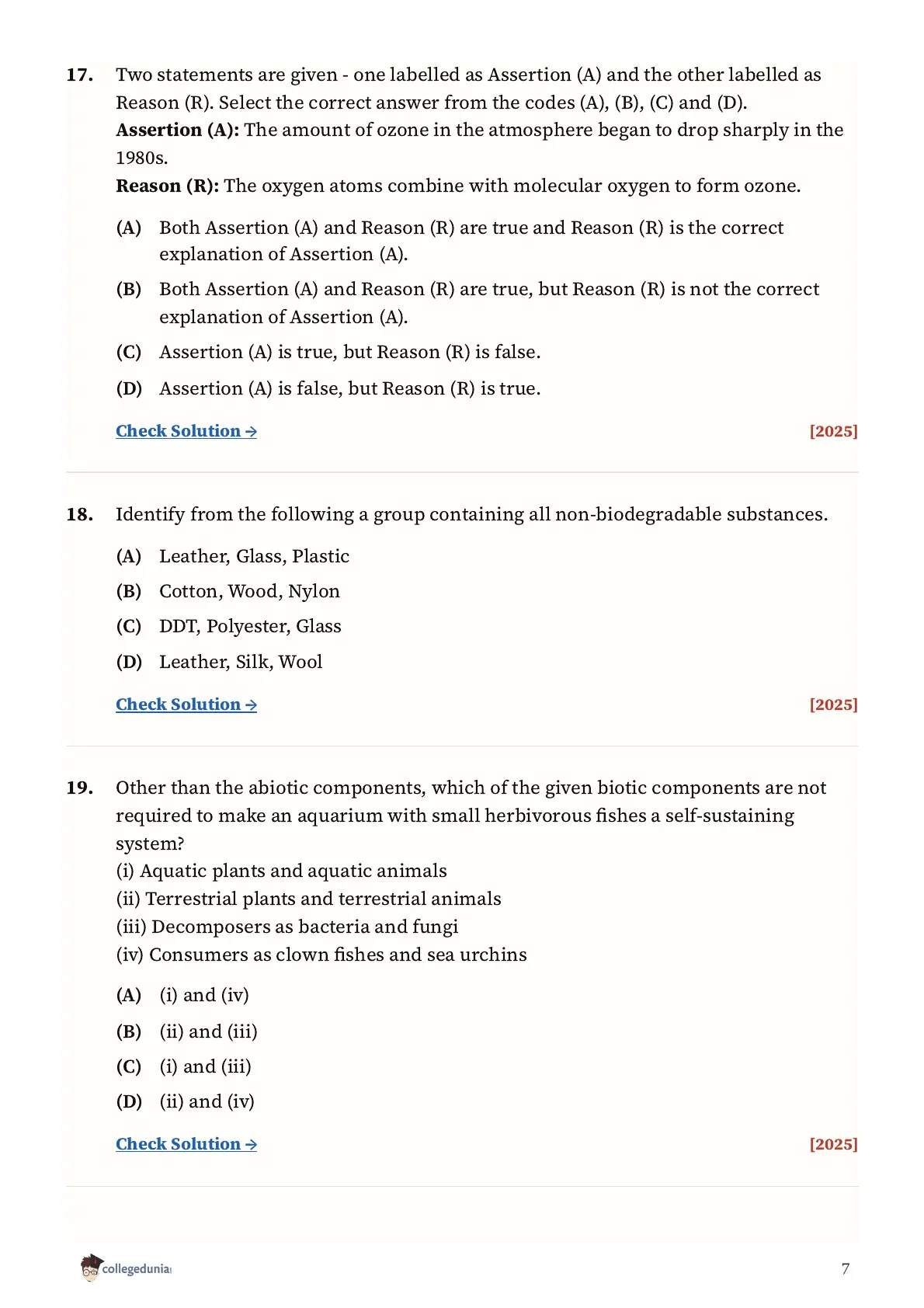
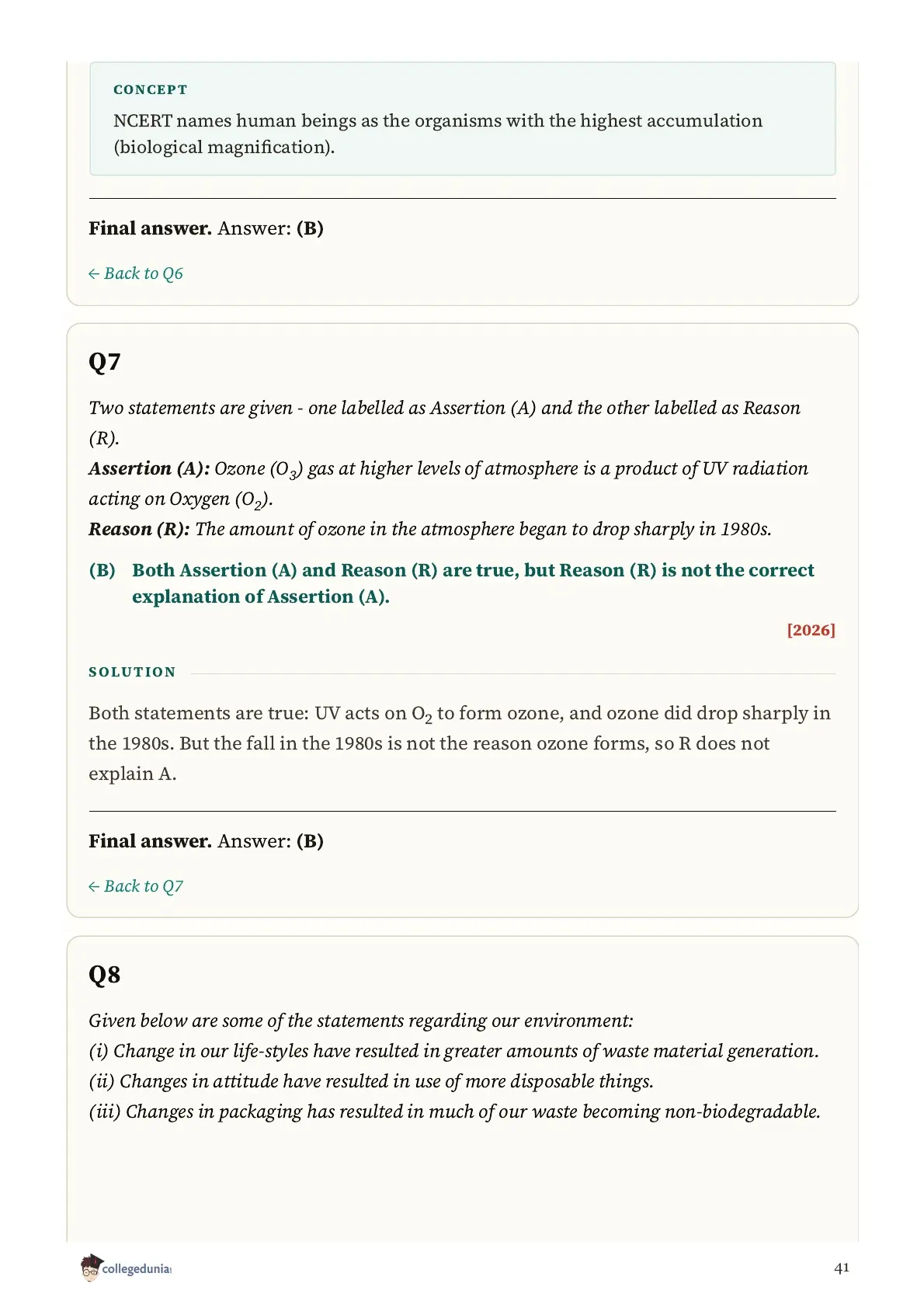
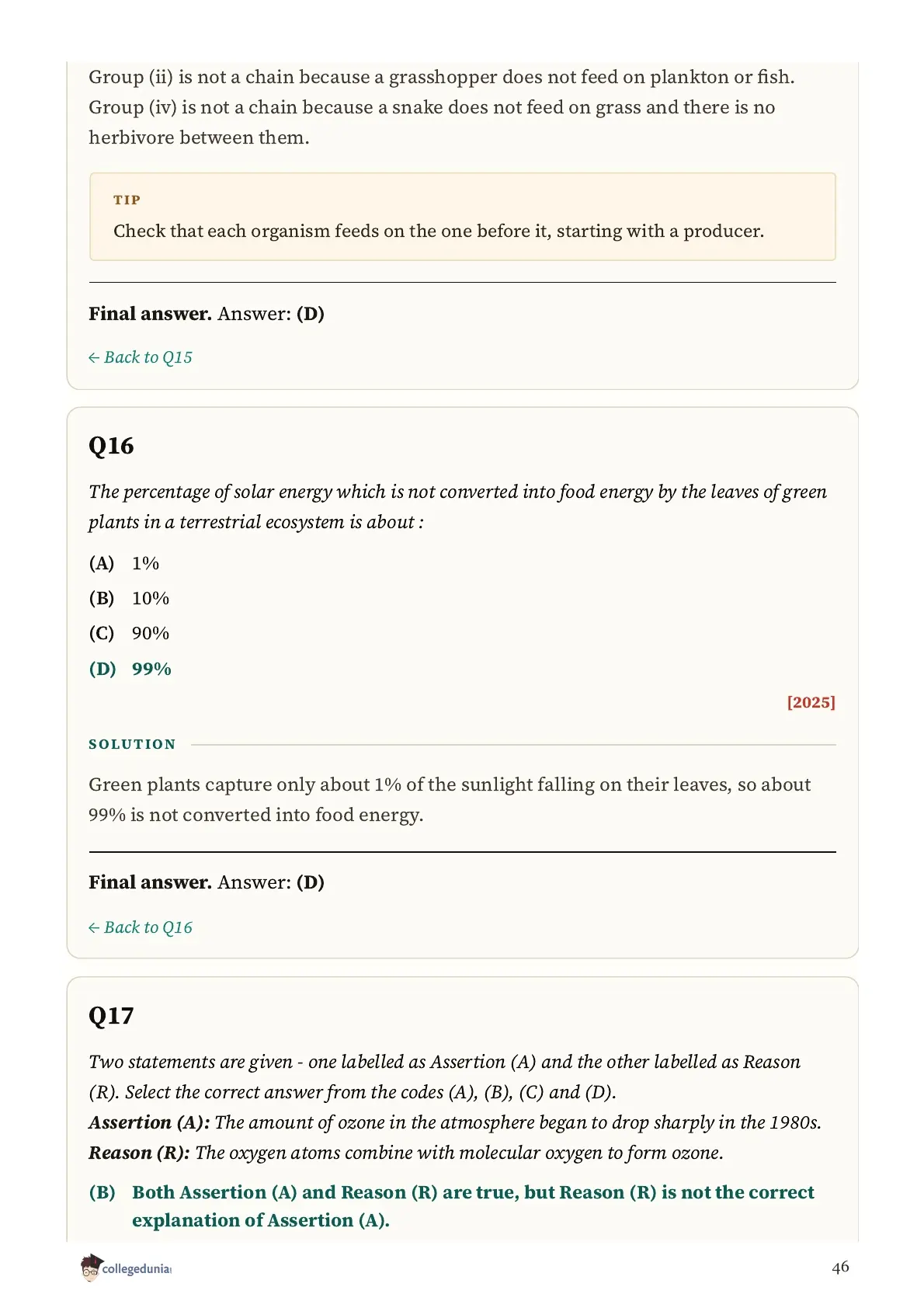
- Marking Reason as the explanation in the 2025 ozone assertion-reason item. Both statements are true, but the formation of ozone from O2 does not explain why the amount dropped in the 1980s. That fall was due to CFCs, so the answer is (B).
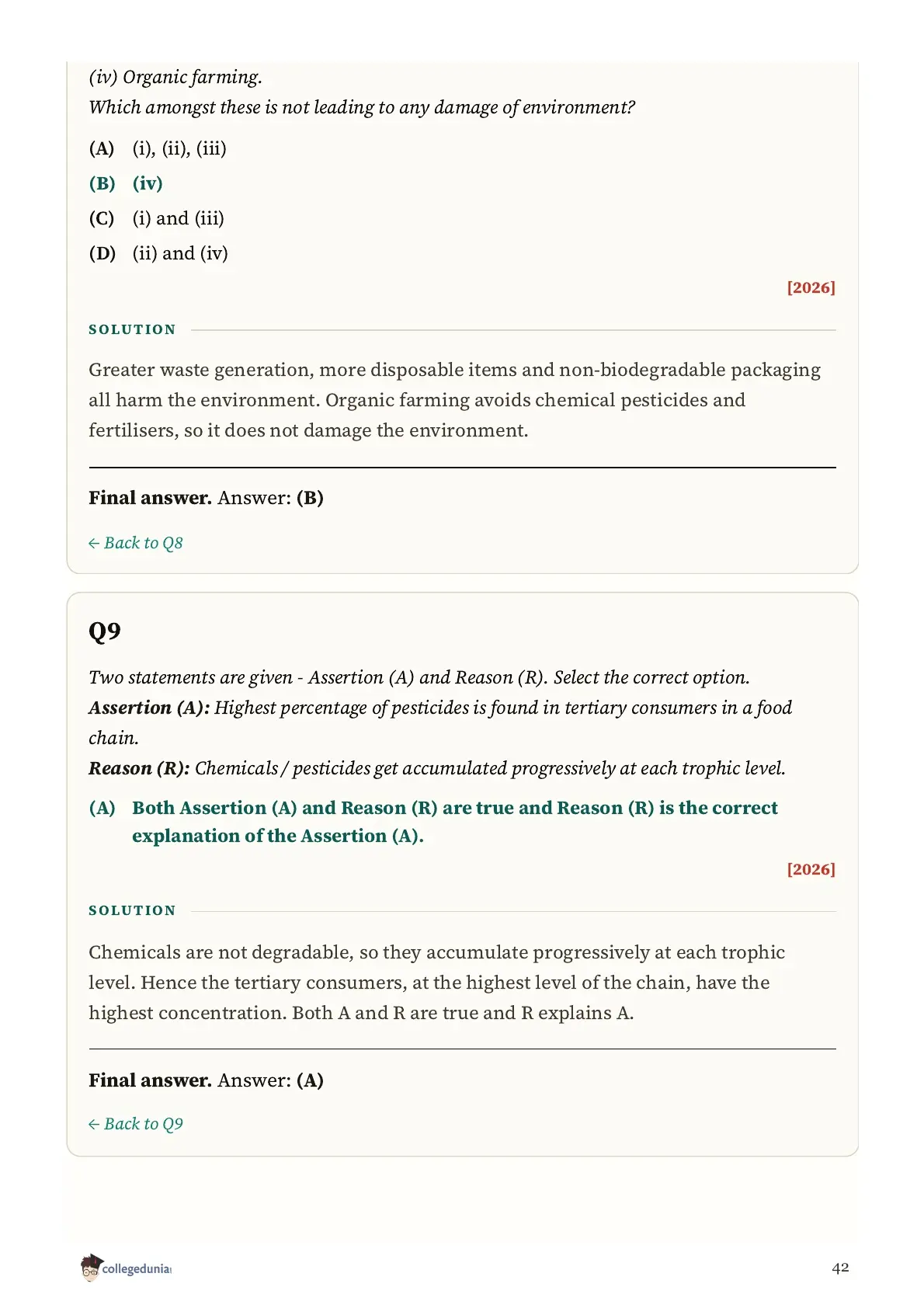
- Calling organic farming harmful to the environment in the 2026 statements question.
- Saying the aquarium is cleaned only because it is dirty. The reason is that it is a small human-made system without balanced decomposers, unlike a pond.
Using the Answer Key and Solutions
The PDF is 119 pages and free to download. Each section is sorted newest year first, the Answer Key lists the 49 MCQs at a glance, and each question links to its worked solution and back. Attempt the question yourself first, check the key, then read the solution. The solutions are written by Collegedunia's Science experts and are not official CBSE marking schemes.
Class 10 Science PYQs by Chapter
| Unit | PYQ Page |
|---|---|
| Chemical Substances | Chemical Reactions and Equations Class 10 Science PYQ |
| Chemical Substances | Acids, Bases and Salts Class 10 Science PYQ |
| Chemical Substances | Metals and Non-metals Class 10 Science PYQ |
| Chemical Substances | Carbon and its Compounds Class 10 Science PYQ |
| World of Living | Life Processes Class 10 Science PYQ |
| World of Living | Control and Coordination Class 10 Science PYQ |
| World of Living | How do Organisms Reproduce? Class 10 Science PYQ |
| World of Living | Heredity Class 10 Science PYQ |
| Natural Phenomena | Light - Reflection and Refraction Class 10 Science PYQ |
| Natural Phenomena | The Human Eye and the Colourful World Class 10 Science PYQ |
| Effects of Current | Electricity Class 10 Science PYQ |
| Effects of Current | Magnetic Effects of Electric Current Class 10 Science PYQ |
| Natural Resources | Our Environment Class 10 Science PYQ |
Our Environment Class 10 Science PYQ FAQs
Ques. How many questions are in the Our Environment Class 10 Science PYQ PDF?
Ans. The PDF has 163 questions from the 2008 to 2026 board papers: 49 MCQs and assertion-reason items, 24 one-mark very short answers, 38 two-mark answers and 52 three-mark answers.
Ques. Does this PYQ PDF include solutions, or only the questions?
Ans. All 163 questions have a worked solution in the PDF, and the 49 MCQs are also listed in the Answer Key before the solutions.
Ques. Are the solutions official?
Ans. No. They are written by Collegedunia's Science experts, checked against the NCERT chapter and re-worked for every numerical. They are not an official CBSE marking scheme, so the board's wording of an answer may differ.
Ques. How many marks does Our Environment carry in the Class 10 Science paper?
Ans. CBSE publishes marks per unit, not per chapter. Our Environment is the only chapter in Unit V, Natural Resources, which prep sites report at 5 of the 80 theory marks. That figure is unofficial, so check cbseacademic.nic.in for the current syllabus.
Ques. What kind of questions are asked from Our Environment?
Ans. In this set 49 questions are about food chains or food webs, 30 about ozone and CFCs, 16 about biodegradable and non-biodegradable waste and 13 about biomagnification. 9 are energy calculations using the 10% law.
Ques. Is the 10% law of energy transfer asked every year?
Ans. Energy calculations appear in the 2012, 2020, 2022, 2023, 2025 and 2026 papers of this set, usually as a food chain with a known value at one level and a question about another.



Comments