




A Question of Trust Class 10 PYQs help students practise the chapter's most tested ideas for the 2026-27 CBSE syllabus. The questions focus on Horace Danby's choices, the young woman's deception, irony, character and the meaning of trust.
- 12 chapterwise questions from CBSE papers held between 2019 and 2026
- Newest-year-first arrangement with marks and paper-year references
- Free PDF for quick revision before school and board exams

Student Feedback
Collegedunia practice polls show that students find character-and-evidence questions easier after making a short event sequence.
A Question of Trust Class 10 PYQ Pattern and Coverage
The chapter is usually tested through short and long answers. Questions ask students to explain motives, justify a statement or connect an event with a character trait. The downloadable PDF groups authentic chapter questions in one place and keeps the newest papers first.
| Question type | What to prepare | Best answer method |
|---|---|---|
| Character-based | Horace Danby's habits, skills and weakness | Name the trait and prove it with one event |
| Plot-based | Shotover Grange robbery and arrest | Write cause, action and result in order |
| Theme-based | Trust, deception, irony and appearances | Link the theme to both thieves |
| Analytical | Why Horace's careful plan fails | Balance his planning against his wrong assumptions |
A Question of Trust Important Questions Video
Source: Magnet Brains on YouTube
Horace Danby's Failed Robbery at Shotover Grange
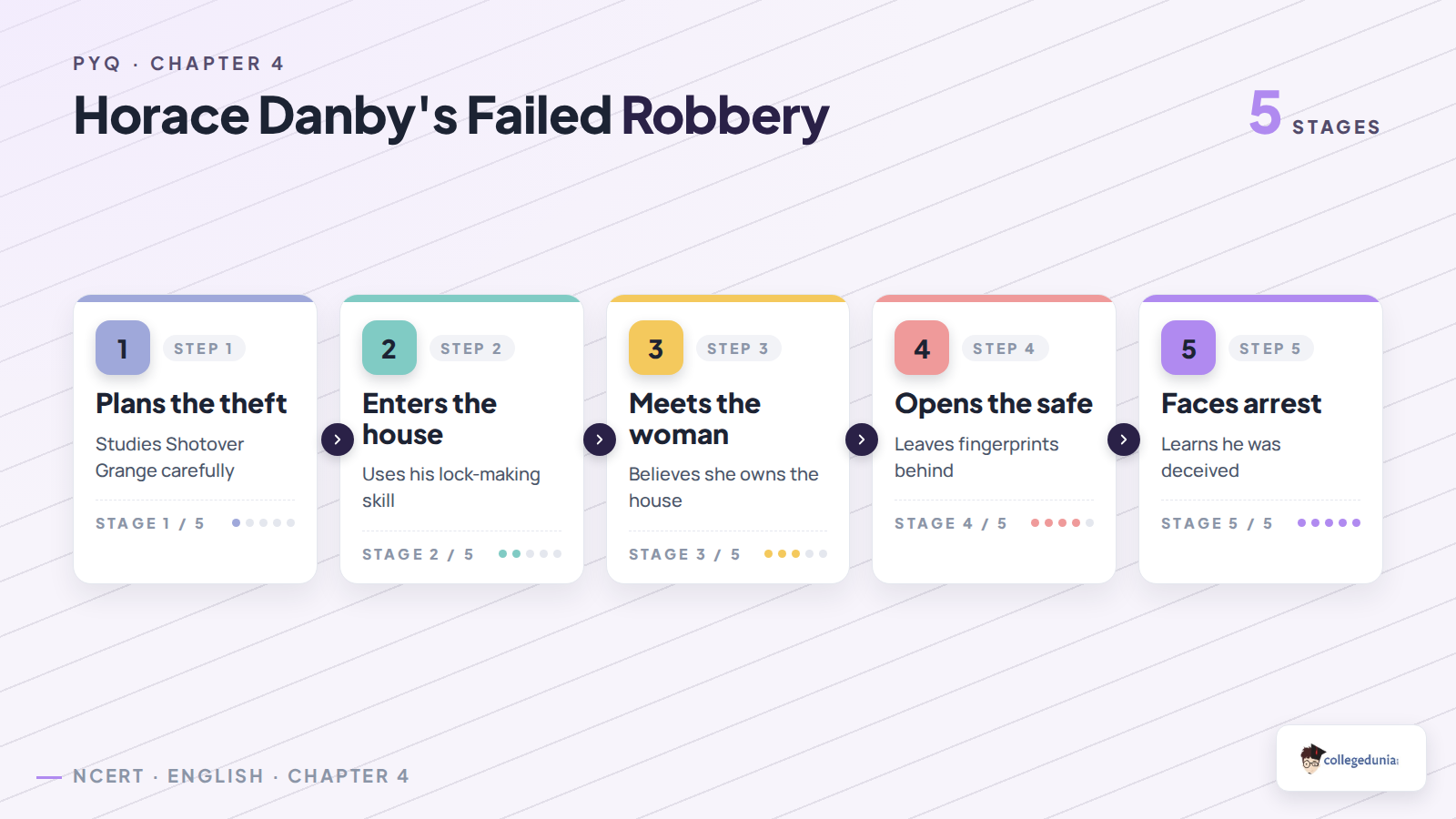
Horace studies the house for two weeks and chooses a time when the servants are away. His hay fever and the flowers create discomfort, but the decisive error is human. A confident young woman claims to be the owner and asks him to open the safe.
- Horace enters with gloves and knows how to handle the lock.
- The woman threatens to call the police unless he helps her.
- He removes his gloves and opens the safe for her.
- His fingerprints remain, while the real thief escapes with the jewels.
Horace fails because he checks the house but does not check the woman's identity. This contrast is useful in analytical answers.
Horace Danby and the Young Woman: Character Evidence
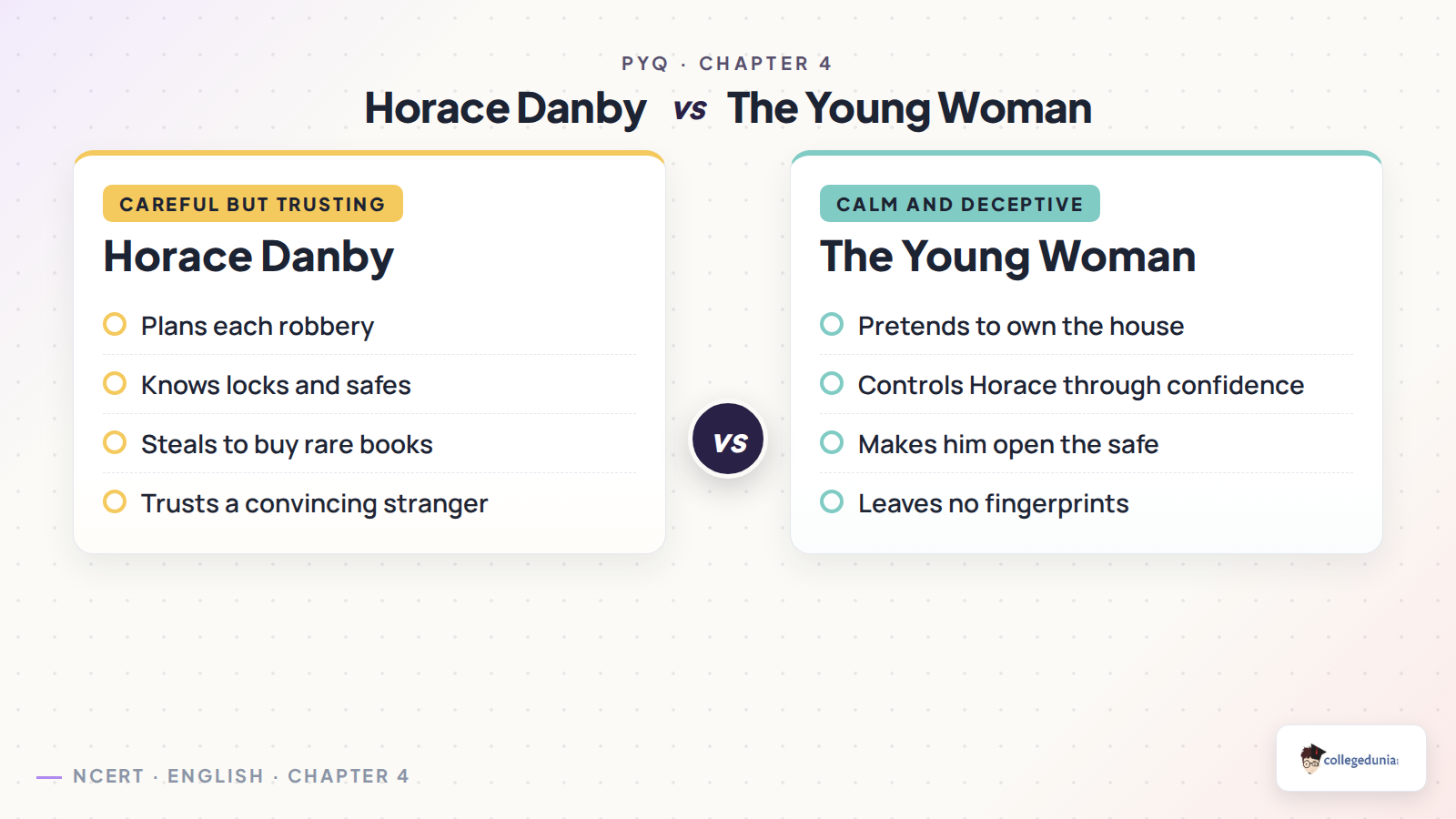
Horace calls himself honest because he lives quietly and steals only once a year. That claim is self-deception. The young woman understands his fear of prison and uses polite confidence to control him.
- Horace: careful, skilled and fond of rare books, yet too ready to trust appearances.
- The woman: calm, quick-thinking and persuasive, but also a more successful thief.
- Shared trait: both use planning and deception for theft.
- Main difference: she reads Horace better than he reads her.
How to Write High-Scoring A Question of Trust PYQ Answers
Begin with a direct response to the task word. Add one precise event from the story, then explain what it proves. A six-mark response should use two or three short paragraphs instead of retelling the complete plot.
- Explain: show why an event happens and what follows.
- Justify: state your view, then support it with evidence.
- Compare: discuss one similarity and one difference.
- Evaluate: judge whether Horace is truly honest or merely self-deceived.
Evidence plus inference earns more credit than plot summary alone. Use names correctly and keep every paragraph tied to the question.
Frequently Tested Themes in A Question of Trust
Victor Canning builds the story around the gap between appearance and reality. Horace appears respectable but commits theft. The young woman appears to belong to the house but is the real jewel thief.
- Trust and deception: Horace trusts a stranger who performs confidence.
- Irony: a thief is robbed and then arrested for another thief's crime.
- Self-deception: Horace uses books and a quiet life to excuse criminal acts.
- Appearances: polite speech and social confidence can hide dishonesty.
The title works at several levels. Horace places trust in his planning, in his judgment and finally in the woman. Each form of trust proves unsafe.
Common Mistakes in A Question of Trust Previous Year Questions
Weak answers describe Horace as fully honest or treat the woman as the owner of Shotover Grange. Both claims miss the story's central irony.
- Do not say Horace steals because he is poor; he steals to buy rare books.
- Do not say the owner asks him to open the safe; the speaker is another thief.
- Do not forget that fingerprints connect Horace to the crime.
- Do not call his arrest entirely unfair; he is guilty of attempted theft.
Related A Question of Trust Class 10 Resources
| Resource | How it helps |
|---|---|
| A Question of Trust Class 10 NCERT Solutions | Check textbook answers and explanations. |
| A Question of Trust Class 10 Notes | Revise characters, plot and themes. |
| A Question of Trust NCERT Book PDF | Read the official chapter text. |
| A Question of Trust Handwritten Notes | Use a quick visual revision sheet. |
Class 10 English Footprints Without Feet Chapterwise PYQs
| Chapter | PYQ practice |
|---|---|
| Chapter 1 | A Triumph of Surgery PYQs |
| Chapter 2 | The Thief's Story PYQs |
| Chapter 3 | The Midnight Visitor PYQs |
A Question of Trust English PYQ FAQs
Ques. Why did Horace Danby steal once every year?
Ans. He stole enough each year to buy the rare and expensive books he loved.
Ques. How did the young woman deceive Horace?
Ans. She pretended to own the house, threatened to call the police and persuaded him to open the safe.
Ques. Why was Horace arrested?
Ans. He removed his gloves while opening the safe, so police found his fingerprints at the crime scene.
Ques. What is the central irony of A Question of Trust?
Ans. Horace, an experienced thief, is tricked by another thief and punished for the robbery she completes.



Comments