



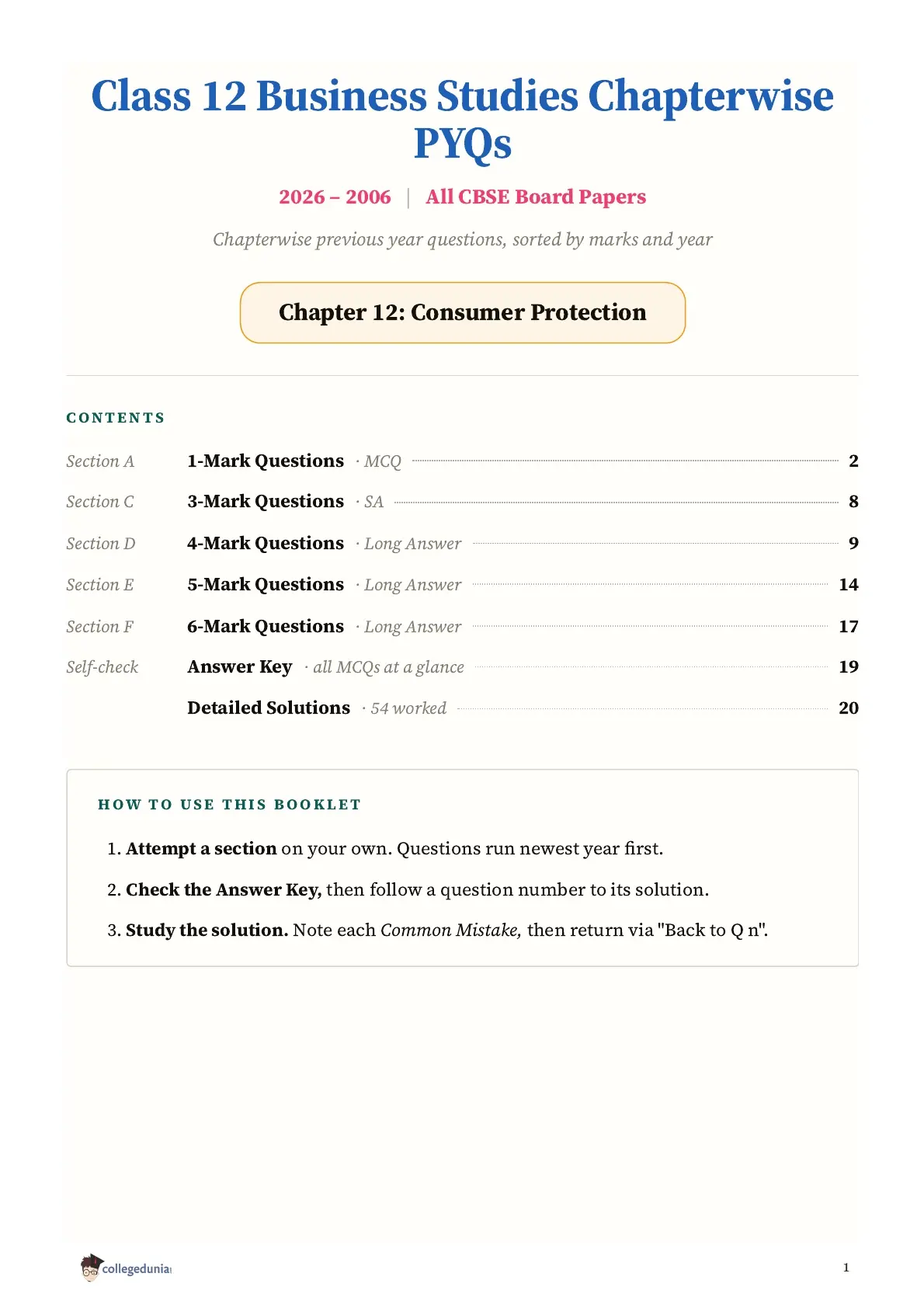
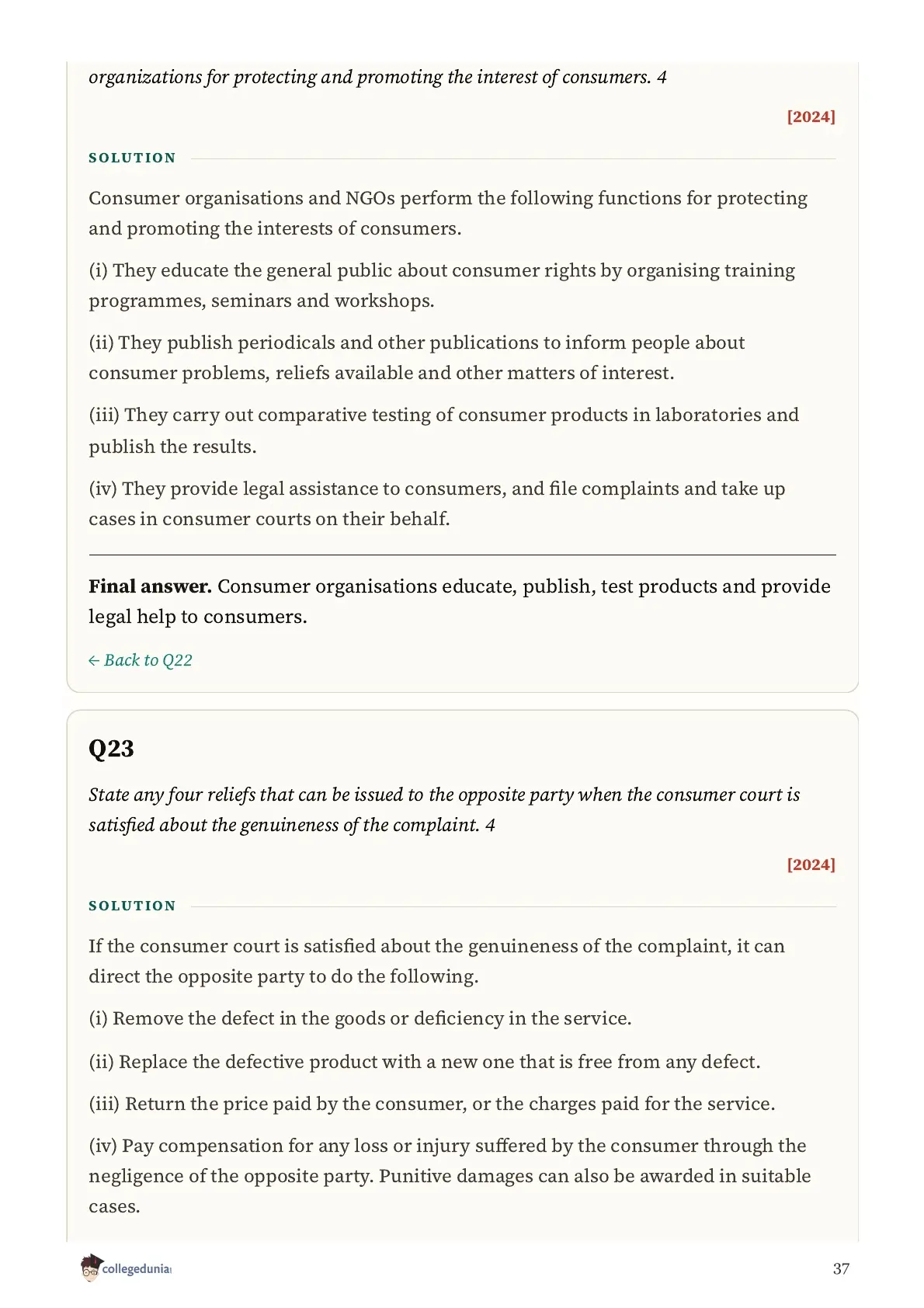
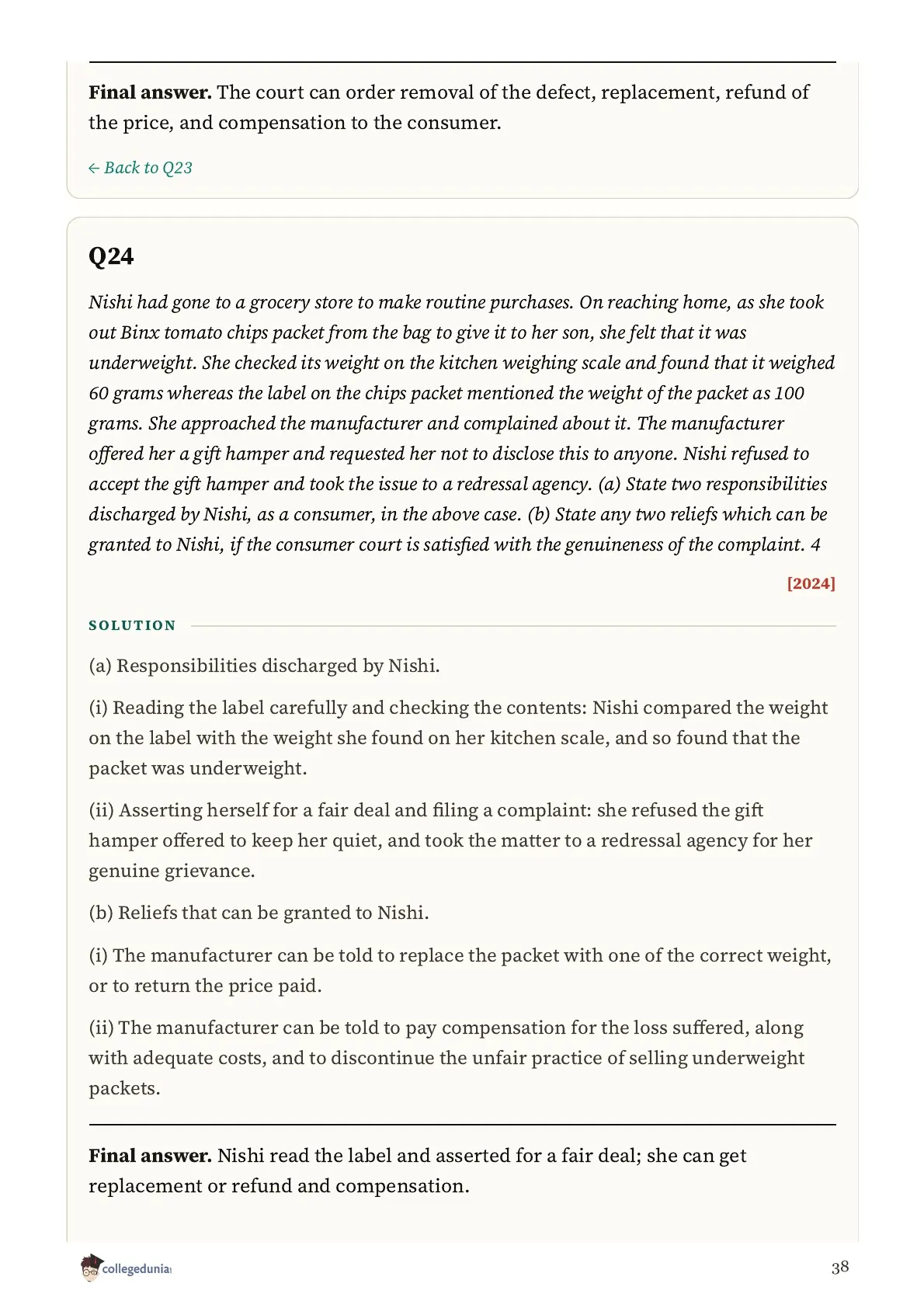
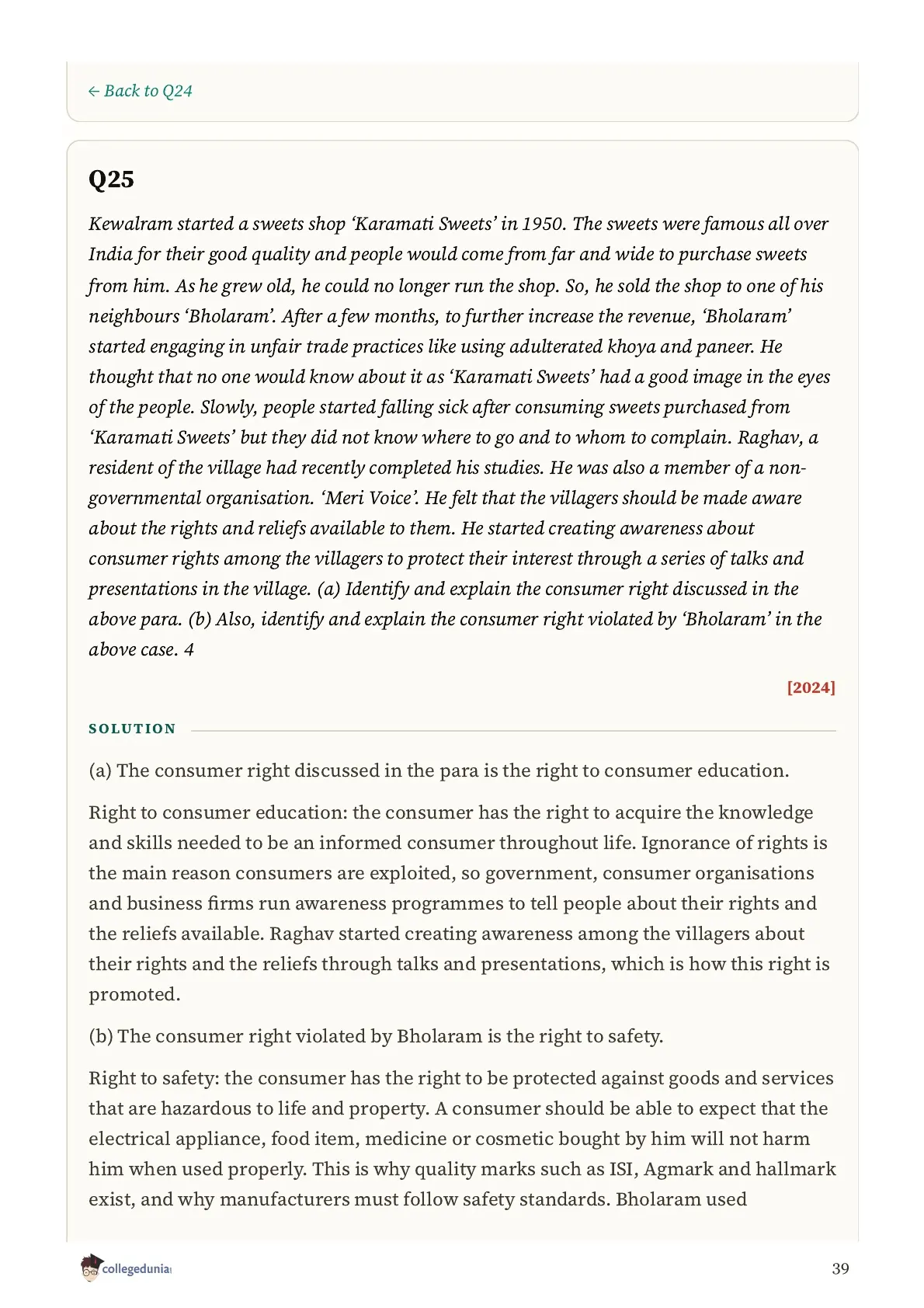
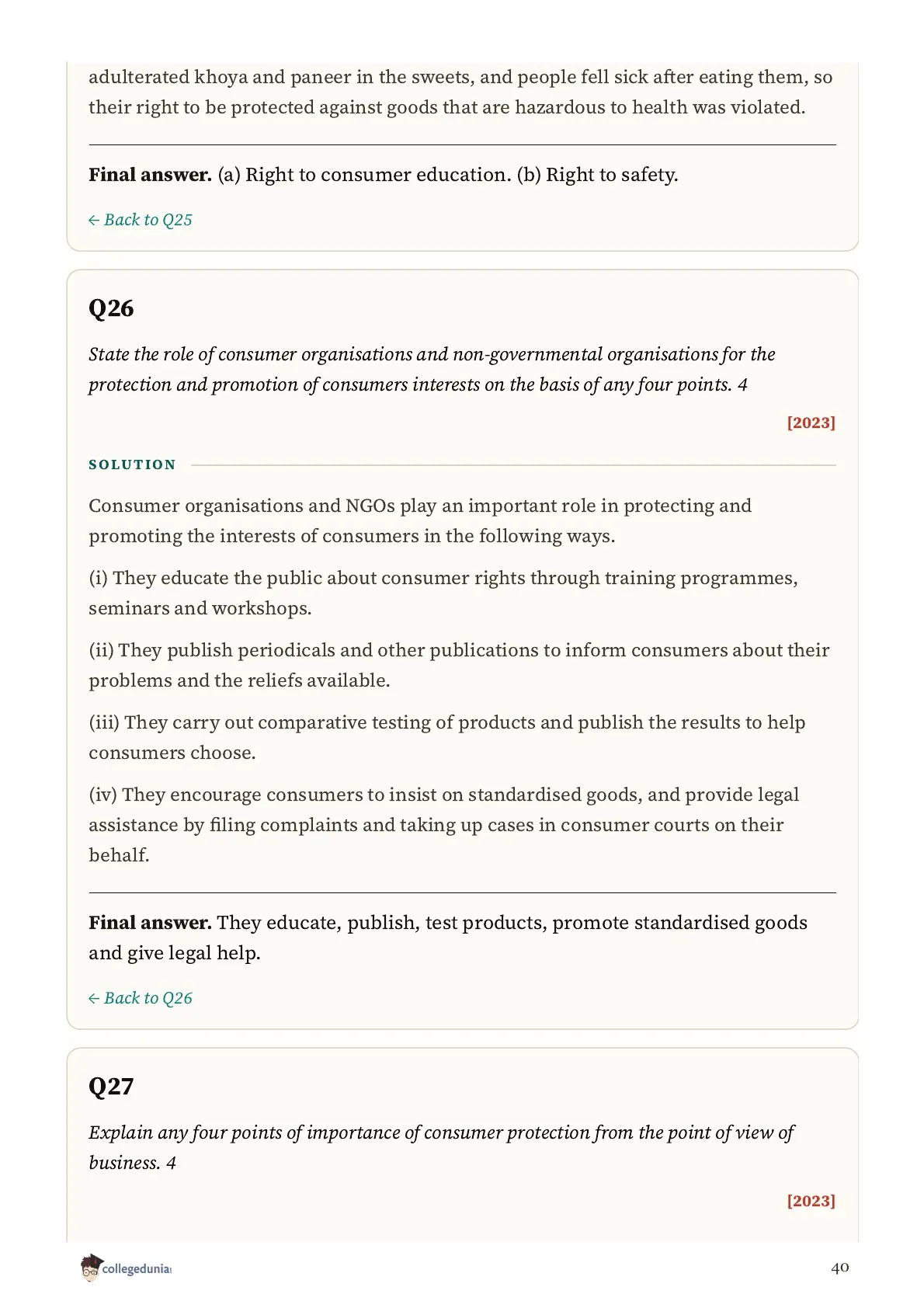
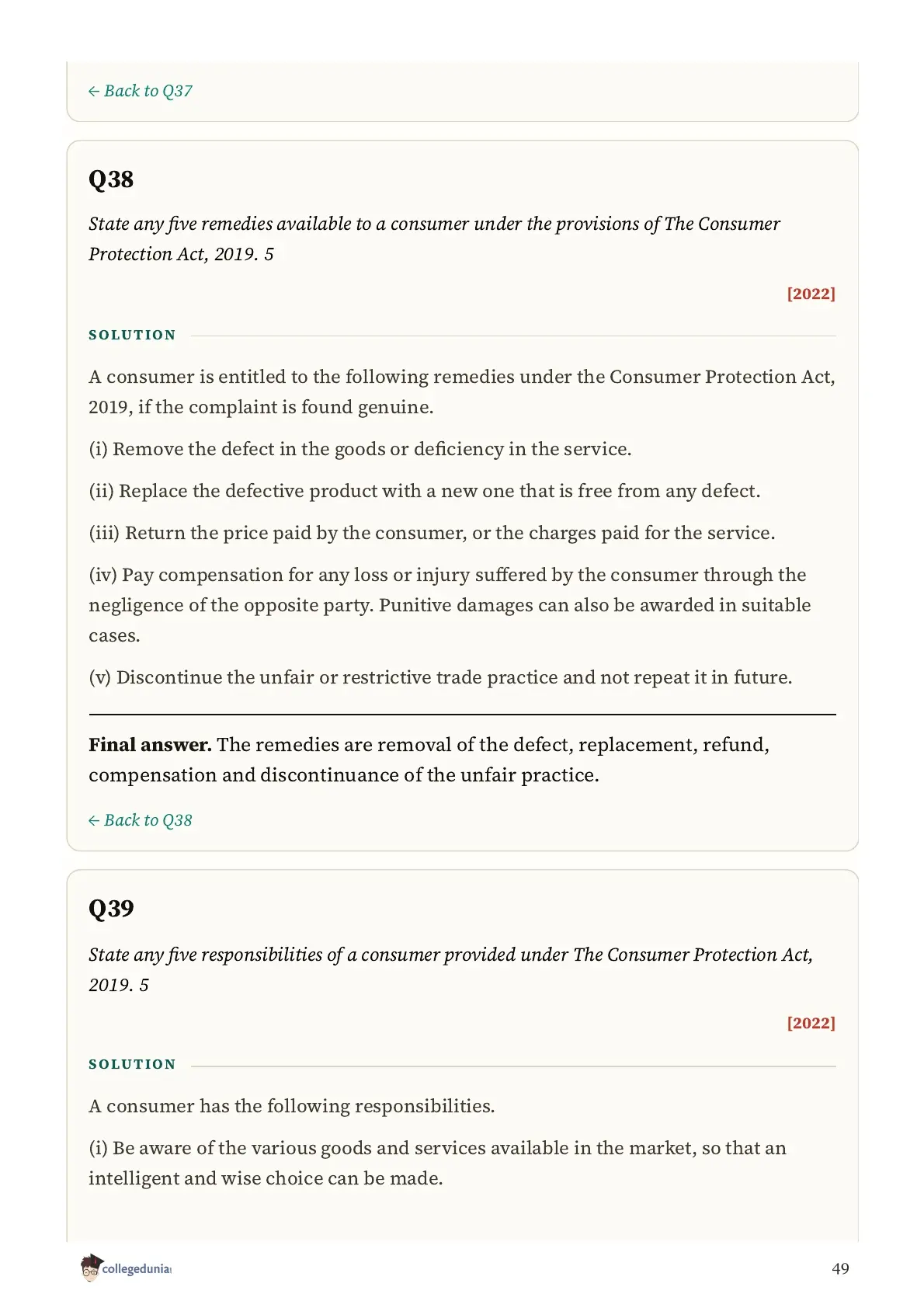
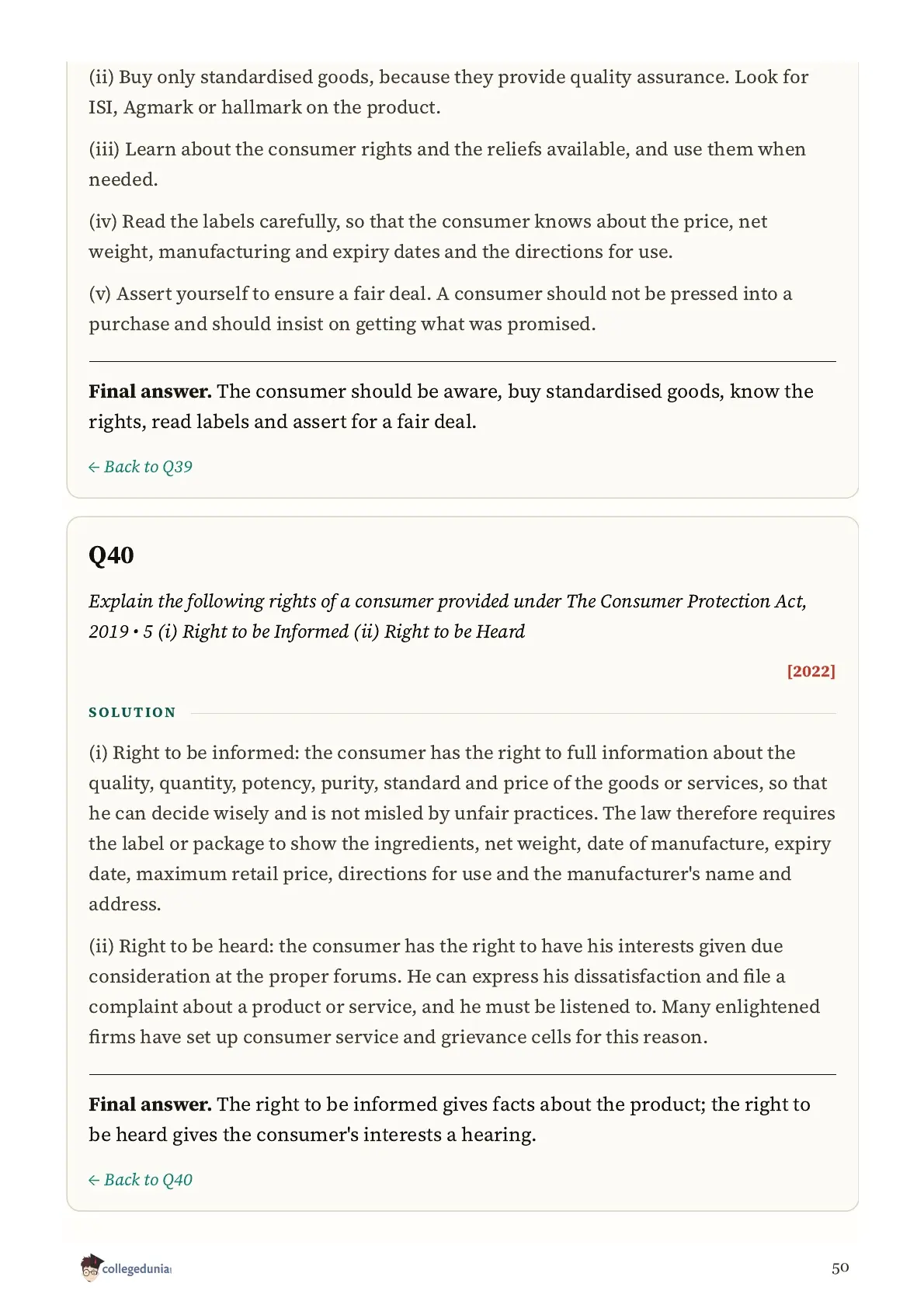
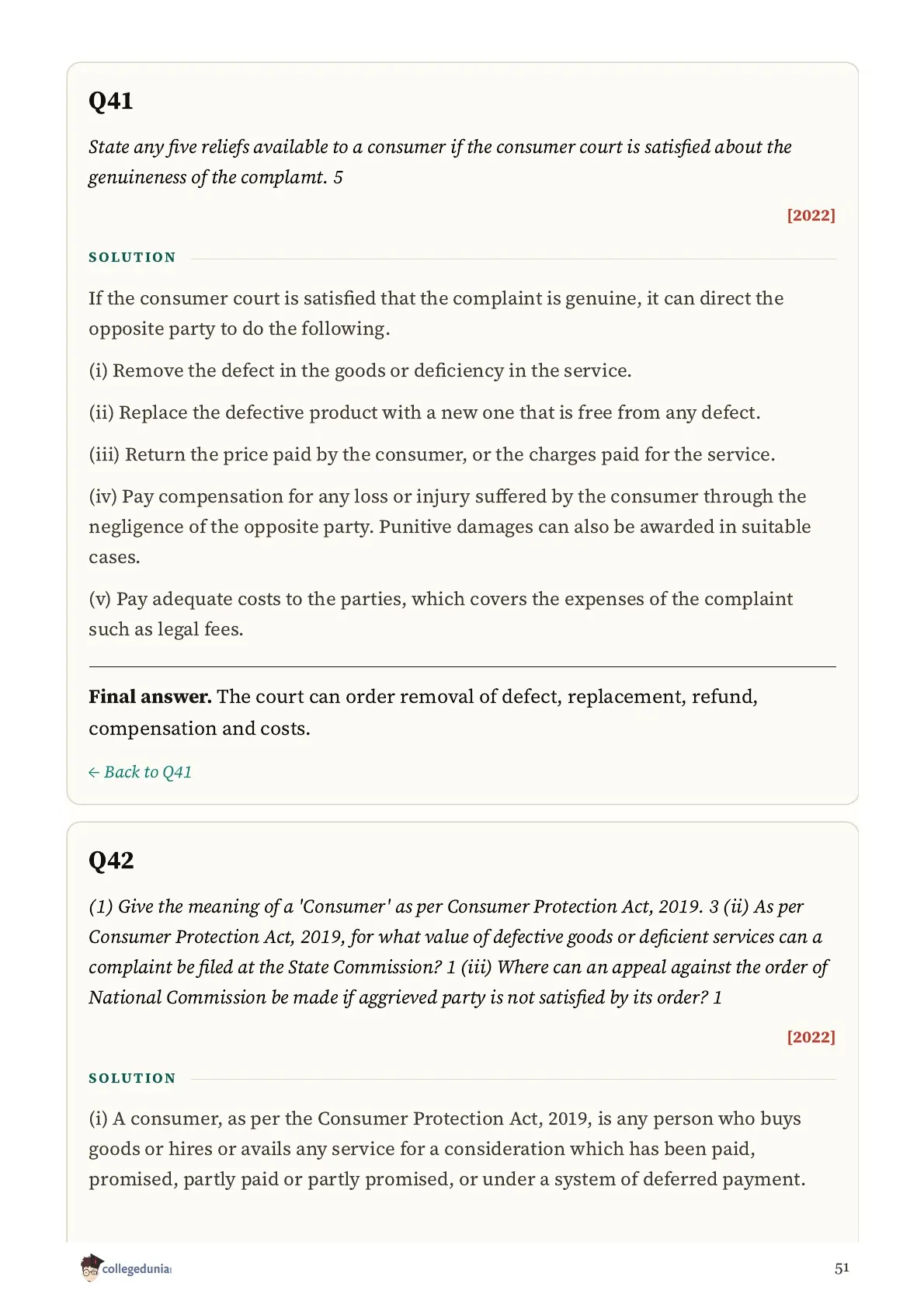
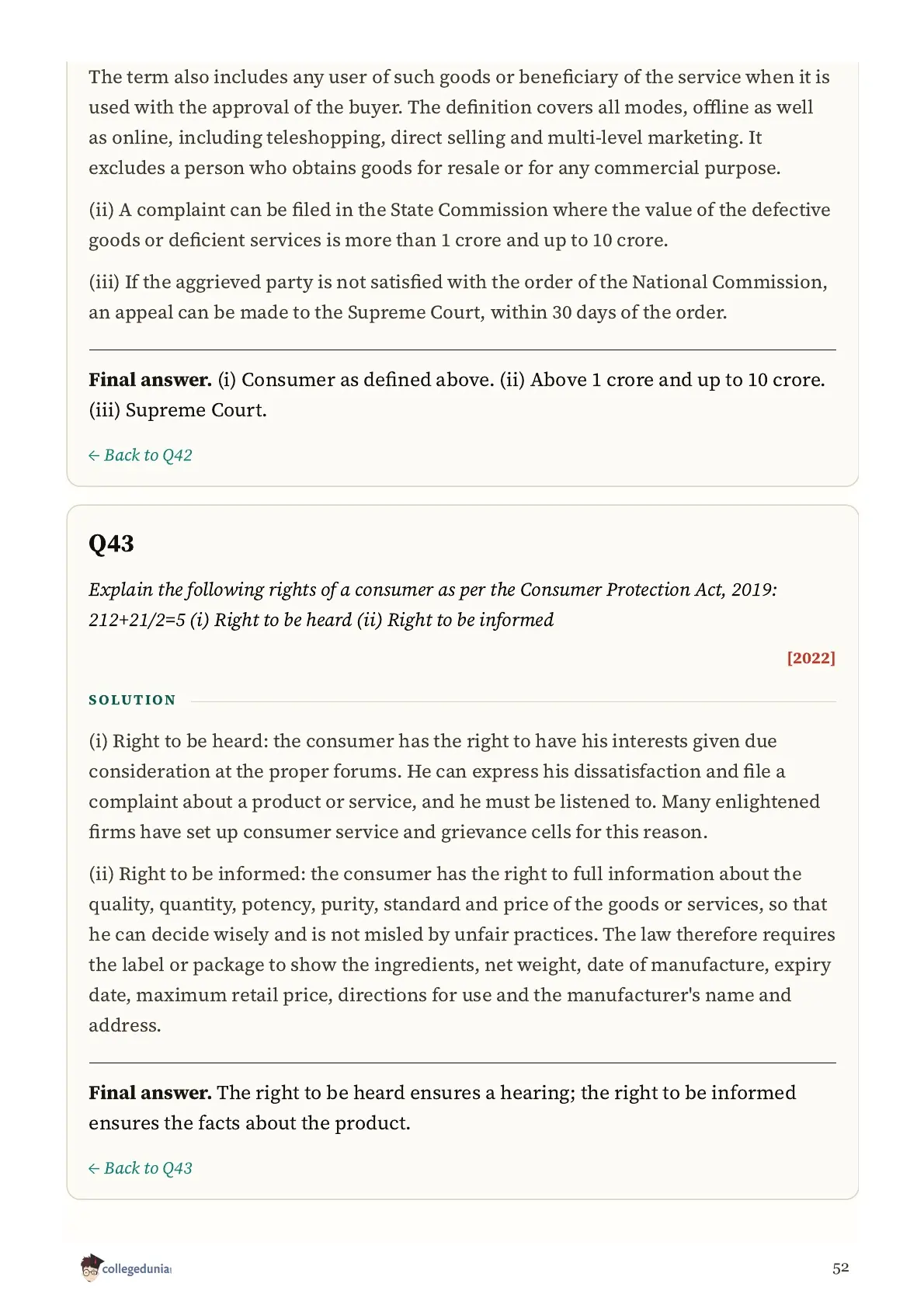
Class 12 Business Studies Consumer Protection PYQ, free to download as a 61-page PDF. The chapter carries about 4 of the 80 marks in the board paper, and the set holds 54 solved questions from the 2006 to 2026 papers on consumer rights, consumer responsibilities, reliefs available to a consumer, the District, State and National Commissions, the legal definition of a consumer, labelling and standardisation marks, consumer organisations and the importance of consumer protection, and takes roughly three and a half hours to work through, so do rights and responsibilities in one sitting and reliefs and commissions in the next.
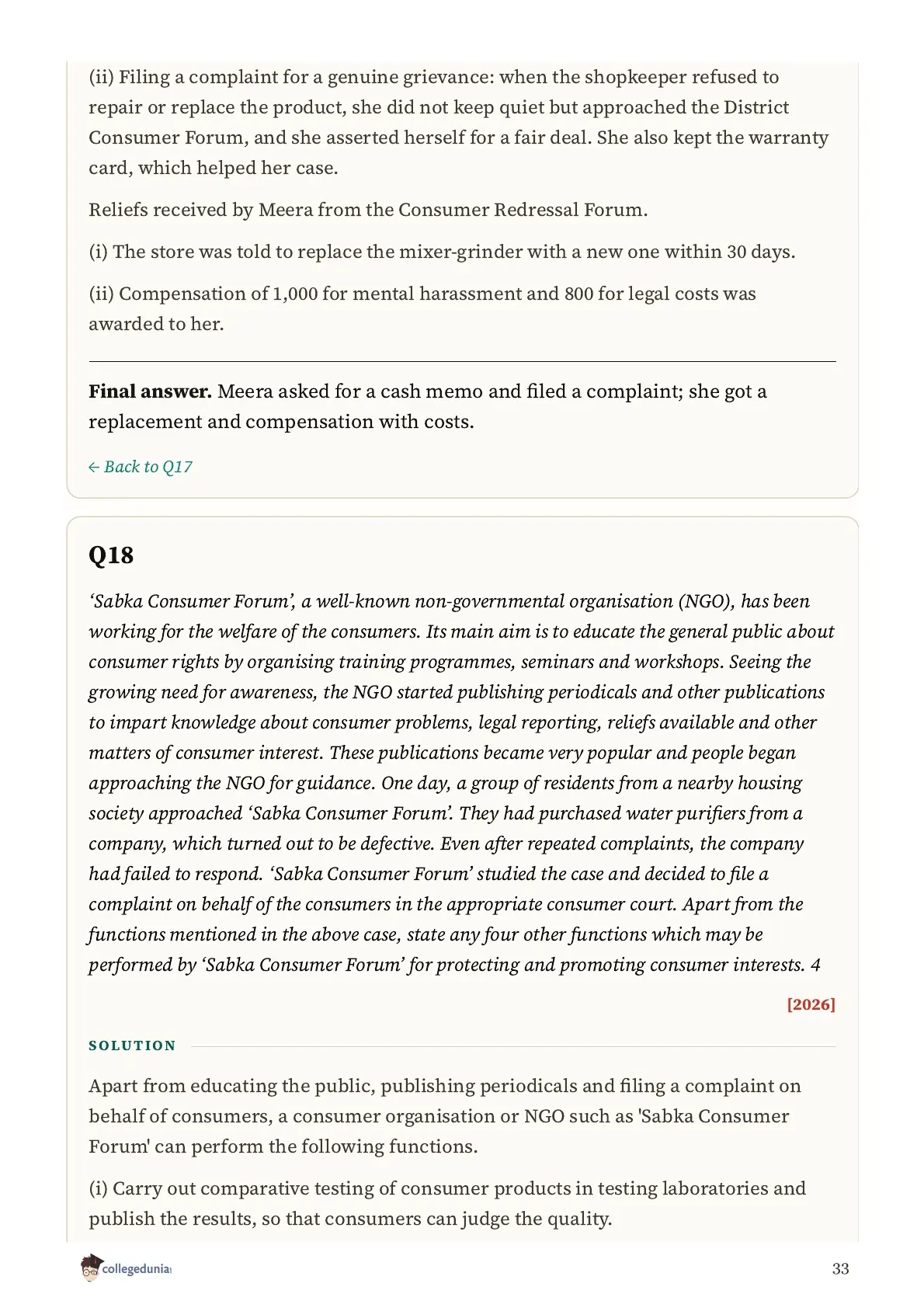
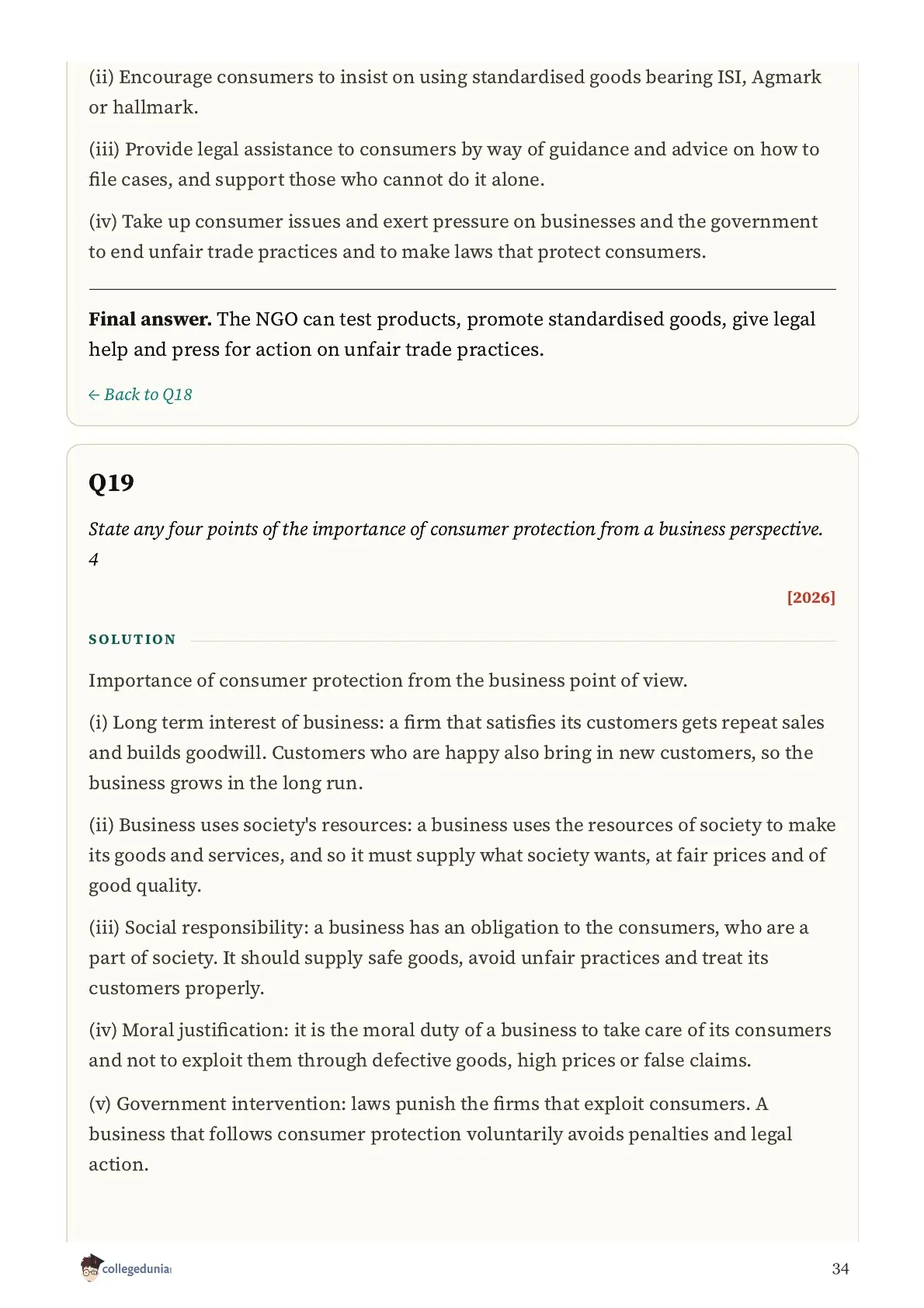
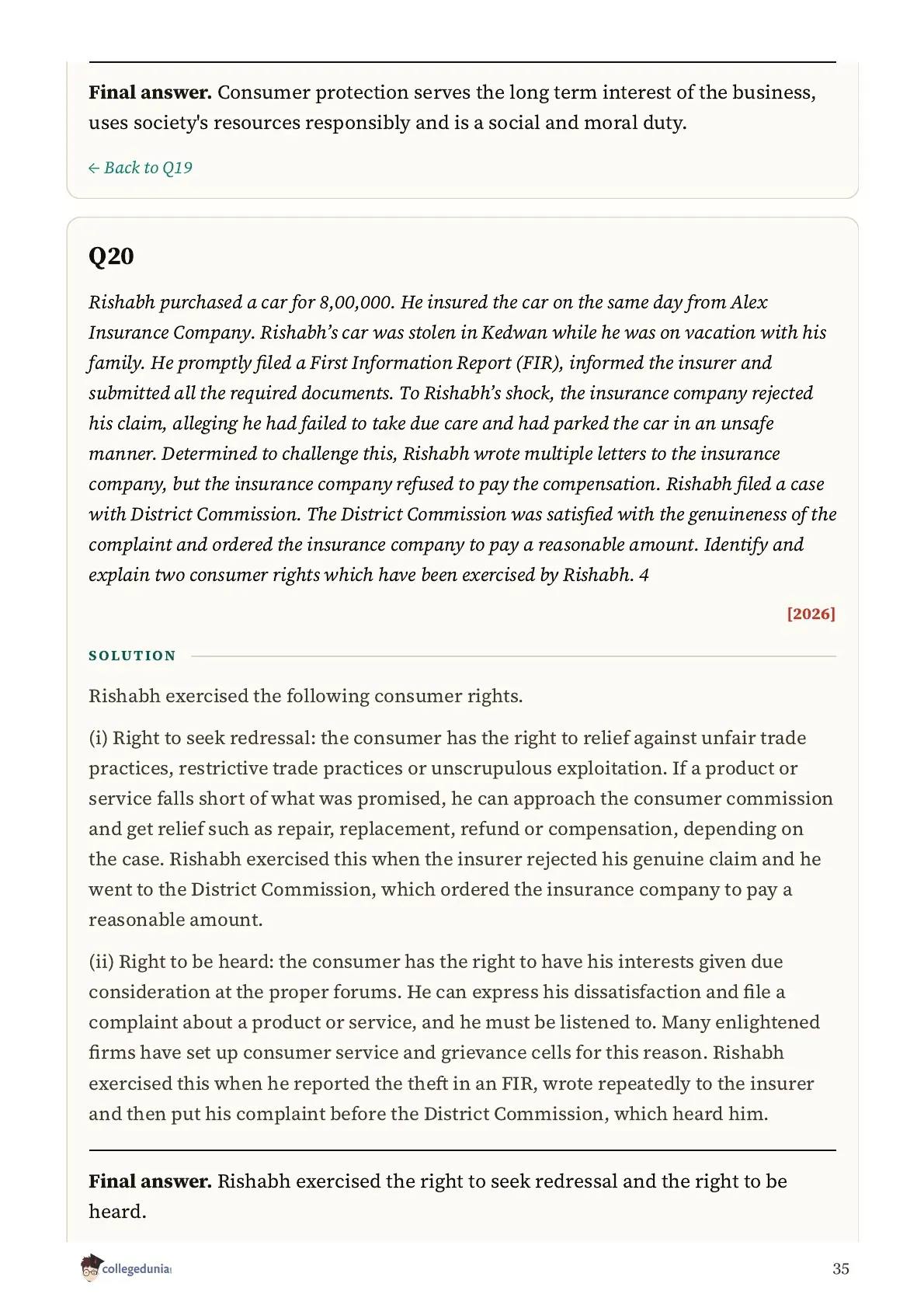
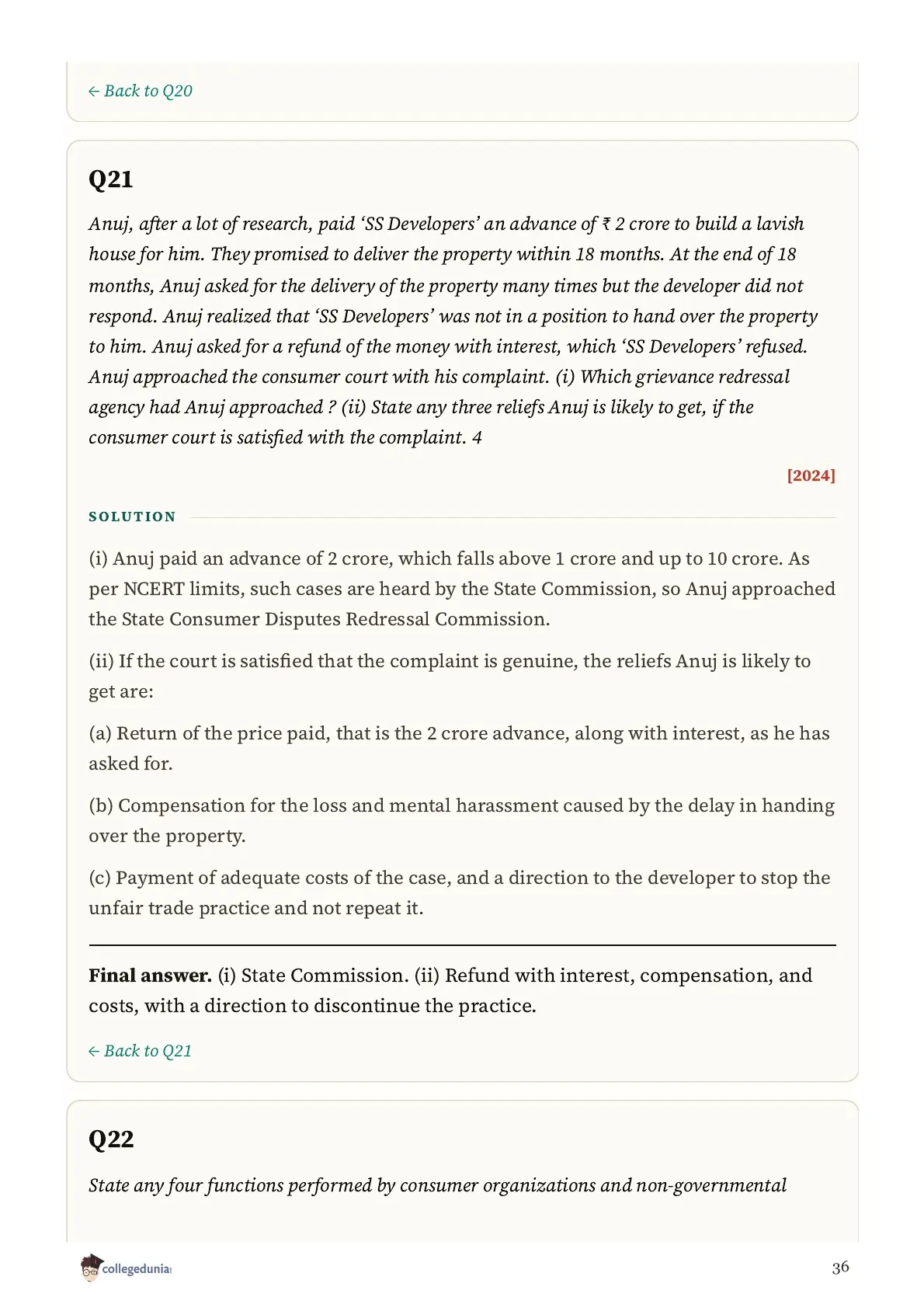
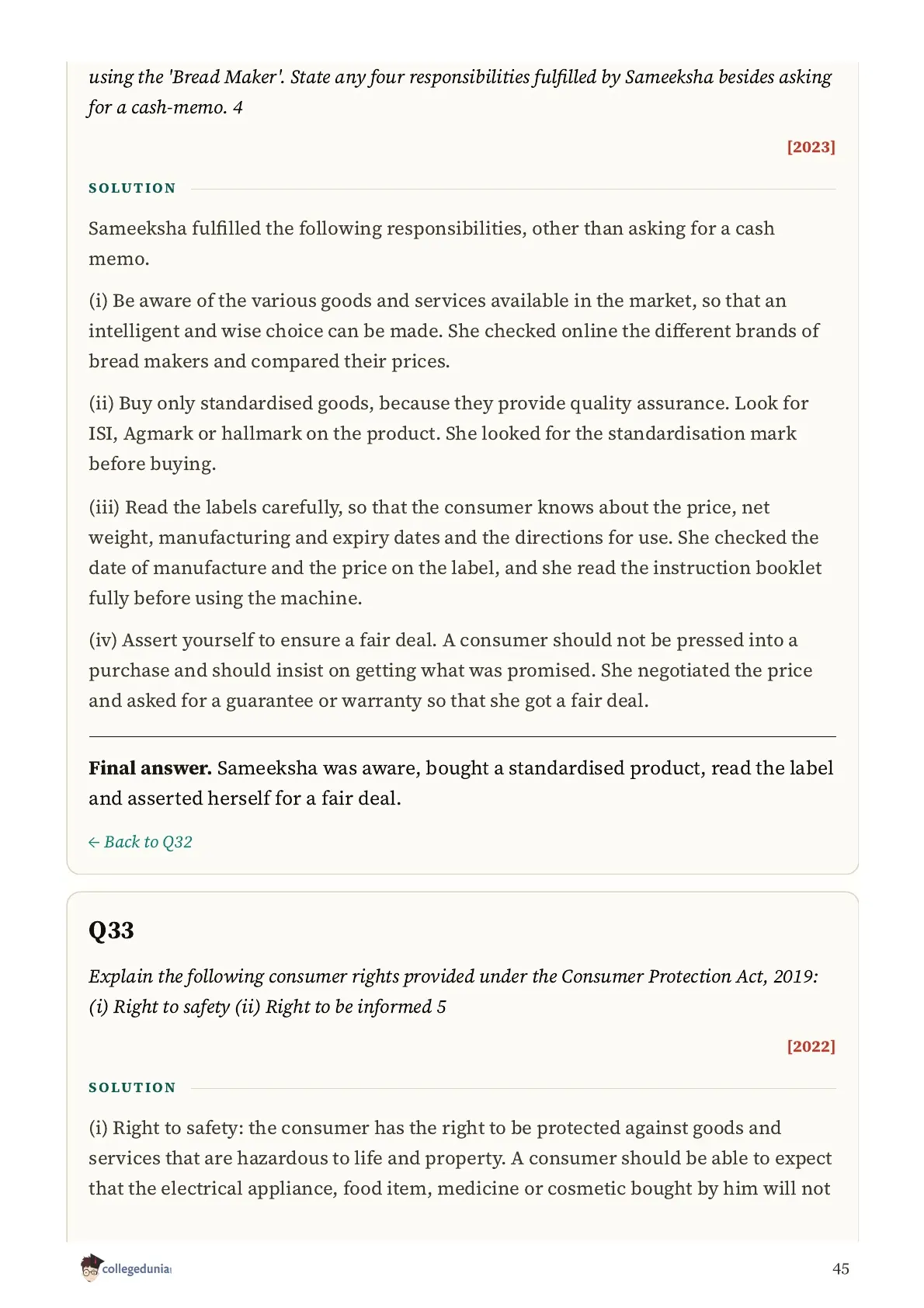
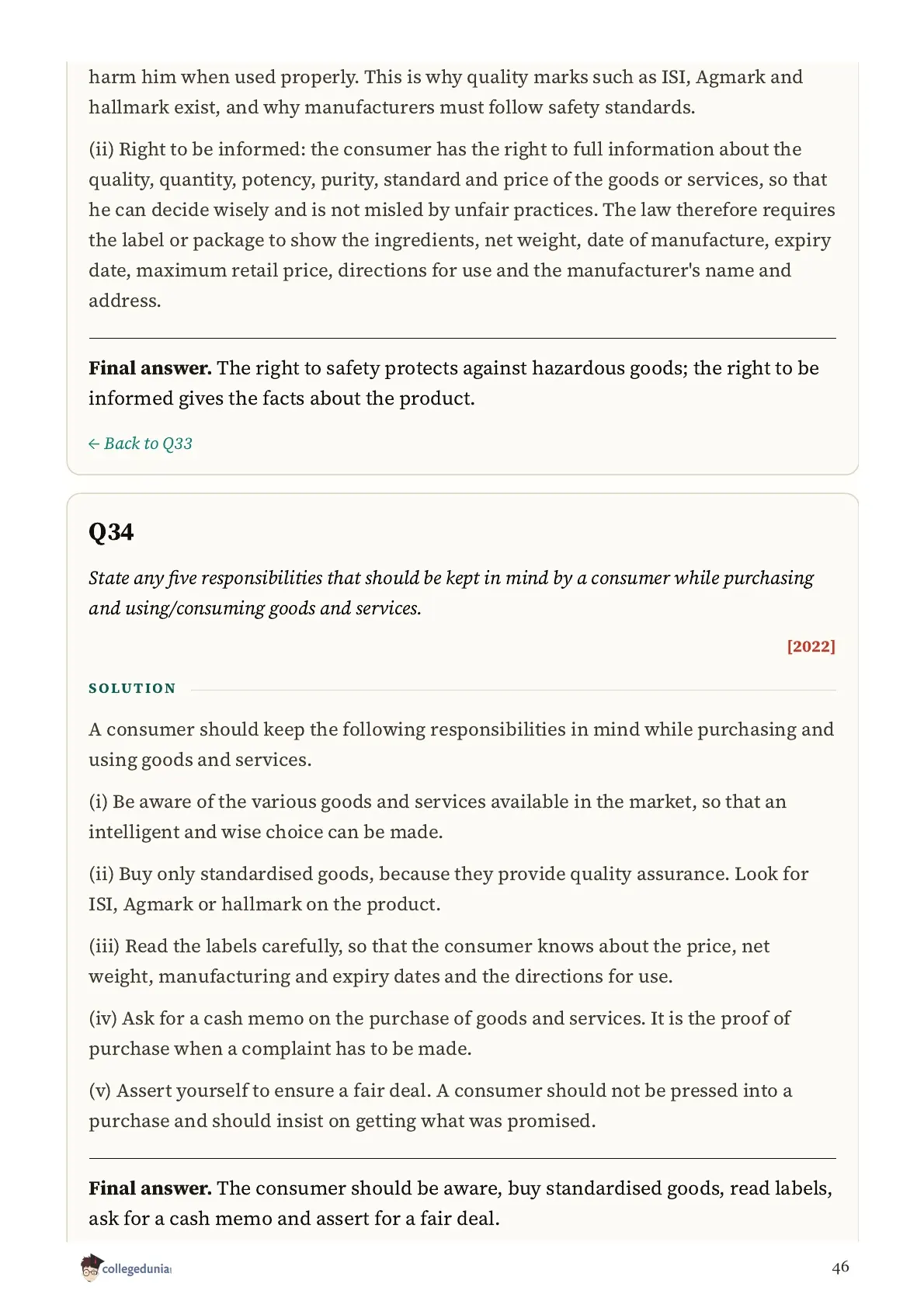
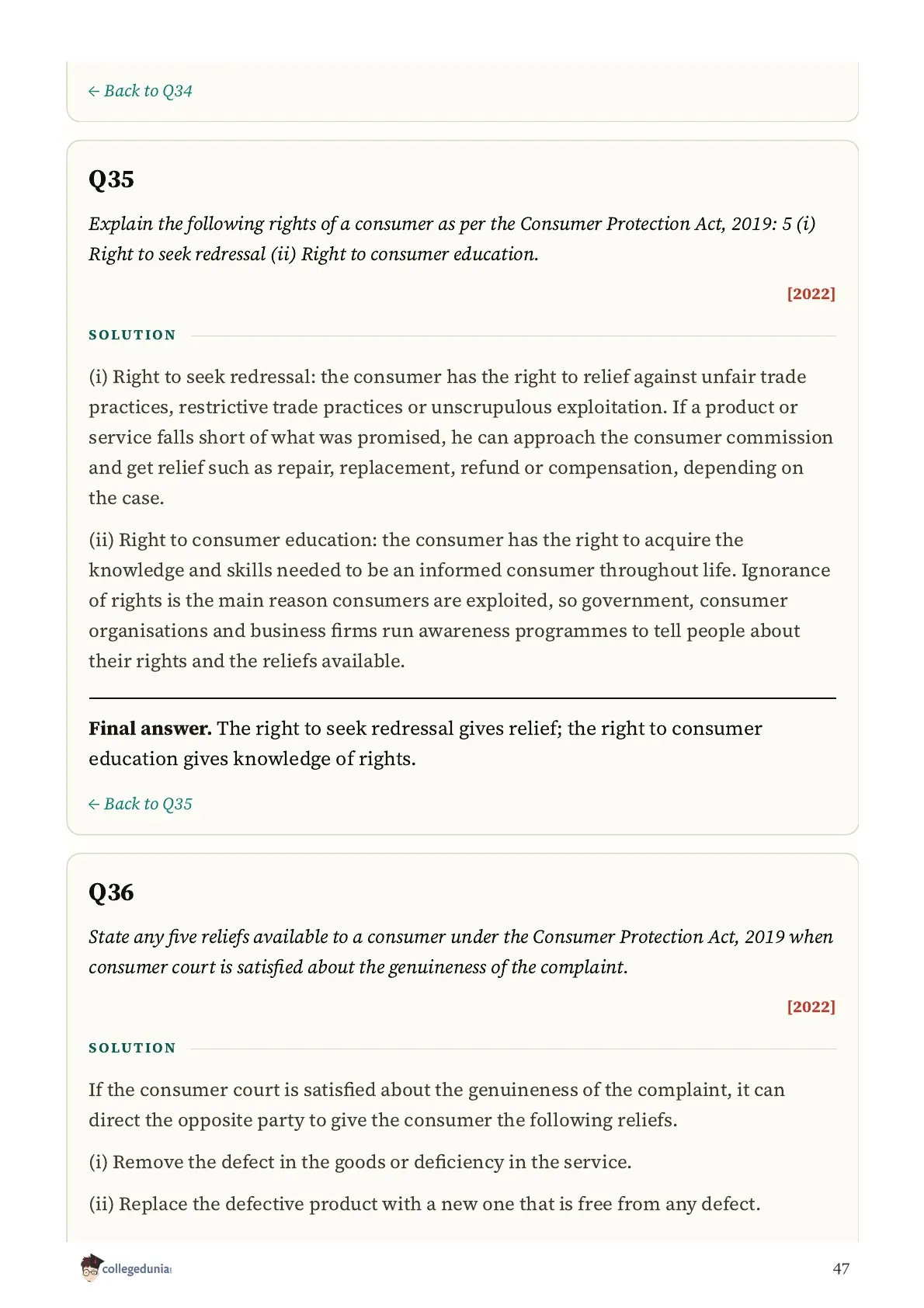
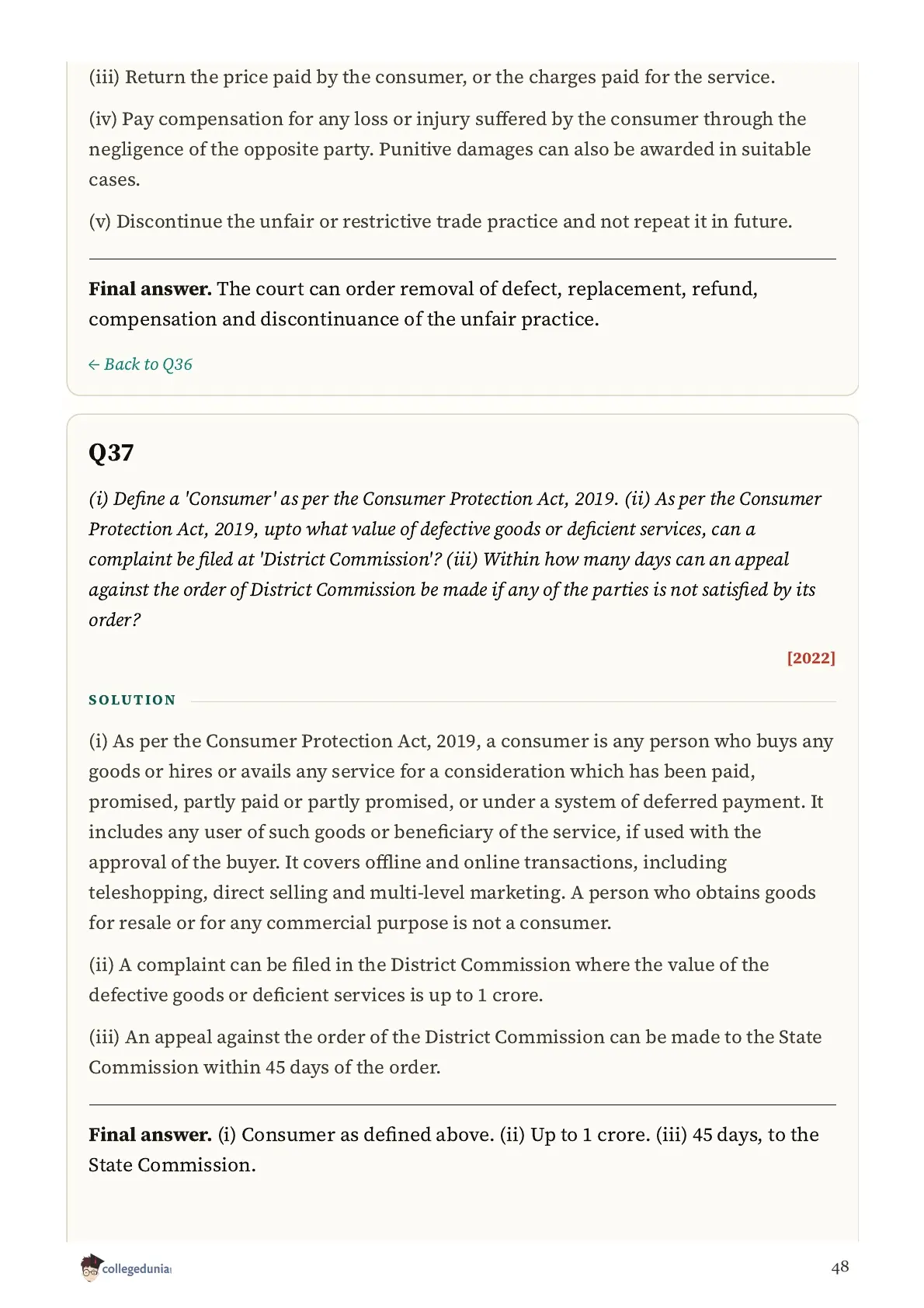
Consumer Protection Weightage in the Class 12 Board Paper
As per Business Studies Consumer Protection weightage from past years, students can expect about 4 marks from this chapter in the 80-mark board paper. CBSE publishes marks for the unit, not for each chapter, so this figure comes from prep-site tables built on past papers. Check the CBSE curriculum for the official unit marks.
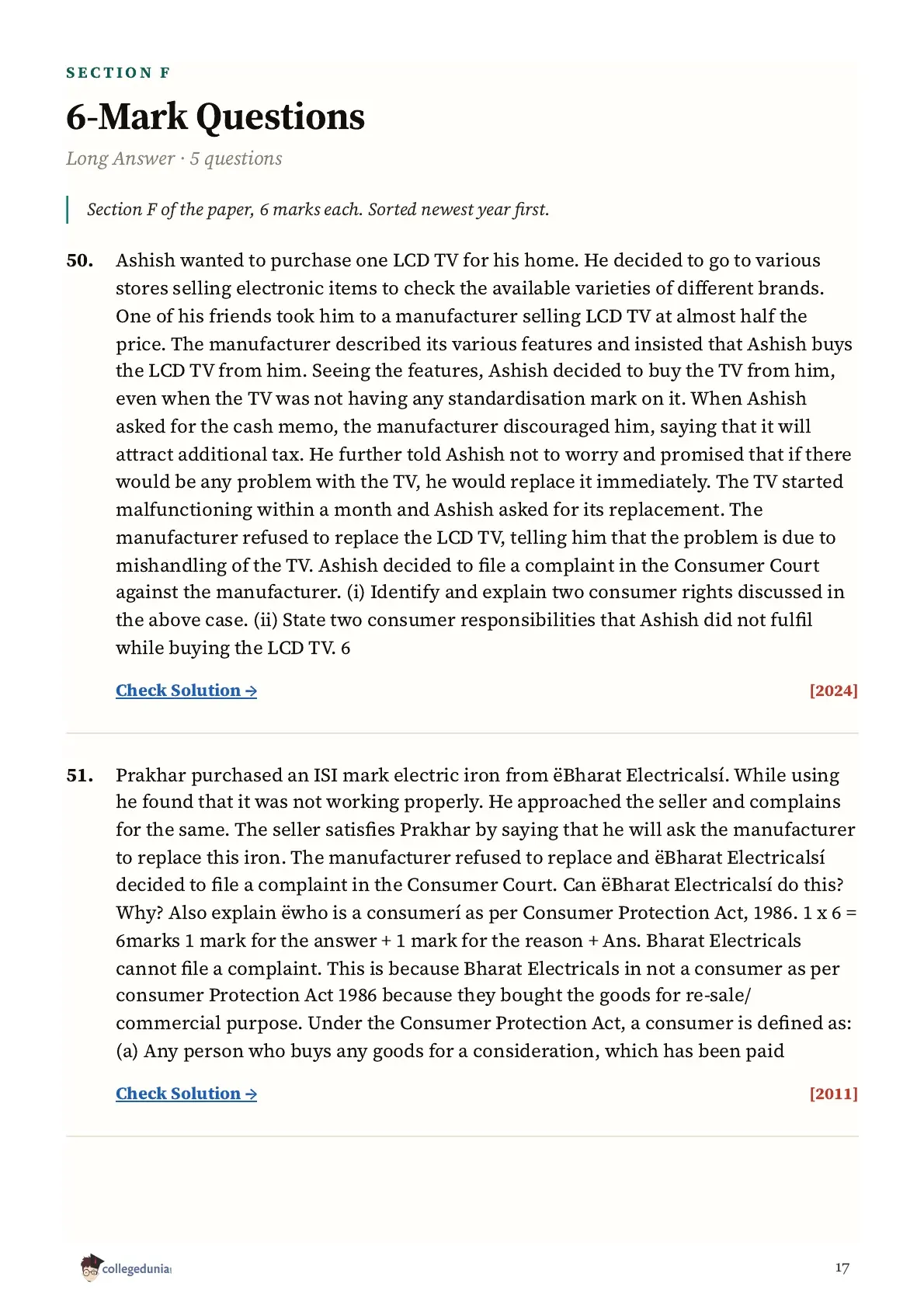
The 54 questions in this set fall in five mark bands. The 17 five-mark questions and the 16 four-mark questions are the two largest groups, followed by 15 one-mark MCQs. Only 1 question is of 3 marks and 5 are of 6 marks, so 39 of the 54 need a written answer.
| Marks Each | Question Type | Questions in the Set |
|---|---|---|
| 1 mark | MCQ | 15 |
| 3 marks | Short Answer (SA) | 1 |
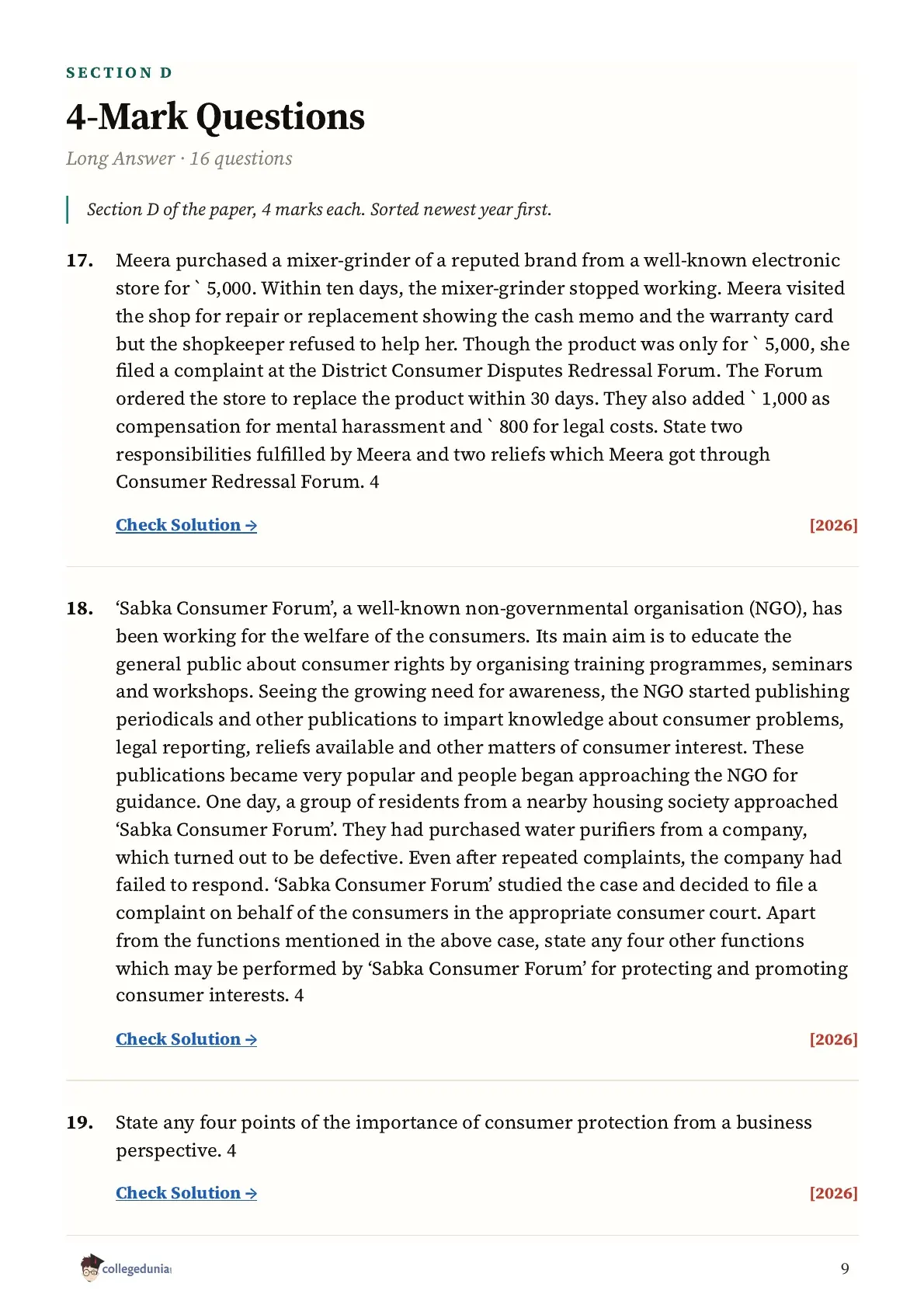
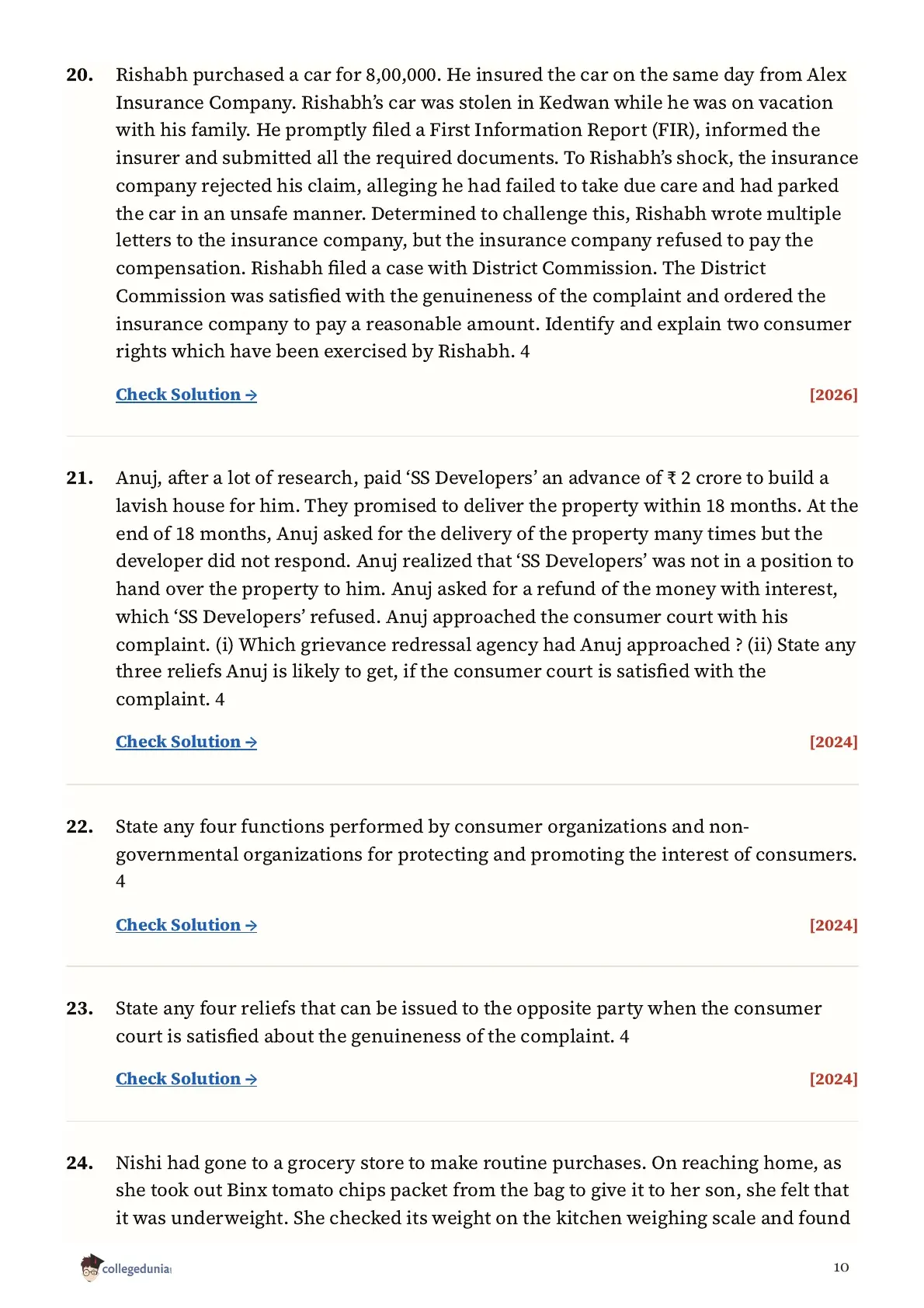
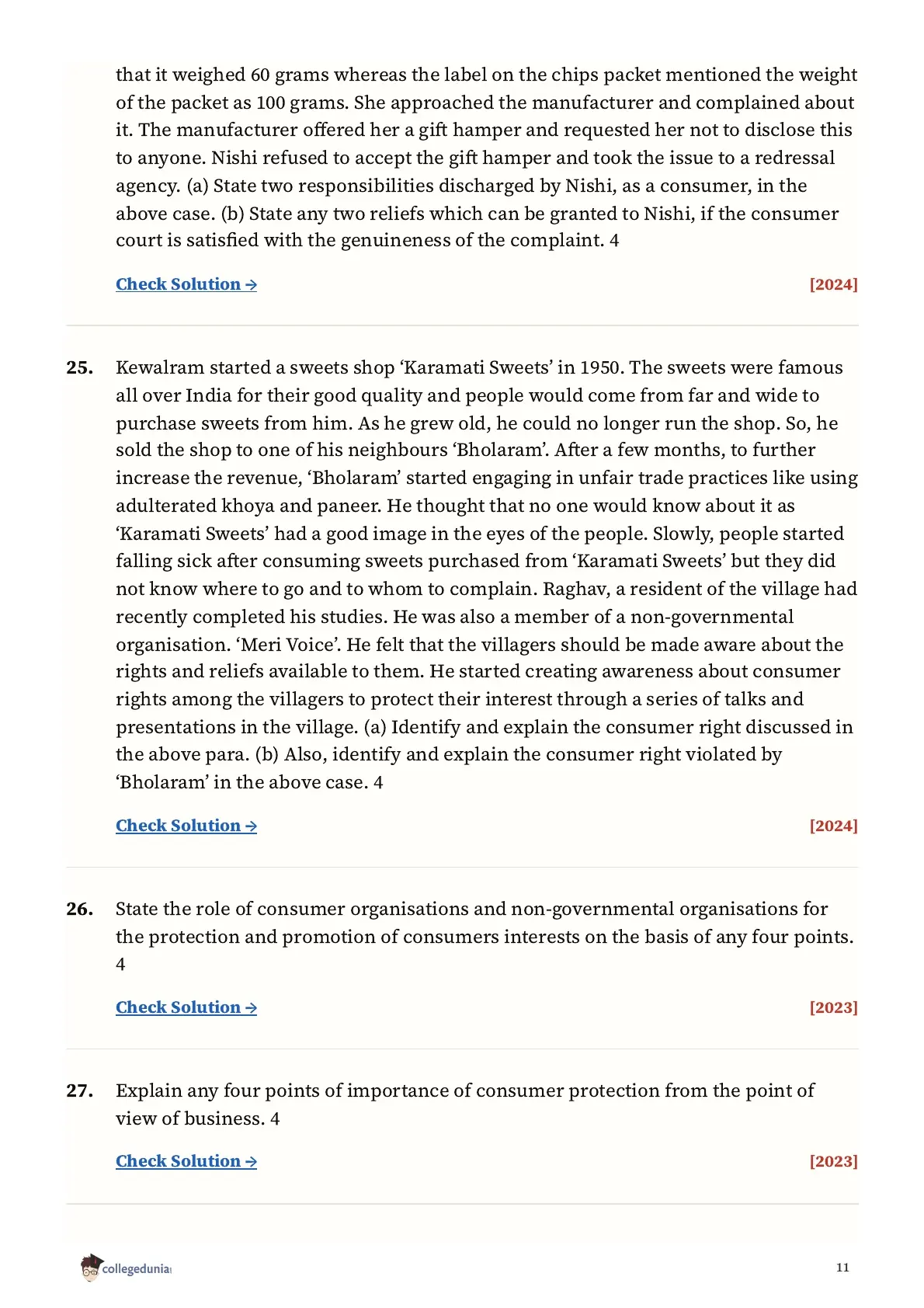
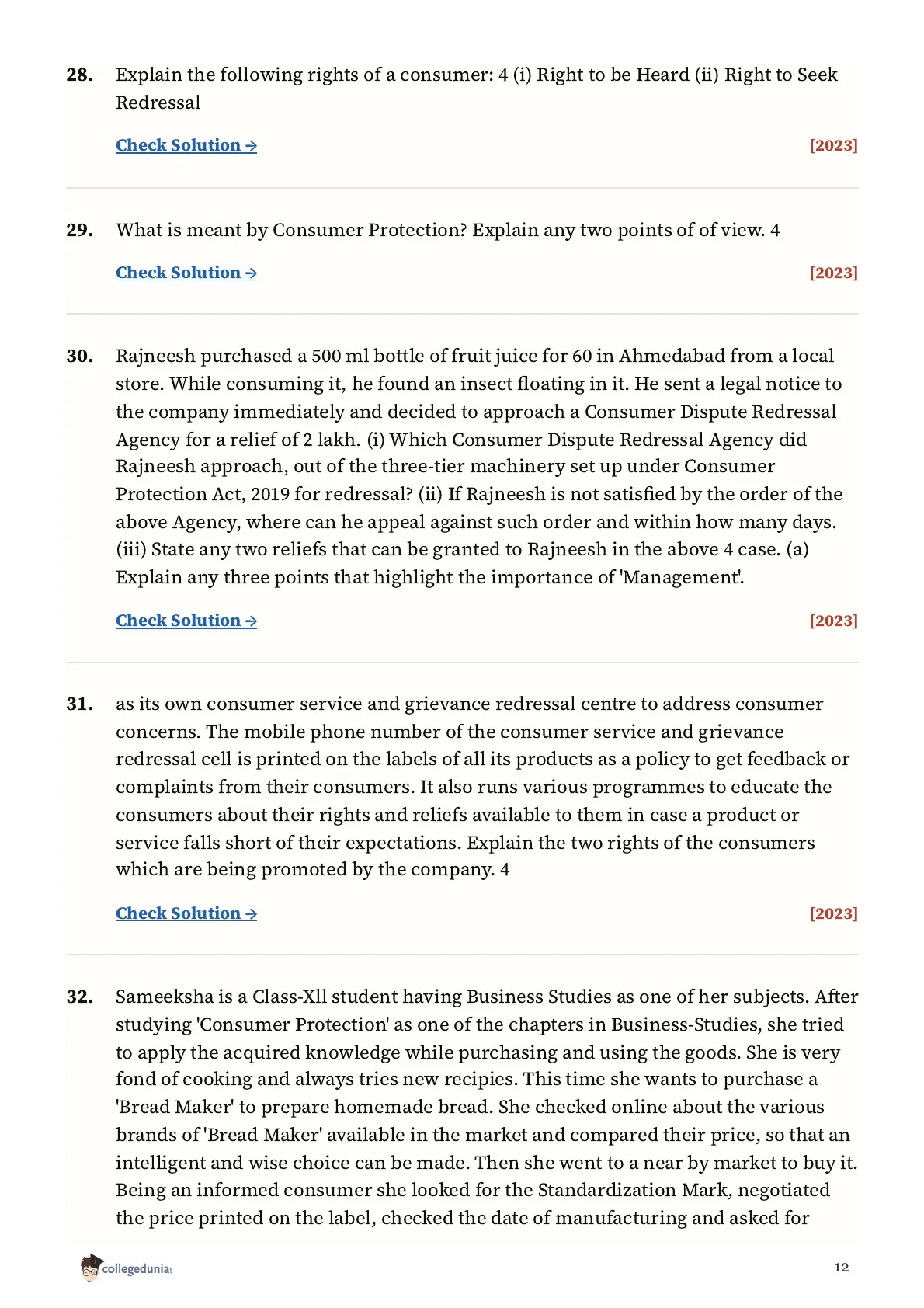
| 4 marks | Long Answer | 16 |
| 5 marks | Long Answer | 17 |
| 6 marks | Long Answer | 5 |
Consumer Protection Questions by Topic
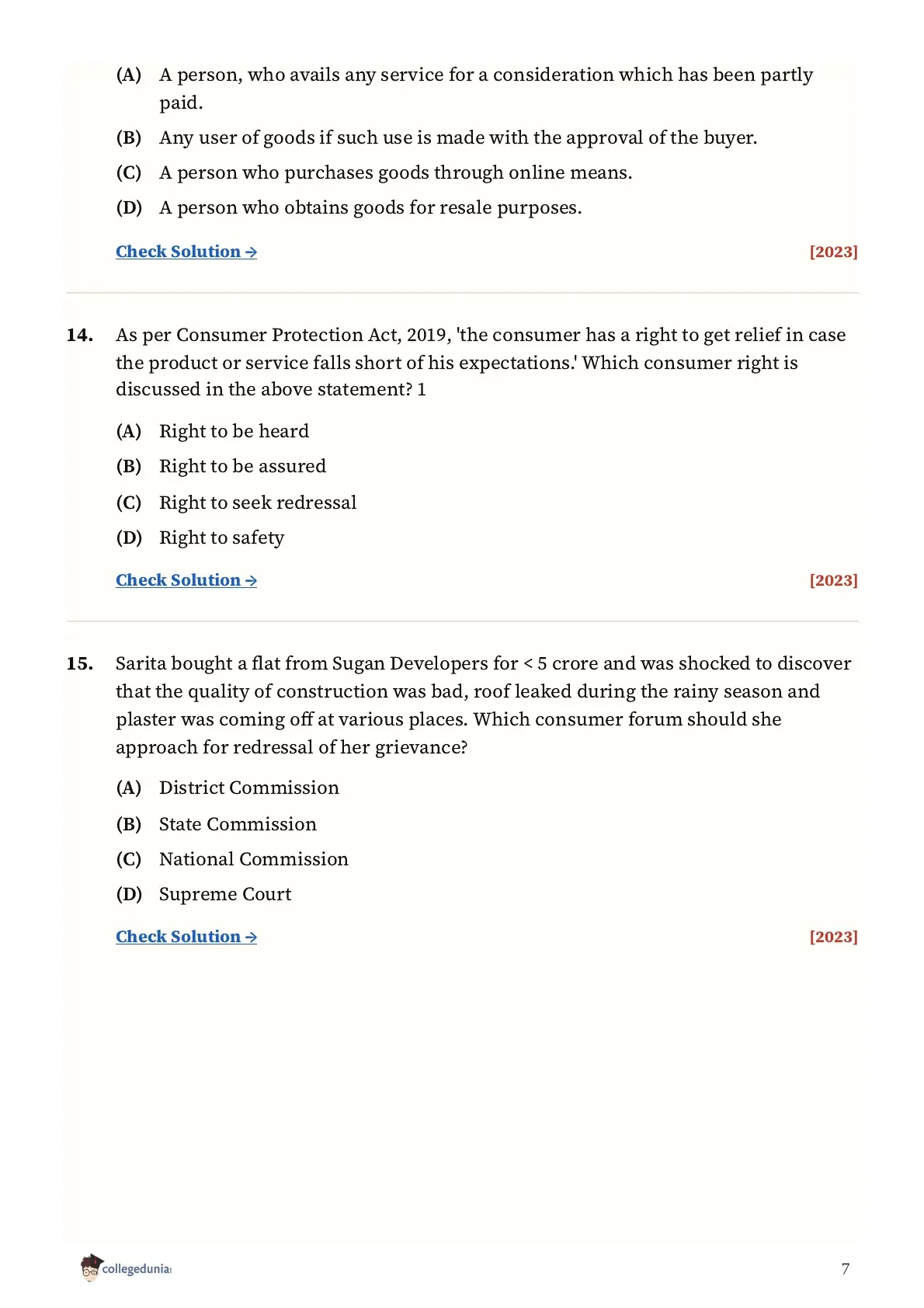
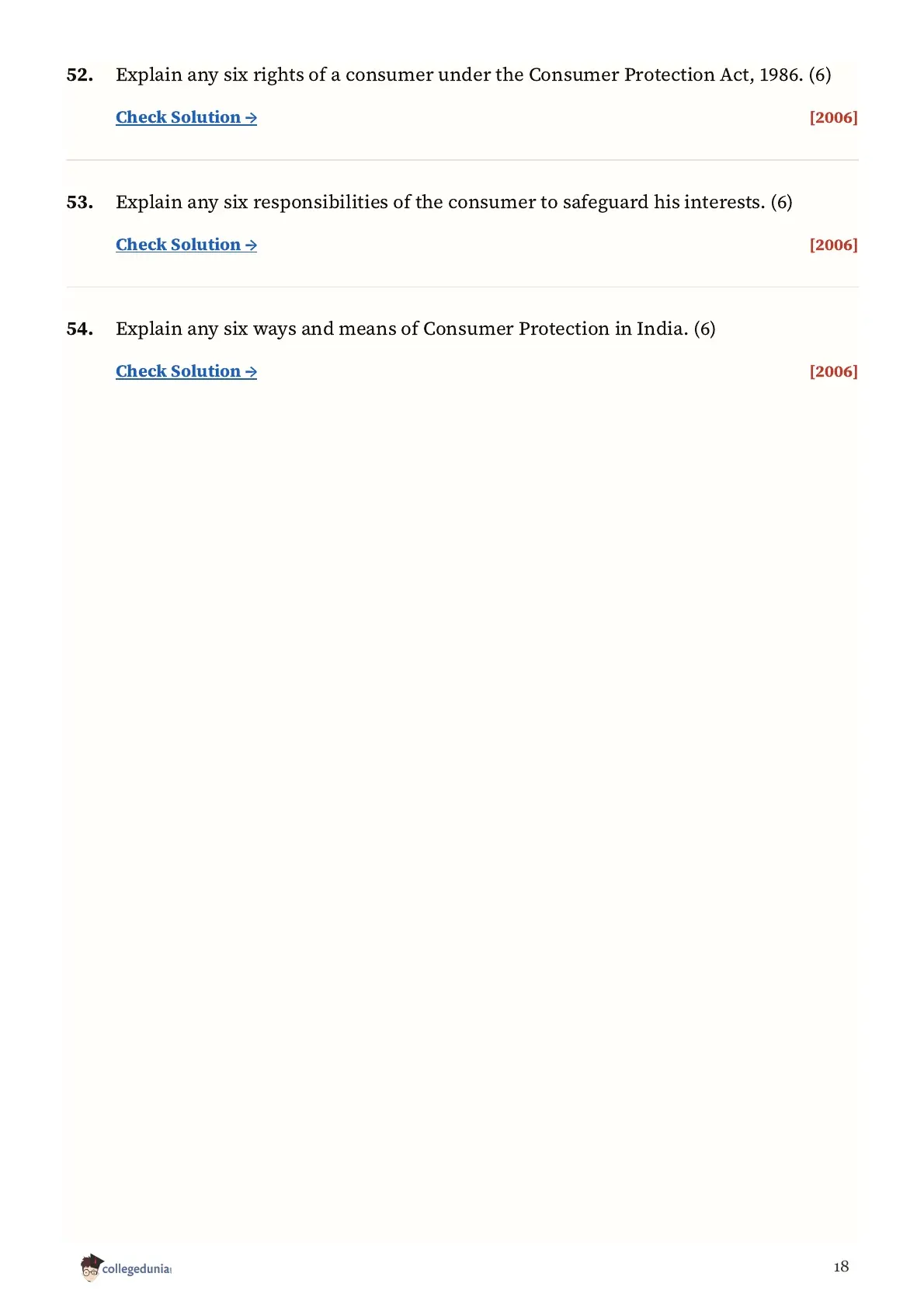
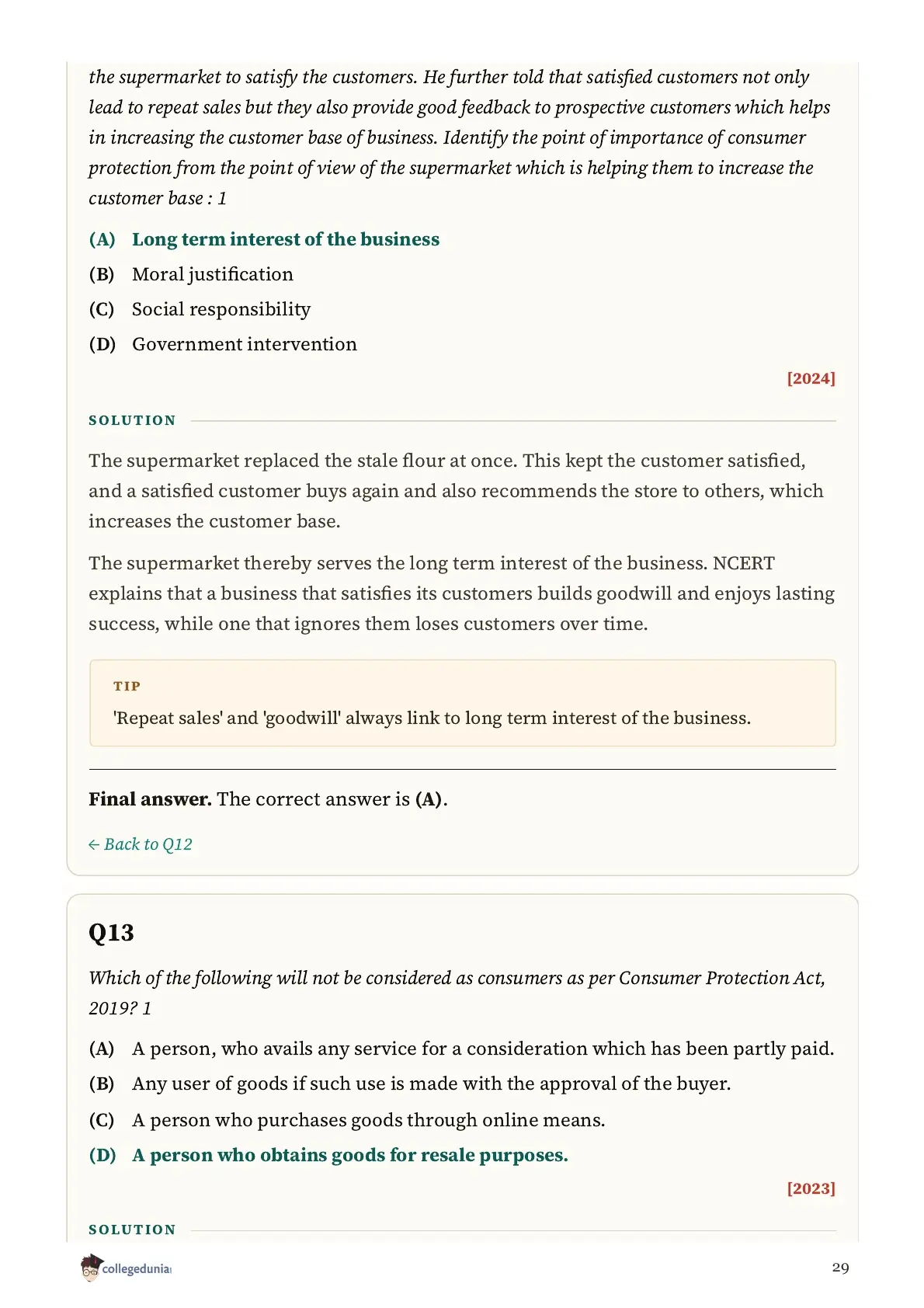
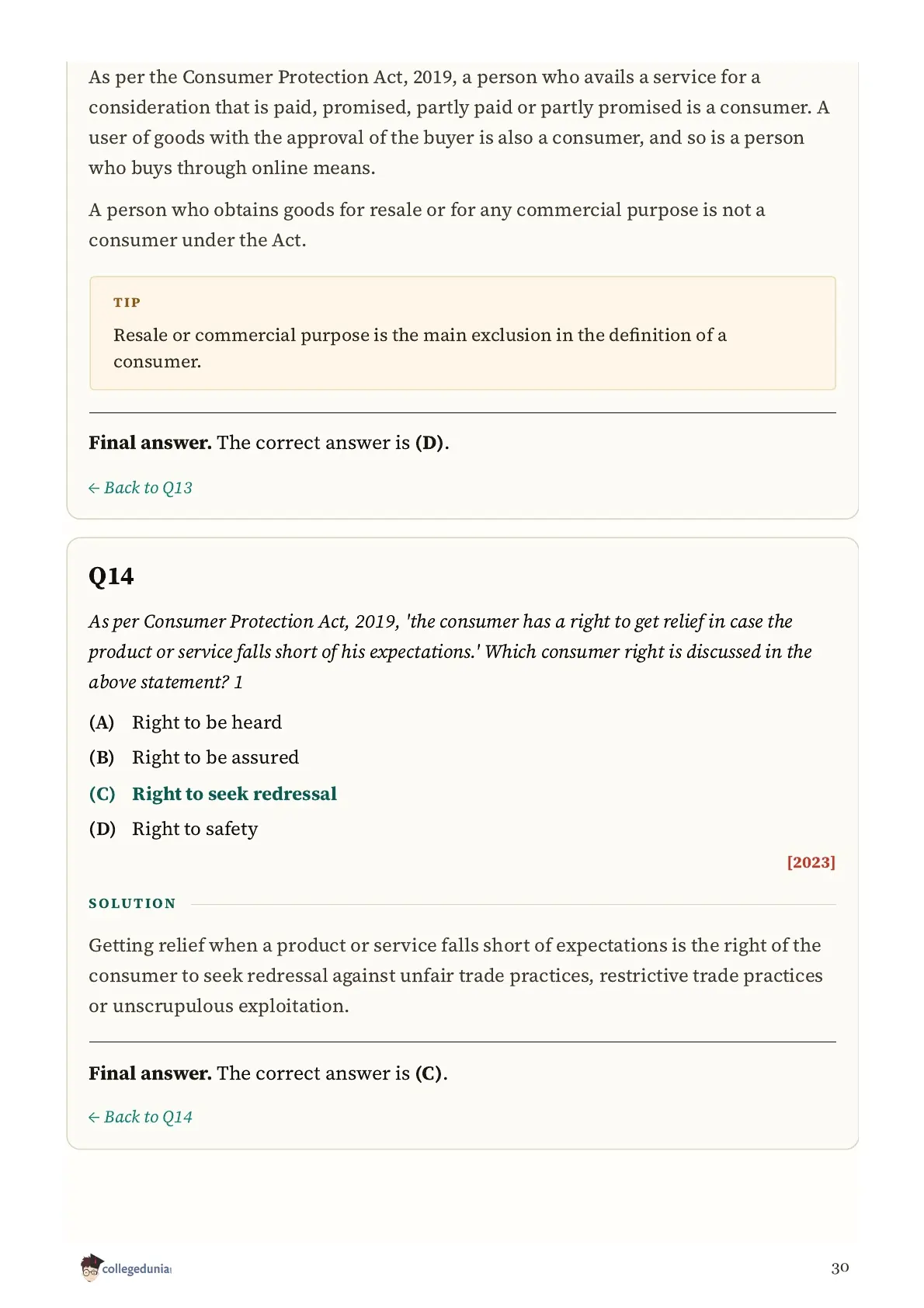
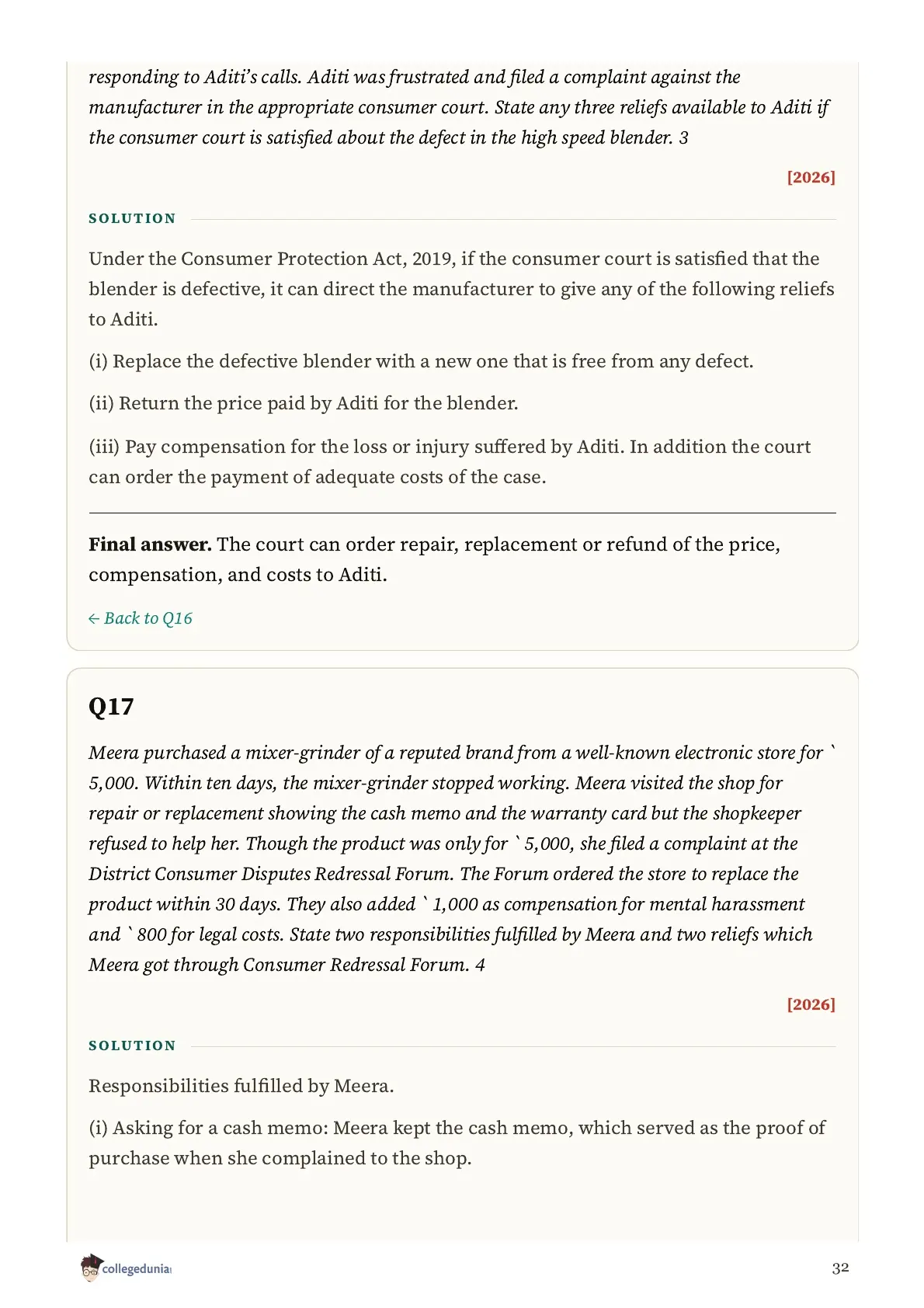
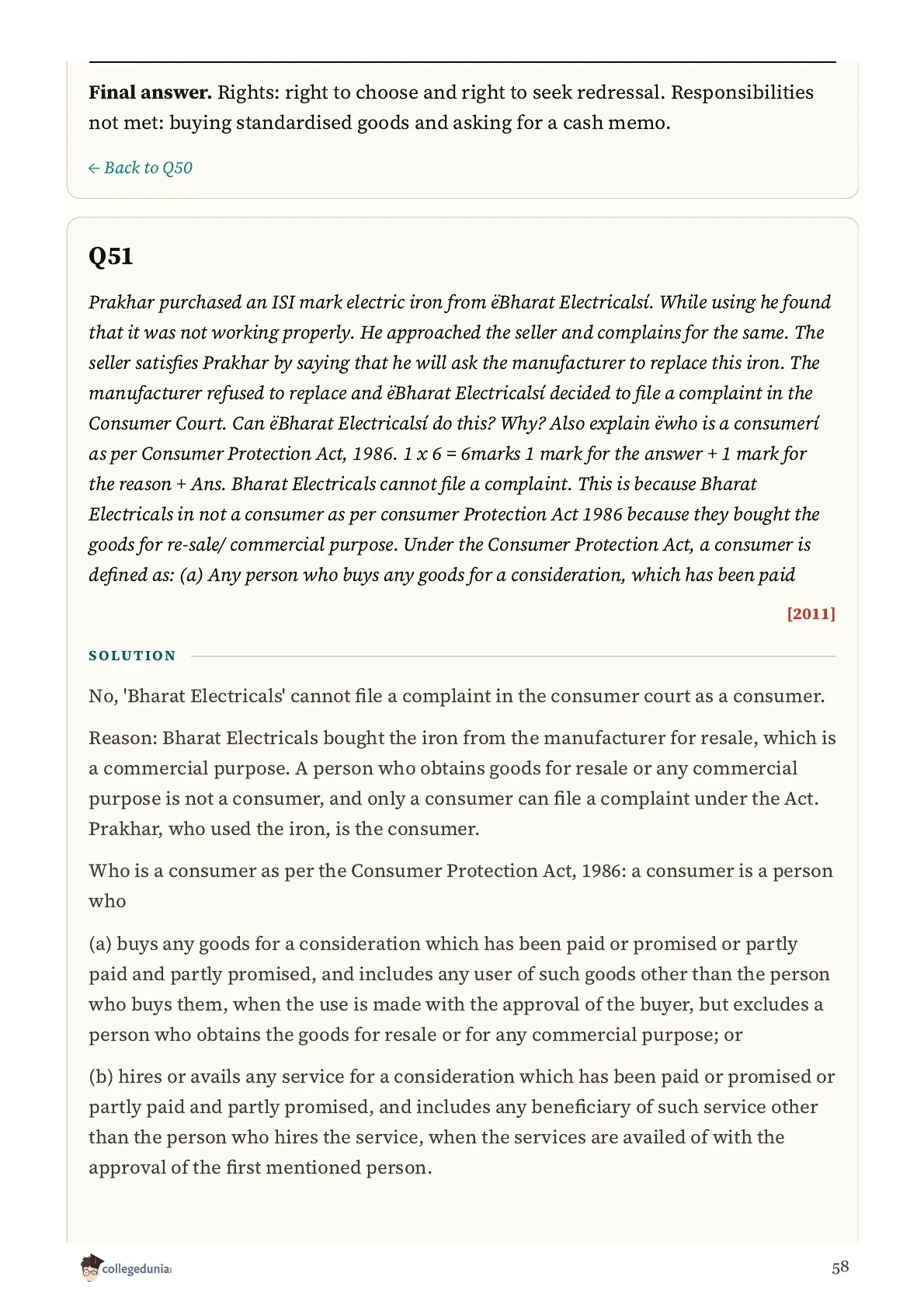
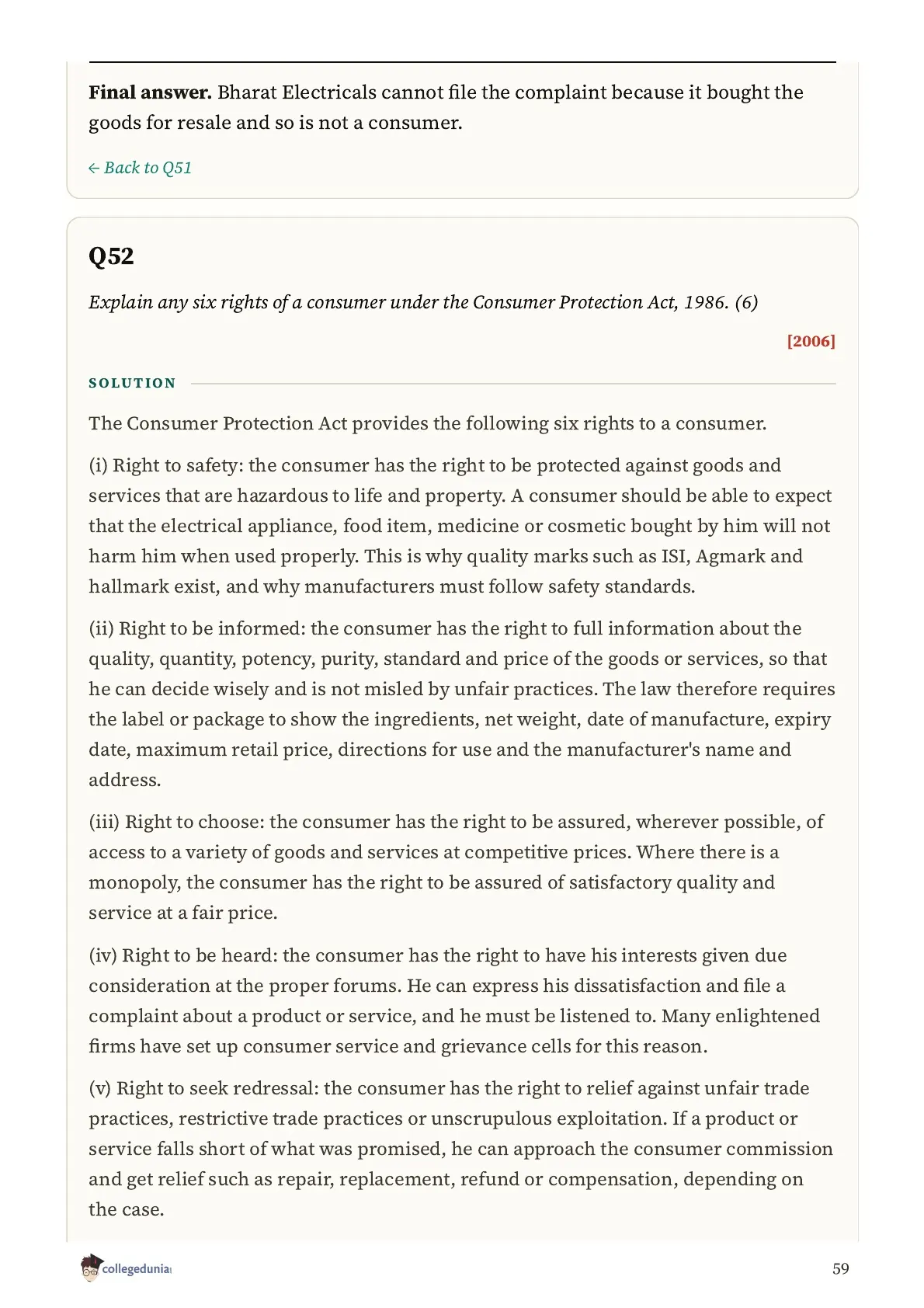
Consumer rights are the most repeated topic. 19 questions name a right, either asking you to explain two rights from the Consumer Protection Act, 2019 (the right to be heard, to be informed, to safety, to seek redressal, to consumer education) or, in 7 of the MCQs, asking which right a short case shows. After that come the redress side of the chapter: 18 questions mention a Commission, a consumer court or an appeal, and 15 ask for reliefs or remedies, usually as "State any five reliefs available to a consumer".
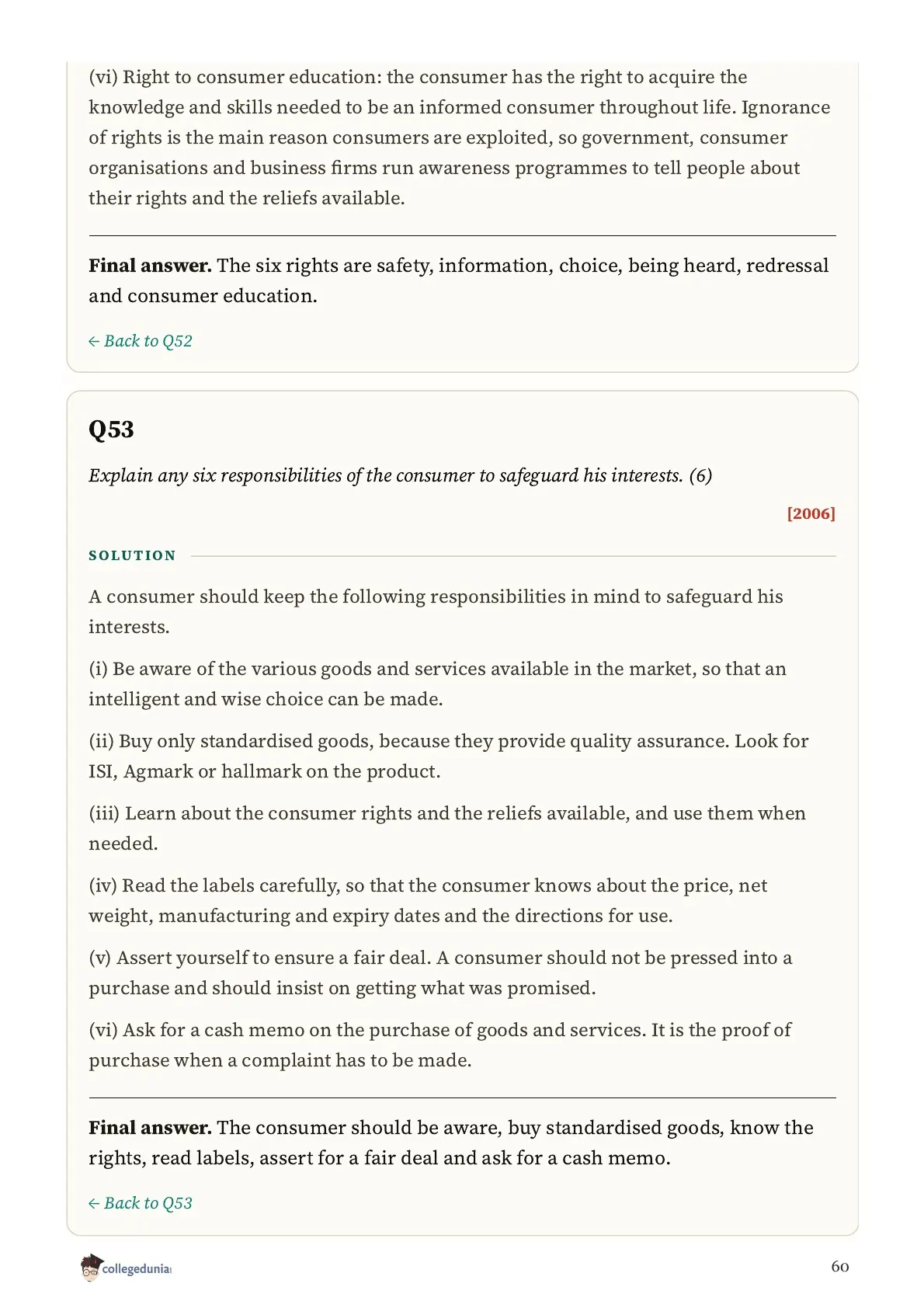
11 questions are on consumer responsibilities, mostly "State any five responsibilities", and 11 turn on labelling, hallmarks or standardisation marks such as ISI and Agmark. The legal definition of a consumer is tested in 5 questions, including the MCQ about who is not a consumer, and 7 questions use a company's own grievance cell as the case. 5 questions are on consumer organisations and NGOs, and 3 on the importance of consumer protection for business. The counts come from keyword matches, so a question on two topics is counted under both.
| Topic | Questions Naming It (approx.) |
|---|---|
| Consumer rights | 19 |
| Commissions, consumer court and appeals | 18 |
| Reliefs and remedies | 15 |
| Consumer responsibilities | 11 |
| Labelling, hallmark and standardisation marks | 11 |
| Grievance cells of firms | 7 |
| Definition of a consumer | 5 |
| Consumer organisations and NGOs | 5 |
| Importance of consumer protection to business | 3 |
22 of the 54 questions open with a case about a named buyer, so you decide the right or the Commission from the facts. 23 ask for "any two", "any three", "any four", "any five" or "any six" points, and 7 begin "Explain the following" with two rights listed.
Consumer Protection Video Lesson
Source: Next Toppers - 12th Commerce on YouTube
How to Approach the Consumer Protection Set
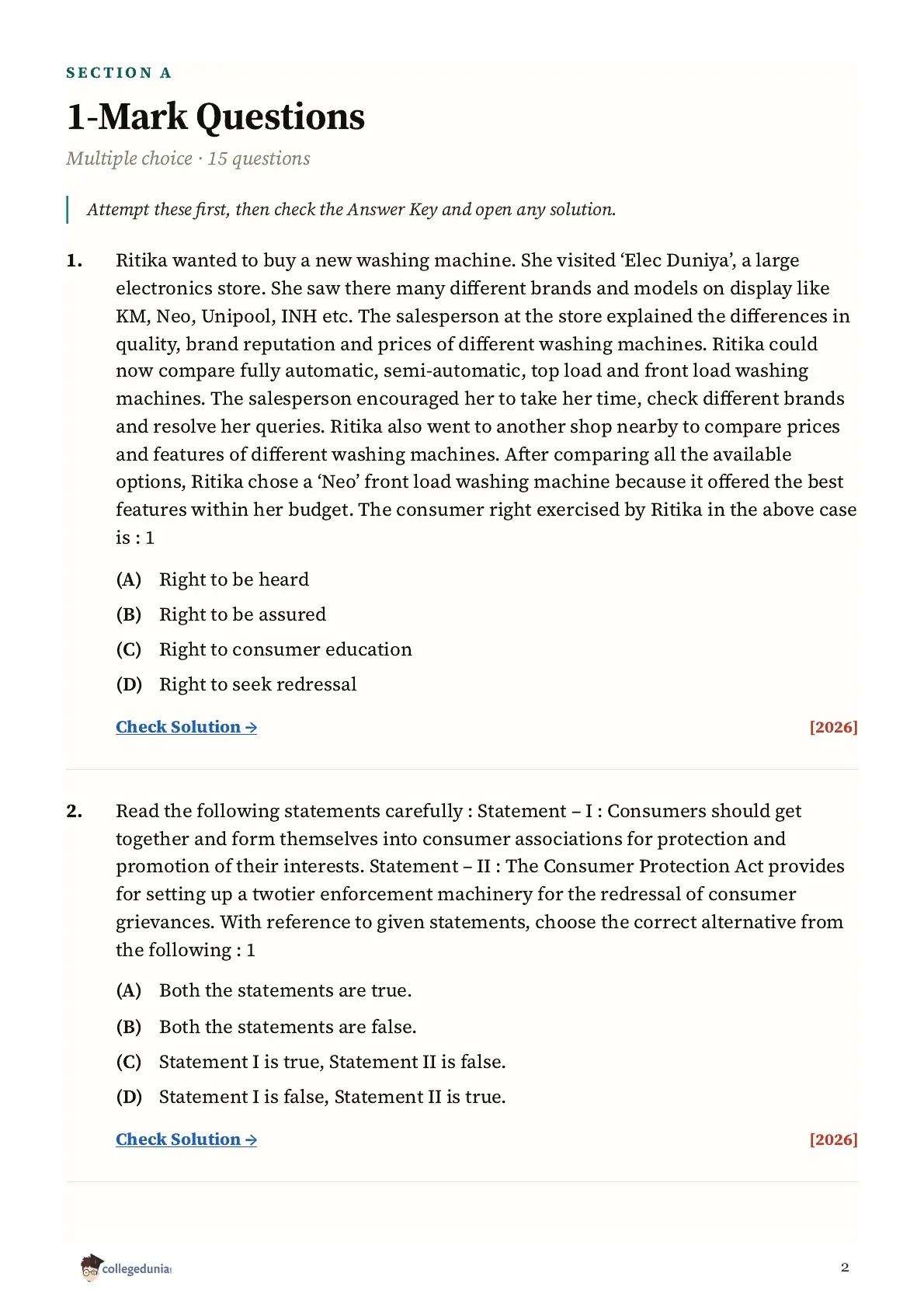
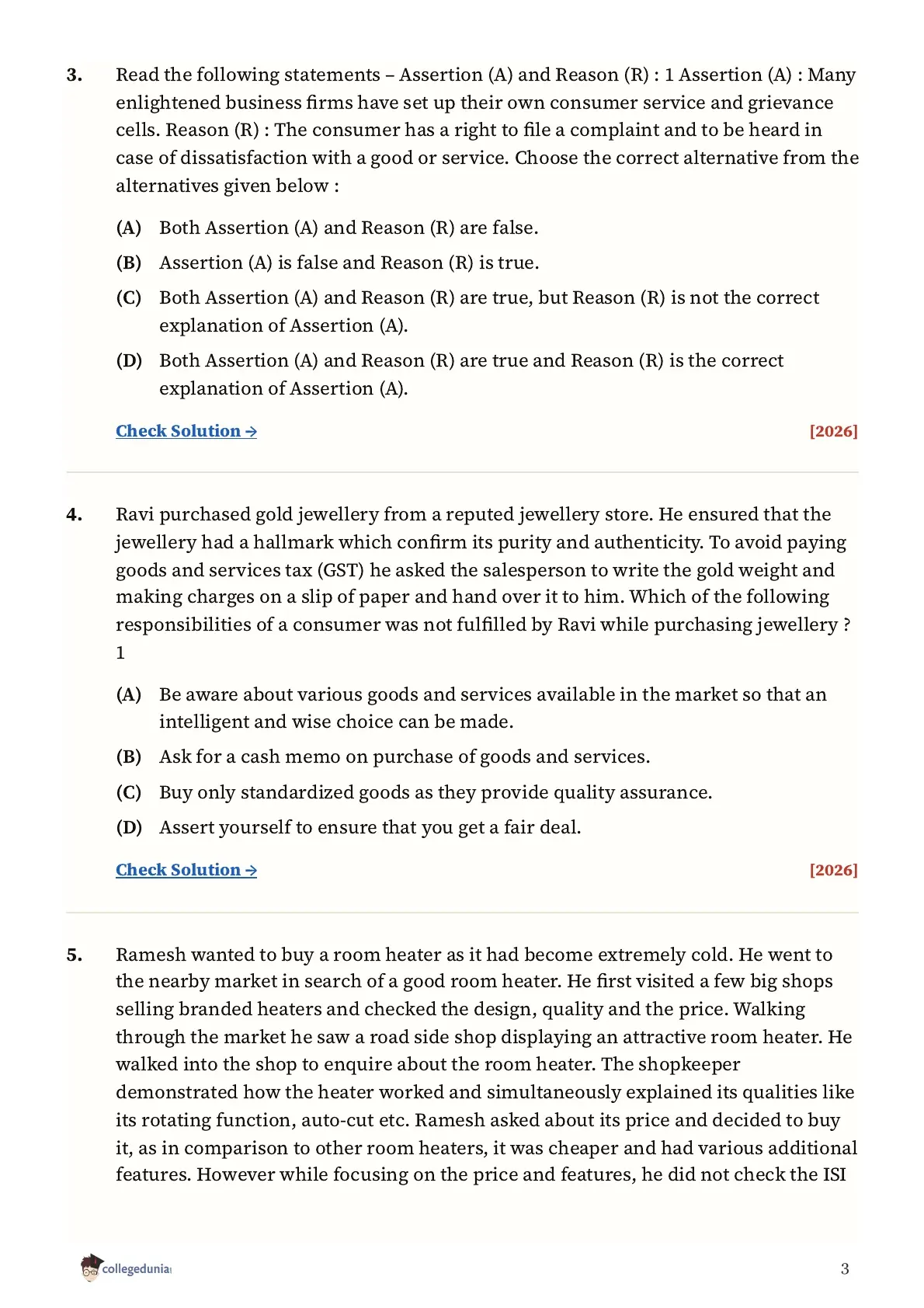
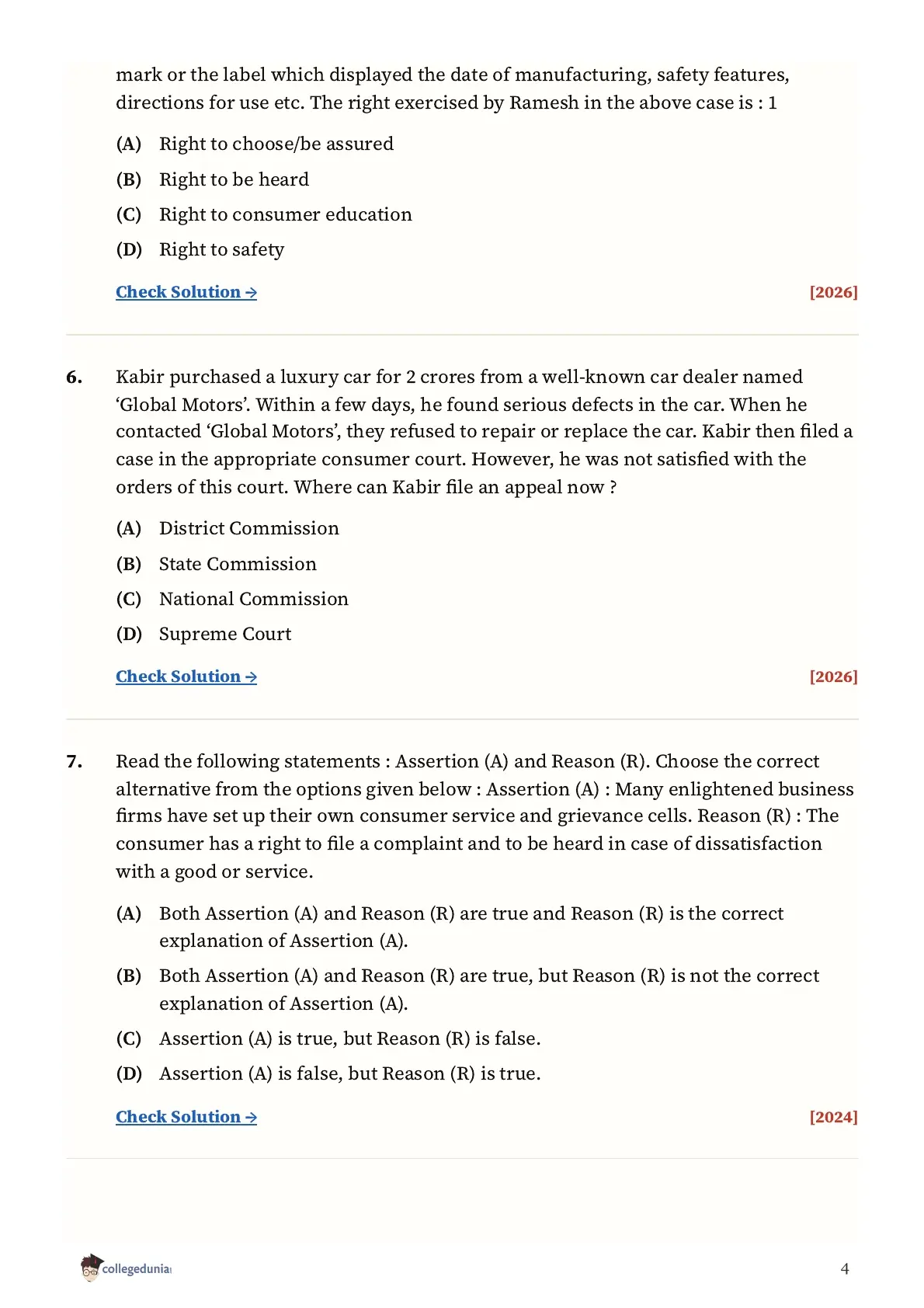
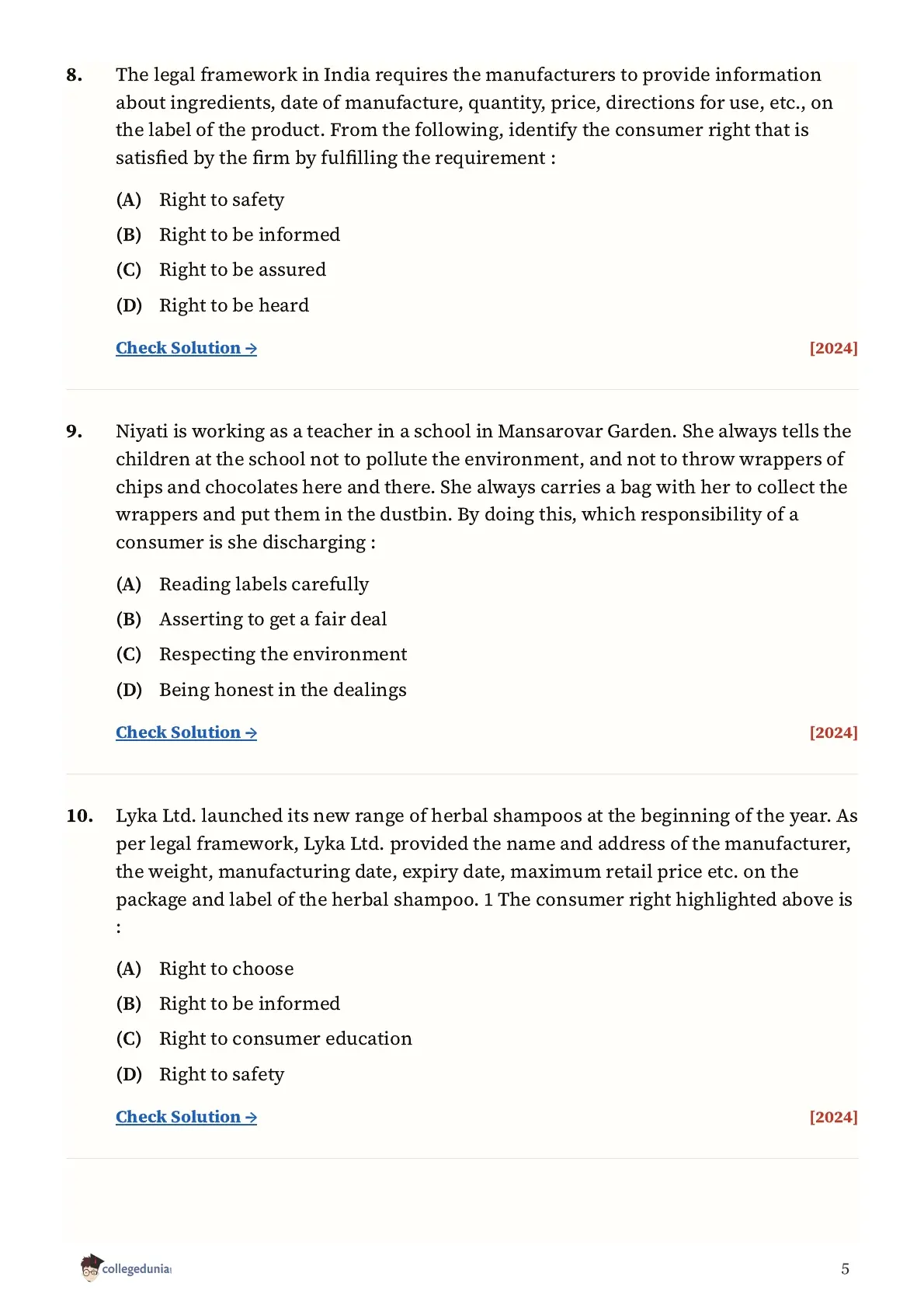
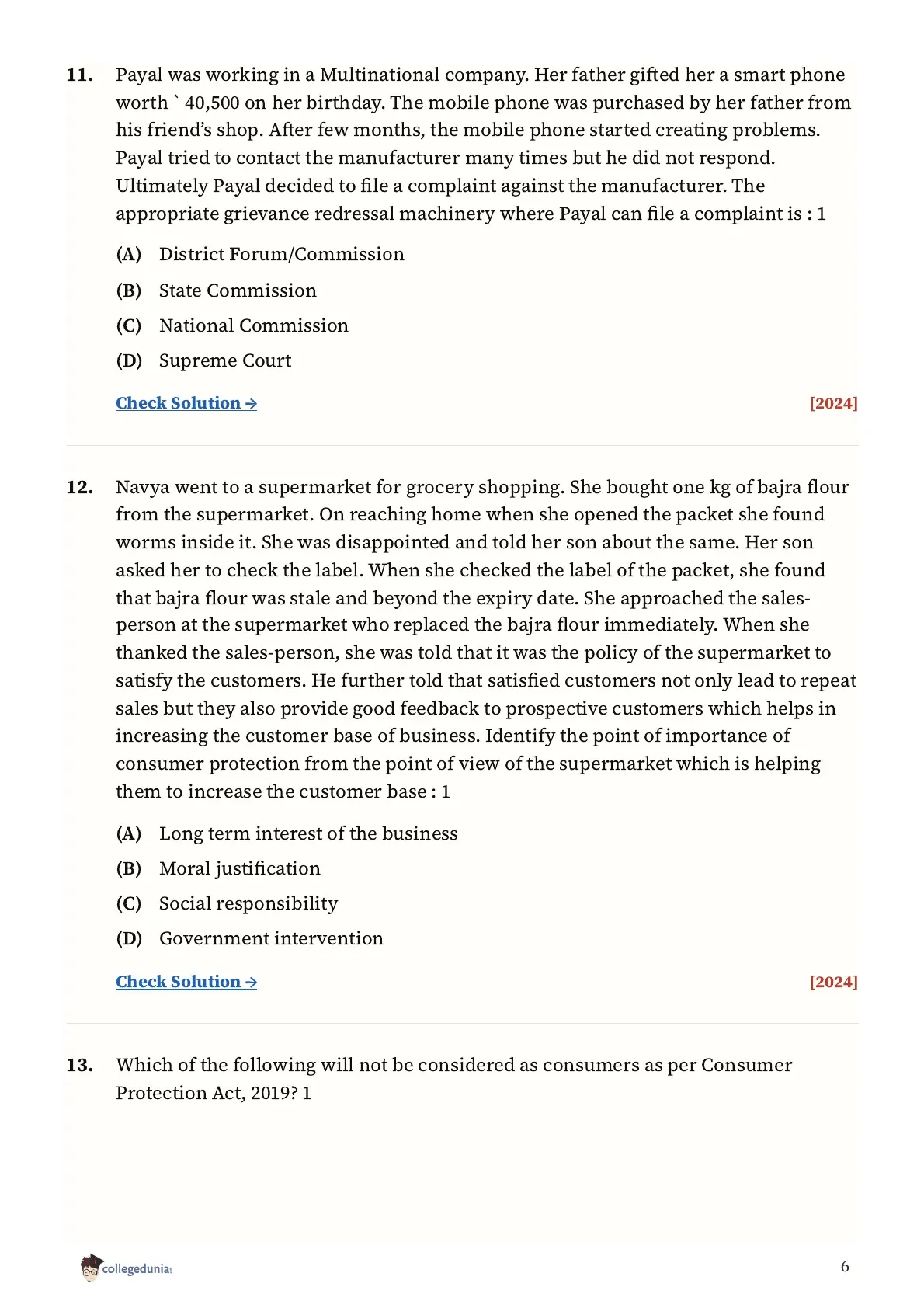
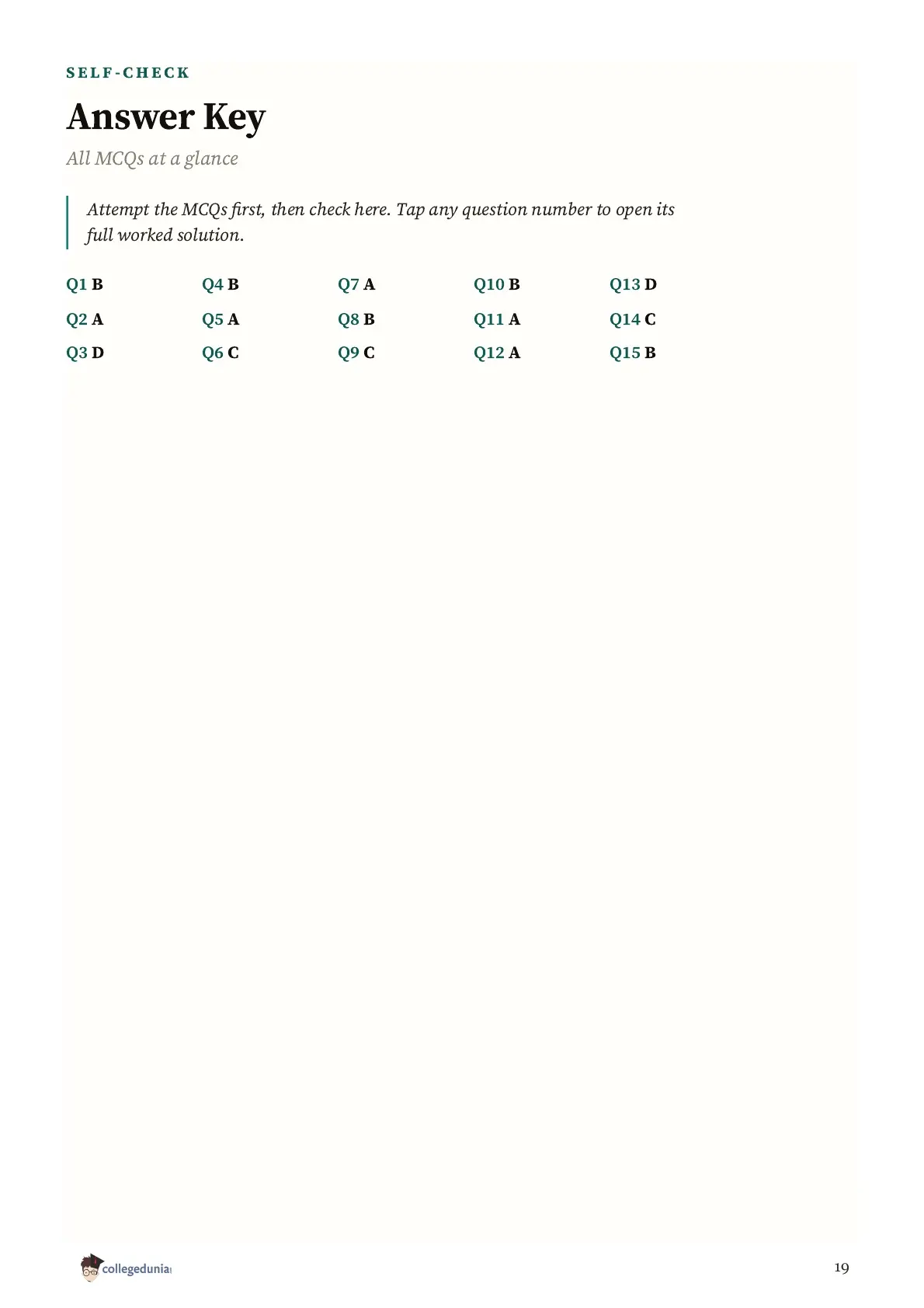
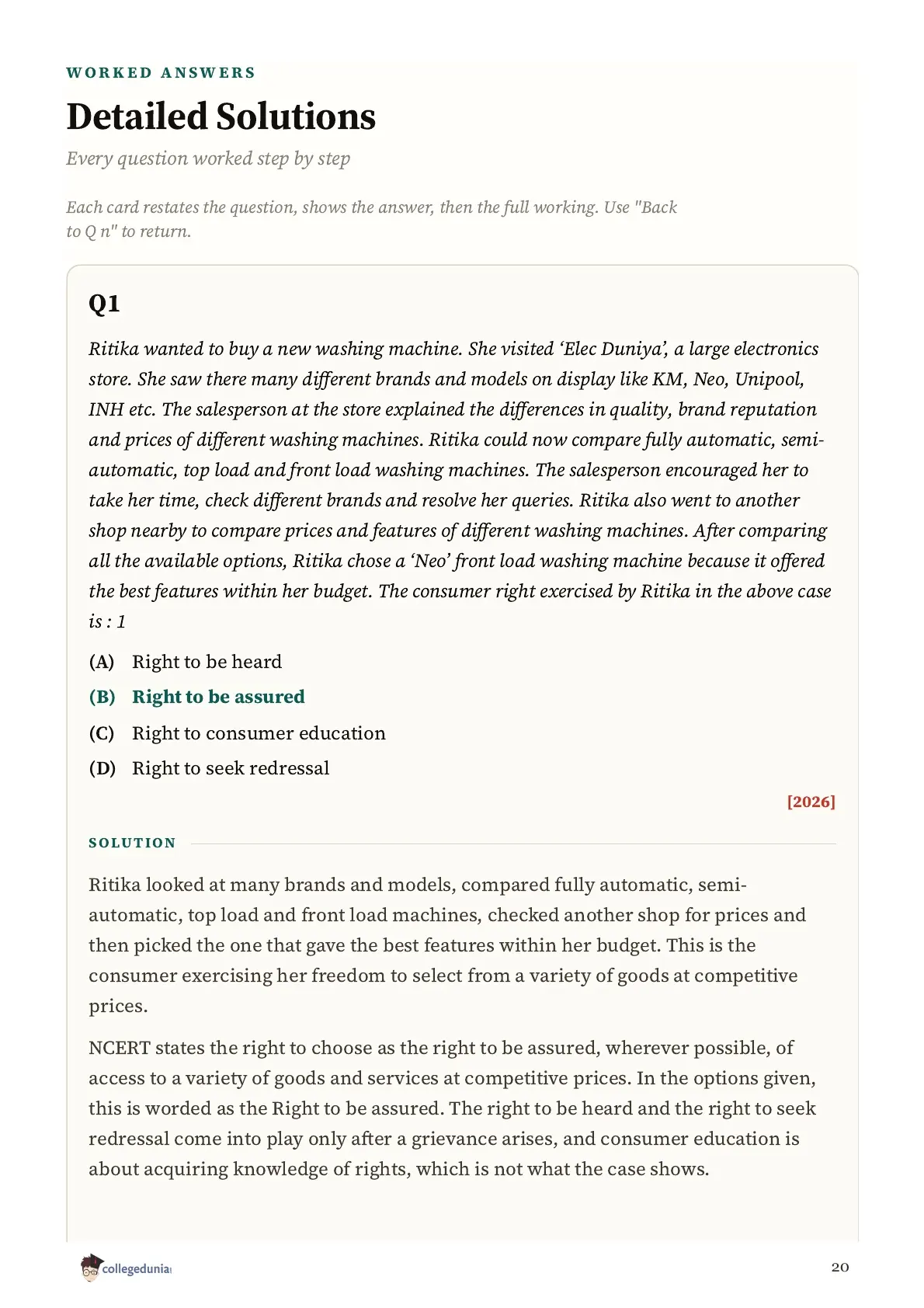
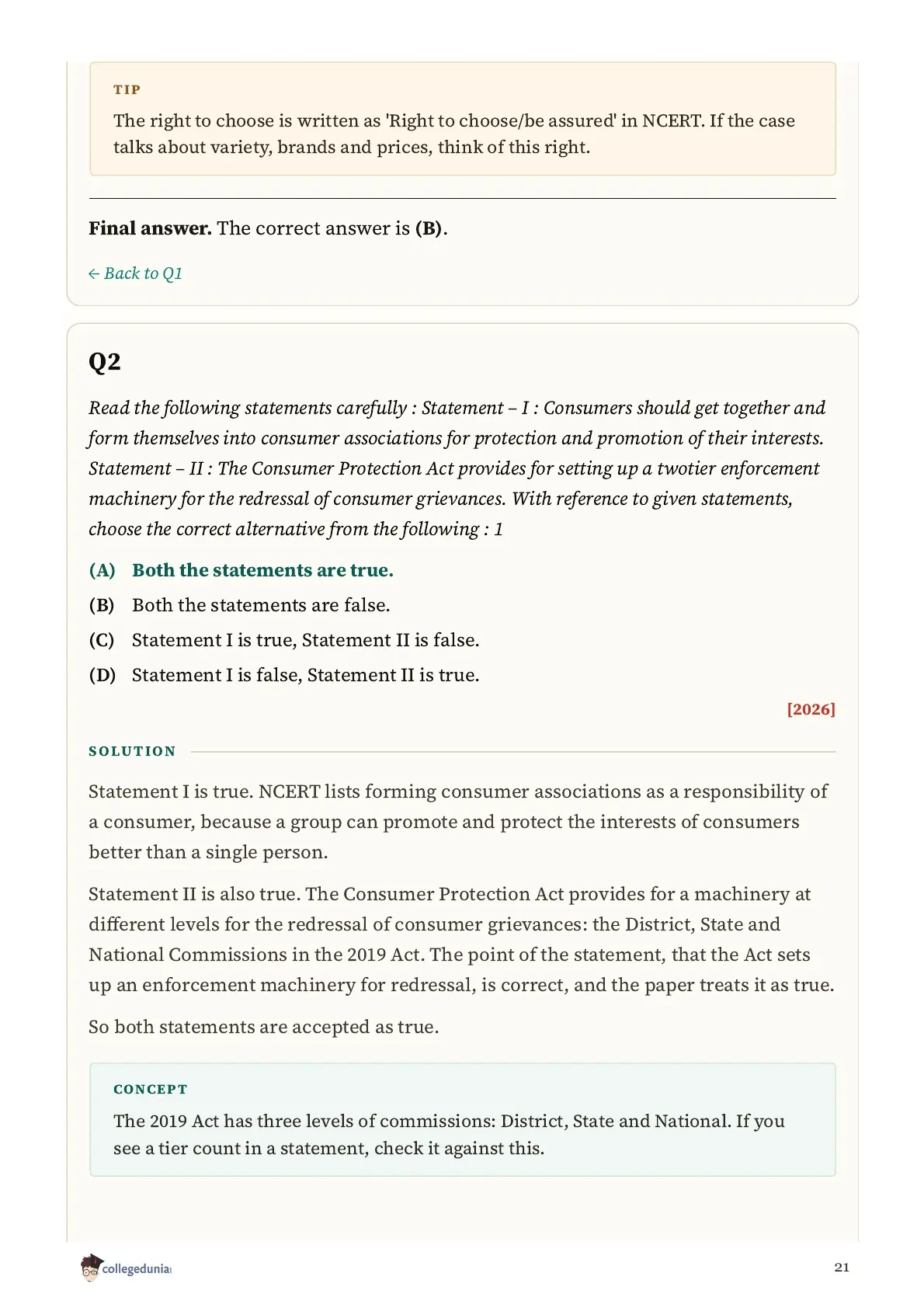
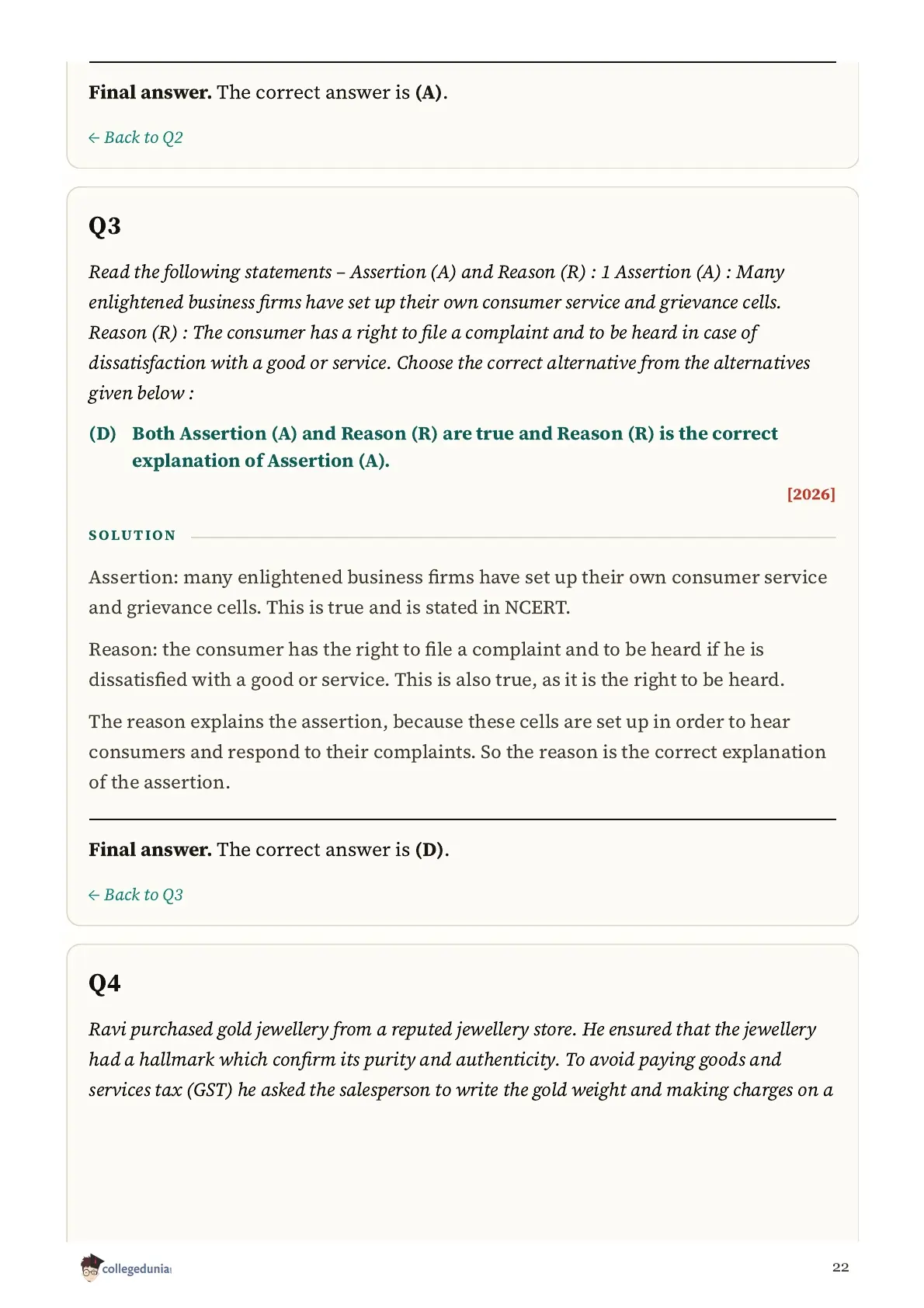
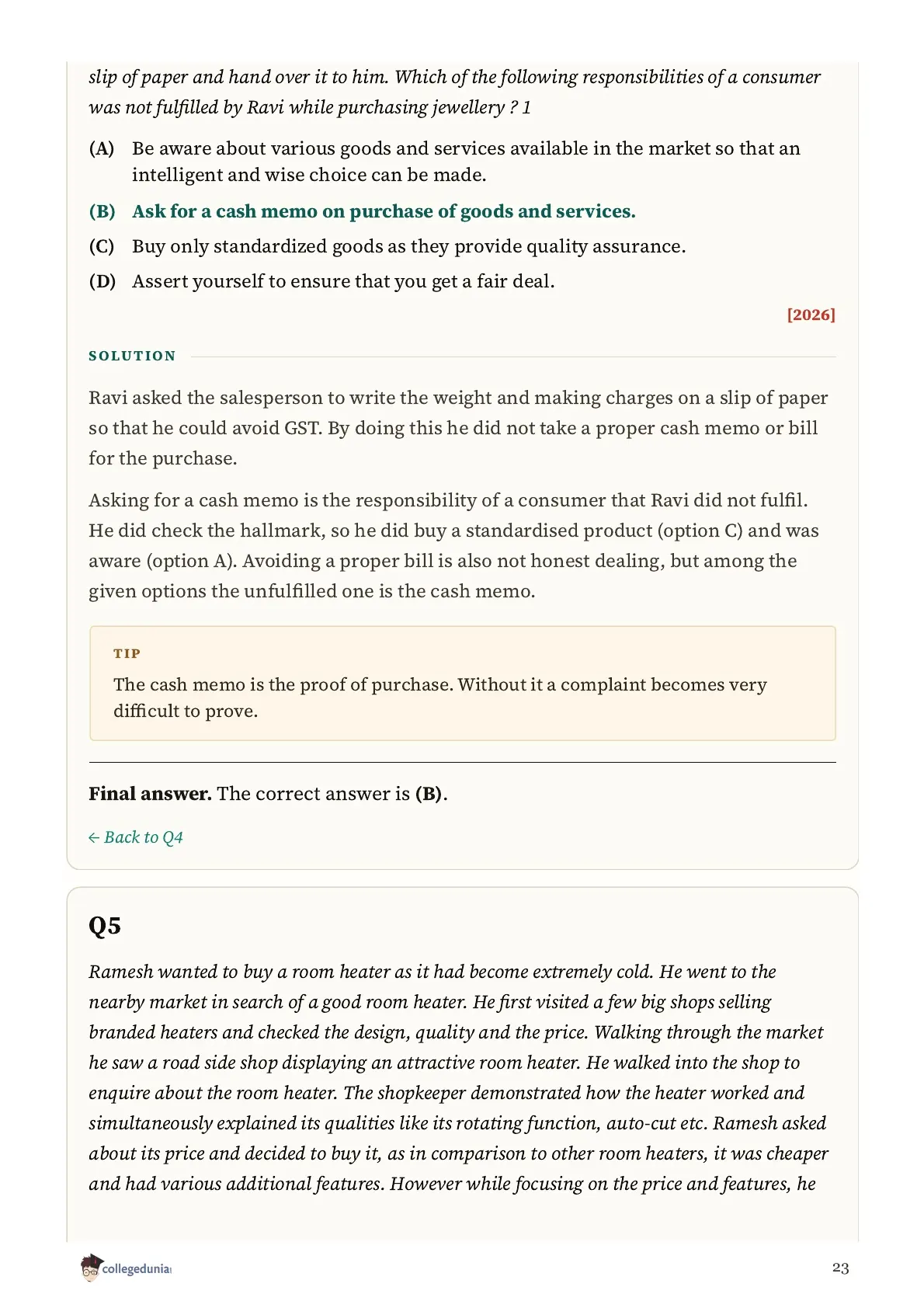
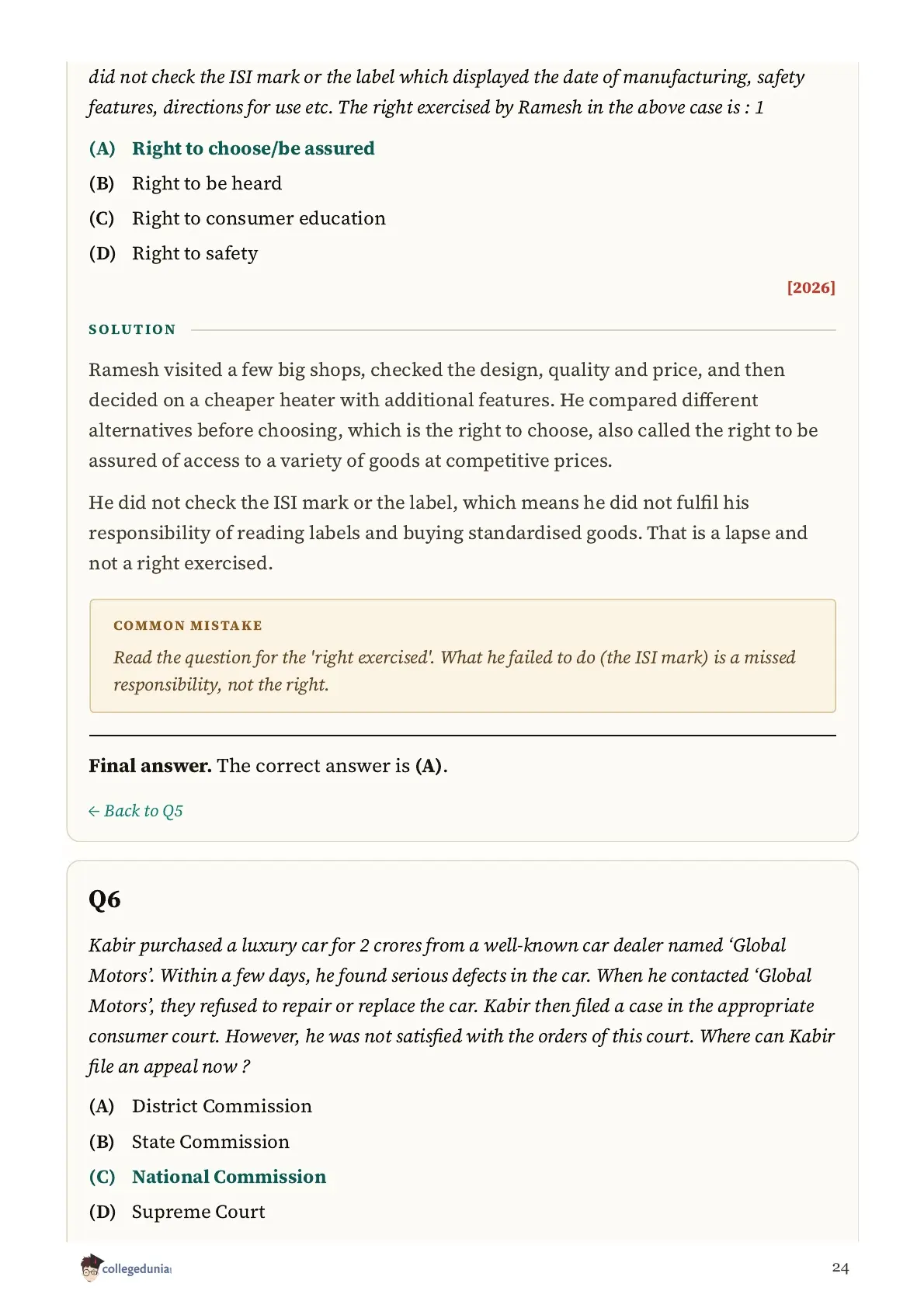
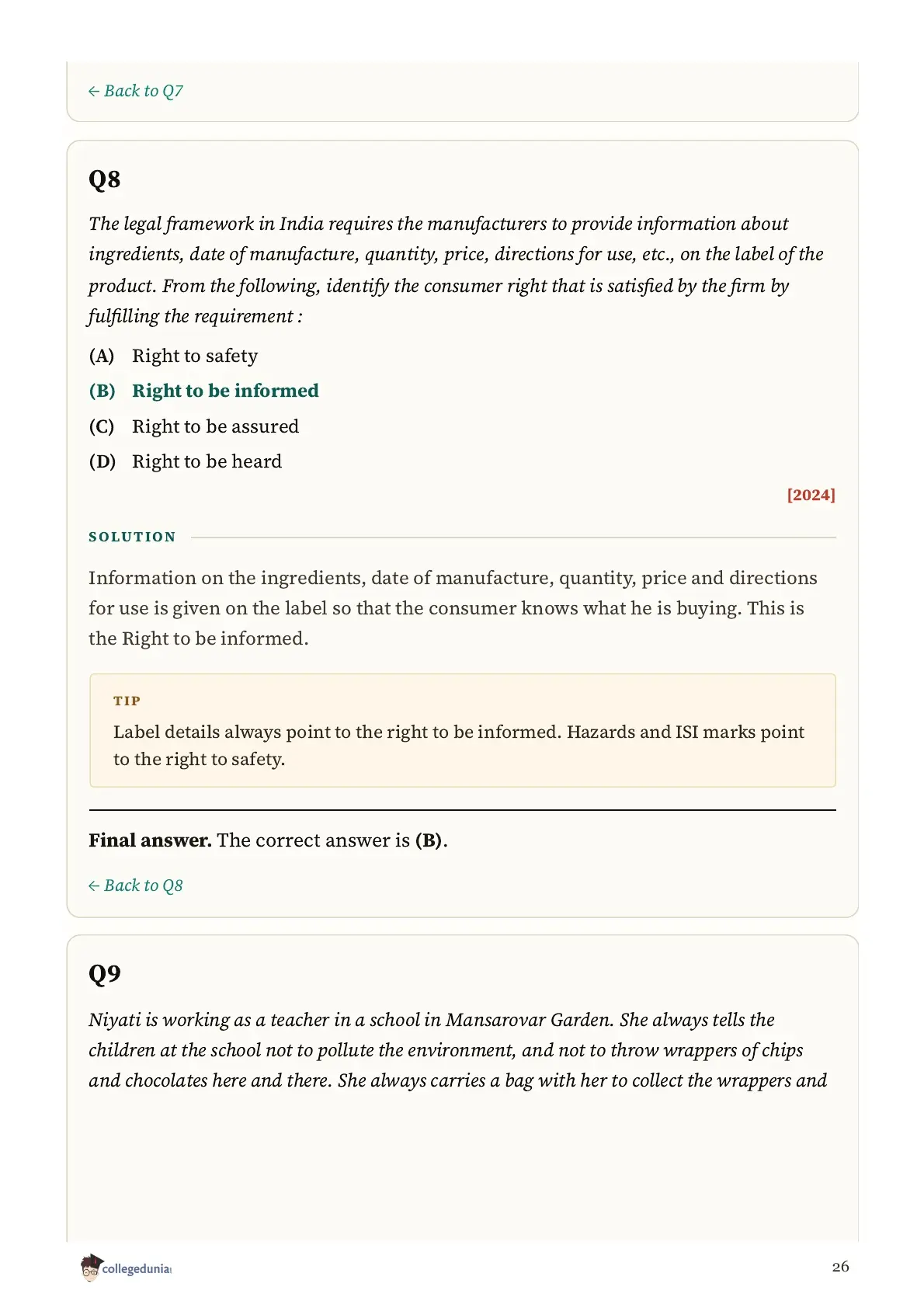
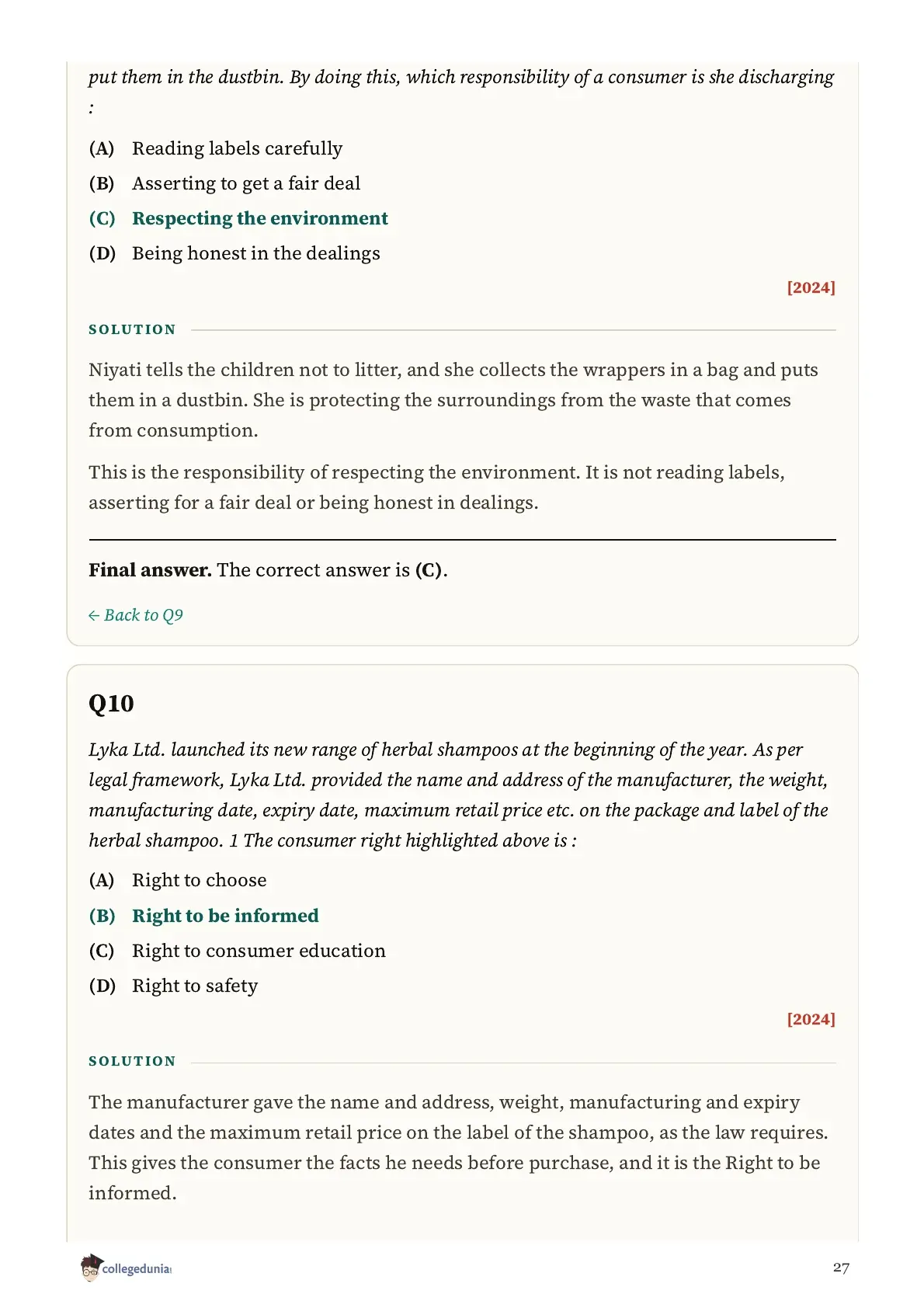
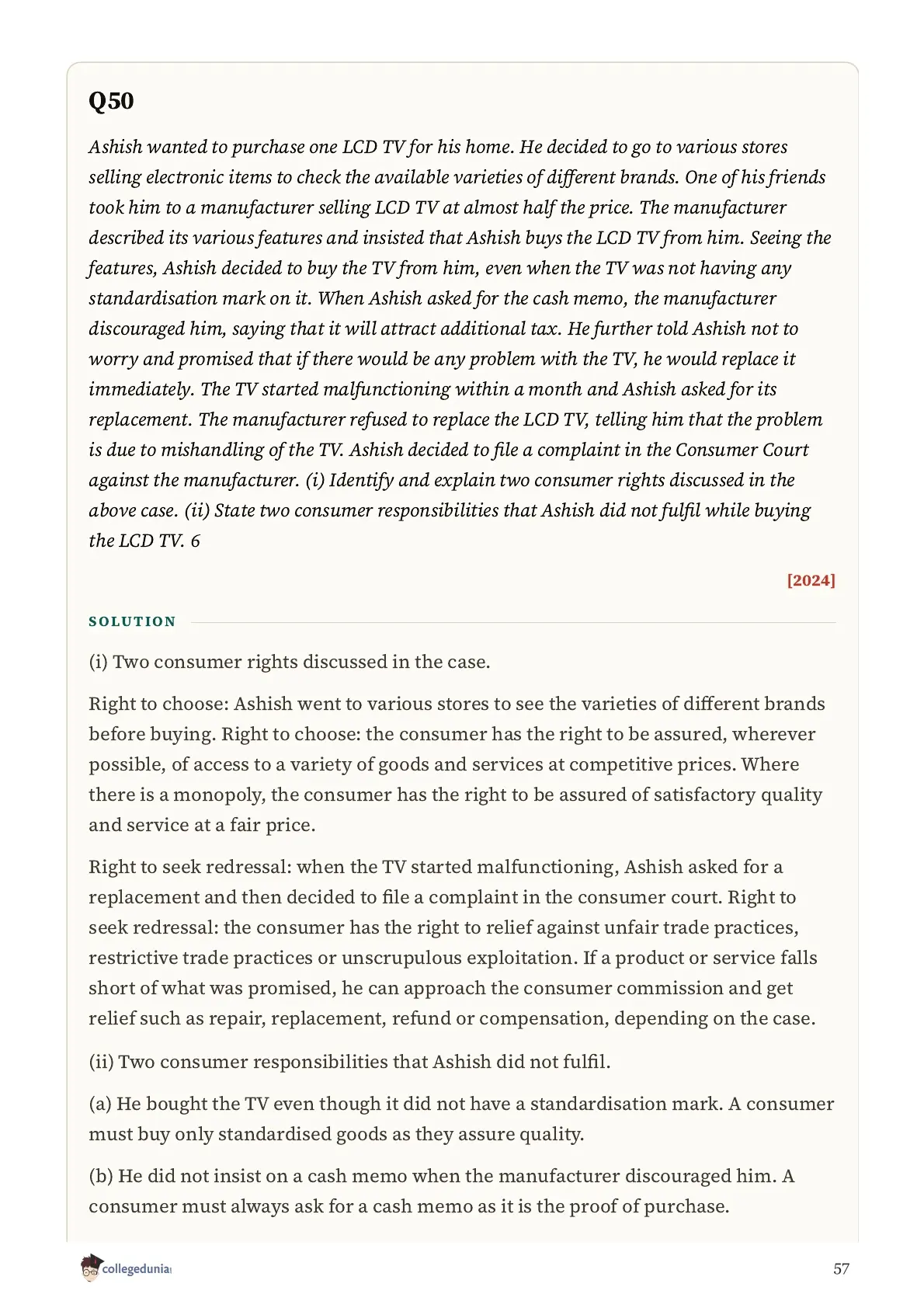
Do the 15 MCQs first, in about a quarter of an hour. Most name a situation and ask for the right: a buyer who compared several washing machines is using the right to choose, a firm that prints ingredients and expiry date on the label satisfies the right to be informed, and a customer who files a complaint in a consumer court is using the right to seek redressal. Find the phrase that names the action before you read the options.
The 39 written answers take most of the time. Start with the rights, since they appear in 4-, 5- and 6-mark forms, then reliefs, responsibilities and the three Commissions. For a "state any five" answer, give five short points in a numbered list, one line each. For a case question, pick the right or relief from the facts of the stem and quote the line that shows it.
Common Mistakes in Consumer Protection Questions
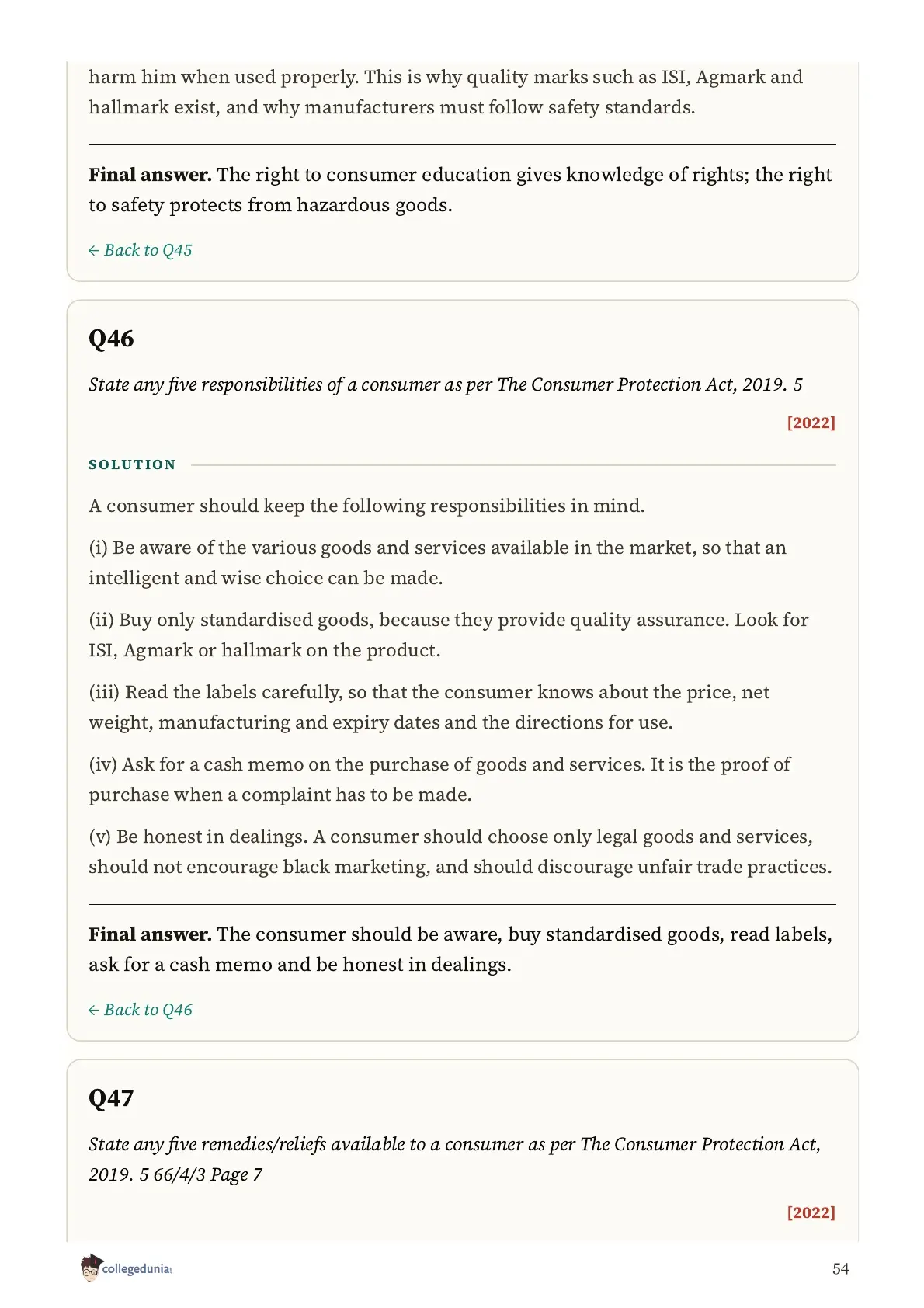
- Writing the right to be heard when the case is about complaining after a purchase; that is the right to seek redressal.
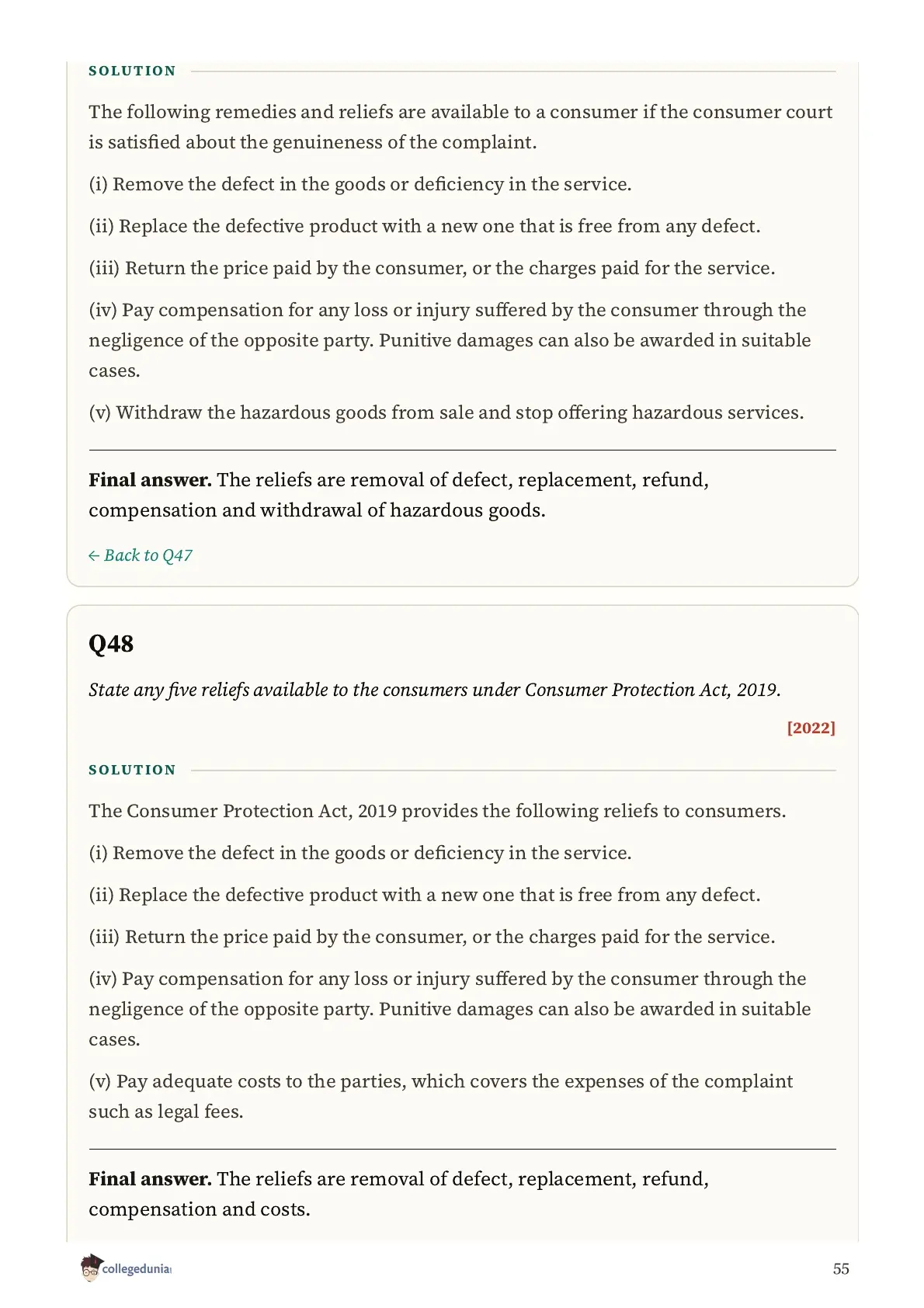
- Giving four reliefs when the question asks for three, or repeating "refund" and "replacement" as one point.
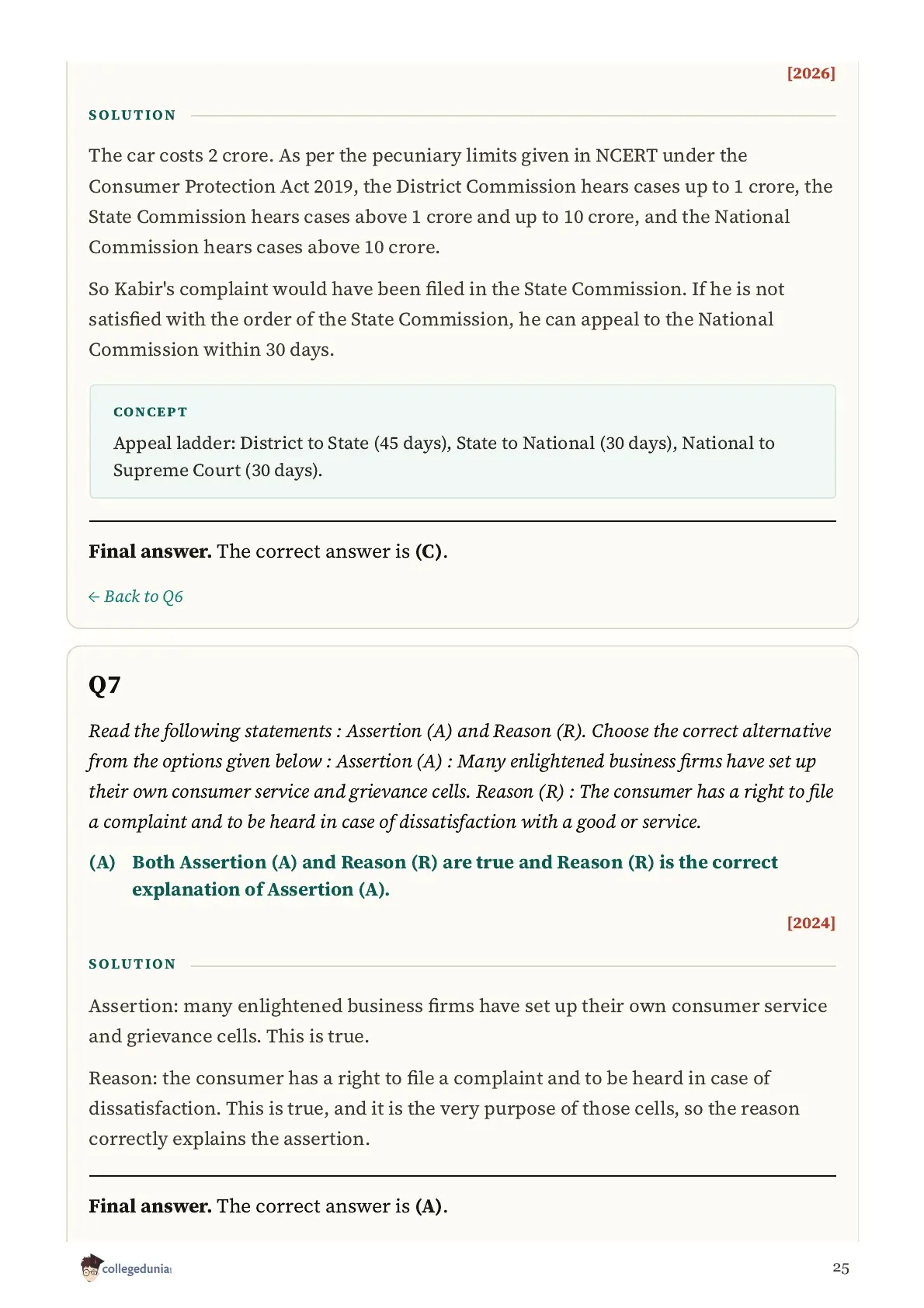
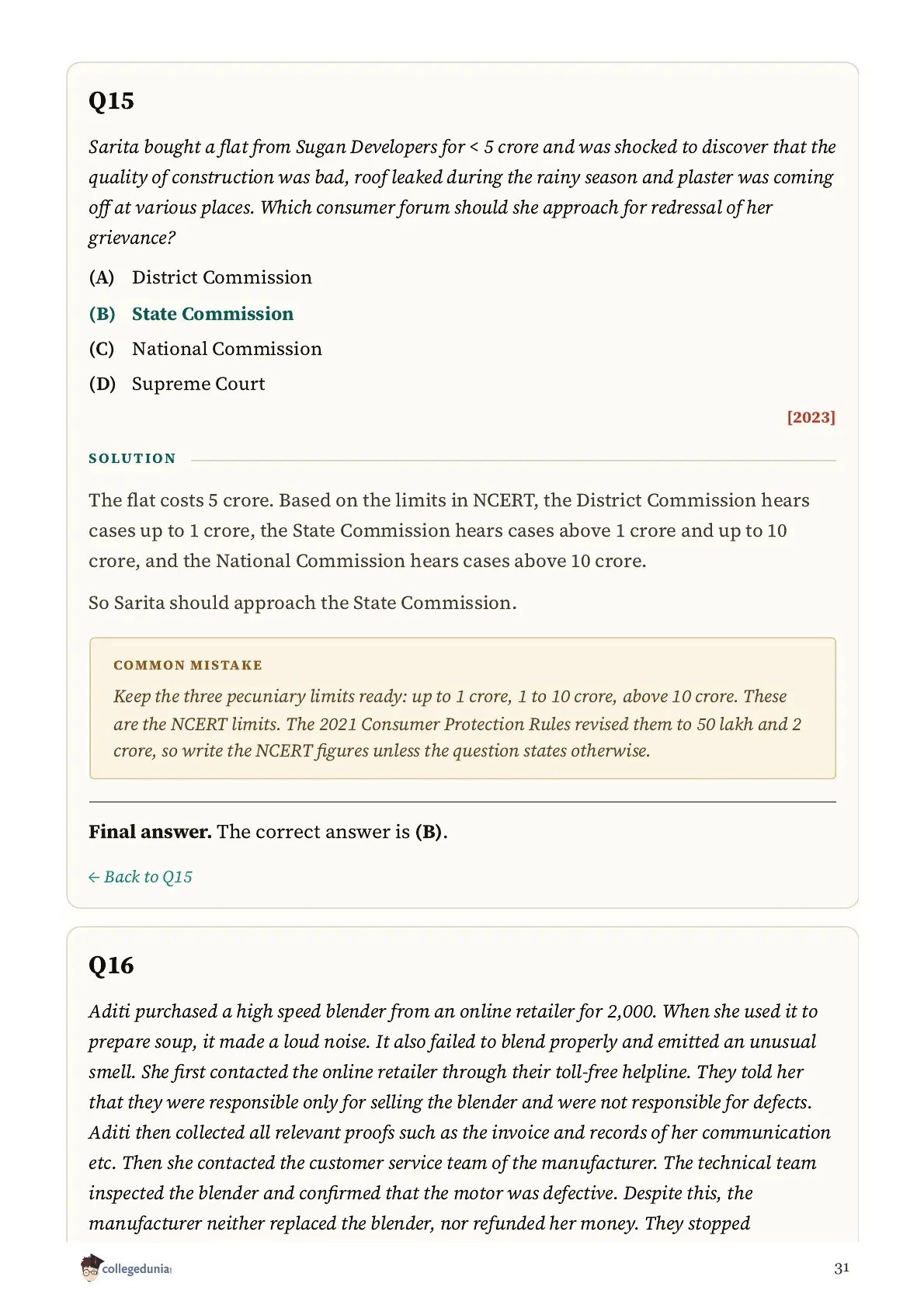
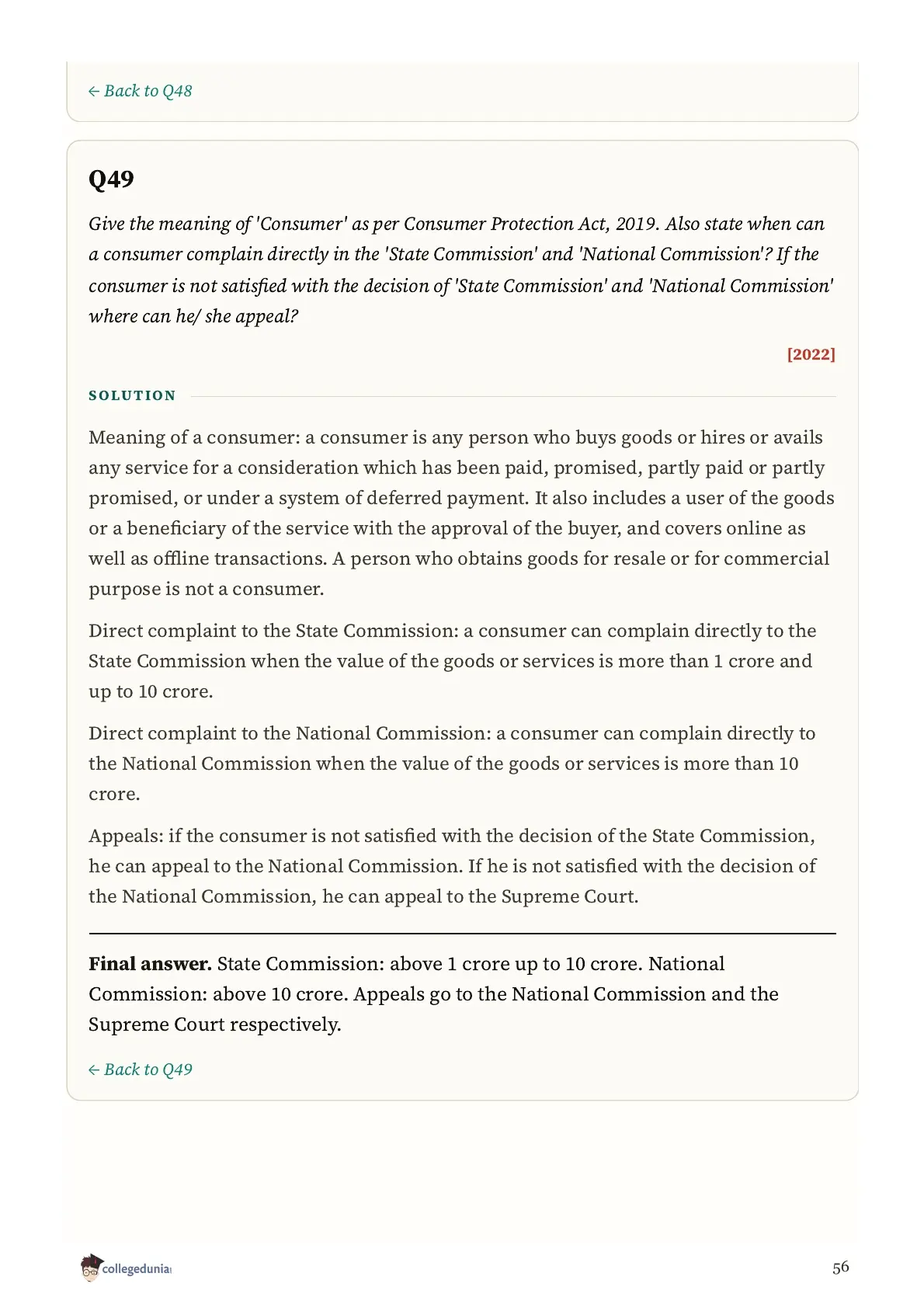
- Mixing up the Commission limits. Write up to 1 crore, above 1 crore up to 10 crore, and above 10 crore, which are the NCERT figures. The Consumer Protection Rules, 2021 revised them to 50 lakh and 2 crore, so use the new figures only if the question says so.
- Counting a person who buys goods for resale as a consumer. Anyone buying for resale or a commercial purpose is not one.
- Listing the responsibilities of a business under "responsibilities of a consumer".
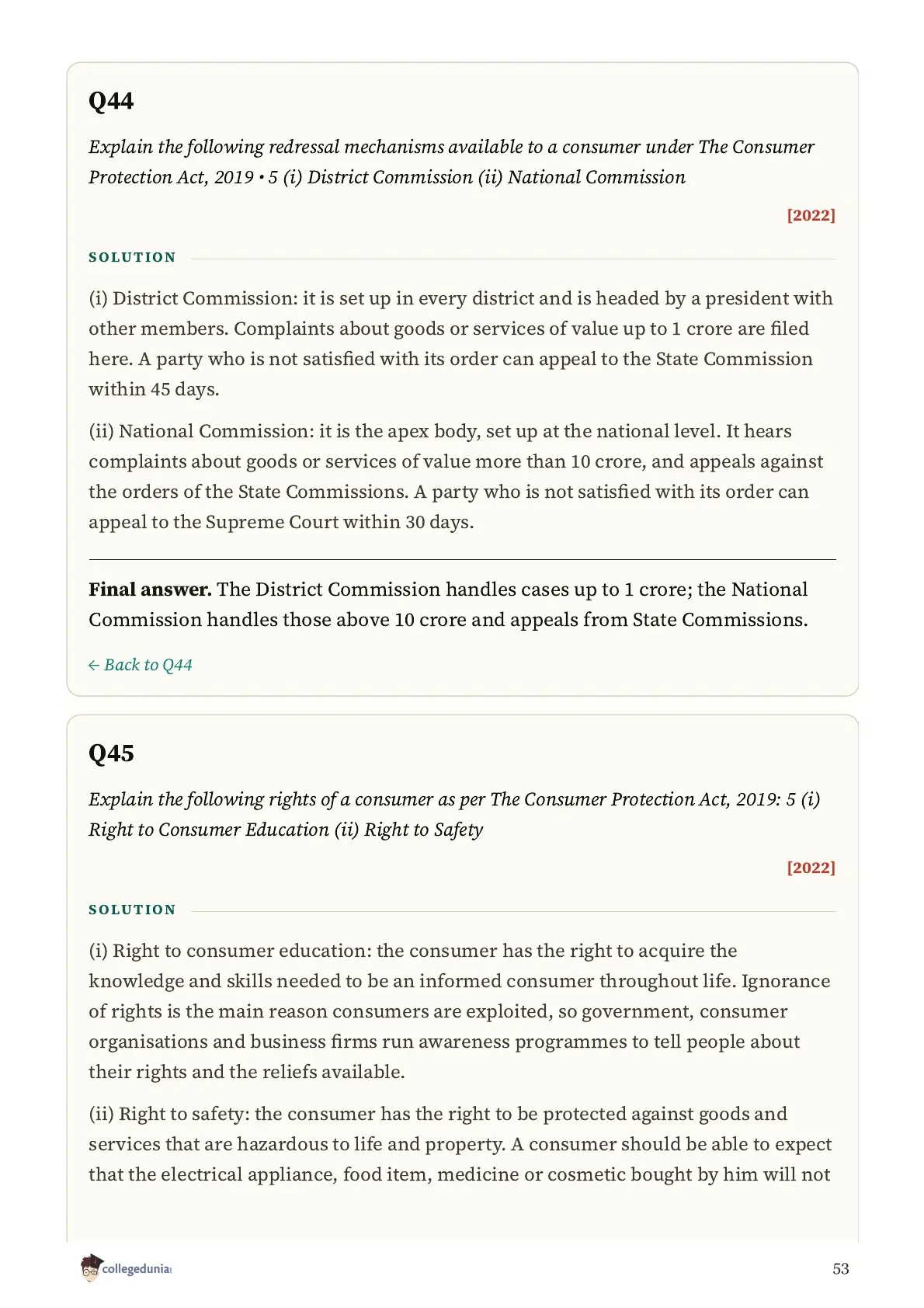
- Forgetting the appeal period: 45 days from the District Commission to the State Commission.
Using the Answer Key and Solutions
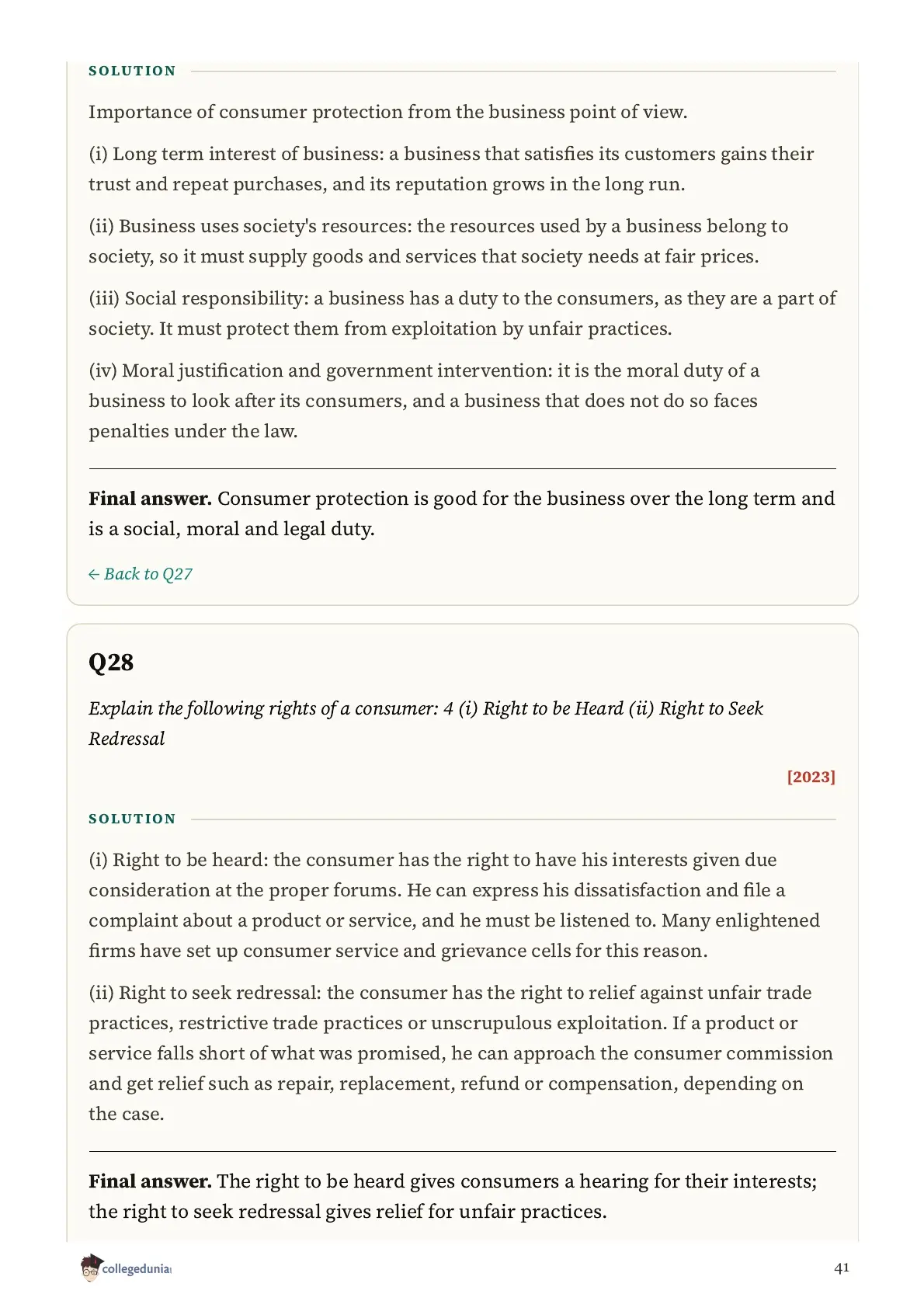
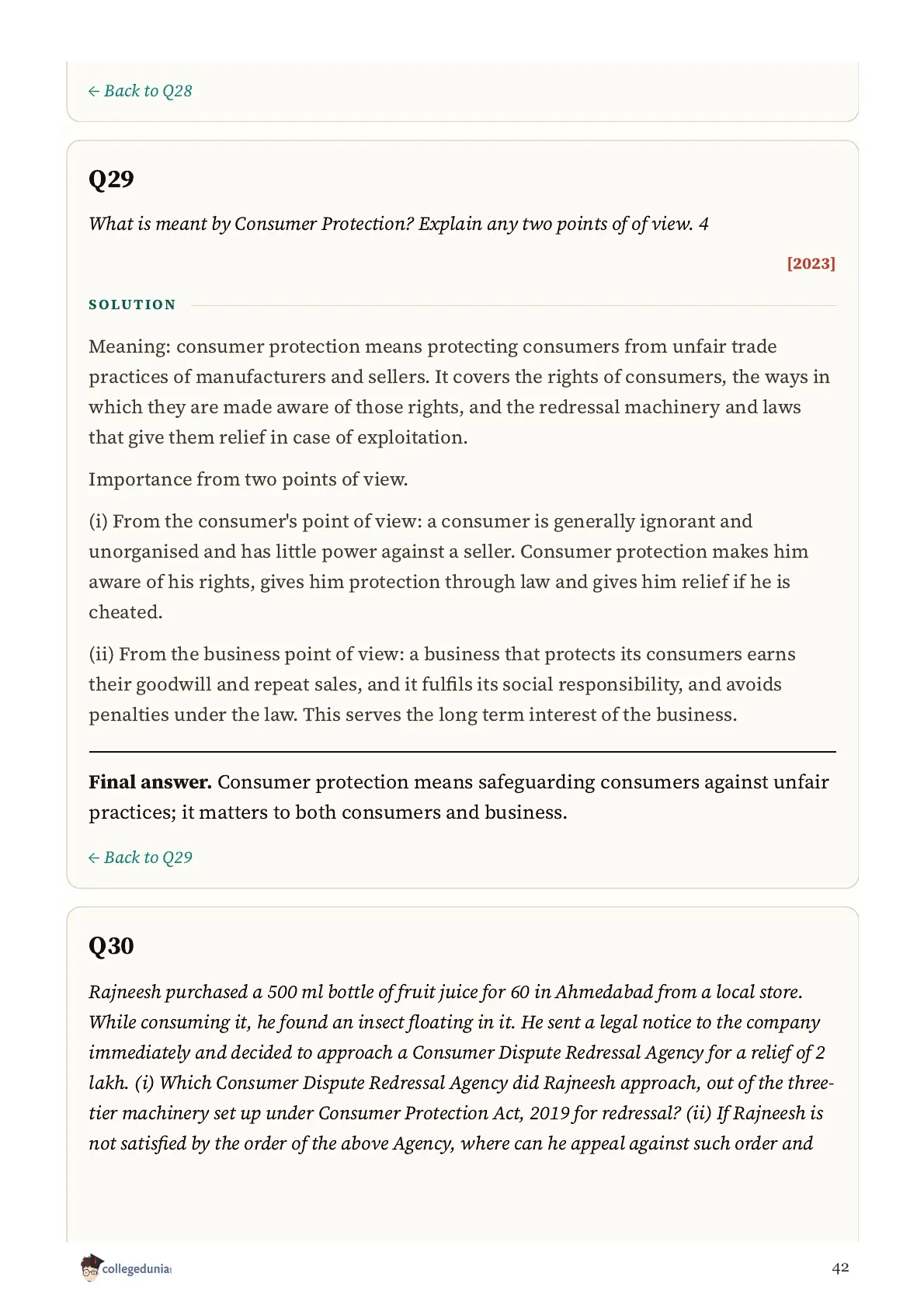
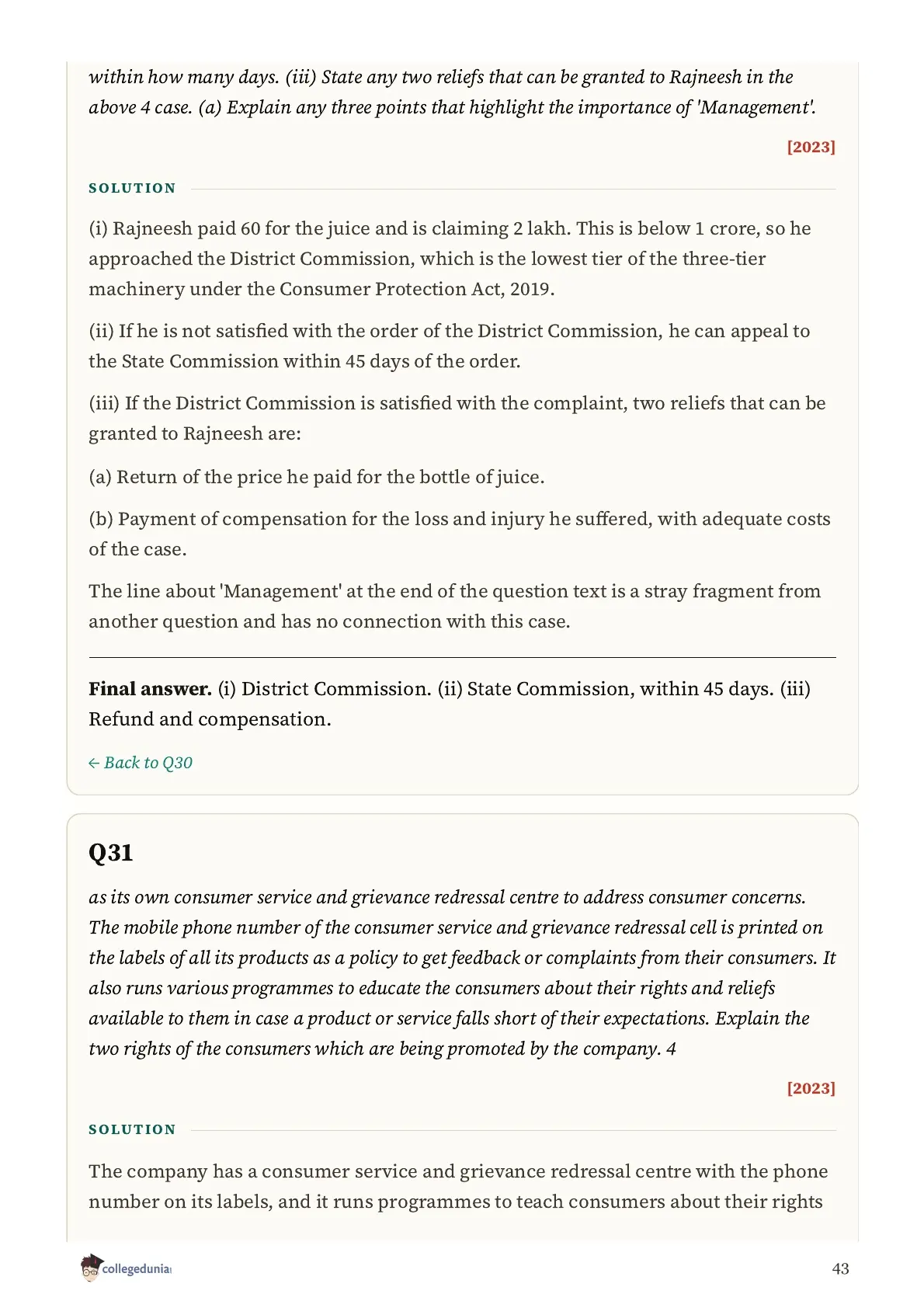
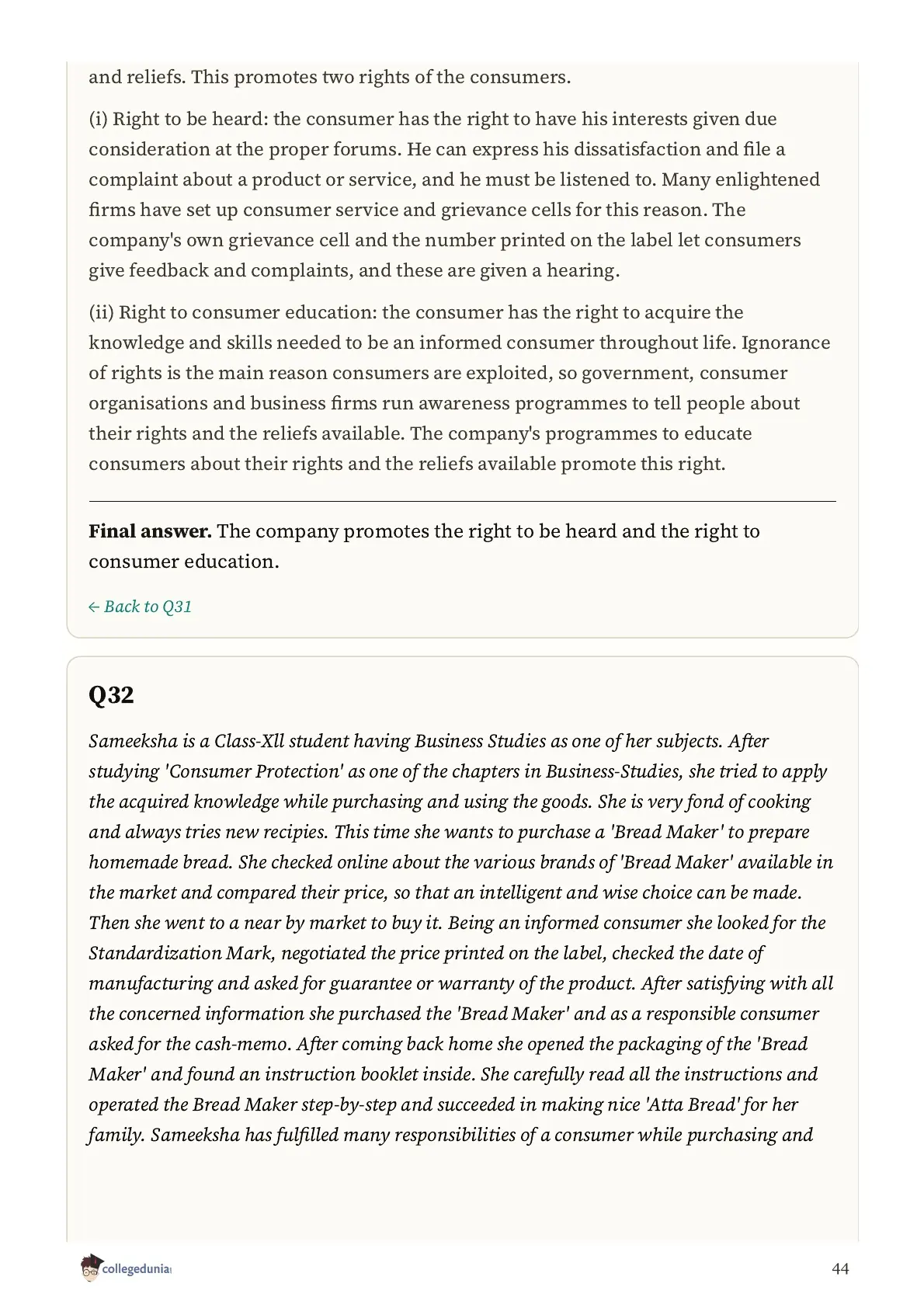
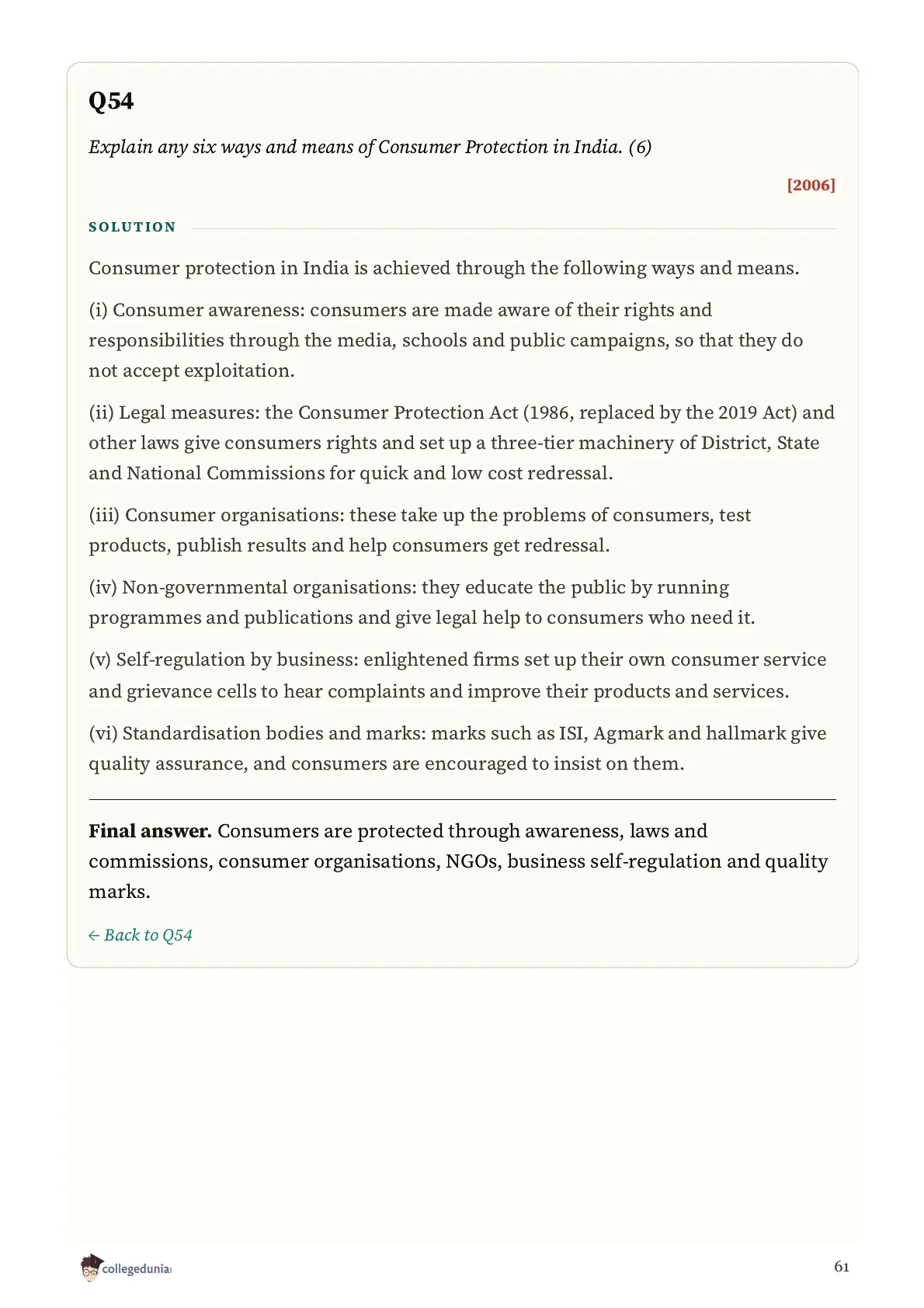
The PDF is 61 pages and free to download. Each section is sorted newest year first, the Answer Key lists every MCQ at a glance, and each question links to its worked solution and back. Attempt a section first, check the key, then read the solution and note the common mistake given with it. The solutions are written by Collegedunia's Business Studies experts and are not official CBSE marking schemes.
Class 12 Business Studies PYQs by Chapter
| Chapter | PYQ Page |
|---|---|
| Chapter 1 | Chapter 1: Nature and Significance of Management Class 12 PYQ |
| Chapter 2 | Chapter 2: Principles of Management Class 12 PYQ |
| Chapter 3 | Chapter 3: Business Environment Class 12 PYQ |
| Chapter 4 | Chapter 4: Planning Class 12 PYQ |
| Chapter 5 | Chapter 5: Organising Class 12 PYQ |
| Chapter 6 | Chapter 6: Staffing Class 12 PYQ |
| Chapter 7 | Chapter 7: Directing Class 12 PYQ |
| Chapter 8 | Chapter 8: Controlling Class 12 PYQ |
| Chapter 9 | Chapter 9: Financial Management Class 12 PYQ |
| Chapter 10 | Chapter 10: Financial Markets Class 12 PYQ |
| Chapter 11 | Chapter 11: Marketing Class 12 PYQ |
| Chapter 12 | Chapter 12: Consumer Protection Class 12 PYQ |
Consumer Protection Class 12 Business Studies PYQ FAQs
Ques. How many questions are in the Consumer Protection Class 12 PYQ PDF?
Ans. The PDF has 54 questions from CBSE board papers between 2006 and 2026: 15 one-mark MCQs, 1 three-mark, 16 four-mark, 17 five-mark and 5 six-mark questions.
Ques. Does this PYQ PDF include solutions, or only the questions?
Ans. Yes. All 54 questions have a worked solution in the PDF, and the MCQs also have an Answer Key.
Ques. Are the solutions official?
Ans. No. They are written by Collegedunia's Business Studies experts and are not an official CBSE marking scheme.
Ques. How many marks does Consumer Protection carry in the Class 12 board paper?
Ans. About 4 of the 80 marks, going by past-paper tables on prep sites. CBSE publishes marks for the unit, not for each chapter, so treat 4 as an estimate.
Ques. What are the rights of a consumer?
Ans. The right to safety, the right to be informed, the right to choose, the right to be heard, the right to seek redressal and the right to consumer education. 19 questions in this set name a right, and 7 of the 15 MCQs ask you to identify one from a case.
Ques. What reliefs can a consumer court give?
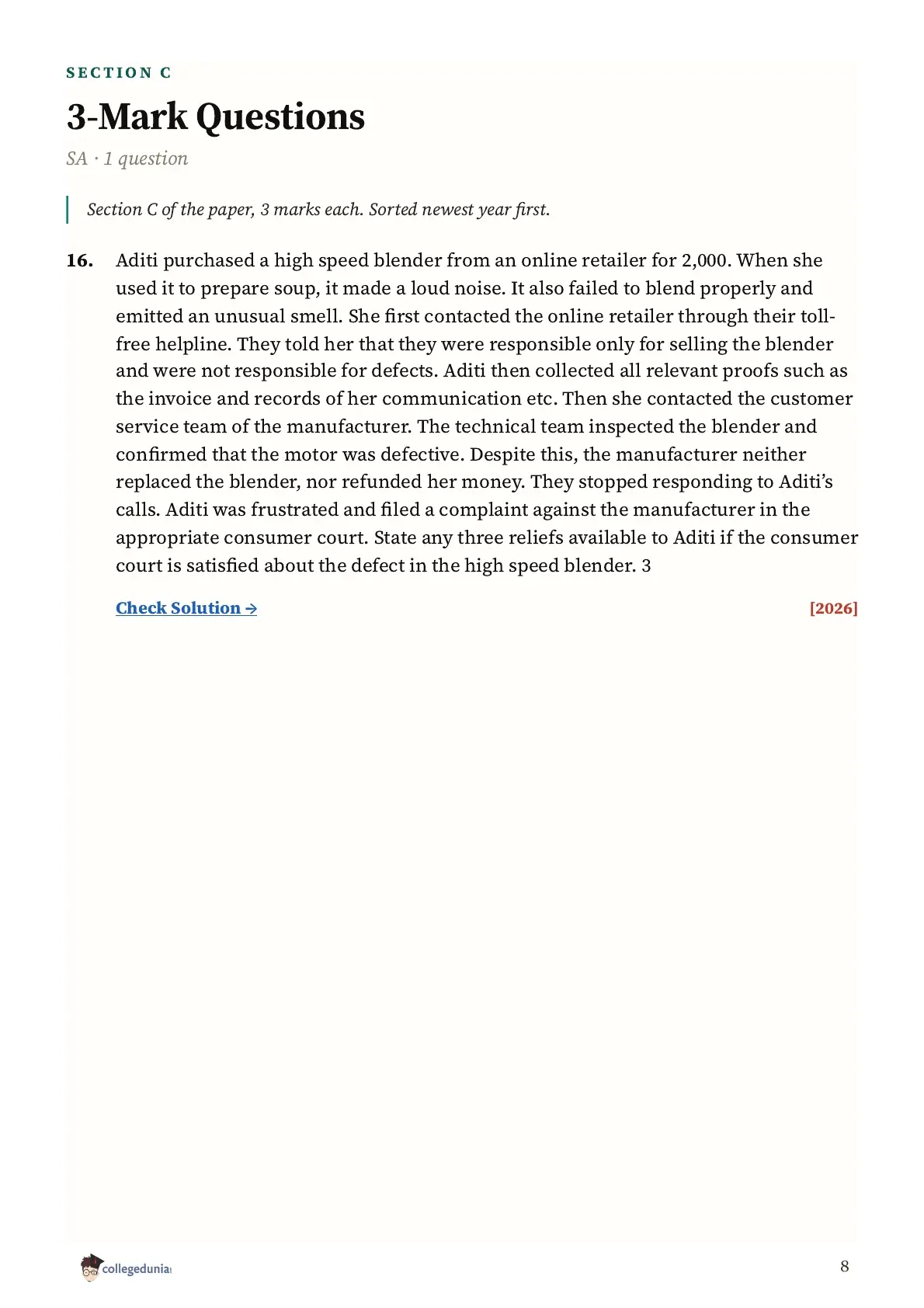
Ans. Removal of the defect, replacement of the goods, refund of the price, compensation for loss or injury, withdrawal of hazardous goods and payment of the cost of the case. 15 questions in this set ask for reliefs or remedies, most of them as "any five" or "any three".
Ques. Which Commission hears a complaint for a given amount?
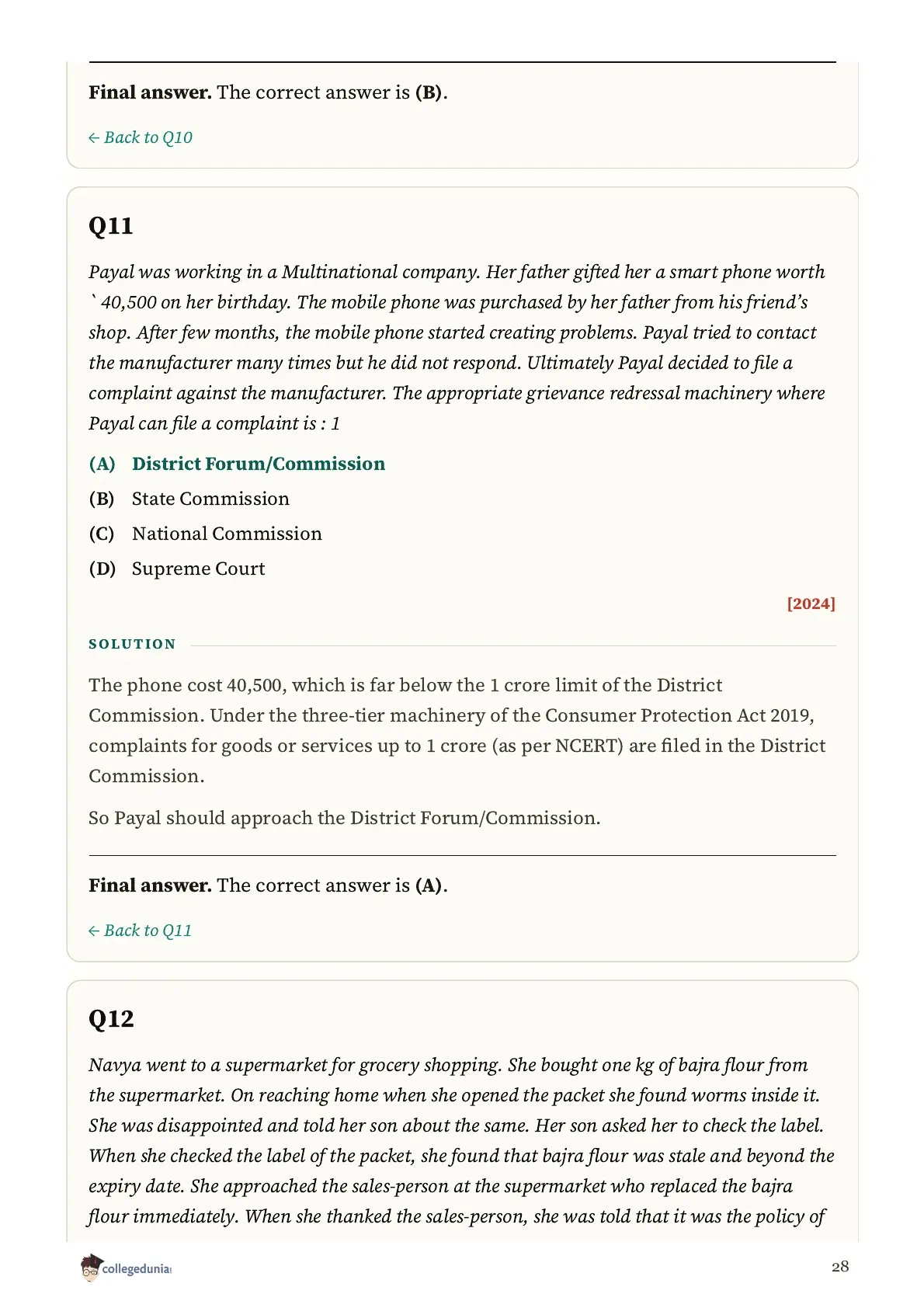
Ans. Using the figures in NCERT, the District Commission hears claims up to 1 crore, the State Commission above 1 crore and up to 10 crore, and the National Commission above 10 crore. The Consumer Protection Rules, 2021 later revised these to 50 lakh and 2 crore. The solutions in this set follow NCERT, so use those figures unless the question gives its own.
Ques. Which year of the Act do the questions follow?
Ans. 18 questions name the Consumer Protection Act, 2019, and 2 of the oldest ones name the 1986 Act.



Comments