



Class 12 Economics Chapter 3 Money and Banking PYQs help you practise questions on money, commercial banks and central banking. Use this question booklet for your 2026-27 revision after reading NCERT. Attempt the questions on paper, then check whether your explanation answers the command word and uses the right banking terms.
- Practise money functions, credit creation and the Reserve Bank of India's roles.
- Use the question citations to identify the original board-paper year.
- The PDF contains previous year questions only, without solutions or an answer key.
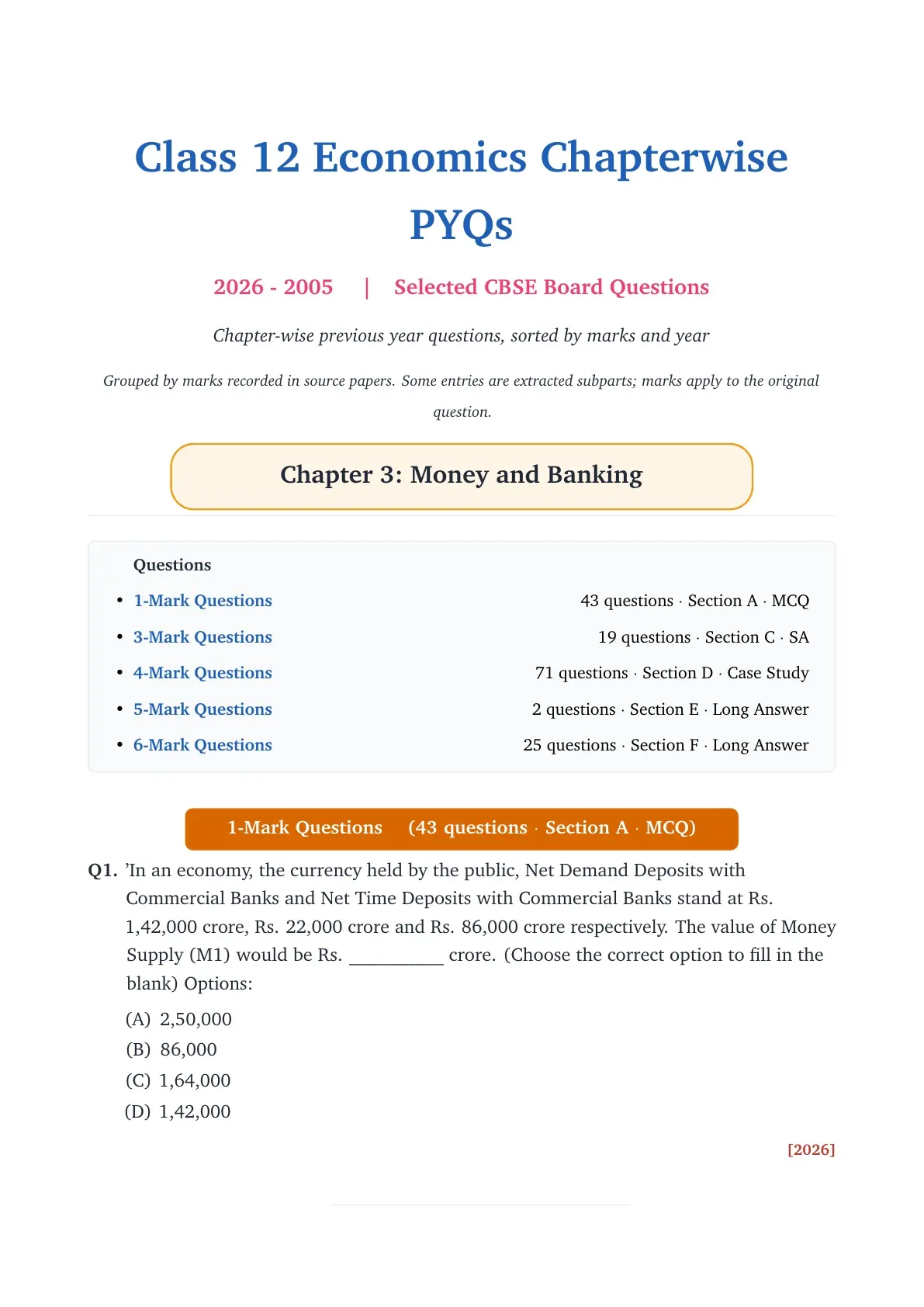
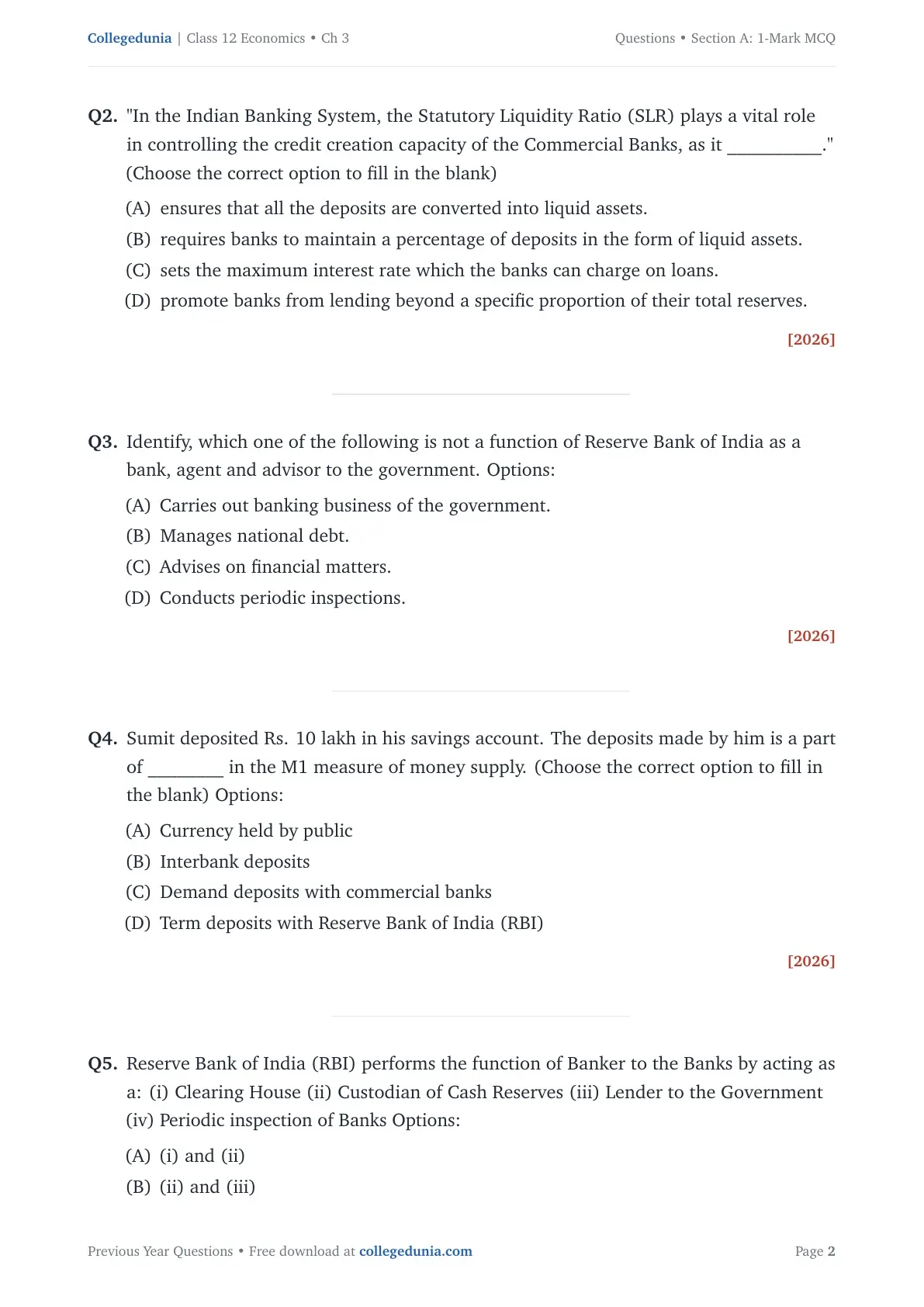
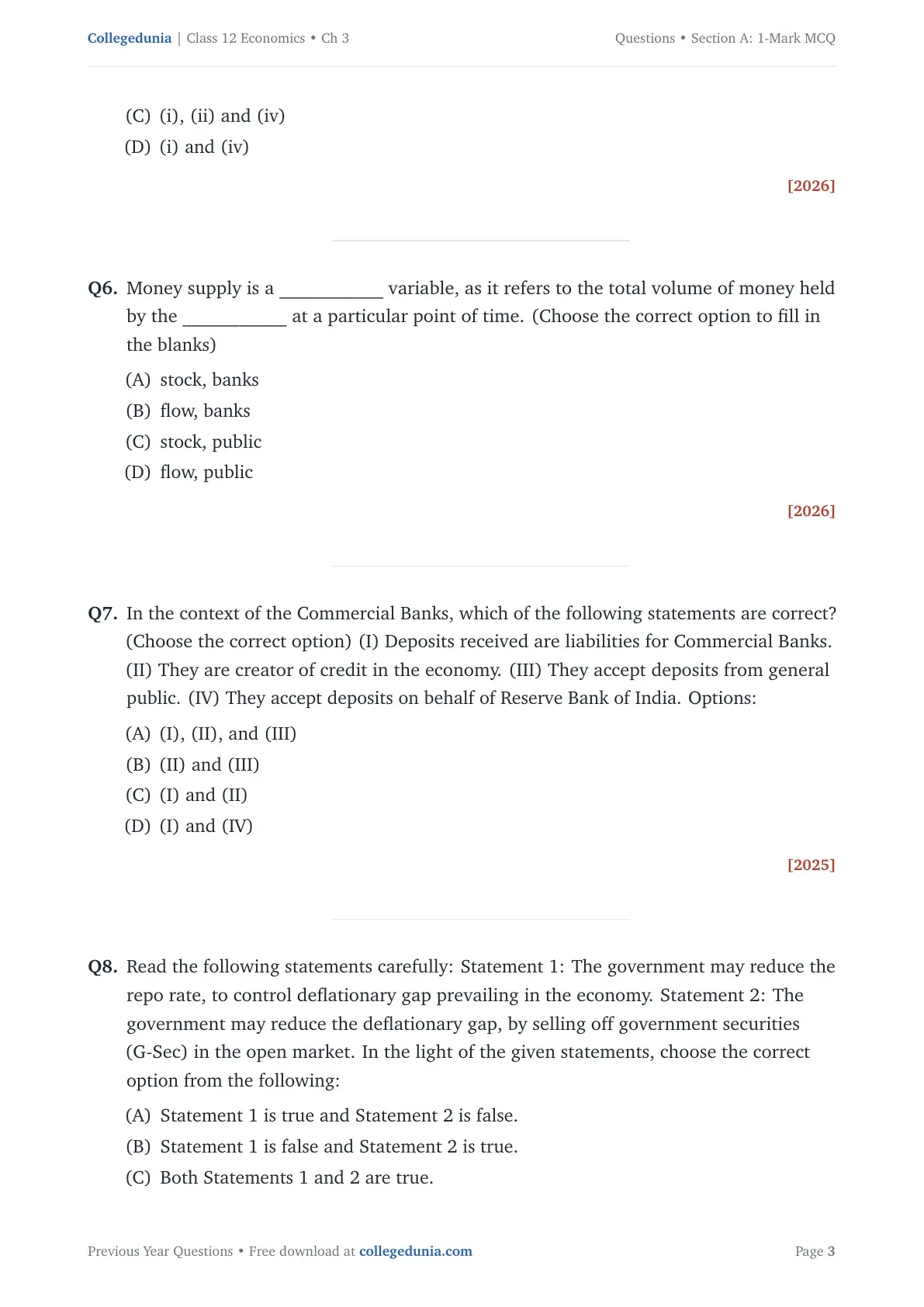
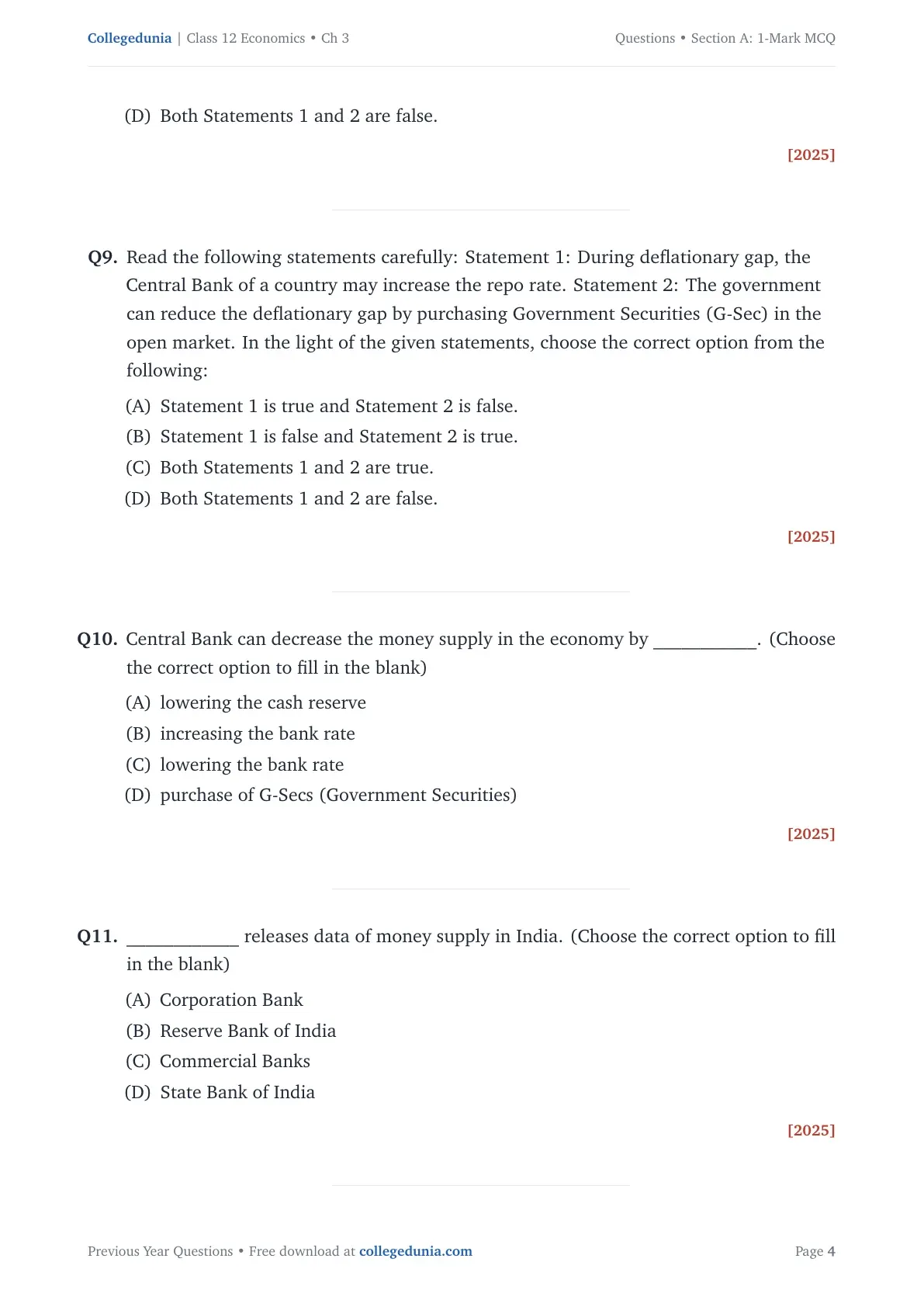
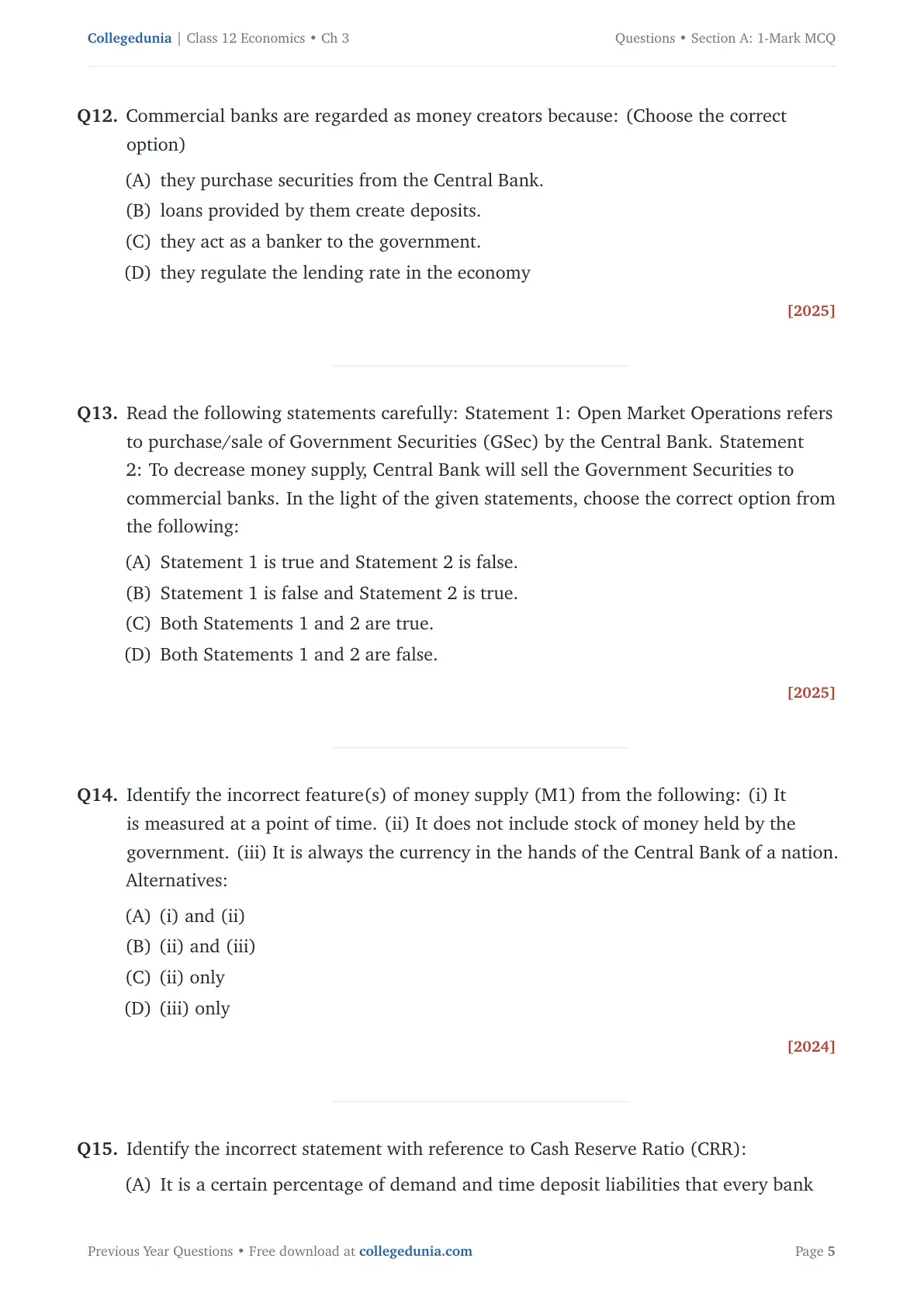
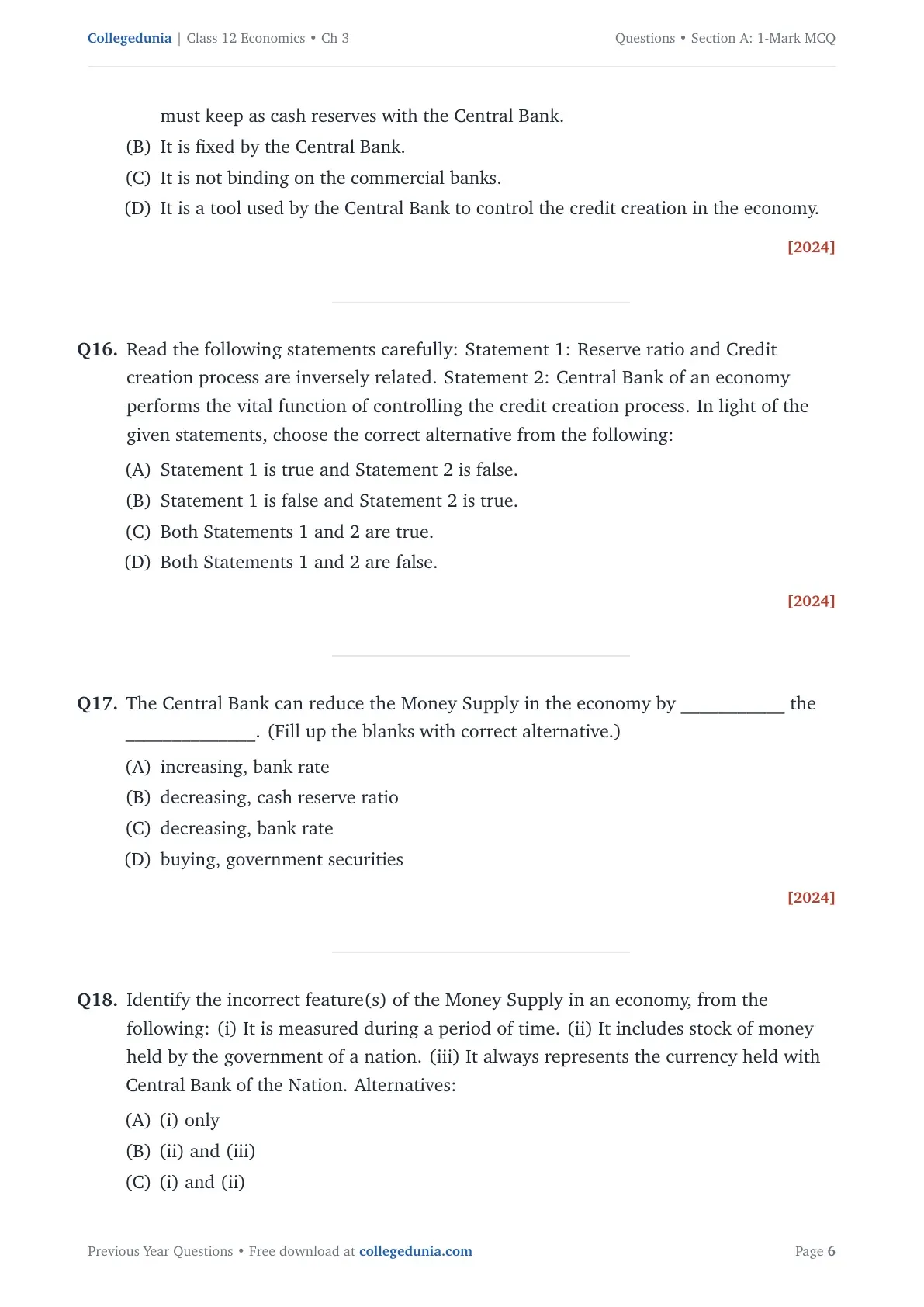
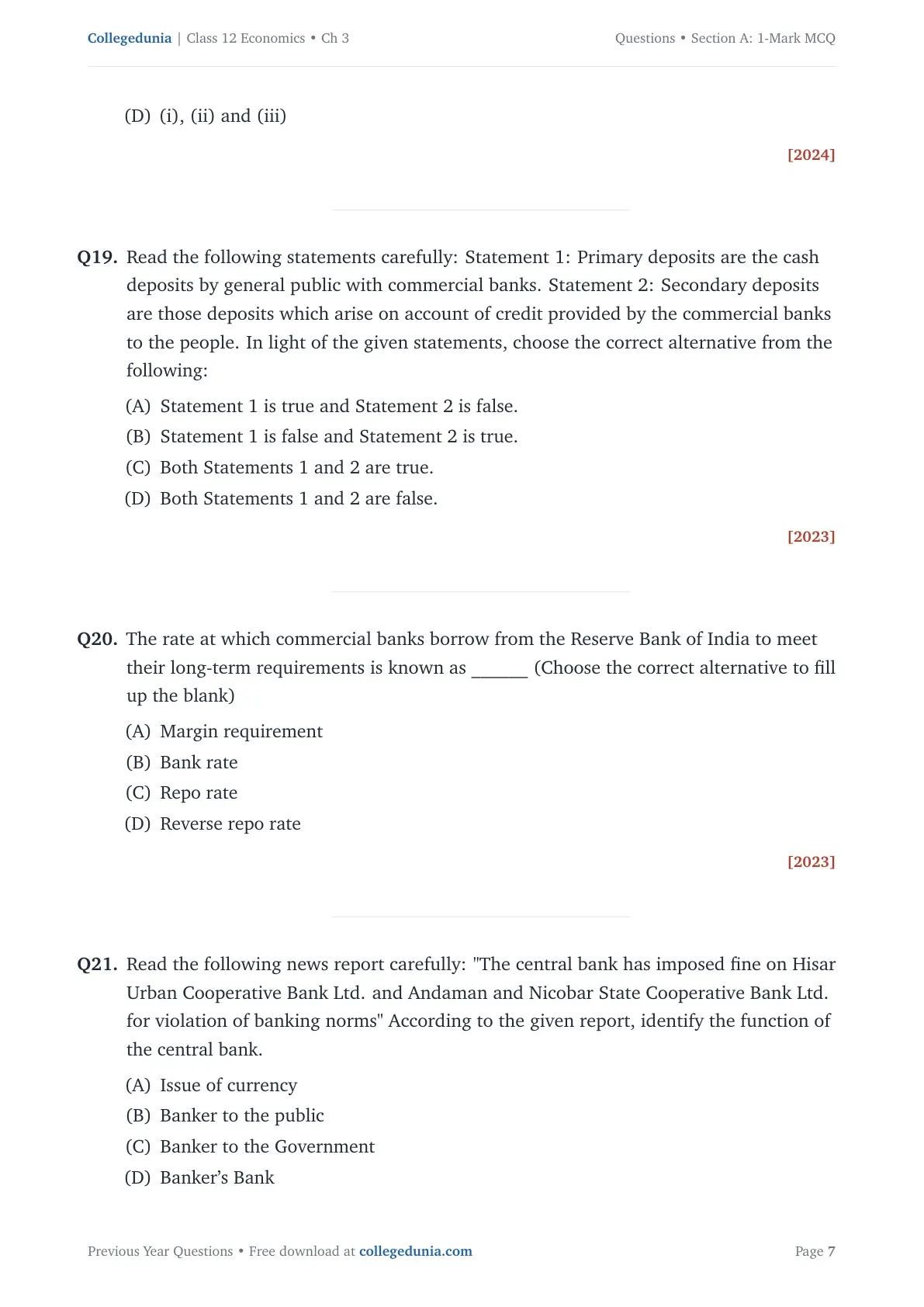
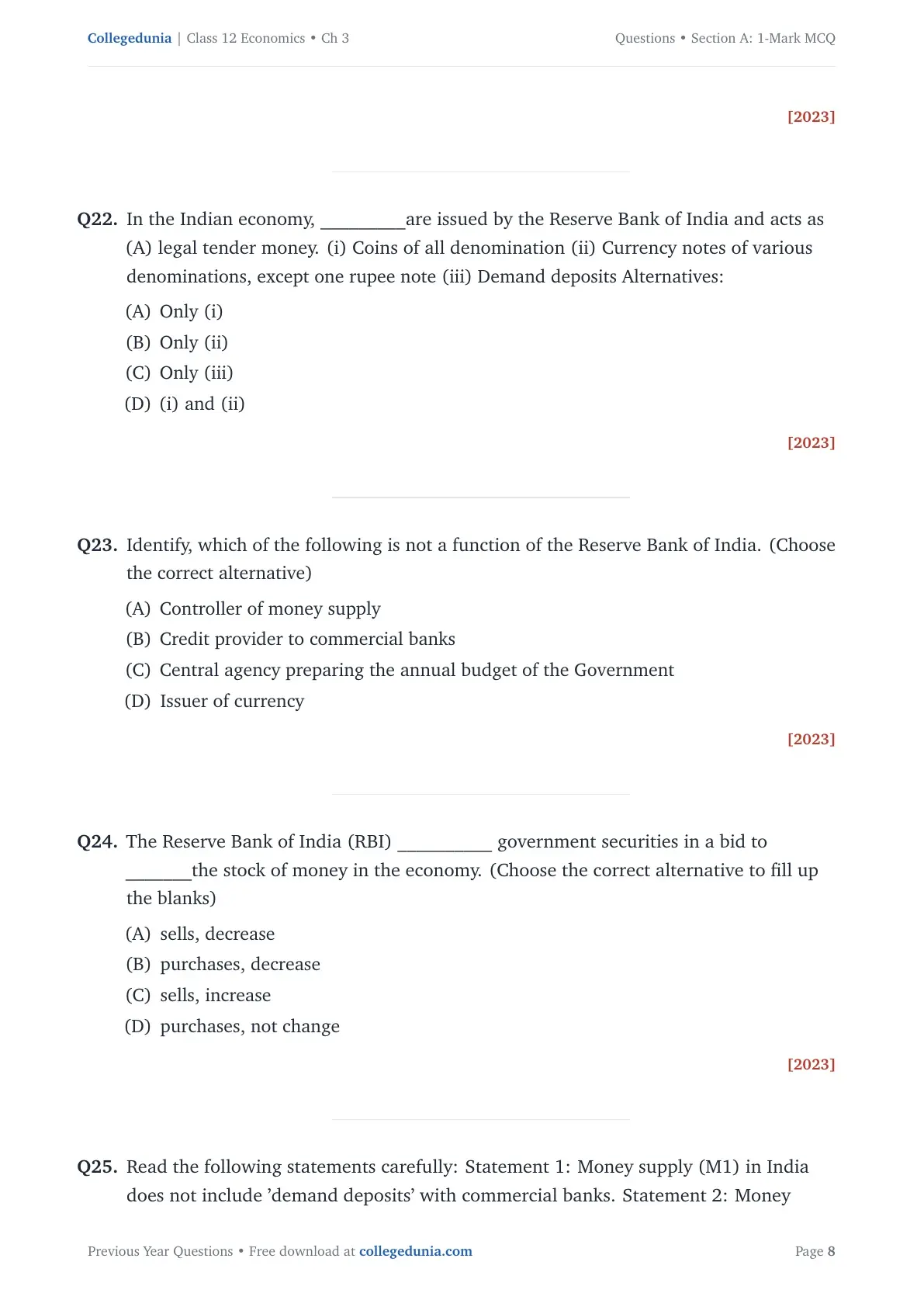
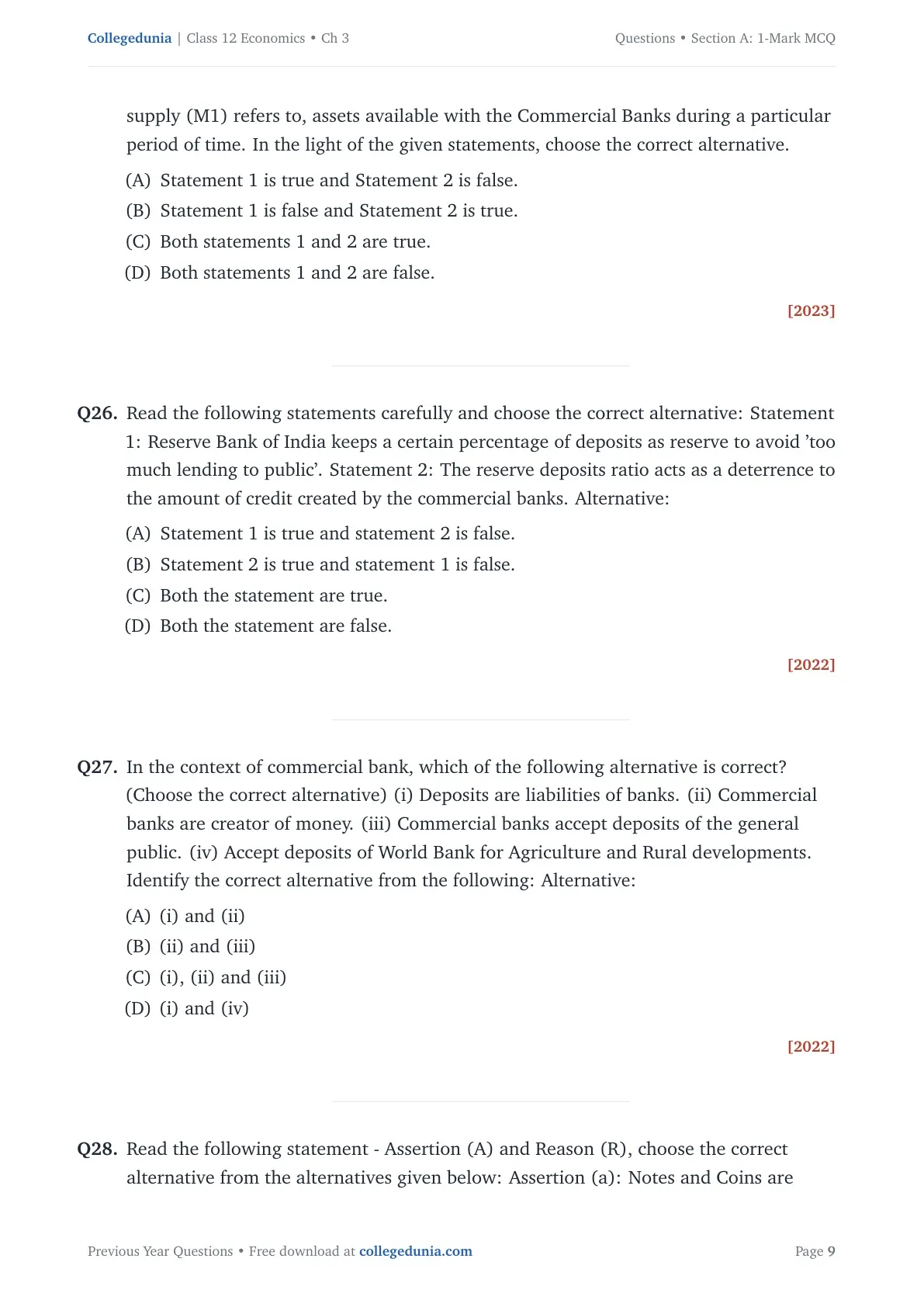
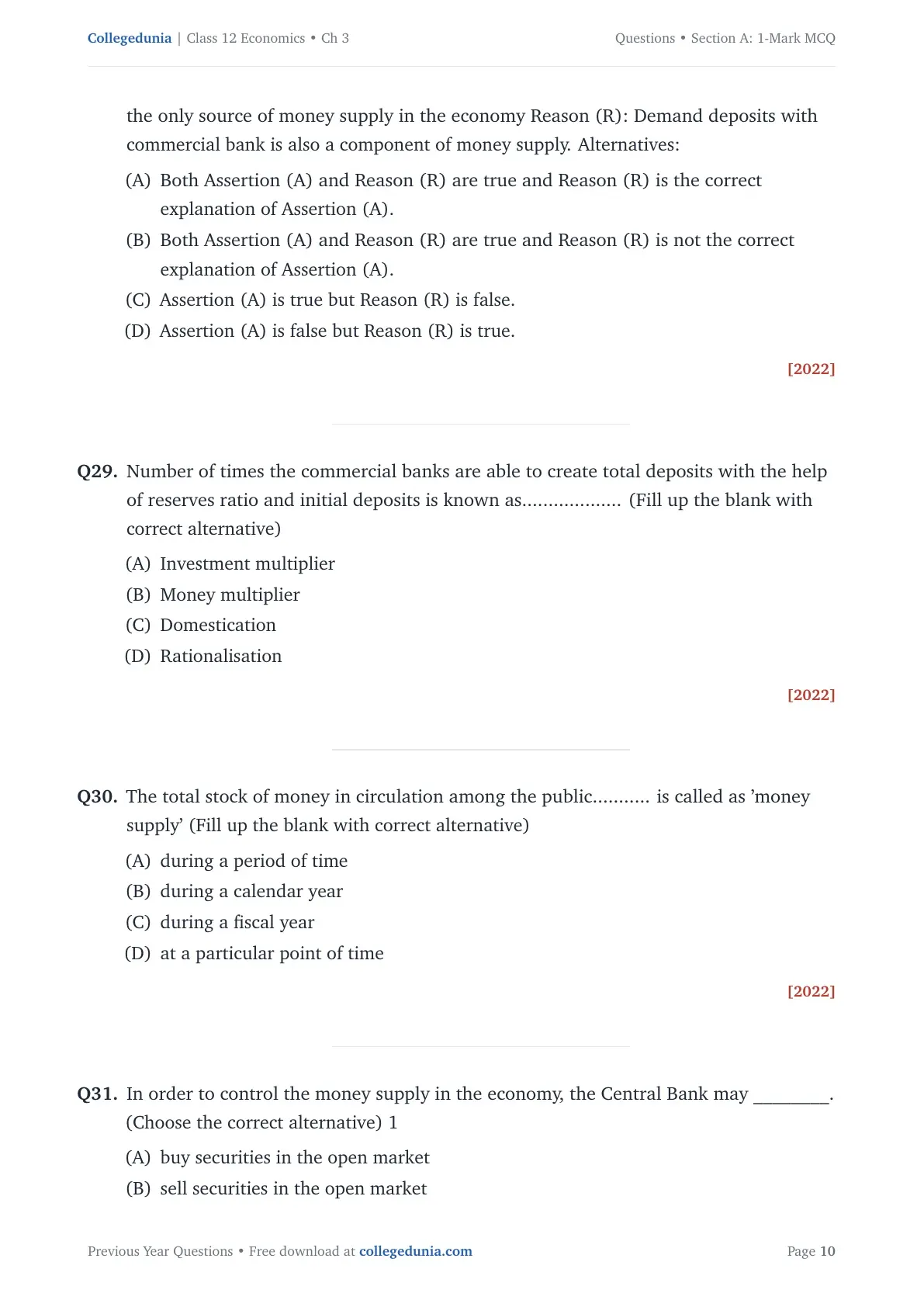
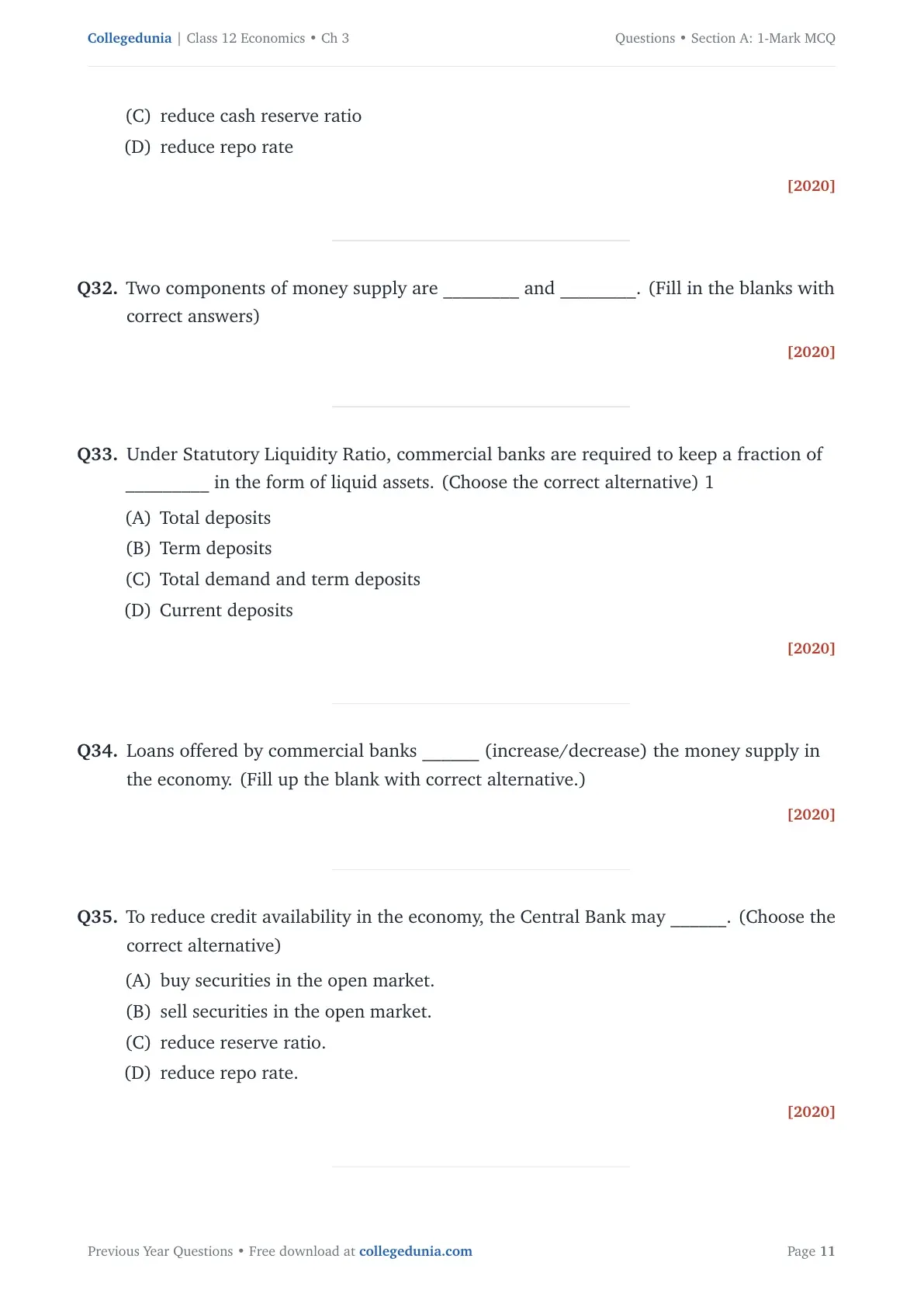
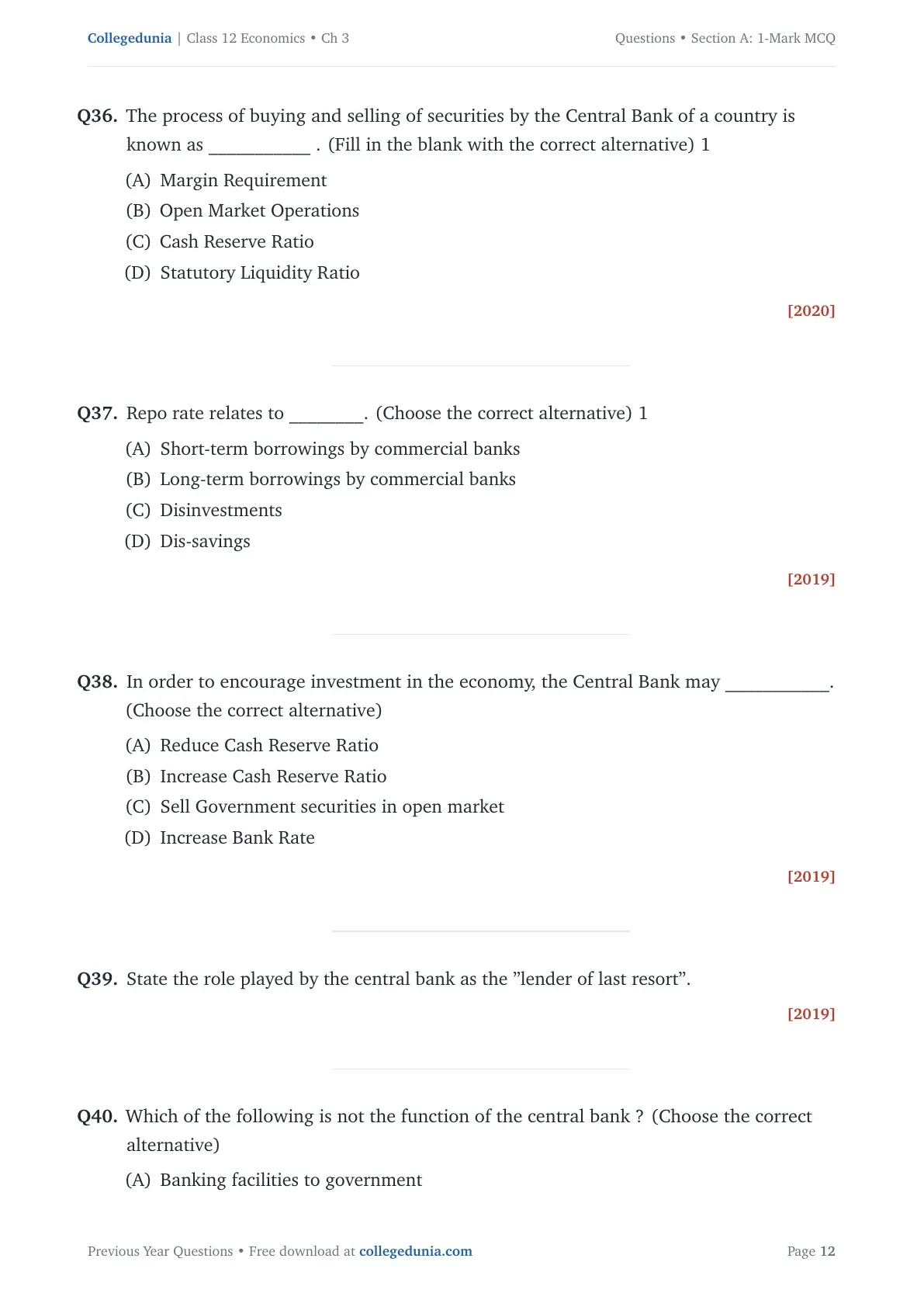
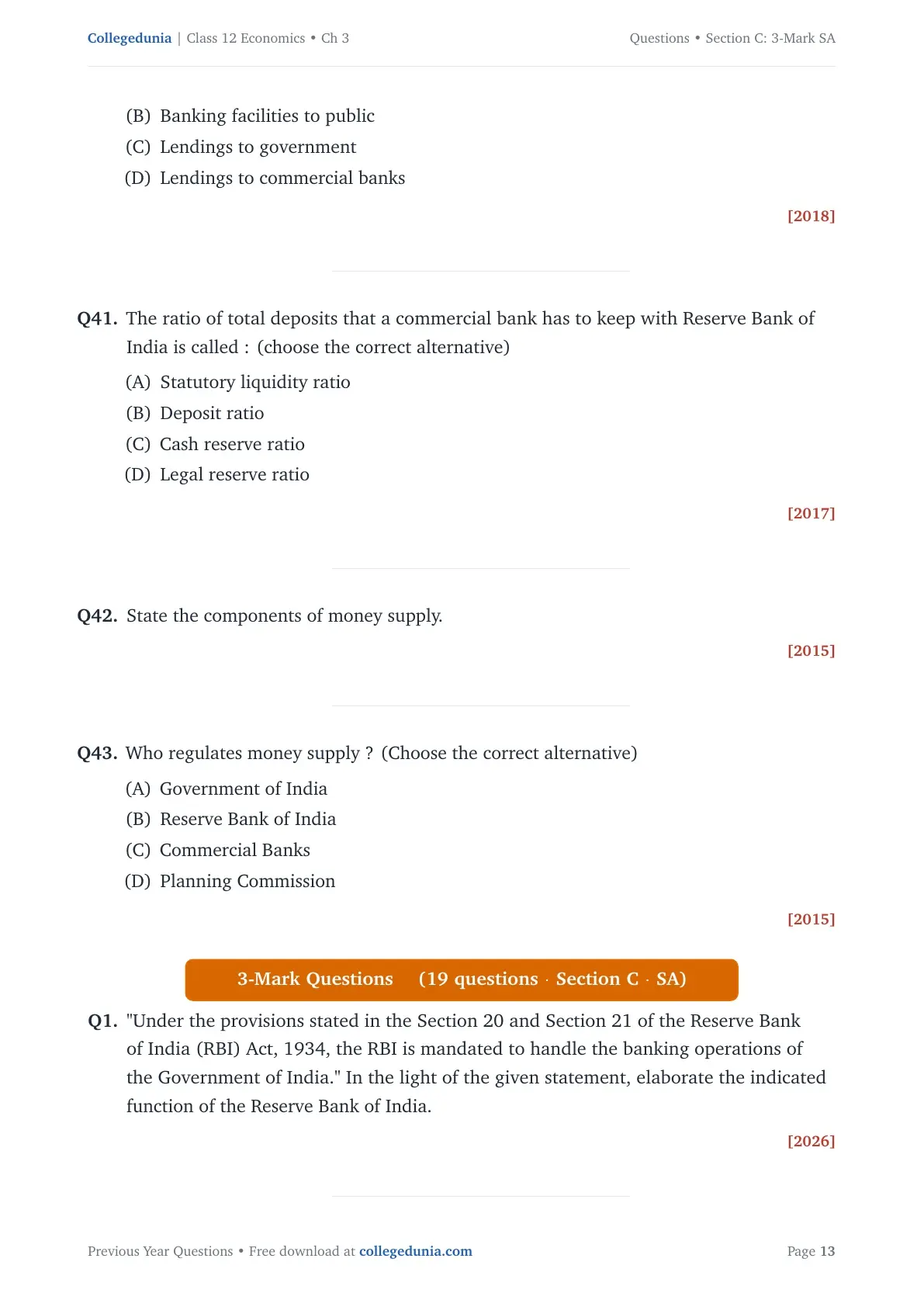
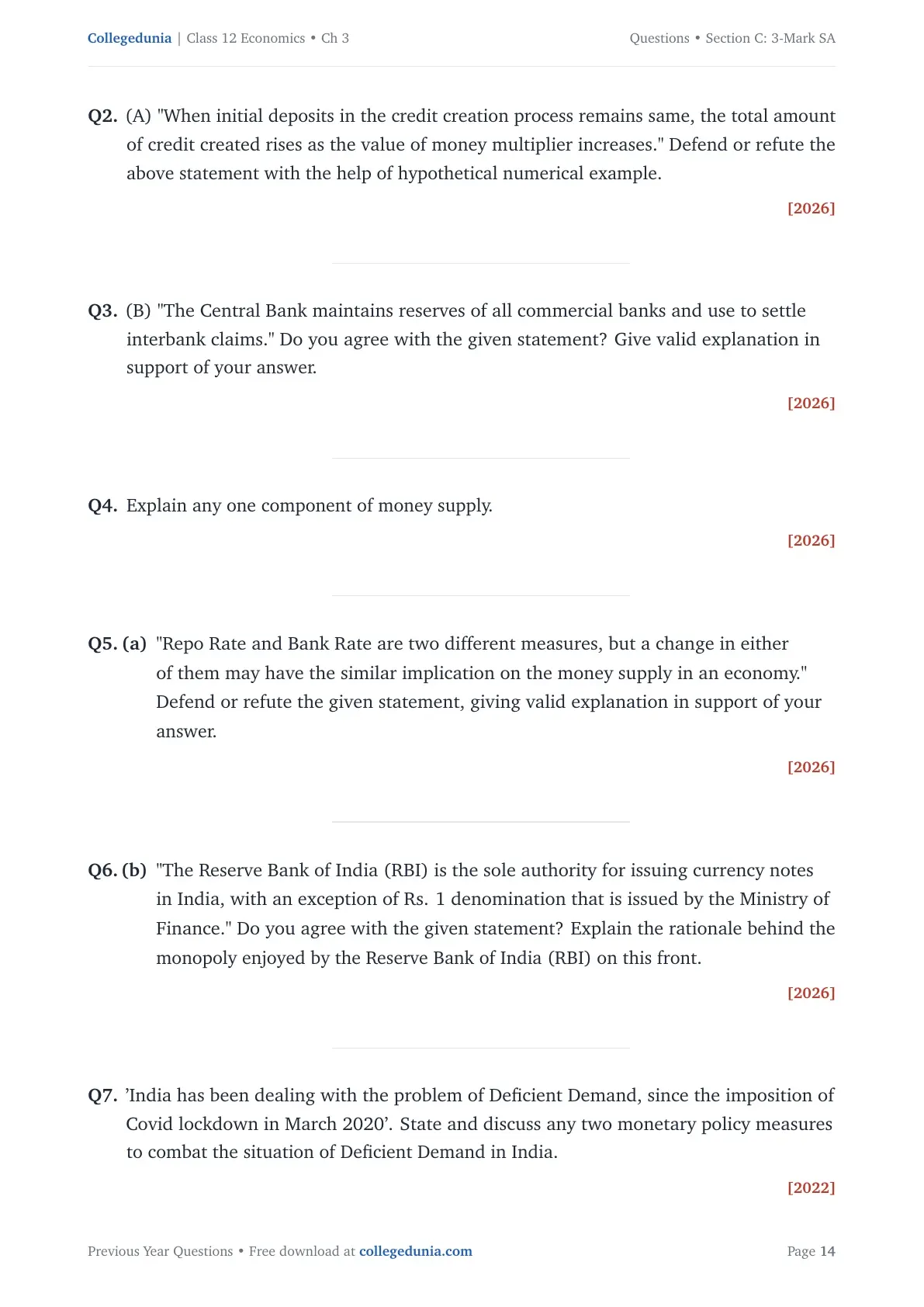
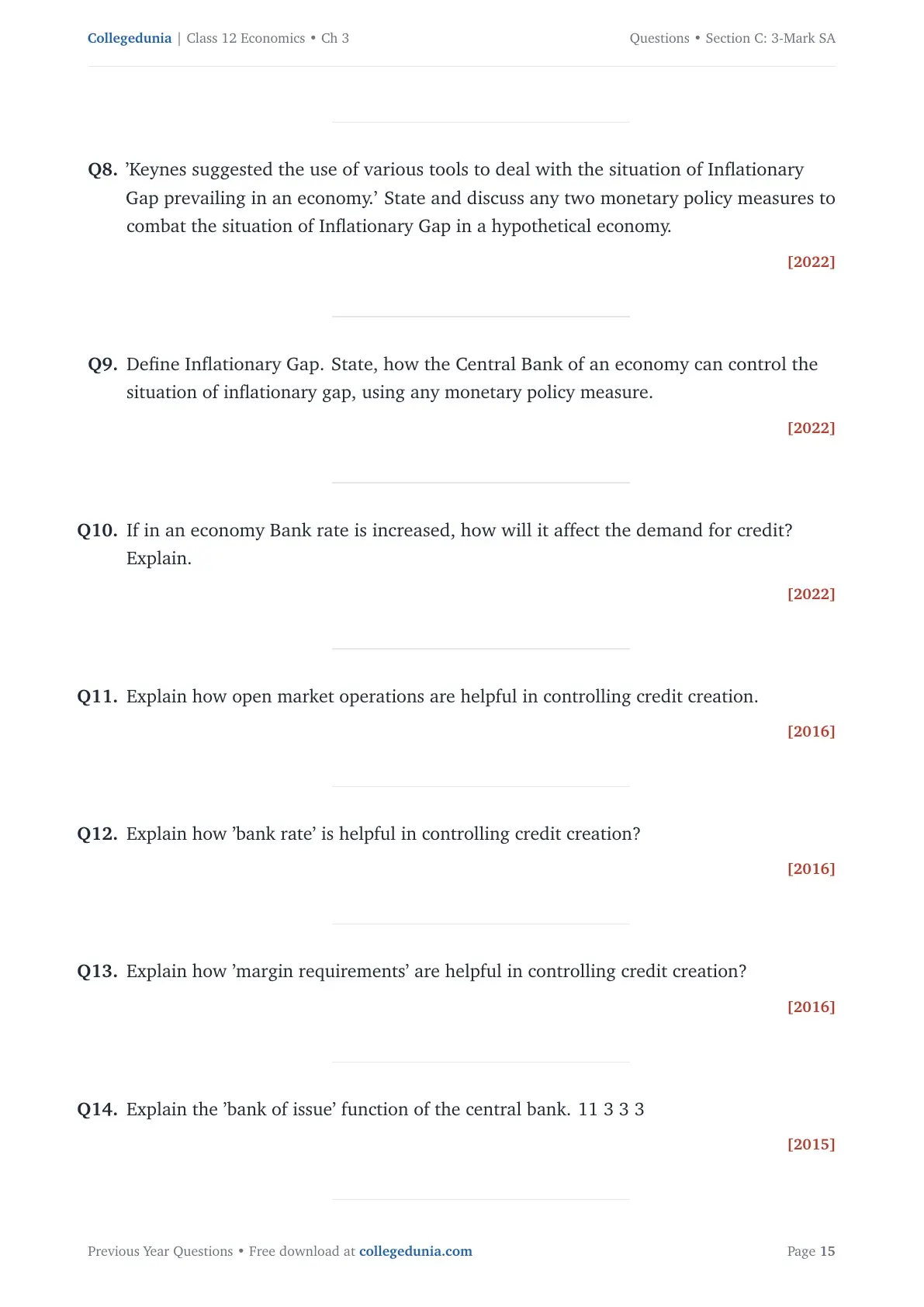
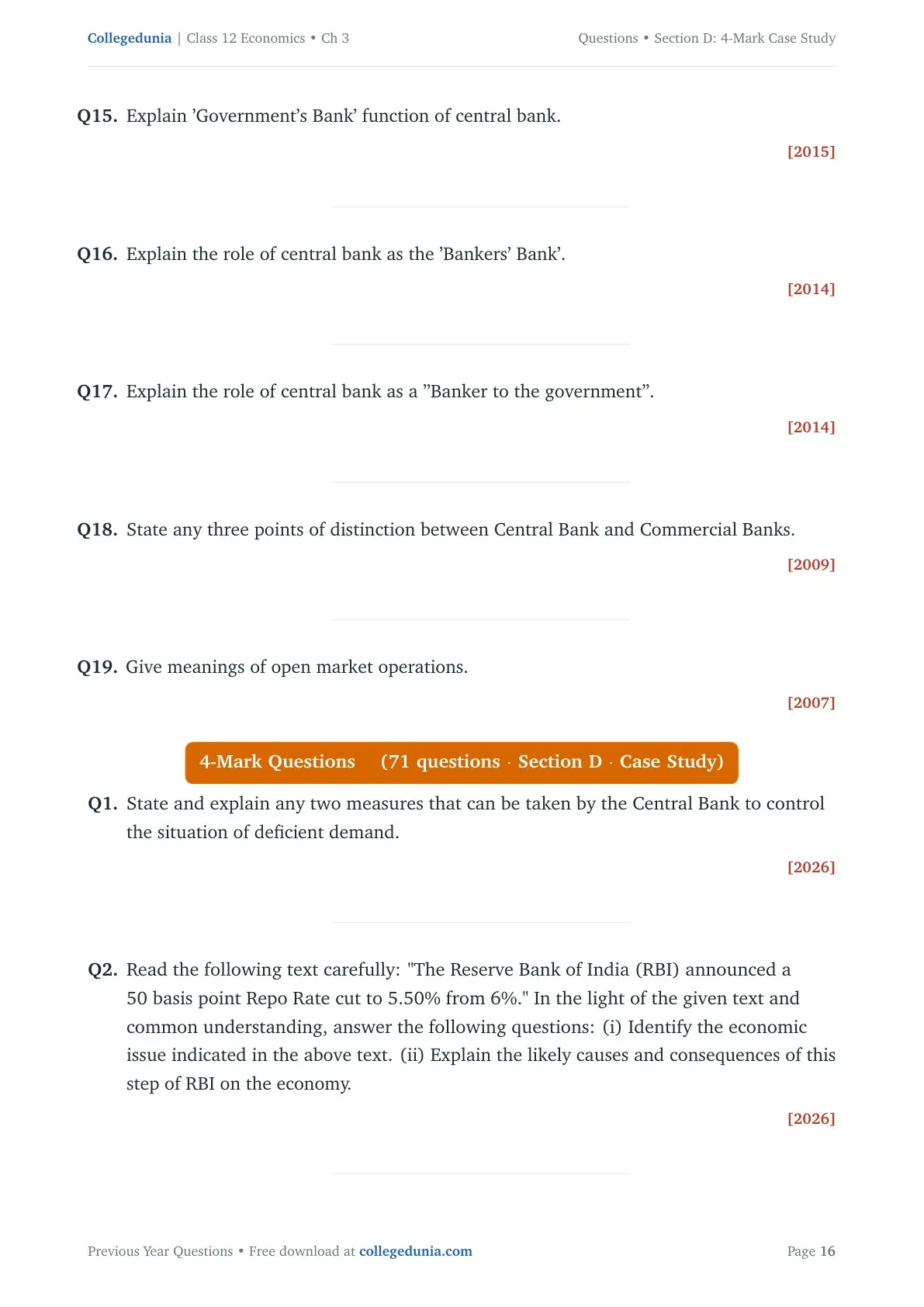
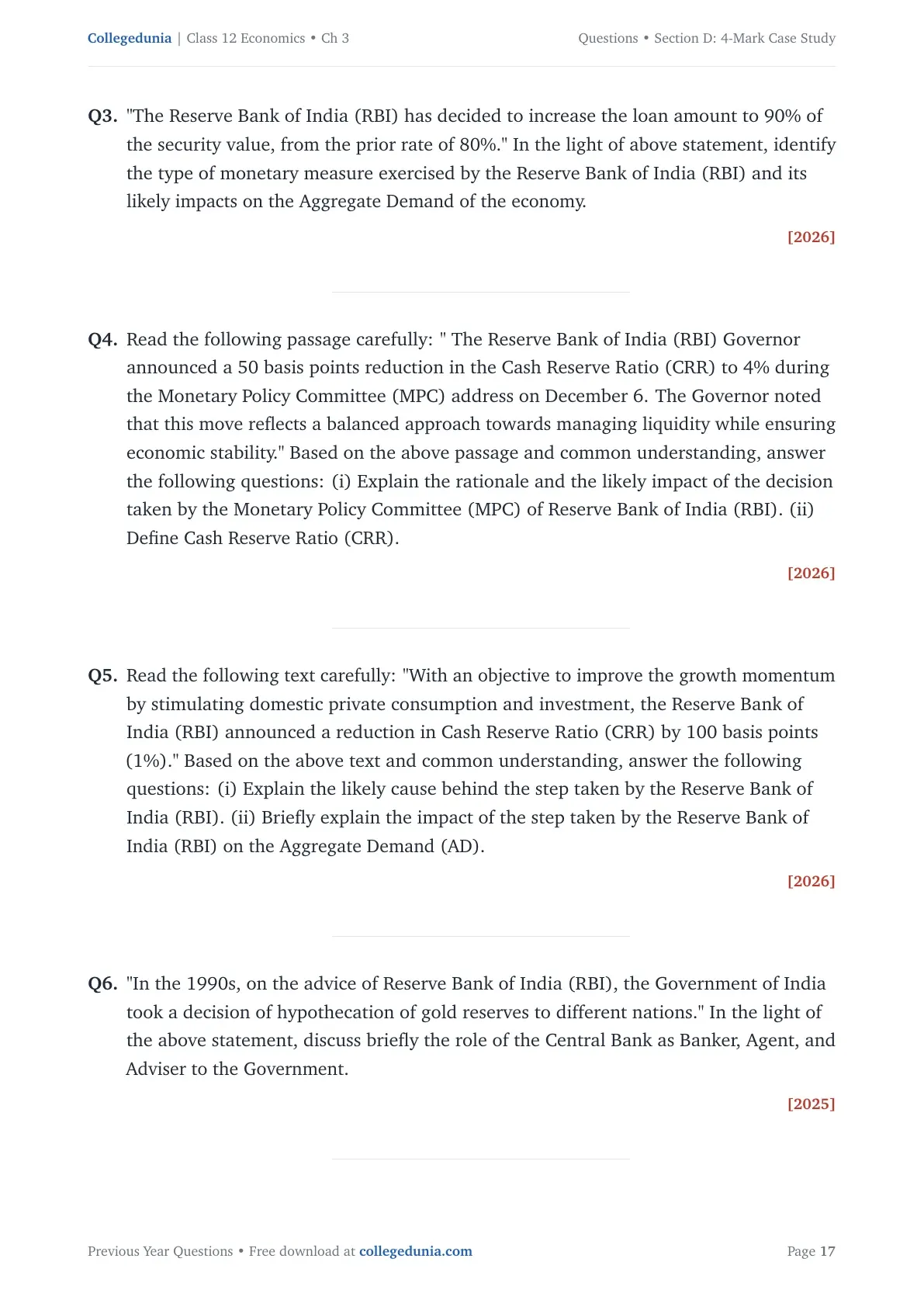
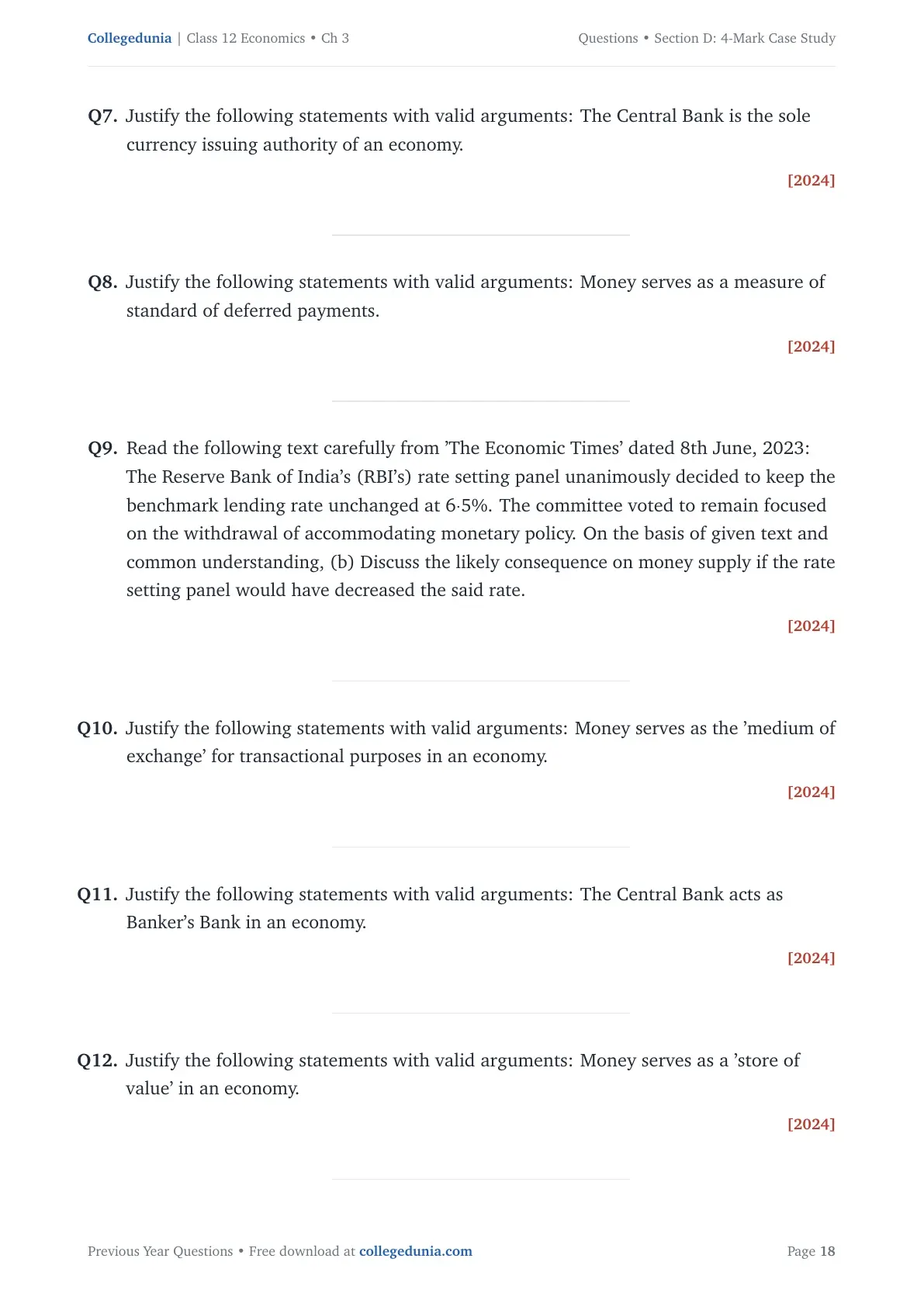
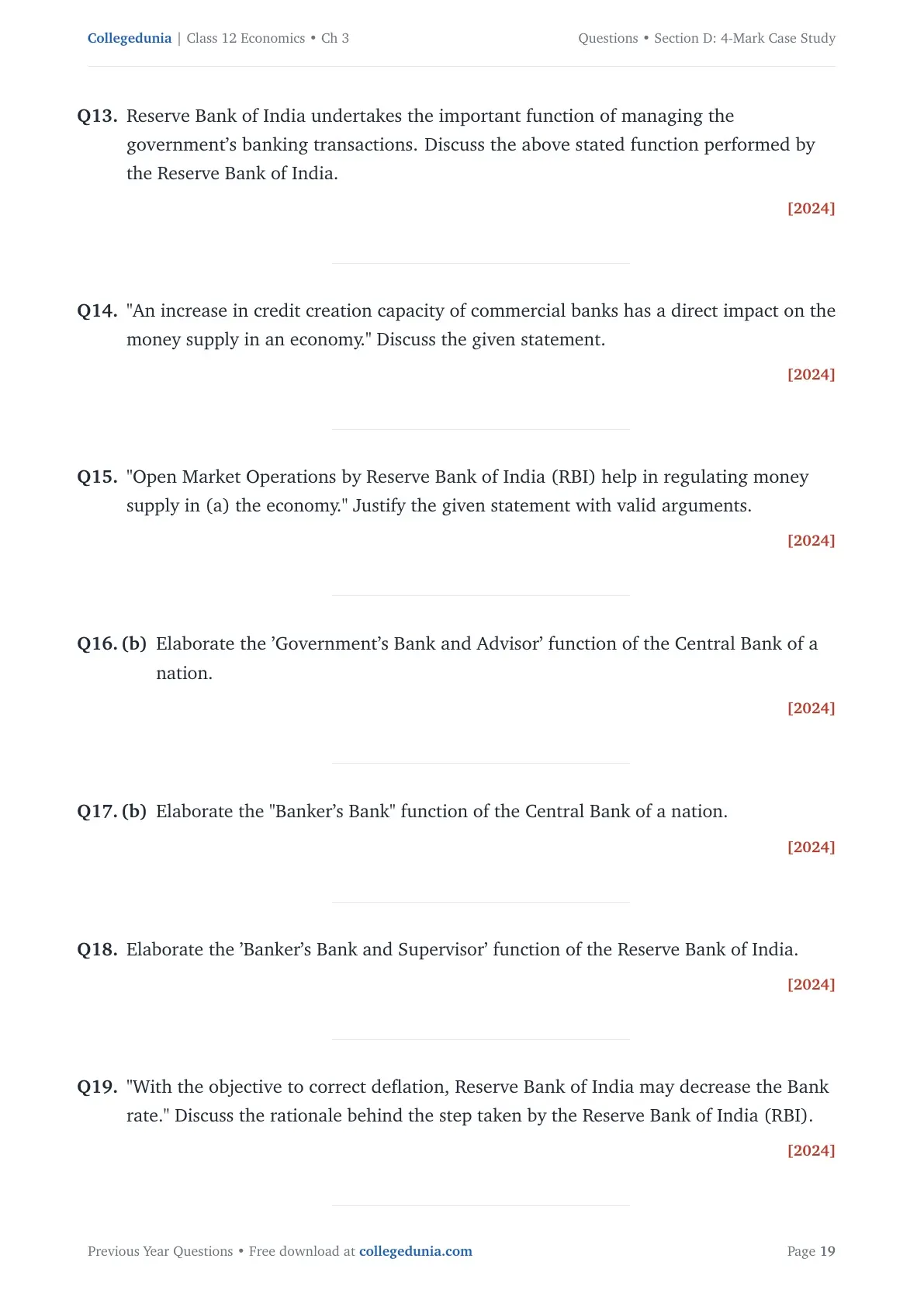
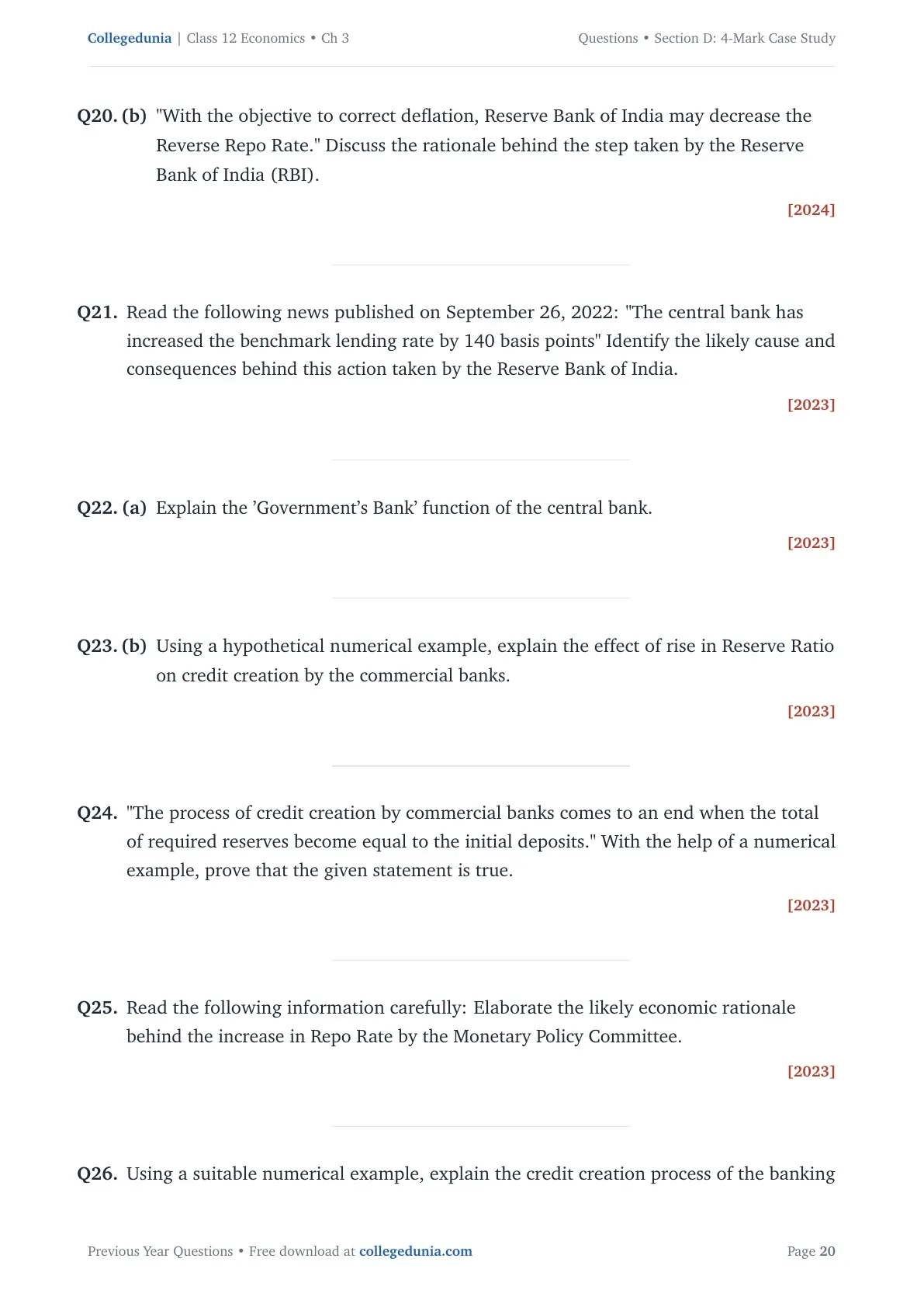
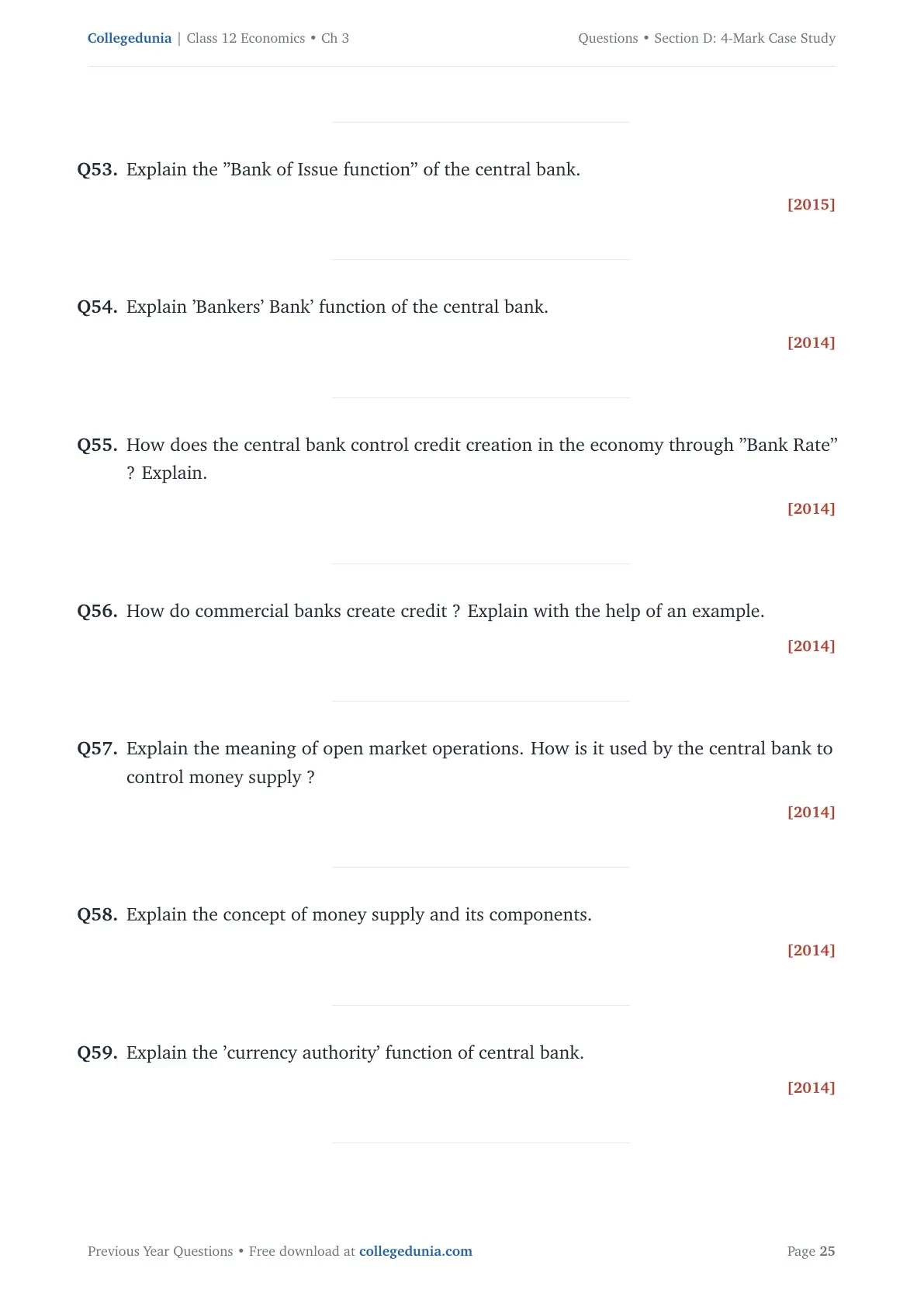
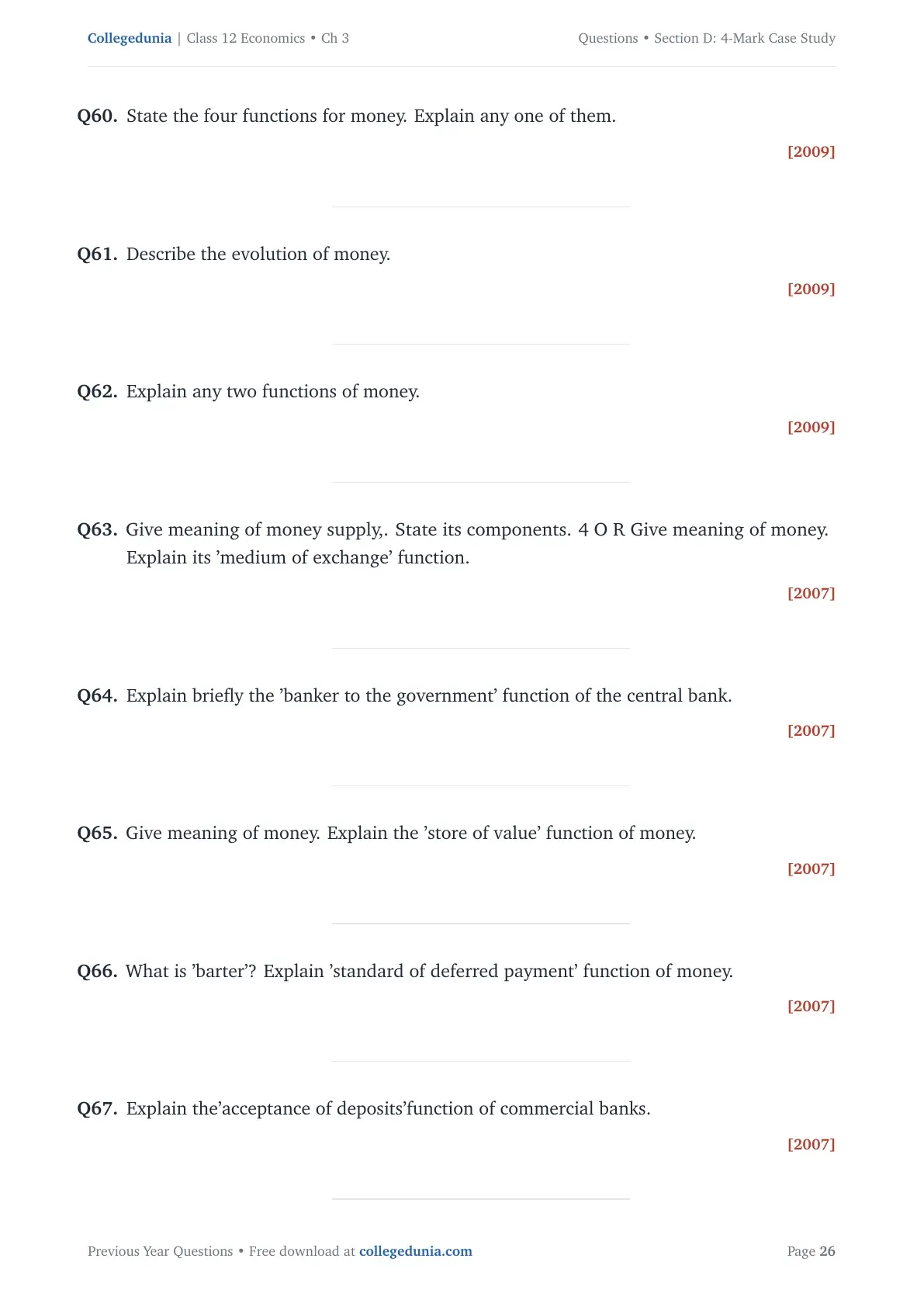
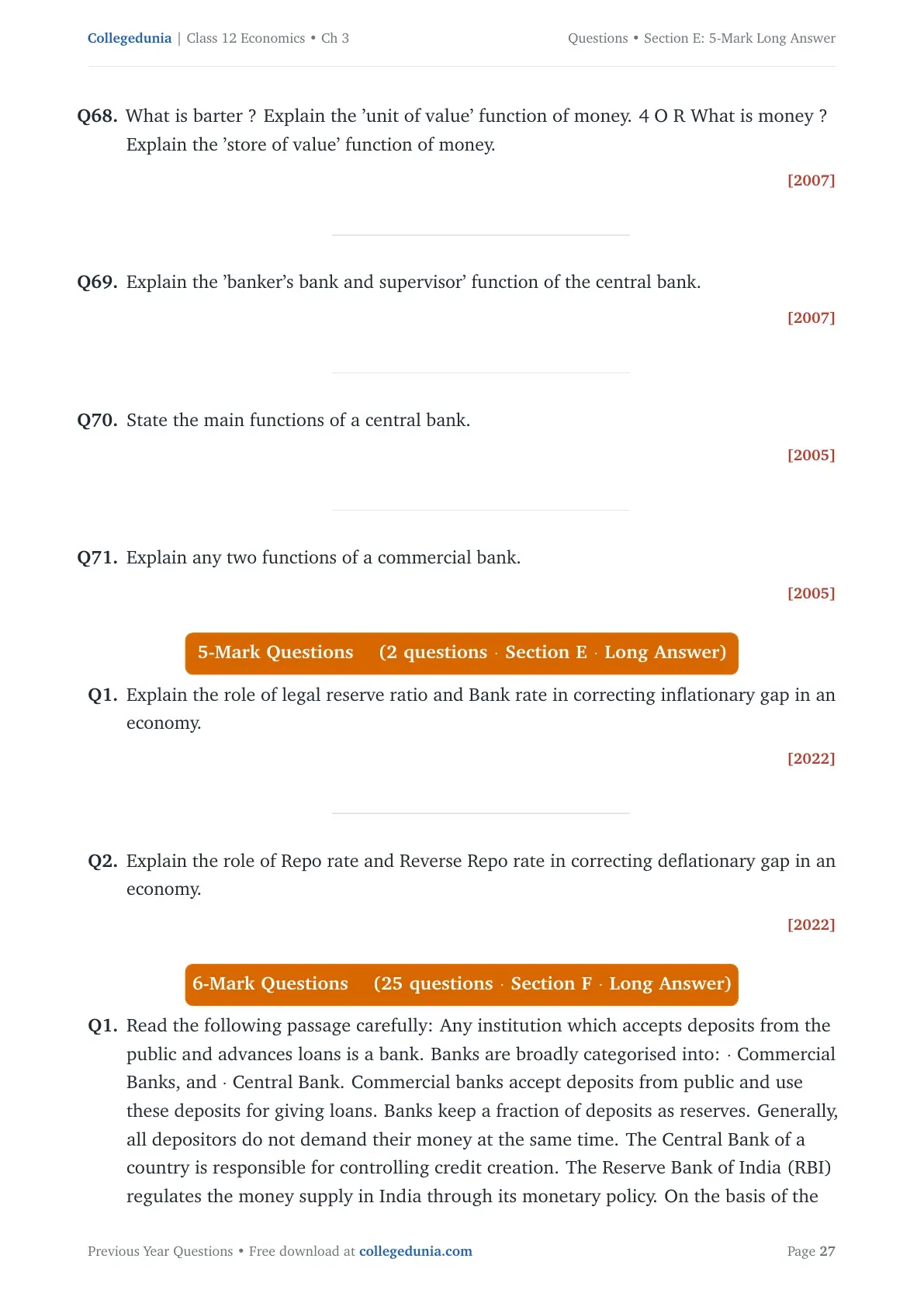
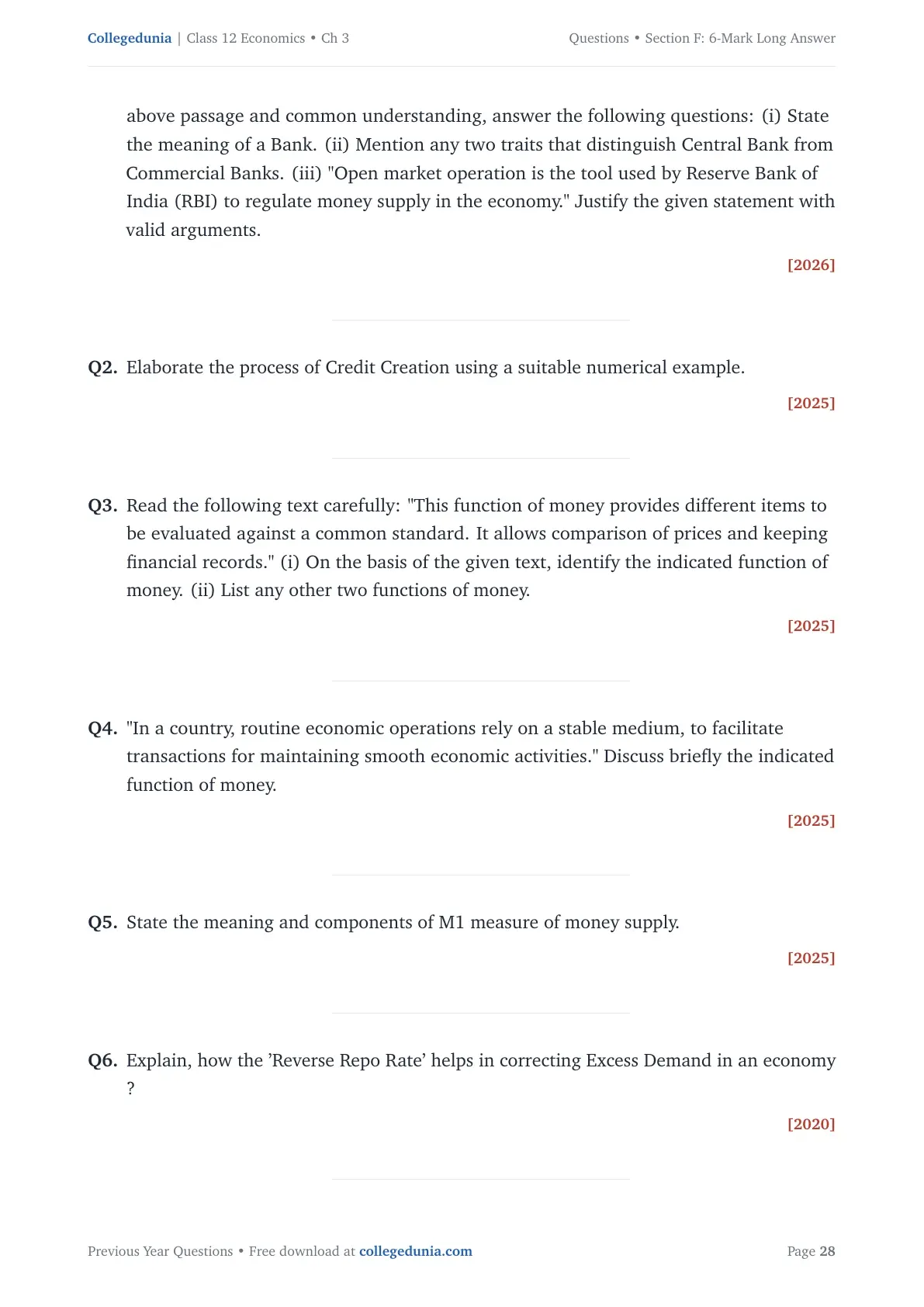
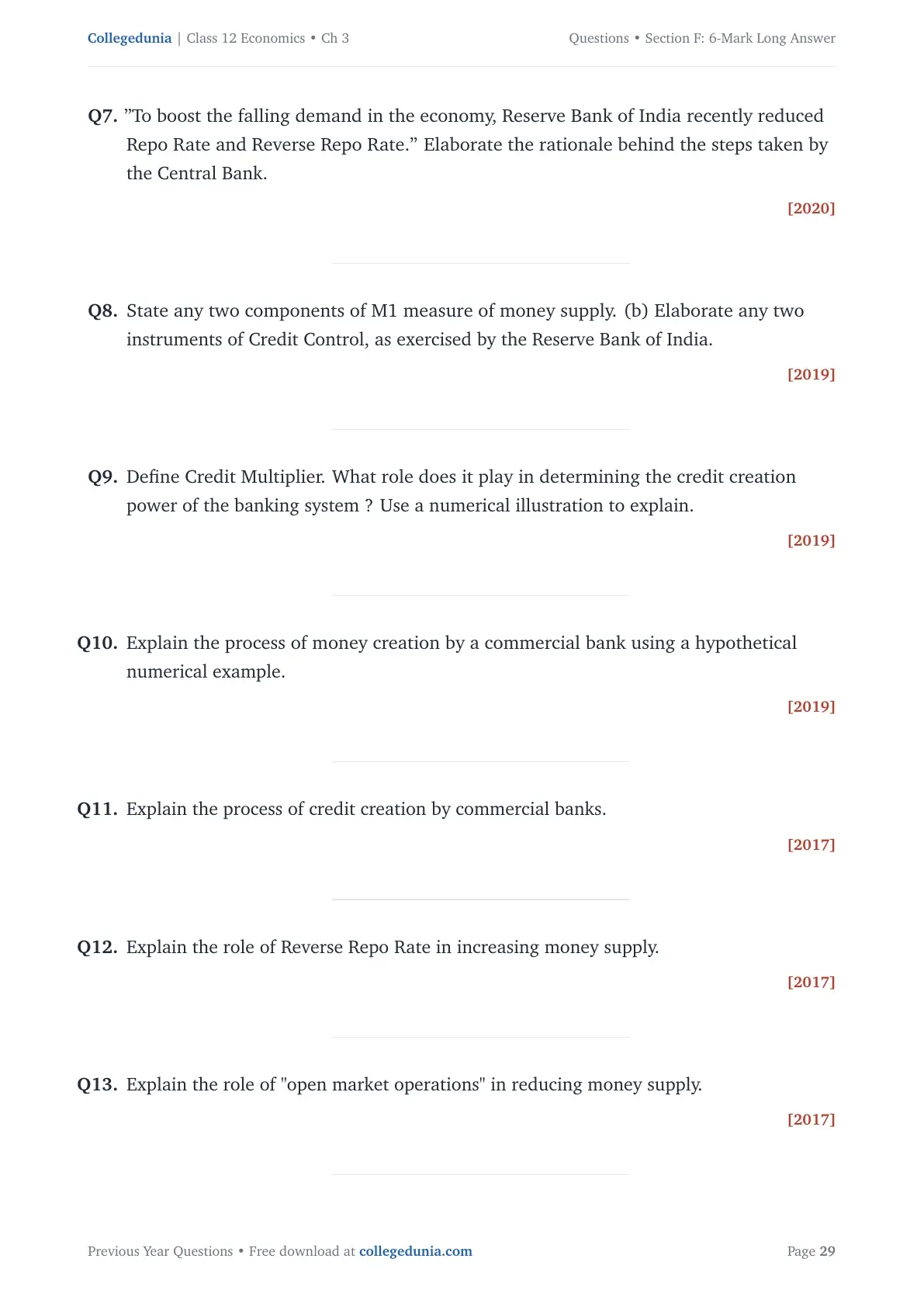
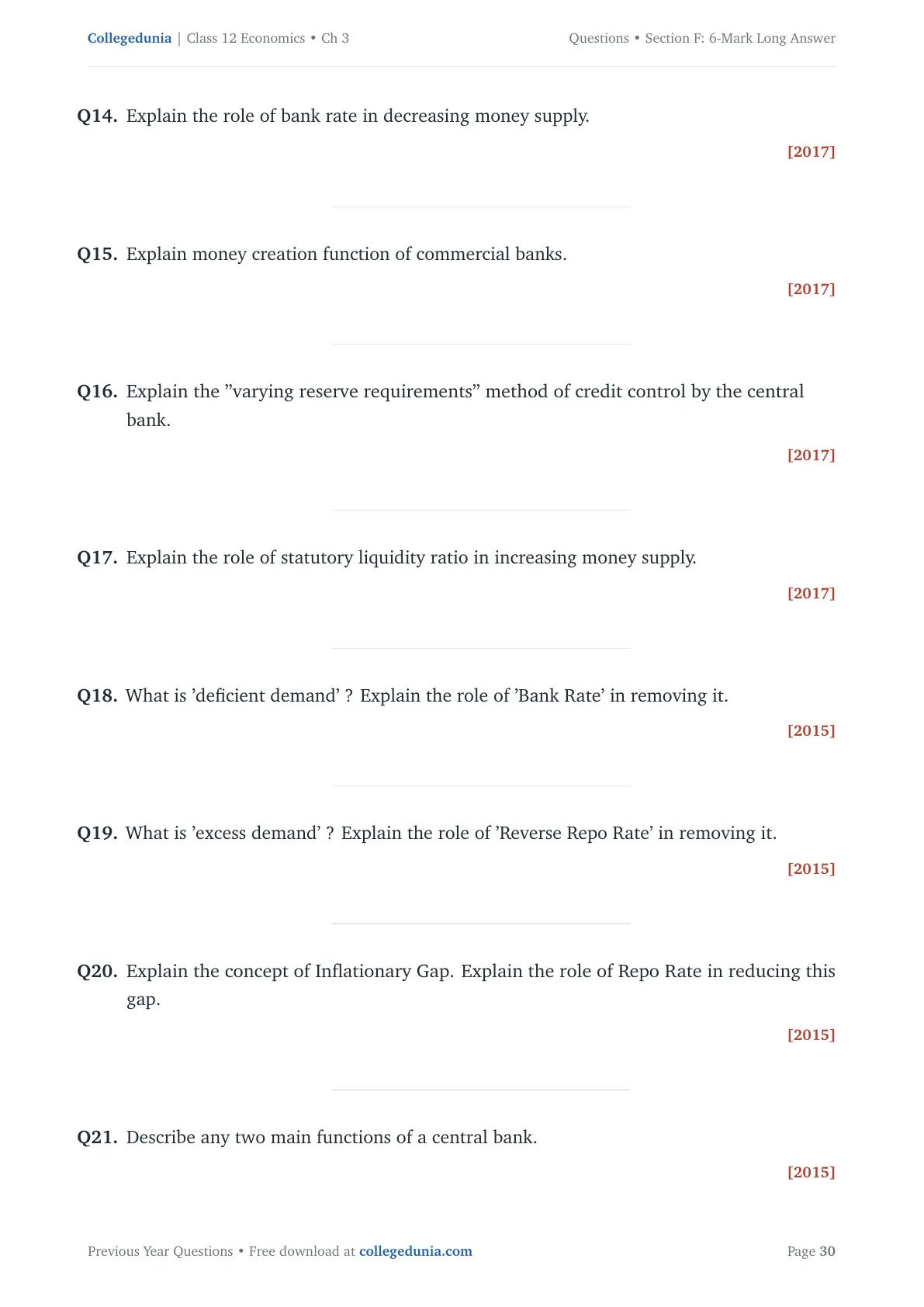
This Collegedunia booklet collects chapter-tagged board questions for practice. Check concepts against NCERT and ask your teacher for guidance when assessing longer answers.
Student Feedback: check your own progress
After a practice session, mark questions you could answer without help. Revise money supply and credit creation if you confused the terms.
What the Money and Banking PYQ PDF Contains
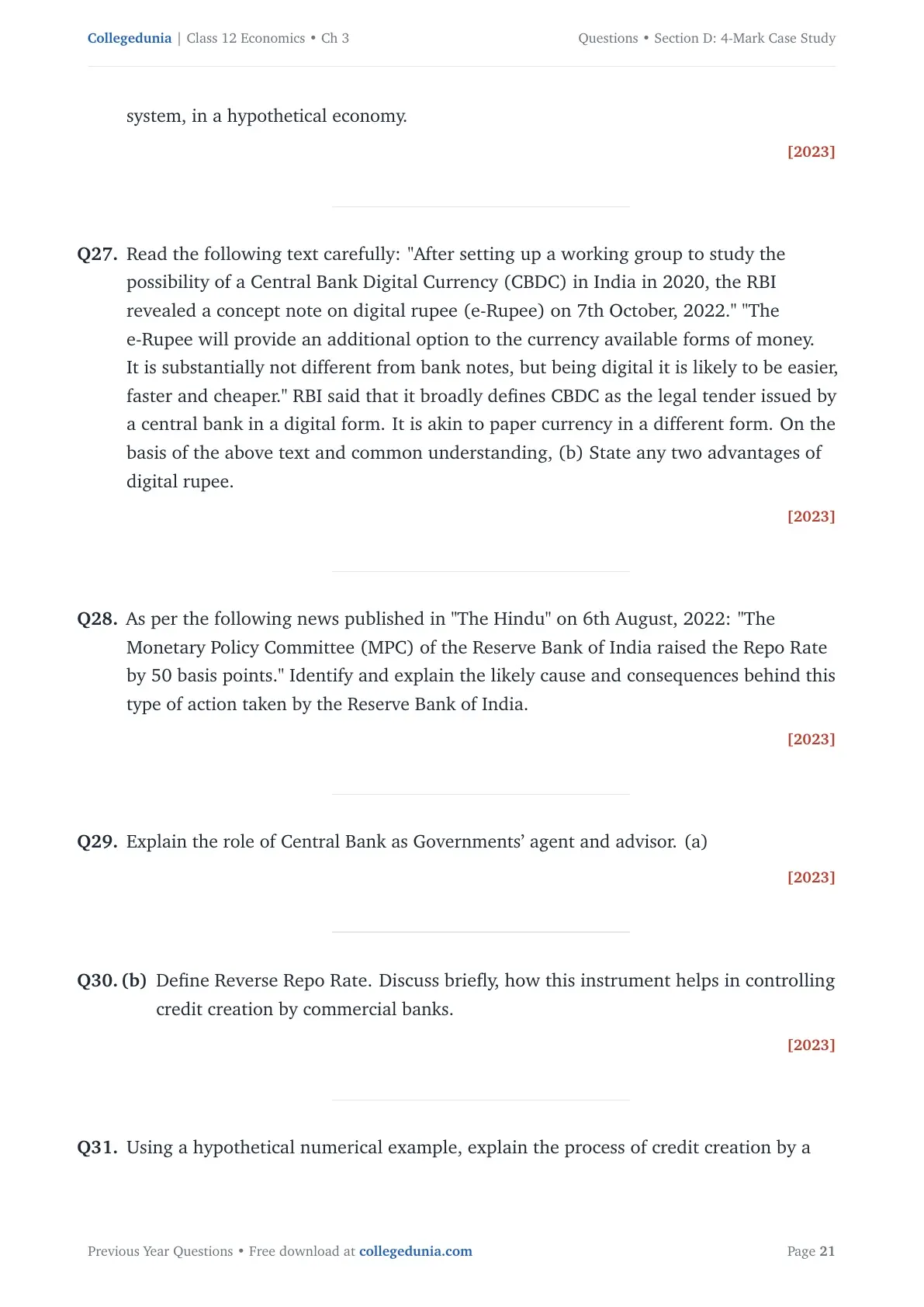
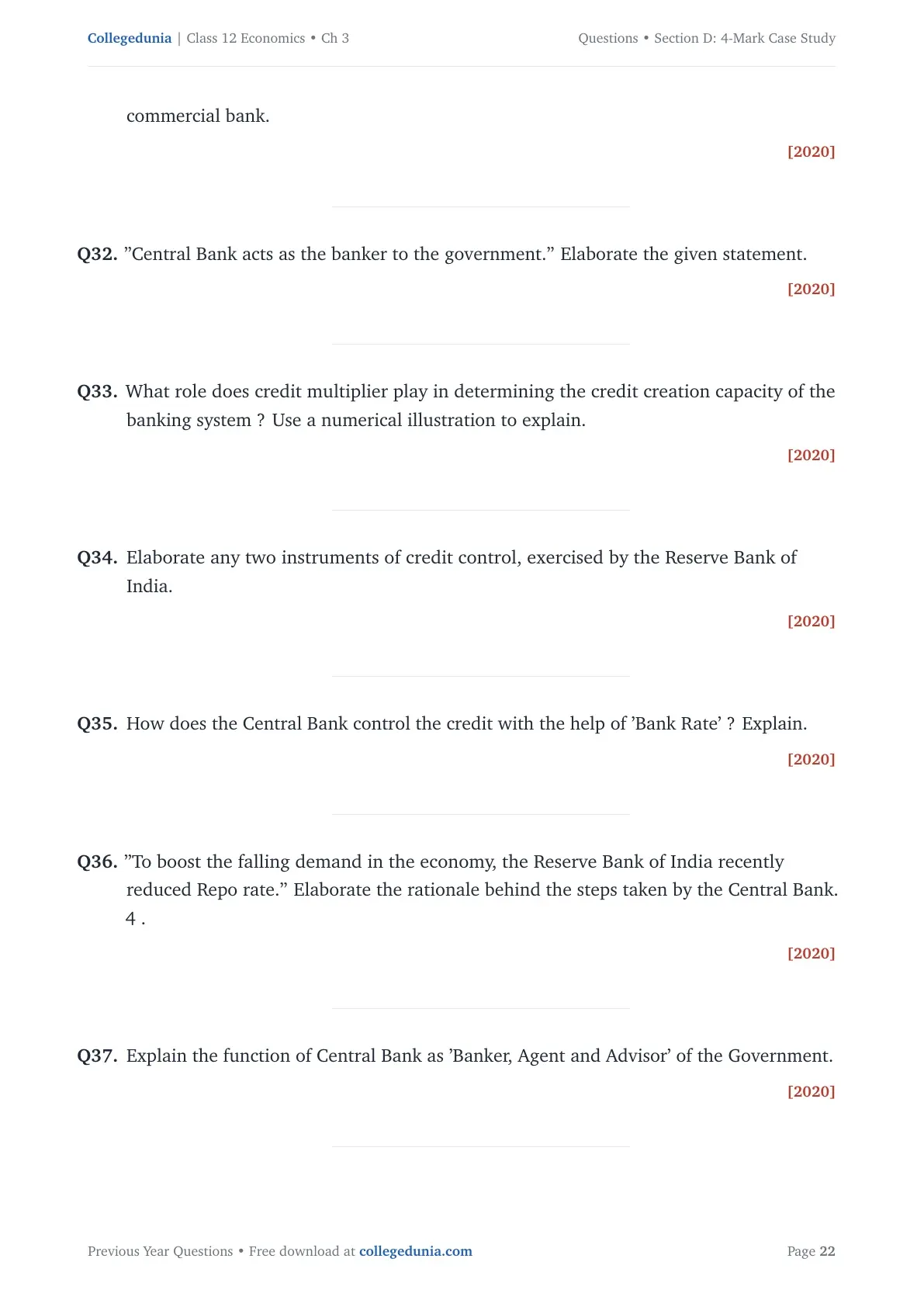
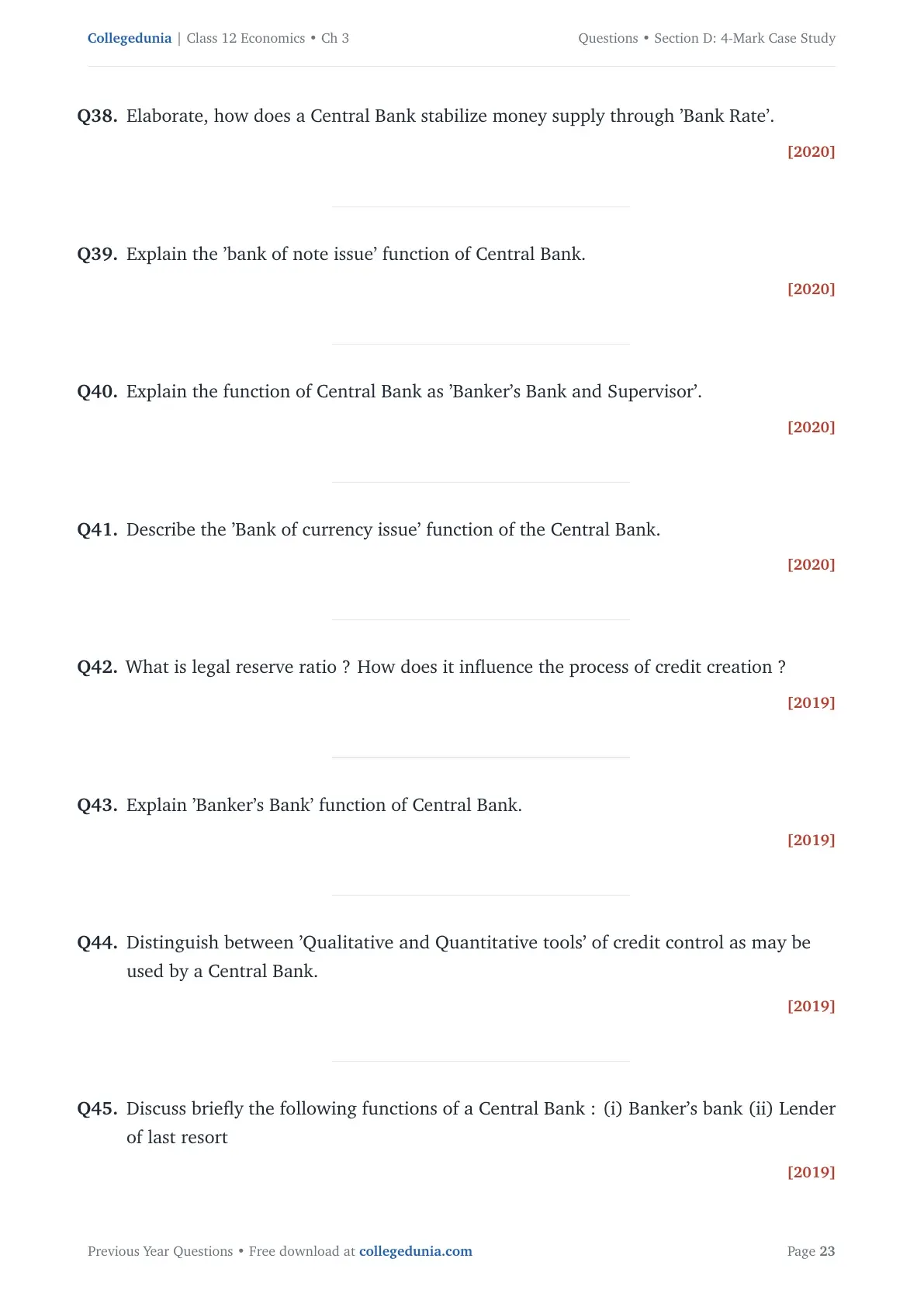
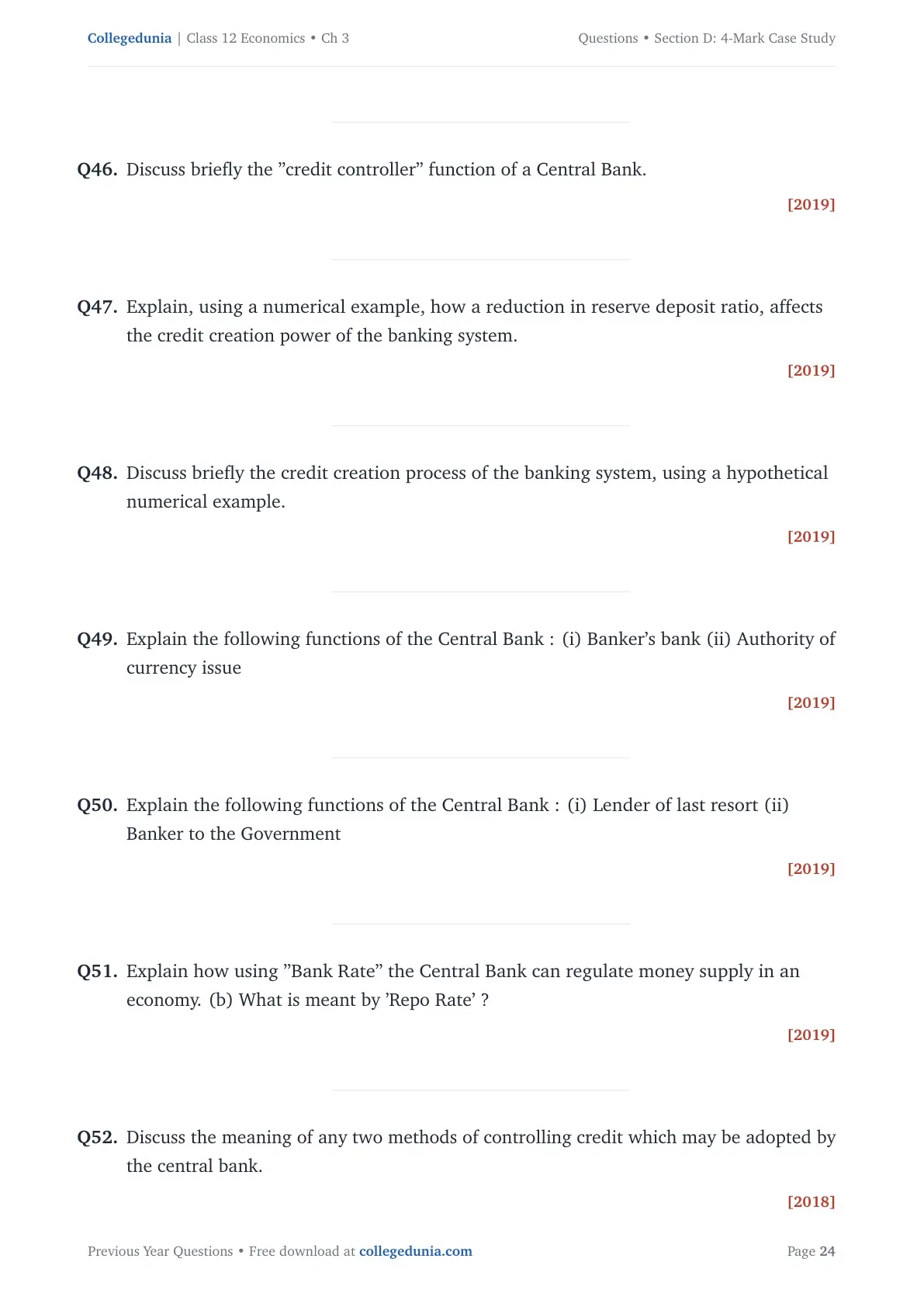
The question booklet brings 160 earlier board questions and extracted question parts into one chapter resource. Marks refer to source-paper groups; an extracted subpart may carry fewer marks than the full question. Practise definitions separately from explanation and calculation questions. Keep the original marks beside each response when deciding how much detail to write. Older papers may follow a different pattern from your current examination.
| Practice area | Check while answering |
|---|---|
| Money and its functions | Identify the function shown in the situation. |
| Money supply | Distinguish currency with the public from demand deposits. |
| Commercial banks | Explain deposits, lending and credit creation. |
| Central banking | Name the RBI function or policy instrument before explaining its effect. |
Historical question marks do not guarantee chapter weightage in the next board paper. Use your current school syllabus to choose relevant questions.
Money and Banking Revision Lesson for Class 12
Source: Magnet Brains on YouTube
Money Supply and Credit Creation Practice for Class 12
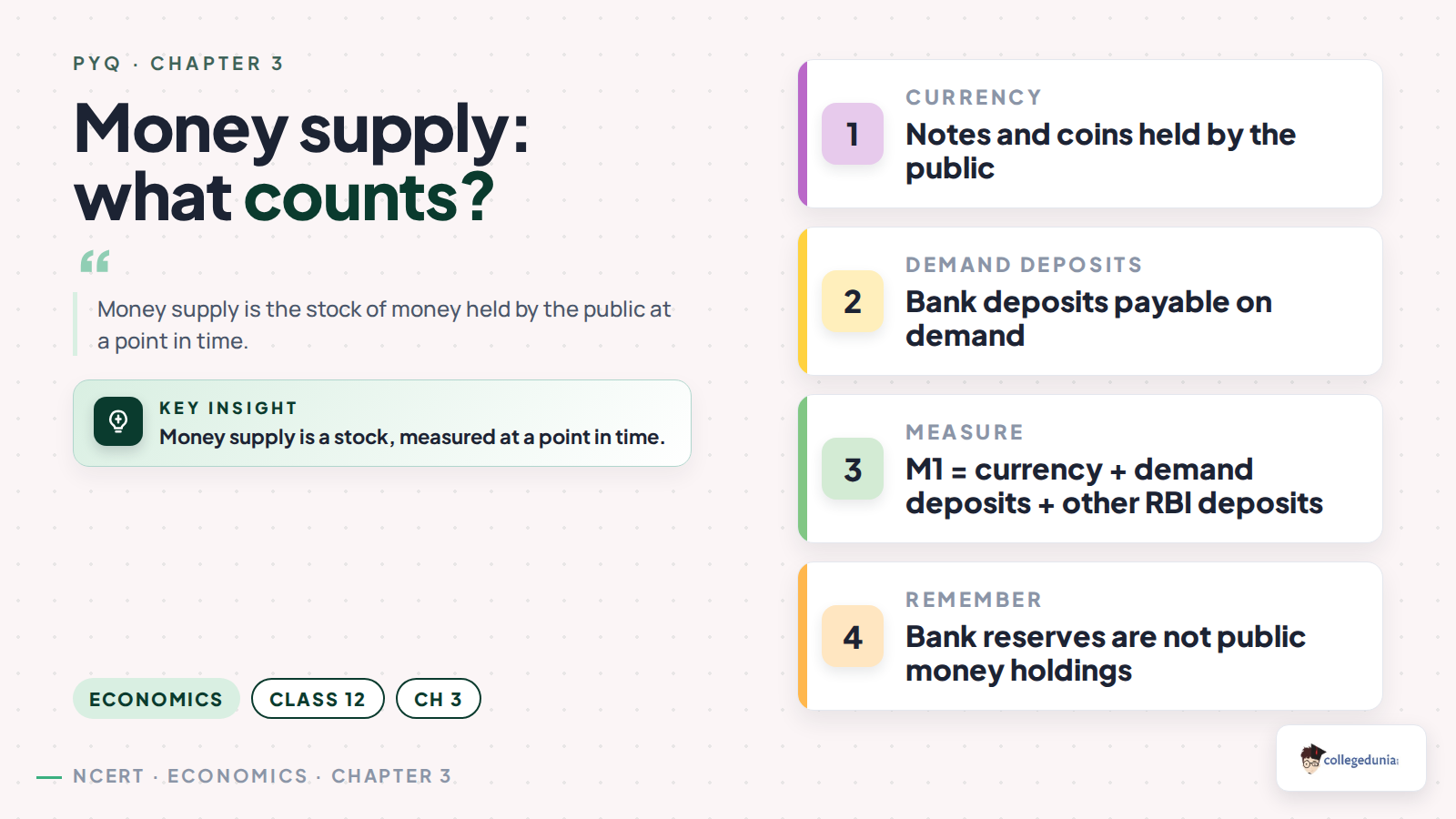
Money supply includes currency held by the public and demand deposits with banks. For deposit-creation questions, read what the question asks before calculating. Total deposits differ from the extra deposits created after the first deposit. Reserve requirements limit how much banks can lend in the simplified textbook model.
- Initial deposit: write the starting amount and its unit.
- Convert the reserve ratio from a percentage to a decimal.
- State the assumptions behind the textbook deposit multiplier.
- Check whether the answer asks for total deposits or additional credit.
A reserve ratio of 20% means 0.20 in a multiplier calculation. Keep your calculation steps separate, so a percentage error is easier to find. Use the NCERT explanation to check why successive rounds of deposits become smaller.
Money and Banking Central Bank Questions: What to Check
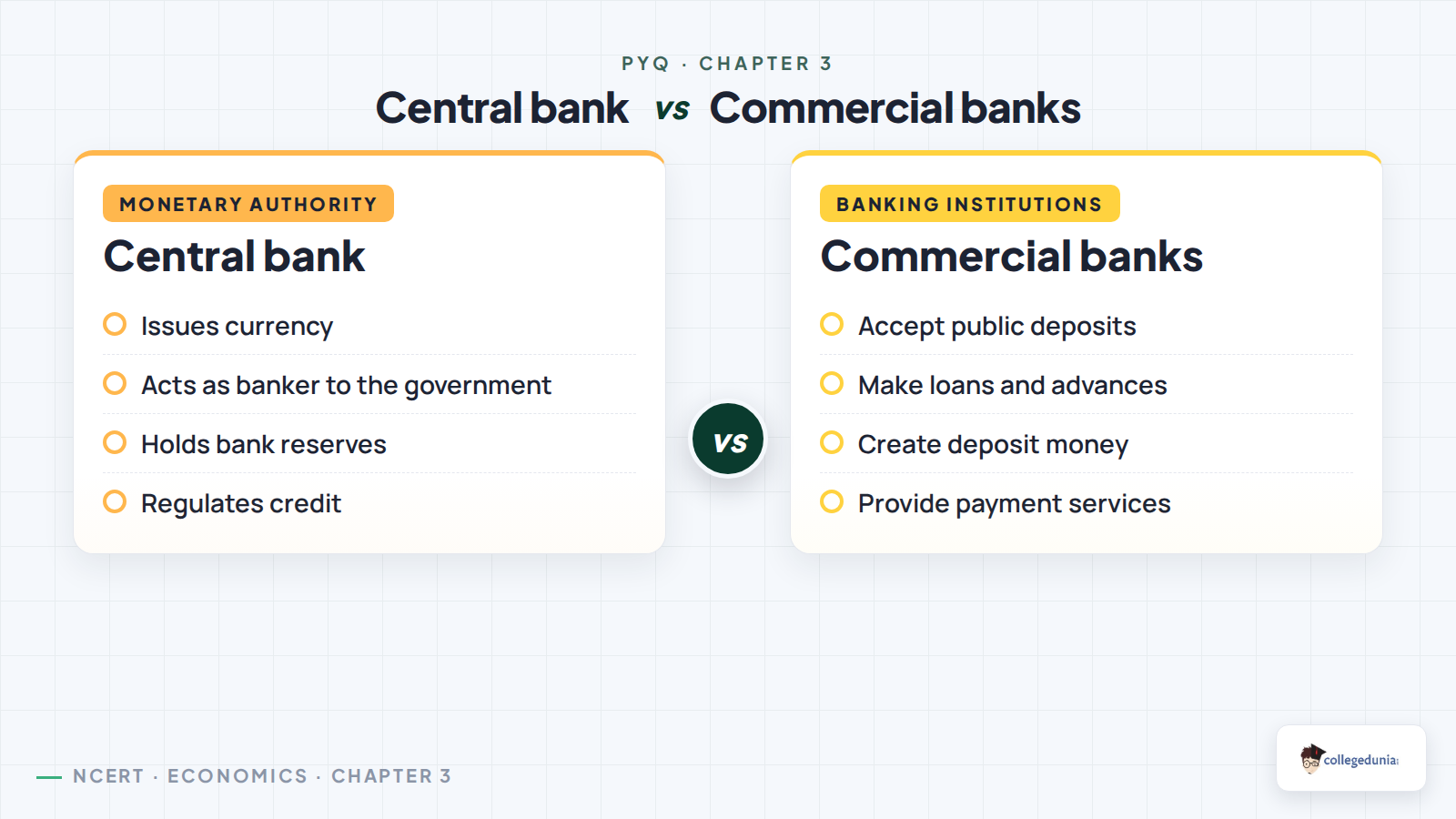
Central bank questions may ask for a function, an instrument or a chain of effects. These need different answers. A name alone cannot replace an explanation when the question asks how the RBI controls credit.
| Question focus | Answer check |
|---|---|
| Banker to the government | Describe banking services provided to the government. |
| Bankers' bank | Explain the central bank's relationship with commercial banks. |
| Lender of last resort | Explain emergency support to banks facing a shortage of funds. |
| Open market operations | State whether the central bank buys or sells securities, then explain the effect. |
Write the direction of the change clearly. A purchase and a sale of securities have opposite effects on banking-system reserves. Avoid treating every RBI function as a monetary policy tool.
How to Use Money and Banking PYQs for Revision
Use the booklet after a short reading of NCERT's Money and Banking chapter. Try answering without the textbook open, then return to the relevant section. This separates terms you remember from ideas you can explain in your own words.
- Read the command word and underline the economic concept.
- Attempt a small group of questions without looking at notes.
- Check definitions, units and the sequence of each explanation.
- Record one correction beside each incomplete answer.
- Repeat the difficult questions after revising the matching NCERT section.
This is a questions-only PDF. It does not provide model answers or a marking scheme. For longer responses, compare your explanation with NCERT and discuss the expected detail with your teacher.
Related Resources for Money and Banking Class 12
Use Collegedunia's chapter resources to revise definitions and explanations before returning to past-paper practice.
| Money and Banking resource | Use it for |
|---|---|
| Money and Banking Class 12 NCERT Solutions | Checking textbook exercise explanations |
| Money and Banking Class 12 Notes | Revising chapter ideas |
| Money and Banking Class 12 Handwritten Notes | A short revision pass |
| Money and Banking Class 12 NCERT Book | Reading the source chapter |
Class 12 Economics PYQs: All Macroeconomics Chapters
Use the chapter list to plan your next practice session. Resources marked coming soon are not yet available. The extra Commerce links below offer separate subject practice.
| Chapter | PYQ resource |
|---|---|
| Introduction to Macroeconomics | Coming soon |
| National Income Accounting | Coming soon |
| Money and Banking | Money and Banking PYQ PDF |
| Income Determination | Coming soon |
| Government Budget and the Economy | Coming soon |
| Open Economy Macroeconomics | Open Economy Macroeconomics PYQ PDF |
| Other Commerce practice: Entrepreneurship | Entrepreneurial Opportunity PYQ |
| Other Commerce practice: Entrepreneurship | Business Arithmetic PYQ |
| Other Commerce practice: Entrepreneurship | Resource Mobilisation PYQ |
Money and Banking Class 12 Economics PYQ FAQs
Ques. Does the Money and Banking PYQ PDF contain solutions?
Ans. No. The PDF contains previous year questions only. Write your answers independently and check concepts in NCERT.
Ques. How should I use these questions for 2026-27 revision?
Ans. Read the relevant NCERT topic first, attempt a short group of questions, then check definitions and calculations.
Ques. Do old question marks show the next board paper weightage?
Ans. No. They describe marks assigned in earlier papers. Follow your current syllabus and examination instructions.
Ques. What should I check in credit creation numericals?
Ans. Check the initial deposit, reserve ratio and units. Decide whether the question asks for total deposits or additional credit.
Ques. How do I improve longer central bank answers?
Ans. Name the function or instrument first. Then explain the steps and the direction of its effect.
Ques. What is money?
Ans. Money is anything generally accepted as a medium of exchange. It also acts as a unit of account and store of value.
Ques. How are demand deposits defined?
Ans. Demand deposits are bank deposits that can be withdrawn on demand. They form part of money supply.
Ques. What are open market operations?
Ans. Open market operations are the central bank's purchases and sales of government securities to influence liquidity in the economy.



Comments