




Class 12 Economics Chapter 3 Money and Banking is the third chapter of the Macroeconomics book. It explains what money is, how banks create credit, and how the RBI controls the money supply. This page has the official NCERT chapter PDF, free to download.
Here is what this chapter is worth in the exam:
- CBSE Boards: about 6 to 8 marks, mixing short theory with one money-multiplier or money-supply sum.
- CUET: 2 to 3 questions most years on money functions, M1 to M4, and RBI tools.
What the Class 12 Economics Chapter 3 Money and Banking PDF Covers
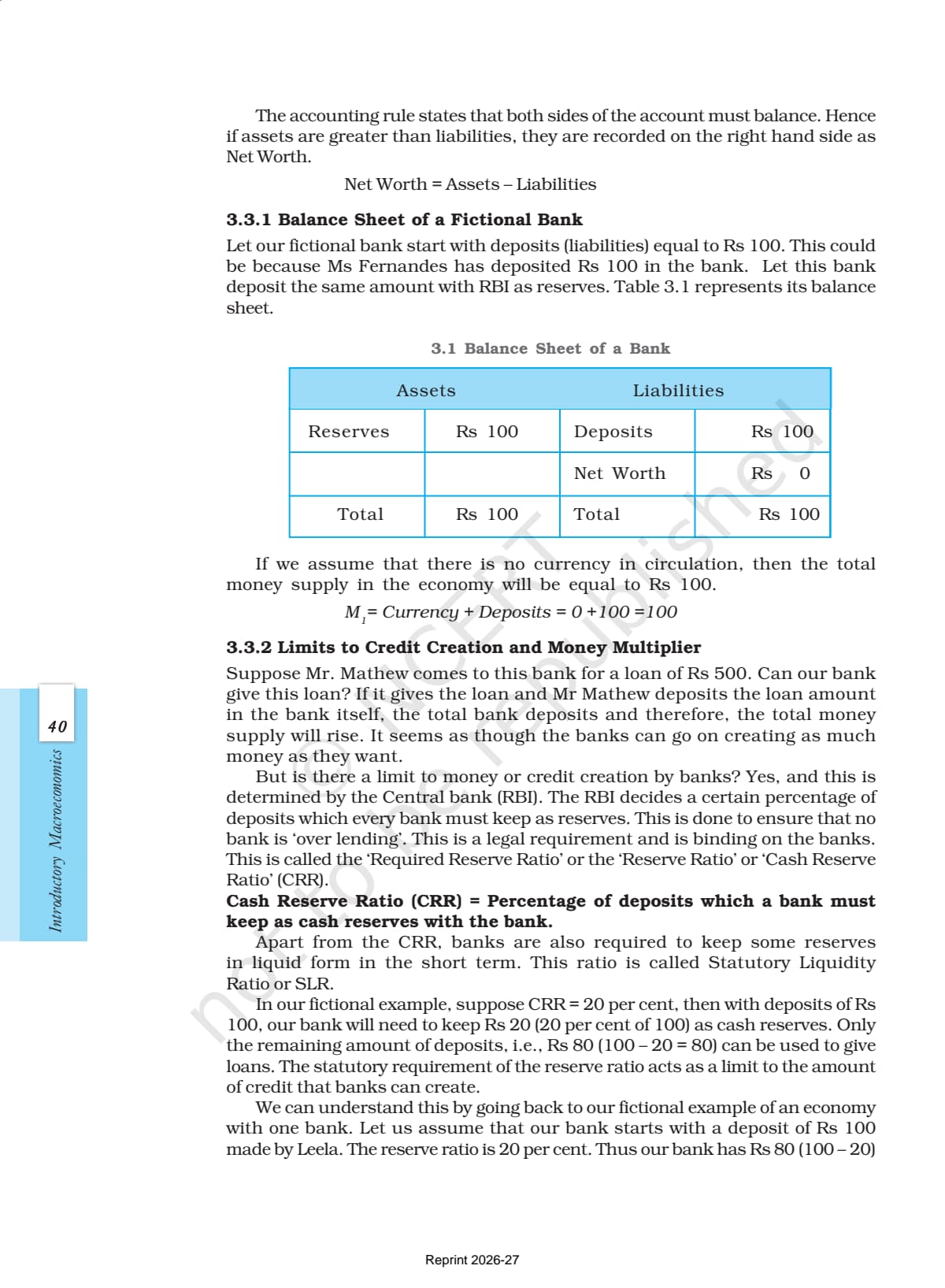
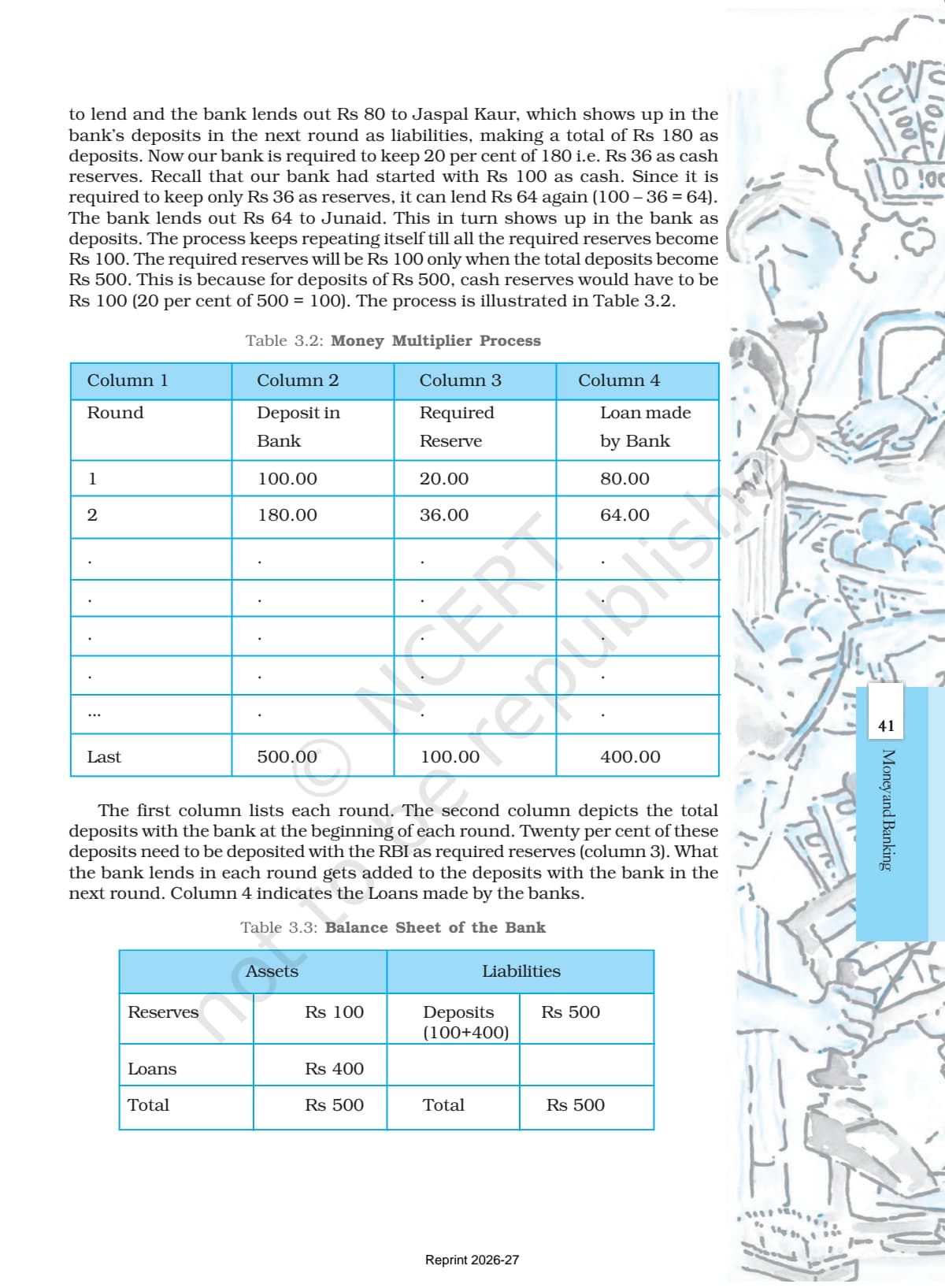
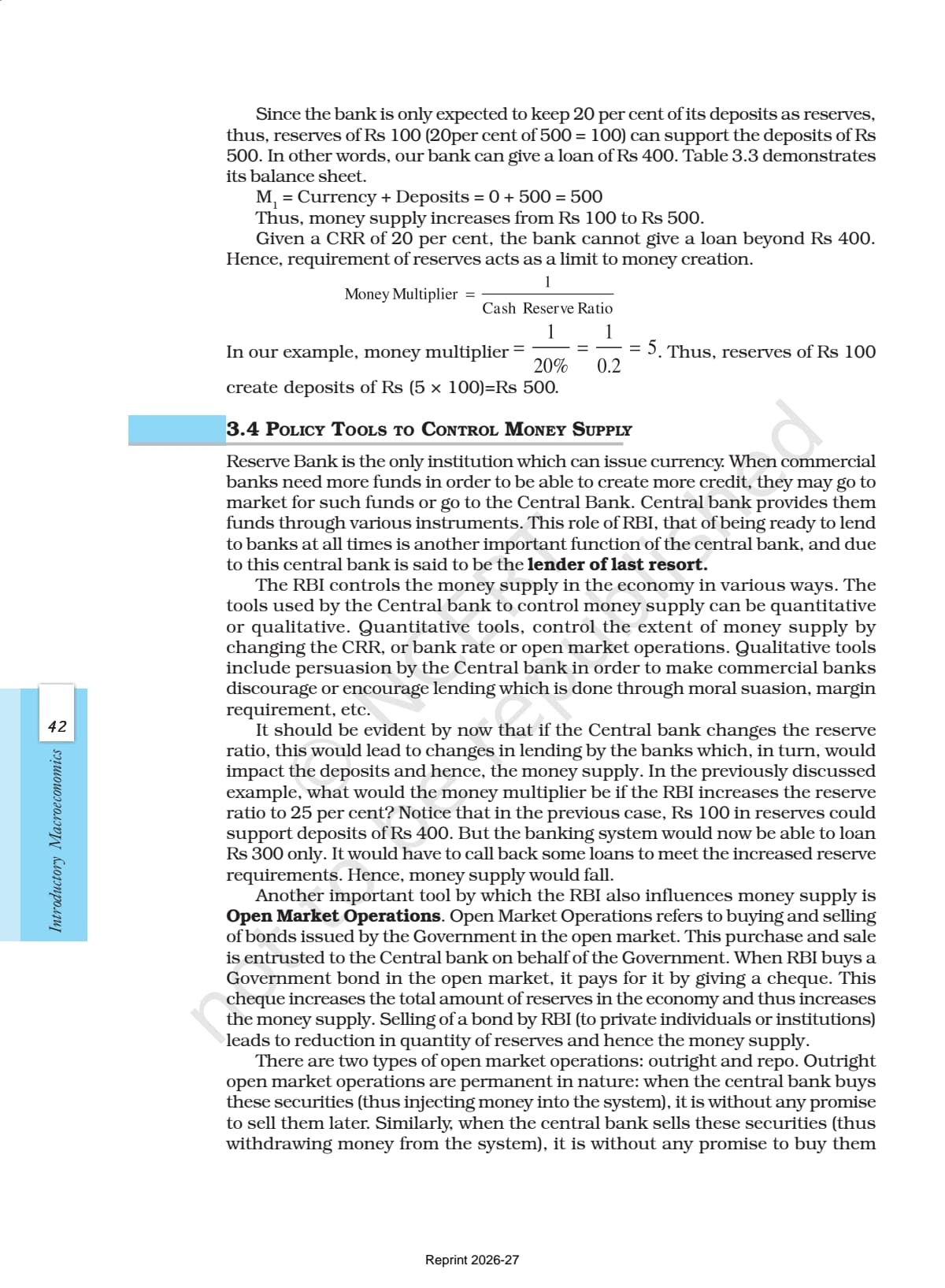
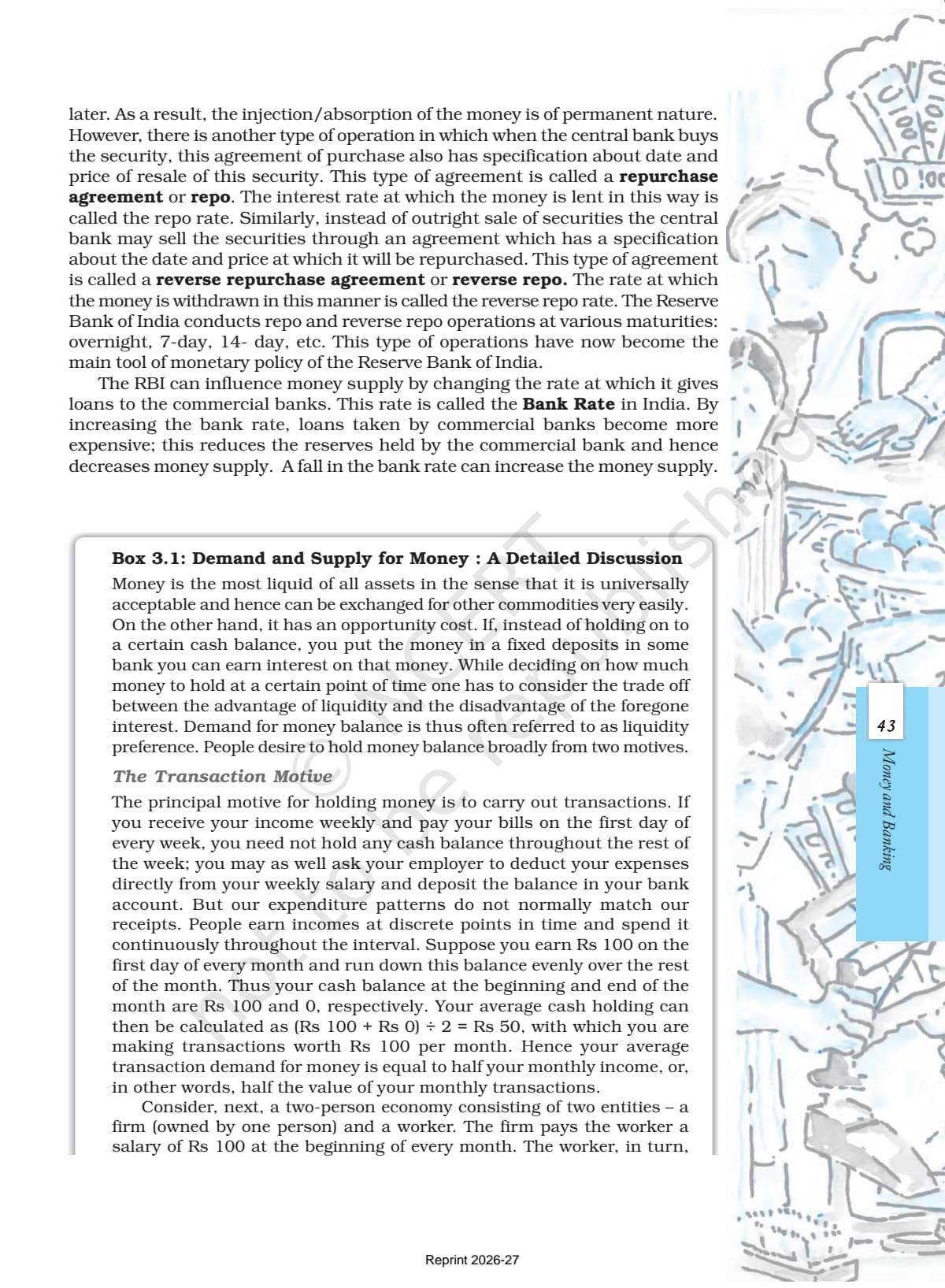
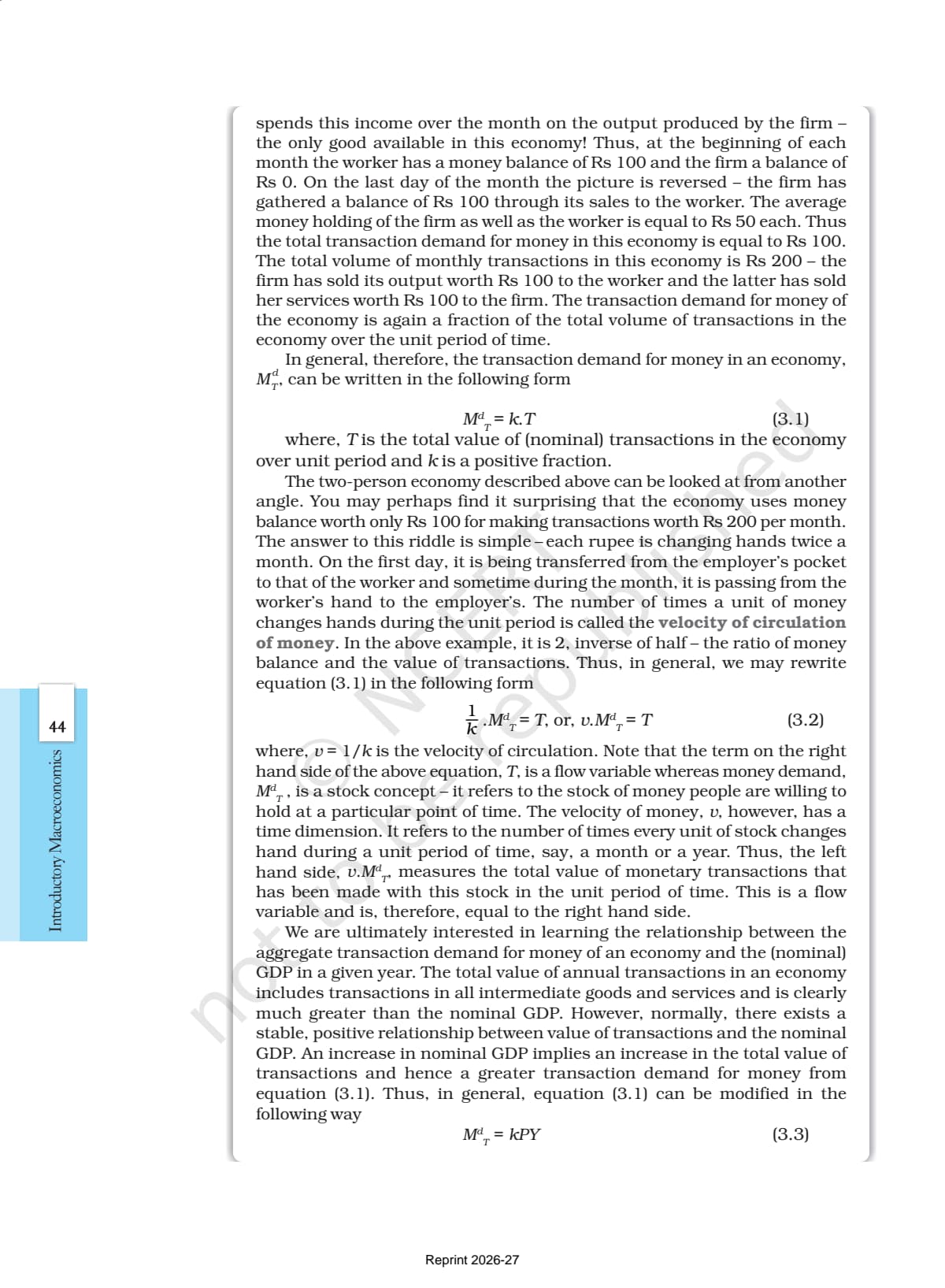
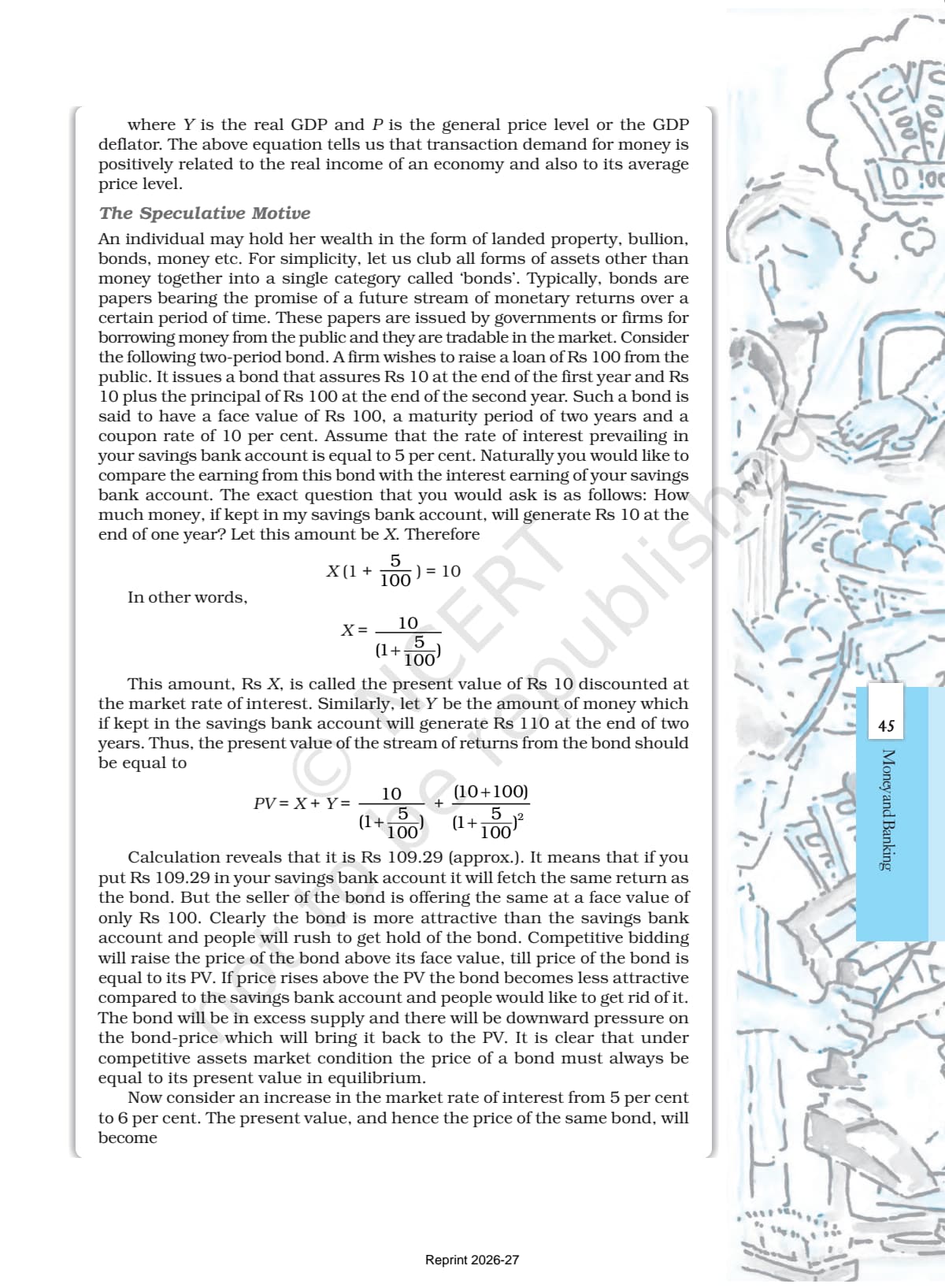
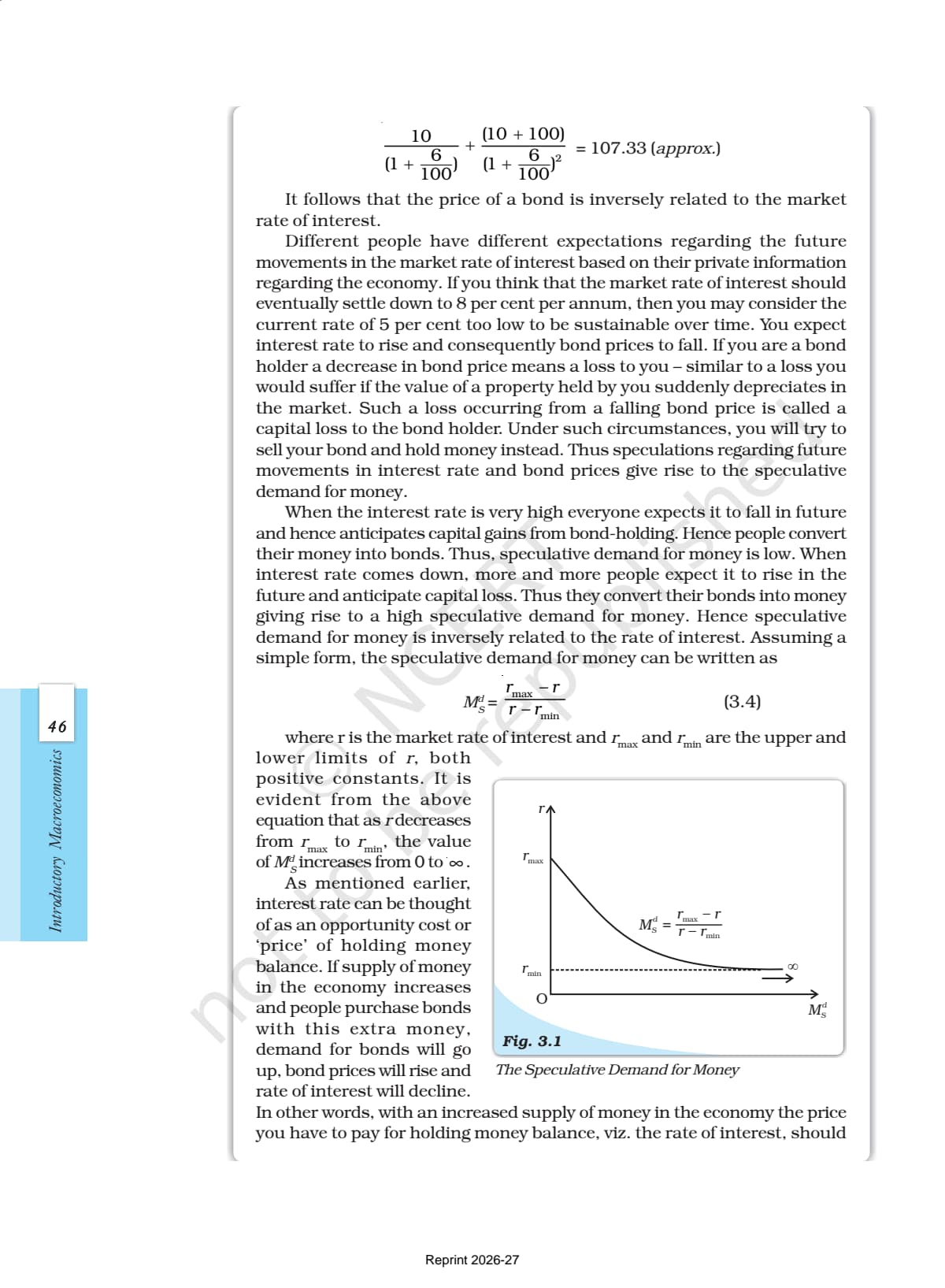
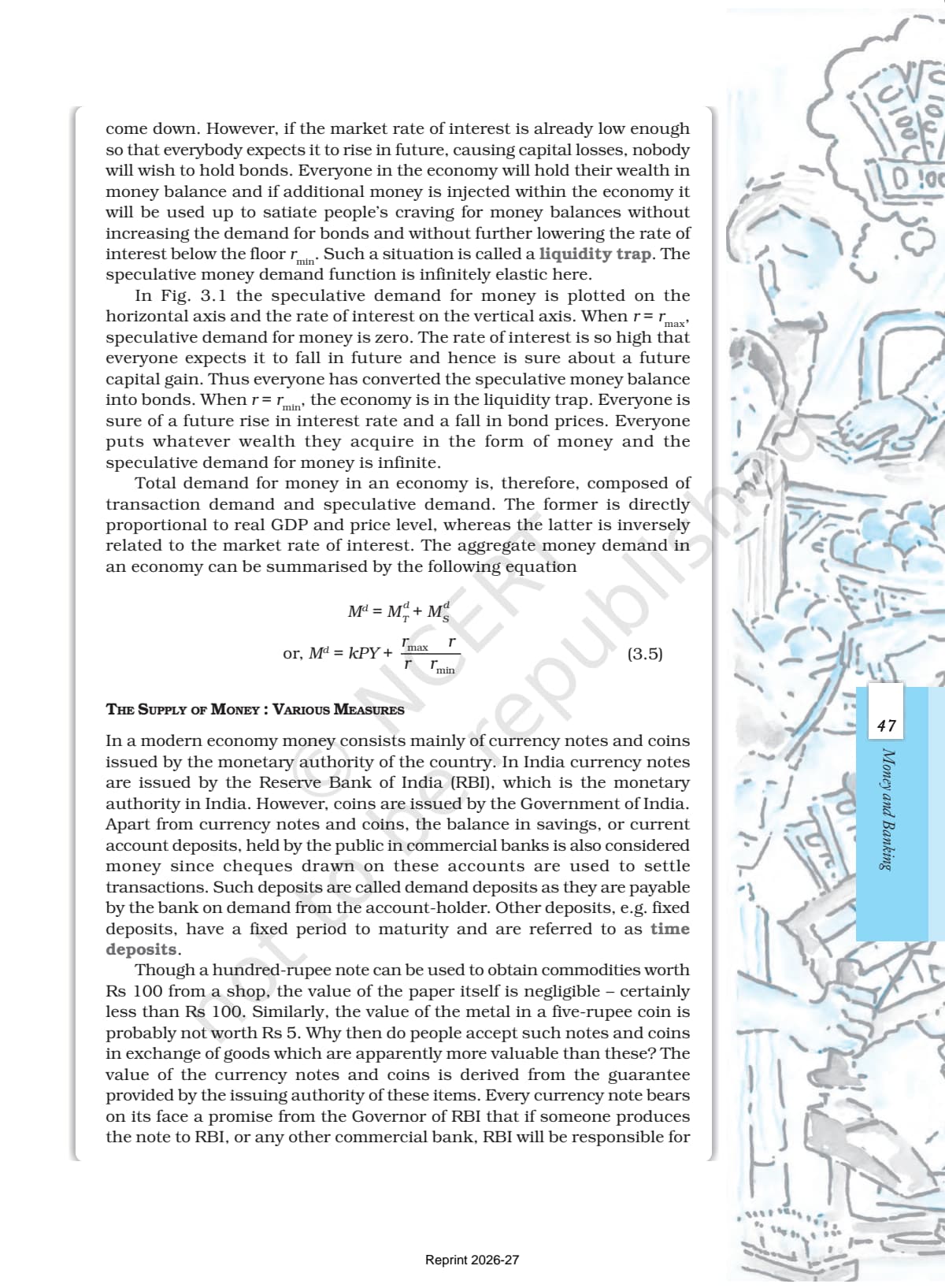
This is the official NCERT textbook PDF for Chapter 3 of the Introductory Macroeconomics book. It is the source text for every board question on this chapter, so read it first before any guide. The chapter is built around three ideas:
- What money is: why barter fails and the four functions of money.
- Money supply: the RBI measures M1 to M4, high-powered money, and the money multiplier.
- Banking and control: how commercial banks create credit and how the RBI uses its policy tools.
Topics in the Money and Banking NCERT Book PDF
The chapter moves from money to banking to RBI control. The table maps each topic to what the board paper tests on it.
| Topic | What to learn |
|---|---|
| Barter system | Its four drawbacks and why money replaced it. |
| Functions of money | Medium of exchange, unit of account, store of value, standard of deferred payment. |
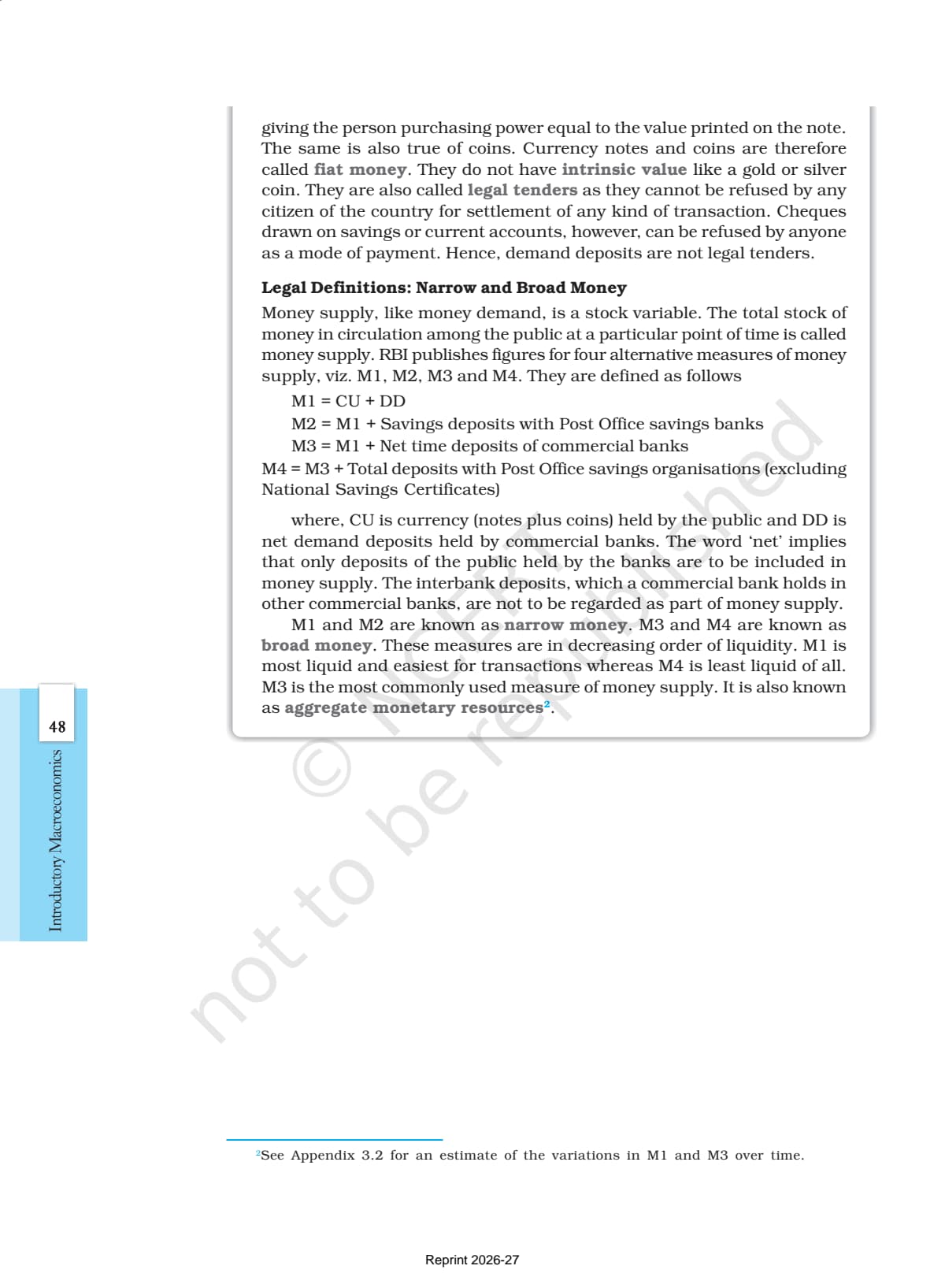
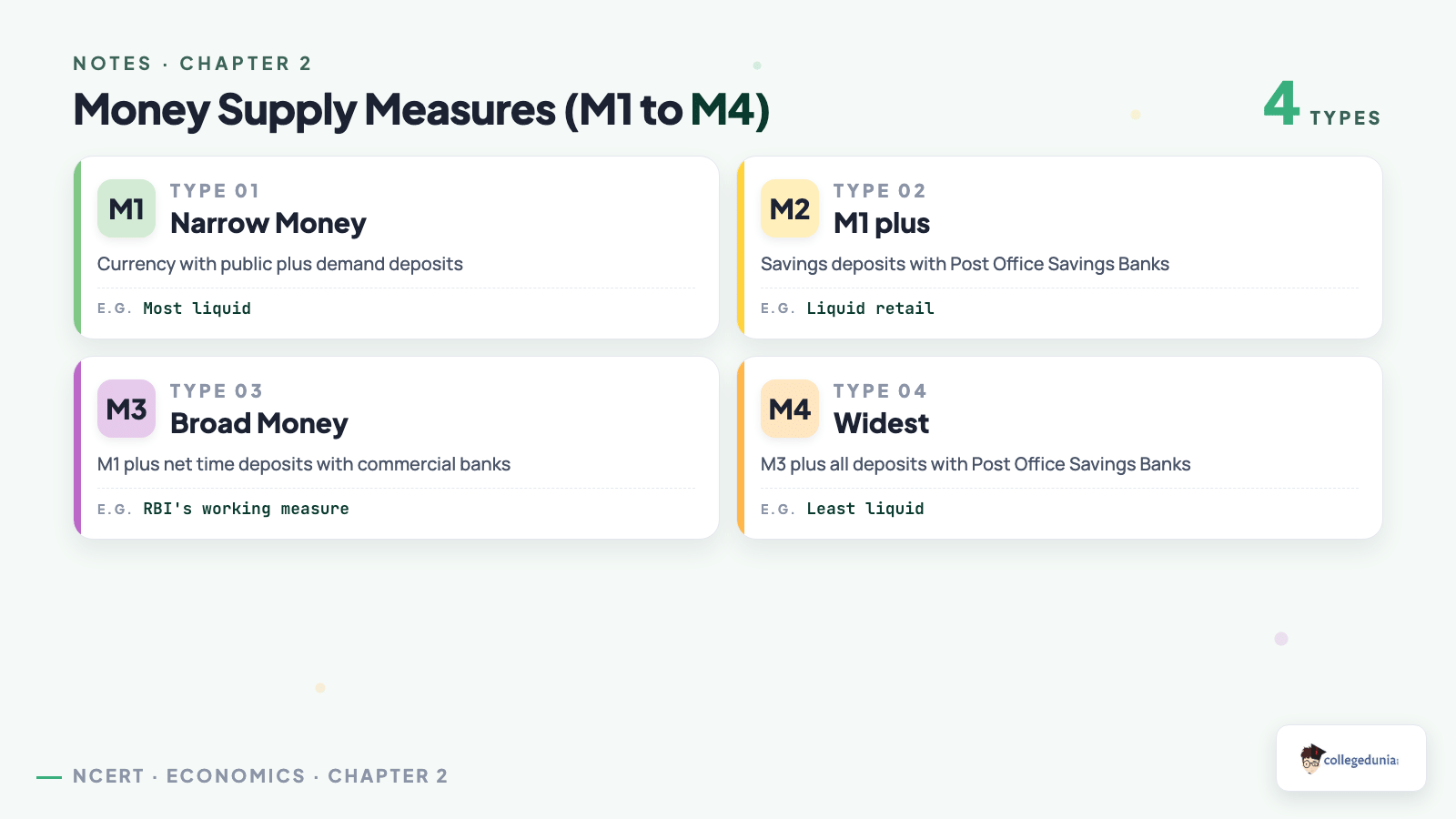
| Money supply | The four measures M1, M2, M3 and M4. |
| High-powered money | Currency with the public plus bank reserves with the RBI. |
| Credit creation | How commercial banks lend out deposits again and again. |
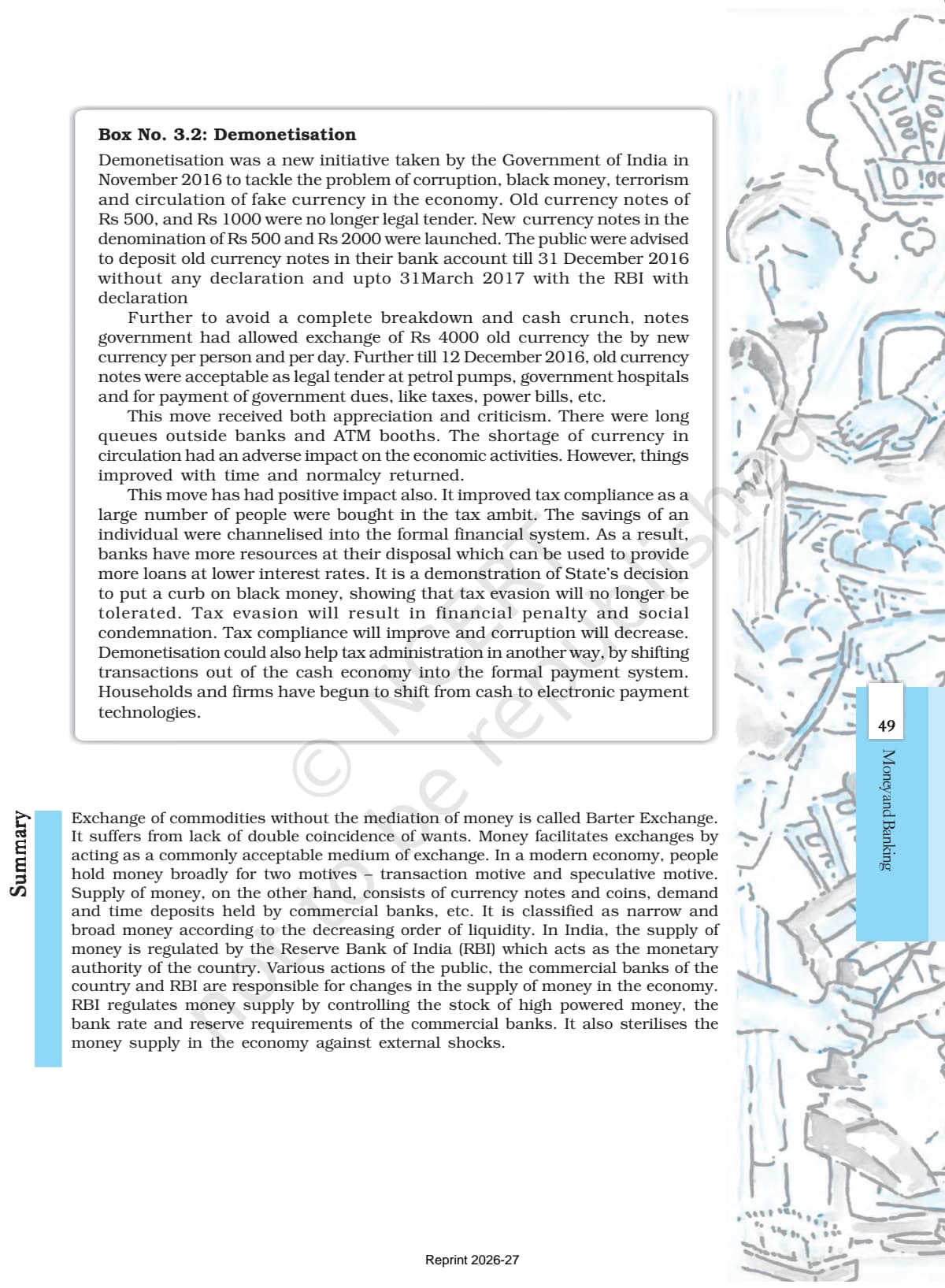
| RBI tools | Repo, reverse repo, bank rate, CRR, SLR, open market operations. |
How to Read the Money and Banking NCERT PDF with Notes and Solutions
The PDF is the source, but it works best with the matching notes and solutions. Read each section once cold, then attempt the in-text questions. Use the steps below to lock in the chapter.
- Read the chapter once without notes and mark any term you do not know.
- Open the Class 12 Economics Chapter 3 Notes beside the PDF and copy the formulas.
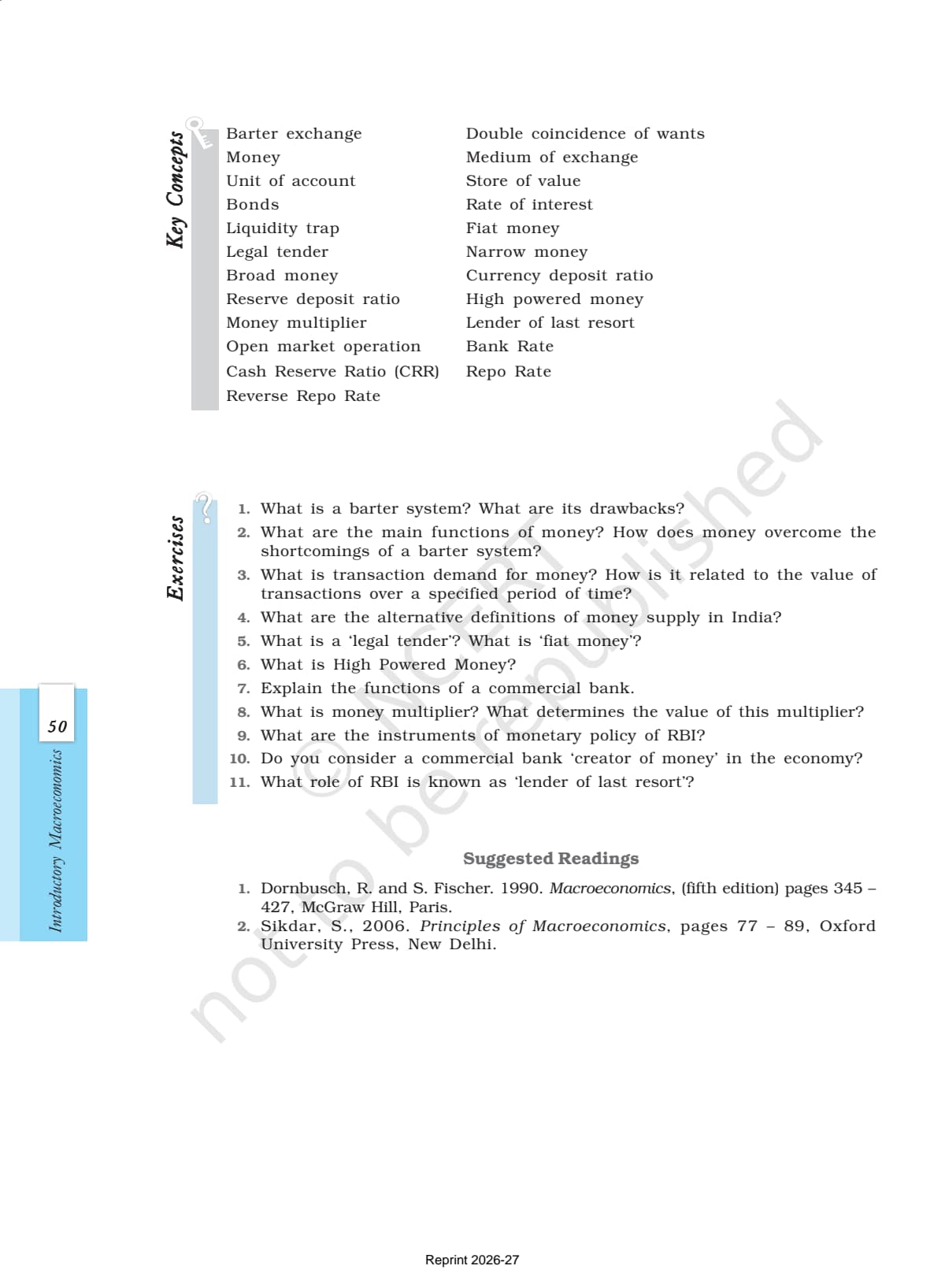
- Attempt every end-of-chapter question, then check it against the NCERT Solutions.
- Scan the handwritten notes the day before the exam for fast recall.
Source: Magnet Brains on YouTube
The numerical part of this chapter is small but scoring. The two formulas below come straight from the textbook and cover most board sums.
Key Formulas in Class 12 Money and Banking
These are the lines to revise in the last few minutes before the exam.
| Term | Formula |
|---|---|
| High-powered money | H = currency with public + bank reserves + other deposits with the RBI. |
| Money multiplier | m = (1 + c) / (c + r), where c is the currency ratio and r is the reserve ratio. |
| Money supply | Ms = m × H. |
| Transaction demand | LT = kT, money held to make day-to-day payments. |
Memory hook: a lower reserve ratio means a bigger multiplier, so a small change in reserves moves the money supply a lot. That is why the RBI changes the CRR to cool or warm the economy.
Money and Banking Weightage in CBSE and CUET
The chapter has stayed at a steady 6 to 8 marks in CBSE. The table shows where its topics turned up in recent board papers.
| Year | CBSE question | Marks |
|---|---|---|
| 2025 | Define money multiplier and solve a money-supply sum | 4 |
| 2024 | Functions of money plus two RBI quantitative tools | 6 |
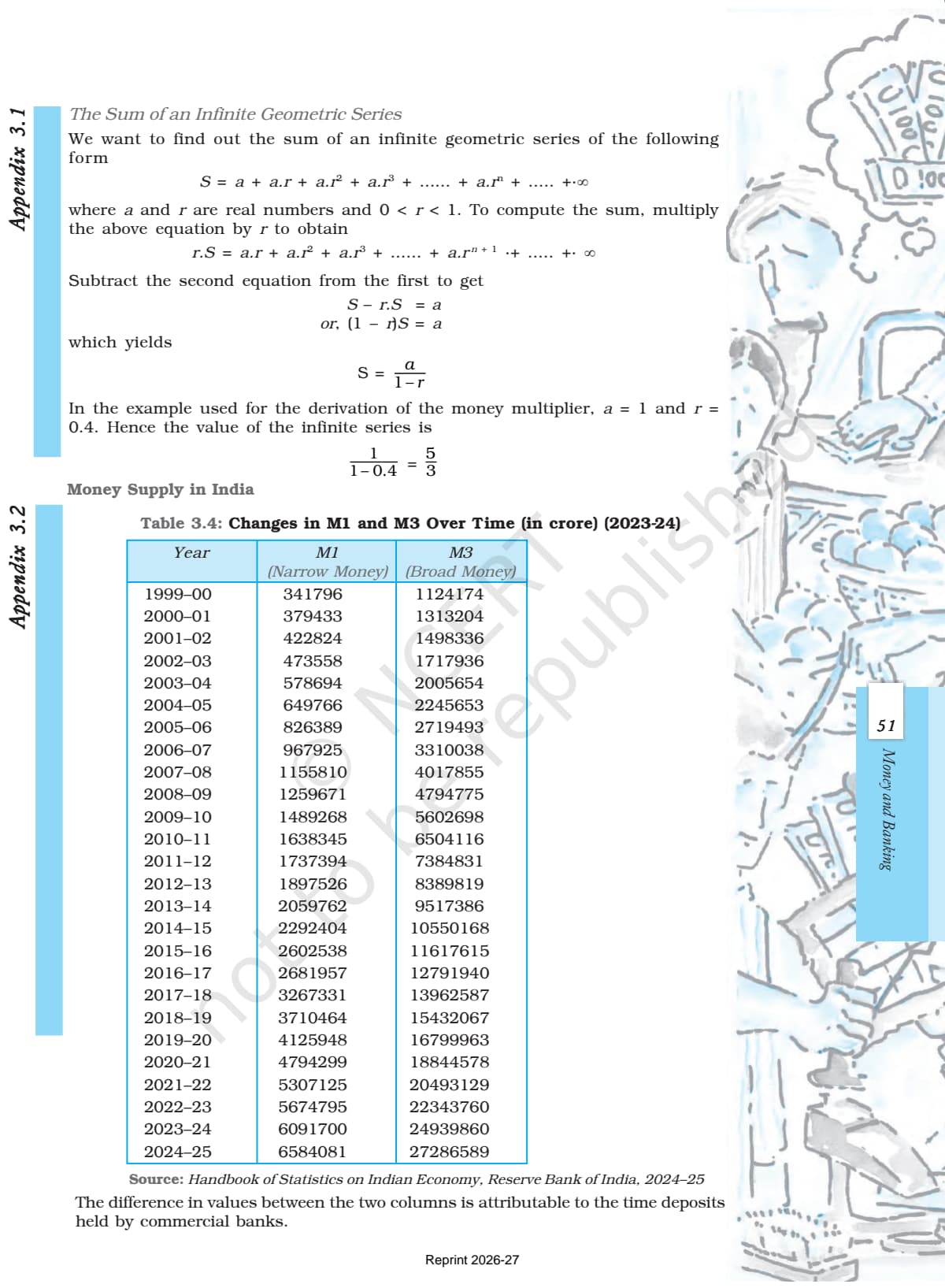
| 2023 | Difference between M1 and M3 | 3 |
| 2022 | How commercial banks create credit | 4 |
Student Feedback
We asked 11,200 Class 12 students about this chapter. 71% said credit creation and the money multiplier were the hardest part, and 3 out of 4 said reading the NCERT PDF first made the RBI tools far easier to recall.
Other Resources for Class 12 Economics Chapter 3
Pair the textbook PDF with the solutions, notes and handwritten notes below.
| Resource | What it covers | Open |
|---|---|---|
| NCERT Book PDF | Official NCERT Macroeconomics Chapter 3 textbook. | Chapter 3 NCERT Book PDF |
| NCERT Solutions | Step-by-step answers to every exercise question. | Chapter 3 NCERT Solutions |
| Notes | Concept-first revision of the full chapter. | Chapter 3 Notes |
| Handwritten Notes | Scanned notebook pages for last-mile revision. | Chapter 3 Handwritten Notes |
All Chapters: Class 12 Macroeconomics NCERT Book PDF
| Chapter | NCERT Book PDF |
|---|---|
| Chapter 1 | Introduction to Macroeconomics |
| Chapter 2 | National Income Accounting |
| Chapter 3 | Money and Banking |
| Chapter 4 | Income Determination |
| Chapter 5 | Government Budget and the Economy |
| Chapter 6 | Open Economy Macroeconomics |
Class 12 Economics Chapter 3 Money and Banking NCERT Book PDF FAQs
Ques. Where can students download the Class 12 Economics Chapter 3 Money and Banking NCERT PDF?
Ans. Students can download the official NCERT chapter PDF from the download card at the top of this page. It is the single-chapter file from the NCERT Introductory Macroeconomics textbook, aligned to the 2026-27 CBSE syllabus.
Ques. What are the four functions of money in this NCERT chapter?
Ans. The four functions are medium of exchange, unit of account, store of value, and standard of deferred payment. The chapter explains each one with simple examples and contrasts them with the problems of the barter system.
Ques. How many exercise questions are in NCERT Class 12 Economics Chapter 3?
Ans. The chapter has a set of end-of-chapter exercise questions covering money functions, money supply, credit creation and RBI tools. All of them are solved with full working in the matching NCERT Solutions linked on this page.
Ques. What is the money multiplier formula in Class 12 Money and Banking?
Ans. The money multiplier is m = (1 + c) / (c + r), where c is the currency-deposit ratio and r is the reserve ratio. The total money supply is then Ms = m × H, where H is high-powered money.
Ques. Is the Class 12 Economics syllabus changing for 2026-27?
Ans. No major changes. The Introductory Macroeconomics chapter structure is the same as last year, and the PDF on this page is aligned to the 2026-27 syllabus. CBSE marking schemes still reward step-by-step formula work in numerical questions.



Comments