




CBSE Class 10 Science Chapter 2, Acids, Bases and Salts, has a long history of showing up in the board paper every single year. This free PDF collects every question asked from this chapter across real CBSE board papers, from 2005 to 2026. It has 201 questions worth 408 marks, spread across 48 pages, pulled straight from official set codes and arranged so students can practise the way examiners actually ask.
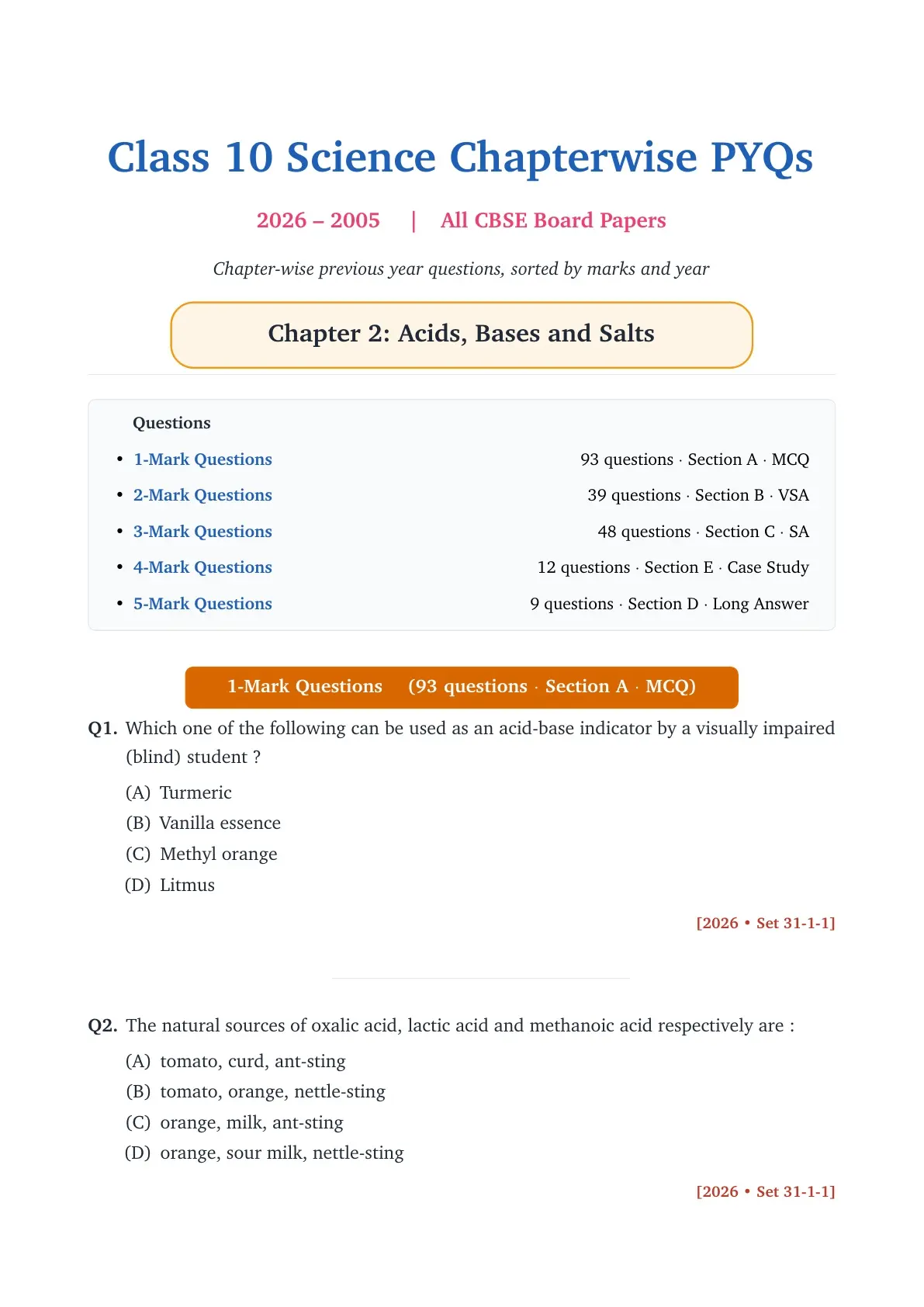
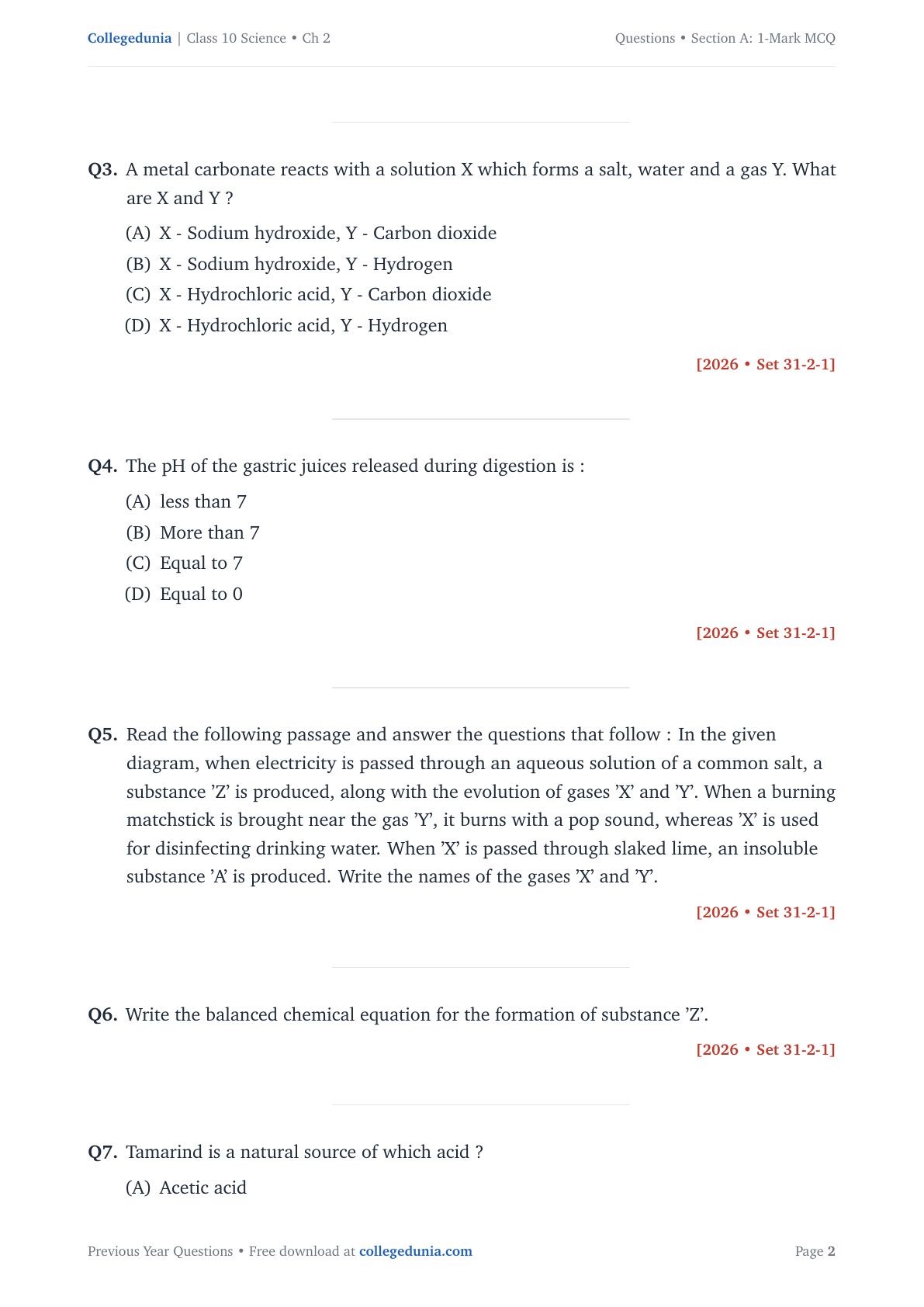
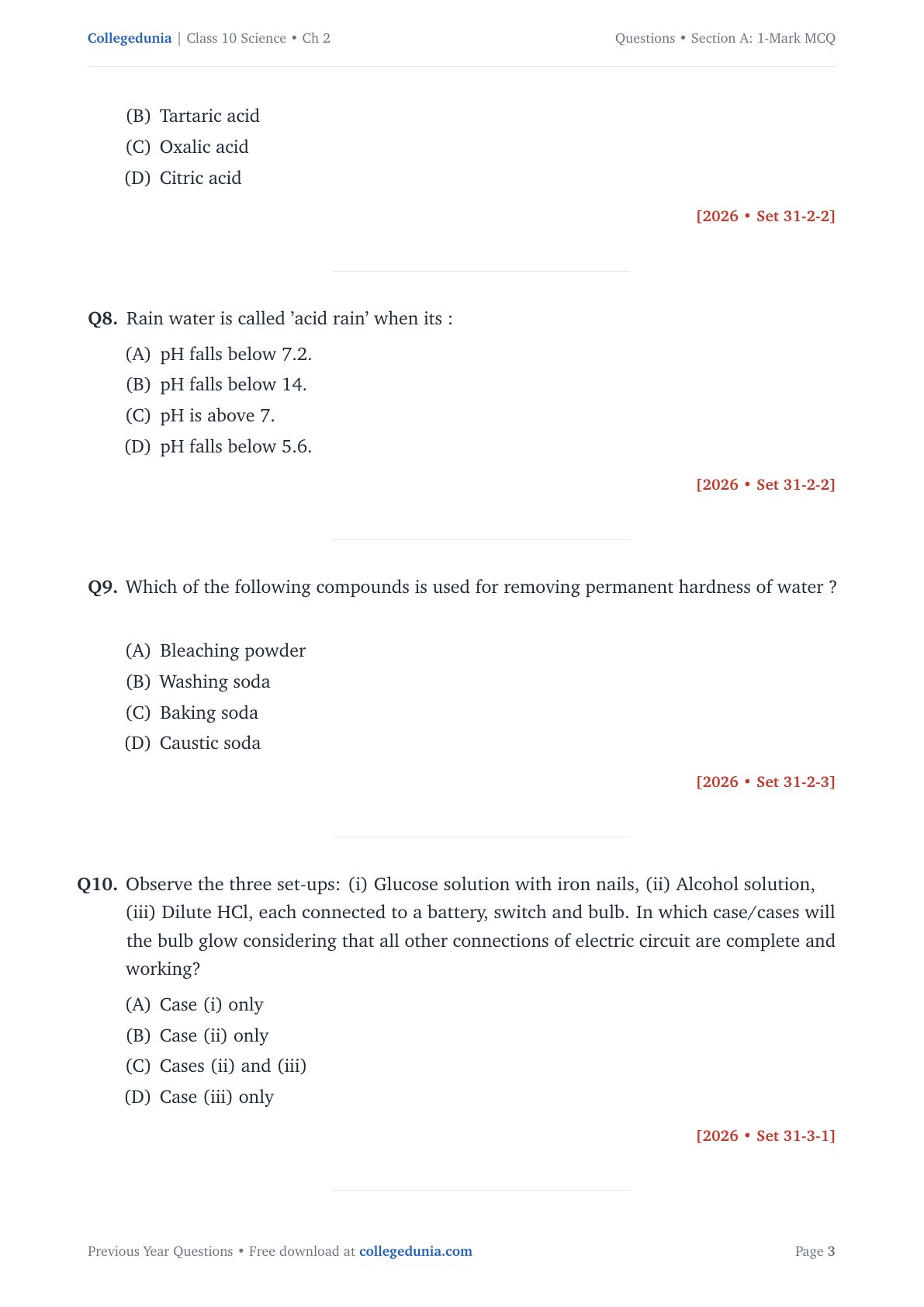
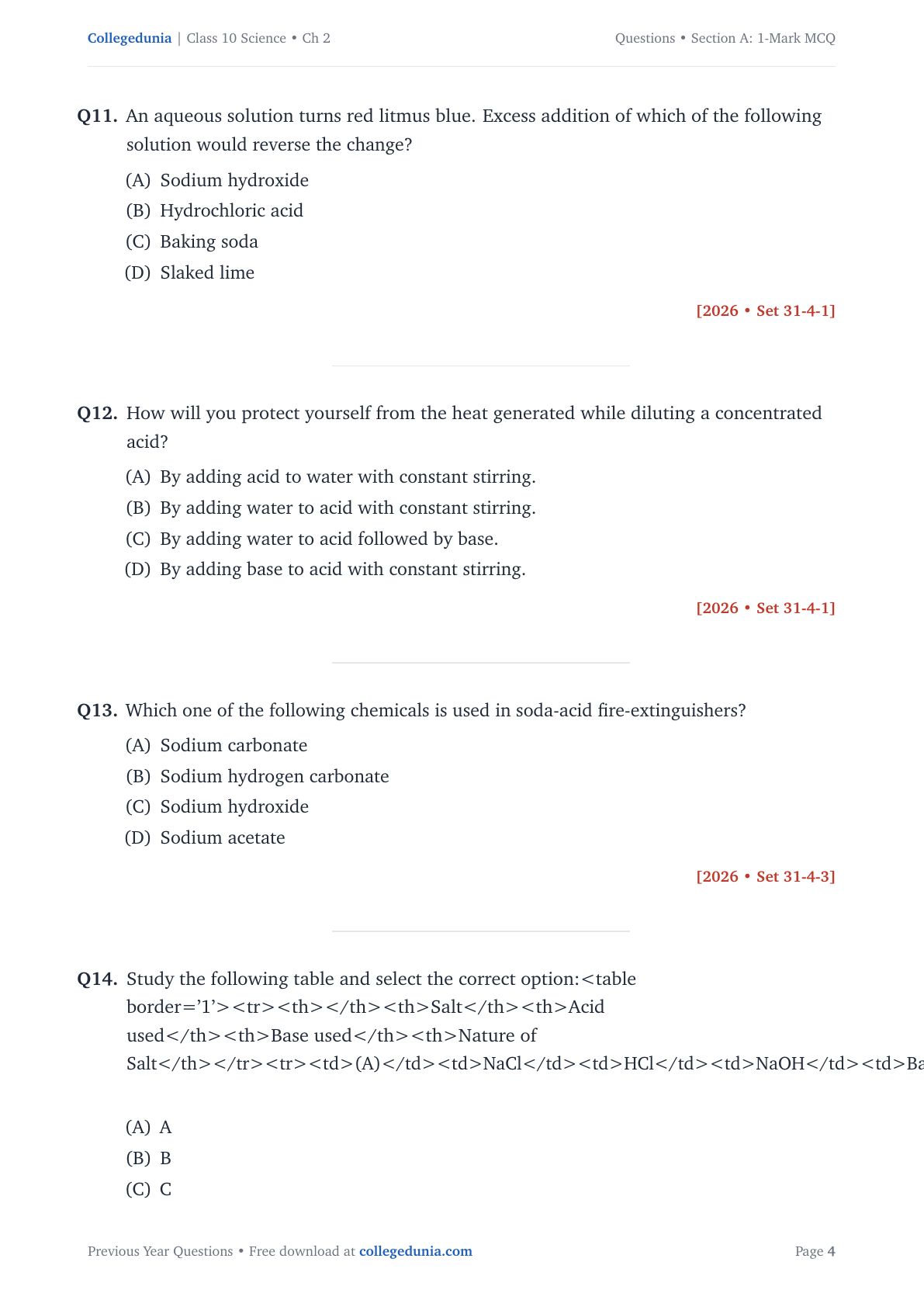
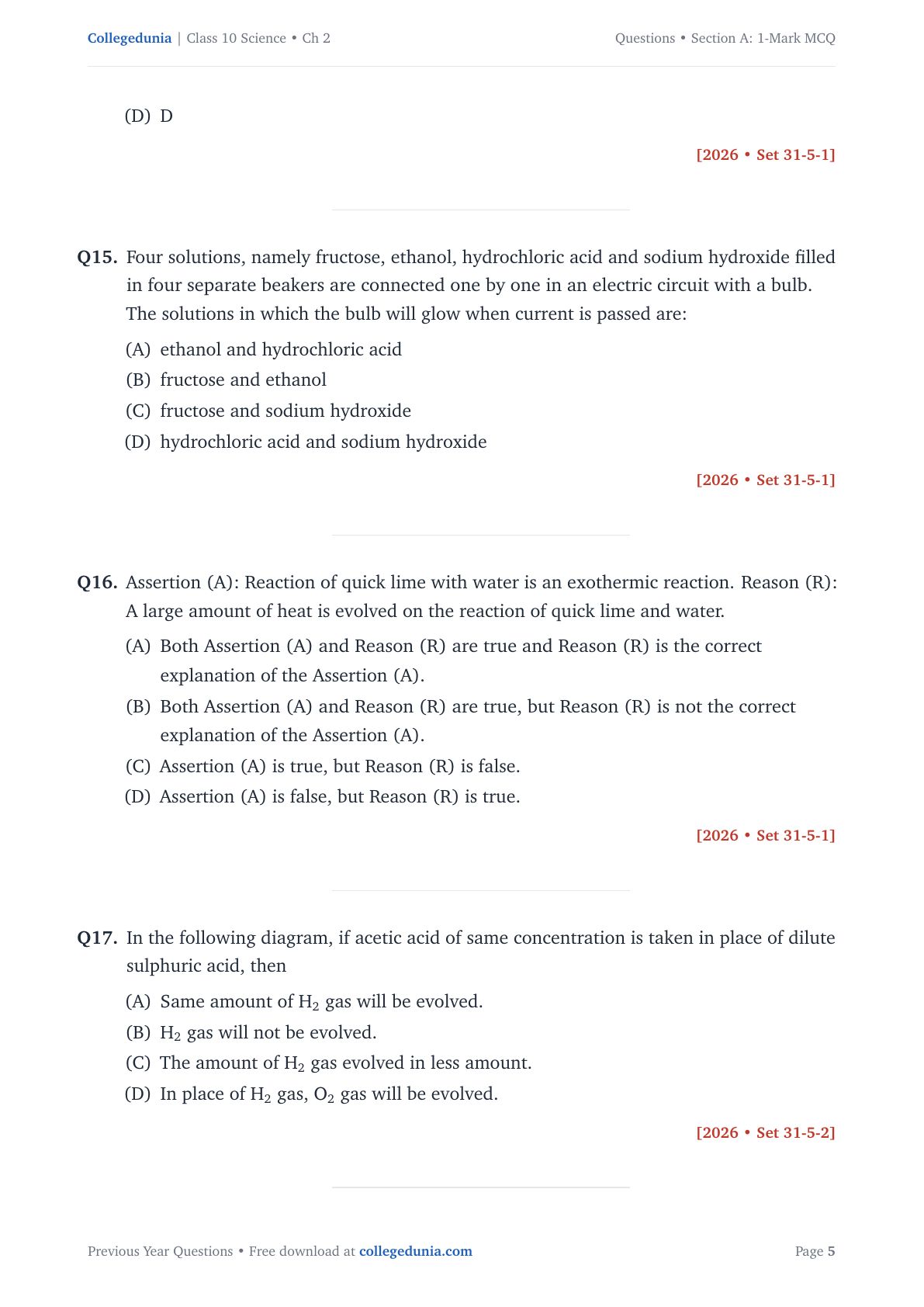
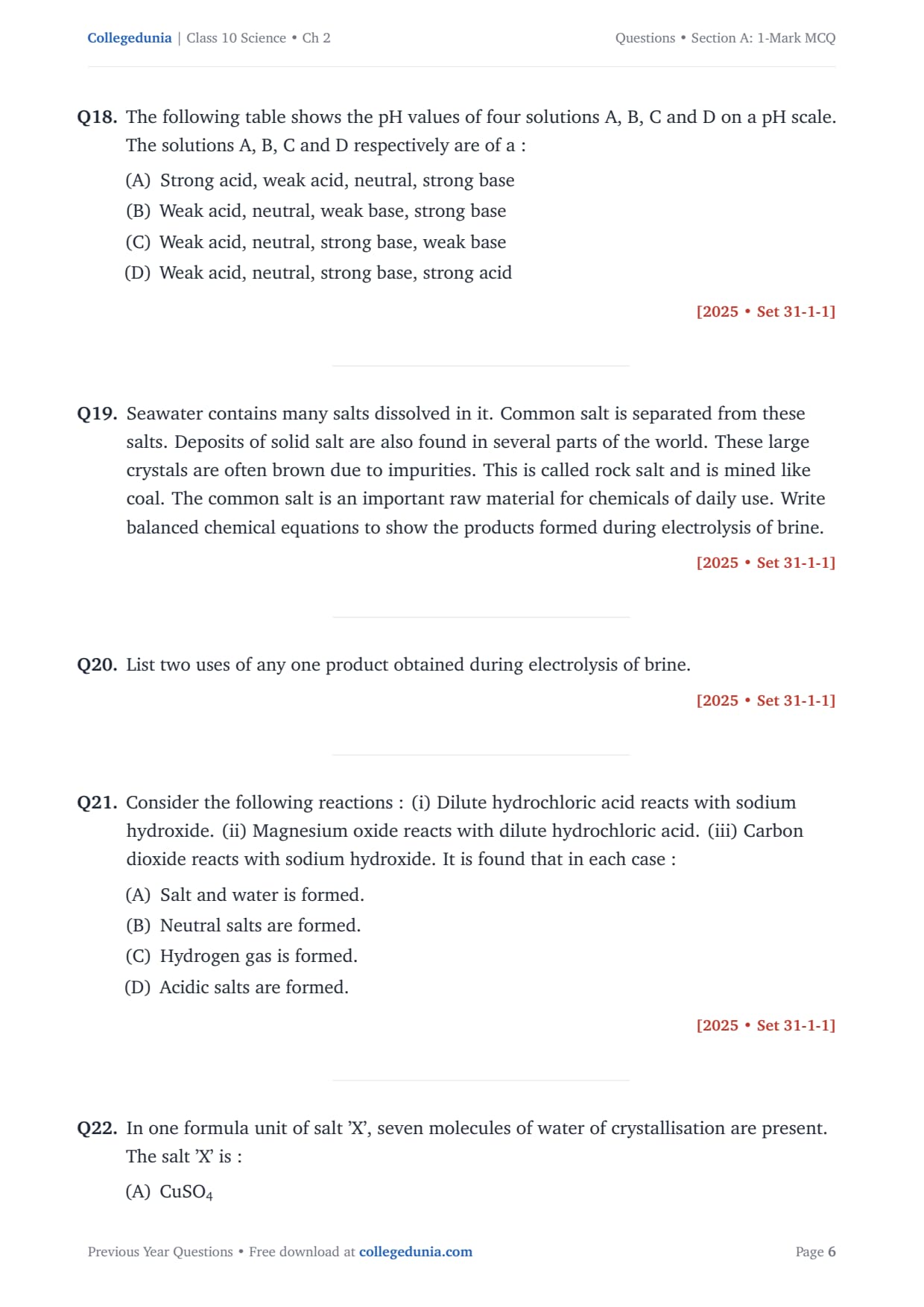
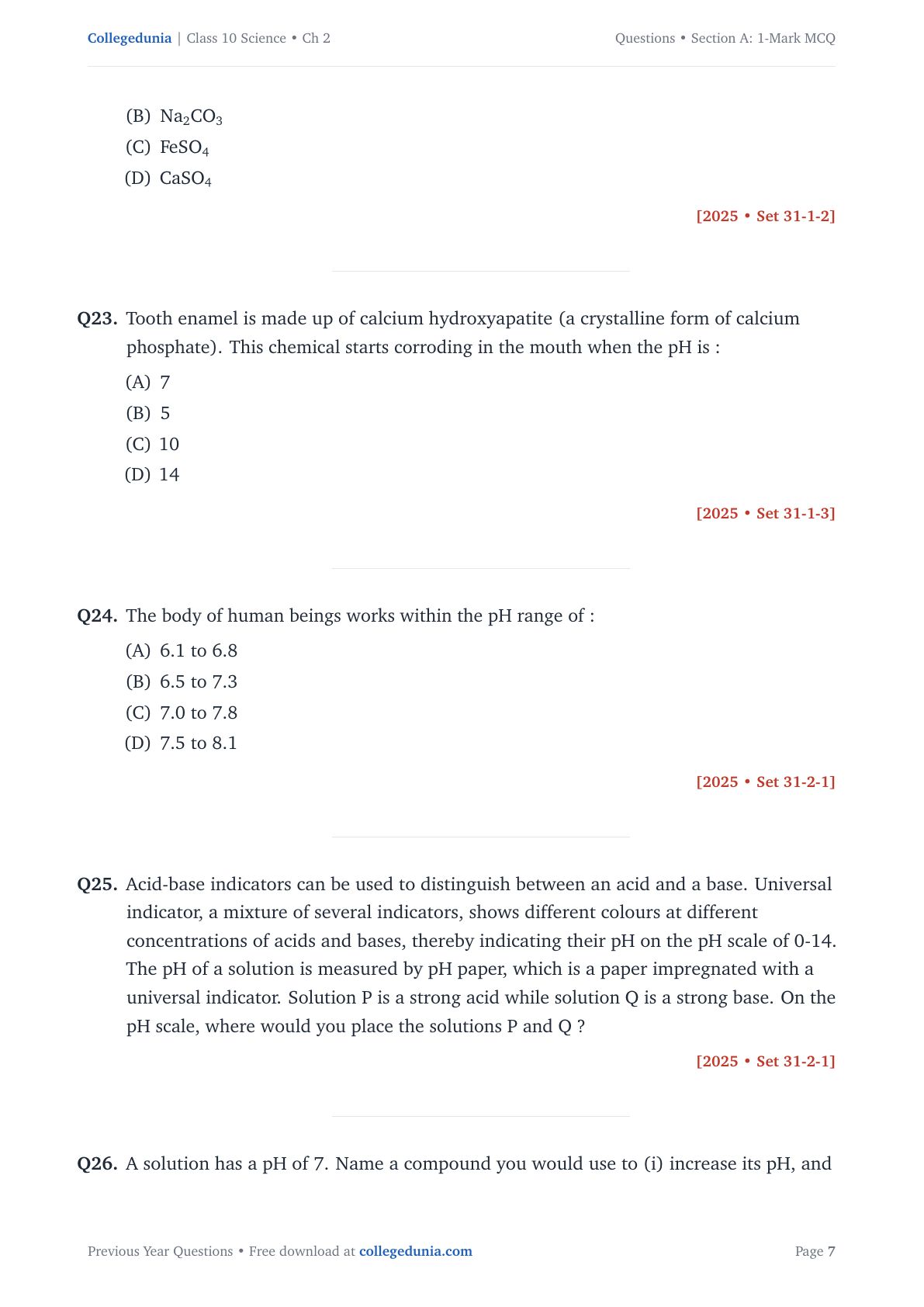
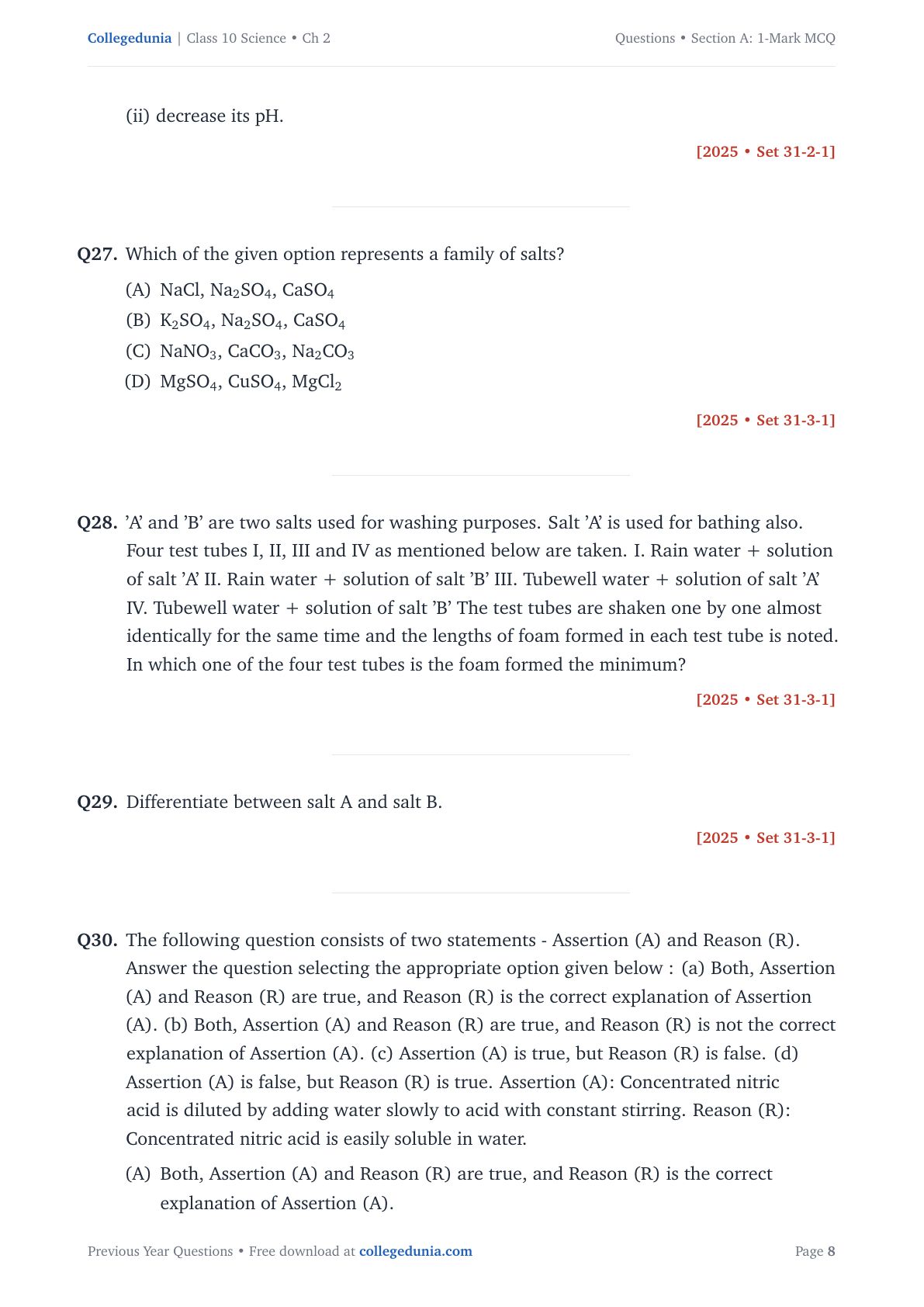
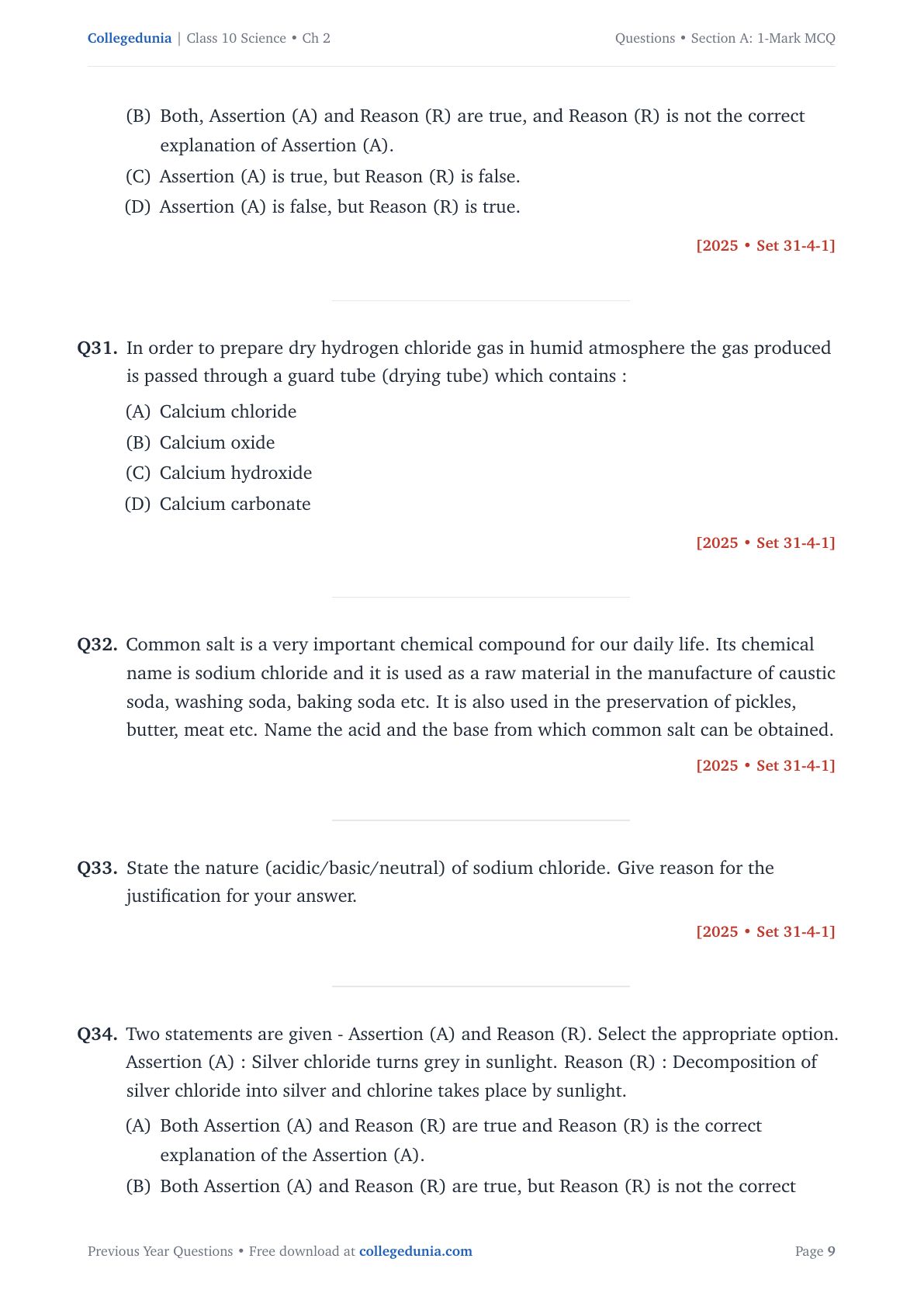
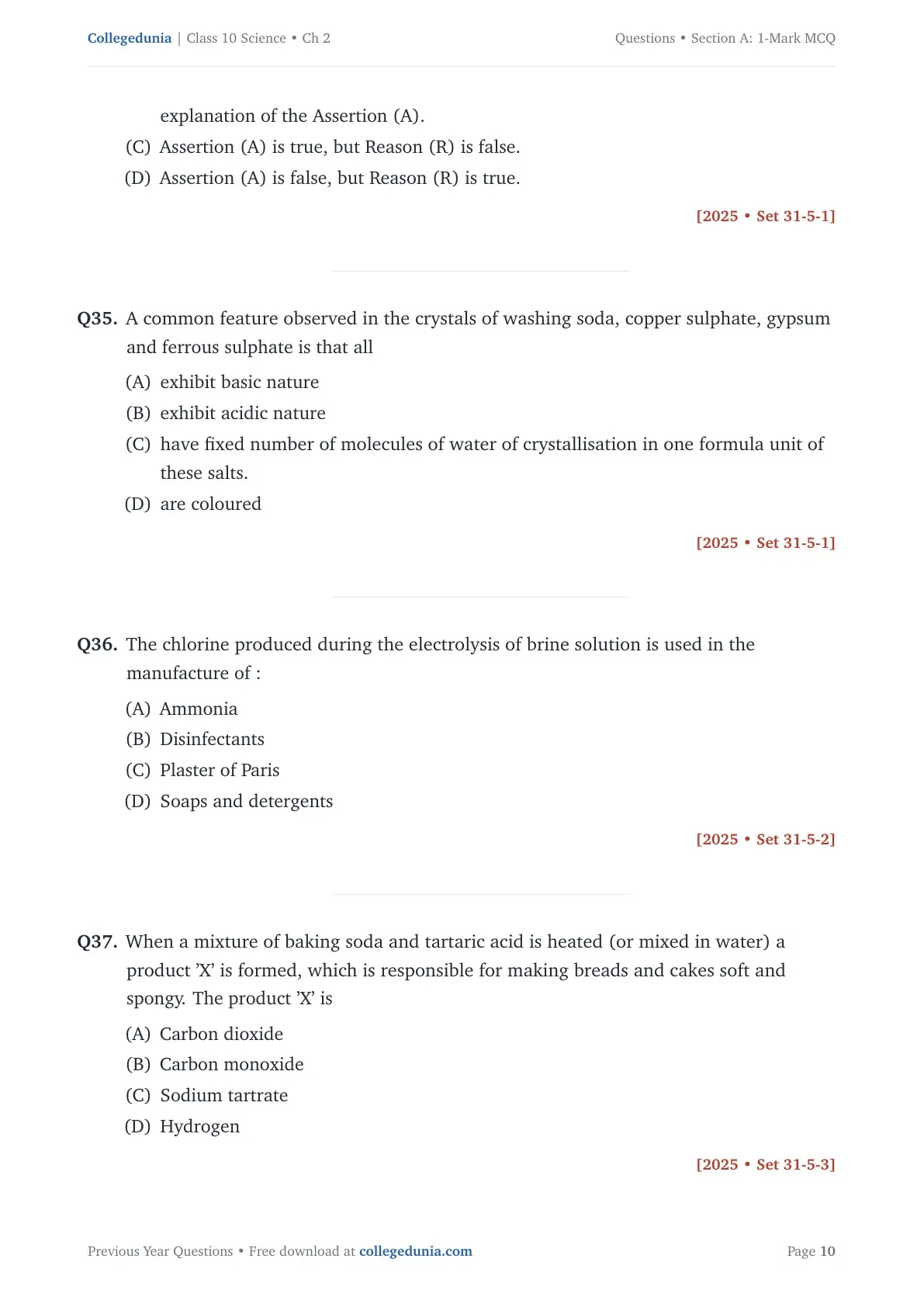
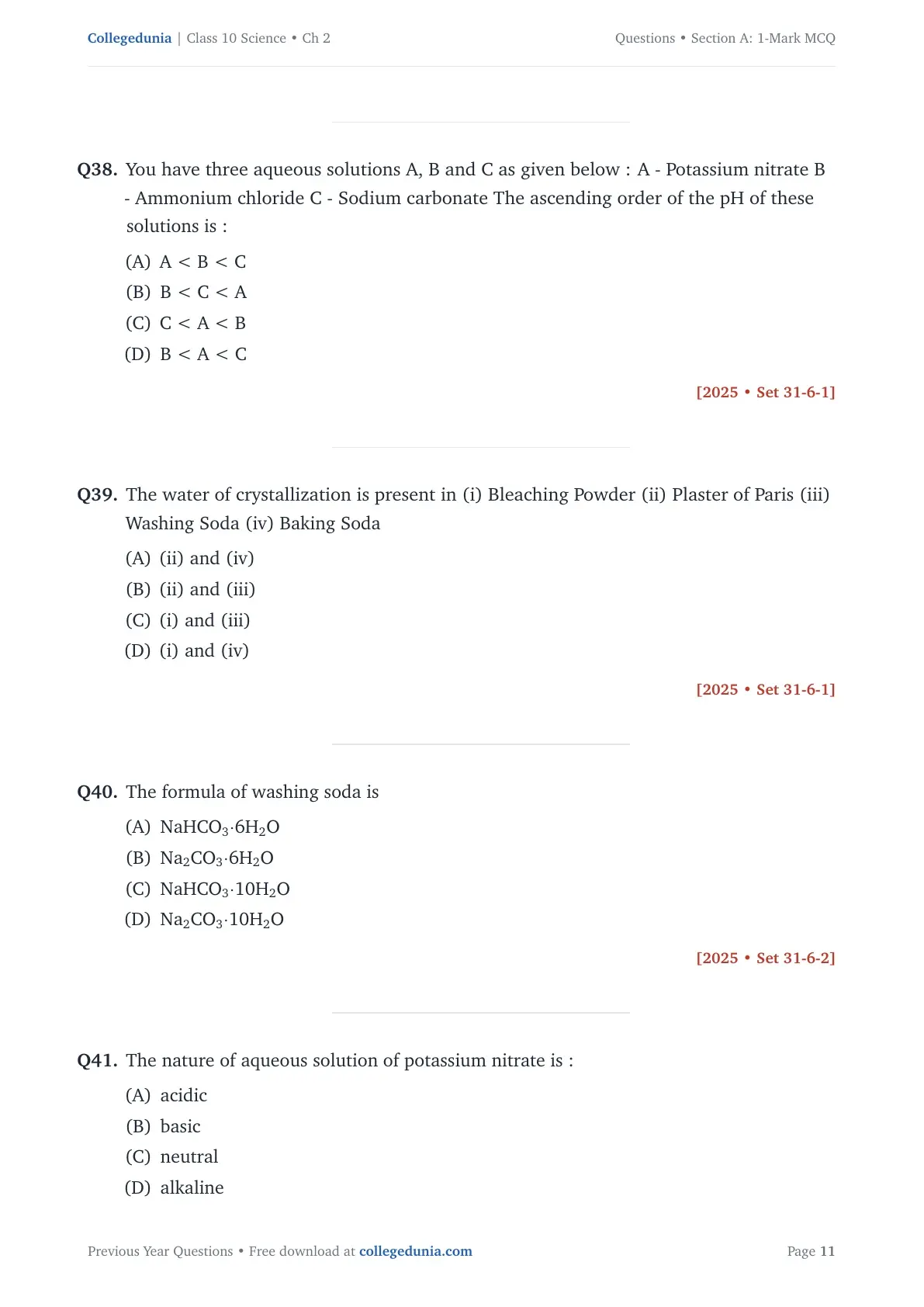
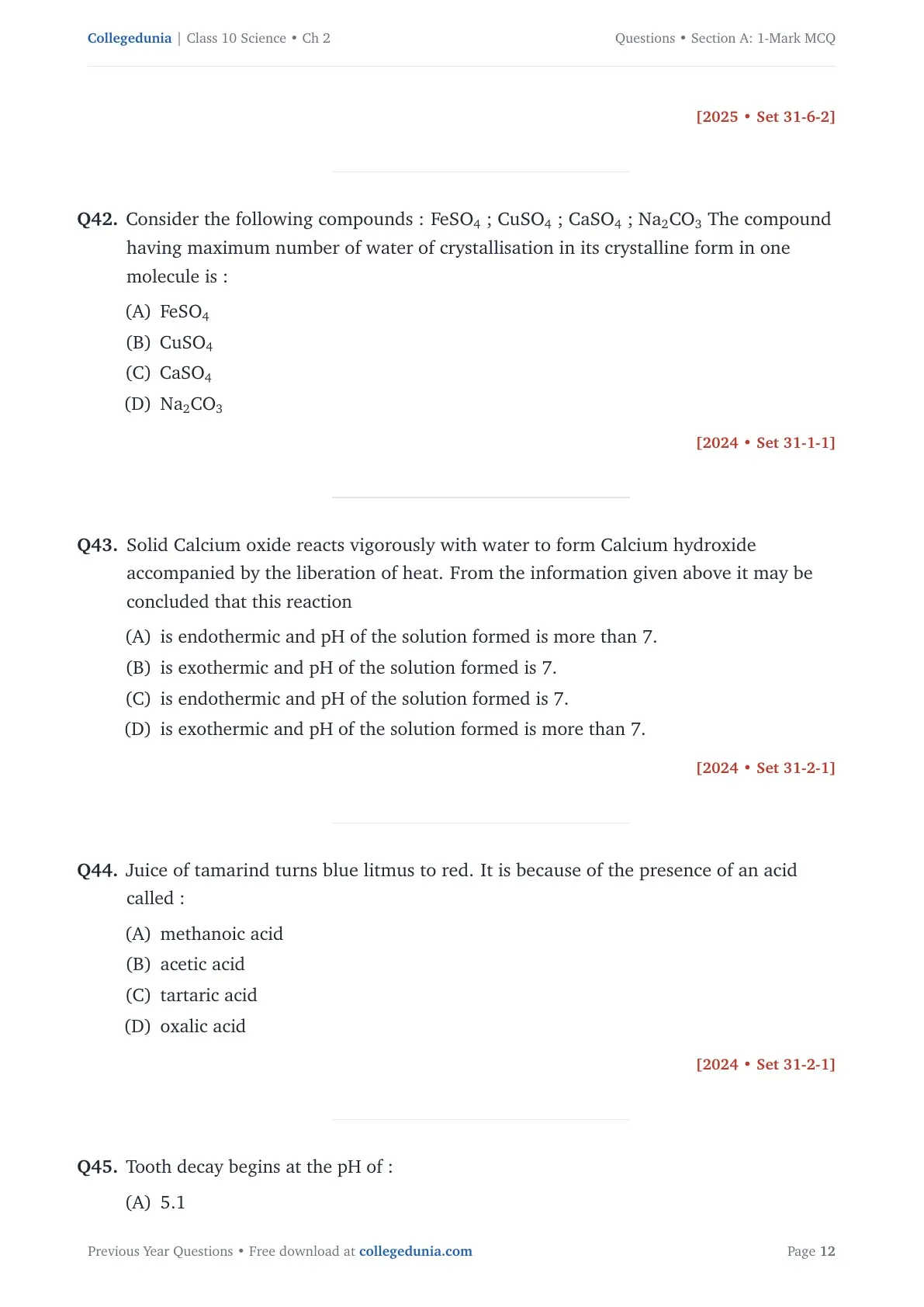
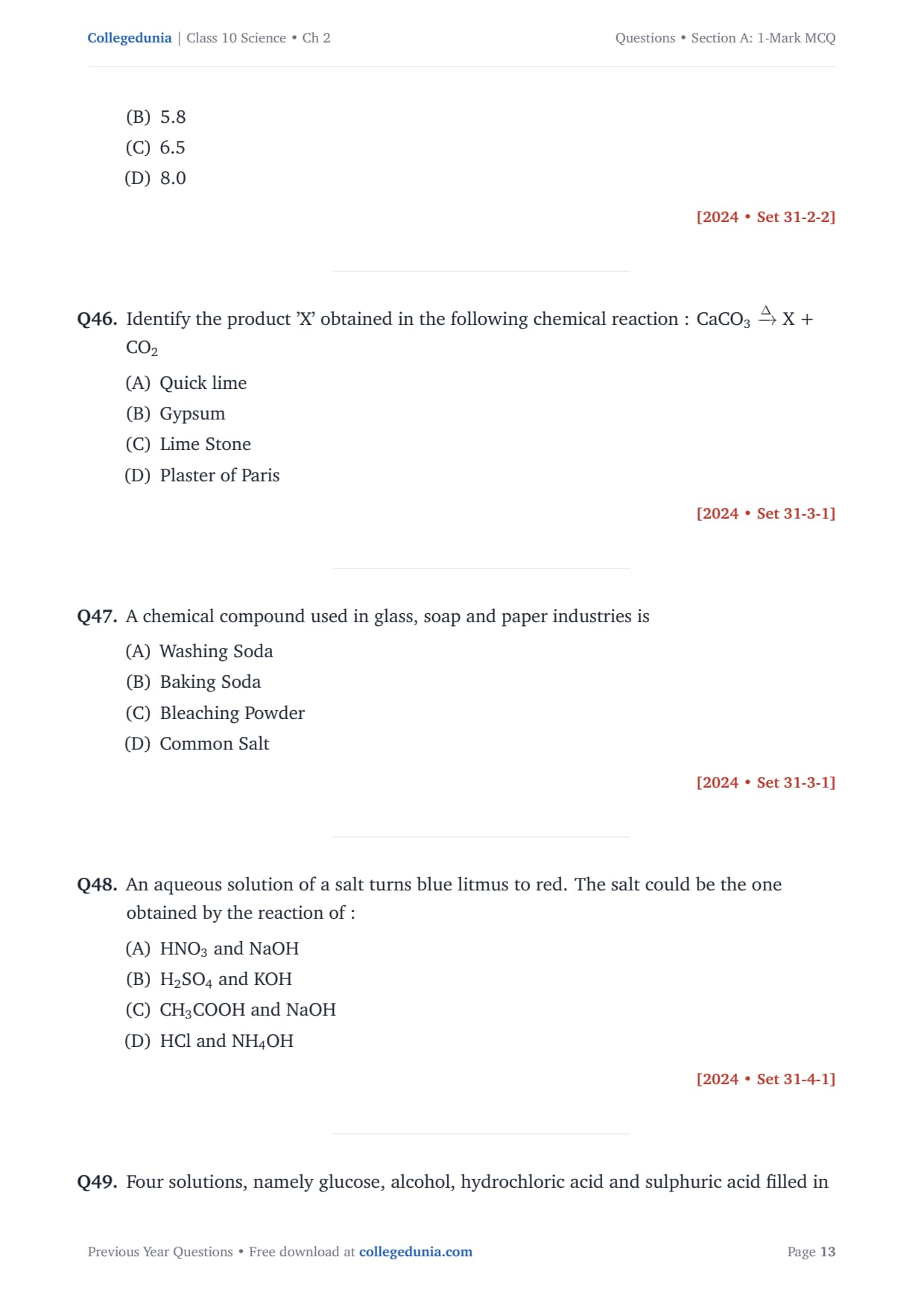
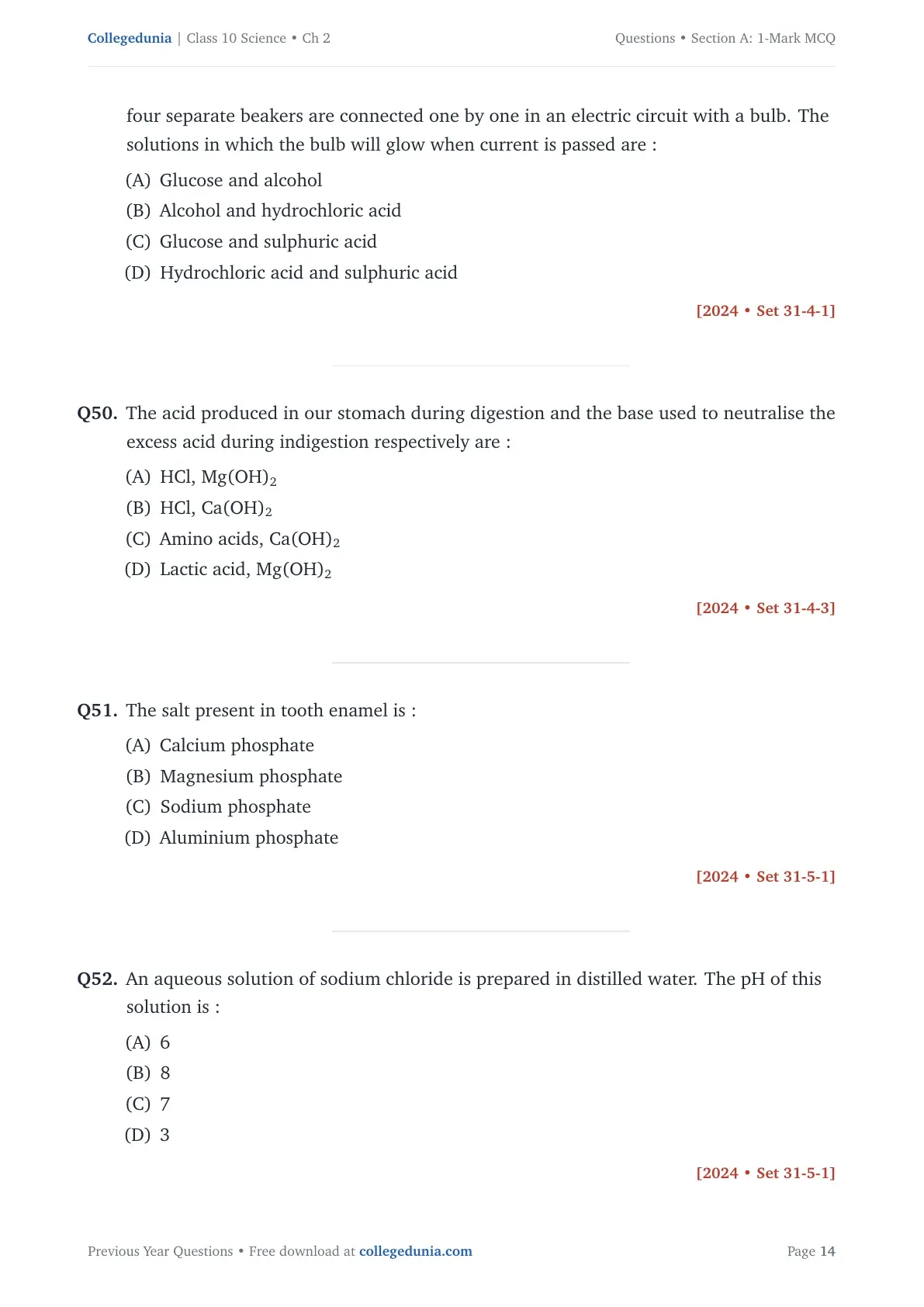
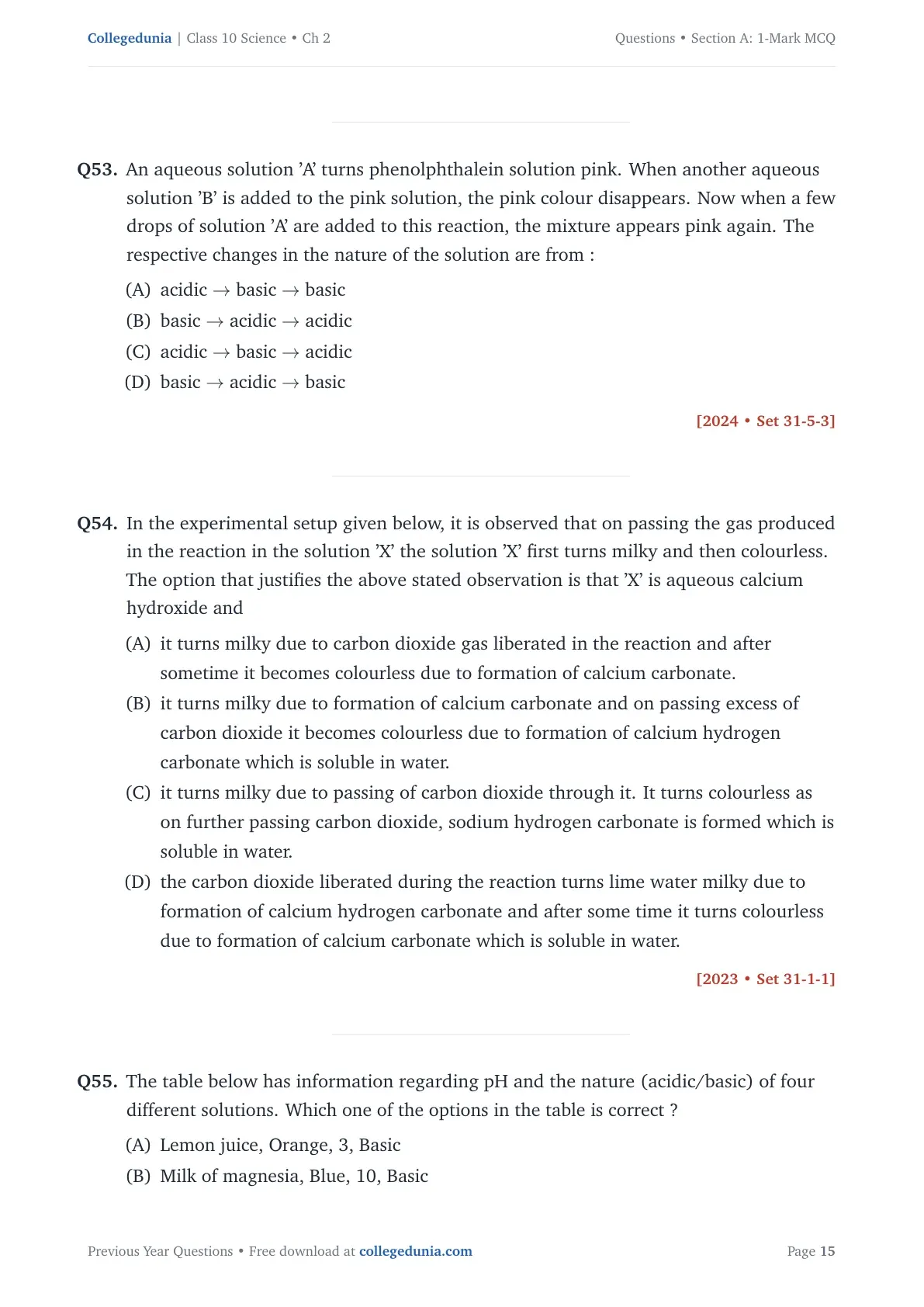
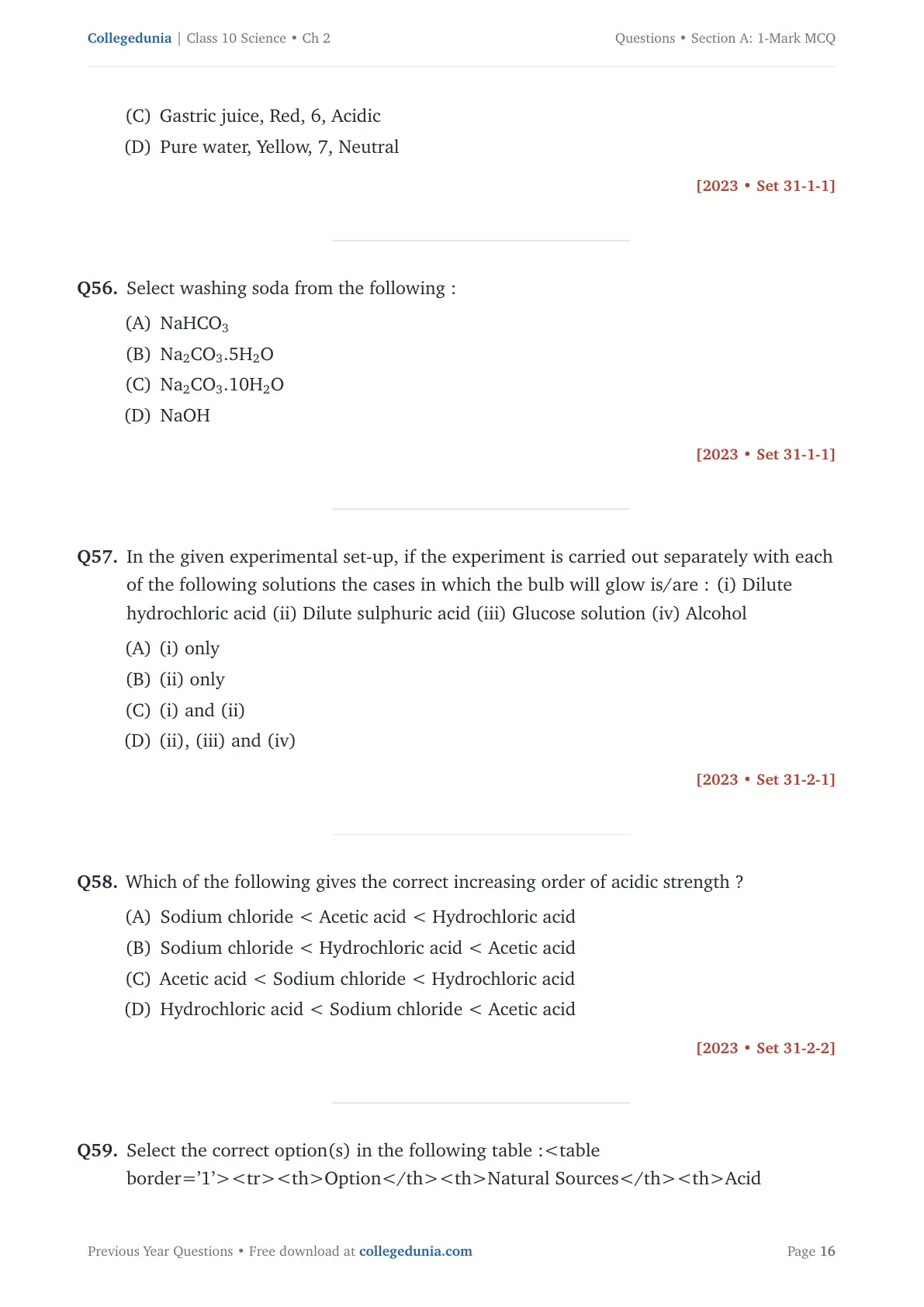
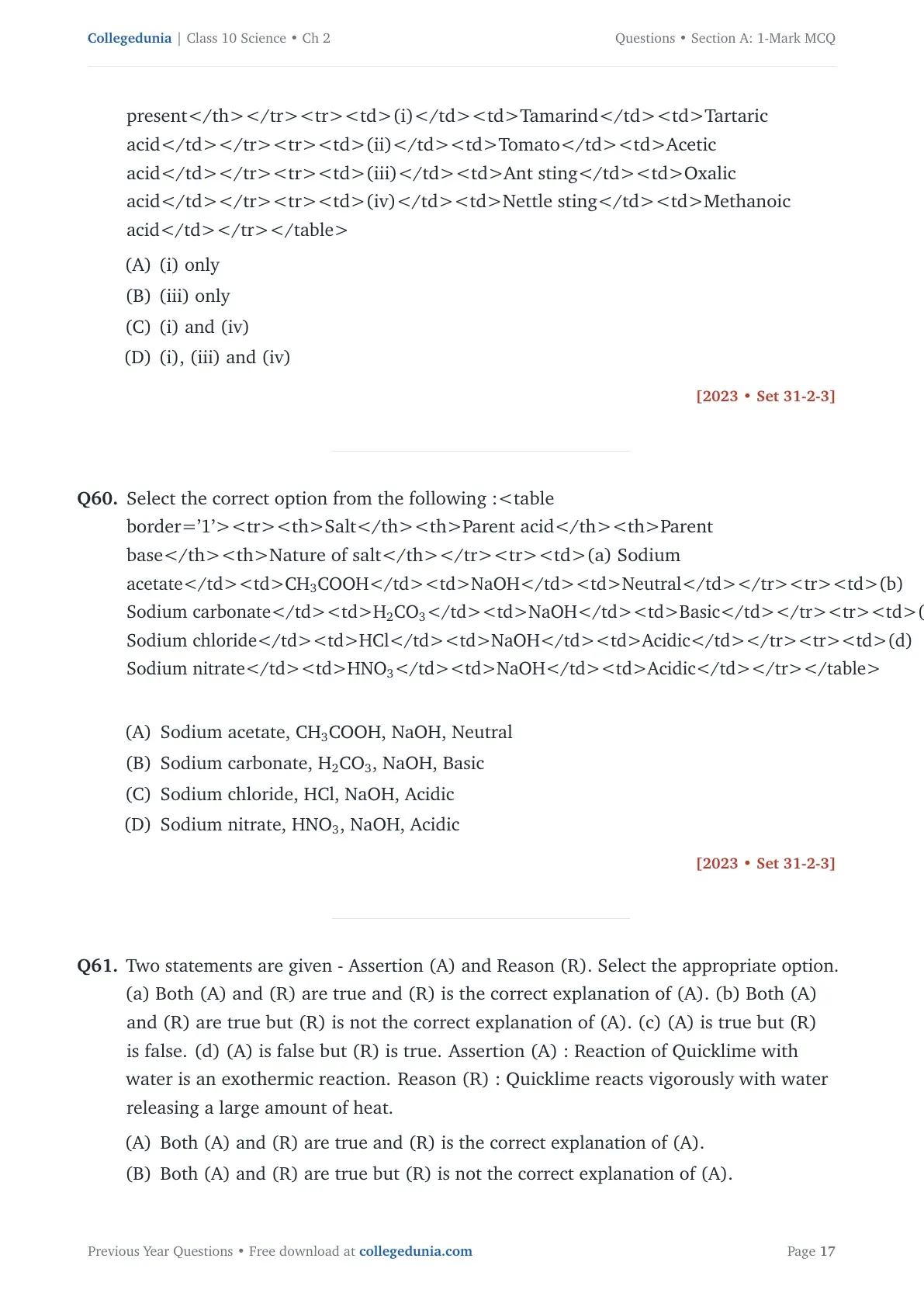
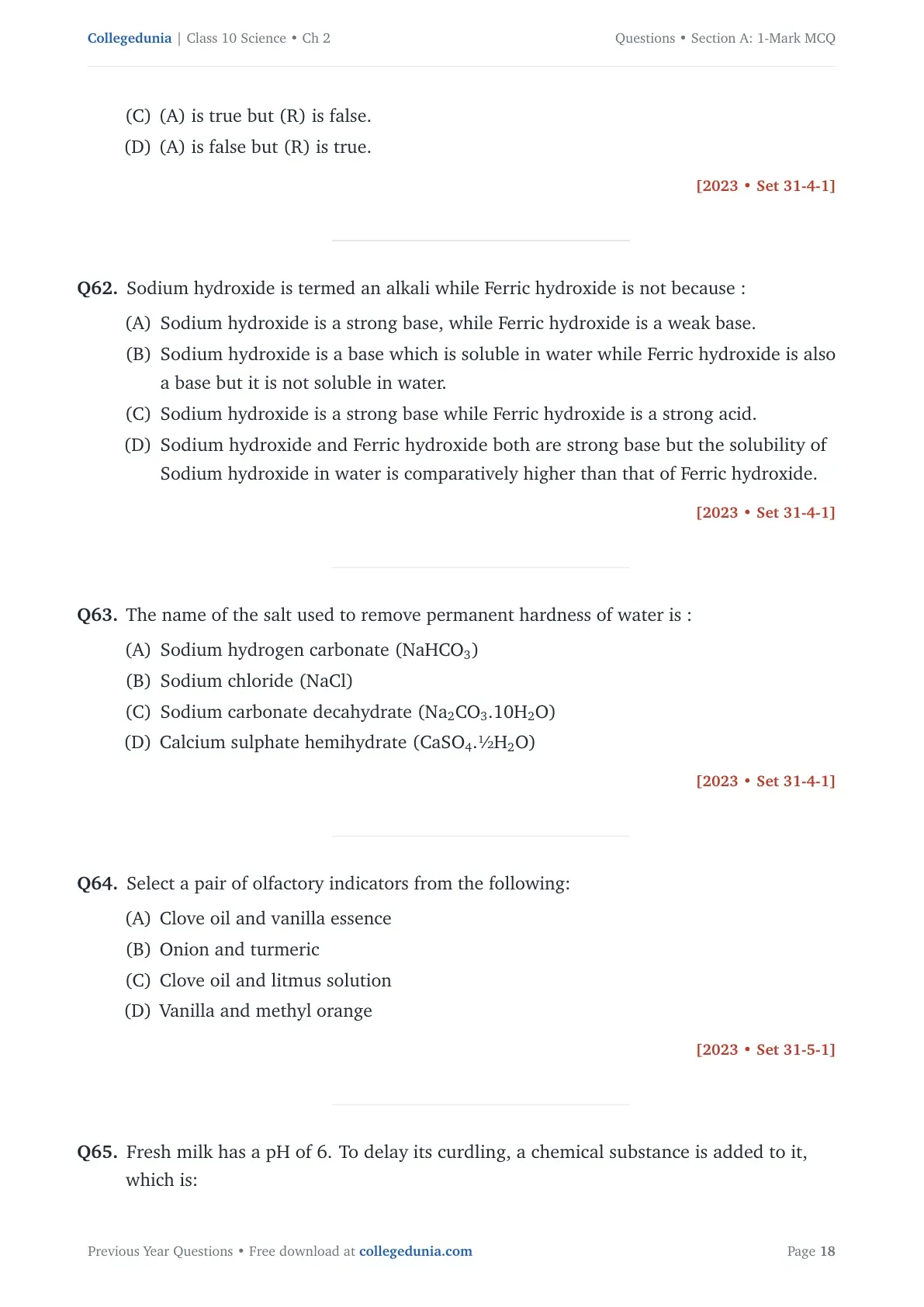
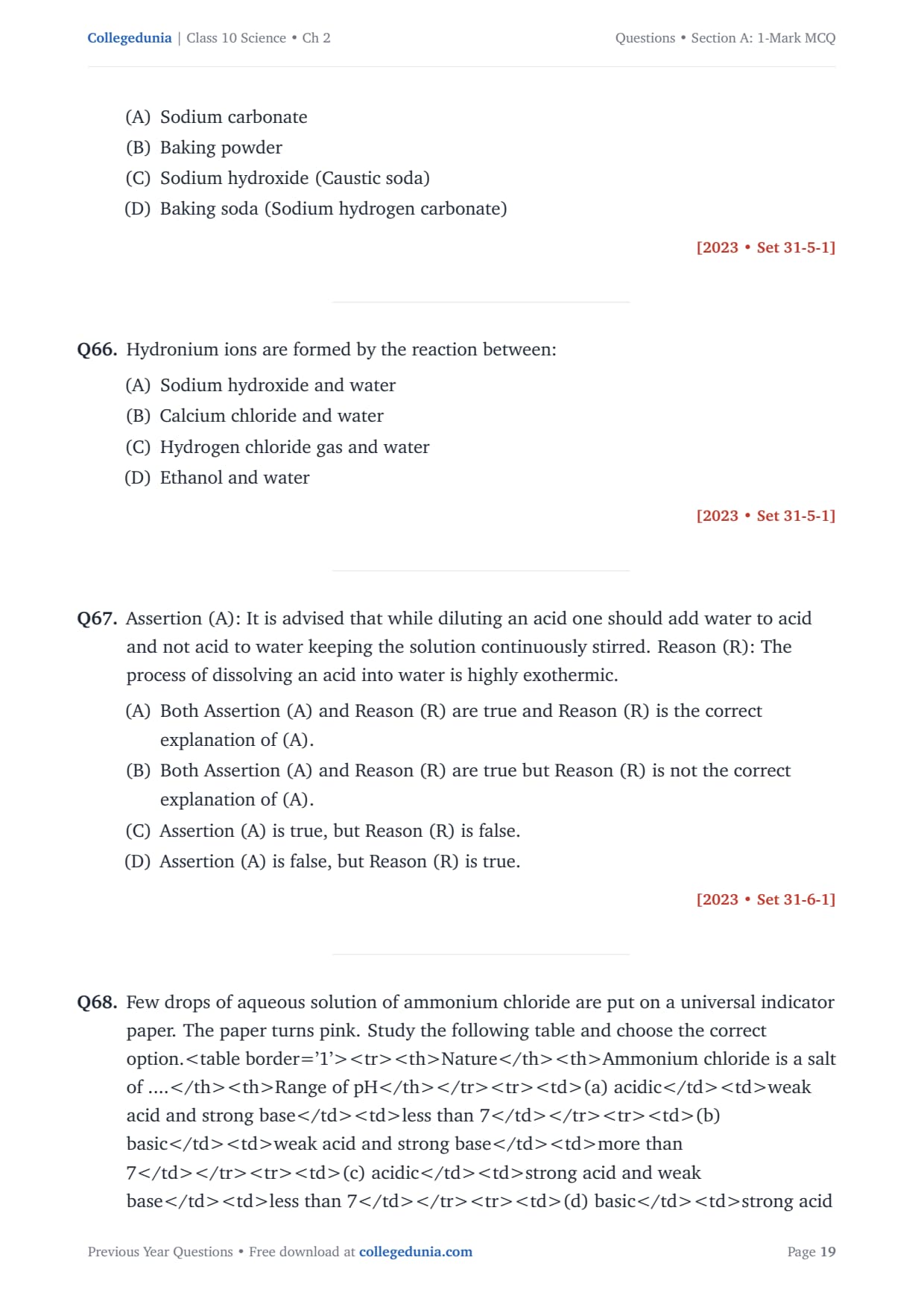
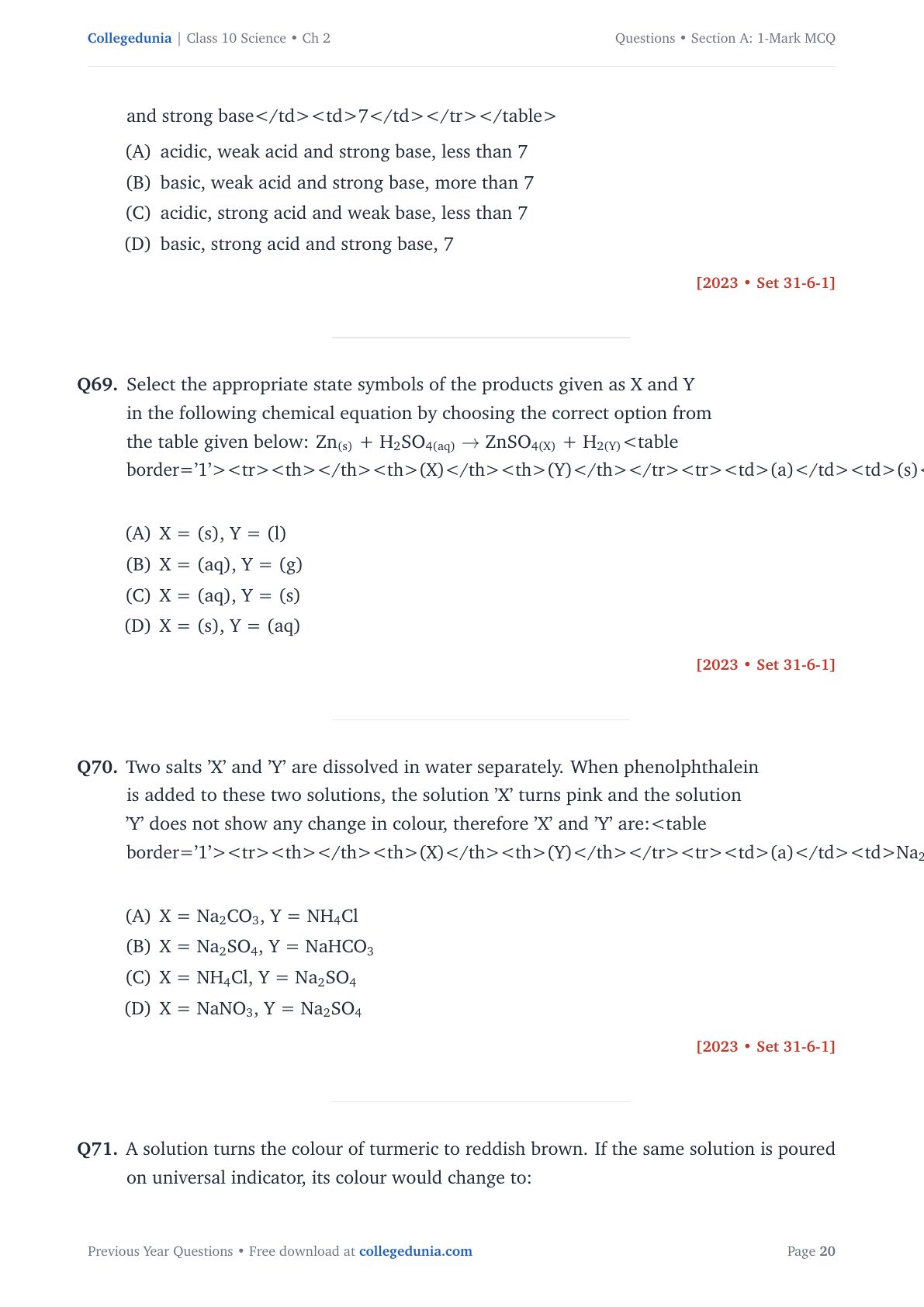
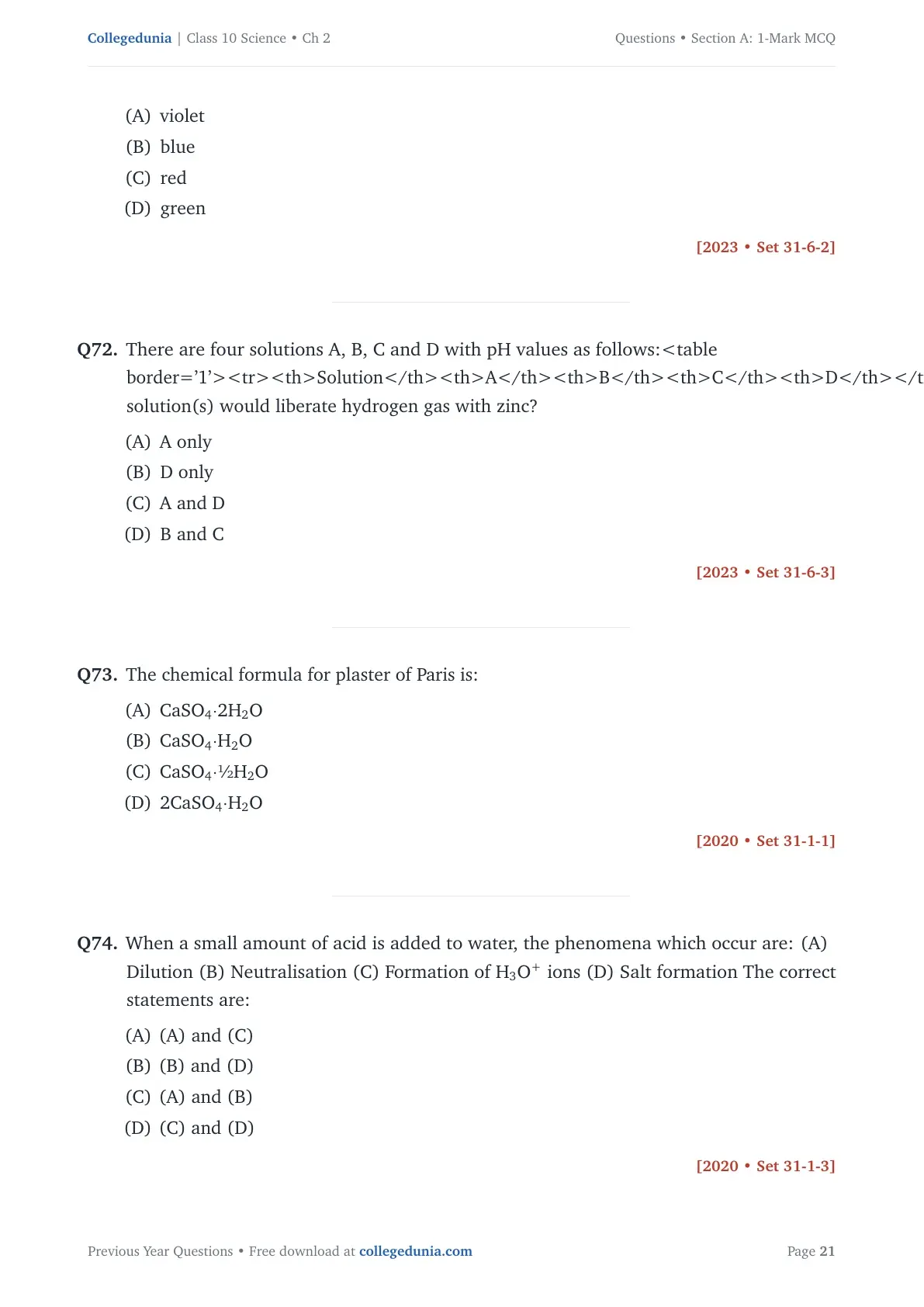
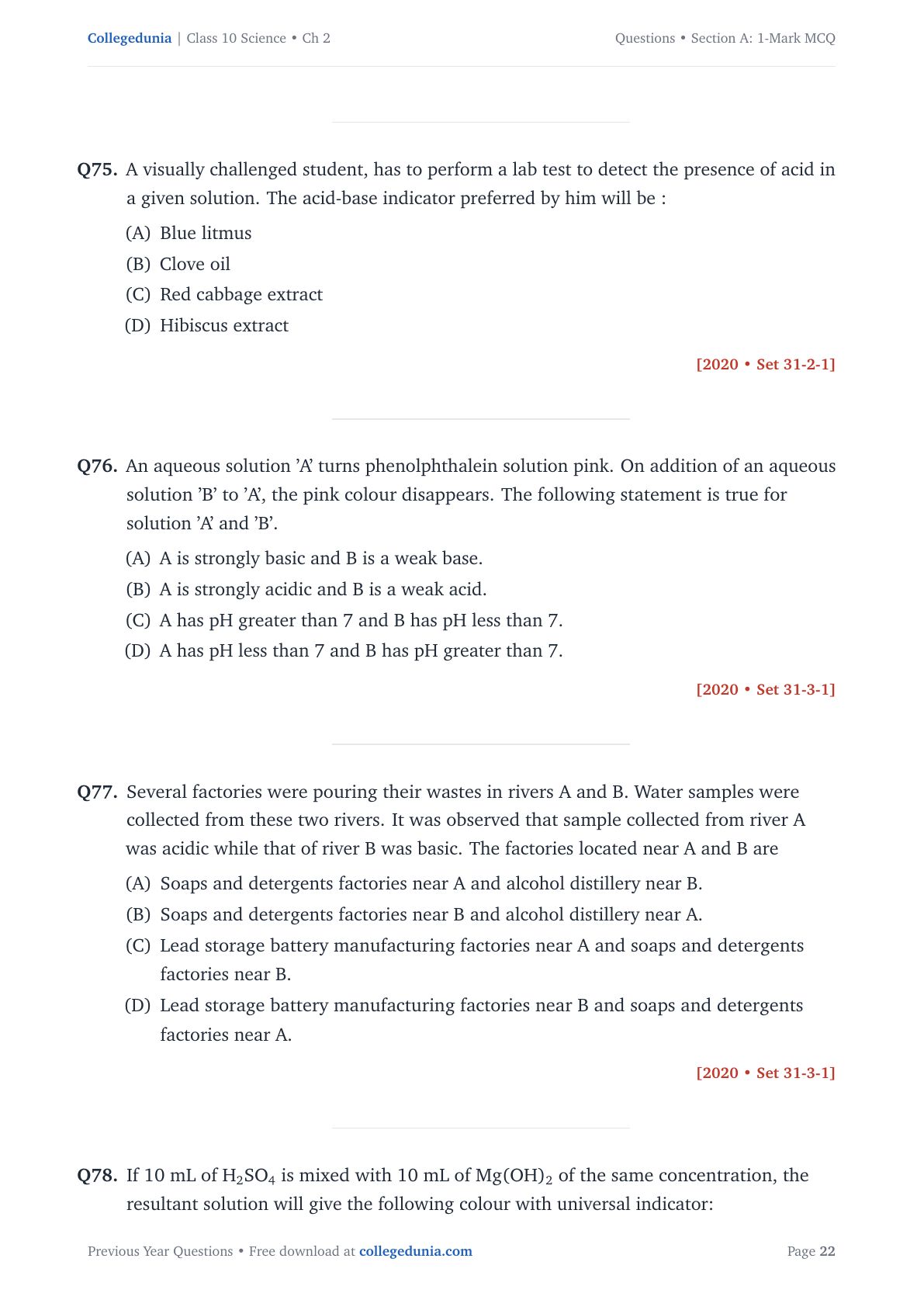
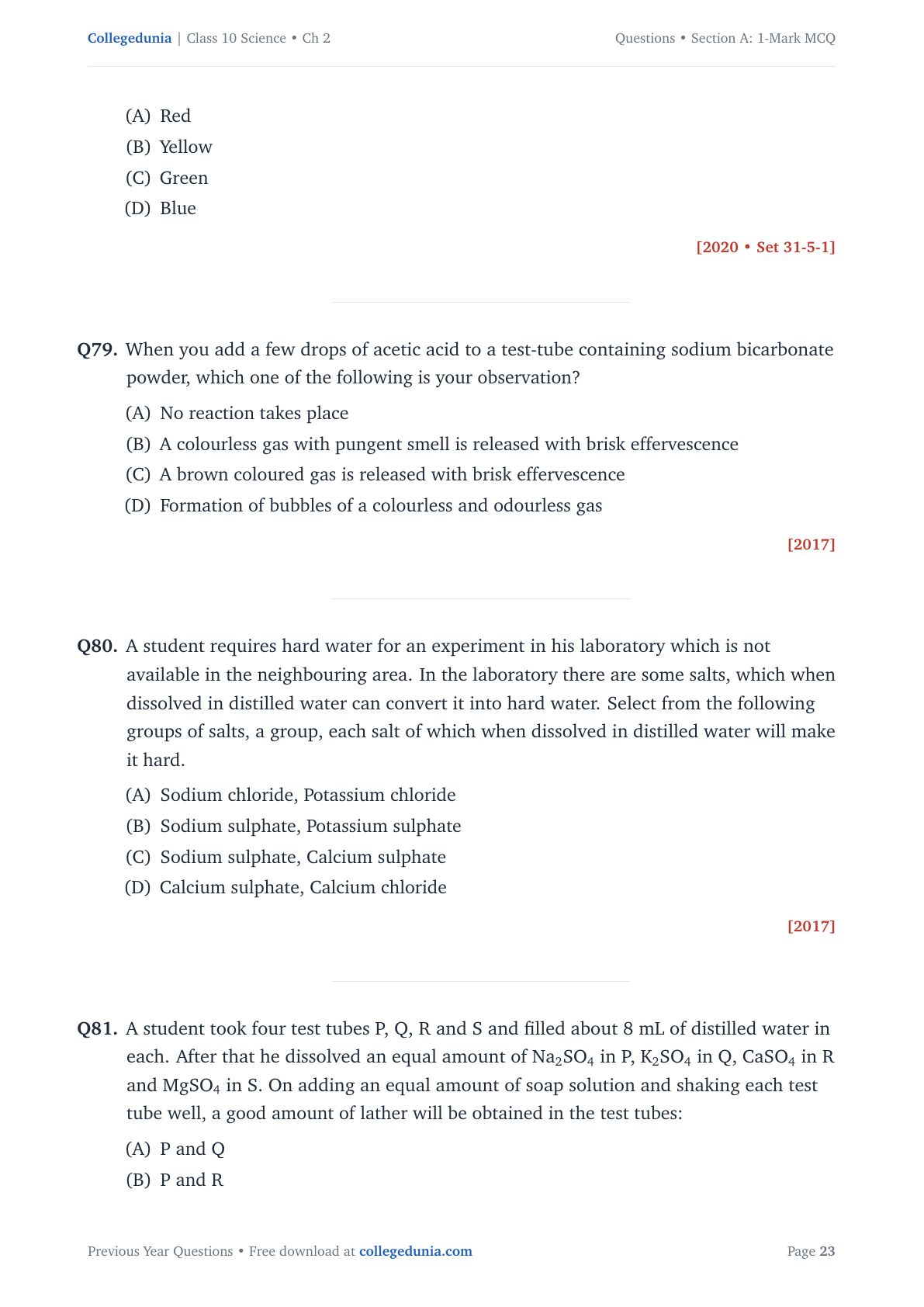
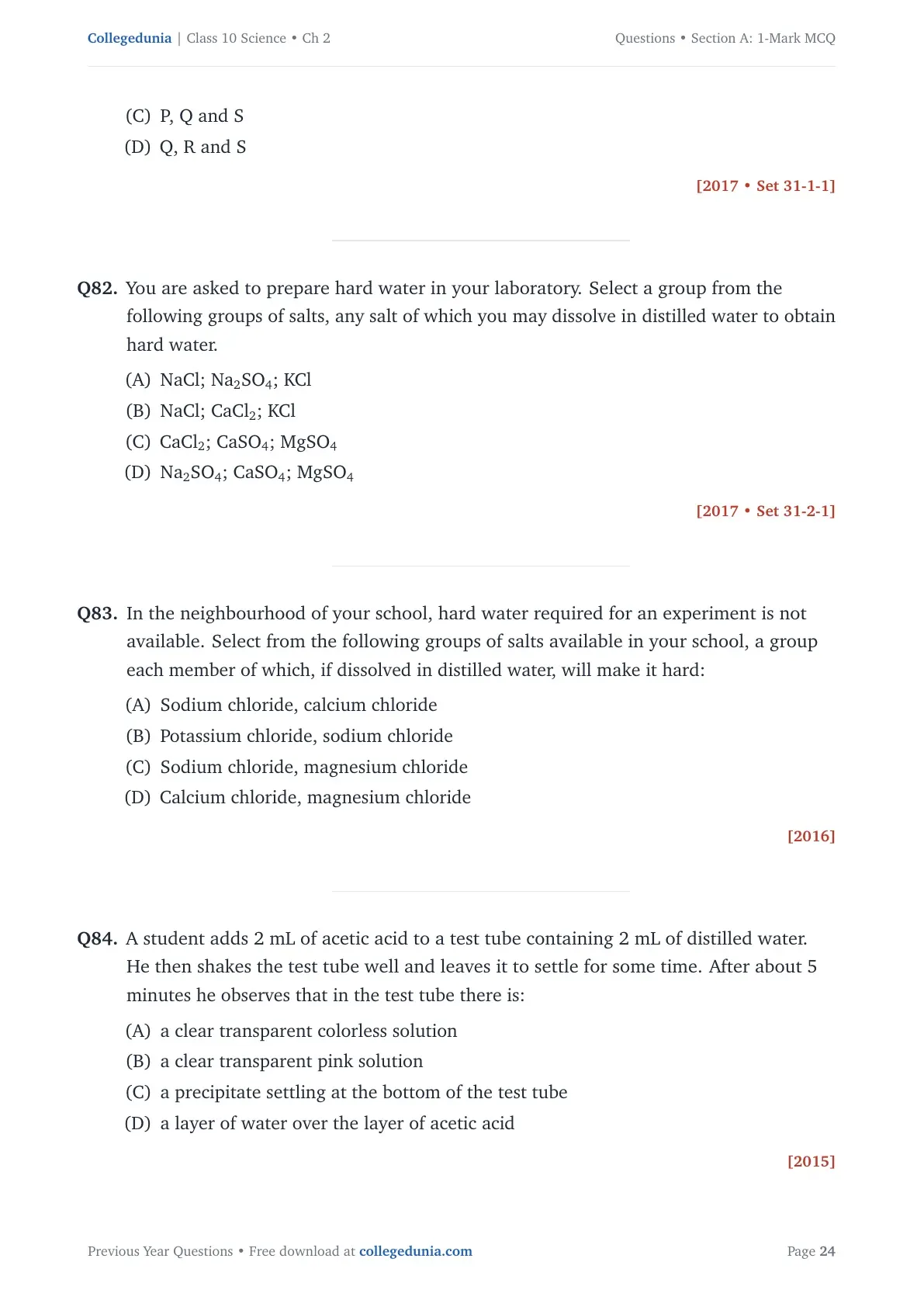
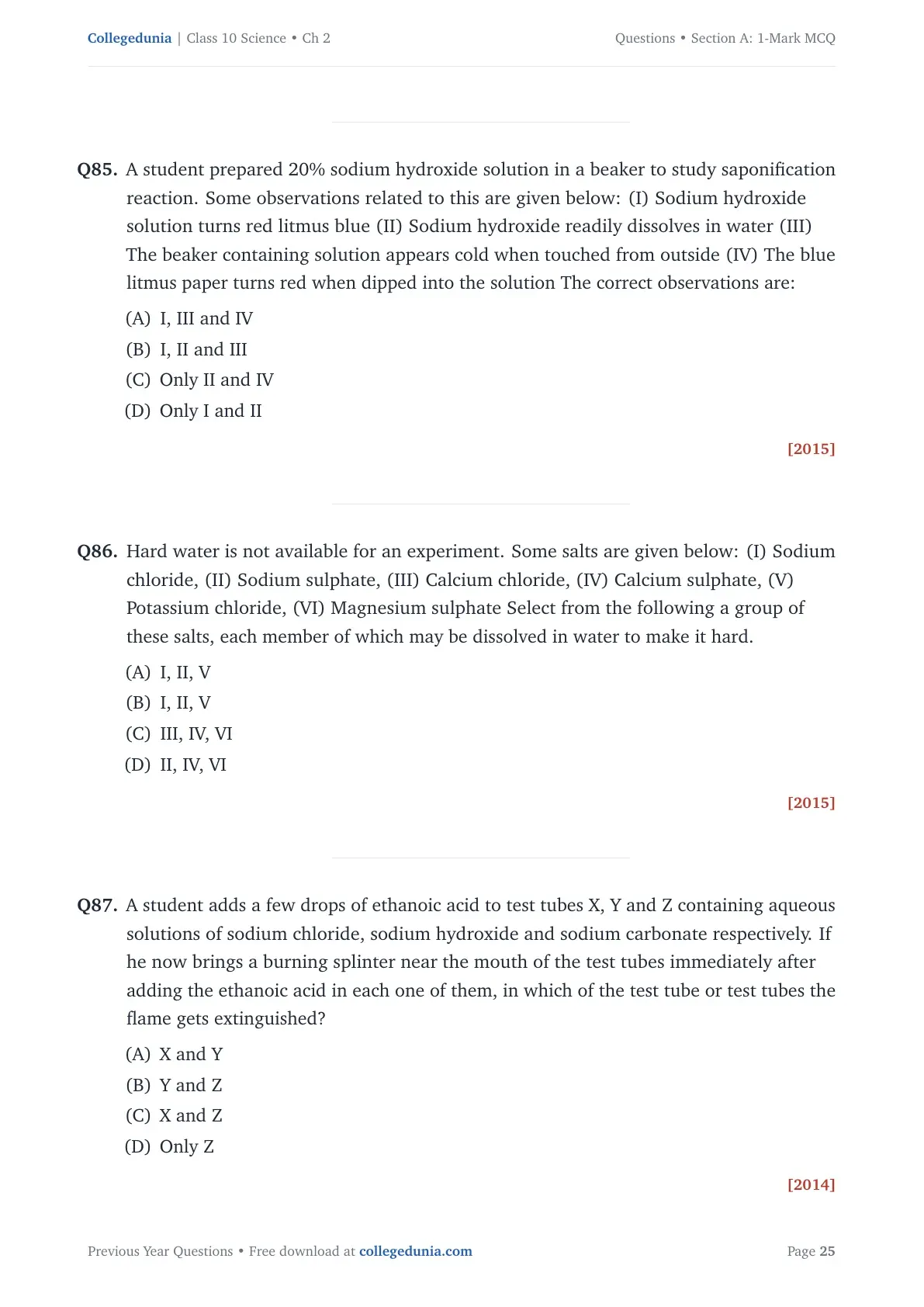
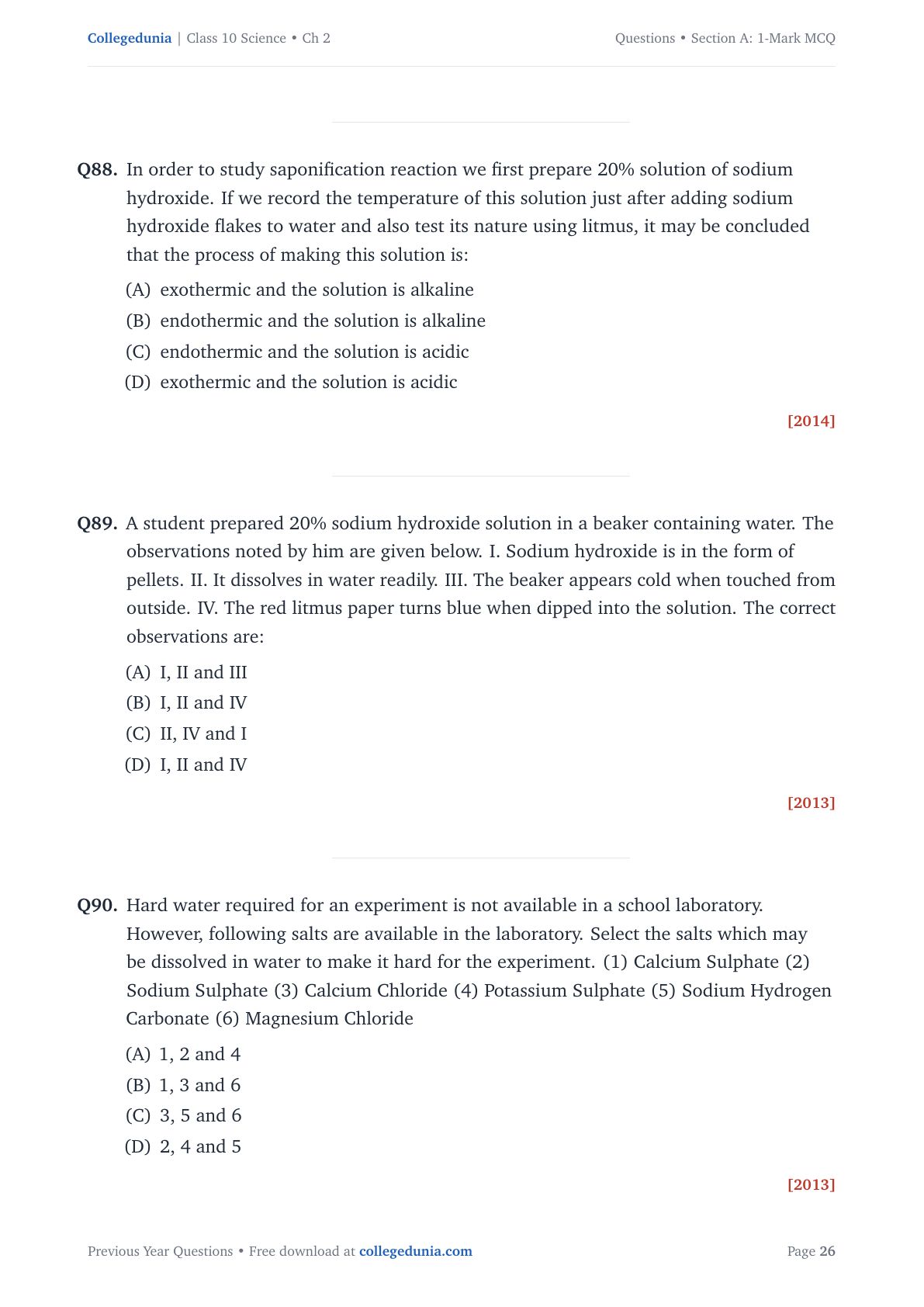
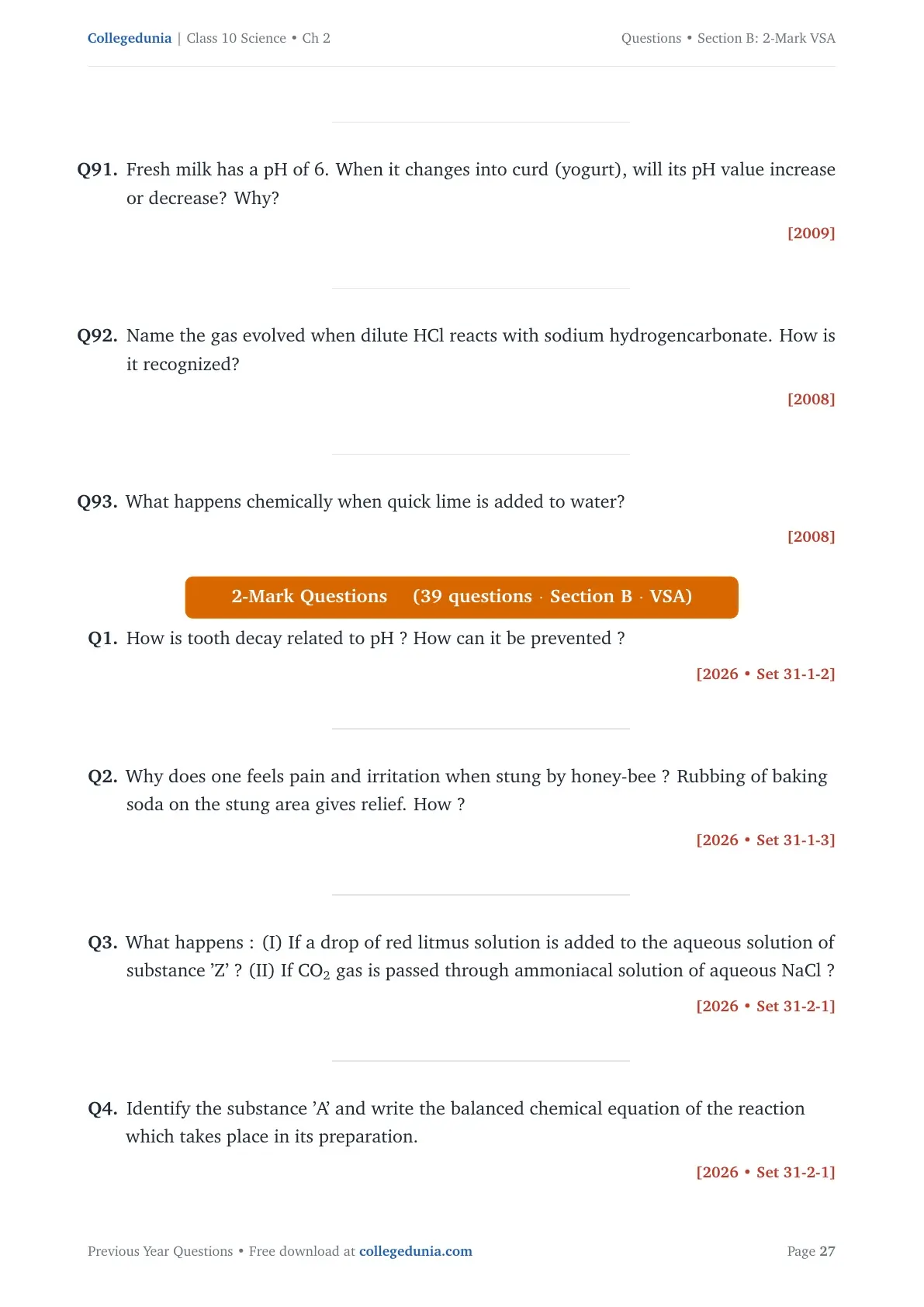
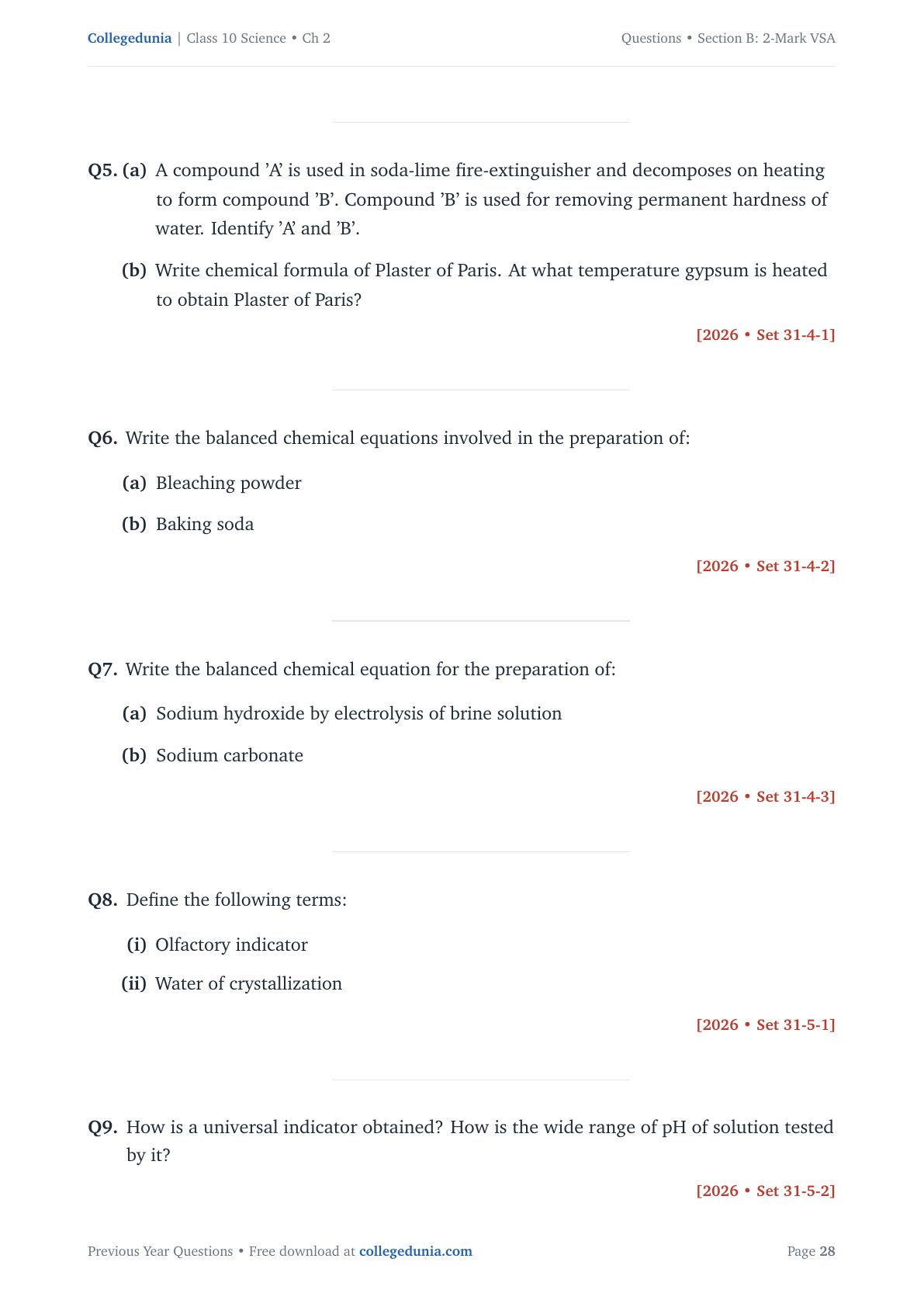
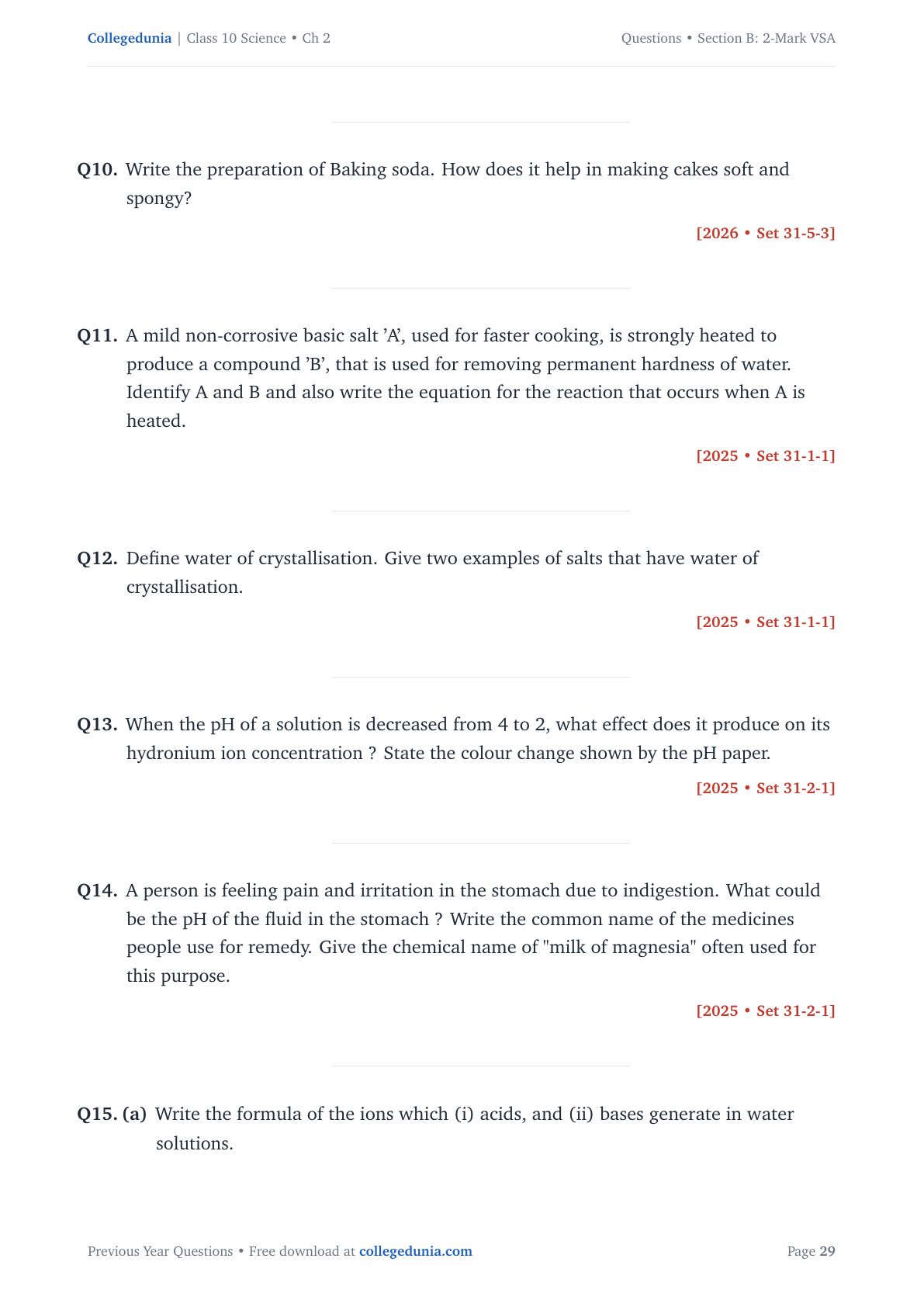
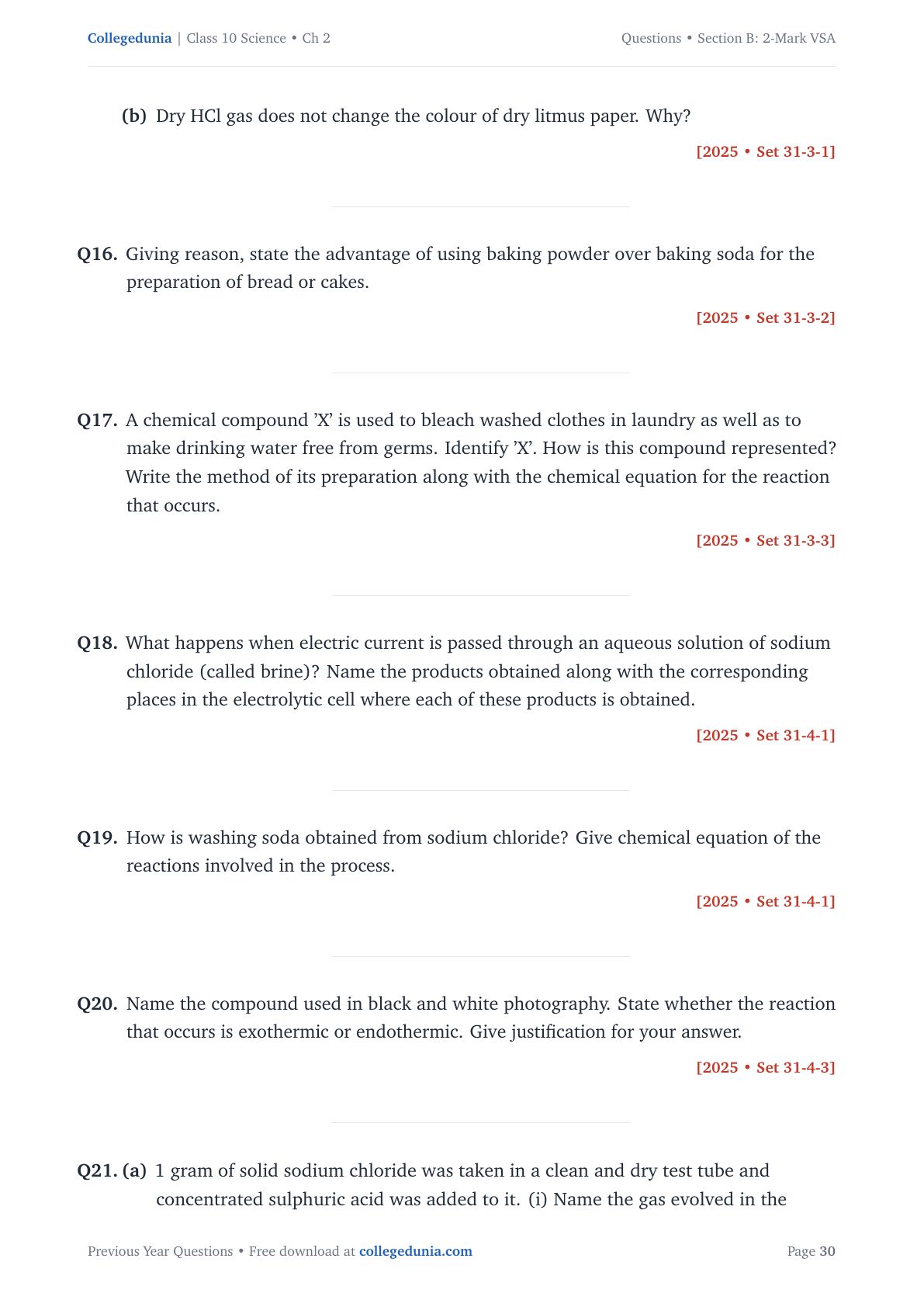
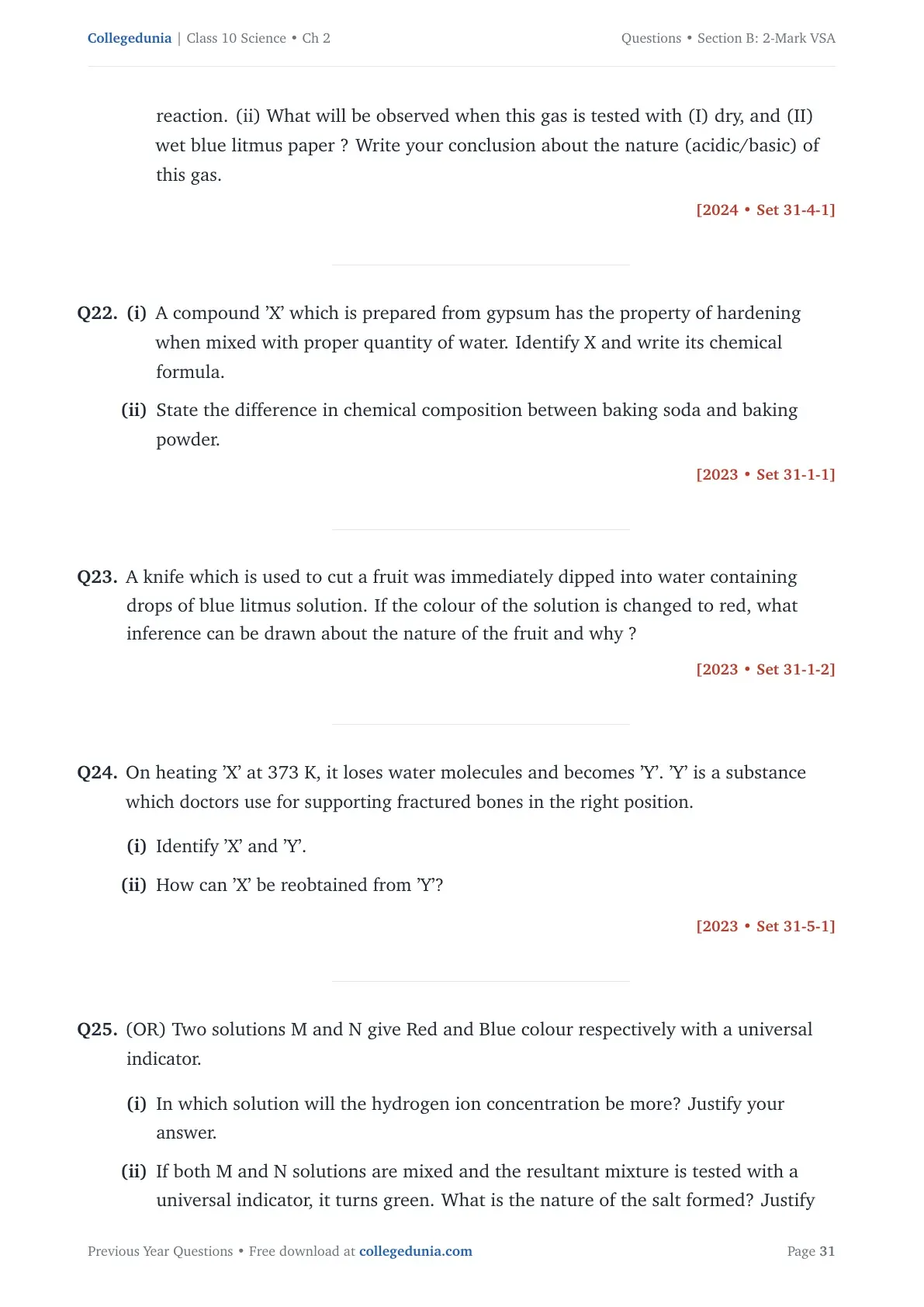
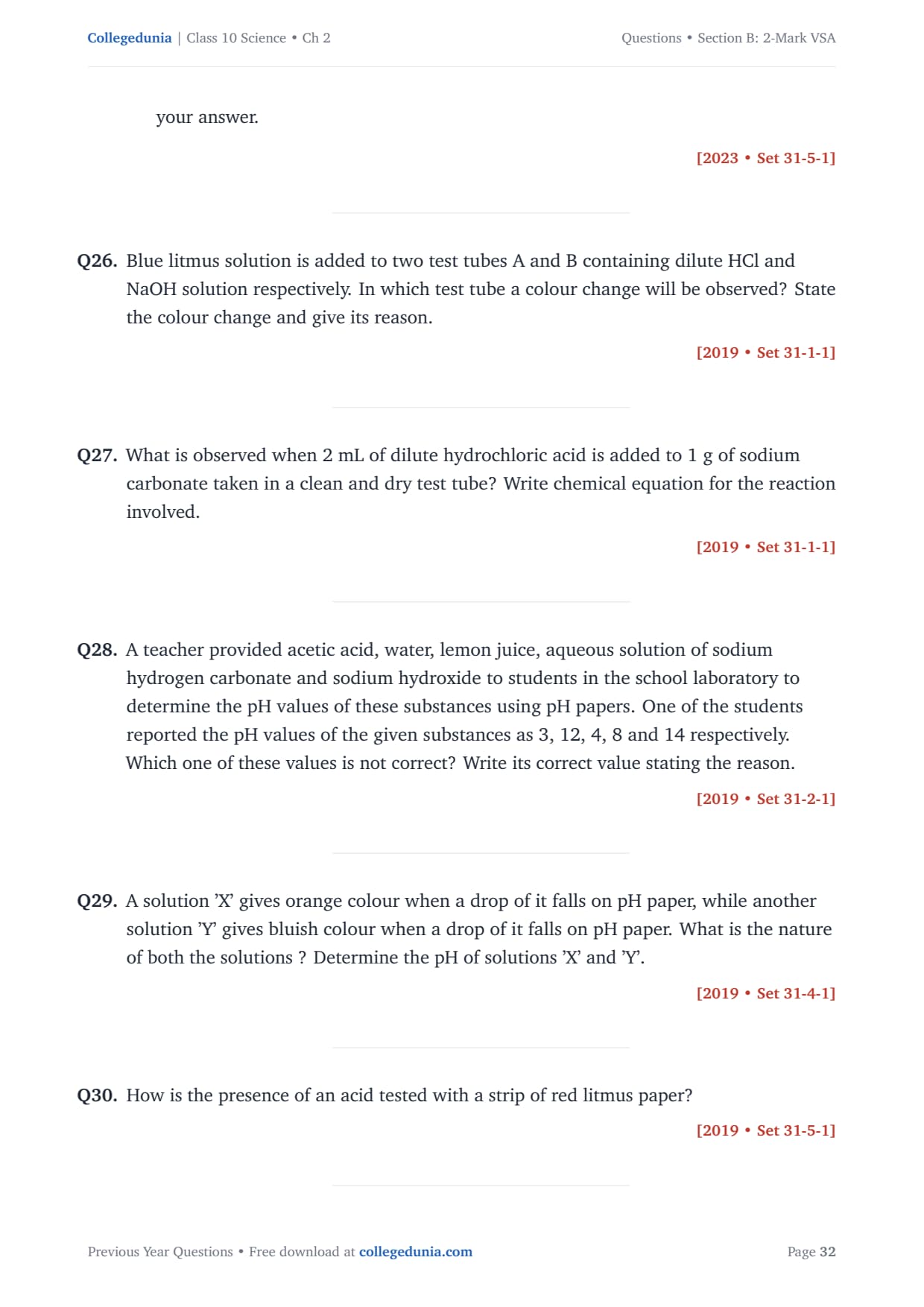
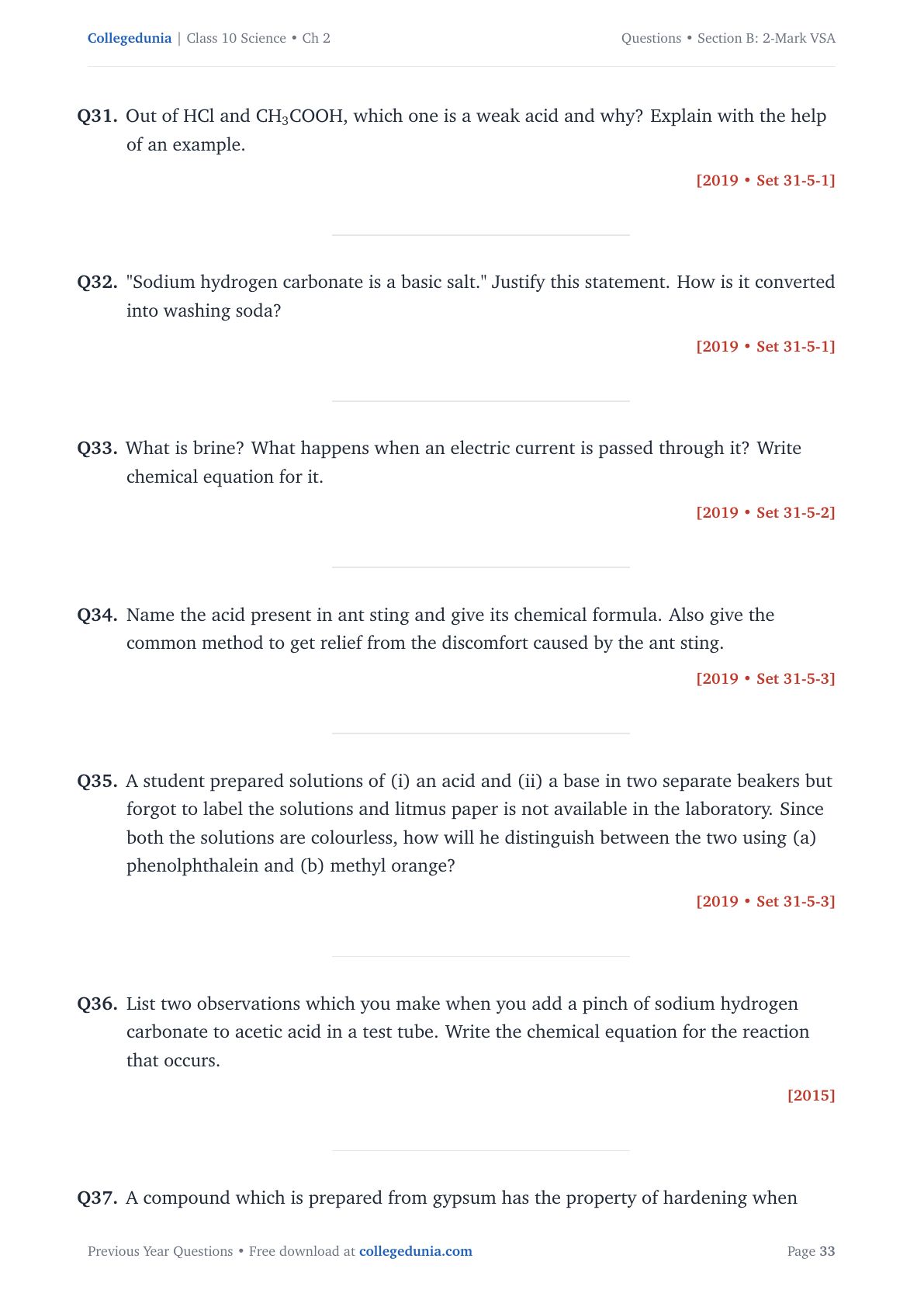
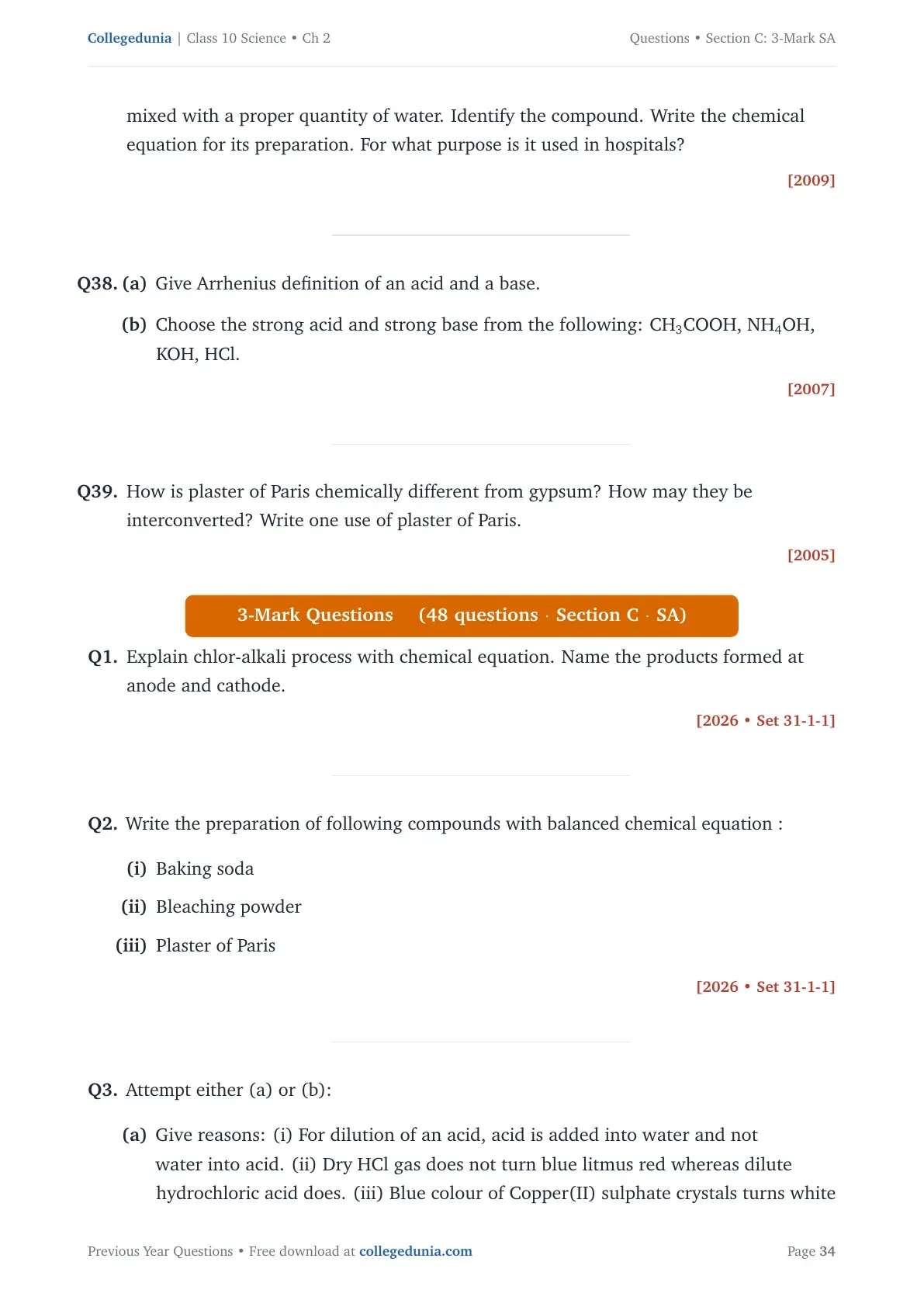
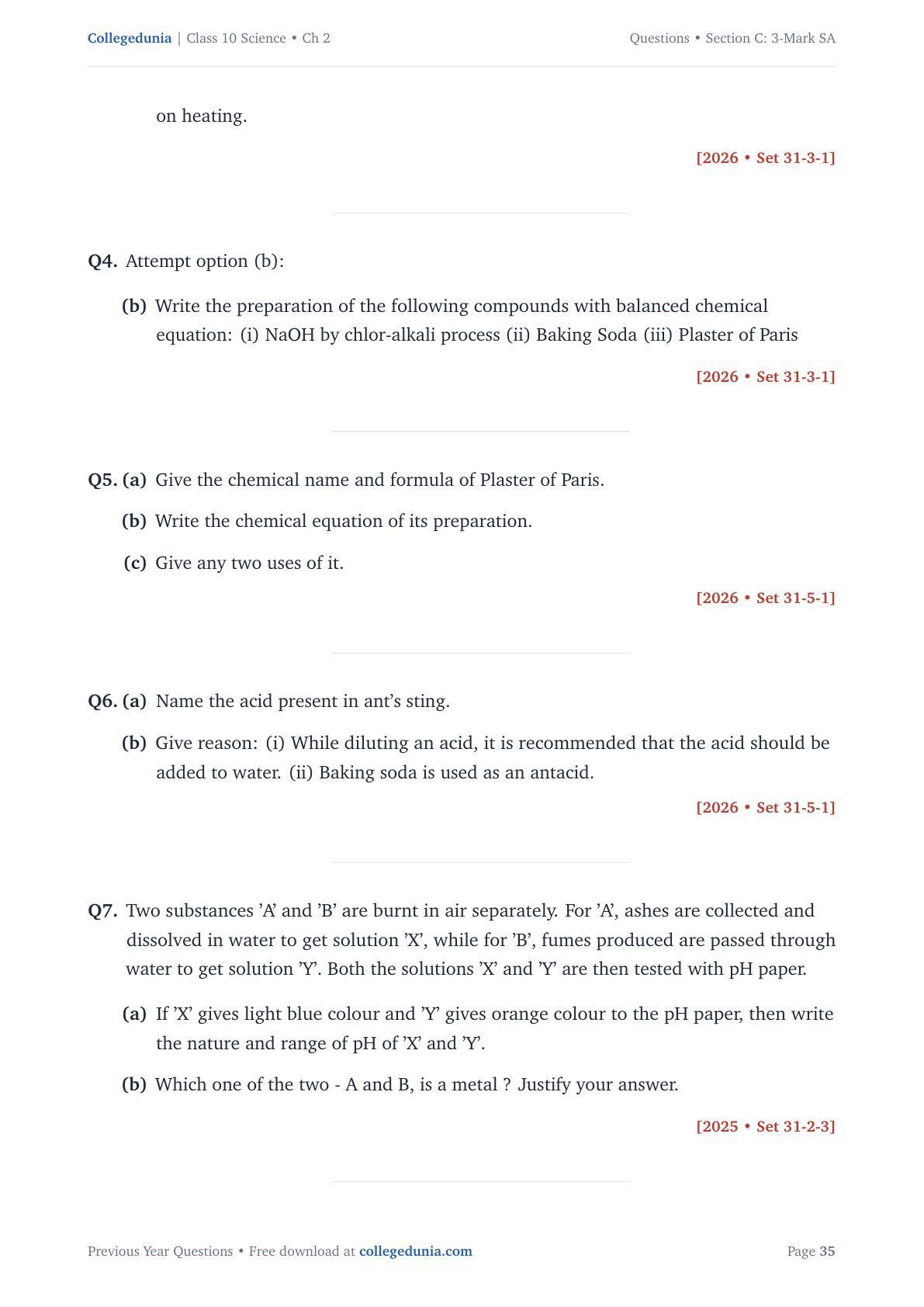
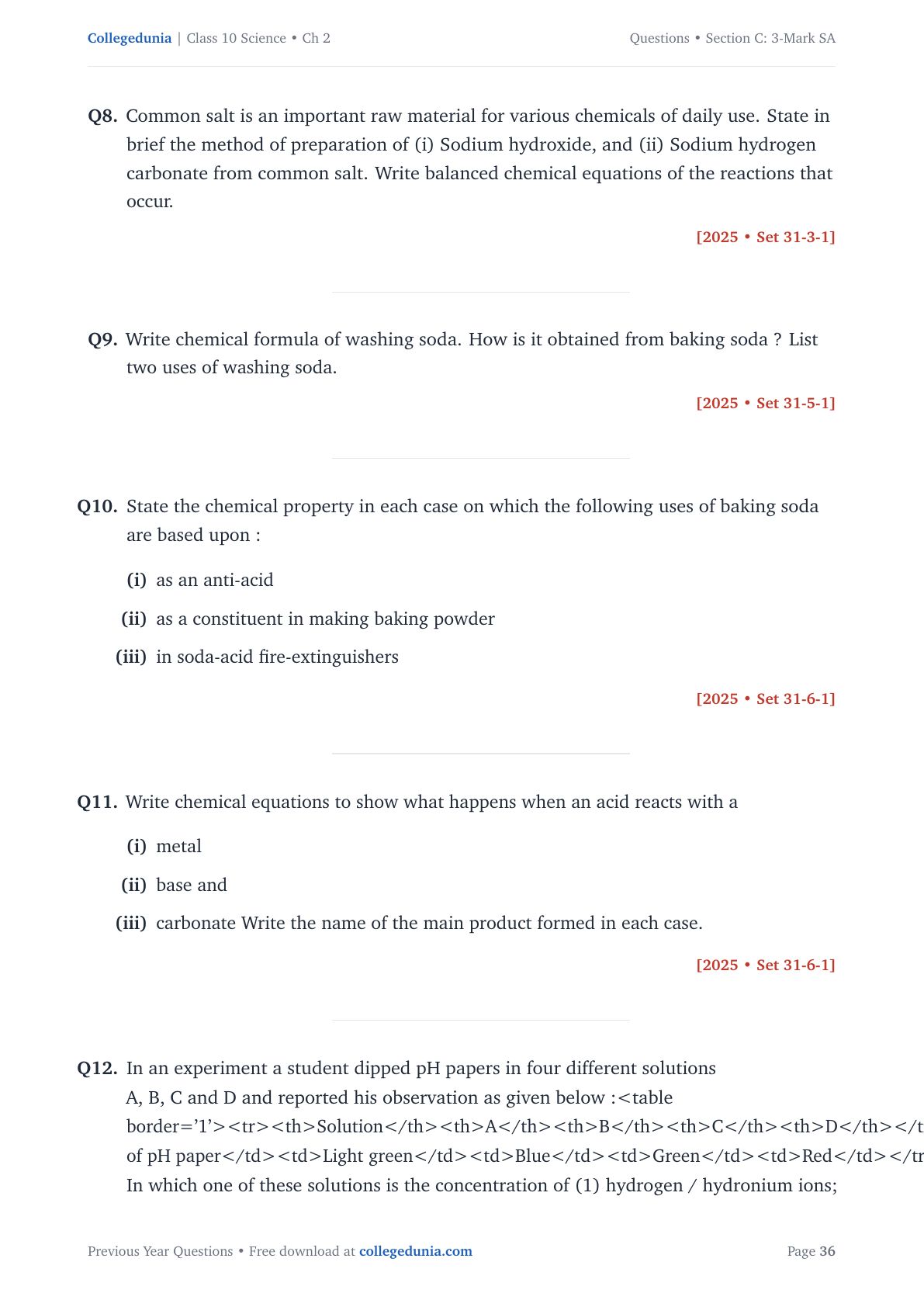
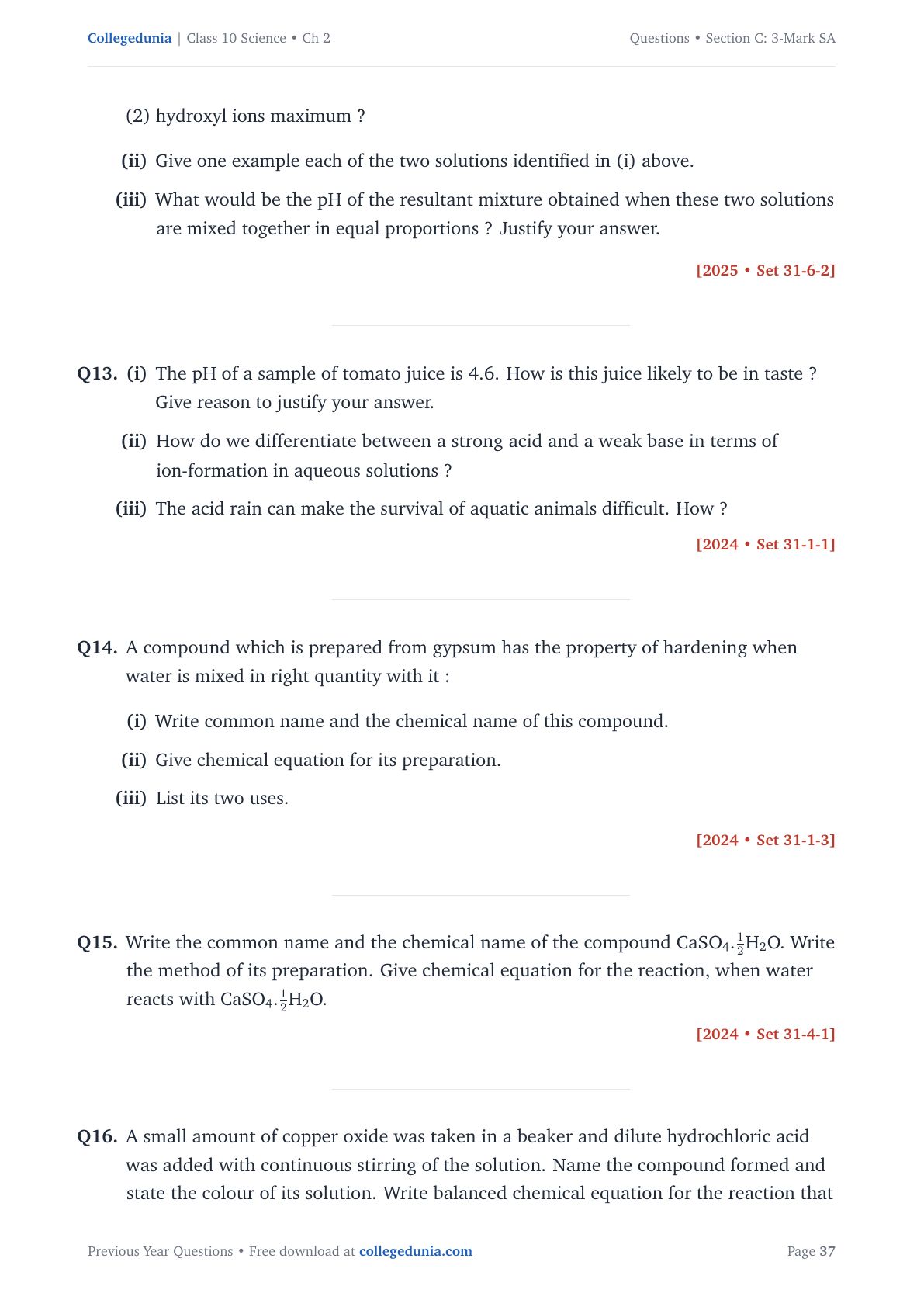
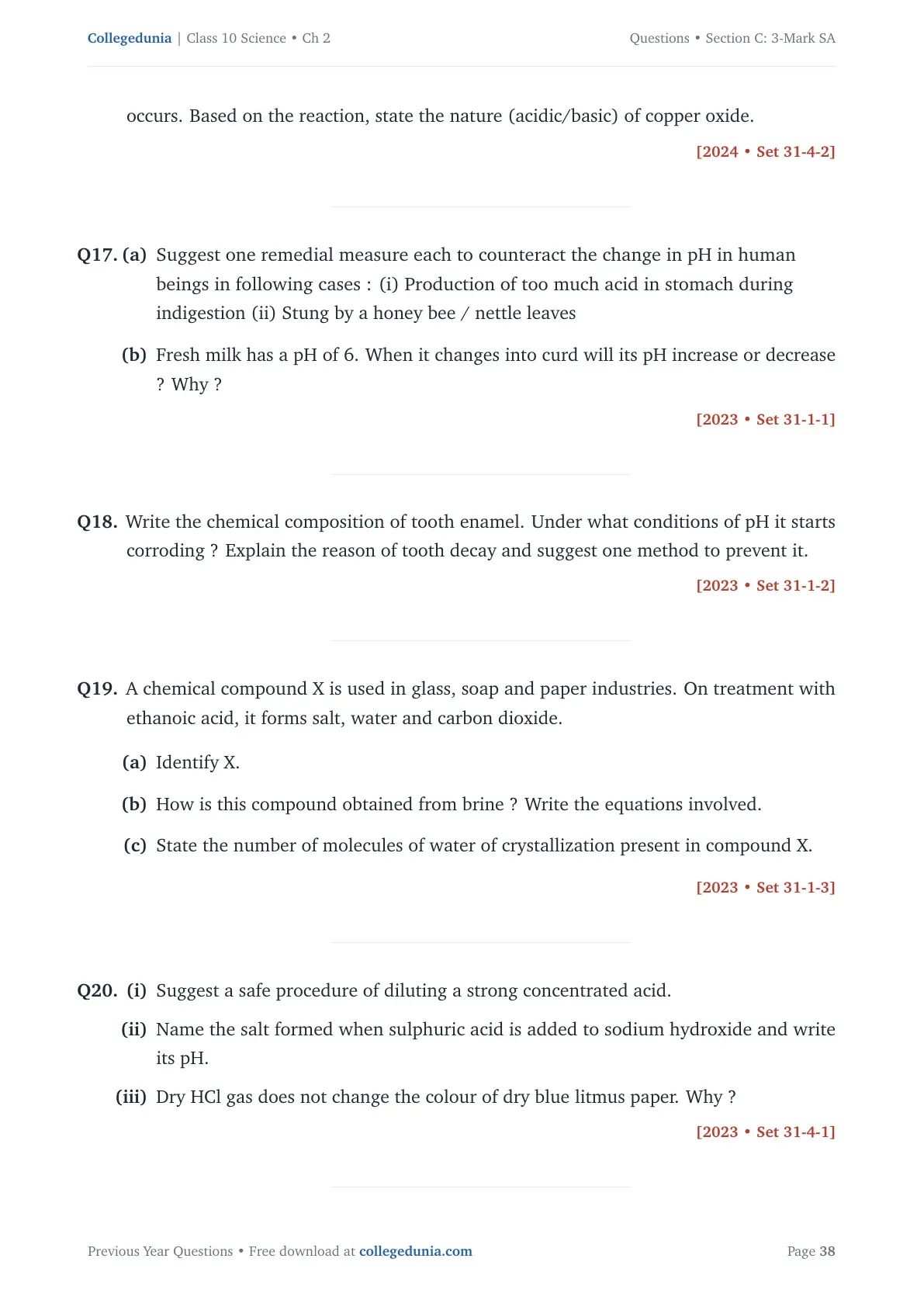
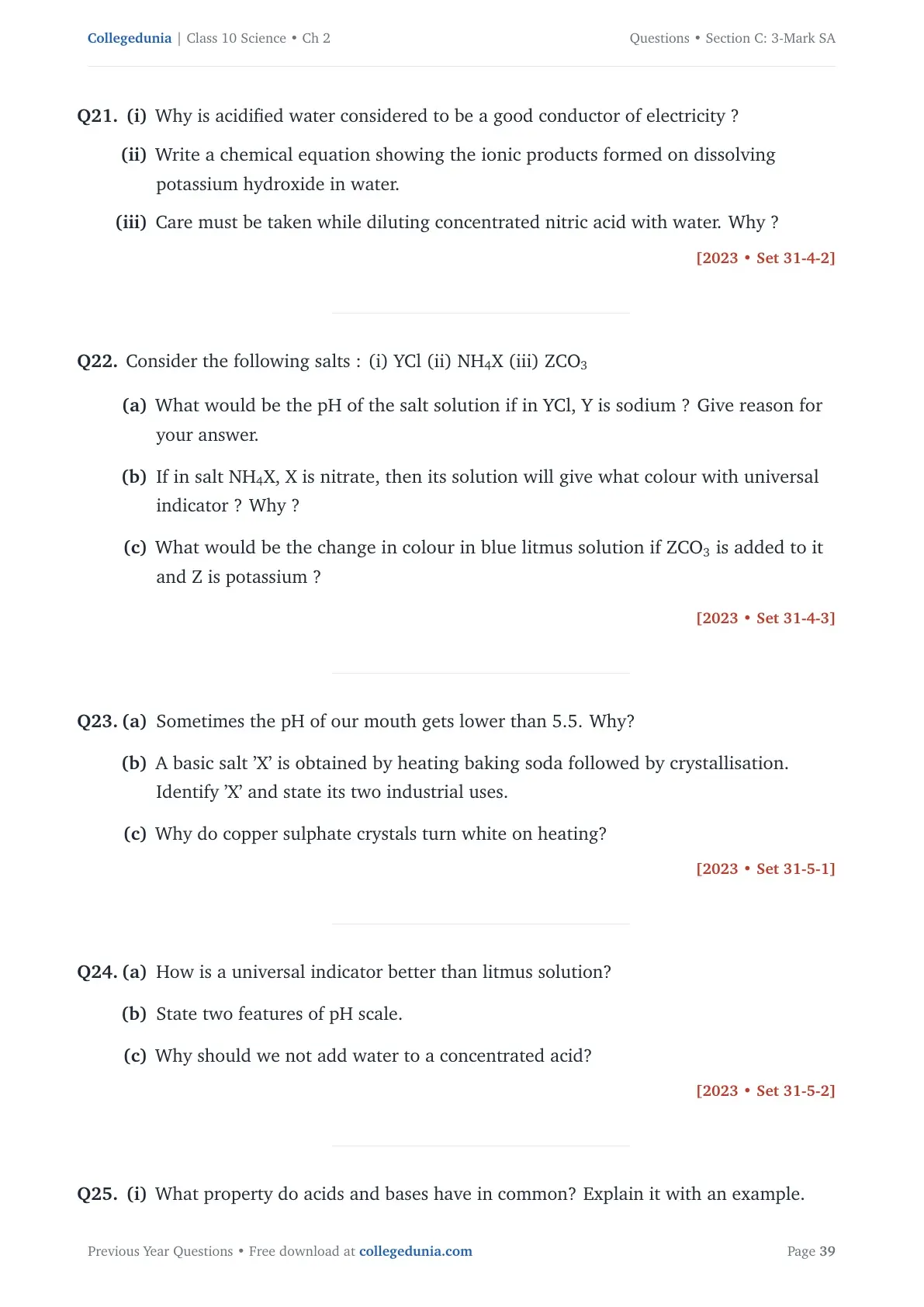
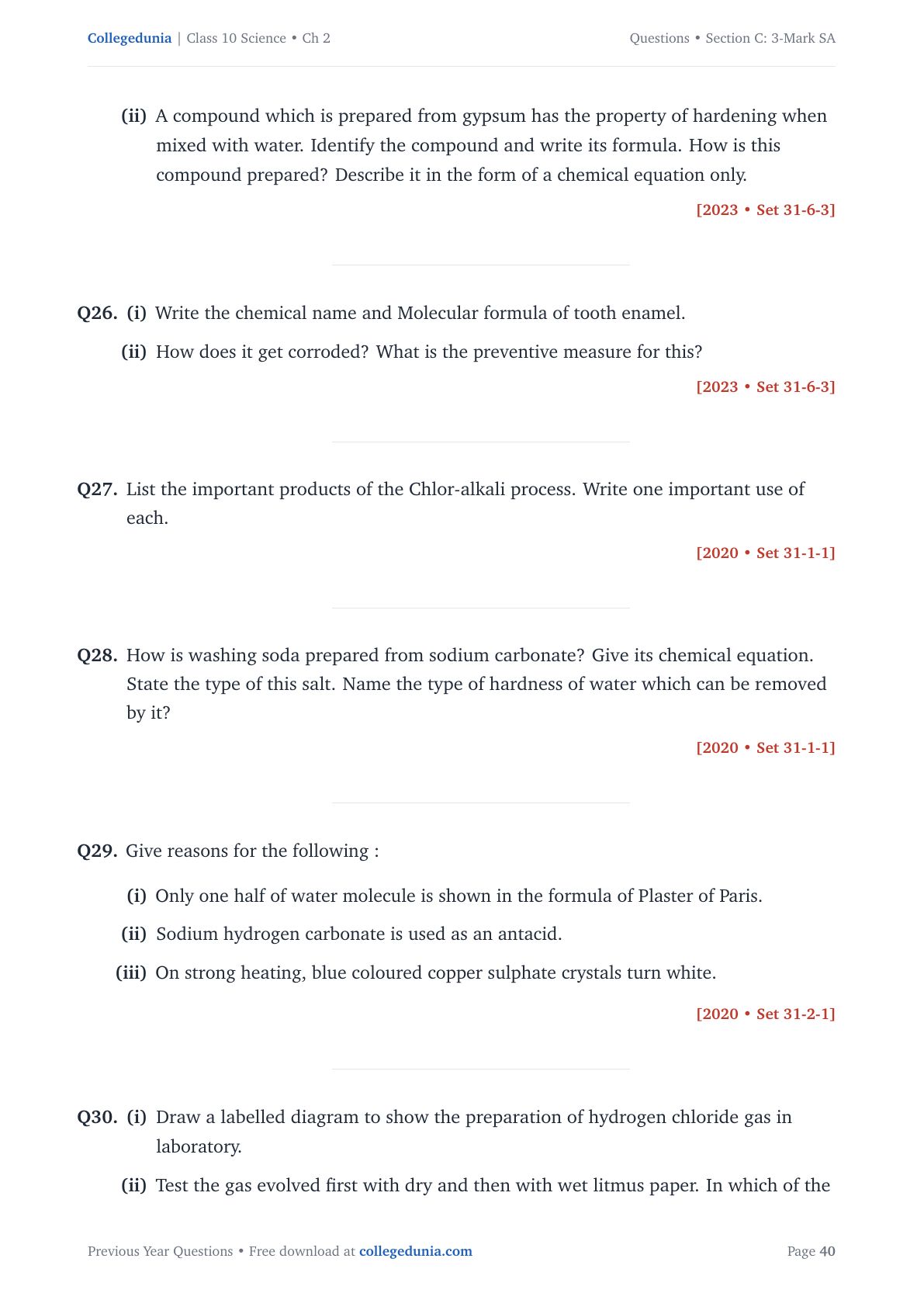
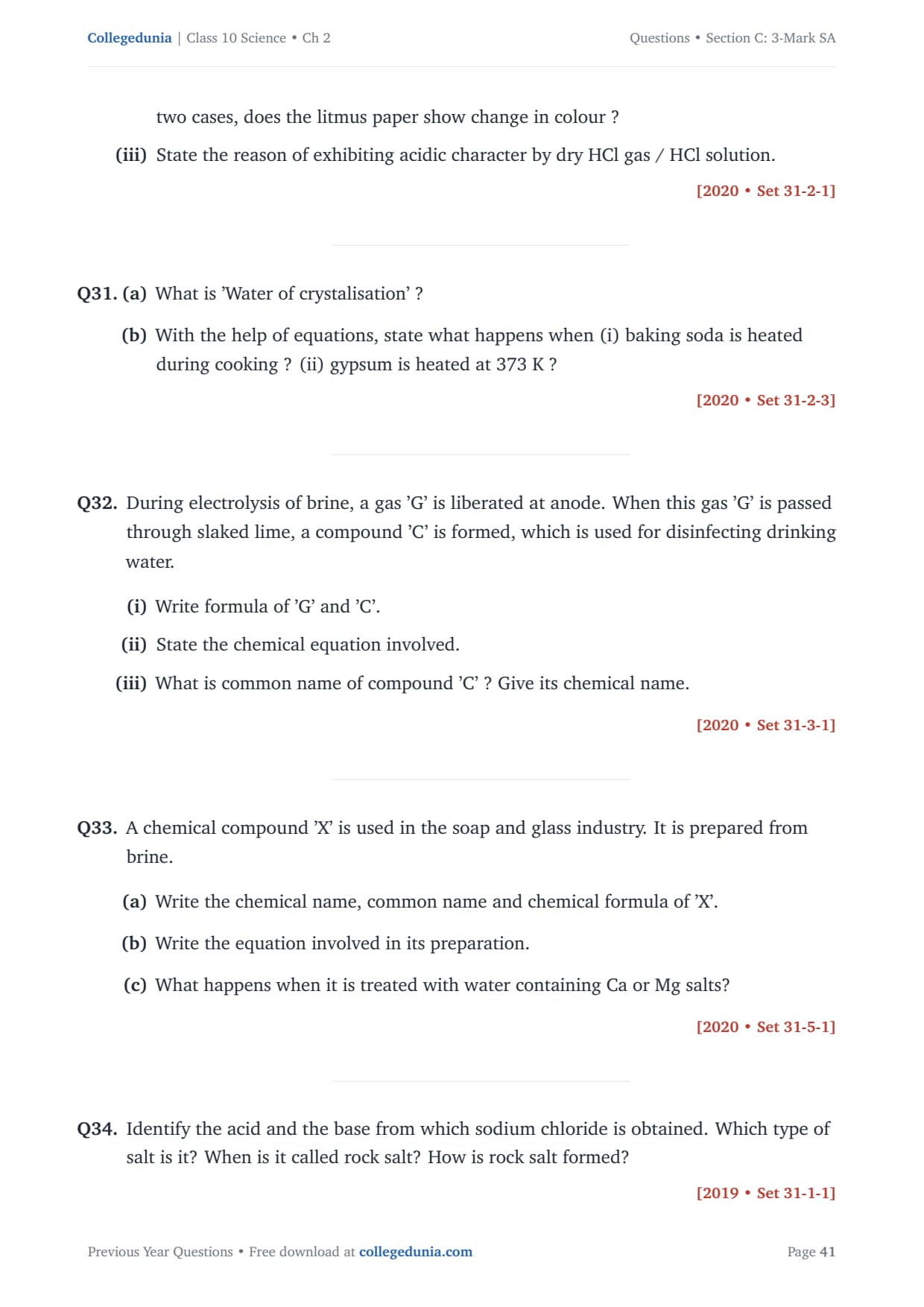
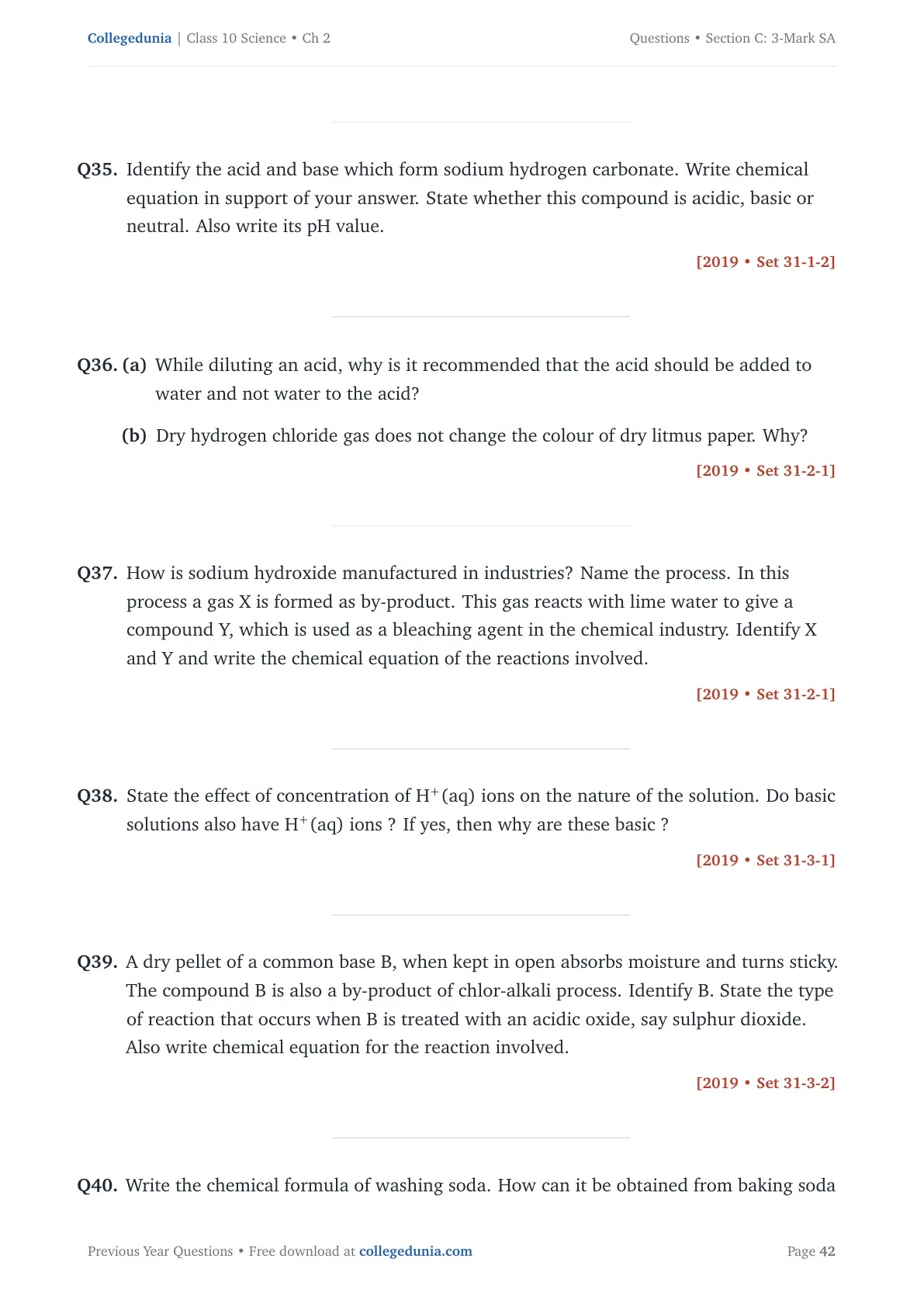
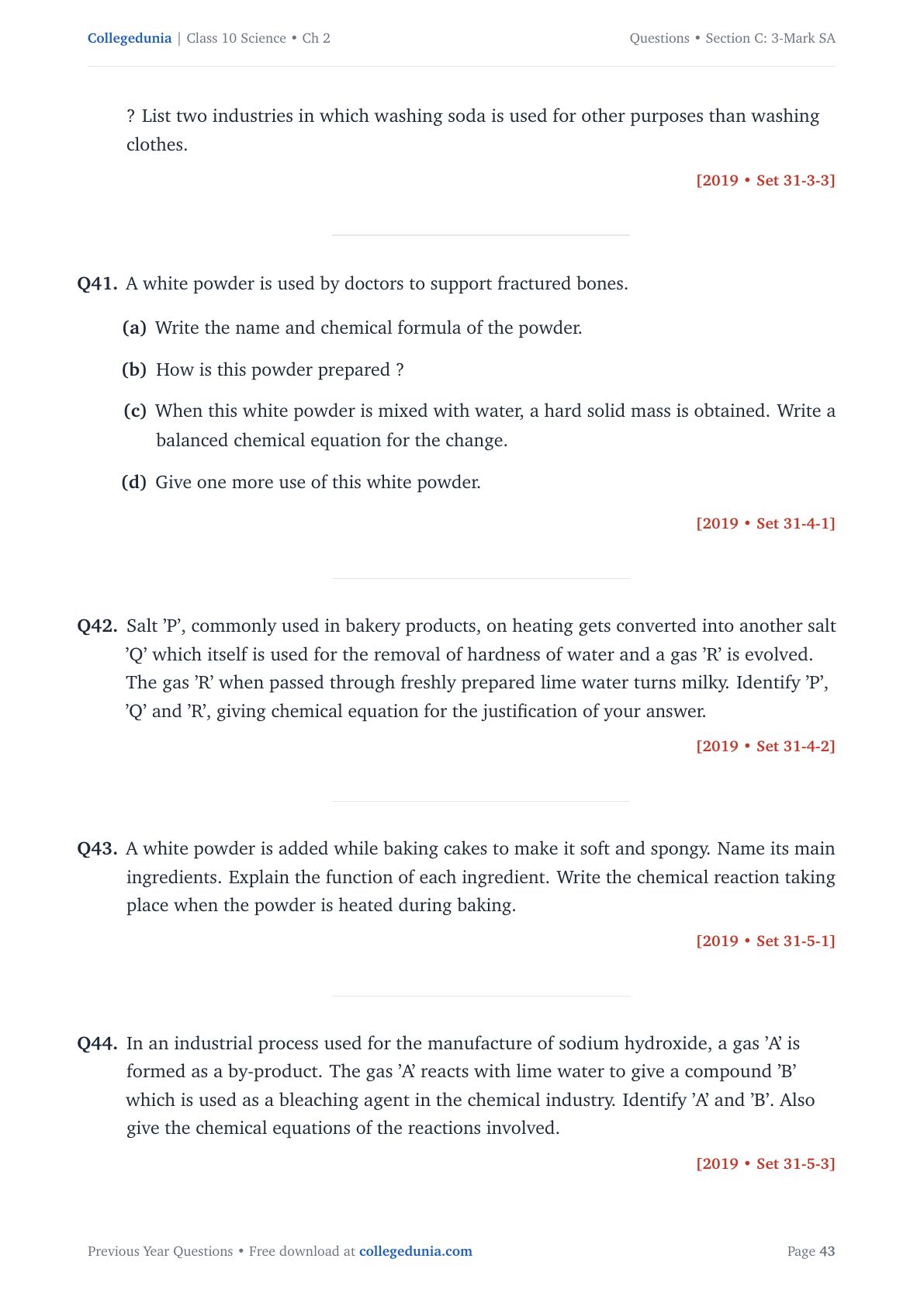
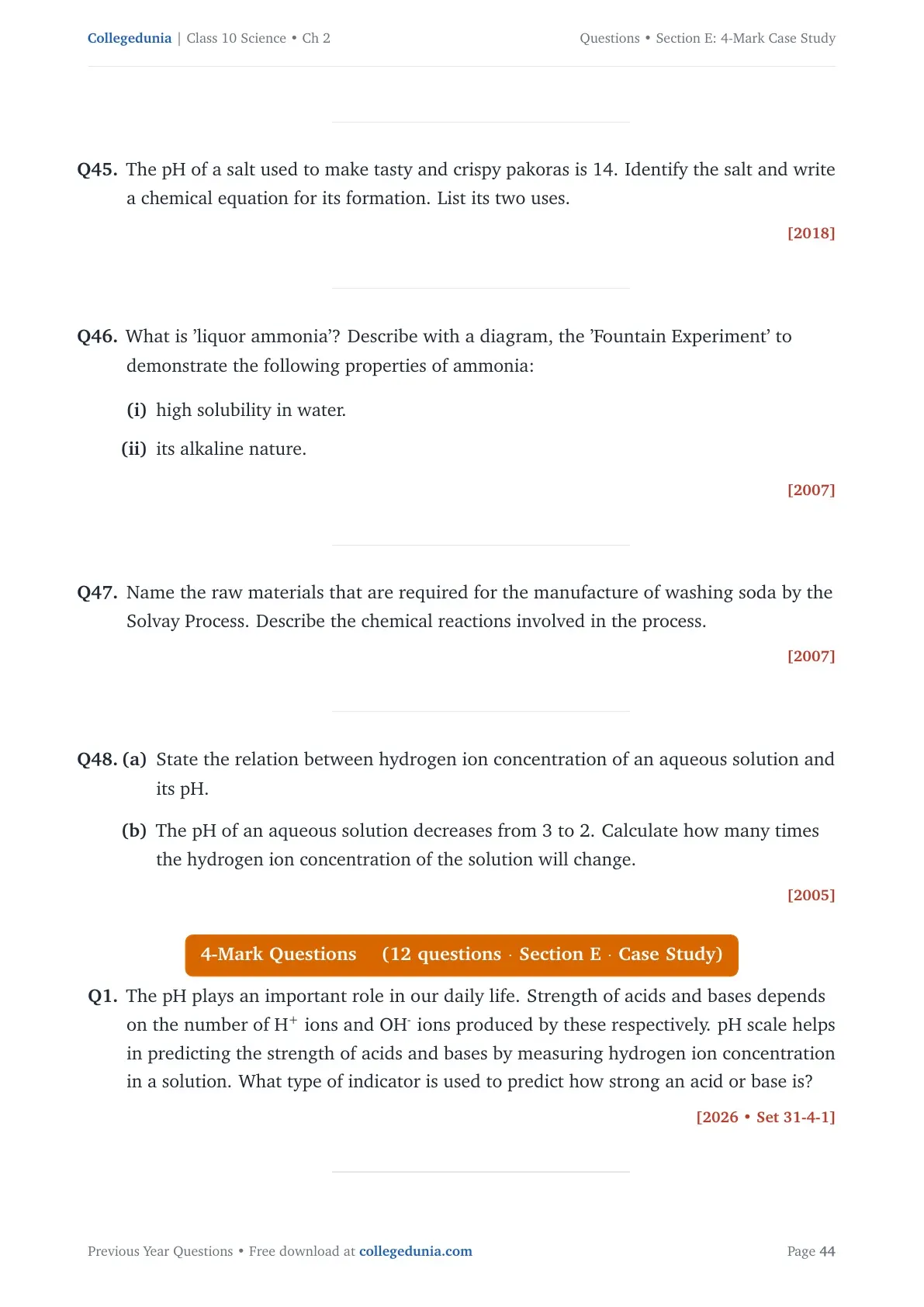
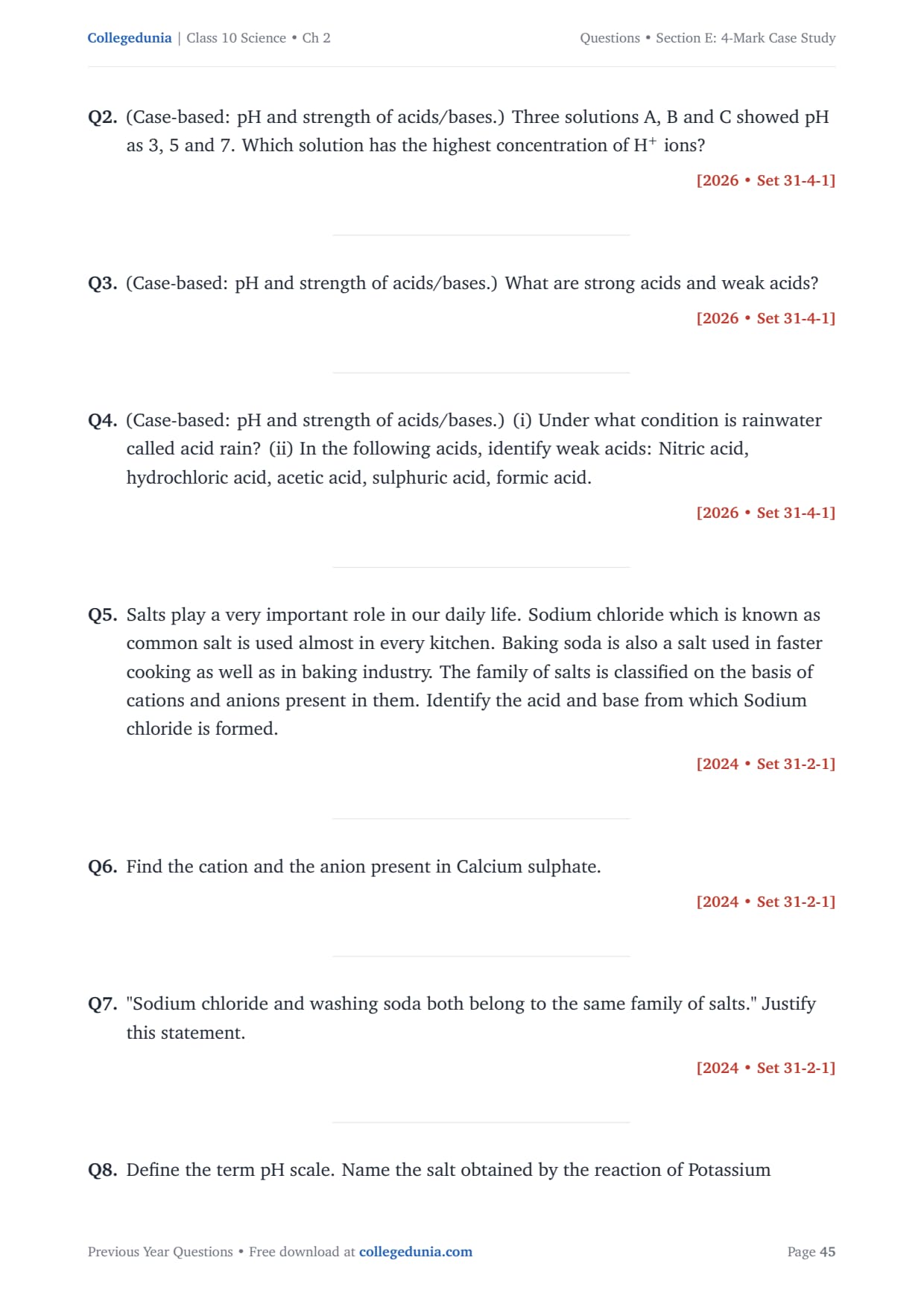
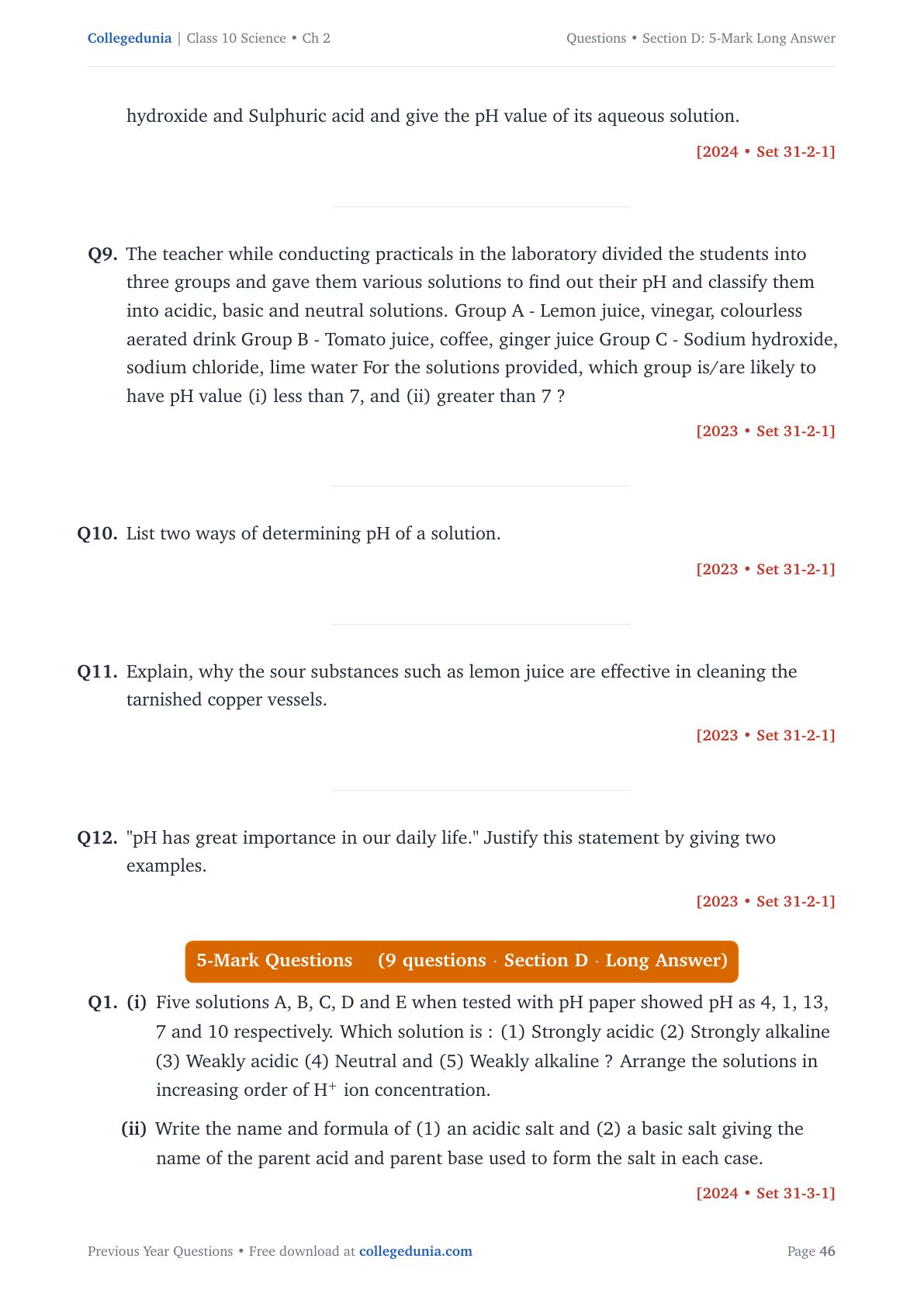
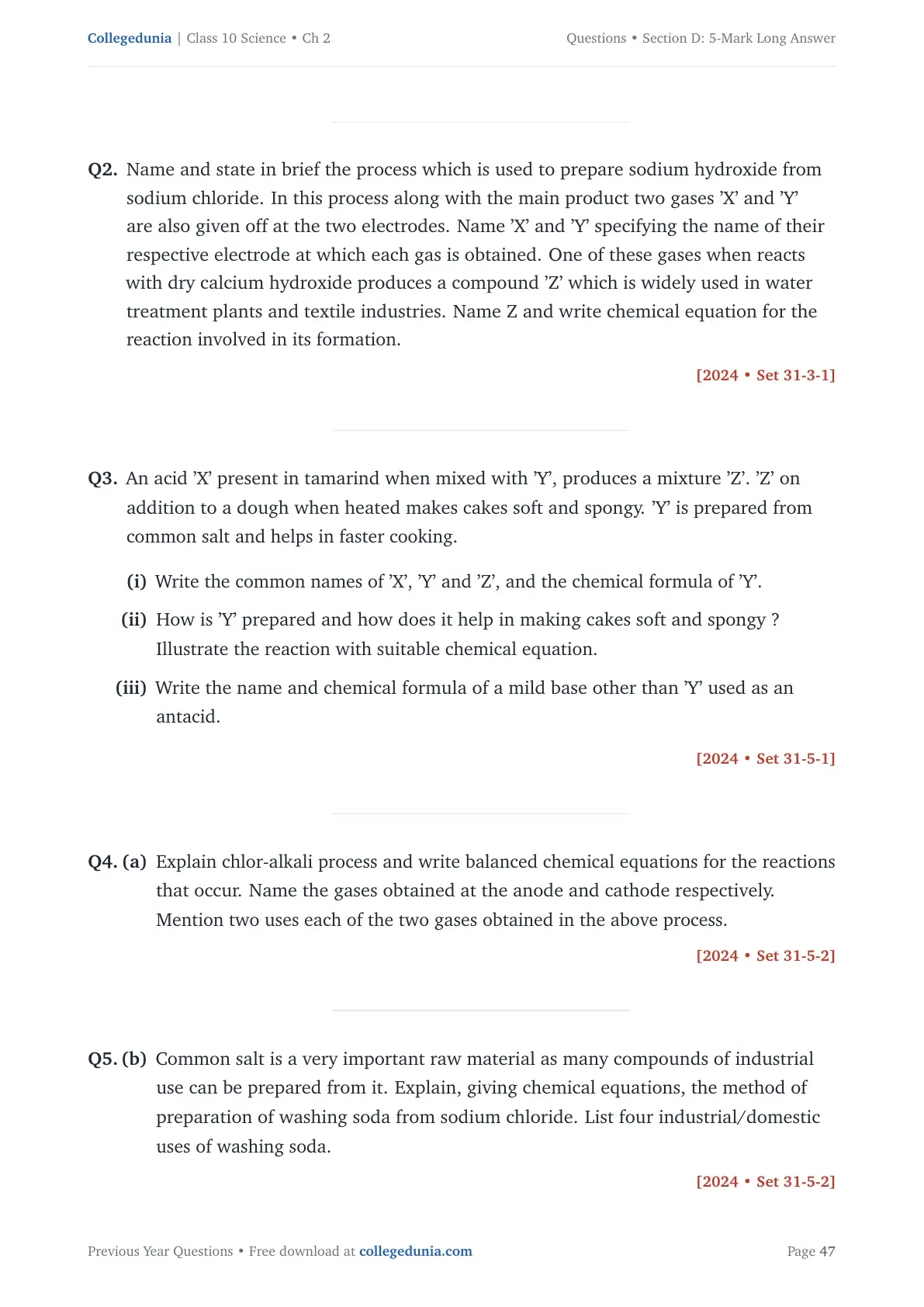
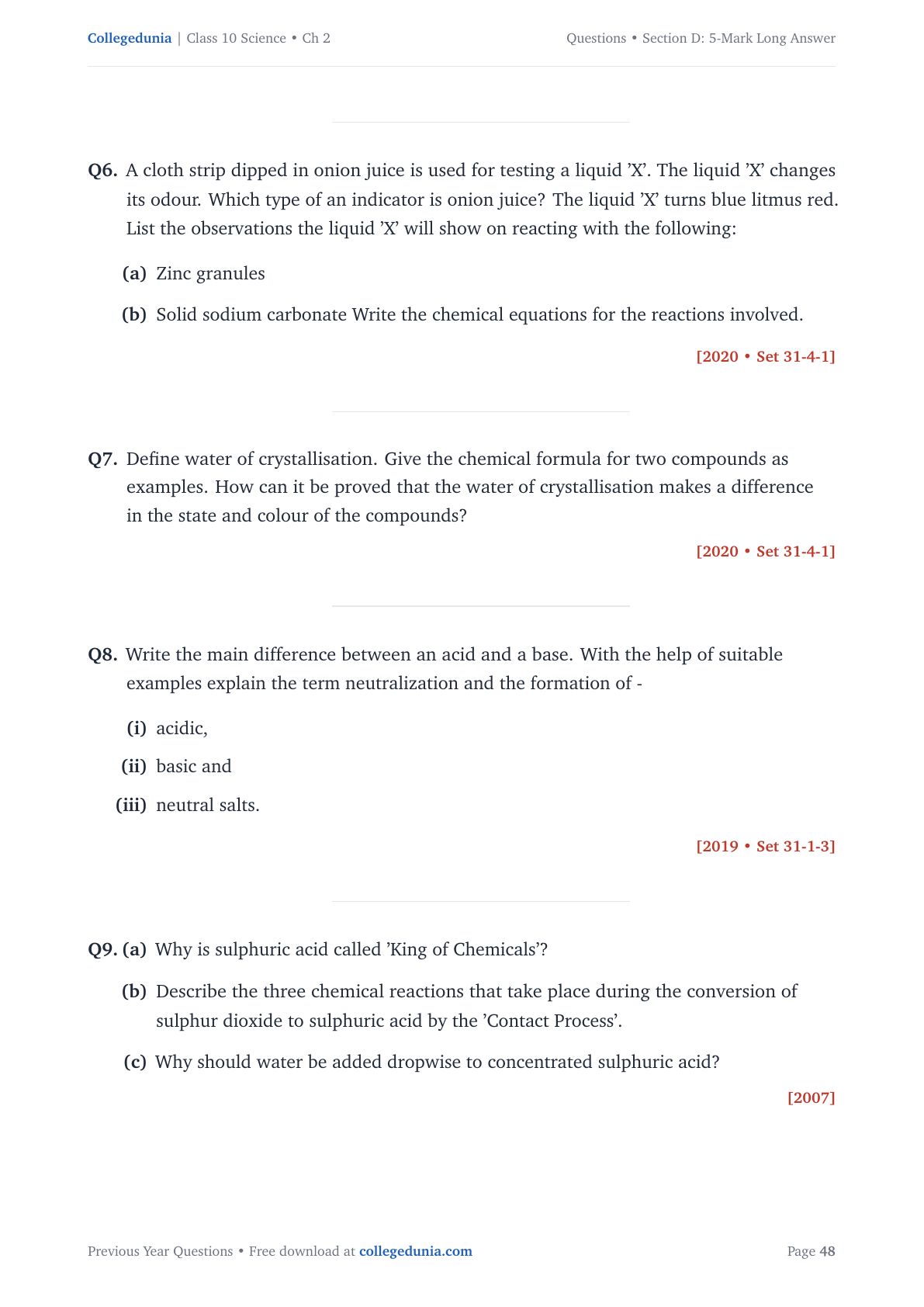
- 201 questions covering 19 years of CBSE board papers, from 2005 to 2026, across 19 different set codes.
- Every question is labelled with its year and set code, for example 2026, Set 31-1-1, so students can trace it back to the original paper.
- Only questions are included. There is no answer key, no model answers and no marking scheme in this PDF.
Every question in this PDF has been copied word for word from an official CBSE board paper and checked against the NCERT Science textbook for accuracy.
What the PDF Contains
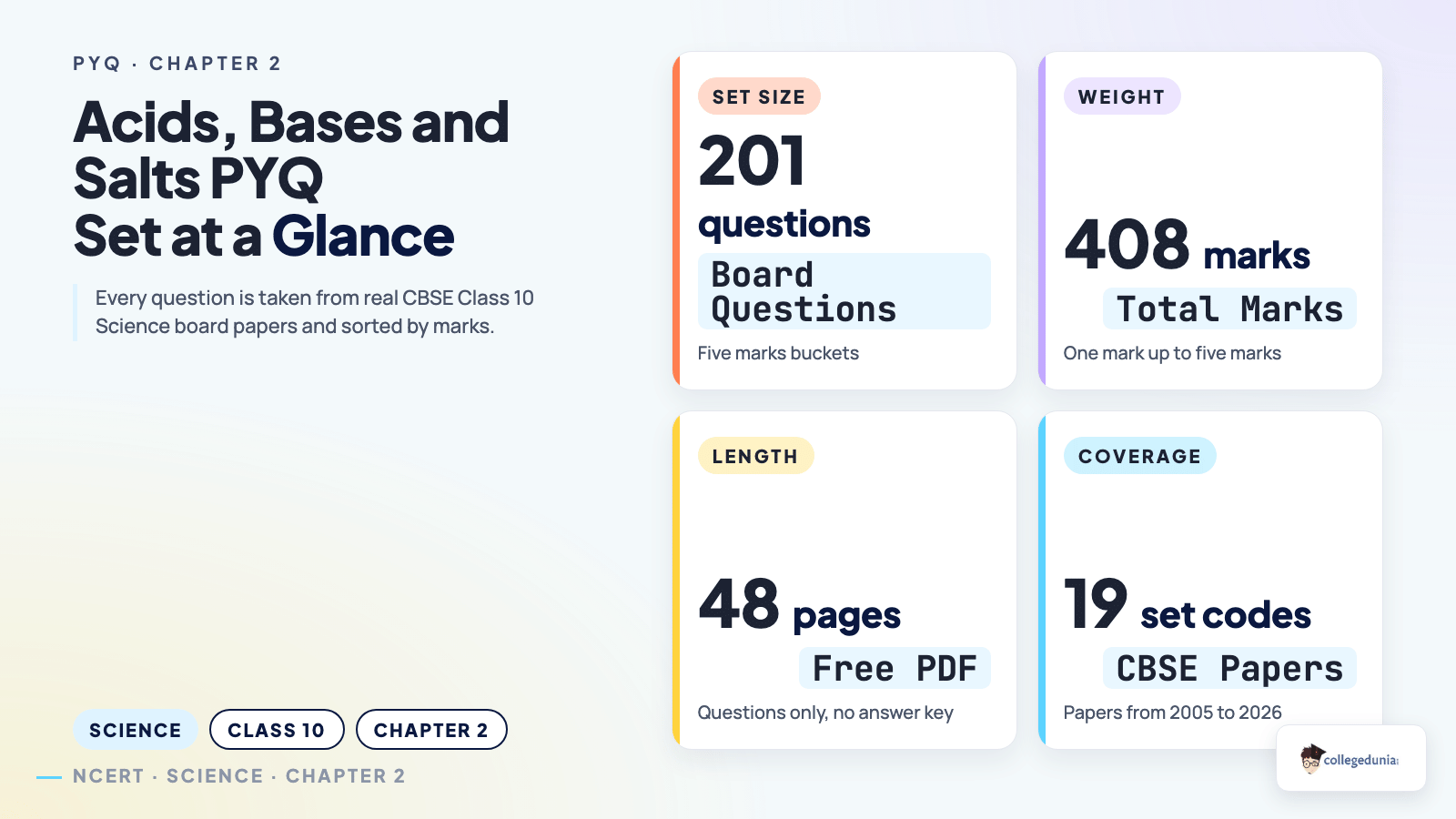
This PDF is a chapterwise question bank built only from real CBSE Class 10 Science board papers. Every one of the 201 questions has been pulled from an actual exam set, so the wording, the marks and the difficulty level match what students will see on their own board paper. Nothing has been rewritten or simplified. The set spans 19 different set codes over 21 exam years, which means the same concept often appears more than once, phrased in slightly different ways. That repetition is useful. It shows students exactly which ideas from Acids, Bases and Salts keep coming back, year after year.
Since it is a questions-only file, students can use it as a mock test, a timed drill or a quick topic-wise revision sheet, without answers sitting right next to the question and giving the game away.
Marks-wise Split
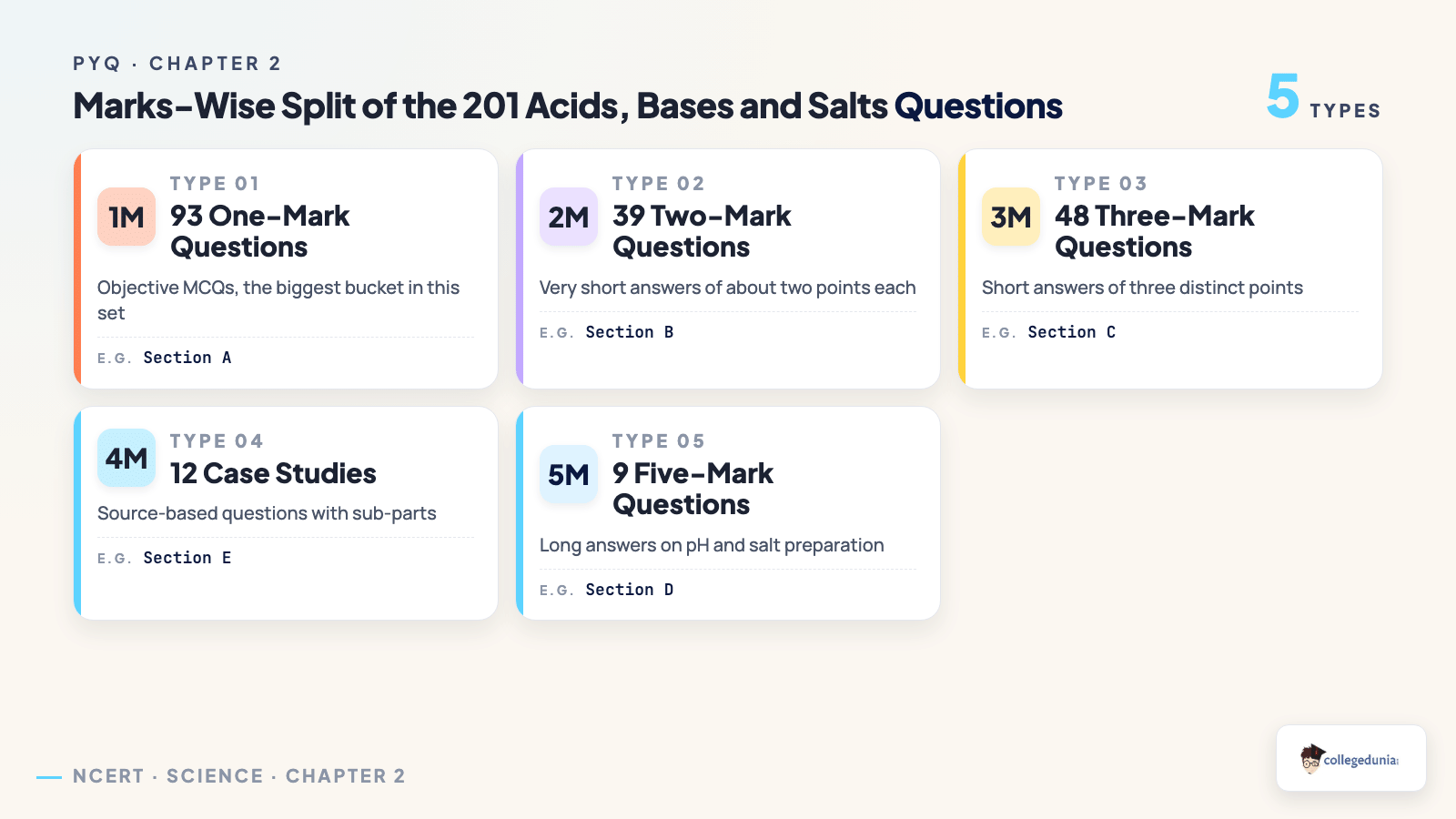
The 201 questions are spread across five mark buckets, matching the sections used in the actual CBSE Science paper.
| Marks | Number of Questions | CBSE Section | Question Type |
|---|---|---|---|
| 1 mark | 93 | Section A | MCQ |
| 2 marks | 39 | Section B | Very Short Answer |
| 3 marks | 48 | Section C | Short Answer |
| 4 marks | 12 | Section E | Source-based Case Study |
| 5 marks | 9 | Section D | Long Answer |
| Total | 201 | – | 408 marks |
The 1 mark MCQs make up nearly half the set, which fits the current CBSE pattern of heavy Section A weightage. The 4 and 5 mark questions are fewer in number but carry more weight per question, so they deserve a slower, more careful read.
Which Topics the Papers Keep Asking About
Reading through 19 set codes shows a clear pattern in what CBSE examiners return to, year after year, in this chapter. The questions cluster around these topics.
| Topic | What Gets Asked |
|---|---|
| Properties of acids and bases | Reactions, physical behaviour, and how to tell one from the other |
| Indicators | Litmus, phenolphthalein, methyl orange, and natural indicators like turmeric |
| Reaction of acids with metals and carbonates | Gas identification tests and word equations |
| Neutralisation | Everyday examples and the underlying reaction |
| The pH scale | Reading pH values, comparing acidity and basicity |
| Importance of pH in everyday life | Soil, digestion, tooth decay, rainwater |
| Common salt | Formation and household uses |
| Washing soda and baking soda | Preparation and industrial or kitchen uses |
| Bleaching powder | Preparation and uses in disinfection and bleaching |
| Plaster of Paris | Preparation from gypsum and its setting reaction |
| Water of crystallisation | Blue vitriol, gypsum, and what happens on heating |
The 4-mark Source-based Case Study Questions and How to Attempt Them
Section E carries 12 questions in this chapter, and all of them follow the source-based case study format. Each one opens with a short passage, a data table or a real-life scenario, followed by two to four sub-questions built around it. Students often lose marks here not because the chemistry is hard, but because they skip past the passage and jump straight to the sub-questions.
The better approach is to read the passage twice before touching the sub-questions. Underline any numbers, chemical names or observations mentioned in it, since these usually map directly to one of the sub-questions. Answer in the same order the sub-questions appear, and keep each answer tied back to something stated in the passage rather than writing a generic textbook definition. Since these questions test application, a one-line reasoning statement before the final answer earns marks that a bare answer would miss.
How to Attempt the pH and Salt-preparation Questions
- Read the question fully before writing anything, and note whether it asks for a reaction, an observation, or a reason.
- For pH questions, place the given substance on a mental scale of 0 to 14 before comparing it with the other substance in the question.
- For salt-preparation questions, identify the starting acid and base first, then write the balanced word equation before the chemical equation.
- State the colour change or gas evolved wherever an indicator or a test is part of the question, since examiners award marks for this observation separately.
- Finish with the correct chemical formula and state symbols, since these are graded even in short-answer questions.
Common Mistakes Students Make in This Chapter
Many students confuse the strength of an acid or base with its concentration, when these are two separate ideas. Another common slip is writing an unbalanced chemical equation for the reaction of an acid with a metal or a carbonate, which costs marks even when the concept is understood. Students also mix up washing soda and baking soda in their preparation methods and uses, and often forget to mention water of crystallisation when writing the formula for gypsum or blue vitriol. In pH-based questions, a frequent error is treating a lower pH number as automatically meaning a weaker substance, rather than a more acidic one.
Student Feedback
We ran a short poll with students who downloaded this PYQ set to see how they used it before their board exam.
78 percent said practising questions sorted by marks helped them manage exam time better. 65 percent said seeing the same topic repeated across different years made revision faster. 82 percent said they preferred a questions-only PDF so they could test themselves before checking their textbook.
Source: Collegedunia student poll, Class 10 Science PYQ downloads.
How This PYQ Set Pairs With the Other Chapter 2 Resources
This PYQ PDF works best alongside the other Chapter 2 study material on Collegedunia. Use the solutions and notes to build the concept first, then come back to this PDF to test recall under exam conditions.
| Resource | Link |
|---|---|
| NCERT Solutions for Chapter 2 | Acids, Bases and Salts Solutions |
| NCERT Notes for Chapter 2 | Acids, Bases and Salts Notes |
| Handwritten Notes for Chapter 2 | Acids, Bases and Salts Handwritten Notes |
| NCERT Book PDF for Chapter 2 | Acids, Bases and Salts Book PDF |
All Class 10 Science Chapterwise PYQ PDFs
Each chapter of Class 10 Science has its own PYQ PDF, built the same way as this one, from real board papers only.
| Chapter | PYQ PDF |
|---|---|
| Chapter 1 | Chemical Reactions and Equations Class 10 Science PYQ |
| Chapter 2 | Acids, Bases and Salts This page |
| Chapter 3 | Metals and Non-metals Class 10 Science PYQ |
| Chapter 4 | Carbon and its Compounds Class 10 Science PYQ |
FAQ
Frequently Asked Questions
Ques. How many questions are in the Class 10 Science Chapter 2 PYQ PDF?
Ans. The PDF has 201 questions worth 408 marks in total, spread across 48 pages.
Ques. Which years does this PYQ PDF cover?
Ans. It covers CBSE Class 10 Science board papers from 2005 to 2026, across 19 different set codes.
Ques. Does this PDF include answers?
Ans. No. This is a questions-only PDF. It has no answer key, no model answers and no marking scheme.
Ques. How many 1 mark questions are in this chapter's PYQ set?
Ans. There are 93 one-mark MCQ questions from Section A.
Ques. Are the source-based case study questions included?
Ans. Yes. There are 12 four-mark source-based case study questions from Section E.
Ques. Is this PDF free to download?
Ans. Yes, the PDF is free to download for all students.
Ques. Which topics from Acids, Bases and Salts appear most often?
Ans. Indicators, the pH scale, reaction of acids with metals and carbonates, and the preparation of washing soda, baking soda, bleaching powder and Plaster of Paris come up most frequently.
Ques. How were these questions verified?
Ans. Each question was copied directly from an official CBSE board paper and checked against the NCERT Science textbook.



Comments