




The Class 12 Psychology Chapter 3 Meeting Life Challenges PYQ PDF brings together 24 board-paper questions from CBSE papers between 2023 and 2026. Every question carries a full step-by-step solution, so students can check an answer and see exactly how examiners expect stress, coping, and life-skills questions to be answered, according to the latest 2026-27 CBSE syllabus.
- 24 questions across four sections: 15 one-mark MCQs, 3 two-mark VSA, 4 three-mark SA, and 2 four-mark case studies.
- Full solutions included for all 24 questions, not just a bare answer key.
- Four exam years covered: 2023, 2024, 2025, and 2026.
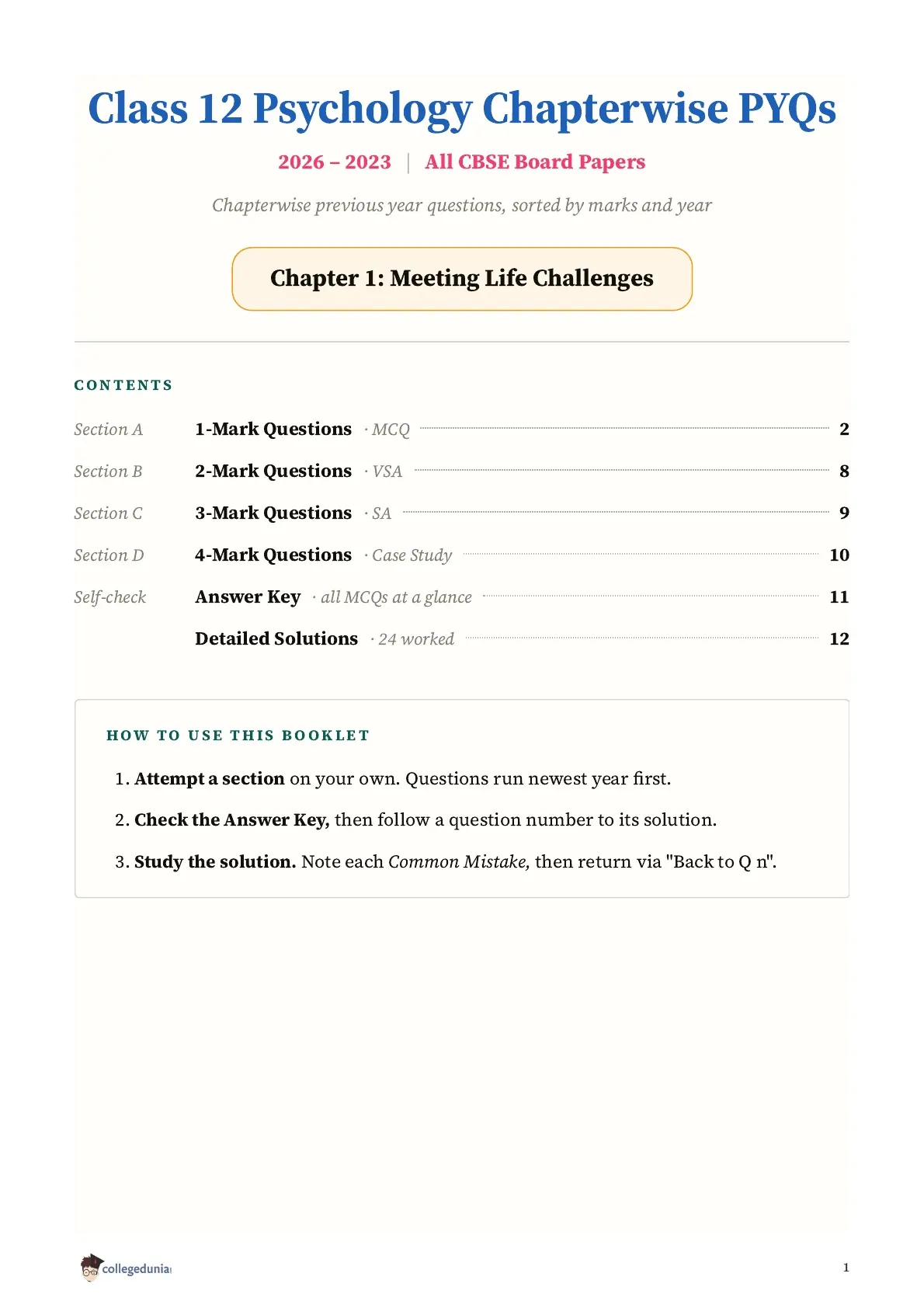
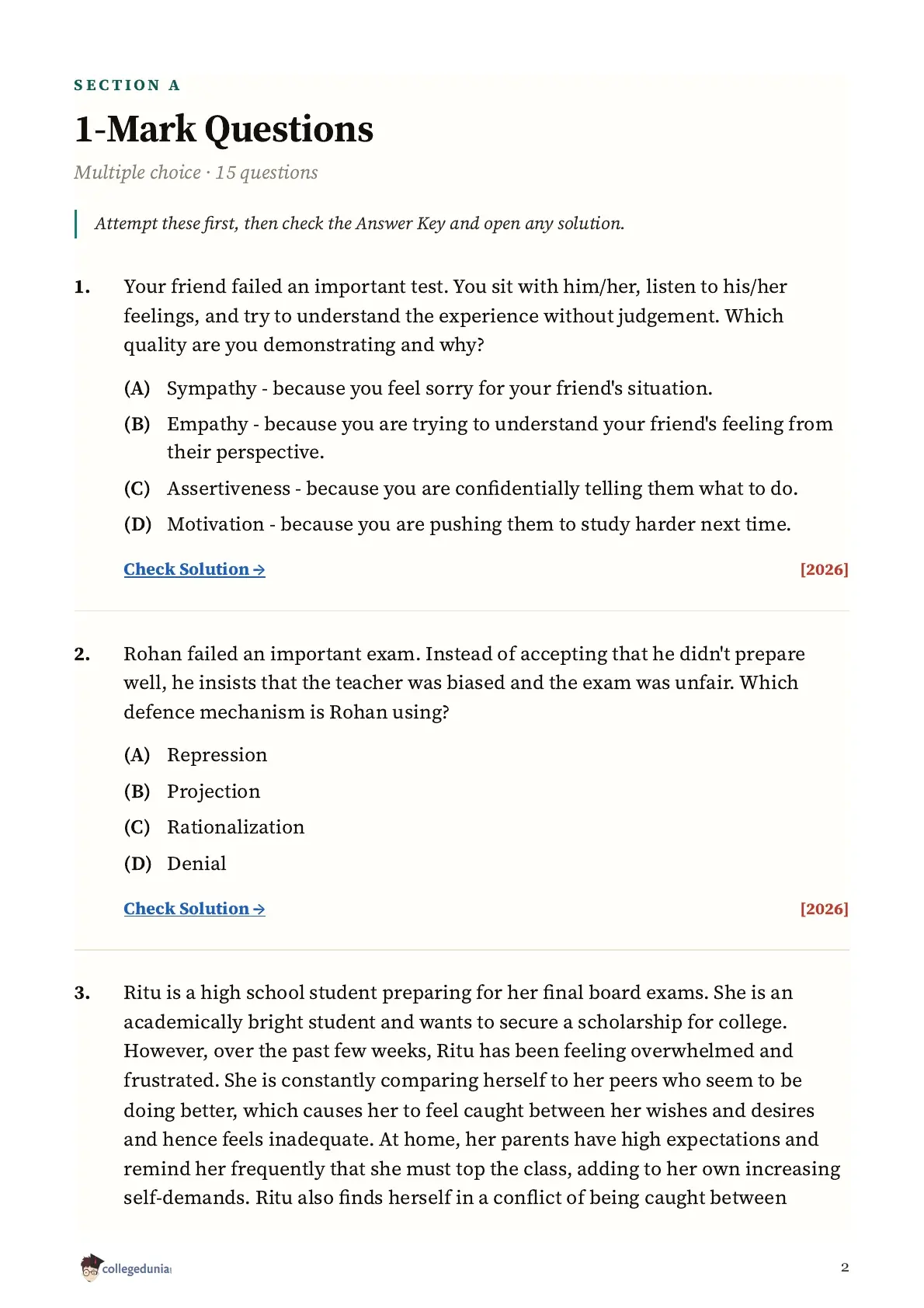
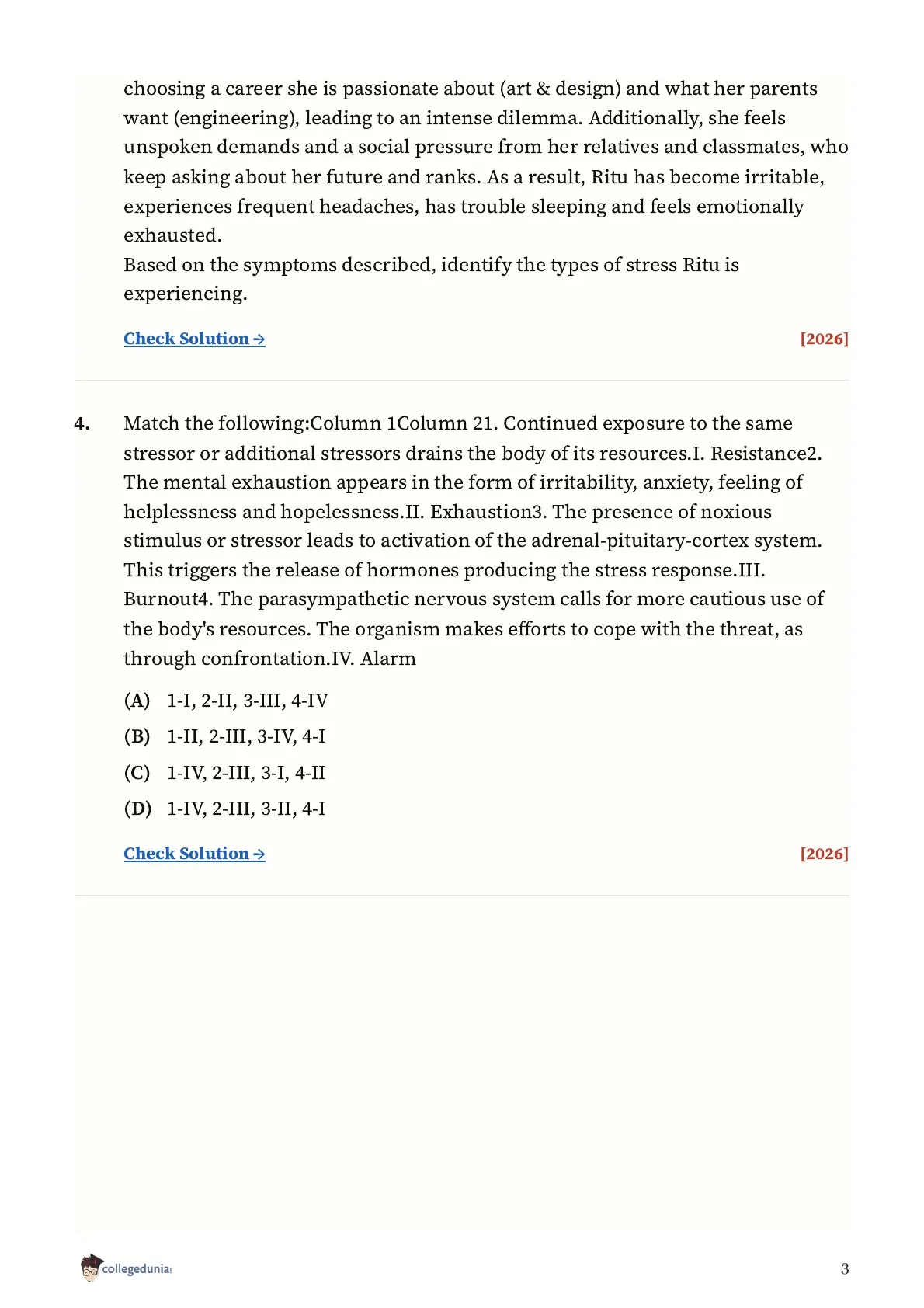
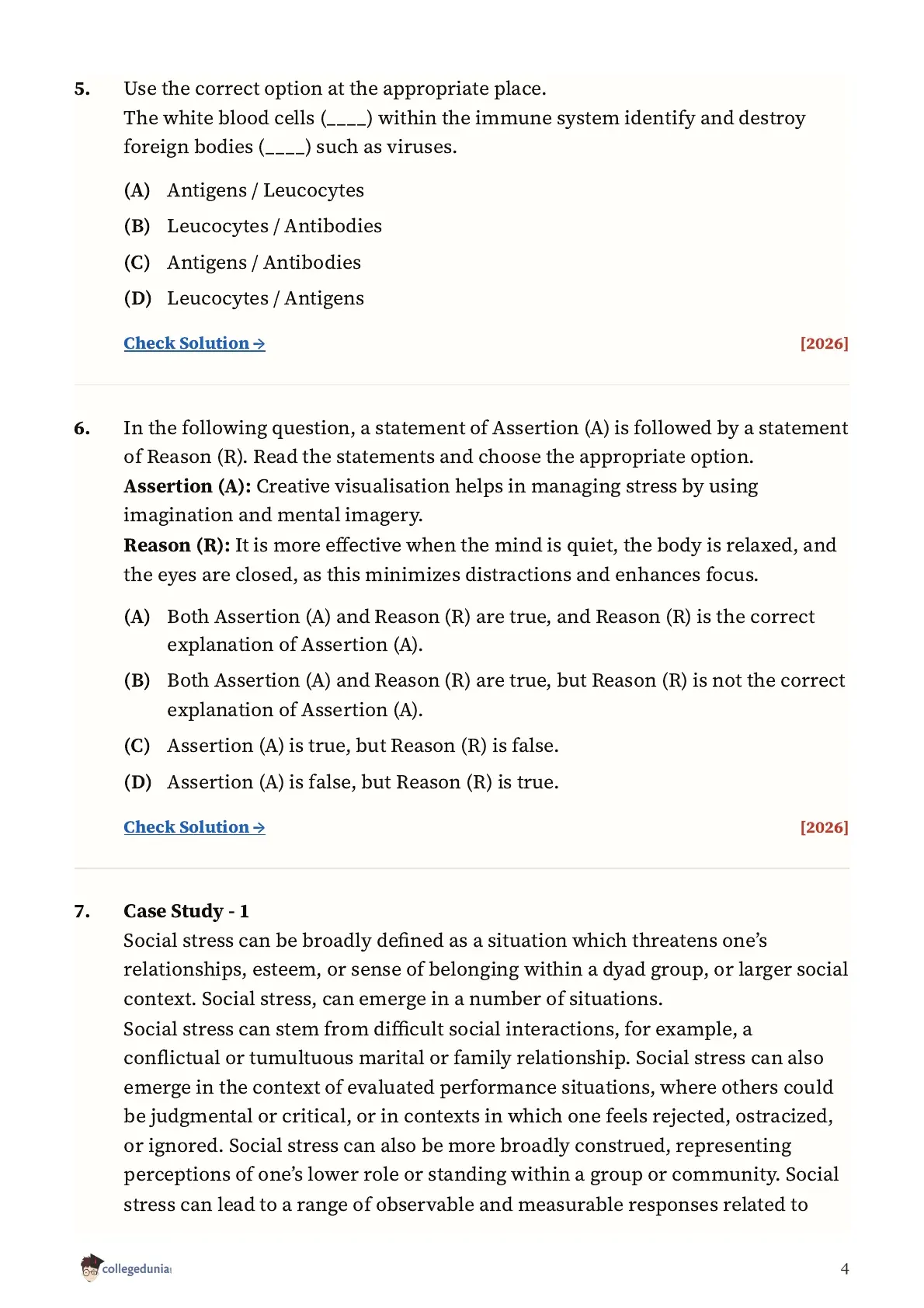
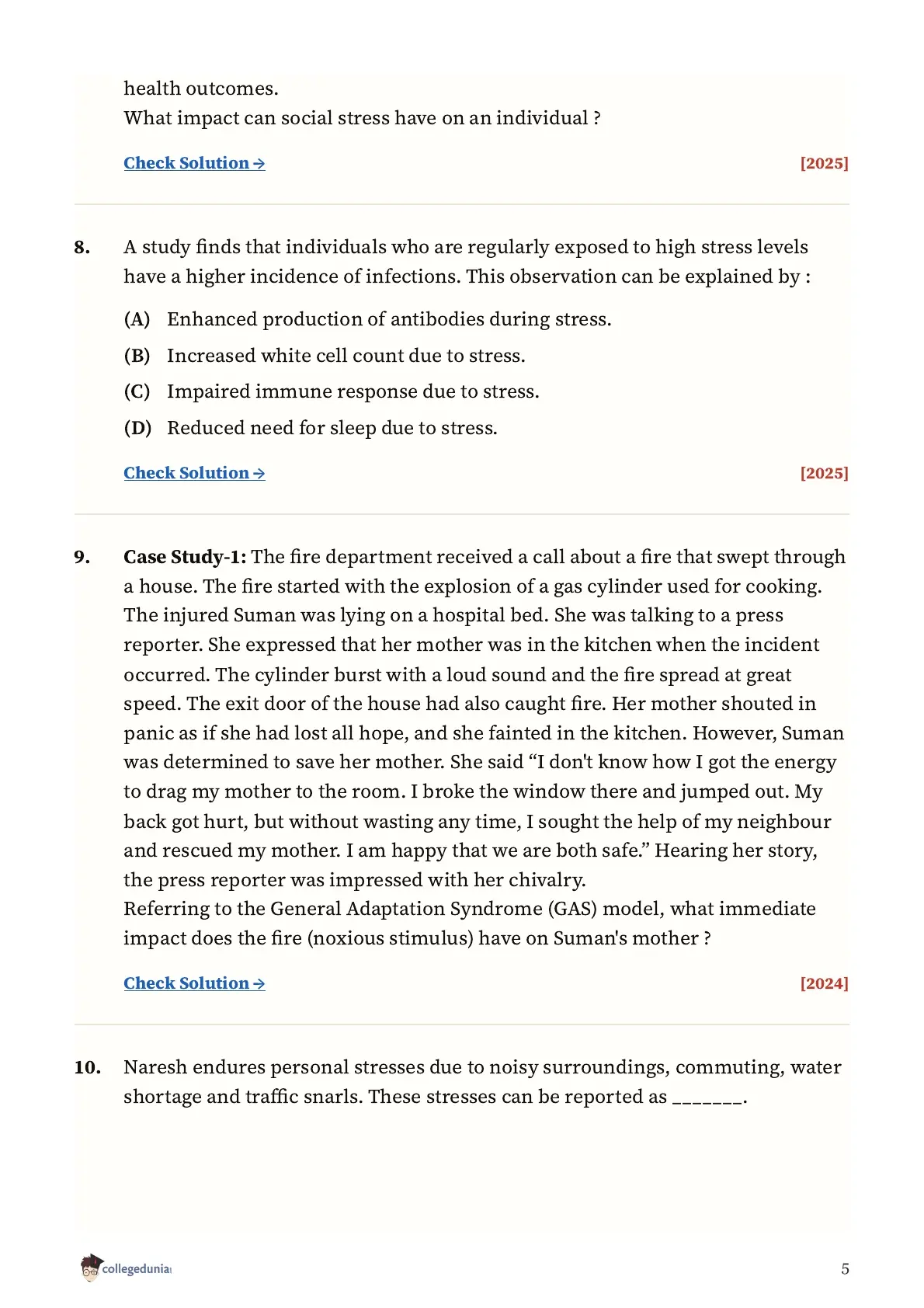
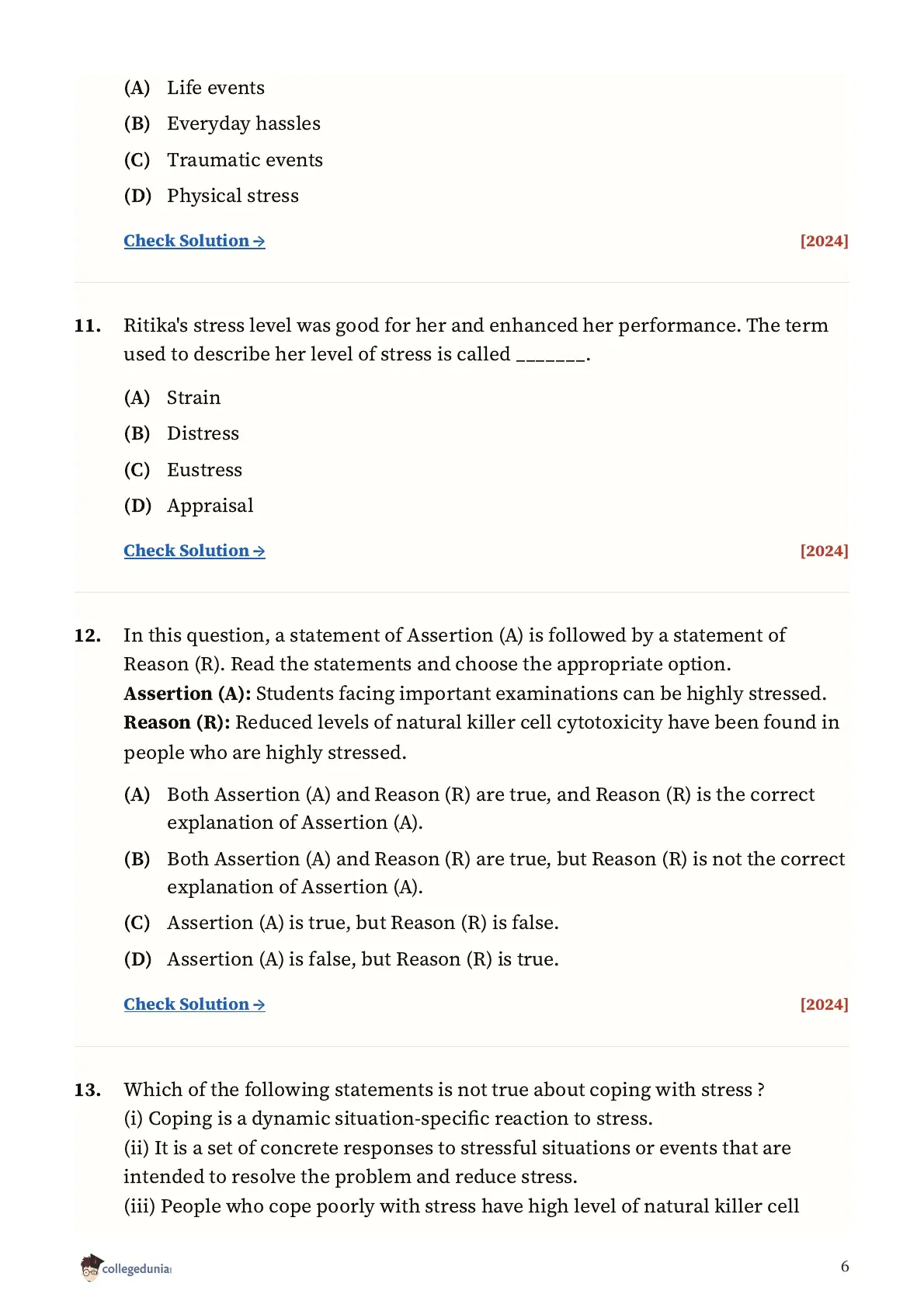
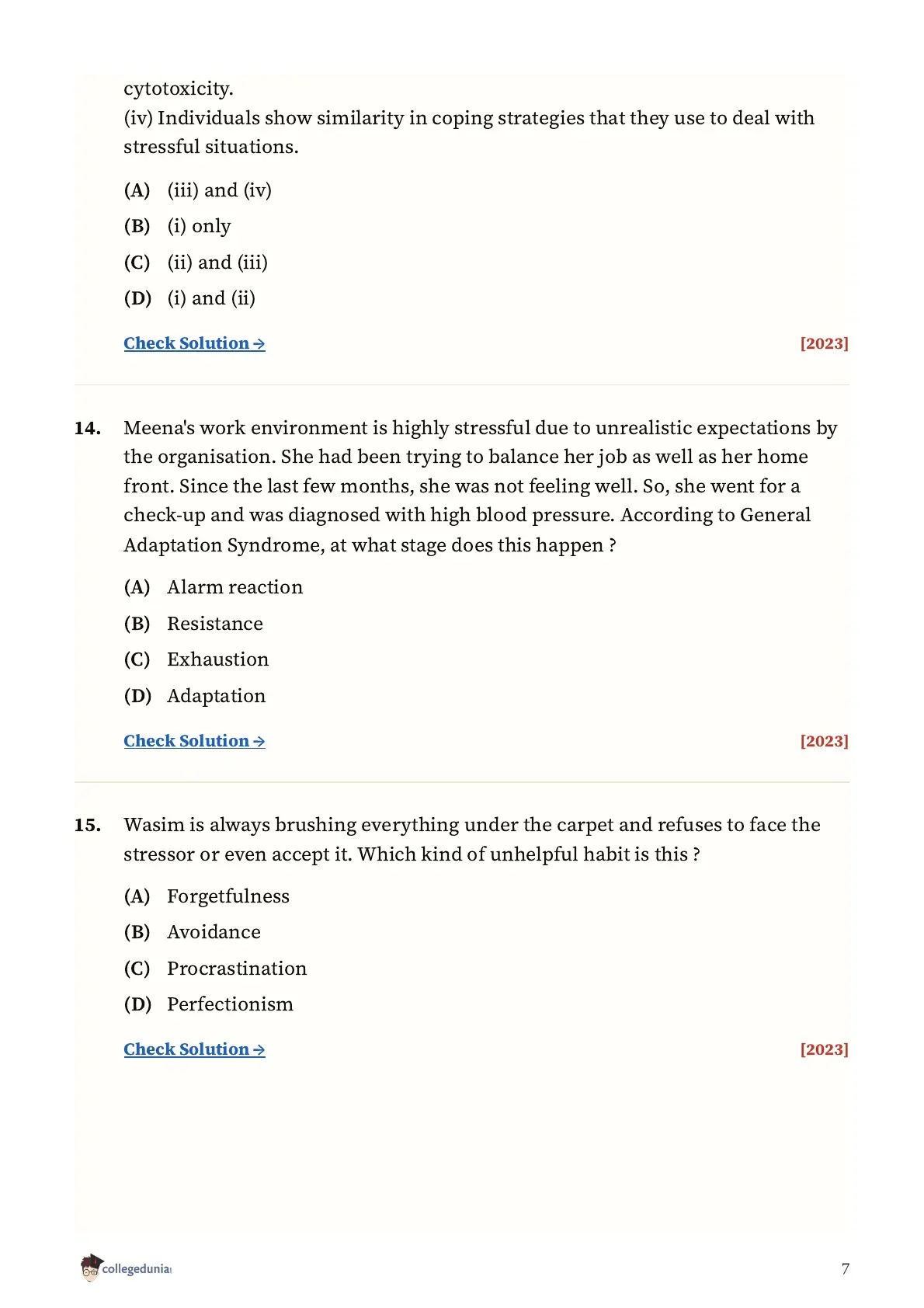
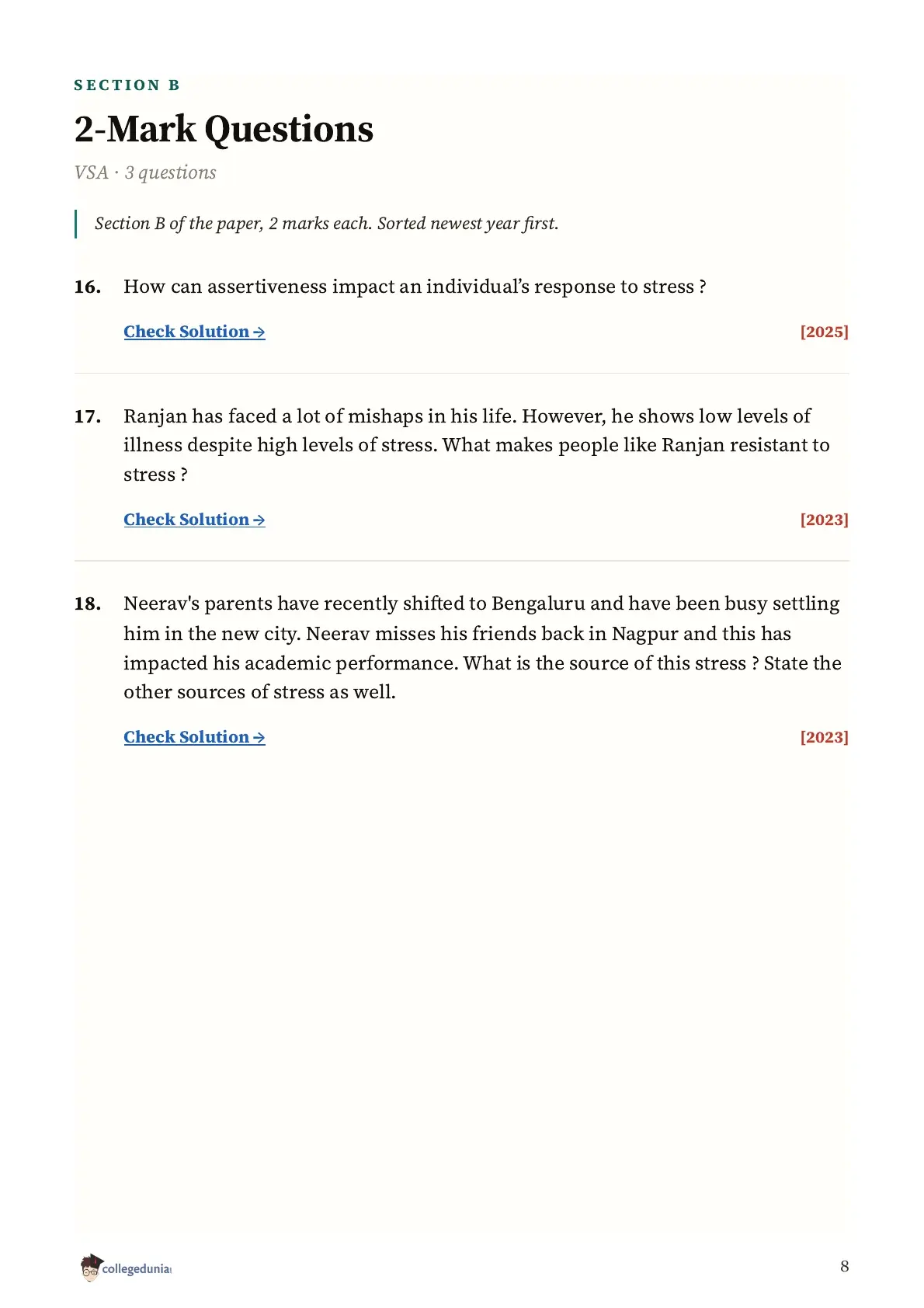
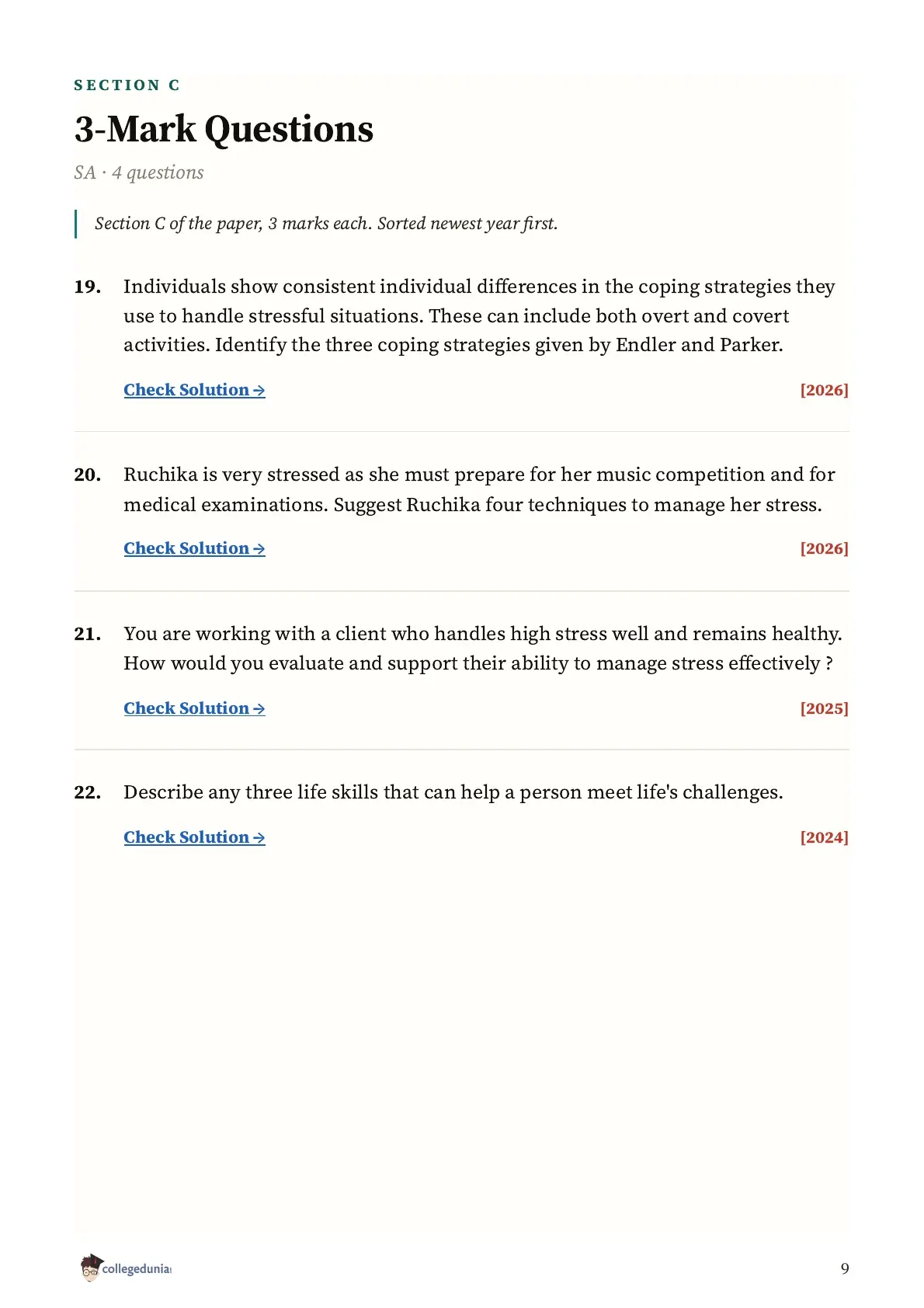
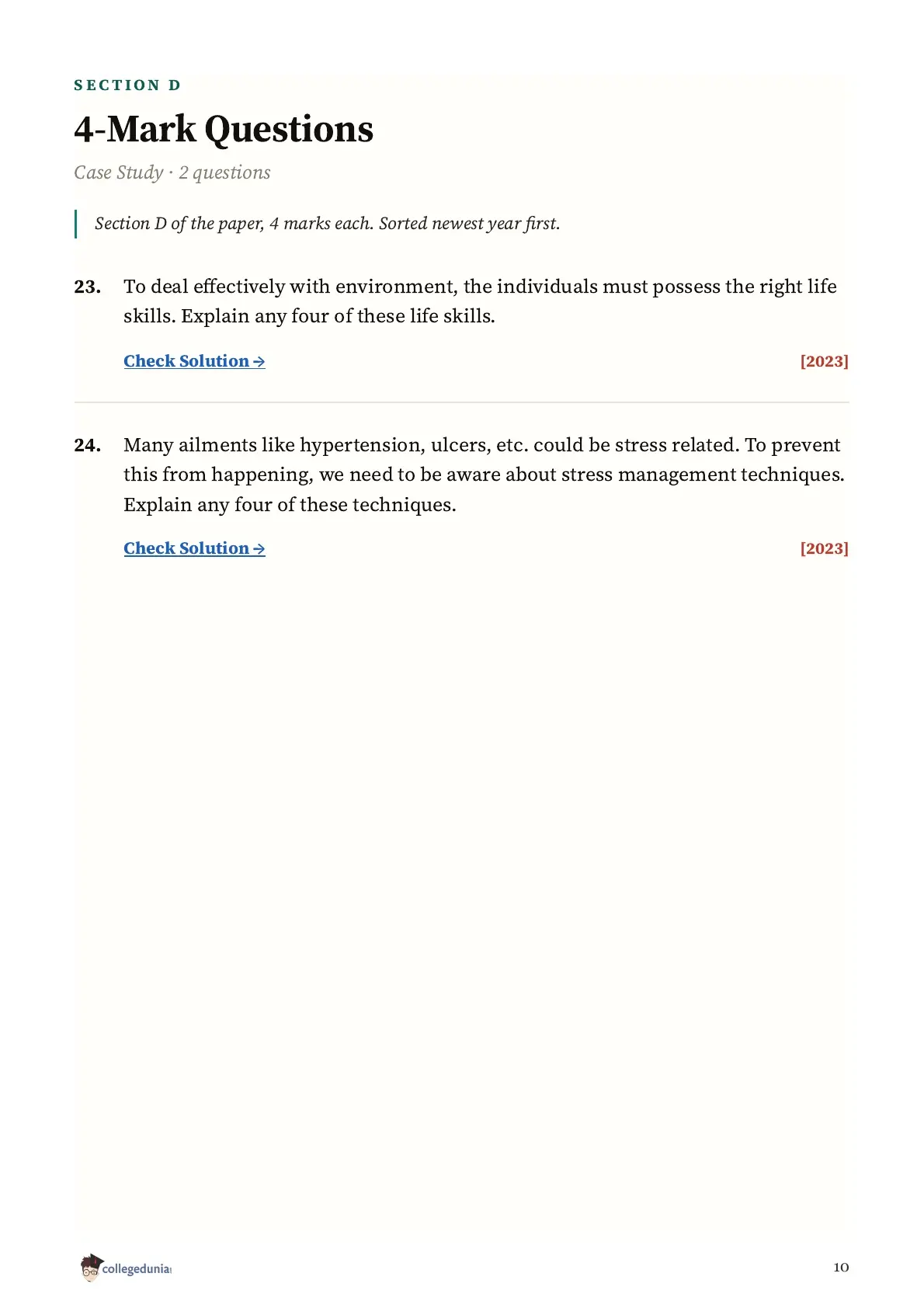
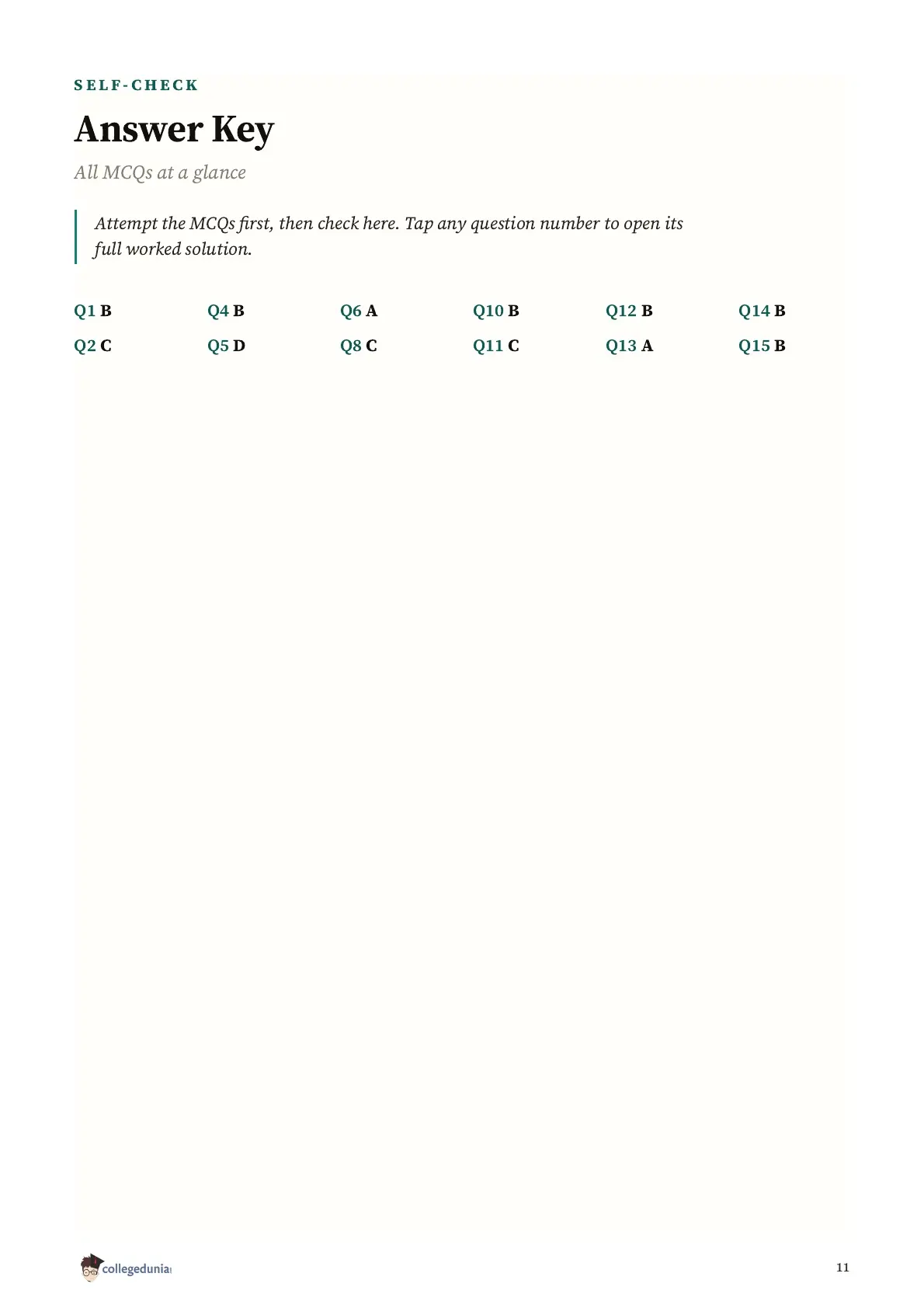
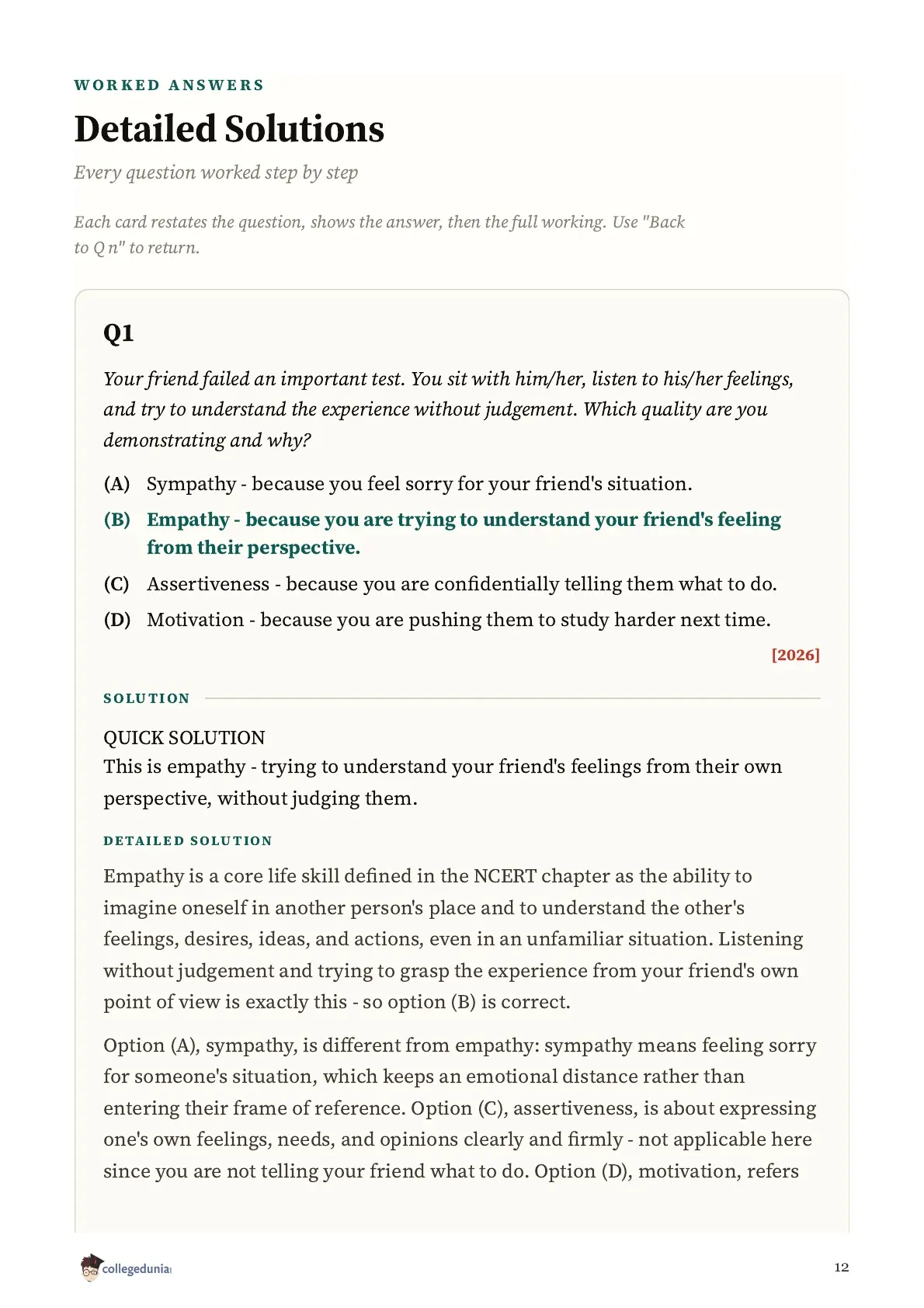
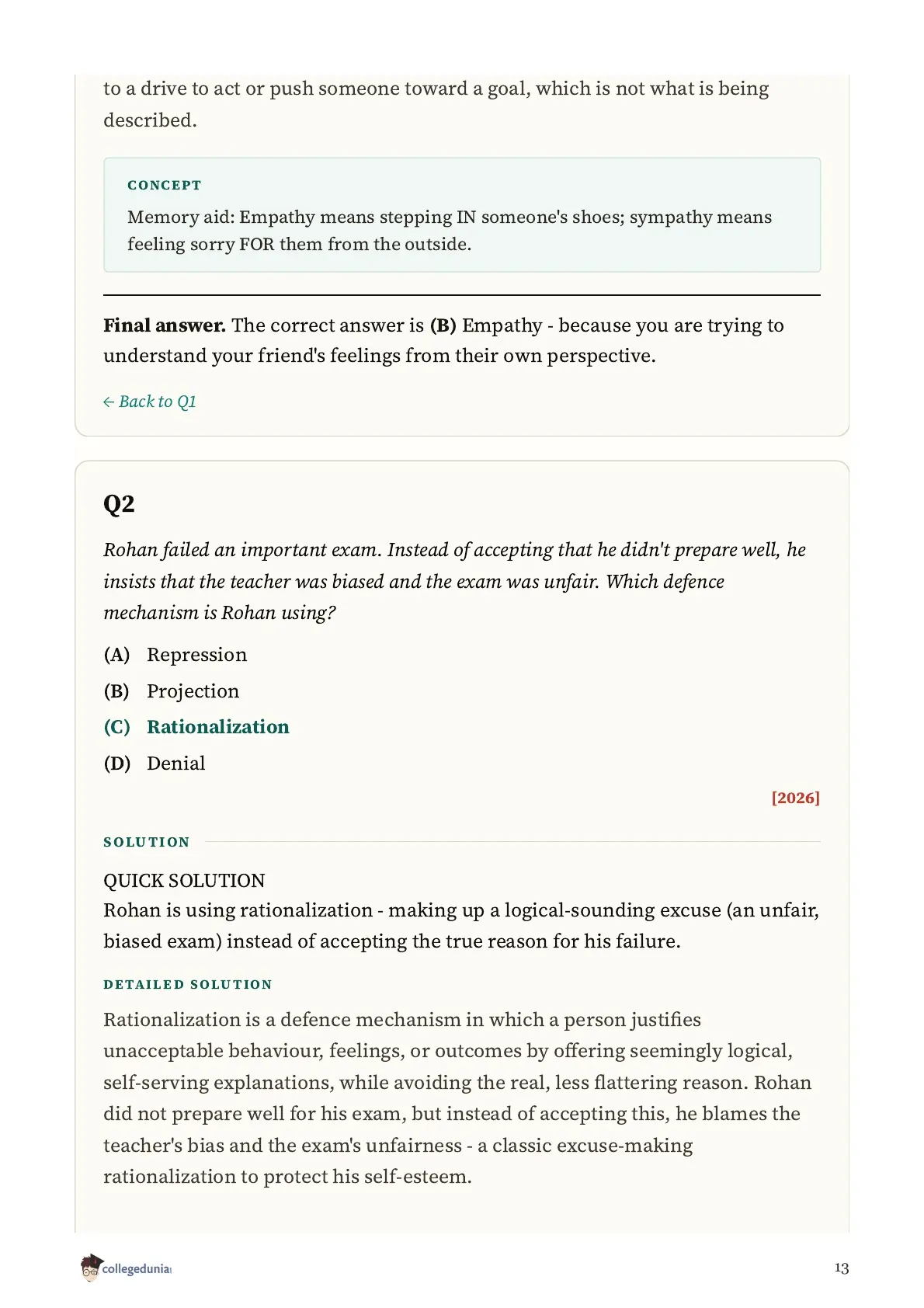
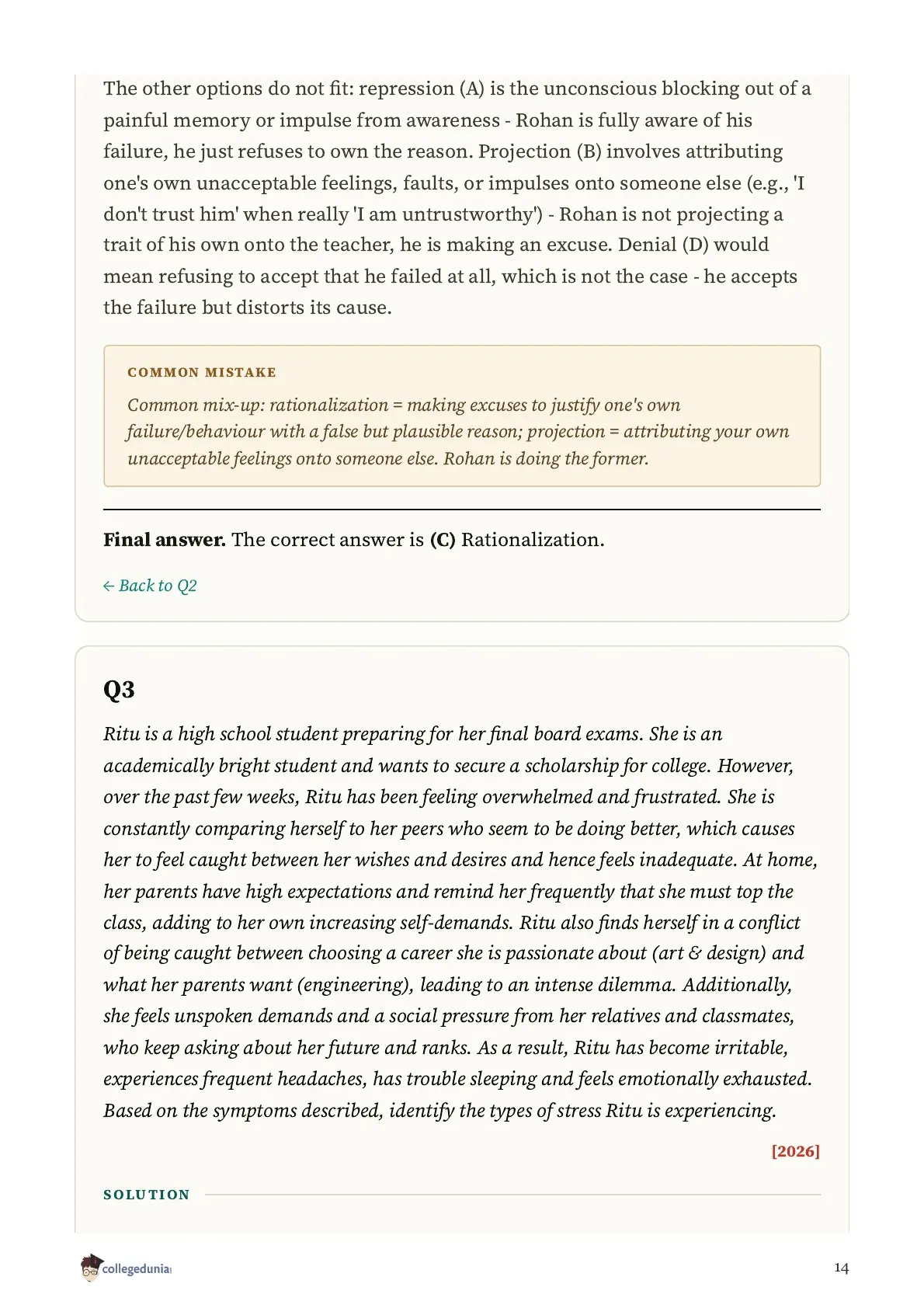
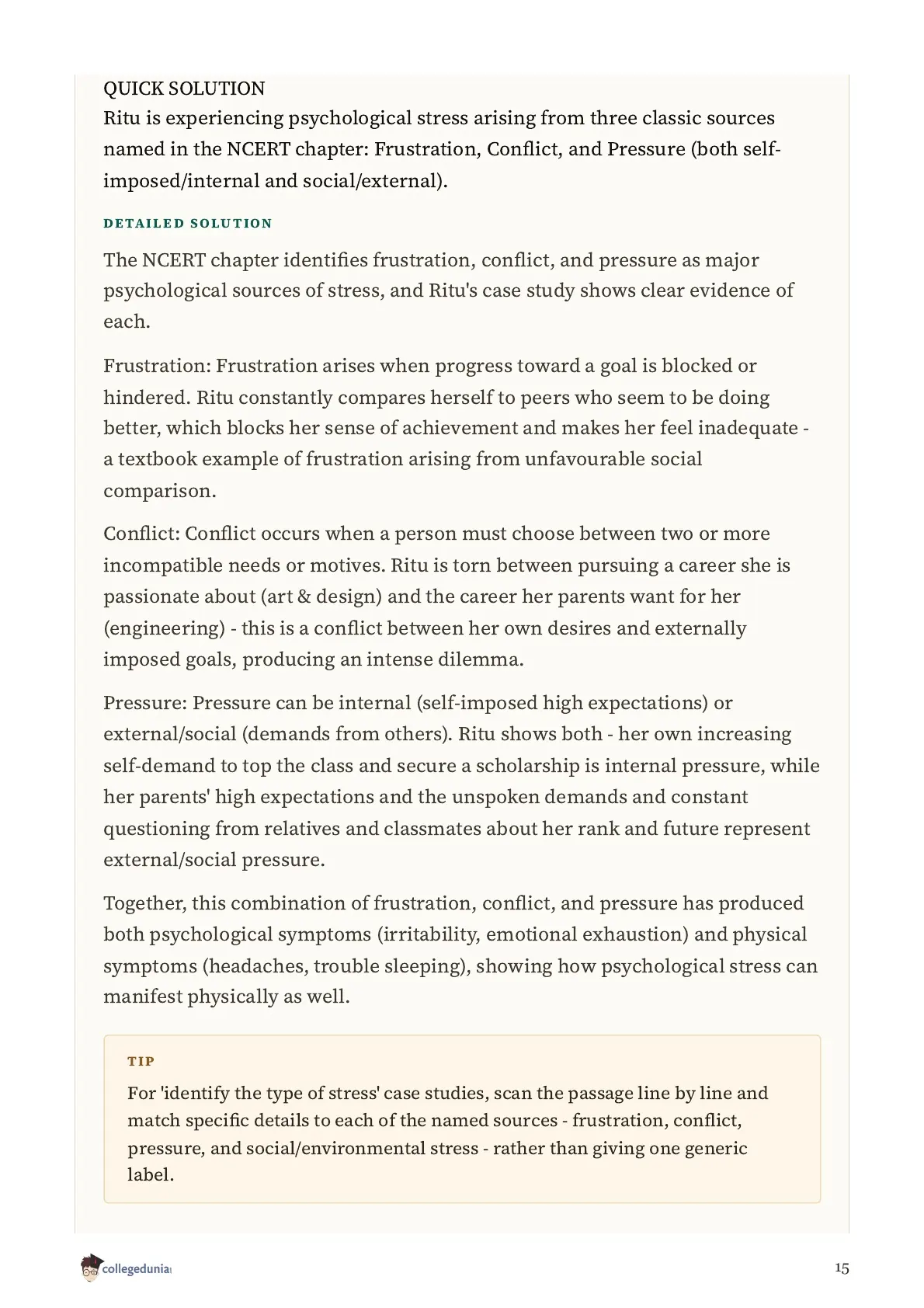
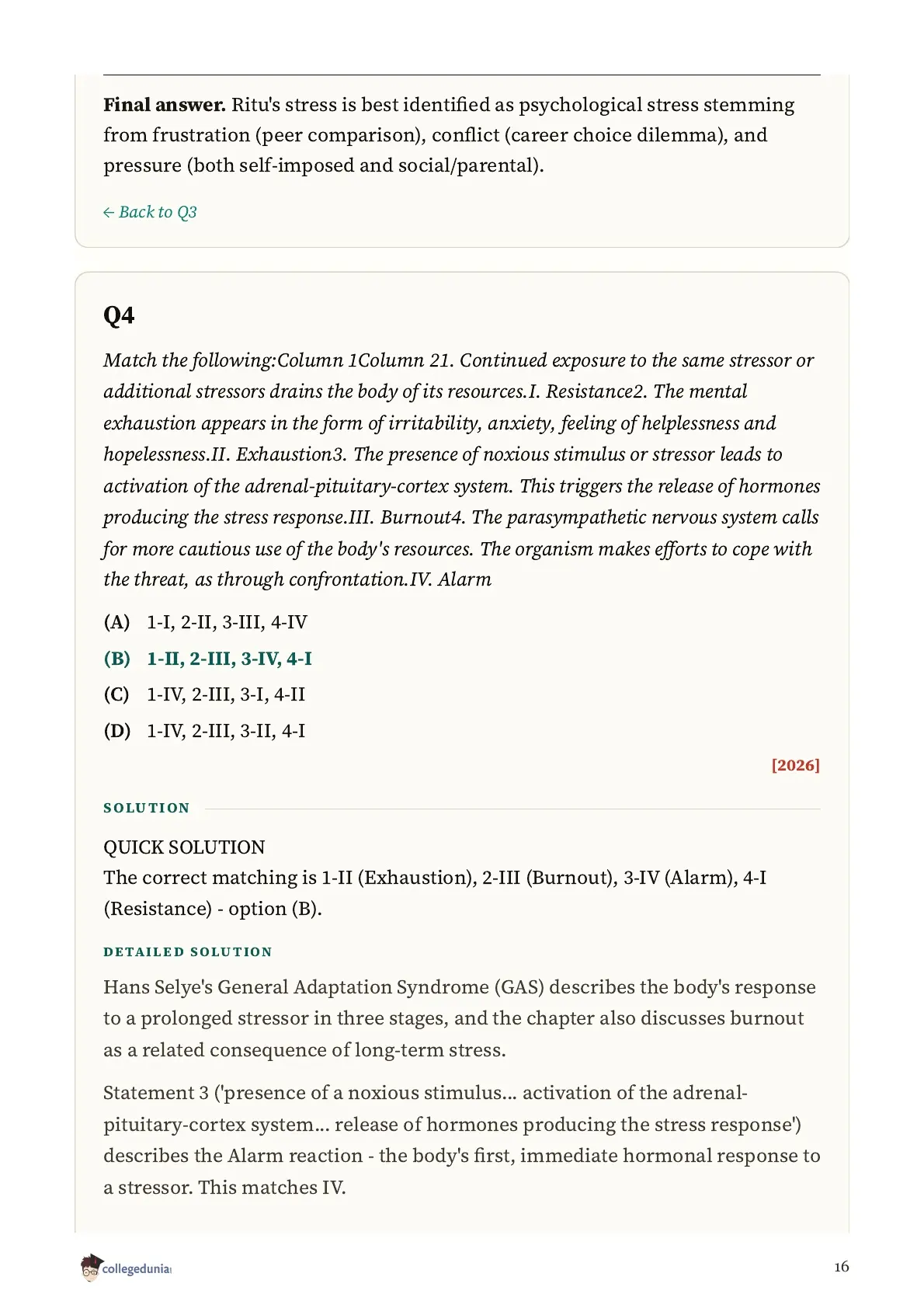
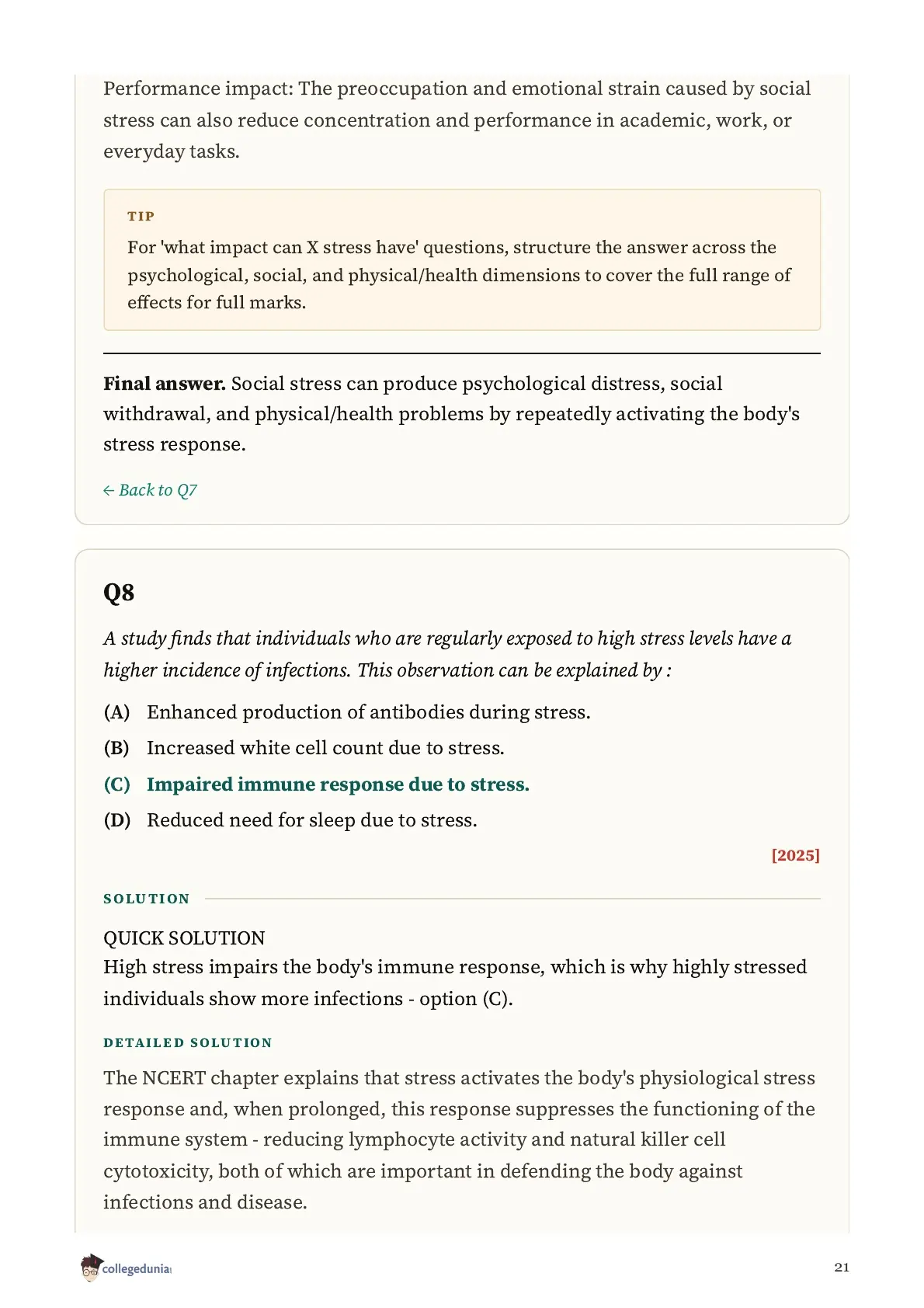
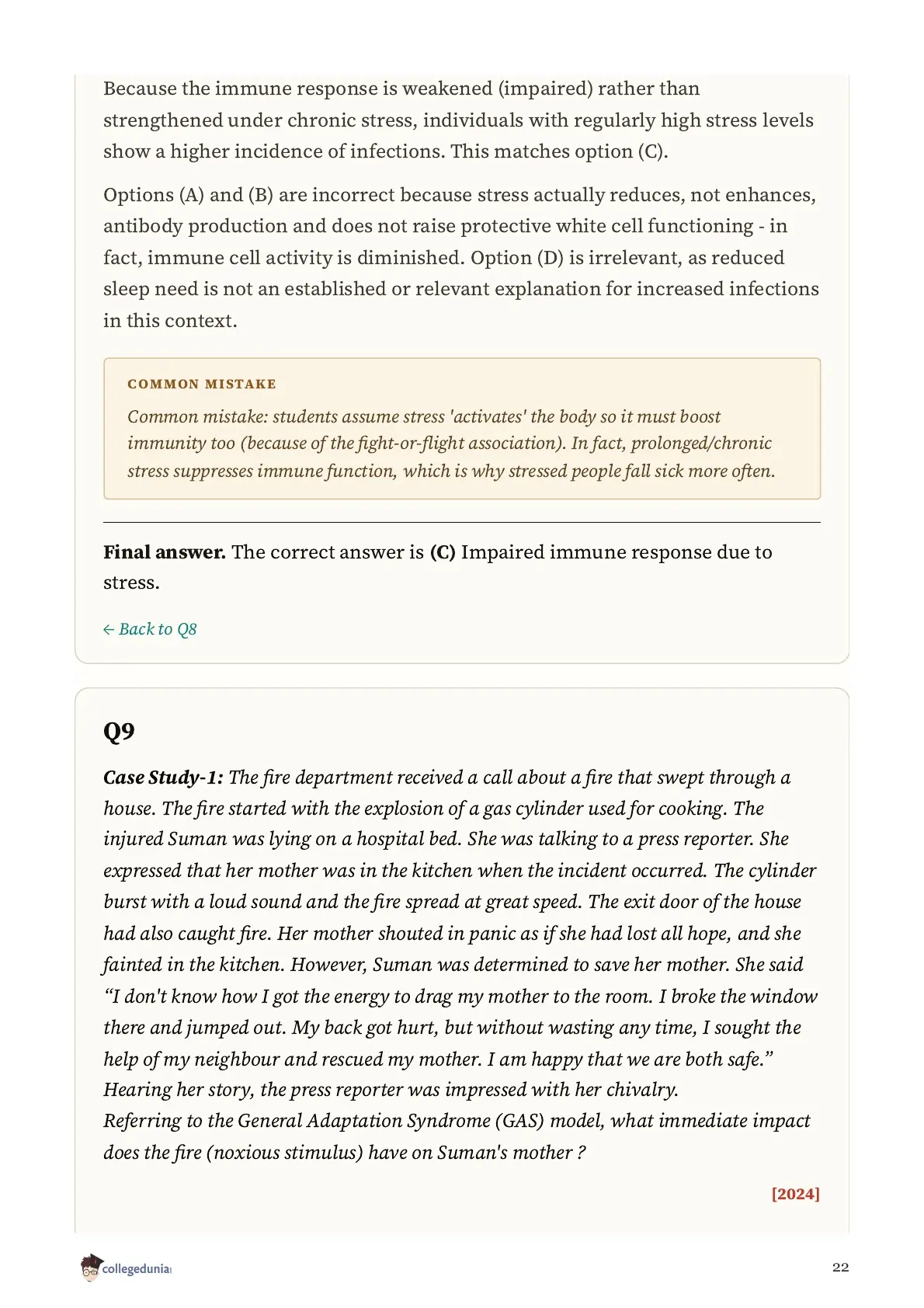
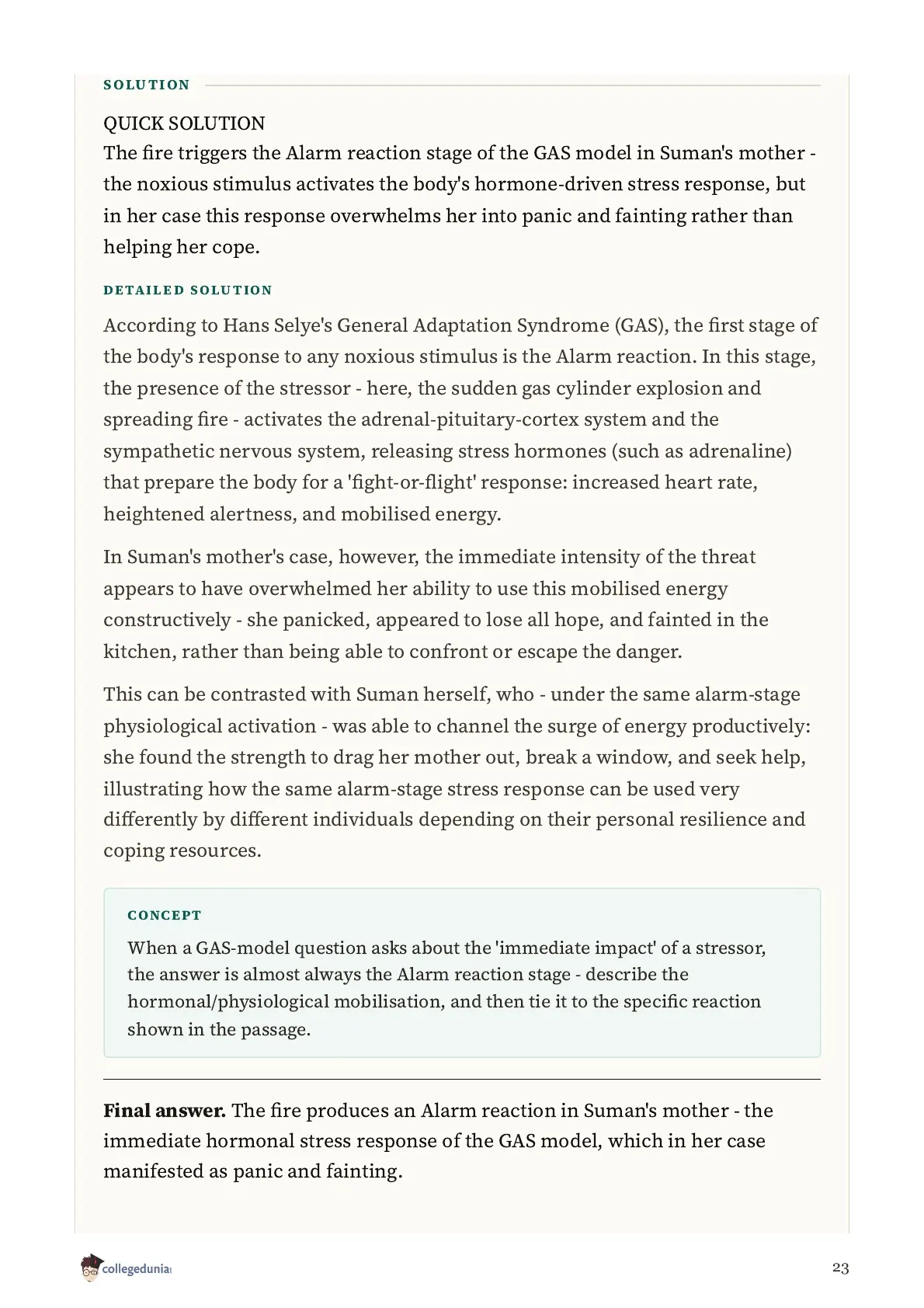
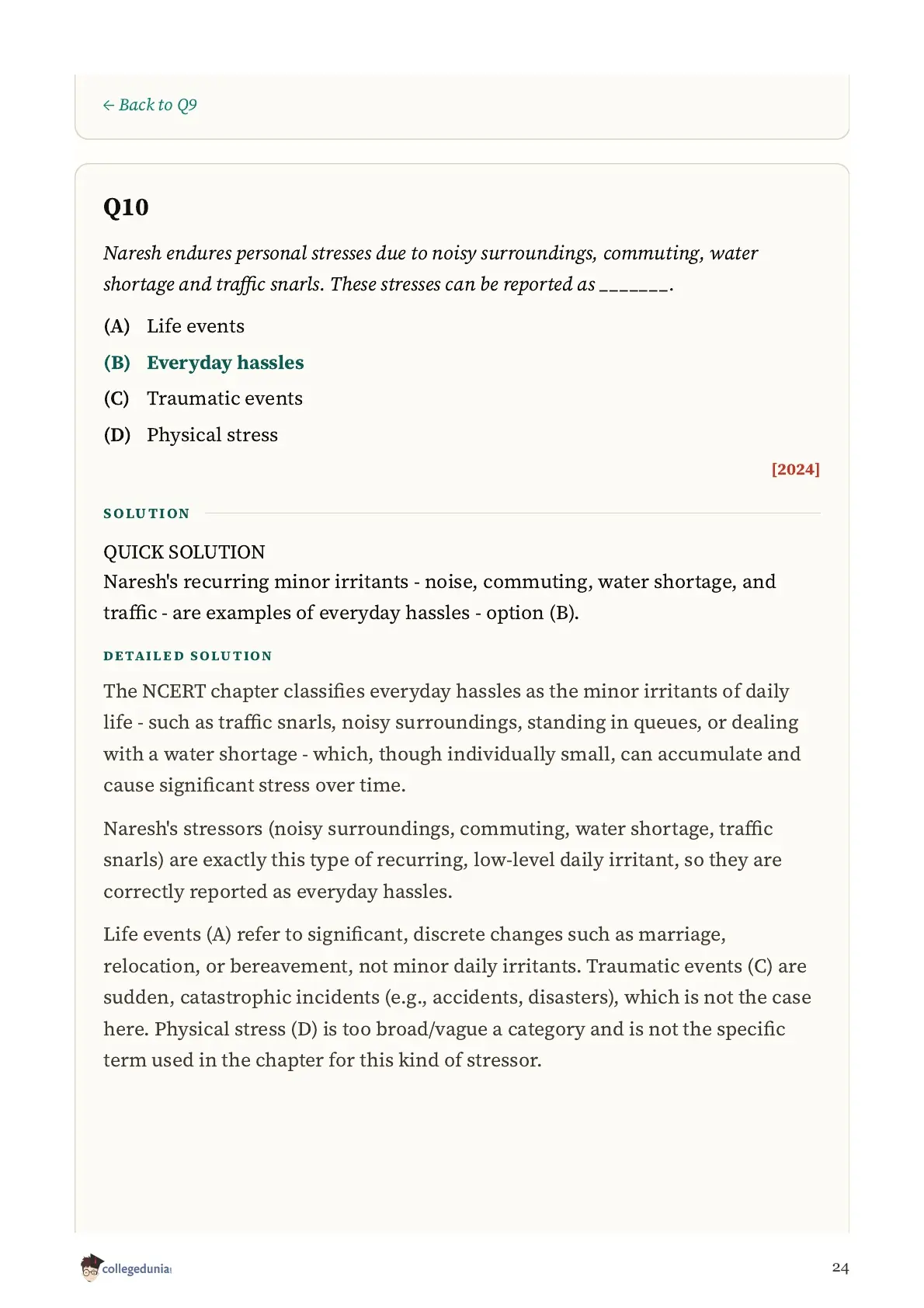
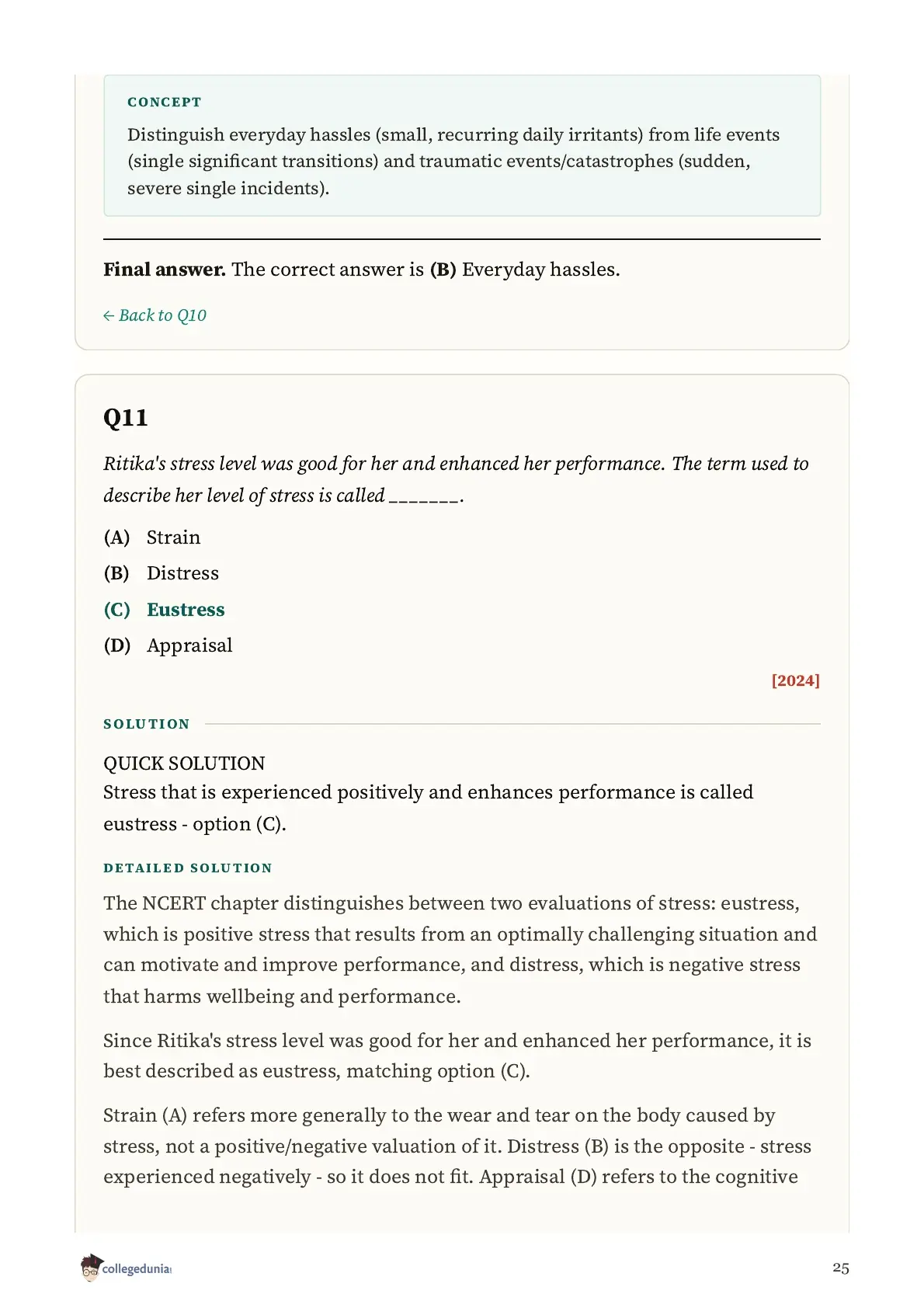
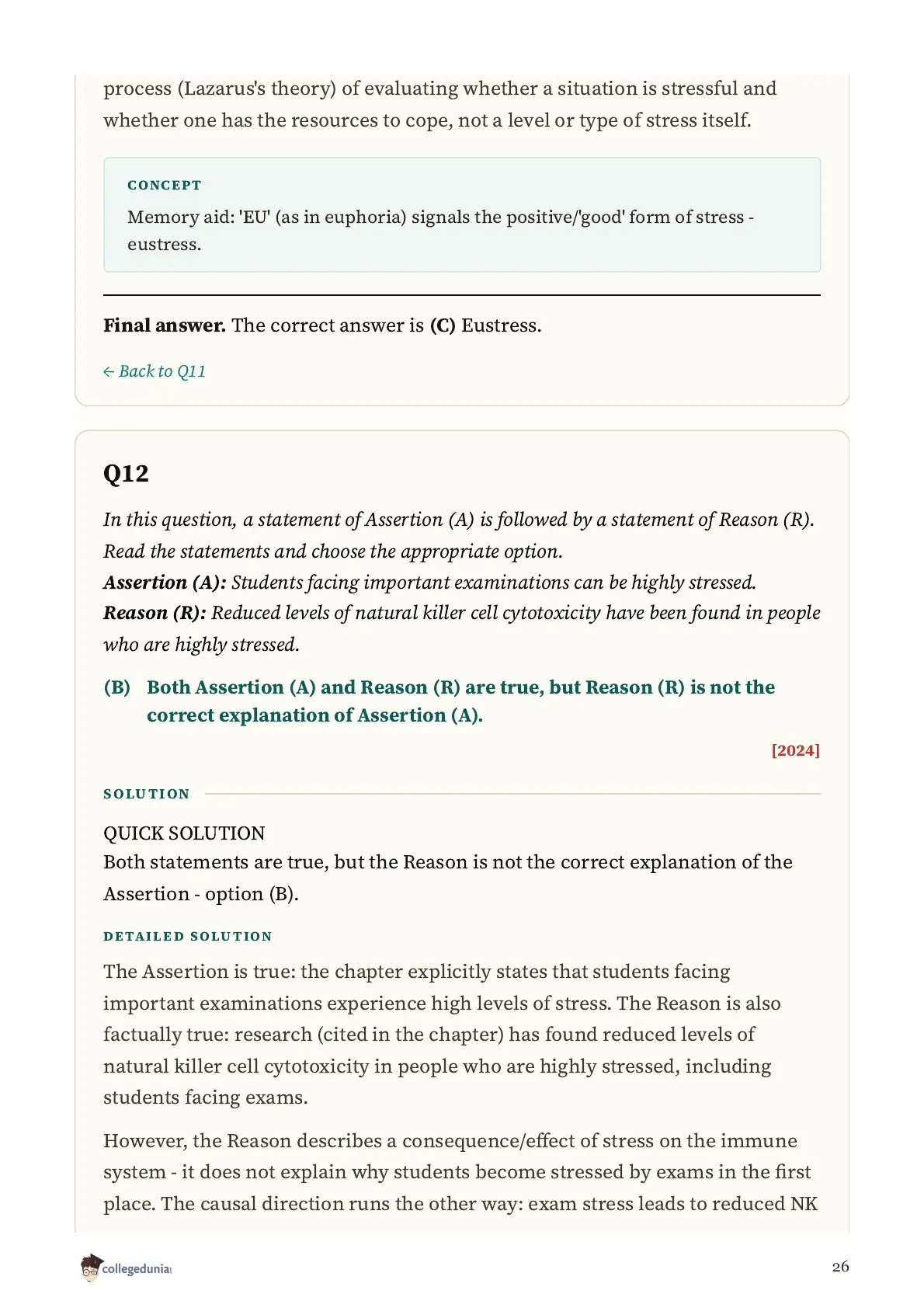
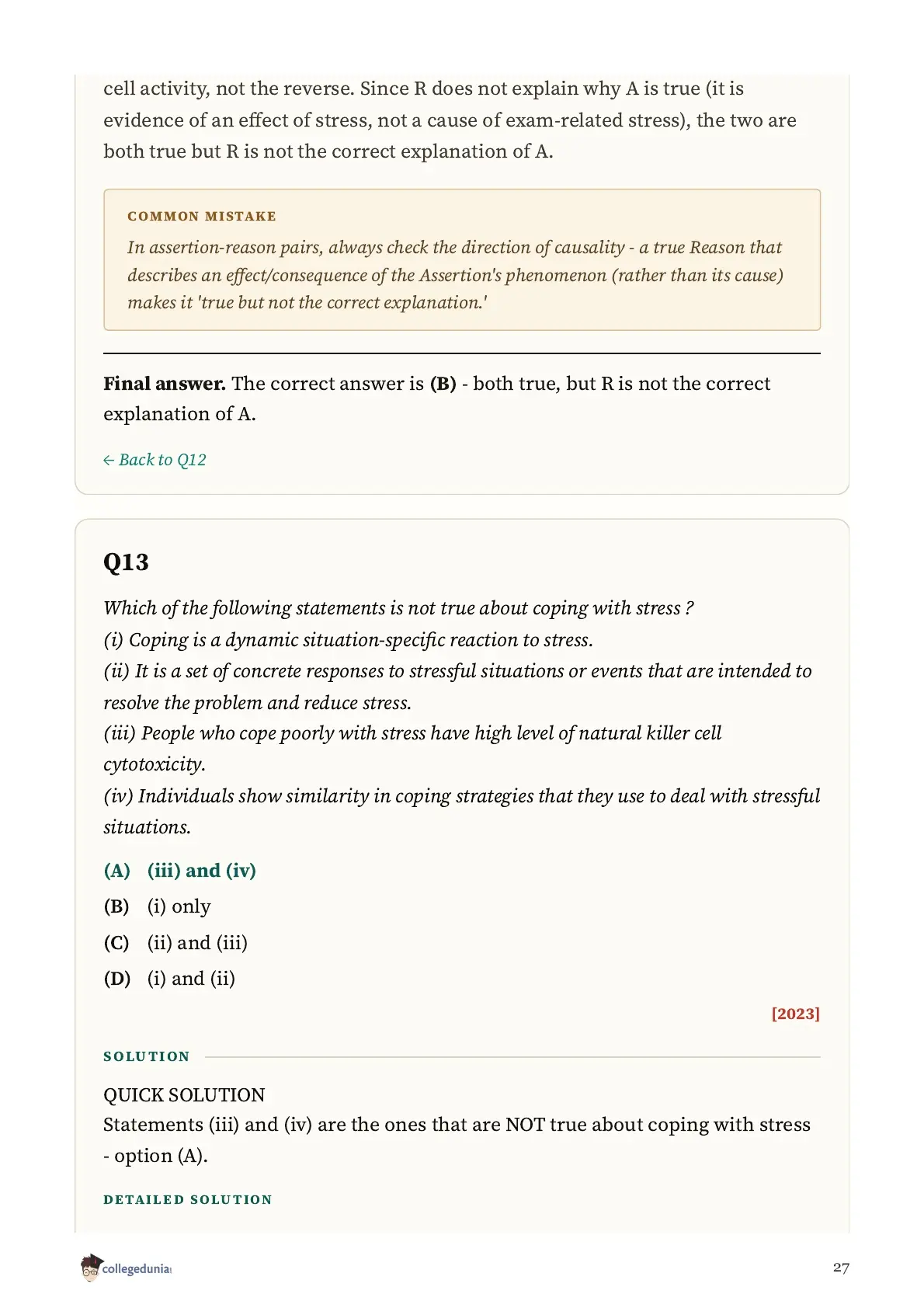
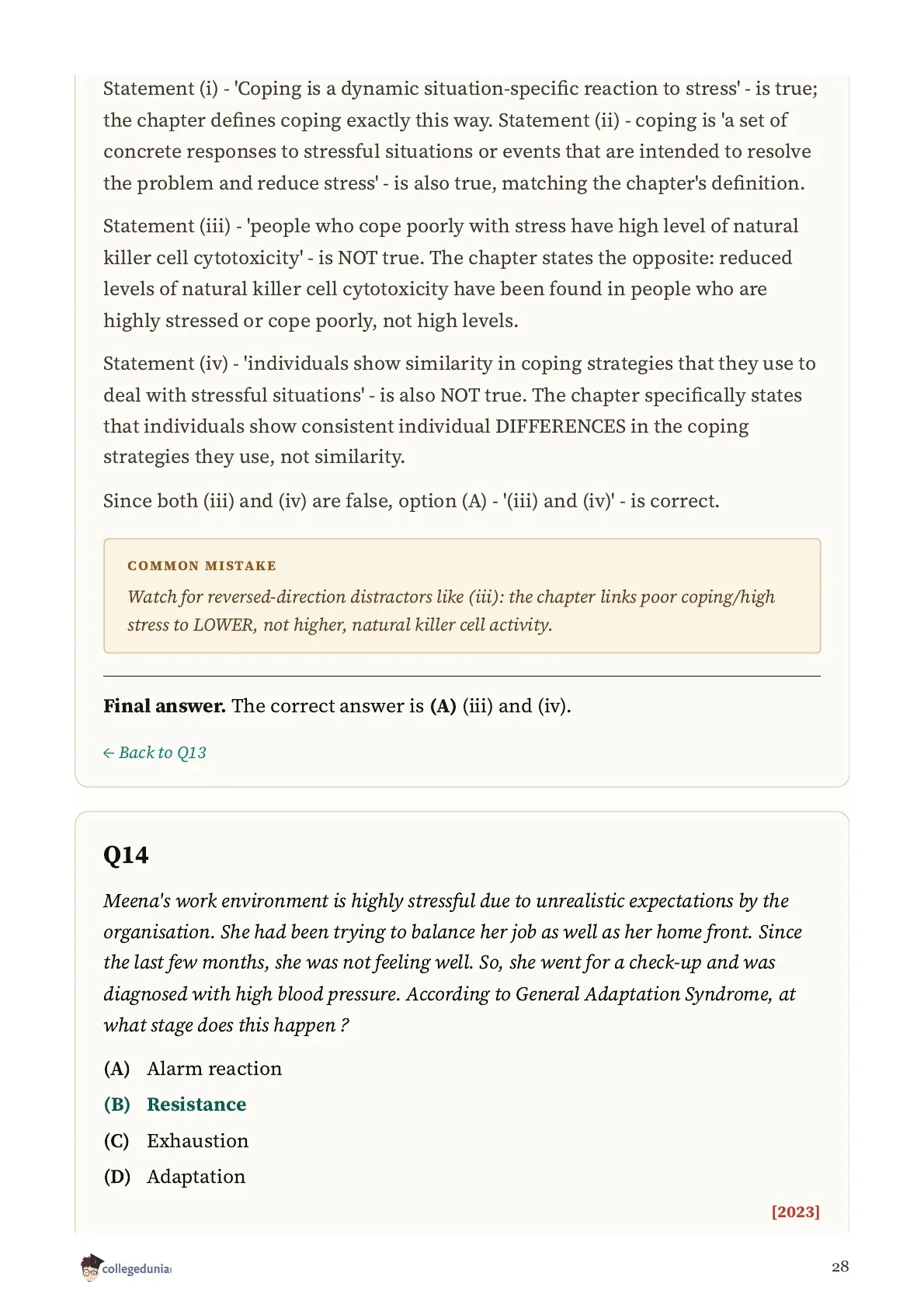
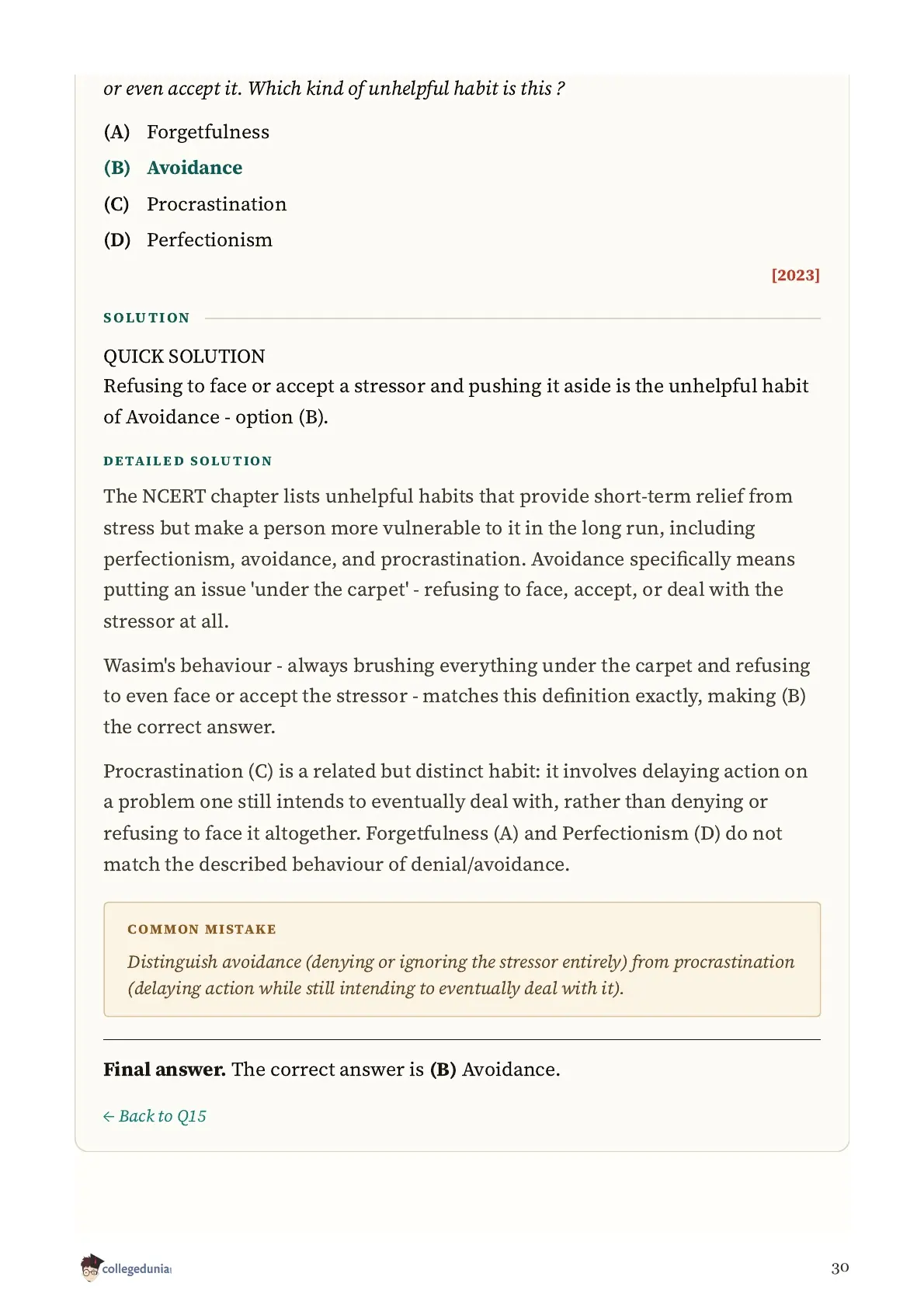
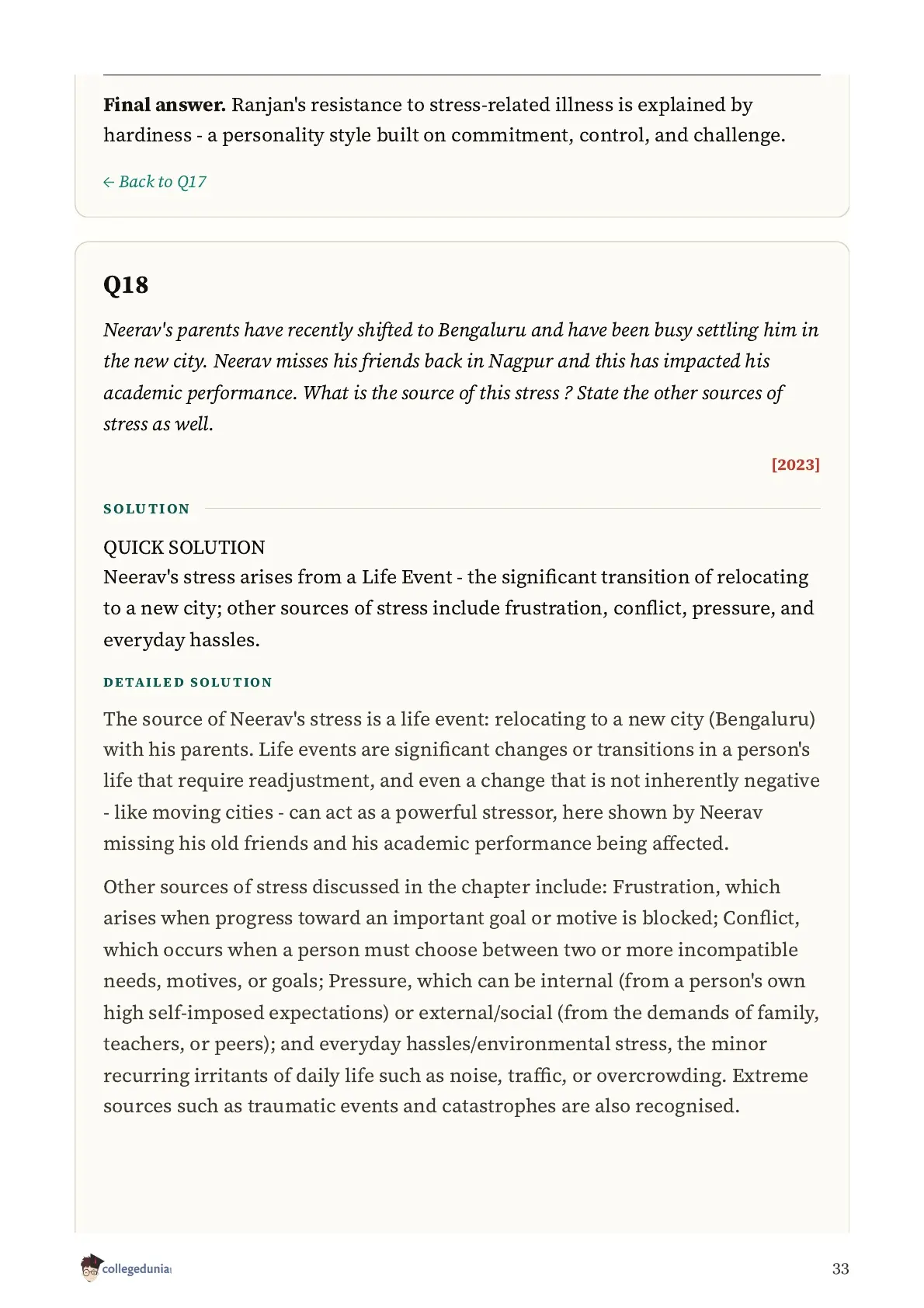
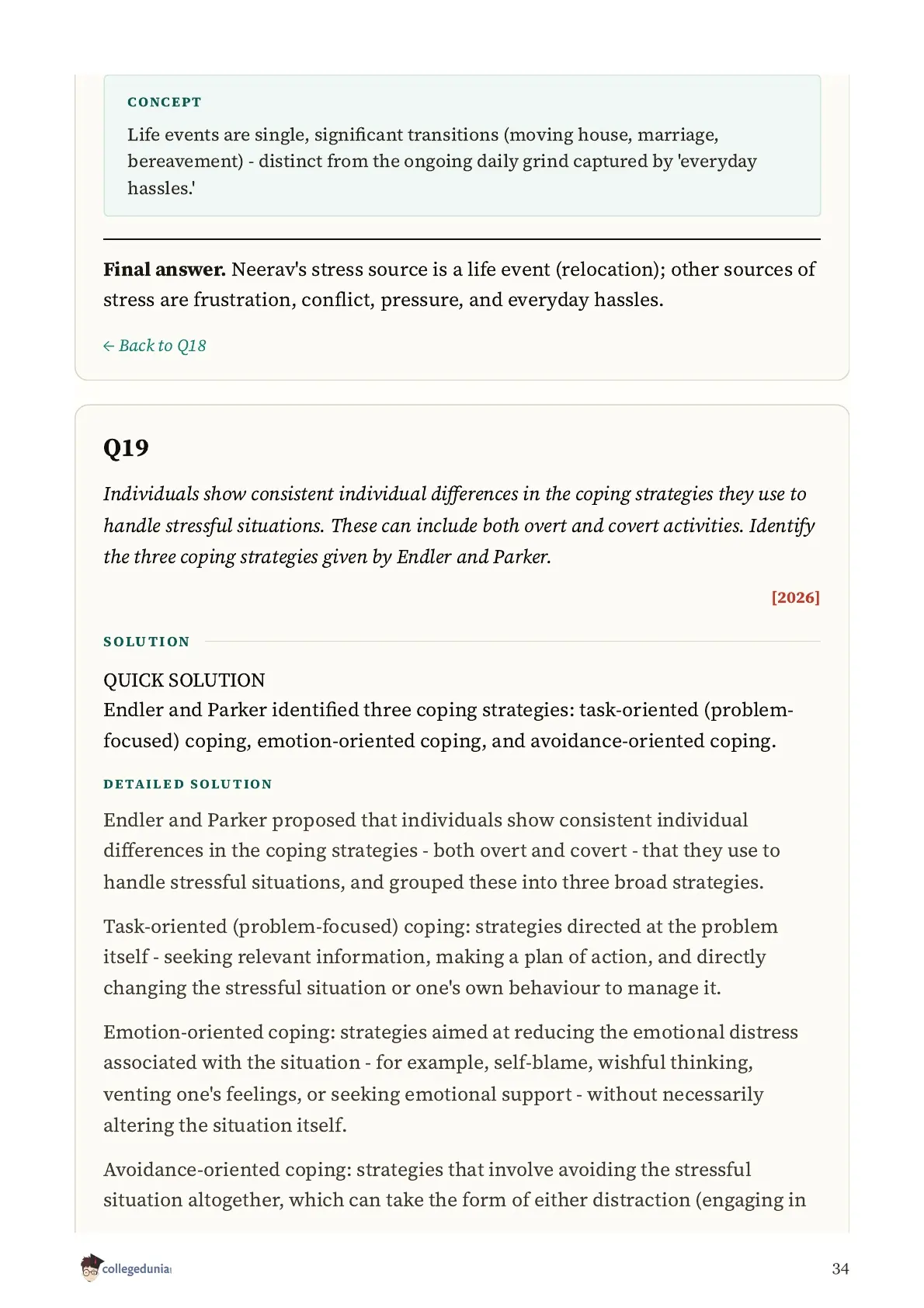
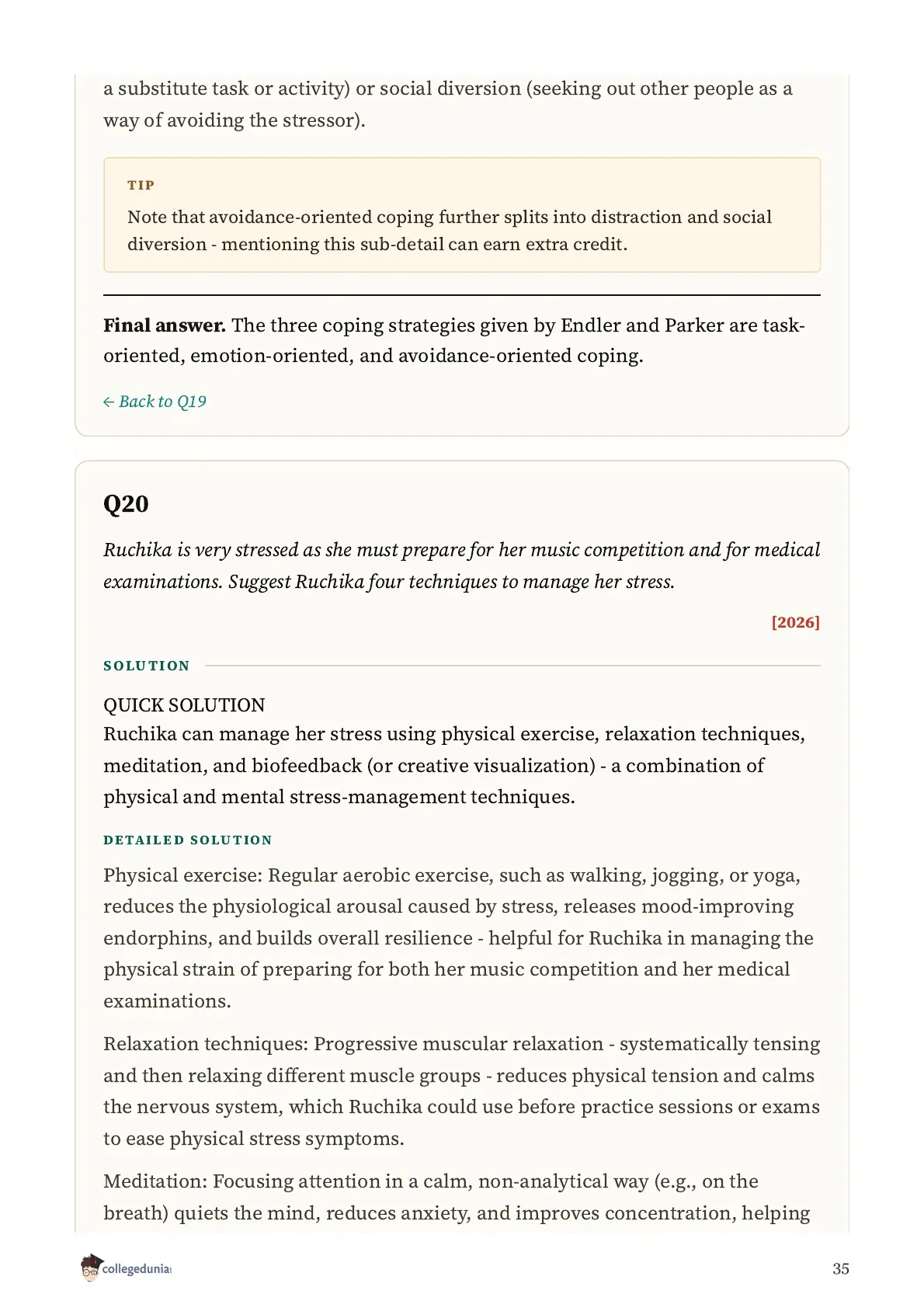
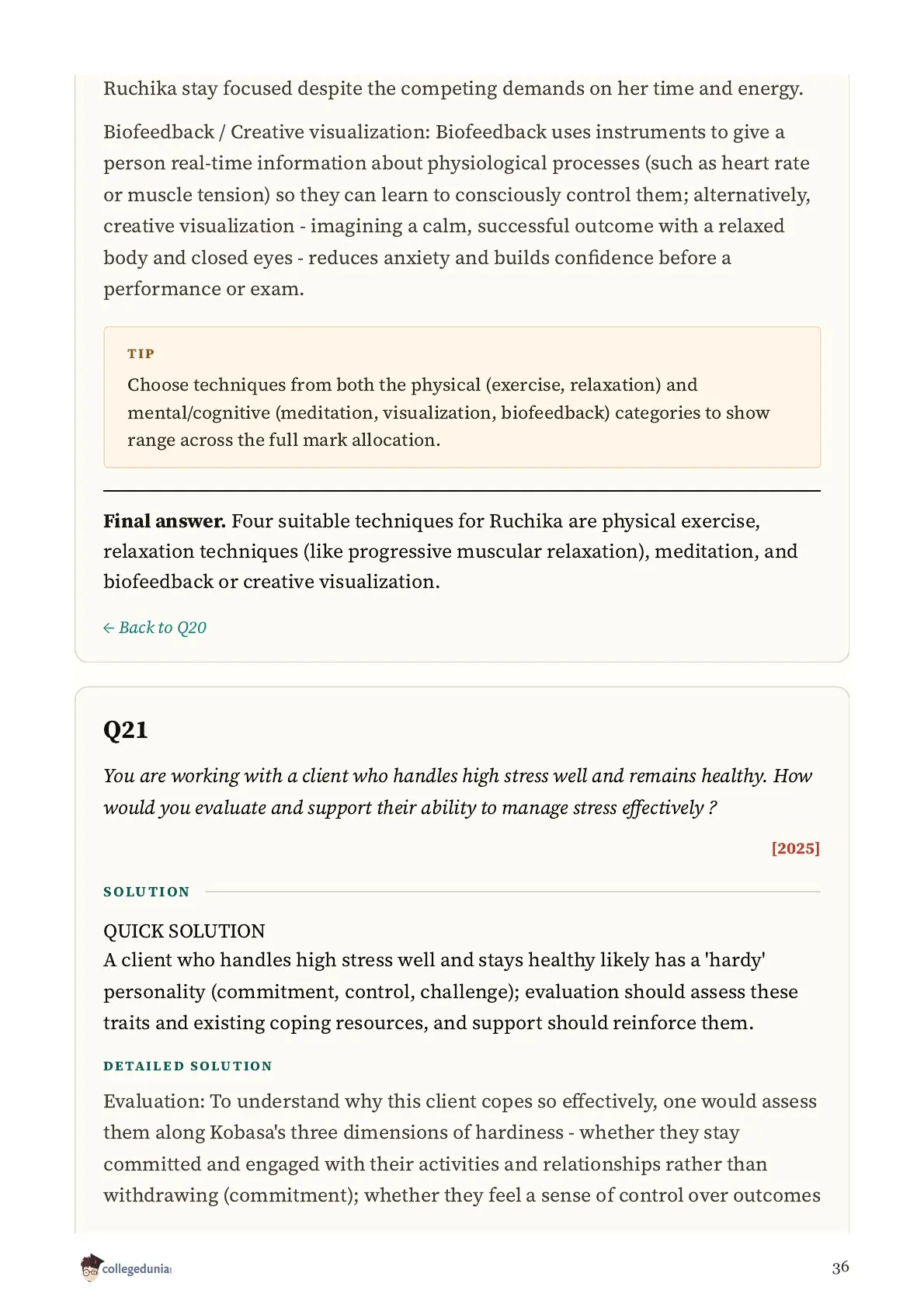
Every solution in this Meeting Life Challenges PYQ PDF is checked question by question against the 2023 to 2026 CBSE Class 12 Psychology board papers, and mapped to the 2026-27 NCERT chapter.
Source: 2026-27 Class 12 Psychology student poll. Sample of 11,540 students from CBSE schools across 15 states.
What the Meeting Life Challenges Previous Year Questions Cover
The Meeting Life Challenges PYQs test the entire stress-and-coping unit, not just the definitions. Case-study questions in Section D usually combine two or three ideas from the list below in one story-based prompt.
- Nature, types, and sources of stress, including everyday hassles and life events.
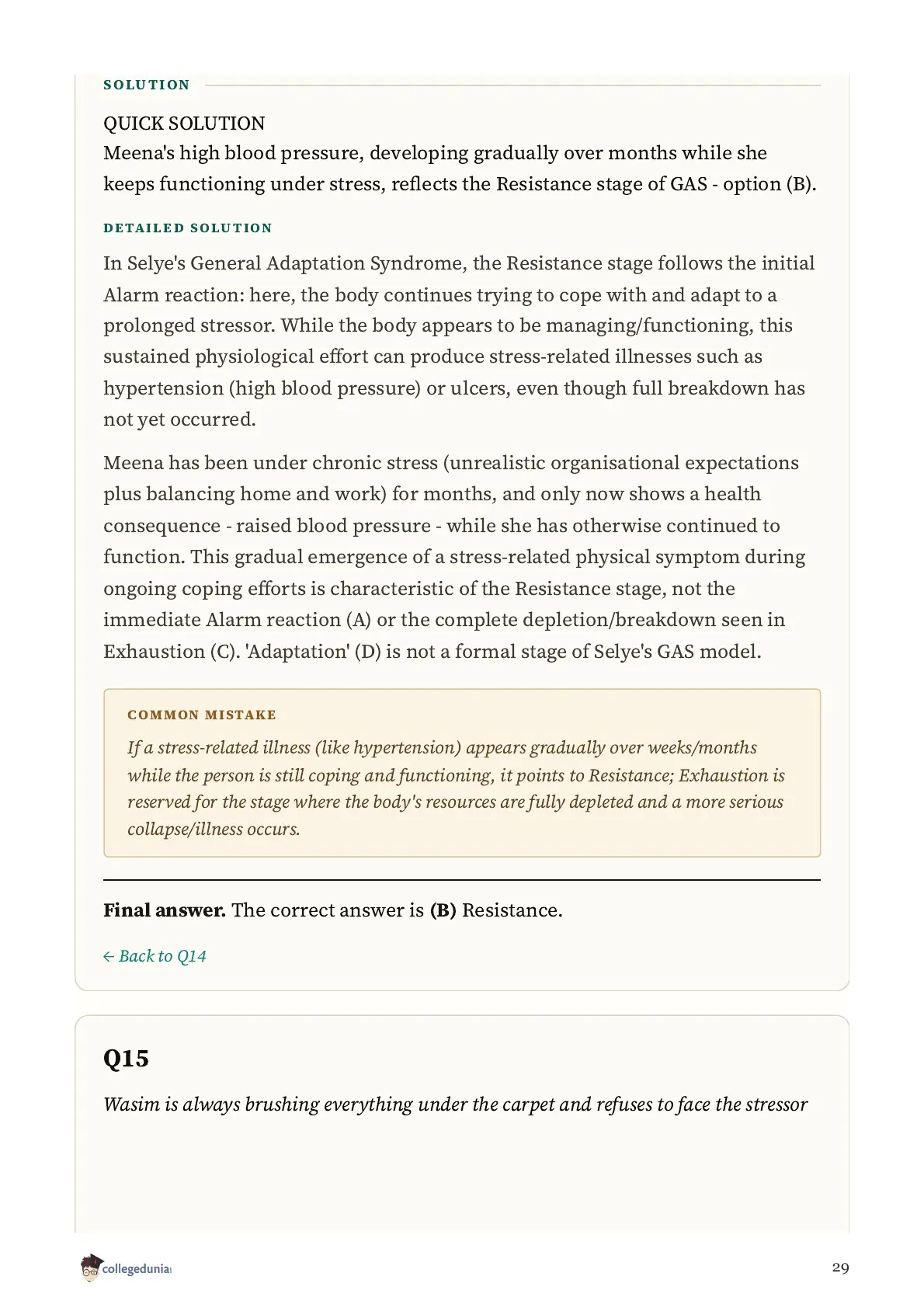
- The GAS (General Adaptation Syndrome) model and its three stages.
- How stress affects the immune system and physical health.
- Coping strategies, mainly the task-oriented versus emotion-oriented split.
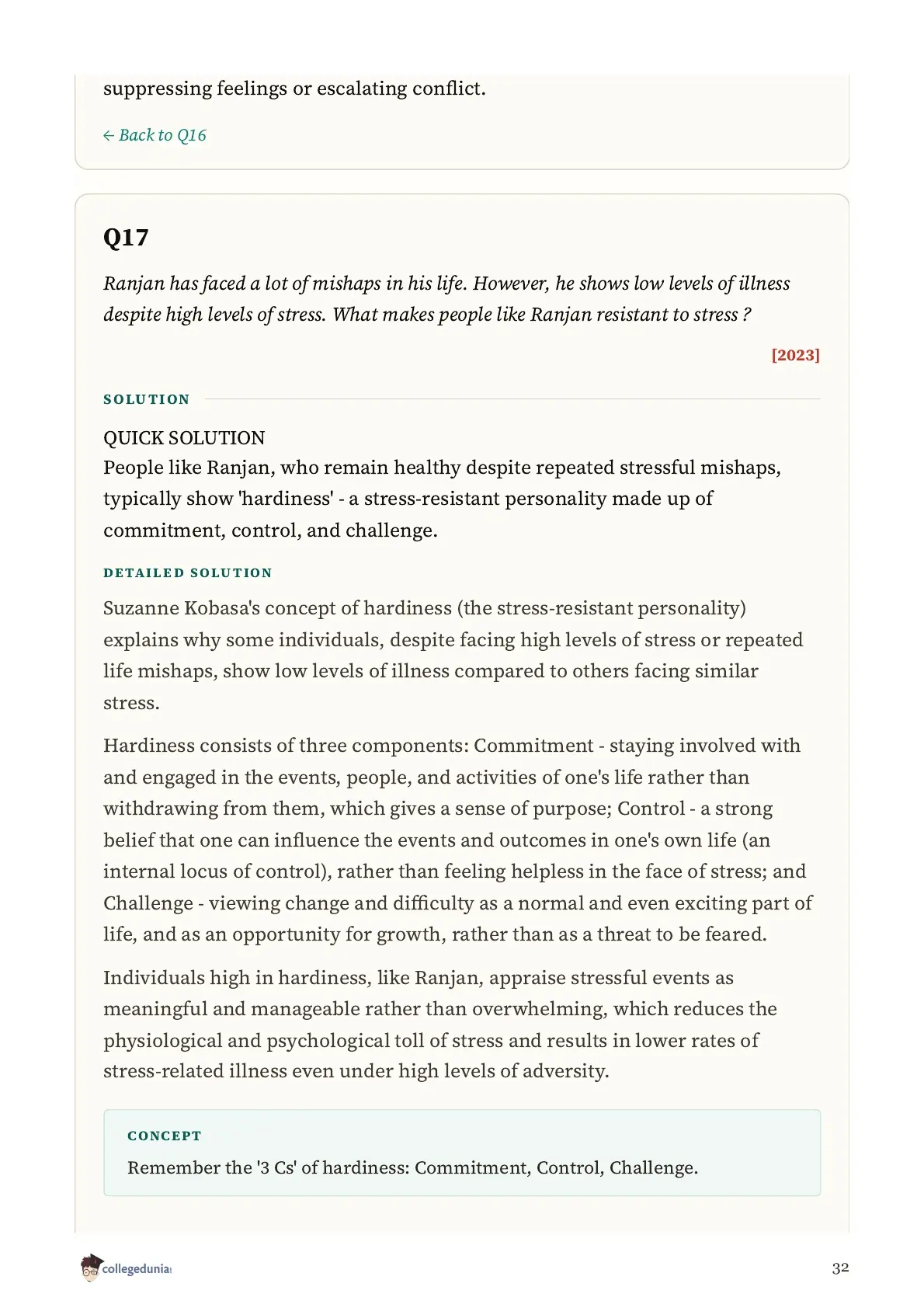
- Hardiness and why some people stay healthy under high stress.
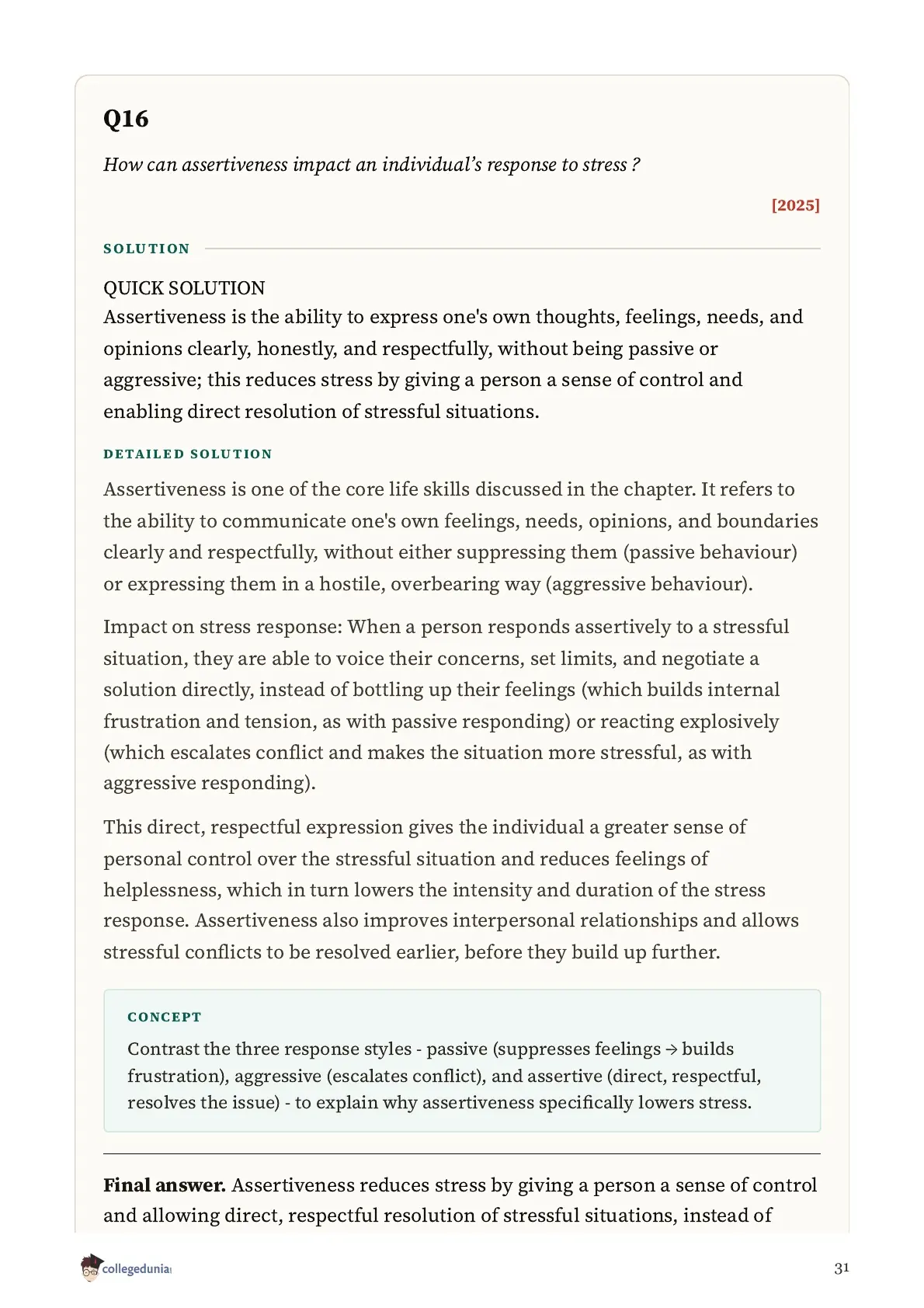
- Stress management techniques and life skills such as assertiveness and self-disclosure.
Meeting Life Challenges Full Chapter Explained
Source: Magnet Brains on YouTube
Marks-wise Distribution of the Meeting Life Challenges PYQs
The 24 questions in this PDF split into four CBSE mark bands, mirroring the pattern used in the actual board paper.
| Section | Marks Each | Questions | Format |
|---|---|---|---|
| Section A | 1 mark | 15 | MCQ, Assertion-Reason, match-the-following, fill-in-the-blank |
| Section B | 2 marks | 3 | Very Short Answer (VSA) |
| Section C | 3 marks | 4 | Short Answer (SA) |
| Section D | 4 marks | 2 | Case-Study based |
Section A carries the most questions but the fewest total marks, so most students clear it fastest. Section D carries the fewest questions but needs the most writing, since each case study usually asks for three or four points explained in full sentences.
Year-wise Spread of the Meeting Life Challenges Board Questions (2023-2026)
This PDF pulls from four back-to-back CBSE cycles, so students can see how the question style has shifted year on year.
| Year | Questions in this PDF |
|---|---|
| 2026 | 8 |
| 2023 | 7 |
| 2024 | 5 |
| 2025 | 4 |
The 2026 paper alone contributes 8 of the 24 questions, the largest single-year share in this compilation, and it leans more heavily on case-study and assertion-reason formats than the 2023 paper did.
Topic Frequency in the Meeting Life Challenges PYQs
Not every topic in the chapter gets asked with equal weight. Based on the 24 questions in this PDF, coping strategies and stress management ideas come up most often, usually dressed up as a short story about a student or a working professional.
| Topic Cluster | How Often It Appears | Typical Section |
|---|---|---|
| Coping strategies (task vs emotion-oriented) | Most frequent | A, C, D |
| Stress, its sources, and the immune system | Frequent | A, B, D |
| Life skills and assertiveness | Frequent | A, C |
| Hardiness | Occasional | A, D |
| GAS model stages | Occasional | A, B |
Marks-Band Attempt Strategy for the Meeting Life Challenges Chapter
A clear order of attempt saves time in the actual CBSE Class 12 Psychology paper. Most students should not start with Section D.
- Start with Section A: clear the 15 one-mark MCQs first; they need recall, not writing.
- Move to Section B: the 2-mark VSA rewards a crisp two-line answer, not a paragraph.
- Then Section C: for 3-mark SA, write the definition first, then one example.
- Finish with Section D: read the case study twice before answering; underline the exact number of points asked.
Common Mistakes Students Make in the Meeting Life Challenges Chapter
- Confusing task-oriented coping (fixes the stressor) with emotion-oriented coping (manages the feeling).
- Writing only two points in Section D case studies when the question asks for three or four.
- Skipping the "assertion" and "reason" labels separately in Assertion-Reason questions.
- Naming the GAS stages out of order, or leaving out the physiological detail examiners expect.
- Treating hardiness and resilience as the same word, when the chapter defines them separately.
How the GAS Model Plays Out Across Three Stages
The General Adaptation Syndrome, proposed by Hans Selye, explains how the body responds to a stressor over time. Case-study questions in this PDF often ask students to identify which of the three stages a described character is in.
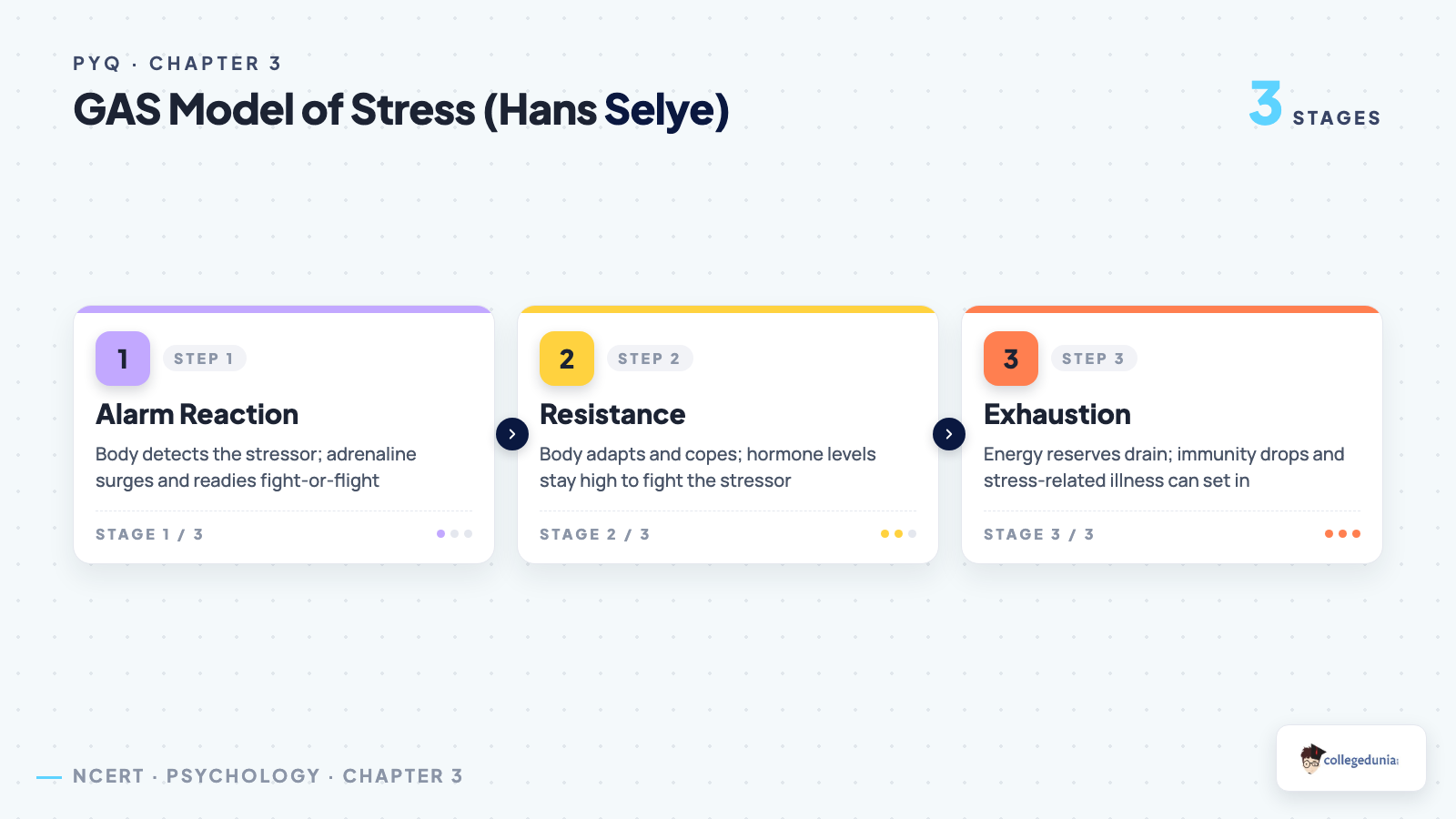
Each stage has a distinct physiological signature that examiners like to test with a one-line clue in the question stem.
- Alarm Reaction: the body detects the stressor and readies a fight-or-flight response.
- Resistance: the body adapts and keeps coping, even as hormone levels stay high.
- Exhaustion: energy reserves run out, immunity drops, and stress-related illness can follow.
Task-Oriented vs Emotion-Oriented Coping in the PYQs
The single most-tested distinction in this chapter is coping style. A case study will describe a person's behaviour, and the question asks which coping strategy they used.
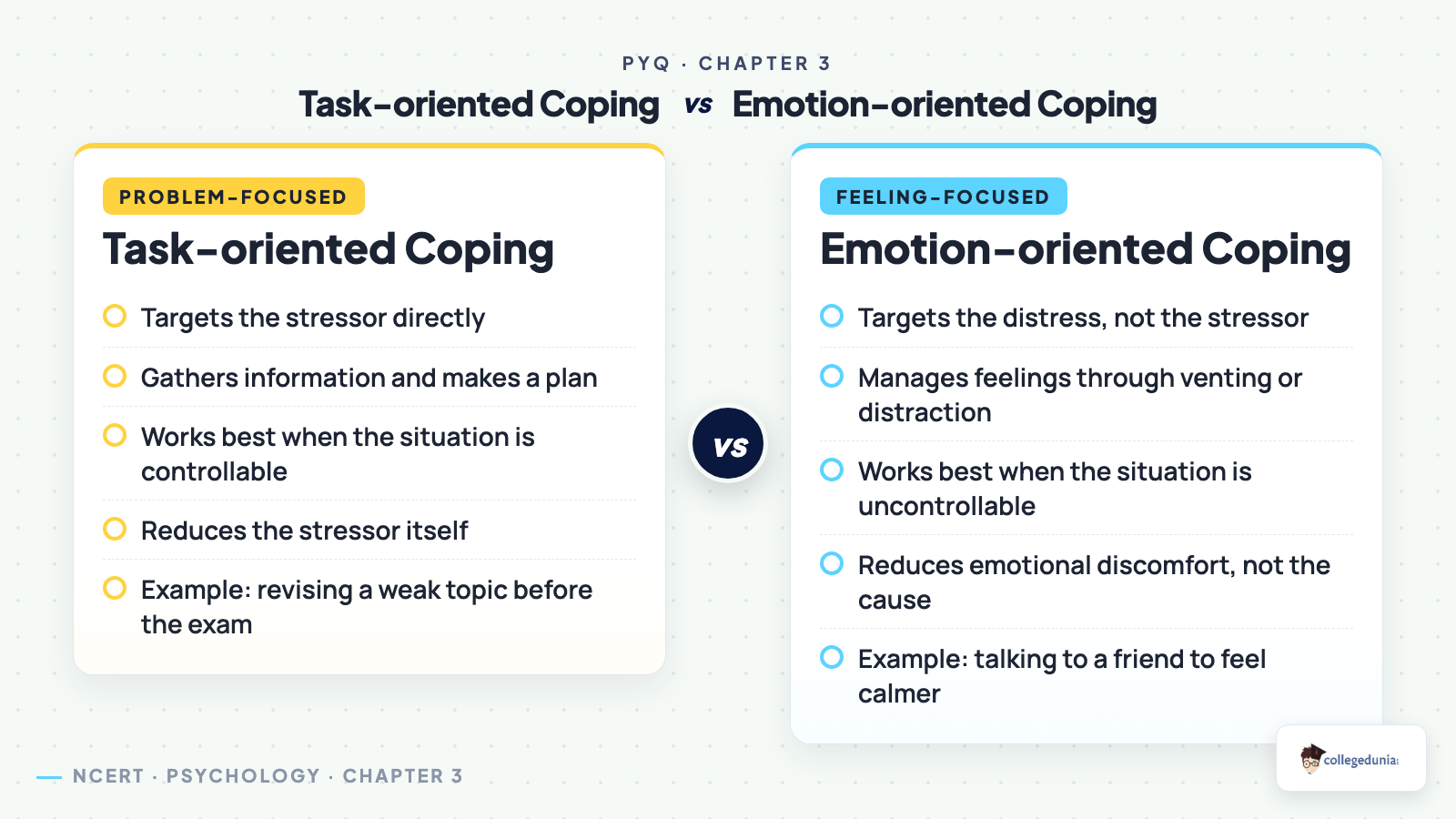
The quick test that solves most PYQs on this topic: does the person's action change the stressor, or only their feeling about it? If the stressor changes, it is task-oriented; if only the feeling changes, it is emotion-oriented.
How These PYQs Pair with Other Chapter 3 Resources
This PDF works best alongside the other Class 12 Psychology Chapter 3 resources on Collegedunia. Use the PYQ PDF to practise recall and timing after the concepts are already clear from the notes.
| Resource | Best Used For | Link |
|---|---|---|
| NCERT Notes | First read of every concept, definition, and example | Meeting Life Challenges Class 12 Notes (coming soon) |
| NCERT Solutions | Textbook exercise questions, answered in full | Meeting Life Challenges Class 12 NCERT Solutions (coming soon) |
| Formula Sheet / Quick Revision | Last-day recap of every definition and named list | Meeting Life Challenges Quick Revision Sheet (coming soon) |
| Handwritten Notes | Quick one-shot revision the night before the exam | Meeting Life Challenges Handwritten Notes (coming soon) |
| PYQ (this page) | Timed practice on real board questions with solutions | Meeting Life Challenges PYQ |
How to Use the Meeting Life Challenges PYQ PDF Most Effectively
The PDF works best as a timed drill, not a read-through. A simple three-round routine covers all 24 questions without wasting a full mock-test slot.
- Round 1: attempt Section A and B cold, without looking at the solutions, and time yourself.
- Round 2: attempt Section C and D, then check every answer against the step-by-step solution in the PDF.
- Round 3: redo only the questions marked wrong, a day or two later, to confirm the concept has stuck.
NCERT PYQ for Class 12 Psychology: All Chapters
The table below lists the PYQ PDF for every chapter of Class 12 Psychology, so students can move straight to the next chapter's board questions.
| Chapter | Resource |
|---|---|
| Chapter 1 | Variations in Psychological Attributes PYQ (coming soon) |
| Chapter 2 | Self and Personality PYQ (coming soon) |
| Chapter 3 | Meeting Life Challenges PYQ |
| Chapter 4 | Psychological Disorders PYQ (coming soon) |
| Chapter 5 | Therapeutic Approaches PYQ (coming soon) |
| Chapter 6 | Attitude and Social Cognition PYQ (coming soon) |
| Chapter 7 | Social Influence and Group Processes PYQ (coming soon) |
Meeting Life Challenges Class 12 Psychology PYQ FAQs
Ques. Does the Meeting Life Challenges PYQ PDF include solutions?
Ans. Yes. All 24 questions in this PDF come with a full step-by-step solution, not just a final answer key. Each solution shows the exact points an examiner would look for.
Ques. How many questions are in the Class 12 Psychology Meeting Life Challenges PYQ PDF?
Ans. The PDF has 24 board-paper questions: 15 one-mark MCQs, 3 two-mark VSA, 4 three-mark SA, and 2 four-mark case studies.
Ques. Which years are covered in this PYQ compilation?
Ans. The questions are drawn from the 2023, 2024, 2025, and 2026 CBSE Class 12 Psychology board papers.
Ques. Is this PYQ PDF free to download?
Ans. Yes, the Meeting Life Challenges PYQ PDF is free to download from this page, with no login required.
Ques. Is this PDF according to the 2026-27 CBSE syllabus?
Ans. Yes. Every question is checked against the current 2026-27 NCERT chapter, and none of the questions test content that has been dropped from the rationalised syllabus.
Ques. How many marks does Meeting Life Challenges carry in the CBSE board paper?
Ans. The chapter is tested across all four sections of the paper, from one-mark MCQs to four-mark case studies, based on the pattern seen in the last four years of board papers.
Ques. How should I use this PDF to prepare for boards?
Ans. Attempt the questions section by section under a timer, check each answer against the solution, then redo only the ones marked wrong a few days later.
Ques. What is stress?
Ans. Stress is a state of physical and mental strain caused by demands, called stressors, that a person feels they cannot fully control or cope with.
Ques. How is the GAS model defined?
Ans. The General Adaptation Syndrome, proposed by Hans Selye, describes the body's response to a stressor in three stages: alarm reaction, resistance, and exhaustion.
Ques. What are coping strategies?
Ans. Coping strategies are the methods a person uses to manage a stressful situation. Psychology Chapter 3 groups them mainly as task-oriented, which changes the stressor, and emotion-oriented, which manages the feeling.



Comments