




Cultural Change traces how ideas like Sanskritisation, Westernisation and Modernisation reshaped social practice in India, alongside the 19th-century reform movements that challenged caste and gender norms. This PYQ set brings together 14 CBSE board questions from 2017 to 2024 on the chapter, and every one comes with a full step-by-step solution, so you can check your own answer against a complete worked explanation.
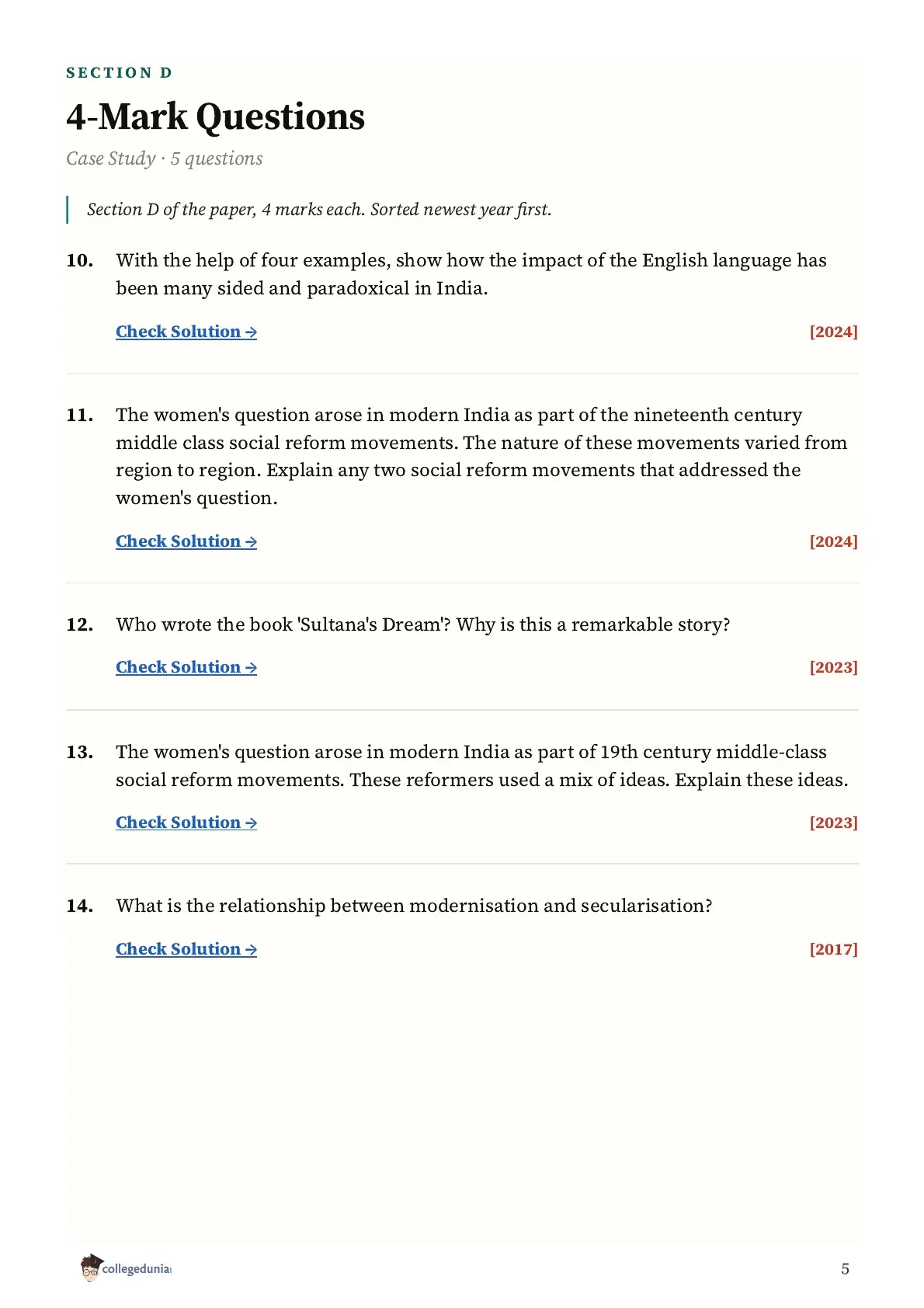
- 14 questions, CBSE 2017-2024: Section A (1 MCQ and 1 VSA, 1 mark each), Section B (7 SA, 2 marks), Section C (5 LA, 4 marks).
- Full solutions included: every question has a worked, step-by-step answer, not just the bare question paper.
- Topics covered: Sanskritisation, Westernisation and Modernisation, 19th-century social reform movements, women's reform, state action and social change, and the impact of English language and agriculture on cultural practices.
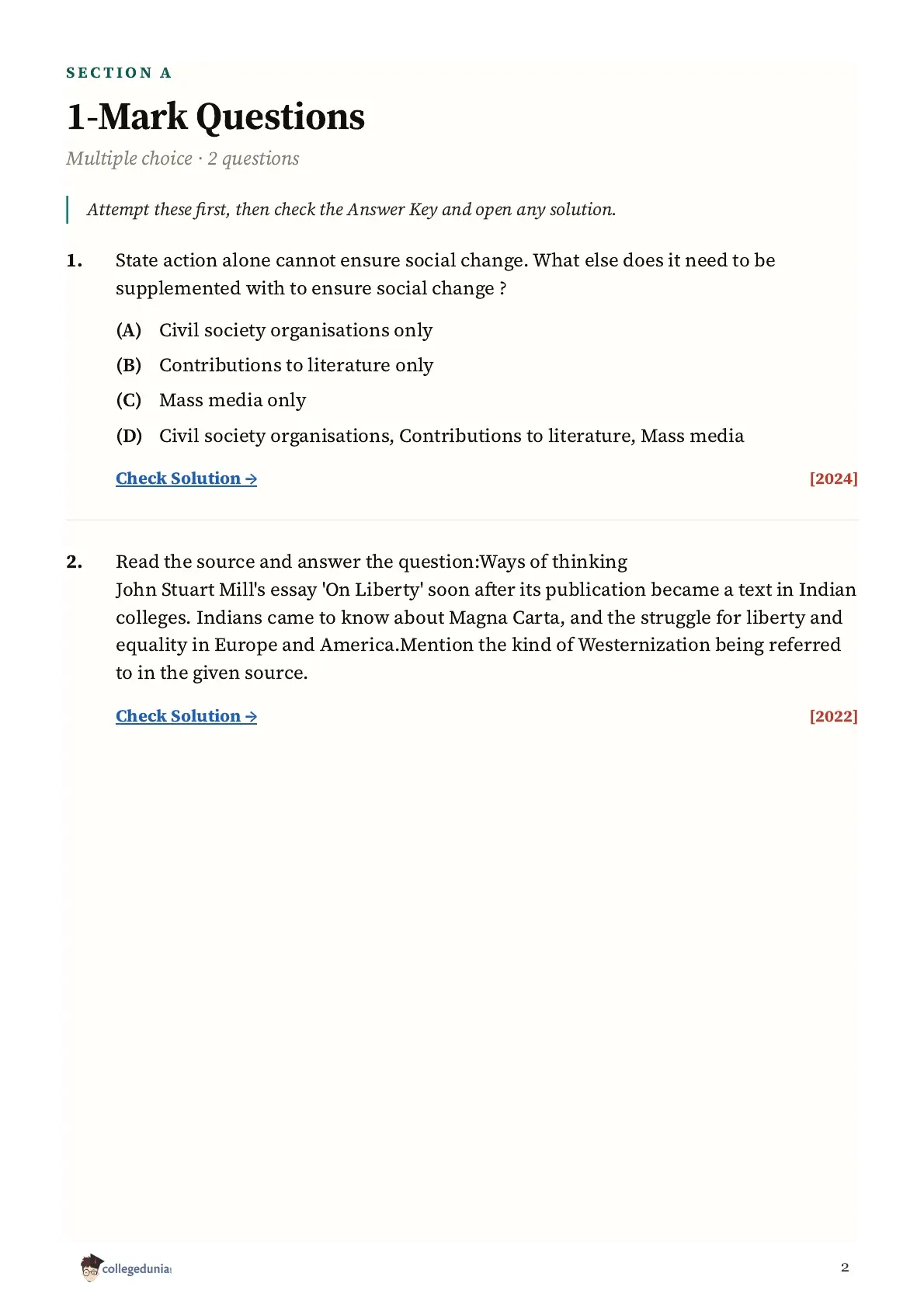
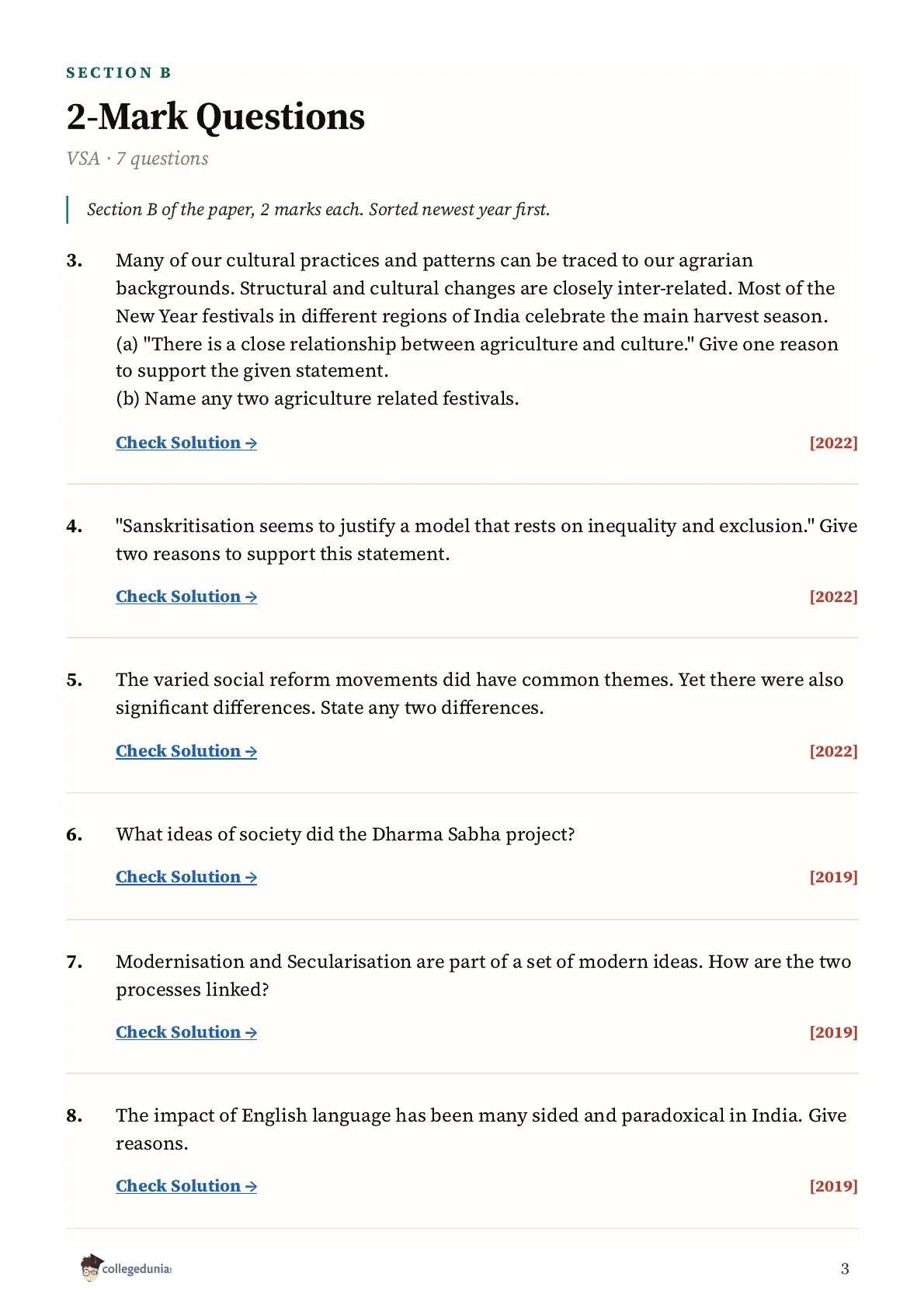
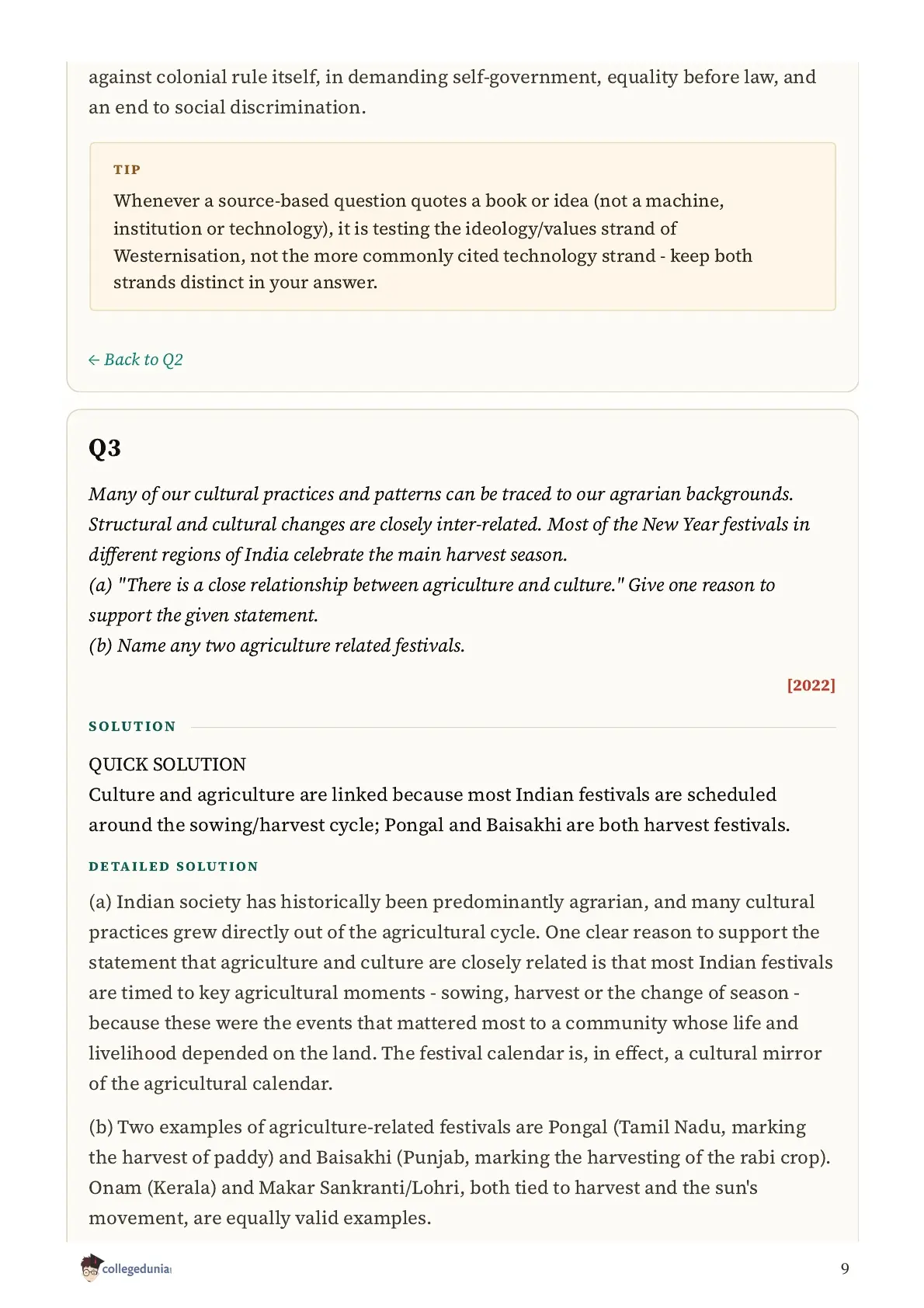
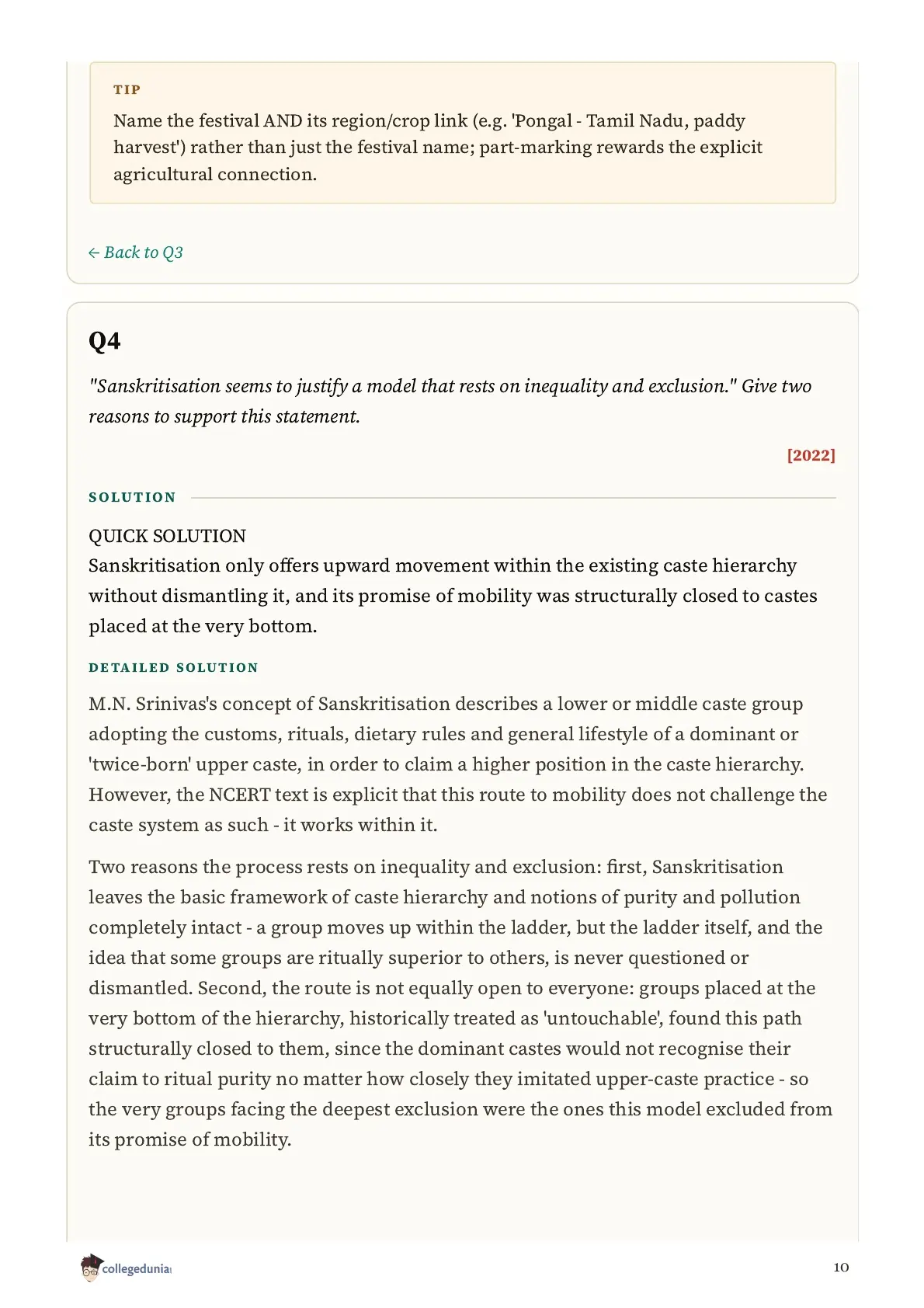
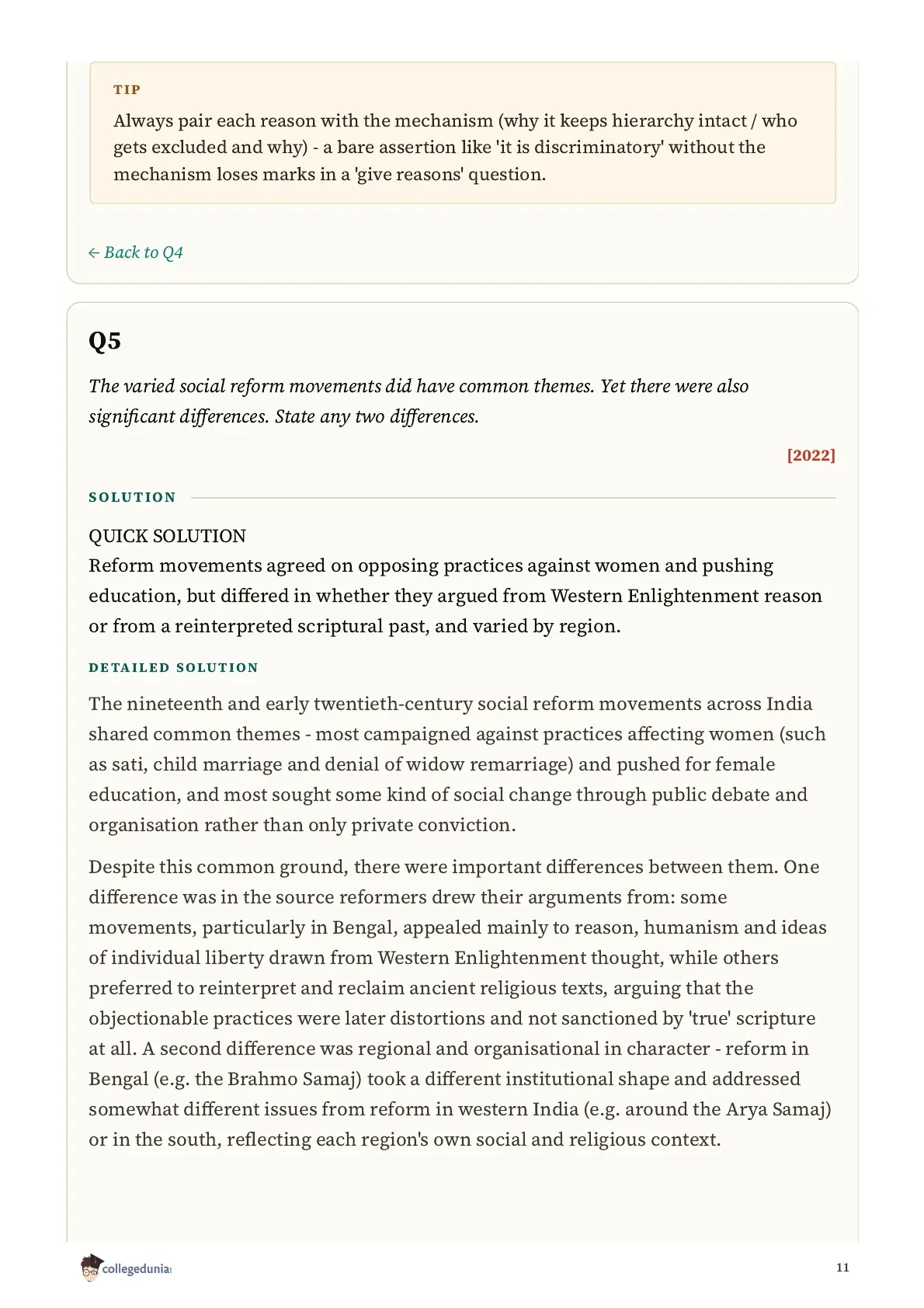
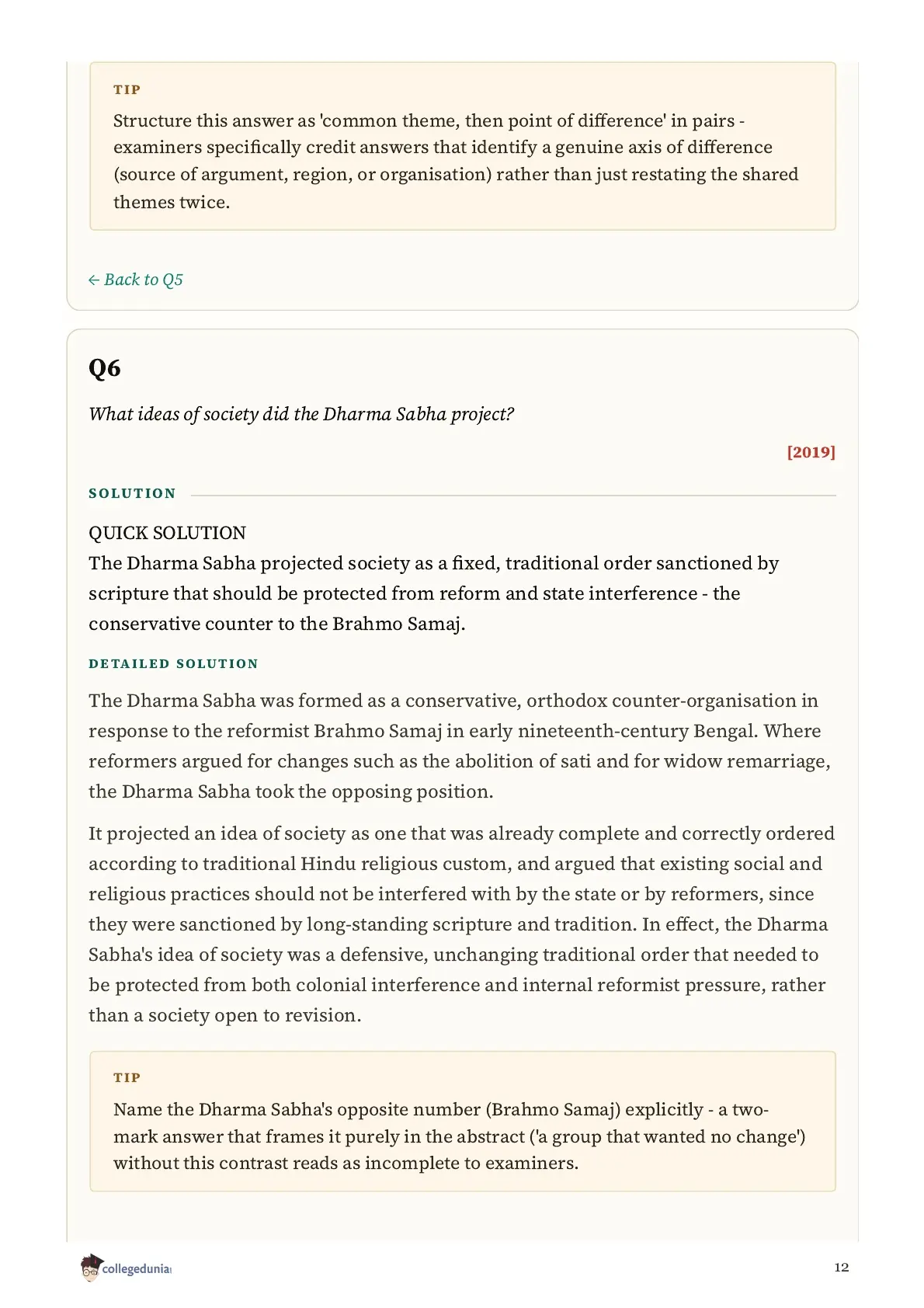
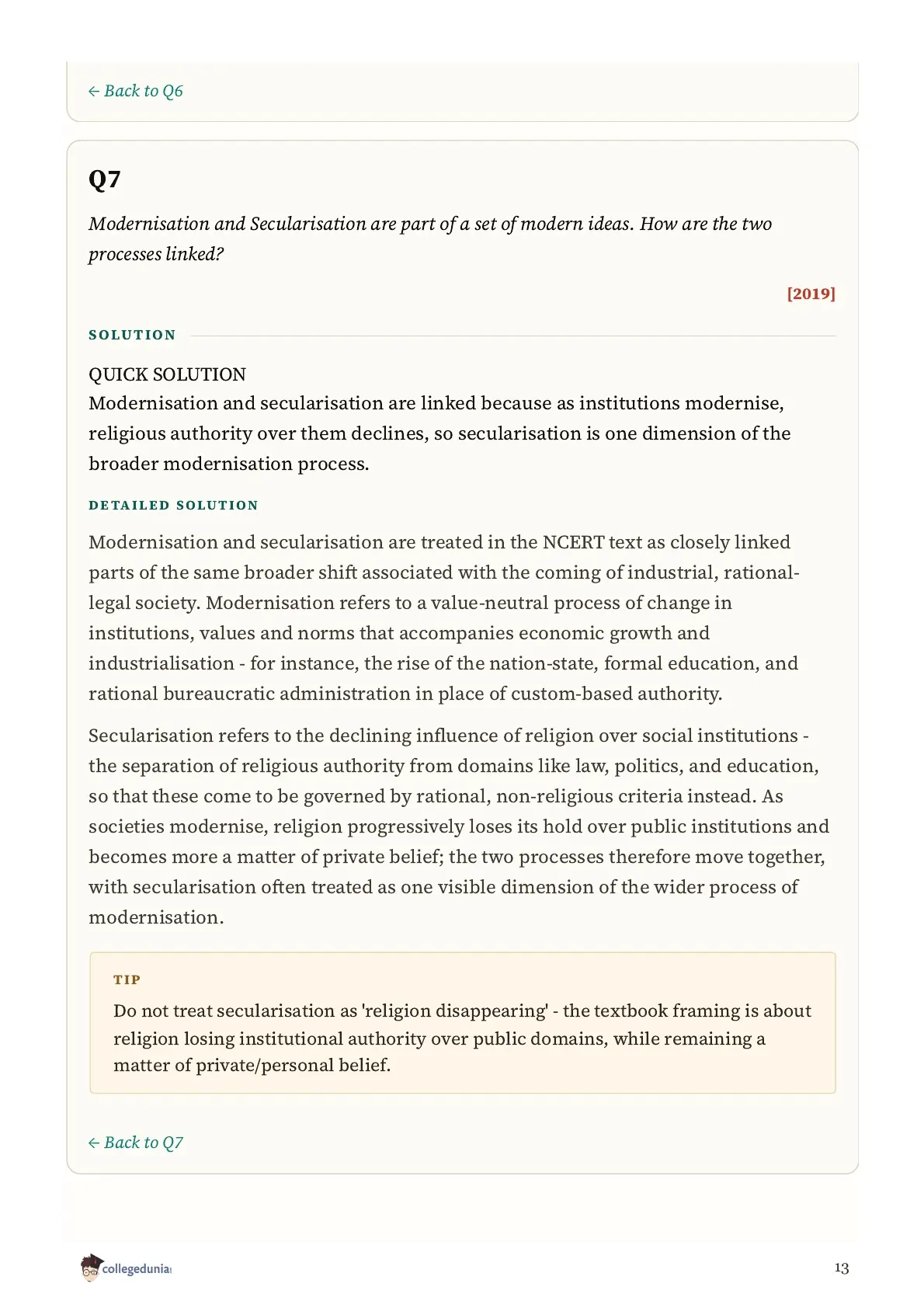
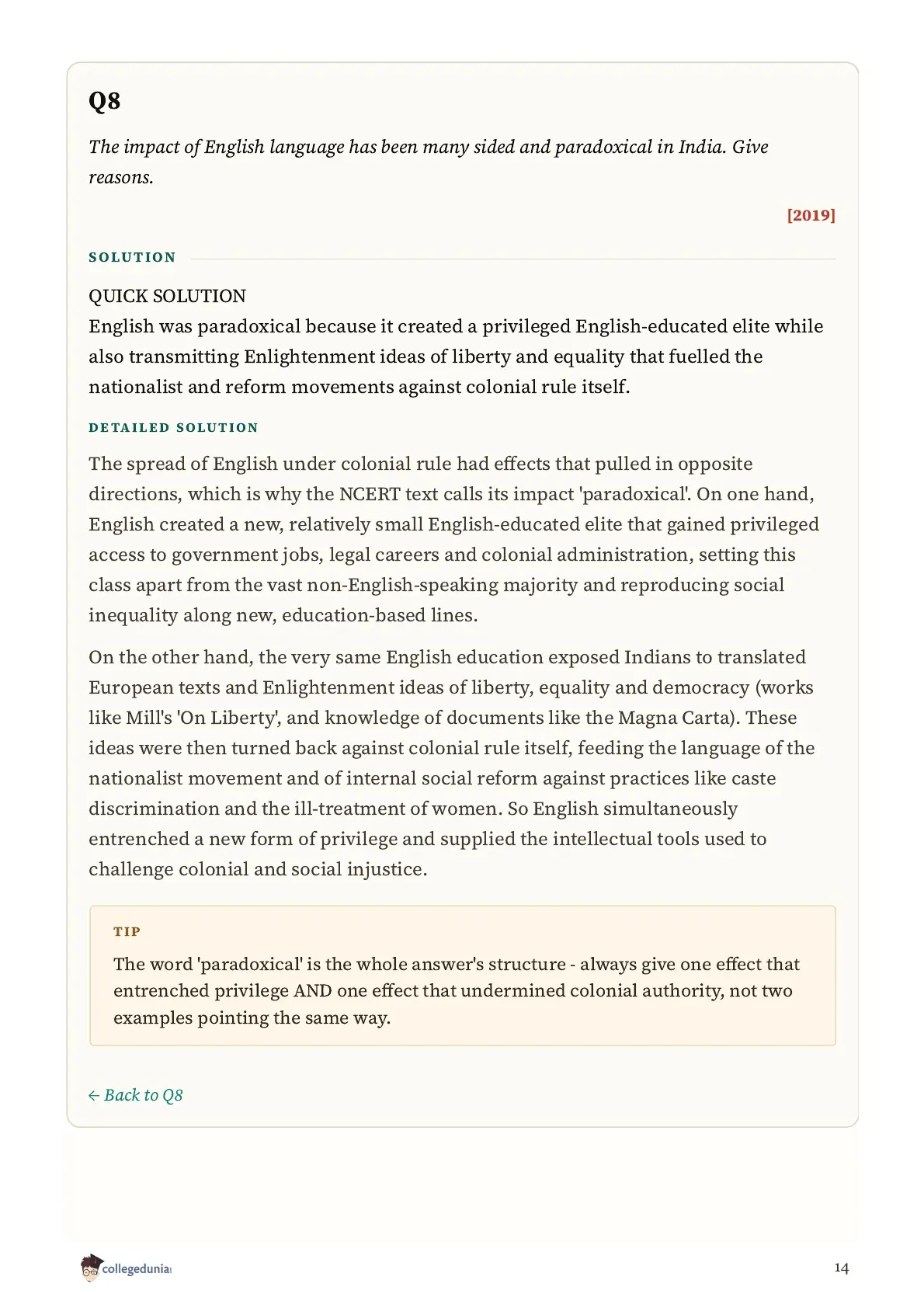
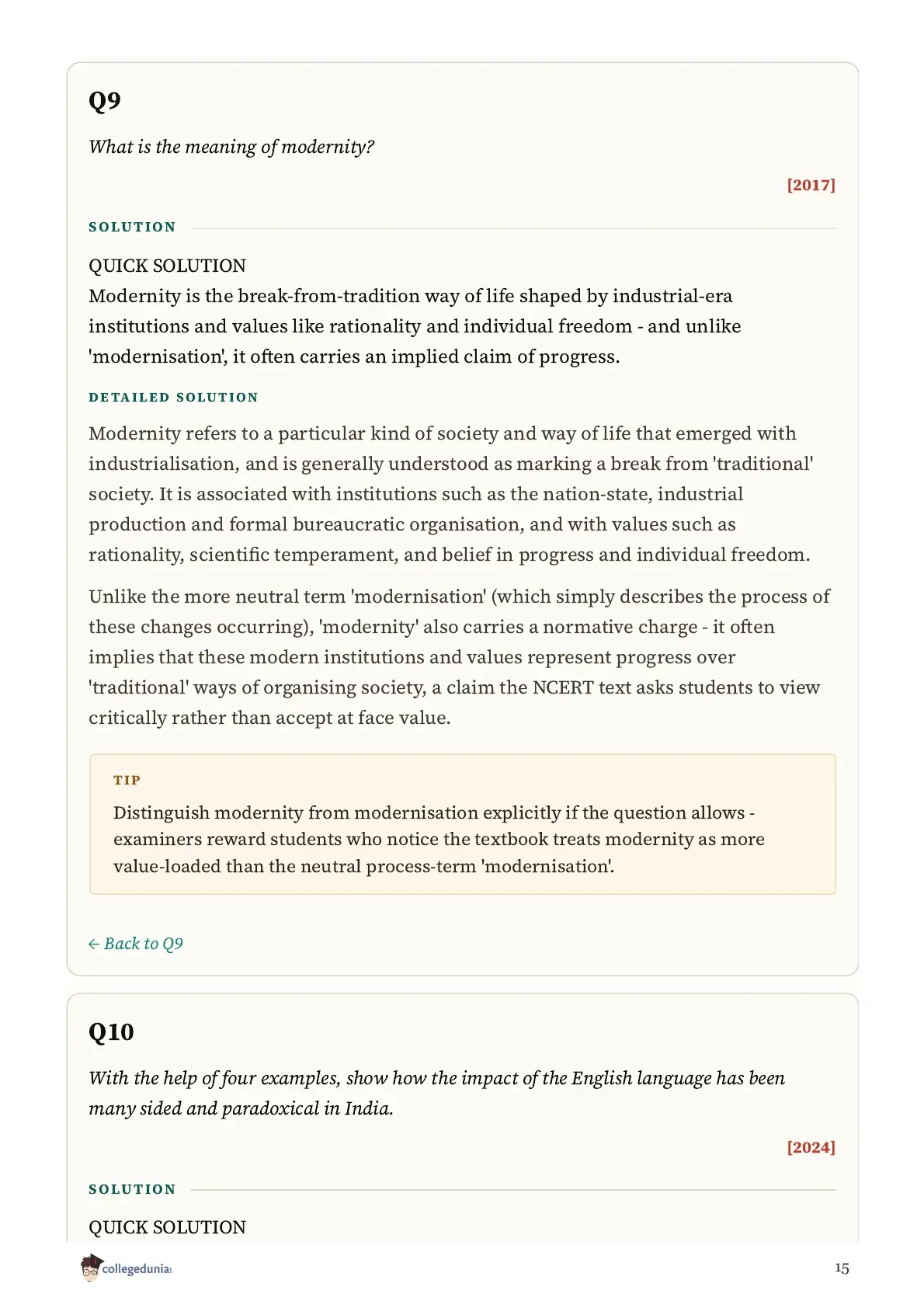
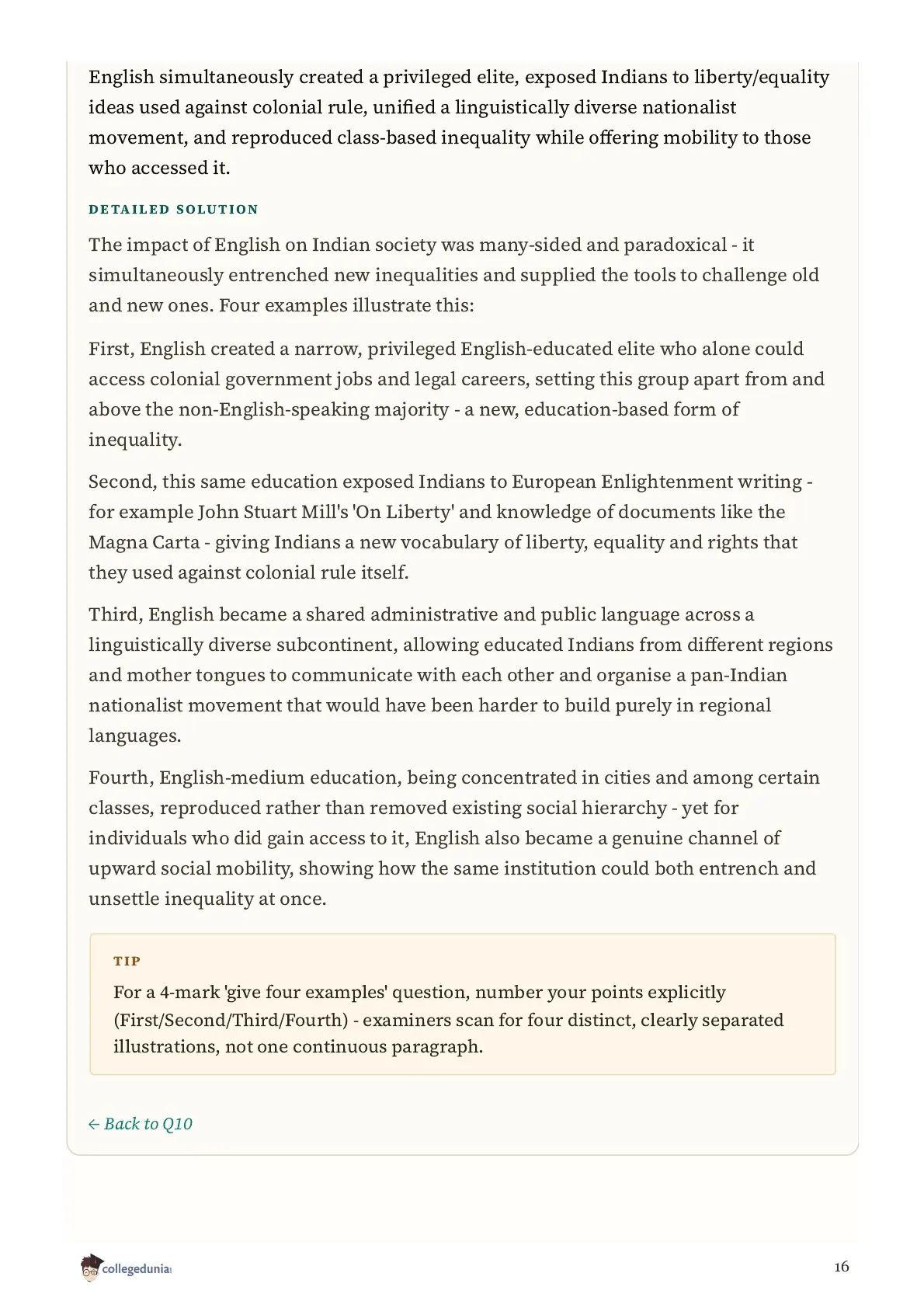
Every question in this Class 12 Sociology Chapter 2 PYQ set is lifted from an actual CBSE board paper (2017-2024) and answered in full by Collegedunia's Sociology experts, according to the 2026-27 NCERT syllabus.
What Class 12 Sociology Chapter 2 PYQs Test: Sanskritisation, Westernisation and Modernisation
The Cultural Change chapter is where CBSE checks how well you understand the different processes of social and cultural transformation in India, from M.N. Srinivas's concept of Sanskritisation to the impact of Westernisation and Modernisation, and the 19th-century reform movements that reshaped ideas about caste, religion and women's status. Board papers also draw on state action and the role of language and agriculture in cultural change.
- Sanskritisation: M.N. Srinivas's model, his later revision of it, and the critique that it brings cultural mobility without structural change.
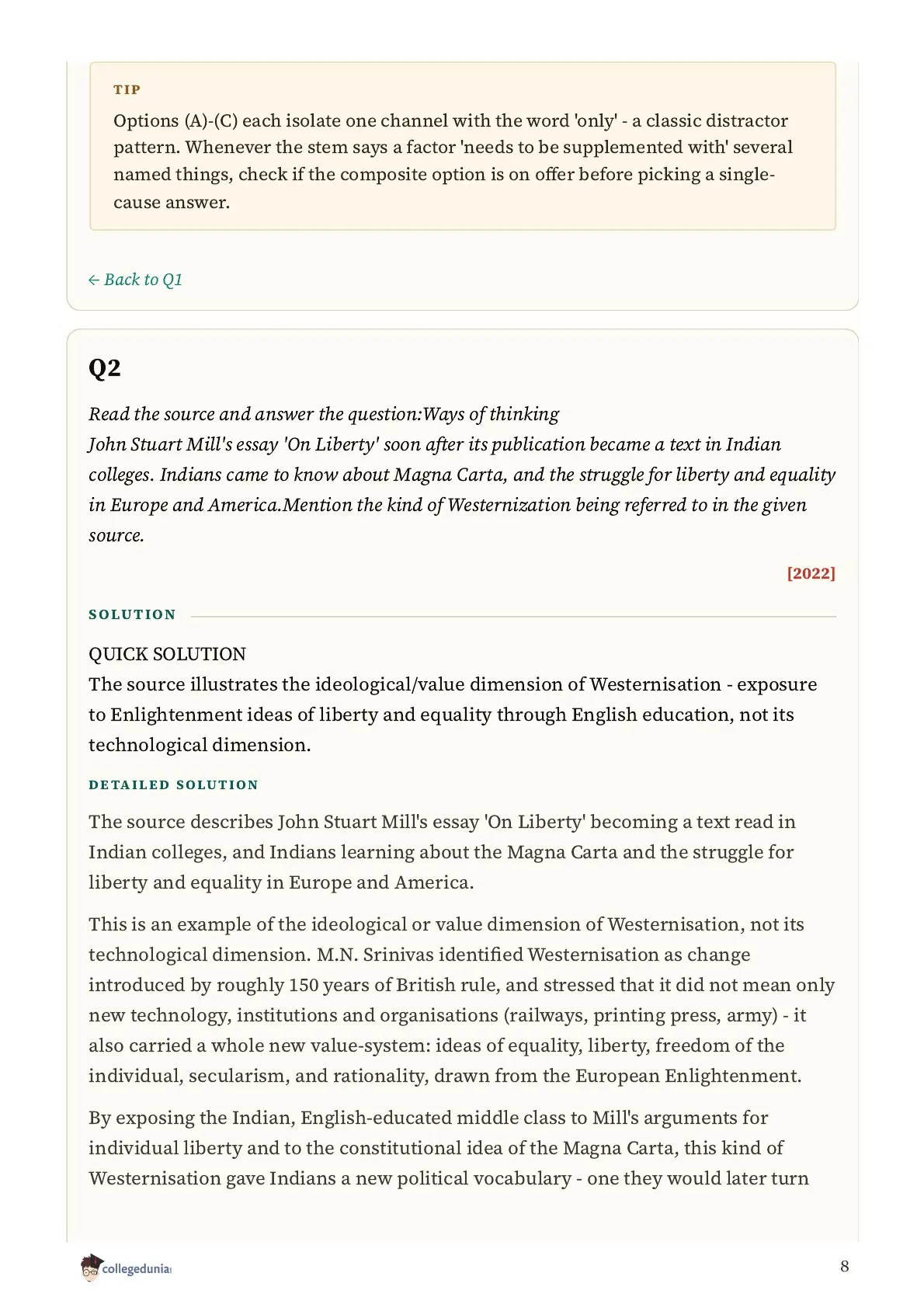
- Westernisation and Modernisation: the difference between the two concepts, and John Stuart Mill's influence on Indian reformers.
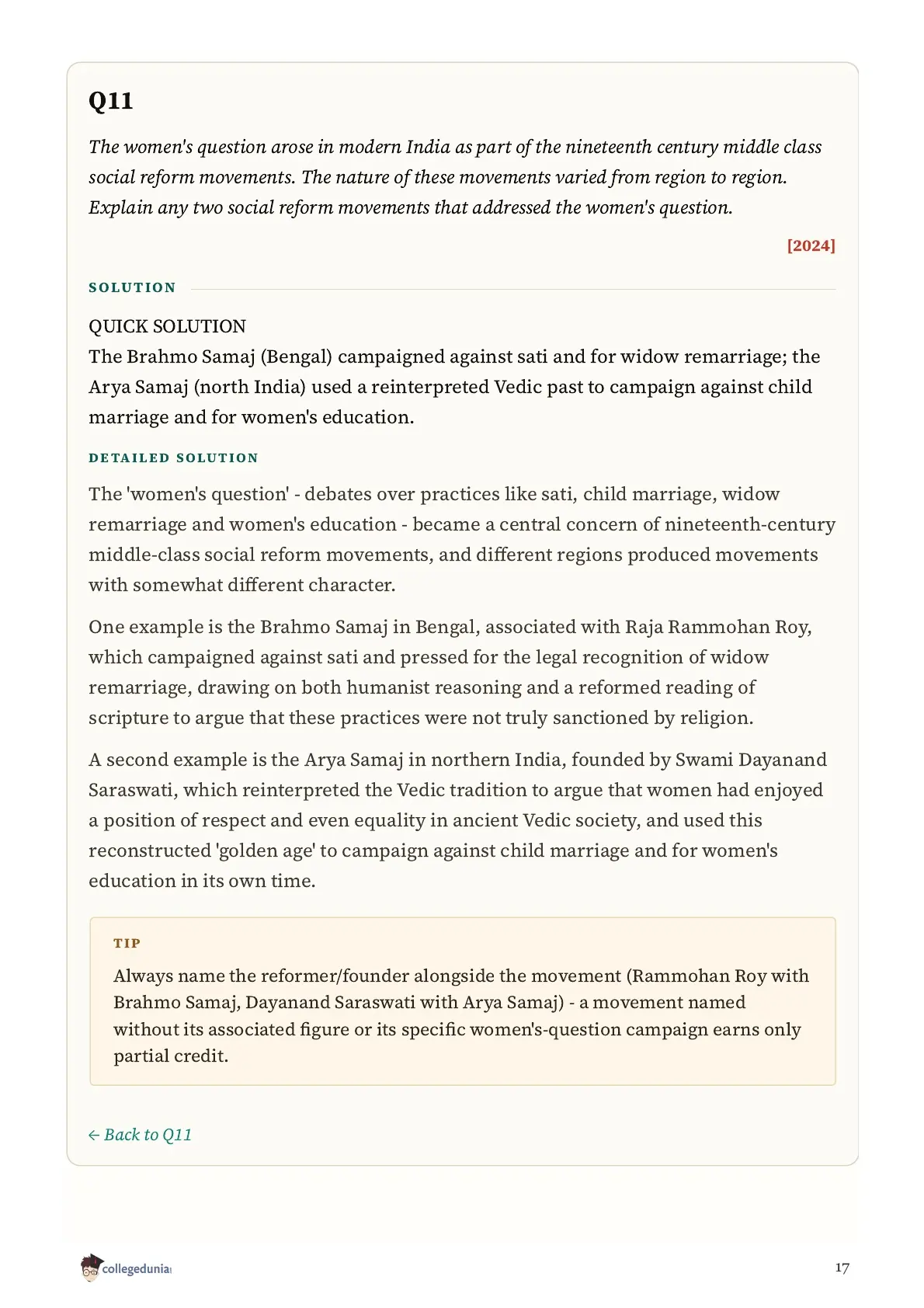
- 19th-century social reform movements: the Brahmo Samaj, the Arya Samaj, the Dharma Sabha, and the differences between reformist and orthodox responses.
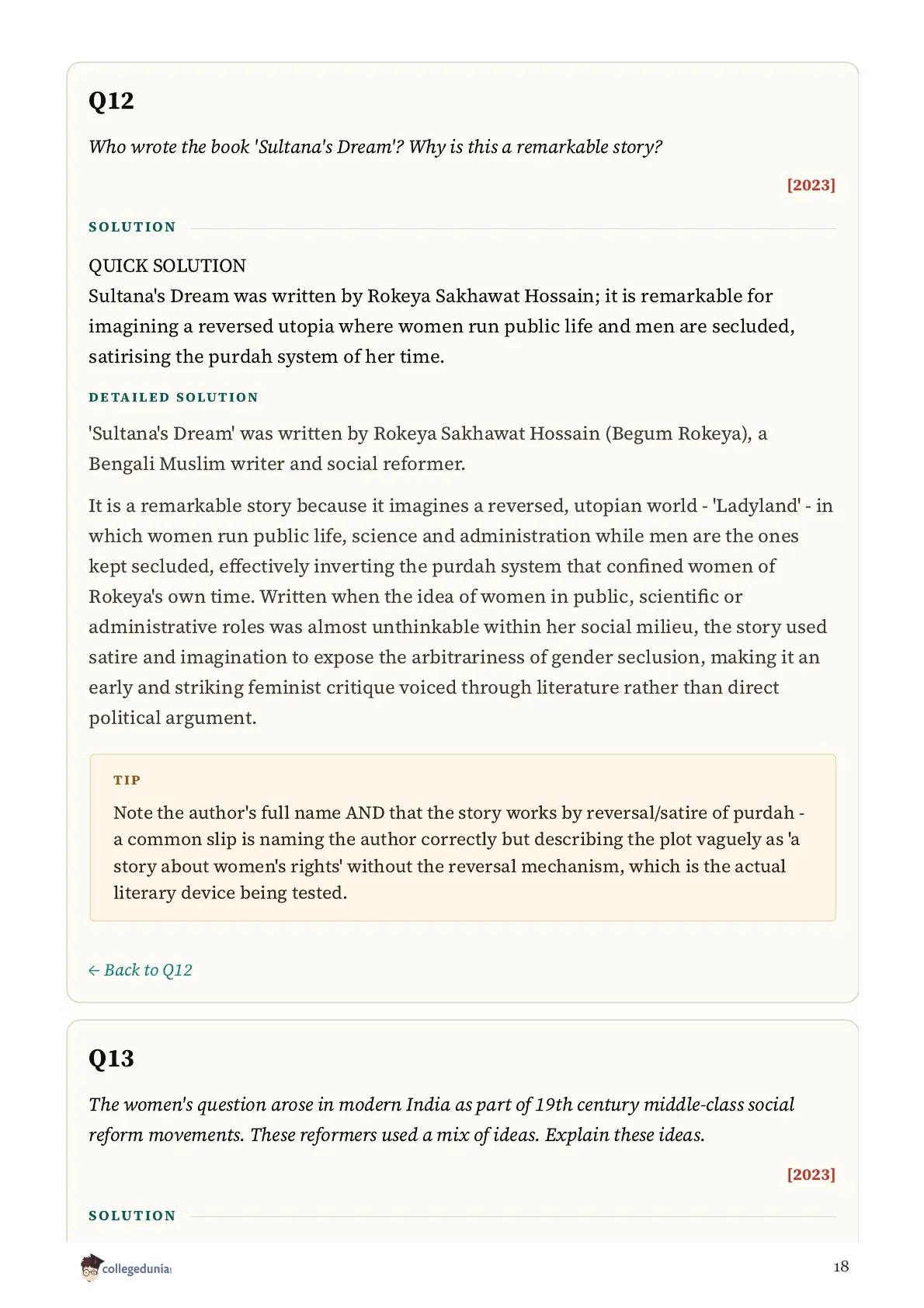
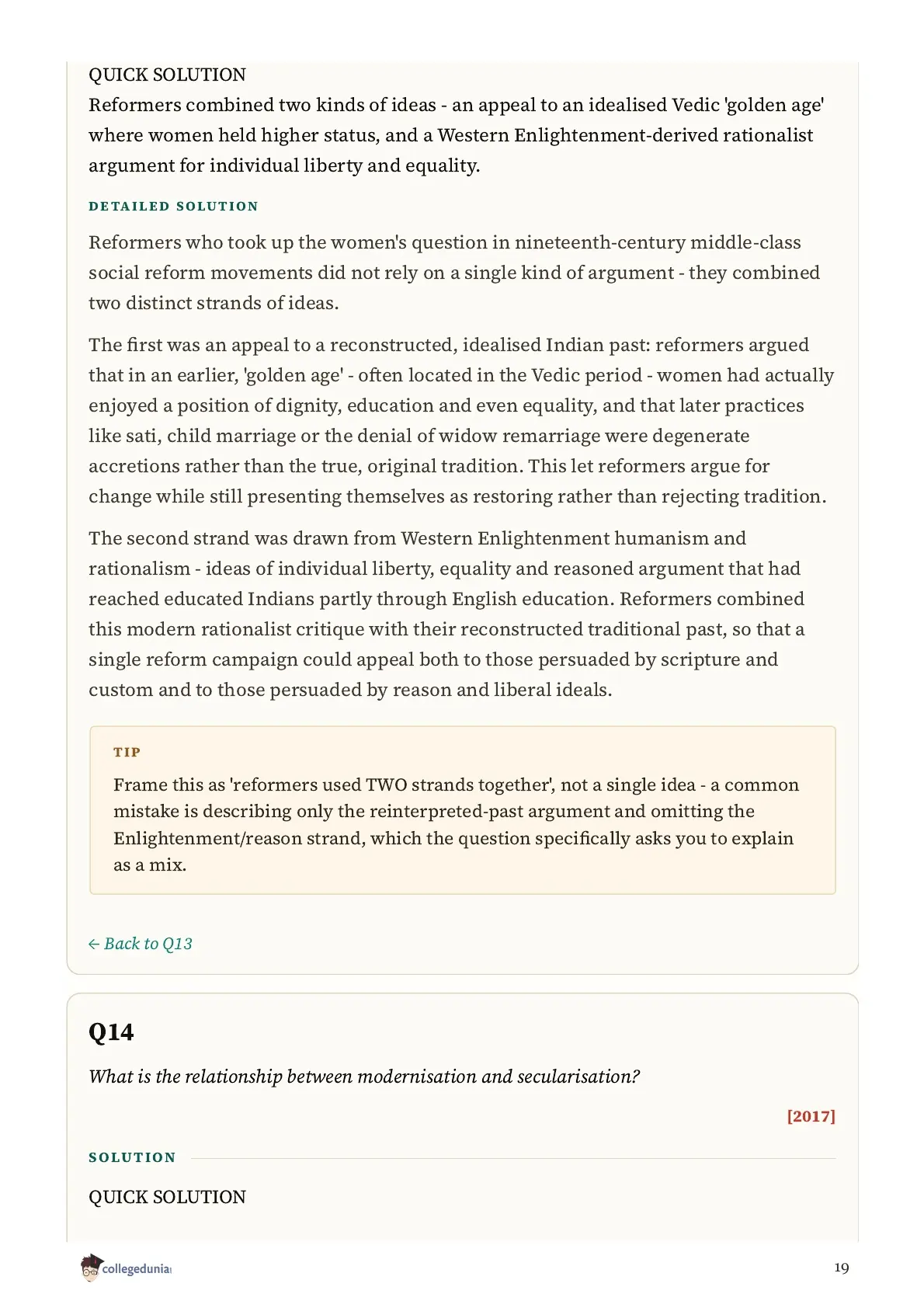
- Reform for women: the campaigns against sati, for widow remarriage and women's education, and early feminist writing such as Rokeya Sakhawat Hossain's Sultana's Dream.
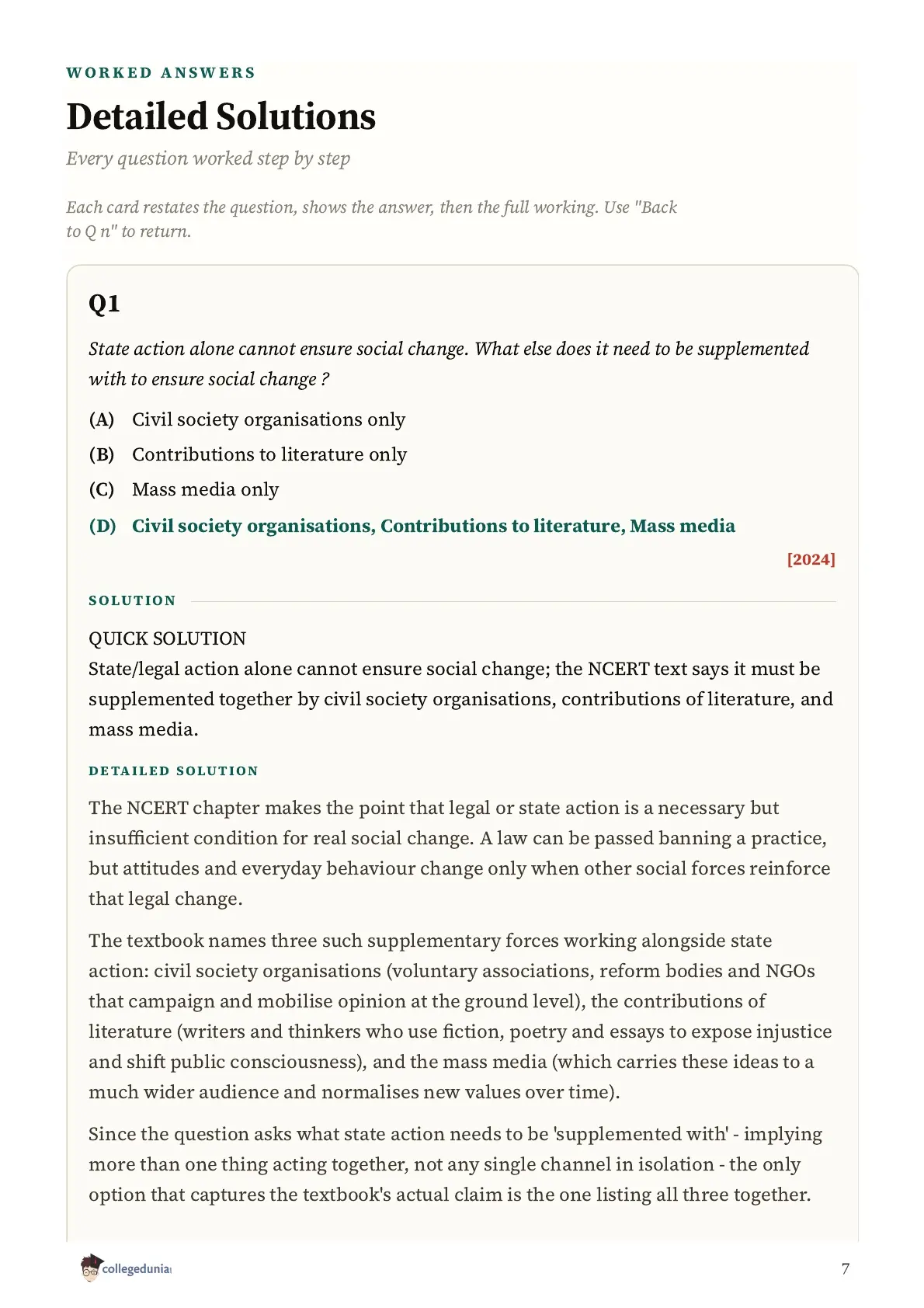
- State action and social change: why laws and bans alone are not enough, and the role of civil society, literature and mass media.
- Agriculture and language: agriculture's link to cultural practices, and the impact of the English language on Indian society.
Marks-wise Distribution of Cultural Change PYQs
The 14 questions are spread across three CBSE mark bands. Section B's 2-mark short-answer questions make up half the paper, while Section C's 4-mark questions carry the most weight per question.
| Section | Marks Each | Question Type | Number of Questions |
|---|---|---|---|
| Section A | 1 mark | MCQ / Very Short Answer | 2 |
| Section B | 2 marks | Short Answer | 7 |
| Section C | 4 marks | Long Answer / Essay-type | 5 |
The single MCQ tests whether you can recognise a term like Sanskritisation or Westernisation from its definition, while the 4-mark questions expect a full essay-style answer with examples, such as explaining the difference between Sanskritisation and Westernisation, or discussing why legal reform alone could not end practices like sati.
Year-wise Spread of Cultural Change PYQs: 2017 to 2024
The bank covers an eight-year spread of CBSE board papers, from 2017 to 2024, rather than a run of recent years alone. 2022 contributed the most questions (4), while the remaining years fill out the set unevenly.
| Year | Number of Questions |
|---|---|
| 2017 | 2 |
| 2019 | 3 |
| 2022 | 4 |
| 2023 | 2 |
| 2024 | 3 |
Practising across this wider span shows how CBSE returns to the same core concepts, Sanskritisation, Westernisation, Modernisation and the 19th-century reform movements, even when several years separate the papers.
Which Topics Repeat Most in Cultural Change PYQs
Three broad clusters of topics account for almost every question in this chapter's PYQs: the Sanskritisation-Westernisation-Modernisation triad, the 19th-century social reform movements, and a smaller set of topics that come up less often but still recur.
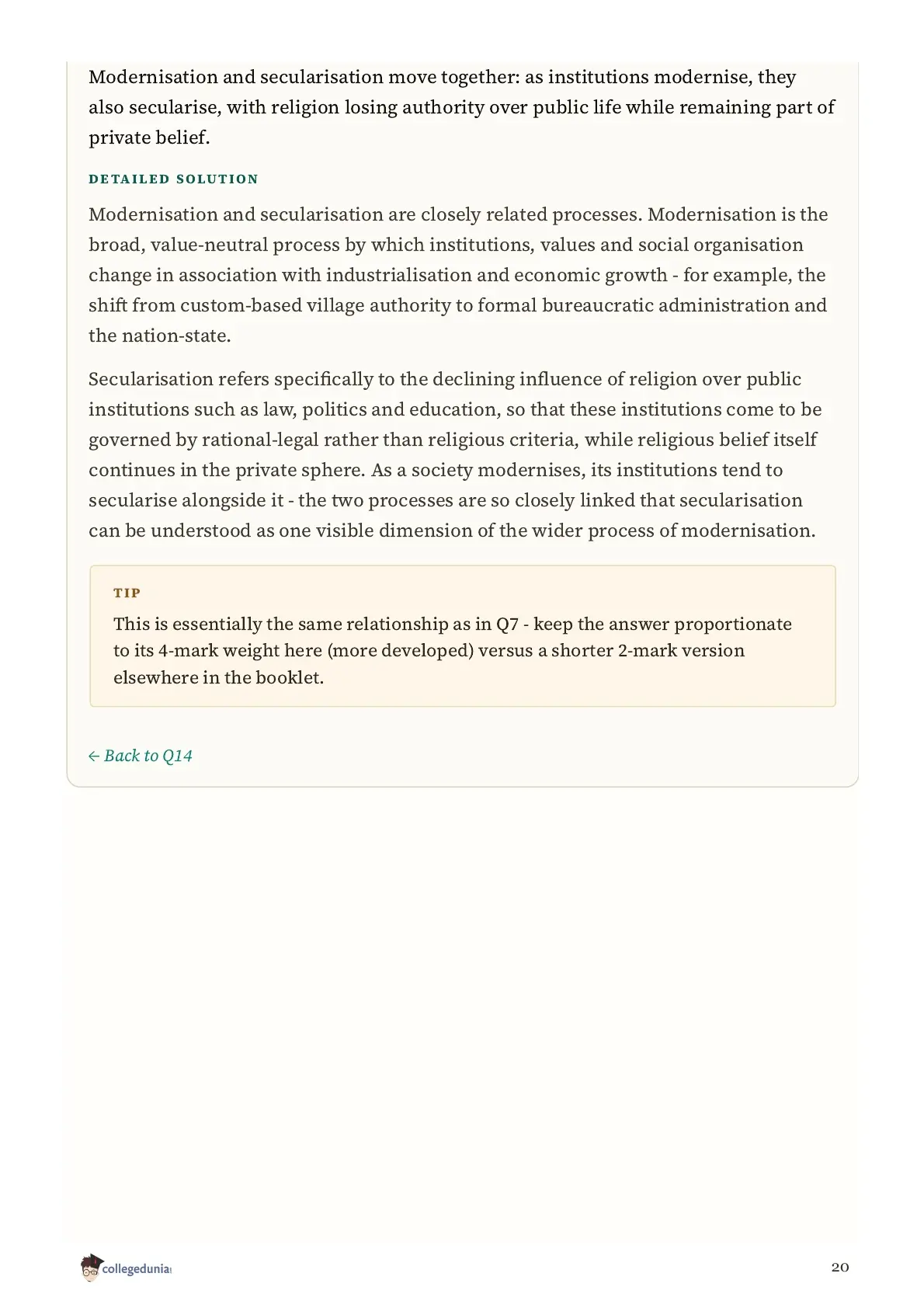
- Most frequent: the critique of Sanskritisation, the meaning of Modernity, Modernisation and its relationship with secularisation, and Westernisation's roots in John Stuart Mill's ideas.
- Frequent: the Dharma Sabha and religious reform, the ideas behind 19th-century women's reform movements, differences between social reform movements, social reform movements for women, and Sultana's Dream as an example of early feminist writing.
- Regular: the impact of English language in India (asked twice in this set), state action and social change, and agriculture and cultural practices.
How to Attempt Cultural Change PYQs
Cultural Change questions reward precision with terminology as much as they reward content. A few habits make the difference between a partial answer and a full-marks one.
- Always name Sanskritisation, Westernisation and Modernisation as three distinct terms, never as synonyms for "change" in general.
- For a compare-contrast question, structure the answer as definition, then point-by-point difference, then a one-line example for each term.
- In the MCQ, eliminate options that describe a related but different process (for example an option describing Westernisation when the question asks about Modernisation) before choosing an answer.
- For questions on reform movements, name the specific organisation or reformer (Raja Rammohan Roy and the Brahmo Samaj, Dayanand Saraswati and the Arya Samaj) rather than writing about "reformers" in general.
Sample Question and Answer Approach for Cultural Change
Here is how to structure two typical question types from this chapter's PYQs. The pattern below is the same one the PDF's step-by-step solutions follow.
| Question Type | How to Structure the Answer |
|---|---|
| 1-mark MCQ (e.g. identifying a term from its definition) | Read the definition carefully and match it to the exact term, Sanskritisation, Westernisation or Modernisation, before choosing an option. Don't pick a term that sounds similar but describes a different process. |
| 4-mark long answer (e.g. explaining the difference between two concepts, or the limits of state action) | Open by defining each term or concept named in the question, then give the point of difference or the limitation, and close with one concrete historical example, a reformer, a movement, or a law, that illustrates the point. |
This pattern, define first, then differentiate or explain, then give an example, is what separates a 2-mark answer from a full 4-mark one.
Common Mistakes Students Make in Cultural Change Questions
Watch out for these recurring errors:
- Treating Sanskritisation and Westernisation as the same process. Sanskritisation is about a caste or tribe adopting a locally dominant caste's customs, rituals and lifestyle to move up the caste hierarchy; Westernisation is about the institutional and ideological changes British rule itself brought.
- Writing Modernisation as if it carries a value judgment. Modernisation is meant to be a value-neutral, descriptive term for a process of change accompanying economic growth and industrialisation, not a claim that a modernised society is automatically better.
- Explaining a social reform without naming the specific reformer or organisation, such as writing about "reform movements" in general instead of naming Raja Rammohan Roy, the Brahmo Samaj, or the Arya Samaj.
- Assuming a law or ban by itself ended a practice like sati or child marriage, instead of explaining that legal action needed the support of civil society organisations, literature and public campaigning to bring lasting change.
Student Feedback: Cultural Change Difficulty Rating
What 9,800 students told us about this chapter's PYQs
In a Collegedunia poll of 9,800 Class 12 Sociology students conducted before the 2027 boards, 61% rated distinguishing between Sanskritisation, Westernisation and Modernisation as the hardest part of this chapter, mainly because the three terms sound similar under exam pressure. Students who practised the full eight-year PYQ span together reported fewer mix-ups between the three concepts on the actual paper.
Source: 2026-27 Class 12 Sociology student poll. Sample of 9,800 students from CBSE schools across 13 states.
How These PYQs Pair with Other Class 12 Sociology Chapter 2 Resources
This PYQ set works best alongside the other Chapter 2 resources already live on Collegedunia. Read the notes first, revise from the handwritten notes, solve these PYQs, then cross-check tricky answers against the full NCERT solutions.
| Resource | Link |
|---|---|
| NCERT Notes | Cultural Change Class 12 Notes |
| Handwritten Notes | Cultural Change Class 12 Handwritten Notes |
| NCERT Solutions | Cultural Change Class 12 NCERT Solutions |
| NCERT Book PDF | Cultural Change Class 12 NCERT Book PDF |
| PYQ (this page) | Cultural Change Class 12 PYQ |
Structural Change (Chapter 1) is the sibling chapter in this same series. Its PYQ page is being added next and will link here once live.
How to Use the Cultural Change PYQ PDF Effectively
Don't jump to the solution on the first read. Try to name the concept or reformer and sketch an answer yourself, then check it against the step-by-step solution in the PDF.
- First pass: attempt all 14 questions without looking at the solutions, section by section.
- Second pass: compare each answer against the solution and mark where a key term (Sanskritisation, Westernisation, Modernisation) or a reformer's name was missing.
- Third pass: redo only the questions you got wrong, a day or two later, from memory.
Downloading and Using the PYQ PDF
The PDF is 20 pages and free to download. It opens with the question paper sorted by mark band, closes with a self-check answer key, and links every question to its full solution.
Cultural Change Class 12 Sociology PYQ FAQs
Ques. How many questions are in the Cultural Change Class 12 PYQ PDF?
Ans. The PDF has 14 questions from CBSE board papers between 2017 and 2024: 1 one-mark MCQ, 1 one-mark very short answer, 7 two-mark short-answer questions and 5 four-mark long-answer questions.
Ques. Does this PYQ PDF include solutions, or only the questions?
Ans. It includes full solutions. Every one of the 14 questions has a step-by-step answer written out in the PDF, so you can check your own attempt against a worked solution rather than just an answer key.
Ques. Which years of CBSE board papers does this PYQ set cover?
Ans. It covers an eight-year spread: 2017, 2019, 2022, 2023 and 2024. 2022 has the most questions (4), followed by 2019 and 2024 (3 each) and 2017 and 2023 (2 each).
Ques. Where can I download the Cultural Change PYQ PDF?
Ans. You can download it directly from this page. It is free and runs to 20 pages, with the questions sorted by mark band and every question linked to its solution.
Ques. Is this PYQ set aligned with the 2026-27 CBSE syllabus?
Ans. Yes. The chapter content and question pattern match the current 2026-27 NCERT Sociology syllabus for Class 12.
Ques. What is Sanskritisation?
Ans. Sanskritisation is M.N. Srinivas's term for the process by which a lower or middle-ranked caste or tribe adopts the customs, rituals, ideology and lifestyle of a locally dominant upper caste, in order to claim a higher position in the caste hierarchy over a generation or two. Srinivas later revised the model to note that the dominant caste is not always a "twice-born" or Brahmin caste, and that Sanskritisation brings cultural mobility, not necessarily a change in structural position.
Ques. What is the difference between Westernisation and Modernisation?
Ans. Westernisation, a term coined by M.N. Srinivas, refers to the specific changes British rule brought to Indian society and culture over about 150 years, including new institutions, technology and values like equality and liberalism. Modernisation is a broader, value-neutral term for the process of change in social institutions, ideas and values that accompanies economic growth and industrialisation, and is not tied to any one colonial power.



Comments