




Structural Change looks at how colonial rule and its aftermath reshaped Indian society, from new land revenue systems and a rigid, census-fixed caste order to the growth of industrial cities and plantation labour. This PYQ set brings together 16 CBSE board questions from 2017 to 2024 on the chapter, and every one comes with a full step-by-step solution, so you can check your own answer against a complete worked explanation.
- 16 questions, CBSE 2017-2024: 4 MCQs (1 mark), 1 very short answer (1 mark), 3 short answer (2 marks), 7 long answer (4 marks), 1 essay-type (6 marks).
- Full solutions included: every question has a worked, step-by-step answer, not just the bare question paper.
- Topics covered: colonial land revenue systems, deindustrialisation, the colonial city model, tea plantation labour, the census and caste, and land reforms after independence.
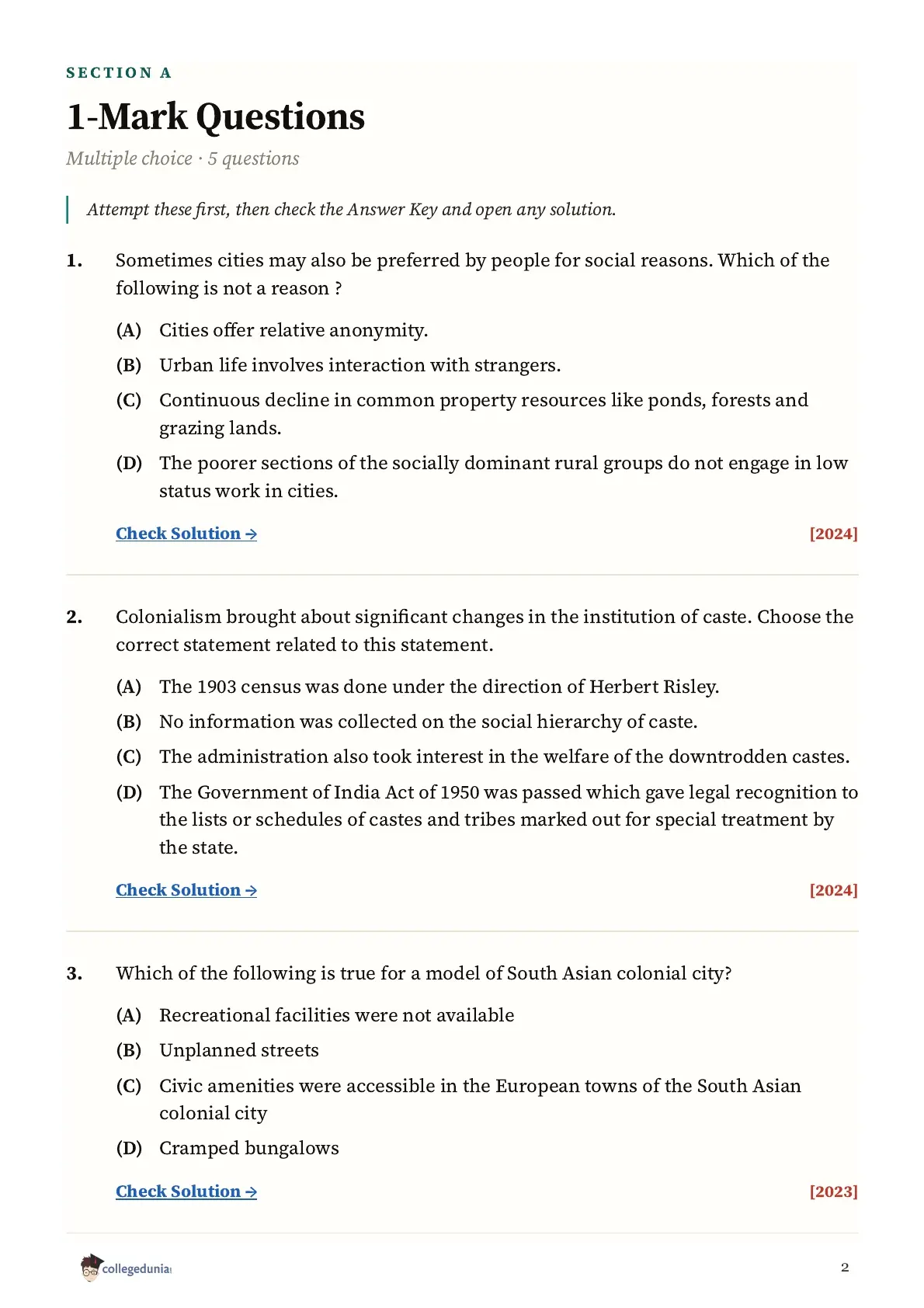
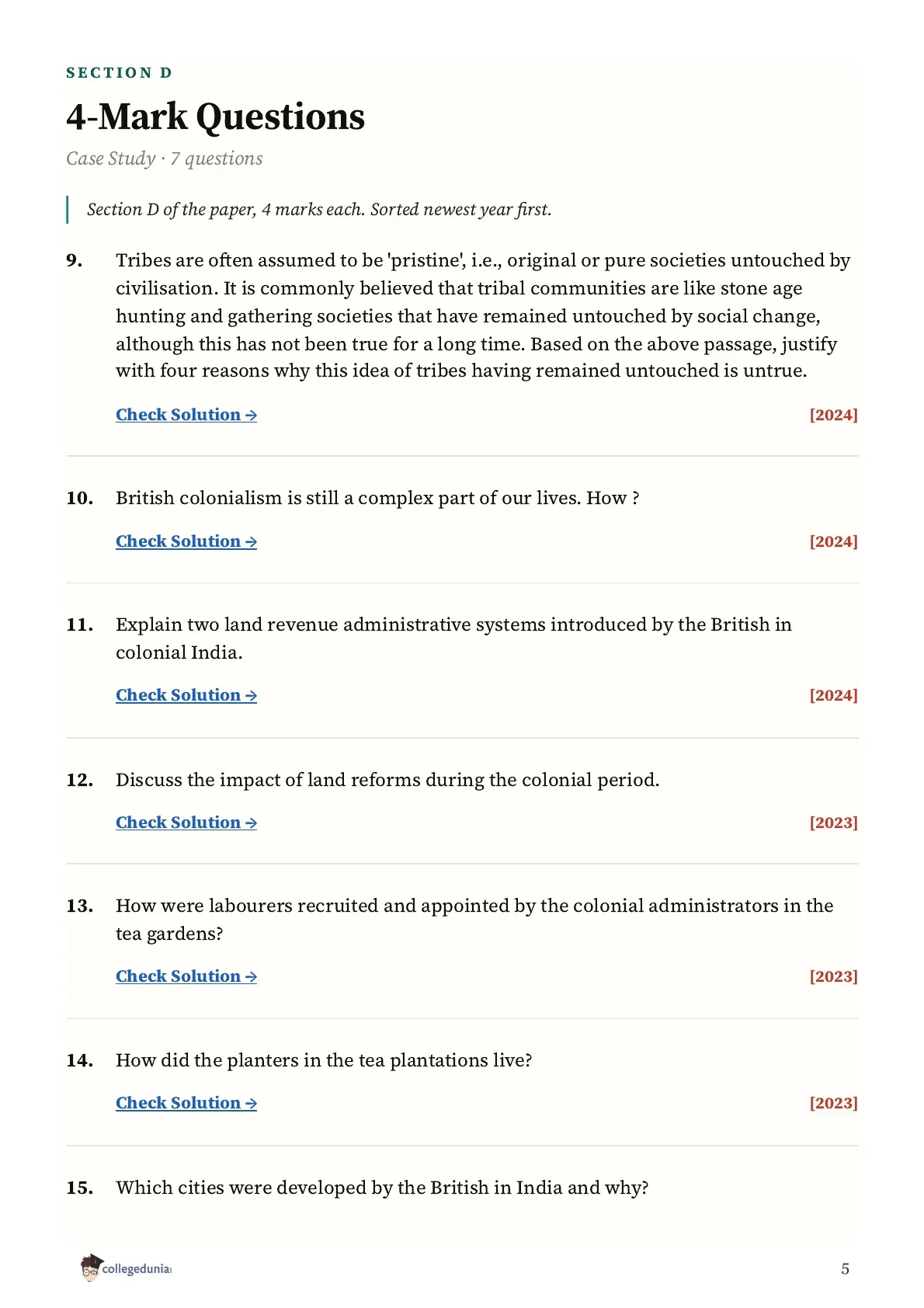


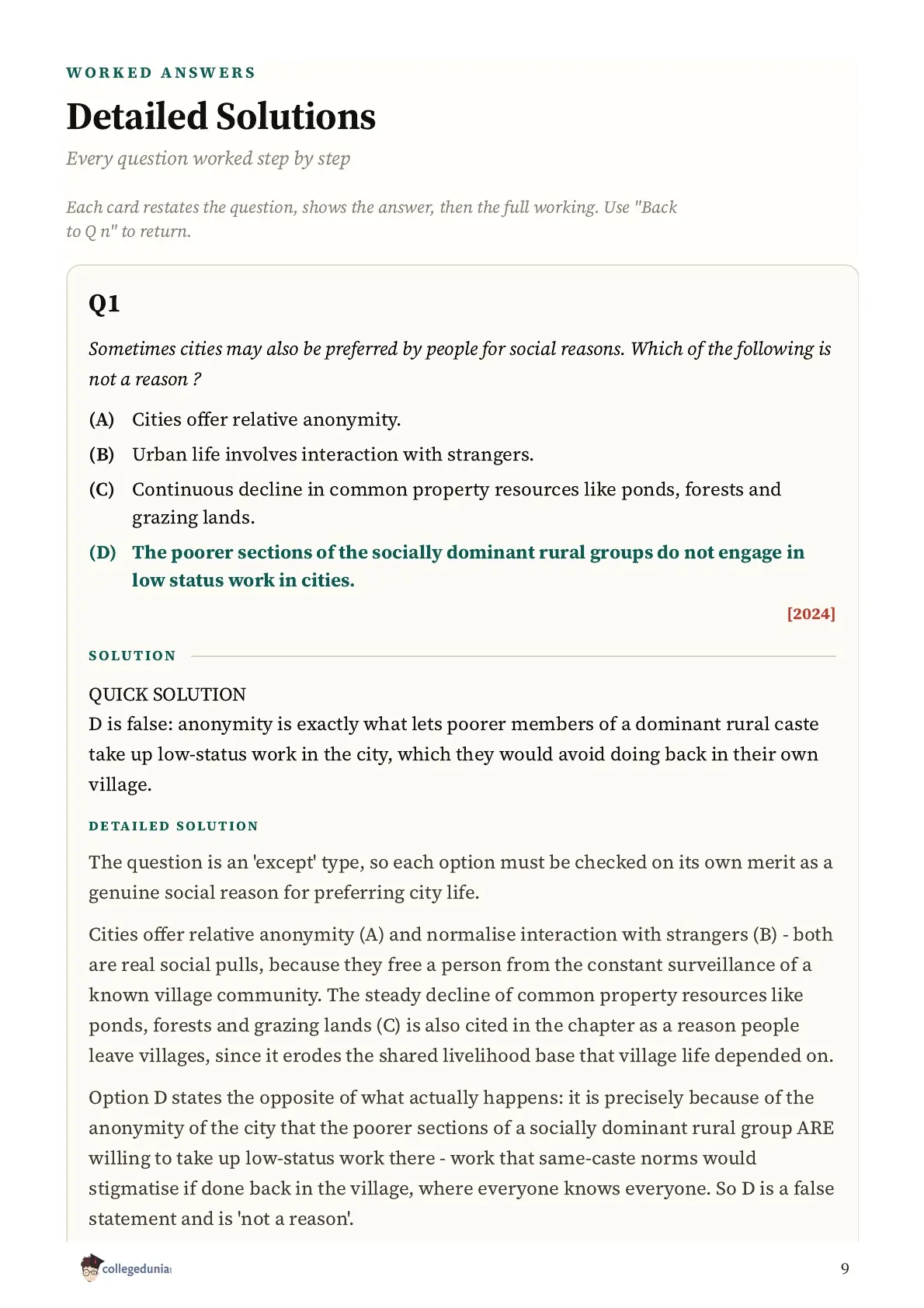
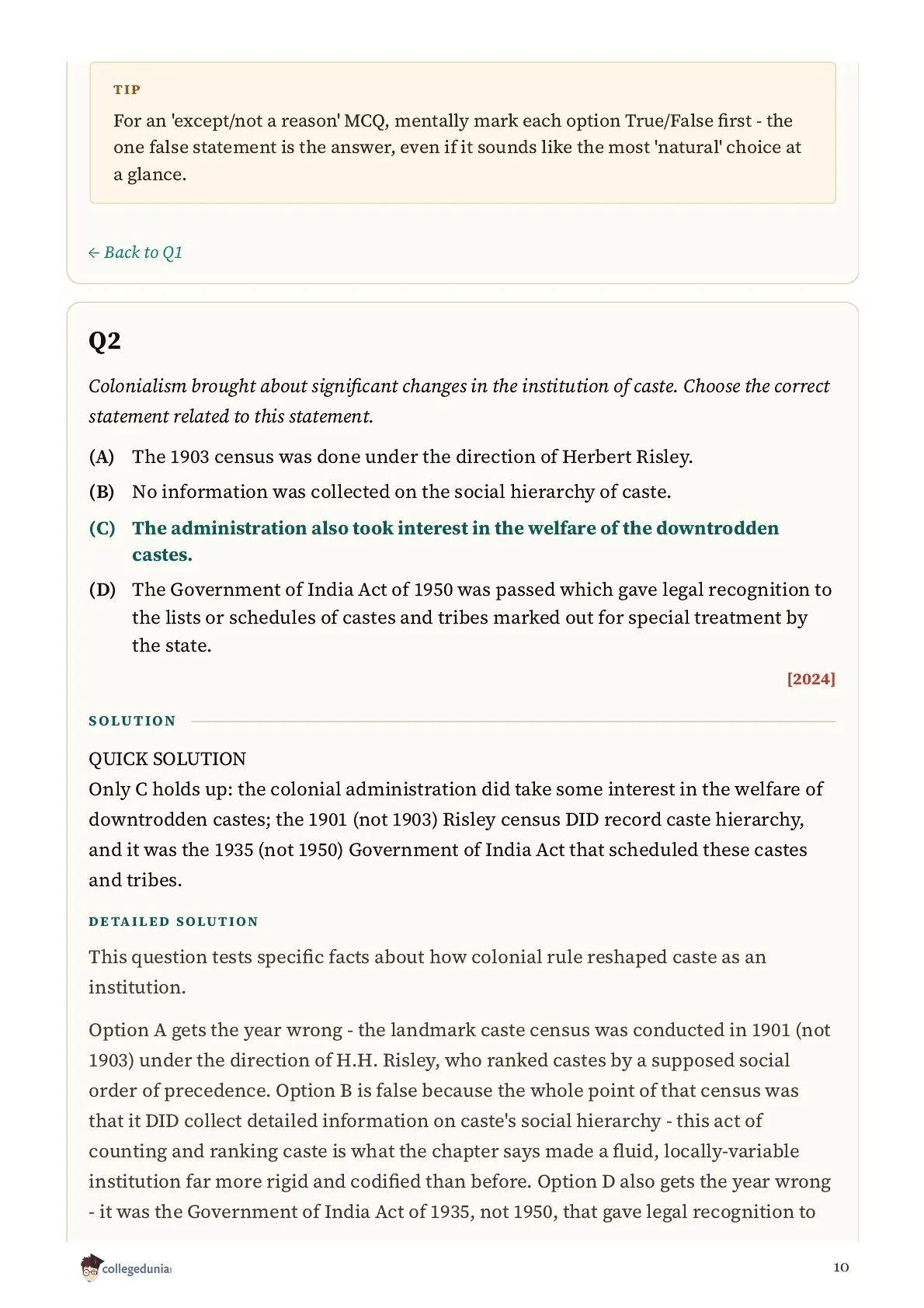
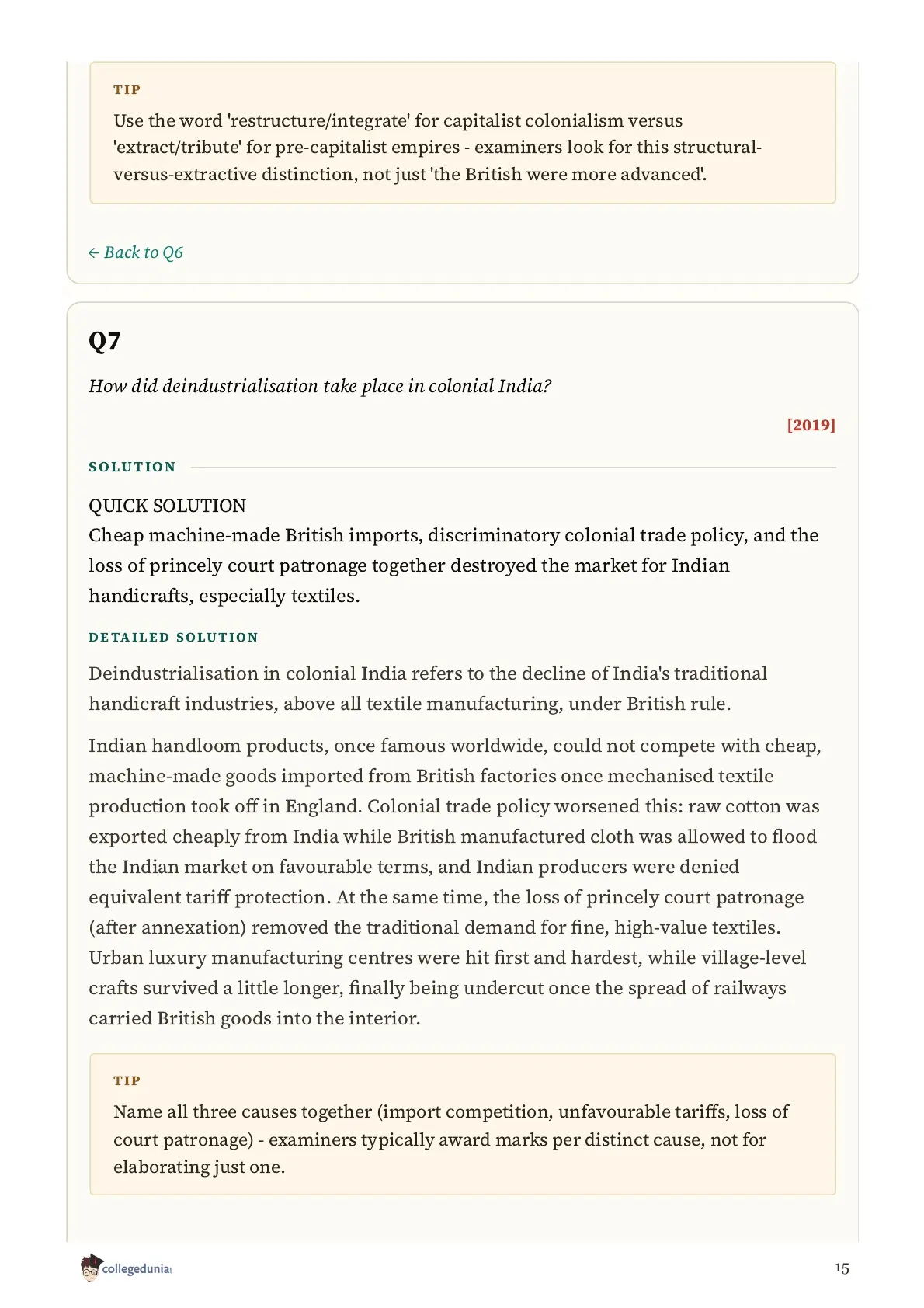
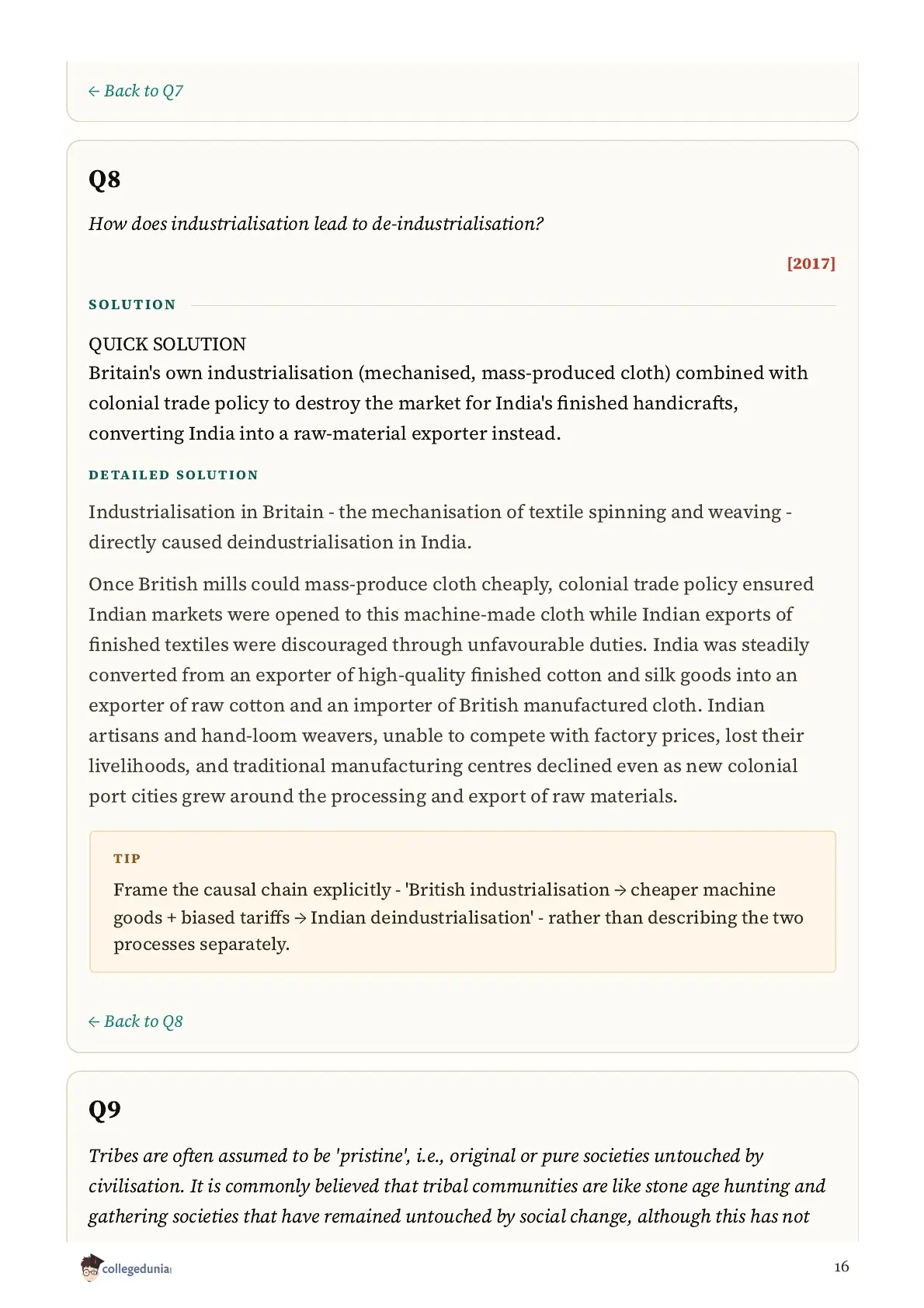
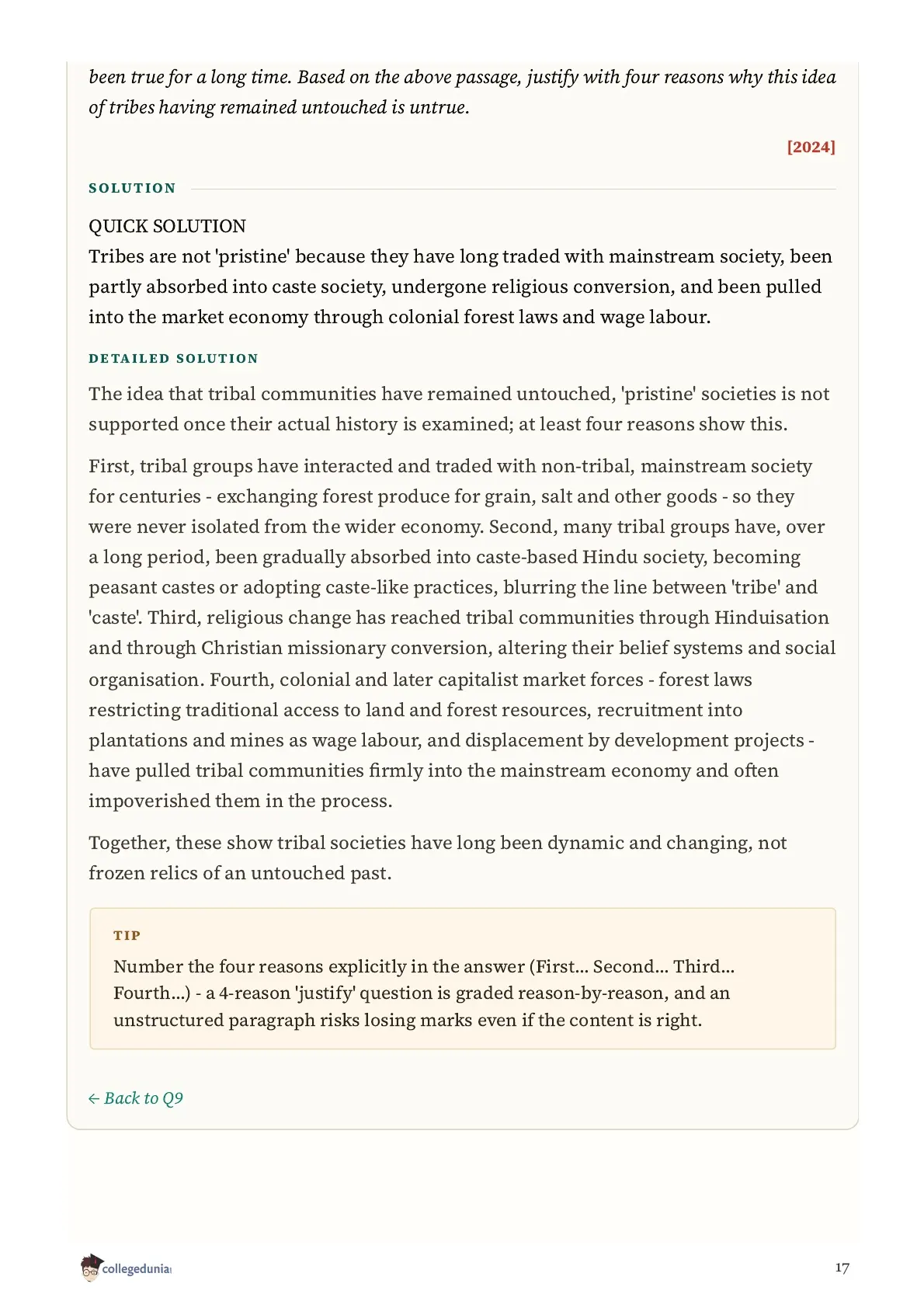
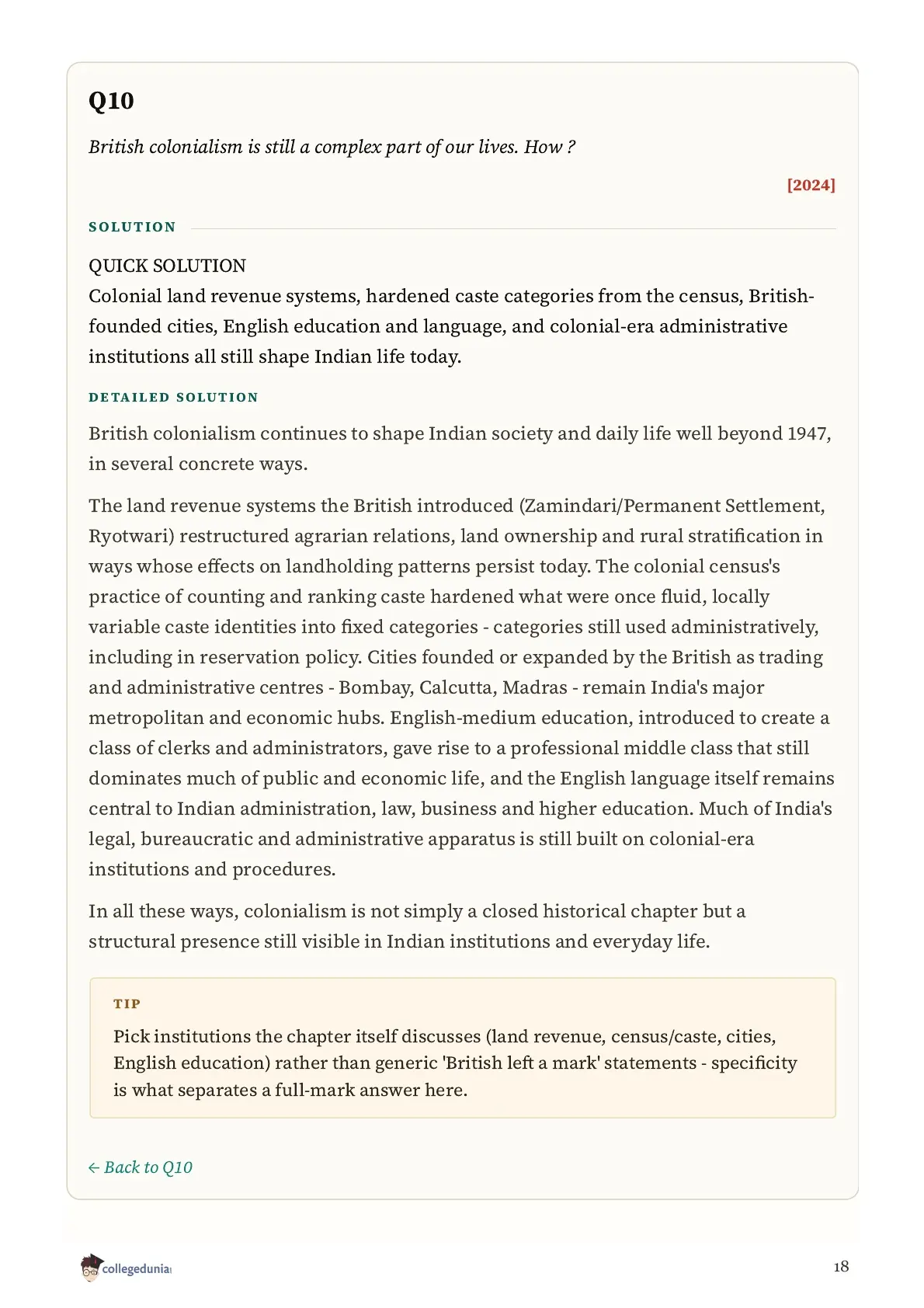
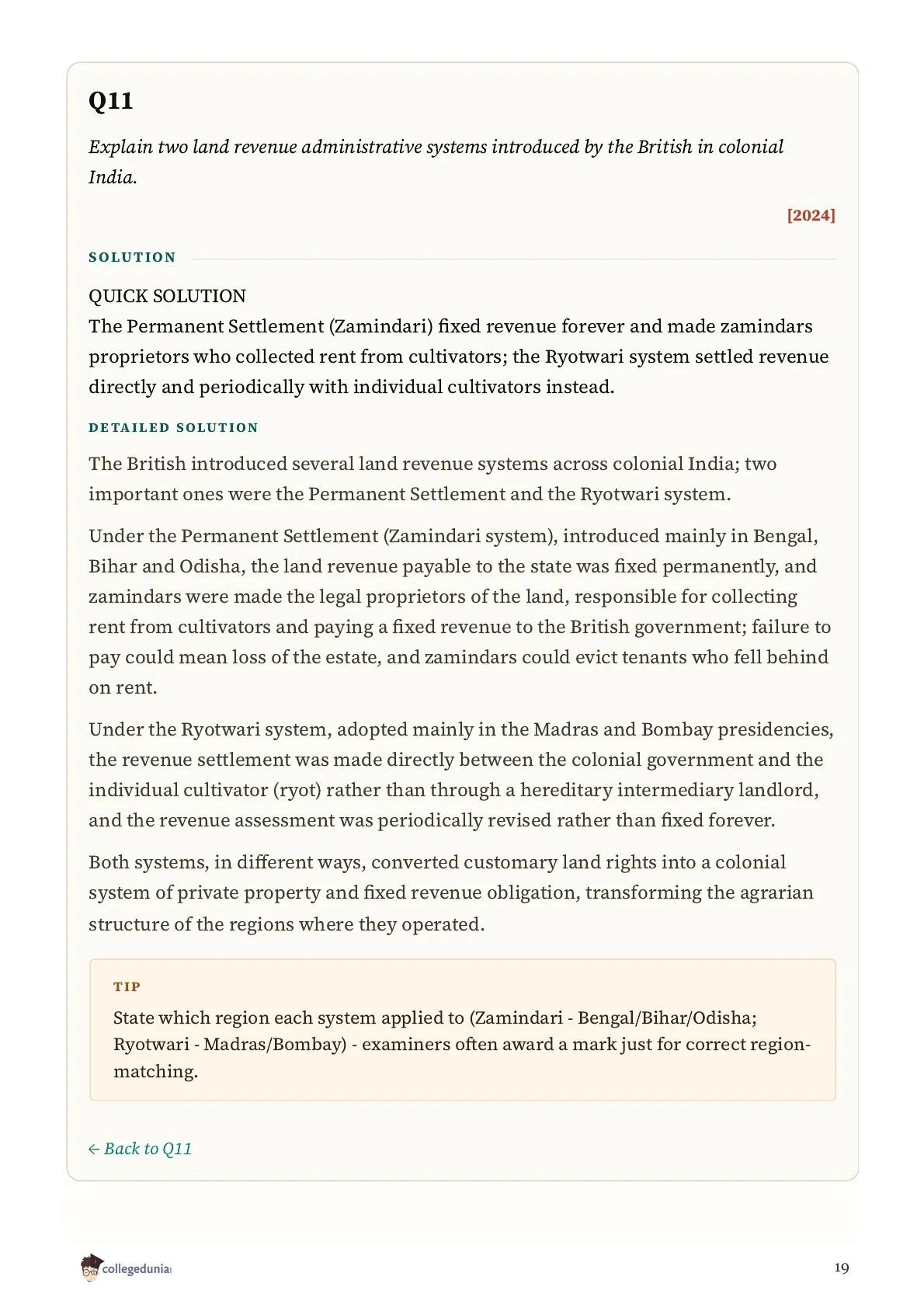
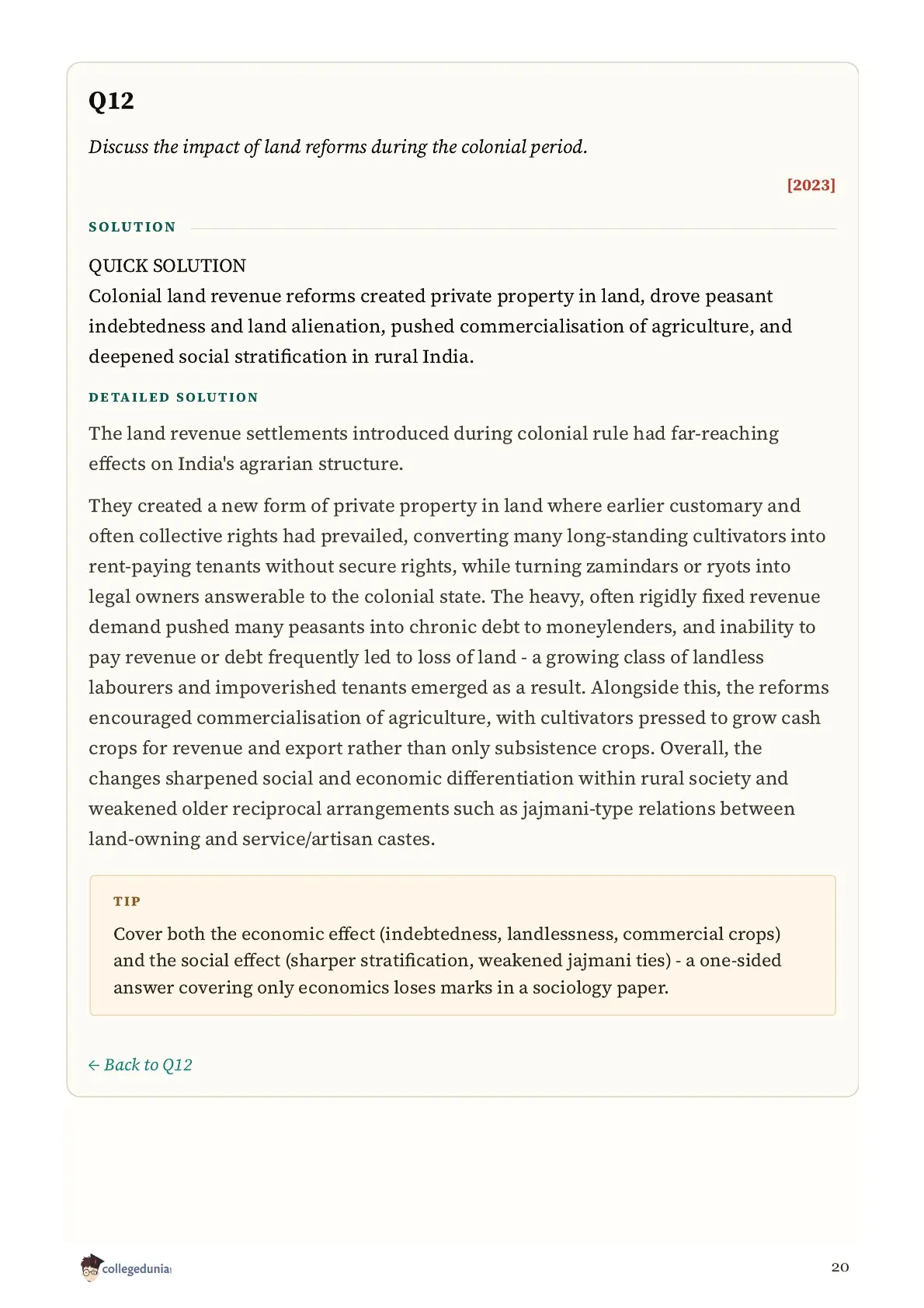
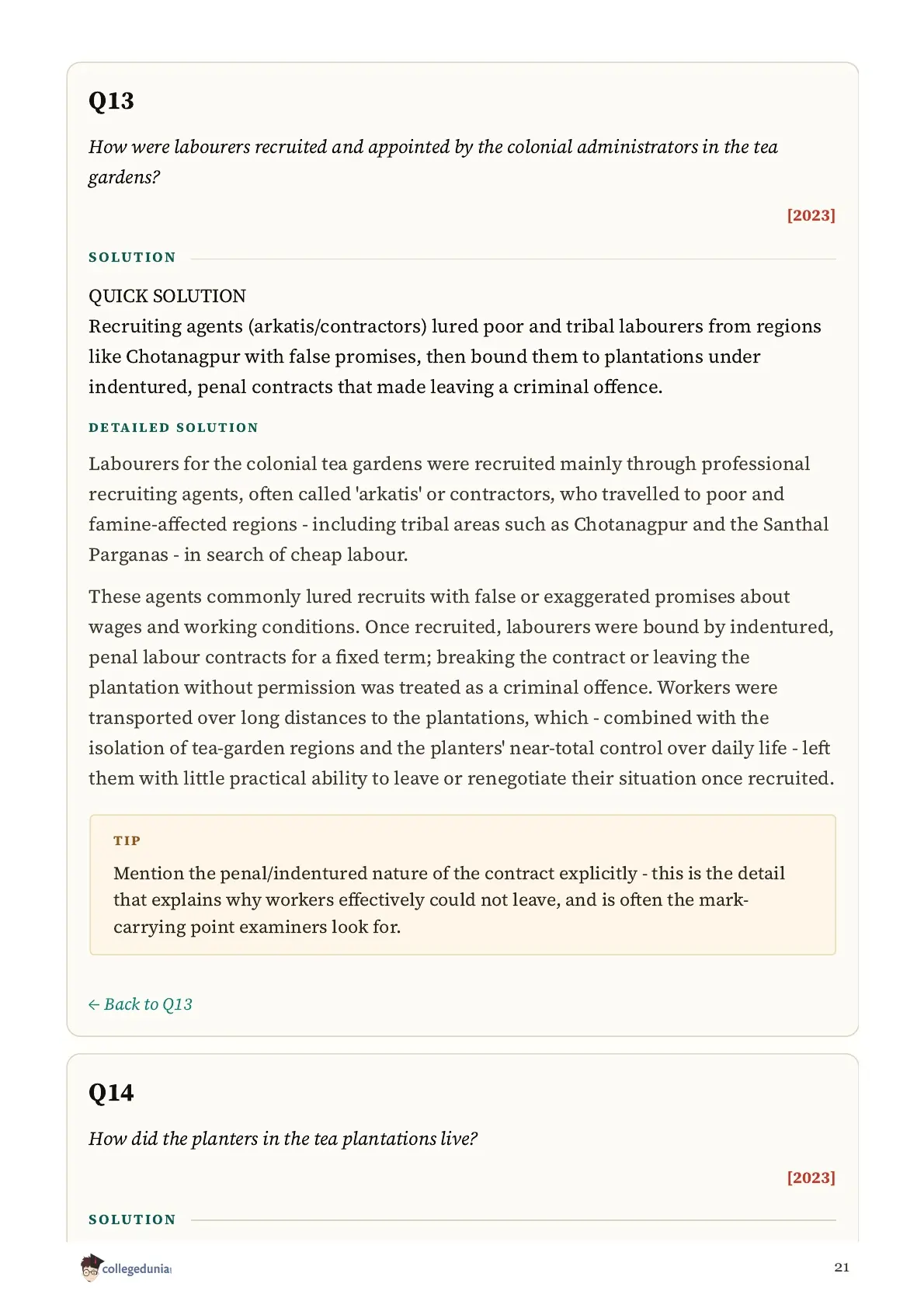
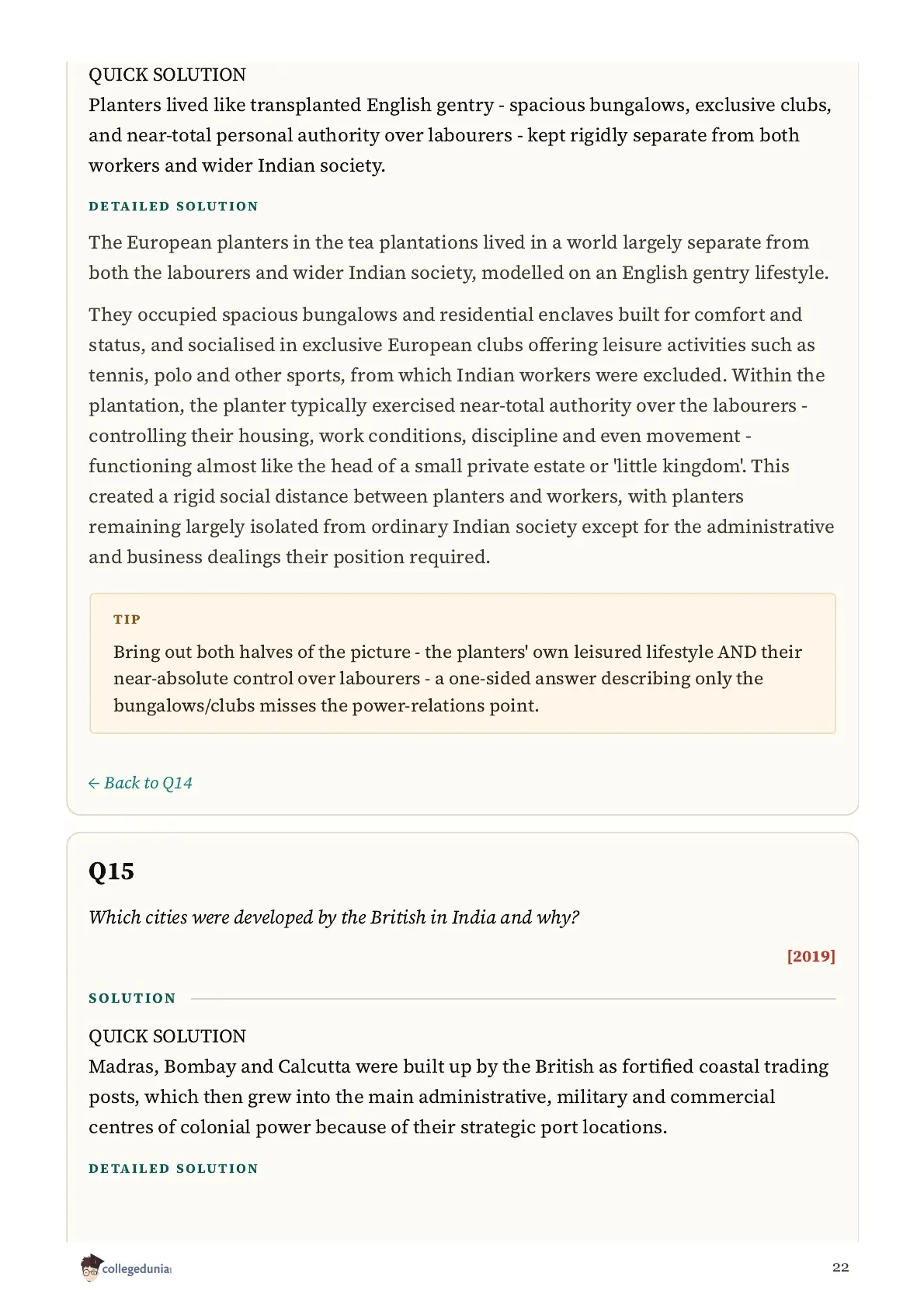
Every question in this Class 12 Sociology Chapter 1 PYQ set is lifted from an actual CBSE board paper (2017-2024) and answered in full by Collegedunia's Sociology experts, according to the 2026-27 NCERT syllabus.
|
Table of Contents |
What Class 12 Sociology Chapter 1 PYQs Test: Colonialism, Industrialisation and Urban Change
The Structural Change chapter is where CBSE checks whether you can name and explain the three broad sources of change in Indian society under colonial rule and after: colonialism itself, industrialisation and urbanisation, and the nationalist movement followed by independent India's own reforms. Board papers pull questions from land revenue systems, the census and its effect on caste, deindustrialisation, the colonial city model, plantation labour, and land reforms after independence.
- Colonialism: zamindari, ryotwari and mahalwari land revenue systems, the census and its effect on caste, and the decline of court patronage for traditional artisans.
- Industrialisation and urbanisation: deindustrialisation of handicrafts, the colonial port-city model (Bombay, Calcutta, Madras), and the recruitment and lifestyle of tea garden labourers.
- Urban life and migration: the social and economic reasons people preferred city life over village life, including the pull of urban anonymity.
- Post-independence change: land reforms that abolished zamindari and their impact on rural society.
- Historical framing: the difference between pre-capitalist and capitalist empire building, and the legacy of British colonialism on Indian society.
Marks-wise Distribution of Structural Change PYQs
The 16 questions are spread across five CBSE mark bands. MCQs and short-format questions dominate the 1-mark band, but the 4-mark long-answer questions carry the most weight in the set.
| Marks Each | Question Type | Number of Questions |
|---|---|---|
| 1 mark | MCQ | 4 |
| 1 mark | Very Short Answer (VSA) | 1 |
| 2 marks | Short Answer (SA) | 3 |
| 4 marks | Long Answer | 7 |
| 6 marks | Essay type | 1 |
MCQs test whether you can identify a land revenue system or a colonial policy from its description. The 4-mark and 6-mark questions test whether you can explain how colonialism, industrialisation and independent India's own reforms together produced structural change.
Year-wise Spread of Structural Change PYQs: 2017 to 2024
Unlike a chapter whose PYQs cluster in the last four years, Structural Change draws from CBSE papers set across eight years, spanning 2017 to 2024. 2023 contributed the most questions (6), and the set becomes noticeably denser from 2022 onward.
| Year | Number of Questions |
|---|---|
| 2024 | 5 |
| 2023 | 6 |
| 2022 | 2 |
| 2019 | 2 |
| 2017 | 1 |
Because the questions span eight years rather than four, practising the full set shows how CBSE has kept returning to the same three sources of change, colonialism, industrialisation and independent India's reforms, even as the exact wording of each question shifts from year to year.
Which Topics Repeat Most in Structural Change PYQs
Some processes come up in almost every year's paper, while others appear only once or twice across the eight years covered.
- Most frequent: Colonial land revenue systems, Deindustrialisation in colonial India, Industrialisation and De-industrialisation.
- Frequent: Colonial port cities in India, Model of the South Asian colonial city, Colonialism and the census of caste, Recruitment of labourers in colonial tea gardens, Lifestyle of planters in tea plantations.
- Regular: Reasons for preferring urban life, Social reasons for preferring city life, Legacy of British colonialism, Pre-capitalist vs Capitalist Empire Building, Decline of Court Patronage under Colonial Rule, Impact of land reforms in the colonial period, Tribes and the myth of pristine societies, Urbanisation and indigenous industries in the colonial period.
How to Attempt Structural Change PYQs
Start with the MCQs, since they move quickly and confirm whether you know a term like zamindari or ryotwari on sight. Then move to the long-answer questions, which reward a clear three-part structure more than raw length.
- Name the three sources of change first. Any long-answer question on this chapter should open by naming colonialism, industrialisation and urbanisation, and the nationalist movement or state-led reform, before you explain any one of them in detail.
- Structure a 4-mark or 6-mark answer as intro, three points, conclusion. One or two lines under each source, followed by a closing line that links colonial policy to the change that followed after independence.
- Use the elimination technique for MCQs. Rule out any option that describes an economic change with no colonial cause attached, since this chapter's MCQs are built around colonial-era policy.
- Name real examples, not generic statements. Write "zamindari" or "the tea gardens of Assam" rather than "a land system" or "plantation labour", since examiners award marks for named illustrations.
Sample Question and Answer Approach for Structural Change
Here is how to structure two typical question types from this chapter's PYQs. The pattern below is the same one the PDF's step-by-step solutions follow.
| Question Type | How to Structure the Answer |
|---|---|
| 1-mark MCQ (e.g. identifying a feature of the colonial city model) | Read the description first and check whether it refers to the "white town" or the "black town" before picking an option. Don't select an option just because it names a real city. |
| 4-mark long answer (e.g. explaining the sources of structural change) | Name the three sources, colonialism, industrialisation and urbanisation, and the nationalist movement or state-led reform, in the first line. Give one concrete example under each (a land revenue system, a tea garden or port city, a land reform). End with a one-line conclusion linking the sources together. |
This habit, name the source, then give one named example, is what turns a 2-mark answer into a full 4-mark or 6-mark one.
Common Mistakes Students Make in Structural Change Questions
Watch out for these recurring errors:
- Treating colonialism, industrialisation and urbanisation as one single cause. These are three distinct, overlapping sources of structural change, and examiners expect them named separately, not blended into one general statement about "British rule".
- Not naming the specific land revenue system. A question on colonial land revenue expects zamindari, ryotwari or mahalwari by name, not a generic answer about "British taxes on farmers".
- Missing what the census actually changed. The census did not just record caste as it already existed, it fixed and rigidified categories that had earlier been more fluid, and students often skip this point entirely.
- Confusing why planters recruited labourers with why labourers migrated. Recruitment into tea gardens often involved fraud or deception by contractors, while the pull toward cities was usually anonymity or economic opportunity. Mixing these two up loses marks in comparison-style questions.
Student Feedback: Structural Change Difficulty Rating
What 9,400 students told us about this chapter's PYQs
In a Collegedunia poll of 9,400 Class 12 Sociology students conducted before the 2027 boards, 61% rated the questions on the colonial city model and deindustrialisation as the hardest part of this chapter, mainly because the three sources of structural change get blurred together under exam pressure. Students who practised all eight years of PYQs together reported fewer mix-ups on the actual paper.
Source: 2026-27 Class 12 Sociology student poll. Sample of 9,400 students from CBSE schools across 12 states.
How These PYQs Pair with Other Class 12 Sociology Chapter 1 Resources
This PYQ set works best alongside the other Chapter 1 resources already live on Collegedunia. Read the notes first, revise from the handwritten notes, solve these PYQs, then cross-check tricky answers against the full NCERT solutions.
| Resource | Link |
|---|---|
| NCERT Notes | Structural Change Class 12 Notes |
| Handwritten Notes | Structural Change Class 12 Handwritten Notes |
| NCERT Solutions | Structural Change Class 12 NCERT Solutions |
| NCERT Book PDF | Structural Change Class 12 NCERT Book PDF |
| PYQ (this page) | Structural Change Class 12 PYQ |
The next chapter in this book, Cultural Change (Chapter 2), is being added to this same PYQ series and will link here once its page is live.
How to Use the Structural Change PYQ PDF Effectively
Don't jump to the solution on the first read. Try to name the source of change and sketch an answer yourself, then check it against the step-by-step solution in the PDF.
- First pass: attempt all 16 questions without looking at the solutions, mark band by mark band.
- Second pass: compare each answer against the solution and mark where a named example or a key term was missing.
- Third pass: redo only the questions you got wrong, a day or two later, from memory.
Downloading and Using the PYQ PDF
The PDF is 24 pages and free to download. It opens with the question paper sorted by mark band, closes with a self-check answer key, and links every question to its full solution.
Structural Change Class 12 Sociology PYQ FAQs
Ques. How many questions are in the Structural Change Class 12 PYQ PDF?
Ans. The PDF has 16 questions from CBSE board papers between 2017 and 2024: 4 one-mark MCQs, 1 one-mark VSA, 3 two-mark SA, 7 four-mark long-answer questions and 1 six-mark essay-type question.
Ques. Does this PYQ PDF include solutions, or only the questions?
Ans. It includes full solutions. Every one of the 16 questions has a step-by-step answer written out in the PDF, so you can check your own attempt against a worked solution rather than just an answer key.
Ques. Which years of CBSE board papers does this PYQ set cover?
Ans. It covers eight years: 2017, 2019, 2022, 2023 and 2024. 2023 has the most questions (6), followed by 2024 (5), 2022 and 2019 (2 each) and 2017 (1).
Ques. Where can I download the Structural Change PYQ PDF?
Ans. You can download it directly from this page. It is free and runs to 24 pages, with the questions sorted by mark band and every question linked to its solution.
Ques. Is this PYQ set aligned with the 2026-27 CBSE syllabus?
Ans. Yes. The chapter content and question pattern match the current 2026-27 NCERT Sociology syllabus for Class 12.
Ques. What are the three sources of structural change in Indian society according to NCERT?
Ans. The NCERT chapter identifies colonialism (new land revenue systems, legal-administrative structures and the census), industrialisation and urbanisation (deindustrialisation, the growth of colonial port cities and plantation labour), and the nationalist movement followed by independent India's own state-led reforms (such as the Five Year Plans and land reforms that abolished zamindari).
Ques. What is deindustrialisation in colonial India?
Ans. Deindustrialisation refers to the decline of traditional Indian handicrafts and manufacturing under colonial rule. Local industries lost both their backward linkages (supply of raw material and credit) and forward linkages (marketing of the finished product) once colonial trade policy favoured British-manufactured goods over Indian ones.



Comments