




Download the Class 11 Maths Chapter 1 Sets NCERT Book PDF, the official 2026-27 NCERT textbook chapter. It is the opening chapter of the Class 11 syllabus and the language every later topic uses, from relations and functions to probability, and it is tested in the Boards, JEE Main, JEE Advanced and CUET.
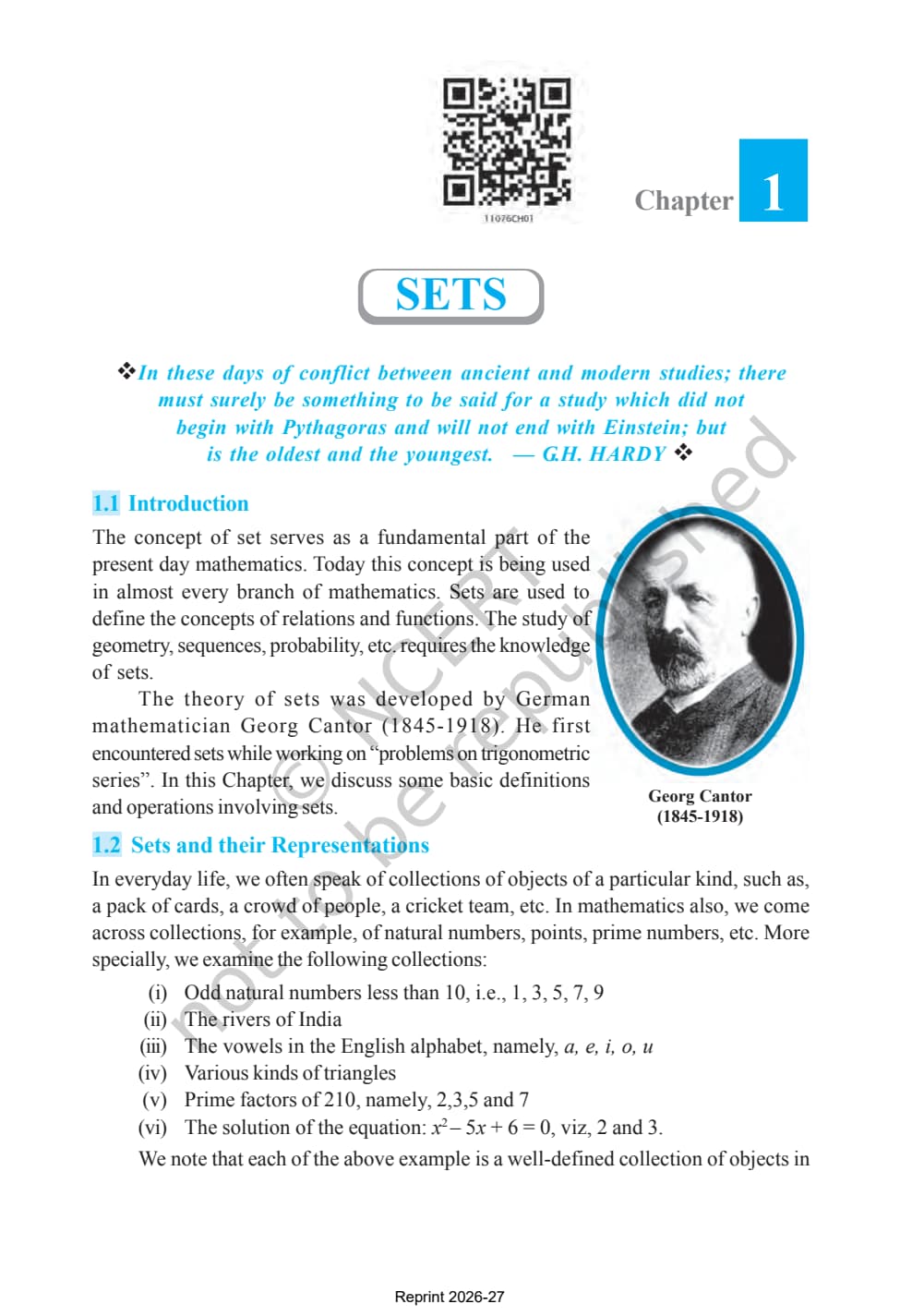
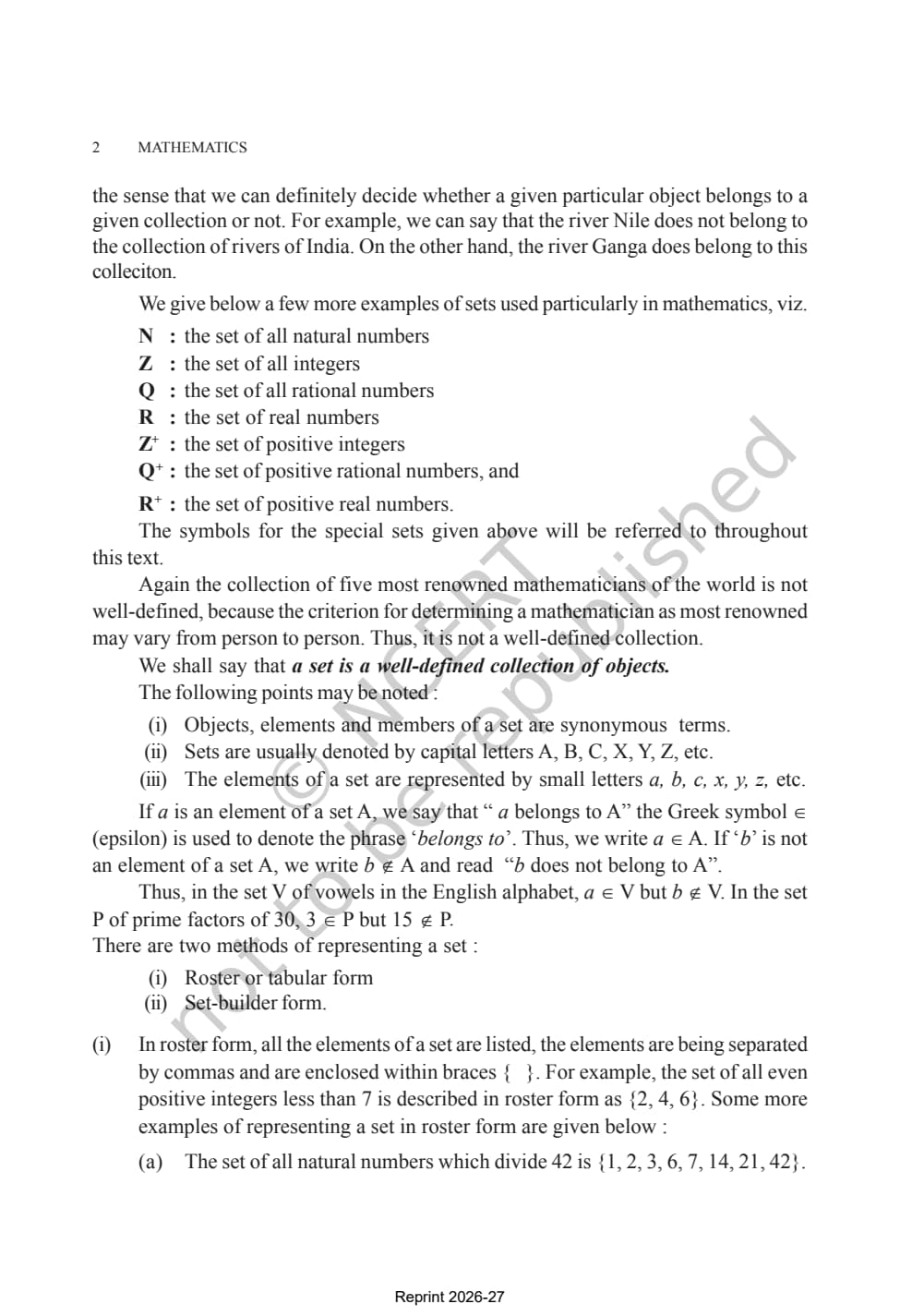
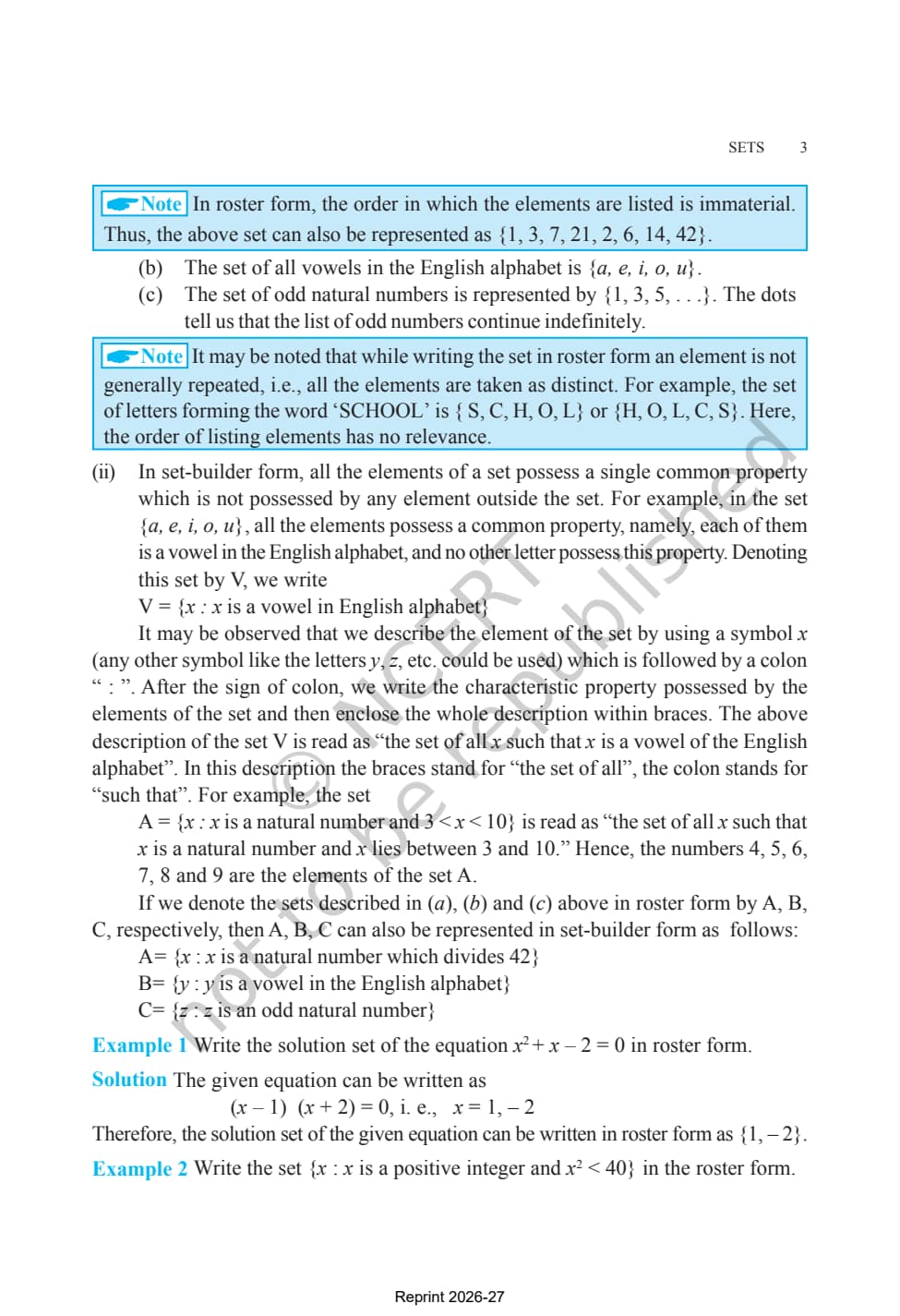
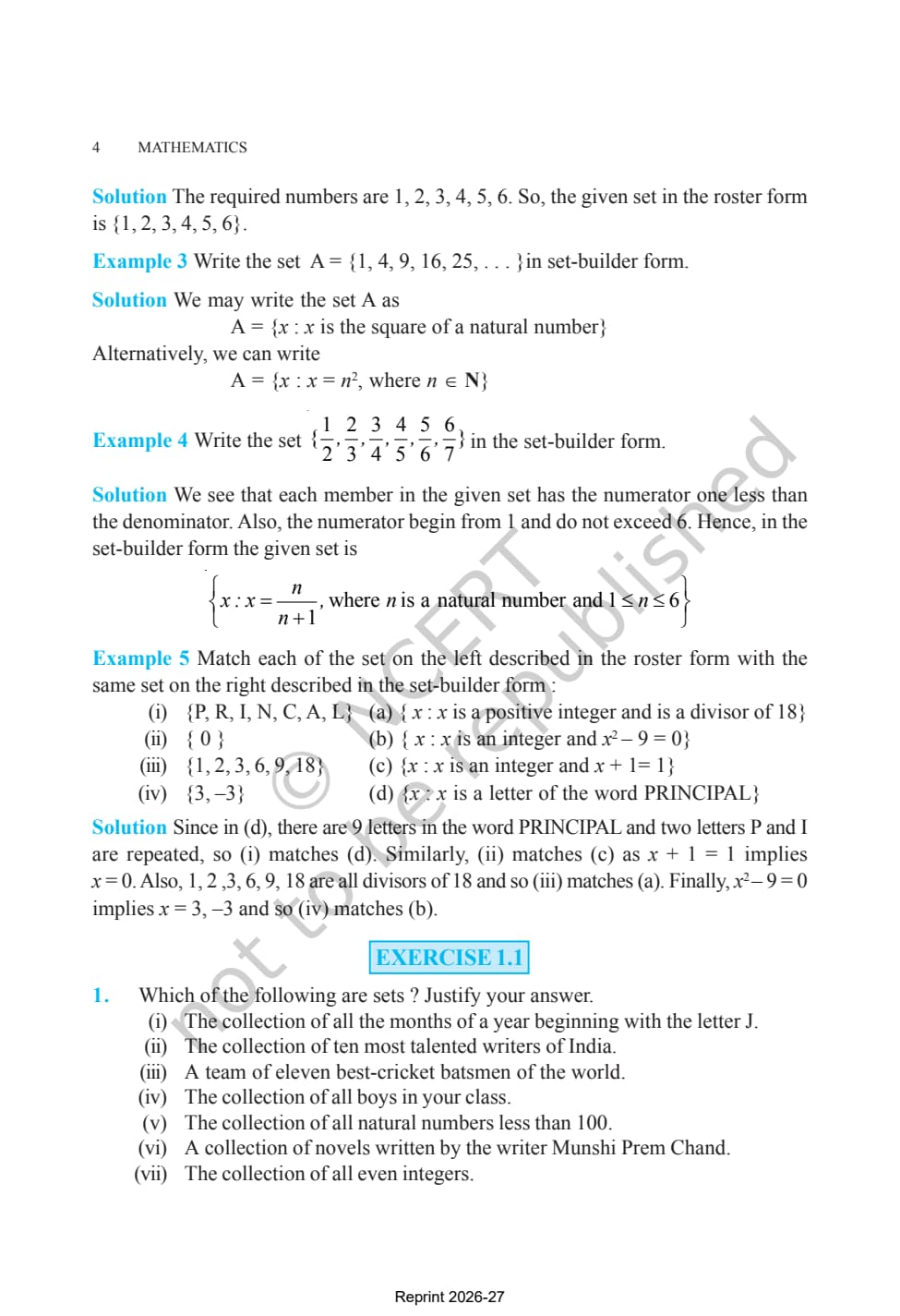
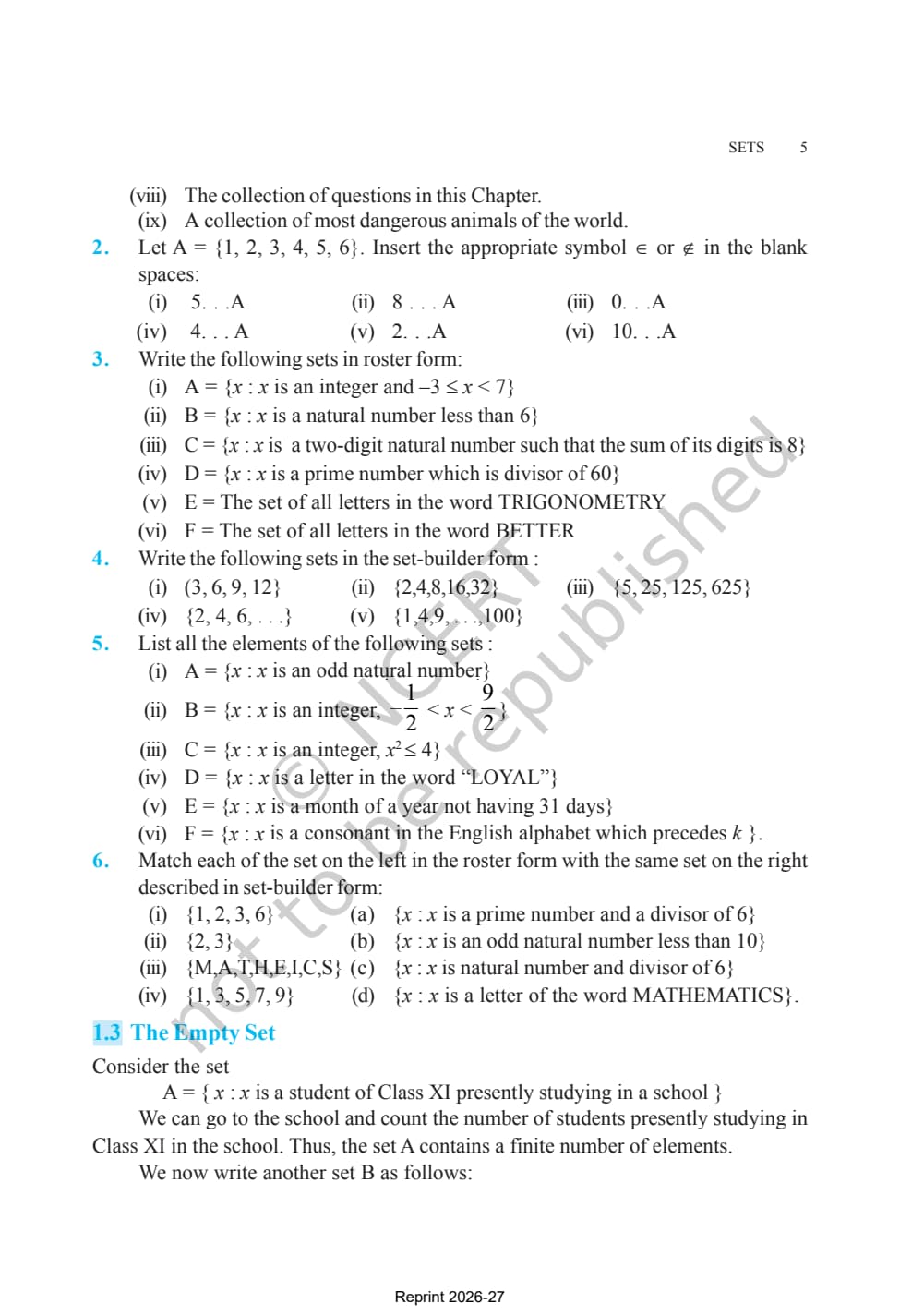
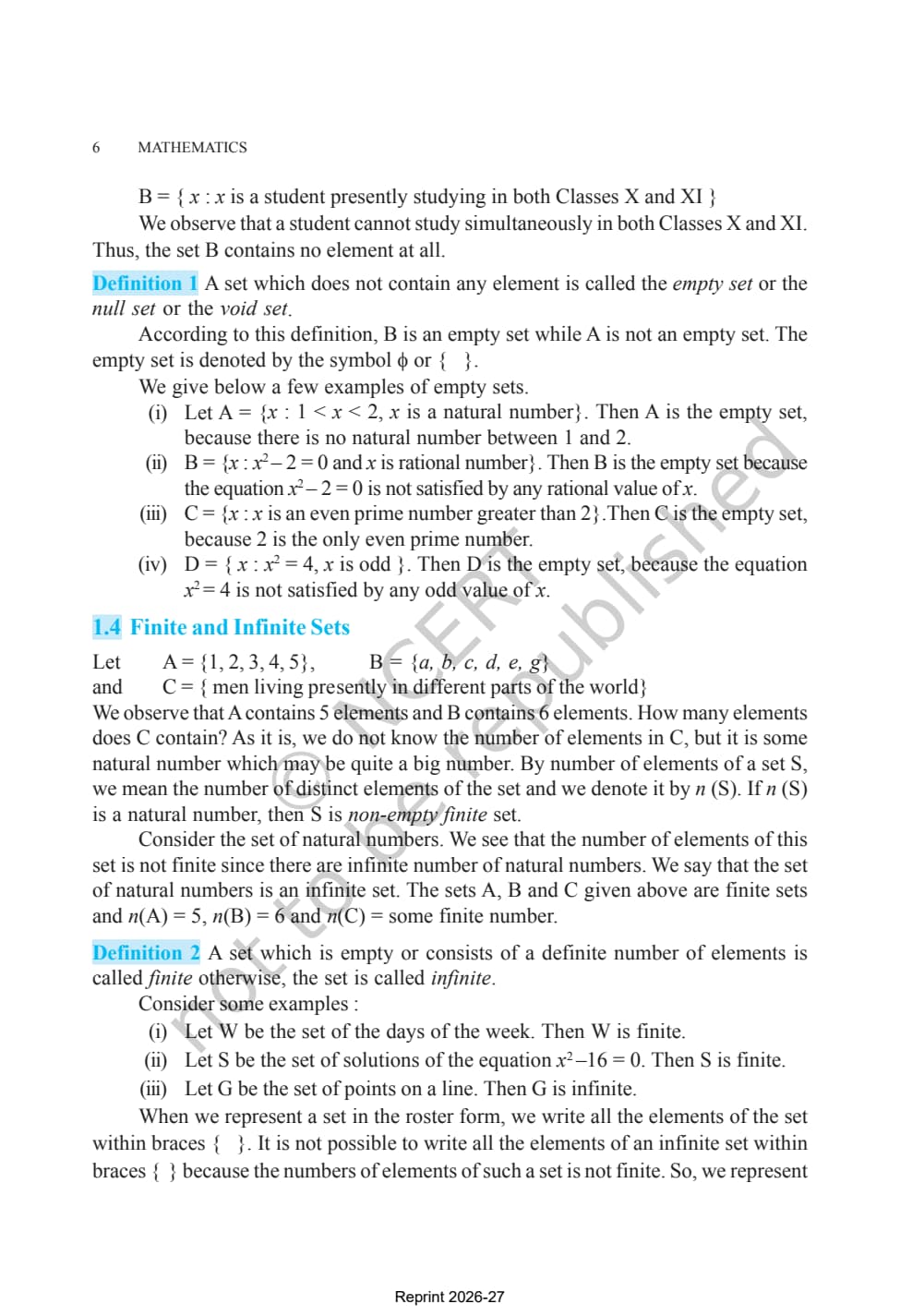
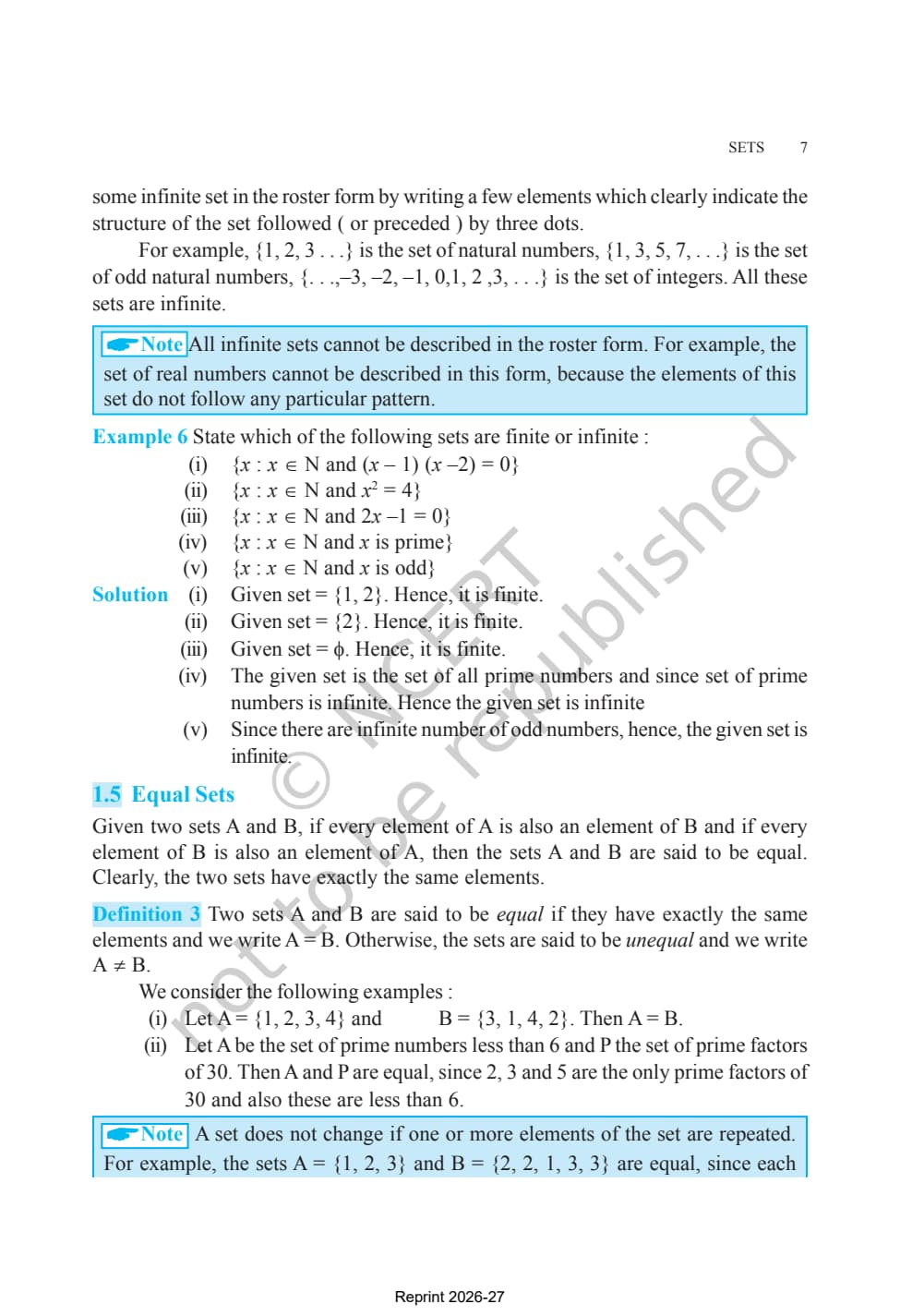
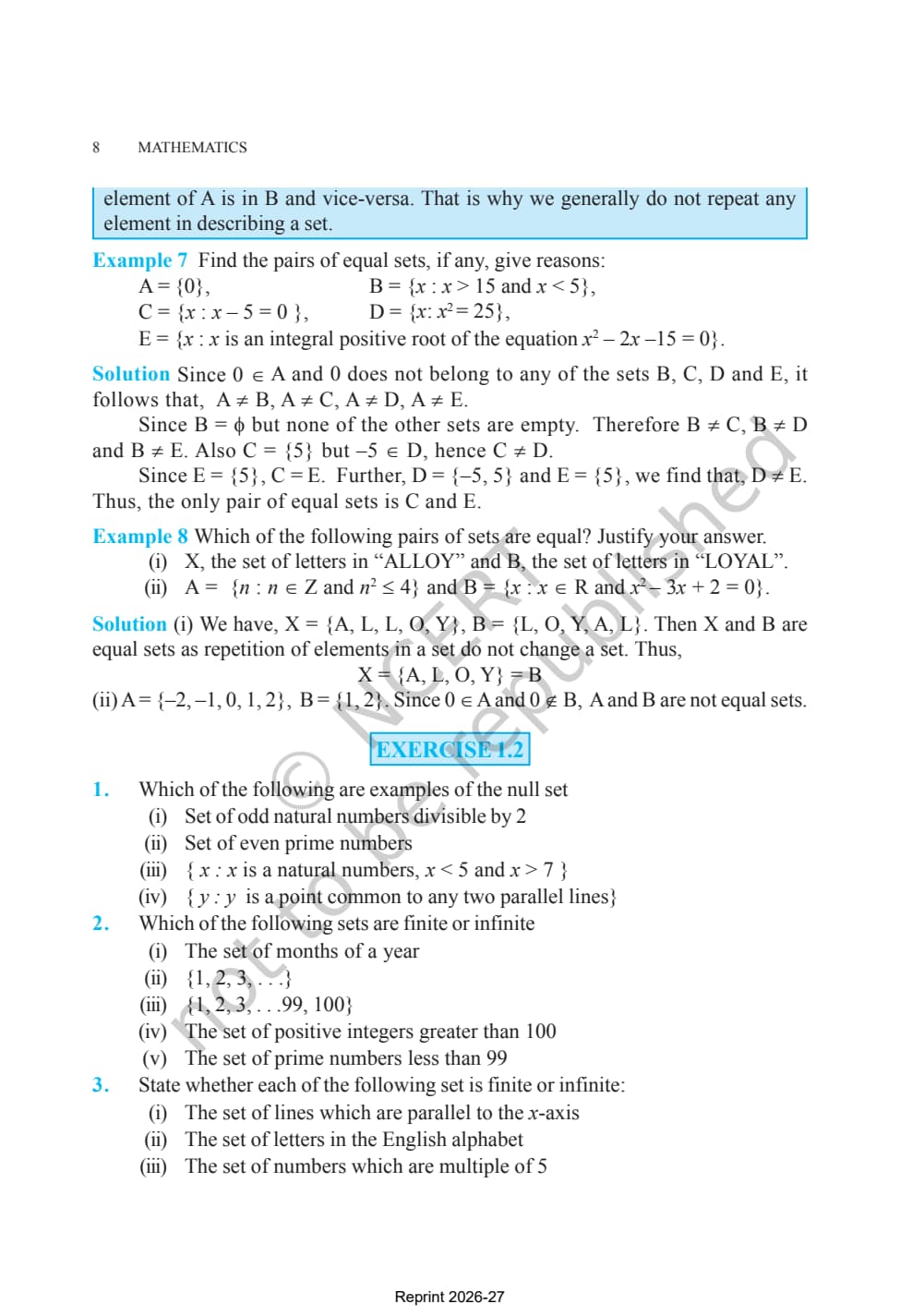
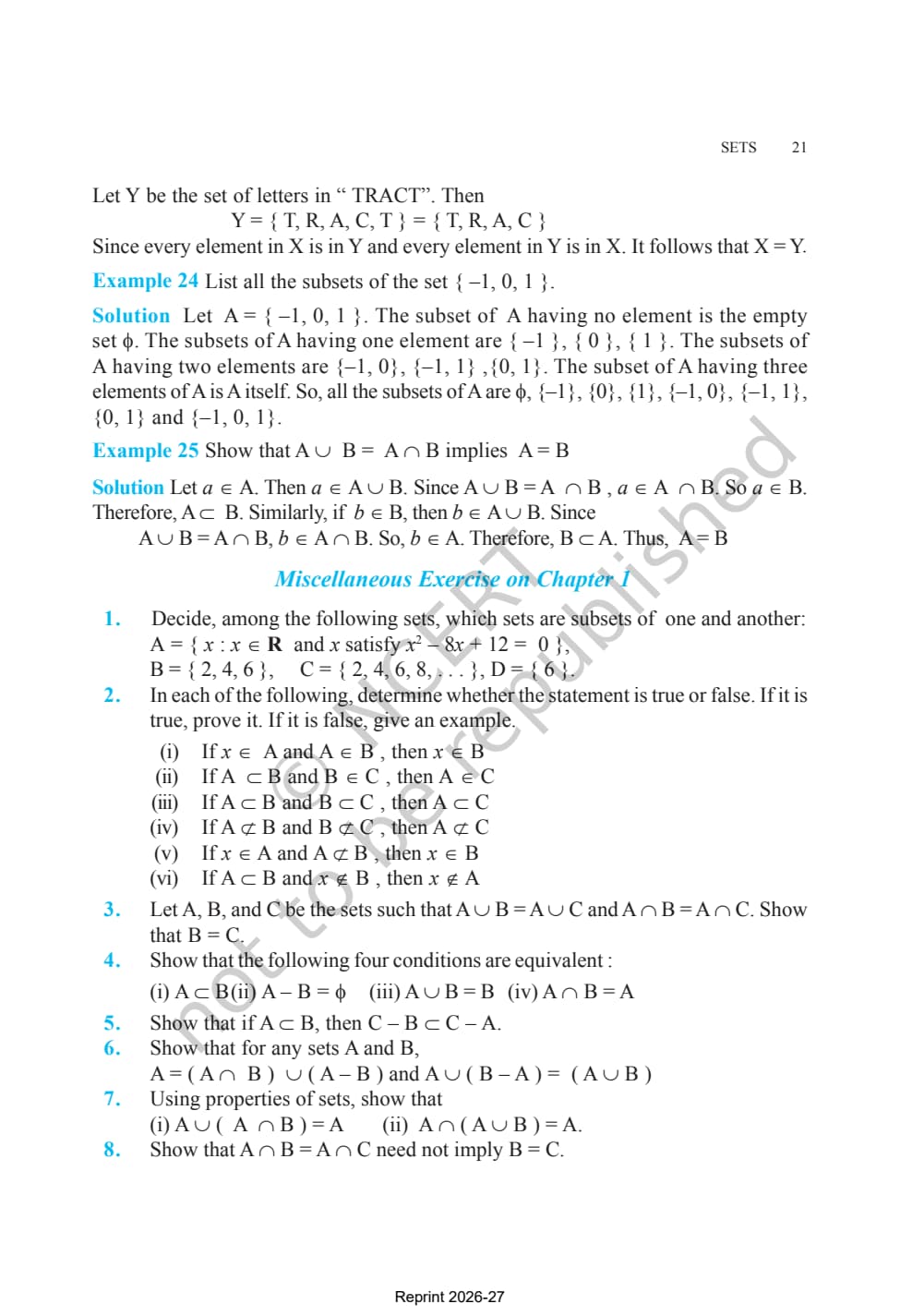
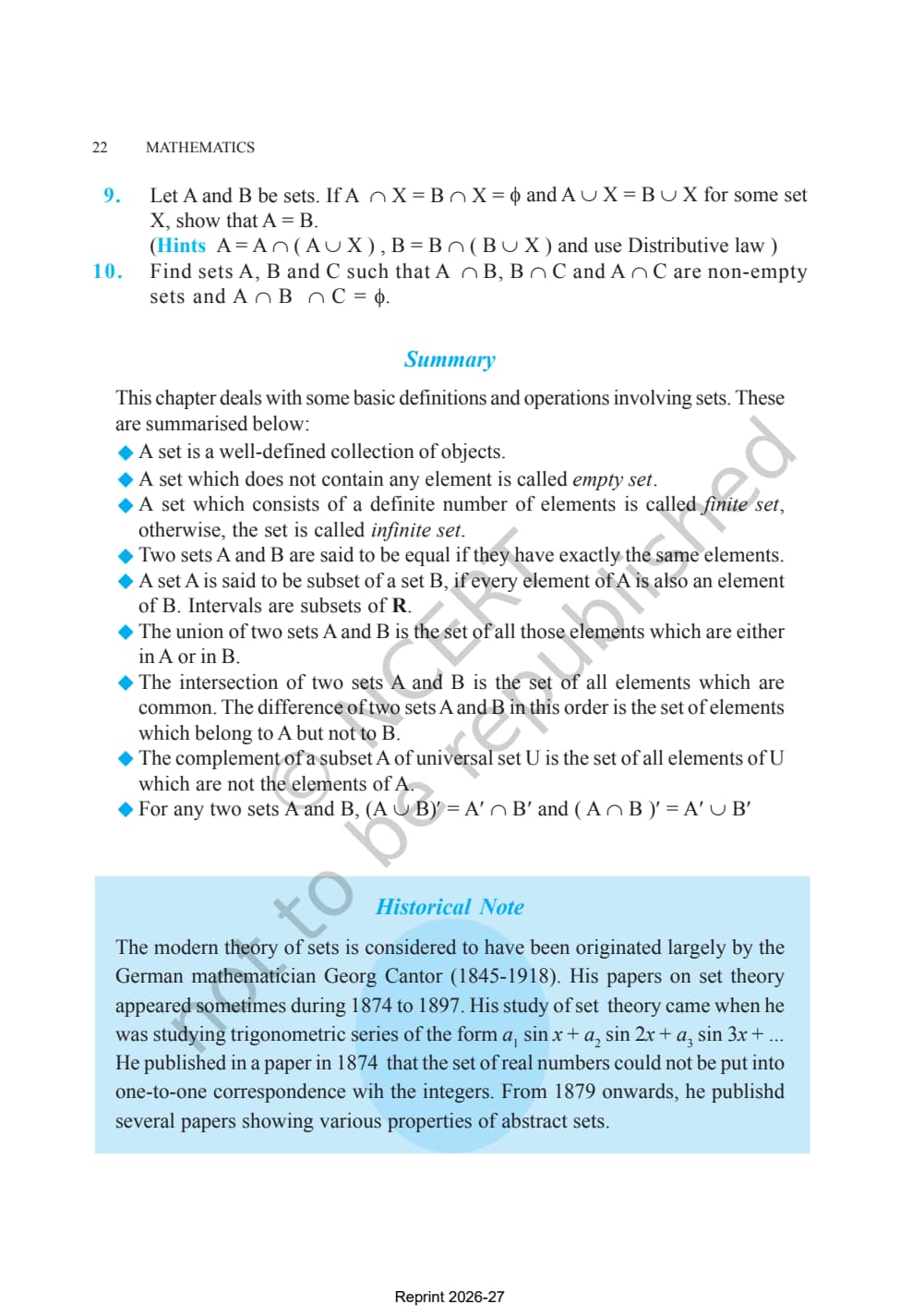
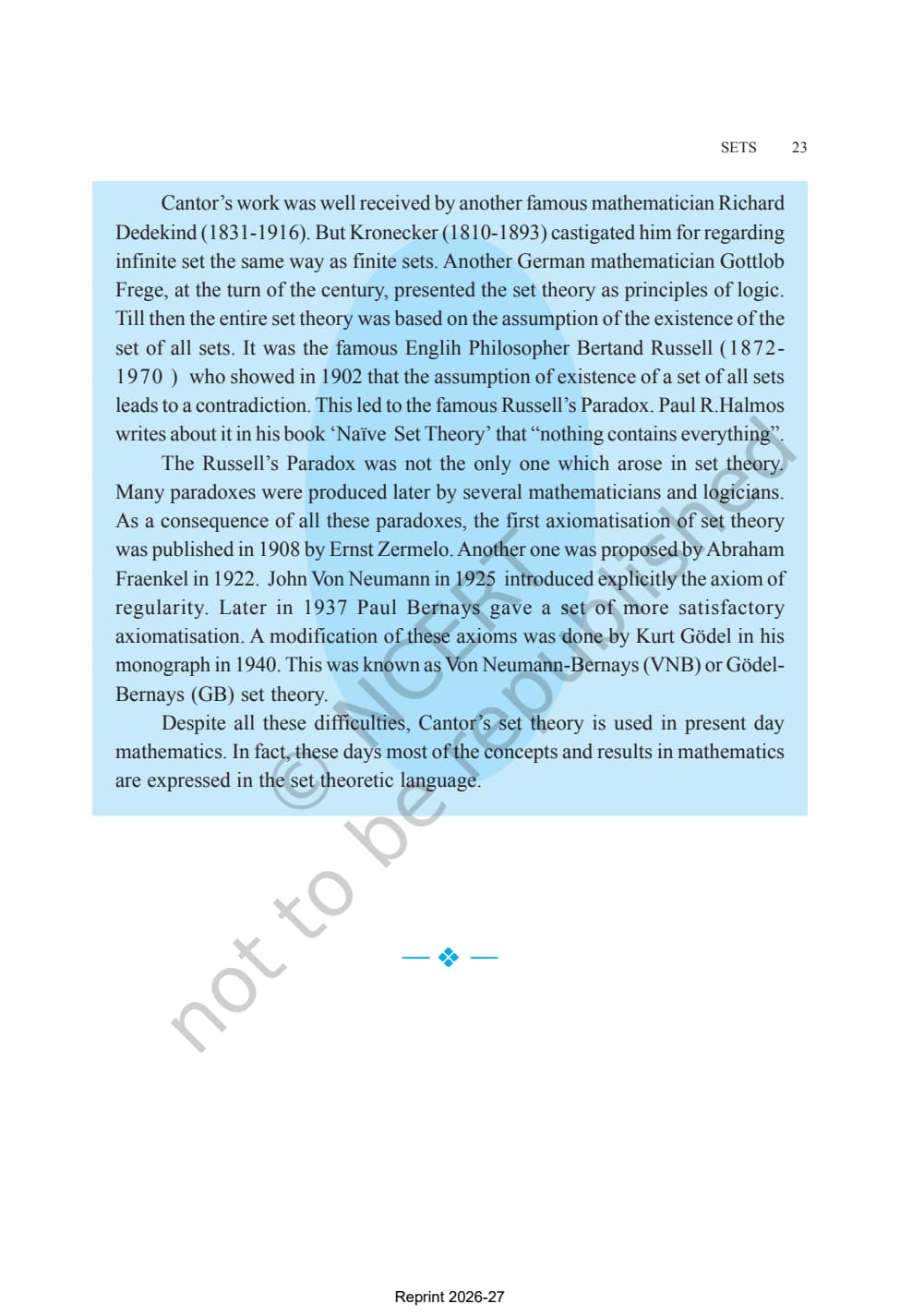
- Official NCERT 2026-27 chapter, clean and print-ready.
- Covers set notation, subsets, Venn diagrams and set operations.
- Read it alongside the solved exercises and the revision notes linked below.
This Class 11 Maths Chapter 1 Sets NCERT Book PDF is the official 2026-27 NCERT text, checked page by page against the latest edition.
What Class 11 Maths Chapter 1 Sets Covers
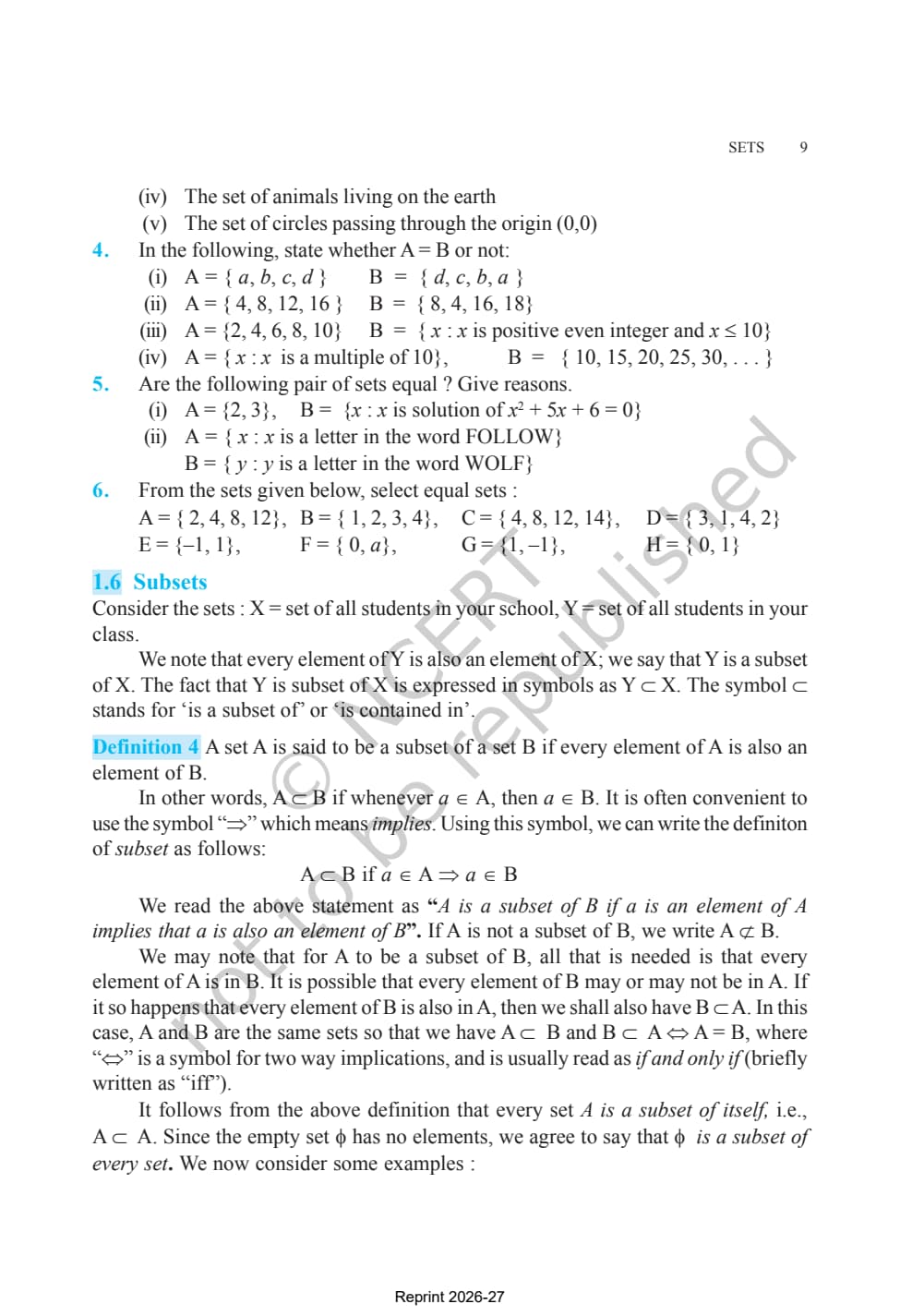
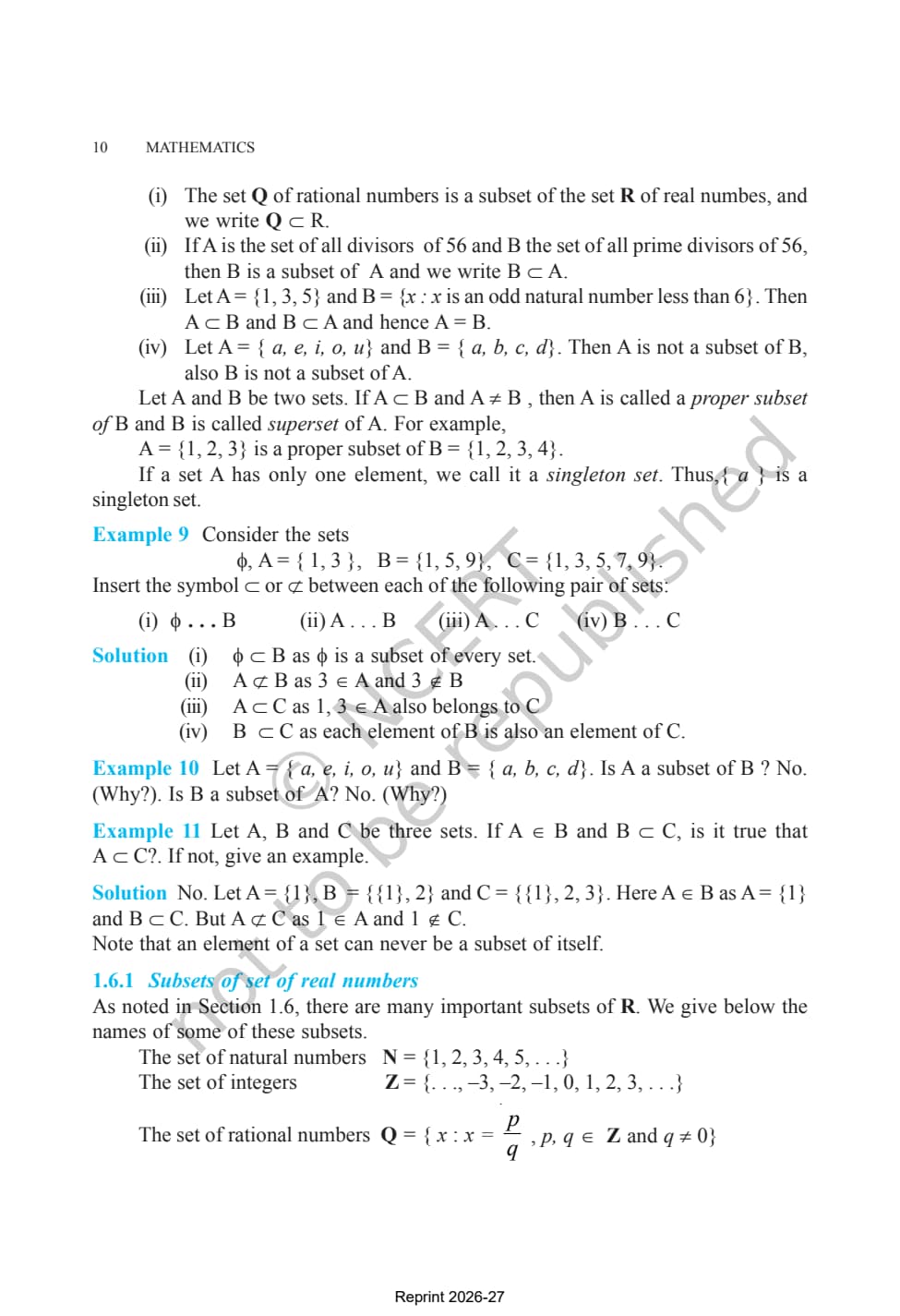
The chapter builds the idea of a well-defined collection of objects and the notation used to describe it. It moves from ways of writing a set to the special sets, then to subsets, Venn diagrams and the operations that combine sets. The official NCERT sections are listed below.
| Section | Topic |
|---|---|
| 1.1 | Introduction |
| 1.2 | Sets and their Representations |
| 1.3 | The Empty Set |
| 1.4 | Finite and Infinite Sets |
| 1.5 | Equal Sets |
| 1.6 | Subsets |
| 1.7 | Universal Set |
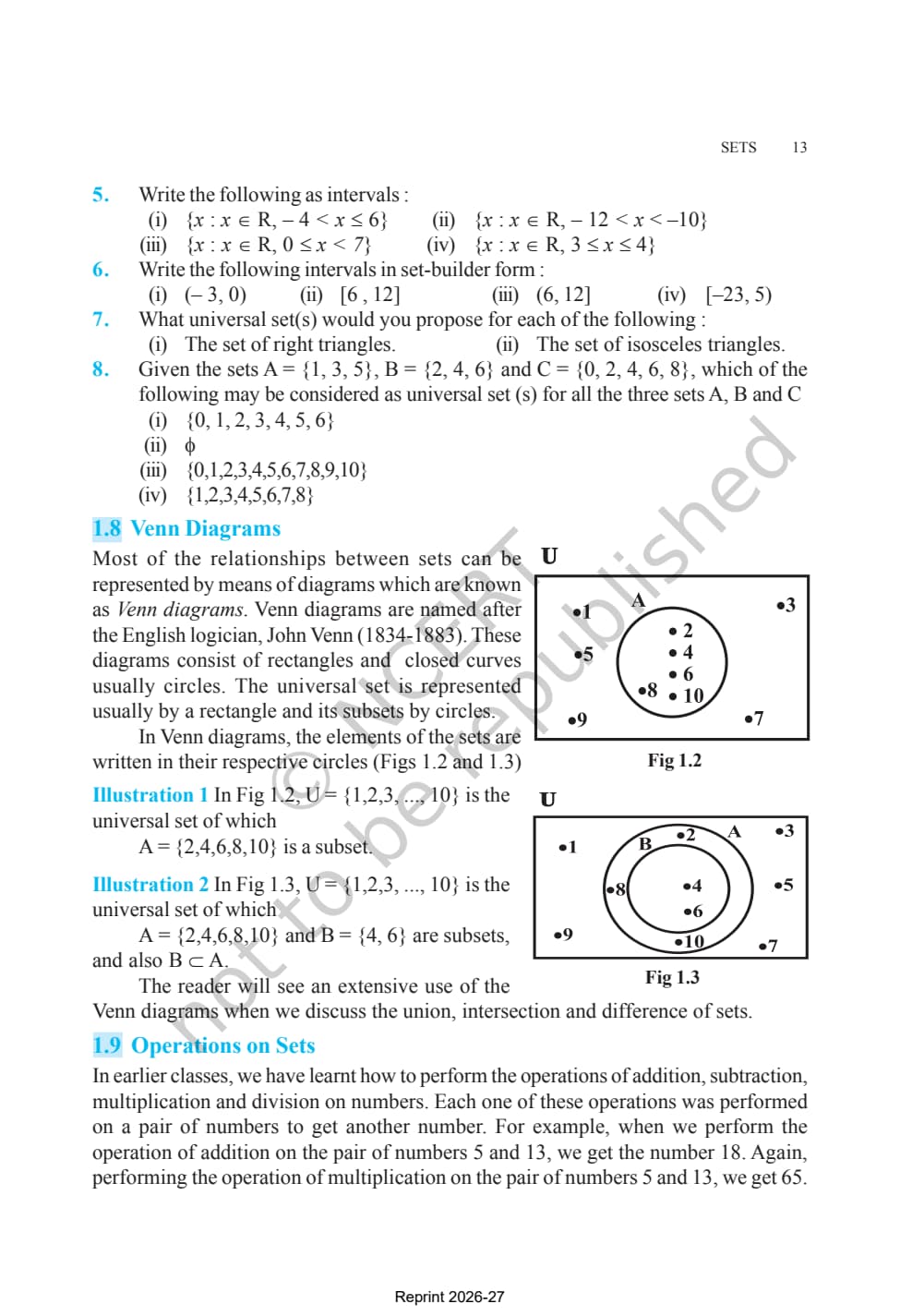
| 1.8 | Venn Diagrams |
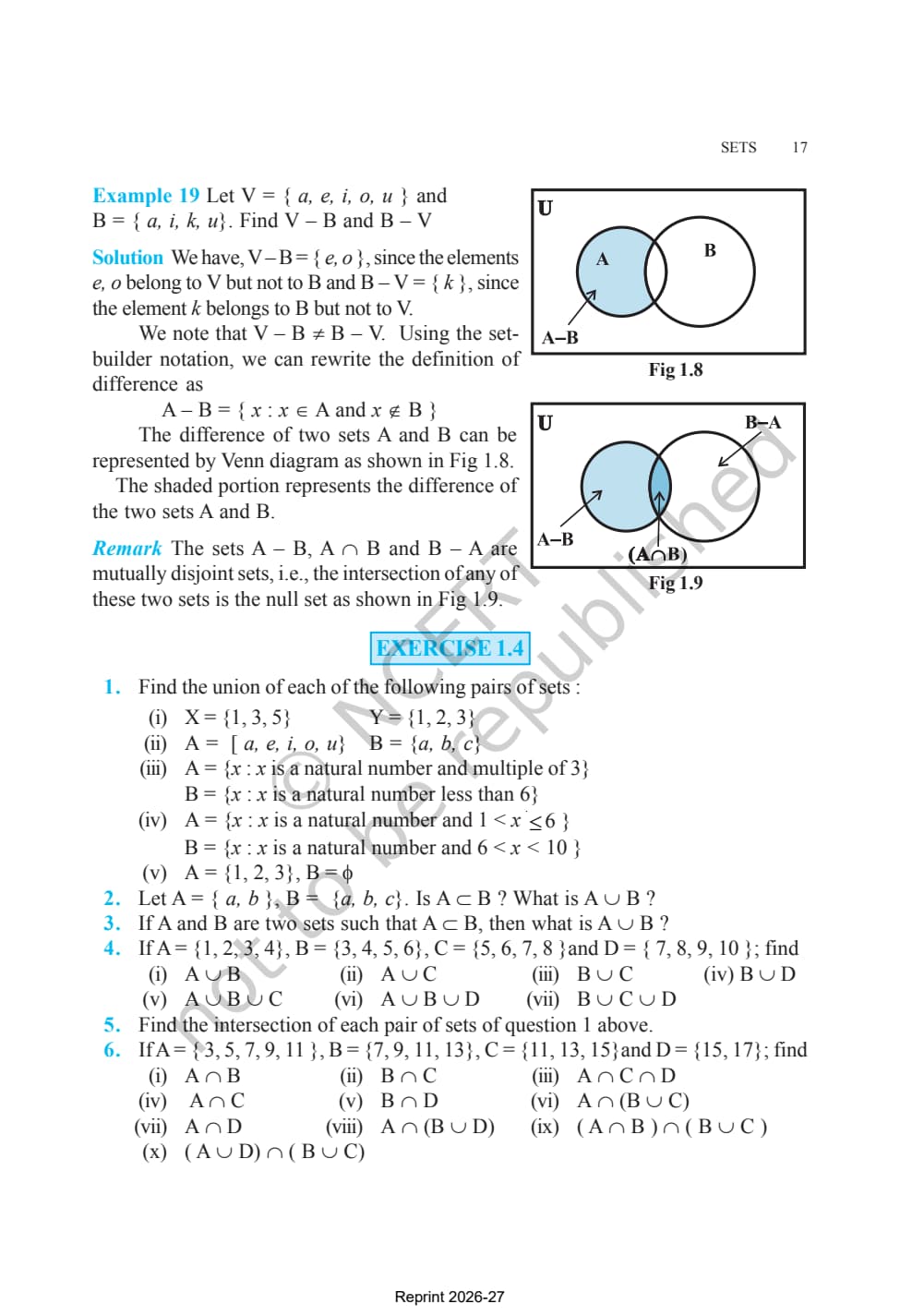
| 1.9 | Operations on Sets |
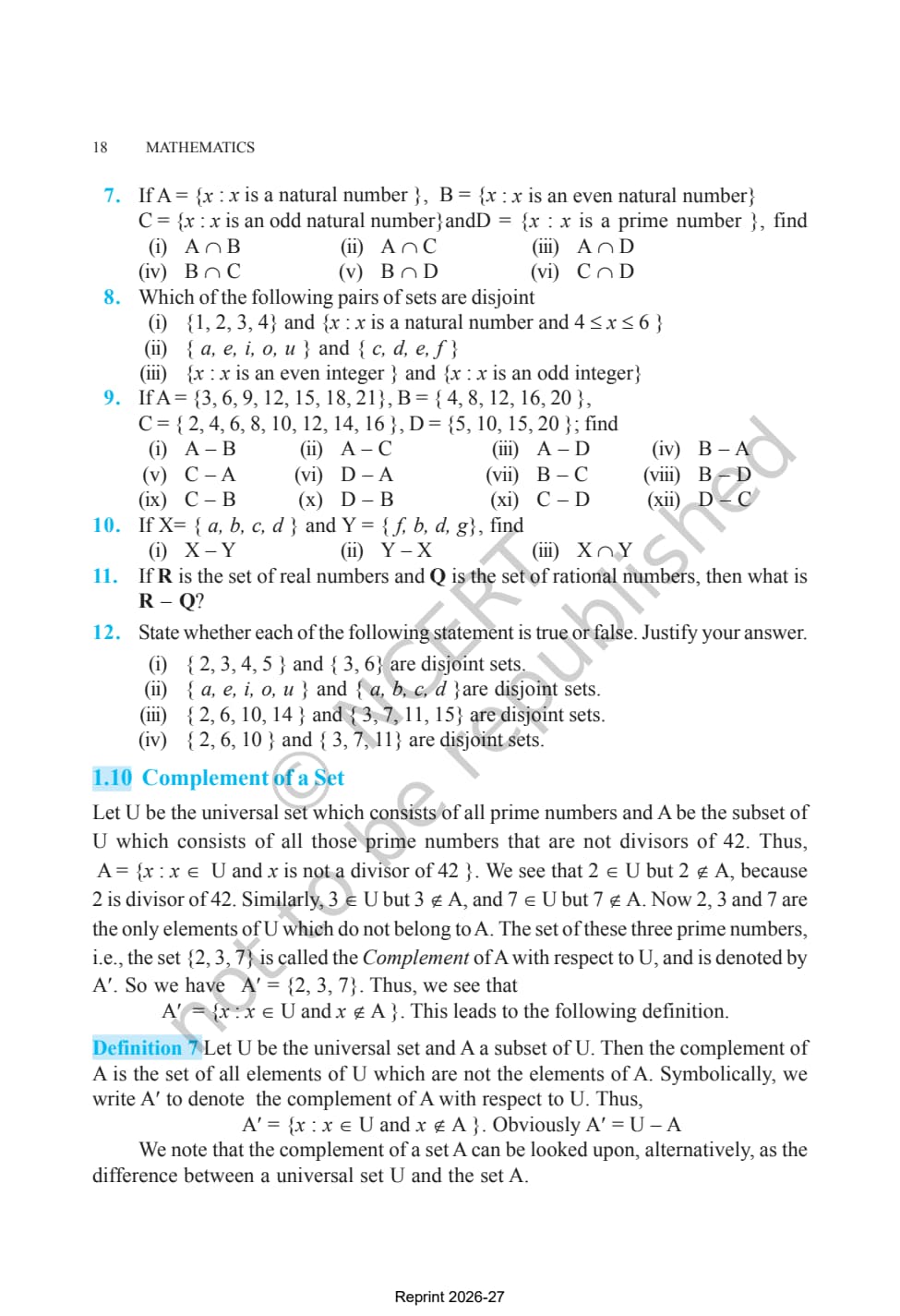
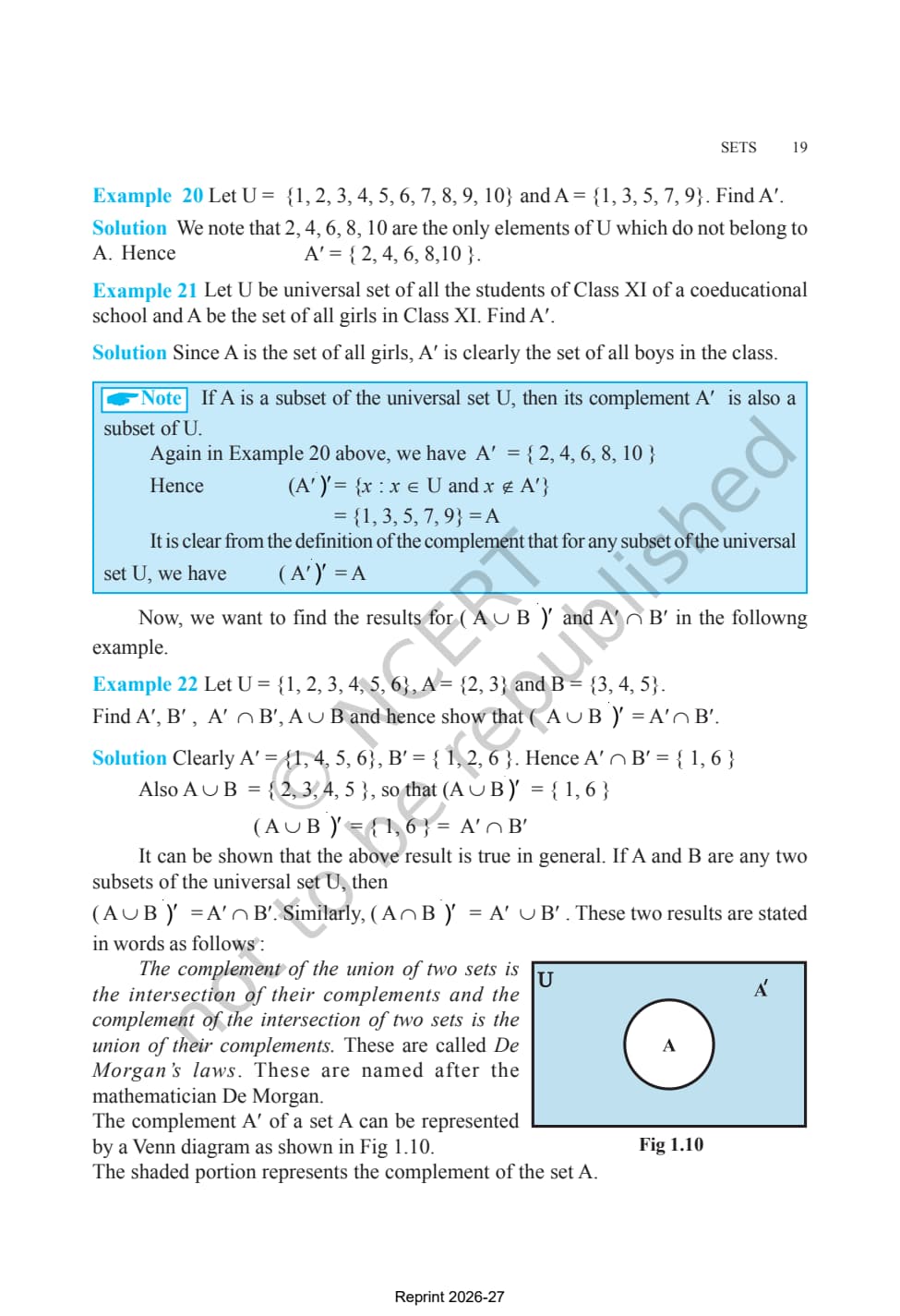
| 1.10 | Complement of a Set |
Key Concepts You Will Study
Students should read the chapter with a pen and note each symbol as it appears. The ideas are simple but return in almost every later chapter.
- The roster and set-builder forms of writing a set.
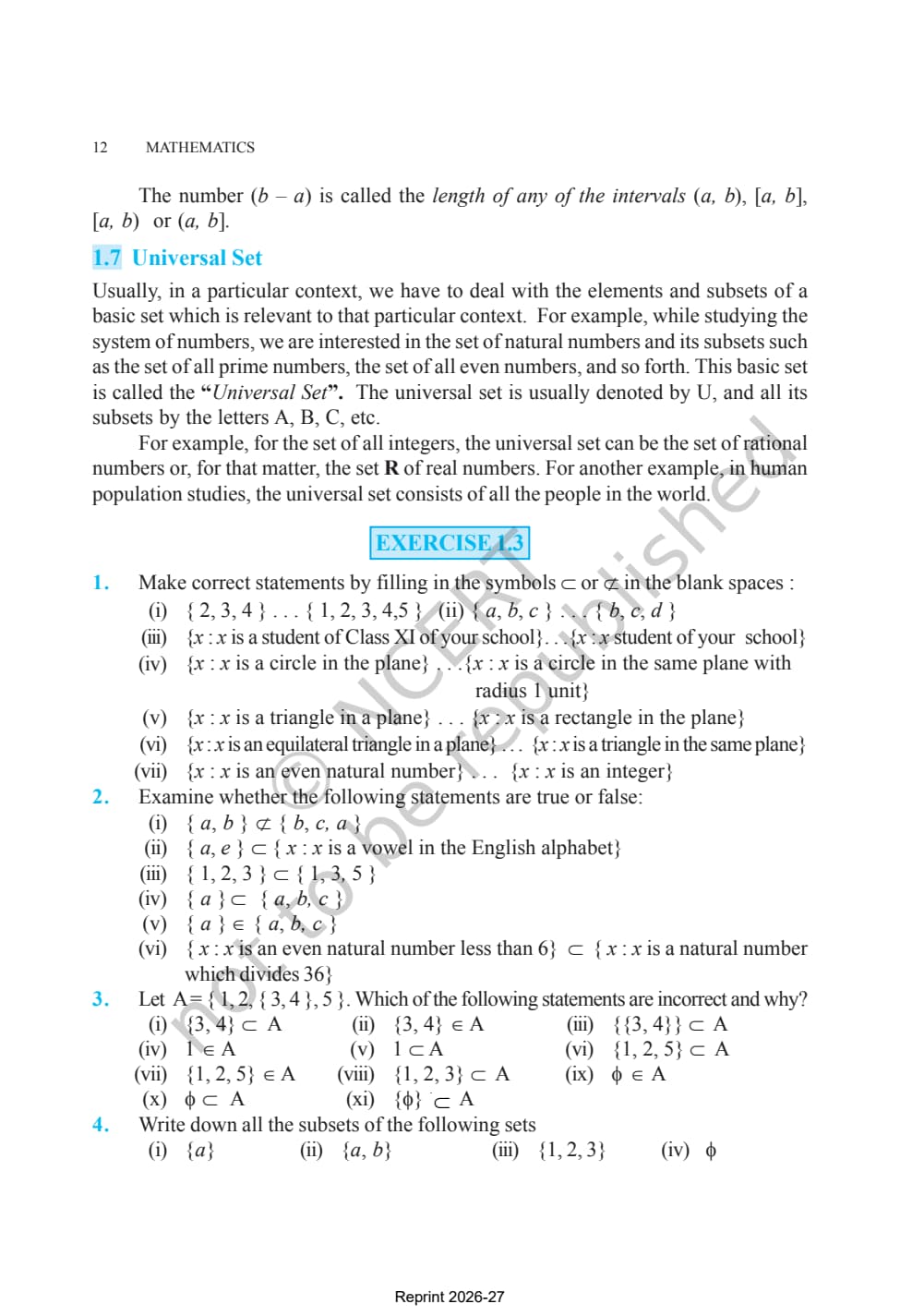
- Empty, finite, infinite and equal sets, and the meaning of a subset.
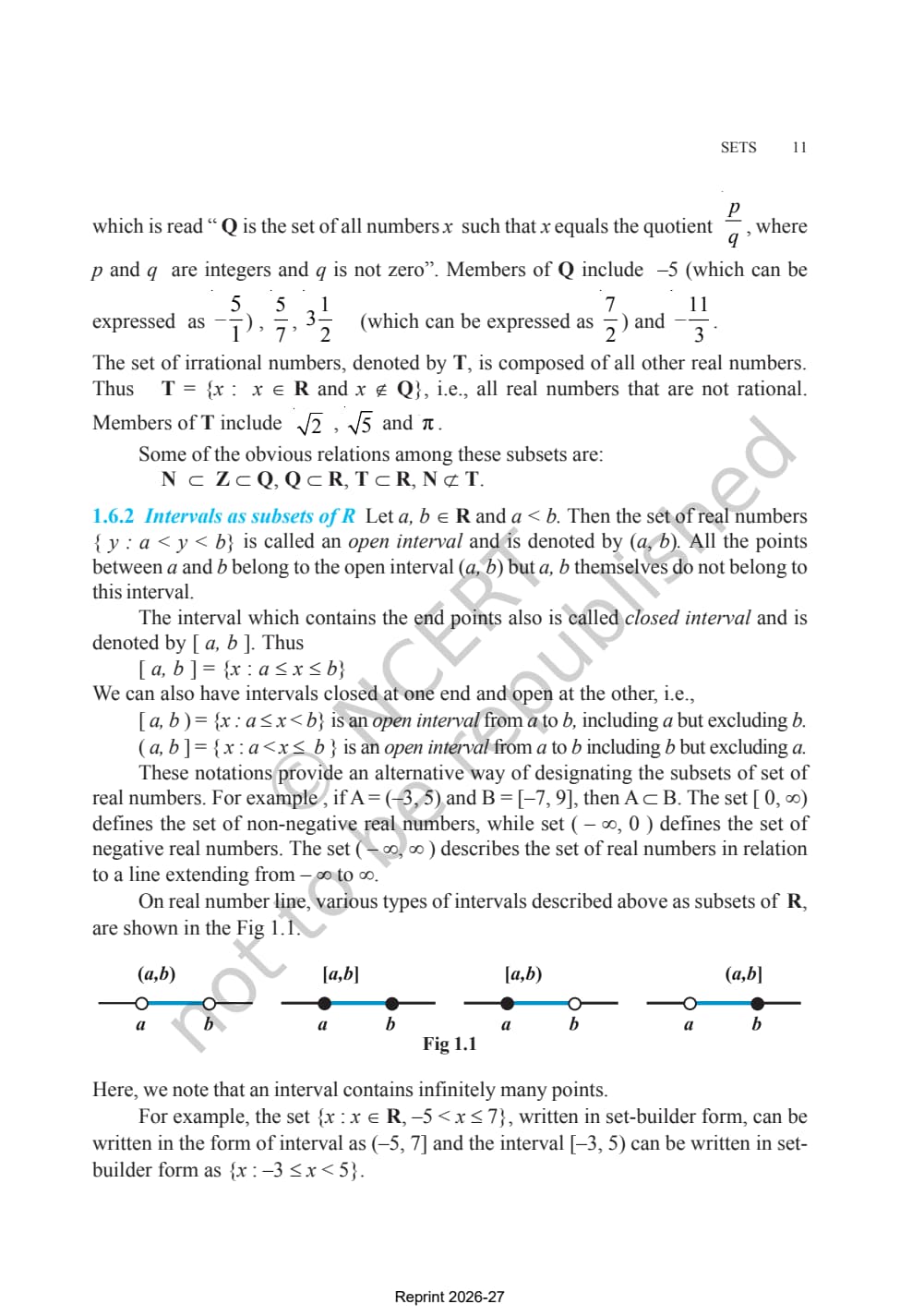
- Intervals as subsets of R and the idea of the power set.
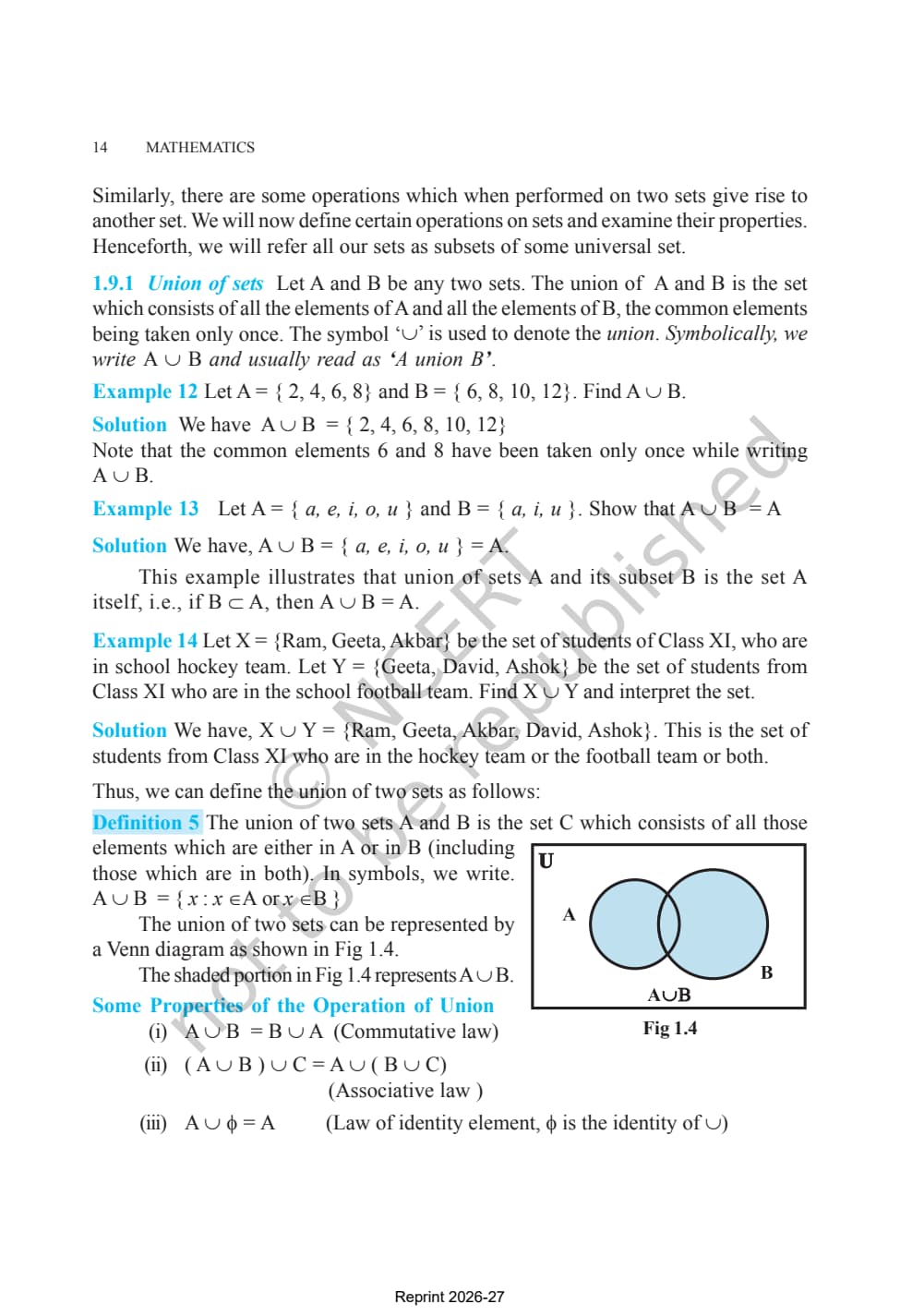
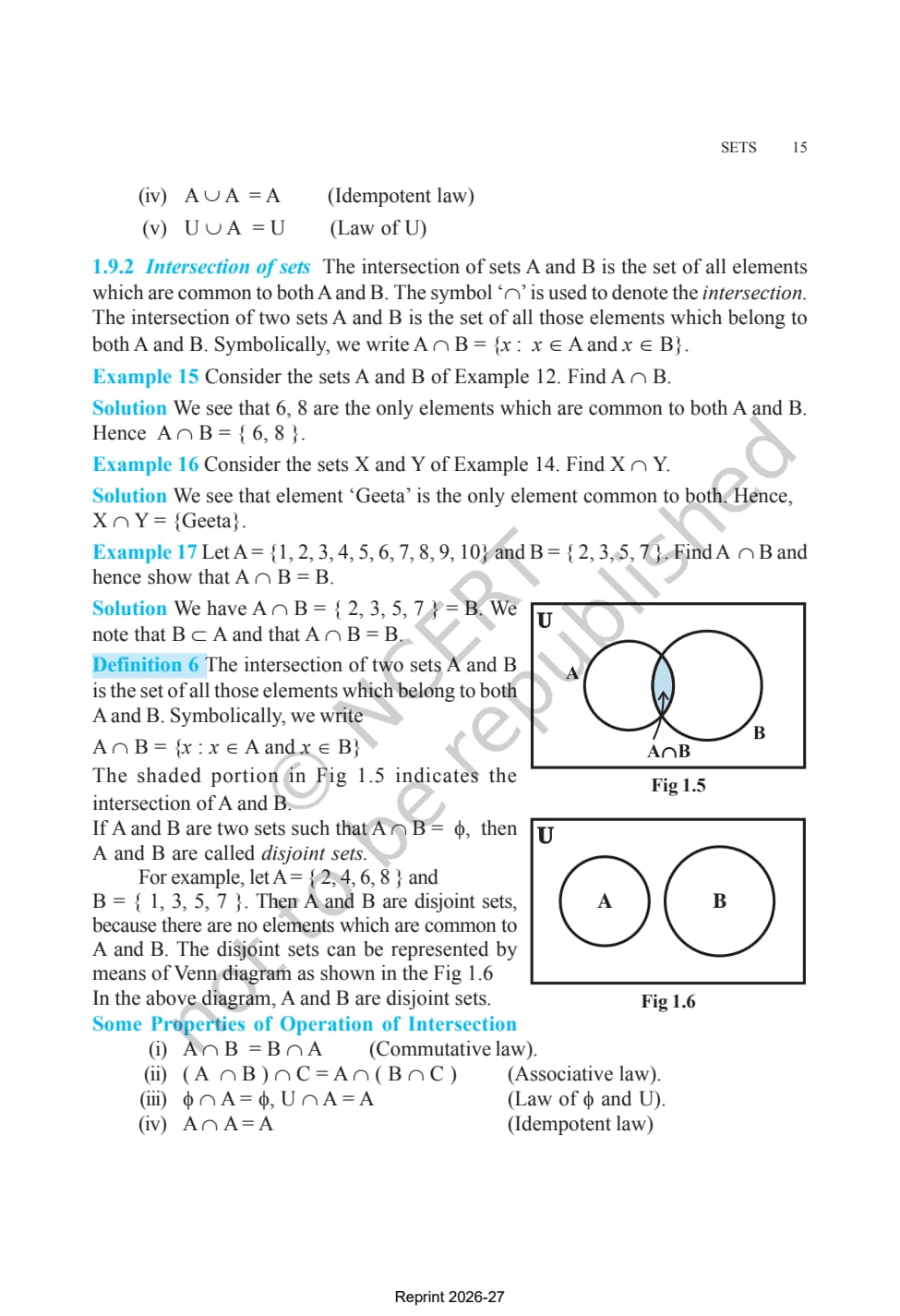
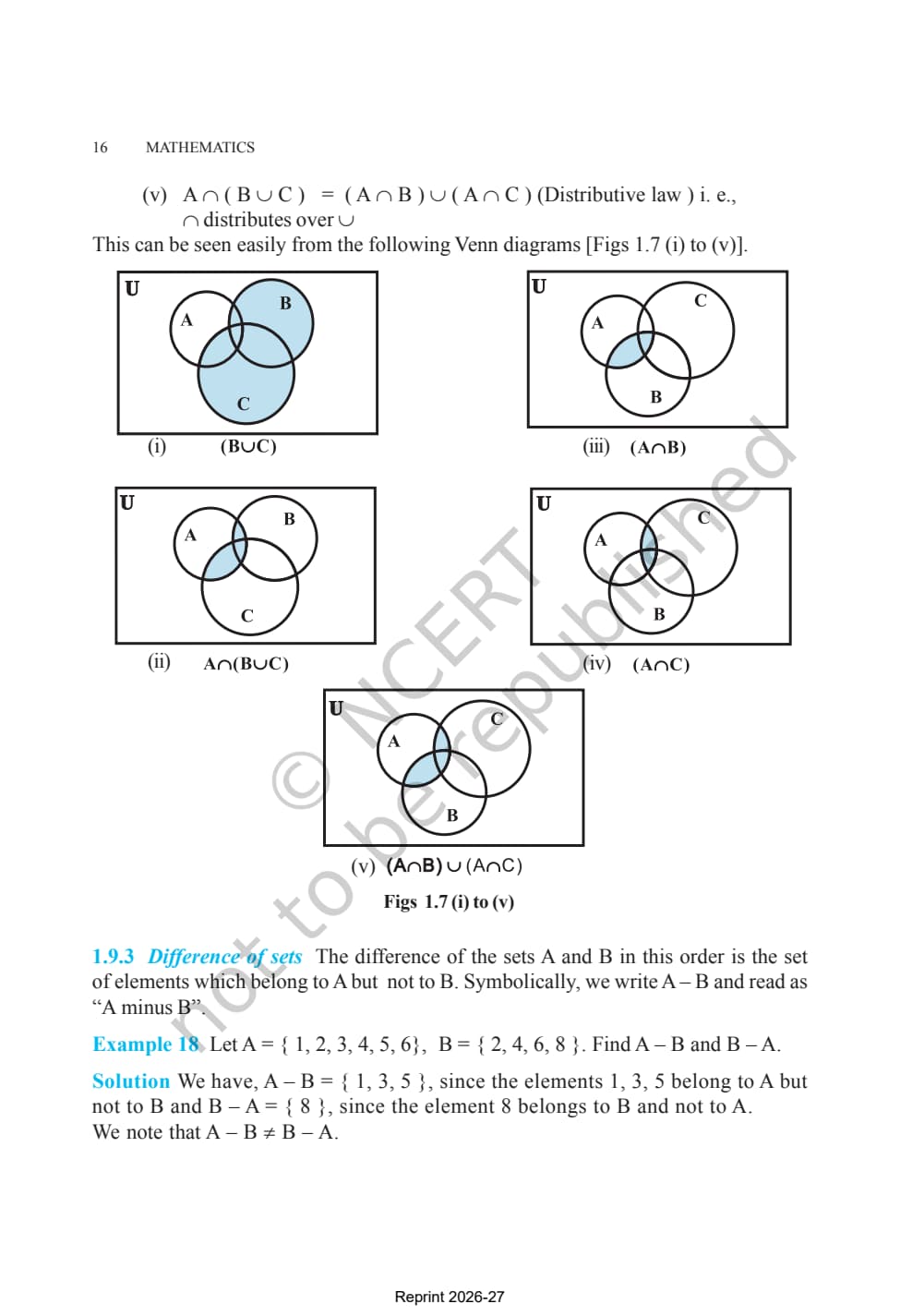
- Union, intersection and difference of sets shown through Venn diagrams.
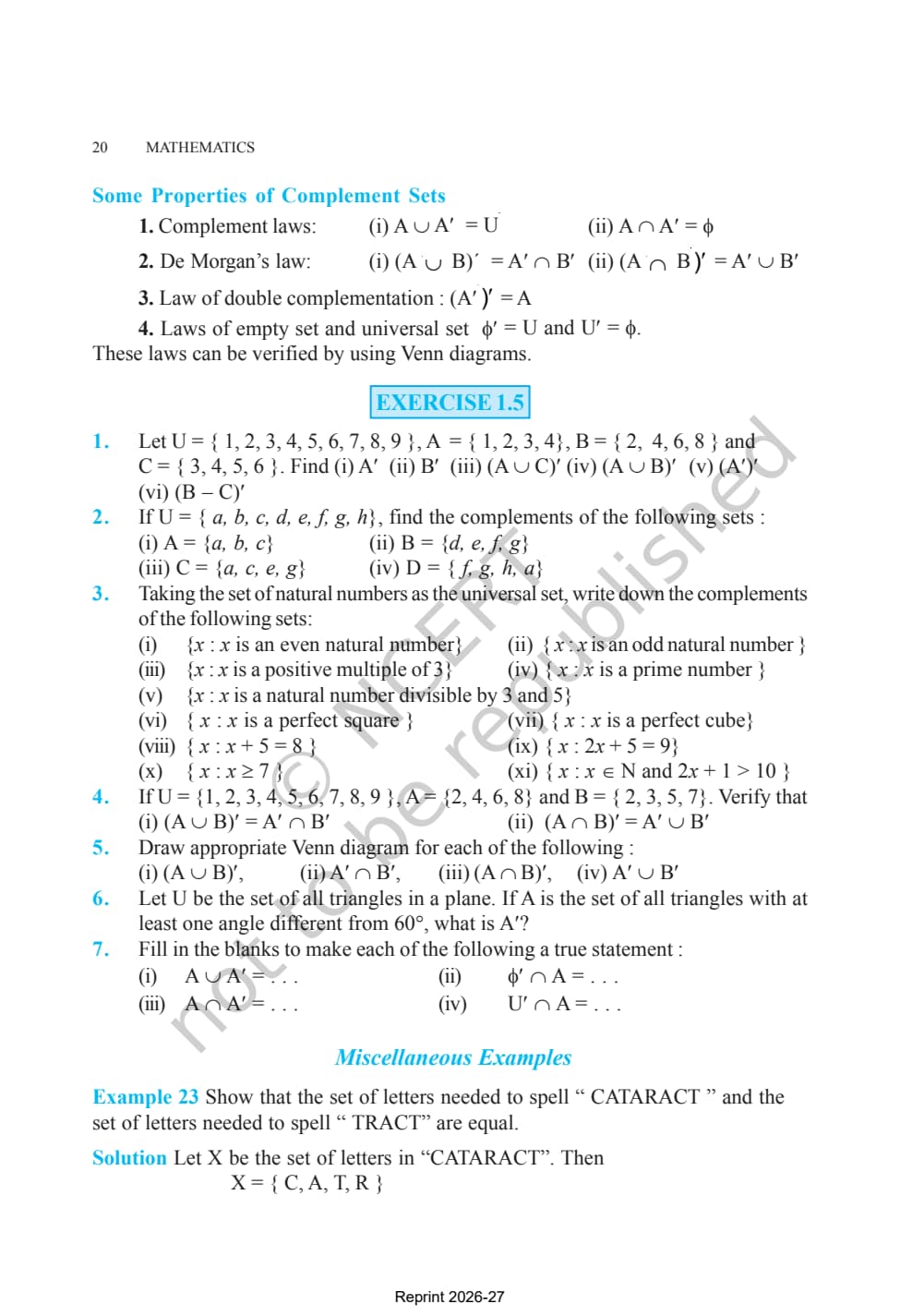
- The complement of a set and De Morgan's laws.
Why Download the NCERT Book PDF for This Chapter
The NCERT textbook is the single most important source for the CBSE exam, and most JEE and CUET questions from this chapter are built directly on its definitions and examples.
- Every Board question on set notation and operations comes from this text or its exercises.
- The worked examples show the correct way to use set-builder notation.
- Reading offline from the PDF avoids missing any small rule or symbol.
How to Use the NCERT Book PDF for Sets
Read the chapter once fully, then work through it a second time with the exercises open. A short, ordered plan keeps the many symbols from blurring together.
- Read each section, then write its definition in your own words in a single line.
- Draw the Venn diagram for each set operation before you memorise the formula.
- Solve the in-text examples before looking at the given solution.
- Attempt the back exercises, then check them against the NCERT Solutions below.
Other Class 11 Maths Sets Resources
Pair the textbook PDF with the solved answers, revision notes and formula sheet for the same chapter.
| Resource | Link |
|---|---|
| NCERT Solutions | Sets NCERT Solutions |
| Revision Notes | Sets Notes |
| Formula Sheet | Sets Formula Sheet |
| Exemplar Book PDF | Sets Exemplar Book PDF |
FAQs on Class 11 Maths Chapter 1 NCERT Book PDF
Sets NCERT PDF - Frequently Asked Questions
Ques. Is this the latest 2026-27 NCERT Book for Class 11 Maths Chapter 1?
Ans. Yes. This is the official NCERT 2026-27 textbook chapter for Class 11 Maths Chapter 1 Sets, matched page by page against the latest edition.
Ques. What topics are in Class 11 Maths Chapter 1?
Ans. The chapter covers the representation of sets, the empty set, finite and infinite sets, equal sets, subsets and intervals, the universal set, Venn diagrams, operations on sets, and the complement of a set.
Ques. Is the NCERT Book enough for this chapter in JEE and CUET?
Ans. The NCERT Book is the base for this chapter, and most JEE and CUET questions on sets and their operations are built on its examples. Pair it with the Exemplar for extra higher-order practice.
Ques. Where can I download the Class 11 Maths Chapter 1 NCERT Book PDF?
Ans. You can download the Class 11 Maths Chapter 1 Sets NCERT Book PDF free from the download card at the top of this page, in both standard and HD quality.



Comments