




Chapter 7 of Class 12 Biology covers Human Health and Disease. Students study how the immune system works, how vaccines protect against infection, and how diseases like AIDS and cancer develop. This page provides the free NCERT Exemplar Book PDF for Chapter 7 so students can view and practise all question types.

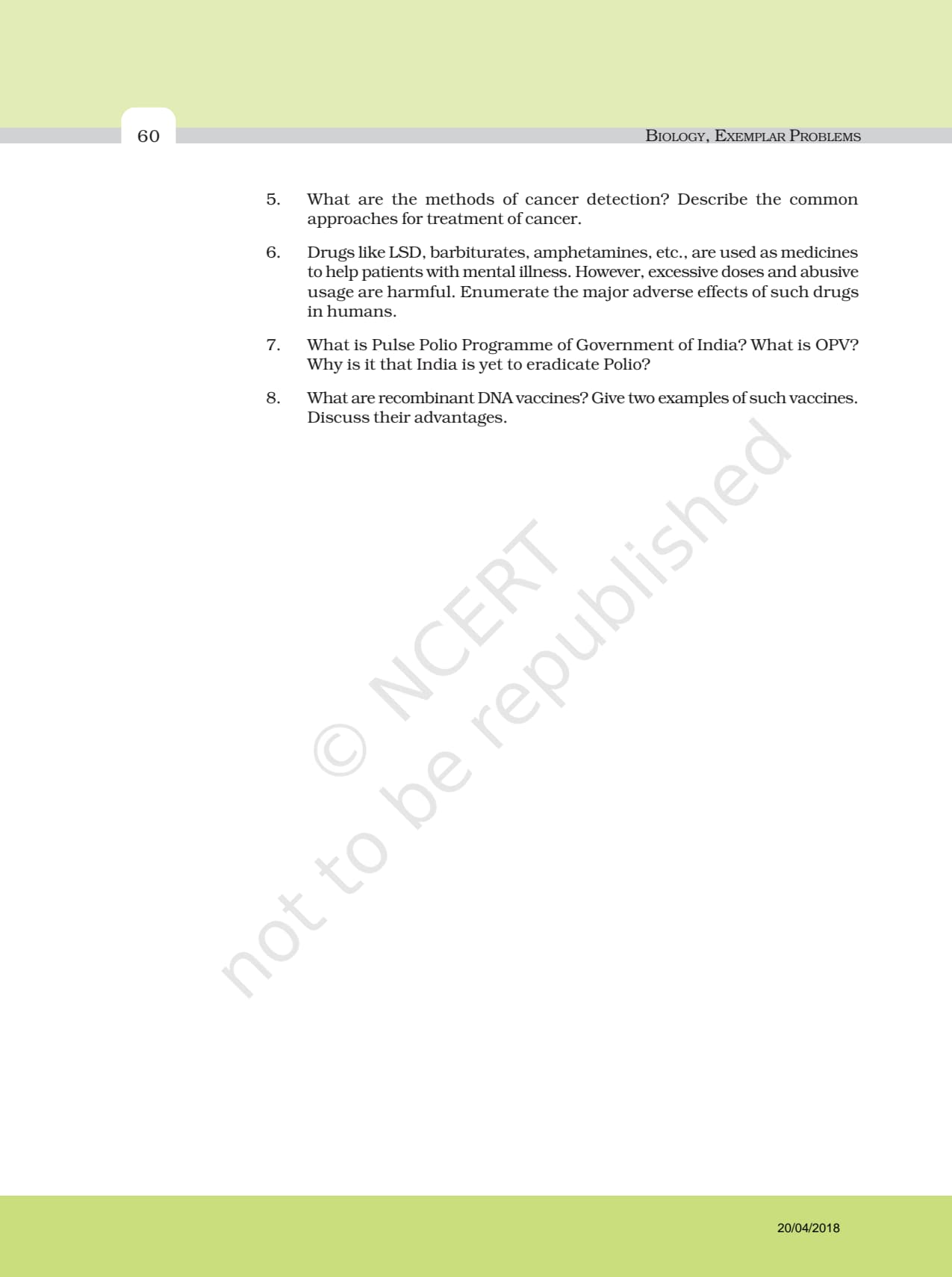
- NEET weightage: 3-4 questions typically appear from this chapter every year in NEET.
- CBSE marks: Chapter 7 is part of Unit VIII - Biology and Human Welfare, which carries 14 marks.
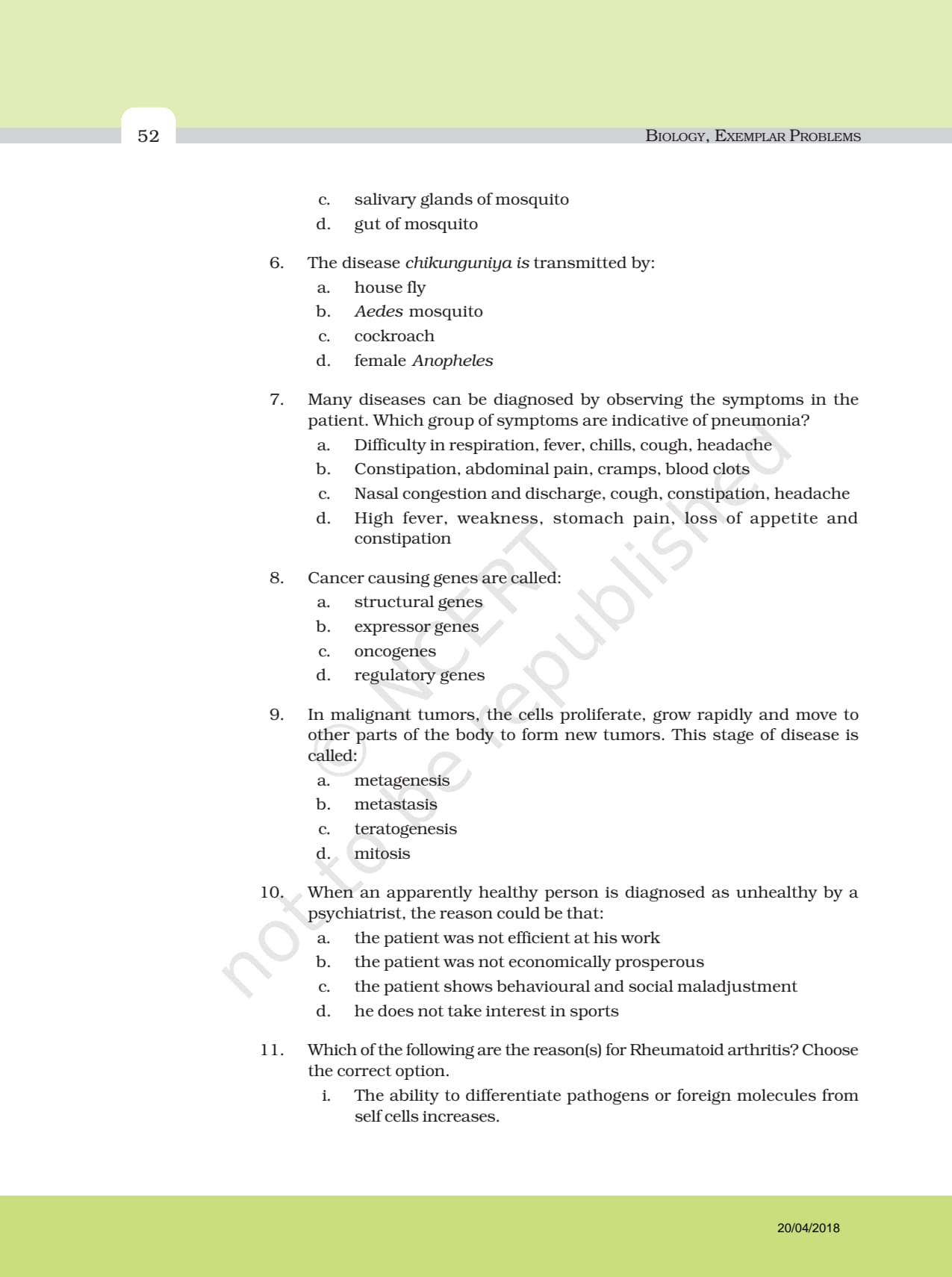
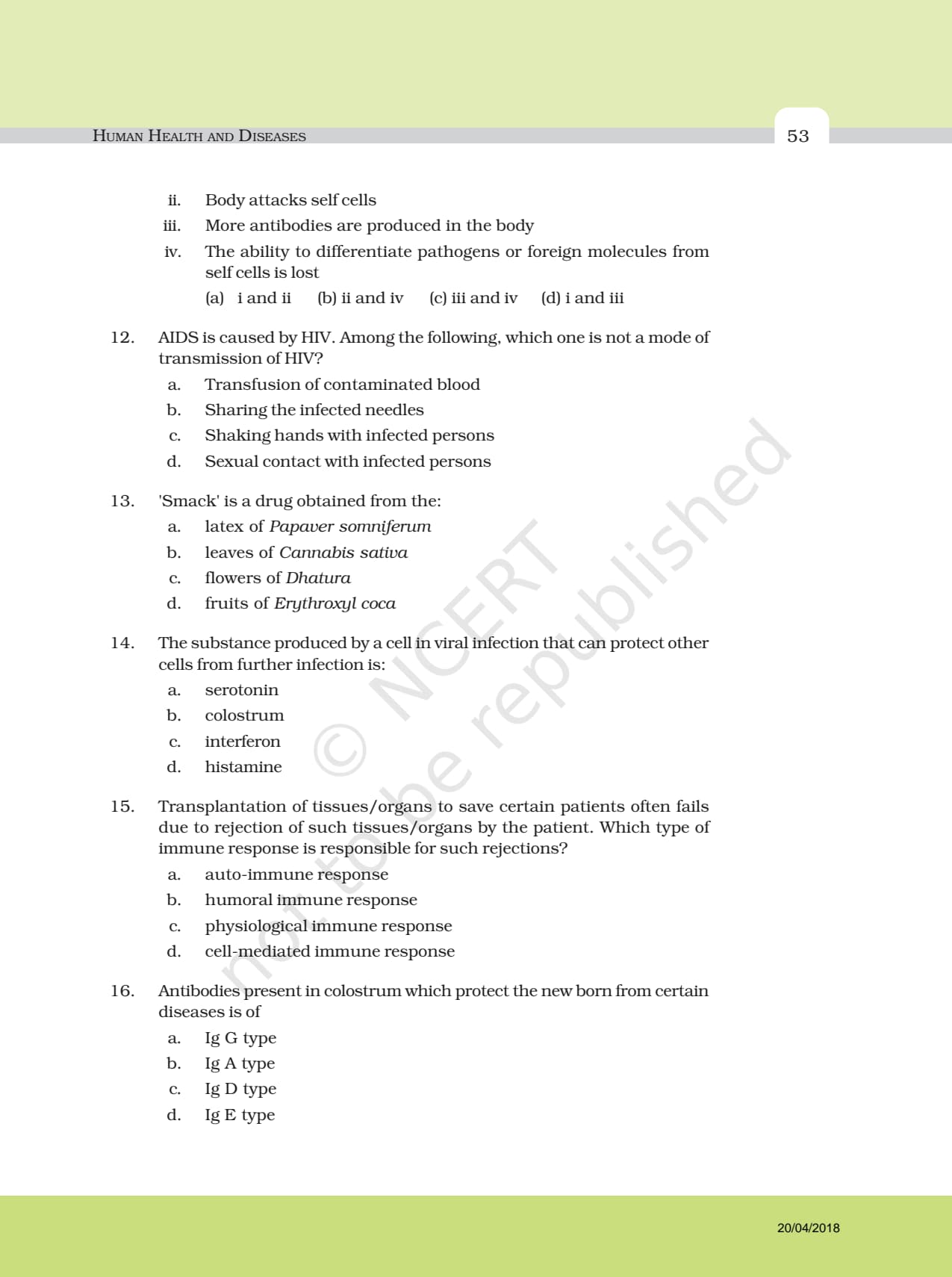
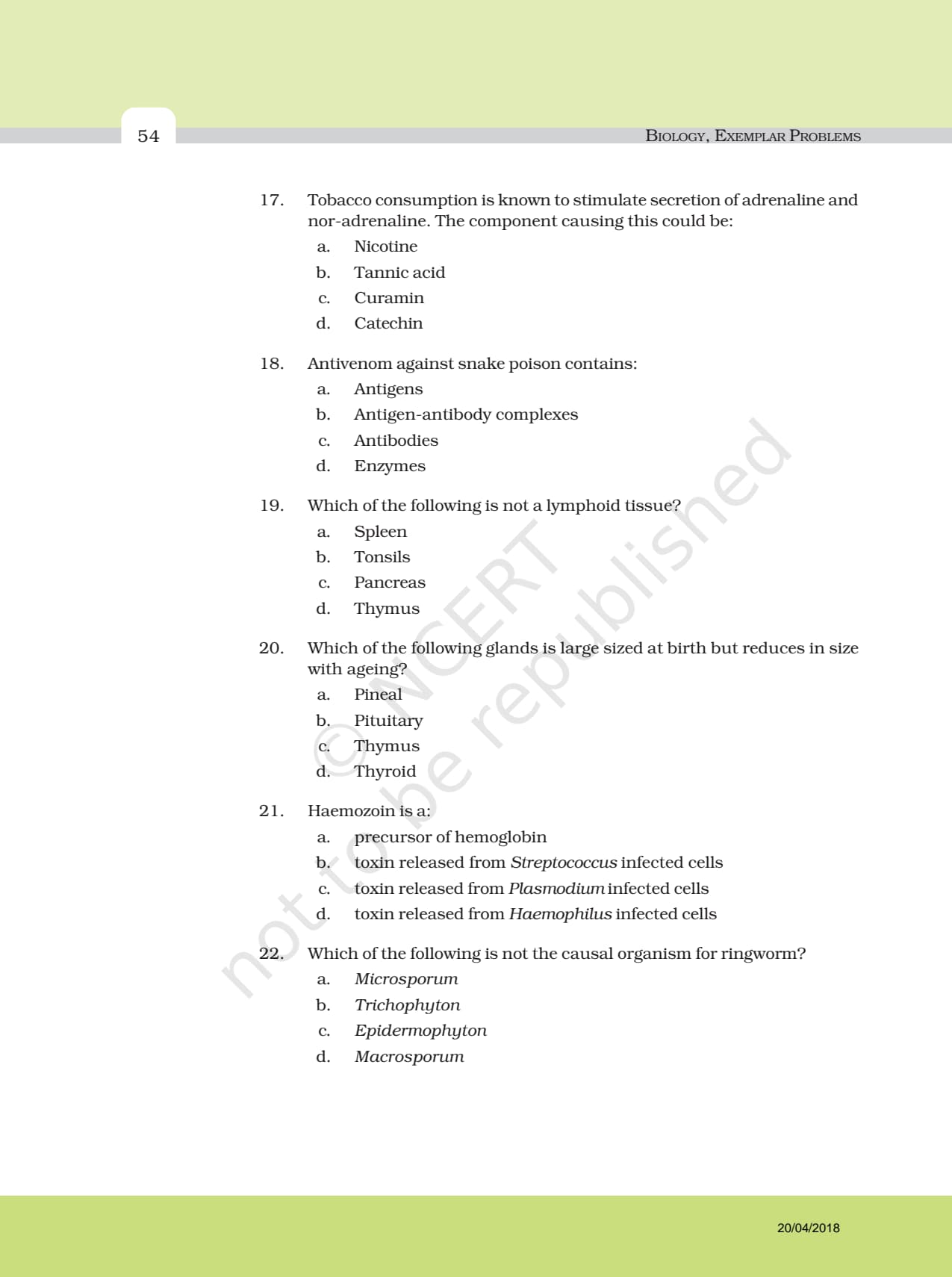
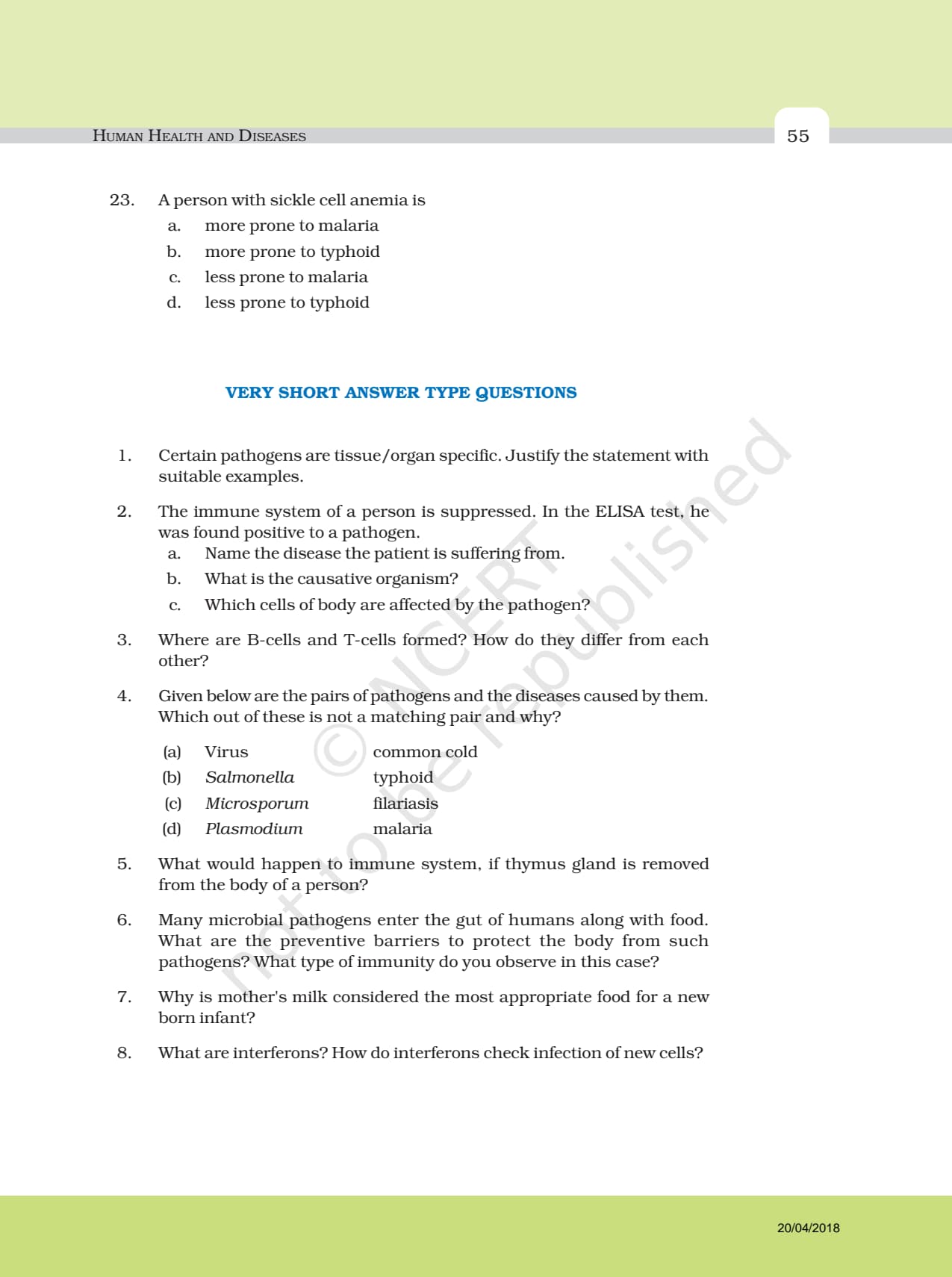
- Exemplar question types: MCQ Type I and II, Very Short Answer, Short Answer, and Long Answer.
Key Topics in Human Health and Disease - NCERT Exemplar Class 12 Biology
The NCERT Exemplar Book for Chapter 7 tests students on topics that need precise understanding. The chapter splits into two broad areas: common infectious diseases and the immune system, vaccines, HIV/AIDS, cancer, and drug abuse. Students should focus on diagrams and definitions, as these are most frequently tested in NEET and CBSE papers.
| Question Type | Approx. Count | Key Focus Area |
|---|---|---|
| MCQ Type I (one correct) | 20 | Diseases, pathogens, immune response |
| MCQ Type II (more than one correct) | 5 | Immunity types, cancer, AIDS |
| Very Short Answer | 10 | Terms, definitions, one-word answers |
| Short Answer | 10 | Differences, diagrams, life cycles |
| Long Answer | 4 | Detailed explanations of immunity and AIDS |
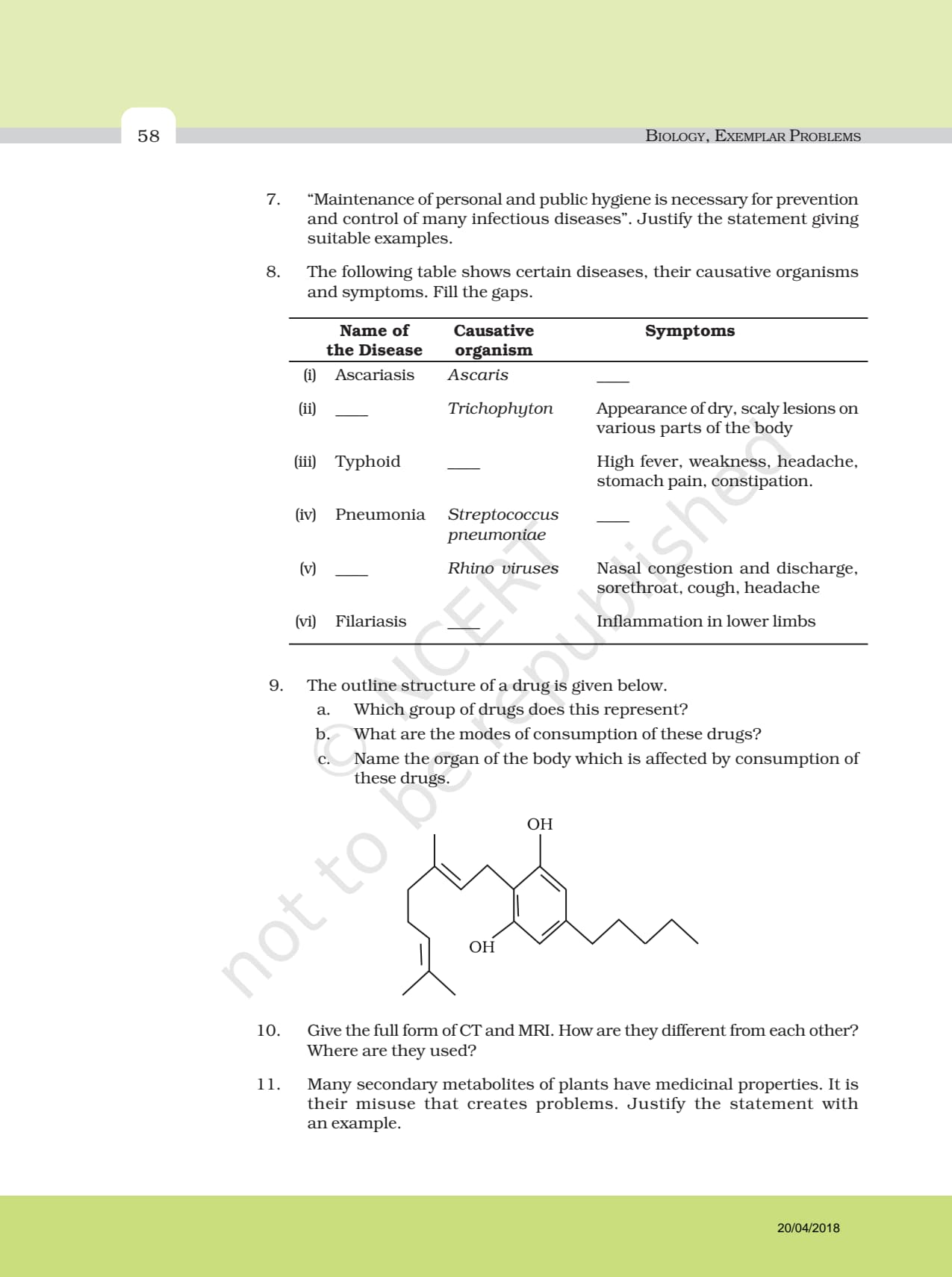
Common diseases covered include typhoid, malaria, pneumonia, amoebiasis, ascariasis, elephantiasis, ringworm, and common cold. Students should also know the pathogens behind each disease and the mode of transmission. These appear as one-mark and two-mark questions in CBSE boards.
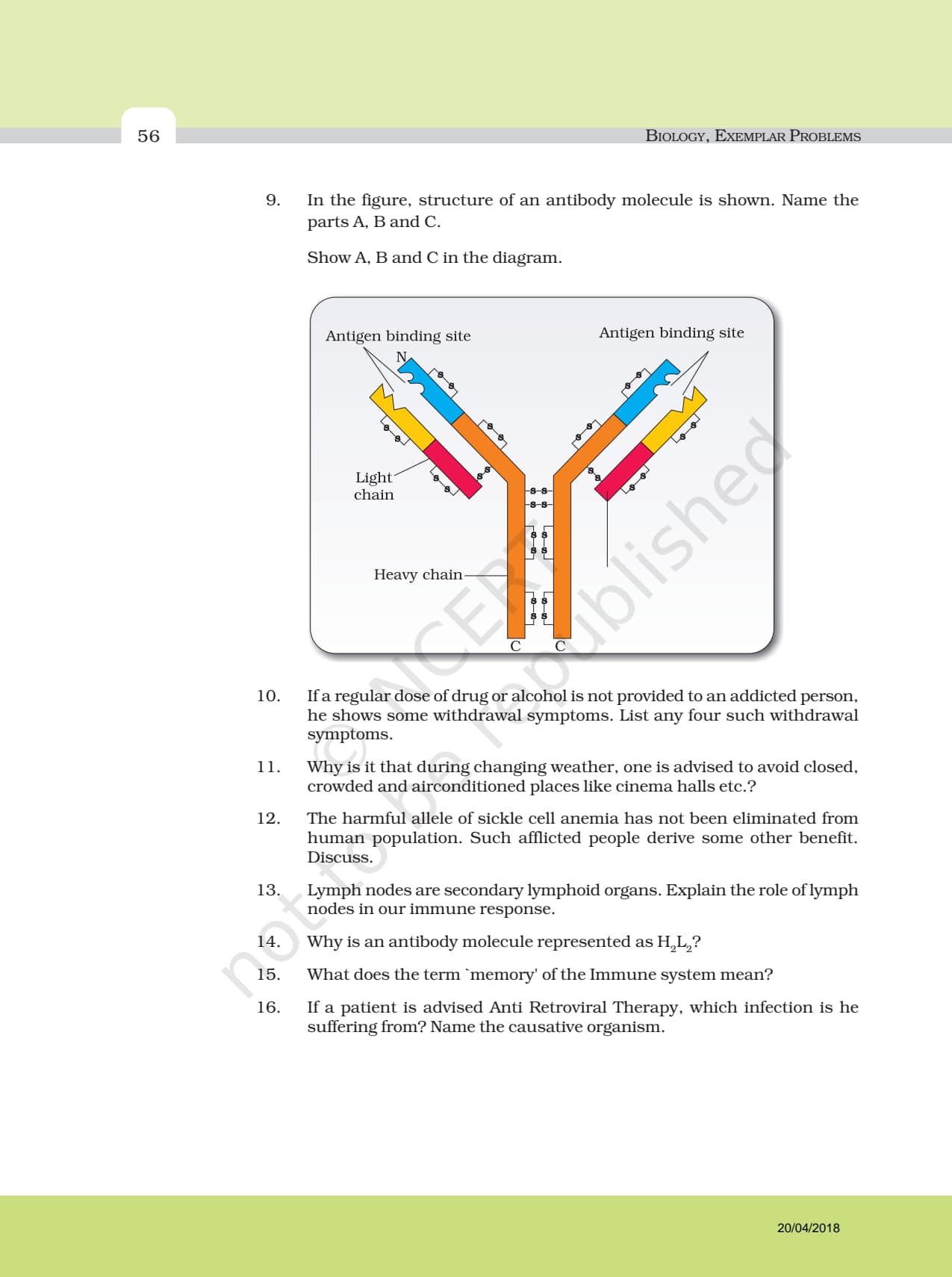
Students should be able to draw and label key diagrams from memory. These include the Y-shaped antibody structure, the HIV replication cycle, and the cancer cell division process. These diagrams appear in both CBSE and NEET papers with dedicated marks.
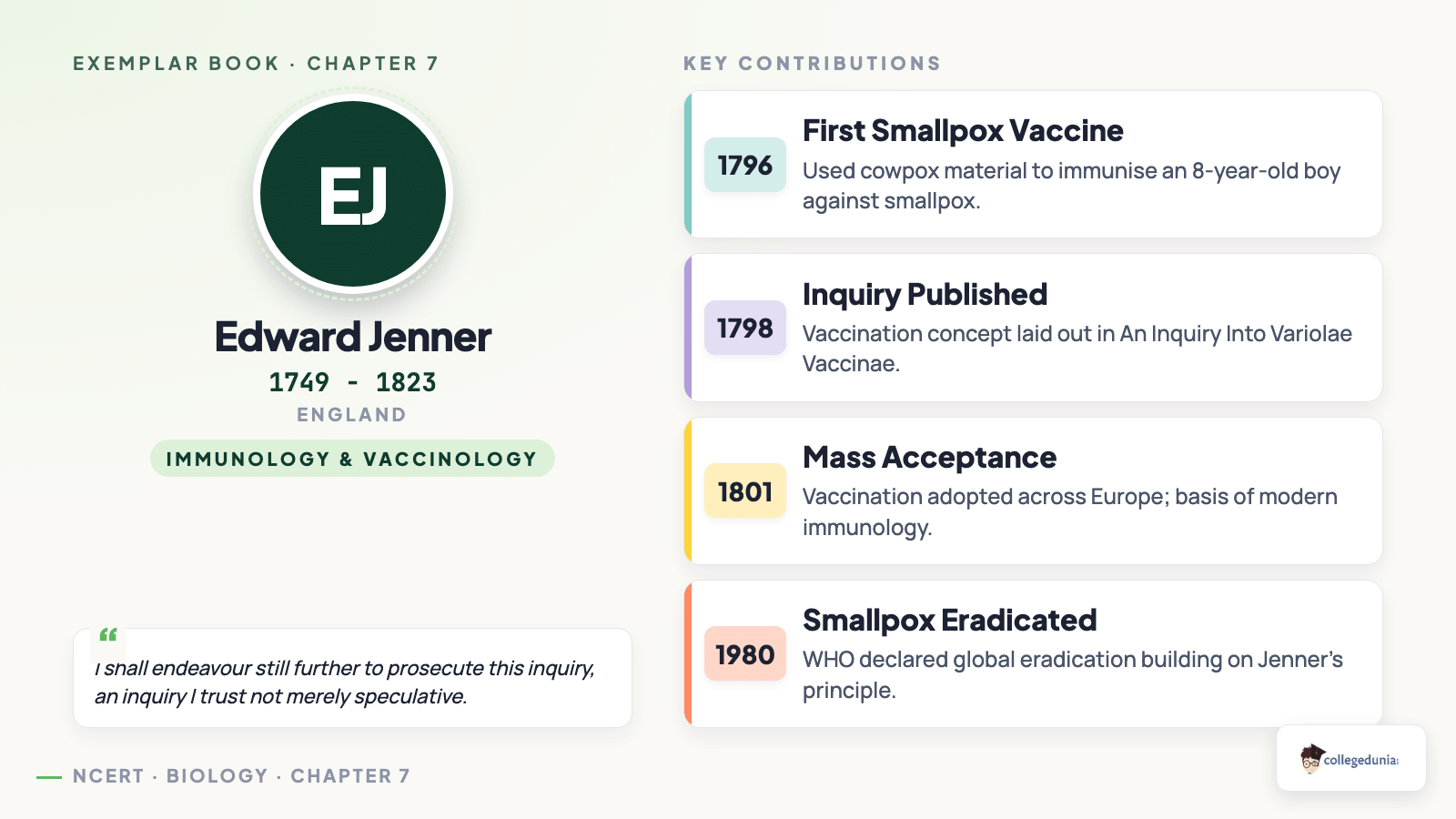
Edward Jenner developed the first vaccine using cowpox to protect humans from smallpox in 1796. His work built the foundation for modern immunology. The Exemplar Book asks how vaccines activate B-lymphocytes to produce memory cells. These memory cells give long-lasting protection against future infections.
The chapter also covers active and passive immunity in detail. Active immunity forms when the body makes its own antibodies after exposure to an antigen. Passive immunity is borrowed from outside, for example through mother's colostrum or antitoxin injections.
Human Health and Disease Video Lecture for Class 12 Biology
Source: PW Power Batch on YouTube
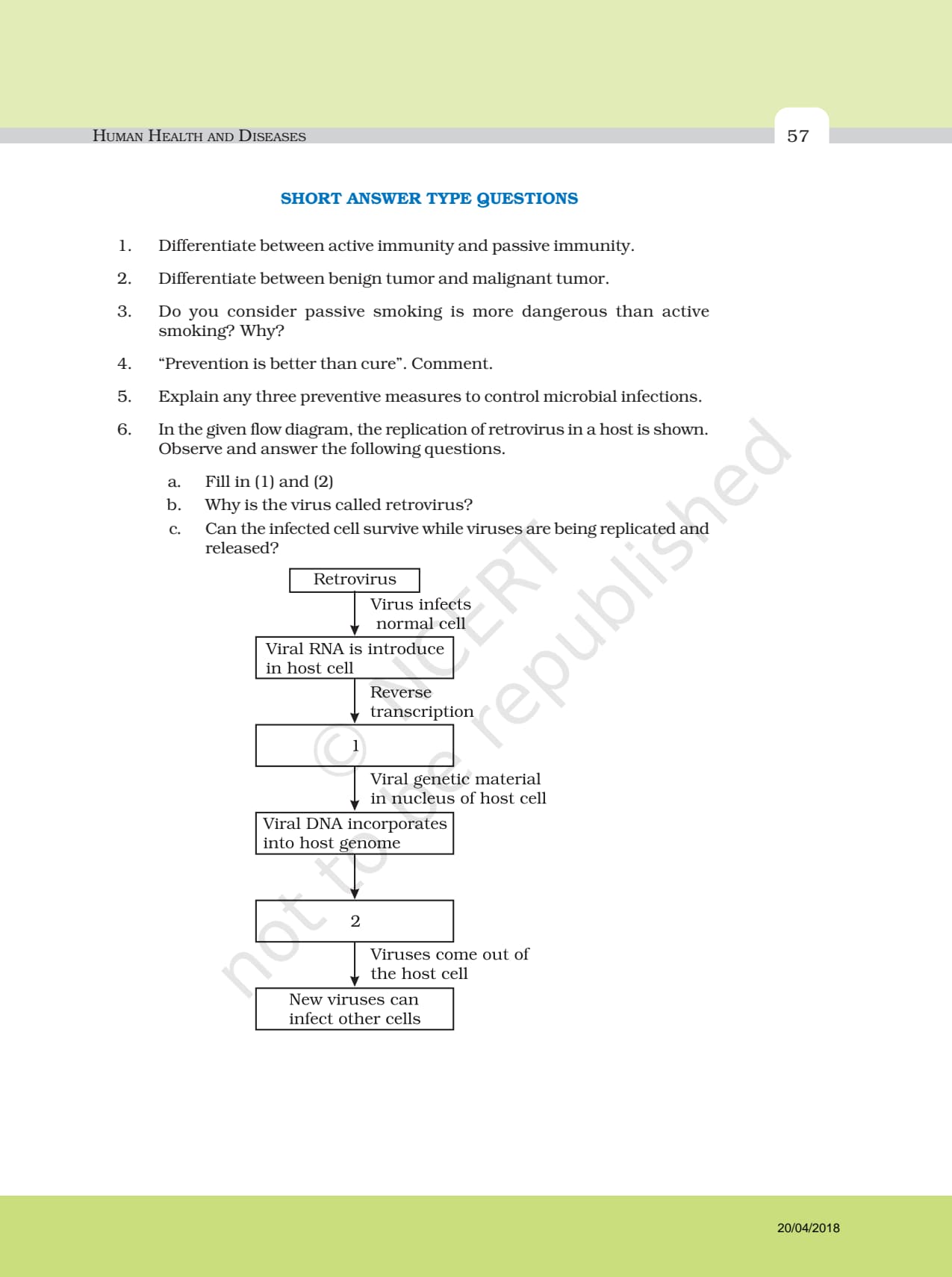
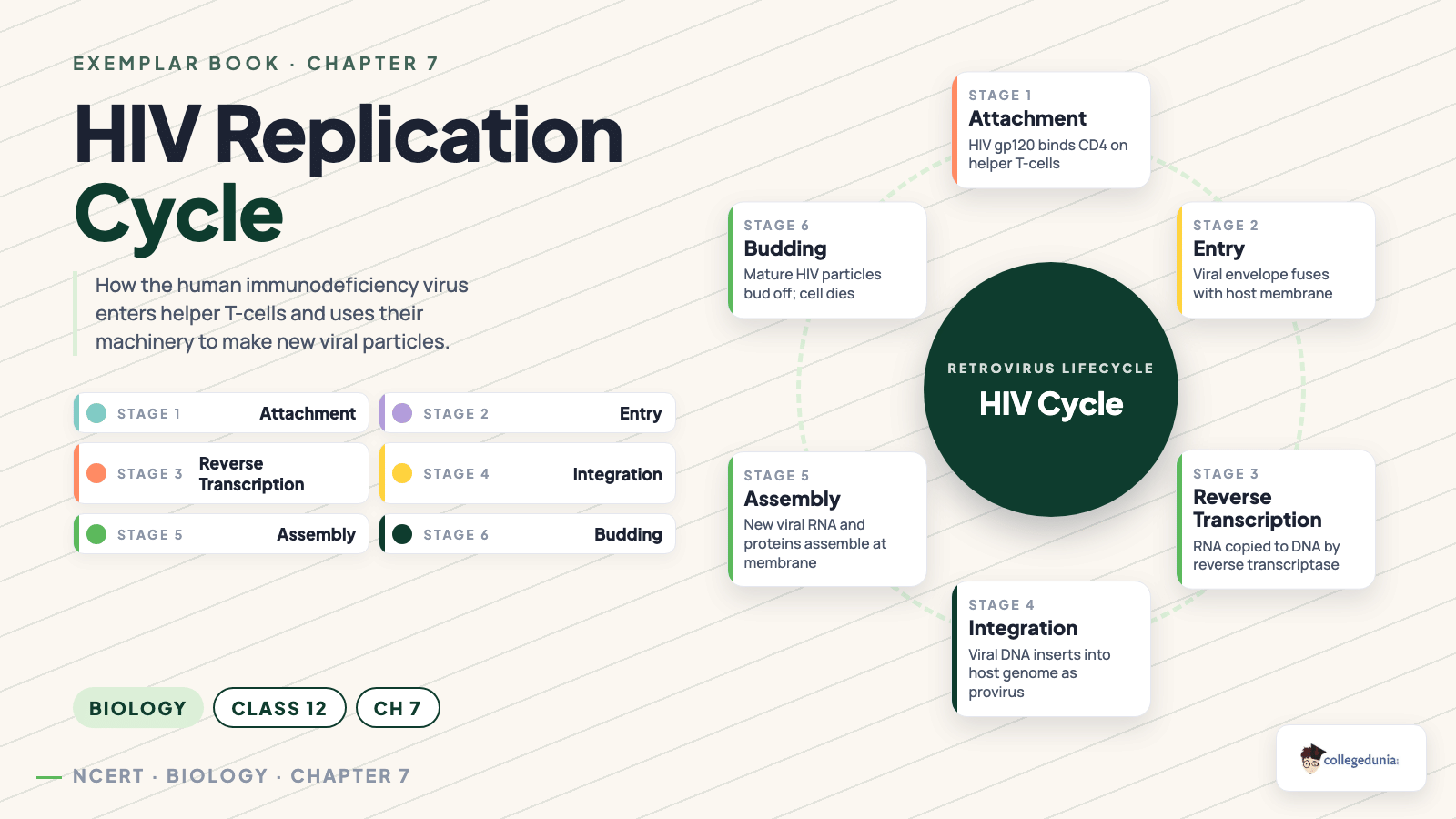
The HIV life cycle is the hardest sub-topic for most Class 12 students. HIV attacks helper T-lymphocytes (CD4+ cells), weakens the immune system, and leads to AIDS. The virus uses reverse transcriptase to convert its RNA into DNA and integrate into the host cell genome. Watch the video above for a step-by-step visual of the HIV replication stages before practising Exemplar MCQs on this topic.
NEET and CBSE Exam Weightage for Human Health and Disease
Chapter 7 is one of the high-weightage chapters for NEET and CBSE. It falls under Unit VIII - Biology and Human Welfare, which carries 14 marks in the CBSE Class 12 board exam. NEET typically places 3-4 questions from this chapter each year.
| Exam | Unit/Section | Expected Questions | Key Sub-topics Tested |
|---|---|---|---|
| NEET 2027 | Biology and Human Welfare | 3-4 MCQs | HIV/AIDS, immunity types, cancer, vaccines |
| CBSE Board 2027 | Unit VIII (14 marks) | 2-3 questions | Disease types, antibody structure, drug abuse |
| AIIMS-pattern | Human Welfare | 2-3 questions | Innate vs. acquired immunity, pathogens |
| CUET Biology | Unit VIII | 1-2 questions | Immunity, vaccines, common diseases |
All Chapter Exemplar Book PDFs - Class 12 Biology
Download or view the NCERT Exemplar Book PDF for any Class 12 Biology chapter using the links below.
| Chapter | Title | Exemplar Book PDF |
|---|---|---|
| 1 | Sexual Reproduction in Flowering Plants | Download PDF |
| 2 | Human Reproduction | Download PDF |
| 3 | Reproductive Health | Download PDF |
| 4 | Principles of Inheritance and Variation | Download PDF |
| 5 | Molecular Basis of Inheritance | Download PDF |
| 6 | Evolution | Download PDF |
| 7 | Human Health and Disease | Human Health and Disease Exemplar Book (this page) |
| 8 | Microbes in Human Welfare | Download PDF |
| 9 | Biotechnology - Principles and Processes | Download PDF |
| 10 | Biotechnology and Its Applications | Download PDF |
| 11 | Organisms and Populations | Download PDF |
| 12 | Ecosystem | Download PDF |
| 13 | Biodiversity and Conservation | Download PDF |
Student Feedback
In a recent survey of 16,200 Class 12 Biology students, 74% rated the HIV life-cycle stages flowchart as the hardest sub-topic in this chapter. Here is what the survey found:
- 74% of students found the HIV life-cycle stages flowchart the hardest sub-topic.
- 70% lost marks by confusing innate and acquired immunity.
- 4 out of 5 students skipped drawing the Y-shaped antibody in their answer sheet.
- Average first read took 6.8 hours; a focused revision pass took 2.6 hours.
- Only 33% of students attempted all NCERT exercise questions. Toppers attempted every one and revisited wrong answers within 24 hours.
Source: 2025-26 Class 12 Biology student survey. Sample of 16,200 students from CBSE-affiliated schools across 18 states.
Other Resources for Human Health and Disease Class 12 Biology
Students can use these study resources alongside the Exemplar Book to strengthen preparation for NEET and CBSE boards.
| Resource | What It Contains | Link |
|---|---|---|
| Exemplar Book (this page) | NCERT Exemplar problems PDF | Human Health and Disease Exemplar Book |
| NCERT Solutions | Step-by-step NCERT exercise solutions | NCERT Solutions |
| NCERT Notes | Concise revision notes for Chapter 7 | NCERT Notes |
| Exemplar Solutions | Solved answers for all Exemplar questions | Exemplar Solutions |
| NCERT Book PDF | Original NCERT textbook Chapter 7 | NCERT Book PDF |
| Formula Sheet | Key terms and facts for quick revision | Formula Sheet |
| Handwritten Notes | Handwritten-style revision notes | Handwritten Notes |
Frequently Asked Questions
What are the types of questions in NCERT Exemplar Chapter 7 Class 12 Biology?
The NCERT Exemplar Book for Chapter 7 has five question types: MCQ Type I (one correct answer), MCQ Type II (more than one correct answer), Very Short Answer, Short Answer, and Long Answer. There are around 49 questions in total, covering all aspects of Human Health and Disease.
Is Human Health and Disease important for NEET?
Yes. Chapter 7 is a high-weightage chapter for NEET. Students can expect 3-4 questions every year. Topics like the HIV/AIDS life cycle, innate vs. acquired immunity, vaccines, and cancer are frequently tested in NEET Biology papers.
What is the difference between innate and acquired immunity?
Innate immunity is the non-specific defence the body is born with, such as skin, mucus, and fever. Acquired immunity develops after exposure to a specific antigen. It can be active (the body makes antibodies after vaccination) or passive (antibodies received from outside, like through colostrum).
How many marks does Human Health and Disease carry in CBSE Class 12?
Chapter 7 belongs to Unit VIII - Biology and Human Welfare, which carries 14 marks in the CBSE Class 12 board exam. The chapter typically contributes 2-3 questions to the board paper, covering disease types, immunity, and drug abuse.
What diseases are covered in Chapter 7 of Class 12 Biology?
Chapter 7 covers common infectious diseases like typhoid, pneumonia, common cold, malaria, amoebiasis, ascariasis, elephantiasis, and ringworm. It also covers HIV/AIDS and sexually transmitted diseases. Non-communicable conditions like cancer and drug and alcohol abuse are also part of this chapter.



Comments