


The class 10 civics handwritten notes chapter 1 Power-sharing have been carefully prepared and scanned for quick one-shot revision, according to the latest 2026-27 CBSE syllabus.
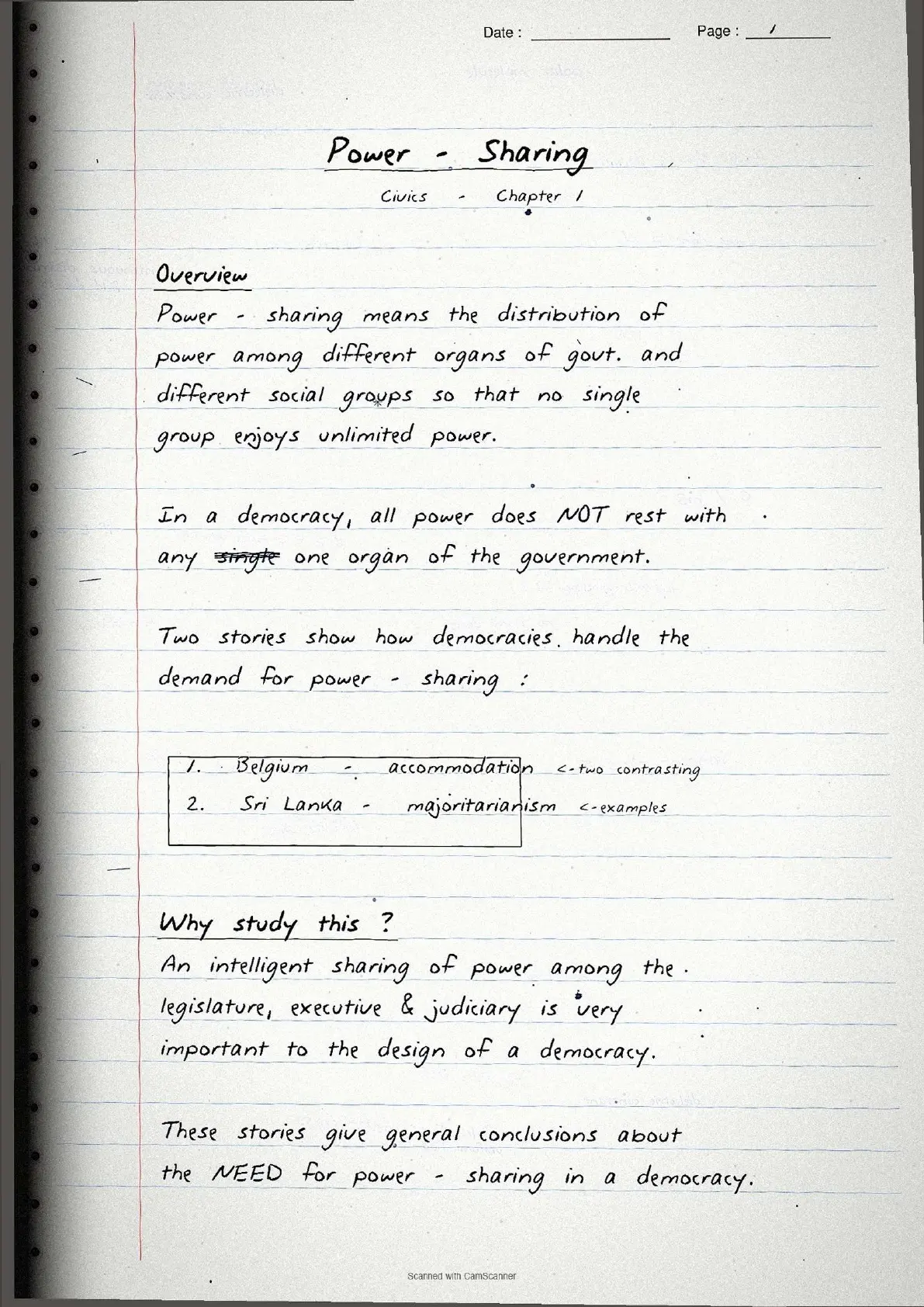
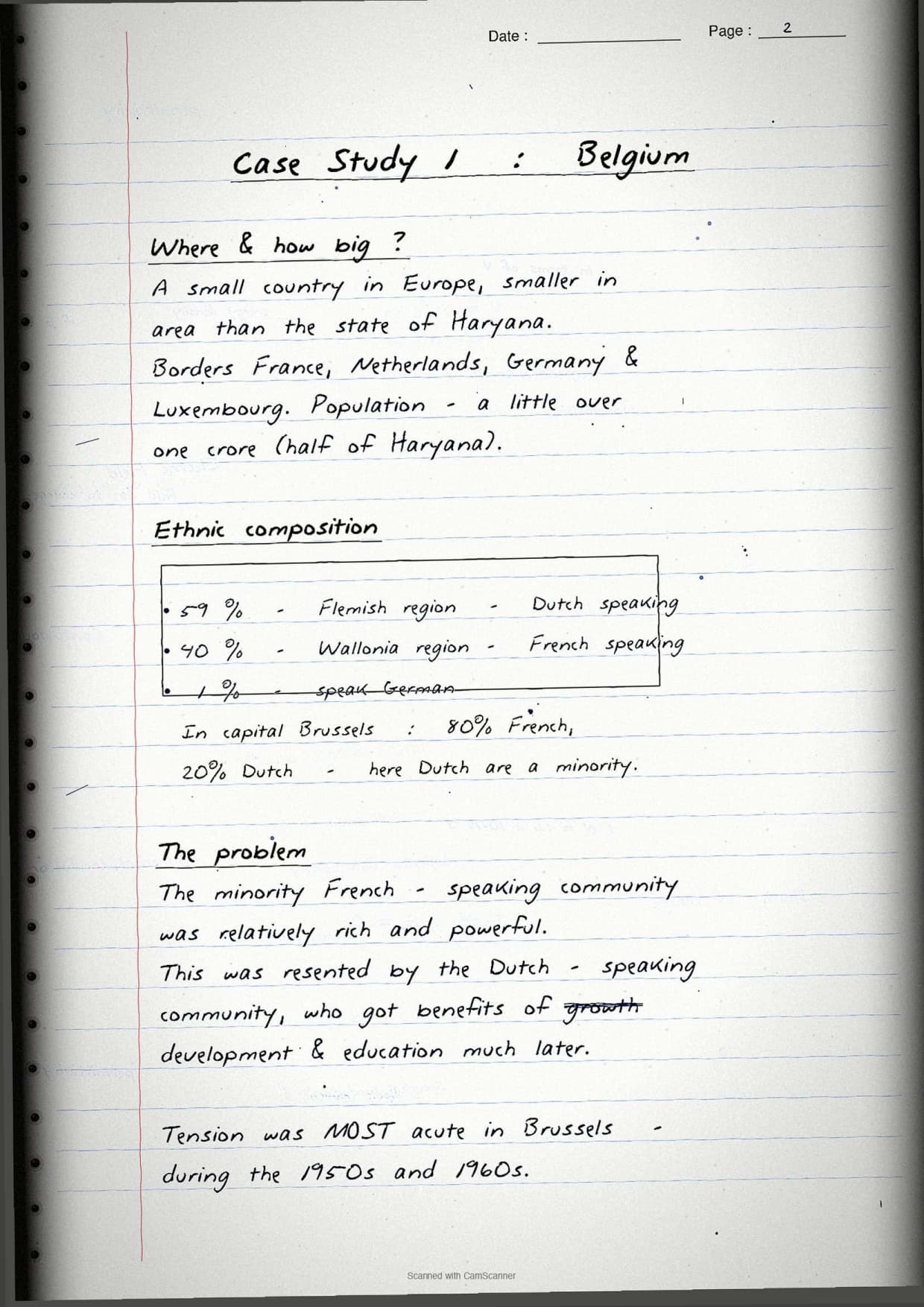
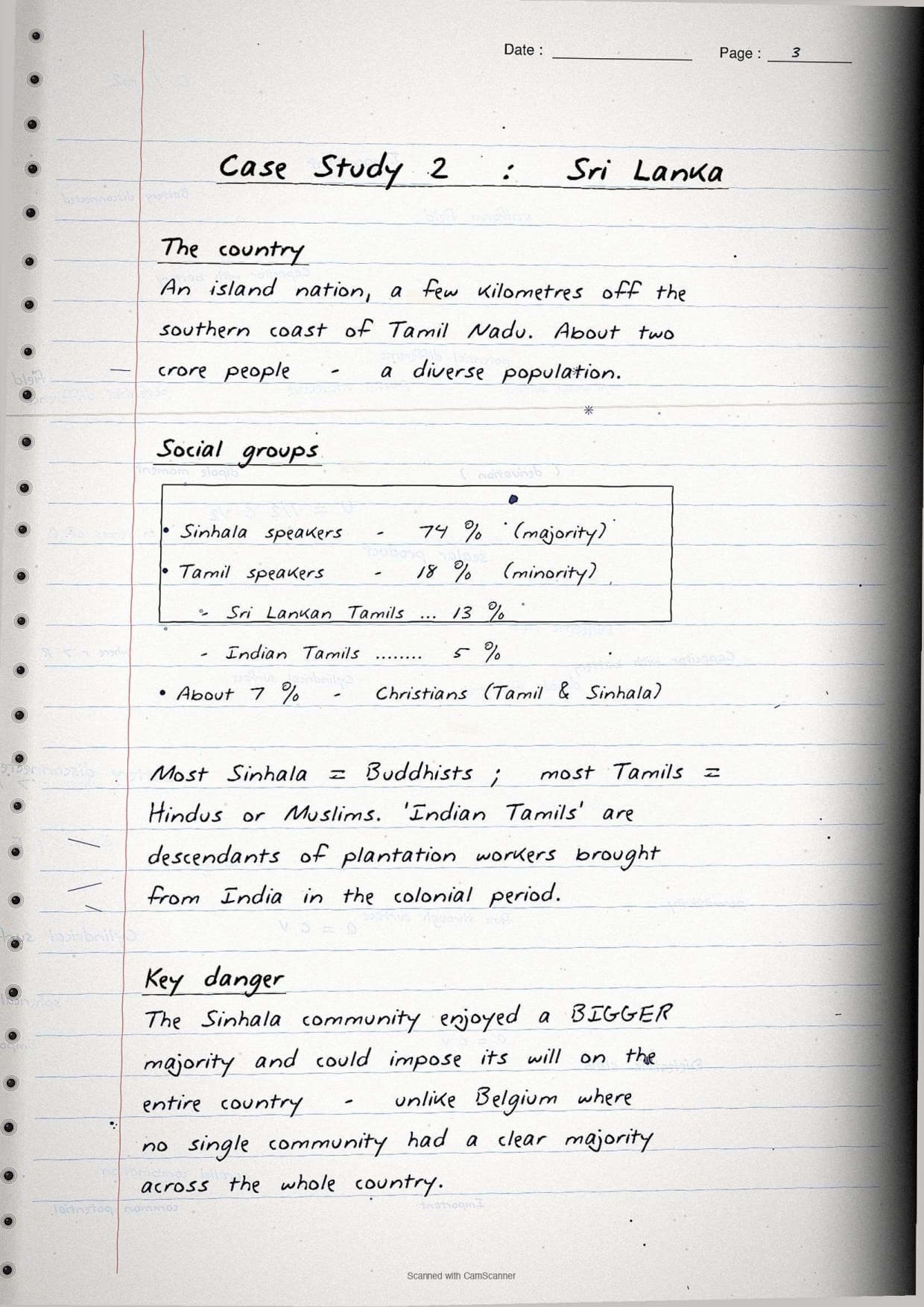
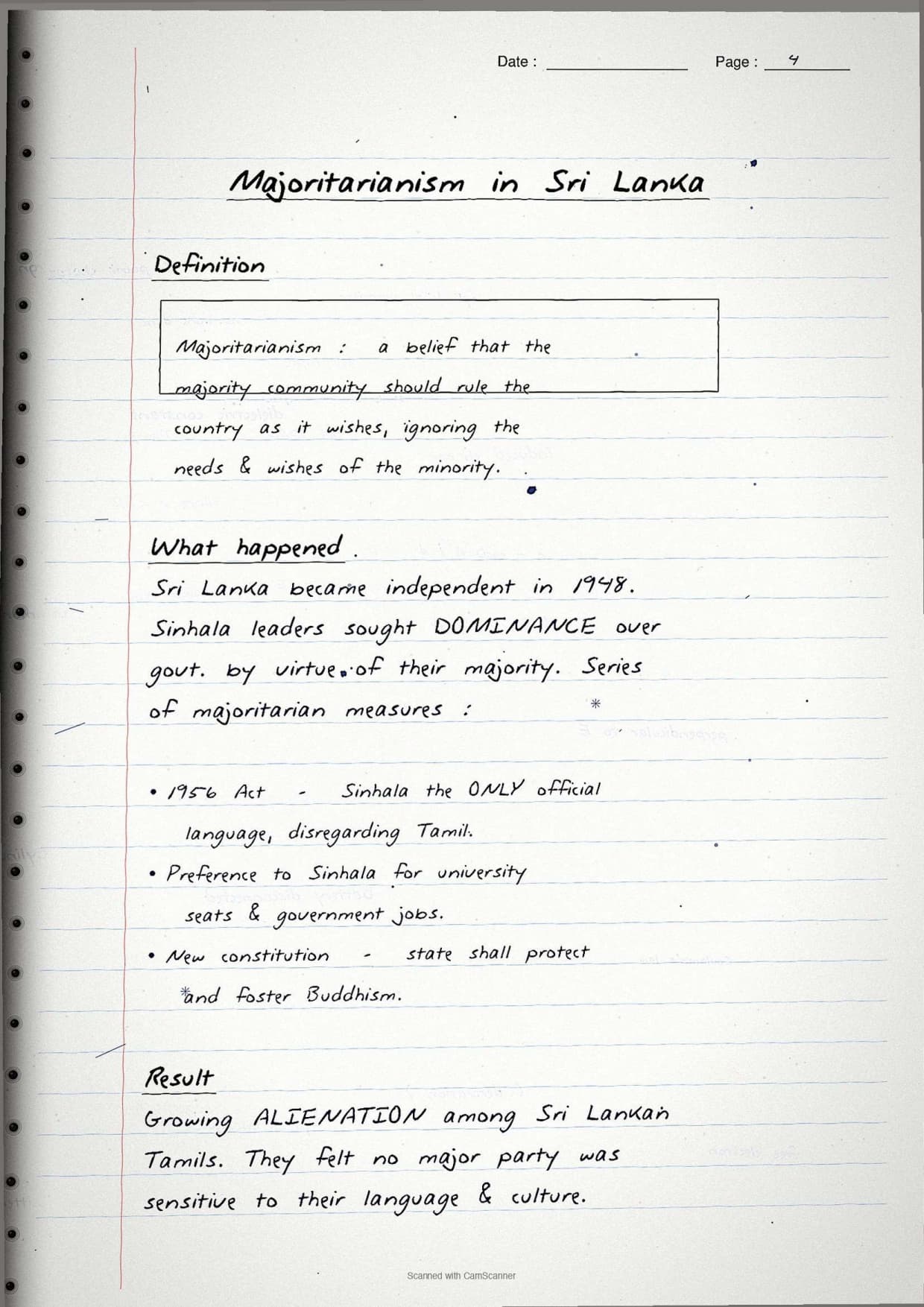
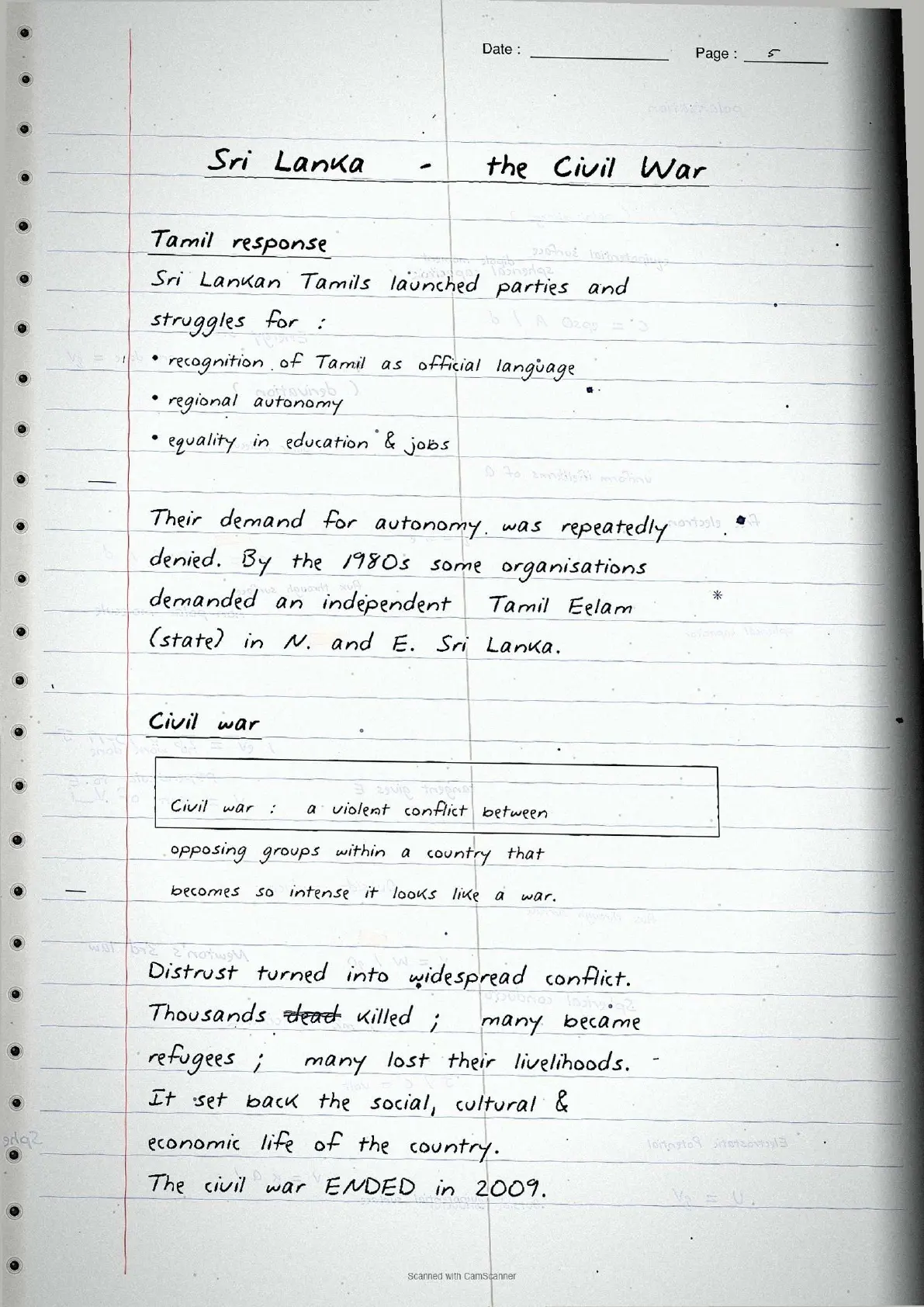
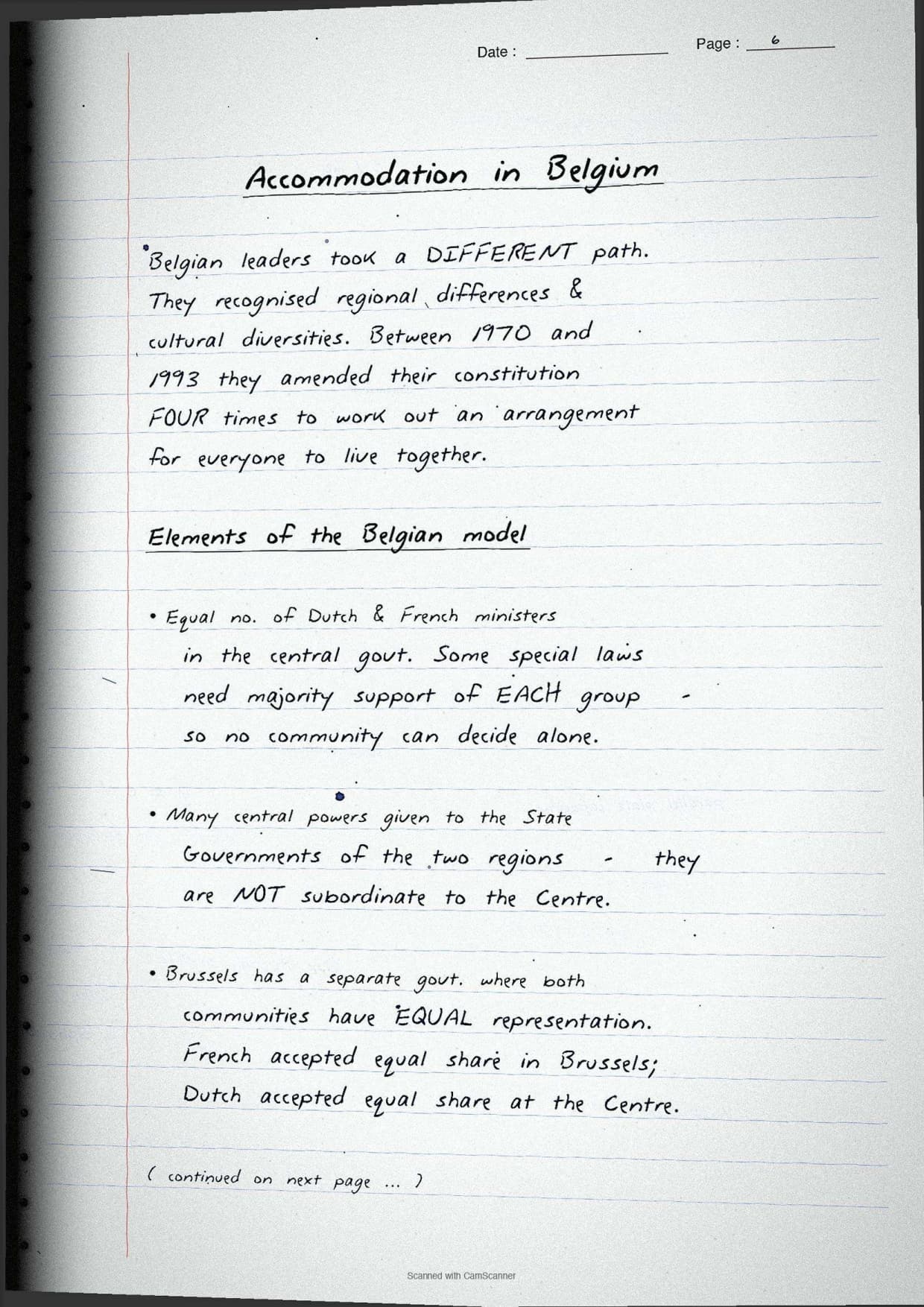
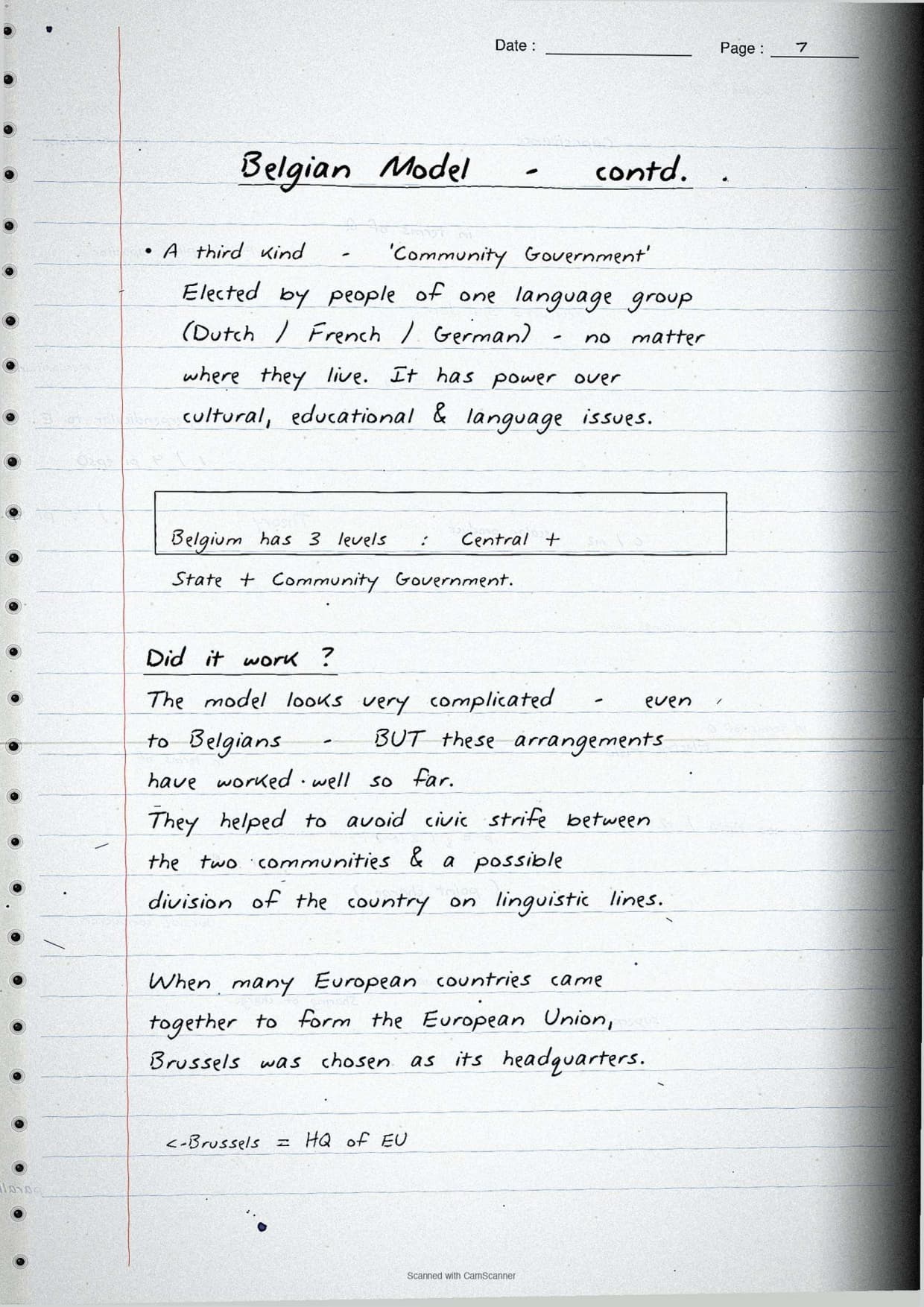
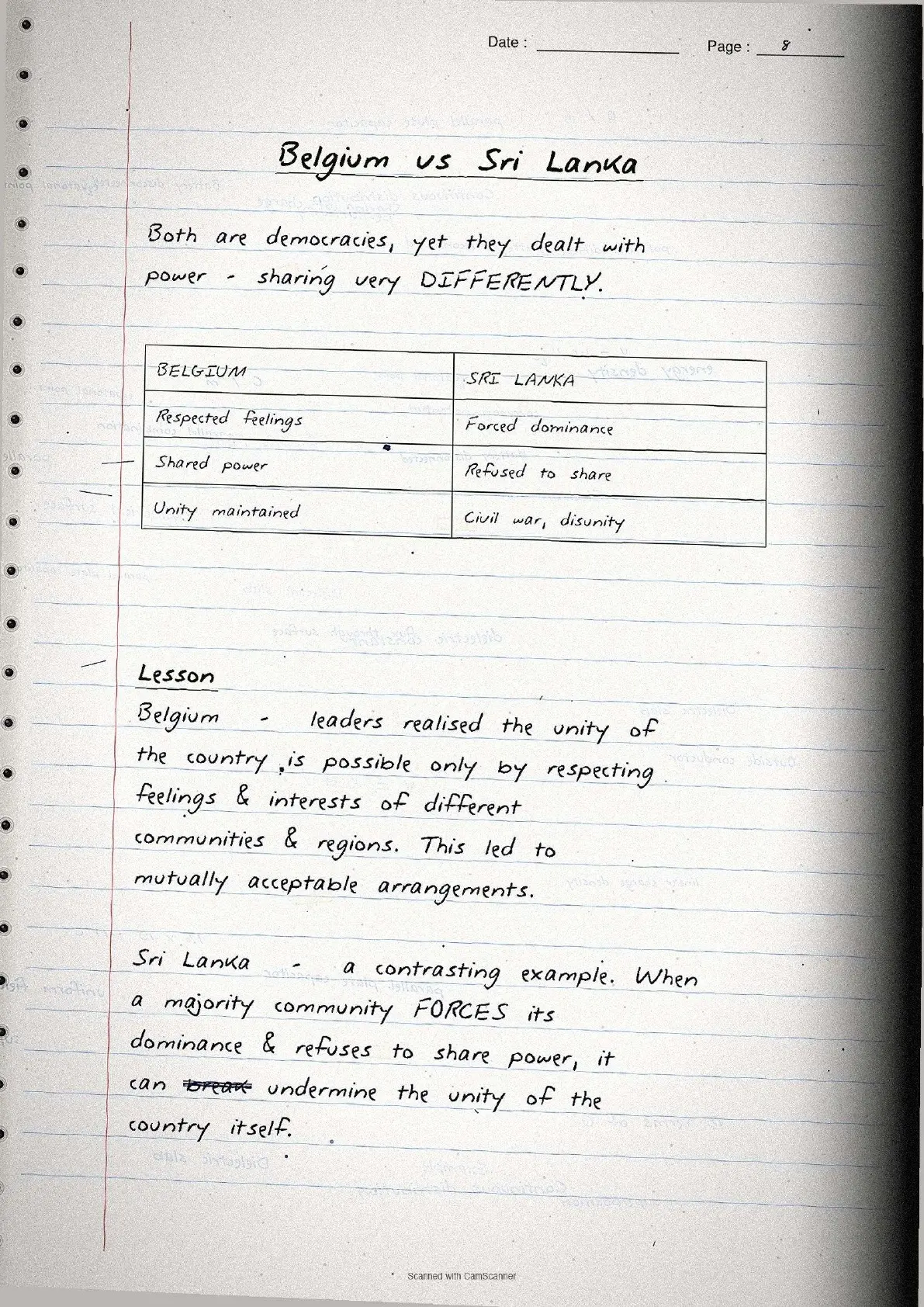
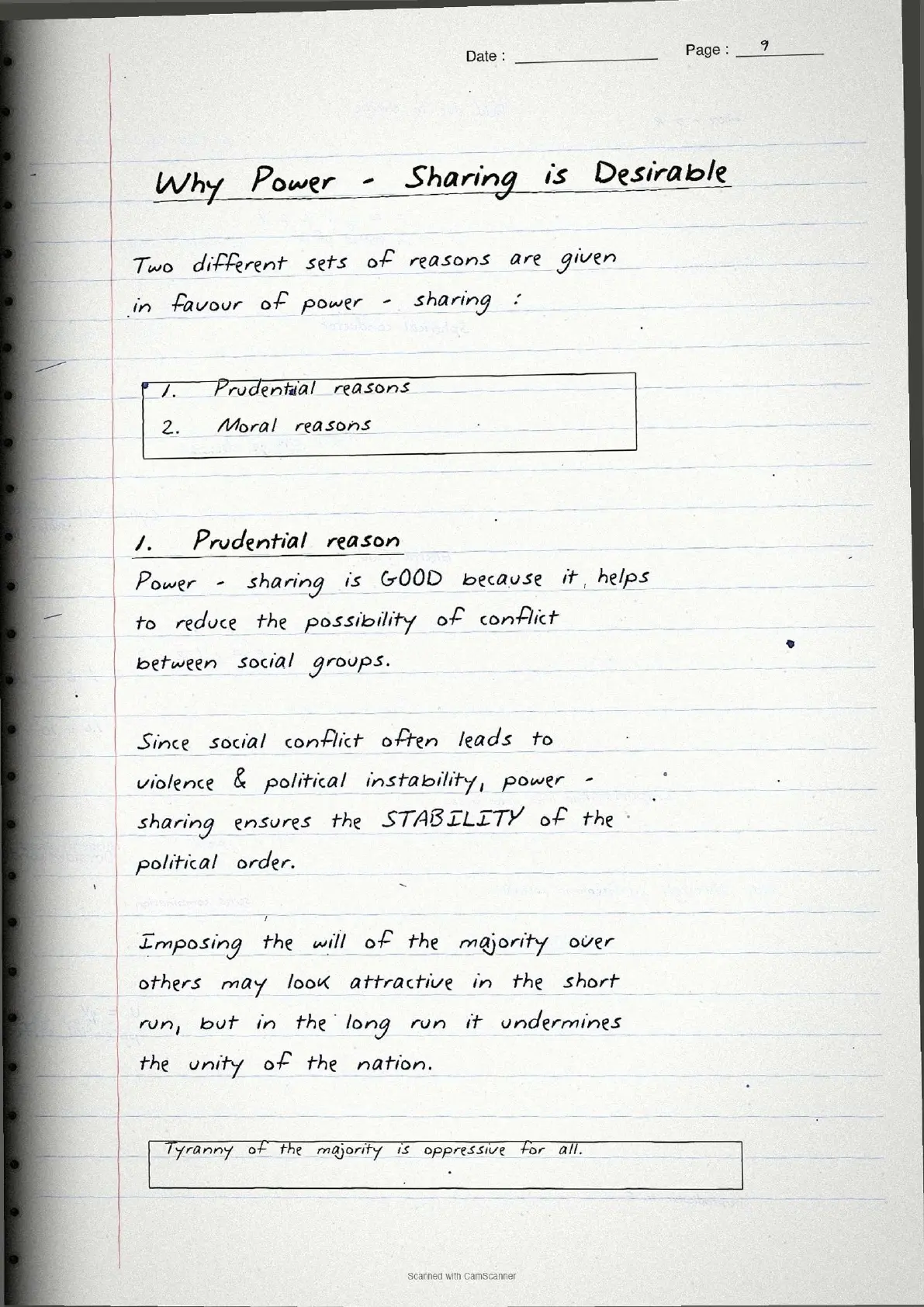
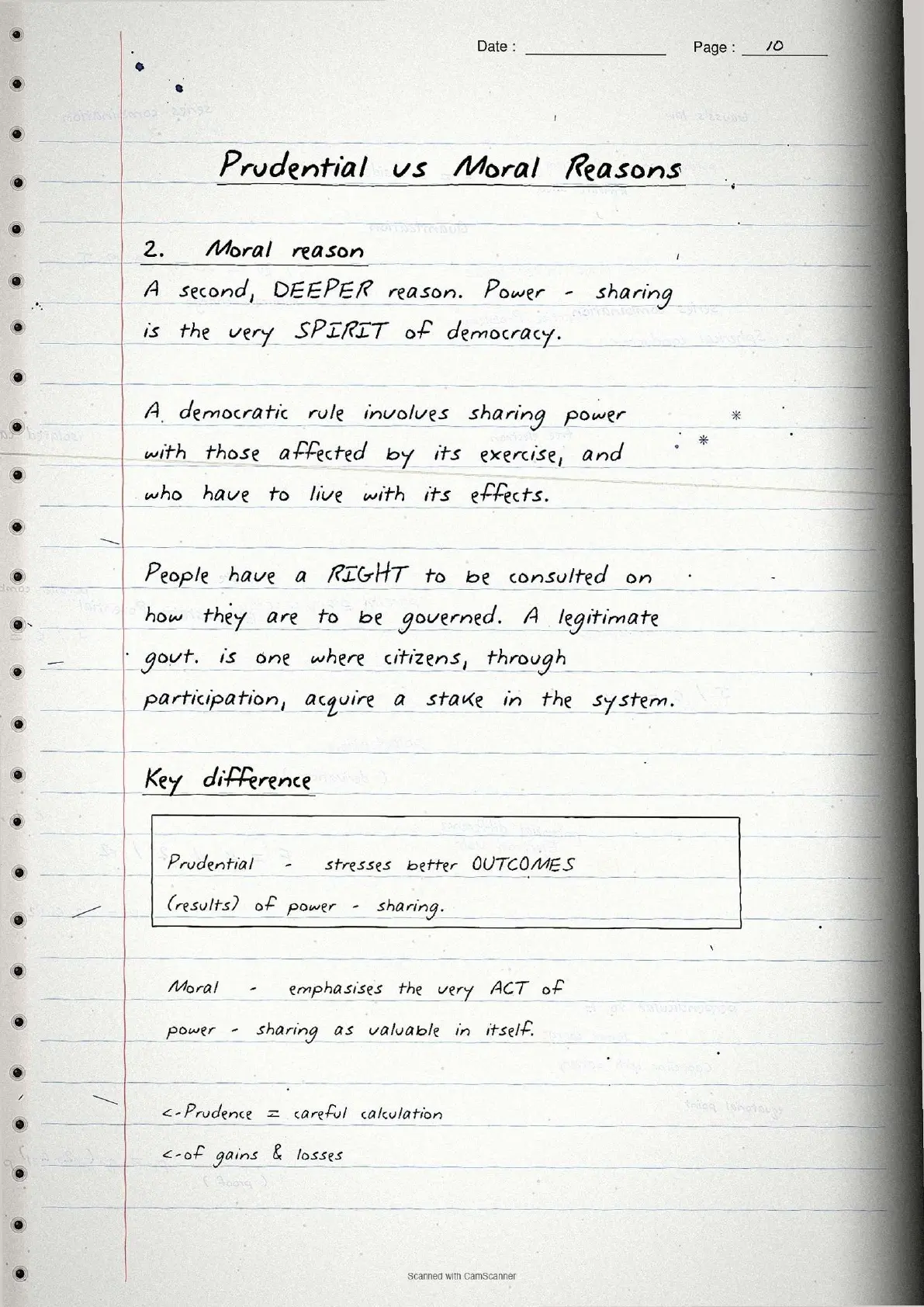
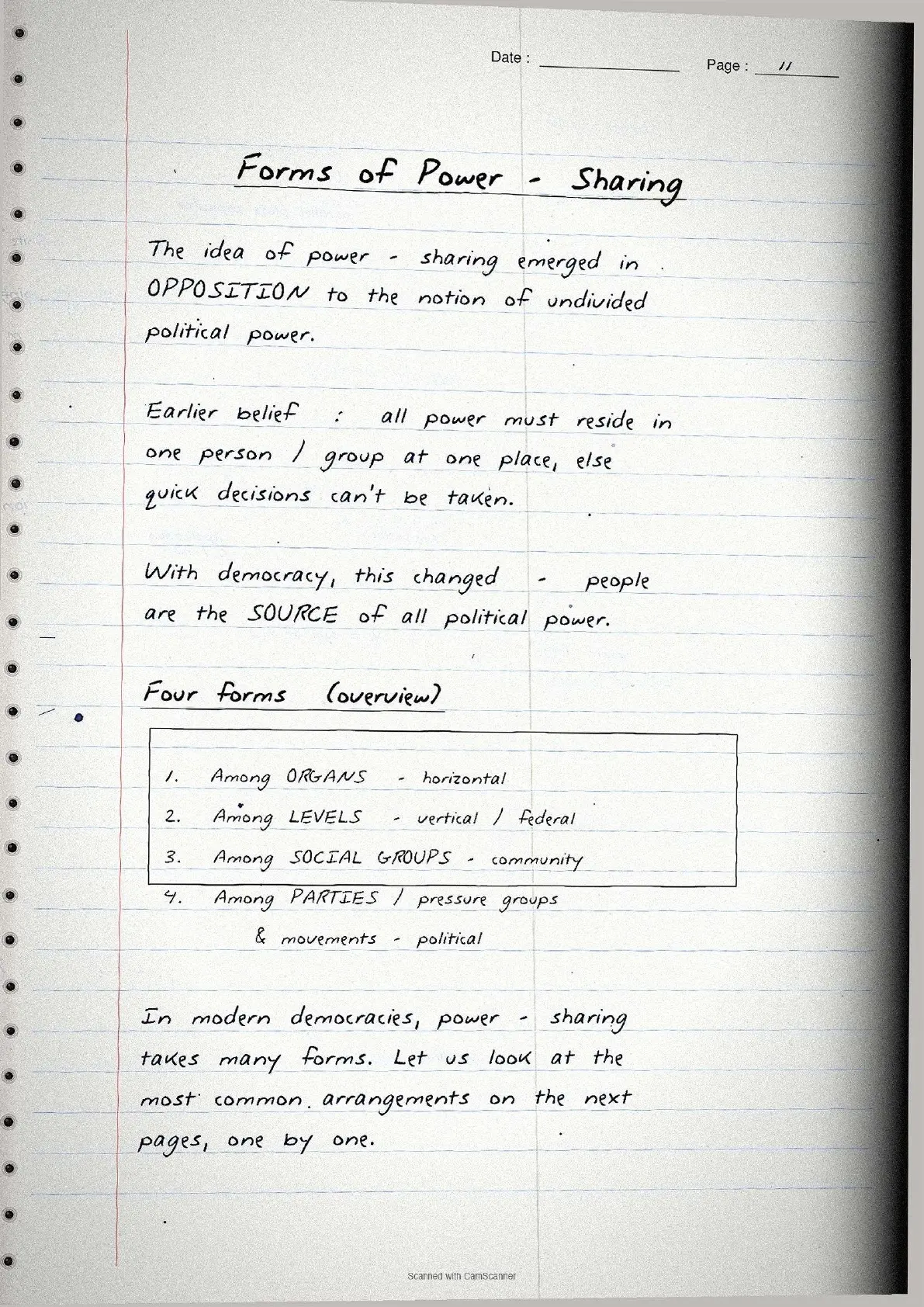
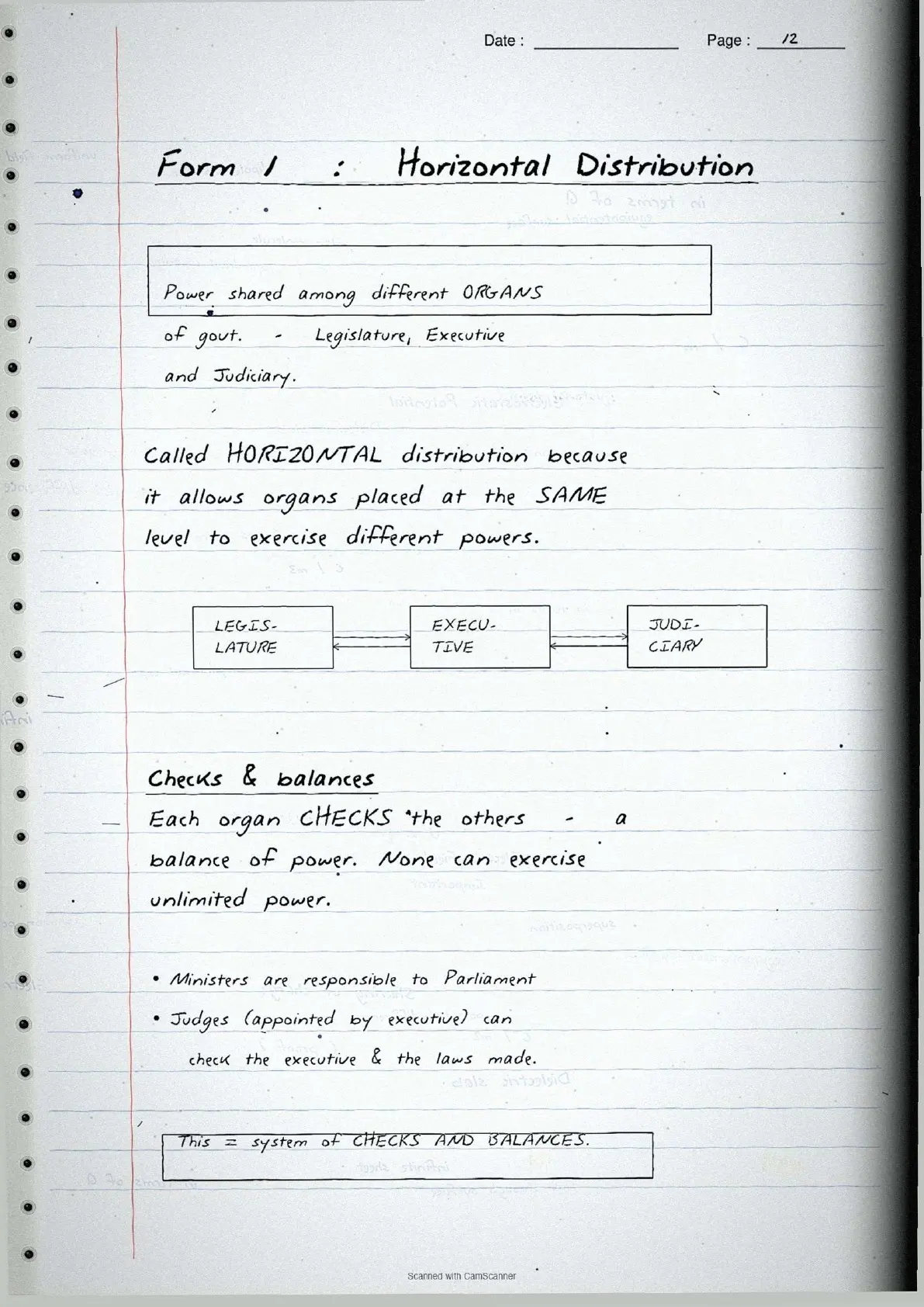
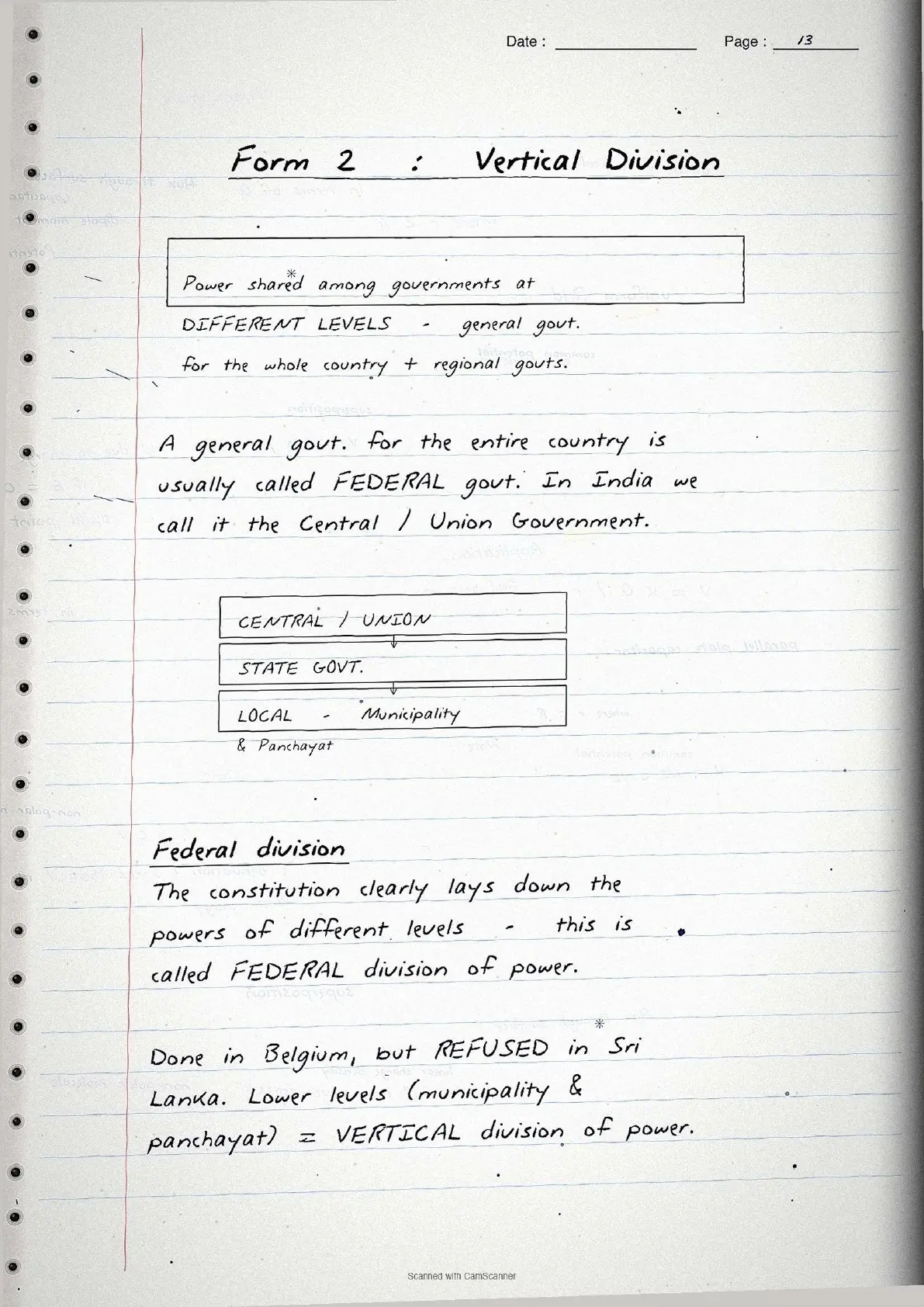
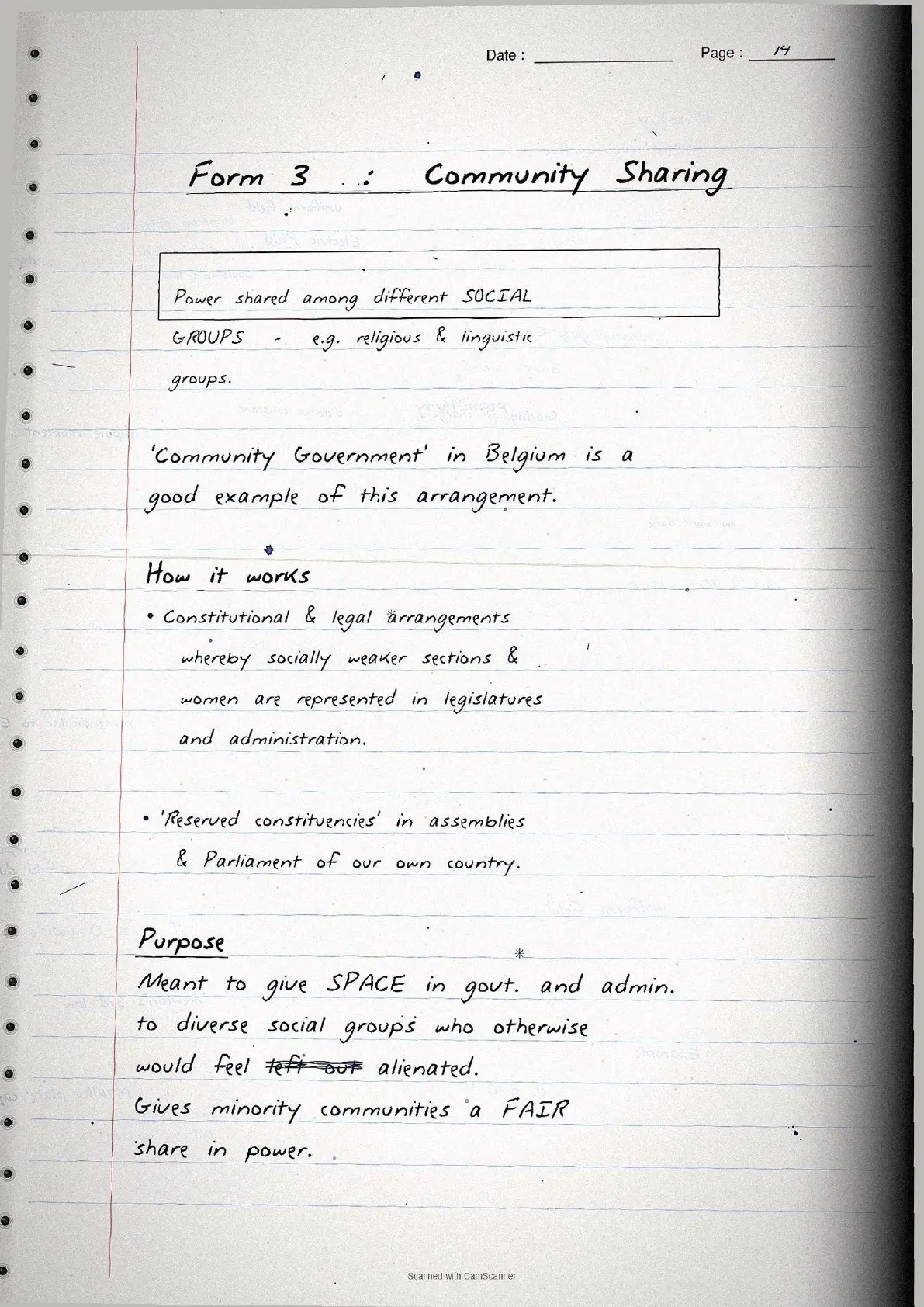
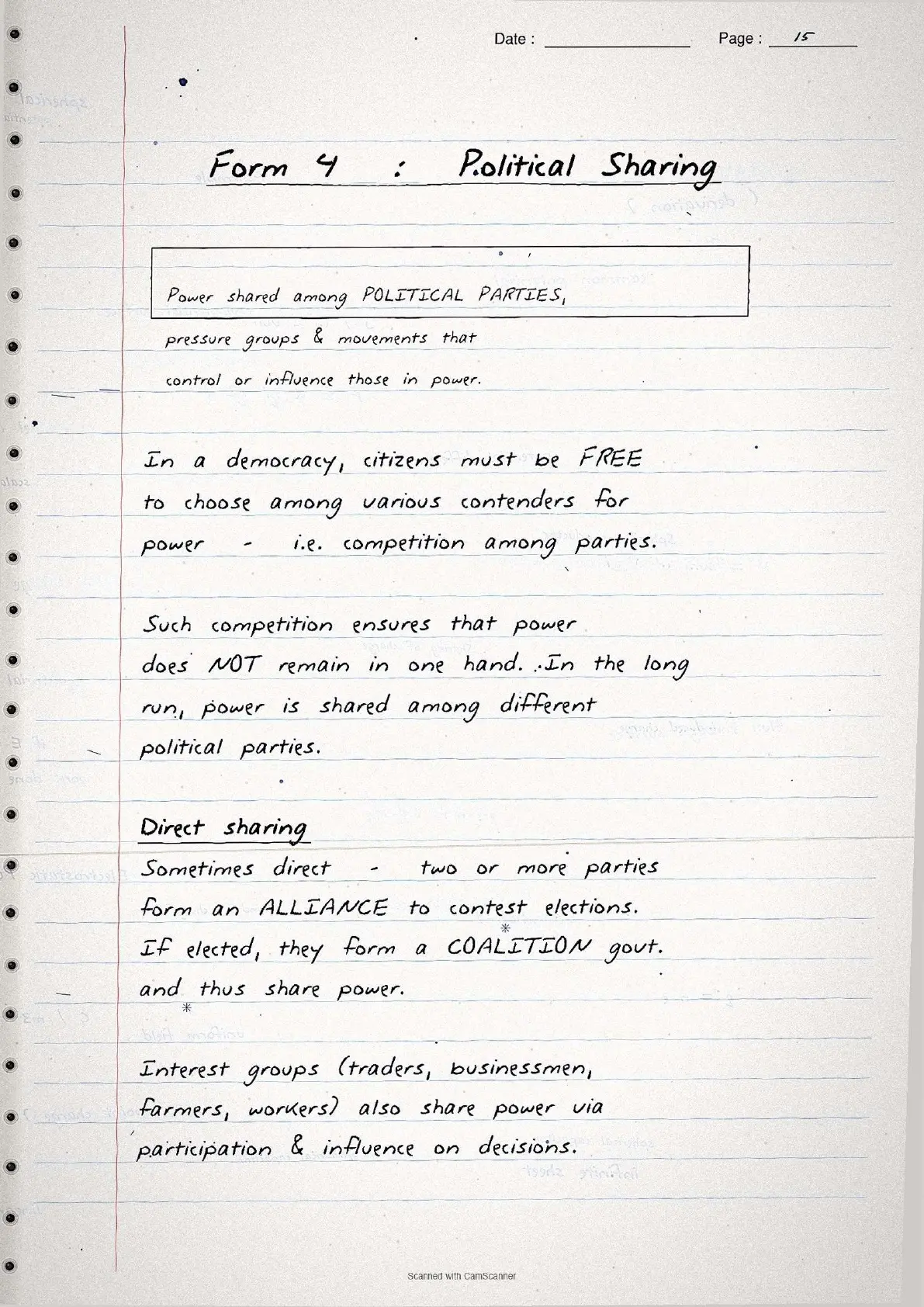
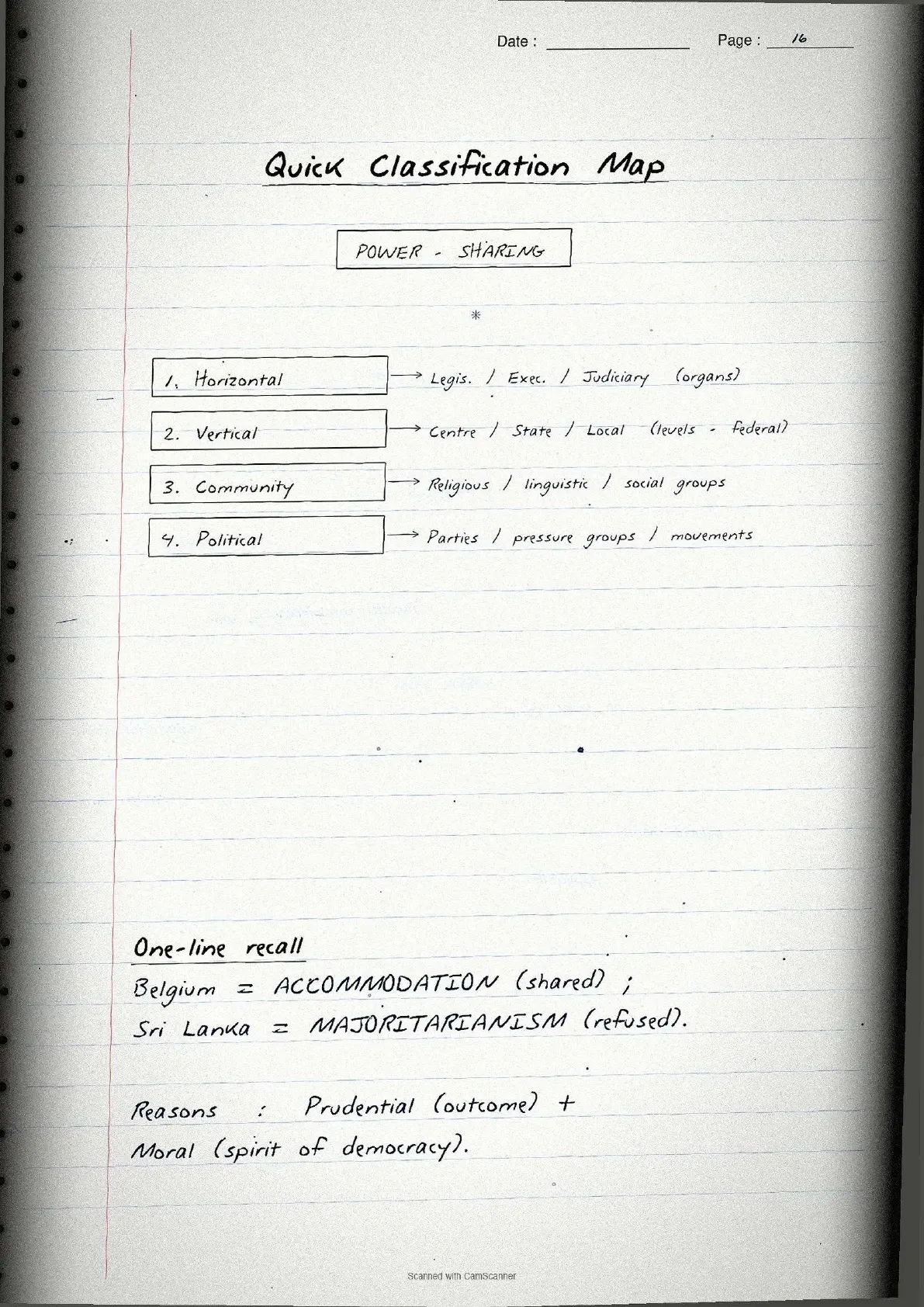
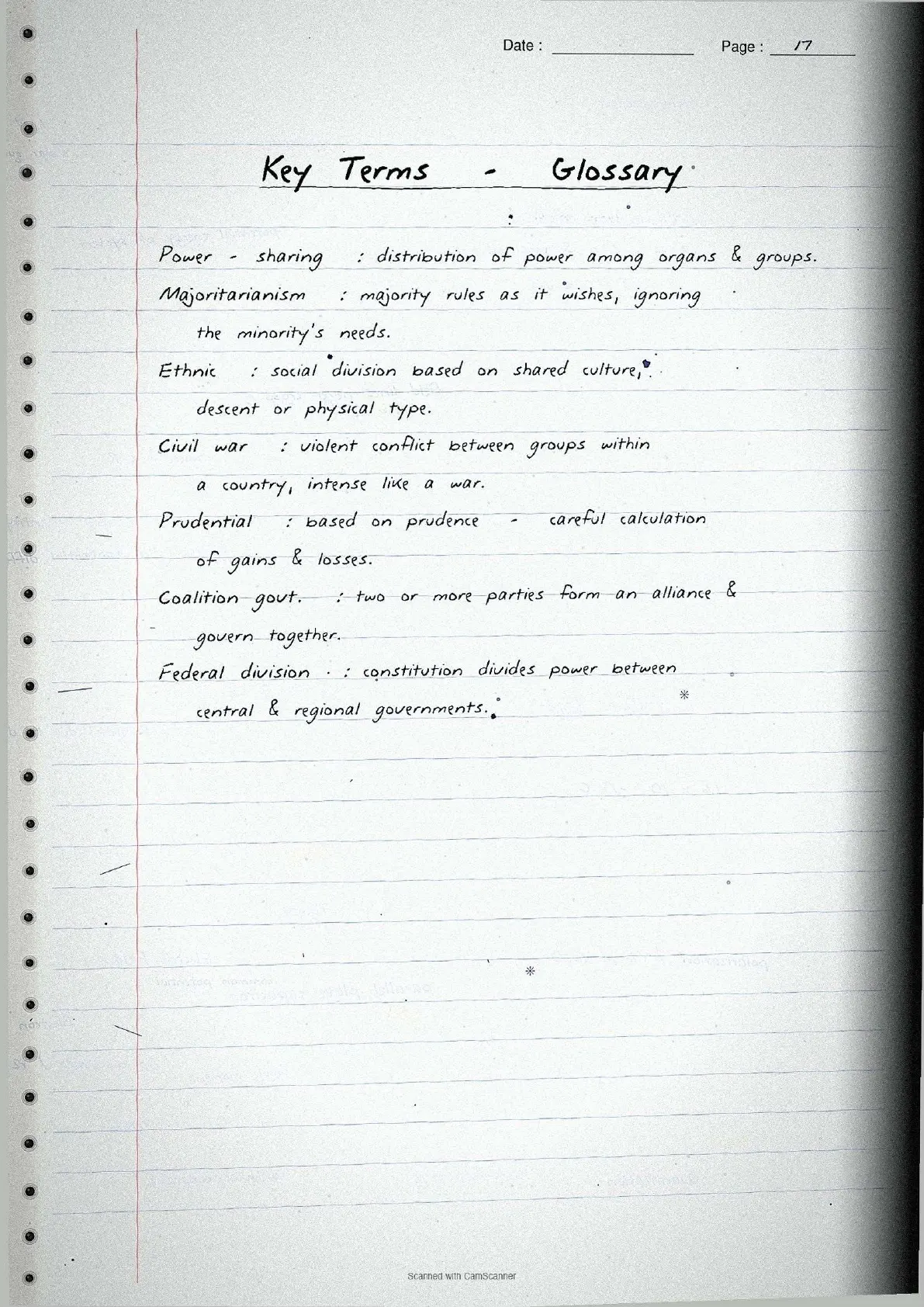
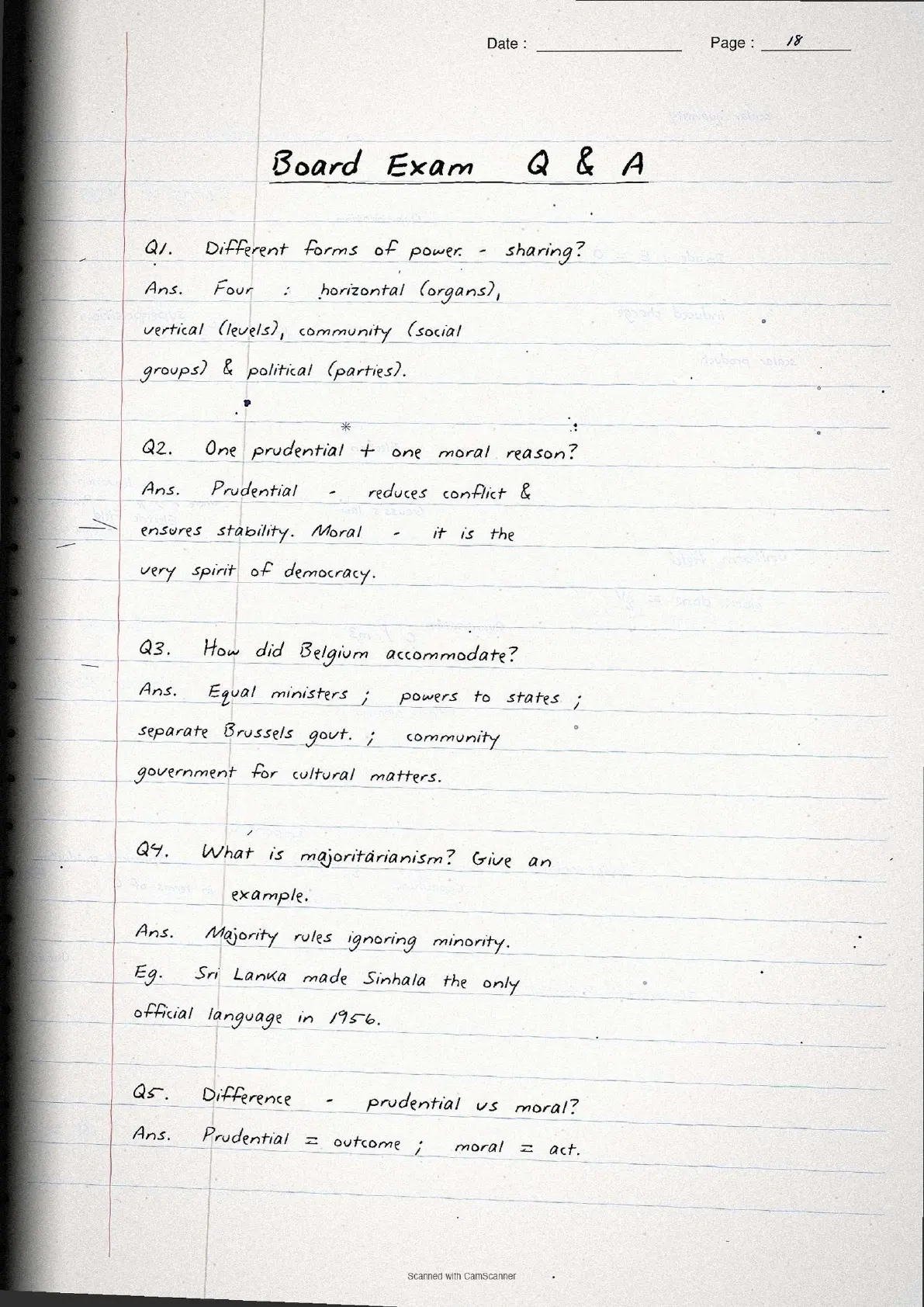
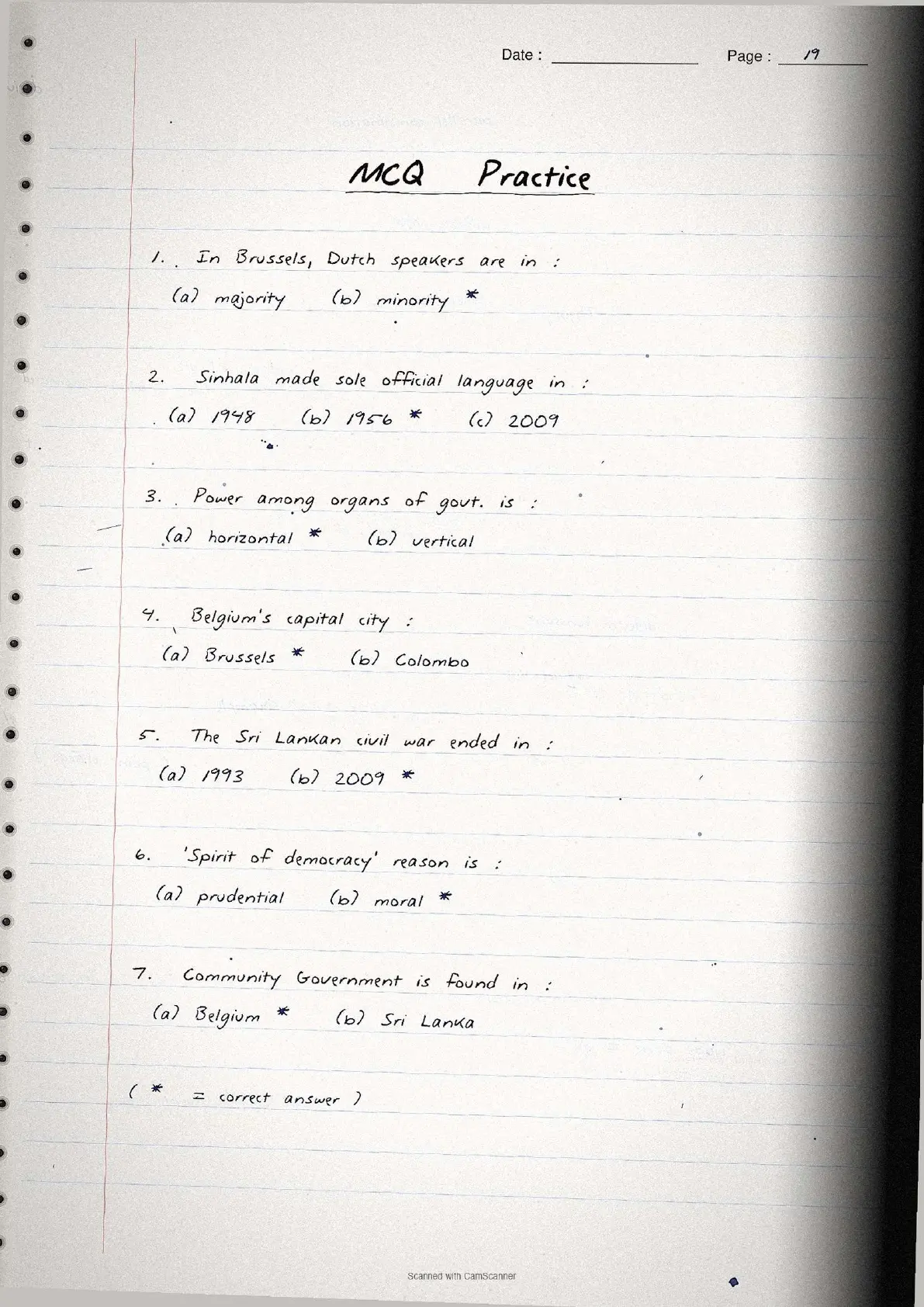
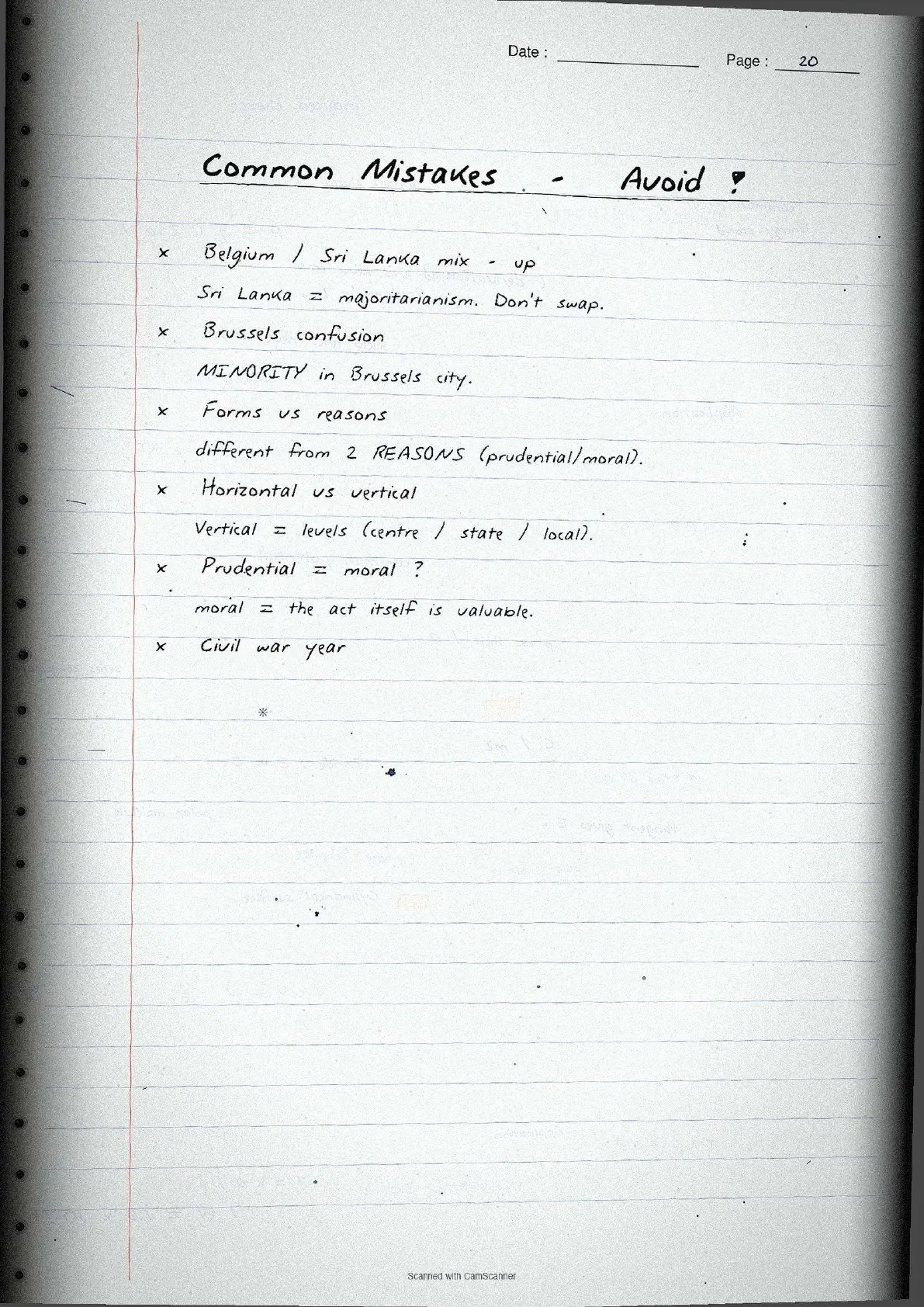
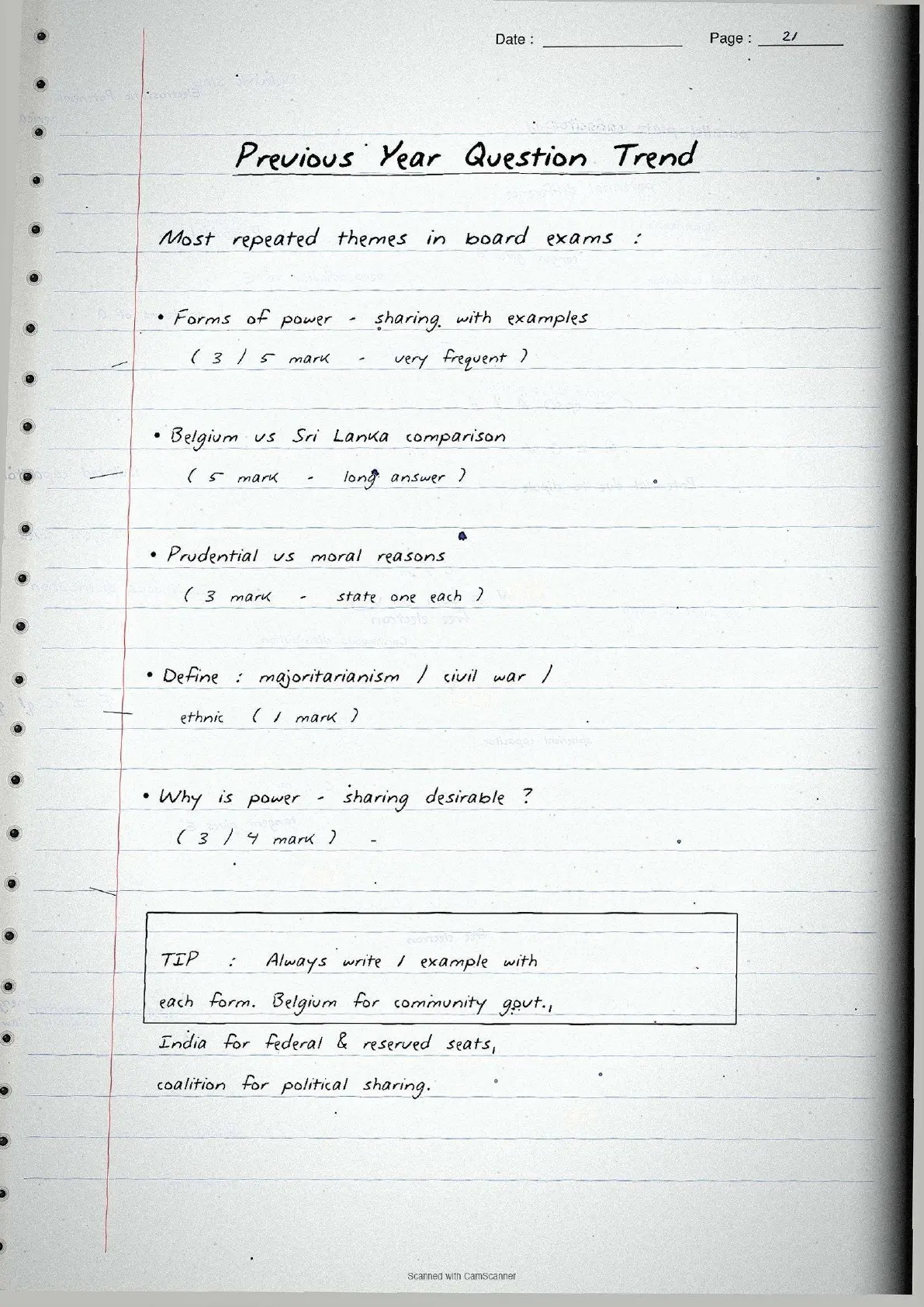
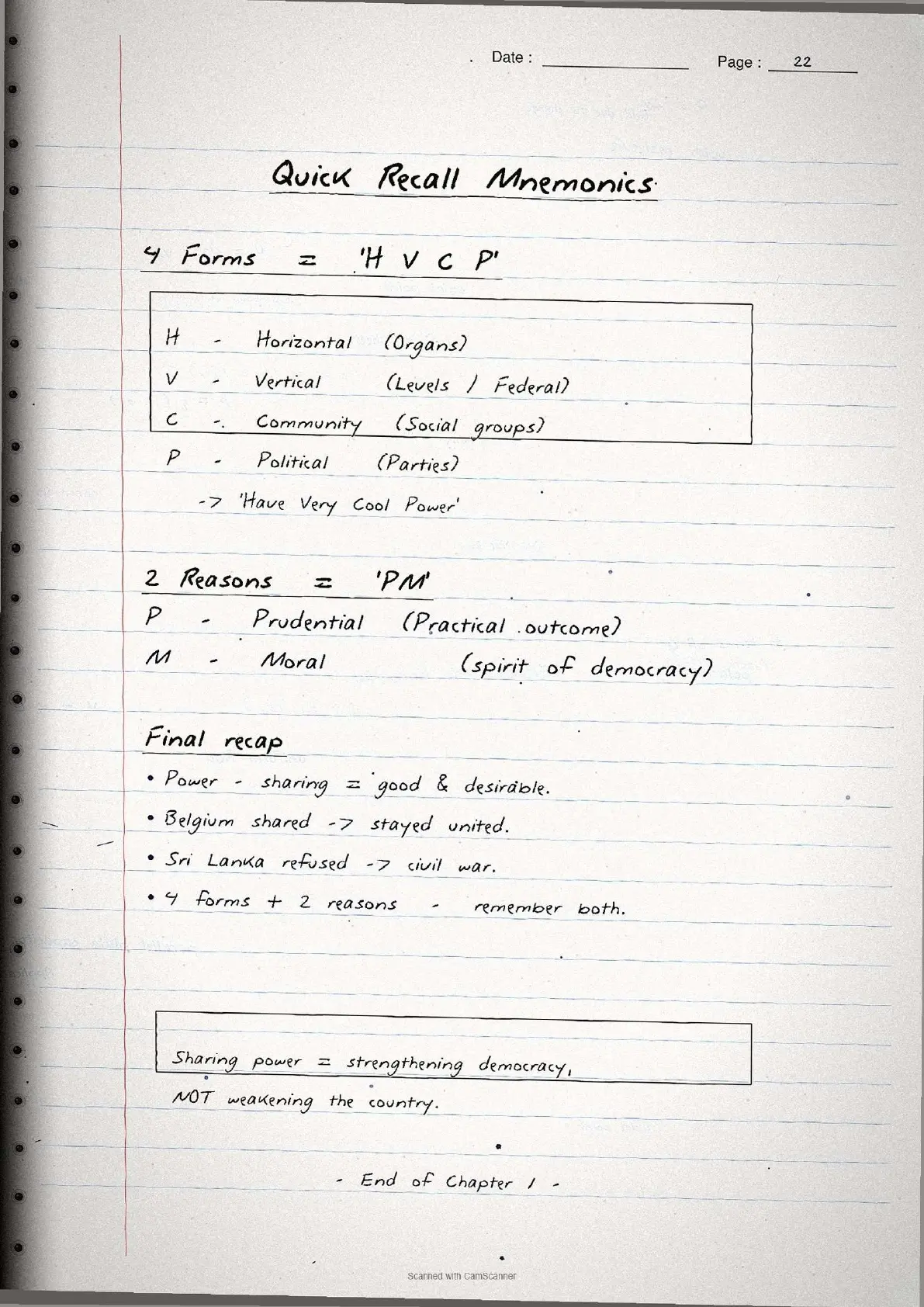
The pages carry the Belgium and Sri Lanka case studies, the reasons why power-sharing is desirable, and the different forms of power-sharing in clean, exam-ready handwriting.
- CBSE Weightage: 5 to 7 marks (Democratic Politics II, the opening chapter on power-sharing)
- What is inside: Belgium, Sri Lanka, majoritarianism, prudential and moral reasons, and the four forms of power-sharing, with mnemonics
- Best used for: last-week revision and a fast recap of every case study, reason, and form the board paper asks
Other Resources for This Chapter: the other Class 10 Civics resources for this chapter are listed below, so you can move between the full notes, the textbook answers, and the book PDF in one place.
| Resource | What It Helps With |
|---|---|
| Power-sharing Class 10 NCERT Solutions | Textbook question and answer practice for the board paper |
| Power-sharing Class 10 Notes | Detailed chapter notes for first reading and concept clarity |
| Class 10 Civics Chapter 1 NCERT Book PDF | The original NCERT chapter for line-by-line reading |
What the Power-sharing Handwritten Notes PDF Covers
These class 10 civics handwritten notes chapter 1 Power-sharing walk through the full chapter in the order the NCERT Democratic Politics II book follows. Every section is hand-written with a concept box, a case-study cue, and a memory aid, so a student can revise the whole chapter in under an hour. The power-sharing class 10 handwritten notes open with the two opening stories, Belgium and Sri Lanka, and then build the idea of why sharing power is good for a democracy.
| Section | Key Idea | Memory Aid |
|---|---|---|
| 1. Belgium and Sri Lanka | Two contrasting examples, one that accommodated diversity and one that did not | "Belgium shares, Sri Lanka shuts" |
| 2. The Ethnic Make-up of Belgium | Dutch, French and German speakers; the special tension in Brussels | "Dutch, French, German" |
| 3. Majoritarianism in Sri Lanka | The Sinhala-only Act and policies that ignored the Sri Lankan Tamils | "Majority rules, minority hurts" |
| 4. The Belgian Model | Equal ministers, state governments, community government and a special Brussels arrangement | "Equal share keeps peace" |
| 5. Why Power-sharing is Desirable | The prudential reason and the moral reason for sharing power | "Prudent + moral" |
| 6. Forms of Power-sharing | Among organs, among levels, among social groups, among parties and pressure groups | "Organs, Levels, Groups, Parties" |
Out of 11,460 Class 10 students surveyed by Collegedunia before the 2026 boards, 68% rated the difference between the prudential reason and the moral reason as the hardest one-mark trap to remember, which is why these ncert handwritten notes class 10 civics chapter 1 give the two reasons a side-by-side box. Important: the board paper almost always carries one source-based question on the Belgium or Sri Lanka case study, so the contrast cue in the notes is worth a second look.
Belgium and Sri Lanka in the Power-sharing Chapter
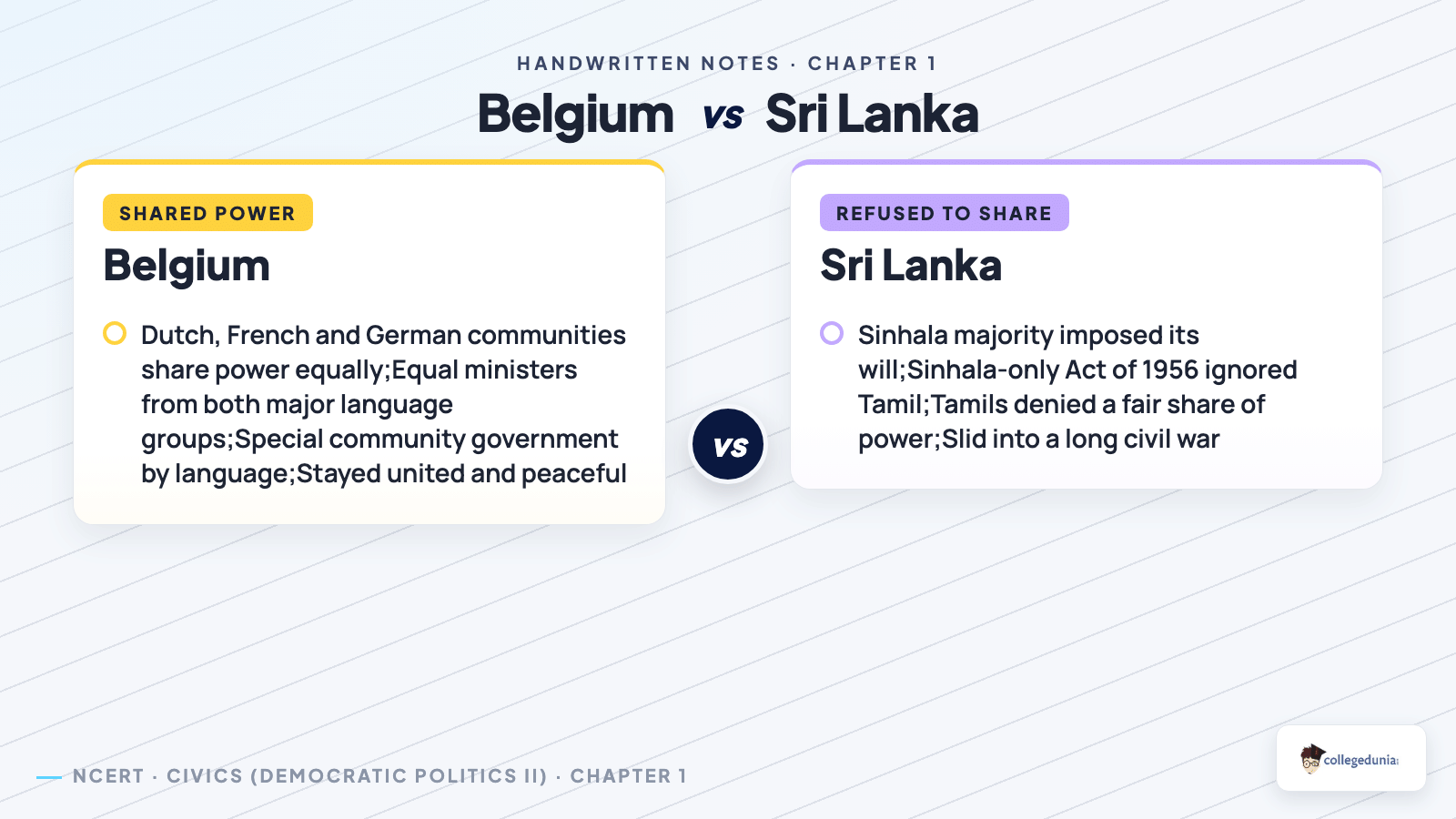
This chapter is built on two stories that sit at opposite ends. The power-sharing chapter 1 class 10 handwritten notes pull both case studies onto one comparison page so a student stops mixing up which country shared power and which one refused to. The list below is the same one drawn on the comparison page of the PDF.
- Belgium: a small European country where the Dutch, French and German speaking communities learnt to share power and avoid conflict.
- Brussels: the capital, where French speakers are a majority but Dutch speakers are a majority in the country, creating a careful balance.
- Sri Lanka: an island where the Sinhala majority imposed its will and ignored the Sri Lankan Tamils.
- The Sinhala-only Act of 1956: made Sinhala the only official language and denied recognition to Tamil.
- Result: Belgium kept peace, while Sri Lanka slid into a long and bitter civil war.
- The lesson: accommodating diversity through power-sharing keeps a country united.
Watch Power-sharing Explained for Class 10
Source: Vedantu on YouTube
How to Use These Handwritten Notes for Revision
Handwritten notes work best as the last layer of revision, not the first. Read the chapter once from the textbook, then use these pages to fix the two case studies and the forms of power-sharing in memory. A simple three-pass plan works well with the class 10 civics handwritten notes chapter 1 Power-sharing.
- First pass: read the full PDF cover to cover in 30 minutes and absorb the concept boxes.
- Second pass: recite the Belgium and Sri Lanka contrast out loud twice; then say the four forms of power-sharing in order.
- Third pass: the night before, flick through only the memory aids and the prudential-versus-moral box for a five-minute recap.
Pair the notes with answer-writing practice. Tip: after each pass, attempt one 5-mark question on the Belgian model or the forms of power-sharing and check it against the Class 10 Civics Chapter 1 NCERT Solutions.
Forms of Power-sharing and Common Mistakes
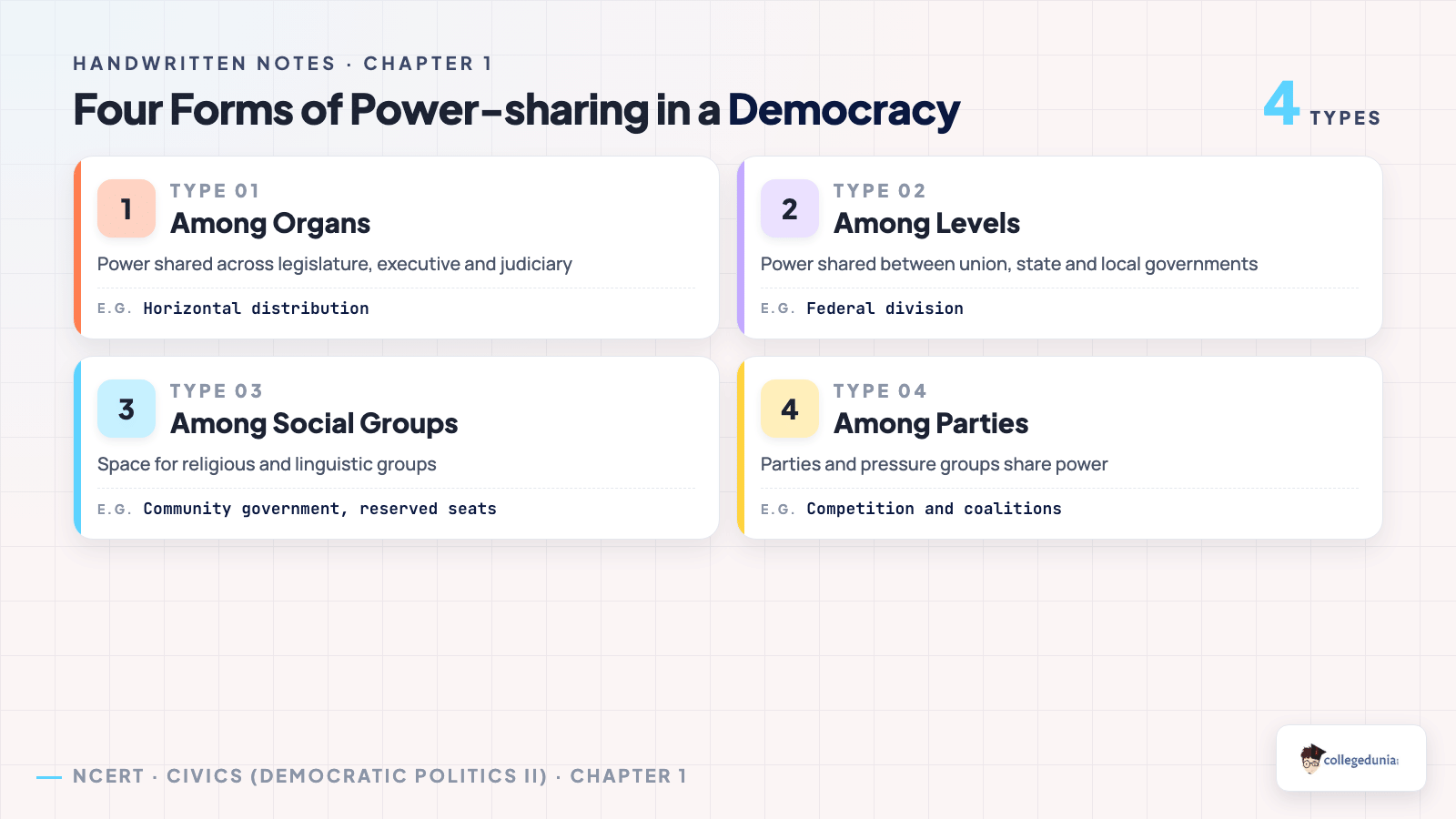
Most lost marks in this chapter come from mixing up the four forms of power-sharing and the two reasons it is desirable. The power-sharing handwritten notes class 10 flag each of these traps with a red cue so a student does not repeat them in the exam. The four forms are the heart of the chapter, so the notes give each one a single clear line.
- Among different organs: power is shared among the legislature, executive and judiciary, called horizontal distribution.
- Among different levels: power is shared between the union, state and local governments, called federal or vertical division.
- Among social groups: community government and reserved constituencies give space to religious and linguistic groups.
- Among political parties and pressure groups: parties, pressure groups and movements share power through competition and coalitions.
- Swapping the prudential reason (power-sharing avoids conflict) with the moral reason (power-sharing is the spirit of democracy).
- Confusing horizontal distribution (among organs) with vertical division (among levels of government).
- Writing that Belgium had a civil war; it was Sri Lanka that did, because it refused to share power.
- Forgetting that the community government in Belgium is chosen by people of one language group, no matter where they live.
Student Feedback on the Power-sharing Notes
- 68% rated telling the prudential and moral reasons apart as the hardest part to recall.
- 3 out of 5 said the source-based question on Belgium or Sri Lanka is where they lose the most marks.
- The average student took about 4 hours to feel confident with the full chapter.
All Chapters Handwritten Notes for Class 10 Civics
The full set of Class 10 Civics (Democratic Politics II) handwritten notes is listed below, so a student can revise every chapter in the same scanned style.
| Chapter | Handwritten Notes |
|---|---|
| Chapter 1 | Power-sharing |
| Chapter 2 | Federalism |
| Chapter 3 | Gender, Religion and Caste |
| Chapter 4 | Political Parties |
| Chapter 5 | Outcomes of Democracy |
Are the class 10 civics handwritten notes chapter 1 enough for the board exam?
For the final revision round, yes. The handwritten notes fix the Belgium and Sri Lanka case studies, the reasons for power-sharing, and the four forms in memory. Pair them with the NCERT textbook for first reading and the NCERT Solutions PDF for answer-writing practice. They are most useful in the last week before the exam.
What is power-sharing in Class 10 Civics?
Power-sharing is the idea that political power should be distributed among many groups and levels of government rather than held by one person or group. The chapter shows why this is desirable through the Belgium and Sri Lanka examples and lists four forms of power-sharing in a modern democracy.
What is the difference between the prudential and moral reasons for power-sharing?
The prudential reason says power-sharing is good because it reduces conflict between social groups and brings stability. The moral reason says power-sharing is the very spirit of democracy, because people have a right to be consulted on how they are governed. Prudential stresses results, moral stresses the act itself.
Why did Sri Lanka face a civil war while Belgium stayed united?
Sri Lanka followed majoritarianism, where the Sinhala majority imposed its language and culture and denied the Tamils a fair share of power, which led to a civil war. Belgium instead shared power equally among its language communities, which kept the country peaceful and united.
What are the four forms of power-sharing?
Power can be shared among different organs of government (legislature, executive and judiciary), among different levels of government (union, state and local), among different social groups (such as religious and linguistic groups), and among political parties, pressure groups and movements.
Where can I download the Class 10 Civics Chapter 1 handwritten notes PDF?
You can download the Power-sharing handwritten notes PDF from the download card at the top of this page. The notes follow the latest 2026-27 CBSE syllabus and the NCERT Democratic Politics II textbook.
What was the Sinhala-only Act?
The Sinhala-only Act of 1956 made Sinhala the single official language of Sri Lanka and ignored Tamil. Along with other majoritarian policies, it made the Sri Lankan Tamils feel that they were being denied equal rights, and this fed the growing demand for autonomy and a long civil war.
What is the Belgian model of power-sharing?
The Belgian model gives equal numbers of Dutch and French speaking ministers in the central government, hands many powers to state governments, sets up a separate community government chosen by people of one language group, and creates a special equal arrangement for the capital Brussels.



Comments