




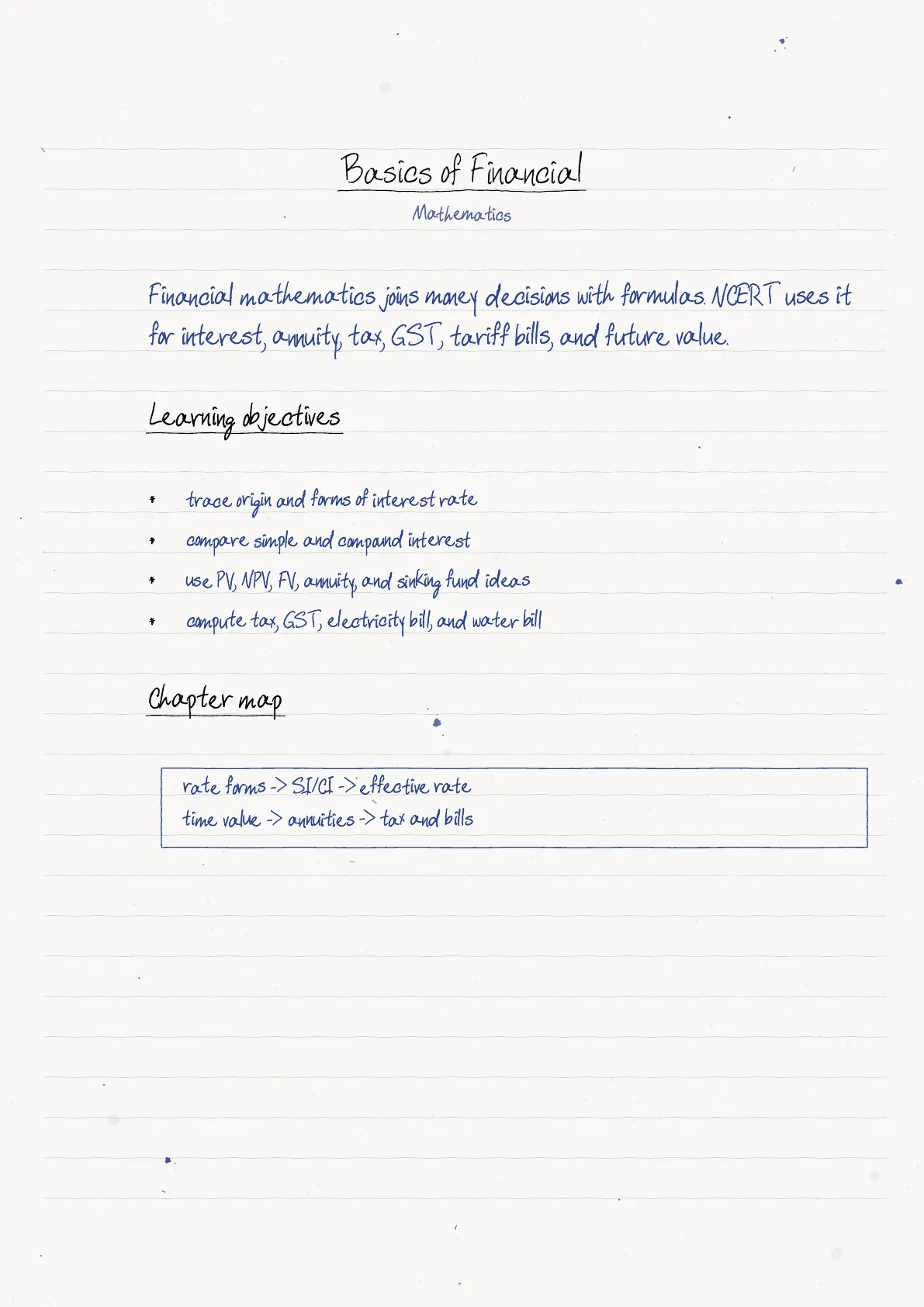
The handwritten notes on Class 11 Applied Mathematics Chapter 11 Basics of Financial Mathematics are prepared for quick 2026-27 revision. The PDF covers interest rates, simple and compound interest, effective annual rate, present value, net present value, future value, annuities, sinking fund, income tax, GST and utility bills in short notebook pages.
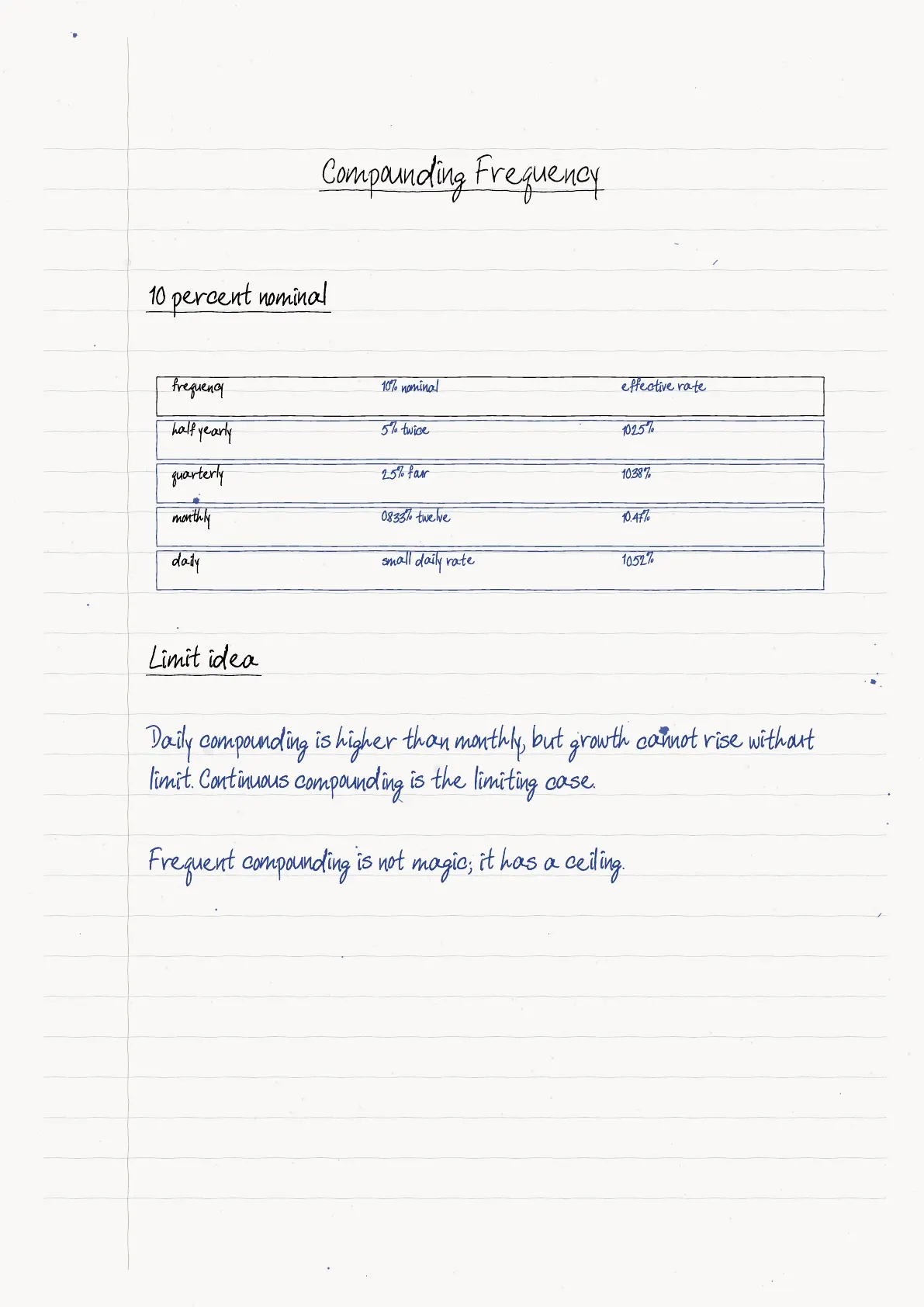
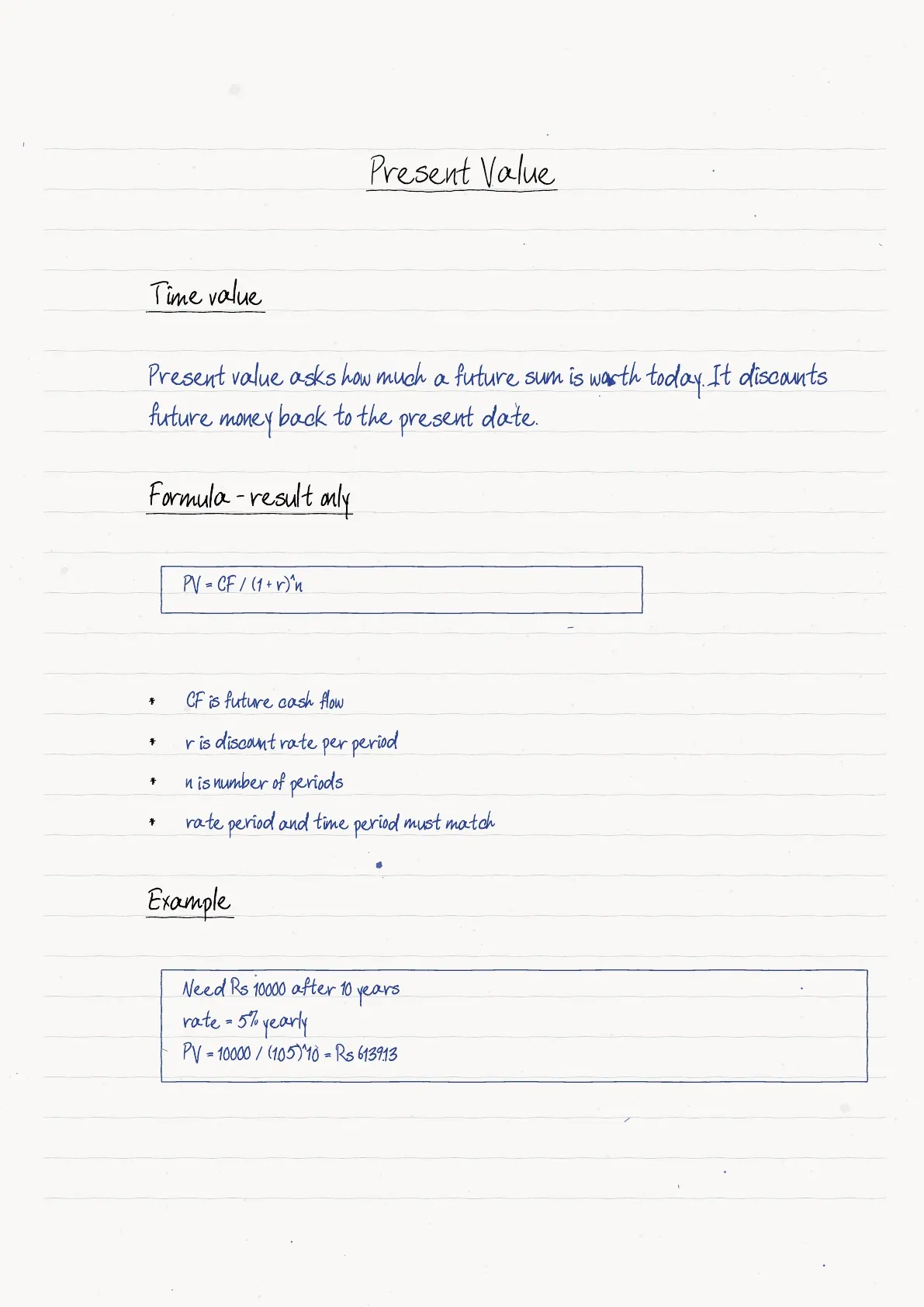
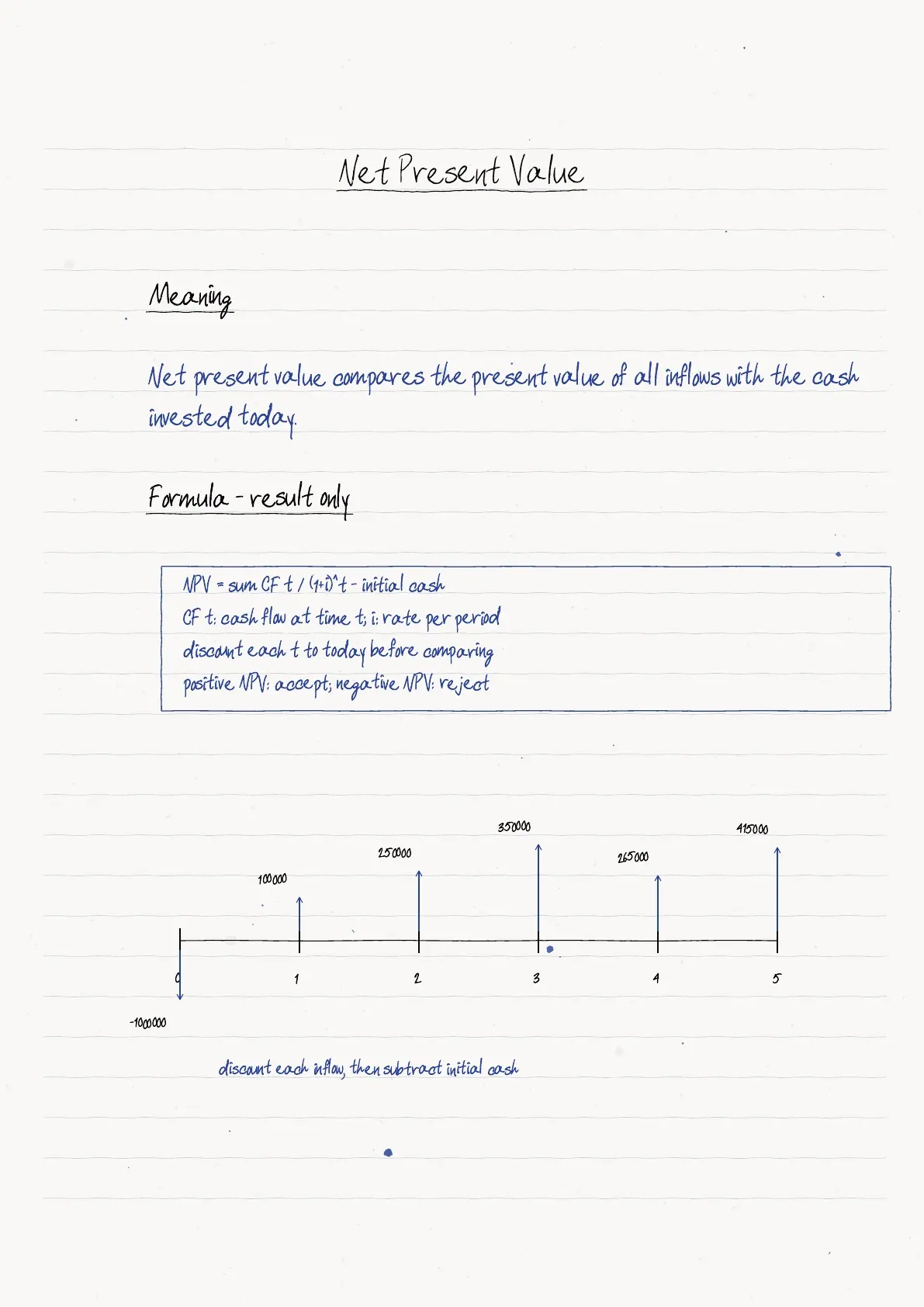
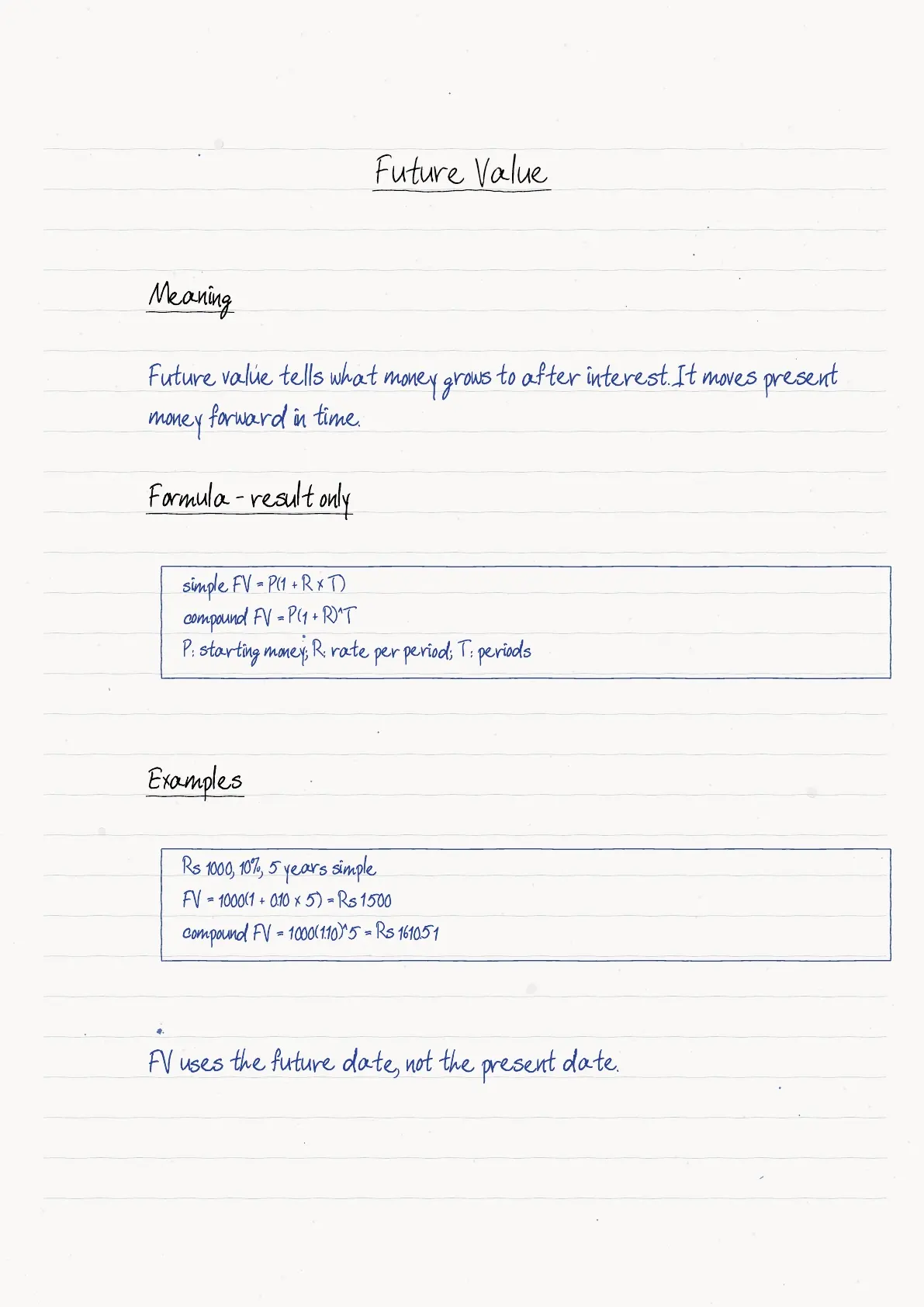
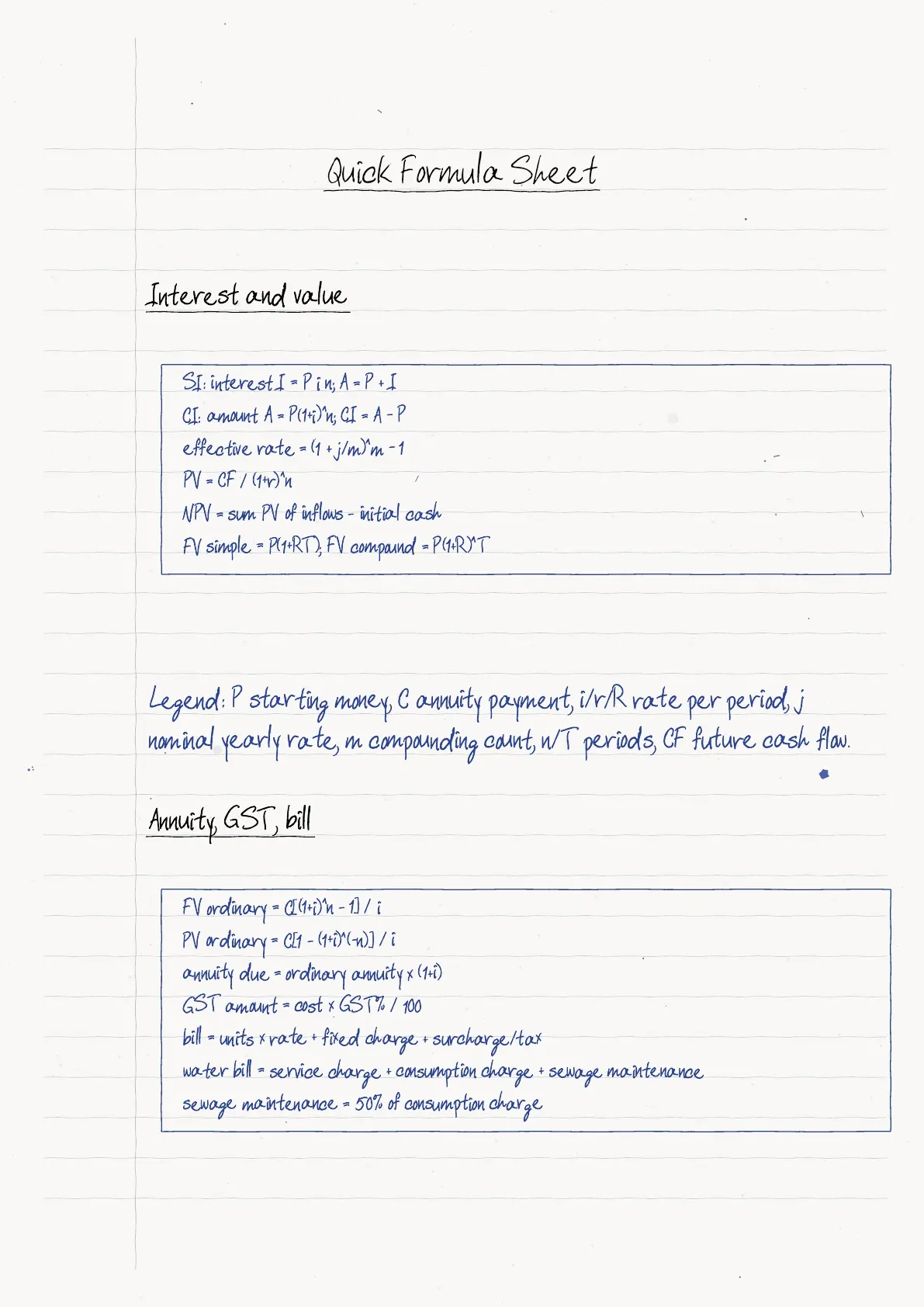
- Best for formula revision: interest, annuity, GST and bill formulas stay in one printable PDF.
- Aligned to 2026-27: follows the current Class 11 Applied Mathematics financial mathematics scope.
- Exam ready: money value, tax calculation and bill calculation steps are shown with compact examples.
Each Class 11 Applied Mathematics Basics of Financial Mathematics handwritten notes PDF is checked against the 2026-27 NCERT chapter for formulas, examples and revision flow.
Student Feedback: In a Collegedunia poll of 12,180 students conducted before the 2026 boards, most students said financial mathematics became easier after separating interest, annuity, tax and bill sums into four calculation patterns.
Basics of Financial Mathematics Handwritten Notes PDF Contents
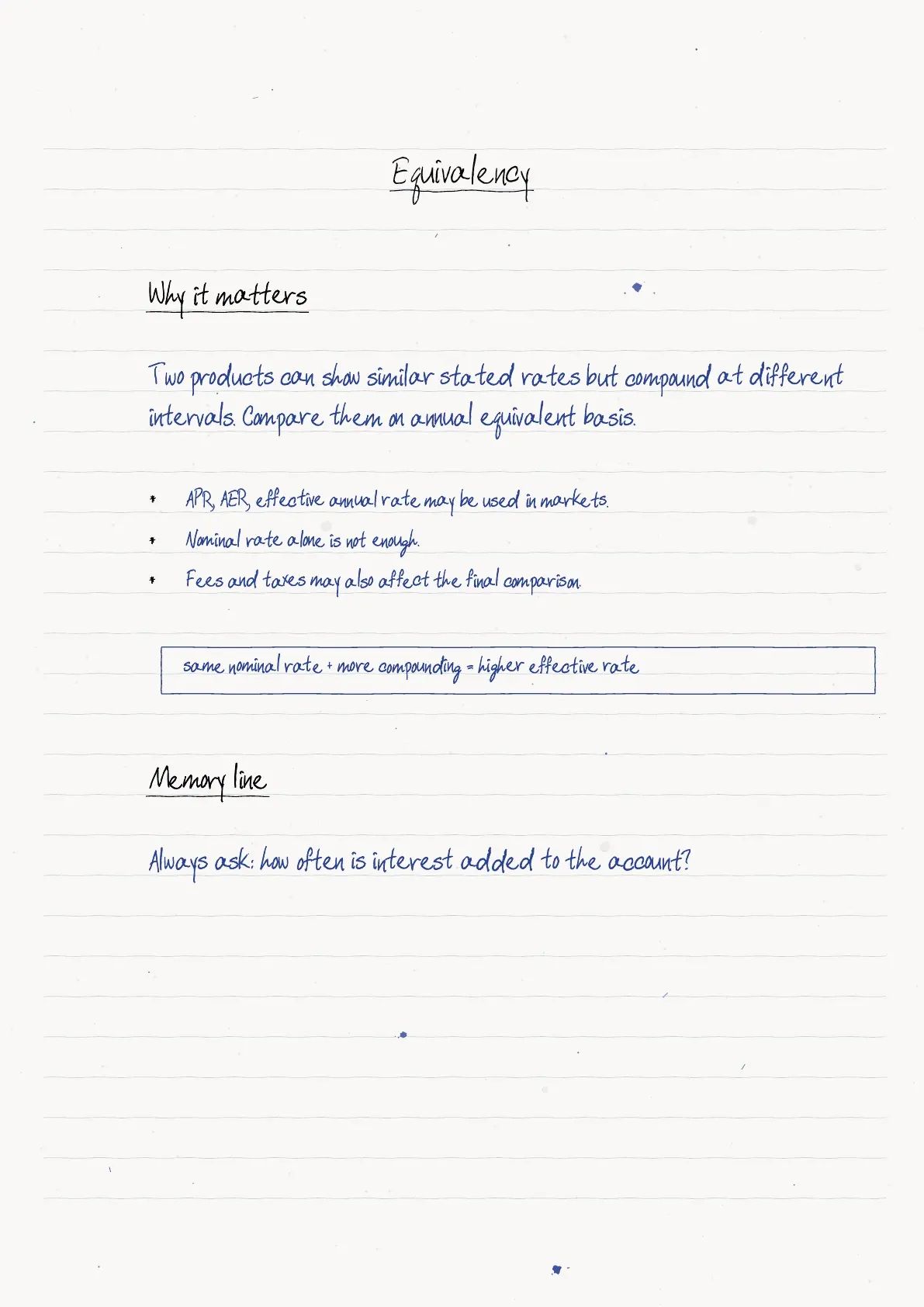
Basics of Financial Mathematics connects classroom formulas with bank deposits, loans, taxes and bills. The notes begin with the meaning of interest and interest rate, then move to equivalency, present value and payment streams.
| Block | What students revise | Quick check |
|---|---|---|
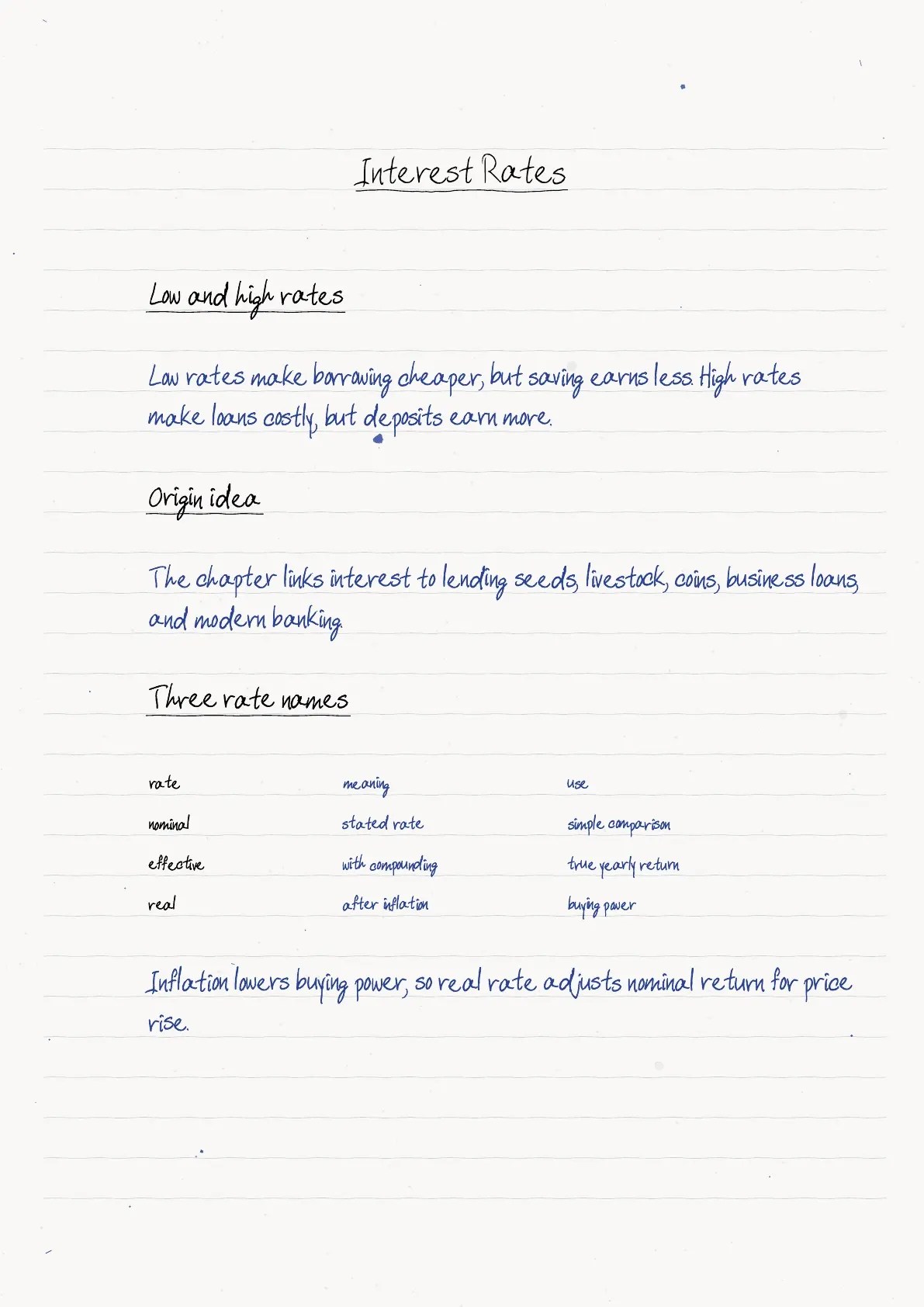
| Interest | Simple interest, compound interest, nominal rate, effective rate and real rate | Match rate period with time period before calculation |
| Value of money | Present value, net present value and future value | Bring all cash flows to one date |
| Annuity | Ordinary annuity, annuity due, deferred annuity, life annuity and sinking fund | Check whether payment is at beginning or end |
| Tax and bills | Income tax, GST, electricity bill, water bill and fixed charges | Add surcharge or service charge only when given |
Financial Mathematics Present Value Revision
Source: Khan Academy on YouTube
Interest Rates and Compound Interest Revision
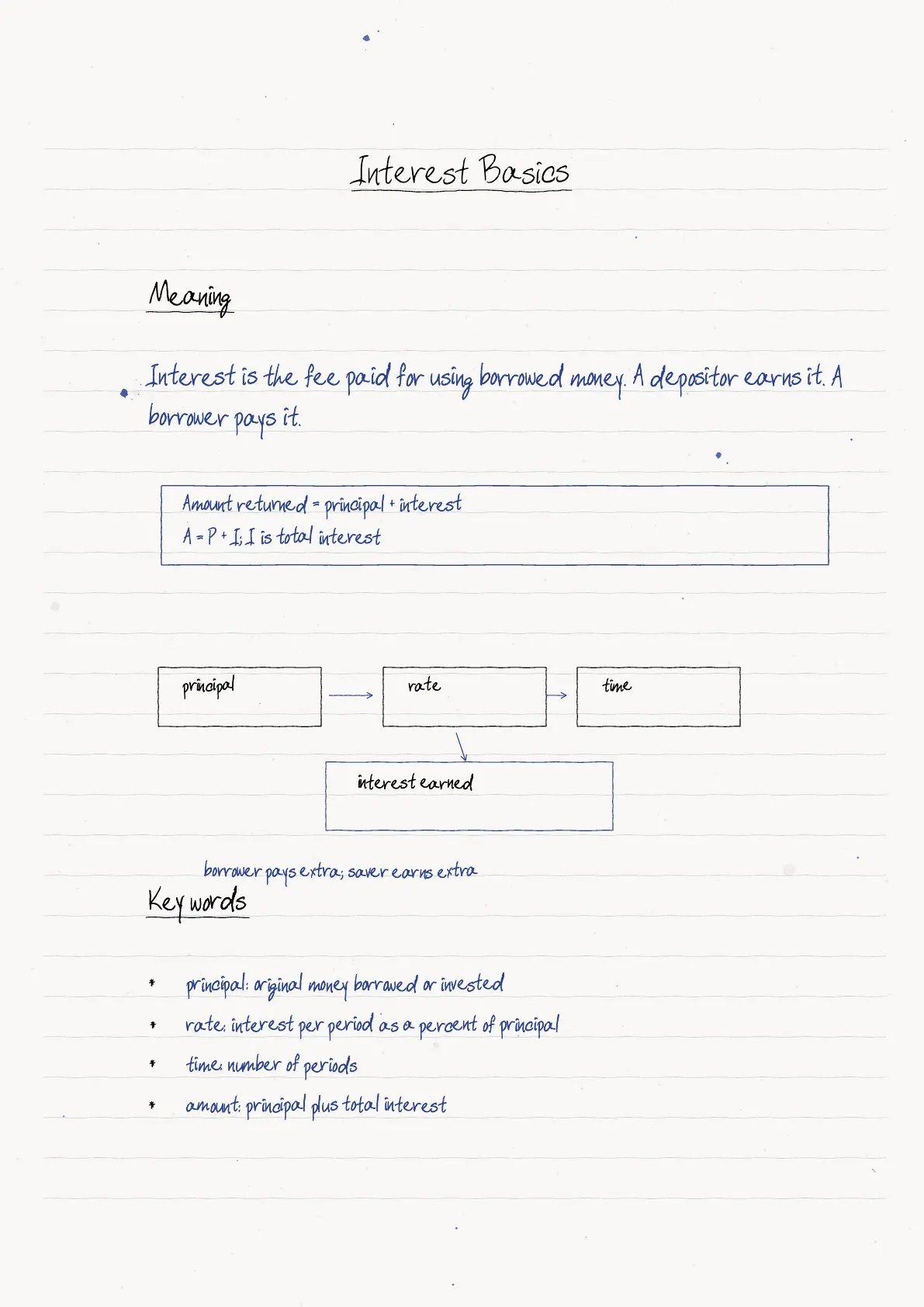
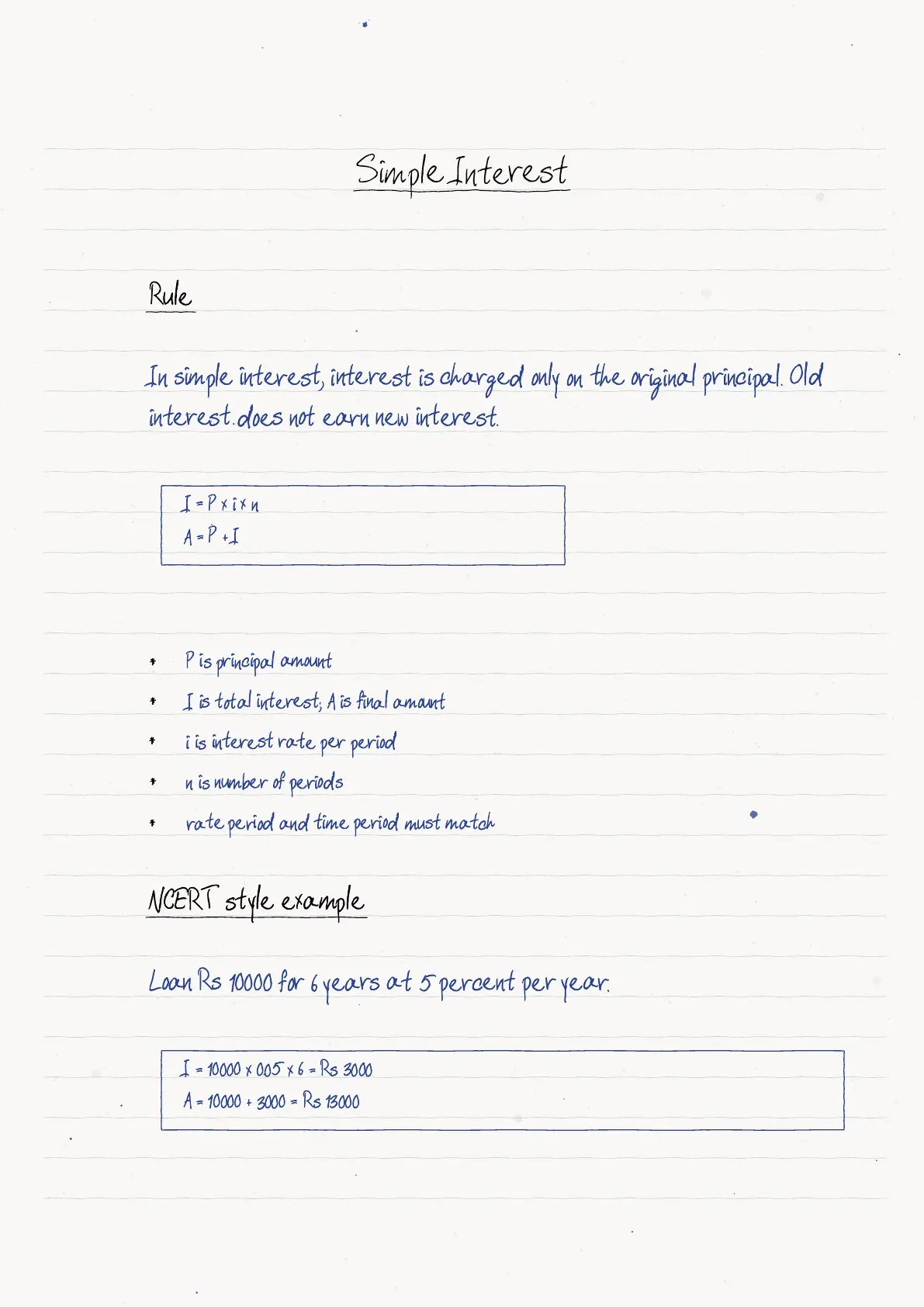
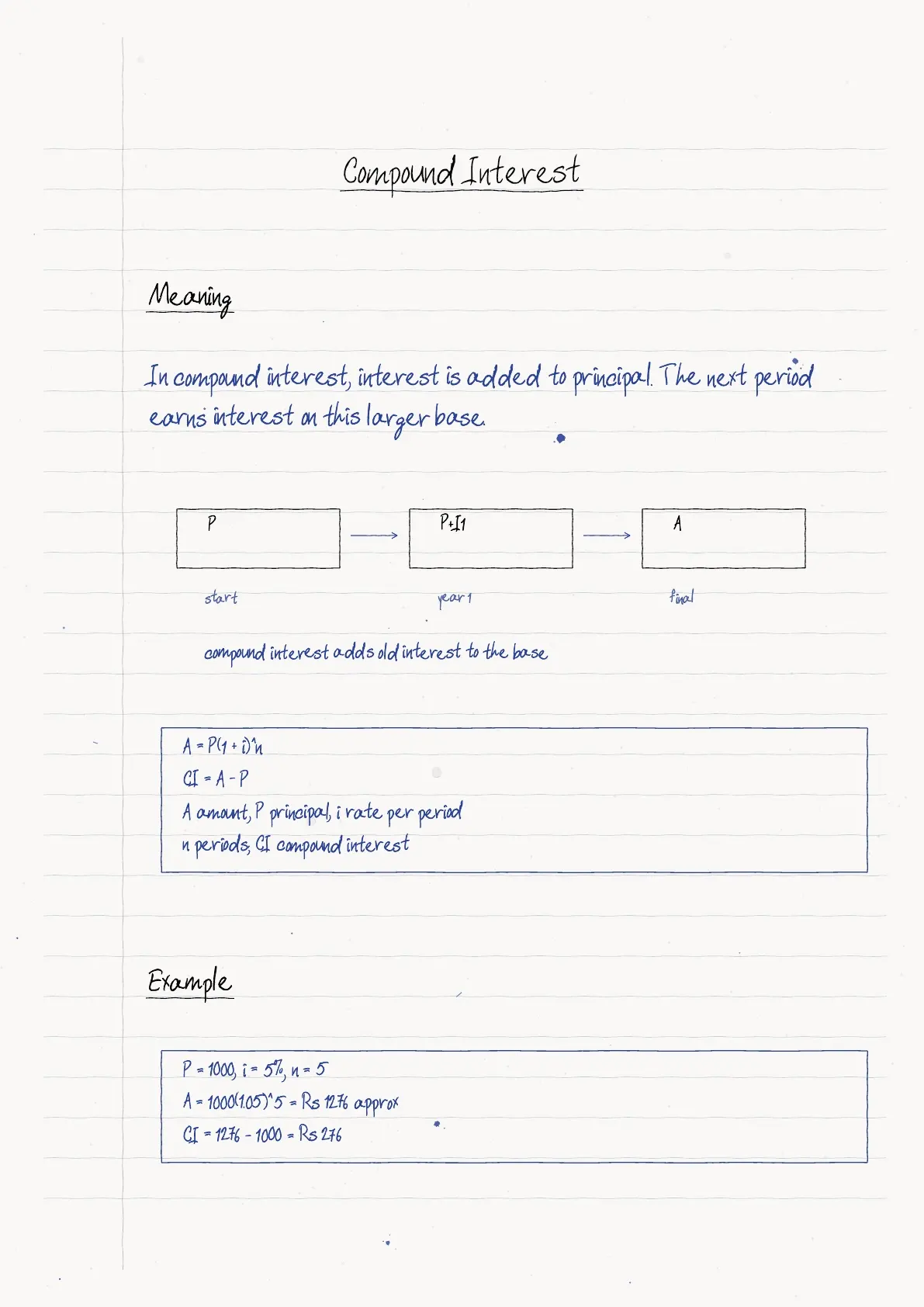
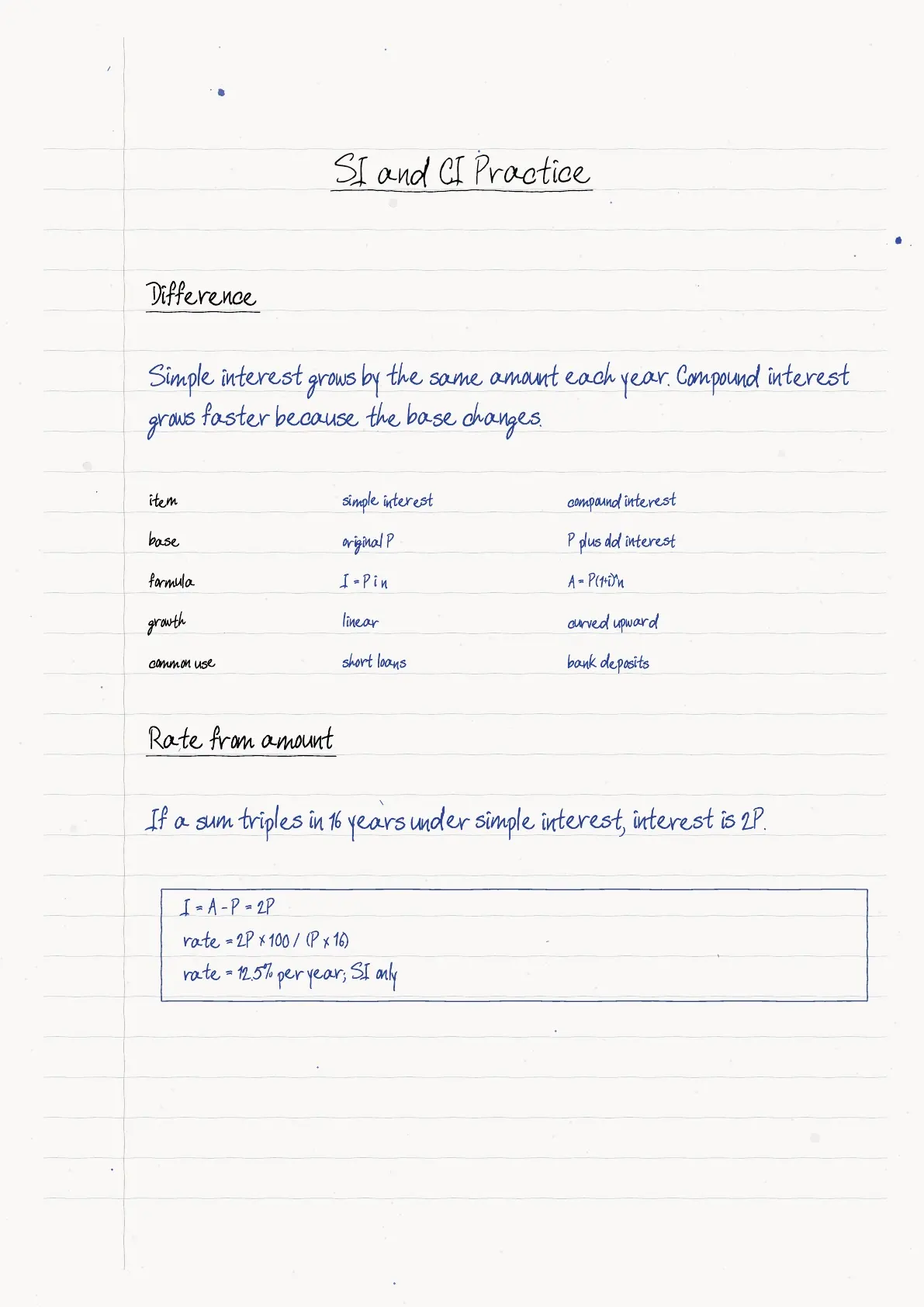
Interest is the extra amount paid for using money over time. In a simple interest question, interest is calculated only on the original principal. In compound interest, every completed compounding period adds interest to the balance, so the next period earns interest on a larger amount.
- Simple interest: use principal x rate x time when interest does not become part of the principal.
- Compound interest: use the accumulated amount formula when interest is added at regular intervals.
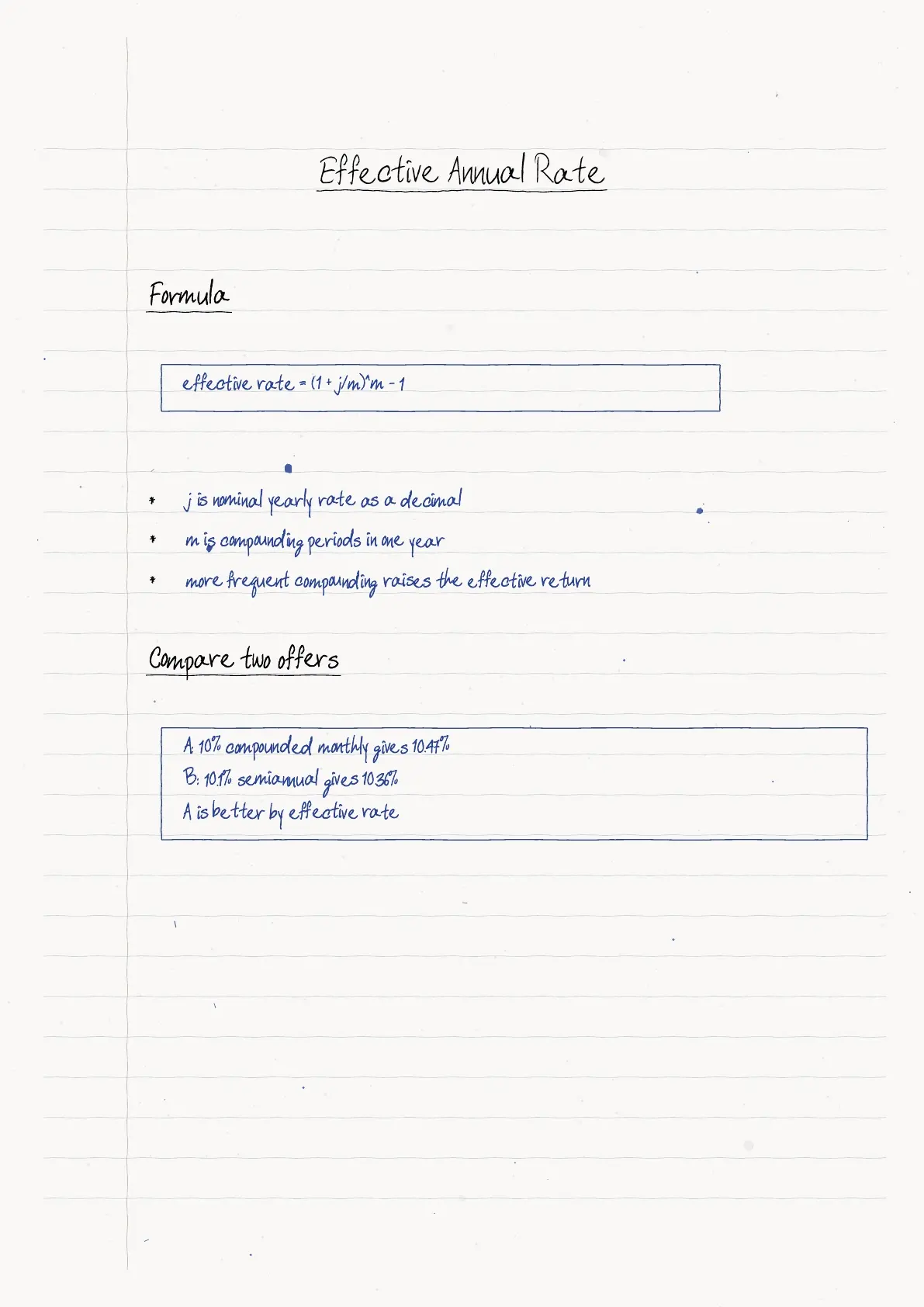
- Effective annual rate: compare two nominal rates only after converting them to one yearly effective rate.
Present Value and Future Value in Financial Mathematics
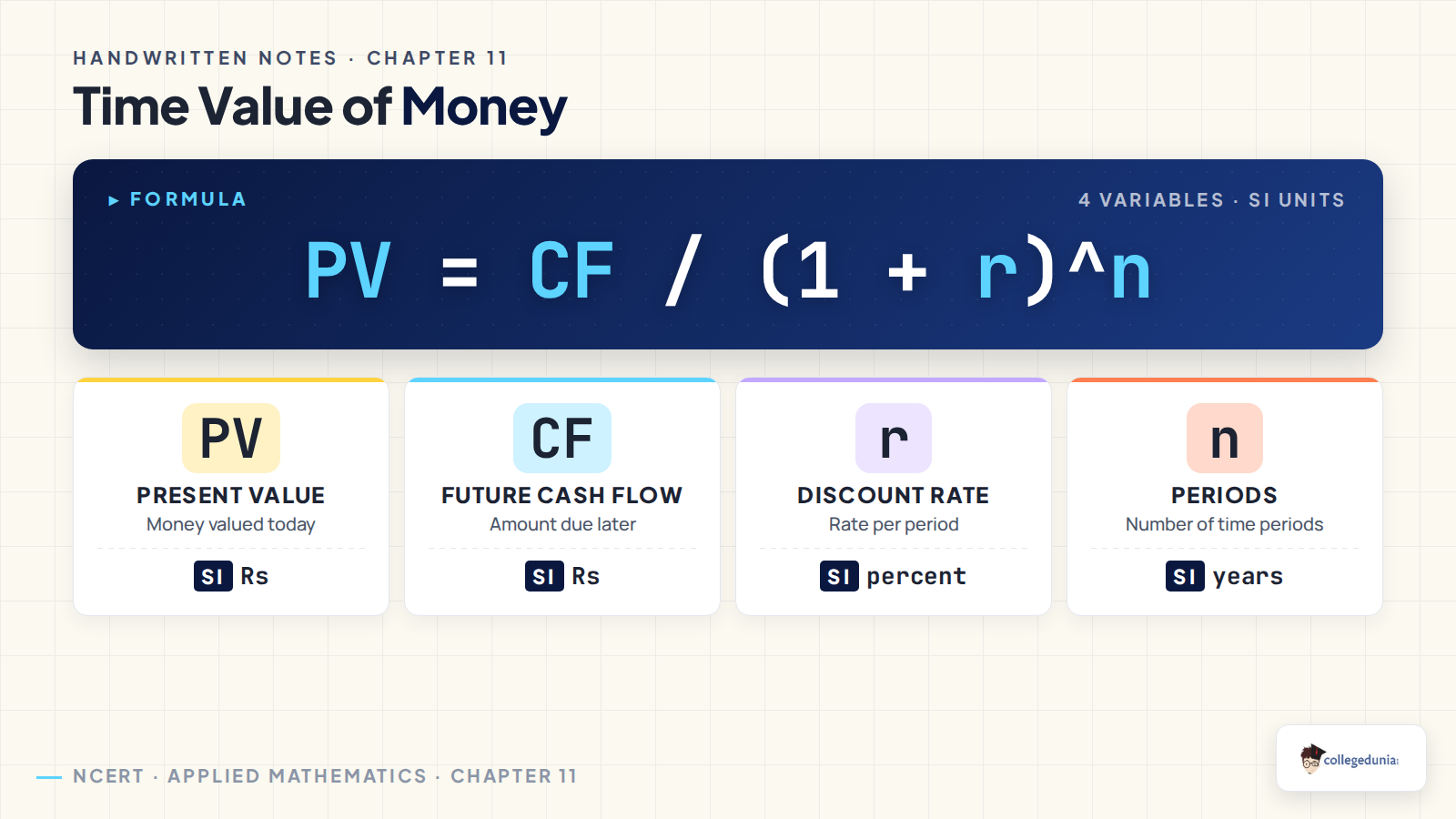
Present value is the value today of money received later. Future value is the accumulated value after interest is applied. Net present value compares several cash flows after discounting each of them to the same date.
The safest exam habit is to mark the timeline first. If the amount is received in the future, discount it. If the amount is invested now, compound it forward. This avoids mixing present rupees with future rupees in the same line.
Quick tip: Do not compare cash flows until every value has been moved to the same date. Present value questions often become simple once the timeline is clean.
Annuity and Sinking Fund Notes for Class 11
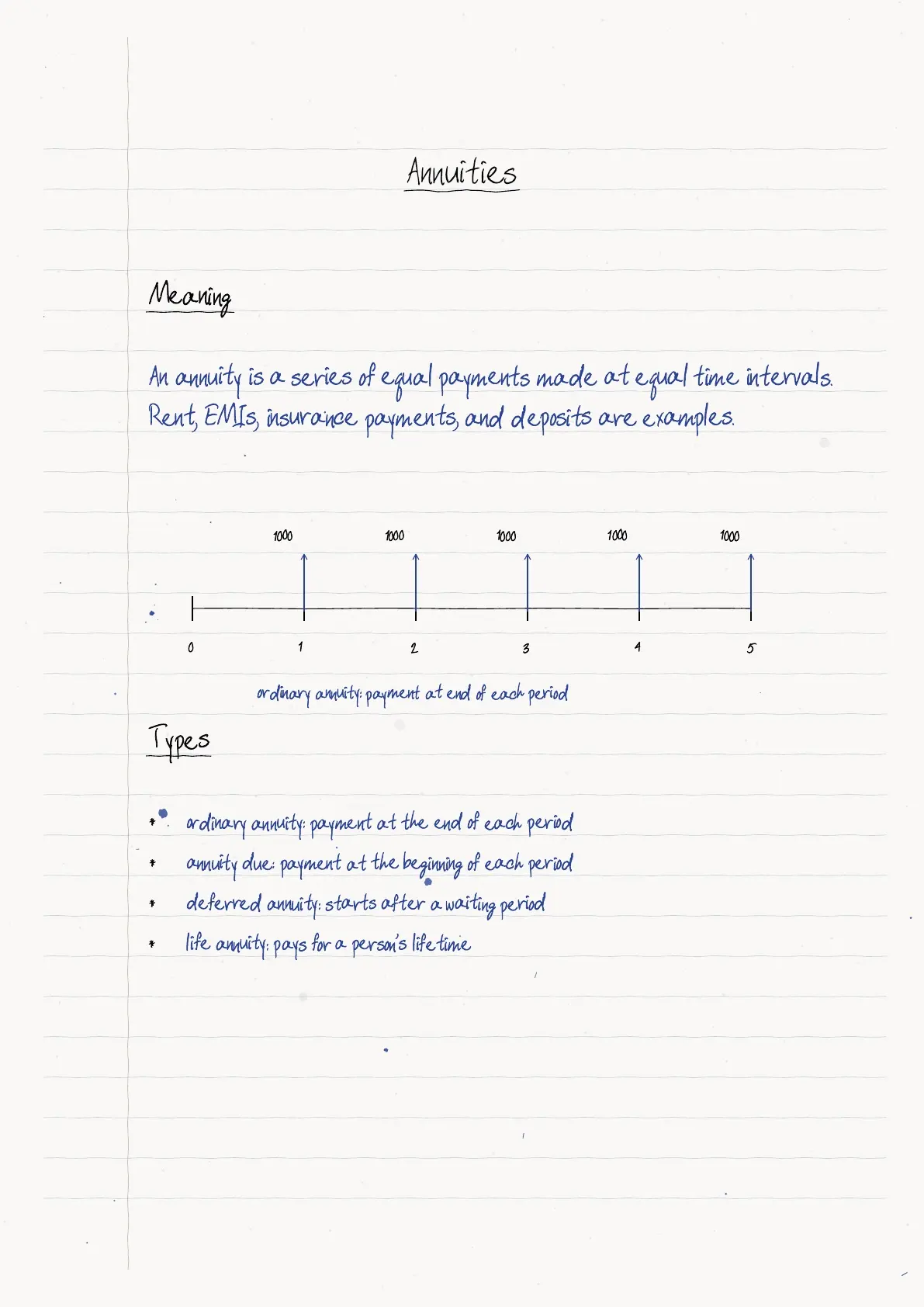
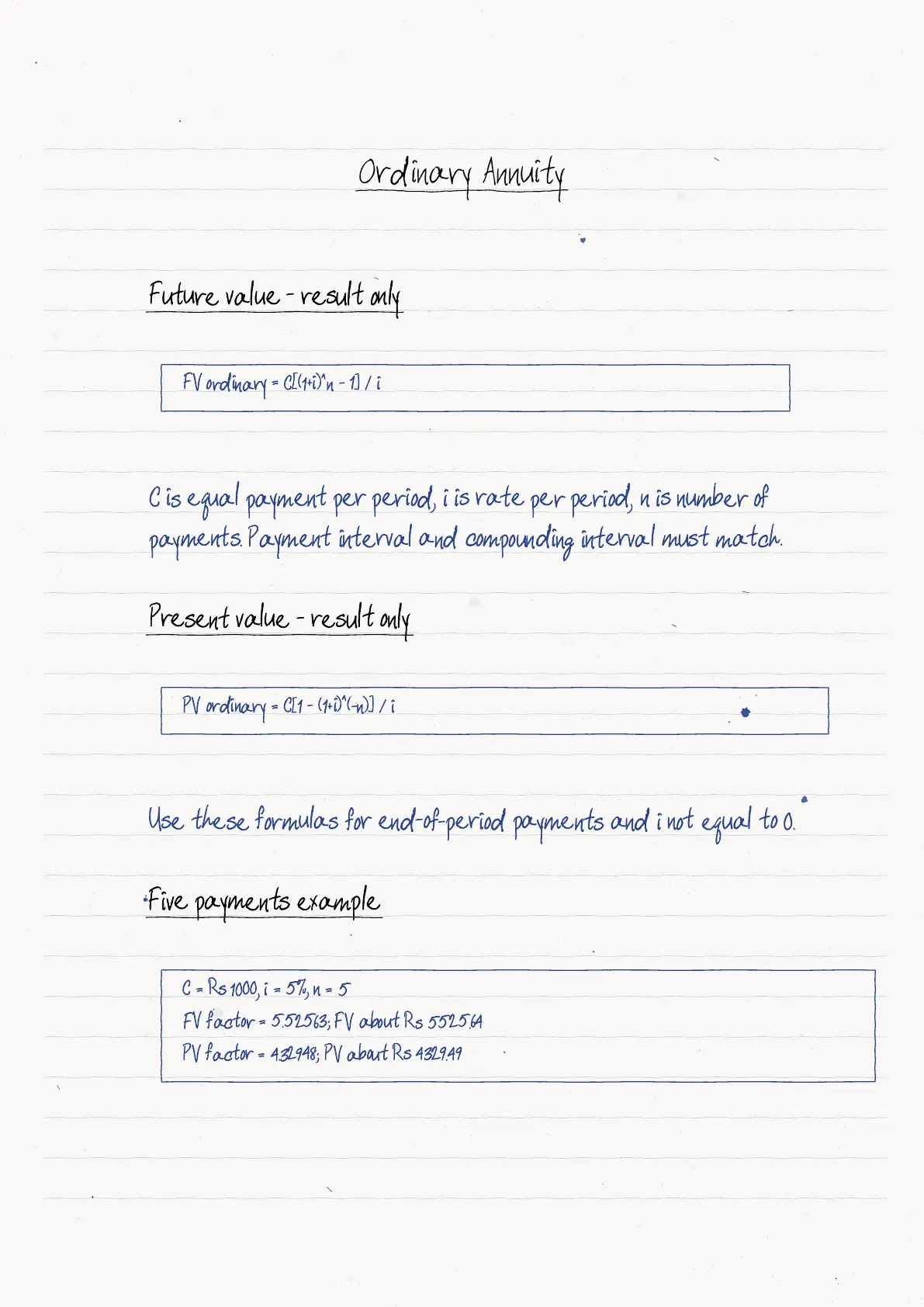
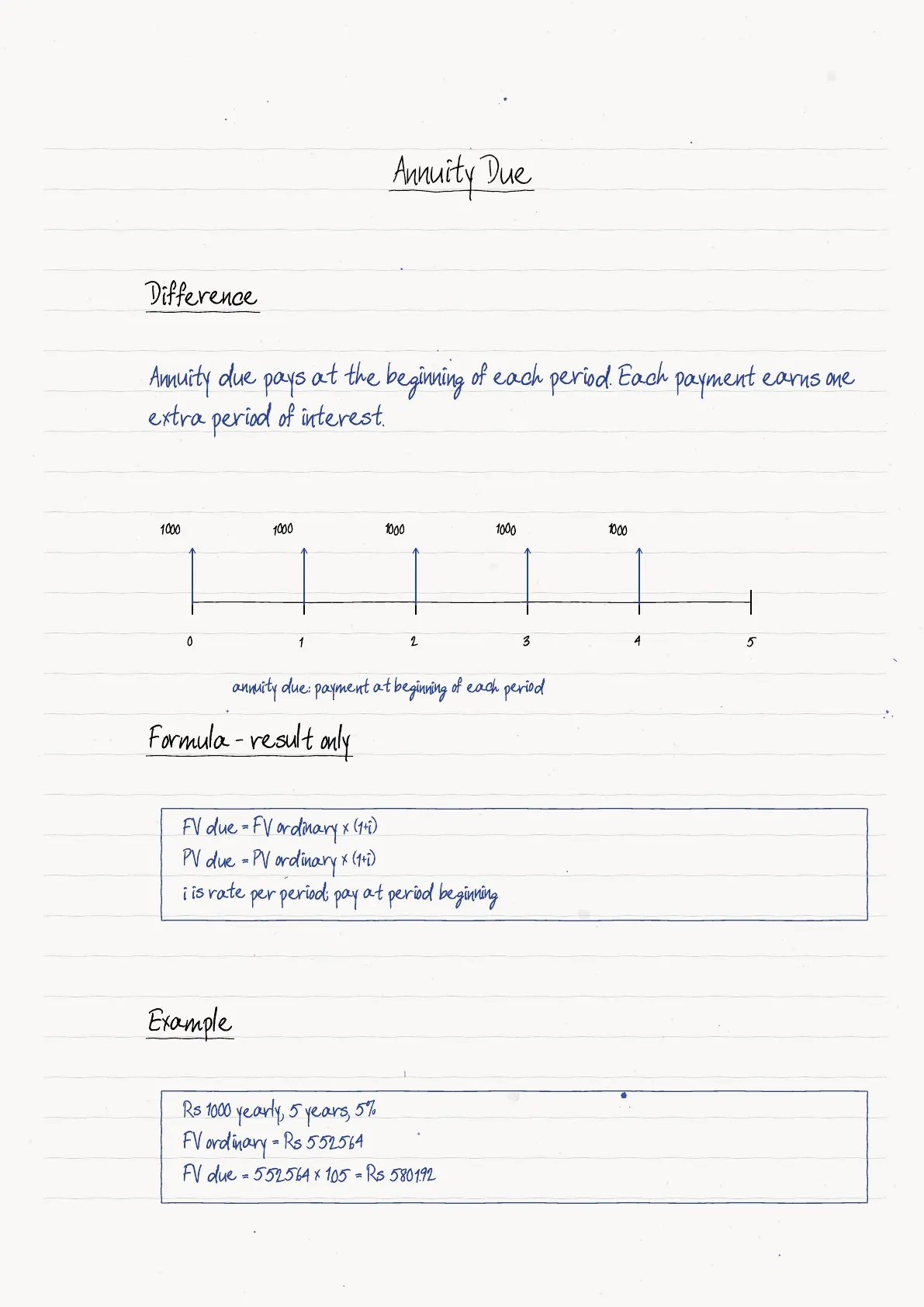
An annuity is a sequence of equal payments made at equal intervals. In an ordinary annuity, each payment is made at the end of the period. In an annuity due, each payment is made at the beginning, so every payment earns one extra period of interest.
| Type | Payment timing | Use it for |
|---|---|---|
| Ordinary annuity | End of each period | Loan instalments and savings after each month |
| Annuity due | Beginning of each period | Rent and advance payments |
| Deferred annuity | Starts after a waiting period | Payments that begin after a gap |
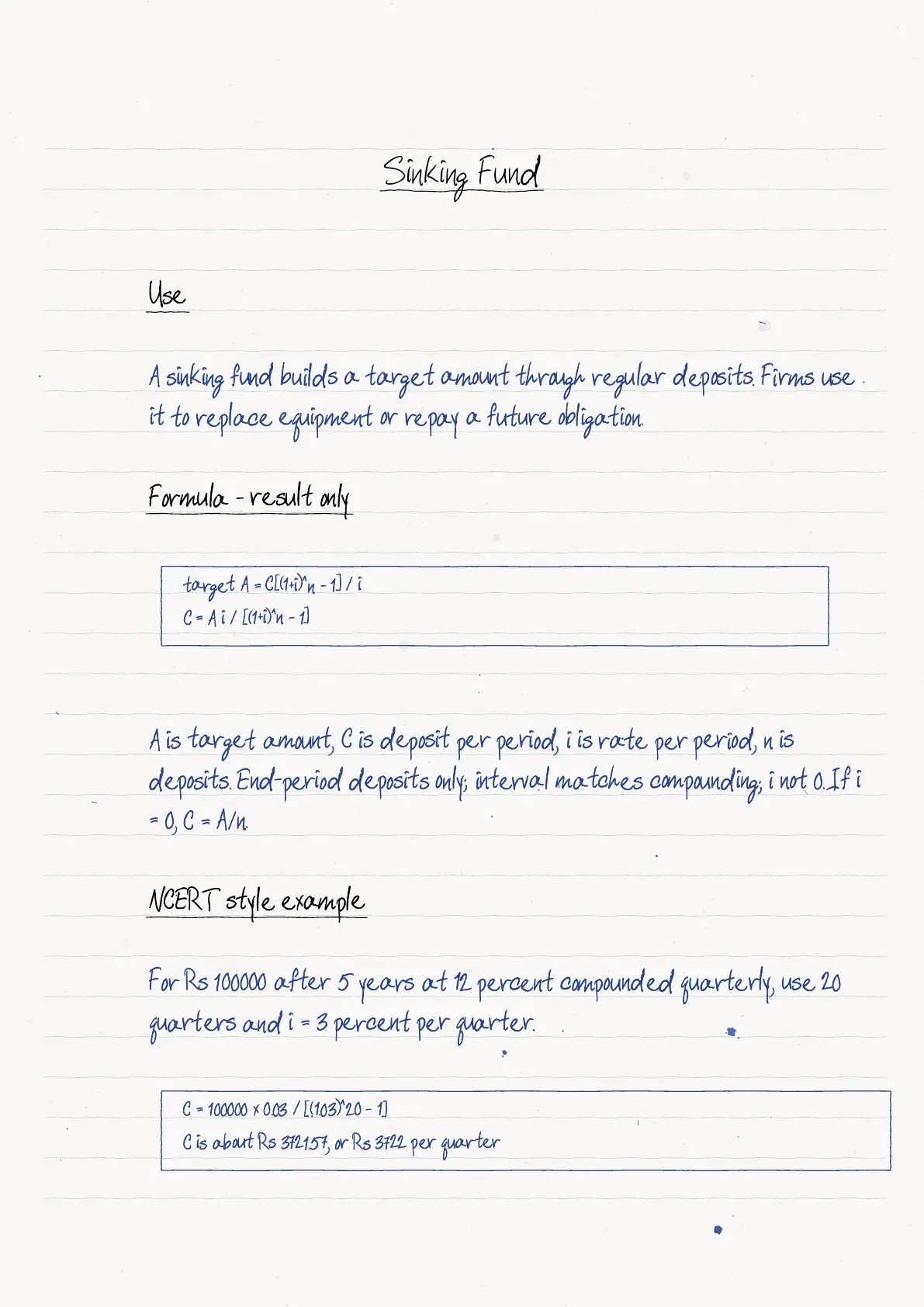
| Sinking fund | Regular deposits build a target fund | Replacement fund or future liability |
GST Income Tax and Utility Bills
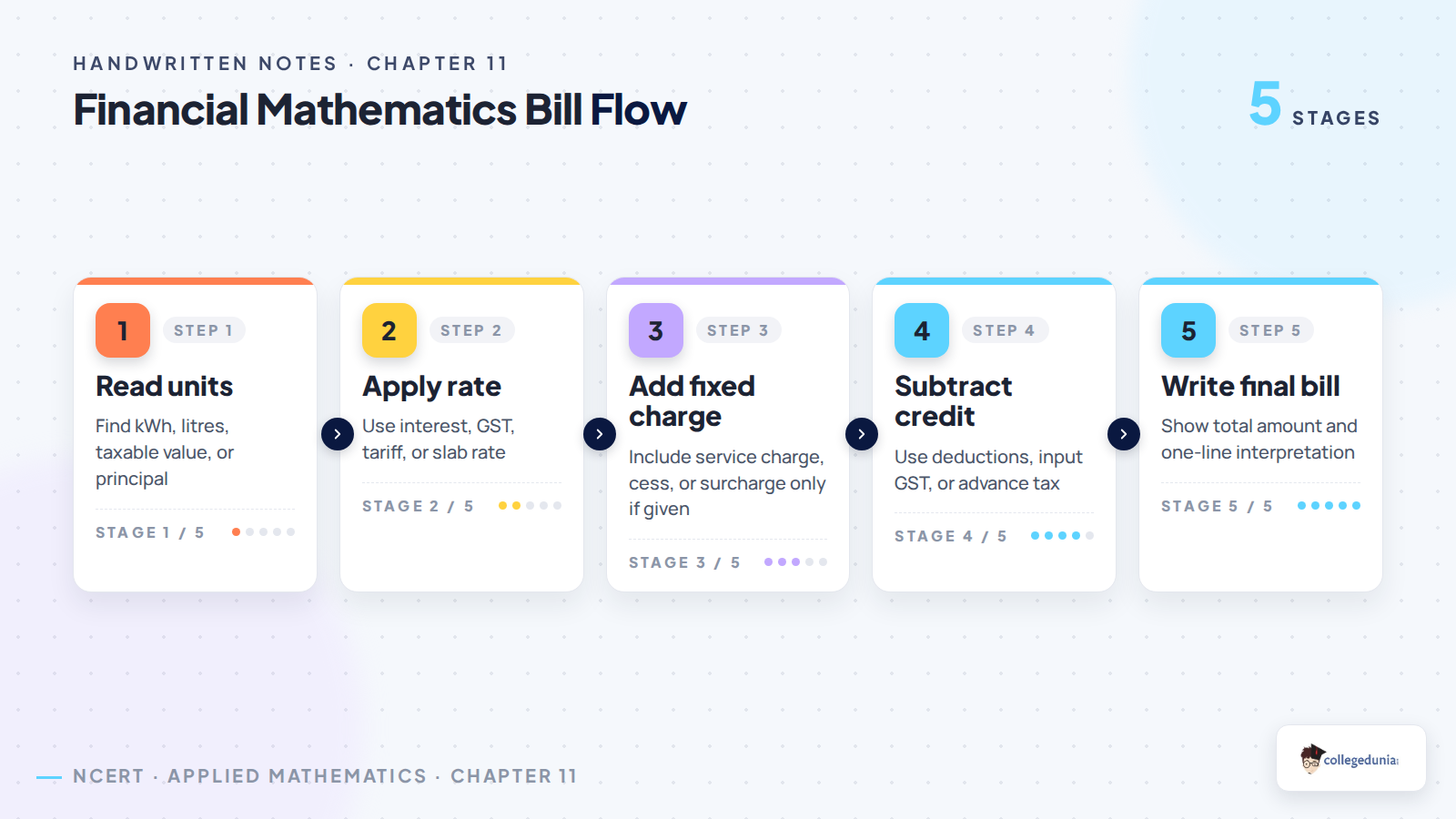
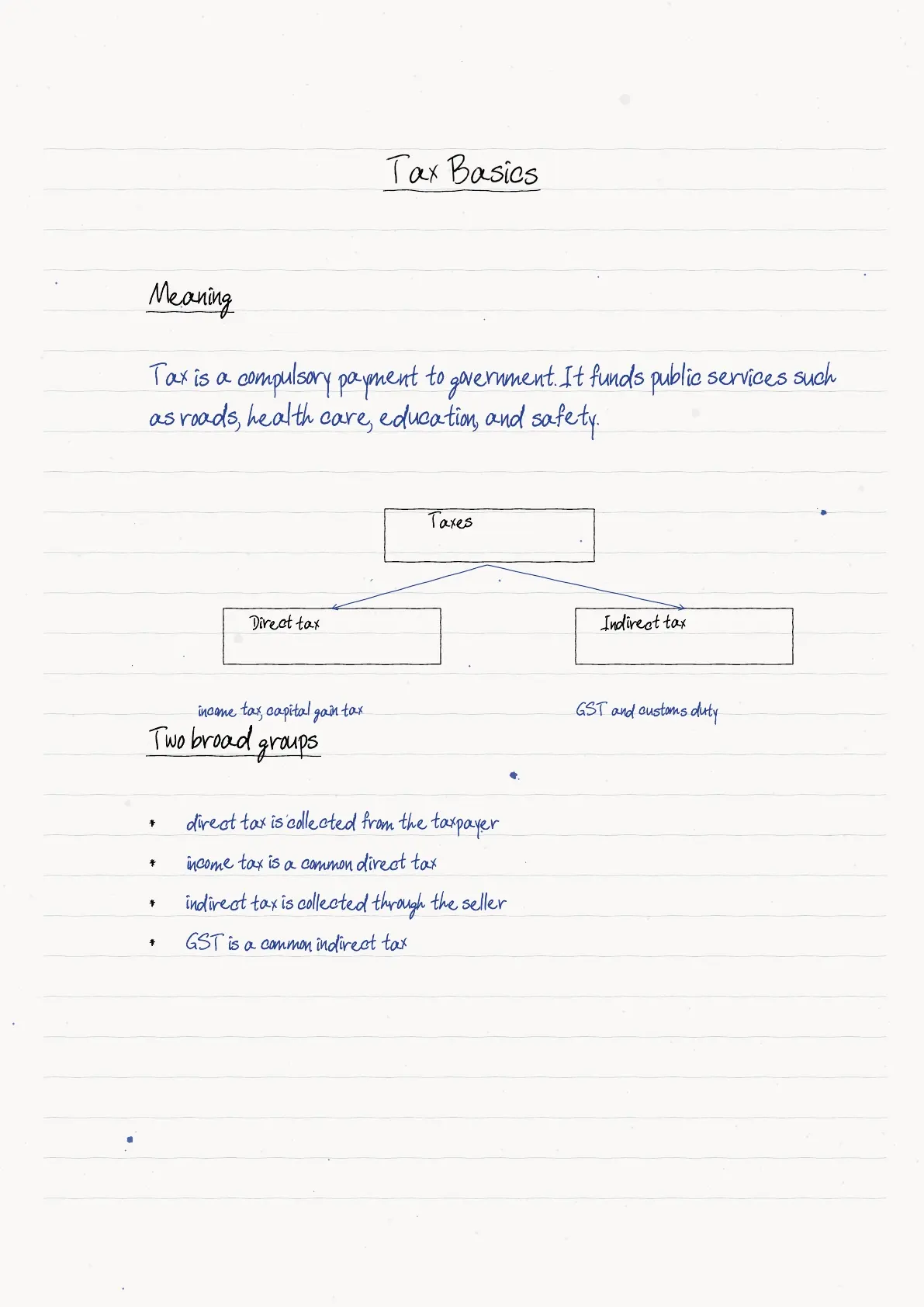
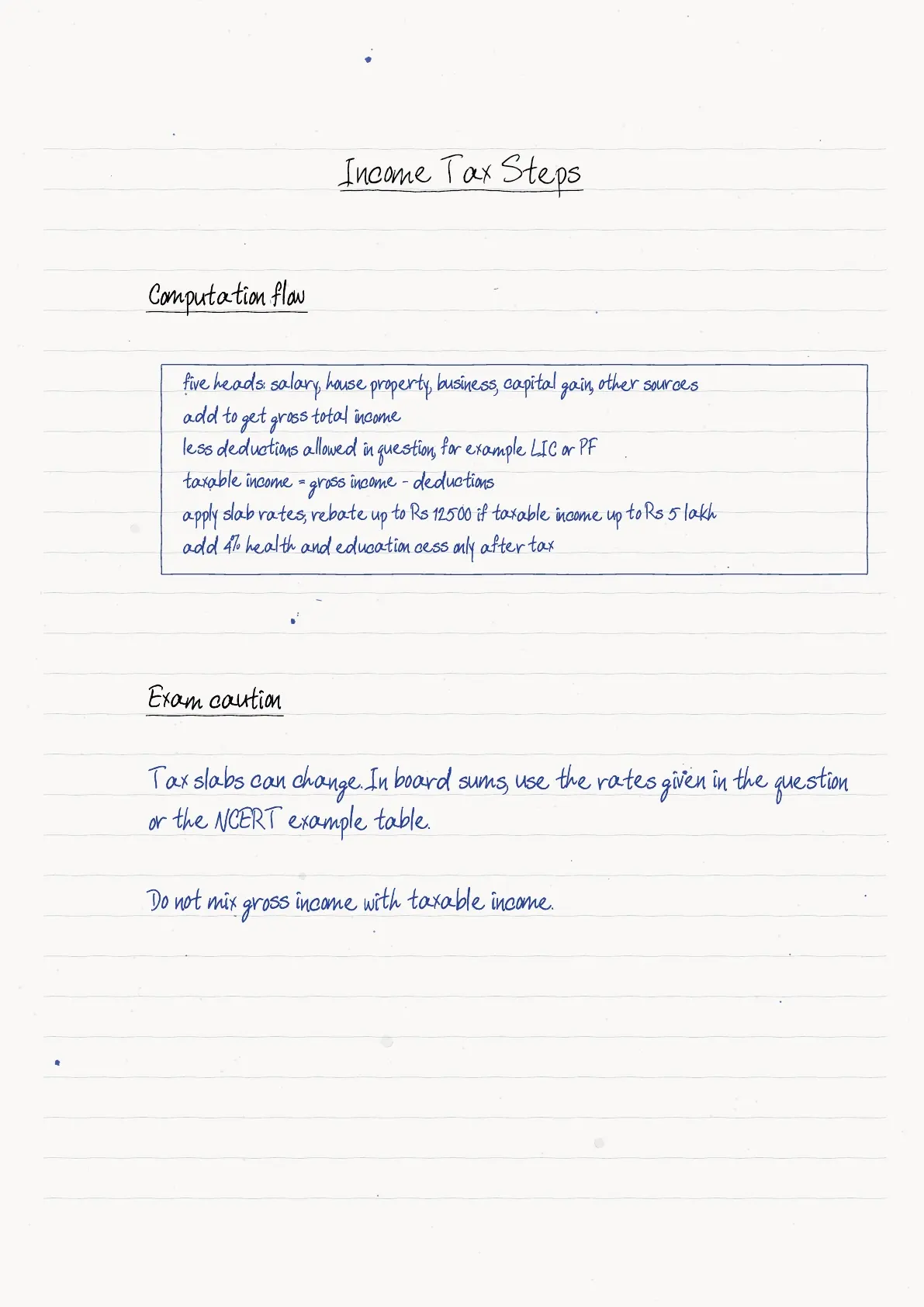
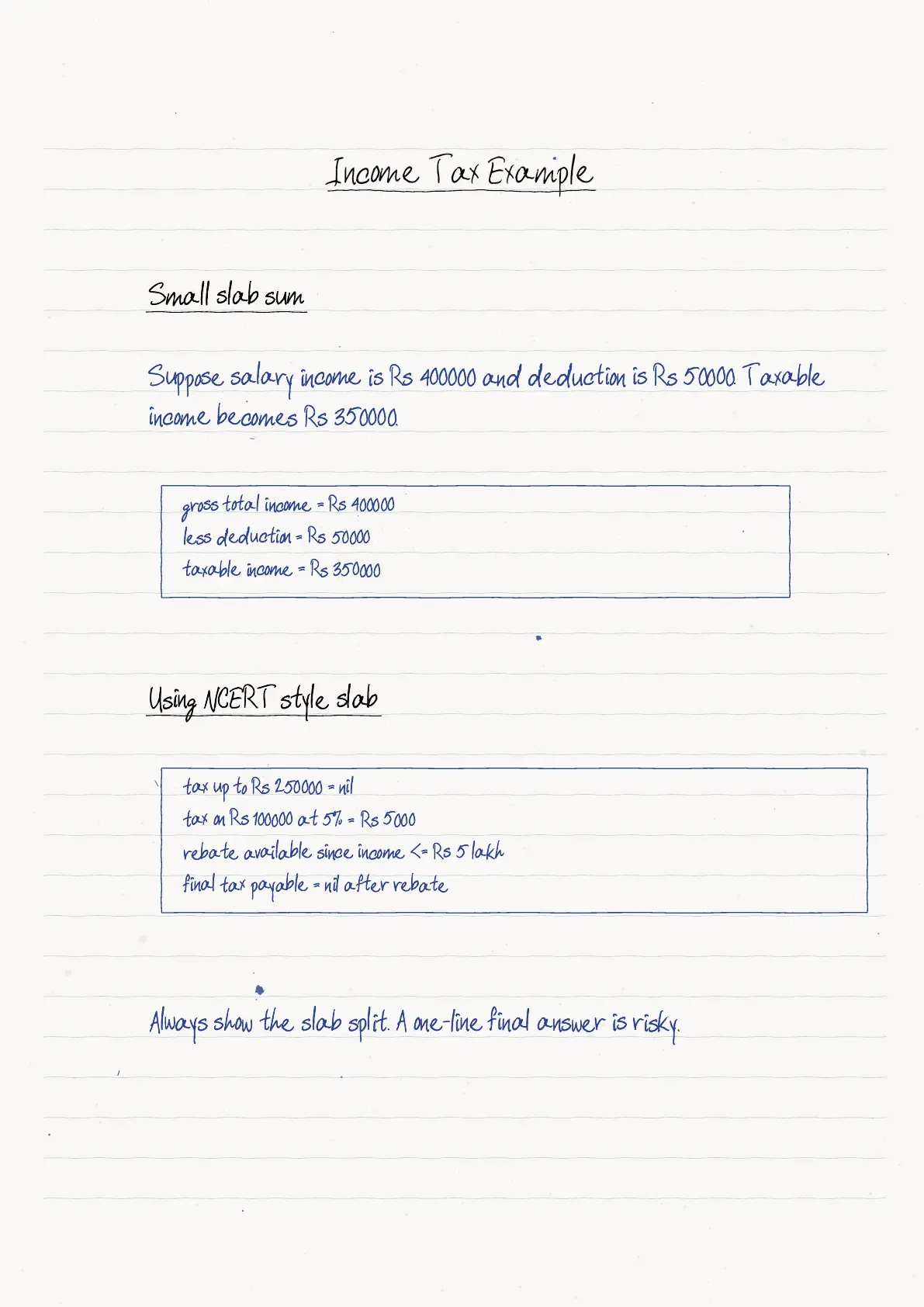
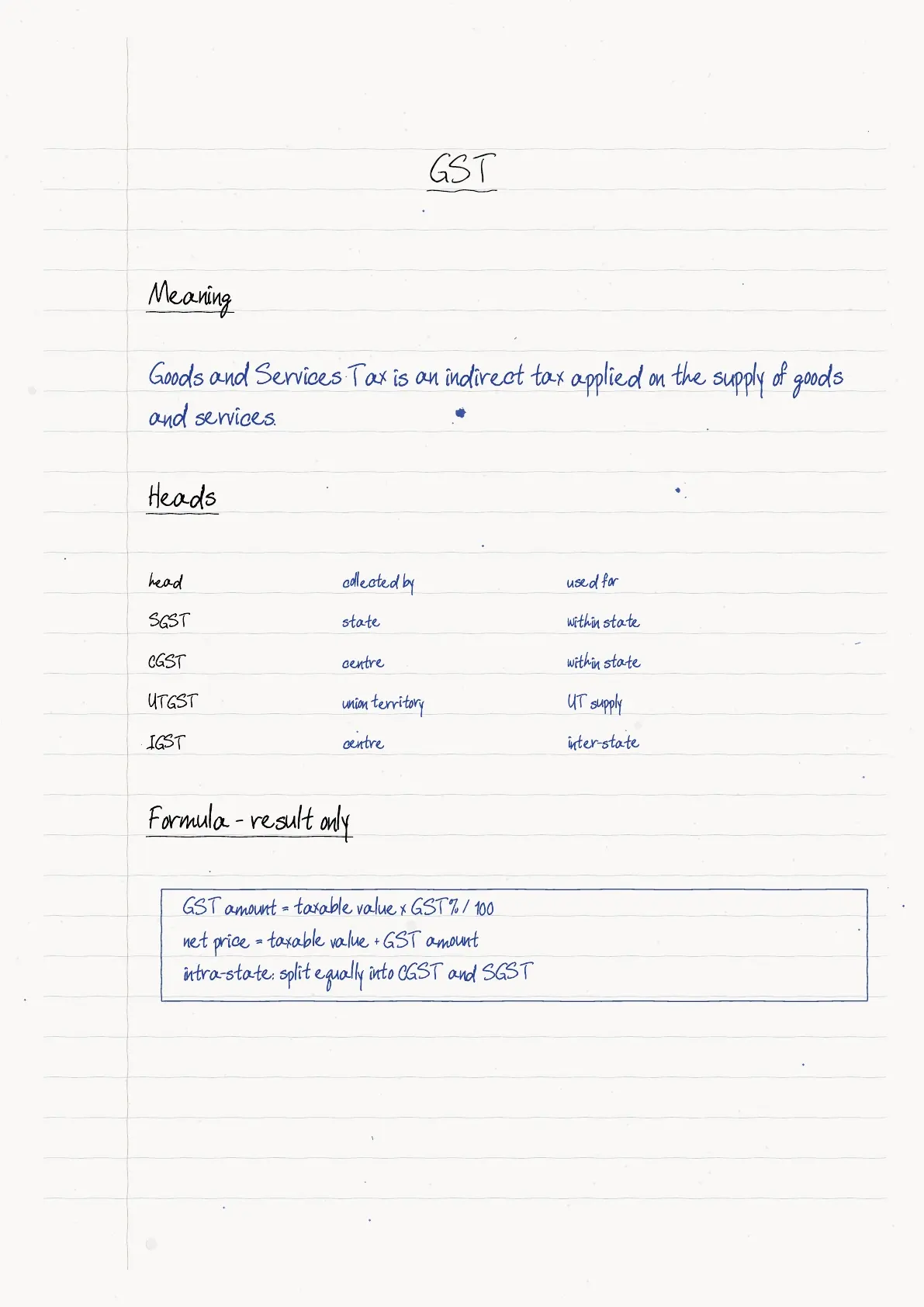
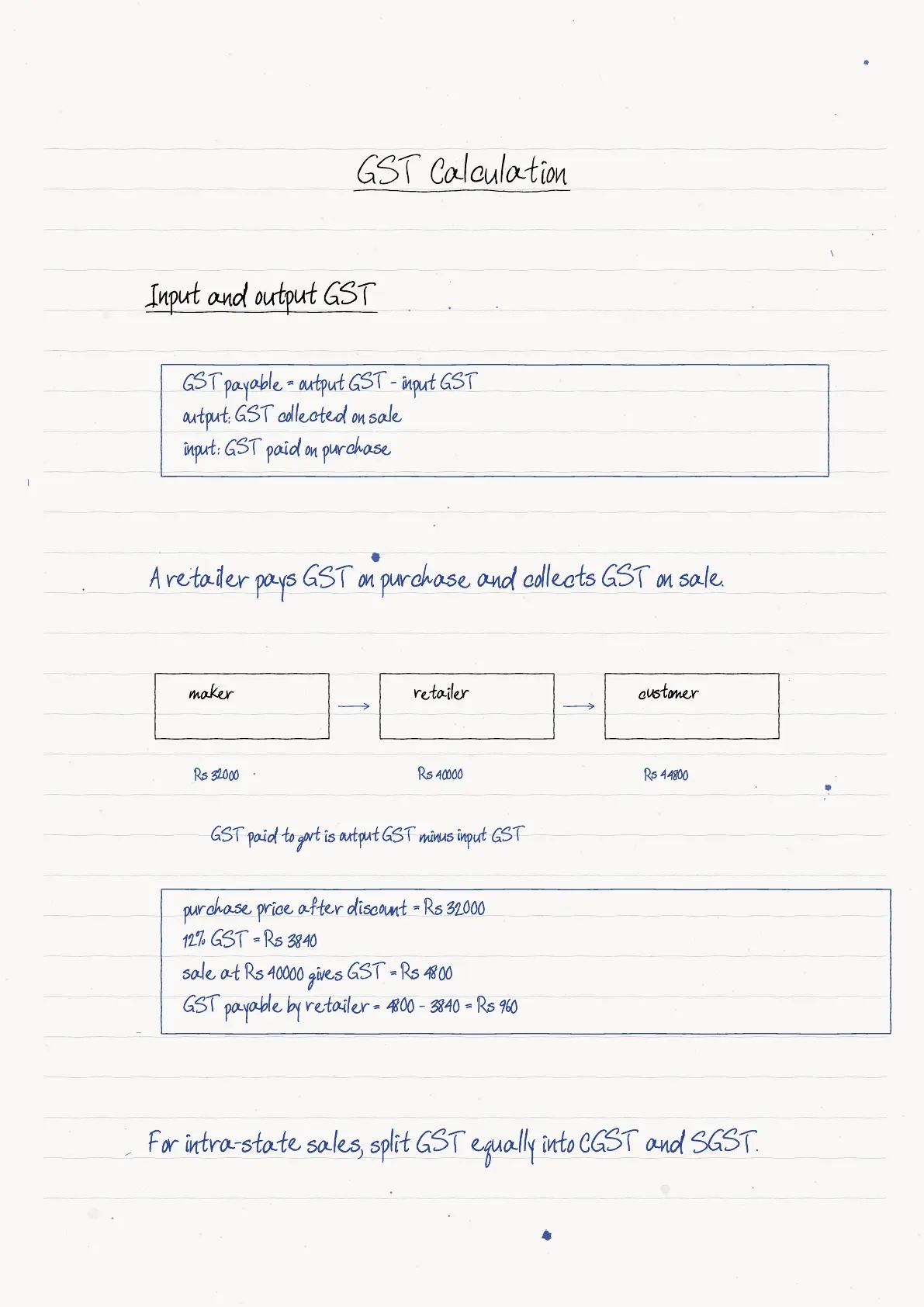
Tax and bill questions are stepwise application sums. For income tax, students identify gross income, deductions, taxable income, tax on slabs and final payable amount. For GST, the important split is between input tax credit and output tax liability.
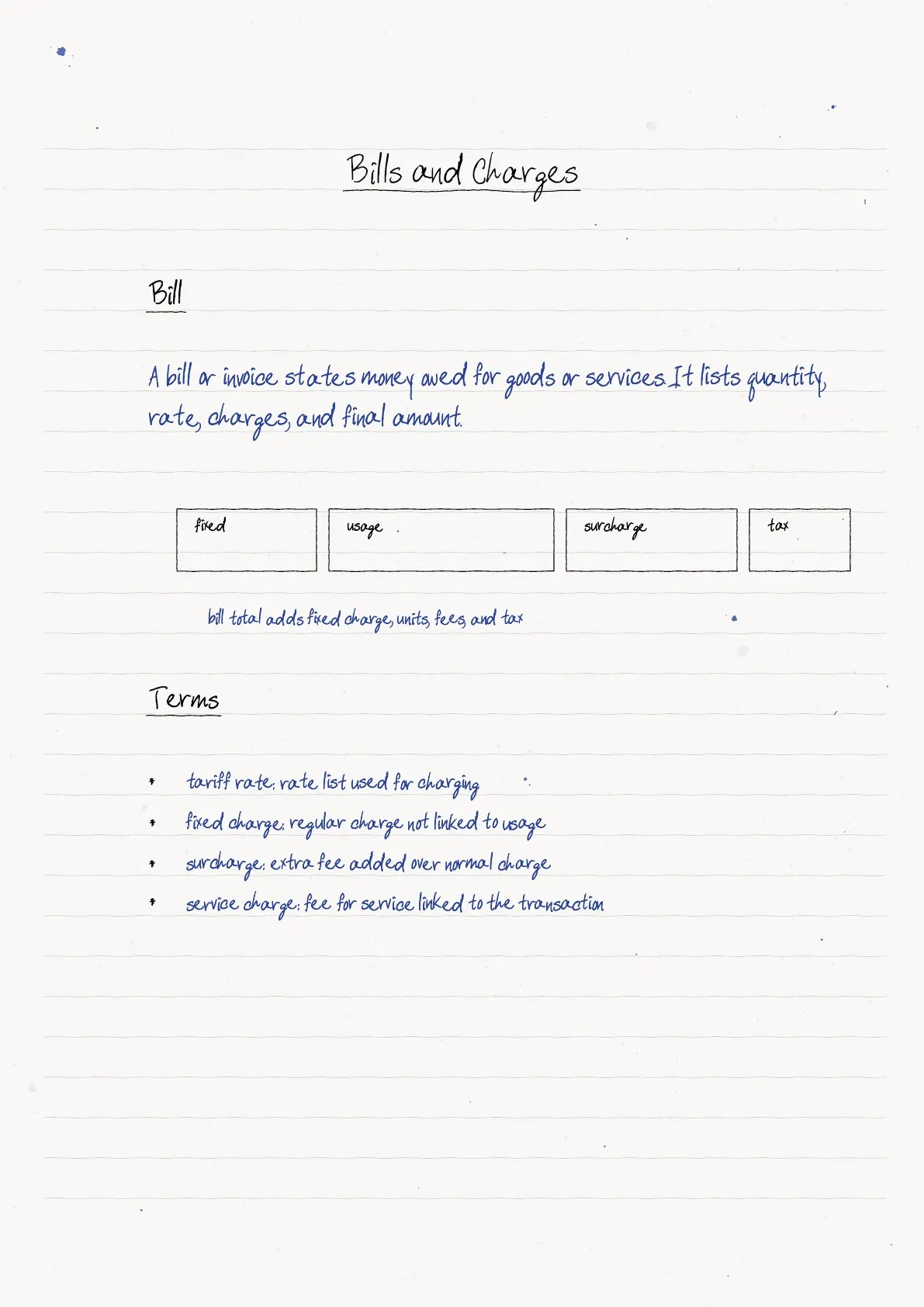
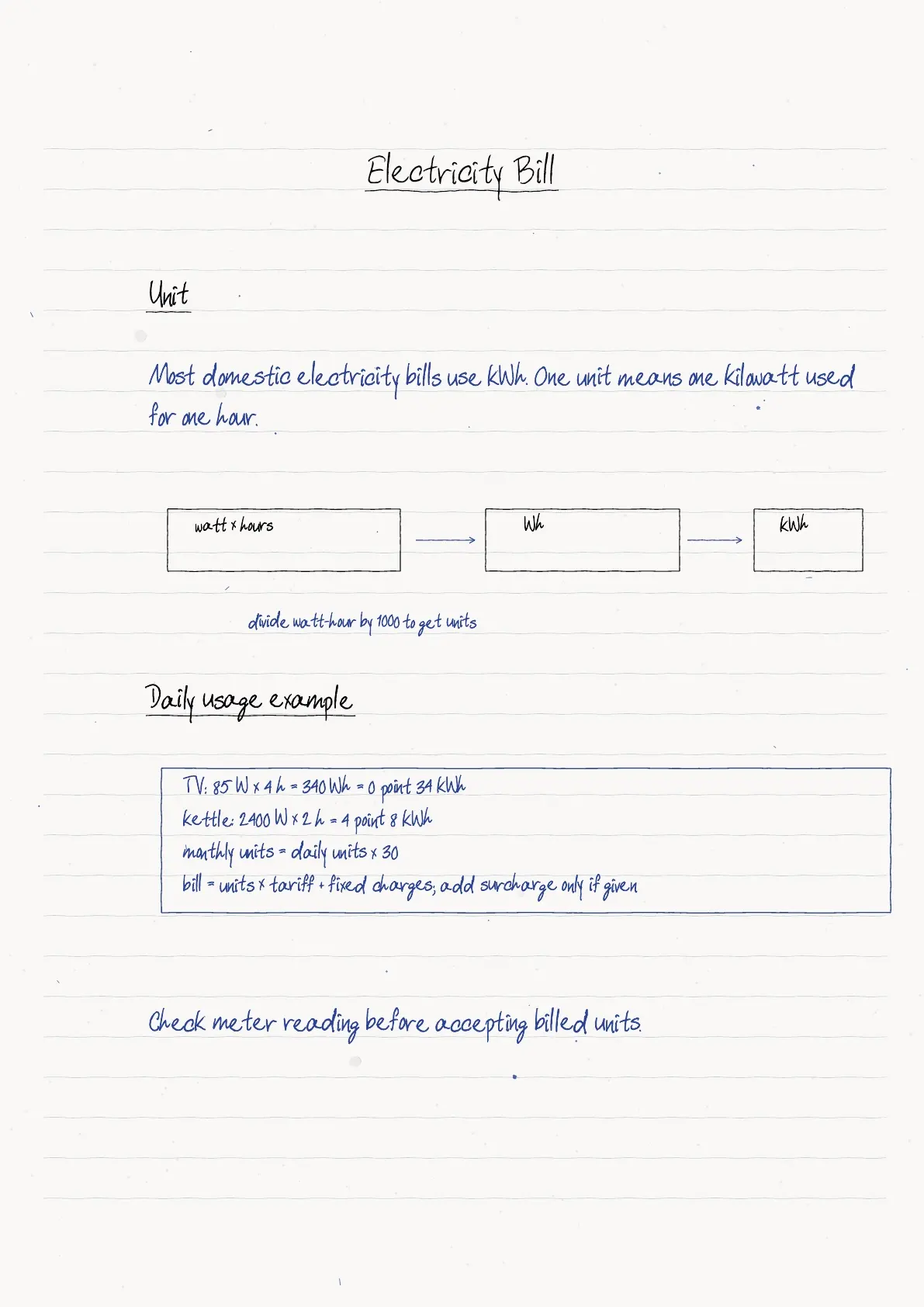
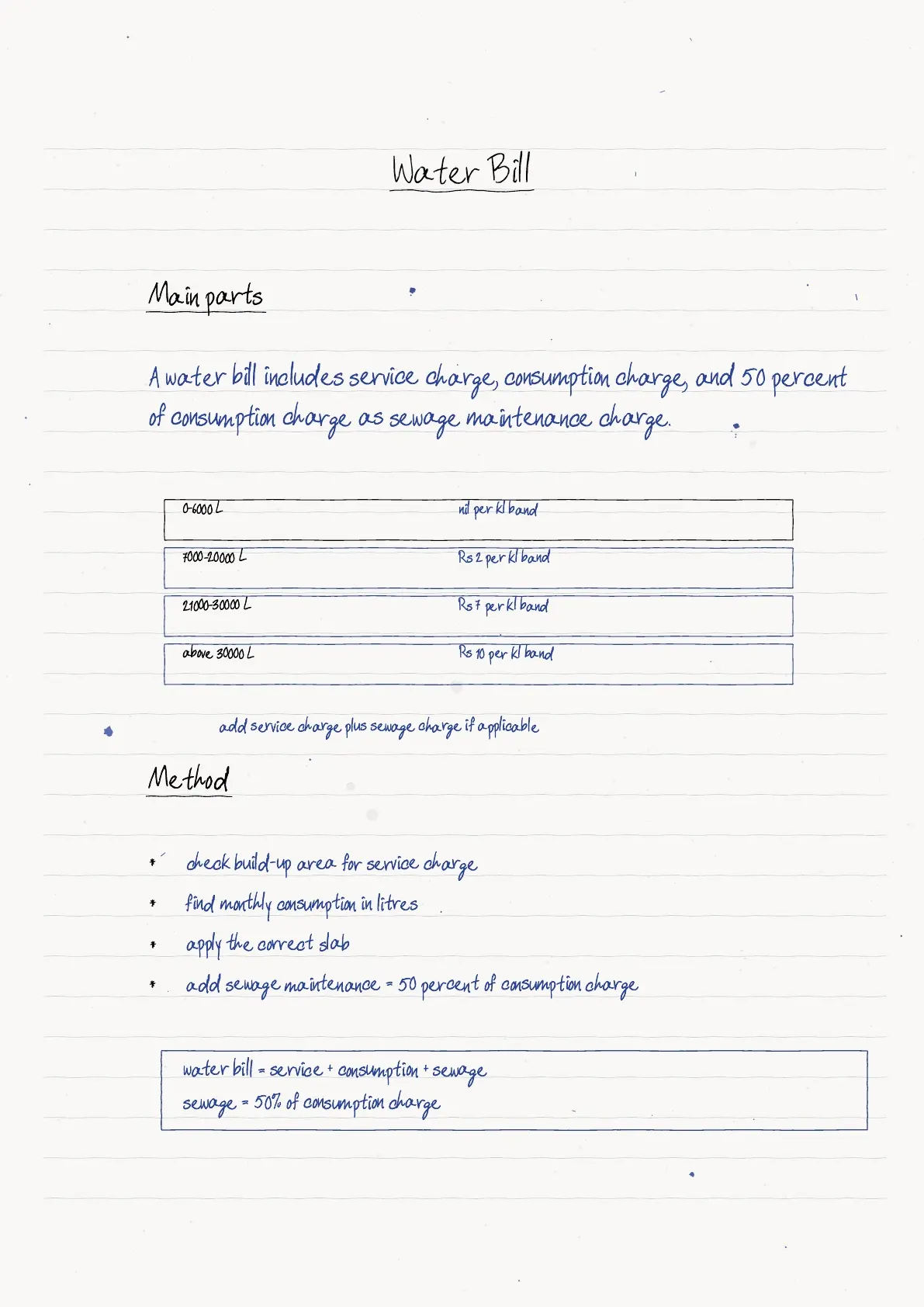
Utility bill questions use units consumed, slab rate, fixed charges, surcharge and service charges. The handwritten notes keep electricity and water bills in a flow format so students can check each charge before writing the final amount.
- Write the taxable value before applying GST.
- Separate fixed charges from usage-based charges.
- Subtract credits and deductions before the final payable amount.
How to Use Financial Mathematics Handwritten Notes Before Tests
Use the financial mathematics handwritten notes in three passes. First revise the formula page for interest and value of money. Then solve one annuity or sinking fund example. Finally, practise one GST or bill calculation where every line has a label.
- Underline the compounding frequency and the rate period.
- Draw a one-line timeline before present value or future value sums.
- Check whether an annuity payment is ordinary or due.
- Write tax, surcharge and service charge as separate lines.
Related Resources for Basics of Financial Mathematics Class 11
| Resource | Use it for | Link |
|---|---|---|
| NCERT Book PDF | Official theory and examples | Basics of Financial Mathematics Class 11 NCERT Book PDF |
| NCERT Notes | Typed explanation and formula tables | Basics of Financial Mathematics Class 11 Notes |
| NCERT Solutions | Step-by-step answers for exercises | Basics of Financial Mathematics Class 11 NCERT Solutions |
| Formula Sheet | Formula-only revision before practice | Basics of Financial Mathematics Class 11 Formula Sheet |
Applied Mathematics Handwritten Notes for All Chapters
| Chapter | Handwritten Notes |
|---|---|
| Chapter 1 | Numbers and Quantification Class 11 Handwritten Notes |
| Chapter 4 | Relations Class 11 Handwritten Notes |
| Chapter 5 | Sequences and Series Class 11 Handwritten Notes |
| Chapter 6 | Permutations and Combinations Class 11 Handwritten Notes |
| Chapter 8 | Calculus Class 11 Handwritten Notes |
| Chapter 9 | Probability Class 11 Handwritten Notes |
| Chapter 10 | Descriptive Statistics Class 11 Handwritten Notes |
| Chapter 11 | Basics of Financial Mathematics Class 11 Handwritten Notes |
Basics of Financial Mathematics Class 11 Applied Mathematics Handwritten Notes FAQs
Ques. What is covered in Class 11 Applied Mathematics Chapter 11 Basics of Financial Mathematics handwritten notes?
Ans. The handwritten notes cover interest rates, simple interest, compound interest, effective annual rate, present value, net present value, future value, annuity, sinking fund, income tax, GST and utility bills.
Ques. Which formulas are important in Basics of Financial Mathematics?
Ans. Simple interest, compound amount, effective annual rate, present value, future value, annuity value, GST payable and bill calculation formulas are important for this chapter.
Ques. How should students revise annuity and sinking fund questions?
Ans. Students should first mark whether payments occur at the beginning or end of each period, then use the correct annuity or sinking fund formula with the same rate period.
Ques. Are these Basics of Financial Mathematics handwritten notes aligned with the 2026-27 syllabus?
Ans. Yes. The notes follow the current 2026-27 Class 11 Applied Mathematics chapter scope for Basics of Financial Mathematics.



Comments