




The handwritten notes on Class 11 Applied Mathematics Chapter 5 Sequences and Series have been carefully prepared for quick revision, according to the latest 2026-27 CBSE syllabus. The PDF covers sequence patterns, arithmetic progression, geometric progression, means, recurring decimals and direct formula use.
- Best for one-shot revision: AP, GP and series formulas stay in one handwritten PDF.
- Aligned to 2026-27: follows the current Class 11 Applied Mathematics algebra scope.
- Exam ready: formula conditions and common AP-GP mix-ups are placed close to examples.
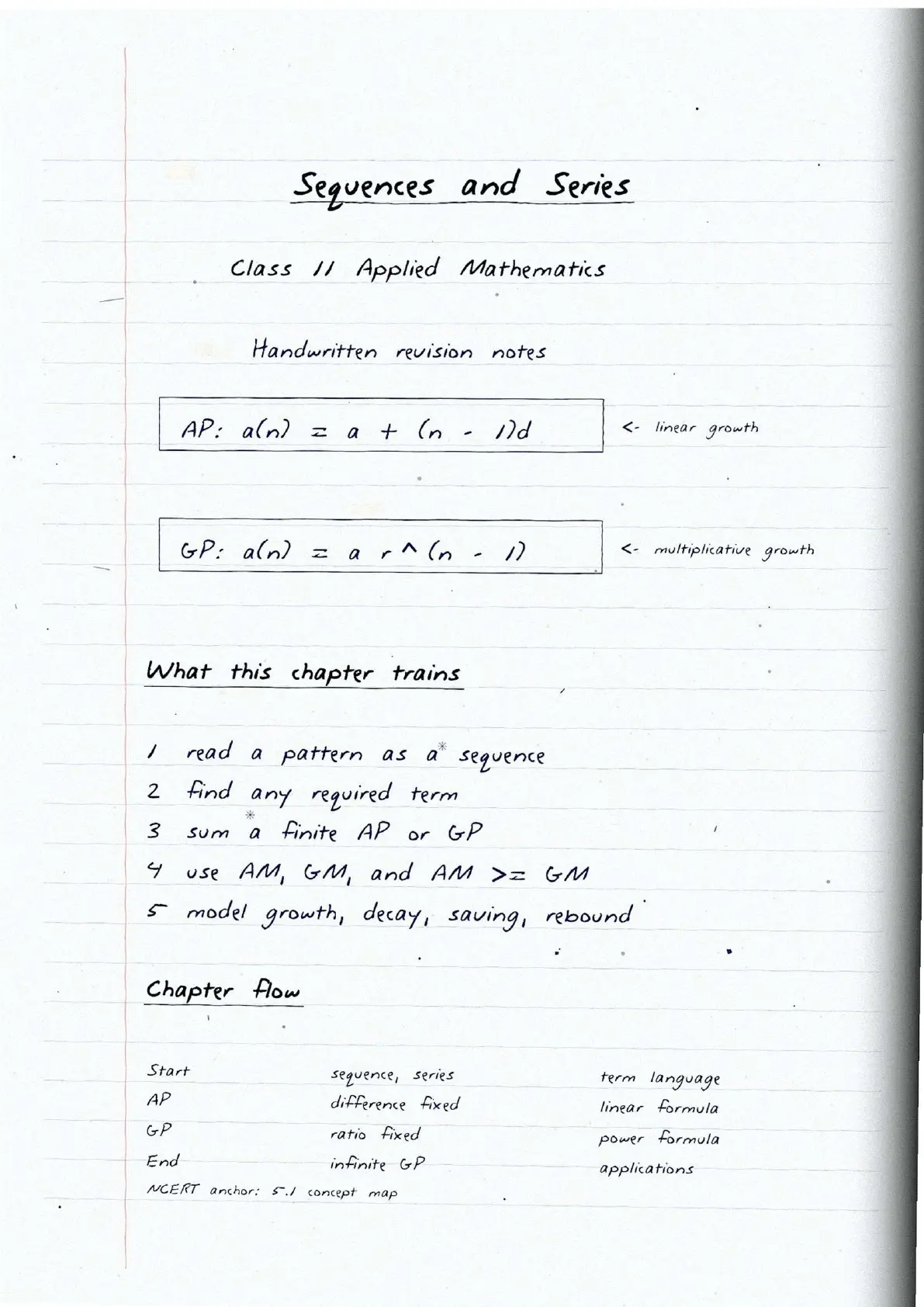
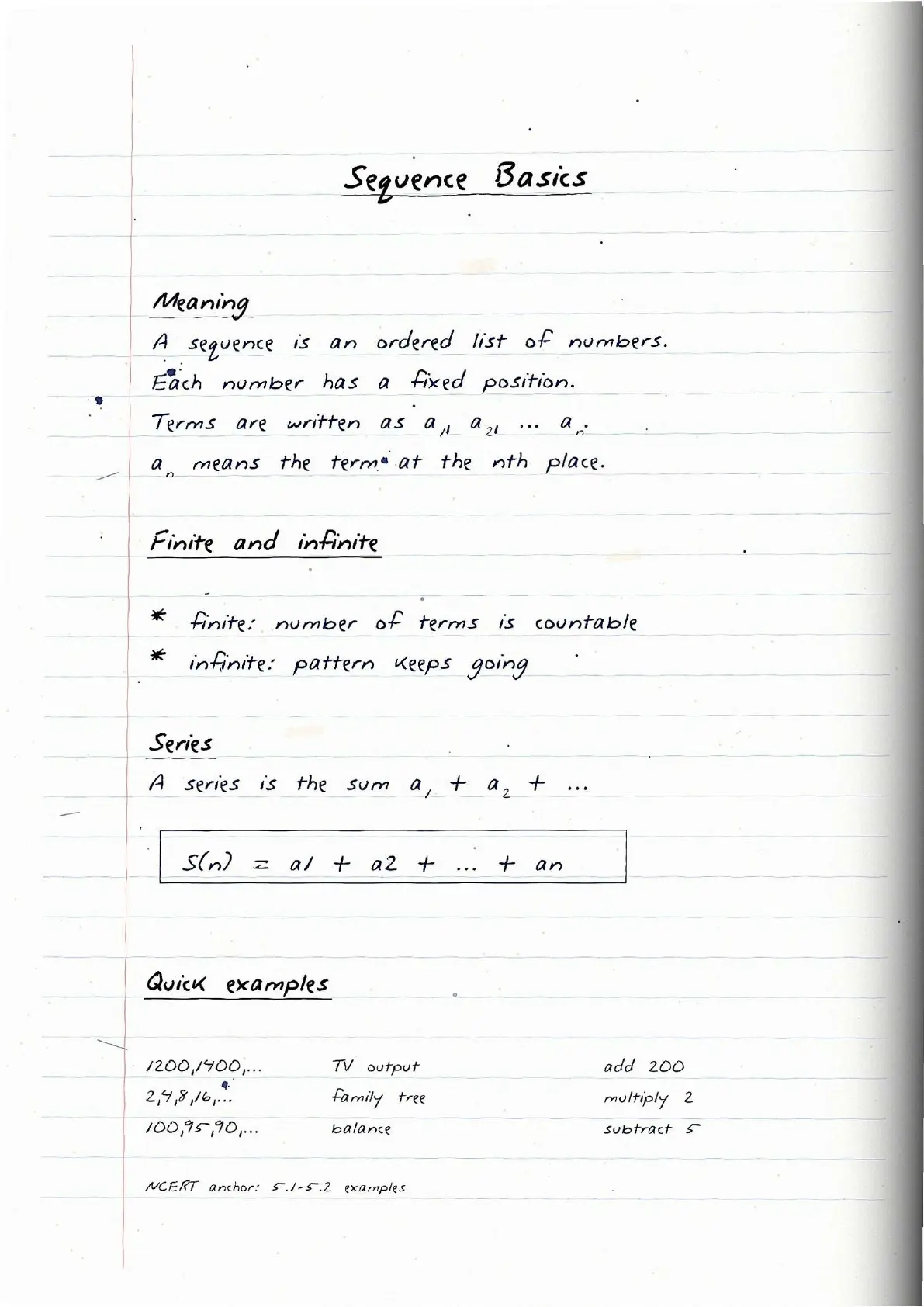
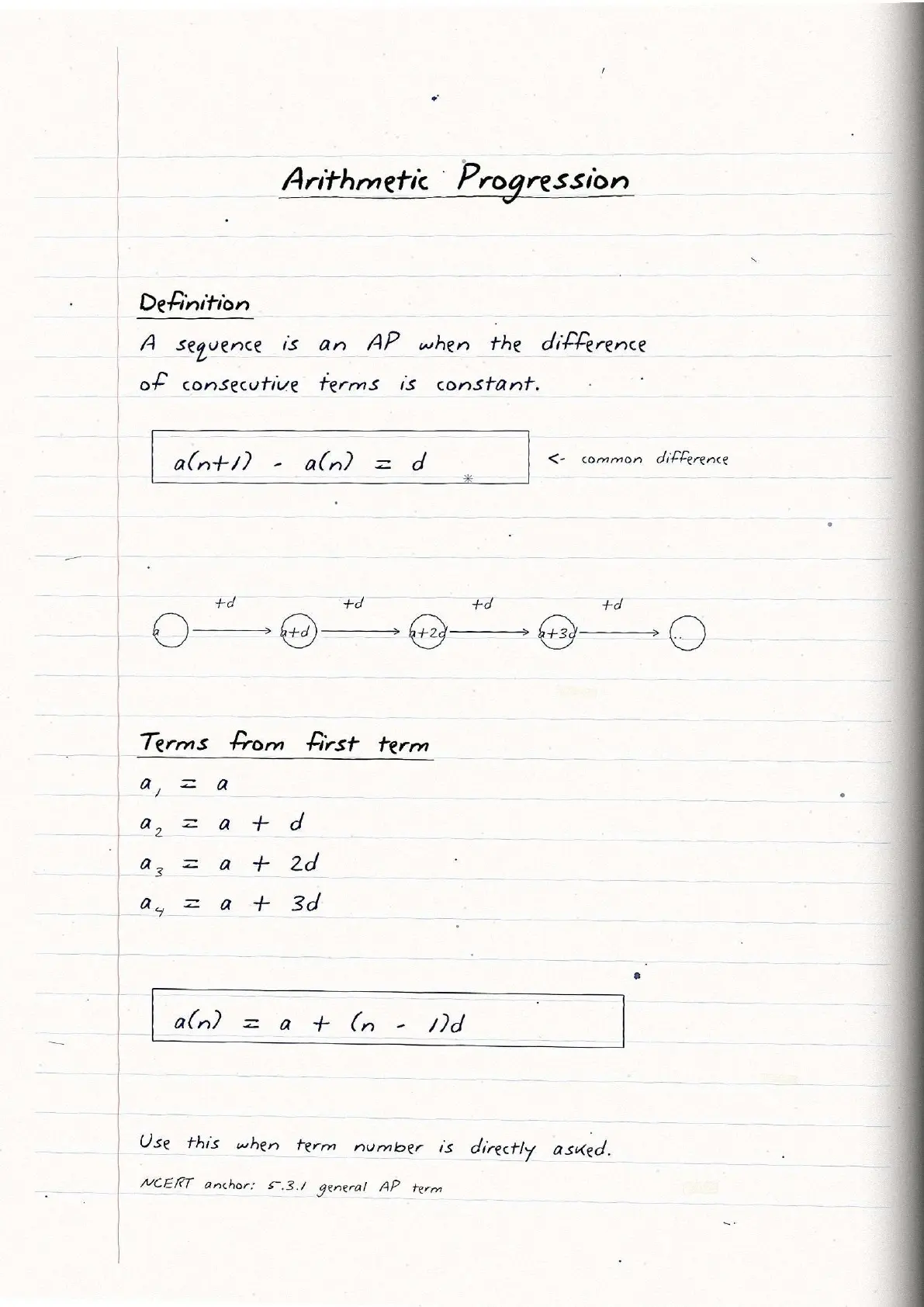
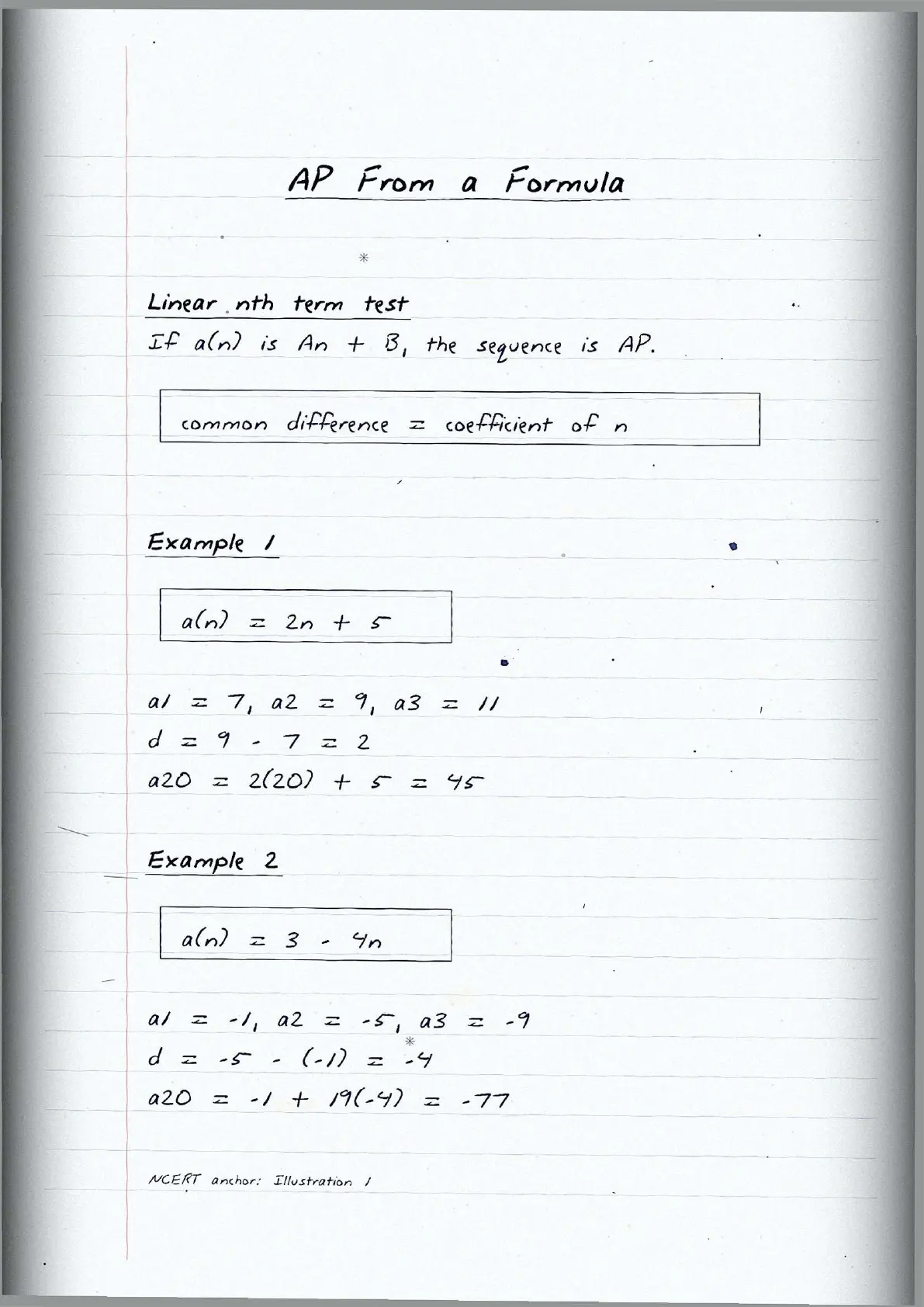
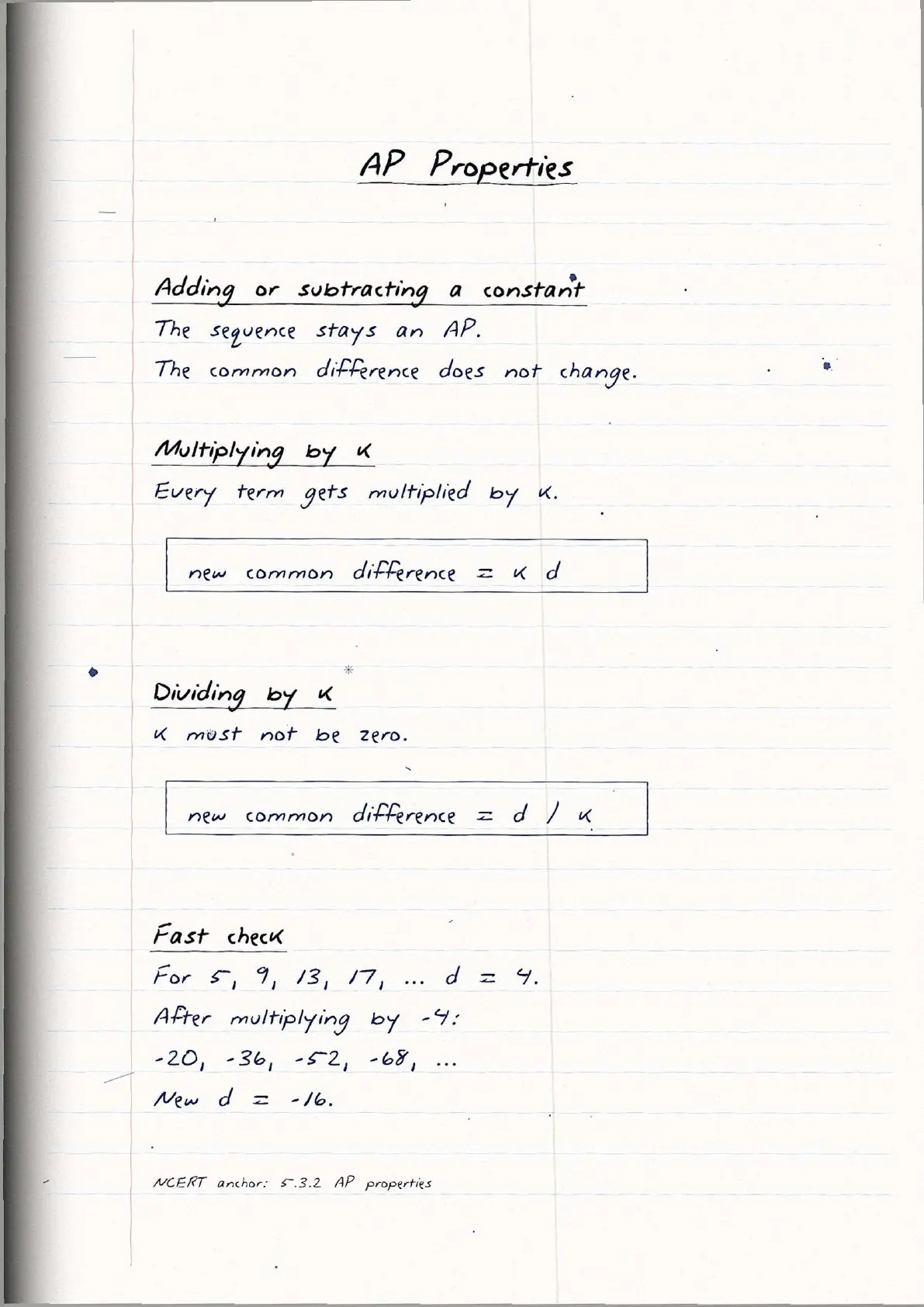
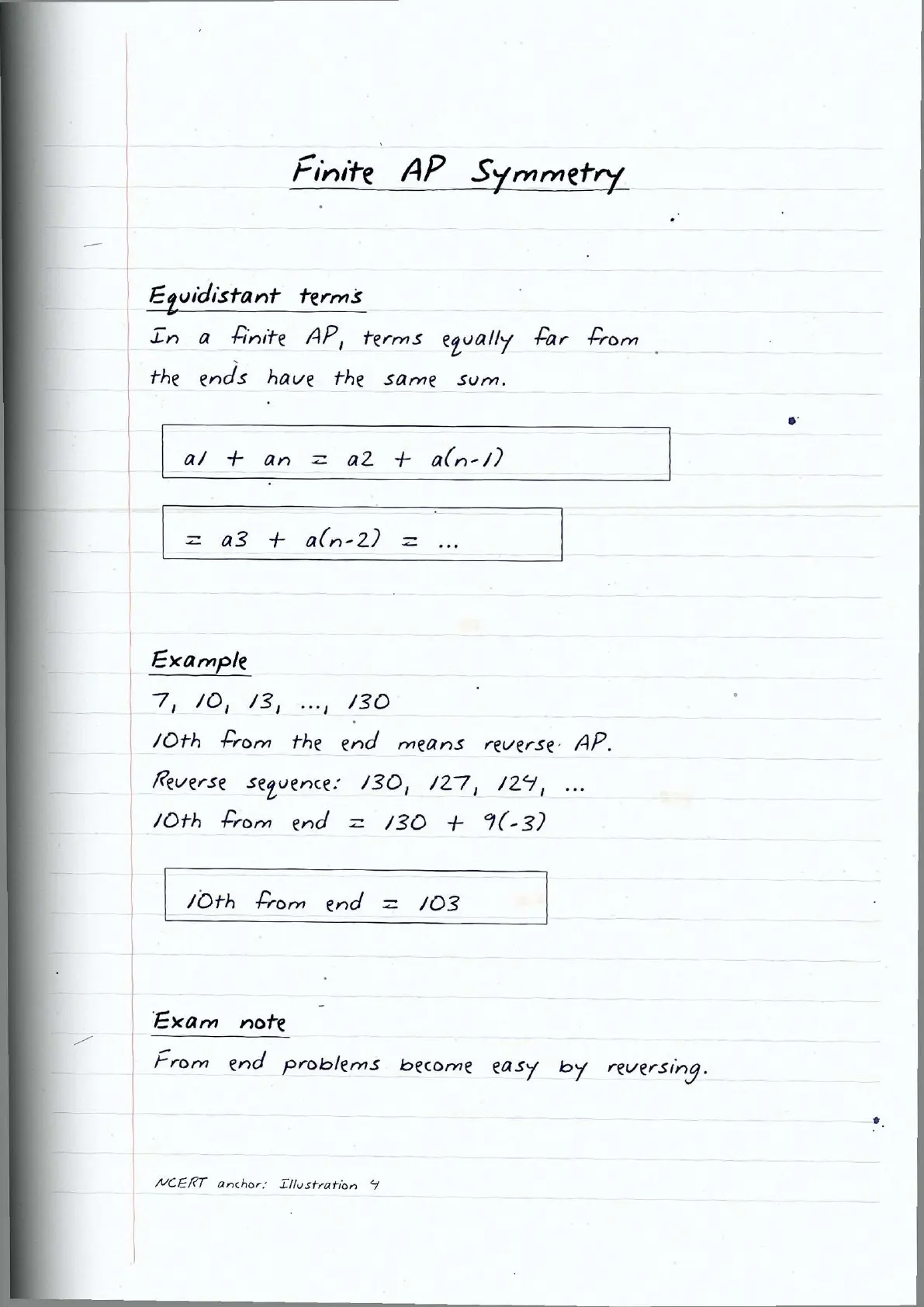
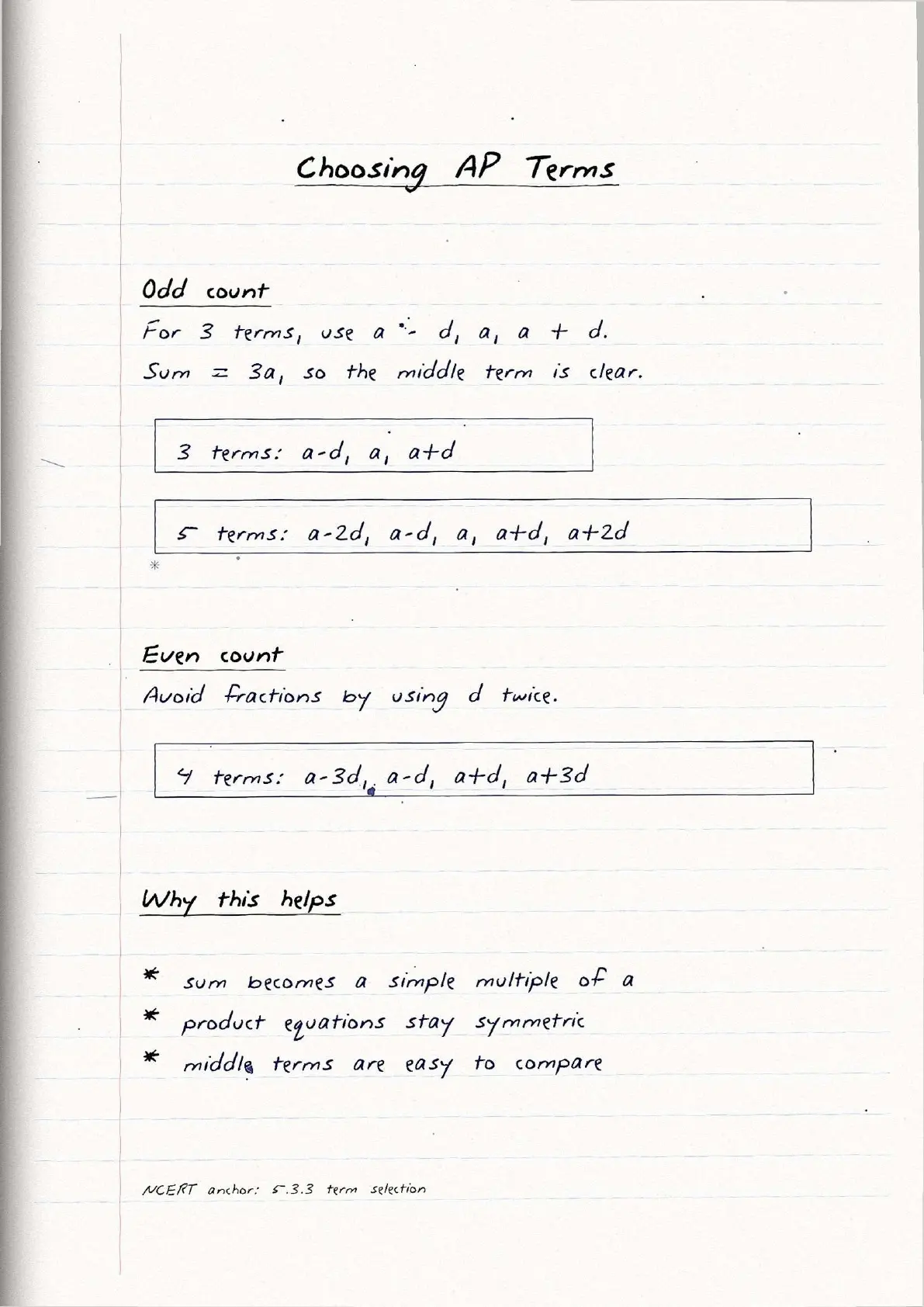
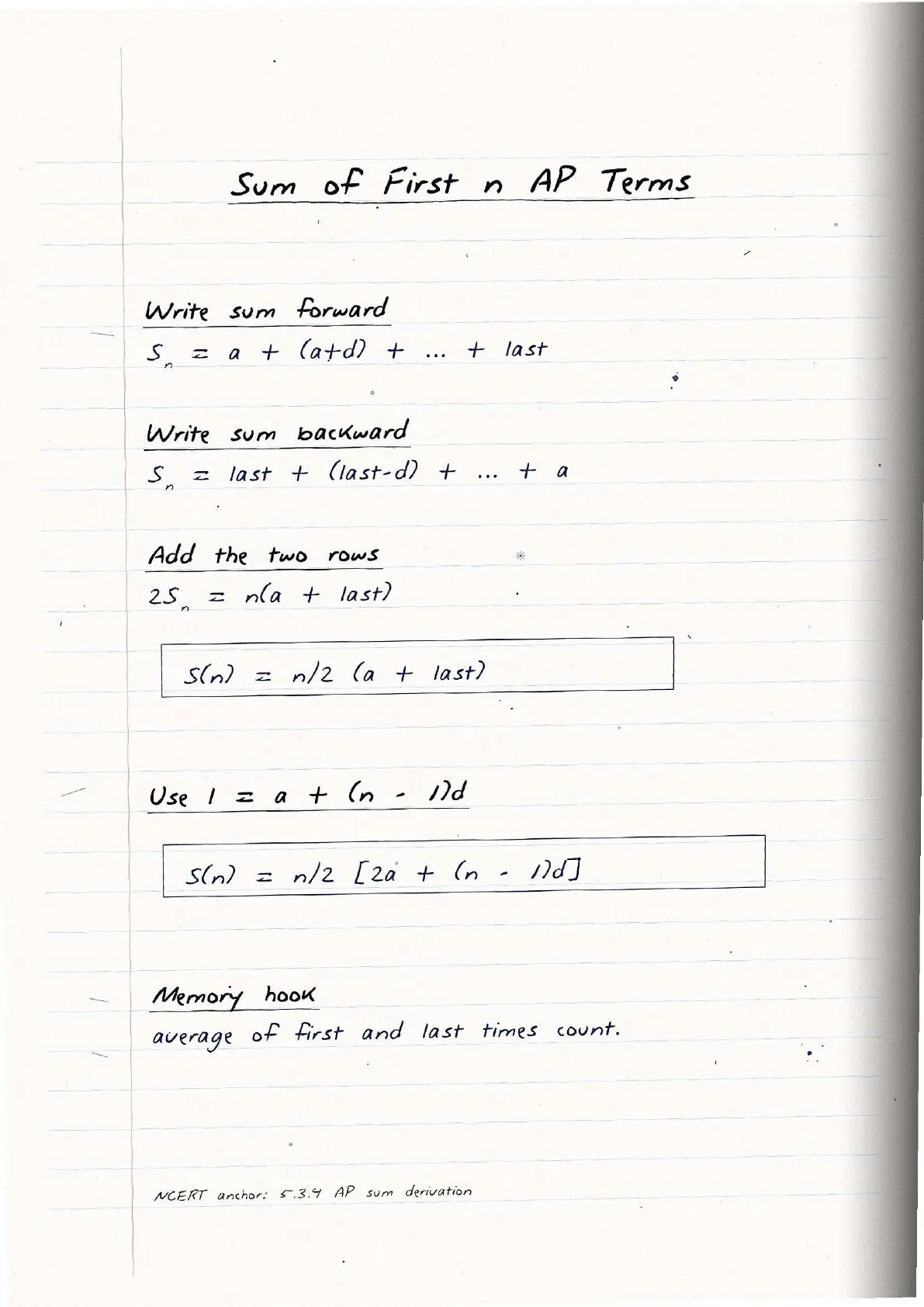
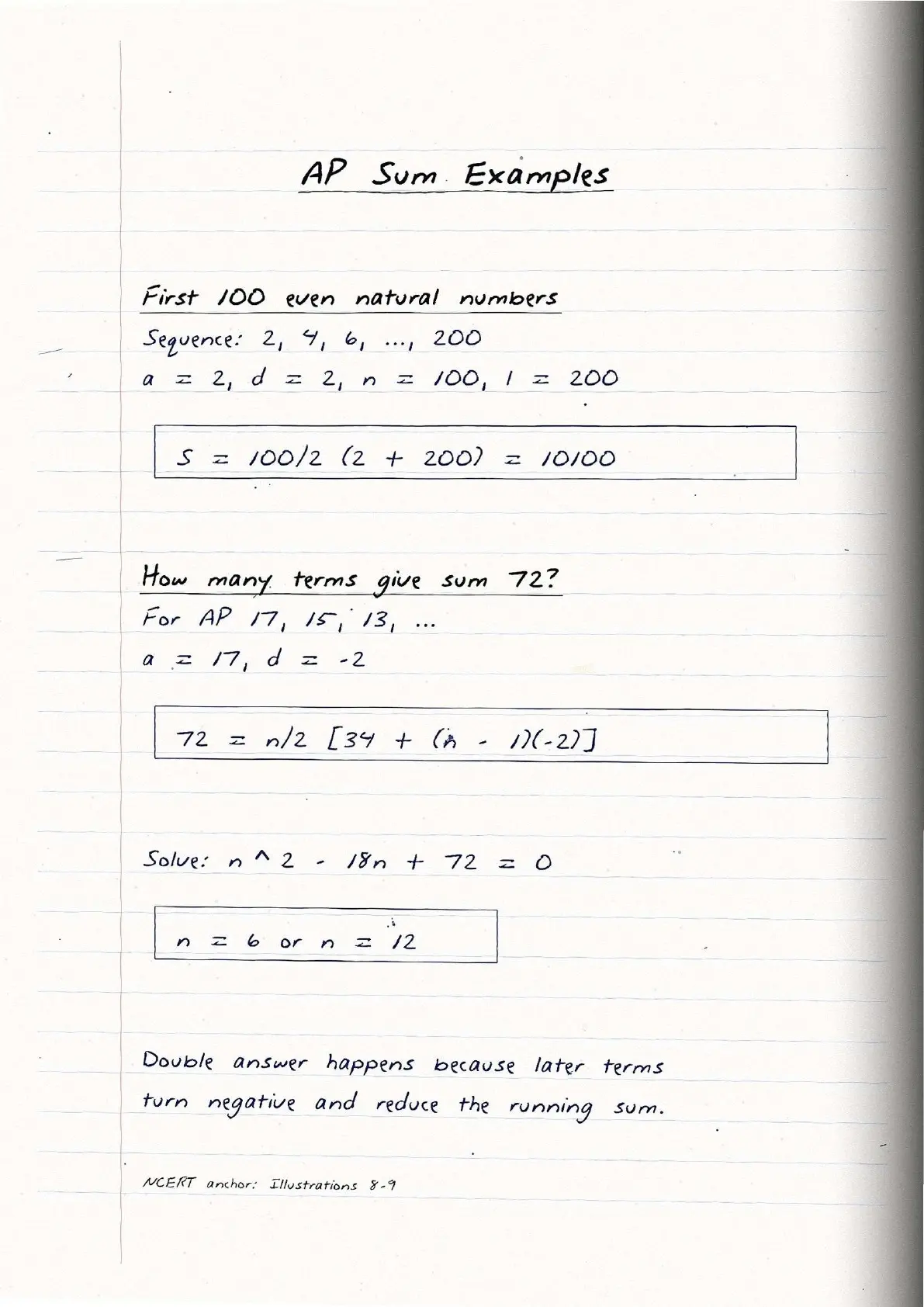
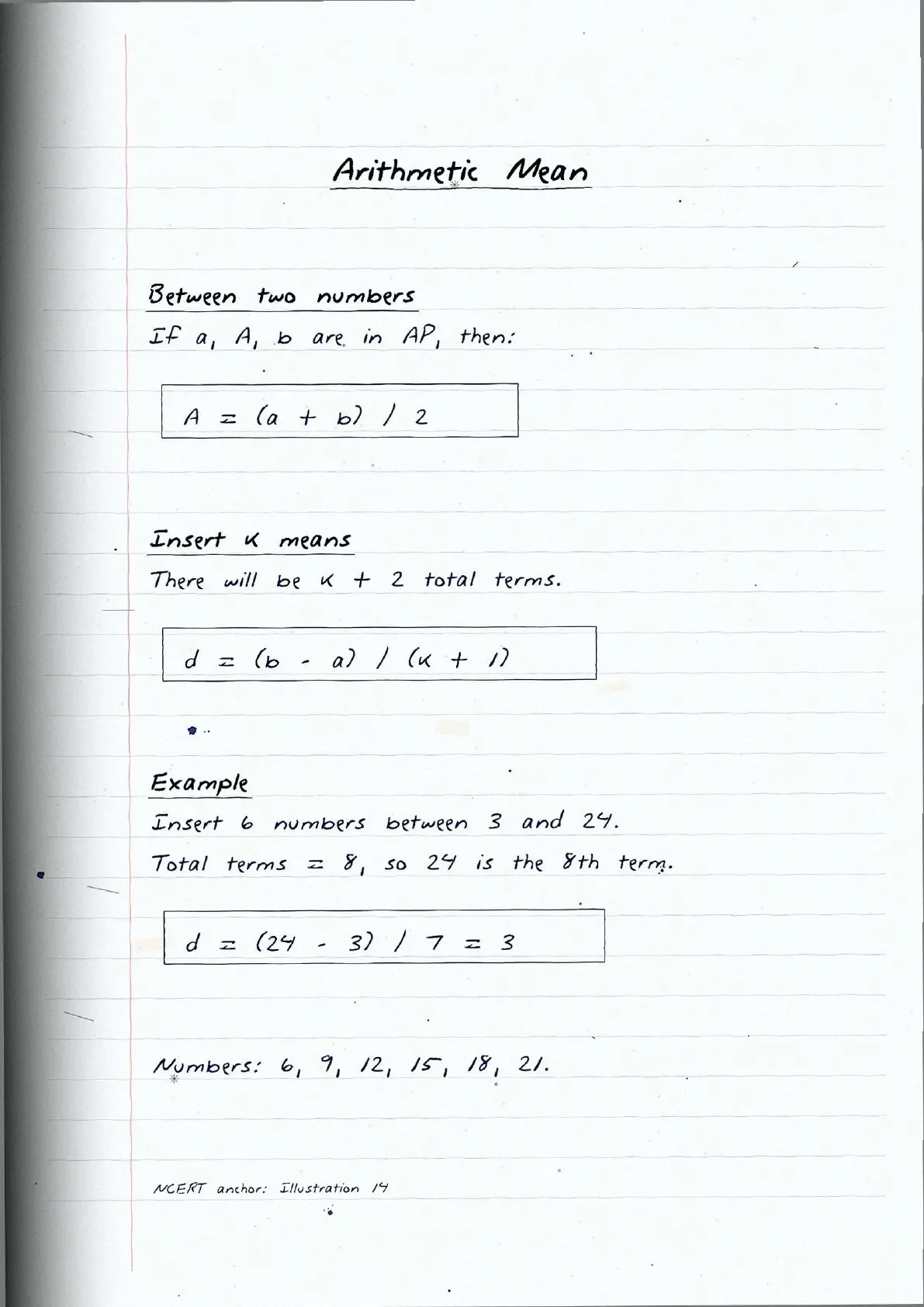
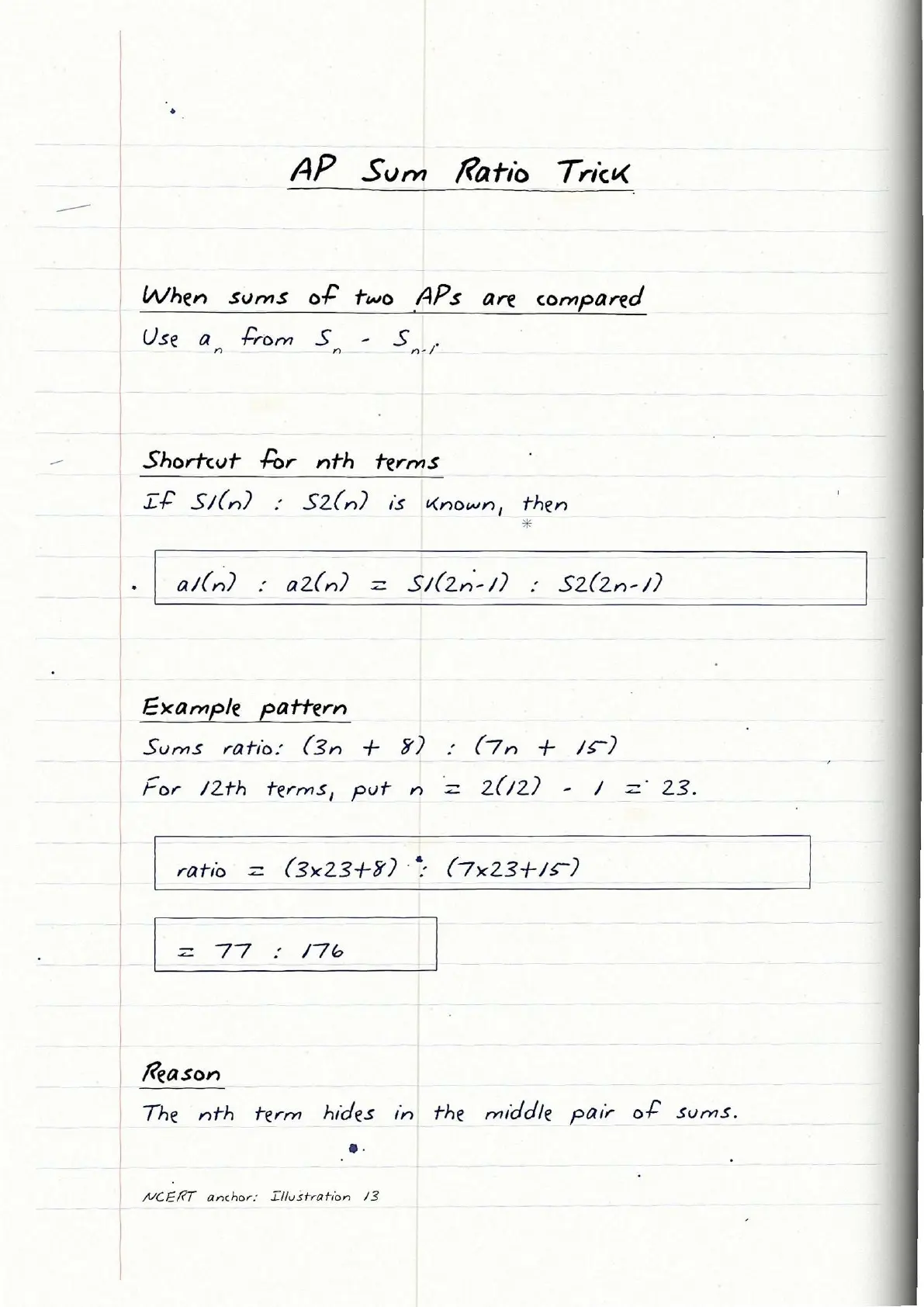
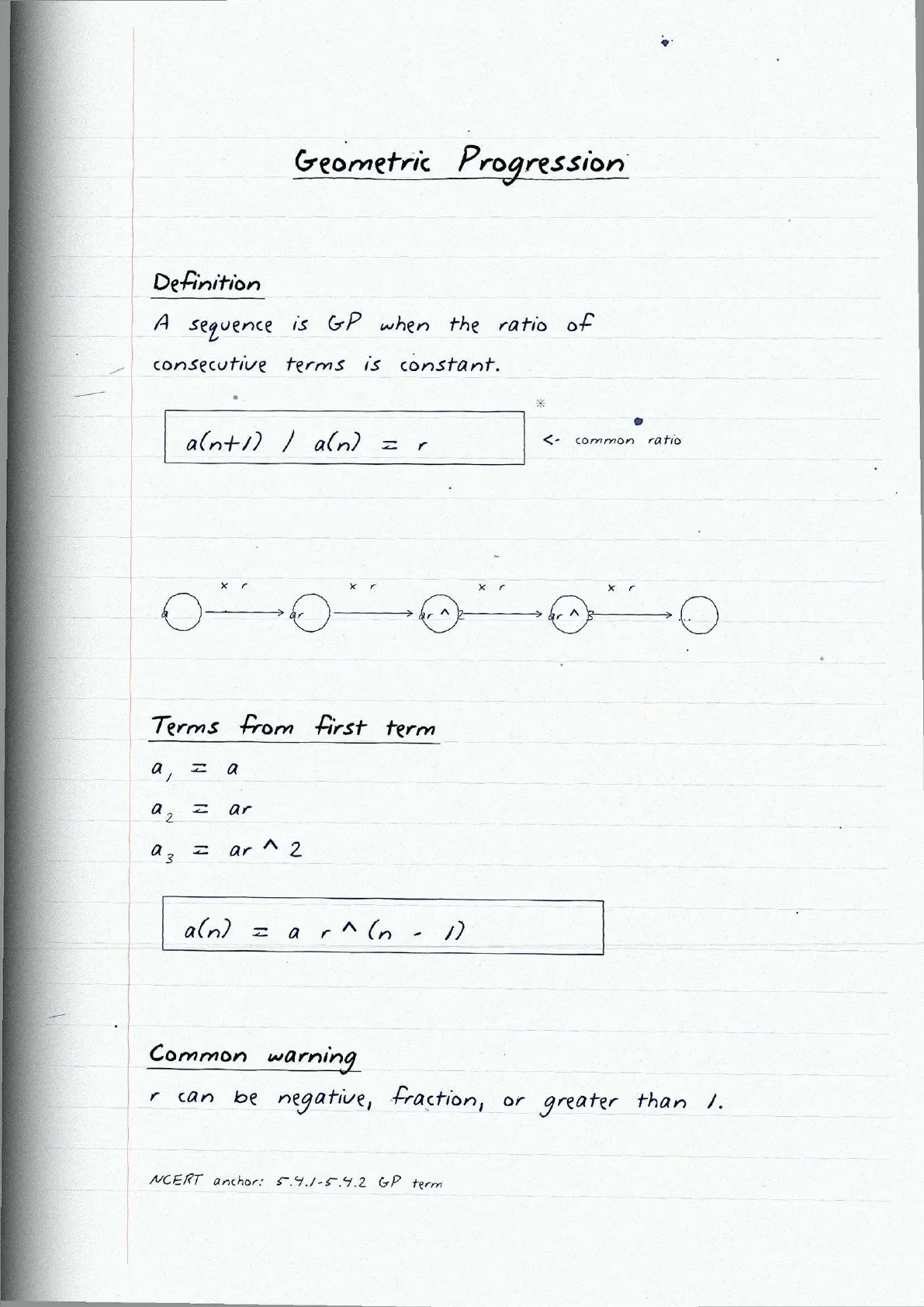
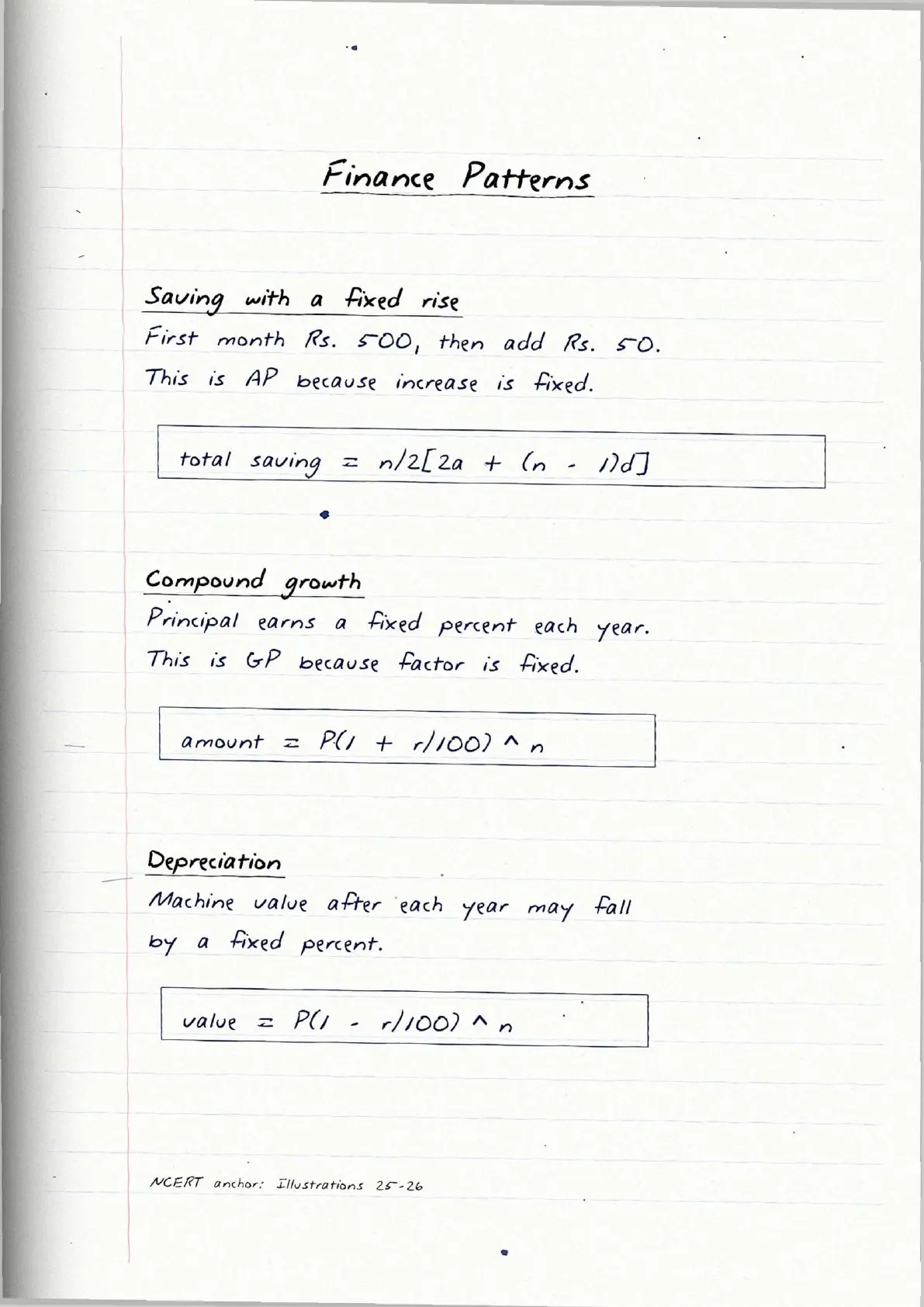
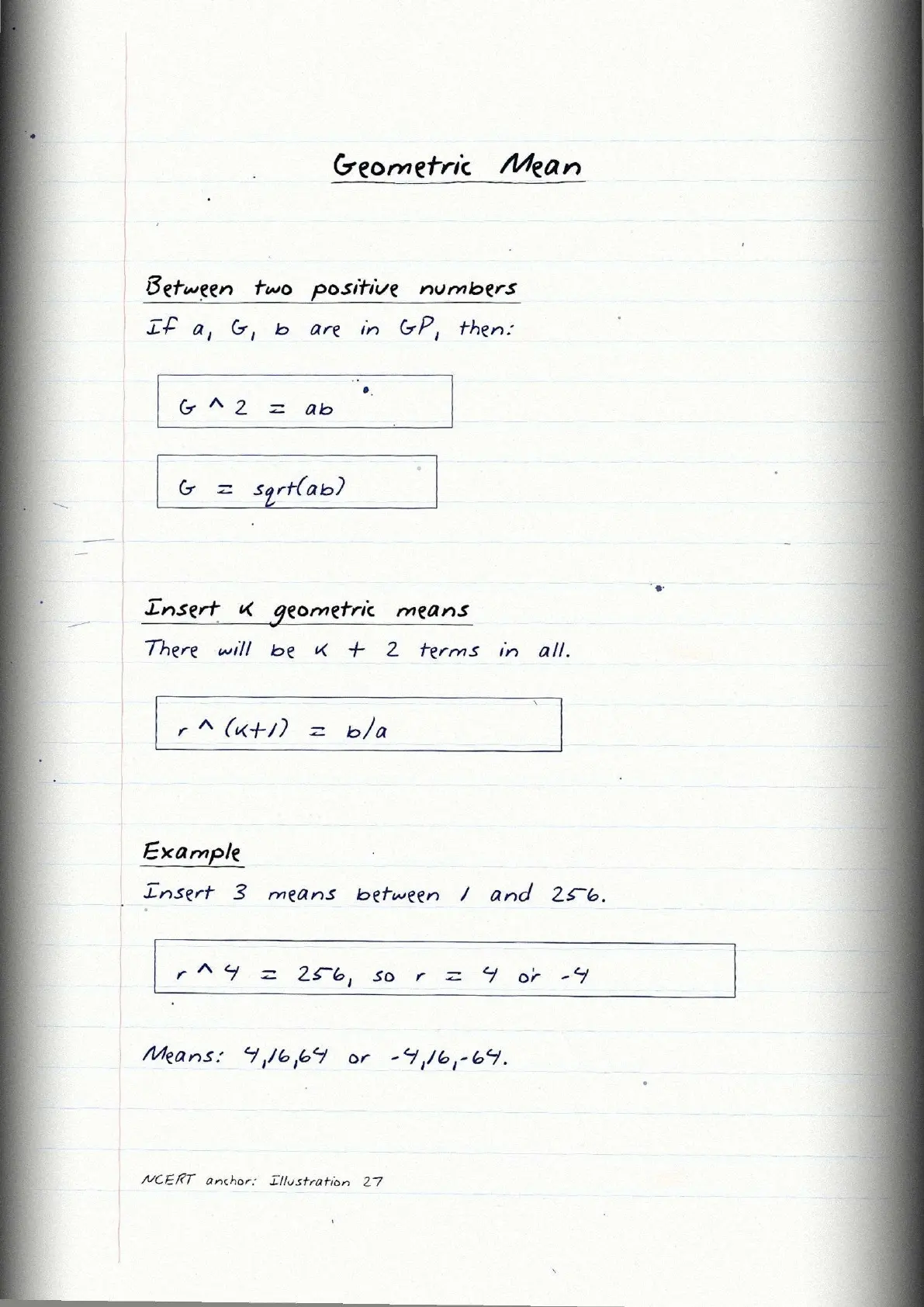
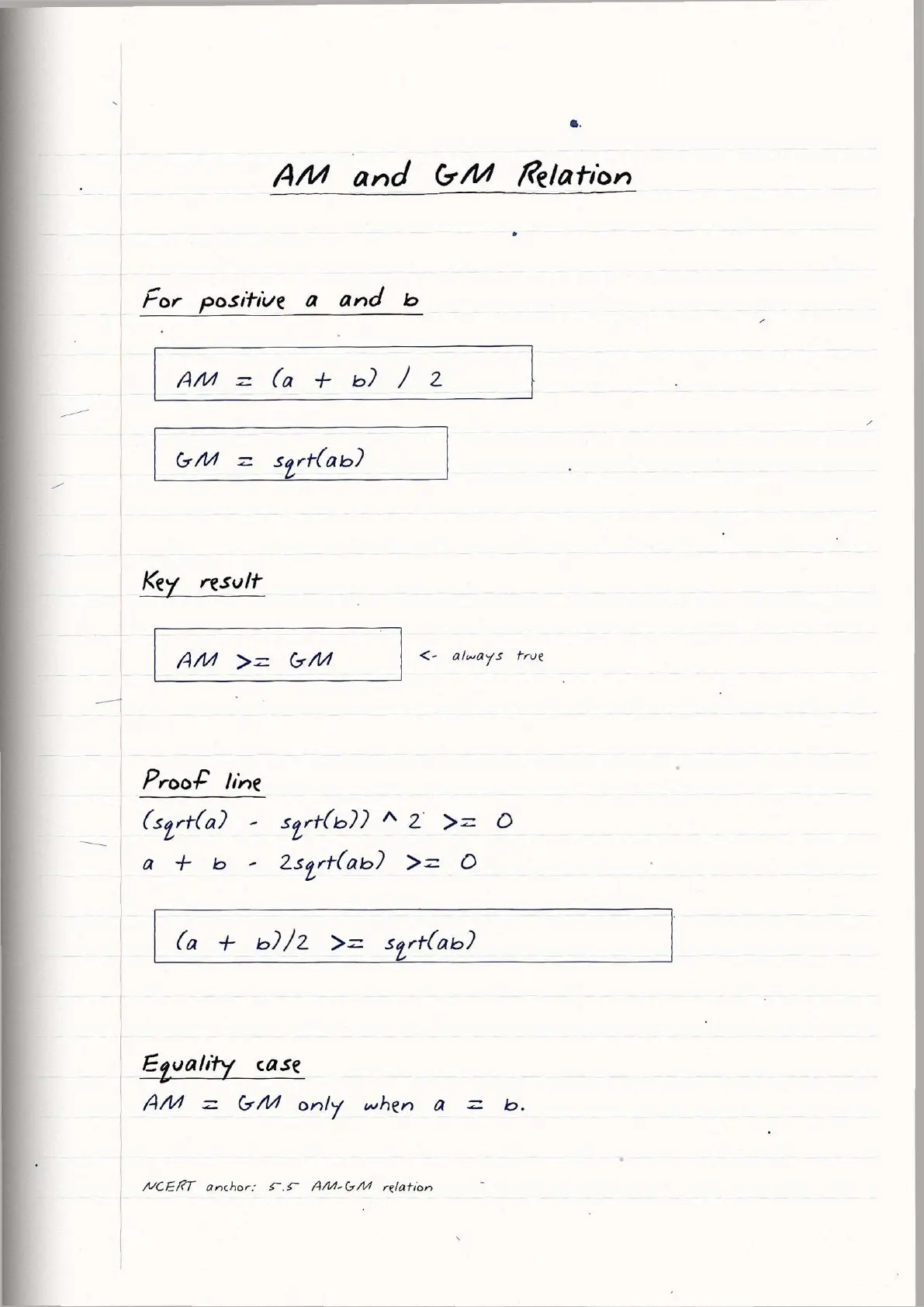
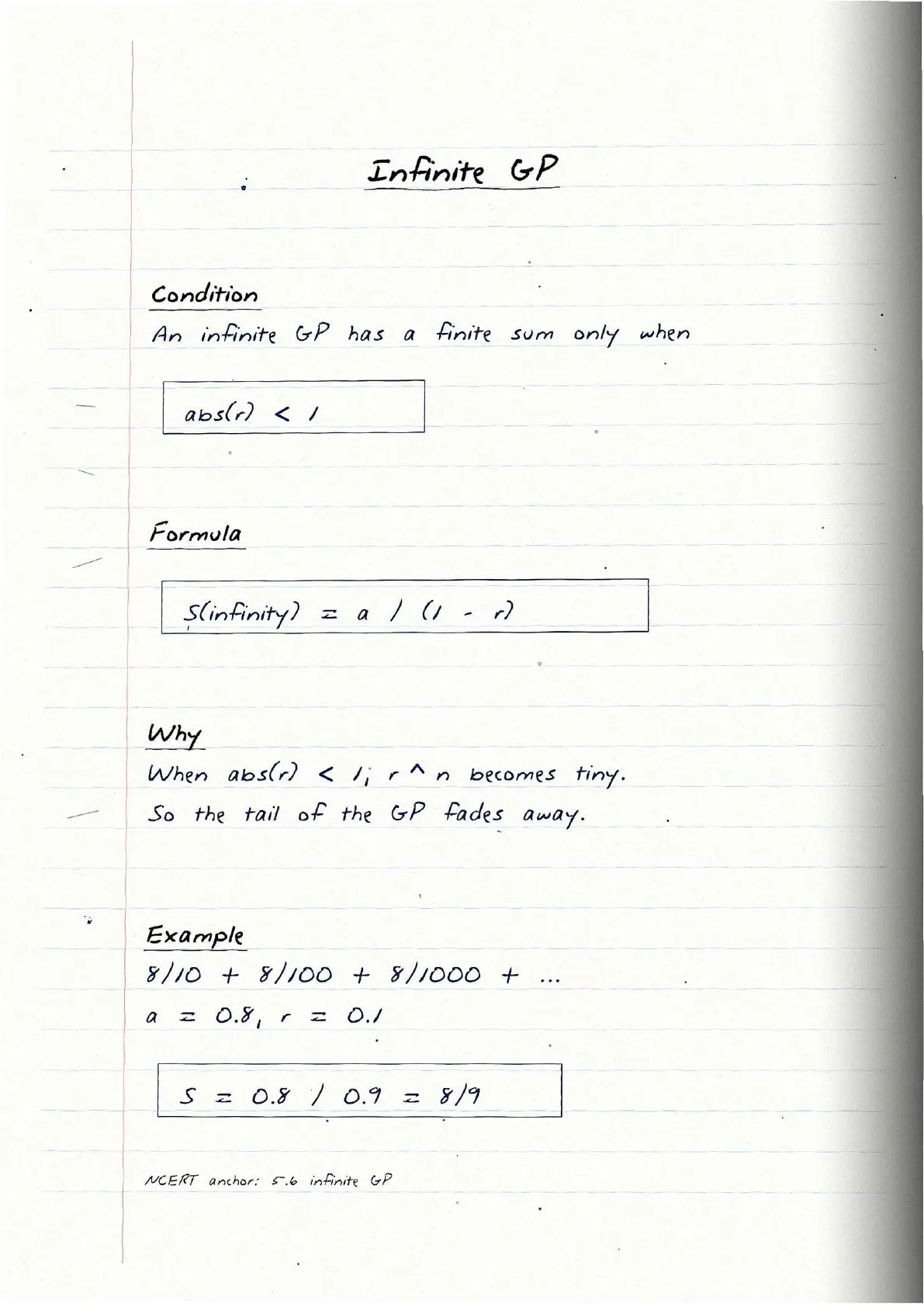
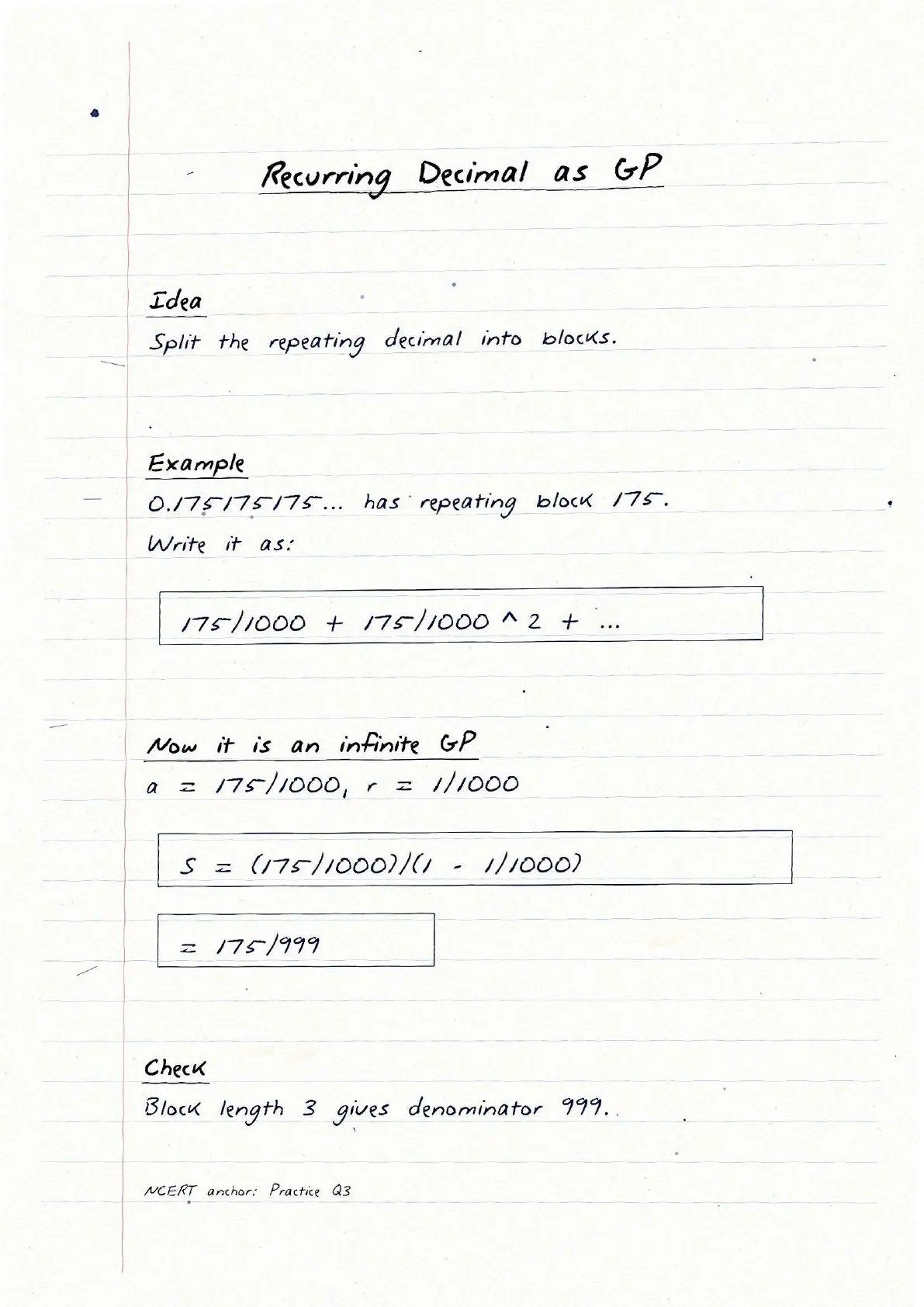
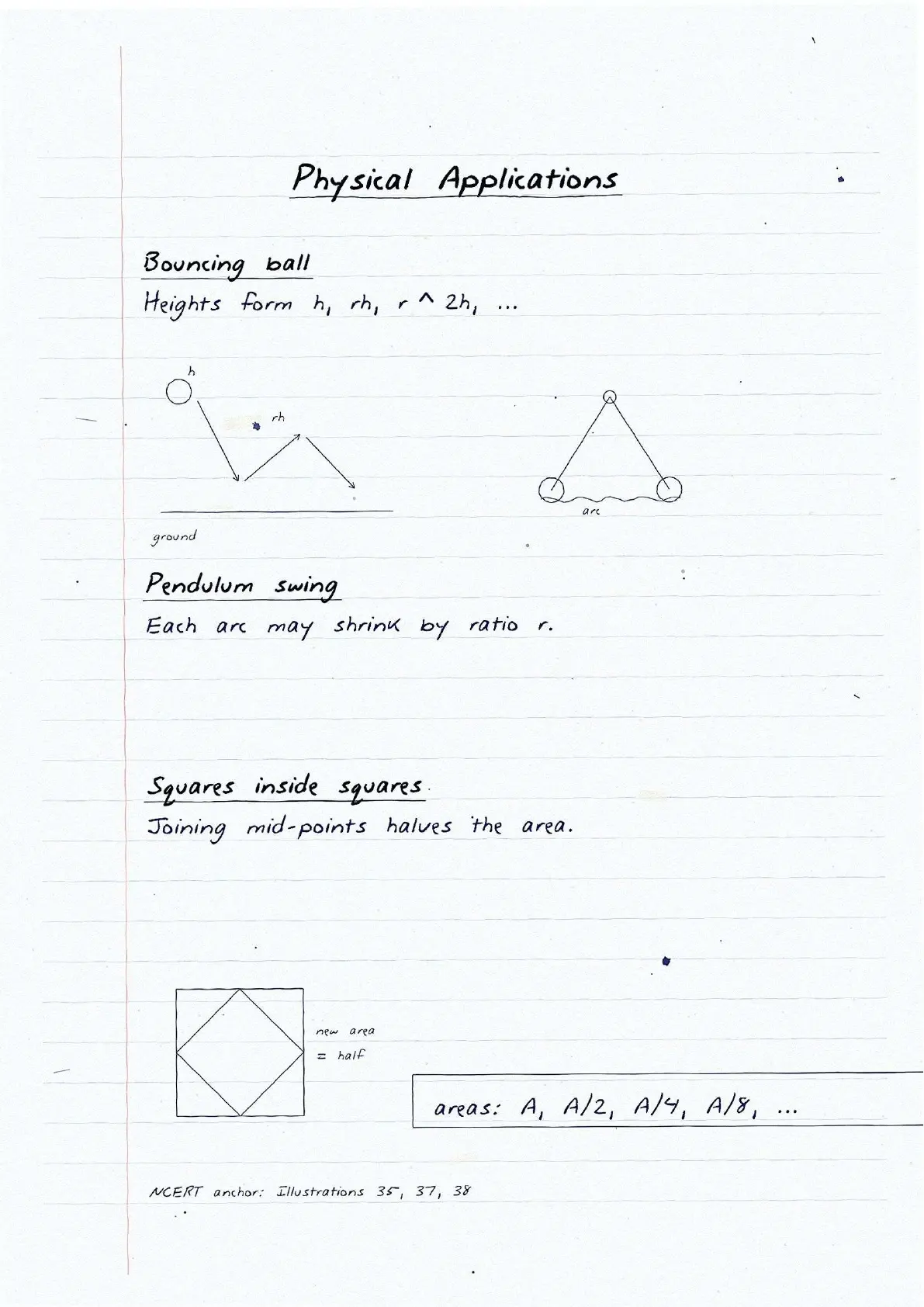
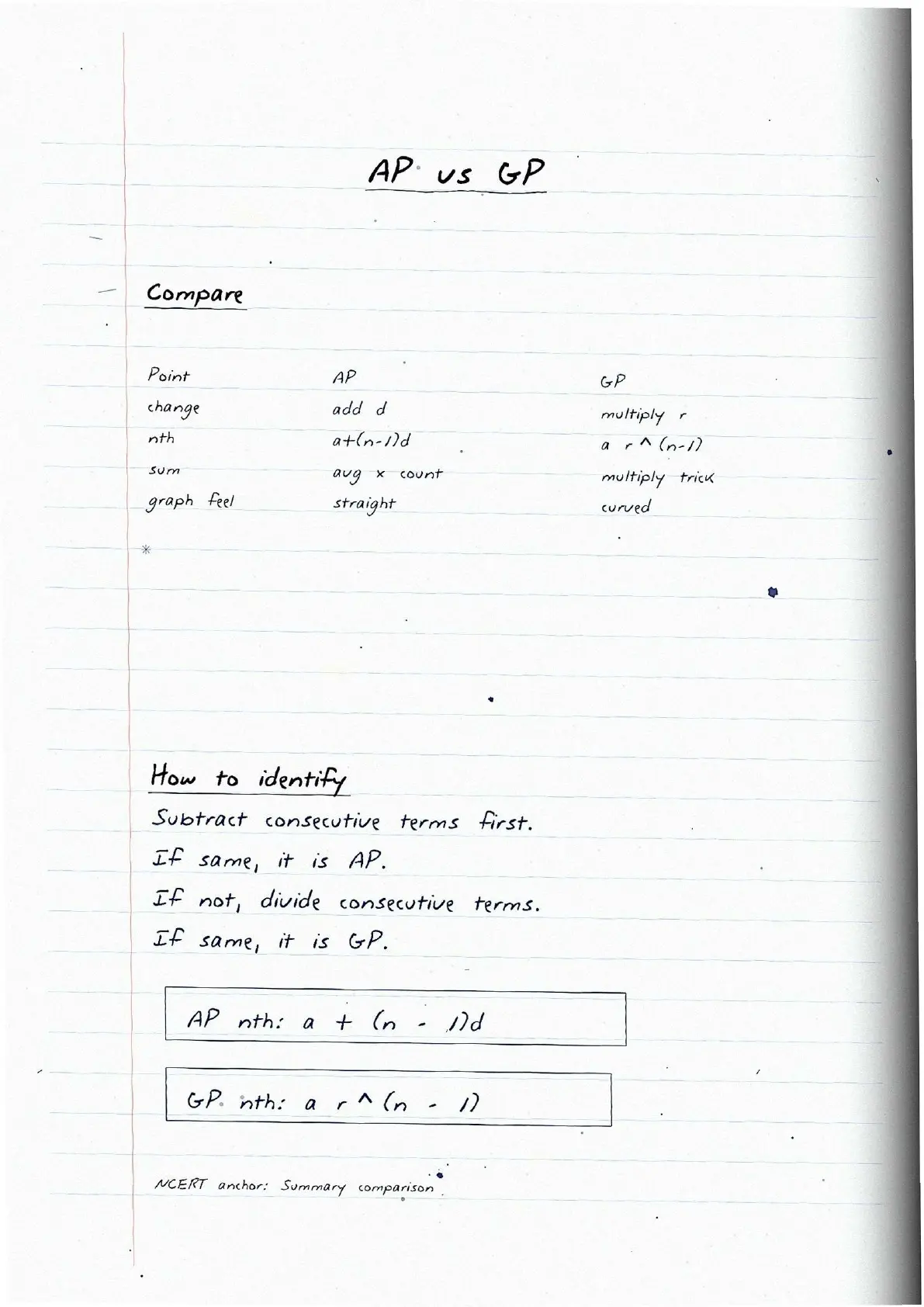
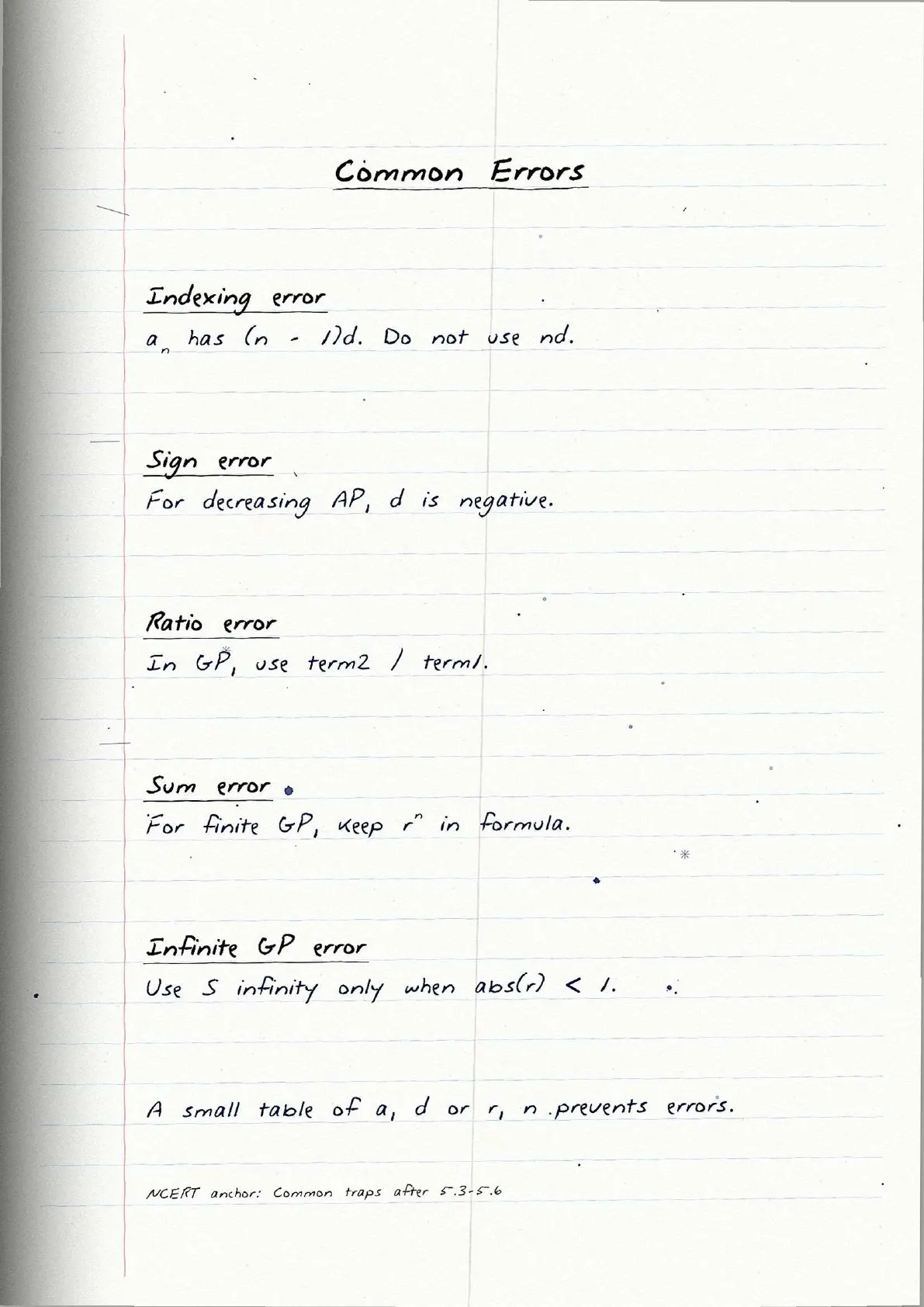
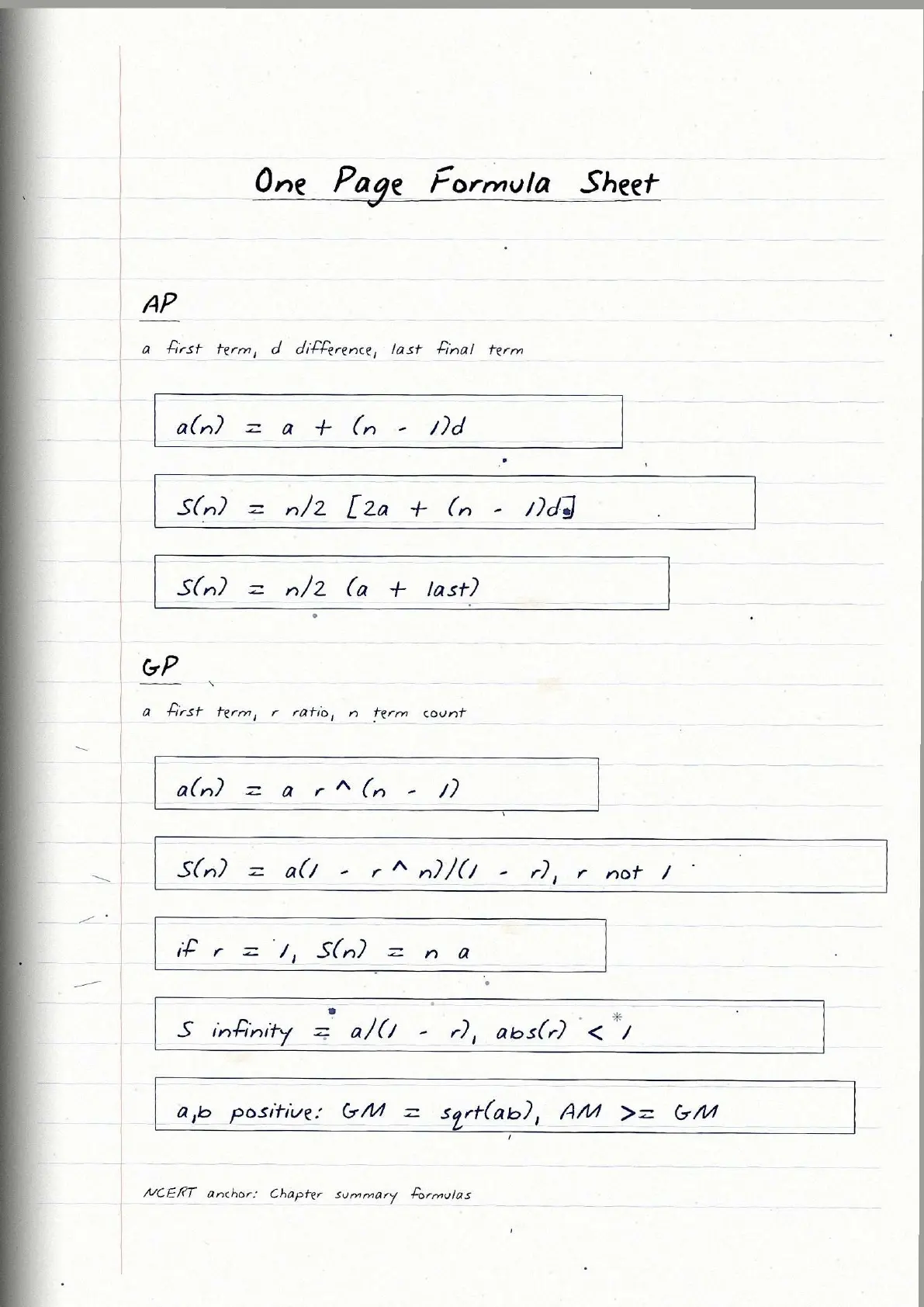
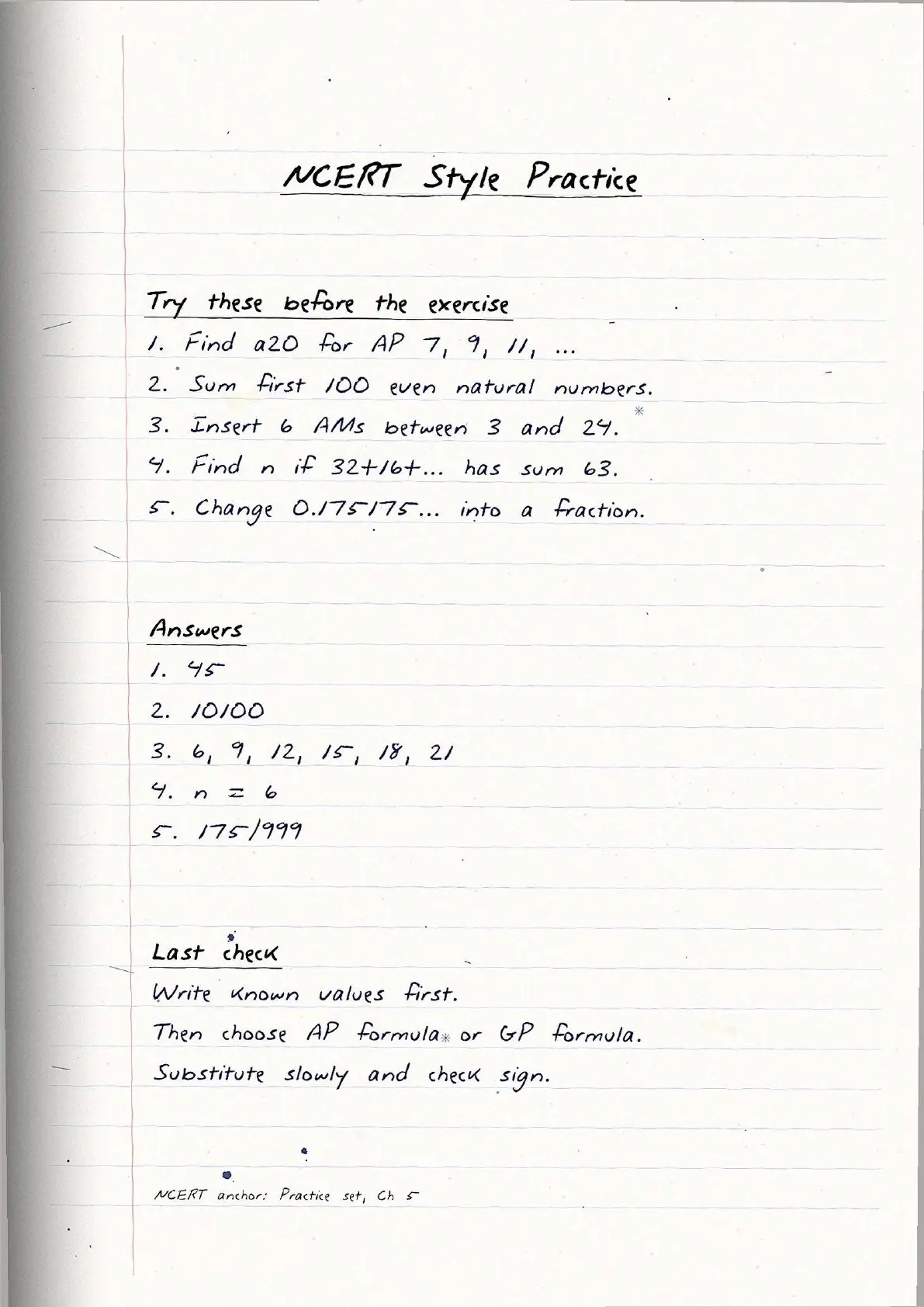
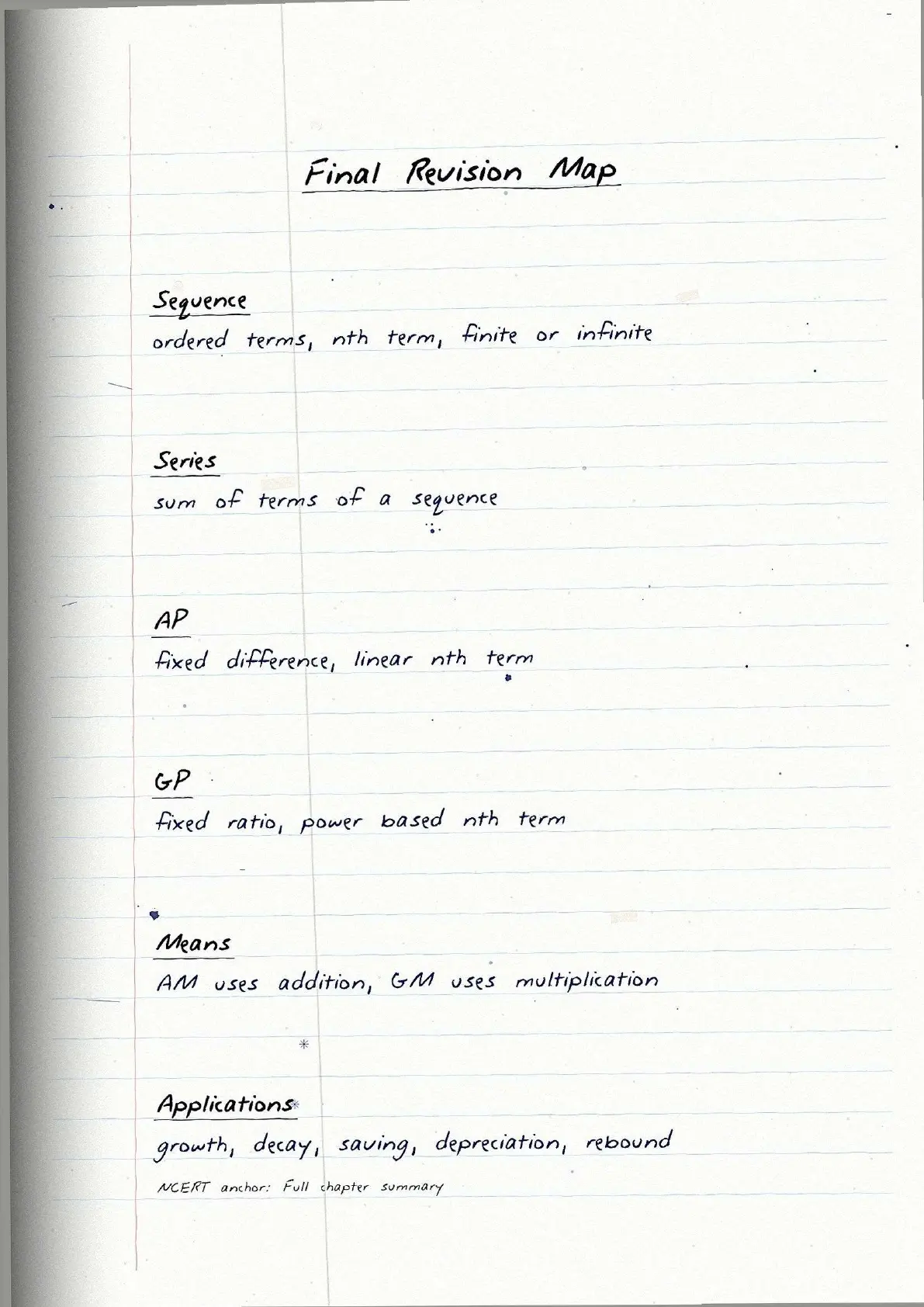
Each Sequences and Series handwritten note in this Collegedunia PDF is written for Class 11 revision and follows the 2026-27 NCERT Applied Mathematics scope.
Student Feedback: In a Collegedunia poll of 10,000+ students, most students said Sequences and Series felt easier when AP formulas, GP formulas and condition checks were revised together before practice.
Sequences and Series Handwritten Notes: What the PDF Covers
Sequences and Series starts with number patterns and then turns those patterns into formulas. These notes keep the formula, condition and use-case beside each other so students can revise without flipping between pages.
| Block | What students revise | Quick check |
|---|---|---|
| Sequence basics | Finite, infinite and rule-based patterns | Find how each term changes |
| AP | Common difference, nth term and sum | Use addition, not multiplication |
| GP | Common ratio, finite sum and infinite sum | Check the ratio condition first |
| Means | Arithmetic mean and geometric mean | Use positive numbers for GM |
Arithmetic Progression and Geometric Progression Difference
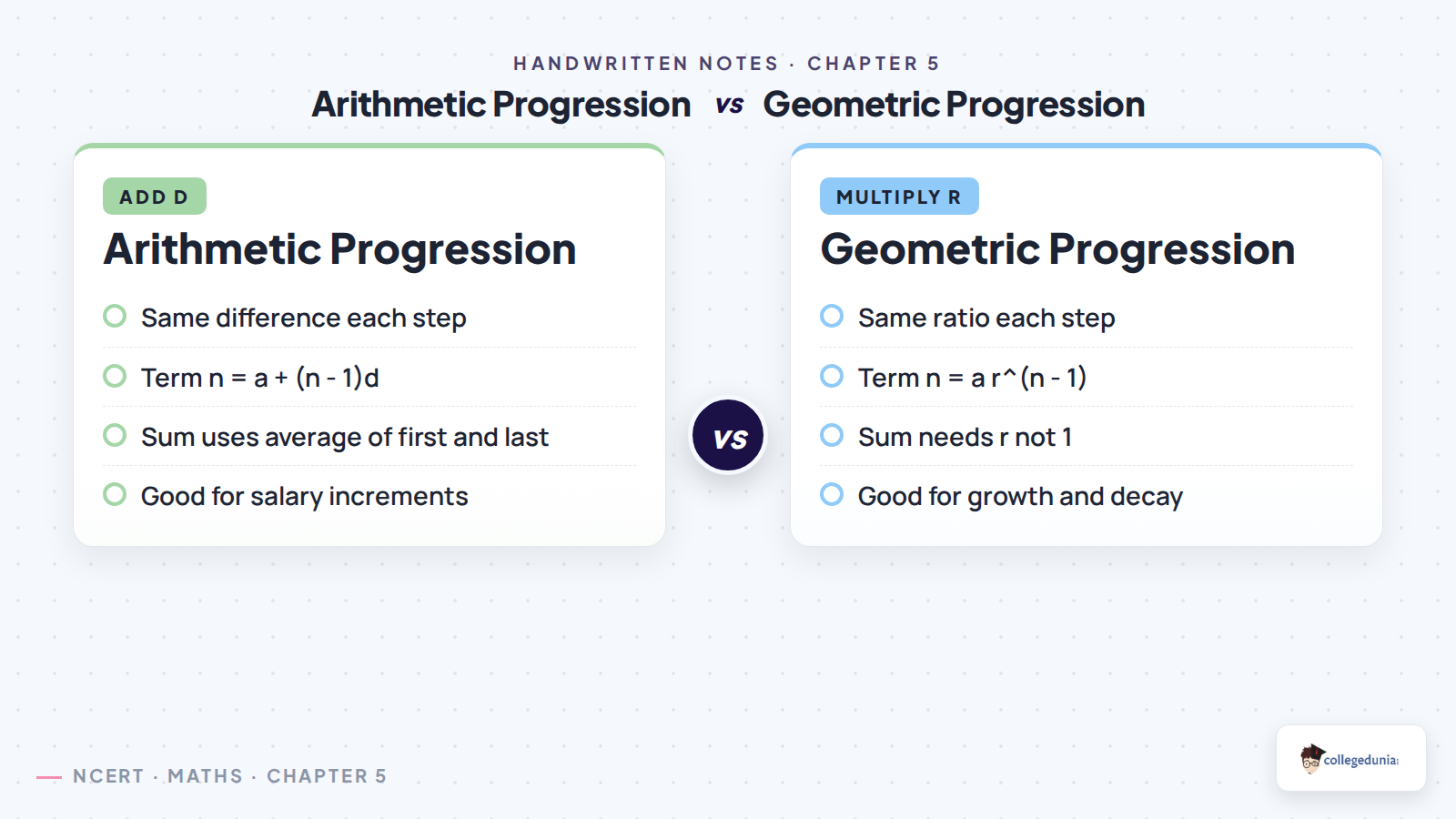
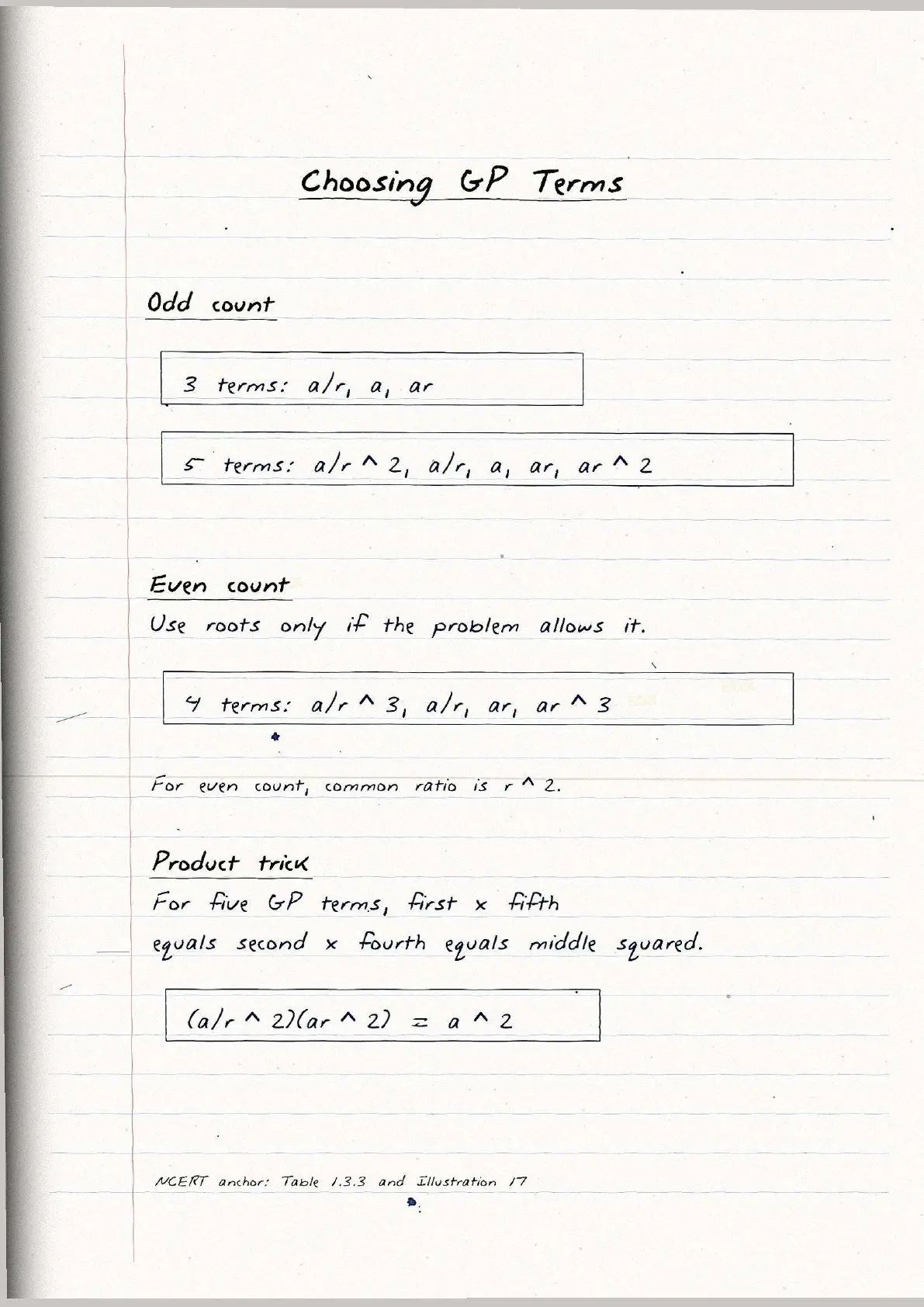
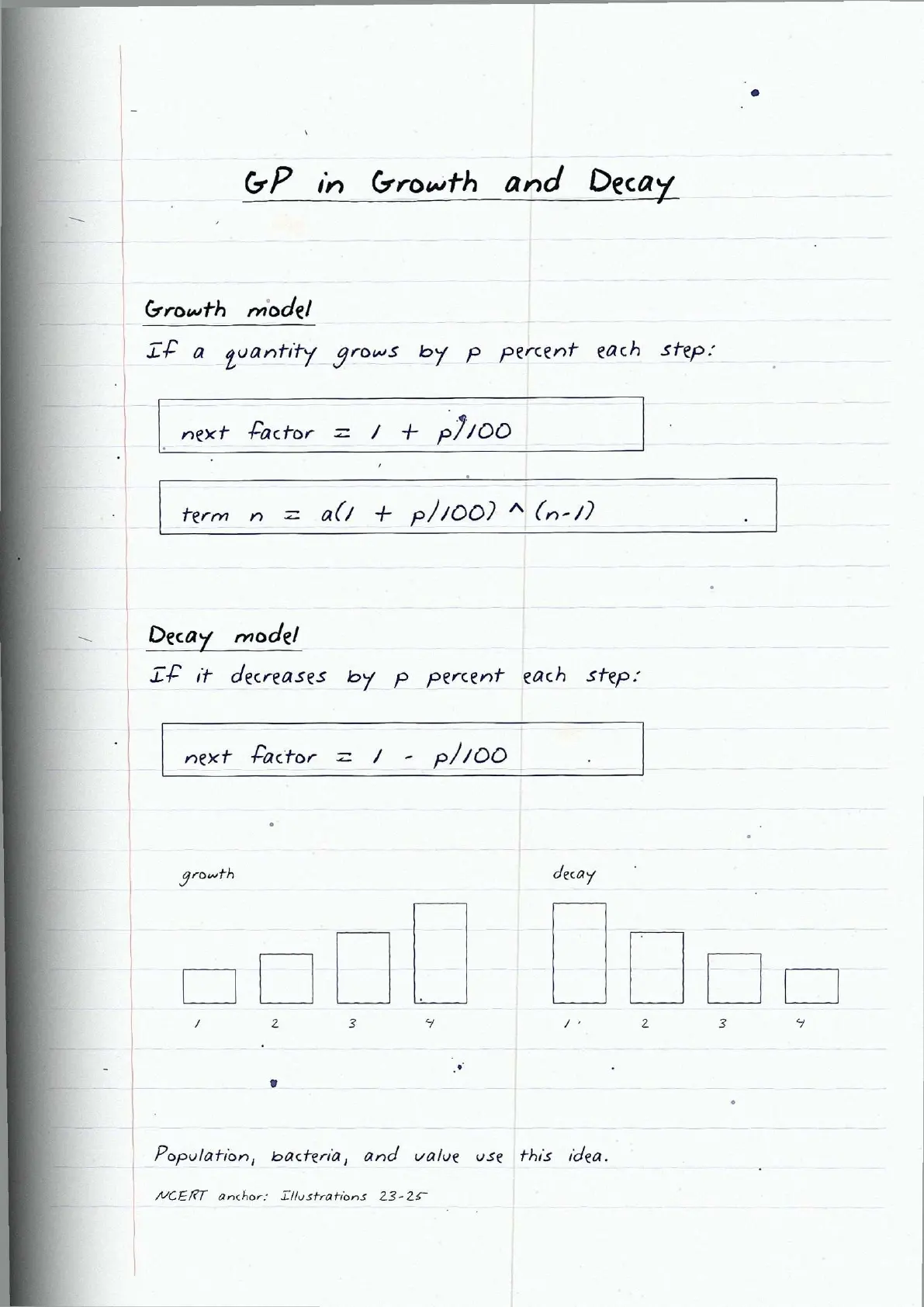
An arithmetic progression changes by a fixed difference. A geometric progression changes by a fixed ratio. This is the first decision in most questions. If the same number is added each time, use AP. If every term is multiplied by the same number, use GP.
- AP example: 5, 8, 11, 14 has common difference 3.
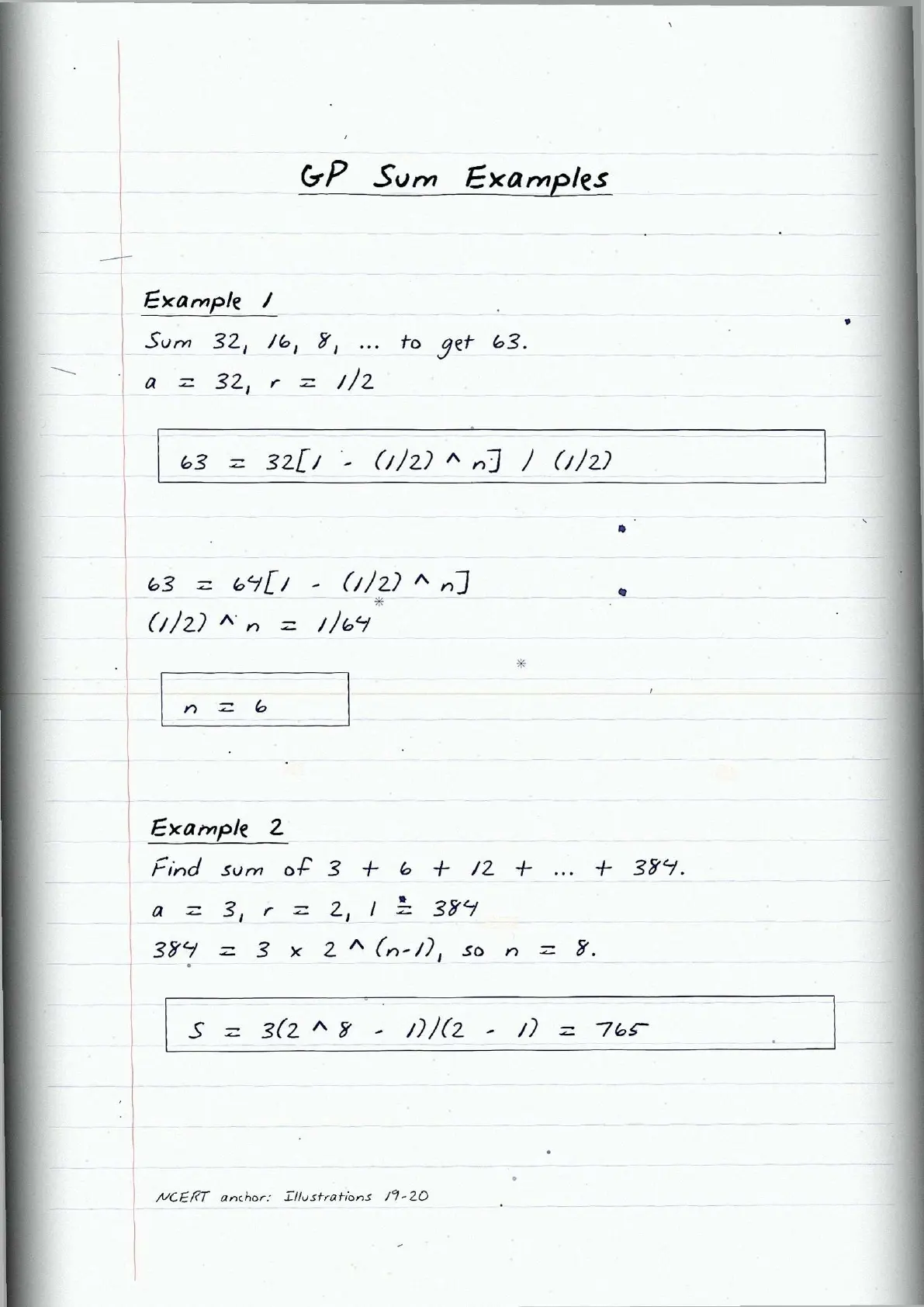
- GP example: 3, 6, 12, 24 has common ratio 2.
- Do not use the GP sum formula before checking r.
Sequences and Series AP and GP Quick Revision
Source: Magnet Brains on YouTube
Sequences and Series Formula Conditions Students Must Check
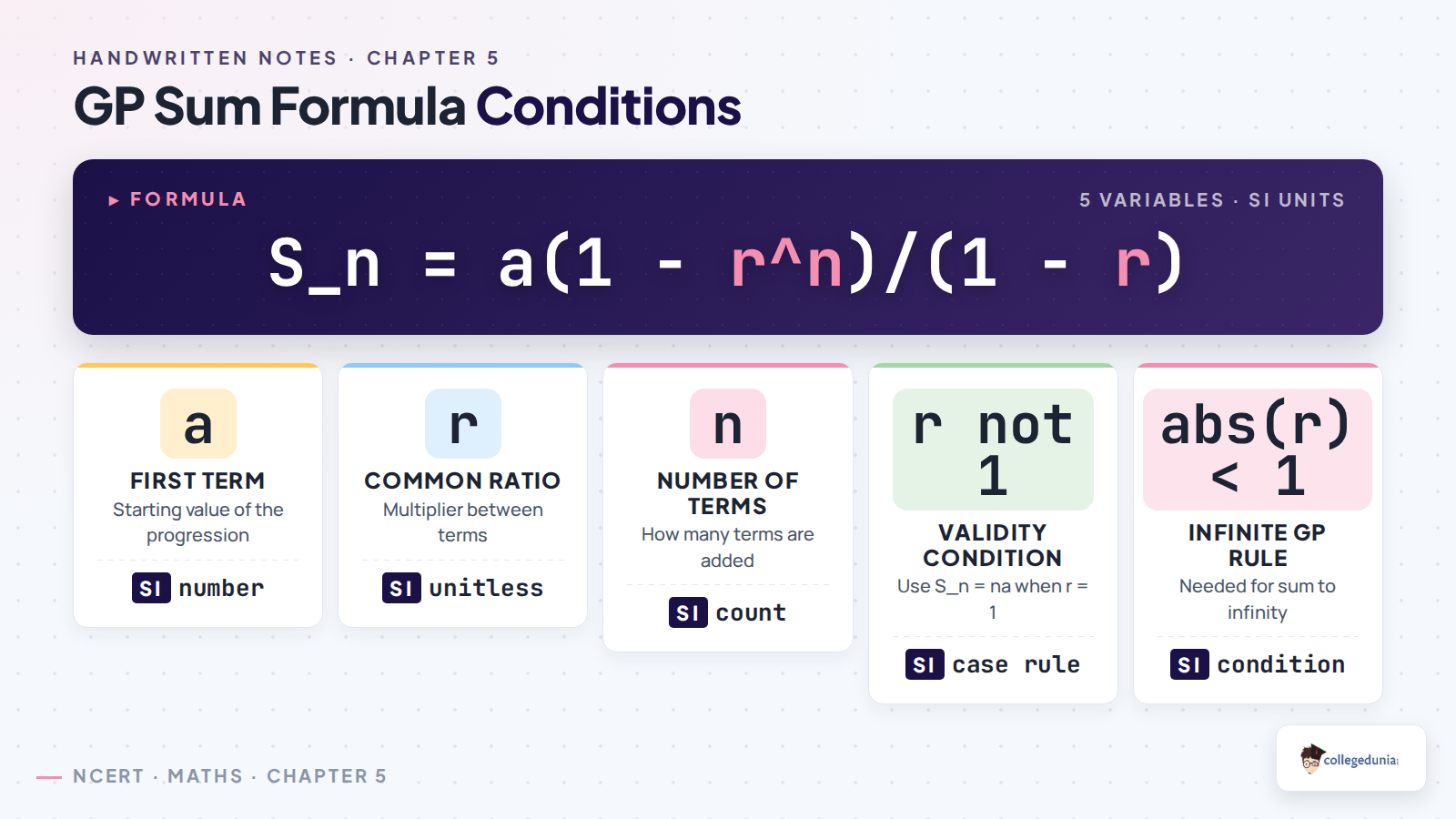
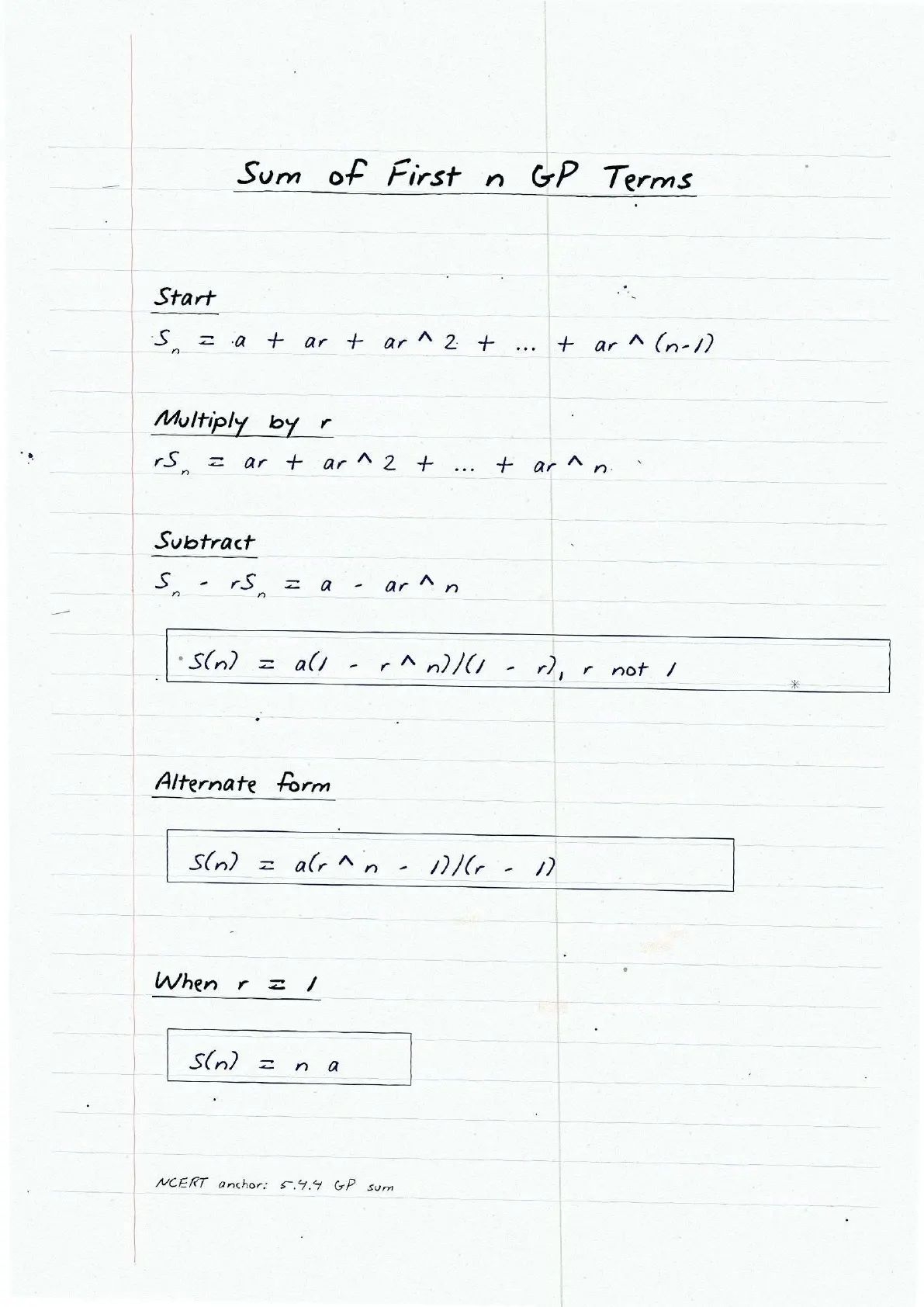
Formula mistakes in this chapter usually come from using the right formula in the wrong case. For a finite GP sum, the standard form needs r not equal to 1. If r is 1, the sum becomes n times the first term.
| Formula area | Use this when | Common mistake |
|---|---|---|
| AP nth term | You know first term and common difference | Forgetting n - 1 |
| AP sum | Terms are equally spaced | Mixing last term with common difference |
| Finite GP sum | Ratio r is not 1 | Using the wrong denominator |
| Infinite GP sum | abs(r) is less than 1 | Using it when the terms grow |
How to Revise Sequences and Series Before Class Tests
Use the Sequences and Series handwritten notes in two passes. First, learn the pattern test: AP adds, GP multiplies. Second, solve one short question for each formula condition.
- Write the first term, difference or ratio before solving.
- Circle whether the question asks for term, sum or mean.
- Check the r condition before using any GP sum.
- Use formula boxes for a final five-minute revision.
Related Resources for Sequences and Series Class 11
| Resource | Use it for | Link |
|---|---|---|
| NCERT Book PDF | Official theory and exercise prompts | Sequences and Series Class 11 NCERT Book PDF |
| NCERT Notes | Typed explanation with tables and examples | Sequences and Series Class 11 Notes |
| NCERT Solutions | Step-by-step answers for chapter questions | Sequences and Series Class 11 NCERT Solutions |
| Formula Sheet | Formula-only revision before practice | Sequences and Series Class 11 Formula Sheet |
Applied Mathematics Handwritten Notes for All Chapters
| Chapter | Handwritten Notes |
|---|---|
| Chapter 1 | Numbers and Quantification Class 11 Handwritten Notes |
| Chapter 2 | Numerical Applications Class 11 Handwritten Notes |
| Chapter 3 | Set Class 11 Handwritten Notes |
| Chapter 4 | Relations Class 11 Handwritten Notes |
| Chapter 5 | Sequences and Series Class 11 Handwritten Notes |
| Chapter 6 | Permutations and Combinations Class 11 Handwritten Notes |
| Chapter 7 | Mathematical and Logical Reasoning Class 11 Handwritten Notes |
Sequences and Series Class 11 Applied Mathematics Handwritten Notes FAQs
Ques. What is covered in Class 11 Applied Mathematics Chapter 5 Sequences and Series handwritten notes?
Ans. The handwritten notes cover sequence patterns, AP, AP sums, arithmetic mean, GP, GP sums, geometric mean, infinite GP, recurring decimals and quick formula revision.
Ques. What is the main difference between AP and GP?
Ans. AP uses a common difference, so the same number is added each time. GP uses a common ratio, so each term is multiplied by the same number.
Ques. When can students use the sum to infinity formula in GP?
Ans. Students can use the GP sum to infinity formula only when abs(r) is less than 1. If the ratio does not meet this condition, the infinite sum is not used.
Ques. Why are formula conditions important in Sequences and Series?
Ans. Formula conditions decide which case applies. For example, the finite GP sum has a separate r = 1 case, and AM-GM needs positive numbers for geometric mean.
Ques. Are these Sequences and Series handwritten notes aligned with the 2026-27 syllabus?
Ans. Yes. The notes follow the current 2026-27 Class 11 Applied Mathematics scope for Sequences and Series under algebra.



Comments